‘Glove-wearing gazelle’ played only 16 Albion games

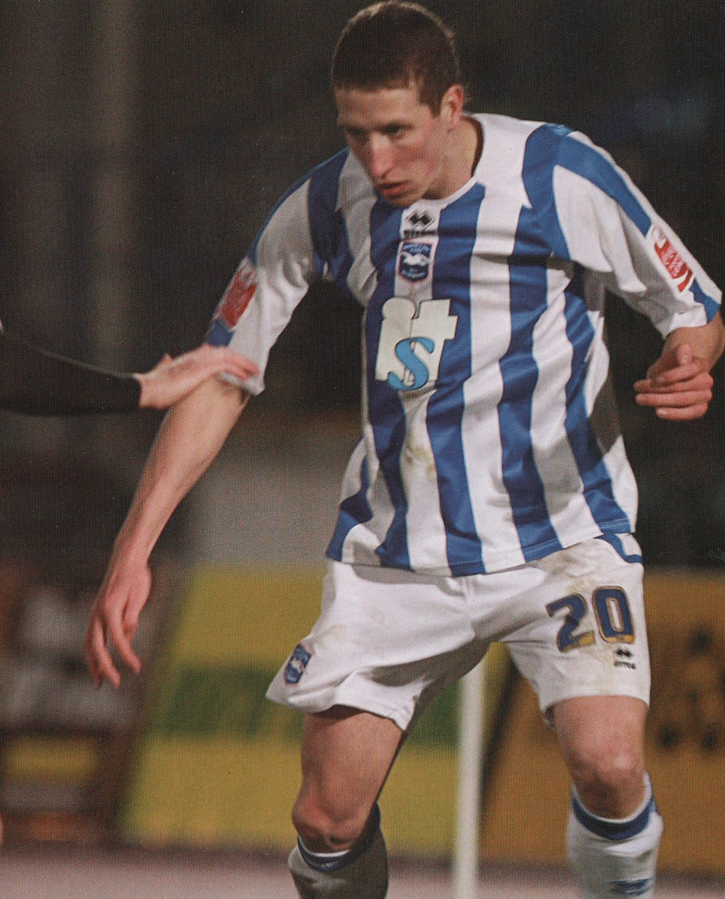
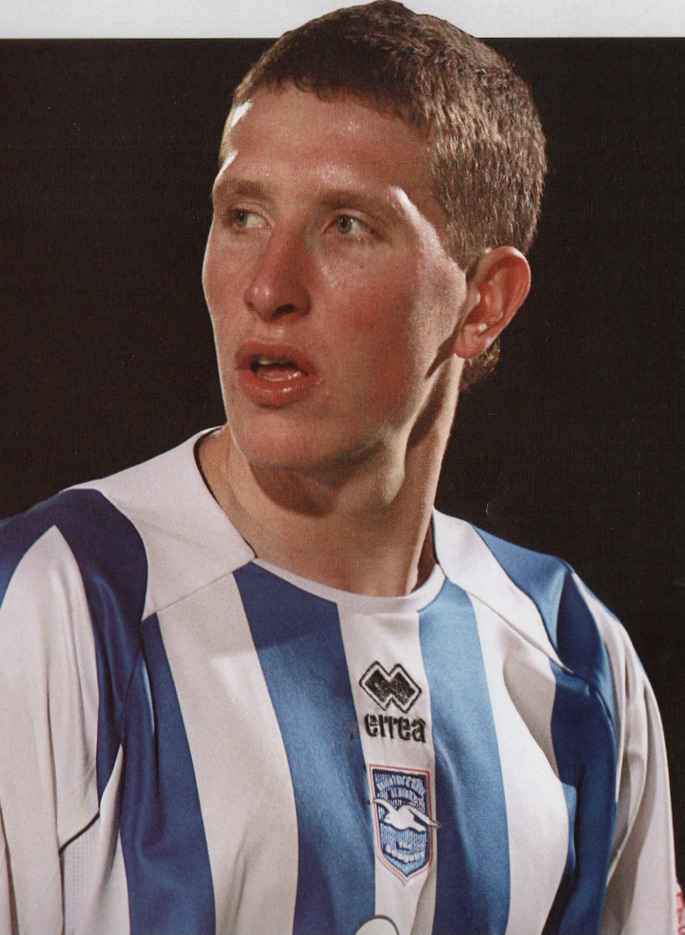
SCOUSE defender Jim McNulty, who played alongside Wayne Rooney at Everton as a schoolboy, will probably always be remembered by Brighton fans for a horror injury he suffered in a match at Withdean.

After an on-off transfer saga in which McNulty initially rejected Albion’s desire to sign him, the £150,000 signing from Stockport County scored on his debut and less than three weeks later was involved in an accidental collision that threatened to end his career at 23.

In only his fifth game after under-pressure boss Micky Adams finally landed the left back, a seemingly innocuous challenge as a Crewe defender caught him with his knee in his side quickly became much more serious when he started passing blood.

“Having walked back to the changing room I remember having the sensation of needing to go to the toilet and it was then that blood started spurting out,” he recounted. “I was also throwing up and the real scary part was the look of concern on the medical team’s faces.

“I was rushed to the Royal Sussex County Hospital for an MRI scan and had a catheter inserted as my belly was swelling up. It was then that I discovered one of my kidneys had capitulated.
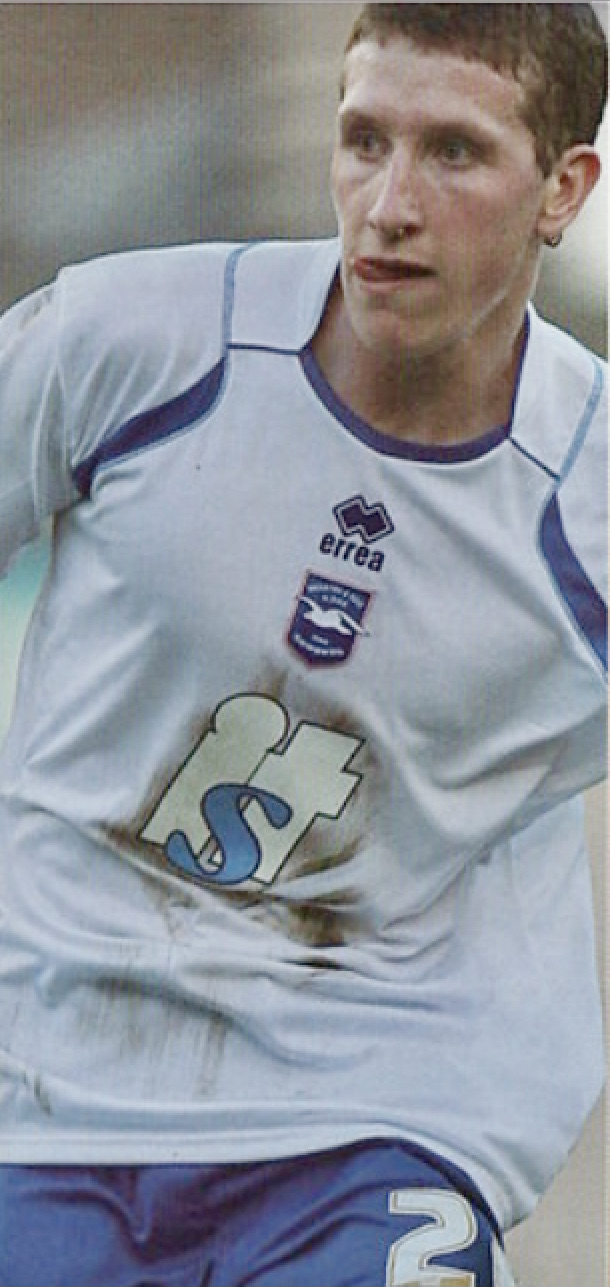
“I was on the bed in the hospital after the scan when the surgeon said 90 per cent of the kidney is mush and I don’t believe you can play again,” McNulty told the club’s official website.

Nine years later, ahead of facing Harry Kane for Rochdale against Spurs in the FA Cup, McNulty told Ivan Speck of the Express: “It was instant tears. I was there with my father and fiancée, at the time. I remember crying into my dad’s chest.

“It was probably a bit of everyday information for him but, for me, football was my life and he should have stayed quiet until he was better informed. It still winds me up now.

“The FA actually got wind of the news and their doctor spoke with our club doctor. They had spoken to some rugby guys in the southern hemisphere because it’s a more common injury in rugby than it is in football.

“It was nonsense to suggest it would end my career.”

Initially, because he was a professional sportsman, the medics tried two operations to save the kidney but, when he was still passing blood three weeks later, the decision was taken to remove it.

McNulty described incredible pain he had to endure but realised once he had gone through with the operation that he would be able to play football again.
Amazingly, he was able to return to training within three months although he had a lot of work to do to rebuild his fitness. Within four weeks he was even able to play in a couple of pre-season friendlies.

However, McNulty went on to suffer a number of knock-on injuries because his posture was affected by having an empty space on the right side of his body.

“I had multiple ankle injuries because my pelvic alignment was a nightmare from that point on,” he said.

The first came just when it looked like he would make a return to league action in September 2009. He damaged his ankle ligaments on a local park pitch while training ahead of the 7-1 defeat at Huddersfield and was ruled out for a further four weeks.

His long-awaited return to first team action came in a Johnstone’s Paint Trophy tie away to Leyton Orient on 6 October, which Albion lost 1-0.

“Just to get out on the pitch and on the ball was fantastic,” he said. “I cramped up after about 70 minutes but the reaction from our fans was tremendous.”

McNulty told the matchday programme: “I have no intention of just sitting around, hoping to break into the side. I want to be playing every week now. I’m fit, raring to go and I want to help us get up the table.”

The unlucky McNulty then missed the following Saturday’s match at MK Dons, enduring yet more pain when he had to have two wisdom teeth extracted.

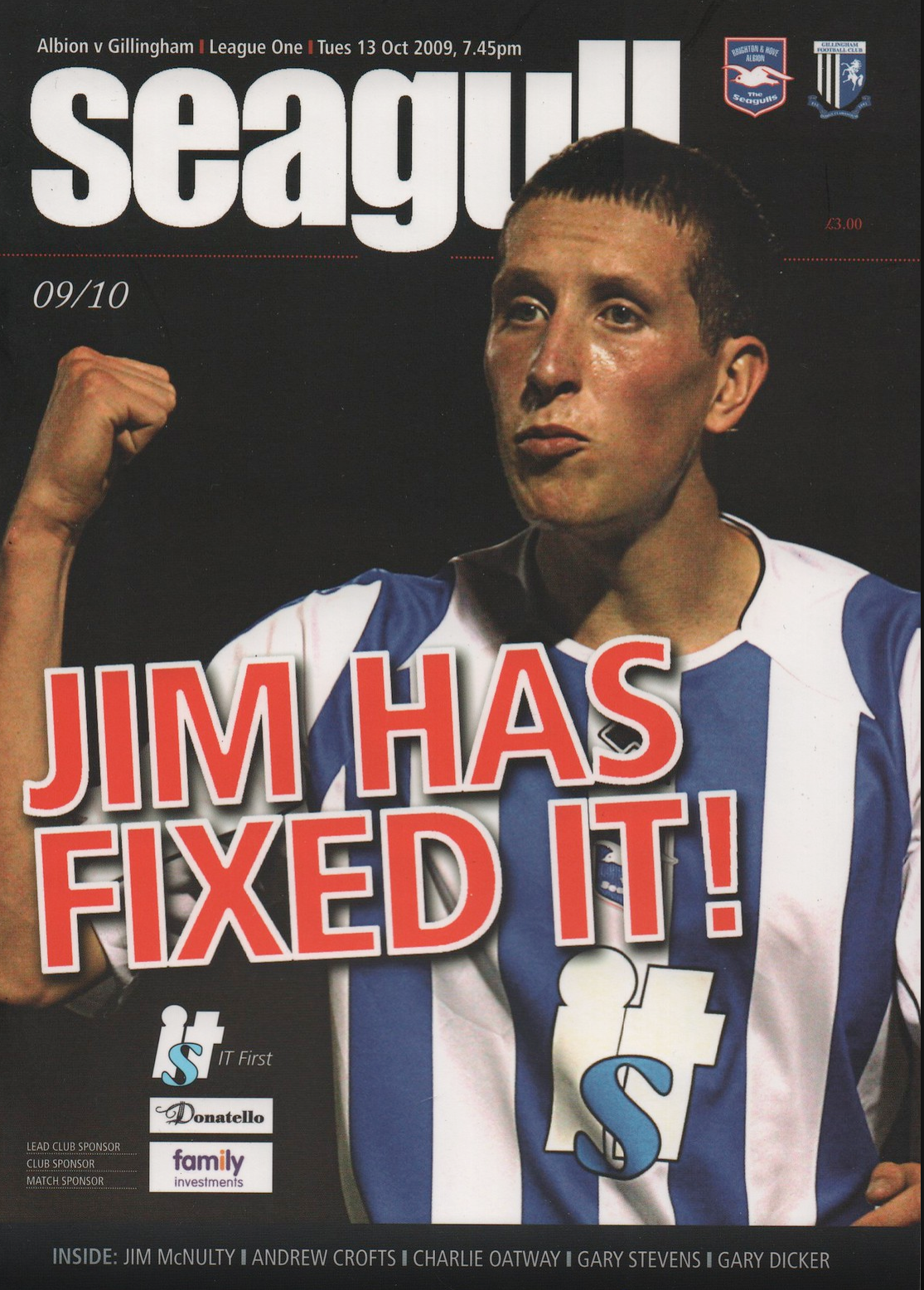
Nevertheless, McNulty’s eventual return to league action followed on 13 October in a 2-0 Withdean win over a Gillingham side which featured former Albion loanee Simon Royce in goal.

Astonishingly, the following Saturday, he lasted only 27 minutes before injury struck again in a 2-1 defeat away to Tranmere. He limped off with an ankle injury and Jake Wright was sent on to replace him. Glenn Murray scored a penalty consolation for the Albion and was then sent off for a second yellow card.

By the time McNulty was fit enough to return, the second manager of his brief time at the Albion, Russell Slade, had been replaced by Gus Poyet. His first involvement under the new boss saw him go on as a sub against: Charlton at home on 1 December.

He then went on as an 87th minute substitute for his good friend Gary Dicker at Exeter and provided the all-important cross from which Andrew Crofts headed the only goal of the game in the 92nd minute.

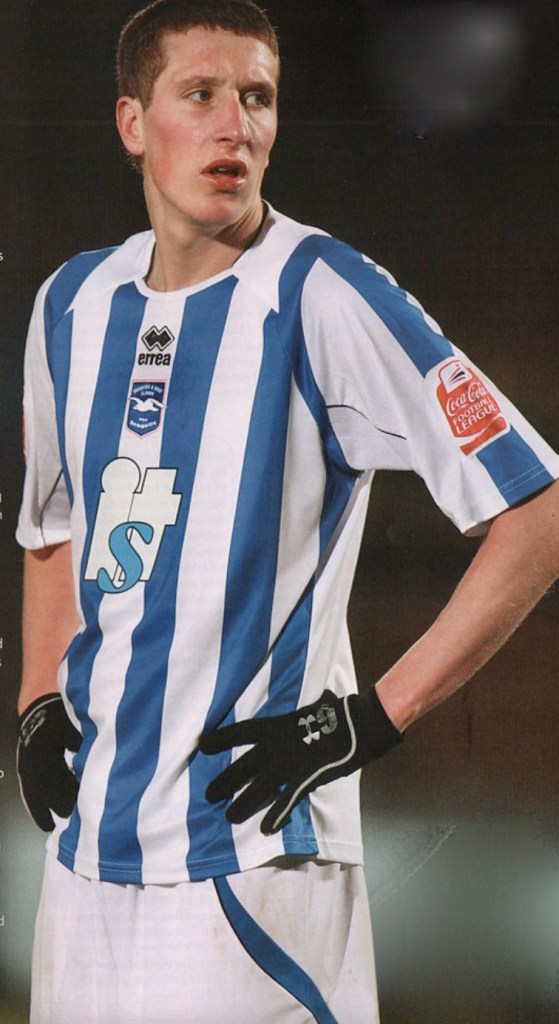
He had what one observer described as a man of the match involvement as a sub in the next match, a 2-1 home defeat v Colchester United. Saying the left back was “the epitome of Poyet’s ‘bravery on the ball’ mantra”, Richie Morris wrote: “Jimmy McNulty, like a rampaging glove-wearing gazelle, mercilessly attacked the left flank. Time and again he delivered teasing crosses, and time and again the ball simply would not nestle in the net.”
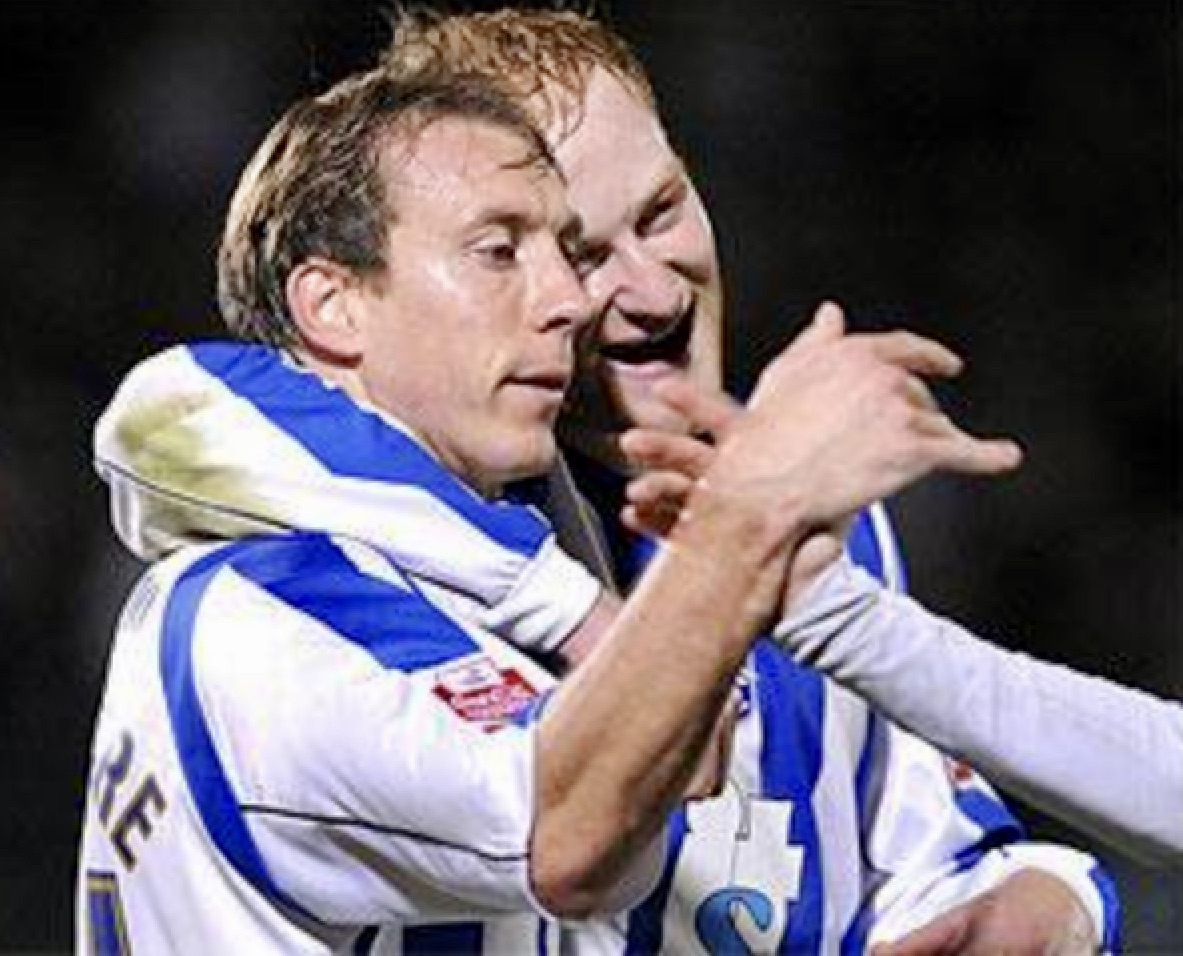
McNulty celebrates with goalscorer Tommy Elphick

That performance was rewarded with four starts on the trot – but then Poyet brought in the cultured Marcos Painter as his preferred left-back. McNulty was in the Albion side that put on a decent show in a 3-2 fourth round FA Cup defeat at Aston Villa, because Painter was ineligible, but he didn’t make another start that season. And, as it turned out, he didn’t play for the club again. He’d actually only played 16 times for the Albion.

Before the end of the season, to get some games, McNulty actually stepped up a level, going on loan to Scunthorpe United in the Championship, where he made two starts and a sub appearance under Nigel Adkins.

He rejoined The Iron in July 2010 on a six-month loan arrangement and played six games. But he suffered a recurrence of his ankle issues, so returned to Brighton in December.

When Albion kicked off a new era playing Championship football at the Amex, McNulty had stayed at the same level but with Barnsley, where he was voted players’ player of the year in his first season, and was made captain in his second season at Oakwell.

McNulty certainly wasn’t bitter about the way things turned out for him in Sussex. He said: “I couldn’t speak more highly of my time with Brighton. It is an unbelievable club, an unbelievable fan base, and it was an incredible place to live.

“My daughter was born there and we had a brilliant time, despite the fact that I was horrendously injured for pretty much all of that time.

“I’ve always been a 40-game-a-season man wherever I’ve been, but at Brighton I hardly played at all. Saying that, it was the club I had the best time at.”

Born in Runcorn on 13 February 1985, Liverpool and Everton were both interested in him when he was young, but it was Everton who put a contract offer in front of him.

“At the time I actually played for Everton against Liverpool in a game at Melwood,” he explained. “This would have been in the under-9s and we absolutely destroyed them.

“Ourselves and Arsenal dominated in that particular age group, right up to the under-16s – every week, every game, every season. Everton were a very dominant team and it gave me a great grounding, so I chose the right team.”

Initially a central midfield player, McNulty was switched to left-back during his time at Everton. Although Rooney was in the year below him, from under-10s, he was put up an age level. “I played with him for about four years until he jumped up again,” said McNulty. “He was playing two or three years up during the teenage years. I was just always playing at my own age.

“He was incredible, incredible. It was like watching a man play with boys in terms of his strength and aggression. He was pinging balls 70 yards as a 10- or 11-year-old boy.

“We couldn’t really lift it off the floor yet. His technique and the power that he had as a young boy, he was devastating at that age. He’d score eight goals every week. He’s one of the reasons we were so rampant as a team. Probably the main reason.”

McNulty moved on to Wrexham to make his breakthrough at senior level, ironically going on as a sub against Stockport in a Northern Section Football League Trophy game which the Welsh side lost 5-4 after extra time.

Because he had a Scottish mother, Englishman McNulty was selected for Scotland at under-17 and under-19 level, although one of his worst footballing memories came while playing for Scotland against France when they were beaten 5-0 in the European Under-19s Championship.

“I always remember being particularly mentally scarred by one player,” he said. “He was a winger and I was at left-back – and he scored four, so obviously that was mentally scarring. His name was Jimmy Briand.”

Briand went on to have a 20-year playing career in France and Germany and played five times for the senior French national team, but McNulty didn’t make it to the Scots full international side.

“There was a time when I had some genuine belief that it might happen,” he told The Sunday Post. “I had a good season in my first year at Barnsley in the Championship, in 2011, and ended up being named player of the year and made captain of the club.

“At the time, Scotland were having a bit of a defender crisis, and there was an opportunity there. I actually thought, ‘My name might come out of the hat here.’ But they ended up choosing a couple of guys who were playing in League One at the time ahead of me. That was a bit of a disappointment.”

But back to those early days, and when he didn’t make further progress at Wrexham he dropped down to League of Wales level to play for Bangor City and Caernarfon Town, but in June 2006, former Albion skipper and manager Brian Horton signed him for Macclesfield Town.

“I appreciate what Brian did for me, bringing me back into league football,” he said. “I was playing non-league football in Wales and he gave me a chance to come back and prove myself.”

He spent 18 months at Macclesfield, where he also played under Paul Ince, before moving to Stockport on a free transfer in January 2007. He became part of the County side that won promotion via the League Two play-off final at Wembley, when they beat another of his future employers, Rochdale, 3-2 in front of a crowd of 35,000.

McNulty was reluctant to give up a League One promotion tilt at County to join struggling Albion but chairman Dick Knight and manager Adams spoke of the club’s ambition and he was finally persuaded.

Albion needed a left back after loan signing Matt Richards had returned to Ipswich and

Adams said: “He fits the profile of what we are looking for. He likes getting forward and, without being disrespectful to anyone who has played there before, he is a natural defender, and he is six-foot two. At one stage it looked like we had lost out, so I am delighted to get him.”

Knight and Adams finally persuade their man to sign for the Albion

McNulty was not alone as Knight sanctioned quite a spending spree on new signings – Craig Davies, Calvin Andrew, Seb Carole, Jason Jarrett and Chris Birchall also arrived in that window, all financed by Tony Bloom, a low-profile investor at that time.

“I am very satisfied,” said Adams. “Finding a left back was a major priority. We haven’t been scoring the amount of goals we should, so we needed to look at avenues to open up teams. We have got Carole and Birchall for that.

“We also needed two strikers (Davies and Andrew) to increase the striking options and we needed a bit more physical strength in midfield, which is why Jason (Jarrett) is there, so I can’t complain.

“I had to be patient to make sure the right type of player was available and at the right price. Two of them were money buys and I am delighted that the board have backed me.”

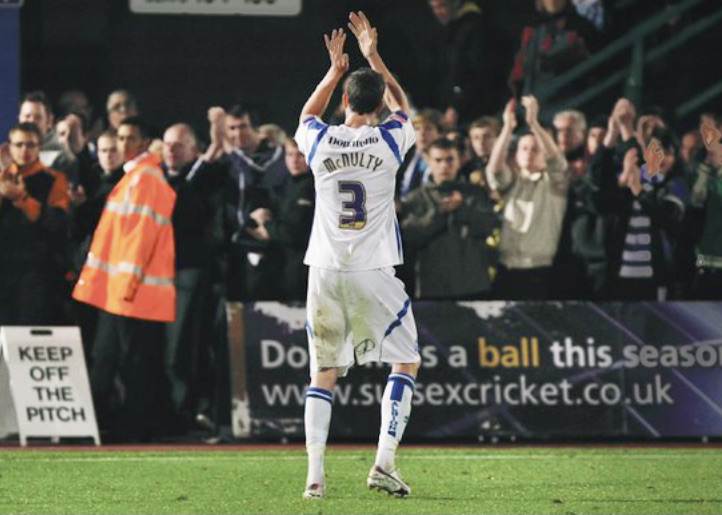
Both Davies and McNulty were on the scoresheet when Peterborough visited the Withdean on 10 February but Barry Fry’s side took away the three points courtesy of a 4-2 win; Craig Mackail-Smith scoring for Posh along with strike partner Aaron McLean (two) and Dean Keates.

With only one League One win in six and a hoped-for tilt at silverware – the Johnstone’s Paint Trophy – gone in a penalty shoot-out defeat to Luton Town, the second coming of Adams was over. That horrendous injury to McNulty came while Dean White was caretaker manager and, when new boss Russell Slade arrived, one of his first tasks was to bring in Gary Borrowdale on loan from QPR to cover McNulty’s absence.

A change in manager often spells bad news for certain players and, after those successful first two seasons at Barnsley, McNulty found his face didn’t fit when David Flitcroft succeeded Keith Hill as manager. He’d only had one first team outing in a Capital One Cup tie against Southampton.

He grabbed the chance to join Tranmere Rovers on loan in November 2013, although he told the Liverpool Echo: “I have not even had a chance there.  I think I should still be playing for Barnsley.

“They are struggling defensively this season and had been conceding a lot of goals. But now I’m thinking about helping Tranmere.”

Rovers boss Ronnie Moore said: “Jim is a knowledgeable player and a good talker. He settled in quickly here. He is a footballing centre-back, rather than the Terry Butcher type. I don’t think you will see too many cuts and bandages around Jim’s head. He is clever. He drops off and picks the ball up.”

In January 2014, McNulty reached a mutual agreement with Barnsley to terminate his contract and he switched to Bury under old boss Flitcroft. He played 51 times for the League Two Shakers before beginning a long association with Rochdale in 2015.

McNulty in control with the Shakers

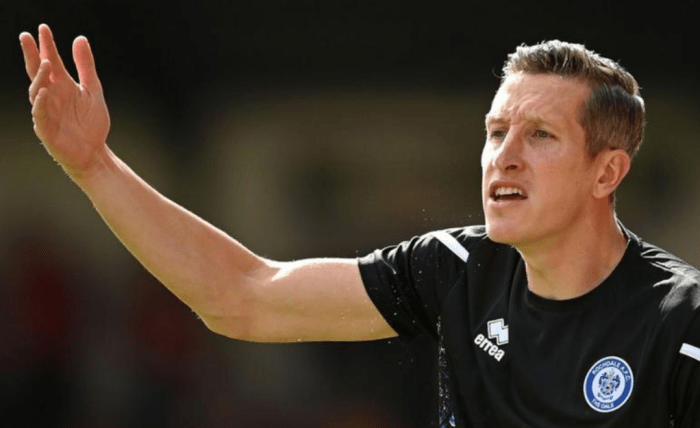
Over eight seasons, McNulty played a total of 237 matches for Dale, eventually combining coaching with playing. In August 2022, he found himself in interim charge for three matches after the club sacked Robbie Stockdale.

Former Morecambe boss Jim Bentley was appointed manager but when his services were dispensed with in March 2023, with Rochdale at the foot of League Two, 2023, McNulty once again stepped in as boss.

He was unable to prevent the club’s 102-year reign as a league club coming to an end but, in May 2023, he was appointed manager on a two-year deal.

“The opportunity to lead our team and represent our club, which the fans cherish, has always been a dream of mine,” he said.

“To be given the opportunity at a club so close to mine and my family’s hearts, is really special to me.
“As a boy, first and foremost, I dreamt of becoming a footballer, then when I did, I very quickly knew I wanted to become a manager thereafter.

“Within a couple of years of being a Dale player, I knew that this would be the club where I hoped to fulfil that ambition.”
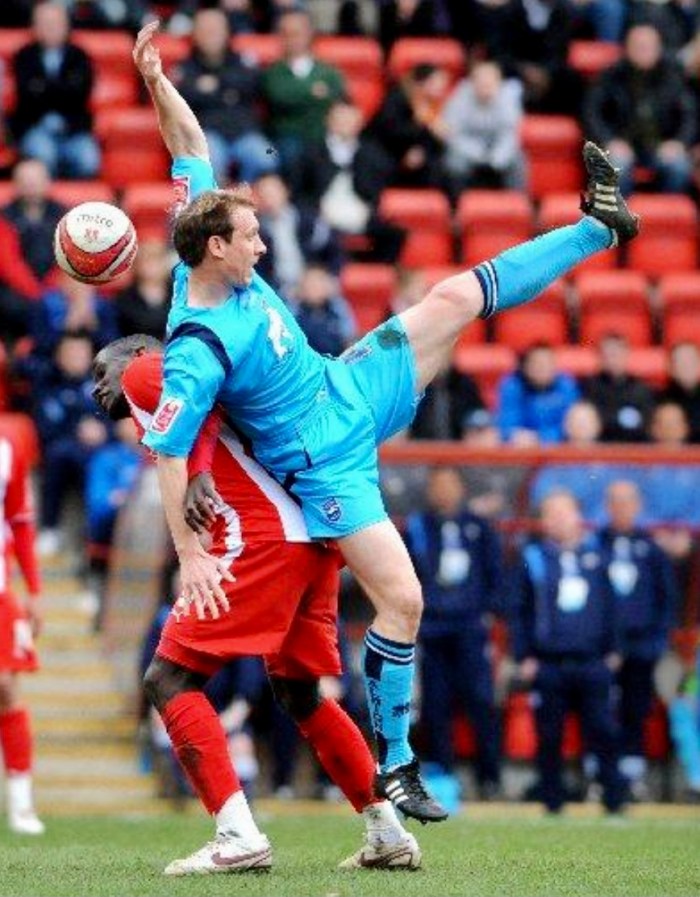
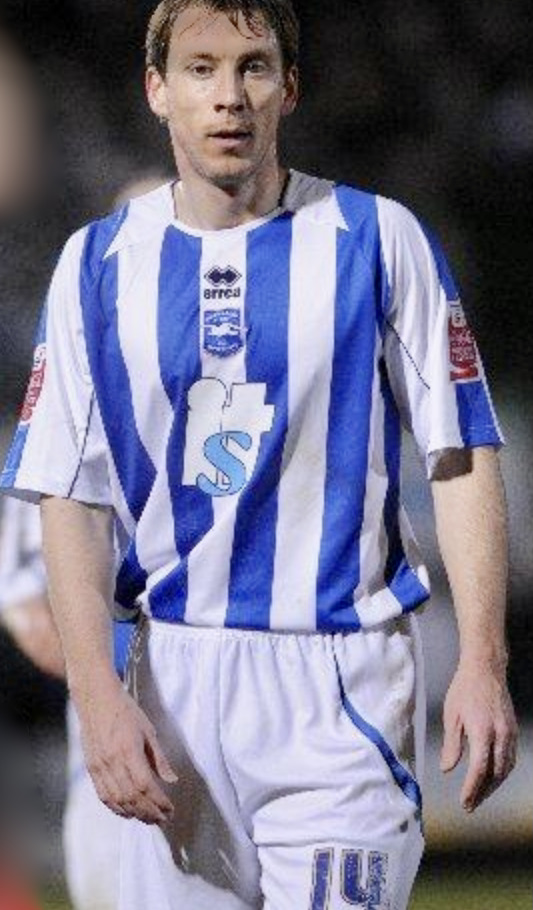
David Livermore was no stranger to yellow and red cards

DAVID LIVERMORE was one of those signings Brighton fans had a good feeling about, only to be disappointed with the outcome.

Here was a player who had learned his craft over 10 years as a youngster at Arsenal and, at 28, had played most of his career at second tier level.

So, when Micky Adams got him on a free transfer from Hull City for League One Albion in the summer of 2008, the signs were encouraging.

“David is an experienced midfield player who has played most of his football in the Championship,” Adams said. “He’s a versatile player who can play in midfield, left wing and left back, and he’s another quality signing.”

Maybe it was that versatility that counted against him, but by the turn of the year he’d only made 13 starts and had picked up so many bookings that he had to serve a suspension.

Perhaps the writing was already on the wall. “Suspension and the midfielder more often than not went hand in hand – his passion, commitment and tough-tackling nature meant that the former Arsenal trainee picked up a huge 86 yellow cards and 3 reds in his Lions career,” Millwall fan Mark Litchfield wrote in a profile on newsatden.co.uk.

The player’s frustration was revealed in an Argus interview with Andy Naylor, who said: “Livermore is an ‘old school’ player, more comfortable with an era when crunching challenges were greeted matter-of-factly by opponents and with no more than a quiet word from officialdom, rather than the modern malaise of writhing opponents and card-happy refereeing.”

Livermore told the reporter: “It’s the way things are now, suspensions are part and parcel of the game. I am someone that likes a tackle and, unfortunately, I’ve got six bookings now.

“The game has changed a lot. The referee was threatening to send me off at the weekend and I only gave away two fouls in the whole game. I think the tackle is slowly being erased.”

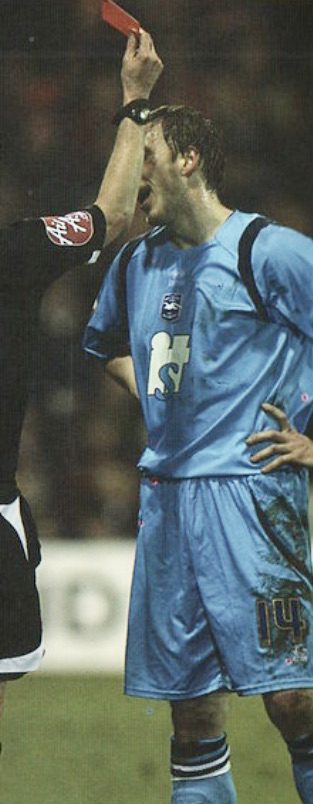
After the suspension, Livermore struggled to regain a place in the squad and he wrecked the opportunity of a rare start in the Johnstone’s Paint Trophy when he was sent off for a bad foul in the semi-final at Luton Town. Albion clung on to a 1-1 draw but losing on penalties meant they were denied a trip to Wembley for the final against Scunthorpe.

That disappointment proved to be the final straw for the Adams reign, although being four places off the bottom of the table didn’t look pretty either.

Livermore went on as a sub in Adams’ successor Russell Slade’s first game in charge, a 2-1 defeat at Leyton Orient, and got a start in a home 5-0 win over the manager’s previous club, Yeovil.

He then started at left-back in a 3-0 defeat away to Walsall three days later, but was subbed off at half-time, and his replacement, loanee Gary Borrowdale, was Slade’s preference in that position for the rest of the season. Livermore was sent on loan, ironically to Luton.

But he had penned a two-year deal when signing the previous summer so he was back at Brighton for the 2009-10 season. He warmed the bench nine times in the first half of 2009-10 but only saw action once, going on as a sub for Andrew Whing in a 1-0 defeat at Orient in the JPT.

The arrival of Gus Poyet as manager didn’t help his cause either and eventually there was a mutual parting of the ways in February 2010. It felt very much like a case of what might have been, and the player himself gave a very honest assessment of his time with the Albion in an interview with the Argus.

“I am disappointed I have not fulfilled the expectations of supporters and probably myself,” he said. “I’ve played the majority of my career in the Championship. I started off at Arsenal and went to Millwall in League One, adapted to that and got promoted and had six or seven seasons in the Championship.

“I’m not saying I thought it would be easy coming to Brighton but I thought I would be able to do as well as at my other clubs.”

He said Albion was “a fantastic club” and he enjoyed the team spirit and friendliness of the squad, admitting: “It hasn’t worked out how I expected but I’ve enjoyed my time there.”

Livermore reckoned it was the money he was on at Brighton that put off other sides from taking him on loan. The ending of his contract gave him free agent status, which meant he was able to organise a short-term deal at Barnet.

It obviously hit the player hard to realise his playing days were coming to an end after Barnet released him at the end of the season.

He told the Cambridge Evening News: “I’d dropped through the leagues, from Championship to bottom of League Two in a couple of seasons.

“I knew I had to make a decision. I even qualified as a personal trainer – I don’t know what I was thinking.

“From a playing point of view, I fell out of love with the game. Part of me said just stop and get a job – deliver the post or something, just get a normal job, provide for your family and enjoy your life.”

He was rescued by the offer to manage non-league Histon, and he told the newspaper. “The Histon job came up and I took it and fell back in love with the game from a coaching point of view. I was very lucky that opportunity came up at the time.”

Born on 20 May 1980, in Edmonton, north London, Livermore grew up as a Spurs supporter and was taken on by them at the tender age of seven! But frustrated at just being asked to train, rather than play games, he switched to Arsenal and was on their books for a decade.

He was on a two-year YTS scheme before turning professional but had to move to Millwall, aged 19, to get a breakthrough in the game.

Livermore had been in the same Arsenal youth side as Ashley Cole, and played five games for the Gunners reserve team in the 1997-98 season, when Matthew Wicks and Matt Upson were regulars, scoring once in a 1-1 draw against Tottenham on 17 March 1998. In a pre-season friendly at Enfield on 18 July 1998, he went on an as substitute for 23 minutes but that was the extent of his first team involvement. He made 11 appearances plus two as a sub for the reserves in the 1998-99 season, before leaving the club.

He joined on loan initially making his Millwall debut on the opening day of the 1999-00 season at Cardiff City in a 1-1 draw that hit the headlines for fan clashes rather than the football. It took joint bosses Keith Stevens and Alan McLeary only four matches to convert the loan into a permanent transfer, and Livermore was signed for £30,000.

Football history books reveal Livermore as the scorer of the final football league goal of the 20th century: an injury-time winner against Brentford on December 28, 1999. It happened to be the first of his goals for Millwall and he made 34 appearances that season.

After the disappointment of losing a play-off semi-final to Wigan Athletic in 2000, Livermore was able to savour promotion from League Two as champions under Mark McGhee in 2001; he played 39 games and was part of an eye-catching partnership with Australian international Tim Cahill.

There was more play-off semi-final heartache the following season when Millwall were edged out of the League One end-of-season final two places by Birmingham City; another season in which Livermore only missed three games – through suspension.

2004 is to Millwall fans what 1983 is to Brighton supporters: it was the year that against all odds they made it to the FA Cup Final. Millwall’s achievement was arguably more remarkable in that they were in the division below opponents Man Utd. The Lions were beaten 3-0 at the Millennium Stadium in Cardiff and Livermore gave away a penalty (bringing down Ryan Giggs) which Ruud van Nistelrooy scored from.

“We didn’t play a Premier League side all the way through until the final so it just shows you what can happen,” Livermore recalled in an interview with the Argus. “I played every minute of every game. That was the highlight of my career.”

The one consolation from the Cup Final defeat was that Millwall got to play in Europe – the UEFA Cup – the following season because United were in the Champions League. It was Livermore’s penultimate season with the Lions and, with a year left on his contract, close season speculation had him linked with a £500,000 move to either Southampton or Sunderland.

Millwall director, Theo Paphitis, said: “Livers asked to go on the transfer list and that hasn’t changed. We’ve had enquiries from two clubs, but neither have matched our valuation. We would dearly love Dave to stay at Millwall, but his contract is up at the end of the season when he would be in a position to leave us for nothing.” It emerged Arsenal were entitled to 30 per cent of any profit the Lions made if the player was sold.

Millwall managed to persuade him to stay and to sign a new contract in January 2006, with director of football Colin Lee declaring: “I have said, from the moment I arrived, David is an absolutely vital player. I’m hopeful others we are in the process of trying to re-sign will see this as evidence we have now turned the corner and are moving forward again.”

While his loyalty was rewarded with the Player of the Year trophy come the end of the 2005-06 season, Millwall were relegated to League One and Livermore, wanting to stay in the Championship, was soon on his way.

In a most curious turn of events, Livermore joined Leeds United for a £400,000 fee, telling the Leeds website: “This is a huge club, this is where you want to be playing – at the right end of the division. I just want to be part of things here. Every player wants to play in the Premier League. That’s the aim.”

But before he could kick a ball in anger for United; in fact, just 10 days’ later, he was sold to Hull City. Leeds boss Kevin Blackwell explained that he had subsequently been able to sign Kevin Nicholls from Luton Town and (future Albion loan signing) Ian Westlake from Ipswich Town, and both would be ahead of Livermore in the pecking order.

Hull began the season under Phil Parkinson, who had signed former Reading teammate Nicky Forster for £250,000, but Phil Brown took over halfway through and they only just managed to avoid relegation. However, the midfielder must have had a wry smile on his face to discover the club propping up the division were none other than Leeds!

The following season saw a big turnround in Hull’s fortunes and they won promotion via the play-offs although Livermore was on the periphery and on transfer deadline day in January 2008 he moved to Boundary Park, Oldham, pairing up with Preston midfielder Jason Jarrett, another loanee who he would subsequently meet again at Brighton.

That introduction to management at Histon, when they were relegated from the Conference in his first season and were 16th in Conference North the following year, proved a steep learning curve for Livermore, as he told the Cambridge Evening News.

“In the first season I was player-manager I didn’t take a wage. My wife and family couldn’t quite understand why I was going through all of that for no money. Fortunately, I had some money set aside anyway, and going to Histon was the best decision I made.”

As well as having the lowest playing budget in the league, Livermore had to deal with off-field issues such as players not being paid and points deductions. “It was a baptism of fire,” he told the newspaper. “I learned a lot about dealing with contracts, managing individuals, trying to make things more professional, and getting players in to help the team.

“All you can do in any job is be honest. I didn’t have all the answers and I told the players that. I think honesty is key, and having that integrity.”

It was while he was at Histon that he began talking about his future coaching career with his friend and former Millwall teammate, Neil Harris, who was also coming to the end of his playing career (at Southend United). When Harris was injured, he went to watch a few Histon games and Livermore told cardiffcityfc.co.uk. “It was always good to have his eyes on the games and bounce ideas off each other.

I’ve known Neil since I was 19. We played together at Millwall for about six seasons and always stayed in touch after that despite our careers going in different directions.”

In 2012, Livermore had the opportunity to return to Millwall, as youth team coach, and Harris followed him back to take charge of the under 21s. “I’d assist him on his games with the 21s during that time and then when the opportunity came for him to take over as first team manager (in 2015), he asked me to join him, which was an easy decision for me to make,” said Livermore.

The pair took Millwall to the League One play-off final at Wembley in 2016, when they were beaten 3-1 by Barnsley, and the following season they returned after finishing sixth in the table and won their place back in the Championship courtesy of a 1-0 win over Bradford City. They also twice took Millwall to the quarter finals of the FA Cup.

Although Millwall won two of their first three matches of the 2019-20 season, a subsequent seven-game winless run saw the pair leave Millwall in October 2019. Club chairman John Berylson said: “Both Neil and David leave with their heads held high, forever friends of the club, and I wish them both every success in their future careers. They will always be welcome at The Den.”

The following month the pair were installed as successors to the Neil Warnock regime at Championship Cardiff and the Welsh side finished fifth in the league by the end of the first season but lost out to Fulham in the play-off semi-finals.

Unfortunately, the churn of managers in the Welsh capital didn’t spare Harris and Livermore and, in January 2021, after 14 months, their services were dispensed with after a six-game losing streak. Mick McCarthy and Terry Connor took over: they were only there for nine months.

After a year out of the game, Harris and Livermore were back in the managerial saddle in January 2022 at League One Gillingham, but they couldn’t prevent the Gills being relegated at the end of the season.

Injury-hit Albion among six to borrow Borrowdale

DEFENDER Gary Borrowdale couldn’t have been more aptly named for a loanee which is just as well because he found himself in that situation half a dozen times over five years.

He made a temporary switch to Brighton from QPR in March 2009 to fill the spot vacated when Albion’s regular left-back Jim McNulty suffered a shocking injury in a 4-0 home defeat to Crewe Alexandra.

While McNulty needed an operation to remove a kidney, former England under 20 international Borrowdale had the chance to resurrect his flagging career with the Seagulls.

For a player who’d clocked up 100 appearances for Crystal Palace by the time he was 21, there was the inevitable ‘noise’ about helping out the arch rivals, but Borrowdale just wanted some game time, and he was one of five debutants who pulled on Albion’s sky blue second kit for the game at Brisbane Road on 7 March 2009.

Brighton lost that match 2-1 but, under Russell Slade’s astute stewardship, Borrowdale acquitted himself well during 12 matches through to the end of the season and the Albion just managed to retain their third-tier status.

Borrowdale montage“I made my debut for Palace at 17 and played my first game in the Premiership at 18, so it was a great start and Palace will always be dear to me as a result,” Borrowdale told Spencer Vignes for a matchday programme article.

“The highlight of my career would be the promotion I had with Palace when we went from the Championship to the Premiership,” he said, referring to the play-off win over West Ham, the day before Albion beat Bristol City in their own divisional play-off.

Borrowdale returned to west London after his spell on the south coast but in March 2010 he went on loan to Charlton Athletic and the following year had temporary spells at Carlisle United and Barnet.

His league career seemed to be over when QPR released him in June 2012 and he went over to Northern Ireland to join second tier outfit Carrick Rangers.

In January 2014, he looked to have got a foothold back in the English professional game when loaned by Margate to Gillingham, but he didn’t play any first-team games and was released at the end of the season.

Former Albion boss Peter Taylor told the club’s official website: “He’s done very well, lost weight every week and looked fitter every week.

“I just don’t think he’s ready for League One football, especially considering if we have to play Saturday and Tuesday. As a result, I have decided to let him go.”

Borrowdale then linked up with Greenwich Borough, initially as a player, before becoming a coach.

Born in Worcester Park, south London, on 16 July 1985, Borrowdale came through the youth ranks at Selhurst Park and Trevor Francis handed him his debut for Crystal Palace in December 2002.

When Iain Dowie took over as manager, Borrowdale quickly became a regular in the first team. He also represented England at each of the age groups from 16 to 20, playing alongside the likes of Gary Cahill in defence.

In a 2-2 draw with the Netherlands, played at Turf Moor, Borrowdale’s teammates included fellow Palace youngster Scott Flinders in goal and future Albion player Will Hoskins.

Borrowdale won Palace’s Young Player of the Year award in 2006-07, but, when Dowie moved on to manage Coventry City, Borrowdale joined him there, a tribunal fixing the transfer fee at £650,000.

The move didn’t work out, though, and, with Dowie gone, Borrowdale was sidelined, eventually being sent out on loan to Colchester United and then QPR.

Paulo Sousa took him on loan in November 2008 and, although he didn’t feature, made the move permanent in January 2009 on a three-and-a-half-year deal. He made just 22 appearances for QPR during that time.

Borrowdale stripes

Pictures as featured in the Albion matchday programme.

Relegation scrap was chicken feed for troubled Bangura

IN THE TUMULTUOUS days after Albion dispensed with the services of Micky Adams in early 2009, virtually half the side was made up of loan players.

Away to Leyton Orient on 7 March 2009, five loanees were involved, including Al Bangura, a 21-year-old midfielder from Watford.

Goalkeeper Mikkel Andersen was on loan from Reading, QPR’s Gary Borrowdale was left-back and Lloyd Owusu, released by Cheltenham, was up front.

Colchester United’s Matt Heath scored Albion’s only goal in a 2-1 defeat, as well as conceding a penalty, while Bangura was considered fortunate to escape with just a yellow card for a high challenge on Charlie Daniels.

The game saw new boss Russell Slade take charge for the first time, inheriting signings authorised by caretaker manager Dean White, who said of Bangura: “Al is someone we have been aware of for some time. He is a lively, energetic and tenacious midfielder.”

Bangura was just grateful to be playing in the UK having come close to being deported back to his native Sierra Leone the previous year.

Six years later, he revealed to the BBC that he was originally brought to Europe from Guinea by a human trafficker in order to be used as a male prostitute.

He had a lucky escape but the experience prompted him to take action to work with the Premier League to prevent other vulnerable young people being similarly caught up.

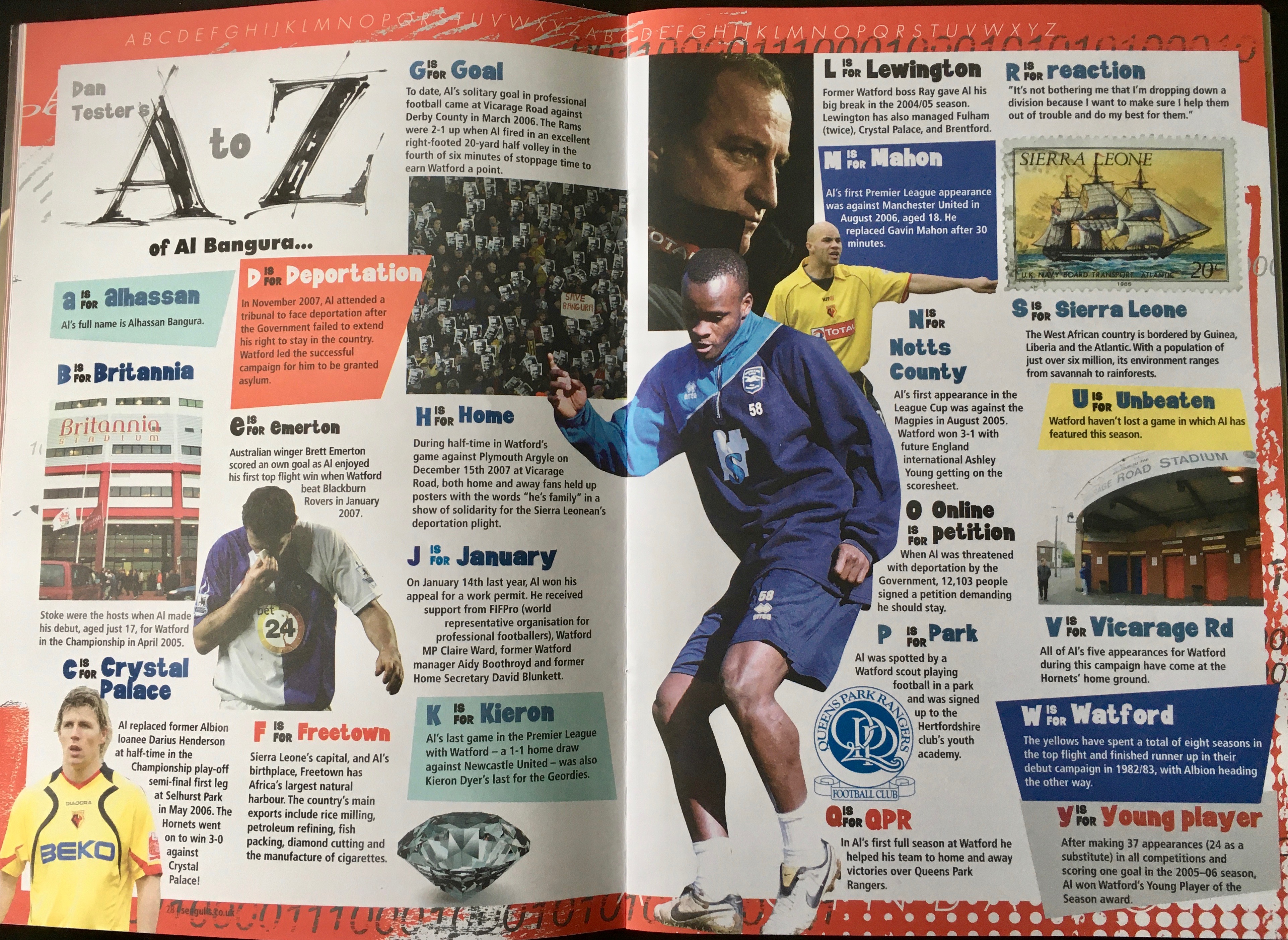
prog spreadBangura was profiled in the matchday programme

Bangura started six games for the Albion, and he said: “It’s not bothering me that I’m dropping down a division because I want to make sure I help them out of trouble and do my best for them.”

In his third game, he was alongside Jason Jarrett in the centre of midfield when Albion thrashed Yeovil Town 5-0 at Withdean, threading through a pass for Nicky Forster to score.

However, at the expiry of his loan, he returned to Watford but was released at the end of the season and joined Blackpool who were in the Championship at the time.

Limited to just 10 games for the Tangerines, Bangura headed for Turkey to play for Mersin Idmanyurdu and then played five games for Azerbaijani team Gabala, managed by the former Arsenal captain Tony Adams.

Hockaday w Al BHis former youth coach at Watford, Dave Hockaday (left, who briefly managed Leeds United) signed him for Conference Premier outfit Forest Green Rovers in 2011, and he completed 91 appearances for them before getting a chance to return to league action with Coventry City.
The aforementioned Hockaday had become under 21 manager at the Sky Blues and Bangura won a short-term contract after a successful trial, although he didn’t feature in Tony Mowbray’s league side.

After spending time working with the Premier League on the issue of the growing number of African boys being tricked into leaving their home for the promise of a football career in Europe, he returned to playing in the National League, initially with St Albans City and then Nuneaton Town.

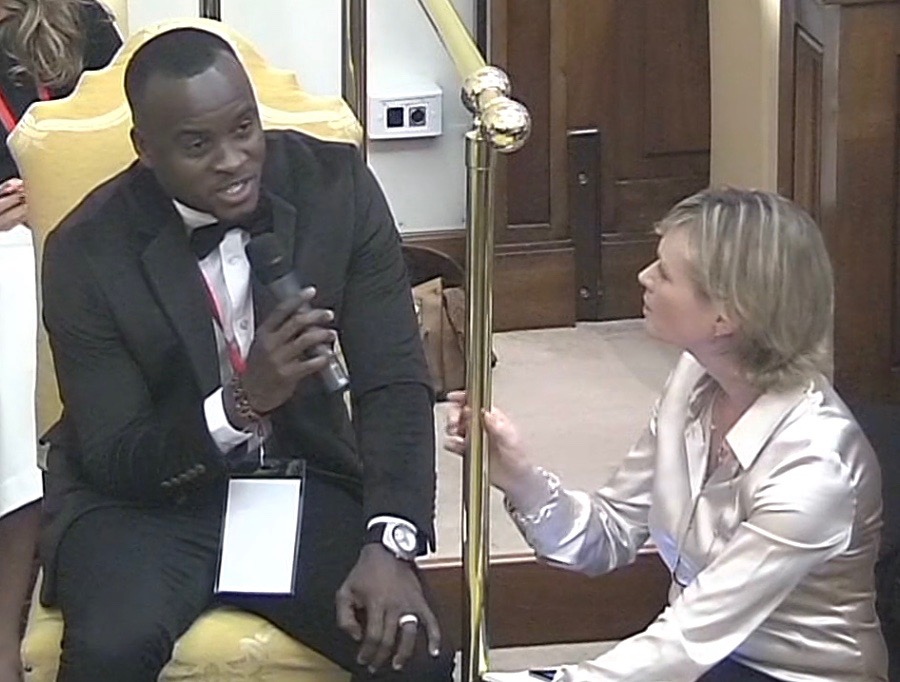
Bangura talksIn October 2016, Bangura spoke to the Santa Marta Group – an alliance of international police chiefs, bishops, religious communities and NGOs – at an international conference in Rome to tackle human trafficking and modern slavery.

Born in Freetown, Sierra Leone, on 24 January 1988, Alhassan Bangura sensed trouble when his family expected him to get involved in some kind of secret society at the age of 14 so he ran away to Guinea where he met a Frenchman who promised to help him realise his dream of pursuing a football career in the UK.

That dream very nearly turned into a nightmare when he realised on arrival in England aged only 15 that he was being lined up as a male prostitute. Luckily, he screamed out, escaped the room where he was being held, and pleaded for help from a Nigerian passer-by who directed him towards the Home Office to get official assistance.

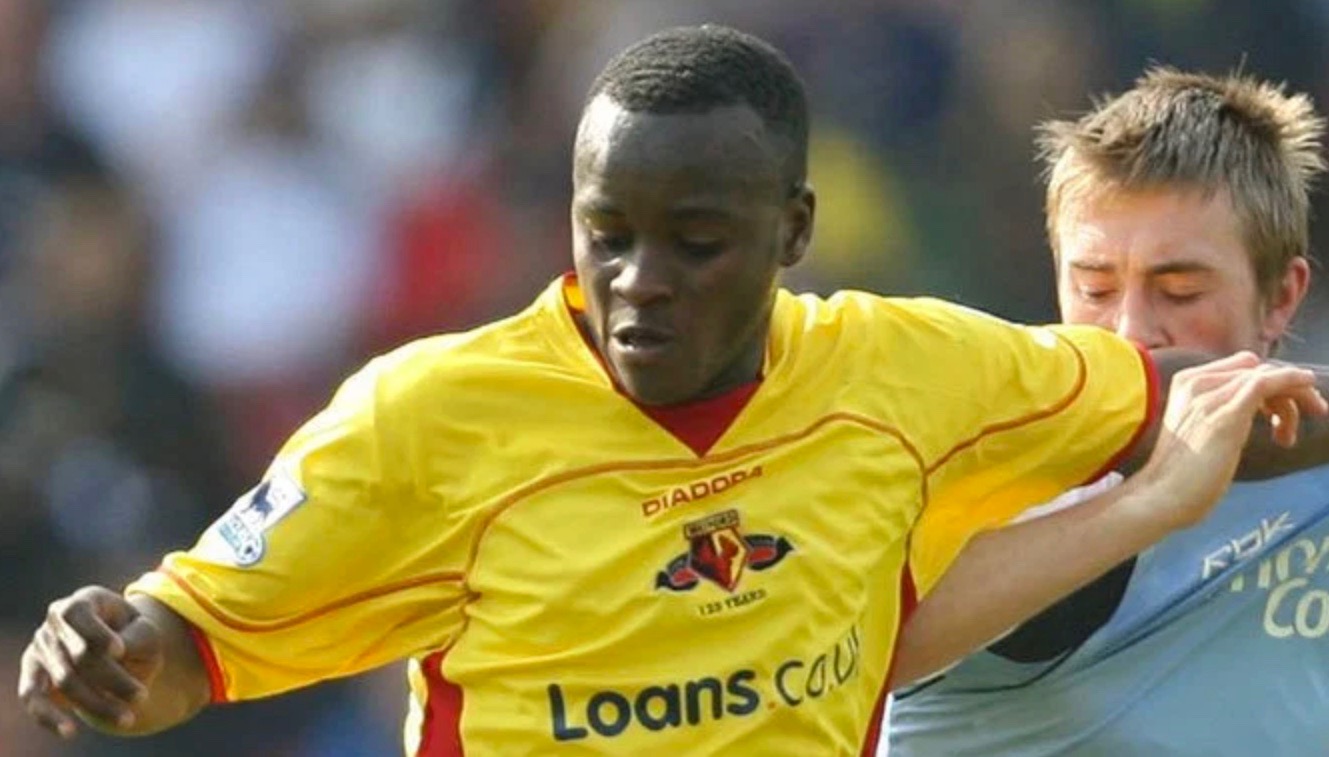
Bangura WatThe ’system’ thankfully came to his aid and before long a Watford scout spotted him playing football in a park and signed him up to the Hertfordshire club’s youth academy, where he was nurtured by assistant academy director Chris Cummins, who was also recognised for helping Hameur Bouazza, Adrian Mariappa and Lloyd Doyley to make it through to the first team.

Bangura was just 17 when then Watford boss Ray Lewington, better known as Roy Hodgson’s loyal assistant, gave Bangura his first team debut in April 2005, away to Stoke City at the Britannia Stadium.

Eleven months later he scored his first goal. It came at Vicarage Road v Derby County – a right-footed 20-yard half-volley in the fourth of six minutes of stoppage time to earn Watford a point in a 2-2 draw.

Bangura was voted Watford’s Young Player of the Season in 2005-06, a year in which he made 37 appearances (24 of them as substitute).

After Watford won promotion in May 2006, Bangura made his first Premier League appearance against Man Utd in August 2006. He was still only 18, and came on as a sub for Gavin Mahon on 30 minutes.

While everything seemed to be going well, Bangura faced a bombshell in November 2007 when a deportation tribunal failed to extend his right to stay in the country.

Al B on TV

Watford led a successful campaign for him to be granted asylum and, on 14 January 2008, Bangura won his appeal for a work permit, receiving support from FIFPro (world representative organisation for pro footballers), Watford MP Claire Ward, Sir Elton John, former Watford manager Aidy Boothroyd and former Home Secretary David Blunkett.

Flu-hit Flinders came to the rescue in a goalkeeping crisis

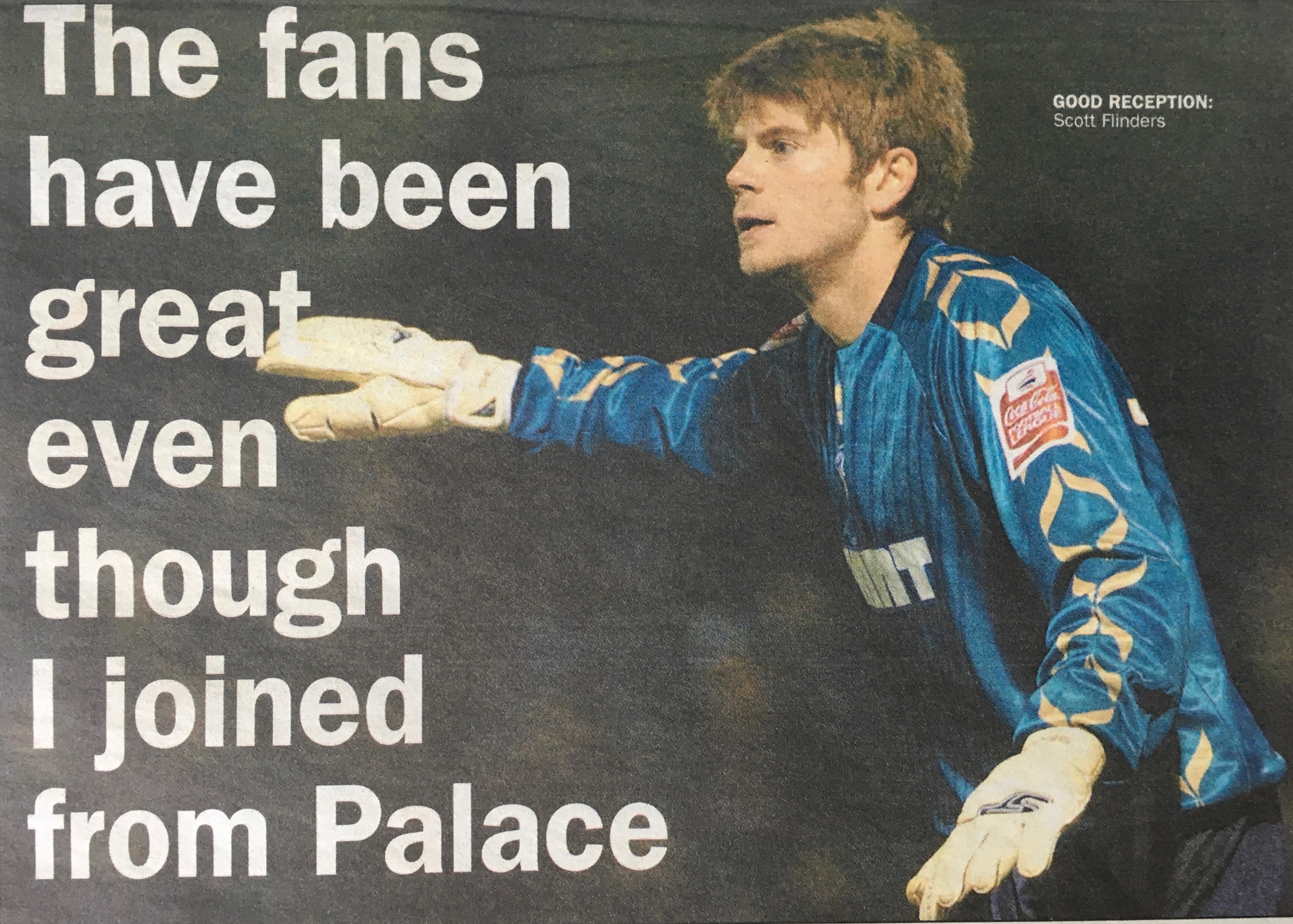
AN UNDERSTUDY to eccentric Crystal Palace goalkeeper Gabor Kiraly played a dozen games in goal for Brighton in the spring of 2007.

Scott Flinders was just 20, and suffering from the effects of a bout of ‘flu, when he answered a call from fledgling manager Dean Wilkins to help solve a goalkeeper crisis.

With first choice Michel Kuipers injured, Wilkins considered it too early to risk rookie ‘keepers Richard Martin and John Sullivan, so he turned to Albion’s arch rivals to borrow 6’ 4” Flinders.

“I always thought Millwall were Palace’s biggest rivals but then I got told, I think it was by Dougie Freedman or Clinton Morrison, that it is Brighton,” Flinders told The Argus. “It didn’t put me off signing. It is just about playing games.”

IMG_6009Flinders made a slightly shaky start in a win away to Gillingham, and in a defeat to Bristol City on his first appearance at Withdean, but he made some important stops to help earn points in consecutive away draws at Crewe and Blackpool.

Manager Wilkins told The Argus: “We knew we were bringing in somebody who was not 100 per cent for the first couple of matches. Scott has recovered from that and he has done very well for us.

“We are still in a position where we need another ‘keeper with a bit more experience than the young lads we’ve got.”

Flinders seemed happy to extend his loan from one month to two and said: “The fans have been absolutely excellent towards me, even though I am coming from a rival club.

“John Keeley, the goalkeeping coach, has been different class and I am delighted to be here.”

Unfortunately, Albion lost all five of their matches in April and finished 18th, six points clear of relegation.

Born in Rotherham on 12 June 1986, Flinders joined nearby Barnsley as a youth trainee in 2003 and made it through to the first team in 2005 when former Albion striker Andy Ritchie was the manager.

He took over from Ross Turnbull and featured in 11 games over three months before losing his place and subsequently having to settle for being understudy to Republic of Ireland international Nick Colgan.

However, Flinders earned his own international recognition in the shape of five caps for the England under 20 side, three of them in the 2005 Toulon tournament. He made his debut in a 3-0 win against the Korean Republic in a side which also featured Liam Ridgewell, Liam Rosenior and Greg Halford.

He kept his place three days later in a 0-0 draw with France, then came on as a sub three days later in a 1-1 draw with Mexico.

In August the same year, he started against Russia but was substituted as the side went down 4-0. A teammate in that one was Will Hoskins. His final match was at Turf Moor when England drew 2-2 with Holland, although he was subbed off again. In that England team was future England centre-back Gary Cahill while the left-back was Gary Borrowdale, who played on loan at Brighton under Russell Slade in 2009.

Frustrated playing second fiddle at Barnsley, Flinders had trials at Chelsea and Wigan Athletic but he ended up at Crystal Palace in 2006 as part of an exchange deal involving midfield player Sam Togwell.

It’s believed Palace paid an initial fee of £250,000 with additional instalments to be paid according to appearances.

However, Flinders only made one league cup appearance before being sent on loan to Gillingham. It was the first of five loans away from Selhurst Park, the lengthiest being his time at Brighton.

Other loan spells saw him spend time with Yeovil Town, Blackpool and Falkirk and he was released by Palace in May 2009 after playing just 13 games for them in three years.

His years of understudying finally came to an end when he headed to the north east in the summer of 2009 and joined Hartlepool United, where he established himself as first-choice ‘keeper.

Flinders even got on the scoresheet while at Hartlepool, scoring with a 94th minute header against Bournemouth on 30 April 2011 to earn his side a point in the last home game of the season.

The 2012-13 season was a particular triumph for him when he earned the accolades of Player’s Player, Supporter’s Player, Away Player of the Year and Hartlepool Mail SportsMail Player of the Year.

In six years at Hartlepool, he made more appearances – 276 – than any other ‘keeper in the club’s history, eventually moving on in June 2015 to League Two York City.

Flinders received a five-match ban from the Football Association in August 2016 following an incident in a League Two game between York and AFC Wimbledon on 19 March that year.

It was alleged Dons striker Lyle Taylor grabbed Flinders by the testicles and, as he retaliated, the goalkeeper was alleged to have used racist abuse.

Flinders denied the charge but was found guilty by the FA following an independent regulatory commission. Fined £1,250, Flinders was also warned about his future conduct and ordered to complete an education course.

York initially suspended Flinders but then loaned him out to National League rivals Macclesfield Town, who he subsequently joined on a contract from January to June 2017.

On deadline day in August 2017, he joined League Two Cheltenham Town, with boss Gary Johnson telling the club’s website: “Scott has played over 400 league and cup games in his career and there is no substitute for experience.”

In January 2020, Flinders suffered a broken leg in a game against Oldham which put him out of the game for nine months.

  • Pictures and headlines from The Argus.