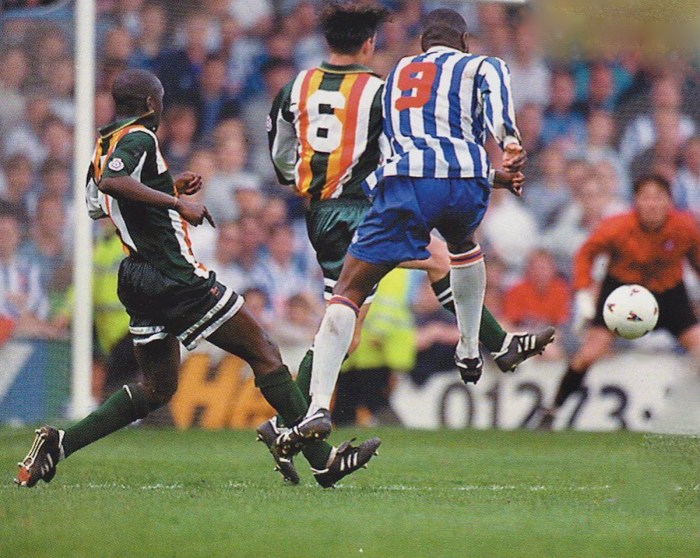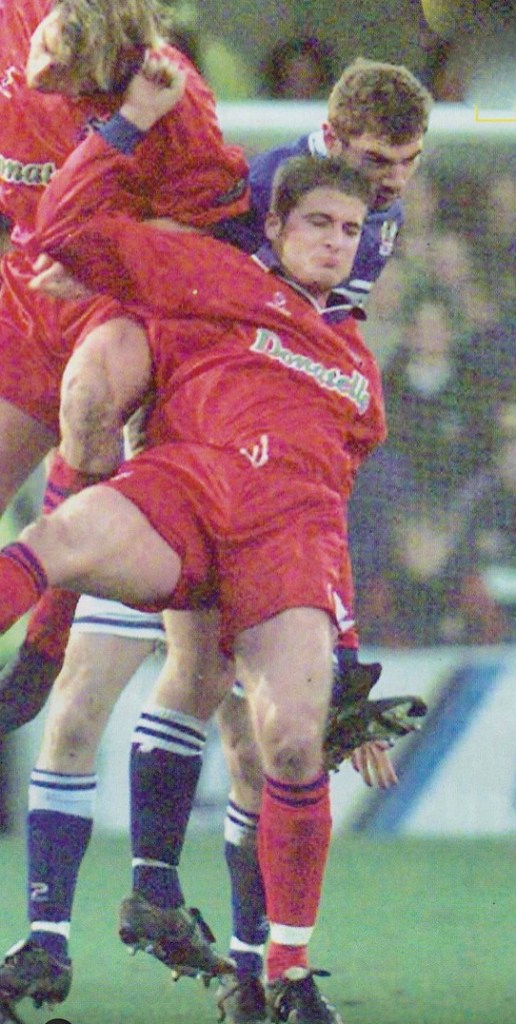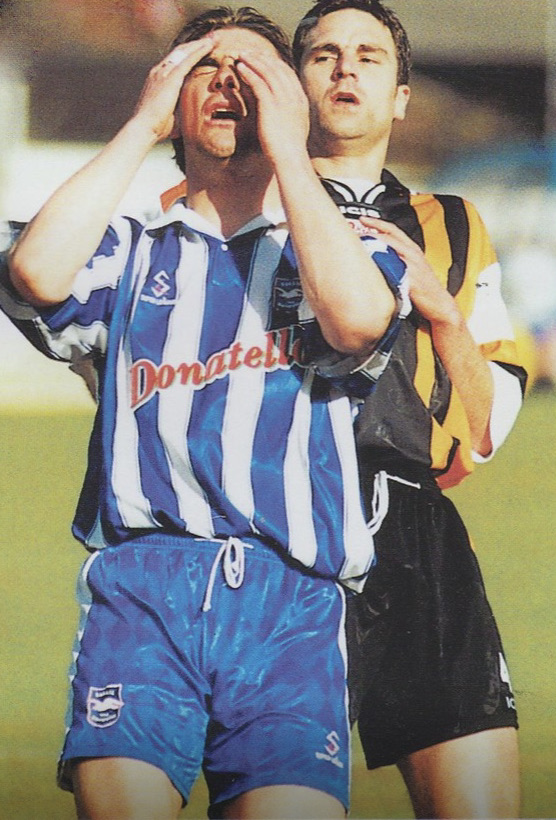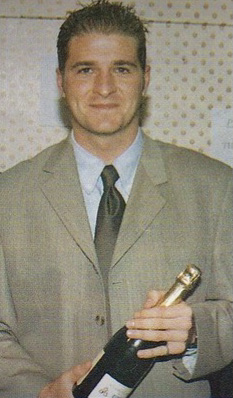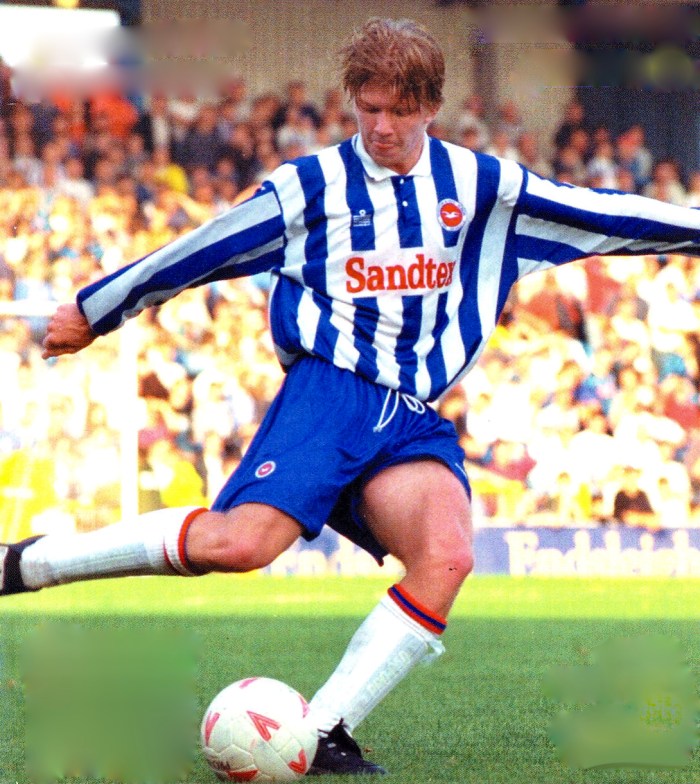
Early promise faded for teenage Geordie debutant McGarrigle

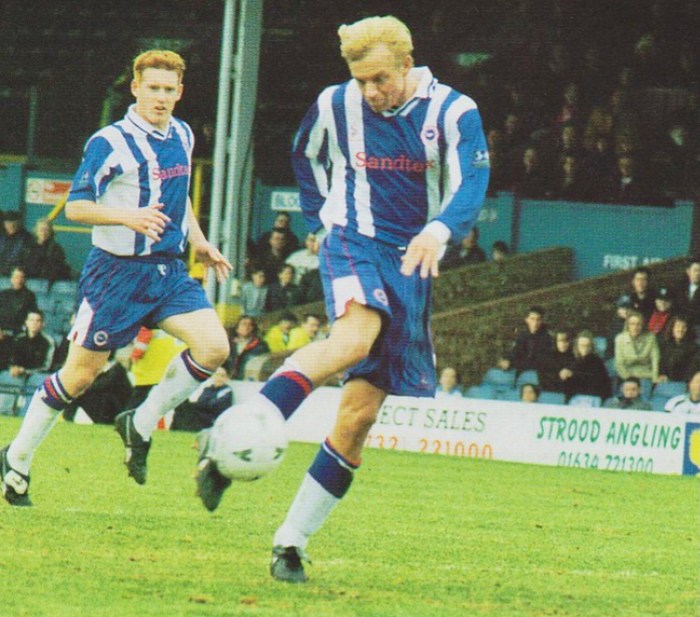
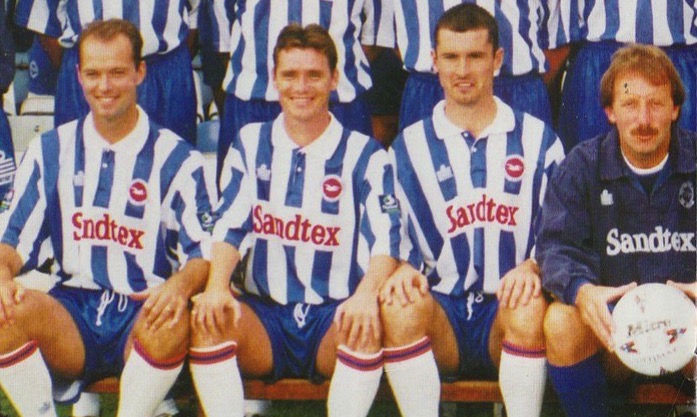
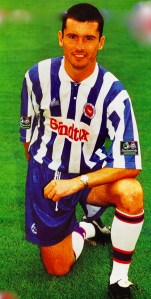
A GRADUATE of the famous Tyneside boys club that spawned the likes of Alan Shearer and Peter Beardsley escaped the clutches of Newcastle United to play for Brighton instead.

After progressing through the ranks at Wallsend Boys Club, Newcastle-born Kevin McGarrigle and two teammates – Ian Thompson and Nicky Henderson – were snapped up by Brighton’s scouting network in the north-east.

Thompson wasn’t taken on and, although Henderson was, he returned home to play for Gateshead in the GM Conference. But McGarrigle stayed on and won a place in Albion’s first team at the tender age of 17, doing enough to earn a three-year contract.

Against a backdrop of turmoil off the pitch, with the club run by a hated regime, McGarrigle played 34 games plus 11 as a substitute under three different managers, mostly as a centre back.

He made his debut in the final game of the 1993-94 season (replacing the injured Steve Foster) when Liam Brady was in charge and cemented a regular place in the starting line-up for the final third of the 1994-95 season.

McGarrigle was drafted in to play alongside Foster, with Paul McCarthy on the other side, as Brady sought to bring a run of three defeats to an end.

“Although it can look like five at the back at times, it does give the chance for the flank players (Peter) Smith and (Ian) Chapman to get much more forward,” the manager explained in his programme notes.

“It has suited Foster at the centre at the back organising McCarthy and McGarrigle in front of him. All in all I think it has worked very well and it is something that I am very pleased about because the players have managed to cope.”

McGarrigle played 16 games on the trot in which Albion posted six wins, seven draws and only three defeats to finish in mid table.

Brady also gave the young defender a special mention in his programme notes at the beginning of the 1995-96 season, pointing out: “I have been telling you that we have some very good talent among the younger element at the club.

“Kevin McGarrigle is doing very well. He has had to come into the middle of the park and do a job. He is there because of the injuries we have had, and he has done well.”

Although he played in the opening two games of the following season, his involvement in the side which was eventually relegated from the third tier under Jimmy Case was more often than not only from the bench.

One of those appearances, when he replaced an injured Smith in a midweek away game at Wycombe Wanderers (on 6 March), saw him score his one and only goal for the Seagulls to bring an eight-game winless run to an end.

Relegation-haunted Albion inflicted a fifth defeat in six games on Alan Smith’s Chairboys. Midfielder Jeff Minton put the Albion ahead on 55 minutes.

McGarrigle scored with what Claire Nash of the Bucks Free Press described as an “excellent” goal. “McGarrigle perfectly timed a run from midfield to meet a left-wing cross from Craig Maskell on 80 minutes,” she wrote.
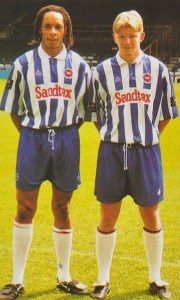
Peter Smith and Kevin McGarrigle

Case’s preference had been to go with just two centre backs, initially with Foster alongside McCarthy, then, when age caught up with Foster, trying another former England international, Russell Osman, before introducing Ross Johnson alongside the young Irish defender.

Although McGarrigle was assistant Junior Seagull president in the 1996-97 season (Peter Smith was president), his playing time was even more reduced under Case’s successor, Steve Gritt, and he made only a handful of starts.

Gritt went for more experienced heads, like Mark Morris and Gary Hobson.

Nevertheless, the matchday programme showed he wasn’t forgotten, when, for the Wigan Athletic home game on 12 April 1997, it devoted a page photo feature of him in action.
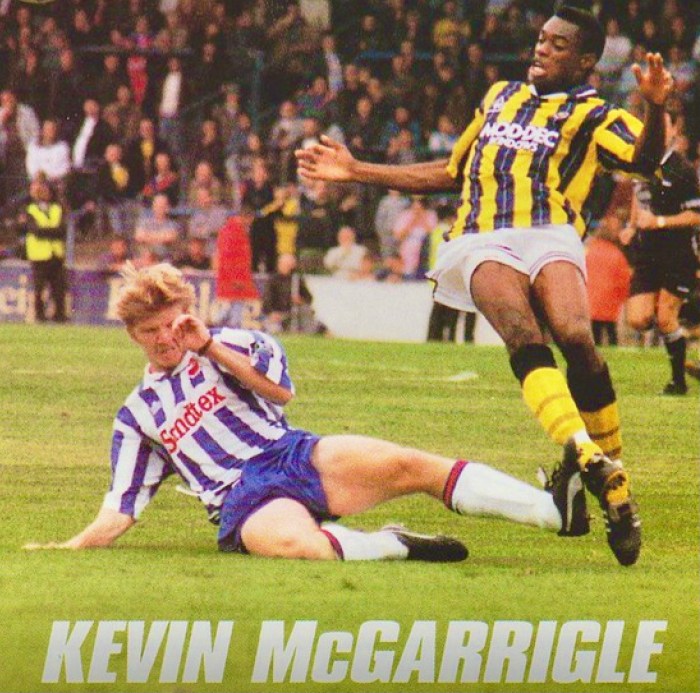
But the following month he wasn’t given a new contract by Gritt, and he made his way back to the north-east. Initially he linked up with Spennymoor United. Before the year was out, though, he switched to Blyth Spartans and was soon involved in a much publicised and televised FA Cup first round match away to Blackpool.

The tie was a magnet for the media because it pitched the 1953 FA Cup winners against a non-league side renowned for past cup exploits and, on this occasion, Blyth’s player-manager was veteran goalkeeper John Burridge, for whom Blackpool was one of his early former clubs.

The occasion, which saw the Tangerines edge it 4-3, was described in detail in this Blyth Spirit blog, which bemoaned a foul on McGarrigle not given which led to a Blackpool goal.

The following season McGarrigle switched to Tow Law Town, turning out for them for three years before moving on again, to Crook Town. His last club was Albany Northern League side Chester-le-Street Town.

Born on 9 April 1977 to Carol, who worked at a local dairy, and Ken, a self-employed gardener, McGarrigle spent his first and middle school years at Wallsend’s Stephenson Memorial School and then moved on to Longbenton High School.

He confessed in a matchday programme article that he wasn’t particularly interested in football up to the age of 12. That all changed when his school pal, John McDonald, took him along to Wallsend Boys Club when he was 13.

The club manager, Kevin Bell, quickly recognised his talent and put him in the XI who competed in the National Association of Boys’ Clubs League on Tyneside.

Steve Bruce, later Toon manager, of course, was said to be McGarrigle’s idol and he too had gone through the Wallsend production line.

The programme reported that McGarrigle was invited for trials at several clubs: he went to Everton, Ipswich Town and Bradford City, while Blackpool, Wimbledon and Charlton Athletic all offered him a YTS place.

But Albion’s north-east scout Steve Burnip won the day and Ted Streeter who ran the youth team at the time persuaded him to sign for Brighton.
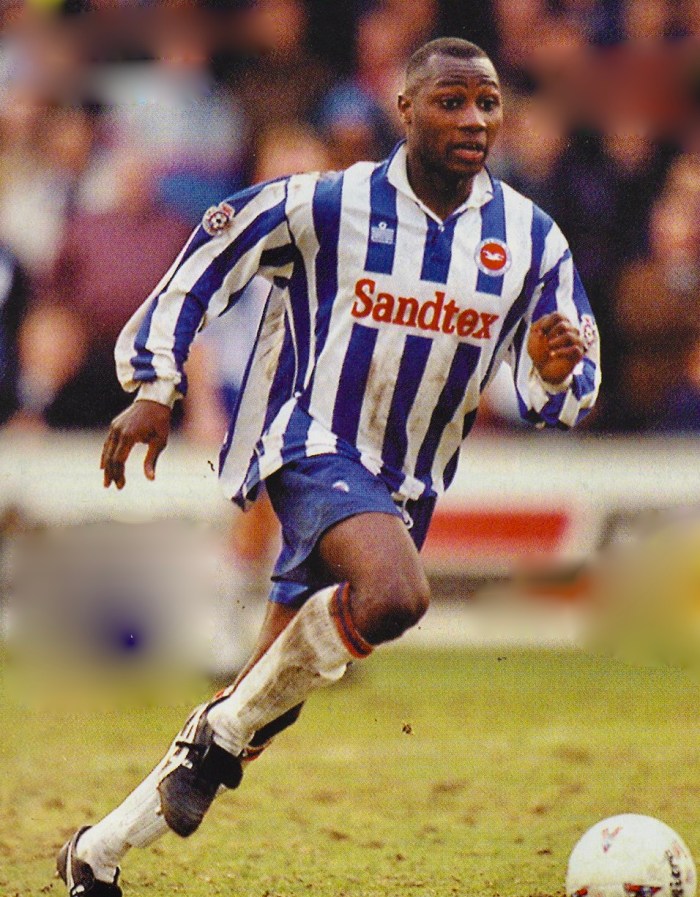
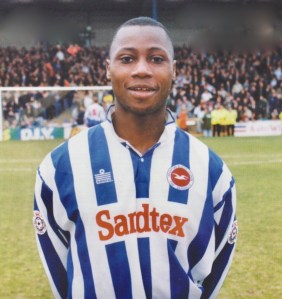
Zeke Rowe’s three goals and a red card as Albion went down

CHELSEA loanee Zeke Rowe scored three goals in nine matches for doomed Brighton and ended his spell with the ignominy of being sent off.

Rowe, a 22-year-old striker who had scored plenty at youth level for Chelsea,  was one of five new faces to join Jimmy Case’s relegation-bound Seagulls in the spring of 1996.

Winger Paul McDonald and striker Craig Maskell joined permanently from Case’s old club, Southampton, together with Saints defender Derek Allan, on loan initially and then permanently. Future captain Gary Hobson signed from Hull City.

All found themselves plunged into what turned out to be a fruitless battle to avoid relegation against a toxic backdrop created by the people running the club at that time – the hated Archer / Stanley / Bellotti regime – who tried to sell the club’s home without having a new ground to move to.

In the same matchday programme that announced the arrival of the five new players, the publication also detailed the impending departures of the likes of former first team regulars Steve Foster, Ian Chapman, Dean Wilkins, John Byrne, Stuart Myall and Stuart Munday; not to mention directors Bernard Clarke, Peter Kent, Dudley Sizen and Denis Sullivan. To misquote Shakespeare: Something was definitely rotten in the state of Hove!

Rowe made his debut in a 1-1 draw at home to Rotherham United, on 30 March, and then got off the mark with a goal away to Swindon Town four days later, although the Albion went down 3-2 (Jeff Minton scored the other).

Rowe’s picture adorned the front cover of the matchday programme for the 9 April home match v Burnley when his goal earned the Seagulls a win.

And his solitary goal also proved to be the decider in another 1-0 home win, over fellow strugglers Carlisle United, managed at the time by Mervyn Day.

Rowe’s dismissal for fighting with York City’s John Sharples came in a Thursday morning game, played five days after the official end of the season, in front of a post-War record low gate of 2,106 fans at the Goldstone.

The fixture had been rearranged because the original game 12 days previously had been abandoned after disgruntled Albion supporters had stormed the pitch in protest at the proposed sale of the ground and broken both crossbars.

It drew hysterical reaction in some quarters (probably because it was only a few weeks before England played host to Euro 96) but had the desired effect of bringing the rogue direction of the club to the attention of the football authorities who somewhat late in the day intervened to stop the Albion going out of business.

The original York game had looked like being the last ever at the Goldstone but a stay of execution saw the club stay for one more season before the site was redeveloped and the Seagulls were forced to groundshare at Gillingham.

The only happy supporters at the Goldstone on 9 May 1996 were around 400 followers of the Minstermen because their side overcame going a goal down to a Maskell opener to win 3-1, a result which prevented them joining Albion in the drop. Gary Bull, who had enjoyed a successful time on loan with Brighton at the start of that season, had equalised for York.

One City fan, Simon Worden, wrote an amusing blog about the whole occasion, and explained: “Whilst I should have been in a lecture at university at Preston, as I was only 19 at the time, I decided that the match was too important to miss and travelled down the day before to watch the match and stayed in a very cheap B&B.”

After witnessing the win, he said: “All the York fans were jumping around on a Thursday morning singing ‘We are staying up’ and enjoying the sunshine.

“One of the best days even and, whilst I was very tired, it was an enjoyable (but expensive) trip back to Preston where I had to catch up with my studies!”

Also watching on was Michael Knighton, chairman of Carlisle United, who, as a consequence of the result, were relegated with the Albion. Greg Wood, covering the game for The Independent, spiced up his report with a couple of choice quotes from him.

“Once York had gone 2-1 ahead, Brighton just weren’t interested,” said Knighton. “We’ve been relegated and we’ll never know if we should have been. This competition should be based on fairness, and towards us it hasn’t been.”

Wood also observed: “After York’s third goal, a member of their board turned to Knighton and made some distinctly unsporting gestures. Ordinary supporters have probably been expelled for less.”

Born in Hackney on 30 October 1973, Rowe was a frequent goalscorer in Chelsea junior teams playing alongside the likes of Neil Shipperley, Muzzy Izzet, Michael Duberry and Craig Burley.

But a first team breakthrough eluded him and before his time at Brighton he had scored twice in 10 games on loan at Barnet and had a trial with Swindon Town that didn’t work out.

When Chelsea let him go in the summer of 1996, he moved to Second Division Peterborough United under Barry Fry and was quickly off the mark netting the Posh opener in a 3-3 home draw with Millwall on 10 September 1996.

He was on target again, four days later, ironically against York City, in a 2-2 draw. But the season didn’t end well for Posh, because they were relegated. Rowe only scored once more in his 15 starts and 14 appearances off the bench that season.

Over the next two seasons, he only made four more starts for United and 13 appearances as a sub, while also going out on loan to Kettering Town and Doncaster Rovers.

Rowe later moved to Welling United where, according to the fanzine Winning Isn’t Everything, he was a disappointment after a bright start. It said: “Ezekiel Bartholomew Rowe, to give him his full name. Another in the long line of loanees from Uncle Barry Fry, he was brought in late in the 1998-99 season as the club attempted another Houdini act. Joined permanently in the summer, was on fire pre-season and then… he was shit. Had an impressive tattoo, erm, apparently.”

At King’s Lynn, Rowe played under his former Peterborough teammate Tony Spearing, who won the FA Youth Cup with Norwich City. (That 1983 success saw the Canaries draw 5-5 with Everton over two legs – Mark Farrington scoring four of Everton’s goals – before edging a replay 1-0).

Rowe ended his playing days with Conference North side Hinckley United where he was a teammate of Stuart Storer, who famously scored the last ever goal at the Goldstone – against Doncaster Rovers – a year after Rowe’s dismissal at that much-loved old stadium.

Andy Arnott’s United dream dashed by injury

A PLAYER who was on the brink of signing for Man Utd for £100,000 ended up playing for the Albion in exile.

But for an untimely hernia injury, Andy Arnott would have been an Alex Ferguson signing at Old Trafford.

As it turned out, the moment passed and the opportunity didn’t arise again. He later made 28 appearances for the Seagulls during the 1998-99 season when home games were played at Gillingham’s Priestfield Stadium.

It was a ground Arnott was familiar with. Born in nearby Chatham on 18 October 1973, he joined Gillingham as a trainee and had only served one year of his apprenticeship when he was taken on as a professional.

Manager Damien Richardson gave him his debut for the Fourth Division club only four games into the 1991-92 season when he was just 17.

It couldn’t have gone better because he scored the Gills’ opening goal in a 2-0 home win over Scarborough.

This was a Gillingham side that included summer signing Paul Clark, who had been part of Alan Mullery’s successful Brighton side in the late 1970s, and Mike Trusson, who’d won promotion from the Third Division with the Seagulls under Barry Lloyd. A young Richard Carpenter was also breaking through.

Arnott scored three goals in 23 appearances by the season’s end although one goal and two appearances against Aldershot were later expunged from the records because the Shots were expelled from the league.

Nonetheless, the youngster’s emergence hadn’t gone unnoticed higher up the football pyramid and the offer of the chance to join United came along, ostensibly so that he could feature in their youth team’s involvement in the end-of-season Blue Star youth tournament in Zurich.

This was the era of the famous ‘Class of 92’ and Arnott found himself playing alongside David Beckham, Paul Scholes and Nicky Butt.

“After impressing during his spell with United, Ferguson made a £100,000 offer to Gillingham which was turned down by the then manager Damien Richardson,” Albion’s matchday programme noted.

In action for Gillingham against Albion’s Nicky Bissett

The player then suffered a hernia injury that put him out of the game for a year, putting paid to any further interest from United.

“I was gutted at the time, but it was a case of just getting on with returning to fitness and playing football,” Arnott said.

Back at Gillingham, he played 50 matches and scored 12 goals but then, in January 1996, got a £15,000 move to Leyton Orient. He spent a season and a half with the Os under manager Pat Holland and played in every position to help out the team, including goalkeeper in one emergency.

Arnott played under Micky Adams at Fulham

In the summer of 1997, after Fulham’s promotion from Division Three under Micky Adams, Arnott moved to Craven Cottage for an undisclosed fee (thought to be £25,000).

Within a few months, Mohammed Al Fayed took over the club and sacked Adams.

“All of a sudden Fulham went from being an ordinary Second Division outfit to a multi-million pound club,” he said. “I felt sorry for Micky as he had done a fantastic job, but he did foresee what was coming and sorted out long term contracts for most of the players.”

The new management duo of Ray Wilkins and Kevin Keegan brought in their own players and Arnott found himself confined to the reserves with the likes of Mark Walton, winger Paul Brooker, and forward Darren Freeman.

He scored twice for Fulham Reserves in a 3-0 win over Albion’s reserve side on 21 October 1998, and that persuaded Brian Horton to take him on.

“A few clubs had shown an interest around that time, but Brighton were the first that I spoke to and I liked what I was hearing so I signed straight away,” he said.

Horton signed him by the end of the same month for £10,000, plus another appearance-related £10,000, and said in the matchday programme he was “absolutely tremendous” on his debut. It came in a 1-0 win in pouring rain at Barnet when Charlton loanee defender Emeka Ifejagwa scored the only goal of the game on his debut. “He (Arnott) and Jeff Minton forged a good partnership and I am looking for that to flourish,” said Horton.

In his player-by-player commentary of performances, programme columnist Paul Camillin said: “Brilliant debut. He showed a good array of passing skills and he might have the bite we’ve been lacking.”

It was the wrong kind of bite he displayed in only his fourth game, though, when he was shown a red card in the 55th minute of Albion’s 2-0 win at Horton’s old club Hull City.

Defender Ross Johnson also went for an early bath for a second bookable offence but Albion’s nine men hung on for 35 minutes to complete their fourth successive away League win: the best such run for 62 years!

There’s little doubt Arnott’s arrival coincided with an upturn in the side’s form and in the matchday programme he took time to praise Albion’s loyal followers. “It is a fantastic advantage to have the number of away supporters we do,” he said. “It makes you want to play that little bit more to give them something back. They are absolutely magnificent.”

Arnott and Jamie Moralee

In the absence of Gary Hobson and Ian Culverhouse, Arnott was given the captain’s armband although that discipline was a bit questionable at times. He saw red for a second time, after Jeff Wood had taken over from Horton, for a second bookable offence at home to his old club Orient – Os captain Dean Smith (manager of relegation-threatened Leicester) also went for a second yellow – although Wood and Orient boss Tommy Taylor both slammed referee Rob Styles for his officiating.

Man of the Match

Wood declared: “Too many officials want to stamp their authority on the game early and flash cards like they are going out of fashion.”

Although Arnott saw out the season in the starting line-up, when his old boss Adams took over from Wood, by the time the new season got under way back in Brighton, Adams had signed Paul Rogers and Charlie Oatway as his preferred midfield pair.

By the end of September, Arnott had been snapped up by Second Division Colchester United; initially on loan and then permanently when their new boss Steve Whitton completed a direct swap that saw Warren Aspinall join the Seagulls.

However, Arnott made only four starts plus eight appearances off the bench in that first season and his time with United was blighted by a long-standing groin injury.

“The whole thing has been an absolute nightmare. I have been struggling with the injury for 14 months and despite loads of rest, two operations and four cortisone injections, the problem is as bad as ever,” he told Colchester’s Daily Gazette in January 2001.

“I was really struggling just before Christmas and I visited the specialist who told me I’m pretty near to exhausting my options.

“When it’s at its worst the injury is unbearable, especially when I turn or attempt to hit a long ball.

“I’m still only 27 with what should be many years left in the game.”

Unfortunately, though, he was forced to call time on his professional playing career and dropped into non-league initially with then-Conference side Stevenage, then Dover Athletic, where he was captain, Welling United and Ashford Town.

After his playing days were over, he settled in Rochester and became a project manager for Dryspace Structures while retaining his football links as a coach for Ebbsfleet United’s under 16 team.

Albion offered temporary refuge to winger Scott Thomas

A PLAYER seen by only a few hundred loyal Albion supporters played under Brian Horton for Manchester City and Brighton.

Scott Thomas was spotted by City as an 11-year-old, joined them straight from school and was on the club’s staff for six years.

But he only ever featured for the first team on two occasions, in successive matches during Horton’s Maine Road reign.

Thomas in City’s sky blue

A serious injury while playing on loan in America dealt a devastating blow to his hopes of a top flight career, and when City overlooked Thomas during the club’s slide towards the third tier, Horton threw him a brief lifeline.

Albion’s former captain, back at the club as manager when they played home games in exile at Gillingham, inherited a side in turmoil when he took over from Steve Gritt in February 1998.

Albion were second from bottom of the basement division and had endured a 12-game winless home run under Gritt. A Valentine’s Day nightmare 0-0 draw at home to bottom club Doncaster Rovers followed by successive away defeats against Rochdale and Exeter saw chairman Dick Knight wield the axe on a man who had delivered the miracle escape from relegation less than a year earlier.

Horton wheeled and dealed as best he could with limited resources and, after one of many loanees, Steve Barnes, returned to parent club Birmingham City, he remembered the youngster who he’d given a couple of outings to at the end of the 1994-95 season.

Paul Dickov and Scott Thomas

It seems extraordinary to say it now, but Manchester City were in a pretty desperate plight themselves between 1996 and 1998. Five different managers took charge over the course of the 1996-97 season. Alan Ball was in charge at the beginning, he was followed by Asa Hartford. Then Steve Coppell took the reins, before deciding after six matches that it wasn’t for him. Former Liverpool full-back Phil Neal succeeded his former England teammate. Eventually, former Nottingham Forest player and boss Frank Clark took over.

Clark was still in charge at the start of the following season, but a run of poor results saw him off, replaced by former Everton and City centre-forward Joe Royle. He couldn’t stop the rot and City were relegated to the third tier for the first time in their history.

Although a total of 38 players saw action in that desperate but ultimately fruitless attempt to avoid relegation, Thomas wasn’t one of them.

There had been a succession of players not wanted at other clubs who pulled on Albion’s stripes that season and Horton turned to blond-haired winger Thomas on the eve of the March transfer deadline day as he shuffled his pack trying to steer the side away from the bottom of the fourth tier.

“He can play on either wing or down the middle,” said Horton, by way of introduction in his Albion matchday programme notes.

Scott Thomas (front row, second from right) in a pre-match Albion line-up

After making his debut in a 0-0 draw at Cardiff City on 28 March 1998, skipper Gary Hobson declared: “Scott Thomas did well on the right of midfield.” And Horton said: “I was pleased with the first game for Scott Thomas, he looked lively and he came off with a bit of cramp late on.”

It was the first of seven games Thomas played for the Seagulls as the season drew to a close, and in his second game Albion earned their first win in six matches, beating Scunthorpe United 2-1 in front of a Priestfield crowd of 2,141.

Thomas took over the no.9 shirt v Scunthorpe

He switched wings and played on the left in that match and Horton made a point of mentioning in his programme notes how the youngster had been unlucky to have been denied by a fantastic save by Iron ‘keeper Tim Clarke.

Unfortunately, that was the only game in which he was on the winning side: Albion drew three and lost two in the remaining matches. And Thomas was sent back to City at the season’s end.

It has since emerged that a serious injury the winger sustained two years earlier ultimately put paid to him continuing to play professionally.

He had been sent on loan to the United States to play for Richmond Kickers in Virginia. He told the Bolton News: “It was a brilliant opportunity being in the States but I shattered my left leg in four places and had to come back. I was gutted.”

As part of his recovery, he was sent to his local gym, Phoenix Health and Fitness in Bolton, and, four years after the injury forced him to retire, he bought it.

Gym owner

“Football will always be my main love,” he told the newspaper. “Keeping fit has played such a big part of my life — I’ve done various marathons and two Ironman triathlons too — so owning a gym was a natural choice.”

Born in Fairfield, Bury, on 30 October 1974, Thomas told the newspaper his father reckoned he started kicking a football against a wall or fence as soon as he could walk.

He was playing for Radcliffe Juniors when he was seven and, at 11, was scouted by City while he was playing in the Bury League.

“I thought it was brilliant at the time – it was a really big deal,” he said. “I did trials in the school holidays and then trained after school, so I’d get a bus from Bolton, through Bury and into Manchester to meet my dad before going to the grounds.”

Thomas’ son, Luca, has followed in his father’s footsteps. He worked his way through City’s academy sides but when he turned 16 switched to Leeds United’s scholarship scheme.

In the 2021-22 season, he scored 15 goals in 17 matches in the Under-18s Premier League North, and in August 2022 signed a two-year professional contract with Leeds.

“It has changed from when I was younger,” Thomas Snr told the Bolton News. “They have to grow up a lot quicker these days. It’s such a cut-throat industry: you can be flavour of the month one minute, winning Young Player of the Year like me, then out with an injury the next.”

Both of Scott’s City first team appearances were as a substitute. The first was on 6 May 1995 when he went on for Maurizio Gaudino on the hour mark at the City Ground, Nottingham. Forest won by a single goal, scored by Stan Collymore in the first half.

Matchday programme

Eight days later, Thomas only got on in the 83rd minute when he replaced Paul Walsh as City went down 3-2 at Maine Road to QPR, for whom Les Ferdinand scored twice.

The winger also played in America for Richmond Kickers founder Bobby Lennon’s other club, Palm Beach Pumas, and he is quoted on the US Soccer Academy website as saying: “The level of football was excellent. Even though my career was cut short due to an injury, I will always have great soccer memories of my time in Florida.”

The Christmas presence at the heart of Albion’s ‘90s defence

INJURIES beset Derek Allan’s promising career but he played 100 games at the heart of Brighton’s defence during turbulent times and remembers warmly “a wonderful club”.

In an exclusive interview with In Parallel Lines, Allan reveals the niggles that affected him and recalls the people who helped to shape his playing career.

The Scot remains involved in the game as an academy coach at Greenock Morton and his only lament is that the sports nutrition and science today’s footballers are able to call on to prevent and cure injury wasn’t available when he was playing.

Born in Irvine, on the West Coast of Scotland, on Christmas Eve 1974, Allan’s first steps towards a professional career came with selection for Scottish schools’ representative sides, being picked at all levels from 12 through to 16.

Ayr United, the club based a 20-minute drive from his home town, took him on as a YTS trainee and he moved quickly through the ranks before signing as a professional at the age of 17.

George Burley, the former Ipswich and Scotland international full-back, was beginning his managerial career with The Honest Men at that time but it was his assistant, Dale Roberts, who’d also played for The Tractor Boys, who helped Allan the most.

“Dale was a huge figure in my early days: a fantastic guy,” said Allan. “He had me out every day striking footballs; he was an incredible guy.” Roberts sadly died from cancer aged 46 in 2003.

After only five appearances for United in the 1992-93 season, Allan was sold to Southampton for £75,000. He explained how the move came about. “I was spotted playing for Ayr at Hamilton Accies on a cold Tuesday night in 1993. Ian Branfoot (Southampton manager at the time) came to watch someone else and took me instead.”

It must have been quite an upheaval to leave home and family to start a career on the south coast, but Allan said it was the making of him.

“It was a huge learning curve for me and I wasn’t really prepared to leave family and friends at that time.

“But that few months after leaving set me up for life. It made me the person I am today.”

Scottish under-18 and under-21 honours were added to his schoolboy recognition but his progress during three years at Southampton was hampered by injury.

“It was the story of my career, really,” he said. “Looking back, I lost 18 months of a three-year contract to injury and it was a crucial time in my development.

“In hindsight, I could have done more myself to look after myself better, although there were no sports scientists back then to help with nutrition, recovery etc.”

That backdrop of injury meant he was restricted to just one first team appearance for the Saints, when he was a late substitute for Matthew Bound in a 1-0 defeat at Manchester City on 1 May 1993.

Ken Monkou was at the heart of the Saints defence at the time and a certain Micky Adams was left-back with Jason Dodd also prominent.

It was in March 1996 when former Saint Jimmy Case, by now rather reluctantly in the hotseat at the Albion, went back to his old club to take the young centre-back on loan in the same week that future captain Gary Hobson was signed permanently from Hull City, and forward Zeke Rowe from Chelsea.

Seagulls’ ex-Saints quartet: Maskell, McDonald, Allan and Case

“I felt at that time Jimmy, with his connection to Saints, and his understanding of the game would be ideal for me,” Allan recalled. “Unfortunately, we all know what happened.”

Nevertheless, he was certainly among familiar faces because Case had not long previously persuaded his old club to part with Paul McDonald and Craig Maskell.

Allan took over the no.5 shirt from Ross Johnson for his debut but was on the losing side as Albion went down 3-2 at Swindon Town.

After an initial eight games, Allan’s move became permanent and he often appeared alongside Hobson in the heart of the defence, although, with a combination of poor results, injuries and frequent managerial changes, he wasn’t always an automatic starter.

The likes of Johnson, the experienced Mark Morris and, for a while, young Kevin McGarrigle provided competition as Albion bumped around the basement.

However, in his first full season with the Seagulls, 1996-97, Allan played 32 matches as the club scrabbled to avoid dropping out of the league, surviving only courtesy of the last-game 1-1 draw at Hereford. By then, of course, Steve Gritt had taken over from Case and Allan rated him highest of the different bosses he played under.

“Steve Gritt was definitely the best for me personally, it’s just a shame the injuries I got stopped me from showing what I could do consistently,” he said.

The off-the-field shenanigans, with rogue directors trying to sell the ground for redevelopment without having a new ground to move to, must also have been a difficult backdrop for any of the side at that time.

Allan said: “It’s easy to see the problems they had at that time and it’s a very different club now. The fans were unbelievable back then and they supported us every week even though we played under some huge pressure.

“I didn’t do myself justice really, playing with injuries and stuff like that, but it’s a wonderful club and fanbase. The fans never really got to see the best of me, which was a shame.”

Towards the end of his time with the Seagulls, he went on the transfer list and didn’t see eye to eye with Brian Horton, who’d returned to the club as manager. Allan declared it was “just the usual disagreements that happen between player and manager” which is now all water under the bridge.

“I actually saw Brian years later and we had a laugh about it,” he said. “He was an angry man, the same as me!”

At the end of his Albion stint, Allan stepped into the Conference with Kingstonian — a “great club with a great manager in Geoff Chapple” — and he made 75 appearances in two years.

Allan was on the bench when Kingstonian beat Kettering Town 3-2 to win the FA Trophy in front of 20,034 fans at Wembley in May 2000. Geoff Pitcher, who later played briefly for the Seagulls in the 2001-02 season, was in Kingstonian’s midfield that day.

“I finished my last season there as Player of the Year and Players’ Player of the Year,” said Allan. “I think that was the beginning of my thoughts of shifting to getting a new career long term. It was the best decision I ever made.”

Problems off the field meant in 2001 he moved back to Scotland, where he joined Queen of the South on a semi-professional basis for three years. During his time there, they won the Bell’s Cup and the Scottish Football League Division 2 Championship.

After 60 appearances for The Doonhamers, Allan’s last port of call as a semi-pro player was at Scottish Division Two Dumbarton for the 2004-05 season, making five appearances plus one as a sub.

Asked to sum up his career, he issues an upbeat thought, saying: “Great promise, bad luck, brilliant life memories and no regrets. Not many people can say they played for these wonderful clubs. I have memories that will last a lifetime.”

Before those playing days had ended, in 2002, Allan began a new career as a technical recruitment consultant, spending 11 years with NES Global Talent. Since 2013, he has been head of recruitment and talent acquisition for engineering services provider Booth Welsh, part of the global Clough Group.

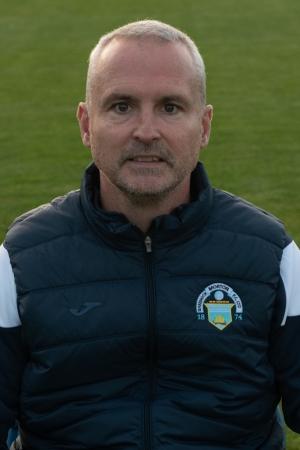
He obtained the UEFA Advanced Youth A coaching licence in 2014 and is currently the under-18 academy coach at Greenock Morton.

“We have brought through some great young guys who have careers in the game,” he said. “I still love the competitive side and it’s great still to be involved.”

Today, Allan occasionally exchanges messages with former Albion teammates Hobson and Kerry Mayo but he is in more regular contact with McDonald, who only stood down in July 2021 after 18 years as an academy coach at Kilmarnock.

• Pictures from Albion matchday programmes and various online sources.