Tommy Elphick’s cherry picking ride to coaching

MEADOW LANE, Nottingham, is probably not one of Tommy Elphick’s favourite grounds. When he left the pitch on a stretcher in the 53rd minute on 7 May 2011, it was a great opportunity for the youngster who replaced him – Lewis Dunk – but for Elphick it was a turning point in a fledgling, promising career with his hometown club.

League One champions Brighton drew 1-1 with Notts County that day but, as they looked forward to playing Championship football in the shiny new American Express Community Stadium at Falmer, Elphick was sidelined for the whole of the following season with a ruptured Achilles tendon injury.

Unsurprisingly, others made the most of his absence. Although he briefly returned to first team action in a pre-season friendly v Lewes in August 2012, the level of competition by then made him realise he would need to move elsewhere to get back in the groove.

That’s when he began an association with AFC Bournemouth that continues now as first team coach, retained by the club in spite of the man who appointed him (Gary O’Neil) being replaced as manager.

As a player, Elphick took a step back to make a stride forward, dropping down a division to join the Cherries and ended up reaching the ‘promised land’ of the Premier League before the Albion.

“To say it worked out well for me was an understatement,” Elphick told Nick Szczepanik in an Albion website interview in 2020. Little wonder he is hailed as “the most successful captain in the history of AFC Bournemouth” having led them to promotions from League One in 2013 and the Championship in 2015, when he was ever-present and named Cherries supporters’ player of the season.

En route to that achievement, he finally got to play at the Amex – on 1 January 2014 – but it was in the red and black stripes of the Cherries in a 1-1 Championship draw.
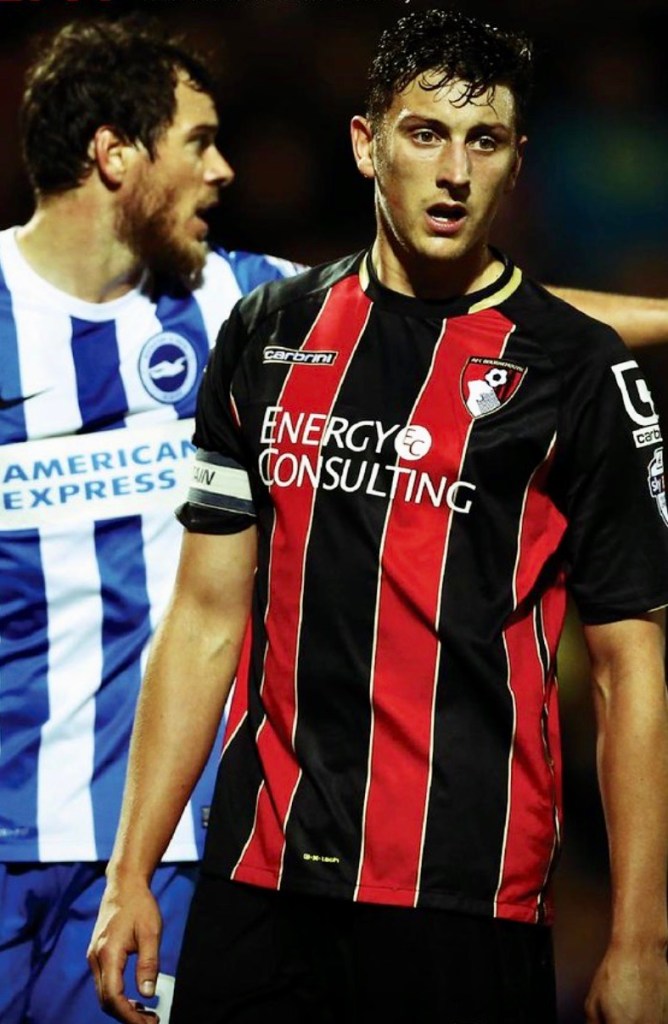
At the Amex in Bournemouth’s red and black stripes

Interviewed in that game’s matchday programme, he admitted: “I’m buzzing for it. I was the first Brighton player contracted to play at the Amex but obviously my Achilles injury conspired against me and I never got the opportunity.

“Having been with the club since a kid, as we went through all the struggles the dream was always to run out at the new stadium at Falmer. It was disappointing that it never happened for me.”

Born in Brighton on 7 September 1987, Elphick played locally for Woodingdean FC before linking up with the Albion academy at the age of 11 after impressing head of youth Martin Hinshelwood.

In his early days with Brighton, he came under the influence of Vic Bragg who he described as “a very astute tactician” whose “coaching drills were excellent and kept us on our toes”.

In a matchday programme article, he said of Bragg: “While he has a heart of gold and is genuinely a nice guy, you didn’t want to cross him on a bad day – but if he did have a word in your ear, it was always constructive.”
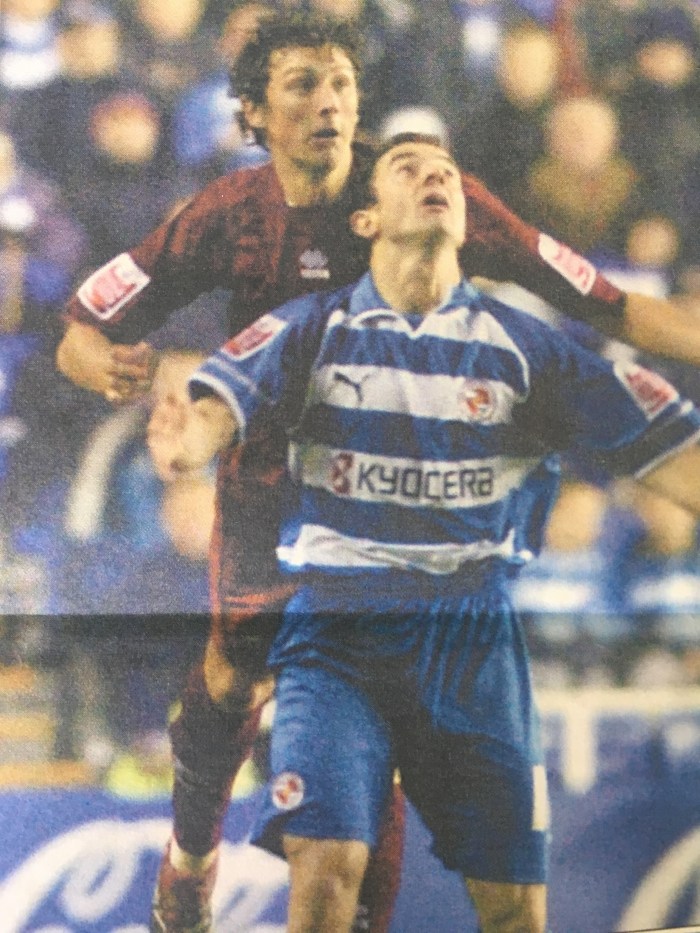
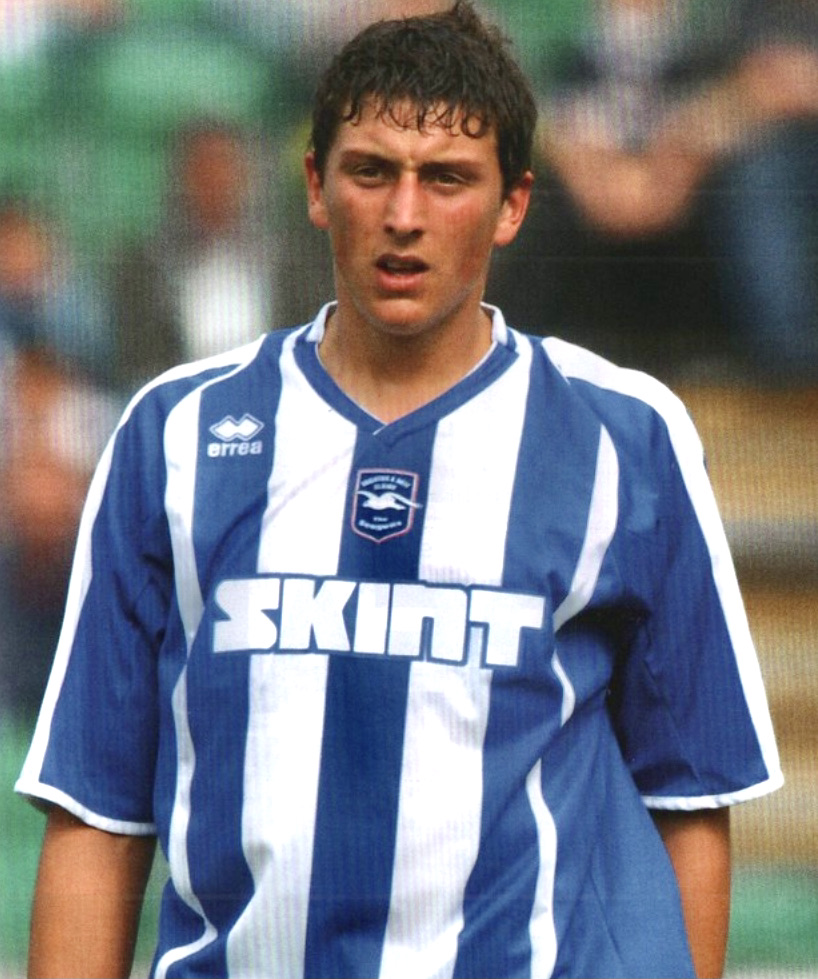
It was under Mark McGhee that Elphick made his first team debut (above) in December 2005, going on as a 73rd minute sub away to Reading in a 5-1 mauling after his older brother Gary had earlier been sent off on his full debut.

“I’m Brighton born and bred, I was a fan at Withdean before I played, and even remember doing a bucket collection on the touchline at Priestfield (when Albion were in exiled at Gillingham) in a bid to raise money for some new jumpers for us youth-team players.

“To then go on and make my debut, having come through the system under Dean Wilkins, well it doesn’t get any better than that.

“That was the highlight for me; being one of seven players from the youth-team set-up to make it to the first team.”

Gary didn’t play for the Seagulls again and Tommy had to wait until April 2007 to make his first start, by which time his old youth team coach Wilkins was in charge of the first team. That game also ended in a defeat, 2-0 to Doncaster, and it was only the following season that he established himself as a starter, initially playing alongside Guy Butters and Joel Lynch and later Adam El Abd and Gordon Greer.

A personal highlight was winning the Player of the Season accolade at the end of his first full season (2007-08), and he went on to captain the side on many occasions, as well as being part of the team that won the League One title.

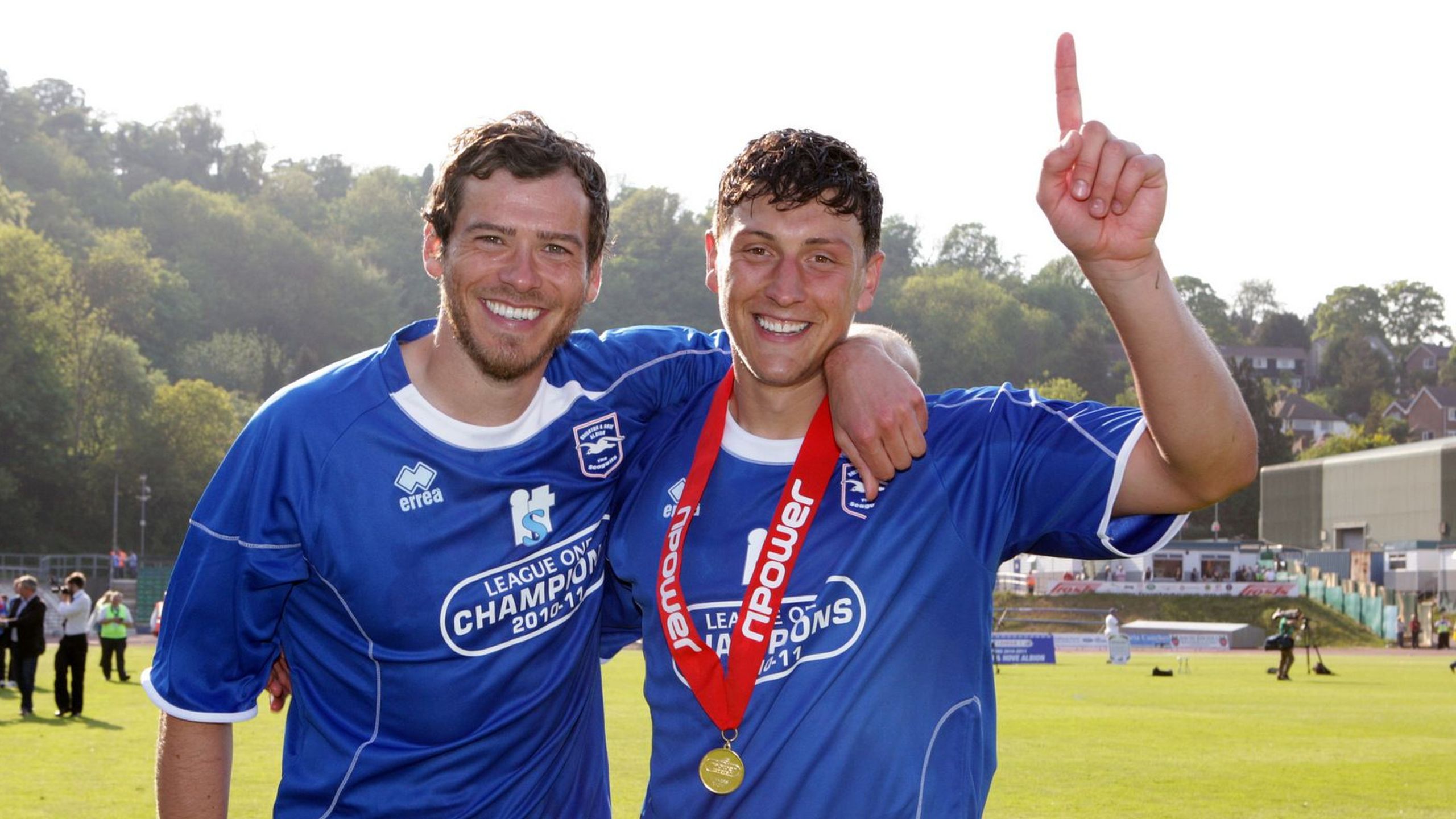
“Brighton are the club who gave me my chance in the game, who shaped me as a footballer and a person,” he said.

As well as McGhee and Wilkins, Elphick’s 182 Seagulls appearances also spread across the reigns of Micky Adams, Russell Slade and Gus Poyet.

The changes introduced by Poyet really struck home with Elphick, who told Spencer Vignes: “From day one there was absolute clarity in terms of what he expected from us, with a few simple rules to start with, which he built on week by week.

“We were in the lower reaches of the table and flirting with relegation, so for him to come in and demand that we play the way he saw the game was unbelievable really.

“A lot of managers would’ve tried to tighten the ship and play a more basic brand of football, but his football was based around possession.

“The style he produced, the football we played and what we went on to do for the next two or three years was phenomenal.”

But Elphick appreciated others too, saying: “I had such a good grounding as a kid and I’m so lucky to have played under some great managers and coaches.”

As a pointer to how things have panned out, he said: “I definitely want to stay in the game, coach, and hopefully manage one day.”

Reflecting on the League One title-winning campaign, Elphick told Szczepanik: “I relished the way we played in that season. I was brought up to play that way in the youth teams under Vic Bragg, Martin Hinshelwood and Dean Wilkins, who all wanted the game played in the right way.

“We lost our way a little after Dean left and we didn’t really have any style until Gus Poyet came to the club and revolutionised it. It was something I was enjoying until I got that injury. But if I hadn’t been injured, would I have ended up at Bournemouth?”

Elphick had signed a new contract with Albion when the move to Bournemouth in League One came up. “In theory it was a step down, but for me it was important to get back playing again,” he said.

The 2011-12 season had been a wipe-out as far as he was concerned because an infection and a repeat of the initial injury ruled out any chance of a swift comeback. He was operated on in Finland by the same surgeon (Professor Sakari Orava) who had performed similar surgery on David Beckham.

It was fully 16 months between the initial injury and playing 45 minutes of a pre-season friendly at Lewes in July 2012. “The idea had been to go out on loan and there were four or five different options, but Bournemouth were looking to have a right go at getting promoted and when I went down to meet the manager, Paul Groves, and the chairman, I was taken by the plans they had for the club,” said Elphick.

“Paul’s assistant, Shaun Brooks, was quite close to Dean Wilkins, and used to come and watch the Brighton youth team, so there was a connection there. Unfortunately, it didn’t quite work out for Paul and Shaun but that led to Eddie Howe coming back to the club.”

After making 145 appearances for Bournemouth, in 2016 Elphick moved on to Aston Villa, who he had scored against for Brighton at Villa Park in a 3-2 FA Cup defeat three years earlier (below left).

In the summer of 2016, Villa, under Roberto di Matteo, had just been relegated to the Championship and wanted Elphick as their captain as they aimed to bounce straight back to the Premier League.

He was di Matteo’s first signing as Villa manager – and he can thank a very understanding wife that the move went through smoothly.

Elphick cut short his honeymoon to get cracking with his new club, telling the Birmingham Mail: “As soon as I heard about Villa’s interest it’s something that turned my head straight away.

“To be able to come here and represent such a great club with such great history is going to be a real honour for me.”

However, it wasn’t long before Steve Bruce took over from di Matteo and he preferred a different centre-back pairing, meaning Elphick spent most of the second half of the season on the subs bench. I recollect him going on for Villa in the last game of the season when Albion hoped to clinch the Championship title only to concede a late equaliser when a shot from Jack Grealish squirmed through David Stockdale’s grasp.
On loan at Hull City

In January of the following year, Elphick went out on loan to Reading for half a season (but only played four games) and he began the first half of the 2018-19 season on loan at Hull City, playing 18 games under Nigel Adkins.

Because of injuries to others, he was recalled to Villa at the start of 2019 by Bruce’s replacement Dean Smith. He played 14 matches but was not involved in the end-of-season play-off final when they finally earned promotion back to the Premier League (beating Derby County 2-1).

Interviewed by the Birmingham Mail about his three years at Villa, Elphick replied: “Tough, unbelievable, disappointing, anger – I had every emotion but I wouldn’t change it for the world because it’s created who I am now.

“What I saw and experienced at Villa was mental, good and bad. A big club brings different pressures and different pitfalls and you have to experience that to know what you could be dealt with further down the line.

“It was really troubled and there was poison in the brickworks to start with. Steve Bruce did the most unbelievable job at weeding that out and bringing it all together.

A challenging time at Villa

“He wasn’t a manager I particularly took a shine to in the way he coached or managed but he taught me a lot about how to bring people together and how to create a group.

“I experienced working under Roberto di Matteo, a Champions League-winning manager, and Steve Bruce, one of the most successful managers in the Championship. Dean Smith was a bit of a trailblazer and did some powerful stuff.”

After two injury-ravaged seasons at Huddersfield Town, when he managed just 14 games for the Terriers, Elphick quit playing to embark on a coaching career that always seemed to be his destination.

He reckoned it was that long spell out injured while at Brighton that helped his move into coaching because he had time to watch and understand football in a way that wouldn’t have happened if he’d been playing every weekend.

He returned to Bournemouth as coach of their development squad, explaining to premierleague.com: “I was delighted to work alongside Shaun Cooper with the 21s. I was very, very lucky to work with such an outstanding coach, and I learned so much. That period also opened my eyes to the time and effort required to do this job properly.  

“In truth, academy football probably had a lifespan for me, but it was an invaluable year.” 

When Parker lost his job in the wake of a 9-0 humbling by Liverpool, Cooper and Elphick were promoted to work alongside new boss Gary O’Neil.

“There are benefits and negatives to being thrust into that situation,” admitted Elphick. “I would love to have spent more time coaching, experimenting, and finding out who I really am on the grass before going into such a high-pressure situation, but it was an opportunity which had to be grabbed with both hands.”

Elphick told Adrian Clarke: “At the outset, none of us had coached at Premier League level before, but we went in, took the handbrake off and went for it. Thankfully, the three us had a nice blend.”  

Elphick absorbed plenty from O’Neil’s way of working and observed: “Premier League football is such a high-level now that as a coach, if you’re put on the spot you need to be able to answer questions or offer advice on all aspects of the game. My intention is to become as well-rounded as possible.” 
After helping Andoni Iraola settle in as new head coach, Elphick has relished his supporting role although he confessed: “I’ve always wanted to manage, and down the line I’d like to put my principles and ideas into practice. It’s an itch I will need to scratch, but there is no rush.  

“Right now, I just feel so lucky to have experienced contrasting styles in O’Neil and Iraola, and I have learned an incredible amount from both men. I really resonate with Andoni, and the way he wants his team to play with emotion, and he places a lot of emphasis on spirit. 

“What I have learned so far is that to be a successful coach you firstly need strong beliefs. Then, you must deliver your messages with consistency and confidence, and of course be authentic, true to yourself.”

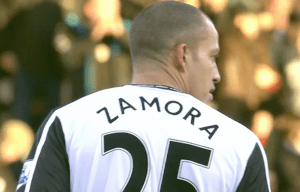
Zamora found the F in Fulham for barracking boo boys

Albion favourite Bobby Zamora

BOBBY ZAMORA was arguably at the top of his game when he played for Fulham, even though some supporters begged to differ.

Although he had played Premier League football for Spurs and West Ham, the form he showed in Roy Hodgson’s side finally propelled him into the England reckoning.

And he might even have gone on to greater heights after the rich goalscoring vein he hit in the 2009-10 season: Hodgson wanted to sign him for Liverpool, but he preferred to stay in the south.

Zamora had been surprised to discover West Ham had sold him to Fulham without any consultation at the start of the 2008-09 season, but he knuckled down to play a supporting role as Fulham finished seventh in the Premier League.

Certain sections of the Fulham faithful were expecting more than the four goals he scored, even though the player was fulfilling the manager’s brief, and let their feelings be known.

The player eventually had enough of the barracking and, after he had scored the only goal of the game to beat Sunderland in December 2009, he confronted them and invited them to “shut your fucking mouths”.

Hodgson defended him saying: “He has been a key player for us. Just a very good player.”

Finding the net for Fulham

In no mood to apologise for his outburst, Zamora told Amy Lawrence of The Guardian he found some of the stick unacceptable.

“I just can’t get my head round some people,” he said. “If you are a supporter, support your team. You expect it at away grounds, fair enough, but from your own supporters it is a bit strange.

“It wouldn’t make me want to leave but it’s not nice. I wish at times football could be a happier environment.

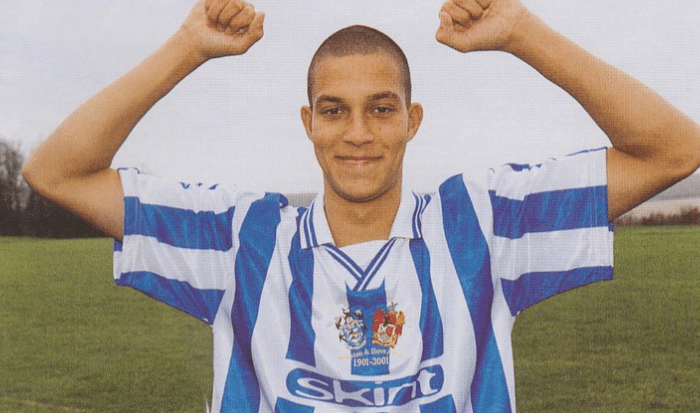
Young Zamora scored goals for fun at Brighton

While Brighton fans had witnessed Zamora leading from the front and scoring goals for fun, at Fulham he was asked to play a different role, and it disappointed him that people were only judging him on goals alone.

“If you ask Joe Bloggs down the street how many assists I have had this season they wouldn’t be able to tell you. Or how many team-mates I have set up for a shot at goal. Or pass completion. They just know goals, full stop,” he said.

“I was asked to play more as a defensive centre forward,” he said in an interview with the Fulham website. “It’s a job I did and I enjoyed putting AJ (Andrew Johnson) through.

“The team appreciated it; the fans possibly not. We didn’t finish seventh because I didn’t do a job. Ultimately it helped the team. Roy had faith in me and I’d like to think I repaid him.”

Zamora added: “The gaffer has been behind me from day one. There was a lot of pressure on me to score goals. Because I wasn’t, the press and the fans didn’t think I should be playing. But the gaffer and the players appreciated what I was doing for the team. That’s all that matters.”

‘Gentleman Jim’ on friendsoffulham.com recalled: “He had it in for some fans who kept booing him or saying he was not the best player and not supporting him.

“He was quite harshly criticised at the time by the fan base because he wasn’t scoring, but his general play and hold up play was very good for most of his time here.

“Whilst he could’ve managed the situation differently to endear himself more to the fans, he was combative and ended up doing very well for us.”

On the same forum, Graham Leggat said: “His best was as good as Mitro (Aleksandar Mitrovic) at his best for us and Saha (before we sold him to Man Utd). I would say even higher. He was absolutely unplayable, even if he didn’t bang in as many as the other two. A true Fulham great.”

Zamora might have escaped the Fulham boo boys if he’d accepted an approach from Hull City but he chose to stay, much to Hodgson’s delight, and went on to produce his best form.

He scored 19 goals in the season when Fulham finished 12th in the Premier League and made it through to the final of the Europa League (the first season of the revamped competition previously known as the UEFA Cup).

Zamora had been a fitness doubt before the game against Athletico Madrid in the People’s Park Stadium in Hamburg and he had to give way to Clint Dempsey 10 minutes into the second half.

The game went into extra time with the score 1-1 after 90 minutes and agonisingly Fulham succumbed to an extra time winner scored by ex-Man Utd striker Diego Forlan. Sergio Aguero, later of Man City fame, beat defender Aaron Hughes and crossed for Forlan to flick the ball home four minutes from the end.

The achilles injury Zamora had picked up prevented him from joining Fabio Capello’s England squad for the 2010 World Cup and he underwent surgery instead of heading out to South Africa.

As described in a previous blog post, Capello nevertheless kept Zamora in mind and the striker did eventually get his chance with the national side.

It was that same summer that Hodgson left Fulham to take over at Anfield and as the August transfer deadline loomed the manager hoped to persuade Zamora to join him at Liverpool.

But the player’s wife had just had twin daughters and he didn’t want to uproot the family. He was also getting on well with Hodgson’s successor Mark Hughes.

“I enjoyed my time with Mark, he came at the start of the season, I had a good pre-season with him,” he told the Say It and Spray It podcast. “Roy came in for me at Liverpool and Harry Redknapp came in for me at Spurs, but Mark said he wanted me to stay, and I’d just had my twins in August.

In the event, Zamora signed a new four-year contract – and the very next day suffered a broken leg in a tackle by Wolves’ Karl Henry.

He was sidelined for five months but managed to return before the end of the season, scored seven goals in 16 appearances and finally got to play for England that summer.

When Hughes decided to leave Fulham after just one season in charge, Zamora expressed his shock in newspaper interviews. “There was no hint of it,” he told the Mirror. “It was going well. Everyone had bought into his ideas and were just starting to play the way he wanted.

“He has decided not to stay and we go on and try and find another manager and hope we do well.

“But Mark has got his reasons. I don’t blame him at all. It’s one of those things. Managers and players come and go.”

Seven months later, Zamora left Fulham himself to rejoin Hughes, who had taken over at QPR.

Zamora didn’t see eye to eye with Hughes’ successor at Craven Cottage, Martin Jol, who he said had not got the best out of him, although he had scored seven goals in 29 appearances at the time of his departure.

Jol tried to deny there had been a rift with the player saying any talk of a disagreement between them had been inflated by the press.

“If you look at the media, they started this Bobby thing in August,” said Jol. “They said we had a bust up at the start of the season, but you always have a little bit of a disagreement.

“I don’t think there is any problem,” said Jol. “I said to him a few weeks ago ‘Do you love this club?’ and he said ‘Yes, I love this club, I love this team’.”

Nevertheless, Zamora joined QPR on deadline day in January 2012 for £4.5m and was given a two-and-a-half-year contract.

“We needed a player of his ilk at the football club and I couldn’t be more delighted, he’s a great foil for any team,” said Hughes, who’d only replaced Neil Warnock a few weeks earlier. “Bobby is a guy that makes things happen on the pitch, be it scoring goals or creating chances for others.

“He’s got great power and pace and his technical ability is top class. He’s got an excellent left foot.”

For his part, Zamora, by then 31, said: “I got on really well with the manager at Fulham. We all grew to like Mark. I think that will be the case here. He’s looking to take the club forward.

“This was the right time for me to have a fresh challenge. I had some great experiences at Fulham. Going to a European final is special. But this is a new challenge and I’m thoroughly looking forward to it.”

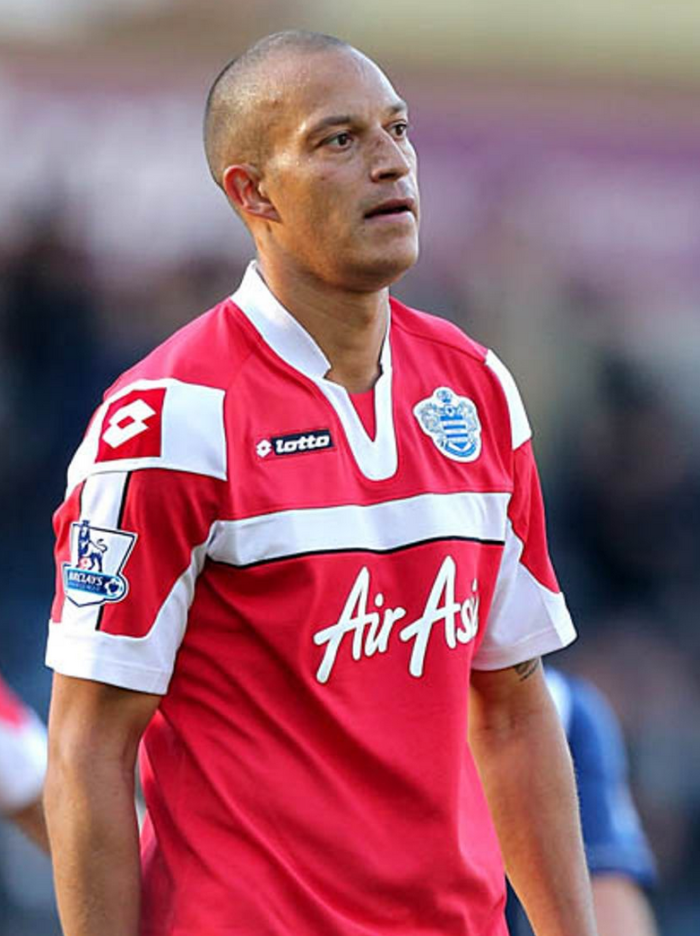
If Zamora hadn’t always seen eye to eye with Fulham’s followers, it didn’t get much better at Loftus Road – although he ended up the hero when he once again scored the winner in a Championship Play-Off Final.

A Wembley winner with QPR

Replicating the feat he achieved at West Ham, in May 2014 he went on as a substitute in the Championship play-off showdown at Wembley and his 91st-minute goal was enough to beat Derby County (who’d beaten Oscar Garcia’s Brighton in the semi-finals) to restore the Rs to the Premiership.

They’d only narrowly avoided relegation, by a point, at the end of the 2011-12 season and after Hughes had been sacked in November 2012, new boss Harry Redknapp couldn’t save them from the drop in 2013. Rangers went down in last place and Zamora made only 17 starts plus seven off the bench, scoring five goals.

Nevertheless, he was hailed as an example to others for putting himself through the pain barrier for the Hoops’ cause.

A troublesome hip injury hindered his involvement and some questioned why the former manager had paid big money for ‘veterans and cast-offs’. Paul Doyle in The Guardian reported that fans didn’t like an interview Zamora gave in which he said that he did not regularly watch football on television, which some took to mean he did not care about sport and was only interested in the money.

“Fans wondered aloud whether he was even bothered about getting fit enough to play again,” wrote Doyle. But he went on: “All that has changed. Now he is considered the embodiment of the warrior spirit that QPR need if they are to pull off the great escape from relegation. Zamora did not score against Sunderland but he led the line strongly, combined well with his new strike partner Loïc Rémy and, most of all, lifted his team-mates by battling manfully through pain.”

Redknapp reckoned that Zamora was only 60 per cent fit, and the persistent hip trouble was further aggravated by ankle ligament damage.

“That’s the sort of character we need,” said Redknapp. “He’s waiting for a hip operation and he has torn ankle ligaments but he’s played through that.

“At half-time we have to keep him on the move because if he sits down he’ll seize up. So, he puts a water bottle on his hip and stands at the wall doing stretches. He can’t get in his car after the game. But he’s a proper bloke. He’s not an idiot, he’s a sensible guy. He’s good for the team. He talks to people and is a big influence in the dressing room.”

QPR chairman, Tony Fernandes, also chipped in to acclaim Zamora, tweeting: “There are many young professionals who could learn a thing from Bobby Zamora. He’s an ultimate club man.”

Sadly, Rangers couldn’t avoid the drop but they bounced straight back via the aforementioned play-offs after finishing fourth in the Championship, 13 points behind second-placed Burnley, and 17 points adrift of champions Leicester City.

QPR had five fewer points than third-placed Derby and in the final at Wembley Redknapp admitted they were hanging on for their lives against the Rams having had Gary O’Neil sent off on the hour mark.

The lottery of extra time and penalties was looming when substitute Zamora struck in the dying embers of the match. “It was a fantastic goal to win the game and I couldn’t be more pleased,” Redknapp told The Standard.

“I would be a liar if I said I thought I would see us scoring. They had 11 men, were probing us and we were hanging on.

“That was a one off where you stand on the touchline, hanging on for grim death and get a goal like that.”

Once again Rangers found the Premier League too hot to handle and Zamora’s ongoing hip problem limited his involvement to 19 starts and 14 appearances off the bench. He scored just three goals as QPR went down in last place.

Redknapp, who was replaced by former Albion full-back Chris Ramsey in February 2015, described how managing Zamora’s game time had been similar to the way he had to manage Ledley King at Tottenham.

“Ledley didn’t train at all to be fair,” said Redknapp. “To think he didn’t train one day and then play 90 minutes was unbelievable.

“It does take Bobby a few days to recover after a game, so it’s always on how he feels. He’s as good as anybody at doing what he does, holding the ball up and bringing people into play.”

Redknapp continued: “Bobby has been very important for us. After about 60 to 65 minutes he has to come off, but when he’s on the pitch he has been outstanding.

“We were bringing him off the bench to start with, but we’ve reversed it and started him recently. He’s been captain and great in the dressing room, I couldn’t be more pleased with Bobby.

“He’s got his hip but he manages it and when he plays he’s been great and his attitude has been first class.”

The return of Zamora to the Seagulls

Released in the summer of 2015, Zamora’s long-held desire to end his career back at Brighton was fulfilled when Chris Hughton invited him to join the bid for promotion from the Championship.

Back amongst the goals

Hughton had previously worked with Zamora at Spurs and said: “He is a great professional. I know he will bring plenty of experience to the team, having played Premier League, European and international football.

“He will also bring a lot in terms of character to the club and to the dressing room – but most importantly, having played more than 30 times for QPR last season, he brings top quality to our offensive options.”

There was frustration all round that in spite of a handful of vital goals he registered in that 2015-16 season, the injury issues prevented him from being able to help the Albion to promotion from the Championship.

In retirement, Zamora has tried his hand at various ventures and indulges one of his great loves away from football, carp fishing, in the Grand Fishing Adventure series with Ali Hamidi on ITV 4.

Catching carp with Ali Hamidi

Unsurprisingly, he’s also often seen as a pundit commenting on televised games involving his former clubs and is a popular guest on all sorts of podcasts, looking back at his playing days.

For example, he told the Albion podcast in November 2023: “When I came to retirement it was painful, I couldn’t carry on playing with the aches and the pains day-to-day. It was a nice relief, not having to take painkillers, anti-inflammatories that aren’t good for your stomach and liver.

“Christmas and New Year, being able to go skiing for the first time, it’s really nice. I am seven years into retirement now, but after three or four years you start to miss it; the boys and the banter in the dressing room.”

Zamora has also been involved in property development and is one of a multitude of top former players who are ambassadors with Football Escapes, football-based holiday experiences at exclusive hotels and resorts around the world.

Zamora also works in an ambassadorial role for the Albion, such as being an interviewee at the 2023 event when the club showcased the value its success has brought to the city of Brighton and Hove.