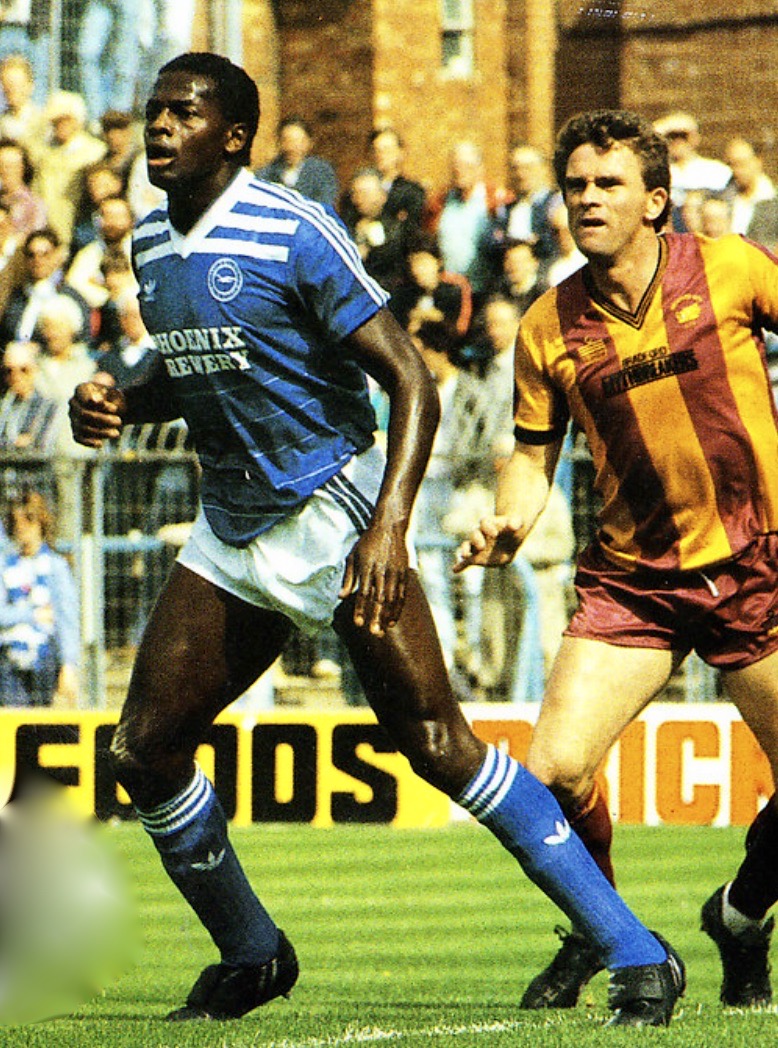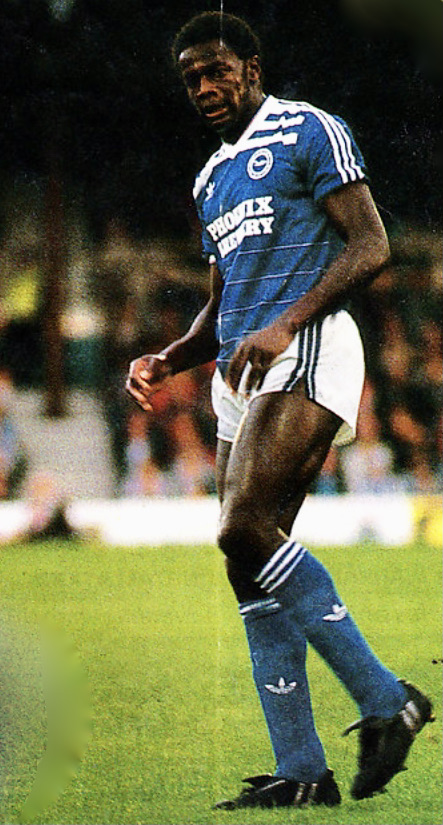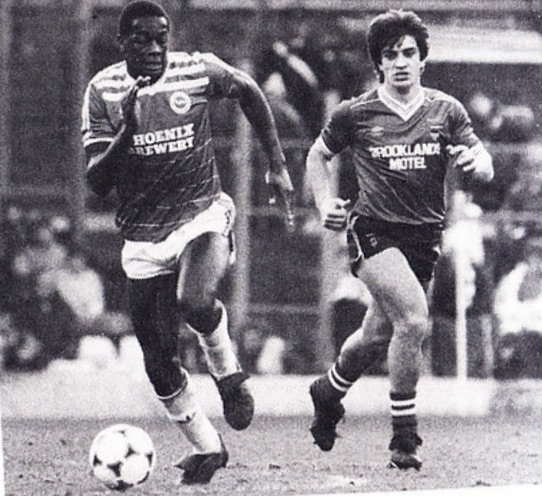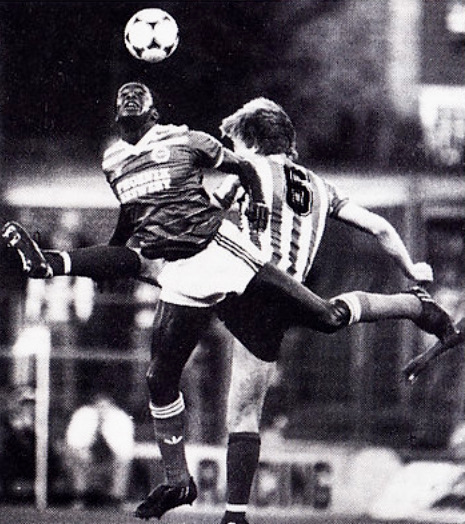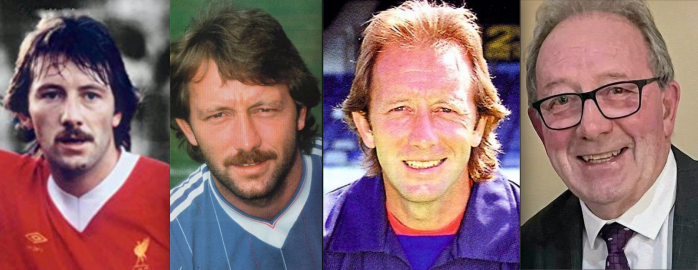
Jimmy Case’s arrival at Brighton heralded the dawning of a new era

IT’S HARDLY surprising that there are numerous tales to tell from Jimmy Case’s illustrious football career, many of which he told in his autobiography, Hard Case.

Following on from my recent blog post about the all-important blockbuster winner he scored at Anfield for Brighton in the fifth round of the 1983 FA Cup, let’s look in more detail at the impact of his arrival in Sussex in the summer of 1981. It was momentous in many respects.

And, if you’ll indulge me in the parallel that gives this blog its very name, Case’s move from Liverpool to Brighton bore a remarkable similarity to Adam Lallana’s 2020 move in the same direction in terms of the Seagulls capturing an influential trophy-winner whose experience took them to a new level.

Case scored 46 goals in 269 appearances across six years at Liverpool and left with four League title winners’ medals, three European Cup winners’ medals plus one each for winning the UEFA Cup, European Super Cup and the League Cup.
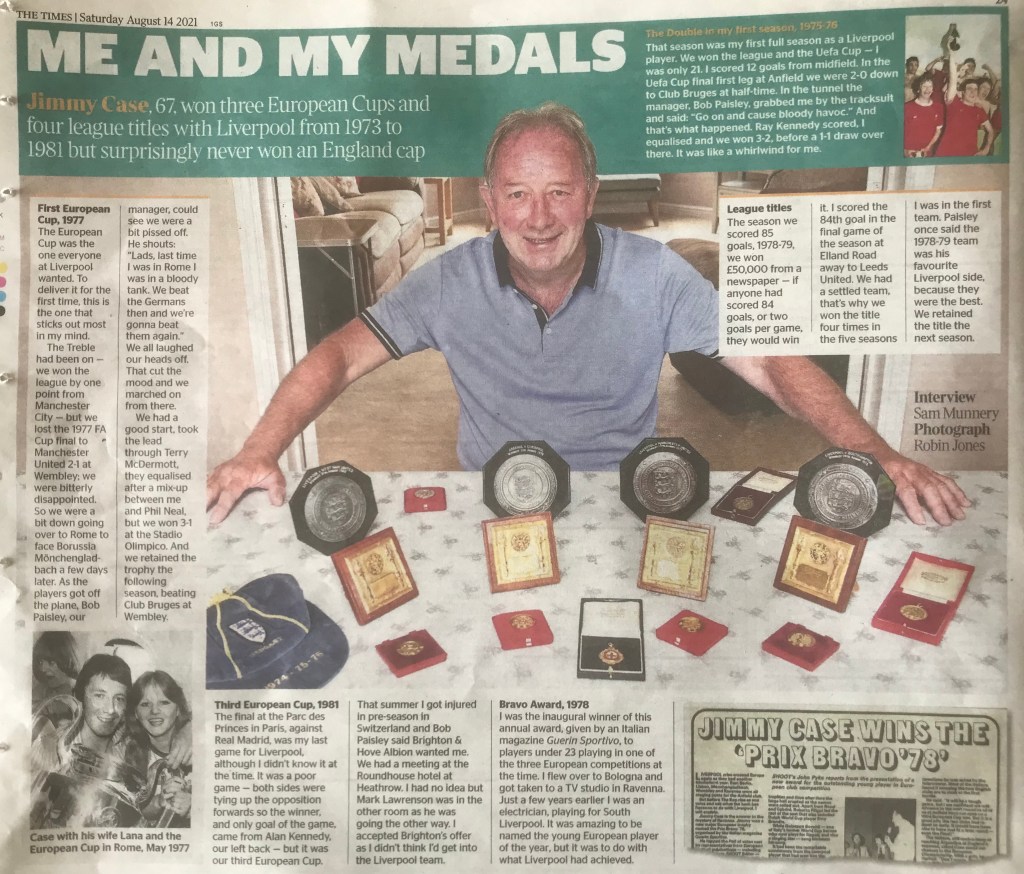
This 2021 article highlights the impressive array of medals Case collected in his career

Lallana scored 22 in 178 matches and collected one League title medal, and others for winning the Champions League, European Super Cup and FIFA Club World Cup. Unlike Case, Lallana also won 34 England caps.

In the season following Case’s signing, Brighton finished in a highest-ever 13th place in the top division under Mike Bailey in 1982, a feat only bettered by the ninth-place finish under Graham Potter 40 years later and even better sixth spot under Roberto De Zerbi in 2023.

I first wrote about Case’s time with Brighton in a 2017 blog post but his story is well worthy of re-telling, particularly with updates from more recent interviews he’s given.

Back in 1981, as Spencer Vignes said in a matchday programme article, perhaps with a little journalistic licence: “When 27-year-old Jimmy swapped Anfield for the Goldstone, the effect on Sussex was seismic. For here was a Liverpool legend, famous for his ferocious shot and no-nonsense approach to the game.”

Listing those medals he’d won, Vignes continued: “The fact that this man wanted to play for the Albion blew the fans away.”

The truth was that Case didn’t really want to leave Liverpool but some of his off-field antics involving drink had not gone down well with the Anfield management and Sammy Lee was emerging as his replacement.

“There was something of a drinking culture at Liverpool in those days,” Case admitted in an interview with lfchistory.net. “Ray Kennedy and me were usually at the heart of it, along with Terry McDermott, Phil Thompson, Emlyn (Hughes) and Smithy (Tommy Smith) – everyone, really.

“The coaches knew all about the drinking – it went on at all the clubs – and my thinking was that because we trained all week, played a hard game on a Saturday, to go out and have a few drinks afterwards was something we had earned. In my view, we were just letting our hair down a bit, but the club in those days didn’t like that type of thing. I wasn’t looking to leave at all but suppose they must have thought I was a bit of a bad lad.”
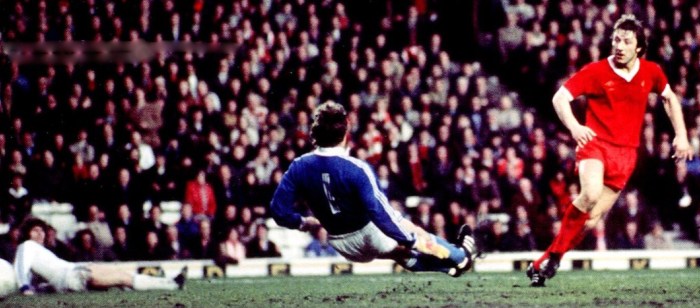
Case nets for Liverpool in a European tie

Lee was in the starting line-up for the 1981 European Cup Final win over Real Madrid in Paris and Case had only been involved as a late substitute for Kenny Dalglish.

He could tell he was being edged out when firstly it was suggested he might like to talk to ex-Red John Toshack, who was in charge of Swansea, and then he became aware that Liverpool wanted to sign Albion’s Mark Lawrenson.

“That’s where I got asked to make weight, but I didn’t know it was a makeweight at the time,” he told lfchistory.net. “I didn’t want to go anyway, to be honest, but when you’re asked twice, ‘Do you want to speak to another team?’, it’s another thing. Even though Sammy Lee is a really good friend of mine, I reckon I would have given a good go for the position, put it that way.”

Albion in the meantime had been struggling amongst the elite for two seasons and crowds at the Goldstone had begun to shrink; chairman Mike Bamber was looking for ways to make up the shortfall in income.

Manager Alan Mullery, who’d steered Brighton from the Third Division to the First, had two dilemmas to resolve. He’d made his own arrangement for Lawrenson to move to Man Utd not knowing of Bamber’s plan to sell Lawrenson to Liverpool. Bamber also wanted Mullery to sack his backroom staff as a cost-cutting measure.

It was all too much for Mullery and he quit the club in protest. Ironically, he swapped places with Mike Bailey, who’d just steered Charlton Athletic to promotion from the Third Division to the Second.

So, one of Bailey’s first missions was to welcome Case to the Goldstone and the Scouser admitted to Vignes he “didn’t really want to go to a big club again” and “fancied something different”.

If he felt he had a point prove to Liverpool, he certainly went about it in the right way, scoring in his first appearance against his old club the following October in a 3-3 draw at the Goldstone Ground and then helping the Albion to a 1-0 victory in the Anfield return six months later.

Teammate Gerry Ryan told Vignes: “When he came to Brighton, everyone was amazed. He was an enforcer in the old type of way. He would protect us. If anyone got hit bad then he would seek retribution. But he was also a great footballer.

“Every game Jimmy played, he played to a high standard. He also gave the team an aura. When you saw his name on the team sheet it stood out. It meant something.”

There was a significant ‘changing of the guard’ on his arrival: quite apart from the new manager and loss of the influential Lawrenson, skipper Brian Horton left too along with long-serving Peter O’Sullivan and utility man John Gregory.

But the arrival of tenacious Eire international midfielder Tony Grealish from Luton, experienced Don Shanks, who’d been part of a decent top division QPR squad, and Steve Gatting, who’d played 76 games for Arsenal meant there was no shortage of experience in their place.

Northern Irish international Sammy Nelson moved from Arsenal to take over the left-back spot from Gary Williams and Bailey declared: “The signing of Sammy Nelson has now given me the sort of squad I feel we need to compete with the best in the division.”

Commanding centre half Steve Foster took over as captain from Horton and the emerging Gary Stevens was a young talent who could fill any position in defence. Up front, Mullery signing Michael Robinson was a willing workhorse of a centre-forward who, on Brighton’s relegation in 1983, was sold to Liverpool.

Anyone who had the privilege to watch Case in his prime could testify that thunderbolt strikes from distance were his trademark and one of the best I ever saw was in the 1983 FA Cup semi-final at Highbury when Case smashed it in from 30 yards to give Brighton the lead against Sheffield Wednesday.
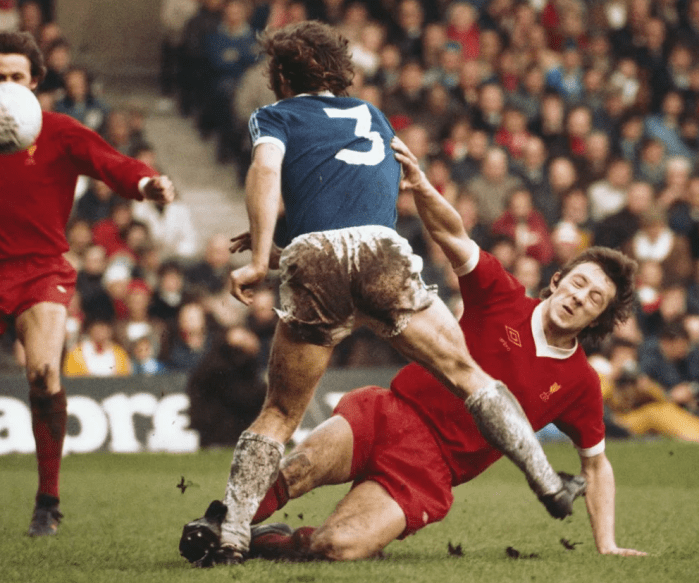
Case gets stuck in during a Merseyside derby match

He’d previously scored memorable goals in that trophy-laden career at Liverpool, notably in 1977 scoring one of the great FA Cup final goals, chesting down Joey Jones’s pass on the edge of the box before swivelling to rifle home an equaliser into the top corner against Manchester United, and a left-footed lash in a 1978 European Cup semi-final fightback against Borussia Moenchengladbach at Anfield.

Fascinating, then, to learn that Case had that hard shot from distance at an early age. “Even when I was eight-years-old I was asked to take the goal-kicks because nobody could kick it that far,” he told lfchistory.net.

After the disappointment of relegation from the top flight in 1983, Case remained while others were sold straight away, and some of the new arrivals were grateful for his steadying influence.

Centre-back Eric Young, for example, told the matchday programme: “All the lads were great but Jimmy Case really helped me to settle down. Jimmy is very subtle. He’ll just say a few words to you and it makes all the difference. I appreciated that in those early days.”

With much the same sentiment as Gerry Ryan, Young’s fellow central defender Gary O’Reilly was also a huge Case fan. But Chris Cattlin was obviously under instruction to balance the books and after Foster was sold to Aston Villa, Case was next out the door, along the coast to Southampton. O’Reilly couldn’t believe it.

“We sold Jimmy Case in the March and I nearly took the door off the hinges in Cattlin’s office,” he recalled in a matchday programme article. “I asked him what the hell he was doing selling Jimmy! Were we serious about getting promoted? Were we serious about getting into the play-offs?

“Jimmy went to Southampton and they had success with him in their team in the First Division. It was no surprise. How many European Cup medals does Jimmy have that say ‘winner’? That’s what Jimmy brought to the team here and he was a massive loss when he went.”

Indeed, if it was suspected Case wasn’t the force he once was, because he was 31 when he joined Saints, he ended up hardly missing a game for them, and captained the side, for six seasons.

Cattlin was certainly playing his cards close to his chest as to why Case was sold, and in his matchday programme notes he only obliquely referred to the reason, saying: “Salaries and bonuses of individual players are confidential and obviously I cannot disclose details, but the moves I have made I am certain are right.” And he added: “I can’t explain all the matters that have been considered.”

It wasn’t the last Albion fans would see of Case in their colours, of course, because he returned to the Goldstone Ground aged 39 in December 1993 in the twilight of his playing days, appointed a player-coach under Liam Brady when off-field issues hung gloomily over the club.
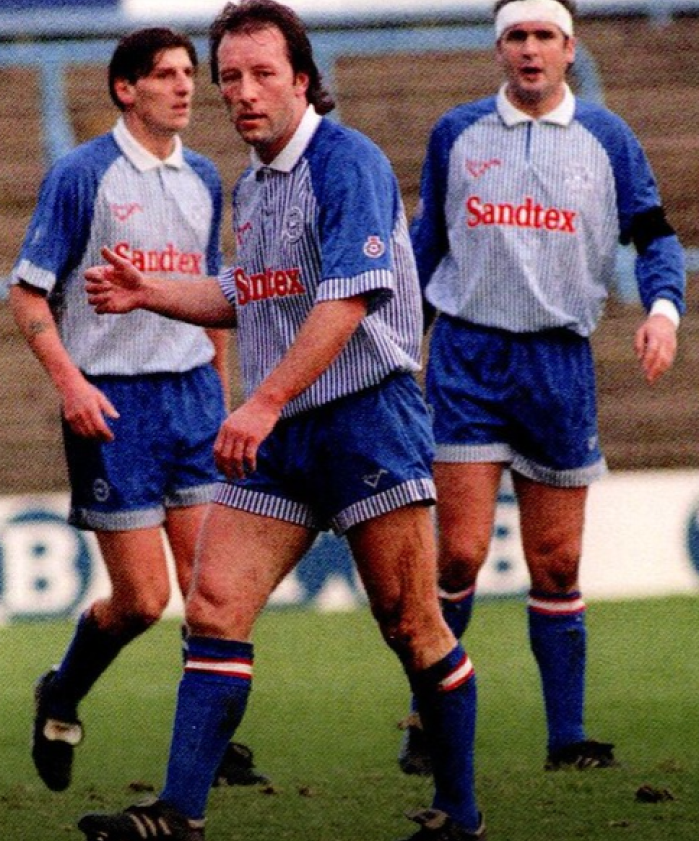
On Case’s return to the Albion, he teamed up with other old heads in Colin Pates and Steve Foster

Nevertheless, as a mark of the esteem in which Case was held, a testimonial game for him took place at the Goldstone on 17 October 1994 and it had to be delayed 10 minutes because so many people wanted to get in to pay tribute. The capacity of the grand old ground was much reduced by then but still 15,645 packed in to see Case’s old club Liverpool do him the honour of providing the opposition.

Albion featured Matt Le Tissier in their line-up and even Ryan and Brady made substitute appearances as Liverpool edged it 2-1. An emotional Case said afterwards: “I can’t thank the supporters enough. This was the only game I’ve ever been nervous about. I’ve never really asked for anything from the game, I just wanted everyone to enjoy it.

“It’s all been quite embarrassing really. I like to go to parties, I just don’t like them being my own.”

His last competitive start as an Albion player was in a 2-0 home win over Stockport County on 2 January 1995, and manager Brady said in his programme notes that the player “has an Achilles injury which he will never completely overcome”.

The following season, he twice went on as a sub, and was a non-playing sub on another occasion, but when he went on for Stuart Tuck in a 2-0 Hallowe’en home defeat to Swansea City, that was his last as a player.

Sadly, his last days at the club, having reluctantly taken over the managerial reins from Brady, were tarnished by relegation to the basement division and when Albion’s very existence in the league was under threat, he was replaced by Steve Gritt, who, only by the skin of his teeth, managed to keep Albion up.
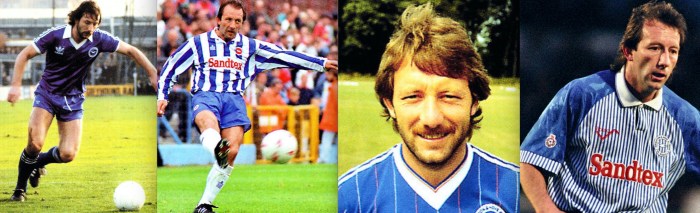
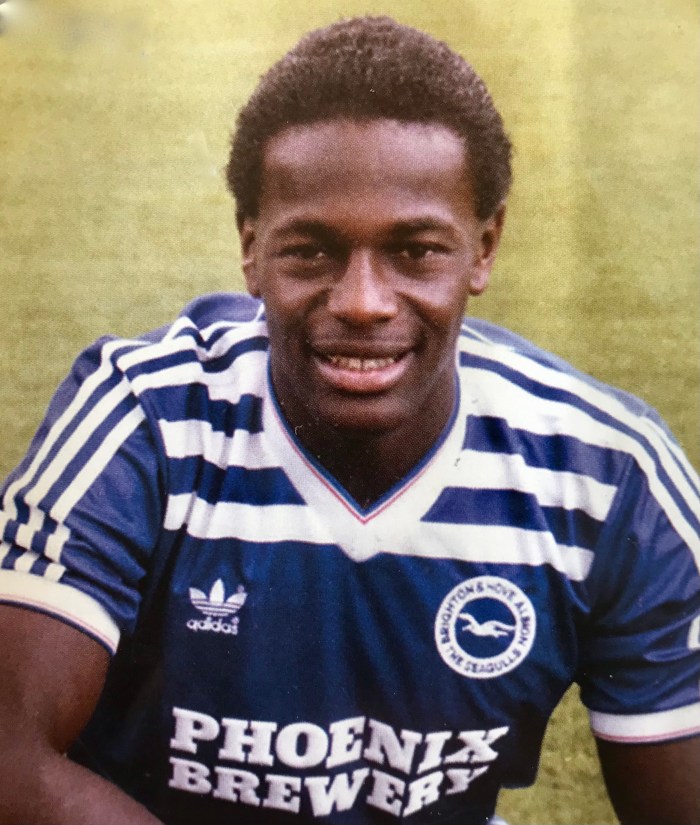
Knee injury cut short Justin Fashanu’s career rescue mission

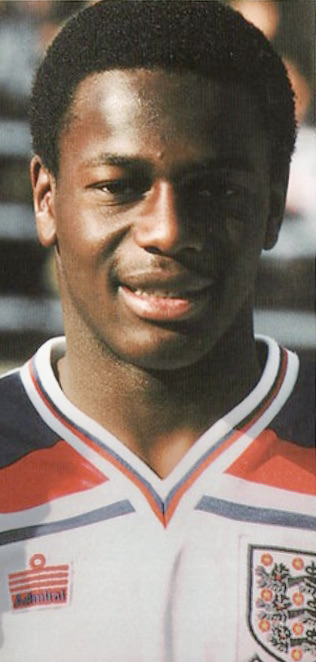
JUSTIN FASHANU, renowned for an iconic televised Goal of the Season for Norwich City against Liverpool in 1979, played 20 games for Brighton in the 1985-86 season.

Those bald facts tell only a fraction of the story of the short and complex life of a bustling centre forward who burst onto the football scene as a teenager, scoring 40 goals in 103 games for the Canaries.

Several books have been written about him, acres of newspaper column inches filled covering colourful tales of what happened to the first £1m black footballer, and there is no shortage of articles across the internet. There’s even been a theatre play about his life: Justin Fashanu in Extra Time.

Here I will focus mainly on the football, and, in particular, that time at Brighton, although some context is needed to explain how a player who only three years earlier had helped England win the UEFA Under 21 Championship ended up with the then second tier Seagulls.

Fashanu’s signing for Brighton in June 1985 seemed like a major coup for manager Chris Cattlin as the Seagulls sought to return to the elite level they’d been relegated from two years previously.

Why was he so convinced Fashanu would be a hit at Brighton? In an interview with Spencer Vignes for the matchday programme, he said: “We’d put a good side together with a tight defence, an exciting midfield and a forward line that included Dean Saunders and Terry Connor.

“I knew all about Justin and I went to see him play for Notts County against Manchester City and he was simply amazing. He battered the best defender in the league at that time – Mick McCarthy – and I mean he really battered him. I thought: ‘That’s our fella!’ With those three up front, we were going to have one hell of a chance of winning promotion.”

In his programme notes for the opening game of the season, Cattlin wrote: “With the right service I expect Justin to be the best centre-forward this club has had in a very long time.”

At the end of a season when Albion missed out on promotion by finishing sixth, Frank Worthington at 36 had demanded a signing-on fee to stay a second season with the Albion – money Cattlin said wasn’t available. There was no such demand from Fashanu, who at only 24 was trying to rebuild a career that had gone off the rails.

To make his own personal assessment of a player who had already attracted plenty of negative attention, Cattlin even had the player to stay at his house for four days before signing him.

Only the previous season, Fashanu’s aggression on the pitch for Notts County had put both Albion centre backs Eric Young and Jeff Clarke in hospital. He’d previously had an altercation with Albion’s former Canaries defender Andy Rollings while playing for Norwich at the Goldstone, resulting in Rollings’ dismissal for throwing a punch at the striker.

Nottingham Forest boss Brian Clough, who’d persuaded the board of the two-times European Cup winners to part with £1m to sign the 20-year-old from Norwich in 1981, had numerous clashes with the player when he was unable to replicate his previous goalscoring form (more of which later), and, after just 15 months, he cut the club’s losses and sold him to neighbours County for only £150,000.

More crucially, though, Fashanu had sustained an injury to his left knee on New Year’s Eve 1983 inflicted courtesy of the studs of Ipswich, and later Brighton, defender Russell Osman. The wound had become infected and the medics at the time were clearly concerned. It meant insurers inserted an exclusion clause into their cover. Any claim for subsequent injury would only be covered if he’d previously played 12 consecutive League games.

After his stay chez Cattlin, a fee of £115,000 was paid to Notts County, who’d just been relegated to the old Third Division, and the manager said: “Justin had a reputation of being a bit of a problem player with his other clubs but that is all in the past.

“In my dealings with him I’ve found him to be a smashing person and the sort of player our supporters will take to.”

He told the Evening Argus that Justin was “a dedicated player who has been asleep for a couple of years”, adding “I’m sure, with us, he will bring his talents to fruition”.

Meanwhile, Fashanu told The Times: “I only took this step after a good deal of thought and prayer. I am convinced Chris Cattlin can get the very best out of me.”

He got off to a great start when scoring twice as Albion thrashed Aldershot 5-0 in a pre-season friendly at the Recreation Ground on 29 July 1985.

Stiffer competition was promised in the shape of three Goldstone friendlies in a week against First Division sides Arsenal, Liverpool and Nottingham Forest. Arsenal won 2-1 on 2 August and Liverpool 4-1 on 5 August. Two days later, Fashanu netted one of Brighton’s successful spot kicks in a 5-4 penalty shoot-out against Oxford United at the Manor Ground which saw them win the Oxfordshire Benevolent Cup.

Fashanu (front row, third from left) all smiles after Albion won a trophy in Oxfordshire

The pre-season fixtures were rounded off on 9 August when second tier Albion walloped Forest 5-2, and the matchday programme captured the mood with some delight.

“The match was a real thriller for the fans, and no-one except perhaps for Brian Clough and his team, went home unhappy,” the programme crowed. “Justin Fashanu had an outstanding game against his former teammates.”

Fashanu was involved in setting up three of Albion’s goals and of the fifth the programme recorded: “The final goal came after just about the most powerful shot seen at the Goldstone for years. Fashanu connected from 15 yards out. Segers could only parry the ball, and (Gary) O’Reilly tapped it over the line.” Tellingly, Clough declined to be interviewed after the game.

Fashanu started in the no.9 shirt and was sent off in only his third game, a 2-1 home win over Bradford City. Cattlin was quick to leap to his defence, using his programme notes to tell supporters: “I understand that the referee sent him off for dissent after committing a cautionable offence. All Justin said was ‘Surely you’re not booking me for that ref’…and if that either brings the game into disrepute or deserves any punishment at all, surely there’s something wrong in the game.

“Justin has joined us this season and is a great professional. One hundred per cent effort is appreciated by the fans and our supporters know they are getting just that. There was nothing malicious in anything he did on Saturday.

“Justin is a ‘gentle giant’. He never swears and he tries all the time…that is just the sort of player we need in the game. I would like to go firmly on record as saying his sending off was a complete injustice.”

Disciplinary action took a little longer to come into effect back then and Fashanu didn’t have to serve his suspension until the sixth game of the season.

However, it turned out he would have missed the game anyway because he’d undergone surgery.

It emerged that during pre-season training, Fashanu had taken a whack on his knee and it was six weeks and several matches later before he underwent a procedure at the Royal Sussex County Hospital. Cattlin admitted: “Mr Fearn, the club surgeon, had to work on the bone.”

In hindsight, Cattlin’s programme notes about the injury could be viewed, at best, as insensitive. “I would like to explain the problem of Justin Fashanu,” he wrote. “He jarred his knee pre-season, there is apparently a floating body there somewhere….probably a piece of black pudding or something!”

Cattlin already had Gerry Ryan out long term injured and he also lost Fashanu’s strike partner Connor to injury in those opening weeks. That absence presented an opportunity for Mick Ferguson to stake a claim and he responded with three goals in three games – until he too got injured, as did Alan Biley. In the emergency, loanee Arsenal defender Martin Keown was put up front to play alongside Saunders.

Gerry Ryan, Chris Hutchings, Fashanu and Terry Connor were all out injured

In the programme for the 19 October home game against Charlton, Cattlin was pleased to report Fashanu had resumed training and was busy building up his thigh muscles after his period of inactivity.

He finally made his comeback in an away League Cup match at Liverpool and, as Albion were sent packing 4-0, Fashanu was booked after clashing with Craig Johnston.

However, at least he was back in the no.9 shirt and, after leading the line in a home 1-1 draw against his old club Norwich, he scored his first goal for the Seagulls the following week when Brighton lost 2-1 at Shrewsbury Town.

Defending Fashanu after yet another booking in a 2-1 defeat away to Sunderland, Cattlin said: “Justin is anything but a dirty player. He is certainly strong, but if he was dirty I can assure everyone he would not be wearing the blue shirt of Brighton. I can see all sorts of trouble in the game if referees cannot differentiate between dirty play and wholehearted endeavour.”

Later the same month, Fashanu scored his second and only other league goal for Brighton, at home to Hull City on 30 November, when the Albion won 3-1 (Danny Wilson and Connor also on the scoresheet).

That match came during an 11-game unbroken run at centre forward, including an influential display in a 2-1 Boxing Day win over Portsmouth (below) which gave Albion their first league victory at Fratton Park in 62 years.

Fashanu set up Saunders for Albion’s first and, 18 minutes from time, Fashanu’s close-range shot was parried by Alan Knight only to Connor, who buried the winner.

Although the shortage of goals was bad news for him personally, it was good news for Shoreham butcher Roy Parsons who promised the striker 2lb of steak for every goal he scored for the Albion!

After missing two matches at the start of February, Fashanu returned to the side for the memorable FA Cup fifth round tie against Peterborough on a snow-covered pitch at London Road. Substitute Steve Jacobs went on for him for the second half and scored Albion’s second equaliser to take the tie to a replay, Saunders having got Albion back in the game to cancel out the home side’s lead. But it proved to be Fashanu’s last game in an Albion shirt.

The striker had to undergo further surgery on his knee although, at the time, it wasn’t made to sound career-ending. The matchday programme for the game against his brother John’s Millwall side on 22 March 1986 said merely: “Our popular striker had a minor operation this week and we hope this will finally clear up his knee problem.”

Subsequent reports had it that Fashanu’s right knee had been nearly shattered and the prognosis from the medical people was that he would have to give up the game. The player got an insurance payout but he was reluctant to give up the game and spent money in the UK and America trying to get the knee fixed.

“I had been told by doctors and surgeons in England that I’d never walk again properly – let alone play,” Fashanu told the Los Angeles Times in July 1988. “They were proposing an operation to remove the lining from the inside of my knee.”

Fashanu was born in Hackney, London, on 19 February 1961, the son of a Nigerian barrister and a Guyanese nurse. The parents split up when Fashanu and brother John were five and four. Unable to support them, their mother, Pearl, sent them to a Barnardo’s children’s home.

The boys were eventually fostered and raised by Alf and Betty Jackson in the small rural Norfolk village of Shropham, near Attleborough.

Norwich City’s youth scout Ronnie Brooks identified 14-year-old Fashanu as a prospect while visiting Norfolk schools looking for talent. He was invited to train with the club during his holidays and then signed as an apprentice.

In a 2011 article, writer Juliet Jacques recounted: “Having persuaded Fashanu to play football rather than box (he was twice an ABA junior heavyweight finalist, aged 14 and 15), Brooks spent time with him in the gym at Norwich’s training ground at Trowse, wanting him to become less one-footed and learn how to strike the ball in the air.

“Endlessly, Brooks would throw a ball over Fashanu’s shoulder, demanding that he turn, volley it against the wall with one foot and then hit it back with the other.”

That practice would pay off big time, Jacques capturing in words the moment the 18-year-old Fashanu connected so sweetly from distance to draw Norwich level, 3-3, with Liverpool at Carrow Road on 9 February 1980, and, in the days of limited football coverage on TV, featured on BBC’s Match of the Day.

“With the impudence of youth, he flicked the ball up with his right foot, turned, and volleyed it into the tiny space between Ray Clemence’s head and the post. The strike was perfect – and so was the celebration. There was a split second while the crowd, and the commentator, processed its brilliance: as the fans roared, Fashanu stood alone, one finger raised to the skies as if to announce his genius,” she wrote.

“Norwich eventually lost 5-3, but the goal overshadowed the result: it made the perfect televisual image, coming as a generation of black footballers were breaking through at England’s top level, leaving Fashanu poised to become their leading light.”

One of his teammates back then, Greg Downs, recently told The Athletic: “We took the mickey out of Justin at the time because we maintained he miscontrolled it. We swore it bounced up and hit him on the ankle, which is why he then hit it.

“With all due respect to Justin, his greatest attribute wasn’t his feet. His strength was in the air. He was a magnificent header of the ball. I think that was why it surprised everybody.

“It was a magnificent strike. You couldn’t have hit a better shot. Ray Clemence had no chance. I don’t think any other keeper anywhere would have had any chance with it. Justin just caught it sweet.

“I got on great with Justin. I remember going to his 18th birthday in Attleborough with his family. He was a nice fella.

“He was so popular at Norwich. He was also probably the first local black footballer we had. He was famous, this lad from Norfolk, he had a personality, he was eloquent. I knew his parents and they raised him with very high morals, and he was a lovely lad.”

England under 21 cap

Two months after that Liverpool game, Fashanu scored England’s only goal in a 2-1 defeat to East Germany in a 1980 UEFA under 21 championship semi-final at Bramall Lane, playing alongside future full internationals Gary Bailey, Kenny Sansom, Bryan Robson, Russell Osman, Terry Butcher, Glenn Hoddle, Garry Birtles and Gordon Cowans.

In September the same year, he went on as a substitute for Paul Goddard as England beat Norway in a friendly at The Dell, Southampton. The following month he was a starter as England were thrashed 4-0 away to Romania in a 1982 UEFA under 21 championship preliminary match but on 18 November at Portman Road he was on the scoresheet as England swept aside Switzerland 5-0 in the same competition.

He featured as a sub in a 1-0 friendly win over the Republic of Ireland at Anfield in February 1981, then was on the scoresheet as England beat Hungary 2-1 in a friendly in Keszthely.

His seventh cap came as a starter in the 0-0 draw away to Norway in September and two months later he opened the scoring for England in another 1982 UEFA under 21 championship preliminary match when England beat Hungary 2-0.

The following March he started again as England won a quarter final away leg in Poland 2-1 and was in the semi-final second leg line-up that drew 1-1 with Scotland at Maine Road, Manchester.

In the first leg of the final of that competition, played at Bramall Lane, Sheffield, on 21 September,1982, Fashanu went on for David Hodgson and scored as England beat West Germany 3-1, although he didn’t feature in the second leg away when England lost 3-2 but ran out 5-4 aggregate winners.

At that time, Fashanu was on loan at Southampton having endured a nightmare time at the City Ground under Clough. The stories of what happened are legendary and varied. 

Unfortunately for Fashanu, he joined Forest as the European Cup-winning side was being broken up and there were rumours of disagreements between Clough and his sidekick Peter Taylor, who eventually quit the City Ground. Clough had some health issues at the time too.

Peter Ward, who had moved to Forest from Brighton for £500,000, sometimes played alongside Fashanu and witnessed first hand the difficulties the manager had with him. He described various incidents in some detail in Matthew Horner’s He Shot, He Scored biography.

“It must have been very hard for Fashanu; he had signed for a lot of money and he really struggled to score goals,” said Ward. “In a way, it was similar to my situation but he had the added complication of his social life and constant rumours about his sexuality.

“Cloughie found it difficult to live with Fashanu’s lifestyle and he later admitted he wished that he had treated him differently.”

Forest were £1m in debt; three directors quit because they didn’t like the terms of a guarantee for the bank overdraft, and the Nottingham public weren’t turning up in sufficient numbers to help the club break even.

“At the heart of it was Fashanu, who was effectively the physical embodiment of that £1m overdraft,” wrote Jonathan Wilson in his Brian Clough biography, Nobody Ever Says Thank You.

“Goal statistics often don’t tell the full story, but in this case his record of three league goals in 31 appearances did. He was offering little to the team and, had he not been signed, Forest’s bank balance would have been a comforting nil. By the end of his unhappy 15 months at the club his confidence was so shot he almost scored an own goal from the halfway line in a reserve team game.”

Clough blamed Fashanu’s arrival for the breakdown in his relationship with Taylor. According to Wilson: “Clough said: ‘He used to burst into tears if I said hello to him’ and ‘He had so many personal problems a platoon of agony aunts couldn’t have sorted him out.’

Wilson details incidents such as Fashanu insisting on using his own towels rather than ones provided by the club amongst a number of issues that irritated the manager.

Clough maintained that the player’s homosexuality didn’t bother him (although the manager’s use of the word ‘poof’ might suggest otherwise), instead he said: “It was just that his shiftiness, combined with an articulate image that impressed the impressionable, made it difficult for me to accept Fashanu as genuine and one of us.”

Accusations of ill discipline prompted Clough to ban the player from training. When he turned up anyway there was more trouble and the manager called in the police to remove him from the training ground.

Those circumstances led to Fashanu being loaned to Southampton where he scored three goals in nine games under Lawrie McMenemy, but they couldn’t afford to make it a permanent deal.

Eventually in December 1982, Forest cut their losses and Fashanu was transferred across the Trent to Notts County for £150,000, being signed by former Brighton winger Howard Wilkinson, who had taken over as manager at Meadow Lane that August.

At least Fashanu got his goal touch back, netting 20 in 64 matches, but they weren’t enough to prevent back-to-back relegations. It probably didn’t help his reputation that he was sent off in a derby game against Forest for retaliating to a Paul Hart tackle just 11 minutes into the second half.

After heading to America in his battle to overcome his knee problem, Fashanu failed to recapture the spark that had made him such a huge talent in his teens and early 20s.

The record books show he played for 22 clubs in seven different countries. A brief attempt to recover past glory under Lou Macari at West Ham is remembered by Dan Coker on West Ham Till I Die.

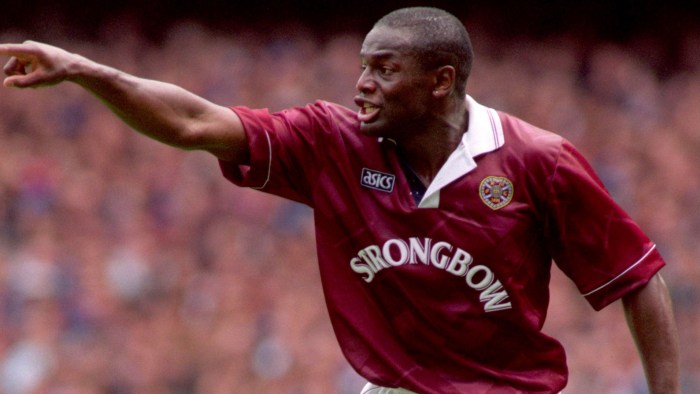
He was playing at Leyton Orient when he went public about his sexuality and he later scored 15 goals in 41 games for Torquay United. He also played in Scotland for Airdrieonians and Hearts (below).

What led to him taking his own life in a deserted lock-up garage in Shoreditch in May 1998 is well documented, such as in this footballpink.net piece written by Paul Breen.

Fashanu’s memory certainly lives on in many ways. In February 2020, a tribute to his outstanding goal against Liverpool was unveiled in the form of a 20-metre long banner produced by supporters groups Along Come Norwich and Barclay End Norwich, led by Proud Canaries: the first club-affiliated LGBT+ fan group in the country.

“Two years ago I drew a massive artwork for Norwich Pride of LGBT+ icons nominated by the community,” said banner designer David Shenton. “The most voted-for person was Justin: a man so treasured in this city, especially by the football club for his artistry as a player, and by the LGBT+ community for his courage in not hiding who he was.”

• Pictures from Albion’s matchday programmes, the Argus, and various online sources.

Eagles’ Cup Final scorer Gary O’Reilly had two Seagulls spells

GARY O’REILLY was one of those rare players who had two different spells with Brighton – and played for rivals Crystal Palace in between.

Indeed, his career highlight came when he played – and scored – in the 1990 FA Cup Final for Crystal Palace against Manchester United.

It was from Phil Barber’s free-kick on the right that O’Reilly put Palace ahead after 18 minutes, his header looping over goalkeeper Jim Leighton.

United recovered to lead 2-1 before Ian Wright, only six weeks after breaking his leg, came on to score twice, in the 72nd minute and again at the start of extra-time. But Mark Hughes got an equaliser for United seven minutes from the end of extra-time, and, just as they had against Brighton in 1983, United went on to win the replay.

Born in Isleworth on 21 March 1961, O’Reilly started to make a name for himself with the Essex Boys team and, as a schoolboy, played for both England and the Republic of Ireland because his father was from Dublin and his mother English.

Arsenal wanted him on associate schoolboy forms, but it was Spurs who snapped him up at the age of 13. His youth team-mates at White Hart Lane included Kerry Dixon and Mick Hazard.

O’Reilly also had the offer of a sports scholarship at Columbia University before signing for Spurs as a professional. Among a total of 45 first-team appearances in five seasons at Tottenham were games in the Charity Shield at Wembley against Liverpool and a quarter-final victory in the UEFA Cup over German giants Bayern Munich.

Ironically it was the arrival of Gary Stevens from Albion shortly after the 1983 FA Cup Final that began to signal the end of his time at White Hart Lane, together with the emergence of Danny Thomas.

Even though he still had two years of his contract remaining, O’Reilly requested a transfer and, in August 1984, he became part of Chris Cattlin’s Albion squad after signing for a fee of £45,000.

Cattlin recalled: “I watched him eight times before signing him, and six times with Tottenham Reserves he had stinkers. But I thought then he had great potential.”

O’Reilly made his debut at right-back in a notorious home game against Notts County which saw centre-backs Jeff Clarke and Eric Young both hospitalised after clashes with County’s Justin Fashanu, meaning the new arrival hastily shifting into his more familiar position in the centre.

In what was an eventful first few weeks, he also joined that illustrious list of players to score a winning goal AGAINST Palace. That came on 15 September 1984 when 15,044 at the Goldstone Ground saw O’Reilly score the only goal of the game.

His centre-back partner that day – and for most of his time at the Goldstone – was Young, who also later joined the Eagles, having left Brighton for Wimbledon.

O’Reilly made 79 appearances in three seasons with Albion, scoring three goals, and was virtually an ever-present for the first two seasons.

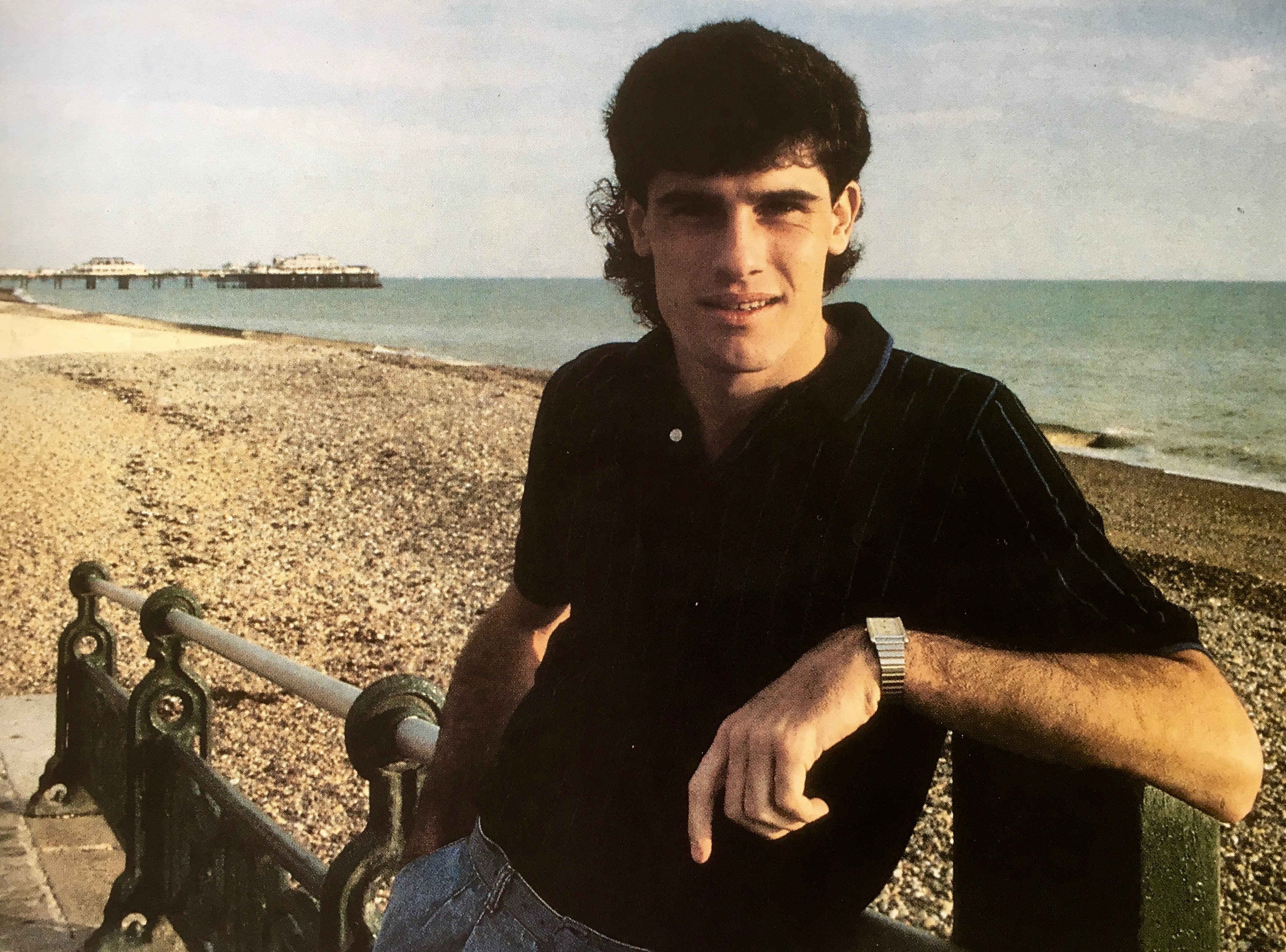
GO'R by the pierOff the field, he became a popular figure with a social conscience, leading a campaign to help youngsters fight drug addiction and becoming president of the Junior Seagulls.

Unfortunately, injuries, including a worrying hamstring condition, restricted him to just eight games in the ill-fated 1986-87 season.

Then, on 3 January 1987, manager Alan Mullery reluctantly sold him to Palace for £40,000. Mullery later recounted: “I remember Gary O”Reilly coming in the day before we were going up to Grimsby. I asked him: ‘Do you want your wages next month?’ He thought it was some kind of quiz question, but I said ‘If you do, you are going to have to leave the club’. That’s how bad it was. We couldn’t afford the wages.” Albion won 2-1 at Grimsby but two days later, Mullery was gone himself – his second spell as manager ending in a sacking.

O’Reilly played 70 times in his first four seasons at Selhurst Park but he did not figure in Steve Coppell’s plans in the 1990-91 season and had just one game on loan with Birmingham City.

At the age of 30, the versatile defender returned to the Seagulls and was given a two-year contract by Barry Lloyd.

“There’s no substitute for first-team football,” he said. “There is nothing like playing regularly to give a player the right degree of confidence.”

Although he made 31 appearances in the 1991-92 season, he was unable to prevent Albion’s relegation back to the third tier and, after a series of unsuccessful knee operations, he was forced to retire from the game in April 1993.

After hanging up his boots, he embarked on a successful broadcasting career for Sky Sports, BBC, ART Prime in Dubai and Trans World International’s Premier League international feed.

On Twitter, with the handle @mythreeleftfeet, he describes himself as “global TV presenter, co commentator, ex professional football player all round sports broadcaster, writer, amateur photographer & someone you might just like…”

worldsoccertalk.com caught up with him in May 2017 to discuss a new venture in which O’Reilly is joint host (alongside stand-up comedian Chuck Nice) of a weekly podcast in America Playing With Science, which explores fascinating topics linking sport and science.

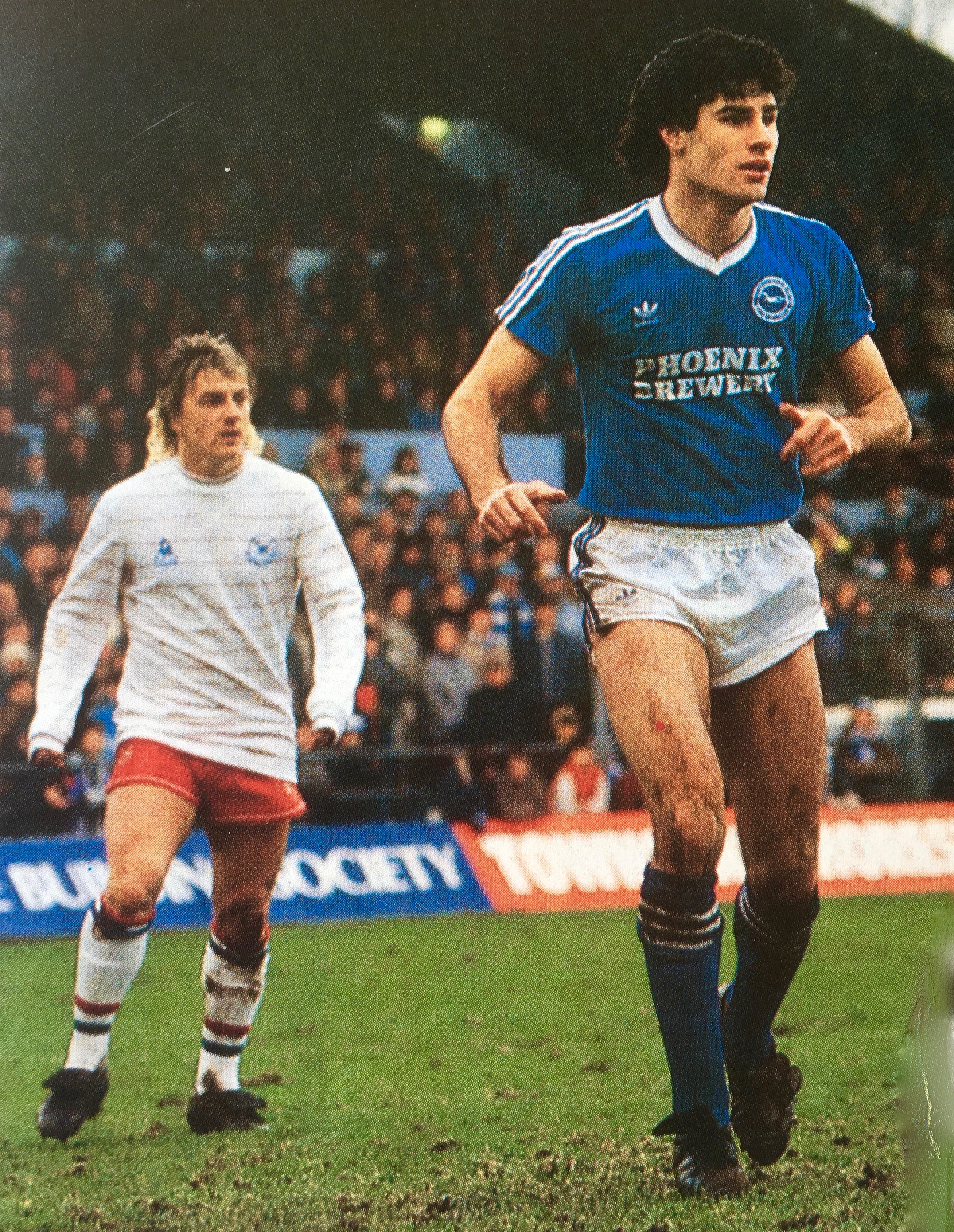
Phoenix O'R w Pompey's Biley

Pictures mainly from the matchday programme.

Above, defending against Portsmouth’s Alan Biley, who later played alongside him.