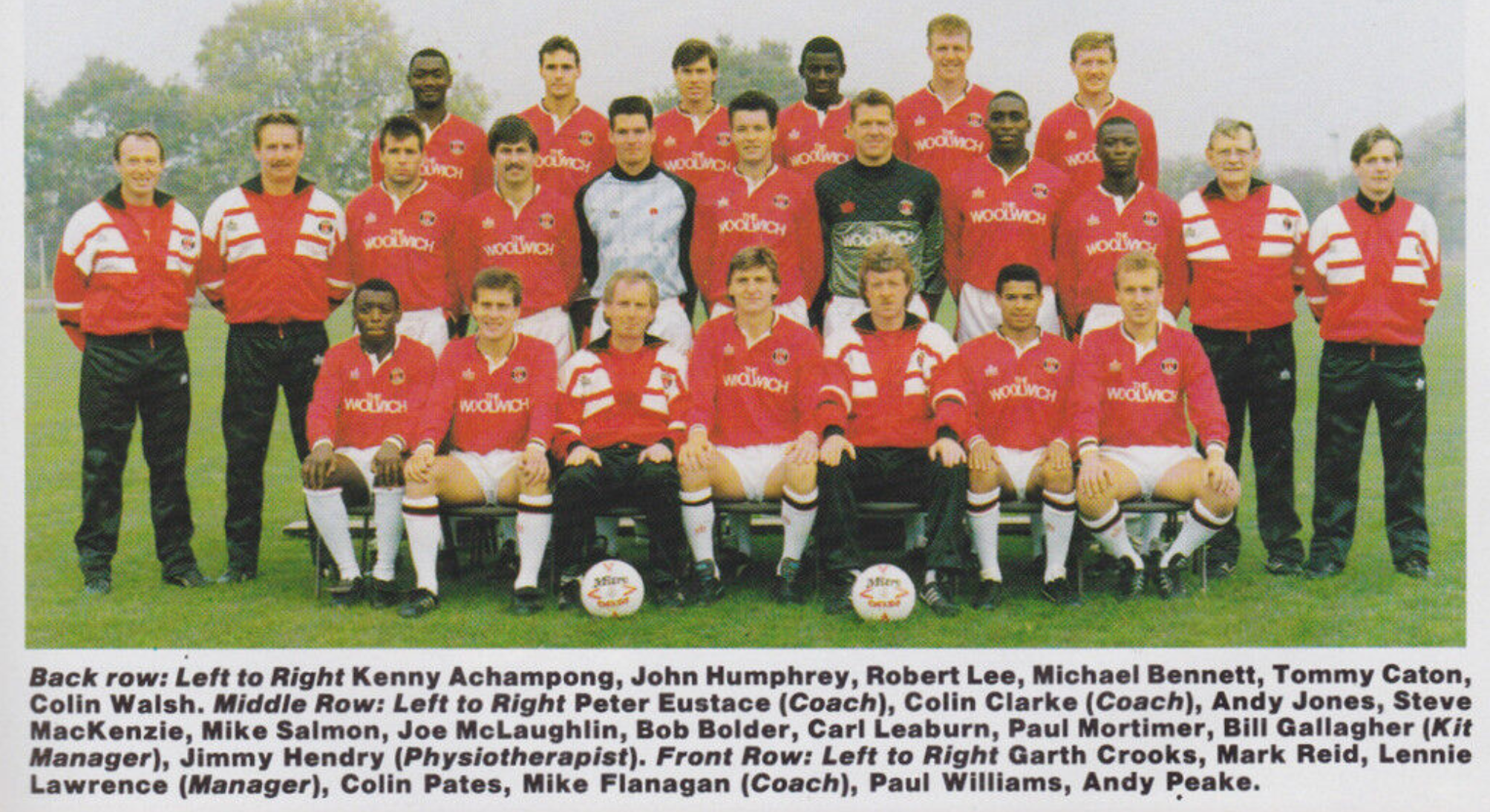
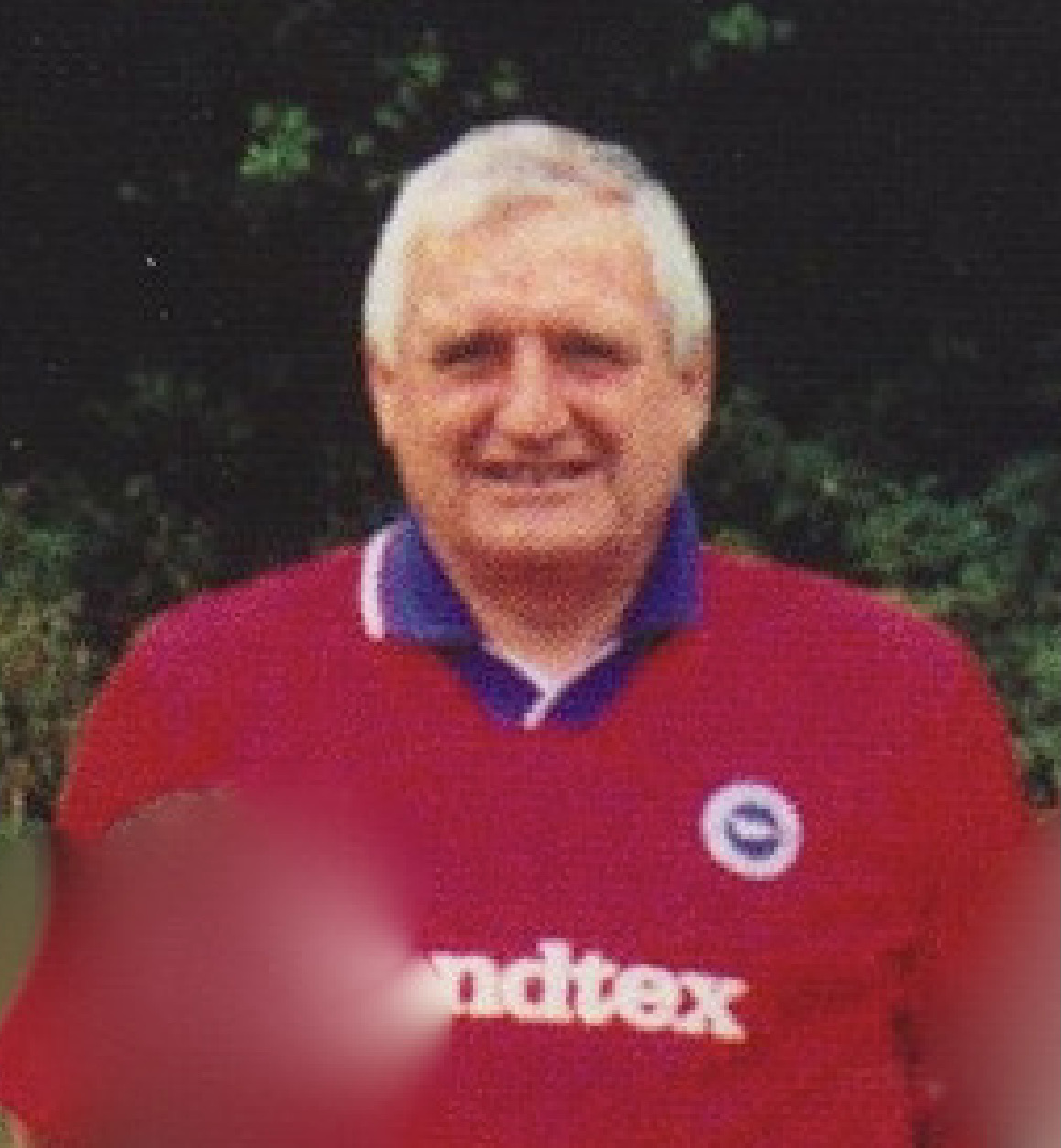
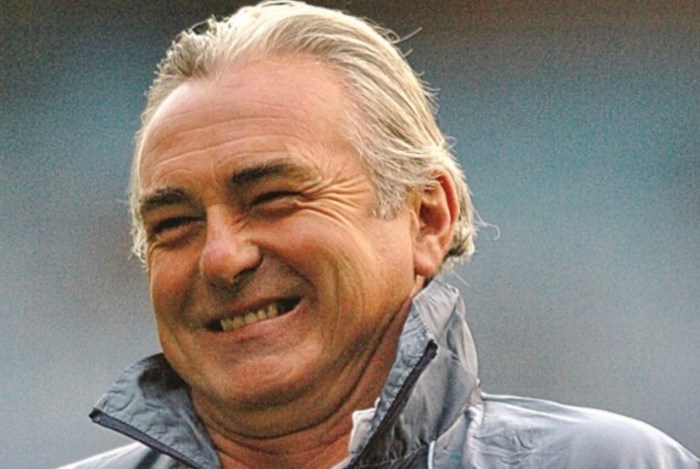
‘One of the world’s best’ coached Albion’s goalkeepers

‘I’VE STARTED so I’ll Finnish’ could have summed up Antti Niemi’s season coaching Brighton’s goalkeepers.

Even though the fellow countryman who appointed the former Southampton and Fulham ‘keeper left in ignominy less than halfway through the 2014-15 season, Niemi stuck it out to the end before returning to his native Finland.

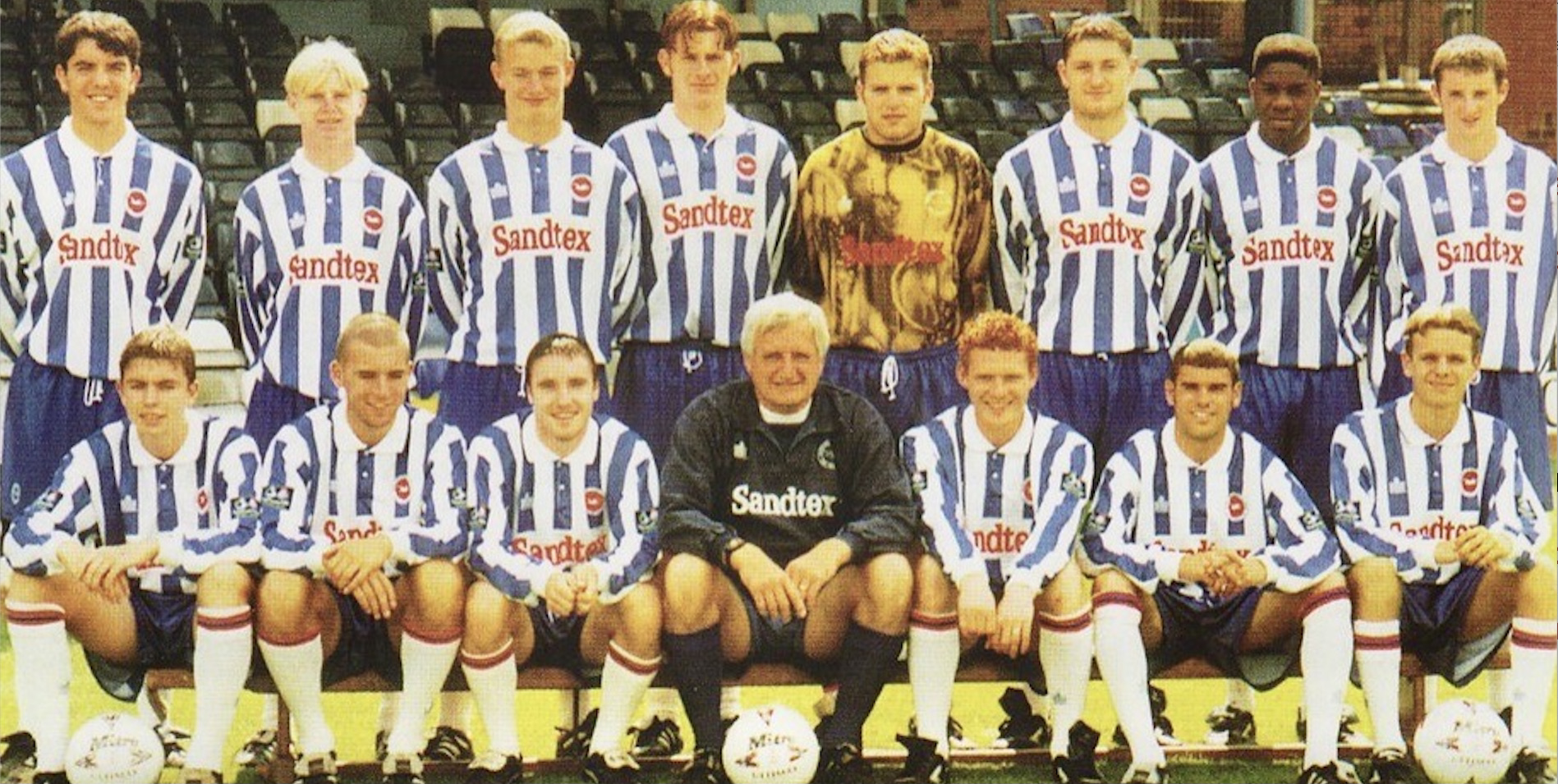
Niemi joined Albion in the summer of 2014 as part of the new backroom team put together by former Liverpool and Finland international Sami Hyypia.

“This wasn’t planned and, when Sami called me, I was working in Finland for a few years with two different clubs on a part-time basis,” he told the matchday programme. “It was a surprise.”

Seeing it as a “great opportunity” he added: “I thought about it for a couple of days, but it was not a difficult decision to make in the end. I’m obviously already familiar with the south coast.
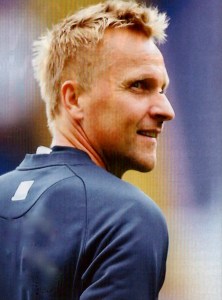
Niemi enjoyed Albion coaching environment

“If you look at the surroundings at the training ground and the stadium, it’s a fantastic place to work each day. I seriously love the job.”

At Brighton, Niemi was responsible for the form of newly-arrived David Stockdale, emerging youngster Christian Walton and back-up ‘keeper Casper Ankergren.

Stockdale admitted it was the presence of Niemi — a former team-mate at Craven Cottage — as goalkeeping coach that was a big reason in his making the move to Sussex (as well as a chat with Bobby Zamora).

“Antti looked after me at Fulham when I first went in as a young keeper,” he said. “I know what he is about, what his training is like and what kind of person he is.”

Niemi was also the reason fellow countryman and Finland international Niki Mäenpää joined the Seagulls, although their paths ultimately didn’t cross on the training ground in Sussex because Niemi decided to return home for family reasons.

Mäenpää had been coached by Niemi back in Finland and he was first linked with the Albion when Hyypia was appointed. Although a move from Dutch second division club VVV-Venlo didn’t go through then, it eventually happened in the summer of 2015.

“Seeing as his contract is ending, he is looking forward to a new adventure and Antti has explained to him about Brighton and everything,” the player’s agent, Richinel Bryson, told The Argus.

Born on 31 May 1972 in Oulu, the northern Finnish city where there is no darkness during summer nights, Niemi remembered going to school when the temperature was 42°C one winter.

He completed compulsory military service in his homeland, explaining in a 2003 interview with The Guardian that he found life tough for much of his 11 months at a sports military school.

“I didn’t realise this at the time but, if I wasn’t in football, I would probably be in the army,” he told reporter Joe Brodkin. “I’m very patriotic. It was fun and it’s something I would have considered, although I’m too old now.

“In some ways it’s similar to what we have in the dressing room: being together and having fun, giving stick and taking stick. In the army it was a similar situation. We had something like 20 footballers in there and it was fun. Not at the time but looking back.”

Niemi began his football journey with local side Oulun Luistinseura before moving on to Rauman Pallo and then to the country’s biggest club, HJK Helsinki, where he eventually became first choice ‘keeper and made 101 appearances over four years.

He then swapped from Finland’s capital to Denmark’s fortuitously because the Finland FA president at the time had played in Denmark as a goalkeeper and FC Copenhagen asked him for a name.

“He mentioned me and everything happened in two days,” Niemi recalled in an interview with fulhamfc.com. “I was inconsistent in my first six months in Denmark but did well in my first full season.

“I learned that Rangers had sent a scout to watch someone on the pitch when we played in a league cup semi-final; it was one of those games where I just saved everything and we won. That 90 minutes made them choose to sign me, so it was all about luck really.”

That was luck he would come to rue, subsequently, though, because he had actually agreed to sign for Gordon Strachan at then Premier League Coventry City. Rangers stepped in at the last minute to clinch his signature in 1997 but it was a period of his career that would prove to be frustrating.

Andy Goram was first choice ‘keeper and Theo Snelders was also ahead of him.

He did win the Scottish League Cup (beating St Johnstone 2-1 in 1998) but he only played in one Old Firm game and that ended in a 5-1 defeat, so he didn’t have happy memories of his time at Ibrox where Walter Smith’s successor, Dick Advocaat, was unconvinced of the Finn’s ability under pressure and suggested he needed to move on to prove himself.

Highly regarded at Heart of Midlothian

He switched from Glasgow to Edinburgh to join Hearts for £350,000 in December 1999, manager Jim Jefferies telling The Herald: “Niemi is a fine keeper and is very highly regarded by everyone.”

Niemi reflected: “They were the third best team in the country behind Celtic and Rangers, but I said to myself that sometimes you have to take a step backwards to go forward.

“That was maybe the best decision that I ever made; it felt a bit of a downgrade at the time, but I wasn’t playing and I knew it would be good for me in the long run.”

In two-and-a-half years at Hearts, he became first choice and made a name for himself as a penalty stopper.

The keeper said of himself in a 2021 interview with the Edinburgh Evening News: “The biggest strength I had in my game was quick hands and quick reactions.”

Looking back on his 106 appearances for the Jam Tarts, he revealed: “Hearts have always been THE club for me.”

In an interview with CoffeeFriend.co.uk, he said: “Don’t get me wrong. I was very lucky to play in the English Premier League with Southampton and Fulham but there was something romantic about the place.

“I went there from Rangers where I was second or third keeper and suddenly got the chance to be No.1 and be a big part of the team.

“We finished third, had some European football, memorable derbies. I hope it doesn’t sound cocky but I really can’t remember too many games I let the team down.

“I loved my time there and it’s definitely one of those places I miss now and then.”
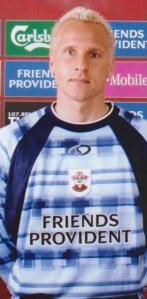
Saint Antti

It was Strachan who persuaded Niemi, by then 30, to try his luck in the Premier League at Southampton.

“My decision to move was purely on a football basis,” he said. “I hardly get any more money than I did in Scotland. I was there for five years and for two and half years I was playing regularly. Sometimes I felt I was playing against the same teams and the same players the whole time.”

Saints paid a fee of £2m to secure his services and he made his debut against Charlton Athletic, where he had spent a month on loan before his move to Hearts.

Strachan quickly installed Niemi as his preferred ‘keeper over Paul Jones and at the end of his first season with the Saints he appeared in the FA Cup final against Arsenal at the Millennium Stadium, Cardiff – a game which I watched with my friend Andrew Setten, sitting in front of Geoff Hurst in the best seats in the house!
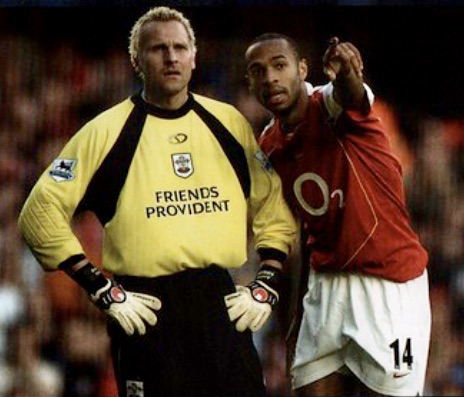
Arsenal’s Thierry Henry points things out to Niemi

With Arsenal retaining a 1-0 first half lead, Niemi unfortunately tore a calf muscle midway through the second half and, when replaced by Jones, became the first goalkeeper to be substituted in a FA Cup final.

In spite of losing to that solitary goal, Niemi didn’t want to miss the lap of appreciation and took a ride on a team-mate’s shoulders as they trooped around the stadium.

A series of injuries and a couple of operations limited him to 28 Premier League games in each of the next two seasons but in the opinion of goalkeeping coach David Coles (who once played on loan for Brighton), he was among the world’s top five ’keepers and he was the Saints player of the year in 2003-04.

“The Premiership has been every bit as good as I expected and even more,” Niemi said in that Guardian interview. “Everywhere you go it’s a full stadium and the pitches are perfect. It’s a fantastic league.

“I was making some good saves in Scottish football but the spotlight in the Premiership is so much bigger. There are so many cameras and every single game and situation is highlighted, so it’s easier to shine.”

Niemi’s reputation was certainly enhanced after he kept 17 clean sheets in his first two top flight seasons under Strachan at St Mary’s.

But he was also part of the Southampton side that was relegated in 2005, bringing to an end 27 years in English football’s top tier.

“The longer the season went on, the worse the results got and the more it started to affect the dressing room,” he told hampshirelive. “But overall, I can only look into the mirror and blame myself.

“My first two seasons at Saints were great, but during the third one, I just couldn’t get up to that standard any more. It was average at best.”

Niemi saw influential team-mates leave without being properly replaced and he said: “I remember looking around myself at the beginning of the campaign and thinking ‘things here aren’t as well as they should be’. The team had weakened and the contrast was huge.”

After the relegation, Niemi said: “I felt ashamed, simple as. It just felt embarrassing as hell.”

He stayed half a season after Saints playing in the Championship but returned to the Premier League in January 2006 when he moved to Fulham under Chris Coleman.

“Living in London was a big attraction.,” he told fulhamfc.com. “My wife was delighted to get a chance to move to West London and, as I’d played against them many times, I knew that it was a nice club too.”
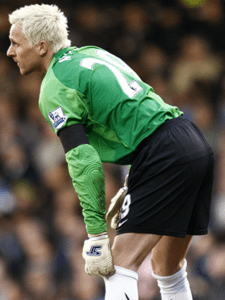
Niemi switched to Craven Cottage in January 2006

A hamstring injury limited him to nine appearances in those first few months at Craven Cottage but he established himself as first choice the following season and went on to make 63 appearances before a wrist injury led to him calling it a day at the start of the 2008-09 season.

However, at the age of 37, he was persuaded to come out of retirement and followed his former Saints coach Coles to south coast rivals Portsmouth as back-up to first choice David James.

He left Pompey in March 2010 having earned around £450,000 over the course of eight months without having made an appearance, the Daily Mirror reported.

The newspaper said the Finn earned £14,000 a week during his time at Fratton Park and played just twice for the reserves and spent one Premier League match on the subs’ bench.

Having won 67 caps playing in goal for Finland, Niemi became his country’s goalkeeping coach from 2010 as well as working with the Finnish FA in developing the quality of goalkeeper coaching in the country. Alongside those responsibilities, he slotted in club goalkeeper coaching in various locations – including back at his old club HJK Helsinki, at another Finnish side, FC Honka, and the season at Brighton.

Joaquin Gómez, a coach he first met during that season with the Albion, subsequently called on his services at Finnish side HIFK in 2021.

Gómez, originally an academy coach with the Seagulls, stayed on as part of the first team management set-up having worked under Hyypia’s successor, Oscar Garcia., but then left to become head of tactical analysis at Derby County before teaming up with Nathan Jones at Luton Town, and then Stoke City.

In May 2019, on Niemi’s recommendation, he also started coaching Finland’s under 21 team. After leaving Stoke, he was assistant manager at Spanish Second Division side FC Cartagena, assistant coach at Finland’s SJK Seinäjoki and spent a season at Al-Qadsiah in Saudi Arabia.

On persuading Niemi to join him at HIFK, Gómez said: “He’s an outstanding goalkeeping coach and will now also assist me in other areas.

“Antti is the best Finnish goalkeeper of all time, and he has done great work in coaching after his retirement from playing. At HIFK he’ll have a more versatile role than previously, as he’ll be working more with outfield players as well.”

In the summer of 2024, Gómez persuaded Niemi to join him at Greek Super League club Volos and the Finn spoke to Tribalfootball.com about those days spent in Lancing.

“I have seen a lot of passionate people in my lifetime in football but this guy is something else; he has dedicated his life to football. 

“He moved from Spain (to England) without knowing any English, he just wanted to work in English football. He was working as a waiter, he was cleaning the toilets at Brighton, he was coaching kids and eventually somebody saw that this guy is really passionate and he can coach so he got in the first team.”

Niemi continued: “He called me in the summer, he said I had a few days to decide. He is very temperamental; he is very passionate and I am the boring, steady guy who always tells him to calm down! You need that sort of personality; you don’t need a similar sort of personality as you need to balance each other out 

“He offered me the job to be the assistant manager which is different as I have always been a goalkeeping coach and I still am with the Finnish national team but I took it as a challenge, as an adventure. It is going to be a learning curve for me and I am really enjoying it so far.” 

Unfortunately, Gómez was sacked after only five league matches and his next appointment, in January 2025, was as the new coach of Indonesian Liga 1 club Borneo Samarinda.

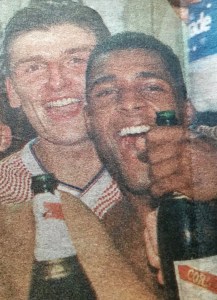
Ball-playing defender Colin Pates a captain at just 22

ENGLAND World Cup winning hat-trick hero Geoff Hurst gave Colin Pates his Chelsea debut as an 18-year-old – and what an extraordinary footballing baptism it was.

Replacing the injured Micky Droy for a visit across London in a second tier match against Orient, young Pates was involved in a madcap 10-goal match that saw Chelsea win 7-3.

“It was an amazing feeling to go out there but it was chaos, “ he told chelseafancast.com in a 2021 podcast.

And in another interview, he recalled: “It certainly wasn’t a good advertisement for defenders but as long as you come away with the win the fans are happy. It’s one of those days where you’re so fired up it just goes so quickly.

“You come off the pitch at the end and have no recollection of what happened really. I was up against some good, experienced pros and it was quite daunting, but I really enjoyed it.”

That game at Brisbane Road marked the start of a Chelsea first team career that spanned 346 matches, 137 of them as captain, in a turbulent period for the club.

Pates’ future Brighton teammates Gary Chivers and Clive Walker were also in that side at Orient and Walker scored two of Chelsea’s hatful (Lee Frost (3), Micky Fillery and Ian Britton the others).

Pates and Robert Codner celebrate reaching the Wembley final

Fast forward 12 years and Pates was reunited with Chivers and Walker when he joined Brighton on loan from Arsenal in February 1991 to help out after young Irish centre-back Paul McCarthy was sidelined by injury.

Manager Barry Lloyd pulled off something of a coup to persuade his old Chelsea teammate, George Graham, then manager of Arsenal, to loan Pates to the Seagulls for three months.

The Argus Albion reporter John Vinicombe described it as a “masterstroke” and doubted that Albion would have made it to the divisional play-off final at Wembley without him.

Match magazine pic of Pates at Wembley

Lloyd’s faithful no. 2, Martin Hinshelwood, said Pates got better and better over the three months, pointing out: “He has steadied us a little bit. He talks to players, he is a great trainer and he has brought a lot to our back four.”

The player himself told Luke Nicoli of the Albion website in a 2021 interview: “Although I was dropping down a division, it didn’t matter to me – I was just happy to be playing football.

“I immediately struck up a partnership at the back with Gary, and it was like the good old days at Chelsea again.

“I spent three months at the club and I loved every minute; I loved the area, the Goldstone, the club, the fans and, of course, we went all the way to Wembley that season in the play-offs – where the turnout from our fans in the final was incredible.

“We lost (3-1) to Notts County, which was one of those games where it just wasn’t meant to be.”

It has since emerged that Lloyd’s insistence on changing a successful formula by playing Romanian international Stefan Iovan as a sweeper in that match upset the players.

But Pates said: “I know we changed formation that day, and maybe that contributed to our defeat, but I didn’t look at it like that – it was just one of those games where it wasn’t meant to be.”

“We came with a fantastic late run in the league, but it proved to be a game too far for us,” he recalled in a matchday programme article. “We made a slow start to the game and that defeat still hurts, knowing what it meant to everyone connected with the club.”

In another interview, Pates said: “The result in the play-off final didn’t go our way but it was a fantastic experience for the team to play at Wembley, the side was so close to the Premiership, or First Division as it was called then.

“I’d been lucky to have played there before but to others it was the pinnacle of their careers.”

Indeed, the last time Pates had played there was five years previously when he made history by becoming the first-ever Chelsea player to lift a trophy – the Full Members Cup – at the iconic stadium (when Ron Harris lifted the FA Cup in 1970 it was at Old Trafford, where the replay had taken place after a 2-2 draw at Wembley). That was arguably the pinnacle of his career.

The Full Members Cup was a short-lived competition between North and South clubs from the top two divisions of the league, with the regional winners meeting in a national final. It was introduced after English clubs were banned from competing in Europe following the Heysel disaster. In truth, it struggled to be taken seriously and it was a surprise it lasted as long as seven seasons.

The most remarkable element of Chelsea’s win was that the game took place the day after they’d played a league game at Southampton – when Pates scored the only goal of the game with a deflected free kick past Peter Shilton in Southampton’s goal.

Chelsea beat Manchester City 5-4 but extraordinarily were cruising at 5-1 before City scored three in the last six minutes (one an 89th minute own goal by Doug Rougvie!).

“When the referee blew his whistle, was I relieved!” said Pates. “It’s great to play at Wembley with thousands of fans screaming their heads off, and once you’re on the pitch you don’t care what cup it is, you just want to win it.”

Born on 10 August 1961 in Wimbledon, Pates went to school only five miles from Stamford Bridge and was a Chelsea fan as a boy. He signed for the club aged 10, starting training with them in 1971, the year they won the European Cup Winners’ Cup having won the FA Cup the previous year. Pates worked his way through the different age levels and as an apprentice cleaned the boots of hardman defender Ron Harris.

He made that first team debut on 10 November 1979, by which time he had already played five times for England Youth that autumn. A further six appearances followed in 1980, alongside the likes of Micky Adams, Gary Mabbutt, Paul Walsh and Terry Gibson. Mark Barham, Steve Mackenzie and Terry Connor featured in the early 1980 games.   

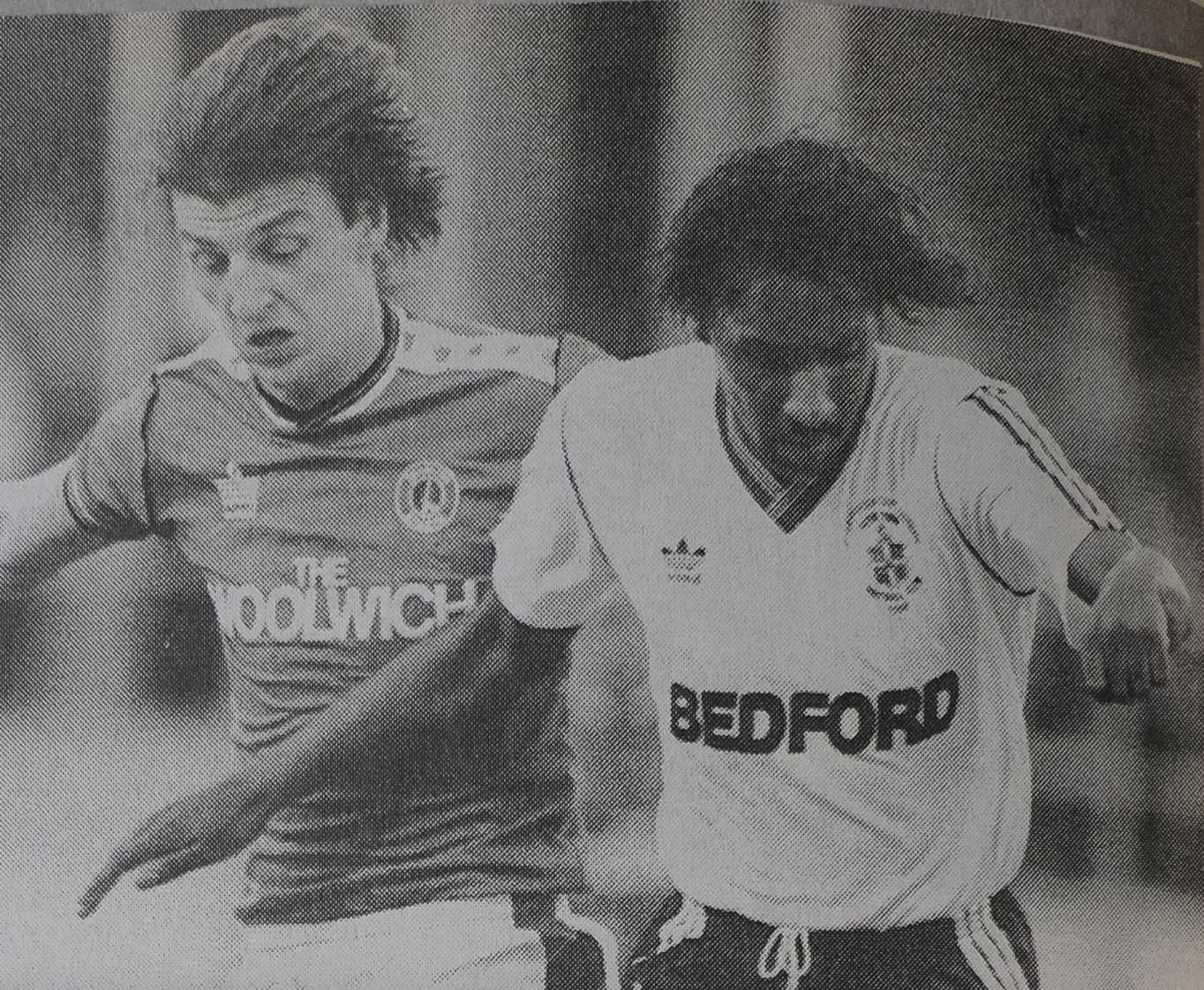
Pates in action for Chelsea against Albion’s Terry Connor, a former England Youth teammate

Simultaneously, Droy’s lack of fitness meant young Pates got an extended run in the side. However, because he was comfortable on the ball and could play in a number of positions, manager Hurst often used him as something of a utility player.

For example, in 1980-81, his 15 appearances were spread across all back four positions. But when John Neal took over for the 1981-82 season, Pates was ever present in the centre alongside Droy.

While the side’s league fortunes didn’t improve under the new man (they finished 12th), they had the consolation of reaching the quarter finals of the FA Cup after beating reigning European champions Liverpool 2-0 in the fifth round (Pates had the job of man-marking Graeme Souness).

Remarkably, Chelsea only narrowly avoided relegation to the old Third Division in 1983, and, as a result, manager Neal had a clear-out of the ‘old guard’ and Pates’ performances and attitude earned him the captain’s armband just before his 22nd birthday.

“I think he wanted someone who had come through the ranks and knew the club,” Pates said. “I was fortunate enough to be one of the few players – along with the likes of John Bumstead – who he kept on from before.”

Pates has nothing but praise for Neal and his assistant Ian McNeill (who played more than 100 games for Brighton between 1959 and 1962) and their eye for good players, like Pat Nevin, Joe McLaughlin, Nigel Spackman, David Speedie and Kerry Dixon, who were brought in to rebuild the club.

“I loved John Neal, he was a man of few words but when he said something you listened because it was going to be something poignant or important,” said Pates. “He was a good man-manager and would always take care of you if you had problems and be there for a chat. You wanted to play for him.”

Combined with the new arrivals, Pates and his pal Bumstead were part of a core of local lads Neal relied on (it included Dale Jasper, Chivers and Fillery): they all came from the same estate in Mitcham.

In his first season wearing the armband, “Pates stepped into the role with ease and led the team to the Second Division title” wrote Kelvin Barker.

“Colin’s classy displays in the top division catapulted him into the limelight, his impressive captaincy of a club on the up particularly catching the eye.

“A string of niggly injuries after Christmas led to him missing a handful of matches and his importance to the defence was highlighted when, in his absence, Chelsea slipped to consecutive defeats at Coventry and Ipswich.

“Pates made a total of 48 appearances during the 1984-85 campaign and scored once, the goal coming in a stunning 4-3 win at Goodison Park against the season’s champions, Everton.”

It had been a proud moment when Pates led Chelsea out at Highbury for the 1984-85 season-opener against Arsenal. The game finished 1-1, Paul Mariner opening the scoring for the Gunners on 35 minutes, Dixon equalising for the visitors four minutes later.

Chelsea made a decent fist of their return to the big time, finishing sixth. They also reached the semi-finals of the League Cup only to be knocked out over two legs by a Clive Walker-inspired Sunderland.

Chelsea did make it to Wembley the following year but it would be fair to say winning

that Full Members Cup final ultimately damaged their progress in the league. Chelsea were riding high in the top flight at the time and being spoken of as title contenders but immediately after that trophy win they were beaten 4-0 at home by West Ham on Easter Saturday and 6-0 by QPR at Loftus Road on Easter Monday.

Pates’ future Brighton teammate John Byrne scored twice for the Rs playing alongside Michael Robinson and Gary Bannister, who got a hat-trick. Substitute Leroy Rosenior (father of Liam) scored the other.

Byrne later remembered: “There were some big name players in the Chelsea line-up, including centre-back Doug Rougvie who seemed like he wanted to kill somebody when the score was 5-0! He was certainly looking for blood!

“We had the Milk Cup Final coming up and I remember saying to Banna with about 15 minutes to go ‘I ain’t going anywhere near Rougvie’. And Gary replied: ‘Neither am I!’ So we both ended up playing on the wings with no one in the middle!”

Pates and Doug Rougvie both played for Chelsea and Brighton

There was talk that Pates might force his way into the England squad for the Mexico World Cup that summer but Terry Butcher, Alvin Martin and Terry Fenwick were ahead of him.

Competition at club level emerged at the start of the following season when centre-half Steve Wicks was recruited and Pates was moved to left-back. However, injuries to Wicks meant Pates was soon back in the middle.

In his sporting-heroes.net piece, Barker continued: “As Chelsea’s farcical season went from bad to worse, he found himself being played in midfield again. With the Blues looking down the barrel of a drop into Division Two, Colin was returned to the centre of defence and relegation was averted.”

An injury-disrupted 1987-88 season also saw Pates have the captaincy taken off him and given to fellow defender Joe McLaughlin. Pates actually missed the start of the season having had a cartilage operation and when he returned in October the team were on something of a downward spiral. Injured again at the end of March, by the time he was fit to return, Chelsea were heading close to the relegation trapdoor.

At the time, as part of a restructuring plan to reduce the top division’s number of teams from 22 to 20, the team finishing fourth bottom of Division One had to play-off against the third, fourth and fifth-placed teams in Division Two. The top two in Division Two were promoted automatically and the bottom three in Division One went down.

Chelsea ended up fourth from bottom and had to play Middlesbrough (who’d finished third in Division Two) over two legs.

Boro won the first leg at Ayresome Park 2-0 but Chelsea only won their home leg 1-0, so they were relegated. However, history has since remembered the match more for the riotous behaviour of Chelsea supporters.

gazettelive.co.uk recalled: “There was trouble before, during and after the high-stakes game. Chelsea fans invaded the pitch on the whistle and stormed the away end sparking hand to hand fighting with barely a steward in sight.

“And it was only the intervention of mounted police that eventually cleared the pitch. The trouble didn’t stop there with more attacks outside the ground as Boro fans returned to their cars, coaches and the tube.”

Boro striker Bernie Slaven remembered: “We were locked in the dressing room celebrating promotion for maybe an hour while the police dealt with the trouble and cleared the pitch then we went out and celebrated again with the Boro fans who had been kept back in the stadium.

“The trouble and the ugly atmosphere was a real shame because it took all the headlines away from what we had achieved.”

John Hollins resigned as manager and was replaced by Bobby Campbell. One of his first moves was to sign the powerful central defender Graham Roberts who he made captain.

Pates was given a testimonial as part of the pre-season friendly fixtures (a 0-0 draw with Spurs) but the season was only three months old when he suddenly found himself unwanted at the Bridge.

As Pates returned to the dressing room at the end of a 2-2 Littlewoods Cup home draw with Scunthorpe United, Campbell informed him Charlton Athletic manager Lennie Lawrence was upstairs waiting to sign him, the club having already agreed terms over the transfer (a £400,000 fee).

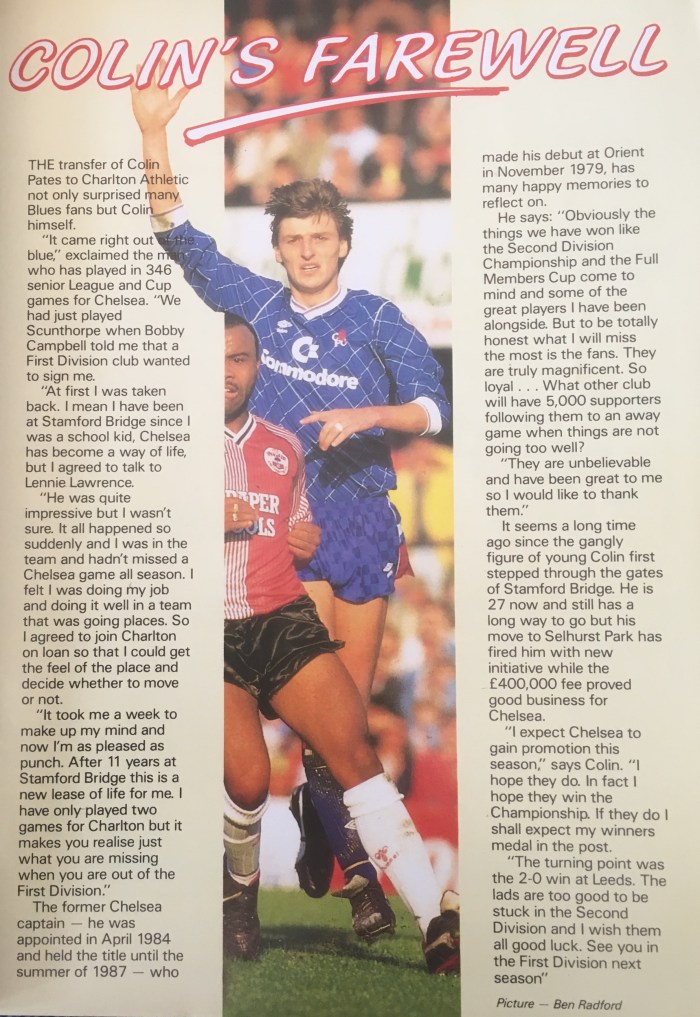
“It came right out of the blue,” said Pates. “At first, I was taken aback. I have been at Stamford Bridge since I was a schoolkid. Chelsea has become a way of life.”

When the Albion visited Chelsea for a Division 2 league game on 29 October 1988, the matchday programme carried an article headlined ‘Colin’s farewell’, detailing the circumstances.

“The transfer of Colin Pates to Charlton Athletic not only surprised many Blues fans but Colin himself,” it began.

And reflecting on what happened many years later, Pates told Luke Nicoli: “I was allowed to leave and did so with a heavy heart as I wanted to stay.”

Nevertheless, the move at least presented the defender with the chance to return to playing in the top division, and he admitted: “After 11 years at Stamford Bridge, this is a new lease of life for me.”

Charlton, who had to play home matches at Crystal Palace’s Selhurst Park at the time, finished 14th by the end of that 1988-89 season, but Pates had left for Arsenal by the time the Addicks were relegated in 19th place at the end of the following season.

Despite those moves across London, and to the south coast, Chelsea hadn’t seen the last of Pates, though. He subsequently became head of football at the independent Whitgift School in South Croydon, where he coached most sports and was the first football coach in what had previously been a rugby-dominated school and pupils Victor Moses and Callum Hudson-Odoi both went on to play for the Blues.

Pates was also seen back at the Bridge on matchdays working in the hospitality lounges.

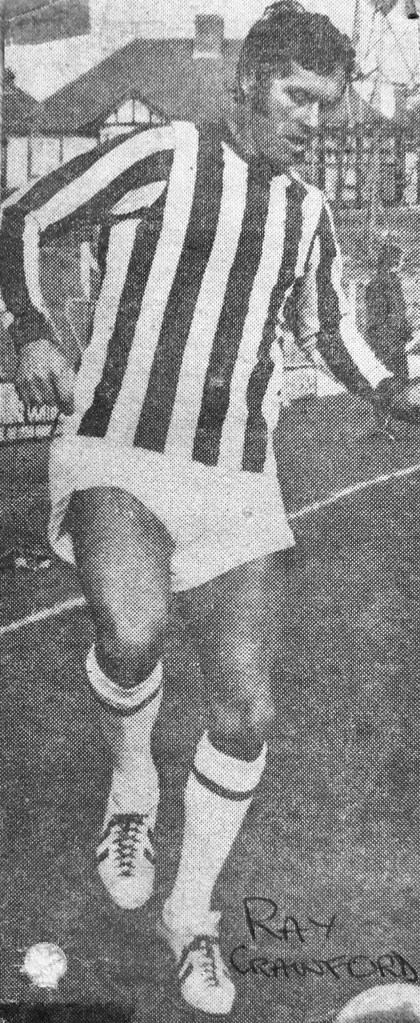
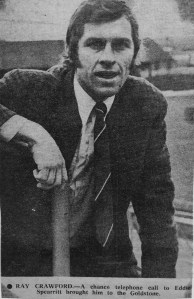
Goalscorer Ray Crawford took on Brighton backroom role

RAY CRAWFORD, one of the foremost goalscorers of the 1960s, came close to a swansong with the Albion and ended up coaching the club’s youngsters.

Crawford had been a key player in Alf Ramsey’s First Division title-winning Ipswich Town side having begun at hometown club Portsmouth and later netted 41 goals in 61 appearances for Wolverhampton Wanderers.

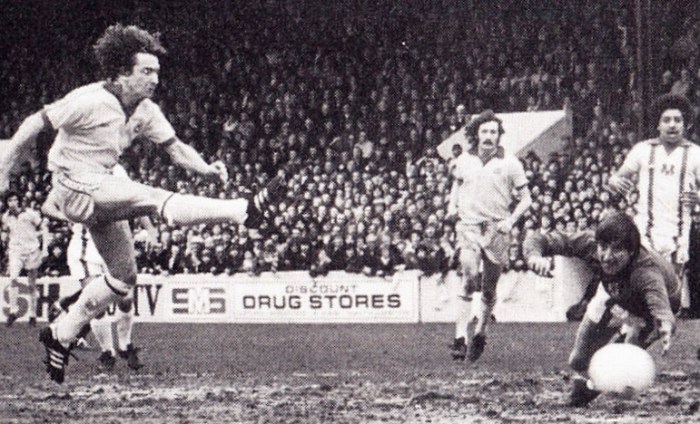
He joined Brighton in the autumn of 1971 after he had read they were struggling to score goals. Earlier the same year, he’d hit the headlines at the age of 35 when he scored twice for Fourth Division Colchester United as they sensationally beat Don Revie’s First Division Leeds United 3-2 in the FA Cup.

After a subsequent short stint playing in South Africa, homesickness brought him and his family back to the UK and the search began for a way to continue his celebrated career in the game.

He got in touch with his former Ipswich teammate, Eddie Spearritt, a key member of Albion’s squad, and the utility player persuaded manager Pat Saward to offer Crawford a trial.

“I did well enough in my trial week for Pat to ask me to stay for another month and to see how things went,” Crawford recalled in his eminently readable autobiography Curse of the Jungle Boy (PB Publishing, 2007).

Crawford found the net for the reserves, but a contractual issue with his last club, Durban City (who wanted a fee the Albion weren’t prepared to pay) prevented him joining as a player.

Meanwhile, the previous goalscoring slump that had first drawn him to the club was remedied by a decent run of goals from Peter O’Sullivan to supplement a revival in the form of strikers Kit Napier and Willie Irvine.

It meant Crawford, at 36, hung up his boots (although he still managed a cameo 15 minutes for the reserves in October 1973) to concentrate on coaching.

In the days before large teams of scouts and analysis tools, he would also run an eye over Albion’s future first team opponents to highlight their strengths and weaknesses.

“His dossiers on opposing styles and individual players have proved of great value in the team talks,” reported John Vinicombe in an Evening Argus supplement celebrating Albion’s promotion from the Third Division.

“When I returned to England after a spell with Durban City my only thoughts were of playing,” Crawford recalled. “Before I went to South Africa, I had a good season with Colchester United scoring 32 goals, and, of course, there were the two goals that I scored against the great Leeds United, knocking them out of the FA Cup, which still made me believe that my career was in playing.

Crawford scores v Leeds in the FA Cup

“But when my month’s loan from Durban City expired, and Pat Saward asked me if I would like to join the staff, I jumped at the chance.”

It didn’t stop Saward continuing to search for someone to supplement the strikeforce as the Albion went neck and neck with Aston Villa and Bournemouth for promotion.

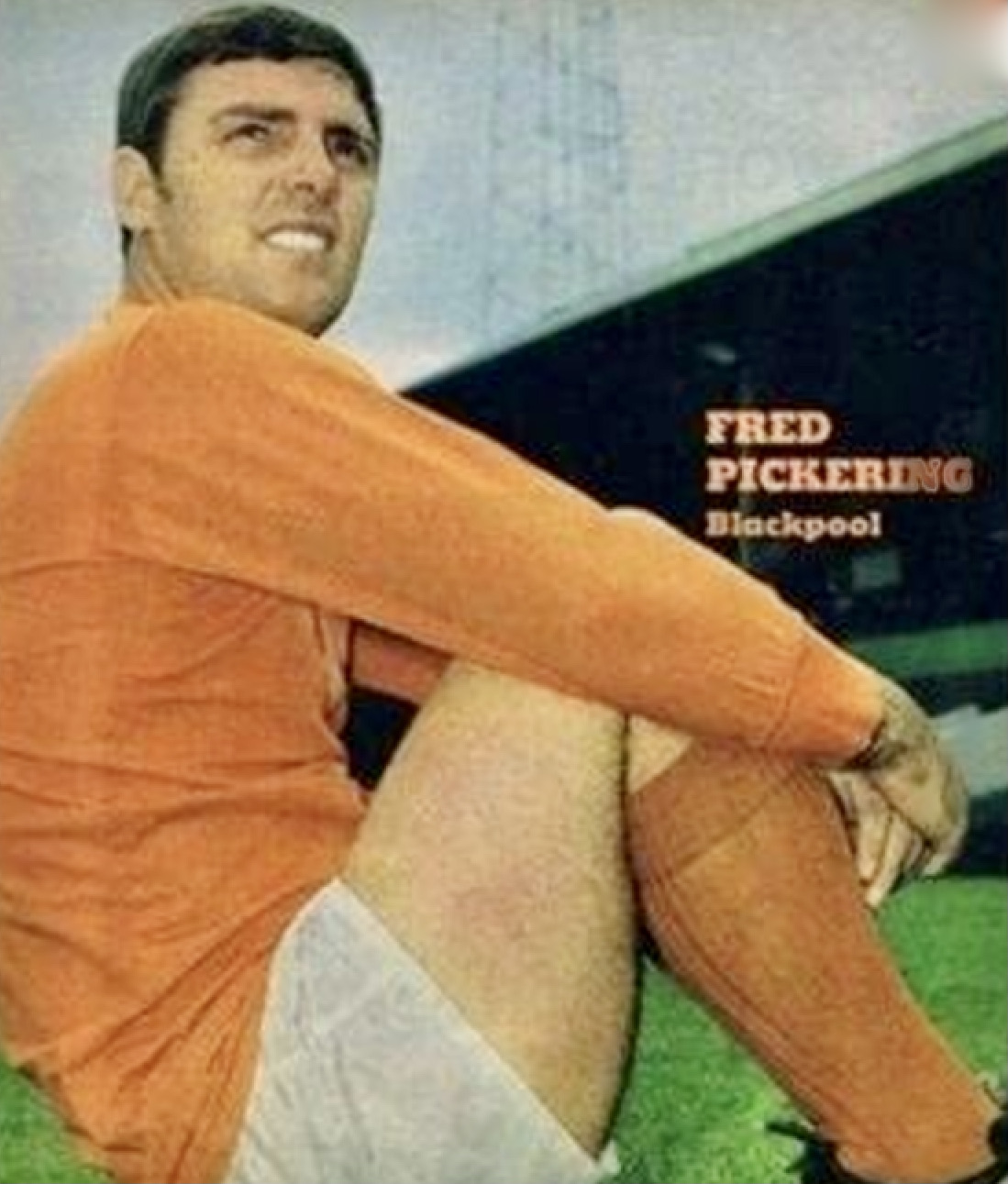
Saward even brought in on trial another former England striker, the ex- Everton, Birmingham and Blackpool striker Fred Pickering from Blackburn Rovers. Like Crawford, he scored for the reserves but he wasn’t deemed fit enough for the first team.

Eventually, in March 1972, Saward found the missing piece of his jigsaw in Ken Beamish, a record transfer deadline day signing from Tranmere Rovers.

Beamish chipped in with some vital late goals to help Albion edge out the Cherries to secure Albion’s promotion as runners up to Villa.

The new man’s contribution earned Crawford’s approval in Brighton & Hove Albion Supporters’ Club’s official souvenir handbook, produced to celebrate the promotion.

Crawford as coach

He said: “I don’t like to single out players because football is a team game, but I must on this occasion. Ken Beamish added the final bite up front, and those vital goals that he scored helped us into Division II. What a player this boy is – he never gives up!”

It emerged in Crawford’s autobiography that he also had a friend in Albion chairman Mike Bamber, having got to know him when the Colchester team stayed at Bamber’s Ringmer hotel before a FA Cup tie.

Ever one for rubbing shoulders with stars, Bamber had subsequently invited Crawford back to Sussex to open a local fete in exchange for a weekend stay at the hotel with his family.

“Since that time, I had regarded Mike as a friend and a man I could trust,” said Crawford.

The former striker’s work with the club’s youngsters was evidently appreciated; for instance by Steve Barrett (below left) who said in 2011: “Ray was my coach when I was an apprentice and a young pro. Always had a great enthusiasm for the game and, even in training at the age of about 40, had a good touch and great eye for goal.

“Was great fun on our annual youth trips to tournaments to Holland or Germany. Was very modest in general but loved to remind everyone of his two goals for Colchester against the then mighty Leeds in the FA Cup. A really nice man.”

When Saward was sacked in the autumn of 1973, Crawford assisted caretaker manager Glen Wilson for the home fixture against Southport, which Albion won 4-0.

As for his relationship with Bamber, it counted for nothing as soon as the chairman astonished the football world by appointing Brian Clough and Peter Taylor to succeed Saward.

Crawford was angered by Clough’s “abrasive and stubborn” shenanigans, for instance being bought a pint in a Lewes hotel bar and then left waiting with Wilson as the former Derby duo disappeared for two hours.

“I wasn’t prepared to be treated like that and I soon found out that the way he spoke to people was as I’d expected,” Crawford recalled. “One day he left the players sitting in the dressing room for two hours before training. I don’t know why. It left a sort of threatening pressure on the players that I didn’t agree with.”

It probably didn’t help matters that Crawford’s outspoken wife Eileen also took issue with Clough when he tried to stop the players’ wives having a smoke while socialising before a match. “I don’t smoke, but if I did, it wouldn’t be anything to do with you!” she told him.

Crawford had heard that his first club, Portsmouth, were looking to revive a youth set-up that had been abandoned under a previous manager, so he applied to take on the role of setting it up and running it and headed back to Fratton Park in December 1973.

Born just a mile away from Portsmouth’s famous home ground, the eldest of four children, on 13 July 1936, Crawford initially looked unlikely to follow the sporting prowess of his dad, who had been a professional boxer, because of asthma.

Nevertheless, his enthusiasm for football was sparked by a display of skill from Pompey player Bert Barlow when he did a coaching session at his school, and he joined a local football club called Sultan Boys.

Then he was taken to see Portsmouth play at Fratton Park and he set his heart on stepping out onto that turf himself.

At 14 he started to fill out in height and weight. “I changed quickly from a skinny, shy, asthmatic youth into a strong, young athlete, representing Hilsea Modern School and Portsmouth Schools in cross country running and in the 440 yards,” he said.

He also excelled at cricket and was offered the chance to have a trial with Hampshire County Cricket Club. But his heart was set on football.

Eventually a break came courtesy of a friend who was already in Portsmouth’s youth team. Crawford was invited to twice-weekly training and, after impressing, was taken on as a junior.

In the meantime, he worked by day for the Portsmouth Trading Company making concrete and breeze blocks, which involved spending around eight hours every day lifting 500 heavy blocks onto pallets to dry. It certainly got him fit.

The football club eventually offered him a contract after two years of training with them, but then (as was the case with all young men at the time) he had to do two years’ National Service in the army.

That’s where the title of his book comes in because he was posted to Malaya where word of his footballing ability had already spread. He was invited to play for Selangor Rangers, the biggest club in Kuala Lumpur, and the army also gave him permission to play for the Malayan Federation on a tour of Cambodia and Vietnam.

“Whilst I took part in many more football matches in Malaya than military exercises, I did go out into the jungle on a few occasions with the battalion,” he recalled.

Back at Portsmouth in the autumn of 1956, Crawford resumed his football career, initially in Pompey’s reserve team. After scoring 33 goals in 39 reserve team games, he finally got a first team call-up, making his debut in a 0-0 draw against Burnley at Fratton Park on 24 August 1957.

In the following game, he scored two in two minutes as Spurs were beaten 5-1 at home, but the following month he suffered a broken ankle that sidelined him for two months.

The beginning of the end of his fledgling Pompey playing career came in December that year when he lost it with the club chairman, Jack Sparshatt, who puzzlingly decided to enter the dressing room at half-time during a game, voicing his disapproval at the performance. Crawford told him to f*** off!

Perhaps not surprisingly he was left out of the side for a month.

He did get selected again in the new year, playing up front with Irishman Derek Dougan, but, that summer, Eddie Lever, the manager who’d given him his debut, was sacked and it wasn’t long before his replacement, Freddie Cox, sold Crawford to Ipswich.

Although he hadn’t wanted to move, future England boss Ramsey was persuasive and Crawford admitted: “I had no idea at the time that this would eventually turn out as one of the best decisions I ever made in life.”

The Hampshire lad adapted well to Suffolk and by the end of his first season at Town had scored 25 goals in 30 league games. Not a bad return but even better was to come and with Crawford and strike partner Ted Phillips rattling in the goals, Ipswich won back-to-back titles, winning the second tier championship in 1960-61 and the elite title in 1961-62.

Crawford scored 40 and Phillips 30 as Ipswich won promotion in 1961 and, at the higher level the following season, Crawford bagged another 37 goals.

Such prolific scoring inevitably brought him to the attention of the international selectors and, at the age of 25, he won two England caps. The mystery was why he didn’t win more.

Crawford made his England debut in a Home International against Northern Ireland at Wembley on 22 November 1961. He was credited with setting up England’s goal, scored by Bobby Charlton in the 20th minute, and the game ended in a disappointing 1-1 draw.

The 30,000 crowd for the Wednesday afternoon match was a record low for Wembley at that time. The prolific Ipswich striker only won one more cap, and then only because of a fractured cheekbone injury to first choice Alan Peacock of Middlesbrough.

Nonetheless, Crawford seized his chance and got on the scoresheet after only seven minutes against Austria in a friendly at Wembley on 4 April 1962.

He turned and buried a shot to give England an early lead which Ron Flowers increased with a penalty before half-time. Roger Hunt scored a third for England in the second half. Hans Buzek pulled one back for the visitors in the 76th minute.

As well as Hunt, future World Cup winners Ray Wilson and Bobby Charlton were also in the England line-up, together with 1966 squad members Jimmy Armfield and John Connelly. The team was captained by Fulham’s Johnny Haynes. Jimmy Melia was part of the squad but didn’t play.

Jimmy Magill, who later joined Brighton from Arsenal, was in the Irish side whose equaliser was scored by Burnley’s Jimmy McIlroy. Spurs’ Danny Blanchflower won his 50th cap for his country that day.

Having scored 33 goals in the First Division, Crawford was gutted not to be selected in the England squad for the 1962 World Cup in Chile and future England boss Ramsey was mystified too. “I just don’t understand it and I will go as far as saying it is downright unfair,” he said.

Crawford reckoned it was because England coach Harold Shepherdson, who also held a similar role at Middlesbrough, always advanced the claims of Boro’s aforementioned Peacock, who was chosen ahead of him despite scoring fewer goals, and in the Second Division.

Although Crawford was selected three times for the Football League representative side, he didn’t win any more full international caps.

Probably more surprising was that his old club boss Ramsey, who had seen him at close quarters for Town, didn’t turn to him after he’d taken charge of England in October 1962. But Ramsey had an embarrassment of riches at his disposal, not least in the shape of Jimmy Greaves and Bobby Smith along with Liverpool’s Hunt and later Geoff Hurst.

Crawford’s first meeting with Jackie Milburn, who took over from Ramsey as Ipswich boss, simply involved the former Newcastle and England centre-forward saying: “Nice to meet you Ray, you won’t be here long.”

Sure enough, he wasn’t. Despite his past successes, Ipswich cashed in and sold him to Wolves for £55,000 in September 1963.

His debut was somewhat ignominious as Wolves succumbed 6-0 at Liverpool (their ‘keeper Malcolm Finlayson was forced off injured) but Crawford scored twice in his second game as Wanderers won 2-1 at Blackpool (for whom Alan Ball scored).

Crawford went on to finish that first season with 26 League goals to his name in 34 games and was named Player of the Year, although Wolves finished in a disappointing 16th place.

Crawford, who is remembered fondly on the website wolvesheroes.com, had been joined at Molineux by Liverpool’s Melia (“a fine passer of the ball”) but when Stan Cullis, the manager who signed them both, was sacked, neither of them saw eye to eye with his successor, Andy Beattie.

Melia was sold to Southampton and the rift with the new boss saw Crawford switch to Black Country rivals West Brom in February 1965 for a £35,000 fee. He later reflected it was a case of jumping out of the frying pan into the fire because he didn’t enjoy a good relationship with Baggies boss Jimmy Hagan.

The striker played only 16 matches for Albion, scoring eight goals, before asking for a transfer in March 1966 and being granted his wish. “I did my best but never had a decent run of games in the first team,” he said. “It never quite worked out but I enjoyed most of my time there and the fans could not have been better.”

It was former club Ipswich, battling at the wrong end of the Second Division, who rescued him and, even though it meant dropping down a division, he was happy to return to Portman Road under Bill McGarry.

Crawford struck up a useful striking partnership with prolific American-born Gerry Baker. By the end of the season, he’d scored eight goals in 13 appearances and Town managed to avoid relegation.

He was part of the Ipswich side that won the Second Division championship the following season, netting 25 goals in 48 appearances, and by then was approaching his 32nd birthday.

The goals continued to flow with Ipswich back amongst the elite, Crawford scoring 21 in 42 games in the 1967-68 season. But more managerial upheaval was around the corner, when McGarry left to become manager of Wolves.

“When McGarry left for Wolves, I had lost my master and mentor, leaving a psychological gap for me that wasn’t going to be filled by anyone else however qualified or good they were as a manager,” said Crawford.

Even before Bobby Robson succeeded McGarry, Crawford started to weigh up his options and he decided he fancied a move to South Africa, where his old Ipswich teammate Roy Bailey had settled.

Although Town chairman John Cobbold initially agreed to give him a free transfer, the Board later changed their mind and decided they wanted some compensation for his services. Instead of going to South Africa, he ended up moving to Charlton Athletic for £12,000.

The move to The Valley turned sour after he refused to join a training camp organised by manager Eddie Firmani because his family were ill and he needed to be at home to look after them. He was sacked after playing just 22 games for the Valiants, during which time he scored seven goals.

Southern League Kettering provided a short-term means of getting back into playing but it was Fourth Division Colchester United who took him on and he repaid their faith by scoring 31 goals in 55 matches under Dick Graham, the most memorable being that pair against Leeds.

Crawford eventually got his move to South Africa in August 1971, joining Durban City, but his family couldn’t settle and they returned to the UK three months’ later.

During his time as youth coach at Portsmouth, he was responsible for signing Steve Foster and, in his autobiography, recalls how a tip-off from Harry Bourne, a local schoolteacher set him on the path of the future Albion and England centre-back.

Foster had been released by Southampton and Crawford went to the family home in Gladys Avenue, Portsmouth, to invite him to train with Pompey. Foster’s mother was at a works disco at Allders and Crawford went to find her there and had to shout above the sound of the music that Portsmouth were interested in signing her son.

The youngster, 18 at the time, got in touch the next day and, before long, was switched from a centre-forward to a centre-back, after Crawford’s former Ipswich teammate Reg Tyrrell told him: “That no.9, he’s no centre-forward, but he’d be a good number 5.”

After he left Portsmouth in 1978, Crawford took over as manager at Hampshire league side Fareham Town and later managed Winchester City before finally retiring from the game in 1984 to become a merchandising rep.

Bobby Moore’s Dear mate netted five in seven for Albion

A STRIKER who once scored five goals in 20 minutes for West Ham took slightly longer when playing for Brighton but still netted five in seven games.

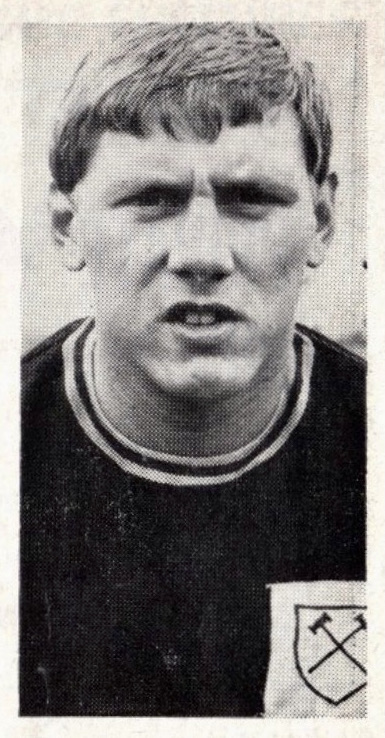
Brian Dear (nicknamed Stag, geddit?) won the European Cup Winners’ Cup with West Ham in front of 97,974 fans at Wembley in May 1965. Only the month before, he’d netted in the 44th, 53rd, 56th, 59th and 64th minutes of West Ham’s 6-1 demolition of West Brom in front of 27,706 fans at the Boleyn Ground.

Dear scores one of his five v WBA

Two years later, 23-year-old Dear found himself travelling to Workington to make his debut for Third Division Albion. The train journey there had been made worse by a derailment that meant Albion only arrived at the Borough Park ground 45 minutes before kick-off. Although Kit Napier scored against his former club, a sparse crowd of just 2,863 saw the visitors beaten 2-1.

Quite some change in fortunes for Dear, who had joined Brighton the previous day – transfer deadline day – in March 1967 when manager Archie Macaulay, a one-time Hammers player, went back to his old club to secure the forward’s services.

“No fee was paid at the time of the transfer. This will be discussed at the end of the season, and from now until then, it is up to Brian to prove his worth as to whether there will be a place at the Goldstone Ground for him in the future,” Macaulay wrote in the matchday programme.

Albion were bumping along in the lower half of the old Third Division at the time so it was quite a step down for Dear, but Brighton were keen to make his move permanent.

It wasn’t long before he showed what he was made of; Dear scored twice in his third game, on Easter Saturday, as Scunthorpe United held the Albion to a 2-2 draw at the Goldstone. Two days later he scored the only goal of the game as Albion beat visitors Watford 1-0. He was on the scoresheet again when Albion visited Boundary Park, Oldham, but the home side rallied in the second half to end up 4-1 winners.

Back at the Goldstone the following Saturday, he scored Brighton’s opener in a 2-0 win over Oxford United (top picture), but that was the end of his scoring in Albion’s colours. He missed three matches in April and his last game for Brighton was in a goalless draw away to Shrewsbury.

His hoped-for permanent signing didn’t happen and he returned to West Ham where the following season he went on to enjoy the most consistent spell of his Hammers career, scoring 16 goals in 29 matches (plus one as sub). The East Londoners finished in mid-table: a season in which Manchester City were champions, two points ahead of second-placed Man Utd.

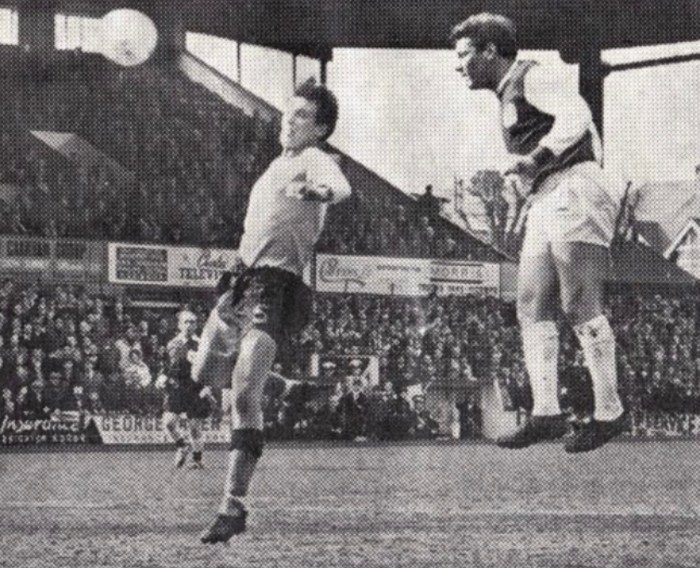
Dear rises to get in a header at the Goldstone Ground, with the West Stand in the background

“As a fan watching him, he was frustrating at times but he had the natural talent required for the top level and he certainly knew how to score goals,” said Tony Hanna, of the excellent fans website West Ham Till I Die.

Born in Plaistow, London, on 18 September 1943, Dear joined West Ham straight from school at the age of 15 and was an England schoolboy international who played against Scotland, Wales and Ireland in 1959.

On 29 December 1960, he scored twice for an England Youth XI when they beat an AFA Public Schools XI 8-0. Phil Beal and Bert Murray were among his teammates.

Dear made his league debut for the Hammers away to Wolves on 29 August 1962 but there were only two more first team appearances that season.

The following season, which culminated in West Ham beating a Preston North End side captained by Nobby Lawton 3-2 (Alex Dawson scored one of Preston’s goals), saw Dear struggle to get into the side and he made just three league appearances.

That five-goal haul v West Brom – when the crowd taunted the Baggies with a rendition of  ‘Oh Dear what can the matter be’ – helped take his 1964-65 season stats to 14 goals in just 15 appearances but he was part of the XI who won the European Cup Winners Cup 2-0 at Wembley. He scored four goals in previous rounds but it was outside right Alan Sealey who scored both Hammers goals against TSV Munich 1860 in the final.

Dear once again spent most of the 1965-66 season in a back-up role, featuring in just 10 first team matches while Hammer of the Year Geoff Hurst scored an impressive 40 goals in all competitions before going on to cement his name in English football history with a hat-trick as England won the World Cup in July 1966.

Hurst went one better the following season, netting 41 times, while Dear ended the season exploiting an opportunity to play competitive football with the Albion.

Throughout it all, Dear became a close friend of the legendary Bobby Moore, and in April 2021 West Ham invited the former striker to talk to the club’s academy players about the man he first met when he joined the club in 1958, the year Moore made his first-team debut against Manchester United at the tender age of 17.

“After that first period, that’s when we began to become friends,” Dear told the schoolboys. “We were all mates. You are all different ages at the academy, but you all know one another, how you play, what you do – it’s the same as us.

“Bobby was a bit shy. Once he felt comfortable with you, that was it. You had everything he could give, and he’d give everything to you. He was an amazing fella.”

The West Ham website said: “Dear and Moore were also inseparable off the pitch, enjoying a close friendship for over three decades before the icon’s tragic passing on 24 February 1993, at the age of just 51.”

Dear told the schoolboys: “You would have loved him if you’d have met him. He was a wonderful, wonderful man, and you lads should be very proud that you’re involved in the club that he was a part of.”

West Ham through and through, Dear did eventually leave Upton Park in February 1969, scoring seven times in 13 appearances for Fulham but they were relegated to the Third Division. He swiftly moved on to Millwall but only managed a handful of games before returning to West Ham in 1970.

However, his short-lived second spell is best remembered for his involvement in a curfew-busting drink before a FA Cup tie at Blackpool on 2 January 1971. Having been told icy weather would most likely mean the match would be called off, Dear, Moore, Jimmy Greaves, Clyde Best and physio Rob Jenkins went out late to ex-boxer Brian London’s club in the seaside resort.

Unfortunately, the game went ahead, West Ham were surprisingly beaten 4-0 by bottom-of-the-league Blackpool, and someone dobbed in the errant Hammers group.

Dear’s appearance as a sub that day was his last involvement in professional football. Manager Ron Greenwood turfed him out, along with Greaves, while Moore and Best were fined. Best later told his version of the story to the Knees Up Mother Brown website.

Before hanging up his boots, Dear played briefly for non-league Woodford Town. Football was in his blood and he became catering manager at Southend United and later worked in its commercial department.

West Ham Till I Die writer Tony Hanna concluded: “By Brian’s own admission he ‘enjoyed life’ more than most professional footballers. His stocky build was more often likened to being overweight and he enjoyed a beer after training, and also after matches.

“Being left out of the team, especially if he had scored the previous week, only further demotivated him in a career where he never really cemented a first team place.”

John Ruggiero scored on his Brighton league debut

JOHN RUGGIERO was one of four signings Alan Mullery made for newly promoted Albion in the summer of 1977.

That one of the quartet was Mark Lawrenson from Preston North End for £115,000 rather eclipsed Ruggiero’s arrival from recently relegated Stoke City for £30,000.

Nonetheless, Ruggiero made an immediate impact, scoring on his league debut as a substitute for Peter O’Sullivan to earn the Seagulls a 1-1 draw at Southampton.

Ruggiero had begun the season in the starting line-up in Albion’s home and away goalless draws against Ron Atkinson’s Cambridge United in the League Cup before relinquishing a starting berth for the opening Division Two fixture at The Dell.

His 77th minute equaliser, after Alan Ball had put the home side ahead just before half time, was added to a fortnight later and, for a brief moment, he was joint top scorer with Steve Piper – on two goals.

The pair were both on the scoresheet to help the Seagulls to a 2-1 win at Mansfield Town on 3 September; the home side’s first defeat at Field Mill in 38 matches.

Shoot! magazine previewed Ruggiero’s eager anticipation at returning to the Victoria Ground for a league game on 15 October but he was only a sub that day and, although he went on for fellow summer signing Eric Potts, Albion lost 1-0.

A young Garth Crooks taking on Chris Cattlin the day Ruggiero returned to Stoke

After only seven league and cup starts (and three appearances off the bench), Ruggiero then had to wait six months for another sub appearance.

He went on as a second half substitute for injured Paul Clark in a 1-0 win at Blackburn, combining with Potts who went on to score the only goal of a game described by Argus writer John Vinicombe as “the most exhilarating match I have seen for years”.

Ruggiero didn’t make another start until the very last game of the season; but what a match to play in. A crowd of 33,431 packed in to the Goldstone to see the Seagulls take on Blackpool, with another possible promotion finely poised.

Albion dutifully won the game 2-1 (sending Blackpool down) with goals from Brian Horton and Peter Ward but their hopes of going up were cruelly dashed when Southampton and Spurs, who each only needed a draw to go up, lo and behold ground out a 0-0 draw playing each other.

As the Argus reported: “When news came of the goalless draw at The Dell there were cries of ‘fix’ and Albion had to suffer the bitter disappointment of missing promotion by the difference of nine goals.”

Before his recall for that clash, Ruggiero had continued to find the back of the net for the reserves – indeed he was the side’s top scorer for two seasons.

The Albion matchday programme reported his scoring exploits in some detail. For instance, in a 4-1 win away to Portsmouth. “John Ruggiero was the star of our win at Fratton Park with two fine goals and might have scored a hat-trick,” it said.

And in a 5-2 Goldstone win over Charlton Athletic, Ruggiero opened the scoring with a header from a Gary Williams cross, Steve Gritt pulled one back for the Addicks and Ruggiero volleyed in a fourth goal from the edge of the box.

Ruggiero, who lived in Shoreham with his wife Mary, discovered competition for a first team spot intensified after his summer signing: Clark from Southend adding steel to the midfield and Fulham’s Teddy Maybank taking over from Ian Mellor as Ward’s striking partner. O’Sullivan, meanwhile, comfortably stepped up to the higher level and kept his place.

When Albion were on course for promotion to the elite the following season, Ruggiero’s first team involvement was almost non-existent (a non-playing sub on one occasion).

He was sent out on loan to Portsmouth, then in the old Division 3, where he was a teammate of Steve Foster. Ruggiero scored once in six appearances, netting in a home 2-2 draw with Cambridge United on 27 December 1977.

He was released before Albion took their place amongst the elite and moved on to Chester City, signed by player-manager Alan Oakes, the former Manchester City stalwart.

Ruggiero joined just as ex-Albion teammate Mellor was moving on from Sealand Road, but, in a Chester team photo (above right), Ruggiero is standing alongside Jim Walker, who’d played at the Albion under Peter Taylor, and in the front row is a young Ian Rush.

Ruggiero scored within three minutes of his first league game for Chester, setting them on their way to a 3-2 win over Chesterfield. But he only made 15 appearances for them before dropping into the non-league scene.

The legendary England World Cup winner Gordon Banks, formerly of Stoke, signed Ruggiero for Telford United in the 1979-80 season when he was briefly manager of the Alliance Premier League side.

Born in Blurton on 26 November 1954 to Italian parents, the young Ruggiero went to Bentilee Junior School then Willfield High School. His prowess on the football field saw him represent Stoke Boys and the county Staffordshire Boys side and he was one of 24 young players who had a trial at Middlesbrough for the England Schoolboys side but missed the final cut.

He had the chance to join Stoke City at 15 but stayed on at school and passed five O levels: English Language, English Literature, Technical Drawing, History and Art.

“I had a lot of interest from many clubs: Blackpool, Leicester City, Derby County, Blackburn Rovers, Bolton Wanderers, Coventry City, West Brom and I even had a letter from Arsenal inviting me to go training with them,” Ruggiero told Nicholas Lloyd-Pugh for the svenskafans.com website in an April 2011 interview.

“I nearly signed for Coventry but the very last club to ask me was Stoke City and, once this happened, I knew where I would go. I joined as an apprentice when I was 16 in 1970.”  

Ruggiero explained how he started in the A youth team, progressed to the reserve side and finally made his first team debut under Tony Waddington on 5 February 1977, in a home 2-0 defeat against league leaders Manchester City.

He had made his league debut the previous season during a short loan period with Workington Town, playing three games in Division Four, which gives him the relatively rare distinction of having played in all four divisions of English football.

Even as a reserve team regular at Stoke he got to play at big stadiums like Old Trafford, Anfield, Elland Road, Hillsborough and Goodison Park. “It was great for the young players but you always hoped to make the first team at some point,” he said.

“It was a real dream for me to have players like Gordon Banks, Geoff Hurst, Alan Hudson, Peter Shilton and many more being part of your life.

“Tony Waddington loved his team and he always went for experience, so the younger players found it really hard to make the first team. However, a few younger players did well such as Alan Dodd, Sean Haslegrave, Stewart Jump, Ian Moores and Garth Crooks.”

He continued: “Players like Terry Conroy and John Mahoney were really friendly and always had a word of advice for you. I really liked Alan Dodd; he was a much underrated player and would have played for England at a bigger club.”

Ruggiero also spoke warmly of Alan A’Court, Stoke’s first team coach who had played for Liverpool, who took him on a football holiday to Zambia in 1973 where he played for Ndola United. A’Court was Zambia’s national coach at the time.

Two years later, Ruggiero earned a ‘Player of the Tournament’ accolade while playing for Stoke in a youth tournament in Holland.

Waddington’s successor as manager, former player George Eastham, also played a part in Ruggiero’s development by arranging for him to play in South Africa for eight months in 1975 where he was a league and cup winner with Cape Town City.

“I knew that George liked me as a player so I felt that this could be good for me when he took over the team,” Ruggiero told Lloyd-Pugh. “He had already played me in a friendly match against Stockport which was a showcase for the return of George Best from America.

“Whilst Best, Hudson and Greenhoff were doing their party tricks, I was quietly having a good game and it was clear that I was ready for another chance.”

That came in a home game against Liverpool, Ruggiero playing in midfield. “The next 90 minutes was my best of all time,” he said. “We drew the game 0–0. I would like to think I was the man of the match and George spoke very highly of me to the press after the game. The Liverpool team included Kevin Keegan, Ray Kennedy, Ray Clemence and many other big names.”

Stoke had turned to youngsters like Ruggiero because big name players had been sold off to pay for a replacement Butler Street stand roof at the Victoria Ground.

And while the youngster kept his place after that impressive display v Liverpool, they only won one of their remaining nine games and were relegated. It was little consolation that he scored twice away to Coventry because they lost 5-2.

“After the Liverpool game I was on a high, I really thought I’d made the big time and would be a first team player at Stoke for years to come,” he said. “I played nearly all the games left that season and was pretty consistent in all of the games.

“I was just enjoying my time and never really thought about relegation.”

But the 1-0 last day defeat at Aston Villa would prove to be his last game for Stoke because Brighton, who had gained promotion from the third tier, were bolstering their squad to compete at the higher level.

Ruggiero signed for the Seagulls along with Lawrenson and Williams, who moved from Preston (swapping places with Graham Cross and Harry Wilson), and Sheffield Wednesday winger Potts.

While Lawrenson was on the path to greatness, and Williams established himself in Albion’s left-back spot, Potts found his involvement was mainly from the bench and Ruggiero’s early promise faded.

After his short football career was over, Ruggiero joined the police, serving in the Cheshire force, rising to the rank of detective sergeant and mainly working in the Crewe area.

When the Goldstone Wrap blog checked on him in 2014, they unearthed a Facebook message in which he said: “Loved my short time in Brighton. Would have liked to have played a few more games but still love the place and the team were buzzing at that time.”

And in 2020, a former police colleague, Steve Beddows, informed the Where Are They Now website that Ruggiero had retired and was continuing to live in the Stoke area.

“He remains a very fit man with a keen eye for precise action posed wildlife photography and undertakes huge amounts of charitable work,” said Beddows. “A great sense of humour but very dogged, smart and highly professional. He does masses for charity with Stoke City Old Boys Association still and had the nickname ‘Italian Stallion’ because of his good looks.

“I never heard a bad word about him from anyone and he can still run marathons and plays lots of golf.”

John ‘Stonewall’ Jackson a loyal George Petchey disciple

NOT TO BE confused with the founder and first manager of Brighton & Hove Albion, that man’s namesake, John Jackson, was a coach at the Goldstone in the ‘80s and the ‘90s.

Less well known was that he could have been in goal for Albion for the 1983 FA Cup Final. Rather like Steve Foster, back-up ‘keeper Perry Digweed was serving a suspension when the game against Manchester United came round.

Digweed had been sent off in a reserve match in early May 1983 and was banned for the final and the replay. So, if anything had happened to first choice Graham Moseley – and let’s face it, he had been known to have off-field mishaps at other times during his Albion career – the man between the sticks at Wembley could well have been Jackson.

Jackson had signed on emergency Combination forms in February 1983 and played for the Reserves in a 1-1 draw at home to Luton when Moseley and youth team ‘keeper Martin Hyde were both injured. He stayed on and helped coach the youth team alongside John Shepherd and with Moseley fully fit was not needed for first team duty (in those days, there were no substitute goalkeepers on the bench).
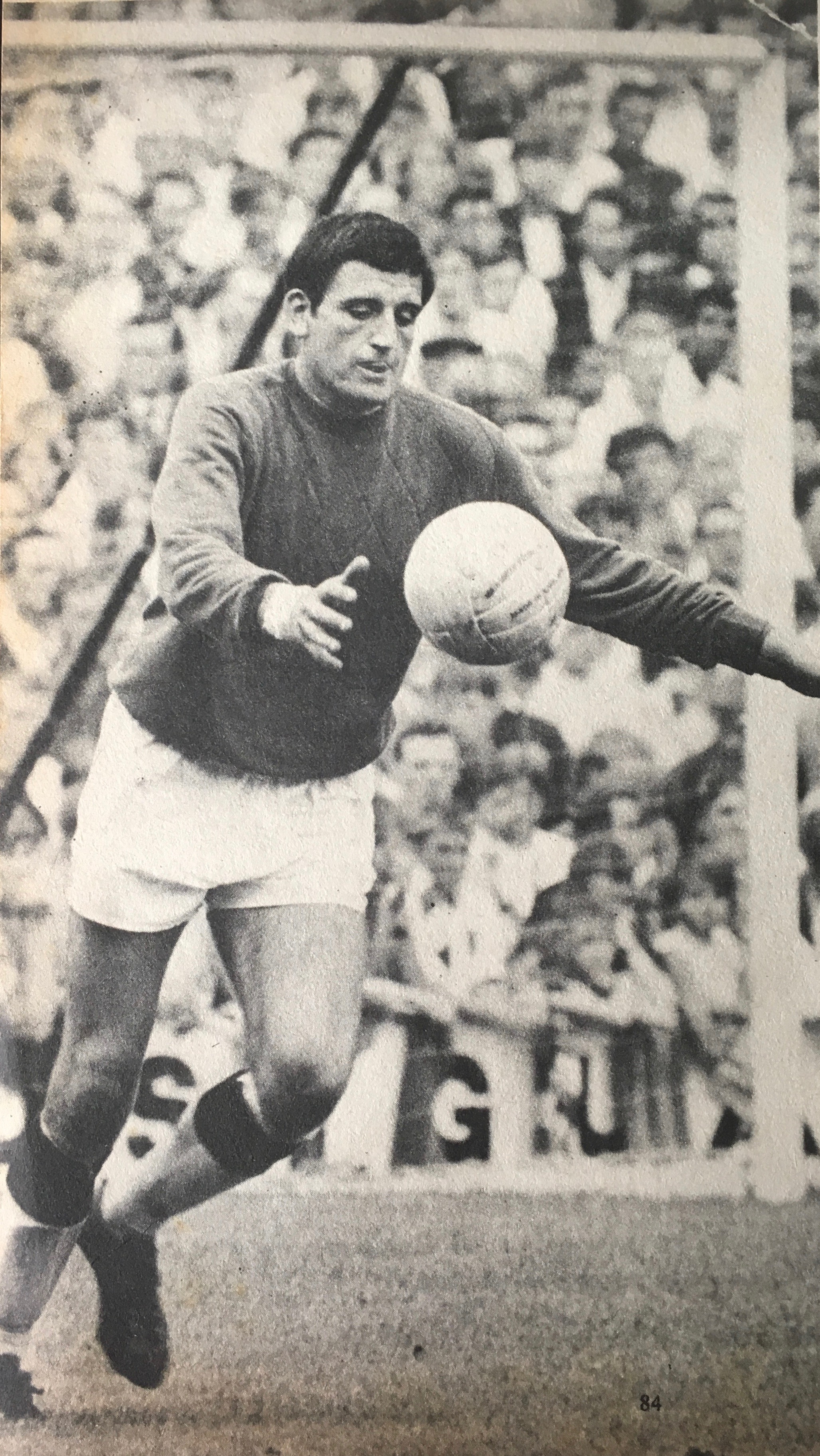
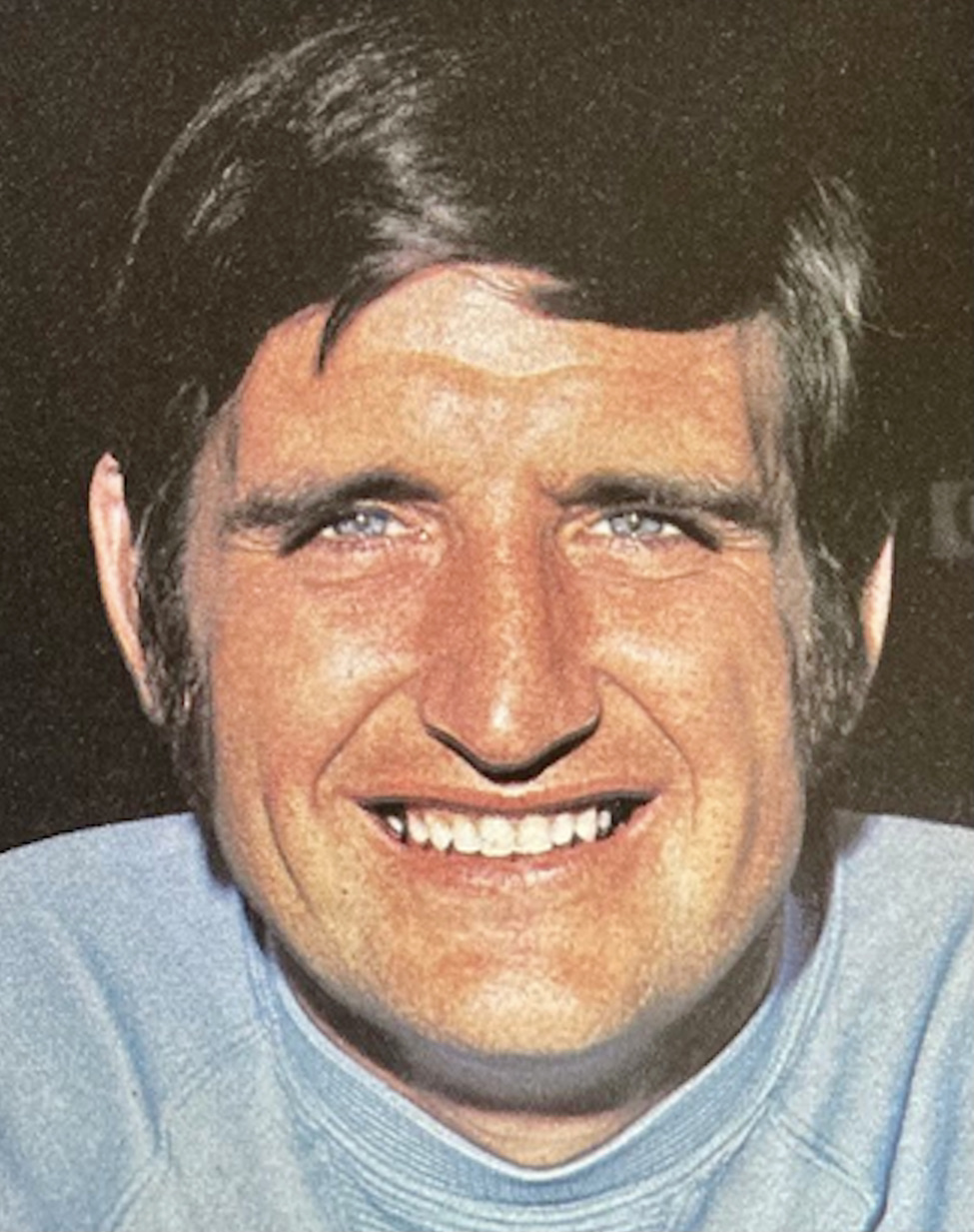
Jackson, who died aged 80 four days after Christmas 2022, had spent the earlier part of the 1982-83 season at Hereford United, who had just finished bottom of the Fourth Division. He had appeared in six matches at the end of a 19-year career. bullsnews.blogspot.com reveals that Jackson was the oldest league player to turn out for United. He was six days past his 40th birthday when he played against Darlington on 11 September 1982.

It was all a far cry from the days when he was Crystal Palace’s first choice goalkeeper for eight seasons. He subsequently followed his former Palace coach George Petchey to Orient (where he played in the same side as Albion’s 1983 FA Cup Final captain Tony Grealish) and Millwall.

It seemed wherever Petchey went, Jackson was sure to go too. When Petchey was Chris Cattlin’s assistant manager at Brighton, he brought in Jackson to coach the Albion goalkeepers once a week. It was certainly a job close to home for Jackson, who lived in Hangleton with his wife and three daughters.

In an interview with Football Weekly News in 1979, Jackson said: “Petchey was coach at Palace, and manager of Orient, when I was with them, therefore I felt it was right to join the devil you know than the one you don’t know! I find George a straightforward and honest man to work with.”

When Petchey returned to the Albion in January 1994, as part of Liam Brady’s backroom team, it wasn’t long before Jackson was added to the staff to help his mentor develop young players.

And after Brady’s departure and Petchey’s elevation to become Jimmy Case’s assistant, Jackson took over running the youth team.

Jackson remained in post throughout the managerial upheavals of Case’s departure, the Steve Gritt reign, and the arrival of Brian Horton. But he left at the end of the 1997-98 season when Horton brought in Martin Hinshelwood as director of youth and former captain Dean Wilkins as youth team coach.

Born in Hammersmith on 5 September 1942, Jackson went to St Clement Danes School and spent time with Brentford as a junior. But it was Palace who swooped to sign him up, as Jackson explained in a 2019 cpfc.co.uk interview.

“Arthur Rowe spotted me playing for a London grammar school against an FA youth XI made up of players from other London teams and he got in touch with my teacher, and from that conversation I ended up having a couple of games with the Palace reserve side aged 18. Then, when I joined full-time, I eventually took the opportunity with both hands, literally!”

Jackson was often described as the best goalkeeper England never had. While he was unfortunate not to earn a full international cap, he played seven times for England Youth between February and May 1961, his teammates including the likes of Bert Murray, Ron Harris, Francis Lee and David Pleat.

He signed as a trainee at Palace in March 1962, and in the 1964-65 season initially shared the ‘keeper’s jersey with Welsh international Tony Millington (whose younger brother Grenville was briefly back-up ‘keeper to Brian Powney at Brighton).

Once Jackson established himself as first choice, he kept the shirt for the next eight seasons. At one stage, he played 222 consecutive games for Palace.

On the where-are-they-now.co.uk website, contributor Martin Wiseman said: “He was definitely one of the best goalkeepers I ever saw as Palace were pretty terrible most of the time and often he was the only thing that kept us in the game. When we played one of the bigger teams, the game was often just a succession of John Jackson saves. Brilliant player.”

Indeed, he was nicknamed ‘Stonewall’ Jackson (after the famous American Civil War Confederate general). Of his mentor Petchey, he said: “He used to work me hard but the harder you worked at your game the more you learned and the better you would become. He made me a more confident player.”

Unluckily for Jackson, it was an era when England were blessed with a string of fine goalkeepers. Apart from Gordon Banks, there was Gordon West (Blackpool and Everton), Jim Montgomery (Sunderland), Peter Bonetti (Chelsea) and, at under 23 level, Peter Grummitt was preferred.

The closest Jackson came to senior international recognition came on 17 March 1971 when he kept goal for a Football League XI that beat a Scottish League XI 1-0 at Hampden Park. Ralph Coates scored the only goal of the game and the English line up included World Cup winners Bobby Moore and Geoff Hurst. Playing in defence alongside Moore were Paul Reaney (Leeds), Roy McFarland (Derby) and Derek Parkin (Wolves).

Jackson’s reign between the sticks for Palace came to an end when flamboyant Malcolm Allison took over as manager. Palace fans were not happy. In the book We All Follow The Palace edited by Tony Matthews (Eagle Eye 1993), Keith Brody wrote: “When Jacko left us, it marked the end of an era, culturally as well as football-wise.

“It is oddly fitting that he was swept away with the same disrespect that has come to symbolise the generation that replaced his ilk. Even though we have plenty to thank Big Mal for, his treatment of our hero means it should always be done through clenched teeth.

“It would have been offensive if a loyal, but crap, goalkeeper had been replaced by Paul Hammond and Tony Burns, but to do it to Jacko was unthinkable.

“Watching the ineffective Hammond for three long years after the joys of Jackson was almost unbearable. Every game was spent pondering on the value of what we’d given away.”

It was on 16 October 1973 that Jackson followed his former coach Petchey to Orient for £25,000 (Gerry Queen, Phil Hoadley, Bill Roffey and David Payne were other ex-Palace players who made that switch) and at Bloomfield Road he went on to attract a whole new band of admirers. Indeed, in Tony McDonald’s book Orient in the 70s, Jackson is described as “Orient’s greatest ever goalkeeper”.

Palace did give Jackson a testimonial match, however, and on 11 December 1973, a Selhurst Park crowd of 11,628 turned out for a match opponents Chelsea won 3-1.

Orient were a second tier side throughout Jackson’s time at the club, during which they had some unsuccessful tilts at promotion but enjoyed some exciting FA Cup runs, including making it to the semi-final in 1978 before losing 3-0 to Arsenal.

Their run to the semis included a memorable fifth round replay win over Chelsea, with Jackson pulling off a superb save to deny Clive Walker an equaliser as Orient clung on to a 2-1 lead courtesy of two Peter Kitchen goals.

Jackson had taken over from Ray Goddard as Orient’s no.1 and it must have been a very happy Christmas for him when promotion contenders Orient beat Palace 3-0 at home on Boxing Day 1973 in front of a bumper crowd of 20,611.

Come the end of the season, they missed out on promotion by a single point to Carlisle United after failing to beat Aston Villa (it was 1-1) in front of another huge crowd of 29,766, and the LWT cameras for The Big Match.  Days earlier Villa had lost 2-0 at Carlisle for whom Graham ‘Tot’ Winstanley proved an able deputy for suspended captain Bill Green.

Another memorable game filmed for The Big Match saw Jackson concede three on 7 April 1979 when Albion were on their way to promotion from the Second Division. Orient took the lead at Brisbane Road but Brighton equalised thus: “Paul Clark cracked in a seemingly unstoppable shot, miraculously John Jackson parried the effort but only to Peter Sayer, and (pictured above) the little Welshman slammed the ball joyfully into the home goal,” the matchday programme recorded. The game eventually finished 3-3, Albion’s other goals coming from Martin Chivers (his only one for Brighton) and Clark.

Three years earlier, Orient were finalists in the rather curious Anglo-Scottish Cup tournament of that time: 16 English teams and eight Scottish sides played a mix of group stage games and two-legged knockout matches.

Orient topped their group above Norwich, Chelsea and Fulham; they beat Aberdeen 2-0 on aggregate in the quarter finals and Partick Thistle 4-2 in the semis. They eventually lost out 5-1 on aggregate to Nottingham Forest, but it was Brian Clough’s first piece of silverware as Forest manager, and he said in his biography: “Those who said it was a nothing trophy were absolutely crackers. We’d won something, and it made all the difference.”

In common with many other English players at the time, Jackson tried his luck in the United States and in 1977 played for St Louis Stars, returning in 1978 when they became Californian Surf. His head coach was John Sewell, who’d been a playing colleague at Crystal Palace and Orient. Ironically, his predecessor at St Louis was Bill Glazier, the former Coventry City ‘keeper, who’d also been his predecessor at Palace.

It was the arrival of former West Ham ‘keeper Mervyn Day at Brisbane Road that signalled the end of Jackson’s time in Leyton and, in August 1979, Petchey, who’d taken over from Gordon Jago as boss at Millwall, signed him for £7,500.

“I have been in the game too long to end it in the reserves and decided that if I was to finish playing, it would be in the first team,” Jackson told Football Weekly News.

The then Third Division Lions went on to win the league. Jackson played a total of 53 matches for them that season and he was chosen by his fellow professionals in the 1979-80 PFA team of the year. (Former Brighton winger Tony Towner played 50 games for Millwall that campaign and scored 13 goals)

After two years with Millwall, by a curious turn of events, Bobby Robson signed him for the previous season’s First Division runners up Ipswich Town as a back-up to Paul Cooper.

His one league appearance for Ipswich was in a top-of-the-table clash against Manchester United, with Ipswich needing to win to stay in with a chance of winning the League Championship. And they did, 2-1, with John Wark scoring both and John Gidman replying for United.

The game was played in front of a 25,763 crowd at Portman Road and Jackson was given a standing ovation at the end after he’d pulled off three important saves. Robson was quoted in the Guardian as saying: “We have paid him a year’s salary to make those saves, but it was worth it!”

However, while Ipswich finished the season five points ahead of United, they were once again runners up, finishing four points behind champions Liverpool.

Even a second placed finish was enough to convince the English FA to give Robson the job of replacing Ron Greenwood as England manager after the country’s unbeaten exit from the World Cup in Spain.

While Jackson might have thought his playing days were over, they weren’t quite. Frank Lord signed him for Fourth Division Hereford United. Lord wasn’t long in the job, though, and he was succeeded by the Bulls’ long-serving former ‘keeper Tommy Hughes, who had played on loan for Brighton in 1973.

Jackson’s move into goalkeeper coaching at Brighton under Cattlin was to prove a career-defining moment for another top goalkeeper of that era: former Manchester City custodian Joe Corrigan.

“I got talking to him and it inspired me to look into doing something similar,” Corrigan told the Manchester City matchday programme on 29 September 2018. “So, it was down to Brighton indirectly that I moved into the next phase of my career.”

Corrigan had been signed by Jimmy Melia and was coming to the end of his illustrious playing career. He fell out with Melia’s successor, Cattlin, and went on loan to Stoke City, but eventually was forced to quit after being injured in an Albion reserve match.

He went on to become goalkeeper coach at Liverpool for 10 years, and also worked at Stockport, West Brom and Hull.

Jackson took a variety of different jobs outside of football – fitting blinds, working for a golf magazine, selling golf equipment and as a courier for Lewes Council. During his second spell back at the Albion, amongst the youngsters he took through was goalkeeper Will Packham.

Jackson signed him on as a YTS trainee after he left Blatchington Mill School in Hove, and he spent nine years on the club’s books.

Brighton trial was curtain call for Fred Pickering’s career

PROLIFIC goalscoring centre-forward Fred Pickering, who at his peak scored hat-tricks on his Everton and England debuts, ended his career after an unsuccessful two-month trial with Brighton.

Pickering was a transfer record signing for Everton (the previous season’s league champions) when he joined them from Blackburn Rovers for £85,000 in March 1964.

On his debut for Harry Catterick’s side, he scored three past Nottingham Forest’s Peter Grummitt in a 6-1 thrashing.

Eight years later, a player who’d played for his country and, but for injury, might have been involved in the 1966 World Cup, scored once for Brighton’s reserve side: in a 3-0 home win over Colchester United on 8 March 1972.

Brighton won promotion from the old Third Division two months later thanks in no small part to 19 goals scored by Kit Napier and 17 from Willie Irvine (Pickering’s former Birmingham City teammate Bert Murray netted 13 and Peter O’Sullivan hit 12).

Throughout the season, manager Pat Saward had been hankering for something a bit extra in the forward line. While he appreciated the skill of Napier and Irvine, he said “none had the devil in him. We wanted more thrust.”

Pickering was the second seasoned striker Saward had run the rule over, wondering whether their experience of goal plundering at the highest level several years before might be revived in third tier Albion’s quest for promotion.

Earlier in the season, he tried recruiting an ageing Ray Crawford but contract issues with the player’s last club, Durban City, meant the former Portsmouth, Ipswich, Wolves and Colchester centre-forward ended up joining the staff as a scout and coach instead.

In February 1972, 31-year-old Pickering, by then not even getting a game in Blackburn’s Third Division side, was given a chance by Saward to show he still had the goalscoring ability he had demonstrated so effectively earlier in his career.

Photographs of a rather heavy-looking Pickering training appeared in the Evening Argus and the former England striker was interviewed on Radio Brighton (as it was then) about his illustrious career. Although he played for the reserves, he wasn’t deemed fit enough to make it into the first team.

Saward eventually got the thrusting forward he sought on March transfer deadline day when he signed Tranmere Rovers’ Ken Beamish, who, at 24, was younger and fitter, and quickly endeared himself to Albion fans by scoring a handful of late goals which helped clinch promotion.

But what of Pickering? Born in Blackburn on 19 January 1941, he played junior football in his hometown before joining Rovers as an amateur aged 15.

As a schoolboy, he’d been an inside forward (a no.8 or no.10 in today’s parlance) but he was a full-back when he signed as a professional for Rovers on his 17th birthday.

Indeed, he was at left-back in the Rovers side that won the FA Youth Cup in 1959, beating West Ham United 2-1 on aggregate over two legs.

Alongside him for Rovers were future Spurs and Wales centre-half Mike England and Keith Newton, who also later moved to Everton and played for England at the 1970 World Cup. West Ham included Bobby Moore and Geoff Hurst in their line-up.

With the likes of Dave Whelan and Bill Eckersley ahead of Pickering in the Blackburn pecking order, his chances of a first team breakthrough were limited.

But after a successful outing for the reserves up front, and with wantaway Irish striker Derek Dougan dropped, Pickering was given a chance as a centre forward – and he never looked back.

He scored twice in a 4-1 win over Manchester City and went on to strike up successful partnerships with Ian Lawther, initially, and then Andy McEvoy.

“It was a big turning point for me to be playing centre forward,” Pickering told the Lancashire Telegraph. “Especially when you consider in 1961, Dally Duncan (Blackburn manager, and later Brighton guesthouse owner) told me that Plymouth wanted me and that I was free to leave. I didn’t want to go because Blackburn was my club.

“I only left in the end because the club wouldn’t give me a rise of a couple of quid. It was absurd.”

By then Pickering had scored 74 goalsin158 appearances – some strike rate – which meant he always held a special place in the hearts of the Ewood Park faithful, as reporter Andy Cryer described in a 2011 article for the Lancashire Telegraph.

“Had fate been kinder to him he could easily have been a national darling too,” wrote Cryer.

“When hat-trick hero Geoff Hurst was firing England to World Cup final glory in 1966, an injured Pickering was left reflecting on what might have been after an incredible journey took him from Rovers reserves to international stardom.”

Pickering, nicknamed Boomer for his powerful right foot, had scored five goals in three England appearances and looked set for inclusion in England’s 1966 World Cup squad having been named in Sir Alf Ramsey’s provisional selection.

But he suffered a knee injury in an FA Cup quarter final replay against Manchester City which not only caused him to miss Everton’s FA Cup final win that Spring, but also meant he had to withdraw from the England squad. Cryer reckons it also led to the subsequent demise of his career.

Pickering told the reporter: “I played three games for England and I scored in every game I played, I scored five goals and I was playing well. I was named in the World Cup squads. I was going and from that day it was the following weekend when the knee started to go.

“I watched all the Brazil games at Goodison. England struggled in their first game against Uruguay and that is when Jimmy Greaves got injured.

“Obviously that is how Hurst got in, he wasn’t even really in the set up before. There was every chance if I had been fit it that might have been me who had got in. I wouldn’t say I would have done what Geoff Hurst did but you never know what might have happened.”

Pickering had made his England debut two months after moving to Everton, in a 10-0 demolition of the USA on 27 May 1964. It was the same match that saw future Albion manager Mike Bailey play his first full international for his country. Roger Hunt went one better than Pickering by scoring four, Terry Paine got two and Bobby Charlton the other. Eight of that England side made it to the 1966 World Cup squad two years later – alas Pickering didn’t.

The same scoring rate he had enjoyed at Blackburn continued at Everton and in his first full season he scored 37 goals in all competitions – the most by an Everton player since Tommy Lawton scored 38 in 1938-39.

In three years with the club, he scored 70 times in 115 matches but his exclusion from the 1966 FA Cup final squad soured his relationship with manager Catterick, as covered in detail by the efcstatto.com website. Injuries disrupted his involvement at the start of the following season, and a cartilage operation put him out of action for nearly six months.

Although he made his comeback in March 1967, his Everton days were numbered and, in August 1967, moneybags Birmingham City bought him for £50,000 to form a hugely effective forward line with Barry Bridges and Geoff Vowden.

Pickering and Bridges played in all 50 of Birmingham’s matches in the 1967-68 season; the aforementioned Bert Murray 47. Bridges was top scorer with 28 goals and Pickering netted 15.

The Second Division Blues made an eye-catching run to the semi-finals of the FA Cup, but they lost 2-0 to West Brom (who went on to beat Everton 1-0 in the final).

The following season, Pickering scored 17 times in 40 appearances (Phil Summerill also scored 17, and Jimmy Greenhoff 15) but City finished a disappointing seventh.

That signalled the end of the striker’s time in the Midlands and he returned to his native north west with Blackpool, who paid £45,000 for his services.

It was money well spent as Pickering top-scored with 18 goals as the Tangerines won promotion back to the elite, finishing runners up to Huddersfield Town. His most memorable performance was on 13 April 1970 when he scored a hat-trick away to local rivals Preston North End in front of a Deepdale crowd of 34,000. It earned Blackpool promotion while simultaneously relegating North End to the third tier.

But the 1970-71 season didn’t go well for Blackpool or Pickering. The club got through three managers and only won four matches all season, which eventually saw them finish bottom of the pile and relegated along with fellow Lancastrians Burnley. Pickering found himself fined and excluded for breaches of club discipline (mainly involving missing training) and before the season was over he was sold back to his first club, Blackburn.

That was a blow to Preston, who had just loaned Willie Irvine to Brighton and were keen to install Pickering as his replacement. But it was to Rovers, for £9,000, that he went, but he couldn’t prevent the Ewood Park outfit being relegated to the third tier.

He scored just twice in 11 League games in his second spell at Blackburn before that two-month trial at Brighton.

After he retired from football, he became a forklift truck driver. Warm tributes were paid when Pickering died aged 78 on 9 February 2019. Well-known football obituarist Ivan Ponting said of him: “At his rampaging best, Fred was an irresistible performer.

“Though neither outstanding in the air, nor overly-physical for a man of his power, not even particularly fast, he could disrupt the tightest of defences with his determined running and a savage right-foot shot that earned him the nickname of ‘Boomer’.

“Boasting nimble footwork for one so burly – he could nutmeg an opponent as comprehensively as many a winger – he was especially dangerous when cutting in from the flank, a manoeuvre that yielded some of his most spectacular goals.”

In March 2022, a road in the Mill Hill district of Blackburn, where he lived all his life, was named after him and his family spoke of their pride as they unveiled the street sign in his honour.

Day of reckoning beckoned for talent spotter Mervyn

THE YOUNGEST goalkeeper to appear in a FA Cup final spent 20 months picking out future players for Brighton.

It was one of several different post-playing roles Mervyn Day filled for various clubs.

Day, who at 19 won a winners’ medal with West Ham in 1975, was Albion’s head of scouting and recruitment between November 2012 and the end of the 2013-2014 season under head of football operations David Burke.

At the time, his appointment was another indicator of the gear change taking place at the club as it built on the move to the Amex Stadium and sought to gain promotion from the Championship.

Day said in a matchday programme interview: “This club has come such a long way in such a short space of time.

“When you think of the debacle of the Goldstone, the wilderness of Gillingham, then Withdean, you only have to get a player through the front door at this wonderful stadium to have a chance of signing them.

“Hopefully, within the next year or so, the new training ground will be up and running and, when you’ve got that as well, you’ve got the perfect opportunity not only to encourage kids to sign but top quality players as well.

“If we are fortunate enough to get ourselves into the Premier League at some point, we’ll be able to attract top, top players.”

It was a case of ‘the goalkeepers union’ that led to him joining the Albion. Day explained he’d been chatting to Andy Beasley, Albion’s goalkeeping coach at the time, who had been a colleague when Day was chief scout at Elland Road. Beasley wondered if he’d like to help coach Albion’s academy goalkeepers but Burke, who he also knew, stepped in and offered something more substantial: the job of scouting and talent identification manager.

He certainly brought a wealth of experience to the task. He had previously been assistant manager to former Albion midfielder Alan Curbishley at Charlton and West Ham; manager and assistant manager at Carlisle United, a scout for Fulham and the FA (when Steve McClaren was England manager) and chief scout at Leeds until Neil Warnock took charge.

In addition to that background, in the days before full-time goalkeeper coaches, Day had worked at Southampton under David Jones, Chris Kamara at Bradford City and John Aldridge at Tranmere Rovers. Then in 1997 Everton came along and he joined Howard Kendall’s backroom team alongside Adrian Heath and Viv Busby. “I was living in Leeds at that time, so distance wasn’t an issue, but it was an interesting trip across the M62 in the winter months,” Day recalled in an October 2021 interview with efcheritagesociety.com.

Brighton made Day redundant at the end of the 2013-14 season following a reshuffle of the recruitment department amid criticism of the quality of signings brought in.

That assessment might have been rather harsh because during his time at the club there was a change in manager (Oscar Garcia taking over from Gus Poyet) and, although the season ended in play-off disappointment, the likes of former Hammer Matthew Upson (who’d played under Day when he was at West Ham) had signed permanently on a free transfer (having been on loan from Stoke City for half the previous season).

The experienced Keith Andrews and Stephen Ward also joined on season-long loan deals and played prominent roles in Garcia’s play-off reaching side.

It was under Day’s watch that the promising young goalkeeper Christian Walton was signed after a tip-off from Warren Aspinall. Aspinall told the Argus in 2015: “I went to Plymouth to do a match report. I set off early and took in a youth team game off my own back. He was outstanding, commanding his box. I reported straight back to Gus (Poyet). He told Mervyn Day. He went to see him, Mervyn liked him.”

It wasn’t the first time Day had played a role in securing a goalkeeper for the Albion. As far back as 2003 he had an influence on Ben Roberts’ arrival at the Albion. Manager Steve Coppell revealed: “He is one of three goalkeepers at Charlton and at the moment nearly all the Premiership clubs are very protective about their goalkeepers.

“I have seen him play a number of times, although I certainly haven’t seen him play recently. I spoke with Mervyn Day (Charlton coach) and he says Ben is in good form. It’s a little bit of a chance and it will certainly be a testing start for him, but he is looking forward to the challenge.”

Day was also sniffing around another future Albion ‘keeper when he was chief scout for Bristol City (between 2017 and 2019).  According to Sky Sports commentator Martin Tyler, Mat Ryan was on their radar in the summer of 2017 when he swapped Belgium for England. In an interview with Socceroos.com, Tyler reveals he was asked by City’s ‘head of recruitment’ (thought to be Day) to glean the opinions of Gary and Phil Neville (manager and coach of Valencia at the time) on Ryan and whether he’d be suitable for the English game.

“I got a text saying, ‘Can you find out from the Nevilles whether they rate Mat Ryan’,” Tyler said. “It wasn’t my opinion they were looking for – quite rightly – it was Gary and Phil’s. I was able to do that and both Gary and Phil gave Mat the thumbs up.”

After leaving Brighton, Day moved straight into a similar role with West Brom, where he worked under technical director Terry Burton and first team manager Alan Irvine, but he was only there a year before linking up with the Robins. He has since been first team domestic scout for Glasgow Rangers, although based in his home town of Chelmsford.

Day was born in Chelmsford on 26 June 1955 and educated at Kings Road Primary School, the same school that England and West Ham World Cup hero Geoff Hurst attended. He moved on to the town’s King Edward VI Grammar School and represented Essex Schools at all levels. He joined the Hammers under Ron Greenwood on a youth contract in 1971.

“On my first day as an associate schoolboy I got taken by goalkeeping coach Ernie Gregory into the little gym behind the Upton Park dressing room and he had Martin Peters, an England World Cup winner, firing shots at me,” Day later recounted. “As a 15-year-old that was incredible.

“The bond got even closer when my father died when I was 17. I was an apprentice but Ron signed me as a full pro within a very short space of time to enable me to earn a little more money to help out at home. A short while later he gave me another increase. He was almost a surrogate father to me.”

In the early part of 1971, Day played in the same England Youth side as Alan Boorn, a Coventry City apprentice Pat Saward took from his old club to the Albion in August 1971.

The goalkeeper was just 18 when he made his West Ham United debut, on 27 August 1973, in a 3-3 home draw with Ipswich Town.

He went on to play 33 matches in his first season and only missed one game in the following three.

Tony Hanna, for West Ham Till I Die, wrote: “In only his eleventh game for the Hammers he received a standing ovation from the Liverpool Kop in a 0-1 defeat that could have been a cricket score but for his fine display and, in his next visit to Anfield, he saved a penalty in a 2-2 draw.”

Day recalled: “As a kid, I had no fear, I took to playing in the first team really, really well. At West Ham, the ‘keeper always had lots to do as we were an entertaining team. We had forward-thinking centre-backs in Bobby Moore and Tommy Taylor, and then after Bobby came Kevin Lock.”

Mervyn Day in action for West Ham against Brighton at the Goldstone Ground, Hove.

In 1974, Day progressed to England’s Under-23 side. He won four caps that year and a fifth in 1975 but it was a golden era for England goalkeepers at the time and he didn’t progress to the full international side, despite being touted for a call-up.

By the time Day won that last cap, he had been voted PFA Young Player of the Year and, at 19, had become the youngest goalkeeper to appear in a FA Cup Final, keeping a clean sheet as West Ham beat Fulham 2-0 at Wembley.

Hanna continued: “At times he was performing heroics in the West Ham goal and he was fast becoming a fans favourite. Tall and agile, he was a brilliant shot stopper and he was playing like a ‘keeper well beyond his years.”

However, by the 1977-78 season Day’s form had tapered off as the Hammers were relegated. “His confidence was so bad he was eventually dropped and he only played 23 games that season,” said Hanna. “There are several theories to what triggered the loss of form, but one thing that did not help the lad was the stick he was getting from the Hammers supporters.

“In hindsight Mervyn said that he was ill prepared for such a tough run of form. The early seasons had gone so well that he had only known the good times and when the bad ones came he struggled to come to terms with the pressure.”

In 1979, West Ham smashed the world record transfer fee for a goalkeeper to bring in Phil Parkes from QPR and Day was sold to Leyton Orient, where he replaced long-standing stopper John Jackson, who later became a goalkeeper coach and youth team coach at Brighton.

Day spent four years at Brisbane Road before moving to Aston Villa as back-up ‘keeper to Nigel Spink. After a falling-out with Villa boss Graham Turner, he switched to Leeds under Eddie Gray and then Billy Bremner. During Bremner’s reign, he had the humiliation of conceding six at Stoke City at the start of the 1985-86 season and, in spite of vowing it wouldn’t happen again, let in seven in the repeat fixture the following season. Amongst his Leeds teammates that day were Andy Ritchie and Ian Baird.

Nevertheless, he ended up playing more games (268) for Leeds than any of his other clubs. He rarely missed a game up to the end of 1989-90, the season when was he was named Player of the Year and collected a Second Division championship medal.

Howard Wilkinson offered him a post as goalkeeping coach for United’s first season back in the elite, having lined up a £1m move for John Lukic from Arsenal. Day had a couple of loans spells – at Luton Town and Sheffield United in 1992 – but was otherwise back-up for Lukic, alongside his coaching duties, until Wilkinson saved Brighton’s future by signing Mark Beeney from the Seagulls.

After eight years at Elland Road, Day moved to the Cumbrian outpost of Carlisle in 1993. When he moved into the manager’s chair at Brunton Park, he not only led them to promotion from the Second Division in 1997, but they also won the (Auto Windscreens Shield) Football League Trophy. United beat Colchester 4-3 on penalties at Wembley after a goalless draw; one of the scorers being the aforementioned Warren Aspinall, later of Brighton and Radio Sussex.

Day worked under Curbishley at Charlton for eight years between 1998 and 2006, helping the club stabilise in the Premier League.

And, in December 2006, he followed Curbishley as his No.2 to West Ham, where the duo spent almost two years.

It was in 2010 that he returned to Leeds as chief scout, working under technical director Gwyn Williams. United manager Simon Grayson said at the time: “We’re restructuring the scouting department under Gwyn and Mervyn will be both producing match reports and watching our opposition and working on the recruitment of players.

“Merv’s knowledge and experience will prove important to the football club as we look to progress and develop what we are doing.”

‘Genuine football man who turned people’s lives around’

George Petchey twice stepped up from backroom man to Albion caretaker manager

THE FORMER Orient and Millwall manager who introduced Laurie Cunningham to the football world was twice caretaker boss of Brighton ten years apart.

George Petchey, once a player then coach at Crystal Palace, was assistant manager to Chris Cattlin in the mid ‘80s and returned to Brighton in the ‘90s as youth development manager under Liam Brady, before becoming no.2 to Jimmy Case.

Working for the Albion was certainly geographically convenient for Petchey because, even when he played, coached or managed in London, he lived in Southwick.

Petchey first arrived at the Albion in 1983 to take charge of youth development and, as described by wearebrighton.com, was the man responsible for introducing Ian Wright on trial, having been impressed when the future Arsenal and England star had tried to begin his career at Millwall, where Petchey was manager between January 1978 and November 1980.

It’s now part of football folklore that Albion rejected Wright and Cattlin opted to take on another triallist, Steve Penney, instead. Meanwhile, in November 1984, Petchey was promoted to assist the relatively inexperienced Cattlin with the first team.

Although he was seen as a figure in the background, a profile article in the matchday programme gave a little insight into his approach.

“I can’t understand people who earn a living from football and still criticise the game,” he told interviewer Tony Norman. “I’ve been involved with it since the age of 14 and I wouldn’t change a thing.

“Molly (his wife) and I have met a lot of good people. We’ve loved the game and it has been good to us. No complaints.”

When Cattlin was sacked in April 1986, Petchey stepped up to manage the side for the final game of the season (a 2-0 defeat away to Hull City) before Alan Mullery returned as boss.

Petchey’s second stint at the Albion began in January 1994, shortly after Brady had been appointed as manager. With finances perilous during that time, bringing through youngsters was seen as an important route and Petchey was appointed to oversee that side of things.

In explaining the appointment, Brady wrote in his programme notes: “I don’t think there are many better in their field than George Petchey.

“He has had a lot of experience at management level and he has always been able to develop young players and this is something we are determined to do here.”

Brady had been to watch the youth team progress in the FA Youth Cup and he added: “There are several outstanding prospects in the side and I am sure George will guide them in the right direction.”

Within a couple of months, Brady had given a first team debut to one of them in Mark Fox.

The Argus later noted how Gareth Barry was among the young players who came through Albion’s centre of excellence under Petchey, Vic Bragg and Steve Avory.

Petchey became no.2 to Jimmy Case, pictured with George Parris in an Albion line-up

When Brady couldn’t stomach the shenanigans of the Bill Archer-David Bellotti regime any longer, Case took charge and promoted Petchey to be his deputy, but with the background interference affecting performances on the field, Case was relieved of his duties in early December 1996.

Petchey stepped forward once again to take temporary charge, although he made it clear he didn’t want the job on a permanent basis. Indeed, he recommended two of his former Orient players be considered for the post.

“I was asked for my suggestions and I recommended Dennis Rofe and Glenn Roeder,” said Petchey, who was 65 at the time. “Hopefully, it will be one of them.”

It was perhaps par for the course that the hierarchy decided to choose someone else, and, within a week, Steve Gritt was appointed.

When Petchey – the first English coach to complete his UEFA coaching qualifications – died aged 88 on 23 December 2019, the tributes paid to him reflected the impact this highly respected football man had on a good many people.

The football writer Neil Harman said: “We often overlook the genuine, honest people, who made football what it is, who went the extra mile, who turned people’s lives around. RIP the great Leyton Orient manager George Petchey who set Laurie Cunningham and many others on the road to stardom.”

David Gipp, a Brighton player in the late ‘80s, tweeted: “took me from London at 14; taught me so much” and John Sitton, who played under Petchey at Millwall, described him as “one of the best managers in the game”.

Born on 24 June 1931 in Whitechapel, London, Petchey’s early footballing experience was in Essex with the Romford and Hornchurch Schools teams. The excellent theyflysohigh.co.uk website details his career, revealing how, on leaving school he played for Upminster Minors and Juniors from 1945 to 1947 before joining West Ham United as an amateur in August 1947.

He signed professional on August 31, 1948, and two days later made his first appearance as a professional against Chelsea ‘A’ at Upton Park in the Eastern Counties League.  

The website explains how National Service interrupted Petchey’s career, although he was still able to play fairly regularly for the Hammers’ ‘A’ team and Football Combination side. It wasn’t until 1 September 1952 that he made his senior debut at the age of 21, playing alongside Ernie Gregory, Malcolm Allison and Frank O’Farrell in a goalless Second Division draw with Hull City at the Boleyn Ground.

Wearing the no.10 shirt, Petchey kept his place for the next game, a 2-1 home defeat by Birmingham City, but he only made one other first-team appearance, on 13 November that year, starting alongside Allison, Noel Cantwell and debuting forward Tommy Dixon in a 3-2 Essex Professional Cup win at Colchester United.

A wing-half, he was described by whufc.com as “a tough-tackling, hard-working defensive midfielder who could also pass the ball with vision and accuracy”.

In July 1953, Petchey moved on to Queens Park Rangers, scoring on his league debut in a 2-1 win at Bristol City on 22 August. Even then, he was commuting to London from Portslade.

QPR supporter Steve Russell spoke fondly of Petchey in an article for indyrs.co.uk, remembering a “tough-tackling, fearless, dynamic” player who took no prisoners.

Petchey scored 24 goals in 278 league and cup appearances for QPR, in the days when they were a Third Division side.

He dropped down to the old Fourth Division to sign for Palace in June 1960 but helped them to promotion in his first season at Selhurst Park.

Petchey’s playing days at Palace came to an early conclusion due to a serious eye injury but the esteem in which he was held was reflected in the quality of players on show at his testimonial match at Selhurst Park on 15 November 1967.

Palace took on an international XI which featured West Ham’s World Cup winning trio of Bobby Moore, Geoff Hurst and Martin Peters, together with the likes of Chelsea’s Peter Osgood and Manchester City’s Colin Bell in front of a crowd of 10,243.

Petchey turned to coaching at Palace, initially under Arthur Rowe and then Bert Head, under whom Palace won promotion to the old First Division in 1969. That side’s goalkeeper, John Jackson – who subsequently followed Petchey to Orient, Millwall, and the Albion as a coach – attributed his achievements to Petchey, telling cpfc.co.uk: “He used to work me hard but the harder you worked at your game the more you learned and the better you would become.

Petchey the Crystal Palace coach

“He made me a more confident player which led to me being more vocal behind the back four, and I always remember Thursday being called shooting practice day so it would become a session where I would put in a massive shift!”

When Jimmy Bloomfield was lured from Brisbane Road to manage Leicester City in 1971, the Os turned to Petchey to continue to build the side the former Arsenal player had developed.

He did just that over six Second Division seasons between 1971 and 1977, Petchey recruiting a number of players who’d previously played under him at Palace; the likes of goalkeeper Jackson, John Sewell, David Payne, Bill Roffey, Alan Whittle and Gerry Queen.

They came agonisingly close to winning promotion to the elite, missing out by a single point in 1973-74, and they took some notable scalps as cup giant-killers.

It was during his reign at Brisbane Road that Petchey discovered Tony Grealish playing on Hackney Marshes and unearthed the raw talent of the mercurial Cunningham, who he would later reluctantly sell for big money to West Bromwich Albion.

Petchey and his assistant Peter Angell carefully nurtured the young Cunningham, hoping his obvious talent would outweigh some of the demons in his life.

“We had one or two problems with him in the early days,” admitted Petchey, as told here. “There was a time when Peter Angell and I wondered if we could win Laurie over. He had to struggle in life and was the sort of youngster who was used to living on his wits.

“He was suspicious of people outside his own circle. He took a long time to trust other people. He often turned up late for training, the eyes flashed when we fined him, but for all that I loved the spark that made him tick.”

Cunningham later admitted: “It was George Petchey and Peter Angell who showed me that the only person who could make my dreams come true was, in fact, myself.”

Petchey gave 18-year-old Cunningham his first-team debut in the short-lived Texaco Cup tournament against West Ham at Upton Park on 3 August 1974. Although Orient lost 1–0, Petchey said afterwards: “It took him a little time to get adjusted to the pace of the game but I was delighted with the way he played from then on. He has a natural talent. He has the speed and agility to take on men. He never gives up. There’s a big future ahead for him.”

Cunningham’s rise to playing for England and Real Madrid was told in the 2013 documentary film First Among Equals and Petchey was a prominent interviewee featured.

Petchey talks about Laurie Cunningham for First Among Equals

When eventually Orient couldn’t resist big money offers for him any longer, the winger went to West Brom for £110,000 plus two players (Joe Mayo and Allan Glover) on 6 March 1977.

“I did not want to sell him, but we were over our limit at the bank and West Brom were ready with a cheque,” said Petchey at the time. “Obviously I’m very disappointed at losing a player who I have seen progress from the age of 15 and I think he was as reluctant to leave as we were to see him go. But it was an offer of First Division football which he could not refuse.”

Petchey enjoyed less success at Millwall. Although he managed to stave off relegation after succeeding Gordon Jago in early 1978, the Lions were relegated from the second tier the following season.

It was during that term he bought Brighton winger Tony Towner for £65,000 after the Sussex lad had lost his place to new signing Gerry Ryan. It wasn’t all doom and gloom though because Millwall’s youngsters won the FA Youth Cup in 1979, beating Manchester City 2-0 (over two legs).

After he’d left the Albion for a second time, Petchey continued to work in football, appointed chief scout at Newcastle United by Sir Bobby Robson, and he later took on a coaching role.

It was chirpy Chiv of the Cherries after six years with the Seagulls

THESE DAYS Gary Chivers is a familiar face around the hospitality lounges at Brighton’s Amex Stadium and Chelsea’s Stamford Bridge, the two clubs where he spent most of his playing days.

His association with Chelsea goes back to the tender age of 10, when he joined their academy, and he went on to play in their first team for five years. After six years with Brighton, he played out the final two years of his 16-year career at AFC Bournemouth under fledgling boss Tony Pulis. Among his teammates were Mark Morris, Warren Aspinall, Paul Wood and Steve Cotterill, all of whom also played for the Seagulls.

Born in Stockwell, London, on 15 May 1960, Chivers started supporting Chelsea at the age of eight, and, like many future professionals, got a foothold in the game at Stepney-based development club Senrab.

He told journalist Nick Szczepanik in a 2018 Backpass magazine article (below): “My brother had been training with Chelsea and my dad took me along when I was ten, and I went into their academy about two years before I should have.”

Chiv in BackpassAlthough initially a midfielder, coach Ken Shellito turned him into a defender and Chivers’ versatility in defence meant he could play centrally or in either full-back berth. Among his early contemporaries were John Bumstead, Colin Pates and Micky Fillery: Pates would later join him at Brighton.

With Chelsea already relegated, Chivers made his first team debut on 21 April 1979, aged 18, as he recounted in a December 2017 interview on the Chelsea website. Irish legend Danny Blanchflower was the manager who handed him his debut, at Stamford Bridge against Middlesbrough, which finished in a 2-1 win in front of just 12,007.

Chivers did enough to keep his place for the last four games of the season, and he told Szczepanik how in one he had to mark Arsenal’s Malcolm Macdonald and another Manchester United’s Joe Jordan.

In the second tier the following season, an injury to first choice right-back Gary Locke gave Chivers a chance to establish himself under new manager Geoff Hurst, and he retained the shirt for much of the season.

In total he made 148 appearances for Chelsea, scoring four goals, one of which was voted runner-up in Match of the Day’s Goal of the Season competition in 1980-81.

He got on the end of a Clive Walker cross following a delightful flowing move as top-of-the-table Newcastle were beaten 6-0 by second-placed Chelsea.

Chivers deputised at left-back for the injured Chris Hutchings towards the end of the 1982-83 season, by which time John Neal had taken over as manager. Chelsea were at a low ebb and only a point from a goalless draw against Middlesbrough on 14 May 1983 saved from them from relegation to the old Third Division. Neal overhauled the playing staff, and Chivers was amongst the casualities.

Explaining how he didn’t see eye to eye with Neal, he added: “I didn’t want to go, but you have to play games.”

He briefly switched to relegated Swansea City, under John Toshack, but only stayed six months as managers came and went in rapid succession. Seeking a move back to London, he joined QPR under Terry Venables – “the best manager I ever played for” – where he played alongside John Byrne, another player he’d be reunited with at the Albion.

At the end of his contract, he moved on to Watford during the uncomfortable spell when former Wimbledon boss Dave Bassett was in charge, but he got the feeling he didn’t fit in. Brighton boss Barry Lloyd, himself a former Chelsea player, agreed a £40,000 fee with the Hornets as Chivers dropped down a division to third-tier Albion, where he linked up with some familiar ex-Chelsea faces in Doug Rougvie, Robert Isaac and Keith Dublin.

He explained to Szczepanik: “I decided to go to Brighton because I had a look at their fixtures and I even asked for a promotion bonus because I was so confident they would go up.”

The confidence was well-placed because promotion was duly gained, and Chivers went on to become part of the furniture for the next six years, including playing in the play-off final at Wembley in 1990-91.

An incident that led to a Notts County goal still rankles with Chivers. “At 0-0, I played the ball off Tommy Johnson for a goal kick and David Elleray, the referee, gave a corner that they scored from. I saw him a few years ago and went over to set the facts straight. He said: ‘You’re not still going on about that from 20 years ago?’ and I said: ‘Too right I am!’ I walked away from him because it was winding me up, but it was because of how much it would have meant to the club.

“We would have gone on from there if we had got into the First Division but instead we ended up having to sell Mike Small and Budgie (John Byrne) and we went down at the end of the next season.”

Albion played a  benefit match for Chivers against Crystal Palace just before the start of the 1992-93 season and Chivers left the club in 1993, not because he wanted to, but because players on “decent money” had to go.

His enthusiasm for the club continues to this day, bantering with supporters in corporate hospitality and the Albion club website carried an article about the former defender’s divided loyalties when the Albion entertained Chelsea on New Year’s Day.


  • Pictures mainly from the club programme.