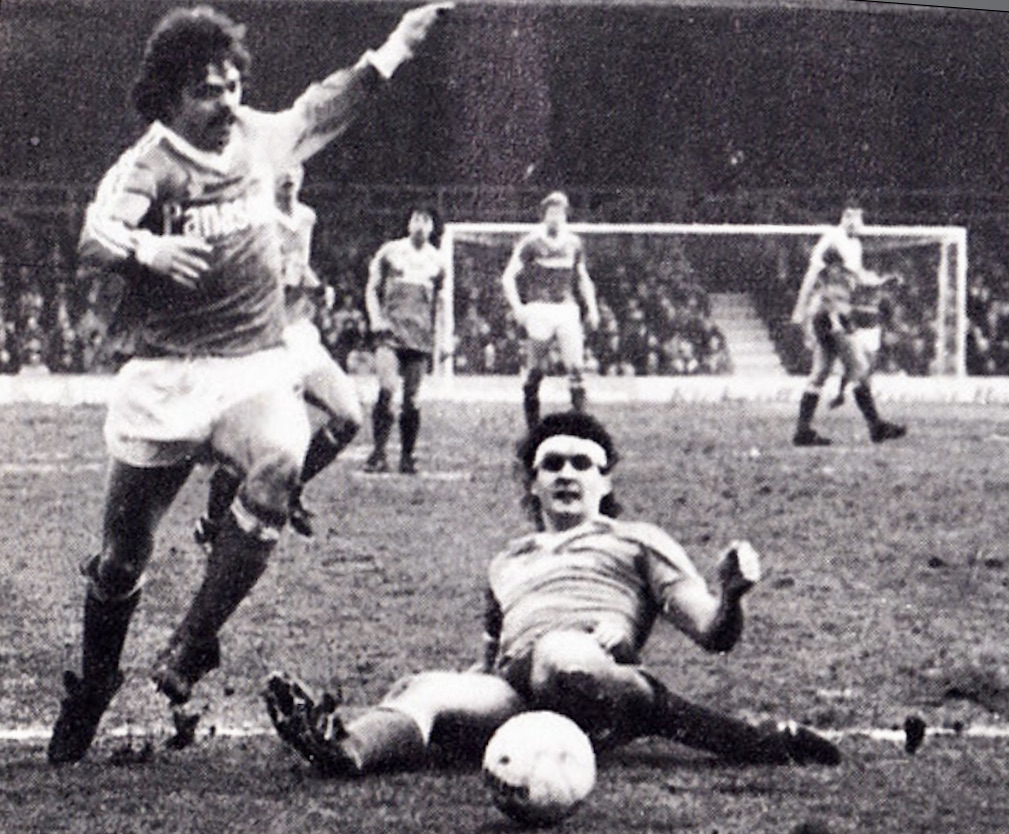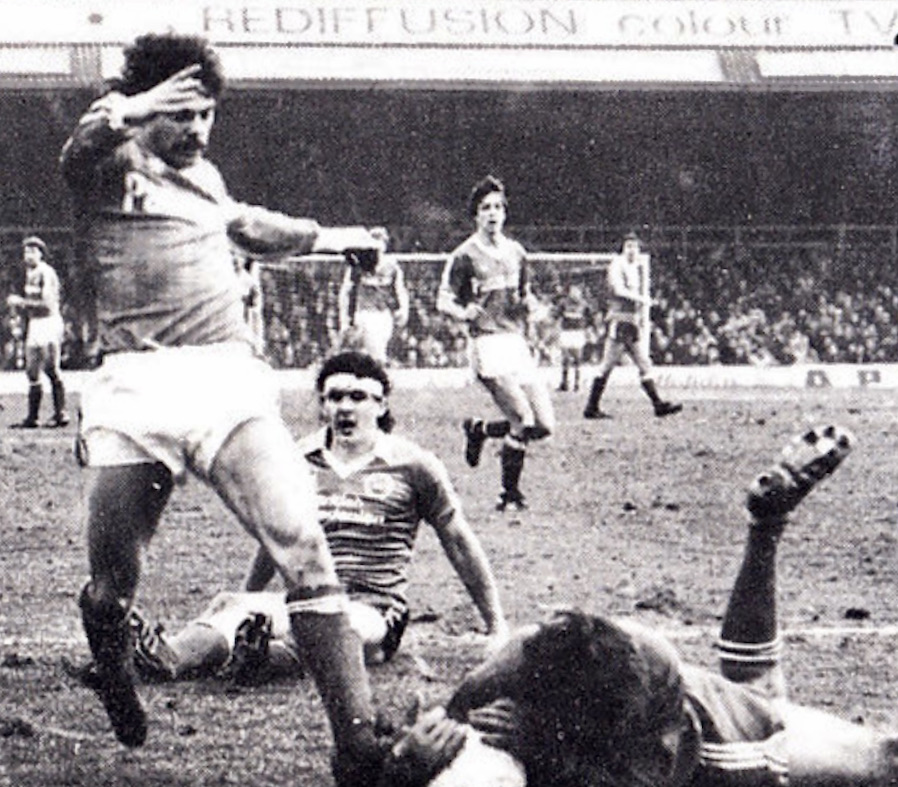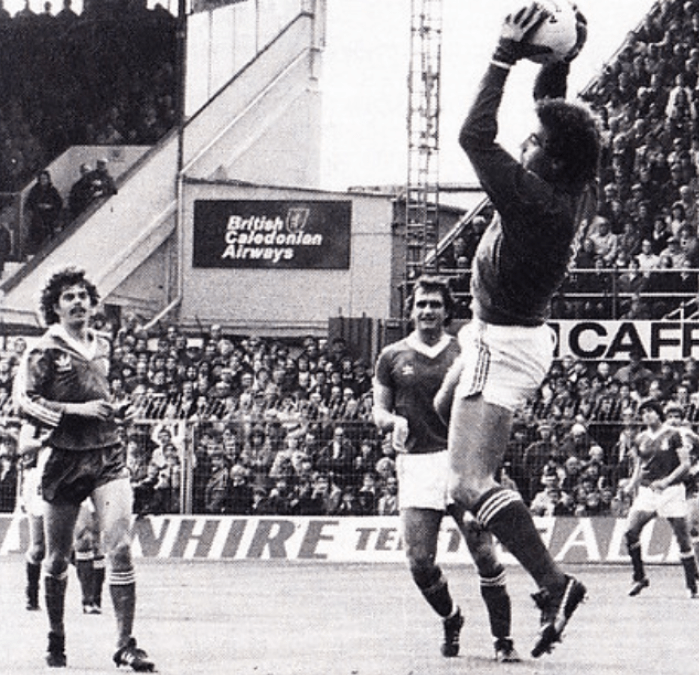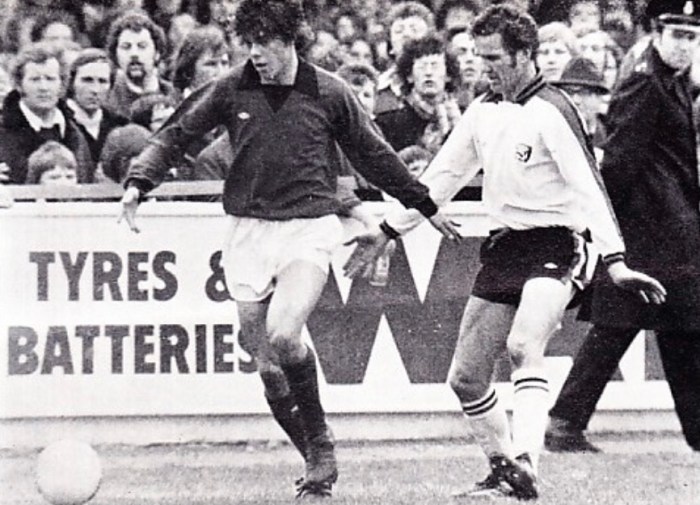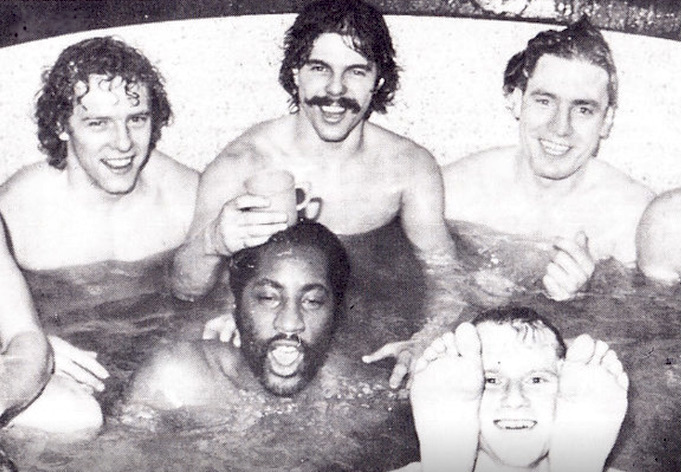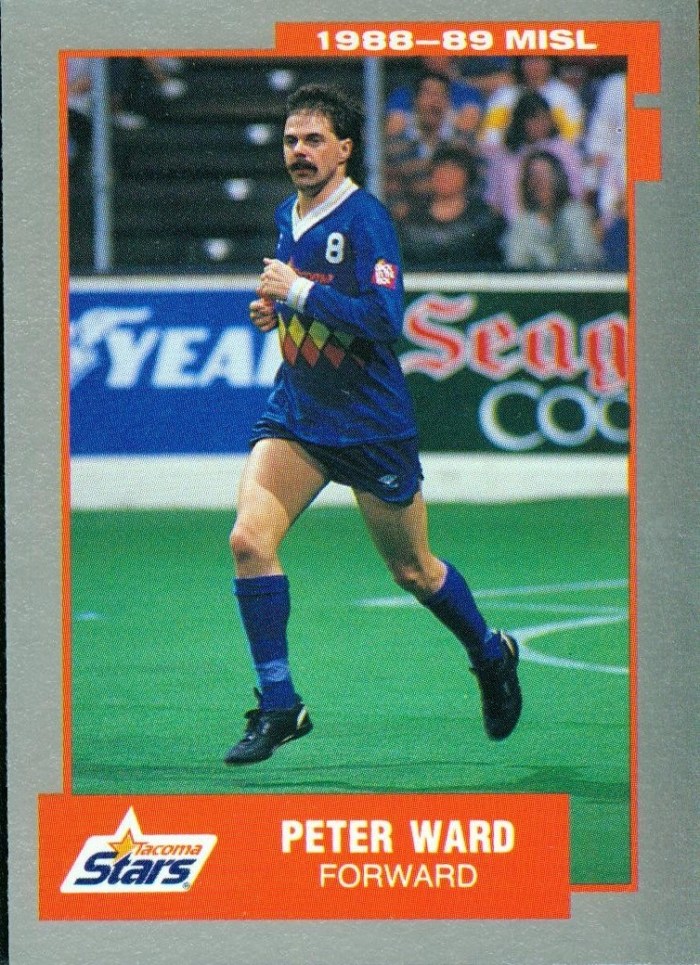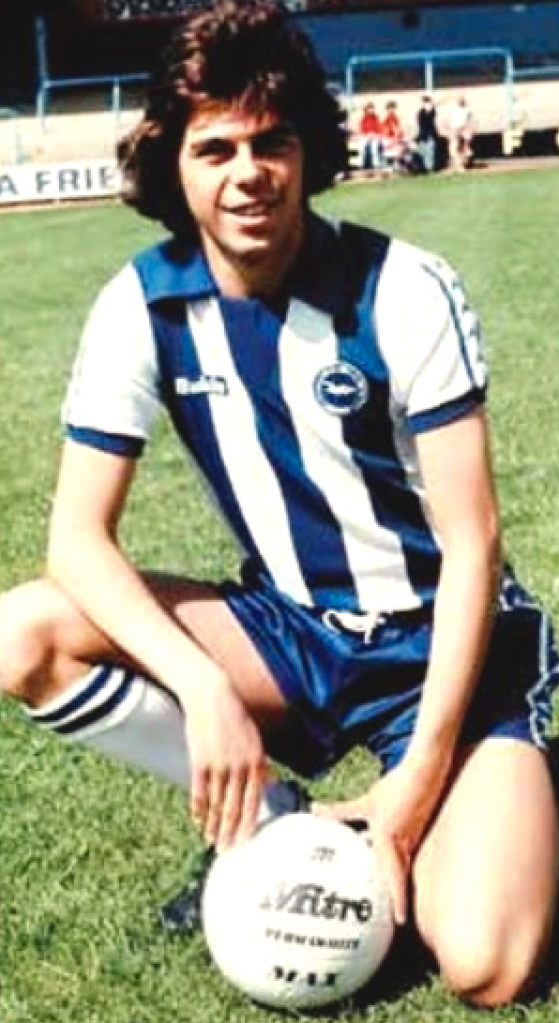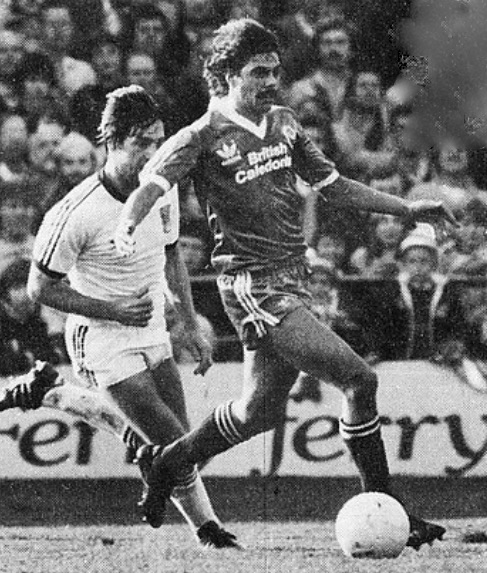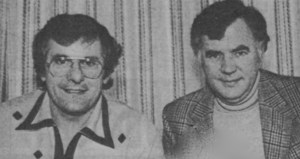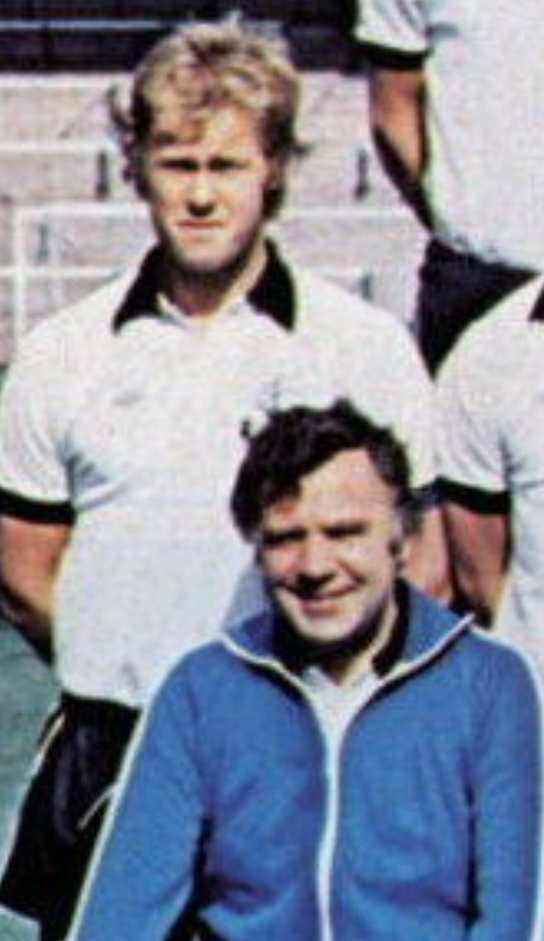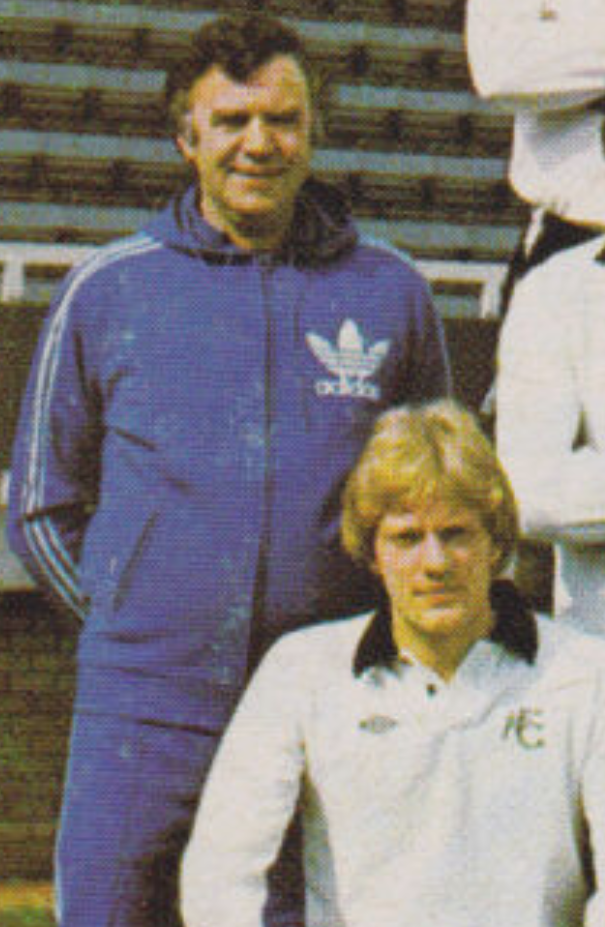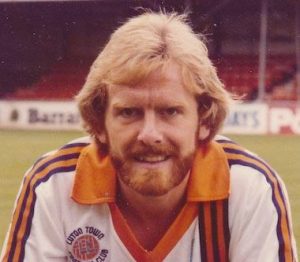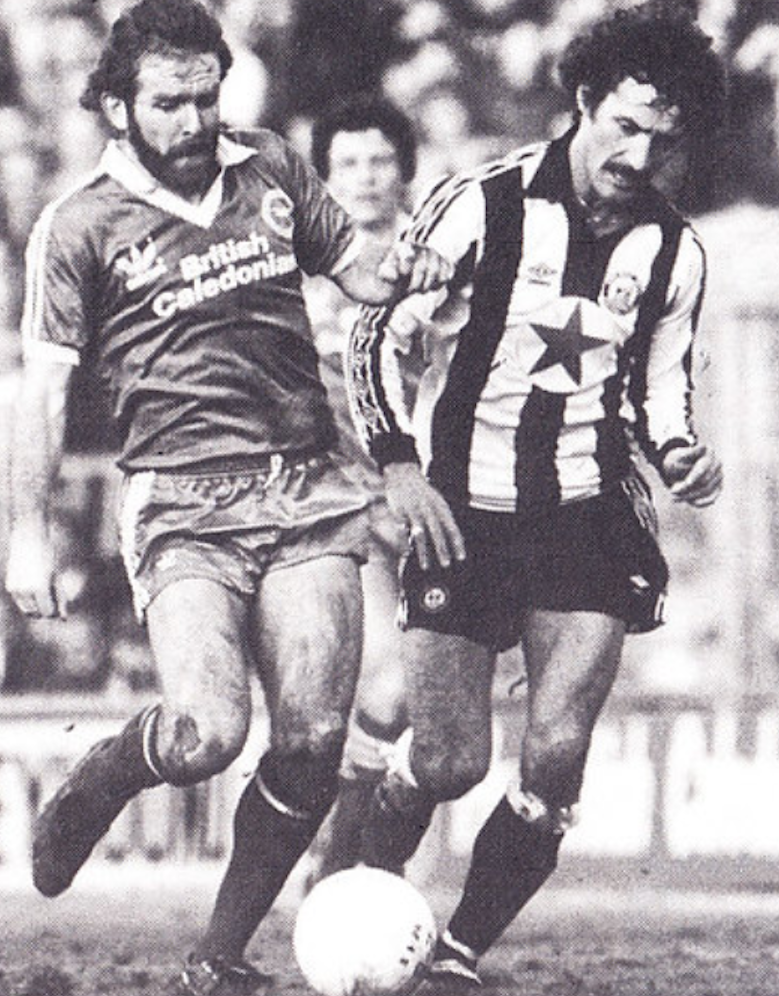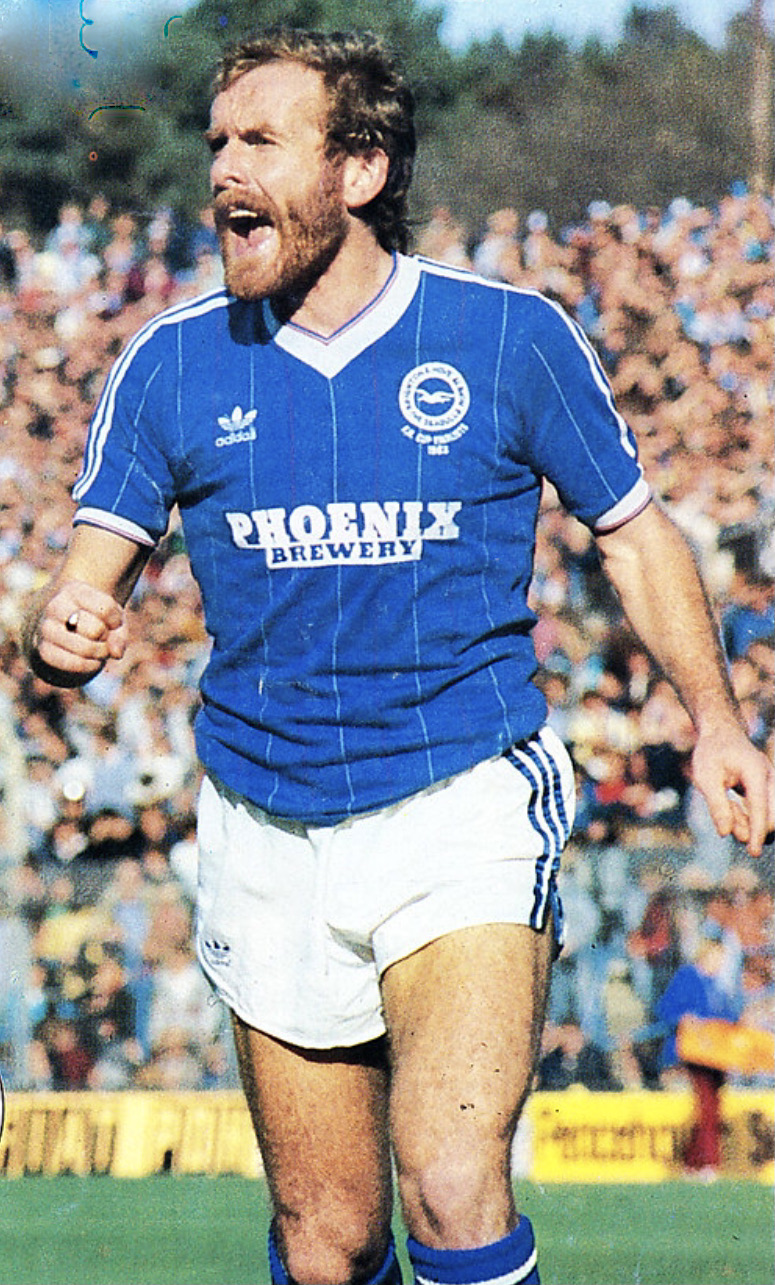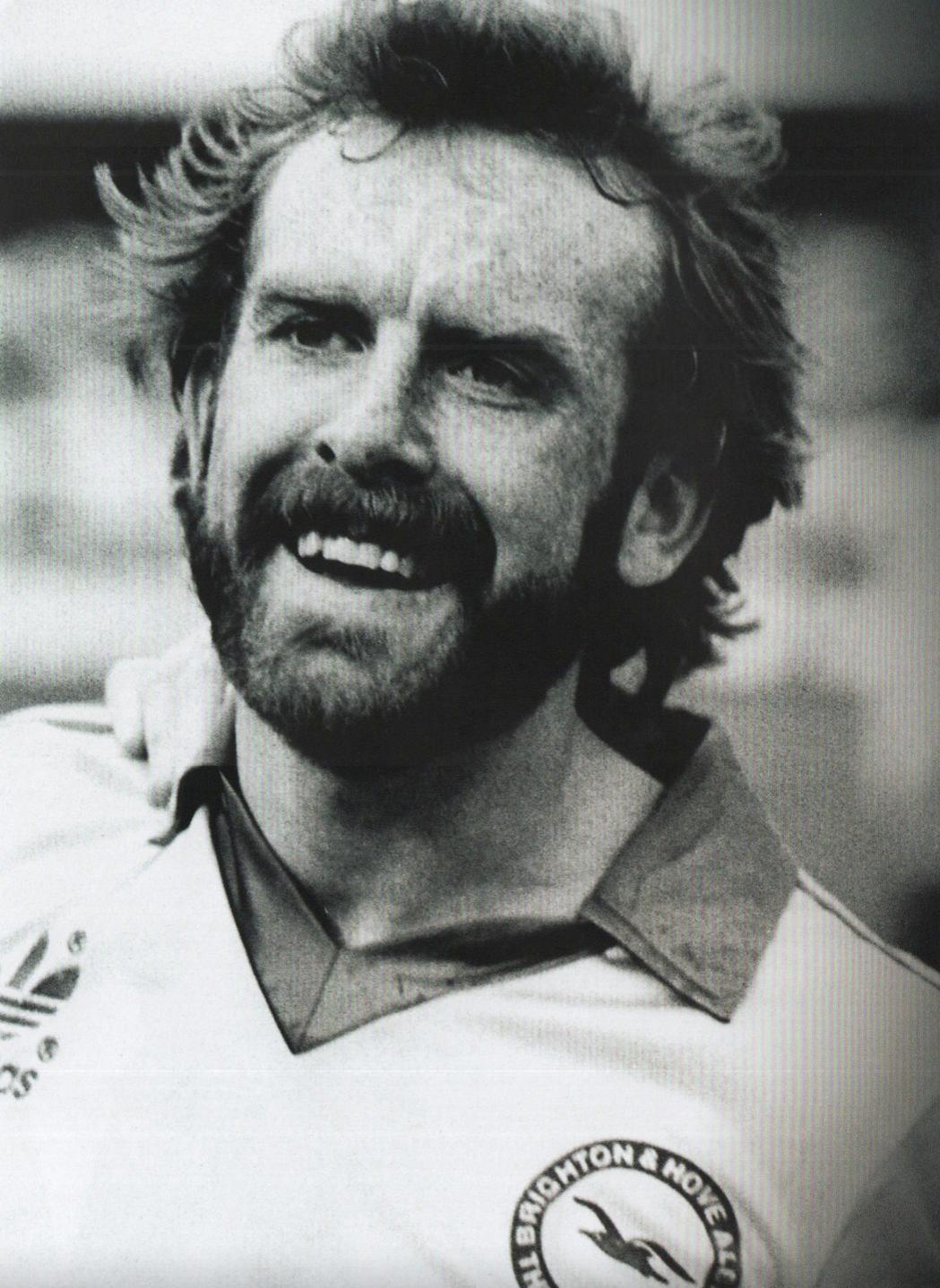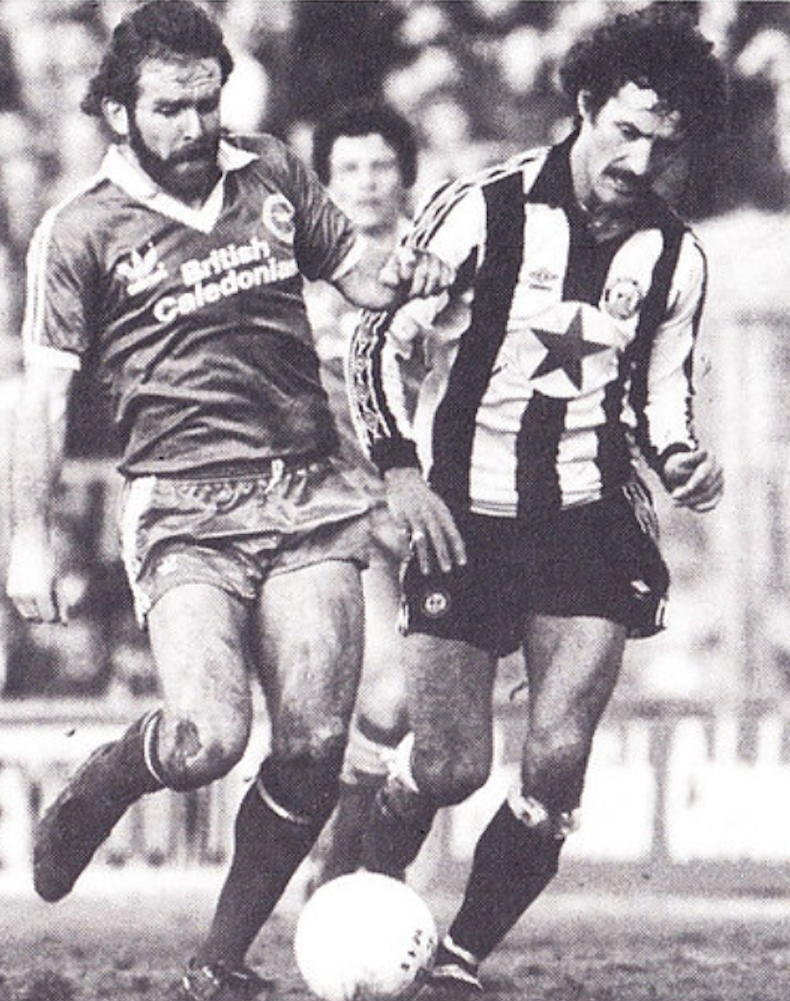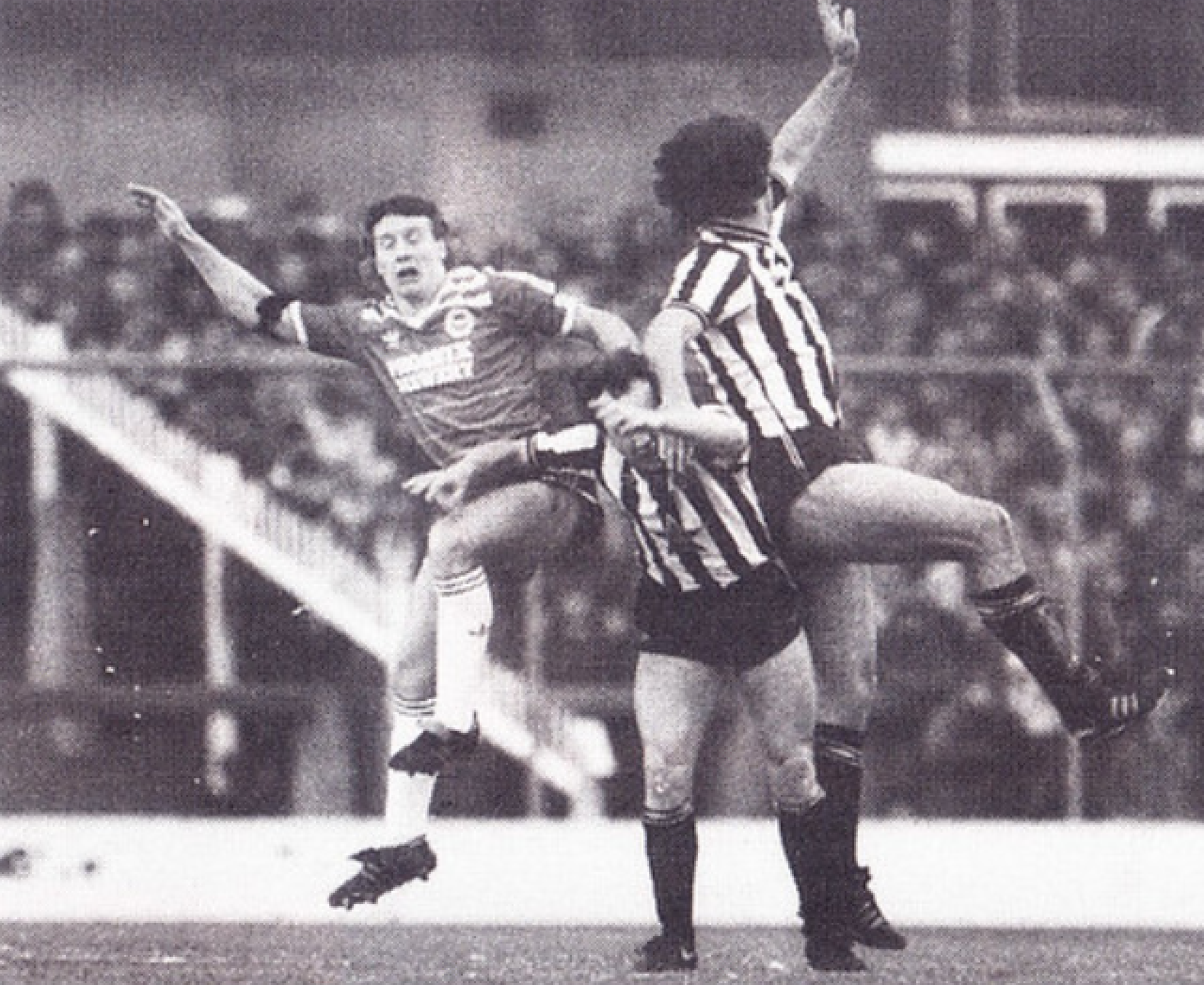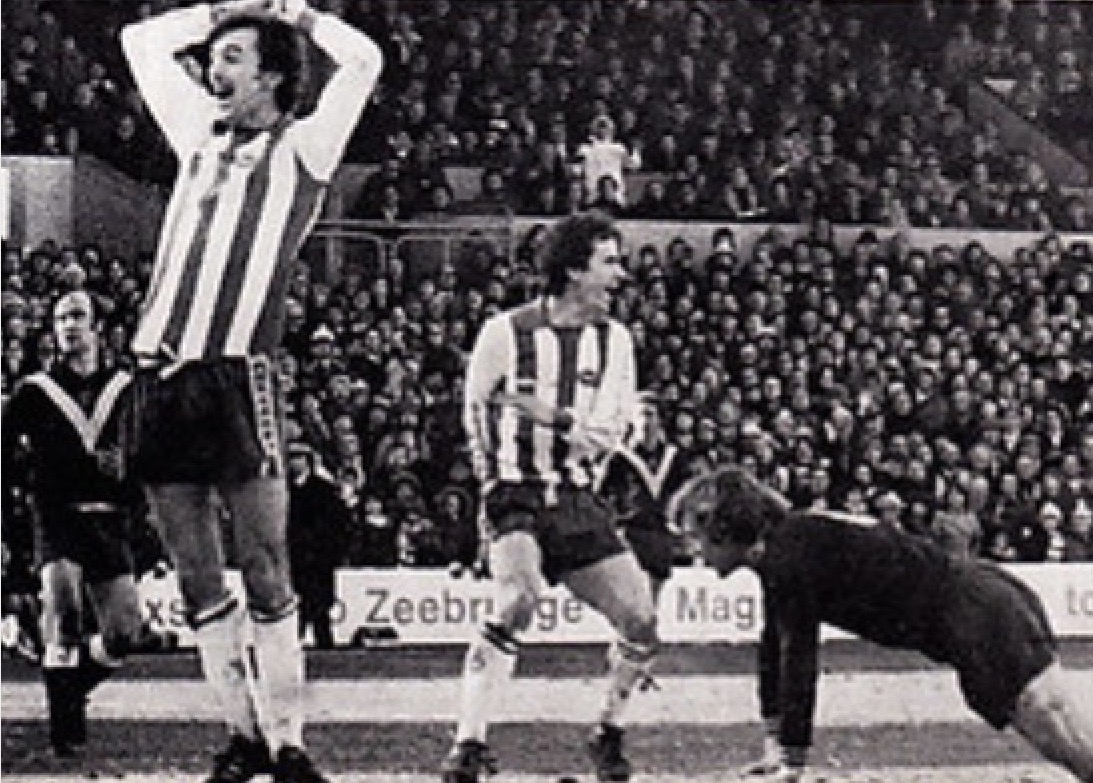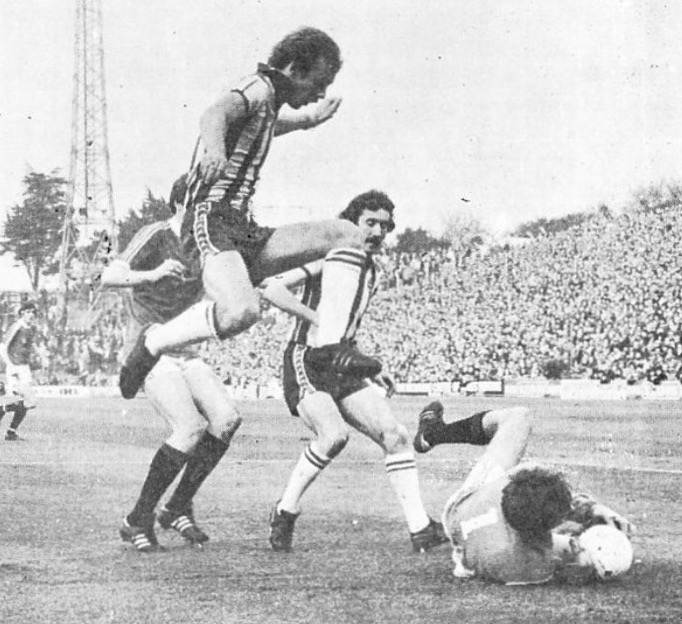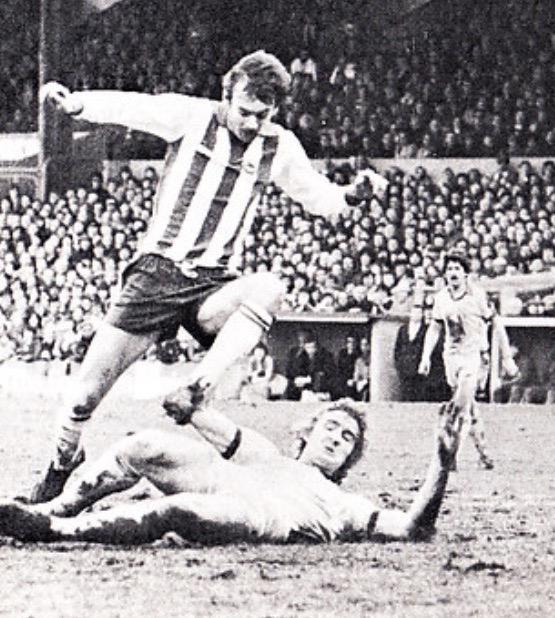
Mullery’s deputy Ken Craggs had a keen eye for football talent

ONCE A PROMISING Newcastle United youth team footballer, Ken Craggs didn’t make it as a player but went on to serve Albion as a ‘backroom boy’.

Indeed, he had three separate spells with the club, the first being the most prominent. Having joined the Albion in 1978, Craggs was at Alan Mullery’s side as assistant manager when Brighton first climbed to the top of English football.

In partnership with Alan Mullery

He later worked as a scout for Jimmy Melia, who himself had been a scout for the Albion under Mullery.

And Brian Horton, the captain who led the Seagulls all the way from the Third Division to the First, appointed Craggs as a scout when he managed the Albion between 1998 and 1999.

Craggs had also worked for Horton when he was the manager at Manchester City, Huddersfield Town and Hull City.

Horton viewed Craggs as a mentor and kept in touch with him long after their footballing days were over.

When Craggs died aged 85 in July 2021, Horton told Brian Owen of The Argus: “Ken knew an awful lot of people in the game. We got on great. He was just fun to be around.”

In a team line-up

Referring to how Mullery and Craggs worked together, he said: “Mullers was a hard task master, which I enjoyed. I like people who demand more. Ken was his back stop.

“He would be the buffer between manager and players. They would work in tandem and they were good for each other.”

It was chairman Mike Bamber’s instruction for Mullery to sack Craggs, Melia and coach George Aitken as a cost-cutting measure that prompted the ebullient ex-Spurs and Fulham captain to quit the club in 1981.

“He even wanted to get rid of the kit-man Glen Wilson, who had been at Brighton for years,” Mullery wrote in his autobiography. “The club meant the world to him. I couldn’t have lived with myself if I’d fired these people.”

Mullery swapped managerial chairs with Mike Bailey and moved to newly-promoted Charlton Athletic and Craggs went with him. When Mullery left the club after a year, his assistant took over the Second Division side.

Craggs was in the job for six months and the club history books record how he was the manager when the Addicks pulled off something of a coup in October 1982 by signing former European footballer of the year and Danish international Allan Simonsen from Barcelona for £324,000 after he had been forced out by the signing of Diego Maradona. It had been thought Simonsen would either go to Tottenham or Real Madrid but he revealed publicly that he wanted to play for a club at a less stressful level.
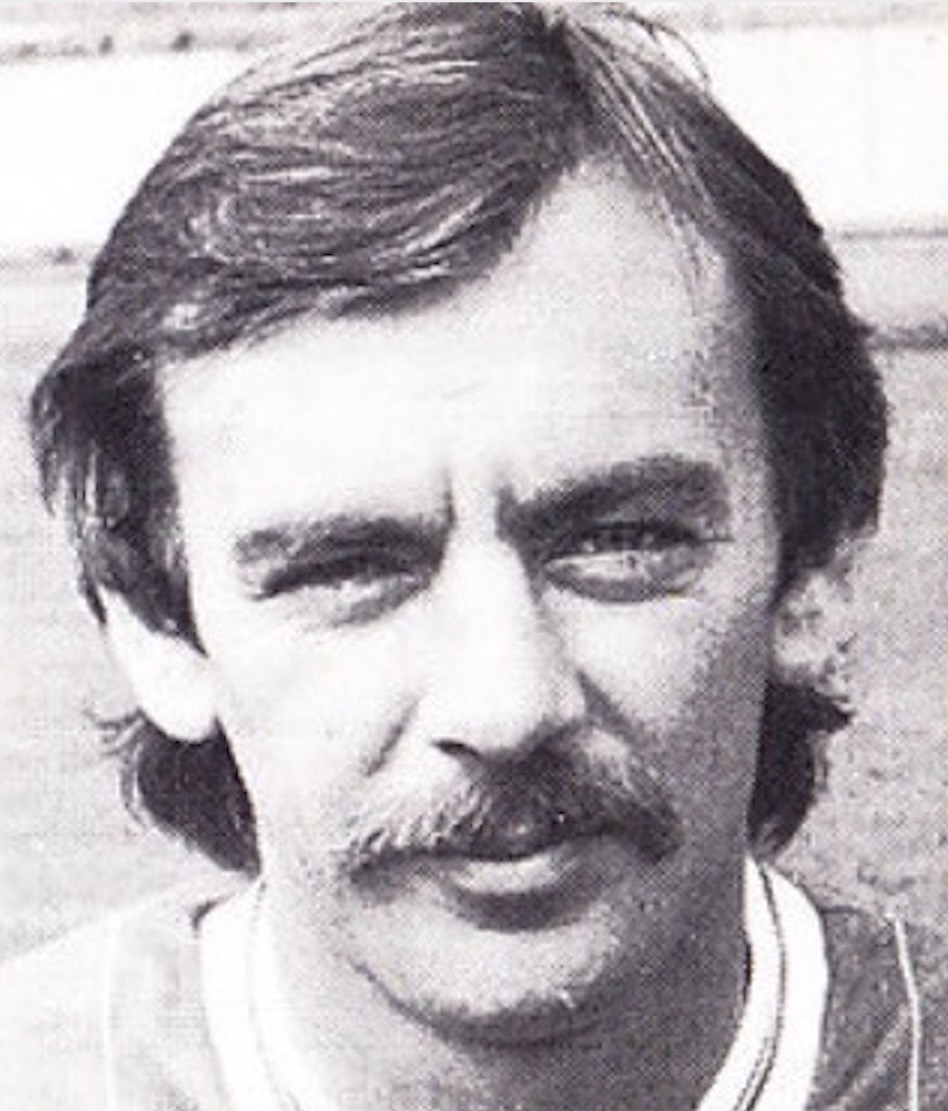
With only five wins in 16 league matches, Craggs’ last game in charge at The Valley saw Rotherham United wallop the home side 5-1 with ex-Brighton winger Tony Towner proving a handful on the right and scoring one of the goals and Ronnie Moore hitting a hat-trick.

Craggs was born on 10 April 1936 in Quarrington Hill, a small mining community in County Durham, close to Cassop Colliery, where his father worked and he expected to follow him.

But he was noticed playing for the local village school football team and he was selected to play inside forward for the Durham Schools representative side. That got him noticed by Newcastle United.

He joined them as an amateur and played in the club’s youth team, although it wasn’t uncommon for him to play two games in a day, turning out for United and then his local youth club side as well.

Young Craggs was invited to have a trial for the England Youth team and it was during one of these sessions that he was spotted by Fulham scout Bill Rochford.

At the tender age of 17, he seized the chance to leave home and head for the bright lights of London and a career as a professional at Fulham.

Craggs shared digs with Bobby Robson, another miner’s son from Durham who had joined Fulham.

“Ken never won a first team place, but he was a powerful centre-half for the reserves,” Mullery remembered.

Craggs spent seven years on the playing staff without breaking into the first team.

He dropped into non-league football, initially with King’s Lynn in the summer of 1960 and later played for Folkestone, Tunbridge Wells United, Dartford and Hounslow, where he was the player-coach.

He then returned to Fulham in September 1968 as a part-time youth team coach and scout under Robson. He found and developed the likes of Brian Greenaway, Les Strong, Tony Mahoney, Terry Bullivant and goalkeeper Perry Digweed, who later moved to Brighton for £150,000.

He eventually joined Fulham in a full-time coaching capacity and Robert Wilson, who went on to make 256 appearances for the Cottagers, recalled: “I joined Fulham as a 16-year-old in 1977, when Ken Craggs was in charge of the youth side and from there the likes of Tony Gale, Dean Coney, Paul Parker, Jeff Hopkins, Jim Stannard, Peter Scott, John Marshall and many others all progressed to the league team.”

Team line-ups of that time show Craggs pictured alongside Barry Lloyd and Teddy Maybank, who later followed Craggs to the Goldstone for a fee of £238,000.

Another striker who caught Craggs’ eye when he was a coach at Fulham was Malcolm Poskett. After Craggs moved to Brighton, the player’s goalscoring form at Hartlepool eventually led to a transfer to the Goldstone, the £60,000 fee representing a tidy profit for the struggling north east minnows.

Clothes modelling with Gary Stevens and Mark Lawrenson

Others who benefited from his acumen included Gary Stevens, who was released by the aforementioned Robson when he was manager at Ipswich Town, but picked up by Brighton.

Stevens said: “Ken played a huge part in many of our careers. He was the main reason I came to Brighton as a 16-year-old and I will always be grateful for his contribution.”

Giles Stille was a part-time player at Kingstonian when Craggs spotted him and after turning pro he made his top flight debut against Manchester City in December 1979 when going on as a sub for Horton in Albion’s 4-1 win. Unfortunately, his time at Brighton was beset by injuries and illness and he was forced to retire prematurely when only 26.

The Albion was quite a different club when Craggs returned for a third spell in 1998, not least because the side was playing home games in exile at Gillingham. His role was to help Horton and his no.2 Jeff Wood to look for bargain signings.

For instance, Craggs and Wood unearthed Gary Hart, who signed from Stansted for £1,000 and a set of playing kit and he went on to become something of a club legend.

“Ken and Jeff knew more players from down south than me ,” said Horton. “He would have definitely gone to watch him on Jeff’s recommendation.

“We put him into a reserve game at Worthing and he only needed one game for me and that was it, we were doing the deal.”

Well-loved Grealish went down with the Albions and City

TENACIOUS Tony Grealish earned plenty of plaudits in a 20-year professional career spanning almost 600 matches and etched his name in the record books along the way.

Thought to be the only person to play in two different sports at Wembley Stadium, Grealish was also the first Brighton & Hove Albion player to captain his country.

On the ball for Brighton

One statistic less favourably remembered is that he was relegated from the top level of English football with three different clubs: Brighton, West Bromwich Albion and Manchester City.

The London-born Republic of Ireland international was first relegated in the same year that he led the Seagulls out at Wembley for the 1983 FA Cup Final.

He was also part of the Throstles squad who went down in last place in 1986. And it was two relegations in a row after switching to an ailing Sky Blues side that went on to relinquish their top flight status in 1987.

When Grealish signed for Brighton from Luton Town for £100,000 in July 1981, it was a time of significant change. After only just avoiding relegation the season before, manager Alan Mullery had quit over a disagreement with chairman Mike Bamber and four key players left the club: John Gregory, Mark Lawrenson, Peter O’Sullivan and captain Brian Horton.

Grealish had quite a tall order taking over in midfield from ex-skipper Horton, who replaced him at Kenilworth Road, but Gordon Smith, another Albion teammate who later played for City, said:

“He did it with style – he was excellent. He was a very hard working player, he could tackle, but he was also classy with it – he could always pick out a pass.”

Part of the deal that saw Liverpool acquire Lawrenson saw the experienced Jimmy Case move to Brighton and he also appreciated what Grealish brought to the side. “Tony was so, so reliable. Playing with him in midfield, you knew that if the going got tough, he would be shoulder to shoulder alongside you.

“He would go in where it hurt, a tough lad, but he was not just a worker, he could play a bit as well and his enthusiasm for the game rubbed off on everyone in that changing room.”

Grealish and Case together with Mullery signing Neil McNab proved to be quite a formidable midfield trio and together they helped Mike Bailey’s side to jostle for top half of the table positions during the 1981-82 season before falling away to finish in 13th place – a record that remained in place until 2022!

Wembley gesture

Reaching the FA Cup final in 1983 under Jimmy Melia and George Aitken provided a personal highlight for Grealish when he captained the Seagulls in the absence of suspended regular skipper Steve Foster, memorably wearing the defender’s trademark white headband as a mini-protest at his exclusion.

Grealish’s departure to West Brom in March 1984 was part of the ongoing break-up of the former top level squad, Melia’s successor Chris Cattlin being tasked with trimming the wage bill to bring it into line with second tier football.

Three and a half years later, Grealish had just turned 30 when Jimmy Frizzell signed him for City in October 1986 for a modest £20,000 fee, re-uniting him with McNab.

It was only a short-term deal, though, and he continued to live in Sutton Coldfield, a commute of 90 miles each way! “We haven’t bought a place because I only signed until the end of the season,” he explained. “We’ll see what happens first.”

Frizzell had previously been assistant manager to Billy McNeill but took over the reins when the former Celtic captain, frustrated by City’s parlous financial circumstances, left for Aston Villa in September 1986.

City of the mid-1980s were a very different proposition to the modern day version: they were more than £4m in the red and struggling with crippling debt repayments after an ill-advised spending spree in the late 70s and early 80s.

“The first thing I was told when I joined and went to discuss money was that they were so skint they would sell their goalposts if they could,” a Grealish contemporary, centre-back Mick McCarthy, told Chris Bevan for BBC Sport in a 2013 article looking back at that period.

Frizzell felt the relatively youthful City needed some experienced old heads to steady the ship and Grealish joined from West Brom in the same week John Gidman joined on a free transfer from city rivals Manchester United. Both made their Maine Road debuts for bottom-of-the-league City against United in a 1-1 draw on 26 October 1986.

It was the 118th meeting between the two sides, but the first to be broadcast live on TV.

Injury-hit United took the lead through a Frank Stapleton header that crept past the diving Perry Suckling and inside the post, but McCarthy equalised with a header from a cross by McNab.

Under fire United boss Ron Atkinson only had one more game in charge of the Reds; after a 4-1 League Cup defeat by Southampton, he was sacked.

United’s plight was nothing compared to City, though. They didn’t win away throughout the whole season and, in spite of the additions of forwards Paul Stewart and Imre Varadi, scored a meagre 36 goals in 42 games.

Youngster Paul Moulden, having been a prolific goalscorer in City’s FA Youth Cup-winning side of 1986, briefly offered hope when scoring four goals in four games in November but then picked up an injury.

Frizzell blooded several other members of that youth side including Paul Lake, David White and Ian Brightwell but City were relegated. Grealish’s last game for them was in a 0-0 home draw against Newcastle in March, City’s first point in a month. They only won twice in the remaining 10 games and were relegated…along with McNeill’s Villa!

Grealish only made 15 appearances in that 1986-87 season and was an unused sub on two other occasions. He made 11 league starts, one in the FA Cup (a 1-0 defeat v Man U) and three in the Full Members Cup. He also played in City’s reserve side on 14 occasions (stats courtesy of the Gary James archive).

Born in Paddington, west London on 21 September 1956, Grealish played underage for St Agnes Gaelic football club in Cricklewood – alongside brother Brian – and represented London at various underage levels.

That special 1983 Wembley moment meant Grealish achieved the unusual claim to fame as reportedly the only person to play soccer and Gaelic football at the iconic stadium. He’d previously played there in the early ’70s for London’s Minors against New York in what at the time was an annual Whit weekend tournament.

“For a group of London lads, playing at Wembley Stadium was magnificent,” said Éamonn Whelan, a teammate of Grealish’s for St Agnes and London.

Ireland was certainly in his blood even if he wasn’t born there: his father, Packie, was from Athenry in Galway, and although his mother, Nora, was born in London, both her parents came from Limerick.

No surprise then, that Grealish represented Eire with some distinction, winning 45 caps between 1976 and 1985, and It was during Alan Kelly’s brief reign in charge, in 1980, that Grealish was first made Eire skipper – in a 2-0 win over Switzerland at Lansdowne Road, Dublin.

Brighton’s Lawrenson and Gerry Ryan were teammates that day, as was Chris Hughton.

One of the goalscorers that day, Don Givens, said of Grealish: “He gave so much effort that he wasn’t going to accept anything less from his teammates.

“Tony was a 100 per cent tough little midfield player, and a great character off the pitch.”

Former Ireland manager Eoin Hand chose Grealish as Eire captain for the 1984 European qualifying campaign, when Ireland ended in third place behind Spain and Holland.

In his book, First Hand My Life and Irish Football, Hand said Grealish was “more Irish than the Irish themselves”.

“With his dynamic, combative style in the midfield engine room, Tony, with his tousled hair and Viking beard, was the kind of guy you were happy to go into battle alongside,” he said.

Grealish on the international stage with the Republic of Ireland

“He was a natural leader, and although known for his ceaseless industry, he was no mere artisan. Grealish could play as well and conjure up the odd goal from deep positions.”

Previous manager Johnny Giles had given Grealish his Ireland debut at the age of 19, in a friendly against Norway at Dalymount Park, Dublin on 24 March 1976.

Grealish, unusually, started at full back as Ireland won 3-0 thanks to goals from Liam Brady, Jimmy Holmes and a penalty from Mickey Walsh.

“Tony was very good for me when we played together in midfield because he was a ball winning all action player, and we had a good understanding,” said Brady, who later became Brighton’s manager.

“Around the Ireland dressing room, he was very enthusiastic, determined and very motivating – he liked to motivate everyone around him,” he told the Irish World in 2013.  “He’d be up for every match.”

Brady added: “We had a strong friendship, and I haven’t met anyone who played with him who wasn’t a friend of Tony Grealish’s.

“He was a super man, and a super bloke. He made the atmosphere better wherever he was.”

Grealish took his first steps to becoming a professional footballer aged 15 in 1972 when he joined Leyton Orient as an apprentice. Manager George Petchey took him on as a professional in 1974 and he was the club’s player of the year at the end of the 1975-76 season.

In 1977-78, Orient reached an FA Cup semi-final at Stamford Bridge, where they lost 3-0 to  Arsenal, although the aforementioned Liam Brady mentioned: “He man-to-man marked me that day and put me out of the game. Luckily some of our other players performed despite the fact that I didn’t.”

One of the last of his 171 appearances for Orient was in the April 1979 3-3 draw with promotion-chasing Brighton in front of The Big Match cameras (John Jackson was in goal for the Os and Martin Chivers scored his only goal for Brighton).

Grealish transferred to David Pleat’s Luton Town in the summer of 1979 for a fee of £150,000, racking up 78 Division Two appearances over two seasons before joining Brighton.

In total, Grealish played 116 games plus five as a sub for Brighton, and his last game for the Seagulls ironically saw him score in a 1-1 home draw with Manchester City.

Having known what he could bring to a side, it was Giles, when manager of West Bromwich Albion, who took Grealish to the Hawthorns in March 1984 for £75,000.

Reunited with Johnny Giles at West Brom

In one and a half seasons with the Baggies, Grealish made 65 appearances before that move to City.

He spent a brief period with Salgueiros in Portugal before former Leeds hard man Norman Hunter signed him for Rotherham United in August 1987. He made 110 appearances over three seasons, going down with them in 1987-88 and helping them to bounce straight back by winning the Fourth Division title the next year under another former Albion midfield player, Billy McEwan.

His last league club was Walsall during Kenny Hibbitt’s managerial reign before he continued playing at various non-league clubs in the Midlands: Bromsgove Rovers, Moor Green, Halesowen Harriers, Sutton Coldfield and Evesham United.

He returned to Bromsgrove Rovers as player-manager before calling it a day, and then worked in the scrap metal business. He died of cancer aged 56 in April 2013.

An obituary in Albion’s matchday programme saw tributes paid by several former teammates. Gary Stevens, who memorably scored Albion’s equaliser in the 2-2 Cup Final draw against Man Utd, said: “Off the field, Tony was the life and soul of the party.

“When he was with us, he was always laughing, joking and just enjoying life. Yet on the pitch he always gave 100 per cent, was tenacious in the tackle and he had a tremendous will to win.”

Ex-skipper Foster added: “Tony was a lovely man off the pitch and a passionate footballer on it. He was a fantastic midfielder.”

The spectre of Trelford haunted them for ages at St James’

BRIGHTON travel to Newcastle in the fifth round of the FA Cup with the backdrop of having won there twice in the competition in the 1980s – not to mention a 1-0 win in the Premier League this season.

The 1-0 third round win at St. James’ Park in January 1983 set Albion en route to that season’s FA Cup final – but Toon supporters of that era blamed the game’s unusually-named referee, Trelford Mills, from Barnsley, for their exit.

Think I’m exaggerating? Newcastle fans’ website themag.co.uk had this to say ahead of another FA Cup game between the two sides in 2013: “It is doubtful that anything could match the anger and frustration that many of us felt nearly thirty years ago.

“Wednesday 12 January 1983 will always be synonymous with the name Trelford Mills, etched into the consciousness of an entire generation of Newcastle fans, convinced he cheated us out of the FA Cup. Well, a chance of the fourth round anyway!”

Neil Smillie, goalscorer Peter Ward, Steve Gatting, Chris Ramsey and Andy Ritchie celebrate after the 1983 win.

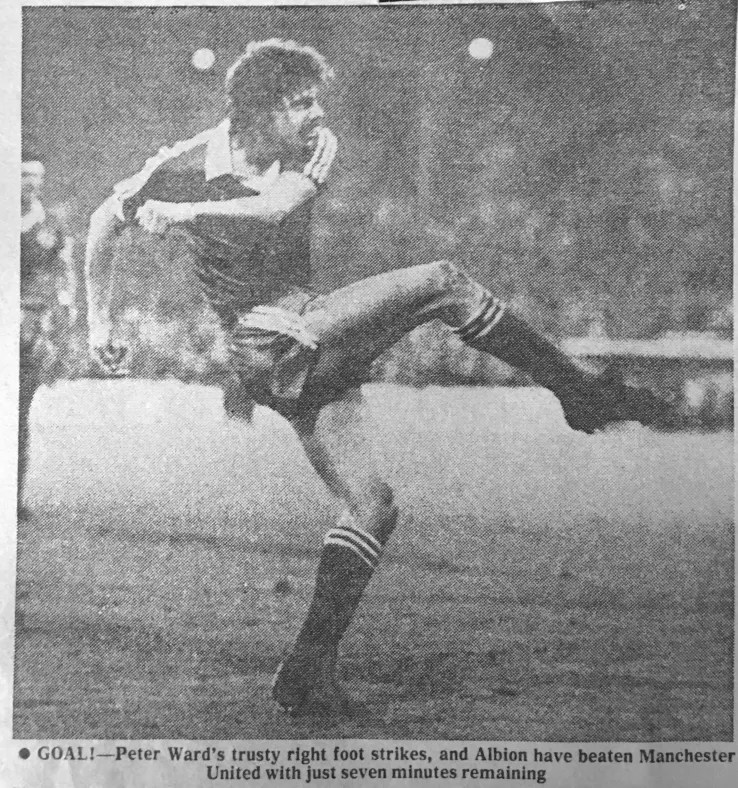
Mills disallowed two Newcastle ‘goals’ while Albion nicked it courtesy of a penalty area pounce by Peter Ward, back at the club on loan from Nottingham Forest, on 62 minutes. They did it without captain Steve Foster who was suspended (as, of course, he would be for the final too).

The game was a third round replay four days after the sides drew 1-1 at the Goldstone Ground when Andy Ritchie’s mis-hit shot in the 56th minute put Albion ahead and Terry McDermott (below right, with Tony Grealish) equalised on 77 minutes.

Even though the Magpies were in the old Division Two at the time, they had Kevin Keegan and Chris Waddle in their line-up, and they fully expected to win because Brighton hadn’t previously won away that season.

Albion, competing in the top division for the fourth season in a row, with joint caretaker managers Jimmy Melia and George Aitken in charge, had goalkeeper Graham Moseley to thank for some heroic stops to keep them in the first game.

The replay at St. James’s Park was in front of a typically noisy crowd of 32,687 and Newcastle did everything but score: they had shots cleared off the line and hit the woodwork and, when they thought they’d scored, Mr Mills disallowed them – twice!

In the meantime, Ward made the most of a counter attack to put the Seagulls ahead. It turned out to be the last goal he scored for the Albion, although he was in the side that pulled off a shock 2-1 win at Anfield to knock out Liverpool in the fifth round.

Enterprising reporter Tim Hodges searched out Mr Mills all those years later to hear his version of the events.

“I remember Brighton went one up, then Imre Varadi went through on goal, but quite clearly controlled the ball with his wrist,” said Mills.

“I think the Brighton keeper realised this, just as most of the players did, and let the ball go into the goal just to waste a bit of time. I just restarted with a free kick. I have spoken to Imre since. I think he accepts my version now.”

Mills continued: “Jeff Clarke managed to win a ball in the penalty area, but only because he had his arm around the defender’s neck. Keegan bundled the ball into the goal, but I had blown up a few seconds before it went in.

“Keegan did his Mick Channon cartwheel arm in front of the Gallowgate end, but I just jogged across to where I wanted the free kick taken from and indicated as to why I had disallowed the goal.”

Mills also recalled how he and his fellow officials needed a police escort away from the ground after the match. “When we sat in the dressing room after the match, I remember chatting to one of my linesmen, John Morley, when this police officer turns up,” he said. The copper said to him: “You’d better hang on here a while, Trelford. There are 2,000 Geordies outside and they all want your autograph!”

Three years later, the status of the teams had been reversed with Newcastle promoted back to the top division in 1984 and Albion back in the second tier, relegated the same year as the cup final appearance.

While Keegan had retired, Willie McFaul’s side had a young Paul Gascoigne in midfield and Peter Beardsley in the forward line. Clarke, who’d played four games on loan at Brighton two years earlier, was still in the centre of United’s defence and it was his foul on Terry Connor in the first minute of the game that saw Albion take a shock early lead.

Danny Wilson floated in a free kick from 30 yards out on the right which found centre back Eric Young on the far edge of the penalty box. He hooked the ball into the Newcastle net with only 50 seconds on the clock!

Albion, wearing their change strip of red, had to endure a relentless series of attacks (Toon had 23 corners to Albion’s one!) and Perry Digweed in Brighton’s goal put in a man of the match performance between the sticks, notable saves keeping out shots from John Bailey, Beardsley and Billy Whitehurst.

With five minutes left of the game, against the run of play, a quick throw-in by Graham Pearce found Dean Saunders and he rifled home an unstoppable shot past Martin Thomas for his 10th goal of the season.

Manager Chris Cattlin summed up afterwards: “It was really tough and we had a little luck on our side, but to go away to a club who have won the cup no fewer than six times and come away winners was quite an achievement.

“With the Geordie fervour up there the noise their supporters created was something special, but our efforts speak volumes for everyone connected with our club.”

There would be no fairytale ending that season, though, with Albion being dumped out of the cup 2-0 by Southampton in a quarter-final tie at the Goldstone Ground.

John Barnes and Steve Harper were on pundit duty for ESPN for the 2012 match

Younger fans will doubtless recall two more recent FA Cup meetings between Brighton and Newcastle, in consecutive seasons during Gus Poyet’s reign, at the Amex in 2012 and 2013.

The Championship Seagulls beat the Premier League Magpies on both occasions – 1-0 in the fourth round in 2012 and 2-0 in the third round the following year.

Getting to grips with Will Buckley

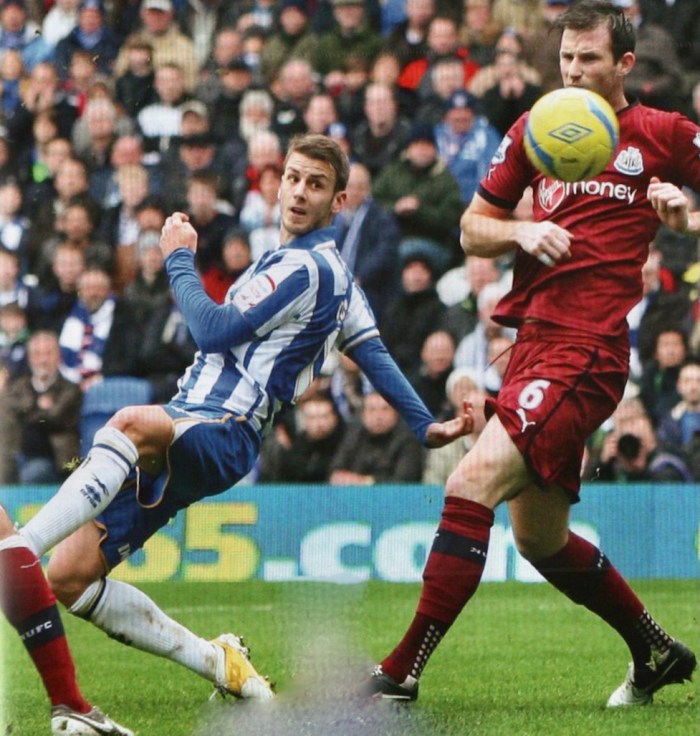
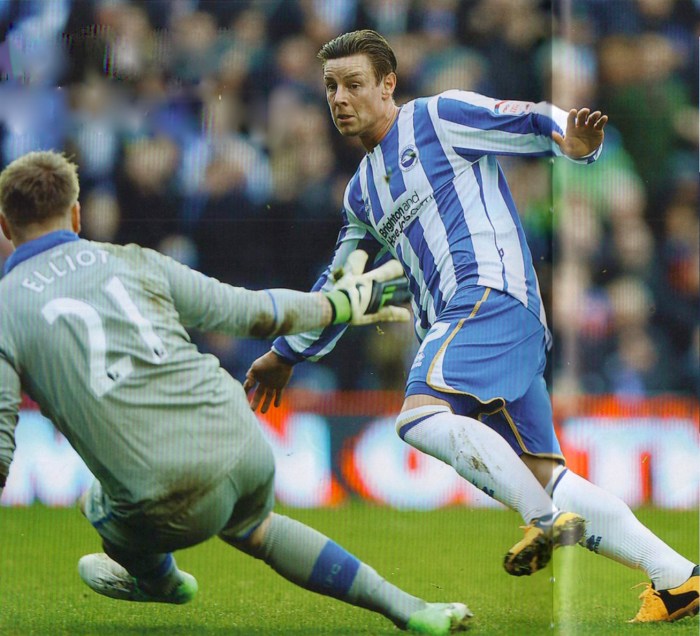
A Mike Williamson own goal was enough to give Albion the edge over Alan Pardew’s side in the first of those games; Will Buckley’s 76th minute shot deflecting off the defender and looping over Tim Krul for the only goal of the game. Leon Best, who would later have a torrid time at Brighton, missed two good chances for the visitors.

The 2013 fixture was a more convincing win for Brighton against a weakened Newcastle side who had Shola Ameobi sent off. Andrea Orlandi gave Albion the lead on the half-hour mark and substitute Will Hoskins added a second late on.

Andrea Orlandi hooks in Albion’s first goal
Praise for Liam Bridcutt

“This was an impressive victory for Brighton, a result that will add to the optimism that surrounds this upwardly mobile club and strengthen their resolve to host Newcastle in next season’s Premier League,” wrote Ben Smith, for BBC Sport. “The cool passing game of Liam Bridcutt at the heart of their midfield was tremendous.”

The reporter added: “Sharper to the ball, and swifter to make use of it, the Seagulls toyed with their more celebrated opponents for much of the opening 45 minutes, producing some stylish attacking moves while tackling, battling and dominating territory in their uncomplicated and effective way.”

Will Hoskins buries Albion’s second goal in 2013

Malcolm in the middle was moustachioed marksman Poskett

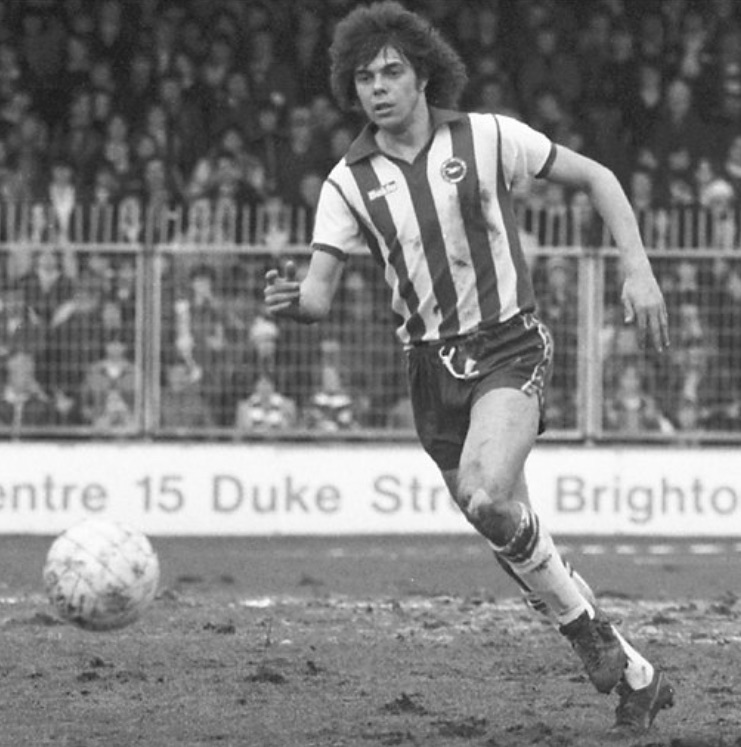
MALCOLM POSKETT’s goals helped Brighton to win promotion from the second tier after he’d made a terrific start to his Albion career.

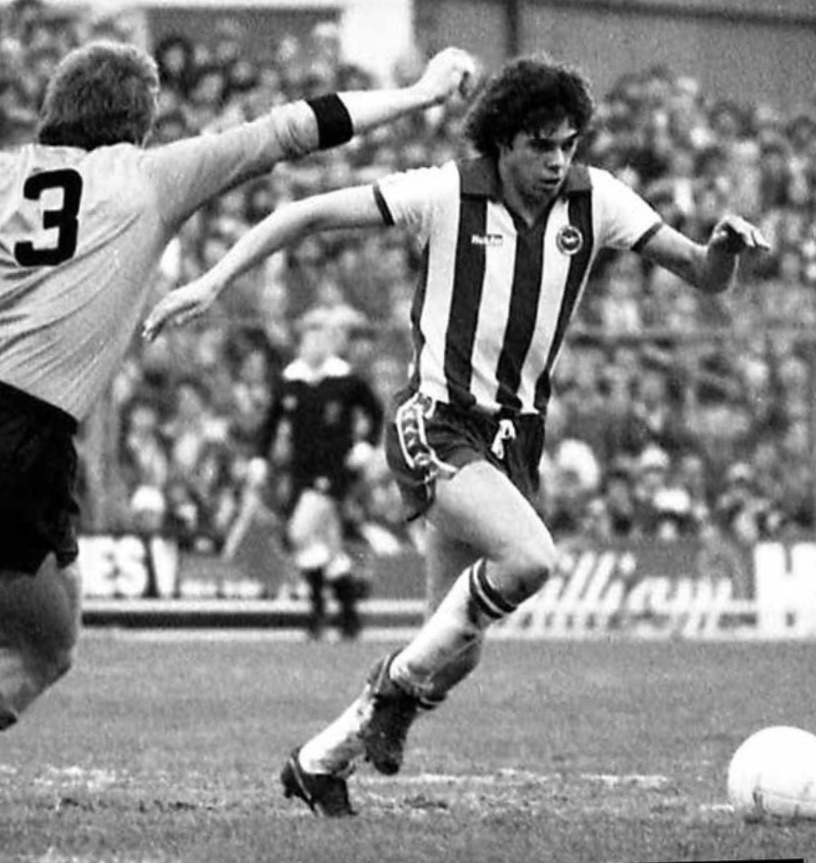
Only two days after putting pen to paper in Hove, Poskett netted the equaliser in a 1-1 draw away to Hull City on 4 February 1978 and a week later he marked his home debut with a goal in Albion’s 2-1 win over Burnley.

The game at Boothferry Park was only six minutes old when the home side went ahead but Poskett levelled it up just before half-time after a Tony Towner corner was headed goalwards by Andy Rollings and the new arrival diverted it into the net.

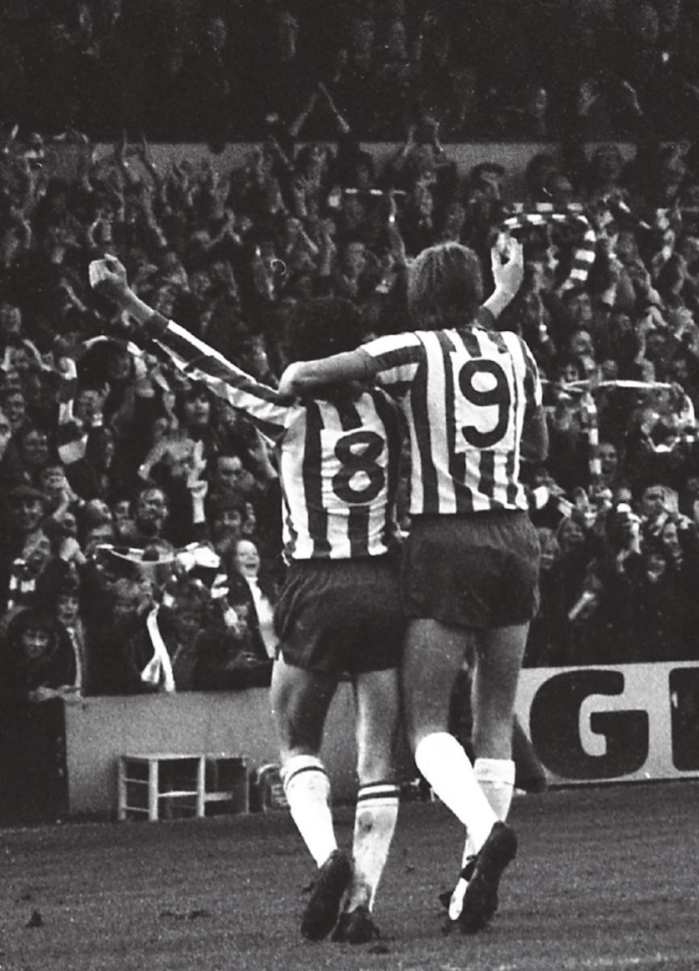
A £60,000 signing from fourth tier Hartlepool United, Poskett had taken over the no.9 shirt from Ian Mellor, who had only been in the side for one game in the injury absence of Teddy Maybank.

Maybank’s big money signing from Fulham four months earlier had broken up the highly successful Mellor-Peter Ward partnership that earned Albion promotion from the old Third Division, and Poskett’s arrival only served to illuminate the Goldstone exit door even brighter for Mellor, who swiftly departed for Chester.

A crowd of 22,694 saw the new man’s Division Two debut on an icy Goldstone Ground pitch. Poskett once again profited from a Towner pass to score. Skipper Brian Horton scored Albion’s other goal.

It all must have felt very showbiz to the lad from Teesside, used to playing in front of 5,000 crowds in the Fourth Division, especially when prior to kick off against the Clarets, Slade, a famous chart-topping pop group of the time, recorded a single on the pitch in front of the North Stand.

While Maybank reclaimed his starting berth from Poskett for six matches, he was troubled by a knee injury and Poskett got the nod for the remaining seven games of the season as Albion chased automatic promotion, which at that time was earned by the top three sides in the division. There were no play-offs.

Poskett repaid Mullery’s faith in him with a hat-trick in a 4-0 win away to Bristol Rovers and by netting the only goal of the game in the penultimate fixture at home to Charlton Athletic in front of 31,203 fans.

What happened next has been well documented: Albion missed out on promotion when Southampton (in second) and Spurs (third) conveniently drew 0-0 in the final match of the season; Spurs edging out the Seagulls on goal difference.

Maybank had a successful cartilage operation during the summer break and was initially the preferred partner for Ward as the new season got under way.

Poskett banged in a transfer request as a mark of his frustration but, after Mullery persuaded him to withdraw it, he got his chance back in the side and made the most of opportunities that came his way.

Mullery admitted in Matthew Horner’s biography of Ward (He Shot, He Scored, Sea View Media) that he wasn’t always fair on Poskett when reverting to the Ward-Maybank partnership.

He pointed out: “Malcolm Poskett did a terrific job when we signed him. He was one of the most under-rated goalscorers – absolutely brilliant.

“He was really similar to Wardy, very sharp and very quick but a bit taller and a bit stronger.”

By the end of the season that ended in promotion to the top tier of English football for the first time, Poskett had contributed 10 goals in 24 games (plus eight sub appearances). He was the substitute in the famous 3-1 win back in his native north-east when Newcastle were beaten by the Seagulls on 5 May 1979.

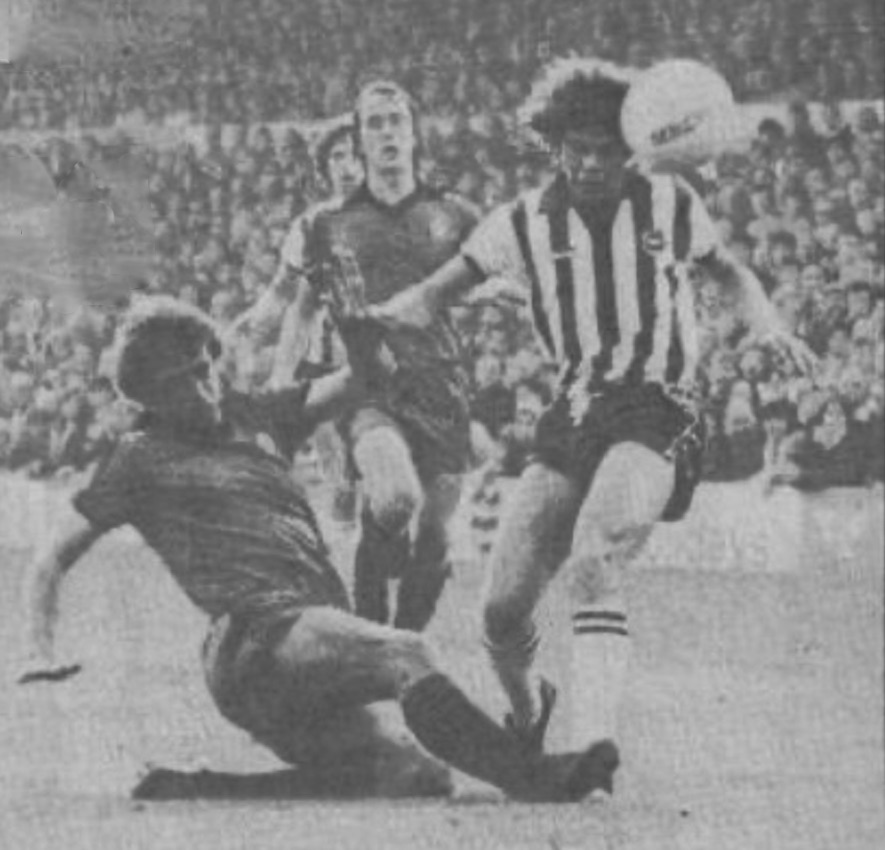
Brighton struggled to find their feet in more exalted company and Poskett barely got a look-in, coming on as a sub twice and only starting three matches, the last of which was in the resounding 4-0 defeat to Arsenal in the League Cup on 13 November 1979.

He scored twice, though: netting the only goal in an away League Cup win over Northampton Town, and four days later scoring along with Peter O’Sullivan as Albion pulled back a 2-0 deficit to draw 2-2 at West Brom.

Poskett wheels away to celebrate his only top flight goal, away to West Brom

However, with the arrival of Ray Clarke from Ajax, it was clear Poskett’s chances at the Albion were going to remain limited, so he dropped back down a level to join promotion-seeking Watford under Graham Taylor. Albion goalkeeper Eric Steele had already made a similar switch in the autumn of that season shortly after a famous spat with Gary Williams at Old Trafford. Mullery also secured a £120,000 fee for Poskett, so Albion did very nicely out of the deal.

“I would have loved to stay at Brighton for the rest of my career, but it wasn’t to be,” Poskett told Spencer Vignes in a retrospective matchday programme article. “One week I was partnering Peter Ward, the next it would be Teddy with Peter. I never got a run in the team, even though I scored a couple of goals when I did play.

“At least with Watford I got the chance to start games. People called us kick and run, a long ball side, but we had a lot of talented players like Ross Jenkins, John Barnes and Nigel Callaghan.”

Poskett struck up a friendship with fellow new boy Martin Patching and both were on the scoresheet (Poskett scored twice) in a memorable 7-1 League Cup thrashing of Southampton on 2 September 1980.

Although being Watford’s top scorer with 21 goals in the 1980-81season, when the Hornets finished ninth, the following season he found himself in the reserves after a three-game barren spell.

In a Watford matchday programme article, he mused: “It’s a strange profession – one minute you’re up and the next down.

“I played in the first three league games of the season without scoring and was dropped. But I’m scoring fairly regularly in the reserve side and my chance will come if I keep on hitting the net. I’m a battler and not the type of player to give less than 100 per cent, no matter what grade of football I’m playing in.”

Watford won promotion as runners up behind close rivals Luton Town but Poskett couldn’t shift Luther Blissett or Jenkins, who were the preferred strike pairing, and Gerry Armstrong, later to join Brighton, was invariably the back-up option.

Born in Middlesbrough on 19 July 1953, Poskett went to Beechwood Junior School and then on to Brackenhoe Secondary Technical. His footballing ability in school sides eventually led to him being selected for North Riding Schools.

He was a decent all-round sportsman – a useful cricketer who played for Middlesbrough Schools, he also featured in local leagues at table tennis, and enjoyed tennis and badminton too.

But at 16 the budding sportsman started out as an apprenticeship plater at Cargofleet Steelworks, only playing football for the local Beechwood Youth Club and then South Bank in the Northern League.

His performances for South Bank caught the eye of Middlesbrough and he was taken on as a professional. But after 18 months in their reserves, manager Jack Charlton gave him a free transfer and he opted to become a plater on North Sea oil rigs to earn a wage.

He didn’t turn his back on football altogether, turning out part-time for Whitby Town in the Northern League. Scoring an incredible 98 goals over two seasons was bound to attract attention.

George Aitken, later a Watford coach and then a coach under Mullery at Brighton, was Workington manager at the time and tried to sign Poskett, but, disillusioned by his Boro experience he chose to stick with Whitby until Hartlepool manager Billy Horner convinced him he could still make it in the professional game.

For a £25 transfer fee, Horner took him on and devoted hours of extra time working on the youngster’s skills and sharpness. It paid off.

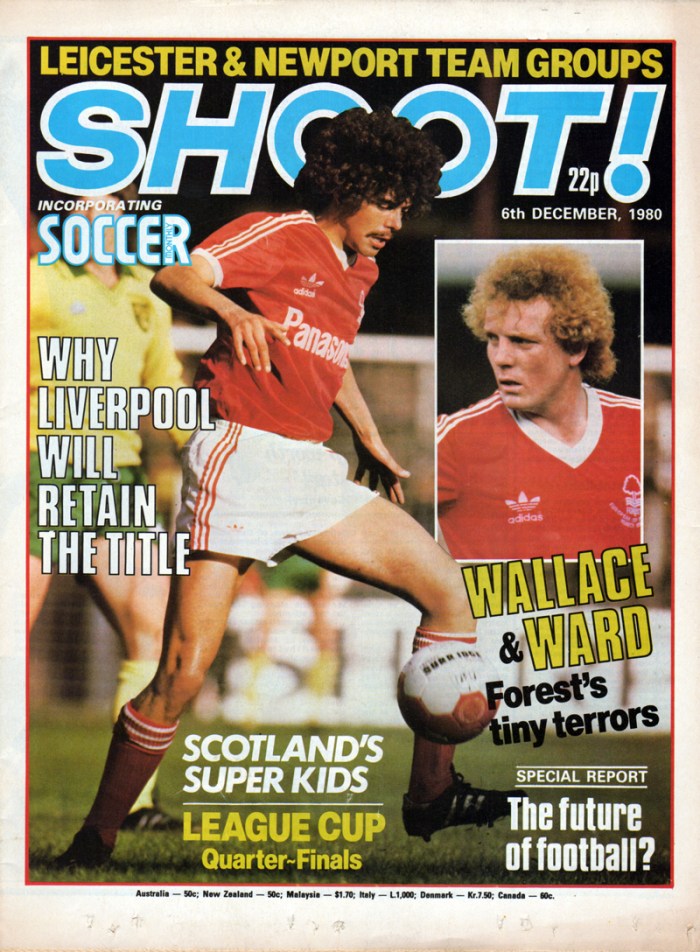
“My work rate was non-existent, but Billy Horner really worked on me and got me going,” Poskett told Shoot! magazine. “If it wasn’t for him, I don’t think I would have got anywhere – I’d still be in non-League soccer. It was so hard at first, I felt like packing it in, but he kept me at it and I’m very grateful now.”

His goalscoring at Hartlepool caught the eye of Ken Craggs when he was a coach at Fulham and when Craggs switched to become Mullery’s no.2 at the Goldstone, Poskett followed soon after, the £60,000 fee representing a tidy profit for the struggling North East minnows.

In an interview with The Argus in 2017, Poskett recalled: “Brighton was one of the best times of my life.

“I came in during the season when we just missed out on promotion and the lads were fantastic. It was a fabulous place to live as well.

“I had to come from one end of the country to the other but, once I got there, there were lads from up north, the Midlands, so it was a good mixed bunch and I felt right at home.”

After helping Watford to promotion in 1982, Poskett headed back north and played for Carlisle United for three seasons, thriving under the managership of Bob Stokoe, who’d led Sunderland to FA Cup glory in 1973.

In the penultimate game of the 1983-84 season, Poskett scored his 100th career goal – and his 101st – as Carlisle  drew 2-2 at home to Crystal Palace in front of a paltry crowd at Brunton Park of just 3,038.

Poskett subsequently had six months at Darlington, before switching to Stockport County in January 1986.

Appearances were few and far between and he went on loan to his old club Hartlepool in March the same year before moving back to Carlisle in August 1986. He finally hung up his boots at the end of the 1987-88 season.

He remained in the town and in 2017 was working as an examiner at Pirelli, the tyre manufacturer.

Pictures from Albion matchday programmes and online sources.

Liverpudlian Melia etched a never-to-be-forgotten place in Brighton’s history

IT WAS the stuff of dreams when Liverpool born and bred Jimmy Melia saw his underdog Seagulls side beat the mighty Merseyside giants en route to Brighton’s one and only FA Cup Final appearance.

In fact, it wasn’t the first time Melia had taken a side to Anfield to play in the competition. On 2 January 1971, as player-manager of lowly Aldershot, he returned to the ground where he’d been an inside forward under Bill Shankly and gave them a scare in the third round, the Fourth Division side only losing 1-0.

Even Liverpool’s wideman, Steve Heighway, admitted: “I suppose we were lucky to win. It was a frosty day and the ball was playing quite a few tricks. I don’t think we were in any danger of losing. But Aldershot were playing well that day. They could have sneaked a draw.”

How satisfying, then, to return in 1983 and pilot Albion’s unlikely 2-1 win, with a winning goal courtesy of that other former Anfield favourite, Jimmy Case.

In the run-up to the game, Melia, raised in Liverpool’s Scotland Road, told the Daily Mail: “I’ve got 11 brothers and sisters in the Liverpool area and they’ll all want to be there.”

He clearly didn’t fear the game, pointing out that Brighton had been the last team to win at Anfield, and telling the Argus: “It is a great tie for us. When I was manager at Aldershot we lost 1-0 to them and I think we will do better this time. Remember, the Cup is full of all sorts of upsets. It wouldn’t be the Cup otherwise.”

After the famous victory, Melia told Alex Montgomery of The Sun: “I’ve been involved in some great Liverpool victories but this is without doubt the greatest win.

“The great thing about it is that we didn’t just nick a win. We deserved what we got. A lot of people said that if we attacked them we would just set ourselves up for a hiding. That is not the way it worked out.”

It emerged after the game that John Manning, an old footballing friend of Melia’s, had been key to plotting the victory. Former Crewe, Bolton and Tranmere striker Manning, Albion’s scout in the north at the time, gave the players a pre-match rundown on what to expect.

“Best team talk we’ve ever had,” defender Gary Stevens told the Daily Mail. “Liverpool played exactly the way he said they would and he was even right about which side (Phil) Neal would send his penalty (which went wide of goalkeeper Perry Digweed’s post).”

Born in Liverpool on 1 November 1937, Melia attended the city’s St Anthony’s School and didn’t play his first organised football match until the age of 11. He quickly demonstrated a talent for the game and after shining for the school side was picked to play for Liverpool Boys.

At 14, he was selected for England Schoolboys but a broken collarbone meant he was unable to play. A year later, though, after captaining Liverpool Boys, he got another chance with the national schoolboy side, making his debut against Eire in a team that included Bobby Charlton and Wilf McGuinness.

Liverpool offered him a place on the groundstaff as soon as he left school and, at the age of 17, he was taken on as a professional by former Brighton manager Don Welsh, who took over as Liverpool boss in 1951. Ahead of a Brighton v Portsmouth game in 1983, Melia mentioned his closeness to their manager at the time, Bobby Campbell.

“We virtually grew up together in the same street in Liverpool and we both signed for Liverpool as youngsters on the same day,” he wrote in his matchday programme notes. “We literally have a lifelong friendship.”

Melia scored on his Liverpool debut against Nottingham Forest in a 5-2 win when the famous Billy Liddell scored a hat-trick, and he was making a name for himself at a national level too. Melia scored twice for the England Youth side as they romped home 9-2 winners over Denmark at Home Park, Plymouth, on 1 October 1955. The following month he was on target again as England beat the Netherlands 3-1 at Carrow Road, Norwich.

Between the 1955-56 and 1963-64 seasons, Melia played 287 games for Liverpool, scoring 78 goals. It might have been more but for the fact he had to do National Service although the consolation was that he got to play in the British Army side with the likes of Duncan Edwards, Bobby Charlton, Dave Mackay, Peter Swan, Cliff Jones and Alan Hodgkinson.

One of his Liverpool goals came in a home game against Brighton on 10 October 1959. Phil Taylor’s Liverpool were 2-1 down to the Albion that Saturday afternoon and, in the 85th minute, Melia stepped up to take a penalty…and missed. Nevertheless, he atoned for the mistake by slotting home a last-gasp equaliser. A month later, Shankly took over as manager.

In a series of profiles of the leading Liverpool players of the era, journalist Ivan Ponting said: “Jimmy Melia was the principal midfield ideas man as Liverpool rose from the second tier in 1961-62 and he was capped twice in 1963 ahead of sparkling creatively in the opening half of the Reds’ first title campaign under Bill Shankly.”

In only the second game of Alf Ramsey’s reign as England manager, he selected Melia to play for the national side in a 2-1 defeat to Scotland at Wembley on 6 April 1963.

Then on 5 June 1963, in Basle, he was one of the goalscorers in the side that hammered Switzerland 8-1; Bobby Charlton scored a hat-trick but remarkably Jimmy Greaves didn’t get on the scoresheet.

Although he didn’t win another full cap, he was in a FA squad Ramsey took to Gibraltar in May 1965 when the Rock’s representative XI were soundly beaten 7-1 on 22 May and 6-0 the following day.

In the 1963-64 season, when Melia was sidelined by a minor ankle injury, Shankly reshuffled his line-up, moved centre-forward Ian St John into a more deep lying role and put Alf Arrowsmith up top. The change worked so well that Melia never did regain his regular place in the team.

“It was a stunning blow and a surprise to the balding Merseysider whose flair, industry and intelligence had been so productive, with his through-passing an exquisite speciality, even if some fans disliked what they saw as over-elaboration on the ball,” Ponting wrote for Back Pass magazine.

Melia was sold to Wolves for a then record fee of £48,000 in March 1964, but because he had played a certain number of games for Liverpool earlier in the season, was awarded a medal when the Reds were crowned champions.

It was the legendary Stan Cullis who had taken him to Molineux and, Melia told Charlie Bamforth for wolvesheroes.com, it was with the intention of him subsequently moving into a coaching role. But, when Cullis was sacked before the end of the year, his replacement, Andy Beattie, swiftly dispensed with Melia’s services, offloading him to Southampton in December 1964 for £30,000.

At The Dell, Melia (pictured below in Saints’ famous stripes) joined forces with the likes of Terry Paine and Martin Chivers and, in 1965, helped Ted Bates’ side to promotion to the top division.

Melia Saints

He was an ever present in the side during their first top division campaign, notable as a provider of crosses for Ron Davies and Chivers.

Eventually, the emerging Mike Channon took his place and, in 1968, after making 152 Saints appearances, on the strength of a recommendation from his old boss Cullis (by then manager of Birmingham), Aldershot paid £9,000 for him to become player-coach. The following April he became player-manager.

When he was sacked in January 1972, having made 134 league appearances for the Shots, he moved back to the north west as player-manager of lowly Crewe Alexandra but finally hung up his boots in May that year to concentrate on the manager’s job.

As a lowly league manager, Melia seldom came to the wider public’s attention, but when the opportunity arose, he was quick to seize it. Before another FA Cup third round match, this time against Huddersfield, he told Goal magazine any success he’d had as a manager could be put down to the influence of Shankly and his managers at Wolves and Southampton, Cullis and Bates.

“I was lucky,” said Jimmy. “You can’t help but learn from men such as these and I consider myself very fortunate to have served under them.”

In his first season as manager of Crewe Alexandra, his inexperienced team finished bottom and had to seek re-election to the league (in those days relegation was not automatic).

“I believe some of the youngsters we have here are destined for great futures. But perhaps you need a little more than just skill and enthusiasm to be successful,” he told Goal in July 1973.

Melia was clearly scarred by his treatment at Crewe. He told Ian Jarrett of The Sun: “We finished in the bottom four and were in danger of getting kicked out of the league so I spent days ringing around all my mates to get the votes to save us at the annual (league) meeting.

“I succeeded and went away feeling pretty happy until a phone call from the chairman warned me that I had only narrowly survived a vote of confidence.

“The following September I was made manager of the month but the club called an extraordinary meeting, got rid of the chairman, and soon after that I was out on my ear.

“The experience taught me a lesson.”

In 1975, Melia had three months as manager of Southport, before ending the same year coaching in the Middle East.

He then moved to the USA and linked up with a former Wolves teammate Laurie Calloway to become his assistant coach at NSL side Southern California Lazers. In 1979, Melia moved to Ohio to become coach of Cleveland Cobras.

A window back into the English game opened in April 1980 when Brighton boss Alan Mullery appointed him as the club’s chief scout.

Looking back now, it seems a tad ironic that Albion chairman Mike Bamber was all for sacking him and other members of Mullery’s backroom staff in the summer of 1981 to save money. Mullery refused – and subsequently left the club himself.

Melia retained his position under Mullery’s successor, Mike Bailey, who, despite taking the Albion to their highest ever finishing position (13th) in 1982, failed to win over fans with a style of football that saw them stay away in their thousands.

A concerned Bamber finally brought down the curtain on the Bailey era in December 1982, handing the first team managerial reins on a caretaker basis jointly to Melia and loyal backroom ‘boy’ George Aitken (himself a former manager who, like Melia, had been a player under Shankly during his time at Workington).

From the outset, it was Melia who put himself forward to handle interviews with the press, TV and radio, and, as the club progressed in the FA Cup, so the spotlight began to shine brighter on the Liverpudlian, especially with that tie at Anfield.

Inevitably, the question kept arising as to whether Melia would land the manager’s job on a permanent basis and, in one of many interviews, he somewhat tellingly said: “I’d love the job and, if we stay up, that will improve my chances. But I’m not going to attempt to survive by playing boring, safety-first football.”

In a comment that was something of an oxymoron, Melia told Paul Weaver of the News of the World: “I don’t want to say anything against my predecessor, Mike Bailey, but I wouldn’t have paid money to watch Brighton in the first half of the season.”

mullers + meia

Perhaps not surprising, then, that in a veterans’ charity match played at Selhurst Park just before the semi-final, Bailey refused a request to be photographed with Melia, albeit he was happy to pose alongside Mullery.

By then, Melia had indeed finally been given the manager’s role on a permanent basis (once Norwich had been defeated in the quarter final). On 16 March 1983, Bamber took him out to lunch at a Hove hotel to break the news.

In a front-page splash on the Argus, Melia said: “This is the happiest day of my life. It is a dream to be manager of a First Division club with also the possibility of taking them to Wembley.

“I am just pleased the chairman has given me the opportunity, and I hope to stay at the club for the next 20 years.” It would, of course, turn out to be closer to 20 weeks!

As excitement built in the run-up to the Cup Final, Bamber told Argus reporter Phil Mills: “Jimmy knows the game from A to Z but what I particularly like is that he’s always bubbling. He’s lively and looks on the positive side of things – even when we lose.

“The Jimmy Melia story is a fairy tale – three months ago he was our chief scout. Now he’s leading the Albion to Wembley for the FA Cup Final.

“You couldn’t get a better fairy tale than that.”

There’s no doubting Melia milked the moment, but who could blame him?

He told Ian Jarrett in The Sun: “I must make this situation count because I might never be involved in anything like it again.

“I have felt like the President of the United States in the past couple of weeks. Everyone has wanted to shake my hand and cars have beeped me in the street. It’s heaven to be in this position and I think everyone in the club should make the most of it.”

The Daily Mail even went as far as describing the opposing managers for the 1983 final as “Liberace meets Max Wall”, rather playing on the fact United’s Ron Atkinson had a penchant for bling and the follicly-challenged Melia bore something of a resemblance to the comedian and actor renowned for a silly walk. John  Roberts wrote: “Little Jim has given his usual 110 per cent in the discos, a chest-revealing Tom Jones shirt, black leather trousers, white dancing shoes and glamourous girlfriend offsetting a glistening dome that is just made for the Seagulls.”

The writer continued: “Brighton’s progress to Wembley for the first time in their history has made a relegation season tolerable and enabled the 46-year-old Melia to recapture a measure of the prestige he enjoyed as a player.

“As a nimble, intelligent inside forward he won Second and First Division championship medals with Liverpool and played for England. Some of his friends consider that he suffered to a degree for being a home-produced player rather than a fashionable big-money signing.”

Roberts even quoted comedian Jimmy Tarbuck, a boyhood friend of Melia’s, who said: “To use an old showbusiness saying, Jimmy’s been there and back.”

Who knows what might have happened had Albion actually won that Cup Final?

Melia will forever be associated with taking the club to what was then a globally-watched event and raising their profile to heights never previously achieved.

The cold, hard reality, though, was that Brighton’s brief stay among the elite of English football was over. Melia’s open, expansive style of play had been punished in the league, resulting in relegation and a loss of status that took 33 years to restore.

Melia had designs on boosting his coaching staff in the summer of 1983 with the introduction of the aforementioned Calloway, but Bamber had other ideas and, without consulting his manager, instead installed former Albion defender Chris Cattlin as first team coach.

From the outset, it was evident the two were not going to see eye to eye and it wasn’t long into the new season before it emerged publicly that Cattlin was actually picking the team.

Eventually Melia couldn’t continue with what was clearly an untenable position and resigned, but, in a rather tawdry denouement, appeared being carried shoulder-high on the north stand terrace at the next home game amid cries of ‘Bamber out, Melia in’.

At the time, there were rumblings of an Albion takeover from businessman Jeffrey Kruger and Bamber described Melia as “a disgrace” and claimed he had been operating as a mole for Kruger.

Nothing came of the takeover and the dust had not long settled on the end of Melia’s Albion association when he moved to Portugal and spent three years as boss of Belenenses, taking them to a top five finish.

Former Argus Albion reporter John Vinicombe reflected on Melia’s career in a wistful piece for the newspaper in 2001, and recalled: “Back in England Jimmy had a brief spell in charge at Stockport, then it was time to move on to Kuwait and Dubai, San Francisco, San Jose and Dallas.”

He subsequently settled in Dallas and became technical director for Liverpool’s academy in Texas.

Pictures from various sources including the Argus, The Sun, The News of the World, Shoot! and Goal magazines and the matchday programme.


Neil McNab: Brighton fans ‘worst crowd I’ve played for’

FIERY SCOT Neil McNab left Brighton for a sizeable loss on their initial outlay and went on to be voted Manchester City’s Player of the Year twice.

No stranger to brushes with the football authorities, McNab joined Brighton in the second half of their first-ever season in the top flight.

In his autobiography, manager Alan Mullery said: “Neil McNab was a Scottish whippet, a fierce competitor in midfield who never stopped running or competing.

“I bought him halfway through the season from Bolton Wanderers and he gave us the extra edge we needed.”

The player to give way at the time was Republic of Ireland international Gerry Ryan, and it would be fair to say the football writers were impressed by the tenacious Scot’s early impact.

After watching a 5-1 drubbing against Southampton from the subs bench, McNab made his debut at home to West Brom in a game that finished goalless. “McNab showed some touches of class in his home debut but scarcely as much as the home crowd expected from their £230,000 capture,” said Harold Palmer in the Sunday Express.

The News of the World’s Peter Jarman was slightly more effusive and described it as “impressive” and John Vinicombe in the Evening Argus said: “McNab, on his home debut, impressed with his industry and general involvement.”

Of his second game, a 1-1 draw away to Leeds, the Sunday People’s Keith Ray observed: “McNab looked light years from the off-key young man that Bolton sold. His prompting coupled nicely with Lawrenson’s hard work, and Ward had two chances to hit the target before he made the vital strike.”

A demonstration of his appetite came in the next game, another 1-1 draw, at home to Coventry, when he ran 25 yards to stop Peter O’Sullivan from taking a corner that he fancied for himself. He whipped the ball in and Ray Clarke thumped a header past Jim Blyth in the Coventry goal.

Gordon Smith, another Albion player who moved to Manchester City, remembered McNab’s quick wit in his autobiography, And Smith Did Score.

When it looked like Brighton were heading for relegation, Mullery, in fear of losing his job, famously threatened the players that he’d run them down in his car if that happened.

Smith recounted how the players were huddled round trying not to laugh at the astonishing outburst. “I almost fell off my chair when Neil leant over and whispered, ‘If he loses his job, he’ll no’ have a f****** car!’”

It was no laughing matter for player or club, though, when the tenacious McNab was suspended for four matches for pushing a referee. In the following season, he was up before the FA again after a skirmish with World Cup winner Alan Ball at the end of a 5-a-side tournament at the Brighton Centre.

Charged with bringing the game into disrepute, Ball was fined £100 but McNab was given a £250 fine and a two-game ban.

Manager Mike Bailey was clearly relieved and told the Daily Mail’s Brian Scovell: “Neil was expecting more but the last instance was entirely different. It was on the field of play when he touched the referee.

“We got a fair hearing. We’re not complaining. Both were guilty but the crimes were different as Neil’s part was unfortunately physical while Ball’s was verbal.”

McNab had the third highest number of appearances (44 plus two as sub) in the 1981-82 season, which saw Brighton’s highest ever finish of 13th, and all four of the goals he scored were from the penalty spot.

However, the safety-first style of play adopted by Bailey created a disconnect between players and fans. In the final home game of the season (a 1-0 defeat to Ipswich), McNab was substituted in the 62nd minute and the crowd booed him off.

The often-obtuse Vinicombe reported in the Argus: “When McNab was withdrawn, 30 minutes from time, his gestures to the crowd were capable of only one interpretation.” In the Daily Mail, McNab told Brian Scovell: “They are the worst crowd I’ve played for. When you do something good on the ball they don’t clap and if you make a mistake they give you stick.”

Worse was to follow after the row at the beginning of the 1982-83 season when Steve Foster and Michael Robinson slapped in transfer requests in protest at chairman Bamber refusing to sanction the acquisition of Charlie George, the former Arsenal, Derby and Southampton maverick, who had been on trial pre-season.

In what was supposed to have been a clear-the-air meeting, McNab let his feelings be known in no uncertain terms.

McNab still had five of six years left on his contract. They tried to offload him on loan to Newcastle, but the midfielder refused to budge. Instead, he made a bitter personal attack on the chairman, accusing him of picking the team, and slapped in his own transfer request.

McNab blasted: “The club is petty and small-minded, and players are treated disgracefully.” McNab made it clear he didn’t see his future at the club and after a few months eventually went to Leeds for a six-game spell and also to Portsmouth.

That came after Bailey had been sacked and his replacements, Jimmy Melia and George Aitken, gave the team a big shake-up, dropping McNab and adopting a more adventurous approach (which ultimately led to relegation).

Although completely out of the first team picture from early December 1982 onwards, McNab was to play one last game nearly five months later.

With Melia struggling to field a team because of injuries and suspensions, McNab got the nod for an away game at Notts County on 30 April 1983.

But he was unable to join in the FA Cup run to Wembley because he had been cup tied during his spell at Leeds. The 1-0 defeat to County was the Scot’s last ever Seagulls appearance.

Relegation led to the release of some of the high earners, and while Robinson and Gary Stevens were sold for sizeable fees, McNab was sold to Manchester City – who had been relegated with Albion – for just £35,000.

Born on 4 June 1957 in Greenock, McNab went to the town’s Highlanders Academy and he was in his primary school team at the age of eight. By the time he was 10, he was playing for the Greenock and District Under 12 representative side.

He moved on to Mount Secondary School, playing for the school team at all age groups, and at 14 was selected for the Scotland Schools side.

He played against England at Ibrox Park, against Ireland at Stranraer, and even travelled to Frankfurt to play against West Germany. All the attention alerted various scouts but he had already signed schoolboy forms for his local club, Greenock Morton.

He actually left school before he was 15 to join Morton as a professional and when he made his first team debut aged 15 in September 1972 he was the youngest outfield player ever to play in the Scottish League. McNab ended that season having played 11 matches and appeared a a sub on three occasions.

McNab SpursHe made 14 appearances for them before being snapped up for £40,000 by Tottenham Hotspur in 1974 and made his first team debut for Spurs while still only 16. A former teammate at that time, Andy Keeley said in a recent interview: “I’ll never forget how he played in a friendly match; first team v reserves. He controlled the game from start to finish. He was outstanding. He had a very good career but I never understood how he didn’t become a superstar.”
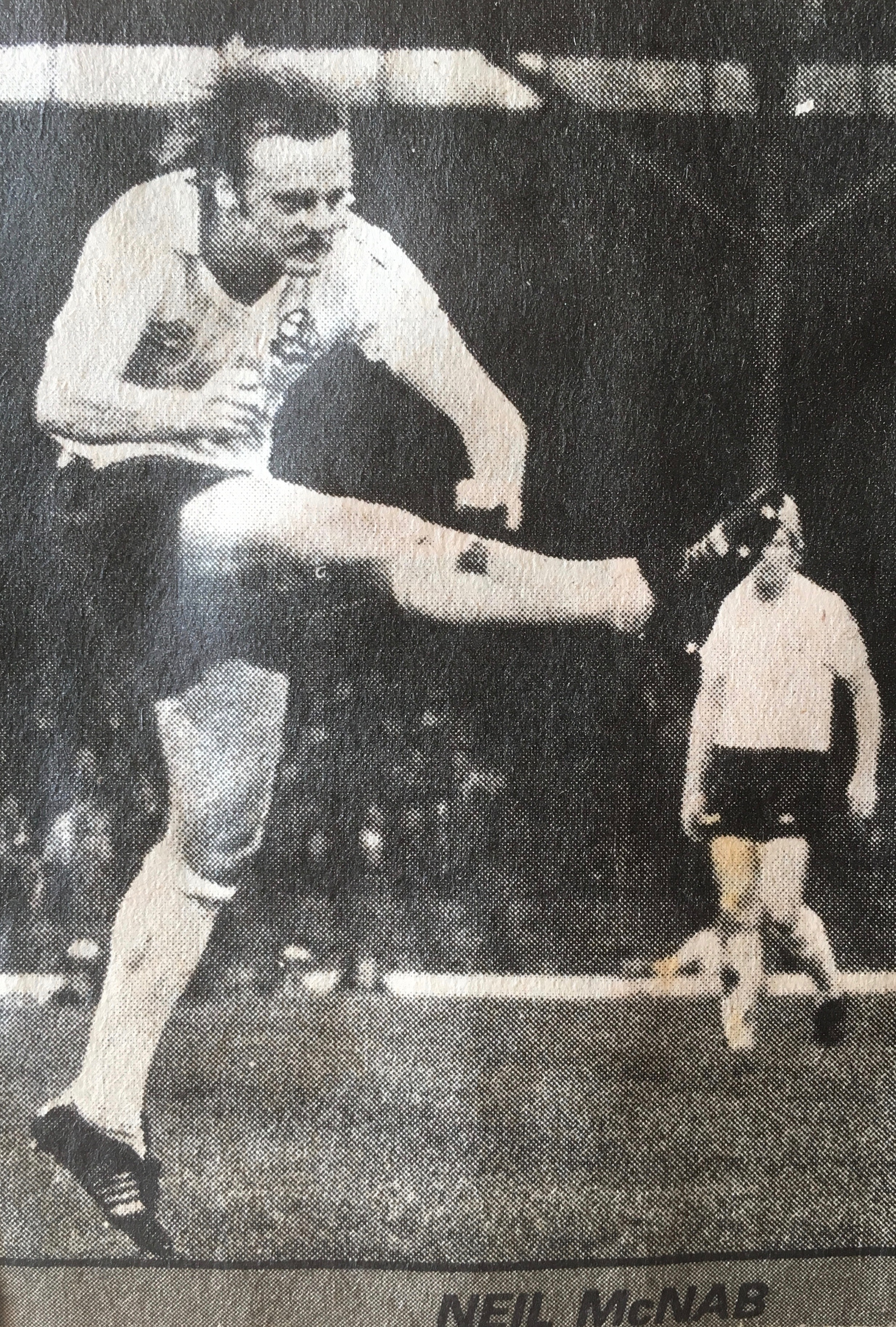
In four years at White Hart Lane, McNab played 72 matches and was selected by Scotland at under 15, under-18 and under-21 level, but never made it to the full Scotland team.

McNab - BoltonIn November 1978, Bolton Wanderers paid £250,000 for him but after only 35 appearances for the Trotters, in February 1980, Mullery signed him for Brighton.

When the former Scotland and Celtic captain Billy McNeill captured McNab’s signature in the summer of 1983, he began what would be a long association with Manchester City and he turned out to be a bargain buy considering in 1986-87 and 1988-89 he was voted City’s Player of the Year.

“Combative and always willing to stick a boot in, McNab was a key figure in City’s drive to promotion on more than one occasion,” was how manchestercity-mad.co.uk described him, while mancity.com, looking back at past players of the year, said: “Like a fine wine, got better as time went on.”

McNab w HartfordAcknowledging his initial signing failed to excite the City faithful, it added: “McNab developed into a skilful, combative midfielder who became a huge crowd favourite. Not unlike Asa Hartford (pictured above with McNab), McNab was a schemer who could pick a pass and kept the team’s tempo ticking over.”

McNab scored 19 goals in 261 league and cup games (plus five as sub) for City  but when Mel Machin’s successors at Maine Road (caretaker Tony Book and Howard Kendall) discarded him, he continued his playing career at Tranmere Rovers who paid £125,000 to take the 33-year-old to Prenton Park.

The combative midfielder added nous, steel and no little skill to the Rovers midfield, ending his first season in Birkenhead with two appearances at Wembley including the Leyland Daf Cup victory over Bristol Rovers,” said the Liverpool Echo.

He played 105 games for Tranmere, scoring six goals, and was part of the squad that secured promotion to English’s football’s second tier. He also earned the dubious distinction of being the first and thus far only Tranmere player to be sent off in a European game – a 2-1 win over Cosenza in the Anglo-Italian Cup.McNab HS

Determined to carry on playing, McNab had an 11-game loan spell at Huddersfield Town, returned to his native Scotland to turn out for Ayr United, appeared briefly for Darlington, played 13 games in Northern Ireland for Derry City, went non-league with Witton Albion (12 games) before finally calling it a day with Long Island Rough Riders in the States.

In 1994, he returned to Maine Road as youth team coach, when his old Albion teammate, Brian Horton, was City manager, and kept the position even when the aforementioned Alan Ball replaced Horton. But eventually he lost his job during another managerial upheaval in 1997 and took up a similar position at Portsmouth, once again working with Ball.

In October 2002, he finally landed a managerial position when he took the helm of League Two Exeter City. The reign was shortlived, though, and with only six wins in 26 matches (eight draws, 12 defeats) he was relieved of his duties.

McNab’s twin sons, Neil junior and Joe, who were born in Brighton, followed in their dad’s footsteps and were part of the young age group sides at Man City and Portsmouth. But after struggling to make the breakthrough, they moved to Wilmington, North Carolina, and have played for various sides in America.

Neil senior followed them to the States and in 2008 became director of coaching at Chiefs Futbol Club in Atlanta, Georgia, with Neil junior the club’s executive director.

In August 2017, it was reported Neil senior had suffered a severe stroke which left him fighting for his life.

On 2 March 2018, a message was sent via freelance writer Spencer Vignes to say that McNab had finally managed to return home after five months in hospital and in rehabilitation. “He has made tremendous progress, but still has a long way to go,” his son said.

Did Chris Ramsey’s injury alter outcome of 1983 FA Cup Final?

2-near-post-guardBRIGHTON & HOVE Albion’s May 1983 FA Cup Final clash with Manchester United was historic for the club and for their 21-year-old right back it was even more eventful.
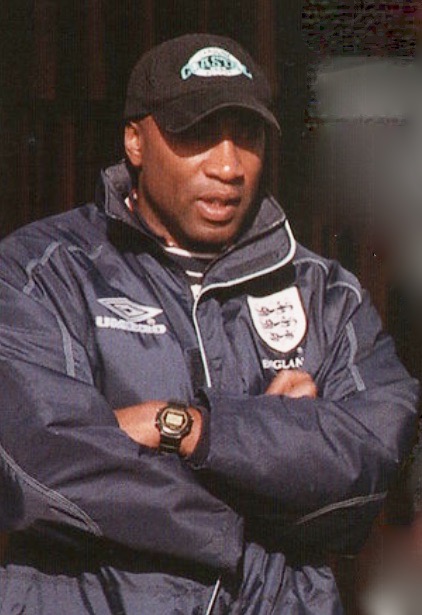
Who would have known that former Bristol City apprentice Chris Ramsey’s ignominious departure from the field in a firemen’s lift on Glen Wilson’s shoulder would more or less be the end of an all-too-brief playing spell in the top echelons of the English game?

Might the match – and Ramsey’s career – have panned out differently if it hadn’t been for that diabolical tackle by Norman Whiteside?

Trouble had been brewing in the weeks leading up to the final and the national media, looking for every possible angle to pick at, had singled out Ramsey for criticism. Did that stoke the fire?

Let’s rewind a little and explore what happened.

Born in Birmingham on 28 April 1962 , Ramsey, whose father came to the UK from St Lucia, was one of two boys and five girls. Rejected by Charlton Athletic as a schoolboy, he became an apprentice at Ashton Gate but was then released and, after a successful trial, Brighton took him on.

The 1980-81 season was Albion’s second in the top division and, as it drew towards its close, it was looking increasingly likely they were heading for relegation.

Manager Alan Mullery was openly criticising his players for their efforts and his big ally off the field, vice-chairman Harry Bloom (current chairman Tony Bloom’s granddad) had died of a heart attack on the team coach on an away trip to Stoke.

Something had to change and, at the tender age of 19, Ramsey was called up from the reserves and plunged in at the deep end.

In three of the last four games, he took over the no.2 shirt after Mullery switched John Gregory from right back into midfield. Ramsey’s debut came in a crucial Easter Saturday clash away to rivals Crystal Palace when, released from the shackles of defending, Gregory scored twice in a 3-0 win. Ramsey also played in the wins over Sunderland away and Leeds at home.

The Seagulls stayed up by the skin of their teeth and Evening Argus reporter John Vinicombe said in his end of season analysis that Ramsey had been “a revelation” in those three games.

Within a matter of weeks, Mullery quit as manager in the furore over chairman Mike Bamber selling Mark Lawrenson to Liverpool (after Mullery had already agreed a deal to sell him to Manchester United).

Gregory was sold to QPR for £300,000 but, far from that move opening up an opportunity for Ramsey, Mullery’s replacement Mike Bailey brought in on a free transfer from Loftus Road the experienced Don Shanks, who was immediately installed as the first choice right back.

Indeed Bailey froze out Ramsey for the following 19 months! At one point he was transfer listed but it was Bailey who departed the Goldstone first – his sacking working to the advantage of the young defender.

When George Aitken and Jimmy Melia took over in December 1982, Ramsey was instantly promoted from the reserves and seized his opportunity.

In a profile in an Albion matchday programme in February 1983, Ramsey told Tony Norman: “Like any other young apprentice, my dream was to play in the First Division. I must admit that even after coming to Brighton, I had times when I wondered if I’d make it. But now I’ve got my chance and I’m keen to make the most of it.”

In one of the most comprehensive profiles on Ramsey, former Brighton teammate, Andy Ritchie, told Adam Ellis of The Football League Paper: “He was quite a shy lad back then but he had everything you want in a full back. Aggression, pace, agility – and he could tackle like a demon.”

These were the attributes that Melia appreciated too. In a Daily Mail preview of the Norwich quarter final, Melia told reporter Brian Scovell: “The other players love playing with him. He’s a great competitor, tackles well and uses the ball with a bit of style.

“I’m pleased he’s taken his chance. He deserves to play at Wembley if we manage to get there.”ramsey + mel

As it turned out, Ramsey’s place was in jeopardy because of two sendings off in the league in April which led to him being banned for the semi-final against Sheffield Wednesday at Highbury.

After being sent off in a 2-1 home win over Spurs, Terry McNeill reported in the News of the World: “Ramsey was lucky to stay on earlier after bringing down Mark Falco in a probable scoring position. When he took the striker again from behind, there was no escape.”

The 20-year-old Ramsey was fairly phlegmatic about the situation and told Alex Montgomery of The Sun: “Whatever I did, I did for the club. You can’t think about Cup games when you are struggling for points at the bottom of the First Division.”

His second dismissal, along with Coventry’s Steve Jacobs (who later played for the Albion under Chris Cattlin) after a scuffle in a 1-0 win at the Goldstone, was lambasted by one of the pre-eminent football writers of the day, Frank McGhee of the Daily Mirror.

“Can Brighton afford to field at Wembley a man who by then won’t have been able to play for 19 days?” he intoned. “And can they trust Ramsey not to sully soccer’s great state occasion by a moment of blind madness?”

Nevertheless, after Wednesday were beaten, Melia was happy to restore his first-choice right back to the starting line-up but one wonders now whether Ramsey had a sense of foreboding about how the big occasion would unfold.

Reflecting on those dismissals in the build-up to the final, he told The Sun’s Montgomery: “I just hope people aren’t looking for me. I’ll certainly be careful. I honestly don’t think I deserve the reputation which I’ve been saddled with in the last few weeks.

“The dismissals were just coincidences – nothing more than that. I know I am an aggressive type of player but that is my game. I always want to give 100 per cent for the club. The last thing I want is trouble at Wembley.”

After Albion had taken a shock lead through Gordon Smith’s header, United piled on the pressure and Ramsey headed a goalbound Gordon McQueen effort off the line.

But then came a pivotal moment early in the second half. Tim Carder and Roger Harris record it thus in their excellent Seagulls! The Story of Brighton & Hove Albion FC: “Whiteside went in high on Ramsey’s shin as the Albion full back cleared, and then trod on his ankle. The referee had a strong word with the United forward but did not signal a foul.”

The tackle had rendered Ramsey lame and while he tried in vain to carry on, two minutes later he wasn’t able to challenge for a ball to the far post which Frank Stapleton duly dispatched to equalise.

Those of us watching in the stadium, together with millions glued to TV screens around the world, saw Ramsey carried from the Wembley turf and, in those days of only one substitute, wondered how Albion would cope with a makeshift defender in the shape of Gerry Ryan.

After United took the lead through Ray Wilkins, Ramsey’s friend – and fellow England under-20 teammate – Gary Stevens’ equalised to send the game into extra time and ultimately a replay. Stevens was adamant about the impact Whiteside’s challenge had on the game.

In Match of My Life, edited by Paul Camillin, he said: “It was a bad tackle and perhaps cost us the game. In those days we only had one substitute and Gerry Ryan came on and did a great job at right back, even though he was a midfield player, but we did miss Chris because he had been having a great game.”

Whiteside was unapologetic about the challenge but Ramsey fumed to The Sun’s Montgomery: “It could have broken my leg. If I’d done it, I’d have been off. I just can’t understand how Whiteside got away with it.”

The injury deprived Ramsey of the chance to play in the replay five days later and, after that sad exit, his playing career never reached similar heights again.

Indeed he actually only played 37 games for the Albion, most of those coming in that 1982-83 season. He played only a handful of games in the following season and in August 1984 went on loan to Swindon Town before joining them permanently four months later.

There, he played alongside the likes of Sky Sports reporter Chris Kamara and one-time Albion assistant manager Colin Calderwood and clocked up over 120 appearances, including being part of Lou Macari’s Fourth Division champions in 1986 and Third Division play-off winners in 1987.

In August 1987, he joined Southend United but played just 13 games for them before persistent back injuries forced his early retirement at the age of just 26.

Some business ventures he embarked on didn’t work out and former Albion right back rival Shanks set him up with a trial for a team in Malta, Naxxar Lions, where he made a playing comeback.

Eventually the ongoing injury problems made him look to other ways of making a living. He coached in the United States but also started studying like crazy.

Amongst lots of qualifications, he got a Master’s degree at the University of North London in Health, Physical Education and Recreation (a qualification which enabled him to become a primary school teacher) and simultaneously obtained his UEFA coaching badges.

That Football League Paper piece records: “With an MSc, ten diplomas and myriad other qualifications, Ramsey is so highly educated that he actually sets the test for pro licence candidates.”

ramsey EngA stint in charge of youth development at Leyton Orient and coaching Newham Ladies was followed by an FA appointment as coach to the England under-20 side in the 1999 FIFA World Youth Championship when among the players under his direction were Ashley Cole, Peter Crouch, Matthew Etherington and John Piercy, who later played for the Albion. At the FA he learned from the likes of Les Reed and one-time Albion winger Howard Wilkinson.

He had a short and unsuccessful three-month spell as assistant to Ricky Hill at Luton Town, and he said: “Ricky Hill was a massive inspiration to me.”

Just when it appeared new offers had dried up, Ramsey got the chance to manage Charleston Battery in the USA, where he stayed for three years.

Winning the USL A-League (second division) with Battery in 2003 brought him to the attention of Spurs, and, as head of player development, many of the young players he coached in tandem with Les Ferdinand and Tim Sherwood were Harry Kane, Ryan Mason, Danny Rose, Nabil Bentaleb, Andros Townsend, Steven Caulker and Jake Livermore.

“He was massive for all of us,” French midfielder Bentaleb told The Football League Paper. “He believed in us, he encouraged us. He told the manager we were ready when everyone else believed we were not. He was not shy or scared of anybody and he knew exactly what he wanted.”

chris ramsey (spurs)In the Evening Standard in 2012, Spurs and England centre back, Ledley King, said: “He is one of the best coaches in the country. The youngsters love the way he works and they have really bought into his methods.”

Ramsey left Spurs in 2014 to take up a coaching role at QPR, and when Harry Redknapp left the floundering Hoops in February 2015, Ramsey stepped up to become a fully-fledged Premier League manager.

He was not able to halt Rangers’ relegation from the elite, though, and lasted only until November in charge of the side as they struggled to come to terms with life back in the Championship.

However, in January 2016, he was appointed technical director at QPR to oversee the club’s academy coaching and player development.

The club’s director of football, Ferdinand, told The Guardian: “While we were disappointed things didn’t work out with Chris at first team level, we were determined to retain his services. As such, we actually put a clause in his contract which allowed us to retain Chris’s services in a player-development role should things not work out for him as head coach.”

Ramsey finally left QPR in January 2024. By then 61, the head of coaching and technical director told the club website: “I have had a fantastic nine years at QPR and the club will always have a special place in my heart.”

The club’s chairman Lee Hoos said: “Chris has been a great servant to the club. I cannot thank him enough for his incredible hard work, dedication and guidance.

“However, as we thoroughly rationalise everything we do, and following very amicable discussions with Chris, it is felt this move is in the best interests of all parties. He will always remain a friend of the club.”

  • Shootthedefence.com did a face-to-face interview with Ramsey on 23 September 2016 which is well worth a listen as he talks in detail about his whole career.
  • In pictures from my scrapbook, Ramsey graces the cover of an Albion matchday programme; (top) he defends the near post during the 1983 FA Cup Final with Gordon McQueen in attendance; he is photographed by Tony Norman outside the Goldstone and criticised in the Daily Mirror by Frank McGhee.