Not many of them, but Sidwell’s goals were memorable

STEVE SIDWELL was not a recognised goalscorer but when he did find the back of the net it was often memorable and headline-making.

Such was his most talked about goal for Brighton – hit from the centre circle away to Bristol City in a Championship match on Bonfire Night in 2016. 

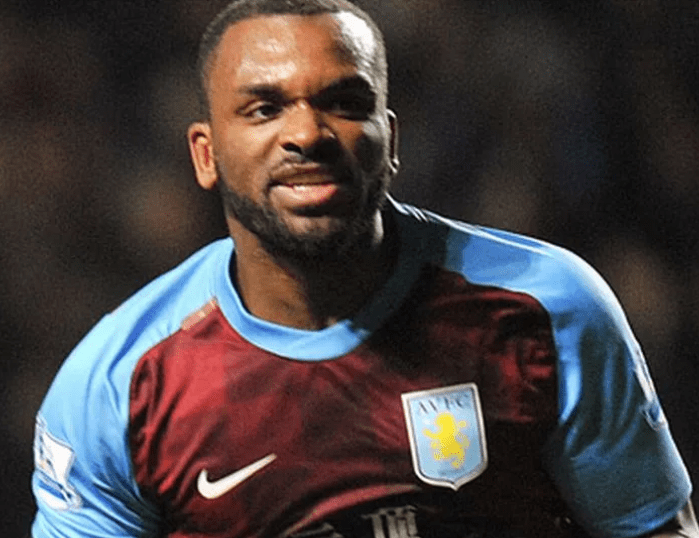
Eight years earlier, he stunned Goodison Park by rifling home from 25 yards after only 31 seconds of Aston Villa’s 7 December Premier League visit to Everton.

I was at Ashton Gate to see Sidwell’s amazing 50-yard lob over stranded Robins’ ‘keeper Richard O’Donnell (Jamie Murphy added a second in promotion-chasing Albion’s 2-0 win).

Manager Chris Hughton said: “It was a wonderful strike by Sidwell on his left foot when I would have expected it more from his right. It caught everyone by surprise, including their goalkeeper.”

I was also at the City Ground, Nottingham, seven months earlier when Sidwell went on as an 85th-minute sub and scored the winner (below) in the 91st minute to earn a 2-1 victory over Forest.

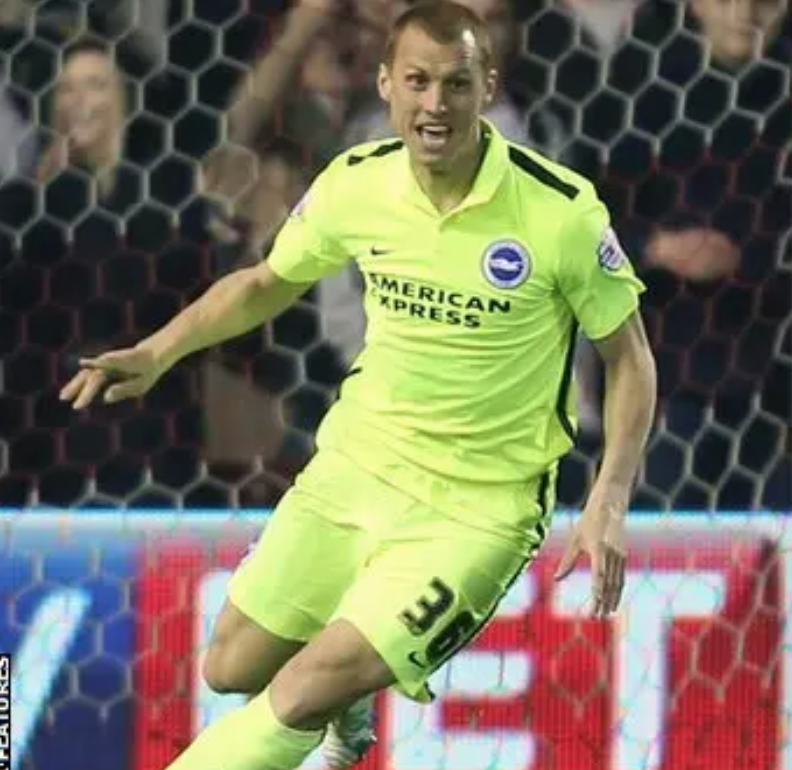
With his right foot this time, he drilled the ball in from 12 yards giving Albion a fourth win in five games which extended their unbeaten run to nine games.

“We felt that the game was becoming open and we felt we could bring players off the bench who could influence the game,” said Hughton. “One thing about Steve Sidwell is that he can break forward from midfield. I did not bring him on for that, but I am very glad he did it.”

Back to that game for Villa in 2008; moments after kick-off, Everton’s Mikel Arteta lost possession to Ashley Young. He fed James Milner who in turn found Sidwell. Finding himself with a sight at goal from 25 yards, he buried a stunning shot past Tim Howard. In an extraordinary end to the game, Young, who had scored Villa’s second, got a 94th-minute winner for the visitors after Joleon Lescott thought he’d salvaged a point in the 93rd minute, netting his second of the game. 
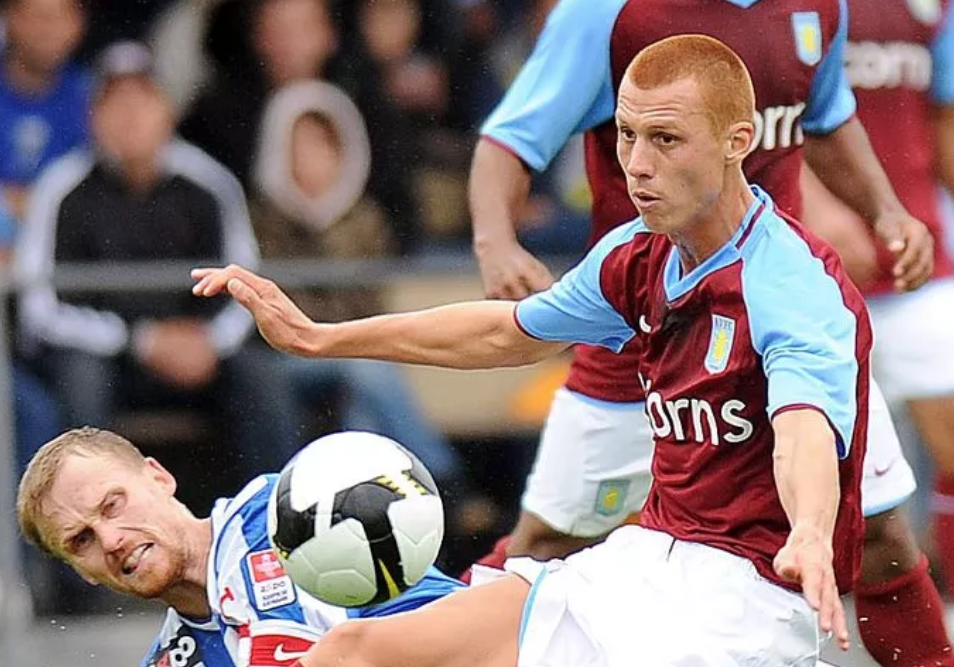
That opener at Goodison was a rare highlight for Sidwell in what overall was an unhappy two and a half years at Villa.

Sidwell had first caught Villa boss Martin O’Neill’s eye when he scored twice for Reading in a 2-0 home victory over Villa in February 2007.

O’Neill tried to land him before he opted to join Chelsea (the team he’d supported as a boy) and, by all accounts, predecessor David O’Leary had also tried to sign him.

So, it appeared to be a case of third time lucky when in July 2008 O’Neill took him for a reported £5million fee from being a Chelsea benchwarmer and gave him a three-year contract.

Sidwell during his first Albion spell

After success at Reading, where he had been reunited with Steve Coppell (who’d had him on loan at Brentford and Brighton as a young Arsenal player, as covered in my 2017 blog post), Sidwell had a disappointing season at Stamford Bridge, where he made just seven Premier League starts. 

Managerial change didn’t help his cause: he’d been signed by Jose Mourinho who left early in the season to be replaced by Avram Grant.

Sidwell later admitted: “I left for Aston Villa in search of regular football. In hindsight, I wished I’d stayed another six months because Luiz Felipe Scolari came in and you never know what might have happened then.”

At the time, Sidwell told Villa’s official website: “For me personally, it’s about getting back and playing. I have had a year of not playing as much as I would have liked so to get out on the pitch is the first aim.” 

Although he played in both legs of the InterToto Cup tie against Odense in July, knee and calf problems delayed his league debut until the end of October which he marked with a goal after going on as a late substitute in a 4-0 win at Wigan Athletic. That and the strike at Everton were two of four league and cup goals he scored for Villa that season when his 25 appearances (20 starts + five as sub) would ultimately amount to nearly half the total he made for the club: 37 starts + 27 as sub.

He didn’t add any more goals in the claret and blue and in the remainder of his time at Villa Park he was never really a regular, eg in 2009-10 only 14 of 33 appearances were as a starter and in 2010-11, three of six under Gérard Houllier.

Although he and O’Neill clashed on occasion, the Northern Irishman did say: “I’ve been very happy with him. It’s just that other players playing in positions all over the place have been playing brilliantly. Some people are playing out of their skin at this minute in our team. But I’ve been very pleased since he’s arrived at the football club.”

Sidwell’s former Reading teammate Nicky Shorey, who’d joined him at Villa Park, had high expectations of him ahead of his second season, telling the Birmingham Mail: “I don’t think Villa have seen the best of him yet. It’s been a strange season for Siddy. He’s been out injured for long periods and he’s picked up niggles here and there. I don’t think he’s ever had that before.

“For as long as I’ve known him, he’s never really been injured, so I think that’s something new for Siddy to try and learn from.”

Shorey said Sidwell had remained positive and upbeat around Bodymoor Heath and Villa Park and reckoned: “When he comes back for pre-season and hopefully has a good pre-season you’ll see the best of him and I think everyone will be impressed with how well he can do.

“When you know Siddy, that’s all he ever does – trains and plays with a smile. You haven’t got any worries with him on that count. He just keeps going and he’ll be fine. He’s just an all-round good midfielder and I’m sure he’ll show that before too long.”

Sidwell found himself competing for a midfield place with the likes of Milner (before his move to Manchester City), Gareth Barry, Stiliyan Petrov, Nigel Reo-Coker and Craig Gardner. He revealed later that he’d fallen out with O’Neill and at one point he went on the transfer list.

After O’Neill quit in protest at the sale of Milner to City, and ahead of Houllier’s appointment, Sidwell hoped to be given a new lease of life in claret and blue.

He overcame an Achilles’ problem and declared himself raring to go after playing 90 minutes in a 4-0 reserve team win over Blackpool at Bodymoor Heath.

“I feel I’ve shown glimpses,” he told the Birmingham Mail. “In the previous years, there have been good games and some poor games.

“If I get a run of games, I am sure I can perform to the best of my ability. Hopefully, now, whoever takes charge I will just get an opportunity and I will take it.

“It is going to be tough but it is down to individuals to perform in training, perform in reserve games and show the manager you are worthy of a start.

“Once you get that, you have to take it with both hands. Fitness wise, I’ve been training really well and looking sharp. It is just games that I need. I wasn’t unfit before the injury took place.”

When the Mail spoke to him ahead of a second city derby at the end of October 2010, Sidwell sought to exploit a two-month injury absence for Petrov saying: “It is all about opinions.

You don’t play under certain managers. Under certain managers you do get a chance.

“Once you get a chance it is about taking it and staying in the team.”

Sidwell started the game but was replaced by young Barry Bannan in the 58th minute of the dour goalless draw – and it turned out to be his last game for Villa (he was an unused sub away to Fulham the following week).

It was in a 2018 interview with Donald McRae of The Guardian that Sidwell revealed the extent of his disillusionment at Villa, telling the journalist: “When I was at Aston Villa I was on the most money in my career. But that was when I was at my unhappiest. I was living in Birmingham away from my wife and family.

“My middle son caught meningitis and was in hospital. The football never really took off and me and Martin O’Neill clashed. So, it was a combination of things.”

Released on a free transfer in January 2011, after being deemed surplus to requirements by Houllier, Sidwell joined Fulham – which is a story for another blog post.

After three years with the Cottagers, he followed ex-Fulham boss Mark Hughes to Stoke City and it was from there that he made his initial return to Brighton, on a half-season loan. 
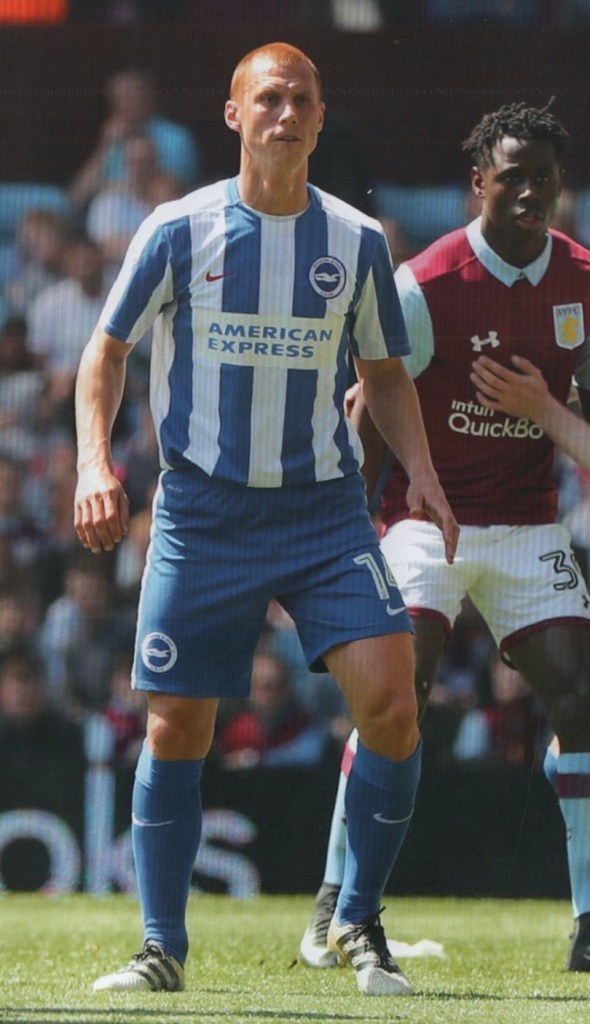
Sidwell in action for Albion against Villa

In clinching his signing in January 2016, Hughton told the Albion website: “Steve is an experienced player who has played virtually his entire career in the Premier League. He knows this club, as well as a few of the squad and will supplement our existing midfield options.

“Beram Kayal, Dale Stephens, Andrew Crofts and others have been excellent in midfield for us this season, but we also need to make sure we have good options in every position of the team, and options which will be enough for us through until the end of the season.

“Steve brings that, and in addition, he is another experienced head; he is a player who’s proven at the very top level of English football. Brighton fans will know Steve is also a great athlete and top professional.”

Although he only made six starts, Sidwell went on as a sub 13 times in that half-season. When Albion had to endure the end-of-season play-offs after missing out on automatic promotion by only drawing (1-1) the last game of the season at Middlesbrough, it was Sidwell who stepped in to fill the boots of Stephens, who was suspended after his controversial sending off by Mike Dean at the Riverside Stadium.

Unfortunately, Sidwell was one of four Albion players who had to go off injured in the 2-0 play-off first leg defeat at Sheffield Wednesday. He suffered ligament damage but was taped up and given medication to enable him to play in the home tie, although he later admitted: “I should never have played really.”

He reckoned the Amex atmosphere for that game was the best he’d ever been involved in. In spite of a valiant effort, it ended in a disappointing 1-1 draw although Sidwell said: “I ended up playing one of my better games in a Brighton shirt, which maybe cemented a contract for the following season.”

Released on a free transfer by Stoke, Sidwell signed on a permanent basis for the Seagulls and was a key component in the side that won promotion from the Championship in May 2017. He made 29 starts plus eight substitute appearances that campaign.

“The whole reason behind my return was to help the club into the Premier League,” he said.

Sidwell was on the bench as Albion began life amongst the elite but after that “a slipped disc, surgery, and then before you know it your career’s gone.”

Sidwell later admitted: “It was really hard. I came here to do a job, to get the football club into the Premier League, and then it was time to go and enjoy it. I thought I had two or three years left, but that was cut very short.”

Recognising he was blessed to have enjoyed a 20-year career, he nonetheless said: “To not really say goodbye to football, something I’d done since I left school, and also to Brighton, was really disappointing.”

He stayed on at Albion as under-16s coach (right) for a while but increasingly his work as a pitchside pundit for live TV coverage of matches took up more of his time. He is also now a regular co-host of the popular That Peter Crouch Podcast.

Sidwell is also business development director of Box3 Projects, a company that constructs and designs office spaces to be rented out or sold.
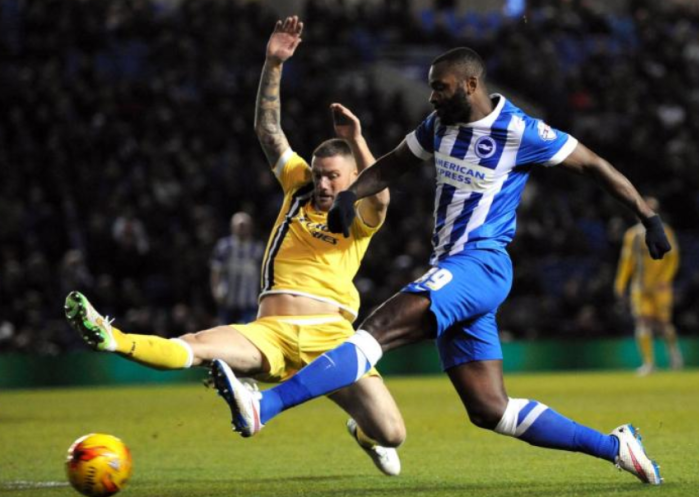
Managerial turnover played havoc with goalscorer Bent’s career

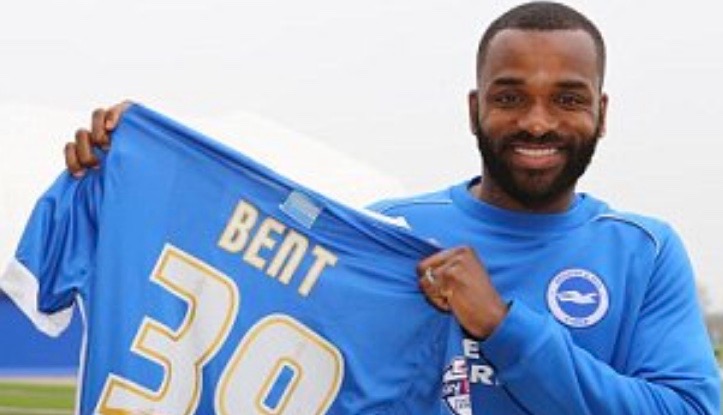
FORMER England striker Darren Bent, who now shares his opinion of the game with listeners to talkSPORT, was still only 30 when he pulled on the stripes of Brighton, one of nine clubs he represented in the Premier League and Championship.

He couldn’t have got off to a better start when he scored on his debut at the Amex, netting against one of his former clubs, Fulham. Unfortunately, the visitors turned the game on its head and won 2-1.

Timing is everything in football and perhaps if Bent had joined the Albion in happier circumstances, there may have been a better story to tell. The Seagulls were about the ditch the manager who brought him to the club – an all-too-familiar scenario Bent encountered on many occasions throughout an 18-year playing career.

At Spurs he played under three different managers – he later described it as “the worst two years of my career” – and his temporary move from Aston Villa to Brighton came about because he’d been frozen out by Paul Lambert even though Gerard Houllier had smashed Villa’s transfer fee record to sign Bent from Sunderland for £18m in January 2011.

Bent arrived at the Amex in November 2014 with 184 goals in 464 career appearances behind him, and only three years earlier had won the last of 13 caps for England, for whom he scored four goals.

“His record speaks for itself,” said Albion boss Sami Hyypia. “He is a top-class striker with more than 100 Premier League goals with Charlton, Spurs, Sunderland and Aston Villa. I hope he will score plenty of goals for us during his time with us.

“There is no doubting his ability to score goals. He also wants to play regular games and that is evident in his willingness to step down from the Premier League to the Championship.”

The player himself told the matchday programme: “Anyone who knows me knows that all I care about is football.

“It has never been about money or anything like that. It has always been about playing football. I’m always at my happiest when I’m playing.”

Bent added: “Brighton felt like the perfect place to come and play football, especially for someone like Sami Hyypia, who I’ve played against many times over the years.

“As a manager, I think he is the right man. He is the kind of guy I want to play for.”

It was a generous assessment in the circumstances because Brighton had managed only two wins in 16 matches before Bent’s arrival.

The experienced striker’s second goal for the Albion looked like it might have earned the beleaguered coach a reprieve from the inevitable. He scored in the 10th minute away at Wolves, stooping to head Inigo Calderon’s first-time cross past goalkeeper Carl Ikeme. It was a lead that lasted until the 88th-minute but was cancelled out by a Danny Batth equaliser after Albion had played 30 second half minutes with 10 men following a red card shown to Bruno. Brighton parted company with the big Finn shortly afterwards.

Bent played one more game, under caretaker Nathan Jones, when Albion fought back from 2-0 down (both scored by on-loan Glenn Murray against his old club) to earn a home draw against Reading, but he was forced off injured after less than half an hour and the knock kept him out of the next game at Fulham, when Brighton won 2-0.

Hyypia’s replacement, Chris Hughton, spoke at his first press conference of trying to keep the player, but Bent had the chance to join a side at the opposite end of the Championship and he moved to promotion-seeking Derby County instead, scoring 12 times in 13 starts as the Rams missed out on a play-off spot by one point.

Released by Villa at the end of the season, he subsequently joined the Rams on a permanent basis in the summer of 2015. He saw even more managerial churn at Pride Park – Paul Clement and Darren Wassall in 2015-16 and three – Nigel Pearson, Steve McLaren and Gary Rowett – in 2016-17. Across the two seasons in the Championship, Bent scored 14 in 67 matches, but a hamstring injury sidelined him for the start of the 2017-18 season.

In January 2018 he went on loan to Championship strugglers Burton Albion under Nigel Clough where he scored twice in 14 appearances (nine starts + five off the bench) including netting the equaliser against his old club Sunderland when Burton’s 2-1 win relegated the Black Cats to the third tier of English football for only the second time in the club’s history. Burton also went down.

Released by Derby in the summer of 2018, he announced his retirement at 35 in July 2019.

Funny that he should end his career at Derby County because it was against them that he scored his first competitive goal for Tottenham in a 4–0 home victory in August 2007.

Bent had previously scored 37 goals in 79 matches over two seasons at Premier League Charlton Athletic before making what at the time was a record £16.5m move to White Hart Lane, where Dutch boss Martin Jol greeted him enthusiastically.

On target for Spurs

Although he already had Robbie Keane, Dimitar Berbatov, Jermain Defoe and Mido as forward options, Jol said of the new signing: “Darren’s strength is his stamina. Normally players will make runs three or four times in 45 minutes, he will do it all the time and if you manage to play balls behind the defence, he will be there.

“He has pace, he links play well and can see a pass – he can exploit the space and play as well.”

What happened subsequently is covered superbly in a 2019 article by Jack Beresford on Planet Football, but, to fast forward a little, Jol was shown the White Hart Lane exit and his replacement, Spaniard Juande Ramos (assisted by Gus Poyet) was a lot less enamoured by the big money signing.

Indeed, Beresford writes: “Bent later recalled how Tottenham became ‘a horrible place to be’ under Ramos, who regularly lambasted players over a lack of professionalism in regards to training and nutrition, demoting several senior figures to the reserves.”

Although Bent struggled to cement a regular starting spot in his first season at White Hart Lane, he was Spurs’ top scorer at the end of the 2008-09 campaign with 17 goals.

While things initially looked good under Bent’s third Spurs boss, Harry Redknapp, the manager’s decision to publicly humiliate the striker eventually brought an unhappy spell to an end.

Bent missed a golden chance to score in a match against Portsmouth and Redknapp told reporters after the game: “You will never get a better chance to win a match than that. My missus could have scored that one.

“Bent did not only have part of the goal to aim for, but he had the entire net – and he put it wide. Unbelievable. I was just so frustrated.”

Bent put in a transfer request and said: “No one goes out to deliberately miss. When you miss a chance and your manager comes out and supports you rather than criticises you, it’s a big help.”

Ironically, circumstances meant Bent went on to make 12 more appearances for Tottenham, scoring five times and his 12 league goals made him the club’s top scorer.

Although Redknapp said Bent had a future at the club, he signed Peter Crouch and Beresford reported Bent later said: “I didn’t feel Redknapp wanted me there. It’s massive to have the support of your manager and that’s not been the case for the last two years.

“My career stood still at Tottenham. There’s a lot of politics going on there. I scored a lot of goals, but it was the hardest two years of my life.”

In those two years, he scored 25 goals in 79 games for Tottenham, but 36 of those appearances had been as a substitute.

Born in Tooting, south London, on 6 February 1984, Bent seemed always destined to be a footballer because his dad Mervyn had been on the books of Wimbledon and Brentford as a youngster.

The family moved to Cambridgeshire when the young Bent was only 10 and his early football career was nurtured at Godmanchester Rovers.

Ipswich Town picked him up as a 14-year-old and nurtured him through their youth ranks until he signed his first professional deal on 2 July 2001. George Burley gave him his debut five months later as a sub in a 3-1 UEFA Cup win away to Helsingborgs IF.

He scored twice in seven league and cup appearances that first season but the Tractor Boys were relegated from the top flight. Burley was soon replaced, temporarily by Tony Mowbray, then Joe Royle, under whom he cemented a regular starting berth in the second tier over the next three seasons.

By the time he left Ipswich in 2005, he’d scored 56 goals in 141 appearances. Former Brighton midfielder Alan Curbishley was at the helm of the Addicks when they paid a fee of £2.5m to take him to The Valley.

He scored five goals in Charlton’s first four league games (including two in the opening day 3-1 win over future employer Sunderland), finished his first season with 22 league and cup goals and was named Charlton’s Player of the Year.

Bent top scored again the following season, with 15, but under three different managers – Iain Dowie, Les Reed and Alan Pardew – they were relegated to the Championship along with Watford and Sheffield United.

As described earlier, Spurs presented the opportunity for him to continue playing in the Premier League, and he continued playing at that level when Sunderland bought him for £16.5million in the summer of 2009. Demonstrating the knack he had at several clubs, he scored on his debut, giving the Black Cats a 1-0 win at Bolton.

Bent went on to score 24 league goals for the Black Cats in his debut season at the club – and you can only imagine how delighted he was (pictured below) to net two in a 3-1 win over Spurs at the Stadium of Light!

The first came after just 34 seconds of the game on 3 April 2010, and a 29th-minute penalty gave him his 23rd goal of the season, although incredibly Bent also saw two other penalties saved by Spurs ‘keeper Heurelho Gomes. He had also missed a penalty in the reverse fixture at White Hart Lane the previous November, when Spurs won 2-0.

He obviously wasn’t the most reliable from 12 yards: I witnessed a Bent penalty miss myself back in 2003 when he’d gone on as a sub for Ipswich against Brighton at Portman Road. With the score at 1-1, Richard Carpenter’s foul on Chris Makin gave Bent the chance to restore the home side’s advantage from the spot. But he blasted the ball over without goalkeeper Dave Beasant needing to make a save. Tony Rougier then put Albion ahead but a Martin Reuser thunderbolt evened it up.

Bent’s 18-month stay with Steve Bruce’s Sunderland proved to be his most prolific goalscoring spell in football, netting 38 goals in just 52 appearances.

In the first half of the 2010-11 season, his partner up front was young Manchester United loanee Danny Welbeck, but in the January 2011 transfer window Bent was on the move again, this time to Villa.

Once again, he got off to a great start for a new club, marking his debut with the only goal of the game in a win over Manchester City. It was the first of nine goals in 16 league appearances which put him joint top scorer with Ashley Young, even though he’d only arrived at the club in January.

After health issues forced Houllier to step down as Villa boss, Alex McLeish took over for what was a tumultuous and under-performing season when relegation was only avoided by two points, although Bent was top scorer with 10.

McLeish’s successor Lambert not only took the captaincy off Bent, he also froze him out, only selecting him for 13 Premier League appearances. If he thought it was difficult enough to have three different managers in three seasons at Villa, when he spent the whole of the 2013-14 season on loan to Fulham, they had three different managers in one season!

Bent’s old Spurs boss Jol was in charge as the campaign got under way but, with only two wins in 14, he was replaced by former Man Utd no.2 René Meulensteen in December before Felix Magath took over in February. All the upheaval saw Fulham relegated with a team that included David Stockdale, Steve Sidwell, Aaron Hughes and Dan Burn. Bent scored six in 14 starts + 15 sub appearances.

If Bent was used to managerial change at club level, it wasn’t much better with the England national team: he played under three different managers in five years!

He had previously earned selection for his country at under 15, 16, 19 and 21 levels – he scored nine in 14 matches for the under-21s – and he was first called up to the full squad by Sven-Goran Eriksson shortly after he’d made the move from Ipswich to Charlton, although he didn’t play in a 4-1 defeat to Denmark.

“Making my Premiership debut for a new club, scoring my first brace in the Premiership and then to get the England call-up on the back of that was just a dream come true,” he told the FA website.

It was another six months before he made his full England debut, in a 2-1 win over Uruguay but he didn’t do enough to stake a claim for a place in the World Cup squad.

His next cap came as an 80th minute substitute for Joe Cole in the 3-2 defeat to Croatia in November 2007 that cost Steve McLaren his job when England failed to qualify for the Euro 2008 tournament.

By the time he made his second start for England, on 14 November 2009, Fabio Capello was in charge. England lost 1-0 in a friendly to Brazil in Qatar when Bent’s teammates included Matthew Upson, Wayne Bridge and James Milner.

“Bent was struggling to make an impact as he attempted to convince Capello of his worth, not helped by a lack of service that rendered his task almost impossible,” reported the BBC’s Phil McNulty. “He had one opportunity, but could not direct a header on target from Milner’s cross.”

He didn’t make the cut for the 2010 World Cup squad but in September was back in the fold and scored his first England goal after going on as a 70th minute sub for Jermain Defoe as England beat Switzerland 3-1 in Basle.

By now at Villa, it was the first of three goals in three games (he also netted against Denmark and Wales) after which he told the Birmingham Mail: “I’d love to be No 9 for as long as possible, there are a lot of top strikers about but Fabio keeps picking me and hopefully I can keep producing the goods.

“Even when the goals weren’t going in, I always believed I was good enough to score at this level and hopefully it’s showing now. I’m finally getting my chance and getting a good run in the side. I’m delighted with it.

“It has been years since my first chance and it’s certainly been a long, long wait but it’s finally come.”

He started the 2-2 Euro 2012 qualifier with Montenegro in October 2011 and the following month was in the side that beat World Cup holders Spain 1-0 at Wembley; it was his header from Milner’s cross that rebounded off a post for Frank Lampard to nod in.

Three days later, he played what turned out to be his – and Capello’s – last game for England as a 70th minute sub for Bobby Zamora when England beat Sweden 1-0 at Wembley.

Yet another man was at the helm when it came to selection for the Euro 2012 tournament and Roy Hodgson didn’t reckon Bent had recovered sufficiently from an injury to merit inclusion.

For all the highs and lows of a lengthy playing career, nothing came close to what he suffered in front of a nation of TV quiz viewers: he scored only three points over two rounds of Celebrity Mastermind and admitted to talkSPORT listeners: “Honestly? It was probably the worst experience of my life!”

He explained: “As a footballer you get nervous before games, when you take a penalty in front of thousands of people, when you join a new club, but when you’re sitting in that chair opposite John Humphrys, it’s pitch black in there and all you can see is him, his eyes looking at you and he’s asking you questions and you just go blank.”

Sammy Lee’s ugly u-turn left Hyypia in the lurch

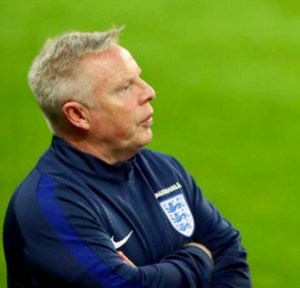
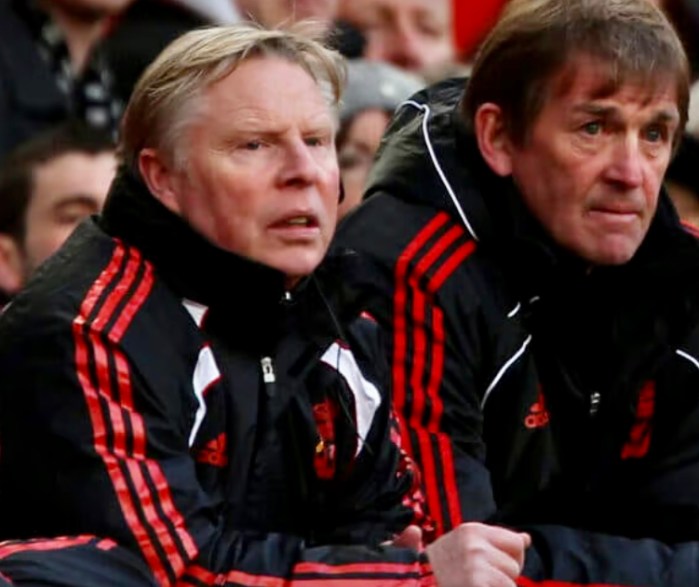
FORMER Liverpool player and assistant manager Sammy Lee took an unpalatable u-turn after agreeing to become no.2 to Sami Hyypia at Brighton.

When in 2014 a second successive bid to reach the Premier League via the Championship play-offs had faltered at the semi-final stage, Oscar Garcia quit the Seagulls and Albion installed the inexperienced Hyypia as his successor.

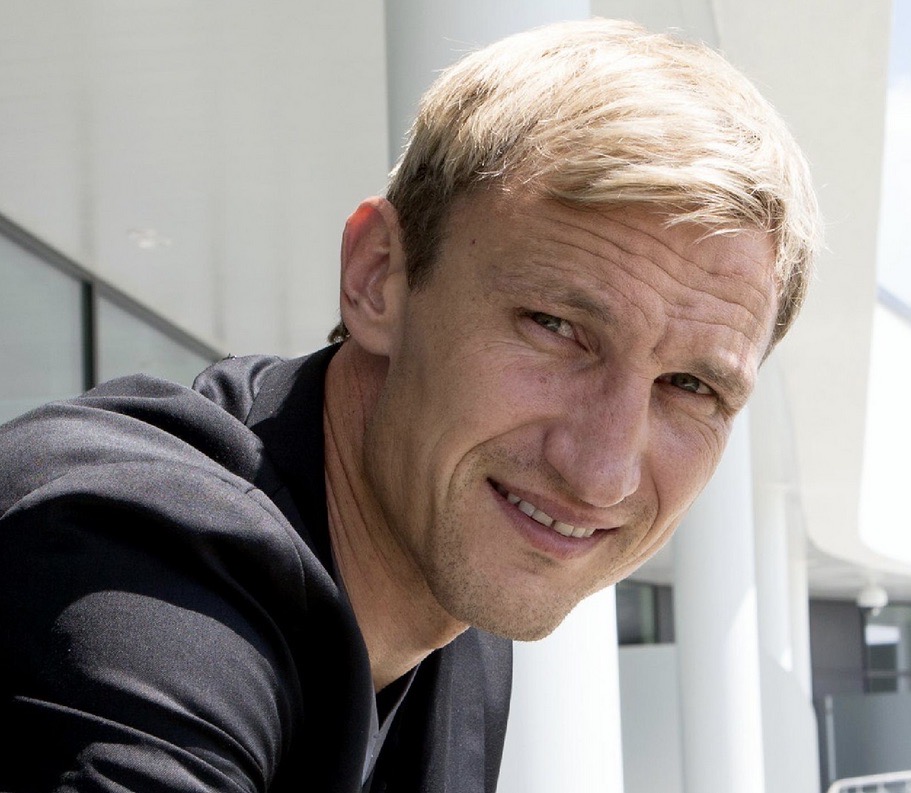
The Finnish international former Liverpool centre back had earmarked Lee to bring valuable nous to his backroom team having already been turned down for the job by his first choice, Jan Moritze Lichte, from Bayer Leverkusen, where Hyypia had made his managerial bow.

Lee agreed to take on the role on 25 June 2014 and a formal announcement was made the following day. But by the morning of Monday 29 June, the bombshell news dropped that Lee was moving elsewhere on the south coast instead.

Rather than help to guide the fledgling managerial career of a player he had coached at Liverpool, Lee opted to join Dutchman Ronald Koeman at Southampton.

“I’m let down because I thought that I knew him,” Hyypia told Sky Sports, when interviewed at Lancing. “Everything was sorted and everything was agreed and he should have been here today. The way it happened was very disappointing and I couldn’t actually believe it.”

An apologetic Lee said: “I was thrilled to be offered the job at Brighton and I was excited at the prospect of working with Sami Hyypia again – but, totally unexpectedly, I have been given an opportunity to work in the Premier League.

“I fully appreciate that this is not an ideal set of circumstances and I am very sorry for the inconvenience, and any embarrassment, my change of mind, after the announcement was made, has caused.

“However, at this stage of my coaching career the opportunity to work again at the very top level of English football was not something I felt I could turn down.”

Some might argue Lee’s decision ultimately brought about the swift demise of Hyypia’s reign in the Albion hotseat: the efforts he made to implement a specific style of play have since been lauded, but a dismal set of results told a different story, and there was a parting of the ways with more than half the season still to be played.

If Albion fans hadn’t been overly impressed by Lee’s decision to leave Hyypia in the lurch that summer, they weren’t the only supporters not to be enamoured by the little man’s involvement in their club.

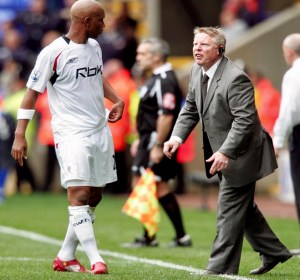
In a retrospective look at Lee’s brief tenure as manager of Bolton Wanderers, Marc Iles, chief football writer for the Bolton Evening News, wrote: “Lee’s frenetic 170 days in charge contained 14 games, three victories, 12 signings and the complete disintegration of the structure which had helped Wanderers secure four top-eight finishes in four years.

“The stormy period was characterised by dressing room upheaval, boardroom bitterness and the sad fall from grace of an honourable man who had the club at heart.”

Lee, previously Sam Allardyce’s assistant at the Reebok Stadium, had been handed the reins just 24 hours after Allardyce quit on 29 April 29 2007 to take over at Newcastle.

Lee was always better suited to a supporting role and, as well as at Bolton, he’s worked under Allardyce at Crystal Palace, Everton and West Brom (and during Allardyce’s brief England spell).

He rose through the coaching ranks at Liverpool after Graeme Souness took him back to Anfield at the end of his playing days.

He became a first team coach under Gerard Houllier and between 2008 and 2011 was assistant manager to Rafa Benitez.

Born in Liverpool on 7 February 1959, Lee made his way through the Reds’ youth ranks and made his first team debut in April 1978.

Sammy Lee in action for Liverpool up against Albion’s Steve Foster

As chronicled on lfchistory.net, he earned a regular spot in the 1980-81 season, pretty much taking over the midfield berth previously occupied by Jimmy Case, who, at the end of that season, Bob Paisley sold to Brighton.

Albion fans of a certain generation will surely not fail to be moved by the story of Lee’s close friendship with Michael Robinson, the former Albion striker who was the midfielder’s former team-mate at Liverpool and Osasuna.

Robinson and Lee were together in a Liverpool side that in 1983-84 did the treble of the league, the League Cup and the European Cup.

Ahead of an August 2021 friendly match between the two sides to honour Robinson after his untimely death from cancer aged 61 in April 2020, Lee told The Athletic: “It is a fitting tribute and a fitting venue to have the game at, in front of the Kop.

“Michael did fantastic for Liverpool while he was there. It will be a very emotional night for everybody, particularly for Michael’s wife Chris and their children.

“He was not only a fantastic guy, a great colleague, but I consider him a brother, to be honest, I can’t put it any higher than that.”

Lee told reporter Dermot Corrigan: “Michael was very important for my professional life after Liverpool.

“You tend to think you will stay at Liverpool forever, you know, but it doesn’t happen. Michael had gone to Queens Park Rangers and he helped me to go there, and I had a nice time there. Subsequently he moved on to Osasuna, and he got me to go there. So he had a massive influence on my professional career.”

Injury eventually brought Lee’s Spanish playing days to an end and although he managed three games for Southampton and four for Third Division Bolton, it was coaching where his future lay.

In 2001, Lee became a part-time coach to the England national side under Sven-Goran Eriksson and three years later left Liverpool to join the national set up full time.

Liverpool chief executive Rick Parry said at the time: “We are very sorry that Sammy has decided to leave, but he goes with all our very best wishes for the future.

“Sammy’s been a wonderful servant to Liverpool as both player and coach. He should be proud of his contribution to the successes achieved at the club in recent years.”

Knock-out stories of Mark ‘The Fizz’ Leather

MARK LEATHER spent six years as the first team physiotherapist at Anfield having previously been Brighton’s physio in the early days of Barry Lloyd’s reign as manager.

Leather tended the injured when Albion were promoted from the old Third Division in 1987-88 and half of the 1988-89 tier two campaign before moving back to his native north west.

Roy Evans added Leather’s specialist knowledge to the backroom team at Anfield in 1994 but the physio was controversially sacked by his successor Gerard Houllier following a row over the then teenage striker Michael Owen’s fitness.

A sign of the way Leather expected to work with managers came in an interview for Albion’s matchday programme. “Barry Lloyd will respect the decision if I say a player needs more time to get back to fitness,” he told interviewer Dave Beckett. “From that point of view, he is sadly in the minority.

“If it was different, I wouldn’t hang around, but it still amazes me that some clubs don’t realise that if we all stick to what we know things will run more smoothly.”

Leather, who’d spent three years studying for a diploma, and gained experience in the National Health Service, added: “We’re getting away from the old ‘bucket-and-sponge’ image.”

Ahead of his arrival at the Goldstone, Leather had combined his studies with helping out Exeter City, Leek Town, Port Vale and Sheffield Wednesday. And during the Commonwealth Games in Edinburgh in 1986, Leather provided specialist medical support for the weightlifters and wrestlers.

He revealed a funny story against himself in a matchday programme article. Asked to reveal his ‘most embarrassing moment’ he said: “During the Port Vale and Scunthorpe match in 1985, when Port Vale scored, I jumped up out of the bench hitting my head on the dugout roof and needed smelling salts and a cold sponge.”

Perhaps predictably nicknamed ‘The Fizz’, Leather sought to give an insight to his role in his matchday programme interview. “I try to be friends with all of the lads and the management too, but sometimes you really do have to sit on the fence,” he said.

“There’s pressure sometimes from both sides to say a player’s ready to return, but you have to stand back from the situation and give a professional opinion.”

The Albion gave him a regular slot in the matchday programme which he used to give readers updates on the progress of injured players, and in recent times he has become a regular source for the media seeking expert comments on football injuries.

Leather now has his own physiotherapy business and back in the day at Brighton he and his physiotherapist wife Lucy ran a sports injury clinic for the general public two evenings a week.

Born in Bolton on 24 June 1961, Leather left the Seagulls halfway through the 1988-89 season to return to more a familiar part of the country and took a job in the NHS in Chorley, Lancashire.

Leather had been an ardent Bolton Wanderers fan from an early age and his all-time favourite player was Frank Worthington, who had played for the Seagulls during the 1984-85 season.

When Evans stepped up to take charge of Liverpool, Leather was one of his first appointments (along with goalkeeping coach Joe Corrigan, whose playing career had ended with the Seagulls).

Leather and Corrigan together in Liverpool backroom team

An insight into Evans’ decision-making was given in the book Men In White Suits, by Simon Hughes. “With Mark Leather’s arrival, there was an end to the running repair jobs carried out by a succession of unqualified coaches mid game,” he wrote.

“Regularly injured players had long been treated with suspicion at Liverpool. (Bill) Shankly maintained his side were the fittest in the league, with pre-season geared towards building stamina and therefore preventing muscle tears.

“It was a difficult theory to argue against. Liverpool won the 1965-66 title using just 14 players all season. Anyone who suffered an injury was almost bullied into feeling better. ‘Otherwise you really were persona non grata,’ Alan Hansen said.

“Leather’s recruitment meant that (Ronnie) Moran could focus on drilling the first team in the Liverpool way rather than writing what Evans describes as ‘little scribbles’ on an old ledger, charting training patterns.”

Endorsements to Leather’s attributes appear on his website from the likes of Robbie Fowler and Jamie Redknapp, who is quoted as saying: “Mark Leather has been brilliant with me. He has kept me going and it’s because of him really that I’m back to full fitness as soon as I am.”

In 1999 media reports said Houllier was facing “a furious players’ backlash after his escalating row with Liverpool physio Mark Leather took a dramatic twist”.

Leather was left in the UK when Liverpool went to Oslo for pre-season games, a move which was said to be causing disquiet in the dressing room.

Leather clashed with Houllier over the condition of injured Michael Owen

“Leather is one of the game’s top physios and he was publicly praised by Robbie Fowler after helping the striker make a miraculous recovery from a cruciate knee ligament injury last season,” said one report in the Scottish Daily Record. “Other stars, including Michael Owen and skipper Jamie Redknapp, are known to have a close bond with the medic.”

Houllier was angry at the length of time it was taking for Owen to return to full training after a hamstring injury and sent him to a specialist in Germany for a course of treatment.

In 2013, when Owen’s many injuries finally forced him to his retire from the game, he recalled bad decisions in the past that ultimately affected his career.

“I was compromised because I played too much too soon as a youngster at Liverpool. In my opinion, had I been managed differently I would have been at my best for longer as opposed to being a better player,” he said in The Mirror.

“I basically run on two hamstrings on my right leg and three on the other. I lost a third of the power.

“If I hadn’t, 90 per cent of the other injuries wouldn’t have happened and I would have been the all-time leading scorer for England.”

The Mirror article continued: “If there was a defining moment in his career, then it was a snapped hamstring when his then-manager Houllier ignored the advice of his physio and insisted Owen be brought back from injury quickly because he needed his goal threat so desperately.

“The French coach fell out so badly with the physio, Mark Leather, he forced him out, but Houllier later admitted to the mistake, which Owen believes led to the moment that changed his career – on a cold March evening at Elland Road, Leeds, in 1999. ‘My hamstring snapped in two and it was at that point that my ability to perform unimpeded was finished,’ said Owen.

Leather wasn’t finished with football, however, and he moved to his beloved Bolton Wanderers as Sam Allardyce’s physio for a year, before joining former Trotter Peter Reid at the Stadium of Light.

“From a personal point of view, I’ve had the privilege of working with two guys I used to support from the terraces at Burnden,” Leather told the Bolton News ahead of a match between Bolton and the Black Cats in September 2001. “There’s only one team I’ve ever supported and leaving them last year was purely a professional decision,” he said. “Financially and from a facility point of view, it was the right move for me, but I’ll never stop supporting the Wanderers.”

Leather spent four years (2000-2004) as the head physio at Sunderland straddling the managerial reigns of Reid, Howard Wilkinson and Mick McCarthy.

It certainly wasn’t all plain sailing for Leather on Wearside, as the Republic of Ireland winger Kevin Kilbane, now a TV pundit on the BBC, mentioned in his autobiography (Killa: The Autobiography of Kevin Kilbane; Aurum Press Ltd, 2014).

The player was determined to play for his country but the physio obviously didn’t feel he should because he was still trying to recover from an ankle injury.

Leather had already put him through some tough routines to test the strength of his ankle and when they were then on opposing sides in a two-a-side hockey match, Leather caught Kilbane on the tender joint with his hockey stick.

“After a few times and much pain, I finally snapped, and I gave him a left hook and decked him, leaving him with a fat lip and a very surprised look on his face,” Kilbane admitted.

Although he told the assistant manager Bobby Saxton what had happened, nothing more was done about it. Kilbane said: “I later apologised to Mark Leather but was disappointed he didn’t reciprocate. Things were never right between us after that, although we didn’t let it interfere with our professional relationship.”

After Sunderland, Leather switched sports and took on a similar position with Wigan Warriors rugby league side before moving into the world of academia. He spent seven years at Edge Hill University as a senior lecturer in sports therapy and programme leader for the Football Rehabilitation MSc course.

In October 2006,Leather joined Chester City as club physio, with City chairman Stephen Vaughan declaring: “He is a fully qualified physio and has a wealth of experience at Premier League level, so it’s something of a coup to bring him to the Deva Stadium.”

In 2013, he returned to Bolton, spending three years as Head of Sports Performance.

He had also set up his own physiotherapy business in 2008 and, since 2016, has been a senior lecturer and course leader for the Football Science and Rehabilitation MSc course at the University of Central Lancashire.

• Pictures from the Albion matchday programme and various online sources.

Let down by ‘little’ Sammy, ‘big’ Sami struggled from the start…

HINDSIGHT is a wonderful thing but few would disagree that Sami Hyypia’s reign as Albion manager was doomed almost from the start.

Inexperienced boss Hyypia had barely got his feet under the table at the Amex before former Liverpool assistant manager, Sammy Lee, pulled the rug from under his proposed new regime.

Hyypia, not unreasonably, had thought the former no.2 to Rafa Benitez would bring vital experience to his backroom team because the Albion position was only the former Reds central defender’s second managerial job.

Lee, despite accepting the position on 27 June 2014, decided two days later to reject the deal because he’d agreed to become Ronald Koeman’s deputy at Southampton instead.

Hyypia had only been in post three weeks, so, it would be fair to say, Lee’s decision must have been a hammer blow – especially as his first choice for no.2 said ‘no’ too! Jan Moritze Lichte, who’d been at Bayer Leverkusen when Hyypia made his managerial bow – which lasted only nine months – had already declined to join him in the UK for “personal reasons”.

Thus, Hyypia had to rely on two of previous boss Oscar Garcia’s coaching staff, Nathan Jones and Joaquin Gomez, to assist on the coaching side, although his fellow countryman, Antti Niemi, did accept the offer to become goalkeeping coach.

On the playing side, there had been a large turnover of personnel in the wake of Garcia’s departure – and, it emerged, the players coming in weren’t being signed by Hyypia but were the picks of head of football operations, David Burke.

It was always going to be a tough ask to replace Leonardo Ulloa up front – and journeyman Chris O’Grady certainly didn’t provide an answer.

There was a sense of excitement when Hyypia’s Liverpool links saw the arrival on loan of Joao Teixeira, but the number of players only at the club on a temporary basis should have been something of a wake-up call.

The permanent signing of one-time West Ham forward Sam Baldock looked like a sound investment – he’d hit the net regularly enough at Bristol City in the division below – but he found goals hard to come by at the higher level.

As if to highlight the player upheaval and shaky managerial team foundations, Albion lost the first two games of the season, single goal defeats at home to Sheffield Wednesday and away to Birmingham City.

If a 2-0 win away to Leeds United followed by a 2-1 home win over Bolton suggested a corner had been turned, Albion then went on an 11-game winless run.

If he hadn’t been aware beforehand, Hyypia would have quickly realised the calibre of player Burke provided him with fell way short of what was required if the side were going to repeat the previous two seasons’ achievement of finishing in the play-off positions.

Not only was there a lack of consistency in personnel on the pitch, those who were selected appeared to be confused as to exactly how Hyypia wanted them to play.

Andy Naylor tried to analyse Hyypia’s philosophy early on in the season, reporting: “We have already seen 4-1-2-3, 4-1-2-2-1, 4-4-1-1. Hyypia is combining Southern European technical accomplishment in possession and mobility with a more Northern European tempo and directness.

“The width is provided by advanced full-backs, the chances for a narrower strike force by the players who like to operate, in modern coaching speak, ‘between the lines’, exploiting pockets of space in the area dividing the opposition defence and midfield.”

The theory might well have been sound but the practice was found wanting.

Having won only one game in 18 matches, and after only six months in charge, Hyypia resigned shortly before Christmas.

At his last home game in charge – a 1-0 defeat to Millwall – the Albion faithful demonstrated they’d had enough, calling for him to go and, in the North Stand, unfurling a banner making that message loud and clear.

Hyypia himself admitted the atmosphere had been tough to handle but, in an interview with the Argus, had vowed to turn things round.

It was an unseemly end for someone who as a player had been rated one of the best defenders ever to pull on a Liverpool shirt. But Hyypia was by no means alone in not being able to continue the prowess he’d shown on the playing side into management.

Liverpoolway.co.uk charts the player’s career succinctly; a Gerard Houllier signing in 1999, over the course of a decade he collected winners medals across several competitions: the Champions League, the FA Cup (twice), the UEFA Cup, the UEFA Super Cup (twice), the League Cup (twice) and the Charity Shield.

Born on 7 October 1973 in Porvoo, Finland, Hyypia’s football career blossomed with now dissolved Kuusankosken Kumu before switching to MyPa, where he stayed four years, helping them to win the Finnish Cup in 1992 and 1995. He moved to Holland to play for Willem II for four years where for a time his defensive partner was Jaap Staam, who subsequently played for Manchester United. Liverpool signed Hyypia for £2.6m in 1999, ironically following up a tip from a TV cameraman!

After being capped 27 times by Finland under 21s, he earned his first full cap in 1992 and, with 105 caps for Finland, he is second only to Jari Litmanen as his country’s highest capped player.

After his Liverpool playing days came to an end, Hyypia went to play in the Bundesliga for Bayer Leverkusen and two years later joined the club’s coaching staff.

In a rather unusual arrangement, Hyypia and former under19s coach Sascha Lewandoski jointly replaced Robin Dutt as head coach but Hyypia took sole charge in June 2013. He was sacked in April 2014.

After his brief time in charge of Brighton, it was another eight months before he found another head coach role, this time taking charge of FC Zurich in August 2015. But with the club heading for relegation in May 2016, he was sacked.

The Finn has yet to re-appear in the dugout, although he has pulled on his boots again to play for a Liverpool Legends side. It remains to be seen whether he’ll give coaching or management another go, although he told BT Sport in February 2019: “I will coach and manage again one day but not yet. I get some enquiries quite regularly, but nothing has yet been that interesting I would jump into it.”

He added: “I wouldn’t change any decision to go so quickly into coaching. A lot of people said I made a mistake going into it so early, but I learned a lot.

“You learn a lot more from the bad moments than the good moments. Those years when things were not going my way, I learned so much and I am much better and more ready now.”

The multi-million pound striker who scored on his Albion debut

STRIKER Darren Bent spent the last month of 2014 with Championship-struggling Brighton as the hapless Sami Hyypia tried to bring a halt to a dismal run of form.

Unable to command a regular starting spot at Aston Villa, Bent made an encouraging enough start, scoring on his debut against Fulham.

But the game ended in a 2-1 defeat and his only other goal came at Molineux two days before the axe fell on Hyypia’s time in the hotseat as Albion drew 1-1 with Wolves.

Bent told BBC Radio Sussex he’d reached “boiling point” in his frustration at the lack of starts under Paul Lambert at Villa. Previous boss Gerard Houllier had smashed Villa’s transfer fee record to take Bent from Sunderland for an initial £18m in January 2011, but, after Lambert became manager in 2012, he made just 13 Premier League appearances.

albion D BentAt the time he headed to the Amex, Bent had scored 184 goals in 464 career appearances, not to mention scoring four while winning 13 caps for England.

“I hope he will score plenty of goals for us during his time with us,” Hyypia had told the club website. “His record speaks for itself. He is a top-class striker with more than 100 Premier League goals with Charlton, Spurs, Sunderland and Aston Villa.

“Three years ago, he was a regular in the England squad under Fabio Capello; there is no doubting his ability to score goals.

“He also wants to play regular games and that is evident in his willingness to step down from the Premier League to the Championship.”

Bent told the matchday programme: “It doesn’t bother me that I’ve had to drop down a division to play football. Anyone who knows me knows that all I care about is football.

“It has never been about money or anything like that. It has always been about playing football. I’m always at my happiest when I’m playing.”

At least Bent found some familiar faces in the Albion dressing room in fellow Villa loanees Joe Bennett and Gary Gardner and former Fulham teammates David Stockdale and Aaron Hughes.

“Brighton felt like the perfect place to come and play football, especially for someone like Sami Hyypia, who I’ve played against many times over the years,” Bent added. “As a manager, I think he is the right man. He is the kind of guy I want to play for.”

Bent goalBent returned to Villa after playing in five games and although new boss Chris Hughton indicated a willingness to bring him back, the striker was soon on his way to Derby County for the remainder of the season.

He scored 12 in 17 games for Steve McLaren’s Rams and subsequently joined them on a permanent basis in the summer of 2015. After two seasons in the Championship with Derby, scoring 14 in 67 matches, a hamstring injury sidelined him for the start of the 2017-18 season and in January 2018 he went on loan to Championship strugglers Burton Albion.

Having been without a club since released by Derby in the summer of 2018, he announced his retirement at 35 in July 2019.

Since then, he has joined the football pundit circuit, although not everyone is convinced he’s making that good a job of it!

pundit D BentNevertheless, Talksport and Sky Sports are happy to give him a platform and, in an interview with Metro, he suggested what might be the most difficult aspect of it. “I played with some of these guys and regard them as friends so, when they have had a bad game, will I be able to dig them out? It’s finding the line between being objective and respectfully constructive.”

Only in January 2020, Bent could be found arguing the case for Lewis Dunk to be recalled by England. The former striker is also active on Twitter with @DarrenBent attracting just short of 492,000 followers.

Born in Tooting, south London, on 6 February 1984, Bent was probably destined to be a footballer because his dad Mervyn had been on the books of Wimbledon and Brentford as a youngster.

The family moved to Cambridgeshire when the young Bent was only 10 and his early football career was nurtured at Godmanchester Rovers.

Ipswich Town picked him up as a 14-year-old and nurtured him through their youth ranks until he eventually made it to the first team in November 2001.

In four seasons with Ipswich, he scored 56 goals in 141 appearances before then Premier League Charlton Athletic paid a fee of £2.5m to take him to The Valley.

After two successful seasons in which he bagged 37 goals in 79 games for the Valiants, he made another big money move, this time to North London to join Spurs.

It was in June 2007 they paid a club record £16.5m and he scored 25 in 79 games for them before a similar fee saw him move to Sunderland, then in the Premier League, in the summer of 2009.

After 18 months in the North East, Bent put in for a transfer and Aston Villa paid £24m to sign him on a four-and-a-half year contract. He marked his debut with the only goal of the game in a win over Manchester City.

In his second season with Villa, Bent took on the captaincy for a while but managerial changes meant his face didn’t always fit and he spent the whole of the 2013-14 season on loan to Fulham, where he scored six in 30 matches.