Head ‘master’ Neil Martin scored hundreds in Scotland and England

PROLIFIC goalscorer Neil Martin was once considered to be one of the finest headers of a ball in football.

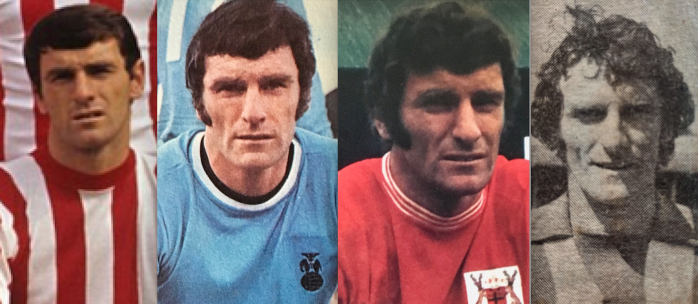
A Scottish international who was among an elite group to net 100 goals in both the Scottish and English leagues, Martin scored 46 of them in 99 top flight appearances for Sunderland.
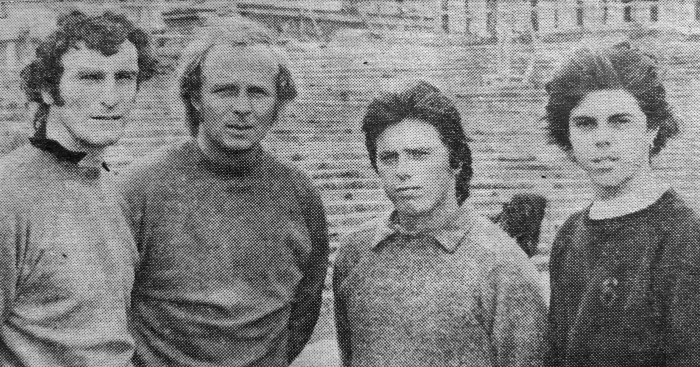
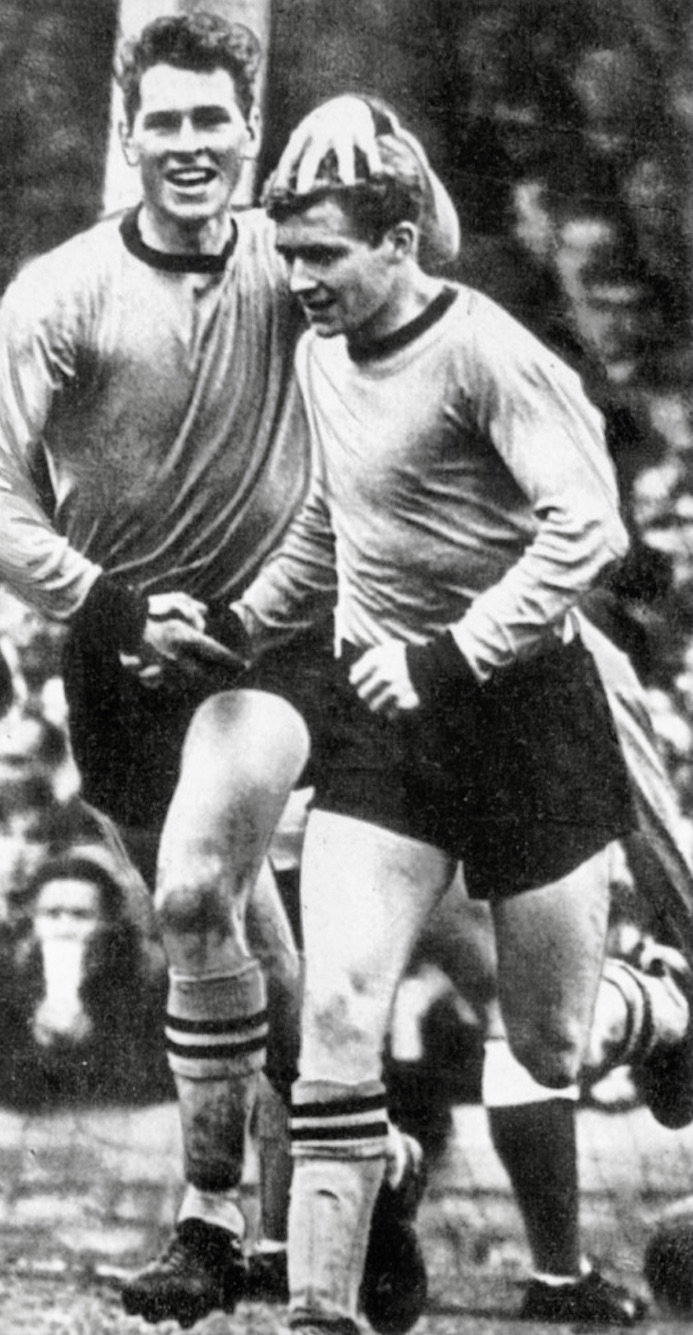
It was 50 seasons ago that he arrived at Brighton towards the end of his career, almost at the same time as Peter Ward (right, above) was starting his. In fact, for a few weeks they shared a club-owned house overlooking the sea (until they each found their own homes) and Martin gave the youngster a lift into training.

Ironically, although Martin scored on his Albion debut and netted nine goals in 18 starts (plus five sub appearances), it was his departure from the club after only eight months that led to Ward’s introduction to first team football.
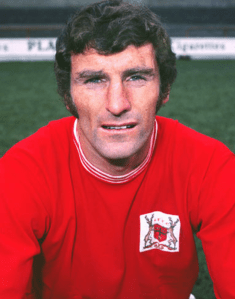
The previous season, Martin had scored the first goal of Brian Clough’s reign as Nottingham Forest manager, the only goal of the game in a FA Cup third round replay win against Spurs at White Hart Lane in January 1975.

The Scot had been at Forest for four years by then and, as if to prove there’s no sentiment in football, he was given a free transfer at the end of the season. That’s when Clough’s former managerial partner, Peter Taylor, picked him up for Brighton.

After a lacklustre first season in sole charge of the Albion (Clough had quit Brighton for his ill-fated 44 days at Leeds), Taylor brought in some experienced old heads to bolster a tilt at promotion with the signings of 34-year-old Martin, Phil Beal (30) and Joe Kinnear (28) from Spurs.

It was Albion’s 75th anniversary season and the popular blue and white striped shirts were reinstated as the first-choice kit having been dropped the previous season for all white with blue cuffs and collar.

Martin played up front with Fred Binney and the pair were on the scoresheet in the opening day 3-0 home win over Rotherham United (his former Coventry teammate Ernie Machin got the other).
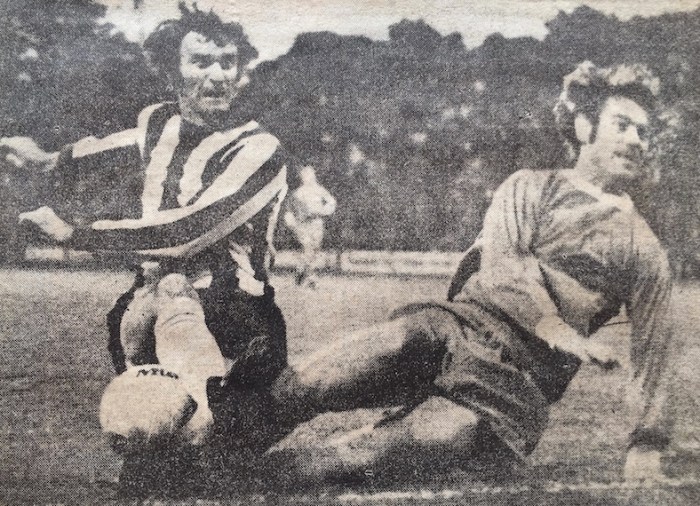
Martin scored twice in his third match, a 3-3 draw at Sheffield Wednesday, but the impatient Taylor soon chose to give Binney a new partner in on-loan Barry Butlin.

Restored to the side after Butlin’s return to parent club Forest, Martin made 11 successive starts and scored six times. But his brace in a 4-2 home win over Hereford United on 6 December 1975 were his last goals for the club.

Taylor seized an opportunity to sign Aston Villa’s out-of-favour Sammy Morgan (who he’d previously tried to sign when he was assistant manager at Derby) and Martin swiftly found himself on the outside looking in.

He only made one more start, replacing the injured Morgan, in a 1-0 win over promotion rivals Millwall at the start of February 1976 and he was then transfer-listed following a disagreement with Taylor when subbed off in a reserve game a week later, and was even banned from the ground by the disciplinarian boss. At the time, he had only just bought a house in Seaford.

The first team squad vacancy meant Ward was moved up the pecking order of strikers and he made his debut in a Goldstone friendly against Ipswich Town (Albion won 3-1, Ian Mellor got two, Andy Rollings the other). The following month, Martin moved to Crystal Palace where he scored just the once in nine appearances.

By then 35, he took a similar journey to lots of other English and Scottish players in their 30s edging towards the end of their careers by going to play in the North American Soccer League (NASL).

He played in the same San Antonio Thunder team as former England captain Bobby Moore, ex-Arsenal and Wolves left-back Bob McNab and former Sunderland teammate Harry Hood, and scored five goals in 19 games for the Texas-based club.

It wasn’t Martin’s first involvement in the NASL though because, in the summer of 1967, he was part of a Sunderland contingent who played as Vancouver Royal Canadians. The 16-man squad also included goalkeeper Derek Forster, who also later played for Brighton.

Born in Tranent, just east of Edinburgh, on 20 October 1940, Martin started out with Tranent Juniors and looked back on his career in a 2020 interview with Ninian Cassidy for Alive & Kicking, published on Facebook.

After leaving school, he began working at the local coal pit but he got his break into professional football with Alloa Athletic.

He described having to make a circuitous near 50-mile bus journey from his home in Tranent to make his debut for Alloa. Hungry after the long journey, he downed pie, beans and chips for lunch before going out and scoring in his first game for the Wasps.

He was still self-training at the local dog track twice a week before meeting up with his teammates to play on a Saturday but after scoring 25 league and cup goals in his first season (1960-61), he earned a move to Queen of the South.

Still remembered fondly as a legend of the club, former teammate Iain McChesney said of Martin: “Neil was a big gem. It didn’t matter what you did to him, he never got involved. He got kicked stupid but still, he picked himself up and got on with the game and scored goals. I remember him saying to me, ‘That’s the best thing you can do, that’s the best reply of the lot, stick the ball in the net and they can’t do anything about it’.”

When Queen of the South were promoted back to the top division as Division 2 runners up in 1961-62, Martin scored 30 league and cup goals. Fan chat group contributor Ronnie Rae said: “Brilliant player. He had a fantastic partnership with Ernie Hannigan playing for Queen of the South, his heading ability was outstanding. We had a great team back in the day.”
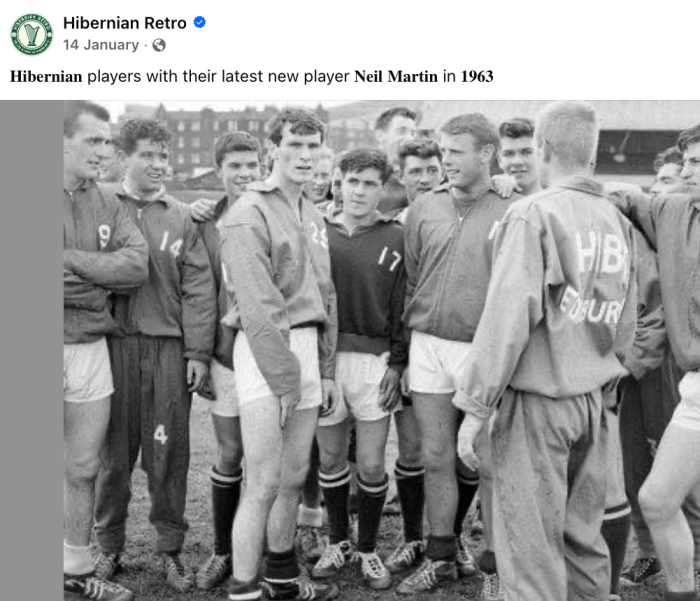
In 1963, he got the chance to move for a £7,500 transfer fee to Hibernian, the club he’d supported as a boy, and the following year the legendary Jock Stein, who he later said had the biggest influence on his career, took over as manager. Martin netted 29 league and cup goals for Hibs in the 1964-65 season.

Supporter Andy Szafer remembered Hibs beating Falkirk 6-0 in 1964 when Martin scored four: “I’ve still to come across anyone who could head a ball like Neil,” he said. “No one comes close…maybe Ronaldo, but Neil tops that list for me.”

During that time, he played and scored for a Scottish League representative side against an English League XI in a 2-2 draw at Roker Park. The following year, in October 1965, that became his home ground when he switched from Edinburgh for a £45,000 fee.
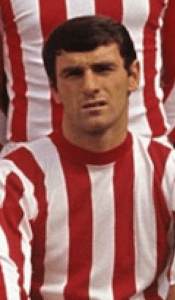
By then, he’d collected two of his three full Scottish international caps. He partnered the legendary Denis Law up front in World Cup qualifiers against Poland (1-1) and Finland (2-1) within four days of each other in May 1965.

In the month after his move to Sunderland, he played alongside Tottenham’s Alan Gilzean in a 1-0 win over Italy in front of 100,000 at Hampden Park.

The blog Roker Report noted that he joined Sunderland in the same season as fellow Scot Jim Baxter who grabbed most of the headlines (not always for the right reasons). “Martin was a coup that we never quite realised,” it said. “Martin was a battler and shied away from no one at a time when every team had cloggers, enforcers and hard men.

“He scored all sorts of goals, though was a danger in the air and in the box from corners and free kicks.”

One particular man-of-the-match performance by Martin came when he scored twice in a 3-2 defeat to high-flying Manchester United at Roker Park on 11 December 1965. This was a Man Utd side with George Best – who scored twice – Denis Law and Bobby Charlton in their line-up.

Roker Report recalled: “On five minutes, Neil Martin beat (Nobby) Stiles to the ball and holding off the challenge of another defender he blasted a left-foot shot from the edge of the box that beat (Pat) Dunne all-ends-up. What a cracking goal this was and Roker Park was bouncing in acknowledgement.

“On seventy-five minutes came probably the best goal of the game. George Herd was strong in the tackle and came through two challenges before sending a glorious cross to Neil Martin standing approximately ten yards out. He towered above his marker and powered a header past a stranded Pat Dunne to lift the net and light a touch paper for the last fifteen minutes.”

After Martin’s 26 goals in 1966-67, no other Sunderland player managed 20-plus in a season for 11 years!

A personal highlight for the player at the end of that season was playing in a combined Newcastle-Sunderland XI alongside Jackie Milburn in the Newcastle legend’s testimonial game against an international XI that included Hungarian and Real Madrid ‘master’ Ferenc Puskas and the World Cup winning brothers (Milburn’s first cousins once removed) Jack and Bobby Charlton.

The blog author noted that when he was sold in 1968 for twice the amount Sunderland paid for him, it might have been regarded as good business but it seemed “short-sighted and an opportunity missed. Neil Martin would always make my top 10 Sunderland strikers.”

Fan chat group contributor Ronnie Scott added: “Great player for Sunderland; had tremendous heading ability. Always remember a bullet header he scored against the Mags (Newcastle) at St James’ in a 3-0 win…absolute quality…and yes l think he was underrated!”
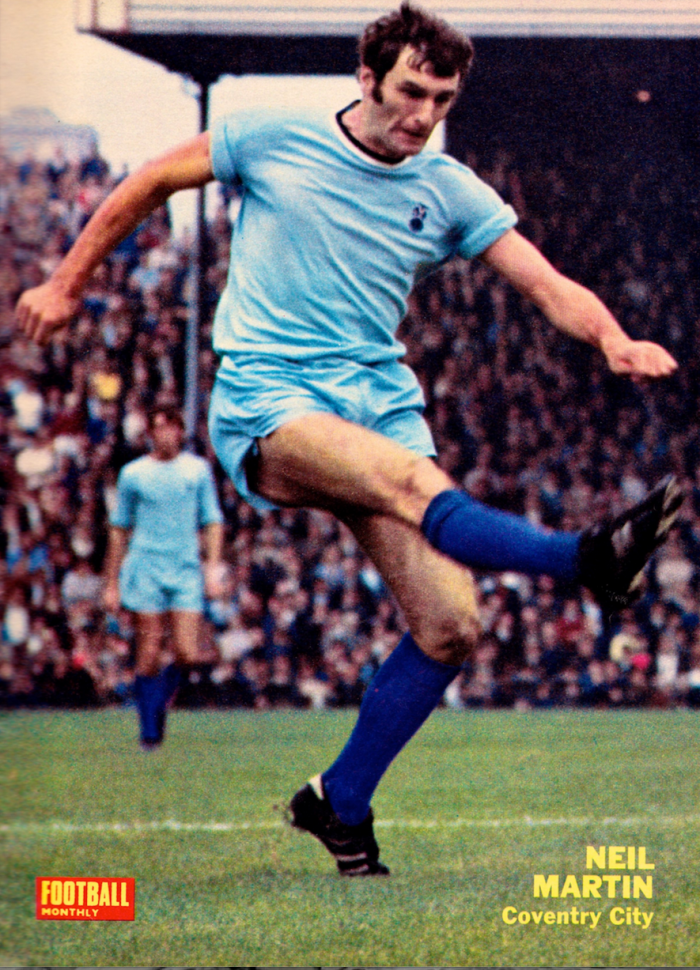
That move in February 1968 was to Coventry City and, in his chat with Ninian Cassidy, he admitted he was “tapped up” by the Sky Blues, taking a ‘phone call about his willingness to make a move while he was in a hotel about to play an away game at Sheffield Wednesday.

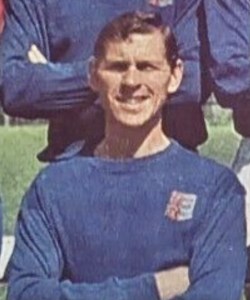
Noel Cantwell, who had taken over from Jimmy Hill as manager five months earlier, added Martin to a line-up that already included his former Queen of the South teammate Ernie Hannigan on the wing. Indeed, occasionally he was able to field an all-Scottish front five (the others were Gerry Baker, Willie Carr and Ian Gibson).

Martin certainly answered Cantwell’s need for more goals, netting a hat-trick in only his second game, a 3–0 home victory over Sheffield Wednesday. All three came in 36 first half minutes (a third-minute penalty, 32 and 39). He could have had four but missed a second penalty Coventry were awarded.
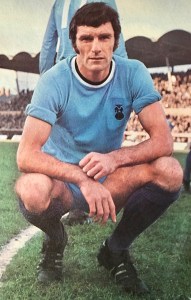
When City played in the Inter-Cities Fairs Cup in 1970, Martin scored the winner in a famous 2-1 victory over Bayern Munich at Highfield Road (unfortunately they’d lost the away leg 6-1).

Over his three years with the Sky Blues, he captained the side for a while and scored 45 goals in 122 first team games.

It was something of a surprise when he moved to Nottingham Forest, under Matt Gillies, in the spring of 1971 but he helped the struggling side stay up. Martin was 30 by then and when Forest were relegated at the end of the following season, it marked the end of his days playing top flight football.

In the 1974-75 season, Martin’s two goals in a 3-2 win over Sheffield Wednesday meant he passed the landmark of scoring 100 goals in English league football as well as in Scotland and he finished the season with 12 goals. He left the City Ground having scored 28 goals in 119 matches.

Martin’s final playing days were in the Republic of Ireland, with Dublin-based St Patrick’s Athletic, interestingly being given a lifeline by another former international striker who’d played for Brighton, Barry Bridges.
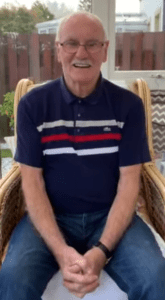
Recounting old times in a 2020 interview

In total, Martin played 248 club games in Scotland netting 161 times, he scored 135 goals in 401 appearances for English clubs and six times in 30 appearances abroad.

After hanging up his boots, Martin spent time as a youth coach at Walsall when Dave Mackay was the manager and the pair later spent 10 years together in Kuwait and Dubai (they won six league titles with Al-Arabi in Kuwait). He also had a difficult spell as joint manager of Walsall with Alan Buckley in the 1981-82 season.

After leaving football, he ran two pubs in Birmingham before retiring back to Tranent.

In 2012 he was in the news when he nearly lost the sight in his left eye through retinal vein occlusion (RVO) – a blockage in a vein which can cause blindness. A drug treatment – new at the time – saved the sight. Martin had initially thought the blurred vision he was suffering was cataracts.
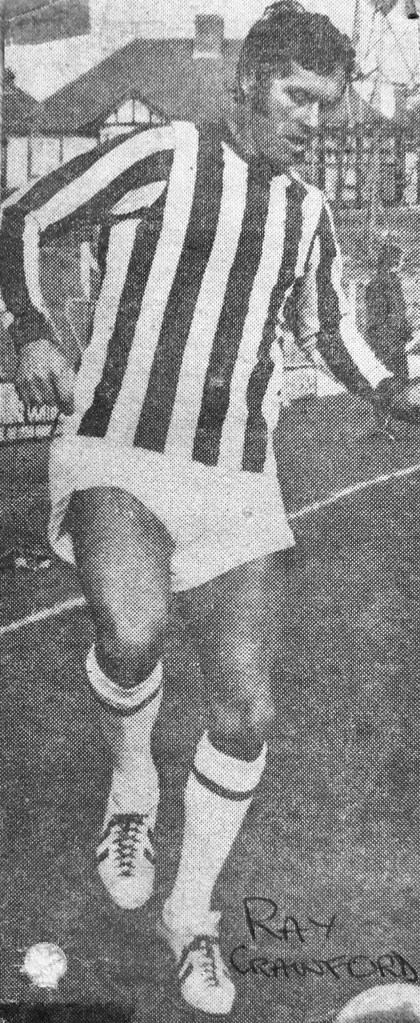
Goalscorer Ray Crawford took on Brighton backroom role

RAY CRAWFORD, one of the foremost goalscorers of the 1960s, came close to a swansong with the Albion and ended up coaching the club’s youngsters.

Crawford had been a key player in Alf Ramsey’s First Division title-winning Ipswich Town side having begun at hometown club Portsmouth and later netted 41 goals in 61 appearances for Wolverhampton Wanderers.

He joined Brighton in the autumn of 1971 after he had read they were struggling to score goals. Earlier the same year, he’d hit the headlines at the age of 35 when he scored twice for Fourth Division Colchester United as they sensationally beat Don Revie’s First Division Leeds United 3-2 in the FA Cup.

After a subsequent short stint playing in South Africa, homesickness brought him and his family back to the UK and the search began for a way to continue his celebrated career in the game.

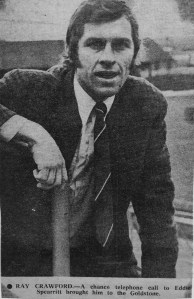
He got in touch with his former Ipswich teammate, Eddie Spearritt, a key member of Albion’s squad, and the utility player persuaded manager Pat Saward to offer Crawford a trial.

“I did well enough in my trial week for Pat to ask me to stay for another month and to see how things went,” Crawford recalled in his eminently readable autobiography Curse of the Jungle Boy (PB Publishing, 2007).

Crawford found the net for the reserves, but a contractual issue with his last club, Durban City (who wanted a fee the Albion weren’t prepared to pay) prevented him joining as a player.

Meanwhile, the previous goalscoring slump that had first drawn him to the club was remedied by a decent run of goals from Peter O’Sullivan to supplement a revival in the form of strikers Kit Napier and Willie Irvine.

It meant Crawford, at 36, hung up his boots (although he still managed a cameo 15 minutes for the reserves in October 1973) to concentrate on coaching.

In the days before large teams of scouts and analysis tools, he would also run an eye over Albion’s future first team opponents to highlight their strengths and weaknesses.

“His dossiers on opposing styles and individual players have proved of great value in the team talks,” reported John Vinicombe in an Evening Argus supplement celebrating Albion’s promotion from the Third Division.

“When I returned to England after a spell with Durban City my only thoughts were of playing,” Crawford recalled. “Before I went to South Africa, I had a good season with Colchester United scoring 32 goals, and, of course, there were the two goals that I scored against the great Leeds United, knocking them out of the FA Cup, which still made me believe that my career was in playing.

Crawford scores v Leeds in the FA Cup

“But when my month’s loan from Durban City expired, and Pat Saward asked me if I would like to join the staff, I jumped at the chance.”

It didn’t stop Saward continuing to search for someone to supplement the strikeforce as the Albion went neck and neck with Aston Villa and Bournemouth for promotion.

Saward even brought in on trial another former England striker, the ex- Everton, Birmingham and Blackpool striker Fred Pickering from Blackburn Rovers. Like Crawford, he scored for the reserves but he wasn’t deemed fit enough for the first team.

Eventually, in March 1972, Saward found the missing piece of his jigsaw in Ken Beamish, a record transfer deadline day signing from Tranmere Rovers.

Beamish chipped in with some vital late goals to help Albion edge out the Cherries to secure Albion’s promotion as runners up to Villa.

The new man’s contribution earned Crawford’s approval in Brighton & Hove Albion Supporters’ Club’s official souvenir handbook, produced to celebrate the promotion.

Crawford as coach

He said: “I don’t like to single out players because football is a team game, but I must on this occasion. Ken Beamish added the final bite up front, and those vital goals that he scored helped us into Division II. What a player this boy is – he never gives up!”

It emerged in Crawford’s autobiography that he also had a friend in Albion chairman Mike Bamber, having got to know him when the Colchester team stayed at Bamber’s Ringmer hotel before a FA Cup tie.

Ever one for rubbing shoulders with stars, Bamber had subsequently invited Crawford back to Sussex to open a local fete in exchange for a weekend stay at the hotel with his family.

“Since that time, I had regarded Mike as a friend and a man I could trust,” said Crawford.

The former striker’s work with the club’s youngsters was evidently appreciated; for instance by Steve Barrett (below left) who said in 2011: “Ray was my coach when I was an apprentice and a young pro. Always had a great enthusiasm for the game and, even in training at the age of about 40, had a good touch and great eye for goal.

“Was great fun on our annual youth trips to tournaments to Holland or Germany. Was very modest in general but loved to remind everyone of his two goals for Colchester against the then mighty Leeds in the FA Cup. A really nice man.”

When Saward was sacked in the autumn of 1973, Crawford assisted caretaker manager Glen Wilson for the home fixture against Southport, which Albion won 4-0.

As for his relationship with Bamber, it counted for nothing as soon as the chairman astonished the football world by appointing Brian Clough and Peter Taylor to succeed Saward.

Crawford was angered by Clough’s “abrasive and stubborn” shenanigans, for instance being bought a pint in a Lewes hotel bar and then left waiting with Wilson as the former Derby duo disappeared for two hours.

“I wasn’t prepared to be treated like that and I soon found out that the way he spoke to people was as I’d expected,” Crawford recalled. “One day he left the players sitting in the dressing room for two hours before training. I don’t know why. It left a sort of threatening pressure on the players that I didn’t agree with.”

It probably didn’t help matters that Crawford’s outspoken wife Eileen also took issue with Clough when he tried to stop the players’ wives having a smoke while socialising before a match. “I don’t smoke, but if I did, it wouldn’t be anything to do with you!” she told him.

Crawford had heard that his first club, Portsmouth, were looking to revive a youth set-up that had been abandoned under a previous manager, so he applied to take on the role of setting it up and running it and headed back to Fratton Park in December 1973.

Born just a mile away from Portsmouth’s famous home ground, the eldest of four children, on 13 July 1936, Crawford initially looked unlikely to follow the sporting prowess of his dad, who had been a professional boxer, because of asthma.

Nevertheless, his enthusiasm for football was sparked by a display of skill from Pompey player Bert Barlow when he did a coaching session at his school, and he joined a local football club called Sultan Boys.

Then he was taken to see Portsmouth play at Fratton Park and he set his heart on stepping out onto that turf himself.

At 14 he started to fill out in height and weight. “I changed quickly from a skinny, shy, asthmatic youth into a strong, young athlete, representing Hilsea Modern School and Portsmouth Schools in cross country running and in the 440 yards,” he said.

He also excelled at cricket and was offered the chance to have a trial with Hampshire County Cricket Club. But his heart was set on football.

Eventually a break came courtesy of a friend who was already in Portsmouth’s youth team. Crawford was invited to twice-weekly training and, after impressing, was taken on as a junior.

In the meantime, he worked by day for the Portsmouth Trading Company making concrete and breeze blocks, which involved spending around eight hours every day lifting 500 heavy blocks onto pallets to dry. It certainly got him fit.

The football club eventually offered him a contract after two years of training with them, but then (as was the case with all young men at the time) he had to do two years’ National Service in the army.

That’s where the title of his book comes in because he was posted to Malaya where word of his footballing ability had already spread. He was invited to play for Selangor Rangers, the biggest club in Kuala Lumpur, and the army also gave him permission to play for the Malayan Federation on a tour of Cambodia and Vietnam.

“Whilst I took part in many more football matches in Malaya than military exercises, I did go out into the jungle on a few occasions with the battalion,” he recalled.

Back at Portsmouth in the autumn of 1956, Crawford resumed his football career, initially in Pompey’s reserve team. After scoring 33 goals in 39 reserve team games, he finally got a first team call-up, making his debut in a 0-0 draw against Burnley at Fratton Park on 24 August 1957.

In the following game, he scored two in two minutes as Spurs were beaten 5-1 at home, but the following month he suffered a broken ankle that sidelined him for two months.

The beginning of the end of his fledgling Pompey playing career came in December that year when he lost it with the club chairman, Jack Sparshatt, who puzzlingly decided to enter the dressing room at half-time during a game, voicing his disapproval at the performance. Crawford told him to f*** off!

Perhaps not surprisingly he was left out of the side for a month.

He did get selected again in the new year, playing up front with Irishman Derek Dougan, but, that summer, Eddie Lever, the manager who’d given him his debut, was sacked and it wasn’t long before his replacement, Freddie Cox, sold Crawford to Ipswich.

Although he hadn’t wanted to move, future England boss Ramsey was persuasive and Crawford admitted: “I had no idea at the time that this would eventually turn out as one of the best decisions I ever made in life.”

The Hampshire lad adapted well to Suffolk and by the end of his first season at Town had scored 25 goals in 30 league games. Not a bad return but even better was to come and with Crawford and strike partner Ted Phillips rattling in the goals, Ipswich won back-to-back titles, winning the second tier championship in 1960-61 and the elite title in 1961-62.

Crawford scored 40 and Phillips 30 as Ipswich won promotion in 1961 and, at the higher level the following season, Crawford bagged another 37 goals.

Such prolific scoring inevitably brought him to the attention of the international selectors and, at the age of 25, he won two England caps. The mystery was why he didn’t win more.

Crawford made his England debut in a Home International against Northern Ireland at Wembley on 22 November 1961. He was credited with setting up England’s goal, scored by Bobby Charlton in the 20th minute, and the game ended in a disappointing 1-1 draw.

The 30,000 crowd for the Wednesday afternoon match was a record low for Wembley at that time. The prolific Ipswich striker only won one more cap, and then only because of a fractured cheekbone injury to first choice Alan Peacock of Middlesbrough.

Nonetheless, Crawford seized his chance and got on the scoresheet after only seven minutes against Austria in a friendly at Wembley on 4 April 1962.

He turned and buried a shot to give England an early lead which Ron Flowers increased with a penalty before half-time. Roger Hunt scored a third for England in the second half. Hans Buzek pulled one back for the visitors in the 76th minute.

As well as Hunt, future World Cup winners Ray Wilson and Bobby Charlton were also in the England line-up, together with 1966 squad members Jimmy Armfield and John Connelly. The team was captained by Fulham’s Johnny Haynes. Jimmy Melia was part of the squad but didn’t play.

Jimmy Magill, who later joined Brighton from Arsenal, was in the Irish side whose equaliser was scored by Burnley’s Jimmy McIlroy. Spurs’ Danny Blanchflower won his 50th cap for his country that day.

Having scored 33 goals in the First Division, Crawford was gutted not to be selected in the England squad for the 1962 World Cup in Chile and future England boss Ramsey was mystified too. “I just don’t understand it and I will go as far as saying it is downright unfair,” he said.

Crawford reckoned it was because England coach Harold Shepherdson, who also held a similar role at Middlesbrough, always advanced the claims of Boro’s aforementioned Peacock, who was chosen ahead of him despite scoring fewer goals, and in the Second Division.

Although Crawford was selected three times for the Football League representative side, he didn’t win any more full international caps.

Probably more surprising was that his old club boss Ramsey, who had seen him at close quarters for Town, didn’t turn to him after he’d taken charge of England in October 1962. But Ramsey had an embarrassment of riches at his disposal, not least in the shape of Jimmy Greaves and Bobby Smith along with Liverpool’s Hunt and later Geoff Hurst.

Crawford’s first meeting with Jackie Milburn, who took over from Ramsey as Ipswich boss, simply involved the former Newcastle and England centre-forward saying: “Nice to meet you Ray, you won’t be here long.”

Sure enough, he wasn’t. Despite his past successes, Ipswich cashed in and sold him to Wolves for £55,000 in September 1963.

His debut was somewhat ignominious as Wolves succumbed 6-0 at Liverpool (their ‘keeper Malcolm Finlayson was forced off injured) but Crawford scored twice in his second game as Wanderers won 2-1 at Blackpool (for whom Alan Ball scored).

Crawford went on to finish that first season with 26 League goals to his name in 34 games and was named Player of the Year, although Wolves finished in a disappointing 16th place.

Crawford, who is remembered fondly on the website wolvesheroes.com, had been joined at Molineux by Liverpool’s Melia (“a fine passer of the ball”) but when Stan Cullis, the manager who signed them both, was sacked, neither of them saw eye to eye with his successor, Andy Beattie.

Melia was sold to Southampton and the rift with the new boss saw Crawford switch to Black Country rivals West Brom in February 1965 for a £35,000 fee. He later reflected it was a case of jumping out of the frying pan into the fire because he didn’t enjoy a good relationship with Baggies boss Jimmy Hagan.

The striker played only 16 matches for Albion, scoring eight goals, before asking for a transfer in March 1966 and being granted his wish. “I did my best but never had a decent run of games in the first team,” he said. “It never quite worked out but I enjoyed most of my time there and the fans could not have been better.”

It was former club Ipswich, battling at the wrong end of the Second Division, who rescued him and, even though it meant dropping down a division, he was happy to return to Portman Road under Bill McGarry.

Crawford struck up a useful striking partnership with prolific American-born Gerry Baker. By the end of the season, he’d scored eight goals in 13 appearances and Town managed to avoid relegation.

He was part of the Ipswich side that won the Second Division championship the following season, netting 25 goals in 48 appearances, and by then was approaching his 32nd birthday.

The goals continued to flow with Ipswich back amongst the elite, Crawford scoring 21 in 42 games in the 1967-68 season. But more managerial upheaval was around the corner, when McGarry left to become manager of Wolves.

“When McGarry left for Wolves, I had lost my master and mentor, leaving a psychological gap for me that wasn’t going to be filled by anyone else however qualified or good they were as a manager,” said Crawford.

Even before Bobby Robson succeeded McGarry, Crawford started to weigh up his options and he decided he fancied a move to South Africa, where his old Ipswich teammate Roy Bailey had settled.

Although Town chairman John Cobbold initially agreed to give him a free transfer, the Board later changed their mind and decided they wanted some compensation for his services. Instead of going to South Africa, he ended up moving to Charlton Athletic for £12,000.

The move to The Valley turned sour after he refused to join a training camp organised by manager Eddie Firmani because his family were ill and he needed to be at home to look after them. He was sacked after playing just 22 games for the Valiants, during which time he scored seven goals.

Southern League Kettering provided a short-term means of getting back into playing but it was Fourth Division Colchester United who took him on and he repaid their faith by scoring 31 goals in 55 matches under Dick Graham, the most memorable being that pair against Leeds.

Crawford eventually got his move to South Africa in August 1971, joining Durban City, but his family couldn’t settle and they returned to the UK three months’ later.

During his time as youth coach at Portsmouth, he was responsible for signing Steve Foster and, in his autobiography, recalls how a tip-off from Harry Bourne, a local schoolteacher set him on the path of the future Albion and England centre-back.

Foster had been released by Southampton and Crawford went to the family home in Gladys Avenue, Portsmouth, to invite him to train with Pompey. Foster’s mother was at a works disco at Allders and Crawford went to find her there and had to shout above the sound of the music that Portsmouth were interested in signing her son.

The youngster, 18 at the time, got in touch the next day and, before long, was switched from a centre-forward to a centre-back, after Crawford’s former Ipswich teammate Reg Tyrrell told him: “That no.9, he’s no centre-forward, but he’d be a good number 5.”

After he left Portsmouth in 1978, Crawford took over as manager at Hampshire league side Fareham Town and later managed Winchester City before finally retiring from the game in 1984 to become a merchandising rep.