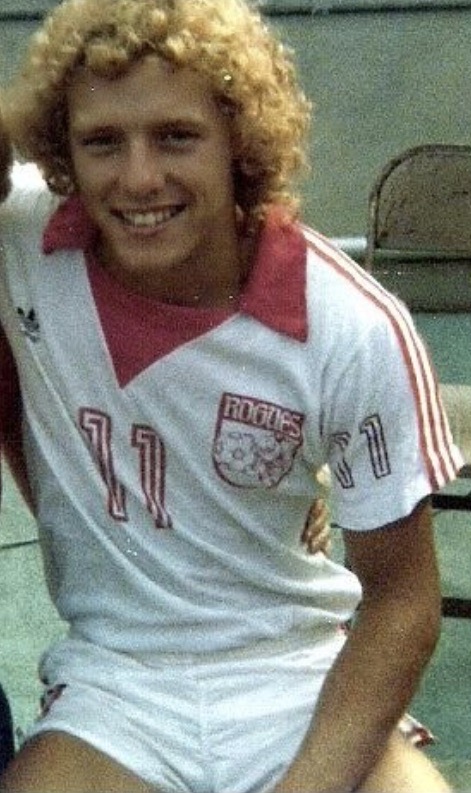
Crunching tackler ‘Tank’ Clark: a legend at two seaside clubs

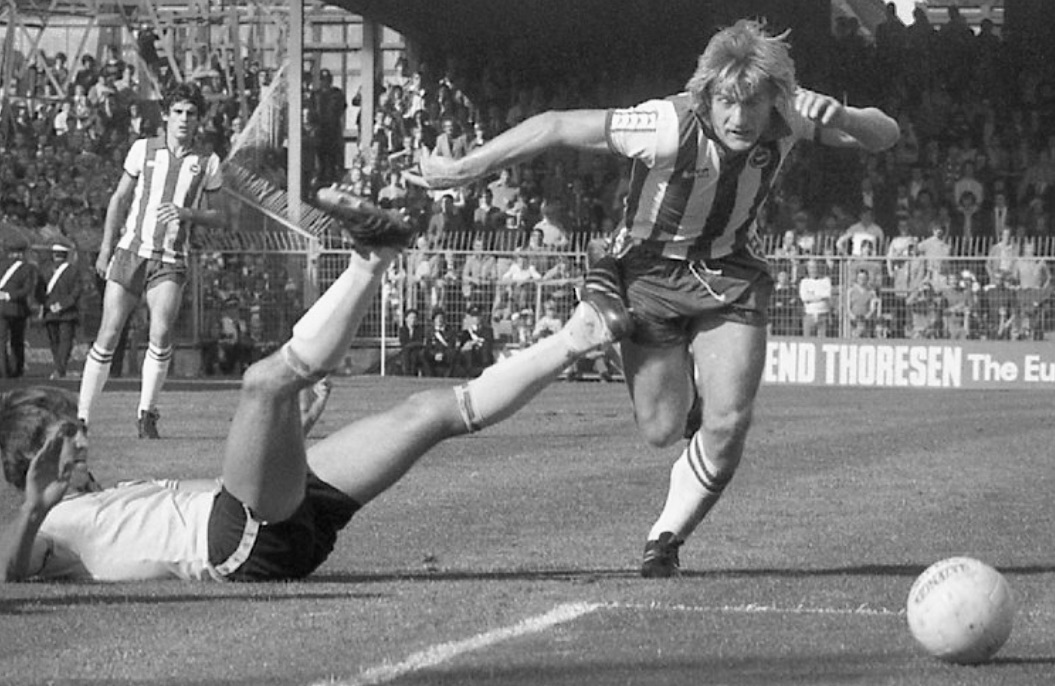
VIKING lookalike Paul Clark made a lasting impression on plenty of players with robust tackling which earned him ‘legend’ status among fans of Brighton and Southend United.

Described in one programme article as “the big bustling blond with the biting tackle”, Clark was given the nickname ‘Tank’ for his no-nonsense approach. A Southend fan lauded “his crunching tackles and never say die attitude”.

Clark himself reflected: “Wherever you go the supporters tend to like someone who is wholehearted and when it came to 50-50 challenges, or even sometimes 60-40, I didn’t shy away from too many, and the supporters just took to it.”
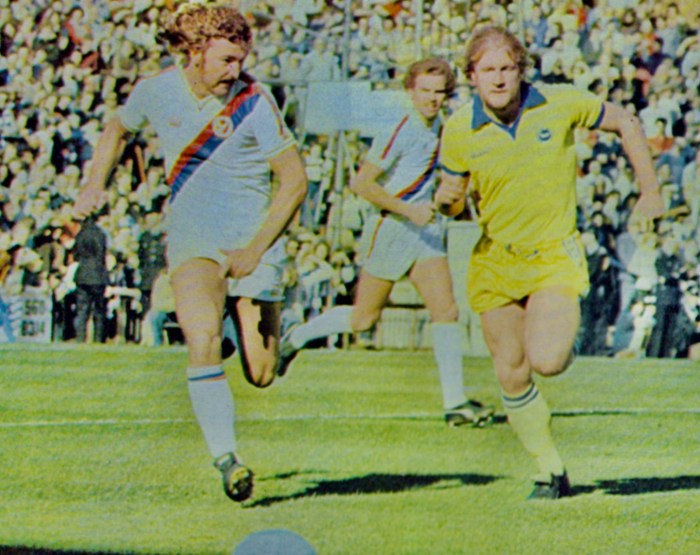
In Albion yellow against Palace

Giving further insight to his approach, he said: “You can go right up to the line – as long as you don’t step over it, then you’re OK.

“I used to pick up a booking during the first five or 10 minutes, then I knew I had to behave myself for the rest of the game. Despite the reputation I had, I was never sent off in over 500 games.”

A trademark strike at home to West Ham

Former teammate Mark Lawrenson said of him: “You would hate to have to play against him because quite often he would cut you in two. With him and ‘Nobby’ (Brian Horton) in the side, we definitely didn’t take any prisoners. One to rely on.”

A former England schoolboy international, it was said of the player in a matchday programme:

“Paul is the first to admit that skill is not his prime asset but there is no doubt as to the strength of his tackle. He is a real competitor and is also deceptively fast, being one of the best sprinters on the Goldstone staff.”

Born in south Benfleet, Essex, on 14 September 1958, Clark went to Wickford Junior School where he played for the school football team and the district primary schools’ side. When he moved on to Beauchamp Comprehensive, selection for his school team led to him playing for the Basildon Schools’ FA XI.

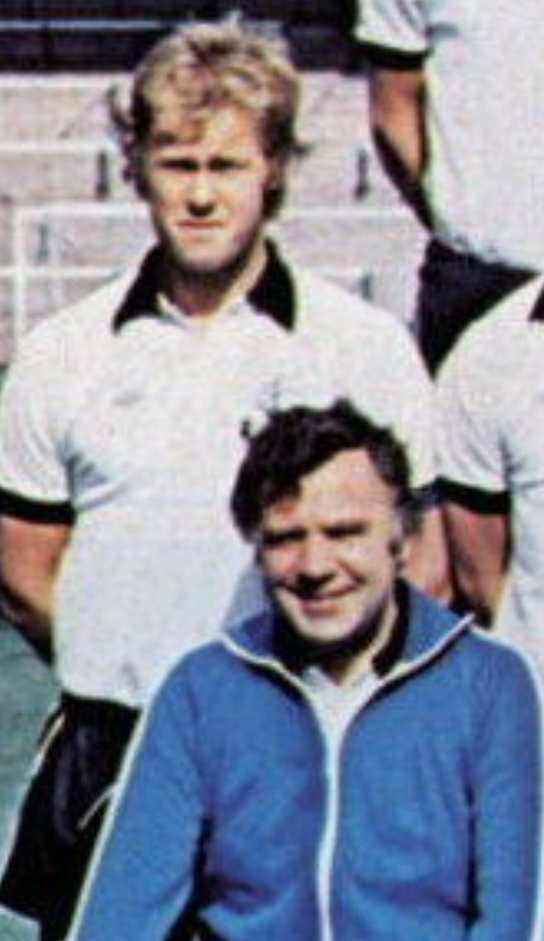
Clark as an England schoolboy

This in turn led to him being selected to play for England Schools at under 15 level, featuring against Scotland, Ireland, Wales, West Germany and France before going on a tour of Australia with the same age group. Contemporaries included future full time professionals Mark Higgins, Ray Deakin, Kevin Mabbutt and Kenny Sansom.

Clark left school at 16 before taking his O levels when Fourth Division Southend offered him an apprenticeship. He made his first team debut shortly before his 18th birthday in a 2-1 win over Watford.

Two months later, he won the first of six England Youth caps. He made his debut in the November 1976 mini ‘World Cup’ tournament in Monaco against Spain and West Germany alongside future full England internationals Chris Woods, Ricky Hill and Sammy Lee.

The following March, he played in England’s UEFA Youth tournament preliminary match against Wales when they won 1-0 at The Hawthorns. Sansom was also in that side. And he featured in all three group matches at the tournament that May (England beat Belgium 1-0, drew 0-0 with Iceland and 1-1 with Greece). Teammates included Russell Osman and Vince Hilaire.
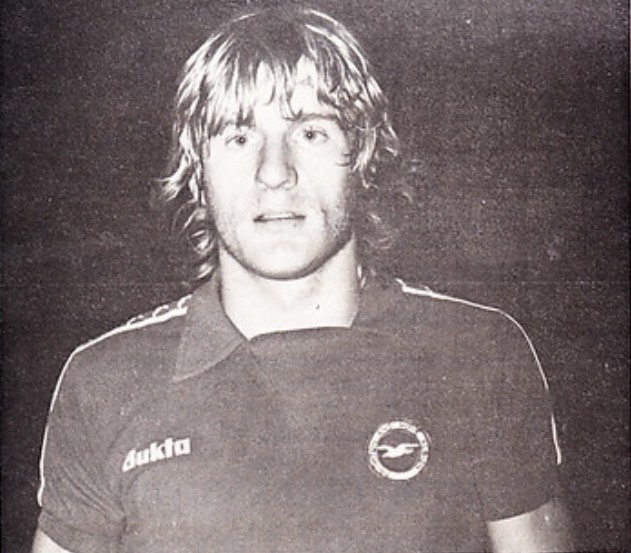
Clark was only a third of the way into his second season at Southend when Alan Mullery sought to beef up his newly-promoted Brighton side in the autumn of 1977, and, in a part exchange deal involving Gerry Fell moving to Roots Hall, Clark arrived at the Goldstone. He made his debut for the Seagulls in a goalless draw at White Hart Lane on 19 November 1977 in front of a crowd of 48,613. And he came close to crowning it with a goal but for an outstanding save by Spurs ‘keeper Barry Daines.

In full flight, as captured by photographer George Erringshaw

When Spurs visited the Goldstone later that season, Clark put in a man of the match performance and scored a memorable opener, following a solo run. A subsequent matchday programme article was suitably poetic about it.

“It showed all the qualities looked for in a player: determination, speed, skill and most of all the ability to finish….if any goal was singled out, Paul’s was certainly one to treasure.”

Albion went on to beat Spurs 3-1, although the game was remembered more because it was interrupted twice when the crowd spilled onto the pitch.

After only 12 minutes, referee Alan Turvey took the players off for 13 minutes while the pitch was cleared of Albion fans who’d sought safety on the pitch from fighting Spurs’ hooligan fans.

In the 74th minute, with Spurs 3-1 down and defender Don McAllister sent-off, their fans rushed the pitch to try to get the game abandoned. But police stopped the invasion getting out of hand and the game continued after another four-minute delay.

Clark’s goal on 16 minutes had been cancelled out six minutes later when Chris Jones seized on a bad goal kick by Eric Steele but defender Graham Winstanley made it 2-1 just before half-time.

Albion’s third goal was surrounded in controversy. Sub Eric Potts claimed the final touch but Spurs argued bitterly that Malcolm Poskett was offside.

Clark remembered the game vividly when interviewed many years later by Spencer Vignes for the matchday programme. The tenacious midfielder put in an early crunching tackle on Glenn Hoddle and after the game the watching ex-Spurs’ manager Bill Nicholson told him: “Well done. You won that game in the first five minutes when you nailed Hoddle.”

Said Clark: “I was 19 at the time so to get a pat on the back from him was much appreciated.”

It was one of three goals Clark scored in his 26 appearances that season (nine in 93 overall for Albion) but he wasn’t always guaranteed a starting berth and in five years at the club had a number of long spells stuck in the reserves.

Midfield enforcer or emergency defender were his primary roles but Clark was capable of unleashing unstoppable shots from distance and among those nine goals he scored were some memorable strikes.

For instance, as Albion closed in on promotion in the spring of 1979, at home to Charlton Athletic, Clark opened the scoring with a scorching 25-yard left foot volley in the 11th minute. Albion went on to win 2-0.

The following month, Clark demonstrated his versatility at St James’ Park on 3 May 1979 when Albion beat Newcastle 3-1 to win promotion to football’s elite level for the first time. Clark played in the back four alongside Andy Rollings because Mark Lawrenson was out injured with a broken arm.

Celebrating promotion with Peter O’Sullivan and Malcolm Poskett

“Not many people can say they played in a side that got Brighton up to the top flight,” said Clark. “It’s something I’m still immensely proud of.”

Once they were there, Clark missed the opening two matches (defeats at home to Arsenal and away to Aston Villa) and had an ignominious start to life at the higher level when he conceded a penalty within three minutes of going on as a sub for Rollings away to Manchester City on 25 August 1979.

Some observers thought Clark had played the ball rather than foul Ray Ranson but referee Pat Partridge thought otherwise and Michael Robinson stepped up to score his first goal for City from the resultant penalty. It put the home side 3-1 up: Teddy Maybank had equalised Paul Power’s opener but Mike Channon added a second before half-time.

Partridge subsequently evened up the penalty awards but Brian Horton blazed his spot kick wide of the post with Joe Corrigan not needing to make a save. Peter Ward did net a second for the Seagulls but they left Maine Road pointless.

Ahead of Albion’s fourth attempt to get league points on the board, Clark played his part in beating his future employer Cambridge United 2-0 in a second round League Cup match.

Three days later, he was on the scoresheet together with Ward and Horton as Albion celebrated their first win at the higher level, beating Bolton Wanderers 3-1 at the Goldstone.

It was Clark’s neat one-two with Ward that produced the opening goal and on 22 minutes, Maybank teed the ball up for Clark, who “belting in from the edge of the box, gave it everything and his shot kept low and sped very fast past (‘Jim’) McDonagh’s right hand,” said Evening Argus reporter John Vinicombe.

Gerry Ryan replaced Clark late in the game and after 12 starts, when he was subbed off three times, and four appearances off the bench, his season was over, and it wasn’t even Christmas.

A colour photo of a typical Clark tackle (on QPR’s Dave Clement) adorned the front cover of that season’s matchday programmes throughout but he didn’t start another game after a 4-0 League Cup defeat at Arsenal on 13 November.
Programme cover shot

He was sub for the following two games; the memorable 1-0 win at Nottingham Forest and a 1-1 draw at Middlesbrough, but Mullery had signed the experienced Peter Suddaby to play alongside Steve Foster, releasing Lawrenson to demonstrate his considerable repertoire of skills in midfield alongside skipper Horton and Peter O’Sullivan.

Young Giles Stille also began to press for a place and later in the season, Neil McNab was added to the midfield options, leaving Clark well down the pecking order in the reserves. Portsmouth wanted him but he rejected a move along the coast, although he had a brief loan spell at Reading, where he played a couple of games.

But Clark wasn’t finished yet in Albion’s colours and, remarkably, just over a year after his last first team appearance, with the Seagulls struggling in 20th spot in the division, he made a comeback in a 1-0 home win over Aston Villa on 20 December 1980.

Albion had succumbed 4-3 to Everton at Goodison Park in the previous match and Mullery told the Argus: “We badly needed some steel in the side and I think Clark can do that sort of job.”

Under the headline ‘The forgotten man returns’ Argus reporter Vinicombe said Mullery hadn’t changed his opinion that Clark was not a First Division class player, but nevertheless reckoned: “Paul’s attitude is right and I know he’ll go out and do a good job for me.”

For his part, Vinicombe opined: “The strength of Clark’s game is a daunting physical presence. His tackling is second to none in the club and Mullery believes he will respond to the challenge.”

Clark kept the shirt for another nine matches (plus one as a sub), deputising for Horton towards the end of his run, but his last first team game was in a 3-1 defeat at Norwich at the end of February.

Clark remained on the books throughout Mike Bailey’s first season in charge (1981-82) but, with Jimmy Case, Tony Grealish and McNab ahead of him, didn’t make a first team appearance and left on a free transfer at the end of it.

Back to Southend

He returned to Southend where he stayed for nine years and was player-manager on two occasions. Fans website shrimperzone.com moderator ‘Yorkshire Blue’ summed up his contribution to their cause thus: “In the top five all-time list for appearances, an inspiration in four promotions, one of the toughest tacklers of all-time and a man whose commitment for his home-town club could never be doubted.”

Clark was still only 27 when he had his first spell as manager, in caretaker charge after Dave Webb had quit following a bust-up with the club chairman, and he managed to steer United to promotion back to the third tier.

When Webb’s successor Dick Bate lasted only eight games of the new season, Clark was back at the helm, in turn becoming the youngest manager in the league.

His first hurdle ended in a League Cup giant killing over top flight Derby County (who included his old teammate John Gregory) when the Us had another former Albion teammate, Eric Steele, in goal.

A Roy McDonough penalty past England goalkeeper Peter Shilton at Roots Hall settled the two-legged tie (the second leg was goalless at the Baseball Ground) which the writer described as “arguably their biggest ever cup shock”.

In the league, player-manager Clark guided Southend to a safe 17th place but it went pear-shaped the following season. Clark only played 16 games, Southend were relegated, and Webb returning midway through the season as general manager.

Back-to-back promotions in 1989-90 and 1990-91 proved to be a more than satisfactory swansong to his Southend career, and in the first of those he found himself forming an effective defensive partnership with on-loan Guy Butters in the second half of the season.

In 1990-91, he missed only six games all season as the Shrimpers earned promotion to the second tier for the first time in their history, and he had a testimonial game against Arsenal.

But, after a total of 358 games for Southend, he left Roots Hall to join Gillingham on a free transfer.

Over three seasons, he played 90 league games, and was caretaker manager in 1992, before retiring at the end of the 1993-94 season. Gillingham’s top goalscorer with 18 that season was a young Nicky Forster and other Albion connections in that squad included Mike Trusson, Paul Watson, Neil Smillie, Andy Arnott and Richard Carpenter.

After Gillingham, Clark played non-league for Chelmsford City but left to become assistant manager to Tommy Taylor at Cambridge United. In 1996 he followed Taylor in a similar role to Leyton Orient.

Southend fans hadn’t heard the last of him, though – quite literally. He became a co-commentator on Southend games for BBC Radio Essex.

In the 2009-10 season, Clark was temporarily assistant manager to Joe Dunne at Colchester United.

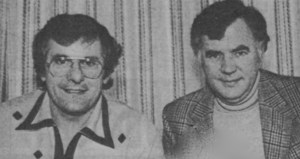
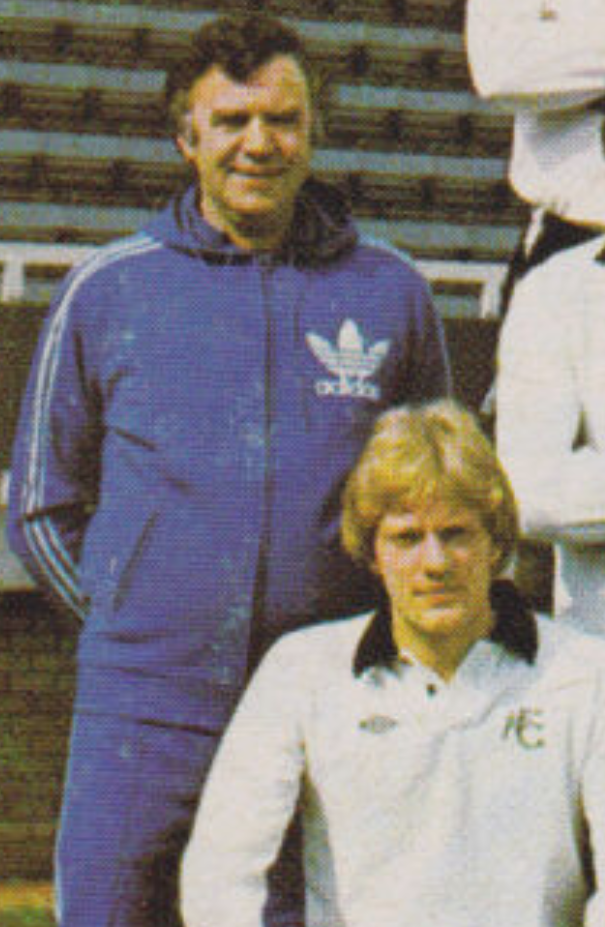
Mullery’s deputy Ken Craggs had a keen eye for football talent

ONCE A PROMISING Newcastle United youth team footballer, Ken Craggs didn’t make it as a player but went on to serve Albion as a ‘backroom boy’.

Indeed, he had three separate spells with the club, the first being the most prominent. Having joined the Albion in 1978, Craggs was at Alan Mullery’s side as assistant manager when Brighton first climbed to the top of English football.

In partnership with Alan Mullery

He later worked as a scout for Jimmy Melia, who himself had been a scout for the Albion under Mullery.

And Brian Horton, the captain who led the Seagulls all the way from the Third Division to the First, appointed Craggs as a scout when he managed the Albion between 1998 and 1999.

Craggs had also worked for Horton when he was the manager at Manchester City, Huddersfield Town and Hull City.

Horton viewed Craggs as a mentor and kept in touch with him long after their footballing days were over.

When Craggs died aged 85 in July 2021, Horton told Brian Owen of The Argus: “Ken knew an awful lot of people in the game. We got on great. He was just fun to be around.”

In a team line-up

Referring to how Mullery and Craggs worked together, he said: “Mullers was a hard task master, which I enjoyed. I like people who demand more. Ken was his back stop.

“He would be the buffer between manager and players. They would work in tandem and they were good for each other.”

It was chairman Mike Bamber’s instruction for Mullery to sack Craggs, Melia and coach George Aitken as a cost-cutting measure that prompted the ebullient ex-Spurs and Fulham captain to quit the club in 1981.

“He even wanted to get rid of the kit-man Glen Wilson, who had been at Brighton for years,” Mullery wrote in his autobiography. “The club meant the world to him. I couldn’t have lived with myself if I’d fired these people.”

Mullery swapped managerial chairs with Mike Bailey and moved to newly-promoted Charlton Athletic and Craggs went with him. When Mullery left the club after a year, his assistant took over the Second Division side.

Craggs was in the job for six months and the club history books record how he was the manager when the Addicks pulled off something of a coup in October 1982 by signing former European footballer of the year and Danish international Allan Simonsen from Barcelona for £324,000 after he had been forced out by the signing of Diego Maradona. It had been thought Simonsen would either go to Tottenham or Real Madrid but he revealed publicly that he wanted to play for a club at a less stressful level.

With only five wins in 16 league matches, Craggs’ last game in charge at The Valley saw Rotherham United wallop the home side 5-1 with ex-Brighton winger Tony Towner proving a handful on the right and scoring one of the goals and Ronnie Moore hitting a hat-trick.

Craggs was born on 10 April 1936 in Quarrington Hill, a small mining community in County Durham, close to Cassop Colliery, where his father worked and he expected to follow him.

But he was noticed playing for the local village school football team and he was selected to play inside forward for the Durham Schools representative side. That got him noticed by Newcastle United.

He joined them as an amateur and played in the club’s youth team, although it wasn’t uncommon for him to play two games in a day, turning out for United and then his local youth club side as well.

Young Craggs was invited to have a trial for the England Youth team and it was during one of these sessions that he was spotted by Fulham scout Bill Rochford.

At the tender age of 17, he seized the chance to leave home and head for the bright lights of London and a career as a professional at Fulham.

Craggs shared digs with Bobby Robson, another miner’s son from Durham who had joined Fulham.

“Ken never won a first team place, but he was a powerful centre-half for the reserves,” Mullery remembered.

Craggs spent seven years on the playing staff without breaking into the first team.

He dropped into non-league football, initially with King’s Lynn in the summer of 1960 and later played for Folkestone, Tunbridge Wells United, Dartford and Hounslow, where he was the player-coach.

He then returned to Fulham in September 1968 as a part-time youth team coach and scout under Robson. He found and developed the likes of Brian Greenaway, Les Strong, Tony Mahoney, Terry Bullivant and goalkeeper Perry Digweed, who later moved to Brighton for £150,000.

He eventually joined Fulham in a full-time coaching capacity and Robert Wilson, who went on to make 256 appearances for the Cottagers, recalled: “I joined Fulham as a 16-year-old in 1977, when Ken Craggs was in charge of the youth side and from there the likes of Tony Gale, Dean Coney, Paul Parker, Jeff Hopkins, Jim Stannard, Peter Scott, John Marshall and many others all progressed to the league team.”

Team line-ups of that time show Craggs pictured alongside Barry Lloyd and Teddy Maybank, who later followed Craggs to the Goldstone for a fee of £238,000.

Another striker who caught Craggs’ eye when he was a coach at Fulham was Malcolm Poskett. After Craggs moved to Brighton, the player’s goalscoring form at Hartlepool eventually led to a transfer to the Goldstone, the £60,000 fee representing a tidy profit for the struggling north east minnows.

Clothes modelling with Gary Stevens and Mark Lawrenson

Others who benefited from his acumen included Gary Stevens, who was released by the aforementioned Robson when he was manager at Ipswich Town, but picked up by Brighton.

Stevens said: “Ken played a huge part in many of our careers. He was the main reason I came to Brighton as a 16-year-old and I will always be grateful for his contribution.”

Giles Stille was a part-time player at Kingstonian when Craggs spotted him and after turning pro he made his top flight debut against Manchester City in December 1979 when going on as a sub for Horton in Albion’s 4-1 win. Unfortunately, his time at Brighton was beset by injuries and illness and he was forced to retire prematurely when only 26.

The Albion was quite a different club when Craggs returned for a third spell in 1998, not least because the side was playing home games in exile at Gillingham. His role was to help Horton and his no.2 Jeff Wood to look for bargain signings.

For instance, Craggs and Wood unearthed Gary Hart, who signed from Stansted for £1,000 and a set of playing kit and he went on to become something of a club legend.

“Ken and Jeff knew more players from down south than me ,” said Horton. “He would have definitely gone to watch him on Jeff’s recommendation.

“We put him into a reserve game at Worthing and he only needed one game for me and that was it, we were doing the deal.”

The goalscoring legend who slipped through Brighton’s net

ONES that got away always make for fascinating stories and a striker who went on to become a goalscoring legend slipped through the net at both Brighton and Burnley.

Ian Muir is hailed an all-time hero by fans of Tranmere Rovers for whom he scored 180 goals in all competitions during what many regard as the best period in Rovers’ history. If it hadn’t been for injury, he could have played in the Premier League and Europe for Leeds United.

But he’s barely remembered for the struggles he had to get games at Brighton, let alone in a month with the Clarets.

Success could have eluded himf it hadn’t been for the time he spent at Brighton alongside the legendary Frank Worthington. He was considering a move to non-league Maidstone United, but, when Worthington quit Brighton in the summer of 1985 to take his first step into management on the Wirral, he made Muir his first signing.

“Ian Muir was a fantastic forward with great touch,” Worthington told Spencer Vignes in an Albion matchday programme interview. “He did things in training you just wouldn’t believe, yet he wasn’t even making the side at Brighton under Chris (Cattlin).”

Cattlin had taken the youngster on after he had been given a free transfer by Birmingham City where he’d made just one League Cup appearance in the 1983-84 season under Ron Saunders. But competition for forward places was intense with the likes of initially Alan Young and Terry Connor, then Worthington, Mick Ferguson and later Alan Biley.

Muir’s first involvement with the Albion first team was as a non-playing substitute for the home 3-0 win over Leeds on 24 March 1984. He made his debut the following Saturday at Fratton Park in place of the injured Young and was brought down in the penalty area only 20 minutes into the game to earn Brighton a spot kick, which Danny Wilson successfully buried to put the Seagulls ahead.

Muir in his Brighton days

Connor had a chance to put Albion further ahead and, as the matchday programme reported, “Muir sliced wide as Connor made the opening” before Pompey began a devastating fight back.

Albion had been hoping to complete a fourth win in a row for the first time in six years, but it wasn’t to be, and, into the bargain, Muir couldn’t cap his debut with a goal, instead firing wide when set up by winger Steve Penney.

Unfortunately, this was the game when former Spurs and Arsenal centre back Willie Young, on loan from Norwich City, was given the runaround by Pompey centre forward Mark Hateley, and, courtesy of a second half blitz, the home side ran out 5-1 winners.

Alan Young was restored to the no.9 shirt in the next match and scored twice as Albion beat Grimsby Town 2-0 at the Goldstone, but Muir was drafted in to take Connor’s place in the away game at Shrewsbury Town.

That match ended in a 2-1 defeat, but the News of the World angled its report on an unlucky afternoon for the young forward.

“It just wasn’t Ian Muir’s day,” wrote reporter Brian Russell. “The Brighton teenager (actually he was 20) playing only his second league game could so easily have taken the limelight from Shrewsbury two-goal hero, 17-year-old Gerry Nardiello.

“Young Muir headed the ball home in the eighth minute from Jimmy Case’s corner, but it was ruled out (for a foul by centre-half Eric Young).”

Alan Young produced a powerful header from a Muir cross that Steve Ogrizovic (later of Liverpool and Coventry City fame, of course) saved brilliantly.

Russell continued: “With Brighton battling to cancel out Nardiello’s 23rd-minute opportunist goal, striker Muir suffered. His delicate chip left the ‘keeper clutching thin air, but Shrewsbury skipper Ross McLaren headed out.

“Brighton levelled it with 15 minutes to go (through Eric Young). But, five minutes later, Nardiello pounced on Chick Bates’s chested pass to beat Joe Corrigan.”

Muir was on the scoresheet when Albion’s reserve side began the 1984-85 season with a 1-0 win over reserve team boss George Petchey’s old club, Millwall. It was a very experienced team featuring Corrigan in goal, full-backs Chris Ramsey and Graham Pearce – who had both played for the Seagulls in the FA Cup Final the year before – along with Steve Gatting and Neil Smillie. Giles Stille and Alan Young were also in the line-up.

Muir had to wait until 13 October for his next first team opportunity when he was a non-playing sub as Albion went down 2-1 at Oxford United. He then got on as a sub for Connor in a 0-0 home draw with Barnsley, but the game was so dire that Cattlin very publicly forfeited a week’s wages.

After three goalless games straddling October and November 1984, Cattlin paired Muir with Worthington away to Blackburn on 10 November but still the drought couldn’t be breached, and Albion went down 2-0. The next game, Cattlin tried Ferguson and Connor as his front pair – same outcome: a 1-0 defeat at Leeds.

Muir didn’t get another chance with the Albion but in the spring of 1985 was sent out on loan to Lou Macari’s Swindon Town, where he played in three matches (and his teammates included Ramsey, who’d been released by Cattlin, and Garry Nelson, who would later become a promotion winner with the Seagulls).   

Somewhat curiously, when commenting on Muir’s departure from the club that summer, Cattlin said in the matchday programme: “I am sure Ian will get goals at whatever level he plays.”

Sure enough, Prenton Park eventually became his spiritual home and, although Tranmere struggled to stay in the fourth tier initially, Muir’s goalscoring exploits were synonymous with four years in which Rovers were promoted twice and appeared at Wembley five times. Highlights saw Muir score in the FA’s centenary celebrations in 1988 and an acrobatic and precise volley in Tranmere’s Leyland DAF Trophy victory over Bristol Rovers in 1990.

Muir and strike partner Jim Steel

He particularly began to prosper after Worthington’s successor, Johnny King, brought in tall target man Jim Steel alongside him in 1987.

Steel, who later became a police officer on Merseyside, said King, a Bill Shankly devotee, would compare him and Muir to John Toshack and Kevin Keegan. “That’s the way football was at the time,” he told the Liverpool Echo. “You looked for a little mobile player to feed off a tall striker.

“Muiry was one of the best finishers in the game at the time. If I’m honest, the intelligence of the partnership was down to Muiry, who was very good at reacting to things off me,” he said.

“I wasn’t the most technically gifted of players compared to the likes of Johnny Morrissey and Jim Harvey. But things happened around me and Muiry was very good at picking up the crumbs.”

Muir was Tranmere’s leading scorer from 1986 to 1990 and, in the 1989-90 season, he scored 35 goals in 65 games.

Such is the esteem in which Muir is held in those parts that a mural depicting him and all-time-appearances record holder Ray Matthias adorns the side of a house close to Prenton Park. A lounge at the ground is also named after him.

Born in Coventry on 5 May 1963, Muir played for the City’s schools side and Bedworth Juniors and won four England Schoolboy caps (against Wales, Scotland and two v West Germany) featuring alongside the likes of Tommy Caton, Ian Dawes, Terry Gibson and Kevin Brock.

He joined QPR as an apprentice aged 17 in 1980 and was a Hoops player for four years in total during Terry Venables’ reign as manager. In October 1982, he went on a one-month loan to Burnley. The respected all-things-Burnley writer, Tony Scholes, takes up the story.

“When Burnley played on QPR’s plastic pitch at Loftus Road in 1982 we came home with more than we’d bargained for. Two Trevor Steven goals in front at half time, we’d suffered a 3-2 defeat in the end although we managed to acquire a striker.”

Scholes pointed out how Muir had progressed into the first team squad at Loftus Road, but after a goalscoring start had fallen out of favour.

“He made a dramatic start to his first team career, scoring twice on his debut in a 5-0 thrashing of Cambridge United in April 1981,” said Scholes. “He kept his place for the one remaining game of the 1980-81 season but by the time he arrived at Turf Moor, well over a year later, he was still looking for his third game.”

It eventually came with Burnley, when he went on as a substitute in a 2-1 defeat at Charlton, replacing skipper Martin Dobson. He then started and scored Burnley’s goal in a 3-1 defeat at Leeds.

“He impressed, but the home fans never saw him and. at the end of the month, he was dispatched back to West London, his Burnley career over,” said Scholes.

Ian Muir alongside Terry Fenwick when Terry Venables managed QPR

Unable to get back into Terry Venables’ side at Loftus Road, Muir joined Birmingham and subsequently Brighton.

Finally given a platform to shine, the striker scored the majority of his 180 Tranmere goals between 1985 and 1991 and spearheaded the side that vaulted two divisions in three seasons between 1988 and 1991, before eventually being edged out by the arrival of John Aldridge.

The Liverpool Echo remembered: “It was inevitable his subtle skills and clinical finishing would make him a target for a larger club. Muir knew of Leeds’s interest as Tranmere campaigned to secure a place in the Third Division playoffs in 1990-91.

Muir told the newspaper: “Howard Wilkinson was sending scouts to watch me and coming along himself. When I went along to the ticket office before games, the Leeds scout was sometimes at the kiosk and I’d chat to him. He told me what was happening.

“Mark Proctor, who joined us from Middlesbrough the following season and worked under Wilkinson, knew about the deal and told me.”

Muir was arguably in his prime at the age of 27, but he suffered what would be a fateful knee ligament injury in a game against Chester City on 23 March 1991.

When Tranmere visited Leeds in a League Cup tie early in the following season, Muir hobbled into Elland Road on crutches. Muir recalled: “Before the game Gordon Strachan asked our midfielder, Neil McNab, where I was. Neil pointed to me standing there on crutches.

“Then Strachan said: ‘Ian is the unluckiest man in the world because we were going to sign him’. Leeds went on to win the league that season and I could have been with them, playing at the highest level playing in Europe the following season.

“I was gutted. I was so close and the injury changed everything. But that’s football. You get your ups and downs.

“I could never complain about the fantastic career I had at Tranmere and I wouldn’t swap my memories of the years at Prenton Park for anything.”

He wasn’t granted a testimonial after a decade with Rovers, but in 2020 there were moves afoot amongst their supporters to help him publish his autobiography.

Adulation has not waned and a young writer who didn’t even get to see him play wrote warmly about the striker’s achievements in this tribute.

In 1995, Muir returned to Birmingham City for a £125,000 fee but he played only twice before he suffered a groin injury. In an effort to get fit, he spent a month on loan at Darlington, and scored a goal, but his league career was over.

He went to play in Hong Kong, scoring a hat-trick on his debut for Sing Tao, and later played for Happy Valley. In June 2011, he recalled in an interview with the Liverpool Post: “The warm climate was a big help. Then the medical people found the cause of the groin problem was my spine. The pelvis wasn’t lined up properly. It could get out of joint just by lying in bed.

“One of the lads on the medical side was able to click me back into place. I have to say I have not had many problems with it since.”

Muir returned to the UK, and his native West Midlands and joined Nuneaton Borough.

“We won the league by 20 points and got into the Conference,” Muir told the Post. “We were top of the league after three months of the following season then it all went pear-shaped.”

The newspaper reported that Muir stepped down a level to Stratford Town, where his football days finished.

He did some voluntary coaching in schools and took a job in a factory for a year, and subsequently joined a friend in a business fitting out pubs and shops.

• Pictures from various online sources.

Winger Neil Smillie was a Wembley winner eventually

NS v MU Wemb

AN UNSUNG hero of Brighton’s 1983 FA Cup Final side, winger Neil Smillie, had the distinction of being the first ever apprentice the legendary Malcolm Allison signed for Crystal Palace.

Big Mal had enjoyed league and FA Cup success at Manchester City as Joe Mercer’s sidekick but he swept into Palace in the early 70s as a boss in his own right, courting publicity with his flamboyant fedora hat and giant cigar.

Smillie admitted: “I was going to West Ham but Allison persuaded me to take a look at Palace.

“The place was so alive and vibrant under him that I went there instead.”

Born in Barnsley on 19 July 1958, Neil followed in the footsteps of his dad, Ron, a former professional who played for Barnsley and Lincoln.

After joining Palace in 1974, Smillie turned professional a year later and was on Palace’s books for seven years, although he had three loan spells away from Selhurst.

In 1977, he went briefly to Brentford, who he ultimately would have a long association with later in his career.

Smillie MemphisThe following two years, he went to play in America for Memphis Rogues (pictured left) where his teammates were players from the English game winding down their careers: the likes of former Albion players Tony Burns and Phil Beal, ex-Chelsea, Leicester and Palace striker Alan Birchenall and former Chelsea winger Charlie Cooke; the side being managed by former Chelsea defender Eddie McCreadie.

At the end of the 1981-82 season, Smillie was denied a pay rise by Palace so he decided to quit and wrote letters to clubs in the top two divisions in England asking for a job!

Brighton had managed to offload the troublesome Mickey Thomas to Stoke City so had a need for a left winger. They were the first to come up with an offer, and with full back Gary Williams surplus to requirements since the arrival of experienced defender Sammy Nelson, Brighton offered him in exchange for Smillie.

The bubble-haired winger gratefully accepted the switch to the Seagulls. While he made the starting line-up for the opening game of the new season, a heavy (5-0) defeat away at West Brom in the next game then saw him dropped and sidelined for months.

It was only once ultra-cautious manager Mike Bailey had left that Smillie got back in contention, and only then – in January 1983 – through someone else’s misfortune.

He said: “I was out in the cold and only got my break when Giles Stille was injured during the Cup game against Newcastle United.”

Smillie seized his opportunity and remained in the side for the rest of the season, culminating in the two Wembley FA Cup Final matches against Manchester United.

Back in the second tier following Brighton’s relegation, Smillie played 28 games plus once as a sub but following new manager Chris Cattlin’s signing of Northern Irish winger Steve Penney, there was competition in the wide areas.

Throughout the 1984-85 campaign, Smillie was more often than not a substitute rather than a starter. He did manage a seven-game run of appearances in the late autumn and began the final three games of the season, but the last game, a 1-0 home win over Sheffield United, proved to be his farewell.

Smillie revealed in a 2003 interview with Spencer Vignes that he’d discovered Manchester City had been keen to take him on loan but Cattlin hadn’t sanctioned it, even though he wasn’t selecting him.

“Chris had turned them down, saying I was a good player and he needed me. Yet he wasn’t even playing me! I just couldn’t believe he’d done it,” he said. Although he and his family were settled in Sussex, he realised he had to move.

Several eyebrows were raised when Cattlin managed to secure a £100,000 fee from Watford for Smillie’s services in the summer of 1985. The winger joined Graham Taylor’s beaten FA Cup finalists but he failed to establish himself in the side and made just 16 first team appearances in a season with the Hornets.

In the summer of 1986, he moved on to Reading for two years and, in 1988, after his disappointment with Brighton, Smillie was finally a winner at Wembley, scoring and setting up two goals as Reading beat Luton 4-1 in the Simod Cup Final.

The Hatters were led by former Albion captain Steve Foster and another of Smillie’s former teammates, Danny Wilson, was in their midfield. Mick Harford scored the opening goal for Luton, but Smillie’s pass allowed Michael Gilkes to bundle home an equaliser.

Smillie then won a spot kick converted by Stuart Beavon, and, in the second half, Mick Tait swept home another Smillie assist. Smillie then rounded off a great afternoon by scoring himself. It was hailed as one of the best days in Reading’s history, witnessed by over 45,000 loyal Royals fans.

Nevertheless, Smillie didn’t hang around and instead joined Brentford, where his former Palace teammate Phil Holder was assisting the manager at the time, Steve Perryman.NS Bees

Nick Bruzon interviewed Smillie in depth for a Where are they now? feature on the Brentford FC website in July 2010.

“Representing Brentford over three different decades, initially on loan in 1977 and then for five years from 1988 to 1993, Neil Smillie combined raw pace with ceaseless energy to make him one of the most popular players to patrol the New Road touchline,” said Bruzon. “Whilst with Brentford he experienced promotion, relegation and play off heartbreak, scoring 18 goals in 185 games.”

Smillie said: “I’ve got to say, the five years I spent at Brentford (and I was 30 when I signed) I thoroughly enjoyed.

“I’d reached a point in my career where I felt comfortable in terms of what I could give on the pitch. I’d always been a hard worker and I got the feeling that the supporters appreciated someone who worked hard.”

In the 1992-93 season, he played alongside Chris Hughton, who, like Smillie, was winding down his playing career.

“I loved taking people on and I loved getting crosses in for people to score so that just seemed to fit in nicely at the time with the team that we had,” he said. “I played my part as well as others who played theirs in getting the ball to me. We all did our bit and for me it was a great part of my career.”

On leaving Brentford, Smillie became a player-coach at Gillingham when his old Palace teammate Mike Flanagan was the manager. When Flanagan was sacked, Smillie took over the managerial reigns on a caretaker basis while the club tried to stabilise during financial troubles.

Smillie told Bruzon: “We were in a fairly precarious position and ended up in a decent position. So there was some enjoyment to it but the situation at a club without any money and struggling was difficult.”

Some names familiar to Brighton fans were at Gillingham at the time. Smillie played up front with Nicky Forster. Paul Watson was in defence and Richard Carpenter in midfield.

His three-month reign came to an end when Gillingham appointed Tony Pulis as the new manager and former Palace manager Alan Smith took Smillie to Wycombe Wanderers to look after their youth team.

When Smith left, Smillie was caretaker manager until former Albion full back John Gregory got the managerial post. Smillie then became Gregory’s successor in the hot seat for a year.

When the inevitable sack came, Smillie stepped outside of day to day running of football to become sports marketing manager for Nike in the UK. His role was to identify emerging talent for Nike to associate themselves with, and, as a result he stayed in touch with the game.

Among the players he signed to Nike were Theo Walcott, Darren Bent, Gabby Agbonlahor, James Milner, Tom Huddlestone, Danny Welbeck and Johnny Evans.

Pictures show (top) Smillie in action on the cover of the Albion programme; walking his dog; in Match magazine, on the cover of Shoot! being tackled by Liverpool’s Sammy Lee; a Simod Cup winner with Reading.