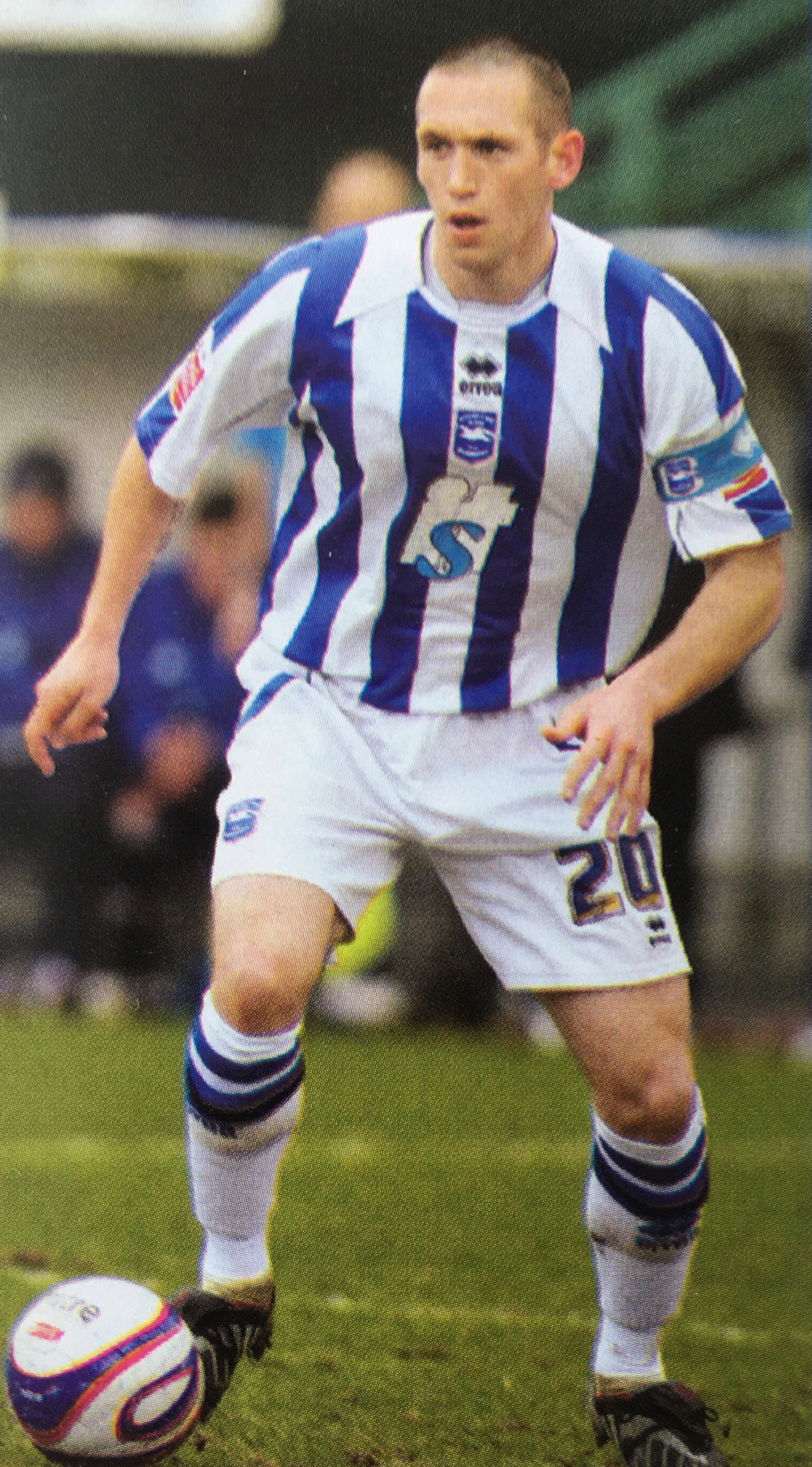
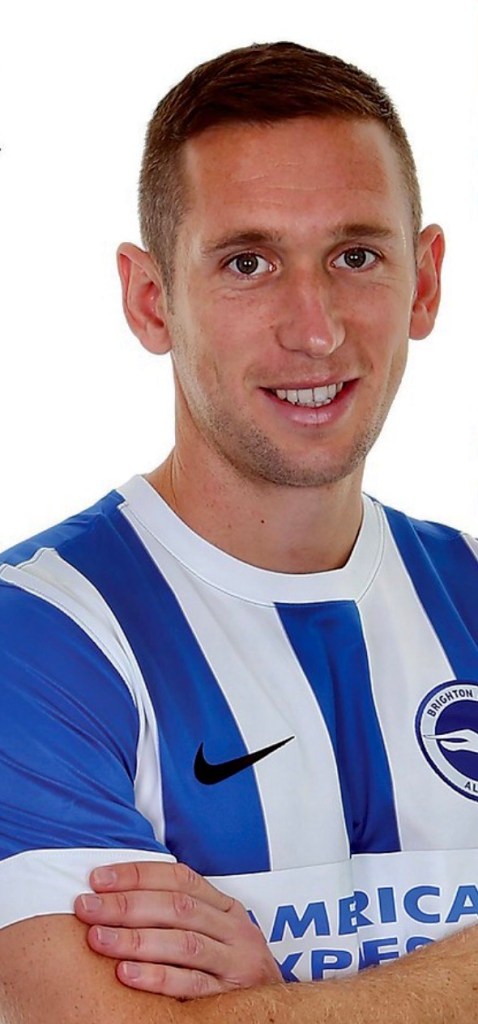
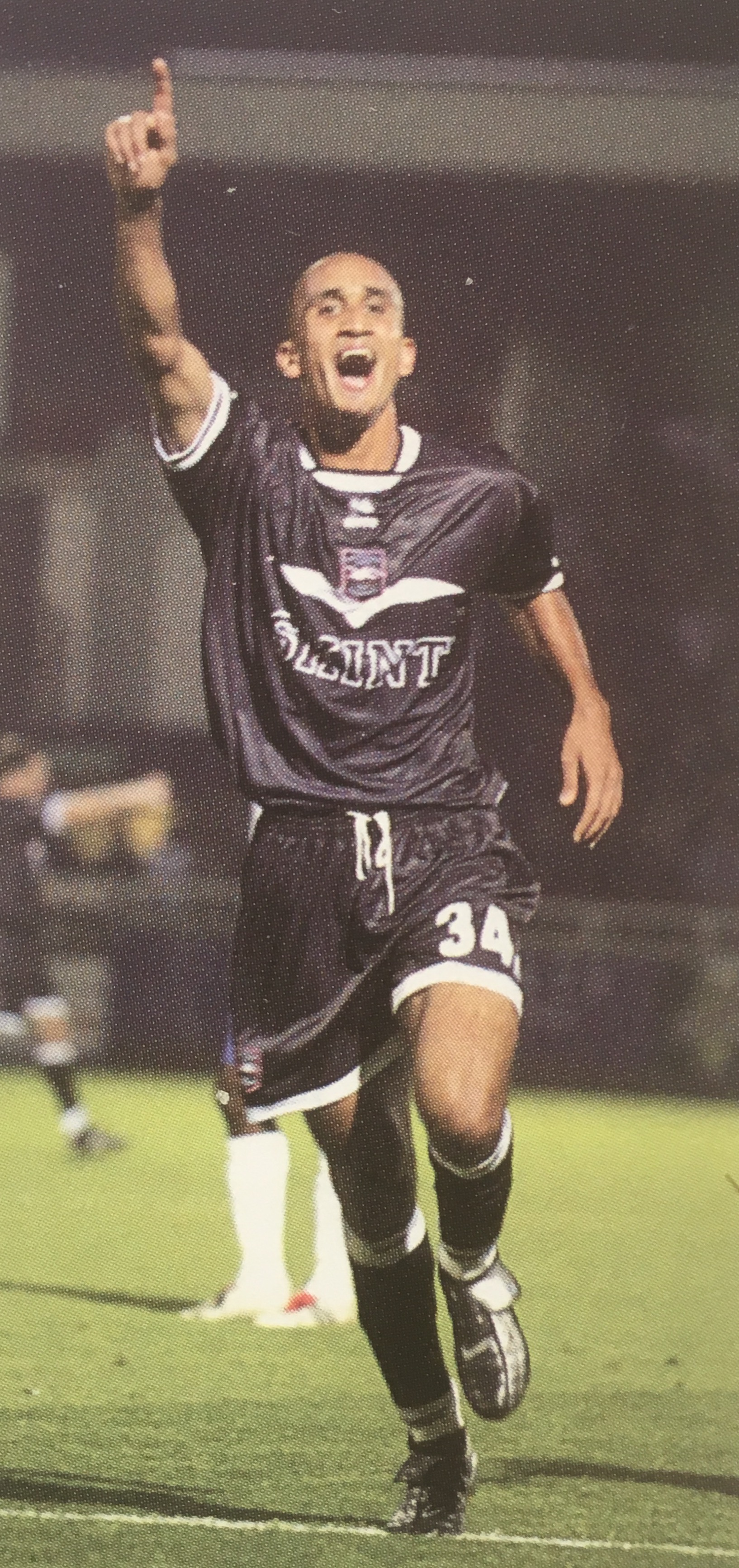
How Shots stopper Mark Beeney’s move saved the Albion

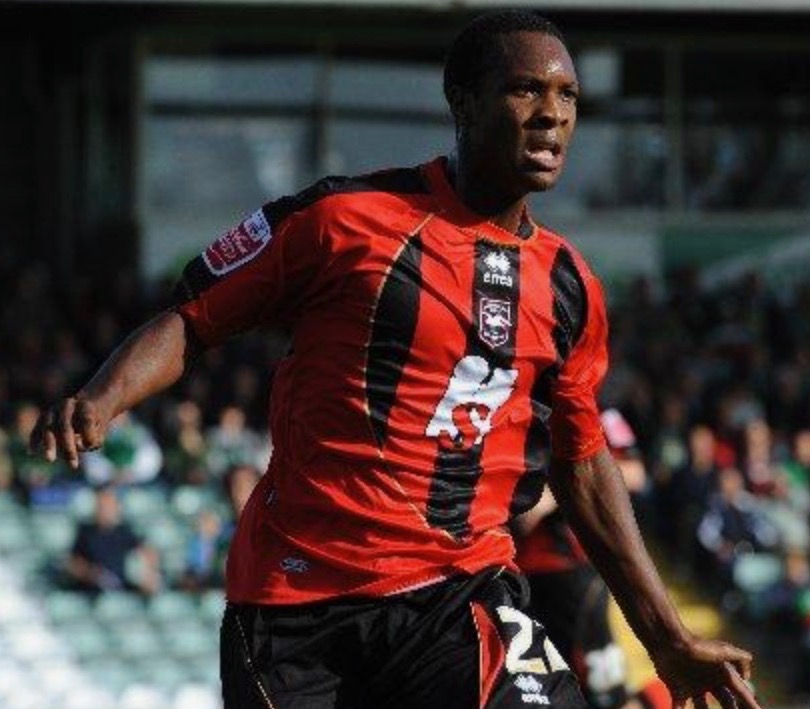
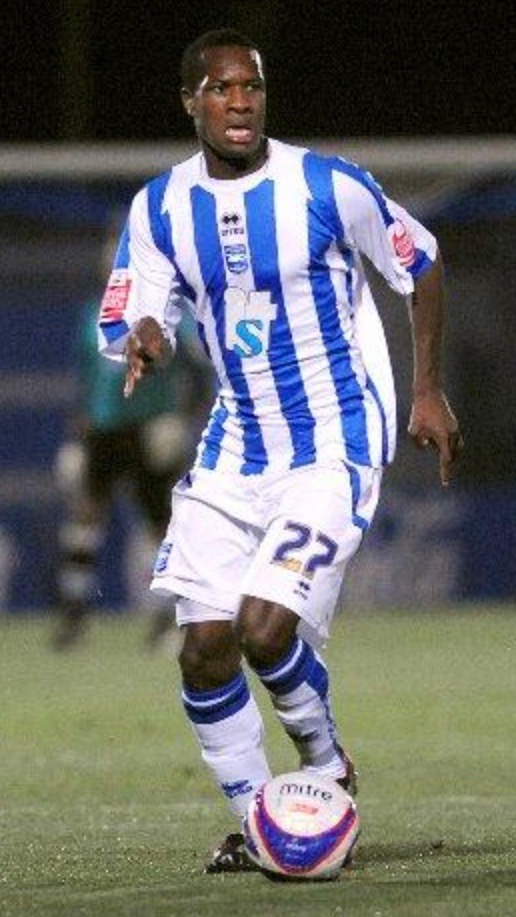
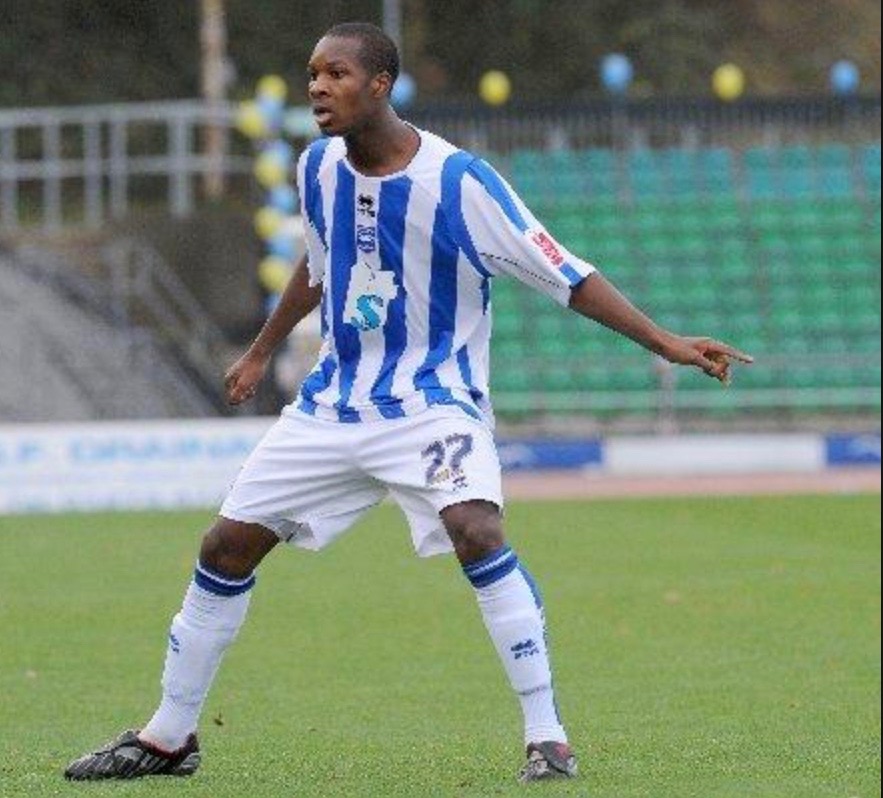
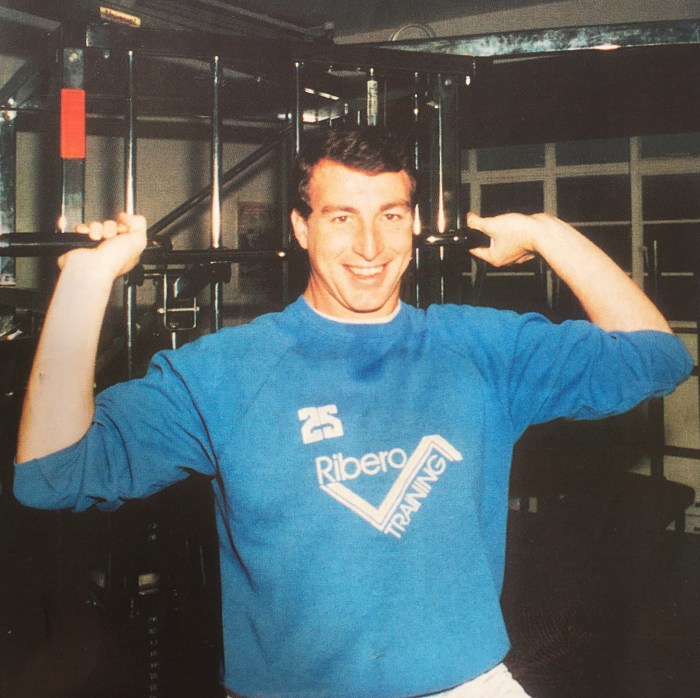
MARK BEENEY has coached young goalkeepers at Chelsea for nearly 20 years, but Brighton fans who saw him play remember his most important ever save.

The proceeds from his sale to Leeds United for £350,000 on 20 April 1993 quite literally saved the Albion from being wound up by the Inland Revenue.

Beeney had played 55 league and cup games in the Albion goal that season (missing only one because of a suspension) and he didn’t have much say in what happened next, as he remembered in an interview with the Argus in 2001.

“Albion were at Plymouth and the night before the game manager Barry Lloyd told me that he had given Leeds permission to talk to me and that he wanted me to negotiate a deal otherwise the club were history,” he said.

“I didn’t really have much choice because if I’d have turned down the chance I’d have been unemployed anyway with the financial situation at Albion.”

Howard Wilkinson, the former Albion winger who had led Leeds to the old Division One title the previous season, had been looking for a ‘keeper to compete with the ageing John Lukic, and Beeney fitted the bill….as well as footing the bill for Brighton where the taxman was concerned.

The move was certainly an upheaval in terms of geographical location but it presented Beeney with the chance to leap from third tier football into the Premier League.

It didn’t quite pan out as he might have hoped – most of his action was for Leeds’ reserve side! – but over the course of six years he played 49 games in the Premiership and 68 first team games in total for the Elland Road outfit.

Born in Pembury, near Tunbridge Wells, on 30 December 1967, Beeney went to St Francis Primary School in Maidstone then to St Simon Stock, a Catholic secondary school.

He first came to the attention of talent spotters when playing for Ringlestone Colts, a successful Maidstone junior side, and he was invited to join Gillingham, Kent’s only professional side at the time, as an associate schoolboy.

He made sufficient progress to be taken on as an apprentice by the Gills and turned professional in August 1985. He only played two first team games, though, and was given a free transfer by manager Keith Peacock.

Beeney, circled, when with the Maidstone United squad who won promotion to the league

He joined Maidstone United in January 1987 and, although they were in the GM Vauxhall Conference at the time, he helped them to gain promotion to the Football League in 1989.

His form for Maidstone led to international recognition when he played as a second half substitute for the England C (semi-professional) side in a 1-1 draw away to Italy on 29 January 1989. The game at Stadio Alberto Picco in La Spezia saw Fabrizio Ravanelli, a Champions League winner with Juventus seven years later, score the Italians’ goal.

Back at Maidstone, it wasn’t the best news for Beeney when Peacock arrived as manager. He ended up going on loan to Aldershot, where he played seven games. On his return, Maidstone’s goalkeeping coach Joe Sullivan recommended him to Brighton boss Barry Lloyd and the Seagulls paid a £25,000 fee to take him to the Goldstone in March 1991 as back-up to Perry Digweed.

Wheeler-dealer Lloyd had sold John Keeley to Oldham Athletic for £238,000 a year before – not a bad return for a player who cost £1,500 – and with the inexperienced Brian McKenna not really a meaningful challenger for Digweed’s place, Beeney was ideally suited to the Seagulls.

However, he had a rather ignominious start when, on 20 April 1991, Albion lost 3-0 at home to Oxford United but he kept a clean sheet second time around when he was between the sticks for a 1-0 win at Hull City before Digweed returned to star in the end-of-season excitement that culminated in a trip to Wembley for the play-off final.

Beeney’s third senior Albion appearance couldn’t have come in stranger circumstances, and I was at close quarters to witness it. I was a guest in the directors’ box at The Den, Millwall, on the evening of 4 September and tracksuited Beeney was sat a couple of rows behind me, having travelled but not been included in what in those days was a 13-man squad.
During the warm-up, Digweed suddenly pulled up with an injury and, after physio Malcolm Stuart attended to him, it was evident he wouldn’t be able to take part in the game. But the referee was poised to start the match, so the ‘keeper’s jersey was handed to Gary Chivers to go between the posts to avoid delaying the kick-off.

A discussion between the managers and the officials gave the green light to allow Albion to replace Digweed with a recognised ‘keeper and, although he hadn’t been due to be involved, Beeney was summoned from the stand to enter the fray as an emergency substitute.

Eight minutes of play had elapsed by the time he’d managed to leg it down to the changing room and get himself ready for action. John Crumplin, who had started the game in Chivers’ right-back slot instead of being on the bench, was forced to come off without having broken into a sweat, and a relieved Chivers resumed his more traditional defensive position.

Into the bargain, the eventful evening saw the Seagulls come away with a 2-1 win – their second successive victory at The Den, having won 2-1 there in the second leg of the play-off semi-finals four months earlier.

Digweed’s injury meant Beeney then had his first extended run in the side, playing in 30 of the following 31 league and cup games (loan American goalkeeper Juergen Sommer deputising in a 0-0 away draw at Cambridge United) before Digweed was finally restored to the no.1 spot in early February. Only five of the remaining 16 games were won and Albion were relegated back to the third tier.

When the new season got under way, Beeney had stepped up to become first choice ‘keeper, and, when interviewed in a matchday programme article, said: “I came as second string ‘keeper as I knew Perry was the number one but I have always wanted to establish myself and this season I have had my chance.”

As referred to earlier, his final Albion appearance came away to Plymouth on 17 April, and Beeney left the club having featured in 87 games plus that one as sub. He told the Argus he retained great affection for the Seagulls. “I remember it as a friendly club even though they didn’t have much to be cheerful about with the taxman trying to shut them down and the players were wondering whether they would get paid.

“There was a good spirit in the dressing room with experienced types like Fozzie (Steve Foster) and Johnny Byrne around the place who had seen it all before.

“I spent the least time there but it is the one former club that makes me most welcome. I appreciate that.”
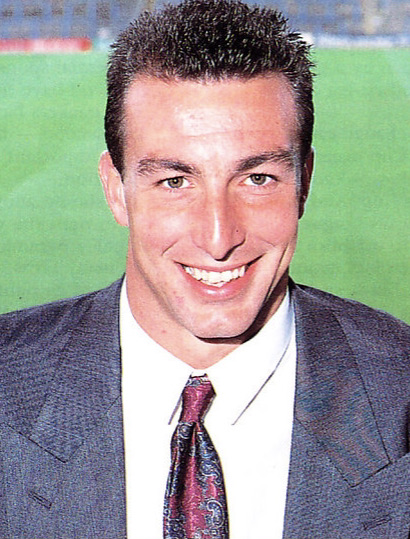
With Beeney transferred, Digweed returned for the final three games of the season, but the 3-2 home win over Chester turned out to be his last game for the club, and Albion began the following season with 18-year-old Nicky Rust as their first-team ‘keeper.

Because Beeney’s transfer had gone through outside of the window, Leeds gained special dispensation from the FA and their opponents, Coventry City, to allow him to make his debut in the final game of the 1992-93 season, there being nothing of consequence at stake with both sides comfortably sitting in mid-table.

Beeney conceded three in the game at Highfield Road but the game finished 3-3, diminutive Rod Wallace a hat-trick hero, rescuing a point for Leeds with goals in the 87th and 90th minutes to add to his first half strike.

In his first full season at Elland Road, Beeney shared the no.1 spot with Lukic, but the former Arsenal stopper had the upper hand in the following two seasons.

And just when Beeney thought he would make the breakthrough, Leeds signed Nigel Martyn from Crystal Palace to take over from Lukic.

Beeney told the Argus: “I thought I was going to be no. 1 and Paul Evans no. 2 in 1996 and both Paul and I were told a deal with Nigel was not going through. A couple of days later he had joined. I was disappointed. But I decided to buckle down as we were happy at the club and in the North with my family. I ended up playing more than 400 reserves games, I was hardly ever injured, and it was frustrating.”

Beeney handles ouotside the box at Old Trafford and is sent off

One time when he did get a start, against Manchester United at Old Trafford, on 14 April 1996, he was sent off after 16 minutes! Wilkinson never picked a sub keeper, so defender Lucas Radebe had to go in goal.

The excellent Leeds archive website ozwhitelufc.net.au remembers Beeney as:A big keeper, his meticulous planning left him well prepared as he keenly watched videos of potential penalty-takers. He proved a capable deputy for John Lukic, taking over from him when his form dipped. His contract was extended in June 1996 for a further two years, but he had to retire due to injuries sustained in a reserve game at Stoke City when he ruptured an Achilles tendon in March 1999.”

In fact, he ruptured it twice in the space of eight months, he told the Argus, and he quit playing professionally after taking the advice of Leeds’ boss at the time, David O’Leary, whose own career had ended with a similar injury.

“The medical people said the Achilles would not hold up to what was needed at the level I was at,” he said. “I sought a second opinion afterwards and was told the Achilles was strong but it’s so short it doesn’t give me the spring I need to play at the top.”

Beeney set up an executive chauffeur business – Victoria Beckham was among his clients – but a former playing colleague at Aldershot, Steve Wignall, had taken over as manager at Doncaster Rovers, and offered him a return to playing.

“I just wanted somewhere to train,” Beeney told the Argus. “He (Steve) said they needed cover as a goalkeeper so I might as well sign on. I played four reserve games and was substitute for the first team.”

Eventually, after eight years living in Yorkshire, Beeney moved the family back to Kent so sons Mitchell and Jordan could be nearer their grandparents. He linked up with Dover Athletic as a back-up ‘keeper and played in a couple of pre-season friendlies but was mainly standby to first choice Paul Hyde.

In October 2001, he switched to Sittingbourne as manager, and also began working two days a week with the young goalkeepers at Chelsea (under 21s, under 17s and under 16s).

He left Sittingbourne in 2004 when the role at Chelsea was made a permanent position, and he’s been coaching the Premier League club’s reserve and academy ‘keepers ever since, although he did work with the first team ‘keepers temporarily when Jose Mourinho was in charge in 2007.

Beeney the goalkeeping coach pictured in 2010

Both his sons went through the Chelsea academy as goalkeepers. Mitchell was at Chelsea from 2007 until 2018. He came close to first-team action as a non-playing substitute for a home 1-1 draw with Liverpool in May 2015, which he spoke about in an interview with the42.ie and he did get to play league football out on loan at Newport County and Crawley Town. When he finally left Chelsea, he moved to Ireland to play for Sligo Rovers and returned to the UK in 2019 to join Hartlepool United.

Younger son Jordan left Chelsea in 2014 after seven years and joined Charlton Athletic where he spent four years before being given a free transfer.

Pictures from Albion matchday programmes and online sources.
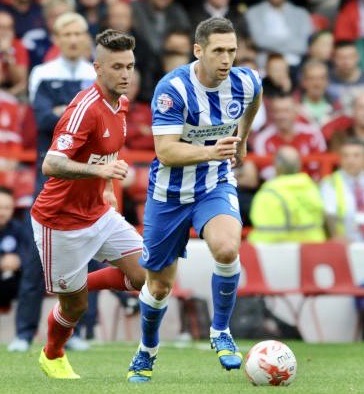
Andrew Crofts just couldn’t stay away from the Seagulls

ANDREW Crofts is one of that rare breed of player who had three separate spells at Brighton, although the latter time was only as player-coach with the under-23s.

The Welsh international midfielder returned to the Seagulls after only a month as player-coach at Yeovil Town when Liam Rosenior left the Albion to move to Derby County.

His signing as an over-age player as well as a coach was explained by technical director Dan Ashworth, who hailed the “innovative step” and told the club website: “The thinking behind the playing role is to have someone of his experience out there on the pitch alongside our younger players, and to impart that crucial knowledge he has gained from his time in the game.

“To have that experience out on the field, in the pressure situation of a game, will be of enormous benefit to our young players and have a positive impact on their collective and individual development.”

Crofts first joined the club in the summer of 2009 during Russell Slade’s managerial reign and, when Gus Poyet took over the managerial chair, he appointed Crofts as captain for his first game in charge.

The midfielder repaid the faith in that televised away game at St Mary’s on 15 November by scoring in Albion’s memorable 3-1 win. Crofts retained the armband through to the end of the season and his form had caught the attention of Championship side Norwich City.

Crofts made the switch to Carrow Road and played 44 games as Paul Lambert’s outfit won promotion to the Premier League in runners up spot.

In the top-flight, though, Crofts was no longer a mainstay of the midfield, starting just 15 matches in 2011-12, and coming off the bench on 10 occasions.

“Towards the end of the season I was in and out,” he told the Albion matchday programme in 2019. “Paul then went to Aston Villa and when the chance came up to return to the Albion I jumped at it.”

“It felt like coming home and I wanted to replicate what we had done with Norwich. It was a completely different club compared to the one I’d left, with the Amex Stadium and plans for the new training ground.”

Poyet wasted no time in seizing the chance to re-sign him, telling the club website: “When we knew about the possibility to bring him back we worked very hard to do that.

“I am delighted to have him back. He is going to be a very important player.

“He is coming back to a club that he knows and he was happy to come back – that shows his commitment,” said Poyet. “He leads by example and we want players like that on the pitch.”

Unfortunately, that season his playing time was limited by two long-term spells out injured, and the following season it got worse. After sustaining a serious cruciate knee ligament injury in January 2014, he was sidelined by an almost identical injury again in October 2014.

When the player suffered the first injury in an away game at Birmingham, Poyet’s successor, Oscar Garcia, said: “He will be a big loss and I feel sorry for Crofty. He has been excellent and has been a key player.”

Crofts battled over many months to regain fitness only to suffer a partial tear of his anterior cruciate ligament and a tear to the meniscus in a match against Watford in October 2014, putting paid to any involvement in the rest of the 2014-15 season.

Head coach Sami Hyypia told the club website: “We are all devastated for Crofty. He is an important member of our squad and worked incredibly hard to get back to full fitness after last season’s knee injury.

“Crofty is a very strong character and he will continue to receive the best possible care and treatment from our medical staff throughout his rehabilitation.”

Unfortunately for him, by the time he was fit again, another new manager was in place and Dale Stephens and Beram Kayal were firmly established as Chris Hughton’s preferred midfield pairing. So, in March 2016, Albion loaned him back to his first club, Gillingham, until the end of the season.

On leaving the Seagulls that summer, he moved to Charlton Athletic under his former Albion boss Slade, on a one-year contract, and made a total of 54 appearances for the Addicks.

Although born in Chatham, Kent, Crofts qualified to play for Wales because his grandfather hailed from the principality. He earned a total of 29 caps, spread over 13 seasons, initially under John Toshack, most coming under Gary Speed, before making his final appearance against Panama in November 2017, in Chris Coleman’s last game as Wales manager.

Crofts v Rooney in a Wales v England match
Welsh international

Crofts was on Chelsea’s books from the age of 10 to 15, going through the ranks with John Terry, with whom he shared digs. One of his coaches was ex-Albion and Chelsea defender Gary Chivers. After being released by Chelsea, he linked up with Gillingham as a trainee and worked his way through the youth and reserve sides, making a surprise first team debut against Watford in May 2001 when only 16.

It wasn’t until 2004 and 2005 that he became a first team regular. His first Gills goal was scored in the Championship clash at the Withdean Stadium on Boxing Day 2004 when the Seagulls won 2-1.

Crofts eventually took over the captaincy at Gillingham but, after the side were relegated to League One, manager Mark Stimson believed the role was too much of a burden on the player. After more than 200 appearances for the Gills, he was made available for transfer and, in 2008-09, went out on loan to Peterborough United and then Conference side Wrexham under former Albion striker Dean Saunders.

When he joined Albion on a free transfer in June 2009, boss Slade said: “He’s an international player so that’s not bad for a start. He’s got good pedigree and was an important player for a good Gillingham team at the time.

“He can sit in for you defensively or he can get forward. He has got a good work ethic and I’m pleased to get him.”

Towards the end of his league playing days, Crofts had spells at Scunthorpe United in 2017-18 then Newport County for the 2018-19 season, playing under his former Gillingham teammate Michael Flynn, who he played alongside at Priestfield between 2005 and 2007,

Flynn made his old pal captain and said: “He’s a gentleman and he’s somebody I trust a lot. So signing him was really a no-brainer.

“Andrew coming in is a massive signing for the club. He’s the ultimate professional and he’s in fantastic condition.”

Crofts himself said: “I played with Michael Flynn at Gillingham and he was a winner. I loved playing with him and I can’t wait to play for him now with him being my gaffer.”

Unfortunately, injury issues restricted Crofts to just 12 appearances for Newport and he was released at the end of the season.

On leaving County, Crofts moved to Yeovil Town as player-coach with manager Darren Sarll saying: “To bring a player of Andrew’s experience into the club at this time is a great coup.

“He still has a thirst and hunger for playing and winning promotions and it’s refreshing to be part of the very early stages of his coaching career.

“He’ll be a valuable asset to the squad both as a player and in terms of passing on his experience and knowledge to the younger members of the squad.”

But then the opening arose with the Albion and he didn’t hesitate to return. When Graham Potter left the Albion, Crofts temporarily took on the head coach position and was retained as a first team coach under Roberto De Zerbi and his successor, Fabian Hurzeler.

• In an interview with Andy Naylor of The Athletic in December 2020, Crofts talked at length about his career, his coaching ambitions and some of the big names he played alongside.

Seagulls kick-started lengthy career for trailblazer Zesh

ZESH REHMAN became the first British Asian of Pakistani origin to play for Brighton.

He played in two separate spells three years apart and his 20 Albion appearances spanned four different managers: Steve Coppell, Bob Booker, Mark McGhee and Dean Wilkins.

His first action in Seagulls colours came in September 2003 and the experience he gained during a three-month loan provided him with the experience to return to parent club Fulham and make his Premier League debut.

Before his temporary move to Brighton he had played one first team game in the League Cup for FuIham, and, only a matter of days later, Coppell signed him for the Seagulls.

“It’s an opportunity to get some first team football,” said Rehman. “This season I’ve been in central midfield, but it doesn’t matter what position I play, I just hope I can do a job for Brighton.

“(Fulham boss) Chris Coleman told me it would be good to come and learn here,” he added.

I can remember being at the Nene Park home of Rushden & Diamonds (above left) to see 19-year-old Rehman mark his debut in the centre of midfield with a goal to seal a 3-1 win for the Seagulls. He scored with an exquisite lob over ‘keeper Billy Turley to add to goals from Guy Butters and Leon Knight. Incidentally, Paul Kitson, released by Brighton that summer after an injury-wrecked 2002-03 season, came on as a sub for Rushden.

Rehman had only played twice before Coppell vacated the manager’s chair at Withdean to take over at Reading, but in Booker’s first game in charge, Rehman was once again on the scoresheet as the Seagulls beat Grimsby Town 3-0.

The utility player stayed with the Seagulls after McGhee’s appointment as manager but after 13 matches he returned to Craven Cottage in January 2004.

Born in Birmingham on 14 October 1983, Rehman was brought up a stone’s throw from Villa Park in the Aston area of the city. The promise he showed in schools, district and county football was soon spotted and at the tender age of 12 he signed up to Fulham’s academy, with the family moving to London.

He progressed through the junior, youth and reserve sides, mainly as a centre back but also able to play full-back or as a holding midfielder.

The spell at Brighton gave him his first extended run in a first team environment and, three months after his return to Fulham, he made his Premier League debut as a late substitute at Anfield. He went on to make a total of 30 appearances for Fulham (26 starts, plus four as a sub), but with first team opportunities limited he had another loan spell away, joining Norwich City in January 2006.

He was at Carrow Road until the end of the season, making just five appearances as defensive cover, and on his return to London opted to leave Fulham in search of regular football.

Gary Waddock gave him a three-year contract at Queens Park Rangers and he made 27 appearances for the Rs but one of the club’s many managerial changes saw the arrival of former Albion defender John Gregory, and he was happy to send Rehman out on loan.

Lo and behold, Albion, by then with Wilkins at the helm, seized on the opportunity because Adam El-Abd was on the brink of a suspension, and Dean Hammond and loan full-back Joe O’Ceaurill were struggling with injuries.

“Zesh gives us a degree of versatility, as well as the experience he has picked up playing at Premiership level for Fulham, so he is a good addition for us,” Wilkins told the Argus.

For his part, Rehman said: “As soon as I found out Brighton wanted me, I thought I owe the club because they were the first to give me regular first team football.

“I’ve got great memories of my time here before. The club and the fans have had a special place in my heart ever since, so I couldn’t really turn it down.”

His second Albion debut saw him playing right-back in a disappointing 0-0 draw at home to Huddersfield Town, but Rehman was just grateful to be playing competitively again.

He told Andy Naylor: “Being out there on a Saturday is a buzz, whether it is at Brighton, Fulham or QPR. I had that at QPR for the first six months of the season but then a new manager came in and I didn’t play for a little while so, rather than just getting stale, I’ve come to Brighton and hopefully I can kick on again when I get back there.”

Rehman played eight games during his second spell at the club, his last marked by picking out striker Nathan Elder who slotted Albion’s goal in a 1-1 draw at Cheltenham on 5 May 2007.

The following season, a six-month loan at Blackpool didn’t work out as he’d hoped for, featuring in only three games under Simon Grayson, and he went back to QPR. However, by the end of January he was on the move again, this time to link up with bottom-tier side Bradford City, initially on loan, and then making the move permanent.

Rehman details his various career moves on his own website, and at Bradford his involvement took on a lot more importance than just playing games. He said:

“Hopefully I can inspire some local Asian people to start coming to games and really feel a part of the club. I want Asian kids to feel they have someone to look up to. Bradford is a big city with a big Asian population and if I can inspire one or two local kids to go on and make it as professionals, I’ll know I’ve made a positive difference to someone’s life and that’s good enough for me.”

Born in the UK, Rehman represented England at under 18, 19 and 20 levels, but opted to play for his parents’ home country of Pakistan, and he captained them at the 2013 Peace Cup in the Philippines.

Between 2011 and the start of 2017, Rehman spent six years playing in Asia, initially for Muangthong United in Thailand, then Kitchee SC in Hong Kong and lastly Pahang in Malaysia.

But the lure of the English game saw him spend four months at Gillingham between February and May 2017, helping the relegation-threatened Gills to retain their League One status.

The following month he headed back out to Hong Kong to play for Southern District FC where, in May 2020, he became player-manager.

In March 2023, Rehman was promoted to first team development coach by Portsmouth having moved to Fratton Park in the summer of 2022 as the academy’s lead professional development phase coach.

He stepped up to help the first team temporarily when Danny and Nicky Cowley left the club in January 2023 and remained in post when John Mousinho took over as head coach.

Rehman set up training on Mousinho’s first day and the head coach said: “Since that day he’s been absolutely brilliant. He’s incredibly diligent and the lads and staff at the club all really like him.

“He adds something different to me and Jon (Harley), providing a different angle, and is an influential presence on the bench.

“Development is a key part of what we’re trying to do here and when we talk about the complementary skillsets of the coaching staff, that’s something he can bring to the fore.”

Rehman said: “I believe continual development is needed by players of all ages and at all stages of their careers. Every player is a work in progress and never the finished article.

“There is no better feeling than assisting an individual, partnership or a unit to improve and then see that work transferred to a matchday, helping the team win.”

Burnley graduate Ronnie Welch briefly captained the Albion

welch and wilsonTHE FOOTBALLING fortunes of two graduates from Burnley’s famous talent academy of the 1970s took quite different paths after the legendary Brian Clough signed them for Brighton.

While left-back Harry Wilson stayed for four years and enjoyed promotion success under Alan Mullery, midfielder Ronnie Welch left the club less than a year after he’d joined, ‘used’ (together with fellow midfielder Billy McEwan) as a makeweight in the transfer of Ken Tiler to the Albion.

The early signs following Welch’s arrival on the south coast had been positive. Although he and Wilson’s debuts at home to Aldershot on Boxing Day 1973 ended in a 1-0 defeat, results gradually picked up and, at the tender age of 21, Welch even found himself captaining the Albion in the absence of skipper Norman Gall.

Clough had turned to them as he tried to sort out a side who’d experienced a series of heavy defeats (the now-infamous 8-2 home loss to Bristol Rovers; a 4-0 reverse v non-league Walton & Hersham in the FA Cup, and a 4-1 loss away to Tranmere Rovers).

The tale of how Clough turned up at Turf Moor to sign them one lunchtime, only to find the place deserted apart from groundsman Roy Oldfield, has been recounted in said groundsman’s memoirs.

A fee of £70,000 for virtually untried youngsters was quite a lot of money in those days.

Midfielder Welch took over the no.4 shirt previously worn by Eddie Spearritt, who’d started the season as the club captain, and Wilson replaced George Ley, a big-money signing from Portsmouth the season before.

wilson and R WelchWelch stood just 5’6½” tall and weighed 10st 7lb, but Evening Argus football writer John Vinicombe was suitably impressed. His match report of the 1-0 home defeat to Aldershot was unearthed by thegoldstonewrap.com, and we learned: “After a subdued first-half, Welch had a storming second half against the Shots, impressing with his energy.”
Vinicombe reckoned Welch wasn’t as extrovert as Wilson “but is no less involved in midfield and has a fine turn of speed. He made one mistake through trying to play the ball instead of hoofing it away, but this can only be described as a ‘good’ fault.”

For a while, the Albion midfield featured the two Ronnies — Welch and Ronnie Howell became Clough’s preferred pairing — although Spearritt replaced the former Swindon player for a short spell, and competition for those spots hotted up at the end of February with the arrival of fiery Scot McEwan from Blackpool.

In his 10th match in Albion’s colours, Welch scored his first goal as Brighton beat Blackburn Rovers 3-0 in front of a 12,102 Goldstone crowd on 23 February 1974 (Barry Bridges scored twice), and he was on the scoresheet again in the 3 April 1974 midweek evening home game v Cambridge United, as the visitors were dispatched 4-1 (Bridges, McEwan and Howell the other scorers).

Clough was happy to give Welch the responsibility of captaining the side in Gall’s absence, although thegoldstonewrap.com reported: “Unfortunately, the burden of being skipper at such a young age affected his form for the side.”

Nevertheless, after Clough quit the Albion in July 1974, leaving his old sidekick in sole charge, Welch was in the starting line-up for the new season.

Ronnie W 74 pre-seasonAlbion got off to a cracking start with a 1-0 win over Crystal Palace, and Welch played in the opening eight matches. But results didn’t go Taylor’s way and he shook up the midfield by introducing the experienced Ernie Machin, the former Coventry City captain, and also brought in Coventry’s Wilf Smith on loan.
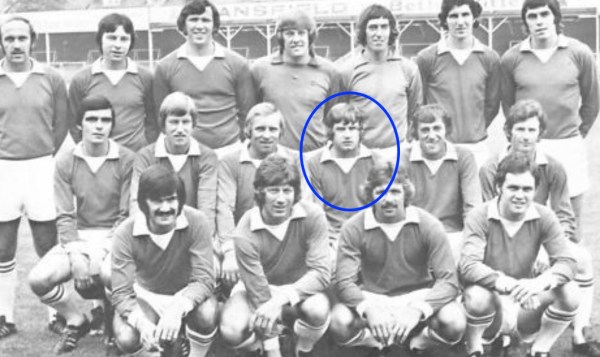
Welch filled in at right-back for three matches and his last involvement in an Albion shirt was as a non-playing substitute away to Gillingham on 26 October.

Ever one for wheeler-dealing, Taylor had his eye on right-back Tiler at Chesterfield, but he had to exchange Welch and McEwan to land his man.

Welch had been born in Chesterfield on 26 September 1952, so it no doubt suited him down to the ground to move back home.

RW ChesterfieldHe was at Chesterfield for three years during the managerial tenure of the former Sheffield United legend Joe Shaw, but only played 24 games.
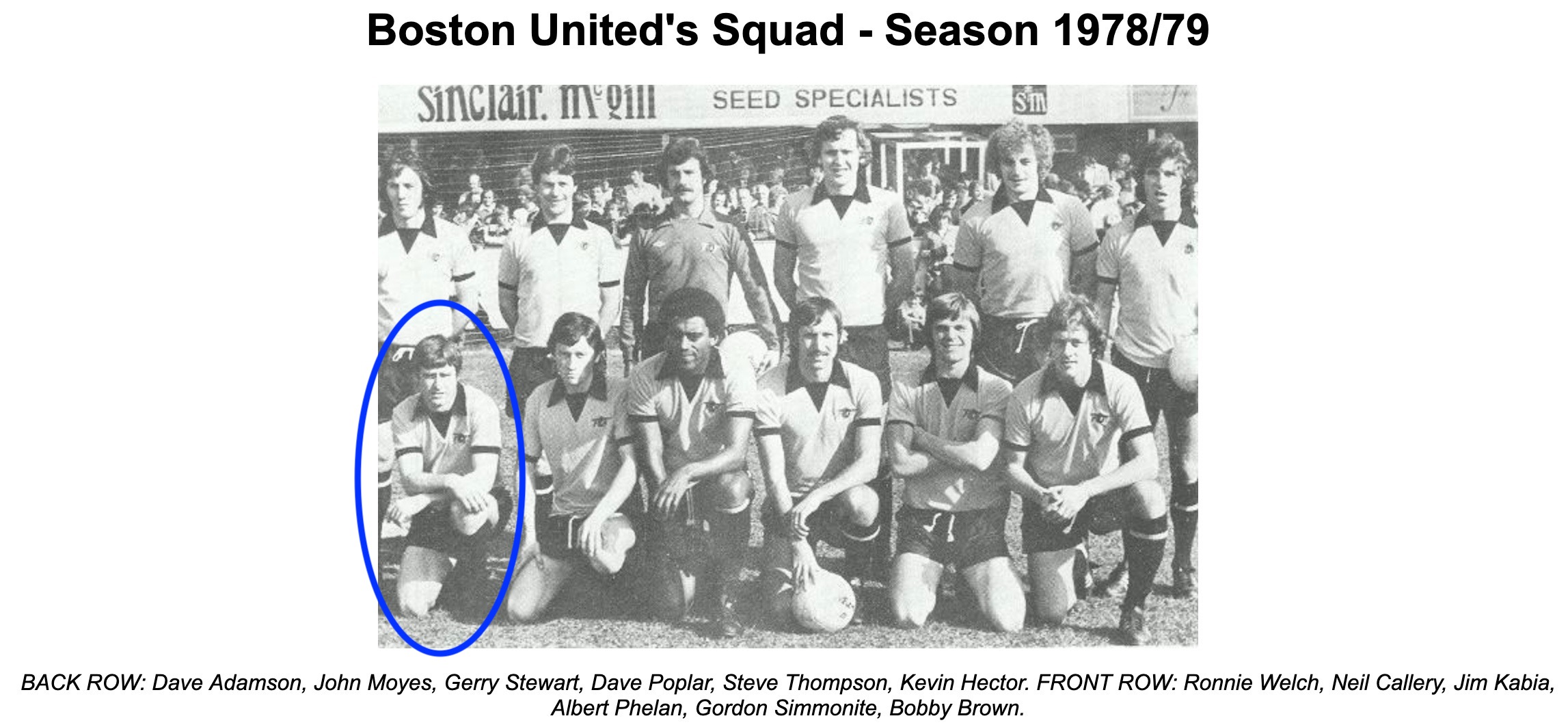
Welch at BostonIn the 1978-79 season he popped up at non-league Boston United where he played 39 matches plus four as a sub and scored four times.
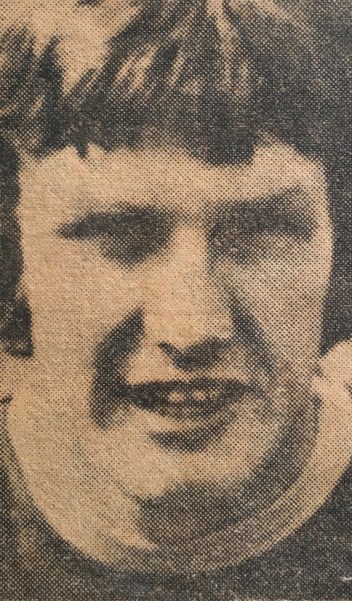
It must have all seemed a long way from the heady days when he graduated from apprentice through to the Burnley first team. He featured three times for the England Youth team in February and March 1969 and Burnley awarded him a professional contract in September that year.

At the time, Burnley had a reputation for bringing through a succession of talented young players.

RW BurnleyHis breakthrough came on 30 January 1971, in a home 1-1 draw against Newcastle United, but it was to be his only appearance in the first team. There were a number of established midfield players ahead of him: the likes of Doug Collins, Mick Docherty and Martin Dobson, and later Geoff Nulty and Billy Ingham

While Welch may have ‘disappeared’ in a footballing sense, when in June 2019 a picture of him was posted by someone on a Chesterfield FC history Facebook page – the excellent Sky is Blue – a flurry of followers came forward to identify him, including his daughter and sister! It was said he now lives in the New Whittington area of Chesterfield.

Great strike rate at Brighton but journeyman Benjamin had 29 clubs!

T Benj BTNSELDOM in his remarkable 29-club career did Trevor Benjamin enjoy such a successful spell as the 10 games he spent on loan at Brighton.

The bustling striker who had thrived under Micky Adams at Leicester City the season before scored five times for Mark McGhee’s promotion-chasing side in 2004.

McGhee was keen to keep him through to the end of the season but because of the timing of the three-month deal he wouldn’t have been eligible to play in the play-offs.

As a result, he went back to Leicester and McGhee brought in Chris Iwelumo instead, and, with a goalscoring debut in an away win at Chesterfield, there was no looking back.

Born on 8 February 1979 in Kettering, Benjamin was brought up in Wellingborough, Northants, and, having done well for Wellingborough Colts, was picked up by Kettering Town, playing for their youth team and reserves.

Cambridge United took him on as a trainee and he made his first team debut aged only 16 against Gillingham and went on to score 46 goals in 146 appearances.

Such a scoring record caught the eye of Leicester boss Peter Taylor and, on 12 July 2000, Benjamin joined the Foxes for a fee of £1.3 million.

However, he managed only a single goal in the 2000-01 season and the following season was sent out on loan to Crystal Palace, Norwich City and West Bromwich Albion.

He returned to Leicester for the whole of the 2002-03 season, including playing against the Albion at Withdean.

He said in a matchday programme article for that season’s return match against Brighton on 19 April 2003: “Brighton are a very similar team to ourselves. They have got a good work ethic and never give up.

“I came on as a substitute for the last 10 minutes when we played against them at the Withdean Stadium just before Christmas and that was a tough night.

TBenj Lei action“The conditions were terrible and both sides had to work hard to beat the elements. But I think our quality shone through on the night.” (Leicester won 1-0).

The following season, Benjamin was back on his travels, initially to Gillingham, then Rushden & Diamonds and, in January 2004, to Brighton.

Benjamin’s first Brighton goal came after just 12 minutes of Albion’s home game against Plymouth Argyle, who were then top of the league table. Leon Knight added a second goal before a jubilant celebration in front of the Sky cameras and Albion prevailed 2-1.

He followed that up by netting Albion’s goal in a 1-1 draw away to Wycombe Wanderers, and was again on the scoresheet in the 2-1 away defeat to Grimsby Town.

A 3-0 home win over AFC Bournemouth saw Benjamin score the second of Albion’s three goals at Withdean. When Tranmere Rovers were dispatched by the same score, he once again scored the second goal.

Back at Leicester, when Craig Levein was installed as boss, he cancelled Benjamin’s contract in January 2005. Benjamin initially dropped down a couple of divisions to play for Northampton but, three months later, his old Leicester boss, Adams, took him to Championship side Coventry City. He helped to set up both goals on his debut for the Sky Blues as they beat Reading 2-1.

In Coventry’s matchday programme for their home game against Brighton on 2 April 2005, he talked about how he had been settling in and the efforts he’d been making to try to improve his game.

“I’ve been training quite hard with Alan Cork on my finishing since I got here and he’s great to work with. He’s trying to get me to focus on what I am best at and hopefully when the games start again the practice will pay off.”

Benjamin’s arrival at Coventry may have seen him make a leap of two divisions but he was by no means unfamiliar with football at that level having played with Leicester for five years in both the Premiership and the Championship.

David Antill wrote: ‘During his time with the Foxes he was loaned out to no fewer than seven clubs before eventually signing permanently with Northampton Town but he is delighted to be back in a league he enjoys playing, for a manager he believes can get the best out of him.

“I’ve always believed in my own ability and thought I could play at this level and it was great to be given the chance to return to this league with Coventry,” said Benjamin. “My confidence never really slipped – I never had a doubt about coming here and being able to deliver the goods.

“I know what Micky Adams is all about and he knows what I’m all about so I enjoy working with him. What he’s brought here is exactly what he brought to Leicester and that’s what brought him success there. He’s a hard-working manager and he wants exactly the same thing from all of his players and I think he’s getting that.”

After scoring only once for the Sky Blues, in the summer of 2005 the burly forward linked up with Peterborough United, where he signed a three-year deal. However, he was loaned out several times, appearing for Watford, Swindon Town, Boston United and Walsall.

There was some stability and a return to goalscoring when he moved to Hereford United. He scored 10 in 34 games for the Bulls but was released in May 2008 and ended up drifting across the non-league scene for the next four years, popping up at no fewer than 13 different clubs.

It was all a far cry from the heady days of 2001 and 2002 when he briefly reached the international arena.

He went on as a substitute for Howard Wilkinson’s England under 21s as they beat Mexico 3-0 in a friendly at Filbert Street on 24 May 2001. Because he hadn’t played in a competitive fixture, he was then able to swap allegiances and played two matches for the full Jamaica international side in 2002.

Sprinter’s boys took different tracks after starting Gunners

A GUNNER from the age of nine gained valuable first team experience with the Seagulls but ultimately fell short of reaching the same heights as his brother.

Commonwealth Games gold-medal winning sprinter Wendy Hoyte saw sons Justin and Gavin climb through the academy and reserve ranks at Arsenal.

Justin played 68 first-team games for the Gunners and went on to make a name for himself in the North East, but younger brother Gavin only played four first-team games for Arsenal and had to set his sights lower to pursue a professional career.

The younger Hoyte spent most of the 2009-10 season as a Brighton player and, although only 19 at the time, got a rough ride from Seagulls supporters who expected more from someone who’d played at the top level of the game.

Initially signed on loan in October 2009 by Russell Slade to cover for the injured regular right-back Andrew Whing, Hoyte was handed his debut against Slade’s former club Yeovil Town at Huish Park.

“I am delighted to know the club wants me,” the youngster told The Argus. “They have got a lot of games this month and I just want to get out there and play.”

As it turned out, Hoyte outlasted Slade at the Withdean, and his temporary transfer was extended when Gus Poyet took over as manager.

The young full-back in the no.27 shirt gained a good amount of game time until Poyet unearthed Inigo Calderon in January 2010.

Even then, Poyet was happy to retain the services of the Arsenal youngster, telling the Argus: “We explained to Gavin before asking Arsenal that there was probably a player coming.

“Arsenal knew that as well, so nothing has been hidden. Everyone knows where they stand.

“We are working on different aspects of the game with Gavin, because he has got something which is very difficult to find sometimes in football, the speed to recover.

“When you have that ability, you don’t need to go to ground, because you are quicker than most players.

“He is young and there is plenty to come. We want to help him become a Premier League player or top Championship player.”

G Hoyte stripes

Hoyte got another chance to prove himself when Calderon picked up a nasty hip injury in April, bringing his total number of Albion games over the season to 21.

When it looked like the popular Spaniard was going to move to Southampton instead of accepting a contract offer from the Seagulls, Argus reporter Andy Naylor ventured: “Gavin Hoyte’s encouraging conclusion to the campaign suggests he might even be capable of rising to the occasion if he returns on loan from Arsenal.”

It didn’t come to that, though, and, over the next two years, he dropped down another division with loan spells at Lincoln City and AFC Wimbledon.

When he realised there was little hope of him ever getting close to the Arsenal first team, he left for Dagenham and Redbridge, having spoken to Arsenal goalkeeping coach Tony Roberts, who’d played for the Daggers himself.

Born in Leytonstone on 6 June 1990, Hoyte followed in his brother’s footsteps to Arsenal and progressed to the point of being appointed the under 18 team captain in the 2006-07 season when he was still only 16.

“I am very vocal during games, although I wouldn’t quite say that I was a Tony Adams, but that’s the sort of captaining style I try to emulate,” Hoyte told the Arsenal matchday programme. “I have captained at schoolboy level and in particular in tournaments and so I do have some experience, but I did not expect to be captain of the under 18s so early.”

Hoyte captained Arsenal’s under 18s when he was only 16

Hoyte was also capped at England under 17, under 18, under 19 and under 20 levels. In the 2009 UEFA under 19 championships, he played in two qualifiers in the space of four days when England beat Slovakia 4-1 and Scotland 2-1; his teammates including current Albion no.3 Jason Steele in goal, and future full international Kieran Trippier.

He was part of the squad who took part in the finals in Ukraine, starting twice and coming on as a substitute three times as England finished runners up to the hosts. The side was managed by Brian Eastick, who’d been an Albion coach during the Mike Bailey era.

Hoyte’s one game for the under 20s came as a substitute in a 1-1 draw away to Uzbekistan on 2 October 2009, when a fellow substitute was Sam Baldock. Two non-playing subs in that game were Jonathan Obika and Gary Gardner, who both had spells on loan with the Seagulls.

Hoyte looked back on his Arsenal time in an interview with Will Unwin for planetfootball.com and said: “When you’re there you always think you’re going to make it – I was pretty confident.

“I had my older brother there as well, so that helped a lot, seeing how he progressed.

“That was a big thing for me, seeing him play every week, watching him, thinking, ‘I want to try and get to where he is’.”

Hoyte was an unused substitute for several first team games before making his debut in a 6-0 League Cup win over Sheffield United, and starting in the next two rounds, against Wigan and Burnley. His Arsenal career only seemed to be heading in one direction.

“Just to play at the Emirates was massive, coming out to a big crowd,” he told Unwin. “There were a lot of young boys in the team so that helped me with confidence and eased it.

“But there were a lot of players in front of me, so I didn’t think about playing in the Premier League. It was always in the back of my mind, but I wasn’t thinking I was going to play immediately.”

But 11 days after the second of those League Cup appearances, Hoyte was handed his Premier League debut, after William Gallas had been stripped of the club captaincy for criticising team-mates amid a poor run of only one win in four games.

G Hoyte v Man City

Up against Robinho of Manchester City, he was taken off after an hour of a 3-0 defeat, and it would prove to be both the start and end of his top-flight career.

Hoyte didn’t recall getting much feedback after the game, although it wasn’t long before he was awarded a new contract. He made his fourth appearance for the club in a League Cup quarter-final defeat to Burnley at the start of December – but he didn’t play for Arsenal again.

He was sent out on loan to Championship side Watford for the second half of the 2008-09 season, featuring in 10 matches, and he eventually left Arsenal in 2012 when his contract expired.

After two seasons in League Two with Dagenham, he spent the 2014-15 season with League One Gillingham, featuring in 35 matches. He dropped down to League Two with Barnet, ended up at National League Eastleigh until the end of the 2017-18 season before returning to Dagenham in 2018-19.

It proved to be a frustrating season for him under the managership of former Albion boss Peter Taylor, but, reunited with former manager John Still at Maidstone United, he has been a regular at right-back in 2019-20 and scored just the third goal of his career against Dulwich Hamlet in December.

Along with his brother, the younger Hoyte has enjoyed the opportunity to play international football with Trinidad and Tobago, as he told socawarriors.net, and spent 20 minutes on the same pitch as Lionel Messi in a friendly as Argentina warmed up for the 2014 World Cup.

Injury-hit Albion among six to borrow Borrowdale

DEFENDER Gary Borrowdale couldn’t have been more aptly named for a loanee which is just as well because he found himself in that situation half a dozen times over five years.

He made a temporary switch to Brighton from QPR in March 2009 to fill the spot vacated when Albion’s regular left-back Jim McNulty suffered a shocking injury in a 4-0 home defeat to Crewe Alexandra.

While McNulty needed an operation to remove a kidney, former England under 20 international Borrowdale had the chance to resurrect his flagging career with the Seagulls.

For a player who’d clocked up 100 appearances for Crystal Palace by the time he was 21, there was the inevitable ‘noise’ about helping out the arch rivals, but Borrowdale just wanted some game time, and he was one of five debutants who pulled on Albion’s sky blue second kit for the game at Brisbane Road on 7 March 2009.

Brighton lost that match 2-1 but, under Russell Slade’s astute stewardship, Borrowdale acquitted himself well during 12 matches through to the end of the season and the Albion just managed to retain their third-tier status.

Borrowdale montage“I made my debut for Palace at 17 and played my first game in the Premiership at 18, so it was a great start and Palace will always be dear to me as a result,” Borrowdale told Spencer Vignes for a matchday programme article.

“The highlight of my career would be the promotion I had with Palace when we went from the Championship to the Premiership,” he said, referring to the play-off win over West Ham, the day before Albion beat Bristol City in their own divisional play-off.

Borrowdale returned to west London after his spell on the south coast but in March 2010 he went on loan to Charlton Athletic and the following year had temporary spells at Carlisle United and Barnet.

His league career seemed to be over when QPR released him in June 2012 and he went over to Northern Ireland to join second tier outfit Carrick Rangers.

In January 2014, he looked to have got a foothold back in the English professional game when loaned by Margate to Gillingham, but he didn’t play any first-team games and was released at the end of the season.

Former Albion boss Peter Taylor told the club’s official website: “He’s done very well, lost weight every week and looked fitter every week.

“I just don’t think he’s ready for League One football, especially considering if we have to play Saturday and Tuesday. As a result, I have decided to let him go.”

Borrowdale then linked up with Greenwich Borough, initially as a player, before becoming a coach.

Born in Worcester Park, south London, on 16 July 1985, Borrowdale came through the youth ranks at Selhurst Park and Trevor Francis handed him his debut for Crystal Palace in December 2002.

When Iain Dowie took over as manager, Borrowdale quickly became a regular in the first team. He also represented England at each of the age groups from 16 to 20, playing alongside the likes of Gary Cahill in defence.

In a 2-2 draw with the Netherlands, played at Turf Moor, Borrowdale’s teammates included fellow Palace youngster Scott Flinders in goal and future Albion player Will Hoskins.

Borrowdale won Palace’s Young Player of the Year award in 2006-07, but, when Dowie moved on to manage Coventry City, Borrowdale joined him there, a tribunal fixing the transfer fee at £650,000.

The move didn’t work out, though, and, with Dowie gone, Borrowdale was sidelined, eventually being sent out on loan to Colchester United and then QPR.

Paulo Sousa took him on loan in November 2008 and, although he didn’t feature, made the move permanent in January 2009 on a three-and-a-half-year deal. He made just 22 appearances for QPR during that time.

Borrowdale stripes

Pictures as featured in the Albion matchday programme.

Brighton’s heroic captain Cullip clashed with Warnock

AFTER three promotions and one relegation in five years, Danny Cullip left Brighton for Sheffield United in December 2004.

Hard-up Albion needed the cash at the time and Cullip was keen to join a side who were pushing for promotion to the Premier League.

“They were a massive side and I felt that it was too good an opportunity to miss,” Cullip said in Match of My Life (knowthescorebooks.com), edited by Paul Camillin. “I felt if I didn’t take the opportunity, I would end up regretting it, and although things didn’t work out, I don’t regret it, as I would have lived the rest of my life wondering what might have happened.”

Cullip was virtually ever-present during his three months with the Blades but a clash of personalities with fiery manager Neil Warnock saw him offloaded on loan to Watford before the end of the season.

DC focusThe player who had been an inspirational captain for the Seagulls has chosen not to go into detail about what happened although Warnock had plenty to say in his autobiography, ghostwritten by journalist Oliver Holt.

“At Sheffield United I bought a centre-half, Danny Cullip, with a view to him being my leader on the pitch, my captain,” he said. “I thought he was a good talker. I realised within a week he talked a better game than he played. The only answer was to get shot of him quickly.”

Cullip swerved the controversy in an Albion matchday programme interview in 2019-20, saying instead: “We won my first three games in succession and ended up taking maximum points from five of the first six games.

“It was a great start and I was really enjoying my football but then, out of the blue, Neil said he wanted to bring in another striker, Danny Webber from Watford.

“Ray Lewington, who was coach at Watford at the time and knew me from out time together at Brentford, said they would only sanction it if they could get me in return. It was going to be a permanent move but ended up being a loan as Ray was sacked the following week, which wasn’t ideal.

“My Sheffield United career was over though before it had even begun, which was so disappointing because I’d been playing well and we’d been getting results.”

butts + DC Sheffield United’s Cullip gets to grips with ex- Albion teammate Guy Butters
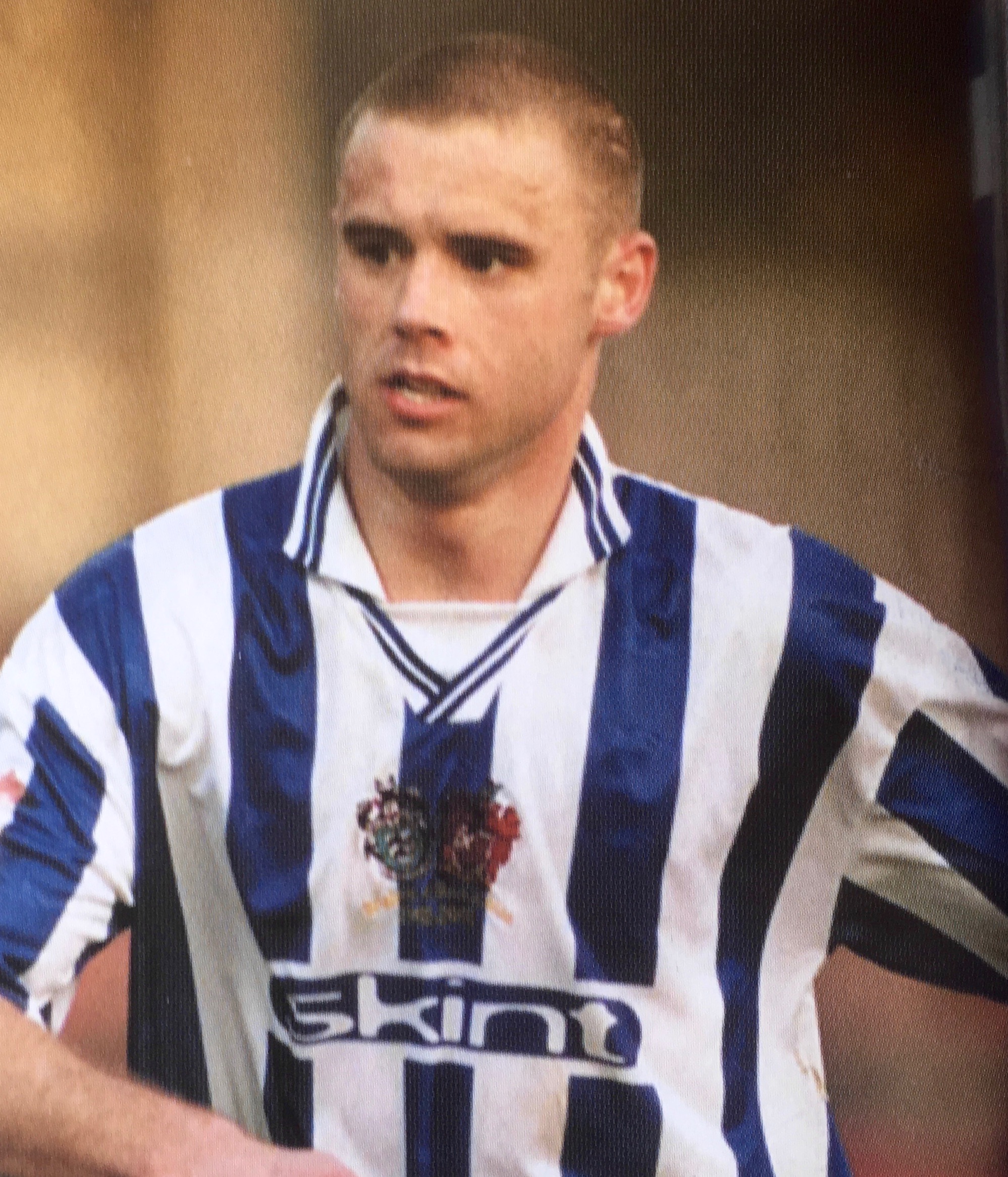
Lee Connor on footballleagueworld.co.uk reckoned Cullip was one of the top 5 most pointless signings in Sheffield United’s history which seems a harsh assessment of a player who made 216 appearances for Brighton.

The £250,000 fee Brighton received for their captain was certainly much needed at the time and was a good return on the £50,000 they invested in signing him from Brentford for £50,000 on 13 October 1999.

Born on 17 September 1976 in Bracknell, Berkshire, Cullip was scouted by Oxford United while playing Sunday football and shone during a set of trial games. After getting into their under-16s, he then earned a two-year YTS apprenticeship where he was coached by future England manager Steve McLaren.

Oxford were managed by that redoubtable former centre half Denis Smith at the time and Cullip was given a one-year professional contract but faced stiff competition to make the breakthrough to the first team, where future Leicester City stalwart Matt Elliott was excelling.

“I went out on loan to Kettering Town in the Conference,” Cullip told fulhamfocus.com. “Gary Johnson was their manager and I learned a lot from him and played well there.”

Cullip had a trial at Shrewsbury and could have joined them or Kettering. But he chose to join then Fourth Division Fulham because his dad was a Fulham fan, he told fulhamfc.com in an April 2016 interview. Micky Adams had been newly appointed in his first managerial job and handed Cullip his league debut in the first game of the 1996-97 season.

It was a season fondly remembered by Fulham fans because they won promotion but the regime change the following year, when Mohammed Al Fayed took over, saw Adams dumped in favour of Kevin Keegan and Ray Wilkins and eventually Cullip rejoined Adams at Brentford in exchange for a £75,000 fee in February 1998.

Cullip found himself back in the basement division when the Bees were relegated and then on the treatment table for much of the season after suffering a cruciate knee ligament injury.

Having not played a first team game for 13 months because of the injury, Cullip was thrown a lifeline when Adams, by now in charge at Brighton, took him on a month’s loan in September 1999.

CullipHe impressed sufficiently for Adams to persuade chairman Dick Knight to make the transfer permanent, beginning an association with the club which continues to this day.

Cullip became a mainstay of the defence during the back-to-back promotions of 2001-02 and 2002-03 and famously scored the headed winner in a 1-0 win over Chesterfield at Withdean that clinched the third-tier championship.

Cullip took over the captaincy from Paul Rogers and recalls the “unbelievable day” he lifted the play-off final trophy at the Millennium Stadium, Cardiff, in 2004.

After his Blades spell was cut short, and his brief Watford loan came to an end, Cullip joined Nottingham Forest where his manager was Gary Megson. “I really liked him,” said Cullip. “He was an honest guy; what you see is what you get with him.

“Unfortunately, I missed my first pre-season with Forest due to what was ongoing at United, so I was playing catch-up with the rest of the lads and ended up suffering a hamstring injury. It was a problem that would dog me for the rest of my career.”

He was restricted to a handful of appearances in his first season with Forest but he eventually became a regular in a three-man defence alongside Wes Morgan and Ian Breckin.

DC Forest Cullip in action for Forest, marking Albion’s Alex Revell
In January 2007, he was on the move again, to Queens Park Rangers, where former Albion player John Gregory was in charge. But his 18-month deal was terminated early after one of their many managerial changes saw him surplus to requirements.

With his family based in Sussex, Cullip looked for an opening in the south and spent six weeks training with Millwall before linking up with Gillingham, where he played from February 2008 to the end of the 2007-08 season.

He then played non-league with Lewes but, after a season, the hamstring injury forced him to retire.

Alongside his former Albion centre half partner Guy Butters, Cullip is now a coach with the Albion in the Community scheme.

Flu-hit Flinders came to the rescue in a goalkeeping crisis

AN UNDERSTUDY to eccentric Crystal Palace goalkeeper Gabor Kiraly played a dozen games in goal for Brighton in the spring of 2007.

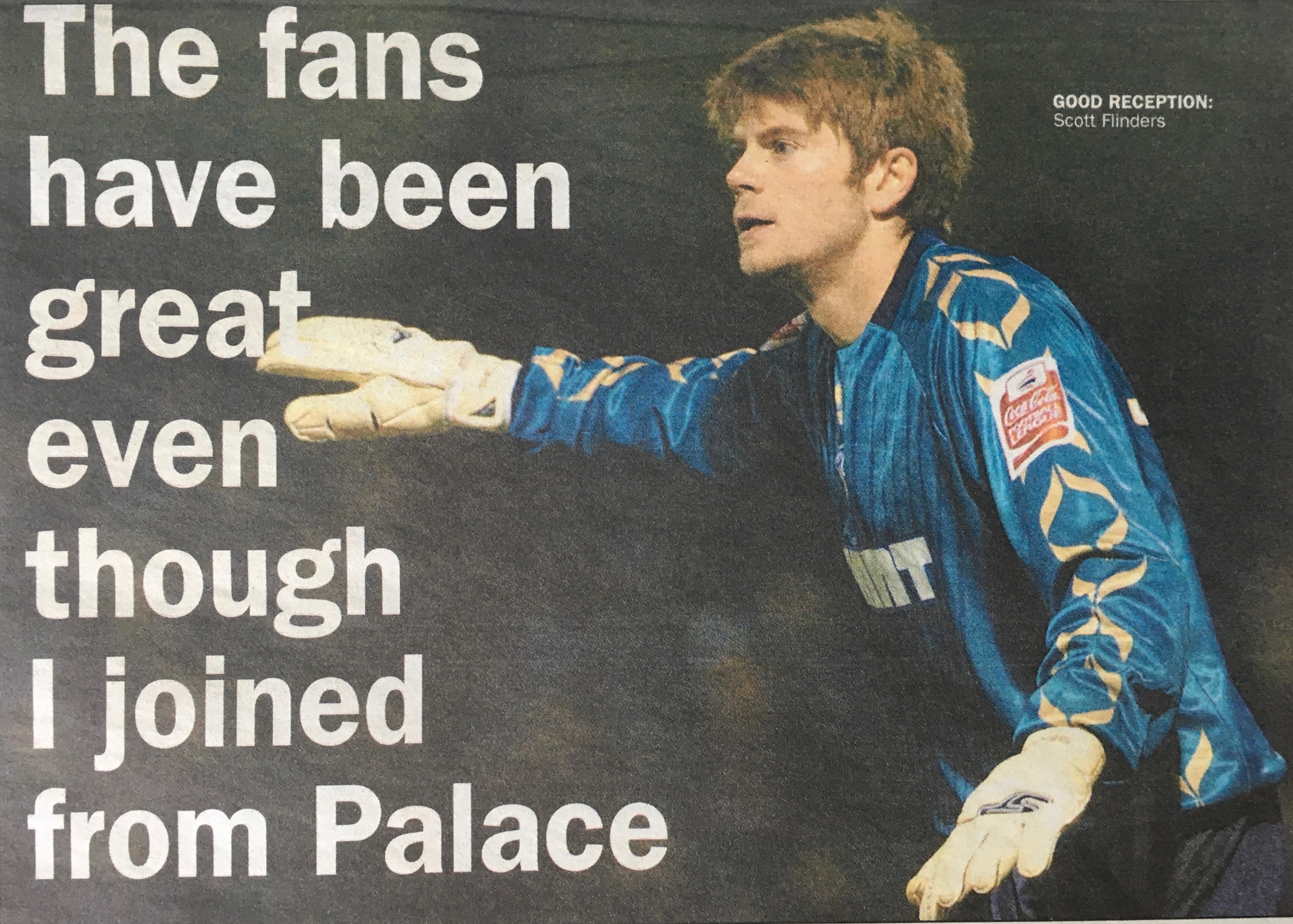
Scott Flinders was just 20, and suffering from the effects of a bout of ‘flu, when he answered a call from fledgling manager Dean Wilkins to help solve a goalkeeper crisis.

With first choice Michel Kuipers injured, Wilkins considered it too early to risk rookie ‘keepers Richard Martin and John Sullivan, so he turned to Albion’s arch rivals to borrow 6’ 4” Flinders.

“I always thought Millwall were Palace’s biggest rivals but then I got told, I think it was by Dougie Freedman or Clinton Morrison, that it is Brighton,” Flinders told The Argus. “It didn’t put me off signing. It is just about playing games.”

IMG_6009Flinders made a slightly shaky start in a win away to Gillingham, and in a defeat to Bristol City on his first appearance at Withdean, but he made some important stops to help earn points in consecutive away draws at Crewe and Blackpool.

Manager Wilkins told The Argus: “We knew we were bringing in somebody who was not 100 per cent for the first couple of matches. Scott has recovered from that and he has done very well for us.

“We are still in a position where we need another ‘keeper with a bit more experience than the young lads we’ve got.”

Flinders seemed happy to extend his loan from one month to two and said: “The fans have been absolutely excellent towards me, even though I am coming from a rival club.

“John Keeley, the goalkeeping coach, has been different class and I am delighted to be here.”

Unfortunately, Albion lost all five of their matches in April and finished 18th, six points clear of relegation.

Born in Rotherham on 12 June 1986, Flinders joined nearby Barnsley as a youth trainee in 2003 and made it through to the first team in 2005 when former Albion striker Andy Ritchie was the manager.

He took over from Ross Turnbull and featured in 11 games over three months before losing his place and subsequently having to settle for being understudy to Republic of Ireland international Nick Colgan.

However, Flinders earned his own international recognition in the shape of five caps for the England under 20 side, three of them in the 2005 Toulon tournament. He made his debut in a 3-0 win against the Korean Republic in a side which also featured Liam Ridgewell, Liam Rosenior and Greg Halford.

He kept his place three days later in a 0-0 draw with France, then came on as a sub three days later in a 1-1 draw with Mexico.

In August the same year, he started against Russia but was substituted as the side went down 4-0. A teammate in that one was Will Hoskins. His final match was at Turf Moor when England drew 2-2 with Holland, although he was subbed off again. In that England team was future England centre-back Gary Cahill while the left-back was Gary Borrowdale, who played on loan at Brighton under Russell Slade in 2009.

Frustrated playing second fiddle at Barnsley, Flinders had trials at Chelsea and Wigan Athletic but he ended up at Crystal Palace in 2006 as part of an exchange deal involving midfield player Sam Togwell.

It’s believed Palace paid an initial fee of £250,000 with additional instalments to be paid according to appearances.

However, Flinders only made one league cup appearance before being sent on loan to Gillingham. It was the first of five loans away from Selhurst Park, the lengthiest being his time at Brighton.

Other loan spells saw him spend time with Yeovil Town, Blackpool and Falkirk and he was released by Palace in May 2009 after playing just 13 games for them in three years.

His years of understudying finally came to an end when he headed to the north east in the summer of 2009 and joined Hartlepool United, where he established himself as first-choice ‘keeper.

Flinders even got on the scoresheet while at Hartlepool, scoring with a 94th minute header against Bournemouth on 30 April 2011 to earn his side a point in the last home game of the season.

The 2012-13 season was a particular triumph for him when he earned the accolades of Player’s Player, Supporter’s Player, Away Player of the Year and Hartlepool Mail SportsMail Player of the Year.

In six years at Hartlepool, he made more appearances – 276 – than any other ‘keeper in the club’s history, eventually moving on in June 2015 to League Two York City.

Flinders received a five-match ban from the Football Association in August 2016 following an incident in a League Two game between York and AFC Wimbledon on 19 March that year.

It was alleged Dons striker Lyle Taylor grabbed Flinders by the testicles and, as he retaliated, the goalkeeper was alleged to have used racist abuse.

Flinders denied the charge but was found guilty by the FA following an independent regulatory commission. Fined £1,250, Flinders was also warned about his future conduct and ordered to complete an education course.

York initially suspended Flinders but then loaned him out to National League rivals Macclesfield Town, who he subsequently joined on a contract from January to June 2017.

On deadline day in August 2017, he joined League Two Cheltenham Town, with boss Gary Johnson telling the club’s website: “Scott has played over 400 league and cup games in his career and there is no substitute for experience.”

In January 2020, Flinders suffered a broken leg in a game against Oldham which put him out of the game for nine months.

  • Pictures and headlines from The Argus.

City cult hero Paul Dickov never forgot his Seagulls goals

A POCKET dynamo of a striker who became a Manchester City cult hero never forgot the goalscoring platform a short spell with Brighton provided him.

Paul Dickov is fondly remembered by the City faithful, particularly for his equalising goal (above) in the fifth minute of added on time in the League Two play-off final at Wembley in 1999 (City famously went on to win the penalty shoot-out in which Guy Butters missed a vital spot-kick for Gillingham).

The diminutive Dickov had wowed Brighton fans during the dark days of the 1993-94 season when Barry Lloyd’s replacement as manager, legendary Liam Brady, had secured the striker’s services on loan from his old club Arsenal.

Dickov had managed to break through to the Arsenal first team under George Graham in the latter stages of the 1992-93 season.  But his chances were limited by the manager’s preference for the more experienced Ian Wright and Kevin Campbell.Dickov south stand

Earlier in the 1993-94 season, the young forward left Highbury for a 15-game spell with League One Luton Town, but only managed one goal.

His goalscoring fortunes changed when Brady persuaded his former employers to let Dickov join the struggling Seagulls, who, at the time, were fighting to avoid relegation from League Two.

Dickov Sandtex

The tenacious Dickov relished the opportunity and scored on his debut in a 2-0 home win over Plymouth Argyle on 30 March 1994. It was the first of five goals in eight games to help Brighton avoid the drop. (Pictured below, Dickov scores from close range against Fulham).

“I had a great time there. I loved every minute of it, and it has stuck with me,” Dickov told the Argus some years later. “I’ve always looked out for Brighton since then and I want them to do well.”

Born in Livingston, Scotland, on 1 November 1972, Dickov came to the attention of the Gunners while playing for Scotland at the 1989 FIFA Under-16 World Championship.

Having shown his goalscoring potential in Arsenal’s reserve side, Dickov got his first team opportunity when Graham rested players ahead of the FA Cup Final (in which they beat Sheffield Wednesday after a replay).

Dickov made his Arsenal debut against Southampton on 20 March 1993, and he went on to score against Crystal Palace and Tottenham Hotspur at the end of the season.

Over the following three seasons, although on the fringes of the first team, he was competing against the likes of Dennis Bergkamp, Wright and John Hartson and he was restricted to just 17 appearances in which he scored once.

Despite the disappointment of not quite making it at Arsenal, he is still fondly remembered there, with their history recording: “He never gave anything less than his all in an Arsenal shirt and, despite question marks over his height, Dickov compensated for his 5’5” frame with heart and endeavour.

“He was quick, skilful and scurried around up front causing problems for defenders.”

On 23 August 1996, City paid £1m to take him to Maine Road.

Over six seasons with the club, he was involved in two promotions and two relegations, which saw him play in three different divisions.

For all their success in more recent times, that memorable play-off at Wembley in 1999 was still being talked about 20 years later.

In 2000, Dickov won his first full international cap for Scotland and he earned 10 caps between then and 2004.

By then, he had moved on from City to try to keep Dave Bassett’s Leicester City in the top division. He joined the Foxes in February 2002, and, although he scored four goals as Leicester valiantly tried to maintain their Premiership status, they were not enough to prevent them being relegated to the Championship.

When former Albion boss Micky Adams took over the following season, Dickov thrived up front, netting a career-high 20 goals as Leicester won an instant return to the top-flight, finishing second behind champions Portsmouth.

Dickov scored 13 goals in the Premier League the following season but once again the Foxes were relegated. Even so, Dickov almost had a dream final game of the season against the team who had first give him his chance in the English game.

Arsenal were unbeaten throughout the season going into the Highbury finale but Dickov gave Leicester a shock headed lead before Thierry Henry and Patrick Vieira turned the game back in the Gunners’ favour to earn them the ‘Invincibles’ crown for their achievement.

That season at Leicester was also blighted by a shocking series of events during a training camp in La Manga, Spain, when Dickov and teammates Keith Gillespie and Frank Sinclair were falsely accused of sexual assault.

PD BlackburnAt the season’s end, Dickov took up an option on his contract which allowed him to leave for a top-flight club and Graeme Souness signed him for Blackburn Rovers. It was not long before Mark Hughes took over and Dickov scored 10 goals in 35 games. Craig Bellamy was Rovers’ main man up front the following season and Dickov’s Premier League appearances were confined to 17 games plus four as a sub.
With his contract at an end, he rejoined Manchester City for the 2006-07 season but his time there was dogged by a series of injuries and he ended up having loan spells at Crystal Palace and Blackpool before returning to Leicester in 2008.

During that spell, when City were in League One, he was mainly back-up to Matty Fryatt and Steve Howard, but managed a further 20 appearances and scored two goals to help the club to promotion back to the Championship.

Eventually, he ended up going out on loan, this time to Derby County to help them out in an injury crisis. His Leicester contract was terminated in February 2010 and he took up a short-term deal to the end of the season with League One Leeds United, who ended the season earning promotion to the Championship.

Dickov’s next move, though, was into management. He initially joined Oldham Athletic as player-manager, before packing up playing in May 2011.

In Dickov’s first game as manager, a young Dale Stephens scored both goals as the Latics beat Tranmere Rovers 2-1. The highlight of his tenure at Oldham was leading the Latics to a shock 3-2 win over Liverpool in the FA Cup fourth round in January 2013, but he resigned a few weeks later because of the side’s poor league form.

Three months later, he took over at Doncaster Rovers, with former Albion captain and manager Brian Horton as his assistant.

Since leaving Rovers in September 2015, Dickov has been on the football speakers circuit and is also a frequent eloquent contributor as a pundit.

pundit Dickov2019