Jamie Moralee’s pitfalls a valuable lesson for future prosperity

IT WOULD BE an understatement to say striker Jamie Moralee had mixed fortunes during his time with Brighton.

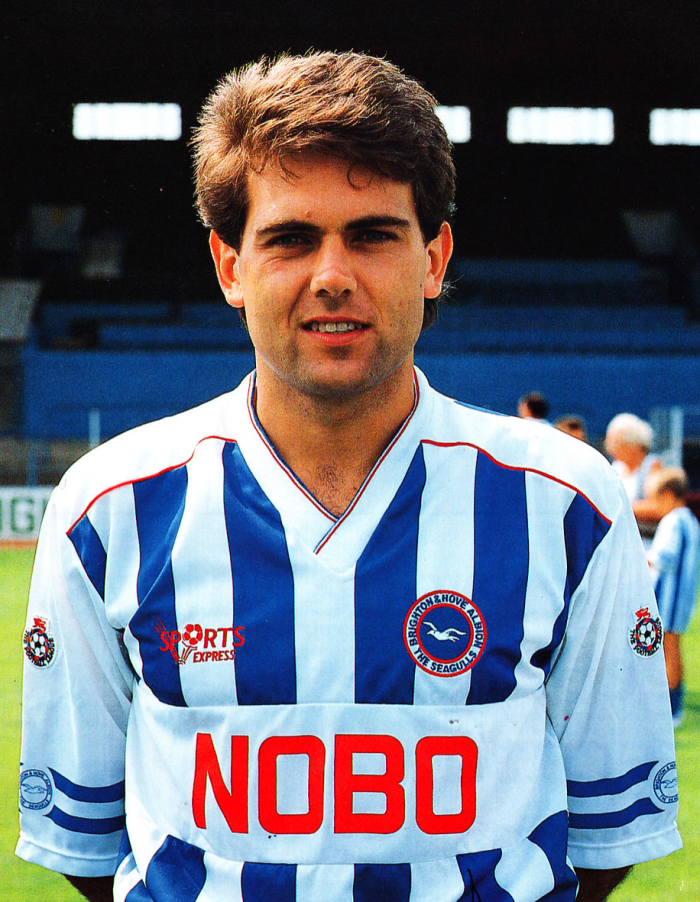
A one-time £450,000 signing, the former Crystal Palace player joined the lowly Seagulls on a free transfer when they were playing home games in exile at Gillingham in 1998-99.

His lack of goals earned a certain amount of derision from the handful of Albion followers who supported the club in those dark days.

And on one infamous occasion, in March 1999, he managed to get himself sent off within a minute of going on as a late substitute, without touching the ball.

Moralee sees red at Scunthorpe

To make matters worse, the punch he threw didn’t even catch the opponent, John Eyre, who promptly added to Albion’s woes by completing his hat-trick in a 3-1 home win for Scunthorpe United.

The Argus put Moralee’s “moment of madness” down to frustration at so regularly being on the subs bench (16 times – and only sent on in eight of them).

“He did not actually connect, but the intent was obvious and the resulting red card inevitable,” the newspaper reported.
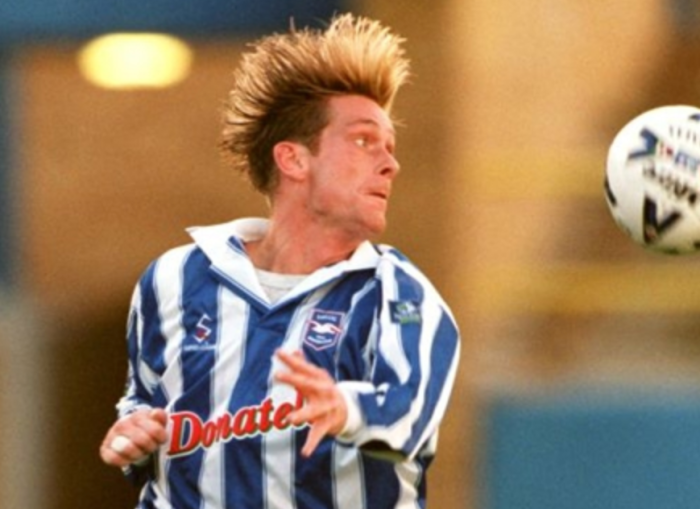
Signed at the start of the season on a month-to-month contract, Moralee had a run of 14 starts under Brian Horton but after scoring just the one goal (in a 3-1 defeat against Mansfield), he was dropped to the bench.

Just before Horton quit to move to Port Vale, he gave Moralee a contract until the end of the season and in January, after Jeff Wood briefly took charge, the player hoped his impact as a sub when laying on a winning goal for Paul Armstrong against Scarborough would help change supporters’ views of his contribution.

“It was nice to be a bit of a hero for a change,” he told The Argus. “I was a bit unlucky with a goal which was disallowed at Chester in the game before and I just want to get on with Brighton and do my best.

“I’ll take the credit because I’ve not had much this season. Hopefully the corner has turned for me.”

Moralee said he had been asked to play several different roles and reckoned much of the criticism aimed his way was unjustified.

Moralee gets stuck in

“I feel I have done all right,” he maintained. “I don’t think the supporters really appreciate me and they let me know that when I came on, but I will just keep doing my job.

“The players give me all the support I need and I am confident enough to go out and do the business. I certainly won’t hide.”

Having missed several matches after the red mist descended at Scunthorpe, a third manager arrived in the shape of Micky Adams, and Moralee started the last seven matches of the season under the new boss, scoring once.

Moralee slides in

But it wasn’t enough to earn a new deal and Moralee was one of eight players released at the end of the season. Having played under three managers in one season for the Albion, there was swift change in the dugout at his next port of call too.

He began the next season up a division with Colchester United, whose manager Mick Wadsworth said: “I remember him as a very outstanding young player with Millwall. We watched him several times during last season.

“He is very sharp in and around the penalty box and his hold-up play is exceptional – a quality we were sadly lacking in the season just gone.

“Jamie was an outstanding prospect as a young player with Millwall and was sold on to Watford for £450,000 around five years ago before his career became blighted by injuries.

“Last season was his first full season for some time as he battled to shrug off a string of injuries and has probably used Brighton to get back to full fitness and match sharpness.”

The season was only three games old when Wadsworth resigned and was replaced by Steve Whitton who saw his United side beat Reading 3-2 in his first match (Warren Aspinall scored twice and Nicky Forster scored one for the visitors). Moralee, making his league debut for Colchester, was subbed off on 76 minutes.

After that, Colchester went on an 11-game winless run and other than a positive spell in January, had a forgettable season and finished third from bottom. Moralee made 21 starts plus eight as a sub.

Born in Wandsworth, London, on 2 December 1971, Moralee joined Palace as a YTS trainee, working his way through the levels alongside Gareth Southgate. He was a regular in the Palace reserves playing up front with Stan Collymore.

But after just two first team starts and four sub appearances under Steve Coppell, he was traded as a makeweight in exchange for Millwall’s Chris Armstrong.

Happy days in the Lions’ Den

When unveiled to Lions fans in a matchday programme article, Moralee boldly declared: “Having broken though into first team football with Palace last season and learned from strikers like Mark Bright and Garry Thompson, I feel I’m ready to come to a club like Millwall and score twenty goals a season.”

Amongst the goals for Millwall

Of the player he swapped places with, he even went as far as to say: “Chris was quick and by all accounts did very well here in the opening games this season, but I’ll score more goals than him.”

Continuing in a similar vein, he added: “I’m most effective in the box, I like the ball into my feet and, at the risk of sounding over confident, if I get the chances I’ll score goals for you.”

True to his word, Moralee did get amongst the goals for Mick McCarthy’s side and 20 goals in 63 appearances (plus 13 as a sub) over two seasons earned him a £450,000 move to Watford.

Moralee made a big money move from Millwall to Watford

But the Glenn Roeder signing had a tough time with the Hornets, only seeing his fortunes change after Graham Taylor returned to the club as manager. He explained the circumstances in a full-page piece in the Wolves v Watford matchday programme of 30 March 1996.

“Glenn bought me to play up front with a big target man, which I was used to at Millwall. But the partners I had were all smaller than me and I was now the big target man, a role that did not suit me and one that I do not enjoy.

“I had always been used to scoring, something that wasn’t happening, and this resulted in a loss of confidence.

“The intentions were there, but I needed a big target man to feed me the ball. It just did not work out.”

When Taylor took over from Roeder, Moralee got back the starting place he’d lost and learned how to play as a lone striker. “It is a lot of work but I believe I have developed into a better all-round player,” he said. “It is nice to have a manager with a little faith in me.”

After Watford were relegated to Division Two, in the summer of 1996 he moved on a free transfer to Crewe Alexandra where he didn’t register any goals and made just 13 starts and six sub appearances.
He ended the 1997-98 season with Royal Antwerp in Belgium and spent pre-season with Fulham before Horton took him on at the Albion, initially on a monthly contract basis, at the start of the 1998-99 season.

After his season at Layer Road, he linked up with former Crystal Palace colleague Peter Nicholas at Welsh Premier League side Barry Town. He spent three seasons with Barry, winning the Welsh Premier-Welsh Cup double each season. He was also involved in three Champions League campaigns with the club and netted 59 goals in 96 appearances.

Financial problems at Barry led to Moralee moving on and he had spells with Forest Green Rovers, Newport County and Chelmsford City before ending his playing career in 2006.

After retiring from playing, Moralee set up his own football agency, New Era, in conjunction with former Albion teammate Peter Smith, with Rio Ferdinand as its highest profile client.

In an interview for a webinar, Moralee said the agency aims to teach up and coming talented footballers how to avoid the pitfalls that affected his own playing career.

Describing his own “very up and down career with a couple of highs and many, many lows”, he explained to The Player, The Coach, The Person webinar: “When I got a few quid, I was spending it on all the wrong things. Buying cars and watches and going out too much; drinking too much. I wasn’t investing it.”

Hard work, application and a ruthlessness to succeed in life are aspects he’s now passing on having realised they were attributes that would have made a difference to his own career as a player.

“I needed to stay in football in some capacity,” he said. “I didn’t want to be a coach or manager.I knew that young players, if they got to the edge of the pitfalls I fell down, I could help them.”

He is particularly pleased to have helped players who had rejection in their early days who went on to have successful careers, such as Welsh internationals Chris Gunter, Neil Taylor and Ashley Williams.

Moralee spoke openly about his 20-year friendship with Rio Ferdinand in a 2018 film for the ‘Best Man Project’ of The Campaign Against Living Miserably (Calm): an initiative to celebrate the power of friendships which supports men in looking out for their mates.

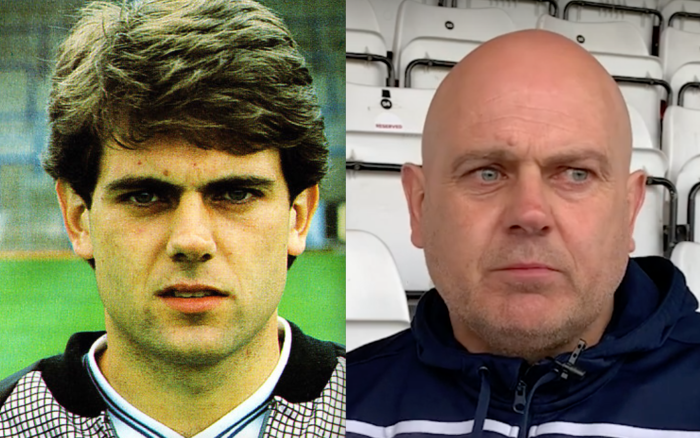
Opening up on the power of friendships in football

Coach Dean Wilkins fumed after falling out with Knight 

DEAN WILKINS might have lived in the shadow of his more famous elder England international brother Ray but he certainly carved out his own footballing history, much of it with Brighton.

Albion fans of a certain vintage will never forget the sumptuous left-footed free-kick bouffant-haired captain Wilkins scored past Phil Parkes at the Goldstone Ground which edged the Seagulls into the second-tier play-offs in 1991.

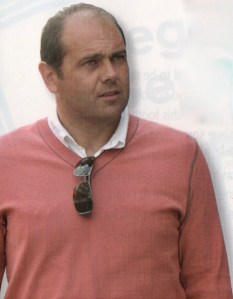
Supporters from the mid-noughties era would only recall the balding boss of a mid-table League One outfit at Withdean comprising mainly home-grown players who Wilkins had brought through from his days coaching the youth team.

After Dick Knight somewhat unceremoniously brought back Micky Adams over Wilkins’ head in 2008, he quit the club rather than stay on playing second fiddle and subsequently went west to Southampton where he worked under Alan Pardew and his successor Nigel Adkins as well as taking caretaker charge of the Saints in between the two reigns.

Wilkins’ initial association with the Seagulls went back to 1983, when Jimmy Melia brought him to the south coast from Queens Park Rangers shortly after Albion’s FA Cup final appearances at Wembley.

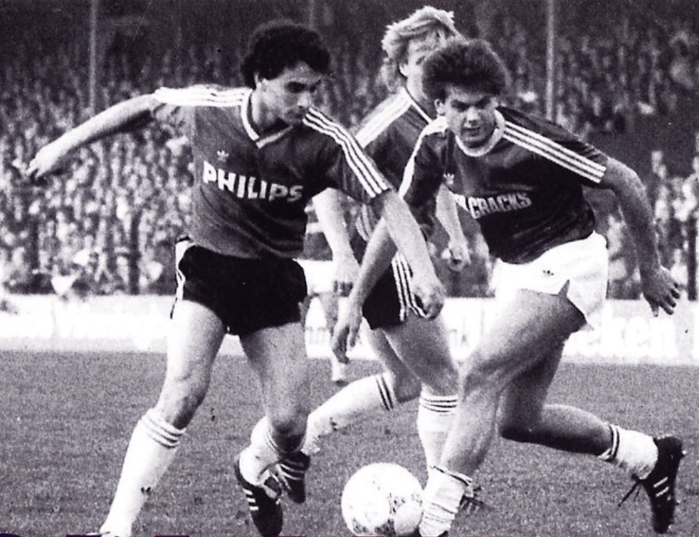
Melia’s successor Chris Cattlin only gave him two starts back then and although he pondered a move to Leyton Orient, where he’d had 10 matches on loan, he opted to accept to try his luck in Holland when his Dutch Albion teammate Hans Kraay set him up with a move to PEC Zwolle. Playing against the likes of Johann Cruyff, Marco Van Basten and Ruud Gullit proved to be quite the footballing education for Wilkins.

Wilkins in the thick of it in Dutch football for PEC Zwolle

After two years in the Netherlands, 25-year-old Wilkins rejoined the relegated Seagulls in the summer of 1987 as the club prepared for life back in the old Third Division under Barry Lloyd.

Relegation had led to the sale for more than £400,000 of star assets Danny Wilson, Terry Connor and Eric Young but more modest funds were allocated to manager Lloyd for replacements: £10,000 for Wilkins, £50,000 for Doug Rougvie, who signed from Chelsea and was appointed captain, Garry Nelson, a £72,500 buy from Plymouth and Kevin Bremner, who cost £65,000 from Reading. Midfield enforcer Mike Trusson was a free transfer.

The refreshed squad ended up earning a swift return to the second tier courtesy of a memorable last day 2-1 win over Bristol Rovers at the Goldstone.

At the higher level, Wilkins had the third highest appearances (40 + two as sub) as Albion finished just below halfway in the table. The following season Wilkins was appointed captain and was ever-present as Albion made it to the divisional play-off final against Notts County at Wembley, having made it to the semi-final v Millwall courtesy of the aforementioned spectacular free kick v Ipswich.

Wilkins scored again at Wembley but it turned out only to be a consolation as the Seagulls succumbed 3-1 to Neil Warnock’s side.

As the 1992-93 season got underway, Wilkins, having just turned 30, was the first matchday programme profile candidate for the opening home game against Bolton Wanderers (a 2-1 win) when he revealed the play-off final defeat had been “the biggest disappointment of my career”.

The 1993-94 season was a write-off from October onwards when he damaged the medial ligaments in both his knees after catching both sets of studs in the soft ground at home against Exeter City.

Although injury plagued much of the time during Liam Brady’s reign as manager, the Irishman acknowledged his ability saying: “He is a very fine footballer and a tremendous passer of the ball and he possesses a great shot.”

Ahead of the start of the 1995-96 season, Wilkins was granted a testimonial game against his former club QPR, managed at the time by big brother Ray. But at the end of the season, when the Seagulls were relegated to the basement division, he was one of six players given a free transfer.

Born in Hillingdon on 12 July 1962, Wilkins couldn’t have wished for a more football-oriented family. Dad George had played for Brentford, Leeds, Nottingham Forest and Hearts and appeared at Wembley in the first wartime FA Cup final. While Ray was the brother who stole the limelight, Graham and Steve also started out at Chelsea.

In spite of those older brothers who also made it as professionals, Wilkins attributed his development at QPR, who he joined straight from school as an apprentice in 1978, to youth coach John Collins (who older fans will remember was Brighton’s first team coach under Mike Bailey).

He made seven first team appearances for Rangers, his debut being as a substitute for Glenn Roeder in a 0-0 draw with Grimsby Town on 1 November 1980. After joining the Albion in August 1983, he had to wait until 10 December that year to make his debut, in a 0-0 draw at Middlesbrough, in place of the absent Tony Grealish. He started at home to Newcastle a week later (a 1-0 defeat), this time taking the midfield spot of injured Jimmy Case.

Perhaps the writing was on the wall when Cattlin secured the services of Wilson from Nottingham Forest, initially on loan, and although Wilkins had a third first team outing in a 2-0 FA Cup third round win at home to Swansea City, boss Cattlin didn’t pick him again. Instead, he joined Orient on loan in March 1984.

A long career in coaching began when Wilkins was brought back to the Albion in 1998 by another ex-skipper, Brian Horton, who had taken over as manager. With Martin Hinshelwood as director of a new youth set-up, Wilkins was appointed the youth coach – a position he held for the following eight years.

Return to the Albion as youth coach

His charges won 4-1 against Cambridge United in his first match, with goals from Duncan McArthur, Danny Marney and Scott Ramsay (two).

That backroom role continued as managers came and went over the following years during which a growing number of youth team products made it through to the first team: people like Dan Harding and Adam Virgo and later Adam Hinshelwood, Joel Lynch, Dean Hammond and Adam El-Abd.

At the start of the 2006-07 season, with Albion back in the third tier after punching above their weight in the Championship for two seasons, Wilkins was rewarded for his achievements with the youth team with promotion to first team coach under Mark McGhee.

By then, more of the youngsters he’d helped to develop were in or getting close to the first team, for example Dean Cox, Jake Robinson, Joe Gatting and Chris McPhee.

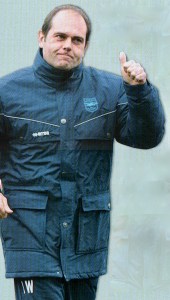
After an indifferent start to the season – three wins, three defeats and a draw – Knight decided to axe McGhee and loyal lieutenant Bob Booker and to hand the reins to Wilkins with Dean White as his deputy. Wilkins later brought in his old teammate Ian Chapman as first team coach.

Into the manager’s chair

Tommy Elphick, Tommy Fraser and Sam Rents were other former youth team players who stepped up to the first team. But, over time, it became apparent Knight and Wilkins were not on the same page: the young manager didn’t agree with the chairman that more experienced players were needed rather than relying too much on the youth graduates.

Indeed, in his autobiography Mad Man: From the Gutter to the Stars (Vision Sports Publishing, 2013), Knight said Wilkins hadn’t bothered to travel with him to watch Glenn Murray or Steve Thomson, who were added to the squad, and he was taking the side of certain players in contract negotiations with the chairman.

“In my opinion, his man-management skills were lacking, which was why I made the decision to remove him from the manager’s job,” he said. It didn’t help Wilkins’ cause when midfielder Paul Reid went public to criticise his man-management too.

Knight felt although Wilkins hadn’t sufficiently nailed the no.1 job, he could still be effective as a coach, working under Micky Adams. The pair had previously got on well, with Adams saying in his autobiography, My Life in Football (Biteback Publishing, 2017) how Wilkins had been “one of my best mates”.

But Adams said: “He thought I had stitched him up. I told him that I wanted him to stay. We talked it through and, at the end of the meeting, we seemed to have agreed on the way forward.

“I thought I’d reassured him enough for him to believe he should stay on. But he declined the invitation. He obviously wasn’t happy and attacked me verbally.

“I did have to remind him about the hypocrisy of a member of the Wilkins family having a dig at me, particularly when his older brother had taken my first job at Fulham.

“We don’t speak now which is a regret because he was a good mate and one of the few people I felt I could talk to and confide in.”

Youth coach

Knight knew his decision to sack the manager would not be popular with fans who only remembered the good times, but he pointed out they weren’t aware of the poor relationship he had with some first team players.

Knight described in his book how a torrent of “colourful language” poured out from Wilkins when he was called in and informed of the decision in a meeting with the chairman and director Martin Perry.

“He didn’t take it at all well, although I suppose he felt he was fully justified,” wrote Knight. “He was fuming after what was obviously a big blow to his pride.”

Reporter Andy Naylor perhaps summed up the situation best in The Argus. “The sadness of Wilkins’ departure was that Albion lost not a manager, but a gifted coach,” he said. “Wilkins was not cut out for management.”

Saints coach

One year on, shortly after Alan Pardew took over as manager at League One Southampton, he appointed Wilkins as his assistant. They were joined by Wally Downes (Steve Coppell’s former assistant at Reading) as first team coach and Stuart Murdoch as goalkeeping coach.

Saints were rebuilding having been relegated from the Championship the previous season and began the campaign with a 10-point penalty, having gone into administration. The club had been on the brink of going out of business until Swiss businessman Markus Liebherr took them over.

A seventh place finish (seven points off the play-offs because of the deduction) meant another season in League One and the following campaign had only just got under way when Pardew, Downes and Murdoch were sacked. Wilkins was put in caretaker charge for two matches and then retained when Nigel Adkins, assisted by ex-Seagull Andy Crosby, was appointed manager.

It was the beginning of an association that also saw the trio work together at Reading (2013-14) and Sheffield United (2015-16).

Adkins, Crosby and Wilkins were in tandem as the Saints gained back-to-back promotions, going from League One runners up to Gus Poyet’s Brighton in 2011, straight through the Championship to the Premier League. But they only had half a season at the elite level before the axe fell and Mauricio Pochettino took over.

When the trio were reunited at Reading, Wilkins, by then 50, gave an exclusive interview to the local Reading Chronicle, in which he said: “This pre-season has given me time to learn about the characters of the players we’ve got at Reading and find out what makes them tick.

At Reading with Crosby and Adkins

“It’s my job then to make sure every player maximises his potential. That’s what I see my role as, to bring out the very best of them from now on and make them strive to attain new levels of performance.

“I will always keep working toward that goal. If we can do that with every individual and get maximum performances out of them, I believe we will be in for a great season.

“We’re back together now and it’s going fantastically well. I have loved every minute of it. I’m used to working with Nigel and Andy and we are carrying out similar work to what we’ve done in the past.”

The Royals finished seventh, a point behind Brighton, who qualified for the play-offs, and the trio were dismissed five months into the following season immediately following a 6-1 thrashing away to Birmingham City.

Six months later the trio were back in work, this time at League One Sheffield United, but come the end of the 2015-16 season, after the Blades had finished in their lowest league position since 1983, they were shown the door.

Between January 2018 and July 2019, Wilkins worked for the Premier League assessing and reporting on the accuracy, consistency, management and decision-making of match officials.

In the summer 0f 2019, he was appointed Head of Coaching at Crystal Palace’s academy, a job he held for 15 months.

A return to involvement with first team football was presented by his former Albion player Alex Revell, who’d been appointed manager of League Two Stevenage Borough. Glad to support and mentor Revell in his first managerial post, Wilkins spent a year as assistant manager at the Lamex Stadium.

Did Albion fans only get to see half a Lita?

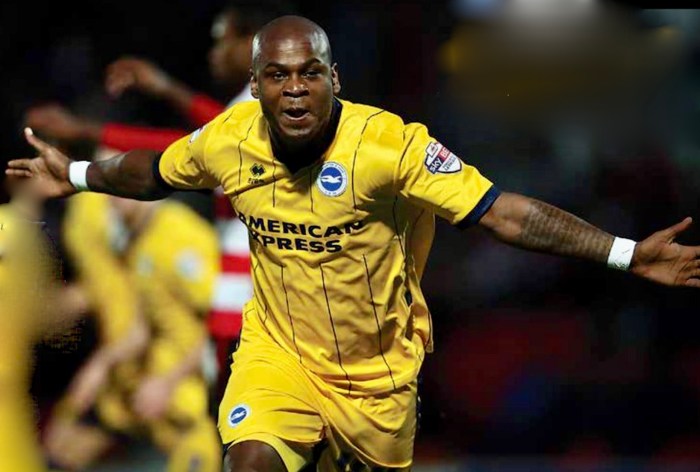
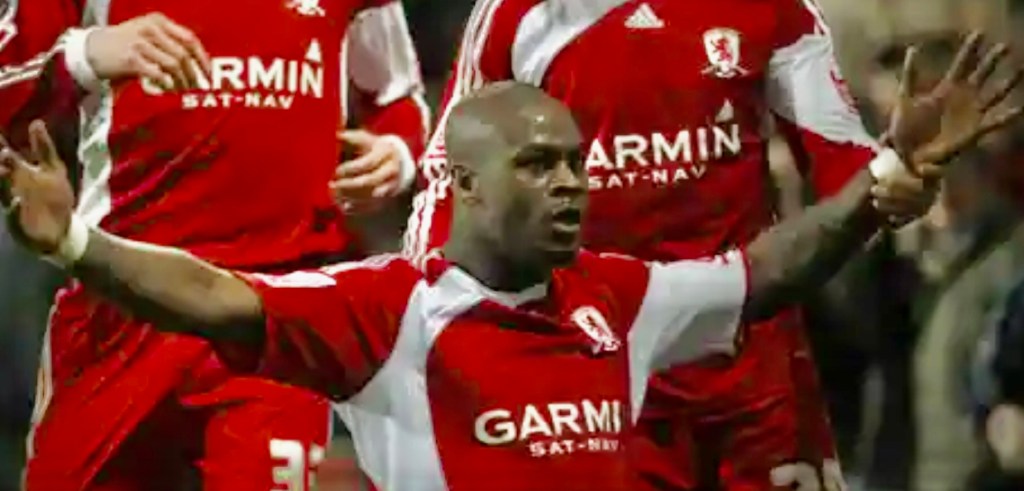
PROLIFIC second tier goalscorer Leroy Lita was a Gareth Southgate free transfer signing for Middlesbrough where he scored 20 in 82 games.

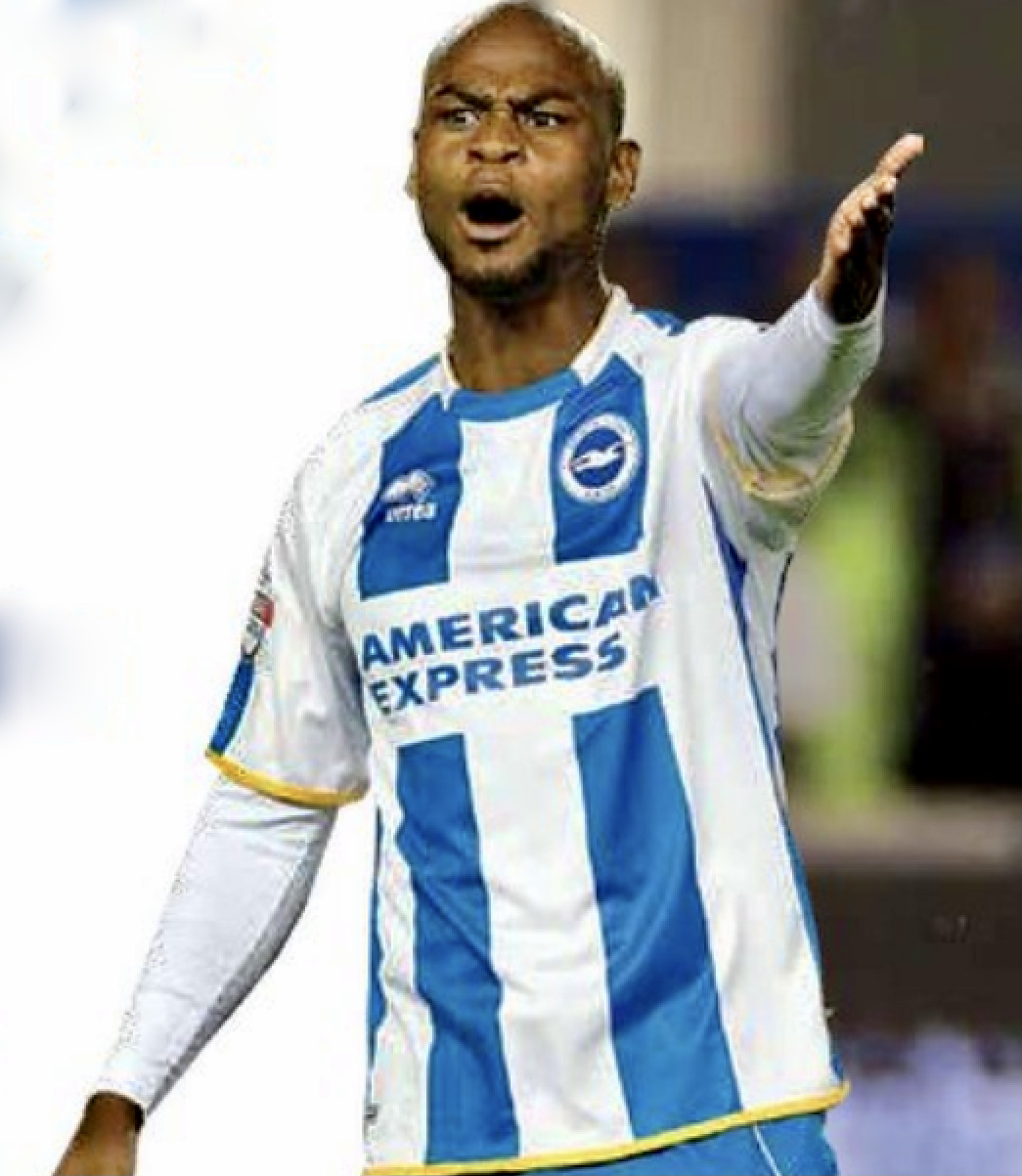
Two years after Boro cashed in and sold him for £1.75m to newly promoted Premier League side Swansea City, Lita joined an injury-hit Brighton side three months into Oscar Garcia’s reign.

Goals had been harder to come by for Lita after Brendan Rodgers had signed him for the Swans and he was sent out on loan, spending time back in the Championship with Birmingham City and Sheffield Wednesday.

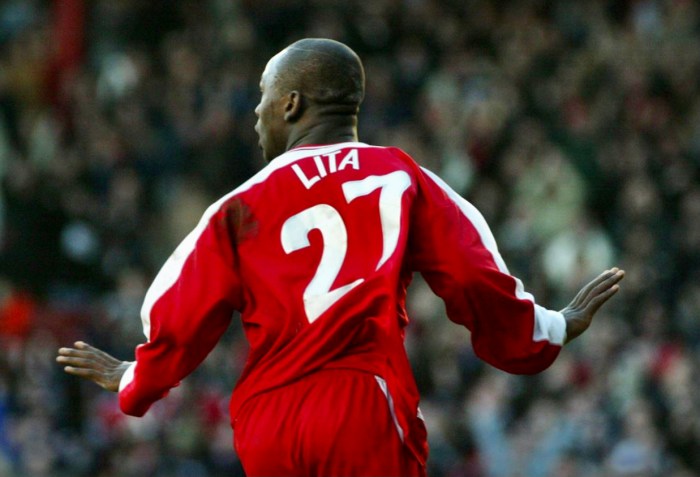
It was a familiar story for Lita who had been Reading’s first £1m player when Steve Coppell signed him from Bristol City in 2005.

He netted a goal every three games for the Royals, but towards the end of his four years at the Madejski Stadium, he’d gone on loan to Charlton Athletic and Norwich City.

By the autumn of 2013, Lita had become something of a footballing nomad, fed up with a lack of first team action under Michael Laudrup.

With Albion’s leading striker Leo Ulloa out for two months with a broken foot, and Craig Mackail-Smith and Will Hoskins also sidelined, Garcia brought the diminutive striker to Brighton on a three-month loan arrangement.

“He is strong, fast and direct, and he has shown he can score goals in the Championship,” Garcia told the club website. “He offers us something different going forward.”

I can remember being at the Keepmoat Stadium, Doncaster, when he scored his only goal for the club two minutes after going on as a substitute for Jake Forster-Caskey (he’d played with his stepdad Nicky Forster at Reading).

Forster-Caskey had scored a wonder goal with his left foot from 35 yards before Rovers equalised but visiting Albion went on to collect three points in a 3-1 win (David Lopez scored the other with a long range free kick).

Lita had made his debut in a 0-0 draw at Yeovil on 11 October, going on as a sub for Ashley Barnes and his home debut saw him replacing another loanee, Craig Conway, in a 1-1 draw with Watford.

The eager striker made a public plea via the Argus to be given a start but Garcia only ever used Lita off the bench for the Seagulls (he went on as a sub on five occasions and was an unused sub for three games).

“The staff have a bit of doubt but I feel fine,” Lita said. “When I am on the pitch my mind just takes over anyway.
“I don’t ever feel tired or not match fit. I know you still need your match fitness, but you have to get that at some point, so hopefully this week.”

Having got off the mark for the fifth Championship club he had served on loan, he added: “Once you get that first goal you are thinking about the next one and the next one. I am just looking forward to scoring plenty of goals.

“I know I can score goals wherever I go so I’ve never had that doubt. Whoever has doubted me it’s up to them. My belief in myself is not going to end until I am 50 years old and can’t move!”

But with Ulloa’s fitness restored, Lita’s final appearance in an Albion shirt was on 3 December when he went on for Barnes at the Amex as the Seagulls succumbed 2-1 to Barnsley.

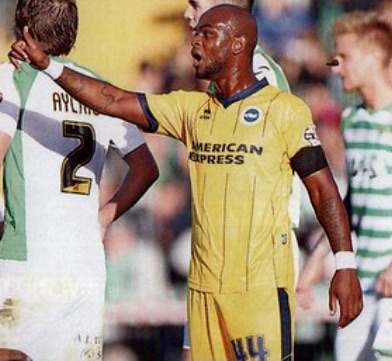
Maybe Lita’s Albion spell was cursed from the start when he was handed squad number 44 (all the fours, droopy drawers)?

He was still only 28 when he arrived at the Amex with an impressive record of 101 goals in 330 league and cup games, 14 of which had been in Reading’s 2006-07 Premier League season.

“I know the Championship well,” Lita said in the matchday programme. “Consistency is the main thing at this level because everyone beats everyone; some teams start well and drop off, while others start badly then pick up a run of results. So, it’s all about putting a good run together then you never know what might happen.”

Lita followed in the footsteps of former Swansea teammates Kemy Agustien and Andrea Orlandi to the Amex, but he also knew Liam Bridcutt and Andrew Crofts from his time as a youngster at Chelsea.

He recalled summer training camps at Horsham with Bridcutt and he played in the same Chelsea junior side as Crofts. “They have both gone on to become really good players,” he said.

“It helps when you go to a club and know a few people but I think the style of play here will also suit me.

“It is similar to Swansea and the club only signs players here who know the system.

“I played against Brighton last season, scoring on my home debut for Sheffield Wednesday, and although we won that day, I was still impressed by the way the team played.” He had also played at the Amex before when he was on loan at Birmingham and (below right) was the subject of a page feature in the matchday programme.

Born in Kinshasa in the Democratic Republic of Congo on 28 December 1984, it was as a teenager on Chelsea’s books that he couldn’t believe his luck to be sharing a training pitch with Jimmy Floyd Hasselbaink and Eidur Gudjohnsen.

“I would go home and see them on TV and the next day I would be training with them,” he told The Guardian. “It was unbelievable.”

Reporter Jon Brodkin wrote: “Chelsea broke his heart by releasing him but his three years at the club he supports were hardly wasted. The thrill of being a ballboy was surpassed by training with the first team’s front two.”

Lita told him: “I was 15 and the academy director said he had spoken to my school and I could have a couple of days off a week to train with the first team and the ressies [reserves]. It was a great opportunity and I learned a lot from it.

“Hasselbaink’s finishing was unbelievable, he didn’t mess about. He could place it and smash it. I mainly did finishing with them, not much else, but I could see as well how professional they were and how they looked after themselves.”

After Lita’s release, he contacted a few clubs – Fulham were interested but didn’t offer a contract – and he was aware that after leaving Arsenal Andy Cole had made a new start to his successful career at Bristol City.

It was the Robins who gave Lita an opportunity and former Albion skipper Danny Wilson handed him his first team debut at the beginning of the 2002-03 season when he was still only 17.

His first league goal was a late winner on 28 September 2002 to secure a 3-2 victory after going on as a substitute at Port Vale (for whom an 18-year-old Billy Paynter had scored).

“The striker hit a glorious goal to end Vale’s hopes of a point after they had fought back to level matters just a minute earlier,” said the BBC report of the game.

It wasn’t until the following season that he was given a professional contract and it was only after Brian Tinnion succeeded Wilson as manager in 2004-05 that Lita established himself in the City side. He scored 29 goals in all competitions and that form earned him a call-up to the England under-21s, Lita having decided not to play for his birth country.

He scored on his debut on 8 February 2005 when he went on as a sub for Justin Hoyte in a 2-1 defeat against the Netherlands at Derby’s Pride Park.

Those goals also earned him a £1m move to Reading, even though Tinnion advised him against the move, believing a Premiership club would come in for him.

“Once I got down here, I knew it was right,” Lita told The Guardian. “I want to go a step at a time. Reading are a good club, they’re looking to get into the Premiership and that’s where I want to be.”

He went on to score 15 goals in 25 league and cup games (+ seven as a sub) as Reading topped the Championship, and he returned to the England under-21 fold in February 2006.

He was on home turf at the Madejski Stadium when he earned his second cap, again as a sub, replacing David Nugent in a 3-1 win over Norway (future Albion loanee Liam Ridgewell was among his teammates).

A year later, after finding the net in the Premier League with Reading, Lita got a third cap as a substitute (for James Milner) and scored again in a 2-2 draw against Spain at Pride Park. Liam Rosenior was also a substitute that day.

Lita’s first start for the under 21s came the following month, on 24 March, in a 3-3 draw with Italy in the first game played at the new Wembley Stadium, in front of 55,700. On 5 June the same year, Lita scored England’s fifth goal in a 5-0 win over Slovakia at Carrow Road after he’d gone on as a sub for Nigel Reo-Coker.

Lita was an overage player in the 2007 UEFA European Under 21 Championship: he missed an 88th minute penalty after going on as a sub in a 0-0 draw with the Czech Republic but scored in each of the three games he started: 2-2 v Italy, 2-0 v Serbia and 1-1 v the Netherlands (who won the tie 13-12 on penalties). But a full cap eluded him.

Lita was a regular throughout Reading’s first top-flight campaign. In a side that include Ivar Ingimarsson and Steve Sidwell, Lita scored 14 times in 26 league and cup starts plus 12 appearances off the bench.

But with Kevin Doyle and Dave Kitson the preferred strike duo in 2007-08, Lita’s game time was much reduced and he went on loan to Charlton in March 2008.

It was a similar story the following season when he scored seven times in 16 games during a three-month loan at Norwich City – the haul included a hat-trick against eventual champions Wolves.

The excellent Flown From The Nest website, that profiles former Norwich players, recalled how that treble attracted the interest of plenty of other clubs, but City boss Glenn Roeder said: “It’s a better problem to have than him not scoring and playing rubbish – then none of us want him. What can you do?

“He was brought here to score goals. He was a little bit rusty in his first game which was understandable. He did better in the second game against Bristol City when he had a couple of chances which unfortunately never went in, and then in the third game on Tuesday night, we saw the real Leroy Lita and what he is all about.”

Lita returned to Reading and played in a FA Cup third round defeat at Cardiff and although Sheffield United made a bid for him, he preferred to stay with the Royals.

Nevertheless, at the end of the season, he finally left the Madejski and headed to Teesside on a three-year deal.

On signing for Boro, Lita said: “The manager has been after me for about a year, it’s great to feel wanted. I have a lot of respect for the gaffer and I want to do well for him and the club.

“I aim to repay him for his faith in me with goals. That’s the main strength to my game and I’m looking forward to scoring goals for Middlesbrough.”

He told the Northern Echo: “I’m raring to go. I haven’t enjoyed the last two seasons one bit, but this is a fresh start and I’m excited about the challenge.

“Other clubs were interested in signing me, but there was only once place I wanted to go and that was Middlesbrough.”

Southgate added: “Leroy has a hunger to score goals and his goalscoring record in the Championship in particular is very strong.

“His record says he gets one in two at this level so that will be important for us. I think he has a point to prove and, when he’s fully fit, he will relish the challenge.”

It wasn’t long before Southgate was succeeded by Gordon Strachan but Lita made the second highest number of appearances (41) in that season’s squad and scored nine goals as Boro finished mid-table.

There was yet another managerial change the following season, with the return of former player Tony Mowbray, but Boro once again finished mid-table with a side that featured Joe Bennett at left back and Jason Steele in goal.

Lita scored 11 times in 40 matches, which was enough to attract newly-promoted Swansea. “I’ve had a good chat with Leroy,” said Mowbray. “He has a chance to play in the Premier League and good on him. His talent has earned him that chance.”

But he only scored twice in six starts (+ 12 appearances off the bench) all season and in September 2012, Lee Clark signed him on a three-month loan for Birmingham.

“I know Leroy very well having worked with him at Norwich during a loan spell in which he scored seven goals in 16 games,” said Clark. “He’s a proven goalscorer who has power and pace and there’s no doubt that he’ll add quality to my squad.”

Lita scored three goals in 10 games for Birmingham before being recalled early, but in late January 2013, he joined Sheffield Wednesday on loan until the end of the season.

Wednesday manager Dave Jones told BBC Radio Sheffield: “Leroy has a lot of experience at this level and the one above. It could be with a view to a permanent deal. This lets us have a look at him and he can have a look at us.” But he only scored twice in nine appearances for the Owls.

Released by Swansea at the end of the 2013-14 season, Lita was then reunited with Danny Wilson, manager at newly relegated League One Barnsley.

“He was my first manager and I like the way he works,” said Lita. “He’s got a lot of trust in me and I’ve got a lot of trust in him.

“I enjoyed my time under him as a youngster. He helped me a lot and helped me progress in my career so far. I just want to get back to playing football regularly again and I’m going to get that opportunity here.”

He scored in his first two league games but didn’t register again for 21 games. When Wilson was replaced by Lee Johnson in February 2015, within a matter of weeks Lita joined lowly Notts County on loan until the end of the season but was unable to prevent their relegation.

On expiry of his Barnsley contract, Lita moved to Crete side AO Chania in August 2015 but was back in England the following March, signing a short term deal with League Two Yeovil Town, where he scored once in eight games. That was his last league club in England.

He scored five goals in 21 games for Thai Premier League side Sisaket in 2017 and on his return to the UK turned out for a number of non-league clubs: Margate, Haverhill Rovers, Salisbury and Chelmsford City.

In May 2020, the Coventry Evening Telegraph hailed his signing for Nuneaton Borough, whose manager Jimmy Ginnelly told the newspaper: “His partner is from Nuneaton and they’ve recently moved into a house on The Longshoot, which is just five minutes from the ground, so this is a win-win situation for both parties.

“These sorts of players don’t come onto Nuneaton’s radar very often so we moved quickly and obviously all of us here at the Boro are very excited.”

He scored eight goals in 33 appearances for Nuneaton, went on to play for Southern League Premier Division Central rivals Stratford Town before moving on to Hednesford Town, where he’s still playing.

In March 2022, the Express and Star reported: “Lita lit up Keys Park last night as he smashed a debut hat-trick to help Hednesford to a 3-1 victory over Stourbridge.”

‘Genuine football man who turned people’s lives around’

George Petchey twice stepped up from backroom man to Albion caretaker manager

THE FORMER Orient and Millwall manager who introduced Laurie Cunningham to the football world was twice caretaker boss of Brighton ten years apart.

George Petchey, once a player then coach at Crystal Palace, was assistant manager to Chris Cattlin in the mid ‘80s and returned to Brighton in the ‘90s as youth development manager under Liam Brady, before becoming no.2 to Jimmy Case.

Working for the Albion was certainly geographically convenient for Petchey because, even when he played, coached or managed in London, he lived in Southwick.

Petchey first arrived at the Albion in 1983 to take charge of youth development and, as described by wearebrighton.com, was the man responsible for introducing Ian Wright on trial, having been impressed when the future Arsenal and England star had tried to begin his career at Millwall, where Petchey was manager between January 1978 and November 1980.

It’s now part of football folklore that Albion rejected Wright and Cattlin opted to take on another triallist, Steve Penney, instead. Meanwhile, in November 1984, Petchey was promoted to assist the relatively inexperienced Cattlin with the first team.

Although he was seen as a figure in the background, a profile article in the matchday programme gave a little insight into his approach.

“I can’t understand people who earn a living from football and still criticise the game,” he told interviewer Tony Norman. “I’ve been involved with it since the age of 14 and I wouldn’t change a thing.

“Molly (his wife) and I have met a lot of good people. We’ve loved the game and it has been good to us. No complaints.”

When Cattlin was sacked in April 1986, Petchey stepped up to manage the side for the final game of the season (a 2-0 defeat away to Hull City) before Alan Mullery returned as boss.

Petchey’s second stint at the Albion began in January 1994, shortly after Brady had been appointed as manager. With finances perilous during that time, bringing through youngsters was seen as an important route and Petchey was appointed to oversee that side of things.

In explaining the appointment, Brady wrote in his programme notes: “I don’t think there are many better in their field than George Petchey.

“He has had a lot of experience at management level and he has always been able to develop young players and this is something we are determined to do here.”

Brady had been to watch the youth team progress in the FA Youth Cup and he added: “There are several outstanding prospects in the side and I am sure George will guide them in the right direction.”

Within a couple of months, Brady had given a first team debut to one of them in Mark Fox.

The Argus later noted how Gareth Barry was among the young players who came through Albion’s centre of excellence under Petchey, Vic Bragg and Steve Avory.

Petchey became no.2 to Jimmy Case, pictured with George Parris in an Albion line-up

When Brady couldn’t stomach the shenanigans of the Bill Archer-David Bellotti regime any longer, Case took charge and promoted Petchey to be his deputy, but with the background interference affecting performances on the field, Case was relieved of his duties in early December 1996.

Petchey stepped forward once again to take temporary charge, although he made it clear he didn’t want the job on a permanent basis. Indeed, he recommended two of his former Orient players be considered for the post.

“I was asked for my suggestions and I recommended Dennis Rofe and Glenn Roeder,” said Petchey, who was 65 at the time. “Hopefully, it will be one of them.”

It was perhaps par for the course that the hierarchy decided to choose someone else, and, within a week, Steve Gritt was appointed.

When Petchey – the first English coach to complete his UEFA coaching qualifications – died aged 88 on 23 December 2019, the tributes paid to him reflected the impact this highly respected football man had on a good many people.

The football writer Neil Harman said: “We often overlook the genuine, honest people, who made football what it is, who went the extra mile, who turned people’s lives around. RIP the great Leyton Orient manager George Petchey who set Laurie Cunningham and many others on the road to stardom.”

David Gipp, a Brighton player in the late ‘80s, tweeted: “took me from London at 14; taught me so much” and John Sitton, who played under Petchey at Millwall, described him as “one of the best managers in the game”.

Born on 24 June 1931 in Whitechapel, London, Petchey’s early footballing experience was in Essex with the Romford and Hornchurch Schools teams. The excellent theyflysohigh.co.uk website details his career, revealing how, on leaving school he played for Upminster Minors and Juniors from 1945 to 1947 before joining West Ham United as an amateur in August 1947.

He signed professional on August 31, 1948, and two days later made his first appearance as a professional against Chelsea ‘A’ at Upton Park in the Eastern Counties League.  

The website explains how National Service interrupted Petchey’s career, although he was still able to play fairly regularly for the Hammers’ ‘A’ team and Football Combination side. It wasn’t until 1 September 1952 that he made his senior debut at the age of 21, playing alongside Ernie Gregory, Malcolm Allison and Frank O’Farrell in a goalless Second Division draw with Hull City at the Boleyn Ground.

Wearing the no.10 shirt, Petchey kept his place for the next game, a 2-1 home defeat by Birmingham City, but he only made one other first-team appearance, on 13 November that year, starting alongside Allison, Noel Cantwell and debuting forward Tommy Dixon in a 3-2 Essex Professional Cup win at Colchester United.

A wing-half, he was described by whufc.com as “a tough-tackling, hard-working defensive midfielder who could also pass the ball with vision and accuracy”.

In July 1953, Petchey moved on to Queens Park Rangers, scoring on his league debut in a 2-1 win at Bristol City on 22 August. Even then, he was commuting to London from Portslade.

QPR supporter Steve Russell spoke fondly of Petchey in an article for indyrs.co.uk, remembering a “tough-tackling, fearless, dynamic” player who took no prisoners.

Petchey scored 24 goals in 278 league and cup appearances for QPR, in the days when they were a Third Division side.

He dropped down to the old Fourth Division to sign for Palace in June 1960 but helped them to promotion in his first season at Selhurst Park.

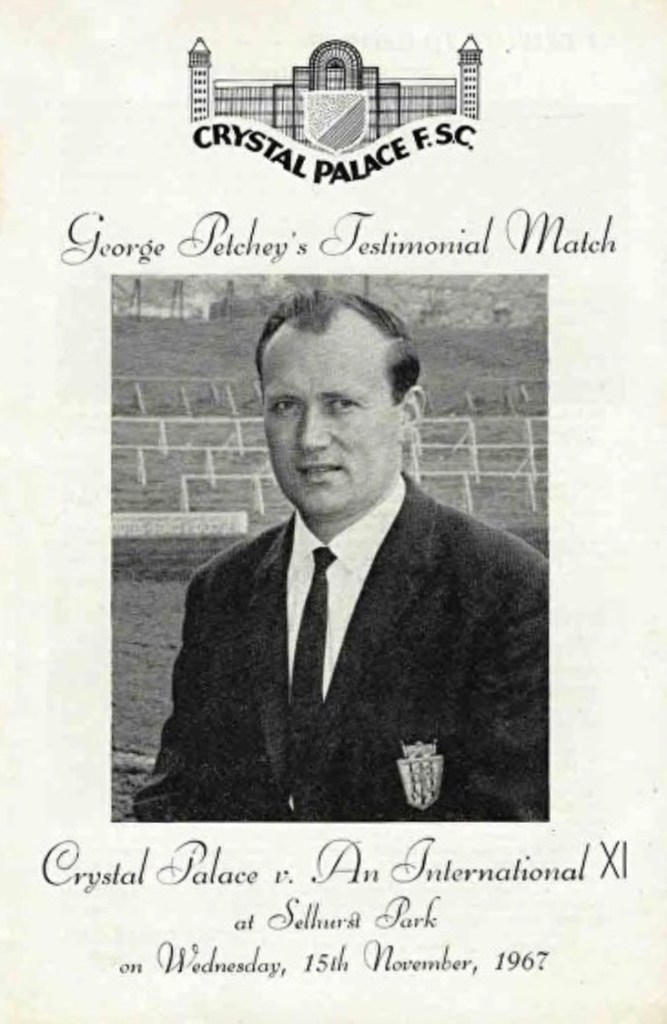
Petchey’s playing days at Palace came to an early conclusion due to a serious eye injury but the esteem in which he was held was reflected in the quality of players on show at his testimonial match at Selhurst Park on 15 November 1967.

Palace took on an international XI which featured West Ham’s World Cup winning trio of Bobby Moore, Geoff Hurst and Martin Peters, together with the likes of Chelsea’s Peter Osgood and Manchester City’s Colin Bell in front of a crowd of 10,243.

Petchey turned to coaching at Palace, initially under Arthur Rowe and then Bert Head, under whom Palace won promotion to the old First Division in 1969. That side’s goalkeeper, John Jackson – who subsequently followed Petchey to Orient, Millwall, and the Albion as a coach – attributed his achievements to Petchey, telling cpfc.co.uk: “He used to work me hard but the harder you worked at your game the more you learned and the better you would become.

Petchey the Crystal Palace coach

“He made me a more confident player which led to me being more vocal behind the back four, and I always remember Thursday being called shooting practice day so it would become a session where I would put in a massive shift!”

When Jimmy Bloomfield was lured from Brisbane Road to manage Leicester City in 1971, the Os turned to Petchey to continue to build the side the former Arsenal player had developed.

He did just that over six Second Division seasons between 1971 and 1977, Petchey recruiting a number of players who’d previously played under him at Palace; the likes of goalkeeper Jackson, John Sewell, David Payne, Bill Roffey, Alan Whittle and Gerry Queen.

They came agonisingly close to winning promotion to the elite, missing out by a single point in 1973-74, and they took some notable scalps as cup giant-killers.

It was during his reign at Brisbane Road that Petchey discovered Tony Grealish playing on Hackney Marshes and unearthed the raw talent of the mercurial Cunningham, who he would later reluctantly sell for big money to West Bromwich Albion.

Petchey and his assistant Peter Angell carefully nurtured the young Cunningham, hoping his obvious talent would outweigh some of the demons in his life.

“We had one or two problems with him in the early days,” admitted Petchey, as told here. “There was a time when Peter Angell and I wondered if we could win Laurie over. He had to struggle in life and was the sort of youngster who was used to living on his wits.

“He was suspicious of people outside his own circle. He took a long time to trust other people. He often turned up late for training, the eyes flashed when we fined him, but for all that I loved the spark that made him tick.”

Cunningham later admitted: “It was George Petchey and Peter Angell who showed me that the only person who could make my dreams come true was, in fact, myself.”

Petchey gave 18-year-old Cunningham his first-team debut in the short-lived Texaco Cup tournament against West Ham at Upton Park on 3 August 1974. Although Orient lost 1–0, Petchey said afterwards: “It took him a little time to get adjusted to the pace of the game but I was delighted with the way he played from then on. He has a natural talent. He has the speed and agility to take on men. He never gives up. There’s a big future ahead for him.”

Cunningham’s rise to playing for England and Real Madrid was told in the 2013 documentary film First Among Equals and Petchey was a prominent interviewee featured.

Petchey talks about Laurie Cunningham for First Among Equals

When eventually Orient couldn’t resist big money offers for him any longer, the winger went to West Brom for £110,000 plus two players (Joe Mayo and Allan Glover) on 6 March 1977.

“I did not want to sell him, but we were over our limit at the bank and West Brom were ready with a cheque,” said Petchey at the time. “Obviously I’m very disappointed at losing a player who I have seen progress from the age of 15 and I think he was as reluctant to leave as we were to see him go. But it was an offer of First Division football which he could not refuse.”

Petchey enjoyed less success at Millwall. Although he managed to stave off relegation after succeeding Gordon Jago in early 1978, the Lions were relegated from the second tier the following season.

It was during that term he bought Brighton winger Tony Towner for £65,000 after the Sussex lad had lost his place to new signing Gerry Ryan. It wasn’t all doom and gloom though because Millwall’s youngsters won the FA Youth Cup in 1979, beating Manchester City 2-0 (over two legs).

After he’d left the Albion for a second time, Petchey continued to work in football, appointed chief scout at Newcastle United by Sir Bobby Robson, and he later took on a coaching role.

Cattlin wasn’t backed to buy ex-City defender Jeff Clarke for £6,500

HARD-UP Albion wanted to sign dominant centre-back Jeff Clarke in 1984 but, unable to meet Newcastle United’s modest asking price, they were forced to walk away from a deal.

Clarke, who began his career at Manchester City, had plenty of experience to bring to a young Brighton side having played more than 300 games for north-east giants Sunderland and the Magpies.

At the start of the 1984-85 season, Clarke found himself on the outside looking in at St James’ Park, following the arrival of the legendary Jack Charlton as manager.

Although Arthur Cox had led them to promotion to the old First Division, he quit during the close season because he didn’t feel the club’s owners were investing enough in the playing side (some things never change!).

Former England World Cup winner Charlton, whose uncle ‘Wor’ Jackie Milburn was a Newcastle legend, took the hot seat and his preferred centre back pairing at the start of the season was John Anderson and Glenn Roeder.

Down on the south coast, Brighton boss Chris Cattlin was keen to bring some experience to the spine of the team he was rebuilding, and he took Clarke on loan to play alongside the emerging Eric Young, as well as introducing his old Huddersfield teammate Frank Worthington up front.

Clarke and Worthington made their debuts in an opening day 3-0 win at Carlisle United on 25 August (Danny Wilson, Terry Connor and Steve Penney the goalscorers).

The on-loan defender couldn’t have had a more eventful home debut three days later, in an ill-tempered evening game at home to Larry Lloyd’s Notts County, who had Justin Fashanu playing up front.

A clash between Fashanu and Clarke saw the defender come off worse, a back injury forcing him to be substituted with only 36 minutes gone (replaced by sub Neil Smillie).

In a game which saw seven players booked, fellow central defender Young joined him in hospital having been concussed by a stray Fashanu elbow. In the days before multiple substitutes, the Seagulls were forced to play the second half with only ten men, but nevertheless ran out 2-1 winners. Steve Jacobs opened the scoring on 22 minutes, Fashanu equalised on 55 but Worthington marked his home debut with the winner in the 67th minute. (The following June, Fashanu joined the Albion for a fee of £115,000).

jeff clarke BWClarke had sustained a fracture to a bone in his back but he was fit enought to return to the side on 22 September, in a 1-0 defeat away to Oldham Athletic, and was then on the winning side in the following two games: a 3-1 first leg Milk Cup win over Aldershot and a 2-0 home win over Fulham.

Unfortunately, that proved to be his last game for the Seagulls. Cattlin wanted to sign him permanently and Newcastle wanted just £6,500 for Clarke but the Albion board wouldn’t sanction the fee, as Cattlin explained at the Albion Roar live show in December 2018 (skip to 28 minutes in), which he believes signalled the beginning of the end of his time at the club.

In his matchday programme notes at the time, Cattlin said: “With the current cash crisis at the club, I could not finalise what I think is a very important deal in the long-term for this club. Clarke is a fine professional who, in many ways, reminds me of Peter Withe in his outstanding professionalism and leadership qualities.”

That sounds like he felt the captaincy of the side wasn’t in the right hands, and later in the same notes he explained how he had taken the job of skipper from Jimmy Case (“he needs to get his own game back to what we know he is capable of”) and given the role to Danny Wilson (“his leadership qualities on the park have become self evident”).

Born 18 January 1954 in the West Yorkshire mining town of Hemsworth, near Wakefield, Clarke was a Sheffield Wednesday fan as a boy and admired Owls central defender Vic Mobley.

However, it was on the other side of the Pennines that he made his breakthrough as a professional, with Manchester City.

Manager Tony Book handed Clarke his debut in a 4-0 home win over West Ham United on 17 August 1974 but he only played 15 games for the Maine Road outfit, his last game coming in a 2-1 home defeat to Carlisle United on 19 March 1975.

Clarke moved to Sunderland as a makeweight in the deal which saw the Sunderland and England international centre back Dave Watson move to City in the summer of 1975.

J Clarke Sund BW

The move to Roker Park finally saw his career take off and in seven years he made 213 appearances for the Wearsiders, many as captain (as seen in team photo above), including helping them to promotion to the top flight in 1976.

The excellent MatchDayMemories.com unearthed a Shoot/Goal profile of Clarke which revealed he had earned schoolboy under 18 international honours, his favourite food was peanut butter sandwiches and Brian Kidd, then of Arsenal, had been his most difficult opponent.

In 1982, at the age of 28, he switched to north east rivals Newcastle United on a free transfer, and stayed with the Magpies for five years.

When his two-month loan on the south coast wasn’t made permanent, he had other loan spells in Turkey and at Darlington but then returned to Newcastle and was restored to the first team, and featured in a New Year’s Day win over Sunderland in which future Albion winger Clive Walker was an opponent.

When Charlton quit as boss on the eve of the 1985-86 season, it signalled better fortunes for Clarke and under Willie McFaul he became a regular alongside Roeder, racking up 45 appearances and chipping in with three goals. The following season he played only seven games and hung up his boots in 1987.

Clarke stayed at St James’ Park in a coaching capacity after his playing days were over but simultaneously he took a degree in physiotherapy at the University of Salford, graduating in 1996.

He later became physio at former club Sunderland before moving to Leeds United in 2001. Made redundant at Elland Road in 2003, he moved to Dundee United in November the same year and has been the first team physio ever since.

Steve Coppell not the first ex-Man U player to quit the manager’s chair

coppell cropSTEVE Coppell was not the first former Manchester United player I saw become manager of Brighton. More than 30 years previously Busby Babe Freddie Goodwin had been at the helm when my Albion-watching passion began.

Unfortunately, there was a parallel in their outcomes: both were wooed by better opportunities elsewhere (Goodwin to Birmingham; Coppell to Reading). One other parallel to record, though, is that each of their successors (Pat Saward and Mark McGhee) got Albion promoted.

Hindsight is a wonderful thing, but, if Coppell hadn’t been jet lagged the first time chairman Dick Knight interviewed him for the Brighton job, the 2002-03 season may have panned out differently…and Kolo Touré, a future Premier League winner with Arsenal and Manchester City, might have spent a season helping the Seagulls to retain their recently-won second tier status. Let me explain.

Coppell had been out of the country in Thailand during the summer of 2002 and, although Knight wanted to interview him with a view to appointing him as Peter Taylor’s successor, when the meeting in London eventually came about, Coppell began to nod off with the effects of his long-distance travel.

A frustrated Knight, under pressure on several fronts that summer (as told in his autobiography Mad Man: From the Gutter to the Stars, the Ad Man who saved Brighton) left him to it and took the decision to appoint third choice Martin Hinshelwood instead. (Knight had also considered German Winfried Schäfer, who had just managed Cameroon at the World Cup, but his poor command of English went against him).

As the opening to the season drew closer, Knight went with Hinshelwood to watch an Arsenal under 23 side in a friendly at Barnet. He was running the rule over Steve Sidwell with a view to taking him on a season-long loan but the stand-out player who caught his eye was Touré, and Albion’s cheeky chairman said he’d take the pair of them.

To his delight, Arsène Wenger and Liam Brady agreed…but astonishingly Hinshelwood said they weren’t needed because, in his opinion, they weren’t any better than Albion’s own youngsters, who he had been coaching, and who he was now intending to blood in the first team. An incredulous Knight kept schtum, believing he needed to support his new manager.

When they started the season with a 3-1 win at Burnley, it seemed maybe Hinshelwood had a point. But, after a disastrous run of 12 defeats, leading to the inevitable sacking of Hinshelwood, Knight reverted to Plan A and succeeded in attracting Coppell to manage the side.

He then swiftly went back to Arsenal to secure the loan services of Sidwell (who’d played for Coppell at Brentford the previous season). But he was too late as far as Touré was concerned. He’d already played his way into first team contention for the Gunners and was no longer available.

coppell + booker

With Albion at the foot of the table, Coppell had a rocky start at the helm of the Seagulls, including an embarrassing 5-0 defeat to Palace, but he quickly brought in some quality players such as Dean Blackwell and Simon Rodger, and, together with Bobby Zamora up front and the busy Sidwell in midfield, they put together some decent results that dared to suggest a great escape was possible.

Albion notched up some surprise results, including a 1-0 Boxing Day win at Norwich and a 4-1 home win over Wolves, who ended up in the play-offs. There was also a memorable 2-2 draw at Ipswich, a 4-0 home win over Watford and a 2-1 win at Reading, most notable for a rare appearance and goal from former Premiership striker Paul Kitson, who had been injured for much of the season.

Sadly, it wasn’t quite enough to keep the Seagulls in the division and they went down second from bottom, five points adrift of 21st placed Stoke City.

The following season was in its infancy when West Ham decided to sack Glenn Roeder as their boss. The Hammers were determined to replace him with Reading’s Alan Pardew; and Reading, once they realised their fight to keep Pardew was fruitless, turned to third tier Albion’s Coppell as his replacement.

Chairman Knight knew Reading could offer Coppell the opportunities that were still some way in the distance if he’d stayed at the Albion, so he did the next best thing which was to get a healthy sum in compensation which went a long way to funding that season’s wage bill.

Knight was a big fan of Coppell and admired his meticulous preparation for games through in-depth viewing of opponents.

In an interview with The Guardian, Knight said: “He is probably the most analytical mind brought to football management for many a year. His preparations are detailed to the point of fastidious. His briefings are second to none. He spent hours with the video in the afternoons breaking down moves in slow-mo to work out how the opposition operate. He is very perceptive.”

Knight added: “People say he’s cold and uncaring, but he came to one of our marches on the seafront to campaign about the new stadium at Falmer long after he left for Reading. That’s Steve. He left a big impression on us.”

coppell at reading.jpg

Coppell left the Albion with a 36.7 per cent win ratio over his 49 games in charge, just over three percentage points behind his first spell as Palace manager, but higher than his other three spells at Selhurst.

To avoid this blog post turning into War and Peace, I’m not going to cover the whole of Coppell’s career but, in the circumstances, it is worth touching on how he came to be a star on the wing for Manchester United and England.

The Liverpool lad went to the same Quarry Bank Grammar School that produced Joe Royle and Beatle John Lennon, but head teacher William Pobjoy ensured football mad Coppell stuck to his studies.

It didn’t deter Coppell from having a trial with Liverpool and playing for an Everton junior side a couple of nights a week. But both rejected him as too small and his dad Jim told playupliverpool.com: “He lost faith in ever becoming a footballer and took up golf and became quite good.” He still played football for a local side but that was just for pleasure.

A Tranmere Rovers scout made several approaches but Steve wasn’t interested, and decided he was going to go to Liverpool University to take a degree in economics and social history.

Ron Yeats, the famous colossus around who Bill Shankly built his Liverpool team in the 1960s, became Tranmere manager in the early 1970s. He remembered of Coppell: “We signed him so he could combine it with university.”

Around the same time, Coppell shot up from 4ft 11in to 5ft 7in in a year, and went on to play 38 times for Tranmere, scoring 10 goals.

Word reached Manchester United boss Tommy Docherty who paid a £35,000 fee to take him to Old Trafford. He was playing for United in the old second division while still completing the third year of his degree course. United’s deal with Tranmere had it built in that they’d pay an extra £20,000 if Coppell made it to 50 appearances. They paid it after only two games, such was the impact Docherty knew he was going to have.

Indeed, he went on to make 373 appearances for United and scored 70 goals; and the 207 games he played between 1977 and 1981 broke the record for the most consecutive appearances for an outfield Manchester United player, and still stands to this day.

coppell utd action

He played in three FA Cup Finals for United, in 1976, 1977 and 1979, only ending up with a winners’ medal when Liverpool were beaten 2-1 in 1977.

Coppell was still at United in 1983, and had been United’s top scorer on the way to the Milk Cup Final that season, but he was recovering from a cartilage operation on his damaged left knee so was unable to play in the FA Cup Final against Brighton.

He told Match magazine: “I was always fighting a losing battle against time to get fit for the final. In my heart of hearts, I knew when I had the cartilage operation that five weeks wasn’t enough time to get fit for a match of this importance. I was struggling to make it from the off.”

Coppell told Amy Lawrence of The Guardian: “’I had nine wonderful years there and I still remember running on at Old Trafford for the first time. It was a real heart-in-the-mouth moment, an incredible experience for a 19-year-old whose biggest crowd before then was probably about 5,000.”

He also won 42 caps for England and Sir Trevor Booking, one of his contemporaries in the England team, spoke in glowing terms about Coppell the player in his book My Life in Football (Simon & Schuster, 2014).

England international

“He was a winger at a time when wingers were unfashionable,” he said. “He had the pace to reach a 30-yard pass, the skill to wriggle past a defender and send over the perfect cross. But he also had the energy to run back and provide cover for his defensive team-mates down the right flank that set him apart from so many other wingers at that time.

“When his team lost possession, Steve didn’t hang about on the flank waiting for someone to win it back. He wanted to win it back himself. He was involved all the time – a quality that is a prerequisite for today’s wide players.”

Coppell made his England debut under Ron Greenwood against Italy at Wembley in 1977 in a very exciting line-up that saw him play on the right, Peter Barnes on the left, and Bob Latchford and Kevin Keegan as a twin strikeforce. It was a favoured foursome for Greenwood and when they all played together against Scotland in 1979, Coppell, Keegan and Barnes all scored in a 3-1 win.

It was while on England duty that Coppell picked up the injury that would eventually lead to a premature end to his career. Brooking recalled: “A tackle by the Hungarian József Tóth at Wembley in November 1981 damaged his knee and although he played on for a year or so more, the knee condition worsened.

“He was able to play in the first four games of the 1982 World Cup but the problem flared up after the goalless draw with West Germany and he had to miss the decisive match against Spain.”

From 2016, Coppell spent three years as a manager in India. Amongst the players he worked with at Kerala Blasters (owned by cricketing great Sachin Tendulkar) in 2016-17 was Aaron Hughes, who had a season with Albion.

The following season Coppell became the first head coach of newly-formed Jamshedpur, owned by Tata Steel, and for the 2018-19 season he took charge of Indian Super League club ATK, once part-owned by Atletico Madrid. Among its owners were former Indian cricket captain Sourav Ganguly.

thoughtful coppell

Promotion-winner Keith Dublin delivered £240,000 profit

BRIGHTON & Hove Albion’s promotion from the old Third Division in 1987-88 earned two of the squad places in that season’s PFA representative team; one quite naturally was top goalscorer Garry Nelson, the other was defender Keith Dublin.

Also in the same XI was Fulham’s Leroy Rosenior, father of latter day Albion utility man, Liam.

Dublin was an ever-present during that successful Seagulls campaign having joined in August 1987 from Chelsea, where he had played 50 league games (plus one as a sub) between 1983 and 1987.

Born in High Wycombe on 29 January 1966, Dublin became an apprentice at Stamford Bridge in July 1982 and signed professional 15 months later.

When regular left back Joey Jones was injured, he made his first team debut in a 3-1 home win over Barnsley. It was the penultimate game of the 1983-84 season, and the last at home as John Neal’s team won the Second Division Championship.

Dublin also caught the eye of the England selectors and played six times for the under-19 team.

At the time, Dublin, or Dubbers as he was known, was one of the few black players emerging at Chelsea, following after Paul Canoville and Keith Jones.

Canoville wrote in his autobiography with Rick Glanvill, Black and Blue: How Racism, Drugs and Cancer Almost Destroyed Me (Headline Publishing Group, 2012), about some atrocious treatment they all received – and not just from the terraces!

“When Jonah and then Dubbers made the step up, they no longer trained with the reserves but with the first team,” said Canoville. “That made three black faces and, on more than one occasion, there were altercations with one player who obviously had a problem with black men.

“It was always dealt with properly, but, as if the colour wasn’t an issue. Of course it was. Back then, casual, institutional racism was displayed at almost every level of the club – not so much that you would quit over it or kick up a rumpus, but enough to make you feel different and an outsider most of the time.”

Canoville added: “Dubbers was strong, athletic and fast. But as soon as either of them made a mistake, the crowd was on to them, slagging them off. There wasn’t the same open racist abuse I received, but still the tolerance threshold was low, as much in the coaching staff as the crowd.”

Dublin played 28 games in the top division for Chelsea during the 1986-87 season, but with competition for the left back spot hotting up in the shape of future England international Tony Dorigo and Clive Wilson, he decided to move on.

“John Hollins couldn’t guarantee me regular first team football at Chelsea so I’m looking forward to an enjoyable and successful season with Brighton,” he said.

Brighton manager Barry Lloyd snapped up Dublin for £35,000, and what an investment because he was ever-present at left back in the promotion season. In fact for the latter part of that season, three of the back four were ex-Chelsea defenders: Gary Chivers at right back, Robert Isaac centre back, and Dublin at left back.

When introducing Dublin in the Albion matchday programme, an article pointed out how five years previously Dublin had been cleaning Chris Hutchings‘ boots at Chelsea – and now he was taking over his no.3 shirt. Hutchings had been moved forward to play in midfield, although four months later he left the club to join Huddersfield Town.

On signing for the Albion, Dublin said: “I’m not worried about dropping two divisions because I don’t believe Brighton will be in this division for long. It’s an easy club to settle down with because I know so many former Chelsea players.” He pointed out he had known Isaac since the age of 12 or 13 when they both played in the same district schools team.

Dublin used to travel down daily to training with Chivers and although defending was their first priority they had a friendly rivalry over who could score the most goals. Dublin chipped in with five in that first season but Chivers regularly went up for corners so won the little private wager in the following two seasons.

The promotion was a great experience for Dublin who said in an interview in the matchday programme: “There’s never been anything like it for me obviously, and it’s going to be a long time before anything can top the day we clinched second place. It might never happen.

“Probably the best thing was getting a few goals along the way as well because that had never happened to me before.”

As young Ian Chapman gradually made the left back berth his own, Dublin switched inside to centre back.

Dublin welcomed the competition for his place from Chapman, explaining: “I think it’s good when you’ve got someone chasing your place, snapping at you all the time to get in the first team.

“Ian’s been quite a good mate of mine since I arrived and you have to always remember that being dropped or selected ahead of someone else is what football is all about.

“It keeps me on my toes, and if you can have six or seven players in the team in the same situation then that’s the best thing possible at any club.

“Ian’s facing the same scene now as I was experiencing at Chelsea.”

Dub leapIt was not unusual to see Dublin selected as man of the match and several programmes featured pictures of the obligatory post-match presentation by the sponsor to the nattily-dressed defender. Dublin admitted in another profile piece that clothes and shopping were hobbies.
Meanwhile, on the pitch in 1989-90, his consistent performances at the heart of the defence earned him the Albion player of the season accolade.

After 132 appearances in three seasons with Brighton, Brighton cashed in on Dublin’s prowess by picking up a £275,000 fee from Watford in the summer of 1990.

With goalkeeper John Keeley departing for Oldham for £238,000 at around the same time, fans feared another frustrating season was ahead. But they were in for a surprise.

While Dublin joined a side that would struggle, at first under former Chelsea striker Colin Lee, then ex-Tottenham legend, Steve Perryman, Brighton surprised the critics and ended the season at Wembley.

Indeed Watford finished fourth from bottom of what was then Division 2, while Brighton sneaked into sixth place with that memorable last game win over Ipswich Town, beat Millwall over two legs in the play-off semi-final and then went down 3-1 to Neil Warnock’s Notts County in the play-off final.

The following year, with future England goalkeeper David James emerging, Watford turned around a disappointing first half to the season and eventually finished 10th.

Dublin was an integral part of Watford’s defence for four years, making 168 appearances, although it appears not all Watford supporters appreciated him.

The amusing Watford fans’ website, Blind Stupid and Desperate recalled this among other memories: “The fondness with which Keith Dublin is remembered, the way that fans still tell tall tales of remarkable own goals, insanely cavalier defending and sporadic heroism with broad smiles and genuine affection, demonstrates that perfection isn’t the be-all and end-all for supporters.”

At the end of the 1993-94 season, which had been a struggle against relegation from the First Division under manager Glenn Roeder, Watford did a swap-deal which saw striker Tommy Mooney (yes, the same Mooney who famously missed the Swindon shoot-out penalty against Brighton in 2004) and midfielder Derek Payne join from Southend United and Dublin going in the opposite direction. He spent five years at Roots Hall and amassed a further 179 games.

He subsequently moved to Colchester United, but only played a couple of games, and ended his career in non-league, initially with Farnborough Town and then Carshalton Athletic.

In an Argus article in 2010, they discovered Dublin was busy in ‘retirement’ running soccer camps at home and abroad, and according to wfc.net, Dublin worked in a family property management business after his footballing days were over.

Footnote: Perhaps Dublin set a trend for Albion left backs named after Irish places, with the double whammy Kerry Mayo following in his wake some years later!

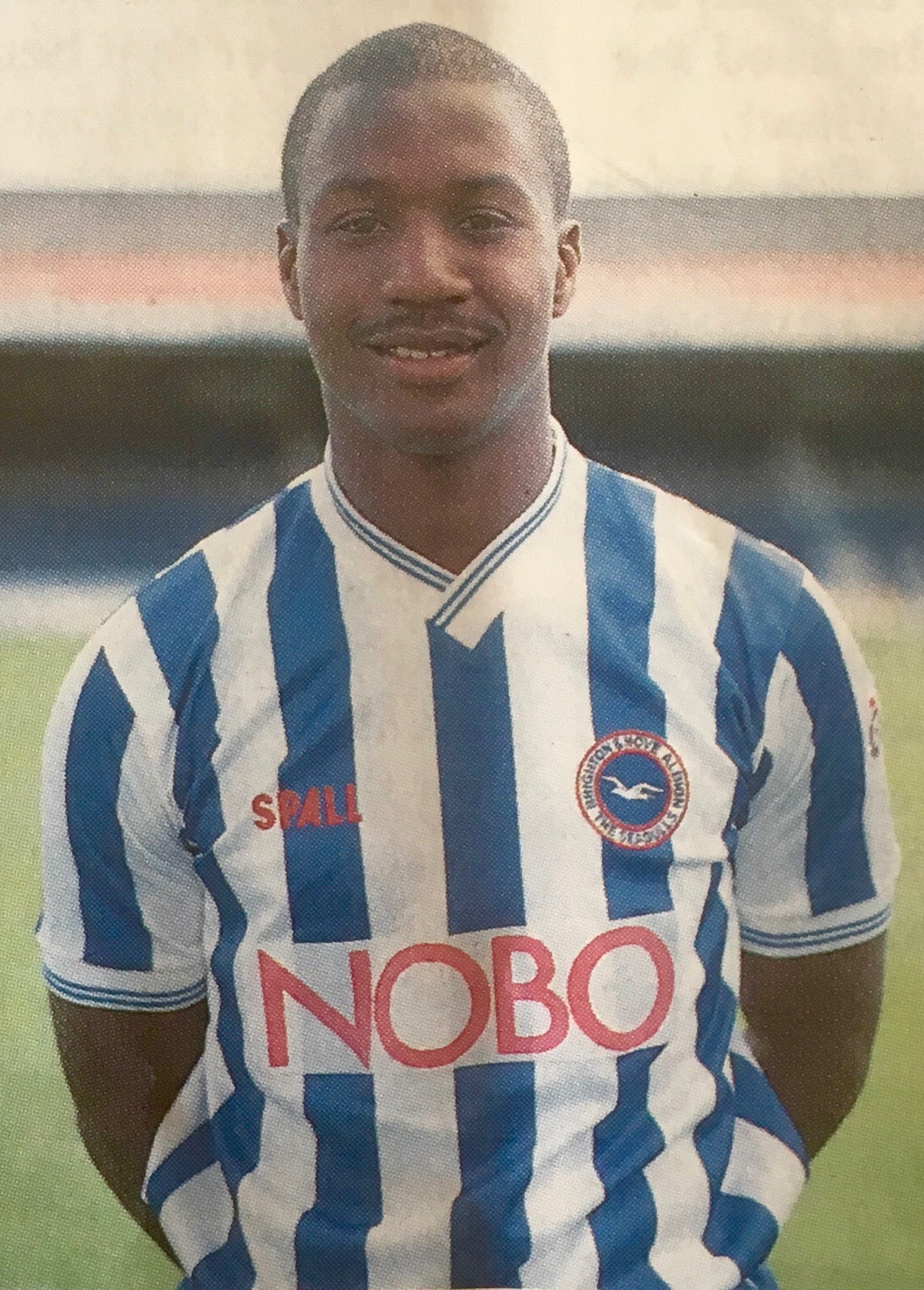
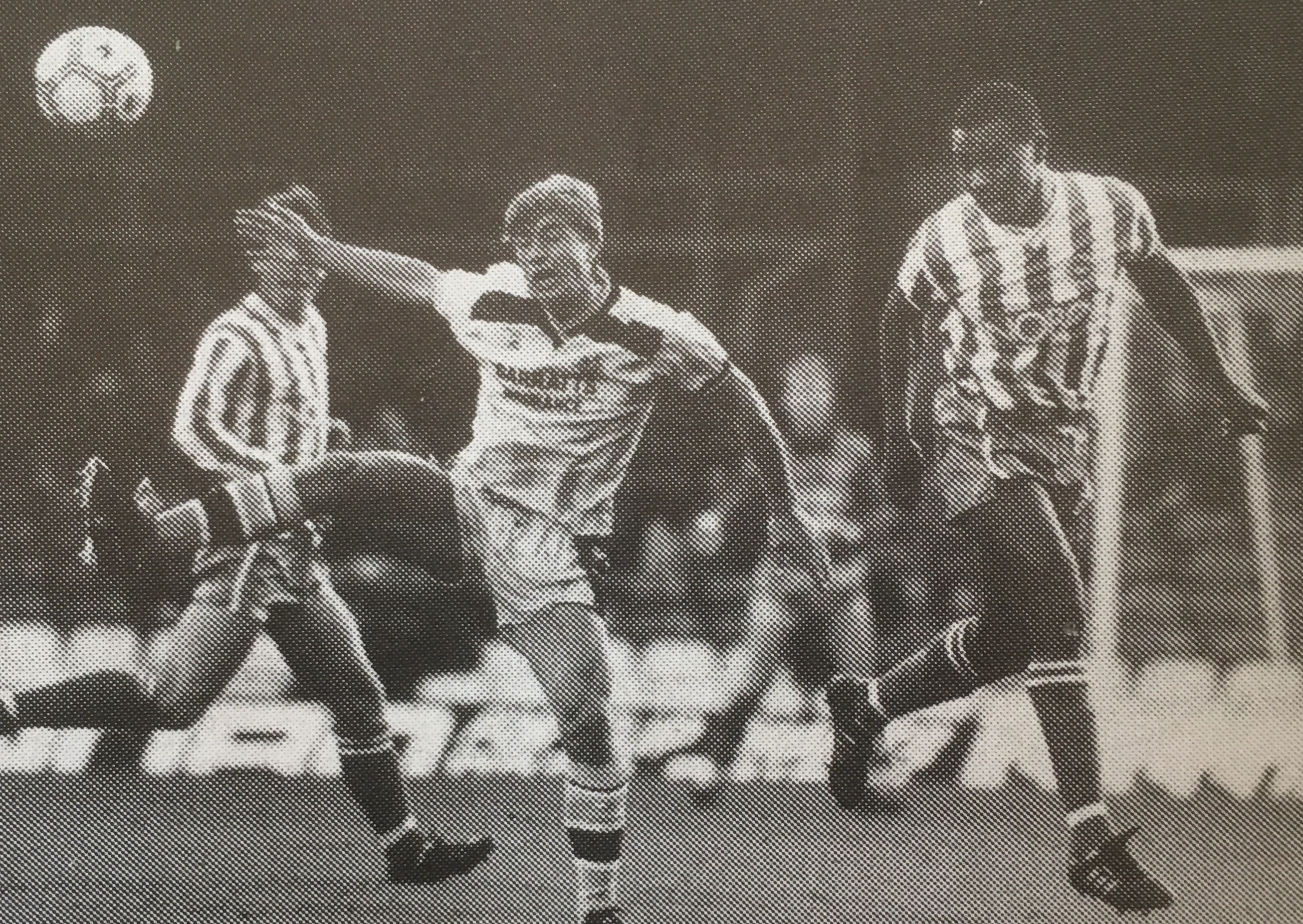
1 Dublin1a Dublin portrait2 Dublin header3 Dublin Argus cut4 Dub mom5 dub another mom

• Pictures from my scrapbook show portraits of Dublin that appeared in the matchday programme; action shots (one from the programme and one from the Argus) and a couple of man of the match presentations