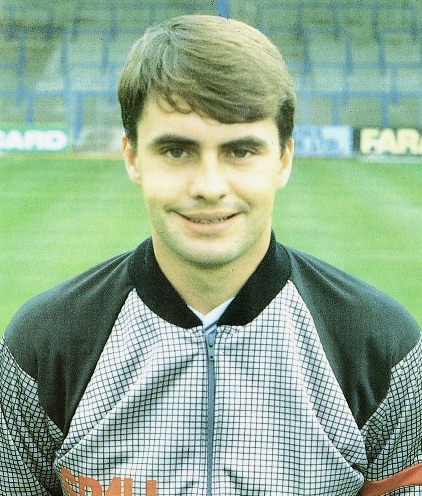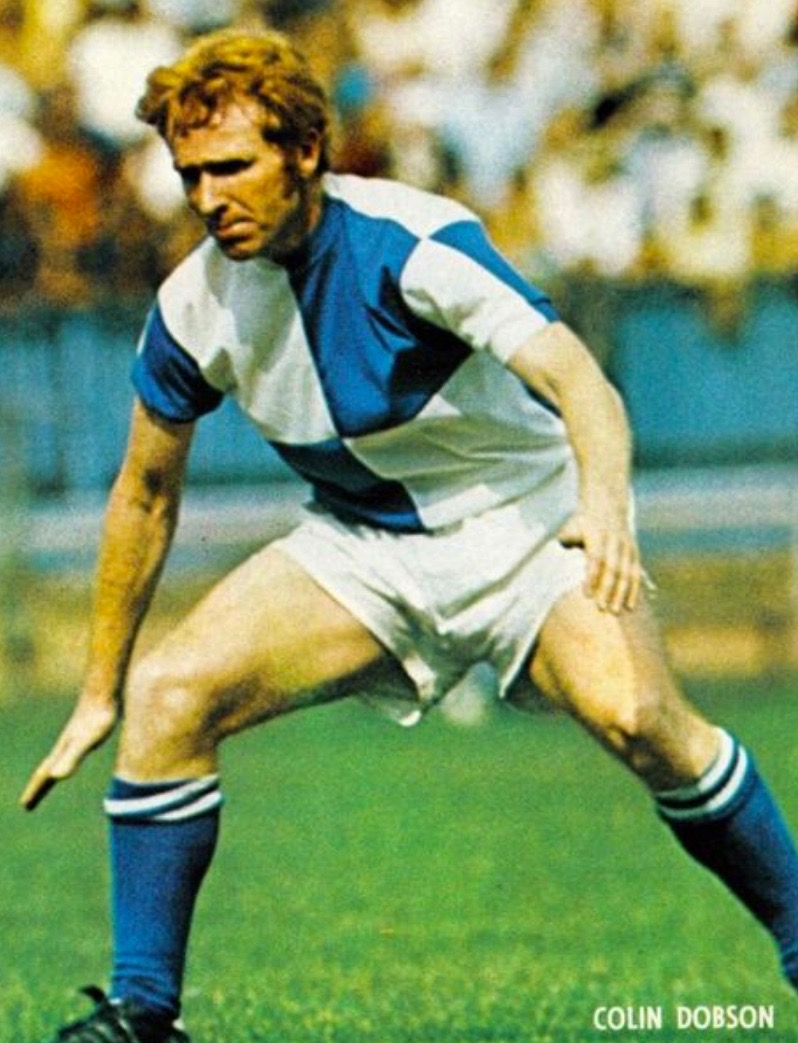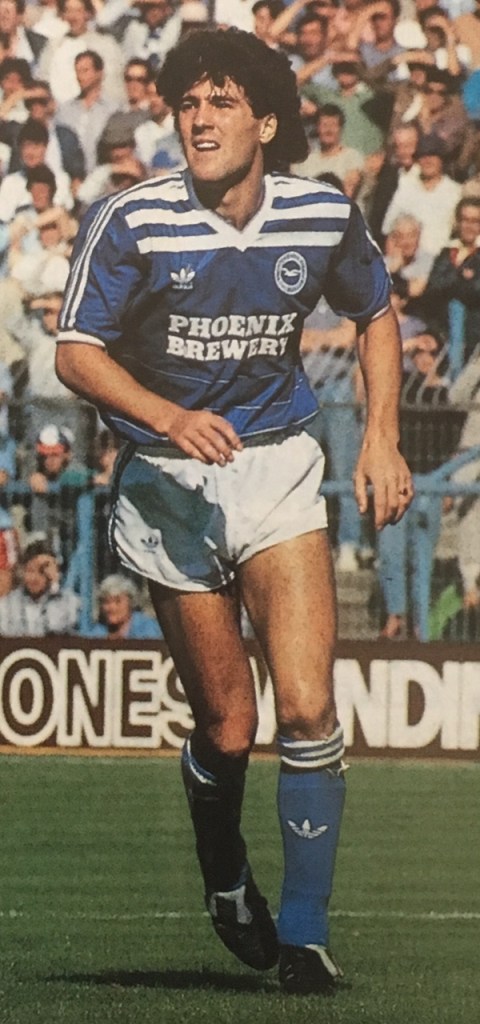
Dean Saunders raised cash for Brighton and Liverpool

IT’S NOT often Brighton and Liverpool have had something in common but, when it came to striker Dean Saunders, they both sold him to raise money. And they weren’t alone.

In the Albion’s case, it happened in 1987 when manager Barry Lloyd was forced to cash in on the free transfer signing to raise £60,000 to go towards players’ wages.

For their part, five years later, Liverpool let the Welsh international depart Anfield for £2.3m because boss Graeme Souness wanted the money to buy a central defender.

When Saunders was remarkably transferred for £1m from the Maxwell-owned Oxford United to the Maxwell-owned Derby County, it prompted former Brighton and Liverpool defender Mark Lawrenson to quit as boss at the Manor Ground after he’d been promised there would be no transfers likely to weaken his squad.

Saunders’ long and much-travelled career began in Swansea, the place where he was born on 21 June 1964, the son of former Swansea and Liverpool wing-half Roy Saunders.

He attended GwrossydJunior School and was soon appearing in the school football team on Saturday mornings and playing minor football in the afternoons. He went on to Penlan Comprehensive in Swansea and his career began to blossom, playing in the school team at all levels under sports master Lee Jones, a former British gymanstics champion. Saunders played for the Swansea Schools representative sides at under 11, 13 and 15 levels.

“I can remember enjoying watching the Swansea players train when I was a lad,” he told Tony Norman in an Albion matchday programme article. “I was lucky because my dad was the assistant manager, so I could go to pre-season training and things like that.

“I used to kick a ball around on the sidelines and dream of playing for Swansea.” That dream turned to reality after he joined the Swans in 1980 as an apprentice (when John Toshack was the manager), turned professional in 1982, and made his debut in the 1983-84 season. He scored 12 times in 49 appearances but in his final year had a goalless four-game loan at Cardiff City.

Manager John Bond released him on a free transfer after a turbulent season in which the Swans only narrowly avoided relegation to the basement division and Chris Cattlin, who’d been impressed when he saw Saunders playing for Swansea Reserves at the Goldstone Ground, snapped him up for Brighton.

“I was amazed when the Welsh club let him go for financial reasons,” Cattlin wrote in his matchday programme notes for the opening game of the season. “He is young, quick and, if he works hard, he has a great chance.”
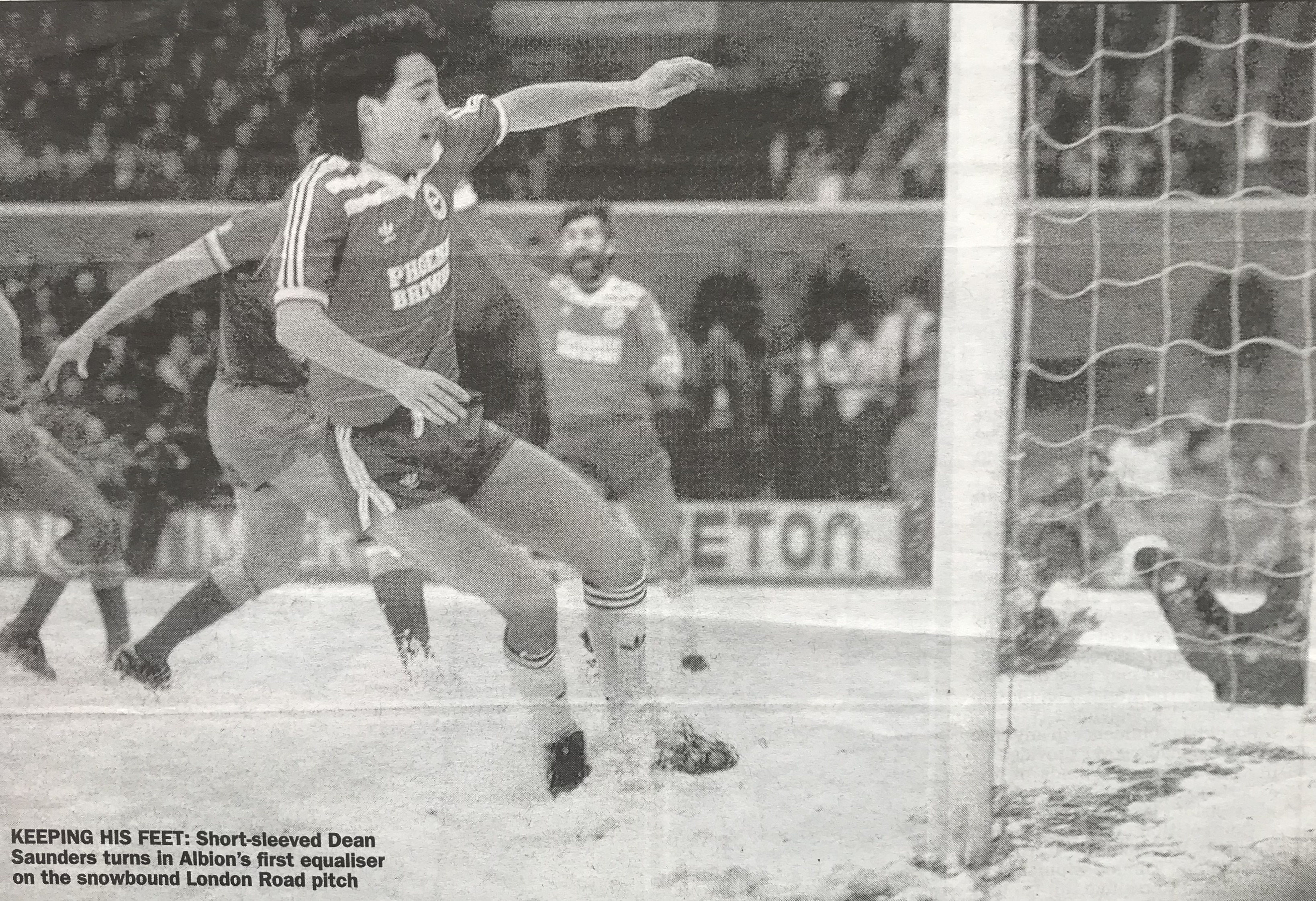
By the end of that season, Saunders had scored 19 goals in 48 league and cup games and was voted player of the season. His performances in the second tier for the Albion caught the eye of the Welsh national team manager, Mike England, and on 26 March 1986 Saunders made his full international debut for Wales as a substitute in a 1-0 win away to the Republic of Ireland. It was the first of 75 caps.
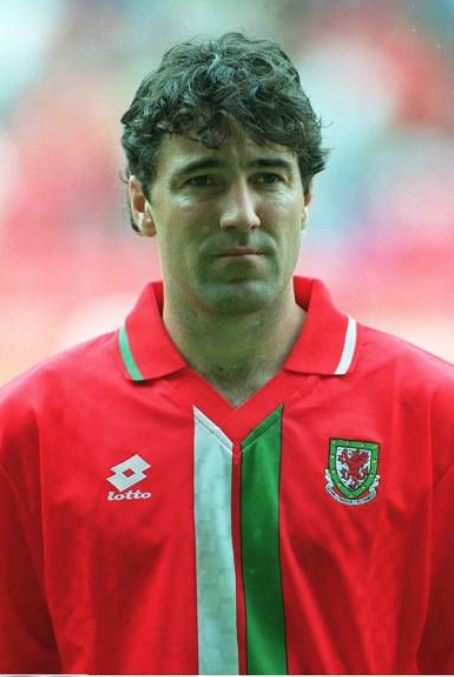
Saunders scored his first international goals when he netted twice in a 3-0 friendly win over Canada in Vancouver on 19 May 1986, after which England said: “He goes past defenders with his tremendous pace and his finishing against Canada was a revelation.

“The experience he gained at Brighton has done him the world of good. To finish top scorer in his first full season of Second Division football tells its own story.”

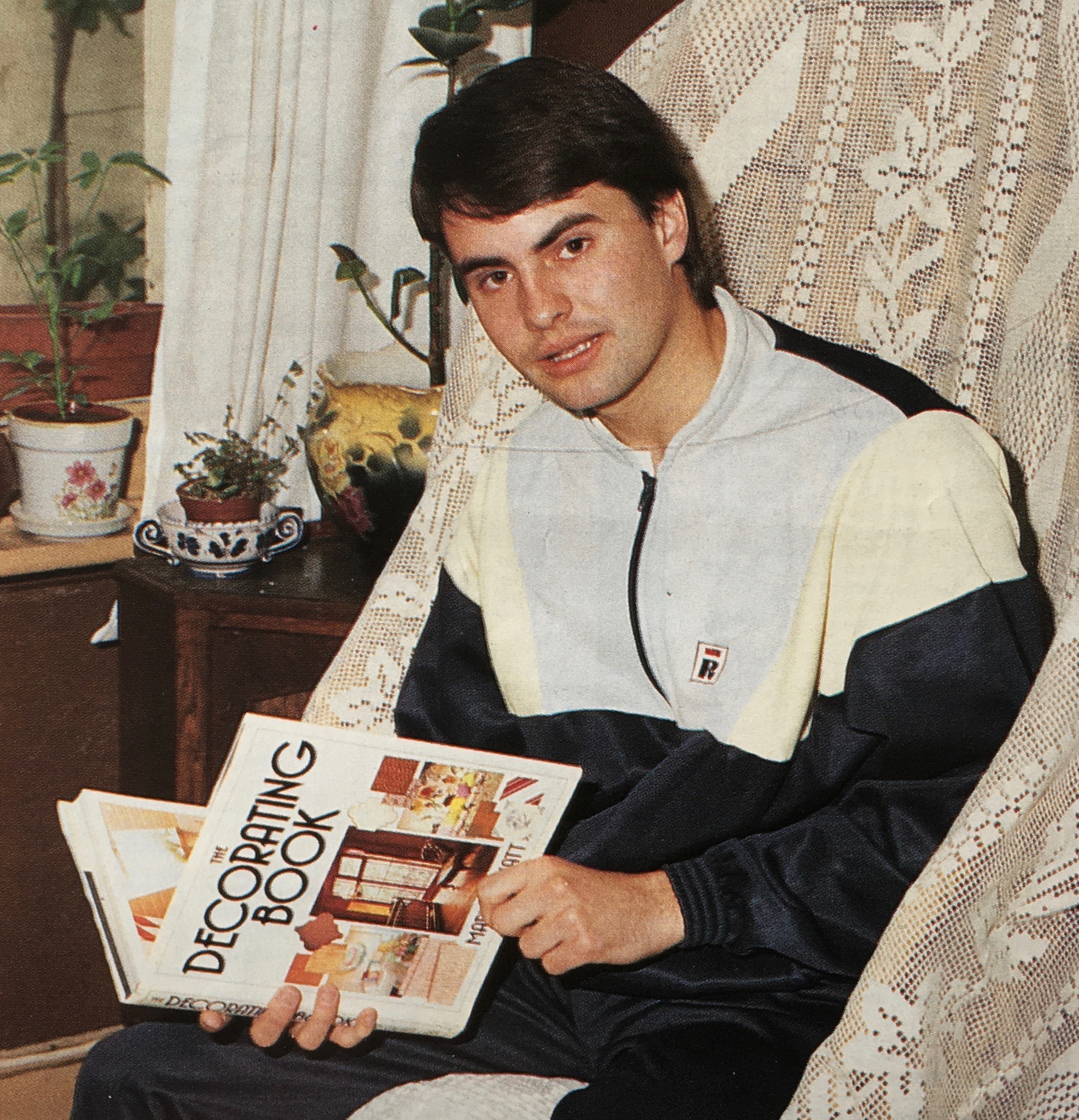
Saunders, who shared a house with Albion’s young Republic of Ireland international Kieran O’Regan, said being happy at home had helped him to settle down quickly.

“I liked Brighton from the day I arrived,” he said in a matchday programme article. “It reminds me of my home town of Swansea and I like living by the sea.”

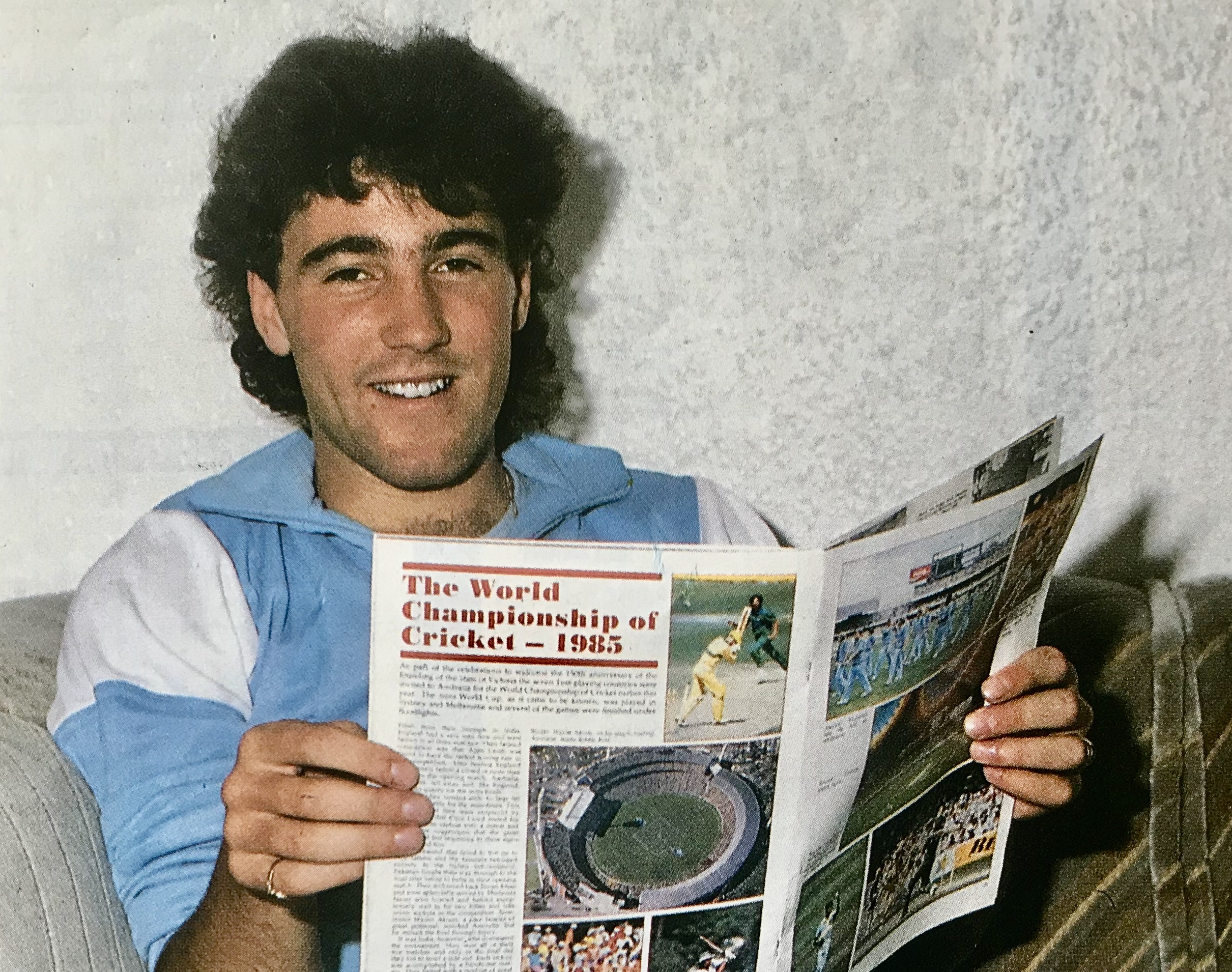
A lover of all sports, Saunders revealed how he liked to play cricket in the summer, when he turned out for Haywards Heath, and he played snooker with O’Regan and Steve Penney.

That summer, Saunders told Shoot! magazine: “I had both cartilages out of my left knee at 18 and had both Swansea and Cardiff turn me down. I’ve had my share of the downs. From the moment I joined Brighton, my career has turned for the better.”

The young striker continued: “Swansea just gave me away – despite the fact that I was top scorer in a team coming apart. Cardiff City gave me a few games but always seemed to have reasons for not playing me consistently when I was on loan there.

“So, I had every incentive to make the break from Welsh football and I joined Brighton. Brighton can go places.

“I was disappointed that we didn’t make the First Division first time around. But all the lads are convinced that we will get there next season. I’ve been given a three-year contract so there are tremendous incentives to do better.”

It didn’t work out that way, though. After only a mid-table finish, Cattlin was sacked and there were rumblings of financial issues beginning to reverberate around the corridors of the Goldstone. Alan Mullery returned as manager but had limited funds to invest in the team, and, with echoes of the Pat Saward era back in the early ‘70s, the club turned to fans for financial help to bring in players.

After Mullery’s unseemly swift departure halfway through the season, former Worthing boss Lloyd took over and fans were completely mystified as to how he could leave out Saunders in favour of Richard Tiltman, who Lloyd had plucked from local football. Since then, it has been suggested his omission was more to do with money than football ability.

There was great consternation that Albion collected only £60,000 when Lloyd sold Saunders to Oxford in early March 1987, especially as the Seagulls were fast hurtling back to a level of football they’d manage to avoid for ten years.

That was no longer a concern for Saunders who recovered the goalscoring touch he’d shown during his first season at the Goldstone Ground, scoring 33 goals in 73 games for Oxford before being sold to Derby for £1m against Lawrenson’s wishes 19 months after arriving at the Manor Ground.
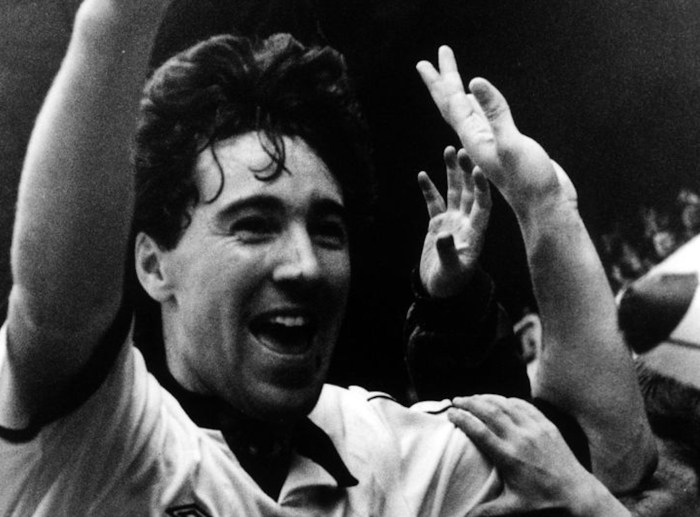
Meanwhile, the goals kept flowing for Saunders as he netted 57 in 131 games for Derby. The side finished fifth in the old First Division by the end of Saunders’ first season with the Rams, and he’d contributed 14 goals. The Derby Telegraph noted: “From the moment ‘Deano’ arrived, the players were inspired and the crowd enthused. The signing also suited the post-war tradition of 5ft 8in goalscoring heroes at the Baseball Ground – Raich Carter, Bill Curry, Kevin Hector and Bobby Davison.

“Derby fans were too wise to comment on height. What mattered was Saunders’ speed, eel-like turn and persistence. He scored six in his first five games, starting with two against Wimbledon when he captured supporters’ hearts with the immediacy of a Kevin Hector. A close-in header and long-range right-footer were beautiful appetisers.”

Despite Saunders scoring 24 goals for Derby in 1990-91, the side was relegated and Saunders and teammate Mark Wright were snapped up by Liverpool. Reds paid £2.9m to take Saunders to Anfield, boss Souness believing he’d be an ideal strike partner for their established Welsh international striker, Ian Rush.

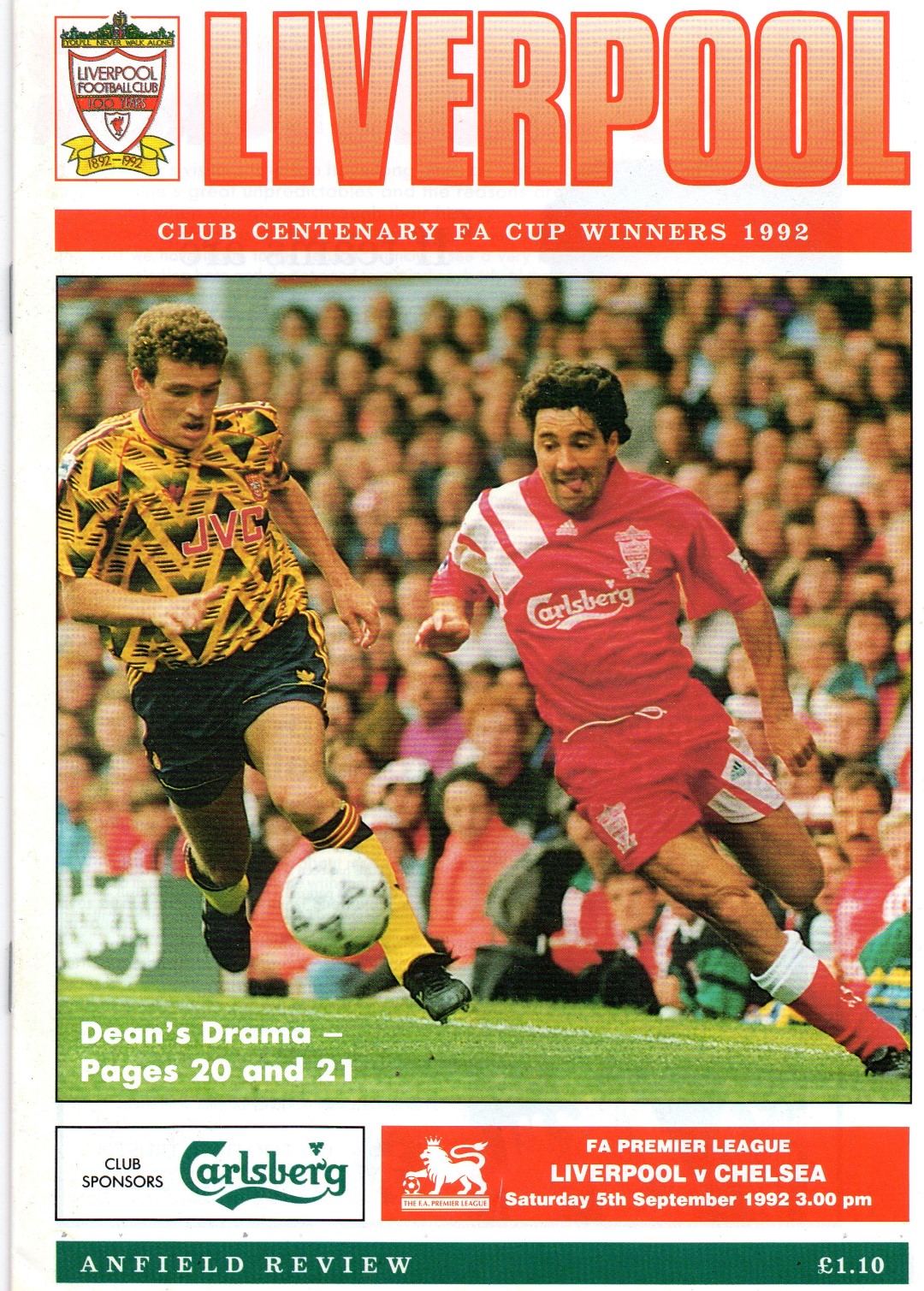
Saunders made his Liverpool debut on 17 August 1991 in a 2-1 win over Oldham Athletic (Mark Walters and defender Wright also played their first league games for Liverpool); Ray Houghton and John Barnes scored Liverpool’s goals.

Saunders scored his first goal for the Reds 10 days’ later in a 1-0 win over QPR at Anfield but a Liverpool history website reckons he struggled to adapt to Liverpool’s passing game. “He was used to Derby’s counter-attacking style, scoring many of his goals by using his exceptional pace,” it said. “Saunders wasn’t very prolific in the league with about one goal every four games but flourished in the UEFA Cup with nine goals in five matches that included a quadruple against Kuusysi Lahti.”

Saunders scored twice in Liverpool’s successful FA Cup campaign, which culminated in them lifting the trophy at Wembley after beating Sunderland.

Although he scored twice in seven games at the start of his second season at Anfield, a cashflow issue meant Souness was forced to sell him to raise funds to dip into the transfer market.

Saunders explained: “Graeme called me in one day and told me he needed a centre-half [Torben Piechnik], and that he could raise the money by selling me to Aston Villa.

“I couldn’t believe he was prepared to let me go, but he said he didn’t think my partnership with Ian Rush had worked out, and Rushy wouldn’t be the one going anywhere. That was it.” 

Saunders had scored 25 goals in 61 appearances for Liverpool, the last coming in a 2-1 home win over Chelsea (Jamie Redknapp scoring the other Liverpool goal) on 5 September 1992.

The Welshman had the last laugh, though, because only nine days after his departure from Liverpool he scored twice in Villa’s 4-2 victory over the Reds.

“Obviously I had a big incentive to do well today and I’m thrilled to have scored,” said Saunders. “Both my goals went through the goalkeeper’s legs.”

Signed by Ron Atkinson, Saunders spent three seasons at Villa, initially developing a formidable strike partnership with Dalian Atkinson, and then pairing up with Dwight Yorke. Saunders’ brace in the 1994 League Cup final helped beat Manchester United 3-1.

Villa history site lerwill-life.org.uk remembers him as “a spring-heeled attacker and very popular with the supporters” and adds: “Not big in size, he was very speedy and scored some spectacular goals including a 35-yard spectacular against Ipswich.”

His time at Villa Park came to an end when Brian Little took over as manager, and Saunders was reunited with his old Liverpool boss Souness in Turkey. A £2.35million fee took him to Galatasaray for the 1995-96 season and he netted 15 goals in 27 Turkish League matches.

Next stop for Saunders was back in the UK at Nottingham Forest, but the 1996-97 was an unhappy one as the manager who signed him, Frank Clark, was sacked in December after a bad run of defeats and Forest’s slide towards relegation continued under Stuart Pearce and Dave Bassett.

By the time Forest had bounced straight back up, Saunders had left the club, moving in December 1997 to second-tier Sheffield United for a year under Nigel Spackman and caretaker managers Russell Slade and Steve Thompson. United made the play-offs but lost out to Sunderland in the semi-finals. In December 1998, Saunders moved abroad again to link up with Souness a third time, at Benfica in Portugal.

The following summer, he returned to England and joined Bradford City, where his former Brighton teammate Chris Hutchings was assistant manager, then briefly manager. Saunders was a regular in his first season at Valley Parade, when the Bantams managed to narrowly avoid relegation from the Premier League, but he played only a handful of games in 2000-01, when they were relegated. Saunders retired as a player shortly before his 37th birthday and became a coach at Bradford before linking up with Souness again, this time as a coach.

He joined him at Blackburn Rovers and then Newcastle United, but when Newcastle sacked Souness early in 2006, Saunders lost his job as well.

In the following year he began taking the Certificate in Football Management course run by the University of Warwick; and this led to him being granted his UEFA Pro Licence coaching badge, a qualification that allowed him to be appointed as assistant to John Toshack with the Welsh national team. 

In October 2008, Saunders replaced Brian Little as manager of Wrexham, newly relegated to the Conference. He eventually managed to steer the north Wales outfit into the play-offs in the 2010-11 season, but they were knocked out by Luton Town and, in September 2011, Saunders was appointed manager of then Championship club Doncaster Rovers.

Unfortunately, he couldn’t save Rovers from relegation and they went back down to League One with only 36 points from their 46 League fixtures.

Having guided Rovers to second place in League One, Saunders was appointed manager of Wolverhampton Wanderers in January 2013, but he couldn’t prevent them being relegated from the Championship and he was sacked three days after relegation was confirmed courtesy of a 2-0 defeat at the hands of Gus Poyet’s Albion.

Saunders told the media after the game: “We have to get some players in who think like I’m thinking, who want to win, fresh minds, no damage done to them, no confidence issues, no ‘been here too long’ issues, no ‘I don’t know if the manager likes me’ issues. Once I get my own team on the pitch, imagine what the supporters will be like.”

Saunders, with only five wins from his 20 games in charge, didn’t get that chance and rather ruefully said of his opponents that day: “A few years ago they were bankrupt and without a stadium, but they’ve shown what is possible and, with the momentum, they have could well get into the Premier League.”

Just after Christmas 2014, Saunders was named as the interim manager of Crawley Town after the previous incumbent John Gregory stood down for health reasons.

Saunders then became manager of League One side Chesterfield on 13 May 2015 but his stay there lasted only five months.

In June 2016, Saunders was part of the BBC pundit team for their coverage of the Welsh national team’s games at Euro 2016 and made the headlines during the tournament when it was revealed that he had incurred parking charges of over £1,000 from Birmingham Airport’s short stay car park as he wasn’t expecting Wales to progress as far as they did. The charge was eventually waived by the airport who asked him to make a donation to charity instead.

His subsequent involvement in football has been as a pundit on BT Sport’s Saturday afternoon Score programme as well as on the radio with talkSPORT. He hit the headlines in 2019 when he was jailed for failing to comply with a roadside breath test but the initial punishment was quashed and changed to a suspended sentence. Via the League Managers’ Association, Saunders issued a statement in which he said: “I made a terrible error of judgment for which I have been rightly punished, and I wholeheartedly regret that it happened.”

Pictures from the Albion matchday programme and various online sources.

Boss weighed into ex Spurs teammate Joe Kinnear

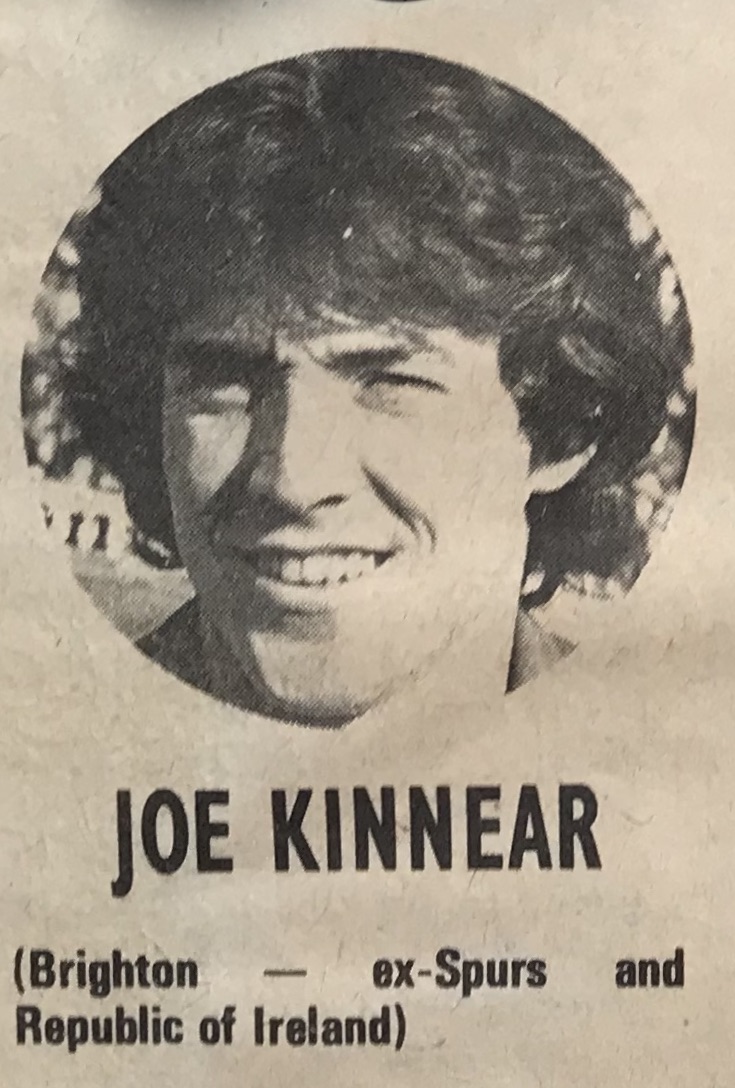
JOE KINNEAR was no stranger to expletive-filled rants so we can only imagine how he reacted when his former Tottenham Hotspur teammate Alan Mullery told him he was a stone overweight and shouldn’t expect any special treatment at Brighton.

The right-back who’d won silverware alongside the former Spurs skipper ended up leaving the Goldstone acrimoniously after his former colleague took over as Albion boss.

Having made 258 appearances in 10 years at White Hart Lane, Kinnear only played 18 games for Brighton after being signed by Mullery’s predecessor, Peter Taylor in August 1975.

He’d followed fellow former Spurs defender Phil Beal to third-tier Brighton, both having been eased out of the door as Tottenham’s new boss Terry Neill re-shaped the award-winning squad built up by the legendary Bill Nicholson and his faithful assistant, Eddie Baily.

Back when Taylor and Brian Clough were turning round the fortunes of Derby County, they had acquired the services of former Spurs hardman Dave Mackay, a friend of Kinnear’s, so he was no stranger to turning to experienced old pros.

“I left Tottenham because although I was good enough to hold down a regular first team place, manager Terry Neill didn’t think so,” Kinnear told Shoot! magazine. “I’m 28-years-of-age and have plenty of soccer at senior level left in me. Brighton have the potential to become as big-time as Spurs once were.”

Three days after signing, the Irishman made his Albion debut at right-back in a 1-0 home defeat to Cardiff City and, while he played in the following game too, previous regular right-back Ken Tiler was restored to the line-up for the next three months.

Nevertheless, his lack of involvement at Brighton didn’t stop the Republic of Ireland selecting him and he made what was his last and 26th appearance for his country as an 83rd minute substitute for Tony Dunne in a 4-0 win over Turkey at Dalymount Park, Dublin, on 29 October (Don Givens scored all four).

Kinnear was on Brighton’s bench a few times in the days of only one substitute, and he managed four consecutive starts in December, but he had to bide his time for his next starting spot, which only came when a bad injury in mid-March brought an end to Tiler’s involvement in Albion’s promotion push.

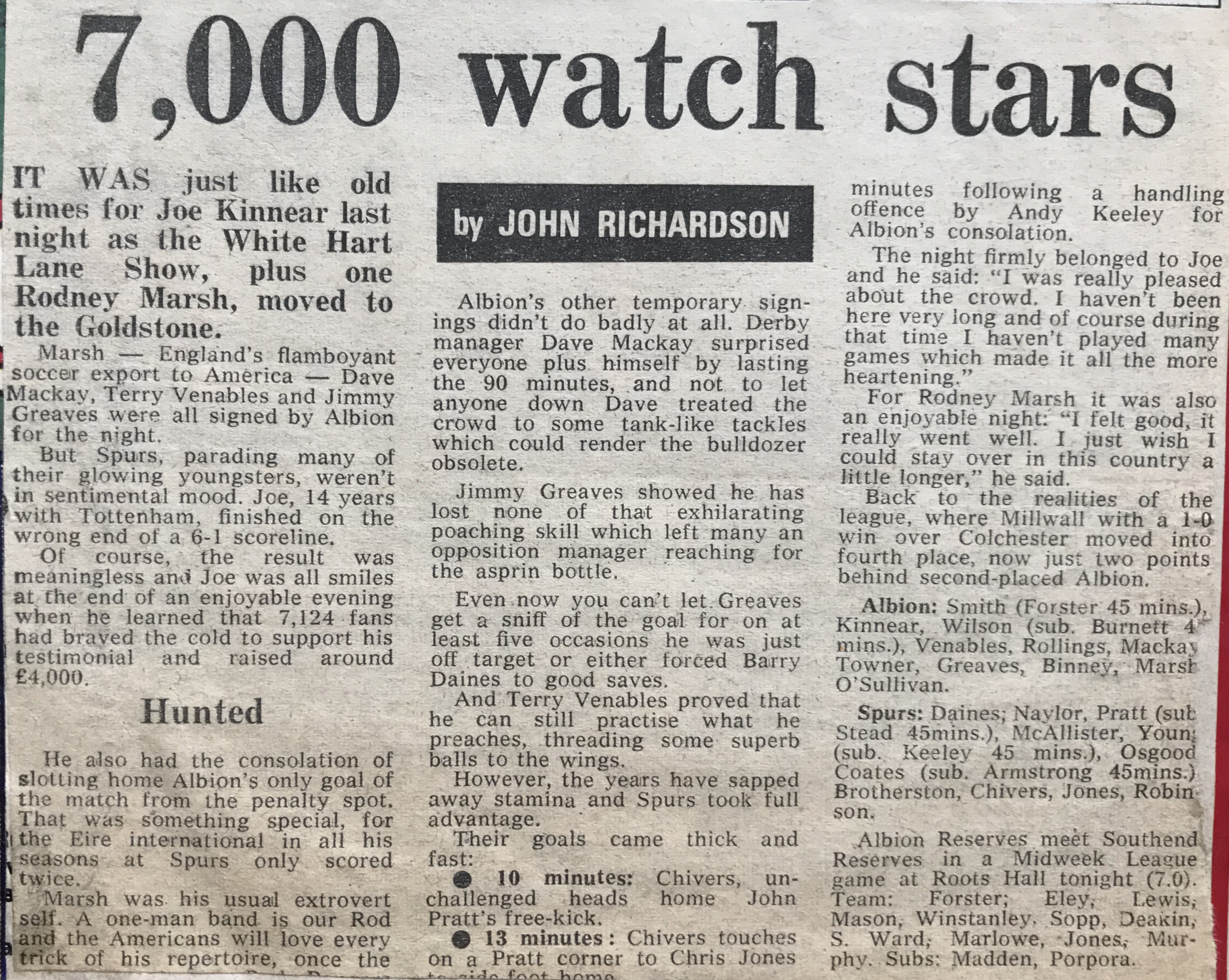
It was timely because on 23 March a testimonial match for him against Spurs took place at the Goldstone. It had been part of the arrangement made when he signed, and the Albion XI who took to the field in front of 7,124 fans included Kinnear’s old teammates Terry Venables, Mackay and Jimmy Greaves, along with guest star Rodney Marsh.

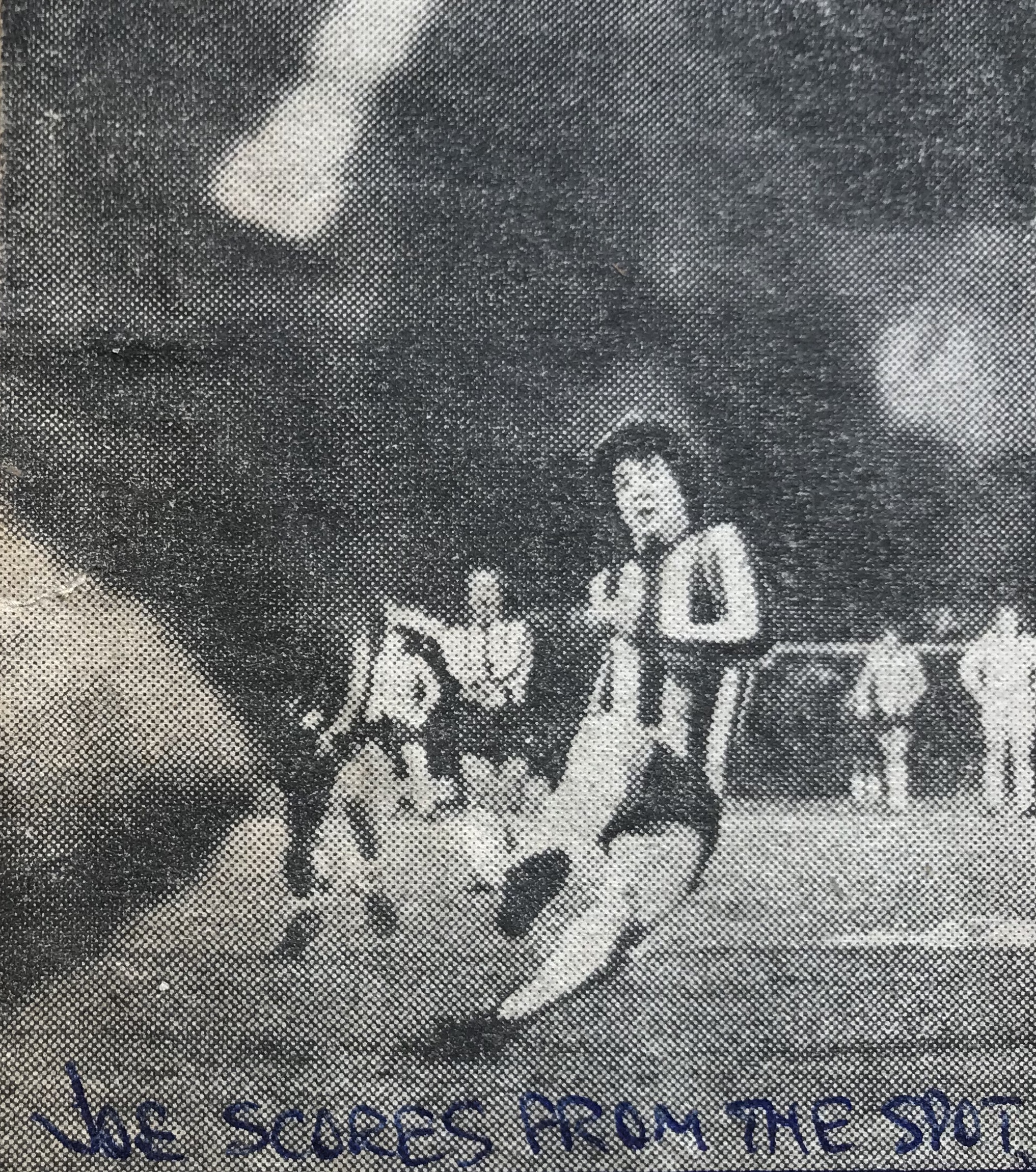
Spurs were in no mood for sentiment, though, and ran out 6-1 winners, with Kinnear scoring a consolation for Albion from the penalty spot.

As Albion’s promotion bid unravelled, Kinnear played in 10 league matches, only three of which were won. Although he was successful with another penalty, this time against Chesterfield, the Spireites won 2-1 with two penalties of their own.

Fingers were pointed at Kinnear for a gaffe in a decisive Easter game at promotion rivals Millwall which Albion ended up losing 3-1.

In his end-of-season summary, the Evening Argus Albion watcher John Vinicombe pointedly considered it was the injury ruling out Tiler that had been a key turning point in the failure to gain a promotion spot.

Kinnear himself suffered a serious knee injury in the penultimate game of the season, a 1-1 home draw against Gillingham, capping a dismal afternoon in which he also had a penalty saved. His departure on a stretcher on 19 April 1976 was his last appearance in an Albion shirt, other than being pictured kneeling on the end of the front row in the August pre-season team photo.

What happened next was covered in some detail in a 2013 blog post on thegoldstonewrap.com. In short, Mullery had arrived as manager following Taylor’s decision to quit and link up again with Clough, who’d taken over at Nottingham Forest.

Mullery was unimpressed by his former teammate’s level of fitness and attitude and called him out in front of the squad. Peter Ward, the new kid on the block at that point, thought it was the wrong approach and, in Matthew Horner’s book He Shot, He Scored, said: “It seemed that Mullery and Kinnear didn’t get on very well.”

Contractually, Albion still owed Kinnear money but it was evident he wasn’t going to feature while Mullery was in charge and a settlement had to be reached. Eventually Kinnear moved on to become player-manager of non-league Woodford Town, beginning a career in coaching and management that ultimately took him back to the top level of the game, albeit frequently attracting headlines for some extraordinary and controversial behaviour.

But let’s stick with Kinnear the player for the moment. Born in Kimmage, Dublin, on 27 December 1946, he moved to Watford at the age of seven. After leaving school, he became an apprentice machine minder in a print works and played amateur football for St Albans City. It was there he was spotted by the aforementioned Baily, who invited him to join Spurs’ pre-season training. He initially signed as an amateur in 1963, turning professional two years later.

His breakthrough season was 1966-67. He made his debut for the Republic of Ireland on 22 February 1967 in a 2-1 defeat to Turkey and won a regular place in the Spurs side when Phil Beal was sidelined with a broken arm. Kinnear performed well in Beal’s absence and he ended it as a member of the side which beat Chelsea 2-1 in the 1967 FA Cup Final.

“I was 20 when we played in the 1967 FA Cup Final and I got Man of the Match, so it was a great start for me,” Kinnear told tottenhamhotspur.com.

All was going well until January 1969 when in a home game against Leeds United he broke his right leg in two places, and he was out of the side for a long while.

Kinnear’s misfortune provided an opportunity for emerging youngster Ray Evans, as this Spurs archive website recalls: “When he got his chance through an injury to regular right back Joe Kinnear, Evans took over in that position and provided a threat with fast, over-lapping runs along with a notable fierce shot that chipped in with a few goals for the club.  Strong in the tackle and quick to recover his position, his height also helped him when teams tried to play diagonal passes in behind him.”

Evans had long spells in the side, especially in the 1973-74 season when Kinnear barely got a look-in, but the Irishman battled for his place and was first-choice right-back in Spurs’ League Cup winning sides of 1971 and 1973, and the UEFA Cup winning line-up in 1972.

The revered Nicholson had encouraged Kinnear to become a coach once his playing days were over, but he struggled to get a foot on the ladder in the UK. Ex-Derby boss Mackay, with whom he used to go to Walthamstow dogs after training, took him on as his assistant in the United Arab Emirates and Malaysia, then later at Doncaster Rovers after Kinnear had spent time in India and Nepal.

Eventually, in 1992, he got his chance at Wimbledon, defying the purists with a brand of football that saw them finish in sixth place in 1993-94 – and Kinnear won the League Managers’ Association Manager of the Year award.

Over seven years, The Dons played 364 games under him, winning 130, drawing 109 and losing 125. Despite not even playing at their own ground – they played home matches at Selhurst Park – Wimbledon continued to defy the critics with their resilience in the Premier League and progress in the cups but in 1999 Kinnear stood down as manager after suffering a minor heart attack.

He later enjoyed success in two years (2001-03) at Luton Town and had colourful spells as manager of Nottingham Forest (2004) and manager (2008-09) then director of football (2013-14) at Newcastle United.

Acres of newsprint and plenty of clips on YouTube record some extraordinary behaviour following his appointment by Mike Ashley at Newcastle. Perhaps one of the best summaries is on planetfootball.com, with reporter Benedict O’Neill saying: “Mike Ashley’s mismanagement of Newcastle has been a long-term affair with many bizarre decisions, but his appointment of the long-forgotten Joe Kinnear — twice! — may just be the strangest of all.”

Kinnear, who was diagnosed with dementia in 2015, died aged 77 on 7 April 2024.

Pictures from my personal scrapbook, matchday programmes and various online sources.
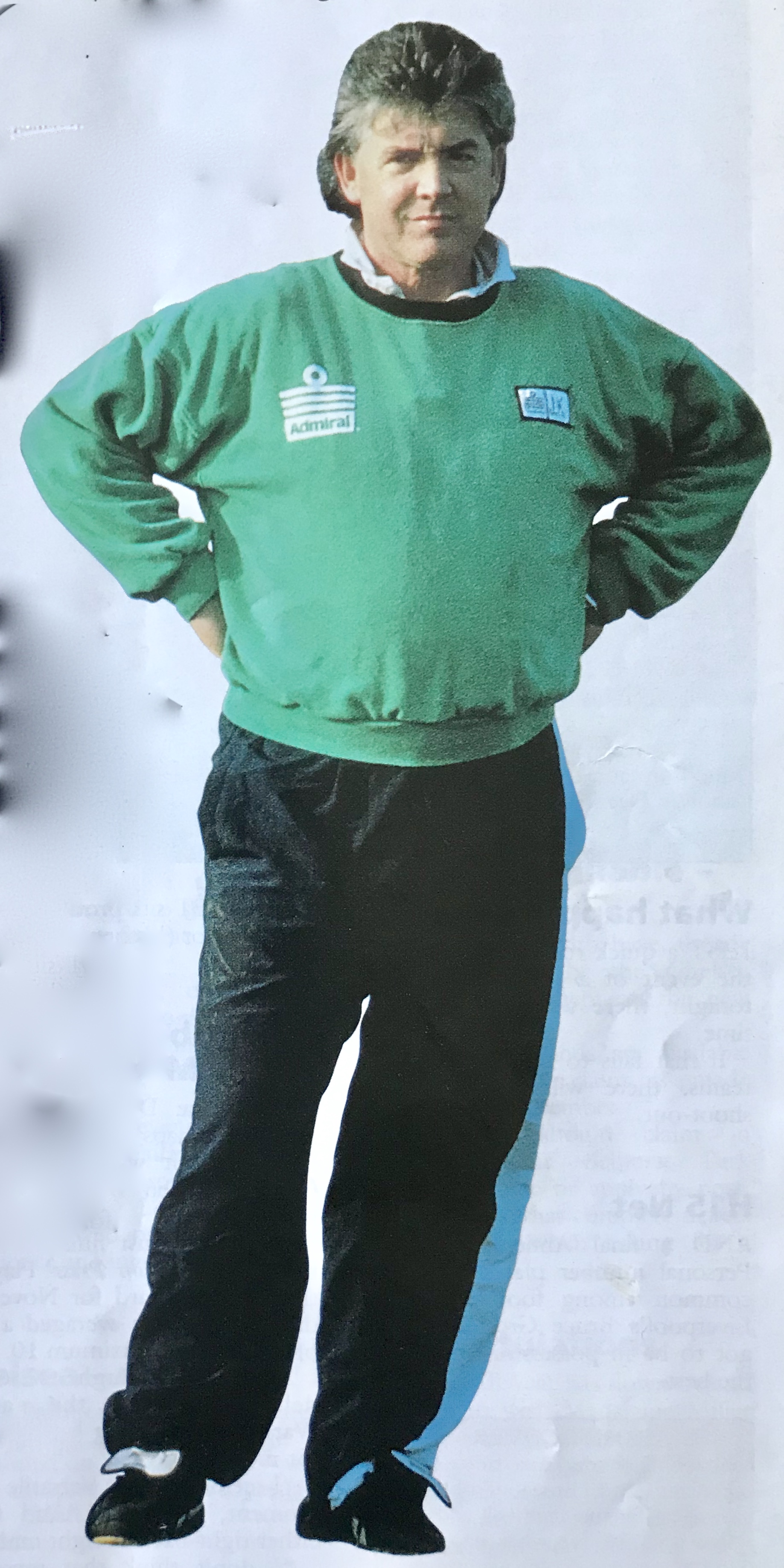
The Tiger who came to Brighton and fitted to a T

DIMINUTIVE winger Brian Tawse is remembered by veteran Brighton fans for his boyish good looks…. and a stunning disallowed goal.

It perhaps does a disservice to the fact he played 109 games (plus five as a sub) in the second half of the swinging Sixties after joining the club from Arsenal.

Tawse spent two years with the Gunners and made a handful of first-team appearances but with George Armstrong ahead of him it wasn’t until he joined the Albion that he began to play regular league football.

It was a cracking strike by Tawse in the closing minutes of a FA Cup fourth round tie against Chelsea in January 1967 that stuck in people’s memories.

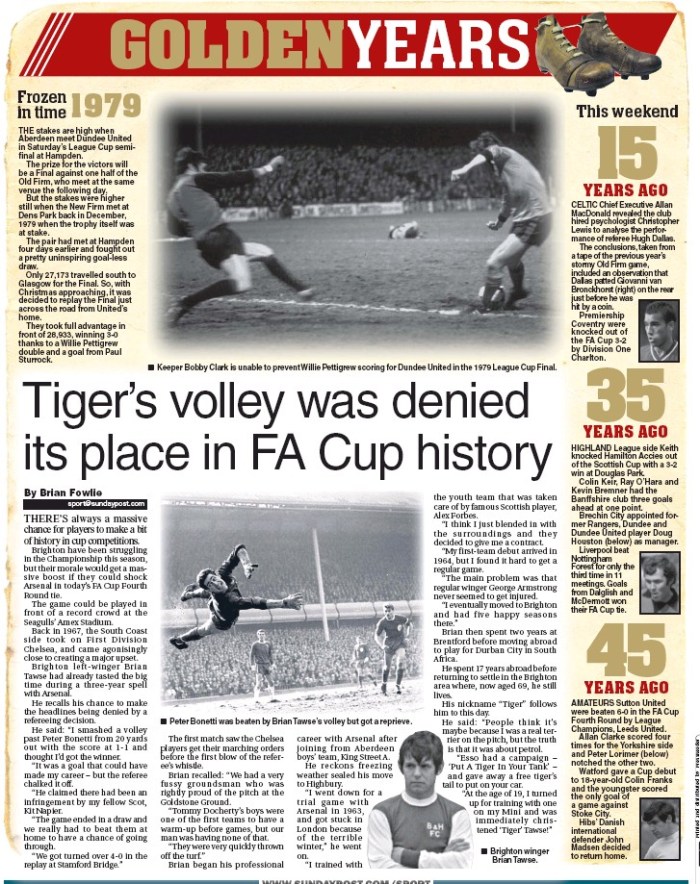
In front of a packed Goldstone Ground crowd of 35,000, a big upset looked on the cards when Tawse’s terrific volley flew past Peter Bonetti five minutes from the end of the game for what would have been a 2-1 win.

Unfortunately, the referee had spotted an infringement by Kit Napier and the ‘goal’ was disallowed. In the replay at Stamford Bridge, Chelsea ran out clear 4-0 winners.

“I smashed a volley past Peter Bonetti from 20 yards out with the score at 1-1 and thought I’d got the winner,” Tawse told Brian Fowlie of the Sunday Post in 2015, ahead of Brighton’s fourth round FA Cup tie with Arsenal. “It was a goal that could have made my career – but the referee chalked it off.”

Tawse had been with the Albion for just over a year when that cup tie came around. He was one of three ex-Arsenal players in the side: the Northern Ireland international full-back Jimmy Magill joined Albion in October 1965, Tawse followed him two months later, and goalkeeper Tony Burns joined in the summer of 1966.

Albion’s boss at the time was fellow Scot Archie Macaulay, a former Arsenal player himself, who during his time at the Gunners had persuaded them to sign Alex Forbes, who later became the coach Tawse played under in Arsenal’s youth team. But more of that later.

Tawse got his first Brighton goal in only his second game, a 4-3 home win over Bristol Rovers on New Year’s Day 1966, and he went on to score six in 22 matches as the Albion finished 15th in Division 3.  

Although he started the next season in the no.11 shirt, close season arrival Howard Wilkinson became an automatic choice on one wing and Tawse found himself competing with Wally Gould for a place on the other.

Aside from the excitement of that Chelsea cup game, Tawse did find the net eight times (three times from the penalty spot) as he played in 28 games (+ one as sub) that season.

The winger couldn’t always be relied on from 12 yards, however, as contributor ‘Questions’ recalled on North Stand Chat in 2008. “Ah Tiger Tawse, he of the boyish good looks and ability to blaze a penalty over the north stand roof against Watford, I think. Good little player though….”

The majority of Tawse’s Albion games (41 + 1 sub) came in the 1967-68 season although he only scored twice as Albion finished 10th.

The signing of Paul Flood from Bohemians added forward options to the manager’s selection, but it was the £5,000 signing of speedy Dave Armstrong from Millwall in September 1968 that began to edge Tawse out.

Tawse (arrowed) in an official Albion team photo ahead of the 1969-70 season

In the 1968-69 season, which saw the arrival of Freddie Goodwin as manager in place of Macaulay, Tawse made only 16 appearances (+ three as sub), and he featured only twice between the start of December and the end of the season.

My own Albion watching journey began in February 1969 and the only game I saw Tawse play was in the Easter Saturday 4-1 win over Barnsley when he replaced Kit Napier; the only change to the side who had played 24 hours earlier, again at home, when Orient were beaten 2-0.

Goodwin mostly went for Armstrong on the left and Wilkinson on the right.

By the time the 1969-70 season arrived, opportunities were even more limited for Tawse. He was only on the bench once and started just two, his last first-team appearance coming in a 2-0 defeat away to Tranmere Rovers on 25 October 1969.

Former Albion teammate Wilf Tranter writing on North Stand Chat, said: “Brian finally lost the no. 11 shirt to Kit Napier in the 1969-70 season. He had been a very good servant to the club and was regarded with great affection by many supporters.”

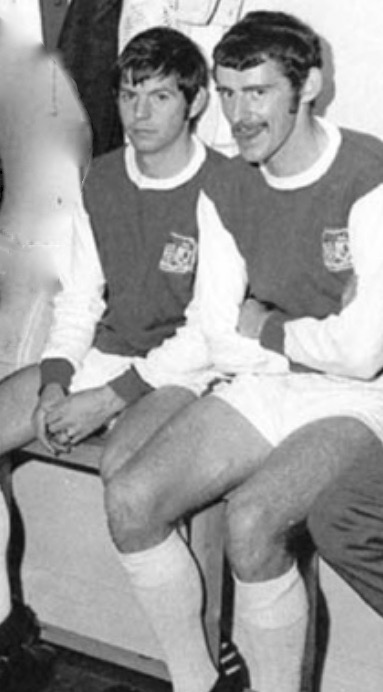
Tawse with rival Kit Napier who became a good friend

Born on 30 July 1945 in Ellon, just north of Aberdeen, his footballing talent was first spotted while playing for Aberdeen boys’ team, King Street A. He told the Sunday Post’s Fowlie how the big freeze in 1963 worked in his favour.

“I went down for a trial game with Arsenal in 1963 and got stuck in London because of the terrible winter,” he said. “I trained with the youth team that was taken care of by famous Scottish player Alex Forbes.”

Forbes had joined Arsenal just after the war on the recommendation of fellow Scot Macaulay, whose place in the side he subsequently took over.

When Forbes later became youth coach at Arsenal, he took a party of Arsenal youngsters on a summer tour to South Africa, got offered a coaching job in Johannesburg and decided to make it his home for the rest of his life.

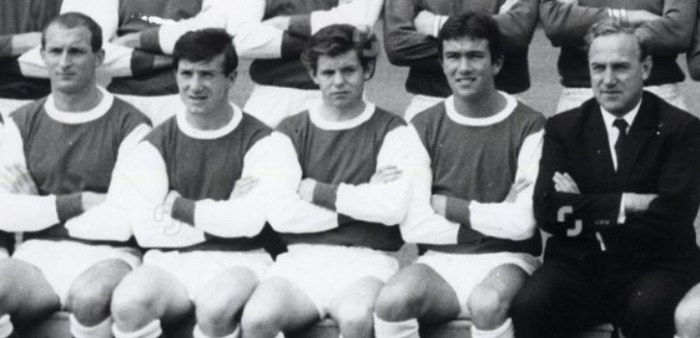
Tawse (centre) between George Armstrong and Jon Sammels in an Arsenal line-up, with Magill (far left) and Billy Wright

Billy Wright, the former England captain who’d won 105 caps for his country, was manager of Arsenal in the mid-’60s and it was he who took Tawse on as a professional.

Wright may have been a legend as a player but one of Tawse’s fellow Highbury hopefuls, John Ryan, who later starred for Fulham, Luton Town and Norwich City, was not at all enamoured.

Looking back in an interview with a Norwich archive site, he said: “Billy Wright was the only manager of the 12 I ended up playing for who I neither liked nor respected.

“He seemed to take an instant dislike to me and would single me out for some vicious treatment in front of the other young players.”

Ryan shared digs with Tawse and David Jenkins and he recalled how he found out Arsenal were letting him go. “At the end of that season (1964-65), I was sitting in the digs when two large brown envelopes and one small registered white one dropped through the front door. As I opened the small white one that was addressed to me, I wondered where the other two lads had disappeared to.

“It turned out that they’d read the situation as my letter was from the club notifying me I was being given a free transfer whilst the two brown envelopes that were for them both contained contract offers.”

Tawse made his Arsenal debut away to West Brom on 21 November 1964, a game which finished 0-0. Although his first team game time was limited, in the space of three days in February 1965 he played in successive 2-0 wins at home to Fulham and Spurs and at the end of the following month against West Ham away, another 0-0 draw.

Away to Nottingham Forest on 13 March 1965, Tawse took George Armstrong’s place on the wing – and the aforementioned Magill earned a rare outing in place of Don Howe at right back – but they lost 3-0.

Brian Tawse alongside George Armstrong, the winger he couldn’t dislodge to gain a regular Arsenal place

Although the official record books only show those league appearances, thearsenalhistory.com details how Tawse also played twice in an end of season five-game tour in Italy. He played in a 2-2 draw against Torino and was one of the scorers in a 3-0 win over Latina.

The following season he was selected in a 5-2 friendly win over non-league Corinthian Casuals on 21 September and a month later –  on 23 October 1965 –  he was on the substitute’s bench in a 2-2 home draw against Blackburn Rovers, but that was the last of his involvement, and he moved to Albion five weeks later.

“The main problem was that regular winger George Armstrong never seemed to get injured,” Tawse told the Sunday Post.

He also dispelled a myth about how he came to get his nickname Tiger, telling the reporter: “People think it’s maybe because I was a real terrier on the pitch, but the truth is that it was about petrol.

“Esso had a campaign – Put a Tiger in Your Tank – and gave away a free tiger’s tail to put on your car.

“At the age of 19, I turned up for training with one on my Mini and was immediately christened ‘Tiger’ Tawse!”

After leaving Brighton in March 1970, Tawse moved to Brentford where he played in 13 games as new manager Frank Blunstone took the Bees to within three points of promotion from Division Four, finishing fifth just behind Port Vale.

But in the 1970-71 season he made just eight appearance (plus two as sub) and ended up on loan to Southern League Folkestone.

Still only in his mid 20s, he decided to head to South Africa and played for Durban City at a time when dozens of British players, managers and coaches were recruited by that country’s 16 clubs.

He was later joined there by former Albion teammate and fellow Scot Kit Napier and after they hung up their boots, they worked together in the motor trade.

When Napier died in March 2019, Tawse told The Argus: “We remained friends afterwards and we were both golfers. He was a very good golfer, which people probably don’t realise. He played in a lot of pro-ams.

“He was a good lad and, of course, a bit of a legend for what he did with Brighton.”

Tawse spent 17 years in South Africa but returned to the UK and settled in Westdene, Brighton…and watches the Albion from the West Stand at the Amex.

Set-piece expert Darren Currie earned Uncle Tony’s approval

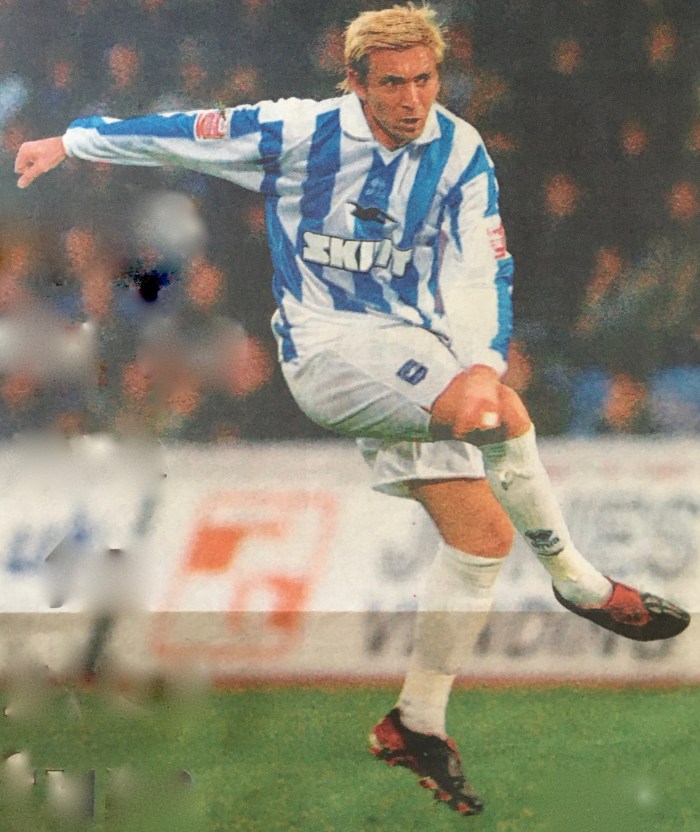
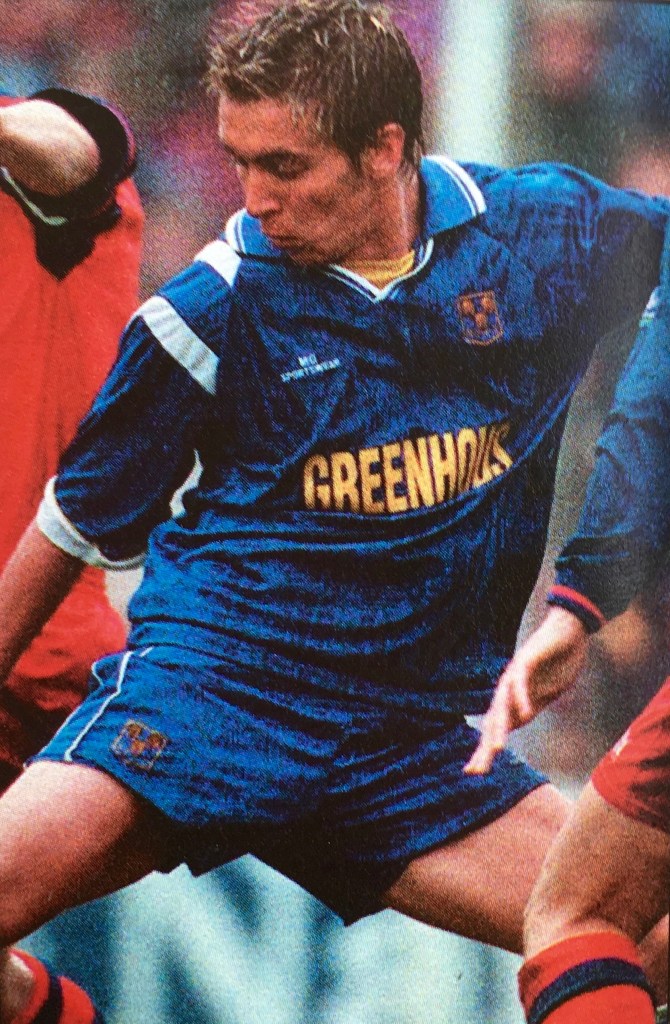
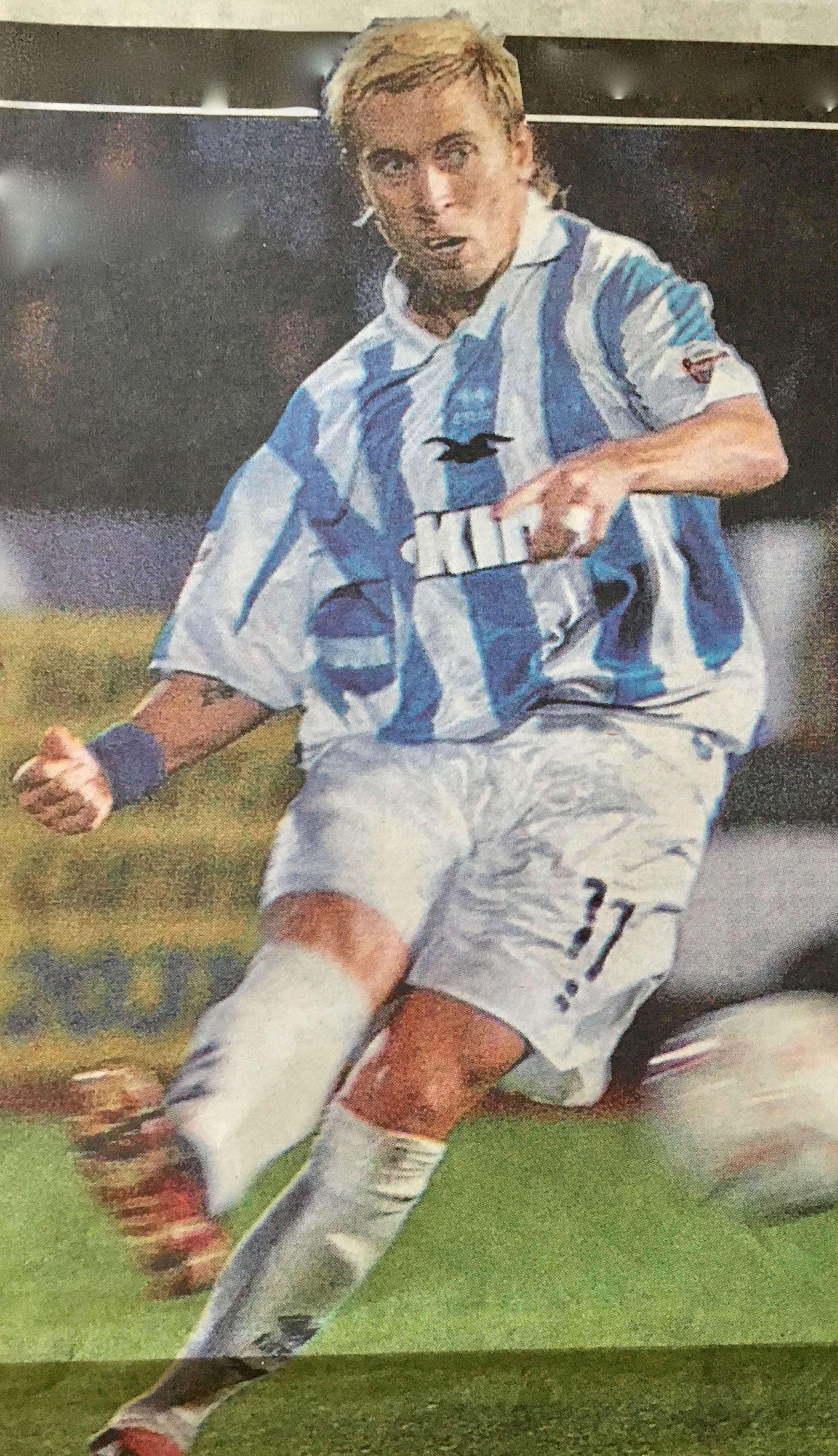
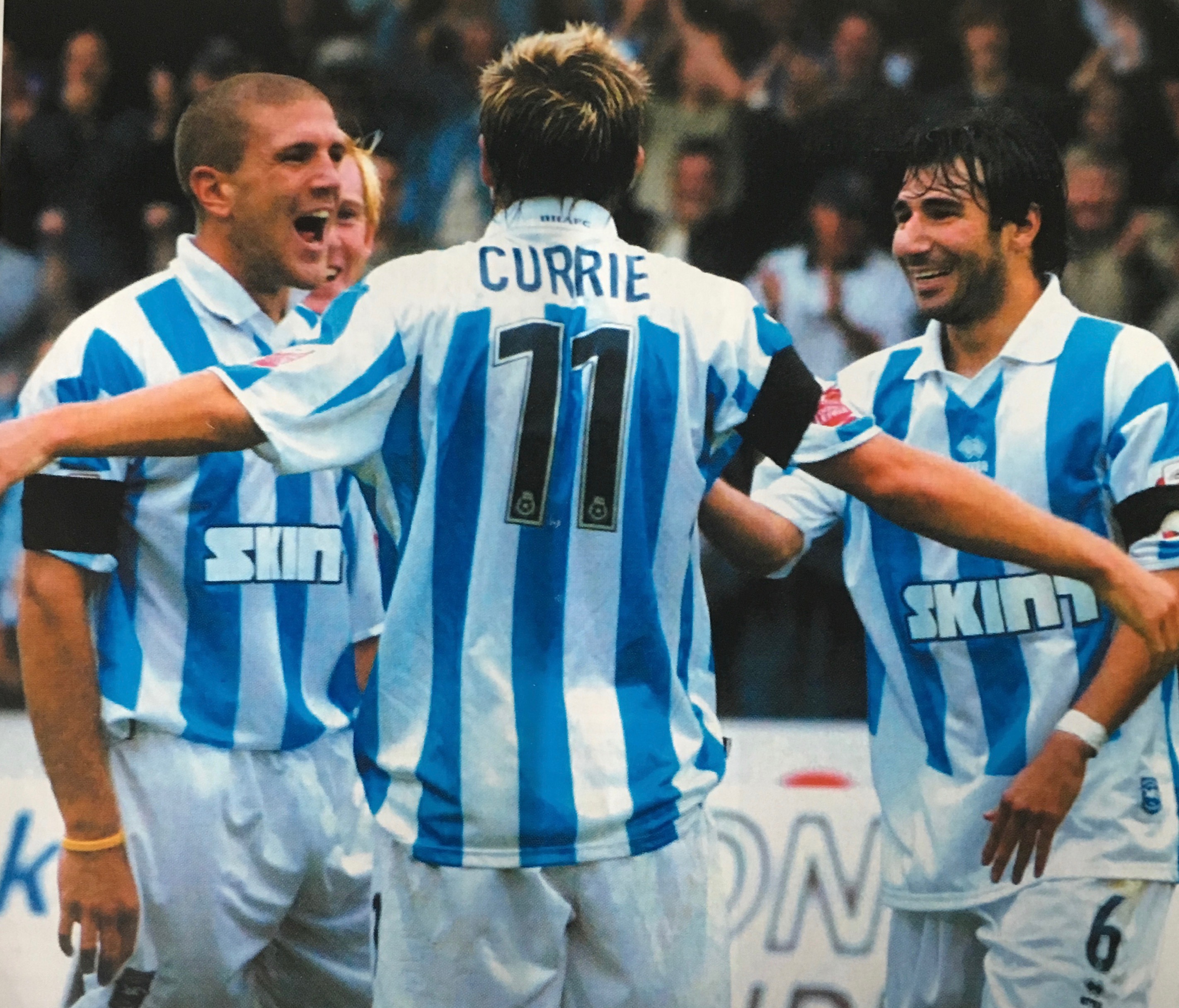
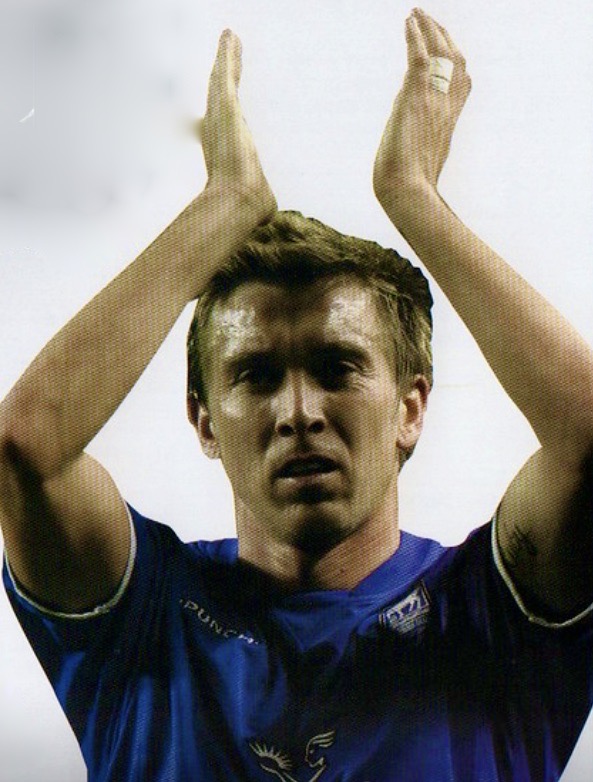
THE PINPOINT accuracy of Darren Currie’s passing and shooting was a joy to watch, even though a lack of pace stopped him being as good a player as his famous uncle.

Currie was a decent player in his own right, making nearly 700 appearances for 15 different clubs, but wherever he went he was always known as the nephew of the former Sheffield United, Leeds, QPR and England creative midfielder Tony Currie.

Perhaps with a hint of family bias, Uncle Tony said in an interview for ITV Digital: “Darren is, without doubt, the best crosser of the ball, after Beckham, in the country. He’ll produce nine times out of ten, right foot or left foot.”

The young Currie attributed his crowd-pleasing skills to the start he was given in the game by West Ham. After 10 years stuck in the lower leagues, Currie was given a platform to perform in the Championship by Brighton, and he very nearly made it to the top when transferred for £250,000 to high-flying Ipswich Town.

As if by a cruel twist of fate, Ipswich lost to the Hammers in the 2004-05 Championship play-off semi-finals having just missed out on automatic promotion.

“Playing for West Ham at youth and reserve levels was a terrific way to start a career,” Currie told the Ipswich Star. “They gave me everything but my debut.”

He certainly came close though, featuring alongside recognised first-teamers like Lee Chapman and Frank Lampard in friendlies and testimonials, but he had to move elsewhere to gain competitive first-team action.

Initially he had loan spells with Shrewsbury Town and Leyton Orient, and when the Shrews bid £70,000 for him in 1996, he chose to drop down a couple of divisions to get regular football.

“The difference in money was only about £50. The then West Ham manager Harry Redknapp called me in and said that I was an adult and had to think about continuing to play regular first team football,” Currie explained. “I was given the opportunity to have a new contract at West Ham or moving permanently to Shrewsbury.

“I was a young pro at West Ham and I had been out on loan a couple of times and I got the buzz for playing at three o’clock on a Saturday afternoon. There was no other feeling like it.

“I thought to myself I’ll go to Shrewsbury and I’ll play really well for a year and I’ll get a move back up to the top.

“My naivety kicked in then because it didn’t quite happen. I thought I’d done OK and I was linked with a couple of moves but the route back to the top wasn’t as simple as I thought it would be in my head.”

Indeed, it was a decade in which, after three seasons with the Shrews, he moved on briefly to Plymouth Argyle, then to Barnet (three seasons) and Wycombe Wanderers (three seasons).

Currie said it got to a point where Wycombe couldn’t afford to keep him, and boss Tony Adams made it clear he was free to look elsewhere.

Mark McGhee invited him to Brighton for a trial and was impressed with the way he knuckled down in training to get himself fit following a programme devised by McGhee’s deputy, Bob Booker.

Currie was offered a 12-month contract but it was more about the opportunity to play at a higher level that prompted him to sign.

“It wasn’t a fantastic offer – put it this way, Peterborough offered me three years – but it wasn’t about the money,” Currie told Spencer Vignes in an Albion matchday programme article.

“It was about the football and playing in the Championship. I was determined to do well and to prove myself, which I did. That’s when people began to sit up and take notice.”

Currie’s ability on the ball carved him out to be a crowd-pleaser and the first of two goals for the Albion typically came from a free kick in a 3-2 home defeat to QPR that left Argus reporter Andy Naylor purring over its execution.

“Currie, having shaved a post and hit the bar with two earlier free-kicks, made it third time lucky from 20 yards just before the break. It was a sumptuous effort from the set-piece expert which rendered Rangers’ keeper Chris Day motionless.”

His other goal came in a 1-1 draw at home to Sheffield United, more noted for Albion wearing the limited-edition Palookaville strip to help publicise backer Fatboy Slim’s latest album.

Injury-hit Albion considered it a point gained rather than two dropped and Naylor complimented Leon Knight for “superbly crafting” Currie’s goal by evading his marker and threading a square pass through the legs of Leigh Bromby.

“Currie, with time as well as room, picked his spot to score, which meant even more to him because of the opposition,” wrote Naylor, informing readers that the Yorkshire side had rejected him as a 16-year-old following a fortnight’s trial.

Unfortunately for Currie, he was only on the bench when the Albion travelled to Upton Park on 13 November 2004. After three successive defeats, McGhee confessed he set the side up not to lose rather than go for a win.

Somewhat ironically, the Seagulls blagged a 1-0 win courtesy of a Guy Butters goal, in a real backs-to-the-wall match, with veteran striker Steve Claridge ploughing a lone furrow up front.

It was only in the 90th minute of the match that McGhee introduced Currie in place of Claridge to play out the final few minutes of the game.

Currie only played 22 games for Brighton over four months but the fee they received for him from Ipswich gave a vital boost to club funds when they were struggling to compete in the division because of the restricted crowd numbers at Withdean. Having signed him on a free transfer, the deal was a no-brainer for the Albion hierarchy, even if it weakened a squad who subsequently only avoided relegation back to the third tier by a single point.

McGhee wasn’t that surprised to see Currie go, telling the Argus: “He was obviously happy here, but I thought he was doing so well that he would keep his options open.

“I cannot see Darren being a regular for Ipswich in the Premiership if they are promoted, but his skills and touch are good enough to justify him making a contribution to a squad in the Premiership.”

It didn’t pan out like that, but Currie was nonetheless grateful to the Albion, and told Vignes: “I am so pleased I had the chance to be a part of it all down there, to see what the support is like and to play with a group of lads who stick together through thick and thin.

“I played at the Goldstone when I was a kid, playing youth team football with West Ham, so I know how important the stadium issue is for everyone. I always will be extremely grateful to the Brighton fans and Mark McGhee because without a doubt without their help this opportunity wouldn’t have come along.”

Currie explained in a matchday programme article how McGhee had helped to develop his game and to add other dimensions which improved him. “I owe a helluva lot to Mark and Bob Booker,” he said.

Currie became an instant hit with the Tractor Boys fans earning the man of the match accolade in two of his first four games.

“I tend to build up a rapport with supporters wherever I go,” he told the Ipswich Star. “I am my own biggest critic and I know when I have done well, and I am very satisfied with my contribution so far.”

After his brief cameo for the Seagulls at West Ham, he got the chance to play against his boyhood club three times that season with Ipswich.

He was in the Town side that lost 2-0 at home to the Hammers on New Year’s Day 2005. Then, in the first leg of the play-off semi-final, Currie and Matt Richards (later a loanee with the Albion) were half-time substitutes who helped Ipswich to recover a deficit to draw 2-2.

Currie started the second leg and had Ipswich’s best opportunities with a shot straight at James Walker, then a long-range drive 10 minutes before the interval which the goalkeeper hopelessly misjudged but fumbled to safety. But they failed to make the final when Bobby Zamora scored two second half goals for West Ham to earn them a 2-0 second leg win. West Ham beat Preston in the play-off final.

Born in Hampstead on 29 November 1974, Currie’s early footballing talent drew interest from Watford and Chelsea, but he decided to join West Ham’s academy.

“The facilities were great, the training for us there as kids was first class and I really enjoyed my time there,” Currie said.

“A lot of the player I became was what I was taught as a kid at West Ham,” he told twtd.co.uk. “It was all about the ball and all about the technical skill and how to manipulate the ball. It was a way I enjoyed playing anyway so it was a really good fit for me.”

After signing professional in 1993, he was a regular in the West Ham reserve side and a trawl through the excellent archive website whu-programmes.co.uk records show he played in a Football Combination game away to Brighton on 1 April 1994, and later the same month was up against Guy Butters in Portsmouth’s reserve side at the Boleyn Ground. Mark Flatts and Paul Dickov were in opposition when the Hammers stiffs entertained their Arsenal counterparts at home on 11 May.

In an Avon Insurance Combination match at the Goldstone Ground on 30 November 1994, Currie scored the only goal of the game from the penalty spot in a West Ham side also featuring Lee Chapman and Frank Lampard.

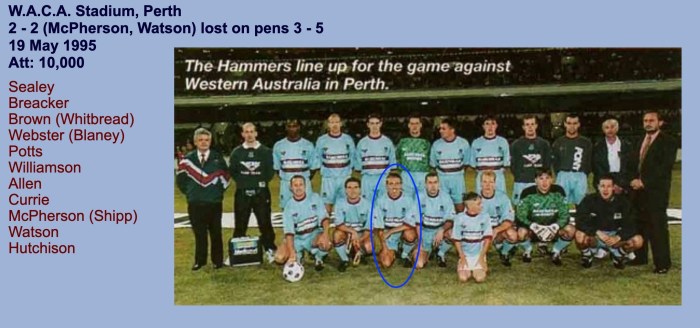
The following summer, Currie played in four matches when he was part of West Ham’s squad on a centenary tour of Australia.

Shrewsbury boss Fred Davies, a former playing colleague of Redknapp’s at Bournemouth, took Currie on full time after his two loan spells at Gay Meadow.

He moved on to Plymouth Argyle in 1998 but only played five matches in three months, then switched to Barnet where he made 136 appearances, plus seven as a sub, in three years.

Wycombe Wanderers paid £200,000 to sign him in the summer of 2001 and manager Lawrie Sanchez told BBC Three Counties Radio: “He’s obviously a quality player. He gets crosses in and that’s an area where we weren’t very good last year. He’s come to add that to our game and his free kicks will trouble the ‘keeper as well.

“It was quite a lot of money for our club to spend but I’ve got to back my judgement. I’d looked at him for a while and quite liked him. He gives us something we haven’t got, he’s a great technician. He hasn’t got particularly great pace but what he does with the ball is tremendous. We’re hoping he does all the things he was doing at Barnet and a little bit more for us.”

Sanchez added: “A lot of people looked at him for a long time. He’s always been considered one of the best players in the Third Division and hopefully we’ll give him the stage where he can prove he’s one of the best players in the Second Division.”

After Currie’s flirtation with promotion to the Premier League ended in disappointment, Joe Royle left Portman Road and his replacement Jim Magilton axed Currie from the side in the 2006-07 season. He was sent on loan to fellow Championship sides Coventry City and Derby County, for whom he made a play-offs appearance as a substitute, although he wasn’t involved in the final when County beat West Brom 1-0.

That summer, on the expiry of his Ipswich contract, Currie moved on a free transfer to League One Luton Town. He made 38 appearances for the Hatters but when they went into administration, were deducted 10 points and relegated, he was among several players given a free transfer.

Micky Adams, back in the hotseat at the Albion, was hopeful of getting Currie back to Brighton for a second spell, telling BBC Southern Counties Radio on 11 July: “He’s a player I’ve admired for a long, long time. We want him, and he wants to come back. He’d offer competition for places and fantastic delivery from set pieces.”

But at the end of the month the player rejected the terms on offer and took up a three-year contract at Chesterfield instead.

While the first year at Saltergate went OK, in the second season, the manager who signed him, Lee Richardson, had been replaced by John Sheridan, and Currie was out of the picture. He went on loan to fellow League Two side Dagenham & Redbridge and the deal was made permanent in January 2010. Currie played in 16 matches as the Daggers won promotion to League One.

They went straight back down the following season, and Currie departed for Conference South outfit Borehamwood as player assistant manager. He was there less than three months before moving to Isthmian League Hendon for a year as a player.

In October 2012, Currie returned to Dagenham & Redbridge, initially as a development coach and later as assistant manager under John Still.

In June 2018, Currie was appointed assistant manager at National League side Barnet, working under Still. He succeeded Still in December 2018, initially as caretaker, before landing the role permanently in January 2019.

Currie, assisted by former Albion loanee midfielder Junior Lewis, came close to getting Barnet promoted to League Two but, having missed out, and the club struggling financially because of the Covid-related lack of fan revenue, both left the club in August 2020.

Cards came up trumps for ex-Saints full-back Kevan Brown

FULL-BACK Kevan Brown made more than 120 appearances for Southampton reserves during three years as a young professional but it took a move east along the coast to Brighton to play league football.

Brown arrived at the Goldstone Ground for a fee of £7,500 shortly after Barry Lloyd had taken over from Alan Mullery early in 1987.

Lloyd preferred the youngster from Andover as right-back to the ageing Les Berry, who’d joined on a free transfer the previous summer.

The club put Brown into digs in Hove (run by Val and Dave Tillson) with another young player who had moved away from home, former Everton youngster Darren Hughes.

In a programme profile feature, Brown said Hughes had been a big help in him settling into his new surroundings. “He has been showing me around the area and we’ve become good friends,” he said. “I’m glad I wasn’t put in a hotel on my own.”

Unfortunately, Brown was only on the winning side twice in the 15 matches he played that season and Albion were relegated from the second tier in rock bottom place.

Brown was a permanent fixture in the no.2 shirt for 46 league and cup matches in the 1987-88 season until the arrival of experienced defender Gary Chivers from Watford.

With promotion in sight, while Lloyd dropped the experienced captain Doug Rougvie in favour of the relatively untried Robert Isaac in the centre of defence, he saw Chivers rather than Brown as the better option at right-back.

Chivers went straight into the side for the promotion run-in and the 2-1 home win against Walsall on 12 March 1988 was the last time Brown appeared that season.

He played in the opening two games of the following season but Chivers on the right and Keith Dublin on the left were Lloyd’s preferred full-back pairing, and Brown found himself on the outside looking in.

Born on 2 January 1966, Brown was an associate schoolboy with Southampton at the age of 13, following in the footsteps of his father Peter, who had played for Saints in the late 1950s.

Brown said in an Albion profile feature that his father and Saints youth development officer Bob Higgins had been the biggest influences on his career, although Higgins later drew opprobrium.

Lawrie McMenemy awarded Brown a professional contract but neither he nor his successor Chris Nicholl elevated the young full-back to the first team, although he did get to play against Manchester United in Trinidad and Tobago while on tour with Southampton.

Having had his fill of reserve team football at Saints, rather than repeat the experience at Brighton, he moved on to Aldershot in the autumn of 1988.

He spent four years there and made quite a few more appearances than the 175 that the record books show: the 1991-92 season records having been expunged  after the club went out of business.

Aldershot found themselves in a worse financial situation than the Albion were to suffer later that decade and the club was finally wound up owing £1.2m on 25 March 1992.

Five days earlier, Brown played in a match – alongside future Albion hero Robbie Reinelt – that was the last game Aldershot would play.

Although his next career move saw him drop out of the league, he enjoyed huge success in terms of silverware and recognition.

He joined Geoff Chapple’s Woking in the Football Conference and captained The Cards to three FA Trophy wins – in 1994, 1995 and 1997 – with veteran former Albion winger Clive Walker the side’s talisman.

In addition to leading his team up the steps at Wembley to lift the silverware, Brown’s performances with Woking earned him international recognition with the England semi-professional ‘C’ side.

He made his debut in a 1-0 win over Wales at Huish Park, Yeovil, on 28 February 1995. He made three more appearances that year: away to Netherlands (0-0) on 11 April, home on 19 May (played in St Albans) against the Highland League (3-4), then away to Gibraltar (3-2) on 31 May.

His fifth and final appearance was on 2 April the following year as England beat the Netherlands 3-1 at the Nene Park home of Rushden & Diamonds.

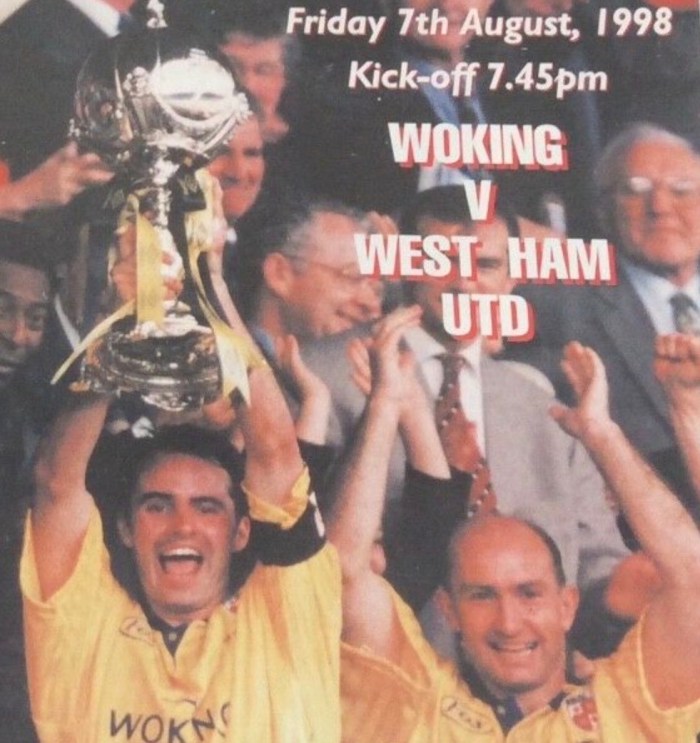
Brown’s loyalty to Woking – he made more than 350 appearances across six years – was rewarded with a testimonial game at home to West Ham United in August 1998.

More than 5,500 turned out at the Kingfield Stadium to see the Hammers edge it 2-1 with goals from Frank Lampard and Steve Lomas. Rio Ferdinand limped off early in the match and Ian Wright played up front for West Ham.

The game took place five months after Brown had moved on from Woking to Yeovil Town.

Chapple’s former assistant, Colin Lippiatt, had taken charge at Huish Park in January that year, having joined three months earlier as a coach under Graham Roberts.

One of his first moves was to sign Brown and teammate Steve Thompson (who ended up staying with The Glovers for ten years). Brown stayed for two years, making a total of 88 appearances, latterly playing under Thompson when he took over as caretaker manager following Lippiatt’s departure.

The arrival of former Chelsea defender David Webb as manager in March 2000 spelled the end of Brown’s time at Yeovil and he returned to Woking to play a further 25 games as they battled against relegation from the Conference in the 2000-2001 season.

Playing part-time had enabled Brown to pursue a teaching career and in April 2007 he was appointed director of sport at independent co-educational St Francis School in Pewsey, Wiltshire.

Brown’s devotion to the club who set him on the road remains undimmed and on his Twitter account @KevanBrown05 he declares himself a Saints season ticket holder.

Goalkeeper John Phillips – the ‘unenviable understudy’

JOHN PHILLIPS was a Welsh international goalkeeper who played for Chelsea and Aston Villa before becoming a back-up at Brighton under Alan Mullery.

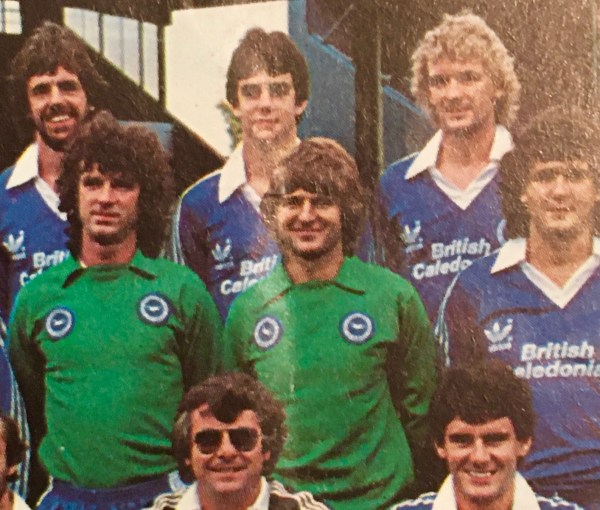
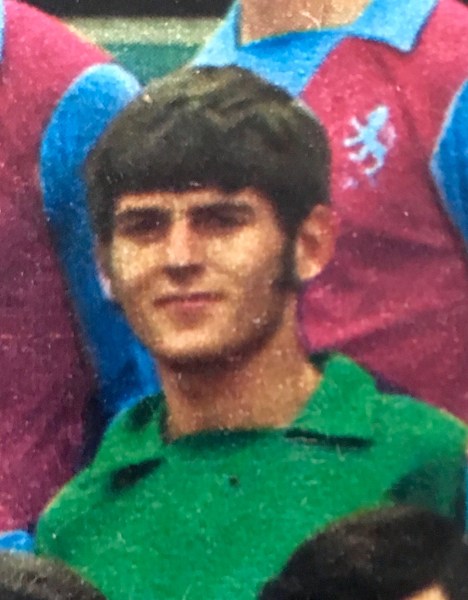
A £15,000 fee took him to the Goldstone Ground as no.2 to Graham Moseley in 1980 and, possibly the most interesting thing about his time at Brighton was his appearance in the centre of the pre-season team photo (see below) alongside Moseley in which both ‘keepers rather oddly wore green jerseys sporting two Seagulls badges!

JP 2 badge colourPreviously an understudy to the legendary Chelsea goalkeeper Peter Bonetti, Phillips did have occasional first team spells at Stamford Bridge, including playing in earlier rounds of the successful European Cup Winners’ Cup campaign of 1970-71.

When he died aged 65 on 31 March 2017, the Chelsea website paid a warm tribute to his contribution.

JP prog notes

At Brighton he featured 19 times for the reserves but only played one first team game. That came in front of a bumper festive season Goldstone crowd of 27,387 on 27 December 1980 (as seen above on my amended programme teamsheet) as the Seagulls beat traditional rivals Crystal Palace 3-2; a brace from Michael Robinson and Peter O’Sullivan with the Albion goals.

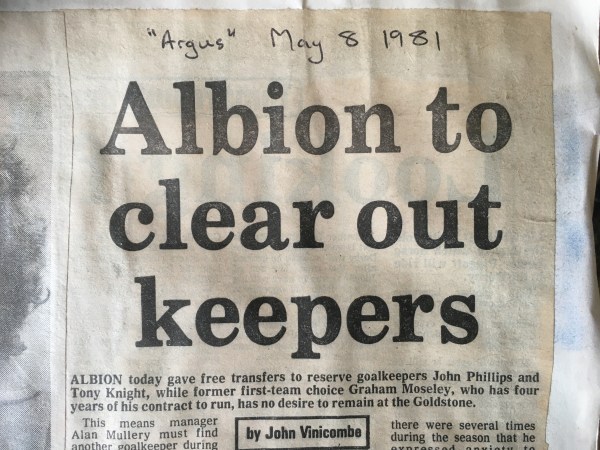
IMG_6433The following month, it looked like he might get a second game after Mullery publicly blamed first-choice Moseley for the side losing six points, and told the Argus Phillips would come in for the next match unless he could sign another ‘keeper.

Mullery promptly went back to his old club, Fulham, and splashed out £150,000 on unknown youngster Perry Digweed – pushing Phillips further down the pecking order.

IMG_6431At the end of the season, Phillips and Tony Knight, a young ‘keeper who didn’t progress to the first team, were released on free transfers. It was also reported that Moseley was on his way, but Mullery’s shock departure that summer gave him a stay of execution.

Disgruntled Mullery swapped managerial seats with Mike Bailey, who’d just led Charlton Athletic to promotion from the old Third Division,

Phillips was one of his first signings. However, he only played two games for Charlton, so he was to endure another frustrating spell of being the understudy.

Contributor Richard J on charltonlife.com remembered how Phillips replaced first choice Nicky Johns in the first away game of the 1981-82 season – a 3-0 defeat at Luton Town.

“Nicky returned for the next game and Phillips’s only other game was away at Leicester. Unfortunately, we lost that game as well, 3-1.”

But Richard continued: “I work with Tony Lange who took over from the Welsh international as Charlton’s number two keeper. He felt that John was a big influence on his career.

“Apparently, Phillips was exceptionally good at distribution and this was one of the reasons he had played so much for Chelsea and Tony credits him as a big influence on that part of his game.”

He moved from Charlton to Crystal Palace but he didn’t feature for their first team at all. He then tried his luck in Hong Kong, with See Bee.

Born in Shrewsbury on 7 July 1951, Phillips went to the Grange School in Shrewsbury and, because both his father and grandfather played league football for Shrewsbury Town, it was no surprise when he also signed for Town. He made his debut in 1968 at the age of 17.

A big influence on him was the former Manchester United and Northern Ireland goalkeeper, Harry Gregg, who was manager at Gay Meadow between 1968 and 1972.

In an early edition of Goal magazine, Gregg said: “He’s the finest goalkeeping prospect I have seen. He seems to have every asset in the book and his temperament really stands out.”

J Phil VillaPhillips played 51 times for the Shrews before being bought in 1969 by Tommy Docherty, the former Chelsea boss who’d taken over as Aston Villa manager.

After only 15 games for Villa, in August 1970, Chelsea paid a fee of £25,000 to take Phillips to Stamford Bridge.

The regular back-up ‘keeper, Tommy Hughes, who went on to have a loan spell at Brighton in the 1972-73 season, was out injured with a broken leg at the time and Chelsea needed someone to deputise for Bonetti, who only two months earlier had been criticised when having to take over in goal from ill Gordon Banks as England lost 3-2 to West Germany in the 1970 World Cup quarter final in Mexico.

Phillips stayed with Chelsea for 10 years and played a total of 149 games for the club. He managed 23 league and cup games during the 1972-73 season owing to Bonetti’s absence through injury and illness.

In October 1973, Goal ran a series called The Understudies and featured the rivalry between Phillips and Bonetti. Bonetti said of him: “John is a first-class ‘keeper and has pushed me more than anyone. It’s nice to know you have to play well to keep your place.”

Phillips told the magazine’s David Wright: “We are rivals, yes, but friends as well.”

It was only in the 1974-75 season that Phillips had an extended run of games as the no.1.

Although kind things were said of him when he died, not all recollections were favourable. The footballnetwork.net, for instance, said: “Phillips always conceded a lot of goals. Is this because he was awful or his defence and midfield were woeful? I suspect that it was a bit of both. Phillips did assist Chelsea in reaching the 1971 European Cup Winners Cup final, but he conceded seven at mediocre Wolverhampton as Chelsea sloped off into a long decline.

“Funnily enough, he shared goalkeeping duties for Wales with one Gary Sprake, a notoriously erratic Leeds goalie, as the late Peter Houseman could have testified!

“Obviously in the early seventies, while the Welsh rugby team had an embarrassment of riches, there was no such luxury in the goalkeeping department.”

Although English by birth, Phillips played for Wales at a time when qualification to play for countries beyond the one in which a player was born was extended to include the homeland of their parents or grandparents. He won four caps in 1973-74, making his debut in a 3-0 defeat to England in front of 38,000 at Wembley on 15 May 1973.

A none-too-flattering recollection can be found in a book charting the history of Welsh international football. Red Dragons – The Story of Welsh Football says: “Sadly a nervy performance by Chelsea goalkeeper John Phillips was responsible for a grim 0-2 defeat at home to England in May 1974.”

Bonetti saw off many pretenders to his throne, but Phillips went closer than anyone to taking his place, according to gameofthepeople.com, which described him as “the unenviable understudy” in an article charting his Blues career.

In the summer of 1975, Chelsea had been relegated and Bonetti given a free transfer, so Phillips was expected to start the new season as first choice ‘keeper.

But he fractured his right leg in training and badly damaged knee ligaments, opening the door for Steve Sherwood to take over between the sticks.

In the 1979-80 season, Phillips was loaned to Crewe Alexandra. Even there, he only played six times for the league side, having to be content with 23 games for their reserves.


  • Pictures mainly sourced from Goal magazine or Shoot! Also the Argus and matchday programme.

Two goals that etched Sammy Morgan’s place in Albion history

HAVING A cheekbone broken in four places during a pre-season friendly summed up the bad luck of never-say-die Northern Irish international striker Sammy Morgan.

His cause wasn’t helped when the manager who signed him six months earlier quit. And, to top it off, while he was recovering from that horrific injury, an Albion footballing legend in the shape of Peter Ward burst onto the scene.

When a £30,000 fee brought him to Brighton from Aston Villa just before Christmas 1975, it looked like the side had found the perfect strike partner for Fred Binney as they pushed for promotion from the third tier.

Unfortunately, the man with the swashbuckling, fearless approach went eight games without registering a goal. However, in his ninth game he made amends in memorable fashion.

Morgan scored both goals in a 2-0 win over Crystal Palace in front of an all-ticket Goldstone Ground crowd of 33,300 – with another 4,000 locked out.

It was 24 February 1976 and the Daily Mail’s Brian Scovell reported the goals thus: “In the 12th minute, Ernie Machin struck an early ball into the middle from the right and Ian Mellor headed on intelligently behind the defence for Morgan to steer the ball into the corner of the net.

“The second goal, in the 55th minute, came when Tony Towner took the ball off Jeffries and set off on a 40-yard run which ended with his shot rebounding off goalkeeper Paul Hammond. Morgan tapped in the rebound.”

Gritty, angular and awkward, Morgan scored five more before the end of the season, including another brace at home to Swindon.

However, Albion narrowly missed out on promotion and Peter Taylor, the manager who bought Morgan, quit the club in the close season. The new season under Alan Mullery hadn’t even begun when, in a pre-season friendly against Luton Town, Morgan fractured his cheekbone in four places.
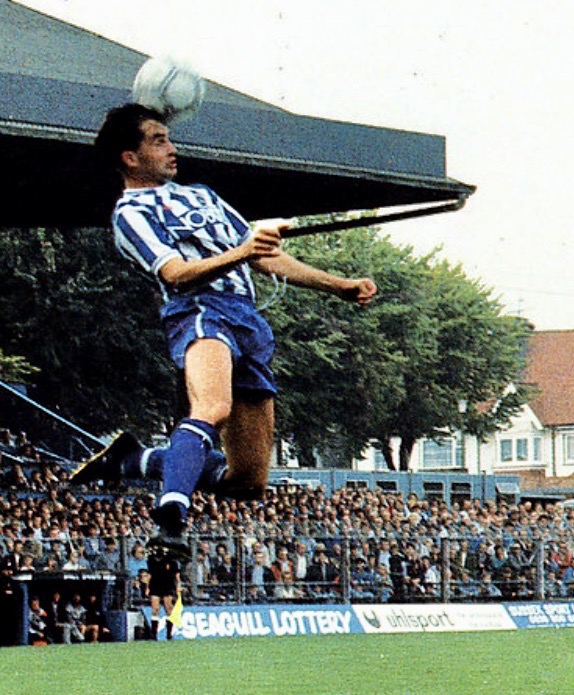
“I know I’m probably more prone to injuries than other players because of my style of play, but there’s no way I can change it, even if I wanted to,” Morgan told Shoot! magazine. “I made up my mind as soon as I got back in the team that I’d have a real go and that’s what I’ve done. People say I’m a brave player but I don’t really know if that’s true. I just like to give 100 per cent and that way no-one can ever come back at you.”

In the season before he joined Brighton, a groin injury had restricted him to just three top-flight appearances for Villa and, when he was fit to return, Villa had signed Andy Gray, whose form kept him out of the side.

Initially reluctant to move on, he admitted in that Shoot! interview: “I was sad at the time because I had a lot of happy times at Villa but now I think they may have done me a favour. Brighton are a very good ambitious club and I’ve just bought a house in Peacehaven. Really, I couldn’t be happier.”

Born in Belfast on 3 December 1946, Morgan’s family moved to England to settle in Great Yarmouth and, with an eye to a teaching career, he combined studies with playing part-time football for non-league Gorleston Town.

“Deep down I knew I could make the grade, but the opportunity just wasn’t there,” he told Goal magazine in a 1974 interview. “The local league club was Norwich City and in those days they didn’t seem that keen on local talent.”

Morgan enrolled at teacher training college in Nottingham and just when he thought a professional football career might elude him, Port Vale made an approach.

“I jumped at the chance,” he said. “They let me stay at Nottingham to complete my studies and I would travel up to train and play with them. Deep down I thought that the Third Division was as high as I could get, unless, of course, Vale were promoted.”

In his three years with Vale, where his teammates included Albion legend Brian Horton, he scored 24 goals in 113 appearances, and he caught the eye of the Northern Ireland international selectors. He scored on his debut in a European Championship qualifier with Spain on 16 February 1972 when he took over at centre-forward from the legendary Derek Dougan.

Amongst his illustrious teammates that day were Pat Jennings in goal and the mercurial George Best. Future Brighton left-back, Sammy Nelson (then with Arsenal) was also in the side. The game was played at Boothferry Park, Hull, because of the ‘troubles’ in Northern Ireland at that time and it finished 1-1.

Morgan won 18 caps in total over the next six years, scoring twice more, in 3-0 home wins over Cyprus on 8 May 1973 and Norway on 29 October 1975.

The Goal article noted Morgan “earned a reputation of being a hard, no-nonsense striker who could unsettle defences and goalkeepers with his aggression”.

Aston Villa boss Vic Crowe liked what he saw and reckoned he’d be an ideal replacement for that tough Scottish centre-forward Andy Lochhead, who was coming to the end of his career.

Morgan was by now 27 but, in the summer of 1973, Villa paid a £20,000 fee for his services.

“The offer came right out of the blue and I had no second thoughts about the move at all,” he said. “Being part of such a famous club naturally brings pressures, but I wouldn’t have it any other way.

There was a famous incident in a televised game between Arsenal and Aston Villa when the normally calm, cool and collected Arsenal goalkeeper Bob Wilson went ballistic because of the way Morgan tried to stop him clearing his lines.
Swindon goal celeb“The bigger the atmosphere, the more I like it. For instance, my best two games this season were against Arsenal, and in the replay there was a crowd of 47,000.”

At Brighton, new manager Mullery quickly decided he preferred Ward to Binney and, with Morgan sidelined by that pre-season injury, opted to put former midfielder Ian Mellor up front to partner him.

Wardy MorgBetween them, they literally couldn’t stop scoring goals, and the success of their striking partnership restricted Morgan to only two starts in 1976-77. He was on the sub’s bench throughout that first promotion season under Alan Mullery, and he scored just once in 16 appearances as the no.12.

He subsequently moved on to Cambridge United before a spell in Holland, where he played for Sparta Rotterdam and FC Groningen.

When his playing days were over, he became a teacher back in Gorleston. He also became involved in the Norwich youth team in 1990, signing full time as the youth development officer in 1998 and becoming the club’s first football academy director (he holds a UEFA Class A coaching licence). He resigned in 2004 and moved to Ipswich as education officer.

In 2014, Morgan was diagnosed with stomach cancer and underwent chemo to tackle it. Through that association, in September 2017 he gave his backing to Norfolk and Suffolk Youth Football League’s choice of the oesophago-gastric cancer department at the Norfolk and Norwich University Hospital (NNUH) as its charity of the year.

Even when he could have had his feet up, he was helping to coach youngsters at independent Langley School in Norwich.

  • Pictures from various sources: Goal, Shoot! and the Evening Argus.

Jeff Minton a rare bright light in Albion’s gloom after dream Spurs debut

Screenshot

AFTER 10 years at Tottenham Hotspur, Jeff Minton spent five years with Brighton & Hove Albion making just one short of 200 appearances and scoring 32 goals.

He was arguably the stand-out player in an otherwise gloom-laden period for the club when off-field issues overshadowed the playing side.

Minton’s spell in Seagulls’ colours remarkably straddled the reigns of five managers and he eventually left the south to rejoin one of them, Brian Horton, at Port Vale.

It was Liam Brady who brought him to the Albion on a free transfer and it is good to read how he viewed the genial Irishman as “like a father figure to me” and “somebody who had great confidence in my ability during his spell as manager”.

He made his Brighton debut away to Swansea in August 1994 and remained a mainstay of the midfield until the summer of 1999.

It doesn’t say a huge amount about the rest of the Albion side in the 1997-98 season that Minton was the top scorer with seven goals.

It’s to his credit though that, the following season, despite Albion finishing a lowly 17th in the fourth tier, Minton was chosen by his fellow professionals in the division in the PFA team of the year.

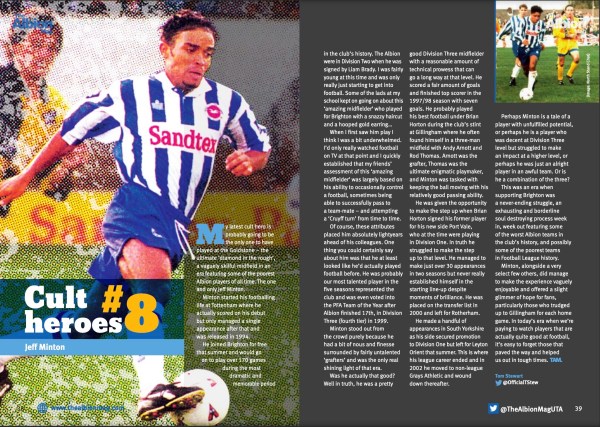
In the October 2017 issue (no.9) of The Albion Mag (below), Tom Stewart featured Minton as one of his cult heroes of yesteryear.

minton albion magNot exactly a glowing endorsement – “a vaguely skillful midfielder in an era featuring some of the poorest Albion players of all time” – Stewart nonetheless reckoned for the five seasons he was at the club he was “probably our most talented player”.

He went on to say: “Minton stood out from the crowd purely because he had a bit of nous and finesse surrounded by fairly untalented ‘grafters’ and was the only real shining light of that era.”

Stewart posed the conundrum: “Perhaps Minton is a tale of a player with unfulfilled potential, or perhaps he is a player who was decent at Divison Three level but struggled to make an impact at a higher level, or perhaps he was just an alright player in an awful team. Or is he a combination of the three?”

In April 2017, Brighton & Hove Independent gathered together player and fan memories of Albion’s iconic former home, the Goldstone Ground, and Minton was among the contributors.

“I loved the Goldstone, it was a great stadium and it’s a shame it got sold off,” he said. “The fans were all brilliant. I’m not too sure if they took to me in the first couple of years I was there, but the last two or three seasons I got on really well with them. “They were always fantastic and got right behind their side at the Goldstone. You don’t see that at a lot of teams.”

Born on 28 December 1973 in Hackney, Minton initially started training with Arsenal but, as a Spurs fan, he jumped at the chance to join Tottenham as a schoolboy.

“I joined the club as a 10-year-old after the scout Dick Moss watched me playing a district game for Hackney against Enfield in which I scored a hat-trick,” Minton recounted in a January 2018 interview with superhotspur.com (pictured below).

“Joining as a 10-year-old and leaving as a 20-year-old gave me 10 very valuable learning years at a club I supported, and also one of the country’s top clubs which is steeped in so much tradition and history. Those treasured memories will forever live with me.”

Like fellow Spurs schoolboy Junior McDougald, at 14 Minton was invited to become a member of the FA School of Excellence at Lilleshall.

J Minton SpursHaving successfully worked his way through the ranks, Minton was given his first team debut by boss Peter Shreeves on 25 April 1992 in a game that turned out to be Gary Lineker’s last home match for Spurs.

If reaching that promised land wasn’t good enough, the dream debut was complete when he scored in a 3-3 draw against Everton, with Paul Stewart and Paul Allen also on the scoresheet.

However, Minton only played two more games for the Spurs first team: one in the league seven days later in a 3-1 defeat away to Manchester United, the other in the league cup, going on as a substitute for Darren Anderton in a 3-1 win over Brentford.

Managerial upheaval probably didn’t help his cause: Terry Venables had been in charge when he joined, after Shreeves’ spell in charge, Doug Livermore and Ray Clemence took over, and it was Ossie Ardiles who ended up releasing him on a free transfer in July 1994.

It’s interesting to read that Minton’s former youth team manager, Keith Waldon, was disappointed that Minton didn’t make more of a name for himself. Waldon told superhotspur.com: “One of those who disappointed me with how far he went in the game was Jeffrey Minton.

“Jeffrey had phenomenal ability with his feet, was quick off the mark and had wonderful skill. But he didn’t go as far as I hoped he would, and I think that he’d tell you that he wasn’t the most disciplined person, but he was a wonderful player.”

While welcoming the chance to play first division football for Port Vale after his Brighton career came to a close, he struggled to settle in the Potteries and in his second year there moved on loan to second division Rotherham United, who he helped to promotion.

He then returned to London for the 2001-02 season and played 39 league and cup games for Third Division Leyton Orient.

Although offered a contract extension by the O’s, Minton says excessive demands from his agent scuppered a deal and he ended up playing non-league football with Canvey Island for three seasons.

He moved on to Chelmsford City in August 2006 where he played for a further three years, had a brief spell at Welling United and ended his playing days with Isthmian League Ware.

Boylers’ service appreciated both sides of the Atlantic

MIDFIELD enforcer John Boyle was born on Christmas Day 1946 and went on to play more than 250 games for Chelsea.

Towards the end of his career, he spent two months on loan at Brighton trying to bolster the Albion’s ailing midfield in the dying days of Pat Saward’s spell as manager.

Indeed, Boyle was in that unenviable position of being at the club when the manager who brought him in was turfed out, and the man who replaced him (in this case none other than Brian Clough) swiftly dispensed with his services and sent him back to Chelsea.

By then, Boyle’s time at Chelsea was at an end and, after his 10-game Goldstone spell was also over, he went the shorter distance across London to play for Orient, before ending his playing days in America with Tampa Bay Rowdies.

Born in Motherwell, Boyle went to the same Our Lady’s High Secondary school that spawned Celtic greats Billy McNeill and Bobby Murdoch and, just around the time he turned 15, his stepbrother, who lived in Battersea, organised through a contact they had with then boss Tommy Docherty for him to go down to London for a trial.

He did enough to impress and 10 days later Chelsea sent him a letter inviting him to join their youth team, together with the train ticket from Motherwell to London.

“When I got off the train, Tommy Doc was waiting for me to take me to my digs,” Boyle told chelseafc.com in a recent interview. “I stayed in the digs that Bobby Tambling and Barry Bridges had stayed in before.”

Boyle – known to all as ‘Boylers’ – made his debut in the 1965 League Cup semi-final against Aston Villa and, at 18, it couldn’t have been much more memorable.

“I played on Monday in a Scottish youth trial and Wednesday I was playing against Aston Villa in the semi-final of the League Cup,” Boyle recounted. “After 20 odd minutes, I tackled this guy and he got injured and carried off. The crowd then booed me, he limped back on and then the crowd booed me more!

“It went to 2-0, to 2-2 and then with about 10 minutes to go I got the ball 30 yards out, rolled it forward and went crack and it went into the top corner of the net. I remember Terry Venables ran up to me and said ‘John, I am so pleased for you,’ and that was my first game. To score the winning goal in your first game was Roy of the Rovers stuff.”

He went on to become Chelsea’s youngest ever cup finalist when he was in the team that won the trophy. In those days, it was played over two legs, and, after beating Leicester City 3-2 in the home game, they drew the away leg 0-0. His teammates in the second leg were Bert Murray and the aforementioned Bridges, who he would go on to play alongside at Brighton in 1973.

The Goldstone Ground was familiar territory to him. On 18 February 1967, he was famously sent off for the visitors in a FA Cup 4th round tie when Albion held their more illustrious opponents to a 1-1 draw in front of a packed house. Chelsea went on to win the replay 4-0 and that year went all the way to the final where Boyle was part of the side who lost 2-1 to Spurs. In another fiery FA Cup tie between Brighton and Chelsea, in January 1972, Boyle was Chelsea’s substitute as they won 2-0 in a game which ended 10 a side, George Ley and Ron Harris being sent off.

john boyle chels blueWhen Docherty moved on from Stamford Bridge, and Dave Sexton took over as manager, Boyle’s involvement in the side was more sporadic, as he told fan Ian Morris on his Rowdies blog.

“Dave appreciated my energy and willingness, but I don’t think he really fancied me as a player. Basically, I became an odd-job man, filling in here and there, and in football it doesn’t help to get that reputation,” he said.

Although he wasn’t in the squad that beat Leeds in the 1970 FA Cup Final, he was back in the side when Chelsea beat Real Madrid over two legs in May 1971 to win the European Cup Winners’ Cup.

After Brighton’s disastrous 1972-73 season in the second tier – the general consensus is that they’d not properly been prepared for promotion and didn’t invest sufficiently in the team to have a fighting chance of staying up – the side continued to be in the doldrums as they adjusted to life back in the old Third Division.

Manager Saward was struggling to come up with the right formula and, having transferred former captain Brian Bromley to Reading, sought to boost his midfield with the experienced Boyle, who was surplus to requirements at Stamford Bridge.

With the paperwork signed on 20 September, Boyle was handed the no.8 shirt and made his debut alongside Ronnie Howell in a 0-0 draw away to Grimsby Town.

He made his home debut the following Saturday, but the Albion went down 1-0. Three days later, this time partnering Eddie Spearritt in the middle, Boyle helped Albion to a 1-0 win at Oldham Athletic.

After a 3-1 defeat away to Blackburn Rovers, at home to Halifax Town Boyle had a new midfield partner in John Templeman. But again they lost by a single goal.

With Howell back alongside him for the home game v Shrewsbury Town, Albion prevailed 2-0 in what turned out to be Saward’s last game in charge. Perhaps by way of another interesting historical note, Boyle was subbed off to be replaced by Dave Busby, who became the first black player to play for the Albion.

Caretaker boss Glen Wilson retained Boyle in midfield for the midweek 4-0 hammering of Southport and he was also in the line-up for Clough’s first game in charge, a 0-0 home draw against York City on 3 November. But the 2-2 draw away to Huddersfield Town on 10 November was his last game for the Albion.

As someone who’d gained something of a reputation as enjoying the social side of things at Chelsea, particularly with the likes of Peter Osgood, Charlie Cooke and Alan Birchenall, it maybe doesn’t come as too big a surprise to learn that Clough advised him “always buy two halves instead of a pint, or people will think you’re a drinker”.

Boyle was still only 28 when he tried his hand in Florida in February 1975, being appointed Tampa Bay Rowdies captain, and leading them to victory in the Super Bowl against Portland Timbers in August that year.

His former Chelsea teammate Derek Smethurst scored 18 goals in that inaugural season, playing up front alongside ex-West Ham striker Clyde Best, while former Crystal Palace ‘keeper Paul Hammond was in goal.

A newspaper article about Boyle’s contribution resides on tampapix.com, a hugely entertaining site featuring loads of players of yesteryear who turned out for the Rowdies.

It somewhat flamboyantly says: “‘Captain Rowdie’ John Boyle was a barrel-chested midfielder with legs as white as snow and hair as thin as a wheat crop during a summer drought.  He became the role model for the club, as much because of his leadership as well as the fact that he knocked opponents ‘grass-over-tea kettle’ when they came his way.”

He retired from playing in November the same year but, two years later, he stepped in as Rowdies coach when Eddie Firmani quit. However, he had also gone into the pub business in the UK and ultimately the need to be behind the bar at Simon the Tanner in Bermondsey, with his wife Madeline, meant he had to turn his back on the sunshine state and return to London.

Unable to resist the lure of the States once more, Boyle played five matches for indoor league side Phoenix Inferno in the 1980-81 season.

In that wide-ranging interview Boyle gave to chelseafc.com earlier this year, he said: “I wouldn’t change a thing in my life, I am just grateful for what I have done. I have been blessed and one of the great things about it is 50 years later you can still talk about it! I was a lucky young man to have played when I did and meet the people I did.”


When football didn’t deliver the right break for Colin Dobson

THE architect of Brighton’s humiliating 8-2 home defeat to Bristol Rovers in 1973 was none other than a player who might have been wearing Albion’s stripes if injury hadn’t struck.

Goalscoring winger Colin Dobson turned goal provider the day Rovers were rampant at the Goldstone Ground. Twenty-one months earlier he’d left the same pitch on a stretcher, not certain that he’d ever be able to play again.

Dobson had joined Brighton on loan in January 1972, making his debut in a mid-season friendly against his parent club, Huddersfield Town, on 18 January.

Ironically, his first meaningful Albion action came against Rovers when he was a substitute in a 2-2 draw at Eastville on 22 January.

Dobson was also on the bench for the home 1-0 win over Swansea City the following Saturday. He was elevated to the starting line-up away to Wrexham on 5 February, when goals from Willie Irvine and Peter O’Sullivan sealed a vital 2-1 win.

It was during his full home debut against Walsall on 12 February that his short-lived Albion career came to a sudden halt. Albion lost 2-1 and Dobson suffered an ankle fracture.

It had been expected that Albion would sign him permanently, and he told the Evening Argus that he had been offered a good deal to do so, but the injury put paid to the transfer being completed.

With Pat Saward’s side heading towards promotion with Aston Villa, the Irish manager instead went back to Wolverhampton Wanderers to sign Bertie Lutton, who had been on loan earlier in the season.

Lutton duly played his part as the Seagulls acquired the necessary points to earn promotion, while Dobson nursed an injury which at the time threatened to end his playing days.

His six-year Huddersfield career at an end, in the summer of 1972 he accepted a role as player-coach at Bristol Rovers, working under his former Sheffield Wednesday teammate, Don Megson.

Dobson Rovers

Thus it was that he was part of a Rovers side who had gone 18 matches unbeaten when they showed up at the Goldstone on a cold winter’s day on the first day of December 1973 to tackle Brian Clough’s Albion in front of The Big Match television cameras.

The game was only five minutes old when Dobson played in Alan Warboys who beat Norman Gall before passing to his strike partner Bruce Bannister to open the scoring.

Seven minutes later, Dobson took Warboys’ pass and laid on a pinpoint centre for Gordon Fearnley to score with a header. The game was still six minutes short of half-time when another Dobson centre was met by Warboys to make the score 5-1 to the visitors.

John Vinicombe, Albion reporter for the Argus, declared in his summary: “To Colin Dobson, freed by Albion when a broken ankle looked like ending his career, the accolade for a thinking player.

“He masterminded the operation in unbelievably generous space. Bruce Bannister knifed through for the early, killing goals, and Alan Warboys, superbly balanced and fast on the slightly frozen pitch, looked the perfect striker, taking his four goals so cleanly.”

An incandescent Clough told the media: “I was ashamed for the town and the club that 11 players could play like that. I feel sick. We were pathetic. This side hasn’t got enough heart to fill a thimble.”

Rovers went on to win promotion to the second tier that season and Dobson eventually completed 63 league and cup games for them before retiring at the end of the 1975-76 season.

Born on 9 May 1940 in Eston, North Yorkshire, Dobson joined Sheffield Wednesday at 15, and made a name for himself with the Owls in the days when they played in the top tier of English football.

He earned a reputation as a goalscoring winger after making his debut in 1961 and scored 52 goals in 193 games over the next five years.

He was twice capped by England Under 23s: on 29 May 1963, he came on as a substitute for Alan Suddick as England beat Yugoslavia 4-2 in Belgrade. Alan Hinton scored a hat-trick for England and the other goal was a penalty by Graham Cross, then with Leicester but later a Brighton player. Future England World Cup winner George Cohen was the side’s right-back.

Four days later, with Ernie Hunt leading the line, Dobson started for England when they lost 1-0 to Romania in Bucharest.

In 1966, Dobson made the switch to second division Huddersfield for a £21,000 fee and he was Town’s top scorer in the 1967-68 season (with 14 goals) and 1968-69 (with 11).

Although full international honours eluded him, in the summer of 1968, he was selected for the Football Association Commonwealth tour of the USA, New Zealand, Malaysia and Hong Kong.

He was also part of the side Ian Greaves led to the 1969-70 Second Division title, but he only made a handful of top-flight appearances, and his last Huddersfield appearance was against Stoke City in an FA Cup fourth-round replay in January 1971.

Once his playing days were over, Dobson worked for a whole host of clubs in a coaching or scouting capacity, including Port Vale, Coventry City, Aston Villa, clubs in the Middle-East (Bahraini side West Riffa; Al Rayyan in Qatar; Kuwaiti side Al Arabi, and Oman’s Under-17s), Portugal’s Sporting Lisbon, Gillingham, Watford and Stoke, where he renewed his acquaintance with John Rudge, who he had known at Huddersfield and Bristol Rovers, who was director of football for the Potters.

It was during his time with Stoke that he discovered the future Manchester United and England goalkeeper Ben Foster, a chef playing part-time non-league football at the time.

Foster later told the Birmingham Mail: “There was a scout called Colin Dobson who worked for Stoke but was living in Warwick.

“One night he saw some floodlights, stopped off and had a watch of the game and I caught the eye. That was it. He made a note of it and came to watch me a few more times.

“I owe it all to him. Top man. Whether I’d still be working as a chef if he hadn’t spotted me, I don’t know.”

Dobson died in Middlesbrough aged 82 on 16 February 2023.

  • Pictures from my scrapbook. Originally sourced from the Evening Argus, Shoot! and Goal magazines.