‘Hendo’ earned Seagulls stripes before becoming Hornets’ hero

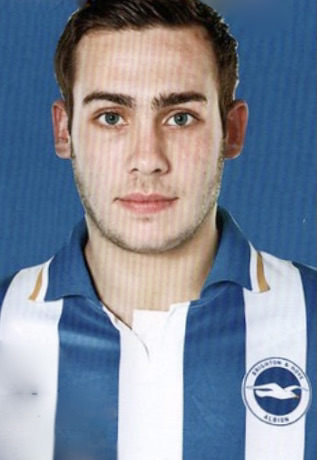
WATFORD play-off final goalscorer Darius Henderson was the perfect foil for pint-sized Leon Knight at the beginning of Albion’s 2003-04 season.

Steve Coppell borrowed the 6’4” striker from his old pal Alan Pardew at Reading giving him game time that was eluding him at the Madejski Stadium.

There was plenty of competition for places in Reading’s forward line at the time with Nicky Forster, Shaun Goater and Nathan Tyson ahead of him.

It had led to another forward, Martin Butler, being sold to Rotherham and because Pardew generally picked a lone frontman, Henderson found himself on the fringes.

“The solitary striker system, and the superb form of Nicky Forster, meant the vast majority of his appearances came as a substitute,” the Albion matchday programme noted.
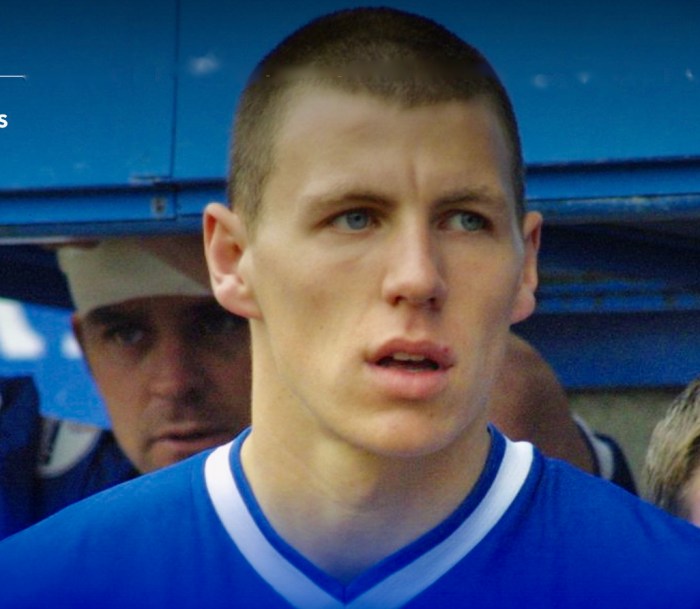
Young Henderson at Reading

In fact, he’d started only five league matches for Reading after turning professional in August 1999; but he had appeared 65 times as a substitute!

Given the chance of a start with the Seagulls, he got off to a flyer with the opening goal of the season from the penalty spot in a 3-1 win at Oldham, as well as netting the opener in a 2-0 home win over Luton Town.

Henderson, who celebrated his 22nd birthday while with the Seagulls, was adept at setting up chances for Knight too, outjumping QPR’s defence to set up Knight to score the winner as Albion won 2-1 at the Withdean and following it up at Plymouth where a strong run and cross teed up Knight for Albion’s third in a thrilling 3-3 draw.

It was good news when Pardew agreed to the loan being extended by another month, Coppell admitting: “It’s as good as it gets as far as I am concerned.

“Darius has given us a physical presence we didn’t have before and with him in the side I didn’t feel as exposed as we were defending set pieces.”

Unfortunately, Coppell couldn’t resist the lure of the Madejski Stadium when Pardew was poached to manage West Ham, and Henderson returned to Berkshire after 10 matches.

Born in Sutton, Surrey, on 7 September 1981, Henderson was brought up in Doncaster, south Yorkshire, and, after being rejected by Leeds, it was Rovers who gave him his first steps towards a professional career.

However, he joined Reading’s academy in 1999 and was one of three of that squad – along with Tyson and Alex Haddow – to make it through to the first team.

Although Coppell gave him game time at Brighton, the manager faced the same striker surplus issues as Pardew once he arrived at Reading, and he therefore sanctioned Henderson’s departure in January 2004. He’d made only 12 starts for the Royals but 71 appearances as a sub.

He was signed by Andy Hessenthaler’s Gillingham, telling the club’s official website: “I have had a good chat with the chairman and the gaffer and as far as I’m concerned I’m over the moon and am looking forward to playing now and getting to know my new team-mates.

“There was limited first-team options for me at Reading which was made clear by Steve Coppell. There was no doubt in my mind that I had to get away.”

He scored 10 goals in one and a half seasons with the Gills, as well as enjoying a prolific loan spell at Swindon Town, where he scored five times in six games.

The day before the 2005-06 season got underway, a £450,000 fee took him to Watford where he enjoyed the best three years of his career.

He became something of a fans’ favourite, with Matt Reveley, of footballfancast.com, explaining: “Darius is a player that often epitomises Watford’s footballing ethic (for) the 110 per cent effort and workrate that Watford fans like to see from their players.”

Manager Aidy Boothroyd paired him with Marlon King and Henderson’s 14 goals in 27 matches contributed towards Watford winning promotion to the Premier League.

Henderson scores against Leeds in the play-off final

It couldn’t have been sweeter when he scored a late penalty to round off Watford’s 3-0 win over Leeds in the 2006 play-off final at the Millennium Stadium in Cardiff.

As Henderson told watfordlegends.com: “Leeds released me when I was 16, and ever since that very day they released me I have always had the drive to go on and prove them wrong, so it was a great feeling to prove my point to them.

“The whole day though was memorable, just a terrific day all round and to score as well topped it off perfectly. I was mentally exhausted after the game though. It was incredibly draining and very emotional.”

The win sent the Hornets up with Henderson’s former club Reading and future employer Sheffield United.

Goals were far harder to come by amongst the elite and he managed only three as Watford went back down to the Championship.

He had scored 31 times in 117 appearances for the Hornets before being sold to the Blades for £2m in July 2008.

Before that, the striker could have joined Preston North End after a £1.3m fee was agreed between the clubs, but he decided to stay at Vicarage Road and fight for his place.

When Kevin Blackwell ‘sold’ United to him, though, he was persuaded. “Sheffield United is a massive club and it was a great opportunity for me so I went for it,” he told watfordlegends.com.

Henderson once again got amongst the goals, netting 21 for United, including one in April 2011 in a surprise 3-2 win over his old club Reading. It wasn’t enough to prevent relegation under Micky Adams, though, and Henderson moved to Millwall to take over the main striker role from Steve Morison, who had switched to Norwich City.
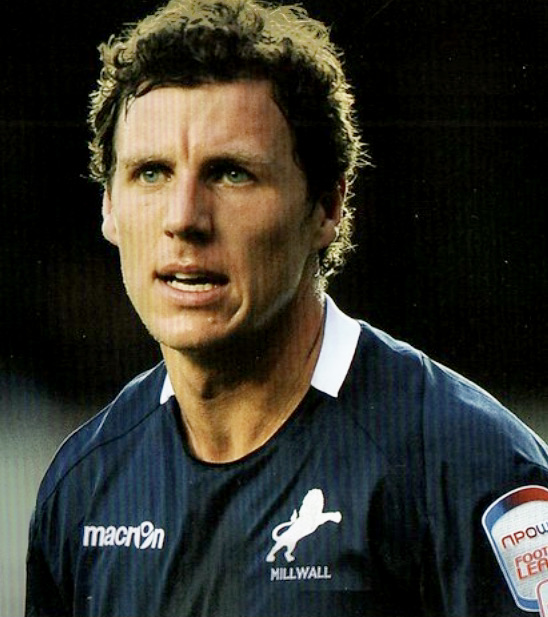
Goals galore for the Lions

Henderson’s goals continued to flow and he registered three hat-tricks and a brace in his first Championship season with the Lions. In total, he scored 26 times in 56 matches for them, including his 100th professional goal.

Wage bill trimming in January 2013 saw him move to fellow Championship side Nottingham Forest where his teammates included Dan Harding, Greg Halford and Gonzalo Jara Reyes. Unfortunately, he was more often a substitute than a starter for Billy Davies’ side.
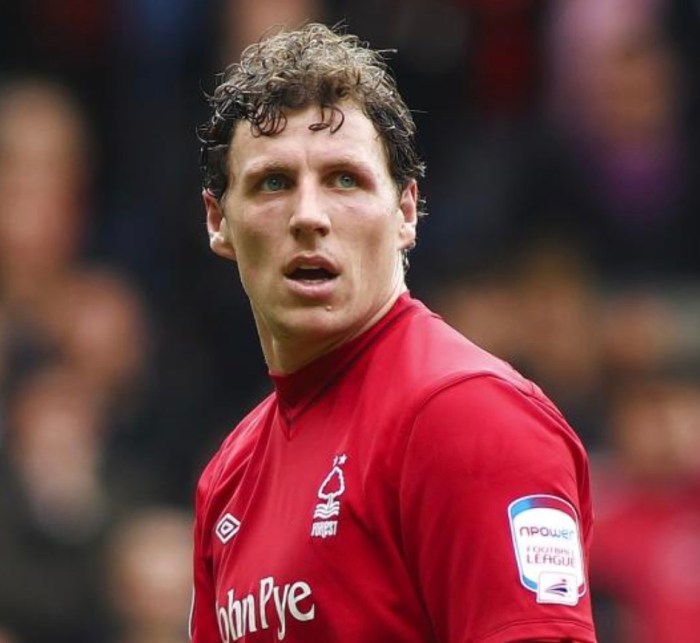
Forest forward

In the summer of 2014, former Albion boss Russell Slade picked him up on a free transfer for third-tier Leyton Orient on a three-year deal, although Slade left the club in September.

Henderson was also on the move again after only one season in East London, heading back up north with Scunthorpe United. But after failing to register a goal in 16 matches, he moved to Tony Mowbray’s Coventry City (above) in February 2016 on a short-term deal, once again failing to get on the scoresheet in five substitute appearances.

He joined his last league club in August 2016, linking up with League Two Mansfield Town, where he scored once in 13 matches before manager Steve Evans released him. He dropped out of the league and moved to Eastleigh Town. But he played only two games for the National League side and retired from playing in April 2017.

According to Everything Orient, Henderson now works as a consultant for AFC Bournemouth.

Bearing in mind the number of clubs he played for, it’s not really surprising @DHenderson7 has 13,500 followers on Twitter.
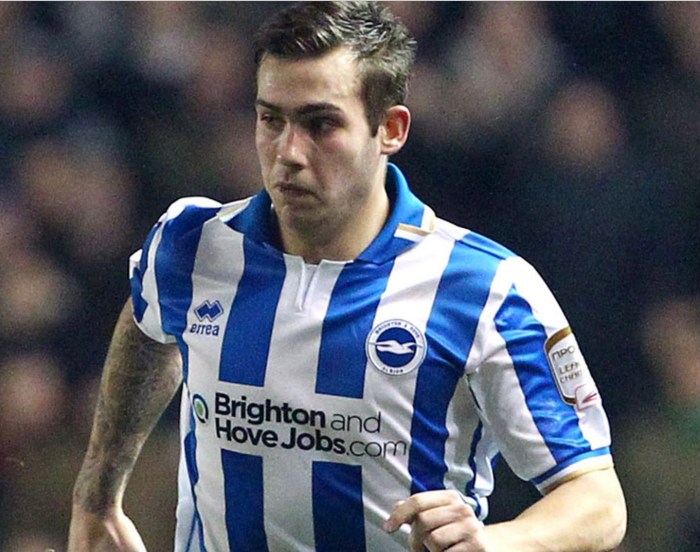
Binned off by Baggies, Mattock welcomed Seagulls chance

FOR A FEW seasons, it seemed Brighton’s left back spot would always be occupied by a player on loan.

In the second half of the 2011-12 season, it was Joe Mattock who slotted in there, having been edged out by a change of management at West Bromwich Albion.

“I am delighted to come and play where I am wanted and for a manager who feels I can do a job for him,” Mattock declared in a matchday programme.

Mattock made his debut as a substitute in Brighton’s 4 February 1-0 home win over his former club, Leicester City, and he subsequently made 14 starts after Gus Poyet borrowed him from the Baggies.

Mattock’s signing was largely to cover a long term hamstring injury to Marcos Painter after Romain Vincelot and Gus Poyet’s assistant, Mauricio Taricco, had been temporary stand-ins.

Mattock made his debut in Albion’s 2-1 win away to Leeds United on 11 February with fellow West Brom loanee Gonzalo Jara Reyes occupying the right-back spot.

Unfortunately, Albion only registered three more wins through to the end of the season, so it wasn’t a particularly successful period.

Mattock was on the scoresheet once, netting Albion’s only goal in a 3-1 defeat away to Blackpool, and the side finished 10th in the Championship.

Mattock was given a free transfer by the Baggies at the end of the season and, while Poyet viewed signing him permanently as an option, the defender went instead to Sheffield Wednesday, putting pen to paper on a three-year deal.

It would be something of an understatement to say he wasn’t missed, bearing in mind the next loanee left back through the door was Wayne Bridge!

Born in Leicester on 15 May 1990, Mattock was a successful graduate of his hometown club’s academy system, initially as a forward, then as a midfield player before settling as a left-back from the age of 16. He was named Leicester’s academy player of the year in 2006-07.

Leicester caretaker boss Nigel Worthington gave him his first team debut as a substitute in his first game in charge, a 2-1 Championship defeat to Norwich City.

He was chosen at left-back for three more matches at the end of that season, a 2-1 defeat at home to Birmingham and 1-0 wins away to Preston and Barnsley.

Current day BBC pundit Dion Dublin was something of a guiding light to him as he was progressing. “He was a good bloke who spoke to all the young players,” Mattock told the matchday programme. “He was playing centre-back at the time, so taught me a few things about how to defend and how to be a professional footballer.”

While the 2007-08 season saw a veritable merry-go-round of managers as the side eventually lost their Championship status, Mattock’s performances attracted attention and it was said West Ham and Aston Villa had bids to buy him rejected.

After gaining England under 17 and under 19 caps, Mattock went on to win five England under 21 caps, making his debut in a 2-0 home win over Bulgaria in November 2007 alongside the likes of Joe Hart, James Milner and Theo Walcott.

He also played in a 1-1 draw away to Portugal, a 3-0 win over Republic of Ireland, he went on as a sub in a 0-0 draw at home to Poland and his last international action saw him start in the 3-2 defeat away to Ecuador in February 2009.

Although he was selected for the squad, Kieran Gibbs and Ryan Bertrand subsequently got the nod ahead of him.

In August 2009, unsettled Mattock finally got to follow former teammate Richard Stearman away from the Foxes when West Brom, newly relegated from the Premiership, paid a £1m fee to take him to The Hawthorns.

The manner of his exit didn’t go down well with Leicester boss Nigel Pearson, who said: “I like to deal with people straight up. I don’t like it when the player rings the chairman when we are playing a pre-season game to ask to leave when he is out of the country on international duty.

“That gives you a taste of the situation and we’ll wait and see what happens.”

Mattock made 29 starts plus five substitute appearances in Roberto di Matteo’s side as the Baggies were promoted back to the Premier League in runners up spot.

But he didn’t feature in West Brom’s elite side and instead was sent out on loan to Sheffield United where he met up with another loanee from the Black Country, Sam Vokes, who was later on loan with him at the Albion.

Di Matteo’s eventual successor, Roy Hodgson, didn’t fancy the defender either and, before he moved to Brighton, he spent time on loan at Portsmouth who were managed by his former West Brom coach, Michael Appleton.

After choosing to join Wednesday, Mattock barely got a look-in during his first season, when Dave Jones was Owls boss, and supporters were convinced he would be shipped out.

But he was selected for around half of the 2013-14 season’s fixtures under Stuart Gray, and played in 25 games, plus three as a sub, the following season.

“I didn’t have a great start at Wednesday,” Mattock told the Rotherham Advertiser. “I didn’t get on with the manager.

“Then Stuart Gray came in and played me all the time. I was told they thought they were going to offer me a new deal, but I got injured six weeks before the end of my third year and it didn’t happen.”

In the summer of 2015, he was one of 11 Owls players released and the left-back made the short South Yorkshire journey to Rotherham United.

Being settled in the area, he was keen not to have to up sticks and he was persuaded to join by then boss Steve Evans.

Evans was soon on his way from the AESSEAL New York Stadium but Mattock remained and has subsequently played under Neil Warnock, Alan Stubbs, Kenny Jackett and Paul Warne.

He is now in his seventh season with the Millers and has played more than 200 games for them in the Championship and League One.

“I was promoted from League One with Leicester when I was 19. The year after, I was promoted to the Premier League with West Brom,” he told the Rotherham Advertiser.

“When you’re young you don’t realise how much it should mean to you. You do when you’re older, so when we went to Wembley last season (2017-18) and won in the play-off final (they beat Shrewsbury Town 2-1), in front of all the family, in front of all the fans, it was a perfect day, one of the big highlights of my entire career.”

Steve Harper’s part in the Seagulls-Magpies goalkeeping ‘trade’

BRIGHTON and Newcastle United clearly have a similar eye for goalkeepers with a string of custodians having played for both clubs.

A few years before I started watching, Dave Hollins, older brother of ex-Chelsea midfielder John, moved to Tyneside in 1960 after three years with the Albion, and played twice as many games for Newcastle in the early part of that decade than he had for Brighton.

Back in the first Alan Mullery era, Eric Steele, who went through the Newcastle ranks without making the first team, arrived at Brighton to replace the injured Peter Grummitt in 1977 and was in the side that won promotion to the elite via a 3-1 win at St James’ Park in 1979.

Dave Beasant, who Newcastle bought from Wimbledon for £850,000 in 1988 – although he only played 20 games for the Magpies – was between the sticks for the Albion for 16 games in 2003.

More recently, Dutchman Tim Krul – who’d been at Newcastle a decade – spent a couple of seasons as back-up to Mat Ryan and would probably be disappointed he didn’t get more game time.

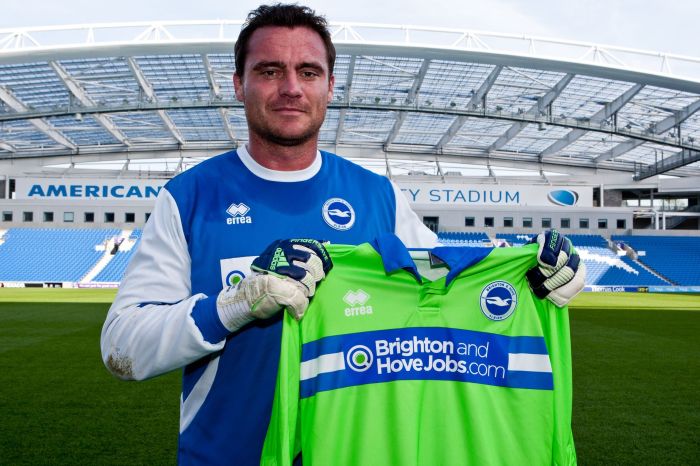
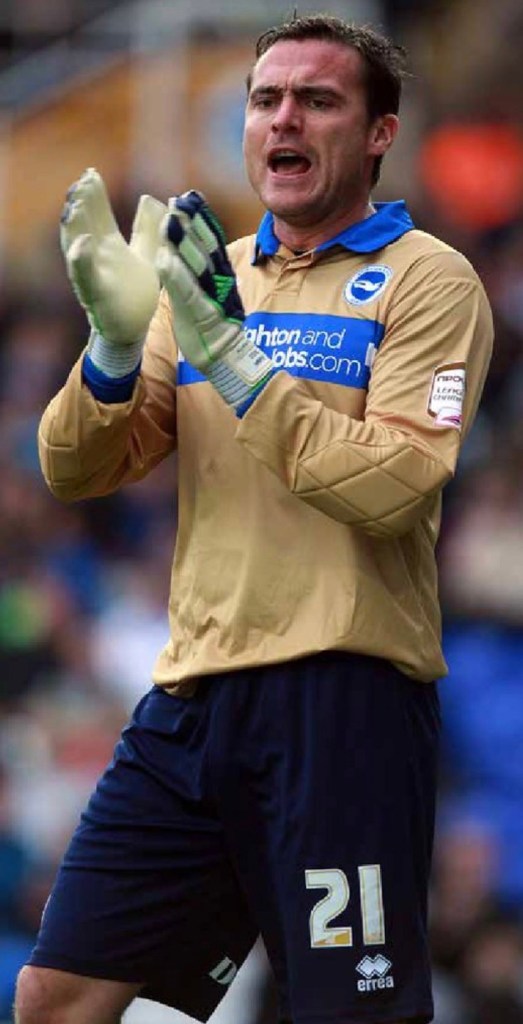
My post on this occasion, though, is about Steve Harper, United’s longest-ever serving player having been there 20 years. He later went back as one of the coaches working with Steve Bruce, as well as being goalkeeping coach to the Northern Ireland international side.

Harper is a qualified UEFA A coach and UEFA A goalkeeping coach, and holds a Masters degree in Sport Directorship.

Back in 2011, Harper was happy to lend his experience to the second tier Seagulls during Gus Poyet’s tenure as manager, a decision applauded by Alan Pardew, Toon boss at the time.

“He just wanted to play,” Pardew told the Chronicle. “Not all the top players in the country would have gone on loan – you’re vulnerable.

“You’re going down a division, but he was prepared to do that, and fair play to him.”

For his part, Harper told BBC Sport: “Everybody knows I haven’t played enough football until the last two-and-a-half years.

“I hadn’t played a competitive game for about six months so it was nice to blow the cobwebs out.”

In his first Seagulls match, unfortunately Albion lost against West Ham to a single goal from Harper’s former teammate Kevin Nolan, and he said: “It was disappointing to lose against West Ham with the possession we had.

“Now I’m here, it’s time to get stuck in. We want Brighton to consolidate and finish as high as we can. People tell me it’s a lovely city. I’m looking forward to seeing more of it.”

Harper recalled the time fondly in an interview for the Albion website in 2019.

He featured in five games for the Seagulls, keeping two clean sheets. While he conceded five goals, three came away to Southampton when the Seagulls were unjustly punished by referee Peter Walton.

Harper told journalist Nick Szczepanik: “I would have stayed longer given the opportunity. They made me feel very welcome.”

He even managed to give two of his new teammates a surprise when he started speaking to them in Spanish. Playing behind Spanish speakers Inigo Calderon and Gonzalo Jara Reyes, he explained to Andy Naylor, then of The Argus: “After five years of Bobby Robson and his multi-lingual team talks my Spanish is okay.

“Calde got quite a shock with how much Spanish I know, but I had Colocinni and Enrique in the team with me at Newcastle.”

After his brief spell with the Albion, Harper returned to Newcastle and played nine more games for them the following season before moving on to Hull City (at the time managed by current Toon boss Bruce), where he played alongside Liam Rosenior.

Born in Seaham on 14 March 1975, Harper grew up in the County Durham mining village of Easington and went to its local comprehensive school. Originally a striker at local Sunday league level, he only started playing in goal from the age of 17 and he turned out for Newcastle’s youth team while he was still at college doing A levels.

In fact he was offered a place at John Moores University in Liverpool to study for a Sports Science degree but he deferred it when Newcastle offered him a one-year contract. He signed in 1993 as a back-up for first choice Pavel Srnicek, later Shaka Hislop and subsequently Shay Given.

Much of his time at Newcastle was as a more than capable deputy to whoever was first choice although in United’s 2009-10 season in the Championship, under Chris Hughton, he was the main man and played 45 matches.

Harper had nothing but praise for Hughton, telling chroniclelive.co.uk: “He came in at an incredibly difficult, turbulent time after relegation.

“Chris was the man at the centre of a perfect storm who steered us through some very choppy waters.

“He did a wonderful job and I don’t think he got enough credit. It was no surprise to me to see him go on to do an excellent job at Birmingham City and then at Brighton.”

In total, Harper played 199 games for Newcastle, featuring under nine different managers – Kevin Keegan and Bobby Robson being his favourites.

Periodically over the years, he went out on loan to gain first-team action, appearing between the sticks for Bradford City, Gateshead, Stockport County, Hartlepool and Huddersfield. The Brighton move was his sixth spell out on loan.

Harper’s long service for Newcastle was rewarded with a testimonial against AC Milan in 2013 before he left the club to join Hull, where he spent two seasons.

Six months after his departure from Hull, he was taken on by then Premier League Sunderland as cover for Jordan Pickford and Vito Mannone, but he didn’t make a first-team appearance and was released at the end of the season.