

NOT TO BE confused with the founder and first manager of Brighton & Hove Albion, that man’s namesake, John Jackson, was a coach at the Goldstone in the ‘80s and the ‘90s.
Less well known was that he could have been in goal for Albion for the 1983 FA Cup Final. Rather like Steve Foster, back-up ‘keeper Perry Digweed was serving a suspension when the game against Manchester United came round.
Digweed had been sent off in a reserve match in early May 1983 and was banned for the final and the replay. So, if anything had happened to first choice Graham Moseley – and let’s face it, he had been known to have off-field mishaps at other times during his Albion career – the man between the sticks at Wembley could well have been Jackson.
Jackson had signed on emergency Combination forms in February 1983 and played for the Reserves in a 1-1 draw at home to Luton when Moseley and youth team ‘keeper Martin Hyde were both injured.  He stayed on and helped coach the youth team alongside John Shepherd and with Moseley fully fit was not needed for first team duty (in those days, there were no substitute goalkeepers on the bench).
Jackson, who died aged 80 four days after Christmas 2022, had spent the earlier part of the 1982-83 season at Hereford United, who had just finished bottom of the Fourth Division. He had appeared in six matches at the end of a 19-year career. bullsnews.blogspot.com reveals that Jackson was the oldest league player to turn out for United. He was six days past his 40th birthday when he played against Darlington on 11 September 1982.
It was all a far cry from the days when he was Crystal Palace’s first choice goalkeeper for eight seasons. He subsequently followed his former Palace coach George Petchey to Orient (where he played in the same side as Albion’s 1983 FA Cup Final captain Tony Grealish) and Millwall.
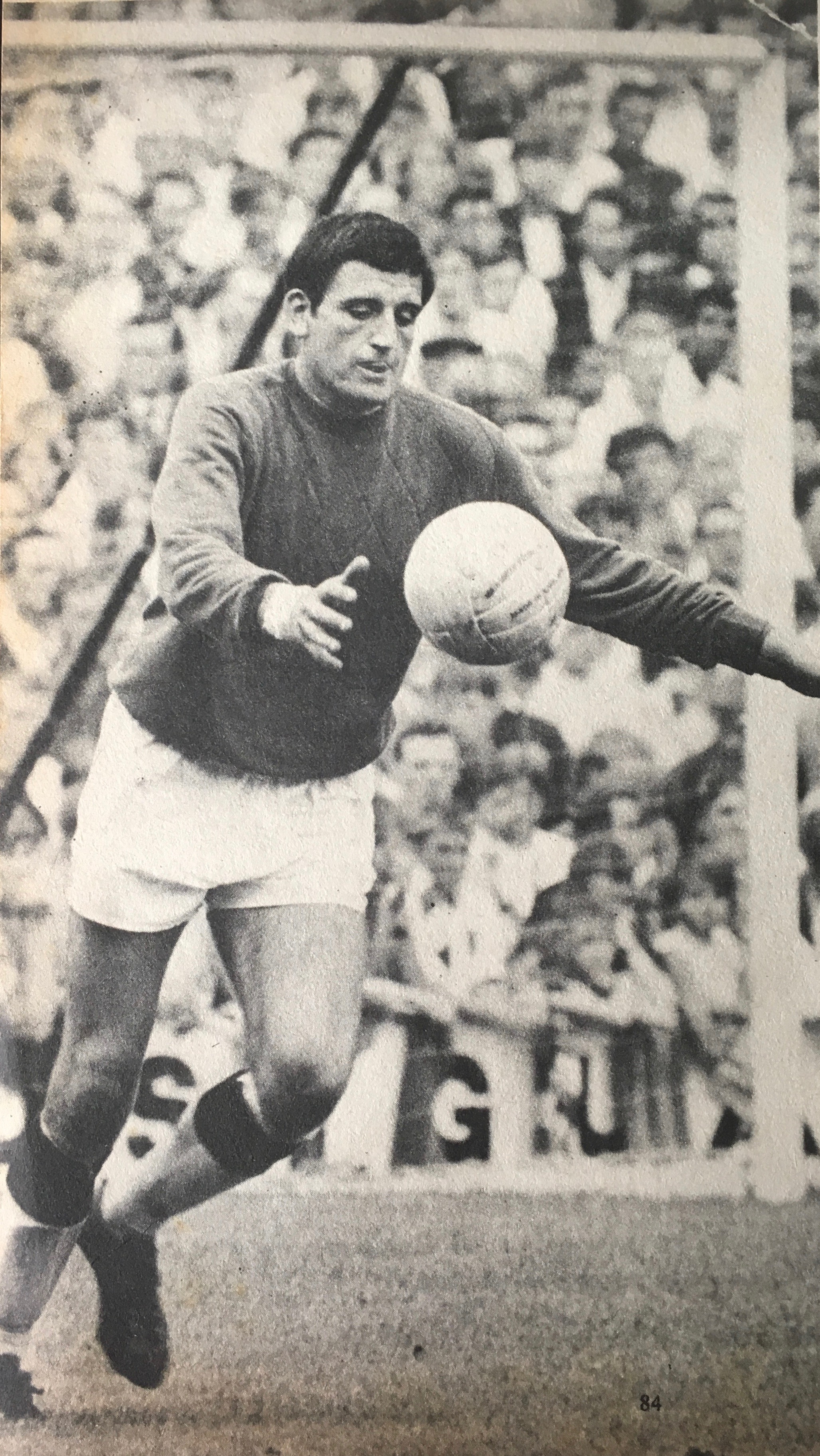

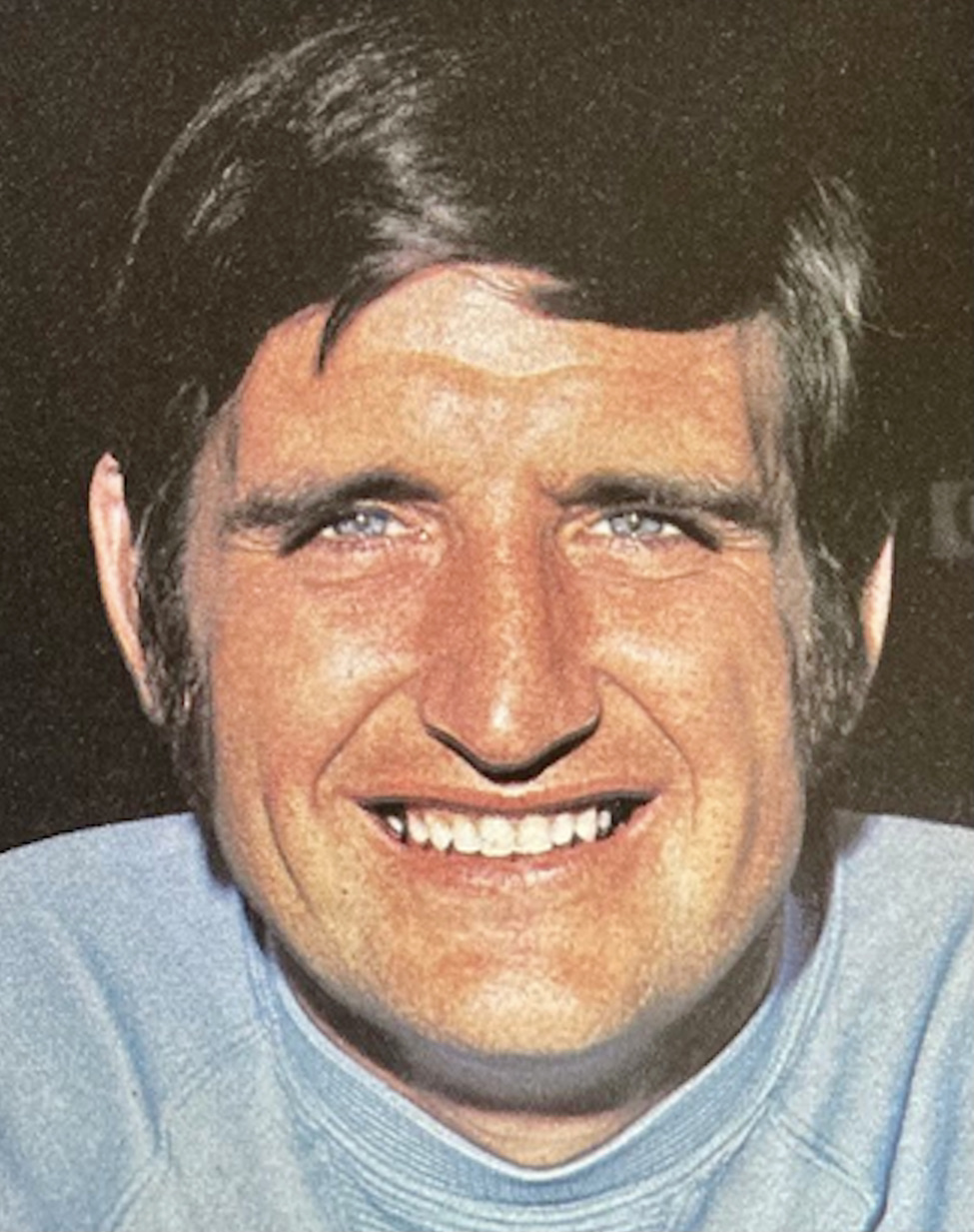
It seemed wherever Petchey went, Jackson was sure to go too. When Petchey was Chris Cattlin’s assistant manager at Brighton, he brought in Jackson to coach the Albion goalkeepers once a week. It was certainly a job close to home for Jackson, who lived in Hangleton with his wife and three daughters.
In an interview with Football Weekly News in 1979, Jackson said: “Petchey was coach at Palace, and manager of Orient, when I was with them, therefore I felt it was right to join the devil you know than the one you don’t know! I find George a straightforward and honest man to work with.”
When Petchey returned to the Albion in January 1994, as part of Liam Brady’s backroom team, it wasn’t long before Jackson was added to the staff to help his mentor develop young players.
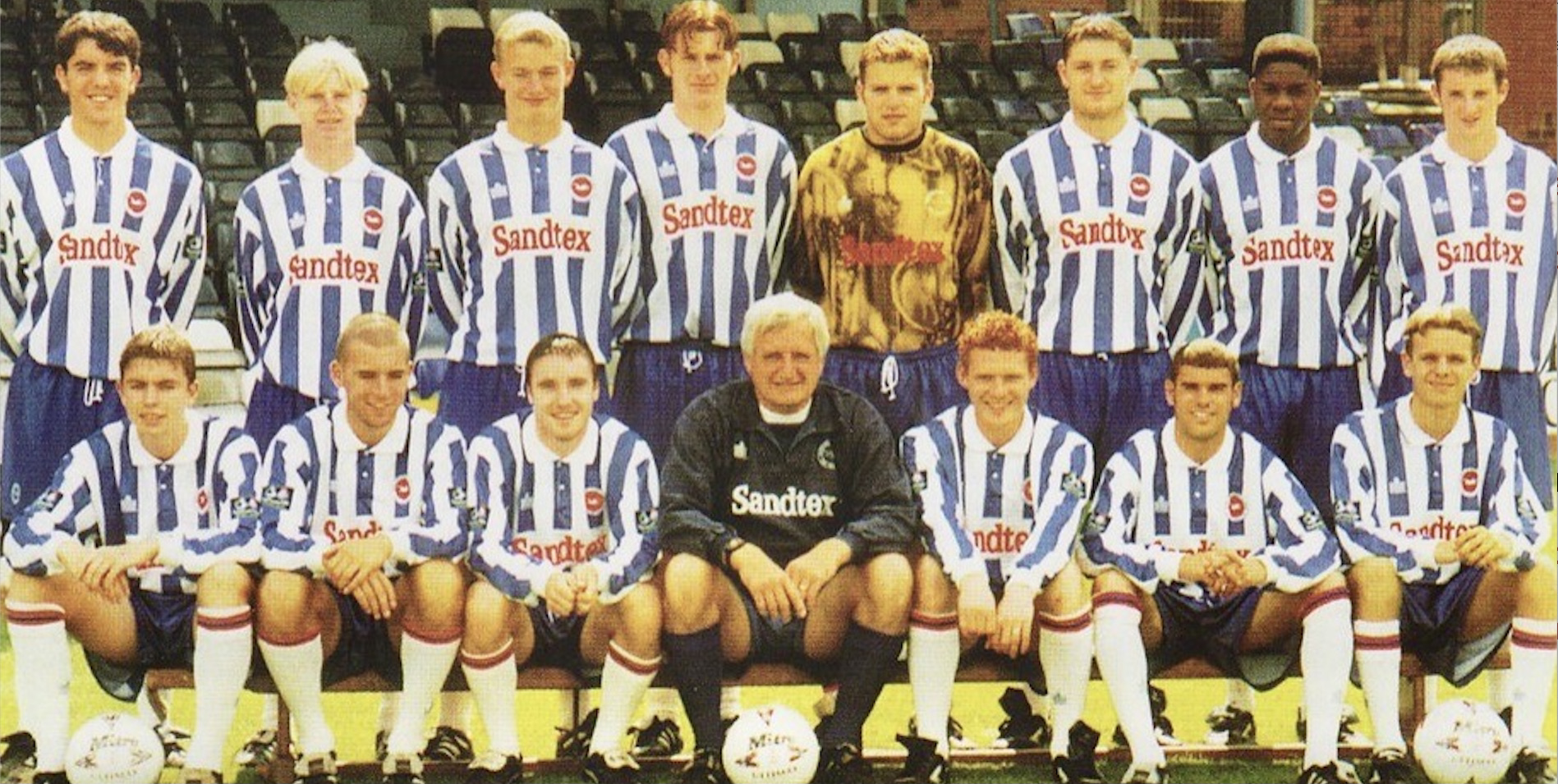

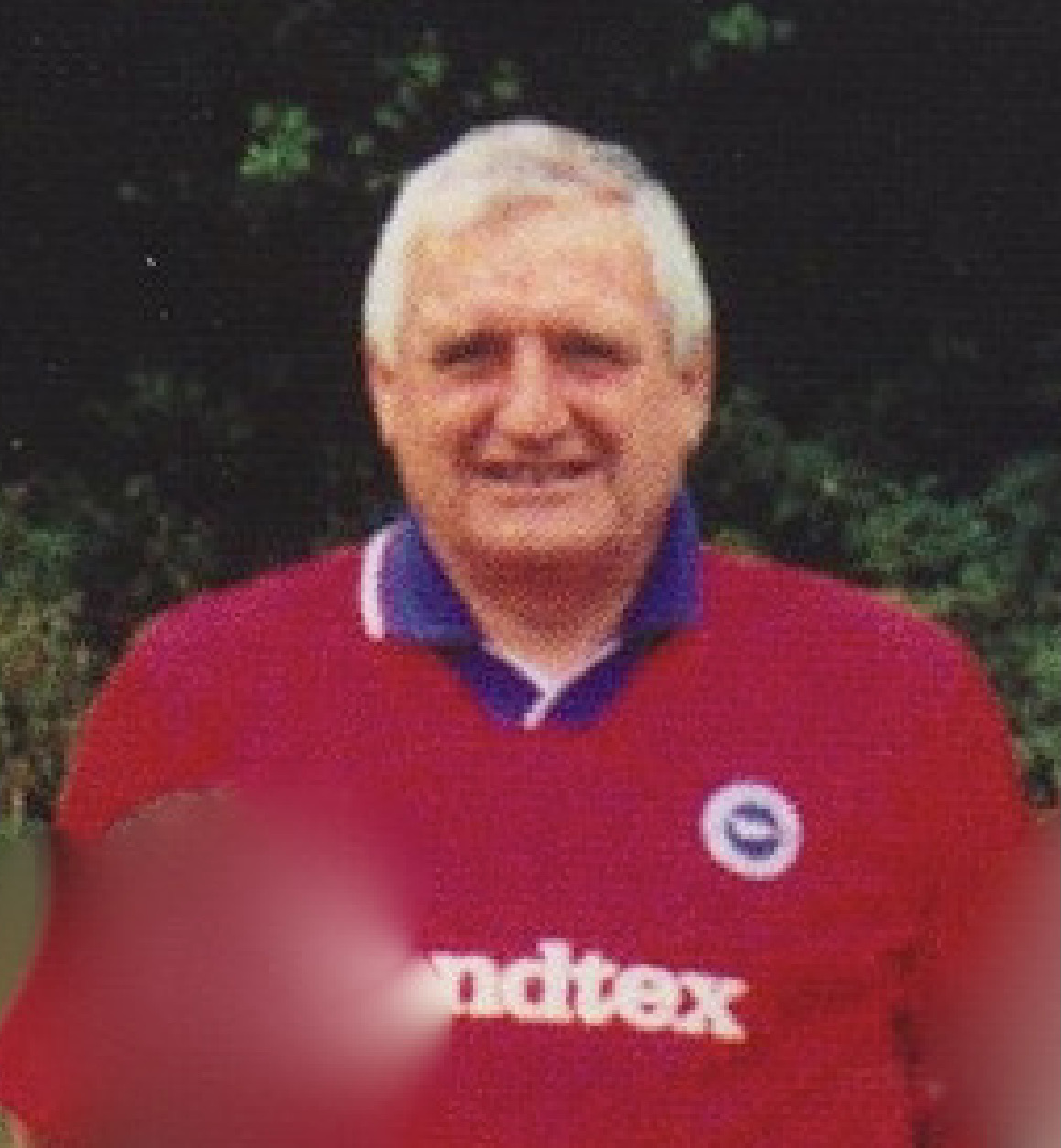
And after Brady’s departure and Petchey’s elevation to become Jimmy Case’s assistant, Jackson took over running the youth team.
Jackson remained in post throughout the managerial upheavals of Case’s departure, the Steve Gritt reign, and the arrival of Brian Horton. But he left at the end of the 1997-98 season when Horton brought in Martin Hinshelwood as director of youth and former captain Dean Wilkins as youth team coach.
Born in Hammersmith on 5 September 1942, Jackson went to St Clement Danes School and spent time with Brentford as a junior. But it was Palace who swooped to sign him up, as Jackson explained in a 2019 cpfc.co.uk interview.
“Arthur Rowe spotted me playing for a London grammar school against an FA youth XI made up of players from other London teams and he got in touch with my teacher, and from that conversation I ended up having a couple of games with the Palace reserve side aged 18. Then, when I joined full-time, I eventually took the opportunity with both hands, literally!”
Jackson was often described as the best goalkeeper England never had. While he was unfortunate not to earn a full international cap, he played seven times for England Youth between February and May 1961, his teammates including the likes of Bert Murray, Ron Harris, Francis Lee and David Pleat.
He signed as a trainee at Palace in March 1962, and in the 1964-65 season initially shared the ‘keeper’s jersey with Welsh international Tony Millington (whose younger brother Grenville was briefly back-up ‘keeper to Brian Powney at Brighton).
Once Jackson established himself as first choice, he kept the shirt for the next eight seasons. At one stage, he played 222 consecutive games for Palace.
On the where-are-they-now.co.uk website, contributor Martin Wiseman said: “He was definitely one of the best goalkeepers I ever saw as Palace were pretty terrible most of the time and often he was the only thing that kept us in the game. When we played one of the bigger teams, the game was often just a succession of John Jackson saves. Brilliant player.”
Indeed, he was nicknamed ‘Stonewall’ Jackson (after the famous American Civil War Confederate general). Of his mentor Petchey, he said: “He used to work me hard but the harder you worked at your game the more you learned and the better you would become. He made me a more confident player.”
Unluckily for Jackson, it was an era when England were blessed with a string of fine goalkeepers. Apart from Gordon Banks, there was Gordon West (Blackpool and Everton), Jim Montgomery (Sunderland), Peter Bonetti (Chelsea) and, at under 23 level, Peter Grummitt was preferred.
The closest Jackson came to senior international recognition came on 17 March 1971 when he kept goal for a Football League XI that beat a Scottish League XI 1-0 at Hampden Park. Ralph Coates scored the only goal of the game and the English line up included World Cup winners Bobby Moore and Geoff Hurst. Playing in defence alongside Moore were Paul Reaney (Leeds), Roy McFarland (Derby) and Derek Parkin (Wolves).
Jackson’s reign between the sticks for Palace came to an end when flamboyant Malcolm Allison took over as manager. Palace fans were not happy. In the book We All Follow The Palace edited by Tony Matthews (Eagle Eye 1993), Keith Brody wrote: “When Jacko left us, it marked the end of an era, culturally as well as football-wise.
“It is oddly fitting that he was swept away with the same disrespect that has come to symbolise the generation that replaced his ilk. Even though we have plenty to thank Big Mal for, his treatment of our hero means it should always be done through clenched teeth.
“It would have been offensive if a loyal, but crap, goalkeeper had been replaced by Paul Hammond and Tony Burns, but to do it to Jacko was unthinkable.
“Watching the ineffective Hammond for three long years after the joys of Jackson was almost unbearable. Every game was spent pondering on the value of what we’d given away.”

It was on 16 October 1973 that Jackson followed his former coach Petchey to Orient for £25,000 (Gerry Queen, Phil Hoadley, Bill Roffey and David Payne were other ex-Palace players who made that switch) and at Bloomfield Road he went on to attract a whole new band of admirers. Indeed, in Tony McDonald’s book Orient in the 70s, Jackson is described as “Orient’s greatest ever goalkeeper”.

Palace did give Jackson a testimonial match, however, and on 11 December 1973, a Selhurst Park crowd of 11,628 turned out for a match opponents Chelsea won 3-1.
Orient were a second tier side throughout Jackson’s time at the club, during which they had some unsuccessful tilts at promotion but enjoyed some exciting FA Cup runs, including making it to the semi-final in 1978 before losing 3-0 to Arsenal.
Their run to the semis included a memorable fifth round replay win over Chelsea, with Jackson pulling off a superb save to deny Clive Walker an equaliser as Orient clung on to a 2-1 lead courtesy of two Peter Kitchen goals.
Jackson had taken over from Ray Goddard as Orient’s no.1 and it must have been a very happy Christmas for him when promotion contenders Orient beat Palace 3-0 at home on Boxing Day 1973 in front of a bumper crowd of 20,611.
Come the end of the season, they missed out on promotion by a single point to Carlisle United after failing to beat Aston Villa (it was 1-1) in front of another huge crowd of 29,766, and the LWT cameras for The Big Match. Days earlier Villa had lost 2-0 at Carlisle for whom Graham ‘Tot’ Winstanley proved an able deputy for suspended captain Bill Green.
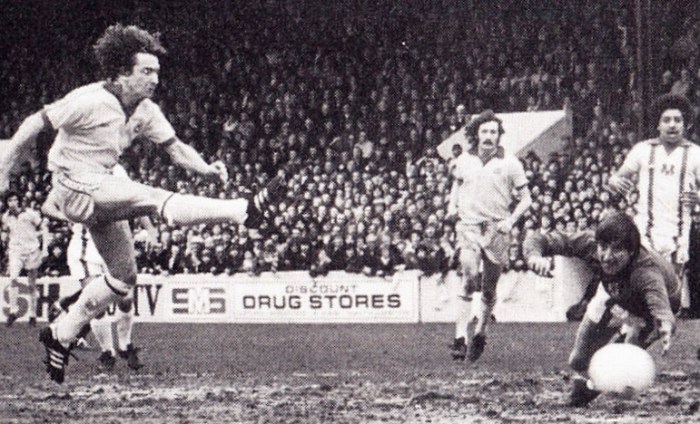
Another memorable game filmed for The Big Match saw Jackson concede three on 7 April 1979 when Albion were on their way to promotion from the Second Division. Orient took the lead at Brisbane Road but Brighton equalised thus: “Paul Clark cracked in a seemingly unstoppable shot, miraculously John Jackson parried the effort but only to Peter Sayer, and (pictured above) the little Welshman slammed the ball joyfully into the home goal,” the matchday programme recorded. The game eventually finished 3-3, Albion’s other goals coming from Martin Chivers (his only one for Brighton) and Clark.
Three years earlier, Orient were finalists in the rather curious Anglo-Scottish Cup tournament of that time: 16 English teams and eight Scottish sides played a mix of group stage games and two-legged knockout matches.
Orient topped their group above Norwich, Chelsea and Fulham; they beat Aberdeen 2-0 on aggregate in the quarter finals and Partick Thistle 4-2 in the semis. They eventually lost out 5-1 on aggregate to Nottingham Forest, but it was Brian Clough’s first piece of silverware as Forest manager, and he said in his biography: “Those who said it was a nothing trophy were absolutely crackers. We’d won something, and it made all the difference.”
In common with many other English players at the time, Jackson tried his luck in the United States and in 1977 played for St Louis Stars, returning in 1978 when they became Californian Surf. His head coach was John Sewell, who’d been a playing colleague at Crystal Palace and Orient. Ironically, his predecessor at St Louis was Bill Glazier, the former Coventry City ‘keeper, who’d also been his predecessor at Palace.
It was the arrival of former West Ham ‘keeper Mervyn Day at Brisbane Road that signalled the end of Jackson’s time in Leyton and, in August 1979, Petchey, who’d taken over from Gordon Jago as boss at Millwall, signed him for £7,500.
“I have been in the game too long to end it in the reserves and decided that if I was to finish playing, it would be in the first team,” Jackson told Football Weekly News.
The then Third Division Lions went on to win the league. Jackson played a total of 53 matches for them that season and he was chosen by his fellow professionals in the 1979-80 PFA team of the year. (Former Brighton winger Tony Towner played 50 games for Millwall that campaign and scored 13 goals)
After two years with Millwall, by a curious turn of events, Bobby Robson signed him for the previous season’s First Division runners up Ipswich Town as a back-up to Paul Cooper.
His one league appearance for Ipswich was in a top-of-the-table clash against Manchester United, with Ipswich needing to win to stay in with a chance of winning the League Championship. And they did, 2-1, with John Wark scoring both and John Gidman replying for United.
The game was played in front of a 25,763 crowd at Portman Road and Jackson was given a standing ovation at the end after he’d pulled off three important saves. Robson was quoted in the Guardian as saying: “We have paid him a year’s salary to make those saves, but it was worth it!”
However, while Ipswich finished the season five points ahead of United, they were once again runners up, finishing four points behind champions Liverpool.
Even a second placed finish was enough to convince the English FA to give Robson the job of replacing Ron Greenwood as England manager after the country’s unbeaten exit from the World Cup in Spain.
While Jackson might have thought his playing days were over, they weren’t quite. Frank Lord signed him for Fourth Division Hereford United. Lord wasn’t long in the job, though, and he was succeeded by the Bulls’ long-serving former ‘keeper Tommy Hughes, who had played on loan for Brighton in 1973.
Jackson’s move into goalkeeper coaching at Brighton under Cattlin was to prove a career-defining moment for another top goalkeeper of that era: former Manchester City custodian Joe Corrigan.
“I got talking to him and it inspired me to look into doing something similar,” Corrigan told the Manchester City matchday programme on 29 September 2018. “So, it was down to Brighton indirectly that I moved into the next phase of my career.”
Corrigan had been signed by Jimmy Melia and was coming to the end of his illustrious playing career. He fell out with Melia’s successor, Cattlin, and went on loan to Stoke City, but eventually was forced to quit after being injured in an Albion reserve match.
He went on to become goalkeeper coach at Liverpool for 10 years, and also worked at Stockport, West Brom and Hull.
Jackson took a variety of different jobs outside of football – fitting blinds, working for a golf magazine, selling golf equipment and as a courier for Lewes Council. During his second spell back at the Albion, amongst the youngsters he took through was goalkeeper Will Packham.
Jackson signed him on as a YTS trainee after he left Blatchington Mill School in Hove, and he spent nine years on the club’s books.
 ON HOLIDAY in Jersey in 2016 my eyes were drawn to a picture on a display in St Helier’s Fort Regent entertainment complex.
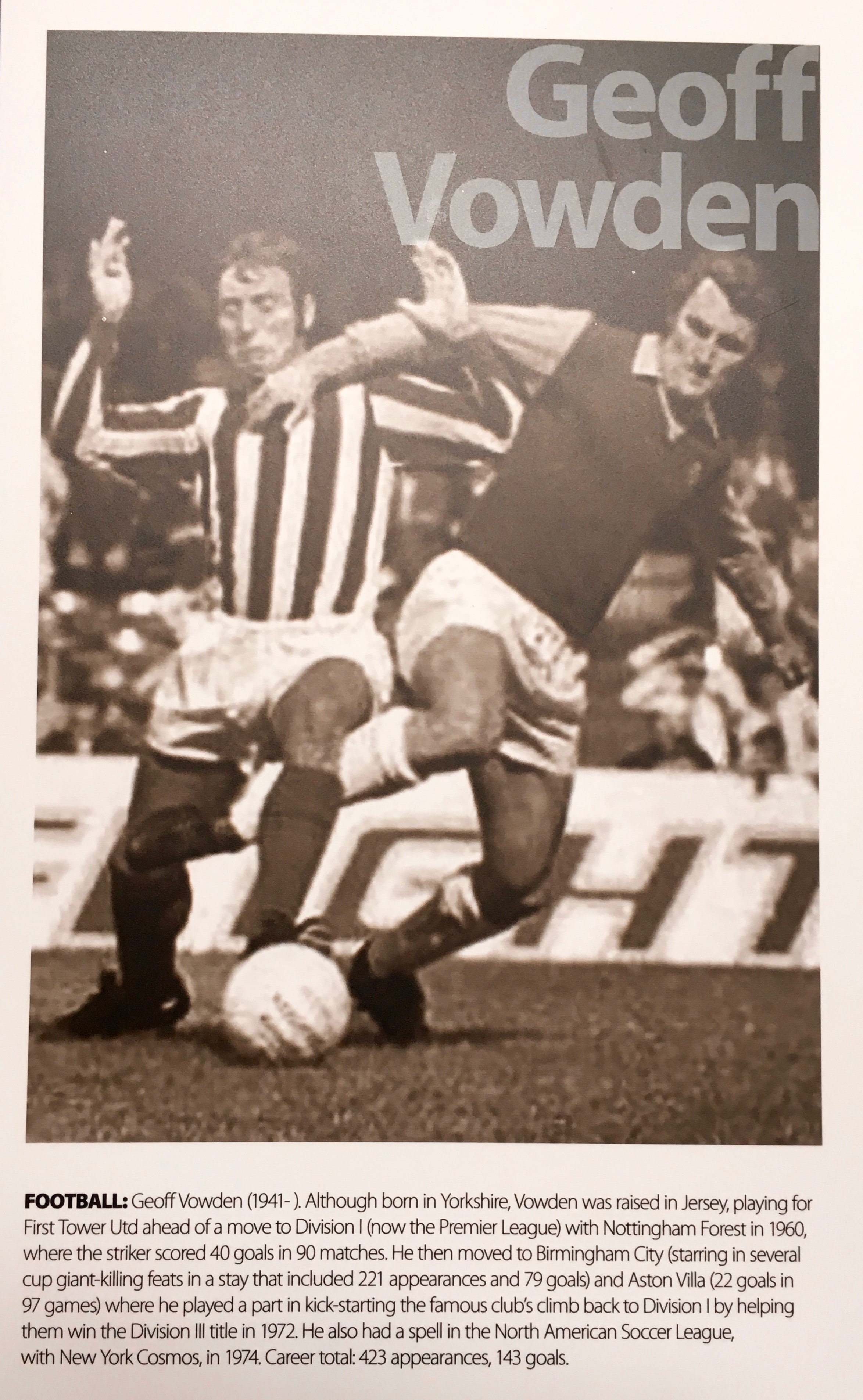 Versatile Murray – mainly a winger but equally adept at right back – wrote himself into the Albion’s history books when he was bought from Birmingham with funds raised by fans.

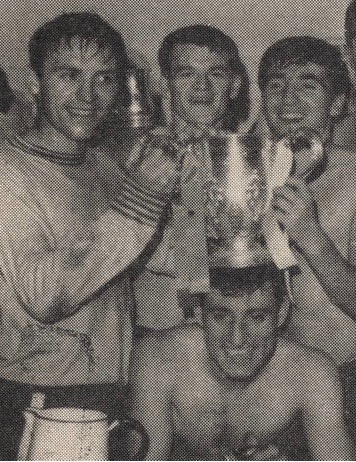 At least at club level in 1965 Murray won some silverware (above image discovered on The Shed End Chelsea fans website), playing alongside Bonetti, Venables, Eddie McCreadie,
 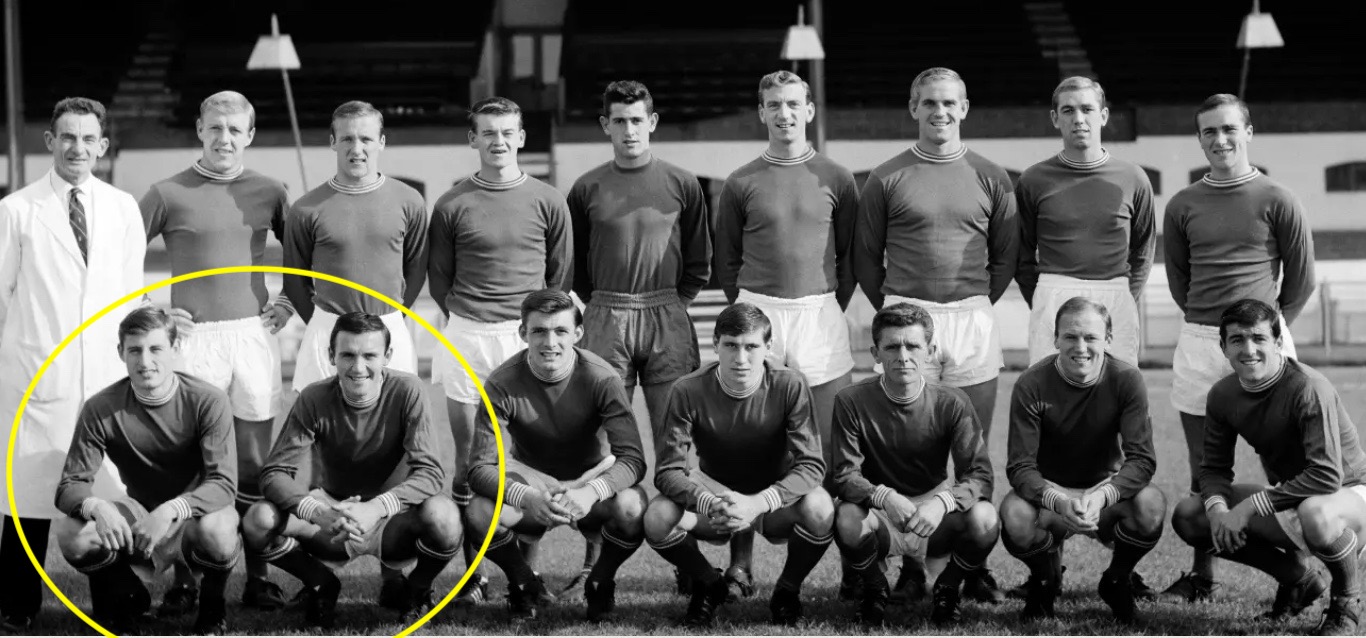 Murray and Bridges alongside each other in a 1963-64 Chelsea team picture.
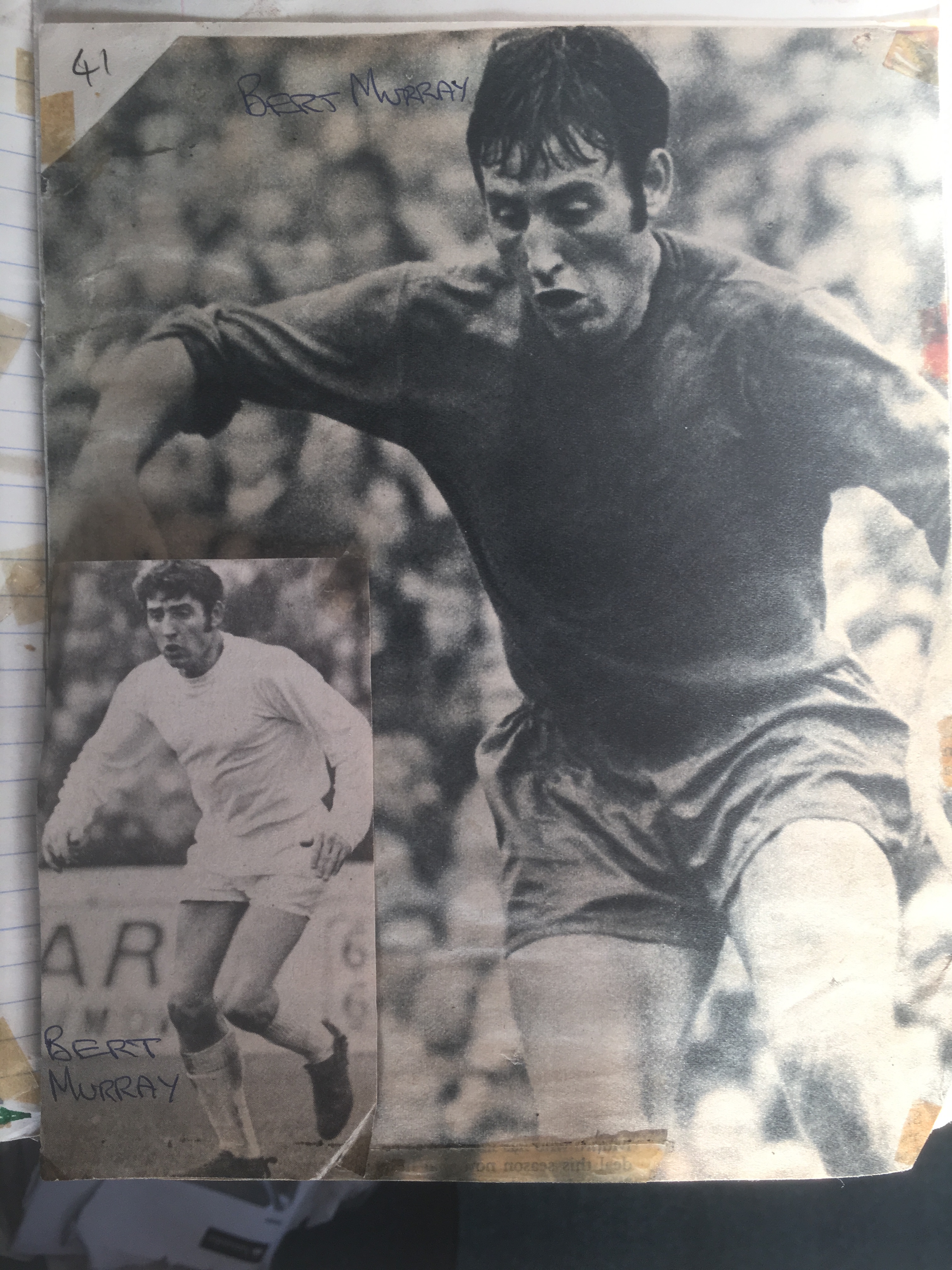 The pair were part of the side which in successive seasons got to the semi-final of the League Cup (in 1967) and FA Cup (in 1968) only to lose on both occasions. Because these things are important in the Midlands, joysandsorrows.co.uk remembers Murray as part of the 1968 Blues side who beat rivals Villa home and away. In five years, he played 132 games scoring 22 goals.
 Saward brought in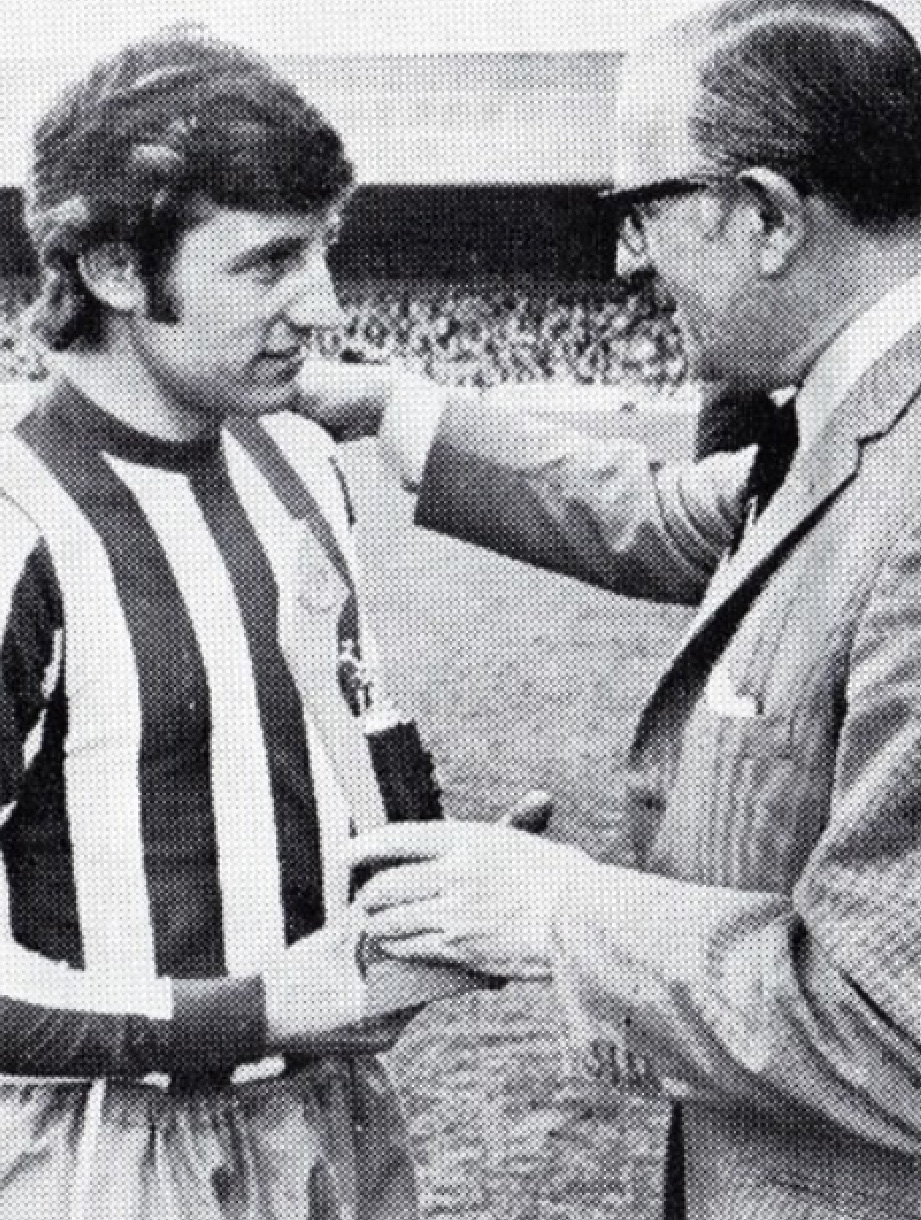

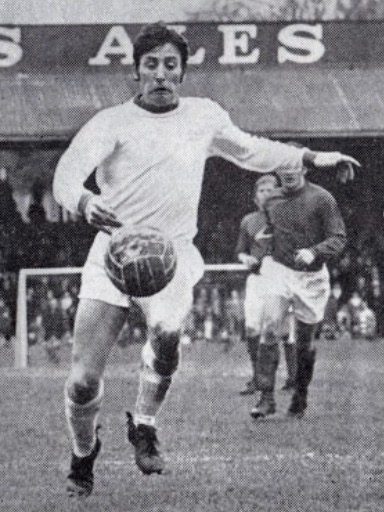

 In parallel lines