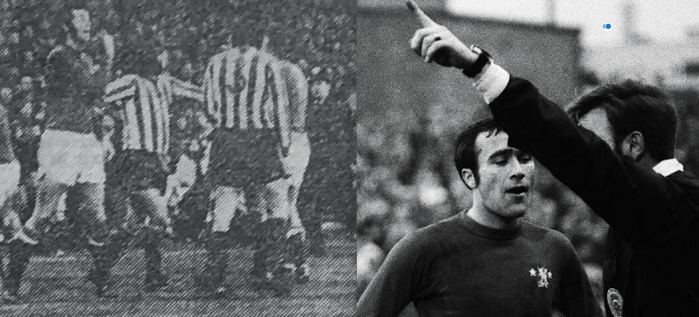
Sparks flew in Brighton v Chelsea FA Cup clashes

BRIGHTON v Chelsea in the FA Cup sparks memories for supporters of my generation stretching back several decades.

Many began as Albion followers the day the then First Division side from Stamford Bridge visited the Goldstone Ground in February 1967 when a dubious refereeing decision denied Third Division Brighton a shock win.

Others, me included, recall a fiery encounter in Hove six years later when Second Division strugglers Brighton were beaten 2-0 courtesy of two Peter Osgood goals in a game marred by violence on and off the pitch.

That third-round tie in January 1973 was dubbed “a day of shame” in the newspapers after two players were sent off, five were booked and crowd trouble erupted.

The chance for lower ranked teams to pitch their lesser talents against the big boys has always been at the heart of the FA Cup’s appeal.

That was certainly the case when Archie Macaulay’s mid-table Albion hosted Tommy Docherty’s top 10 Chelsea on 18 February 1967. To give it musical context, Georgy Girl by The Seekers had just taken over from The Monkees’ I’m A Believer at no.1 in the pop charts!

At a time when home crowds were normally 12,000 – 13,000, a sell-out gate of 35,000 packed into the Goldstone.

Cup fever had certainly captured the imagination of the Sussex public. In the previous round, 29,208 watched Albion beat Aldershot 3-1 in a third-round replay for the chance to take on the top division Pensioners (as Chelsea were called back then).

The two clubs hadn’t met in any other competition for 34 years – back in January 1933 Brighton beat the London side 2-1 in a third round FA Cup tie.

After such a long gap, maybe it was understandable that Albion’s young captain, Dave Turner, at 22, fell off the settee at home in excitement when he saw the cup draw made on the television.

Canny Brighton decided to sell tickets for the game at a reserve home fixture against Notts County, meaning a stunning 22,229 paid to watch the second string win 1-0 in order to secure their entry to the big game.
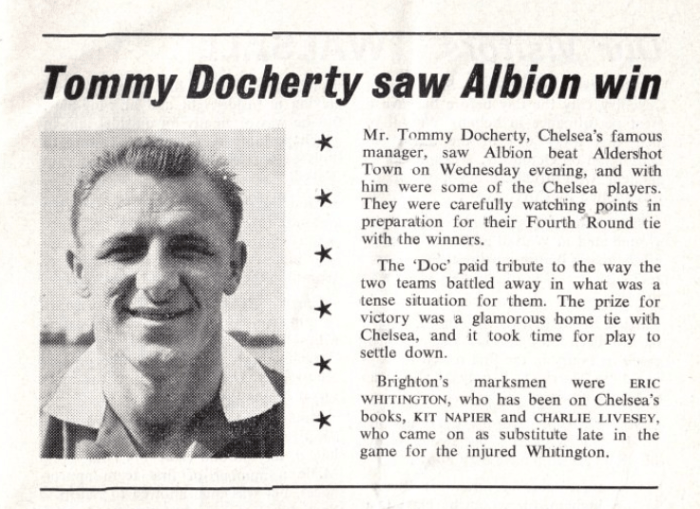
The matchday programme revealed how Docherty and several of his players had watched the Aldershot match to check out what would be in store for them.

Docherty meanwhile was very complimentary in his programme notes, declaring: “Chelsea know that we have a hard and difficult task today, and are not facing it in a complacent manner.”

He added: “We know that there is great potential for the Albion club. They have a First Division set-up at the Goldstone Ground, and First Division ideas, as well as a first-class pitch.

“The day cannot be very far away when they become one of our top clubs, and I am just one of many people in the game who will welcome their promotion to a higher class.”

However, the game was only five minutes old when Bobby Tambling gave Chelsea the lead. But before half-time, Chelsea’s John Boyle (who would several years later joined Albion on loan) was sent off for kicking Wally Gould. And just four minutes into the second half, Turner gave Albion parity.
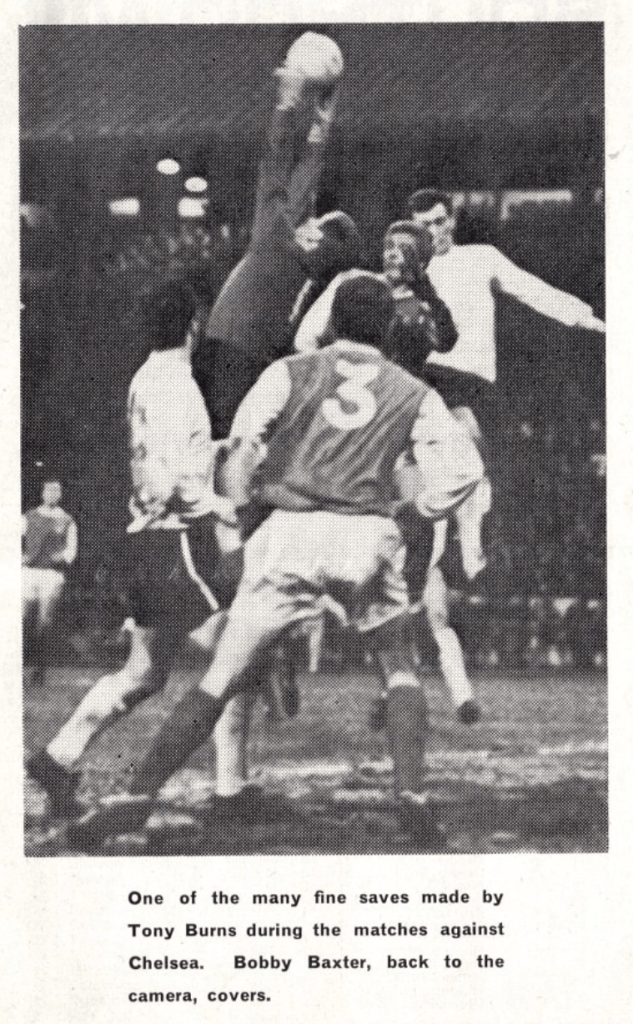
Goalkeeper Tony Burns, who had top flight experience with Arsenal, made several decent saves in the game and, with the clock ticking down, a cracking strike by winger Brian Tawse in the closing minutes of the game looked to have won it for the Third Division side.

“I smashed a volley past Peter Bonetti from 20 yards out with the score at 1-1 and thought I’d got the winner,” Tawse told Brian Fowlie of the Sunday Post in 2015. “It was a goal that could have made my career – but the referee chalked it off.”

Unfortunately, the official had spotted an infringement by Kit Napier and the ‘goal’ was disallowed.

As Brighton would discover again only too painfully in the 1983 final, these winning chances rarely happen twice, and, sure enough, in the replay at Stamford Bridge Chelsea ran out 4-0 winners in front of a massive crowd of 54,852.
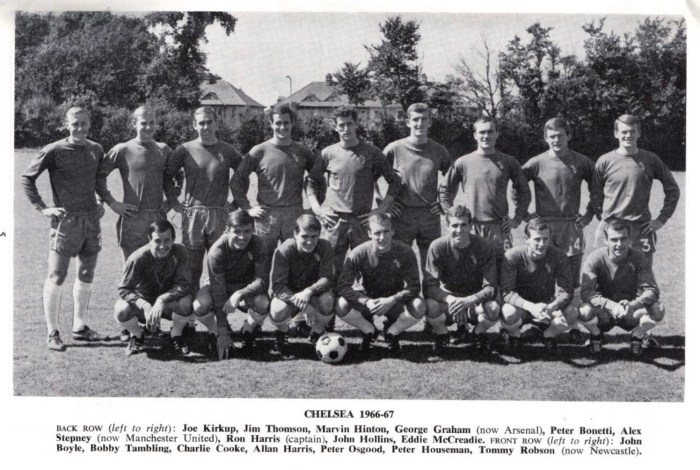
Chelsea went on to reach that season’s final at Wembley only to lose 2-1 to a Spurs side that had Joe Kinnear at right-back and Alan Mullery in midfield.
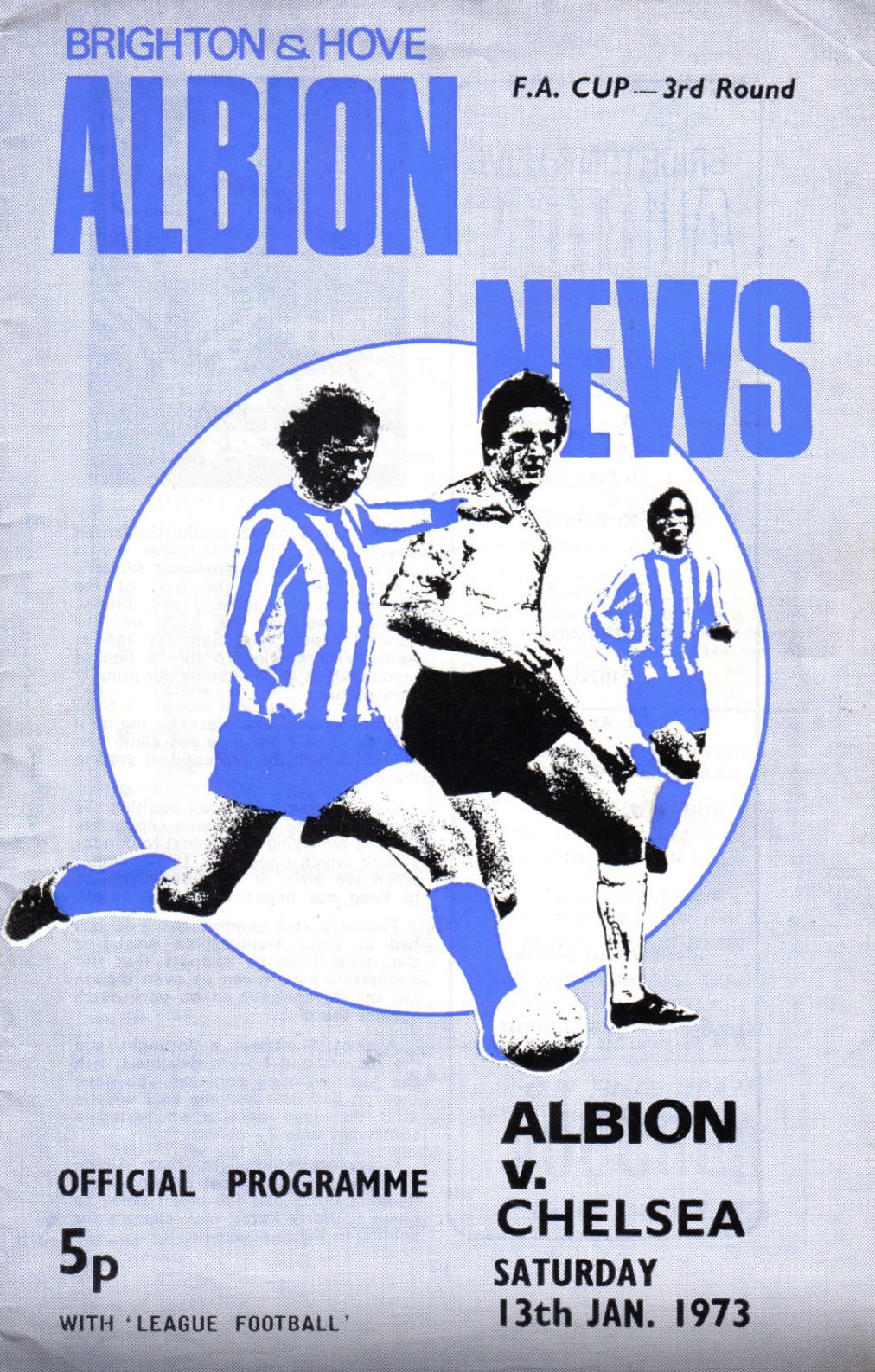
Hardman Ron ‘Chopper’ Harris, their captain in 1967, was still leading the side by the time of the 13 January 1973 game and John Hollins and Tommy Baldwin also played in both. The dismissed Boyle was on the Chelsea bench in 1973. Only John Templeman (right) played in both games for Brighton.

The UK had just joined the European Economic Community (as it was then called) and You’re So Vain by Carly Simon was no.1 in the charts. Albion had moved up a division under Pat Saward having won promotion the previous May, but the side was struggling at the foot of the Second Division, unable to cope at the higher level.

Nevertheless, there were two players looking forward to the cup tie: Bert Murray and £28,000 signing Barry Bridges had both won silverware at Chelsea in the 1960s.

Barry Bridges slots home for Chelsea in a FA Cup tie v Peterborough and, pictured by the Daily Mirror’s Monte Fresco, ahead of the 1973 match against his old club.

“It’s a tremendous draw for the club and a dream draw for Bert Murray and myself who both started our careers at Chelsea,” Bridges told Goal magazine. “Personally, it will be nice to see most of the Chelsea lads again. I grew up with Peter Bonetti, Ron Harris and Ossie (Peter Osgood).”

Unfortunately the Albion game was one of several former Worthing schoolboy Bonetti missed through injury and illness in the 1972-73 season, John Phillips deputising in goal at the Goldstone.

How this young supporter recorded the team info in his scrapbook

Dave Sexton, a promotion winner with Brighton in 1958, saw his Chelsea side put the ball in Albion’s net within the first 10 seconds of the game but Bill Garner’s effort was ruled out for offside, to the bemusement of the football writers watching. As the game unfolded, not only did it end in defeat for the Albion but it attracted ugly headlines for all the wrong reasons as Harris and Brighton left back George Ley were sent off.

Ley was dismissed in the 85th minute for bringing down Baldwin from behind and then getting involved in a punch-up with England international Osgood, the scorer of Chelsea’s goals in the 17th and 60th minutes, who himself was booked for his part in the altercation.

Albion’s Eddie Spearritt had been the first to go in the book on 23 minutes (for a foul on Alan Hudson) and on 73 minutes was involved in the incident which led to Harris being sent off for the first time in his career.

Esteemed football writer Norman Giller recorded it like this: “Harris got involved in a tussle with Spearritt, and, as he pushed him, Spearritt went down holding his face as if he had been punched. The referee directed Ron to an early bath. All the bones he had kicked, and here was Harris being sent off for a playground push.”

1970 Cup winner Dave Webb went in the book for wiping out Spearritt, joining colleague Steve Kember who was cautioned for fouling Steve Piper. Albion’s Graham Howell also went into referee Peter Reeves’ notebook for taking down Baldwin.

The kicking and aggression on the pitch led to fighting on the terraces with 25 people arrested. And Leicester referee Reeves had to be given a police escort off the pitch.

Former Spurs captain-turned-journalist Danny Blanchflower, writing in the Sunday Express: declared: “This FA Cup third-round tie was as disgraceful as any match I’ve ever seen.”

In the opinion of Albion scribe John Vinicombe in the Evening Argus: “Football anarchy gripped the Goldstone during the last 20 minutes of Albion’s FA Cup tie with Chelsea.

“In the frenzy, players fought one another, hacked and kicked, and the violence tiggered an all-too-predictable chain reaction on the terraces where rival factions became one mass of writhing, mindless hooligans.”

Interestingly, Harris’ dismissal was subsequently overturned, Giller recording: “A Brighton-supporting vicar, with a pitchside view, wrote to the Football Association telling them what he had witnessed, and ‘Chopper’ was vindicated.”

Chelsea made it through to the quarter-finals of that season’s tournament before losing 2-1 to Arsenal in a replay. Arsenal lost in the semis to Sunderland, the Second Division side who stunned the football world at the time by beating Leeds United in the final.

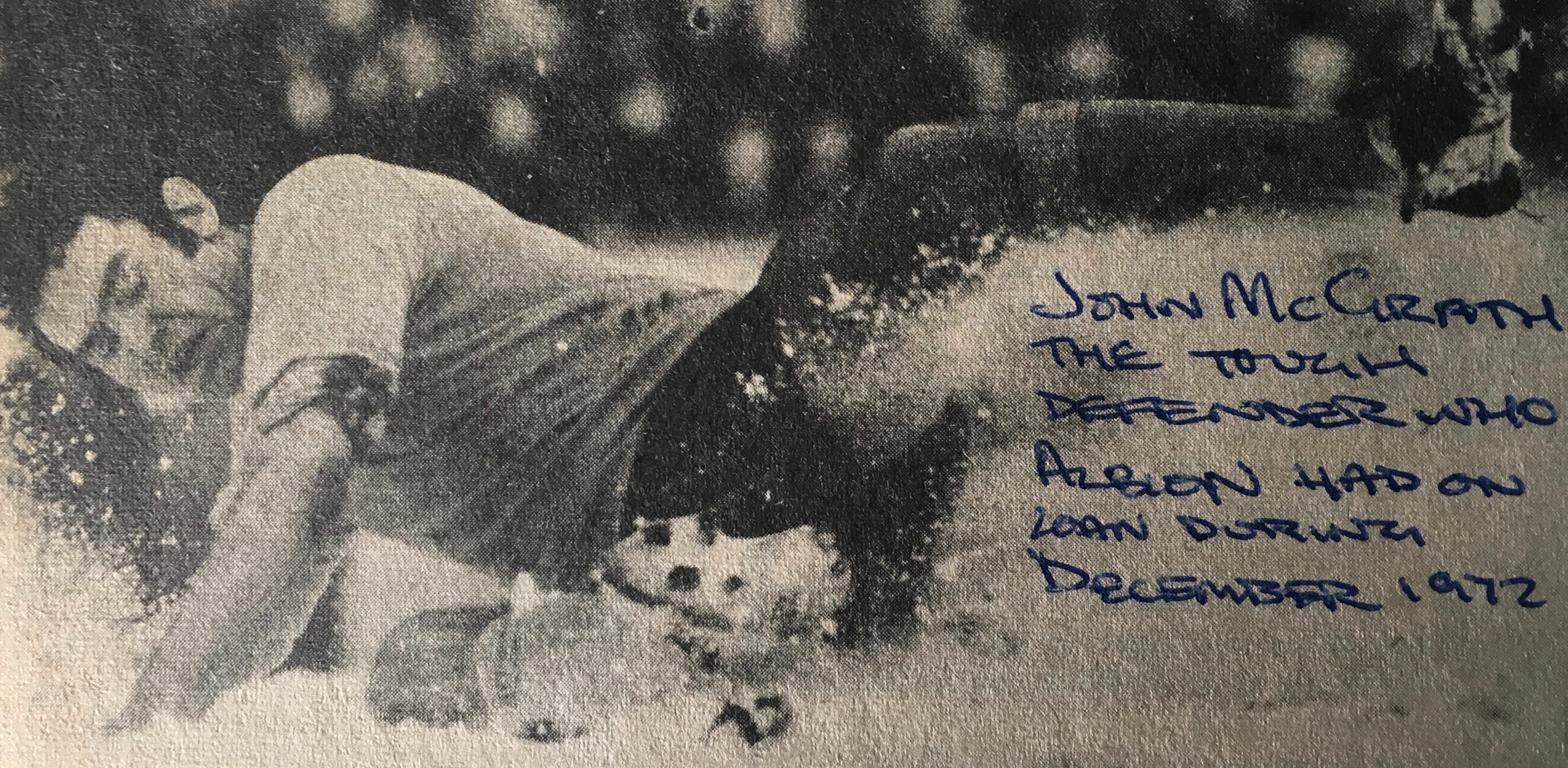
Even fearsome John McGrath couldn’t stop the rot

IN ALBION’S bleak midwinter of 1972-73, manager Pat Saward was desperate to try to reverse a worrying run of defeats.

The handful of additions he’d made to the squad promoted from the old Third Division in May 1972 had not made the sort of improvements in quality he had hoped for.

An injury to Norman Gall’s central defensive partner Ian Goodwin didn’t help matters and Saward chopped and changed the line-up from week to week to try to find the right formula.

Previously frozen out former captain John Napier was restored for a handful of games (before being sold to Bradford City for £10,000). The loan ranger’ (as Saward was dubbed for the number of temporary signings he brought in) then tried Luton Town’s John Moore in Goodwin’s absence.

Youngster Steve Piper was given his debut at home to high-flying Burnley, but Albion lost that 1-0. Then Saward tried left-back George Ley in the middle away to Preston, but that didn’t work either. North End ran out comfortable 4-0 winners with Albion’s rookie ‘keeper Alan Dovey between the sticks after regular no.1 Brian Powney went down with ‘flu.

As December loomed, and with Goodwin still a couple of weeks away from full fitness after a cartilage operation, Saward turned to John McGrath, a no-nonsense, rugged centre-half who had played close on 200 games for Southampton over five years.

“With his rolled-up sleeves, shorts hitched high to emphasise implausibly bulging thigh-muscles, an old-fashioned haircut and a body dripping with baby oil, ‘Big Jake’ cut an imposing figure,” to quote the immensely readable saintsplayers.co.uk.

In Ivan Ponting’s obituary in the Independent following McGrath’s death at 60 on Christmas Day 1998, he reckoned his “lurid public persona was something between Desperate Dan and Attila the Hun”.

Although McGrath had begun the 1972-73 season in the Saints side, the emerging Paul Bennett had taken his place, so a temporary switch to the Albion offered a return to first team football.

Albion had conceded eight goals in three straight defeats and hadn’t registered a goal of their own, so, even though the imposing centre-half was approaching the end of a playing career that had begun with Bury in 1955, it was hoped his know-how defending against some of the best strikers in the country might add steel in the heart of the defence, and stem the flow of goals.

In short, it didn’t work. McGrath played in three matches and all three ended in defeats, with another eight goals conceded.

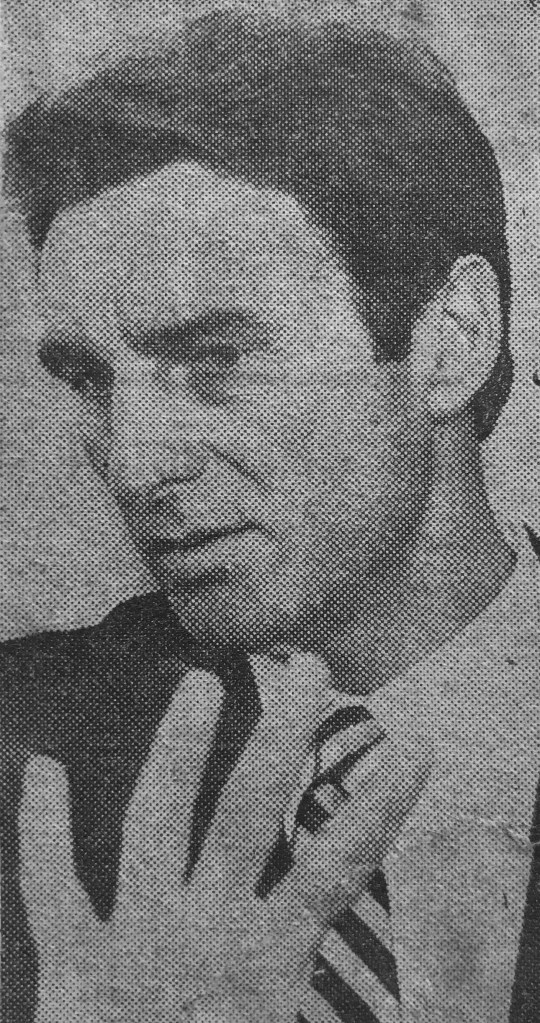
In his first match (above left), Middlesbrough won 2-0 at the Goldstone. At least the deficit was slimmer in his second game: a 1-0 loss away to George Petchey’s Orient in which Lewes-born midfielder Stan Brown played the last of nine games on loan from Fulham.

McGrath’s third match saw Albion succumb to a thrashing at Carlisle United. By then, Brighton had lost five in a row and still hadn’t managed to score a single goal. Stalwart Norman Gall was dropped to substitute to allow the returning Goodwin to line up alongside McGrath, and Bert Murray led the side out resplendent in the second strip of red and black striped shirts and black shorts.

Carlisle hadn’t read the script, though, and promptly went 5-0 up. To compound Albion’s agony, with 20 minutes still to play, goalkeeper Powney was carried off concussed and with a broken nose.

In those days before substitute goalkeepers, Murray (who’d swapped to right-back that day with Graham Howell moving into his midfield berth) took over the gloves. Miraculously, Albion won a penalty and because usual spot kick taker Murray was between the sticks, utility man Eddie Spearritt took responsibility having relinquished the job after a crucial miss in a game in 1970.

Thankfully, he buried it, finally to make a much-awaited addition to that season’s ‘goals for’ column.

No more was seen of McGrath, however. Gall was restored to the no.5 shirt and was variously partnered by Goodwin, Piper and, towards the end of the season, Spearritt.

After another heavy defeat, 4-0 at Sunderland, which had seen another rare appearance by Dovey in goal, he was transfer-listed along with Gall and Bertie Lutton, as Saward pointed the finger. Lutton got a surprise move to West Ham but Gall stayed put and Dovey was released at the end of the season without playing another game.

The run of defeats eventually extended to a total of 13 and was only alleviated after a big shake-up for the home game versus Luton Town on 10 February.

Powney, who’d conceded five at Fulham in the previous game, was replaced by Aston Villa goalkeeper Tommy Hughes on loan; out went experienced striker Barry Bridges in favour of rookie Pat Hilton and exciting teenage winger Tony Towner made his debut. Albion won 2-0 with both goals from Ken Beamish, and the monkey was finally off their backs.

Although the following two games (away to Bristol City and Hull) were lost, results did pick up, but it was all too little too late and Albion exited the division only 12 months after their promotion.

Born in Manchester on 23 August 1938, McGrath sought unsuccessfully to get into the game as an amateur with Bolton Wanderers but at 17 he joined Bury who were in the old Division Two at the time.

Although they were subsequently relegated, McGrath was part of the 1961 side that went on to win the Third Division Championship. By the time they lifted the trophy, though, he had moved on to Newcastle United for a fee of £24,000, with Bob Stokoe (later renowned for steering Second Division Sunderland to a famous FA Cup win over Leeds United in 1973) a makeweight in the transfer.

It was a busy time for the young defender. On 15 March 1961, he made his one and only England Under-23 appearance against West Germany at White Hart Lane, Tottenham, playing alongside future World Cup winners George Cohen at right-back and the imperious Bobby Moore.

Also in the young England side for that 4-1 win was Terry Paine, who would later become a teammate at Southampton.

Newcastle had hoped the defender would prevent their relegation from the top flight, but it didn’t happen as they went down having conceded 109 goals; their worst ever goals against tally.

Joe Harvey eventually succeeded Charlie Mitten as manager as Newcastle adapted to life back in the Second Division, and McGrath (below left and, in team picture, back row, far left) played 16 matches in a side in which full-back George Dalton (below, back row, far right) had started to emerge.

Future Brighton captain Dave Turner was one of the successful FA Youth Cup-winning side Harvey inherited, but his first team outings were rare and he was sold to the Albion in December 1963.

Meanwhile, McGrath really established himself, featuring in 41 games in 1963-64 (Dalton played in 40) as Newcastle finished in a respectable eighth place.

The 1964-65 season saw McGrath ever-present as Toon were promoted back to the First Division, pipping Northampton Town to the Second Division championship title by one point. McGrath – “a monster of a centre-half, who was as tough as he was effective” was “the cornerstone” of the promotion side, according to newcastleunited-mad.co.uk.

McGrath retained his place in Toon’s first season back amongst the elite but the arrival of John McNamee and the emergence of Bobby Moncur started to restrict his involvement.

That pairing became Harvey’s first choice, and young Graham Winstanley was in reserve too, so, after playing only 11 games in the first half of the 1967-68 season, McGrath, by then 29, was sold to Southampton for £30,000. He’d played 181 games for United.

In Ted Bates’ Saints side, McGrath was a rock at the back alongside Jimmy Gabriel, although, as saintsplayers.co.uk records, he wasn’t too popular with opposing managers: Liverpool’s Bill Shankly accusing Southampton of playing “alehouse football”.

He went on to make 194 appearances (plus one as a sub) for Saints, before becoming youth coach at the club, part of the first team coaching staff when Southampton won the FA Cup in 1976, and then reserve team manager.

Not content with a backroom role, McGrath took the plunge into management and made his mark with two clubs in particular: managing Port Vale on 203 occasions and Preston North End in 205 matches.

According to Rob Fielding he became a cult hero at Vale Park with his unorthodox ways, once putting FIFTEEN players on the transfer list…which resulted in a six-match unbeaten run!

Winger Mark Chamberlain, who went on to play for Stoke and England, and later Brighton, was one of the young players McGrath introduced.

Long-serving Vale defender Phil Sproson, who was originally signed by former Albion midfielder Bobby Smith, rose to prominence under McGrath and said: “I’ll always be grateful because he taught me how to play centre-half.”

Fielding reckoned McGrath’s finest hour was steering Vale to promotion from the old Fourth Division in 1982-1983, even though by then he had sold Chamberlain to Stoke.

Against a backdrop of player unrest and what were perceived to be ill-judged moves in the transfer market, McGrath was sacked in December 1983 and replaced by his assistant, John Rudge.

He wasn’t out of work for long, though, and took the reins at basement side Chester City where he was in charge for just under a year. Most notably in that time, he gave future Arsenal and England defender Lee Dixon his first taste of regular football.

While success eluded him at Chester, his arrival at Preston in 1986 proved fruitful, North End striker Gary Brazil recalling: “It needed a catalyst and it needed a change and very fortunately for the club and for the players, John McGrath came walking through the door who was like a Tasmanian devil. He came in and the world changed really, really quickly for the better.”

McGrath led Preston to promotion from the bottom tier in 1987 with a squad built around Sam Allardyce and veteran Frank Worthington.

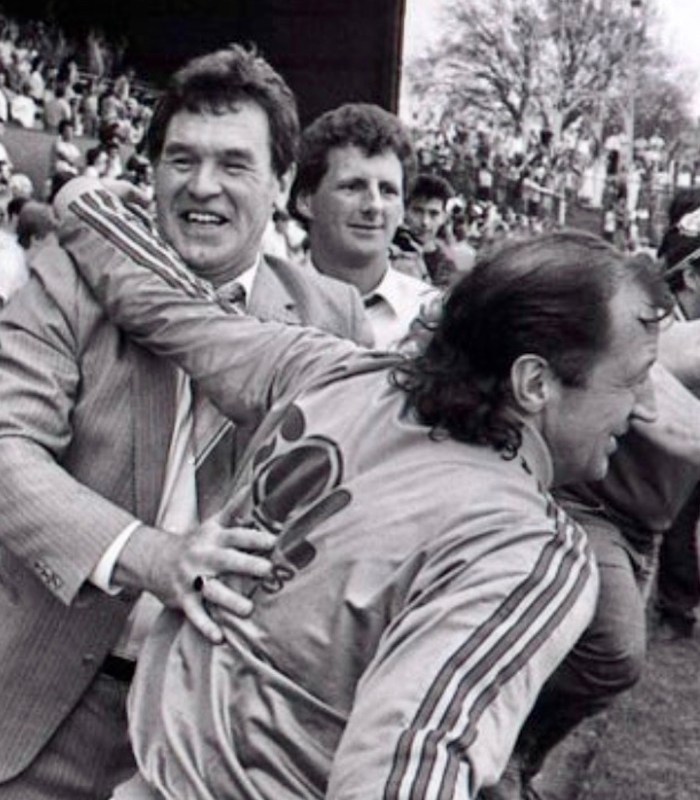
Manager McGrath and Frank Worthington celebrate promotion

“Frank Worthington was a delight to have around and set a real high standard for a lot of us in terms of how we train,” said Brazil. “He just stunned me how he was always first out training.”

The turnround McGrath oversaw, with Deepdale crowds rising from below 3,000 to more than 16,000, rejuvenated the club and the city.

Brazil reminisced: “It was the best year of my football life that year that we got promoted. It wasn’t just an experience playing but an experience of a group of players and how well they could bond and John was integral to that. He was a very, very clever man.”

Indeed McGrath was viewed as having saved North End from the ignominy of losing their league status, the club having had to apply for re-election the season before he arrived at Deepdale.

Edward Skingsley’s book, Back From The Brink, features a black and white photograph of McGrath on its cover and tells the story of North End’s transformation under his direction.

Describing his appointment as “a masterstroke” he reckoned the club owed him a massive debt for masterminding their resurgence and subsequent stability.

“Without him, it is debatable whether Preston North End would even exist today, never mind play in the latest fantastic incarnation of Deepdale,” said Skingsley. “Thank goodness he caught Preston North End before it died.”

McGrath left Preston in February 1990 and had one last stab at management, this time with Halifax Town. He succeeded Saints’ FA Cup winner Jim McCalliog and was in charge at The Shay for 14 months but left in December 1992. Five months later they lost their league status, finishing bottom of pile.

The silver-tongued McGrath was subsequently a popular choice on the after-dinner speaking circuit and a pundit on local radio in Lancashire but died suddenly on Christmas Day 1998.

Villa cup winner and captain Pat Saward led Albion to promotion

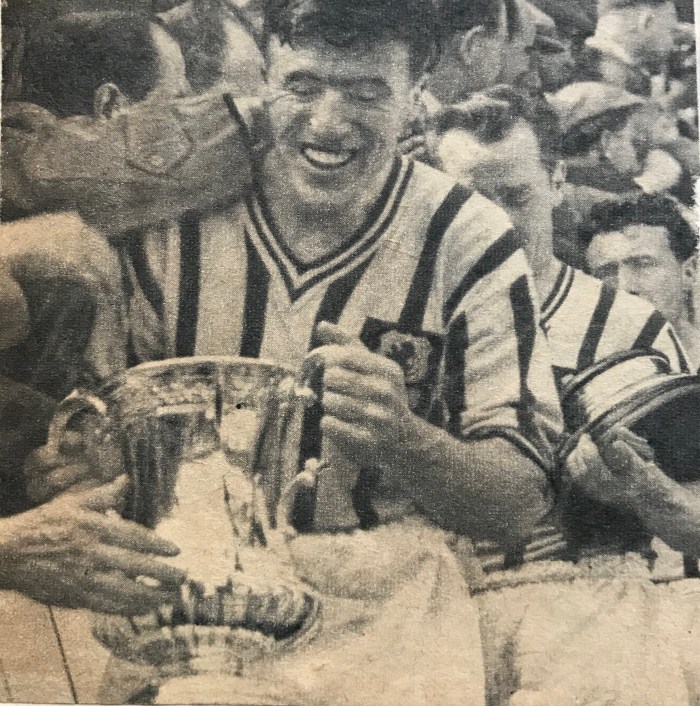
A FORMER Aston Villa captain and 1957 FA Cup winner steered Brighton to the first promotion I witnessed on my Albion journey.

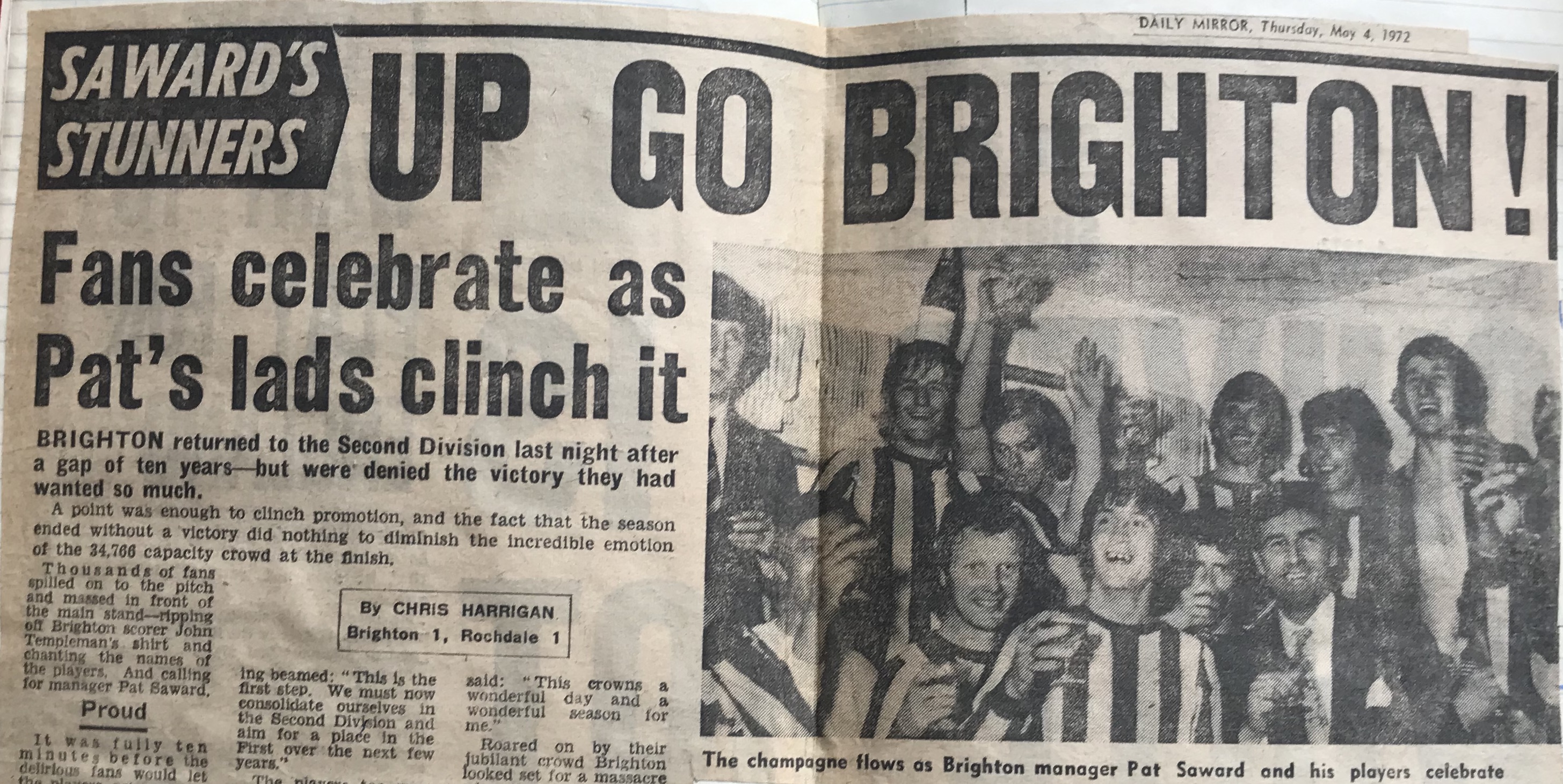
Genial Irishman Pat Saward, who lived in my hometown of Shoreham during his time as Albion boss, galvanised a squad not expected to be promoted from the third tier and took them up as runners up behind his former club in 1972.

As the champagne flowed in the Goldstone Ground home dressing room, Saward took centre stage surrounded by his blue and white stripe-shirted heroes.

When the promotion tilt had looked like faltering, he’d been bold enough to make drastic changes to the side before a top of the table clash with Villa in front of the Match of the Day cameras. After a memorable 2-1 win in which Willie Irvine scored a goal later judged as the third best in the programme’s Goal of the Season competition, Saward added to his squad on transfer deadline day, bringing in Northern Ireland international Bertie Lutton from Wolves and Ken Beamish from Tranmere Rovers, described in the Official Football League Book as “stocky and packed full of explosive sprinting power, a terrific shot and great appetite for the game”.

Saward told the publication: “They were both last ditch signings and Ken made an astonishing difference. I spent only £41,000 in getting my promotion side together so we were very much Villa’s poor relations in that sense.”

The manager put the success down to: “Dogged determination to succeed from all the players. We stamped out inconsistency. I got rid of ten of the players I inherited and got together a team built on character. That’s the key quality, apart from skill of course.”

However, hindsight reveals the club wasn’t really ready for the higher division and some have suggested Saward broke up the promotion-winning squad rather too hastily. Players he brought in who were used to the level now known as the Championship struggled to gel, and the manager turned to rather too many loan signings.

A mid-season run of 13 consecutive defeats was Albion’s undoing and a glamour FA Cup tie at home to First Division Chelsea in early January 1973 gave a welcome respite from the gloom.

Ahead of the match, Saward opened his heart to Daily Mirror reporter Nigel Clarke, revealing that he couldn’t understand why the side had struggled so much.

“I wish I knew. But I’ve learned more about football these last few weeks than at any other time in my career.

“We are five points behind the next club but I must be the luckiest man in the league. There are no pressures on me,” he said, explaining that supporters were still writing to him, backing him and the team.

“When we came up from the Third Division, I was so big-headed, so confident. I thought with the right results we could go straight through to the First Division. I really did.

“There was spirit and ambition here – and there still is….that’s how this club gets you. My heart is in the place.”

Saward revealed that he had turned down two better paid jobs in the First Division to stay at Brighton after the promotion win, telling Clarke: “What I want is importance, appreciation, understanding and love…not being kicked up the backside and put under the lash.

“Adulation is false. I’ve found my oasis at Brighton and I’m wealthy the way I want to be – in feeling.”

Although the Chelsea game ended in another defeat, fortunes eventually changed the following month – but the damage had been done and Brighton went straight back down.

A defiant Saward promised to blood more youngsters like Steve Piper and Tony Towner, who’d done well when drafted in and Piper, in a matchday programme article, said of him: “Saward was more of a coach than a man-manager, very suave and sophisticated. He knew his football from his days at Coventry.”

However, when results didn’t improve on the return to third tier level, and with a new, ambitious chairman – Mike Bamber – at the helm, Saward was sacked and replaced with the legendary Brian Clough.

Albion’s hierarchy had turned to the untried Saward in the World Cup summer of 1970 after Birmingham City poached Freddie Goodwin from Brighton to replace Stan Cullis as their manager. It was second time lucky for Saward, who’d applied to succeed Archie Macaulay two years previously when Goodwin pipped him to the post.

“Give me ten years and I’ll have Brighton in the First Division,” Saward declared when appointed. Prescient words considering they made it within nine – although it came six years after he’d parted ways with the club.

There’s little doubt Saward was an innovative football man and a popular figure during the first two years of his reign.

Apart from success on the pitch in the 1971-72 season, the way he involved fans in helping him to improve the side also proved a winner.

His buy-a-player appeal was a direct attempt to involve the supporters in the affairs of their club and Saward led a sponsored walk on Brighton seafront as one of the initial events geared towards generating funds to help him compete in the transfer market.

“Too many people spend too much time shouting about how hard up their club is, and too little time fighting to improve the situation,” Saward said in an article for the April 1971 edition of Football League Review. “You never get success if you sit around. You must have courage, even audacity, and work hard for survival.”

The first funds generated provided Saward with the money to bring in experienced Bert Murray from Birmingham City, initially on loan, and then permanently. Murray would go on to be voted Player of the Year in 1971-72.

Another player who signed on loan at the same time as Murray was Preston’s Irvine, who recalled in his autobiography, Together Again, how Saward wooed him.

“Pat sold me the place with his charm and persuasive ways,” he said, describing the former male model as “extrovert, infectious and bubbly”.

He added: “Pat Saward was a gem of a manager and a pleasure to play for. He said what he thought, but never offensively; in a matter-of-fact, plain-speaking kind of way, rather than aggressively.”

Irvine continued: “Saward had the knack of making people feel important. He instilled pride and a sense of identity…..Pat loved attacking, entertaining football and worked tirelessly for the club. I would have run through that proverbial brick wall for him.”

As Brighton neared promotion, Irvine said: “Saward, with a joke or a smile, an arm around the shoulder or a bit of geeing up, knew just how to keep a dressing room happy or dispel any tension or nerves.”

Sadly, Irvine’s opinion of Saward shifted dramatically when, during the summer, the manager told him he intended to bring in a replacement – although it was three months before he eventually signed Barry Bridges from Millwall.

Saward and new signings Barry Bridges (left) and Graham Howell

Irvine was in the starting line-up at the beginning of the season and scored six times in 13 league and cup games, but, once Bridges arrived in October, his days were numbered, and, before the year was out, he was sold to Halifax Town in part exchange for Lammie Robertson.

Saward had already dispensed with the services of Albion’s other main promotion season scorer, Kit Napier, along with his former captain, John Napier.

Irvine said that once Albion were promoted, Saward changed. “He seemed to become unapproachable, or at least he did to me, and where once I could see him whenever I wanted, now I seemed to have to book an appointment two or three days in advance. We all had to.”

Teammate Peter O’Sullivan, who had repaired his relationship with Saward after some difficult early exchanges which saw the Welshman transfer-listed, also witnessed a change in the manager.

“We had one or two players who were over the hill and Pat just lost the plot. It was grim,” he told Spencer Vignes in A Few Good Men.

Albion’s tier two fortunes were picked over in some detail in a feature reporter Nick Harling compiled for Goal magazine.

“I didn’t foresee the snags and the type of league the Second Division was,” Saward told him. “It’s the hardest division of the four. Everyone is fighting either to stay in or get out.

“It’s a hell of a hard division. It’s a mixture of the First and Third. It’s good and very hard football. They don’t give you an awful lot of time to play.

“It’s a division governed by fear because to drop out of it is not good, while to get out at the top is fantastic. I didn’t believe the gap would be so different.

“Teams are so well organised and supplement their lack of ability with tremendous defensive play. It’s very hard to get results.”

While open and honest, they didn’t sound like the words of a manager very confident of finding a solution, and Saward sought to explain part of the problem when he said: “To me the most important thing is the attitude of mind. Players should have an arrogant attitude, an attitude that they’re going to do well even when the chips are down. But some types are destroyed. These are the ones who succumb and want to rely on other people.

“Here we’ve got some great boys, but I wish to God some of them had more determination.”

Bamber was resigned to relegation but nonetheless confident of where the club was heading. “There’s no doubting it – First Division here we come,” he told the magazine.

Saward added: “I haven’t lost any enthusiasm. I’ve had my hopes dampened slightly, but one overcomes that.

“This club has got to be built for the future. I want to put Brighton on the map.”

Sadly, when Albion’s poor form at the start of the 1973-74 season continued, Saward publicly admitted: “I haven’t any more answers. I am in a fog.”

Unsurprisingly, the Albion’s directors interpreted it as a loss of confidence and sacked him.

It’s front page news on the Evening Argus as Saward is sacked

Saward never managed in the English game again, although he coached in Saudi Arabia for a while.

Born in Cobh, County Cork, on 17 August 1928, Saward lived in Singapore and Malta during his childhood, before the family moved to south London.

His first club was Beckenham FC before he turned professional with Millwall in 1951. He made 118 appearances for the Lions in the next four years.

Saward was 26 when Eric Houghton signed him for Villa for £7,000 in August 1955. The legendary Joe Mercer took over as Villa manager in 1958.

Pat enjoyed a goalscoring debut with his new club, hitting the final equalising goal in a 4-4 draw with Manchester United at Villa Park on 15 October 1955. But he struggled to oust left half Vic Crowe and made only six appearances that season.

In Crowe’s absence through injury the following season, Saward became a regular, making 50 appearances.

Saward (right) descends the steps at Wembley as a FA Cup winner with Aston Villa

In total, Saward played 170 games for Villa between 1955 and 1960, most notably featuring in their FA Cup winning team in 1957. Villa beat Manchester United 2-1 in the final at Wembley Stadium in front of a crowd of 99,225, Peter McParland scoring twice to win Villa the Cup for a seventh time.

Saward made only 14 appearances as Villa were relegated from the top-flight in 1959 but he was back in harness as captain when they made a swift return as Second Division champions in the 1959-60 season.

In his final season, he made just 12 appearances, his last coming on 22 October 1960 in a second city derby, Villa beating Birmingham 6-2. The following March, he was given a free transfer and moved on to Huddersfield Town.

Saward in the stripes of Huddersfield Town

He had first been selected for the Republic of Ireland on 7 March 1954 in a World Cup qualifier in which Luxembourg were beaten 1-0, and he went on to make 18 appearances for his country, the last, on 2 September 1962, coming when he was 34: a 1-1 draw away to Iceland in Reykjavík.

He played twice against England in World Cup qualifiers in 1957, a 1-1 draw and a 5-1 defeat, when he was up against the likes of Duncan Edwards, Johnny Haynes and Stanley Matthews, and in the same competition against Scotland, in 1961, when the Irish lost 4-1, and his teammates included Johnny Giles.

After 59 appearances for the Terriers, he dropped out of the league but acquainted himself with Sussex when moving to Crawley Town.

Jimmy Hill signed him for Coventry as a player-coach in October 1963 and although he made numerous reserve team appearances, he really made his mark as a coach and was responsible for the rapid development of City’s youth team in the 1960s.

Saward (left) with assistant manager Alan Dicks and Jimmy Hill at Coventry City

Willie Carr and Dennis Mortimer were just two of several first teamers who made it under his guidance. He stepped up to first team assistant manager when his former Eire teammate, Noel Cantwell, was appointed boss in 1967.

Not long after his switch to the Goldstone, Saward picked up one of his former Sky Blues proteges, Ian Goodwin, initially on loan, and then permanently, and eventually made him Albion captain. The rugged defender’s arrival was remembered in an Argus article.

When Saward died on 20 September 2002 following a period when he’d suffered with Alzheimer’s, an excellent Villa website pieced together a detailed obituary. His career is also recorded on the avfchistory.co.uk site.

Saward was laid to rest in the same Cambridge cemetery as his brother Len, a forward who played a total of 170 games for Cambridge United between 1952 and 1958, scoring 43 times. He went on to serve the club behind the scenes in their commercial department.

Pictures from my schoolboy Albion scrapbook and various online sources.

Flying winger Tony ‘Tiger’ Towner immortalised in children’s TV programme

2-towner-takes-on-argusIF ART is the sincerest form of flattery, Tony Towner can count himself amongst the privileged few to be forever remembered on film.

That it was done by two of Rotherham United’s most ardent celebrity fans is neither here nor there – it’s not everyone who can say their prowess has been portrayed in an episode of Chucklevision.

Towner and fellow Millers hero Ronnie Moore were at the centre of a classic knockabout episode of the children’s TV series in which Rotherham supporters Paul and Barry Chuckle constantly get involved in slapstick scrapes.

In Football Heroes, made in 1996, the Chuckle Brothers meet Towner and Moore (actors playing them rather than the footballers themselves!) on their way to a game and accidentally end up with their invitation cards to play in a veterans match, leading to them ending up on the pitch.

Towner earned plaudits for his Rotherham performances in this Shoot magazine feature – pipping one Danny Wilson!

It was Towner and Moore’s starring performances in the Rotherham side that won promotion from the old Division 3 as champions in 1980-81 that earned them cult status.

Over three seasons, Towner appeared over 100 times for the Millers and even all these years later is still remembered with affection.

Take, for example, comments made on the Millers Mad website a couple of years ago. Ivor Hardy said: “Tony (Tiger) Towner was one of the best and most talented footballers ever to play for us.

“He was instrumental in us winning the league in 80/81, along with doing the double over our near neighbours Sheffield United in the same season.

“We were lucky to get the services of Towner and Seasman from Millwall, and only did so because the Lions were in financial turmoil that season and had to get some money in fast. He will always be a legend with the older fans, along with team mates Seasman, Moore, Fern, Breckin, Mountford etc.

“Tiger gave us some great memories.”

Meanwhile, kevthemaltbymiller said: “Great player for us, very tricky winger with lightning pace. Happy memories.” And sawmiller added: “Tiger was a super player – good winger who created a real buzz in the crowd when he got the ball and ran at players.”

Towner himself considered his time at Rotherham to have been his best playing days. In an Albion matchday programme article, he told Roy Chuter: “They were probably my best years, my most consistent, anyway. I was 26, 27 years old – at my peak. I had three tremendous years.”

Initially playing under Sunderland’s 1973 FA Cup Final hero Ian Porterfield, he also enjoyed working with the former Liverpool legend Emlyn Hughes, when he took over as manager.

Brighton fans also have good memories of the local boy made good. Sussex youngsters making the grade with the Albion have been pretty few and far between over the years, but Towner and defender/midfielder Steve Piper were two who did it in the 1970s.

In Albion’s 1972-73 season in the second tier, Piper had already been blooded in the first team in the November. Towner signed professional on 29 December 1972 and, with Albion having been knocked out of the FA Cup by Chelsea in the third round, manager Pat Saward arranged a friendly against Stoke City on fourth round day, 3 February 1973 (Stoke had been beaten 3-2 by Man City) and gave Towner his first team debut in a 2-0 defeat at the Goldstone.

The following Saturday he made his league debut aged just 17 at home to Luton Town. Albion went into the game having suffered 14 defeats on the trot (12 in the league plus the games against Chelsea and Stoke) and, rooted to the bottom of the table, relegation was inevitable.

Saward gave the side a shake-up, dropping three established players – goalkeeper Brian Powney in favour of loan signing Tommy Hughes from Aston Villa, right back Graham Howell (to the bench), and experienced striker Barry Bridges.

Piper made only his sixth first team appearance and he was joined by winger Towner and forward Pat Hilton. It was Towner’s brilliant display on the wing that really caught the eye as Albion finally mustered a win, beating the Hatters 2-0.

Towner kept the shirt until the end of the season and it was the launchpad for a 15-year professional career in which he made over 400 appearances. After that Luton debut, he scored his first goal in a 2-1 home win against Huddersfield on 10 March.

“I was an Albion fan as a kid, in Bevendean, and I joined them straight from school at 15, as an apprentice,” he said. “I already had the ‘Tiger’ nickname when I got into the team in 1973 – I think it was one of Alan Duffy‘s. I must have tackled him a bit too hard in training, or something. Tiger was a great nickname, and I loved it.”

One of the few survivors of the great Brian Clough cull of the playing staff in 1974, Towner was a speedy, skilful winger who could put in terrific crosses for his teammates. The fact he was a local lad endeared him greatly to the crowd.

In five years, he had plenty of challengers for his place. In the early days, Gerry Fell competed for the wide berth and later Eric Potts, but Towner still managed 171 games (+ 12 as sub) for the Albion and scored 25 goals.

“Gerry was the opposite of me, though still a winger – he had loads of pace, though not too much skill,” Towner recalled. “He’d knock the ball ahead of him and run past the defender to get it, a bit like Stuart Storer. I’d try to trick my way past.”

In John Vinicombe’s end of season assessment of Peter Taylor’s first season in sole charge (1974-75), he said: “It is with no disrespect to Taylor that I suggest that the three most consistent players were those he inherited – O’Sullivan, Towner and Piper.

“Towards the end, Towner tailed off a little but he struck up an intuitive partnership with Fred Binney.”

In fact Towner was third highest in the squad for appearances that season, playing 47 games in total plus four as sub and with 10 goals was second highest goalscorer behind Binney.

It was the arrival of Gerry Ryan from Derby in September 1978, which finally prompted his departure. George Petchey, who later joined Chris Cattlin’s backroom team at the Goldstone, took him to Millwall for £65,000.

Unfortunately, while Brighton won promotion to Division 1 in 1979, Millwall went the opposite way out of Division 2, and Towner found himself back in the third tier.

After 68 appearances for the Lions, in 1980 he was sold to Rotherham along with teammate John Seasman for a combined fee of £165,000.

Towner scored once for Rotherham’s near neighbours Sheffield United in a 10-game loan spell in 1983 and although he had missed out on Brighton’s eventual elevation to the top tier, he managed it with Wolves in 1983-84 having been signed by the Black Country side for £80,000.

He then joined Charlton Athletic but in the 1985-86 season was loaned to Rochdale where he once again linked up with his former Rotherham teammates, Moore and Seasman. He made five appearances for Rochdale and MikeMCSG on clarkechroniclersfootballers.blogspot.co.uk recalls: “He came on as sub in a home game and made an instantly good impression by beating the full back with his first touch.

“He went on to play a blinder in the draw at Halifax on Boxing Day. Unfortunately Tony didn’t want to uproot to the North and couldn’t be persuaded to make his stay permanent. When Cambridge came in with an offer he signed for them instead although he only made eight appearances for them in total.”

Towner’s final Albion appearance had been in a 4-1 defeat away to Leicester in September 1978 but his final appearance at the Goldstone came in a memorable FA Cup 3rd round tie on 4 January 1992.

Albion beat then Southern League Crawley 5-0 and Towner earned a rousing reception from the 18,031 packed into the Goldstone when, at the age of 36, he came on as a substitute for the visitors.

Crawley were one of several non-league clubs he played for: he also turned out for Gravesend, Fisher Athletic, Lewes, Newhaven and Saltdean.

Interestingly, Towner reflected: “I could definitely have played for a few more years at league level, and perhaps I should’ve done. I’d got a bit disillusioned with it though.”

After his playing days ended, Towner ran his own Brighton-based removals business and watched the Albion as a fan. In October 2015, Brian Owen interviewed him for an Argus piece ahead of a game against Cardiff when former Albion winger Craig Noone was in opposition.

Towner reckoned Albion made a mistake letting him go but added: “It’s good to see Brighton making good use of wingers.

“That’s the way I was brought up, using the wide men.

“It’s all right having midfield men or attack-minded full-backs. But what gets the crowd on its feet is a winger going past the full-back and crossing.

“You can have all the formations you like but, if you see a winger getting past his full-back, it excites people.”

Tony Towner certainly came into that category.

1-sawar-towner
3-towner-crosses-argus-prog
4-argus-shot-towner-on-wing

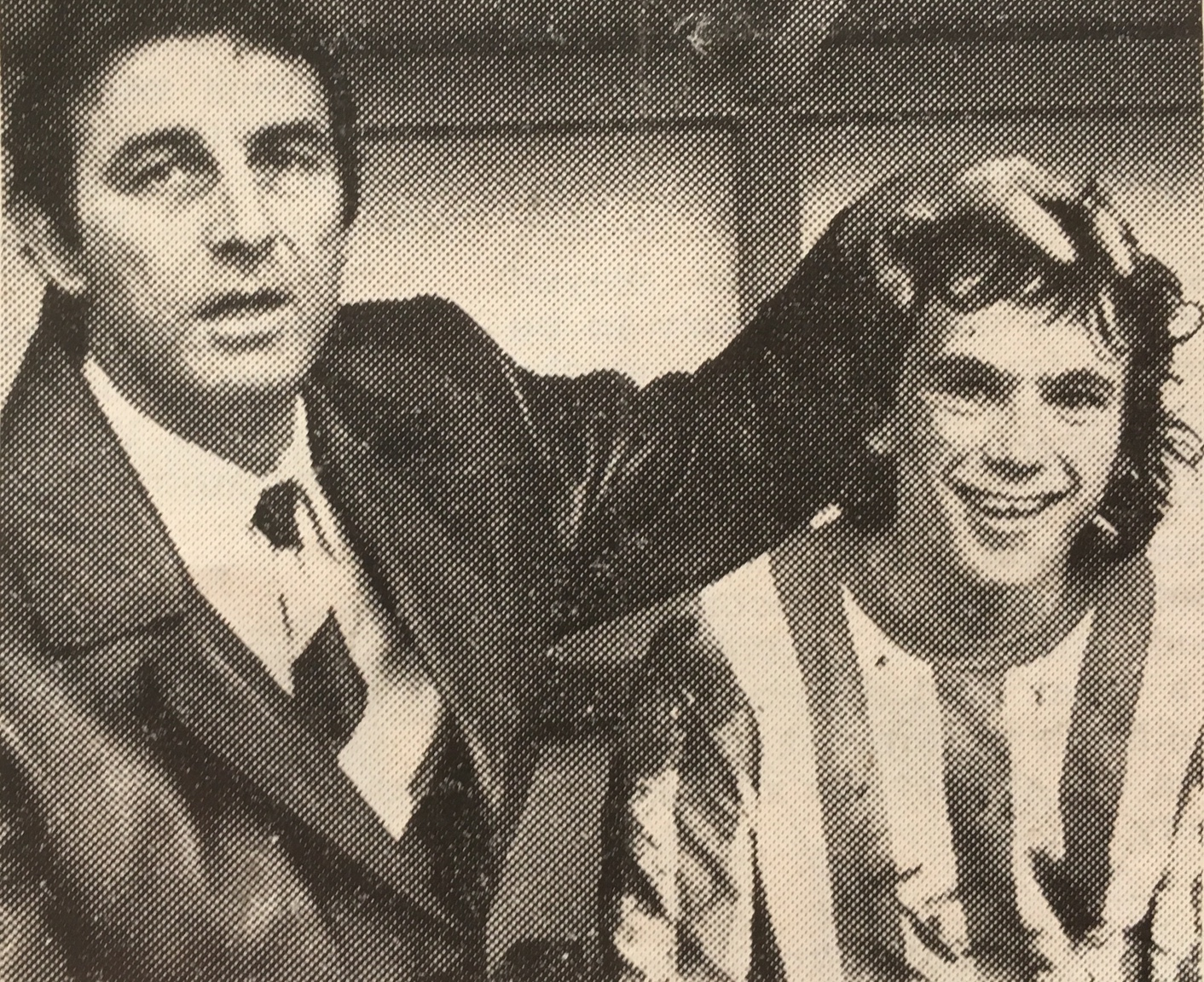
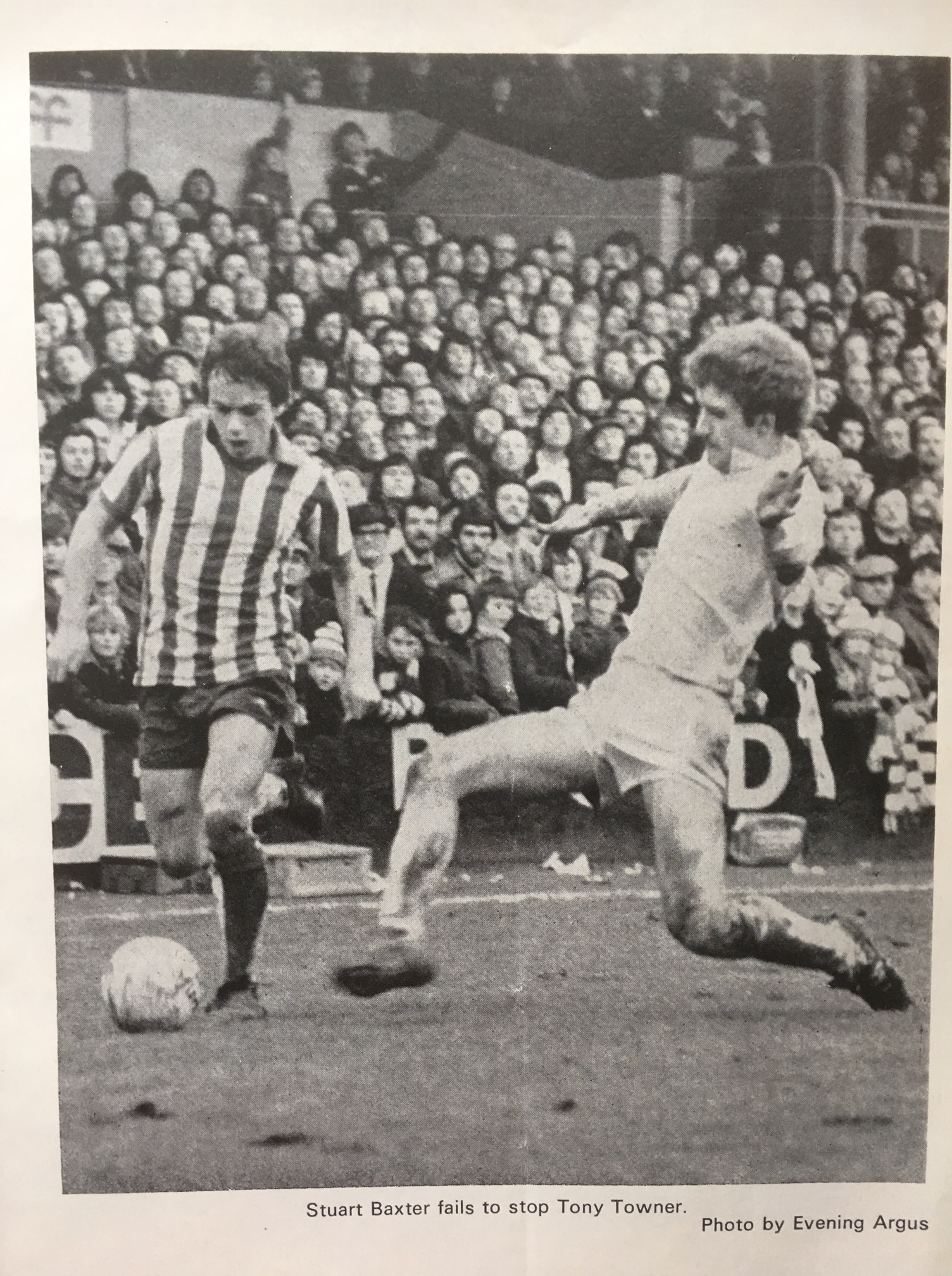
Pictures mainly shot by Evening Argus photographers and then reproduced in the Albion matchday programmes show a happy Towner congratulated by manager Pat Saward after his league debut, in familiar pose taking on a full back, getting in a trademark cross, in full flight on the wing, and finally on a Wolves album sticker.