The spectre of Trelford haunted them for ages at St James’

BRIGHTON travel to Newcastle in the fifth round of the FA Cup with the backdrop of having won there twice in the competition in the 1980s – not to mention a 1-0 win in the Premier League this season.

The 1-0 third round win at St. James’ Park in January 1983 set Albion en route to that season’s FA Cup final – but Toon supporters of that era blamed the game’s unusually-named referee, Trelford Mills, from Barnsley, for their exit.

Think I’m exaggerating? Newcastle fans’ website themag.co.uk had this to say ahead of another FA Cup game between the two sides in 2013: “It is doubtful that anything could match the anger and frustration that many of us felt nearly thirty years ago.

“Wednesday 12 January 1983 will always be synonymous with the name Trelford Mills, etched into the consciousness of an entire generation of Newcastle fans, convinced he cheated us out of the FA Cup. Well, a chance of the fourth round anyway!”

Neil Smillie, goalscorer Peter Ward, Steve Gatting, Chris Ramsey and Andy Ritchie celebrate after the 1983 win.

Mills disallowed two Newcastle ‘goals’ while Albion nicked it courtesy of a penalty area pounce by Peter Ward, back at the club on loan from Nottingham Forest, on 62 minutes. They did it without captain Steve Foster who was suspended (as, of course, he would be for the final too).

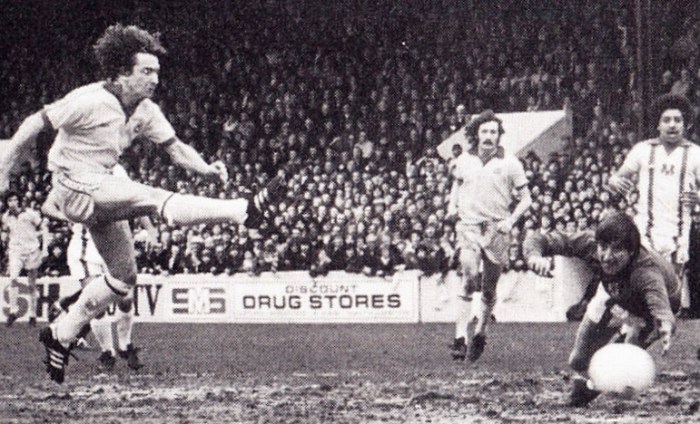
The game was a third round replay four days after the sides drew 1-1 at the Goldstone Ground when Andy Ritchie’s mis-hit shot in the 56th minute put Albion ahead and Terry McDermott (below right, with Tony Grealish) equalised on 77 minutes.

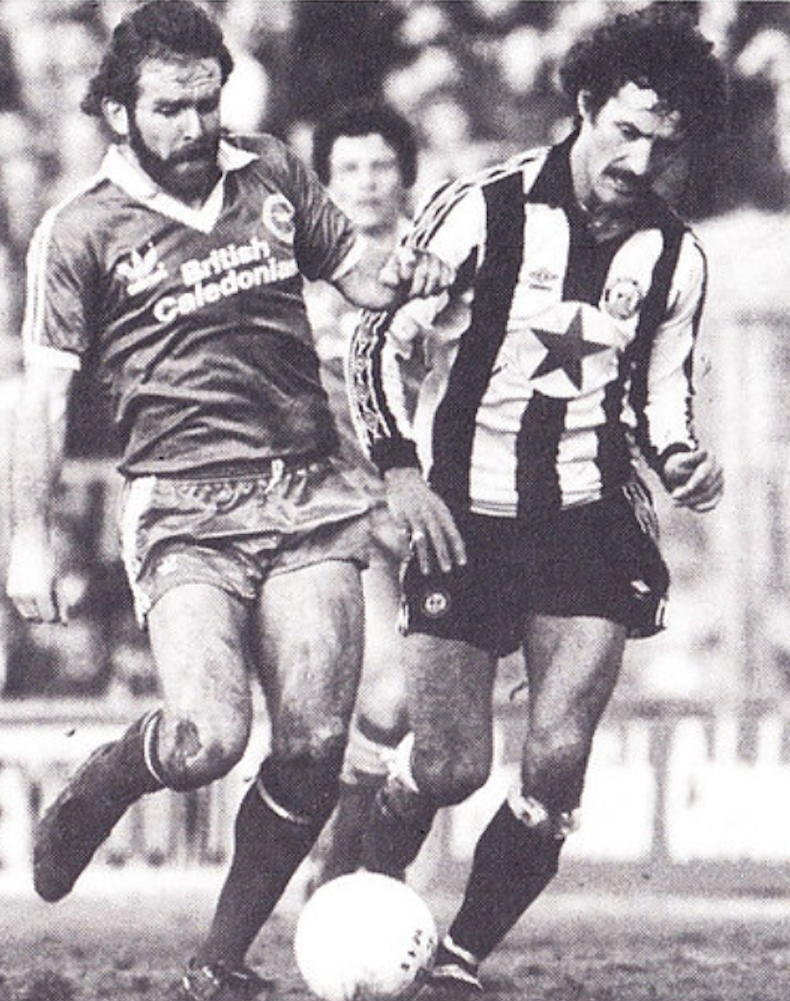
Even though the Magpies were in the old Division Two at the time, they had Kevin Keegan and Chris Waddle in their line-up, and they fully expected to win because Brighton hadn’t previously won away that season.

Albion, competing in the top division for the fourth season in a row, with joint caretaker managers Jimmy Melia and George Aitken in charge, had goalkeeper Graham Moseley to thank for some heroic stops to keep them in the first game.

The replay at St. James’s Park was in front of a typically noisy crowd of 32,687 and Newcastle did everything but score: they had shots cleared off the line and hit the woodwork and, when they thought they’d scored, Mr Mills disallowed them – twice!

In the meantime, Ward made the most of a counter attack to put the Seagulls ahead. It turned out to be the last goal he scored for the Albion, although he was in the side that pulled off a shock 2-1 win at Anfield to knock out Liverpool in the fifth round.

Enterprising reporter Tim Hodges searched out Mr Mills all those years later to hear his version of the events.

“I remember Brighton went one up, then Imre Varadi went through on goal, but quite clearly controlled the ball with his wrist,” said Mills.

“I think the Brighton keeper realised this, just as most of the players did, and let the ball go into the goal just to waste a bit of time. I just restarted with a free kick. I have spoken to Imre since. I think he accepts my version now.”

Mills continued: “Jeff Clarke managed to win a ball in the penalty area, but only because he had his arm around the defender’s neck. Keegan bundled the ball into the goal, but I had blown up a few seconds before it went in.

“Keegan did his Mick Channon cartwheel arm in front of the Gallowgate end, but I just jogged across to where I wanted the free kick taken from and indicated as to why I had disallowed the goal.”

Mills also recalled how he and his fellow officials needed a police escort away from the ground after the match. “When we sat in the dressing room after the match, I remember chatting to one of my linesmen, John Morley, when this police officer turns up,” he said. The copper said to him: “You’d better hang on here a while, Trelford. There are 2,000 Geordies outside and they all want your autograph!”

Three years later, the status of the teams had been reversed with Newcastle promoted back to the top division in 1984 and Albion back in the second tier, relegated the same year as the cup final appearance.
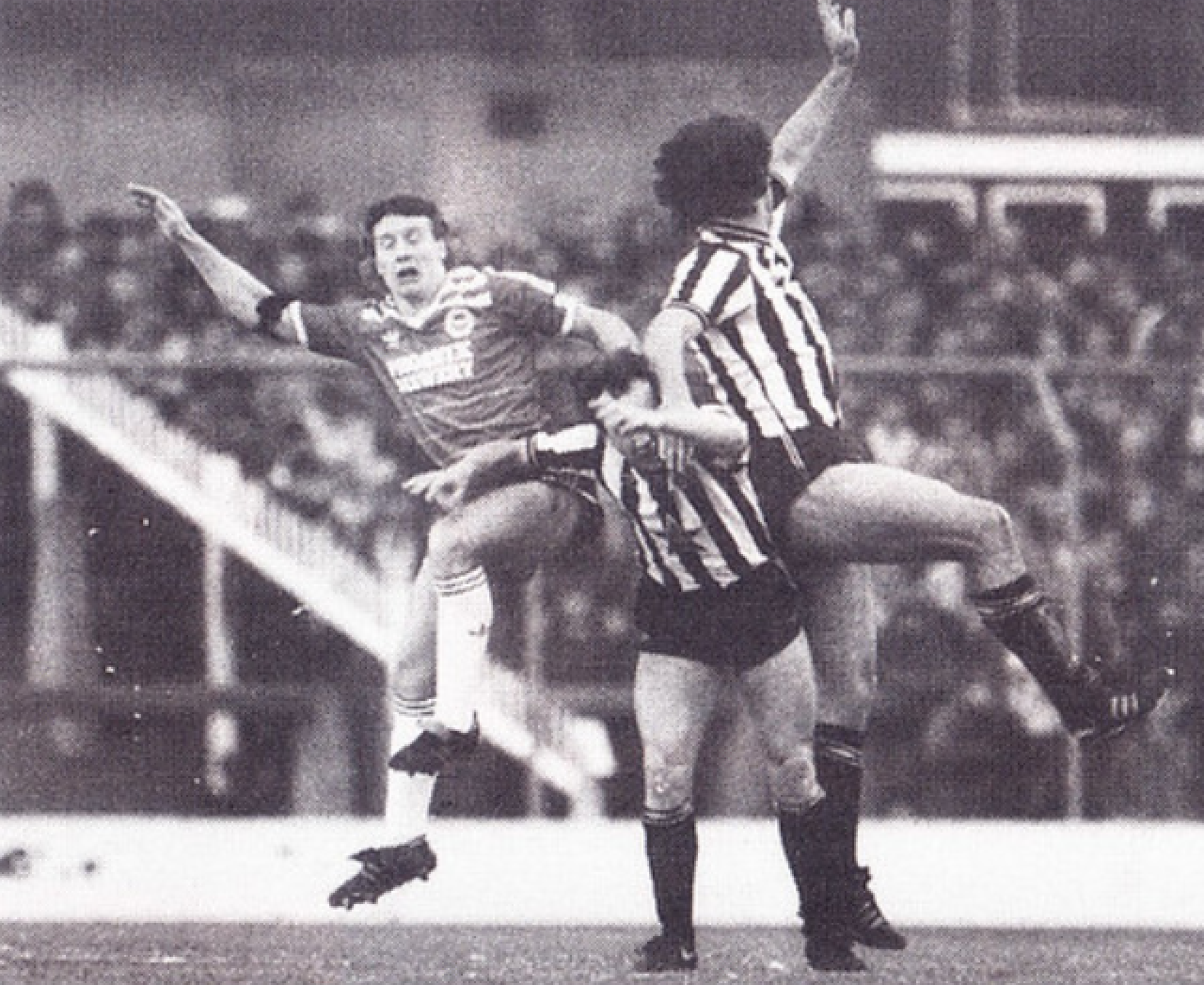
While Keegan had retired, Willie McFaul’s side had a young Paul Gascoigne in midfield and Peter Beardsley in the forward line. Clarke, who’d played four games on loan at Brighton two years earlier, was still in the centre of United’s defence and it was his foul on Terry Connor in the first minute of the game that saw Albion take a shock early lead.

Danny Wilson floated in a free kick from 30 yards out on the right which found centre back Eric Young on the far edge of the penalty box. He hooked the ball into the Newcastle net with only 50 seconds on the clock!

Albion, wearing their change strip of red, had to endure a relentless series of attacks (Toon had 23 corners to Albion’s one!) and Perry Digweed in Brighton’s goal put in a man of the match performance between the sticks, notable saves keeping out shots from John Bailey, Beardsley and Billy Whitehurst.

With five minutes left of the game, against the run of play, a quick throw-in by Graham Pearce found Dean Saunders and he rifled home an unstoppable shot past Martin Thomas for his 10th goal of the season.

Manager Chris Cattlin summed up afterwards: “It was really tough and we had a little luck on our side, but to go away to a club who have won the cup no fewer than six times and come away winners was quite an achievement.

“With the Geordie fervour up there the noise their supporters created was something special, but our efforts speak volumes for everyone connected with our club.”

There would be no fairytale ending that season, though, with Albion being dumped out of the cup 2-0 by Southampton in a quarter-final tie at the Goldstone Ground.

John Barnes and Steve Harper were on pundit duty for ESPN for the 2012 match

Younger fans will doubtless recall two more recent FA Cup meetings between Brighton and Newcastle, in consecutive seasons during Gus Poyet’s reign, at the Amex in 2012 and 2013.

The Championship Seagulls beat the Premier League Magpies on both occasions – 1-0 in the fourth round in 2012 and 2-0 in the third round the following year.
Getting to grips with Will Buckley

A Mike Williamson own goal was enough to give Albion the edge over Alan Pardew’s side in the first of those games; Will Buckley’s 76th minute shot deflecting off the defender and looping over Tim Krul for the only goal of the game. Leon Best, who would later have a torrid time at Brighton, missed two good chances for the visitors.

The 2013 fixture was a more convincing win for Brighton against a weakened Newcastle side who had Shola Ameobi sent off. Andrea Orlandi gave Albion the lead on the half-hour mark and substitute Will Hoskins added a second late on.
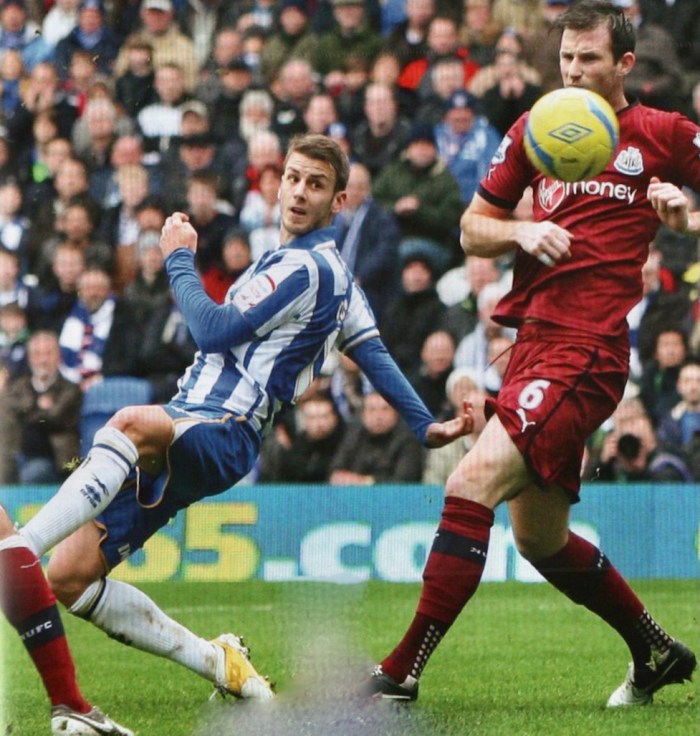
Andrea Orlandi hooks in Albion’s first goal
Praise for Liam Bridcutt

“This was an impressive victory for Brighton, a result that will add to the optimism that surrounds this upwardly mobile club and strengthen their resolve to host Newcastle in next season’s Premier League,” wrote Ben Smith, for BBC Sport. “The cool passing game of Liam Bridcutt at the heart of their midfield was tremendous.”

The reporter added: “Sharper to the ball, and swifter to make use of it, the Seagulls toyed with their more celebrated opponents for much of the opening 45 minutes, producing some stylish attacking moves while tackling, battling and dominating territory in their uncomplicated and effective way.”
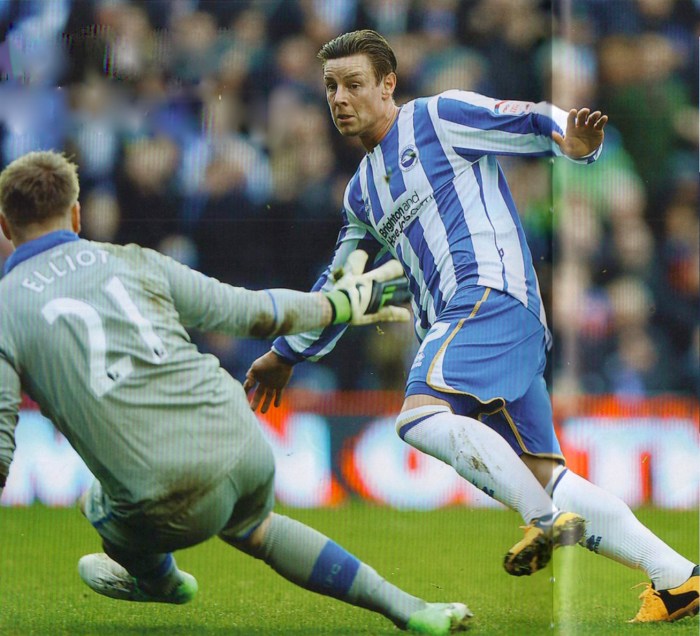
Will Hoskins buries Albion’s second goal in 2013

Goalkeeper Simon Steele swapped gloves for collars

STEELE is a familiar name in an Albion goalkeeper’s shirt. In the current set-up, there’s Jason. Back in the 1970s there was Eric. And very briefly, in the early 1980s, there was Simon.

After three years as an Everton youth player, Simon Steele joined the Albion a few weeks after they’d lost to Manchester United in the 1983 FA Cup Final.

When the Albion went on a pre-season tour in Majorca, the new arrival suddenly found himself keeping goal for the Seagulls in a match against the mighty Real Madrid.

“It may well only have been the City of Palma Tournament, a four-team pre-season competition, but Steele will never forget that evening on August 18, 1983,” The Argus reported in a 2004 article.

By then 40 and with 14 years behind him as a detective with Sussex Police, Steele recalled: “I had joined Brighton just after the FA Cup final. I had done a bit of pre-season training and then we went out to Majorca for this tournament.

Graham Moseley wasn’t on the tour, I can’t remember why, so it was between me and Perry Digweed.

“I was really surprised to be selected for the game. I think Perry thought we would get a good hiding and threw an injury.”

 A crowd of more than 20,000 watched the game and Steele told the newspaper: “They had a good side with plenty of internationals. We had quite a bit of support so the atmosphere was really good, especially considering it was a pre-season game with not a lot resting on it. There were a lot of Brits out there who came to support us and we were playing for personal pride.

“I just remember them scoring in injury time. Santillana turned on a sixpence and put the ball in the bottom corner from eight or ten yards out.

“Other than that we held them at bay. Although I had quite a bit to do, I dealt with it comfortably. I never felt under any great pressure and it was gutting when the goal went in.”

Indeed, The Argus said the match report of the time raved about Steele’s performance, in particular picking out “one breathtaking stop” from Camacho, who had played for Spain at the 1982 World Cup.

Steele retained his place when Albion beat Hungarian side Vasas Diosgyori 3-2 in the tournament’s third place play-off, with goals from Steve Gatting, Tony Grealish and a Terry Connor penalty.

However, although Steele reckoned he had done enough to earn a place when the action proper began, he was to be disappointed.

“I did play well and it catapulted me on to the fringes of the first team,” he told The Argus. “I really thought I would start the season, then I got a call the day before the season started and Jimmy Melia said he would start with Moseley in the first game at Oldham.

“It was a bolt out of the blue because I thought I had played well in pre-season.”

Thankfully, he didn’t have long to wait for his chance, though. Two days later, with Moseley injured and Digweed suspended, the youngster made his League debut in a 3-2 defeat against Leeds at Elland Road.

Simon Steele keeping goal for the Albion at Elland Road

Grealish gave the Seagulls the lead before, as the matchday programme highlighted, Steele came out well to make saves at the feet of Andy Ritchie and John Sheridan.

He also “saved brilliantly” from George McCluskey but was beaten by an equaliser from Andy Watson and a Frank Gray penalty.

Connor levelled the match, rising high to head home against his old club, but, agonisingly, a last-minute 25-yard right-footed shot from Sheridan left Steele helpless and gave Leeds the win.

Melia turned to the more experienced Digweed for the next match, at home to Chelsea, and within a matter of days, former England international Joe Corrigan arrived to dominate the goalkeeper pecking order – and Steele’s brief Albion career was over.

He went on loan to fourth tier Blackpool and Melia explained in his matchday programme notes: “With the surfeit of goalkeepers at present at the Goldstone, his opportunities are limited and I felt that he could get some valuable experience in the league with Blackpool which will stand him in good stead.

“He is only nineteen and I think he has a great future; we feel that a loan spell will sharpen up his game, but it certainly doesn’t mean he has left the Goldstone permanently.”

Steele played three games for the Tangerines and the following spring went on loan to third tier strugglers Scunthorpe United, where he featured five times.

The Iron, managed by ex-Leeds and England striker Allan Clarke, actually wanted to keep him but Steele said he was not happy with the terms being offered and reckoned he would be better off getting a job and playing part-time football instead.

Born in Southport on 29 February 1964, Steele went to Ainsdale High School in the seaside town between 1975 and 1979. He joined Everton at the same time as Shaun Teale (according to the website efcstatto.com), who later won the League Cup with Aston Villa.

Despite his best efforts in goal for Everton’s youth side in the 1982 FA Youth Cup, they lost 2-0 to Villa in the third round. The Liverpool Echo report of the game noted: “Paul Kerr picked up a free kick rebound and seemed certain to score until Steele denied him with a spectacular save. But the Midlanders went ahead after 41 minutes when winger Obi beat Steele with a powerful swerving shot from 25 yards.”

It added: “After Mark Walters had struck the face of the Everton bar, Kerr chipped the advancing Simon Steele with devastating accuracy to notch Villa’s second in the 83rd minute.”

After turning his back on the chance to play lower league football with Scunthorpe, Steele turned out for a variety of Sussex non-league sides – Worthing, Bognor, Pagham, Peacehaven, Whitehawk and Withdean – and became a detective constable with Sussex Police in October 1990.

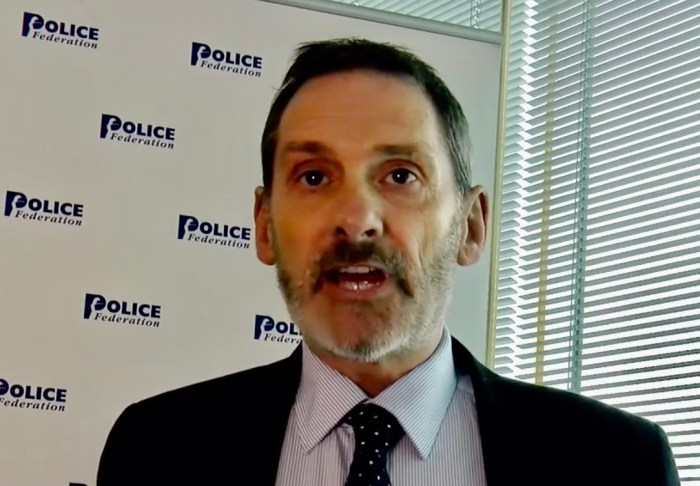
He was in the news in 2019 when, in his role as secretary of the Sussex Police Federation, he spoke out about the lack of investment in detectives in the county.

Speaking up on behalf of police colleagues

He said victims of crime weren’t getting the service they should have done because of a lack of sufficient detectives in the force.

“It used to be easy to fill the detective roles,” he said. “Now officers don’t want to go into the department for whatever reason, down to the workloads that they’re carrying, the pressures, the hours that they’re working, and a lot of them are pretty close to breaking point.”

John ‘Stonewall’ Jackson a loyal George Petchey disciple

NOT TO BE confused with the founder and first manager of Brighton & Hove Albion, that man’s namesake, John Jackson, was a coach at the Goldstone in the ‘80s and the ‘90s.

Less well known was that he could have been in goal for Albion for the 1983 FA Cup Final. Rather like Steve Foster, back-up ‘keeper Perry Digweed was serving a suspension when the game against Manchester United came round.

Digweed had been sent off in a reserve match in early May 1983 and was banned for the final and the replay. So, if anything had happened to first choice Graham Moseley – and let’s face it, he had been known to have off-field mishaps at other times during his Albion career – the man between the sticks at Wembley could well have been Jackson.

Jackson had signed on emergency Combination forms in February 1983 and played for the Reserves in a 1-1 draw at home to Luton when Moseley and youth team ‘keeper Martin Hyde were both injured. He stayed on and helped coach the youth team alongside John Shepherd and with Moseley fully fit was not needed for first team duty (in those days, there were no substitute goalkeepers on the bench).
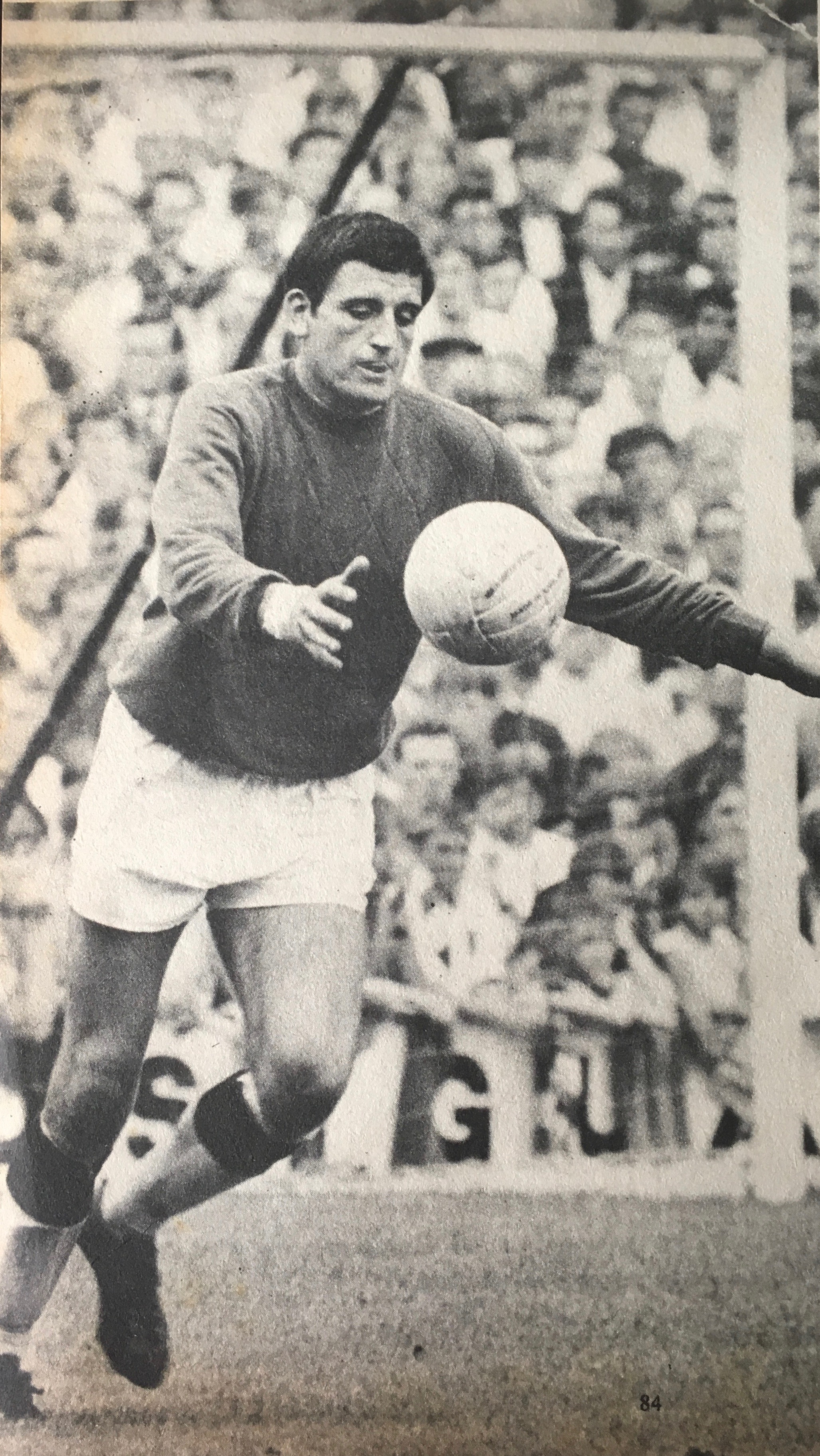
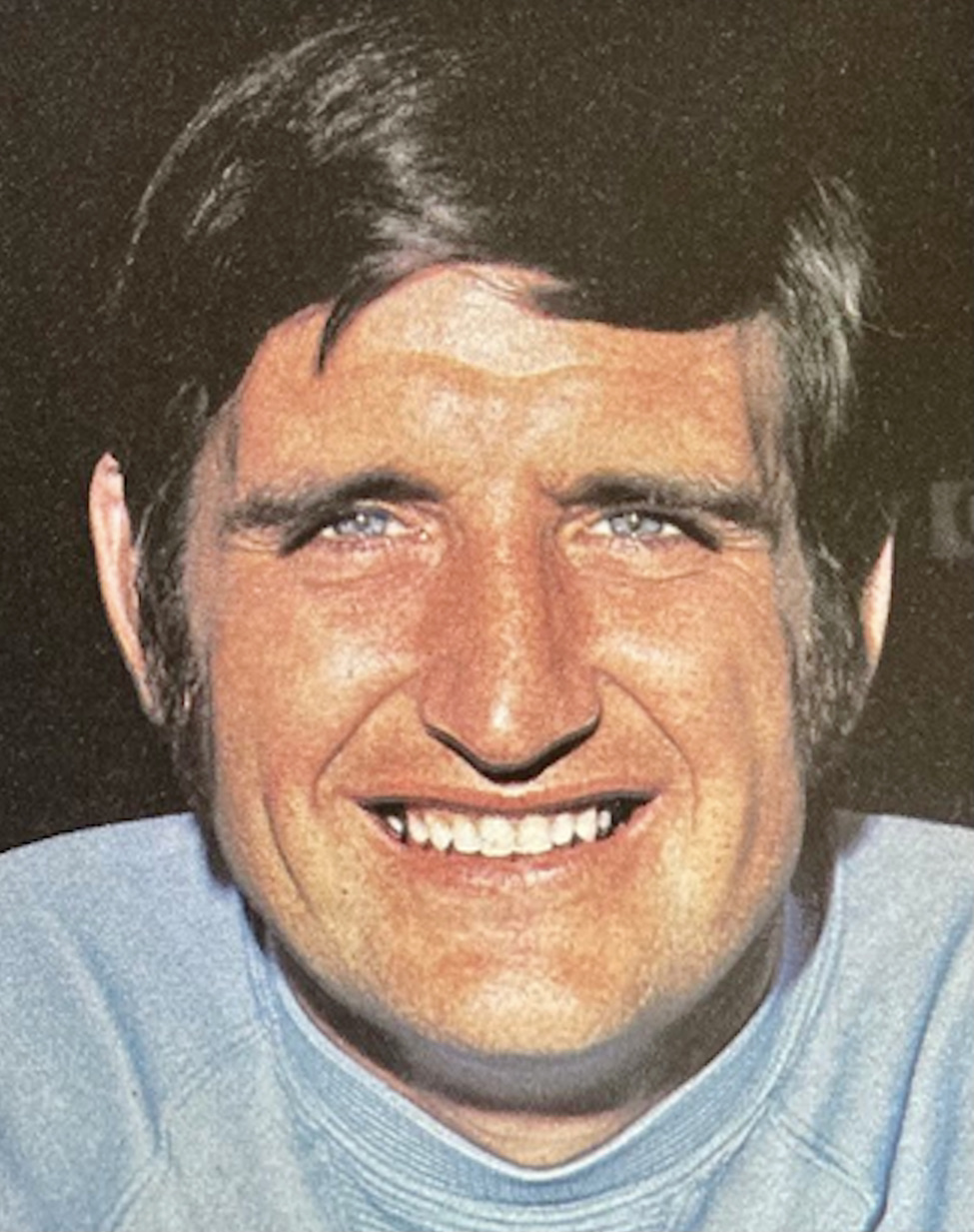
Jackson, who died aged 80 four days after Christmas 2022, had spent the earlier part of the 1982-83 season at Hereford United, who had just finished bottom of the Fourth Division. He had appeared in six matches at the end of a 19-year career. bullsnews.blogspot.com reveals that Jackson was the oldest league player to turn out for United. He was six days past his 40th birthday when he played against Darlington on 11 September 1982.

It was all a far cry from the days when he was Crystal Palace’s first choice goalkeeper for eight seasons. He subsequently followed his former Palace coach George Petchey to Orient (where he played in the same side as Albion’s 1983 FA Cup Final captain Tony Grealish) and Millwall.

It seemed wherever Petchey went, Jackson was sure to go too. When Petchey was Chris Cattlin’s assistant manager at Brighton, he brought in Jackson to coach the Albion goalkeepers once a week. It was certainly a job close to home for Jackson, who lived in Hangleton with his wife and three daughters.

In an interview with Football Weekly News in 1979, Jackson said: “Petchey was coach at Palace, and manager of Orient, when I was with them, therefore I felt it was right to join the devil you know than the one you don’t know! I find George a straightforward and honest man to work with.”

When Petchey returned to the Albion in January 1994, as part of Liam Brady’s backroom team, it wasn’t long before Jackson was added to the staff to help his mentor develop young players.

And after Brady’s departure and Petchey’s elevation to become Jimmy Case’s assistant, Jackson took over running the youth team.

Jackson remained in post throughout the managerial upheavals of Case’s departure, the Steve Gritt reign, and the arrival of Brian Horton. But he left at the end of the 1997-98 season when Horton brought in Martin Hinshelwood as director of youth and former captain Dean Wilkins as youth team coach.

Born in Hammersmith on 5 September 1942, Jackson went to St Clement Danes School and spent time with Brentford as a junior. But it was Palace who swooped to sign him up, as Jackson explained in a 2019 cpfc.co.uk interview.

“Arthur Rowe spotted me playing for a London grammar school against an FA youth XI made up of players from other London teams and he got in touch with my teacher, and from that conversation I ended up having a couple of games with the Palace reserve side aged 18. Then, when I joined full-time, I eventually took the opportunity with both hands, literally!”

Jackson was often described as the best goalkeeper England never had. While he was unfortunate not to earn a full international cap, he played seven times for England Youth between February and May 1961, his teammates including the likes of Bert Murray, Ron Harris, Francis Lee and David Pleat.

He signed as a trainee at Palace in March 1962, and in the 1964-65 season initially shared the ‘keeper’s jersey with Welsh international Tony Millington (whose younger brother Grenville was briefly back-up ‘keeper to Brian Powney at Brighton).

Once Jackson established himself as first choice, he kept the shirt for the next eight seasons. At one stage, he played 222 consecutive games for Palace.

On the where-are-they-now.co.uk website, contributor Martin Wiseman said: “He was definitely one of the best goalkeepers I ever saw as Palace were pretty terrible most of the time and often he was the only thing that kept us in the game. When we played one of the bigger teams, the game was often just a succession of John Jackson saves. Brilliant player.”

Indeed, he was nicknamed ‘Stonewall’ Jackson (after the famous American Civil War Confederate general). Of his mentor Petchey, he said: “He used to work me hard but the harder you worked at your game the more you learned and the better you would become. He made me a more confident player.”

Unluckily for Jackson, it was an era when England were blessed with a string of fine goalkeepers. Apart from Gordon Banks, there was Gordon West (Blackpool and Everton), Jim Montgomery (Sunderland), Peter Bonetti (Chelsea) and, at under 23 level, Peter Grummitt was preferred.

The closest Jackson came to senior international recognition came on 17 March 1971 when he kept goal for a Football League XI that beat a Scottish League XI 1-0 at Hampden Park. Ralph Coates scored the only goal of the game and the English line up included World Cup winners Bobby Moore and Geoff Hurst. Playing in defence alongside Moore were Paul Reaney (Leeds), Roy McFarland (Derby) and Derek Parkin (Wolves).

Jackson’s reign between the sticks for Palace came to an end when flamboyant Malcolm Allison took over as manager. Palace fans were not happy. In the book We All Follow The Palace edited by Tony Matthews (Eagle Eye 1993), Keith Brody wrote: “When Jacko left us, it marked the end of an era, culturally as well as football-wise.

“It is oddly fitting that he was swept away with the same disrespect that has come to symbolise the generation that replaced his ilk. Even though we have plenty to thank Big Mal for, his treatment of our hero means it should always be done through clenched teeth.

“It would have been offensive if a loyal, but crap, goalkeeper had been replaced by Paul Hammond and Tony Burns, but to do it to Jacko was unthinkable.

“Watching the ineffective Hammond for three long years after the joys of Jackson was almost unbearable. Every game was spent pondering on the value of what we’d given away.”

It was on 16 October 1973 that Jackson followed his former coach Petchey to Orient for £25,000 (Gerry Queen, Phil Hoadley, Bill Roffey and David Payne were other ex-Palace players who made that switch) and at Bloomfield Road he went on to attract a whole new band of admirers. Indeed, in Tony McDonald’s book Orient in the 70s, Jackson is described as “Orient’s greatest ever goalkeeper”.

Palace did give Jackson a testimonial match, however, and on 11 December 1973, a Selhurst Park crowd of 11,628 turned out for a match opponents Chelsea won 3-1.

Orient were a second tier side throughout Jackson’s time at the club, during which they had some unsuccessful tilts at promotion but enjoyed some exciting FA Cup runs, including making it to the semi-final in 1978 before losing 3-0 to Arsenal.

Their run to the semis included a memorable fifth round replay win over Chelsea, with Jackson pulling off a superb save to deny Clive Walker an equaliser as Orient clung on to a 2-1 lead courtesy of two Peter Kitchen goals.

Jackson had taken over from Ray Goddard as Orient’s no.1 and it must have been a very happy Christmas for him when promotion contenders Orient beat Palace 3-0 at home on Boxing Day 1973 in front of a bumper crowd of 20,611.

Come the end of the season, they missed out on promotion by a single point to Carlisle United after failing to beat Aston Villa (it was 1-1) in front of another huge crowd of 29,766, and the LWT cameras for The Big Match.  Days earlier Villa had lost 2-0 at Carlisle for whom Graham ‘Tot’ Winstanley proved an able deputy for suspended captain Bill Green.

Another memorable game filmed for The Big Match saw Jackson concede three on 7 April 1979 when Albion were on their way to promotion from the Second Division. Orient took the lead at Brisbane Road but Brighton equalised thus: “Paul Clark cracked in a seemingly unstoppable shot, miraculously John Jackson parried the effort but only to Peter Sayer, and (pictured above) the little Welshman slammed the ball joyfully into the home goal,” the matchday programme recorded. The game eventually finished 3-3, Albion’s other goals coming from Martin Chivers (his only one for Brighton) and Clark.

Three years earlier, Orient were finalists in the rather curious Anglo-Scottish Cup tournament of that time: 16 English teams and eight Scottish sides played a mix of group stage games and two-legged knockout matches.

Orient topped their group above Norwich, Chelsea and Fulham; they beat Aberdeen 2-0 on aggregate in the quarter finals and Partick Thistle 4-2 in the semis. They eventually lost out 5-1 on aggregate to Nottingham Forest, but it was Brian Clough’s first piece of silverware as Forest manager, and he said in his biography: “Those who said it was a nothing trophy were absolutely crackers. We’d won something, and it made all the difference.”

In common with many other English players at the time, Jackson tried his luck in the United States and in 1977 played for St Louis Stars, returning in 1978 when they became Californian Surf. His head coach was John Sewell, who’d been a playing colleague at Crystal Palace and Orient. Ironically, his predecessor at St Louis was Bill Glazier, the former Coventry City ‘keeper, who’d also been his predecessor at Palace.

It was the arrival of former West Ham ‘keeper Mervyn Day at Brisbane Road that signalled the end of Jackson’s time in Leyton and, in August 1979, Petchey, who’d taken over from Gordon Jago as boss at Millwall, signed him for £7,500.

“I have been in the game too long to end it in the reserves and decided that if I was to finish playing, it would be in the first team,” Jackson told Football Weekly News.

The then Third Division Lions went on to win the league. Jackson played a total of 53 matches for them that season and he was chosen by his fellow professionals in the 1979-80 PFA team of the year. (Former Brighton winger Tony Towner played 50 games for Millwall that campaign and scored 13 goals)

After two years with Millwall, by a curious turn of events, Bobby Robson signed him for the previous season’s First Division runners up Ipswich Town as a back-up to Paul Cooper.

His one league appearance for Ipswich was in a top-of-the-table clash against Manchester United, with Ipswich needing to win to stay in with a chance of winning the League Championship. And they did, 2-1, with John Wark scoring both and John Gidman replying for United.

The game was played in front of a 25,763 crowd at Portman Road and Jackson was given a standing ovation at the end after he’d pulled off three important saves. Robson was quoted in the Guardian as saying: “We have paid him a year’s salary to make those saves, but it was worth it!”

However, while Ipswich finished the season five points ahead of United, they were once again runners up, finishing four points behind champions Liverpool.

Even a second placed finish was enough to convince the English FA to give Robson the job of replacing Ron Greenwood as England manager after the country’s unbeaten exit from the World Cup in Spain.

While Jackson might have thought his playing days were over, they weren’t quite. Frank Lord signed him for Fourth Division Hereford United. Lord wasn’t long in the job, though, and he was succeeded by the Bulls’ long-serving former ‘keeper Tommy Hughes, who had played on loan for Brighton in 1973.

Jackson’s move into goalkeeper coaching at Brighton under Cattlin was to prove a career-defining moment for another top goalkeeper of that era: former Manchester City custodian Joe Corrigan.

“I got talking to him and it inspired me to look into doing something similar,” Corrigan told the Manchester City matchday programme on 29 September 2018. “So, it was down to Brighton indirectly that I moved into the next phase of my career.”

Corrigan had been signed by Jimmy Melia and was coming to the end of his illustrious playing career. He fell out with Melia’s successor, Cattlin, and went on loan to Stoke City, but eventually was forced to quit after being injured in an Albion reserve match.

He went on to become goalkeeper coach at Liverpool for 10 years, and also worked at Stockport, West Brom and Hull.

Jackson took a variety of different jobs outside of football – fitting blinds, working for a golf magazine, selling golf equipment and as a courier for Lewes Council. During his second spell back at the Albion, amongst the youngsters he took through was goalkeeper Will Packham.

Jackson signed him on as a YTS trainee after he left Blatchington Mill School in Hove, and he spent nine years on the club’s books.

Back-up ‘keeper Alan Dovey’s limited chances to shine

THE LIFE of a back-up ‘keeper can be pretty soul destroying, with first team opportunities often few and far between.

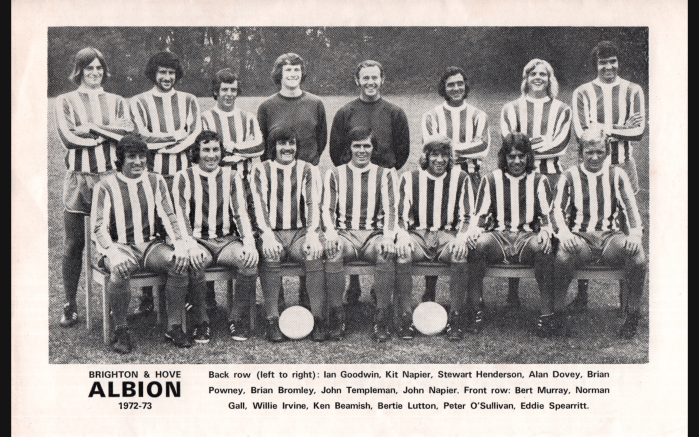
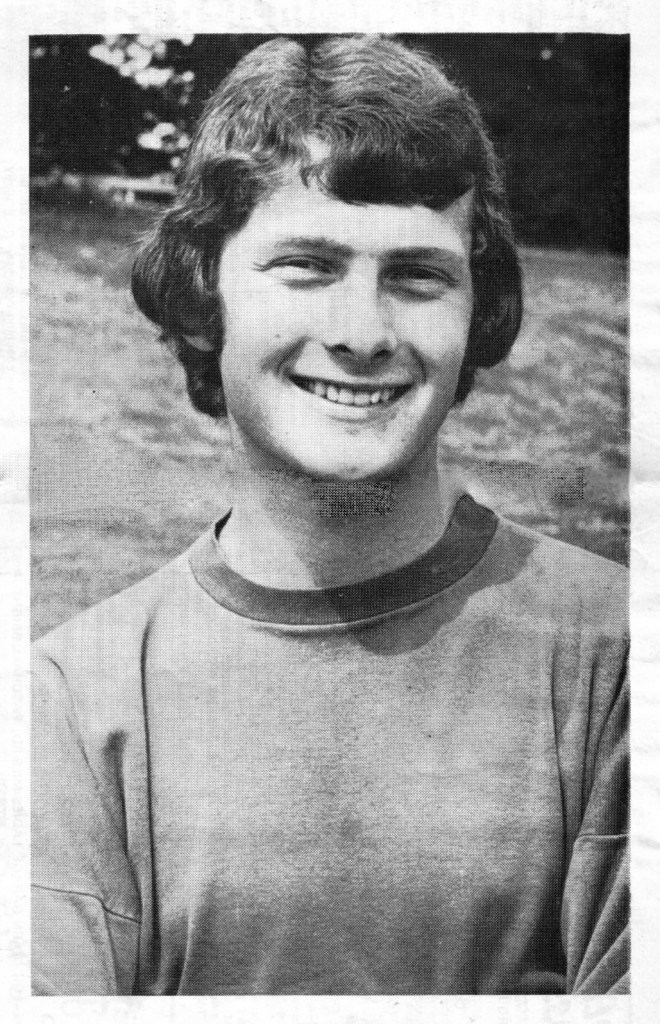
Such was the lot of former Chelsea youngster Alan Dovey, who was deputy to longstanding no.1 Brian Powney at the start of the 1970s, and only played eight first team matches for Brighton in two years.

Dovey initially joined on loan in March 1971. Powney’s rival for the no.1 shirt at the start of the season had been the experienced Geoff Sidebottom but he had been forced to retire because of a head injury.

Saward subsequently brought in Ian Seymour from Fulham on a temporary basis when Powney was out for three games, but Chelsea boss Dave Sexton, who’d previously played for the Albion, did his old side a favour by lending them youth team goalie Dovey until the end of the season.

He had to wait until the last two games before getting his chance to shine, making his debut in a 3-1 win away to Bristol Rovers and then appearing in the season’s finale at Wrexham, which ended in a 1-1 draw.

The loan became a permanent transfer that summer, Albion securing the young ‘keeper’s services for £1,000.

He played three times in Albion’s 1971-72 promotion season, and manager Pat Saward appeared content with the youngster, telling Goal magazine “It’s hard having to leave him out again, but what can you do. Chelsea manager Dave Sexton did us a great favour when he let Alan go for £1,000.”

His first game of the season was at Carrow Road, Norwich, when Albion were knocked out in the second round of the League Cup 2-0.

However, under the headline ‘Dovey’s daring display’ the matchday programme declared: “Despite the 2-0 defeat, the former Chelsea goalkeeper had a fine game and thrilled spectators with some daring saves. He had been nursing an injury and this was an in-at-the-deep-end experience but he came through it with great credit.”

It was more than three months before he got his next first team outing, but he once again earned rave notices for his performance in a 2-1 win away to York City, earning Albion’s Man of the Match accolade from Evening Argus reporter John Vinicombe.

The following matchday programme reported: “It was ‘all go’ for Alan. He had to race out of his goal in one York raid and was booked for an infringement, and also had numerous adventures in keeping out shots, centres and breaking up penalty box scrambles.”

Dovey was only ever back-up to Brian Powney

Saward didn’t next call on Dovey until 15 March, a 1-0 home defeat to Oldham Athletic which temporarily put the brakes on Albion’s bid for automatic promotion. Remarkably, that game against Oldham (which also saw a debut as substitute from new signing Ken Beamish) was the first time Dovey had played in front of the Goldstone faithful.

When Albion entertained Exeter City in the first round of the League Cup on 16 August 1972, the crowd may have been 6,500 down on the attendance for the season opener against Bristol City four days earlier but the game presented Dovey with another chance to show what he could do. (The game also saw the return of former captain John Napier to the centre of defence, although he was most likely being ‘shop windowed’ with a view to a transfer).

It is interesting to read an Exeter-angled summary of the game, which declared: “There was no denying that the first half belonged to City, and they deservedly led after 22 minutes with Fred Binney’s goal. There were a few moments early on when the back four and reserve goalkeeper Alan Dovey were little more than strangers in the night. 

“Eventually the pattern knitted together and Dovey gained confidence to make two fine saves in the last 20 minutes from Binney (who two years later joined the Albion in exchange for John Templeman and Lammie Robertson) and Dick Plumb – shots that could so easily have caused a shock defeat.”

Albion eventually prevailed thanks to goals from Willie Irvine and Beamish.

The two league matches Dovey featured in that season were not games he’d look back on fondly. Away to Preston North End on 25 November, Albion’s rookie ‘keeper conceded four when he deputised for ‘flu-hit Powney.

It was the same scoreline at Sunderland, who hadn’t won in 11 games, but who went on to reach that season’s FA Cup Final in which they famously beat Leeds United 1-0.

The Wearsiders hadn’t won at home since September but Brighton went to Roker Park having lost their previous nine matches and, according to the Sunderland Echo, “The winning margin could well have been doubled…. they applied themselves to the task of mastering Brighton’s strong-arm tactics and taking them apart.”

Sunderland took the lead in the ninth minute. Joe Bolton’s hammered left-foot shot struck Dovey in the face, knocking him over, and Billy Hughes pounced on the rebound to drive home a low shot.

Dennis Tueart added a second in the 45th minute and Brighton found the going tougher still in the second half.

After surviving a goalmouth scramble, Sunderland got their third goal in the 58th minute. A free-kick against George Ley for pushing Tueart was taken by Bobby Kerr, whose well-placed drive to the near post was brilliantly headed into goal by Hughes.

Hughes twice came close to completing a hat-trick but it was Bolton who hit what the Echo described as the goal of the game: “a right-foot drive, of such power that Dovey had no chance”.

Struggling to come up with a solution to the disastrous run, Saward went public and started to point the finger at players who he reckoned weren’t cutting it.

Dovey was transfer-listed along with veteran defender Norman Gall and Bertie Lutton. Lutton got a surprise move to West Ham but Gall stayed put and Dovey was released at the end of the season without playing another game.

Born in Stepney on 18 July 1952, Dovey grew up in Chadwell St Mary in Essex and played for Thurrock Boys before joining Chelsea straight from school in 1968 after writing to them to ask for a trial.

He became a youth team regular as well as playing a handful of games for the reserves. On 18 January 1969, he was in goal for a Chelsea side (which also included future first teamer and England international Alan Hudson) when they beat Brighton 5-2 in a South East Counties League youth team fixture.

It was always going to be difficult for Dovey to progress at Stamford Bridge because Worthing-born Peter Bonetti was an almost permanent fixture in Chelsea’s first team and he was understudied initially by Scotland under-23 international Tommy Hughes (who later played three games for the Albion on loan from Aston Villa in 1973) and then future Welsh international John Phillips, who was briefly Graham Moseley’s back-up during Albion’s second season (1980-81) in the First Division.

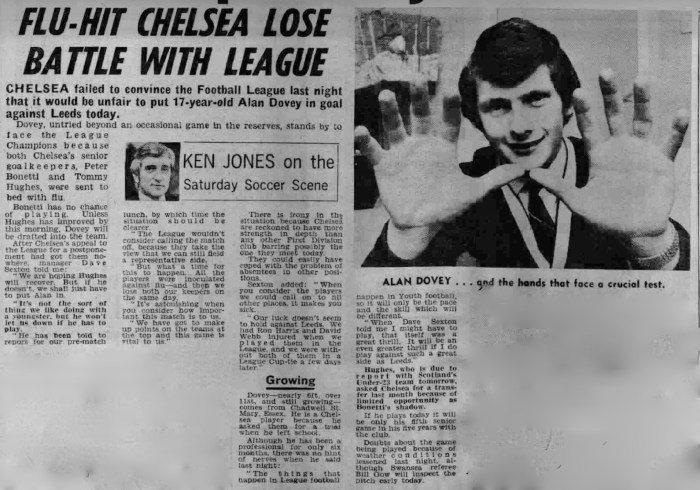
However, Dovey made national newspaper headlines when he came close to making a first team appearance on 10 January 1970.

Both Bonetti and Hughes went down with ‘flu ahead of a key match between third-placed Chelsea and Leeds United, who were in second place. Chelsea tried to get the game postponed but the Football League wouldn’t hear of it.

The Daily Mirror reported: “Chelsea failed to convince the Football League last night that it would be unfair to put 17-year-old Alan Dovey in goal against Leeds today.

“Dovey, untried beyond an occasional game in the reserves, stands by to face the League Champions.”

Veteran football reporter Ken Jones wrote: “Bonetti has no chance of playing. Unless Hughes has improved by this morning, Dovey will be drafted into the team.”

Chelsea boss Sexton told Jones: “We are hoping Hughes will recover. But if he doesn’t, we shall just have to put Alan in.

“It’s not the sort of thing we like doing with a youngster, but he won’t let us down if he has to play.”

Jones noted that although Dovey had only been a professional for six months, he didn’t display any nerves when interviewed.

“The things that happen in League football happen in youth football,” Dovey told him, “so it will only be the pace and the skill which will be different.

“When Dave Sexton told me I might have to play, that itself was a great thrill. It will be an even greater thrill if I do play against such a great side as Leeds.”

As it turned out, Hughes was adjudged fit after all, although he might have regretted it. In what was only his fifth senior game in five years at the club, he shipped five goals as United won 5-2 in front of a Stamford Bridge crowd of 57,221.

In August that year, Dovey was once again on standby to step up to the first team squad when Hughes suffered a broken leg. But Sexton went into the transfer market instead and bought Phillips from Aston Villa.

The Goldstone Wrap in 2014 noted Dovey stepped away from full-time football after the Albion let him go to pursue a career in insurance. Nevertheless, he played part-time for various Sussex clubs.

Notably he was at Southwick, along with former Albion teammate Paul Flood, at the same time as Ralf Rangnick, later to take temporary charge of Manchester United, was on their books.

Dovey also played for Worthing for three seasons, in their double promotion-winning squad of the early ‘80s, until, in April 1984, manager Barry Lloyd publicly criticised him, telling the Argus: “Alan has done exceptionally well for us over the past three years, but he’s not really aggressive enough in this premier division.”

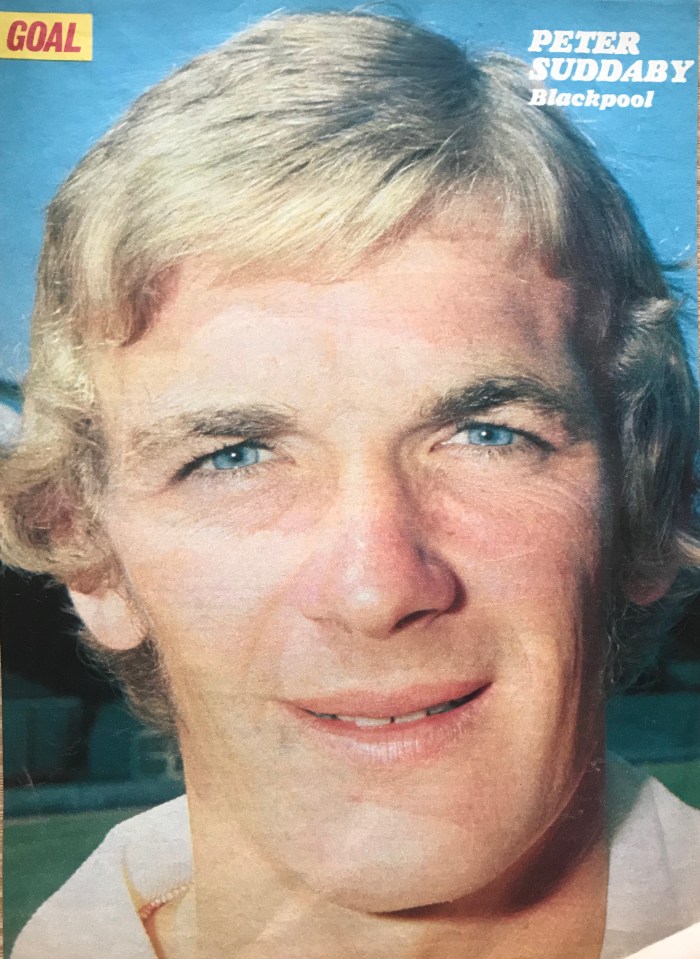
Outcast Peter Suddaby was Albion top-flight saviour

PETER SUDDABY spent nearly 10 years at Blackpool before playing a key role in Brighton’s inaugural top-flight season. The university graduate later spent a season with the Seagulls as a coach.

Albion had been struggling to adjust to the old First Division after promotion from the second tier in 1979 and it hadn’t helped that star defender Mark Lawrenson missed 12 matches following a bad ankle ligament injury at Spurs.

When Lawrenson was ready to return for a crunch match away to Nottingham Forest on 17 November 1979, instead of putting Lawrenson in the back line, manager Alan Mullery put him in midfield and thrust new free transfer signing Suddaby into the defence alongside Steve Foster.

Suddaby was 31 and had been playing for Third Division Blackpool’s reserve side at the time, so it was certainly a bold step but Mullery said: “I signed Peter because of his attitude to football. Whenever I played against him he struck me as being one of the worst losers in the game.

“If Blackpool were losing by five goals, he’d still be trying as hard as ever, and that is the sort of character we needed in the team.”

Mullery’s gamble paid off because at the City Ground Gerry Ryan’s 11th minute goal (not to mention Graham Moseley saving a John Robertson penalty on the stroke of half-time) gave Albion an unexpected victory against a Forest side who hadn’t lost at home for two years.

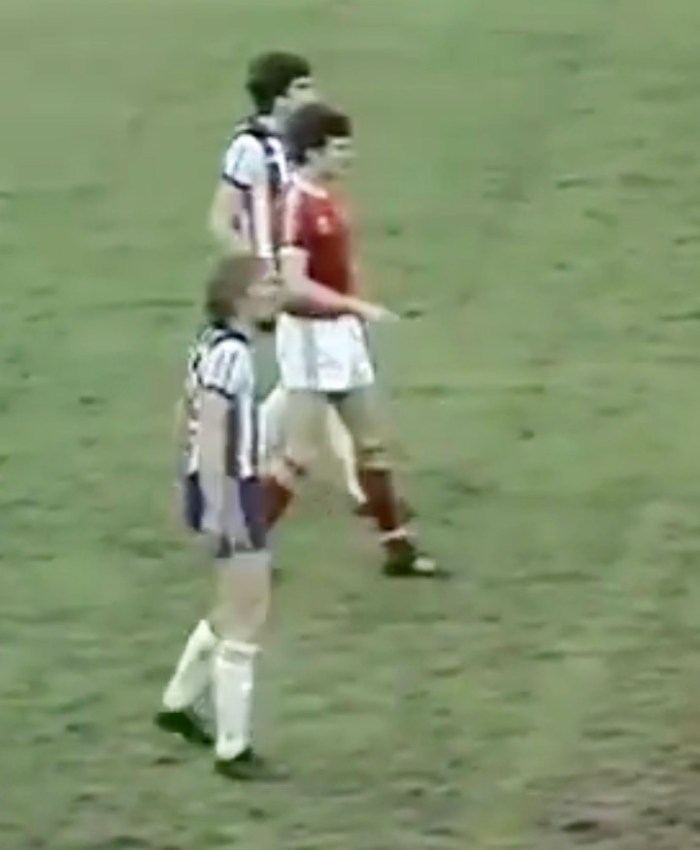
The game earned top billing on Match of the Day and Mullery hailed Suddaby after the game, telling commentator Barry Davies: “He’s got something to live up to, the boy, because he had a tremendous game today up against Garry Birtles.” (see still from footage, above)

Suddaby later told Shoot! magazine: “Forest are a very good side, but we defended well against them and had that little bit of luck we needed. Everyone in the Brighton side buckled down and gave everything.

“Alan Mullery has given me a chance to prove myself in the best league in the world, and I certainly do not wish to let him down now.”

Plaudits from journalists continued as Albion built on the victory at the City Ground with successive victories over Christmas against Wolves and Crystal Palace taking the club out of the bottom three for the first time that season.

Suddaby in an aerial battle with Coventry’s Garry Thompson at the fenced-in Goldstone

Jack Steggles in the Daily Mirror wrote: “Alan Mullery, ready to spend a million to buy his way out of trouble, could find salvation in a man who cost him nothing. For Brighton’s chances of survival have looked a lot brighter since he signed university graduate Peter Suddaby on a free transfer from Blackpool. Suddaby’s arrival has stiffened the defence and Brighton have bagged five points from three games.” (there were only two points for a win in those days).

thegoldstonewrap.com recalled: “Suddaby definitely didn’t let Brighton down. His strong, determined tackling and ability in the air at the heart of defence was an important factor in moving Albion up the table.”

Mullery told Shoot! that he’d tried to sign Suddaby the previous season but Bob Stokoe, Blackpool’s manager at the time, refused to let him go. “He’s a tremendous winner and is just the sort of player we needed,” said Mullery.

When Suddaby lost his place in the Tangerines side under Stokoe’s successor, Stan Ternent, Mullery was quick to seize the moment.

“My career wasn’t going anywhere, and a move to the First Division was the perfect remedy,” said Suddaby, who admitted he’d been hoping for a return to the top flight since Blackpool dropped out of it. “Obviously it wasn’t easy to adjust after playing two games in the reserves and I was sad about leaving Blackpool,” he said. “But it was made clear to me that I was fourth in line for the centre-half position, so I made up my mind to move if the opportunity arose.”

Suddaby continued: “I wanted a challenge and still felt I had something to offer which is why it didn’t worry me to join a struggling club.”

Even back then, Blackpool, who’d dropped down to the Third Division, were beset with boardroom issues which the defender said had “rubbed off on the players and gave the club an unsettled atmosphere”.

Albion only lost five of the 21 games Suddaby played in and succeeded in avoiding relegation. In another Shoot! article, Mullery said of Suddaby: “He may not be a big name, but Peter does it for me week in, week out. I know I can rely on him to turn in a good performance.”

Suddaby looked forward and said: “We have enough good players to build on what we did last season.

“The club think big and I’m delighted to be part of their success. I didn’t think I’d ever play in the First Division again, but now I’ve been given this chance I mean to make the most of it.”

Unfortunately, in May 1980, Suddaby’s back gave way while out walking – a reaction to an operation five years previously when two discs were removed – and, instead of being part of Albion’s second season at the top, he spent nine months trying to recuperate.

Mullery told Phil Jones of BBC Radio Brighton: “The football club needs players of his calibre. He’s good for everybody – a tremendous professional who immediately stamped his authority on the place. I cannot speak too highly of his service to the Albion.”

Sadly, while Suddaby did recover to play for Albion’s reserves, he was not fit enough to return to first team duties.

He tried to extend his playing days with a move to Wimbledon, where he made half a dozen appearances, and then returned to his former club Wycombe Wanderers. He played 10 games in 1982, and then moved on to Isthmian League Hayes in December 1982, eventually becoming player-coach in September 1984. At the same time, he reverted to his original plan and taught maths at the American School in Uxbridge.

Born in Stockport on 23 December 1947, Suddaby was the only son of a garage proprietor, and when he was still young the family moved to north Wales where his father took over a caravan park.

Suddaby started school at Gronant Primary School near Prestatyn, where no football was played, but the local village under 16s played him on the wing when he was aged just 10, and he developed a liking for the game.

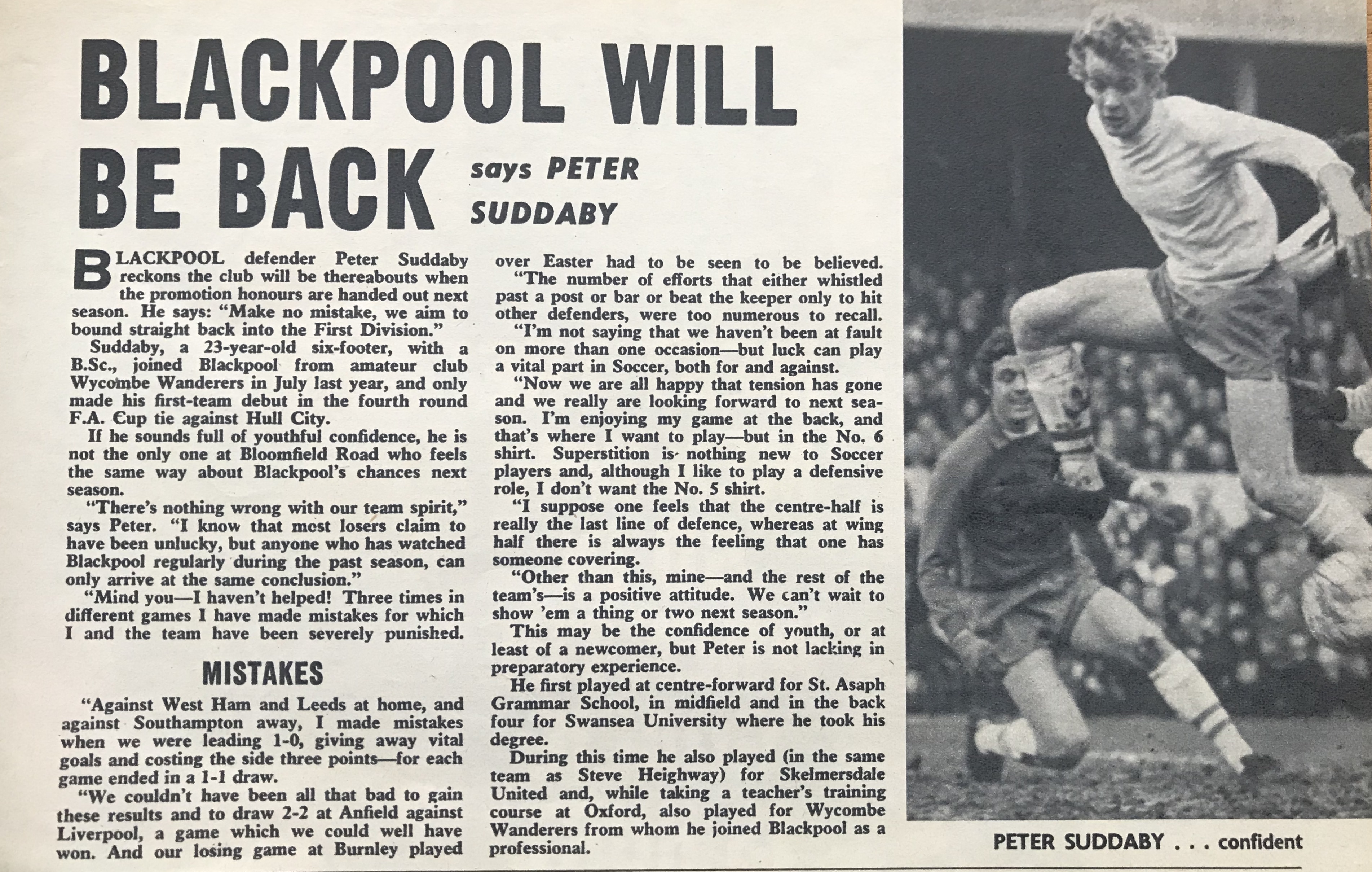
When he moved on to St Asaph Grammar School, he became a regular in the school teams. In those days he was a centre-forward and it was in that position he earned his first representative honour when he was selected for Flintshire County Schools.

Suddaby earned A-level passes in Maths, Physics and Chemistry with an eye to moving on to university although, while in the sixth form, he turned out for various Welsh League clubs and for Rhyl in the Cheshire League.

He gained a place at Swansea University and, while doing a three-year BSc course in Maths, played football for the university and Welsh Universities and British Universities, by now as a defender.

After going to Lilleshall on a university coaching course, he was chosen by former Hove Grammar School teacher Mike Smith, later the manager of Wales, for a universities team to play against several non-league sides, one of which was Skelmersdale United.

They were among the top amateur sides at the time and Suddaby agreed to join them, travelling each weekend from Swansea back to the family home in north Wales, from where he was just over an hour’s drive to Skelmersdale.

Amongst his teammates were Steve Heighway, later to gain fame at Liverpool, and Micky Burns, who became a playing colleague at Blackpool.

After gaining his degree at Swansea, Suddaby took a post-graduate course at Oxford University to gain the necessary qualification to become a teacher.

While there, he started playing for Wycombe (then non-league) and gained a Blue playing for Oxford University in the Varsity match at Wembley in December 1970.

Three days later he earned the first of three amateur international caps when he was chosen to play for England against Wales at Cardiff.

With his teacher qualification under his belt, he signed for Blackpool as an amateur in the summer of 1970 and played a few games towards the end of 1970-71 season, when they were relegated from Division One, and then turned professional.

“1 hadn’t really thought too much about becoming a professional,” he told Shoot! “I’d virtually decided that my future was as a teacher.

“Looking back, I have no regrets apart, possibly, that I didn’t join a league club a couple of years earlier. On the other hand, I am happy that I finished my education. University life taught me a lot and developed my character.”

Suddaby ended up spending nine and a half years at Blackpool, making 331 appearances, most of which came in the second tier where the Tangerines were a top 10 side for six consecutive seasons, narrowly missing out on promotion back to the elite in 1974 and 1977, but then being relegated to the old Third Division in 1978.

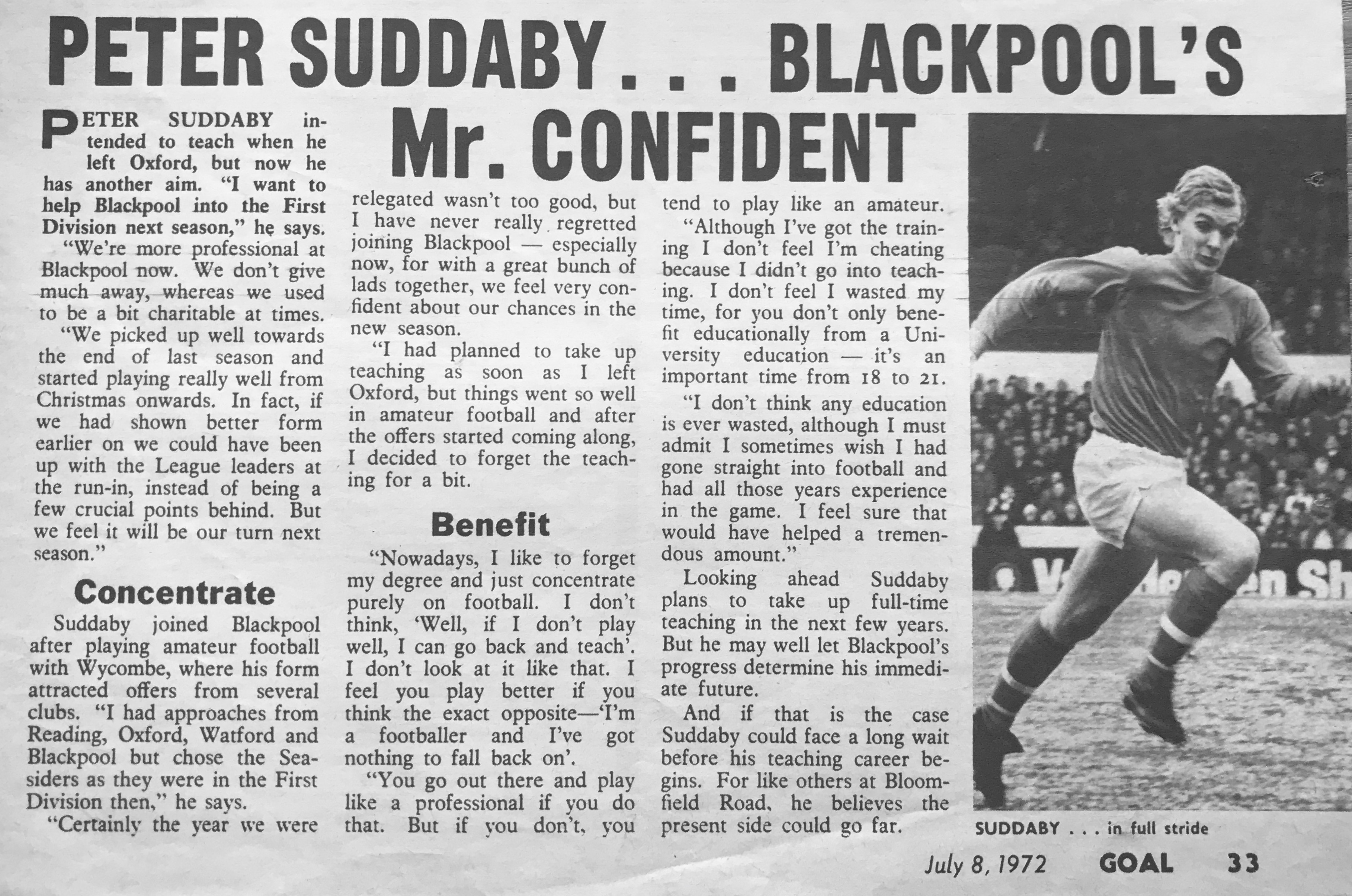
“I had approaches from Reading, Oxford, Watford and Blackpool but chose the Seasiders as they were in the First Division then,” he told Goal magazine in a July 1972 article. “The year we were relegated wasn’t too good, but I have never really regretted joining Blackpool.

“I had planned to take up teaching as soon as I left Oxford, but things went so well in amateur football and, after the offers started coming along, I decided to forget the teaching for a bit.”

He was part of Blackpool’s 1971 Anglo-Italian Cup winning team (below), managed by Stokoe, alongside the likes of Tony Green, Paul Hart, Alan Ainscow and Tony Evans.

Unlike many players, Suddaby always knew he had teaching to fall back on as a career, but he also got coaching qualifications to enable him to stay in the game as a coach or manager.

When Mullery returned to manage Brighton in the summer of 1985, he appointed Suddaby as his first team coach while Barry Lloyd was put in charge of the reserves.

Brighton coach Suddaby

Mullery’s second term ended acrimoniously in early January 1986. Suddaby stayed on at the Albion under Lloyd but left at the end of the season. He went back to Wycombe as manager in August 1987 but was only in charge for five months.

Suddaby subsequently joined the coaching staff at Tottenham Hotspur, serving as the club’s academy director between July 1995 and April 2004.

During that period, he helped nurture the talent of the future, seeing the likes of Peter Crouch and Ledley King break through into first team football.

They didn’t all turn to gold though. Leigh Mills was at Spurs for five years, captained the England under-16s and was capped for his country at under-17 level.

“By his regular selection for the England under-17 team, Leigh has been recognised as a leading player at his age in the country,” Suddaby told theguardian.com in November 2004. “He has an excellent attitude to maintaining his football progress, and we have great hopes that he will play at a very high level.”

However, Mills ended up on loan at Brentford and Gillingham briefly before playing non-league.

When youngster Phil Ifil broke into the Spurs first team, in 2004, Suddaby said in an interview with the Standard: “Neither I nor my coaches will ever say we made Phil Ifil or any other player. We provide them with an opportunity, and they make themselves.

“The satisfaction we get from seeing them make it is massive, though. We try to get kids from local areas and we use that as a lever because they can see if they come here, they will get a chance.

“It is difficult for kids in football these days, particularly at big clubs. But at Spurs we try and give them knowledge about all sorts of things including the media and even driving lessons. We try to make them confident young men and give them a chance.

“As an academy, we sometimes don’t push ourselves into the limelight but we have produced players like Stephen Clemence and Luke Young, both playing in the Premiership, as well as those now getting their chance in the first team at Spurs.

“But without doubt Ledley is our jewel in the crown. We can only show them the door to success – it’s up to the kids to kick it down.”

After leaving Spurs, Suddaby reverted to maths teaching, working at independent girls school Maltmans Green, in Chalfont St Peter, for nearly 13 years before retiring in August 2018.

The following year, it was reported Suddaby suffered a stroke and, in February 2020, he and former Wycombe teammate Keith Samuels visited Buckinghamshire Neurorehabilitation Unit (BNRU) at Amersham Hospital to make a donation towards the sort of equipment that helped Suddaby recover from his illness.

Pictures from Goal magazine, the Argus, the matchday programme and online sources.

Goalkeeper John Phillips – the ‘unenviable understudy’

JOHN PHILLIPS was a Welsh international goalkeeper who played for Chelsea and Aston Villa before becoming a back-up at Brighton under Alan Mullery.

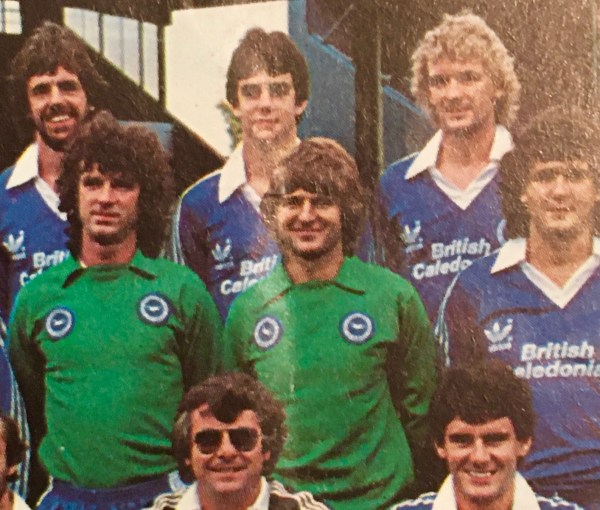
A £15,000 fee took him to the Goldstone Ground as no.2 to Graham Moseley in 1980 and, possibly the most interesting thing about his time at Brighton was his appearance in the centre of the pre-season team photo (see below) alongside Moseley in which both ‘keepers rather oddly wore green jerseys sporting two Seagulls badges!

JP 2 badge colourPreviously an understudy to the legendary Chelsea goalkeeper Peter Bonetti, Phillips did have occasional first team spells at Stamford Bridge, including playing in earlier rounds of the successful European Cup Winners’ Cup campaign of 1970-71.

When he died aged 65 on 31 March 2017, the Chelsea website paid a warm tribute to his contribution.

JP prog notes

At Brighton he featured 19 times for the reserves but only played one first team game. That came in front of a bumper festive season Goldstone crowd of 27,387 on 27 December 1980 (as seen above on my amended programme teamsheet) as the Seagulls beat traditional rivals Crystal Palace 3-2; a brace from Michael Robinson and Peter O’Sullivan with the Albion goals.

IMG_6433The following month, it looked like he might get a second game after Mullery publicly blamed first-choice Moseley for the side losing six points, and told the Argus Phillips would come in for the next match unless he could sign another ‘keeper.
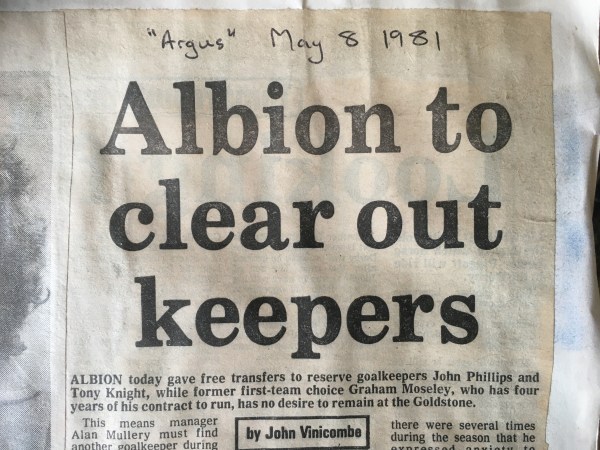
Mullery promptly went back to his old club, Fulham, and splashed out £150,000 on unknown youngster Perry Digweed – pushing Phillips further down the pecking order.

IMG_6431At the end of the season, Phillips and Tony Knight, a young ‘keeper who didn’t progress to the first team, were released on free transfers. It was also reported that Moseley was on his way, but Mullery’s shock departure that summer gave him a stay of execution.
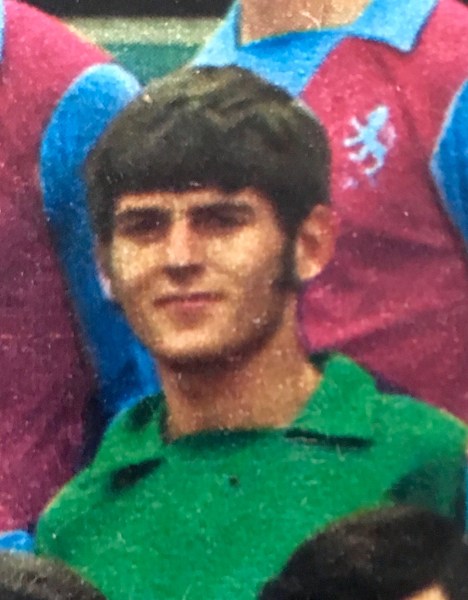
Disgruntled Mullery swapped managerial seats with Mike Bailey, who’d just led Charlton Athletic to promotion from the old Third Division,

Phillips was one of his first signings. However, he only played two games for Charlton, so he was to endure another frustrating spell of being the understudy.

Contributor Richard J on charltonlife.com remembered how Phillips replaced first choice Nicky Johns in the first away game of the 1981-82 season – a 3-0 defeat at Luton Town.

“Nicky returned for the next game and Phillips’s only other game was away at Leicester. Unfortunately, we lost that game as well, 3-1.”

But Richard continued: “I work with Tony Lange who took over from the Welsh international as Charlton’s number two keeper. He felt that John was a big influence on his career.

“Apparently, Phillips was exceptionally good at distribution and this was one of the reasons he had played so much for Chelsea and Tony credits him as a big influence on that part of his game.”

He moved from Charlton to Crystal Palace but he didn’t feature for their first team at all. He then tried his luck in Hong Kong, with See Bee.

Born in Shrewsbury on 7 July 1951, Phillips went to the Grange School in Shrewsbury and, because both his father and grandfather played league football for Shrewsbury Town, it was no surprise when he also signed for Town. He made his debut in 1968 at the age of 17.

A big influence on him was the former Manchester United and Northern Ireland goalkeeper, Harry Gregg, who was manager at Gay Meadow between 1968 and 1972.

In an early edition of Goal magazine, Gregg said: “He’s the finest goalkeeping prospect I have seen. He seems to have every asset in the book and his temperament really stands out.”

J Phil VillaPhillips played 51 times for the Shrews before being bought in 1969 by Tommy Docherty, the former Chelsea boss who’d taken over as Aston Villa manager.

After only 15 games for Villa, in August 1970, Chelsea paid a fee of £25,000 to take Phillips to Stamford Bridge.

The regular back-up ‘keeper, Tommy Hughes, who went on to have a loan spell at Brighton in the 1972-73 season, was out injured with a broken leg at the time and Chelsea needed someone to deputise for Bonetti, who only two months earlier had been criticised when having to take over in goal from ill Gordon Banks as England lost 3-2 to West Germany in the 1970 World Cup quarter final in Mexico.

Phillips stayed with Chelsea for 10 years and played a total of 149 games for the club. He managed 23 league and cup games during the 1972-73 season owing to Bonetti’s absence through injury and illness.

In October 1973, Goal ran a series called The Understudies and featured the rivalry between Phillips and Bonetti. Bonetti said of him: “John is a first-class ‘keeper and has pushed me more than anyone. It’s nice to know you have to play well to keep your place.”

Phillips told the magazine’s David Wright: “We are rivals, yes, but friends as well.”

It was only in the 1974-75 season that Phillips had an extended run of games as the no.1.

Although kind things were said of him when he died, not all recollections were favourable. The footballnetwork.net, for instance, said: “Phillips always conceded a lot of goals. Is this because he was awful or his defence and midfield were woeful? I suspect that it was a bit of both. Phillips did assist Chelsea in reaching the 1971 European Cup Winners Cup final, but he conceded seven at mediocre Wolverhampton as Chelsea sloped off into a long decline.

“Funnily enough, he shared goalkeeping duties for Wales with one Gary Sprake, a notoriously erratic Leeds goalie, as the late Peter Houseman could have testified!

“Obviously in the early seventies, while the Welsh rugby team had an embarrassment of riches, there was no such luxury in the goalkeeping department.”

Although English by birth, Phillips played for Wales at a time when qualification to play for countries beyond the one in which a player was born was extended to include the homeland of their parents or grandparents. He won four caps in 1973-74, making his debut in a 3-0 defeat to England in front of 38,000 at Wembley on 15 May 1973.

A none-too-flattering recollection can be found in a book charting the history of Welsh international football. Red Dragons – The Story of Welsh Football says: “Sadly a nervy performance by Chelsea goalkeeper John Phillips was responsible for a grim 0-2 defeat at home to England in May 1974.”

Bonetti saw off many pretenders to his throne, but Phillips went closer than anyone to taking his place, according to gameofthepeople.com, which described him as “the unenviable understudy” in an article charting his Blues career.

In the summer of 1975, Chelsea had been relegated and Bonetti given a free transfer, so Phillips was expected to start the new season as first choice ‘keeper.

But he fractured his right leg in training and badly damaged knee ligaments, opening the door for Steve Sherwood to take over between the sticks.

In the 1979-80 season, Phillips was loaned to Crewe Alexandra. Even there, he only played six times for the league side, having to be content with 23 games for their reserves.


  • Pictures mainly sourced from Goal magazine or Shoot! Also the Argus and matchday programme.

Mis-firing Mick Ferguson couldn’t repeat goalscoring prowess for Everton or Brighton

MICK FERGUSON was a prolific goalscorer for Coventry City but the goals dried up in spells with Everton and Brighton & Hove Albion.

Ferguson’s arrival at the Goldstone in the early autumn of 1984 was certainly not amid a great fanfare. The Albion, under new chairman Bryan Bedson, were wrestling with debt and, to bring in some much-needed funds, sold striker Alan Young to Notts County for £50,000 and full-back Mark Jones to Birmingham for £30,000.

Needing a cut-price replacement for Young, and with Ferguson unwanted at Birmingham having been responsible for getting them relegated (see below), he came to the Goldstone as part of the deal that took Jones to St Andrews.

In modern-day football, loan players don’t generally play against their parent clubs but, amazingly, at the end of the previous season, Ferguson was allowed to play against Birmingham while on loan at his old club Coventry, and ended up scoring a goal that kept the Sky Blues in the top division but sent Birmingham down.

It was such an unusual saga that as recently as May 2017, the Guardian revisited the tale, catching up with Ferguson to explain the circumstances.

As the article explains, shortly before the player’s 30th birthday, manager Ron Saunders offloaded him to Brighton, where the manager was Ferguson’s former Coventry teammate, Chris Cattlin. Just to prolong Saunders’ agony, Ferguson made his Seagulls debut in a 2-0 home win… over Birmingham! This time he didn’t score. And, for Brighton, that state of affairs existed for several months.

I remember his second game quite vividly. It was a midweek league cup tie away to Fourth Division Aldershot and I went to the game with my pal Colin Snowball, who at that time was living in nearby Bagshot. There wasn’t anything subtle about Albion’s tactics that night. Goalkeeper Graham Moseley would kick the ball long for Ferguson to get on the end of it.

But, as the striker tried to lay it off, all he succeeded in doing was heading it into touch – repeatedly. The new signing did not impress! Despite their superior status in the league, Albion succumbed 3-0 in what was a pretty humiliating exit. Ferguson was remarkably selected for the following Saturday’s game, an away defeat to Oxford, after which he was omitted for four games. Cattlin gave him another chance with a four-game spell but still the dismal form continued and he didn’t get another look-in for four months.

Freelance journalist Spencer Vignes did a retrospective article about Ferguson for the Albion matchday programme and discovered the striker didn’t have a high opinion of his former playing colleague. “Several of the players just didn’t get along with him, and I was one of them,” he said. “His man-management skills  left a lot to be desired. As a manager you need to have the players on-side. Chris certainly didn’t have us on-side.”

Ferguson admitted to being frustrated by Cattlin chopping and changing the side and said there were times he turned out when only 80 per cent fit, which didn’t do justice to himself, the team or the supporters. “My ankles weren’t great and towards the end I did struggle with my back, but I felt when I was fit I could certainly do a good job.”

The striker felt with the ability in the squad at the time they should have achieved more but pointed the finger at Cattlin for it not happening. “Some people aren’t cut out for management and I don’t think Chris was. It doesn’t surprise me that he never worked as a manager again.”

The history books (many thanks to Tim Carder and Roger Harris) recall him as the goalscorer in a 1-1 draw away to Portsmouth on 6 April 1986 but, having been to that game too, I seem to recall it was a rather desperate claim for what looked more like an own goal by Noel Blake.

The start of the following season saw the arrival of former £1m striker Justin Fashanu from Notts County and Dean Saunders, a free transfer from Swansea City, so Ferguson’s prospects of a starting place looked bleak.

However, the 1985-86 season was not very old before Cattlin had a striker crisis on his hands. Gerry Ryan was out long-term with the horrific leg break from which he never recovered, Terry Connor and summer signing Fashanu were also sidelined with injury and a big man was needed to play alongside Alan Biley.

Cattlin had little choice but to bring back the previously mis-firing Ferguson, and to everyone’s surprise and delight his goal touch returned, albeit briefly.

“I was virtually forced into the team through injury,” Ferguson admitted in a matchday programme interview. “But, fortunately, things turned out quite well. It was nice to get a goal against Blackburn in my first match back. That seemed to pave the way.”

The programme article had tried to give some perspective to the dismal form when he had first arrived. It said: “Mick’s confidence was affected by his loss of form, but he never lost an inner belief that he would pull himself out of the bad patch. And what a difference the goals make. He has shown great character this season and did a marvellous job for the team while Justin Fashanu was out with injury.”

Ferguson himself said: “It took us quite a while to settle down. We were in a flat at first and I was having a lot of problems, one way and the other, so it wasn’t an easy time.”

Eventually Ferguson, his wife and two daughters settled into a house in Hove, and the striker admitted: “When you’re having a bad time there is a tendency to bring your problems home. It’s unfair on your family. I didn’t notice at the time, but, looking back, I think I probably was a little snappy with my wife and children.

“I think you can reach the stage where you really start to wonder, but I always knew I could score goals for Brighton. I’ve scored goals everywhere else I’ve played. It was just a question of time and waiting for the right break.”

Indeed, Ferguson scored in three successive matches in September 1985, prompting Cattlin to give him a special mention in his programme notes for the league cup game at home to Bradford City. “The form of Mick Ferguson is bound to improve even more with the confidence he is gaining through his three goals in three games,” wrote the manager. “His header against Wimbledon was a true indication of his ability; it was of the highest class.”

The renewed confidence saw him add another consecutive pair the following month – before on-loan Martin Keown took over the no.9 shirt and demonstrated he could score goals as well as defend!

Sadly, the revival in Ferguson’s fortunes were not to last. When Fashanu was fit again, Ferguson was dropped and only stepped in a couple more times. His goal in a 4-3 home win over Huddersfield on 16 November was the last he scored for the club.

Apart from a lone outing in January, in a 3-0 defeat at Sheffield United, Ferguson was on the outside looking in until, to everyone’s astonishment, after a five-week absence from first team action, he was selected by Cattlin to lead the line in a FA Cup Sixth Round tie against First Division Southampton on 8 March 1986.

Ferg action Shilts Bond CaseFerguson, sandwiched between Kevin Bond and Jimmy Case, is foiled by Southampton goalkeeper Peter Shilton in what turned out to be the striker’s final Brighton game.

A crowd of 25,069 packed into the Goldstone – when the average attendance at the time often dipped below 10,000 – but it ended in a disappointing 2-0 defeat and the manager admitted he had made a mistake with his selection. It turned out to be Ferguson’s last game for the club.

Just over three weeks later, he moved to fourth-tier Colchester United – whose manager Cyril Lea was promptly sacked!

United’s reserve team manager, Mike Walker (who would later manage Everton) took over the first team as caretaker and, as the team went on an unbeaten run of eight games, Ferguson scored seven times, the first of which came in a 4-0 win over Leyton Orient on 8 April.

The following season he played 19 games and scored four times before leaving on 7 November 1986 to join non-league Wealdstone.

It was quite a fall from the heady days of the early Seventies.

Born in Newcastle on 3 October 1954, Ferguson was picked up by Coventry City’s youth scheme in 1970 and, although he made his debut in 1975, shortly after the sale of Scotland international Colin Stein, it wasn’t until the start of the 1976-77 season that he became a Highfield Road regular.

In tandem with Ian Wallace (who was later a strike partner of Peter Ward’s at Nottingham Forest), he really started to attract attention, as the Coventry Telegraph recounted when describing him as a “truly great goalscorer”.

The article reckoned he was strongly tipped for international honours at one point but injury and loss of form affected him over the next two seasons. Forest, Villa and Ipswich were all supposedly keen to sign him, with Brian Clough agreeing a £500,000 deal, then pulling out.

However, in the summer of 1981, he finally left City having scored 57 goals in 141 games (plus eight sub appearances) all in the top flight when Everton paid £280,000 for him. Ferguson scored six times in his first eight games – but the goals dried up after that and he was gone within less than a year having made only made 10 appearances (plus two as a sub).

In 2007, David Prentice, in the Liverpool Echo, sought out Ferguson for an explanation of his less than happy time on Merseyside.

Manager Howard Kendall initially loaned him to Birmingham City, before making the deal permanent, but injury disrupted his chances at St Andrews, hence the loan move back to Coventry.

After retiring from playing in 1987, Ferguson stayed in the game working in community development roles for Sunderland – for 10 years, until he fell out with manager Peter Reid – Newcastle United and Leeds United, where he was head of Football in the Community.

Pictures from Albion matchday programes and, via YouTube, from Coventry City’s Sky Blues TV.

Desk job at Leeds in later life

Goalkeeping guru Eric Steele: a promotion talisman at Brighton

1 ES action v Mansfield

GOALKEEPER Eric Steele was involved in an incredible six promotions as a player before becoming one of the country’s top goalkeeping coaches.

Two of those promotions came in his three years with Brighton & Hove Albion and another during a five-year spell at Watford.

His penchant for coaching began during his time at Brighton who he joined in February 1977 for £20,000 from Peterborough United.

As a replacement for the injured Peter Grummitt, Steele made his debut in a 3-1 defeat away to Crystal Palace but the season was to end in triumph. With Peter Ward making the headlines at one end, Steele kept the ‘keeper’s jersey to the end of the season as Albion won promotion to the old Second Division in runners up spot behind Mansfield Town.

As Albion chased a second successive promotion in 1977-78, Steele’s terrific form meant new signing Graham Moseley had to wait five months to make his debut. Steele played 38 matches but Moseley took over for the final four games of the season, as Albion just missed out.

The following season, manager Alan Mullery opted for Moseley as his first choice but the accident-prone former Derby ‘keeper twice caused himself damage – once with a hedge trimmer and then by falling through a plate glass window – which opened the door for Steele, who, by the season’s end, played 27 times compared to Moseley’s 20.

Steele 4 AlbionSteele was between the posts as the Seagulls won 3-1 at St James’ Park to win promotion to the elite for the first time in their history, a particularly sweet moment considering Newcastle had discarded him early on in his career.
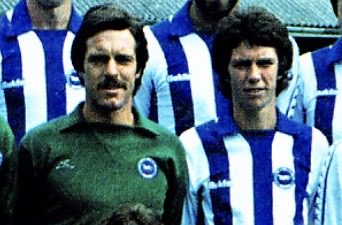
“It was important to go back as part of something, to show that I should have been given a chance,” he said in a 2019 Albion matchday programme article. And rather than join the infamous promotion party train ride back to Brighton, after the match Steele stayed over in Newcastle.

“I wanted to be with my family,” he said. “They’d supported me all the way from when I was a kid. To actually do it at my hometown club as well was a bit special. It was a great day for me, a really great day.”

In Spencer Vignes’ excellent book A Few Good Men, it’s interesting to hear Moseley’s view about his rival for the shirt. “He was very dedicated, much more so than I ever was. He would train every day after everybody else had finished.”

Nevertheless, at the higher level, it was not long before Mullery decided to dispense with Steele’s services, and it came within a matter of days of an amazing incident at Old Trafford when Steele exchanged punches with his own defender, Gary Williams, in a 2-0 defeat.

Steele and Williams together in the 1979-80 Albion squad photo

Argus reporter John Vinicombe produced a book (Super Seagulls) to document the history of Albion’s memorable first season in the first tier and covered in detail Steele’s somewhat acrimonious departure.

“Mullery knew from the beginning that one day he would have to choose between the lightning-on-the-line reflexes of Steele and the aerial domination of his great rival, Moseley,” said Vinicombe.

Mullery told the reporter: “Eric is an exceptionally good goalkeeper on the line, there’s no doubting that. But I feel he is not as commanding in the air as Graham, especially on crosses.”

Steele’s departure was felt quite keenly by the fans who, as much as his contribution on the pitch, had applauded his coaching in local schools and support for Sussex charities, in particular Chailey Heritage.

Regardless of that, in October 1979, Mullery turned a sizeable profit on his original investment and sold Steele to Second Division Watford for £100,000.

The articulate Steele shared his thoughts with the readers of Shoot! magazine.

“I didn’t want to leave Brighton,” he said. “That’s the first and most important point. It wasn’t my decision, it was Alan Mullery’s. I think he was wrong and I’ll be proved right in time. Once he’d made up his mind, I had to resolve myself to leaving.

“But it hurt. It took me a long time to get to the First Division and I think that in the ten games I played, I proved I was good enough to keep my place at that level. But once I knew I was on the move, I wanted to get away as quickly as I could.

“I went on the list on a Thursday and Watford came straight in for me the next day. I’d signed for them within a week. I was very happy to join such a progressive club. I would never have come here if I didn’t believe we would be a First Division side in a couple of years.”

Steele maintained he was taking one step back to take two forward and must have remembered those thoughts when Watford won promotion to the top division for the first time in their history in 1981-82.

However, vying for the no.1 jersey with Steve Sherwood, he made just 65 appearances in five years and said it was when watching from the stands as Watford played in the 1984 FA Cup Final that he realised he needed to move on.

Born on 15 May 1954, Steele’s path to professional football was the one taken by many talented Geordies – via Wallsend Boys Club to Newcastle United.

He never made it to the first team at St James’ Park but put that right when he joined Peterborough, setting a record of 124 consecutive appearances, including being part of the side that won the Fourth Division championship in 1974.

After those spells with Brighton and Watford, he linked up with former Newcastle United boss Arthur Cox at Derby County, and was part of their promotions from the third tier through to the first.

When he retired in 1988, it was to run a pub, but he also set up Eric Steele Coaching Services and began an illustrious career in which he has been instrumental in the development of some of the country’s top goalkeepers, working with ‘keepers at Manchester City, Aston Villa, Leeds United, Derby County, and Barnsley, as well as overseas in Australia, Switzerland, Norway, Germany and the United States.

When another former Watford ‘keeper, Tony Coton, was forced to retire as Manchester United’s goalkeeping coach because of injury, he recommended Steele as his successor.

Coton told the Republik of Mancunia website: “Eric Steele was my goalkeeping coach when I was a player at Manchester City, and it soon became evident after just a couple of training sessions that Eric was a unique and talented coach.

“Eric was different due to his innovative teaching style. Every session was challenging and interesting, and his breadth and depth of knowledge was second to none. Because of this I decided to call Eric ‘The Guru’, a name that he is now known by throughout the Premier League.”

As well as former Brighton ‘keeper Wayne Henderson at Villa, Steele also coached Kaspar Schmeichel at Manchester City. And at Man Utd, he famously played a part in Ben Foster successfully saving a penalty in the 2009 League Cup Final penalty shoot-out after the game ended 0-0.

Foster explained: “We went into the shootout as well prepared as possible. We have had things to look at over the last couple of days and before the shootout you can see me looking at an iPad with Eric Steele.

“It had actual video on it and showed where players put things. It is a new innovation for us. Eric brought it when he came to the club. I have never seen anything like it. It is a fantastic tool for us.”

Steele was part of Sir Alex Ferguson’s team at United between 2008 and 2013 and helped to recruit long-standing no. 1 David de Gea.

When Ferguson stood down at Old Trafford, Steele returned to Derby – where he’d previously worked as a coach for four years – under Steve McLaren and then went on to coach young goalkeepers for the English FA. He’s also an ambassador for Evolution Goalkeeper Coaching.

2 Steele claims v Palace
3 Steele Pat Partridge Pipes
4 steele farewell
5 Steele + De Gea
Steele has coached young England goalkeepers

Scrapbook photos from the Albion matchday programme, the Argus, and the republikofmancunia.com.

  • Top one shows Steele in action in one of his early Albion matches, a top-of-the-table clash against Mansfield Town in front of a packed Goldstone. I am one of those supporters crammed into that south west corner terrace!
  • Peter O’Sullivan (left) looks on as Steele claims a cross in a home game against Crystal Palace.
  • Steele and ref Pat Partridge see the funny side of it as spongeman Glen Wilson fixes a facial injury to Steve Piper.
  • A thumbs up to the crowd as Steele says his farewell at the Goldstone.
  • Steele working at Man Utd with David de Gea.

Twelve goals in 26 games for Scottish striker Alan Young

GARY LINEKER’S former strike partner at Leicester City had a good goals to appearances ratio for Brighton & Hove Albion.

Sadly, Scotsman Alan Young only managed 26 appearances in his one season (1983-84) with the Albion, although his 12 goals meant he finished second top goalscorer behind Terry Connor.

His brief Brighton career got off to a great start with a memorable debut goal, an overhead kick to net against Chelsea at the Goldstone. Young twice scored braces for the Seagulls but his season was injury-hit and, with manager Chris Cattlin bringing in his old pal Frank Worthington for the 1984-85 season, Young was sold to Notts County.

In more recent times, Young courted controversy as a radio pundit sharing his opinions about Leicester, and in 2014 BBC Radio Leicester dropped him from his role supporting commentator Ian Stringer.

alanyoung6 2

Back in September 2013, Young was berated online for his criticism of winger Anthony Knockaert. Foxello, on ja606.co.uk, wrote: “If there’s one thing that annoys me more than just about anything else at this football club, it is that grumpy, nasty egotist Alan Young and his never-ending agenda against certain members of the football club.”

The correspondent bemoaned: “Knocky is now the butt of every joke, and the object of every jibe Young throws out…. It’s almost as if he doesn’t want us to have skilful players who occasionally misplace a pass due to their advanced vision, and just have hoofers and cloggers like in his day.”

So let’s take a look back at ‘his day’. Born in Kirkcaldy on 26 October 1955, Young was football-daft and showed sufficient promise to earn Scottish schoolboy international honours.

His boyhood favourite team was Raith Rovers, whose star player at the time was Ian Porterfield, who famously scored the winning goal when Second Division Sunderland beat Leeds in the 1973 FA Cup Final.

Surprisingly overlooked by Scottish professional clubs, Young also experienced early disappointment in England when Nottingham Forest rejected him. “Nottingham Forert didn’t want me and I left there thinking I was no good,” he told Shoot! magazine.

Nonetheless, when he was playing as an unattached player for Scotland Schoolboys against England at Old Trafford, Oldham Athletic scout Colin McDonald, a former Burnley and England international goalkeeper, noted his promise and persuaded the young forward to head south of the border to begin his professional career.

In five years at Boundary Park he scored 30 goals in 122 games, and, to a large extent, learned his trade from old pro Andy Lochhead, a prolific goalscorer in his day for Burnley, Leicester and Aston Villa.

In the 1978-79 season, Young netted a hat-trick against Leicester which caught the eye of fellow Scot and former Rangers boss, Jock Wallace, who had taken over at Filbert Street and was building a team with his fellow countrymen at its core.

When Young joined Leicester, and played alongside his boyhood pal Martin Henderson, it began a love affair with Leicester that endures to this day.

In three years at Leicester, Young scored 26 times in 104 games, eventually forming a partnership with the emerging Lineker. TV’s favourite football frontman was generous enough to pen the foreword to Young’s 2013 autobiography, Youn9y (written in conjunction with Simon Kimber and published by the historypress.co.uk) and said of him: “He was an old-fashioned, aggressive centre forward. He possessed, though, a delicate touch and finesse that belied his big target man status – the perfect partner for a nippy little goalhanger trying to make a name for himself.”

Screenshot
Leicester strike partner for Gary Lineker

Young scored on his full debut for City in a league cup game v Rotherham and followed it up with two on his league debut at home to Watford.

The only time Young was sent off while playing for Leicester was, ironically, at the Goldstone Ground in 1981, at Easter, which was the second of four games at the end of the season that Albion won to stay in the top division.

Young was dismissed for two bookable offences, the first for clattering into goalkeeper Graham Moseley and the other a clash with Steve Foster, although, in his autobiography, he says Foster play-acted a knee injury, which the referee bought. Foster even teased him about it when he joined the Seagulls two years later. In that Easter 1981 fixture, Young’s teammate Kevin McDonald was also sent off, Brighton won 2-1 – and Leicester ended up being relegated together with Norwich and bottom-placed Crystal Palace.

Back in the old Second Division, Young did his cartilage in a game on QPR’s plastic pitch which he says was the beginning of the end of his career, because his knee was never the same afterwards (years later he had a knee replacement).

He also had the disappointment of losing to Spurs in the 1982 FA Cup semi final, although he maintains if a certain Chris Hughton had been sent off for two fouls on Lineker, it might all have been a different story.

Before the next season kicked off, Jock Wallace, the manager he idolised, decided to move back to Scotland to manage Motherwell and his successor at Filbert Street, Gordon Milne, swiftly chose to pair the emerging Alan Smith up front with Lineker, signalling the exit for Young.

Managerial upheaval was to become a familiar cause of Young’s departures in the years that followed, too. But I am getting ahead of myself.

Ian Porterfield, his footballing hero from yesteryear, had taken over as manager at Fourth Division Sheffield United and, although he didn’t really want to drop down the leagues, the Blades were a big club so Young moved to Bramall Lane.

A year later, though, after Brighton’s relegation from the elite in 1983, striker Michael Robinson was sold to Liverpool so there was a centre forward vacancy – and manager Jimmy Melia chose Young to fill it.

The fee was either £140,000 or £150,000 depending on which account you believe, but Young was happy because he pocketed a £20,000 signing on fee (four times what he had received only a year earlier when moving to Sheffield).

His first involvement with the squad was on a close-season tour of the Balearic Islands (with associated eye-opening tales recalled by thegoldstonewrap.com) but he also picked up an injury that was to dog his season on the south coast.

While Young had a lot of time for Melia, when Cattlin took over it was a different story and, in his book, there are plenty of colourful expletives used to describe exactly what he thought! He also castigates physio Mike Yaxley – “the most useless physio I have ever worked with” – although he says the team spirit was very good…seemingly fuelled by long post-training ‘sessions’ in Woody’s wine bar.

A youngHe said: “The football was very enjoyable there and never more so than when Jimmy Case and I were playing together; I loved playing with Jimmy.”

For a short time in that 1983-84 season, Albion had three Youngs in their squad, none of whom were related. Along with Young the forward, there were centre backs Eric Young and on-loan Willie Young.

When Cattlin decided to bring in his old Huddersfield teammate Worthington the following season, Young was on his way, this time to Notts County. The manager who signed him was the former Liverpool and Nottingham Forest defender Larry Lloyd, but his tenure in the managerial chair was very short so, once again, Young found himself playing for a manager who hadn’t chosen him.

In two years at Meadow Lane, Young scored 12 in 43 games for County. He moved on to Rochdale where the Leeds legend Eddie Gray was in charge, but injury took its toll and he only scored twice in 28 games in the 1986-87 season before retiring at 31. He had scored a career total of 89 goals in 349 appearances.

While there were a few non-league appearances, he eventually landed a job back at Notts County in the early days of community football schemes. He made a success of the job, obtained his coaching qualifications and eventually they combined the community scheme with the centre of excellence.

Brighton fans will be interested to know that among the young lads who emerged during Young’s time there were Will Hoskins and Leon Best. The star player, though, was Jermaine Pennant.

Young has fond memories of Neil Warnock’s time as County manager, because of his interest in the work being done at grassroots level. However, the mood changed when Sam Allardyce took over.

Allardyce initially cut Young’s salary and then showed him the door. “I can’t and I never will forgive Sam Allardyce,” he said.

Away from football, Young has had a tempestuous love life – read the book to gather the detail – and has three sons and a daughter. While he also had spells working for Chesterfield and Leeds, he dropped out of the game and then had a very dark period dominated by heavy drinking in isolation, including a time living alone in a caravan on the banks of Loch Lomond.

Eventually a return to England and his break into radio punditry brought him back from the brink.

In 2013, his autobiography Youn9y was published, the sleeve notes describing the story of “a talented, brave striker who played at the highest level of the domestic game but also experienced human misery at its lowest once his playing career was over”.

The notes add: “Youngy doesn’t just recount the good times of his playing career; he also offers valuable insight and moments of perception and understanding of some of the darkest days of his life.”

After four years as match summariser, in 2014 BBC Radio Leicester dispensed with his services and replaced him with another former Fox, Gerry Taggart.

However, Young still gives his opinions about Leicester on the community radio station Hermitage FM.

Pictures show a shot of Alan on Brighton seafront from an Albion matchday programme; the front cover of his autobiography; other matchday programme action shots, and in the Hermitage FM radio studio from Twitter.

‘Keeper Perry Digweed’s in and out 12 years with the Albion

THEY say goalkeepers are different and Perry Digweed certainly came into that category with his name alone!

Digweed switched from Craven Cottage to play for the Seagulls when signed for £150,000 by former Fulham favourite, Alan Mullery, in January 1981.

It seems remarkable to record that he was still at the club – indeed earning the player of the season accolade – a decade later.

In fact his Albion career stretched to 12 years, by which time you’d have imagined he would have racked up around 400 appearances.

That his total number of games played for the Albion amounted to 182 reflects periods when he was either out of favour courtesy of various managerial changes or sidelined through injury.

Born in Chelsea on 26 October 1959, the young Digweed started playing football at Park Walk Primary School and he was soon featuring in inter-school matches played at Battersea Park. It was only when he was 12 that he started playing in goal and before long he gained representative honours, playing for the West London Schools under-13 side.

He played at Highbury in one match but he started training with Fulham’s youngsters from the age of 13. Ken Craggs, Mullery’s no.2 at Brighton, was in charge of Fulham’s youth team at the time, but Digweed didn’t get an immediate offer of an apprenticeship after he left St Michael’s School; instead he became a trainee salesman at Covent Garden market (his dad ran a busy greengrocer’s close to Putney Bridge).

Craggs finally offered him the apprenticeship six months later, in September 1976, and only four months afterwards manager Bobby Campbell gave Digweed his first team debut in a 2-0 defeat at home to Bolton Wanderers. Fulham were in the old Second Division at the time and the form of Irish international Gerry Peyton restricted Digweed to only 15 league games.

A chance to step up a division came following one of Mullery’s public fits of pique with Brighton’s first choice Graham Moseley in the middle of the 1980-81 season. He put reserve goalkeeper John Phillips into the Albion line-up for the Boxing Day match at home to Crystal Palace and, although Moseley was restored to the line-up for three matches at the start of 1981, on Craggs’ recommendation, Mullery returned to his former club to sign Digweed. The young ‘keeper made his debut in a 2-0 defeat away to West Bromwich Albion on 17 January 1981.

DIG BWAfter only three games in the old First Division for Brighton, Digweed was called up to the England under 21 squad, although Leeds’ John Lukic and Blackpool’s Iain Hesford were chosen to play ahead of him.

A colourful insight into Digweed’s lifestyle came in Spencer Vignes’ excellent book A Few Good Men (Breedon Books Publishing, 2007) in the section about ‘rival’ Moseley.

“Very much the boy about town with his dandy dress sense and coiffured hair, Perry looked more like one of Adam’s Ants than a goalkeeper,” wrote Vignes, who discovered Digweed and Moseley got on well in spite of the rivalry.

“Perry was a single boy who still lived in London and would tell you all about his conquests the night before,” Moseley told Vignes. “He was a great lad and a lot of fun to be with.”

Dig colourIn one of many matchday programme profiles, Digweed talked about his love of looking round the Kings Road, Chelsea, clothes shops on his way back home from training. He also liked his golf and told the matchday programme in August 1991: “I try and play as much as I can and get quite a few invitations to pro-am events along with other footballers and celebrities.”

Remarkably at one point in his topsy turvy career with the Seagulls he was loaned to Chelsea and played three top tier games for them in the 1987-88 season, when John Hollins was their manager. He featured in a 3-3 draw away to Coventry City, a 0-0 home draw v Everton and a 4-4 draw at Oxford United.

“Playing wise it couldn’t have been better,” he told Dave Beckett in an interview. “I used to watch Chelsea always as a youngster, I was only born round the corner, so when circumstances meant I ended up in the first team I was overjoyed.”

He said Chelsea were keen to keep him until the end of the season but manager Barry Lloyd called him back to the Goldstone because he needed the goalkeeping cover.

Having watched the great Peter Bonetti keep goal for Chelsea for many years, Digweed was delighted to receive specialist coaching from the ex-England goalkeeper once a week at Brighton. When he’d been at Fulham, ex-QPR stopper Mike Kelly, who went on to work with England’s goalkeepers, had been his specialist coach.

Indeed he said it was through Kelly’s connections that he got a brief look-in with the England Youth set-up, although it was difficult to dislodge first choice Chris Woods, who went on to become a full England international.

Apart from Moseley, Digweed’s other competition for the number one spot during his time at the Goldstone came from the likes of Joe Corrigan, John Keeley and Mark Beeney.

He played under five different managers and, while other goalkeepers came and went, Digweed remained on the Albion’s books and played in some memorable games – as well as missing out on plenty of others. For instance, he had the green jersey in the famous 1983 FA Cup 5th round 2-1 victory at Anfield (although Moseley returned for the later rounds) but he was also between the sticks when Albion won 1-0 at Anfield the season before.

“Funnily enough, I’ve never lost against Liverpool in the four first-team and two reserve matches I’ve played against them,” he told Beckett.

Digweed memorably saved a Chris Kiwomya penalty as Brighton beat Ipswich to reach the play-offs in 1991 but one of his personal highlights was a mid-season game Albion played against the Nigeria national side in Lagos during Mike Bailey‘s reign.

“It was unbelievable,” he said. “The people were poverty-stricken yet all the money they had went on these huge football stadiums. There were trumpets and music going all the way through….it’ll take soomething to beat playing in front of nearly 100,000 fanatical Nigerians.”

Any Albion fans at the Brighton v West Brom game at the Goldstone on 21 September 1988 will wince with the recollection of Digweed being injured in the most intimate of places.

Forward John Paskin lunged in attempting to score and his studs tore Digweed’s urethra. Not surprisingly the ‘keeper was forced off the pitch but I recall he went off under his own steam rather than on a stretcher which, when the extent of the injury was revealed later, seemed remarkable!

Digweed lost four-and-a-half pints of blood through the wound, was in hospital for three weeks initially and required four operations to repair the damage.

“I realise now I was lucky that they weren’t just internal injuries otherwise it would have been even more serious and who knows what could have happened,” Digweed told Beckett in the matchday programme.

“I had a catheter bag and everything for a while and I couldn’t even lay down because it was so uncomfortable. I had to sleep in an armchair for three weeks.”

A subsequent article by Vignes in a later matchday programme revealed how the club tried to get him back playing sooner than the medical people advised.

“The doctors had said not to play for the rest of the season,” he told Vignes. “When I got out (of hospital) Brighton tried to rush me back into training and I said ‘Er, I don’t think so’. Sometimes some things are more important than football.”

In fact it would be 18 months before he played his next first team game, largely because Keeley seized the opportunity to establish himself as a more than useful no.1. Digweed didn’t reappear between the Albion sticks until March 1990, stepping back onto the Goldstone pitch for a midweek match against Plymouth Argyle which the Seagulls won 2-1.

In August 1990, through impeccable sources, I was able to break the story exclusively that Albion were transferring Keeley to Oldham Athletic for £238,000. Barry Lloyd briefly flirted with erratic American Tony Meola in goal before restoring Digweed to the first team.

He ended up playing 52 games over the course of a season extended by involvement in the play-off final against Notts County – his highest season’s tally in all his years with the Albion. And he was voted player of the season.

In an Argus supplement previewing the Wembley final, Digweed was interviewed by Mike Donovan and couldn’t hide his delight that instead of watching from the sidelines, as he did in 1983, he’d be out on the pitch.

“It’s the biggest match of my career,” he declared.

The only other season Digweed came close to what you might refer to as first choice was in Chris Cattlin’s 1985-86 squad when he played in 41 games, including a memorable FA Cup third round 2-0 win away to Newcastle when, according to the definitive Albion history book Seagulls! The Story of Brighton & Hove Albion FC (by Tim Carder and Roger Harris): “Perry Digweed was magnificent between the posts.”

By 1992-93, Beeney had established himself as first choice and after Digweed had stepped in when Beeney served a one-game suspension, manager Lloyd declared: “We believe we have on our books the best two ‘keepers in Division Two.”

Older readers will recall how later that season Beeney pulled off the biggest save in Albion’s history: the proceeds of his sale to Leeds United being used to pay off the Inland Revenue who were threatening to close the club down.

With Beeney transferred, Digweed came back in for the final three games of the season, the 3-2 home win over Chester turning out to be his last game for the club.

When finally released by the Albion in June 1993, he joined Wimbledon initially without getting a game but then had two years at Watford where he featured in 29 league games. Among his teammates there was former Albion defender Keith Dublin.

Since leaving the football scene, Digweed has had interests in property and run executive chauffeur-driven cars for racehorse owner Sheikh Mohammed, and other wealthy Arab families.

He also had an acting role (playing  a character called Marsden) alongside Vinnie Jones and the stand-up comic Omid Djalili in the 2001 film Mean Machine – a fact that earns him a mention on the goalkeepersaredifferent.com website!

On the same site, bearing in mind I like a parallel line, I was interested to note the aforementioned Meola had also appeared on the silver screen since giving up playing, with a cameo role as a card player in the 2001 Jason Priestly film Zigs.

  • Pictures from my scrapbook show Digweed’s look of despair as Notts County score in the 1991 play-off final at Wembley; his portrait in the 1983 FA Cup Final programme, and another portrait from the matchday programme.