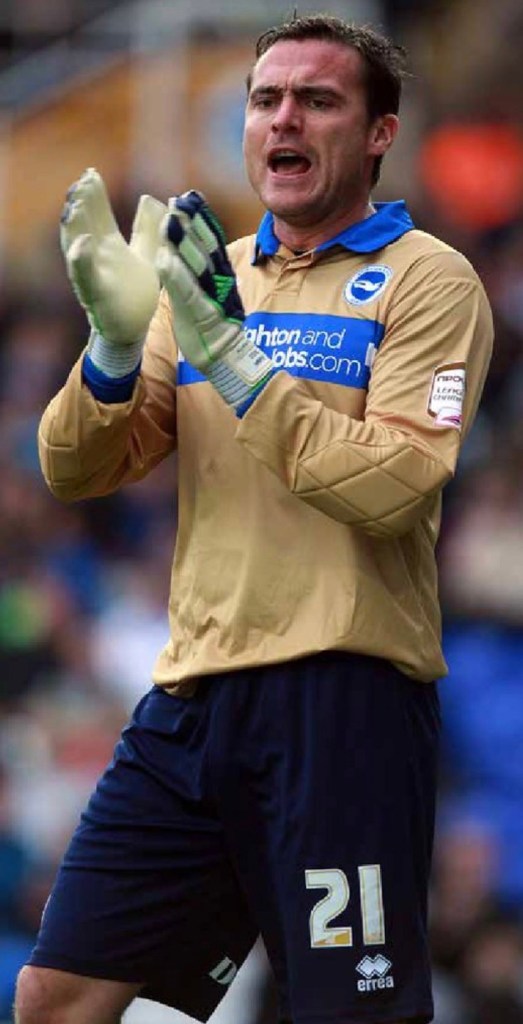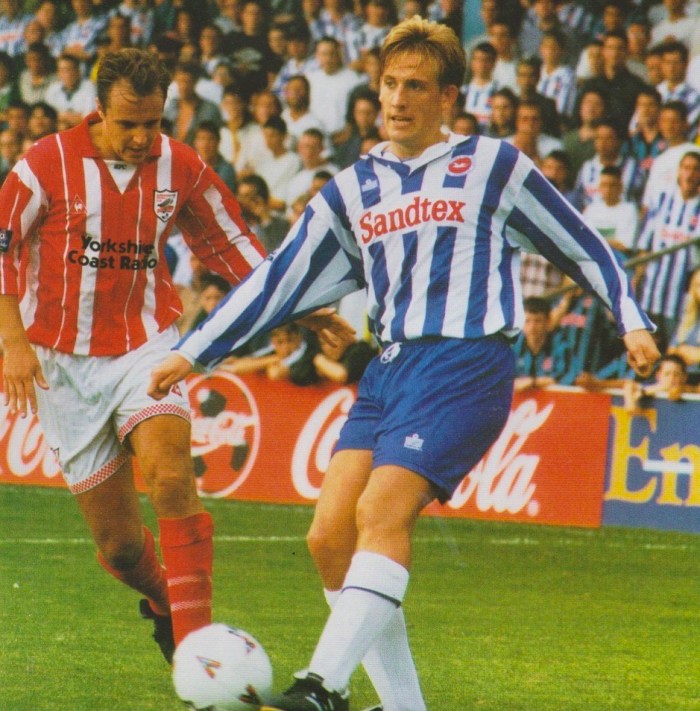
Big money signing Peake hit a trough at the Albion

EXPENSIVE FLOP Jason Peake was a victim of the problems clouding Brighton’s very existence in the mid-1990s.

The blond-haired midfielder heralded elsewhere for his “excellent left foot” and “one of the best passers of the ball in the lower leagues” failed to live up to expectations at the Goldstone and was dubbed Jimmy Case’s “biggest blunder”.

Leicester-born Peake had played alongside Case for Halifax Town, where he’d moved after making only a handful of appearances with his hometown club.

Former Albion loanee centre half John McGrath, assisted by Frank Worthington, failed to halt the Shaymen dropping out of the league in 1993, and Peake spent a season in the Conference before reviving his league career with Rochdale. Nine goals in 103 appearances attracted suitors and it was Albion who bought him for a fee set by tribunal of £80,000 – a huge sum for a cash-strapped club.

A further £15,000 was to be paid after 20 games and another £25,000 if he got to 40 appearances. He made 35 appearances before being frozen out by Case’s successor, Steve Gritt. It was to be a familiar pattern: changes of manager often led to him moving on.

Apart from the bigger picture shenanigans going on at the Albion under the hated Archer-Bellotti regime, Peake’s personal issues centred around relocation expenses he said he was entitled to – but Bellotti refused to pay up.

According to fansnetwork.co.uk: “Peake was being forced to commute from Leicester following several broken promises by the Brighton board. Peake’s dream move turned into nothing short of a nightmare for him.”

The midfielder had trials at Northampton and Cambridge before he finally managed to get away, in October 1997, signing for First Division Bury. He rather diplomatically said: “The situation at Brighton has been well documented over the past year and just let’s say when I got there the situation was not as I’d been led to believe it would be.

“I have not been happy there for some time and the new consortium have been great in letting me get away.”

The official version in the matchday programme said: “Jason had problems in settling in the South after his move from Rochdale and the move has suited him and his family. Should Bury sell him for a fee at any time, Albion are assured of a share in any such deal.”
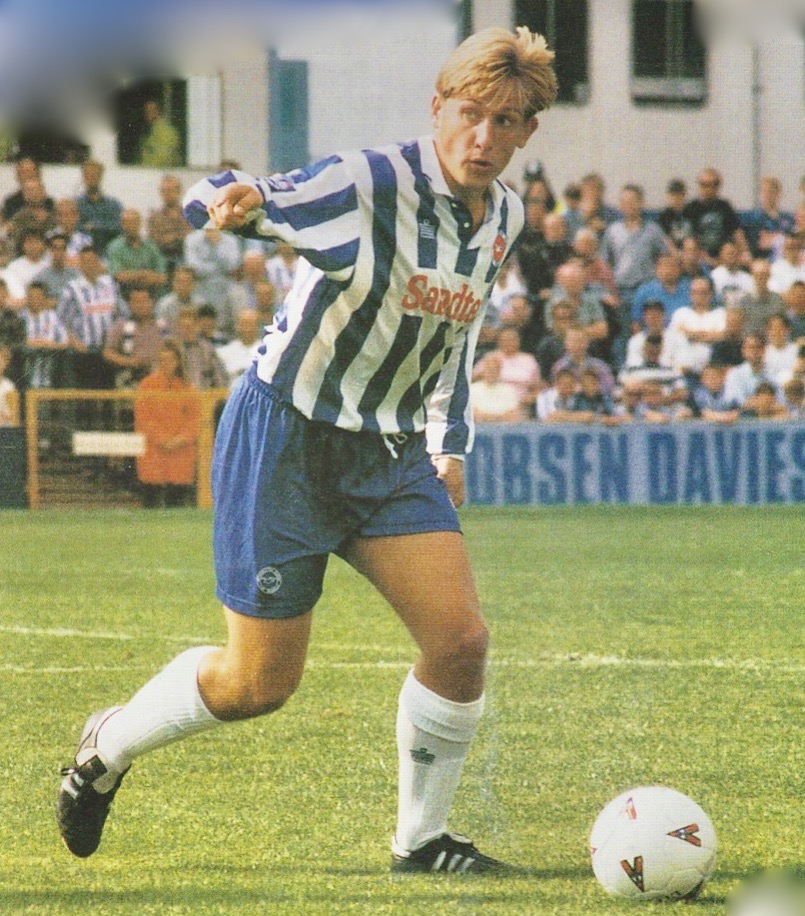
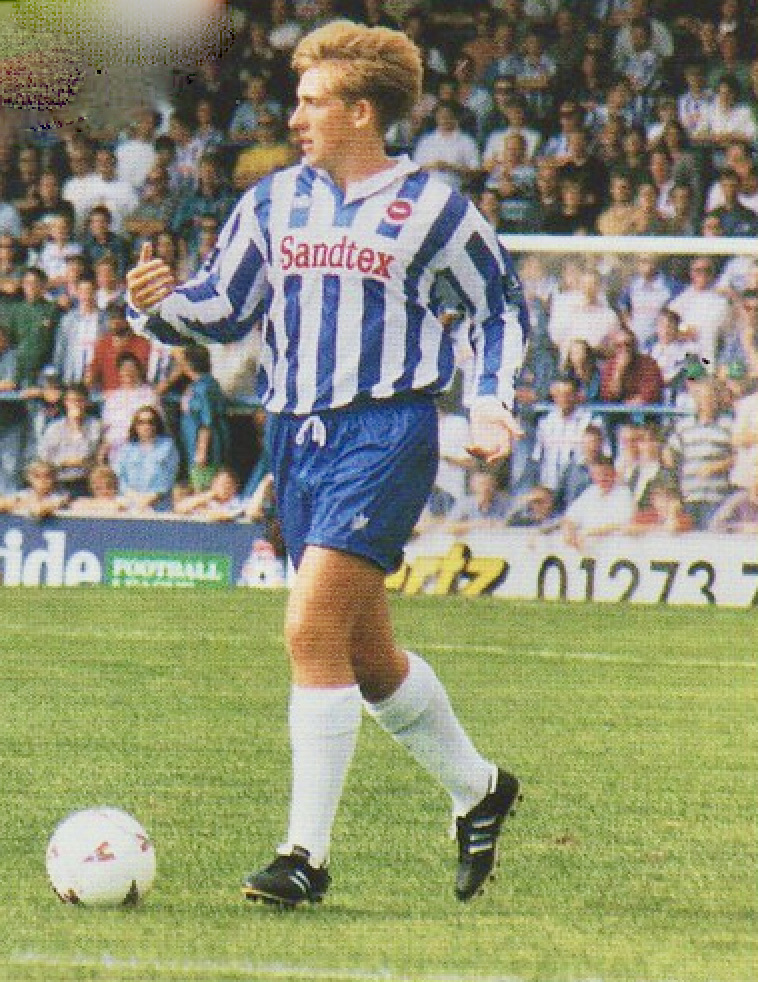
As ever, the season had begun with great expectations and in his matchday programme notes welcoming new signings Peake and Ian Baird, Case said: “They are both quality players and I am sure that they will be great acquisitions for the club this coming season.

“I firmly believe we now have a skilful blend of experienced and young players that can mount a serious challenge for promotion at the first attempt and I believe we will surprise many teams this season.”

Peake went straight into the side in the no.8 shirt but after he’d played 19 games on the trot Albion were anchored at the foot of the table.

After Case was sacked, Peake found himself on the bench more than in the starting line-up; local lad Kerry Mayo taking over from him.

Supporters were certainly not impressed by Peake, perhaps summed up by ‘Lenny Rider’ on North Stand Chat who said: “Huge outlay for where the club was at the time. His kinder critics would say he was disappointing, the more cynical amongst us would argue he was actually nicking a living at the Goldstone.”

New Albion chairman Dick Knight cut Albion’s losses by giving Peake a free transfer to Bury in exchange for the relocation cash dispute being dropped.

Bury boss Stan Ternent was lauded for pulling off something of a coup, and Peake told the Lancashire Telegraph: “It is a fantastic chance for me to prove myself. It has taken me a long time to get into the First Division and I don’t want to blow the opportunity.”

Sadly, those words came back to haunt him because he ended up playing just six times for the Shakers, three as a left-back and three as a sub.

To quote fansnetwork.co.uk again: “Peake’s silky skills didn’t really fit in with the kick and rush tactics of Ternent’s Bury team, and Peake found himself stranded back in the reserves.”

The following summer, a return to Rochdale, where he had first made a name for himself, looked like an ideal solution but things didn’t go well under the management team of Graham Barrow and Joe Hinnigan, who left the club at the end of the 1998-99 season.

In something of a twist of Peake’s usual fortunes when there had been a managerial change, his career began to blossom again under new boss Steve Parkin.

“The free flowing style of football on offer was much more suited to Peake’s natural style,” according to fansnetwork.co.uk. “Peake was awesome in the opening months of the 1999-2000 season and was at the heart of a side which led the table early on.”

He got amongst the goals including “a superb overhead kick from the edge of the area against old team Halifax Town, which saw him win the club’s goal of the season competition and awarded ‘Better than Pele’ status on Sky’s Soccer AM”.

Nevertheless, the season ended on a sour note, as the clarkechroniclersfootballers blog explained: “We lost two re-arranged home games against Peterborough and Northampton in April which would have secured us a play-off place. Jason featured in both games and Steve Parkin singled him out as the scapegoat accusing him of ‘going missing’. It’s always easier for a manager to castigate a player he didn’t sign but we knew there was some truth in it.”

With his contract up at the end of the season, Peake chose to move on, this time to Plymouth Argyle, at the time managed by Argyle legend Kevin Hodges.

Argyle move didn’t work out

It began well enough for him personally and, of Argyle’s 2-0 home win over Carlisle on 16 September, BBC Sport said: “Plymouth doubled their lead in the 17th minute when man of the match Jason Peake scored a superb opportunist goal.

“Peake’s initial attempt came back off visiting central defender Julian Darby and the Plymouth midfielder reacted with a brilliant dipping volley which gave keeper Luke Weaver no chance.

“Weaver denied Peake a second goal in the 80th minute, making a tremendous backward save to keep out the home player’s far post header.”

It followed him scoring four days earlier in a 4-1 defeat at Shrewsbury and was only the second win out of eight. When the next three games were lost, Hodges was replaced by Paul Sturrock, who didn’t take long to decide Peake’s future.

Before Christmas, the midfielder was dispatched to Nuneaton Borough on loan and the move was made permanent in February 2001. Although his league career was over, Peake played 54 games for Borough but was sidelined for periods with a troublesome Achilles tendon injury and he eventually retired in 2003 and became a full-time chiropodist in Leicester.

Born in Leicester on 29 September 1971, Peake played for England schoolboys and was taken on as a trainee by the Foxes.

Manager David Pleat gave him his first team debut in a 2-1 defeat at Charlton Athletic in a Full Members Cup game on 14 November 1989.

It was another year before he made his league debut in the old Division Two, as a sub in a 2-2 draw away to Oxford United.

The same month he also went on as a sub in a 1-0 home defeat to Wolves in the Full Members Cup, played in front of a paltry 4,705 crowd. Four days later he started but was subbed off against Newcastle in a game that remarkably finished 5-4 to the Foxes.

His involvement straddled the end of the Pleat regime and the caretaker manager spell of former Everton boss Gordon Lee, who, in the season Albion reached the play-off final v Notts County, managed to keep Leicester up by only two points while West Brom were relegated along with bottom club Hull City. (Lee died aged 87 in March 2022).

Across three months, Peake had three more starts (and was subbed off in two of them) plus three more games off the bench. Three days after City lost 3-0 at Brighton (goals from Mike Small, Dean Wilkins and Bryan Wade), Peake made a rare start and scored his only goal for the club in a 2-1 home win over Barnsley on 23 February 1991.

Earlier that month (on 6 February 1991), he earned an England under-19 cap when he was sent on as a sub for Aidan Newhouse as England lost 5-1 to Denmark at the Manor Ground, Oxford.

Peake’s last game for Leicester was against Newcastle United on 2 March 1991. He didn’t get a look-in under Pleat’s successor Brian Little and, in February 1992, he joined Hartlepool on loan, playing six matches and scoring once.

Duffy had Burleigh pal for company on his Albion arrival

HISTORY has seen a whole string of goalkeepers play for both Newcastle United and Brighton. Dutchman Tim Krul was the most recent and others stretching back over the years – Eric Steele, Dave Beasant, and Steve Harper – have featured in this blog at various times.

My post this time, though, centres on Martin Burleigh, for many years an understudy to Northern Irish international Iam McFaul.

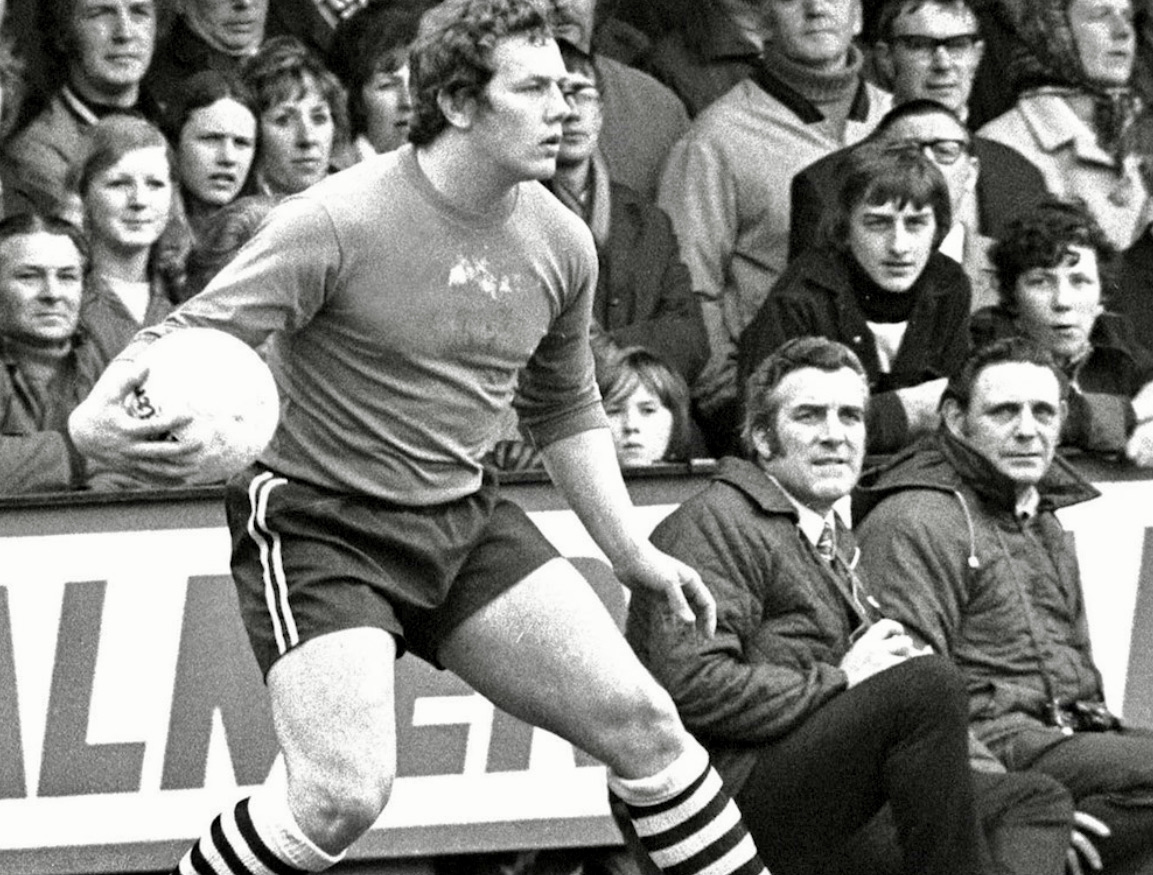
When stocky striker Alan Duffy travelled 350 miles from home to join Brighton in early 1970, it was with some relief that he found the familiar face of Burleigh amongst his new teammates.

How Albion’s matchday programme reported Duffy’s delight in meeting up with a familiar face

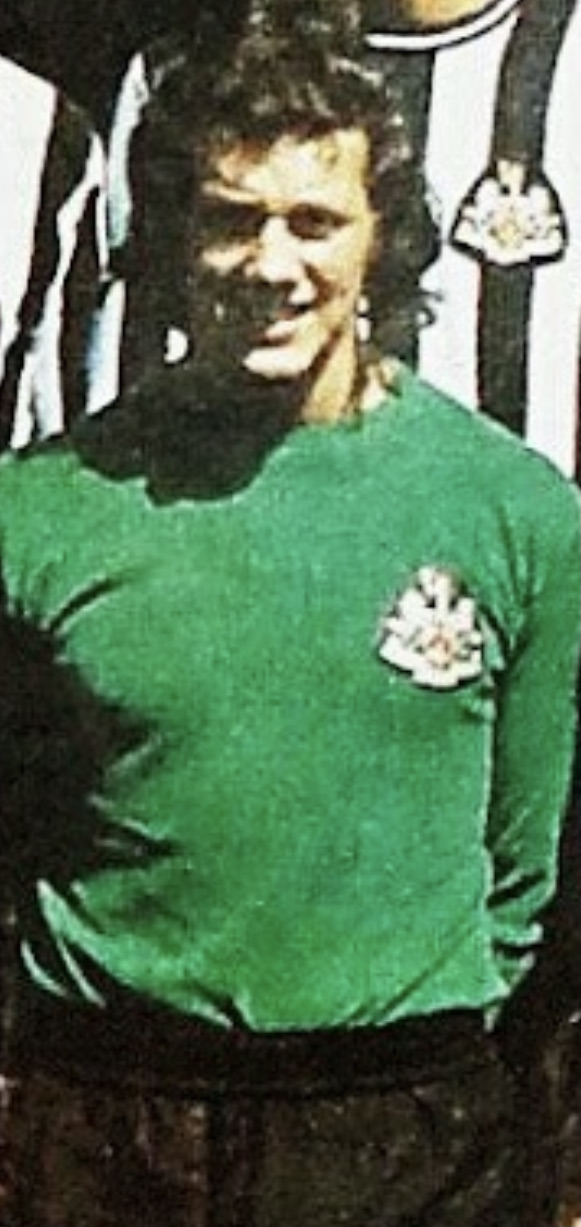
The goalkeeper, who was only 18, was on loan at the Albion at the time. The previous year he and Duffy had been in the same Newcastle United youth team.

Not only did that side do the Northern Intermediate League and cup double, 10 days before the first team won the Inter-Cities Fairs Cup, the youth team brought even more silverware to Tyneside – winning a prestigious international youth tournament at Feyenoord’s ground in Rotterdam.

Toon’s trophy-winning youth team of 1969

Unlike Albion’s new £10,000 permanent signing, though, Burleigh was to have only a short-lived stay in Sussex. Manager Freddie Goodwin had brought in the Toon no.3 ‘keeper (Iam McFaul was first choice and John Hope his deputy) as cover while Albion were reduced to only one fit goalkeeper (Brian Powney) following a serious head injury to Geoff Sidebottom in the first match of a marathon second round FA Cup tie against Walsall (it took four games to decide it; those were the days before penalty shoot-outs).

Thankfully Powney avoided injury so young Burleigh was not called into match action, and he returned to the north east still waiting to make his league debut. Indeed, he had to wait until Boxing Day 1970 for that chance. Although Toon went down 3-0 at Leeds United, opposition manager Don Revie praised the youngster, saying: “I thought he had a fine game. He had no chance with the goals. Some of the saves he made showed he has a fine future ahead of him.”

It would seem Toon boss Joe Harvey wasn’t so sure and it was more than a year before Burleigh got his next chance to shine, making his home debut in a 4-2 win over Coventry City on 8 January 1972.

Once again it was to be his only first team appearance of the season, but in the 1972-73 season he finally got a run of games when McFaul was injured. He played in 11 matches but then had the misfortune to fracture a finger in a collision with Mick Channon during a 1-1 draw at Southampton, and McFaul returned.

The Toon 1892.com website recalls Burleigh then having a struggle with weight issues and he had a public dispute with manager Harvey which saw him walk out of the club saying he was going to join the RAF. But Newcastle retained his registration and when the dust settled on the dispute he was sent on loan to Darlington before making the move permanent in October 1974 for a fee of £8,000.

He was only at Darlington for a season before switching across country to Carlisle United, where he spent two seasons.

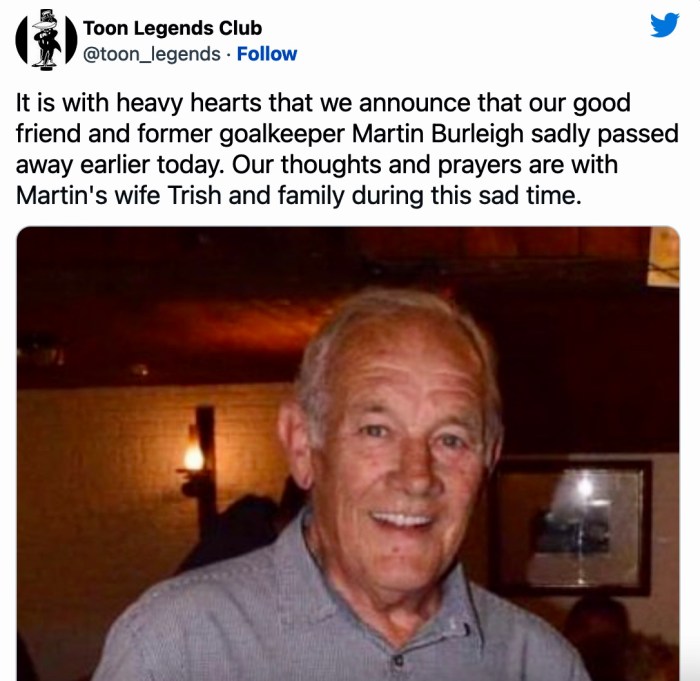
When Burleigh died at the age of 70 on 27 September 2021, Carlisle chairman Andrew Jenkins said: “Martin was a big character who was a pleasure to have around. He was tall and strong in stature and very stylish in the way he kept goal.

“We used to talk about how he very much had the manner of how the goalkeepers in Europe used to do things, with flair and a bit of theatre.

“I remember that Alan Ashman was really keen to get him signed and over here to join us. When he was speaking to the board about him, he said that the fans would be queuing along Warwick Road to watch him – he felt he was that good.”

His death was mourned by former Newcastle teammates too and several ‘Toon Legends’ remembered him at a gathering at the Tyneside Irish Centre.

Tribute on Twitter following Burleigh’s death

“Martin was a great friend and a lot of players who played alongside him at Newcastle from junior to first team level want to pay their respects to a real character,” Toon Legends official Chris Emmerson told Chronicle Live.

After his spell at Carlisle, where he also had to bide his time behind first choice Allan Ross, Burleigh returned to Fourth Division Darlington for two more seasons, during which time (in October 1978) he kept goal when the north east minnows only narrowly lost (1-0) to First Division Everton in a third round League Cup tie.

Burleigh went on to spend three seasons in goal for Hartlepool, ending his league career with a total of 222 appearances.

He then became a painter and decorator but continued playing for non-league sides in the area, appearing for Bishop Auckland, Spennymoor and Langley Park until packing up playing in 1984.

Born in Willington, County Durham, on 2 February 1951, Burleigh was playing for his hometown team at 17 when Newcastle signed him in 1968, initially as an amateur.

Kenneth Scott, in The Toon1892 Chronicles, wrote: “He displayed within the junior and reserve teams that he was more than capable between the posts and it was not long before he turned professional.”

That happened in December 1968 and before the end of the season he was in goal for the Newcastle youth team under coach Keith Burkinshaw (who later managed Spurs) when they won the international tournament in Holland, beating an Arsenal side containing the likes of Ray Kennedy, Sammy Nelson, Charlie George, Eddie Kelly, and Pat Rice.

The achievement was somewhat overshadowed by the first team’s triumph in the old Inter-Cities Fairs Cup when Toon beat Hungarian side Ujpest in the two-legged final, skipper Bobby Moncur lifting the trophy in Budapest.

Although Burleigh managed to edge out McFaul’s deputy Hope to become the no.2 at St James’s Park (Hope joined Sheffield United along with David Ford in exchange for John Tudor in 1971), the form and fitness of the Northern Irish international (who later spent three years as manager of Newcastle) always kept him on the sidelines.

• Incidentally, in line with the tradition of Albion ‘sharing’ goalkeepers over several decades, when McFaul was in the manager’s chair in January 1988 he took Albion’s long-serving Perry Digweed on a month’s loan with the Magpies. He played in their reserves but didn’t appear in the first team. The following month he went on loan to relegation-threatened Chelsea where he featured in three matches: a 3-3 draw away to Coventry City, a 0-0 home draw v Everton and a 4-4 draw at Oxford United.

Steve Harper’s part in the Seagulls-Magpies goalkeeping ‘trade’

BRIGHTON and Newcastle United clearly have a similar eye for goalkeepers with a string of custodians having played for both clubs.

A few years before I started watching, Dave Hollins, older brother of ex-Chelsea midfielder John, moved to Tyneside in 1960 after three years with the Albion, and played twice as many games for Newcastle in the early part of that decade than he had for Brighton.

Back in the first Alan Mullery era, Eric Steele, who went through the Newcastle ranks without making the first team, arrived at Brighton to replace the injured Peter Grummitt in 1977 and was in the side that won promotion to the elite via a 3-1 win at St James’ Park in 1979.

Dave Beasant, who Newcastle bought from Wimbledon for £850,000 in 1988 – although he only played 20 games for the Magpies – was between the sticks for the Albion for 16 games in 2003.

More recently, Dutchman Tim Krul – who’d been at Newcastle a decade – spent a couple of seasons as back-up to Mat Ryan and would probably be disappointed he didn’t get more game time.

My post on this occasion, though, is about Steve Harper, United’s longest-ever serving player having been there 20 years. He later went back as one of the coaches working with Steve Bruce, as well as being goalkeeping coach to the Northern Ireland international side.

Harper is a qualified UEFA A coach and UEFA A goalkeeping coach, and holds a Masters degree in Sport Directorship.

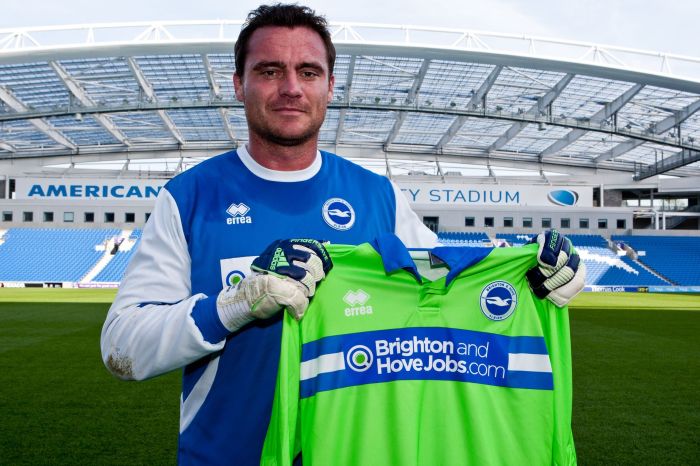
Back in 2011, Harper was happy to lend his experience to the second tier Seagulls during Gus Poyet’s tenure as manager, a decision applauded by Alan Pardew, Toon boss at the time.

“He just wanted to play,” Pardew told the Chronicle. “Not all the top players in the country would have gone on loan – you’re vulnerable.

“You’re going down a division, but he was prepared to do that, and fair play to him.”

For his part, Harper told BBC Sport: “Everybody knows I haven’t played enough football until the last two-and-a-half years.

“I hadn’t played a competitive game for about six months so it was nice to blow the cobwebs out.”

In his first Seagulls match, unfortunately Albion lost against West Ham to a single goal from Harper’s former teammate Kevin Nolan, and he said: “It was disappointing to lose against West Ham with the possession we had.

“Now I’m here, it’s time to get stuck in. We want Brighton to consolidate and finish as high as we can. People tell me it’s a lovely city. I’m looking forward to seeing more of it.”

Harper recalled the time fondly in an interview for the Albion website in 2019.

He featured in five games for the Seagulls, keeping two clean sheets. While he conceded five goals, three came away to Southampton when the Seagulls were unjustly punished by referee Peter Walton.

Harper told journalist Nick Szczepanik: “I would have stayed longer given the opportunity. They made me feel very welcome.”

He even managed to give two of his new teammates a surprise when he started speaking to them in Spanish. Playing behind Spanish speakers Inigo Calderon and Gonzalo Jara Reyes, he explained to Andy Naylor, then of The Argus: “After five years of Bobby Robson and his multi-lingual team talks my Spanish is okay.

“Calde got quite a shock with how much Spanish I know, but I had Colocinni and Enrique in the team with me at Newcastle.”

After his brief spell with the Albion, Harper returned to Newcastle and played nine more games for them the following season before moving on to Hull City (at the time managed by current Toon boss Bruce), where he played alongside Liam Rosenior.

Born in Seaham on 14 March 1975, Harper grew up in the County Durham mining village of Easington and went to its local comprehensive school. Originally a striker at local Sunday league level, he only started playing in goal from the age of 17 and he turned out for Newcastle’s youth team while he was still at college doing A levels.

In fact he was offered a place at John Moores University in Liverpool to study for a Sports Science degree but he deferred it when Newcastle offered him a one-year contract. He signed in 1993 as a back-up for first choice Pavel Srnicek, later Shaka Hislop and subsequently Shay Given.

Much of his time at Newcastle was as a more than capable deputy to whoever was first choice although in United’s 2009-10 season in the Championship, under Chris Hughton, he was the main man and played 45 matches.

Harper had nothing but praise for Hughton, telling chroniclelive.co.uk: “He came in at an incredibly difficult, turbulent time after relegation.

“Chris was the man at the centre of a perfect storm who steered us through some very choppy waters.

“He did a wonderful job and I don’t think he got enough credit. It was no surprise to me to see him go on to do an excellent job at Birmingham City and then at Brighton.”

In total, Harper played 199 games for Newcastle, featuring under nine different managers – Kevin Keegan and Bobby Robson being his favourites.

Periodically over the years, he went out on loan to gain first-team action, appearing between the sticks for Bradford City, Gateshead, Stockport County, Hartlepool and Huddersfield. The Brighton move was his sixth spell out on loan.

Harper’s long service for Newcastle was rewarded with a testimonial against AC Milan in 2013 before he left the club to join Hull, where he spent two seasons.

Six months after his departure from Hull, he was taken on by then Premier League Sunderland as cover for Jordan Pickford and Vito Mannone, but he didn’t make a first-team appearance and was released at the end of the season.

Cherries legend Mark Morris and the memorable Storer moment

mark morris bw bourne

STUART Storer is rightly remembered as the scorer of the vital winner against Doncaster Rovers in the last ever match at the Goldstone Ground.

Few remember exactly how the ball fell kindly to him that rain-lashed afternoon on 26 April 1997, but close scrutiny of the much-played clip before games at the Amex (also available on YouTube) shows it was from a rebound off the bar following a header by centre back Mark Morris.

Although defending was his priority, Morris had chipped in with a fair few goals over the years – including getting the winner for the Albion on his debut in a 3-2 win at Hartlepool on 2 November 1996.

Morris was a seasoned pro who had captained Bournemouth and Wimbledon and been part of a promotion-winning side at Sheffield United.

He had answered the call to join Brighton when his old Bournemouth teammate Jimmy Case was manager, as he told The Argus in a 2001 interview. The Seagulls were struggling at the foot of the bottom division with the trapdoor to oblivion gradually creaking open.

Maybe if the Morris header had gone in rather than rattling the bar, a different name would have been etched into the annals of Albion history.

Of the vital last-ditch game at Hereford, Morris told The Argus: “As a player, we were playing for the future of a club steeped in tradition. It was one of the biggest games in my career and the result was paramount.

“I was about 35 then. It was getting to be close to the end of my career and I wanted to end on a decent result. Hopefully I played some part in keeping the club up.” Continue reading “Cherries legend Mark Morris and the memorable Storer moment”

Left back Harry Wilson “something of a fire-eater”

BRIGHTON boss Brian Clough turned up at Burnley to capture the signings of two of their fringe first team players – and ended up having pie and chips with the groundsman!

When Clough arrived at Turf Moor, he found manager Jimmy Adamson, chairman Bob Lord and secretary Albert Maddox were nowhere in sight, it being lunchtime.

In their absence, as recounted to respected writer Dave Thomas, groundsman Roy Oldfield made the famous visitor a cup of tea, popped to a nearby chippy to get them both pie and chips and chatted all things football until the office re-opened after lunch.

Although Clough hadn’t got quite what he expected on arrival, his journey did bear fruit. In exchange for £70,000, he secured the services of left-back Harry Wilson, a 20-year-old who had made 12 appearances for the Clarets, and midfielder Ronnie Welch, 21, who had played one game.

At the time, Clough was desperately trying to bring in new recruits to a beleaguered Brighton side that he and sidekick Peter Taylor had taken on in October 1973, a period covered in detail in a recent book, Bloody Southerners, by author and journalist Spencer Vignes.

The man who only the season before had led unfashionable Derby County to the First Division Championship, couldn’t quite believe what he had inherited at Third Division Albion.

The players seemed bewildered by what the new celebrity boss expected of them.

Heavy defeats – 4-0 to non-league Walton and Hersham in the FA Cup; 8-2 at home to Bristol Rovers and 4-1 away to Tranmere Rovers in the league – reflected the disarray.

Clough and Taylor weren’t slow in pointing the finger. Their only solution was to find replacements – and quickly.

Former Manchester United reserve Ken Goodeve was first to arrive, from Luton Town, although he failed to impress and made only a handful of appearances before joining Watford at the end of the season.

Goalkeeper Brian Powney was axed in favour of former England under 23 international, Peter Grummitt, initially on loan from Sheffield Wednesday.

Experienced left-back George Ley never played for the Albion again after the defeat at Tranmere, while utility man and former captain, Eddie Spearritt, also lost his place (although he eventually forced his way back into the side briefly).

Lammie Robertson, who knew the pair from his early days at Burnley, was asked to introduce them to their new teammates in the dressing room before an away game at Watford (they’d not been signed in time to play).

Robertson told Spencer Vignes in a matchday programme interview how Wilson was sporting a rather loud checked suit at the time and, in his own inimitable style, Clough boomed out: “Flipping hell, I never want to see that suit again.”

Needless to say the players laughed out loud, only for Clough to say: “What the hell are you all laughing at? They’ll be in the team next week.” And sure enough, they were.

Wilson and Welch made their debuts against Aldershot in a home game on Boxing Day when a crowd of 14,769 saw Albion slump to their fifth successive defeat, although at least the deficit this time was only 1-0.

A win finally came in the next game, a 1-0 success at home to Plymouth Argyle – Ken Beamish scoring the solitary goal.

In a 2010 matchday programme article, Wilson said: “I really didn’t want to go to Brighton. No disrespect but I loved it up at Burnley.

“The people there had been so friendly and helpful when I arrived from the North East so it broke my heart to leave. That said, I thoroughly enjoyed my time at Brighton and met some fantastic people, so, looking back now, I’m glad that Jimmy Adamson let me go.”

In the Evening Argus, reporter John Vinicombe purred about the impact of the new recruits from Burnley, saying Wilson “is looking something of a fire-eater. He has a rare zest for the game and relishes the close, physical contact that is synonymous with his position.

“He knows how to destroy and create, and does both in a manner befitting a five-year background at the academy of fine footballing arts (editor’s note: at the time, Burnley had a reputation for producing highly-talented young players).

“His colleague from Turf Moor, Ronnie Welch, is not so completely extrovert, but is no less involved in midfield, and has a fine turn of speed. He made one mistake through trying to play the ball instead of hoofing it away, but this can only be described as a ‘good’ fault.”

Further signings followed and the ship was steadied. Wilson kept the no.3 shirt through to the end of the season. But Welch made only 36 appearances for Albion before Taylor, by then under his own steam, traded in him and fellow midfielder Billy McEwan as a makeweight in the transfer that brought full-back Ken Tiler to the Goldstone from Chesterfield.

Wilson, meanwhile, became a mainstay in Albion’s left-back spot for three years, including being ever-present in the 1975-76 season.

5 HW action v MillwallEver-present Wilson in action against Millwall at The Den

Suited for England!

Born in Hetton-le-Hole, near Durham, on 29 November 1953, Wilson played for Durham County Schools and made four appearances for England schoolboys (under 15s) in the 1968-69 season. He was taken on as an apprentice at Burnley before signing professional forms in December 1970.

In 1971, he earned an England Youth cap going on as a sub for Coventry’s Alan Dugdale in a 3-2 defeat against Spain in Pamplona. Don Shanks also played in that game.

He made his first-team debut at home to Chelsea on 26 April 1971 and the last of his 12 appearances for the Clarets was on 3 April 1972: away to Sunderland.

Young apprentice Wilson with experienced pros John Angus and Colin Waldron

He was part of Alan Mullery’s Third Division promotion-winning squad in 1976-77, although he was restricted to 22 appearances. The arrival of the experienced Chris Cattlin meant he was no longer first choice left-back, although in several games they both played – the versatile Cattlin being equally at home as right-back.

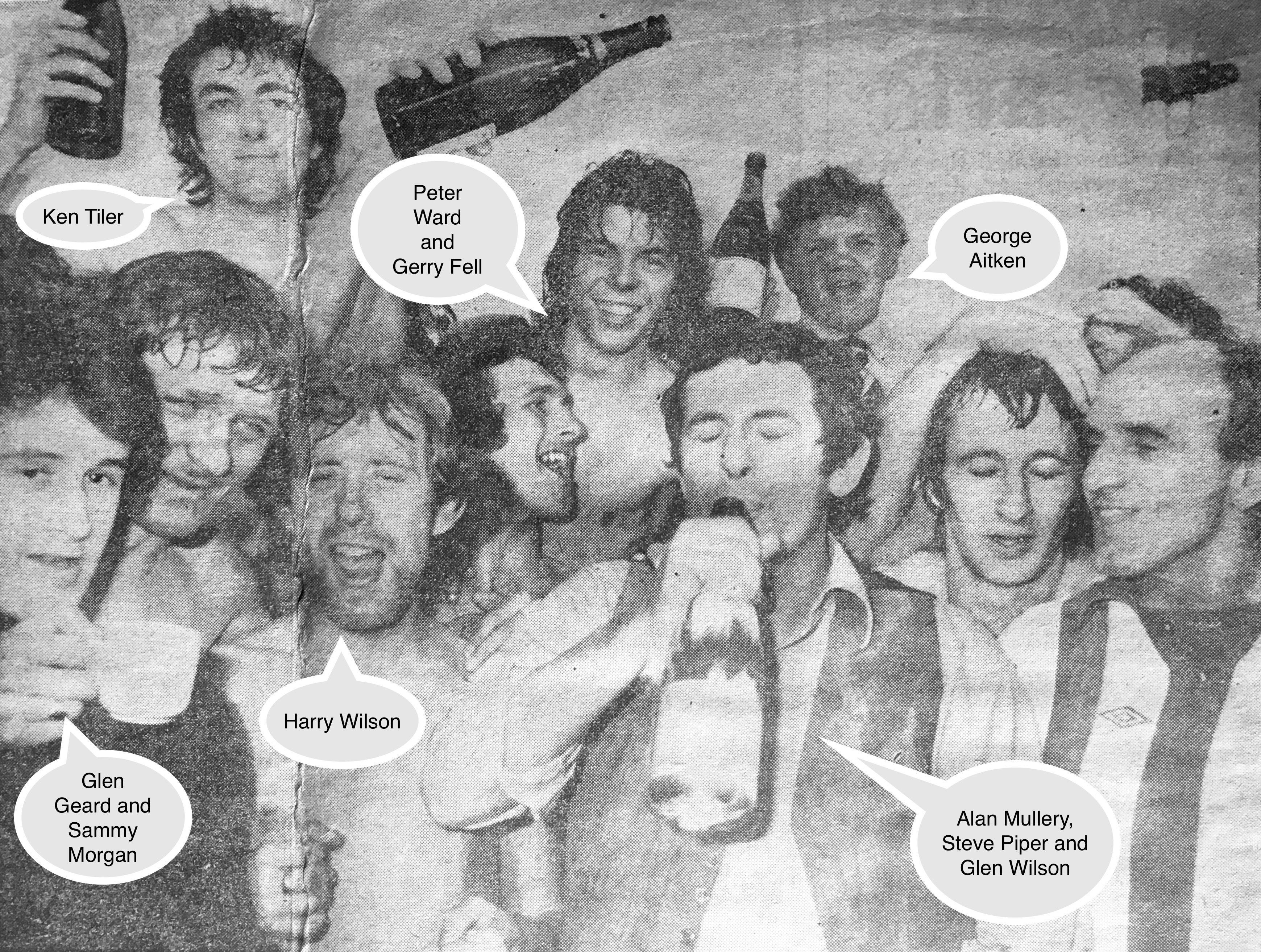
6 HW promotionA bare-chested Wilson was pictured (above) in the Albion dressing room alongside Mullery enjoying the celebratory champagne after promotion was clinched courtesy of a 3-2 win over Sheffield Wednesday on 3 May 1977. But that game was his Goldstone swansong.

He’d made a total of 146 appearances for the Albion – as well as chipping in with four goals – but when Mullery signed Mark Lawrenson and Gary Williams from Preston that summer, Wilson went in the opposite direction along with Graham Cross.

Only six months after arriving at Preston, Wilson was badly injured in a road accident after his car skidded on black ice and collided with a transit van. He suffered a punctured lung and damage to his knees. Doctors told him he wouldn’t play again, but he proved them wrong and ended up spending three years at Preston, playing 42 games.

“I suppose I was lucky to be alive,” he said in an Albion matchday programme article. “I lost a couple of yards of pace, but then again I ws never exactly the quickest of players.”

With his best days behind him, he moved back to his native north-east in 1980 to play for Darlington, making 85 appearances in three years.

He stayed in the north east in 1983, switching to Hartlepool for a season, but only played 16 times for them before dropping out of the league to play for Crook Town.

According to The Football League Paper, Wilson stayed in the game as manager of Seaham Red Star and, in 1988-89, Whitby Town.

He then worked as a community officer for Sunderland before joining the coaching staff at Burnley in the 1990s.

When Chris Waddle took over as manager, Wilson was sacked but he took the club to an industrial tribunal, which found in his favour.

He later worked for his long-term friend, Stan Ternent, at Bury, and as a monitor for the Football League, a job that saw him checking that the right procedures were being followed by the youth development set-ups of clubs in the north-west.

Wilson was in the news in 2007 when Ternent appeared at Lancaster Crown Court accused of assaulting Wilson’s son, Greg, on the steps of Burnley Cricket Club (a venue familiar to visiting supporters as a popular watering hole before games at the neighbouring football ground).

Greg Wilson required hospital treatment for a deep cut above his left eyebrow and needed nine stitches in his forehead.

Ternent said he had accidentally clashed heads, denied causing actually bodily harm, and was cleared by a jury.

4 HW colour laugh w WardWilson in an Albion line-up alongside Peter Ward
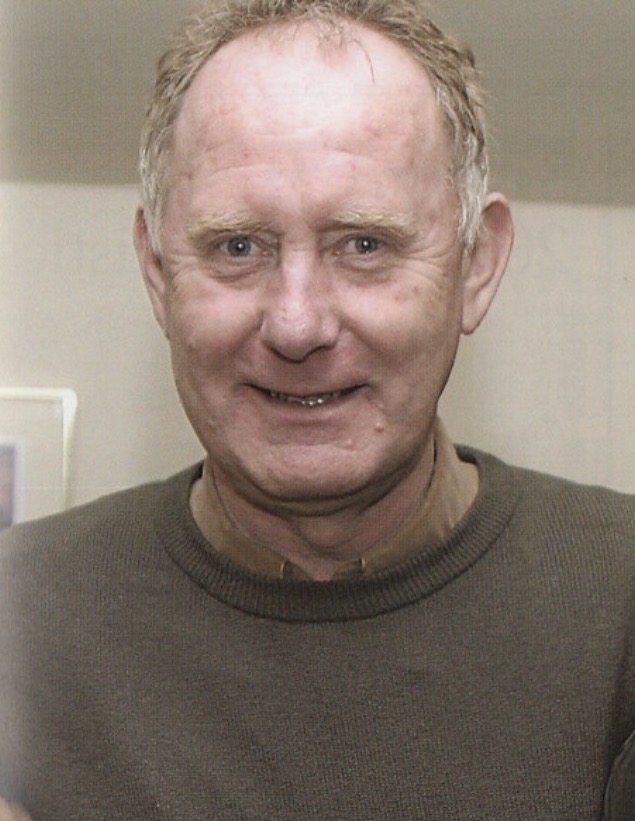
Wilson pictured in 2010

Injury-plagued ‘keeper Ben Roberts part of ‘Boro Cup folklore before Brighton promotion

2 pen shoot-outBEN ROBERTS might only have played a handful of games for Middlesbrough in seven years on their books but one of them will never be forgotten.

He was between the sticks for ‘Boro when Chelsea’s Roberto di Matteo scored one of the quickest ever FA Cup Final goals.

Thankfully, Brighton fans prefer to remember him as the ‘keeper who helped the Seagulls to promotion from the third tier via the play-offs in 2004.

“That season at Brighton remains one of my best experiences in football,” Roberts told beatsandrhymesfc.com’s Christian Brookes, in a 2011 interview.

“Apart from enjoying living in the city, I remained relatively injury-free and played the most games of my career. So for a full season’s work to come down to one day in the Millennium Stadium with a full house in attendance was a very special memory.”

No-one knew at the time, of course, but it was also Roberts’ last game in goal for the Albion because a back injury forced him to retire from the game prematurely in 2005, aged just 29.

In an extended interview with Dominic Shaw for gazettelive.co.uk in December 2017, Roberts looked back on his time at ‘Boro and a playing career that was beset with injury.

Born in Bishop Auckland on 22 June 1975, the young Roberts was spotted playing for South Durham Boys by Dennis Cooper, father of ‘Boro legend Colin Cooper, and the club took up his recommendation. Roberts would set off by bus from his home in Crook at 6am each day to get to training on time in Middlesbrough, nearly 30 miles away.

At one point, it looked like he wouldn’t get the chance to continue his career because he was deemed too short, but he fed his face throughout the summer, shot up the required inches, and was rewarded with a two-year scholarship.

In fact, he was still a YTS scholar when he got his first involvement with the first team, being named on the bench for two of Boro’s first three games in the inaugural season of the Premier League (1992-93).

However, it was another two seasons before he actually got into first-team action, making his debut in an Anglo-Italian Cup game against Ancona, with Bryan Robson by then in the managerial hotseat.

In the 1994-95 season, Roberts got league experience under his belt during loan spells with Hartlepool and Wycombe Wanderers and the following season he went on loan to Bradford City before returning to Middlesbrough to help out a goalkeeping crisis.

Injury to Gary Walsh presented Roberts with his chance, and, aged 21, he made his ‘Boro league debut on 18 January 1997 in a 4-2 win at home to Sheffield Wednesday.

Although Mark Schwarzer arrived at the club, he was also hit by injury – and was cup-tied in the FA Cup – leaving Roberts, 21 at the time, as the stand-in No.1.

On 1 April that year, he also earned his one and only international cap, coming on as a sub for Chris Day as England under 21s drew 0-0 with Switzerland at Swindon’s County Ground. Also in the team for that friendly were Rio Ferdinand, Jamie Carragher, Darren Huckerby and Lee Bowyer.

Two of Roberts’ 17 appearances for ‘Boro that season were in cup finals: in the replay of the League Cup Final against Leicester City, and then the FA Cup Final against Chelsea at Wembley.

Roberts started the following season as first choice because Schwarzer was still out injured, but his final appearance of the season – at home to Birmingham in the September – was his final appearance for the club.

Several treatments for a back injury were unsuccessful and at one stage, still only 24, he feared he’d be forced to retire, until he underwent surgery in London. As well as operating on problematic discs, the surgeon found a blood clot in his back.

In between back operations, Roberts went out on loan again and in 1999 played 14 games for Division Two side Millwall, including another Wembley appearance, this time against Wigan in the Auto Windscreens Shields Trophy. The Latics won 1-0 with the winning goal scored by future Albion captain, Paul Rogers.

The following season, Roberts had another loan spell, this time at Lennie Lawrence’s Luton Town and in the summer of 2000 he finally left ‘Boro and joined Charlton Athletic. However, he played only once for the Addicks, coming on as a sub in the final game of the 2002-03 season after regular no.1 Dean Kiely had been sent off.

Roberts greenPrior to that, Roberts had been out on loan again, initially at Reading and then returning to Luton. His first association with Brighton also came in that season, as Steve Coppell’s Seagulls were battling hard to avoid relegation from the second tier.

He played three times and I remember one of those games was one I went to away at Bradford City (a 1-0 win) on 15 February 2003, when he pulled off some terrific stops on a rock-hard pitch. The most memorable came early in the game and Roberts rated it as his best as a Brighton player.

“It was only after five minutes and Ashley Ward had a clear header inside the six yard box, but I got to it. I shouldn’t have, but I did,” he recalled in a matchday programme interview. “It (the game) shouldn’t have been played because the goalmouth was like a skating rink and that kind of set the tone.”

Unluckily for Roberts, he then picked up a dose of ‘flu and veteran Dave Beasant took over and kept the shirt until the end of the season.

However, Coppell saw enough to persuade him to sign Roberts permanently and, as referred to earlier, the 2003-04 season was to be the one time when he finally made his mark, culminating in the 1-0 win over Bristol City at the Millennium Stadium in Cardiff.

When his back injury problems returned and ruled him out of the whole of the 2004-05 season, he quit the game and went travelling to South America, Asia and India before returning to the UK and going to Roehampton University to take a sports science and coaching degree.

Not only did he achieve first class honours, his dissertation on biomechanics (which applies the laws of mechanics and physics to human performance) earned him a ‘Pursuit of Excellence’ award from Adidas.

Although he intended to stay in the world of academia, his old Brighton teammate, Nathan Jones, persuaded him to join the coaching staff at Yeovil Town.

“I was at a stage where I missed the banter, the day-to-day interaction and being outside,” he said. “I went down and loved it and that turned into my career. ”

While at Yeovil, he worked with Alex McCarthy, who later played for Southampton in the Premier League, and the much-travelled Stephen Henderson, who has played for Charlton, Nottingham Forest and Crystal Palace.

Roberts himself had the briefest of returns to league action when in October 2010 he appeared as a substitute in a 3-3 draw against Swindon, replacing the injured Henderson at half-time and conceding two late goals.

At the end of that year, he followed Jones to Charlton Athletic and in four and a half years at The Valley worked with Rob Elliot (later with Newcastle), Ben Hamer (Leicester), David Button (who became Mat Ryan’s deputy at Brighton) and Nick Pope (Burnley).

When, in the summer of 2015, the goalkeeping coach role at Brighton was vacated by Antti Niemi, who returned to Finland for family reasons, Roberts jumped at the chance to link up once more with coach Jones, then part of Chris Hughton’s management team.

Skysports.com quoted Roberts at the time, saying: “I’m ecstatic to be back at Brighton. I’ve made no secret that my happiest years as a professional footballer were spent down here, as I had a special affinity with the fans at Withdean.”

While that role continues it would be remiss not to mention THAT ‘Boro v Brighton Championship clash at the Riverside in May 2016. He told gazettelive.co.uk: “Obviously you want to win and it was so, so tight. My best mate and best man, Adam Reed, is a physio at ‘Boro and seeing him in the tunnel afterwards so happy with his kids, that levelled out the disappointment a little bit for me.

“It was still so hard to take, though. Adam said he felt a bit awkward as well and didn’t want to celebrate too much, but we were on holiday together a couple of weeks later and I was philosophical about it.”

Roberts continued as Albion’s senior goalkeeping coach after Hughton was succeeded by Graham Potter and, somewhat controversially, followed Potter to Chelsea when the manager took almost all of his backroom team to Stamford Bridge in September 2022. He retained the goalkeeper coach role at Chelsea after Potter was sacked.

Brighton pictures from Bennett Dean / Pitch Publishing’s We Are Brighton / Play Off Special;  from online, celebrating ‘Boro promotion with Bryan Robson and Nigel Pearson; flying the flag for Reading, and the Albion matchday programme.