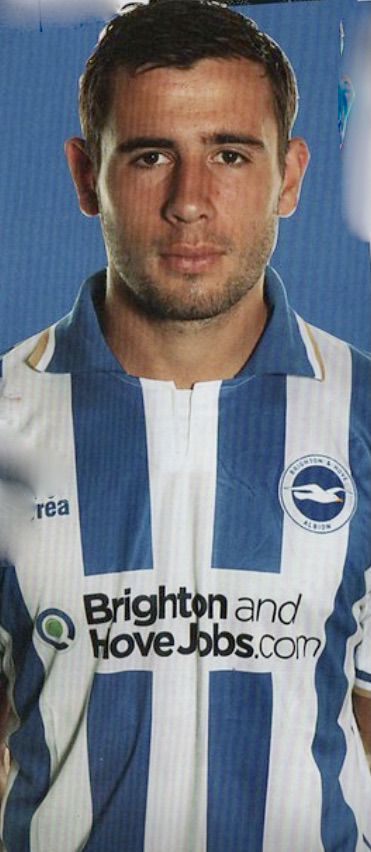
Utility man Jamie Campbell a magnet for frustration

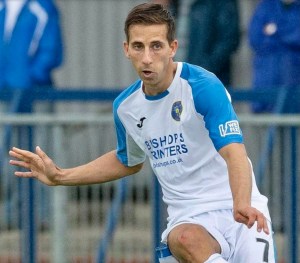
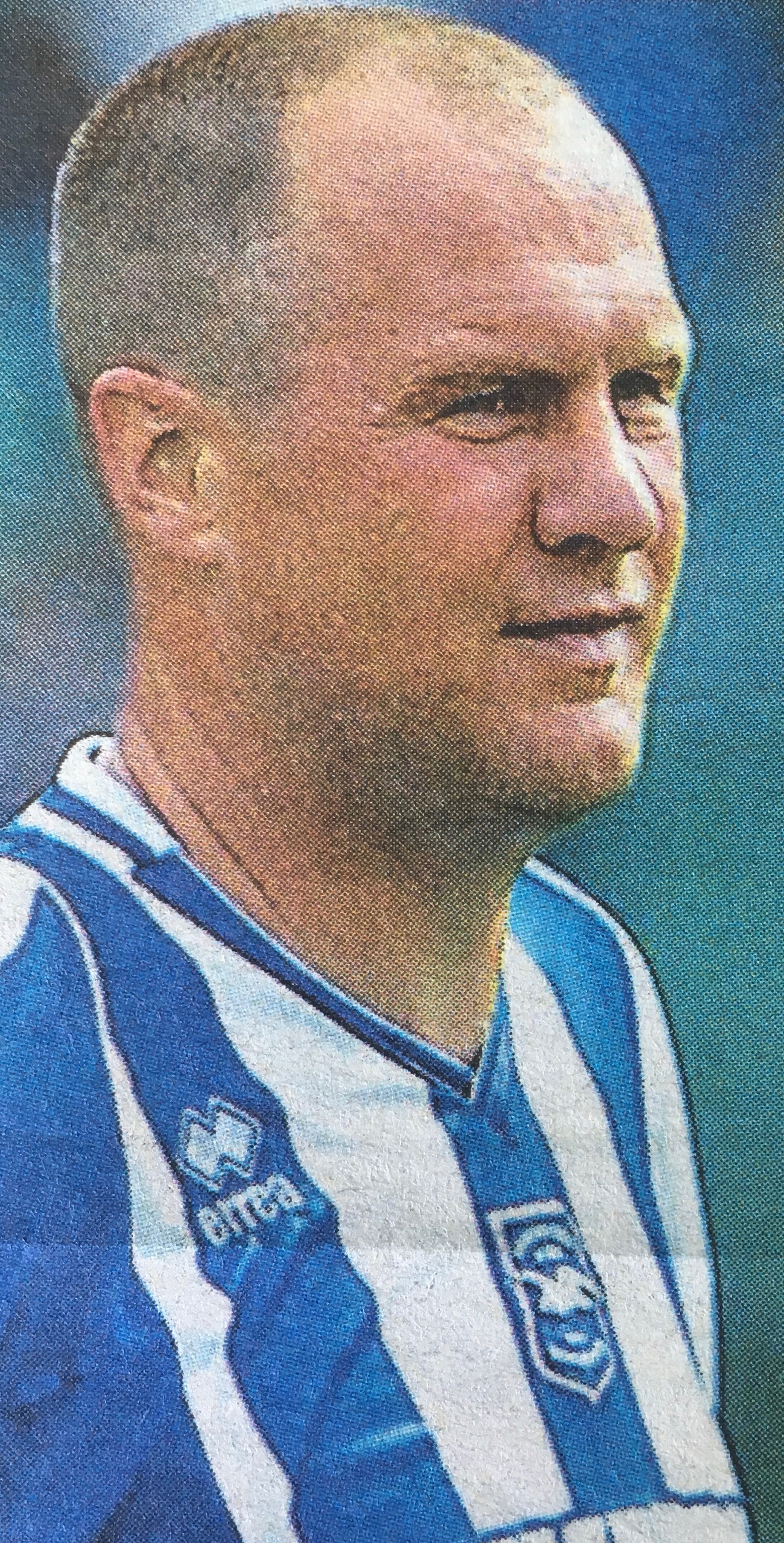
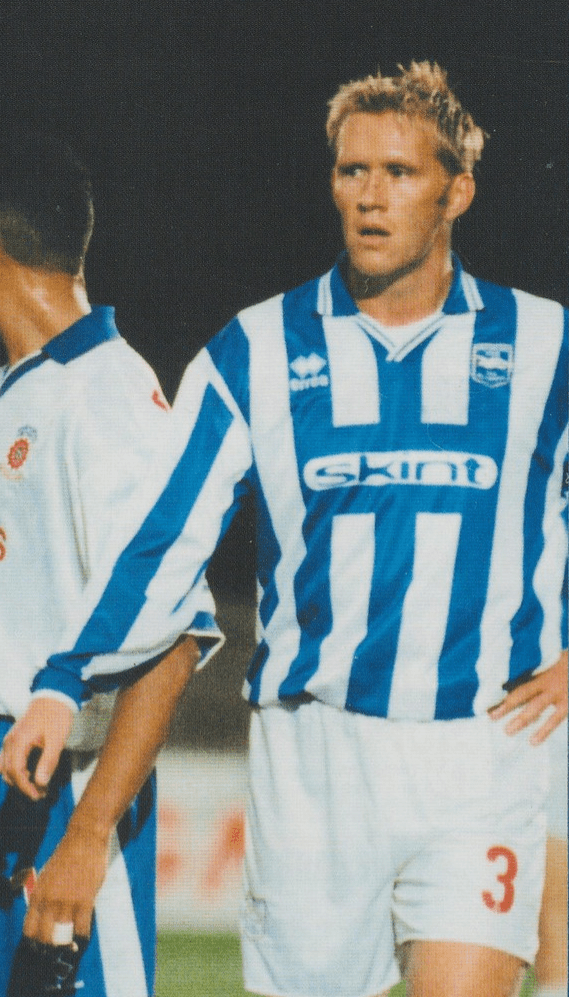
JAMIE CAMPBELL played in the top flight for Luton Town and later filled the left-back berth in the opening months of the season when Albion returned to Brighton after two years in exile at Gillingham.

However, by the time Albion won promotion from the fourth tier in May 2000, Campbell was on the outside looking in, Kerry Mayo having taken his place, and he was given a free transfer halfway through his two-year contract.

Campbell had been one of numerous new arrivals brought in by Micky Adams ahead of the 1999-2000 season having been given a free transfer by newly promoted Cambridge United where he had only missed one match in two years.

Although Albion famously beat Mansfield Town 6-0 in the season opener at the Withdean Stadium, subsequent form had some pondering whether it had been a flash in the pan.

Campbell, the only ever-present defender after eight games (three wins, two draws, three defeats), reassured supporters when he told the Argus: “At Cambridge we had some terrible hiccups at the start of the season. It was a new team, the same as Micky has put together here, and it does take time to gel.

“It’s early days yet. There are a lot of points to be played for and it’s a long old season. It’s far too early to start panicking. Let’s give it until Christmas, see where we are, and take it from there.”

In truth, there were few highlights for Campbell to enjoy in his time with the Seagulls. He put through his own net in only his fourth league outing, heading past the recalled Mark Walton at Darlington when filling in at centre back, although Gary Hart subsequently levelled it up.

He did score (left) in the right end to bag the only goal of the game in a Withdean win over Hartlepool on 6 November 1999, but the following month, when Albion were up against it with several players injured, ill or suspended, Campbell got himself sent off after only 25 minutes in a 2-0 defeat at Swansea City prompting Adams to drop him and relegate him to the reserves.

Campbell was shown the red card by Premiership referee Dermot Gallagher after twice sliding in recklessly on Jason Price in the space of just over a minute. He was Albion’s sixth player to be suspended that season.

“Campbell’s stupidity couldn’t have come at a worse time as a flu-ravaged squad had a hard enough task against the eventual Division Three champions without having to play for over an hour with 10 men,” recalled wearebrighton.com.

Campbell clears from Orient’s Martin Ling

Boss Adams, who had already fined Darren Freeman for a red card at Plymouth, told the Argus: “The boy will be disciplined. They’ve got to learn. In wet conditions like that, good defenders stay on their feet, it’s as simple as that.

“Obviously it’s a worry because with small squads in the third division you can’t afford too many sendings-off.”

Having lost his place, things then got worse for Campbell in February of the new century when he had to undergo a hernia operation, dashing any hopes he might have had of winning back a starting place. With Mayo and new arrival Nathan Jones vying for the left back spot, Campbell became surplus to requirements.

He moved on to Exeter City where he was almost ever-present in the 2000-01 season under Noel Blake and was named the Grecians’ player of the year.
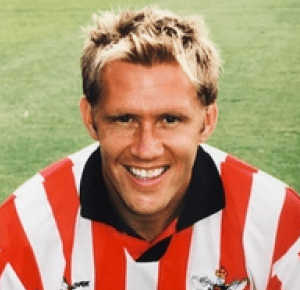
Not long into his first season at St James’s Park, he was interviewed by the local paper and compared the situation at City to his experience with Brighton, because Blake, like his former Leeds teammate Adams, had assembled a new squad of players.

“You’ve got to quickly get to know everyone’s strengths and weaknesses so you can gel as a team,” he said. “He (Blake) has got standards and he wants people to believe in them.

“The boss runs things very professionally, he thrives on running the club like a First Division or even a Premiership club.

“And the good thing with the boss is that he admits he is still learning and his door is always free for us to knock on.”

On his return to the Withdean in the red and white stripes of Exeter three days before Christmas 2000 (above), Campbell’s penchant for own goals once again came to the fore when he deflected a Gary Hart effort that was going wide past the City ‘keeper to contribute to a 2-0 win for the Seagulls.

Not long into the 2001-02 season, Blake was replaced by former City player John Cornforth and, although Campbell played 20 games for the Grecians that season, he switched to Conference side Stevenage Borough in March 2002, where he linked up with former Albion players Simon Wormull and Andy Arnott.

The website boroguide.co.uk seems to be singularly underwhelmed by the Wayne Turner signing declaring: “It was perhaps indicative of the poor form that we found ourselves in that Campbell was often a beacon of mediocrity.

“In defence or midfield, the utility player often had little impact; frustration becoming a buzz word when describing JC’s performances.

“So, it was only natural therefore, that he ended up at Woking. Like many other former Boro’ players who didn’t live up to expectations, all roads lead to Kingfield.”

That move took place in February 2003, and he moved on again a year later, to Havant & Waterlooville where he stayed until July 2005, when he retired from playing.

Born in Birmingham on 21 October 1972, he was a trainee at Luton before signing professional in July 1991. He broke through under David Pleat in the 1991-92 season when Town were relegated from the top flight after 10 seasons at that level.

Young Hatter Campbell

 Campbell made four starts plus nine appearances off the bench as the Hatters lost their place amongst the elite. Pleat’s squad also included a young Kurt Nogan and combative midfielder Chris Kamara.

On other occasions Campbell was part of Town line-ups that included one-game Albion loanee goalkeeper Juergen Sommer and Arsenal loanee striker Paul Dickov. The excellent Hatters Heritage website said of him: “Jamie was regarded as a utility man at Kenilworth Road with his versatility meaning that he was used mainly as a substitute, which sadly ensured that he could never claim a permanent position in the Hatters side.” Somewhat ignominiously, the fans podcast We Are Luton Town named the defender in their worst-ever Hatters XI.

When he found first team opportunities were limited at Kenilworth Road, Campbell went on loan to Mansfield Town and Cambridge United and left Luton in July 1995 to sign for Barnet.

During two seasons at Underhill, Campbell featured in 67 league matches (and scored five goals) before moving back to Cambridge on a permanent basis in August 1997.

While playing for the Us, Campbell put the ball in the wrong net but ended up on the winning side in a memorable second round second leg League Cup match in 1998.

Roy McFarland’s basement league United side knocked out Premier League Sheffield Wednesday 2-1 on aggregate, having nicked a 1-0 win at Hillsborough in the first leg.

Campbell for Cambridge tries to block a cross by Albion’s Paul Armstrong

Fan Matt Ramsay recalled: “Jamie Campbell’s freak headed 20-yard own goal summarised the cruel nature the sport can possess as it handed the big guns the initiative.

“Yet just as supporters began to embrace the familiar underdog emotion of consoling each other with the knowledge that at least it was a valiant effort, the magic moment arrived.

“Just as football is cruel when it goes against you, the success brings delirium. As Trevor Benjamin thumped home a right wing freekick to put United back into the lead, and as the final whistle fifteen minutes later heralded a major cup upset, there was proof that there is reward for the eternal hope that all fans of all clubs require.”

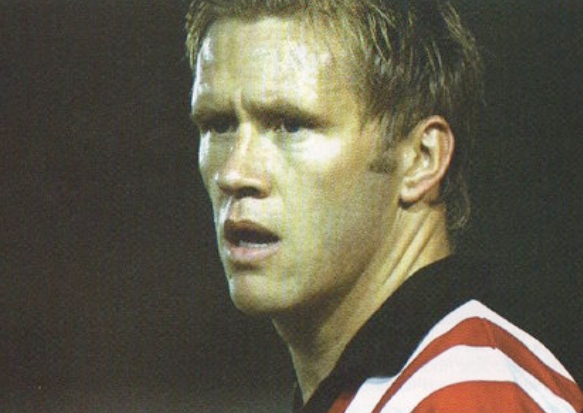
That’s the way Cookie crumbled for Hastings-born defender

WHEN IT comes to home-grown talent, Brighton have had particular success with central defenders.

Lewis Dunk is the prime example, staying with the club from humble beginnings through to Europe. Others had to move on to make the most of their careers.

For example, Steve Cook joined the club aged nine and made it through the different age levels into Albion’s first team. But to get regular football, he moved along the coast to Bournemouth.

If moving from Championship Brighton to League One Bournemouth seemed like a backward step in 2012, two promotions later saw him laughing on the other side of his face when the Cherries made it to the Premier League (in 2015) a season before the Seagulls.

Cook spent 10 years with the Cherries, making more than 350 appearances (168 of them in the Premier League), and after the departure of fellow ex-Albion defender Tommy Elphick, he took over as their captain.

Cook first got a taste of the big time in 2008, when he was a second year scholar on £60 a week, aged just 17. He was sent on by Micky Adams as an 85th-minute substitute in the famous League Cup game against Manchester City that League One Albion won on penalties.

Two months later, he once again replaced right-back Andrew Whing, this time in a FA Cup first round replay defeat to Hartlepool United, and picked up a booking into the bargain.

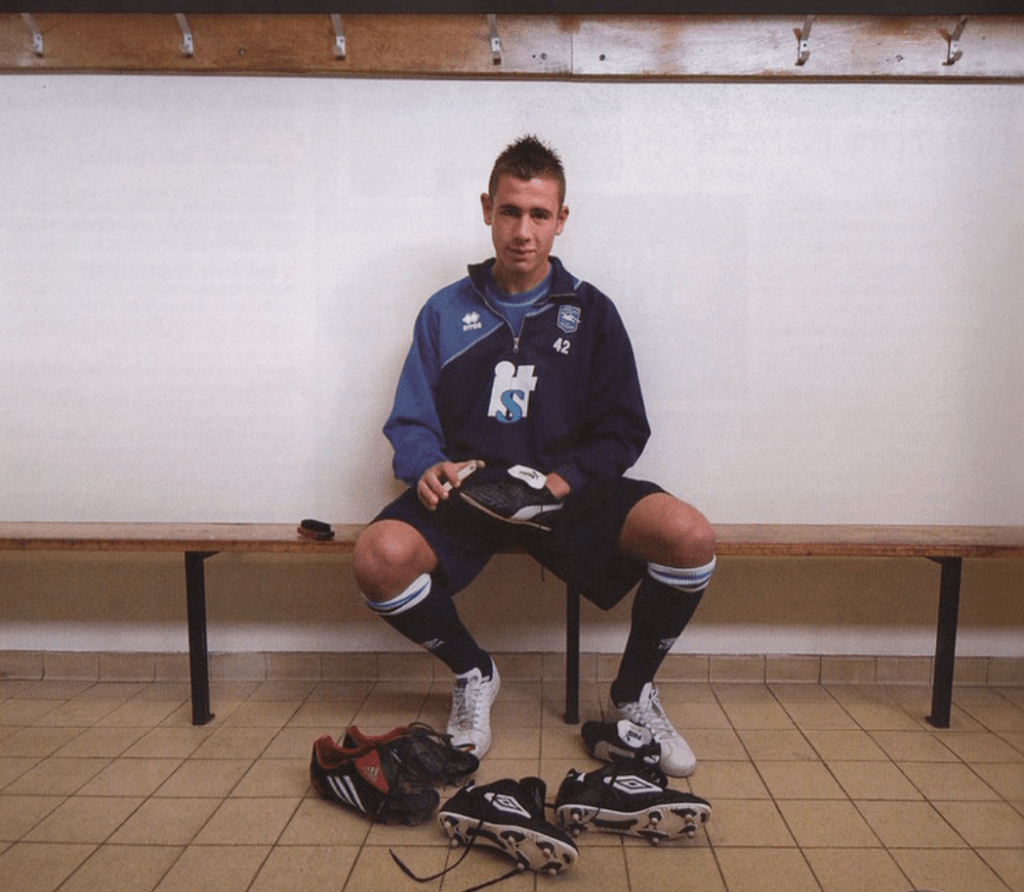
Boot cleaning duties for young Steve Cook

To gain more experience, in December that year, Cook went west to spend six weeks with Conference South Havant & Waterlooville. On his return, he once again had a first team look-in, going on as a 77th-minute sub for Calvin Andrew in the Johnstone’s Paint Trophy southern final defeat at Luton Town that marked the end of the second coming of Adams.

Before the appointment of Russell Slade, Cook went on for the second half as a sub for injury-plagued sub Adam Hinshelwood (who’d been an 18th-minute sub for Elphick) in a 4-0 home defeat against Crewe Alexandra.

Slade marked his arrival by bringing in plenty of old hands in what eventually proved to be a successful skin-of-the-teeth survival battle against relegation. Cook didn’t get another chance in the first team until some time after Gus Poyet had taken charge.

His development continued on loan with the likes of Eastleigh and Eastbourne Borough and in November 2010 he moved away from home to join former league club Mansfield Town on a three-month loan.

“Mansfield play very different to Eastbourne but it’s more like playing for Brighton where they like to keep the ball and play out from the back, which you don’t get in the Conference very often,” he told the matchday programme. “I see it as a great opportunity to prove myself and try to earn another contract at Brighton.”

He added: “Playing Conference football helped me grow up, physically and mentally, so by the time I returned I felt I was ready to challenge for a first team place.”

Cook up against Suarez

After a handful of non-playing appearances on the first team subs bench, when he did get his first ever start, it could not have been a bigger match: Liverpool at home in the third round of the Carling Cup with Luis Suarez, Dirk Kuyt and Craig Bellamy in the opposition forward line.

“It was a real confidence boost knowing the manager had faith putting me into the side for such a big game, but I really enjoyed the experience and got a great deal out of it,” he said.

“While I had a good pre-season, I’ve not played a lot of games since then. It was one in two months before the Liverpool game, but I’d been working hard in training and got my reward.”

Cook only found out 90 minutes before kick-off that he would be taking the place of fellow academy graduate Dunk, with both Elphick and Adam El-Abd out injured.

“It was a real baptism of fire though because for the first 20 minutes Liverpool were brilliant. Suarez, Bellamy, they were all excellent going forward, the pace of them as a team was unbelievable and in that opening spell I think we were in awe of them.”

Cook thought his involvement that night would lead to more chances, but he said: “Later that month we had Ipswich away, Dunky was suspended but instead of playing me, Gus put Romain Vincelot – a midfielder – in alongside Gordon Greer. From that point on, my mind was made up; I knew I had to look elsewhere if I wanted to kick on in my career.”

That autumn, Cook initially joined Bournemouth on loan, featuring in eight games, but he was recalled by the Seagulls when a shortage of defenders meant he was needed for a crucial New Year game at home to table-topping Southampton.

Having lost four games on the bounce, the odds were stacked against a positive result, but Albion remarkably won the game 3-0 (two cracking goals from Matt Sparrow and another from Jake Forster-Caskey).

Nevertheless, within 24 hours of the game ending, Cook finally took the tough decision to leave the Albion permanently. The fee was a reported £150,000.

He told the matchday programme: “I have loved my time at Brighton but this is a chance to play regular football and I can’t turn that down. It was nice to go out on such a high – not many players get that chance.”

Cook reckoned he might have got the odd game or two if he’d stayed at Brighton but he didn’t rate his chances of becoming a regular when everyone was fit. “I could play close to 30 games for Bournemouth and that is massive for a young footballer,” he said.

In a later interview, he said: “It was always going to be a tough decision to leave the Albion as I had been at the club since the age of nine.

“I had a decision to make: do I stay and fight for my place, despite being a fair way down the pecking order, or do I leave and try to continue my career elsewhere?

“It wasn’t easy because I was leaving a club on the rise; the Amex is one of the best stadiums in the country, the team was establishing itself in the Championship and there was a new training ground on the way.

“But having been at Bournemouth on loan, I could also see a hugely ambitious club and a talented squad which I believed was going places.

“So, I decided to leave and it’s been the best decision I could ever have made. I’ve moved away from my parents, so have grown up off the pitch, while on it I’ve been playing regularly and have really enjoyed my football.”

Much of that time he partnered Elphick in the middle of the Cherries defence and it wasn’t long before the pair were emulating the Albion’s achievement of promotion from League One.

“Tommy arrived a year after me but of course I told him about the club, the town and knew it would be a good move for him as it was for me,” he said. “We’d obviously played alongside each other before, had known each other a long time, and so we soon built up a good partnership.

“He had those leadership qualities he displayed at Brighton and was soon made captain. We had a terrific three years together and remain good friends off the pitch.”

In a subsequent Albion matchday programme, when he was once again visiting with the Cherries, he said: “Lovely stadiums and training facilities are great, but only if you’re playing in them and I can now look back on nearly 300 appearances for Bournemouth, where I’ve had some fantastic moments, played regularly in the Premier League and really developed my game. It’s a move that couldn’t have gone better.”

Although Cook held his own in the Premier League, he admitted the transition from the Championship was hard. “The gulf with the Championship is huge,” he said. “The intensity and pressure, in particular, are massive and the first six months were a real learning curve.

“Once I’d adapted and dealt with the expectations placed on me, I could relax and start to enjoy myself.”

Born in Hastings on 19 April 1991, Cook joined the Albion as a schoolboy following a six-week trial under the auspices of Martin Hinshelwood, the head of the youth set-up at the time.

“Initially, I was only training Tuesday evenings in the Eastbourne centre of excellence but, when I reached 13, we were training twice a week with a game on the Sunday,” he recalled.

“I remember I had a choice to make: Hastings Town, my local team, or Brighton and obviously I was swayed by the facilities, the coaching and being associated with a professional club.”

After Bournemouth lost their top tier status in 2020, Cook captained the side through to the Championship play-off semi-finals in 2021 where they were beaten by eventual winners Brentford.

There was plenty of emotion when Cook finally left the club in January 2022 with manager Scott Parker saying: “I know too well what someone like Steve Cook has done for this football club and the journey he has been on with the club. He has been paramount and done everything, really. I wish him all the best.”

And in an open letter to the club’s fans, Cook wrote: “I’ve been lucky enough to captain the team in League One, the Championship and Premier League and writing this just fills me with immense pride.

“The time has come for me take the next step in my career but I will never forget the staff that helped me improve as a player and person.

“The players that I shared a dressing room with and, and most importantly, the fans that supported and cheered for all those games.

“The journey that we have had is one that will never be beaten, and the relationship we had was undeniably strong. Thanks for everything.”

Upon signing for Nottingham Forest, Cook declared: “You can see the progress the club is making and I’m excited for the new challenge. 

“I thought it was the perfect time in my career to make this move to hopefully come and contribute and help get this club back to where it wants to be.

“The history of the club speaks for itself and I know how passionate the fans are. I’ve played at the City Ground in the past and it’s always been electric.”

Manager Steve Cooper said: “Steve is a fantastic player and brings a good level of experience, both in the Championship and the level above.

“He’s played in a team that has won a lot of games and I think that that’s important. We want our group to be young and hungry along with players of experience that can drive the team forward and that’s what we’re building.”

Having been part of the Forest side promoted to the Premier League in May 2022, his involvement back in the elite division was restricted to 12 games and he was omitted from Forest’s 25-man Premier League squad for the second half of the 2022-23 season.

In the summer of 2023, he switched to Queens Park Rangers in the Championship, telling the club’s website: “Playing football is the most important thing for me but I also pride myself on being a good character around the group.”

He went on: “My time in the Championship has been quite successful, and that success is something I want to bring here. 

“I don’t want my career to peter out, I still really want to be successful and to contest. I still have aims and targets I want to achieve and I’m hoping that the success I’ve had in my career so far continues so that I can help push QPR forward.” 

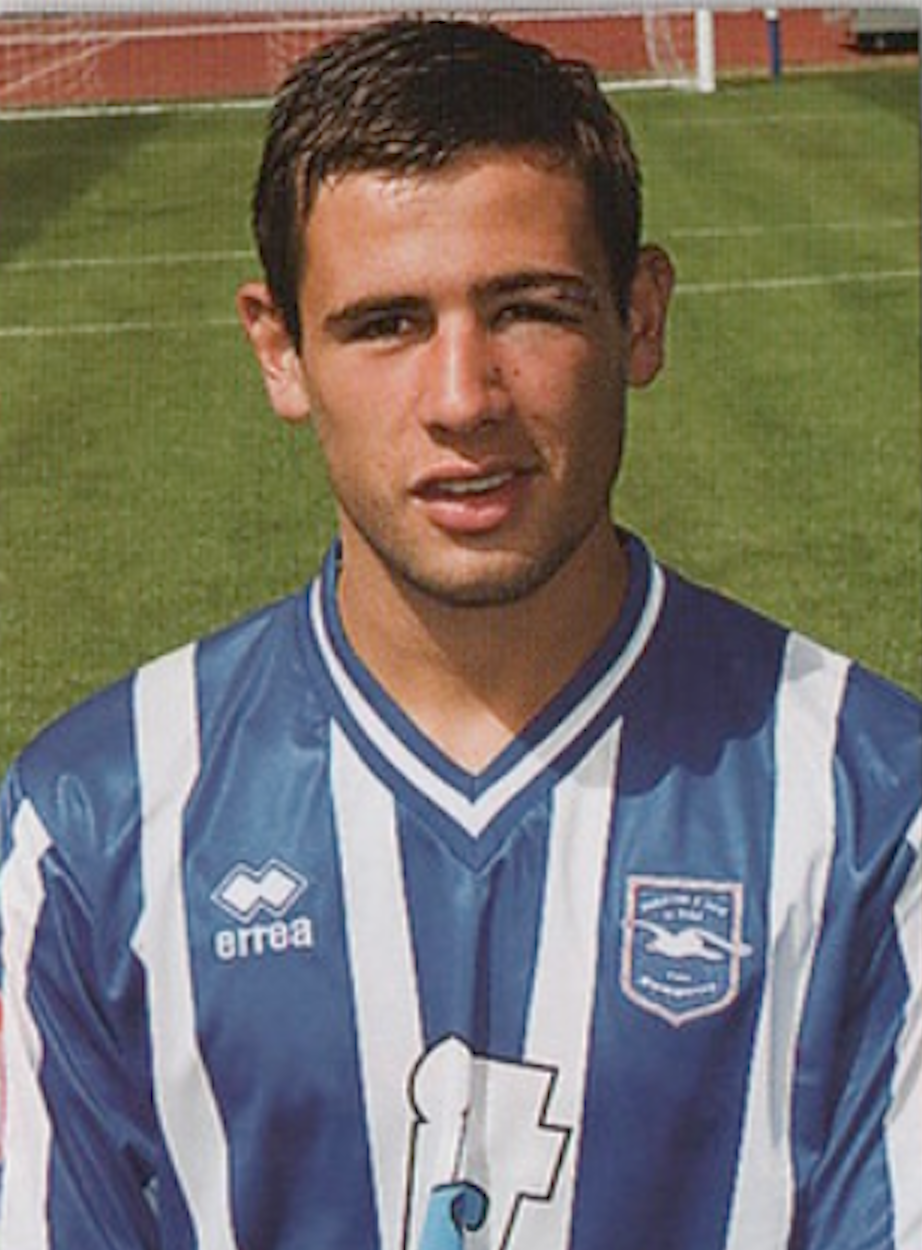
‘Outstanding pro’ Wes Fogden was Cherries pick after Albion

WES FOGDEN is still playing the game he loves despite injuries blighting much of a career that might never have got off the ground.

Being told he might not play again when undergoing an operation to remove a benign tumour on his spine as an 18-year-old at Brighton made him even more determined to enjoy every moment of being able to step out onto a football pitch.

Although he eventually broke through to Albion’s first team, it was at AFC Bournemouth that he got regular league football as the Cherries began their rise through the football pyramid.

Brighton-born Fogden has stayed in Dorset and now plays part-time for Poole Town while working as head of football for Branksome-based Elite Skills Arena, a business owned by former Bournemouth chairman Eddie Mitchell.

“Bearing in mind the amount of time injured, I’ve missed out on about five seasons of football,” Fogden told The News, Portsmouth’s Neil Allen in an interview published on 1 December 2022.

“I’ve had pretty much every injury going. Cruciate ligament damage to both knees, hamstrings, ankles, I’ve broken my nose four or five times, I fractured my cheekbone when going up for a header in the FA Youth Cup against Andy Carroll.

“There was even the time when the ball smacked me in the private regions, requiring an operation and putting me out for four or five weeks. A real variety of injuries.

“But I wouldn’t have it any other way. As long as I’m fit, I want to be playing every game, especially after what happened at Brighton.”

Fogden was never short of admirers for the way he bounced back from the devastating blow of being told he might never be able to play football again.

Tommy Elphick, who also went through Brighton’s youth ranks before moving to Bournemouth, said: “One thing with Wes is that you know he is going to dig in for you. He is a very good player; a footballer who can play at right-back, right wing or in central midfield.”

The player himself told the Albion matchday programme: “When I was told that I might not play again was the worst moment of my life but to come through it is a great achievement.”

After surgery to remove the tumour from his spine was thankfully successful, Fogden had to spend three months in a body cast before slowly recovering throughout the 2006-07 season.

He was grateful to the support of physio Malcolm Stuart, fitness coach Matt (‘Stretch’) Miller and physio Kim Eaton in aiding his return to fitness.

Albion sent him out on loan to Dorchester Town to gain experience but when Dean Wilkins’ squad was hit by ‘flu, the midfielder, who had previously been part of Wilkins’ successful Albion youth team, was recalled.

He made his first team debut at right-back in a Johnstone’s Paint Trophy tie against Swansea City when he was up against future Albion player Andrea Orlandi.

Fogden kept the shirt for the following Saturday’s league game at Oldham but was unfortunate to be sacrificed early in a reshuffle Wilkins was forced to make after wantaway Dean Hammond had got himself sent off early in the game. Nathan Elder went on as a substitute and scored a last-ditch equaliser for the Seagulls.

After that, Fogden’s involvement was a watching brief from the subs bench although he did get on in the 64th minute of a game at Cheltenham, replacing Albion’s goalscorer Jake Robinson in a 2-1 defeat.

Fogden subsequently went back out on loan, this time to Bognor Regis Town, and when Micky Adams was brought back to the Albion over Wilkins’ head that summer, he preferred to select more experienced players.

Fogden returned to Dorchester on loan initially and made the move permanent in October 2008. “Dropping out of league football wasn’t a tough decision,” he told afcb.co.uk. “Dorchester Town offered me a good deal, they were the only professional club in the Conference South at the time and it was a good opportunity to play first team football week-in-week-out.”

A cost-cutting exercise early in 2009 saw Fogden let go and he joined Havant & Waterlooville, who were in the same division. He was voted the Supporters’ Player of the Season in 2009-10 and 2010-11.

Having contemplated a career outside of football, he enrolled to take a degree in sports coaching and PE at Chichester University but Bournemouth boss Lee Bradbury gave him a second chance to build a career in league football.

“It was a difficult decision to put my studies on hold when Bournemouth approached me,” he said. “I was a year and a half in and I wasn’t expecting that call.

“After speaking to my family and the university, I decided to give the professional game one last shot.”

With the three-year deal done, Fogden said: “I’m really pleased to get back here at this level.

“It is a big jump for me. I was only young when I made my few appearances for Brighton and the pace was a lot quicker so hopefully I can just adapt as soon as I can.”

Bradbury told BBC Radio Solent: “Wes is a young prospect, who has a good grounding from his time at Brighton. He can play on either wing and can also play up front or in behind the strikers.

“He’s well thought of in the non-league circuit, and I saw it as a good opportunity to get him down here and integrate him into our squad.”

After three substitute appearances, Fogden produced an eye-catching performance on his full debut in a 1-1 draw at Colchester United in October 2011, Bournemouth’s Daily Echo observing that he “showed some neat touches in a lively display” playing just behind the striker in an attacking midfield role.

“I thought Wes Fogden was probably the best player on the park for us,” said Bradbury. “He was different class. He had great energy levels and worked really hard. He set the standard for the rest of the team.

“He has played off the striker quite a lot. He can play on either wing or up front in a partnership.

“He has got a lot of uses. He showed on Tuesday night what great quality he has, what a great professional he is and the fitness he has as well.”

The following March, after Fogden struck a 20-yard winning goal in a 1-0 victory over Brentford, Bradbury was once again full of praise for his signing. “I’m delighted for him. It was a terrific strike,” he said. “His energy levels are fantastic and he works so hard for the team. He’s very durable and a pleasure to work with.”

Fogden was part of a group of players who shared a close bond through meeting up at the Cotea coffee shop in Westbourne. The group included Ryan Fraser, Marc Pugh, Benji Buchel and Shaun MacDonald.

MacDonald, who joined Cherries two months before Fogden, told the Glasgow Times: “Just before I left, we all started going to Cotea in Westbourne. The food was always perfect, the coffee really nice and the people who own it are lovely.”

Fogden remained part of the set-up during Paul Groves’ brief reign after taking over from Bradbury, and then the return from Burnley of Eddie Howe and Jason Tindall. “Eddie and Jason gave the whole club a lift, the fans, the staff and the players, and we went on a roll that didn’t stop,” said Fogden.

Howe’s appreciation of Fogden was demonstrated in an interview with the Daily Echo, when he said: “Wes is a hard worker and a real team player but has got ability as well. He is a very good footballer, he has quality on the ball and you can`t underestimate that.”

Describing him as a valued member of the squad, the manager added: “Wes has certainly got the fire inside him to want to improve and to keep his place and I have been very impressed with him.”

Having made 59 appearances for the Cherries, including 32 League One starts, Fogden didn’t make any appearances in the Championship during the first half of the 2013-14 season and moved on to Portsmouth in January 2014.

Ahead of the move, Howe told BBC Radio Solent: “He’s been a really good servant to the club in his time here, he’s been an outstanding professional and someone who we have really enjoyed working with.

“But it’s been difficult to give him, although he has been injured this season, as much game time as he wants.”

Looking back on it a couple of years later, Fogden said: “I still had 18 months on my contract but decided that moving to Pompey was right for me.

“It was sad to leave, but it was time for a new chapter in my career. After the injuries I had when I was young it made me realise that, ultimately, I just love playing; if you’re not in that starting eleven on a matchday it’s very difficult.”

Born in Brighton on 12 April 1988, Fogden started playing football from an early age. “I was four or five years old, playing with boys a couple of years above me in my older brother’s team, which was run by my dad,” he said. “I signed for Brighton at 11 years old and played right the way through my school years.”

That senior school was Patcham High and in 2001 Fogden was in a Sussex under-14s squad alongside the likes of Richard Martin, Joel Lynch, Tommy Elphick, Tommy Fraser, Scott Chamberlain and Joe Gatting who all went on to play for the Albion.

He was part of the hugely successful Albion youth team of 2006 who, against all the odds, beat the youth sides of Premier League clubs Chelsea and Blackburn Rovers in the FA Youth Cup before losing on penalties to Newcastle United (managed by Peter Beardsley) in the quarter finals.

It was only after he had signed on as a professional at 18 in 2006, that he found out about his spine tumour.

“Initially I was told I would never play football again,” he recalled. “A diagnosis like that definitely changes the way you think about things; you take each day as it comes and enjoy it for what it is.”

Fogden’s time at Portsmouth was disrupted by a serious knee injury and he was only able to make 29 appearances in 19 months at Fratton Park. He later suffered a similar injury while playing for Dorking Wanderers and, in a March 2022 interview with Surrey Live, said: “With both of my ACL injuries I gained a lot of experience in the exercises I’d need to do,” he said.

“With the first ACL I had, I had a great physio at Portsmouth, Sean Duggan, who gave me a step-by-step plan. It was an unbelievable plan and I’ve used a lot of that into what I’ve done this season.

“Every minute of every game is a bonus now. I’m one of those that likes to play every minute anyway because of the injuries I’ve had. You cherish the moments you are out there.”

Fogden’s last professional league action came at League Two Yeovil Town where he was the 12th of 19 new signings made by Paul Sturrock ahead of the 2015-16 season.

He scored two goals in 17 appearances (plus one as sub) but was released in the summer of 2016 by Sturrock’s successor Darren Way.

He returned to Havant & Waterlooville in the Isthmian Premier League, helping them to promotion to the National League South and over four seasons made 154 appearances, scoring 23 goals.

For the 2020-21 season, Fogden switched to National League South outfit Dorking Wanderers, where he was once again dogged by injuries, including a nasty head injury that required hospital treatment.

He dropped back down to football’s sixth tier with Poole Town for the 2022-23 season because of the travel requirements playing and training for Dorking entailed.

There had been times when it clashed with his day job demands and taking on more at Elite Skills Arena had also influenced the decision. ESA owner Mitchell was chairman at Dorchester way back when the player went there on loan from Brighton.

“I’ve been working for Eddie Mitchell for a while now and have known him going back 15 years. He’s been really good to me,” he said.

As regards continuing to play, Fogden told The News: “All the time I can move about the pitch and be involved, playing as well as I can, then I’ll stay in the game. I’m still playing central midfield, right in the action, attacking and defending. I’m still going.

“When you’re a footballer, injuries are going to happen, the way I play is always twisting and turning, being involved, action packed. Freak injuries occur for me because of that – I can’t change my playing style.

“Considering I’m a bit shorter than a lot of players and at elbow height, it doesn’t help with my facial area. The same for dead legs, my thighs are knee-height compared to most players, it’s just one of those things.

“As I’ve got older, I’ve learnt to get away from some of the injuries which maybe I could have avoided previously. I’m still all-action, but sometimes it’s a case of pulling out of tackles I know I haven’t got any chance of winning.

“Are my injuries connected with the back? I don’t think anyone can really know, there might be a bit of a lack of mobility in that area, which could cause hamstring injuries and give less knee support, and perhaps a pelvic imbalance. I don’t know, I’m not really sure.

“It has been 16 years since that back operation and I’m still playing. Without football I wouldn’t be anywhere near the person I am. It’s strange thinking back to how it could have been, had it not been for a fantastic surgeon.”

Albion rookie Richard Martin became Sven goalie at City

RICHARD MARTIN could justifiably be dubbed ‘The Nearly Man’ of goalkeeping.

Once thought to have the potential to play 200 games for the Albion, he left the Seagulls having only ever warmed the first team bench.

In an unlikely turn of events, he went from back-up League One Seagulls ‘keeper to no.3 behind Kasper Schmeichel and Joe Hart at Premier League Manchester City, thanks to former England boss Sven-Goran Eriksson.

After two years at City, he went on loan to Burton Albion, then worked under Ben Roberts and Nathan Jones as back-up ‘keeper at Yeovil Town before enjoying fleeting fame on the Caribbean island of Puerto Rico.

Doubtless it wasn’t the career he expected when his teenage promise between the sticks led to him earning trials with Liverpool and Everton.

Born in Chelmsford on 1 September 1987, Martin spent part of his childhood in Liverpool but the family were living in Burgess Hill when the young goalkeeper was picked up by the Albion.

Martin was only 16 when Liverpool took him on a week-long trial and Albion manager Mark McGhee went public in the Argus on 4 February 2004, explaining why he thought the youngster should stick with the Seagulls.

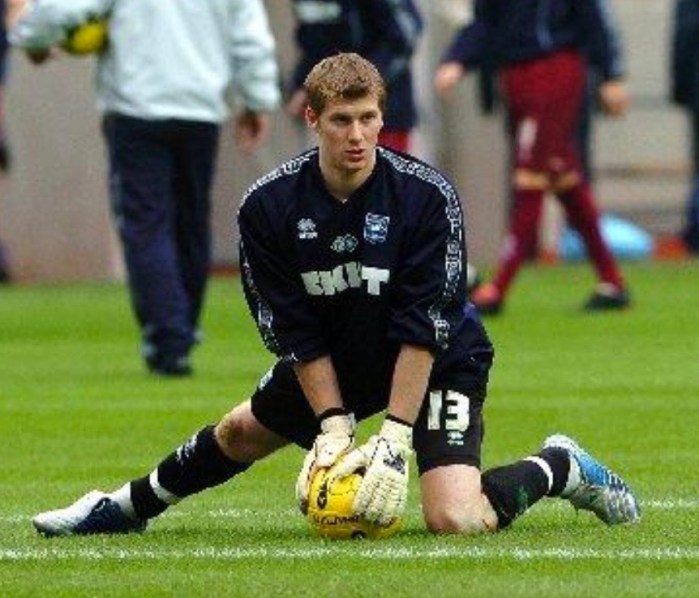
Warming up for the Albion (pictured by the Argus)

“We have put forward a reasonable argument to the boy and to his parents as to why we think he should stay here,” said McGhee. “The thing we can promise him at a club like ours, like any other young player in any other position, is that if he is good enough he will be fast-tracked into the first team or certainly onto the bench.

“If he goes to Liverpool there is no chance of that happening. At the very best he is going to spend two or three years at youth level, then at reserve level and in five years’ time he might start to make an impression in the first team squad.

“By that time, he would have played 200 games for us and be worth a lot of money and move to Liverpool under different circumstances.”

The Argus reckoned Albion could have got compensation of at least £200,000 if Martin, a Liverpool supporter, had ended up at Anfield. But Liverpool didn’t take him on, he remained an Albion scholar, progressed through the youth ranks and was awarded a two-year professional contract in the summer of 2005, before his scholarship was due to expire.

With Michel Kuipers sidelined by injury, Martin and fellow young ‘keeper John Sullivan shared opportunities to play for the first team in pre-season friendlies ahead of the 2005-06 season. Martin appeared against Le Havre, Oxford United and Bournemouth, as well as coming on as a sub in two other matches.

A sizeable Albion following went over to France to watch Albion’s 2-0 defeat to Le Havre when Martin began in goal in the absence of Michel Kuipers. The Argus reported: “Martin flew high to his right to brilliantly tip away a 12th-minute thunderbolt from Jean-Michel Lesage which was dipping and swerving towards the top corner from 25 yards.”

Goalkeeping coach John Keeley went further and told the matchday programme: “That was an absolute world-class save. I’m sure if Michel had made it people would still have been talking about it – it was that good..

“He can take big positives out of that and the other bits he had to do in the first half.”

When the season proper got under way, Martin found himself on the bench for 14 matches as Irish international Wayne Henderson, on loan from Aston Villa, was the established first choice. But then Frenchman Florent Chaigneau arrived on a year-long loan from Rennes.

In December 2005, Everton took Martin on trial and for a while there was speculation that a nice fat transfer fee from selling the youngster could be reinvested in signing a much-needed striker for the first team. But the move didn’t materialise because Everton boss David Moyes didn’t think Martin was big enough.

The Argus reported: “Martin impressed during a recent trial with the Merseyside giants but Goodison boss Moyes has decided not to sign the slimly-built 18-year-old from Burgess Hill due to his size.”

Instead of heading to Goodison, Martin went on loan to non-league Kingstonian, competition for the no.1 spot at Albion having increased with the permanent signing of Henderson from Villa.

Martin was part of the successful Albion youth side of 2006 from which six players went on to play first team football. But even at youth level he was competing with Sullivan, who eventually edged ahead of him and did manage to break through into the first team.

Competitive football game-time was considered the best option for Martin and the following season he went on a season-long loan deal to Conference South Dorchester Town. But his stay was cut short by injury. Once recovered, in the second half of the season, he joined Folkestone Invicta where he played 12 matches.

However, on his return to the Albion his contract wasn’t renewed, and he was without a club until the surprise opportunity arose at Manchester City, where the goalkeeping coach at the time was ex-Albion No. 1 Eric Steele.

Martin told the Argus: “This is completely unexpected. I’d like to think Brighton were wrong to let me go but these things happen.

“I went up to City initially just for a week to do a bit of training, because my agent knows Eric.

“(First choice Andreas) Isaksson and Joe Hart picked up injuries, they had a reserve game which I played in and then I carried on training.

“I don’t think I am in contention for the first team, I will just be in the reserves and go from there. Hopefully the month will be extended if I can keep on doing well.”

Sure enough, it was and boss Eriksson was happy to give Martin a season-long contract.

His only first-team action came on 22 May 2008 when replacing Schmeichel for the second half in an end-of-season charity match in Hong Kong against a South China Invitational XI.

Even after Steele switched allegiance to Manchester United and Eriksson had moved on, Martin had done enough to establish himself as third in line behind Hart and Schmeichel.

Mark Hughes took over as manager and Martin remained at the club working with ex-Chelsea ‘keeper Kevin Hitchcock, who Hughes had taken with him from Blackburn.

Martin was given the no.13 squad number for the 2008-09 Premier League and UEFA Cup campaign and it was an irresistible opportunity for the Argus to catch up with him ahead of Brighton’s home Carling Cup tie against City at Withdean in September 2008 when Albion sprung a big shock by winning the penalty shoot-out.

Reporter Andy Naylor discovered Martin had been philosophical, rather than disappointed, about the way things turned out with Albion. “When I look back at the situation at that time it was all about getting results and Michel (Kuipers) and Wayne (Henderson) were the two generally ahead of me,” he said. “I got a lot of good experience at Brighton and that set me in good stead for coming up to Manchester.”

Unfortunately, a knee injury Martin sustained shortly after sidelined him until the following March. Then in April, City allowed him to move temporarily to Burton Albion as cover because their first choice ‘keeper Kevin Poole was injured.

When released by City in the summer of 2009, more Albion connections provided him with his next opportunity, and finally the opportunity to play league football, at Yeovil Town.

Martin at Yeovil (picture by YTFC Digital)

In the Seagulls’ 2004 play-off winning season, Martin was a youth-teamer when Glovers assistant boss Jones was Albion’s left-back and goalkeeping coach Roberts was between the sticks.

Ahead of Brighton’s 2-2 draw at Huish Park on 10 October 2009, Martin told Brian Owen of the Argus: “I was fortunate I got the call from Yeovil in the summer and went down there for a trial. They liked what they saw. Of course, I know Nathan and Ben well and the fact they knew about me must have helped them make a decision.”

Martin was on the bench for the Albion fixture but had made his league debut shortly before as a substitute when first-choice Alex McCarthy (at the time on loan from Reading) was sent-off 20 minutes into a 2-2 draw with Stockport County. With McCarthy banned, Martin got his first start in a defeat at Southampton.

However, in total he made just three league and two cup appearances in that first half of the season and in January 2010 was loaned to Conference National bottom-placed side Grays Athletic – and within the space of a fortnight had conceded 11 goals in three matches!

Although he returned to Yeovil after a month, McCarthy’s fine form denied him any further first team action at Huish Park and he was released in July 2010. After brief spells with Havant & Waterlooville and Crawley Town, Yeovil re-signed him on 31 December 2010.

Plenty to say in goal for Puerto Rico Islanders

However, in March 2011 he had the opportunity to head to the Caribbean and play for Puerto Rico Islanders, who at the time were in the second tier of the North American Soccer League. He made his debut in May 2011 having initially been back-up ‘keeper and then signed for a second season, during which he established himself as first choice and played a total of 33 matches.

Talking on camera after the NASL player of the month award

In August 2012 he was named NASL player of the month, and he was interviewed about the experience of playing for the Islanders. There is an excellent montage feature in which the commentator purrs in this YouTube footage: “Richard Martin has the reflexes of a jungle cat.”  

Back in the UK in 2013, Martin played briefly for Whitehawk and Burgess Hill before retiring.

Fluctuating fortunes for Guy Butters after beginning alongside Spurs stars

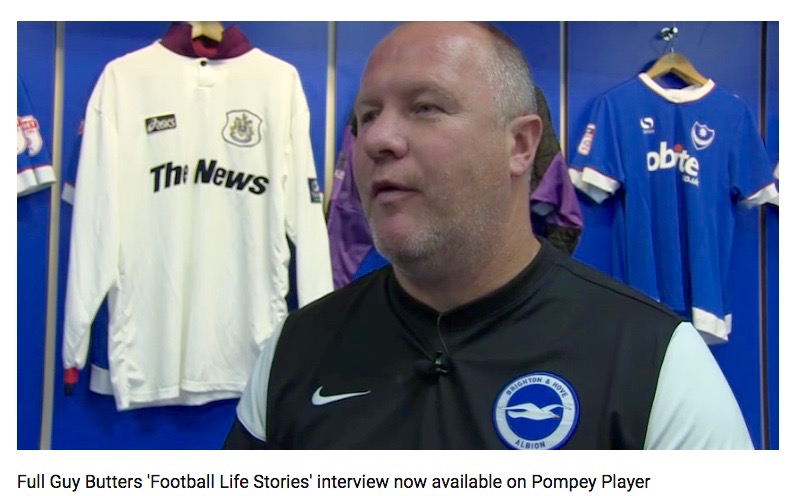
GUY BUTTERS saw plenty of highs and lows in a 20-year playing career that started with great promise at Tottenham Hotspur and included six years at Brighton, where he still works.

Butts coaches for Albion in the Community, he’s scouted players, hosted hospitality lounges and still turns out to play in charity matches, not to mention sharing a constant flow of corny jokes with his 3,700+ followers on Twitter!

Promotion via the play-offs at Cardiff in 2004 and being chosen as player of the season would be up there in terms of highs with Brighton.

My personal favourite came on 13 November 2004, when Butters scored the only goal of the game as Albion committed daylight robbery in front of 29,514 packed into West Ham’s Boleyn Ground.

BZ GBBrighton were up against it going into the game and had taken veteran Steve Claridge on for a month to help them out of a striker crisis. Hammers threw everything at the Albion that afternoon but somehow the Seagulls kept the ball out and, on 68 minutes, Butts, up for a Richard Carpenter free kick, got his head on the end of it to send the ball into the back of the net in front of the Seagull faithful.

Even after versatile Adam Virgo and Hammers’ Haydn Mullins were sent off for a scrap on 74 minutes, and West Ham bought on substitute Bobby Zamora, the scoreline remained 1-0 to the Albion.

A couple of months later, it was obviously a special day for Butters when, on 8 January 2005, he was given the captain’s armband to lead the Albion in their third round FA Cup tie against Spurs at White Hart Lane.

  • A programme portrait and skipper for the day in the FA Cup at White Hart Lane.

The matchday programme recalled how Butters “was very much the discovery of the 1988-89 season when manager Terry Venables lifted the tough tackling former Spurs trainee from our reserves to the first team to play alongside Gary Mabbutt and Chris Fairclough in a back three.

“Guy was also in there alongside such names as Paul Gascoigne, Chris Hughton, Chris Waddle, Paul Walsh, Terry Fenwick, Paul Stewart, (former Brighton Cup Final hero) Gary Stevens and Paul Allen. And he kept his regular place the following season when Gary Lineker was added to the squad.”

Born on 30 October 1969 in Hillingdon, he made his debut shortly after his 19th birthday in a League Cup game against Blackburn, and suffered the agony of scoring an own goal. But on his full league debut as a sub against Wimbledon on 12 November 1988, he made amends with a goal in the right end.

“We won that one 3-2 but it’s probably better remembered by Spurs fans as the game in which Gary Stevens was injured following a tackle by Vinnie Jones,” Butters told the Spurs programme.

“I’ve got great memories of my time at Tottenham but, looking back, I recall spending much of my time trying to avoid Gazza who was always up to something! But it was the players around me that I will never forget – I was in there with men who had appeared in World Cups, and that’s my abiding memory.”

The year after his Spurs debut, Butters also earned international honours. In June 1989, he was involved in three England under 21 tournament matches in Espoirs de Toulon matches.

He started in the 3-2 defeat to Bulgaria on 5 June, and was replaced by substitute Neil Ruddock. Two days later, he came on as a sub for Dean Yates in England’s 6-1 thrashing of Senegal in Sainte Mazime. Two days after that, he came on as a sub for Ruddock, as the under 21s drew 0-0 with the Republic of Ireland in Six-Fours-les-Plages.

Of that side, Carlton Palmer, David Batty and David Hirst went on to gain full England caps, but those three games were Butters’ only representative appearances.

After limited game time at Spurs in the 1989-90 season, Butters went out on loan to Fourth Division Southend United, scoring three times in 16 games.

Steve Sedgley, Fenwick and Gudni Bergsson were all ahead of him as potential partners for Mabbutt so, on 28 September 1990, he was transferred to Portsmouth for a fee of £375,000, having made a total of 35 league appearances for Tottenham.

At Pompey, he played at the back alongside Kit Symons and colleagues included Mark Chamberlain on the wing and Warren Aspinall up front, together with his ex-Spurs teammate Paul Walsh, now better known as a Sky Sports pundit.

But there were mixed fortunes for Butters at Pompey, which he spoke about in a November 2016 interview for the Portsmouth website. He was there six years and enjoyed some good times when Jim Smith was manager.

guy butters YouTube

He had a brief spell on loan with Oxford United in 1994 and he eventually realised his time at Fratton Park was up when a regime change saw the arrival of Terry Venables, who was the Spurs boss when he was sold to Portsmouth.

Tony Pulis signed him for Gillingham for £225,000 on 18 October 1996 and, in six years at Priestfield, one game in particular stands out for the unfortunate pivotal moment Butters played in it.

It was 30 May 1999, the Football League Second Division play-off final to determine the third and final team to gain promotion and Gillingham were up against Manchester City, remarkably, at that time, struggling to get out of the third tier of English football.

Goals from Carl Asaba and Bob Taylor on 81 and 87 minutes looked to have given Pulis’ side victory. But Kevin Horlock had pulled one back for Joe Royle’s City and, as normal time expired, former Albion loanee Paul Dickov equalised for City in the fifth minute of added on time to level the scores at 2-2.

With no further scoring in extra time, it went to penalties. City scored three of their first four; Gills had scored only one of their three. So, the pressure was on Butters, the fourth penalty taker, to bury it to keep the Gills in it.

When Butters stepped up and hit it low to ‘keeper Nicky Weaver’s left…. it was within the 20-year-old’s reach, and he pushed it away. Cue wild celebrations as City won the shoot-out 3-1.

“Missing that penalty was one of the worst moments of my life but you have to move on and I am not afraid to have another go,” Butters told interviewer Alex Crook in an article for the 2004 Division Two play-off final match programme. “At the time, I just wanted the ground to swallow me up but nobody blamed me because it was just one of those things.”

Consolation for Butters came the following year when Gillingham returned to Wembley and on that occasion won 3-2 in extra-time against Wigan Athletic. As with Pompey, Butters had six years in total with the Kent club and played 159 league games before being released in the summer of 2002.

IMG_6010The 2002-03 season was already under way by the time Butters joined Albion on a free transfer and, in the September, he was doing his own personal pre-season workout programme in a bid to get fit.
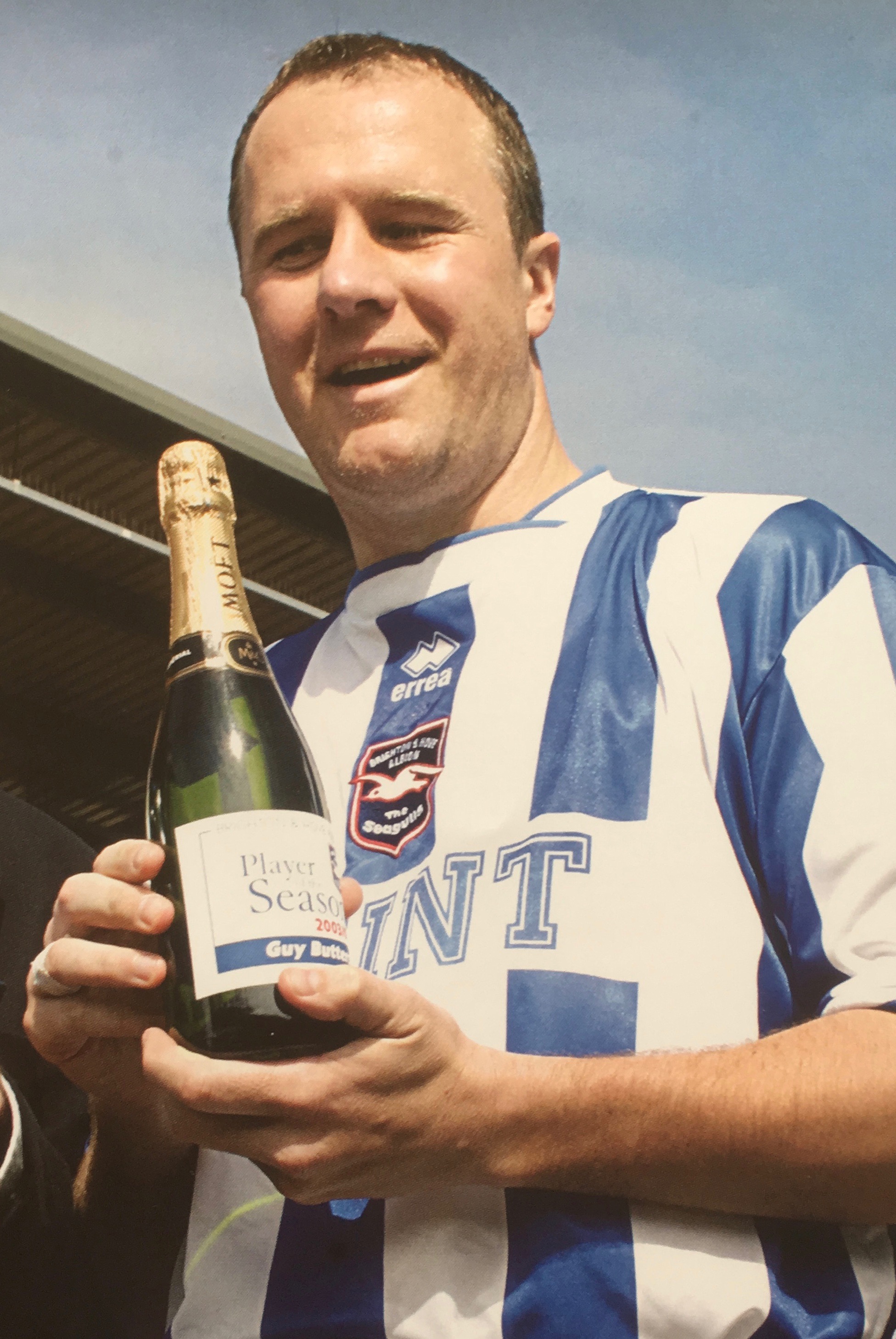
“When I first came here I had to do a lot of extra work with Dean White,” Butters told Brian Owen, of the Argus. “It was a case of trying to cram a lot of stuff into a little space of time. I wasn’t really getting too much time to recover after it.”

The managerial change from Martin Hinshelwood to Steve Coppell didn’t do Butters any favours either. Virgo and Butters were the centre back pairing for Coppell’s first match – a 4-2 home defeat to Bristol City – and both were then discarded into the wilderness.  Virgo went on loan to Exeter and, after Coppell brought in Dean Blackwell to play alongside Danny Cullip, Butters was sent out on loan to Barnet.

But when injury meant Blackwell’s career was over, the door opened again for Butters and he seized the opportunity to such an extent that as Albion won promotion back to the second tier via the play-offs, he was voted player of the season.

GB potseas by Bennett Dean• 2004 Player of the Season pictured by Bennett Dean.

In fact, it was the arrival of Mark McGhee to succeed Coppell that was very much a turning point in Butters’ career because he had previously been considering hanging up his boots.

In Match of My Life (www.knowthescorebooks.com), he said: “Mark was a real breath of fresh air as manager. Straight away he helped me with a special diet and fitness programme aimed at improving my general match fitness, but, more importantly, helping me work towards prolonging my professional football career.

“He was the first manager to do that and under his guidance I began to thrive and really enjoy my football again.”

As the Argus previewed the 2004-05 season with a special publication, they declared: “Buoyed by a great run of form in last season’s run-in and looking in good shape in training, Butters is ready for another stab at the second tier of English football.”

And Butters said: “This year I did a bit in the summer when I was on holiday and the gaffer put us through our paces so I’m sure that when the season starts I’ll be pretty match fit.

“It’s a big step up but, if we can get a few results away from home, not too many of those big teams are going to fancy coming to Withdean.”

  • The Argus spots a lighter refreshing moment!
  • Butters and Cullip were opponents when the Seagulls won at Sheffield United, another moment captured by the Argus.

Three years later, at the age of 37, Butters was still with the Seagulls and looking forward to what would ultimately turn out to be his last in the stripes.

“I thoroughly enjoyed it last year,” Butters told Andy Naylor. “It is probably one of the most enjoyable seasons I’ve had.

IMG_6014“I missed out on pre-season last year through injury. The gaffer was amazed I played as many games as I did.

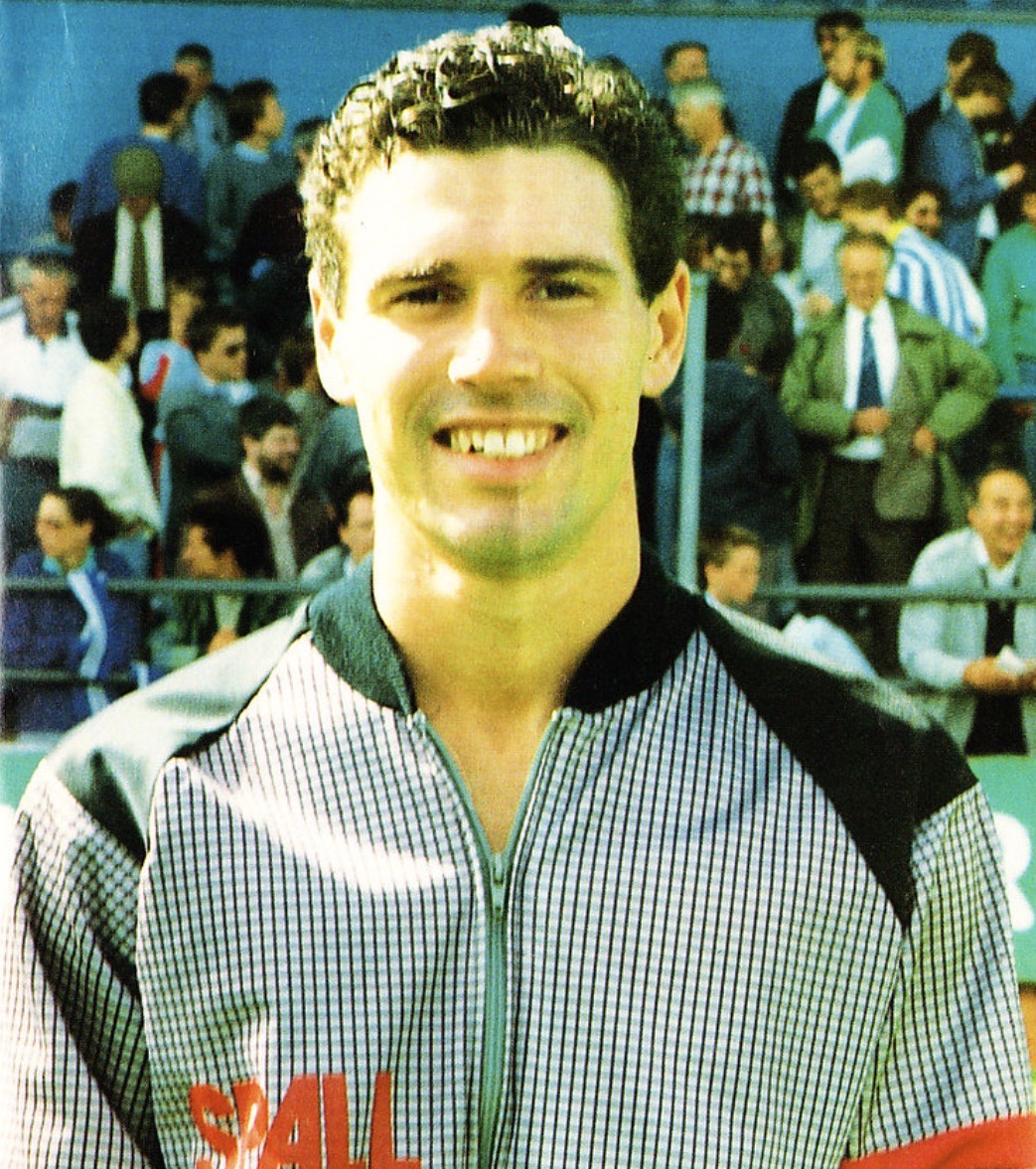
“I cannot see why, with a decent pre-season under my belt and, as long as I look after myself, that I cannot do the same again.

“I just want to go on playing as long as I can and along the way enhance my CV with coaching badges.”

Manager Dean Wilkins finally released Butters at the end of the 2007-08 season, during which he had been sent off for the first time in his career.

He’d played a total of 187 games for the Seagulls and carried on playing with Havant & Waterlooville briefly plus a seven-game spell on loan at Lewes before trying his hand at management with Winchester City and Eastleigh.

Guy + Nick

  • I got the chance to meet Guy when he kindly presented an award at an event I was involved in organising: what a great bloke!

South Coast suited utility man Paul Wood at Brighton, Bournemouth and Pompey

paul wood (red)

THE quote at the top of an Albion matchday programme feature about Paul Wood sums up his Brighton career perfectly.

“I’ve played so many positions at the Albion. I’m not sure that I consider myself a centre-forward any more.

“Actually, playing on the right as I am now takes my career virtually full circle – I always used to be a winger before I joined Portsmouth.”

Manager Barry Lloyd bought Wood from Portsmouth for £40,000 in the summer of 1987 to play up front alongside Kevin Bremner, with Garry Nelson wide on the left.

Nelson, of course, thought otherwise – and 32 goals in a promotion season playing down the middle rather proved him right.

Thus Wood found himself deployed in that rather dubious-sounding role of ‘utility player’.

“A couple of goals would have done me great guns when I got a chance up front,” Wood admitted. “I don’t think I let anybody down when Nelson and Bremner were injured but I wasn’t putting them away.

“It didn’t really bother me too much. I was most happy just to be getting first team football, especially as I had spent the previous year at Portsmouth, while they got promoted to Division One, watching from the stands.”

A pelvis ligament problem had sidelined Wood at Fratton Park so the new lease of life as part of a promotion-winning squad was a welcome break.

After making his Albion debut in a 2-0 home win over Fulham on 29 August 1987, Wood admitted: “I found it very tiring after playing only one hour of reserve football in the last nine months. But I enjoyed the experience and I’m looking forward to creating and taking more chances.”

PW colBorn in Saltburn-by-the-Sea in the north east on 1 November 1964, at one point it was thought Wood’s football career was over almost before it had begun.

As a talented schoolboy footballer, he was spotted playing for Middlesbrough Boys as the side won the English Schools’ Trophy. His school headteacher had connections at Elland Road so he went for a trial but only 15 minutes into the game broke a leg.

It seems he had broken a knuckle at the back of his knee and the Leeds physio, Bob English, took a look at the injury and said: “Sorry son, you’ve broken your leg, ripped all the ligaments, and I think you’re finished.”

Thankfully for the budding young footballer, the dire diagnosis was wrong, but it put him off trying to make it at Leeds and instead he got picked up by Portsmouth whose scout in the north had seen him playing for Guisborough under-16s.

It was a long way from home, but he appreciated the club’s more caring nature and when a homesick Wood mentioned how he was feeling, manager Frank Burrows took £30 from his own pocket to send the youngster home for a break.

Wood’s Pompey debut eventually came, ironically at Middlesbrough, after Bobby Campbell had taken over in the manager’s chair.

Originally, he had only travelled with the squad so that he could visit friends and relatives but a couple of players fell ill and Wood got his big chance.

“Before I knew it, I was in the team,” he said. “I think that’s the best game I’ve ever played, although it flew past so fast.”

Another favourite moment came when he scored two in a 4-0 win over Shrewsbury. England World Cup winner Alan Ball had succeeded Campbell as manager and said after the 21-year-old’s performance ‘a star is born’. Wood told portsmouth.co.uk: “That will stay with me for the rest of my life. For somebody who has achieved what he has in football and the respect he commands to come out and give me that compliment was a great feeling.

“It was a game where everything seemed to go right. I scored a couple and was in confident form.”

A run in the team followed for Wood, who made 25 league appearances as Pompey fell just short of promotion.

The following season, he only played seven games at the start of the season before sustaining the pelvic injury he put down to playing three times on plastic pitches in the space of three weeks.

paul wood portrait

By the time Wood had made his recovery, Pompey were playing in the top flight and he had fallen down the pecking order. The move to Brighton came about after Wood scored a hat-trick for Portsmouth’s reserves.

He told portsmouth.co.uk: “I was disappointed to go because I never really wanted to leave but I had a mortgage to pay and no bonuses on appearance money was forthcoming.”

Ironically it was the long-term injury problems to crowd favourite Steve Penney that presented Wood with a lot of his games at Brighton and when Penney got back into the side in 1989, Wood put in a transfer request because he felt he was doing well enough to merit a place.

Penney was to move on before Wood but eventually, after two and a half seasons with the Seagulls in which he played 88 games + 17 as sub, and scored just eight goals, he was sold.

That canny transfer market operator Lloyd had acquired the services of one-time England international wideman Mark Barham, who had been written off elsewhere because of injury issues, so he dispensed with Wood’s services by selling him to promotion-chasing Sheffield United.

On 5 May 1990, Wood was on the scoresheet as Dave Bassett’s United beat Leicester City 5-2 to earn promotion to the top division. Playing alongside him were future Blades manager Chris Wilder, former Albion assistant manager Bob Booker and Mark Morris, who went on to play for Bournemouth and Brighton.

In 1991, Wood played 21 games for Bournemouth on loan from United, before making the move permanent, and in three years with the Cherries he scored 18 times in 78 appearances.

Then, in a deal that saw the Cherries acquire out-of-favour Portsmouth striker Warren Aspinall (known to BBC Radio Sussex listeners as a matchday summariser) Wood returned to Fratton Park.

He said: “It was fantastic for me to get the opportunity to return to the club.”

Pompey used him as more of a utility player than ever before, Jim Smith playing him in midfield and his successor Terry Fenwick even trying him at wing-back. Sadly, though, he suffered a bad knee injury that curtailed his professional career, causing him to retire in 1996.

He managed to play 20 games and score 15 goals for a Hong Kong side, Happy Valley, in 1997-98 and back in the UK linked up with National League South side Havant & Waterlooville.

He spent five years there, retiring at the end of the 2002-03 season after playing 137 games and scoring 48 goals.

Wood now runs his own Bournemouth-based decorating business.

Read more at: http://www.portsmouth.co.uk/sport/football/pompey/big-interview-paul-wood-1-7109817