Boss feistily defended crowd-heckled Bobby Smith

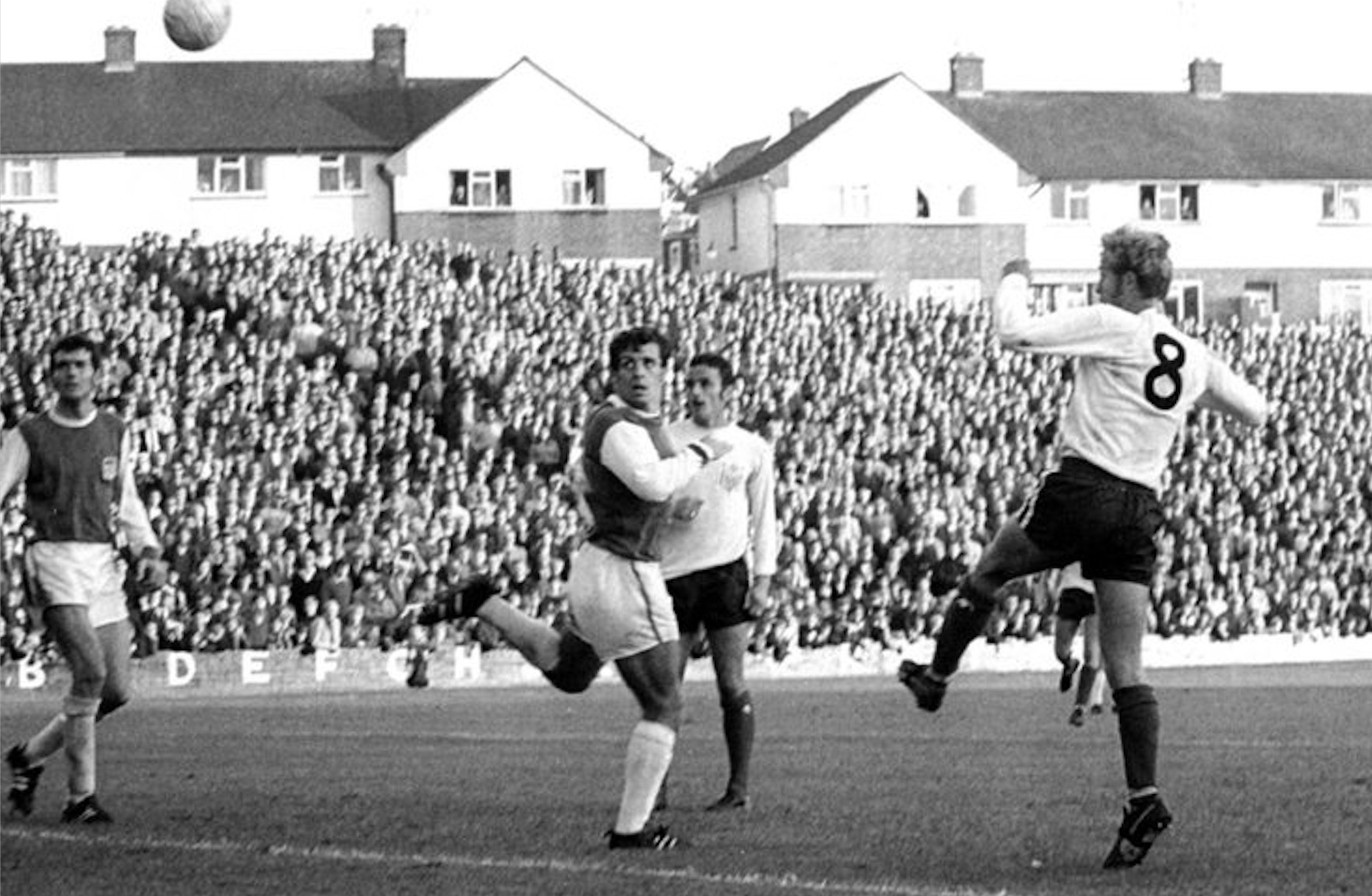
B Smith white actionTOUGH-TACKLING midfielder Bobby Smith made more than 200 appearances for Manchester United’s reserve side.

He played alongside emerging talents such as George Best and Nobby Stiles but wasn’t able to follow them in making the step up to the first team.

Like many before and since, he had to look elsewhere to establish a career in the game, and 85 of his 307 senior career appearances came in the colours of Brighton & Hove Albion, the fourth of seven clubs he served as a player.
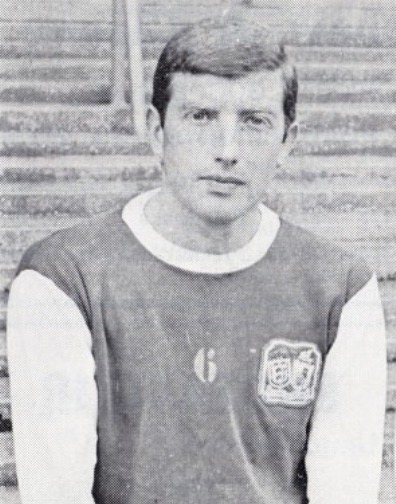
Smith stayed in the game as a manager and coach for 26 years after hanging up his boots, his most notable achievement coming in December 1979 as boss of Third Division Swindon Town when they overcame the mighty Arsenal in a thrilling League Cup quarter final.

Born in Prestbury, Cheshire, on 14 March 1944, Smith won six England Schoolboys (under 15s) caps, playing right-half with future World Cup winner Martin Peters playing on the left.

He went on to win two England Youth caps: on 9 March 1961, he was in an England side (which also included John Jackson in goal and future Luton and Spurs boss David Pleat) that lost 1-0 to the Netherlands in Utrecht and three days later was again on the losing side, this time 2-0, to West Germany in Flensburg, when teammates included John Milkins, Portsmouth’s ‘keeper for many years, and striker John O’Rourke, who played for various clubs. Smith turned professional with United the following month.

MUFC REs v WBA

I’ve discovered an old programme (above) for a Man Utd reserve fixture against West Brom during that era. It shows Smith alongside Wilf Tranter (who also later played for Brighton, and was Smith’s assistant manager at Swindon), Nobby Stiles in midfield, and George Best on the left wing.

In 1964, when a first team call-up continued to elude Smith, he lowered his sights and went to play for a former United colleague at Scunthorpe United. That colleague was Freddie Goodwin who would later be his manager at Brighton as well.

At Scunthorpe, Smith finally saw league action and played 87 games in two seasons before being transferred for £8,000 to Grimsby Town. In two years with the Mariners, he played 56 games before joining the Albion in June 1968.

My distant memory of Smith was of a tough-tackling midfielder who was in the shadow of the likes of Nobby Lawton and Dave Turner when it came to his popularity with supporters. And manager Goodwin hit back strongly when a section of fans voiced their disapproval of the player.

Smith scored the only goal of the game after only 50 seconds away to Stockport County on 23 January 1970, but in the previous home game (a 2-1 win over Bradford City) there had been a few shouts from the terraces in Smith’s direction.

In his weekly article for the Brighton and Hove Herald, Goodwin said: “I was most disappointed to hear certain sections of the crowd getting at Bobby Smith.

“He has done nothing to warrant this behaviour. He is a 90-minute aggressive player and his value to the team lies in his ability to win the ball from the opposition.

“He is well aware of his limitations as a player, but there is no-one who can accuse him of ever giving less than 100 per cent.

“This sort of behaviour by a small minority of spectators does nothing to help the team or the individual players.

“Any player who takes the field as a representative of Brighton and Hove Albion does so because he has been selected for the team by me.

“It is my responsibility that a player represents the Albion. So, to barrack any player is most unfair to him.”

Smith in action against the backdrop of the packed East Terrace at the Goldstone. Albion won 4-0

His 85 games for the Albion came across three seasons: 33 in 1968-69 and 26 in each of the following two seasons. Goodwin’s successor, Pat Saward, released him at the end of the 1970-71 season, and, in June 1971, he went on a free transfer to Chester City.

After only four months in the North West, he switched to the North East, joining Hartlepool United, initially on loan. Over two years, in which Len Ashurst’s side only just avoided the old re-election places, Smith played in 76 matches before moving on to Bury in August 1973. He signed as a player-coach but didn’t feature in the league side, instead taking over as manager – aged only 29 – from Allan Brown in December 1973.

It was the start of a coaching and managerial career that would span more than a quarter of a century.

He took Bury to promotion from the fourth tier by the end of that 1973-74 season, and remained in charge for just under four years, He was at the helm for a total of 215 games; the record books showing he achieved a 41.9 per cent win rate.

A six-month stint followed at Port Vale, between November 1977 and May 1978, but, of his 33 games in charge, he only presided over six wins (there were 14 draws and 13 defeats).

Swindon paid £10,000 compensation to lure him to the County Ground, where, as mentioned, his assistant manager was the aforementioned Tranter.

The official Swindon website remembered: “Despite being a relatively young manager, he guided Swindon to a promotion challenge in his first season in charge – missing out by three points, after losing the last two games of the season.”

Part of the secret had been Smith’s signing of strikers Andy Rowland and Alan Mayes.

Swindon w BS WTSmith (far right) as manager of Swindon, with Tranter (far left), Chris Kamara (circled back row) and skipper Ray McHale (centre front row).

His major achievement came the following year, when Town beat Arsenal 4-3 in a replay to reach the League Cup semi-final.

When one considers the size of League Cup game crowds now, it seems extraordinary to discover around 7,000 Swindon fans (in a gate of 38,024) had made the trip to Highbury for the initial tie, which finished 1-1.

The Gunners had famously lost to lowly Swindon in the 1969 League Cup Final at Wembley, so the humble Wiltshire club smelled history repeating itself.

In the replay, with 21,795 packed into the County Ground, Steve Walford and John Hollins scored own goals and future Brighton manager Liam Brady scored twice for Arsenal. One of the key players for Swindon was future Sky Sports reporter Chris Kamara.

Striker Rowland, who scored an extra time winner, relived the momentous occasion in an interview with SwindonWebTV.

Smith on Focus

Unsurprisingly, the giant killing attracted plenty of media attention and Smith was interviewed live on Football Focus by presenter Bob Wilson.

Smith pointed out that his side had been well grounded and, after the initial draw against Arsenal, had thumped his old club Bury 8-0, equalling Swindon’s biggest winning margin in a league game. Amongst the scorers were Rowland and Billy Tucker – two of four ex-Bury players in Swindon’s starting line-up. Another was Brian Williams – Bury’s youngest ever player – and one of the other goalscorers, Ray McHale, (later to play for Brighton in the top division) went on to have a loan spell at Gigg Lane later in his career.

The Robins beat top-flight opponents Wolverhampton Wanderers 2-1 at home in the first leg of the semi-final but went down 3-1 at Molineux in controversial circumstances, Wolves scoring the decisive goal five minutes from the end.

“We were so unfortunate because Wolves should have been down to 10 men,” Kamara told the Swindon Advertiser. “Alan Mayes got hit by the goalkeeper (Paul Bradshaw). He came out of his goal, didn’t get anywhere near the ball and he clattered Alan and broke his two front teeth and his nose but didn’t get sent off.

“I know everyone looks at situations and says ‘You were unlucky’ but that was a turning point in the game, and we ended up losing.”

It later emerged that the tie could have had a dramatic impact on Kamara’s playing career. In a 2010 interview with FourFourTwo magazine, he explained how he was once on Manchester United’s radar during Ron Atkinson’s reign.

“I was at Swindon and my manager Bobby Smith said, ‘Big Ron’s coming to watch you.’ We were playing in the 1980 semi-final of the League Cup against Wolves, but I had the ’flu and didn’t play so well. I’m not saying that’s the reason he didn’t sign me, but Ron went back to his old club, West Brom, and signed Remi Moses instead.”

With the benefit of hindsight, the cup run took its toll on the Swindon side. Before the semi, they were just five points from a promotion place, with four games in hand. But only five of their last 18 games were won, and they lost nine away games on the trot, resulting in a disappointing 10th place finish.

Smith had spent large –  by Swindon’s standards –  including £250,000 on two players, David Peach and Glenn Cockerill, both of whom never fitted in at the club.

When Swindon lost their first five matches of the 1980-81 season, Smith was relieved of his duties.

He later took charge at Newport County and Swansea City, as well as coaching at the Swans, Blackpool, Cardiff City, and Sheffield Wednesday, together with a spell as assistant manager of Hereford United.

He was assistant manager to Frank Burrows at the Vetch Field but when the chairman at the time announced his intention to sell up, and no funds were being made available for new players, Burrows left of his own accord and Smith became caretaker manager.

Contributor Colin_swansea, on the fans website scfc2.co.uk, observed: “After Tosh left we had caretakers Doug Livermore for 30 days, Les Chappell for 23 days prior to Tosh returning, and after Tosh had left for a second time on the 5th March 1984 Les returned as caretaker until the end of the season.

“Our manager’s position was even more farcical after Frankie Burrows left with his assistant Bobby Smith taking over until a bust up during the Xmas period when Doug Sharp wouldn’t sanction the buying of rubber studded boots to combat the winter conditions.

Smith interviewed after his Swindon side held Spurs to a 0-0 draw in the FA Cup

“Smith left on 22 December 1995, Jimmy Rimmer was caretaker to 7 February 1996, Kevin Cullis became manager for a week, a two-game spell of two defeats, Rimmer returned for eight days as caretaker, before Jan Molby’s appointment on 22 February 1996. Molby’s replacement as manager on 9 October 1997 was Micky Adams who lasted 13 days and three league defeats with his assistant Alan Cork taking over until the end of the season.

“Cork didn’t fit the profile for the club’s new owners, Silver Shield, and he was offloaded at the end of the season. Ironically his successor, John Hollins, didn’t sign one player the following season when the club reached the play offs.

“Never a dull moment being manager of the Swans during the 80s and 90s!”

Great strike rate at Brighton but journeyman Benjamin had 29 clubs!

T Benj BTNSELDOM in his remarkable 29-club career did Trevor Benjamin enjoy such a successful spell as the 10 games he spent on loan at Brighton.

The bustling striker who had thrived under Micky Adams at Leicester City the season before scored five times for Mark McGhee’s promotion-chasing side in 2004.

McGhee was keen to keep him through to the end of the season but because of the timing of the three-month deal he wouldn’t have been eligible to play in the play-offs.

As a result, he went back to Leicester and McGhee brought in Chris Iwelumo instead, and, with a goalscoring debut in an away win at Chesterfield, there was no looking back.

Born on 8 February 1979 in Kettering, Benjamin was brought up in Wellingborough, Northants, and, having done well for Wellingborough Colts, was picked up by Kettering Town, playing for their youth team and reserves.

Cambridge United took him on as a trainee and he made his first team debut aged only 16 against Gillingham and went on to score 46 goals in 146 appearances.

Such a scoring record caught the eye of Leicester boss Peter Taylor and, on 12 July 2000, Benjamin joined the Foxes for a fee of £1.3 million.

However, he managed only a single goal in the 2000-01 season and the following season was sent out on loan to Crystal Palace, Norwich City and West Bromwich Albion.

He returned to Leicester for the whole of the 2002-03 season, including playing against the Albion at Withdean.

He said in a matchday programme article for that season’s return match against Brighton on 19 April 2003: “Brighton are a very similar team to ourselves. They have got a good work ethic and never give up.

“I came on as a substitute for the last 10 minutes when we played against them at the Withdean Stadium just before Christmas and that was a tough night.

TBenj Lei action“The conditions were terrible and both sides had to work hard to beat the elements. But I think our quality shone through on the night.” (Leicester won 1-0).

The following season, Benjamin was back on his travels, initially to Gillingham, then Rushden & Diamonds and, in January 2004, to Brighton.

Benjamin’s first Brighton goal came after just 12 minutes of Albion’s home game against Plymouth Argyle, who were then top of the league table. Leon Knight added a second goal before a jubilant celebration in front of the Sky cameras and Albion prevailed 2-1.

He followed that up by netting Albion’s goal in a 1-1 draw away to Wycombe Wanderers, and was again on the scoresheet in the 2-1 away defeat to Grimsby Town.

A 3-0 home win over AFC Bournemouth saw Benjamin score the second of Albion’s three goals at Withdean. When Tranmere Rovers were dispatched by the same score, he once again scored the second goal.

Back at Leicester, when Craig Levein was installed as boss, he cancelled Benjamin’s contract in January 2005. Benjamin initially dropped down a couple of divisions to play for Northampton but, three months later, his old Leicester boss, Adams, took him to Championship side Coventry City. He helped to set up both goals on his debut for the Sky Blues as they beat Reading 2-1.

In Coventry’s matchday programme for their home game against Brighton on 2 April 2005, he talked about how he had been settling in and the efforts he’d been making to try to improve his game.

“I’ve been training quite hard with Alan Cork on my finishing since I got here and he’s great to work with. He’s trying to get me to focus on what I am best at and hopefully when the games start again the practice will pay off.”

Benjamin’s arrival at Coventry may have seen him make a leap of two divisions but he was by no means unfamiliar with football at that level having played with Leicester for five years in both the Premiership and the Championship.

David Antill wrote: ‘During his time with the Foxes he was loaned out to no fewer than seven clubs before eventually signing permanently with Northampton Town but he is delighted to be back in a league he enjoys playing, for a manager he believes can get the best out of him.

“I’ve always believed in my own ability and thought I could play at this level and it was great to be given the chance to return to this league with Coventry,” said Benjamin. “My confidence never really slipped – I never had a doubt about coming here and being able to deliver the goods.

“I know what Micky Adams is all about and he knows what I’m all about so I enjoy working with him. What he’s brought here is exactly what he brought to Leicester and that’s what brought him success there. He’s a hard-working manager and he wants exactly the same thing from all of his players and I think he’s getting that.”

After scoring only once for the Sky Blues, in the summer of 2005 the burly forward linked up with Peterborough United, where he signed a three-year deal. However, he was loaned out several times, appearing for Watford, Swindon Town, Boston United and Walsall.

There was some stability and a return to goalscoring when he moved to Hereford United. He scored 10 in 34 games for the Bulls but was released in May 2008 and ended up drifting across the non-league scene for the next four years, popping up at no fewer than 13 different clubs.

It was all a far cry from the heady days of 2001 and 2002 when he briefly reached the international arena.

He went on as a substitute for Howard Wilkinson’s England under 21s as they beat Mexico 3-0 in a friendly at Filbert Street on 24 May 2001. Because he hadn’t played in a competitive fixture, he was then able to swap allegiances and played two matches for the full Jamaica international side in 2002.

Why the ‘hook’ at Edgar Street was a great relief to ex-Saint Paul McDonald

Paul McD on ballIF PAUL MCDONALD hadn’t been subbed off in that infamous game away to Hereford United in 1997, Brighton might have gone out of existence.

That’s some statement to make, but it’s a thought that has crossed the diminutive wideman’s mind over the years.

It was McDonald who gave way for substitute Robbie Reinelt to enter the fray and, as the history books thankfully record, it was he who buried the equalising goal to restore Albion’s status as a Football League club and condemn Hereford to relegation instead.

Even as recently as August 2017, in a preview to the Albion’s opening Premier League game against Manchester City, the current day Kilmarnock academy director shared his thoughts with the Daily Record (pictured below).

paul mcdonald Daily Record

“The prospect of top-flight football would have been the furthest thing from anyone’s mind at full time at Hereford but I’m over the moon to see them in the position they are in now,” said McDonald.

“I’m often reminded of that game and I’m actually claiming the assist because Robbie Reinelt replaced me. I’m just glad the chance didn’t fall to me or they might well have ended up as a non-league club!

“Seriously, it was a huge day for Brighton. I’ve never been involved in a game with so much at stake.

“It is a massive club and to be in the position they were in was bad.

“If we had lost to Hereford then in an extreme circumstance they could have folded but businessman Dick Knight had come in as chairman and he may not have let that happen.”

Born in Motherwell on 20 April 1968, McDonald was spotted playing local boys club football in his home town by Hamilton Academical and he was taken on in June 1986.

Over the course of seven years, he made a total of 215 appearances for the Accies before trying his luck south of the border.

Premier League Southampton paid £75,000 for his services but he failed to make a breakthrough and managed just three substitute appearances for Saints.

During the 1995-96 season, he was loaned out to Jimmy Mullen’s third tier Burnley where he made 11 appearances in two months, his only goal coming in a 2-0 Auto Windscreens Shield win away to Peterborough.

However, one of his matches included a 3-0 win over Brighton (in which one of the Clarets’ scorers was Kurt Nogan) and, according to the excellent clarets-mad.co.uk, McDonald so impressed watching Brighton manager Jimmy Case that day that it prompted him to sign the winger the following February.

Case persuaded hard-up Albion to part with £25,000 (or £40,000 according to the matchday programme)  to take McDonald along the coast, where at last he managed to get plenty of game-time.

In two years with the Seagulls, he played more than 60 games and scored five times. The first came in a 2-1 defeat away to Exeter City; he was also on the scoresheet in a 3-0 home win over Hull City, then scored from the spot in a 3-2 home win over Fulham in the Auto Windscreens Shield three days later.

He was twice more successful from the penalty spot, one coming five minutes from the end of the game to secure an unforgettable 4-4 draw with Orient at the Goldstone, the other in a 2-0 home win over Cardiff.

At the start of the following season, with the Albion in exile at Gillingham, McDonald was on the scoresheet in a 1-1 draw with Macclesfield, the toxic atmosphere around the proceedings captured by The Independent.

As financial constraints forced Albion to let go of five senior players in December 1997, McDonald returned to Scotland with Dunfermline. He then moved onto Partick Thistle and Greenock Morton before finishing his playing career back where it started at Hamilton Academical.

McDonald stayed in the game, initially working at Hamilton as youth development manager, before becoming the SFA community coach at Kilmarnock in 2003.

In 2013, he became academy director and in October 2017, McDonald was appointed caretaker manager of Kilmarnock after Lee McCulloch stepped down as boss with the club bottom of the table.

Much-travelled Ade Akinbiyi a big hit in brief Seagulls spell

A STRIKER with wildly differing fortunes in a varied and much-travelled career made a good early impression when joining Albion on loan from Norwich City back in the autumn of 1994.

Ade Akinbiyi had not long since broken through to the City team as a teenager and he scored four times in seven games on loan to the Seagulls.

Just turned 20, Akinbiyi arrived at a time when Liam Brady’s Albion hadn’t registered a win for 11 games and, although Albion lost the first game he played in, the remaining six produced three wins and three draws.

AA scores

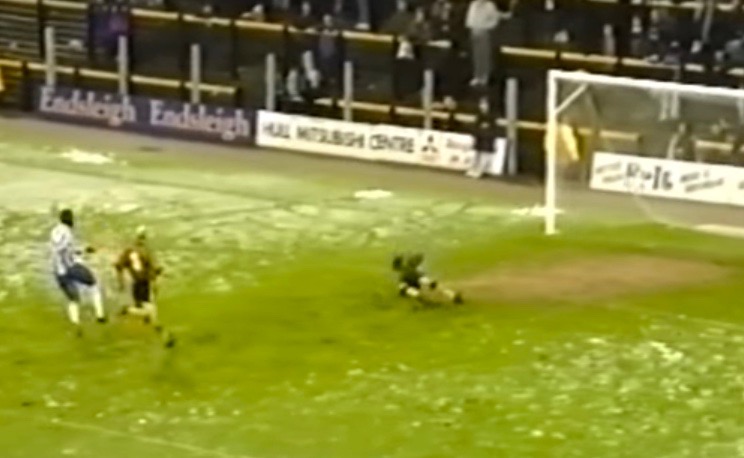
There is some YouTube footage of him scoring Albion’s second goal on a snowy pitch at Hull City’s old Boothferry Park ground in a game that finished 2-2.

“He is powerful and big and he can take knocks and we have missed having somebody in that mould,” Brady wrote in his matchday programme notes.

Later in his career Akinbiyi would prove to be a real handful for the Seagulls – I recall him shrugging off a powder-puff challenge from a young Dan Harding at Withdean and muscling his way to a winning goal for Stoke City. Manager Mark McGhee subbed Harding off and publicly lambasted him afterwards.

Born in Hackney on 10 October 1974, Akinbiyi was more interested in athletics at an early age, as he told the Lancashire Telegraph.

“I was interested in football but not massive on playing it,” he said. His school PE teacher persuaded him otherwise. “I went to play for my district team, Hackney, and it all started from there.”

From Hackney, Akinbiyi joined nearby Senrab, the team that blooded the likes of Bobby Zamora, Leon Knight, John Terry and Jermain Defoe.

His age group earned a place in a children’s tournament in Great Yarmouth called the ‘Canary Cup’ where he was spotted by a scout for nearby Norwich, who signed him as a schoolboy.

“The schoolboy and youth team system was second to none, as it still is now,” said Akinbiyi. But he found it hard living away from home, missing his mum’s native Nigerian cooking.

But after finding new digs with a few of his team-mates, he stuck at it and earned a dream debut as a substitute against Bayern Munich in the return leg of their UEFA Cup second round game, less than a month after his 19th birthday.

“I thought my debut would come in a cup game, perhaps against lower league opposition, not against Bayern Munich,” he said. “Not many people make their debut in a European cup competition.”

Although Akinbiyi made 51 league appearances for Norwich, his Canaries career never really took off, hence the Brighton loan spell and a similar move to Hereford United.

Eventually, though, a manager who believed in him, Tony Pulis, made him a record £250,000 buy for Gillingham in January 1997. Akinbiyi repaid Pulis’ faith in him with 29 goals in 67 starts, leading to Bristol City paying £1.2million for the striker following their promotion to the old Division One (now the Championship).

akinbiyi + colin lee

After scoring 21 goals in 47 league appearances for the Robins, in 1999 he completed a £3.5m move to Wolverhampton Wanderers. In the same year, he played his one and only game for Nigeria, in a friendly against Greece in Athens.

He made a great start at Wolves, scoring eight times in his first 12 games for Colin Lee’s side, but a year later, switched to Premier League Leicester City, after the Foxes’ boss Peter Taylor (later to replace Micky Adams at Brighton) paid out a £5m fee for the striker.

Ade A LeicesterAkinbiyi was brought in to replace Emile Heskey, a real Filbert Street hero who had been sold to Liverpool for £11m. However, his goal touch eluded him and he managed to score only 11 goals in 58 league appearances for the club – some Leicester fans dubbing him Ade Akin-Bad-Buy!

Akinbiyi looked back on it in an interview with Four Four Two magazine and said: “I came in as Emile Heskey’s replacement, but he is a different breed of footballer.

“He’s big, strong and scores goals, but, back then, if Heskey wasn’t scoring a lot he could get away with it. He was the local hero. I was a different player – I’d be running in behind and trying to cause people problems. But Leicester looked at my record in the Championship and thought I’d come and do the same thing.”

Eventually they cut their losses and sold him to Division One Crystal Palace for £2.2m. At Selhurst, he was rather ignominiously given the number 55 shirt! Having scored just one goal in 14 league and cup appearances, in 2003 he was loaned to Stoke City, under his old boss Pulis.

He scored twice – the second goal coming in the last game of the 2002-03 season, when the Potters won 1-0 against Reading to seal their Division One (now the Championship) status (the season Albion were relegated).

Akinibiyi discussed the events in an interview with another ex-Stoke, Burnley and Brighton striker, Chris Iwelumo, for Stoke City FC TV.

AA chat with CIIt led to Akinbiyi joining on a permanent basis, on a free transfer, and he became a cult hero with the Stoke City crowd.

In March 2005, Burnley signed him for £600,000 – and he was promptly sent off on his debut! The game was only two minutes old when he head-butted George McCartney of Sunderland, and was shown a straight red.

Less than a year later, he was on the move again, switching to Sheffield United in January 2006 for what was then a club record £1.75m fee.

He scored on his Blades debut against Derby County but by October that year he was in the news for his alleged involvement in a training ground bust-up with team-mate Claude Davis.

In all, Akinbiyi made only five appearances for the Blades in the Premiership in 2006 and, on New Year’s Day 2007 he returned to Burnley for a £650,000 fee, with add-ons.

He scored in his first game back, against Reading, but only notched three by the season’s end. Burnley fans have some good memories of him, particularly in a brief spell when he played alongside loan signing Andrew Cole, but on 2 April 2009, Burnley offloaded him to Houston Dynamo.

Dave Thomas, a prolific writer on all things Burnley, talked about Akinbiyi’s cult hero status among Burnley fans, telling thelongside.co.uk: “Ade certainly had a talent and that talent was scoring goals. The story that he was utterly bad at this is totally inaccurate, but that is the legend that developed, at one club in particular, Leicester City.

“In truth, at Burnley too, he missed sitters that Harry Redknapp might say his wife could have scored. But then so do all other players and, in many games, he displayed all the things that he was good at, and the attributes that he had in abundance.”

After he was released by Houston, back in the UK he played 10 games for Notts County, as they won the League Two title In 2009-10, and the following season pitched up in south Wales to play for then non-league Newport County.

In July 2013, Akinbiyi became a player-coach for Colwyn Bay, managed by his former Burnley teammate Frank Sinclair, but both resigned in January 2015 after a 5-0 defeat at Boston.

Akinbiyi now lives in Manchester and in 2015 was interviewed about work he has done as an ambassador for Prostate Cancer UK after his father died from the disease.

Goalscorer Craig Maskell among Town’s top 100 crowd favourites

Screenshot

CRAIG MASKELL had a decent near 1 in 3 goalscoring record for Brighton & Hove Albion but he’s possibly best remembered for a shot that didn’t go in.

When Maskell’s curling effort in the relegation decider at Hereford United on 3 May 1997 struck the post rather than going in, fortunately Robbie Reinelt was on hand to slot home the rebound to earn Albion the draw that ensured they stayed in the league.

Born Craig Dell Maskell on 10 April 1968 in Aldershot, perhaps it was his destiny to play for Southampton! (for younger readers, The Dell used to be Southampton’s home ground).

Indeed, Maskell started his professional career at Southampton, signing pro forms just after his 18th birthday. But he appeared in only six league games for the Saints before joining Huddersfield Town in May 1988 for a £20,000 fee.

His new teammates included former Seagulls Chris Hutchings and Kieran O’Regan and the goals really flowed for him in the 1988-89 season when he scored 28 times in 46 games.

Arguably his most memorable match came in the 1989-90 season when he scored four in a 5-1 win at Cardiff City, thus becoming only the third player in Huddersfield’s history to score four in an away match.

By the end of that season, he’d scored an impressive 43 goals in 87 games for Town and, at the time of Huddersfield’s centennial in 2006, Maskell’s prolific goalscoring for them led to his inclusion in The Fans’ Favourites, a book listing their top 100 Town players.

That prolific scoring record earned him a £250,000 move to Third Division Reading. He scored in a season-opening 3-1 win at Exeter City and had 10 goals by the season’s end as the Royals completed a mid-table finish under player-manager Mark McGhee, who later became Brighton boss.

With John Madejski settling in as the new owner, and McGhee finding his feet in the managerial chair, the 1991-92 season saw Reading finish 12th. Maskell ended up top scorer with 16 goals in 35 appearances (plus five as sub), three of them coming in a 4-2 win away to Darlington.

In the summer of 1992, player-manager Glenn Hoddle paid £250,000 to take Maskell to second tier Swindon Town (where he had previously spent a month on loan in 1987).

It was to prove a memorable season for the Robins as they won promotion to the top tier for the first time in their history, via a 4-3 play-off victory over Leicester City. Maskell was leading scorer with 23 goals in a side captained by central defender Colin Calderwood, later Chris Hughton’s assistant manager at Brighton.

Maskell made his Robins debut on the opening day of the 1992-93 season, in a 1-0 win over Sunderland, and scored his first goal in a 2-2 draw at Wolves in late August. He went on to net eight times in the opening ten games of the season before suffering a mini goal drought between December and April.

Nevertheless, Maskell bagged two in a 6-4 win at Birmingham before scoring in both legs of the play-off semi-final against Tranmere Rovers. He then scored Town’s second at Wembley, thumping a left-footed drive off the post and into the net.

Although he started the first two matches amongst the elite, he then struggled to get game time in the Premier League, often warming the bench as Jan Age Fjortoft,  Andy Mutch and Keith Scott started ahead of him.

He scored twice in a 3-3 draw at Sheffield Wednesday on 29 December 1993, but he left the club in February 1994, returning to former club Southampton for a £250,000 fee.

However, Saints already had a fair bit of striking talent in their ranks and once again he found his opportunities limited, this time by the likes of Matt Le Tissier, Neil Shipperley and Gordon Watson. As a result, he only managed 17 Premier League starts.

He had a five-game loan spell at Bristol City but then joined Brighton on 1 March 1996, making his debut the following day against Brentford. He didn’t have to wait long for his first Albion goal, scoring against Oxford United on 12 March and then hit two four days later at home to Hull City.

The off-field shenanigans at Brighton were a big distraction at the time but on the pitch Maskell managed to score a total of 20 goals in 69 games, crucially netting 14 of them in 37 games during that make-or-break 1996-97 season.

After 17 games the following season, he was one of five senior players whose contracts were terminated early, in December 1997, as the cash-strapped Seagulls in exile at Gillingham were forced to make drastic cuts to survive. Maskell had a brief spell playing for Happy Valley in Hong Kong before linking up with Leyton Orient for 18 months.

It is recorded in a number of places that Maskell decided to quit the professional game while walking off the turf at Wembley having played as a substitute in the Orient team beaten by Scunthorpe United in the Nationwide League third division play-off final.

“I turned to one of my team-mates and said: ‘That’s enough’,” Maskell said. “I’d spent too much time away from my family and too little time on the pitch at Orient.”

He had scored just twice in 23 games for the O’s, however, he continued playing at non-league level for several years, turning out for Hampton & Richmond Borough, Aylesbury United and Staines Town, as well as being coach and assistant manager to Steve Cordery.

In an article in The Times on 16 November 2000, just prior to a FA Cup first round tie between Hampton & Richmond Borough and Barnet, Maskell talked about what he had learned from the various managers he’d played under.

“I look to Glenn Hoddle for his ability to create flair in attack and Lawrie McMenemy because he was so good at man-management.

“Most of my ideas on defensive organisation I learnt from Dave Merrington, who was youth-team coach at Southampton. He was fantastic. You just have to look at the players he found for the club, not just myself but Matt Le Tissier, Alan Shearer, the Wallaces and another dozen or so less well-known players who had good careers.”

Mike Bailey took the Seagulls to their highest-ever finish

ONE OF the all-time greats of Wolverhampton Wanderers led Brighton & Hove Albion to their highest-ever finish in football.

Midfield general Mike Bailey played for Wolves for 11 seasons between 1965 and 1976, leading the team to promotion from the Second Division in 1966-67, helping them to top-flight positions of fourth and fifth in 1971 and 1973, getting to the final of the UEFA Cup in 1972, and lifting the League Cup at Wembley in 1974.

MB WWFCLgeCupMike Bailey holds aloft the League Cup after Wolves beat Manchester City 2-1 at Wembley.

It was perhaps a hard act to follow Alan Mullery as manager of Brighton, particularly as the former Spurs and Fulham captain had led the club from Third Division obscurity to the pinnacle of English football within three years.

But Bailey had just got Charlton Athletic promoted from the Third Division and in the 1981-82 season led Albion to a 13th place finish, a record which was only threatened in 2017-18 by Chris Hughton’s side, who eventually ended up 15th.

Unfortunately, although Bailey’s team was relatively successful, the style of play he adopted to achieve that position was a turn-off to the fans who deserted the Albion in their hundreds and thousands.

Eventually, chairman Mike Bamber felt he had to address the slump in support by sacking Bailey in December 1982. “He’s a smashing bloke, I’m sorry to see him go, but it had to be done,” said Bamber. There are plenty – in particular Bailey! – who feel he acted a little too hastily.

Bailey shared his feelings in an interview he gave to the News of the World’s Reg Drury in the run-up to the 1983 FA Cup Final.

Mike Bailey talks to the News of the World; his often frank programme notes; his assistant, John Collins, a former Luton Town player.

“It seems that my team has been relegated from the First Division while Jimmy Melia’s team has reached the Cup Final,” he began.

Wanting to put the record straight having been hurt by some of the media coverage he’d seen since his departure, he explained: “I found the previous manager Alan Mullery had left me with a good squad, but, naturally I built on it and imposed my own style of play.”

Bailey resented accusations that his style had been dull and boring football, pointing out: “Nobody said that midway through last season when we were sixth and there was talk of Europe.

“We were organised and disciplined and getting results. John Collins, a great coach, was on the same wavelength as me. We wanted to lay the foundations of lasting success, just like Bill Shankly and Bob Paisley did at Liverpool.

“The only problem was that winning 1-0 and 2-0 didn’t satisfy everybody. I tried to change things too soon – that was a mistake.

“When I left, we were 18th with more than a point a game. I’ve never known a team go down when fifth from bottom.”

It was clear from the outset of Bailey’s reign that he didn’t suffer fools gladly and there were numerous clashes with players, notably Steve Foster, Michael Robinson and Neil McNab, the displaced Gordon Smith and Mickey Thomas, a Bailey signing who repeatedly went missing because his wife didn’t like it in the south.

Bailey would vent his feelings quite overtly in his matchday programme notes; he was not afraid to hit out at referees, the football authorities and the media, as well as trying to explain his decisions to supporters, urging them to get behind the team rather than criticise.

Happier times as Mike Bailey becomes Albion manager and signs Tony Grealish to replace outgoing stalwart midfielder and skipper, Brian Horton.

Attempting to shine a light on the comings and goings associated with his arrival, he explained: “The moves we have been making are designed to provide Brighton with a better football team and one that can consolidate its position in the First Division, rather than struggle, such as in the last two seasons.”

By Christmas, the team were comfortably in the top half of the table and in an interview with the Argus, Bailey said: “I must admit that as a player and captain of Wolves I was a bit of a bastard, slagging others off, and that sort of thing. But being a manager, one sees everything in a different light. I am still trying to learn as a manager, especially now that I am with a First Division club.”

Three months later, shortly after he had appeared at a fans forum at the Brighton Centre, he very pointedly said: “It is my job to select the team and to try to win matches.

“People are quite entitled to their opinion, but I am paid to get results for Brighton and that is my first priority.

“Building a successful team is a long-term business and I have recently spoken to many top people in the professional game who admire what we are doing here at Brighton and just how far we have come in a short space of time.

“We know we still have a long way to go, but we are all working towards a successful future.”

As he assessed his first season, he said: “Many good things have come out of our season. Our early results were encouraging and we quickly became an organised and efficient side. The lads got into their rhythm quickly and it was a nice ‘plus’ to get into a high league position so early on.”

He had special words of praise for Gary Stevens and said: “Although the youngest member of our first team squad, Gary is a perfect example to his fellow professionals. Whatever we ask of him he will always do his best, he is completely dedicated and sets a fine example to his fellow players.”

Meanwhile, in his own end of season summary, Argus Albion reporter John Vinicombe maintained: “It is Bailey’s chief regret that he changed his playing policy in response to public, and possibly private, pressure with the result that Albion finished the latter part of the season in most disappointing fashion.

“Accusations that Albion were the principal bores of the First Division at home were heaped on Bailey’s head, and, while he is a man not given to altering his mind for no good reason, certain instructions were issued to placate the rising tide of criticisms.”

Vinicombe recorded that the average home gate for 1981-82 was 18,241, fully 6,500 fewer than had supported the side during their first season amongst the elite.

“The Goldstone regulars, who are not typical of First Division crowds (but neither is the ground) grew restless at a series of frustrating home draws, and finally turned on their own players,” he said.

At the beginning of the following season, off-field matters brought disruption to the playing side. Arsenal’s former FA Cup winner Charlie George had trained with the Seagulls during pre-season and senior players Foster, Robinson and McNab publicly voiced their disappointment that the money wasn’t found to bring such a player on board permanently.

McNab in particular accused the club of lacking ambition and efforts were made to send him out on loan. Similarly, Robinson was lined up for a swap deal with Sunderland’s Stan Cummins, but it fell through.

Meanwhile, Albion couldn’t buy a win away from home and suffered two 5-0 defeats (against Luton and West Brom) and a 4-0 spanking at Nottingham Forest – all in September. Then, four defeats on the spin in November, going into December, finally cost Bailey his job. Perhaps the writing was on the wall when, in his final programme contribution, he blamed the run of poor results on bad luck and admitted: “I feel we are somehow in a rut.”

It would be fair to say Bailey the player enjoyed more success than Bailey the manager. So, where did it all begin?

Born on 27 February 1942 in Wisbech, Cambridgeshire, he went to the same school in Gorleston, Norfolk, as the former Arsenal centre back Peter Simpson. His career began with non-league Gorleston before Charlton Athletic snapped him up in 1958 and he spent eight years at The Valley.

M Bailey charltonDuring his time there, he was capped twice by England as manager Alf Ramsey explored options for his 1966 World Cup squad. Just a week after making his fifth appearance for England under 23s, Bailey, aged 22, was called up to make his full debut in a friendly against the USA on 27 May 1964.

He had broken into the under 23s only three months earlier, making his debut in a 3-2 win over Scotland at St James’ Park, Newcastle, on 5 February 1964.He retained his place against France, Hungary, Israel and Turkey, games in which his teammates included Graham Cross, Mullery and Martin Chivers.

England ran out 10-0 winners in New York with Roger Hunt scoring four, Fred Pickering three, Terry Paine two, and Bobby Charlton the other.

Eight of that England side made it to the 1966 World Cup squad two years later but a broken leg put paid to Bailey’s chances of joining them, even though he got one more chance to impress Ramsey.

Six months after the win in New York, he was in the England team who beat Wales 2-1 at Wembley in the Home Championship. Frank Wignall, who would later spend a season with Bailey at Wolves, scored both England’s goals. Many years later, Wignall was playing for Burton Albion when a certain Peter Ward began to shine!

In 1965, Bailey broke his leg in a FA Cup tie against Middlesbrough and that was at a time when such injuries could be career-threatening.

“I was worried that may have been it,” Bailey recalled in his autobiography, The Valley Wanderer: The Mike Bailey Story (published in November 2015). “In the end, I was out for six months. My leg got stronger and I never had problems with it again, so it was a blessing in disguise in that respect.

“Charlton had these (steep) terraces. I’d go up to them every day, I was getting fitter and fitter. But it was too late to get in the 1966 World Cup side – Alf Ramsey had got his team in place.”

 Bailey missed out on the 1966 England World Cup squad but he won Football League representative honours and enjoyed success as captain of Wolves.

During his time with the England under 23s, Bailey had become friends with Wolves’ Ernie Hunt (the striker who later played for Coventry City) and Hunt persuaded him to move to the Black Country club.

Thus began an association which saw him play a total of 436 games for Wolves over 11 seasons, leading a side with solid defenders like John McAlle, Francis Munro and Derek Parkin, combined with exciting players like forwards Derek Dougan and John Richards, plus winger Dave Wagstaffe.

However, when coach Sammy Chung stepped up to take over as manager, he selected Kenny Hibbitt ahead of Bailey so the former skipper chose to end his playing days in America, with the Minnesota Kicks, who were managed by the former Brighton boss Freddie Goodwin.

Nevertheless, Bailey’s contribution to the team famous for their old gold kit saw him inducted into the Wolves Hall of Fame in 2010.

On his return to the UK, Bailey became manager of Hereford United, then he returned to The Valley as manager of Charlton and, immediately after getting them promoted to the third tier, took over at Brighton in the summer of 1981.

A somewhat extraordinary stat I discovered about Bailey’s management career in England through managerstats.co.uk was that he managed each of those three clubs for just 65 games. At Hereford, his record was W 32, D 11, L 22; at Charlton W 21, D 17, L 27; at Brighton, W 20 D 17, L 28.

In 1984, he moved to Greece to manage OFI Crete, and he later worked as reserve team coach at Portsmouth. Later still, he did some scouting work for Wolves.

Pictures from various sources: Goal and Shoot! magazines; the Evening Argus, the News of the World, and the Albion matchday programme.

Barry Lloyd’s turbulent time as Brighton boss

Screen Shot 2021-05-05 at 09.51.14

HISTORY may have judged Barry Lloyd’s reign as Brighton manager unfairly: while bleak times cloud the memory, the former Fulham captain did chalk up some successes.

For instance, it’s worth remembering he put together two of the most entertaining strike partnerships in Albion’s history.

However, when managers start getting involved in the boardroom, it’s probably not going to end well and that certainly proved to be the case after Lloyd was handed the role of managing director.

Frankly, there is probably not enough space in one blog post to cover the various off-the-field shenanigans that were an ugly backdrop to the Lloyd era.

From an outsider’s perspective, it appeared he was the unfortunate public figure put up to deal with a huge amount of flak generated by others wielding power in the background.

Inheriting the hotseat at a time of financial turmoil, from a distance it could be said he did well to win promotion as well as coming mighty close to restoring the elite status lost in 1983.

But fans who had seen huge success under high profile bosses were not best pleased to see their club’s fortunes put in the hands of someone who had previously only managed outside of the league.

Let’s look first at Lloyd’s playing career because, from early on, he was obviously a shrewd observer who made contacts he would be able to call on in later years.

Born in Hillingdon on 19 February 1949, Barry’s early footballing ability was rewarded with selection for the Middlesex and South of England schoolboy sides. He was signed up by Chelsea and was in their 1964-65 youth team alongside former Albion right-back Stewart Henderson in defence and future England international and Chelsea legend Peter Osgood up front.

In an extended interview with Fulham’s club historian, Dennis Turner, Lloyd recalled: “I chose Chelsea because under Tommy Docherty’s management they were an exciting team, with the likes of Osgood, Charlie Cooke and Bobby Tambling.”

Former Albion player Dave Sexton was the reserve-team manager – “a really nice man and terrific coach” – and Lloyd says in his four years at Stamford Bridge he learned a lot.

He made his debut in the top flight in April 1967 aged just 18, but competition for places was tough and, after only 10 first team appearances, in January 1969 he moved to neighbours Fulham with their centre half John Dempsey moving in the opposite direction.

lloyd-fulham-goal

Fulham were struggling for survival in the old Second Division having been relegated from the top flight and the man who signed him, Bill Dodgin, was their fourth manager in a year.

They dropped down into the old Third Division but as part of his rebuilding, Dodgin made Lloyd captain in succession to the legendary Johnny Haynes, who was coming to the end of his career.

Lloyd is pictured below getting in a header against the Albion at the Goldstone, watched by John Napier (left) and Stewart Henderson. The packed East Terrace never looked like that by the time Lloyd was sitting in the Albion manager’s chair.

Lloyd at Goldstone

Fulham regained their tier two status in 1971 when they went up from Division III as champions. Manager Dodgin was sent packing in the summer of 1972, though, and Alec Stock took over, famously bringing in a number of top name players nearing the end of their careers – notably one Alan Mullery, along with Bobby Moore.

Lloyd remained part of the set-up but when Fulham surprised everyone by reaching the FA Cup Final against West Ham in 1975, he had to be content with what in those days was the single substitute’s berth on the bench, and didn’t get on.

Nonetheless, he chalked up 290 games for Fulham, before having brief spells at Hereford and Brentford (where Dodgin was the manager) and ending his playing days with Houston Hurricanes in the United States.

“I lived in Texas for a year. The league was never going to last but I learnt a lot about how the game can be promoted. They were very good at that over there,” he said in a matchday programme article. “Everyone was made to feel part of the club. It was an interesting experience; I’ve never regretted going.”

During his brief time at Hereford, Lloyd had an eye to the future and took his full coaching badge at Lilleshall, which wasn’t far away.

After his time in America came to an end, he got his first managerial experience with Yeovil Town (then a non-league club) and then headed to Sussex where he took Worthing from the Second Division of the old Isthmian League to runners-up in the Premier Division.

It was in 1986 when he got the call from Mullery to become reserve and youth team manager at the Albion. Dodgin was also on the staff.

lloyd desk

In January 1987, Mullery was unceremoniously dumped and Lloyd came out of the shadows to take charge. Perhaps what fans didn’t know at the time was that the day after Mullery left, Lloyd was summoned to a meeting with chairman Bryan Bedson and told to “get rid of everyone” because the club was going bust.

Against that backdrop, it was 15 games before the side managed to register a win under Lloyd and, unsurprisingly,  Albion were relegated. Some of the mainstays of the side, like Danny Wilson, Eric Young and Terry Connor were sold. Fortunately, Lloyd was able to re-invest part of the proceeds from those sales in some buys who gelled together to form a promotion-winning team.

Screen Shot 2021-05-03 at 20.37.12He returned to former club Chelsea to secure the signing of centre back Doug Rougvie who was made captain and he paired left winger Garry Nelson, a £72,500 signing from Plymouth, with tenacious Scot Kevin Bremner, from Reading, to lead the line. Nelson in particular was a revelation, scoring 32 goals and voted player of the season.

Lloyd reckoned the backbone of the side were two other shrewd signings: Alan Curbishley and Gary Chivers. “Alan was a very level-headed guy, an excellent passer and really disciplined,” he told Spencer Vignes in a matchday programme article. “Chivers was exactly the same, and a real joker at the same time. But there were a lot of great individuals in that side.”

The following two seasons saw Albion maintain their status with lower half finishes but, with the Goldstone Ground crumbling and debts mounting, there was little investment in the team and Lloyd had to use all his contacts to try to find some gems.

One was former England international winger Mark Barham, another was a former Soviet international, Sergei Gotsmanov, a real crowd-pleaser obviously capable of playing at a higher level (as was proved when he opted to join Southampton the following season).

Then, in 1990-91, he rescued two forwards languishing with also-ran clubs in Europe and together John Byrne and Mike Small were superb in attack as Brighton made it to the play-off final at Wembley only to lose 3-1 to Neil Warnock’s Notts County.

No-one had been expecting Brighton to get a tilt at promotion, particularly as the season had once again begun with big money departures of players like Keith Dublin and John Keeley.

But with Byrne and Small on fire and former Fulham and Chelsea winger Clive Walker added to the squad they clawed their way into contention and famously clinched the play-off spot on the last game of the season, courtesy of Dean Wilkins’ curling free kick past Ipswich Town’s Phil Parkes.

Another crucial signing that season was thanks to one of Lloyd’s old Chelsea teammates, George Graham. The Arsenal boss loaned cultured central defender Colin Pates to the Seagulls and he proved a mainstay in the final third of the season. Pates would later sign permanently.

Even though they were clearly beaten by the better side on the day, looking back now, I don’t think anyone could have realised what bad news it was for Albion not to win the final against County.

Starved of the funds promotion would have delivered, Lloyd was forced to sell star performers Small and Byrne and, 11 months after appearing at Wembley, Albion were relegated back to the third tier.

Lloyd had tried to repeat his previous successful European scouting mission with two former league players, but the hapless Mark Farrington turned out to be one of the worst buys ever, managing to score one solitary goal while former Arsenal youngster Raphael Meade fared slightly better but only just got into double figures.

Mark Gall, a £45,000 signing from Maidstone, arrived towards the end of October and ended up top goalscorer and was player of the season, but his 14 goals were still not enough to spare the team from the drop.

In the following season, the very survival of the club was under serious threat with the taxman chasing an unpaid bill. Lloyd rescued the club at the 11th hour by managing to secure a £350,000 fee for goalkeeper Mark Beeney (bought two years earlier from Maidstone for £25,000), former Albion winger Howard Wilkinson buying him for League Champions Leeds United.

With the financial issues continuing in the background, a run of only two wins in 18 league games in the first half of the 1993-94 season eventually brought the Lloyd era to an end – the axe wielded by chief executive David Bellotti, who had arrived only a month earlier.

Fans who were euphoric to see Lloyd go might well have felt differently if they’d known what would eventually transpire, but that’s a story for another day.

The record books show Lloyd made a total profit of £1.2m in his seven years at the helm and he certainly knew his way around the transfer market, particularly in Europe, when it was a lot less fashionable than it is today.

Another of his discoveries was Dean Wilkins, playing for FC Zwolle in Holland, and in 2007 – 14 years after he had left the Albion – Lloyd returned as chief scout during Wilkins’ reign as first team manager.

Also part of the set-up then was director of football Martin Hinshelwood, who had been Lloyd’s assistant during his time in the dugout. Lloyd later returned to the club to assist in the recruitment department but retired in 2021.

He died aged 75 on 28 September 2024 and players in the Chelsea v Brighton game that afternoon wore black armbands in tribute to him.

Lloyd in 2022

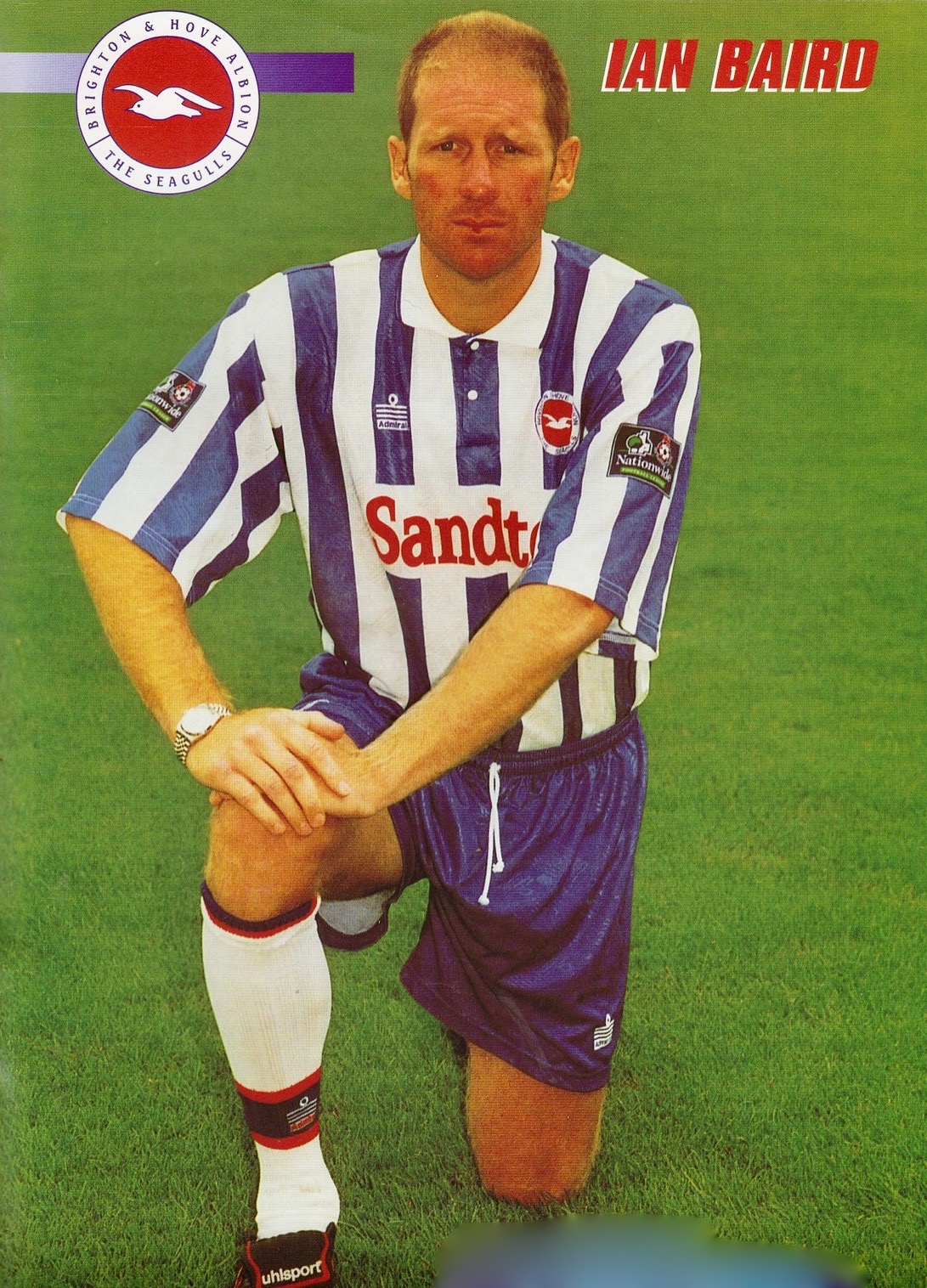
‘Yogi’ Baird knows about last game drama

A STRIKER who brought last-game-of-the-season smiles to the faces of Middlesbrough fans earned only notoriety in Brighton & Hove Albion’s final game at the Goldstone Ground.

Journeyman hard man forward Ian Baird earned his place in Teesside folklore by scoring two goals in an end-of-season clash that not only kept Boro up but prevented north east neighbours Newcastle from getting automatic promotion to the elite.

But Brighton fans witnessed Baird, captain at the time, being sent off just 18 minutes into the 1997 game against Doncaster Rovers which thankfully nonetheless ended up in victory courtesy of Stuart Storer’s memorable winner.

The dismissal meant, though, that Baird would not be able to play in what has since been recognised as the most important game in the club’s history: away to Hereford United.

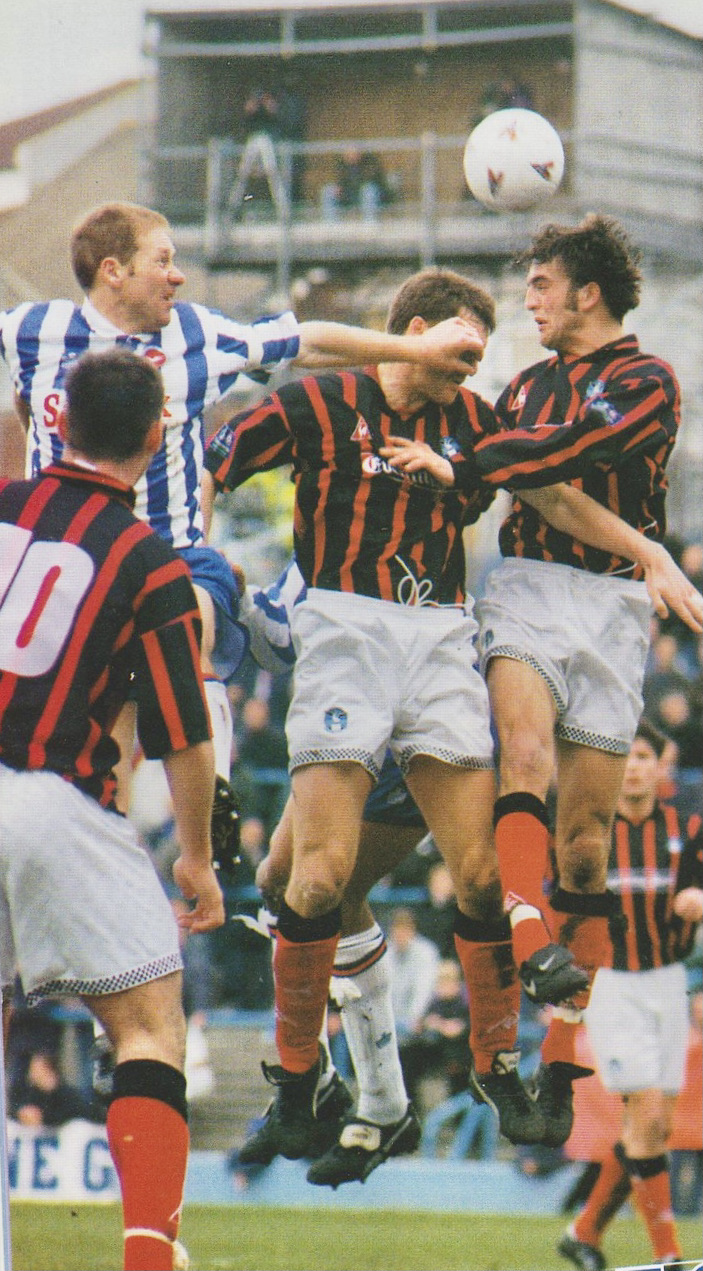
Perhaps we should not have been surprised. Baird was sent off 11 times in his career and he later told portsmouth.co.uk: “It was just a natural thing really. Sometimes my enthusiasm got the better of me. There were plenty of times I chinned someone or got into trouble.Bairdy leap

“The most stupid one was when me and Darren Moore had a fight. He was playing for Doncaster and I was playing for Brighton in the last game at their old Goldstone Ground.

“He came through the back of me, there was a bit of afters and I ended up trying to give him a right hook and there was a bit of a ruck.

“We had a bit of rough and tumble and I was just lucky he didn’t chase me up the tunnel because he’s huge!”

Screen Shot 2021-04-29 at 19.52.10To be fair, Baird had a reasonable goalscoring record at Brighton, netting 14 in 41 games following a £35,000 move from Plymouth Argyle.

Brighton was his 10th and last league club and over the 17 years of his league career he commanded a total of £1.7m in transfer fees, the £500,000 Boro paid Leeds being the highest.

At the start of the 1989-90 campaign, Baird scored the winner for Leeds against Newcastle at Elland Road and then, following his £500,000 January move to Teesside, scored twice in a 4-1 win over United on the final day of the season at Ayresome Park.

Those goals – along with a Bernie Slaven brace – helped prevent Boro going down and meant Newcastle missed out on automatic promotion (they then lost the play-off semi-final to Sunderland).

Years later Baird told chroniclelive.co.uk, ahead of the writing of his autobiography: “Yeah, I enjoyed that. That was some game, given what was at stake. And I loved playing for Boro. We had a great team eventually and Bernie Slaven and myself were a pretty decent partnership.”

Interviewed by Stuart Whittingham in 2013 for borobrickroad.co.uk, Baird explained how he moved to Boro because ex-Albion winger Howard Wilkinson, then manager of Leeds, signed Lee Chapman.

“I felt a little aggrieved and basically I spat the dummy out and asked for a move,” he said. “He (Wilkinson) said that he didn’t want me to go but I insisted and within 24 hours I was speaking to Bruce Rioch and Colin Todd and I was on my way to Middlesbrough.”

Undoubtedly his most successful playing years came at Leeds where in two spells he played more than 160 matches and scored 50 goals. In the 1986-87 season, manager Billy Bremner made him captain. The Yorkshire Evening Post spoke of “the powerhouse striker’s fearless commitment, no-holds-barred approach and goalscoring ability”.

The blurb introducing his autobiography Bairdy’s Gonna Get Ya! (written by Leeds fan Marc Bracha) says “he’s best remembered for his spells at Leeds, where goals, endless running, will to win and fearless approach ensured he was adored by the fans”.

On leaving Middlesbrough, Baird spent two years playing for Hearts in Scotland, persuaded to move north of the border by Joe Jordan, his former Southampton teammate, who was the manager there at the time.

A torn thigh muscle restricted the number of appearances he’d hoped to make and at the end of his deal he moved back to England and signed for Bristol City, initially under Russell Osman and then Jordan once again.

Baird was assistant manager at Sutton United under Paul Doswell for four and a half years between October 2014 and March 2019, and caretaker manager for a month after Doswell left. The pair were reunited as manager and assistant at Havant and Waterlooville in May 2019.

Pictures from the autobiography front cover and the Albion matchday programme.