Goalscoring Busby Babe Alex Dawson my first Brighton hero

ALEX DAWSON remains the youngest player to have scored a hat-trick in a FA Cup semi-final.

He was just 18 years and 33 days on 26 March 1958 when his perfect treble (header, right foot and left foot shots) for a makeshift post-Munich Manchester United helped to secure a 5-3 win over Fulham in a replay in front of 38,000 fans at Highbury.

Eleven years later he scored twice for Brighton & Hove Albion in what for many might have been a meaningless Third Division match against Walsall.

But for me, it was the beginning of a lifelong journey supporting the Albion. It was the very first Brighton game I saw and the burly Dawson, wearing number 9, became an instant hero to an impressionable 10-year-old.

Little did I know then of the famous background of the man who played a big part in Brighton’s 3-0 win over the Saddlers that afternoon.

What I’ve learned since makes him even more of a hero, and it’s evident that fans of other sides he played for remembered him with great fondness when learning of his death at the age of 80 on 17 July 2020.

Returning to that 1958 match, it was just six weeks after the Munich air disaster that claimed the lives of eight of United’s first choice team – Dawson’s pals – so youngsters and fringe players had to be drafted into the side to fulfil the remaining fixtures that season.

Thirteen days after the accident, Dawson took his place beside survivors Bill Foulkes and Harry Gregg and scored one of United’s goals as they beat Sheffield Wednesday 3-0 in the fifth round of the Cup. He scored again as United drew 2-2 with West Brom in the sixth round, before winning through 1-0 in a replay to go up against Fulham in the semi-final.

Dawson told manutd.com: “In our first game with Fulham (played at Villa Park), Bobby Charlton scored twice in a 2-2 draw, and I was put on the right wing. I was a centre-forward really and, when we played the replay at Highbury four days later, I was back in my normal position.

“Jimmy (Murphy) said before the game: ‘I fancy you this afternoon, big man. I fancy you to put about three in.’ I just said: ‘You know me Jim, I’ll do my best,’ but I couldn’t believe it when it happened.

“The first was a diving header, I think the second was a left-footer and the third was with my right foot.

“It was a long time ago, of course, and it’s still a club record for the youngest scorer of a hat-trick in United’s history. Records are there to be broken and I’m surprised that it’s gone on for over half a century.

“I’m a proud man to still hold this record. Even when it goes, nobody can ever take the achievement away from me.”

Also in the United side that day was Freddie Goodwin….and he was the manager of that Brighton side I watched for the first time v Walsall in February 1969.

Born in Aberdeen on 21 February 1940, Dawson went to the same school as United legend Denis Law, but his parents moved down to Hull where he went to Westbourne Street School. Dawson joined United straight from Hull Schoolboys.

Dawson and future Preston and Brighton teammate Nobby Lawton were both on the scoresheet as United beat West Ham 3-2 in the first leg of the 1957 FA Youth Cup Final and Dawson scored twice in the 5-0 second leg win. West Ham’s side included John Lyall, who later went on to manage them.

On redcafe.net, Julian Denny recalled how Dawson once scored three hat-tricks in a row for a United reserve team that was regularly watched by crowds of over 10,000.

He scored on his United first team debut against Burnley in April 1957, aged just 17, and in each of the final two matches that season (a 3-2 win at Cardiff and a 1-1 draw at home to West Brom) to help win the title and secure United’s passage into Europe’s premier club competition.

They were the first of 54 goals in 93 United appearances, but was it all too much too soon? Some say Dawson’s career with United may have panned out differently if he hadn’t been thrust into first team action at such a young age.

Was he mentally scarred by the loss of those teammates, in the knowledge he could well have been with them on that fateful journey?

Let’s not forget he was just short of his 18th birthday when the accident happened. In an interview with Chris Roberts in the Daily Record (initially published 6 Feb 2008 then updated 1 July 2012), he recalled: “I used to go on those trips and had a passport and visa all ready but the boss just told me I wasn’t going this time. I had already been on two or three trips just to break me in. I know now how lucky I was to be left in Manchester. The omens were on my side.”

Dawson went on to describe the disbelief and the feelings they had at losing eight of the team, including Duncan Edwards several days later.

A Daws MU BW“We were all so close and Duncan was also a good friend to me before the accident,” said Dawson. “Duncan was such a good player, there is no doubt about that. He was a wonderful fellow as well as a real gentleman.

“I will never, ever forget him because he died on my birthday, 21 February, and before that he was the one who really helped me settle in.”

Dawson gradually became an increasingly bigger part of the first-team picture at United, making 11 appearances in 1958-59 and scoring four times. The following season he scored 15 in 23 games then went five better in 1960-61, scoring 20 in 34 games.

He was at the top of his game during the last week of 1960 when he scored in a 2-1 away win at Chelsea on Christmas Eve, netted a hat-trick as Chelsea were thumped 6-0 at Old Trafford on Boxing Day, and then scored another treble as United trounced neighbours City 5-1 on New Year’s Eve.

A fortnight later he had the chance to show another less well-known string to his footballing bow…. as a goalkeeper!

It was recalled by theguardian.com in 2013. When Tottenham were on their way to the first ever double, and had an air of near-invincibility about them, they arrived at Old Trafford having lost only once all season, and had scored in every single game.

Long before the days of a bench full of substitutes, when ‘keeper Harry Gregg sustained a shoulder injury, Dawson had to take over in goal.

Dawson excelled when called upon, at one point performing, according to the Guardian’s match report, “a save from Allen that Gregg himself could not have improved upon”.

The article said: “Tottenham’s attempts to get back into the game came to nought and Dawson achieved what no genuine goalkeeper had all season: keep out Tottenham’s champions-elect. In the end, there were only two games all season in which Spurs failed to score, and this was one of them.”

Tottenham’s north London neighbours, Arsenal, finished a disappointing 25 points behind Spurs in 11th place, but United manager Matt Busby had been keeping tabs on the Gunners’ prolific centre forward David Herd (Arsenal’s top scorer for four seasons), and in July 1961 took him to Old Trafford for £35,000. It signalled the end of Dawson’s time with United.

When the new season kicked off, Dawson had a new apprentice looking after the cleaning of his boots….a young Irishman called George Best. In his 1994 book, The Best of Times (written with Les Scott), Best said: “Alex Dawson was a brawny centre forward whose backside was so huge he appeared taller when he sat down. To me, Alex looked like Goliath, although he was only 5’10”. What made him such an imposing figure was his girth.

“He weighed 13st 12lbs, a stone heavier than centre half Bill Foulkes who was well over 6ft tall. What’s more, there wasn’t an ounce of fat on Alex – it was all muscle.”

Best’s responsibilities for Dawson’s boots didn’t last long, however, because in October that year, Busby sold the centre forward to Preston for £18,000.

During a prolific time at Preston, Dawson scored 114 goals in 197 appearances, and became known as The Black Prince of Deepdale. In the 1964 FA Cup Final at Wembley, Dawson scored in the 40th minute but Preston lost 3-2 to a Bobby Moore-led West Ham United.

The Preston captain that day was his former Man Utd teammate Lawton, who he subsequently joined at Brighton.

Lawton, now no longer with us, mentioned “that great striker Alex Dawson” in an interview he gave to the Lancashire Evening Post, published in May 2004.

“I’d known Alex since we were both on the groundstaff at Old Trafford,” Lawton recalled. “He was a bull of a centre-forward and was a Deepdale hero.

“He’s a lovely man and I was best man at his wedding. He hasn’t changed at all, and we are still great friends.

“Alex and the rest of the team would have graced any Premiership side today.”

Clearly Preston fans felt the same way. ‘Albertan’ on pne.net in 2012 said: “Alex Dawson was a super player … He was the complete centre forward – powerful, mobile and lethal with either foot or his head. He was also brave, committed and characterful.”

While ‘sliper’ on the same forum added: “In his prime Dawson was a powerhouse and great to watch. I can safely say I’ve never seen a better header of a ball at Deepdale.”

‘Curlypete’ recalled: “You could literally see goalkeepers tremble when Dawson was running at them, it was either the ball, ‘keeper or more likely both who ended up in the net.”

In 1967, Dawson took the short journey to Bury FC where his goalscoring exploits continued with 21 goals in 50 appearances. I was intrigued to see in a team photo of the Bury squad before the 1968-69 season, a young Lammie Robertson sitting at Dawson’s feet.

In December 1968, the aforementioned Freddie Goodwin had just taken over as Brighton manager and he paid Bury £9,000 to make his old United teammate his first signing at the Goldstone. An early programme profile revealed the surprising news that Dawson also had a sideline as a men’s hairdresser.

He certainly added a cutting edge to Albion’s attack, finding the net no fewer than 17 times in just 23 games, including three braces and four in an away game at Hartlepool. Dawson was no mean cricketer, either. An all-rounder who used to play for the Newton Heath club, as well as a collection of half-centuries to his credit, he once took eight wickets for 35 runs as a lively fast-medium bowler.

The following season, Goodwin added Allan Gilliver to the strikeforce and he outshone Dawson in the scoring stakes, although the Scot still scored 12 in 36 games.

As is so often the case, it was a change of manager that marked the end of his time with the Albion. With Goodwin departed for Birmingham, replacement Pat Saward didn’t give the old-timer much of a look-in and he went out on loan to Brentford where he showed he could still find the back of the net with familiar regularity.

Greville Waterman, on bfctalk.wordpress.com in July 2014, recalled: “He was a gnarled veteran of thirty with a prominent broken nose and a face that surely only a mother could love, but he had an inspirational loan spell at Griffin Park in 1970 scoring seven times in eleven games including the winner in that amazing late, late show FA Cup victory against Gillingham.

“Typical of the times at Griffin Park, he departed after his loan spell as apparently the club was unable to agree terms with him. A classic example of both parties suffering given that Dawson never played another Football League game and Brentford lacked a focal point in their attack until the arrival of John O’Mara later that same season.”

Released by the Albion at the end of the 1970-71 season, Dawson’s final footballing action was with non-league Corby Town.

Nevertheless, he could look back on a fantastic career as a goalscorer, with a strike rate the envy of many a modern day forward.

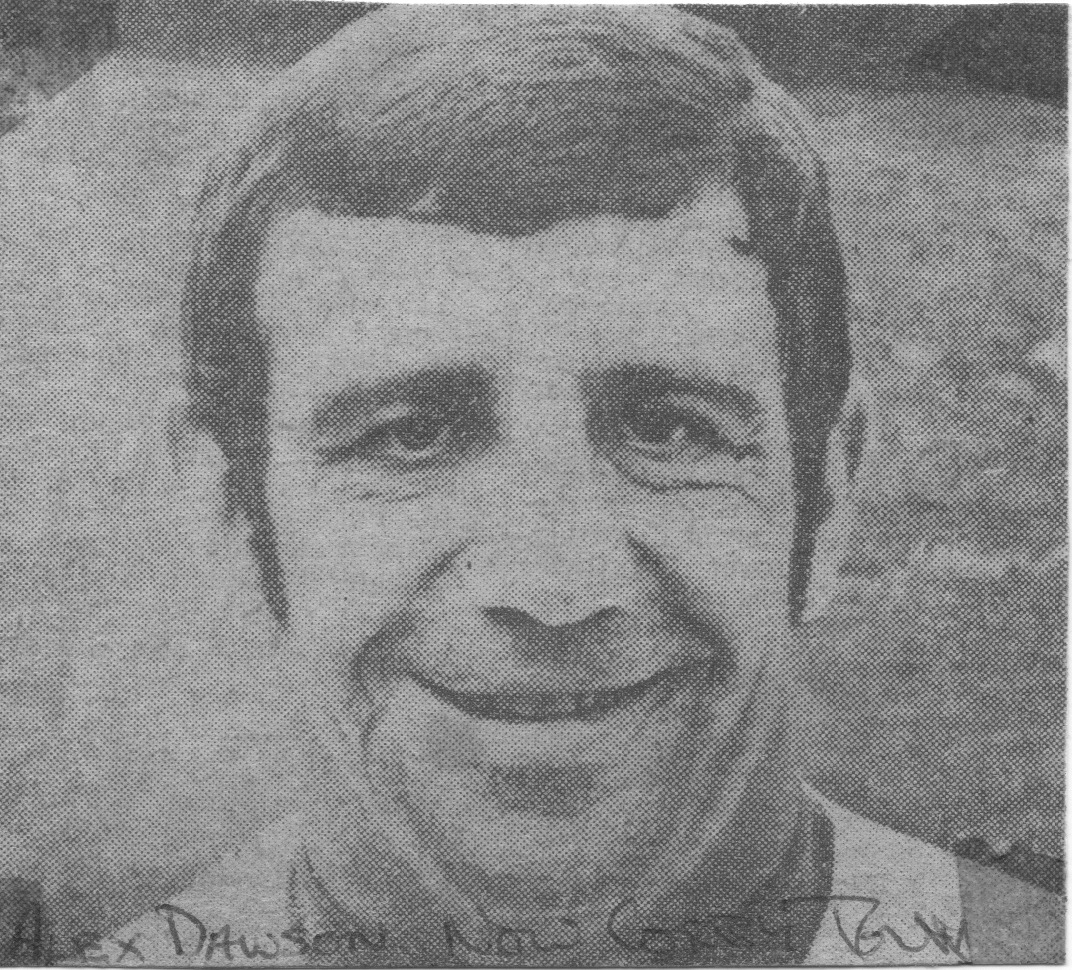
Pictures: Top: Alex Dawson portraits – in the 1969-70 and 1970-71 kits.

  • A montage showing Dawson:
    • scoring the first of his goals in the 1958 FA Cup semi final
    • in a Bury line-up (from the Bury Times) with future Albion forward Lammie Robertson also encircled.
    • powering a header for the Albion.
    • in a portrait from pnefc.net.

Steve Gatting’s three Brighton Wembley dates after missing out with Arsenal

1 MAIN gat sees GS goal.jpgSTEVE Gatting played at Wembley three times for Brighton having twice been denied the opportunity by Arsenal.

After being left out of Arsenal’s FA Cup Final sides in both 1979 and 1980 he finally got to step out onto the hallowed turf twice in the space of five days in 1983.

And his appearance in Brighton’s 3-1 defeat to Notts County in the 1991 play-off final at the famous old stadium was also his last in an Albion shirt after 10 years at the club.

In Match Weekly’s 1983 Cup Final preview edition, Gatting revealed his heartache at missing out with Arsenal in 1979. “I expected to be at least substitute after playing in five of the games leading up to Wembley, including the semi-final,” he said. “I was desperately sick when I didn’t get a chance. Although I really wanted the lads to do well, I couldn’t help feeling pangs of regret as the cup was paraded around the ground.”

Born on 29 May 1959 in Park Royal, London, two years after his famous brother Mike, the former Middlesex and England cricket captain, Steve was no mean batsman himself.

Instead of joining the ground staff at Middlesex County Cricket Club, though, Gatting shone at football with Middlesex and London Schoolboys teams and became an associate schoolboy with Arsenal before joining as an apprentice in July 1975. Terry Neill signed him as a professional at the age of 17 and a year later he made his First Division debut against Southampton at Highbury.

Gatting made 76 appearances for Arsenal over three seasons, his most memorable being the 1979 FA Cup semi-final against Wolves at Villa Park. He said his biggest disappointment was missing out on the May 1980 European Cup Winners Cup Final against Valencia in Brussels.

In his youth career, Gatting played in the centre of the back four but Arsenal generally played him in midfield, where competition for places was fierce with the likes of Liam Brady and Graham Rix. He admitted after joining Brighton: “When they bought Brian Talbot from Ipswich, I sensed I was on my way out.”

It was rumoured Albion would take Gatting as part of a swap deal that would see Mark Lawrenson join Arsenal but, of course, Lawrenson went to Liverpool instead. Albion were still interested in Gatting, though, and in September 1981 new manager Mike Bailey met him and his displaced colleague Sammy Nelson at Gatwick Airport and agreed terms to buy the pair of them; £200,000 the fee for the young Gatting.

Albion offered Gatting the chance of regular first team football and, although the expectation was for him to occupy a midfield spot, he quickly stepped in alongside Steve Foster in the back four and completed 45 appearances that season.

Aside from a rare couple of spells back in midfield, he remained a defender for the rest of his career, often slotting in at left back – apart from when he played right-back in the Cup Final replay.

Gatting had a terrific game alongside Gary Stevens in the 2-2 drawn first game against Man United, but Jimmy Melia unwisely chose to play the left-footed Gatting in place of injured Chris Ramsey (he should have put Stevens there) and the back line was noticeably unbalanced as they went down 4-0.

The Paul Camillin / Stewart Weir book Albion The first 100 years said: “Played out of position at right-back in the replay, he endured an uncomfortable evening in an unfamiliar role.”

Even so, interviewed three years later in the Albion matchday programme, Gatting spoke fondly about his memories of the whole occasion.

“The helicopter flight to Wembley was a new experience. We flew over the stadium and saw all our fans below,” he said. “That was a great moment. We landed and drove to the ground and went straight out onto the pitch to get a taste of the atmosphere. I met my brother Mike out there and to be honest he was more nervous than me!

“The greatest part of the whole day was walking out of the tunnel and seeing all the fans and being deafened by the cheering. That is an ambition every footballer has, to play in the Cup Final at Wembley. It was a dream come true for us and I think it lifted our game.”

Gatting had made only eight first team appearances in the 1984-85 season before, in November 1984, he sustained a serious pelvic injury which threatened his career. After five months, it was decided the only solution was a bone graft to the pelvis.

He had to remain motionless in hospital for a month and then rest on his couch when he was allowed home.

His wife Joy told Tony Norman in March 1986: “I felt sorry for Steve. He’s usually such an active person but suddenly he just had to sit there. It must have been very difficult. But Steve never got into self-pity. He stayed very positive and I respected him for that.”

Norman reported: “It was a long hard road for Steve. He started taking long walks in July, to build up strength and that progressed into jogging, light training and finally full training. He made his comeback game in the Reserves on 26 October.

Gatting told the interviewer: “When you are playing regularly, you tend to take things for granted. But when something like a serious injury comes along, it makes you realise how lucky you are to be fit and playing the game you enjoy so much. When you’re sitting on the sidelines week in week out it brings it home to you.”

The injury restricted him to only 17 appearances in the 1985-86 season but he was restored fully to the side in 1986-87 when financial issues clouded Alan Mullery’s return to the manager’s chair and successor Barry Lloyd couldn’t stop the inexorable slide to relegation from the second tier.

In a League Cup game replay away against First Division leaders Nottingham Forest, Gatting had to take over in goal when Perry Digweed  was forced off with a broken cheekbone. Gatting completed 45 appearances that season and said: “Dropping into the Third Division was far worse than going out of the First.

'keeper Gatt - webb on ground

Makeshift ‘keeper Gatting claims the ball with Nottingham Forest’s Neil Webb grounded

“All the players at the time felt they were good enough to stay up, but it didn’t happen and we gave a lot of silly goals away.

“The whole club was unsettled, too, but things became better again. Getting back into the Second Division was a boost for everybody.”

Gatting was ever-present in the 1987-88 promotion-winning campaign, even though in July 1987 Lloyd had given him a free transfer! The defender had other ideas and managed to play his way back into contention to such an extent that he ended up the season as captain, taking over from Doug Rougvie.

“It was nice to know I was wanted, particularly after relegation the year before,” he said.

Having made his 200th league appearance for the Albion against Chester on 12 December 1987, it was no surprise he viewed with some relish a FA Cup tie against his old club.

“Quite honestly, as a Third Division club, we don’t expect to go all the way, but I think we have the ability to scrape a result against Arsenal,” he said. “It gives me the opportunity to renew old friendships with Kenny Sansom, David O’Leary, Graham Rix and Paul Davis who were all members of the Arsenal staff when I was there.”

Albion pushed the Gunners all the way in front of a packed house and Garry Nelson rifled a memorable goal, but Arsenal prevailed 2-1.

Evening Argus Albion reporter John Vinicombe profiled Gatting warmly in a piece produced for a pre-season supplement ahead of the 1989-90 season, headlined “ice-cool Gatt”.

He described Gatting as “surely one of the most laid-back of individuals, whose natural personality is quiet and reserved”.

The report continued: “He shuns being the centre of attention, but the fact that he stays cool, even in nerve-wracking situations, is an important consideration when assessing leadership qualities.

“Leadership runs in the family, and many would say that older brother Mike was unlucky to lose the captaincy of England’s cricket team.”

On another occasion, Gatting said of his brother: “I’m proud of what Mike has achieved and I keep up to date with the latest news and enjoy watching the highlights on TV.

“We are close, we always have been, but the funny thing is I hardly ever go to see Mike play. When I do go, he never seems to make runs. So I think it’s best to stay at home and watch the Tests on TV.”

As mentioned previously, Steve was a good batsman in his own right and played for Middlesex Second XI. In Sussex, he enjoyed a summer tour with Brighton Brunswick as well as making runs for Preston Nomads.

Vincombe wrote: “Gatting occupies a special niche in the affections of Albion regulars. They see in him a thoroughly decent and well-behaved person whose standards on and off the field are high. Albion have been good to him and Gatting, after not a few periods of uncertainty, has been good for Albion.”

Gatting for his part said: “I’ve seen a lot of changes since arriving here, and I’ve played under five managers who have all had different ideas.”

testimonialA cut glass decanter and glasses from chairman Dudley Sizen at Gatting’s testimonial

He was granted a testimonial for his long service and a curtain-raiser to his 10th season with the club saw Albion draw 2-2 with Arsenal in front of a crowd of 5,517. The Gunners included their recent big money signings David Seaman, Andy Linighan and Anders Limpar.

Injury niggles continued to plague him towards the end of his 10 years at the club but he worked his way back into the side in 1990-91, slotting in at left-back and culminating in that 1991 play-off final against Notts County at Wembley.

Long after all the other members of the Brighton 1983 Cup Final side had departed, Gatting was still pulling on the stripes, and, but for those injuries, he would surely have made many more appearances than the 366 + three as sub (21 goals) that stand as his record.

Given another free transfer in 1991, he departed for Second Division Charlton Athletic along with Garry Nelson, linking up with former Albion teammate Alan Curbishley who at the time was joint manager with Steve Gritt.

Charlton only narrowly missed out on a play-off place while Albion were relegated!

By the end of the following season, when Gatting retired, he had played a total of 64 games for the Addicks.

He then turned his attention to coaching and spent seven years at independent school Christ’s Hospital, Horsham, before returning to Arsenal in 2007 to work as an academy coach. Gatting was working as Arsenal’s under-23s coach until May 2018 when he and his assistant Carl Laraman were suspended after accusations of bullying were made against them, and neither returned to their roles.

Gatting subsequently joined League Two Stevenage as assistant coach under Dino Maamria just before Christmas 2018 but he left the Hertfordshire club shortly before the end of the 2018-19 season.

• There have not been many father-son combos during my time watching Albion (Gerry and Darragh Ryan were the first that spring to mind) but it must have given Steve great pride to see his son Joe make it through the youth ranks at Brighton and go on to play for the first team. He made 44 appearances and I recall an away game at Carrow Road when Steve and Uncle Mike were both watching the youngster in Albion’s forward line. Eventually, after he left the Seagulls in 2008, he turned to cricket and was good enough to play at county level for Sussex and Hampshire.

Liverpool legend Jimmy Case became a Seagulls favourite too

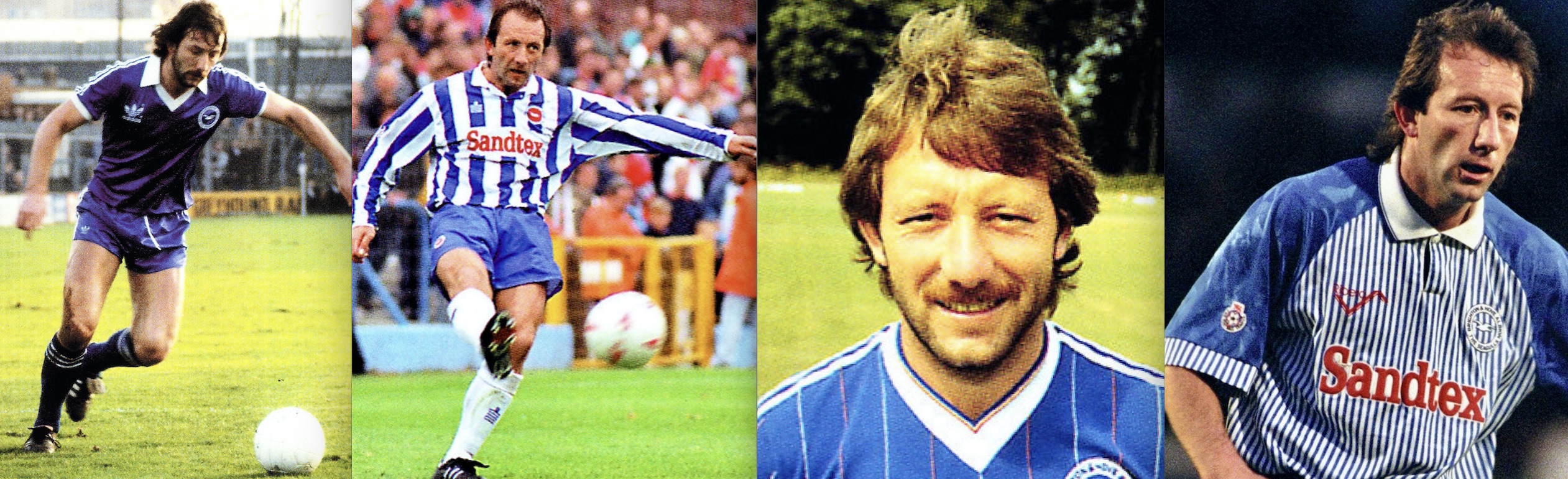
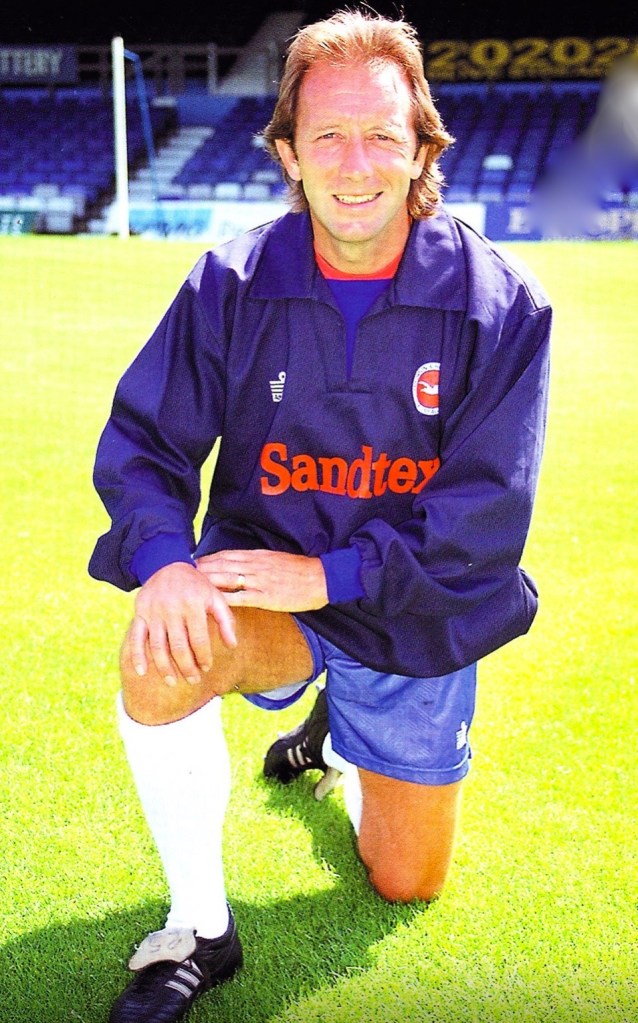
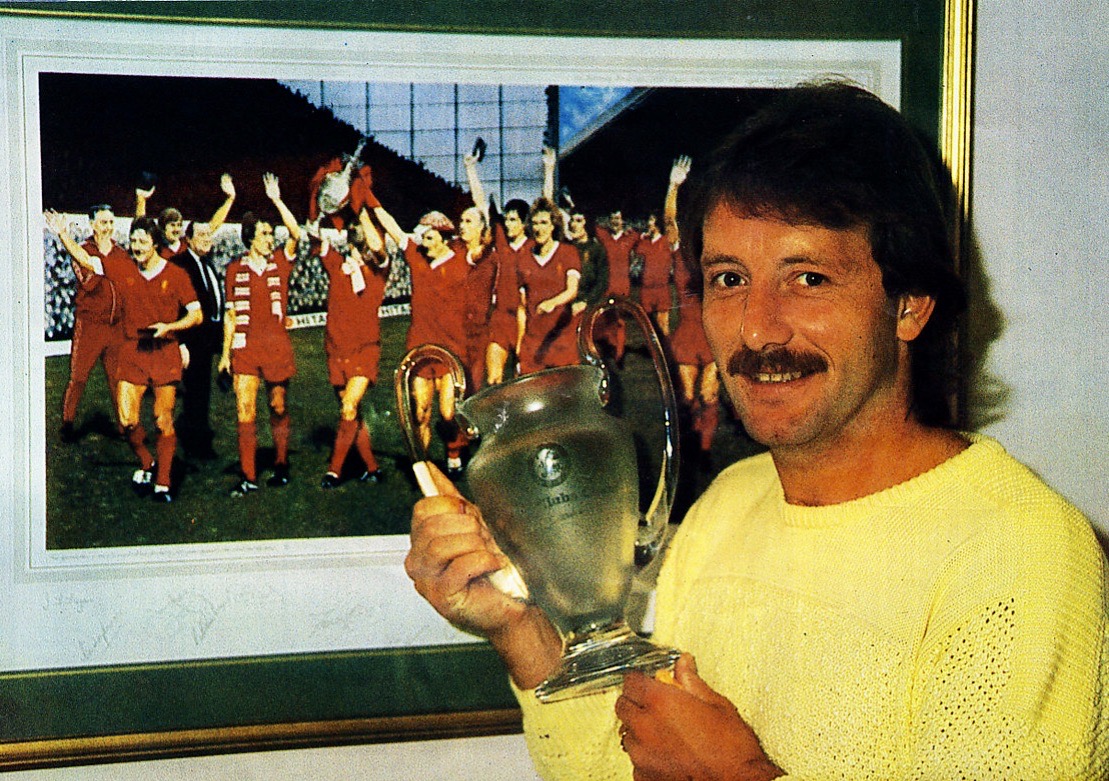
Case 4 imagesJIMMY Case remains one of my all-time favourite Albion players.
Several of the best moments I can recall as an Albion supporter involve Case: the 1983 FA Cup semi-final belter against Sheffield Wednesday at sunny Highbury perhaps the most memorable.

The biggest disappointment was that Albion let him go so easily.

Younger readers may only remember his unhappy stint as manager when the misdirected club was in turmoil, and he ended up holding the reins when Liam Brady just couldn’t take any more.

But rather than remember him as the man who took Brighton down to Division 3 in 1996, I remember the class act who arrived at the Goldstone in 1981 with a trophy cabinet the envy of many a footballer.

Although Brighton lost the sublime Mark Lawrenson to Liverpool as part of the deal that saw Case move to Brighton, they gained a player who had already got three European Cup winners’ medals, four Division 1 (Premiership equivalent) winners’ medals plus one each for winning the UEFA Cup, European Super Cup and the League Cup.

Case, born in Liverpool on 18 May 1954, was one of four children David and Dorothy Case raised in a council house in the city’s Allerton district.

He learned how to handle himself on a football field playing in a tough dockers’ team but Liverpool picked him up from the local non-league club, South Liverpool. By then, Case had left school and was training to be an electrician.

He carried on those studies but after two years on Liverpool’s staff he made his first team debut in April 1975 in a 3-1 win over QPR.

He scored his first goal in a 3-2 home win over Spurs at the beginning of the following season and, in what must have seemed a dream start, completed his first full season as part of a championship winning team, as well as scoring in the two-legged UEFA Cup Final win over FC Bruges.

Case EuropeThe triumphs and trophies kept coming with Case enjoying the ride but by 1980-81 he was beginning to be edged out by Sammy Lee, and manager Bob Paisley didn’t look kindly on some of the off-field escapades Case was involved in with fellow midfielder Ray Kennedy.

Paisley said: “He had lost his appetite for the game in his last year at Anfield. It’s a hard stint working the right flank in our team and Jimmy had stopped getting forward and was looking to play early passes from deep positions. I think his legs had become tired.”

The move to Brighton might never have happened if Alan Mullery had got his way because he had already done a deal with Ron Atkinson to sell Lawrenson to Manchester United in exchange for two of their players.

But when chairman Mike Bamber pulled rank and forced through the Liverpool deal he had negotiated, Mullery quit and Case arrived on a five-year contract to find a new manager in charge in Mike Bailey.

It felt to me that Brighton were stepping up to a whole new level bringing in someone of Case’s stature, and so it proved.

In his first season at the Goldstone, Albion recorded their highest-ever finish among the elite – 13th.

I recollect heading to Upton Park for the opening game of the season to see Case make his debut against West Ham and Albion earned a 1-1 draw despite having Gerry Ryan sent off.

Case found himself in trouble with referees on way too many occasions that season. Although he came to the club with a hard man image, amazingly he had never previously been suspended for accumulating bookings.

But by December he had to sit out a two game ban, and when his bookings total reached eight by March, he missed another three games.

Case told John Vinicombe of the Evening Argus: “I am a face, and there is nothing I can do about that. I am known, and that might explain some of the things that have happened to me on the pitch.

“The last thing I wanted on coming to Brighton was to get suspended. Brighton didn’t give me a contract to miss games.”

For anyone who has not yet read it, Case’s autobiography, Hard Case (John Blake Publishing) is well worth a read, detailing through writer Andrew Smart a fascinating career.

Disappointingly, it has a few factual errors that doubtless the distance of time brought about. Nevertheless, Case says: “I enjoyed every minute of my time with Brighton.”

Particularly pleasing for him was to score with a thumping header past Bruce Grobelaar in a 3-3 draw with Liverpool at the Goldstone, and to be on the right end of Albion’s 1-0 win at Anfield that season.

Case enjoyed life off the field as well and admits in his book: “The inhabitants of Brighton and Hove were just a little more sophisticated than the Allerton of the 1970s and I was introduced to the many and varied attractions of decent food and fine wine. It was an education I really appreciated.”

His second season was to end in relegation, but, more famously, with Brighton’s one and only appearance in an FA Cup final. Case scored goals in the fourth, fifth and sixth rounds, as well as the semi-final.

The newspapers had a field day when Case’s winner for Brighton in the fifth round of the Cup at Anfield denied his old boss Bob Paisley the chance to wipe the board with trophies that season.

It seemed every national and local newspaper headline revolved around the likeable Scouser: ‘It’s Case for Champagne’, ‘Jimmy sets out his case’, ‘Old boy Case kills off Liverpool hopes’, ‘Amazing Case’, ‘Killer Case’, ‘Case packs a super Cup punch’, ‘Case for Cup win’.

The Daily Mirror made him their footballer of the month for February on the back of that goal with reporter Harry Miller declaring: “No single act did more to capture the imagination of the public than midfielder Case’s dramatic 71st minute winner on Sunday, February 20.”

Case himself had mixed emotions about it all, saying: “I had ten fantastic years at a remarkable club. That’s something that goes deep down.”

He also revealed how a good friend of his had been out of the country at the time of the game and sent him a postcard with only two words as its message: ‘You bastard’.

When he scored the only goal of the game in the quarter final win over Norwich, the headlines continued: ‘Case of bubbly’, ‘The odd Case of hero and villain’, ‘Seagulls have landed with champagne Jim’.

That belting free kick in the Highbury sunshine set Albion on their way to the 2-1 win over Sheffield Wednesday, earning a first ever  – and only – place in the FA Cup final.

He was no stranger to Wembley, of course, having previously scored Liverpool’s goal in the 1978 2-1 defeat to Manchester United, but unfortunately he didn’t repeat his earlier goalscoring feats in the 1983 final.

He played a key part in Albion’s brave effort to earn a draw against Man U and then had the agony of returning home that Saturday evening to discover his mother, who had been a visitor, had died in her sleep at the age of just 63.

It was to Case’s immense credit that he took his place in the side for the replay just five days later.

While relegation brought the inevitable break-up of the team, with Gary Stevens and Michael Robinson departing before the new season began, Case publicly declared his intention to stay and try to get the team back up to the elite.

However, once fellow Scouser Jimmy Melia had been replaced by Chris Cattlin, there was probably only going to be one outcome and eventually Case was sold to Southampton for £30,000 in March 1985.

For him, it was a great move because he was returning to the top division again. It turned out that he was Lawrie McMenemy’s last signing for Saints, but, on this occasion, the change of manager was to cement his place in the side. Chris Nicholl made him the club captain the following season.

In 1985-86, Saints reached the semi-final of the FA Cup (beating Brighton 2-0 in the quarter-final!) losing 2-0 to Liverpool after extra time. If Saints had won, Case would have been the first player to appear in three FA Cup finals with different clubs.

Over his six years at The Dell, Case played alongside Glenn Cockerill and Barry Horne and helped to bring on the careers of youngsters such as Matt Le Tissier, Alan Shearer and Jason Dodd.

But when Ian Branfoot took over as manager in June 1991, he dispensed with Case’s services within a matter of days and transferred him to Bournemouth, who were managed by Harry Redknapp.

After 40 league games for Bournemouth in 1991-92, he moved to Halifax Town managed by former Saint and, one-time Albion loanee, John McGrath, who was being assisted by another ex-Albion man, Frank Worthington.

But Case only played there for six months, moving on to Wrexham, where he helped them gain promotion from the 3rd Division at the end of the 1992-93 season.

He then turned out for non-league side Sittingbourne until, at the ripe old age of 39, Liam Brady brought him back to Brighton in December 1993, as a player/coach. It was during that spell that he played in his 600th league game, the club chief executive David Bellotti presenting him with a silver salver on reaching that milestone

As a mark of the esteem in which Case was held, a testimonial game for him at the Goldstone Ground on 17 October 1994 had to be delayed 10 minutes because so many people wanted to get in to pay tribute. The capacity of the grand old ground was much reduced by then but still 15,645 packed in to see Case’s old club Liverpool do him the honour of providing the opposition.

Albion featured Matt Le Tissier in their line-up and even Ryan and Brady made substitute appearances as Liverpool emerged 2-1. The result, of course, was immaterial, and an emotional Case said afterwards: “I can’t thank the supporters enough. This was the only game I’ve ever been nervous about. I’ve never really asked for anything from the game, I just wanted everyone to enjoy it.

“It’s all been quite embarrassing really. I like to go to parties, I just don’t like them being my own.”

After his unhappy time as Albion manager, Case later managed non-league Bashley but is more often seen and heard these days on the after dinner speaking circuit or on regional football programmes. He also contributes to Southampton’s in-house radio station “The Saint”.

In July 2007, he once again donned a Brighton shirt, playing a cameo role alongside other past heroes in a brief curtain-raiser to Kerry Mayo’s testimonial game against Reading.

Why centre forward Alex Dawson’s boots were kept spotless by George Best

Dawson BHAThe mercurial footballing genius George Best used to clean the boots of the centre forward who scored twice in the very first Albion game I saw.

By the time of that 3-0 win v Walsall in 1969, Alex Dawson was on his way down the footballing pyramid, just over a decade after he came mighty close to perishing with some of his Manchester United teammates in the Munich air disaster.

Only five years earlier the swashbuckling centre forward had scored twice in the FA Cup Final at Wembley as his Preston North End side lost 3-2 to a Bobby Moore-led West Ham United.

The former Manchester United centre forward arrived at the Goldstone through a connection made at Old Trafford in that post-Munich era. Freddie Goodwin, another pitched from the United reserves into the first team as a consequence of the tragedy, made Dawson his first signing when he took over as Brighton manager in December 1968. A £9,000 fee brought him to Sussex from Bury.

At the Albion, he linked up with another familiar face in Nobby Lawton, a tenacious midfield player who had also been at Man U with him and then captained Preston in the aforementioned cup final.

Lawton, now sadly no longer with us, mentioned “that great striker Alex Dawson” in an interview he gave to the Lancashire Evening Post, published in May 2004.

“I’d known Alex since we were both on the groundstaff at Old Trafford,” Lawton recalled. “He was a bull of a centre-forward and was a Deepdale hero.

“He’s a lovely man and I was best man at his wedding. He hasn’t changed at all, and we are still great friends.

“Alex and the rest of the team would have graced any Premiership side today.”

Dawson certainly arrived with a bang on the south coast finding the net no fewer than 17 times in just 23 games, including three braces and four in an away game at Hartlepool.

The following season, Goodwin added Alan Gilliver to the strikeforce and he outshone Dawson in the scoring stakes, although the Scot still scored 12 in 36 games.

As is so often the case, it was a change of manager that marked the end of his time with the Albion. With Goodwin departed for Birmingham, replacement Pat Saward didn’t give him much of a look-in and he went out on loan to Brentford where he showed he could still find the back of the net with familiar regularity.

Greville Waterman, on bfctalk.wordpress.com in July 2014, shared a great magazine front cover featuring Dawson and recalled: “He was a gnarled veteran of thirty with a prominent broken nose and a face that surely only a mother could love, but he had an inspirational loan spell at Griffin Park in 1970 scoring seven times in eleven games including the winner in that amazing late, late show FA Cup victory against Gillingham. Typical of the times at Griffin Park, he departed after his loan spell as apparently the club was unable to agree terms with him. A classic example of both parties suffering given that Dawson never played another Football League game and Brentford lacked a focal point in their attack until the arrival of John O’Mara later that same season.”

Released by the Albion at the end of the 70-71 season, Dawson’s final footballing action was with non-league Corby Town.

Nevertheless, he could look back on a fantastic career as a goalscorer, with a strike rate the envy of many a modern day forward.

To this day, he is still the youngest player (at 18 years and 33 days) to have scored a hat-trick in a FA Cup semi-final (in Man U’s 5-3 1958 win over Fulham) and he is one of only nine players to score in each of his first three Man U games.

Originally from Aberdeen (he went to the same school as that United legend Denis Law), his parents had moved down to Hull and Dawson joined United straight from Hull Schoolboys. He made his United debut in April 1957 aged just 17.

On redcafe.net, Julian Denny recalled how Dawson once scored three hat-tricks in a row for a Man U reserve team that was regularly watched by crowds of over 10,000!

In researching for this piece, I’ve read some views that Dawson’s career with United may have panned out differently if he hadn’t been thrust into first team action at such a young age.

But that was one of the consequences of the Munich air disaster, which he has spoken about in several interviews since, usually around notable anniversaries of the tragedy.

It’s difficult to tell whether there were mental scars from the trauma of the crash but Dawson was just short of his 18th birthday when several of his close mates died. In an interview with Chris Roberts in the Daily Record (initially published 6 Feb 2008 then updated 1 July 2012), he recalled: “I used to go on those trips and had a passport and visa all ready but the boss just told me I wasn’t going this time. I had already been on two or three trips just to break me in. I know now how lucky I was to be left in Manchester. The omens were on my side.”

Dawson went on to describe the disbelief and the feelings they had at losing eight of the team, including Duncan Edwards several days later. “We were all so close and Duncan was also a good friend to me before the accident,” said Dawson. “Duncan was such a good player, there is no doubt about that.

“He was a wonderful fellow as well as a real gentleman.

“I will never, ever forget him because he died on my birthday, February 21, and before that he was the one who really helped me settle in.”

Just 13 days after the accident, Dawson took his place beside survivors Bill Foulkes and Harry Gregg as United faced Sheffield Wednesday in the fifth round of the FA Cup – and won 3-0.

That 5-3 semi-final replay win against Fulham was not surprisingly an early career highlight and when talking about it in 2013 (on the 55th anniversary of the disaster), Dawson told manutd.com: “In our first game with Fulham, Bobby Charlton scored twice in a 2-2 draw, and I was put on the right wing. I was a centre-forward really and when we played the replay at Highbury four days later, I was back in my normal position. Jimmy (Murphy) said before the game: ‘I fancy you this afternoon, big man. I fancy you to put about three in.’ I just said: ‘You know me Jim, I’ll do my best,’ but I couldn’t believe it when it happened.

“The first was a diving header, I think the second was a left-footer and the third was with my right foot.

“Nobody can ever take that afternoon away from me. It was a long time ago, of course, and it’s still a club record for the youngest scorer of a hat-trick in United’s history. Records are there to be broken and I’m surprised that it’s gone on for over half a century.

“I’m a proud man to still hold this record. Even when it goes, nobody can ever take the achievement away from me – I’ll remember that afternoon for as long as I live.”

In the two seasons following Munich, Dawson became a more established first team player although it would be wrong to describe him as a regular.

Another Scot, David Herd had scored a hat-trick for Arsenal against United and Matt Busby took him to Old Trafford in July 1961. It signalled the end of Dawson’s time with United.

Nevertheless, by the time he was sold to Preston in October 1961 for £18,000, he’d scored 54 goals in 93 United appearances.

And what about Best and his boots? It was the job of apprentices to look after the footwear of United’s first team players, and it was the young Best, who became a United apprentice in August 1961, who was detailed to keep Dawson’s scoring boots in good order.

In his 1994 book, The Best of Times (written with Les Scott), Best said: “Alex Dawson was a brawny centre forward whose backside was so huge he appeared taller when he sat down. To me, Alex looked like Goliath, although he was only 5’10”. What made him such an imposing figure was his girth.

“He weighed 13st 12lbs, a stone heavier than centre half Bill Foulkes who was well over 6ft tall. What’s more, there wasn’t an ounce of fat on Alex – it was all muscle.”

During a prolific time at Preston, Dawson scored 114 goals in 197 appearances, with the highlight that FA Cup Final in 1964.

Albertan on pne.net in 2012 said: “Alex Dawson was a super player … He was the complete centre forward – powerful, mobile and lethal with either foot or his head. He was also brave, committed and characterful.” While sliper on the same forum added: “In his prime Dawson was a powerhouse and great to watch.. I can safely say I’ve never seen a better header of a ball at Deepdale.”

Curlypete recalled: “You could literally see goalkeepers tremble when Dawson was running at them, it was either the ball, ‘keeper or more likely both who ended up in the net.”

Pictures:

Top, pictured wearing the 1970-71 kit.

• Kneeling, from a 1969 Albion line-up.

• A magazine front cover.

• Brighton Herald’s black and white photograph in a 1969 Albion programme shows Dawson in goalmouth action watched by colleague John Napier (no.5).