Dennis Burnett – England World Cup trio’s teammate – added finesse to Brighton’s defence

1newhamrecorder.co.uk

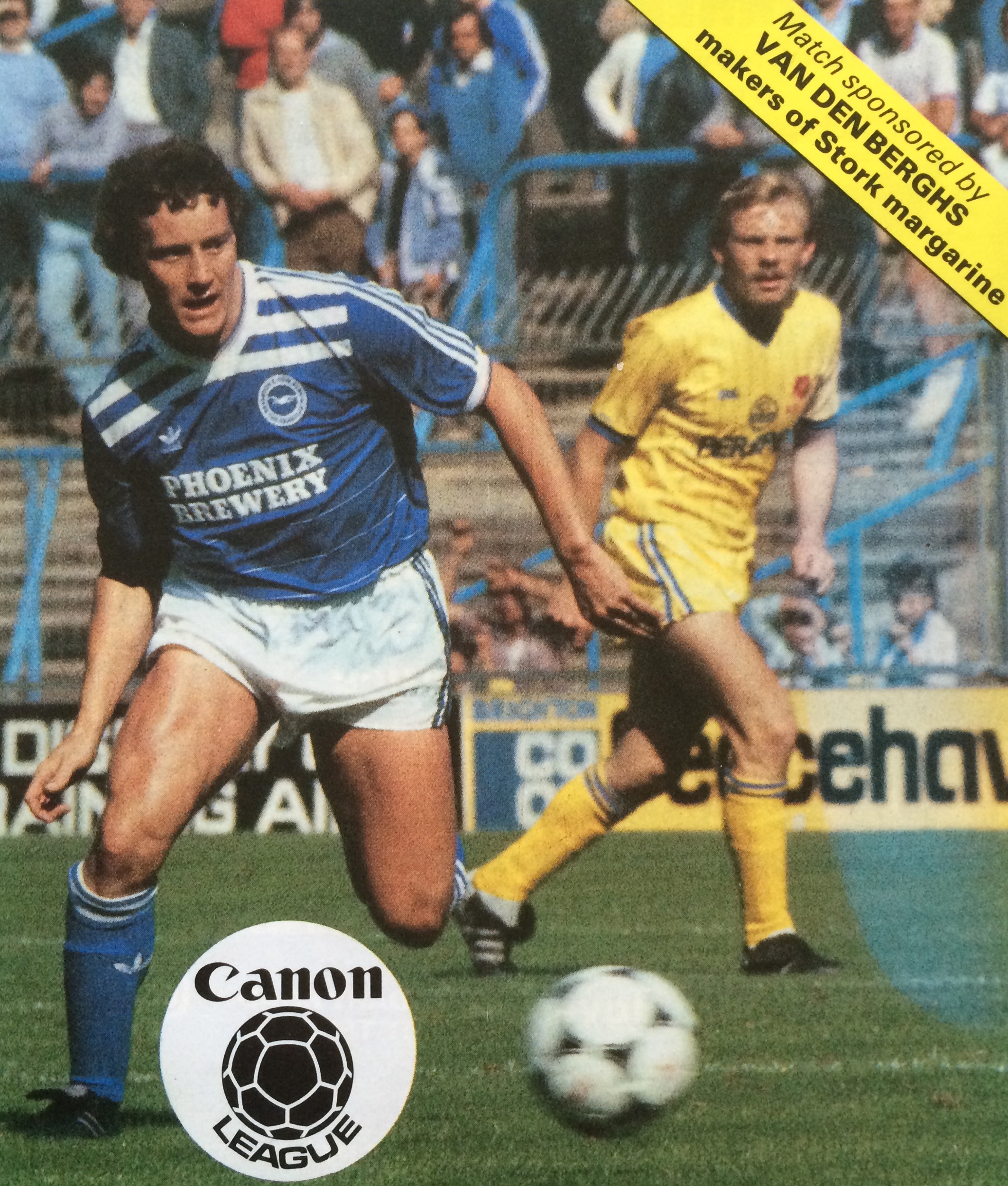
WITH all due respect to his predecessors in the number 6 shirt, Dennis Burnett was a classy addition to Brighton’s defence when he signed from Hull City in 1975.

At the end of his first season with Brighton, when they toyed with promotion from Division 3 but just missed out, Burnett was selected in the PFA Third Division Team of the Year, which said everything about his stature amongst his fellow professionals. Albion’s Peter O’Sullivan was also selected while the goalkeeper was Eric Steele, then with Peterborough, and Crystal Palace winger, and, future Brighton manager, Peter Taylor, was also in the XI.

Before 1975, Brighton fans had been used to seeing their centre halves hoof it, but Burnett play more in the style of another famous former West Ham number 6. OK, he might never have reached Bobby Moore’s level but he played alongside the great man for a while and came through the ranks at West Ham when they had a reputation for playing cultured football.

He started off in the West Ham youth team and was in the 1963 FA Youth Cup winning side alongside the likes of Harry Redknapp, Clive Charles, Bobby Howe and John Sissons.

Burnett made his first team debut for the Hammers as a 21-year-old in October 1965, along with Jimmy Bloomfield (the future Orient and Leicester manager), in a 3-0 defeat to Fulham at Craven Cottage. He made 24 league appearances in 1965-66, the most he managed in any one season for the Hammers.

In March 1966, he collected a League Cup runners-up medal playing right back in a side that lost 5-3 over two legs to West Brom. The team was captained by Bobby Moore, and included Martin Peters and Geoff Hurst, just four months before all three played in England’s one and only World Cup win.

Burnett went on to complete 66 league and cup appearances for West Ham.

Born in Southwark on 27 September 1944, perhaps it was no surprise his next stop was Millwall. West Ham sold him to The Lions in 1967 for £15,000, and the vast majority of his football career was spent at The Den, playing in the second tier.

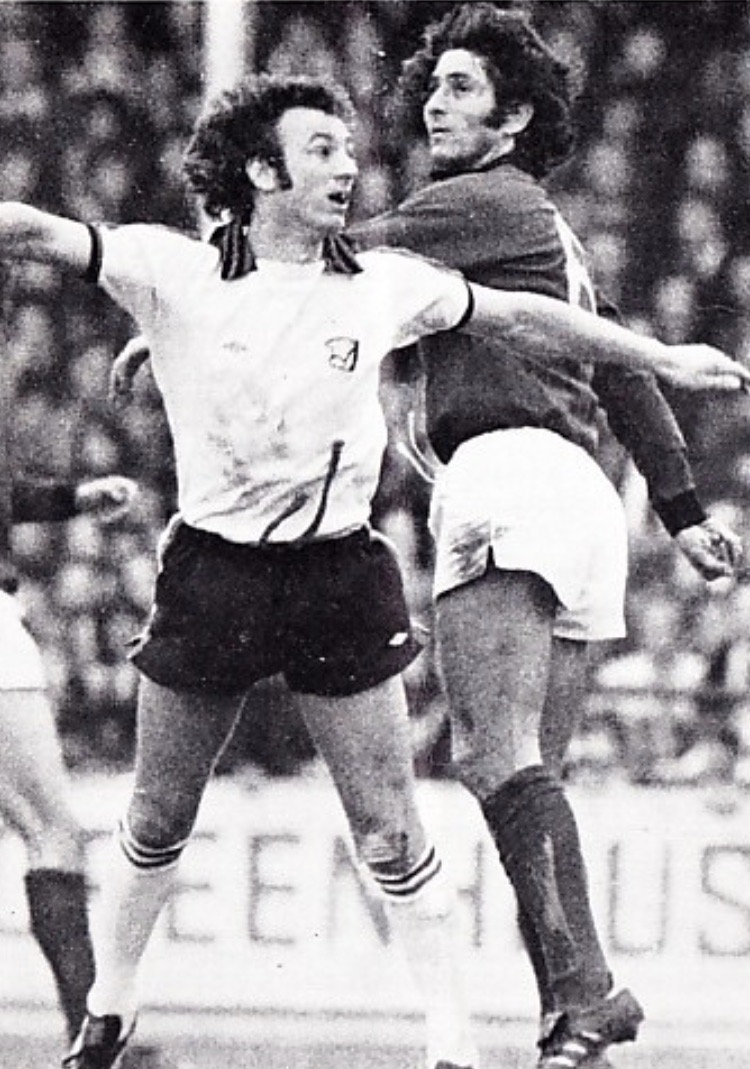
Playing alongside Barry Kitchener at centre half and Harry Cripps at left back, he was part of a team that nearly made it to the First Division, particularly in 1971-72.

In a scene you would never get now in the mobile phone age, Millwall were leading Preston at home and the word went round The Den that rivals for promotion Birmingham were losing at Sheffield Wednesday. It looked like Millwall would be promoted to the elite for the first time in their history and the news spread to the players on the pitch.

Unfortunately, the rumour was completely wrong. Birmingham were leading, not losing. Club skipper Cripps had even gone round the Preston players telling them Millwall were going up but level-headed Burnett didn’t get carried away.

millwall-history.org records: On-the-field skipper Dennis Burnett was less convinced. “I wasn’t going to believe it until I knew for sure,” he said. “Those last few minutes were agonising. We played on in a dream. It was the longest 20 minutes ever for me.”

As the end of the game approached, the crowd jammed the touchline, waiting to cheer off the Millwall players. The pressure behind Millwall’s goal was so great that the woodwork began to buckle.
Centre-forward Barry Bridges
(who would join Brighton five months later) ran back to appeal to the fans to be patient. When the referee blew for the last time – suspiciously early – half the 20,000 crowd stormed on to the pitch. Cripps was carried aloft and some of the other players lost their shirts.

Finally the correct score from Hillsborough was announced and the crowd fell silent and faded away.

The following season, Millwall struggled near the bottom of the table and manager Benny Fenton moved Burnett into midfield.

“As a sweeper I was a bit restricted,” he told Goal’s Ray Bradley, who described him as “one of the most accomplished and stylish players outside the First Division”.

“I had to stay back and wasn’t so involved,” said Burnett. “ Now I find I can express myself more and go up in support of the attack.”

Unlike his illustrious former Hammers teammates, full international recognition eluded him but in April 1973 Burnett was part of an English FA squad managed by Sir Alf Ramsey that thrashed Gibraltar 9-0 in a ‘friendly’. Frank Worthington (of Leicester at the time) scored a hat-trick.

Hankering for another shot at top division football, Burnett went on to the transfer list at The Den. He got his move, but only to a club in the same division.

After clocking up 257 appearances for Millwall, in 1974, Terry Neill paid £80,000 to take Burnett to Hull City, where a young Stuart Pearson, future West Ham, Man Utd and England international was making a name for himself.

However, when Neill left to become manager of Spurs, his replacement John Kaye brought in his own man while Burnett was out of the side suspended. After losing his place, Burnett had a brief loan spell back at Millwall.

During the summer of 1975, he played 21 games in the States with St Louis Stars (for whom former Chelsea and England goalkeeper Peter Bonetti was playing) before Brighton manager Peter Taylor secured his services for the Seagulls.

In an article in Shoot incorporating Goal, Burnett explained how, although he’d been sidelined for two months with an ankle ligament injury, he’d got back in the side only to be sent off in a game away to Bristol City.

“It was a most unjust decision. Even the opposition seemed flabbergasted,” he said. “Anyway, I never played for Hull again. The signing of Dave Roberts from Oxford United put paid to my chances of a first team recall, following my suspension.

“Eventually, manager John Kaye called me into his office and asked if I wanted a move. A price of £30,000 was put on my head, later reduced to £15,000. No one came for me so in April I went to the United States and played for St Louis Stars in Missouri, a North American Soccer League club.

“While there I received another contract from Hull City, which I refused to sign. I lodged an appeal against it to the Football League Management Committee. Surprisingly they upheld it, and, during July, I received a letter to say I’d been given a free transfer.

“I arrived back in England on August 24th, made and received a number of ‘phone calls which resulted in my being offered a three-year contract by Brighton, plus excellent wages, which at the age of 31 was fantastic for me,

“Added to all this is the potential of Brighton in terms of location, players and attendances. It was a move not to be resisted.”

Burnett told the magazine he felt Brighton were much better prepared for promotion than Millwall had been. “Had we gone up, we would have needed a miracle to survive in the First,” he said. “At Brighton, we are winning matches without being fully stretched. The right blend is there and we can only get better.
“If I look after myself, I can get through another four or five seasons, by which time Brighton could be up amongst the big boys.”

Burnett was obviously a good judge because Brighton certainly got themselves up amongst the ‘big boys’ four years later – although by then he was no longer a part of it.

After a successful first season in which he developed a formidable central defensive partnership with Andy Rollings, and earned that placed in the PFA team of the year, perhaps there were signs that age was catching up with him.

In his end of season review in the Evening Argus, Albion reporter John Vinicombe observed: “Over the course of the season, the most improved player was Andy Rollings who profited by the experience of Dennis Burnett at his elbow.

“There were times when Burnett looked unflappable in the centre of the defence. As time wore on, and situations became more frenetic, that casual style, no doubt a legacy of his West Ham upbringing, now and again landed him in trouble.”

Maybe manager Taylor thought the same because one of the last things he did before quitting and rejoining Brian Clough was to sign veteran defender Graham Cross, which spelled trouble for Burnett.

Under new manager Alan Mullery, in the league at least, Cross was preferred alongside Rollings. Burnett deputised for Rollings when he was injured – for example, he played alongside Cross in the memorable 7-2 demolition of York City – and was given some games in midfield, but mainly in the League Cup he got the chance to shine.

He played in memorable games against First Division opponents Ipswich, West Brom and Derby, and was assured alongside Cross in the memorable narrow 2-1 defeat at the Baseball Ground in November 1976.

Vinicombe reported: “Cross and Burnett played coolly and neither looked out of place among the high-priced cream.”

He kept his place for a league game away to Port Vale five days later, but that 2-2 draw was his last in an Albion shirt.

In early February 1977, together with ex-Spur Phil Beal, he agreed a pay-off with the club and played non league with Ilford for the remainder of the season before returning to the States and another 19 games for St Louis Stars, where he was joined by former Albion teammate Fred Binney.

Mullery explained several years later in his autobiography that he had inherited a squad of 36 professionals and needed to prune the numbers. The older players were the obvious ones to go and, although Beal and Burnett went quietly, he had more truck dispensing with Joe Kinnear’s services – but that’s a story for another day.

On his return to these shores, Burnett headed for Ireland to play for Shamrock Rovers, at that time managed by the legendary Johnny Giles.

The defender subsequently played for three years in Norway, for SK Haugar, and popped up back in Sussex in 1994 as assistant manager of Sussex County League side Lancing, and played in a 2-1 defeat against Horsham YMCA in the FA Cup a month before his 50th birthday!

According to Wikipedia, Burnett ran a painting and decorating business in Sussex after he left football and was working in the hospitality suites at Upton Park before West Ham moved to the Olympic Stadium.

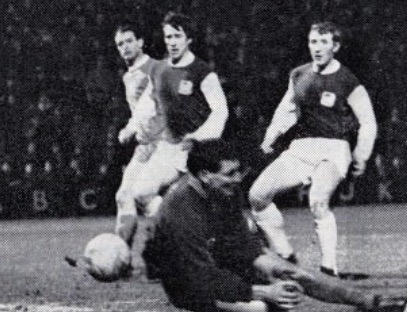
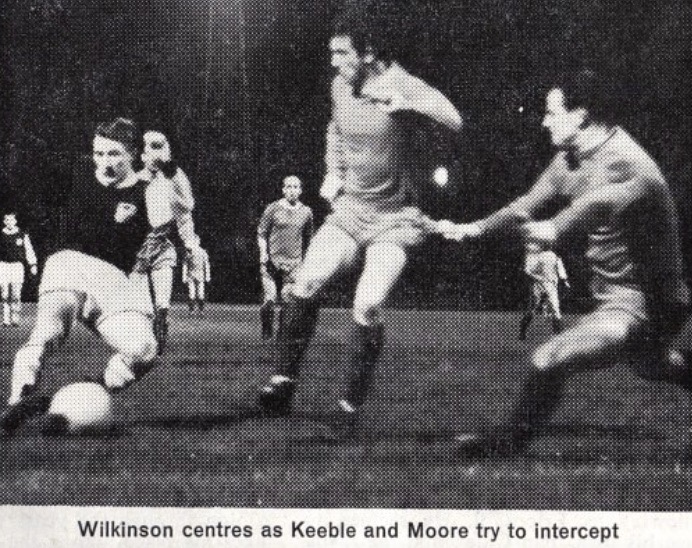
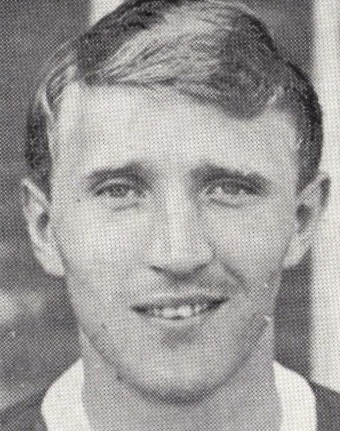
Pictured above are a Newham Recorder shot of Burnett in West Ham colours; in action for Millwall (from Goal), and in Albion’s stripes (from Shoot!). Below, an archive shot of the St Louis Stars side of 1975 with Burnett in the back row wearing the 18 shirt and Peter Bonetti in the centre of the front row.
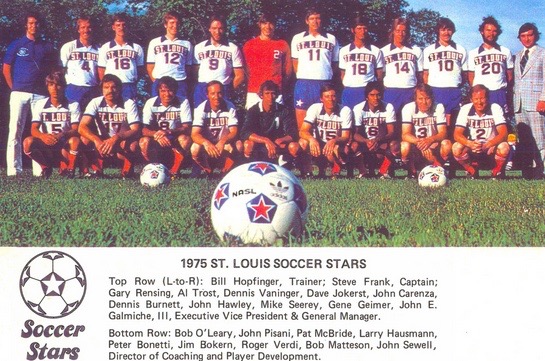
back row burnett

Howard Wilkinson – aka ‘Sergeant Wilko’ – began coaching at Albion

wilko bhaYORKSHIREMAN Howard Wilkinson was a key part of the first Albion side I watched. The former Sheffield Wednesday player was a speedy winger in Freddie Goodwin’s 1969 team.

But away from The Goldstone, he had already been sowing the seeds of his future coaching and managerial success.

My father was a founder of local amateur side Shoreham United, a Brighton League team, and the future “Sergeant Wilko” (as the press liked to dub him) was brought in to do some expert coaching with United’s first team.

I well remember as a young boy sitting on the sidelines in Buckingham Park, Shoreham, watching him put the players through their paces with various routines.

I waited eagerly with my autograph book as Wilkinson shared the benefit of his skills and experience with the willing amateurs.

I was chuffed to bits when he rewarded my patience with his signature at the end of the session but who would have thought the man before me would go on to manage League Champions Leeds United as well as the England national team!

I’ve since discovered how Wilkinson had taken his preliminary coaching badge shortly after joining Brighton in the summer of 1966. Readers of the matchday programme were told how Wilkinson was one of six Albion players who were taking the badge at Whitehawk under former Brighton wing half Steve Burtenshaw, who’d turned to coaching that year after his Albion playing career had come to an end.

By the summer of 1968, Wilkinson had already taken his full FA coaching badge at Lilleshall when only 25, and, as well as Shoreham United, he was coaching youngsters at Fawcett Secondary School, Brighton Boys, Sussex University and the Sussex County XI.

Born in the Netherthorpe district of Sheffield on 13 November 1943, he earned early recognition for his footballing ability playing for Yorkshire Grammar Schools and England Grammar Schools.

Wilkinson earned five caps for England Youth in 1962. He scored on his debut in a 4-0 win over Wales at the County Ground, Swindon, on 17 March 1962 in a side that also featured future full England international Paul Madeley (Leeds United).

He also appeared in the UEFA Youth Tournament in Romania the following month when England were beaten 5-0 by Yugoslavia, 3-0 by the Netherlands and drew 0-0 with Bulgaria. The following month he was in the England side beaten 2-1 by Northern Ireland in Londonderry in the Amateur Youth Championship for the British Association.

Wilkinson played local football with Hallam when he started to attract attention and was initially on the books of Sheffield United but it was city rivals Wednesday who took him on as a professional. The manager at the time was Vic Buckingham, known as the pioneer of ‘total football’, the philosophy later adopted by his protege Johann Cruyff.  But it wasn’t until the 1964-65 season under Alan Brown that Wilkinson broke into the first team, making his debut on 9 September 1964.

“My football league debut was a tough one against Chelsea, who were then top of the league, at Stamford Bridge,” he said. “We forced a 1-1 draw and I quite enjoyed the match.” He also played the following Saturday in the return fixture when they lost 3-2 at home to Chelsea (Bert Murray scored two of Chelsea’s goals). Wilkinson made 12 appearances across the season as Wednesday finished sixth in the old First Division.

The following season he scored both Wednesday goals in a 4-2 defeat away to West Ham United on 16 October 1965 and on 8 January he was on the scoresheet in a home 2-1 defeat versus Leicester City, but he only made eight appearances all season, playing his last game for the Owls on 19 March 1966. He wasn’t part of the Wednesday team who lost 3-2 to Everton in the 1966 FA Cup Final.

Wilkinson left Hillsborough for the Albion a few days after England won the World Cup and scored on his debut in the opening match of the season as Brighton drew 2-2 at home to Swindon Town. He was on the mark again two games later getting Albion’s goal in a 1-1 draw at Reading. He was also a scorer in one of the few highlights of that first season, when third tier Brighton beat Jimmy Hill’s top tier Coventry City 3-1 in a League Cup replay.

The winger from Wednesday continued to earn rave reviews for his performances until suffering concussion and a fractured cheekbone during a match away to Middlesbrough. In the days when medicine still had a long way to go, Wilkinson was out of the side for ages.

“I seemed to be out for an eternity after that injury,” Wilkinson told journalist Spencer Vignes in a matchday programme article. “They didn’t have the technology back then that they do today to mend injuries like that. I had an operation, they reset it, and I was on fluids for ages. It wasn’t nice.”

I’m grateful to the excellent Albion retro blog, The Goldstone Wrap, for digging out a quote from Wilkinson’s 1992 book, Managing to Succeed, in which he revealed this nugget about life on the south coast:

“When I was a player at Brighton, under manager Archie Macaulay’s guidance, we had some remarkable preparations for important matches and cup-ties. There were liberal doses of sherry and raw eggs, calves foot jelly, fillet steak, and plenty of walks on the seafront where we were taken to fill our lungs with the ozone.”

In five years with Brighton, he made 130 appearances (plus 17 as a sub), scoring 19 goals. He always had an eye towards what would happen after his playing days, explaining: “It was during my last year at Brighton that I decided to try and do a teaching qualification combined with a degree, ready for when I finished playing.”

He moved on from the Albion at the end of Pat Saward’s first season, having made only 18 starts under the new Irish manager. Jim Smith had contacted him to ask if he would join him at Boston United as player-coach. “It turned out that I would be on just as much money as I was at Brighton, even though Boston were non-league, so I went.”

Wilkinson enrolled on a degree course in Physical Education at Sheffield University and over four years combined coaching and playing with being a student, a husband and a father. On top of that, he ended up as manager after Smith left. Boston won the Northern Premier League title four times in his six years at the club and people started to take notice.

The FA appointed him as their regional coach for the Sheffield area and by 1978 he was helping out Dave Sexton and Terry Venables with the England under-21s. In December 1979, he joined Notts County as a coach under Jimmy Sirrel, eventually taking over as team manager for the 1982-83 season when County were a top-tier side.

In June 1983, he returned to Wednesday as manager and, in his first season in charge, steered them to promotion from the second tier. He kept them among the elite for four seasons.

Undoubtedly the pinnacle of his career was guiding Leeds United to the League Championship in 1992. He moved to Elland Road in 1988 and built a decent side captained by the future Scotland manager Gordon Strachan.

They won the last of the old Football League Division One titles and, remarkably, to this day Wilkinson remains the last English manager to achieve that feat. Not surprisingly he was that season’s Manager of the Year.

United fanzine The Square Ball had only good things to say about the man in a 2011 article. “Howard Wilkinson gave Leeds three fantastic seasons of unforgettable glory in 1989/90, 1990/91 and 1991/92; and the Charity Shield at Wembley and the European glory nights against Stuttgart and Monaco stand with the best memories of Leeds’ modern era. More than that, he gave Leeds United back its sense of justifiable self-worth; no longer living in the past, no longer derided in playgrounds, Leeds were a proper football club again, fit for the modern era.”

Sacked by Leeds in 1996, he then began to move ‘upstairs’ so to speak and was appointed as the Football Association’s technical director as the forerunner to several executive-style appointments.

However, he twice found himself in temporary charge of the England national team, firstly after Glenn Hoddle was forced to resign.

He oversaw a 2-0 defeat to France in a friendly at Wembley before Kevin Keegan took the reigns. Twenty months later he stepped into the breach again when Keegan quit and took charge of a World Cup preliminary match in Helsinki, England drawing 0-0 against Finland.

After England, he had a brief unsuccessful spell at Sunderland, assisted by Steve Cotterill, and later was involved in and around the boardroom back at Hillsborough.

Wilkinson’s work as technical director of the FA between 1998 and 2002 has been hailed as having a major impact and influence on the domestic game, providing a blueprint for the subsequent building of the National Football Centre at St. George’s Park.

In the 2024 New Year Honours List, having just turned 80, Wilkinson was awarded an OBE for his services to football and charity, including ongoing work as chairman of the League Managers Association. LMA chief executive Richard Bevan OBE said: “Howard’s legacy in English football may be one of the most unheralded yet important in the modern game.

“Universally respected and loved by his colleagues and peers in the game, he has built an association of professional football managers, which is globally recognised as one of the most progressive organisations in world sport.

“As one of English football’s greatest thinkers, he has supported thousands of managers, coaches, players and administrators in the game to fulfil their potential and build impactful careers in football.

“He has achieved so much in his life, whilst retaining the values, humility and decorum that were instilled in him as a young coach, passing on these values to everyone he has worked with and for.”


Well-travelled Wilson’s highs and lows as player and manager

IMG_5140DANNY WILSON, a Brian Clough signing for Nottingham Forest who struggled for games at the City Ground, hit the ground running when he joined the Albion, initially on loan, in November 1983.

He scored twice on his debut – one a cheeky back-heel (below) – when Cardiff City were beaten 3-1 at the Goldstone, and manager Chris Cattlin was swift to praise the newcomer, writing in his matchday programme notes: “I think that this lad, in the right setting, will be a great asset to this club.” Prophetic words. By the end of the season, he’d scored 10 times, four of them penalties, in 26 appearances.

backheel“It was a fantastic move for me,” Wilson said in a retrospective matchday programme article. “I’d gone from being a regular at Chesterfield to being a bit part at the City Ground, surrounded by all these players who had won European Cups, people like Garry Birtles and Viv Anderson. But with the likes of Ian Bowyer ahead of me, I was never going to get first team football.

“That all changed at Brighton. There was a great feeling about the place, and with players like Jimmy Case and Joe Corrigan, no shortage of talent. Fortunately, I got off to a good start, and things went from there.”

Not long after Wilson made the temporary move permanent, in exchange for a fee of £45,000, he played in a memorable 2-0 FA Cup fourth round victory over Joe Fagan’s Liverpool at the Goldstone.

Liverpool went on to win the league, the League Cup and the European Cup that season but goals from Gerry Ryan and Terry Connor denied the Reds achieving the quadruple.

“That has to be my favourite memory from all my time at the Goldstone,” he said. “Back then, Liverpool were just awesome, and to beat them like we did was virtually unheard of. It was the first-ever FA Cup tie to be screened live on television which made it even more special.”

Born in Wigan on New Year’s Day 1960, Wilson hoped to begin his career with Sunderland, but he was released as a boy and instead started out with his hometown club, who were then non-league. He stepped into league football with Bury before moving on to Chesterfield (right).Wils -Chest

His performances for the Spireites earned him a step up to Brian Clough’s Nottingham Forest but he struggled to make it as a regular.

It was after a brief spell on loan to Scunthorpe that he joined the Albion.

Towards the end of his spell with Brighton, Wilson earned his first cap for Northern Ireland (courtesy of his mother having been born in Londonderry) and over the next five years he collected 24 caps for them .

Wilson scored 39 times in 155 games for the Albion before the cash-strapped Seagulls, relegated to Division Three in 1987, cashed in on someone who had become a valuable asset and captain of the side.


The midfielder was sold to Luton Town for £150,000 where, alongside former Albion teammate Steve Foster in 1988, he won the League Cup, scoring a late equaliser (below left) as the Hatters beat Arsenal 3-2 at Wembley.

It was from Luton that he moved on to then recently-relegated Sheffield Wednesday – a £200,000 signing by Ron Atkinson –  in the summer of 1990. He continued to contribute his fair share of goals, netting 11 in 98 appearances for the Owls, as well as being a League Cup winner again in 1991.

Wednesday were the penultimate and eighth club of his playing career, before he embarked on what would become a multiple-club managerial career of varying success. Over the course of 25 years, Wilson’s teams won trophies, promotions, and narrowly escaped relegation, and he managed more than a thousand games.

His first post in the hotseat was as a player-manager at Barnsley, who he steered into the Premiership and earned the Managers’ Manager of the Year award. Unfortunately he could not deliver the same degree of success when he returned to Oakwell between 2013 and 2015, although that spell did mark his 1,000th game as a manager.

His second managerial job had also involved a return to scenes of past glory when he returned to Hillsborough in the top tier between 1998 and 2000. The spell ended ignominiously in the sack, though, after pressure was applied by local MPs for his removal, shortly before Wednesday’s relegation from the Premier League.

After what he felt was an unjust sacking by Wednesday, he was given a four-year contract to take charge of Bristol City. That spell came to an end after Mark McGhee’s Brighton beat the Robins to win the Third Division play-off final in Cardiff.

Six months later, he was back in the game for MK Dons’ inaugural campaign in League One, but he couldn’t save them from relegation to League Two at the end of the 2005-06 season and was once again looking for a new employer.

Within a month, he took over the reins of Hartlepool United, who’d been relegated with MK Dons, and in 2007 led them to promotion back to League One.

After leaving Hartlepool in December 2008, he began a three-year spell as manager of Swindon Town. Amongst his many signings were Gordon Greer, who went on to become Albion captain, and prolific striker Charlie Austin, who had a knack of scoring for Southampton against Brighton.

In May 2011, Wilson controversially crossed the great Sheffield city divide to take charge of United – which didn’t go down too well with Blades followers. During his reign, he helped to turn a young Harry Maguire from a midfielder into a defender. Wilson led United to the League One play-off final in 2012 where they agonisingly lost on penalties to Huddersfield Town.

His era at Bramall Lane came to an end in April 2013 after a string of poor results but by the end of that year he was back in the game for that second spell at Barnsley.

When Wilson left Oakwell in February 2015, he was out of work for 10 months but had an early Christmas present that year, once again returning to one of his old clubs in a managerial capacity. It was on Christmas Eve that he was appointed manager of Chesterfield, then in League One, where he took over from his old Brighton teammate Dean Saunders.

He managed to keep the Spireites in the division but a final parting of the ways came in January 2017, and that was his last managerial post.

Wilson tells his footballing life story in I Get Knocked Down (Morgan Lawrence Publishing Services, 2022).

IMG_6054

Wilson close

IMG_6052

Wilson cover

Wilson prowled many a touchline as a manager

Pictures from Albion matchday programmes.