Wembley hero Liam Dickinson’s nomadic football journey

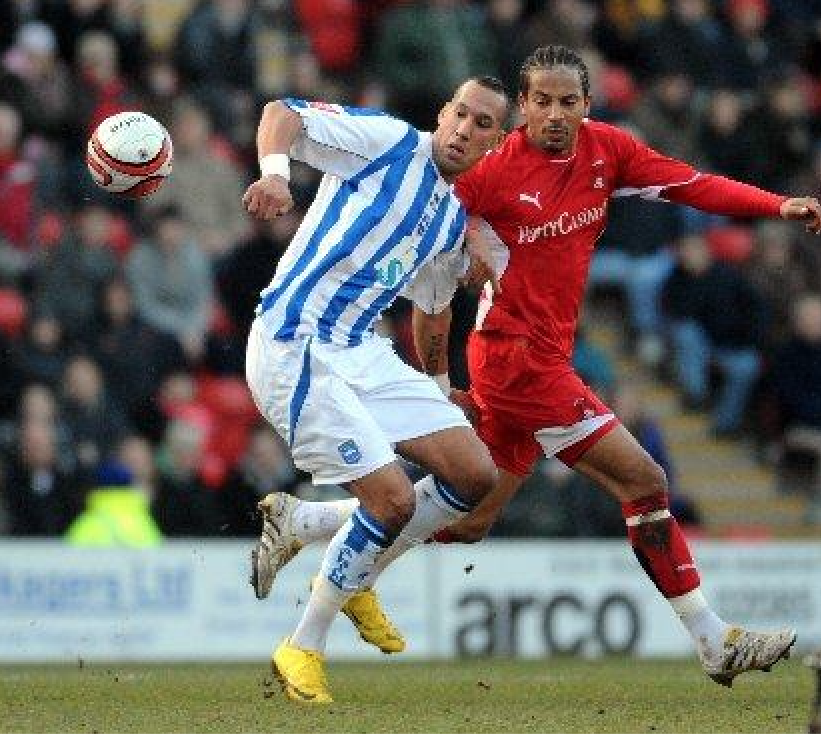
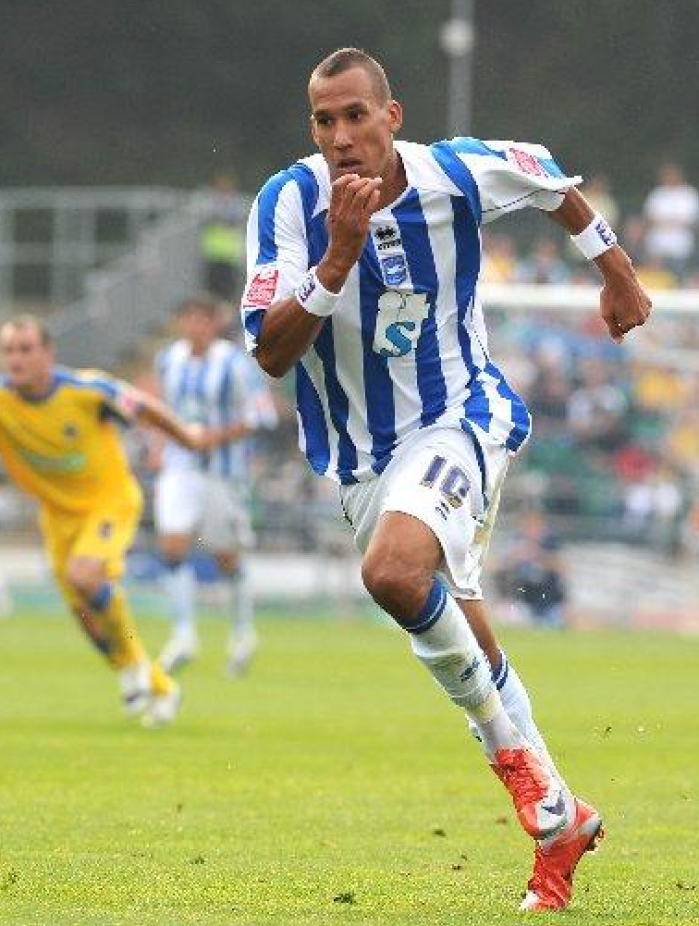
HE’D SCORED a decisive play-off final goal at Wembley for Stockport County but a subsequent £750,000 move to Derby County didn’t work out for Liam Dickinson and Brighton signed him for £300,000 only a year after the Rams had shelled out that big money.

Dickinson didn’t even get a game for the Rams, instead being sent out on loan to Huddersfield Town, Blackpool (where he’d begun his career in their school of excellence) and Leeds United.  He was a player who didn’t stay in the same place for long; in total he featured for 23 different clubs.

Like many before and since, changes of manager were often the cause of him moving on. At Derby, for instance, he was signed by Paul Jewell, recalled from his loan at Blackpool by caretaker manager Chris Hutchings and eventually let go by Nigel Clough.

It had been intended he’d join Leeds in January 2009 but the necessary paperwork didn’t arrive until 14 minutes after the deadline! Further discussions led to a revised deal, but the move was called off because he was injured. He eventually joined up with United in the second week of March and although he scored in a behind-closed-doors friendly against Sheffield United (1-1), he didn’t get on the scoresheet in eight League One games (four starts, four as a sub) under Simon Grayson.

His first start was in a 3-2 win at Crewe and he managed three successive starts, in a 2-2 draw at Leyton Orient, a 1-0 win over old club Stockport and a 1-0 defeat at Leicester but he was not involved in the end-of-season play-offs when Leeds (with Casper Ankergren in goal) lost out to Millwall in the semi-finals.

An enclave of former Stockport teammates – James Tunnicliffe, Jim McNulty, Gary Dicker and Craig Davies – helped Dickinson to choose Brighton as his next club

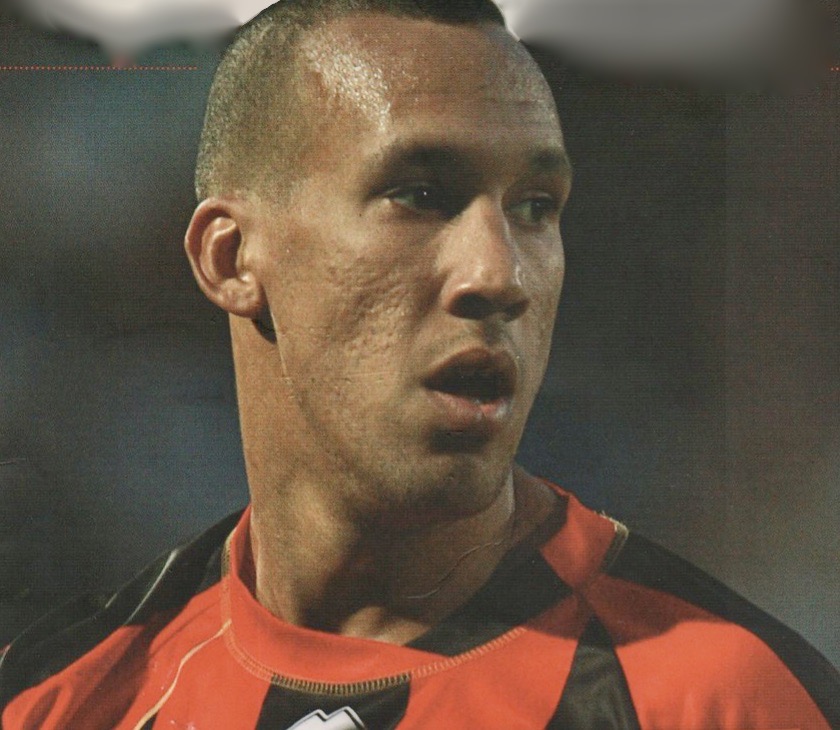
After Brighton boss Russell Slade welcomed the 6’4” forward to Withdean on a three-year contract, he told the club website: “He brings something different to the table. His goalscoring record is very good and he has a good goals-per-game ratio, and like one or two of the other signings I have made this summer, he is hungry to get his career back on track. I’m sure there is a lot more to come from him.”

He scored in his third and fourth games for the Albion, but both came in defeats against former clubs: the first in a 7-1 capitulation to Huddersfield and the next in a 4-2 defeat to Stockport.

He was on the scoresheet in the home 3-3 draw against Hartlepool (Nicky Forster scored Albion’s other two goals) that spelled the end of Slade’s tenure as manager. But it is what happened two days later that many will remember him for.

Unluckily for him, he was pictured carrying a seemingly comatosed young woman in his arms in the middle of Brighton at 1am. The Sun newspaper was covering a renowned student pub crawl ritual at the time and didn’t realise who they’d snapped.

Eagle-eyed Albion supporters did, though, and, after discussion about the incident on fans’ forum North Stand Chat, The Argus picked up the story, running an article headlined ‘Samaritan Brighton and Hove striker scores an own goal’.
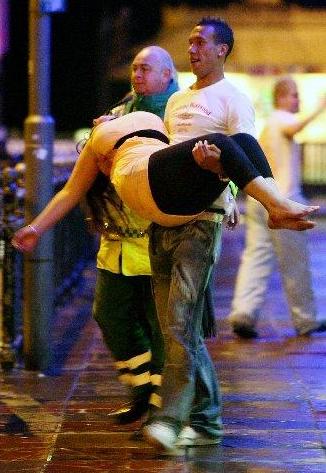
For his part, Dickinson told reporter Ben Parsons how he was on his way home after a meal out in the city when he helped a girl to a car waiting to pick her up.

He said it was simply a coincidence that he was helping the girl when the photos were taken, adding: “I saw two girls holding another girl up. She collapsed in front of us. Her mum or her auntie picked her up in a car. I picked the girl up and put her in the car.

“I didn’t want to just leave her. Anybody else would have done the same thing.”

Albion said they would deal with the matter internally. Dickinson was omitted from the squad for the following game, a 4-4 FA Cup draw with Wycombe Wanderers with caretaker manager Martin Hinshelwood in charge, but he was back in the fold for Gus Poyet’s first game as Slade’s replacement.

In the televised away game at Southampton, he went on as a sub for Forster in Albion’s 3-1 win at St Mary’s. Dan Harding, Dean Hammond and Adam Lallana were in the Saints side.

Dickinson got occasional starts under Poyet but more often than not was sent on as a sub to replace either Glenn Murray or Forster.

Given a start in the FA Cup second round win over Rushden and Diamonds, he scored twice, in the third and 86th minutes, as Albion edged the tie 3-2. He was preferred to Murray in a Boxing Day clash with Leyton Orient that finished goalless but, perhaps to prove a point, two days later the restored Murray hit four at Wycombe in a 5-2 Seagulls win.

Dickinson was back on familiar territory at Edgeley Park in January 2010, but only got a half an hour run-out as a sub against his old club (replacing another former County man in Dicker) as the game finished 1-1, Andrew Crofts salvaging a point with a 90th minute equaliser.

In a 1-1 draw at Leyton Orient, Dickinson started the game and, when he was denied a penalty, incandescent Poyet was sent from the dug-out for protesting.

“If you ask anyone, they will tell you it was a penalty and a red card,” Poyet maintained afterwards. “The referee is 10 yards away and he doesn’t give it. You’ve got a chance to score a penalty and it’s 2-0. It’s a different game.”

Dickinson took to the field against another of his former clubs in Huddersfield wearing distinctive ‘banana yellow’ boots. “I don’t like dull, boring colours. I like to brighten the pitch up a bit. I’ve had a bit of stick off the lads,” he told The Argus.

The striker, who’d scored six goals in 13 games for the Terriers while on loan, didn’t manage to get on the scoresheet and was replaced by Murray as the game petered out to a 0-0 draw.

At that stage, Dickinson was deputising for Forster who was out of favour with Poyet over a contract dispute.

As the Uruguayan began to bring in his own selections, such as on-loan Kazenga LuaLua, Dickinson chose to go on loan to Championship strugglers Peterborough United, who were managed by his former Stockport boss Jim Gannon. Dickinson scored three in nine games for Posh. On his return to Brighton, he was sold to Barnsley, who were in the Championship at the time, for reportedly half the fee paid out for him just a year earlier.

Tykes boss Mark Robins declared: “He is different to the strikers we have here already and will give us something else up front.

“He is only 24 and still has room for improvement. He has a decent scoring record both in the Championship and in the lower leagues.

“Liam fits in to what we are trying to do here both in terms of on the pitch and within our budget.”

But he made just one start, in a League Cup match, and three sub appearances in the league for Barnsley when his old Derby caretaker manager, Hutchings, took him on loan to Walsall. He didn’t find the net in seven League One games.

Next stop, from January to the end of the season, was Rochdale, the side against which he had scored that 2008 League Two play-off final winner.

But a goalless run of 14 games (seven starts and seven off the bench) prompted this comment from AtThePeake on fansnetwork.co.uk in 2021: “In terms of expectation versus reality, few signings can have disappointed Rochdale fans quite like the loan signing of Liam Dickinson in January 2011.”

The supporter wrote: “Dale were looking for someone to become the fulcrum of an attack that included Chris O’Grady drifting in from the left and the emerging Matt Done playing as a second striker.

“Having seen first-hand the threat Dickinson could be with his aerial prowess, strength and touch in front of goal, Dale fans were reasonably excited that the answer to their striker problem had been found, but it quickly became apparent that the struggles with Derby and Barnsley had affected Dickinson’s confidence.

“During his spell, Dickinson was all too easy to defend against, struggled to hold the ball up and lacked any cutting edge when it came to finishing the chances he did manage to fashion for himself.”

A projected move to Plymouth Argyle was called off after just eight days, with personal reasons being cited, but the nomadic striker’s next stop was League Two Southend United under Paul Sturrock, where he netted 12 goals in 37 matches (33 starts plus four as a sub).

Dickinson scored a dozen times for Southend United

Not for the first time, he found himself in the headlines for the wrong reason when he and two others were reprimanded for a breach of club discipline over an unspecified incident at a hotel the evening before a match at Morecambe.

A broken ankle brought a premature end to his season with the Shrimpers, and it proved problematic in trying to continue his league career elsewhere.

He trained with Port Vale but even his agent Phil Sproson was quoted as saying: “Liam will admit he has been no choirboy in the past.

“He has had quite a few clubs and that’s probably because he has been no angel.

“He is loud and vocal and has had too many nights out over the years – but he has matured.

“He realises he will have to change and toe the line because he has a darker side that has dragged him down in the past.”

As it turned out, he was eventually out for a year because his broken ankle didn’t heal properly. He played two pre-season friendlies for Vale in 2013 but manager Micky Adams didn’t take him on because of ongoing problems with the ankle.

Born in Salford on 4 October 1985, Dickinson was originally a centre-half when he was on the youth books of Blackpool, Bolton and Blackburn. He stepped away from professional football at 16 and studied to be a graphic artist but continued to play in non-league sides. He appeared for Irlam, Swinton, Trafford and Woodley Sports before he was taken on as a pro by Stockport in 2005 after a successful trial.

He scored on his County debut, only five minutes after going on as a 71st-minute sub against Cheltenham Town at Edgeley Park. In three years under Jim Gannon, he hit 33 goals in 94 appearances.

The 2007-08 season was his most prolific term as a league player, netting 21 times from 32 starts and six games from the bench. It also earned him Stockport’s Player of the Year award.

It was to Stockport, then in the Conference North league, that he returned in 2013, but he only managed one goal in 13 games before returning to the non-league arena.

Between 2014 and 2019, he turned out for Stalybridge Celtic, Guiseley, Bradford Park Avenue, FC United of Manchester and finally Droylsden before calling it a day.

In an online chat with Stockport County Live towards the end of the Covid lockdown, in August 2020, Dickinson opened up about his mental health, admitting he’d been through a period when he was suffering with depression.

Post playing, he told his interviewer, he was working installing signage for a print company.
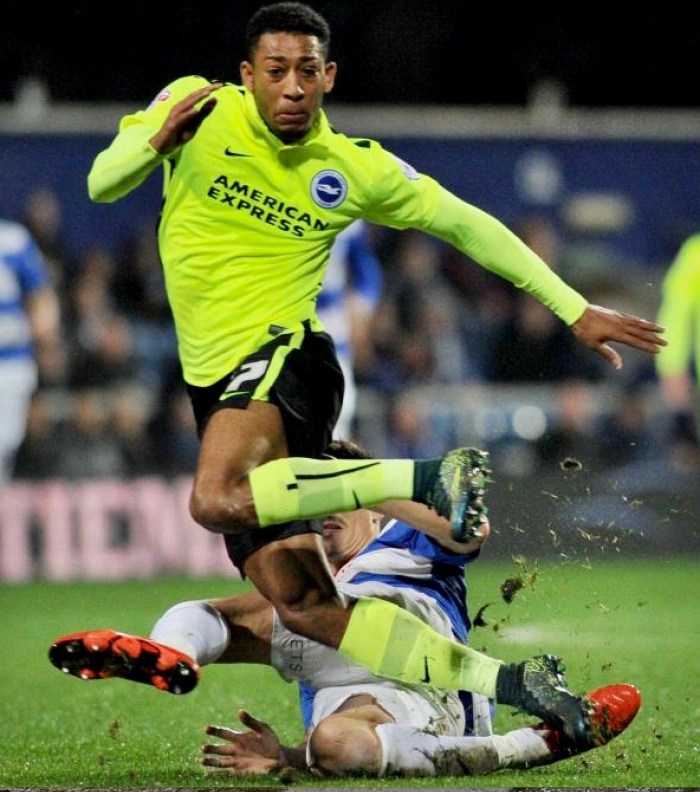
Oh brother: Seagulls spell revives van La Parra

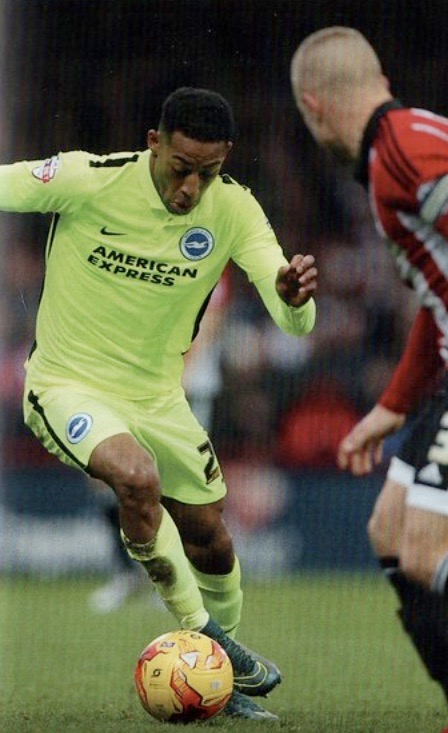
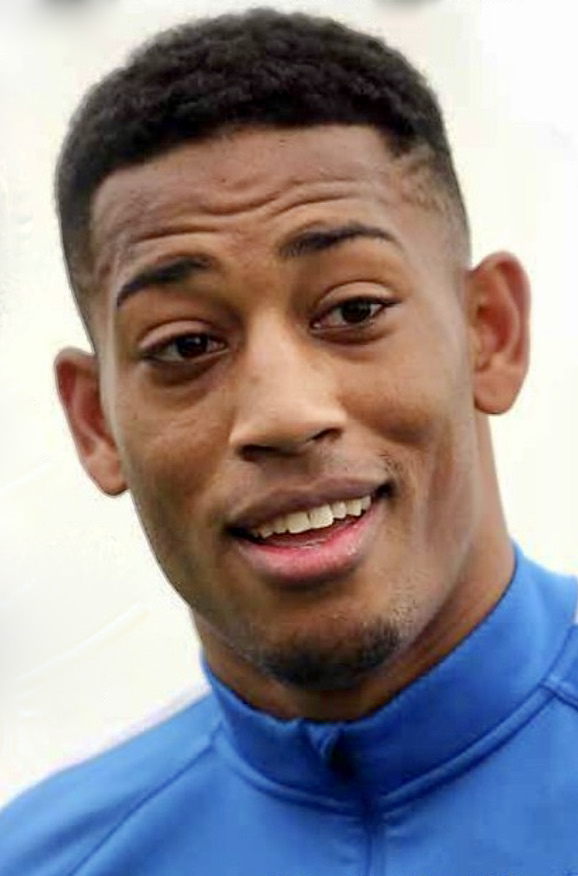
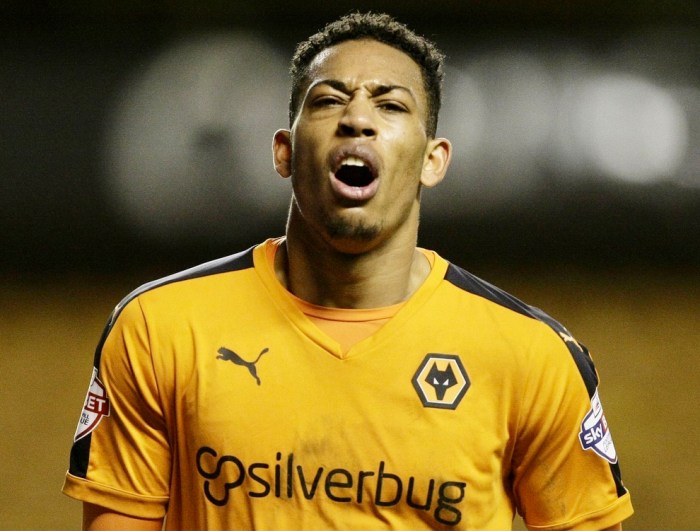
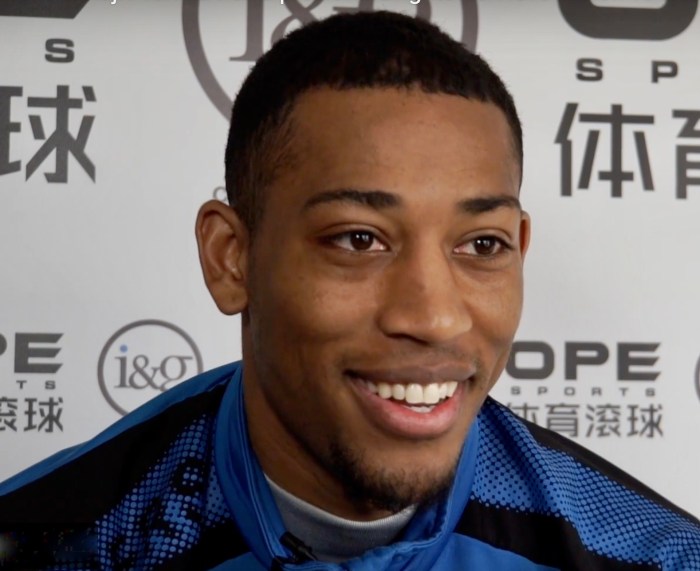
ON-LOAN Dutchman Rajiv van La Parra scored twice in six games for Brighton, spurring parent club Wolverhampton Wanderers to recall him.

Georginio Wijnaldum’s half-brother was only on the winning side once during his time with the Seagulls, but Wolves boss Kenny Jackett was happy to give him another chance at Molyneux after he’d mysteriously been frozen out.

But the thaw didn’t last long. While Albion had moved on by signing Anthony Knockaert on a three-year deal from Standard Liege, van La Parra was soon on the move again, this time to Huddersfield.

It was in November 2015 that Chris Hughton seized on an opportunity to shake up Albion’s attacking options in the last few hours of the loan transfer window by offering the unsettled van La Parra a chance to replicate the form he’d shown the previous season for Wolves.

“Rajiv will give us pace and creativity in the forward areas, and supplements our existing wide options,” Hughton said. “He is something different to the players we already have here, and I am delighted to have him on board.

“With Sam Baldock currently injured and Kazenga LuaLua having missed the amount of games he has, we have been very keen to bring in offensive options.

“In Rajiv we have a player who regularly featured in Wolves’ promotion chase last season.”

Albion were top of the table at the time and, having watched from the bench as Albion saw off Birmingham 2-1 at the Amex, van La Parra went on in the 27th minute of the away game at Derby County after Solly March was clattered by a challenge that ultimately ruled him out for the rest of the season.

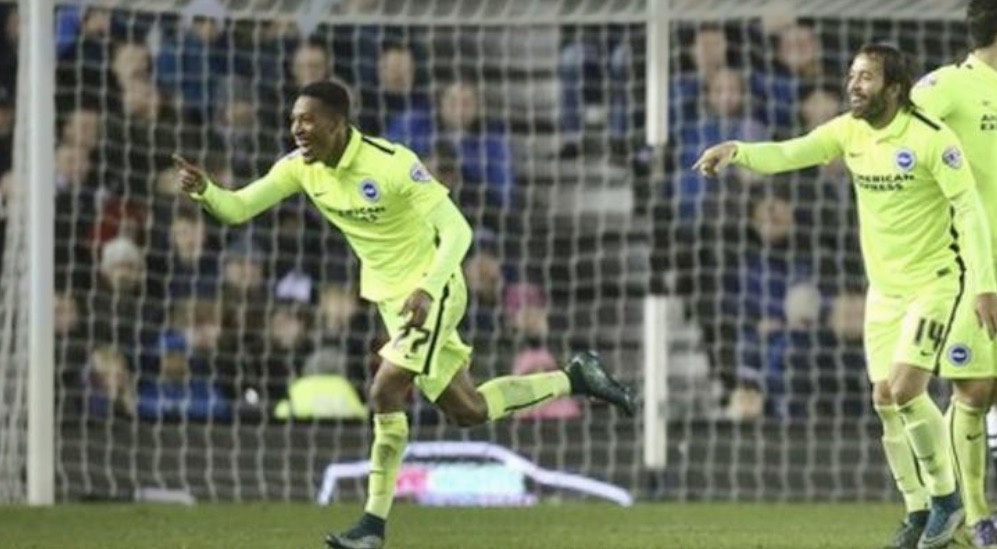
The substitute certainly made a positive impact, edging Albion 2-1 ahead with a goal in the 75th minute before Chris Martin equalised for County with a last-ditch penalty after Gordon Greer was harshly adjudged to have fouled Johnny Russell.

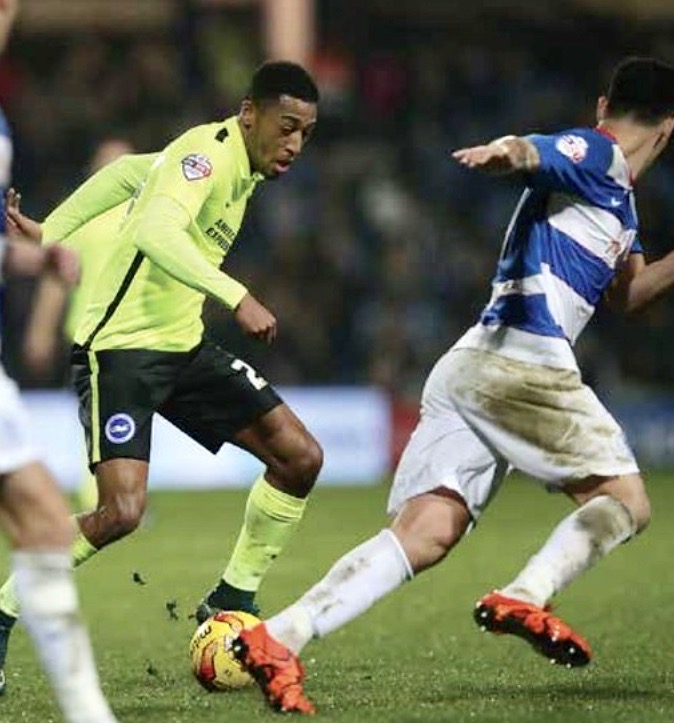
Van La Parra was also on target at Loftus Road on 15 December when he beat former England goalkeeper Rob Green with a 30-yard shot in the 55th minute to put Albion 2-0 up. QPR hit back with two Charlie Austin goals to share the points.

It emerged when he signed that van La Parra had been a Brighton target for some while, with the Wolverhampton Express and Star reporting he’d spoken to the club about a possible permanent move before that August’s transfer deadline day.

Leeds United were also keen, and he might later have ended up at rock bottom Bolton Wanderers, but he stayed on at Molyneux, where he found James Henry and Nathan Byrne ahead of him in the pecking order.

Ironically, his one and only league goal for Wolves was scored against the Seagulls at the Amex in a 1-1 draw the previous season.

The winger admitted in an interview with Andy Naylor for The Argus that he was baffled why he’d fallen out of favour at the Black Country club.

“It’s a mystery,” he said. “I didn’t understand what happened but sometimes these things happen in football.

“The manager maybe wanted to try some different players but I cannot explain what happened. It’s unreal. I played last season and I then went onto the bench not playing as many games.

“I’m the type of person who goes to the manager and asked for an explanation why I wasn’t playing. He (Jackett) couldn’t really give a reason but he motivated me by saying that I was close to the team and training well.

“That was keeping me positive about the manager and his opinion of me. At the end of the day, they were just words and not actions and I can just focus on playing now.”

His arrival at the Amex was somewhat overshadowed by the signing at the same time of striker James Wilson on loan from Manchester United but he discovered a couple of familiar faces in the Albion dressing room: Elvis Manu – a fellow product of Feyenoord – and Danny Holla.

“It’s nice to have them,” he said. “They can help me. I know Manu very well because we played at Feyenoord. He was in a younger team than me. I’ve played against Danny a few times and we’ve had a number of conversations.”

Although van La Parra made a mark with the Seagulls, it was apparent in December that a permanent move to the south coast looked unlikely. Wolves boss Jackett had noted his form and said: “He’s been keen to get the opportunity and so far at Brighton he’s taken it. He’s still a Wolves player and we’ll assess the situation. He’s got a couple of goals and assists which is very good.”

Van La Parra hoped an impressive performance in his last game on loan might persuade Hughton to view him as a long term prospect but Albion went down 1-0 at home to Ipswich Town, their fifth winless game on the trot, and he returned to Molineux.

Born in Rotterdam on 4 June 1991, of parents from Suriname, he was named by his mum after Rajiv Gandhi, the son of Indira Gandhi, the former Indian prime minister who was assassinated in 1984.

Van La Parra went through the youth ranks at Dutch giants Feyenoord between 1999 and 2008 and earned selection for the national side’s under 17s and under 19s.

It was only while playing in Dutch youth football that former Liverpool midfielder Georginio Wijnaldum, then playing for Sparta Rotterdam, met his half-brother van la Parra.

“I knew I had another brother, but I never saw him until that moment,” Gini explained. “I never saw pictures because at that time you didn’t have the internet or social media. There was no Instagram or Facebook or anything.

“I went to play a game, but I found my brother.”

Wijnaldum eventually moved to Feyenoord, and van La Parra said: “When he came to play for Feyenoord, we saw each other more often and we were closer.”

In 2008, van La Parra had moved to French Ligue 1 club Caen where he thought he stood a better chance of first team football. He was there for three years and, although he managed 16 outings in their first team, he mainly played for the B side.

At the end of his contract, he returned to the Netherlands and joined Eredivisie outfit SC Heerenveen where in three years he scored 16 goals in 94 appearances and got to play Europa League football. In the 2012-13 season, he also played six times for the Dutch under 21s, when he got the chance to play alongside Wijnaldum.

“I played on the wing and Gini in midfield. He didn’t give me the ball. He always passed to the other side,” joked van La Parra. 

In the summer of 2014, the winger moved to then Championship side Wolves and quickly established himself as a regular.

La Parra’s form for Brighton only revived his Wolves career temporarily, Jackett recalling him to their side in an FA Cup tie against West Ham and a 3-2 win over Fulham, in which he provided an assist and combined well with Michal Zyro.

Jackett said: “I felt that we’ve lost some pace along our front line and Rajiv has that and it’s a reason for bringing him back in to the group.

“He did well at Brighton, and I knew that against Fulham, tactically, I could play either system – 4-4-2 or 4-3-3 – with Rajiv on the pitch and be able to switch from one to the other. That was the advantage.

“He showed how much he wanted to play for Wolves. And the crowd responded to him, and if he keeps showing that work rate and desire, everyone will follow up on him.”

However, two months later he joined fellow Championship side Huddersfield on loan until the end of the season, and the move was made permanent that summer. He was a regular in the Town side that won promotion to the Premier League in 2017.

He made 38 appearances during the 2017-18 season amongst the elite, but incurred Sean Dyche’s wrath when he went to ground rather too easily in the penalty area during a Premier League game against Burnley. The referee didn’t buy it and the player was booked and subsequently fined by his own manager, David Wagner. “It’s unacceptable in my book. I can’t abide it,” said Dyche.

The following season, van La Parra struggled for game time and went on loan to Middlesbrough.

He eventually left the Terriers in 2020 having made a total of 102 appearances and signed for Serbian club Red Star Belgrade. He only played 11 games for them and then moved to Spanish second division club Logroñés for the 2020-21 season but, after only four appearances for them, he was released from his contract in January.

He then switched to Germany and signed for Bundesliga second division club Würzburger Kickers but, after they were relegated, he was on the move again.

Next stop was in Greece, for Apollon Smyrnis, but footballleagueworld.co.uk reported in November 2021: “It’s been a tough start for the player, who is featuring regularly, as he has failed to score or register an assist as his new side are third from bottom.”

Mis-firing Mick Ferguson couldn’t repeat goalscoring prowess for Everton or Brighton

MICK FERGUSON was a prolific goalscorer for Coventry City but the goals dried up in spells with Everton and Brighton & Hove Albion.

Ferguson’s arrival at the Goldstone in the early autumn of 1984 was certainly not amid a great fanfare. The Albion, under new chairman Bryan Bedson, were wrestling with debt and, to bring in some much-needed funds, sold striker Alan Young to Notts County for £50,000 and full-back Mark Jones to Birmingham for £30,000.

Needing a cut-price replacement for Young, and with Ferguson unwanted at Birmingham having been responsible for getting them relegated (see below), he came to the Goldstone as part of the deal that took Jones to St Andrews.

In modern-day football, loan players don’t generally play against their parent clubs but, amazingly, at the end of the previous season, Ferguson was allowed to play against Birmingham while on loan at his old club Coventry, and ended up scoring a goal that kept the Sky Blues in the top division but sent Birmingham down.

It was such an unusual saga that as recently as May 2017, the Guardian revisited the tale, catching up with Ferguson to explain the circumstances.

As the article explains, shortly before the player’s 30th birthday, manager Ron Saunders offloaded him to Brighton, where the manager was Ferguson’s former Coventry teammate, Chris Cattlin. Just to prolong Saunders’ agony, Ferguson made his Seagulls debut in a 2-0 home win… over Birmingham! This time he didn’t score. And, for Brighton, that state of affairs existed for several months.

I remember his second game quite vividly. It was a midweek league cup tie away to Fourth Division Aldershot and I went to the game with my pal Colin Snowball, who at that time was living in nearby Bagshot. There wasn’t anything subtle about Albion’s tactics that night. Goalkeeper Graham Moseley would kick the ball long for Ferguson to get on the end of it.

But, as the striker tried to lay it off, all he succeeded in doing was heading it into touch – repeatedly. The new signing did not impress! Despite their superior status in the league, Albion succumbed 3-0 in what was a pretty humiliating exit. Ferguson was remarkably selected for the following Saturday’s game, an away defeat to Oxford, after which he was omitted for four games. Cattlin gave him another chance with a four-game spell but still the dismal form continued and he didn’t get another look-in for four months.

Freelance journalist Spencer Vignes did a retrospective article about Ferguson for the Albion matchday programme and discovered the striker didn’t have a high opinion of his former playing colleague. “Several of the players just didn’t get along with him, and I was one of them,” he said. “His man-management skills  left a lot to be desired. As a manager you need to have the players on-side. Chris certainly didn’t have us on-side.”

Ferguson admitted to being frustrated by Cattlin chopping and changing the side and said there were times he turned out when only 80 per cent fit, which didn’t do justice to himself, the team or the supporters. “My ankles weren’t great and towards the end I did struggle with my back, but I felt when I was fit I could certainly do a good job.”

The striker felt with the ability in the squad at the time they should have achieved more but pointed the finger at Cattlin for it not happening. “Some people aren’t cut out for management and I don’t think Chris was. It doesn’t surprise me that he never worked as a manager again.”

The history books (many thanks to Tim Carder and Roger Harris) recall him as the goalscorer in a 1-1 draw away to Portsmouth on 6 April 1986 but, having been to that game too, I seem to recall it was a rather desperate claim for what looked more like an own goal by Noel Blake.

The start of the following season saw the arrival of former £1m striker Justin Fashanu from Notts County and Dean Saunders, a free transfer from Swansea City, so Ferguson’s prospects of a starting place looked bleak.

However, the 1985-86 season was not very old before Cattlin had a striker crisis on his hands. Gerry Ryan was out long-term with the horrific leg break from which he never recovered, Terry Connor and summer signing Fashanu were also sidelined with injury and a big man was needed to play alongside Alan Biley.

Cattlin had little choice but to bring back the previously mis-firing Ferguson, and to everyone’s surprise and delight his goal touch returned, albeit briefly.

“I was virtually forced into the team through injury,” Ferguson admitted in a matchday programme interview. “But, fortunately, things turned out quite well. It was nice to get a goal against Blackburn in my first match back. That seemed to pave the way.”

The programme article had tried to give some perspective to the dismal form when he had first arrived. It said: “Mick’s confidence was affected by his loss of form, but he never lost an inner belief that he would pull himself out of the bad patch. And what a difference the goals make. He has shown great character this season and did a marvellous job for the team while Justin Fashanu was out with injury.”

Ferguson himself said: “It took us quite a while to settle down. We were in a flat at first and I was having a lot of problems, one way and the other, so it wasn’t an easy time.”

Eventually Ferguson, his wife and two daughters settled into a house in Hove, and the striker admitted: “When you’re having a bad time there is a tendency to bring your problems home. It’s unfair on your family. I didn’t notice at the time, but, looking back, I think I probably was a little snappy with my wife and children.

“I think you can reach the stage where you really start to wonder, but I always knew I could score goals for Brighton. I’ve scored goals everywhere else I’ve played. It was just a question of time and waiting for the right break.”

Indeed, Ferguson scored in three successive matches in September 1985, prompting Cattlin to give him a special mention in his programme notes for the league cup game at home to Bradford City. “The form of Mick Ferguson is bound to improve even more with the confidence he is gaining through his three goals in three games,” wrote the manager. “His header against Wimbledon was a true indication of his ability; it was of the highest class.”

The renewed confidence saw him add another consecutive pair the following month – before on-loan Martin Keown took over the no.9 shirt and demonstrated he could score goals as well as defend!

Sadly, the revival in Ferguson’s fortunes were not to last. When Fashanu was fit again, Ferguson was dropped and only stepped in a couple more times. His goal in a 4-3 home win over Huddersfield on 16 November was the last he scored for the club.

Apart from a lone outing in January, in a 3-0 defeat at Sheffield United, Ferguson was on the outside looking in until, to everyone’s astonishment, after a five-week absence from first team action, he was selected by Cattlin to lead the line in a FA Cup Sixth Round tie against First Division Southampton on 8 March 1986.

Ferg action Shilts Bond CaseFerguson, sandwiched between Kevin Bond and Jimmy Case, is foiled by Southampton goalkeeper Peter Shilton in what turned out to be the striker’s final Brighton game.

A crowd of 25,069 packed into the Goldstone – when the average attendance at the time often dipped below 10,000 – but it ended in a disappointing 2-0 defeat and the manager admitted he had made a mistake with his selection. It turned out to be Ferguson’s last game for the club.

Just over three weeks later, he moved to fourth-tier Colchester United – whose manager Cyril Lea was promptly sacked!

United’s reserve team manager, Mike Walker (who would later manage Everton) took over the first team as caretaker and, as the team went on an unbeaten run of eight games, Ferguson scored seven times, the first of which came in a 4-0 win over Leyton Orient on 8 April.

The following season he played 19 games and scored four times before leaving on 7 November 1986 to join non-league Wealdstone.

It was quite a fall from the heady days of the early Seventies.

Born in Newcastle on 3 October 1954, Ferguson was picked up by Coventry City’s youth scheme in 1970 and, although he made his debut in 1975, shortly after the sale of Scotland international Colin Stein, it wasn’t until the start of the 1976-77 season that he became a Highfield Road regular.

In tandem with Ian Wallace (who was later a strike partner of Peter Ward’s at Nottingham Forest), he really started to attract attention, as the Coventry Telegraph recounted when describing him as a “truly great goalscorer”.

The article reckoned he was strongly tipped for international honours at one point but injury and loss of form affected him over the next two seasons. Forest, Villa and Ipswich were all supposedly keen to sign him, with Brian Clough agreeing a £500,000 deal, then pulling out.

However, in the summer of 1981, he finally left City having scored 57 goals in 141 games (plus eight sub appearances) all in the top flight when Everton paid £280,000 for him. Ferguson scored six times in his first eight games – but the goals dried up after that and he was gone within less than a year having made only made 10 appearances (plus two as a sub).

In 2007, David Prentice, in the Liverpool Echo, sought out Ferguson for an explanation of his less than happy time on Merseyside.

Manager Howard Kendall initially loaned him to Birmingham City, before making the deal permanent, but injury disrupted his chances at St Andrews, hence the loan move back to Coventry.

After retiring from playing in 1987, Ferguson stayed in the game working in community development roles for Sunderland – for 10 years, until he fell out with manager Peter Reid – Newcastle United and Leeds United, where he was head of Football in the Community.

Pictures from Albion matchday programes and, via YouTube, from Coventry City’s Sky Blues TV.

Desk job at Leeds in later life