That man from Argentina scored goals in the UK and Spain

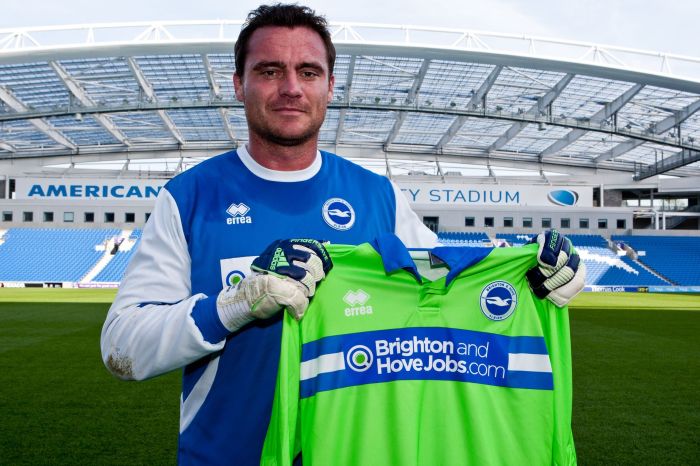
LEONARDO ULLOA brought down the curtain on his playing career in Madrid, netting six goals in 20 appearances (plus 12 off the bench) for Rayo Vallecano in the Spanish second division.

It was to the delight of Brighton fans that 28 of his career 148 goals were scored for the Albion, where he quickly established himself as a fans favourite by scoring on his debut against Arsenal in the FA Cup.

Previously virtually unknown in England, Ulloa’s arrival in January 2013 provided the tall, goalscoring presence up front Brighton had been craving since Glenn Murray headed to Crystal Palace in the summer of 2011.

Within two months, Ulloa was cementing his place in Albion history by scoring the first ever hat-trick at the Amex, in a 4-1 win over Huddersfield Town, and it wasn’t long before fans were serenading him with his own terrace song: “Who’s that man from Argentina, who’s that man we all adore…..”

His efforts in the stripes got even better when he scored twice in a memorable 3-0 win over Palace that March giving the Seagulls their first home win over their bitter rivals for 25 years.

After the game, manager Gus Poyet told BBC Radio Sussex: “Leonardo Ulloa is making the difference. I am pleased for him. If he had been here for the first six months I can’t imagine where we would be right now.

“What a prize for him, scoring two goals against our biggest rivals. I am very happy for him.” By the season’s end, Ulloa had scored 11 goals in 16 starts (plus one substitute appearance).

While Poyet departed acrimoniously after defeat in the play-off semi-finals, Ulloa continued to thrive under new boss Oscar Garcia. Top-scoring with 16 goals, he’ll always most memorably be known for nodding in a last-gasp header from Craig Mackail-Smith’s left-wing cross to secure a 2-1 win at the City Ground, Nottingham on 3 May 2014.

It earned Albion another play-offs place in the bid to secure promotion to the Premier League, although a 6-2 aggregate defeat at the hands of Derby County meant it didn’t end well.

Sadly, not only did it mark the end of Garcia’s reign, it also led to Ulloa’s exit from the club, but the £8m record fee newly-promoted Leicester City paid for his services was difficult to resist, quite apart from the player’s desire to play at the top level.

Switching to the East Midlands was a short hop compared to the journey he had to make when he was starting out in the game.

Born on 26 July 1986 in General Roca, a city in Argentina’s northern Patagonian province of Rio Negro, Ulloa moved 700 miles from home at the age of 15 to pursue his footballing dream, as he told Brian Owen of The Argus in a 2013 interview.

It was only when he wasn’t getting much playing time in Argentina that he took the opportunity to move to Spain, initially with Spanish second-tier side Castellon in the Valencia region.

When they were relegated in 2010, he stayed in the second tier by moving to the south east of the country to join Almeria, where he scored 39 times in 90 appearances. It was from there Albion bought him for an undisclosed sum, widely thought to be £2m.

The subsequent move to Leicester couldn’t have got off to a better start when Ulloa scored Leicester’s first Premier League goal for a decade in August 2014, hitting the net on his debut against Everton at the King Power Stadium. He also scored a brace of goals in a famous 5-3 victory over Manchester United.

Indeed at the end of that 2014-15 season, Ulloa was Leicester’s top scorer with 13 goals in 31 appearances (plus nine as a sub).

Few could have imagined it was going to get a whole lot better the following season, but as Claudio Ranieri’s City shocked the football world by climbing to the summit of the Premier League and staying there, Ulloa collected a title winners medal for his contribution.

Although he made just nine starts, as Jamie Vardy and Shinji Okazaki took centre stage, he appeared 22 times as a substitute and, in his supporting role, chipped in with six – often vital – goals.

He scored an 89th minute winner to earn a 1-0 win over Norwich City after entering the fray as a 78th minute sub and, when defeat at home to West Ham looked on the cards after Vardy had been sent off, he coolly netted a penalty in the fifth minute of added on time to secure a 2-2 draw.

With Vardy suspended for the following game, Ulloa stepped up with two goals in a 4-0 win at home to Swansea City.

Phil McNulty, BBC Sport’s chief football writer, said Ulloa had fully repaid the faith shown in him by Ranieri. “When Ulloa earned the Foxes a vital point with a stoppage-time penalty last weekend against West Ham, he showed he was not a man to be perturbed by pressure – and he relished the responsibility put on his shoulders against Swansea,” he wrote, describing how Ulloa “ran selflessly all afternoon to compensate for the darting, pacy threat of Vardy, and most importantly contributed two goals that eventually made this a stroll for Leicester City”.

It all turned sour for him at the King Power Stadium the following season and with a lack of involvement his frustration went public as he sought a move away. Sunderland, fighting (ultimately in vain) relegation from the Premiership, reportedly had three bids to sign him turned down in the January 2017 transfer window.

Ulloa told Sky Sports News reporter Rob Dorsett: “I’m a bit sad about the current situation. It’s been two wonderful years at the club but now, given my situation – not playing and not being part of the team’s plans – I feel that the best way forward is I leave and I can be happy somewhere else.”

He added: “They know I am not going to be used. The best thing for both parties is they sell me to another club and I can continue playing my football somewhere else.”

However, when Ranieri was sacked the following month, Ulloa found a path to first team football re-opened under new boss Craig Shakespeare. He only made four starts but he appeared off the bench 19 times, and, in August 2017, signed a new two-year contract with the Foxes.

Speaking to LCFC TV, Ulloa said: “I am so happy because I have lived massive moments with this club and it makes me happy to stay here and fight, to help the team and increase the club’s history. That is so important and I am so happy for this two-year contract. Now I have to fight to play. I will train and give my best. I appreciate it a lot to stay here and I am so happy here now. For that, I want to continue in this in the same way by working hard and working my best for the club.”

Shakespeare added: “Leo’s goals and performances have been key to some wonderful moments for this football club since he first joined and I’m delighted to have him with us for another two years. He’s a popular member of the squad and gives us an excellent option in attack.”

All of the words came to nought however, because Ulloa was barely involved, other than sitting on the subs bench and only getting on once. So, in January 2018, he was happy to return to Brighton on loan to supplement the striking options in Chris Hughton’s squad.
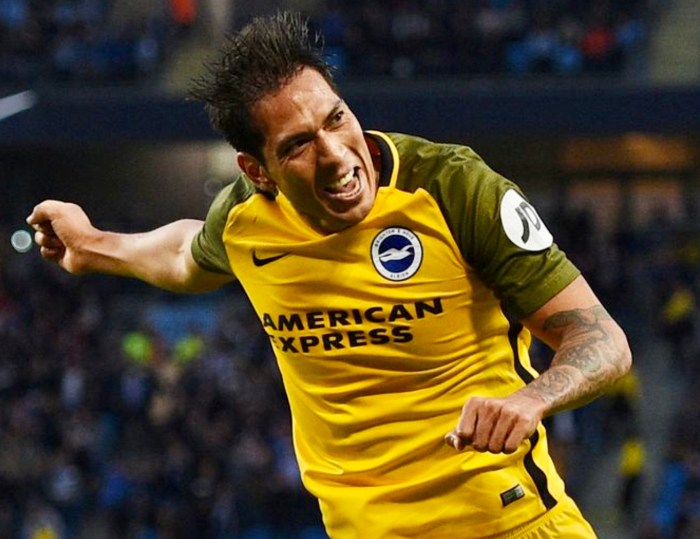
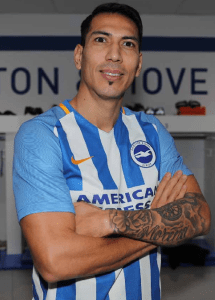
But with Glenn Murray in top form and Sam Baldock and Tomer Hemed as other striker options, Ulloa only made four starts plus eight appearances as a sub. He scored twice, including opening the scoring against Manchester City at the Etihad, but Albion didn’t share the striker’s enthusiasm for a permanent return to the Seagulls.

Instead of moving back to the south coast, Ulloa headed to Mexico to join Pachucha, and a year later he headed back to Europe, and back to Spain, to sign for Rayo Vallecano.

The striker spent eight months sidelined by a serious knee injury in 2020 but returned to action in October 2020 before retiring at the end of the 2020-21 season. Ulloa received a warm reception from Albion fans when he was interviewed on the Amex pitch in March 2023 when West Ham were the visitors.

Pictures from various online sources.

Admirable Crichton on standby for the Seagulls at 39

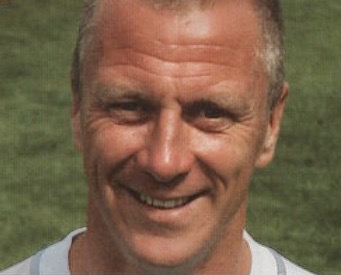
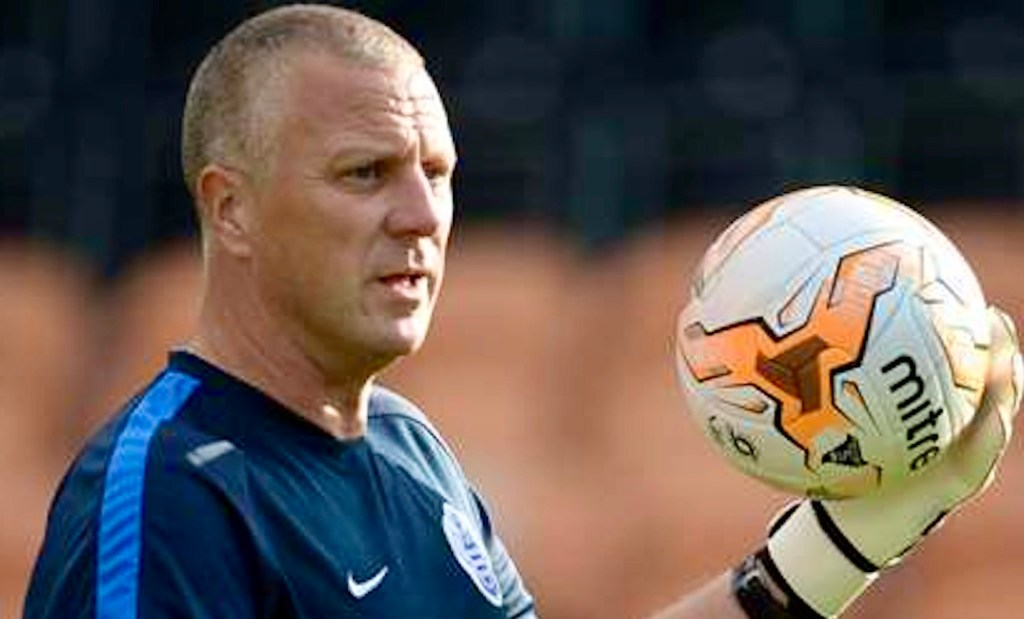
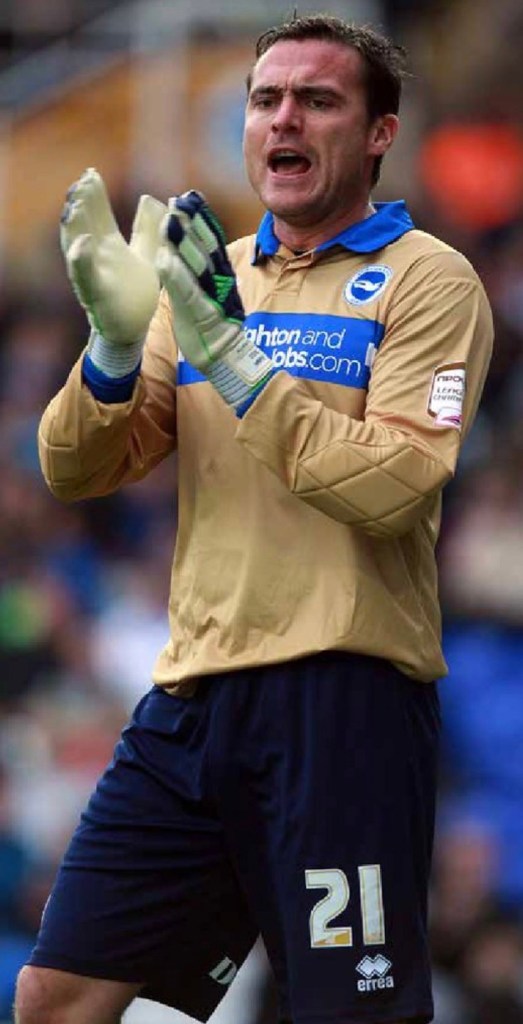
JOURNEYMAN goalkeeper Paul Crichton played 540 games in a 22-year career and, even at the age of 39, found himself on the Brighton subs bench ready to be called on in an emergency.

As things turned out, the former Burnley custodian’s time with the Seagulls remained in a coaching capacity, helping to develop youngster John Sullivan and improve no.1 Michel Kuipers.

However, he was registered as a player and when either Kuipers or Sullivan were unavailable, Crichton answered the call as stand-by ‘keeper, as well as making an appearance as a sub in a pre-season friendly.

Much of Crichton’s career was as a back-up no.1 but he stepped up as a coach, working with the likes of Rob Green and Fraser Forster, and obtained a UEFA A licence in outfield and goalkeeper coaching.

Crichton arrived at Withdean in July 2007 after previous goalkeeping coach John Keeley moved along the coast to take up a similar role with Portsmouth.

Manager Dean Wilkins told the club website: “Paul has impressive coaching qualifications and we have already seen him in action on the training ground.

“He also has a huge amount of experience from over 20 years playing professional football.”

No. 1 Kuipers certainly appreciated the influence the coach had on his game. He told an Albion matchday programme: “Paul approaches things from a different angle. He has given me extra information and a different opinion on how I can get the best out of myself.

“His input has improved me as a goalkeeper and my performances on the pitch have improved. We’ve worked on me playing more as a kind of sweeper, letting the defence sit a little higher up the pitch. It helps the defenders out as they don’t have to worry as much about the space behind them and allows them to go tighter on the strikers and gives them a better opportunity to win the ball or defend against strikers.”

Kuipers said he also felt more confident leaving his goal to claim crosses, and with his kicking. “It’s an aspect I feel has improved,” he said. “Paul and I have practised it on an almost daily basis in training, and the more I am doing it, the better I am getting at it.”

Sullivan was also grateful for Crichton’s input, telling the matchday programme: “Paul’s brought some great new ideas into the club – he’sa very, very good coach. Paul is not long retired so he’s well aware of how the modern game has changed so much for ‘keepers.”

Crichton remained in post until February 2009 when the lure of returning to Norwich City, one of his former clubs, four and a half years after leaving the club as a player, was too great and he went back to East Anglia, even though he had started to put down roots in Sussex.

“We’d just started to get settled in Eastbourne,” he told pinkun.com. “The manager, Micky Adams, and the backroom staff have been fantastic and I’m sad to leave. But I had three great years here, ending in the Championship winning season.

“I didn’t play many games, but I just wanted to return – it’s a great place.”

Adams told the Argus: “I am very disappointed to lose Paul. He was a hard-working and highly-valued member of the backroom staff and he has done a fantastic job with all the goalkeepers at the club.

“I have no doubt he is going to be one of the top goalkeeping coaches in years to come but, after he expressed a desire to go back to Norwich for both footballing and family reasons, it was not right for us to stand in his way.”

Crichton had been understudy to the aforementioned Green during his time as a player at Carrow Road, and boss Bryan Gunn (a former City goalkeeper himself) told the pinkun.com: “We want someone to continue to develop not only the first team goalkeepers but those in the academy and I know he’s looking forward to putting a development programme in place, which is important as we’ve had a good record in this position in recent years.”

Crichton had first moved to City on a two-year contract in June 2001, signed for £150,000 by former Burnley coach Nigel Worthington, who’d taken charge of the Canaries.

At Turf Moor, Crichton had been one of Stan Ternent’s first signings after he took over as manager from Chris Waddle in 1998. He made his debut on 8 August 1998 in a 2-1 win at home to Bristol Rovers and was a regular in their third-tier side, helping them to promotion in 2000.

Clarets fans have mixed opinions of his attributes, if a 2019 discussion on uptheclarets.com is anything to go by. For example, ‘jdrobbo’ said: “Used to be a big fan of his. Thought his kicking was excellent for a keeper at that level. Occasionally left stranded off his line. A key player in our 2000 promotion side, but not good enough for the next level up.”

‘ClaretTony’ reckoned: “A master of a goalkeeper at not being where he should be. Never known a goalkeeper out of position so much.”

Although ‘Lord Beamish’ said: “A key part of the last Burnley team to play in the third tier. He’ll always be fondly remembered by this Claret fan.”

Born in Pontefract, Yorkshire, on 3 October 1968, Crichton began his career with Nottingham Forest, turning professional in 1986. But with Hans Segers and Steve Sutton ahead of him, he didn’t break into the first team at the City Ground and went out on loan to six different league clubs to get games, making his debut across the Trent at Notts County.

Eventually he moved on permanently, in 1988, initially spending two years with Peterborough United, then three years with Doncaster Rovers.

Alan Buckley signed him on a free transfer for Grimsby Town, where he played the most games (133) for any of the clubs he represented. Mariners Memories on Facebook, noted: “Crichton was a good shot stopper…..he was made the Supporters Player of the Season in 1994”.

In September 1996, he followed Buckley to West Bromwich Albion for £250,000.

It was during his time at West Brom that he had two loan spells with Burnley in 1998 before joining them permanently for £100,000 in November that year.

His playing career following his departure from Carrow Road took him to eight different clubs, Gillingham and Cambridge United among them, together with some non-league outfits. During a brief and controversial spell at York City, when he was alleged to have clashed with supporters, he coached a young David Stockdale. He moved to the Albion from King’s Lynn.

His subsequent return to Carrow Road was briefer than expected when Paul Lambert took over from Gunn and brought in his own goalkeeping coach.

In March 2010, Crichton became goalkeeping coach at Northampton Town but, in the summer of 2010, he linked up with Danny Wilson at Sheffield United, where he was also registered as a player to provide emergency cover. He spent two seasons at Bramall Lane before becoming part of Simon Grayson’s management team at Huddersfield Town.

After two years with the Terriers, he switched to Blackpool and spent just over a year working as goalkeeper coach and interim assistant manager alongside Jose Riga.

Next up was a brief spell in London, at QPR, where he was appointed by former Albion full-back Chris Ramsey to succeed Kevin Hitchcock.

After leaving the Hoops in early 2016, his next port of call was Swindon Town, to work under Luke Williams, Brighton’s former under-21s manager, but he left after only a couple of months to move to America.

He had several short spells coaching with different clubs in Florida before becoming assistant head coach at The Miami FC in January 2020, when head coach was Kenny Dalglish’s son, Paul.

He became goalkeeper and interim assistant coach for North American professional women’s team the Washington Spirit during the 2021 and 2022 seasons, helping lead goalkeeper Aubrey Kingsbury to the 2021 NWSL Goalkeeper of the Year award and guiding the club to the 2021 NWSL Championship.

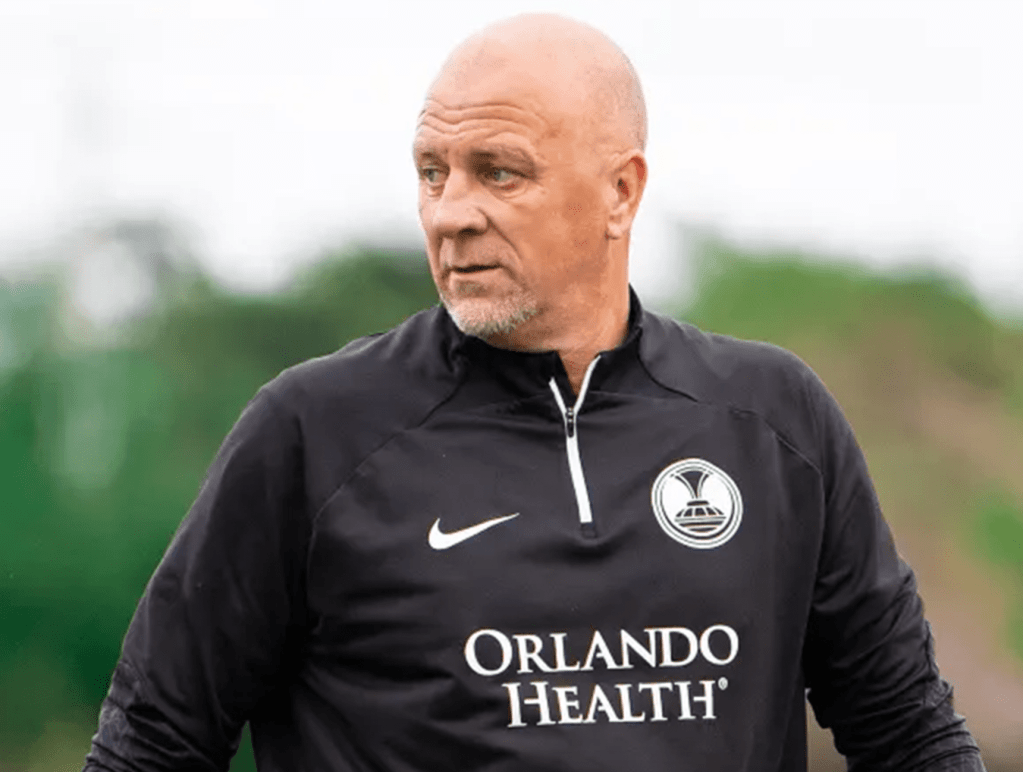
Then in April 2023 he switched in a similar role to Florida based women’s team Orlando Pride.

Steve Harper’s part in the Seagulls-Magpies goalkeeping ‘trade’

BRIGHTON and Newcastle United clearly have a similar eye for goalkeepers with a string of custodians having played for both clubs.

A few years before I started watching, Dave Hollins, older brother of ex-Chelsea midfielder John, moved to Tyneside in 1960 after three years with the Albion, and played twice as many games for Newcastle in the early part of that decade than he had for Brighton.

Back in the first Alan Mullery era, Eric Steele, who went through the Newcastle ranks without making the first team, arrived at Brighton to replace the injured Peter Grummitt in 1977 and was in the side that won promotion to the elite via a 3-1 win at St James’ Park in 1979.

Dave Beasant, who Newcastle bought from Wimbledon for £850,000 in 1988 – although he only played 20 games for the Magpies – was between the sticks for the Albion for 16 games in 2003.

More recently, Dutchman Tim Krul – who’d been at Newcastle a decade – spent a couple of seasons as back-up to Mat Ryan and would probably be disappointed he didn’t get more game time.

My post on this occasion, though, is about Steve Harper, United’s longest-ever serving player having been there 20 years. He later went back as one of the coaches working with Steve Bruce, as well as being goalkeeping coach to the Northern Ireland international side.

Harper is a qualified UEFA A coach and UEFA A goalkeeping coach, and holds a Masters degree in Sport Directorship.

Back in 2011, Harper was happy to lend his experience to the second tier Seagulls during Gus Poyet’s tenure as manager, a decision applauded by Alan Pardew, Toon boss at the time.

“He just wanted to play,” Pardew told the Chronicle. “Not all the top players in the country would have gone on loan – you’re vulnerable.

“You’re going down a division, but he was prepared to do that, and fair play to him.”

For his part, Harper told BBC Sport: “Everybody knows I haven’t played enough football until the last two-and-a-half years.

“I hadn’t played a competitive game for about six months so it was nice to blow the cobwebs out.”

In his first Seagulls match, unfortunately Albion lost against West Ham to a single goal from Harper’s former teammate Kevin Nolan, and he said: “It was disappointing to lose against West Ham with the possession we had.

“Now I’m here, it’s time to get stuck in. We want Brighton to consolidate and finish as high as we can. People tell me it’s a lovely city. I’m looking forward to seeing more of it.”

Harper recalled the time fondly in an interview for the Albion website in 2019.

He featured in five games for the Seagulls, keeping two clean sheets. While he conceded five goals, three came away to Southampton when the Seagulls were unjustly punished by referee Peter Walton.

Harper told journalist Nick Szczepanik: “I would have stayed longer given the opportunity. They made me feel very welcome.”

He even managed to give two of his new teammates a surprise when he started speaking to them in Spanish. Playing behind Spanish speakers Inigo Calderon and Gonzalo Jara Reyes, he explained to Andy Naylor, then of The Argus: “After five years of Bobby Robson and his multi-lingual team talks my Spanish is okay.

“Calde got quite a shock with how much Spanish I know, but I had Colocinni and Enrique in the team with me at Newcastle.”

After his brief spell with the Albion, Harper returned to Newcastle and played nine more games for them the following season before moving on to Hull City (at the time managed by current Toon boss Bruce), where he played alongside Liam Rosenior.

Born in Seaham on 14 March 1975, Harper grew up in the County Durham mining village of Easington and went to its local comprehensive school. Originally a striker at local Sunday league level, he only started playing in goal from the age of 17 and he turned out for Newcastle’s youth team while he was still at college doing A levels.

In fact he was offered a place at John Moores University in Liverpool to study for a Sports Science degree but he deferred it when Newcastle offered him a one-year contract. He signed in 1993 as a back-up for first choice Pavel Srnicek, later Shaka Hislop and subsequently Shay Given.

Much of his time at Newcastle was as a more than capable deputy to whoever was first choice although in United’s 2009-10 season in the Championship, under Chris Hughton, he was the main man and played 45 matches.

Harper had nothing but praise for Hughton, telling chroniclelive.co.uk: “He came in at an incredibly difficult, turbulent time after relegation.

“Chris was the man at the centre of a perfect storm who steered us through some very choppy waters.

“He did a wonderful job and I don’t think he got enough credit. It was no surprise to me to see him go on to do an excellent job at Birmingham City and then at Brighton.”

In total, Harper played 199 games for Newcastle, featuring under nine different managers – Kevin Keegan and Bobby Robson being his favourites.

Periodically over the years, he went out on loan to gain first-team action, appearing between the sticks for Bradford City, Gateshead, Stockport County, Hartlepool and Huddersfield. The Brighton move was his sixth spell out on loan.

Harper’s long service for Newcastle was rewarded with a testimonial against AC Milan in 2013 before he left the club to join Hull, where he spent two seasons.

Six months after his departure from Hull, he was taken on by then Premier League Sunderland as cover for Jordan Pickford and Vito Mannone, but he didn’t make a first-team appearance and was released at the end of the season.

Boylers’ service appreciated both sides of the Atlantic

MIDFIELD enforcer John Boyle was born on Christmas Day 1946 and went on to play more than 250 games for Chelsea.

Towards the end of his career, he spent two months on loan at Brighton trying to bolster the Albion’s ailing midfield in the dying days of Pat Saward’s spell as manager.

Indeed, Boyle was in that unenviable position of being at the club when the manager who brought him in was turfed out, and the man who replaced him (in this case none other than Brian Clough) swiftly dispensed with his services and sent him back to Chelsea.

By then, Boyle’s time at Chelsea was at an end and, after his 10-game Goldstone spell was also over, he went the shorter distance across London to play for Orient, before ending his playing days in America with Tampa Bay Rowdies.

Born in Motherwell, Boyle went to the same Our Lady’s High Secondary school that spawned Celtic greats Billy McNeill and Bobby Murdoch and, just around the time he turned 15, his stepbrother, who lived in Battersea, organised through a contact they had with then boss Tommy Docherty for him to go down to London for a trial.

He did enough to impress and 10 days later Chelsea sent him a letter inviting him to join their youth team, together with the train ticket from Motherwell to London.

“When I got off the train, Tommy Doc was waiting for me to take me to my digs,” Boyle told chelseafc.com in a recent interview. “I stayed in the digs that Bobby Tambling and Barry Bridges had stayed in before.”

Boyle – known to all as ‘Boylers’ – made his debut in the 1965 League Cup semi-final against Aston Villa and, at 18, it couldn’t have been much more memorable.

“I played on Monday in a Scottish youth trial and Wednesday I was playing against Aston Villa in the semi-final of the League Cup,” Boyle recounted. “After 20 odd minutes, I tackled this guy and he got injured and carried off. The crowd then booed me, he limped back on and then the crowd booed me more!

“It went to 2-0, to 2-2 and then with about 10 minutes to go I got the ball 30 yards out, rolled it forward and went crack and it went into the top corner of the net. I remember Terry Venables ran up to me and said ‘John, I am so pleased for you,’ and that was my first game. To score the winning goal in your first game was Roy of the Rovers stuff.”

He went on to become Chelsea’s youngest ever cup finalist when he was in the team that won the trophy. In those days, it was played over two legs, and, after beating Leicester City 3-2 in the home game, they drew the away leg 0-0. His teammates in the second leg were Bert Murray and the aforementioned Bridges, who he would go on to play alongside at Brighton in 1973.

The Goldstone Ground was familiar territory to him. On 18 February 1967, he was famously sent off for the visitors in a FA Cup 4th round tie when Albion held their more illustrious opponents to a 1-1 draw in front of a packed house. Chelsea went on to win the replay 4-0 and that year went all the way to the final where Boyle was part of the side who lost 2-1 to Spurs. In another fiery FA Cup tie between Brighton and Chelsea, in January 1972, Boyle was Chelsea’s substitute as they won 2-0 in a game which ended 10 a side, George Ley and Ron Harris being sent off.

john boyle chels blueWhen Docherty moved on from Stamford Bridge, and Dave Sexton took over as manager, Boyle’s involvement in the side was more sporadic, as he told fan Ian Morris on his Rowdies blog.

“Dave appreciated my energy and willingness, but I don’t think he really fancied me as a player. Basically, I became an odd-job man, filling in here and there, and in football it doesn’t help to get that reputation,” he said.

Although he wasn’t in the squad that beat Leeds in the 1970 FA Cup Final, he was back in the side when Chelsea beat Real Madrid over two legs in May 1971 to win the European Cup Winners’ Cup.

After Brighton’s disastrous 1972-73 season in the second tier – the general consensus is that they’d not properly been prepared for promotion and didn’t invest sufficiently in the team to have a fighting chance of staying up – the side continued to be in the doldrums as they adjusted to life back in the old Third Division.

Manager Saward was struggling to come up with the right formula and, having transferred former captain Brian Bromley to Reading, sought to boost his midfield with the experienced Boyle, who was surplus to requirements at Stamford Bridge.

With the paperwork signed on 20 September, Boyle was handed the no.8 shirt and made his debut alongside Ronnie Howell in a 0-0 draw away to Grimsby Town.

He made his home debut the following Saturday, but the Albion went down 1-0. Three days later, this time partnering Eddie Spearritt in the middle, Boyle helped Albion to a 1-0 win at Oldham Athletic.

After a 3-1 defeat away to Blackburn Rovers, at home to Halifax Town Boyle had a new midfield partner in John Templeman. But again they lost by a single goal.

With Howell back alongside him for the home game v Shrewsbury Town, Albion prevailed 2-0 in what turned out to be Saward’s last game in charge. Perhaps by way of another interesting historical note, Boyle was subbed off to be replaced by Dave Busby, who became the first black player to play for the Albion.

Caretaker boss Glen Wilson retained Boyle in midfield for the midweek 4-0 hammering of Southport and he was also in the line-up for Clough’s first game in charge, a 0-0 home draw against York City on 3 November. But the 2-2 draw away to Huddersfield Town on 10 November was his last game for the Albion.

As someone who’d gained something of a reputation as enjoying the social side of things at Chelsea, particularly with the likes of Peter Osgood, Charlie Cooke and Alan Birchenall, it maybe doesn’t come as too big a surprise to learn that Clough advised him “always buy two halves instead of a pint, or people will think you’re a drinker”.

Boyle was still only 28 when he tried his hand in Florida in February 1975, being appointed Tampa Bay Rowdies captain, and leading them to victory in the Super Bowl against Portland Timbers in August that year.

His former Chelsea teammate Derek Smethurst scored 18 goals in that inaugural season, playing up front alongside ex-West Ham striker Clyde Best, while former Crystal Palace ‘keeper Paul Hammond was in goal.

A newspaper article about Boyle’s contribution resides on tampapix.com, a hugely entertaining site featuring loads of players of yesteryear who turned out for the Rowdies.

It somewhat flamboyantly says: “‘Captain Rowdie’ John Boyle was a barrel-chested midfielder with legs as white as snow and hair as thin as a wheat crop during a summer drought.  He became the role model for the club, as much because of his leadership as well as the fact that he knocked opponents ‘grass-over-tea kettle’ when they came his way.”

He retired from playing in November the same year but, two years later, he stepped in as Rowdies coach when Eddie Firmani quit. However, he had also gone into the pub business in the UK and ultimately the need to be behind the bar at Simon the Tanner in Bermondsey, with his wife Madeline, meant he had to turn his back on the sunshine state and return to London.

Unable to resist the lure of the States once more, Boyle played five matches for indoor league side Phoenix Inferno in the 1980-81 season.

In that wide-ranging interview Boyle gave to chelseafc.com earlier this year, he said: “I wouldn’t change a thing in my life, I am just grateful for what I have done. I have been blessed and one of the great things about it is 50 years later you can still talk about it! I was a lucky young man to have played when I did and meet the people I did.”


When football didn’t deliver the right break for Colin Dobson

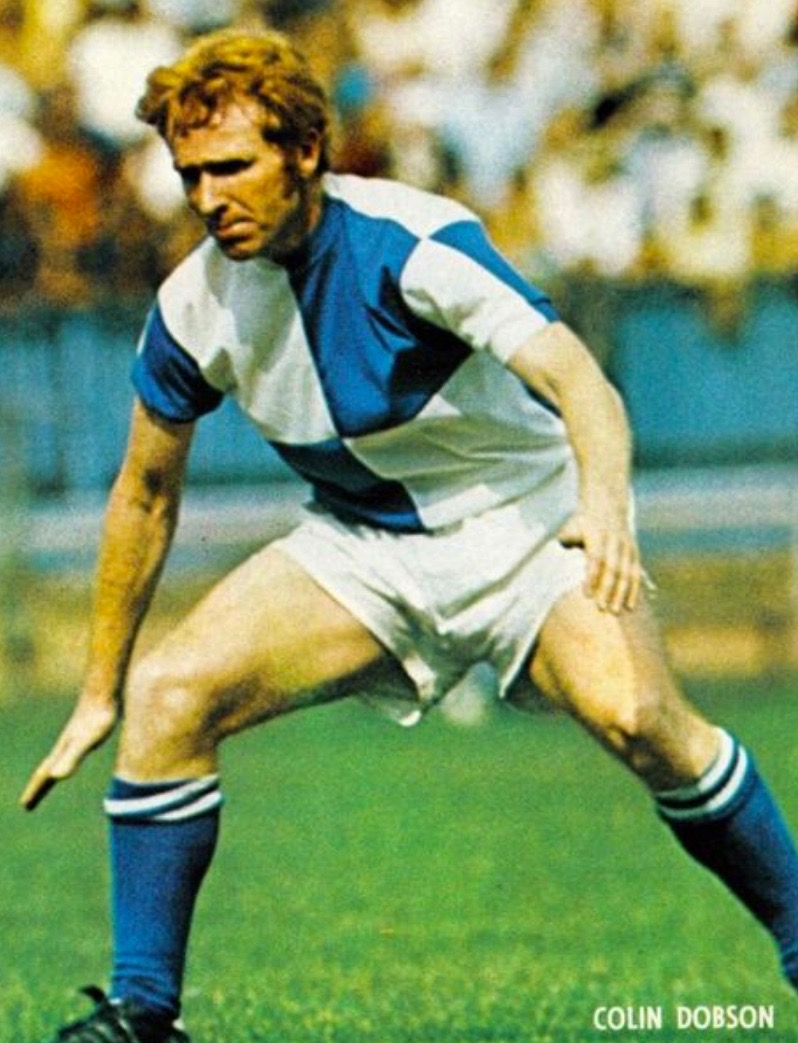
THE architect of Brighton’s humiliating 8-2 home defeat to Bristol Rovers in 1973 was none other than a player who might have been wearing Albion’s stripes if injury hadn’t struck.

Goalscoring winger Colin Dobson turned goal provider the day Rovers were rampant at the Goldstone Ground. Twenty-one months earlier he’d left the same pitch on a stretcher, not certain that he’d ever be able to play again.

Dobson had joined Brighton on loan in January 1972, making his debut in a mid-season friendly against his parent club, Huddersfield Town, on 18 January.

Ironically, his first meaningful Albion action came against Rovers when he was a substitute in a 2-2 draw at Eastville on 22 January.

Dobson was also on the bench for the home 1-0 win over Swansea City the following Saturday. He was elevated to the starting line-up away to Wrexham on 5 February, when goals from Willie Irvine and Peter O’Sullivan sealed a vital 2-1 win.

It was during his full home debut against Walsall on 12 February that his short-lived Albion career came to a sudden halt. Albion lost 2-1 and Dobson suffered an ankle fracture.

It had been expected that Albion would sign him permanently, and he told the Evening Argus that he had been offered a good deal to do so, but the injury put paid to the transfer being completed.

With Pat Saward’s side heading towards promotion with Aston Villa, the Irish manager instead went back to Wolverhampton Wanderers to sign Bertie Lutton, who had been on loan earlier in the season.

Lutton duly played his part as the Seagulls acquired the necessary points to earn promotion, while Dobson nursed an injury which at the time threatened to end his playing days.

His six-year Huddersfield career at an end, in the summer of 1972 he accepted a role as player-coach at Bristol Rovers, working under his former Sheffield Wednesday teammate, Don Megson.

Dobson Rovers

Thus it was that he was part of a Rovers side who had gone 18 matches unbeaten when they showed up at the Goldstone on a cold winter’s day on the first day of December 1973 to tackle Brian Clough’s Albion in front of The Big Match television cameras.

The game was only five minutes old when Dobson played in Alan Warboys who beat Norman Gall before passing to his strike partner Bruce Bannister to open the scoring.

Seven minutes later, Dobson took Warboys’ pass and laid on a pinpoint centre for Gordon Fearnley to score with a header. The game was still six minutes short of half-time when another Dobson centre was met by Warboys to make the score 5-1 to the visitors.

John Vinicombe, Albion reporter for the Argus, declared in his summary: “To Colin Dobson, freed by Albion when a broken ankle looked like ending his career, the accolade for a thinking player.

“He masterminded the operation in unbelievably generous space. Bruce Bannister knifed through for the early, killing goals, and Alan Warboys, superbly balanced and fast on the slightly frozen pitch, looked the perfect striker, taking his four goals so cleanly.”

An incandescent Clough told the media: “I was ashamed for the town and the club that 11 players could play like that. I feel sick. We were pathetic. This side hasn’t got enough heart to fill a thimble.”

Rovers went on to win promotion to the second tier that season and Dobson eventually completed 63 league and cup games for them before retiring at the end of the 1975-76 season.

Born on 9 May 1940 in Eston, North Yorkshire, Dobson joined Sheffield Wednesday at 15, and made a name for himself with the Owls in the days when they played in the top tier of English football.

He earned a reputation as a goalscoring winger after making his debut in 1961 and scored 52 goals in 193 games over the next five years.

He was twice capped by England Under 23s: on 29 May 1963, he came on as a substitute for Alan Suddick as England beat Yugoslavia 4-2 in Belgrade. Alan Hinton scored a hat-trick for England and the other goal was a penalty by Graham Cross, then with Leicester but later a Brighton player. Future England World Cup winner George Cohen was the side’s right-back.

Four days later, with Ernie Hunt leading the line, Dobson started for England when they lost 1-0 to Romania in Bucharest.

In 1966, Dobson made the switch to second division Huddersfield for a £21,000 fee and he was Town’s top scorer in the 1967-68 season (with 14 goals) and 1968-69 (with 11).

Although full international honours eluded him, in the summer of 1968, he was selected for the Football Association Commonwealth tour of the USA, New Zealand, Malaysia and Hong Kong.

He was also part of the side Ian Greaves led to the 1969-70 Second Division title, but he only made a handful of top-flight appearances, and his last Huddersfield appearance was against Stoke City in an FA Cup fourth-round replay in January 1971.

Once his playing days were over, Dobson worked for a whole host of clubs in a coaching or scouting capacity, including Port Vale, Coventry City, Aston Villa, clubs in the Middle-East (Bahraini side West Riffa; Al Rayyan in Qatar; Kuwaiti side Al Arabi, and Oman’s Under-17s), Portugal’s Sporting Lisbon, Gillingham, Watford and Stoke, where he renewed his acquaintance with John Rudge, who he had known at Huddersfield and Bristol Rovers, who was director of football for the Potters.

It was during his time with Stoke that he discovered the future Manchester United and England goalkeeper Ben Foster, a chef playing part-time non-league football at the time.

Foster later told the Birmingham Mail: “There was a scout called Colin Dobson who worked for Stoke but was living in Warwick.

“One night he saw some floodlights, stopped off and had a watch of the game and I caught the eye. That was it. He made a note of it and came to watch me a few more times.

“I owe it all to him. Top man. Whether I’d still be working as a chef if he hadn’t spotted me, I don’t know.”

Dobson died in Middlesbrough aged 82 on 16 February 2023.

  • Pictures from my scrapbook. Originally sourced from the Evening Argus, Shoot! and Goal magazines.

Paul Moulden chipped in with goals for Bournemouth and Brighton before batter days

MouldyWORLD RECORD youth level goalscorer Paul Moulden now runs a successful chippy in Bolton but he was once in the firing – rather than frying – line for AFC Bournemouth and Brighton & Hove Albion.

The career of the prodigious goalscoring wonderkid tailed off early although it may have taken a new direction in Sussex if the cash-strapped Seagulls had been able to afford to buy him.

Born in Farnworth, near Bolton, on 6 September 1967, Moulden went to the town’s Thornleigh Salesian College where, having excelled for the school football team, he went on to play for England Schools. He also played for Bolton Lads Club under-15s: his staggering personal goal tally of 289 goals in 40 games in a single season earned him a place in the Guinness Book of Records.

He was snapped up by Manchester City as an associate schoolboy during John Bond’s reign as manager and signed on as an apprentice before turning professional on his 17th birthday. He was part of City’s FA Youth Cup winning side in 1986, although manager Billy McNeill had already blooded him in the first team on New Year’s Day that year in a 1-0 home win over Aston Villa.

Moulden CityHe made two further substitute appearances for the first team that season and finished top scorer for City’s reserves. By late 1986, he had earned a regular place but a broken leg sustained in training restricted him to just three appearances in 1987-88.

In the 1988-89 season, Moulden was City’s top scorer with 13 goals as they won promotion from the old First Division back to the elite. But the young striker elected not to take up the offer of a new contract in the summer of 1989 and ended up joining Bournemouth, where Harry Redknapp was beginning his managerial career. Moulden was valued at £160,000 as the makeweight in a deal which saw Bournemouth’s Ian Bishop move to Maine Road.

City boss Mel Machin, himself something of a legend at Bournemouth (a Cherries player, manager and director of football) spelled the end of Moulden’s career at City.

Moulden told FourFourTwo magazine: “Machin just didn’t fancy me. I was offered a contract but it was a contract you’d have been a fool to sign, so I didn’t sign it and I became for sale. All the backroom staff and everyone else concerned was upset that I was going but to have tied yourself down for three years on the contract they were offering, you would have been a fool. That was the lever to get me out.” The Lancashire lad’s move to Dorset proved to be a success on the pitch – but was brief.

He scored six goals in his first three home league matches, including a hat-trick in a 5-4 win over Hull and both goals in a 2-1 win over Newcastle. “I remember the two goals against Newcastle,” Moulden told the Bournemouth Echo in 2016. “One was a three-inch tap-in and the other was a run from the halfway line.”

While he said in the Echo interview how much he enjoyed his time with the Cherries, he told efl.com: “Moving to Bournemouth was a huge move for me. At the time, I was single and it was exciting, but the novelty soon wore off and I found it hard to settle.

“It was a lovely club but I was delighted to return home and back to Oldham.”

Moulden told FourFourTwo: “Bournemouth had some good players, like Luther Blissett, Paul Miller and goalkeeper Gerry Peyton. The thing that struck me was how many old players they had – I was 22 at the time – but Harry was just starting out and I suppose for his first job he wanted security around himself.

“It was a small club and I’d imagine he had to get success quickly. Harry was a nice guy, a decent manager.”

SOCCER
PAUL MOULDEN – OLDHAM ATHLETIC

After just seven months at Bournemouth, and with 13 goals in 37 starts to his name, he was snapped up by Oldham Athletic on transfer deadline day in March 1990.

A £225,000 fee meant a decent profit for Bournemouth but, with Oldham flying high at the time, and Moulden struggling with injuries, he only managed 19 games for the Latics in two and a half seasons. He spent two months at Molde in Norway restoring his match fitness and when Oldham manager Joe Royle suggested he look for a new club, the move to Brighton looked like the ideal opportunity to resurrect his career.

Newly-relegated back to the third tier, Albion desperately needed some inspiration up front and manager Barry Lloyd thought he’d hit the jackpot in securing on loan the services of strike pairing Moulden and Steve Cotterill, from Wimbledon.

Each got themselves a goal in an opening 3-2 defeat to Orient so the signs were promising and the new men duly delivered the goods on the pitch.

The two goals Moulden scored as Albion beat Preston North End 2-0 in September 1992 were especially sweet, as he explained to Brian Owen of the Argus in 2016.

In total, Moulden scored five goals in 11 league appearances and Cotterill four, but the Albion couldn’t afford to sign either of them permanently.

The void was ultimately filled by the arrival of free transfer Kurt Nogan, who subsequently became a prolific goalscorer for the Seagulls. Moulden, meanwhile, ended up being sold to Birmingham later the same season for £150,000 and Cotterill, also deemed too expensive for Albion, was sold to Bournemouth for £80,000 the following summer.

In an interview with Howard Griggs of the Argus, in January 2011, Moulden explained how he would dearly have liked to have made the move to Brighton permanent.

“I played at Bournemouth two seasons before,” he said. “I liked the south coast and I had the chance to go to either Brighton or Plymouth. I jumped at the chance to go to Brighton and I thoroughly enjoyed my time there. I struck up a good understanding with Steve Cotterill.”

Moulden spoke particularly highly of assistant manager Martin Hinshelwood – “he was different class, absolutely brilliant” – and said: “It felt just right from the start. I did well with Steve Cotterill. We both scored goals for the team.”

As an ex-City player, Moulden was particularly miffed that Oldham boss Joe Royle would not let the outcast striker play for Albion against Manchester United in the League Cup that autumn, and he added: “If Brighton had had the money I certainly would have signed.”

He told Griggs: “Manchester City was certainly good, and I enjoyed my time at Birmingham under Terry Cooper, but there were plenty of good times and I can honestly say my two months at Brighton was up there.”

One of Moulden’s best games came in a 2-1 home win over Huddersfield as Albion won 2-1. Steve Foster, back at the club for a second spell, put Albion ahead on 17 minutes with a header from a John Robinson corner. Although Huddersfield equalised through a Iwan Roberts penalty, livewire Moulden popped up with the winner six minutes from time.

The Terriers would ultimately be Moulden’s next destination after leaving Birmingham in 1995 but he made only two appearances before switching to nearby Rochdale where he played 16 times in the 1995-96 season.

In total, Moulden suffered four broken legs and his league career came to a premature end at 28, although he played non-league with Accrington Stanley and Bacup Borough.

He later coached at his old boys’ club and also spent three years with the Manchester City academy but sensibly he had an eye for a career outside of football too and followed in his mum and dad’s footsteps by opening up Paul’s Chippy in Bolton.

Pictures: Albion matchday programme and online sources.

Horton’s place in the hearts of Brighton and Man City fans

IMG_5170ARGUABLY the finest captain in Brighton & Hove Albion’s history went on to have a far less successful spell as the club’s manager having also been a boss at the highest level, at Maine Road, Manchester.

The £30,000 signing of tenacious midfielder Brian Horton from Port Vale on the eve of transfer deadline day in March 1976 proved to be one of the most inspirational moments of Peter Taylor’s managerial tenure at the Albion and for such a fee was widely hailed as “an absolute steal”.

Even though Taylor didn’t hang around long enough to reap the benefit of the man he instantly installed as captain, his successor Alan Mullery certainly did.

In the early days after his appointment, there was some suggestion Mullery would be a player-manager but the former Spurs and England captain reassured a concerned Horton that wouldn’t be the case, admitting that he wouldn’t get in ahead of him anyway!

“Fortunately, that next year went really well. It was my best year without a doubt,” Horton told Evening Argus reporter Jamie Baker. “I’d never met Alan Mullery, and he’d probably never heard of me, so I was delighted and surprised when he made me his captain.”

It was the beginning of a strong bond between captain and manager and Horton added: “We had that relationship for all the five years I was with him.

“That first season was great. We went 20 odd games unbeaten and I was scoring left, right and centre, and I was very proud to be voted player of the year.

“Suddenly everything was coming right for me, although we were disappointed not to beat Mansfield for the championship because we felt we were far better than them.

“You’ve got to hand a lot of our success down to Alan Mullery. He was a terrific motivator of players. He was a bubbly character and it used to rub off on players.

“He was new to the game of management but he brought fresh ideas, and he’d been under some top managers as a player.

“The team spirit during those first three years was incredible. When you are winning games every week it makes a hell of a difference and we had that for three years. You just couldn’t describe how good the team spirit was.

“My treasured memory will always be of the day we beat Newcastle to clinch promotion to the First Division. It was even greater because I scored the first goal. It had always been my ambition to play in the First Division and now I had achieved it.”

In an inauspicious start, Horton found himself in the referee’s notebook as Albion were hammered 4-0 by Arsenal as the season opened at the Goldstone. After a narrower defeat away to Aston Villa, the next game was away to Man City – and Horton had the chance to earn the Seagulls their first top level point.

On 25 August 1979, Albion were trailing 3-2 when Horton had the chance to equalise from the penalty spot with only eight minutes of the game left. But the normally reliable spot-kick taker fluffed his lines, meaning Albion succumbed to their third defeat in a row.

While the superior opposition was clearly testing the Seagulls, it was testament to the resilient skipper that he was continuing to lead them having started out in the third tier and, on 20 December 1980, before a 1-0 home win over Aston Villa, he received a cut-glass decanter from chairman Mike Bamber to mark his 200th league appearance for the Seagulls.

As the 1980-81 season drew to a close, Albion were perilously close to the drop but four wins on the trot (3-0 at Palace, 2-1 at home to Leicester, 2-1 at Sunderland and 2-0 at home to Leeds) took them to safety. What Horton didn’t realise was the Leeds game would be his last for the Albion (as it also was for Mark Lawrenson, Peter O’Sullivan and John Gregory).

“I’d bought a house in Hove Park off Mike Bamber and I was sunbathing that summer when there was a knock at the door. It was Alan Mullery come to tell me he’d just resigned,” Horton told interviewer Phil Shaw in issue 26 of the superb retro football magazine, Back Pass.

Mullery told him how he’d quit over the proposed Lawrenson transfer, how O’Sullivan and Gregory were off as well, and that the club wanted to sell him too, for £100,000.

Although Mullery advised him to sit tight because he still had a year left on his contract, new boss Mike Bailey – with a swap deal involving Luton’s Republic of Ireland international, Tony Grealish, lined up – told him he’d have to fight for his place and would have the captaincy taken from him.

“I said I didn’t want to go, that I loved the club and the fans, that I’d bought a house, and, at 31 I thought I had two or three good years left.

“I spoke to Mike Bamber and he said: ‘I don’t want you to go but I have to back the manager’.” Horton felt he had no option but to make the move.

He chose the platform of the Argus to thank the supporters for the backing they’d always given him and said his one disappointment was that he didn’t get the chance to lead Albion at a Cup Final. “That I would have really loved.”

Looking ahead, he added: “The Luton move gives me a new challenge. You can get in a rut if you stay at one club too long. Six years at Port Vale and five and a half at the Albion is enough. It will probably put a little sparkle back into my game.”

And so, Horton went to Kenilworth Road and under David Pleat the Hatters won the 1981-82 Second Division championship by eight points clear of arch rivals Watford. Looking back in his interview with Back Pass, Horton reckoned two of his Luton teammates, David Moss and Ricky Hill, were up there alongside Lawrenson as the best players he’d played alongside.

An all-too-familiar tale of struggle in the top division saw Luton needing to win at Maine Road in the last game of the season to ensure their safety, and Raddy Antic scored a winner six minutes from time that preserved Town’s status and sent City down.

Television cameras memorably captured the sight of Pleat skipping across the turf at the end of the game and planting a kiss on Horton’s cheek.

After one more year at the top level, he began his managerial career as player-manager of Hull City in 1984, working for the mercurial Don Robinson, and steered them to promotion to the old Division Two at the end of his first season in charge. He is fondly remembered by Hull followers, as demonstrated in this fan blog.

When he parted company with the Tigers in April 1988, his old Brighton teammate Lawrenson, by then manager of Oxford United, invited him to become his assistant. United at the time were owned by Kevin Maxwell, son of the highly controversial Robert Maxwell.

When Dean Saunders, who Brighton had sold to Oxford for £70,000, was sold against Lawrenson’s wishes – astonishingly he went to Derby for £1million – Lawrenson quit. Horton took over as manager and stayed in charge for five years, during which time he recruited former Albion teammate Steve Foster to be his captain.

Horton’s managerial break into the big time came in August 1993 when Man City sacked Peter Reid as manager four games into the 1993-94 season. Horton didn’t need to think twice about taking up the role, even though City fans were asking ‘Brian who?’

In Neil McNab, Horton recruited to his backroom team a former playing colleague who’d been a City favourite. “I played with McNab at Brighton and knew his strengths and knew he was well liked here,” he told bluemoon-mcfc.co.uk.

Horton brought in Paul Walsh, Uwe Rossler and Peter Beagrie and City managed to stay up.

The new boss acquired the services of Nicky Summerbee (to follow in the footsteps of his famous father Mike) along with Garry Flitcroft and Steve Lomas and at one point City were as high as sixth in the table.

They eventually finished 17th but fans to this day still stop Horton (who lives in the area) and ask him about a terrific match which saw City beat Spurs 5-2.

It was Horton’s bad luck that when City legend Francis Lee took over the club from previous owner Peter Swales, he was always looking to install his own man in the hot seat, and Lee eventually got his way and replaced Horton with Lee’s old England teammate Alan Ball.

Ball took City down the following season while Horton embarked on a nomadic series of managerial appointments either on his own or in tandem with Phil Brown.

Initially he was boss of Huddersfield Town; then he was a popular appointment when he took over as Albion boss during their exile playing at Gillingham, but, because he wanted to live back in the north, he left in February 1999 to join another of his former clubs, Port Vale.

He led Vale for five years and pitched up next at the helm of Macclesfield Town, where, on 3 November 2004, he marked his 1,000th game as a manager. It was at Macclesfield where one of his players was the self-same Graham Potter whose stewardship of Swansea City came mightily close to upsetting City in the 2019 FA Cup quarter-finals.

A bad start to the 2006-07 season saw him relieved of his duties in September 2006 but, by the following May, he was back in the game as Brown’s no.2 at Hull City. In March 2010, he was briefly caretaker manager following Brown’s departure, until the Tigers appointed Iain Dowie.

Next stop saw him as no.2 to Brown at Preston North End; then a second brief spell as Macclesfield boss at the end of the 2011-12 season.

In June 2013, he was appointed assistant manager to Paul Dickov at Doncaster Rovers, a role he filled for two years before linking up with Brown once again during his tenure at Southend United. Horton was his ‘football co-ordinator’ but left the club in January 2018. He followed Brown to Swindon Town but, in May 2018, decided not to continue in his role as assistant manager.

Born in the Staffordshire coal-mining village of Hednesford on 4 February 1949, Horton went to its Blake Secondary Modern School. Spotted playing football for the Staffordshire Schools side and the Birmingham and District Schools team, the Wolves-supporting youngster was awarded a two-year apprenticeship at Walsall when he was 15.

But, at 17, his hopes of a professional career were dashed when he wasn’t taken on. He ended up finding work in the building trade while continuing his football with Hednesford Town in the West Midlands (Regional) League.

He played at that level for four seasons and it was there he acquired the moniker Nobby because he gained a reputation for World Cup winner Stiles-like aggression. It was a nickname that stuck.

At the time, he was playing up front and scoring a lot of goals so he caught the attention of a few league clubs, but only Gordon Lee at Port Vale made a move. Lee sealed the deal by buying the Town secretary a pint of shandy and promising to take Vale to play Hednesford in a friendly.

Vale had little money so the squad was made up of free transfer signings but Horton said it made them strong collectively with “a fantastic spirit” and it wasn’t long before he was made their captain.

Vale legend Roy Sproson took over from Lee as manager and in March 1976 the cash-strapped Potteries outfit were forced to sell their prize asset.

When Vale headed to Selhurst Park that month, Crystal Palace player-coach Terry Venables got a message to Horton before the game urging him to sit tight until the summer and they’d sign him then. But Albion stole a march on their rivals and Sproson told him: “I’m sorry but we’re selling you to Brighton for thirty grand. We need the money.”

Funnily enough, the previous summer Horton had a chance holiday encounter in Ibiza with Albion’s Peter O’Sullivan. He later told the Argus: “Sully asked me if I fancied a move. Little was I to know that I would be joining him soon after. There was a wealth of ability in the Albion side when I joined them and it was outrageous that we didn’t go up that year.

“I felt they had to go places and I wanted to be part of it. I’d never been in a promotion side but then to be made captain of it was really the icing on the cake.”

Albion’s gain was certainly a loss to two other clubs who’ve since encountered similar troubles in their past. Horton explained: “I knew clubs were interested although Roy Sproson said he wouldn’t let me go to another Third Division team. I think he released me to Brighton because at the time they looked certain for promotion.

“Also, it was the highest bid they’d had. Hereford and Plymouth had offered £25,000 and I would have been happy to have gone to either club.”

In November last year, Horton reflected on his long and varied career in an interview with The Cheshire Magazine.

Pictures mainly from my scrapbook, originally from the Argus, Shoot / Goal magazine, the matchday programme and various online sources.

History-maker Joel Lynch went to Town after Brighton breakthrough

SUSSEX lad Joel Lynch made Brighton & Hove Albion history when he was made first team captain aged just 19 and 186 days.

The ‘youngest-ever Albion captain’ honour was a measure of the maturity the defender had displayed in Dean Wilkins’ young line-up in April 2007, even if it was a temporary appointment in the absence of the rested Guy Butters and the injured Dean Hammond.

“I wasn’t even captain of my school team,” Lynch told Argus reporter Andy Naylor. “I am 19 years old and it is a great honour. I am grateful to the gaffer for having so much faith in me and it will be good for my confidence.”

Unfortunately, the experience against Doncaster Rovers at Withdean was marred when Lynch missed a clearance, the player he was supposed to be marking, Graeme Lee, scored and Rovers went on to win 2-0.

It was a minor blip at the beginning of a career which saw Lynch become a consistent Championship defender for more than a decade after emerging from Brighton’s youth ranks in the ‘noughties’.

Born on 3 October 1987 in Eastbourne, Lynch made his way through the age group sides with the Albion, often alongside another local youngster who went on to have a good career, Tommy Elphick.

“We played all the way through the youth teams together since the age of about ten,” Lynch told Naylor of the Argus. “Both of our games really changed and we really grew up when we went to Bognor on loan. We did really well there for Bognor and ourselves.”

 Lynch pictured in the Argus alongside Tommy Elphick when they were together as under 14s in 2001, and still together a couple of years later.

As well as being part of the Brighton team which reached the quarter finals of the FA Youth Cup in 2006, the year couldn’t have begun better for Lynch when Wilkins’ predecessor, Mark McGhee, handed him his first team debut in a narrow 2-1 defeat away to Southampton on 2 January 2006.

He went on to play 16 times that season, and also registered his first goal for the club, which is a fond memory for me and my son, Rhys. It came on Easter Saturday 2006, and we made a last-minute decision on the day to travel up to Ipswich to watch the game.

Although Albion were destined to relinquish their Championship status, they had a new-found confidence in their play thanks to the belated arrival of much-needed hold-up centre forward, Gifton Noel-Williams (on loan from Burnley).

He’d scored on his debut in a home draw against Luton and got an assist by laying on a goal for Paul Reid in a 2-0 win at Millwall two weeks before.

At Portman Road, always a favourite away ground, Albion, wearing the stylish all-burgundy away strip, opened the scoring when Noel-Williams buried a cross from Colin Kazim-Richards.

To add to the unexpected delight, teenage defender Lynch made sure our trip was a memorable one. Ipswich failed to clear a corner properly and when Reid returned the ball to the penalty area, Kazim-Richards jumped simultaneously with ‘keeper Shane Supple and the ball broke for Lynch (above left) to prod it in.

Albion, never wanting to make life too easy for themselves or their fans, allowed Ipswich to pull a goal back when Alan Lee flicked on from former Seagull Darren Currie’s cross for substitute Nicky Forster – a future £75,000 signing for Albion – to score. But thankfully it was too late for Ipswich to salvage anything from the game.

It was all to turn pear-shaped on the Easter Monday at home to Sheffield Wednesday, but for a couple of days at least the Great Escape still seemed a possibility.

In December 2006, the matchday programme devoted a two-page article to Lynch’s progress in the first team, pointing out how he had begun at left-back, stepped in as a left-sided centre-back – his more natural position – and even played right-back in the 8-0 thrashing of Northwich Victoria in the FA Cup.

Lynch spoke of the experience he had gained playing alongside the veteran defender Guy Butters, telling the programme: “I learned a lot from him, Guy’s had a great career and he is still playing great football. Hopefully I will just slot in there when the time comes and, in the meantime, I will play wherever the manager wants me to play and hopefully stay in the team. I’ve still got a lot of years ahead of me to make the centre-half slot my own.”

Lynch confessed being handed the no.5 shirt at the start of the season had given him a massive boost. “So far, I have really enjoyed this season. I have had my ups and downs and missed a few games due to my performances,” he said. “There have been things that I have had to sort out within my game, but I think I have resolved them now and I am slowly regaining my confidence and my performances have been improving week by week since I regained my place in the team.

“I feel more confident and my self-belief has improved a lot. I want to keep improving and I think that I can help the team in a big way.”

Lynch said a lot of the younger players had been inspired by Bobby Zamora’s elevation to Premiership football and added: “Hopefully a few years down the line we all will be playing at a higher level with Brighton in a new stadium.”

Interviewed by the Argus on the eve of the 2006-07 season, Lynch said: “Last season was a season to just keep on progressing and doing well.

“This season is one where I really want to push on. I want to play a major part in getting the club promoted and express myself more so maybe more clubs are interested in me or I get called up for England.”

Pretty bold stuff from a 19-year-old player still aiming to establish himself, but, having been awarded a three-year contract, he certainly wasn’t short of confidence. “I’ve got to do something really big or something big should happen,” he continued.

“We’ll take it one game at a time but you’ve got to aim for promotion. You can’t aim for anything else.”

Lynch certainly made his mark across the League One season, playing in a total of 44 league and cup games.

The following season was only a matter of a few weeks old when Lynch was sidelined by a hairline fracture in his left leg and ligament damage when twisting to clear in a game against Millwall. Then when he returned sooner than expected, he suffered a hamstring problem.

Perhaps if Albion’s move to the Amex had come sooner, Lynch might have stuck around, but he clearly felt he needed to be playing at a higher level than the Seagulls could attain at the time and, in September 2008, having made 88 first-team appearances, forced through a loan move to Nottingham Forest, with various extensions taking the loan through to the end of the season.

In July 2009, the deal eventually became permanent, with Forest paying a £200,000 fee and offering Lynch a three-year contract. Albion obtained midfielder Matt Thornhill on a six-month loan from Forest as part of the arrangement.

The young defender initially found it difficult to break through as a regular at Forest, with most of his appearances coming as a stand-in left-back.

It was in the 2011-12 season that he began to get games in his preferred position, at first playing alongside Wes Morgan and then, after Morgan’s transfer to Leicester, pairing with Luke Chambers.

In November 2011, writer Peter Blackburn waxed lyrical about Lynch’s form at Forest via the seatpitch.co.uk platform, describing him as “a tough-tackling, committed, classy and agile defender”.

Blackburn added: “Capable of reading the game, nipping in front of the attacker to steal the ball and hold his own in the air, Lynch also seems to possess the sort of driven cross-field ball out of defence not seen on the fair shores of the Trent since prodigal son, Michael Dawson so entertained the crowd.”

No doubt it would have delighted Lynch that he scored a last-gasp equaliser for Forest at the Amex in March 2012.

Four months later, he rejected a new deal at Forest to become a fifth new signing made by Simon Grayson at Huddersfield Town, and in August the same year he got onto the international stage – not for England, though, but Wales. He qualified for Wales because his father came from Barry in South Wales, and he made his debut as a substitute in a friendly against Bosnia and Herzogovina.

HuddExam LynchLynch made 22 appearances in his first season with the Terriers; nine more the following season, and 35 in 2014-15. In January 2015, Lynch was winner of the Examiner Huddersfield Town Player of the Month award, with writer Doug Thomson saying: “He scored a stunning goal to help clinch a welcome 3-1 win over Watford. But Lynch, who stung the Hornets with an overhead kick, also excelled in the centre of defence.

“And the former Brighton and Hove Albion and Nottingham Forest man played a key role when Town finally ended their long wait for an away win, and kept a clean sheet to boot, at Wigan Athletic.

“Calm and composed both on the ground and in the air, the 27-year-old brings plenty of experience to the backline. Lynch also works well alongside skipper Mark Hudson.”

lynch qprAfter making 40 appearances for Town in 2015-16, he departed Yorkshire for London and signed a three-year deal with Championship side Queens Park Rangers.
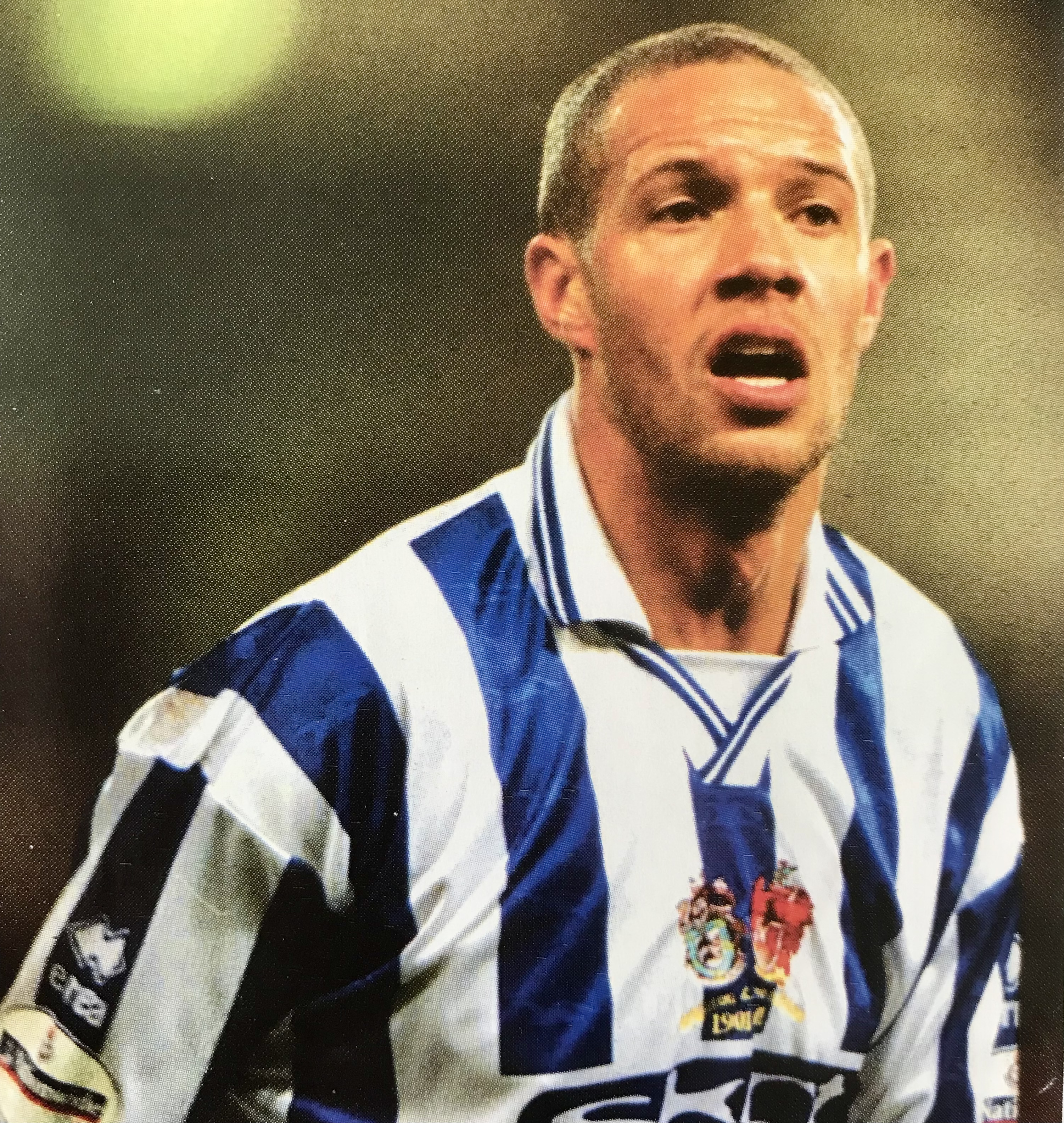
The fee was undisclosed but was believed to be something of the order of £1.2 million and the QPR manager at the time, Jimmy Floyd Hasselbaink told bbc.co.uk: “He offers us something a little bit different. He’s left-sided, which will give us better balance, and has that ability to bring the ball out from the back.”

Hamstring and foot injuries hampered opportunities to show his worth to the Loftus Road faithful, a frustrating situation he talked about in January 2018, but he has since become a regular at the heart of the Rs’ defence.

Perhaps with an eye to the future, Lynch has a profile on the professional networking site LinkedIn.

Pictures sourced from The Argus (Simon Dack / Liz Finlayson), matchday programmes, Huddersfield Examiner and QPR websites.


Peter Taylor disciple Junior Lewis helped Seagulls to promotion

JunLewJUNIOR LEWIS was a loyal disciple of Peter Taylor, linking up with him as a player or a coach at EIGHT different clubs.
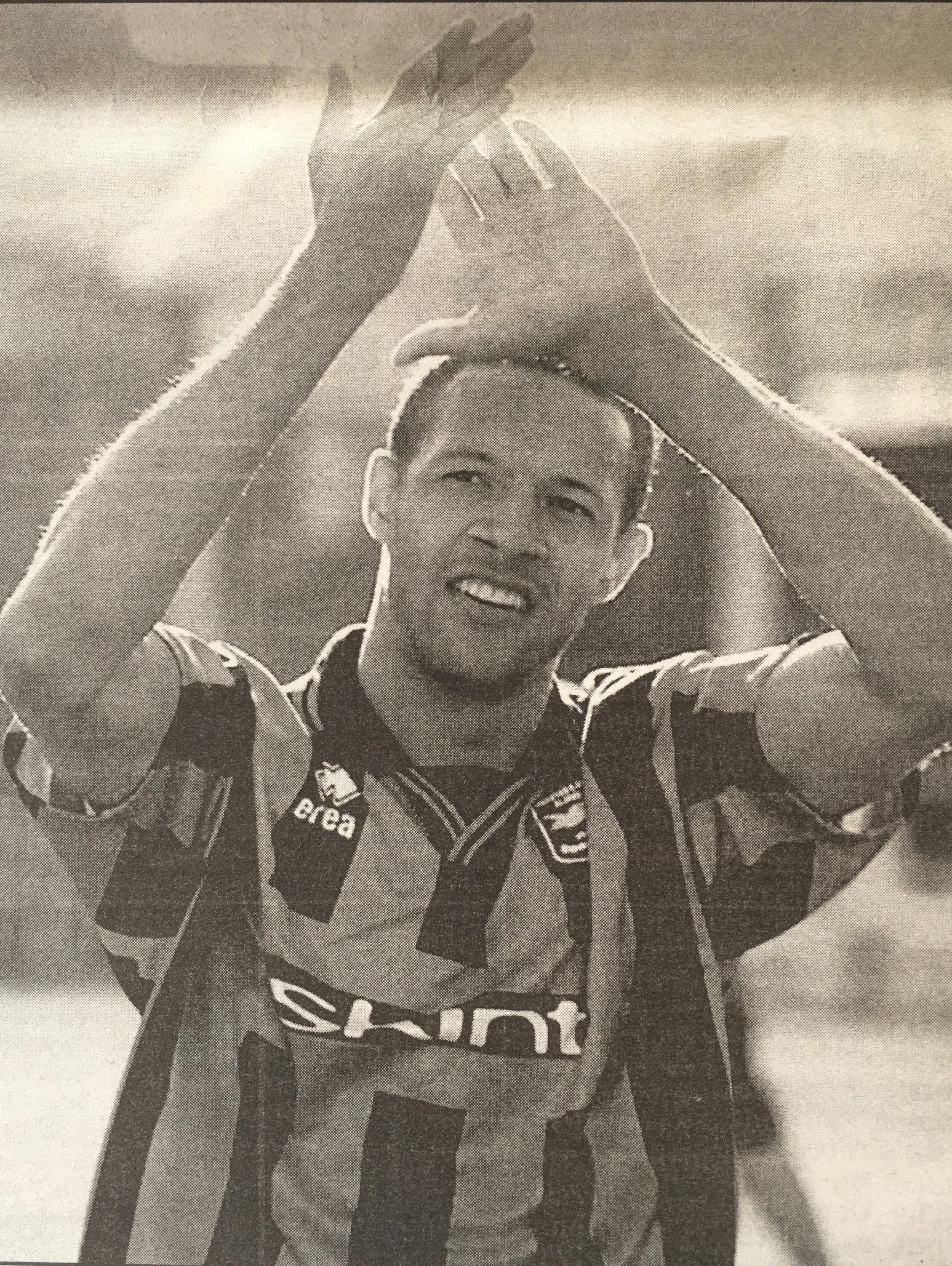
Although he didn’t win the support of too many Leicester City fans during his time with the Foxes, his arrival for the final third of Brighton’s 2001-02 season helped them to claim the third tier crown.

One particular game stands out in the memory, and it came on a rain-soaked night against league leaders Reading at the Withdean Stadium.

I recollect watching the action from the front row of the covered east side of the ground – the roof affording no protection whatsoever as the rain swept in.

Reading hadn’t lost in 12 games but with Bobby Zamora in sparkling form, Albion beat the Royals 3-1.

Lewis marked his debut with a simple tap-in after Zamora had set him up. The striker with the golden touch had scored his 26th goal of the season to give Albion the lead on 59 minutes and then provided the assist for an unstoppable strike by Steve Melton.

Five days later, Lewis scored the only goal of the game at home to Huddersfield  and, as promotion came properly into view, boss Taylor talked to the Argus about the difference he had made to the side.

Brighton went on to overtake Reading to claim the title, rounding off the season with a 1-0 win away to Port Vale. Lewis finished with three goals in 15 appearances as the side Taylor inherited from Adams lifted the championship trophy.

lewis applaudsBorn in Wembley on 9 October 1973, Lewis was on Fulham’s books as a youngster and made it through to the first team, his debut coming as a substitute in a league game against Burnley in October 1992.

But he played only six games at first team level before dropping into non-league and playing for three years with Dover Athletic – where he was first managed by Taylor.

He went on to play for Hayes and Hendon before getting back into league football under Taylor at Gillingham.

In a season and a half with the Gills, he played 59 games before Taylor, by now manager of Premiership Leicester City, took him there initially on loan and then as a permanent signing in 2001.

Although he was a Leicester player for three years, he managed only 30 appearances for the Foxes because Taylor’s successors as manager sent him out on loan.

After the temporary move to Brighton, Lewis had two spells on loan at Swindon Town the following year, then, in 2004, he was reunited with Taylor at Hull City, initially on loan and then on a permanent basis.

After 52 appearances for Hull, he had fleeting spells with Brentford, Milton Keynes Dons, Edgware Town and Stevenage Borough.

He joined Taylor’s backroom staff as a coach at Wycombe Wanderers and then moved in a similar capacity when Taylor was appointed as boss at Bradford City, the eighth club where they’d worked together.

“I’ve worked with him at every level from the Conference right up to the Premier League and been lucky enough to get promotion at a lot of those clubs,” Lewis told the Bradford Telegraph and Argus. “I know how the manager works and how he likes things done from playing for him and working under him as a coach.”

In a FourFourTwo magazine article by Nick Moore on 19 February 2016, Lewis reckoned Taylor always sought him out because he reminded him of his younger self.

“We were both two-footed, but mainly left-footed, and we relied on a similar trick – feinting to cross but chopping back onto your right foot,” Lewis explained. “I watched a video of him play once and I thought: ‘I do that’.

“He trusted me to keep things ticking over. I fitted his philosophy, and he brought the best out in me. But I didn’t assume that when he moved, I’d automatically follow. When he took over Leicester in the Premier League I did really hope I’d join, but I didn’t hear from him for ages.”

Lewis also reckoned operating in a difficult position was a way to become a favourite. “I was always a two-footed holding midfielder. There aren’t a lot of us around, compared to more attacking players, probably because you don’t get as much glory.

“So, having me in that role meant Peter always knew he had one position sorted.”

Before joining Taylor at Bradford, Lewis had continued playing at Welwyn Garden City and after leaving Bradford pulled on the boots once more as player-coach back at Hendon in 2014.

To the astonishment of many, Lewis was named first team coach of Leeds United in June 2014, when the relatively unknown Dave Hockaday was appointed their manager, but the role lasted only a couple of months as the pair were sacked by controversial owner Massimo Cellino after a poor start which included a 2-0 defeat at home to Brighton on 19 August.

In 2015-16 Lewis was coaching Canvey Island before moving on to become first team coach at Barnet, when former Seagull Darren Currie took over as boss from the veteran John Still.  Lewis and Currie were relieved of their duties at Barnet in August 2020 when the club had to restructure after missing out on promotion back to the League.

Goal machine Frank Stapleton ended his playing days in a Brighton shirt

stapleton stretch

FRANK STAPLETON hit the heights as a goalscorer for Arsenal and Manchester United but his prize-winning playing days came to an end in a Brighton & Hove Albion shirt.

Stapleton was the scorer of the first top flight goal at the Goldstone Ground – unfortunately, it was the opener in Arsenal’s 4-0 win in 1979! He was also one of the Manchester United scorers in the 1983 FA Cup Final against Brighton, having moved to Old Trafford two years earlier (above, however, he just fails to connect for Arsenal against Brighton with Steve Foster and Gary Williams looking on).

His two appearances for Brighton came in 1995 when his old pal Liam Brady brought him in to try to improve the front line of an ailing side.

Born in Dublin on 10 July 1956, the promising young Stapleton was rejected by United as a teenager but the Gunners reaped the benefit of that decision by snapping him up at the tender age of 15 on chief scout Gordon Clark’s recommendation.

Arsenal’s confidence in the prospects for the promising young Irish duo were reflected in a Goal magazine article of 7 October 1972 in which boss Bertie Mee talked about them as future first team players. At the time, they were still part of the club’s junior ranks, aged just 15 and 16.

goal cutting

Mee said: “Brady is almost established as a regular in the reserve side. He needs building up but has the potential to become a first-team player. Stapleton has made quite an impact in his first season and, providing he maintains a steady improvement, he could also follow the path of Brady.”

It was only Brady’s second season and Clark, the Arsenal chief scout who unearthed him, said, at first, he thought he would be better suited to becoming a jockey because he was so small and frail!

He quickly changed his mind when he saw his ability with a football. “He was like a little midget but he had so much confidence. He’s really shot up now and although he’s still not very tall, he’s strong enough to hold his own,” said Clark.

Stapleton, at 15, joined Arsenal in the summer of 1972 and quickly developed a reputation as a goalscorer, netting 11 goals in seven games.

“Frank is tall and very good in the air,” said Clark. “He seems to get up and hang for the ball. He is also very good on the floor and reads the game intelligently for a youngster.”

As expected, Stapleton progressed to the first team and made his debut in 1975 against Stoke City. He initially formed an impressive partnership with England striker Malcolm Macdonald and in three successive seasons was Arsenal’s leading goalscorer.

Such prowess brought him to the attention of the Republic of Ireland international selectors and player-manager Johnny Giles gave him his full debut aged just 20 in 1976 against Turkey in Ankara.

It was the first of a total of 71 caps for his country, during which time he became their captain and scorer of 20 goals. He led Eire when they famously beat England 1-0 at the Euro 1988 finals in Germany. Although he was part of the 1990 World Cup squad – alongside former Albion boss, Chris Hughton –  he was by then behind Niall Quinn, John Aldridge and Tony Cascarino in the pecking order.

Stapleton was part of Arsenal’s three successive FA Cup final teams (1978, 1979, 1980), scoring against United in Arsenal’s 3-2 win in 1979.

When the Gunners sold Brady to Juventus in 1980, Stapleton started to question the club’s ambition and, the following year, on expiry of his contract, decided he would move on himself.

He had scored 108 goals in 300 appearances for Arsenal – some strike rate! – and it wasn’t a popular move to join a major rival in the same division, but he wasn’t the first or last player to have done so.

In the Sixties, United had taken David Herd from the marble halls of Highbury to lead their line and, of course, in more recent times, United signed Alexis Sanchez.

stapleton utd

When Robin van Persie made the same transfer switch from Arsenal to Manchester United in 2012, the Daily Mail took Stapleton back 30 years to talk about the circumstances of his own move.

Stapleton was Ron Atkinson’s first major signing for United and in his first season was partnered up front with Garry Birtles. Stapleton was the leading scorer for United in that first season, with 13 goals in 41 league games.

Subsequently, his main strike partner was the Northern Ireland international, Norman Whiteside.

img_4637

Stapleton scored United’s first goal, a 55th minute equaliser, in the 2-2 Cup Final draw against Brighton: one of 19 he notched during the 1982-83 season in which he played in 59 of United’s 60 games.

By the end of the following season, Stapleton’s regular strike partner was Mark Hughes and he scored in the 1985 FA Cup semi-final against Liverpool to set up yet another Wembley appearance, this time collecting his third winners’ medal when Whiteside’s winner beat Everton.

Despite a good start to the following season, with Stapleton once again amongst the goals, poor league form eventually cost Atkinson his job and his successor, Alex Ferguson, began rebuilding the side.

After six years at United, Stapleton, by then 30, was amongst those to be let go, and he was sold to Ajax of Amsterdam, lured by the fact they were managed by Johan Cruyff. But the move failed to live up to expectations, as detailed by the42.ie, and he ended up having a spell on loan at Anderlecht.

It was the first of a series of moves which didn’t really work out for him, although in the 1988-89 season he found himself playing in France alongside fellow Irish international – and future Brighton striker – John Byrne for Le Havre.

stapleton 4 derby

Derby County offered him a platform back in the UK game and he featured 10 times for them in 1987-88 and, after his stint in France came to an end, he spent two seasons with Blackburn Rovers.

He played once for lowly Aldershot and five times for Huddersfield Town before landing a player-manager’s post with Bradford City. In three years at Valley Parade, he made 68 appearances before the axe fell, and he answered Brady’s call for help at the Goldstone Ground.

The brilliant The Goldstone Wrap detailed his brief involvement in a March 2015 post, explaining how he featured as a substitute in a 0-0 draw at home to Bournemouth and started in a 3-0 defeat away to Cardiff City.

It was a final swansong for his playing career, as he looked to get back into coaching or management. He had two stints working under his former United teammate Ray Wilkins: at QPR and, in 2014, with the Jordan national side.

Stapleton spent eight months in 1996 as the first head coach of American Major Soccer League side New England Revolution, of Massachusetts.

His last appointment in the English game was briefly as a specialist striker coach at Bolton Wanderers, appointed during Sam Allardyce’s reign, in 2003-04.

Nowadays, Stapleton is more likely to be found talking about his illustrious career, his availability for bookings listed by football-speakers.com.