Albion rookie Richard Martin became Sven goalie at City

RICHARD MARTIN could justifiably be dubbed ‘The Nearly Man’ of goalkeeping.

Once thought to have the potential to play 200 games for the Albion, he left the Seagulls having only ever warmed the first team bench.

In an unlikely turn of events, he went from back-up League One Seagulls ‘keeper to no.3 behind Kasper Schmeichel and Joe Hart at Premier League Manchester City, thanks to former England boss Sven-Goran Eriksson.

After two years at City, he went on loan to Burton Albion, then worked under Ben Roberts and Nathan Jones as back-up ‘keeper at Yeovil Town before enjoying fleeting fame on the Caribbean island of Puerto Rico.

Doubtless it wasn’t the career he expected when his teenage promise between the sticks led to him earning trials with Liverpool and Everton.

Born in Chelmsford on 1 September 1987, Martin spent part of his childhood in Liverpool but the family were living in Burgess Hill when the young goalkeeper was picked up by the Albion.

Martin was only 16 when Liverpool took him on a week-long trial and Albion manager Mark McGhee went public in the Argus on 4 February 2004, explaining why he thought the youngster should stick with the Seagulls.
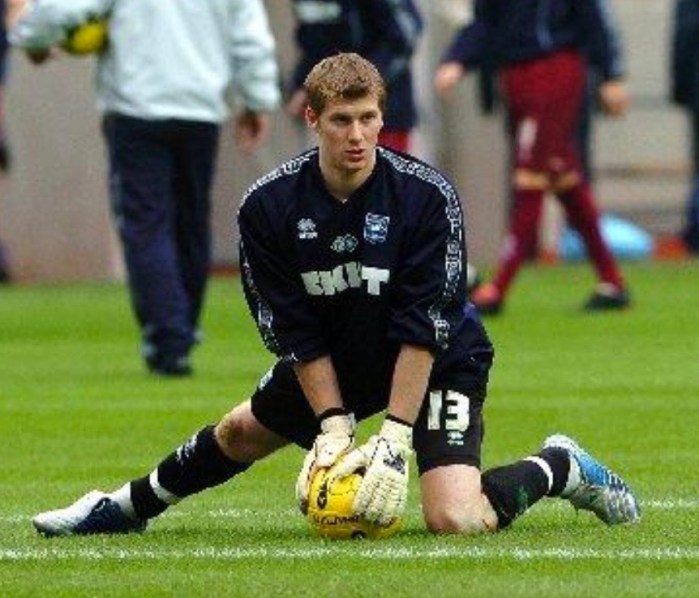
Warming up for the Albion (pictured by the Argus)

“We have put forward a reasonable argument to the boy and to his parents as to why we think he should stay here,” said McGhee. “The thing we can promise him at a club like ours, like any other young player in any other position, is that if he is good enough he will be fast-tracked into the first team or certainly onto the bench.

“If he goes to Liverpool there is no chance of that happening. At the very best he is going to spend two or three years at youth level, then at reserve level and in five years’ time he might start to make an impression in the first team squad.

“By that time, he would have played 200 games for us and be worth a lot of money and move to Liverpool under different circumstances.”
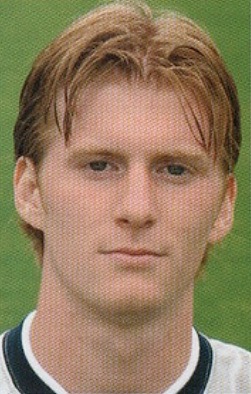
The Argus reckoned Albion could have got compensation of at least £200,000 if Martin, a Liverpool supporter, had ended up at Anfield. But Liverpool didn’t take him on, he remained an Albion scholar, progressed through the youth ranks and was awarded a two-year professional contract in the summer of 2005, before his scholarship was due to expire.

With Michel Kuipers sidelined by injury, Martin and fellow young ‘keeper John Sullivan shared opportunities to play for the first team in pre-season friendlies ahead of the 2005-06 season. Martin appeared against Le Havre, Oxford United and Bournemouth, as well as coming on as a sub in two other matches.

A sizeable Albion following went over to France to watch Albion’s 2-0 defeat to Le Havre when Martin began in goal in the absence of Michel Kuipers. The Argus reported: “Martin flew high to his right to brilliantly tip away a 12th-minute thunderbolt from Jean-Michel Lesage which was dipping and swerving towards the top corner from 25 yards.”

Goalkeeping coach John Keeley went further and told the matchday programme: “That was an absolute world-class save. I’m sure if Michel had made it people would still have been talking about it – it was that good..

“He can take big positives out of that and the other bits he had to do in the first half.”

When the season proper got under way, Martin found himself on the bench for 14 matches as Irish international Wayne Henderson, on loan from Aston Villa, was the established first choice. But then Frenchman Florent Chaigneau arrived on a year-long loan from Rennes.

In December 2005, Everton took Martin on trial and for a while there was speculation that a nice fat transfer fee from selling the youngster could be reinvested in signing a much-needed striker for the first team. But the move didn’t materialise because Everton boss David Moyes didn’t think Martin was big enough.
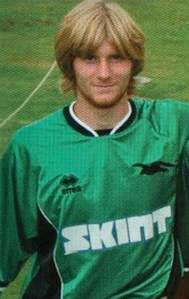
The Argus reported: “Martin impressed during a recent trial with the Merseyside giants but Goodison boss Moyes has decided not to sign the slimly-built 18-year-old from Burgess Hill due to his size.”

Instead of heading to Goodison, Martin went on loan to non-league Kingstonian, competition for the no.1 spot at Albion having increased with the permanent signing of Henderson from Villa.

Martin was part of the successful Albion youth side of 2006 from which six players went on to play first team football. But even at youth level he was competing with Sullivan, who eventually edged ahead of him and did manage to break through into the first team.

Competitive football game-time was considered the best option for Martin and the following season he went on a season-long loan deal to Conference South Dorchester Town. But his stay was cut short by injury. Once recovered, in the second half of the season, he joined Folkestone Invicta where he played 12 matches.

However, on his return to the Albion his contract wasn’t renewed, and he was without a club until the surprise opportunity arose at Manchester City, where the goalkeeping coach at the time was ex-Albion No. 1 Eric Steele.

Martin told the Argus: “This is completely unexpected. I’d like to think Brighton were wrong to let me go but these things happen.

“I went up to City initially just for a week to do a bit of training, because my agent knows Eric.

“(First choice Andreas) Isaksson and Joe Hart picked up injuries, they had a reserve game which I played in and then I carried on training.

“I don’t think I am in contention for the first team, I will just be in the reserves and go from there. Hopefully the month will be extended if I can keep on doing well.”

Sure enough, it was and boss Eriksson was happy to give Martin a season-long contract.

His only first-team action came on 22 May 2008 when replacing Schmeichel for the second half in an end-of-season charity match in Hong Kong against a South China Invitational XI.

Even after Steele switched allegiance to Manchester United and Eriksson had moved on, Martin had done enough to establish himself as third in line behind Hart and Schmeichel.

Mark Hughes took over as manager and Martin remained at the club working with ex-Chelsea ‘keeper Kevin Hitchcock, who Hughes had taken with him from Blackburn.

Martin was given the no.13 squad number for the 2008-09 Premier League and UEFA Cup campaign and it was an irresistible opportunity for the Argus to catch up with him ahead of Brighton’s home Carling Cup tie against City at Withdean in September 2008 when Albion sprung a big shock by winning the penalty shoot-out.

Reporter Andy Naylor discovered Martin had been philosophical, rather than disappointed, about the way things turned out with Albion. “When I look back at the situation at that time it was all about getting results and Michel (Kuipers) and Wayne (Henderson) were the two generally ahead of me,” he said. “I got a lot of good experience at Brighton and that set me in good stead for coming up to Manchester.”

Unfortunately, a knee injury Martin sustained shortly after sidelined him until the following March. Then in April, City allowed him to move temporarily to Burton Albion as cover because their first choice ‘keeper Kevin Poole was injured.

When released by City in the summer of 2009, more Albion connections provided him with his next opportunity, and finally the opportunity to play league football, at Yeovil Town.

Martin at Yeovil (picture by YTFC Digital)

In the Seagulls’ 2004 play-off winning season, Martin was a youth-teamer when Glovers assistant boss Jones was Albion’s left-back and goalkeeping coach Roberts was between the sticks.

Ahead of Brighton’s 2-2 draw at Huish Park on 10 October 2009, Martin told Brian Owen of the Argus: “I was fortunate I got the call from Yeovil in the summer and went down there for a trial. They liked what they saw. Of course, I know Nathan and Ben well and the fact they knew about me must have helped them make a decision.”

Martin was on the bench for the Albion fixture but had made his league debut shortly before as a substitute when first-choice Alex McCarthy (at the time on loan from Reading) was sent-off 20 minutes into a 2-2 draw with Stockport County. With McCarthy banned, Martin got his first start in a defeat at Southampton.

However, in total he made just three league and two cup appearances in that first half of the season and in January 2010 was loaned to Conference National bottom-placed side Grays Athletic – and within the space of a fortnight had conceded 11 goals in three matches!

Although he returned to Yeovil after a month, McCarthy’s fine form denied him any further first team action at Huish Park and he was released in July 2010. After brief spells with Havant & Waterlooville and Crawley Town, Yeovil re-signed him on 31 December 2010.

Plenty to say in goal for Puerto Rico Islanders

However, in March 2011 he had the opportunity to head to the Caribbean and play for Puerto Rico Islanders, who at the time were in the second tier of the North American Soccer League. He made his debut in May 2011 having initially been back-up ‘keeper and then signed for a second season, during which he established himself as first choice and played a total of 33 matches.

Talking on camera after the NASL player of the month award

In August 2012 he was named NASL player of the month, and he was interviewed about the experience of playing for the Islanders. There is an excellent montage feature in which the commentator purrs in this YouTube footage: “Richard Martin has the reflexes of a jungle cat.”  

Back in the UK in 2013, Martin played briefly for Whitehawk and Burgess Hill before retiring.
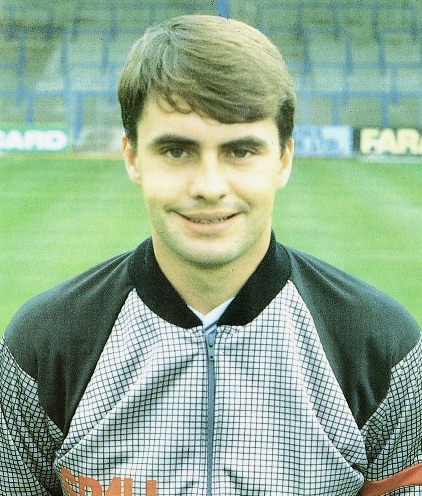
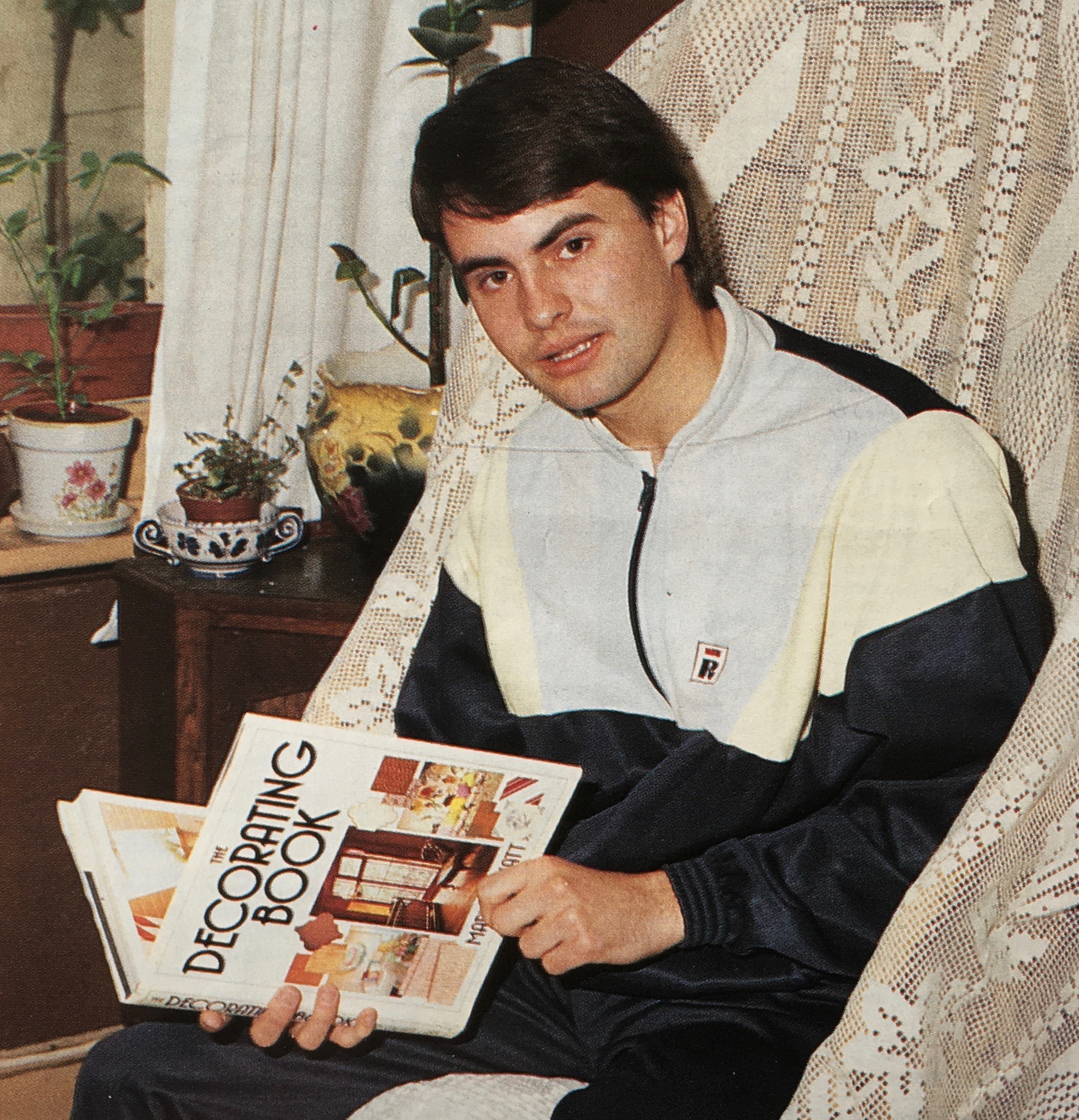
Cards came up trumps for ex-Saints full-back Kevan Brown

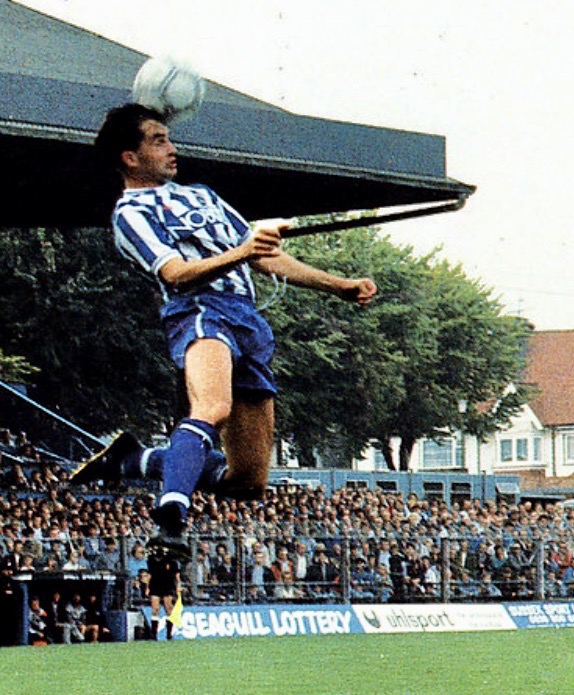
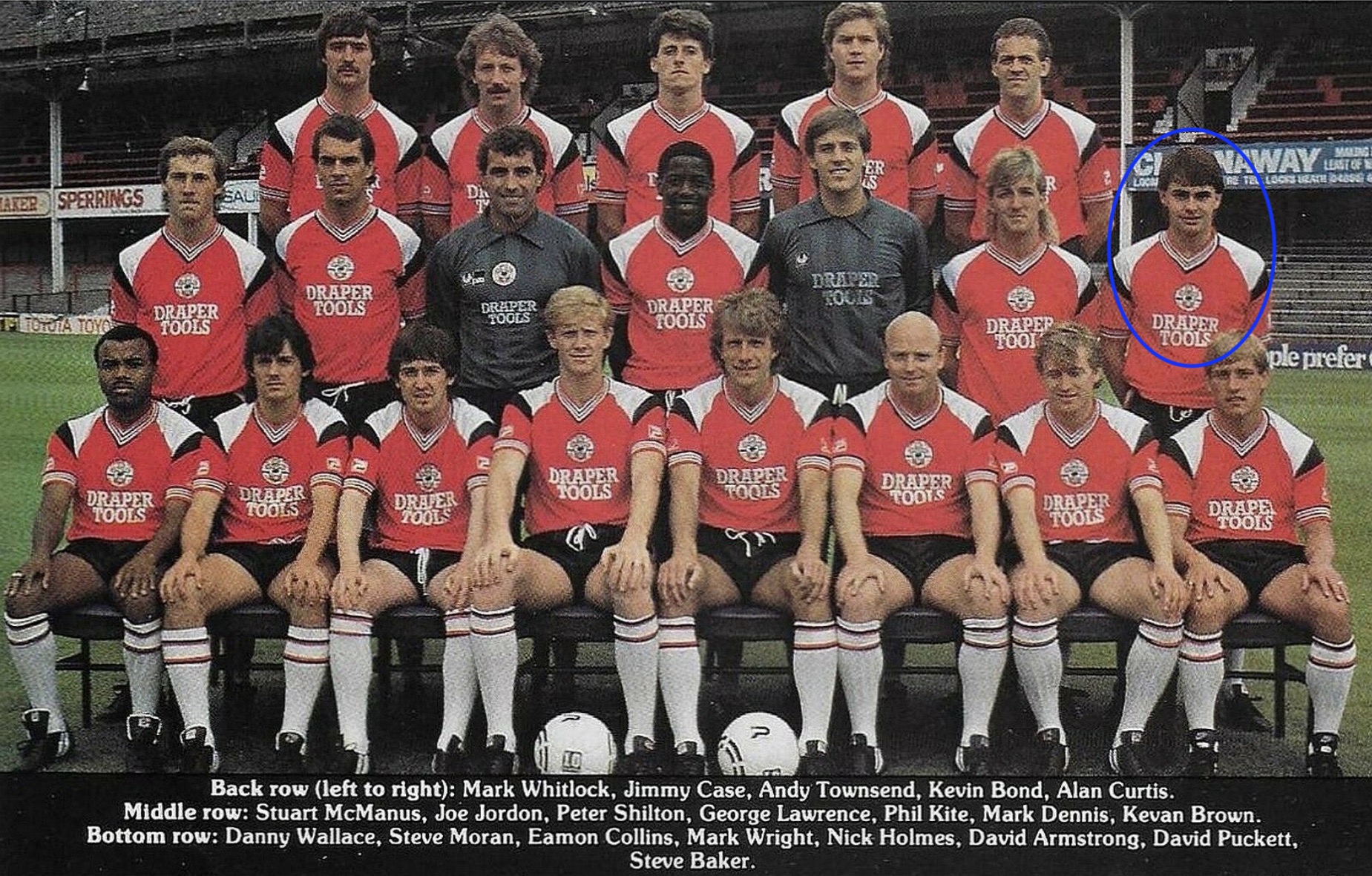
FULL-BACK Kevan Brown made more than 120 appearances for Southampton reserves during three years as a young professional but it took a move east along the coast to Brighton to play league football.

Brown arrived at the Goldstone Ground for a fee of £7,500 shortly after Barry Lloyd had taken over from Alan Mullery early in 1987.

Lloyd preferred the youngster from Andover as right-back to the ageing Les Berry, who’d joined on a free transfer the previous summer.

The club put Brown into digs in Hove (run by Val and Dave Tillson) with another young player who had moved away from home, former Everton youngster Darren Hughes.

In a programme profile feature, Brown said Hughes had been a big help in him settling into his new surroundings. “He has been showing me around the area and we’ve become good friends,” he said. “I’m glad I wasn’t put in a hotel on my own.”

Unfortunately, Brown was only on the winning side twice in the 15 matches he played that season and Albion were relegated from the second tier in rock bottom place.

Brown was a permanent fixture in the no.2 shirt for 46 league and cup matches in the 1987-88 season until the arrival of experienced defender Gary Chivers from Watford.

With promotion in sight, while Lloyd dropped the experienced captain Doug Rougvie in favour of the relatively untried Robert Isaac in the centre of defence, he saw Chivers rather than Brown as the better option at right-back.

Chivers went straight into the side for the promotion run-in and the 2-1 home win against Walsall on 12 March 1988 was the last time Brown appeared that season.

He played in the opening two games of the following season but Chivers on the right and Keith Dublin on the left were Lloyd’s preferred full-back pairing, and Brown found himself on the outside looking in.

Born on 2 January 1966, Brown was an associate schoolboy with Southampton at the age of 13, following in the footsteps of his father Peter, who had played for Saints in the late 1950s.

Brown said in an Albion profile feature that his father and Saints youth development officer Bob Higgins had been the biggest influences on his career, although Higgins later drew opprobrium.

Lawrie McMenemy awarded Brown a professional contract but neither he nor his successor Chris Nicholl elevated the young full-back to the first team, although he did get to play against Manchester United in Trinidad and Tobago while on tour with Southampton.

Having had his fill of reserve team football at Saints, rather than repeat the experience at Brighton, he moved on to Aldershot in the autumn of 1988.

He spent four years there and made quite a few more appearances than the 175 that the record books show: the 1991-92 season records having been expunged  after the club went out of business.

Aldershot found themselves in a worse financial situation than the Albion were to suffer later that decade and the club was finally wound up owing £1.2m on 25 March 1992.

Five days earlier, Brown played in a match – alongside future Albion hero Robbie Reinelt – that was the last game Aldershot would play.

Although his next career move saw him drop out of the league, he enjoyed huge success in terms of silverware and recognition.

He joined Geoff Chapple’s Woking in the Football Conference and captained The Cards to three FA Trophy wins – in 1994, 1995 and 1997 – with veteran former Albion winger Clive Walker the side’s talisman.

In addition to leading his team up the steps at Wembley to lift the silverware, Brown’s performances with Woking earned him international recognition with the England semi-professional ‘C’ side.

He made his debut in a 1-0 win over Wales at Huish Park, Yeovil, on 28 February 1995. He made three more appearances that year: away to Netherlands (0-0) on 11 April, home on 19 May (played in St Albans) against the Highland League (3-4), then away to Gibraltar (3-2) on 31 May.

His fifth and final appearance was on 2 April the following year as England beat the Netherlands 3-1 at the Nene Park home of Rushden & Diamonds.

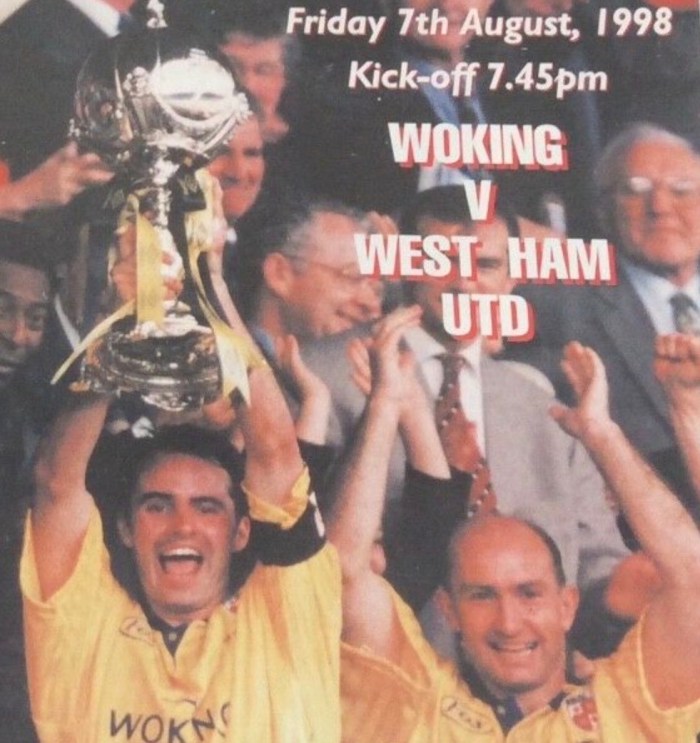
Brown’s loyalty to Woking – he made more than 350 appearances across six years – was rewarded with a testimonial game at home to West Ham United in August 1998.

More than 5,500 turned out at the Kingfield Stadium to see the Hammers edge it 2-1 with goals from Frank Lampard and Steve Lomas. Rio Ferdinand limped off early in the match and Ian Wright played up front for West Ham.

The game took place five months after Brown had moved on from Woking to Yeovil Town.

Chapple’s former assistant, Colin Lippiatt, had taken charge at Huish Park in January that year, having joined three months earlier as a coach under Graham Roberts.

One of his first moves was to sign Brown and teammate Steve Thompson (who ended up staying with The Glovers for ten years). Brown stayed for two years, making a total of 88 appearances, latterly playing under Thompson when he took over as caretaker manager following Lippiatt’s departure.

The arrival of former Chelsea defender David Webb as manager in March 2000 spelled the end of Brown’s time at Yeovil and he returned to Woking to play a further 25 games as they battled against relegation from the Conference in the 2000-2001 season.

Playing part-time had enabled Brown to pursue a teaching career and in April 2007 he was appointed director of sport at independent co-educational St Francis School in Pewsey, Wiltshire.

Brown’s devotion to the club who set him on the road remains undimmed and on his Twitter account @KevanBrown05 he declares himself a Saints season ticket holder.

Sprinter’s boys took different tracks after starting Gunners

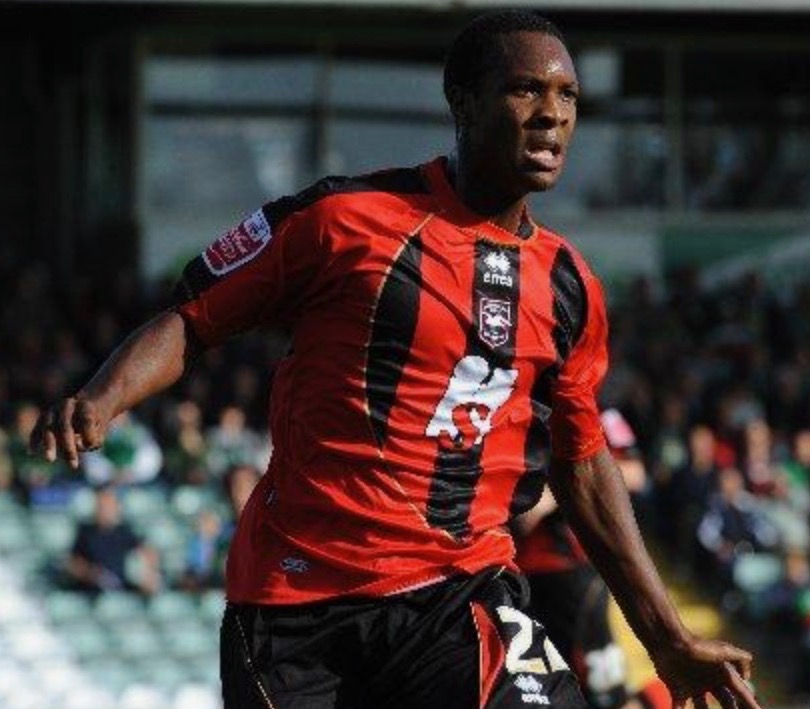
A GUNNER from the age of nine gained valuable first team experience with the Seagulls but ultimately fell short of reaching the same heights as his brother.

Commonwealth Games gold-medal winning sprinter Wendy Hoyte saw sons Justin and Gavin climb through the academy and reserve ranks at Arsenal.

Justin played 68 first-team games for the Gunners and went on to make a name for himself in the North East, but younger brother Gavin only played four first-team games for Arsenal and had to set his sights lower to pursue a professional career.

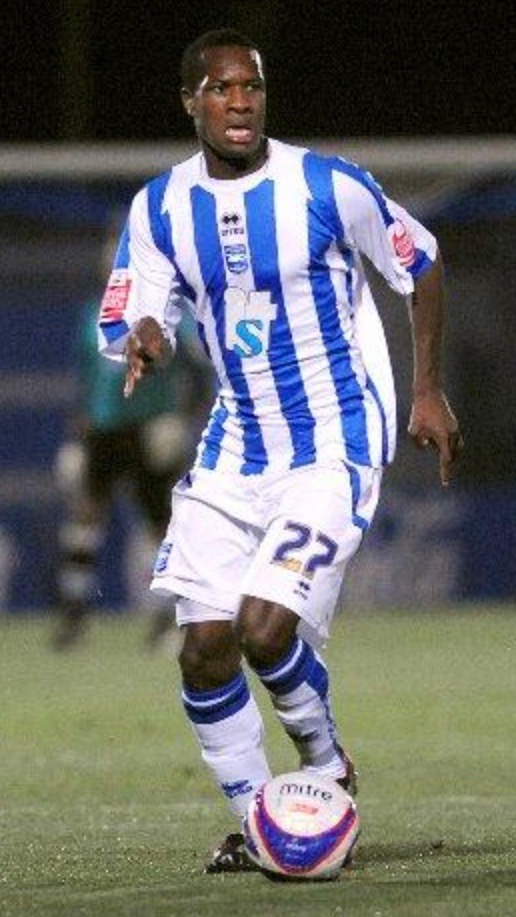
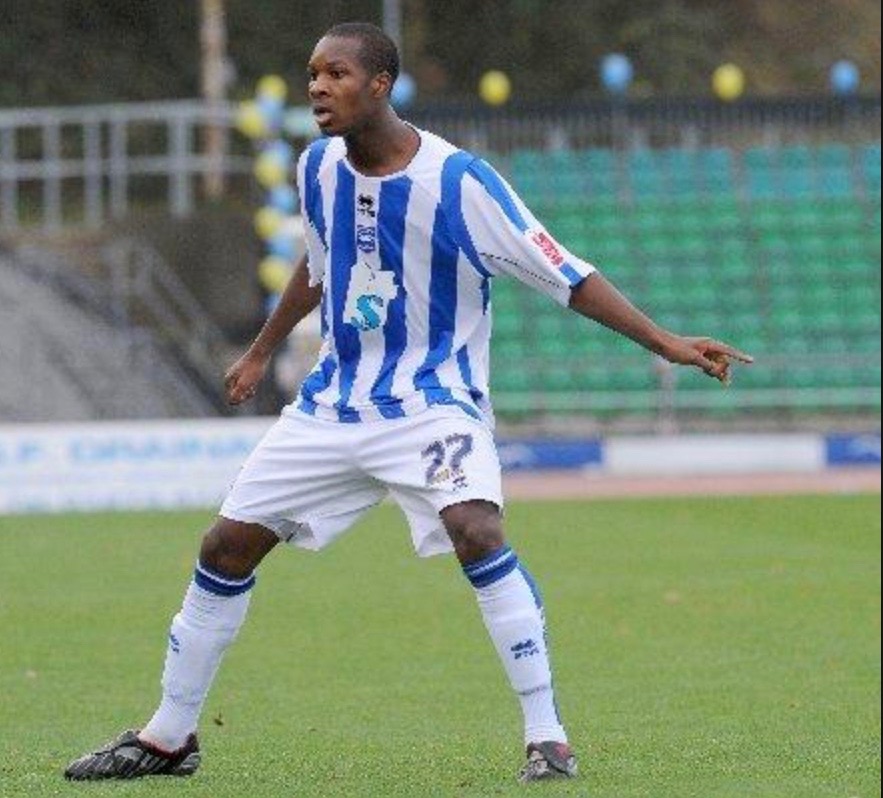
The younger Hoyte spent most of the 2009-10 season as a Brighton player and, although only 19 at the time, got a rough ride from Seagulls supporters who expected more from someone who’d played at the top level of the game.

Initially signed on loan in October 2009 by Russell Slade to cover for the injured regular right-back Andrew Whing, Hoyte was handed his debut against Slade’s former club Yeovil Town at Huish Park.

“I am delighted to know the club wants me,” the youngster told The Argus. “They have got a lot of games this month and I just want to get out there and play.”

As it turned out, Hoyte outlasted Slade at the Withdean, and his temporary transfer was extended when Gus Poyet took over as manager.

The young full-back in the no.27 shirt gained a good amount of game time until Poyet unearthed Inigo Calderon in January 2010.

Even then, Poyet was happy to retain the services of the Arsenal youngster, telling the Argus: “We explained to Gavin before asking Arsenal that there was probably a player coming.

“Arsenal knew that as well, so nothing has been hidden. Everyone knows where they stand.

“We are working on different aspects of the game with Gavin, because he has got something which is very difficult to find sometimes in football, the speed to recover.

“When you have that ability, you don’t need to go to ground, because you are quicker than most players.

“He is young and there is plenty to come. We want to help him become a Premier League player or top Championship player.”

G Hoyte stripes

Hoyte got another chance to prove himself when Calderon picked up a nasty hip injury in April, bringing his total number of Albion games over the season to 21.

When it looked like the popular Spaniard was going to move to Southampton instead of accepting a contract offer from the Seagulls, Argus reporter Andy Naylor ventured: “Gavin Hoyte’s encouraging conclusion to the campaign suggests he might even be capable of rising to the occasion if he returns on loan from Arsenal.”

It didn’t come to that, though, and, over the next two years, he dropped down another division with loan spells at Lincoln City and AFC Wimbledon.

When he realised there was little hope of him ever getting close to the Arsenal first team, he left for Dagenham and Redbridge, having spoken to Arsenal goalkeeping coach Tony Roberts, who’d played for the Daggers himself.

Born in Leytonstone on 6 June 1990, Hoyte followed in his brother’s footsteps to Arsenal and progressed to the point of being appointed the under 18 team captain in the 2006-07 season when he was still only 16.

“I am very vocal during games, although I wouldn’t quite say that I was a Tony Adams, but that’s the sort of captaining style I try to emulate,” Hoyte told the Arsenal matchday programme. “I have captained at schoolboy level and in particular in tournaments and so I do have some experience, but I did not expect to be captain of the under 18s so early.”

Hoyte captained Arsenal’s under 18s when he was only 16

Hoyte was also capped at England under 17, under 18, under 19 and under 20 levels. In the 2009 UEFA under 19 championships, he played in two qualifiers in the space of four days when England beat Slovakia 4-1 and Scotland 2-1; his teammates including current Albion no.3 Jason Steele in goal, and future full international Kieran Trippier.

He was part of the squad who took part in the finals in Ukraine, starting twice and coming on as a substitute three times as England finished runners up to the hosts. The side was managed by Brian Eastick, who’d been an Albion coach during the Mike Bailey era.

Hoyte’s one game for the under 20s came as a substitute in a 1-1 draw away to Uzbekistan on 2 October 2009, when a fellow substitute was Sam Baldock. Two non-playing subs in that game were Jonathan Obika and Gary Gardner, who both had spells on loan with the Seagulls.

Hoyte looked back on his Arsenal time in an interview with Will Unwin for planetfootball.com and said: “When you’re there you always think you’re going to make it – I was pretty confident.

“I had my older brother there as well, so that helped a lot, seeing how he progressed.

“That was a big thing for me, seeing him play every week, watching him, thinking, ‘I want to try and get to where he is’.”

Hoyte was an unused substitute for several first team games before making his debut in a 6-0 League Cup win over Sheffield United, and starting in the next two rounds, against Wigan and Burnley. His Arsenal career only seemed to be heading in one direction.

“Just to play at the Emirates was massive, coming out to a big crowd,” he told Unwin. “There were a lot of young boys in the team so that helped me with confidence and eased it.

“But there were a lot of players in front of me, so I didn’t think about playing in the Premier League. It was always in the back of my mind, but I wasn’t thinking I was going to play immediately.”

But 11 days after the second of those League Cup appearances, Hoyte was handed his Premier League debut, after William Gallas had been stripped of the club captaincy for criticising team-mates amid a poor run of only one win in four games.

G Hoyte v Man City

Up against Robinho of Manchester City, he was taken off after an hour of a 3-0 defeat, and it would prove to be both the start and end of his top-flight career.

Hoyte didn’t recall getting much feedback after the game, although it wasn’t long before he was awarded a new contract. He made his fourth appearance for the club in a League Cup quarter-final defeat to Burnley at the start of December – but he didn’t play for Arsenal again.

He was sent out on loan to Championship side Watford for the second half of the 2008-09 season, featuring in 10 matches, and he eventually left Arsenal in 2012 when his contract expired.

After two seasons in League Two with Dagenham, he spent the 2014-15 season with League One Gillingham, featuring in 35 matches. He dropped down to League Two with Barnet, ended up at National League Eastleigh until the end of the 2017-18 season before returning to Dagenham in 2018-19.

It proved to be a frustrating season for him under the managership of former Albion boss Peter Taylor, but, reunited with former manager John Still at Maidstone United, he has been a regular at right-back in 2019-20 and scored just the third goal of his career against Dulwich Hamlet in December.

Along with his brother, the younger Hoyte has enjoyed the opportunity to play international football with Trinidad and Tobago, as he told socawarriors.net, and spent 20 minutes on the same pitch as Lionel Messi in a friendly as Argentina warmed up for the 2014 World Cup.