Football’s Ansah to making the game look dramatic

FICTIONAL football gained an unlikely champion in Andy Ansah.

The journeyman striker eventually mixed it with the game’s elite players as he built a new career in the world of football make-believe for TV and film.

His own exploits on the field were in less esteemed company, including stints playing in the lower leagues for Brighton, Brentford and Southend United.

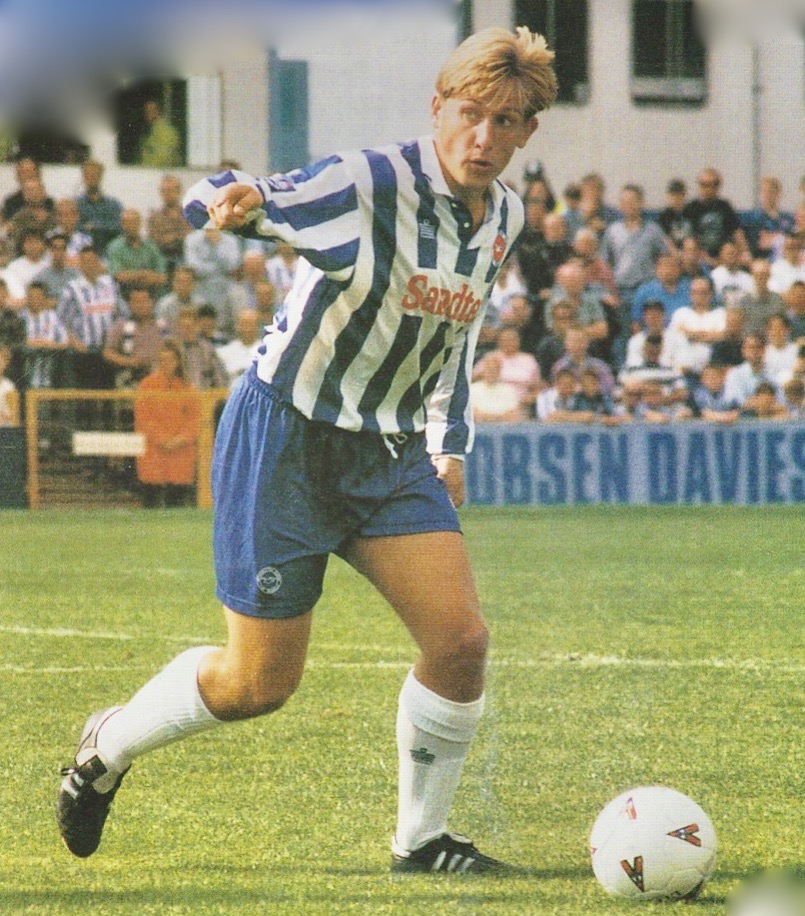
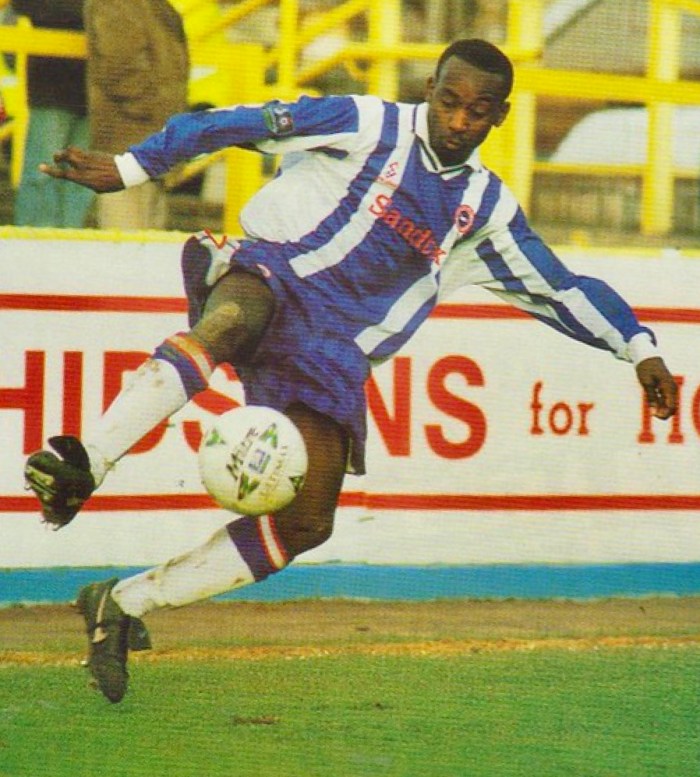
Not too many Brighton fans will remember him, though, because his 25 appearances in the blue and white stripes coincided with the two seasons when home matches were played 90 miles from home in Gillingham.

With crowd numbers low and finances tight as a consequence, Albion were in no position to splash the cash in the autumn of 1997; indeed John Humphrey, Craig Maskell, Paul McDonald, Denny Mundee and Ian Baird, five of the squad who had kept the Seagulls in the league by the skin of their teeth only six months earlier, were let go in an effort to trim the wage bill.

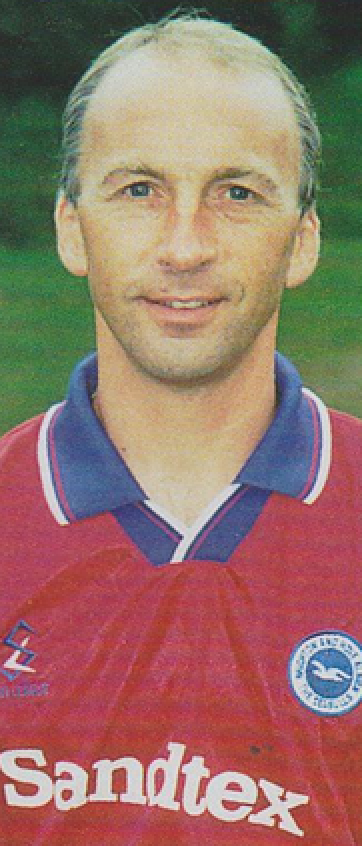
It was in that climate that Ansah, who had dropped out of league football at the time, was picked up by Steve Gritt.

It only transpired in an interview Ansah gave to the Express in December 2011 that he came clean to the Albion about a kidney condition (nephrotic syndrome) he had suffered from since teenage years but had kept hidden at previous clubs.

It could at times make his body swell so much he could hardly walk and he would need hospital treatment to bring it under control.

He told the newspaper he had gone to extraordinary lengths to hide the illness from managers, coaches and fellow players for fear that it would mean the end of his career. When he felt poorly, he would wear tracksuit bottoms on the training ground to hide the swelling, and then feign illness.

At Brighton, however, the condition did not stop him being involved, although the majority of his appearances were as a substitute.

Apart from a start in a 5-0 mauling at the hands of Walsall in the Auto Windscreens Shield on 6 January 1998, he had made three Third Division appearances going on as a sub and was unused on seven occasions before his fortunes changed.

Although he missed a decent chance after going on as a sub in a 2-0 defeat at Rochdale, he made amends when Gritt gave him his first League start away to Exeter City, curving the ball beyond Ashley Bayes from Stuart Storer’s flick-on.

Sadly, a rogue refereeing decision helped the home side to a 2-1 win, and, with Albion floundering in second-to-bottom spot in the division, Gritt was sacked the following day.

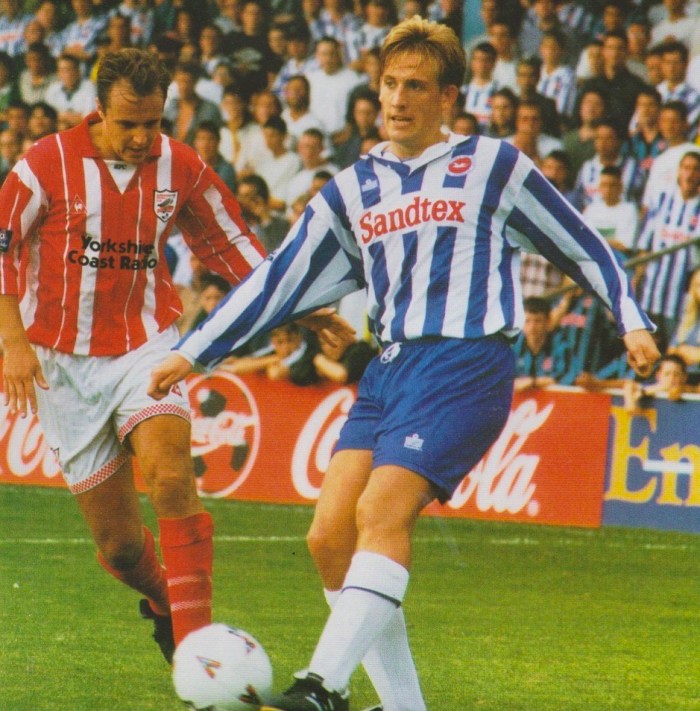
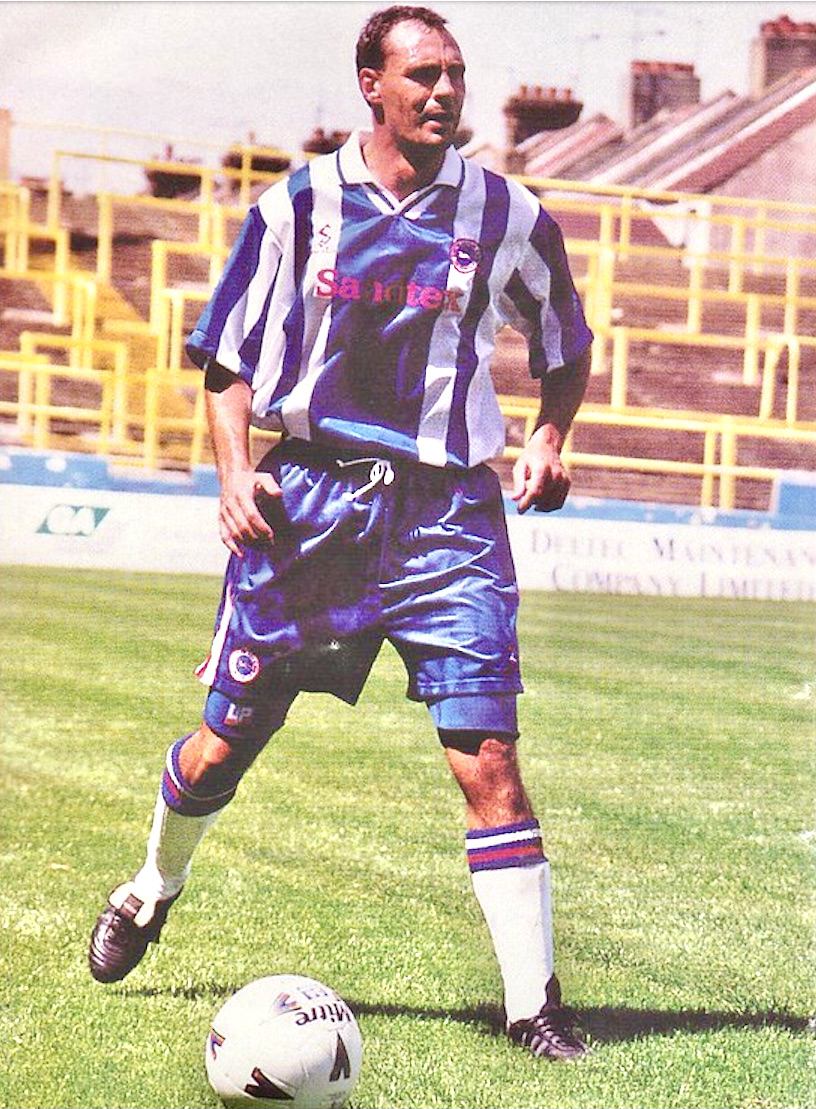
Andy Ansah on the ball for the Albion

Ansah retained his place for new manager Brian Horton’s first match – and he was on the scoresheet again. This time, his goal and a brace from Kerry Mayo gave the Seagulls a 3-2 win over Chester – the side’s first taste of victory in 10 matches!

“The emergency partnership of Stuart Storer and Andy Ansah has provided fresh movement and impetus up front, while wingers John Westcott and Steve Barnes saw far more of the ball on Saturday than they have been accustomed to,” reported The Argus.

Albion finished the season 23rd of 24 teams but thankfully 15 points ahead of Doncaster Rovers in last place.

Ansah scored again in the last ‘home’ game of the season – a 2-2 draw with Horton’s old side Hull City (who finished 22nd) – but, like a lot of players, he was out of contract at the end of the season.

Horton wanted to bring in his own players but, as it turned out, Ansah was offered a new one-year deal, with The Argus saying “Horton hasn’t been able to find a better replacement at the right price, so Ansah has been given a second chance”.

The manager explained: “He did well, but I was bringing new faces in. I’ve had a good look around and Andy is as good as what we could get. He can score goals and he can play in different positions.”

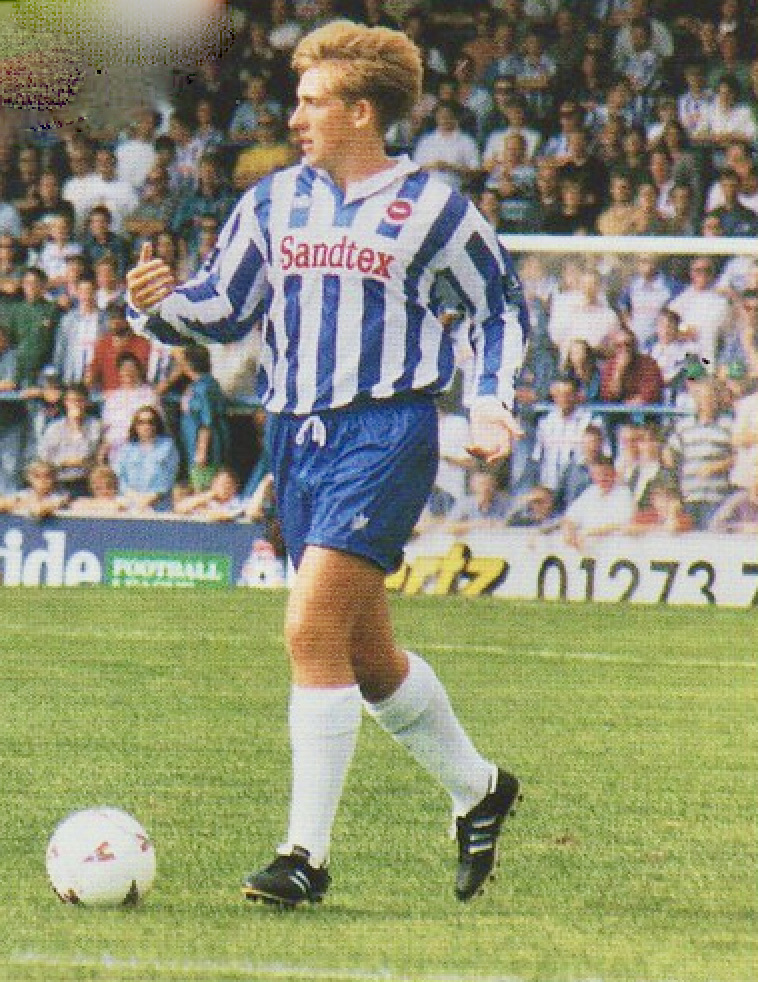
Ansah lines up for the Seagulls in exile

For his part, Ansah told the newspaper:Technically I was given a free, but I knew I would be speaking to the gaffer again before pre-season.

“There was still a chance that I was going to get a contract and I’m very pleased that I have. I think Brighton are going to do things this season.”

Although Albion avoided flirting with relegation for the first time in three seasons, their 17th finishing spot was hardly cause to put the flags out, and Ansah made only two starts. He went on as a sub on nine occasions and was an unused sub on nine others.

Horton left mid-season to return to the north, assistant Jeff Wood struggled in a brief spell as no.1, and Micky Adams only arrived to take charge towards the very end. Ansah was one of nine players out of contract and released at the end of the season (the others were Derek Allan, Michael Bennett, Tony Browne, Lee Doherty, Danny Mills, Darragh Ryan, Peter Smith, Storer, Terry Streeter and Paul Sturgess).

While the Albion prepared to return to Brighton to play at the Withdean athletics stadium, Ansah embarked on a career that attracted a hell of a lot more viewers than had seen him perform at the Priestfield Stadium.

Brentford fan Nick Bruzon has told Andy’s remarkable story on a few occasions and his ‘last word’ blog goes into plenty of detail about it.

In summary, though, after leaving Brighton, Ansah worked as an actor for six seasons on the Sky TV football soap Dream Team, appearing for fictional Harchester United.

He recruited two other former Albion players for Harchester: Peter Smith and Junior McDougald. As one of the older players, early on he was asked the best way to shoot certain scenes and within a year he was the producer.

His ability to choreograph football scenes then led him to Hollywood as a consultant on Goal!, a US film trilogy about a Mexican immigrant who gets to play in the English Premiership.

He even got to spend a day working with his all-time hero Pele in Brazil. “He was an unbelievable guy, a real gentleman,” Ansah told the Southend Echo in a 2008 interview with John Geoghegan.

“Because of my footballing background, I can talk to the players and the crew and translate between the two.

“It’s my job to make sure the footballers feel relaxed and do what they do normally in front of a camera.

“Film has always been a big love of mine, ever since school. And with football, to a degree, you are on stage entertaining. So, there are a lot of similarities between the two.”

He choreographed the whole of the Mike Bassett: England Manager film (starring Ricky Tomlinson) and worked on three series of Wayne Rooney’s Street Striker.

As co-presenter of the Sky 1 programme, Ansah scouted the UK for talent, and took to Rooney 100 talented young footballers who he had to whittle down to win the Street Striker crown.

It was with encouragement from contacts in Hollywood that he put his work on a more commercial footing. He set up his own consultancy, Soccer on Screen, and among many football-based advertisements helped Guy Ritchie direct a Nike commercial for the 2010 World Cup. He has also advised EA Sports, makers of the Fifa video games.

Born in Lewisham, south east London, on 19 March 1969, Ansah was a promising winger during his school days and was playing at county level when he started to attract the attention of clubs.

Way before the days of organised academies, he was picked up by Charlton Athletic aged 11 and stayed with them until he was 16. When he turned 17, he signed as a professional at Crystal Palace.

Ansah told Bruzon: “Because I had been in the system from such a young age, I kind of got a bit complacent and a little bit fed up of football.

“When I left Palace, Steve Coppell said to me: ‘I’m not sure if you really want to play football so I’m going to release you.’

After a six-month break from the game, he joined non-league Dorking stayed out of the game for about six months and then joined Dorking, where Dave Goodwin, who had originally scouted him for Charlton, was working.

When he scored 14 goals in three months for Dorking, Brentford, Fulham and Reading all offered him a contract but he chose the Bees because assistant manager Phil Holder promised to pick him up and take him to play for the reserve team, which he was managing.
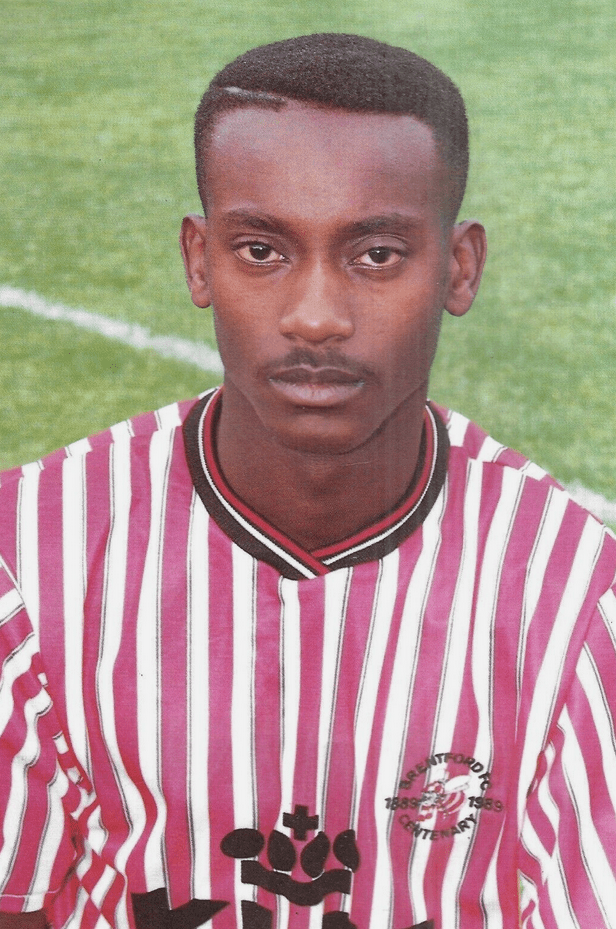
Ansah scored twice on his first start for Brentford in a 3-2 defeat at Bolton but only made eight appearances after falling out with manager Steve Perryman.

In a reserves match between Brentford and Southend, Ansah scored and caught the attention of Shrimpers boss David Webb, who eventually took him to Roots Hall.

Over the course of six years, he scored 38 goals in 180 appearances for Southend and, as well as Holder, reckoned Webb had been the biggest influence on his career.

“David gave me a licence to express myself,” Ansah told Bruzon. “He would say, ‘I don’t care what the outcome is, just go out there and express yourself.’ It really did work!”

Ansah was part of the United side that earned promotion to Division One (now the Championship) and was later named Southend’s 13th most popular player of all time.
“That in itself is a massive achievement,” he said. “It’s good to know that the fans enjoyed what I was doing when I was there. It’s always nice, to get that sort of feedback.”

Perhaps unsurprisingly, when Webb took charge at Brentford, Ansah ended up following him, albeit on loan, scoring just the once (ironically against Brighton in a 2-1 Bees win on 26 November 1994) in four games and again the following season, when he scored once in six appearances.

But Ansah told Bruzon that he didn’t do himself justice because he wasn’t properly fit at that time and, if he had taken medical advice, he probably should have retired because of a knee injury.

“I was fighting to get myself back fit again,” he said. “My first game back I got a cut on my head within 15 minutes and then got it stitched up. I got man of the match but never could regain full fitness. At that stage, the surgeon told me I’d never be fully fit again with my knee.”

He played a couple of games at each of Peterborough, Gillingham and Leyton Orient before dropping out of the league with Hayes, Bromley and Heybridge Swifts.

Ansah’s son Zac spent 10 years with Arsenal’s academy. He moved on to Charlton Athletic when they were in the Championship but didn’t break through and had loan spells with League Two sides Plymouth Argyle and Newport County (playing a total of 26 matches) before moving into non-league football.

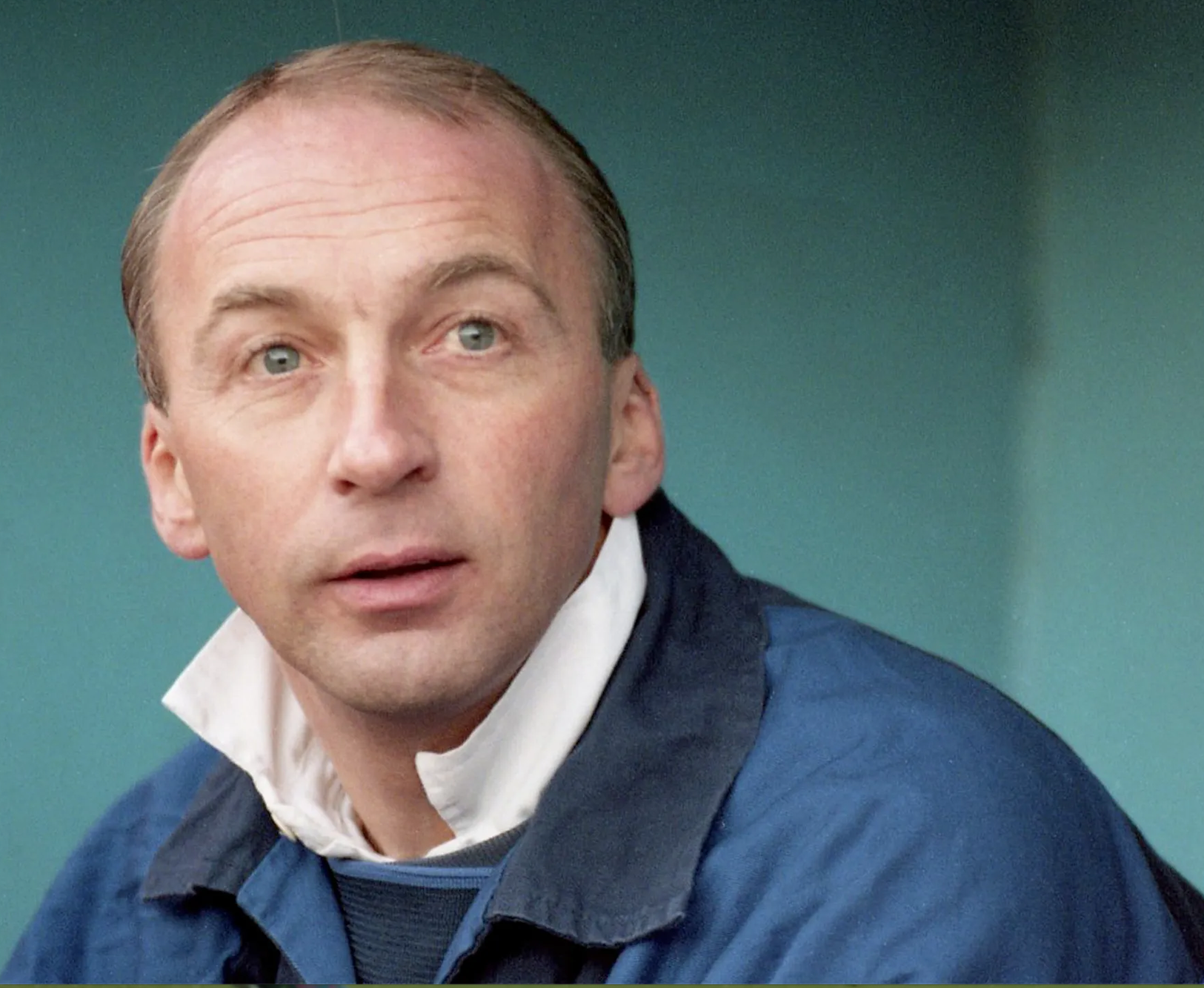
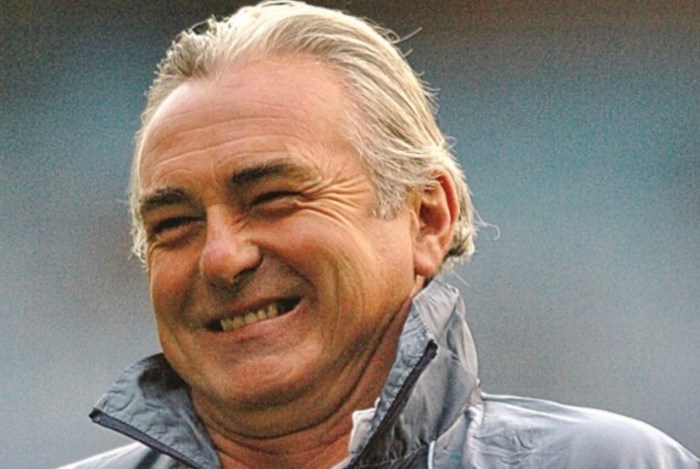
When Steve Gritt took on the ‘worst job in football’

BOURNEMOUTH-BORN Steve Gritt is synonymous with Brighton & Hove Albion’s darkest hour because he was in the almost scalding managerial hotseat at the time the club nearly went out of the league.

The mastermind behind Albion’s ‘Great Escape’ in 1997 grew up in the Dorset coastal resort and began his footballing career with his local club in the 1970s. He later worked as the Cherries chief scout, although, apart from etching his part in Brighton’s footballing folklore, most of his more memorable days in the game came at Charlton Athletic.

Somehow, against all the odds, he managed to keep the Seagulls up when most doomsters could only see the club losing its status – and possibly going out of business as a result.

Gritt, who had been out of work for 18 months having been cast adrift by a new chairman at Charlton, took over from the beleaguered Jimmy Case in December 1996 with Albion 12 points adrift at the bottom of the fourth tier.

“I was delighted when Brighton offered me the chance to return,” he wrote in his matchday programme notes. “I know a lot of people were calling it the ‘worst job in football’ but when you love football as I do then you don’t always see things that way.”

Gritt was certainly an old hand when it came to football’s vicissitudes: rejected by AFC Bournemouth as a teenager, he went on to enjoy the elation of promotion as well as enduring the despair of relegation during his time with the Addicks.

Quite what would have become of Albion if they’d lost their place in the league is now only speculation – thankfully it wasn’t a bridge Gritt had to cross.

“I’d spent 18 years at Charlton as player and joint-manager, with just six months away from it, at Walsall. Then a new chairman, Richard Murray, came in and he didn’t like the joint-manager situation, so he put Alan Curbishley in sole charge, and I left,” Gritt explained.

Without a full-time job in the game, he stayed in touch by doing some scouting work for Tony Pulis at Gillingham, Brian Flynn at Wrexham and a couple of stints for West Brom. He even pulled his boots back on to play for Welling and Tooting & Mitcham.

Eager not to continue to have to queue at the benefit office for dole money, he applied for the vacant Albion manager’s job and got it after an interview in Crewe with the despised chairman Bill Archer and his ‘henchman’ chief executive David Bellotti.

“I knew very little about what was going on at the club,” Gritt told Roy Chuter in a retrospective programme piece. “I’d read bits in the papers, but my only interest was in the football. I wasn’t going to get involved.

“The place was very low. Some of the senior players filled me in on what was happening. In my first few days, there was graffiti on the walls saying I was a stooge, a whistle protest, a fan chained himself to the goal at half-time at my first match – that bothered me as we were winning at the time and went on to beat Hull 3-0.

“Then the next week I had to go onto the pitch with a megaphone at Leyton Orient to get the supporters to leave after the match – and they already hated me! I thought ‘What is going on?’ but my job was to get some sunshine back into the fans’ Saturday afternoons.”

After familiarising himself with the issues at a fans’ forum – “It helped me understand that the fans had to do what they had to do” – he devoted himself to improving the football and although the budget was tight, brought in the experienced defender John Humphrey and Robbie Reinelt, who would go on to score one of the most crucial goals in Albion’s history.

Puzzled by the plight of a side that contained good players in the likes of Craig Maskell, Ian Baird and Paul McDonald, Gritt maintained: “I never thought we’d go down.”

He recalled: “There was such a lot of experience. If I could organise them, we’d have a chance.”

Looking back years later

Ultimately, the club’s fate was decided in the final two games of the season – at home to Doncaster Rovers and away to Hereford United.

“We knew we could beat Doncaster,” he said. “There was a big crowd and a tremendous atmosphere – very tense. Maybe that got to the players – we didn’t play as well as we had done, but once we were 1-0 up, we weren’t going to get beat. We had a great defence.”

Gritt recalled: “I was beginning to think that there wasn’t going to be any goals in the game as there hadn’t been too many chances during the game that I can remember.

“Suddenly we had a corner from which Mark Morris eventually hit the bar, confirming my thoughts. But suddenly the ball fell to Stuart (Storer) who struck it into the net to spark off unbelievable celebrations on the pitch, off the pitch and in the dugout.

“Could we now keep our composure and see the game out to a memorable 1 nil win? We did! What a day and what a memory.”

And so to Hereford, who needed to win to avoid dropping out of the league. Albion only needed a draw to stay up. Everyone knows the story. A goal down at half-time when Kerry Mayo put through his own net, Gritt reminded the players at half-time that their jobs were on the line.

Relief at Hereford

He sent on Reinelt as a sub and in the 62nd minute he slotted a second half equaliser to send the Albion faithful into ecstasy and condemn the Bulls to their fate.

“I think if it had been Brighton, we could have faded into obscurity,” he said. “Most of the players would have left, and I don’t think we could have coped.”

As things subsequently transpired, it was Gritt who would soon be on his way.

It’s perhaps a bit of a cliché to say there is no sentiment in football but when Gritt’s side had managed only four league wins up to February in the 1997-98 season, and were second bottom of the table, chairman Dick Knight wielded the axe.

“No one who cares about the Albion will forget Steve’s tremendous contribution to our survival last season,” said Knight. “This season, given our difficult circumstances, feasibly we were only seeking to preserve our league status by a safe margin, but to date that comfort zone has eluded us.”

Thankfully you can’t keep a good man down for long, though, and within two weeks of getting the Brighton bullet, Gritt was back in the saddle as assistant manager to Billy Bonds at Millwall.

Although Bonds was sacked by the Lions only six weeks after Gritt’s arrival, successors Keith Stevens and Alan McLeary kept him on, working with the reserve team. Then Mark McGhee took charge and got Gritt back involved with the first team to take on organisational work such as set plays.

After McGhee took charge at Brighton, Gritt switched across south London back to Charlton, where he ran their academy for the next six years.

He returned to his hometown club in 2011 to become chief scout, initially under Lee Bradbury and then his successor, Paul Groves.

But he was disappointed to be let go in September 2012, telling theEcho: “They have changed the way they are doing their recruitment so there wasn’t really any need for me to be there.”

Bournemouth chairman Eddie Mitchell explained: “We have got analysts on board now and all games are available on DVD. We are trying to build a database from these clips.

“We felt it was impractical to send somebody all over the country to watch games every day when we can get DVDs of games and players.

“It was a role which diminished for us. Whether it is the right way to go remains to be seen but we have got to look at effectiveness and costs.”

Gritt said: “It was a big thing last year for me to come back to the club where I grew up. I am disappointed it has come to an end like this, but life goes on.

“I have lost jobs in the past and, hopefully, I will bounce back. I am looking forward to the next chapter in my career and will just have to wait and see what comes up.”

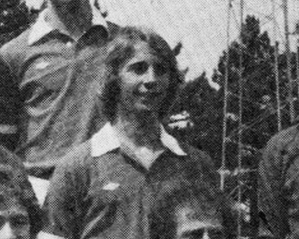
Born in Bournemouth on 31 October 1957, Gritt’s early footballing ability was first seen in the Kings Park First School football team of 1969, as the Echo discovered when readers were asked to send in their old sports photos.

A rare sight: young Gritt with hair!

Gritt, a forward, was taken on as an apprentice by the Cherries and played a handful of games for the first team under John Benson before being released at the age of 18.

Colin Masters remembered on the Where Are They Now? website (in an October 2020 post) how Gritt linked up with non-league Dorchester who paired him up front with Ron Davies, the former Welsh international centre-forward who’d played for Southampton, Man Utd and Portsmouth.

“They were an exciting pair to watch at that level,” said Masters. “After three matches I was so impressed with Steve that I went and found the Dorchester club secretary and asked if he had signed Steve Gritt on a contract.

“The reply was ‘No’. Within two weeks, Charlton Athletic came in and took him (presumably for nothing) and he went on to have a very successful career for many years. Dorchester’s loss was Charlton’s gain!”

Between 1977 and 1993, Gritt played a total of 435 matches for the Addicks, including a relegation to the old Third Division in 1980 and two promotions – to the Second Division in 1981 under Mike Bailey and the First Division under Lennie Lawrence in 1986. He had a six-month spell with Walsall in 1989 before returning and experiencing another relegation in 1990.

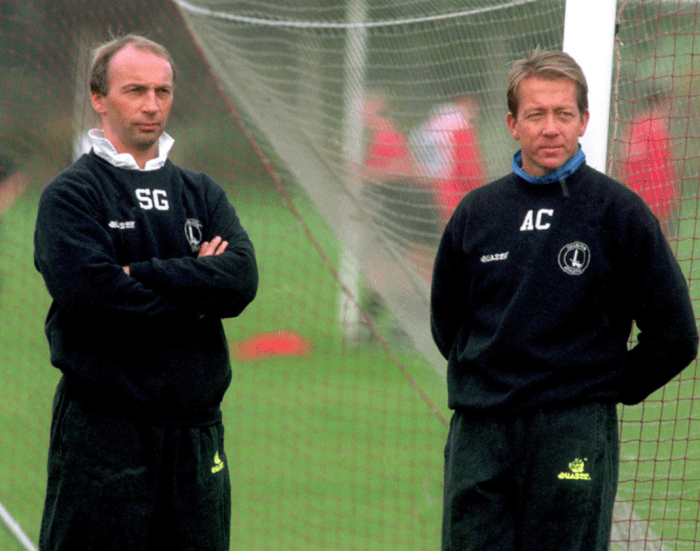
Gritt became joint player-manager with Curbishley in 1991 and, under their stewardship for the next four years, the likes of Lee Bowyer, John Robinson, Richard Rufus and Shaun Newton established themselves as mainstays of the side.

When Charlton decided in 2021 to re-name their East Stand in Curbishley’s honour, a generous Gritt told londonnewsonline.co.uk it was a fitting tribute to his former colleague.

“We had our trials and tribulations but I’ve always judged that we did what was required to keep the club going. We had to steady the ship.

Joint Charlton manager with Alan Curbishley

“We would have loved to have kept Rob Lee, for example, but we had to do things for the well-being of the club so we could keep it going and give the fans something to shout about.

“It was a great time when we got back to The Valley (they’d spent several years sharing Selhurst Park with Crystal Palace).

“Then the club made a decision which I was never going to agree with. But when I look back to see what Alan did – he went on to do a significant job – I cannot complain. Ultimately what he achieved he thoroughly deserved.”

Gritt said: “When I was there we had to make sure we weren’t seen to be having disagreements although I cannot recall us having too many anyway.

“When we were on the training ground, we each knew what the other one would be doing during the sessions. We both had jobs to do on the day.

“I was more of a player than he was at that time – so the management side was more in his hands. It was fairly straightforward, until the club decided that they wanted one man in charge. That was obviously disappointing for me at the time but I have thoroughly enjoyed my career.

“Alan gave the club a massive block to build on – but no one could have envisaged how the club went after he left. It was a massive disappointment.”

After he left Bournemouth in 2012, Gritt dropped out of league football and spent five years as assistant manager at Ebbsfleet United, working with his former Charlton teammate (and ex-Albion youth team manager) Steve Brown and then Daryl McMahon, who he subsequently followed to League Two Macclesfield Town, Conference side Dagenham & Redbridge and Isthmian League Hornchurch.

Hailed as a hero at the Amex

Big money signing Peake hit a trough at the Albion

EXPENSIVE FLOP Jason Peake was a victim of the problems clouding Brighton’s very existence in the mid-1990s.

The blond-haired midfielder heralded elsewhere for his “excellent left foot” and “one of the best passers of the ball in the lower leagues” failed to live up to expectations at the Goldstone and was dubbed Jimmy Case’s “biggest blunder”.

Leicester-born Peake had played alongside Case for Halifax Town, where he’d moved after making only a handful of appearances with his hometown club.

Former Albion loanee centre half John McGrath, assisted by Frank Worthington, failed to halt the Shaymen dropping out of the league in 1993, and Peake spent a season in the Conference before reviving his league career with Rochdale. Nine goals in 103 appearances attracted suitors and it was Albion who bought him for a fee set by tribunal of £80,000 – a huge sum for a cash-strapped club.

A further £15,000 was to be paid after 20 games and another £25,000 if he got to 40 appearances. He made 35 appearances before being frozen out by Case’s successor, Steve Gritt. It was to be a familiar pattern: changes of manager often led to him moving on.

Apart from the bigger picture shenanigans going on at the Albion under the hated Archer-Bellotti regime, Peake’s personal issues centred around relocation expenses he said he was entitled to – but Bellotti refused to pay up.

According to fansnetwork.co.uk: “Peake was being forced to commute from Leicester following several broken promises by the Brighton board. Peake’s dream move turned into nothing short of a nightmare for him.”

The midfielder had trials at Northampton and Cambridge before he finally managed to get away, in October 1997, signing for First Division Bury. He rather diplomatically said: “The situation at Brighton has been well documented over the past year and just let’s say when I got there the situation was not as I’d been led to believe it would be.

“I have not been happy there for some time and the new consortium have been great in letting me get away.”

The official version in the matchday programme said: “Jason had problems in settling in the South after his move from Rochdale and the move has suited him and his family. Should Bury sell him for a fee at any time, Albion are assured of a share in any such deal.”

As ever, the season had begun with great expectations and in his matchday programme notes welcoming new signings Peake and Ian Baird, Case said: “They are both quality players and I am sure that they will be great acquisitions for the club this coming season.

“I firmly believe we now have a skilful blend of experienced and young players that can mount a serious challenge for promotion at the first attempt and I believe we will surprise many teams this season.”

Peake went straight into the side in the no.8 shirt but after he’d played 19 games on the trot Albion were anchored at the foot of the table.

After Case was sacked, Peake found himself on the bench more than in the starting line-up; local lad Kerry Mayo taking over from him.

Supporters were certainly not impressed by Peake, perhaps summed up by ‘Lenny Rider’ on North Stand Chat who said: “Huge outlay for where the club was at the time. His kinder critics would say he was disappointing, the more cynical amongst us would argue he was actually nicking a living at the Goldstone.”

New Albion chairman Dick Knight cut Albion’s losses by giving Peake a free transfer to Bury in exchange for the relocation cash dispute being dropped.

Bury boss Stan Ternent was lauded for pulling off something of a coup, and Peake told the Lancashire Telegraph: “It is a fantastic chance for me to prove myself. It has taken me a long time to get into the First Division and I don’t want to blow the opportunity.”

Sadly, those words came back to haunt him because he ended up playing just six times for the Shakers, three as a left-back and three as a sub.

To quote fansnetwork.co.uk again: “Peake’s silky skills didn’t really fit in with the kick and rush tactics of Ternent’s Bury team, and Peake found himself stranded back in the reserves.”

The following summer, a return to Rochdale, where he had first made a name for himself, looked like an ideal solution but things didn’t go well under the management team of Graham Barrow and Joe Hinnigan, who left the club at the end of the 1998-99 season.

In something of a twist of Peake’s usual fortunes when there had been a managerial change, his career began to blossom again under new boss Steve Parkin.

“The free flowing style of football on offer was much more suited to Peake’s natural style,” according to fansnetwork.co.uk. “Peake was awesome in the opening months of the 1999-2000 season and was at the heart of a side which led the table early on.”

He got amongst the goals including “a superb overhead kick from the edge of the area against old team Halifax Town, which saw him win the club’s goal of the season competition and awarded ‘Better than Pele’ status on Sky’s Soccer AM”.

Nevertheless, the season ended on a sour note, as the clarkechroniclersfootballers blog explained: “We lost two re-arranged home games against Peterborough and Northampton in April which would have secured us a play-off place. Jason featured in both games and Steve Parkin singled him out as the scapegoat accusing him of ‘going missing’. It’s always easier for a manager to castigate a player he didn’t sign but we knew there was some truth in it.”

With his contract up at the end of the season, Peake chose to move on, this time to Plymouth Argyle, at the time managed by Argyle legend Kevin Hodges.

Argyle move didn’t work out

It began well enough for him personally and, of Argyle’s 2-0 home win over Carlisle on 16 September, BBC Sport said: “Plymouth doubled their lead in the 17th minute when man of the match Jason Peake scored a superb opportunist goal.

“Peake’s initial attempt came back off visiting central defender Julian Darby and the Plymouth midfielder reacted with a brilliant dipping volley which gave keeper Luke Weaver no chance.

“Weaver denied Peake a second goal in the 80th minute, making a tremendous backward save to keep out the home player’s far post header.”

It followed him scoring four days earlier in a 4-1 defeat at Shrewsbury and was only the second win out of eight. When the next three games were lost, Hodges was replaced by Paul Sturrock, who didn’t take long to decide Peake’s future.

Before Christmas, the midfielder was dispatched to Nuneaton Borough on loan and the move was made permanent in February 2001. Although his league career was over, Peake played 54 games for Borough but was sidelined for periods with a troublesome Achilles tendon injury and he eventually retired in 2003 and became a full-time chiropodist in Leicester.

Born in Leicester on 29 September 1971, Peake played for England schoolboys and was taken on as a trainee by the Foxes.

Manager David Pleat gave him his first team debut in a 2-1 defeat at Charlton Athletic in a Full Members Cup game on 14 November 1989.

It was another year before he made his league debut in the old Division Two, as a sub in a 2-2 draw away to Oxford United.

The same month he also went on as a sub in a 1-0 home defeat to Wolves in the Full Members Cup, played in front of a paltry 4,705 crowd. Four days later he started but was subbed off against Newcastle in a game that remarkably finished 5-4 to the Foxes.

His involvement straddled the end of the Pleat regime and the caretaker manager spell of former Everton boss Gordon Lee, who, in the season Albion reached the play-off final v Notts County, managed to keep Leicester up by only two points while West Brom were relegated along with bottom club Hull City. (Lee died aged 87 in March 2022).

Across three months, Peake had three more starts (and was subbed off in two of them) plus three more games off the bench. Three days after City lost 3-0 at Brighton (goals from Mike Small, Dean Wilkins and Bryan Wade), Peake made a rare start and scored his only goal for the club in a 2-1 home win over Barnsley on 23 February 1991.

Earlier that month (on 6 February 1991), he earned an England under-19 cap when he was sent on as a sub for Aidan Newhouse as England lost 5-1 to Denmark at the Manor Ground, Oxford.

Peake’s last game for Leicester was against Newcastle United on 2 March 1991. He didn’t get a look-in under Pleat’s successor Brian Little and, in February 1992, he joined Hartlepool on loan, playing six matches and scoring once.

Day of reckoning beckoned for talent spotter Mervyn

THE YOUNGEST goalkeeper to appear in a FA Cup final spent 20 months picking out future players for Brighton.

It was one of several different post-playing roles Mervyn Day filled for various clubs.

Day, who at 19 won a winners’ medal with West Ham in 1975, was Albion’s head of scouting and recruitment between November 2012 and the end of the 2013-2014 season under head of football operations David Burke.

At the time, his appointment was another indicator of the gear change taking place at the club as it built on the move to the Amex Stadium and sought to gain promotion from the Championship.

Day said in a matchday programme interview: “This club has come such a long way in such a short space of time.

“When you think of the debacle of the Goldstone, the wilderness of Gillingham, then Withdean, you only have to get a player through the front door at this wonderful stadium to have a chance of signing them.

“Hopefully, within the next year or so, the new training ground will be up and running and, when you’ve got that as well, you’ve got the perfect opportunity not only to encourage kids to sign but top quality players as well.

“If we are fortunate enough to get ourselves into the Premier League at some point, we’ll be able to attract top, top players.”

It was a case of ‘the goalkeepers union’ that led to him joining the Albion. Day explained he’d been chatting to Andy Beasley, Albion’s goalkeeping coach at the time, who had been a colleague when Day was chief scout at Elland Road. Beasley wondered if he’d like to help coach Albion’s academy goalkeepers but Burke, who he also knew, stepped in and offered something more substantial: the job of scouting and talent identification manager.

He certainly brought a wealth of experience to the task. He had previously been assistant manager to former Albion midfielder Alan Curbishley at Charlton and West Ham; manager and assistant manager at Carlisle United, a scout for Fulham and the FA (when Steve McClaren was England manager) and chief scout at Leeds until Neil Warnock took charge.

In addition to that background, in the days before full-time goalkeeper coaches, Day had worked at Southampton under David Jones, Chris Kamara at Bradford City and John Aldridge at Tranmere Rovers. Then in 1997 Everton came along and he joined Howard Kendall’s backroom team alongside Adrian Heath and Viv Busby. “I was living in Leeds at that time, so distance wasn’t an issue, but it was an interesting trip across the M62 in the winter months,” Day recalled in an October 2021 interview with efcheritagesociety.com.

Brighton made Day redundant at the end of the 2013-14 season following a reshuffle of the recruitment department amid criticism of the quality of signings brought in.

That assessment might have been rather harsh because during his time at the club there was a change in manager (Oscar Garcia taking over from Gus Poyet) and, although the season ended in play-off disappointment, the likes of former Hammer Matthew Upson (who’d played under Day when he was at West Ham) had signed permanently on a free transfer (having been on loan from Stoke City for half the previous season).

The experienced Keith Andrews and Stephen Ward also joined on season-long loan deals and played prominent roles in Garcia’s play-off reaching side.

It was under Day’s watch that the promising young goalkeeper Christian Walton was signed after a tip-off from Warren Aspinall. Aspinall told the Argus in 2015: “I went to Plymouth to do a match report. I set off early and took in a youth team game off my own back. He was outstanding, commanding his box. I reported straight back to Gus (Poyet). He told Mervyn Day. He went to see him, Mervyn liked him.”

It wasn’t the first time Day had played a role in securing a goalkeeper for the Albion. As far back as 2003 he had an influence on Ben Roberts’ arrival at the Albion. Manager Steve Coppell revealed: “He is one of three goalkeepers at Charlton and at the moment nearly all the Premiership clubs are very protective about their goalkeepers.

“I have seen him play a number of times, although I certainly haven’t seen him play recently. I spoke with Mervyn Day (Charlton coach) and he says Ben is in good form. It’s a little bit of a chance and it will certainly be a testing start for him, but he is looking forward to the challenge.”

Day was also sniffing around another future Albion ‘keeper when he was chief scout for Bristol City (between 2017 and 2019).  According to Sky Sports commentator Martin Tyler, Mat Ryan was on their radar in the summer of 2017 when he swapped Belgium for England. In an interview with Socceroos.com, Tyler reveals he was asked by City’s ‘head of recruitment’ (thought to be Day) to glean the opinions of Gary and Phil Neville (manager and coach of Valencia at the time) on Ryan and whether he’d be suitable for the English game.

“I got a text saying, ‘Can you find out from the Nevilles whether they rate Mat Ryan’,” Tyler said. “It wasn’t my opinion they were looking for – quite rightly – it was Gary and Phil’s. I was able to do that and both Gary and Phil gave Mat the thumbs up.”

After leaving Brighton, Day moved straight into a similar role with West Brom, where he worked under technical director Terry Burton and first team manager Alan Irvine, but he was only there a year before linking up with the Robins. He has since been first team domestic scout for Glasgow Rangers, although based in his home town of Chelmsford.

Day was born in Chelmsford on 26 June 1955 and educated at Kings Road Primary School, the same school that England and West Ham World Cup hero Geoff Hurst attended. He moved on to the town’s King Edward VI Grammar School and represented Essex Schools at all levels. He joined the Hammers under Ron Greenwood on a youth contract in 1971.

“On my first day as an associate schoolboy I got taken by goalkeeping coach Ernie Gregory into the little gym behind the Upton Park dressing room and he had Martin Peters, an England World Cup winner, firing shots at me,” Day later recounted. “As a 15-year-old that was incredible.

“The bond got even closer when my father died when I was 17. I was an apprentice but Ron signed me as a full pro within a very short space of time to enable me to earn a little more money to help out at home. A short while later he gave me another increase. He was almost a surrogate father to me.”

In the early part of 1971, Day played in the same England Youth side as Alan Boorn, a Coventry City apprentice Pat Saward took from his old club to the Albion in August 1971.

The goalkeeper was just 18 when he made his West Ham United debut, on 27 August 1973, in a 3-3 home draw with Ipswich Town.

He went on to play 33 matches in his first season and only missed one game in the following three.

Tony Hanna, for West Ham Till I Die, wrote: “In only his eleventh game for the Hammers he received a standing ovation from the Liverpool Kop in a 0-1 defeat that could have been a cricket score but for his fine display and, in his next visit to Anfield, he saved a penalty in a 2-2 draw.”

Day recalled: “As a kid, I had no fear, I took to playing in the first team really, really well. At West Ham, the ‘keeper always had lots to do as we were an entertaining team. We had forward-thinking centre-backs in Bobby Moore and Tommy Taylor, and then after Bobby came Kevin Lock.”

Mervyn Day in action for West Ham against Brighton at the Goldstone Ground, Hove.

In 1974, Day progressed to England’s Under-23 side. He won four caps that year and a fifth in 1975 but it was a golden era for England goalkeepers at the time and he didn’t progress to the full international side, despite being touted for a call-up.

By the time Day won that last cap, he had been voted PFA Young Player of the Year and, at 19, had become the youngest goalkeeper to appear in a FA Cup Final, keeping a clean sheet as West Ham beat Fulham 2-0 at Wembley.

Hanna continued: “At times he was performing heroics in the West Ham goal and he was fast becoming a fans favourite. Tall and agile, he was a brilliant shot stopper and he was playing like a ‘keeper well beyond his years.”

However, by the 1977-78 season Day’s form had tapered off as the Hammers were relegated. “His confidence was so bad he was eventually dropped and he only played 23 games that season,” said Hanna. “There are several theories to what triggered the loss of form, but one thing that did not help the lad was the stick he was getting from the Hammers supporters.

“In hindsight Mervyn said that he was ill prepared for such a tough run of form. The early seasons had gone so well that he had only known the good times and when the bad ones came he struggled to come to terms with the pressure.”

In 1979, West Ham smashed the world record transfer fee for a goalkeeper to bring in Phil Parkes from QPR and Day was sold to Leyton Orient, where he replaced long-standing stopper John Jackson, who later became a goalkeeper coach and youth team coach at Brighton.

Day spent four years at Brisbane Road before moving to Aston Villa as back-up ‘keeper to Nigel Spink. After a falling-out with Villa boss Graham Turner, he switched to Leeds under Eddie Gray and then Billy Bremner. During Bremner’s reign, he had the humiliation of conceding six at Stoke City at the start of the 1985-86 season and, in spite of vowing it wouldn’t happen again, let in seven in the repeat fixture the following season. Amongst his Leeds teammates that day were Andy Ritchie and Ian Baird.

Nevertheless, he ended up playing more games (268) for Leeds than any of his other clubs. He rarely missed a game up to the end of 1989-90, the season when was he was named Player of the Year and collected a Second Division championship medal.

Howard Wilkinson offered him a post as goalkeeping coach for United’s first season back in the elite, having lined up a £1m move for John Lukic from Arsenal. Day had a couple of loans spells – at Luton Town and Sheffield United in 1992 – but was otherwise back-up for Lukic, alongside his coaching duties, until Wilkinson saved Brighton’s future by signing Mark Beeney from the Seagulls.

After eight years at Elland Road, Day moved to the Cumbrian outpost of Carlisle in 1993. When he moved into the manager’s chair at Brunton Park, he not only led them to promotion from the Second Division in 1997, but they also won the (Auto Windscreens Shield) Football League Trophy. United beat Colchester 4-3 on penalties at Wembley after a goalless draw; one of the scorers being the aforementioned Warren Aspinall, later of Brighton and Radio Sussex.

Day worked under Curbishley at Charlton for eight years between 1998 and 2006, helping the club stabilise in the Premier League.

And, in December 2006, he followed Curbishley as his No.2 to West Ham, where the duo spent almost two years.

It was in 2010 that he returned to Leeds as chief scout, working under technical director Gwyn Williams. United manager Simon Grayson said at the time: “We’re restructuring the scouting department under Gwyn and Mervyn will be both producing match reports and watching our opposition and working on the recruitment of players.

“Merv’s knowledge and experience will prove important to the football club as we look to progress and develop what we are doing.”

Putney printer Pearce went to Wembley with the Albion

HE took a circuitous route back to his hometown club but full-back Graham Pearce eventually made it to Brentford’s first team after Brighton had resurrected his career and given him a chance to play at the top level of the English game.

Pearce was first on Brentford’s books as a teenager between 1971 and 1976, but he didn’t make it as a pro with the Bees and, after also being turned down by QPR, he went non-league, initially with Hillingdon Borough for three years and then Barnet.

When Pearce lined up for Barnet in a FA Cup third round tie on 2 January 1982, it must have been beyond his wildest dreams to imagine just over a year later he’d be playing in that competition’s final at Wembley.

But the steady, assured performances 21-year-old Pearce put in as Alliance Premier League Barnet held Brighton 0-0 before losing 3-1 in a replay at the Goldstone impressed the watching Albion boss Mike Bailey sufficiently to sign him up for the Seagulls.

Although he was itching to join, he had to serve a week’s notice with the Putney printer where he had a full-time job because they weren’t in a position to release him sooner.

Just over a year later, when injuries depleted Jimmy Melia’s cup hopefuls the closer they got to a dream Wembley date, Pearce seized his chance to put his own name in print. Circumstances fell just right for him, but it might not have happened if the experienced left-back Sammy Nelson hadn’t been sidelined.

A packed East Terrace at the Goldstone the backdrop as Pearce faces Newcastle in the FA Cup

Pearce played in the third round 1-1 Goldstone draw with Newcastle – one of six games he played in January 1983 – but he missed the 4-0 demolition of Manchester City in the fourth round and didn’t feature again until 22 March when he was sub for the 2-2 home draw with Liverpool.

Because versatile Gary Stevens was more than capable of playing alongside Steve Foster, normal centre back partner Steve Gatting was preferred at left-back for 14 matches from the end of January.

But when right-back Chris Ramsey was suspended for the semi-final against Sheffield Wednesday, Stevens took his spot, Gatting returned to the middle and Pearce slotted in at left-back.

Because Foster was suspended for the final against Man Utd, Stevens paired up with Gatting in the middle and Pearce retained his place.

Even when Foster returned for the replay, Pearce kept his place because Ramsey had been crocked in the first match and wasn’t fit to play (Melia making the mistake of putting left-footed Gatting at right-back instead of Stevens).

In a pre-match interview with the Daily Mail, Pearce said: “There’s money to be made from appearing at Wembley but the thrill for me is just being there – a player from non-League who thought his chance of playing league football had gone.”

Pearce retained the no.3 shirt at the start of the 1983-84 season back in the second tier but, when Chris Cattlin took over from Melia, he made it clear he wanted someone with more experience in that position.

In his matchday programme notes he wrote: “With Kieran (O’Regan), Eric Young and Graham Pearce all playing together, we have three players who haven’t been long out of non-League football.

“Normally these players would have been blooded slowly into the side, instead of being plunged in the deep end. They have done well and shown the right attitude, but when we play against aggressive sides away from home, some of their inexperience has been exposed.”

Until a suitable replacement could be found, Pearce remained in the side and even poked home his first Albion goal in a 4-3 win away to Cambridge United on 29 October 1983.

But four weeks later, after a 2-2 draw at home to Shrewsbury Town, Cattlin was typically forthright in his next programme notes, declaring: “I was unhappy with our defence and our failings in this department cost us the game.”

Pearce and fellow full-back Ramsey were promptly dropped; the left-back berth going to new signing Chris Hutchings from Chelsea.

Cattlin had high praise for his new recruit as he said: “Chris Hutchings is an enthusiastic, strong and determined defender and has a lot to offer, he’s also a fine footballer.”

After 18 consecutive games, Pearce found himself out of the side for the rest of the season.

It’s interesting to note that the reserve side for the 1 May 1984 fixture at home to Southampton featured five players (Pearce, Ramsey, Gary Howlett, Gerry Ryan and Neil Smillie) who’d been in the FA Cup Final squad a year earlier.

The new season was almost three months’ old before Pearce was seen in the first team again, and, ironically, the opponent was once again Shrewsbury.

The game at the Goldstone finished a goalless draw and, with Hutchings having been switched to right-back, Pearce got a run in the side extending to 19 matches.

Unluckily for him, he was then left out of the side in favour of Martin Keown, who Cattlin managed to bring in on loan from Arsenal, and the future England international quickly proved his calibre.

Pearce made one further appearance, in a 2-1 defeat at Middlesbrough, before the end of the season but in the 1985-86 season he finally cemented his place in the side and played a total of 41 matches.

Three days after Christmas 1985, he scored a rare goal as the Seagulls beat Leeds 3-2 at Elland Road. Ian Baird – later to play for the Albion in the old Fourth Division – missed a penalty but scored one of Leeds’ goals and Pearce clinched the winner on a pitch rutted by a rugby league game played on it only two days earlier.

The matchday programme described the goal thus: “Pearce played a one-two with (Steve) Jacobs and found himself with only Mervyn Day to beat and Leeds screaming for offside. The trusty left foot of the Londoner lobbed goalwards, Day was stranded, and Pearce had scored his first goal in 26 months to give Albion another three valuable points.”

Not such a memorable game came in a 3-0 defeat away to Norwich City on 5 April 1986. The full-back went into the referee’s notebook for a foul on future Albion winger Mark Barham, who was substituted shortly afterwards. Albion had a great chance to pull a goal back when Pearce was through one-on-one with Chris Woods, but the England ‘keeper saved his effort comfortably. Then, eight minutes from time, Pearce fouled Wayne Biggins in the penalty area and Welsh international David Williams buried City’s third from the penalty spot.

Pearce played in Albion’s final game of the season, a 2-0 defeat at Hull City under George Petchey, following Cattlin’s sacking, and it turned out to be his last match in a Brighton shirt.

The returning Alan Mullery explained in his programme notes for the opening game of the new season that he released Jacobs and Pearce because “I felt we had too many defenders”.

Pearce switched to Third Division Gillingham under Keith Peacock and played a total of 48 matches as the Gills narrowly missed out on promotion when losing a play-off final replay against Lou Macari’s Swindon Town in 1987.

Following a disappointing second season with the Gills, when they finished mid-table, Pearce returned to hometown club Brentford where he played 14 times (+ 8 as sub) in Steve Perryman’s 1988-89 side. One of his teammates was fellow former Albion cup star Smillie.

Pearce joined up with Peacock again for Maidstone United’s debut season (1989-90) in the Fourth Division, which culminated in a play-off semi-final defeat at the hands of a Cambridge United side featuring Dion Dublin up front.

The following season, under Phil Holder, Pearce was back at Brentford as first team and reserve coach. He subsequently had spells as player-manager with Isthmian League clubs Enfield and Molesey. He later became a PE teacher at Homefield Preparatory School in Sutton.

Born in Hammersmith on 8 July 1959, Pearce was one of seven children (five boys, two girls) and attended Grove Park Primary School, where he was captain of their under-9 football side. He went on to play for the Middlesex County side and Middlesex Wanderers before his stop-start professional career began.

• Pictures from my scrapbook and matchday programmes.

John Humphrey – unsung hero of 1997 great escape

John Humphrey in Wolves colours

ONE OF the unsung heroes of Albion’s last-gasp survival feat in 1997 knew a thing or two about playing for clubs in precarious circumstances.

John Humphrey’s first club was Wolverhampton Wanderers during a bleak period in their history: they dropped into the basement division under the controversial ownership of the Bhatti brothers.

The right-back later played ‘home’ games for Charlton Athletic at Selhurst Park and Upton Park when the football authorities deemed The Valley unfit to stage matches.

And he ended his professional playing days turning out for Brighton in ‘home’ games at Gillingham’s Priestfield Stadium (as pictured above).

Humphrey came to Brighton’s rescue in the autumn of his career.

With Albion’s very existence under threat as 1996 turned to 1997, Albion handed the managerial reins to Steve Gritt, and former Charlton teammate Humphrey was his first signing: a free transfer from Gillingham, who were playing in the division above.

Humphrey was 36 at the time with nearly 650 professional matches behind him, including a good many in the top-flight with Wolves, Charlton and Crystal Palace. Indeed, he was Charlton’s player of the year in 1988, 1989 and 1990.

After four matches on the bench, Humphrey replaced Peter Smith at right back and played in Albion’s last 11 games of that 1996-97 season, only ending up on the losing side three times. wearebrighton.com said his impact made him “a seriously underrated piece of the Great Escape jigsaw”.

“Steve wanted me because I was experienced, could get the players organised and was able to talk them through matches,” Humphrey told the Argus. “He knew I was steady, reliable and dependable, that nine games out of ten I’d play pretty well and that I would give 100 per cent.

“It was a lot of pressure but I’d been through a few promotions (three) and relegations (six) with Wolves, Charlton and Crystal Palace.” He continued: “The stressful situations I had gone through with those other clubs had given me experience of how to try and keep a season alive.

“I could do a job for Brighton and I felt I did that and the team turned out to be good enough to hang on. It was one of the biggest achievements of my career.”

Humphrey remembered the pressure going into the Hereford match was “horrible” because of the media focus but he added: “It might have been going out of the frying pan of Gillingham into the fire at Albion but I’m glad I made the jump.”

Unfortunately, then chief executive David Bellotti tried to renege on a deal Gritt had agreed verbally with Humphrey that he’d get a new one-year contract if Albion stayed up.

“When I was told I was being released, I thought it was a pretty poor show. But Steve, to his credit, then fought my corner and I stayed on.”

With the Goldstone sold, and Albion forced to play ‘home’ games at Gillingham,  Humphrey retained his place in the side and played in 13 matches but, along with other senior players, such as Craig Maskell, Paul McDonald, Denny Mundee and Ian Baird, he was let go to save money on wages.

Humphrey accepted the package he was offered, called time on his long professional career, and dropped into the non-league scene, playing initially for Chesham, then Carshalton, Dulwich Hamlet and Walton and Hersham.

He got a break into a new career as a teacher at Whitgift School in Croydon courtesy of former Albion defender, Colin Pates, who’d played with Humphrey at Charlton.

“I knew Colin from Charlton when we roomed together,” Humphrey told the Argus. “I was aware he was at the school and he said he needed help for after-school sessions and asked me to come along. So I did and the football took off at the school and I got involved in other sports like rugby and basketball and got a full-time job there.”

After leaving Whitgift School, Humphrey became head of football at Highgate School in north London.

Born in Paddington, west London on 31 January 1961, Humphrey was picked up by Wolves after he played against their junior team for a North London club called Bourne Hall.
He recounted how events unfolded in an interview with wolvesheroes.com: initially signing schoolboy forms, then progressing to coaching in school holidays, before earning an apprenticeship.

He signed as a professional in 1979 and made his first-team debut in the old top- flight in a 3-0 Easter Monday win at Southampton in 1980. His second game ended in a 3-0 defeat to Brighton.

They came under John Barnwell and, by the time Humphrey left the club in 1985, he’d served under three other managers; the last being former Manchester United boss Tommy Docherty.

Although the side was relegated in 1981-82, Humphrey embarked on what was a 78-game unbroken spell in the side. He was ever-present when they were promoted in 1982-83.

“I loved my time at Wolves,” he told wolvesheroes.com. “I only left because we went down again in 1984-85 and I didn’t fancy playing in the Third Division. Charlton came in for me and they took John Pender from Wolves a few weeks later as well.”

Wolves under the Bhatti brothers were in freefall and a lack of investment in the side saw them suffer three consecutive relegations – in 1984, 1985 and 1986 – ending up in the old Fourth Division for the first time in the club’s history.

Humphrey joined an Addicks side newly-promoted to the elite and, although Lennie Lawrence’s side often struggled to retain their status, they remained in the top-flight until 1990, and many supporters thought the right-back was good enough for international selection.

On charltonlife.com in September 2012, Queensland Addick recalled his impressive level of fitness, and said: “The number of times he ran the right wing at great pace during a game was quite incredible.”

By the time he left Charlton in August 1990, he’d played 231 games and it was said his £400,000 transfer to top-flight Crystal Palace was linked to the fact that at the time Charlton were playing home matches at Selhurst Park.

In a five-year stay at Selhurst, Humphrey played 192 games (plus 10 as sub). Known principally for his defending, Humphrey was delighted to mark his 150th appearance for Palace with a 35-yard equaliser for the Eagles against his old club, Wolves, in a 1993 1-1 home draw.

Between December 1993 and May 1994, while Palace were winning promotion from the second tier under Alan Smith, Humphrey was out on a six-month loan at Reading, playing nine games for Mark McGhee’s Second Division side.

He then returned to second-tier Charlton on a free transfer for the 1995-96 season, playing in 36 matches, after Alan Curbishley had taken sole charge.

Next stop was Gillingham, for the first part of the 1996-97 season, but he confessed he didn’t see eye to eye with manager Tony Pulis, so he was happy to answer the call from Gritt to aid basement Brighton’s cause.