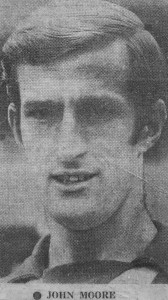
LUTON TOWN legend John Moore had a 32-year association with the Hatters as a player, coach and manager. He had a less remarkable one month’s loan in the stripes of Brighton.
As manager Pat Saward rather too rapidly dismantled Albion’s 1972 promotion-winning side, the experienced Moore was one of several old hands brought in to try to help Albion adapt to the old Second Division.
Saward was light on numbers in a defence which had conceded 23 goals in 12 games, and he had just parted company with former skipper John Napier, while injury-prone Ian Goodwin was in hospital having a knee cartilage operation. The side had only won once in the league in 12 starts.
But the arrival of Moore, together with Lewes-based Stan Brown from Fulham, gave the side an unexpected fillip and the Albion earned a surprise 2-0 victory away to Huddersfield Town (Eddie Spearritt and Barry Bridges the scorers) on 14 October 1972.
Saward was certainly impressed by the impact of his two new acquisitions. “The new men played a major part in our success,” he said. “It was quite remarkable really the way they slotted into the side as if they had been playing for Albion all season. John did exceptionally well in his role as sweeper.
“They are, of course, experienced professionals who have been around the game a long time. But even the best professionals sometimes take time to settle into new environments and this is why the performances of these two was so outstanding.”
Unfortunately, it was the only win of Moore’s brief stay. Albion drew the next three games and his final outing came in a 3-0 defeat at Millwall. That loss at The Den was the first of 12 consecutive league defeats.
Ironically, Albion only returned to winning ways when Moore was in opposition, lining up in the Luton side that lost 2-1 at the Goldstone on 10 February 1973. Ken Beamish scored both Albion goals, while future Albion signings Don Shanks and Barry Butlin were playing for the opponents that day.
Moore subsequently moved on to Northampton Town, where future Albion player John Gregory was beginning to make his way in the game, but the Scot ended his playing days after only 14 appearances.
Born on 21 December 1943 in the village of Harthill (halfway between Glasgow and Edinburgh), Moore played initially for local side North Motherwell Athletic. In 1962, he joined Scottish League side Motherwell on a part-time basis, while also working in a factory.
He was a centre-forward when he initially went to Fir Park but in the only three games he played he started twice in midfield and once in defence. Given a free transfer in May 1965, a Luton scout in Scotland pointed him in the direction of then manager George Martin.
In a 2011 interview with Matthew Parsfield, for the Talk of the Town blog, he recalled: “George Martin flew up to Scotland to sign me. I remember sitting down with him in my living room with my family, and, it sounds far-fetched nowadays, but there were no contract negotiations and no haggling at all.
“He said ‘What do you want?’ He was actually talking about a signing-on fee, but I just said ‘I want an opportunity.’ He certainly gave me that.”
One particular long-standing fan, Mick Ogden, remembered Moore’s arrival with affection. Writing on the Hatters Heritage website, he recalled him turning up at a supporters’ club gathering in the company of manager Martin in May 1965.
“Despite the fact that he had travelled down from Glasgow that day, John spent the whole evening with us, firstly playing billiards against our members and then later we sat around listening to John talking about his life and obvious love of football,” wrote Mick.
“He told us he had signed from Motherwell and how he sat for many hours during the week talking football with his father, who was a Rangers fan. Apparently, these chats would often carry on until the early hours of the next day. John clearly had a great love and affection for his father.”
Another fan who remembered the player from his early Luton-watching days, ‘Mad Hatter’, said: “Moore wasn’t like other defenders; slender in physique compared to those he played alongside, he was more than a match for most of the opponents he came up against.
“Whilst on the books of the Hatters, Moore made 274 league appearances and more than played his part in helping Luton Town climb from Division 4 to Division 2.”
John Moore in action for Luton against West Ham’s Geoff Hurst
Indeed as well as under Martin, Moore also featured under Alan Brown, Alec Stock and Harry Haslam.
After his playing days were over, he spent time as manager of non-league Dunstable Town but when David Pleat took over as Luton manager, he took Moore back to the club as a coach.
After Pleat had moved on to take the hot seat at Spurs, Moore stepped up to become manager.
It was the 1986-87 season in the top-flight and Moore led the Hatters to a club-best seventh-place finish. But it appears he didn’t enjoy the limelight of such a position and he stepped down, handing over the reins to Ray Harford, assisted by Steve Foster. Luton went on to win the League Cup (then known as the Littlewoods Cup) beating Arsenal 3-2, with another ex-Albion skipper, Danny Wilson, one of the goalscorers.
When former player Jim Ryan took over as manager, Moore returned to the club as a coach for a third stint and stayed in that role under Pleat again, Terry Westley, Lennie Lawrence, Ricky Hill, Mick Harford, Joe Kinnear and Mike Newell until he reached the age of 60 in 2003 and chose to retire.
In the interview with Parsfield, he gave an insight into his approach. “When I became youth coach I always treated the boys like adults.
“I wasn’t interested in making them successful youth players, the only way to make a living is to become a first team player.
“I told them they had to work harder than the first team, because those older guys down the corridor aren’t going to just give you their first team place and their luxury lifestyle, you’ve got to work for it.”
He added: “Nobody’s career flows in a straight line, careers bob and weave, and players need the attitude of ‘When it gets hard, I don’t give in’. It’s when someone has the talent but not the attitude, that’s what frustrates you the most.”
On leaving Luton, Moore got involved in schools coaching in Bedford. But at Kenilworth Road, there is a permanent reminder of the player courtesy of The John Moore Lounge.
JOHN NAPIER is still coaching youngsters in America as he approaches his 76th birthday. NICK TURRELL’S In Parallel Lines blog caught up with him for a trip down memory lane. In the second of five articles, John recalls Pat Saward signalling the end of his time with the Albion.
SUCH WAS JOHN Napier’s prominence at Brighton, he made an extraordinary 106 consecutive appearances for Albion. Until March 1972.
“I was lucky with injuries, which normally keeps players out,” he recalled. “Mine were mostly cuts around the head area or a broken nose – but nothing serious to keep me out.
“And with Norman Gall beside me, we had a great understanding together. I always took pride in my role in the team. Nothing is for ever, for sure, but you always wanted to be on the field.”
Captain Napier in the number 5 shirt was the status quo as winter turned to spring in 1972 and Albion’s chances of promotion from the Third Division looked ever more promising as they vied for one of the top two spots with Aston Villa and Bournemouth.
On the back of two defeats, Albion prepared to face Villa at the Goldstone on 25 March.
Manager Pat Saward – a former FA Cup winner with Villa – mysteriously and controversially dropped his ‘kingpin’ for what was undoubtedly one of the biggest games of the season. Even BBC’s Match of the Day had taken a rare foray into the lower leagues to feature the match.
Napier found himself replaced by Ian Goodwin, a rugged but injury-prone defender who had played under the manager during his coaching days at Coventry City. Regular right-back Stewart Henderson was also left out.
Not only had Napier been ever present and the captain up to that point, only two months earlier, Saward had been publicly singing his praises to the extent that he was suggesting the defender deserved a recall to the Northern Ireland side.
“The way he is playing, he ought to walk into the side,” Saward told Goal magazine. “He has been consistent all season. Recently Ted MacDougall hardly got a kick against him (that was in a 2-0 Boxing Day win for the Albion against Bournemouth). Ted is dangerous when he is inside the box but John hardly let him get near the ball.”
The article referred to Napier as “the kingpin of the Brighton defence” and went on to say Napier, 25, formed “one of the best pairings in the Third Division with 28-year-old Norman Gall”.
Speculation around Napier’s possible call-up came because Liam O’Kane, who normally partnered Allan Hunter in the Ireland side, was sidelined with a broken leg at the time.
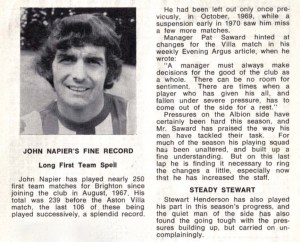
How the programme covered Napier’s omission
The matchday programme following Napier’s shock dropping highlighted that he had previously played 239 matches for the Albion “the last 106 of these being played successively, a splendid record”.
Saward didn’t refer specifically to the player but in his column for the Evening Argus ahead of the Villa game had written: “A manager must always make decisions for the good of the club as a whole. There can be no room for sentiment. There are times when a player who has given his all, and fallen under severe pressure, has to come out of the side for a rest.”
In his programme notes for the following match, he simply said: “We had lost the previous two matches (1-0 at home to Oldham and 2-1 at Bradford City) and I made several team changes which I thought were necessary, and our players responded magnificently.”
Indeed, Albion won the match 2-1 and Willie Irvine scored a terrific goal, still available to watch on YouTube, that was judged by legendary Celtic manager Jock Stein to be Match of the Day’s third best goal of the whole season.
So, all these years later, can Napier shed any more light on exactly what happened? In short, no. “I still am not sure why that happened,” he said. “I know it is all part of the game. There were no signs that I was playing any different.
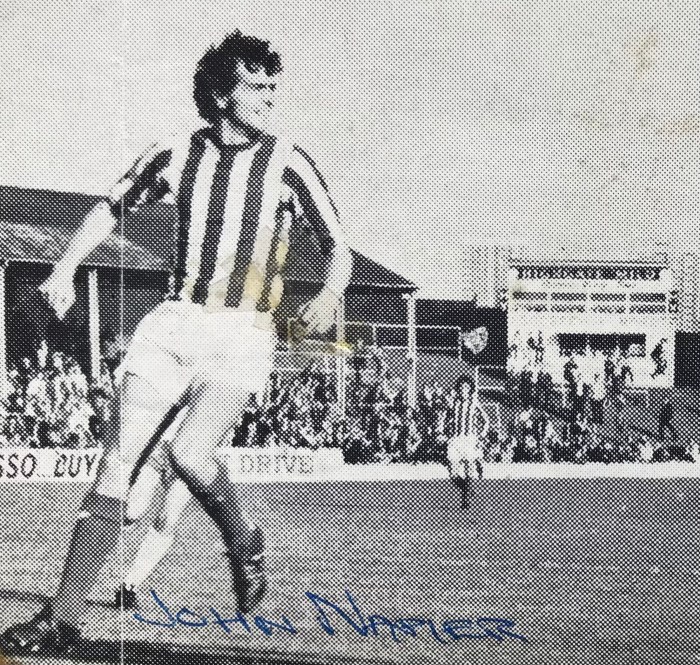
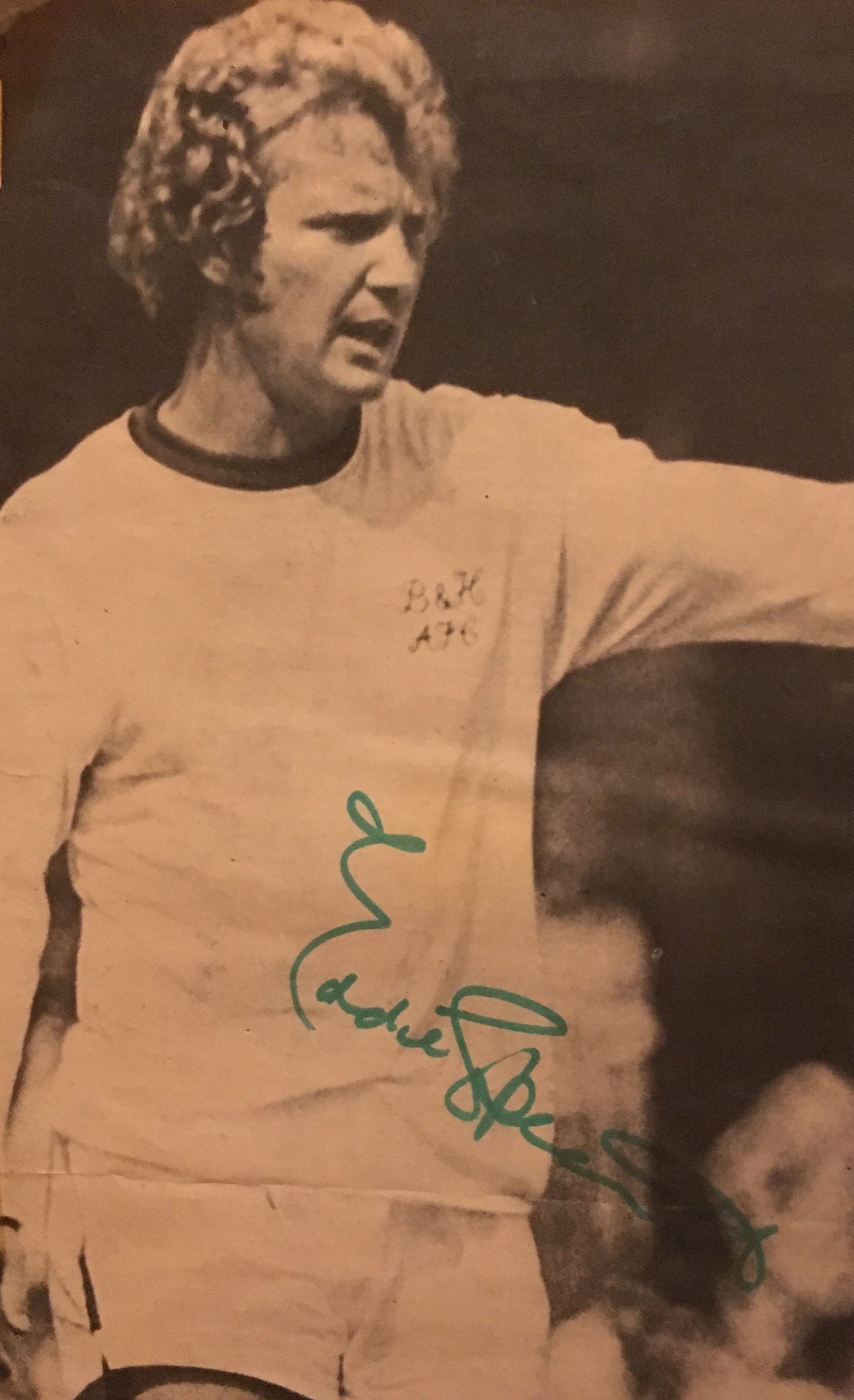
A signed photo from my scrapbook
“I was the club captain when Pat arrived and he did not change that. I played many games with him as the manager. He had me in the office the week before the Villa game and we talked about a lot of things, as we were right in the promotion mix with a good chance of going into the Second Division.
“I should have probably realised when he wanted to talk in the office. That was not too common with Pat, it was usually a full team meeting.
“He did say he was leaving me out and I would be sub (ed. he wasn’t). Obviously, I was not happy and told him so. I really did not get an explanation as to why, and that is the part that was difficult.”
Perhaps not surprisingly, Napier added: “That is about the time my relationship with Pat started to go downhill fast. Even though we won promotion, I felt that there were going to be changes going into the Second Division.
“I had been in that promotion side for mostly all the season and felt I did not get the recognition for being part of our success. We were barely on speaking terms at the end of the season.
“Players react in different ways with different managers. I also was a little stubborn back then and was not afraid to speak my mind. I have nothing bad to say about Pat: he had success at the club which was needed at that time. We moved on. It happens all the time in soccer.”
I imagined it must have been hard to watch from the sidelines as the team went on to win promotion, and Napier admitted: “Every player wants to play, of course, and being a sub or even not in the game day squad, I had never experienced that part before, so it was tough.”
But he added: “Even though I was disappointed in not playing the last few games, I was really happy for the club and the players.
“Those guys at that time were my brothers; we went through a lot the previous few years trying to battle out of the Third Division, and the Goldstone crowd deserved it.
“We had an unbelievable year; the stadium was full each home game towards the end, everywhere we went the town was buzzing with excitement, nothing brings the fans and players closer than a promotion race.”
I wondered too whether it was a small consolation that it was Napier’s former Bolton teammate Brian Bromley who took over as captain.
“Brian was a great friend. We were both young 15-year-olds on the Bolton Wanderers ground staff, so we were together every day for many years, and both got in the Bolton first team about the same time and played many games together.
“He was very much a technical player. I thought he would go on to play for England, I really did. When he came to Brighton from Portsmouth, I was happy we got him, and knew he would do well at this club. Brian was always a leader; he led by example on the field with his play, never really a ‘get in your face’ person, but respected as a player. There are always different types of leadership qualities that help with teams.”
The defender was not involved in any of the 12 games that rounded off the season with promotion from the old Third Division in runners up spot, although he did return to the side for an end-of-season joint testimonial game for Brian Powney and Gall which First Division Chelsea won 3-2.
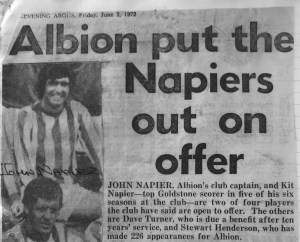
Nevertheless, Saward let it be known he would entertain offers for both him and his namesake Kit.
How the Argus reported the transfer listing of John and Kit Napier
Napier takes up the story. “I asked Pat for a transfer at that time. I thought about it deeply as I loved the area and my home on Shoreham Beach. My daughter was born in Hove (she is 52 now), but I did not see me getting back in the team whilst the management remained, so I felt it was best for me to try to move my family back to the north of England.
“I worked hard every day in training hoping maybe there would be reconciliation, but it was not to be, and I was still on the outside looking in. I wanted to play and realised that was not going to happen.
“Pat did say he would help but would want a decent size fee for me to move on. We were both hotheads and I wasn’t a very patient person and wanted it to happen as quickly as possible.”
Both Napiers were still at the club as the new season got under way although Kit was transferred to Blackburn Rovers in September and John eventually got his move north the following month. Before that, though, he was recalled for a 2-1 home win over Exeter City in the League Cup.
A rare Division Two outing for Napier shortly before he left the club.
He went on as a substitute for Ken Beamish in a 1-1 draw at Aston Villa, and then, with Goodwin hospitalised for knee cartilage surgery, Napier was restored alongside Gall for a five-game run in September 1972. But his last appearance for the Albion came at home to Hull City on 7 October, when a 14,330 crowd saw Albion recover from a half-time deficit to draw 1-1 with a goal from Bert Murray.
“Back then, as there were no agents, you had to try to help yourself as a player and it was not uncommon for players to call other clubs and managers or coaches they knew,” Napier explained. “But it is not so easy when there is a transfer fee involved.
“I did get a call from Bryan Edwards who had taken over as the manager of Bradford City in the Third Division. Incidentally, I had taken over the centre-half position at Bolton when Bryan retired as a player.”
Edwards had a long career at Bolton and was in their 1958 FA Cup winning side when two Nat Lofthouse goals settled the game against a Manchester United side depleted by the Munich air disaster three months earlier. Freddie Goodwin and Alex Dawson were in the United line-up that day.
Napier eventually signed for Bradford City after a wrangle over the fee
But back to October 1972. Edwards was told Albion wanted £15,000 for Napier, who said: “I did go in to see Pat after Bradford talked to them, but he told me the club wanted the full asking price. I was mad at the time and some heated words were said. Finally, after a few weeks of happenings, they both decided to make the fee £10,000, and I moved north to Bradford.”
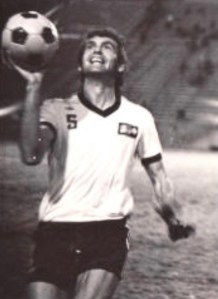
Napier enjoying life playing in the States
He played 107 games for Bradford City across six seasons at Valley Parade, interspersed with loan spells in the USA at Baltimore Comets, playing alongside former Albion and Bradford teammate Allan Gilliver, and its franchise follow-up, San Diego Jaws (which later became San Diego Sockers).
Following his release by Bradford, and temporary return from the States, Napier joined non-league Mossley in September 1975.
His central defensive partner there was his former Bradford City teammate, and former Leeds United and Huddersfield Town defender, Roy Ellam.
Napier made his Mossley debut in a 4-0 win over Macclesfield Town on 23 August 1975, and he went on to play in all but one of the Lilywhites’ next 24 games. He even got on the scoresheet in a 2-1 win over Gateshead in November 1975.
But, by the end of the month, he had returned to Bradford City as an assistant coach, which was an area of the game he had always looked to move into.
• In the next instalment of this series of articles, we look at the early days of Napier’s career.
IN ALBION’S bleak midwinter of 1972-73, manager Pat Saward was desperate to try to reverse a worrying run of defeats.
The handful of additions he’d made to the squad promoted from the old Third Division in May 1972 had not made the sort of improvements in quality he had hoped for.
An injury to Norman Gall’s central defensive partner Ian Goodwin didn’t help matters and Saward chopped and changed the line-up from week to week to try to find the right formula.
Previously frozen out former captain John Napier was restored for a handful of games (before being sold to Bradford City for £10,000). The loan ranger’ (as Saward was dubbed for the number of temporary signings he brought in) then tried Luton Town’s John Moore in Goodwin’s absence.
Youngster Steve Piper was given his debut at home to high-flying Burnley, but Albion lost that 1-0. Then Saward tried left-back George Ley in the middle away to Preston, but that didn’t work either. North End ran out comfortable 4-0 winners with Albion’s rookie ‘keeper Alan Dovey between the sticks after regular no.1 Brian Powney went down with ‘flu.
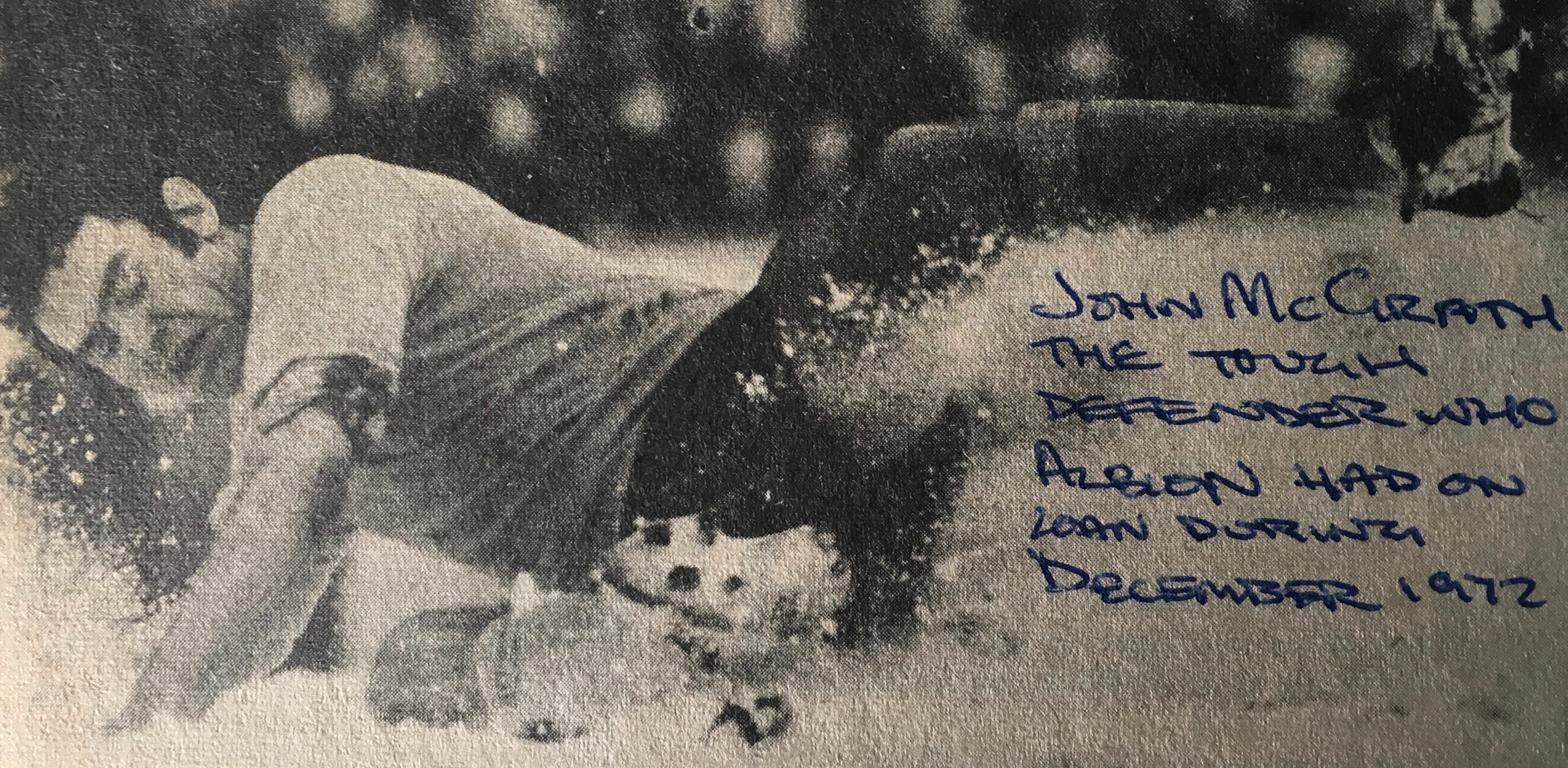
As December loomed, and with Goodwin still a couple of weeks away from full fitness after a cartilage operation, Saward turned to John McGrath, a no-nonsense, rugged centre-half who had played close on 200 games for Southampton over five years.
“With his rolled-up sleeves, shorts hitched high to emphasise implausibly bulging thigh-muscles, an old-fashioned haircut and a body dripping with baby oil, ‘Big Jake’ cut an imposing figure,” to quote the immensely readable saintsplayers.co.uk.
In Ivan Ponting’s obituary in the Independent following McGrath’s death at 60 on Christmas Day 1998, he reckoned his “lurid public persona was something between Desperate Dan and Attila the Hun”.
Although McGrath had begun the 1972-73 season in the Saints side, the emerging Paul Bennett had taken his place, so a temporary switch to the Albion offered a return to first team football.
Albion had conceded eight goals in three straight defeats and hadn’t registered a goal of their own, so, even though the imposing centre-half was approaching the end of a playing career that had begun with Bury in 1955, it was hoped his know-how defending against some of the best strikers in the country might add steel in the heart of the defence, and stem the flow of goals.
In short, it didn’t work. McGrath played in three matches and all three ended in defeats, with another eight goals conceded.
In his first match (above left), Middlesbrough won 2-0 at the Goldstone. At least the deficit was slimmer in his second game: a 1-0 loss away to George Petchey’s Orient in which Lewes-born midfielder Stan Brown played the last of nine games on loan from Fulham.
McGrath’s third match saw Albion succumb to a thrashing at Carlisle United. By then, Brighton had lost five in a row and still hadn’t managed to score a single goal. Stalwart Norman Gall was dropped to substitute to allow the returning Goodwin to line up alongside McGrath, and Bert Murray led the side out resplendent in the second strip of red and black striped shirts and black shorts.
Carlisle hadn’t read the script, though, and promptly went 5-0 up. To compound Albion’s agony, with 20 minutes still to play, goalkeeper Powney was carried off concussed and with a broken nose.
In those days before substitute goalkeepers, Murray (who’d swapped to right-back that day with Graham Howell moving into his midfield berth) took over the gloves. Miraculously, Albion won a penalty and because usual spot kick taker Murray was between the sticks, utility man Eddie Spearritt took responsibility having relinquished the job after a crucial miss in a game in 1970.
Thankfully, he buried it, finally to make a much-awaited addition to that season’s ‘goals for’ column.
No more was seen of McGrath, however. Gall was restored to the no.5 shirt and was variously partnered by Goodwin, Piper and, towards the end of the season, Spearritt.
After another heavy defeat, 4-0 at Sunderland, which had seen another rare appearance by Dovey in goal, he was transfer-listed along with Gall and Bertie Lutton, as Saward pointed the finger. Lutton got a surprise move to West Ham but Gall stayed put and Dovey was released at the end of the season without playing another game.
The run of defeats eventually extended to a total of 13 and was only alleviated after a big shake-up for the home game versus Luton Town on 10 February.
Powney, who’d conceded five at Fulham in the previous game, was replaced by Aston Villa goalkeeper Tommy Hughes on loan; out went experienced striker Barry Bridges in favour of rookie Pat Hilton and exciting teenage winger Tony Towner made his debut. Albion won 2-0 with both goals from Ken Beamish, and the monkey was finally off their backs.
Although the following two games (away to Bristol City and Hull) were lost, results did pick up, but it was all too little too late and Albion exited the division only 12 months after their promotion.
Born in Manchester on 23 August 1938, McGrath sought unsuccessfully to get into the game as an amateur with Bolton Wanderers but at 17 he joined Bury who were in the old Division Two at the time.
Although they were subsequently relegated, McGrath was part of the 1961 side that went on to win the Third Division Championship. By the time they lifted the trophy, though, he had moved on to Newcastle United for a fee of £24,000, with Bob Stokoe (later renowned for steering Second Division Sunderland to a famous FA Cup win over Leeds United in 1973) a makeweight in the transfer.
It was a busy time for the young defender. On 15 March 1961, he made his one and only England Under-23 appearance against West Germany at White Hart Lane, Tottenham, playing alongside future World Cup winners George Cohen at right-back and the imperious Bobby Moore.
Also in the young England side for that 4-1 win was Terry Paine, who would later become a teammate at Southampton.
Newcastle had hoped the defender would prevent their relegation from the top flight, but it didn’t happen as they went down having conceded 109 goals; their worst ever goals against tally.
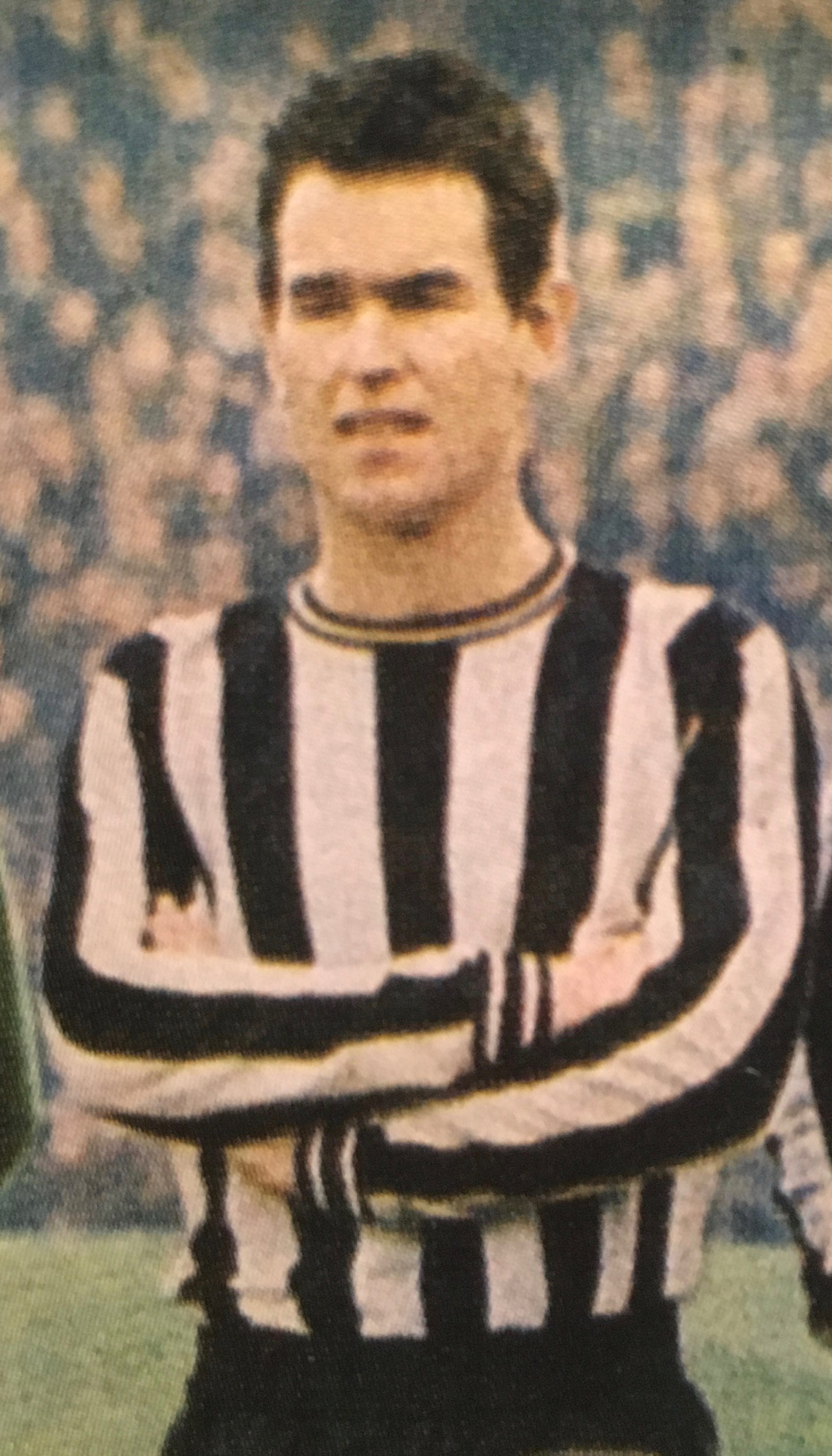
Joe Harvey eventually succeeded Charlie Mitten as manager as Newcastle adapted to life back in the Second Division, and McGrath (below left and, in team picture, back row, far left) played 16 matches in a side in which full-back George Dalton (below, back row, far right) had started to emerge.
Future Brighton captain Dave Turner was one of the successful FA Youth Cup-winning side Harvey inherited, but his first team outings were rare and he was sold to the Albion in December 1963.
Meanwhile, McGrath really established himself, featuring in 41 games in 1963-64 (Dalton played in 40) as Newcastle finished in a respectable eighth place.
The 1964-65 season saw McGrath ever-present as Toon were promoted back to the First Division, pipping Northampton Town to the Second Division championship title by one point. McGrath – “a monster of a centre-half, who was as tough as he was effective” was “the cornerstone” of the promotion side, according to newcastleunited-mad.co.uk.
McGrath retained his place in Toon’s first season back amongst the elite but the arrival of John McNamee and the emergence of Bobby Moncur started to restrict his involvement.
That pairing became Harvey’s first choice, and young Graham Winstanley was in reserve too, so, after playing only 11 games in the first half of the 1967-68 season, McGrath, by then 29, was sold to Southampton for £30,000. He’d played 181 games for United.
In Ted Bates’ Saints side, McGrath was a rock at the back alongside Jimmy Gabriel, although, as saintsplayers.co.uk records, he wasn’t too popular with opposing managers: Liverpool’s Bill Shankly accusing Southampton of playing “alehouse football”.
He went on to make 194 appearances (plus one as a sub) for Saints, before becoming youth coach at the club, part of the first team coaching staff when Southampton won the FA Cup in 1976, and then reserve team manager.
Not content with a backroom role, McGrath took the plunge into management and made his mark with two clubs in particular: managing Port Vale on 203 occasions and Preston North End in 205 matches.
According to Rob Fielding he became a cult hero at Vale Park with his unorthodox ways, once putting FIFTEEN players on the transfer list…which resulted in a six-match unbeaten run!
Winger Mark Chamberlain, who went on to play for Stoke and England, and later Brighton, was one of the young players McGrath introduced.
Long-serving Vale defender Phil Sproson, who was originally signed by former Albion midfielder Bobby Smith, rose to prominence under McGrath and said: “I’ll always be grateful because he taught me how to play centre-half.”
Fielding reckoned McGrath’s finest hour was steering Vale to promotion from the old Fourth Division in 1982-1983, even though by then he had sold Chamberlain to Stoke.
Against a backdrop of player unrest and what were perceived to be ill-judged moves in the transfer market, McGrath was sacked in December 1983 and replaced by his assistant, John Rudge.
He wasn’t out of work for long, though, and took the reins at basement side Chester City where he was in charge for just under a year. Most notably in that time, he gave future Arsenal and England defender Lee Dixon his first taste of regular football.
While success eluded him at Chester, his arrival at Preston in 1986 proved fruitful, North End striker Gary Brazil recalling: “It needed a catalyst and it needed a change and very fortunately for the club and for the players, John McGrath came walking through the door who was like a Tasmanian devil. He came in and the world changed really, really quickly for the better.”
McGrath led Preston to promotion from the bottom tier in 1987 with a squad built around Sam Allardyce and veteran Frank Worthington.
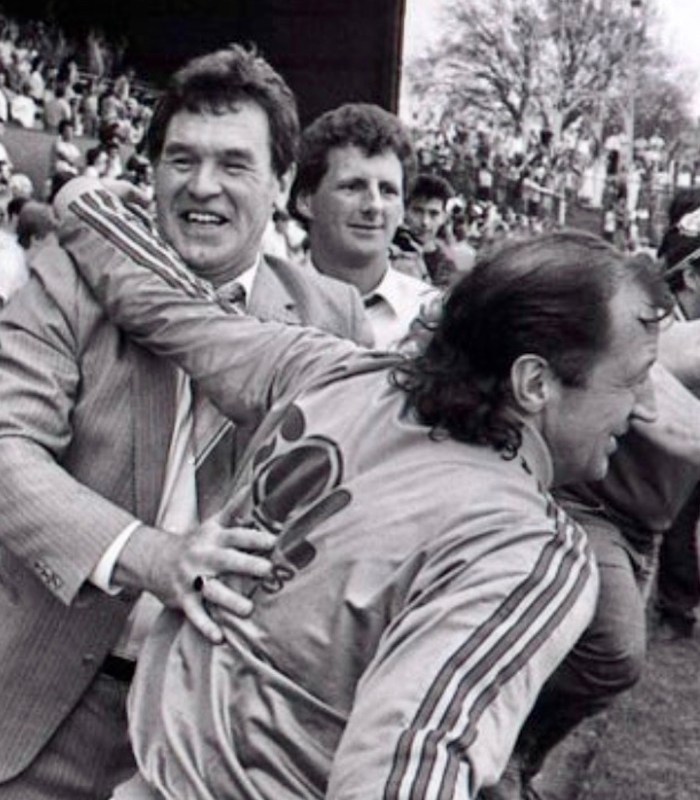
Manager McGrath and Frank Worthington celebrate promotion
“Frank Worthington was a delight to have around and set a real high standard for a lot of us in terms of how we train,” said Brazil. “He just stunned me how he was always first out training.”
The turnround McGrath oversaw, with Deepdale crowds rising from below 3,000 to more than 16,000, rejuvenated the club and the city.
Brazil reminisced: “It was the best year of my football life that year that we got promoted. It wasn’t just an experience playing but an experience of a group of players and how well they could bond and John was integral to that. He was a very, very clever man.”
Indeed McGrath was viewed as having saved North End from the ignominy of losing their league status, the club having had to apply for re-election the season before he arrived at Deepdale.
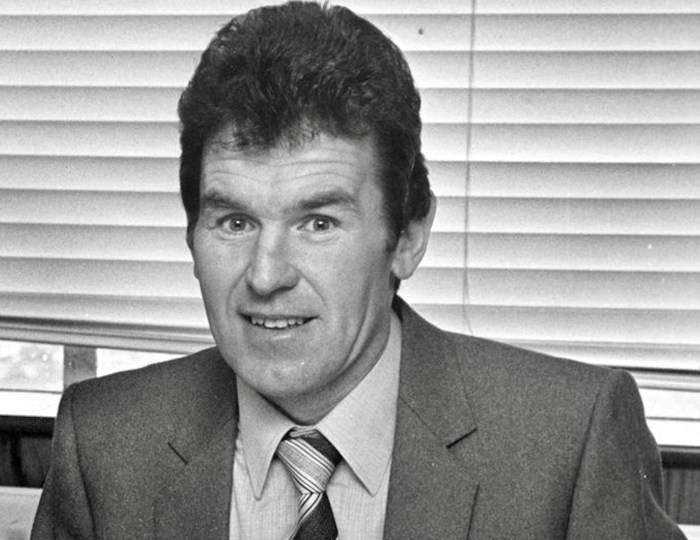
Edward Skingsley’s book, Back From The Brink, features a black and white photograph of McGrath on its cover and tells the story of North End’s transformation under his direction.
Describing his appointment as “a masterstroke” he reckoned the club owed him a massive debt for masterminding their resurgence and subsequent stability.
“Without him, it is debatable whether Preston North End would even exist today, never mind play in the latest fantastic incarnation of Deepdale,” said Skingsley. “Thank goodness he caught Preston North End before it died.”
McGrath left Preston in February 1990 and had one last stab at management, this time with Halifax Town. He succeeded Saints’ FA Cup winner Jim McCalliog and was in charge at The Shay for 14 months but left in December 1992. Five months later they lost their league status, finishing bottom of pile.
The silver-tongued McGrath was subsequently a popular choice on the after-dinner speaking circuit and a pundit on local radio in Lancashire but died suddenly on Christmas Day 1998.
A FORMER Aston Villa captain and 1957 FA Cup winner steered Brighton to the first promotion I witnessed on my Albion journey.
Genial Irishman Pat Saward, who lived in my hometown of Shoreham during his time as Albion boss, galvanised a squad not expected to be promoted from the third tier and took them up as runners up behind his former club in 1972.
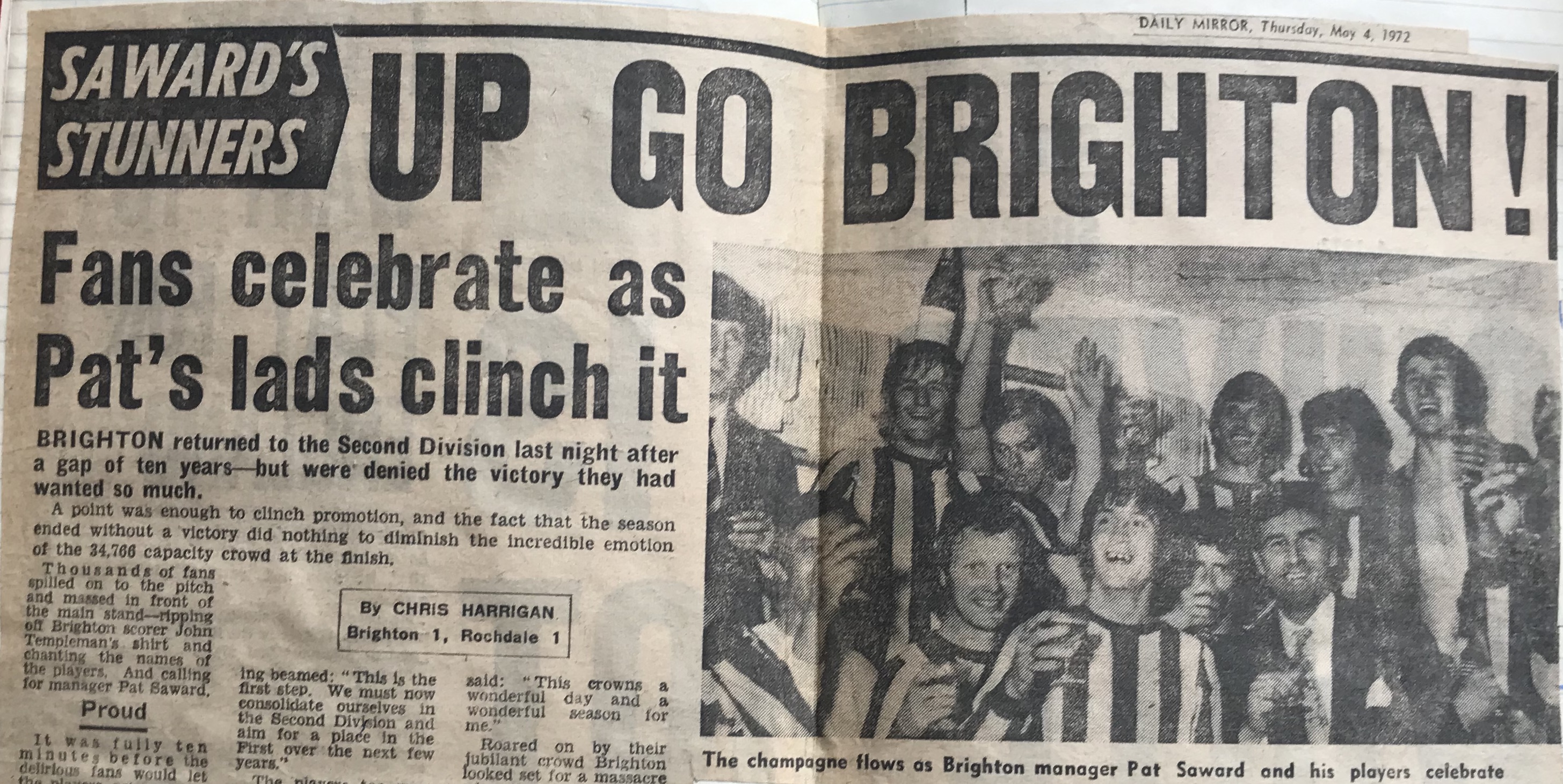
As the champagne flowed in the Goldstone Ground home dressing room, Saward took centre stage surrounded by his blue and white stripe-shirted heroes.
When the promotion tilt had looked like faltering, he’d been bold enough to make drastic changes to the side before a top of the table clash with Villa in front of the Match of the Day cameras. After a memorable 2-1 win in which Willie Irvine scored a goal later judged as the third best in the programme’s Goal of the Season competition, Saward added to his squad on transfer deadline day, bringing in Northern Ireland international Bertie Lutton from Wolves and Ken Beamish from Tranmere Rovers, described in the Official Football League Book as “stocky and packed full of explosive sprinting power, a terrific shot and great appetite for the game”.
Saward told the publication: “They were both last ditch signings and Ken made an astonishing difference. I spent only £41,000 in getting my promotion side together so we were very much Villa’s poor relations in that sense.”
The manager put the success down to: “Dogged determination to succeed from all the players. We stamped out inconsistency. I got rid of ten of the players I inherited and got together a team built on character. That’s the key quality, apart from skill of course.”
However, hindsight reveals the club wasn’t really ready for the higher division and some have suggested Saward broke up the promotion-winning squad rather too hastily. Players he brought in who were used to the level now known as the Championship struggled to gel, and the manager turned to rather too many loan signings.
A mid-season run of 13 consecutive defeats was Albion’s undoing and a glamour FA Cup tie at home to First Division Chelsea in early January 1973 gave a welcome respite from the gloom.
Ahead of the match, Saward opened his heart to Daily Mirror reporter Nigel Clarke, revealing that he couldn’t understand why the side had struggled so much.
“I wish I knew. But I’ve learned more about football these last few weeks than at any other time in my career.
“We are five points behind the next club but I must be the luckiest man in the league. There are no pressures on me,” he said, explaining that supporters were still writing to him, backing him and the team.
“When we came up from the Third Division, I was so big-headed, so confident. I thought with the right results we could go straight through to the First Division. I really did.
“There was spirit and ambition here – and there still is….that’s how this club gets you. My heart is in the place.”
Saward revealed that he had turned down two better paid jobs in the First Division to stay at Brighton after the promotion win, telling Clarke: “What I want is importance, appreciation, understanding and love…not being kicked up the backside and put under the lash.
“Adulation is false. I’ve found my oasis at Brighton and I’m wealthy the way I want to be – in feeling.”
Although the Chelsea game ended in another defeat, fortunes eventually changed the following month – but the damage had been done and Brighton went straight back down.
A defiant Saward promised to blood more youngsters like Steve Piper and Tony Towner, who’d done well when drafted in and Piper, in a matchday programme article, said of him: “Saward was more of a coach than a man-manager, very suave and sophisticated. He knew his football from his days at Coventry.”
However, when results didn’t improve on the return to third tier level, and with a new, ambitious chairman – Mike Bamber – at the helm, Saward was sacked and replaced with the legendary Brian Clough.
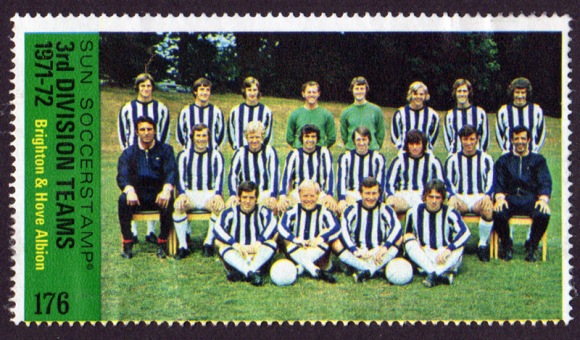
Albion’s hierarchy had turned to the untried Saward in the World Cup summer of 1970 after Birmingham City poached Freddie Goodwin from Brighton to replace Stan Cullis as their manager. It was second time lucky for Saward, who’d applied to succeed Archie Macaulay two years previously when Goodwin pipped him to the post.
“Give me ten years and I’ll have Brighton in the First Division,” Saward declared when appointed. Prescient words considering they made it within nine – although it came six years after he’d parted ways with the club.
There’s little doubt Saward was an innovative football man and a popular figure during the first two years of his reign.
Apart from success on the pitch in the 1971-72 season, the way he involved fans in helping him to improve the side also proved a winner.
His buy-a-player appeal was a direct attempt to involve the supporters in the affairs of their club and Saward led a sponsored walk on Brighton seafront as one of the initial events geared towards generating funds to help him compete in the transfer market.
“Too many people spend too much time shouting about how hard up their club is, and too little time fighting to improve the situation,” Saward said in an article for the April 1971 edition of Football League Review. “You never get success if you sit around. You must have courage, even audacity, and work hard for survival.”
The first funds generated provided Saward with the money to bring in experienced Bert Murray from Birmingham City, initially on loan, and then permanently. Murray would go on to be voted Player of the Year in 1971-72.
Another player who signed on loan at the same time as Murray was Preston’s Irvine, who recalled in his autobiography, Together Again, how Saward wooed him.
“Pat sold me the place with his charm and persuasive ways,” he said, describing the former male model as “extrovert, infectious and bubbly”.
He added: “Pat Saward was a gem of a manager and a pleasure to play for. He said what he thought, but never offensively; in a matter-of-fact, plain-speaking kind of way, rather than aggressively.”
Irvine continued: “Saward had the knack of making people feel important. He instilled pride and a sense of identity…..Pat loved attacking, entertaining football and worked tirelessly for the club. I would have run through that proverbial brick wall for him.”
As Brighton neared promotion, Irvine said: “Saward, with a joke or a smile, an arm around the shoulder or a bit of geeing up, knew just how to keep a dressing room happy or dispel any tension or nerves.”
Sadly, Irvine’s opinion of Saward shifted dramatically when, during the summer, the manager told him he intended to bring in a replacement – although it was three months before he eventually signed Barry Bridges from Millwall.
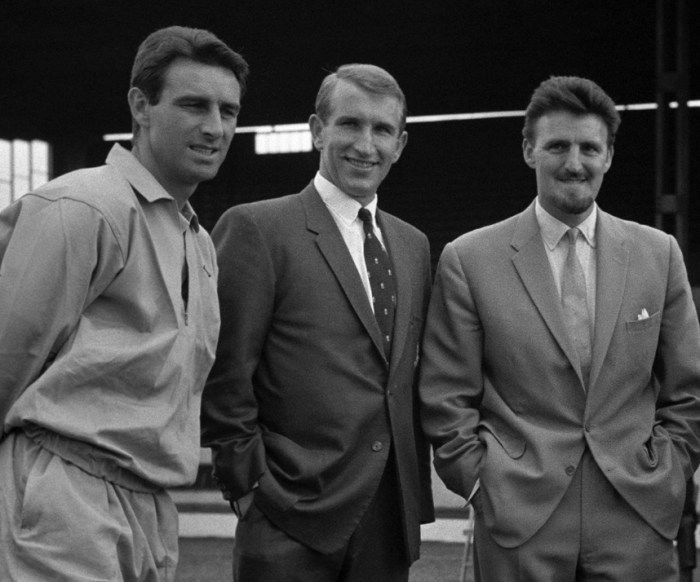
Saward and new signings Barry Bridges (left) and Graham Howell
Irvine was in the starting line-up at the beginning of the season and scored six times in 13 league and cup games, but, once Bridges arrived in October, his days were numbered, and, before the year was out, he was sold to Halifax Town in part exchange for Lammie Robertson.
Saward had already dispensed with the services of Albion’s other main promotion season scorer, Kit Napier, along with his former captain, John Napier.
Irvine said that once Albion were promoted, Saward changed. “He seemed to become unapproachable, or at least he did to me, and where once I could see him whenever I wanted, now I seemed to have to book an appointment two or three days in advance. We all had to.”
Teammate Peter O’Sullivan, who had repaired his relationship with Saward after some difficult early exchanges which saw the Welshman transfer-listed, also witnessed a change in the manager.
“We had one or two players who were over the hill and Pat just lost the plot. It was grim,” he told Spencer Vignes in A Few Good Men.
Albion’s tier two fortunes were picked over in some detail in a feature reporter Nick Harling compiled for Goal magazine.
“I didn’t foresee the snags and the type of league the Second Division was,” Saward told him. “It’s the hardest division of the four. Everyone is fighting either to stay in or get out.
“It’s a hell of a hard division. It’s a mixture of the First and Third. It’s good and very hard football. They don’t give you an awful lot of time to play.
“It’s a division governed by fear because to drop out of it is not good, while to get out at the top is fantastic. I didn’t believe the gap would be so different.
“Teams are so well organised and supplement their lack of ability with tremendous defensive play. It’s very hard to get results.”
While open and honest, they didn’t sound like the words of a manager very confident of finding a solution, and Saward sought to explain part of the problem when he said: “To me the most important thing is the attitude of mind. Players should have an arrogant attitude, an attitude that they’re going to do well even when the chips are down. But some types are destroyed. These are the ones who succumb and want to rely on other people.
“Here we’ve got some great boys, but I wish to God some of them had more determination.”
Bamber was resigned to relegation but nonetheless confident of where the club was heading. “There’s no doubting it – First Division here we come,” he told the magazine.
Saward added: “I haven’t lost any enthusiasm. I’ve had my hopes dampened slightly, but one overcomes that.
“This club has got to be built for the future. I want to put Brighton on the map.”
Sadly, when Albion’s poor form at the start of the 1973-74 season continued, Saward publicly admitted: “I haven’t any more answers. I am in a fog.”
Unsurprisingly, the Albion’s directors interpreted it as a loss of confidence and sacked him.
It’s front page news on the Evening Argus as Saward is sacked
Saward never managed in the English game again, although he coached in Saudi Arabia for a while.
Born in Cobh, County Cork, on 17 August 1928, Saward lived in Singapore and Malta during his childhood, before the family moved to south London.
His first club was Beckenham FC before he turned professional with Millwall in 1951. He made 118 appearances for the Lions in the next four years.
Saward was 26 when Eric Houghton signed him for Villa for £7,000 in August 1955. The legendary Joe Mercer took over as Villa manager in 1958.
Pat enjoyed a goalscoring debut with his new club, hitting the final equalising goal in a 4-4 draw with Manchester United at Villa Park on 15 October 1955. But he struggled to oust left half Vic Crowe and made only six appearances that season.
In Crowe’s absence through injury the following season, Saward became a regular, making 50 appearances.
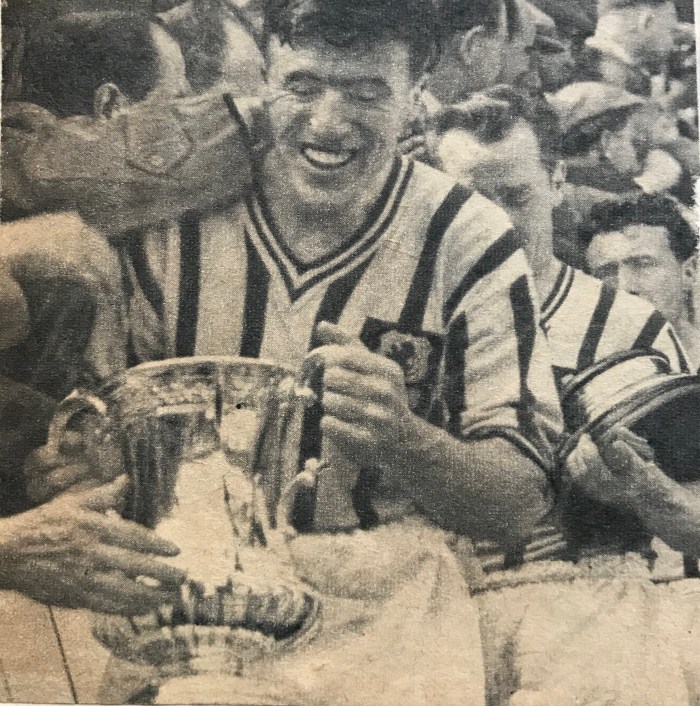
Saward (right) descends the steps at Wembley as a FA Cup winner with Aston Villa
In total, Saward played 170 games for Villa between 1955 and 1960, most notably featuring in their FA Cup winning team in 1957. Villa beat Manchester United 2-1 in the final at Wembley Stadium in front of a crowd of 99,225, Peter McParland scoring twice to win Villa the Cup for a seventh time.
Saward made only 14 appearances as Villa were relegated from the top-flight in 1959 but he was back in harness as captain when they made a swift return as Second Division champions in the 1959-60 season.
In his final season, he made just 12 appearances, his last coming on 22 October 1960 in a second city derby, Villa beating Birmingham 6-2. The following March, he was given a free transfer and moved on to Huddersfield Town.
Saward in the stripes of Huddersfield Town
He had first been selected for the Republic of Ireland on 7 March 1954 in a World Cup qualifier in which Luxembourg were beaten 1-0, and he went on to make 18 appearances for his country, the last, on 2 September 1962, coming when he was 34: a 1-1 draw away to Iceland in Reykjavík.
He played twice against England in World Cup qualifiers in 1957, a 1-1 draw and a 5-1 defeat, when he was up against the likes of Duncan Edwards, Johnny Haynes and Stanley Matthews, and in the same competition against Scotland, in 1961, when the Irish lost 4-1, and his teammates included Johnny Giles.
After 59 appearances for the Terriers, he dropped out of the league but acquainted himself with Sussex when moving to Crawley Town.
Jimmy Hill signed him for Coventry as a player-coach in October 1963 and although he made numerous reserve team appearances, he really made his mark as a coach and was responsible for the rapid development of City’s youth team in the 1960s.
Saward (left) with assistant manager Alan Dicks and Jimmy Hill at Coventry City
Willie Carr and Dennis Mortimer were just two of several first teamers who made it under his guidance. He stepped up to first team assistant manager when his former Eire teammate, Noel Cantwell, was appointed boss in 1967.
Not long after his switch to the Goldstone, Saward picked up one of his former Sky Blues proteges, Ian Goodwin, initially on loan, and then permanently, and eventually made him Albion captain. The rugged defender’s arrival was remembered in an Argus article.
Saward was laid to rest in the same Cambridge cemetery as his brother Len, a forward who played a total of 170 games for Cambridge United between 1952 and 1958, scoring 43 times. He went on to serve the club behind the scenes in their commercial department.
Pictures from my schoolboy Albion scrapbook and various online sources.
IN THE days before managers had a bench of substitutes, players who could slot into virtually any position were a major asset. One of my favourites was Eddie Spearritt.
A wholehearted, tough character, Spearritt was equally comfortable playing in midfield, at full back or sweeper, would occasionally get on the scoresheet, and even turned his hand to goalkeeping when necessary.
Long before anyone had heard of Rory Delap, Spearritt was a top exponent of the long throw which could sometimes be as effective as a free kick or corner. It was a skill which earned him a place in a Longest Throw competition staged by BBC’s sport show Grandstand in 1970-71, although he didn’t win it.
Born in Lowestoft on 31 January 1947, Spearritt started out at Arsenal but on failing to make the grade there, switched to Ipswich Town as an apprentice in August 1963.
On prideofanglia.com, Tim Hodge details Eddie’s Ipswich career. He made his league debut in the 1965-66 season in a 1-0 win away to Preston in the old Division Two.
Over the next two years, he made a total of 69 appearances (plus 10 as sub) for Bill McGarry’s side, scoring 14 goals along the way (Spearritt is pictured in Ipswich squad photos above, including the side who were Second Division winners).
A 1-0 home defeat to Spurs in October 1968 was his last for the Suffolk club and three months later, surplus to new manager Bobby Robson’s requirements, was one of Freddie Goodwin’s first signings, for £20,000, just a few weeks before my first ever Albion game.
He made his debut in a 3-1 home win over Crewe Alexandra (above with the superb backdrop of a packed EastTerrace at the Goldstone Ground) and kept the number 10 shirt to the end of the season, by which time he had scored five times, including both Albion’s goals in the 2-2 draw at home to Tranmere Rovers.
In the 1969-70 season, not only was he part of the Third Division Albion side who pushed his old manager McGarry’s First Division Wolverhampton Wanderers side all the way in a memorable third round League Cup tie, it was his header from Kit Napier’s free kick that put the Albion 2-1 ahead just before half-time (aftermath pictured above).
Scottish international Hugh Curran scored twice in eight second half minutes to clinch the win for Wolves but a bumper Goldstone Ground crowd of 32,539 witnessed a terrific effort by their side.
A few weeks’ later, in a marathon FA Cup second round tie with Walsall that required three replays before the Saddlers finally prevailed 2-1, Spearritt took over in goal during the second replay when a concussed Geoff Sidebottom was stretchered off on 65 minutes. Albion hung on for a 1-1 draw.
Spearritt was a midfield regular in his first two seasons but Goodwin’s successor, Pat Saward, switched him to left back halfway through the 1970-71 season and that’s where he stayed throughout the 1971-72 promotion campaign. Player-of-the-season Bert Murray generously declared the award could have gone to Eddie for his consistency that season.
In the close season after promotion, Spearritt tied the knot with Penelope Biddulph, “an accomplished professional dancer,” the matchday programme told us, and they moved into a new home in Kingston-by-Sea.
Spearritt started out at left back in Division Two but after ten games was ousted by the arrival of George Ley from Portsmouth. He then switched back into midfield, but by the end of that relegation season was playing sweeper alongside Norman Gall (for nine games) and Steve Piper (for two).
He scored, along with Barry Bridges, in a 2-0 win at Huddersfield on 14 October but the team went on a disastrous run of 16 games without a win, although Spearritt did get on the scoresheet three times, including notching two penalties.
When Albion went to that footballing outpost Carlisle on 16 December, they had lost five in a row without managing a single goal. Carlisle were 5-0 up, goalkeeper Brian Powney was carried off with a broken nose, replaced between the sticks by Bert Murray, then Albion won a penalty.
Spearritt took up the story in a subsequent matchday programme.
“I used to be the club’s penalty taker but, after I had missed an important one at Mansfield in 1970, I lost the job. Penalty-taking is really all about confidence,” he said. “After I had missed that one at Mansfield, which cost us a point, the players lost confidence in me and the job went first to John Napier and was then taken over by Bert Murray.
“Bert would have taken the penalty at Carlisle. He has already scored two this season. But he had gone in goal and it was decided it was too risky to fetch Bert out of goal to take the penalty.
“Nobody else seemed to want to take it so I just picked the ball up and put it on the spot. We were 5-0 down by then but I thought from a morale point of view that it was extremely important that I scored. You can understand my relief when I saw the ball hit the back of the net.
“Everybody was beginning to wonder when we would score again. I suppose with the run of bad luck we have been having it was almost inevitable that we should break our goal famine from the penalty spot.”
Albion finally returned to winning ways with a 2-0 win over Luton on 10 February, and then beat Huddersfield, Carlisle and Swindon, prompting Saward to refer to “some outstanding individual performances” and adding: “I have been particularly pleased with the way Eddie Spearritt has been playing in recent weeks.
“He has maintained a high level of consistency this season and his work in defence and in midfield has been invaluable as the side has plugged away trying to turn the tide of results.”
Spearritt was Saward’s captain at the start of the 1973-74 season back in Division Three and with the return of central defender Ian Goodwin and then the emergence of Steve Piper in the sweeping role, he was soon back in midfield.
When Saward was sensationally replaced by Brian Clough and Peter Taylor in October, Spearritt was part of the side who capitulated 4-0, 8-2 and 4-1 in successive games against Walton & Hersham, Bristol Rovers and Tranmere Rovers. He was dropped for six games, along with Ley (who never played for Albion again) as Clough went into the transfer market and brought in midfielder Ronnie Welch and left back Harry Wilson from Burnley.
Spearritt was restored to the team in mid January and had a run of seven games — including his 200th league game for Albion — but when he was subbed off in a home win over Hereford United on 10 March 1974, it was to be his last appearance in an Albion shirt.
In five years he’d played 225 games (plus seven as sub) and scored 25 goals.
In common with lots of players from the Saward era, Spearritt was a victim of the great Clough clear-out. Perhaps surprisingly, though, his next step was UP two divisions to play in the First Division with then newly-promoted Carlisle United.
One of his teammates there was defender Graham Winstanley, who later joined the Albion. The side was captained by Chris Balderstone, who was also a top cricketer. Journeyman striker Hugh McIlmoyle played up front while John Gorman, who later played for Spurs and became Glenn Hoddle’s managerial sidekick, was also in the team.
They memorably topped the division after three games….but predictably finished bottom of the pile by the end. In his two-year stay with the Cumbrians, Spearritt played 29 times, was sub twice and scored a single goal.
He moved back south in August 1976, signed by Gerry Summers at Gillingham, and made his debut against Reading, going on to make 22 appearances in his one season at the club, scoring once, from the spot, against Rotherham United at Priestfield.
One of those games was against the Albion on December 29 1976, when the home side won 2-0 on a slippery, snow-covered pitch.
Eddie emigrated to Australia the following summer and settled in Brisbane where he played for and managed the Brisbane Lions before retiring. He subsequently became estates manager for L’Oréal.
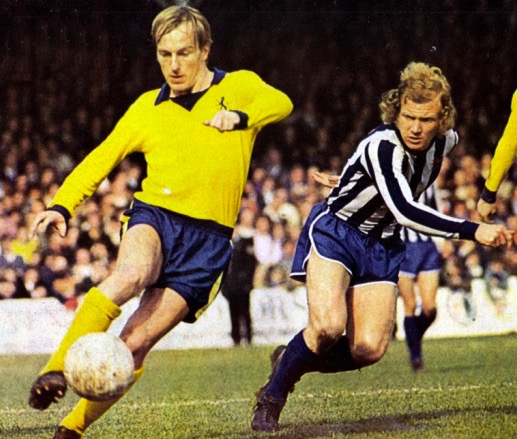
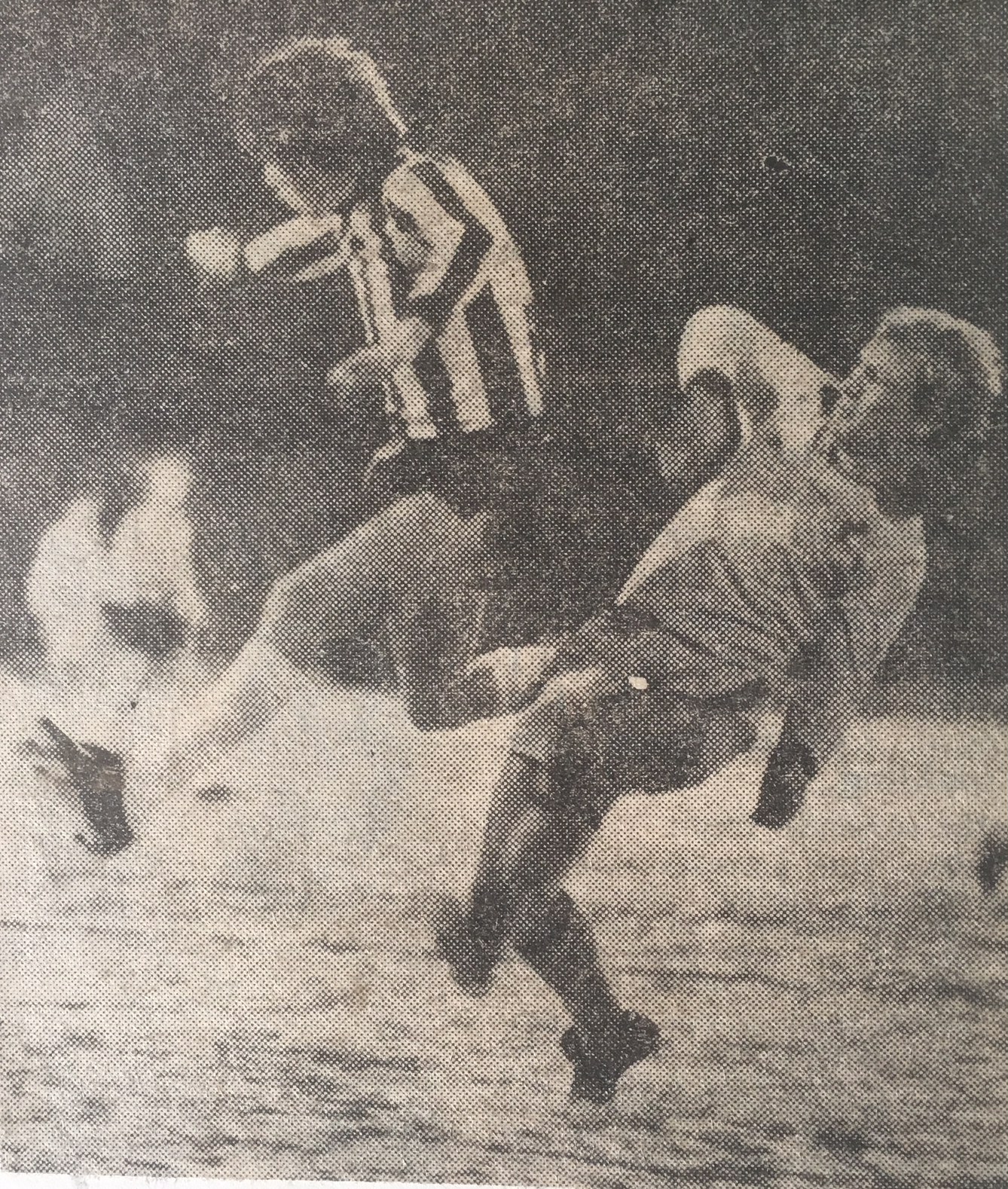
Pictures from my scrapbook show him celebrating after scoring in the League Cup against Wolves; an autographed Goal action shot in the white with blue cuffs kit — when I was an autograph hunter around the players’ tunnel before a game, Eddie was always happy to oblige; a Shoot colour shot of him in action against winger Ray Graydon in the famous 1972 televised win over Aston Villa; from a matchday programme, Eddie’s successful penalty kick in a 2-1- home defeat to Blackpool in December 1972 nestles in the back of the net, with ‘keeper John Burridge beaten, and, from the Argus, challenging Ian Mellor playing for Gillingham against the Albion in December 1976.
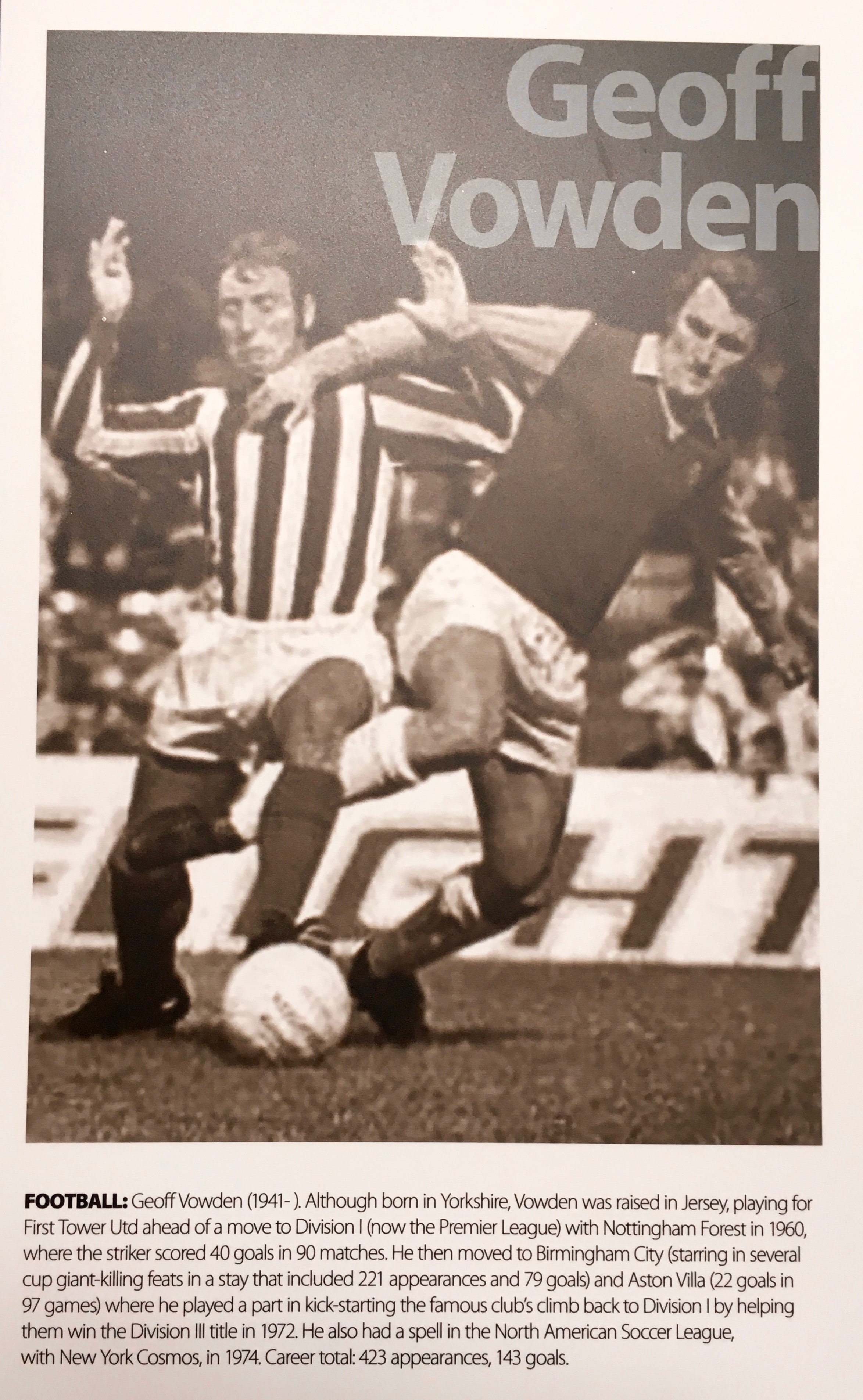
ON HOLIDAY in Jersey in 2016 my eyes were drawn to a picture on a display in St Helier’s Fort Regent entertainment complex.
“That’s Bert Murray,” I declared to my bemused wife, and, let’s face it, who would have thought Brighton & Hove Albion’s combative former Chelsea and Birmingham City winger would still be on a public display 45 years after the picture was taken?
The display featured sports stars from Jersey who had gone on to make a name for themselves – and, ironically, the picture in which Bert appeared (below) was about Geoff Vowden (born in Barnsley but raised in Jersey), then with Aston Villa, but a player who had been a teammate during Murray’s five years at St Andrew’s.
Versatile Murray – mainly a winger but equally adept at right back – wrote himself into the Albion’s history books when he was bought from Birmingham with funds raised by fans.
But let’s go back to the beginning. Born in Hoxton, London, on 22 September 1942 Murray started his football career with Chelsea in 1958 and scored in the first leg of their 1960 FA Youth Cup Final win against Preston as part of a team which spawned many future star players, such as Peter Bonetti, Terry Venables and Bobby Tambling.
Bert made his Chelsea first team debut in 1961 and in 1963 was part of the squad that won promotion from Division 2. His form for Chelsea attracted the England selectors and in the 1964-65 season he played in six of England under 23s’ seven games, scoring on his debut.
That was on 25 November 1964 in a 5-0 romp over Romania at Coventry’s old Highfield Road ground when Alan Ball, Mick Jones, Alan Hinton and Martin Chivers also scored.
Sadly for Bert, that was the only win he experienced as an England player: in the remaining games there were four 0-0 draws and a 1-0 defeat to West Germany. Other big name players who were part of the same team included Nobby Stiles, Norman Hunter and George Armstrong
Murray’s final international was in front of 70,000 fans in Austria on 2 June 1965 when his Chelsea colleague Bonetti had taken over in goal from Gordon West and Ball, who, like Stiles would become part of the following year’s England World Cup winning team, was sent off.
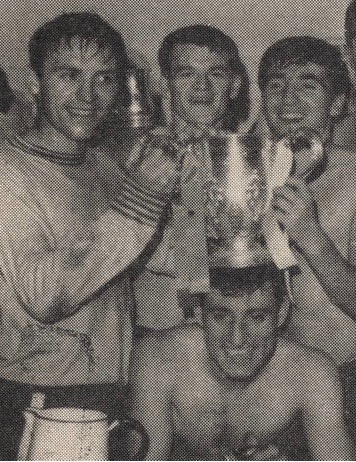
At least at club level in 1965 Murray won some silverware (above image discovered on The Shed End Chelsea fans website), playing alongside Bonetti, Venables, Eddie McCreadie, Barry Bridges and John Boyle as Tommy Docherty’s Chelsea won the League Cup in April via a narrow 3-2 aggregate win over Leicester.
Murray and Bridges alongside each other in a 1963-64 Chelsea team picture.
In the same season, Chelsea were top of Division One for nearly the whole season, and were looking good for the domestic treble but lost 2-0 to Liverpool in the FA Cup semi-final.
The young team started to show signs of strain and slipped to third in the league. Murray and Bridges were amongst a group of eight players who defied a curfew when the team were staying in Blackpool prior to a game against Burnley and the manager sent them home. The team Docherty put out capitulated 6-2.
According to ‘Bluebeard’ on theshedend.com the following nearly-but-not-quite season – fifth in the league, beaten FA Cup semi-finalists again and Fairs Cup semi-finalists – led to Docherty breaking up the team and selling Murray, Venables, Bridges and George Graham.
So, in 1966, having scored 44 goals in 183 games, Murray was transferred to Birmingham for £25,000 and Bridges went too, as Birmingham’s new wealthy owner, Clifford Coombs, splashed the cash for manager Stan Cullis.
The pair were part of the side which in successive seasons got to the semi-final of the League Cup (in 1967) and FA Cup (in 1968) only to lose on both occasions. Because these things are important in the Midlands, joysandsorrows.co.uk remembers Murray as part of the 1968 Blues side who beat rivals Villa home and away. In five years, he played 132 games scoring 22 goals.
It was the Blues former Brighton manager Freddie Goodwin who loaned him to his old club in early 1971. The loan became a permanent move thanks to £10,000 raised through innovative manager Pat Saward’s famous Buy-a-Player scheme which saw fans respond to the club’s lack of cash to bring in new players by coming up with sponsored walks and suchlike to raise the necessary money to enable Saward to bring in new faces. Thus Murray was swiftly dubbed the People’s Player.
Saward brought in Willie Irvine on loan from Preston at the same time and the pair combined well on 10 March 1971 (pictured above by the Evening Argus before the game) as high-flying Fulham were beaten 3-2. In Irvine’s 2005 book with Dave Thomas, Together Again, he recalls how the pair hit it off and began a friendship that endures.
Murray was an influential right winger who made and scored goals and he became a reliable penalty taker too, notably keeping a cool head from 12 yards in the 12-game unbeaten run in 1972 which culminated in promotion as runners up behind Aston Villa.
In the famous game televised by BBC’s Match of the Day at home to Villa in April 1972, Saward moved Murray to right back to replace previously ever-present Stewart Henderson. It wasn’t completely alien to him, though, because he’d slotted into that role on occasion at Birmingham.
The photographers were busy during that tightly-fought 2-1 win against Villa and several different shots of Bert’s tussle with Villa’s talented winger Willie Anderson appeared in the newspapers and magazines following the game (see pic at top of article).
While others might have been grabbing the bulk of the goals and the headlines, Murray’s consistent performances earned him the player of the season award (below, receiving the award from chairman Tom Whiting).
The newly-promoted side struggled badly and Saward chopped and changed the line-up, bringing in a host of new faces – including Bert’s old Chelsea colleague Bridges – as he tried in vain to find the right formula to keep the Albion up. But Murray was one of the few who kept his place at the higher level, mainly back in midfield. He took over the captaincy from Ian Goodwin and contributed nine goals in 39 appearances.
Although eventually the side clicked in the final third of the season, the damage had been done early on and the recovery wasn’t enough to avoid an immediate return to Division 3.
Murray wrote in the matchday programme: “The last two months have been amazing and although I say it myself I beleive that we have played some really good football recently. I also believe we deserve a better fate.”
He added: “We must hope we have learned our lessons well for next season.” Murray appeared in the front row of the 1973-74 team line-up but his time on the south coast was drawing to a close – along with manager Saward. Murray was involved in only two games as a substitute in October and after a total of 102 games and 25 goals he moved on to Peterborough United, initially on loan and then signing permanently.
It was Noel Cantwell, the man Saward had served as assistant manager at Coventry City, who signed Murray for Posh. “He needed a right midfielder,” Murray said in a 2012 interview with the Argus. “I went up there and had four wonderful years. I still see some of the lads now.”
Saward, with his own days at the Goldstone numbered and, without naming any names, wrote some cryptic programme notes for the 13 October home game against Halifax. “In deciding that a player can leave a club, the manager must consider the player’s contribution to the club and decide whether he fits into his plans for the future,” he wrote.
“When a manager decides it is time for the player and club to part he is not necessarily governed solely by the ability of the player but he has to look at his squad as a whole and assess whether there are younger players with longer futures waiting their chance to come through.
“A governing factor must be that the strongest possible team should be fielded at all times and the manager must decide when other players should take over from established favourites.”
In the programme for the 24 October game with Southport – by which time Saward himself had been sacked – there was a brief paragraph under the headline ‘Bert Murray Leaves’.
At 31, Bert still had plenty of football left in him and he went on to make 123 appearances for Posh, scoring another 10 goals, before retiring and going into the pub trade, in Market Deeping, nine miles north of Peterborough.
Many have been the occasions Albion fans following the team at London Road have taken a detour to pop in to see Bert and chat over old times over a pint.
In 2013, when he had his 70th birthday, The Society of Independent Brewers did an article about his 20 years running Everards pub The Bull in Market Deeping with his wife Eileen. They had also spent 17 years at two other pubs in the town, The Winning Post and The White Horse.
“Everards have been good and seem happy with what we are doing here. So if they are happy, Eileen and I plan to keep on going for a few more years yet as we really enjoy running the pub,” he said.
In September 2013, Bert returned to Stamford Bridge for a 50th anniversary reunion with the Chelsea ‘class of ‘63’ – chatting over old times over dinner with Terry Venables, John Hollins, Peter Bonetti, Barry Bridges, Ken Shellito and Bobby Tambling.
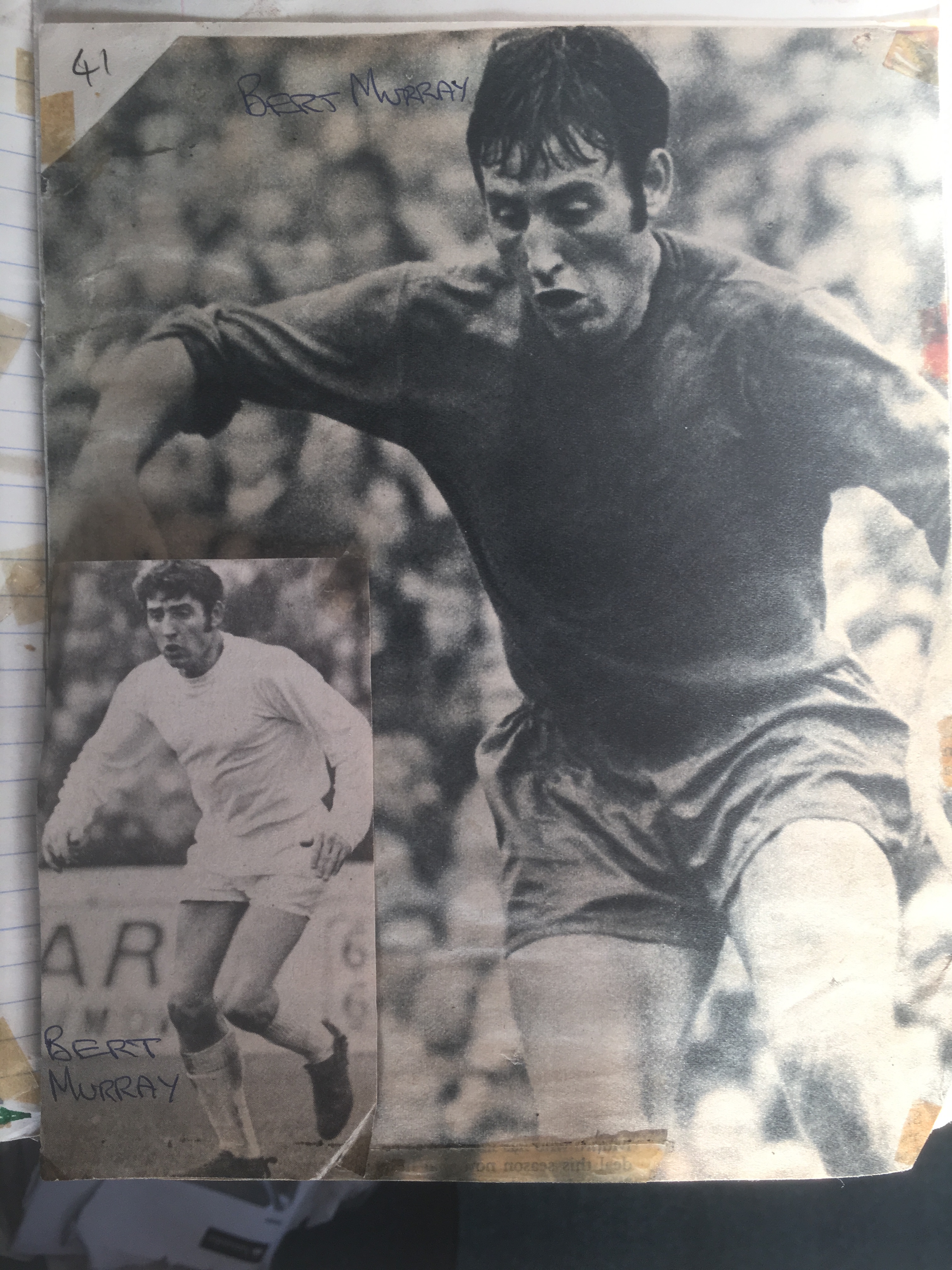
Pictures from my scrapbook , the internet and the Albion matchday programme.
Below, the Goal magazine feature ‘The Girl Behind The Man’



















 IN THE days before managers had a bench of substitutes, players who could slot into virtually any position were a major asset. One of my favourites was Eddie Spearritt.


 In the 1969-70 season, not only was he part of the Third Division Albion side who pushed his old manager McGarry’s First Division Wolverhampton Wanderers side all the way in a memorable third round League Cup tie, it was his header from



 ON HOLIDAY in Jersey in 2016 my eyes were drawn to a picture on a display in St Helier’s Fort Regent entertainment complex.
 Versatile Murray – mainly a winger but equally adept at right back – wrote himself into the Albion’s history books when he was bought from Birmingham with funds raised by fans.

 At least at club level in 1965 Murray won some silverware (above image discovered on The Shed End Chelsea fans website), playing alongside Bonetti, Venables, Eddie McCreadie,
 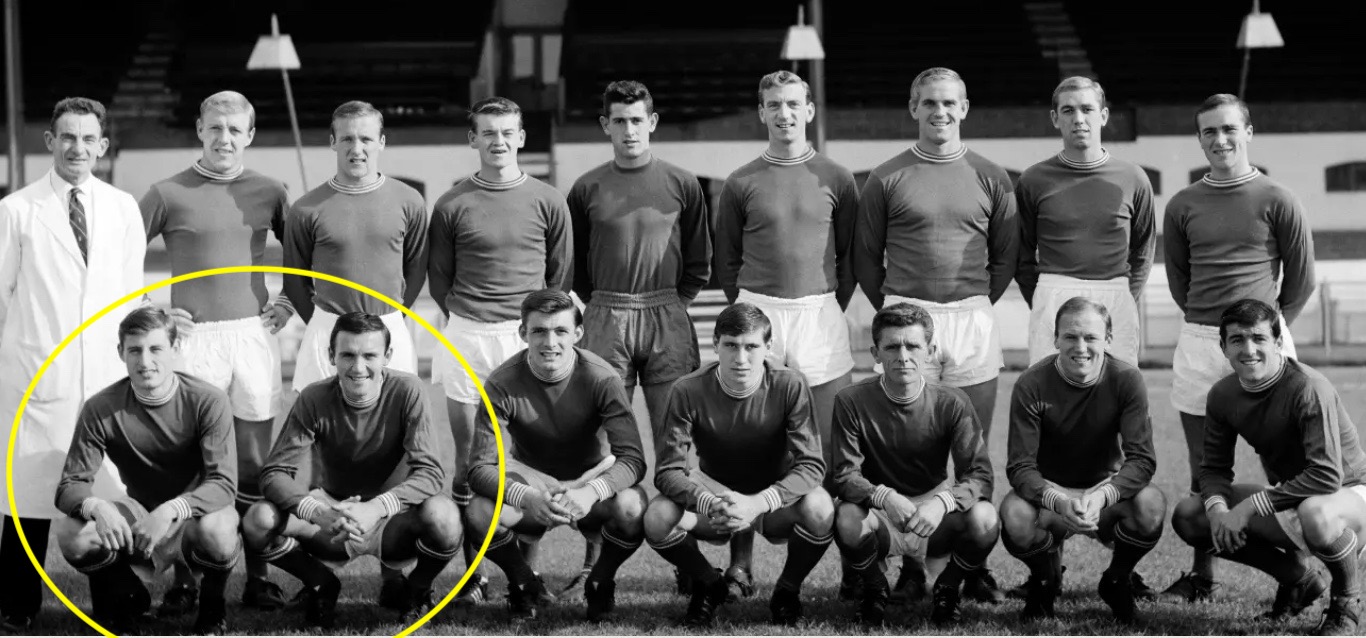 Murray and Bridges alongside each other in a 1963-64 Chelsea team picture.
 The pair were part of the side which in successive seasons got to the semi-final of the League Cup (in 1967) and FA Cup (in 1968) only to lose on both occasions. Because these things are important in the Midlands, joysandsorrows.co.uk remembers Murray as part of the 1968 Blues side who beat rivals Villa home and away. In five years, he played 132 games scoring 22 goals.
 Saward brought in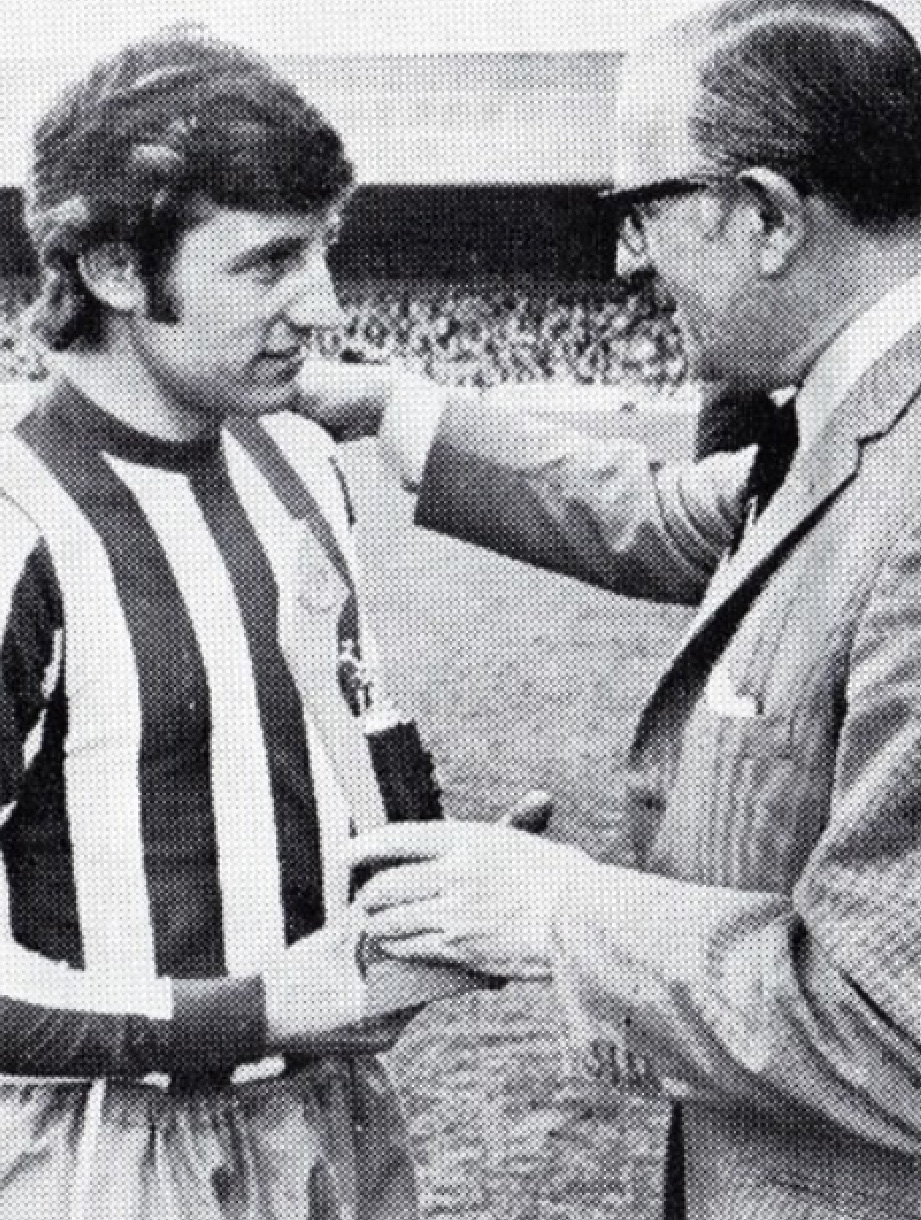


 In parallel lines