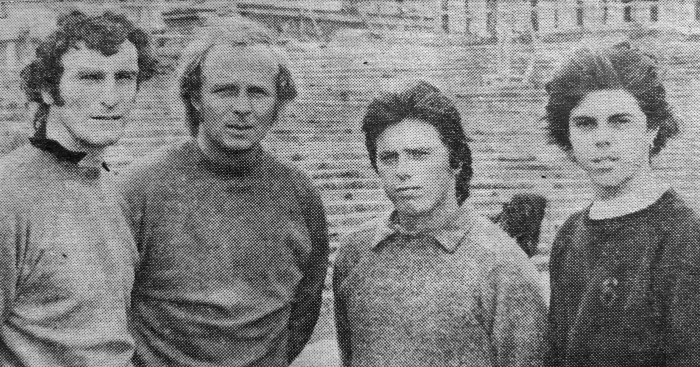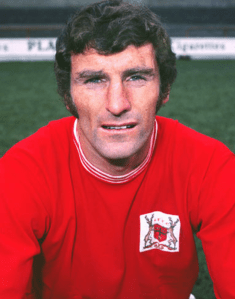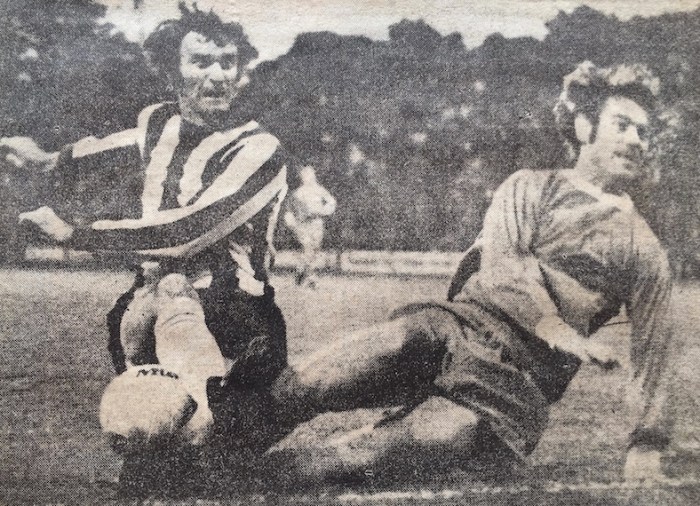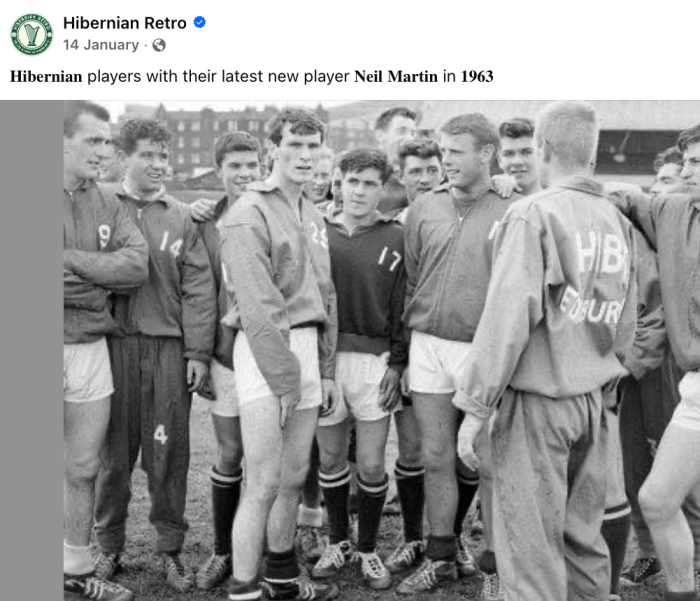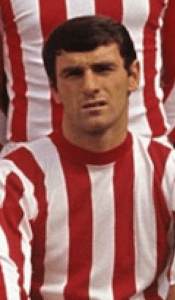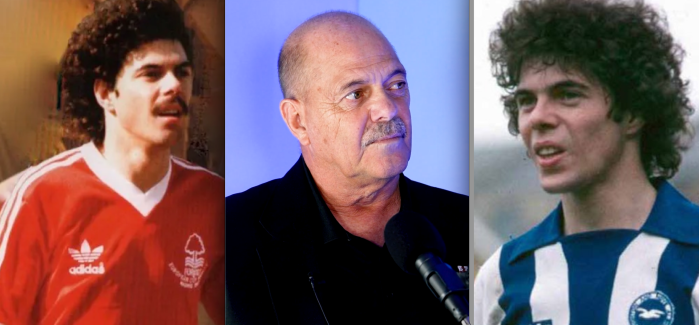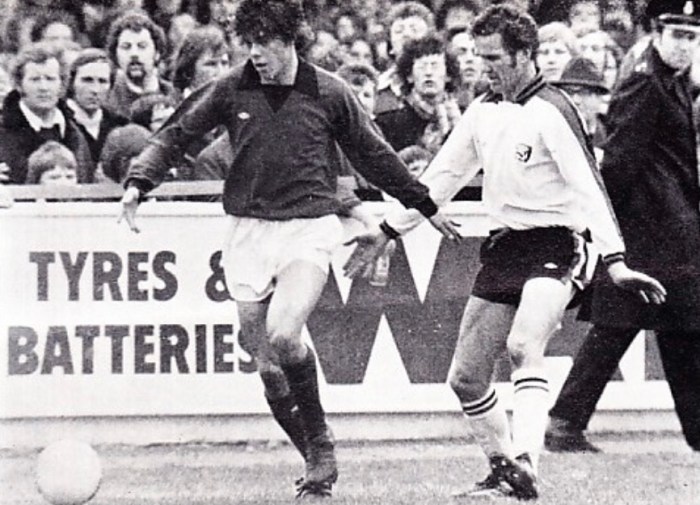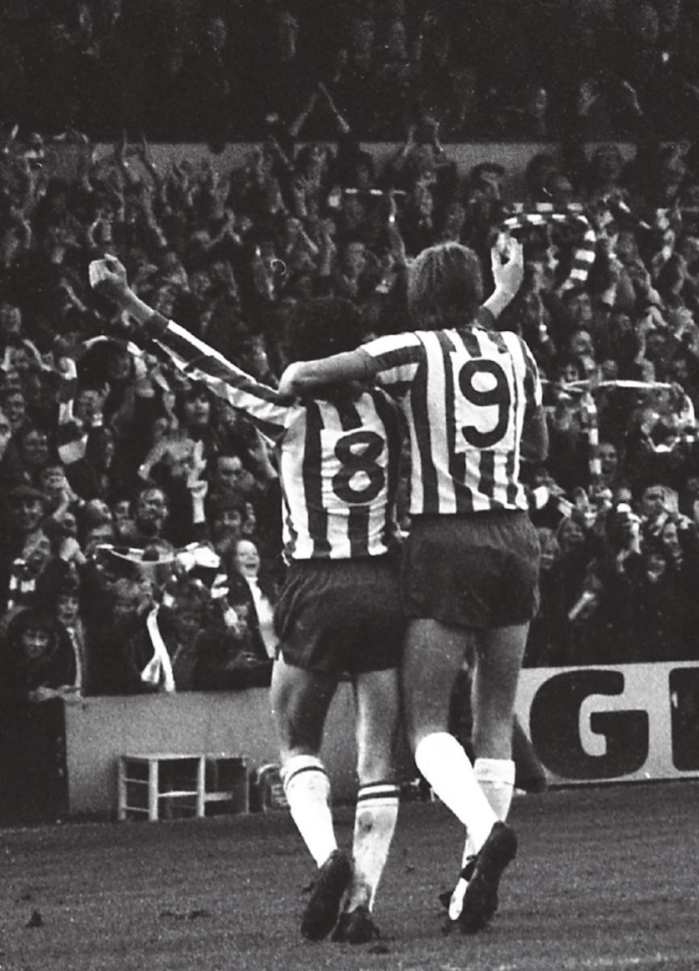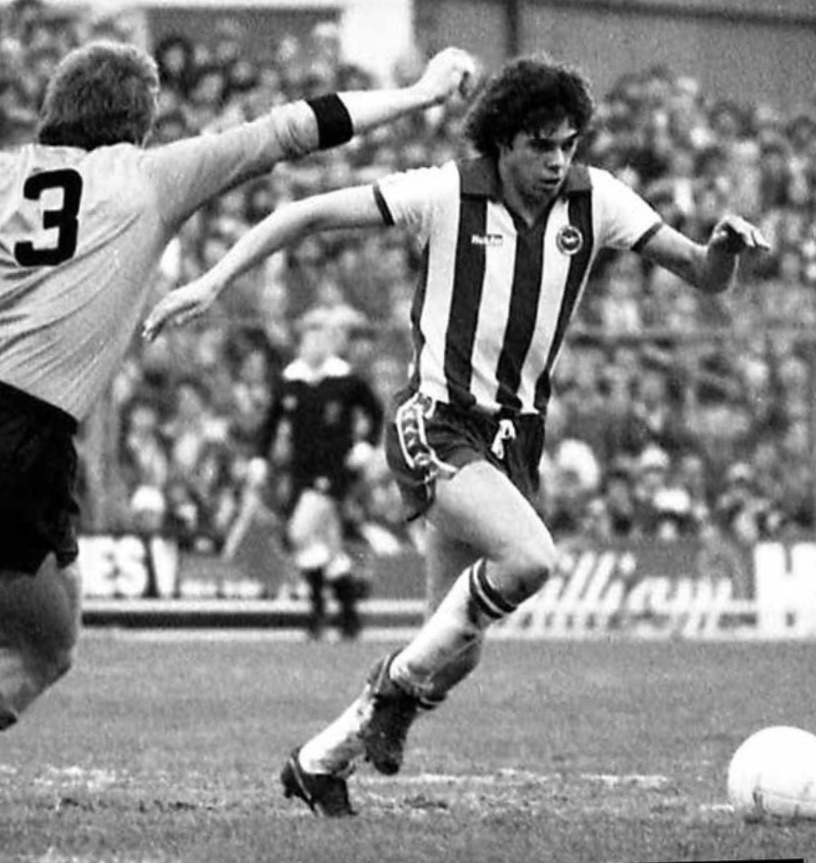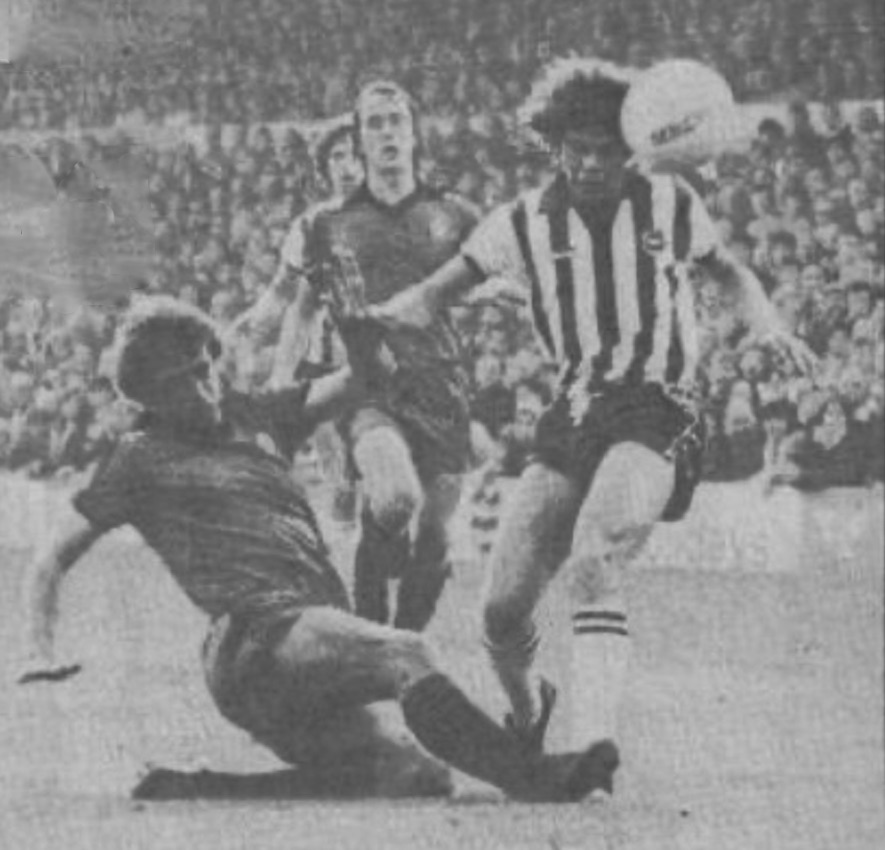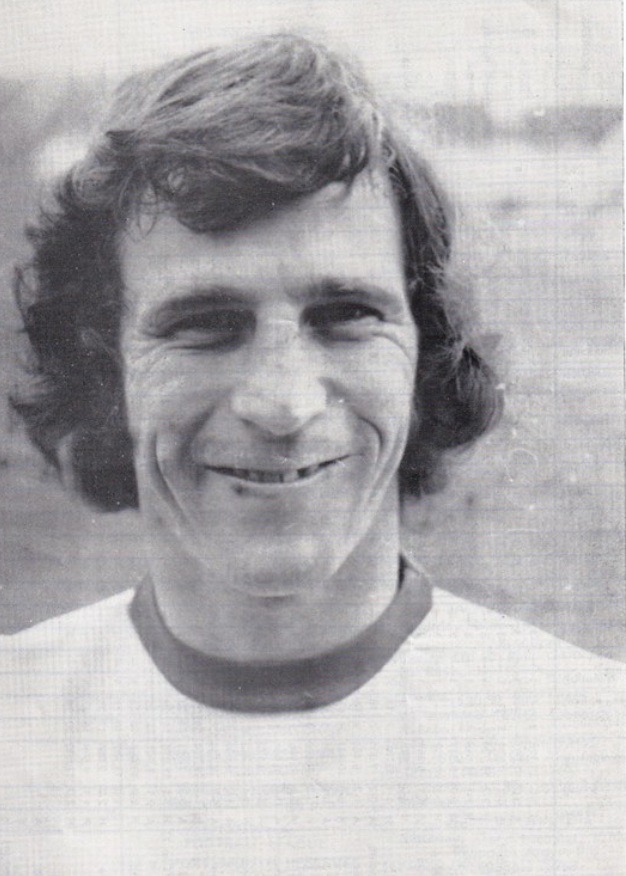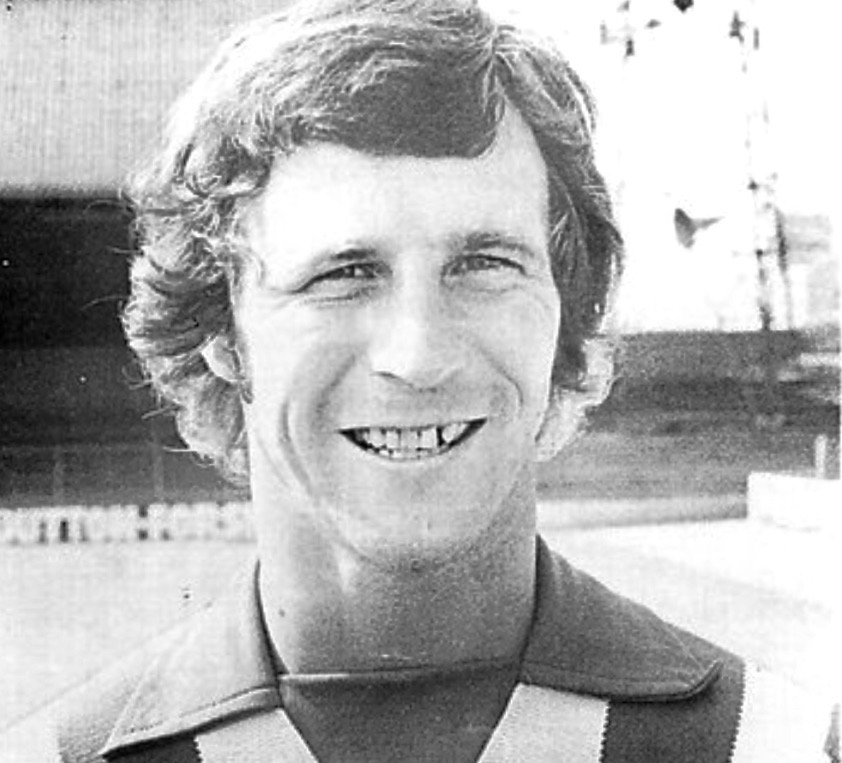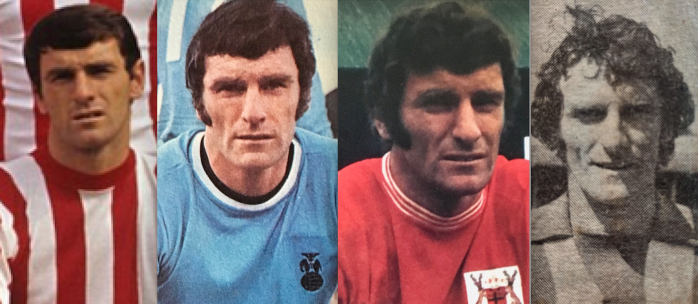
Top goalscorer Fred Binney ousted by one of the best

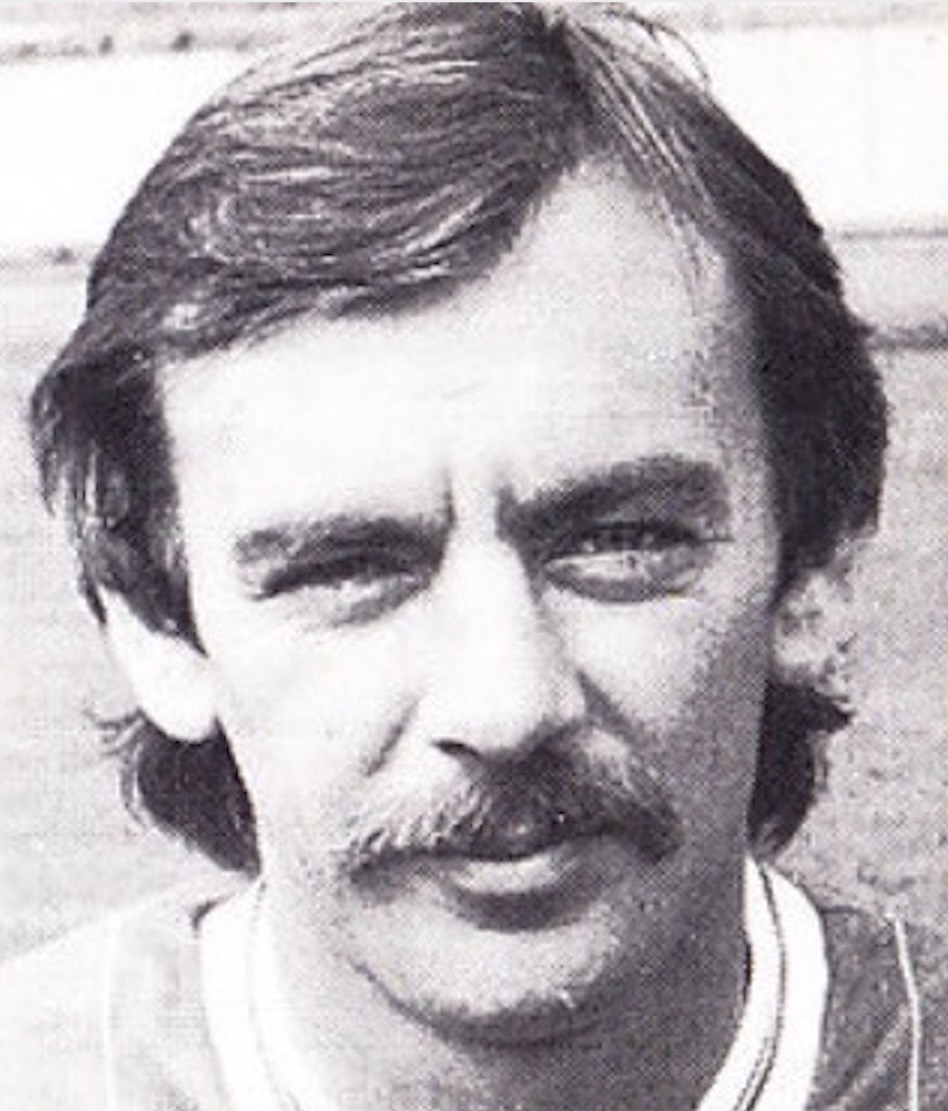
DEVONIAN FRED BINNEY was a prolific goalscorer for Brighton but the emergence of one of the club’s all-time great players brought a premature end to his stay in Sussex.

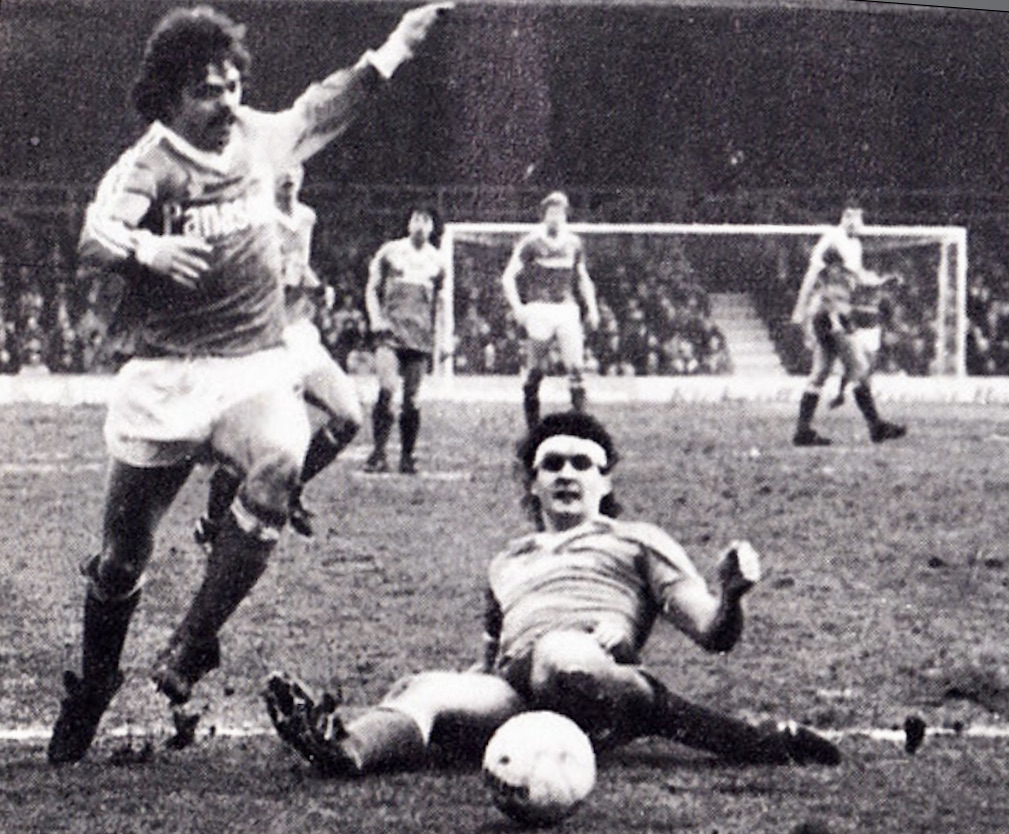
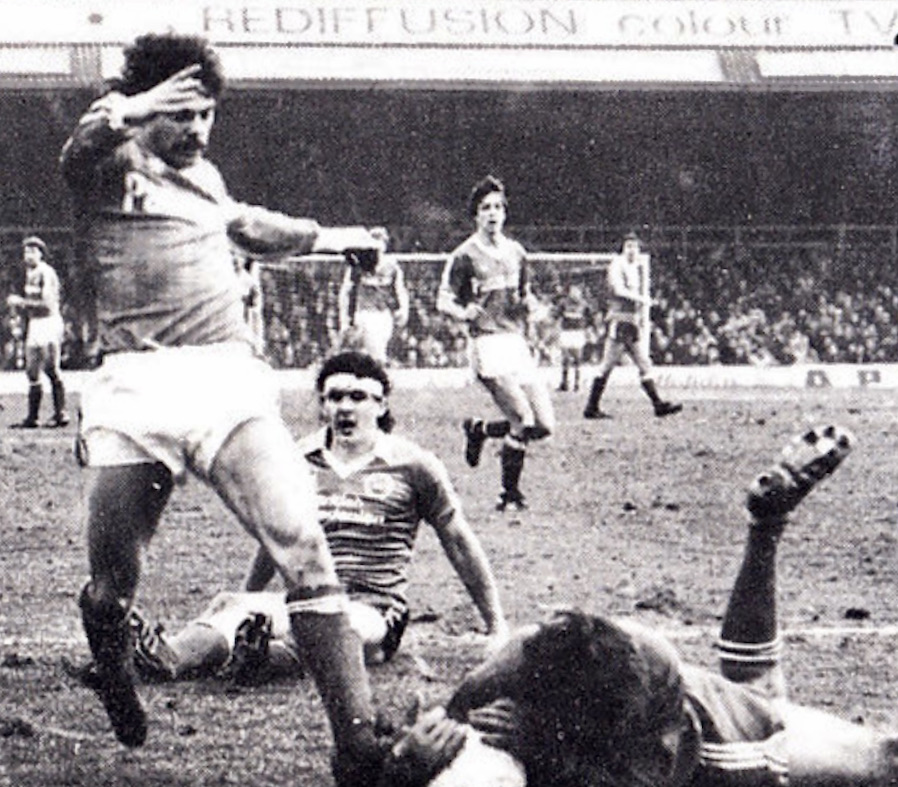
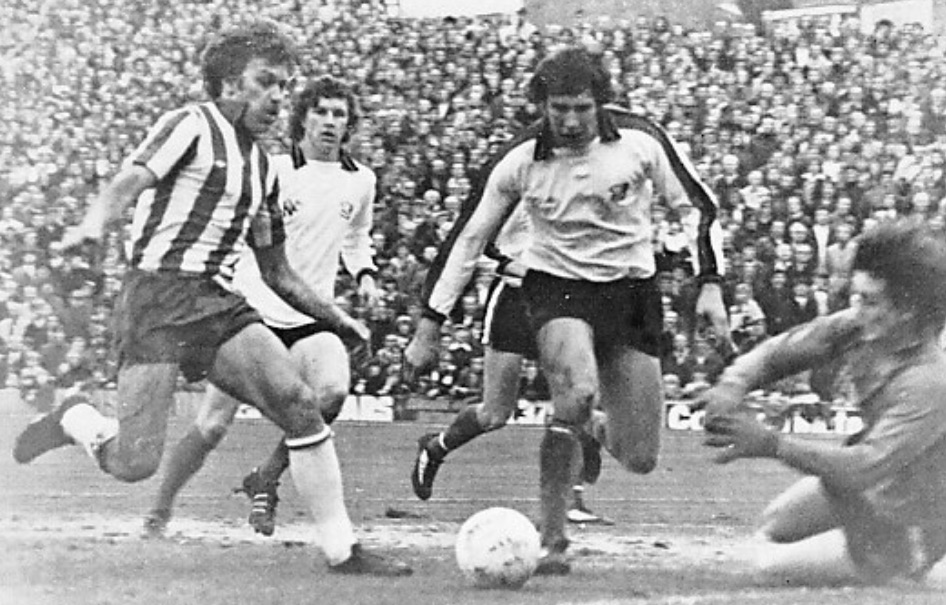
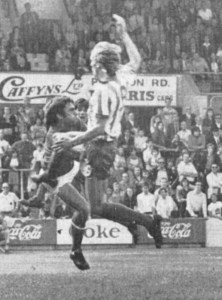
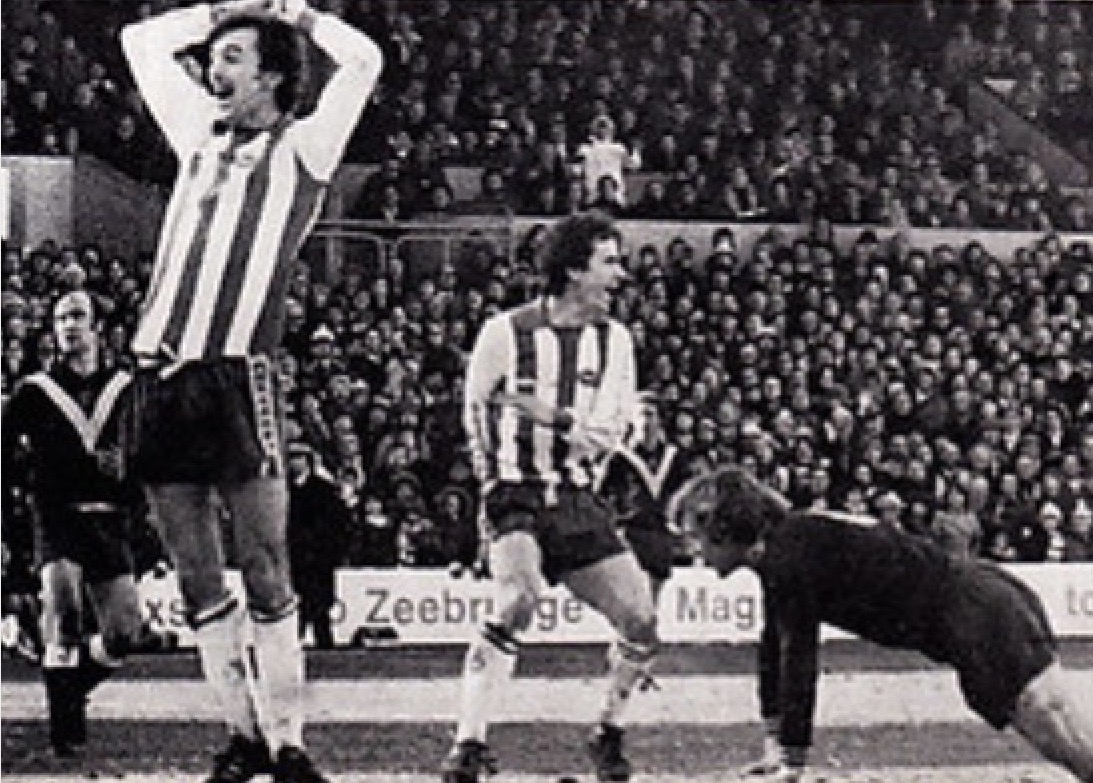
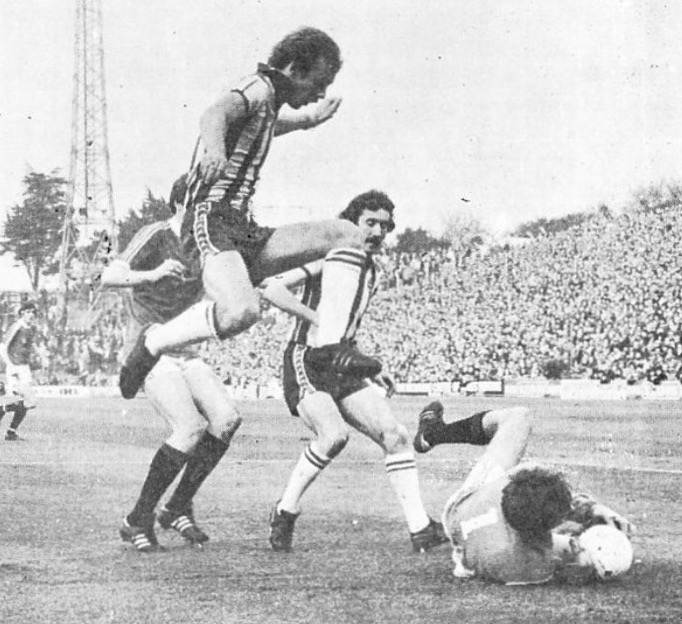
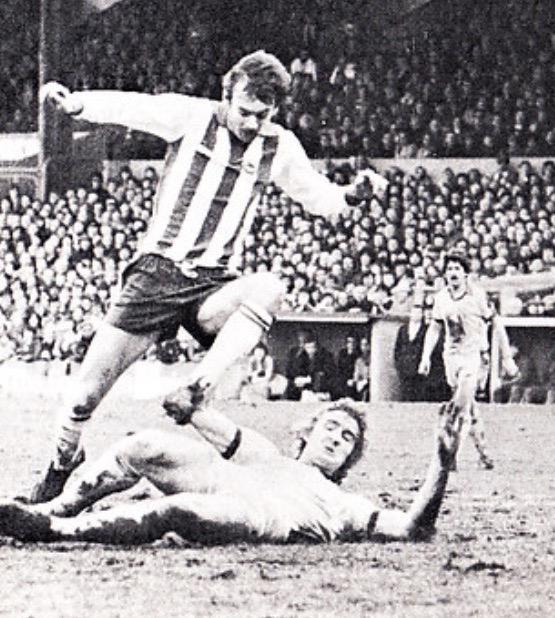
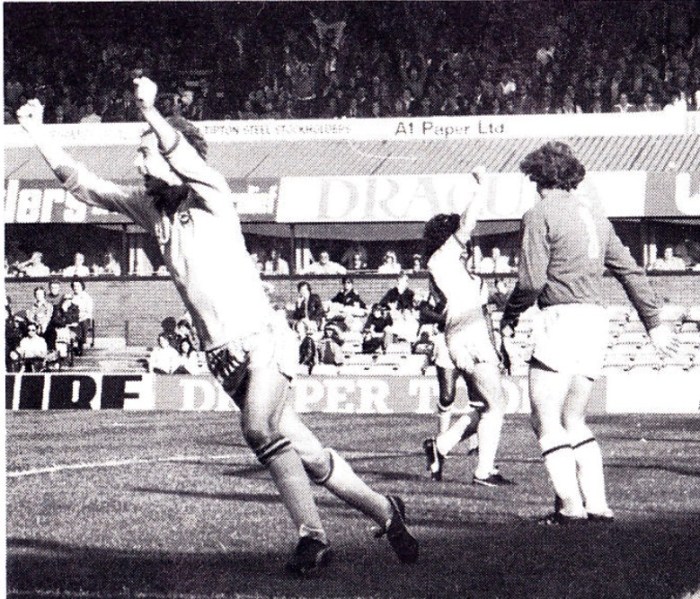
Binney was not afraid to put a head or boot in where it hurt and black and white action photographs in matchday programmes from the 1974-75 and 1975-76 seasons and in the Evening Argus invariably featured goalmouth action involving the moustachioed or bearded Binney.

I particularly remember a shot of him continuing to play wearing a bloodied head bandage after he’d cut himself but played on in a home game against Hereford United, a club he later played for and coached.

The ‘old school’ centre forward was signed by Brian Clough and Peter Taylor from Exeter City at the end of the 1973-74 season in exchange for Lammie Robertson and John Templeman plus £25,000.

Taylor had sought the opinion of David Pleat, later a manager of Luton, Tottenham and Leicester, who had played alongside Binney for the Grecians.

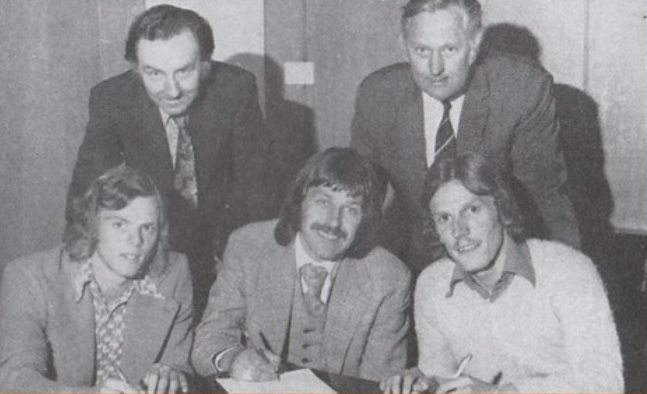
Mike Bamber and Peter Taylor capture Fred Binney’s signature with John Templeman and Lammie Robertson going to Exeter in exchange

Pleat recalls in the Summer 2025 edition of Backpass magazine: “I told him that he was a clinical finisher, very sharp, had an eye for goal but tended to be caught offside too often.”

Incidentally, Templeman, a Sussex lad who had been an Albion player for eight years, didn’t want to leave but, as he told Spencer Vignes in his book Bloody Southerners (Biteback Publishing 2018), Taylor told him he’d never play league football again if he didn’t agree to the move.

Binney’s arrival came as the former league title-winning duo set about clearing out most of the squad they inherited from Pat Saward as they sought to rebuild. Around the same time, a triple signing from Norwich City saw Ian Mellor, Andy Rollings and Steve Govier arrive.

Clough clearly didn’t fancy the forwards Saward had signed and, as well as using Robertson as a makeweight also let go two previous record signings in Ken Beamish and Barry Bridges.

Binney hadn’t managed to kick a ball in anger for Clough before the outspoken boss left to manage Leeds, but sidekick Taylor felt he owed it to chairman Mike Bamber to stay, and took on the job alone (bringing in ex-Long Eaton manager Brian Daykin as his no.2).

Binney making a splash at the Goldstone

Taylor also recruited Ricky Marlowe, a youngster who’d been a reserve at their old club, Derby County, to play up front with Binney, along with several other new arrivals with past Rams connections, such as Jim Walker and Tommy Mason.

It was not really surprising they thought Binney could do a job for Brighton because in 1972-73 he had scored 28 league goals for Exeter, making him the season’s joint-top goal scorer in the entire Football League (along with West Ham’s Bryan Robson). And in 1973-74, he was voted the PFA Division Four Player of the Year and Exeter City Player of the Year after he’d scored another 30 league and cup goals.

It was said the Grecians had already turned down an offer from Swindon Town before he made the move to Sussex.

With so many new arrivals at the Goldstone, perhaps, not surprisingly, consistency was hard to find in the 1974-75 campaign and Binney didn’t come close to repeating that scoring form with only 13 goals to his name as Albion finished a disappointing 19th in the table.

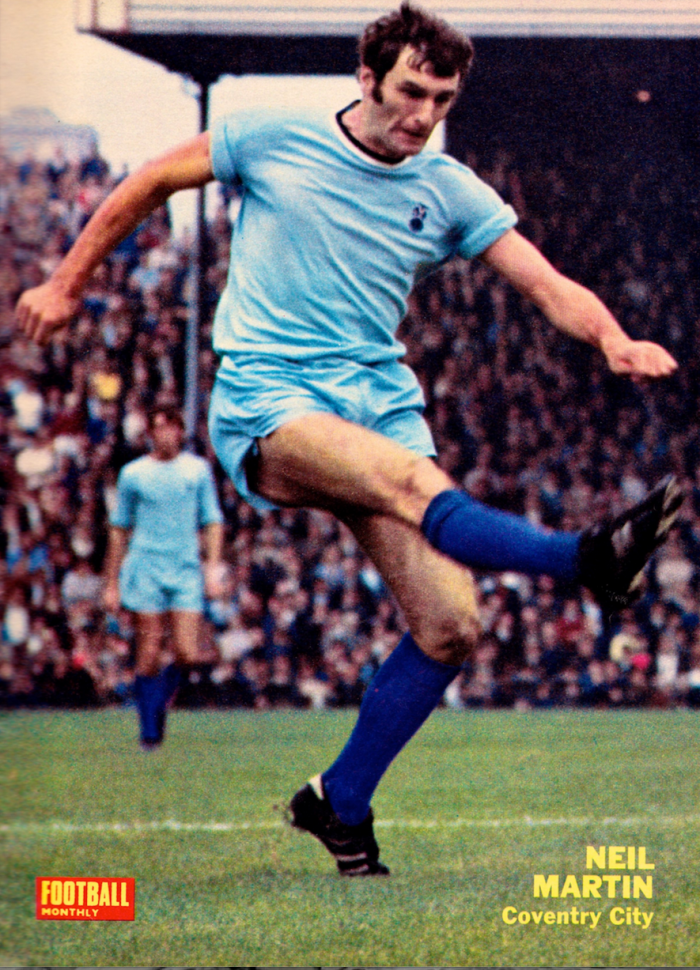
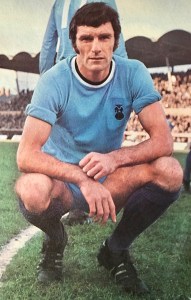
That all changed in 1975-76 – Albion’s 75th anniversary season – and Binney was on fire, netting 23 goals as Albion narrowly missed out on promotion. Taylor still couldn’t resist chopping and changing Binney’s strike partners. He started out with new arrival Neil Martin, an experienced Scottish international, then had Nottingham Forest loanee Barry Butlin.

When craggy Northern Irish international Sammy Morgan arrived from Aston Villa, it looked like Taylor had finally found his ideal pair, although it took Morgan six matches before he struck a rich vein of form.

Meanwhile a young reserve who’d been blooded in a friendly against First Division Ipswich Town on Friday 13th February 1976 began to find himself included in the first team picture.

He’d been a non-playing substitute three times before a big top-of-the-table clash away to leaders Hereford on 27 March, which BBC’s Match of the Day had chosen to cover.

In the pre-match team meeting, manager Taylor announced that Binney wouldn’t be playing and that Peter Ward would take his place.

“Fred Binney was nice, a great fella; there was no friction between us and I didn’t really have time to think about how he was feeling,” Ward said in Matthew Horner’s 2009 book about him (He Shot, He Scored, Sea View Media).

Just 50 seconds into the game, Ward scored, the game finished 1-1 – but Ward didn’t look back and went on to become one of the club’s greatest ever players.

Binney wasn’t quite finished but it was the beginning of the end. Ward scored again in his second match as Binney’s replacement (another 1-1 draw, at Rotherham) but after a 2-1 defeat at Chesterfield, Binney was restored to the starting line-up in place of Morgan and opened the scoring in a 3-0 home win over Port Vale (Ward and Mellor also scored).

Sadly, it was Albion’s last win of the season. They lost 3-1 away to promotion rivals Millwall and drew the last three games resulting in them finishing fourth, three points off the promotion spots.
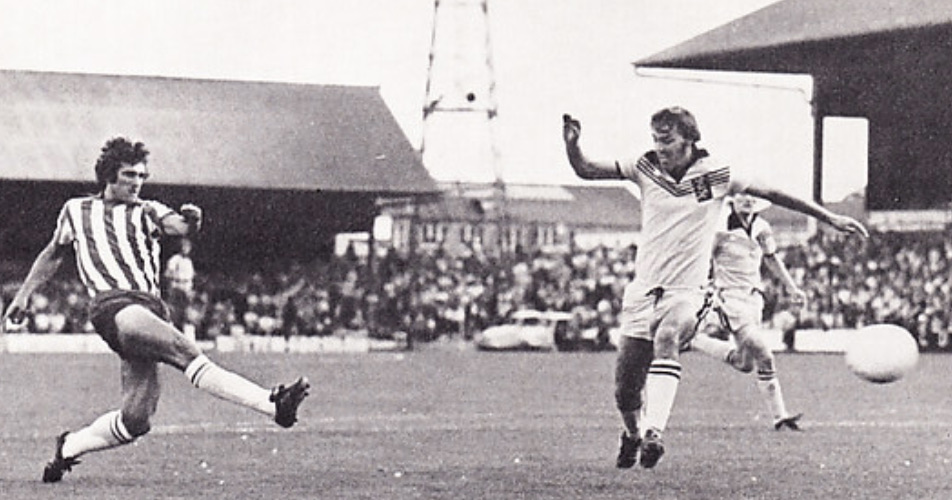
Binney gets a shot away at The Den – and later had to make his own way home!

Binney scored a consolation goal in that game at The Den but ended up having to make his own way home when fuming Taylor ordered the team coach driver to leave without him!

Ward recounted the story in Horner’s book: “Pete Taylor had just had a real go at us in the changing rooms and we were all sitting in silence on the coach, wanting to get home as soon as we could.

“Fred was the only one still not on the bus because he was standing around talking to someone. Pete wouldn’t wait and said to the bus driver, ‘F••• him. Leave him. Let’s go’. It wasn’t the sort of place at which you’d want to be left but, luckily for Fred, he got a lift from some fans and managed to get back to Brighton before the coach.”

In his review of the season for the Argus, John Vinicombe wrote: “Few forwards in the division could match Fred Binney for converting half chances into goals,” although he observed that only eight of his goals were scored away from the Goldstone. “Away from home, Binney did not fit into the tactical plan. He looked lost,” wrote Vinicombe.

While the team missed out on promotion because of those draws, young Ward enhanced his credentials by scoring the equaliser in each of them, taking his tally to six goals in eight games.
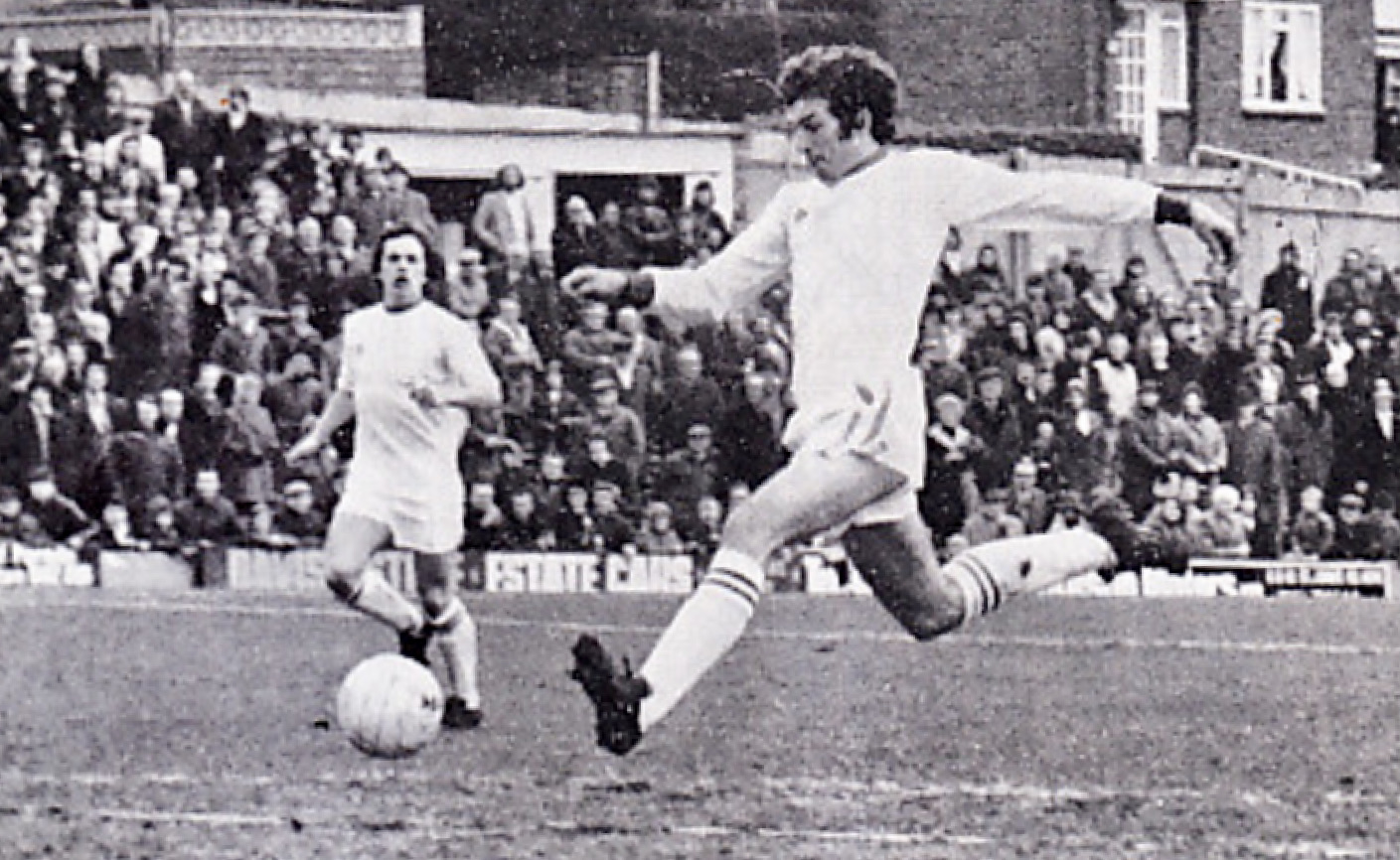
Taylor decided to team up with Clough once again, at Nottingham Forest, and disappointed chairman Mike Bamber turned to former Spurs captain Alan Mullery who had thought he was going to take charge of Fulham after retiring from playing but was spurned in favour of Bobby Campbell.

As he assessed the strengths and weaknesses of his squad in pre-season training, Mullery quickly took a liking to Ward and gave Binney short shrift when he tried to persuade him that picking the youngster instead of him would get him the sack.

Even so Binney started the first ten games of the 1976-77 season, and scored four goals, but he was subbed off in favour of Gerry Fell on 50 minutes of the September home game v York City when the score was 2-2 and suddenly the floodgates opened with Albion scoring five without reply in front of the Match of the Day cameras. Binney didn’t play another game for the first team.

In the days of only one substitute, invariably it was his old strike partner Morgan who got the seat on the bench. In his autobiography, Mullery wrongly recollects that he sold Binney to Exeter within two months. While there were plenty of rumours of Binney moving on, with Torquay, Reading, Crystal Palace and Gillingham all keen to sign him, he spent the rest of the season turning out for Albion reserves.

“One of the best goalscorers in the lower divisions and popular with the Albion supporters, Binney was perhaps the biggest victim of Ward’s stunning introduction to league football,” Horner observed, noting that in 15 games in which they played together, that Vale game was the only match when they both scored.

Binney left Brighton having scored an impressive 35 goals in 70 matches and, as was often the case at that time, a chance to play in America would prove to be a blessing for him.

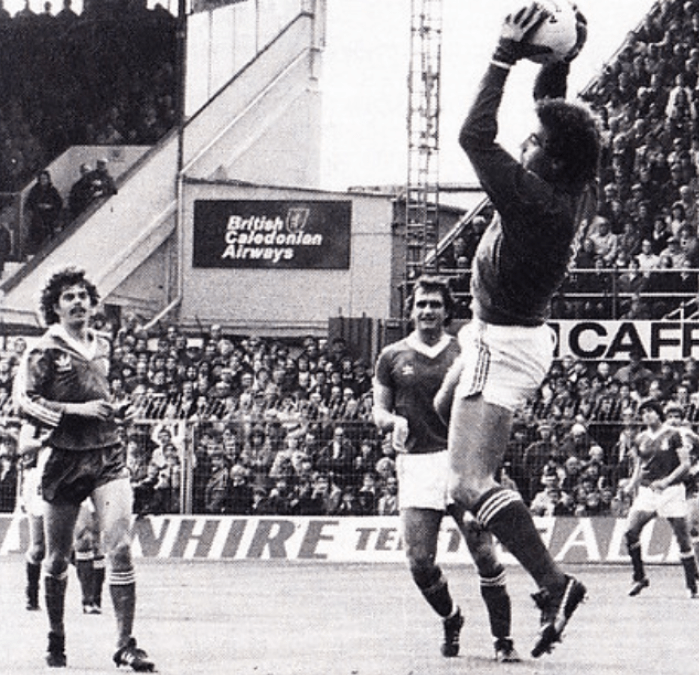
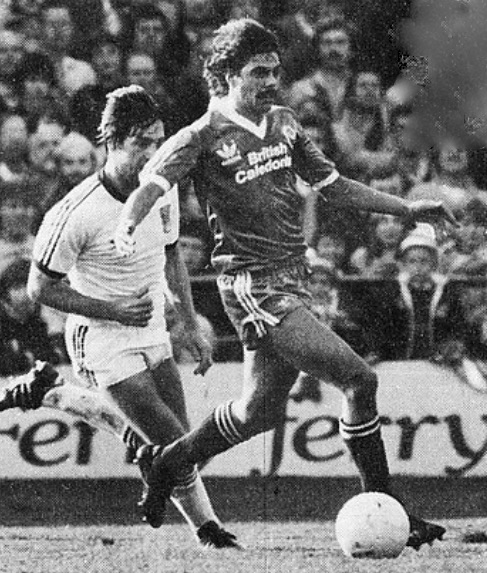
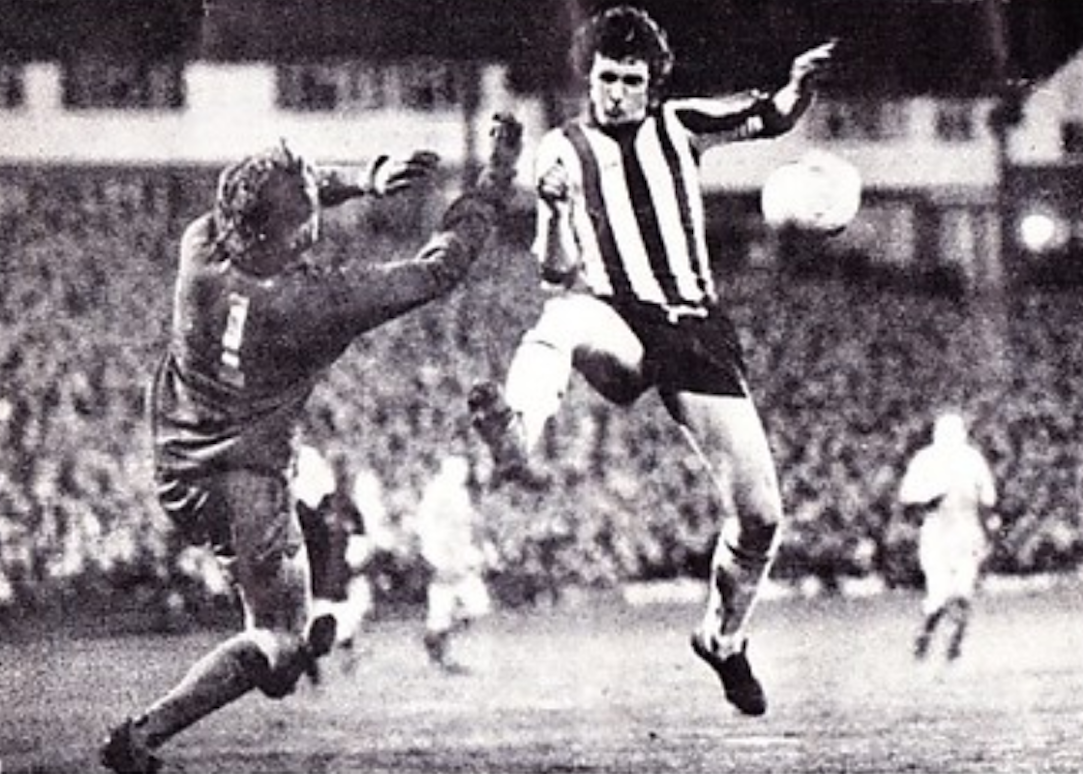
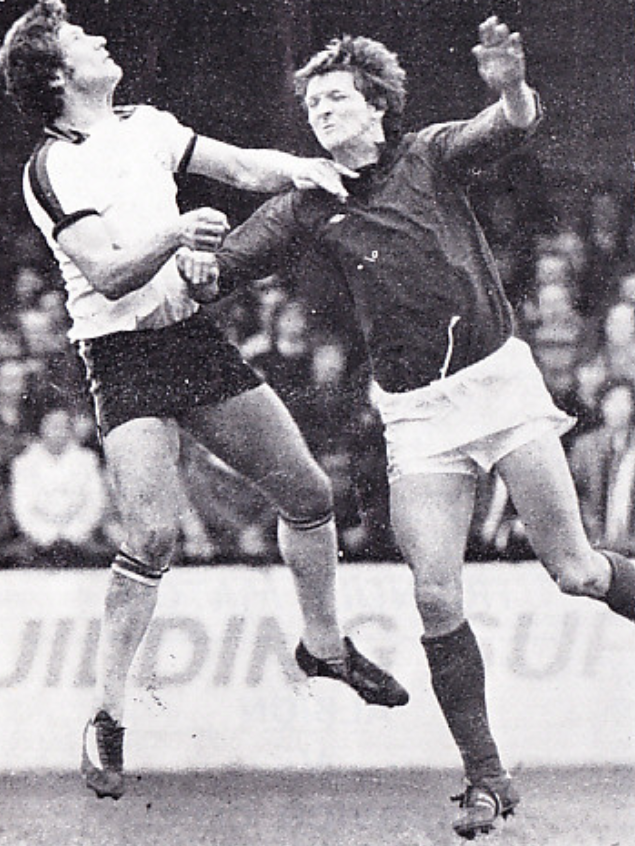
Binney up against Welsh international Mike England, left for Albion v Cardiff, right for St Louis Stars

He joined Missouri-based St. Louis Stars in the North American Soccer League, who had John Jackson in goal and former Spurs player Ray Evans in defence along with ex-Albion defender Dennis Burnett and ex-Palace and Liverpool full-back Peter Wall.

In a side managed by ex-Palace and Orient player John Sewell, Binney kept up his impressive scoring record by bagging nine goals in 18 appearances. Fellow striker Barry Salvage, who’d played for the likes of Fulham, QPR, Brentford and Millwall, only scored once in 25 games.

Born in Plymouth on 12 August 1946, it was to his hometown club that he moved on his return to the UK from America.

Binney had been raised in the Barbican area of Plymouth and I am grateful to Ian De-Lar of Vital Argyle for filling in details of his early playing career.

He was a prolific goalscorer in junior football whilst playing for CM Department juniors and was signed by South Western League side Launceston.

While starting work as an apprentice at Devonport Dockyard, he also played for John Conway in the Devon Wednesday League, where he was spotted by Torquay United scout Don Mills.

Torquay took him on as an amateur before he signed a professional contract in October 1966. Although he made his first team debut in September 1967, he was mainly a reserve team player and went on loan to Exeter City in February 1969 before joining them on a permanent basis in March 1970 for £4,000.

He’d scored 11 goals in 24 starts for the Gulls but in view of his future success Torbay Weekly reporter Dave Thomas declared: “If there was a ‘One That Got Away’ story from that era, it was surely Fred Binney.

“The bustling, irrepressible Plymothian was snapped up by United as a teenager, but despite hitting the net at will in the reserves, he could never convince (manager Frank) O’Farrell that he was the real deal.”

It was during the brief managerial reign of former goalkeeper Mike Kelly that Binney joined Argyle in October 1977 and although he scored nine in 18 matches, he wasn’t able to hold down a regular starting spot.

But when the wily former Crystal Palace and Manchester City manager Malcolm Allison returned to Home Park as manager, Binney’s fortunes turned round and, in the 1978-79 season, he scored a total of 28 goals, was the team’s leading goalscorer and ‘Player of the Year’.

In Allison’s first away match, on 21 March 1978, he was rewarded for giving Binney his first senior game for 10 weeks when the predatory striker scored twice in a 5-1 win at Fratton Park. Also on the scoresheet was 18-year-old substitute Mike Trusson, who replaced the injured Steve Perrin. Pompey’s consolation was scored by Binney’s former Albion teammate Steve Piper, on as a sub for the home side.

Binney’s goal-every-other-game ratio at Argyle saw him net a total of 42 goals in 81 games – 40 while Allison was his manager. That Argyle squad had Tony Burns as back-up goalkeeper to Martin Hodge.

Great Pilgrim

Those goals helped to earn Binney 20th place in a list of the top 25 ‘Greatest Pilgrims’ voted for in July 2019.
But Allison’s successor, the former Argyle player Bobby Saxton, had different ideas and sold Binney to Hereford United for £37,000 in October 1979.

He scored six times in 27 appearances for the Bulls before moving into coaching, at first becoming assistant manager to Hereford boss Frank Lord. When Lord left in 1982 to manage the Malaysia national team, Binney went too.

He returned to England in 1985 to become assistant manager to Colin Appleton at his old club Exeter. When Appleton was sacked in December 1987, Binney went with him, taking up a role as recreation officer at Plymouth University. He subsequently became president and coach of its football club, and retired in 2013.

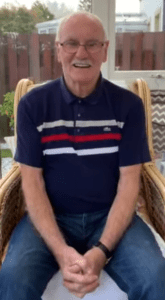
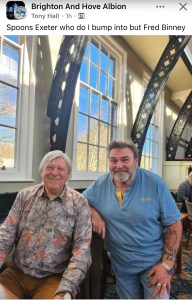
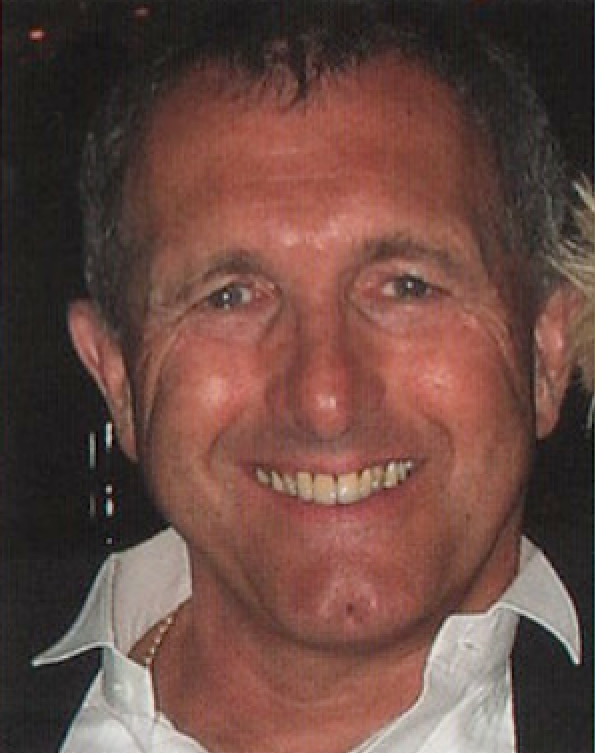
Albion fan Tony Hall posted this picture on Facebook of a chance pub encounter with Binney in 2025

That year, Binney’s son Adam was in touch with the excellent The Goldstone Wrap blog, saying of his dad: “He is not really interested in being lauded and doesn’t look for any kind of adoration. He doesn’t really like the attention, but he does love Brighton & Hove Albion and remembers his time there fondly.”

• In the Backpass article (left), Pleat recalls how, during his time as Leicester manager, Binney was his West Country talent scout. He also tells how Binney and his wife Lesley ran a cream tea shop in Modbury, Devon, for many years and how the former striker enjoyed travelling the length and breadth of the country’s canals on his own longboat, Escargot.

Bank clerk Fell on his speedy feet at the Albion

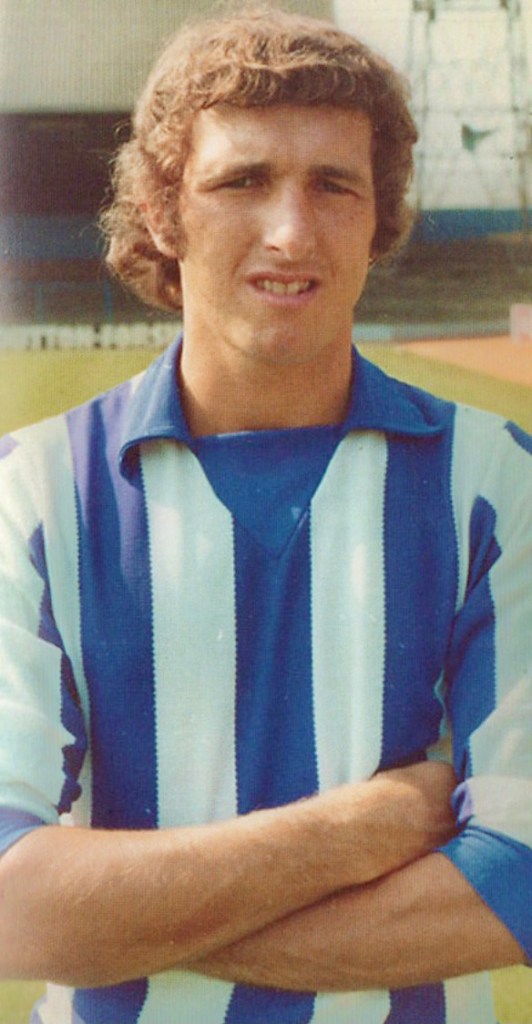
In full flight for the Albion

NOT TOO many professional footballers start out as bank clerks, but Gerry Fell broke that mould when he signed for Brighton.

Six-foot winger Fell had worked at the Newark branch of NatWest for five years, combining bank clerk duties with playing semi-professional football for Lincolnshire-based Stamford in the United Counties League.

In the latter part of 1973, Stamford played Long Eaton United in a FA Trophy second round qualifying match and Long Eaton’s manager, Brian Daykin, having liked what he saw, signed Fell for the Derbyshire side the following summer.

Within weeks, Daykin left Long Eaton to become no.2 to Peter Taylor at the Albion – and one of his first moves was to persuade Taylor to sign Fell. Taylor watched the player a couple of times and endorsed his assistant’s opinion.

Fell was 23 when he packed up his NatWest job to move to Sussex and turn professional.

“I loved Brighton from the moment I arrived, absolutely loved it, especially considering where I came from,” he said. “It was a totally different ball game to Newark and I loved the idea of living by the sea. It was so cosmopolitan and a massive eye-opener for me.”

In a matchday programme article, Fell told Spencer Vignes: “I was always very fit and a good trainer, so I didn’t find the training difficult at all. But obviously the step up in terms of actually playing took a bit of getting used to.

“I thought it was great because, as you can imagine, it was a stars-in-my-eyes job for me. I got into the first team within three months of arriving, so it was fantastic. I’ve never regretted any of it.”

Pointing out that he wasn’t the only member of that squad who was late to the game and from non-league (Peter Ward and Brian Horton were too), he said: “You had a few of us who’d experienced the outside world and perhaps appreciated what it meant to be a professional footballer that little bit more because of it.”

Born in Newark on 1 March 1951, Fell’s first football memory was as the mascot for Newark Central, a local team that his grandfather ran. He was educated at Magnus Grammar School in Newark where he earned a reputation for athletic achievements, gaining honours in high jump and 800 metre running.

Fell certainly hit the ground running at the Albion as a pacy goalscoring winger, netting five goals in 20 appearances in the season he arrived plus eight in 28 the following season (1975-76).

His initial first team involvement was as a non-playing sub for a 2-0 home win over Southend United on 7 December 1974 (Tommy Mason and Jim Walker the scorers), but once he’d made his debut at the end of the following month in a 2-0 win over Colchester United, he kept the shirt previously worn by Ian Mellor through to the end of the season (bar one game when Mellor replaced him).

In 1975-76, when Taylor’s much-changed side only narrowly missed out on promotion, Fell twice hit braces in 6-0 wins at the Goldstone, the first pair against Chester in September (Fred Binney 2, Peter O’Sullivan and Mellor also scorers), the other when Colchester United were dispatched by the same scoreline in January 1976 (Binney another two, Andy Rollings and Mellor also scoring).

He revelled in switching from playing in front of 200-300 people to turning out at the Goldstone where crowds could often be more than 20,000 – even for Third Division games.

“To play in front of that amount of people on that ground, well, it was a dream come true,” Fell told Vignes. “The Goldstone was a bit of a fortress at that time and the players in the team were so confident.”

Apart from that first half-season, Fell generally competed with Brighton-born Tony Towner for the no.7 shirt and Taylor’s successor Alan Mullery went with Fell for the final run-in to promotion from the third tier in the spring of 1977. He started 11 games and scored the only goal of the game as top-of-the-table Albion secured a vital 1-0 win over Port Vale in their penultimate home game.

“It wasn’t easy being on the sidelines looking on, but Gerry was a breath of fresh air,” Towner said in a matchday programme interview. “He was the opposite of me; though still a winger, he had loads of pace, though not too much skill!

“He’d knock the ball ahead of him and run past the defender to get it. I’d try to trick my way past.”

Ironically, although Brighton secured promotion by beating Sheffield Wednesday 3-2 in the last home game, the man of the match was the visitors’ Eric Potts – and his next game at the Goldstone was in Albion’s colours… as a replacement for Fell and Towner!

Having liked what he saw in that exciting encounter under the lights in front of a bumper crowd of 30,756, Mullery promptly signed Potts for £14,000 in the close season.

The diminutive winger had previously played for Wednesday at the level of today’s equivalent of the Championship and he was installed in the no.7 shirt for the first 21 games of the season.

Fell played and scored in his first start of the season (a 2-0 home win over Hull City) in September and the following game, his last start in an Albion shirt, was in a 2-2 League Cup second round replay draw at Oldham Athletic.

But Fell wasn’t done with the Seagulls just yet. He proved to be a matchwinner after going on as a 57th minute substitute for the injured Steve Piper in the last league game of September, a 3-2 night game win over Luton Town in front of a Goldstone crowd of 25,132.

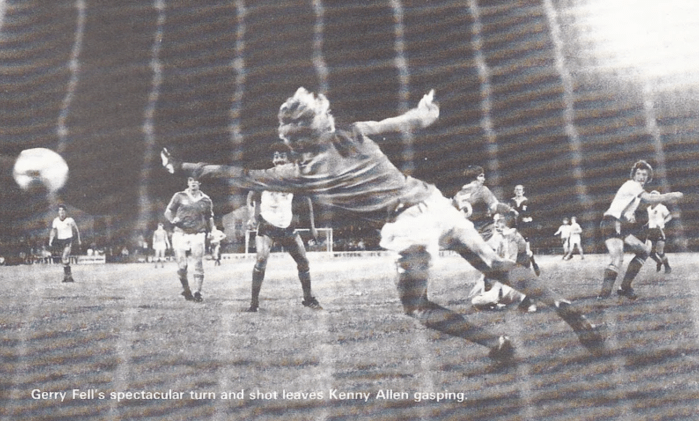
The game was finely poised at 1-1 (Ward and Ron Futcher on target) when on 84 minutes Fell, unmarked at the far post, headed in a second Albion goal when Mellor flicked on a corner by Potts. Three minutes later, Fell was once again played in by Mellor and a turn-and-volley into the top corner from the edge of the box put Albion 3-1 up. There was still time for Jimmy Husband to pull one back for the Hatters, but Albion held on to take all the points.
Those goals didn’t earn him a starting place, though. On six further occasions Fell was sub (three playing, three not getting on) before Mullery traded him as a makeweight in the signing of 19-year-old powerhouse midfielder Paul Clark from Southend United.

In the three years between his first involvement with the first team as a non-playing sub at home to those future employers and his last, going on for Potts in a 1-0 defeat away to Notts County on 5 November 1977, only three other players were involved in both fixtures: Graham Winstanley, O’Sullivan and Mellor. Fell departed with the impressive record of 20 goals in 72 starts plus 19 sub appearances.

In his first season in Essex, he helped Dave Smith’s Shrimpers to promotion from Division Four when they were runners up behind Watford. Third-placed Swansea City and Brentford in fourth also went up.

The next season, while his old Albion teammates were celebrating promotion to the elite for the first time in the club’s history, Fell’s Southend finished mid-table in the third tier, although they did have the excitement of a memorable FA Cup third round encounter with mighty Liverpool: he was part of the Southend team that memorably held the European champions to a 0-0 draw in the FA Cup in January 1979 when 31,033 crowded into Roots Hall.

“It was snowy and frosty and we could’ve beaten them on the night,” United manager Smith later told the local Echo newspaper.

“Derrick (Parker) missed a sitter at the end but I remember turning to one of my coaches and saying I was glad he missed. They thought I was mad but it meant we got to go to Anfield and I’d never managed a team there before.”

How did Southend manage such a result against a full-strength Liverpool side captained by Emlyn Hughes with Ray Clemence in goal, Jimmy Case and Graeme Souness in midfield and Kenny Dalglish up front?

In the lead-up to the game, Smith said: “We couldn’t find anywhere to train so we went to the bottom of the pier. We ended up in a pub there drinking hot port and this was only a few days before the game. Maybe that’s the answer to playing so well.”

Liverpool made up for it in the replay a week later when they won 3-0 (goals from Case, Dalglish and Ray Kennedy) and Fell was subbed off on 75 minutes.

The last season of the decade would end in the disappointment of relegation, and Fell’s departure from the club, but they once again had excitement in a cup competition against higher level opposition, winning 2-1 away at Bolton Wanderers (and drawing 0-0 at home in the second leg) in the second round of the League Cup and then twice forcing draws against West Ham in the third round, before losing 5-1 in a second replay.

When it came to the FA Cup though, United were on the wrong end of a giant killing as Isthmian League Harlow Town beat them 1-0 in the second round.

Not long after joining Southend in 1977, Fell had helped them beat Torquay United 2-1 in the first round of the FA Cup and it was to Plainmoor that he headed in July 1980 on a free transfer.

That cup match was remembered in Torquay’s Into The Eighties pre-season magazine which said: “The pace and power of Gerry Fell left a painful memory with us when he helped Southend knock us out of the FA Cup here at Plainmoor three years ago. He had cost the Shrimpers £20,000 then but now he arrives on the south coast on a free transfer and has already impressed in pre-season training. Gerry certainly knows how to score.”

United supporter and programme statistician John Lovis added: “A complete forward who’s got the lot.”

Alongside big-name new arrival Bruce Rioch as a player-coach, Fell had a terrific first season scoring 17 league and cup goals, seven of them from the penalty spot.

Delighted manager Mike Green said in his matchday programme notes: “We certainly look forward to free kicks now because in Gerry Fell and Bruce Rioch we possess two of the hardest and most accurate dead ball kickers in the game.”

Although he was in the side as the 1981-82 season began under ex-Manchester United boss Frank O’Farrell’s third stint as Gulls manager, he lost his starting berth and later that season had a loan spell at York City, where a young John Byrne was finding his feet in a struggling side.

He briefly joined a mini-exodus of ex-Football League pros in Hong Kong at Happy Valley – future Brighton coach and manager Jeff Wood also played for them – but he returned to Brighton and played non-league football with Sussex County League Whitehawk, finishing the 1983-84 season as leading goalscorer with 35 goals, captaining them to the league championship and also representing the Sussex county side.

He finally hung up his boots in 1986 and was a partner for an independent financial adviser before setting up his own financial services company. He remained in Brighton until 2004 before heading back north and settling in Broom Hills, a Lincolnshire rural farming community to the north west of the city of Lincoln.

Fell died from cancer at the age of 74 in May 2025.

Hero and Villain Sammy Morgan got off Albion mark v Palace

FEARLESS NORTHERN Ireland international centre forward Sammy Morgan and his former Port Vale teammate Brian Horton were bought to win promotion for the Albion.

The gamble by manager Peter Taylor didn’t quite pay off and although midfield dynamo and captain Horton went on to fulfil that promise under Alan Mullery, Morgan’s part in the club’s future success was eclipsed by the emergence of Peter Ward.

Morgan, who was in the same Northern Irish primary school year as George Best, was the first to arrive, a £35,000 signing from Aston Villa in December 1975, replacing the out-of-favour Neil Martin alongside Fred Binney. He wasn’t able to find the net in his first seven matches but when he did it was memorable and went down in the annals of Albion history.

Morgan opens his Albion account in style against Crystal Palace

He scored both goals in a 2-0 win over Crystal Palace in front of a 33,000 Goldstone Ground crowd that took Albion into second place in the table, manager Taylor saying afterwards: “I am delighted for Morgan. It must have given him a great boost to get a couple of goals like this.”

That breakthrough looked like opening the floodgates for the aggressive, angular forward who went on to score in five consecutive home games in a month.

And when Horton arrived in March 1976, with Albion still in second place and only 11 games to go, promotion looked a strong possibility.

But an Easter hiccup, losing 3-1 to rivals Millwall, followed by three 1-1 draws to end the season, saw Albion drop to fourth, three points behind the south London club, who went up behind Hereford United and Cardiff City.

Short-sighted Morgan – he wore contact lenses to play – might not have seen it coming, but it was something of a watershed moment for him too.

The man who signed him decided to quit, saying: “I signed two players gambling on them to win us promotion. We didn’t get it, and the only consolation I have in leaving is I feel I have helped build a good team which is capable of going up next time.”

Before he managed to kick a ball in anger under new boss Mullery, Morgan suffered a fractured cheekbone in a collision with Paul Futcher in a pre-season friendly with Luton in August 1976. The injury sidelined him for months.

Morgan shares a training ground joke with Peter Ward

By the time he was fit to resume towards the end of November, young Ward and midfielder-turned-striker Ian Mellor had formed such an effective goalscoring partnership that Morgan could only look on from the substitute’s bench where he sat on no fewer than 29 occasions.

He got on in 18 matches but only scored once, in a 2-1 home win over Chesterfield. Of his two starts that season, one was a New Year’s Day game at Swindon in which Albion were trailing 4-0 when it got abandoned on 67 minutes because of a waterlogged pitch (and he was back to the bench for the rescheduled game at the end of the season).

Nonetheless, Taylor’s promotion premonition was duly achieved at the completion of Mullery’s first season, and Ward had scored a record-setting 36 goals.

Morgan wasn’t involved in Albion’s first two games of the new season – consecutive 0-0 draws against Third Division Cambridge United, in home and away legs of the League Cup – and, by the time of the replay, he had signed for the opponents, who were managed by Ron Atkinson.

So, in a strange quirk of fate, £15,000 signing Morgan’s first match for the Us saw him relishing a bruising encounter up against former teammate Andy Rollings, although Albion prevailed 3-1.

Morgan spoke about the encounter and his long career in the game in a fascinating 2015 televised interview for 100 Years of Coconuts, a Cambridge United fans website.

Morgan’s easing out at Brighton followed a similar pattern to his experience at Aston Villa who replaced him with 19-year-old Andy Gray, a £110,000 signing from Dundee United. Morgan only made three top flight performances for Villa after a pelvic injury had restricted his involvement in Villa’s second tier promotion in 1975 to just 12 games (although he did score four goals – three in the same match, a 6-0 win over Hull City early in the season). He was injured during a 1-1 draw at Fulham in November and subsequently lost his place in the team to Keith Leonard.

Villa scorer

Morgan had been 26 when Vic Crowe signed him from Port Vale as a replacement for the legendary Andy Lochhead. The fee was an initial £22,222 in August 1973 with the promise of further instalments of £10,000 for every 10 goals up to 20. Vale’s chairman panicked when the goals tally dried up with the total on nine but Morgan eventually came good and Villa ended up paying the extra.

He made his Villa debut on 8 September 1973 as a sub for Trevor Hockey on the hour in a 2-0 home win over Oxford United, the first of five sub appearances and 25 starts that season, when he scored nine goals.

Villa writer Eric Woodward said of him: “Sammy was never a purist but he was a brave, lively, enterprising sort who put fear into opposing defences.”

He carved his name into Villa legend during a fourth round FA Cup tie against Arsenal at Highbury in January 1974 when he was both hero and villain.

Morgan put the Second Division visitors ahead with a diving header in the 11th minute but in the second half was booked and sent off for challenges on goalkeeper Bob Wilson. After his dismissal, Arsenal equalised through Ray Kennedy.

Esteemed football writer Brian Glanville reckoned: “Morgan had scored Villa’s goal and had played with fiery initiative but, alas, he crossed the line dividing virility from violence.

“He should have taken heed earlier, when booked for fouling Wilson. But a few minutes later, going in unreasonably hard and fractionally late as Wilson dived, he knocked the goalkeeper out and off he went.”

An incensed Morgan saw it differently, though, telling Ian Willars of the Birmingham Post: “Neither my booking nor the sending-off were justified. I never touched Wilson the first time and the second time I was going for the ball, not the man. It was a 50-50.

“I actually connected with the ball not Wilson. I went over to check if he was hurt and, in my opinion, he was play-acting.”

Morgan had sweet revenge four days later. No automatic ban meant he was able to play and score in the replay at Villa Park which Villa won 2-0 in front of a bumper crowd of 47,821.

Randall Northam of the Birmingham Mail wrote: “Providing the sort of material from which story books are written, the Northern Ireland international Sammy Morgan, who was sent off on Saturday, scored in the 12th minute.

“He had scored in the opening game in the 11th minute and to increase the feeling of déjà vu it was another diving header.” Fellow striker Alun Evans scored Villa’s second.

Northam added: “It was never a great match but the crowd’s enthusiasm lifted it to a level which often made it exciting and they had their reward for ignoring the torrential rain in a driving Villa performance which outclassed their First Division opponents.”

For his part, an unrepentant Morgan said: “It was obvious that we had to put Wilson under pressure as anyone would have done in the circumstances. My goal could not have happened at a better time.”

How heartening to hear in that 100 Years of Coconuts interview that when Morgan was struck down with cancer 40 years later, one of several well-wishing calls he received came from Bob Wilson.

Best and Morgan (back row, left) in the same Belfast school photo

Born in East Belfast on 3 December 1946, Morgan went to the same Nettlefield Primary School as George Best and the first year at Grosvenor High. But Morgan left Belfast as an 11-year-old with his family, settling in Gorleston, near Great Yarmouth (his mother’s birthplace).

His Irish father, a professional musician, took over the running of the Suspension Bridge tavern in Yarmouth and Morgan’s footballing ability continued to develop under the watchful eye of his teacher, the Rev Arthur Bowles, and he went on to represent Gorleston and Norfolk Schools.

Morgan went to the same technical high school in Gorleston that also spawned his great friend Dave Stringer (a former Norwich player and manager), former Arsenal centre back Peter Simpson and ex-Wolves skipper Mike Bailey, who managed Brighton in the top flight in 1981 and 1982.

Morgan’s early hopes of a professional career were dented when he had an unsuccessful trial at Ipswich Town. Alf Ramsey was manager at the time and the future England World Cup winning boss considered him too small. He also had an unsuccessful trial with Arsenal.

Morgan continued to play as an amateur with Gorleston FC and although on leaving school he initially began working as an accountant he decided to study to become a maths and PE teacher at Nottingham University. It was Gorleston manager Roger Carter who recommended him to the then Port Vale manager Gordon Lee, who was a former Aston Villa colleague.

“I loved my time under Roger and my playing days under him were the most enjoyable years of my footballing career even though I went on to play at a higher level,” said Morgan.

He was the relatively late age of 23 when, in January 1970, he had a successful trial with Vale and signed amateur forms. But by July that year he was forced to make a decision between full-time professional football or teaching. He chose football and made a scoring Football League debut against Swansea in August 1970.

However, that summer he was spotted as a future talent by Brian Clough and Peter Taylor when he played against their Derby County side in a pre-season friendly. Clough inquired about taking him on loan but he cemented his place in the Vale side and it didn’t go any further.

nifootball.blogspot.com wrote of him: “The burly centre-forward, he weighed in at up to thirteen and a half stone during his career, proved highly effective in an unadventurous Vale side.”

His strength and aggression in Third Division football caught the attention of Northern Ireland boss Terry Neill and he scored on his debut for his country in a February 1972 1-1 draw with Spain, played at Hull because of the troubles in the province, when he teamed up with old school chum Best.

Morgan remembered turning up at the team hotel, the Grand in Scarborough, and encountering a press camera posse awaiting Best’s arrival – and he didn’t show! The mercurial talent did make it in time for the game though, when another debutant was Best’s 17-year-old Manchester United teammate Sammy McIlroy, who earned the first of 88 caps.

In the home international tournament that followed, Morgan was overlooked in favour of Derek Dougan and Albion’s Willie Irvine who, having helped Brighton win promotion from Division Three (and scored what was selected as Match of the Day’s third best goal of the season against Aston Villa) earned a recall three years after his previous appearance.

In October of 1972, though, Morgan was selected again and took his cap total to seven while at Vale Park, for many years a club record.

While at Brighton, he earned two caps during the 1976 home international tournament, starting in the 3-0 defeat to Scotland and going on as a sub in a 1-0 defeat to Wales.

He earned his 18th and final cap two years later during his time at Sparta Rotterdam in a 2-1 win over Denmark in Belfast. The legendary Danny Blanchflower was briefly the Irish manager and he selected Morgan up front alongside Gerry Armstrong but he reflected that he didn’t play well, was struggling with a hamstring injury at the time, and was deservedly subbed off on the hour mark.

Morgan’s knack for helping sides win promotion had worked at Cambridge too, where he partnered Alan Biley and Tom Finney (no, not that one!) in attack, but after Atkinson left to manage West Brom, he fell out with his successor, John Docherty, and in August 1978 made the switch to Rotterdam.

After one season there, he moved on to Groningen in the Eeste Divisie (level two) and although he helped them win the title, he suffered a knee injury and called time on his professional playing days.

He returned to Norfolk to teach maths and PE in Gorleston, at Cliff Park High School and then Lynn Grove High School, and carried on playing with his first club, Gorleston, where, in 1981, he was appointed manager.

As well as coaching Great Yarmouth schoolboys, he also got involved in coaching Norwich City’s schoolboys in 1990 and in January 1998 he left teaching to work full-time as the club’s youth development manager. As the holder of a UEFA Class A licence, he went on to become the club’s first football academy director, a position he held until May 2004.

In October that year, Morgan was unveiled as Ipswich Town’s education officer, a role that involved ensuring Town’s young players received tuition on more than just football as they went through the academy system. In 2009, he became academy manager and during his three years notable youngsters who made it as professionals included strikers Connor Wickham and Jordan Rhodes.

He admitted in an interview with independent fan website TWTD: “If I’ve contributed to anybody in particular it probably would be the big number nine [Wickham] and Jordan because I was a number nine, and I kick the ball through them – I play the game through the number nines.”

He went on: “I’m very proud to have played a part in the development of a lot of young players. I’m equally proud of those lads who haven’t quite got there in the professional ranks but have maybe gone on to university and have forged other careers and are still playing football at non-league level, still enjoying their football. That means a lot to me as well.”

Morgan continued: “I finished playing in 1980 and I’ve been in youth development since then. I did the Norfolk schools, Great Yarmouth schools, representative sides and the Bobby Robson Soccer Schools. That’s 32 years, I’ve given it a fair crack and I love my football as much now as I ever did.

“I’ve been privileged to work with young people, very privileged. It’s kept me young, kept my passion and kept my enthusiasm going. One thing you could never accuse me of is not having any enthusiasm or passion for the game, and that will remain.”

In 2014, Morgan was diagnosed with stomach cancer and underwent chemo to tackle it. Through that association, in September 2017 he gave his backing to Norfolk and Suffolk Youth Football League’s choice of the oesophago-gastric cancer department at the Norfolk and Norwich University Hospital (NNUH) as its charity of the year.

Even when he could have had his feet up, he was helping to coach youngsters at independent Langley School in Norwich.

Morgan was on good form in this interview for 100 Years of Coconuts TV

John Ruggiero scored on his Brighton league debut

JOHN RUGGIERO was one of four signings Alan Mullery made for newly promoted Albion in the summer of 1977.

That one of the quartet was Mark Lawrenson from Preston North End for £115,000 rather eclipsed Ruggiero’s arrival from recently relegated Stoke City for £30,000.

Nonetheless, Ruggiero made an immediate impact, scoring on his league debut as a substitute for Peter O’Sullivan to earn the Seagulls a 1-1 draw at Southampton.

Ruggiero had begun the season in the starting line-up in Albion’s home and away goalless draws against Ron Atkinson’s Cambridge United in the League Cup before relinquishing a starting berth for the opening Division Two fixture at The Dell.

His 77th minute equaliser, after Alan Ball had put the home side ahead just before half time, was added to a fortnight later and, for a brief moment, he was joint top scorer with Steve Piper – on two goals.

The pair were both on the scoresheet to help the Seagulls to a 2-1 win at Mansfield Town on 3 September; the home side’s first defeat at Field Mill in 38 matches.

Shoot! magazine previewed Ruggiero’s eager anticipation at returning to the Victoria Ground for a league game on 15 October but he was only a sub that day and, although he went on for fellow summer signing Eric Potts, Albion lost 1-0.

A young Garth Crooks taking on Chris Cattlin the day Ruggiero returned to Stoke

After only seven league and cup starts (and three appearances off the bench), Ruggiero then had to wait six months for another sub appearance.

He went on as a second half substitute for injured Paul Clark in a 1-0 win at Blackburn, combining with Potts who went on to score the only goal of a game described by Argus writer John Vinicombe as “the most exhilarating match I have seen for years”.

Ruggiero didn’t make another start until the very last game of the season; but what a match to play in. A crowd of 33,431 packed in to the Goldstone to see the Seagulls take on Blackpool, with another possible promotion finely poised.

Albion dutifully won the game 2-1 (sending Blackpool down) with goals from Brian Horton and Peter Ward but their hopes of going up were cruelly dashed when Southampton and Spurs, who each only needed a draw to go up, lo and behold ground out a 0-0 draw playing each other.

As the Argus reported: “When news came of the goalless draw at The Dell there were cries of ‘fix’ and Albion had to suffer the bitter disappointment of missing promotion by the difference of nine goals.”

Before his recall for that clash, Ruggiero had continued to find the back of the net for the reserves – indeed he was the side’s top scorer for two seasons.

The Albion matchday programme reported his scoring exploits in some detail. For instance, in a 4-1 win away to Portsmouth. “John Ruggiero was the star of our win at Fratton Park with two fine goals and might have scored a hat-trick,” it said.

And in a 5-2 Goldstone win over Charlton Athletic, Ruggiero opened the scoring with a header from a Gary Williams cross, Steve Gritt pulled one back for the Addicks and Ruggiero volleyed in a fourth goal from the edge of the box.

Ruggiero, who lived in Shoreham with his wife Mary, discovered competition for a first team spot intensified after his summer signing: Clark from Southend adding steel to the midfield and Fulham’s Teddy Maybank taking over from Ian Mellor as Ward’s striking partner. O’Sullivan, meanwhile, comfortably stepped up to the higher level and kept his place.

When Albion were on course for promotion to the elite the following season, Ruggiero’s first team involvement was almost non-existent (a non-playing sub on one occasion).

He was sent out on loan to Portsmouth, then in the old Division 3, where he was a teammate of Steve Foster. Ruggiero scored once in six appearances, netting in a home 2-2 draw with Cambridge United on 27 December 1977.

He was released before Albion took their place amongst the elite and moved on to Chester City, signed by player-manager Alan Oakes, the former Manchester City stalwart.

Ruggiero joined just as ex-Albion teammate Mellor was moving on from Sealand Road, but, in a Chester team photo (above right), Ruggiero is standing alongside Jim Walker, who’d played at the Albion under Peter Taylor, and in the front row is a young Ian Rush.

Ruggiero scored within three minutes of his first league game for Chester, setting them on their way to a 3-2 win over Chesterfield. But he only made 15 appearances for them before dropping into the non-league scene.

The legendary England World Cup winner Gordon Banks, formerly of Stoke, signed Ruggiero for Telford United in the 1979-80 season when he was briefly manager of the Alliance Premier League side.

Born in Blurton on 26 November 1954 to Italian parents, the young Ruggiero went to Bentilee Junior School then Willfield High School. His prowess on the football field saw him represent Stoke Boys and the county Staffordshire Boys side and he was one of 24 young players who had a trial at Middlesbrough for the England Schoolboys side but missed the final cut.

He had the chance to join Stoke City at 15 but stayed on at school and passed five O levels: English Language, English Literature, Technical Drawing, History and Art.

“I had a lot of interest from many clubs: Blackpool, Leicester City, Derby County, Blackburn Rovers, Bolton Wanderers, Coventry City, West Brom and I even had a letter from Arsenal inviting me to go training with them,” Ruggiero told Nicholas Lloyd-Pugh for the svenskafans.com website in an April 2011 interview.

“I nearly signed for Coventry but the very last club to ask me was Stoke City and, once this happened, I knew where I would go. I joined as an apprentice when I was 16 in 1970.”  

Ruggiero explained how he started in the A youth team, progressed to the reserve side and finally made his first team debut under Tony Waddington on 5 February 1977, in a home 2-0 defeat against league leaders Manchester City.

He had made his league debut the previous season during a short loan period with Workington Town, playing three games in Division Four, which gives him the relatively rare distinction of having played in all four divisions of English football.

Even as a reserve team regular at Stoke he got to play at big stadiums like Old Trafford, Anfield, Elland Road, Hillsborough and Goodison Park. “It was great for the young players but you always hoped to make the first team at some point,” he said.

“It was a real dream for me to have players like Gordon Banks, Geoff Hurst, Alan Hudson, Peter Shilton and many more being part of your life.

“Tony Waddington loved his team and he always went for experience, so the younger players found it really hard to make the first team. However, a few younger players did well such as Alan Dodd, Sean Haslegrave, Stewart Jump, Ian Moores and Garth Crooks.”

He continued: “Players like Terry Conroy and John Mahoney were really friendly and always had a word of advice for you. I really liked Alan Dodd; he was a much underrated player and would have played for England at a bigger club.”

Ruggiero also spoke warmly of Alan A’Court, Stoke’s first team coach who had played for Liverpool, who took him on a football holiday to Zambia in 1973 where he played for Ndola United. A’Court was Zambia’s national coach at the time.

Two years later, Ruggiero earned a ‘Player of the Tournament’ accolade while playing for Stoke in a youth tournament in Holland.

Waddington’s successor as manager, former player George Eastham, also played a part in Ruggiero’s development by arranging for him to play in South Africa for eight months in 1975 where he was a league and cup winner with Cape Town City.

“I knew that George liked me as a player so I felt that this could be good for me when he took over the team,” Ruggiero told Lloyd-Pugh. “He had already played me in a friendly match against Stockport which was a showcase for the return of George Best from America.

“Whilst Best, Hudson and Greenhoff were doing their party tricks, I was quietly having a good game and it was clear that I was ready for another chance.”

That came in a home game against Liverpool, Ruggiero playing in midfield. “The next 90 minutes was my best of all time,” he said. “We drew the game 0–0. I would like to think I was the man of the match and George spoke very highly of me to the press after the game. The Liverpool team included Kevin Keegan, Ray Kennedy, Ray Clemence and many other big names.”

Stoke had turned to youngsters like Ruggiero because big name players had been sold off to pay for a replacement Butler Street stand roof at the Victoria Ground.

And while the youngster kept his place after that impressive display v Liverpool, they only won one of their remaining nine games and were relegated. It was little consolation that he scored twice away to Coventry because they lost 5-2.

“After the Liverpool game I was on a high, I really thought I’d made the big time and would be a first team player at Stoke for years to come,” he said. “I played nearly all the games left that season and was pretty consistent in all of the games.

“I was just enjoying my time and never really thought about relegation.”

But the 1-0 last day defeat at Aston Villa would prove to be his last game for Stoke because Brighton, who had gained promotion from the third tier, were bolstering their squad to compete at the higher level.

Ruggiero signed for the Seagulls along with Lawrenson and Williams, who moved from Preston (swapping places with Graham Cross and Harry Wilson), and Sheffield Wednesday winger Potts.

While Lawrenson was on the path to greatness, and Williams established himself in Albion’s left-back spot, Potts found his involvement was mainly from the bench and Ruggiero’s early promise faded.

After his short football career was over, Ruggiero joined the police, serving in the Cheshire force, rising to the rank of detective sergeant and mainly working in the Crewe area.

When the Goldstone Wrap blog checked on him in 2014, they unearthed a Facebook message in which he said: “Loved my short time in Brighton. Would have liked to have played a few more games but still love the place and the team were buzzing at that time.”

And in 2020, a former police colleague, Steve Beddows, informed the Where Are They Now website that Ruggiero had retired and was continuing to live in the Stoke area.

“He remains a very fit man with a keen eye for precise action posed wildlife photography and undertakes huge amounts of charitable work,” said Beddows. “A great sense of humour but very dogged, smart and highly professional. He does masses for charity with Stoke City Old Boys Association still and had the nickname ‘Italian Stallion’ because of his good looks.

“I never heard a bad word about him from anyone and he can still run marathons and plays lots of golf.”

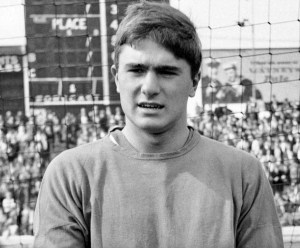
Teenage debutant ‘keeper Forster forever just a back-up

A GOALKEEPER who held a ‘youngest ever’ record for 58 years played second fiddle between the sticks for Charlton Athletic and Brighton.

Derek Forster had started out at Sunderland and was only FIFTEEN when he played in goal in front of a 45,000 Roker Park crowd in the opening game of the 1964-65 season.

The youngster let in three – but so did his opposite number, Gordon Banks, the England international who was in goal for opponents Leicester City.

“Derek’s a wonderful prospect. From what I could see, he didn’t make a single mistake,” said Banks after the game.

Forster had played in front of an even bigger crowd a few months’ earlier when 95,000 at Wembley saw him keep goal for England Schools against West Germany.

But those early tests of nerves were of little consequence because Forster’s career didn’t pan out quite as he might have wanted.

Sunderland’s first choice ‘keeper, Jim Montgomery, was one of the country’s top goalkeepers, best known for a match-winning double-save for the Wearsiders in the 1973 FA Cup Final at Wembley when second tier Sunderland beat high-flying Leeds United 1-0.

Montgomery remained largely injury-free – and made a record 627 appearances for Sunderland – meaning over the course of eight years the 5’9” Forster only got to play 30 league and cup games for the Mackems.

It was only after that amazing FA Cup win in 1973 that Forster finally left his home in the north-east and tried his luck in London. He joined third tier Charlton who were managed by Theo Foley, a former Eire international teammate of his old Sunderland playing colleague, Charlie Hurley.

Forster was soon in action for the Addicks, ironically playing against Brighton twice within 18 days at the Goldstone (they won 2-1 in the League Cup and in the League). Below left in a collision with Lammie Robertson.

But he was not able to dislodge the experienced John Dunn permanently from the no.1 spot and was limited to nine appearances. He moved during the close season to the Albion, where Brian Clough and Peter Taylor had dispensed with the services of long-serving Brian Powney as part of a 13-player clear-out.

Forster actually joined Albion on the very day that it was announced Taylor was staying at Brighton to take sole charge after his managerial mate Clough quit to join Leeds United.

At the Goldstone, though, Forster found the holder of the no.1 jersey, Peter Grummitt, was another in the same ilk as Montgomery. Grummitt, who’d been one of the pair’s first signings not long after they’d arrived at the Goldstone in the autumn of 1973, had played more than 350 games at the highest level for Nottingham Forest and won three caps for England’s under 23 side, where he vied for the goalkeeper position with Chelsea’s Peter Bonetti.

Arguably one of the best Albion goalkeepers ever, it was perhaps no surprise Grummitt’s form restricted Forster to only three appearances. Ironically, when Forster did get his first team break, he conceded six in his first match.

In spite of pre-season optimism from Taylor, Albion had only three wins on the board from their first 13 games, and when the side went to Fellows Park, Walsall, on 1 October, Forster was like a sitting duck as the Saddlers thumped Albion 6-0. Grummitt was back between the sticks for the following five matches.

No stranger to strong disciplinary measures when he deemed it right, in October Taylor made six first teamers who’d lost 3-2 at Grimsby the previous evening play for the reserves at home to Millwall the following day.

Forster was the last line  of defence in that experienced line-up, and made some important stops on three occasions, but still conceded three. However, the involvement of the first team contingent saw Albion win 5-3: Ian Mellor scoring all five Brighton goals.

Three weeks later, after player-manager Bobby Charlton’s visiting Preston North End side won 4-0 at the Goldstone, Forster stepped in for Grummitt for the second time – and once again was on the losing side: 2-1 at Gillingham.

His one and only winning experience in an Albion shirt came the following week at Prenton Park when Albion beat Tranmere Rovers 2-1. In front of just 2,134 supporters, that win proved to be Forster’s third and last first team appearance.

Taylor obviously wasn’t wholly convinced by his back-up ‘keeper that autumn because he took a look in the reserves at triallist Jim Inger, from assistant manager Brian Daykin’s old club, Long Eaton.

Nevertheless, Forster remained the back-up ‘keeper, a role he continued throughout the 1975-76 season without being called on for the first team because Grummitt was ever-present. The disillusioned Forster departed, admitting he was “cheesed off at Brighton”.

In fact, he quit the professional game, returned to the north-east and played local league football while taking on a job at Washington Leisure Centre (run by Sunderland city council’s leisure department), where he worked for 30 years.

He was in the news in 2010 when it was revealed that three years earlier he had lost the sight in his left eye through cancer.

“It changes your whole life,” he told the Northern Echo. “You either jump off the bridge or you tell yourself to get on with it.

“It makes you realise that it doesn’t matter how hard you train, or how careful you are about what you eat, it’s someone else who’s calling the shots.”

Forster, who retired from the city council, added: “We presumed that we’d do all sorts when we retired and then I realised that I mightn’t even have got that far.

“Now we don’t presume anything. I’ve changed a lot; if that tumour had spread I was a goner. Now every day is a Sunday.” Forster fought on for a few more years before he died aged 75 on 2 May 2024.

Born in the Walker suburb of Newcastle on 19 February 1949, Forster went to Manor Park School in the east end of the city: actor Jimmy Nail and Sunderland and England footballer Dennis Tueart were other alumni.

As a promising centre forward, Forster had trials with the city’s under-11s. “One of the goalies didn’t turn up, so they asked me to play there,” Forster recalled.

“I’d honestly never kept goal in my life, not even in the back street, but I had a blinder. Caught every ball. After that, I never played anywhere else.”

The young Forster’s prowess earned him selection for the England Schools side on nine occasions, in a squad that included future stars Trevor Brooking, Colin Todd,  Colin Suggett and Joe Royle.

Sixty years on, it seems extraordinary to discover crowds of 95,000 would fill Wembley to watch the cream of England’s schoolboys, but vintage black and white film footage available on YouTube confirms it.

The all-things-Sunderland website rokerreport.sbnation.comisa detailed source of how Forster made history, and it is certainly a rather curious tale.

Initially signed as an amateur by Sunderland, he was then taken on as an apprentice but for two weeks of the 1964-65 pre-season month he’d been on a family holiday in Blackpool.

He’d trained for just a week and had never seen his new teammates play competitively. Then regular goalkeeper Montgomery sustained a hairline fracture of his left arm in training.

The opening game of the season – Sunderland’s first game back in the top flight after winning promotion – was only a matter of days away and they were without a manager because Alan Brown had left in acrimonious circumstances to take charge of Sheffield Wednesday.

Brown was temporarily replaced by a ‘selection committee’ of club officials and team captain Charlie Hurley.

The assumption was that the 20-year-old reserve goalkeeper, Derek Kirby, would deputise for Montgomery but, instead, they turned to Forster, who’d had that experience of playing in front of a huge crowd at Wembley.

After being called into club secretary George Crow’s office on the Thursday morning to be told he’d be starting, he said: “This is the greatest moment of my life. I had no idea that I would get my chance so soon, even after Monty’s unfortunate injury.

“I only hope I will justify the confidence shown in me and don’t let anyone down.

“I expect I shall be a little bit nervous, but it will be wonderful – and inspiring – playing behind Charlie Hurley and company.”

Even though he let in three, not only did he have the praise of Banks ringing in his ears, but his captain Hurley said: “A great game. If he goes on like this, he’ll have an exceptional future.”

The following Monday’s Echo said the young ‘keeper had “the agility of a panther” and was “bursting at the seams with talent”.

While The Journal’s Alf Greenley reported: “The crowd were with him to a man, even, I suspect, the not inconsiderable contingent of Leicester followers who had made the trip and the reception accorded to him when he turned out was only exceeded by that at the end.

“It was a truly remarkable performance for one so young.

“He handled the ball in the swirling wind with the confidence of a veteran, positioned well and stood up to the onslaught of the Leicester forwards like one far in advance of his years.”

Forster was just 15 years and 185 days old on the day of the match and he remained the youngest-ever top-flight footballer until 18 September 2022 when Arsenal’s Ethan Nwaneri rewrote the record books coming off the bench in the 89th minute of the Gunners’ 3-0 win at Brentford yesterday. He was aged just 15 years and 181 days.

It remains to be seen what sort of future Nwaneri might have in the game. For Forster, although he played the next few games, Montgomery returned and the teenager was left to hold a watching brief although he was still young enough to play a key role in Sunderland’s successful youth team of the mid-1960s.

In 1965, Sunderland lost the two-legged FA Youth Cup semi-final 5-0 to Everton for whom two goals in the Goodison first leg 4-0 win were scored by Jimmy Husband, who’d been a schoolmate of Forster’s in Newcastle.

Sunderland lost the 1966 final 5-3 on aggregate to Arsenal (who included Pat Rice and Sammy Nelson), when Forster’s teammates included the future Cup Final side captain Bobby Kerr, Billy Hughes, Suggett and Todd, who went on to win the league with Derby County and play for England.

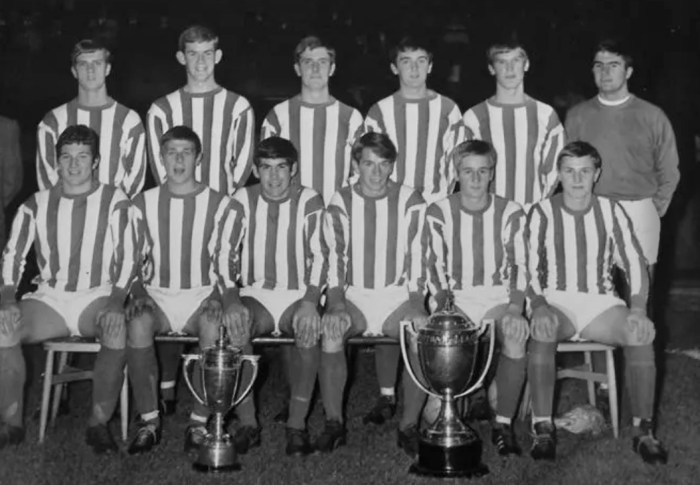
Forster was still the last line of defence when the Wearsiders (above) finally won the trophy in 1967, a 2-0 aggregate scoreline seeing off a Birmingham City side that had future England international Bob Latchford at centre forward.

Less than 48 hours after the game, Forster, Hughes and Suggett travelled to North America as part of a squad selected by manager Ian McColl to represent the club in the United Soccer Association, where they played seven matches under the guise of the Vancouver Royal Canadians.

Retrospectively, Forster regretted not moving on sooner from Sunderland. But he told the Northern Echo: “Sunderland were one of the top youth clubs and they were very good to me. I should have left much earlier, seen the signs, but in those days players were genuinely loyal.

“You didn’t just ask to leave as soon as you were dropped. I decided to stay. It was my mistake. Monty never got injured again for five years, though I tried hard to kick him in training. He was an exceptional goalkeeper.”

Forster likened his situation to Newcastle’s Shay Given and Steve Harper. “Both very good goalkeepers, but maybe one a bit better than the other.”

Malcolm in the middle was moustachioed marksman Poskett

MALCOLM POSKETT’s goals helped Brighton to win promotion from the second tier after he’d made a terrific start to his Albion career.

Only two days after putting pen to paper in Hove, Poskett netted the equaliser in a 1-1 draw away to Hull City on 4 February 1978 and a week later he marked his home debut with a goal in Albion’s 2-1 win over Burnley.

The game at Boothferry Park was only six minutes old when the home side went ahead but Poskett levelled it up just before half-time after a Tony Towner corner was headed goalwards by Andy Rollings and the new arrival diverted it into the net.

A £60,000 signing from fourth tier Hartlepool United, Poskett had taken over the no.9 shirt from Ian Mellor, who had only been in the side for one game in the injury absence of Teddy Maybank.

Maybank’s big money signing from Fulham four months earlier had broken up the highly successful Mellor-Peter Ward partnership that earned Albion promotion from the old Third Division, and Poskett’s arrival only served to illuminate the Goldstone exit door even brighter for Mellor, who swiftly departed for Chester.

A crowd of 22,694 saw the new man’s Division Two debut on an icy Goldstone Ground pitch. Poskett once again profited from a Towner pass to score. Skipper Brian Horton scored Albion’s other goal.

It all must have felt very showbiz to the lad from Teesside, used to playing in front of 5,000 crowds in the Fourth Division, especially when prior to kick off against the Clarets, Slade, a famous chart-topping pop group of the time, recorded a single on the pitch in front of the North Stand.

While Maybank reclaimed his starting berth from Poskett for six matches, he was troubled by a knee injury and Poskett got the nod for the remaining seven games of the season as Albion chased automatic promotion, which at that time was earned by the top three sides in the division. There were no play-offs.

Poskett repaid Mullery’s faith in him with a hat-trick in a 4-0 win away to Bristol Rovers and by netting the only goal of the game in the penultimate fixture at home to Charlton Athletic in front of 31,203 fans.

What happened next has been well documented: Albion missed out on promotion when Southampton (in second) and Spurs (third) conveniently drew 0-0 in the final match of the season; Spurs edging out the Seagulls on goal difference.

Maybank had a successful cartilage operation during the summer break and was initially the preferred partner for Ward as the new season got under way.

Poskett banged in a transfer request as a mark of his frustration but, after Mullery persuaded him to withdraw it, he got his chance back in the side and made the most of opportunities that came his way.

Mullery admitted in Matthew Horner’s biography of Ward (He Shot, He Scored, Sea View Media) that he wasn’t always fair on Poskett when reverting to the Ward-Maybank partnership.

He pointed out: “Malcolm Poskett did a terrific job when we signed him. He was one of the most under-rated goalscorers – absolutely brilliant.

“He was really similar to Wardy, very sharp and very quick but a bit taller and a bit stronger.”

By the end of the season that ended in promotion to the top tier of English football for the first time, Poskett had contributed 10 goals in 24 games (plus eight sub appearances). He was the substitute in the famous 3-1 win back in his native north-east when Newcastle were beaten by the Seagulls on 5 May 1979.

Brighton struggled to find their feet in more exalted company and Poskett barely got a look-in, coming on as a sub twice and only starting three matches, the last of which was in the resounding 4-0 defeat to Arsenal in the League Cup on 13 November 1979.

He scored twice, though: netting the only goal in an away League Cup win over Northampton Town, and four days later scoring along with Peter O’Sullivan as Albion pulled back a 2-0 deficit to draw 2-2 at West Brom.

Poskett wheels away to celebrate his only top flight goal, away to West Brom

However, with the arrival of Ray Clarke from Ajax, it was clear Poskett’s chances at the Albion were going to remain limited, so he dropped back down a level to join promotion-seeking Watford under Graham Taylor. Albion goalkeeper Eric Steele had already made a similar switch in the autumn of that season shortly after a famous spat with Gary Williams at Old Trafford. Mullery also secured a £120,000 fee for Poskett, so Albion did very nicely out of the deal.

“I would have loved to stay at Brighton for the rest of my career, but it wasn’t to be,” Poskett told Spencer Vignes in a retrospective matchday programme article. “One week I was partnering Peter Ward, the next it would be Teddy with Peter. I never got a run in the team, even though I scored a couple of goals when I did play.

“At least with Watford I got the chance to start games. People called us kick and run, a long ball side, but we had a lot of talented players like Ross Jenkins, John Barnes and Nigel Callaghan.”

Poskett struck up a friendship with fellow new boy Martin Patching and both were on the scoresheet (Poskett scored twice) in a memorable 7-1 League Cup thrashing of Southampton on 2 September 1980.

Although being Watford’s top scorer with 21 goals in the 1980-81season, when the Hornets finished ninth, the following season he found himself in the reserves after a three-game barren spell.

In a Watford matchday programme article, he mused: “It’s a strange profession – one minute you’re up and the next down.

“I played in the first three league games of the season without scoring and was dropped. But I’m scoring fairly regularly in the reserve side and my chance will come if I keep on hitting the net. I’m a battler and not the type of player to give less than 100 per cent, no matter what grade of football I’m playing in.”

Watford won promotion as runners up behind close rivals Luton Town but Poskett couldn’t shift Luther Blissett or Jenkins, who were the preferred strike pairing, and Gerry Armstrong, later to join Brighton, was invariably the back-up option.

Born in Middlesbrough on 19 July 1953, Poskett went to Beechwood Junior School and then on to Brackenhoe Secondary Technical. His footballing ability in school sides eventually led to him being selected for North Riding Schools.

He was a decent all-round sportsman – a useful cricketer who played for Middlesbrough Schools, he also featured in local leagues at table tennis, and enjoyed tennis and badminton too.

But at 16 the budding sportsman started out as an apprenticeship plater at Cargofleet Steelworks, only playing football for the local Beechwood Youth Club and then South Bank in the Northern League.

His performances for South Bank caught the eye of Middlesbrough and he was taken on as a professional. But after 18 months in their reserves, manager Jack Charlton gave him a free transfer and he opted to become a plater on North Sea oil rigs to earn a wage.

He didn’t turn his back on football altogether, turning out part-time for Whitby Town in the Northern League. Scoring an incredible 98 goals over two seasons was bound to attract attention.

George Aitken, later a Watford coach and then a coach under Mullery at Brighton, was Workington manager at the time and tried to sign Poskett, but, disillusioned by his Boro experience he chose to stick with Whitby until Hartlepool manager Billy Horner convinced him he could still make it in the professional game.

For a £25 transfer fee, Horner took him on and devoted hours of extra time working on the youngster’s skills and sharpness. It paid off.

“My work rate was non-existent, but Billy Horner really worked on me and got me going,” Poskett told Shoot! magazine. “If it wasn’t for him, I don’t think I would have got anywhere – I’d still be in non-League soccer. It was so hard at first, I felt like packing it in, but he kept me at it and I’m very grateful now.”

His goalscoring at Hartlepool caught the eye of Ken Craggs when he was a coach at Fulham and when Craggs switched to become Mullery’s no.2 at the Goldstone, Poskett followed soon after, the £60,000 fee representing a tidy profit for the struggling North East minnows.

In an interview with The Argus in 2017, Poskett recalled: “Brighton was one of the best times of my life.

“I came in during the season when we just missed out on promotion and the lads were fantastic. It was a fabulous place to live as well.

“I had to come from one end of the country to the other but, once I got there, there were lads from up north, the Midlands, so it was a good mixed bunch and I felt right at home.”

After helping Watford to promotion in 1982, Poskett headed back north and played for Carlisle United for three seasons, thriving under the managership of Bob Stokoe, who’d led Sunderland to FA Cup glory in 1973.

In the penultimate game of the 1983-84 season, Poskett scored his 100th career goal – and his 101st – as Carlisle  drew 2-2 at home to Crystal Palace in front of a paltry crowd at Brunton Park of just 3,038.

Poskett subsequently had six months at Darlington, before switching to Stockport County in January 1986.

Appearances were few and far between and he went on loan to his old club Hartlepool in March the same year before moving back to Carlisle in August 1986. He finally hung up his boots at the end of the 1987-88 season.

He remained in the town and in 2017 was working as an examiner at Pirelli, the tyre manufacturer.

Pictures from Albion matchday programmes and online sources.

Two goals that etched Sammy Morgan’s place in Albion history

HAVING A cheekbone broken in four places during a pre-season friendly summed up the bad luck of never-say-die Northern Irish international striker Sammy Morgan.

His cause wasn’t helped when the manager who signed him six months earlier quit. And, to top it off, while he was recovering from that horrific injury, an Albion footballing legend in the shape of Peter Ward burst onto the scene.

When a £30,000 fee brought him to Brighton from Aston Villa just before Christmas 1975, it looked like the side had found the perfect strike partner for Fred Binney as they pushed for promotion from the third tier.

Unfortunately, the man with the swashbuckling, fearless approach went eight games without registering a goal. However, in his ninth game he made amends in memorable fashion.

Morgan scored both goals in a 2-0 win over Crystal Palace in front of an all-ticket Goldstone Ground crowd of 33,300 – with another 4,000 locked out.

It was 24 February 1976 and the Daily Mail’s Brian Scovell reported the goals thus: “In the 12th minute, Ernie Machin struck an early ball into the middle from the right and Ian Mellor headed on intelligently behind the defence for Morgan to steer the ball into the corner of the net.

“The second goal, in the 55th minute, came when Tony Towner took the ball off Jeffries and set off on a 40-yard run which ended with his shot rebounding off goalkeeper Paul Hammond. Morgan tapped in the rebound.”

Gritty, angular and awkward, Morgan scored five more before the end of the season, including another brace at home to Swindon.

However, Albion narrowly missed out on promotion and Peter Taylor, the manager who bought Morgan, quit the club in the close season. The new season under Alan Mullery hadn’t even begun when, in a pre-season friendly against Luton Town, Morgan fractured his cheekbone in four places.

“I know I’m probably more prone to injuries than other players because of my style of play, but there’s no way I can change it, even if I wanted to,” Morgan told Shoot! magazine. “I made up my mind as soon as I got back in the team that I’d have a real go and that’s what I’ve done. People say I’m a brave player but I don’t really know if that’s true. I just like to give 100 per cent and that way no-one can ever come back at you.”

In the season before he joined Brighton, a groin injury had restricted him to just three top-flight appearances for Villa and, when he was fit to return, Villa had signed Andy Gray, whose form kept him out of the side.

Initially reluctant to move on, he admitted in that Shoot! interview: “I was sad at the time because I had a lot of happy times at Villa but now I think they may have done me a favour. Brighton are a very good ambitious club and I’ve just bought a house in Peacehaven. Really, I couldn’t be happier.”

Born in Belfast on 3 December 1946, Morgan’s family moved to England to settle in Great Yarmouth and, with an eye to a teaching career, he combined studies with playing part-time football for non-league Gorleston Town.

“Deep down I knew I could make the grade, but the opportunity just wasn’t there,” he told Goal magazine in a 1974 interview. “The local league club was Norwich City and in those days they didn’t seem that keen on local talent.”

Morgan enrolled at teacher training college in Nottingham and just when he thought a professional football career might elude him, Port Vale made an approach.

“I jumped at the chance,” he said. “They let me stay at Nottingham to complete my studies and I would travel up to train and play with them. Deep down I thought that the Third Division was as high as I could get, unless, of course, Vale were promoted.”

In his three years with Vale, where his teammates included Albion legend Brian Horton, he scored 24 goals in 113 appearances, and he caught the eye of the Northern Ireland international selectors. He scored on his debut in a European Championship qualifier with Spain on 16 February 1972 when he took over at centre-forward from the legendary Derek Dougan.

Amongst his illustrious teammates that day were Pat Jennings in goal and the mercurial George Best. Future Brighton left-back, Sammy Nelson (then with Arsenal) was also in the side. The game was played at Boothferry Park, Hull, because of the ‘troubles’ in Northern Ireland at that time and it finished 1-1.

Morgan won 18 caps in total over the next six years, scoring twice more, in 3-0 home wins over Cyprus on 8 May 1973 and Norway on 29 October 1975.

The Goal article noted Morgan “earned a reputation of being a hard, no-nonsense striker who could unsettle defences and goalkeepers with his aggression”.

Aston Villa boss Vic Crowe liked what he saw and reckoned he’d be an ideal replacement for that tough Scottish centre-forward Andy Lochhead, who was coming to the end of his career.

Morgan was by now 27 but, in the summer of 1973, Villa paid a £20,000 fee for his services.

“The offer came right out of the blue and I had no second thoughts about the move at all,” he said. “Being part of such a famous club naturally brings pressures, but I wouldn’t have it any other way.

There was a famous incident in a televised game between Arsenal and Aston Villa when the normally calm, cool and collected Arsenal goalkeeper Bob Wilson went ballistic because of the way Morgan tried to stop him clearing his lines.

Swindon goal celeb“The bigger the atmosphere, the more I like it. For instance, my best two games this season were against Arsenal, and in the replay there was a crowd of 47,000.”

At Brighton, new manager Mullery quickly decided he preferred Ward to Binney and, with Morgan sidelined by that pre-season injury, opted to put former midfielder Ian Mellor up front to partner him.

Wardy MorgBetween them, they literally couldn’t stop scoring goals, and the success of their striking partnership restricted Morgan to only two starts in 1976-77. He was on the sub’s bench throughout that first promotion season under Alan Mullery, and he scored just once in 16 appearances as the no.12.

He subsequently moved on to Cambridge United before a spell in Holland, where he played for Sparta Rotterdam and FC Groningen.

When his playing days were over, he became a teacher back in Gorleston. He also became involved in the Norwich youth team in 1990, signing full time as the youth development officer in 1998 and becoming the club’s first football academy director (he holds a UEFA Class A coaching licence). He resigned in 2004 and moved to Ipswich as education officer.

In 2014, Morgan was diagnosed with stomach cancer and underwent chemo to tackle it. Through that association, in September 2017 he gave his backing to Norfolk and Suffolk Youth Football League’s choice of the oesophago-gastric cancer department at the Norfolk and Norwich University Hospital (NNUH) as its charity of the year.

Even when he could have had his feet up, he was helping to coach youngsters at independent Langley School in Norwich.

  • Pictures from various sources: Goal, Shoot! and the Evening Argus.

Graham Winstanley: fledgling Magpie, Carlisle legend, able Albion deputy

GRAHAM Winstanley spent five years at Brighton but only made 70 appearances, plus one as a sub. Most of his time with the Seagulls was spent as a dependable reserve.

Manager Peter Taylor drafted in the central defender to replace Grimsby-bound Steve Govier in the autumn of 1974 and he kept the no.6 shirt for all but two games through to the end of the season.

Govier had only been signed from Norwich City in May that year (together with Andy Rollings and Ian Mellor) but, unlike his co-signings, who had long Albion careers, Govier lasted only 16 games.

Winstanley, a Carlisle United regular for several seasons, had been edged out of the first team picture at Brunton Park following their surprise rise to the top division.

He arrived at the Goldstone in October 1974, on loan initially, and was even made captain during that time. He signed permanently for £20,000 the following month, moved into a house in Shoreham with wife Joan, and stayed in the south for five years despite limited first-team opportunities.

Born in the small north-east village of Croxdale, three miles south of Durham, on 20 January 1948, Winstanley joined Newcastle United straight from Washington Grammar School and, after serving an apprenticeship, turned professional.

He made his first team debut on Christmas Eve 1966, in a 2-1 home defeat to Leeds United.

With the likes of Ollie Burton, John McNamee and Bobby Moncur ahead of him, Winstanley struggled to establish himself at St James’ Park, only featuring seven times for the first team, five times as a starter and twice as a substitute.

Newcastle sold him to Carlisle for £8,000 in 1969, and it was at Brunton Park where he carved out a reputation as a powerful centre back who could also play full back.

In June 1972, against the Italian giants Roma in the Olympic Stadium, he scored a goal for United seven minutes from time that sealed a famous 3-2 win in the Anglo-Italian Cup. Four-Four-Two magazine voted it 45th of 50 top Greatest European Moments!

It may seem implausible to today’s reader to believe that Carlisle could win promotion from the equivalent of the Championship and play a season in the Premier League but that’s exactly what the Cumbrians did in 1974. They finished in third place, in the days before play-offs, a point behind Luton Town and 16 points behind champions Middlesbrough.

Although Winstanley had been part of Alan Ashman’s promotion side, he was not a first choice in the top division, and, after 165 appearances for United, headed south to Brighton.

His influence initially alongside Rollings, and then Steve Piper, brought much needed stability to the defence but the side struggled for goals that season and eventually could only achieve 19th place.

In January 2014, the excellent blog The Goldstone Wrap reflected on Winstanley’s influence at that time, and reproduced an Argus article angled on how the player – nicknamed Tot (he was the youngest of three brothers) – wore contact lenses while playing.

Having taken over the Albion team captaincy from Ernie Machin, Winstanley was appointed club captain in August 1975 but, with the arrival of the cultured former Millwall and West Ham defender, Dennis Burnett, was dislodged from a starting berth and only played three more times that season.

Even when Taylor’s successor, Alan Mullery, dispensed with Burnett’s services, the 1976-77 season saw Graham Cross partner Rollings, restricting Winstanley to just five appearances.

The following season Mark Lawrenson arrived, so it wasn’t as though the competition for a place was getting any easier! However, in that season, Rollings missed several matches through injury and Winstanley proved an able deputy on 19 occasions.

One of his stints in the side included the final seven matches when Albion came so close to earning promotion and Winstanley even got on the scoresheet in the 3-1 home win over Tottenham Hotspur on 15 April 1978.

“It was from a free-kick that got played out wide to the left and when the ball came over I just sneaked in at the back and hit it,” he recalled in an Albion programme feature of 14 March 2009. “It spent a long time coming to me in the air and an even longer time before it hit the back of the net.” It happened in front of a crowd of 32,647 packed into the Goldstone, and the game was interrupted by trouble-making Spurs supporters.

He kept the shirt for the opening two fixtures of the 1978-79 season but only played three more times in that promotion-winning campaign, the last of which came in a 1-1 draw away to Luton Town on 21 April, when neither Lawrenson nor Rollings were available.

When his contract was up in July 1979, he was granted a free transfer and he returned to Carlisle where he made a further 69 appearances. “I could have stayed but I didn’t really fancy it to be honest,” he told Spencer Vignes in a matchday programme article. “I knew I only had a certain amount of ability. I was never a First Division player. That’s why it was the best thing to do.”

During his time in Sussex, he coached Sunday team Boundstone Old Boys and, after his playing career came to an end, he was manager of non-league Penrith for a while. However, he subsequently had a variety of jobs outside the game, in and around Carlisle. He worked for a wholesale electrical company, as a milkman, selling insurance, as a partner in a building supplies company, as well as working for the Post Office and a local newspaper.

Teenage Teddy Maybank’s Chelsea promise dashed by injury at Brighton

TEDDY MAYBANK signed for the Seagulls for what at the time was a club record transfer in November 1977 and went on to score Brighton’s first ever top division goal.

But the new signing came in for some flak from the terraces and, over two years, never really delivered a significant return on the investment.

Maybank himself reckons the club forced him to play on with an injured knee when he shouldn’t have, which led to irreparable damage and ultimately a premature end to his career.

The former Chelsea centre-forward was signed to replace Ian Mellor, Peter Ward’s prolific strike partner in the 3rd Division, after Brighton had won promotion to the second tier.

“We let Ian Mellor go because we felt that he had reached a certain age and had probably peaked,” Alan Mullery told Matthew Horner, in his Peter Ward biography, He Shot, He Scored. “When Teddy Maybank became available, we thought that he was probably a better option.”

Born in Lambeth on 11 October 1956, Maybank lived the first 15 years of his life in Brixton and went to Christchurch Primary School, close to his home, where one of his playground footballing mates was Ray Lewington — now loyal deputy to Roy Hodgson — who, together with Maybank, went on to play for Chelsea and Fulham.

At the age of 11, Maybank moved to Stockwell Manor Secondary School and played various age group levels for South London Boys. One of the representative matches he played in took place at the Goldstone Ground on 25 September 1971, against Brighton Boys.

The Maybank family moved to Mitcham, close to the Chelsea training ground, and, when Teddy was 15, he joined them straight from school.

Maybank and Lewington progressed through Chelsea’s youth ranks at a time when the club’s focus was on bringing through home-grown talent. “It was a good time at Chelsea,” he said. “We had such a good youth side and I loved playing under Ken Shellito.”

That team, which won the South-East Counties Championship four years in a row, included Ray and Graham Wilkins, Lewington and John Sparrow.

Maybank’s first-team debut came in a 2-0 defeat at Tottenham Hotspur in April 1975 aged just 18, and he scored in only his second game, a 1-1 home draw against Sheffield United, but Chelsea were relegated from the top division that year.

The following campaign saw Maybank, still a teenager, become a first-team regular under Eddie McCreadie, grabbing five goals in 26 appearances between August and February.

After falling out of favour, he went out on loan to Fulham just before Christmas 1976 and then signed permanently for a £65,000 fee later that season.

Back in the ‘70s, Chelsea were a long way from the force they are now and Maybank admitted: “I wouldn’t say I ever played that well at Chelsea. I didn’t find it easy to score goals there.”

It was a different story at Craven Cottage. After scoring more than a goal every other game – 17 times in 31 games – Maybank was sold to Brighton for £238,000, which gave Fulham a swift and substantial profit that they used to pay off money owed on their recently-built Eric Miller Stand (now, the Riverside Stand).

                     Blond locks flying, Maybank comes up against QPR’s Dave Clement in a 1978  pre-season friendly. (Above right) This overhead kick against Sunderland at The Goldstone scraped the bar … otherwise would have been a Goal of the Season candidate!

Maybank made a good enough start for the Seagulls, scoring after just six minutes on his debut in a 2-2 home draw with Blackburn Rovers, played on a bitterly cold day in front of a crowd of 26,467. Tony Towner scored the Albion’s other goal and another debutant in that game was tough-tackling midfield player, Paul Clark.

Maybank was on the scoresheet again in the very next game as Albion recorded their first ever win, 1-0, at Blackpool.

It was in a game against Orient a week before Christmas that Maybank got a kick on his knee from defender Dennis Rofe (who later played for Leicester and Southampton) which caused an injury which he maintains wasn’t properly managed by the club.

He told fulhamfc.com in 2013: “They kept giving me injections, taking all the fluid out every Sunday after the game.

“I was barely training. I could run in a straight line but any time I put weight on my leg I would fall over. I wouldn’t feel any pain because of the injections, but I just fell over.”

The Brighton fans thought they had bought Bambi and were soon on his back, leading to a “pretty terrible time” that Maybank never really recovered from.

“The club should never ever have allowed me to play in that situation,” he said. “A surgeon saw me outside of the club, opened me up and said: ‘if you ever play football again, you’ll be the luckiest bloke in the world’.

“Brighton had told me, basically, that I couldn’t do any more damage. They wouldn’t do it now, but because I was the highest transfer fee they ever paid, they didn’t really take my welfare into consideration at all. In the end, it ruined my career.”

                      Shoot! article and (above right) Maybank goes full length to head the second of  his three goals against Cardiff on Boxing Day 1978.

In an article in Shoot! magazine at the time, Maybank talked about how he hadn’t had the best of starts with his new club. He said: “I wasn’t playing well. I knew that. My early form was a disappointment to the fans. They expected me to come in and start scoring regularly and doing incredible things.

“It’s always hard when you change clubs and you need a while to settle in. I have to adjust to my new team-mates but they’ve also had to change and adapt to playing with me.”

Mansfield were trounced 5-1 at the Goldstone on 21 January 1978 when Peter Ward shone with a hat-trick. Maybank also got one, but it was his last of the season. He made only six more appearances between January and the end of the season and new signing Malcolm Poskett seized his chance alongside Ward.

Albion narrowly missed out on promotion (by goal difference) and during the close season Maybank went under the knife for a cartilage operation.

Fit for the new season, Maybank was among the goals as Albion beat Millwall 4-1 at The Den on 2 September. He got a brace that day but in the same month was in trouble with the manager who’d had an anonymous tip-off that the star striker and Welsh international winger Peter Sayer had been seen in a nightclub on the eve of what turned out to be a 4-1 defeat by Leicester City.

Mullery made an example of the pair and they were both ‘persuaded’ to donate a fortnight’s wages to the local Guide Dogs for the Blind Association.

On the pitch, the goals dried up for Maybank until Boxing Day when he netted a hat-trick in a 5-0 win over Cardiff City. In an Albion matchday programme in 2015-16, Maybank admitted to Spencer Vignes: “The crowd started getting on my back, and I got in a pretty dark place.

“When I got that hat-trick, I went from villain to hero and yet it had got so bad that the day before Alan Mullery picked the squad I’d told him I never wanted to play for the club again.

“From the changing room before a game, I used to hear the crowd boo my name when the team was read out over the tannoy.”

In total, Maybank scored 10 times as Albion won promotion, and he was leading the line in the famous promotion-clinching 3-1 win at Newcastle on 5 May 1979.

In that season’s Rediffusion Player of the Year competition, Maybank finished third behind winner Mark Lawrenson and runner-up Brian Horton.

In much the same way Pascal Gross was feted for scoring Brighton’s first-ever goal in the Premiership, so Maybank scored the Albion’s very first goal in the top division.

After being hammered 4-0 by Arsenal in the opening fixture at the Goldstone, the Seagulls were away to Aston Villa in the second game.

                      Arms aloft, Maybank celebrates Albion’s first ever top division goal with skipper Brian Horton and Peter O’Sullivan. (Above right) Maybank battles with Arsenal’s David O’Leary watched by John Hollins and O’Sullivan.

Latching on to a John Gregory through pass and, with the very last kick of the first half, Maybank buried a shot past ‘keeper Jimmy Rimmer.

Albion lost the game 2-1 but the national newspapers were full of praise for the newcomers to the division.

Frank Clough in The Sun wrote: “Teddy Maybank and Peter Ward tore great holes in Villa’s jittery defence and were only stopped by inadequate finishing and fine goalkeeping by Rimmer.”

It was the first of three Maybank goals at the top level, but, according to Ward, the striker had a big falling out with Mullery. The manager brought in Ray Clarke as his first choice centre-forward and, in December 1979, Maybank was sold back to Fulham for £150,000.

He had scored a total of 16 goals in 64 appearances for the Seagulls, less than half the ratio he’d been scoring when bought.

After just 19 games for Fulham, Maybank joined Dutch side PSV Eindhoven for £230,000 in August 1980 (Fulham making another tidy profit on the player).

His debut for the Dutch giants came in front of a packed house at the Nou Camp, where Barcelona were staging a four-team tournament with Vasco da Gama and River Plate.

However, only a few games later his knee flared up again.

“They opened me up and saw what a state my knee was in,” Maybank explained in that 2013 interview with fulhamfc.co.uk. “I was told in no uncertain terms that if I didn’t retire I would be playing with the youth team or reserves. I think they thought they’d been taken for a ride.”

Maybank was left with no choice. At the age of 24, he retired from the game.

Pictures from my scrapbook sourced from Shoot! magazine and the matchday programme.

All-time Albion hero Peter Ward scored inside a minute of debut

ward v bpool

ARMS aloft in familiar salute to yet another goal, the smiling footballer in a black and white picture on a Florida football club’s website dates back 40 years!

All around the world, it seems, Peter Ward’s goalscoring exploits for Brighton & Hove Albion are still the stuff of legend.

Four decades may have come and gone but the memories of this mercurial talent have never dimmed.

FC Tampa Rangers say of their youth coach: “During the 1976–77 season at Brighton, he scored 36 goals, beating the club record and winning him the golden boot.

“He is still revered by Brighton fans who sing a song dreaming of a team in which every player is Peter Ward: ‘We all live in a Wardy Wonderland’.”

If the word legend gets bandied about a little too frequently, where Peter Ward is concerned it is perfectly apt.

1-ward-scoresFew Brighton players have managed to approach the esteem in which this extraordinary talent is held by supporters who saw him score the goals which took the Seagulls from perennial third tier also-rans to a place among the elite.

It takes genuine talent, bravery and skill to score goals at all three levels but Ward delivered. In 220 games for the Albion (plus seven as sub) he scored 95 goals.

In his splendid 2007 book, A Few Good Men (The Breedon Books Publishing Company Limited), Spencer Vignes refers back to 1980 and says of Ward: “No centre forward since has managed to steal his crown. Some have come close – Garry Nelson and Bobby Zamora spring to mind – but Wardy remains special, the golden boy of what proved to be a golden time for the club.”

I was sorry to have missed Ward’s latest return to Brighton when in 2016 he joined some of the Goldstone heroes of the past at the Theatre Royal.

Impishly donning a curly wig on top of his now bald pate to make his grand entrance, Ward showed he’d still got something of the showman about him.

There was never a shortage of superlatives to describe his skills on the pitch. While his dad Colin was a compositor on the Tamworth Herald, his son’s talents with a football filled dozens of column inches in a variety of football publications.

PW green BWAlan Mullery, the manager who benefited most from his audacious skill and compared him to the great Jimmy Greaves, said: “He was just the skinny little kid who could do fantastic things with a football.”

Mullery told Shoot: “Peter has the ability to kill a ball no matter how it comes at him. His pace over short bursts is incredible and he shoots powerfully and accurately with either foot.”

He continued: “Above all else, Peter’s strength on the ball, for a player of his stature, is remarkable. He fools defenders who believe they can easily knock him flying.”

Two of Ward’s former teammates told Vignes what made him so special. “He had this long stride that just seemed to take him away from people,” said Peter O’Sullivan. “One step and he’d be gone. Once he got goal-side of a player, that was it really – bang! Nobody ever seemed to be able to catch him, even in training.”

Brian Horton joined the club around the same time as Ward and said of his younger teammate: “He was this thin, scrawny little player that needed to learn the game, but his finishing was unbelievable, absolutely unbelievable.”

Nottingham Forest fans will have less happy memories of a player the managerial duo of Clough and Taylor took to the City Ground as they strived to replace Garry Birtles and Trevor Francis with any pairing from Ward, Ian Wallace and Justin Fashanu.

It just didn’t work out for Wardy at Forest although he tells Vignes in A Few Good Men: “I had a great time at Forest. I got on well with the lads and had a laugh.”

While he always got on well with Taylor, his relationship with the erratic Clough was a lot stormier which meant he was in and out of the side.

When Lichfield-born Ward left school he was only 4’8” and because he was told he was too small to make a career playing football he got a job as an apprentice fitter at Rolls Royce and played local football in the Derby area.

The detail of those early years can be discovered in Matthew Horner’s excellent biography of Ward (He Shot, He Scored, Sea View Media).

Scout Jim Phelps recommended Ward to the then non-league Burton Albion manager Ken Gutteridge having worked with the freescoring player at a Sunday afternoon side, Borrowash United.

After joining the newly-promoted Brewers initially in the Reserves, the 1974-75 season was only a month old when he made his first team bow alongside former England internationals Frank Wignall and Ian Storey-Moore – and promptly scored a hat-trick in a 4-1 win over Tamworth, his hometown team.

By the middle of November that season, with 10 goals to his name, Ward’s scoring exploits had attracted the attention of league clubs and Brighton boss Peter Taylor, with plenty of contacts in the area, put in a bid.

The Burton chairman, Jim Bradbury, went public on the approach – which Gutteridge found completely unacceptable. He promptly resigned… and before long was appointed to Taylor’s backroom staff!

In the meantime, Burton resisted Brighton’s money and it later emerged that Gutteridge had told Taylor he would only take up the post on condition that Ward would eventually be brought to the Goldstone.

Taylor stuck to his word and eventually signed Ward for £4,000 in the close season of 1975.

The rest, as they say, is history and in researching for this piece it was difficult to sift through the multitude of material from my scrapbooks, programmes, books and other places to condense it all into something manageable.

Because of his popularity, most of the story is familiar to fans of a certain generation anyway and anyone who has not yet read Horner’s book should get themselves a copy because it is rich with material from Ward himself and others who played alongside him or observed him.

Scoring within 50 seconds of his Albion debut away to Hereford United in front of the Match of the Day cameras couldn’t have been a better start and the partnership he struck up with beanpole Ian Mellor was key to promotion from the old Division 3.

For what at times seemed like a fantasy coming to life, it’s intriguing to learn that Ward’s watching of the Bond film The Spy Who Loved Me on the eve of two games was followed the next day by him scoring hat-tricks.

In the 1977-78 season, he saw it before making his England under 21 debut at the Goldstone against Norway in a 6-0 win, and, later the same season, he saw it again before an away game at Mansfield and scored three once again!

It seemed a natural progression that Ward would make it to the full England team and he did eventually – winning one cap for a six-minute substitute appearance against Australia in May 1980.

In fact he made the full England squad three years earlier for a game against Luxembourg but wasn’t involved in the match itself and, by his own admission, reckons he blotted his copybook with manager Ron Greenwood by being ill in the room he shared with Trevor Brooking after going out drinking with Brian Greenhoff.

ward coverIn the way that all good things must come to an end, the beginning of the end of the fairytale came as Albion struggled to come to terms with their first season at the top level.

Ward was certainly not as prolific as he had been lower down the football pyramid although, as reported in my previous blog post, the arrival of Ray Clarke helped him rediscover his form to finish that season as top goalscorer with 17.

However, a return to his Midlands home territory looked increasingly likely. He nearly went to Derby in November 1979 but a swap deal with Gerry Daly fell through, and Forest also wanted him but Clough walked away from the deal.

Eleven months later, though, Clough and Taylor were back in for him when Birtles was sold to Man Utd, paying the Albion £450,000 for his services. Andy Ritchie, being displaced by Birtles’ move to United, promptly replaced Ward at the Albion.

Ward made just 33 appearances for Forest, scoring seven goals, and in 1981-82 went on loan to Seattle Sounders.

In the autumn of 1982, Brighton brought him back to the Goldstone on loan and it was in the fourth game of a 16-game spell that he scored (above) what he considered his favourite goal, the winner against his boyhood idols Manchester United at the Goldstone on 6 November 1982.

Ward was part of the Albion line-up that won that memorable FA Cup fifth round tie at Anfield en route to the 1983 FA Cup Final but it was to prove his penultimate game as the eccentric Clough quashed Ward’s desire to stay with the Seagulls and that potential trip to Wembley.

At that time, Clough’s Forest hadn’t been to a FA Cup Final and he told Ward: “Son, I’ve never been to a Cup Final and neither will you.”

That spelled the end of Ward’s time at the City Ground and by the end of 1983 he was sold to Vancouver Whitecaps for £20,000; the beginning of what became a 13-year career playing mainly indoor football in America, where he still lives.

Pictures from various sources: the matchday programme, Evening Argus and Shoot! / Goal.