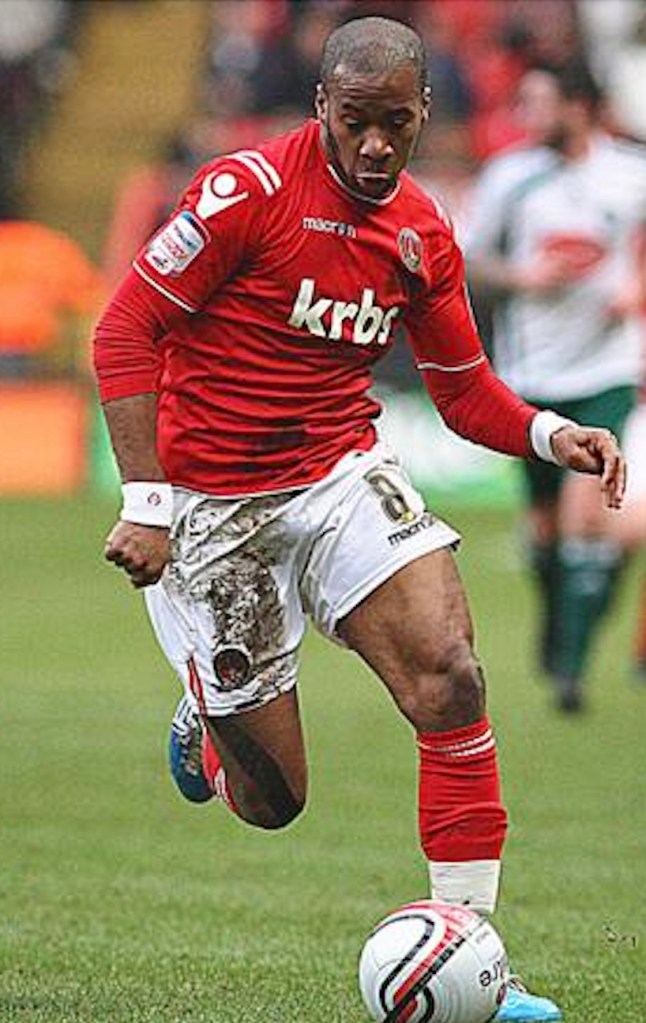
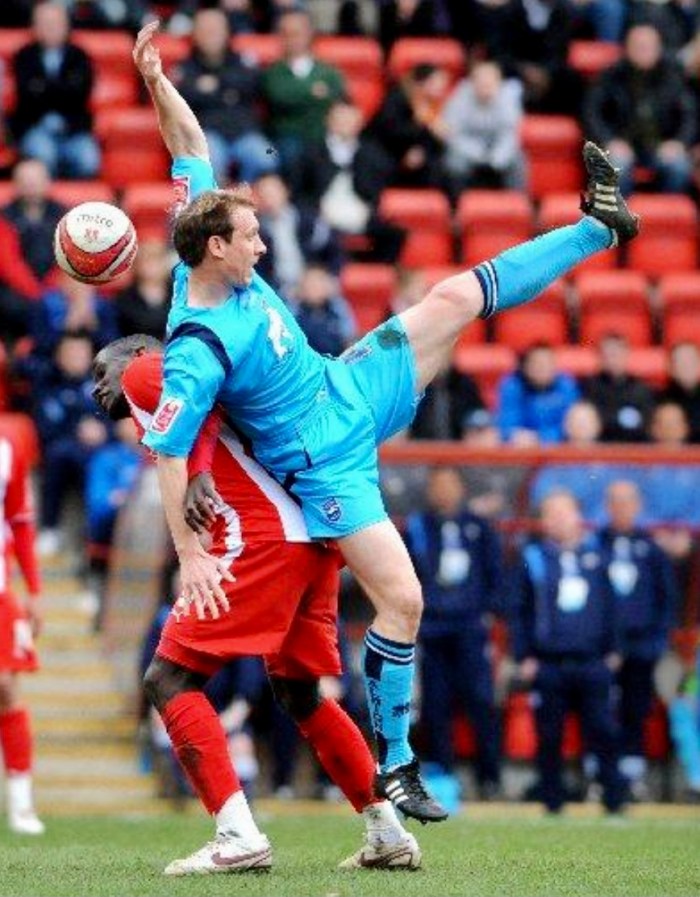
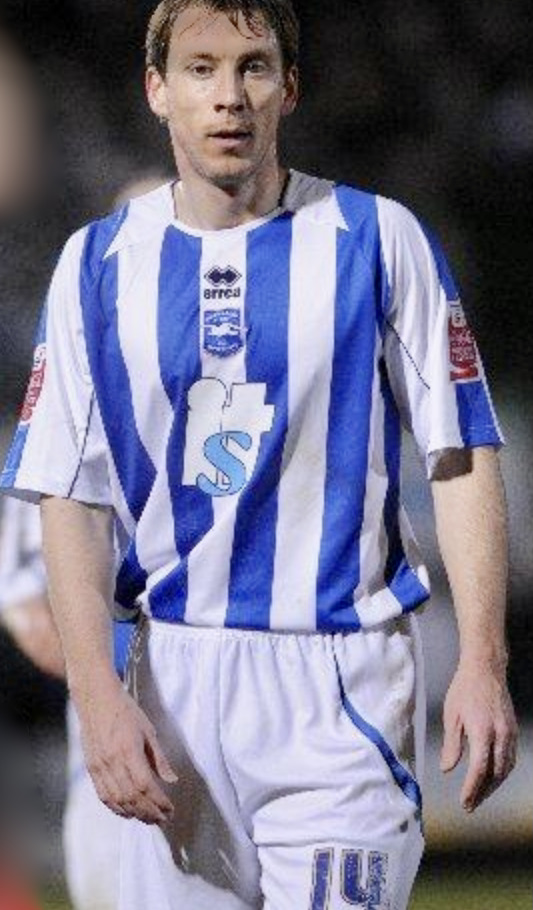
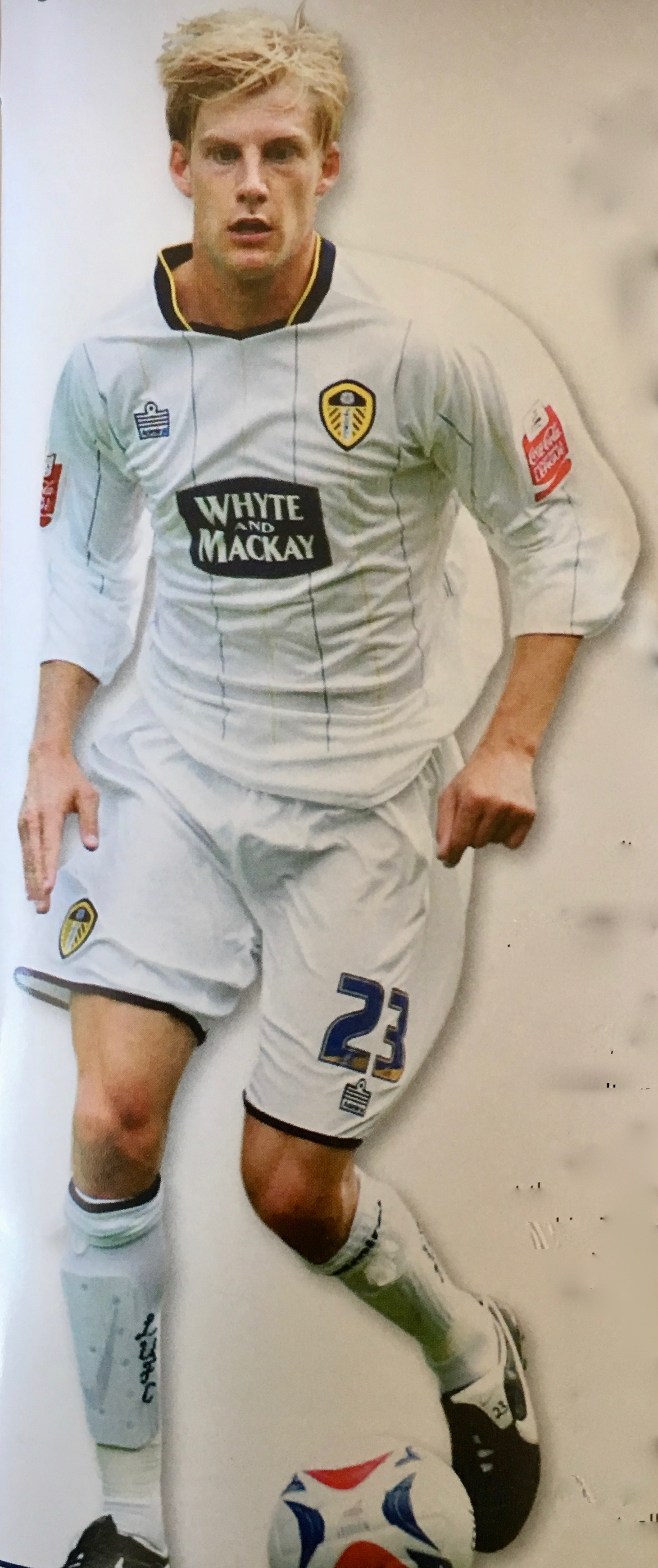
Marseille midfield man Racon shone for Brighton

ALBION had something of a love-hate relationship with Alan Pardew over the years – mainly the latter – but occasionally there was cause to be grateful to him.

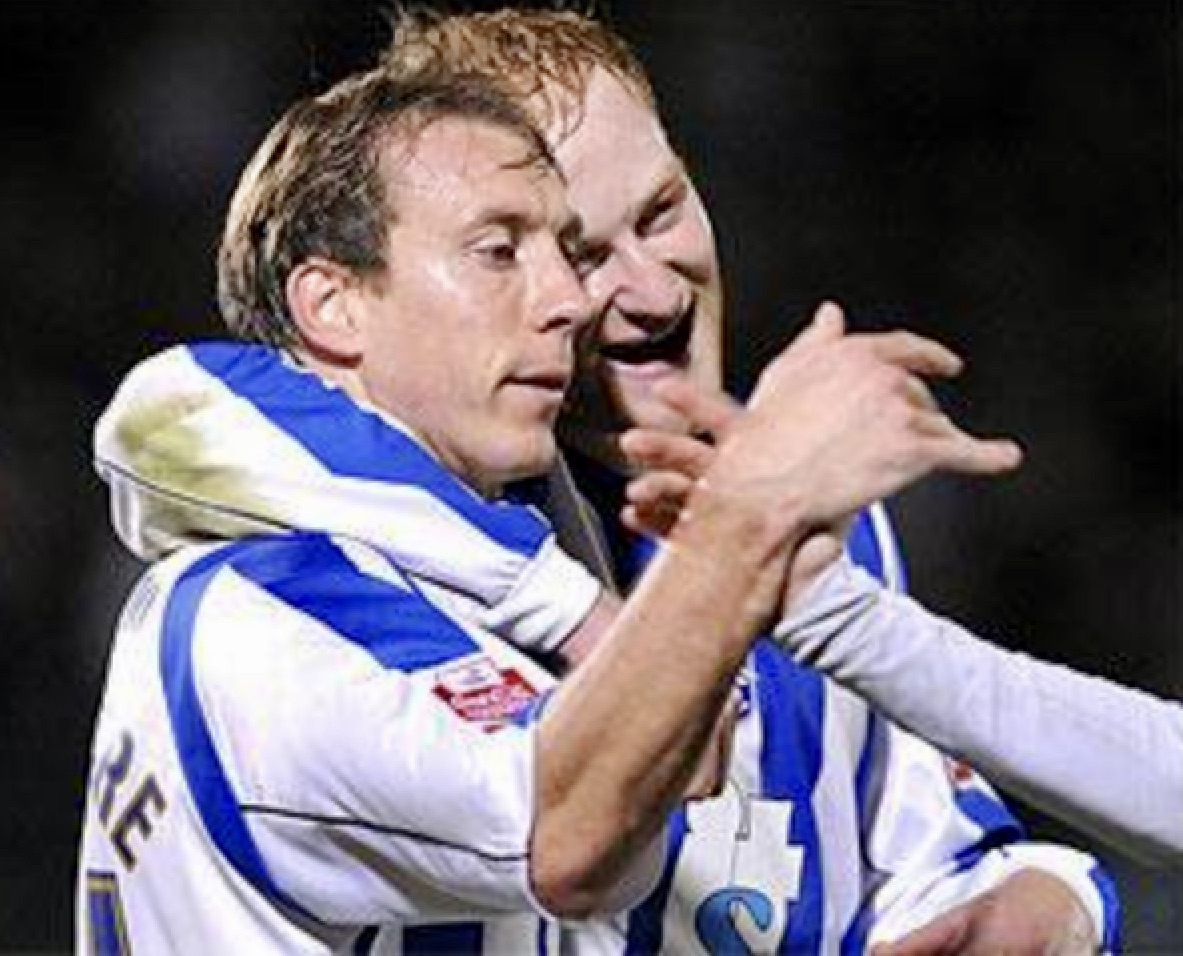
One such instance involved former Olympic Marseille midfield player Therry Racon, who Pardew loaned to Brighton for three months in 2008.

Pardew had signed the young Frenchman for £400,000 when he was manager of Championship side Charlton Athletic. He was only in the first year of a four-year contract and struggling to get games for the Addicks.

Racon told the Argus: “It’s been a big disappointment. When I signed for Charlton it was to play and help the club to promotion.

“I haven’t really had a chance but when I’ve played I think I’ve played well. I hope I will be playing next season.”

The midfielder told the matchday programme: “Before I came to Brighton Alan Pardew said to me I needed to get some games under my belt and after the loan I could get my chance at Charlton.

“My ambition is to play in the Premiership. When I signed for Charlton I signed for four years and I felt they were capable of reaching the Premiership – but I am happy to play in the Championship and League One to learn my trade.”

Albion had an outside chance of making the League One play-offs under Dean Wilkins and Racon made an impressive start at the base of Wilkins’ midfield diamond supplementing the higher level nous provided by Leeds loanee Ian Westlake and the experienced Steve Thomson.

In a 2-1 home win over Swindon Town, when Albion came back from going a goal down in three minutes, Racon was denied a goal by the outstretched foot of visiting ‘keeper Peter Brezovan.

“I wasn’t surprised by the football,” he told Brian Owen, of the Argus. “I had been told it was a very good level.

“The intensity is good. You have to be switched on all the time. Communication was fine. I’ve been in England for six-and-a-half months and I speak English quite well.

“I understand football language. There are no worries about that.”

By the end of his second game (a creditable 0-0 draw at Nottingham Forest), Owen reported: “Albion fans were exploiting the great acoustics in the Bridgford End at Forest to sing, among other things, the name of their team’s latest Frenchman.

“They used the same tune as Arsenal fans when they used to hail Thierry, rather than Therry, Henry.”

Racon declared: “So far League One has been good for me. I came thinking about the end of the season and the only thing I am focused on is ending the season strongly with Brighton – then I will worry about what to do next.”

When reporter Andy Naylor asked about the possibility of joining Albion for good, Racon said: “Why not? I’m 23, almost 24, so I have to play. I cannot stay on the bench or play for the reserves.

“I did not come to England to play in League One but I have to play, so it doesn’t matter now if it is League One. It’s good here. I’ve played a lot of games quickly and when you play you are always happy.”

A 3-2 home defeat to Port Vale and a 2-0 loss at Southend scuppered Albion’s faint play-off ambitions and, after featuring in his eighth game, a 2-0 win at Bristol Rovers in the penultimate game of the season, Racon was recalled by Charlton just ahead of the last game of the season.

Born on 1 May 1984 in Villeneuve-Saint-George, a suburb south-east of Paris, Racon made his Olympique Marseille debut on his 20th birthday against RC Lens.

After a single appearance for Marseille, he spent the 2004-05 season on loan at Lorient and then decided to join Brittany-based tier two side En Avant Guincamp where he made 29 appearances over two years. The move to Charlton came in the summer of 2007.

In spite of Racon’s Premiership ambitions, he actually found himself back in League One with the Addicks and towards the end of the 2009-10 season was joined by Nicky Forster, on loan from the Albion, after he had fallen out with new manager Gus Poyet.

Earlier that season, there had been speculation linking Racon to a possible move to the Premiership or Championship. Blackburn, Fulham, Portsmouth and Leicester were rumoured to be interested in him.

But Addicks boss Phil Parkinson, who’d taken over from Pardew, told the News Shopper the midfielder was still a big part of his plans.

“I can only say we haven’t had any calls at all, so I don’t know where that came from,” he said. “Therry is a good player and it wouldn’t surprise me if there were a few clubs interested in him because he is a very good player.”

However, at the end of his four-year deal with Charlton, and having played 115 matches, he joined south London neighbours Millwall on a two-year contract in August 2011.

Sadly, he badly injured his ankle during the second half of his debut, a Carling Cup win over Plymouth Argyle, and missed the whole of the rest of the season.

Racon went on as a substitute for the Lions in an early season 3-2 defeat at Sheffield Wednesday in August 2012 but he failed to gain a starting berth under Kenny Jackett and in January 2013 joined League One Portsmouth on loan, featuring in 16 matches.

Pompey boss Guy Whittingham said: “I think Therry was getting better and better with every game.

“The only proper thing missing was a goal and we kept badgering him, trying to get him one, but he wouldn’t take it on.

“He added some individual class to the midfield and the way he was able to keep the ball was very good.”

Released by Millwall in the summer of 2013, there was some speculation he might link up once again with his old Charlton boss Phil Parkinson at Bradford City.

Bradford Telegraph & Argus reporter Simon Parker described him thus: “A ball-playing central midfielder, Guadeloupe international Racon is known for his guile and ability to keep possession.”

Although born in France, Racon also qualified to play for Guadeloupe, the French island group in the southern Caribbean. He made his debut for them in 2009 and made two other appearances.

When nothing came of the potential move to Yorkshire, Racon rejoined Portsmouth in October 2013.

“I feel happy to be back and I’m hungry to get out onto the pitch as soon as possible,” he said. “I’ve been training by myself over the summer, but I feel fit and can’t wait to get started.

“I know what to expect from the fans. They do a fantastic job.”

After a further 16 appearances for Pompey, his time at Fratton Park brought an end to his time in English football.

On his return to France, he played for three different clubs making just a single appearance for Sedan, playing 49 times for Drouais between 2016 and 2018 and ended his playing days with Racing Columbes.

According to his LinkedIn profile, Racon is now a “young entrepreneur” and football agent.

David Livermore was no stranger to yellow and red cards

DAVID LIVERMORE was one of those signings Brighton fans had a good feeling about, only to be disappointed with the outcome.

Here was a player who had learned his craft over 10 years as a youngster at Arsenal and, at 28, had played most of his career at second tier level.

So, when Micky Adams got him on a free transfer from Hull City for League One Albion in the summer of 2008, the signs were encouraging.

“David is an experienced midfield player who has played most of his football in the Championship,” Adams said. “He’s a versatile player who can play in midfield, left wing and left back, and he’s another quality signing.”

Maybe it was that versatility that counted against him, but by the turn of the year he’d only made 13 starts and had picked up so many bookings that he had to serve a suspension.

Perhaps the writing was already on the wall. “Suspension and the midfielder more often than not went hand in hand – his passion, commitment and tough-tackling nature meant that the former Arsenal trainee picked up a huge 86 yellow cards and 3 reds in his Lions career,” Millwall fan Mark Litchfield wrote in a profile on newsatden.co.uk.

The player’s frustration was revealed in an Argus interview with Andy Naylor, who said: “Livermore is an ‘old school’ player, more comfortable with an era when crunching challenges were greeted matter-of-factly by opponents and with no more than a quiet word from officialdom, rather than the modern malaise of writhing opponents and card-happy refereeing.”

Livermore told the reporter: “It’s the way things are now, suspensions are part and parcel of the game. I am someone that likes a tackle and, unfortunately, I’ve got six bookings now.

“The game has changed a lot. The referee was threatening to send me off at the weekend and I only gave away two fouls in the whole game. I think the tackle is slowly being erased.”

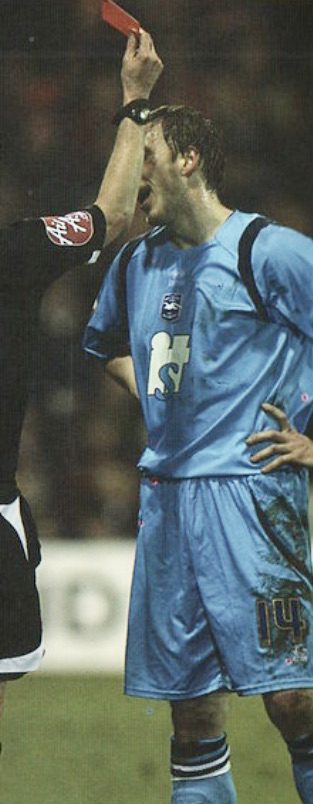
After the suspension, Livermore struggled to regain a place in the squad and he wrecked the opportunity of a rare start in the Johnstone’s Paint Trophy when he was sent off for a bad foul in the semi-final at Luton Town. Albion clung on to a 1-1 draw but losing on penalties meant they were denied a trip to Wembley for the final against Scunthorpe.

That disappointment proved to be the final straw for the Adams reign, although being four places off the bottom of the table didn’t look pretty either.

Livermore went on as a sub in Adams’ successor Russell Slade’s first game in charge, a 2-1 defeat at Leyton Orient, and got a start in a home 5-0 win over the manager’s previous club, Yeovil.

He then started at left-back in a 3-0 defeat away to Walsall three days later, but was subbed off at half-time, and his replacement, loanee Gary Borrowdale, was Slade’s preference in that position for the rest of the season. Livermore was sent on loan, ironically to Luton.

But he had penned a two-year deal when signing the previous summer so he was back at Brighton for the 2009-10 season. He warmed the bench nine times in the first half of 2009-10 but only saw action once, going on as a sub for Andrew Whing in a 1-0 defeat at Orient in the JPT.

The arrival of Gus Poyet as manager didn’t help his cause either and eventually there was a mutual parting of the ways in February 2010. It felt very much like a case of what might have been, and the player himself gave a very honest assessment of his time with the Albion in an interview with the Argus.

“I am disappointed I have not fulfilled the expectations of supporters and probably myself,” he said. “I’ve played the majority of my career in the Championship. I started off at Arsenal and went to Millwall in League One, adapted to that and got promoted and had six or seven seasons in the Championship.

“I’m not saying I thought it would be easy coming to Brighton but I thought I would be able to do as well as at my other clubs.”

He said Albion was “a fantastic club” and he enjoyed the team spirit and friendliness of the squad, admitting: “It hasn’t worked out how I expected but I’ve enjoyed my time there.”

Livermore reckoned it was the money he was on at Brighton that put off other sides from taking him on loan. The ending of his contract gave him free agent status, which meant he was able to organise a short-term deal at Barnet.

It obviously hit the player hard to realise his playing days were coming to an end after Barnet released him at the end of the season.

He told the Cambridge Evening News: “I’d dropped through the leagues, from Championship to bottom of League Two in a couple of seasons.

“I knew I had to make a decision. I even qualified as a personal trainer – I don’t know what I was thinking.

“From a playing point of view, I fell out of love with the game. Part of me said just stop and get a job – deliver the post or something, just get a normal job, provide for your family and enjoy your life.”

He was rescued by the offer to manage non-league Histon, and he told the newspaper. “The Histon job came up and I took it and fell back in love with the game from a coaching point of view. I was very lucky that opportunity came up at the time.”

Born on 20 May 1980, in Edmonton, north London, Livermore grew up as a Spurs supporter and was taken on by them at the tender age of seven! But frustrated at just being asked to train, rather than play games, he switched to Arsenal and was on their books for a decade.

He was on a two-year YTS scheme before turning professional but had to move to Millwall, aged 19, to get a breakthrough in the game.

Livermore had been in the same Arsenal youth side as Ashley Cole, and played five games for the Gunners reserve team in the 1997-98 season, when Matthew Wicks and Matt Upson were regulars, scoring once in a 1-1 draw against Tottenham on 17 March 1998. In a pre-season friendly at Enfield on 18 July 1998, he went on an as substitute for 23 minutes but that was the extent of his first team involvement. He made 11 appearances plus two as a sub for the reserves in the 1998-99 season, before leaving the club.

He joined on loan initially making his Millwall debut on the opening day of the 1999-00 season at Cardiff City in a 1-1 draw that hit the headlines for fan clashes rather than the football. It took joint bosses Keith Stevens and Alan McLeary only four matches to convert the loan into a permanent transfer, and Livermore was signed for £30,000.

Football history books reveal Livermore as the scorer of the final football league goal of the 20th century: an injury-time winner against Brentford on December 28, 1999. It happened to be the first of his goals for Millwall and he made 34 appearances that season.

After the disappointment of losing a play-off semi-final to Wigan Athletic in 2000, Livermore was able to savour promotion from League Two as champions under Mark McGhee in 2001; he played 39 games and was part of an eye-catching partnership with Australian international Tim Cahill.

There was more play-off semi-final heartache the following season when Millwall were edged out of the League One end-of-season final two places by Birmingham City; another season in which Livermore only missed three games – through suspension.

2004 is to Millwall fans what 1983 is to Brighton supporters: it was the year that against all odds they made it to the FA Cup Final. Millwall’s achievement was arguably more remarkable in that they were in the division below opponents Man Utd. The Lions were beaten 3-0 at the Millennium Stadium in Cardiff and Livermore gave away a penalty (bringing down Ryan Giggs) which Ruud van Nistelrooy scored from.

“We didn’t play a Premier League side all the way through until the final so it just shows you what can happen,” Livermore recalled in an interview with the Argus. “I played every minute of every game. That was the highlight of my career.”

The one consolation from the Cup Final defeat was that Millwall got to play in Europe – the UEFA Cup – the following season because United were in the Champions League. It was Livermore’s penultimate season with the Lions and, with a year left on his contract, close season speculation had him linked with a £500,000 move to either Southampton or Sunderland.

Millwall director, Theo Paphitis, said: “Livers asked to go on the transfer list and that hasn’t changed. We’ve had enquiries from two clubs, but neither have matched our valuation. We would dearly love Dave to stay at Millwall, but his contract is up at the end of the season when he would be in a position to leave us for nothing.” It emerged Arsenal were entitled to 30 per cent of any profit the Lions made if the player was sold.

Millwall managed to persuade him to stay and to sign a new contract in January 2006, with director of football Colin Lee declaring: “I have said, from the moment I arrived, David is an absolutely vital player. I’m hopeful others we are in the process of trying to re-sign will see this as evidence we have now turned the corner and are moving forward again.”

While his loyalty was rewarded with the Player of the Year trophy come the end of the 2005-06 season, Millwall were relegated to League One and Livermore, wanting to stay in the Championship, was soon on his way.

In a most curious turn of events, Livermore joined Leeds United for a £400,000 fee, telling the Leeds website: “This is a huge club, this is where you want to be playing – at the right end of the division. I just want to be part of things here. Every player wants to play in the Premier League. That’s the aim.”

But before he could kick a ball in anger for United; in fact, just 10 days’ later, he was sold to Hull City. Leeds boss Kevin Blackwell explained that he had subsequently been able to sign Kevin Nicholls from Luton Town and (future Albion loan signing) Ian Westlake from Ipswich Town, and both would be ahead of Livermore in the pecking order.

Hull began the season under Phil Parkinson, who had signed former Reading teammate Nicky Forster for £250,000, but Phil Brown took over halfway through and they only just managed to avoid relegation. However, the midfielder must have had a wry smile on his face to discover the club propping up the division were none other than Leeds!

The following season saw a big turnround in Hull’s fortunes and they won promotion via the play-offs although Livermore was on the periphery and on transfer deadline day in January 2008 he moved to Boundary Park, Oldham, pairing up with Preston midfielder Jason Jarrett, another loanee who he would subsequently meet again at Brighton.

That introduction to management at Histon, when they were relegated from the Conference in his first season and were 16th in Conference North the following year, proved a steep learning curve for Livermore, as he told the Cambridge Evening News.

“In the first season I was player-manager I didn’t take a wage. My wife and family couldn’t quite understand why I was going through all of that for no money. Fortunately, I had some money set aside anyway, and going to Histon was the best decision I made.”

As well as having the lowest playing budget in the league, Livermore had to deal with off-field issues such as players not being paid and points deductions. “It was a baptism of fire,” he told the newspaper. “I learned a lot about dealing with contracts, managing individuals, trying to make things more professional, and getting players in to help the team.

“All you can do in any job is be honest. I didn’t have all the answers and I told the players that. I think honesty is key, and having that integrity.”

It was while he was at Histon that he began talking about his future coaching career with his friend and former Millwall teammate, Neil Harris, who was also coming to the end of his playing career (at Southend United). When Harris was injured, he went to watch a few Histon games and Livermore told cardiffcityfc.co.uk. “It was always good to have his eyes on the games and bounce ideas off each other.

I’ve known Neil since I was 19. We played together at Millwall for about six seasons and always stayed in touch after that despite our careers going in different directions.”

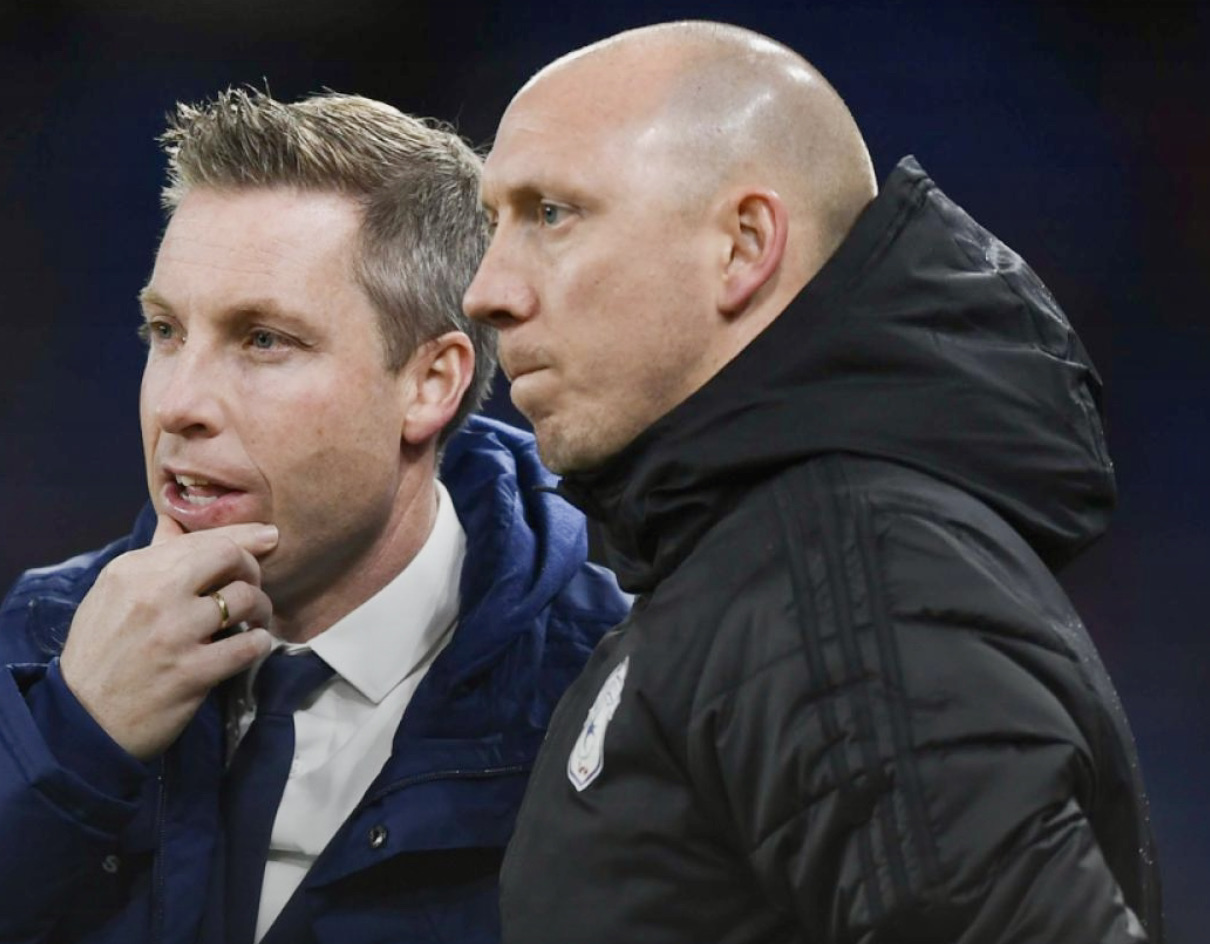
In 2012, Livermore had the opportunity to return to Millwall, as youth team coach, and Harris followed him back to take charge of the under 21s. “I’d assist him on his games with the 21s during that time and then when the opportunity came for him to take over as first team manager (in 2015), he asked me to join him, which was an easy decision for me to make,” said Livermore.

The pair took Millwall to the League One play-off final at Wembley in 2016, when they were beaten 3-1 by Barnsley, and the following season they returned after finishing sixth in the table and won their place back in the Championship courtesy of a 1-0 win over Bradford City. They also twice took Millwall to the quarter finals of the FA Cup.

Although Millwall won two of their first three matches of the 2019-20 season, a subsequent seven-game winless run saw the pair leave Millwall in October 2019. Club chairman John Berylson said: “Both Neil and David leave with their heads held high, forever friends of the club, and I wish them both every success in their future careers. They will always be welcome at The Den.”

The following month the pair were installed as successors to the Neil Warnock regime at Championship Cardiff and the Welsh side finished fifth in the league by the end of the first season but lost out to Fulham in the play-off semi-finals.

Unfortunately, the churn of managers in the Welsh capital didn’t spare Harris and Livermore and, in January 2021, after 14 months, their services were dispensed with after a six-game losing streak. Mick McCarthy and Terry Connor took over: they were only there for nine months.

After a year out of the game, Harris and Livermore were back in the managerial saddle in January 2022 at League One Gillingham, but they couldn’t prevent the Gills being relegated at the end of the season.

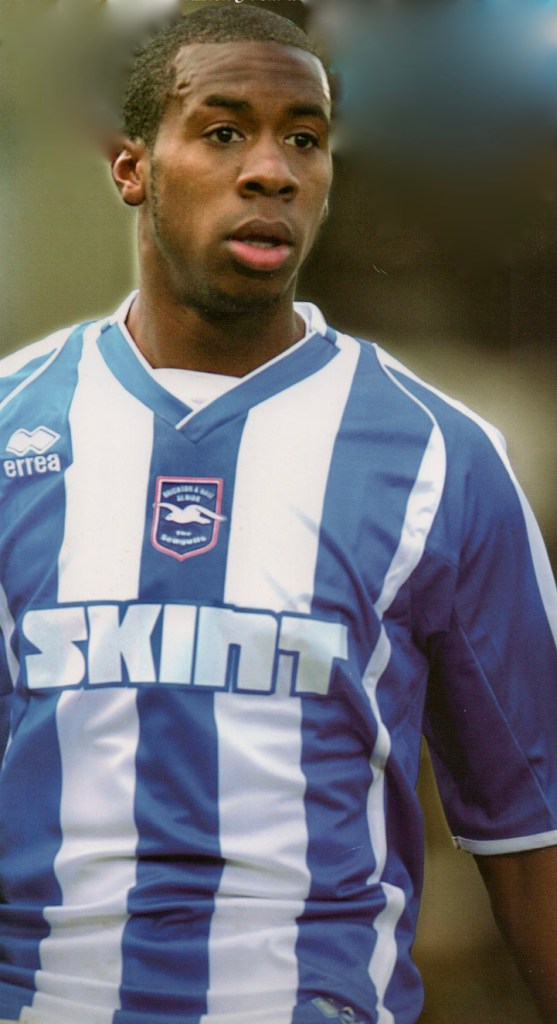
Why Saint Dan riled the Albion

DAN HARDING was promoted twice with Southampton and once with the Seagulls and later cut short his career because of family tragedy.

Personally, I’m not sure he really need to be cast as ‘public enemy no.1’ because of the way he left Brighton.

With the benefit of hindsight, it was really no surprise that he chose to turn his back on playing at Withdean in favour of Elland Road, Leeds.

OK, the stringing-out of the contract negotiations, and public slanging match that accompanied them, didn’t help matters.

But football careers are short and the Amex was a long way off becoming a reality when Harding decided to opt for pastures new.

“I really enjoyed my time at Brighton but you can’t compare the size of the two clubs or the facilities,” he told the Leeds matchday programme at the time. “It has been like going from one world to another.”

Ironically, it seems his success on the pitch with Brighton, which led to him gaining international recognition, might well have been the unsettling influence.

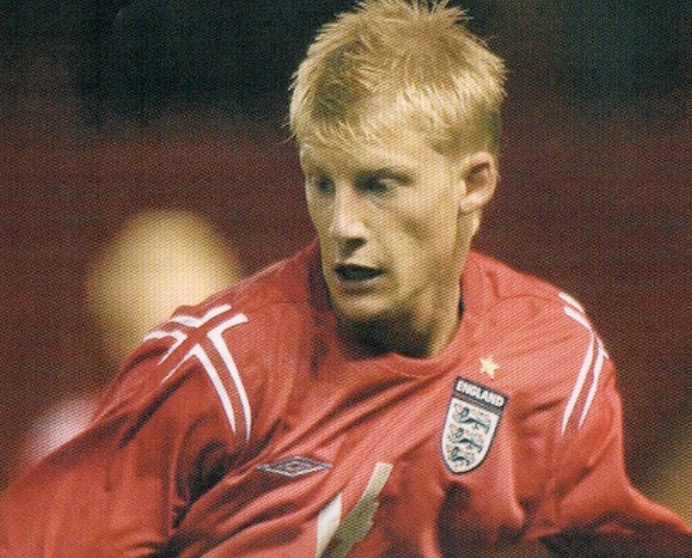
Former Albion boss Peter Taylor selected him for England under-21s as the 2004-05 season got underway. He made his England debut as a substitute for Micah Richards in a 3-1 win over Ukraine at the Riverside Stadium, Middlesbrough, on 17 August 2004. Future full internationals James Milner and Darren Bent were in the same squad.

He started the 8 October 2004 match against Wales at Ewood Park, Blackburn: a 2-0 win courtesy of goals from Milner and Bent. He also started the game four days later when the under 21s drew 0-0 away to Azerbaijan in Baku. His last cap came the following month in a 1-0 defeat away to Spain when he was replaced by Ben Watson. Future Albion loanee Liam Ridgewell was also a substitute in that game.

It was this platform that sowed the seeds of discord, according to former chairman Dick Knight’s take on the circumstances surrounding Harding’s acrimonious departure from the Albion.

In his autobiography Mad Man: From the Gutter to the Stars, Knight reckoned it was while on international duty that Harding was “egged on by his agent about his value after talking to players with bigger clubs, on bigger wages”.

Knight went on: “Early on, I offered him a sizeable contract renewal but he sat on it. He kept saying he wanted to stay, but I don’t think he had any intention of doing so.

“Because he was under 24, we were entitled to compensation. Shaun Harvey, the Leeds chief executive – who became CEO of the Football League in July 2013 – tested me with a couple of paltry sums before finally offering £250,000, which I rejected.”

DH Leeds action 2Via the Football League tribunal system, Knight managed to get the figure up to £850,000, part achievement-based, and with a 20 per cent sell-on clause.

All in all, not a bad return for a player who came through the Albion’s youth and reserve ranks after being spotted at 15 playing for Hove Park Colts.

Born in Gloucester on 23 December 1983, the young Harding loved kicking a football from the moment he could walk and enjoyed watching his dad, Kevan, turn out for the Army team.

The family was posted to Brighton, and Harding was taken to the Goldstone Ground by his mum, Linda. One of his earliest memories was on 23 September 1992 seeing a 17-year-old David Beckham make his Manchester United debut as a substitute for Andrei Kanchelskis in a League Cup tie that finished 1-1.

Harding joined the Albion initially on schoolboy terms for a year and was then taken on as a YTS trainee, progressing through the juniors and reserves before eventually making his first team debut on 17 August 2002, during Martin Hinshelwood’s brief reign, as a substitute for Shaun Wilkinson in a 2-0 home defeat to Norwich City.

After Hinshelwood was replaced by Steve Coppell, and Harding sustained a back injury, the youngster played no further part in the first team picture that season, but he was awarded a new contract in April 2003.

In the first part of the 2003-04 season, Harding was a regular on the bench, but, on 21 February 2004, Coppell’s successor, Mark McGhee, gave him his full debut in place of the suspended Kerry Mayo in a 3-0 win over Bournemouth.

Dan Harding

Harding kept his place through to the end of the season, making a total of 23 appearances, including being part of the side that lifted the divisional play-off trophy at the Millennium Stadium, Cardiff, as the Seagulls beat Bristol City 1-0.

“In hindsight, it was a very lucky time for me. I broke into a team that was winning games and was promoted,” he told the Daily Echo. “Looking back now, I don’t think I appreciated at the time what a big achievement it was.”

Sent off in only the second game of the following season for two bookable offences, it wasn’t long before his contract discussions were aired publicly, with McGhee telling the Argus in October: “It’s starting to really frustrate me.

“Dan keeps telling us and saying publicly he wants to sign but we cannot tie his agent down to have a meeting with us. He has to be honest with us.”

Harding in turn denied he was being difficult, telling the Argus that talks were ongoing.

The off-field issues certainly seemed to be troubling Harding and McGhee publicly blamed the defender for a 2-0 defeat at Millwall in December. He was also outmuscled by Stoke City’s Ade Akinbiyi in a game at Withdean, leading to a late winner for the visitors. Across the season, McGhee dropped him on four occasions because of such inconsistency.

When he won his place back in February, he told the Argus: “I had to prove not only to the gaffer but to the other players and the fans that I want that position back.

“That’s where I prefer to play. I like to call that my position. I don’t mind playing on the left hand side of midfield or centre midfield, but I do love playing at left-back.

“Hopefully I can reproduce the same sort of form and keep my confidence up. Everyone wants to be playing, so when you are left out it’s a bit of a kick in the teeth. It’s not nice, but you have to pick yourself up and try to get back into the team.”

DH leeds action 1However, the Brighton contract offer was declined and on 7 June that summer, Harding put pen to paper on a deal with Leeds, whose fans were no doubt delighted to read that he used to follow their fortunes when he was a youngster.

“When I lived in Germany, they showed quite a lot of Leeds games on telly and, in a strange way, I kind of ended up supporting them because it was the only football I really got to see out there,” he said.

His dad later took him to a Leeds FA Cup match v Wolves, and he added: “I have to admit I have been a closet Leeds fan. Obviously, I didn’t shout about it when I was playing for Brighton and it’s kind of strange now that this move has happened.”

If Harding doubted the size of the task at Elland Road, he’d only have had to read the comments of manager Kevin Blackwell, often Neil Warnock’s no.2, who was the Leeds manager at the time.

In an article about Harding in the club programme, Blackwell said: “It has been a big transition for him. No disrespect to Brighton, but coming from the scaffolding at Withdean to Elland Road was a big step-up for Dan. He was nervous in the first couple of games, but he has started to settle down.”

He talked about how he needed to cement his place at United, and added: “If he does succeed here, all the doors will be open to him. I have no doubt that once he develops certain aspects of his game and his self-confidence, he will go a long way because he is a real athlete with a great left foot.”

Brighton fans vented their displeasure at how things had turned out every time Harding touched the ball when Leeds entertained the Seagulls on 12 September 2005; a game which finished 3-3. The fact two of Albion’s goals came from crosses on Harding’s flank prompted Blackwell to drop him for the following match.

After only seven games, Harding picked up an injury and, over the course of the season, played just 21 matches for United. In August 2006, the Yorkshire club used the full-back as a makeweight in a deal which took future Albion loanee Ian Westlake from Ipswich to Leeds.

He was a regular at Portman Road for a couple of seasons but, in his third season, manager Jim Magilton deemed him surplus to requirements and sent him out on loan to Southend United. I recall going to a match at Roots Hall and seeing him have an outstanding game against Brighton.

Later the same season, with Ipswich bobbing along in mid-table, Harding seized the chance to join Steve Coppell’s promotion-chasing Reading, and he played in their play-offs defeat to Burnley.

When Roy Keane took over at Ipswich in 2009, Harding was sold to Southampton; manager Alan Pardew’s first signing for the Saints. Harding’s former Albion youth coach, Dean Wilkins, was part of Pardew’s coaching team.

Harding reflected in an interview with the Southern Daily Echo that what followed were the happiest three years of his career, in which he played 121 games and chipped in with five goals.

In 2010-11, he was named in the PFA League One team of the year along with teammates Kelvin Davies, Jose Fonte, Adam Lallana and Alex Oxlade-Chamberlain.

In the harsh and fickle world of football, Brighton fans relished Brighton’s 3-0 win over Southampton at the Amex on 2 January 2012 when Albion winger Will Buckley gave Harding such a torrid time that, to compound his humiliation, the former Brighton player was subbed off by boss Nigel Adkins with five minutes of the first half still to play.

Although part of the Saints side that won promotion back to the Premier League that May, Harding didn’t get the chance to play at the top level because Adkins moved him on to Nottingham Forest.

Harding talked in detail to the Echo’s Paul McNamara about life at Forest, which he found an unstable place, especially when Sean O’Driscoll, the manager who signed him, was sacked.

Although he played some games under that legendary left-back Stuart Pearce, when he took over, Harding eventually went on loan to Millwall, but wasn’t able to help them stave off relegation from the Championship.

He reveals in his interview with McNamara how disillusioned he became with the amount of dishonesty in football and, coupled with his pregnant wife losing two of the triplets she was expecting, he put family before football and, at the age of only 31, dropped down four divisions to play non-league with Eastleigh.

He talked about the tough decisions he’d had to make in an interview before a FA Cup tie Eastleigh played against Bolton Wanderers.

In 2016, Harding joined Whitehawk as a player, then became part of the coaching set-up, and was briefly caretaker manager before the appointment of Steve King.