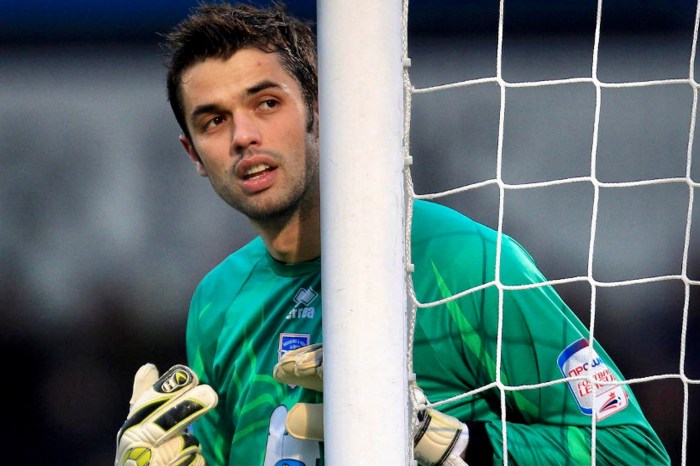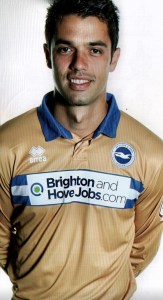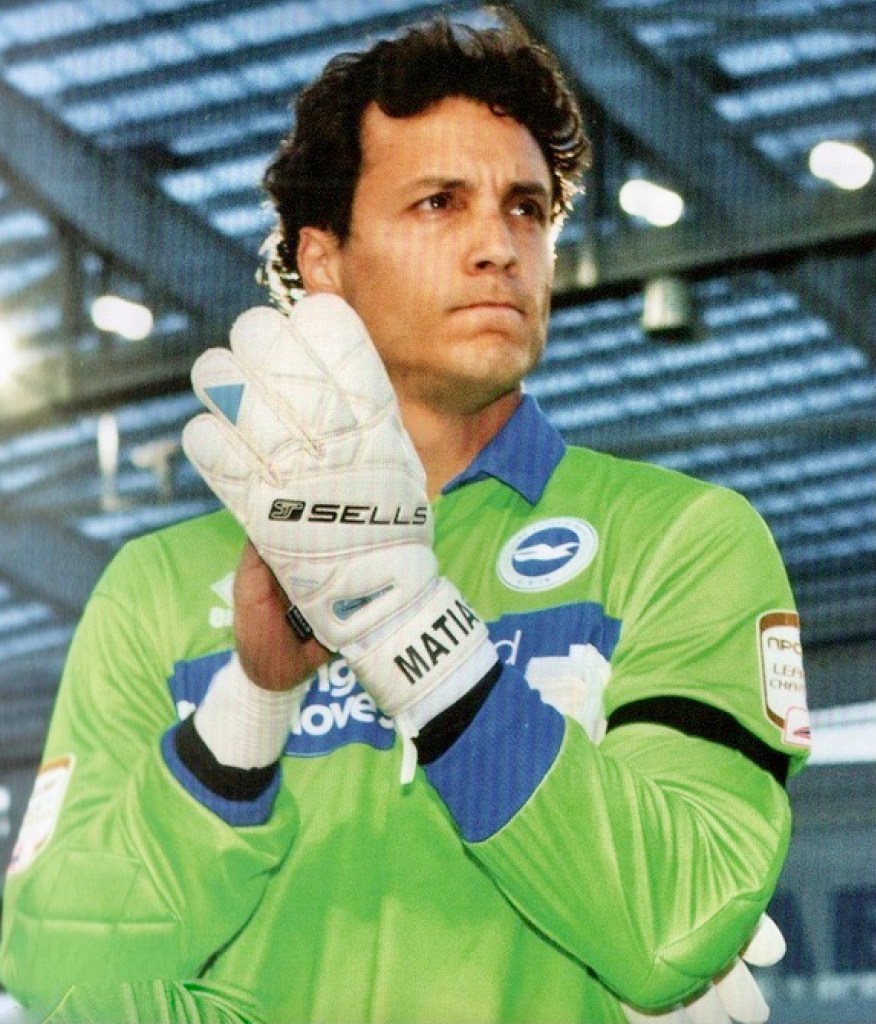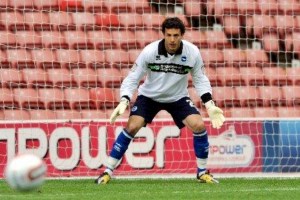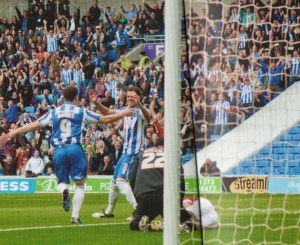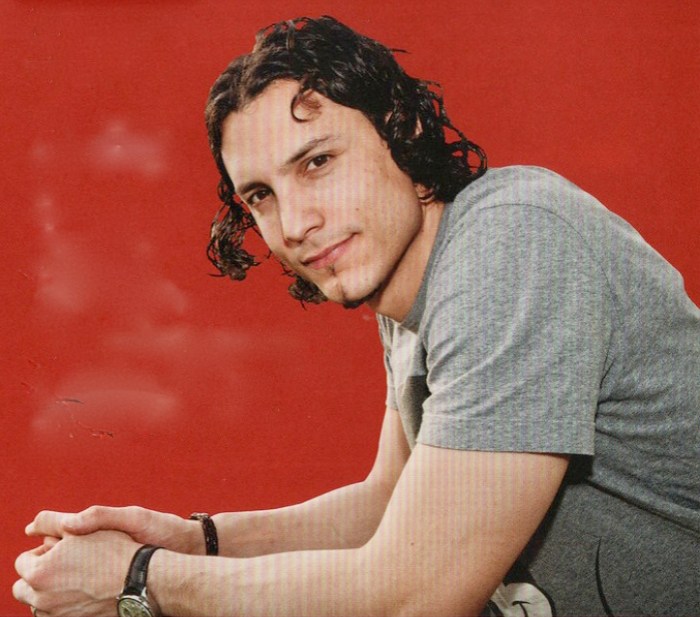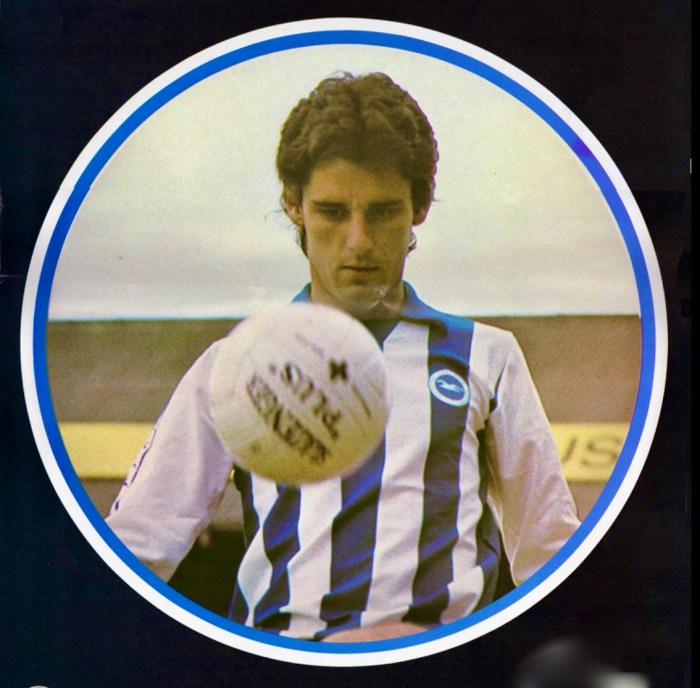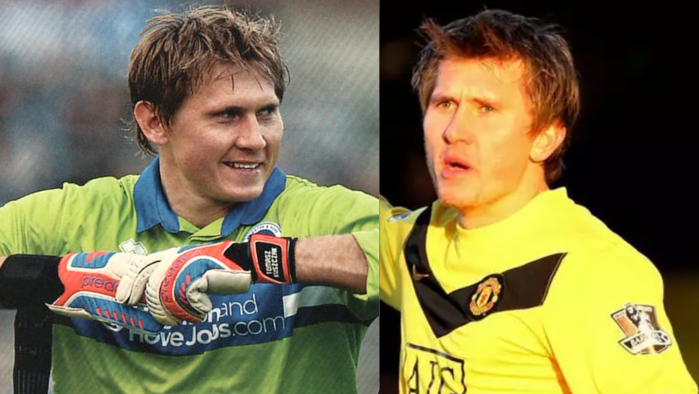
Pole in goal Tom experienced Cup highs and lows

THERE’S plenty of FA Cup history between Brighton and Manchester United and a goalkeeper who played for both has his own memories of the competition – not all of them good!

Although Tomasz Kuszczak played 32 league games for United, as a back-up at Old Trafford rather than first choice, he often found himself called upon in cup matches (eight FA Cup, 10 League Cup – including collecting a winners’ medal in 2010 – and 11 European games).
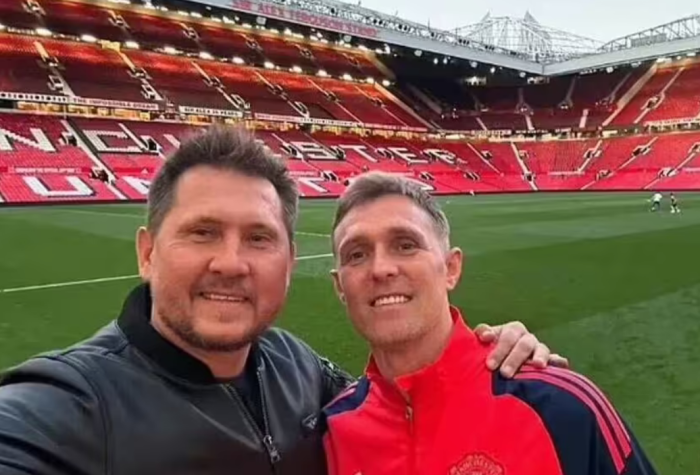
In April 2025, Kuszczak paid a return visit to Old Trafford to watch United’s 0-0 draw with Man City and snapped some selfies watching from the stands and (above) on the pitch with former teammate Darren Fletcher, now in temporary charge at United following the dismissal of Ruben Amorim.

At Brighton, where Kuszczak was the first choice for two seasons, he found the goalkeeping duties reversed for FA Cup ties and he gave way to either Casper Ankergren or Peter Brezovan.

Signing the Polish international for Gus Poyet’s Championship Brighton side was something of a coup and the boss told the club website: “There were clubs in England and abroad interested in Tomasz, but it says a lot for the ambition of this club that he wanted to sign for Brighton.”

Poyet later told The Argus: “When we had the chance, we got him. You don’t have too many chances sometimes to sign this sort of player, so it was very important.”

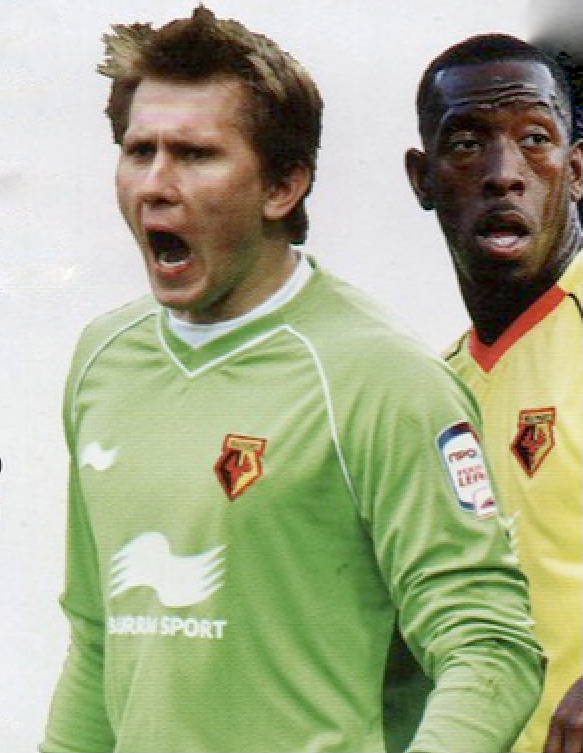
Kuszczak said one of the reasons he chose to join the Seagulls was because of what he’d seen when playing against them the previous season, while on loan at Watford.
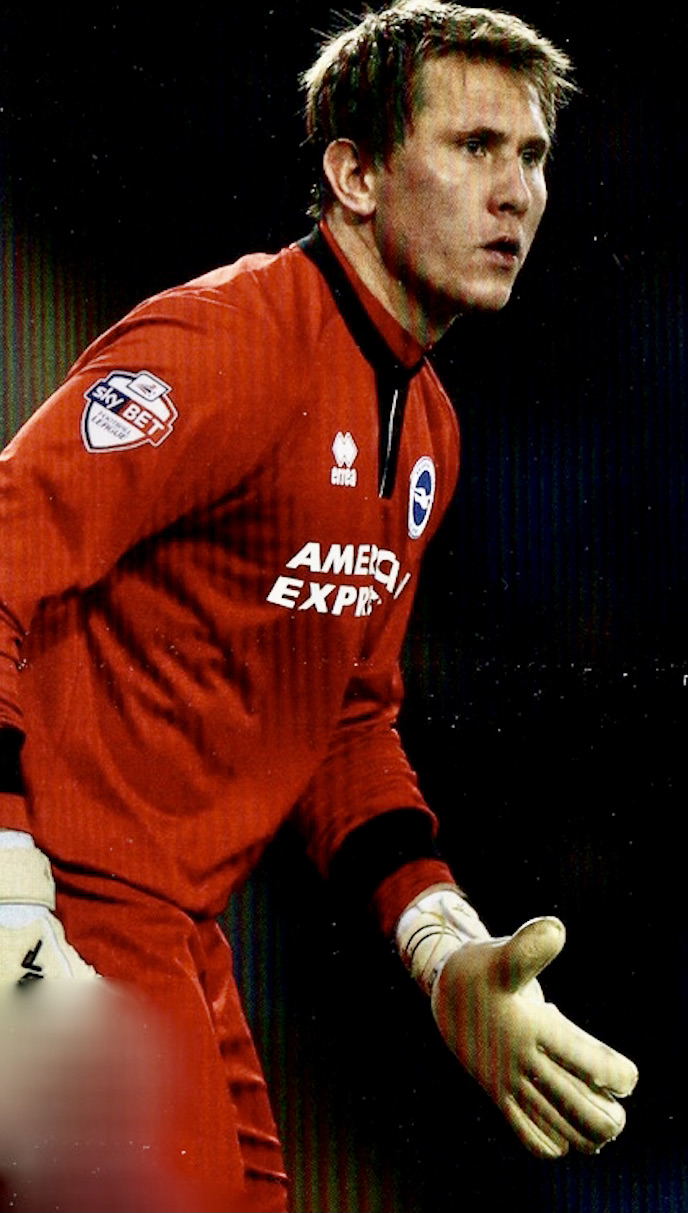
“I was very impressed with the way the team played – it was totally different to the rest of the Championship and more like what I was used to at Manchester United.

“This team likes to pass the ball, they like to create, they are attractive to watch. The way Brighton play is the future of football.

“I had other clubs who wanted to sign me but my heart told me that this was the right choice.”

Kuszczak continued: “I have played Premier League football for eight years, with West Bromwich Albion and Manchester United, and I believe the structure is in place here to join them.

“The manager and coaching staff, the team, stadium, crowds, through to the plans for the new training ground, everything is geared up for playing at the highest level and I could sense that ambition to be a top club straight away.
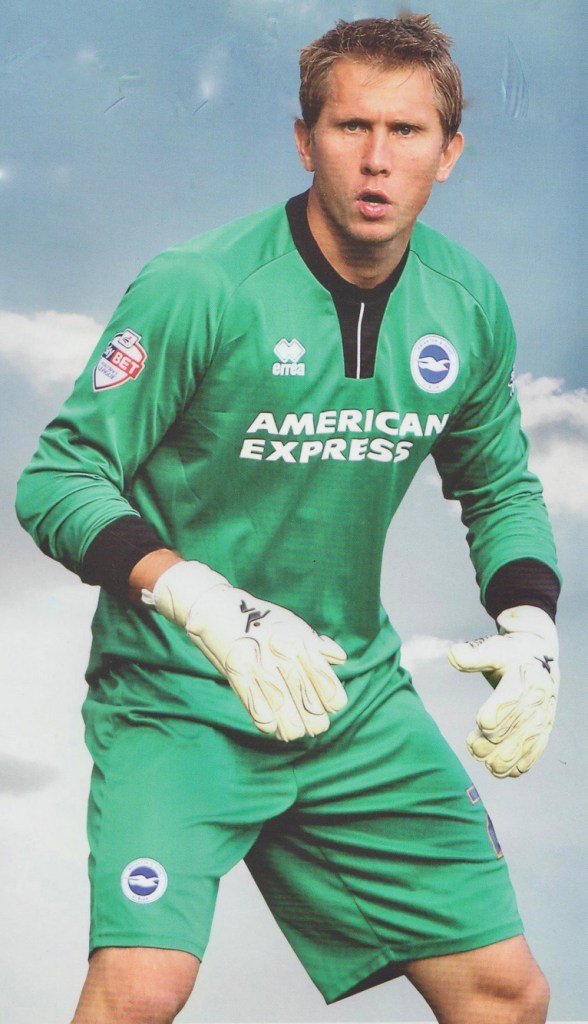
“The Premier League is where I want to be again and I believe I can get there with Brighton. This club is heading in only one direction, and I want to play my part in helping us get there.”

During his time at Manchester United, five of Kuszczak’s eight FA Cup appearances were in the 2007 competition when United reached the final – although first choice Edwin van der Sar took over between the sticks for that game, when Chelsea won it 1-0.

The 2008 competition certainly wasn’t one Kuszczak remembered fondly. In a quarter-final against Portsmouth at Old Trafford on 8 March 2008, he went on as a sub for the injured van der Sar at half-time, but 30 minutes later was handed a straight red card for fouling Milan Baros.

Rio Ferdinand took over in goal but failed to save Sulley Muntari’s penalty, the only goal of the game.

In 2010, Kuszczak was in goal when League One Leeds United, with Ankergren in goal, pulled off a shock third round win at Old Trafford – United’s first exit at that stage of the competition since 1984 (the year they went into it as holders after beating Brighton in a replay in 1983).
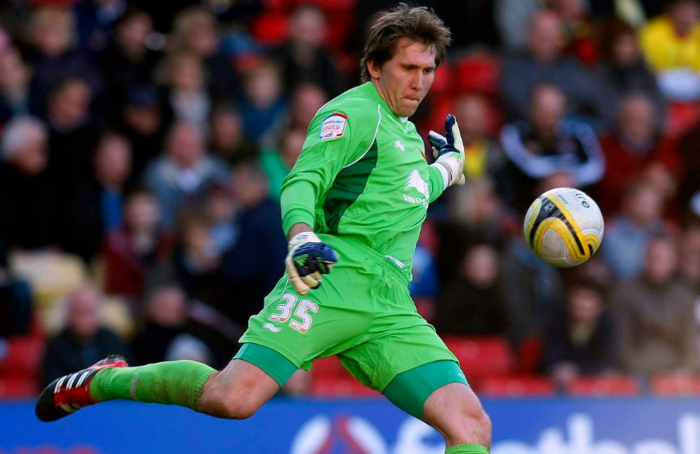
Jermaine Beckford’s 19th minute goal clinched it for the Yorkshire side against a United who had Danny Welbeck playing up front alongside Dimitar Berbatov and Wayne Rooney.

There was some consolation the following month when United won the League Cup at Wembley, beating Aston Villa 2-1. James Milner opened the scoring from the penalty spot for Villa, sending Kuszczak the wrong way. But goals from Michael Owen and substitute Rooney clinched it for United.

The following year, Kuszczak was again in goal for United’s FA Cup third round tie at home to arch rivals Liverpool which United edged with an early goal by Ryan Giggs. Liverpool captain Steve Gerrard was sent off just past the half-hour mark for a two-footed tackle on Michael Carrick.

But Anders Lindegaard was chosen ahead of Kuszczak as United marched to the semi-finals, where they were beaten 1-0 by Manchester City. In the fifth round, United only narrowly overcame Crawley Town, who had former Albion ‘keeper Michel Kuipers in goal.

By the time the 2011-12 season came round, Kuszczak had slipped down the list of United custodians, with David de Gea first choice, and Lindegaard and Ben Amos also ahead of him.

In February 2012, Kuszczak was loaned to Championship side Watford, where he made 13 appearances, including that third-to-last game of the season at the Amex, which finished 2-2. Former Seagulls promotion-winner Chris Iwelumo was in Sean Dyche’s Hornets side that day when goals from Troy Deeney and Sean Murray (penalty) put the visitors ahead at half-time and second half replies from Inigo Calderon and Will Buckley, against his former club, ensured a share of the points.

It was on Kuszczak’s release from United in June 2012 that he moved to Brighton.

Born in Krosno Odrzańskie in western Poland on 20 March 1982, the son of a Polish army colonel, Kuszczak grew up in Wroclaw, the city on the River Odra whose Tarczyński Arena was a host stadium for the 2012 Euros.

When he was 11, Kuszczak fancied himself as a striker but soon realised he wasn’t quick enough.

“I was always taller than everyone else, a bit like my father and brother, and I loved climbing, jumping from trees, taking a risk, so the position of goalkeeper seemed idea to me,” he said in a matchday programme interview.

“My father and brother would take shots at me, hard shots as well, and I enjoyed trying to stop them.”

He began his career with one of his country’s top teams, Śląsk Wrocław, and a year after earning his first pay packet at the age of 16 crossed over the border to Germany to play for KFC Uerdingen 05 and Hertha Berlin.

Although he made 87 appearances for the Berlin side’s reserves, he was unable to dislodge ex-Palace ‘keeper Gabor Kiraly and Christian Fiedler to claim a first team spot.

He was capped at under 16, under 18 and under 21 level (14 caps) by Poland and, while never first choice ‘keeper for the senior international side, he made his debut in 2003, in a 4-0 win over Malta, and played 11 times for his country, the last time in 2012. He initially took over from Liverpool keeper Jerzy Dudek but, invariably, Artur Boruc and Wojciech Szczesny were picked ahead of him.

He moved to the UK in 2004 when Gary Megson signed him for West Brom. He was reserve ‘keeper behind Russell Hoult in his first season at The Hawthorns but managed 28 league appearances when competing for the gloves with the often-injured Chris Kirkland in his second season.

In one of those appearances, against Wigan Athletic in January 2005, he pulled off a spectacular save to deny Jason Roberts which was subsequently voted Save of the Season by Match of the Day viewers.

Four months later he went on for an injured Hoult at Old Trafford after only 19 minutes and he recalled: “I had a fantastic game, saving everything that came my way and we ended up drawing 1-1. It was a game which ultimately got me my move to United.”
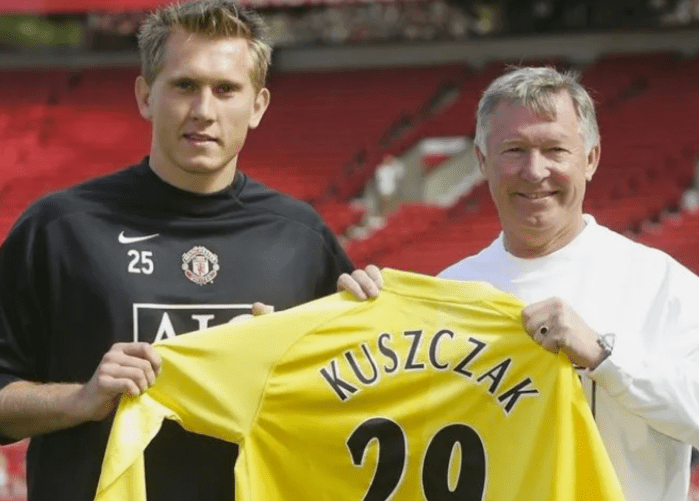
Sir Alex Ferguson captured Kuszczak from West Brom

In a somewhat complicated transfer deal, Man U signed Kuszczak in the summer of 2006 in exchange for United’s former Albion loanee, Paul McShane, and young goalkeeper Luke Steele, but the first year of the arrangement was on a loan basis. In five seasons at United, he played a total of 61 games.

After he retired from playing Kuszczak completed a degree in sports journalism and he had already shown his writing ability during his time with the Seagulls, compiling a piece for The Footballers’ Football Column in December 2013 which appeared in the Daily Mail.

Perhaps he also showed his true colours regarding dropping down into the Championship when he wrote: “I miss the Premier League a lot. The idea around moving to Brighton was to get more games and put myself on the market.”
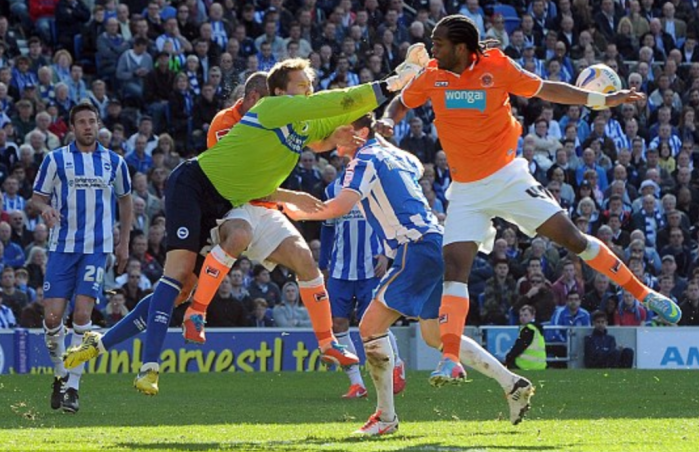
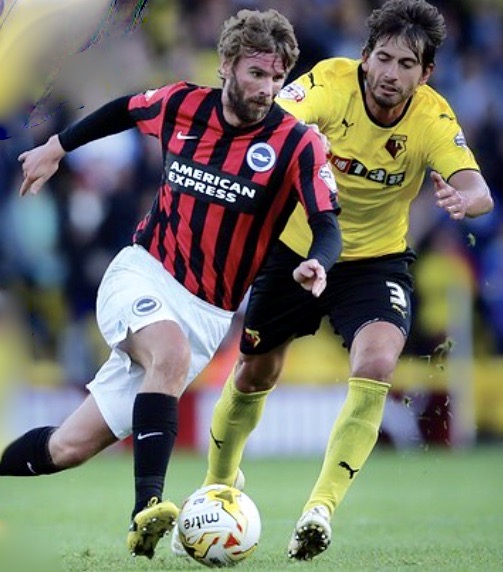
Kuszczak in the thick of it for Brighton against Blackpool

Although he added: “This move was all about giving me the opportunity of playing in the Premier League in the future. I would love to go with Brighton – that’s the aim. We’re ambitious and want promotion.

“It may sound arrogant but my place is in the Premier League. I came to England with West Bromwich Albion and enjoyed my time there, as I did at United. I want to be back in business in front of great crowds.

“I want my friends to be watching me on TV every week and have a chance of challenging the best in the world.”

Kuszczak certainly addressed the issue of more playing time during his two seasons with the Albion, completing 89 appearances across the two successive play-off promotion campaigns, initially under Poyet and then Oscar Garcia.

But within days of Garcia’s resignation after the play-off semi-final defeat to Derby, it was announced Kuszczak was being released.

There were a number of unsubstantiated and colourful reasons as to why he wasn’t retained by Brighton, but Andy Naylor in The Argus said neither Garcia nor his replacement, Sami Hyypia rated his ability with his feet or his distribution skills.

For around six months, Kuszczak was unable to find a new club but then Kenny Jackett took him to Wolverhampton Wanderers where he played 13 games deputising for the injured Carl Ikeme.

Midlands rivals Birmingham City swooped to sign him in the summer of 2015. Even though Harry Redknapp signed Brighton’s David Stockdale as first choice ‘keeper at St Andrew’s in 2017, Kuszczak found himself back in the first team after Steve Cotterill arrived as manager.

He spent four years at St Andrews, finally leaving in 2019 having made 89 appearances for the Blues.

After hanging up his gloves, he returned to Poland and started up his own construction company building houses and apartments.

He also completed his journalism studies and obtained his UEFA A coaching licence. He coached the Polish national team goalkeepers for six months between September 2023 and March 2024.
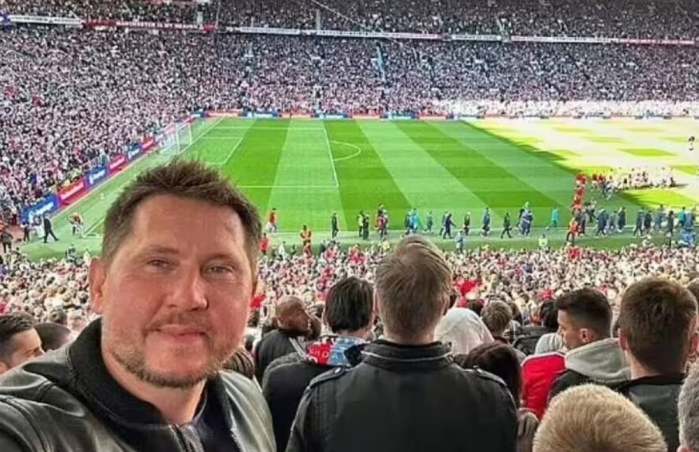
Kuszczak took a selfie as he watched from the Old Trafford stands in April 2025

The ‘Derry Pelé’ only briefly strutted his stuff at Brighton

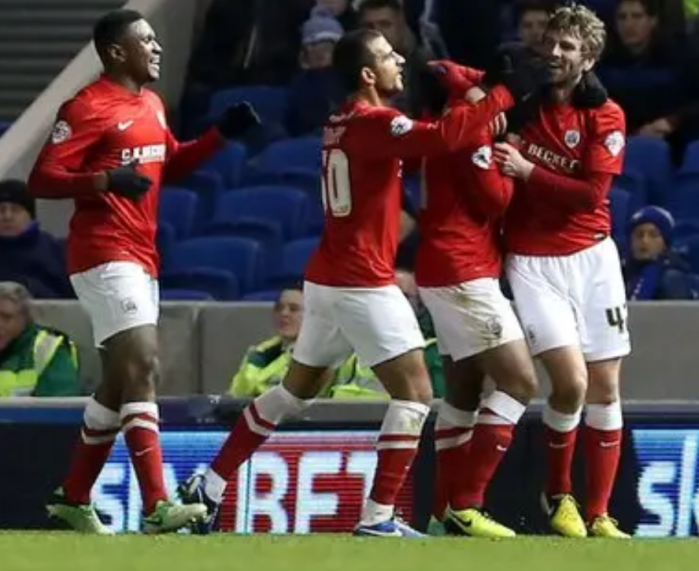
PADDY McCourt put a dent in Brighton’s promotion hopes when he scored for managerless Barnsley at the Amex. Eight months later he joined the Albion’s renewed attempts to lift themselves out of the Championship.

The mazy dribbler from Derry lit up the evening of Tuesday 3 December 2013 when he gave the bottom-of-the-table Tykes an unlikely first-half lead.

Barnsley arrived at Falmer having just sacked manager David Flitcroft and when McCourt teased and tormented the retreating Seagulls defenders to net in the 35th minute it ended a sequence of nearly five hours without a goal.

McCourt celebrates scoring for Barnsley at the Amex

Recalling what was something of a trademark finish by the bearded Irishman in a 2018 post wearebrighton.com described howMcCourt picked up a loose ball 40 yards out from goal, dribbled round Liam Bridcutt and Andrew Crofts, drifted past Matt Upson with a quick step-over, nutmegged Gordon Greer before playing a quick one-two with Worthing-born Marcus Tudgay,  then ghosted round Stephen Ward before slotting the ball into the bottom corner of the goal past Tomasz Kuszczak in Albion’s goal.

Five minutes after the restart, the visitors went further ahead through Jacob Mellis before Upson pulled a goal back with a header from a Craig Conway corner. Barnsley had on-loan goalkeeper Jack Butland to thank for ensuring they left with all three points, making notable saves from subs Will Buckley and Leroy Lita (who moved to Barnsley the following year).

While Albion went on to finish sixth under Oscar Garcia but failed to get further than the play-off semi-final for the second year running, Barnsley, who’d appointed former Albion captain Danny Wilson as Flitcroft’s successor, exited the division the wrong way, finishing in 23rd place.

Barnsley’s top scorer, Chris O’Grady, stayed in the division by signing for the Albion and a month later his former teammate, 30-year-old McCourt, released on a free transfer at the end of the season, joined him in Sussex after impressing new Seagulls boss Sami Hyypia in a trial period.

“We have seen enough of Paddy in the last week or so to know that he is a player who has quality going forward,” said Hyypia. “He is the type of player who can pick a pass and create a chance.”

That said, Hyypia only gave McCourt starts in two League Cup games (v Burton Albion and Tottenham Hotspur); his 11 other Albion appearances were all as a substitute.

When he did start, away to Burton, he set up goals for Rohan Ince and Craig Mackail-Smith in Albion’s 3-0 win and he told the matchday programme: “There’s nothing like playing games for your fitness and I’m sure that the more I play the better I will feel.”

Hyypia kept his feet on the ground, though, pointing out: “He needs to realise what he needs to do to improve and to be a very important player for the team defensively as well.”

Often described as a ‘maverick’, McCourt’s response was: “I like to get on the ball and be creative; that’s always been part of my game and something I’ve always been good at. I love taking on players, creating chances and now I just hope I can get a run in the team and show what I can do on a regular basis.”

He certainly couldn’t have been accused of lacking ambition, maintaining: “I still have aspirations to play in the Premier League and hopefully that will happen in my time here.

“I’ve played international football, I’ve played Champions League and Europa League football with Celtic, so the next step for me would be to play at the highest level in England – I would love that to happen.”

That international career was as strange as much of his career. There were 13 years between the first and last of 18 caps for Northern Ireland: he made his debut under Sammy McIlroy in 2002 (a 5-0 defeat against Spain) then had to wait seven years before he was selected again. That was in a 3-0 World Cup qualifier win over San Marino, when he went on as an 81st minute sub for future Albion teammate Aaron Hughes.

He scored twice in Northern Ireland’s 4-0 win over the Faroe Islands in a Euro 2012 qualifier in August 2011 (when Hughes scored his first goal for his country in his 77th appearance!).

McCourt’s second goal that day was reckoned to be one of the best ever goals seen at Windsor Park. According to the Belfast Telegraph, he “collected the ball just inside the opposition half and left three defenders in his wake with magical dribbling skills and impeccable close control before outfoxing another… then to cap it off he produced a stunning left foot chip over the bemused goalkeeper which floated into the net.”

McCourt helped manager Michael O’Neill’s side reach the Euro 2016 finals, but was not available for the finals in France because his wife Laura was seriously ill (more of which later).

“I really enjoyed it,” he told BBC Northern Ireland’s Mark Sterling in a lockdown interview in 2020. “Any time I was picked I turned up, and to be involved in the Euros qualifying campaign was fantastic.

“Everybody wants to play international football, The fans took to me straight away, were always singing my name and I hope I gave them some good memories.”

Born in Derry on 16 December 1983, McCourt’s early footballing promise was nurtured by Eunan O’Donnell, his PE teacher at Steelstown Primary School. At the club he joined as a youngster, Derry-based Foyle Harps, it was club chairman Gerry Doherty “who deserves more credit than anyone else” according to McCourt’s brother Leroy (who was his agent).

However, McCourt reckoned: “The street is where I learnt how to play football.”

In that lockdown interview with BBC’s Sterling, he said: “When I was younger there was more emphasis on players to develop themselves. We trained once a week for an hour with our clubs, when you might only get 40 or 50 touches of the ball at most, with 20 kids in a session.

“It was up to you to go out into the streets with your mates and practice your skills in small-sided games. We’d play for six or seven hours, there might only be four of you and you’d get thousands of touches.

“You were probably playing with older kids and on concrete as well, so that would improve your balance.”

Although given the moniker of the greatest Brazilian footballer of all time, McCourt’s boyhood hero was Robbie Fowler. “I’m a Liverpool and Celtic fan, and for some reason he was a player I just absolutely adored growing up,” he said.

“My memories are of seeing Fowler scoring – left foot, right foot, header – it didn’t seem to matter to him. He just had this unbelievable talent for putting the ball in the back of the net.”

McCourt’s first taste of professional football in England came at Third Division Rochdale, joining them in 2000 aged 17. But in an open and honest question and answer session in March 2018 at the Talent Development Academy Elite Soccer Coaching event, at the Magee Campus of the Ulster University, the player spoke about how youthful wrong lifestyle choices meant he blew the opportunity.

“I was nowhere near ready for it and the events that transpired in the next couple of years proved that. It’s very hard to know the situation you’re going into when you’re not prepared for it.

“I was coming from Foyle Harps, playing junior football and then going into a professional environment. It wasn’t that big of a jump in terms of what you did differently because Rochdale was a small club and you went in and trained and were home for 1pm living in digs and I didn’t drive at the time.

“You had so much spare time on your hands and as a young lad, you do daft stuff and make mistakes and I admit I made plenty. It was basic stuff like going out too much and not eating the right food.”

Although he made 94 appearances for Rochdale, around half were as a substitute and after unsuccessful trials with Motherwell and Norwich City he was eventually released in February 2005 and returned to the League of Ireland with Shamrock Rovers.

“Initially when I was at Rochdale I did quite well and broke into the first team quite early but when I came back I took stock. I made mistakes and wasn’t really living my life to be a professional footballer.

“I had six months with Shamrock Rovers where I didn’t make many changes to my lifestyle but I was doing quite well on the pitch.”

It was only when he returned to his home town and played at Derry City where things began to change under the positive influence of future Republic of Ireland manager Stephen Kenny.

“I learned what it takes to become a proper athlete because you need to live a clean lifestyle to make it as a footballer and I wish I knew back then what I know now,” he said.

“There was a bit of sports science starting to come in at Derry in terms of what to do leading up to a game, and then your recovery sessions on a Saturday morning after a game. It was tiny, basic stuff but it started to kick in then and that helped me because I was getting information I didn’t have before. It was up to yourself to buy into it and I started to buy into it a bit more and started to see the benefit.”

Between 2005 and 2008 with Derry, McCourt won an FAI Cup, three League Cups, was involved in a league runners-up spot (2005) and was part of a UEFA Cup run in 2006.

He then got the chance to join Celtic, the side he’d supported as a boy, signing for a fee of £200,000 in June 2008. Hoops boss Gordon Strachan told the Derry Daily: “Paddy is as gifted a footballer as I’ve ever seen. Some players can pass but can’t dribble. Others can dribble but can’t pass. Paddy can do both.”

It wasn’t until the 2009-10 season that he forced his way into the first team and his  first goal for the club was in a 4-0 League Cup win at Falkirk in September 2009 when he skipped past five defenders before chipping the goalkeeper.

His own favourite was his first goal at Parkhead in a 3-0 win over Hearts on 11 September 2010 which realised a lifetime ambition.

“I actually had dreams of scoring at Celtic Park,” he said. “I felt I had let that go when I had that setback at Rochdale. Self-doubt creeps in but I remember the night. It was Hearts at home and it was a very proud moment.

“It might never have happened if I hadn’t made the sacrifices I made and I have a lot of people to thank for that.”

When Aiden McGeady left Celtic for Spartak Moscow in August 2010, Celtic manager Neil Lennon challenged McCourt to step into his shoes and said: “He’s wonderful to watch. He’s beautifully balanced and he’s got great vision and great feet and that’s why we decided to get him on a longer-term contract. He’s pleased and we’re pleased.”

In his five years in Glasgow, McCourt scored 10 goals in 88 appearances for the Hoops although he actually only made 20 starts. He collected medals for his part in Scottish Premier League title wins in 2011-12 and 2012-13 as well as Scottish Cup wins in 2011 and 2013.

That 3-0 2013 final win over Hibernian was his last game for Celtic before he joined English Championship Barnsley, who were managed by his former Rochdale teammate David Flitcroft.

The goal against Brighton in December 2013 was one of only two he scored for the Tykes in 15 starts plus eight appearances off the bench and Barnsley fans certainly had mixed views about his contribution.

Online chat group contributor ‘Jay’ posted: “At his best he was as good as I’ve ever seen. Be nice if he can produce that sort of form consistently, even if it’s not for us. All that talent shouldn’t go to waste.”

Another, ‘JLWBigLil’ reckoned: “One of the most skilful players I’ve ever seen play for Barnsley in all my years of going down to Oakwell. Possibly the right player at the wrong time for us.”

Whereas ‘MarioKempes’ opined: “There was no doubting his ability but the other key aspects such as workrate, fitness, stamina and heart were sadly lacking from his game.”

It almost certainly didn’t help McCourt’s cause at Brighton that new boss Hyypia struggled to get to grips with the task in hand and chopped and changed the line-up. The addition of several loan players didn’t help matters either.

Frustrated Albion fans reckoned McCourt should have had a bigger involvement than his few cameos off the bench, citing his influence in helping to salvage a point away at Watford, and planting the ball on Gordon Greer’s head to score a consolation goal from his corner kick at Middlesbrough.

After Hyypia left the club before Christmas, McCourt’s last Albion appearance was as a sub in the home Boxing Day 2-2 draw with Reading (on loan Glenn Murray scored twice for the visitors; Jake Forster-Caskey and Inigo Calderon for the Albion), going on for Danny Holla.

Nathan Jones was in caretaker charge that day and the pair were subsequently reunited at Luton Town the following season.

Before then, unable to get games under Albion’s new boss Chris Hughton, McCourt dropped into League One on loan at relegation-bound Notts County.

He scored County’s winner in their 1-0 win at Colchester on 3 March 2015 but they went on an 11-game winless run after that and went down with Crawley Town and Leyton Orient.

Released by Brighton that summer, McCourt joined the League Two Hatters under John Still in July 2015 and was followed there a month later by Mackail-Smith.

After a run of three starts in September, when Town won all three matches, McCourt played in a 1-1 draw with Leyton Orient on 20 October, before being restricted to a role on the bench.

On his return to the starting line-up in January 2016, away to Mansfield, he scored his fist Luton goal after just seven minutes in a 2-0 win. He told Luton Today: “It was great, all players want to play from the start and it’s been disappointing to sit on the sidelines.

“It was very frustrating because we’d just won three or four games in a row, then I came back from an international double header, was on the bench, played in the draw against Leyton Orient and that was it, I didn’t play again.

“I don’t know why, I didn’t ask the manager and he ended up getting the sack, but it was very disappointing as I felt that although I wasn’t where I wanted to be in terms of performance, I was playing, we were winning games.”

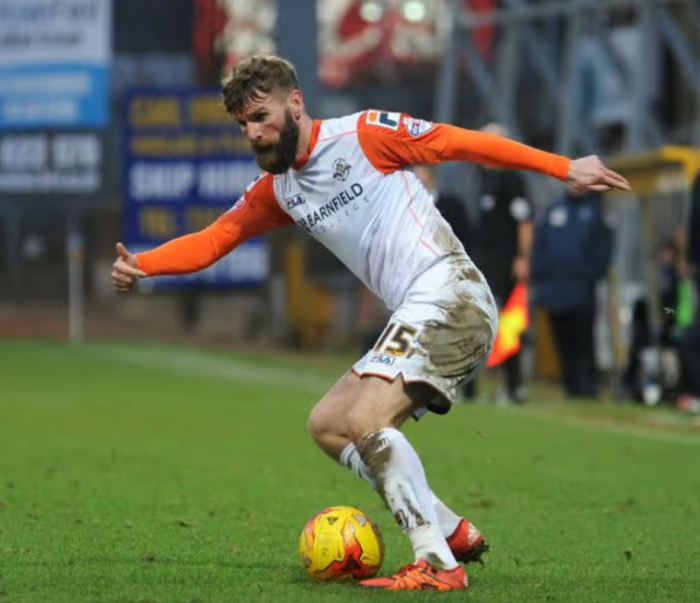
In action for Luton Town

When former Brighton coach Jones was appointed as Still’s successor, McCourt told Luton Today: “He’s a coach who wants to play football, ball from the back, get between the lines, bring a wee bit of flair and creativity back to Luton, so hopefully I can play a big part in that.”

Unfortunately, he cut short his stay at Kenilworth Road after 16 starts and nine appearances off the bench to return to Ireland because his wife Laura had to undergo treatment for a brain tumour. She recovered after a successful operation and O’Court resumed playing at Glenavon.

According to the Belfast Telegraph: “It ended up being a disappointing half-season at Mourneview Park and was followed by a move to Finn Harps, where he was able to roll back the years, not least when he ghosted past a whole host of Sligo players and dinked home the finish with his inimitable swagger.”

That was in 2018 before he retired from playing and began coaching academy players at Derry City. He later became the club’s technical director and left in January 2024 before taking up a role as assistant to manager Declan Devine at Irish Premiership side Glentoran.

Perhaps the last words should go to reporter Daniel McDonnell, who wrote in the Irish Independent: “Football is nothing without entertainers. Punters paying cash to watch a game want to see individuals capable of doing things that the ordinary player could only daydream about. McCourt could do things that top pros were unable to manage.”

While recognising McCourt’s CV might have glittered more brightly, he declared: “There are players who will retire with more medals and more money that will never garner a comparable level of affection.

“Mention McCourt’s name to those who had the pleasure of watching him in full flight and responses will be delivered with a smile.”

An Albion promotion winner but Bong didn’t chime at Forest

IT WAS WHILE I was adding the DW Stadium, Wigan, to my list of grounds visited that I first noticed Gaetan Bong.

On the afternoon of 18 April 2015, Bong was playing AGAINST Brighton in one of 14 appearances for Wigan Athletic having moved to the UK on a short term contract from Greek side Olympiakos three months earlier.

Bong up against Inigo Calderon while playing for Wigan

Within three months, he was playing FOR Brighton, joining Chris Hughton’s side as a free agent.

The Cameroon international, who had played top flight football in France and Greece, became a regular in the left-back berth for four seasons, including being a Championship promotion winner in 2017, playing 102 times for Brighton, including 51 games in the Premier League.

Bong was the first permanent left-back Albion had signed since the days of Marcos Painter, having had three successive seasons of season-long loan players in that position: Wayne Bridge, Stephen Ward and Joe Bennett.

“Gaetan is a player that we were aware of while he was at Olympiakos,” said Hughton, on signing the player. “He is very athletic, he is a natural left-sided player and it is important to have that balance in the squad.”

Back to that bottom-of-the-table battle in April, though, and Bong was on the left of a back four that also included a certain Harry Maguire (on loan from Hull City).

It was former player Gary Caldwell’s first match in charge after the sacking of Malky Mackay and both sides were struggling to avoid the drop from the Championship.

I probably decided to go to that game anticipating a win for Brighton because Wigan hadn’t won at home since the previous August! But, as sure as eggs is eggs when watching the Albion, Athletic finally registered another win in front of their own supporters: 2-1. It’s always the hope that kills you!

Albion played Player of the Season full-back Inigo Calderon as a makeshift right-winger that day and he got so little change out of his attempts to get past Athletic’s left-back that he was eventually subbed off.

In spite of the result that day, Albion managed to stay up while Wigan went down with Blackpool and Millwall.

Bong made his Brighton debut in the season-opener at home to Nottingham Forest (a 1-0 win courtesy of a Kazenga LuaLua goal), the club he would join four and a half years later, after he’d lost his regular place at the Albion.

Introduced to Brighton fans in the programme for that match, Bong said: “Once I had spoken to the manager and learned of the plans for the club, then I wanted to be part of this adventure.

“I could have gone elsewhere, I had offers, but I was excited by coming to Brighton. Now I just want to get playing and show the fans what I am about.”

Hughton had problems at left-back in the 2015-16 season when Bong was out for four months with a thigh injury, and back-up Liam Rosenior was also sidelined. Inigo Calderon filled in on occasion and Liam Ridgewell was signed on a short-term deal from Portland Timbers. Although Bong returned to the squad in March, the rest of the season was mainly a watching brief from the bench as Rosenior played out the season in that position.

Back as first choice the following season, a knee injury robbed him of his place for several weeks – loan signing Sebastien Pocognoli filled in – but he still played in 28 matches as the Albion finally won promotion to the Premier League.

Born on 25 April 1988 in Sackbayeme, a suburb of Cameroon’s capital Yaounde, he moved to France as a teenager to join Metz, where he rose through their youth ranks before making his professional debut at 17.

Injuries meant his progress wasn’t as rapid as it might have been but he had a successful loan spell with French second tier side Tours, and then moved to Valenciennes in 2009.

Bong won an under-21 cap for France but went on to win 16 caps for Cameroon. He was in their 2010 World Cup squad but only played in their final group game against Holland. Not entirely happy with the country’s set-up, he briefly retired from international football but returned when renowned former Dutch international Clarence Seedorf was appointed head coach in 2018. Bong even captained his country in a 1-0 friendly defeat against Brazil played at MK Dons in November 2018.

Cameroon international Bong

Bong played for Valenciennes for four years (for the first two playing under former Forest boss Philippe Montanier) and made 117 appearances.

Greek club Olympiakos took him to Athens in August 2013 and he went on to establish himself as a first-team regular, including playing in four Champions League matches and featuring in their league title winning side of 2013-14, before falling out with a new head coach.

Asked by The Athletic to sum up Bong’s attributes, his former Brighton teammate, David Stockdale said: “He comes to win a game. Nothing else. He is strong, he is athletic, he is enthusiastic.

“He is a good person to have around a squad, because he is very professional, he always does his homework before games and generally just looks after himself. He is just strong — that is the word. He is strong, reliable and does what it says on the tin.”

Stockdale added: “He had that drive; that inner drive. He was always going off to do his own work in the gym, to make sure he was properly fit all the time.

“He is one who will say what he wants to say when he feels he needs to. He does know a lot about football, he certainly knows a lot about his position and what he needs to get out of the players around him.”

The goalkeeper pointed out that Bong always had a desire to do well for the team, pointing out: “He was very much a mainstay of the side when I was at Brighton. He is a player you can rely on.”

Unfortunately, a small part of Bong’s time playing in Albion’s colours will also be remembered for an unsavoury incident when he alleged he was racially abused by West Brom’s former Burnley striker Jay Rodriguez.

Rodriguez appeared to pinch his nose after the players clashed during WBA’s 2-0 win over the Seagulls in January 2018, and Bong spoke to the referee about what he said he heard.

A subsequent FA investigation into the matter said the allegation was “not proven” and added there was “no suggestion by any party involved in this case that this was a malicious or fabricated complaint”.

Nevertheless, Bong insisted he heard Rodriguez say: “You’re black and you stink.” The striker denied what he described as a “false allegation” – he claimed he had instead said “breath fucking stinks”.

The dispute led Bong to issue a statement in which he said: “Please let me be clear: I know what I heard and I did not mishear. My conscience in raising the complaint is therefore entirely clear.

“This was my first such experience in more than three years in this country and I would never seek to bring a false charge against a fellow professional. Those who have accused me of doing that do not know me.

“Equally those who have expressed an opinion were not there on the pitch at the time and only Mr Rodriguez and I know exactly what was said and I stand by my original complaint.”

If everyone involved thought that was the end of the matter, Burnley fans had other ideas and I was at Turf Moor in April that year when the home ‘support’ disgracefully booed Bong every time he got the ball.

Albion manager Chris Hughton described their reaction as “shameful” and said of the player: “He’s an incredibly disciplined and straight individual – as honest a person as you will meet. It’s something that happened, it’s not nice at all and of course he’s big enough and strong enough to cope with it. As showed by his performance (the game finished 0-0).”

The respect Albion held for the player was best demonstrated as his time at the club was coming to an end. Bong was going to be a free agent after four years with the club but was handed a one-year extension shortly before Hughton was replaced by Graham Potter.

Chief executive Paul Barber explained to The Argus: “We all felt Gaetan had earned another contract. It is a position we felt we had an opportunity with a player we know, who is a fantastic character.

“The supporters will see what Gaetan does on the pitch — solid, consistent, strong, difficult to get around — but what they won’t know is off the pitch he is a very high-quality person, someone who is very respected and liked throughout the club. Just a decent man, supportive of the young players.

“Those sort of attributes and qualities are so valuable in a club of our size and for the coaching staff and the players. You know whether he plays 10 games, 20 games or 38 games, he is going to be fit, reliable, positive, focused, enthusiastic, consistent and decent.

“All of those things, if you were going out to recruit a left-back, you would be looking for.”

Ultimately, Potter preferred Dan Burn or Bernardo in that position and Bong moved on having made 91 starts and 11 substitute appearances, but only four appearances from the bench in the Premier League under Potter.

His final appearance for Brighton came in the disappointing 1-0 FA Cup third round home defeat to Championship side Sheffield Wednesday. Sadly, when he was subbed off in the 71st minute, there was a chorus of ironic cheers from the home crowd.

Nevertheless, Potter said of the player: “I have only worked with Gaetan for six months or so, but I do know all about the part he played in helping the club get to the Premier League and then establish itself at this level. I’m sure his contribution over the last four years will not be forgotten by our supporters.”

Somewhat bizarrely, it appears that Bong’s move to Nottingham Forest (in the Championship) wasn’t exactly welcomed by head coach Sabri Lamouchi and Nick Miller for The Athletic was brutal in his description of the player’s debut.

“Bong lasted 59 minutes against Charlton, a harrowing hour in which he lost his man for the only goal in the first half, and his eventual removal felt more like an act of mercy than a substitution.”

He didn’t even make the bench for the rest of the season and it was only when his old boss Hughton arrived at the City Ground that he got back into the Forest first team. He played 11 matches under Hughton but only seven in 2021-22 when Hughton’s successor Steve Cooper got them promotion via a play-off final win over Huddersfield Town.

Even so, Cooper was appreciative of the defender’s contributions off the pitch. “We have a good mix of old players – good role models, like Gaetan Bong,” he told The Athletic.

“He doesn’t play much but is a positive influence and I’m sure has conversations with the younger players, which I encourage. The learning players do with each other is a powerful thing.”

After hanging up his boots, Bong set up Ballers & Family Consulting Ltd, a consulting agency which, according to his LinkedIn profile, helps aspiring players to optimise their potential, families to understand the demands of professional football and football clubs to manage/avoid issues concerning certain players.

Big-time beckoned for Bratislava-born Brezovan

LANKY Slovakian stopper Peter Brezovan, who saved penalties on his Albion and Swindon Town debuts, once came close to a dream move to Everton.

The Merseyside outfit had him on a five-day trial with a view to signing him on a permanent basis from Swindon.

“It was very rewarding just to train alongside Tim Howard and face all these international players,” he said. “It was an experience I’ll never forget.”

Former Man Utd ‘keeper Howard was Everton’s no.1 in 2007 and, having released Richard Wright that summer, manager David Moyes had only new signing Stefan Wessels and the little-used Iain Turner as back-up ‘keepers. Everton’s goalkeeper coach was the former England international Chris Woods.

While Everton didn’t follow up their interest in Brezovan with an offer (three years later they did sign a Slovakian goalkeeper, Jan Mucha), it sounded like Swindon rather over-egged their expectations of a big payday.

Robins stopper

The Wiltshire Gazette and Herald reckoned a £300,000 eve of deadline day offer from Wolverhampton Wanderers had been rejected, saying: “Town will be asking for a substantial amount more.”

The newspaper added: “If the price is right, Town are ready to cash in on their number two keeper.” And manager at the time, Paul Sturrock reportedly told the Mirror: “If I was offered something like £2m, Brez would be an Everton player.”

The Toffees had originally taken an interest in Brezovan and invited him for a trial when he made an eye-catching start in English football in 2006. Not only did he save two penalties in his first game for Swindon, he conceded only five goals as Town won six of their opening seven matches and won the PFA Player of the Month award for September. Unluckily, a badly broken arm put him out of the game for nine months but Everton revived their invitation when Brezovan was fit again.

It probably didn’t help the ‘keeper’s progress at Swindon that successive managers came and went during his time at the club. It was Dennis Wise who signed him on a year’s loan from Czech side 1.FC Brno shortly after he’d taken over as Swindon manager, assisted by his former Chelsea teammate Gus Poyet, but by October the pair (along with goalkeeper coach Andy Beasley, who later spent a year at Brighton) left Wiltshire to take over at Leeds United.

County Ground caretaker managers David Tuttle and Ady Williams were followed by Sturrock for a year; David Byrne twice held the fort temporarily and Maurice Malpas was in charge for 11 months in 2008. When he left in November that year, Danny Wilson arrived the following month.

Born on 9 December 1979 in Bratislava, Brezovan’s first football memories were playing at right-back. In a matchday programme article, he explained: “In the first game of the season our ‘keeper got injured, so the biggest kid had to go in goal – and I’ve been there ever since. I’ve always been tall so looked upon to go in goal but, unlike a lot of kids, I enjoyed it.”

Brezovan spent his youth career at the city’s MŠK Iskra Petržalka and also played for Devin in the city before spending two years in the Czech Republic with FC Slovan Břeclav and HFK Olomouc. He then spent four years at FC Brno in South Moravia, although it was while he was on loan back in Bratislava, playing for FK Inter Bratislava, that he was spotted by Swindon and subsequently made the move to England.

In spite of his spectacular start for the Robins, when he couldn’t speak a word of English, it would be fair to say Swindon have mixed memories of his time at the County Ground, chronicled in detail on swindon-town-fc.co.uk. After former Albion captain Wilson released him at the end of the 2008-09 season, he was without a club for six months.

He had an unsuccessful trial at Crewe Alexandra in October 2009 but Poyet, not long after succeeding Russell Slade as Albion boss, signed him for a month at the beginning of December to cover a mini goalkeeper crisis he inherited.

Regular no.1 Michel Kuipers was injured and Slade’s misfit summer signing Graeme Smith had conceded 11 goals in three defeats and one win.

Handed his debut on a drizzly, grey December afternoon at Exeter (I know, because I was there, getting wet on the uncovered terrace behind the goal!), Brezovan went from zero to hero, according to writer Richie Morris, after upending  former Albion loanee Stuart Fleetwood in the penalty area and then impressively saving Marcus Stewart’s spot kick.

“The former Slovakian under 21 international pulled off a string of comfortable, but reassuring saves,” wrote Morris. “True, he did nearly gift the home side a goal with a wayward clearance, but, considering how long he has been out of first team football, he can be happy with a solid performance.”

A somewhat modest Brezovan attributed his penalty save to goalkeeper coach Tony Godden’s homework. “He told me where Marcus Stewart puts his penalties and I dived the right way but it was a great feeling to help the team to victory,” he said.

Penalty-saver!

On another occasion, Brezovan expanded on his technique with penalties, telling the matchday programme: “It’s mainly instinct on the day. You get the stats guys who help you with your preparation – they will tell you where certain players tend to put the ball but sometimes you just have to go with how you feel in that moment and go for it.

“I don’t get the lads to take penalties at me after training either – I hate doing that. It’s all about how you are on the day.”

Brezovan’s arrival signalled the departure of the hapless Smith who ended his six-month nightmare in English football by returning to Scotland, moving on a free transfer to Hibernian. And the Slovakian’s short-term arrangement ultimately extended into a four-and-a-half-year spell as a Brighton player.

There were occasions when he was tempted to move on for more regular game time, but he confessed to loving the area and stayed put even though first team opportunities were few and far between.

In that first season, fans’ favourite Kuipers, not for the first time, found his place under threat because of the 6’6” Brezovan’s form. But a blunder by the new man in a game at home to Wycombe prompted Poyet to bring back the former Dutch marine (chef) at the start of the new year.

Kuipers had an eight-game run in the starting line-up but then broke a finger. Brezovan, having had his contract extended, seized his chance and kept his place through to the end of the season.

Brezovan told the matchday programme: “We are good friends, we train well together, and so I really feel for him. We don’t feel like rivals at all in that respect but I know that while I am in the team I will be giving my all to make sure I maintain my place.”

It paid off because Poyet offered him a two-year contract at the end of the season, saying: “Peter has earned his new contract. Initially he came to play and help us out but I expected he would prove he was worth a longer deal and he has done that.

“He has been a very important part of our turnaround since Christmas and now his challenge is to make the position his own for next season and beyond.”

And the ‘keeper told the Argus: “Together with my girlfriend, I’ve really settled here. I think that Brighton is the nicest city in England and we’re really happy here.

“I owe a lot to the manager because he brought me to the club and I’m glad he wants me to stay. That’s why it was so easy to sign the deal. The manager will no doubt bring in more good players in the summer so it’s going to be an exciting season.”

He was right about the excitement because Albion went on to win the League One championship title; what he might not have anticipated was that because he was nursing a wrist injury on the eve of the season opener against his old club Swindon, Poyet moved quickly to sign another ‘keeper who he’d worked with at a previous club: Casper Ankergren.

The Dane, released by Leeds, instantly became first choice ‘keeper and Brezovan spent most of the season watching from the bench, making just seven starts in the FA Cup (the first and second round matches both went to replays). Close to the end of the season he went on as a sub for the injured Ankergren in the 18th minute of the 25 April league game at Colchester United, making important saves from Ian Henderson and David Mooney as the Albion salvaged a point in a 1-1 draw.

Brezovan was also in goal for the penultimate game of the season, and the last ever played at the Withdean, when Huddersfield won 3-2. A defensive gaffe by Inigo Calderon, who left Brezovan stranded by chesting the ball down inside the area, let in Benik Afobe to put Town 2-1 ahead; sub Matt Sparrow equalised for the Seagulls and, although Brezovan twice made excellent saves to deny defender Jamie McCombe, sub Danny Ward scored a last-minute winner.

Brezovan resumed his place on the bench as 2011-12 got under way with Ankergren once again Poyet’s first choice no.1, although, after he’d shipped 13 goals in eight games in the autumn, the manager brought experienced Newcastle custodian Steve Harper on loan for five games.

Brezovan preferred to see the positive side of it, though, telling the matchday programme: “That was a good experience for all the goalkeepers. He is a vastly experienced ‘keeper and we have learned from his time here.”

After Albion went through a four-game losing streak in December, Brezovan got the call to take over from Ankergren in the new year match at home to Southampton when an injury-hit Albion sprung a surprise, winning 3-0 with a memorable brace from midfielder Sparrow.

It was only after the game that Poyet revealed how his plan to change ‘keepers nearly didn’t come to fruition. “For the last week Peter has been waiting for his wife to have a baby, every day,” Poyet told the Argus. “I needed to wait until 1.30 to tell him he was playing. The baby was due three or four days ago, so we were all thinking ‘come on girl, go on’!”

Later the same month, Brezovan was hailed a hero when he saved a crucial spot-kick in a penalty shoot-out in a third round FA Cup replay at Wrexham and he told Brian Owen of the Argus: “I enjoyed it. The pressure is all on the strikers at penalties because they can just mess it up. You have nothing to lose, you are practically without pressure.

“I knew one player and where he goes and I saved his penalty so we could have a laugh in the end.”

Nevertheless, Poyet was obviously still unsure about the goalkeeping situation. He let third choice Michael Poke go on loan to Bristol Rovers but brought in Columbian David Gonzalez, who’d been with Man City for two years, to put pressure on Brezovan and Ankergren.

“The gaffer wanted to bring in another keeper. You have to face it, with Casper, and keep working to keep our positions,” said Brezovan.“I’ve got another year. If you want to stay at a club for a long time, you have to play. You can’t be just like a useless second or third choice. This is my opportunity and I am going to do everything to stay in goal.”

He did indeed stay in goal but on two occasions let in six! The first drubbing was handed out by Liverpool in the fifth round of the FA Cup at Anfield (with Albion famously conceding three own goals in a 6-1 defeat).

After Brezovan shipped another six against West Ham at the Boleyn Ground, Poyet had seen enough. The patient Gonzalez replaced Brezovan in goal for the following game, one of six changes to the side that capitulated to the Hammers.

Come the new season, Brezovan and Ankergren had even more of a challenge on their hands when experienced Polish international and former Manchester United ‘keeper Tomasz Kuszczak arrived at the Amex.

It pushed Brezovan down the pecking order to third choice ‘keeper and he played only once all season, in a 2-1 win at Huddersfield when Kuszczak had a finger infection that ruled him out and Ankergren picked up an injury in training two days before the game.

Brezovan stayed at the club as no.3 ‘keeper for the 2013-14 season and once again injuries to the first and second choices in Oscar Garcia’s side presented him with a rare opportunity. He ended up playing eight games, four in the league and four in the FA Cup.

He made his first appearance for 13 months in the 7 December 3-1 win at home to Leicester after Kuszczak pulled out in the warm-up with a stomach muscle strain, with Ankergren already sidelined with a wrist injury. In an interview with the Argus, on his 34th birthday, Brezovan spoke openly about possibly moving on to get more games.

“It’s hard because Brighton is a beautiful place and I love the people around here. It’s not easy to go.

“If there was an offer from the same level, I would probably try it. Going to a lower division, getting injured and then to be there on the bench is risky.”

And of his sudden chance back in the Albion goal, he reflected: “That’s football. Things can happen quickly and it’s beautiful. It shows how everyone is important. When you don’t play for a long time, even in training, you start to think it’s hard to motivate yourself.

“That’s why you need good lads around you. I love the guys here. They always help you to be motivated. When you play and your contract is running out you need to find that motivation.”

His appearance in the fifth round FA Cup replay defeat (1-2) at Hull City on 24 February turned out to be his last first team game and he was released at the end of his contract that summer having featured 62 times for the Seagulls.

He trained with Oxford United during pre-season and at the start of the next season joined Portsmouth for a month as cover for Paul Jones. On transfer deadline day, he signed a one-year contract with Tranmere Rovers.

Although he played seven games for Rovers, he lost his place to regular ‘keeper Owain Fon Williams. He had a loan stint at Southport in early 2015 but at the end of the season, following Rovers’ relegation from League Two, he was released.

Interviewed by the Argus in December 2015, Brezovan had returned to Brno in the Czech Republic, quit football and turned to publishing music online.

“I lost a little bit of motivation,” he said. “The football wasn’t going anywhere and I’d had enough. I’m focusing on this now.”

It was tough for Gardner to grow in Sami’s barren patch

A GARY GARDNER goal ended a winless Albion run of 12 league matches under Sami Hyypia in the autumn of 2014.

Just 54 seconds of the game against Wigan Athletic on 4 November had passed when the Aston Villa loanee netted for the Albion.

He got on the end of a Sam Baldock cross to give the Albion an early lead which they managed to hold onto for the entire match, in spite of several close shaves as the former Premier League opponents tried to salvage a point.

Gardner in action for Forest with Albion’s Jiri Skalak

The game also saw the return of Elliott Bennett, on loan from Norwich City, a first match (as sub for Bennett) for Greg Halford, on loan from Nottingham Forest, and a home debut in goal for teenage stopper Christian Walton.

It wasn’t the first time Gardner had scored at the Amex, though. That had come three years earlier, on his professional debut, when on loan at Coventry City a game which saw Albion beat the Sky Blues 2-1.

Gardner was no stranger to loans away from parent club Villa: he’d already been to Coventry and Sheffield Wednesday, and after Brighton he had temporary moves to Nottingham Forest, Barnsley and Birmingham City.

Indeed by the time Albion took on Forest at the Amex on 7 February 2015, Gardner was on the opposing side as the visitors gave new boss Dougie Freeman a winning start, edging it 3-2.

Gardner’s early development had encountered major setbacks caused by two cruciate knee ligament injuries.

Although he had made his Premier League debut for Villa in the 2011-12 season, the 15 starts and five sub appearances he made for Brighton was the first real regular run of football he’d enjoyed – and he was still only 22 at the time.

He scored again for Albion only four days after that Wigan winner, when the Seagulls were held 1-1 by Blackburn Rovers at the Amex. But with the brief Hyypia reign having come to an end, his appearance in the home Boxing Day 2-2 draw against Reading was his last in a Brighton shirt.

Inigo Calderon salvaged a point with a last-minute equaliser against a Royals side who had gone 2-0 up in 26 minutes courtesy of goals from on loan striker Glenn Murray!

Gardner had been Albion’s tenth new signing of the summer back in August, following in the footsteps of Villa teammate Joe Bennett, who’d joined on a season-long loan a week earlier.

“Gary is a quality midfielder who we have been aware of for some time,” said Hyypia, who explained the club was keen to have more options in that area of the side, especially with Dale Stephens out with a long-term injury.

“More importantly, given the considerable demands of the Championship, I want to be able to rotate the squad,” he said.

“Gary has had a tough couple of seasons due to injury, but he showed during a spell with Sheffield Wednesday last season that he is over those problems. We hope this loan spell will benefit everyone: Gary, us and Aston Villa.

“He is the type of midfielder who is active and mobile, but very importantly he has real quality on the ball – and is also capable of producing things from set pieces.”

Another midfield slot opened up during his time with the Albion when fellow midfielder Andrew Crofts suffered a cruciate injury against Watford.

“I am absolutely gutted for him. Having gone through exactly the same injury as him, with the two cruciate operations, I know exactly how he is feeling,” he said. “I know he will come through this.

“He is a strong guy, a model pro and he’ll be extra determined to get back playing for the club.”

Born in Solihull on 29 June 1992, Gardner was one of six brothers, and in a programme article he said the football-daft family had divided loyalties between Villa and Birmingham.

Just as well, because both Gary and eldest brother Craig ended up with the Blues having started off at Villa. Craig made 80 league and cup appearances for Villa, but later played for Sunderland, West Brom and Birmingham, where he became technical director after his playing days ended.

Gary was on Villa’s books from the age of seven and progressed all through the ranks until Alex McLeish gave him his first team debut as a substitute in a 3-1 win away to Chelsea. He made a total of five starts and 11 appearances off the bench in that 2011-12 season.

But it wasn’t until Villa were back in the Championship in the 2016-17 season that he had his longest run of games for his parent club, making 19 starts and eight appearances off the bench.

That squad, led by former Albion centre-back Tommy Elphick, thwarted already-promoted Albion’s hopes of winning the title in the final games of the season at Villa Park when a late, speculative long-range Jack Grealish shot squirmed through David Stockdale’s grasp to gain Villa a draw.

Gardner was a non-playing sub that day and when he fell down the pecking order in 2017-18, he spent the season at Barnsley.

Gardner followed his brother to Birmingham City

After spending the entire 2018-19 season on loan at Birmingham, he then made the switch permanently (in a swap with Spaniard Jota) and has been there since.

In July 2021 he signed a new deal to extend his stay at St Andrews until June 2024.

Gardner earned international recognition at various levels and made his England under 21 debut as a substitute in a 4-1 win over Israel at Barnsley on 5 September 2011 and the following month replaced Ross Barkley as England won 2-1 in Norway.

A month later he scored twice in a 5-0 win over Iceland after going on as a sub for Jason Lowe at Colchester. Four days on, his involvement was once again off the bench when young England were beaten 2-1 by Belgium in Mons.

His last appearance was against the same opponents the following February when England exacted revenge at the Riverside Stadium, Middlesbrough. In a 4-0 win, Henri Lansbury scored twice before Gardner replaced him.

His contemporaries in the side at that time included the likes of Jack Butland, Jordan Henderson and Alex Oxlade-Chamberlain.

How the gaffes of goalie González worked both ways

DAVID GONZÁLEZ might well have been an experienced international goalkeeper but conceding a soft goal on his debut didn’t go down well with the Albion faithful.

Brighton fans were a whole lot happier when the same player shipped five AGAINST the Seagulls four months later.

Columbian González, who’d spent two years as a Manchester City back-up ‘keeper, only played twice for the Seagulls during a short-term deal in 2012.

After signing him in January that year, manager Gus Poyet finally gave him a chance at the end of the season after Peter Brezovan had conceded six in a thrashing at West Ham. González was one of six changes to the line-up that had capitulated at the Boleyn Ground.

But, against Watford at the Amex three days later, there were only six minutes on the clock when the Colombian saw Sean Murray’s cracker of a free-kick sail over him into the net.

When González did make a routine save, supporters in the North Stand greeted it with sarcastic applause, which incensed Poyet. In his post-match interview with the Argus, he said: “If David had let a goal in through his legs I wouldn’t agree but I would understand that sometimes we take the mickey out of somebody, but it wasn’t like that so they need to be careful.

“I don’t like it because they are being unfair to an unbelievable group of players who are bringing plenty of joy to this football club and attacking any single person is attacking the whole club.”

The ‘keeper’s debut hadn’t got much better when Troy Deeney put Watford 2-0 up with a penalty a minute before half-time. Thankfully Albion hit back in the second half and forced a draw with goals from captain Inigo Calderon and former Hornet Will Buckley.

Ironically, the Watford ‘keeper that night, Tomasz Kuszczak, was brought in by Poyet that summer and González ended up at Barnsley – the side he made his only other Albion appearance against in the last game of the season.

González keeps goal for Albion at Barnsley and, below, sees five go past him when playing FOR the Tykes at the Amex at the start of the next season

At least he didn’t concede at Oakwell, although the 0-0 bore draw was a dire spectacle: a typical end-of-season encounter.

Almost the only things of note were that Barnsley included a young John Stones in their line-up together with David Button in goal and former Albion flop Craig Davies was up front.

In one of those strange quirks of football, González was back at the Amex at the end of August having been drafted in by the Tykes to cover a goalkeeping injury crisis.

It was not a happy return. As the Yorkshire Post reported: “Brighton were 2-0 up after only 14 minutes, with goals from Ashley Barnes and former England defender (Wayne) Bridge, with Barnsley goalkeeper David González at fault on both occasions.”

González dropped a free-kick by Craig Noone for Barnes to tap in after three minutes and the Colombian was “simply a bystander” when Bridge beat him to his left with a low drive from 25 yards. It was Bridge’s first league goal for nine years.

Ashley Barnes wheels away after scoring past Albion’s former ‘keeper

Barnsley pulled a goal back with a 36th-minute penalty from Davies after Andrew Crofts fouled Jacob Mellis, but Craig Mackail-Smith got the final touch on Barnes’s shot a minute later.

Mackail-Smith scored again four minutes after half-time with a close-range header and Barnes made it 5-1 10 minutes from time, slotting home Kazenga LuaLua’s cross.

Barnsley boss Keith Hill said afterwards: “We had 12 players out but I have no excuses whatsoever. It was inept and I include myself in that. The opposition were excellent and it could have been up to 10-1.”

Born in Medellín on 20 July 1982, González began his career at his hometown club Independiente Medellín and he played more games for them than any other club he subsequently joined (he returned for a four-year spell between 2015-19). And in June 2022 he was appointed their manager.

González also had two separate spells with another Columbian side, Deportivo Cali (he ended his playing career with them in 2020) and left South America for Turkey in 2007, spending two seasons with Çaykur Rizespor.

After failing to make an impression with Argentinian side Club Atlético Huracán he had a successful trial at Manchester City in late 2009 during Roberto Mancini’s reign. He wasn’t named in their 2010-11 Premier League squad but he was the reserve side’s regular ‘keeper until, in the second half of the season, he was sent on loan to Leeds, where he remained back-up behind Kasper Schmeichel and Shane Higgs.

He was unlucky not to get a chance back at City when he sustained an injury at the same time as Shay Given and no.2 Stuart Taylor. Marton Fulop was brought in on loan from Sunderland instead.

At the start of the following season, González was sent on a six-month loan arrangement to Aberdeen, where he hoped his performances would catch Mancini’s eye.

“I want to have a good spell at Aberdeen and to show Mancini that I should be considered for the team,” he told the Daily Record. “But Man City have so much money they can go out and buy just about any player they want.

“The way things are going they will become the best team in the world and I see that happening sooner than a lot of people think.”

The goalkeeper featured in 14 games for the Scottish Premier League club when first choice Jamie Langfield was sidelined following a seizure. On his return to Manchester, his contract was terminated by mutual consent and the free agent was taken on by Brighton, where Poyet had just dropped Casper Ankergren and installed Brezovan as his first choice ‘keeper.

Poyet told seagulls.co.uk: “David is an international with an excellent pedigree, playing over 300 senior games at the top level in South America, Turkey and Scotland. He has won the league in Colombia and has been capped by the national team.

“The idea is for David to compete with Peter and Casper to be first choice. Peter has come in recently and done very well, and is currently number one, but it’s now up to both David and Casper to put pressure on him to be first choice.”

That mauling at the Amex in August 2012 was one of only three Championship games González played for Barnsley and in Albion’s matchday programme he had admitted he saw his time with the Tykes as a shop window.

“I want people to come and have a look, to see what I’m capable of, but nothing else has been said really,” he said. “I’m just here for the time being while the boys are out with injury and suspension, so I’m just going to enjoy it and try to do the best I can.” Oops!

The following year he moved back to Columbia, initially playing for Deportivo Pasto, then Águilas Doradas before returning to Independiente Medellín in 2015.

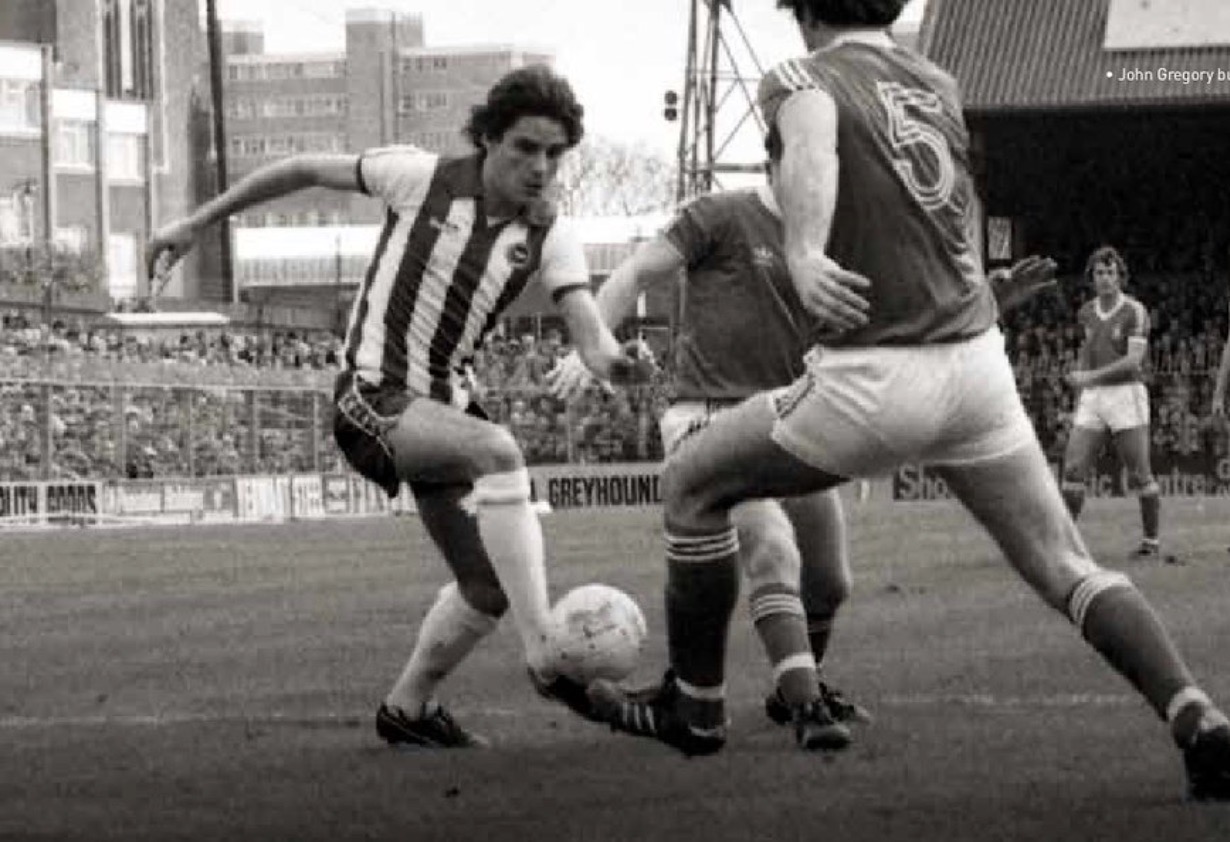
Why John Gregory was a hero and a Villain

ANY Brighton player who scores twice in a win over Crystal Palace is generally revered forever. The sheen John Gregory acquired for that feat was somewhat tarnished when he was manager of Aston Villa.

Gregory’s brace in a vital 3-0 win over Palace on Easter Saturday 1981 helped ensure the Seagulls survived in the top-flight (while the Eagles were already heading for relegation).

In 1998, though, he was caught up in a wrangle over Brighton’s efforts to secure a sizeable fee for their input to the early career of Gareth Barry, who’d joined Villa while still a teenage prodigy.

Albion’s chairman Dick Knight pursued the matter through the correct football channels and eventually secured a potential seven-figure sum of compensation for the St Leonards-born player, who spent six years in Brighton’s youth ranks but refused to sign a YTS deal after Villa’s approach.

The Football League appeals tribunal met in London and ruled the Premiership side should pay Brighton £150,000 immediately, rising to a maximum £1,025,000 if he made 60 first-team appearances and was capped by England. Brighton were also to receive 15 per cent of any sell-on fee.

“It was what I had hoped for, although I hadn’t necessarily expected the tribunal to deliver it,” Knight said in his autobiography, Mad Man – From the Gutter to the Stars. “Villa certainly hadn’t; Gregory was furious and stormed out of the building.”

Gregory mockingly asserted that Knight wouldn’t have recognised the player if he’d stood on Brighton beach wearing an Albion shirt, a football under his arm and a seagull on his head.

“For a former Albion player, Gregory surprisingly seemed to take it as a personal affront,” said Knight. “His position was patronising and the behaviour of Aston Villa scandalous.”

Although Villa paid the initial instalment, they didn’t lie down and go with the ruling and ultimately Knight ended up doing a deal with Villa chairman, ‘Deadly’ Doug Ellis, for £850,000 that gave Brighton a huge cash injection in an hour of need.

Barry, of course, ended up having a stellar career, earning 53 England caps, making 653 Premier League appearances and captaining Villa during 11 years at the club.

Knight’s settlement with Ellis meant Brighton missed out on £1.8 million which they would have been entitled to when Barry was sold on to Manchester City in 2009.

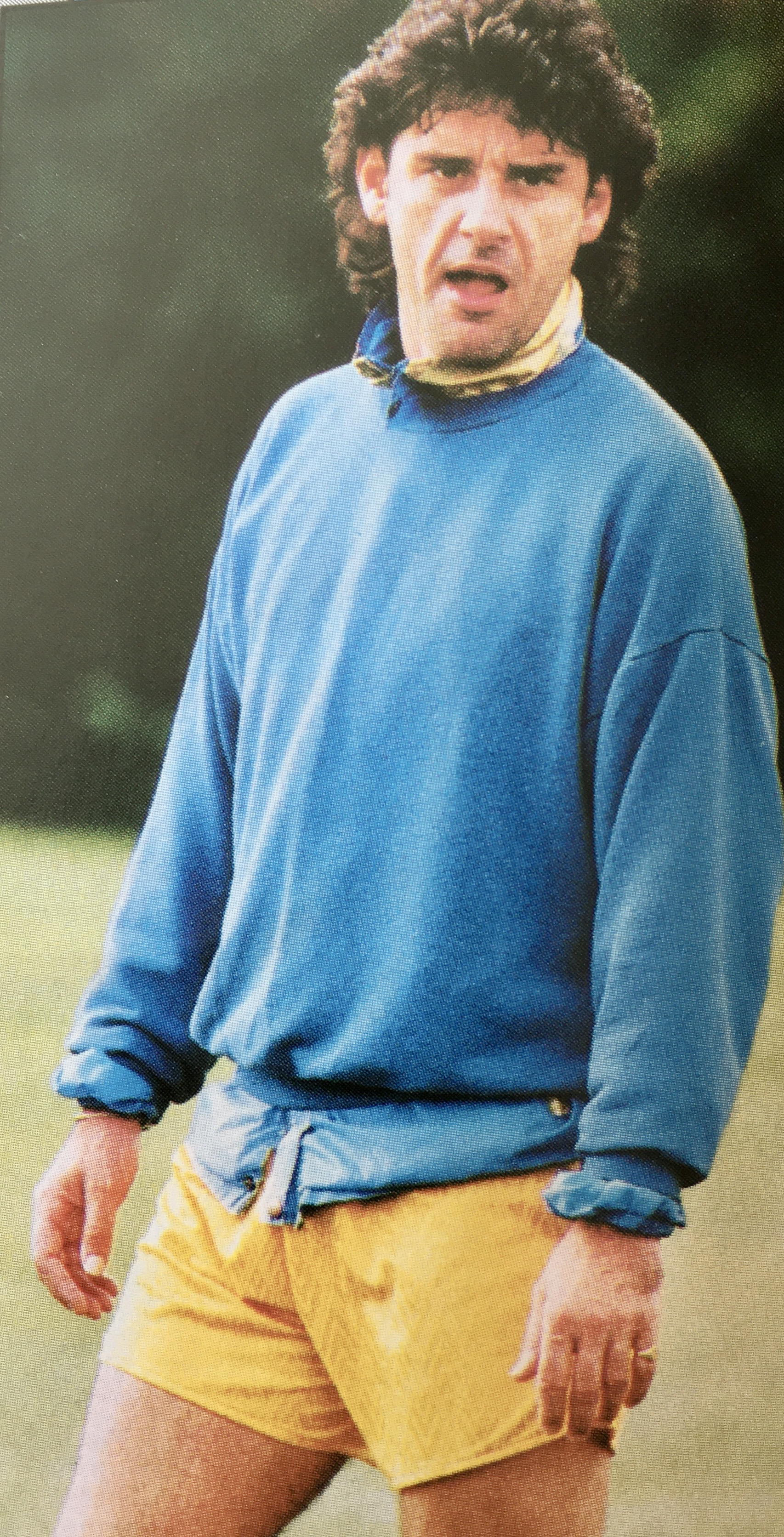
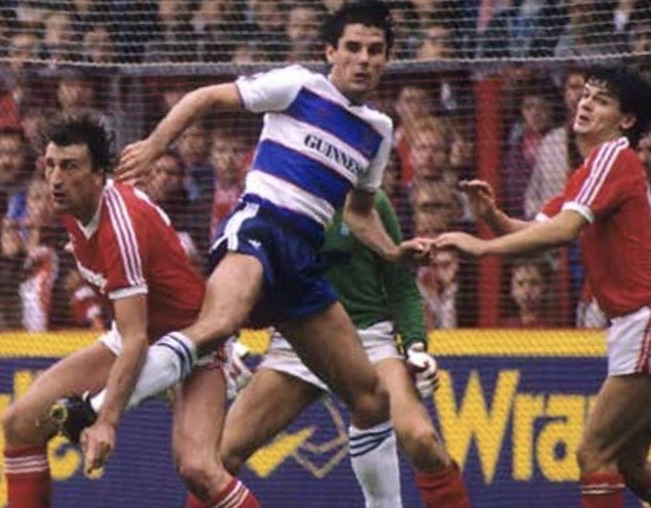
But back to Gregory. He had a habit of returning to manage clubs he had previously played for. Villa was one (between February 1998 and January 2002). He also bossed QPR, who he played for after two years with the Albion, and Derby County, who he’d played for in the Third, Second and First Divisions.

His first foray into management had been at Portsmouth. He then worked as a coach under his former Villa teammate Brian Little at Leicester City (1991-1994) and Villa (1994-1996) before becoming a manager in his own right again during two years at Wycombe Wanderers.

The lure of Villa drew him back to take charge as manager at Villa Park in February 1998 when he was in charge of players such as Gareth Southgate, Paul Merson and David Ginola.

During his near four-year reign, Villa reached the 2000 FA Cup Final – they were beaten 2-0 by Chelsea – but won the UEFA Intertoto Cup in November 2001, beating Switzerland’s Basel 4-1.

Although his win percentage (43 per cent) was better at Villa than at any other club he managed, fan pressure had been building when league form slumped as the 2001-02 season went past the halfway mark and a ‘Gregory out’ banner was displayed in the crowd.

Gregory eventually bowed to the pressure and tendered his resignation, although chairman Ellis said: “John’s resignation is sad. It was most unexpected but has been amicable.”

He stepped out of the frying pan into the fire when he took charge of an ailing Derby County, who were bottom of the Premier League, and, after a winning start, he wasn’t able to keep them up.

County sacked him in March 2003 for alleged misconduct but in a protracted legal wrangle he eventually won £1m for unfair dismissal. However, the ongoing dispute meant he couldn’t take up another job and he spent much of the time as a TV pundit instead.

It was in September 2006 that he finally stepped back into a managerial role, taking over from Gary Waddock as QPR manager, and while he managed to save them from relegation from the Championship, ongoing poor form the following season led to him being sacked in October 2007.

It only emerged in 2013 that five years earlier Gregory had discovered he was suffering from prostate cancer. Nevertheless, he continued working, managing two clubs in Israel and one in Kazakhstan.

He had one other English managerial job, taking charge of Crawley Town in December 2013, although ill health brought his reign to an end after a year and former Albion striker Dean Saunders replaced him.

Two and a half years after leaving Crawley, Gregory emerged as head coach of Chennaiyin in the Indian Super League. With former Albion favourite Inigo Calderon part of his side, he led them in 2018 to a second league title win, and he was named the league’s coach of the year.

Born in Scunthorpe on 11 May 1954, Gregory was one of five sons and two daughters of a professional footballer also called John who had started his career at West Ham.

The Gregory family moved to Aldershot when young John was only two (his dad had been transferred to the Shots) but then moved to St Neots, near Huntingdon, when his father took up a job as a security guard after retiring from the game.

Young Gregory went to St Neots Junior School and his first football memories date from the age of nine, and he was selected as a striker for the Huntingdonshire County under 12 side.

He moved on to Longsands Comprehensive School and played at all age levels for Huntingdon before being selected for the Eastern Counties under 15 side in the English Schools Trophy.

Northampton Town signed him on apprentice terms at the age of 15 and he progressed to the first team having been converted to a defender and remained with the Cobblers for seven years.

It was in 1977 that Ron Saunders signed him for Villa for £65,000, which was considered quite a sum for a Fourth Division player.

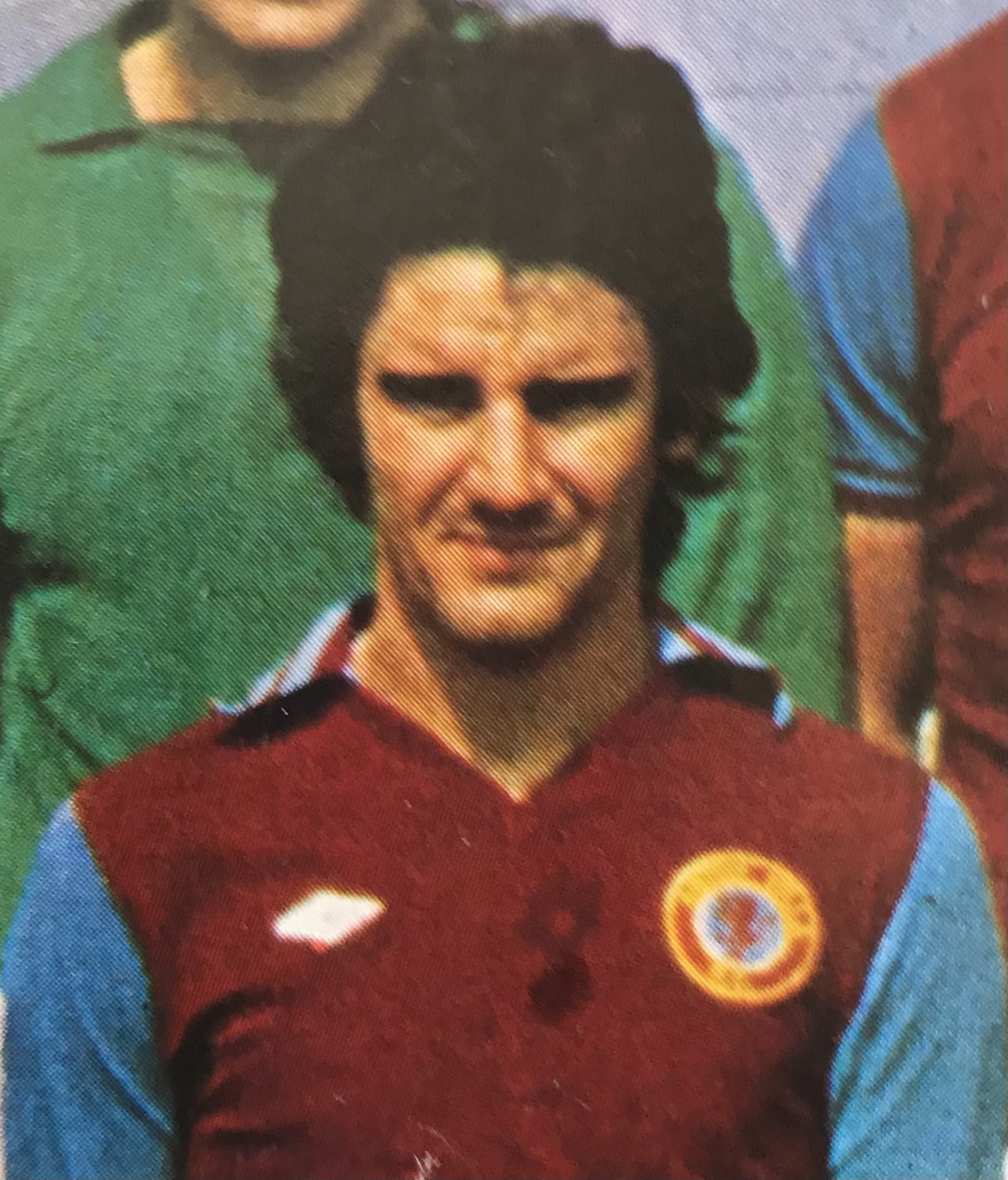
Gregory famously played in every outfield position during his two years at Villa Park and he welcomed the move to newly promoted Albion because it finally gave him the chance to pin down a specific position.

Chris Cattlin had been right-back as Albion won promotion from the second tier for the first time in their history but he was coming to the end of his career and, in July 1979, the Albion paid what was at the time a record fee of £250,000 to sign Gregory to take over that position. Steve Foster joined at the same time, from Portsmouth.

“I wore every shirt at Villa,” Gregory told Shoot! magazine. “I never had an established position. I was always in the side, but there was a lot of switching around. When Alan Mullery came in for me, he made it clear he wanted me to play at right-back.”

The defender added: “I respect Alan Mullery as a manager and I like the way he thinks about the game.

“Brighton are a very attacking side. There’s nothing the boss loves more than skill. That comes first in his mind. He wants all ten outfield players to attack when they can. That attitude, more than anything else, played a big part in me coming here.”

Gregory started the first 12 games of the season but was then sidelined when he had to undergo an appendix operation.

He returned as first choice right-back in the second half of the season and had a good start to the 1980-81 campaign when he scored in the opening 2-0 home win over Wolves.

His second of the season came against his old club, a header from a pinpoint Gordon Smith cross giving Albion the lead at Villa Park against the run of play. But it was to be an unhappy return for Gregory because the home side fought back to win 4-1.

In November 1980, it looked like Gregory might leave the Goldstone in a proposed cash-plus-player swap for QPR’s Northern Ireland international David McCreery, but the player, settled with his family in Ovingdean, said he wanted to stay at the Goldstone.

“The offer Gregory received was fantastic, but he prefers to stay with us,” chairman Mike Bamber told the Evening Argus. “I regard this as a great compliment.”

The following month, he got the only goal of the game in a 1-0 Boxing Day win at Leicester but in March, with Albion desperate to collect points to avoid the drop, Mullery put Gregory into midfield. He responded with four goals in seven matches, netting in a 1-1 draw away to Man City, grabbing the aforementioned pair at Selhurst Park on Easter Saturday and the opener two days later when Leicester were beaten 2-1 at the Goldstone.

Little did he know it would be his last as a Brighton player because within weeks Mullery quit as manager and Bamber finally couldn’t resist QPR’s overtures.

“I know Alan Mullery turned down a bid but a couple of days after he resigned chairman Mike Bamber accepted QPR’s offer,” Gregory recalled in an interview with Match Weekly. “I hadn’t asked for a move so the news that I was to be allowed to go was quite a surprise.”

He added: “It was a wrench. I found it difficult to turn my back on the lads at Brighton.

“I enjoyed two years at the Goldstone Ground and made many friends, but the prospect of a new challenge at Rangers appealed to me.”

Gregory admitted he used to watch Spurs as a youngster and ironically his two favourite players were Venables and Mullery – and he ended up playing for them both.

Although he dropped down a division to play for QPR, he said: “Rangers are a First Division set up and I’m sure we’ll be back soon.”

Not only did he win promotion with Rangers in the 1983-84 season but, at the age of 29, he earned a call up to the England set-up under Bobby Robson.

He won six caps, the first three of which (right) came against Australia when they played three games (two draws and an England win) in a week in June 1983, in a side also featuring Russell Osman and Mark Barham.

Gregory retained his midfield place for the European Championship preliminary match in September when England lost 1-0 to Denmark at Wembley but he was switched to right-back for the 3-0 away win over Hungary the following month.  

His sixth and final cap came in the Home International Championship match in Wrexham in May 1984 when he was back in midfield as England succumbed to a 1-0 defeat to Wales, a game in which his QPR teammate Terry Fenwick went on as a substitute to earn the first of 20 caps for England.

Gregory continues to demonstrate his love for the game, and particularly Villa, via his Twitter account and earlier in the 2021-22 season, his 32,000 followers saw a heartfelt reaction to the sacking of Dean Smith.

“Dean Smith gave Aston Villa Football Club the kiss of life when the club was an embarrassment to Villa fans and he rekindled the love and passion and success on the field where so many others had failed hopelessly,” said Gregory.

• Pictures from the Albion matchday programme, Shoot! magazine and various online sources.

Craig Noone bounced back after Heighway heave-ho

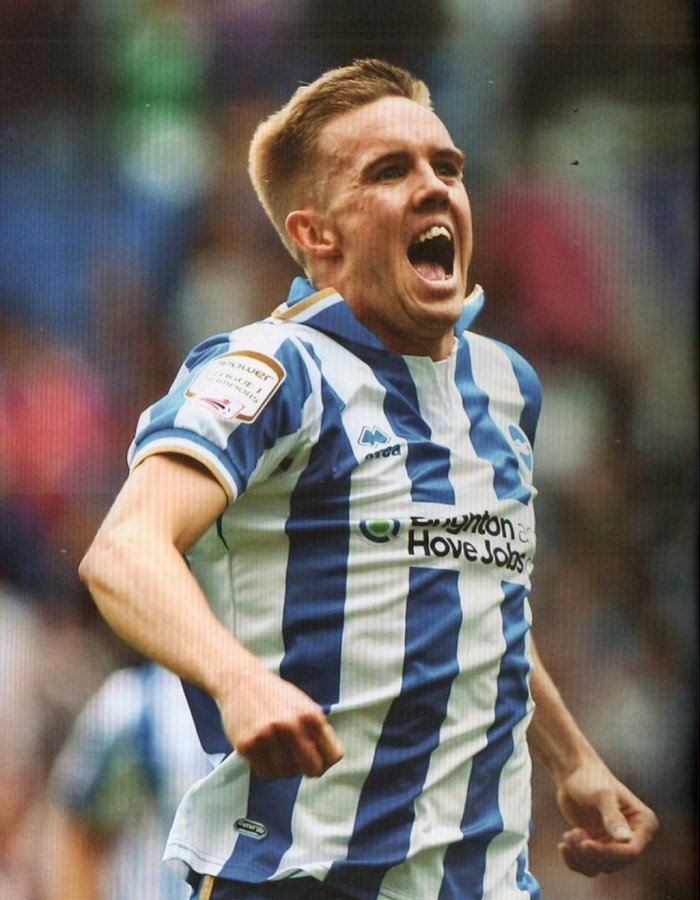
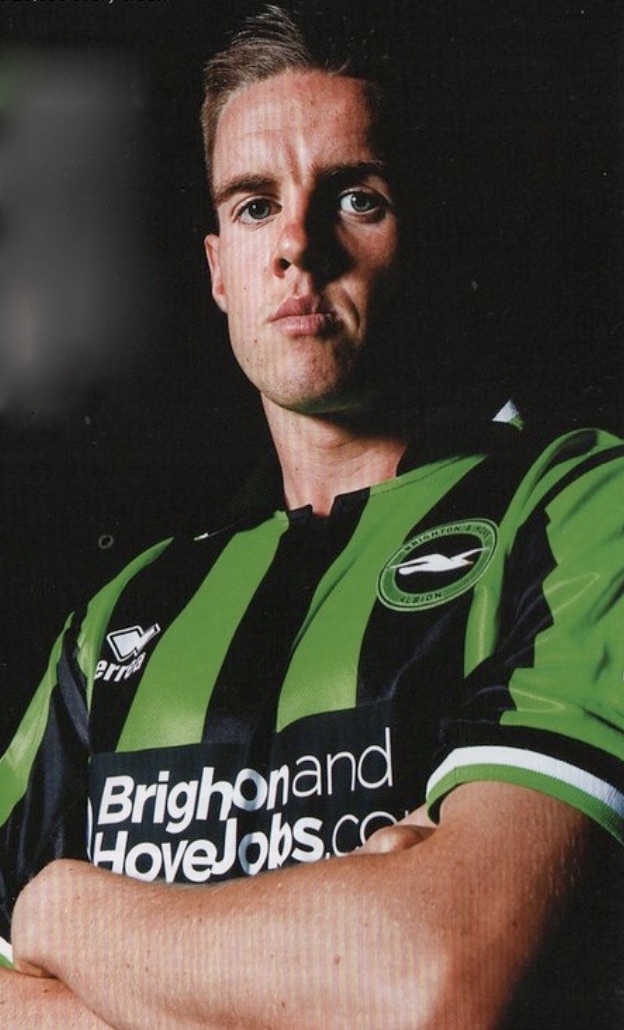
PACY SCOUSE winger Craig Noone was a born entertainer who bounced back from early rejection by Liverpool to make it all the way to the Premier League.

Brighton in the Championship under Gus Poyet provided the former roofer with a platform to showcase his ability before Cardiff City gave him the opportunity to perform at the top level.

After he’d scored (below) and impressed in an away game at Manchester City, then newly-appointed Cardiff boss Ole Gunnar Solskjaer said: “Noone is a terrific little player.

“He causes defenders problems with his pace and his technique; he can go inside and outside. He’s got a good left foot, but he can cross it with his right.”

Born in Kirkby, Liverpool, on 17 November 1987, Noone was on Liverpool’s books between the ages of eight and 11.

“I was spotted playing for my Sunday team St Peter and Paul and I used to train at Melwood a couple of times a week – it was unbelievable,” he recalled. “We wore the cream and black training kit and I loved every minute. I was a big Steve McManaman fan, the way he ran at players, and would try to do the same.

“Unfortunately, when I got to 11, Steve Heighway called one night to say that I wasn’t good enough to stay on – I’ll never forget it.”

Noone would eventually get to play on the hallowed turf of Anfield, but not on behalf of the home side.

It was New Year’s Eve 2010 that he joined Brighton, making his debut four days later in a 2-1 win away to Exeter City, where he’d spent six weeks on loan the previous year.

Poyet had admired the winger’s attributes up against Inigo Calderon in one half and Marcos Painter in the second during the Seagulls’ 2-0 win at Plymouth three months earlier, Noone discovered from another Argyle player, Ashley Barnes, who’d scored against his old club that day.

“Barnesey later told me that the management thought I was a good player and had mentioned me a lot in the half-time team talk,” he said. “When Brighton made their interest official, I didn’t have to think twice. The manager, the team, the stadium…it ticked all the right boxes for me.”

The slightly built Noone swiftly endeared himself to the crowd with jinking runs at pace and it was perhaps inevitable that the fans would adapt for him the chant more widely associated with England and Manchester United star Wayne Rooney.

More a provider of chances for others than a goalscorer, ‘Nooney’ made 10 starts and 13 appearances off the bench as Poyet’s Seagulls romped to the League One championship title, getting his first goal in a home 2-0 win over Colchester United at the end of January, followed by one of Albion’s four in a convincing win over Hartlepool United on 12 February.

The highlight of the following season for Noone was Albion drawing Liverpool in cup games; not once, but twice. In the League Cup at the Amex, Noone put in a man-of-the-match performance as Albion narrowly lost 2-1 to the Reds.

Four years previously, Noone had been working on the roof of an extension at Steven Gerrard’s house, but in the post-match TV interview for Sky Sports he was stood alongside the Liverpool captain.

“It was his comeback match after injury and he gave me his shirt,” Noone told the Liverpool Echo. “To do the Sky interview alongside him afterwards was unbelievable for me. He said I deserved to be man of the match because I’d caused Liverpool a lot of problems.

“For him to say that made me really proud, especially when I think about where I’ve come from. It wasn’t long ago I was playing non-league football part-time and working as a roofer. That puts into perspective how far I’ve come and sometimes I have to pinch myself.”

Indeed, Noone’s resilience and ability to bounce back from adversity did have something of a Roy of the Rovers feel to it. After the disappointment of not progressing at Liverpool, Noone nonetheless did get to play representative games at Anfield: for Merseyside Schoolboys in the final of the National Cup against Bedfordshire.

“I scored to make it 1-0 in front of The Kop and it was an unbelievable feeling,” he said. “That was the only part of the ground open to spectators and I had all my friends and family watching. We went on to win the game 3-1.” He also played for Myerscough College in the National Colleges Cup final, again scoring in front of the Kop.

Non-league Skelmersdale United guided Noone from their youth team through to the first team. In early 2007, he had a trial at Royal Antwerp, a feeder club for Manchester United, but it wasn’t until November that year that he started to climb the football pyramid.

He was 20 when he stepped up two divisions to Blue Square North neighbours Burscough in exchange for experienced non-league striker Kevin Leadbetter. A regular for Burscough under Liam Watson, Noone followed the manager to Southport in June 2008.

He made his debut for Southport on the opening day of the 2008-09 season against Gainsborough, watched by the Plymouth chief scout Andy King, the former Everton striker. After the game, King approached him and told him to expect a call. Sure enough, the following Tuesday, the Devon club made contact and he was soon on his way for a £110,000 fee.

“Craig comes to us with a glowing reputation,” said Argyle boss Paul Sturrock. “It is now up to him to prove that it is merited. If he shows me he can make the step up to the Championship, the door is open for him.”

With Plymouth battling to stay in the division, Noone struggled to get games under his belt initially and was sent on loan to Exeter to gain some league-playing experience. But an intended three-month arrangement was cut to only six weeks by Sturrock, and he returned to Home Park and became a regular until his transfer to Brighton.

The least said the better about the FA Cup fifth round clash when the Seagulls were thumped 6-1 at Anfield. Noone only got on as a substitute, but the pre-match hype gave him the chance to tell his story to the Echo and he said: “I’m loving it at Brighton. I’m learning all the time and Gus is unbelievable to play for. His coaching is spot on and he’s made me a much better player.”

Indeed, Championship football didn’t faze Noone and, with the close season departure of Elliott Bennett to Norwich City, it presented him with the opportunity to start 21 games (coming off the bench in a further 16 matches) despite the addition of another wideman in Will Buckley.

He was also a popular character in the dressing room, having inherited a sense of humour from his dad, Steve, a part-time stand-up comedian. Skipper Gordon Greer said of the winger: “He’s a real top guy. He’s a great laugh and a really good personality to have about the place. He does some hilarious things and that really adds to the good atmosphere we have about the place.”

However, Noone’s performances didn’t go unnoticed by others and promotion-chasing Cardiff tested Albion’s resolve to keep the winger by offering £500,000 for him in January 2012. Albion rebuffed the approach and, in March, extended Noone’s contract until June 2015 with manager Poyet declaring: “He was a key player for us in the second half of last season and has already established himself as a top Championship player.”

A satisfied Noone told the club website: “I set my sights on a long-term contract so I’m very happy to get it sorted, because this club is going from strength to strength.

“We have a few wingers here but we all have our individual qualities and the way this team plays lets me express myself on the pitch. This contract shows that the club has confidence in me and I’m very happy here at Brighton.”

However, just a matter of days after playing for Brighton against Cardiff in a 0-0 draw at the Amex at the start of the new season, Noone was on his way to Wales when the Bluebirds doubled their previous offer to £1m, and Malky Mackay got his man.

“They matched my ambitions to get to the Premier League as quickly as possible,” said Noone, who appreciated their persistence in trying to sign him. “It’s a shame the move didn’t happen in January because I would have liked to be here and settled, but I enjoyed my time at Brighton and wouldn’t change that.

“But Cardiff are better equipped than Brighton to go up after going so close and not quite making it. Hopefully this time we will do it. I’m a Cardiff player and want to do the best I can.”

Noone played 25 times (plus six as a sub) and scored seven goals as Cardiff went up as Champions, while Albion slipped up in the play-offs, so making the switch certainly worked in his favour.

City went straight back down after one season in the Premier League, but Noone managed 15 starts plus eight appearances as a sub. He spoke to the matchday programme about how tough it had been to force his way into the side and said: “When you’re not playing it can be frustrating, but you have to take a step back and take a look at your situation. If I’d have been moaning and groaning, I don’t think I would have lasted long here.”

He was in Cardiff’s midfield when they lost 3-1 at Liverpool on 21 December 2013. The BBC report of the game noted: “Cardiff started the game promisingly and went close early on when a swift counter attack resulted in Mutch playing a ball though to Craig Noone, whose 22-yard shot was palmed over by goalkeeper Simon Mignolet.”

He was not involved in the return match in March when Liverpool thumped City 6-3, by which time Solskjaer had taken over the reins.

Apart from the individual goal against Manchester City that had Solskjaer purring, Noone also enjoyed a FA Cup third round match away to Newcastle United on 4 January 2014 when he scored from distance a minute after coming on as a late substitute, when City were 1-0 down.

Fellow substitute Fraizer Campbell scored a winner, turning the lead in City’s favour only seven minutes later. The victory proved historic, because it was the first time the Bluebirds had won at St James’ Park since 1963.

Noone’s humble journey back into the game meant he was always happy to contribute to community activities too and he was named Community Champion by Cardiff City FC Foundation for his inspiring involvement in its futsal programme.

His voluntary efforts, also recognised by the PFA, included taking part in classroom sessions before leading pupils in practical lessons.

He somewhat modestly said: “I’ve been in the classrooms with the young lads and girls as well. I’ve just been helping them out and giving them ideas of what it feels like to come into football late, the way I did.”

Cardiff’s website said of him: “Having risen from non-league football to the Premier League, Craig Noone has shown what a player can do for a club both on and off the pitch, and is remembered fondly by the Bluebirds faithful for his part in helping the club soar to historic new heights.”

In March 2015, Noone leapt at the chance to play at Anfield again, all in a good cause, when he was part of Jamie Carragher’s team against a Steven Gerrard side in an All Star Charity match.

Noone spent five years at Cardiff, scoring 19 goals in 170 appearances, but in the summer of 2017 manager Neil Warnock went public in suggesting the winger should look for another club. That move came in September 2017 when he joined fellow Championship side Bolton Wanderers on a two-year deal. He went on to score twice in 65 games for Bolton, where he once again found himself lining up alongside Buckley.

In 2019, Noone went Down Under to continue his career, linking up with A-League side Melbourne City FC, one of the sister clubs to Manchester City – the team Aaron Mooy was playing for before he returned to England.

“It’s a big life-change, but it’s something that I’m looking forward to,” he told a-league.com/au. “I like a challenge. The previous clubs I’ve been at it’s always been a challenge, whether it’s going for promotion or staying in the league.”

City football boss Michael Petrillo said of the new signing: “Craig is a creative, pacey wide player who, after playing at the highest level in the UK, will bring a lot in experience and threat to the team.

“Craig is a proven goalscorer and provider who is just as comfortable cutting inside and shooting from range as he is at linking up with his fullback and delivering dangerous crosses.”

After two years with Melbourne, Noone switched to Macarthur FC in South West Sydney for the 2021-22 season.

• Pictures from Albion’s matchday programme and online sources.

Benno’s quick route to the top after ‘fantastic’ Albion chapter

SEVENTEEN GOALS in 100 appearances don’t tell the whole story of Elliott Bennett’s two seasons as a Brighton player.

Russell Slade signed him in August 2009 from Wolverhampton Wanderers for £200,000, but it was under the guidance of Gus Poyet that he flourished and was a stand-out performer when Albion won promotion from League One in 2011.

Not only was he chosen by his fellow professionals in the PFA League One team of the year (along with teammates Gordon Greer and Inigo Calderon), he was Four Four Two magazine’s League One Player of the Year.

Always diplomatic in interviews about personal achievements, typically he said: “If you win awards, it’s nice personally but you have to remember you can’t win them without your teammates. If I’m setting up goals, then it means our strikers are on their game as well as they’re getting on the end of my crosses.”

In a matchday programme feature, he added: “These individual awards really are not possible unless you have a good team around you, so this award is really on behalf of the whole squad and coaching staff.”

Bennett acknowledged the impact Poyet made on improving him as a player. “Gus has given me different roles to play throughout the season. I’m a lot more aware as a player as a result and I’m better with the ball now. There’s still lots for me to work on, but the gaffer has really brought my game on. I definitely owe him a lot.”

In another matchday programme article, he once again paid tribute to Poyet, his assistant Mauricio Taricco and coach Charlie Oatway. “I feel like I’m improving all the time and I owe so much to the coaching staff: the gaffer and Tano, while Charlie has got my head right. I used to beat myself up if I gave the ball away but Charlie has stamped that out of me. Technically, all three have helped me and I’ve also been playing in the middle a bit more, which has added another string to my bow.”

Bennett continued: “While I’m known for being a winger, my link-up play has also improved this season, which has really pleased me. I’m now more involved and it’s important that I keep on learning. The gaffer will always pull me to one side if he sees something that can help improve me – which he does with everyone – and then it’s a case of trying to replicate that on a match day.

“When you’ve got a gaffer who’s played the game at the highest level, you can only learn from him – and if you didn’t listen you’d be pretty stupid.

“I’ll play anywhere for the good of the team – I’ve even played right-back this season, but I must admit that I do prefer playing in a more advanced role where I can create things for the team. Whether that’s right wing, the left wing or even behind the strikers I don’t mind. I just love being involved.”

Bennett’s impact wasn’t confined to games, either. He and Liam Bridcutt used to visit Westdean Primary School, near Withdean, where they listened to youngsters reading. His wife, Kelly, worked for the club too.

Aware they had a hit property on their books, Albion awarded Bennett a new three-and-a-half-year deal in November 2010, when Poyet told the club website: “Elliott has been a good pro and has earned this new contract.

“He has shown he is capable of playing in a number of positions, he enjoys playing our style of football and I think he will continue to get better as a player.”

For his part, Bennett said: “Gus is a big factor for me. I will always be grateful to Russell Slade for signing me, but the current gaffer has brought his own style of play.

“I have really taken to the club ever since I arrived from Wolves last summer. I feel I have grown up as a person and developed as a player.”

Unfortunately for Brighton, Bennett’s superb contribution drew plenty of admirers and, when Norwich City offered £1.9million to give him the chance of Premier League football, the lure was too great to resist for player and club.

While his promoted teammates looked forward to Championship football in the brand new Amex Stadium, Bennett joined Paul Lambert’s Canaries to test his talent at the highest level.

Bennett told HITC Sport’s Alfie Potts Harmer: “Brighton was a fantastic part of my life and a fantastic chapter of my career, I loved every minute of it.

“When we won the title there, League One was full of teams who are now flying, you look at Southampton, Bournemouth and Huddersfield, it was a strong League One that year, and we played some fantastic stuff.

“The stadium coincided with promotion and I’d just signed a new contract. I think I would have stayed there for many years had it not been a Premier League move, but I don’t regret moving to Norwich. When an opportunity like that comes you have to take it as a player. You don’t know if it will come again.”

Lambert was delighted to land the youngster having previously had a bid to sign him in January that year rejected. “He is a young and exciting player with plenty of pace,” Lambert told the Norwich website. “He can play in a wide position or in behind the forwards, he’s a quick lad and he’s got a winning mentality.

“He played his full part in what Brighton achieved last season and that desire to succeed will stand him in good stead here.”

Bennett declared: “It’s an unbelievable opportunity for me to fight for a place in a team which will be playing in the Premier League.

“I like the mentality at Norwich City that has seen them get back-to-back promotions and I’m grateful to Paul Lambert for giving me the chance to be part of what’s happening at the club.

“I didn’t make it through at Wolves, which was my home-town club, and Brighton gave me the opportunity and I’m grateful for that.

“Now I’m just really excited about the chance to try to help Norwich in the Premier League.”

Bennett certainly seized the opportunity and in his first season was delighted to score the winning goal in Norwich’s 2-1 win over Spurs at White Hart Lane. He’d played 57 games in the Premier League when his career suffered a major hiatus. In the first home game of the 2013-14 season, against Everton, he sustained a cruciate injury which ruled him out of all but the last game of that campaign, as City were relegated.

Frustrated by the lack of starts at Norwich as they began life back in the Championship, Bennett was happy to return to the Seagulls on loan as Sami Hyypia tried various permutations to get some wins on the board.

Bennett received a warm reception from the Seagulls supporters as he stepped out at the Amex for a home game against Wigan Athletic on 4 November and helped the side to their first win in eight matches.

Unfortunately, the upturn in fortunes was all too brief and, although Bennett’s loan was extended by a second month, six winless games saw Hyypia exit the hotseat. “I had nothing but respect for him,” Bennett later told The Athletic. “He gave me an opportunity, after a big injury, to get out and play some football. He didn’t have to bring me back. I was thankful for that. Unfortunately, it didn’t work out.”

Bennett’s final appearance came in the memorable 2-0 win over Fulham under caretaker manager Nathan Jones.

He returned to Norwich just as Alex Neil was taking over from Neil Adams as manager and was part of the squad who won promotion back to the Premier League via a play-off win over Middlesbrough.

But back in the elite, first team opportunities were limited and during the first part of the 2015-16 season Bennett went out on loan again, this time to Bristol City, where Steve Cotterill was the manager.

Bennett made 14 appearances for the Robins but soon after his deal expired in January 2016, a £250,000 fee saw him move permanently to Blackburn Rovers, where, from the start of the 2019-20 season, he became club captain, and he continued to be a well-respected part of Tony Mowbray’s set-up.

Bennett has certainly endeared himself to the Rovers supporters and has even been hailed as a modern-day ‘Mr Blackburn’ by website roverschat.com, who lauded his contribution to the club.

“Elliott Bennett’s evergreen positivity, fan interactions, and trademark fist pump were key in improving the culture at Rovers, as the dark, grey clouds over Ewood Park that had called it home since 2011 ever so slowly began to dissipate.

“His leadership has been a key contribution, as even when he is not playing for Rovers, he still is managing to inspire others to become the best version of themselves.”

One of those times spent out of the side came when Bennett tested positive for Covid-19 in May 2020 although the player said he didn’t feel unwell, and typically was thinking of others when interviewed about it.

“There seems to have been a lot of hysteria about footballers returning to training, but it’s not a big deal at all,” he said. “It’s the people who are seriously ill in hospital that we need to worry about, not footballers who are fit and healthy, and who aren’t showing any signs of being unwell.”

The popular Bennett is an active participant on social media and has 76,000 followers on Twitter.

In the summer of 2021, he moved to League One Shrewsbury Town, just 15 miles from Telford where he was born on 18 December 1988,

Bennett first showed his talent playing for local Telford team Hadley Juniors. Wolves scouts Les Green and Tony Lacey spotted him and invited him to train with the club’s under sevens and under eights. Remarkable as it sounds, he was offered a contract at the age of nine! “From then I just worked my way up through the age groups,” he told wolves.co.uk in a January 2019 article.

“The coaching was fantastic, the level of care we got was outstanding and we had the chance to travel the world. We got to go to Holland, we went to Japan, and it was a fantastic experience for me. Going to Japan and winning the under-12 World Cup was probably one of my favourite memories I have from the playing side of the academy.”

At Thomas Telford School, Bennett captained the school team as they won the county cup five years in a row. He was also a talented 200m runner who represented Shropshire at sprinting.

After leaving school to go on a scholarship at Wolves, he signed professional in 2007.

“The biggest moment for me was being given my professional contract,” he said. “I always dreamt of one day being able to pull on that gold and black shirt and play at Molineux, and thankfully I did.”

He got a taste of first team action in pre-season matches, scoring after only five minutes in a 3-2 win at Hereford United, and in 2007-2008 he made two appearances for the first team in the League Cup.

Mick McCarthy gave him his first competitive start in a 2-1 win over Bradford City on 15 August 2007 but he was replaced by Stephen Ward at half-time, and on 28 August was in the Wolves side humbled 3-1 after extra time by lowly Morecambe.

Although he was involved with the first team squad for some league matches, he didn’t get any game time, but gained experience going out on loan, initially playing 11 games at League One Crewe Alexandra, and later featuring in 19 League Two games for Bury.

He spent the whole of 2008-09 on loan with Bury, scoring three goals in 52 matches.

It must have been quite a wrench for Bennett to contemplate moving away from the club he’d been associated with for 14 years, but it was a former Brighton striker, the then Wolves assistant manager Terry Connor, who persuaded him to spread his wings and move to the Albion, as he revealed in a Football the Albion and Me interview.

He explained that he’d still got two years left on his contract at Wolves and being very much “a home person” he’d not considered leaving home in Telford, 20 minutes away from Wolverhampton.

“I remember Terry pulling me into his office and saying ‘Look, I went to Brighton in a similar position to yourself, you’ve got to go out and forge your own career. Become a man, become a person, don’t be Elliott Bennett from the academy at Wolves. You’re Elliott Bennett the professional footballer, create your own path.’

“And from that conversation I thought ‘You have to take the shackles off and go and try something different’ and you can’t really get a much better place to live than Brighton, as I later found out. It turned out to be the best decision I have made since I started playing.”

The week before he signed, he went to watch Albion away at Huddersfield…..and saw his new employer thrashed 7-1. Luckily, he’d made up his mind to join before the game!

“I was a guest of Tony Bloom,” he said. “I had a good chat with him before the game and he told me the vision. He told me where he wanted to take the club. I was blown away to be honest. I couldn’t wait to get started.”

Pictures from Albion matchday programmes and various online sources.

United ‘product’ Oliver Norwood eventually fulfilled expectations

IT LOOKED LIKE the so-near-and-yet-so-far story of Oliver Norwood’s flirtation with the Premier League would end in disappointment.

Twice the former Manchester United reserve helped teams to win promotion from the second tier, only then to remain in that division when the sides he played for didn’t see him as a Premiership player.

It happened first of all with Brighton in their 2016-17 promotion under Chris Hughton.

The following campaign Norwood went on a season-long loan to Fulham and was at the heart of their midfield as they won promotion.

Fulham didn’t look to retain him, though, and for 2018-19 he was once again loaned out by Brighton; this time to Sheffield United.

Halfway through the season, they turned the loan into a permanent transfer and, after helping the Blades to win promotion, Norwood finally got his chance to show his skills in what amounted to an impressive return to the top-flight of English football.

How BBC’s Match of the Day Tweeted Norwood’s record

Born in Burnley on 12 April 1991, Norwood was only six when he first came to the attention of Manchester United, spotted playing for Fulledge Colts in his home town.

“My earliest football memory is being on trial at the Manchester United academy aged six and being totally overawed by it,” he told the Albion matchday programme. “I remember standing there at The Cliff, biting my fingernails, and the coach, Paul McGuinness, saying ‘Are you going to join in?’ After that, I was fine and it was really exciting to be part of the club’s academy.” He joined the Red Devils on schoolboy terms at seven and spent 15 years on their books, playing in the same youth teams as Paul Pogba and Jesse Lingard.

During the 2005-06 and 2006-07 seasons, Norwood made appearances for United’s under-18 team and, ultimately, he signed on as a trainee in July 2007.

He became an under-18 regular in 2007-08 and also made his debut for the United reserve side. After netting nine goals in 28 appearances for the under-18s in 2008-09, Norwood was signed as a professional.

He was a reserve team regular in 2009-10 and said he owed a lot to Ole Gunnar Solskjaer, who was in charge of United reserves at that time.

“I owe a lot to Manchester United for the experiences and education I had there,” Norwood told the matchday programme, United Review. “The club taught me not just about football but life. I was taught how to be a good person.

“Ole played a huge role in terms of my development as a footballer and a person. The lessons he taught me in the reserves have stayed with me throughout my career.

“I’ll always be grateful to Manchester United, to Ole, to (former reserves manager) Warren Joyce, for the upbringing they gave me in the game.”

Norwood got a sniff of the first team when Sir Alex Ferguson called him up to the first team squad for a Champions League match away to Wolfsburg. He travelled with the squad to Germany but didn’t get selected in the final matchday 18.

In search of a first team breakthrough, Norwood decided to gain experience on loan with lower league clubs and his first port of call was Carlisle United in September 2010. Ironically, his first match was against Brighton – a 0-0 draw at Brunton Park. Unfortunately, after just five starts and two sub appearances, he tore a thigh muscle and had to cut short his loan and return to Old Trafford for treatment.

The following season, he went out on loan again, this time to League One Scunthorpe United where Alan Knill, Chris Wilder’s no.2 at Sheffield United, was the manager.

In an interview with the aforementioned Joyce, the former reserves manager explained how it was only a change in Norwood’s diet that started to bring about the required improvements to his game.

“I got him to write down everything he ate. And I meant everything. I said, ‘We have to look at your diet and get you absolutely super fit’. I told him we couldn’t allow the ability he had to be wasted.”

Joyce told The Athletic’s Richard Sutcliffe in a 23 June 2020 article: “Once we’d sat him down (after returning from Scunthorpe) and analysed everything, he got himself really ripped. He started eating the right things and worked so hard to get into shape. He is getting the rewards from that now.”

Norwood spent the second half of the 2011-12 season in Coventry City’s unsuccessful effort to beat the drop from the Championship but, having acquired a taste for football at that level, declined the offer of a contract extension on his return to Old Trafford.

He told Talksport at the time: “I want to play every week like I was this season in the Championship. It’s been the hardest decision in my life for me to make but there comes a time when you have to be realistic.”

He opted to join newly promoted Huddersfield Town in the Championship on a three-year contract, and Sutcliffe’s article reveals Norwood was so determined to make the move that he drove down to Heathrow Airport to apprehend holiday-bound Town manager Simon Grayson to persuade him to sign him.

Nevertheless, United boss Sir Alex Ferguson had some encouraging parting words that the midfielder never forgot. “You’re not going to make it at Manchester United, but I believe one day you will play in the Premier League.”

Norwood was a permanent fixture in the Terriers’ midfield for two seasons before switching to fellow Championship outfit Reading at the beginning of the 2014-15 season.

Signed by Nigel Adkins on 21 August, 11 days later he was joined at the Madejski by Glenn Murray, on loan from Crystal Palace.

When the Royals were hammered 6-1 by Birmingham City in mid-December, Adkins was sacked and replaced by Steve Clarke. His second game in charge, on Boxing Day, saw Reading visit the Amex, with Brighton under caretaker manager Nathan Jones. Murray scored twice for the visitors, but Albion rescued a point with a 90th minute equaliser from Inigo Calderon.

Norwood completed the season having made 35 appearances plus seven as a sub and although he made the second highest number of appearances – 50 – the following season, when the Royals visited the Amex on 15 March 2016, under Brian McDermott, their third manager of that campaign, Norwood was a non-playing sub as the Royals lost 1-0 to a James Wilson goal.

The next time the two sides met (a 2-2 draw at the Madejski on 20 August), Norwood was part of Chris Hughton’s squad, having signed for the Seagulls at the start of the 2016-17 season, along with Murray and Steve Sidwell. Norwood was a 68th-minute sub for Sam Baldock.

Manager Hughton said of Norwood: “Oliver is another excellent addition to our squad.

“He has a good grounding coming from Manchester United, and has a wealth of experience playing in the Championship and at international level.

“He’s a box-to-box midfielder and an excellent passer of the ball, so he gives us extra options in midfield and adds further depth to our squad.”

Although he played for England at youth level, he also qualified for Northern Ireland, and chose that country to enable him to experience more opportunities at international level.

Norwood made his full international debut during Nigel Worthington’s time as manager, coming on as a substitute in a 2-0 friendly defeat by Montenegro in Podgorica in August 2010.

He was a regular in Worthington’s successor Michael O’Neill’s midfield when the side qualified for Euro 2016 and played in all four of the team’s matches in the finals in France.

However, having made 57 appearances for his country, he decided in August 2019 to retire from international football when only 28.

Although Norwood made 20 starts for the Albion, he was almost as often used as a substitute, making 17 appearances off the bench, as the Seagulls soared to promotion.

Norwood had a starting berth when Beram Kayal was injured and he told the matchday programme: “This has been a big opportunity for me. The gaffer brought me to the football club and obviously I’ve been desperate to get into the team and play games.

Norwood had plenty to say

“Obviously I understand how football works. When the team’s winning and doing really well you have to bide your time, but an opportunity has come my way and it’s been important for me to grab it with both hands and do all I can to stay in the team.”

It has since transpired that the midfielder was most likely distracted by off-field issues during his season with the Seagulls, as thestar.co.uk reported.

“I went to Brighton after the 2016 Euros, and it was a difficult period in my life,” said Norwood. “My wife, Abigail, was pregnant and really ill, so we were living apart. My head wasn’t fully there.”

He told The Star he only fell in love with football again when he went on loan to Fulham, and subsequently was at loggerheads with Brighton when they didn’t accede to his request for a permanent move. “They said I could leave, but then turned down bids when they came in and started asking for silly things. I don’t think clubs realise sometimes that they’re messing with people’s lives. I had plenty of arguments, saying: ‘You don’t want me here, so let me go’.”

With Dale Stephens and Kayal the preferred central midfield pairing, plus the arrival of Davy Propper for Albion’s first season back amongst the elite, Hughton had been happy to let Norwood join Fulham on a season-long loan.

Norwood made 47 appearances for Fulham in 2017-18, particularly when filling in for the injured Tom Cairney until the Scot’s return from injury towards the end of the season.

His passing accuracy and all-round contribution were favourable, as this footballwhispers.com article assessed, and he proved a vital cog in their promotion via the play-offs when they beat Aston Villa 1-0 in the play-off final.

The website football.london was surprised Fulham didn’t opt to sign him permanently. “Norwood was a key figure under Slavisa Jokanovic, seamlessly plugging the gap left by Tom Cairney as a result of his injury and can be credited with a huge role in getting the club promoted in the first place, with his tackle on Conor Hourihane in the play-off final one that will forever be remembered by Fulham fans,” wrote Phil Spencer. “His vision and incisive passing was key to Fulham’s free-flowing style of play – meaning it was a little surprising that his loan switch to west London was never made permanent.”

Fans have contrasting views about his contribution, as this collection of quotes demonstrates. Some appreciated his ‘Hollywood’ long passes, others are perhaps summed up by this Fulham fan who said: “100% effort every time he played. Honest player. Not stellar but above average.”

Fulham’s loss was Sheffield United’s gain and in wishing Norwood well in his pursuit of more playing time with the Blades, Hughton told Albion’s website: “Ollie was one of our promotion-winning team in 2016-17 and will rightly be remembered as part of that historic team which took the club to the Premier League.”

Critics of Fulham’s strategy of splashing the cash on so-called name players for what proved to be an unsuccessful bid to retain their newly-won status in the Premier League couldn’t help pointing out the irony of Norwood’s situation.

“Fulham could only wave to Norwood on their way back down after ditching him for Jean Michel Seri,” said footyanalyst.com.

The Blades were promoted as runners up behind Norwich City in a season in which Norwood played 43 league games. He told The Observer’s Paul Doyle: “Last season was a big season for me. It was the most I’ve played. I’m definitely a better player now. At everything really. My understanding of the game. Tactically, technically, what needs to be done.”

He told Doyle: “It’s taken a bit longer than I would have liked but it was a dream come true to finally make the level that everybody across the world wants to play at.”

Norwood certainly seized the opportunity to shine at the top level, playing 40 games plus one as sub in all competitions as the Blades confounded the critics by finishing in ninth place, and taking on the captain’s armband in Billy Sharp’s absence.

Pictures from various online sources and the Albion matchday programme.