Steve Harper’s part in the Seagulls-Magpies goalkeeping ‘trade’

BRIGHTON and Newcastle United clearly have a similar eye for goalkeepers with a string of custodians having played for both clubs.

A few years before I started watching, Dave Hollins, older brother of ex-Chelsea midfielder John, moved to Tyneside in 1960 after three years with the Albion, and played twice as many games for Newcastle in the early part of that decade than he had for Brighton.

Back in the first Alan Mullery era, Eric Steele, who went through the Newcastle ranks without making the first team, arrived at Brighton to replace the injured Peter Grummitt in 1977 and was in the side that won promotion to the elite via a 3-1 win at St James’ Park in 1979.

Dave Beasant, who Newcastle bought from Wimbledon for £850,000 in 1988 – although he only played 20 games for the Magpies – was between the sticks for the Albion for 16 games in 2003.

More recently, Dutchman Tim Krul – who’d been at Newcastle a decade – spent a couple of seasons as back-up to Mat Ryan and would probably be disappointed he didn’t get more game time.
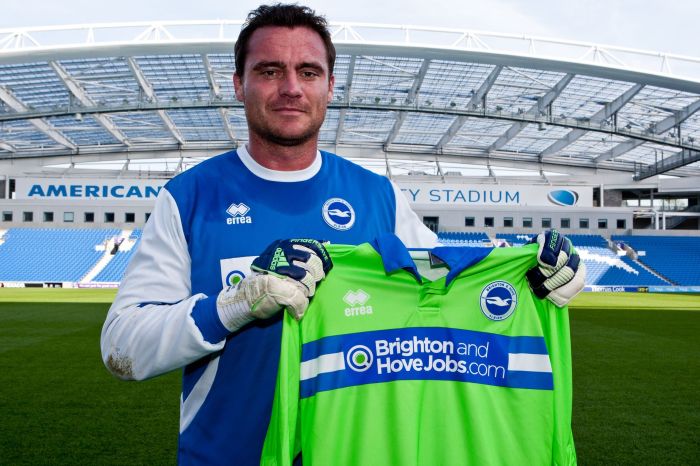
My post on this occasion, though, is about Steve Harper, United’s longest-ever serving player having been there 20 years. He later went back as one of the coaches working with Steve Bruce, as well as being goalkeeping coach to the Northern Ireland international side.

Harper is a qualified UEFA A coach and UEFA A goalkeeping coach, and holds a Masters degree in Sport Directorship.

Back in 2011, Harper was happy to lend his experience to the second tier Seagulls during Gus Poyet’s tenure as manager, a decision applauded by Alan Pardew, Toon boss at the time.

“He just wanted to play,” Pardew told the Chronicle. “Not all the top players in the country would have gone on loan – you’re vulnerable.

“You’re going down a division, but he was prepared to do that, and fair play to him.”

For his part, Harper told BBC Sport: “Everybody knows I haven’t played enough football until the last two-and-a-half years.

“I hadn’t played a competitive game for about six months so it was nice to blow the cobwebs out.”

In his first Seagulls match, unfortunately Albion lost against West Ham to a single goal from Harper’s former teammate Kevin Nolan, and he said: “It was disappointing to lose against West Ham with the possession we had.

“Now I’m here, it’s time to get stuck in. We want Brighton to consolidate and finish as high as we can. People tell me it’s a lovely city. I’m looking forward to seeing more of it.”
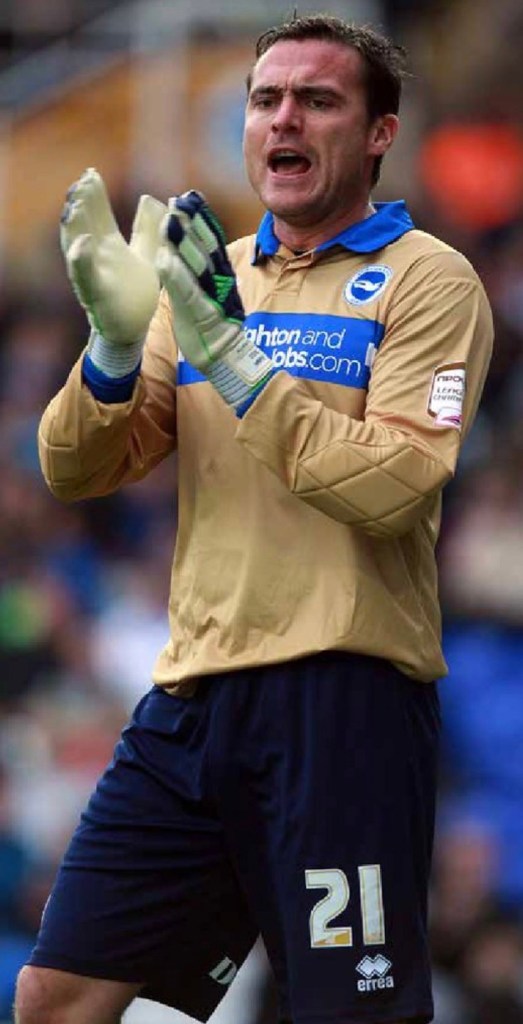
Harper recalled the time fondly in an interview for the Albion website in 2019.

He featured in five games for the Seagulls, keeping two clean sheets. While he conceded five goals, three came away to Southampton when the Seagulls were unjustly punished by referee Peter Walton.

Harper told journalist Nick Szczepanik: “I would have stayed longer given the opportunity. They made me feel very welcome.”

He even managed to give two of his new teammates a surprise when he started speaking to them in Spanish. Playing behind Spanish speakers Inigo Calderon and Gonzalo Jara Reyes, he explained to Andy Naylor, then of The Argus: “After five years of Bobby Robson and his multi-lingual team talks my Spanish is okay.

“Calde got quite a shock with how much Spanish I know, but I had Colocinni and Enrique in the team with me at Newcastle.”

After his brief spell with the Albion, Harper returned to Newcastle and played nine more games for them the following season before moving on to Hull City (at the time managed by current Toon boss Bruce), where he played alongside Liam Rosenior.

Born in Seaham on 14 March 1975, Harper grew up in the County Durham mining village of Easington and went to its local comprehensive school. Originally a striker at local Sunday league level, he only started playing in goal from the age of 17 and he turned out for Newcastle’s youth team while he was still at college doing A levels.

In fact he was offered a place at John Moores University in Liverpool to study for a Sports Science degree but he deferred it when Newcastle offered him a one-year contract. He signed in 1993 as a back-up for first choice Pavel Srnicek, later Shaka Hislop and subsequently Shay Given.

Much of his time at Newcastle was as a more than capable deputy to whoever was first choice although in United’s 2009-10 season in the Championship, under Chris Hughton, he was the main man and played 45 matches.

Harper had nothing but praise for Hughton, telling chroniclelive.co.uk: “He came in at an incredibly difficult, turbulent time after relegation.

“Chris was the man at the centre of a perfect storm who steered us through some very choppy waters.

“He did a wonderful job and I don’t think he got enough credit. It was no surprise to me to see him go on to do an excellent job at Birmingham City and then at Brighton.”

In total, Harper played 199 games for Newcastle, featuring under nine different managers – Kevin Keegan and Bobby Robson being his favourites.

Periodically over the years, he went out on loan to gain first-team action, appearing between the sticks for Bradford City, Gateshead, Stockport County, Hartlepool and Huddersfield. The Brighton move was his sixth spell out on loan.

Harper’s long service for Newcastle was rewarded with a testimonial against AC Milan in 2013 before he left the club to join Hull, where he spent two seasons.

Six months after his departure from Hull, he was taken on by then Premier League Sunderland as cover for Jordan Pickford and Vito Mannone, but he didn’t make a first-team appearance and was released at the end of the season.

Sprinter’s boys took different tracks after starting Gunners

A GUNNER from the age of nine gained valuable first team experience with the Seagulls but ultimately fell short of reaching the same heights as his brother.

Commonwealth Games gold-medal winning sprinter Wendy Hoyte saw sons Justin and Gavin climb through the academy and reserve ranks at Arsenal.

Justin played 68 first-team games for the Gunners and went on to make a name for himself in the North East, but younger brother Gavin only played four first-team games for Arsenal and had to set his sights lower to pursue a professional career.

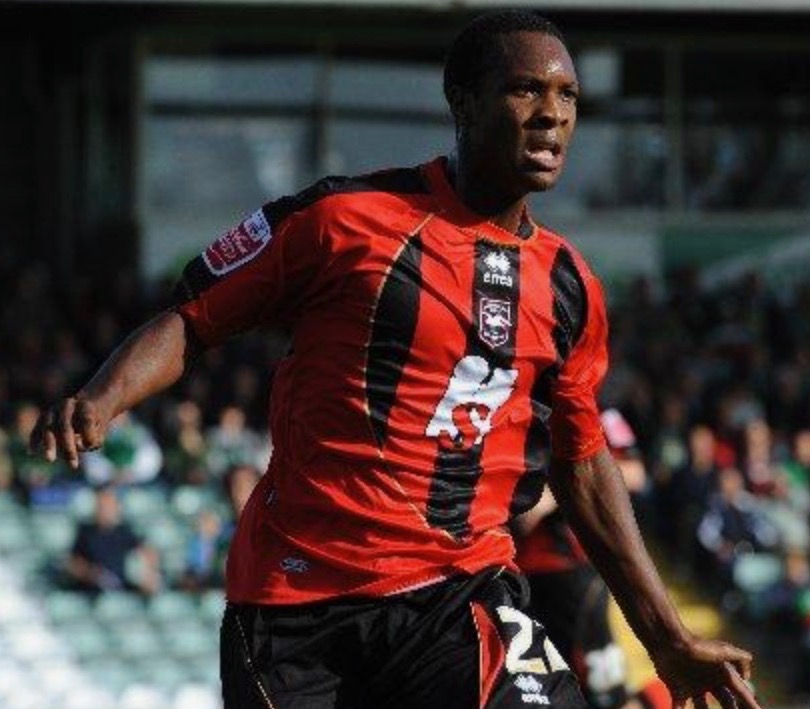
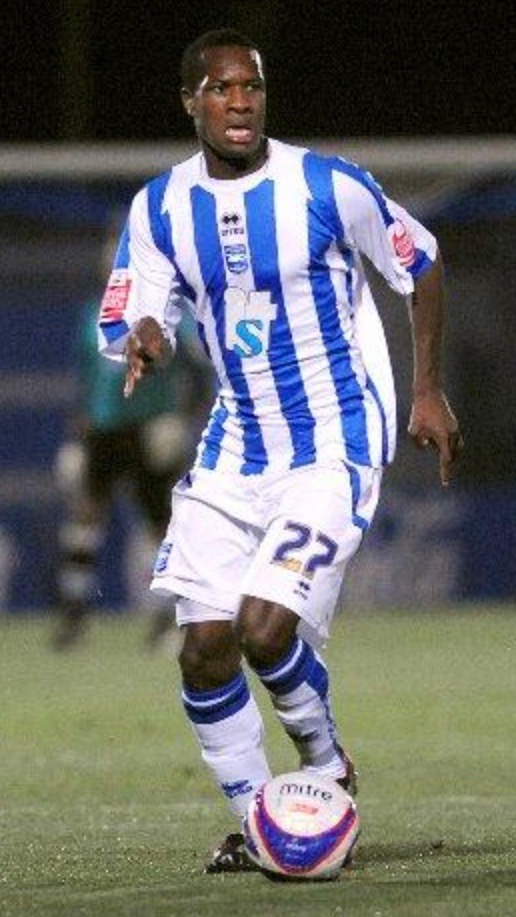
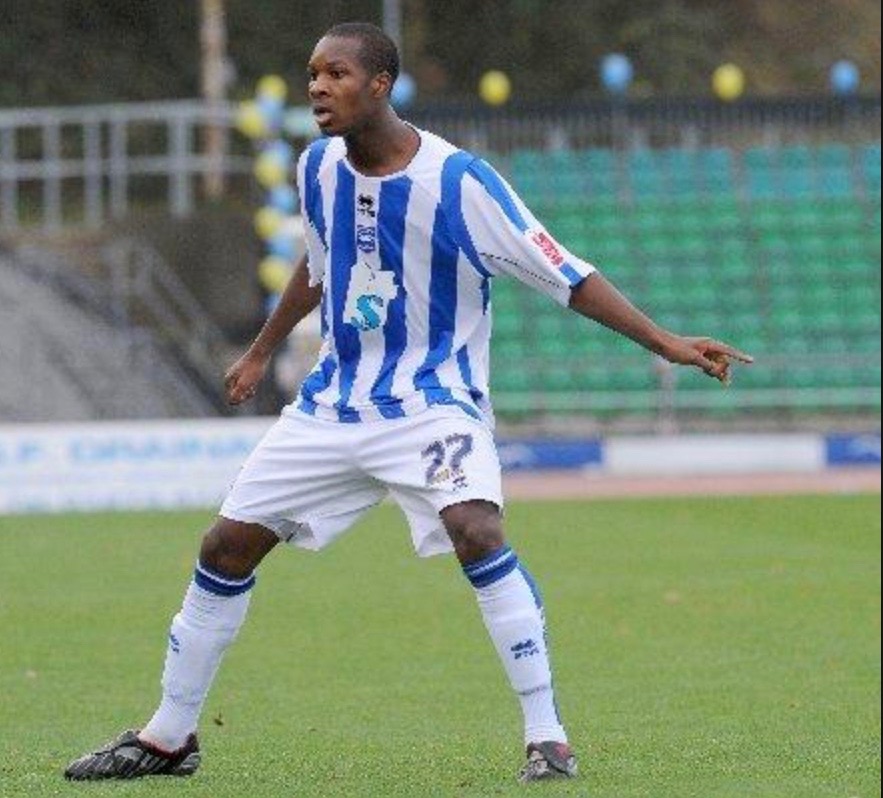
The younger Hoyte spent most of the 2009-10 season as a Brighton player and, although only 19 at the time, got a rough ride from Seagulls supporters who expected more from someone who’d played at the top level of the game.

Initially signed on loan in October 2009 by Russell Slade to cover for the injured regular right-back Andrew Whing, Hoyte was handed his debut against Slade’s former club Yeovil Town at Huish Park.

“I am delighted to know the club wants me,” the youngster told The Argus. “They have got a lot of games this month and I just want to get out there and play.”

As it turned out, Hoyte outlasted Slade at the Withdean, and his temporary transfer was extended when Gus Poyet took over as manager.

The young full-back in the no.27 shirt gained a good amount of game time until Poyet unearthed Inigo Calderon in January 2010.

Even then, Poyet was happy to retain the services of the Arsenal youngster, telling the Argus: “We explained to Gavin before asking Arsenal that there was probably a player coming.

“Arsenal knew that as well, so nothing has been hidden. Everyone knows where they stand.

“We are working on different aspects of the game with Gavin, because he has got something which is very difficult to find sometimes in football, the speed to recover.

“When you have that ability, you don’t need to go to ground, because you are quicker than most players.

“He is young and there is plenty to come. We want to help him become a Premier League player or top Championship player.”

G Hoyte stripes

Hoyte got another chance to prove himself when Calderon picked up a nasty hip injury in April, bringing his total number of Albion games over the season to 21.

When it looked like the popular Spaniard was going to move to Southampton instead of accepting a contract offer from the Seagulls, Argus reporter Andy Naylor ventured: “Gavin Hoyte’s encouraging conclusion to the campaign suggests he might even be capable of rising to the occasion if he returns on loan from Arsenal.”

It didn’t come to that, though, and, over the next two years, he dropped down another division with loan spells at Lincoln City and AFC Wimbledon.

When he realised there was little hope of him ever getting close to the Arsenal first team, he left for Dagenham and Redbridge, having spoken to Arsenal goalkeeping coach Tony Roberts, who’d played for the Daggers himself.

Born in Leytonstone on 6 June 1990, Hoyte followed in his brother’s footsteps to Arsenal and progressed to the point of being appointed the under 18 team captain in the 2006-07 season when he was still only 16.

“I am very vocal during games, although I wouldn’t quite say that I was a Tony Adams, but that’s the sort of captaining style I try to emulate,” Hoyte told the Arsenal matchday programme. “I have captained at schoolboy level and in particular in tournaments and so I do have some experience, but I did not expect to be captain of the under 18s so early.”

Hoyte captained Arsenal’s under 18s when he was only 16

Hoyte was also capped at England under 17, under 18, under 19 and under 20 levels. In the 2009 UEFA under 19 championships, he played in two qualifiers in the space of four days when England beat Slovakia 4-1 and Scotland 2-1; his teammates including current Albion no.3 Jason Steele in goal, and future full international Kieran Trippier.

He was part of the squad who took part in the finals in Ukraine, starting twice and coming on as a substitute three times as England finished runners up to the hosts. The side was managed by Brian Eastick, who’d been an Albion coach during the Mike Bailey era.

Hoyte’s one game for the under 20s came as a substitute in a 1-1 draw away to Uzbekistan on 2 October 2009, when a fellow substitute was Sam Baldock. Two non-playing subs in that game were Jonathan Obika and Gary Gardner, who both had spells on loan with the Seagulls.

Hoyte looked back on his Arsenal time in an interview with Will Unwin for planetfootball.com and said: “When you’re there you always think you’re going to make it – I was pretty confident.

“I had my older brother there as well, so that helped a lot, seeing how he progressed.

“That was a big thing for me, seeing him play every week, watching him, thinking, ‘I want to try and get to where he is’.”

Hoyte was an unused substitute for several first team games before making his debut in a 6-0 League Cup win over Sheffield United, and starting in the next two rounds, against Wigan and Burnley. His Arsenal career only seemed to be heading in one direction.

“Just to play at the Emirates was massive, coming out to a big crowd,” he told Unwin. “There were a lot of young boys in the team so that helped me with confidence and eased it.

“But there were a lot of players in front of me, so I didn’t think about playing in the Premier League. It was always in the back of my mind, but I wasn’t thinking I was going to play immediately.”

But 11 days after the second of those League Cup appearances, Hoyte was handed his Premier League debut, after William Gallas had been stripped of the club captaincy for criticising team-mates amid a poor run of only one win in four games.

G Hoyte v Man City

Up against Robinho of Manchester City, he was taken off after an hour of a 3-0 defeat, and it would prove to be both the start and end of his top-flight career.

Hoyte didn’t recall getting much feedback after the game, although it wasn’t long before he was awarded a new contract. He made his fourth appearance for the club in a League Cup quarter-final defeat to Burnley at the start of December – but he didn’t play for Arsenal again.

He was sent out on loan to Championship side Watford for the second half of the 2008-09 season, featuring in 10 matches, and he eventually left Arsenal in 2012 when his contract expired.

After two seasons in League Two with Dagenham, he spent the 2014-15 season with League One Gillingham, featuring in 35 matches. He dropped down to League Two with Barnet, ended up at National League Eastleigh until the end of the 2017-18 season before returning to Dagenham in 2018-19.

It proved to be a frustrating season for him under the managership of former Albion boss Peter Taylor, but, reunited with former manager John Still at Maidstone United, he has been a regular at right-back in 2019-20 and scored just the third goal of his career against Dulwich Hamlet in December.

Along with his brother, the younger Hoyte has enjoyed the opportunity to play international football with Trinidad and Tobago, as he told socawarriors.net, and spent 20 minutes on the same pitch as Lionel Messi in a friendly as Argentina warmed up for the 2014 World Cup.

Barça boy Orlandi twice denied promotion with the Seagulls

andrea-orlandi-brightonARTICULATE Andrea Orlandi would probably rank as one of my favourite Albion players of recent times. It was just a shame he seemed bedevilled by injuries which curtailed his contribution.
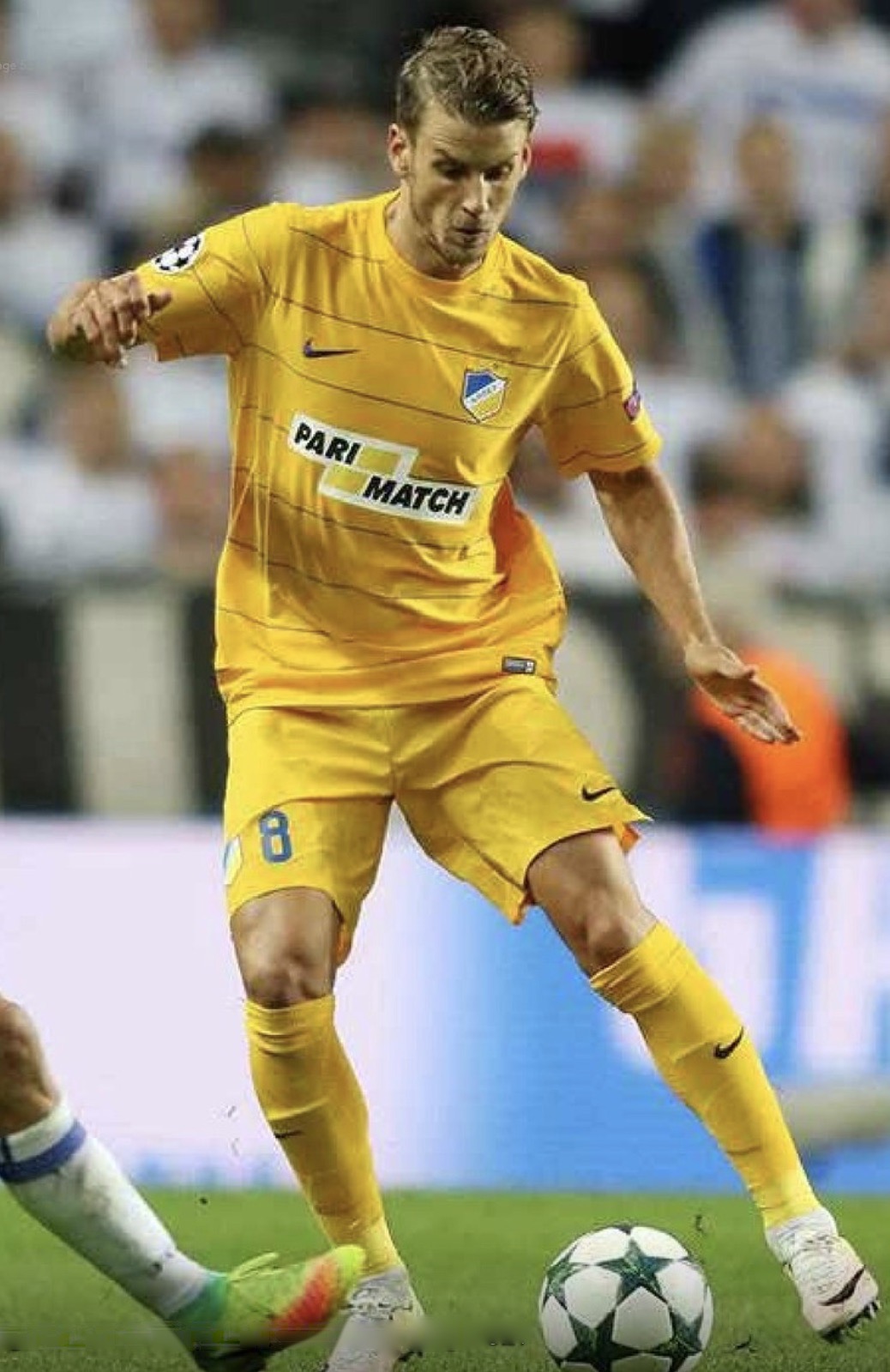
On his day, his technical ability definitely improved Brighton’s creativity going forward and I guess he’ll always be remembered for the goal he scored against Premier League Newcastle in the third round of the FA Cup on 5 January 2013 which he somehow guided in from what seemed an impossible angle.

On bbc.co.uk, the match report recorded: “A rejuvenated Wayne Bridge surged down the left flank, gathered Gordon Greer’s raking 50-yard pass and crossed for Orlandi, who flicked the ball up with his left foot and delightfully fired home with the outside of the same boot.”

Orlandi Newc goal

Orlandi was 28 when Gus Poyet signed him on a two-year contract on transfer deadline day in August 2012. “Andrea provides us with versatility and creativity across the midfield,” Poyet told the club’s official website.

“He can play as a typical winger, or more central in a number 10 role. He has played a lot of games in the Championship for Swansea, helping them win promotion, and he has played at the top level.”

It was crowd favourite Craig Noone’s departure to Cardiff that created the opening for Orlandi’s arrival, although they were very different players.

At Brighton, Orlandi had the chance to renew his great friendship with Seagulls legend Inigo Calderon, a former Alavés B side teammate, and there was quite a contingent of Spanish players at the club during that 2012-13 season.

As the Seagulls finished fourth and the Poyet era came to a close after the Palace play-off farce, Orlandi had played 30 games plus five as sub and added six league goals to that one in the FA Cup.

Under Poyet’s successor, Oscar Garcia, Orlandi picked up a knee injury in the opening game of the season, against Leeds, which required surgery.

“The doctor I went to see is regarded as one of the best in Europe so although it was disappointing that I had to undergo surgery, I was in the best hands,” he told the club website. “Although I was hoping rest would cure the problem, I was told I would risk further damage if I didn’t have surgery.”

As it turned out, he managed just 12 starts plus six as sub as the season culminated in yet more play-off heartache, this time at the hands of Derby County.

Orlandi played in both legs against the Rams and, although Garcia decided to quit, he recommended Orlandi be given a contract extension. As soon as Garcia had gone, though, head of football David Burke called him in to the club and told him he was being released.

Orlandi told the club website: “I’m sad. My youngest daughter was born here and I was hoping to stay here a lot longer but that is football.

“I really felt loved by everyone, especially the fans who were incredible to me whether I was on the pitch or off of it and that is something that nothing will ever take away from me.

“The city and all the people in it are wonderful and I wish everyone nothing but the best going forward and I hope the club can fulfil the dream of playing in the Premier League soon. I’m just sorry I couldn’t help to make that happen.

“It is a real shame that in my two years we got so close but we just couldn’t get over the finish line, but I will take away some magnificent memories with me.

“Once again I just want to pay tribute to the tremendous support I have felt during my time here.”

In a subsequent matchday programme article, Orlandi said: “Just running out at the Amex in front of a full house was an amazing experience – I loved every minute of my time at the club and loved playing for the fans.

“I will always hold Brighton close to my heart.”

Born in Barcelona on 3 August 1984 to Italian parents (a Juventus-supporting dad and an AC Milan-supporting mum), he played as a youth at Espanyol but at 17 moved to Alavés where he made 58 appearances for their B team between 2003 and 2005.

When loaned to Barcelona, he continued to be a B team player but he did play two first team games for the Catalan giants: as left back under Frank Rijkaard in a 3-1 defeat to Athletic Bilbao and a Copa Cataluyna win over Espanyol.

When Alavés released him in 2007, fellow Spaniard Roberto Martinez picked him up as a free agent and took him to Swansea City, where he stayed for five years.

Orlandi yellowManagerial changes at the Swans meant he wasn’t always first choice although on signing a contract extension in July 2011, chairman Huw Jenkins said: “He has grown into the squad over the past few years and his technical ability is well suited to the Premier League.”

He was part of Brendan Rogers’ squad promoted to the Premier League via a 4-2 play-off final win over Reading, appearing 24 times over the season, although he didn’t feature in the final at Wembley.

AO SwansIn one of his last Swansea games, on 28 April 2012, Orlandi scored after just 25 seconds of a Premier League game against already-relegated Wolves, but the game finished 4-4.

After his release from Brighton, he joined chaotic Championship side Blackpool, the day before the 2014-15 season started – with only a week to go, they had only eight registered professionals.

Under initially Jose Riga and then Lee Clark, Orlandi played 25 games plus five as sub, but the Tangerines finished rock bottom of the league, and the club was in disarray.

Orlandi revealed some of the strange goings-on in a weekly blog he wrote for Spanish website am14, including the time the goalkeeper Joe Lewis had to wear an autographed shirt intended for a presentation to a sponsor because there was no other top available.

In April 2015, Orlandi wrote: “When you first arrive in England in mid-April you imagine yourself spending your Sundays in the garden or having a drink on the terrace… you don’t imagine yourself stuck at home, listening to the wind and spending hours hiding from a hurricane.

“I have been living in England for almost eight years and the sun has always shone. This year is nothing like that, not in any sense. I will be patient and hopefully the nice weather will arrive before the end of the month. In terms of the football, the sun did not appear for Blackpool either.”

Orlandi also used the blog to talk about a defeat at Ipswich. “We started well, I scored a good goal thanks to a great assist from Cameron, and we lost. In part, this was thanks to my mistake which helped lead to their second goal.

“It was an error without explanation. ‘The pitch condition, the bounce of the ball, it came from a rebound’… excuses do not sit well with me. Unfortunately, sometimes we make inexplicable errors and that happened to me. I have to take responsibility, accept it and move on. The worst is that we equalised again and finally conceded 3-2 due to another silly play. It is the story of this season.

“When the league is finished, I will look at all the results and I shudder to think of the points that we have lost in, to put it mildly, a stupid fashion. Maybe we would not have avoided relegation but we would be in a different position, that is for sure.”

As the scorer of four goals, he was Blackpool’s second highest goalscorer for the season and, despite relegation, they hoped to keep him, but he invoked a release clause in his contract and became a free agent.

In August 2015, Orlandi signed for Cypriot First Division side Anorthosis Famagusta on a one-year deal but it didn’t sound like it was the greatest of experiences when Argus reporter Brian Owen caught up with him in February 2016, with Orlandi disappointed he hadn’t been able to find another English club in the Championship.

Orlandi switched clubs in Cyprus and joined APOEL but his one-year deal was terminated in January 2017 after he’d made 19 appearances.

He switched to Italy where he played 31 matches for Novara Calcio in Serie B and then joined his old pal Calde to spend half a season in the Indian Super League at Chennaiyin (under head coach John Gregory). On returning to Italy and signing for Serie C side Virtus Entella, during the medical a cardiologist discovered he’d got scarring in the left ventricle of his heart, and he was forced to retire without playing a game.

The popular Spaniard revealed in Richard Newman’s Football the Albion and Me podcast how he has gone on to become a scout for an agency as well as working as a TV pundit on La Liga and writing a column on that competition for the Evening Standard.Orlandi pundit

Pictures from various online sources and the Albion matchday programme