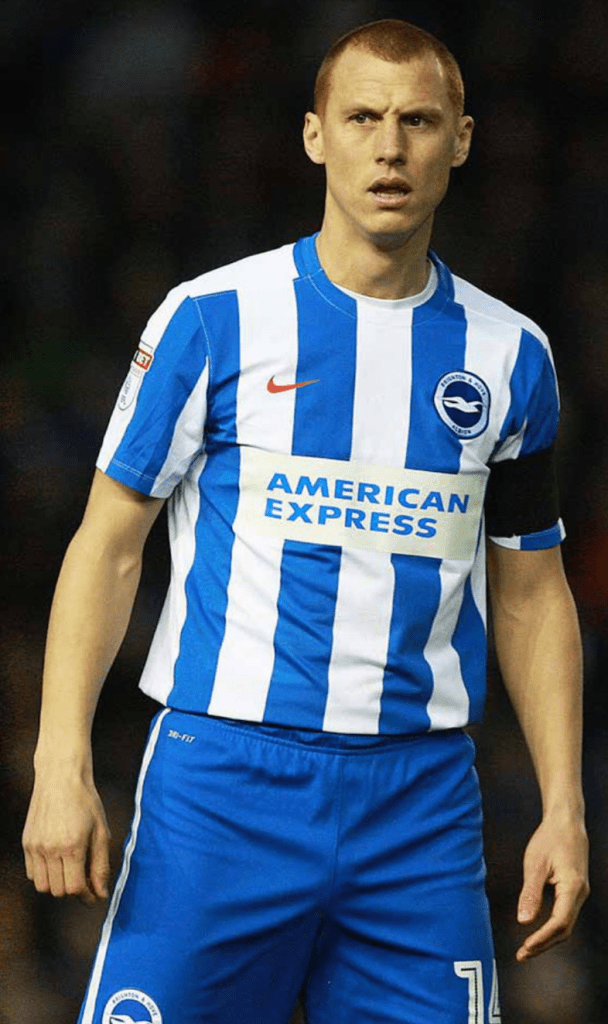
Not many of them, but Sidwell’s goals were memorable

STEVE SIDWELL was not a recognised goalscorer but when he did find the back of the net it was often memorable and headline-making.

Such was his most talked about goal for Brighton – hit from the centre circle away to Bristol City in a Championship match on Bonfire Night in 2016. 

Eight years earlier, he stunned Goodison Park by rifling home from 25 yards after only 31 seconds of Aston Villa’s 7 December Premier League visit to Everton.

I was at Ashton Gate to see Sidwell’s amazing 50-yard lob over stranded Robins’ ‘keeper Richard O’Donnell (Jamie Murphy added a second in promotion-chasing Albion’s 2-0 win).

Manager Chris Hughton said: “It was a wonderful strike by Sidwell on his left foot when I would have expected it more from his right. It caught everyone by surprise, including their goalkeeper.”

I was also at the City Ground, Nottingham, seven months earlier when Sidwell went on as an 85th-minute sub and scored the winner (below) in the 91st minute to earn a 2-1 victory over Forest.

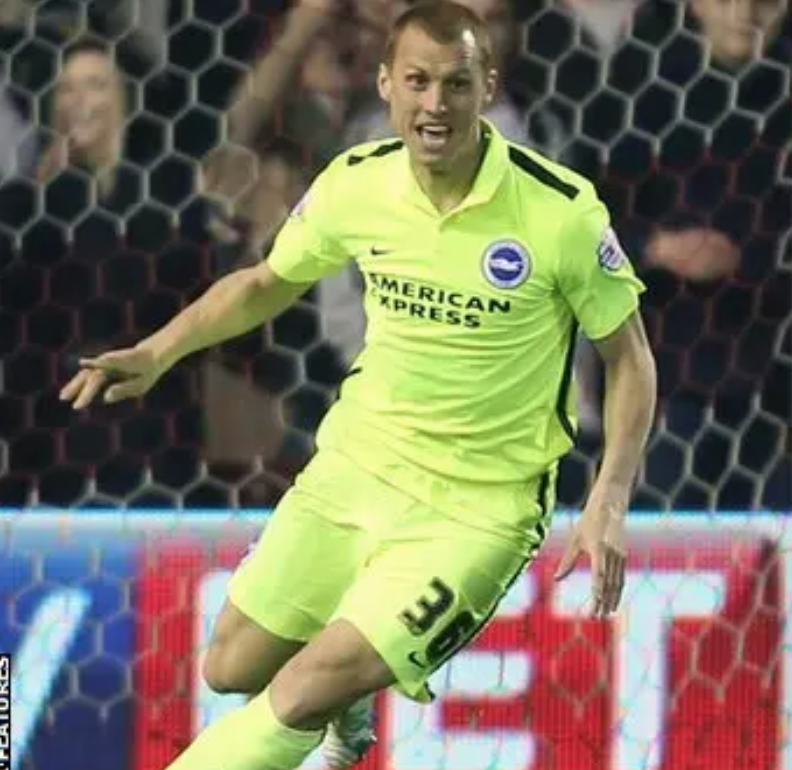
With his right foot this time, he drilled the ball in from 12 yards giving Albion a fourth win in five games which extended their unbeaten run to nine games.

“We felt that the game was becoming open and we felt we could bring players off the bench who could influence the game,” said Hughton. “One thing about Steve Sidwell is that he can break forward from midfield. I did not bring him on for that, but I am very glad he did it.”

Back to that game for Villa in 2008; moments after kick-off, Everton’s Mikel Arteta lost possession to Ashley Young. He fed James Milner who in turn found Sidwell. Finding himself with a sight at goal from 25 yards, he buried a stunning shot past Tim Howard. In an extraordinary end to the game, Young, who had scored Villa’s second, got a 94th-minute winner for the visitors after Joleon Lescott thought he’d salvaged a point in the 93rd minute, netting his second of the game. 
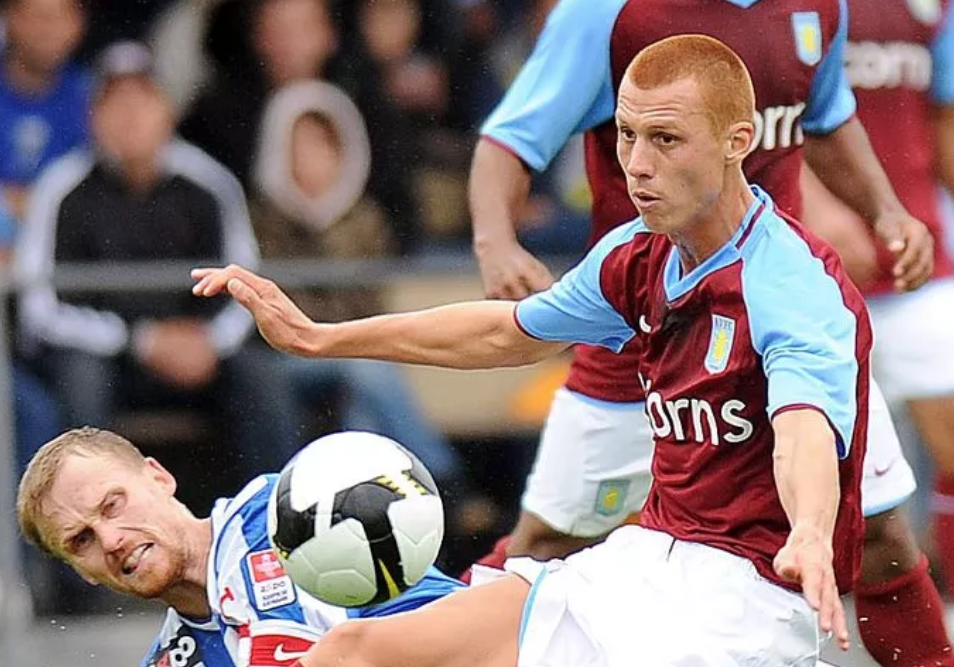
That opener at Goodison was a rare highlight for Sidwell in what overall was an unhappy two and a half years at Villa.

Sidwell had first caught Villa boss Martin O’Neill’s eye when he scored twice for Reading in a 2-0 home victory over Villa in February 2007.

O’Neill tried to land him before he opted to join Chelsea (the team he’d supported as a boy) and, by all accounts, predecessor David O’Leary had also tried to sign him.

So, it appeared to be a case of third time lucky when in July 2008 O’Neill took him for a reported £5million fee from being a Chelsea benchwarmer and gave him a three-year contract.

Sidwell during his first Albion spell

After success at Reading, where he had been reunited with Steve Coppell (who’d had him on loan at Brentford and Brighton as a young Arsenal player, as covered in my 2017 blog post), Sidwell had a disappointing season at Stamford Bridge, where he made just seven Premier League starts. 

Managerial change didn’t help his cause: he’d been signed by Jose Mourinho who left early in the season to be replaced by Avram Grant.

Sidwell later admitted: “I left for Aston Villa in search of regular football. In hindsight, I wished I’d stayed another six months because Luiz Felipe Scolari came in and you never know what might have happened then.”

At the time, Sidwell told Villa’s official website: “For me personally, it’s about getting back and playing. I have had a year of not playing as much as I would have liked so to get out on the pitch is the first aim.” 

Although he played in both legs of the InterToto Cup tie against Odense in July, knee and calf problems delayed his league debut until the end of October which he marked with a goal after going on as a late substitute in a 4-0 win at Wigan Athletic. That and the strike at Everton were two of four league and cup goals he scored for Villa that season when his 25 appearances (20 starts + five as sub) would ultimately amount to nearly half the total he made for the club: 37 starts + 27 as sub.

He didn’t add any more goals in the claret and blue and in the remainder of his time at Villa Park he was never really a regular, eg in 2009-10 only 14 of 33 appearances were as a starter and in 2010-11, three of six under Gérard Houllier.

Although he and O’Neill clashed on occasion, the Northern Irishman did say: “I’ve been very happy with him. It’s just that other players playing in positions all over the place have been playing brilliantly. Some people are playing out of their skin at this minute in our team. But I’ve been very pleased since he’s arrived at the football club.”

Sidwell’s former Reading teammate Nicky Shorey, who’d joined him at Villa Park, had high expectations of him ahead of his second season, telling the Birmingham Mail: “I don’t think Villa have seen the best of him yet. It’s been a strange season for Siddy. He’s been out injured for long periods and he’s picked up niggles here and there. I don’t think he’s ever had that before.

“For as long as I’ve known him, he’s never really been injured, so I think that’s something new for Siddy to try and learn from.”

Shorey said Sidwell had remained positive and upbeat around Bodymoor Heath and Villa Park and reckoned: “When he comes back for pre-season and hopefully has a good pre-season you’ll see the best of him and I think everyone will be impressed with how well he can do.

“When you know Siddy, that’s all he ever does – trains and plays with a smile. You haven’t got any worries with him on that count. He just keeps going and he’ll be fine. He’s just an all-round good midfielder and I’m sure he’ll show that before too long.”

Sidwell found himself competing for a midfield place with the likes of Milner (before his move to Manchester City), Gareth Barry, Stiliyan Petrov, Nigel Reo-Coker and Craig Gardner. He revealed later that he’d fallen out with O’Neill and at one point he went on the transfer list.

After O’Neill quit in protest at the sale of Milner to City, and ahead of Houllier’s appointment, Sidwell hoped to be given a new lease of life in claret and blue.

He overcame an Achilles’ problem and declared himself raring to go after playing 90 minutes in a 4-0 reserve team win over Blackpool at Bodymoor Heath.

“I feel I’ve shown glimpses,” he told the Birmingham Mail. “In the previous years, there have been good games and some poor games.

“If I get a run of games, I am sure I can perform to the best of my ability. Hopefully, now, whoever takes charge I will just get an opportunity and I will take it.

“It is going to be tough but it is down to individuals to perform in training, perform in reserve games and show the manager you are worthy of a start.

“Once you get that, you have to take it with both hands. Fitness wise, I’ve been training really well and looking sharp. It is just games that I need. I wasn’t unfit before the injury took place.”

When the Mail spoke to him ahead of a second city derby at the end of October 2010, Sidwell sought to exploit a two-month injury absence for Petrov saying: “It is all about opinions.

You don’t play under certain managers. Under certain managers you do get a chance.

“Once you get a chance it is about taking it and staying in the team.”

Sidwell started the game but was replaced by young Barry Bannan in the 58th minute of the dour goalless draw – and it turned out to be his last game for Villa (he was an unused sub away to Fulham the following week).

It was in a 2018 interview with Donald McRae of The Guardian that Sidwell revealed the extent of his disillusionment at Villa, telling the journalist: “When I was at Aston Villa I was on the most money in my career. But that was when I was at my unhappiest. I was living in Birmingham away from my wife and family.

“My middle son caught meningitis and was in hospital. The football never really took off and me and Martin O’Neill clashed. So, it was a combination of things.”

Released on a free transfer in January 2011, after being deemed surplus to requirements by Houllier, Sidwell joined Fulham – which is a story for another blog post.

After three years with the Cottagers, he followed ex-Fulham boss Mark Hughes to Stoke City and it was from there that he made his initial return to Brighton, on a half-season loan. 
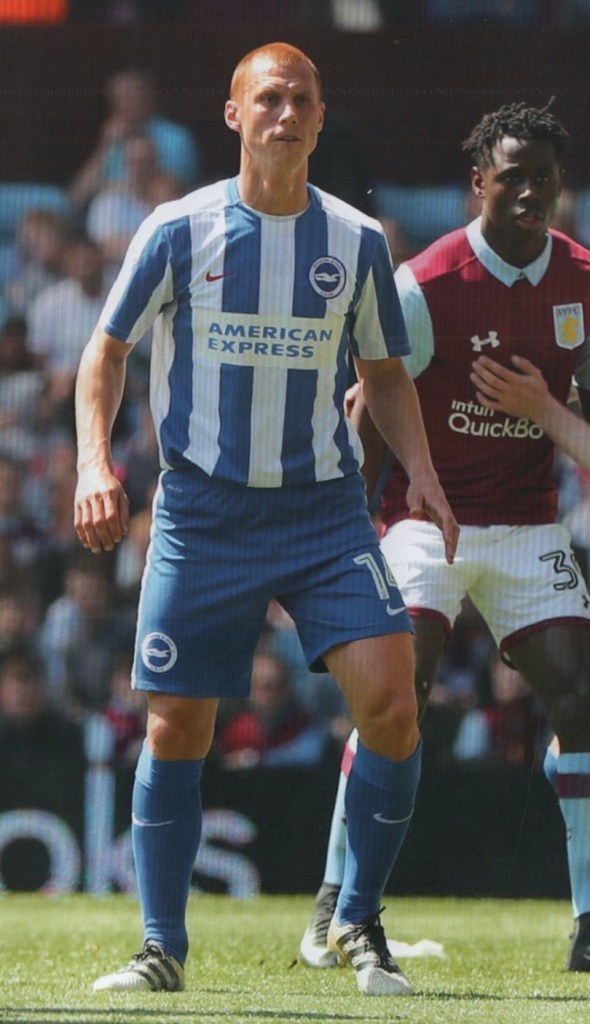
Sidwell in action for Albion against Villa

In clinching his signing in January 2016, Hughton told the Albion website: “Steve is an experienced player who has played virtually his entire career in the Premier League. He knows this club, as well as a few of the squad and will supplement our existing midfield options.

“Beram Kayal, Dale Stephens, Andrew Crofts and others have been excellent in midfield for us this season, but we also need to make sure we have good options in every position of the team, and options which will be enough for us through until the end of the season.

“Steve brings that, and in addition, he is another experienced head; he is a player who’s proven at the very top level of English football. Brighton fans will know Steve is also a great athlete and top professional.”

Although he only made six starts, Sidwell went on as a sub 13 times in that half-season. When Albion had to endure the end-of-season play-offs after missing out on automatic promotion by only drawing (1-1) the last game of the season at Middlesbrough, it was Sidwell who stepped in to fill the boots of Stephens, who was suspended after his controversial sending off by Mike Dean at the Riverside Stadium.

Unfortunately, Sidwell was one of four Albion players who had to go off injured in the 2-0 play-off first leg defeat at Sheffield Wednesday. He suffered ligament damage but was taped up and given medication to enable him to play in the home tie, although he later admitted: “I should never have played really.”

He reckoned the Amex atmosphere for that game was the best he’d ever been involved in. In spite of a valiant effort, it ended in a disappointing 1-1 draw although Sidwell said: “I ended up playing one of my better games in a Brighton shirt, which maybe cemented a contract for the following season.”

Released on a free transfer by Stoke, Sidwell signed on a permanent basis for the Seagulls and was a key component in the side that won promotion from the Championship in May 2017. He made 29 starts plus eight substitute appearances that campaign.

“The whole reason behind my return was to help the club into the Premier League,” he said.

Sidwell was on the bench as Albion began life amongst the elite but after that “a slipped disc, surgery, and then before you know it your career’s gone.”

Sidwell later admitted: “It was really hard. I came here to do a job, to get the football club into the Premier League, and then it was time to go and enjoy it. I thought I had two or three years left, but that was cut very short.”

Recognising he was blessed to have enjoyed a 20-year career, he nonetheless said: “To not really say goodbye to football, something I’d done since I left school, and also to Brighton, was really disappointing.”

He stayed on at Albion as under-16s coach (right) for a while but increasingly his work as a pitchside pundit for live TV coverage of matches took up more of his time. He is also now a regular co-host of the popular That Peter Crouch Podcast.

Sidwell is also business development director of Box3 Projects, a company that constructs and designs office spaces to be rented out or sold.

Illness and injury brought Izzy Brown’s dream to an early end

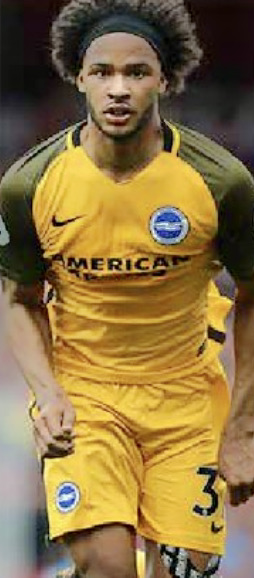
IZZY BROWN was just 20 when he joined Albion on a season-long loan from Chelsea hoping to prove his worth as a Premier League striker.

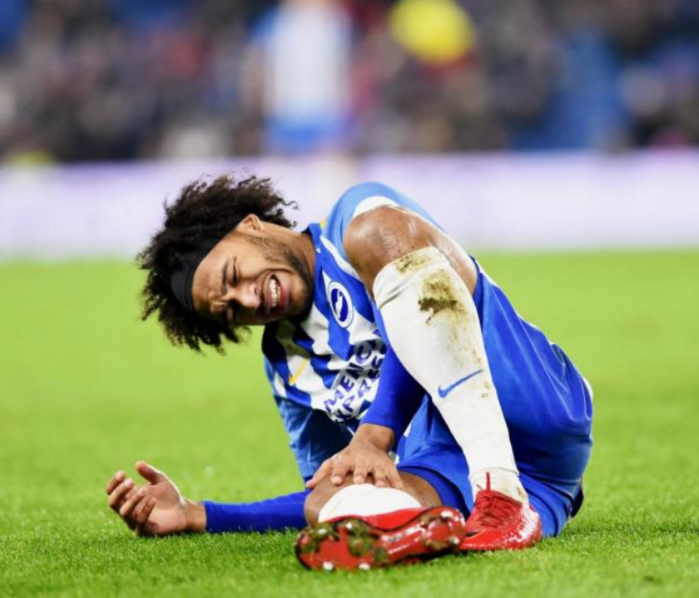
Sadly, a serious anterior cruciate ligament (ACL) injury meant that ambition was thwarted after only four starts and eight appearances off the bench.

Then, at the age of 26, a twice-ruptured Achilles tendon forced him to quit the game altogether.

Brown’s ascent to the elite level of English football was rapid. He was only 16 when he made his debut for West Bromwich Albion, becoming the second-youngest player in Premier League history when he went on for the Baggies towards the end of a 3-2 defeat against Wigan in May 2013.

Two months later, Chelsea offered him five times more than West Brom were paying him and he switched to Stamford Bridge to join their scholarship scheme.

The financial cushion they gave him at such a tender age meant retiring from the game early came as less of a blow than it might have done.

“I’m thankful to Chelsea for everything they’ve ever done for me because if it wasn’t for them, I don’t know what my life would be like now,” Brown told Nancy Froston in an exclusive April 2023 interview with The Athletic.

“They put me in a position where, while it’s not that I don’t ever want to work again, it has set me up to provide for my family for quite a few years.”

Brown spent eight years as a Chelsea player although Brighton were the fourth of seven clubs he joined on loan over that period.

Although he scored twice on his Chelsea debut in a 5-0 pre-season friendly win over Wycombe Wanderers, he made only one competitive first team appearance and that was as a sub against his old club, West Brom, in May 2015. Chelsea lost 3-0 and Brown saw only 11 minutes of action when Jose Mourinho sent him on to replace Loic Remy.

Brown had previously been an unused sub on several occasions in the second half of the 2014-15 season, but that summer he was sent on loan to Vitesse Arnhem where he registered just the one goal in 24 appearances.

In the 2016-17 season, Brown had two loans in Yorkshire: scoring three in 20 matches for Rotherham United and then five in 21 for their fellow Championship side Huddersfield Town.

He was involved in the Terriers’ Championship play-off final win over Reading and there were reports they wanted to make his move permanent, with a fee of £8m mentioned.

But Brown thought it wasn’t the right move for him, still harbouring hopes of making it at Chelsea. “I’m still learning and I feel Brighton is the place for me to develop further,” he said.

“There were plenty of clubs calling my agent but Brighton was always my number one choice,” he told the matchday programme. He explained he wanted to learn from manager Chris Hughton, adding: “The facilities here and the ambition of the club was also important for me.”

Hughton said of the youngster: “He’s a very flexible forward player. We brought him in very much as a (number) ten, where he had played for Huddersfield last season.

“In his first loan at Rotherham he played very much off the front, went abroad played off the left, and in his first game for us and in pre-season was on the left. He has that versatility in his game.”

That first league game was the opening day defeat at home to Manchester City and he went off injured (replaced by Jamie Murphy) as Albion went down 2-0. He didn’t re-appear until 1 October away to Arsenal when he struggled as an orthodox striker in another 2-0 defeat.

Thereafter, he only made two more league starts – the 5-1 home battering by Liverpool and a 2-0 defeat at Huddersfield.

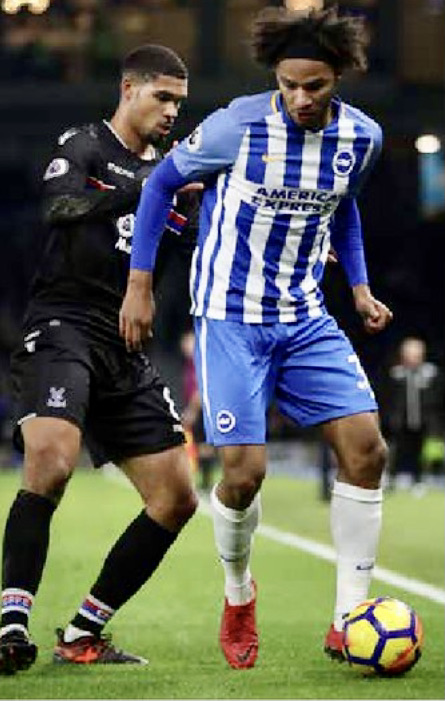
Although Crystal Palace in the third round of the FA Cup on 8 January gave him a chance to show what he could do from the start, the game was only six minutes old when he was forced off with the knee injury that brought his time with Albion to a close.

Hughton saw it as a big blow because he had been planning to make much more use of the young striker in the second half of the season.

“You would have seen him much more involved,” he said. “He’d had a slight hamstring injury when he first came which kept him out for a few weeks.

“But certainly I would have seen him play in more games than perhaps in that first half,” said Hughton.

“He is a very popular player here. Before he’d come here, he’d had a couple of other loans and I think that adapted him well going into a new environment.”

Brown himself had said the only player he knew before his arrival was Connor Goldson through his friendship with Jonny Taylor, who Brown had played with at Rotherham.

Deprived of Brown’s services, Hughton brought in Jurgen Locadia from PSV Eindhoven and a familiar face in Leonardo Ulloa, returning to the Amex on loan from Leicester City.

Although both were on the scoresheet when Albion dispensed with Coventry City in the fifth round of the FA Cup, it would probably be fair to say neither were a rip-roaring success. The combination of Glenn Murray and Pascal Gross were the main goal contributors.

Born in Peterborough on 7 January 1997, Isaiah Brown, to give him his proper name, said in an emotional open letter on his retirement: “As soon as I could walk, I always had a football at my feet. That was me, that was my happy place.”

He was talented enough to represent England at under 16, under 17, under 19 and under 20 levels, winning a total of 34 caps.

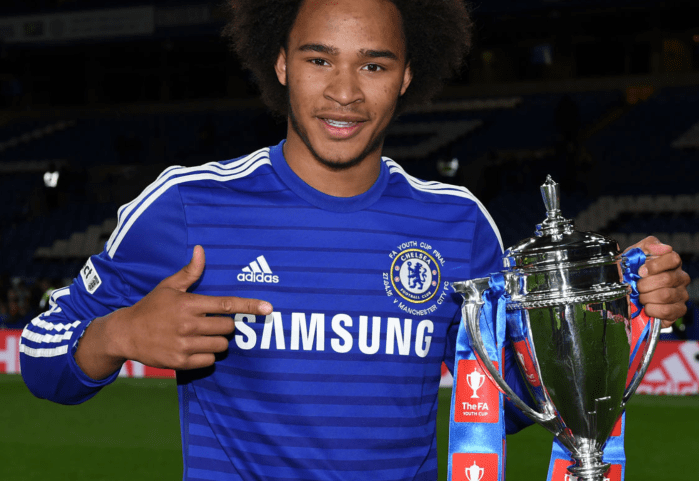
At Chelsea, he was in the side that won the Under-21 Premier League title in 2013-14 and the UEFA Youth League the following season.

After the disappointment of his time at Brighton being curtailed, he was still recovering in August 2018 when he went back to Yorkshire on loan to Championship Leeds United under Marcelo Bielsa.

But once recovered, he was mainly involved in United’s under 21 side. He only made two substitute appearances for the first team, one in a 1-0 league defeat at QPR and one in the end-of-season play-off final that Leeds lost 4-3 on aggregate to Derby.

The following season once again saw him head out on loan for a season, this time to Luton Town. He scored once in 19 starts, plus nine games as a sub, as the Hatters narrowly avoided relegation from the Championship.

The 2020-21 season once again saw Brown heading to Yorkshire, this time with Sheffield Wednesday in the Championship.

It was a season that saw the club have three full-time managers and a caretaker, finishing bottom of the league and relegated to League One. Brown made only five starts plus 16 appearances off the bench.

With his contract at Chelsea finally coming to an end, his next move was a permanent switch away from the Bridge, and he signed a one-year deal with Preston North End.

Head coach Frankie McAvoy said: “He’s got good pedigree. He’s got great experience in terms of playing in the Championship and an ex-Chelsea player from a young age.

“He’s had quite a few loans over his time, some he’s done well, others maybe latterly not done as well as he hoped, so he just needs to find that self-belief again and confidence. But we’re certainly getting a player with undoubted talent, very offensive and we’re looking forward to working with him.

“He can play across the front, but probably his preferred position is a ten behind a striker or two, depending on how we play.

“He can also play in pockets off right and left, so he adds that bit of versatility to our front players and I think if we can get him up and running, believing in himself, being confident in his own ability then I’m sure he’ll endear himself to the Preston faithful.”

Brown, by then 24, said: “Now I’m getting to that age where I want to develop myself as a player and hopefully be a legend at a club, and I really feel like Preston’s a place where I could do that.”

But less than a month after signing for North End, he ruptured an Achilles during pre-season training – and he never actually played a competitive game for Preston.

“We had a pre-season game against Celtic when I was at Preston and I felt some pain in my Achilles, but it wasn’t too bad,” Brown told Froston. “Then we had a couple of days off, I came back for training and then I just passed the football, like I’d done a million times before, and I heard a pop. I thought someone had kicked me but no one was around me.

“It had snapped. So I had the surgery and it went well, but we noticed there was like a little gap in my Achilles.

“We thought maybe it’s not healed properly, but this was only after two months so we gave it time. Then I went out for some dinner and stepped down a small step and it snapped again.

“So I had two Achilles surgeries in the space of three and a half months. To come back from one is hard. To come back from two is basically impossible.”

On top of those football injuries, he got sick with hand, foot and mouth disease, then had an issue with his nervous system that led to muscle loss and affected the nerves in his feet.

He was subsequently told he had a rare and serious condition called Guillain-Barre syndrome and it was apparent he would have to retire from playing football.

In a revealing interview with Froston, he concluded: “Football was my dream. It still is my dream. But dreams have to end one day.”

In the open letter he wrote on his retirement, he said: “Football doesn’t define me as a person. I’m a father, a son, a brother and a friend, and I will be that after football.

“I’ve lived my dream and memories that will stay with me forever. To every club that I have played for, I really appreciate you all for believing in me and giving me a chance to play the game I love.”

Chuba Akpom’s watching brief in Albion’s promotion

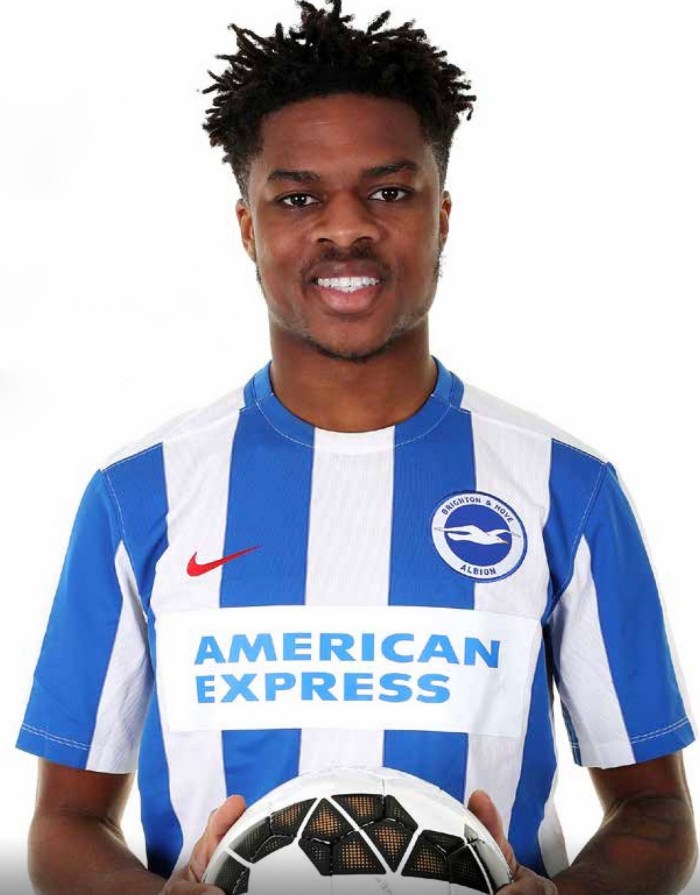
AFTER Chuba Akpom finally made his mark on England’s Championship, he earned a €14m move to Ajax where he initially struggled to make an impact.

But three goals in two wins after new manager John van’t Schip sent him on as a substitute made life look a lot better.

The forward got 28 goals in helping Middlesbrough to the Championship play-offs in 2022-23 but the move to Ajax began badly and he had few chances as the side struggled under former coach Maurice Steijn.

“It was a terrible first two months here if I am being honest,” Akpom told AFC Ajax. “The new manager has made me feel more at home than I have ever felt since arriving. We are footballers, we are human beings first.

“He spoke to me as a human being, not as a footballer. Ever since the new manager arrived, I feel much lighter, back to myself.”

The early season form sounded a lot like the unhappy spell when he was on loan to Brighton from Arsenal in 2017.

Akpom spent 16 years at Arsenal and one of his major inspirations was Tottenham Hotspur’s Chris Hughton, who took him on loan at Brighton. Hughton had been to the same inner city school, St Bonaventure’s in Newham, as the young striker from Canning Town and in an Andy Naylor exclusive for the Argus, Akpom revealed: “When I was in school there used to be pictures of the gaffer there.

“The kids used him like an inspiration and motivation. I did as well. Seeing someone come from the same area and the same school as me to become such a big and successful person.”

But the alma mater link did little to help the Arsenal loanee – in spite of high hopes when he signed in early 2017, Hughton gave him only one start and the rest of his involvement was as a substitute.

“He is a young talent who gained valuable experience with Hull in the Championship last season, will give us really good pace in the forward areas and complement the other strikers at the club,” said Hughton.

“We fought off competition from other clubs to sign Chuba and we would like to thank Arsenal for the opportunity of working with him for the rest of the season.”

Akpom was in effect a replacement for Dutch flop Elvis Manu, who left the building on loan to Huddersfield after a disappointing five months on the south coast.

It was to his disadvantage, though, that he joined the club at a time when Glenn Murray, Tomer Hemed and Sam Baldock were the preferred forward options, and, from the outset,he was aware of the challenge they posed.

“All three are experienced players; they know the Championship and they’ve shown what they can do with the goals they’ve scored, so it’s going to be good to learn from them,” he told the matchday programme.

“I’m going to be an addition to what we’ve already got here. We’ve all got something different to offer and I like to play at a fast intensity, try to get at defenders and get some shots off – basically be as much of a threat as I can. I’m also a team player, which is important.”

As it turned out, the young loanee’s only start was against Blackburn Rovers, on April Fool’s Day, and he was hooked on 58 minutes, with Hemed going on his place. Murray won it for the Seagulls with the only goal of the game nine minutes later netting past Jason Steele in the Rovers goal.

Akpom made nine appearances off the bench but he didn’t manage to get on the scoresheet. He made his debut as a 63rd minute sub for Hemed in the 3-1 defeat at Huddersfield on 2 February and replaced Jamie Murphy in the next match, when fellow substitute Hemed netted a last-gasp equaliser in a 3-3 draw at Brentford.  

“I know the Championship is a tough, tough league to play in,” he told the programme. “It’s really competitive and unpredictable, so you’ve got to get your head down and take each game as it comes.

“The team’s been flying high at the top of the league this season so you can see they’ve got the winning mentality in this league, and they’re playing the right kind of football, so I just want to be a positive addition to the team and help boost the bid for promotion.”

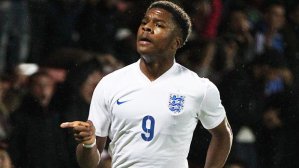
Akpom’s arrival at the Amex promised so much more, because he had already scored four goals at the stadium in previous matches: he scored a hat-trick for Arsenal’s under-21 side there and scored for England under 21 in a win over Switzerland in October 2015.

“I like playing here,” he told the programme. “The stadium’s nice, the pitch is great as well, so you can’t complain.

“It’s always good to score goals, no matter who it’s against, but hopefully I can now score a few goals here for Brighton.”

Even though his involvement in Albion’s promotion was peripheral, the club’s automatic elevation to the Premier League as runners up behind Newcastle meant he’d gone one better than the previous season when he’d been part of Hull City’s promotion via the play-offs.

That had been his fourth loan experience having previously gone on temporary moves to Brentford, Coventry City and Nottingham Forest.

Born in Canning Town on 9 October 1995, Akpom was playing football on local streets from the age of five but soon moved on to the Wanstead Flats, where he played for Rippleway United. An Arsenal scout spotted him at the tender age of six.

“I had a few training sessions for Arsenal and then signed for the club. I’ve been there ever since,” he told the programme. His best friend, who was developing alongside him, was Alex Iwobi, who also made it through to the Arsenal first team before moving on to Everton.

Akpom made his senior debut for the Gunners as a late substitute in a 3-1 win away to Sunderland in September 2013 (the match when Mezut Ozil made his debut).

The young striker went on to make a further nine first team appearances (mostly in the FA Cup and League Cup) but couldn’t claim a regular starting place under Arsene Wenger.

Akpom returned to Arsenal as Albion prepared for life in the Premier League and the following January made another loan move, linking up with Belgian First Division side Sint-Truiden on transfer deadline day in January 2018. He scored six goals in 16 games.

His association with Arsenal finally came to an end that summer when he signed a three-year contract with Greek Super League club PAOK Salonika.

Akpom told the BBC he consulted former Arsenal teammate Lucas Perez before moving to the club, based in Greece’s second largest city of Thessaloniki, and by the season’s end he had helped them win their first league title in 34 years.

“Perez said that I wouldn’t want to leave PAOK if I signed,” he said. “Thessaloniki is a beautiful city by the sea, the people are friendly, the climate is nice and, when I’m not training, I’m sometimes able to go to nearby beaches.

“I’m living in an apartment about 10 minutes from the ground and I drive along the coast to training.”

In May 2019, Akpom was the delighted but emotional scorer of the winning goal for PAOK in the Greek Cup as they beat AEK Athens.

After scoring 18 goals in two years for the Greek side, Akpom returned to the UK to sign for Neil Warnock at Middlesbrough, the effervescent Warnock declaring: “I’m delighted to finally have got him. He’s been my number one choice. I’ve wanted him for a long time.”

The deal gave Arsenal an unexpected £1m windfall because they had inserted a clause into the contract when the striker was sold to PAOK Salonika stipulating they would be entitled to 40 per cent of any fee if he was sold back to an English club.

Such an arrangement was frowned on by the football authorities and earned a fine and censure from FIFA, but Arsenal challenged that decision and got it overturned on an appeal to the Court of Arbitration for Sport.

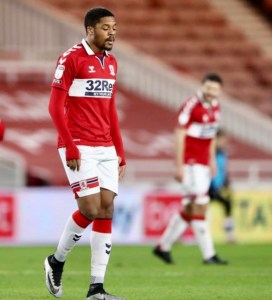
Although Akpom scored on his Boro debut to secure a 1-1 draw at QPR and followed it up with a goal in his second game, a 2-1 home win over Barnsley, he went on to score just five in 40 appearances and in August 2021 returned to PAOK on loan.

The manager castigated the club’s recruitment team for having signed the player on the strength of watching videos, saying: “We really have to go into everything a bit more when we’re looking to sign players. I don’t think we’ll be signing another player on the recruitment (team’s) say after just watching a video, we need to watch players live.”

Warnock was typically forthright when asked why it didn’t work out for Akpom on Teesside, telling BBC Tees: “I think it’s a mixture of things. I think at the end of the day he didn’t show enough during the games to warrant him getting a place and you have to play games to get yourself fit.

“I never really thought he deserved a run of games because whenever I used him he didn’t perform and it’s one of those things.

“When I spoke to him we all agreed it’s best to go and I think he’s quite happy to go back there.”

Akpom had been expected to leave Boro in the summer of 2022 after returning from his loan in Greece, as Warnock’s successor Chris Wilder looked for other forward options.

But he impressed the boss in pre-season and started in their first game against West Brom, and again when coming off the bench in a defeat at QPR.

“It’s no secret that people would probably have thought I’d be gone by now, and maybe me too,” Akpom told BBC Tees. “It has been a rocky few months for me, which is no secret.

“I don’t know what the future holds. I just have the mentality of staying professional and enjoying it. Who knows what tomorrow brings?”

After Akpom scored both Boro goals in a 2-2 home draw with Sheffield United, Wilder said he was keen for Akpom to remain part of his squad.

“He’ll rightly get the plaudits. For him to come back into the group and show a great attitude… He’s just done an interview and said it’s one day at a time but for me it isn’t that unless he wants it to be, and I don’t think he does,” Wilder said.

“It’s his job to convince me that he wants to stay at this brilliant football club and he’s done enough. He has to keep going of course but we’ve all seen enough that he sees his medium to long-term future here. We’re delighted to have him here.”

In a quite extraordinary turnround in fortune for the player, he scored 28 goals in 38 games for Boro in the 2022-23 season, ending a 33-year wait for a striker who could score more than 20 goals in a season.

gazettelive.co.uk said of him: “He has gone from also-ran to one of the most feared strikers in the league.”

Comparing his goalscoring prowess to the likes of former Boro heroes like Brian Clough, John Hickton and John O’Rourke, the newspaper said: “Akpom has shown what any decent player can achieve if they stay fully focused.

“He already looked a different player before the arrival of Michael Carrick but has since climbed another few rungs up the ladder.”

Reporter Eric Paylor wrote: “The marvellous thing about Akpom’s goal sprint is that we didn’t see it coming. Two years ago he looked a very ordinary striker indeed.

“He managed to sneak into the side this season only as an afterthought, because Chris Wilder was short of strikers. So it’s to his eternal credit that Akpom has grabbed the nettle and shown what a massive threat he is in the box.”

When Carrick succeeded Wilder, he selected Akpom in a no.10 role rather than as an out and out centre forward, and it paid off.

Carrick told gazettelive.co.uk: “You go on your eye, your instincts, how well he takes the ball, how fluid he is moving with the ball in a bit of space. Technically coming through the ranks at Arsenal he’s had that foundation. I just wanted to free him up a little bit and play to his strengths. Thankfully he’s been able to do that. I think it suits him.

“It’s difficult for me to speak about the turnaround because I don’t know how he was playing before that before I came through the door.

“Certainly, from my first training session and the games leading up to me taking over, I saw encouraging signs from him. I said it from the start, we have tried to play to the strengths of our players and put them in positions that benefit them and the team. Chuba is definitely one of them. He’s found his role and he’s suited it; he’s doing great.”

Akpom himself said: “I wish I’d been playing in a deeper role throughout the whole of my career! I’m enjoying it.

“Playing in a nine previously helps me with my movement up top and with my back to goal, but I feel like coming to feet is when you can see the real me – getting on the half turn, playing one-twos, connecting the play and dribbling – this is what my game is all about.”

Over in Holland, Akpom struggled to get a starting place as Ajax found themselves at the wrong end of the Eredivisie.

After the departure of Steijn as Ajax coach, Akpom made a brief appearance as a sub when the Amsterdam side lost 2-0 to Albion in the first leg of their Europa League tie in October 2023 under caretaker boss Hedwiges Maduro.

But in Schip’s first Eredivisie game against Volendam, Akpom was sent on and scored in a 2-0 win.

He went one better against Heerenveen, joining the action off the bench again and this time scoring twice in a 4-1 win for Ajax.

In January 2025, Akpom secured a loan move to French side Lille, who secured a place in the last 16 of the Champions League after thumping Feyenoord 6-1.

Flipping winger Kazenga LuaLua followed brother to Toon

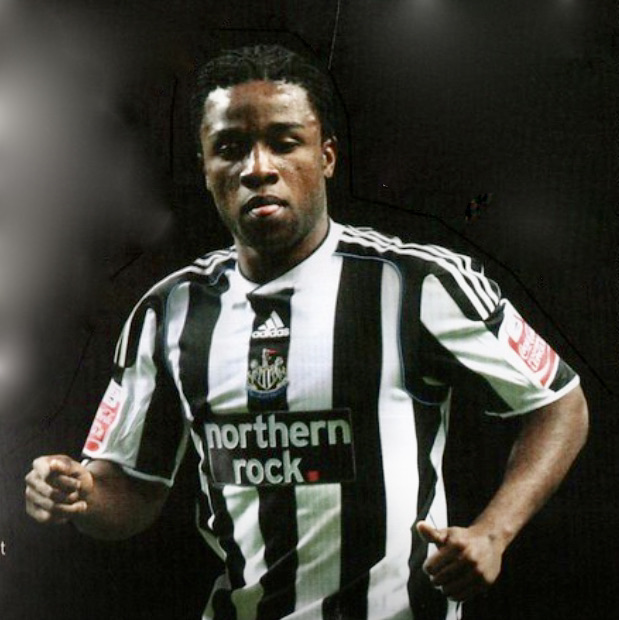
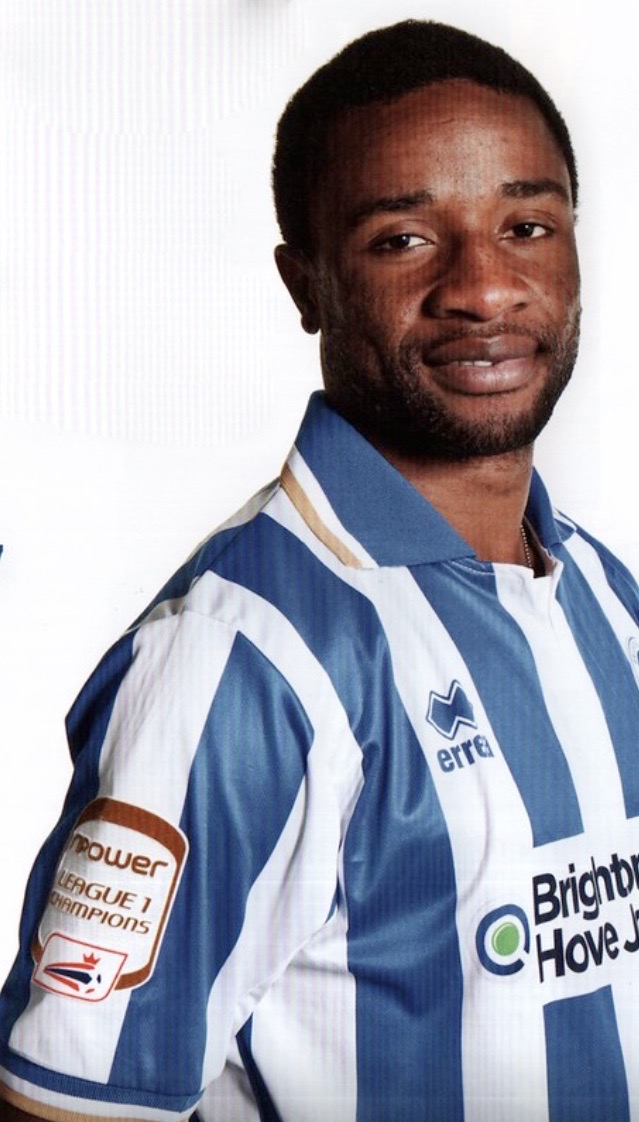
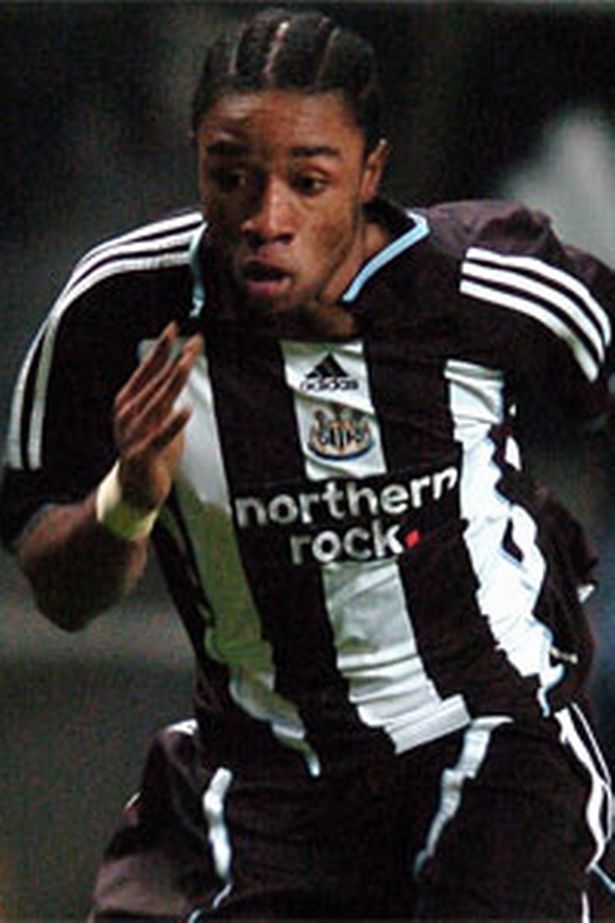
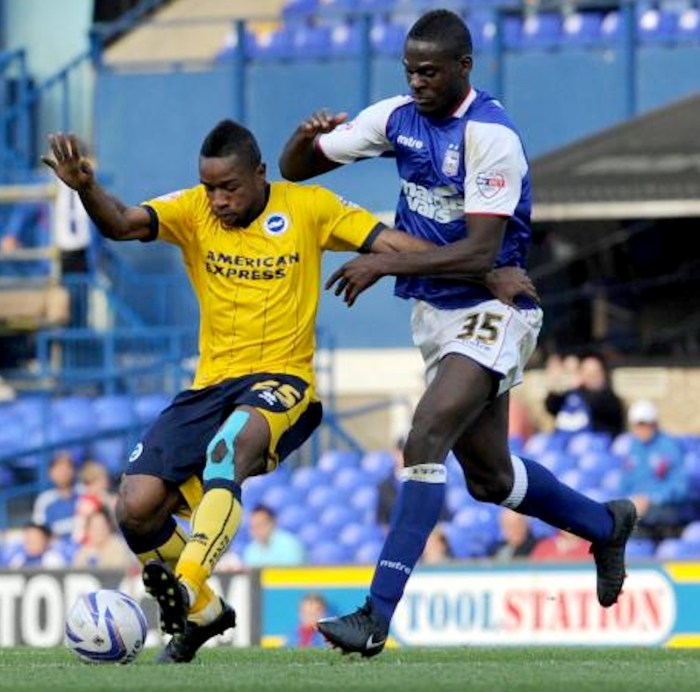
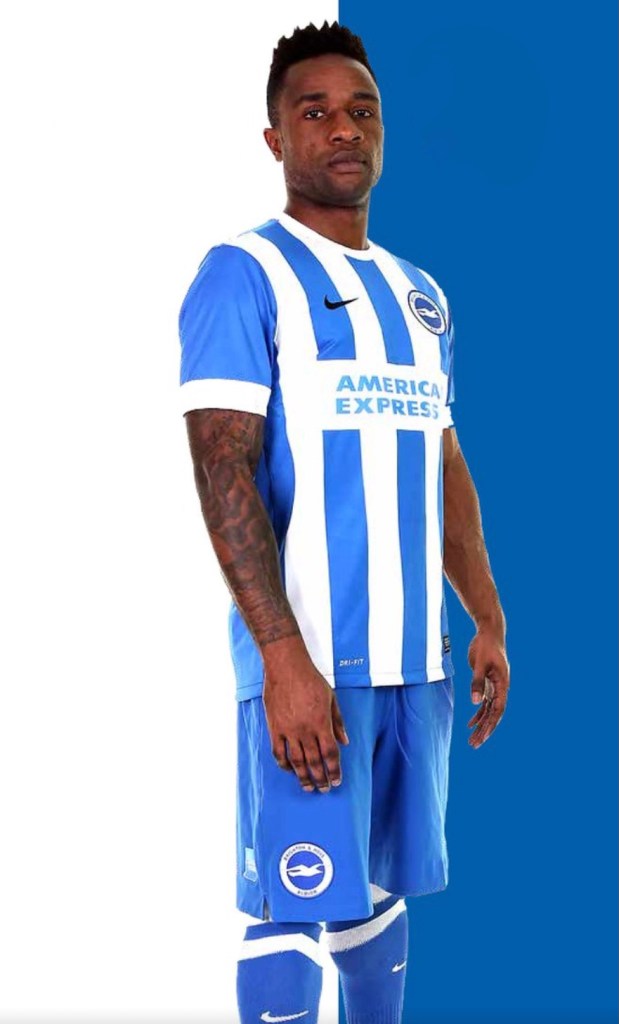
EXPLOSIVE pace, a feint of the shoulder, and a thunderbolt shot were trademarks of Kazenga LuaLua’s contribution to Brighton’s rise from the third tier.

Not to mention a somersault flipping goal celebration that delighted supporters but gave managers kittens as they could only see an injury in the making.

Sadly, that explosive pace came at a price — hamstrings that were all too often easily damaged, resulting in lengthy spells on the treatment table and in recovery. Ankle, knee and groin injuries also sidelined the pacy winger for long periods.

Left-sided LuaLua had three spells on loan to Brighton from Newcastle United before joining permanently, and his six seasons in Brighton colours were rarely dull. He was undoubtedly a crowd-pleaser when he was on top of his game, leaving full backs trailing in his wake to lay on chances or cutting inside and netting some memorable goals.

However, he invariably made most impact when entering the fray from the substitutes’ bench, although the ‘supersub’ moniker frustrated him.

“You don’t just want to come on as a sub,” he told the matchday programme. “Obviously it’s good in one respect as it means the team needs you, but as a footballer you want to be in the starting 11 in every game.

“I don’t view myself as just an impact player and I know that I can play 90 minutes of football.”

Albion fans first saw the Congolese game-changer in February 2010. Manager Gus Poyet had been tipped the wink about LuaLua by his former Swindon and Leeds managerial partner, Dennis Wise, who had been executive director at Newcastle.

Ashley Barnes celebrates with Albion’s speedy loanee winger

LuaLua started nine games (and went on as a sub twice) as Albion consolidated their position in League One. His impact on the side was appreciated by his teammates, as defender Tommy Elphick explained to the Argus in March 2010. After the 19-year-old winger had run Exeter full-back Steve Tully ragged, Elphick said: “He’s unbelievable for us. He really does stretch the game for you.

“It’s that raw pace and power which I personally think we have been missing for the last two years. Benno (Elliott Bennett) gives you something totally different. He is more technical. Kaz reminds me of Bas Savage in the sort of job he used to do for us in stretching the game and getting us up the pitch.

“It gives the defenders a chance to get to the halfway line and defend a bit higher.”

When Poyet secured his services for a second loan spell for the opening half of the 2010-11 season, he was delighted. “Kazenga is unique. He is pure power and speed,” said the manager. “That nowadays in football is very important and we didn’t have that.

“I don’t think there is another player like him in the division. He gives us something totally different.

“We are very pleased to have him. We know what we are getting and that is the key. He will fit in as a player, and in the dressing room.”

Poyet added: “He made a very big impact during his time here last season and I am hoping he can do the same and add a few goals to his game this time around.”

No sooner said than done; LuaLua marked his second debut with a 25-yard rocket of a free-kick to give Albion the lead in a 2-0 home win over MK Dons.

LuaLua departs the action injured

Sadly, after just seven starts plus four appearances off the bench, his involvement in that promotion season came to an end in November 2010 when a bad tackle in a 3-1 away defeat at Hartlepool left him with a broken ankle.

Born in Kinshasa, Zaire (now the Democratic Republic of the Congo), on 10 December 1990, LuaLua came to England as a small child with his father and famous older brother, Lomana.

It was from Lomana that he perfected the thunderbolt shot — and the celebratory somersault.

“I have always had a hard shot on me,” he told the Albion matchday programme. “I think a lot of it comes from when I was a boy back in Newcastle and I would play with my brother.

“He would always strike a ball hard and I would try to copy him.”

It was football all the way from a young age, LuaLua recalled. “When I was growing up in Kinshasa, I remember skipping school to play football with my friends,” he said. “We were football mad and, as my brother had already moved to England, I wanted to follow in his footsteps.

“Lomana got me in at Newcastle. He moved to London with our dad some time earlier, but once he’d broken into football and moved from Colchester United up to Newcastle, then the rest of the family came over from our homeland.

“I had only been in the country a couple of months when Lomana arranged for me to have a trial at Newcastle and I was taken on straight away. It was fantastic for me and also for him; we’d go into training together and he was always there for advice when I needed it. He has been a massive influence on my career.”

The winger continued: “It was tough to begin with; I was in a new country and had to go to a new school, which was hard in itself given where I’d come from, and then I was brought into a professional football club and one of the biggest in the country.

“But Newcastle were very helpful. All the coaching staff were great towards me, and helped me find my feet. I learned such a lot from them and I quickly made new friends. I was close to Nile Ranger, Sami Adjei, Sami Ameobi, many players, and I learnt so much in terms of coaching and how to conduct myself as a professional.”

Kazenga progressed through the Toon academy and was part of the Toon youth team that reached the semi-finals of the FA Youth Cup in 2005-06. He even earned a first-team squad call-up while still only 16, although he didn’t get to play.

LuaLua’s Newcastle chances were limited

Eventually, he got his first team chance as a substitute for Damien Duff in a 0-0 FA Cup third round match at Stoke in January 2008, right at the end of Sam Allardyce’s reign on Tyneside. It was Michael Owen’s first FA Cup game for Newcastle.

The game was being shown live on TV so LuaLua’s extended family back home in the DR Congo were able to see the moment. “I was one of the club’s youngest debutants at 17,” he said.

He also went on (for Charles N’Zogbia) in the replay at St James’s Park which Toon, under caretaker boss Nigel Pearson, won comfortably 4-1. “To play in front of 52,000 people took my breath away,” he said.

He made his Premier League debut three days later, going on as an 80th-minute sub for Duff at St James’s Park, in Kevin Keegan’s first match back in charge — a disappointing 0-0 draw with Bolton Wanderers.

Although a non-playing sub on other occasions, he got on in the last game of the season, replacing Jose Enrique in the 79th-minute as United went down 3-1 to Everton at Goodison Park.

Against the backdrop of the tumultuous 2008-09 season, when Toon were relegated from the Premier League after a veritable managerial merry-go-round, LuaLua made just four substitute appearances (three in the league and one in the FA Cup), and in January 2009 he was sent out on loan to Doncaster Rovers, then in the Championship, where he played four matches in six weeks under Sean O’Driscoll.

Once Toon settled on Chris Hughton to get them promoted from the Championship, LuaLua found chances hard to come by.

He started in a Carling Cup second round match at home to Huddersfield Town, when Toon edged it 4-3, but picked up a groin injury playing in the next round, a 2-0 defeat at Peterborough in September 2009 (future Brighton teammate Craig Mackail-Smith was one of the Posh scorers).

Three months later, with his fitness restored, he was itching to be given a first team chance and told the Chronicle: “I want to be part of this team. My aim has always been to play for the first team at Newcastle United.

“I’ve been here a long time, and last season I was involved in the first team before going out on loan.”

“I have been playing for the reserves for a while now, and I’m keen to play football at first team level.

“I would go out on loan if they let me.”

That opportunity finally came a couple of months later when Hughton sanctioned the move to Brighton. LuaLua told Albion matchday programme reporter Luke Nicoli: “They are a big club and are using a lot of experienced players at the moment, so it’s been difficult for me to break into the team.

“I’ve been playing reserve team football a lot and I just want to be playing games that mean something again. I want to be playing for points and I want to be learning all the time. I want to be in a position where I can return to Newcastle a better player.”

Immediately before re-joining the Seagulls for his second loan spell, LuaLua made only his second start for Newcastle in a 3-2 Carling Cup win over Accrington Stanley and was selected by Sky Sports as the Man of the Match.

After that broken ankle at Hartlepool had taken him back to Newcastle to recuperate, he recovered to make a Premier League appearance in the penultimate game of the season, a 2–2 draw away to Chelsea. Hughton’s successor, Alan Pardew, sent him on as a 69th minute substitute for Shane Ferguson and it was LuaLua’s run and cut inside around Branislav Ivanovic that won Toon a corner from which Steven Taylor scored a late equaliser.

Nevertheless, Poyet wasn’t giving up on taking LuaLua back to the Seagulls once more and, in July 2011, he took him on another six-month deal with a view to a permanent move.

Poyet told the club website at the time: “Kazenga was one of our main summer targets and I am delighted we have finally come to an agreement with Newcastle. I am sure the fans will be equally delighted to see him back at the club.”

The permanent move went through a month before the loan was due to expire and LuaLua told the club website: “Since I came to the club it has always been my intention to sign a permanent deal so this is a really happy day for me.

“When you are on loan you are never quite sure what the future will hold, but now I’ve signed this contract I can put my mind at rest and focus completely on my football.

“I have come here because I feel Brighton is the place where I can really kick on with my career. At Newcastle I wasn’t really involved in the first-team squad and at my age I want to start playing regular football.

“From the first day I came to the club on loan, everyone was so friendly and that helped me settle very quickly. Now I want to pay that back with my performances on the pitch.”

Albion famously suffered an ignominious 6-1 drubbing in the fifth round of the FA Cup at Anfield in February 2012, but it was LuaLua who temporarily gave the Seagulls parity after Martin Skrtel’s early opener for Liverpool.

LuaLua unleashed an unstoppable 25-yard shot past ‘keeper Pepe Reina and BBC Sport’s Neil Johnston said: “It was a goal worthy of winning a Wembley FA Cup Final.”

Few doubted LuaLua’s ability but inconsistency was one of his demons which often led to him being introduced as an impact substitute rather than starting games.

Poyet wasn’t afraid to explain his selection policy and in March 2012, when he gave the winger a start against high-flying Derby County, he was rewarded with a 2-0 win at the Amex.

“I thought it was the game for Kazenga,” Poyet told the Argus. “I know he played well in his first spell and my first season here, but I don’t remember a better performance from Kazenga for Brighton.

“It was his best performance against a team that has been in the Premier League and in the top ten in the Championship. That shows what he can do. It was his game and he’s a happy boy.

“He has probably been a little annoyed not to be playing, but that is natural and he is always very respectful and always talking to me.”

A troublesome knee affected LuaLua’s involvement

LuaLua ended up playing under four different Albion managers and Oscar Garcia quickly realised the limitations he faced when in September 2013 he told the Argus: “Kaz has a problem on his knee and he cannot play many minutes in all the games. We knew before if he had played for the whole game then maybe on Tuesday we cannot use him.

“Sometimes he has pain, sometimes not, but, if he plays many minutes, he has pain. He’s had this from the start of the season,” he said. “Sometimes he has to rest, he cannot train. We have to manage this.”

The following February, LuaLua was still troubled by knee tendon soreness but was contributing as a substitute.

For example, he went on to set up Leonardo Ulloa to score the only goal of the game at home to Leeds and Garcia told the Argus: “We thought in this game he could come off the bench and make an immediate impact and he did it.

“He is a player who can change a game. We are very happy with him, because every game when he has to come off the bench he comes on with the right attitude and plays really well.”

Happy days with Beram Kayal and Joe Bennett

Even though Sami Hyypia’s time in charge was short-lived, the winger impressed the new boss until a knee injury sidelined him in November 2014.

“He has the ability to hurt people one v one and maybe one v two as well sometimes,” said Hyypia. “He’s done well this season, he has been very concentrated all the time.”

By the time LuaLua returned to fitness, his old Newcastle coach and manager, Hughton, was at the helm.

LuaLua told the matchday programme: “It was difficult for me when he first came here because I was injured, but he was great with me, always stopping to talk to me about the injury, making sure I was okay, and he told me not to rush things. That’s what I’ve done and hopefully I can now show him what I can do on the pitch now that I’m fully fit.”

Although it was a few months before that happened, arguably LuaLua’s best spell with the club came at the start of the 2015-16 season, which coincided with a change of squad number for the player.

The returning Bobby Zamora resumed the no.25 that he’d worn during his first spell at Brighton, and at other clubs, and LuaLua admitted: “I had to give the number 25 to Bobby. There was no way I was going to refuse. He’s a legend at the club and it’s nice to have him back in the squad.”

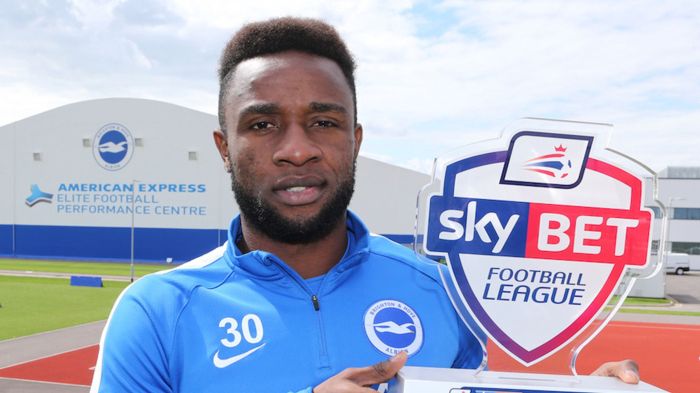
With 30 on his back, LuaLua scored four goals in the opening seven games and won the Championship Player of the Month award (above). Hughton was simultaneously Manager of the Month and said: “Kaz thoroughly deserves his award, he’s had a wonderful start. The area where he has excelled in his game is where he has got on the ball and provided an end product.”

Once again, though, injury brought the purple patch to an end. LuaLua sustained a groin injury in training that eventually needed surgery. Coach Nathan Jones told the Argus in December: “There is no real timescale on it because someone like Kazenga is so important to the squad and what we do. You can’t rush him and he is such a potent athlete, that’s the problem.”

Hughton also lost Solly March to injury that autumn but Rajiv van La Parra was brought in as a temporary solution. He already had Jamie Murphy as a wide option and then Anthony Knockaert and Jiri Skalak were added, so, by the time LuaLua had recovered, competition for places was intense.

The run-in to the end of the season saw him mainly in a watching brief from the bench, although he did play in successive matches in April – 2-1 wins away to Birmingham and Nottingham Forest.

LuaLua’s Albion days were clearly numbered as the 2016-17 season got under way. He started two League Cup games in August – the 4-0 win over Colchester United and the 4-2 victory over Oxford United, when he scored Albion’s second goal. But he only managed three league appearances as a substitute. By January, it was time for a change of scene, and he was sent on a half-season loan to QPR.

At least he got some games in Ian Holloway’s Championship side, appearing 11 times and scoring once. Having missed out on Albion’s promotion to the Premier League at the end of that season, it was no surprise that he returned on loan at Loftus Road at the start of the 2017-18 season.

However, he left west London at the beginning of December 2017, Rangers boss Holloway telling the Argus: “I don’t feel he was doing as well as some of my lads who I’ve brought here.

“Unless he rips it up and shows me – and he’s trying to – I think the loss of confidence and loss of his father has really hit him.”

In January 2018, LuaLua finally cut his ties with the Albion when he joined Chris Coleman’s Sunderland on a free transfer on a deal until the end of the season. By then 27, the winger told the Sunderland website: “I’m excited to be here and get back out on to the pitch because it’s been a long time without playing football.

“I know the North East well and I know Sunderland are one of the big clubs, not just in the North East but England, so I’m really excited to get started.”

An unfortunate turn of phrase because he didn’t start a game as Sunderland fell through the Championship trapdoor. He made just six substitute appearances.

Released at the end of that season, his former Brighton coach Jones revitalised what looked like a flagging career by signing him for promotion-chasing League One side Luton Town.

Jones told the club website: “He’s a fantastic talent. He has something that not many have, totally different from what we have here.

“He’s a quick, powerful, potent attacking player which is something that is in rare supply – and is something we felt we needed.

“The fact that we’ve been able to get him in and persuade him to come here is a good coup for us.”

And the player said: “I know Nathan from Brighton, and he’s a very good coach. He’s good at what he does, so it made it so easy for me to come in and train with the boys here.”

LuaLua spent three years at Kenilworth Road and clearly enjoyed a good relationship with their supporters. After he signed a new deal with the club following their promotion to the Championship, he told the club website: “The supporters have made me feel welcome since the moment I arrived here.

“When they get behind you, like they did since I have arrived, it gives you a massive buzz. It’s a really nice feeling. It was a really special season. I think they liked the way I play, they got behind me and I really appreciated it.”

Once again, though, his involvement was more as a substitute than a starter (37 starts plus 50 appearances off the bench) and when his contract came to an end in the summer of 2021, he decided to continue his career in Turkey, once again following in the footsteps of brother Lomana, who played for a number of Turkish clubs.

Kazenga signed a two-year deal with second tier side Gençlerbirliği in Ankara and, in November 2021, Argus reporter Brian Owen caught up with him.

“It was the right time for me to move on with my football career,” he said. “I always wanted to go abroad before I stopped playing football.

“Before signing, I was worried. I’ve never played abroad before. But it has been good. There’s a lot of boys here who speak English, including the manager, which helps a lot. I’m enjoying it.”

LuaLua then switched from Turkey to Greece and spent 18 months with Levadiakos before returning to the UK in March 2024 when Nathan Jones signed him for Charlton Athletic on a short-term deal, although he made just five substitute appearances for the League One side.

It was back to the north east for a third time in November 2024 when he signed for National League Hartlepool United under Brighton-born Lennie Lawrence, a former Luton and Charlton manager.

Paynter left a blank canvas at Seagulls and Blades

A JOURNEYMAN striker who fired blanks for Brighton and Sheffield United only found very occasional purple patches of goalscoring in a 12-club, 17-year career.

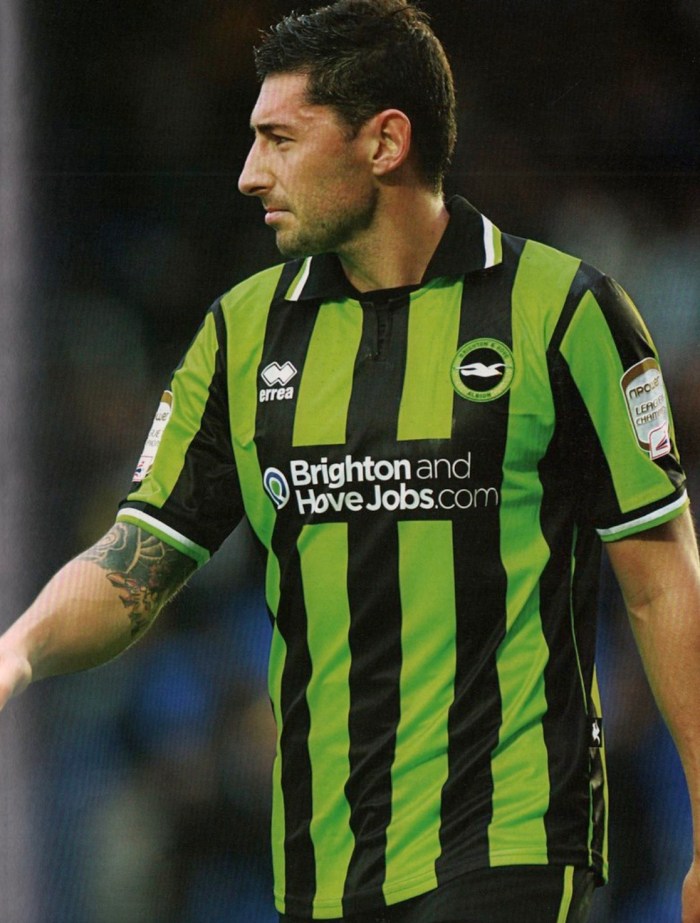
Billy Paynter didn’t manage a single goal in 10 games on loan for Gus Poyet’s Seagulls and carried with him from parent club Leeds United the somewhat unkind epithet ‘Barn door Billy’ for his proverbial inability to hit one with a banjo.

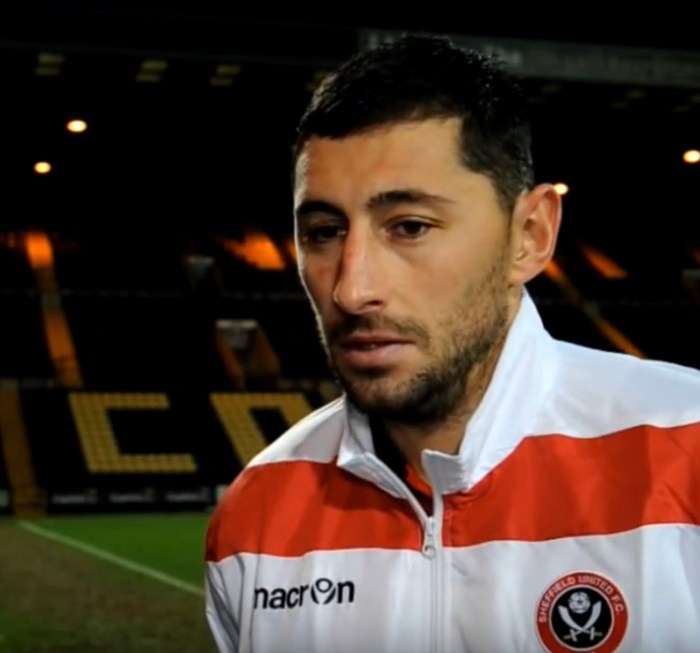
A subsequent half-season loan spell at Sheffield United under Nigel Clough yielded a similar zero in the goals scored column.

A journey around the message boards on supporter websites uncovers some brutal and unflattering comments about Paynter’s contribution for their team and yet it was a career that yielded 131 goals in 529 games – one in four.

And it all began promisingly under the guidance of former Albion captain and manager, Brian Horton.

Born in the Norris Green area of Liverpool on 13 July 1984, Paynter joined Port Vale’s academy at the tender age of 10 and turned professional soon after his 16th birthday.

Horton gave Paynter his first team debut when he was only 16 years and 294 days old on 3 May 2001 as a 61st-minute substitute at home to Walsall.

It was 10 months before he made a start, although he got a few more sub appearances, and Vale supporters had to wait until the start of the 2002-03 season for his first goal, after he’d replaced injured crowd favourite Steve McPhee in a home game against Wrexham.

Eventually, Paynter got into his stride and his popularity with the fans saw him voted Player of the Year in 2004-05.

His 34 goals in 158 games for Vale caught the eye of another former Albion manager, Peter Taylor, at then-Championship side Hull City.

Signed initially on loan, a fee of £150,000 took him on a permanent two-and-a-half-year contract to the KC Stadium in January 2006.

The following month Paynter turned out as a right-sided midfield player for a Football League Under-21 team (selected and managed by Taylor) in a game against an Italian Serie B side at the KC Stadium.

Taylor also experimented with him in the same position for Hull but, having scored only three times in 23 matches, Paynter was on the move again after only eight months.

He switched to Southend United, also in the Championship, for £200,000 in August 2006 and somewhat ironically, his only goal for the Shrimpers was scored against Brighton in a 3-2 League Cup win at Roots Hall in September 2006.

A lack of goals and a hamstring injury meant his stay in Essex was cut short and for the second half of the 2006-07 season he went on loan to League One Bradford City, where he managed four goals in 15 matches, including one on his debut.

On August deadline day in 2007, Paynter’s next move saw Paul Sturrock sign him for Swindon Town. Within a month he had netted a hat-trick against Bournemouth and added two more in a 5-0 win over Gillingham the following month.

It wasn’t all plain sailing for him, though, and after a two-month goal drought which had seen him lose his place, he told BBC Radio Swindon: “You can try and do too much and get caught up with it, but if you relax and get on with your game, I think it will come naturally.”

Paired with Simon Cox initially, Paynter got amongst the goals in support of the main man. But he stepped up a gear after Cox was sold to West Brom in the summer of 2009. His new strike partner was a young Charlie Austin and the pair enjoyed a rich seam of goalscoring form in the 2009-10 season under former Albion captain Danny Wilson.

Paynter had a spell where he scored 15 goals in 17 games and ended the season with 29 goals in 52 matches, his best goals-to-games ratio in a season. Swindon’s captain that season was none other than Gordon Greer, who remains a close friend of Paynter.

Four of Paynter’s goals had been scored against Leeds and, in the summer of 2010, he moved to Elland Road on a Bosman free transfer, with Wilson admitting to BBC Radio Wiltshire: “Anybody who scores nearly 30 goals in a season will be wanted by bigger clubs than us.”

Leeds boss Simon Grayson said: “He has matured as a player over the last couple of years and he had a fantastic season last season. He works ever so hard, holds the ball up well and he has proved he knows where the back of the net is.

“When we knew he was available we were desperate to get him. We feel he will be a good acquisition for the club, and I am delighted to have got him.”

Unfortunately, his time at Leeds didn’t start well when he picked up a shin stress fracture in a pre-season match in Slovakia, leading to him missing the start of the season.

It wasn’t until the second week of October that he was able to make his Leeds debut and starts were rare as Luciano Becchio and Davide Somma were Grayson’s preferred selection up front. Paynter didn’t register his first goal for Leeds until the following March, in a 2-1 win at Preston. It was his only goal in 23 matches that season.

As the 2011-12 season got under way, Grayson had added Mikael Forssell to his striking options and the manager encouraged Paynter to talk to other clubs, with Sheffield United and Brighton discussed as possible destinations.

Paynter preferred to stay and try to stake a claim for a place but, having only played once as a sub in the opening game of the season, he decided to make a three-month loan switch to Brighton at the end of October 2011.

On 29th October 2011, he made his Brighton debut as a 67th-minute substitute for Matt Sparrow in a 0-0 draw away to Birmingham City.

The first of his six starts came on 1 November in a 0-1 defeat at Watford. He came off the bench a further three times and, without troubling the scorers, returned to Elland Road in January.

Back at Leeds he had to wait until April before he was selected by new manager Neil Warnock for a home game against Peterborough United. Paynter scored twice in a 4-1 win and, when replaced by substitute Becchio in the final minute, left the field to a standing ovation. But he picked up an Achilles injury in the following game away to Blackpool and was made available for transfer at the end of the season.

Paynter earned a place in a planetfootball.com poll listing 13 of Leeds’ “worst and weirdest signings under Ken Bates” although he was good-humoured enough to acknowledge it in a 2018 Under the Cosh podcast.

“I’ve always said there’s some players that will be remembered for being good, there’s some players that will be remembered for being sh*te,” he said. “No one remembers the OK players. Take the positives out of a bad situation, in that way I will be remembered!”

It was former Brighton striker Dean Saunders who was responsible for Paynter’s next move, picking him up on a free transfer for League One Doncaster Rovers on 13 August 2012.

While Saunders left the Keep Moat Stadium in January 2013 to join Wolves, Paynter played his part in Rovers winning promotion back to the Championship under Brian Flynn, top-scoring with 15 goals as Rovers returned to the second tier as champions.

An anonymous Donny fan recalled: “He had some good games for us and made the pass from the missed penalty at Brentford that enabled (James) Coppinger to score and win us promotion. He is best played in the box. He causes all sorts of problems. He is a tough guy and takes no prisoners. I liked him but I would say League One is his limit.”

A familiar face in the shape of Brian Horton arrived as assistant manager to new Donny manager Paul Dickov (Flynn had been promoted to director of football) in the summer of 2013.

It must have given Paynter some satisfaction on 27 August 2013 when he scored in a League Cup tie at home to Leeds, although the visitors ran out 3-1 winners. However, that was his only goal and, after managing only one start and 11 appearances off the bench, up to Christmas, he was sent on loan to League One Sheffield United for the second half of the 2013-14 season.

An exiled Blades fan living in Leeds, ‘Blader’ said: “I am uninspired and don’t see this is a great signing. I’ve seen him play many a time and never seen him perform notably and he is a laughing stock in Leeds for how badly he performed.”

A blunt Blade

He made his debut as a sub against Notts County on 11 January 2014 but spent much of the time on the sub’s bench as manager Nigel Clough preferred to play with ‘a false 9’. Paynter made just six starts and came off the bench seven times but no goals were forthcoming. United finished seventh, one place off the play-off places, seven points adrift of sixth-placed Peterborough United.

Paynter was only a spectator as United remarkably reached the semi-final of the FA Cup, losing 5-3 at Wembley to Hull City, Jamie Murphy, later to play for Brighton, among the Blades scorers. A young Harry Maguire at the back for the Blades was named the League One player of the year.

The last three seasons of his playing career saw Paynter drop into League Two and he joined Carlisle United on the same day as former Albion midfielder Gary Dicker.

However, the season wasn’t even a month old when Graham Kavanagh lost his job as manager. His successor Keith Curle steered them to a fifth from bottom finish.

Paynter’s involvement was limited to 12 starts plus eight appearances off the bench and he and Dicker clashed with Curle when they sought PFA guidance after they were fined for allegedly failing to attend training sessions.

In the close season, Paynter headed 90 miles east to Hartlepool United, who’d just avoided dropping out of the league after finishing four points above Cheltenham Town.

The goal touch returned as Paynter top scored with 15 goals in 35 appearances as Hartlepool finished in 16th place courtesy of a decent run of wins in the spring under new boss Craig Hignett.

The managerial door revolved once more at Victoria Park the following season but Hignett’s successor Dave Jones (the former Southampton and Sheffield Wednesday boss) couldn’t prevent Hartlepool from heading out of the league, controversially parting company with the club with two games to go following an on-screen rant by United’s best known fan, Jeff Stelling.

Club captain Paynter, who had openly questioned Jones’ tactics in the local press, joined forces with fitness coach Stuart Parnaby to assist caretaker Matthew Bates for the final two fixtures.

It was one of those footballing fates moments that they needed a miracle against Paynter’s old club Doncaster in the final match and it was given a big build-up in the Mirror.

“Although we lost at Cheltenham last weekend, the lads had a lot more fight in them. I can understand it when players lose confidence or belief, but you can’t drop out of the Football League after 100 years without a fight,” he said.

“It’s one of those strange coincidences that we need to beat my old club to stand a chance of survival. I really enjoyed my time at Doncaster, and I’ll never forget that day we were promoted to the Championship, but I hope the supporters understand my loyalty is with Hartlepool now.”

Hartlepool hitman

Although Hartlepool won 2-1, they had been relying on other results going their way and Newport’s 2-1 win over Notts County 2-1 meant they stayed up and the North East side lost their league status. Having contributed just four goals in 26 matches, Paynter left the club.

While he attempted a brief extension to his playing career, training at non-league AFC Fylde, Southport and Warrington Town, he retired from playing in November 2017 and turned to coaching. He joined Everton’s academy in February 2018 before returning to his first club, Port Vale as professional development phase lead coach in October 2020.

On rejoining, he said: “It’s a joy to be back where it all started. Coming through PVFC’s Centre of Excellence from the age of 10, I know what the DNA of Port Vale is and what sort of players we should be producing.”

Pictures from various online sources and the Albion matchday programme.