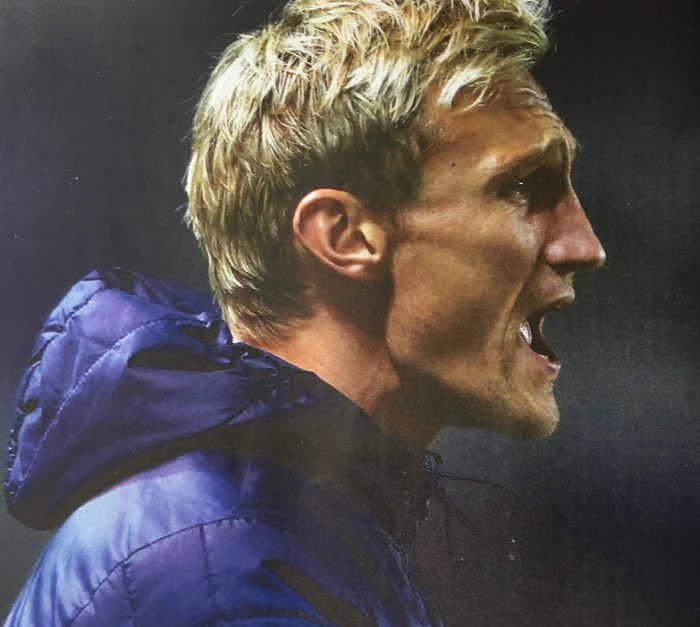
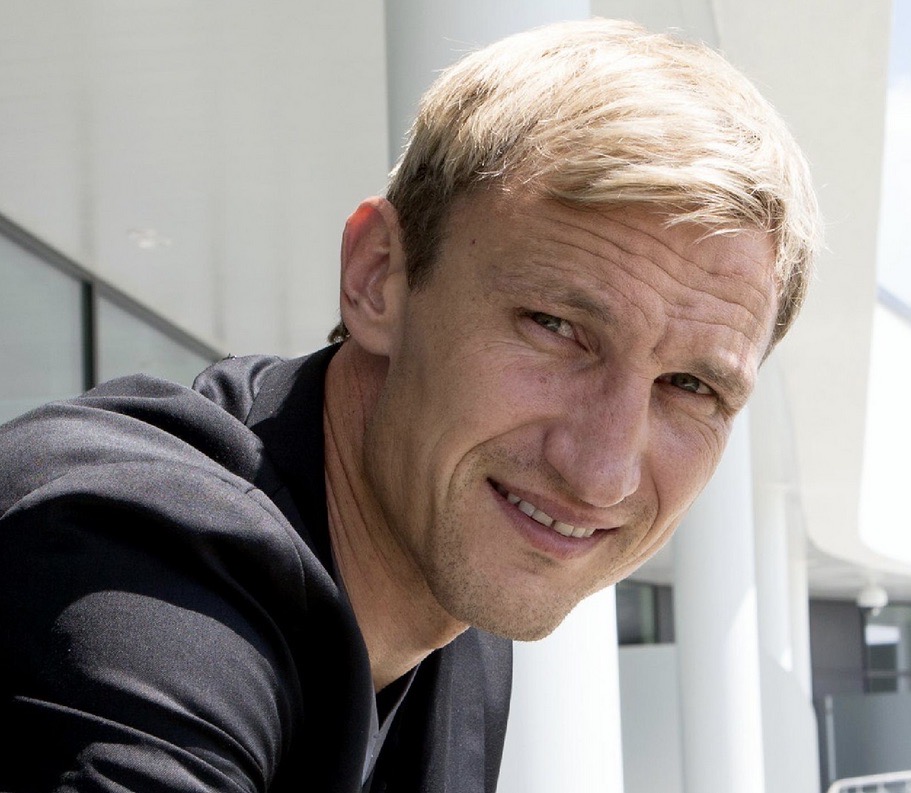
Sammy Lee’s ugly u-turn left Hyypia in the lurch

FORMER Liverpool player and assistant manager Sammy Lee took an unpalatable u-turn after agreeing to become no.2 to Sami Hyypia at Brighton.

When in 2014 a second successive bid to reach the Premier League via the Championship play-offs had faltered at the semi-final stage, Oscar Garcia quit the Seagulls and Albion installed the inexperienced Hyypia as his successor.

The Finnish international former Liverpool centre back had earmarked Lee to bring valuable nous to his backroom team having already been turned down for the job by his first choice, Jan Moritze Lichte, from Bayer Leverkusen, where Hyypia had made his managerial bow.

Lee agreed to take on the role on 25 June 2014 and a formal announcement was made the following day. But by the morning of Monday 29 June, the bombshell news dropped that Lee was moving elsewhere on the south coast instead.

Rather than help to guide the fledgling managerial career of a player he had coached at Liverpool, Lee opted to join Dutchman Ronald Koeman at Southampton.

“I’m let down because I thought that I knew him,” Hyypia told Sky Sports, when interviewed at Lancing. “Everything was sorted and everything was agreed and he should have been here today. The way it happened was very disappointing and I couldn’t actually believe it.”

An apologetic Lee said: “I was thrilled to be offered the job at Brighton and I was excited at the prospect of working with Sami Hyypia again – but, totally unexpectedly, I have been given an opportunity to work in the Premier League.

“I fully appreciate that this is not an ideal set of circumstances and I am very sorry for the inconvenience, and any embarrassment, my change of mind, after the announcement was made, has caused.

“However, at this stage of my coaching career the opportunity to work again at the very top level of English football was not something I felt I could turn down.”

Some might argue Lee’s decision ultimately brought about the swift demise of Hyypia’s reign in the Albion hotseat: the efforts he made to implement a specific style of play have since been lauded, but a dismal set of results told a different story, and there was a parting of the ways with more than half the season still to be played.

If Albion fans hadn’t been overly impressed by Lee’s decision to leave Hyypia in the lurch that summer, they weren’t the only supporters not to be enamoured by the little man’s involvement in their club.

In a retrospective look at Lee’s brief tenure as manager of Bolton Wanderers, Marc Iles, chief football writer for the Bolton Evening News, wrote: “Lee’s frenetic 170 days in charge contained 14 games, three victories, 12 signings and the complete disintegration of the structure which had helped Wanderers secure four top-eight finishes in four years.
“The stormy period was characterised by dressing room upheaval, boardroom bitterness and the sad fall from grace of an honourable man who had the club at heart.”

Lee, previously Sam Allardyce’s assistant at the Reebok Stadium, had been handed the reins just 24 hours after Allardyce quit on 29 April 29 2007 to take over at Newcastle.

Lee was always better suited to a supporting role and, as well as at Bolton, he’s worked under Allardyce at Crystal Palace, Everton and West Brom (and during Allardyce’s brief England spell).

He rose through the coaching ranks at Liverpool after Graeme Souness took him back to Anfield at the end of his playing days.

He became a first team coach under Gerard Houllier and between 2008 and 2011 was assistant manager to Rafa Benitez.

Born in Liverpool on 7 February 1959, Lee made his way through the Reds’ youth ranks and made his first team debut in April 1978.

Sammy Lee in action for Liverpool up against Albion’s Steve Foster

As chronicled on lfchistory.net, he earned a regular spot in the 1980-81 season, pretty much taking over the midfield berth previously occupied by Jimmy Case, who, at the end of that season, Bob Paisley sold to Brighton.
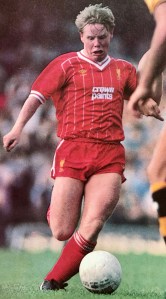
Albion fans of a certain generation will surely not fail to be moved by the story of Lee’s close friendship with Michael Robinson, the former Albion striker who was the midfielder’s former team-mate at Liverpool and Osasuna.

Robinson and Lee were together in a Liverpool side that in 1983-84 did the treble of the league, the League Cup and the European Cup.

Ahead of an August 2021 friendly match between the two sides to honour Robinson after his untimely death from cancer aged 61 in April 2020, Lee told The Athletic: “It is a fitting tribute and a fitting venue to have the game at, in front of the Kop.

“Michael did fantastic for Liverpool while he was there. It will be a very emotional night for everybody, particularly for Michael’s wife Chris and their children.

“He was not only a fantastic guy, a great colleague, but I consider him a brother, to be honest, I can’t put it any higher than that.”

Lee told reporter Dermot Corrigan: “Michael was very important for my professional life after Liverpool.

“You tend to think you will stay at Liverpool forever, you know, but it doesn’t happen. Michael had gone to Queens Park Rangers and he helped me to go there, and I had a nice time there. Subsequently he moved on to Osasuna, and he got me to go there. So he had a massive influence on my professional career.”

Injury eventually brought Lee’s Spanish playing days to an end and although he managed three games for Southampton and four for Third Division Bolton, it was coaching where his future lay.
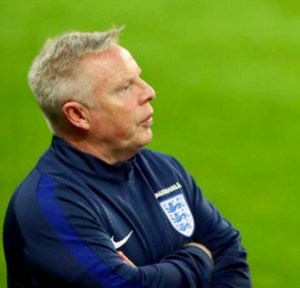
In 2001, Lee became a part-time coach to the England national side under Sven-Goran Eriksson and three years later left Liverpool to join the national set up full time.

Liverpool chief executive Rick Parry said at the time: “We are very sorry that Sammy has decided to leave, but he goes with all our very best wishes for the future.

“Sammy’s been a wonderful servant to Liverpool as both player and coach. He should be proud of his contribution to the successes achieved at the club in recent years.”
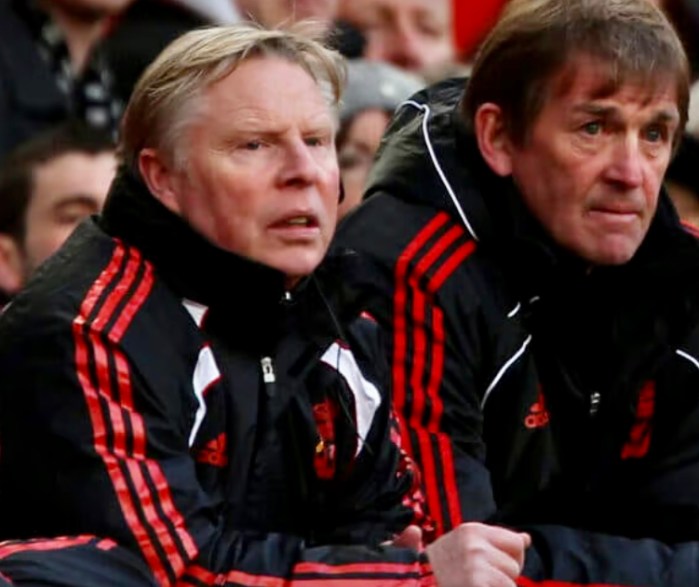
Let down by ‘little’ Sammy, ‘big’ Sami struggled from the start…

HINDSIGHT is a wonderful thing but few would disagree that Sami Hyypia’s reign as Albion manager was doomed almost from the start.

Inexperienced boss Hyypia had barely got his feet under the table at the Amex before former Liverpool assistant manager, Sammy Lee, pulled the rug from under his proposed new regime.

Hyypia, not unreasonably, had thought the former no.2 to Rafa Benitez would bring vital experience to his backroom team because the Albion position was only the former Reds central defender’s second managerial job.

Lee, despite accepting the position on 27 June 2014, decided two days later to reject the deal because he’d agreed to become Ronald Koeman’s deputy at Southampton instead.

Hyypia had only been in post three weeks, so, it would be fair to say, Lee’s decision must have been a hammer blow – especially as his first choice for no.2 said ‘no’ too! Jan Moritze Lichte, who’d been at Bayer Leverkusen when Hyypia made his managerial bow – which lasted only nine months – had already declined to join him in the UK for “personal reasons”.

Thus, Hyypia had to rely on two of previous boss Oscar Garcia’s coaching staff, Nathan Jones and Joaquin Gomez, to assist on the coaching side, although his fellow countryman, Antti Niemi, did accept the offer to become goalkeeping coach.

On the playing side, there had been a large turnover of personnel in the wake of Garcia’s departure – and, it emerged, the players coming in weren’t being signed by Hyypia but were the picks of head of football operations, David Burke.

It was always going to be a tough ask to replace Leonardo Ulloa up front – and journeyman Chris O’Grady certainly didn’t provide an answer.

There was a sense of excitement when Hyypia’s Liverpool links saw the arrival on loan of Joao Teixeira, but the number of players only at the club on a temporary basis should have been something of a wake-up call.

The permanent signing of one-time West Ham forward Sam Baldock looked like a sound investment – he’d hit the net regularly enough at Bristol City in the division below – but he found goals hard to come by at the higher level.

As if to highlight the player upheaval and shaky managerial team foundations, Albion lost the first two games of the season, single goal defeats at home to Sheffield Wednesday and away to Birmingham City.

If a 2-0 win away to Leeds United followed by a 2-1 home win over Bolton suggested a corner had been turned, Albion then went on an 11-game winless run.

If he hadn’t been aware beforehand, Hyypia would have quickly realised the calibre of player Burke provided him with fell way short of what was required if the side were going to repeat the previous two seasons’ achievement of finishing in the play-off positions.

Not only was there a lack of consistency in personnel on the pitch, those who were selected appeared to be confused as to exactly how Hyypia wanted them to play.

Andy Naylor tried to analyse Hyypia’s philosophy early on in the season, reporting: “We have already seen 4-1-2-3, 4-1-2-2-1, 4-4-1-1. Hyypia is combining Southern European technical accomplishment in possession and mobility with a more Northern European tempo and directness.

“The width is provided by advanced full-backs, the chances for a narrower strike force by the players who like to operate, in modern coaching speak, ‘between the lines’, exploiting pockets of space in the area dividing the opposition defence and midfield.”

The theory might well have been sound but the practice was found wanting.

Having won only one game in 18 matches, and after only six months in charge, Hyypia resigned shortly before Christmas.

At his last home game in charge – a 1-0 defeat to Millwall – the Albion faithful demonstrated they’d had enough, calling for him to go and, in the North Stand, unfurling a banner making that message loud and clear.

Hyypia himself admitted the atmosphere had been tough to handle but, in an interview with the Argus, had vowed to turn things round.

It was an unseemly end for someone who as a player had been rated one of the best defenders ever to pull on a Liverpool shirt. But Hyypia was by no means alone in not being able to continue the prowess he’d shown on the playing side into management.

Liverpoolway.co.uk charts the player’s career succinctly; a Gerard Houllier signing in 1999, over the course of a decade he collected winners medals across several competitions: the Champions League, the FA Cup (twice), the UEFA Cup, the UEFA Super Cup (twice), the League Cup (twice) and the Charity Shield.

Born on 7 October 1973 in Porvoo, Finland, Hyypia’s football career blossomed with now dissolved Kuusankosken Kumu before switching to MyPa, where he stayed four years, helping them to win the Finnish Cup in 1992 and 1995. He moved to Holland to play for Willem II for four years where for a time his defensive partner was Jaap Staam, who subsequently played for Manchester United. Liverpool signed Hyypia for £2.6m in 1999, ironically following up a tip from a TV cameraman!

After being capped 27 times by Finland under 21s, he earned his first full cap in 1992 and, with 105 caps for Finland, he is second only to Jari Litmanen as his country’s highest capped player.

After his Liverpool playing days came to an end, Hyypia went to play in the Bundesliga for Bayer Leverkusen and two years later joined the club’s coaching staff.

In a rather unusual arrangement, Hyypia and former under19s coach Sascha Lewandoski jointly replaced Robin Dutt as head coach but Hyypia took sole charge in June 2013. He was sacked in April 2014.

After his brief time in charge of Brighton, it was another eight months before he found another head coach role, this time taking charge of FC Zurich in August 2015. But with the club heading for relegation in May 2016, he was sacked.

The Finn has yet to re-appear in the dugout, although he has pulled on his boots again to play for a Liverpool Legends side. It remains to be seen whether he’ll give coaching or management another go, although he told BT Sport in February 2019: “I will coach and manage again one day but not yet. I get some enquiries quite regularly, but nothing has yet been that interesting I would jump into it.”

He added: “I wouldn’t change any decision to go so quickly into coaching. A lot of people said I made a mistake going into it so early, but I learned a lot.

“You learn a lot more from the bad moments than the good moments. Those years when things were not going my way, I learned so much and I am much better and more ready now.”