The Christmas presence at the heart of Albion’s ‘90s defence

INJURIES beset Derek Allan’s promising career but he played 100 games at the heart of Brighton’s defence during turbulent times and remembers warmly “a wonderful club”.

In an exclusive interview with In Parallel Lines, Allan reveals the niggles that affected him and recalls the people who helped to shape his playing career.

The Scot remains involved in the game as an academy coach at Greenock Morton and his only lament is that the sports nutrition and science today’s footballers are able to call on to prevent and cure injury wasn’t available when he was playing.

Born in Irvine, on the West Coast of Scotland, on Christmas Eve 1974, Allan’s first steps towards a professional career came with selection for Scottish schools’ representative sides, being picked at all levels from 12 through to 16.

Ayr United, the club based a 20-minute drive from his home town, took him on as a YTS trainee and he moved quickly through the ranks before signing as a professional at the age of 17.

George Burley, the former Ipswich and Scotland international full-back, was beginning his managerial career with The Honest Men at that time but it was his assistant, Dale Roberts, who’d also played for The Tractor Boys, who helped Allan the most.

“Dale was a huge figure in my early days: a fantastic guy,” said Allan. “He had me out every day striking footballs; he was an incredible guy.” Roberts sadly died from cancer aged 46 in 2003.

After only five appearances for United in the 1992-93 season, Allan was sold to Southampton for £75,000. He explained how the move came about. “I was spotted playing for Ayr at Hamilton Accies on a cold Tuesday night in 1993. Ian Branfoot (Southampton manager at the time) came to watch someone else and took me instead.”

It must have been quite an upheaval to leave home and family to start a career on the south coast, but Allan said it was the making of him.

“It was a huge learning curve for me and I wasn’t really prepared to leave family and friends at that time.

“But that few months after leaving set me up for life. It made me the person I am today.”

Scottish under-18 and under-21 honours were added to his schoolboy recognition but his progress during three years at Southampton was hampered by injury.

“It was the story of my career, really,” he said. “Looking back, I lost 18 months of a three-year contract to injury and it was a crucial time in my development.

“In hindsight, I could have done more myself to look after myself better, although there were no sports scientists back then to help with nutrition, recovery etc.”

That backdrop of injury meant he was restricted to just one first team appearance for the Saints, when he was a late substitute for Matthew Bound in a 1-0 defeat at Manchester City on 1 May 1993.

Ken Monkou was at the heart of the Saints defence at the time and a certain Micky Adams was left-back with Jason Dodd also prominent.

It was in March 1996 when former Saint Jimmy Case, by now rather reluctantly in the hotseat at the Albion, went back to his old club to take the young centre-back on loan in the same week that future captain Gary Hobson was signed permanently from Hull City, and forward Zeke Rowe from Chelsea.
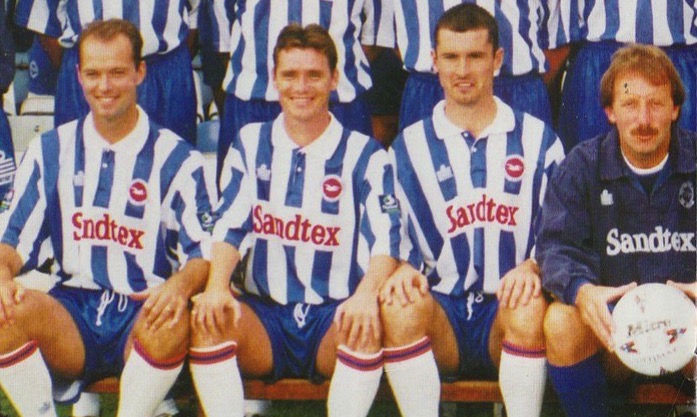
Seagulls’ ex-Saints quartet: Maskell, McDonald, Allan and Case

“I felt at that time Jimmy, with his connection to Saints, and his understanding of the game would be ideal for me,” Allan recalled. “Unfortunately, we all know what happened.”

Nevertheless, he was certainly among familiar faces because Case had not long previously persuaded his old club to part with Paul McDonald and Craig Maskell.

Allan took over the no.5 shirt from Ross Johnson for his debut but was on the losing side as Albion went down 3-2 at Swindon Town.
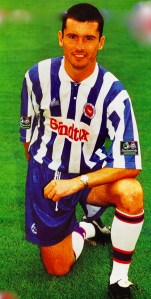
After an initial eight games, Allan’s move became permanent and he often appeared alongside Hobson in the heart of the defence, although, with a combination of poor results, injuries and frequent managerial changes, he wasn’t always an automatic starter.

The likes of Johnson, the experienced Mark Morris and, for a while, young Kevin McGarrigle provided competition as Albion bumped around the basement.

However, in his first full season with the Seagulls, 1996-97, Allan played 32 matches as the club scrabbled to avoid dropping out of the league, surviving only courtesy of the last-game 1-1 draw at Hereford. By then, of course, Steve Gritt had taken over from Case and Allan rated him highest of the different bosses he played under.

“Steve Gritt was definitely the best for me personally, it’s just a shame the injuries I got stopped me from showing what I could do consistently,” he said.

The off-the-field shenanigans, with rogue directors trying to sell the ground for redevelopment without having a new ground to move to, must also have been a difficult backdrop for any of the side at that time.

Allan said: “It’s easy to see the problems they had at that time and it’s a very different club now. The fans were unbelievable back then and they supported us every week even though we played under some huge pressure.

“I didn’t do myself justice really, playing with injuries and stuff like that, but it’s a wonderful club and fanbase. The fans never really got to see the best of me, which was a shame.”

Towards the end of his time with the Seagulls, he went on the transfer list and didn’t see eye to eye with Brian Horton, who’d returned to the club as manager. Allan declared it was “just the usual disagreements that happen between player and manager” which is now all water under the bridge.

“I actually saw Brian years later and we had a laugh about it,” he said. “He was an angry man, the same as me!”

At the end of his Albion stint, Allan stepped into the Conference with Kingstonian — a “great club with a great manager in Geoff Chapple” — and he made 75 appearances in two years.

Allan was on the bench when Kingstonian beat Kettering Town 3-2 to win the FA Trophy in front of 20,034 fans at Wembley in May 2000. Geoff Pitcher, who later played briefly for the Seagulls in the 2001-02 season, was in Kingstonian’s midfield that day.

“I finished my last season there as Player of the Year and Players’ Player of the Year,” said Allan. “I think that was the beginning of my thoughts of shifting to getting a new career long term. It was the best decision I ever made.”

Problems off the field meant in 2001 he moved back to Scotland, where he joined Queen of the South on a semi-professional basis for three years. During his time there, they won the Bell’s Cup and the Scottish Football League Division 2 Championship.

After 60 appearances for The Doonhamers, Allan’s last port of call as a semi-pro player was at Scottish Division Two Dumbarton for the 2004-05 season, making five appearances plus one as a sub.

Asked to sum up his career, he issues an upbeat thought, saying: “Great promise, bad luck, brilliant life memories and no regrets. Not many people can say they played for these wonderful clubs. I have memories that will last a lifetime.”

Before those playing days had ended, in 2002, Allan began a new career as a technical recruitment consultant, spending 11 years with NES Global Talent. Since 2013, he has been head of recruitment and talent acquisition for engineering services provider Booth Welsh, part of the global Clough Group.

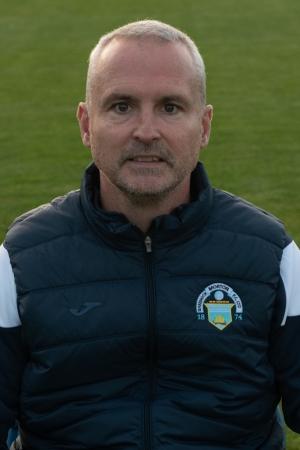
He obtained the UEFA Advanced Youth A coaching licence in 2014 and is currently the under-18 academy coach at Greenock Morton.

“We have brought through some great young guys who have careers in the game,” he said. “I still love the competitive side and it’s great still to be involved.”

Today, Allan occasionally exchanges messages with former Albion teammates Hobson and Kerry Mayo but he is in more regular contact with McDonald, who only stood down in July 2021 after 18 years as an academy coach at Kilmarnock.

• Pictures from Albion matchday programmes and various online sources.

Injury curtailed Saints stalwart Jason Dodd’s Albion swansong

INJURY deprived Albion of the services of the experienced former Southampton captain Jason Dodd throughout the 2005-06 season.

After completing 499 games for Saints, Dodd had originally intended to retire at the end of the 2004-05 season having been sidelined by boss Harry Redknapp to such an extent that he’d gone out on loan to Plymouth Argyle.

However, Brighton were missing the long-term injured Adam Hinshelwood and manager Mark McGhee gave the 34-year-old Dodd a season-long deal at the Albion.

Dodd slotted in at right-back for the opening five fixtures of the season but then had to have surgery on a troublesome ankle injury which put him out of action for two months.

He returned to first team action at the end of November but was then struck by a mystery back injury that was severely debilitating, as he told The Argus.

“They cannot really pinpoint what the problem is and it isn’t just not being able to train,” he told the paper. “I am in constant pain 24-seven so, from my point of view, it’s not just at work it’s when I go home. I can’t pick the kids up or go for a walk with the dog.”

Dodd col HSUnfortunately, he managed just two more games in a season when Albion finished bottom of the Championship table. One fond memory I have of his contribution to Albion’s cause came in a game at QPR in March 2006.
The game was memorable for the sending off just after half time of Rangers’ skipper and long-serving striker Kevin Gallen for punching Paul McShane. Sadly, Albion only managed to take a point when they really needed three, but it was their first away point for nine games, so it was a triumph of sorts.

QPR full back Marcus Bignot put a deep Gary Hart cross through his own net under pressure from substitute Joe Gatting to equalise Gareth Ainsworth’s early header for Rangers.

The tricky Ainsworth gave Adam El-Abd, playing in an unfamiliar left back role, such a torrid time that McGhee switched the fullbacks with half-an-hour played and put Adam Hinshelwood there instead. Shortly after half time, McGhee switched it again and Dodd replaced El-Abd.

In the 40 minutes, or so, he was on the pitch he showed what we had missed by providing an outlet for some neat passing, and hardly ever gave the ball away.

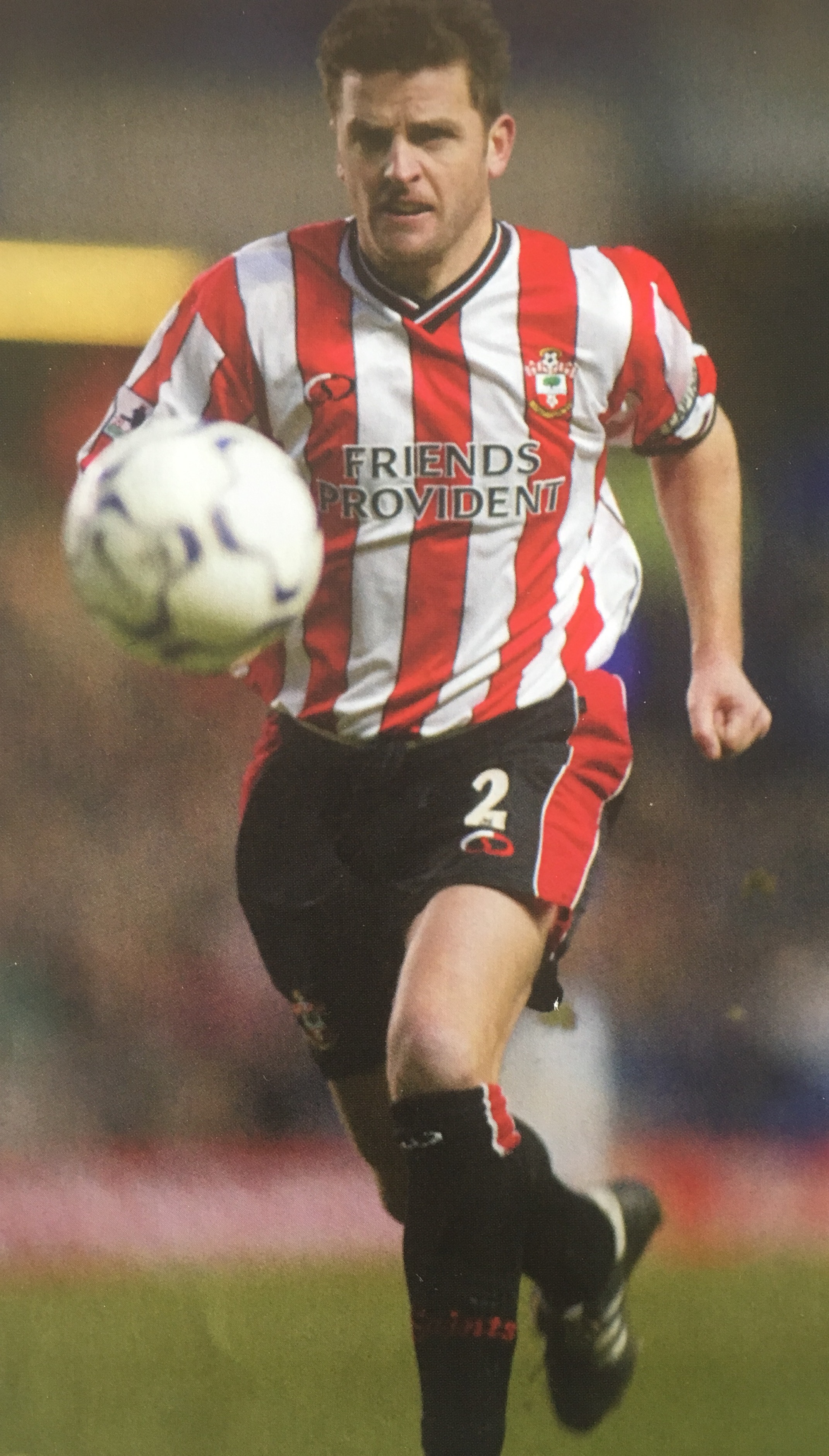
Born in Bath on 2 November 1970, Dodd began his distinguished career by signing for his home town club, non-league Bath City. In 1989, Southampton paid £15,000 to take the 18-year-old to The Dell.

Jason Dodd (Southampton)

He certainly couldn’t have got off to a better start, making his first team debut at home to Liverpool, marking England international John Barnes.

Londonsaints.com was fulsome in its praise for the impact he made, declaring: “Not only did he completely snuff out the efforts of the England winger but found enough time to supply a perfect cross for Paul Rideout’s opening goal in a momentous 4-1 win.”

From that encouraging beginning, he went on to establish himself as Saints’ regular right back, playing under nine different managers and captaining the side. Dodd remained a fixture in a team that more often than not found itself fighting for survival in the top flight.

Between 1990 and 1991, he won eight England under-21 caps, making his debut in a 1-0 defeat to Poland at White Hart Lane on 16 October 1990 and playing his last game against the same opponent, away in Pila, on 11 November 1991, when England lost 2-1, their goal being scored by Paul Kitson, who later played for Brighton.

In his fifth under 21 game, Dodd was sent off as England trounced Mexico 6-0, when, as well as a goal for Kitson, Alan Shearer scored a hat-trick (including two penalties).

Although Dodd had been involved in earlier rounds of the FA Cup in 2003, injury meant he missed out on the final, when Saints lost to Arsenal.

At the end of his injury-plagued season with Brighton, Dodd joined his former Saints teammate Francis Benali as a coach at non-league Eastleigh before stepping into the manager’s role for seven months.

The lure of his old club was too great, though, and, in the summer of 2007, he became first team coach at Southampton under George Burley. He was briefly caretaker manager before leaving Saints in July 2008, had a short tenure as caretaker manager at Aldershot in the autumn of 2009, and then returned once again to Southampton as a development coach and under 18s coach at St Mary’s.

During his five years with the Saints youth academy, working with former teammate Paul Williams, together they brought through the likes of Luke Shaw, Callum Chambers and James Ward-Prowse.

But they were controversially let go in May 2014 – some reports said it was because they didn’t spend enough time with the younger age groups.

Shaw took to Twitter when news of their dismissal was announced saying he was “gutted” for them.

Dodd obviously keeps a close eye on the progress of the young players he was once responsible for and, when Manchester United boss Jose Mourinho subbed Shaw at half-time during United’s 2-0 FA Cup win over Brighton in 2018, the BBC sought Dodd’s opinion. He admitted a tough love approach was the way to get the best out of him.

“He does make you pull your hair out at times. You have to try different things to get the best out of him,” said Dodd. ”I think they have tried everything and they have not got through to him to get him out on the pitch and perform.

“Luke is one of those players where you have to keep on, you have to keep pushing him and he needs to be challenged.

“I was constantly on him. He likes it. He needs more of a cuddle, and then give him a little dig,” Dodd added.

The Saints stalwart is frequently asked his views on current happenings, but his day job is as head of football in the PE department of independent school, Winchester College. He has a few other sidelines on the go, as he told the Daily Echo earlier this year.

Paul McShane wrote his name in Albion’s history in one season

McShane

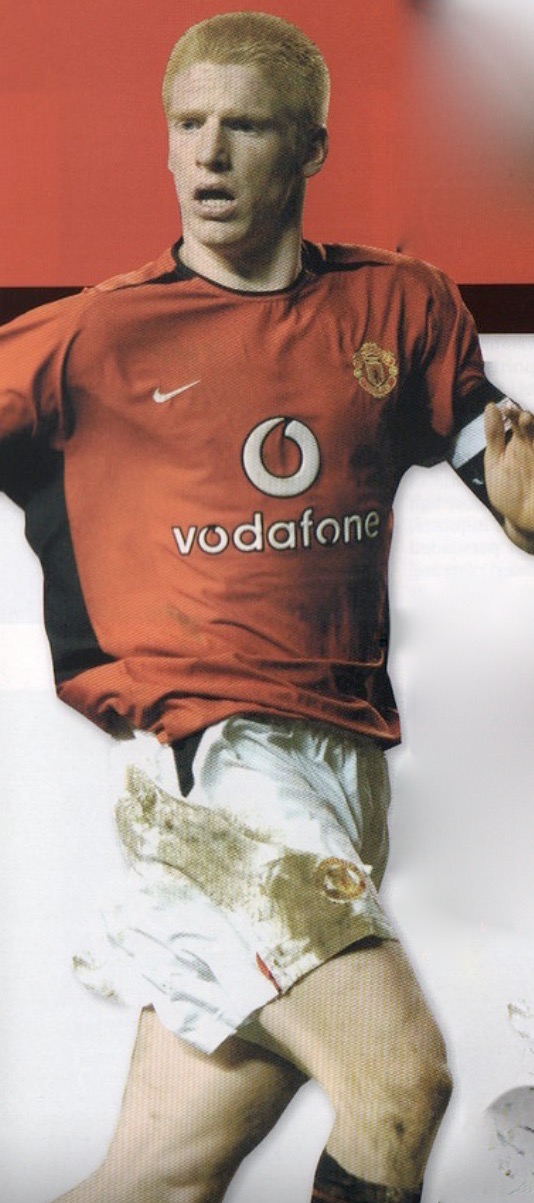
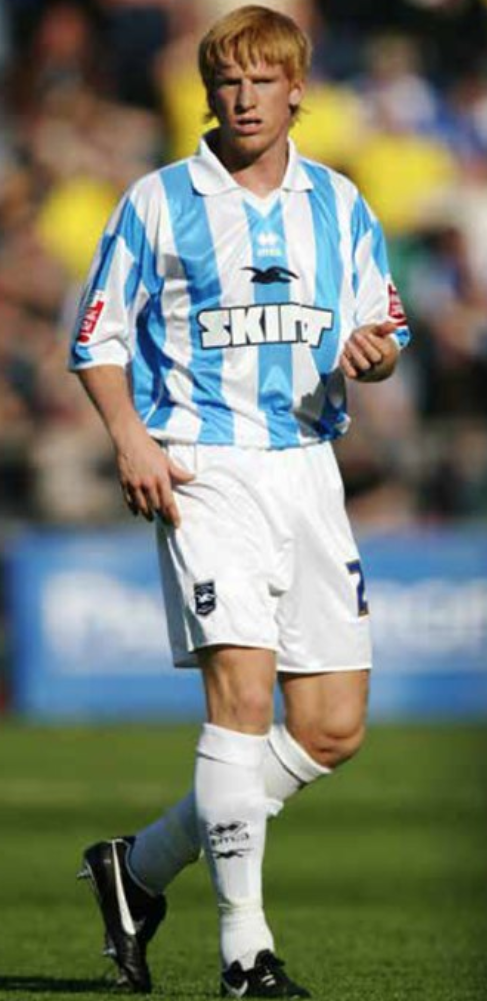
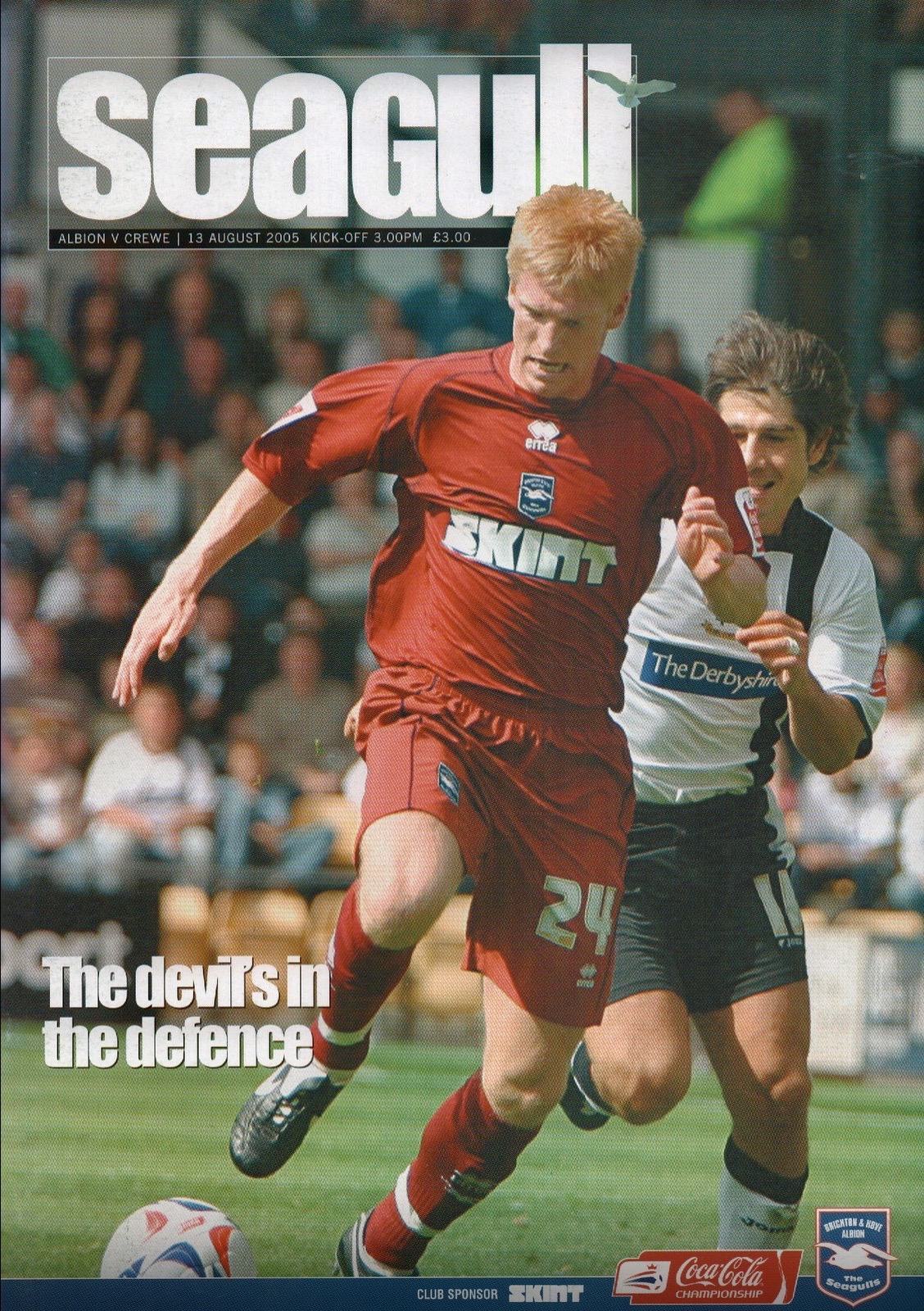
FLAME-HAIRED Irish centre back Paul McShane was a complete revelation during a season on loan to Brighton from Manchester United.

The 2005-06 season ended ingloriously for the Seagulls but McShane was imperious, given a platform to launch a career which saw him play most of it in the second tier of English football, and almost 100 times at the top level, together with earning him 33 full caps for his country.

Although he was given a squad number by United, and had been selected by Sir Alex Ferguson for pre-season matches, McShane didn’t get the chance to play any proper competitive football for United’s first team.

United reserve team manager, Brian McClair, a former Celtic teammate of Albion manager, Mark McGhee, could see the benefit of giving McShane first team football at a decent level and an initial half-season loan was agreed, then, in January, it was extended to the season’s end.

Brighton were missing the long-term injured Adam Hinshelwood and although veteran Jason Dodd had been signed to add experience to the defence, his season was to be plagued by injury, so McShane was a near permanent fixture alongside Guy Butters in the centre of the back four.

The young defender shared a flat in Hove with fellow Republic of Ireland international Wayne Henderson and in an early season profile article, Butters was quick to acknowledge the quality of the youngster. “He is an excellent player. He’s only 19 but you see he’s got that Premiership quality about him,” said Butters. “He’s very confident; he likes to bring the ball down and play.”

The former Spurs and Portsmouth defender said he reminded him of Richard Gough, a former teammate at Tottenham. “He’s strong; not the tallest, but makes up for that with his great leap. Very good on the ball, quick and great in deep positions.”

McShane coverHis passion and aggression sometimes got the better of him and the only reason he wasn’t ever present was a penchant for bookings – 12 over the course of the season – which earned suspensions, and a couple of injury-induced absences. And he was missed when he wasn’t available.

After he’d picked up an ankle injury that required him to return to Old Trafford for treatment, the matchday programme put together an article extolling the merits of the young defender in which it said: “Paul’s cool reading of the game and his ability to overcome some of the most effective attacking players in the division marked him out as a fine prospect, and he proved competitive in the air and on the ground, his pace and positional sense being a real asset.”

In their end-of-season player ratings, the Argus summed up his contribution thus: “Talent and determination in abundance. Rash in the tackle at times but that is a product of his insatiable hunger. Will be sorely missed next season.”

Such was the impact of McShane’s outstanding performances over the course of the season that he was selected as the Player of the Season, the first time a loan player had ever been given the honour.

Butters was convinced it was the right choice and told the Argus: “He’s done really well for us. He’s scored some vital goals. Obviously the one away to Palace springs to mind.

“He has been solid all-round. He is very aggressive, ultra-competitive and hates losing, even in training.”

It’s perhaps inevitable that any player who scores a winning goal against arch rivals Crystal Palace earns a place in Albion folklore. McShane’s scruffy effort, which appeared to go in off his shoulder, at Selhurst Park on 18 October 2005 proved to be the only goal of an intense scrap but how it went in became irrelevant as time passed.

“Crystal Palace was a special night, because of the rivalry,” said McShane. “It was a great atmosphere and scoring that goal was brilliant.”

He scored three other goals over the season, including a crucial opener in a 2-0 win away to Millwall as the Seagulls put up a valiant, but hopeless, fight to avoid the drop, but it will always be the goal at Selhurst that fans remember most.

McShane confessed in an interview with Andy Naylor in the Argus that relegation had hurt, but the season for him had been “brilliant” and “a great experience”.

He said: “It has given me a chance to get out there and make my name in the Championship and I think I have done that well enough.

“It has given me a great opportunity to get the experience I need to take back to Manchester and hopefully give it a good crack there, because I’ve learnt so much this season.

“Brighton have been brilliant to me. They’ve treated me really well. They’ve made me feel very welcome, the fans and the people around. That has helped a lot. It has been great.”

In conclusion, he told Naylor: “The club is part of me now. You never know what will happen in the future but Brighton will always have a place in my heart.”

Perhaps rather presciently, Naylor commented: “McShane’s fierce commitment is unlikely to be seen in an Albion shirt again. If he does not make it at Manchester United, there are sure to be Championship clubs interested in signing him.”

With Rio Ferdinand and Nemanja Vidić United’s regular centre back pairing, and Wes Brown as back-up, it was always going to be a difficult ask to dislodge them, and in August 2006 McShane left Old Trafford together with goalkeeper Luke Steele as makeweights in the deal that took goalkeeper Tomasz Kuszczak to United.

mufcmcshaneMcShane and Steele had both been members of United’s winning FA Youth Cup team of 2003, a side which also included Kieran Richardson and Chris Eagles, who went on to make names for themselves in the game.

McShane, born in Wicklow on 6 January 1986, played hurling, Gaelic football, rugby and badminton (his dad, Sean, and uncle played Gaelic football for Dublin) in his early years in Ireland but eventually began to demonstrate his soccer prowess with junior clubs and was playing for St Joseph’s Boys AFC in Dublin when United snapped him up in 2002.

“I was 16 when I signed; I wasn’t going to until I went to Old Trafford with my mum and dad,” McShane said. “It was so down to earth for such a big club. I would be getting the best coaching and training, also playing with some of the best players in the world.”

He added: “Alex Ferguson has been brilliant to me and my family; a very nice man. He just cracks jokes all the time.”

After his success with United’s Youth Cup team, McShane’s first senior football came in 2004 during a brief loan spell with Walsall, where he played four games and scored once.

At Championship West Brom, McShane played 42 games in the 2006-07 season as the Baggies finished fourth and agonisingly lost to Derby County in the play-off final.

Before the new season got underway, McShane was one of 12 new signings manager Roy Keane made for Sunderland, newly-promoted to the Premier League.

He scored an own goal in only his second league game but Sunderland salvaged a 2-2 draw at Birmingham and he went on to make 21 appearances (plus one as sub) as the Black Cats finished just three points clear of the drop zone.

In the following season, McShane went on loan to Premier League new boys, Hull City, and having played 19 games for the Tigers made the move permanent the following season. The KFC Stadium would be his home for the next six years, although he was sent out on loan twice, to Barnsley in 2011 and Crystal Palace in 2012.

In the final game of the 2012-13 season, McShane scored a vital goal for Hull which guaranteed them promotion back to the Premier League, and he earned a new two-year contract from manager Steve Bruce.

However, with Curtis Davies, Alex Bruce and James Chester ahead of him, his appearances were limited, although he did get on as a substitute in Hull’s 3-2 FA Cup Final defeat to Arsenal.

McShane featured 23 times as Hull relinquished their Premier League status in 2015, and he was among six players released by the club, including Liam Rosenior, who moved to Brighton, of course, and goalkeeper Steve Harper, who’d had a short loan spell at Brighton from Newcastle.

McShane wasn’t without a club for long, and joined Reading in July 2015, with manager Steve Clarke telling the club website: “I knew that Paul’s contract with Hull City was due to expire and was always monitoring the situation. When we met up earlier in the summer for a chat I knew that Paul would be a good signing for Reading FC and I’m pleased that we managed to get the deal completed.

“As well as his obvious talents as an experienced defender who is aggressive both in the air and on the ground, I felt that he was a good character to bring into our squad.
“Paul has gained good experience at many clubs and, like Stephen Quinn, was an important part of a promotion-winning team. He has a winning mentality and it will be good for our two young central defenders, Michael Hector and Jake Cooper, to train and play alongside Paul.”

After four years at Reading, over which he played 103 games, in 2019 McShane switched to League One Rochdale.

In July 2021, McShane returned to Man Utd as player-coach for the under 23 side and made two appearances for the under 21s in the EFL Trophy as an over-age player. When he retired from playing at the end of the 2021-22 season he took up the role of professional development phase coach (covering under 18s through to under 23s).

“I’m calling it a day playing now,” he told manutd.com .”I’ve had 20 years playing and I’ve come back into the club as a player-coach in the under 23s. It’s been a great year and great experience but now it’s time to fully focus on the next stage of my career, which will be in coaching.

“It’s amazing how things work out. It’s a great way to end my career, to come back here and help the future generation with their careers. It was perfect, to be honest with you, when this role came about, and I’m grateful to the people who made it happen. I think it’s a great way to end my playing days.”