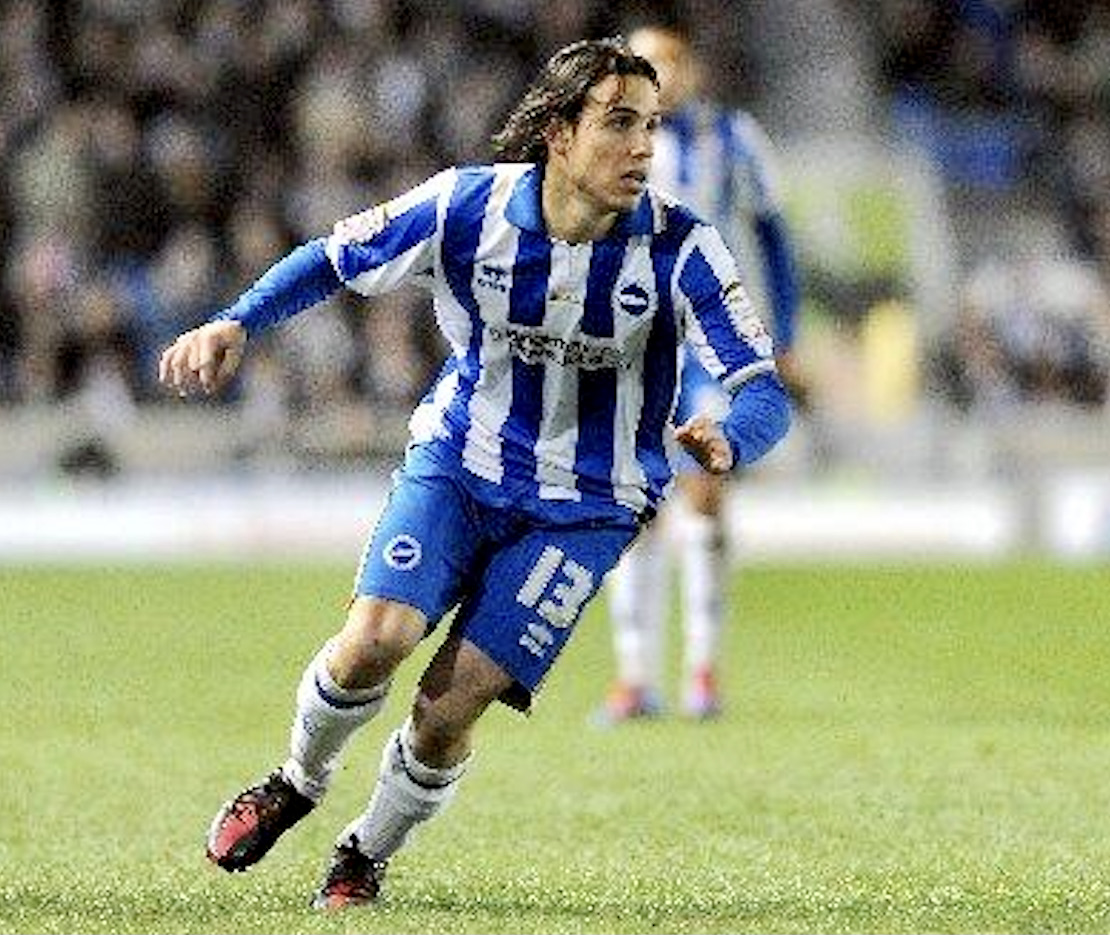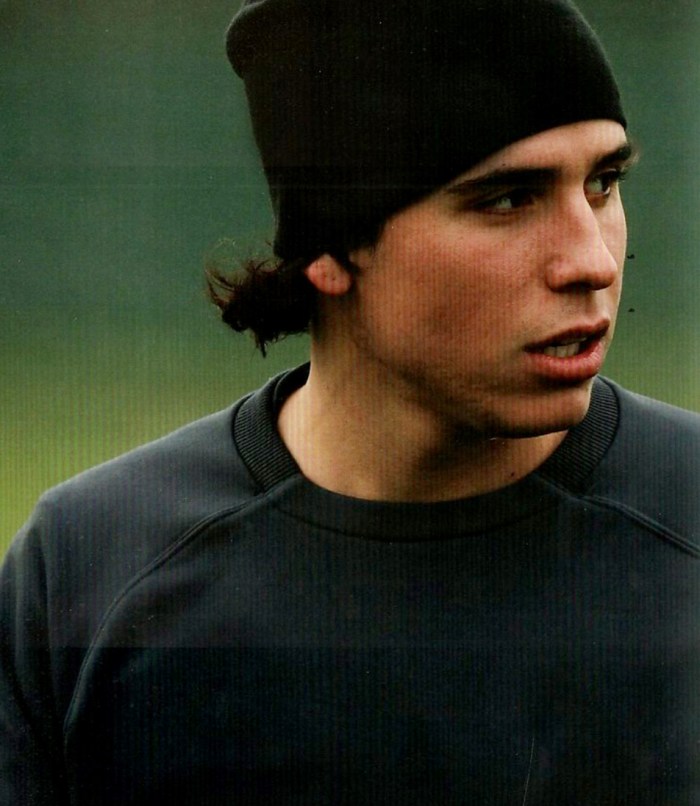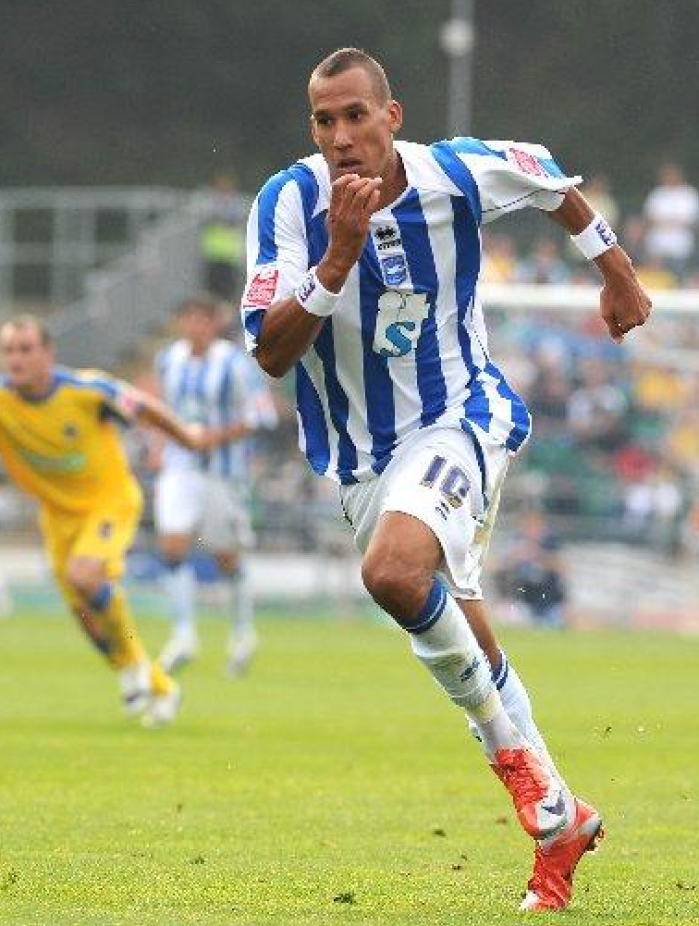
Wembley hero Liam Dickinson’s nomadic football journey

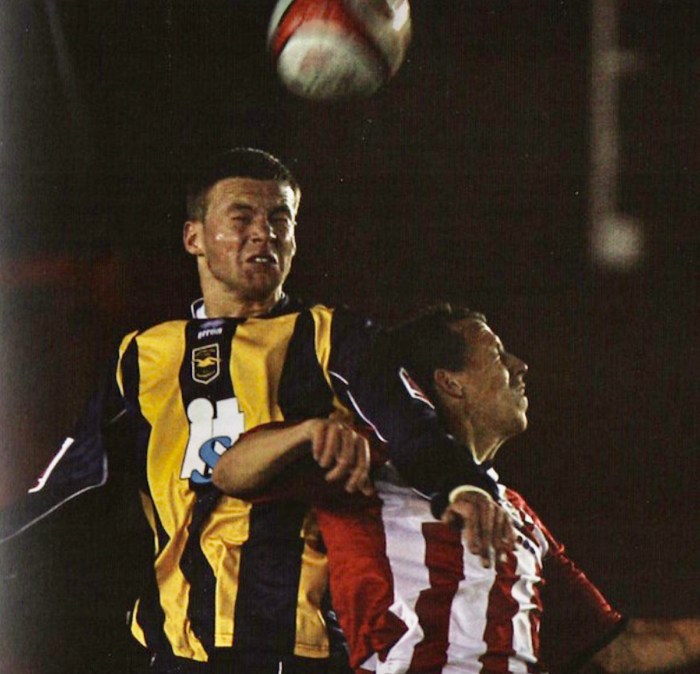
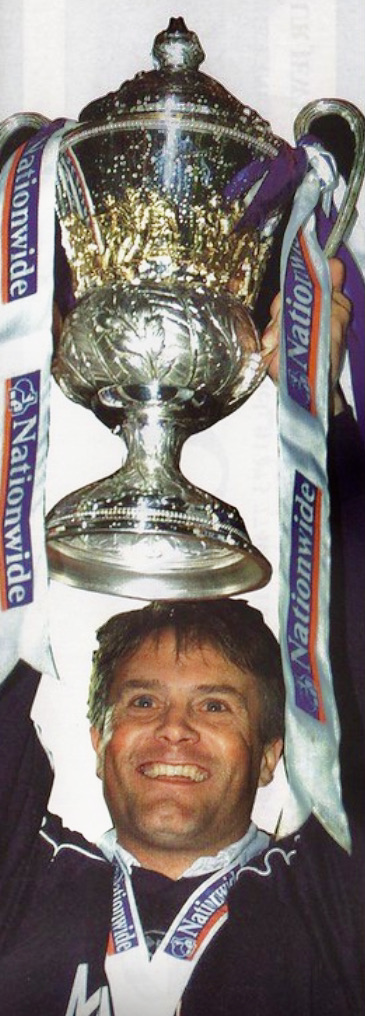
HE’D SCORED a decisive play-off final goal at Wembley for Stockport County but a subsequent £750,000 move to Derby County didn’t work out for Liam Dickinson and Brighton signed him for £300,000 only a year after the Rams had shelled out that big money.

Dickinson didn’t even get a game for the Rams, instead being sent out on loan to Huddersfield Town, Blackpool (where he’d begun his career in their school of excellence) and Leeds United.  He was a player who didn’t stay in the same place for long; in total he featured for 23 different clubs.

Like many before and since, changes of manager were often the cause of him moving on. At Derby, for instance, he was signed by Paul Jewell, recalled from his loan at Blackpool by caretaker manager Chris Hutchings and eventually let go by Nigel Clough.

It had been intended he’d join Leeds in January 2009 but the necessary paperwork didn’t arrive until 14 minutes after the deadline! Further discussions led to a revised deal, but the move was called off because he was injured. He eventually joined up with United in the second week of March and although he scored in a behind-closed-doors friendly against Sheffield United (1-1), he didn’t get on the scoresheet in eight League One games (four starts, four as a sub) under Simon Grayson.

His first start was in a 3-2 win at Crewe and he managed three successive starts, in a 2-2 draw at Leyton Orient, a 1-0 win over old club Stockport and a 1-0 defeat at Leicester but he was not involved in the end-of-season play-offs when Leeds (with Casper Ankergren in goal) lost out to Millwall in the semi-finals.

An enclave of former Stockport teammates – James Tunnicliffe, Jim McNulty, Gary Dicker and Craig Davies – helped Dickinson to choose Brighton as his next club

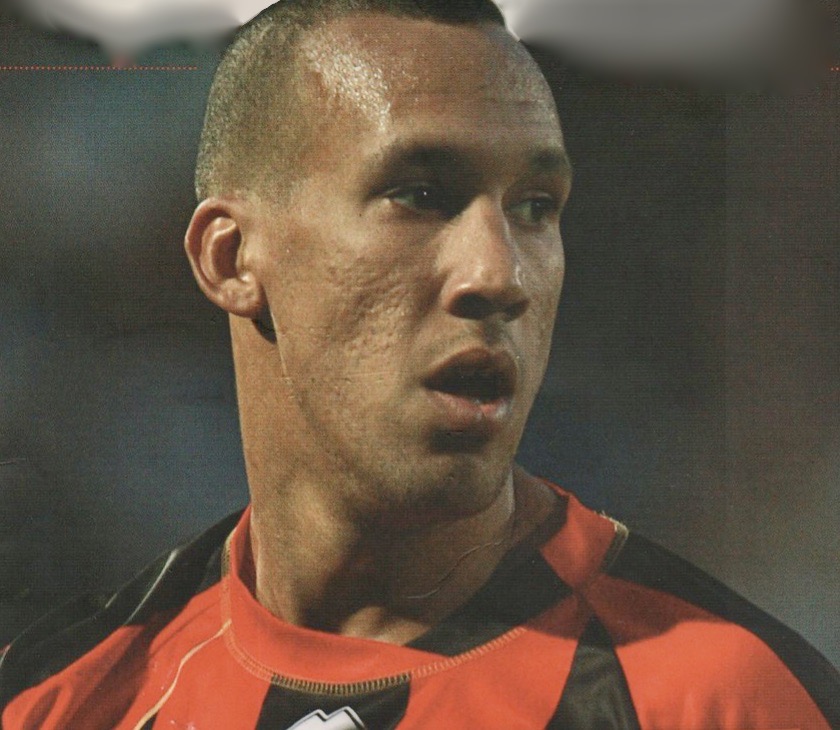
After Brighton boss Russell Slade welcomed the 6’4” forward to Withdean on a three-year contract, he told the club website: “He brings something different to the table. His goalscoring record is very good and he has a good goals-per-game ratio, and like one or two of the other signings I have made this summer, he is hungry to get his career back on track. I’m sure there is a lot more to come from him.”

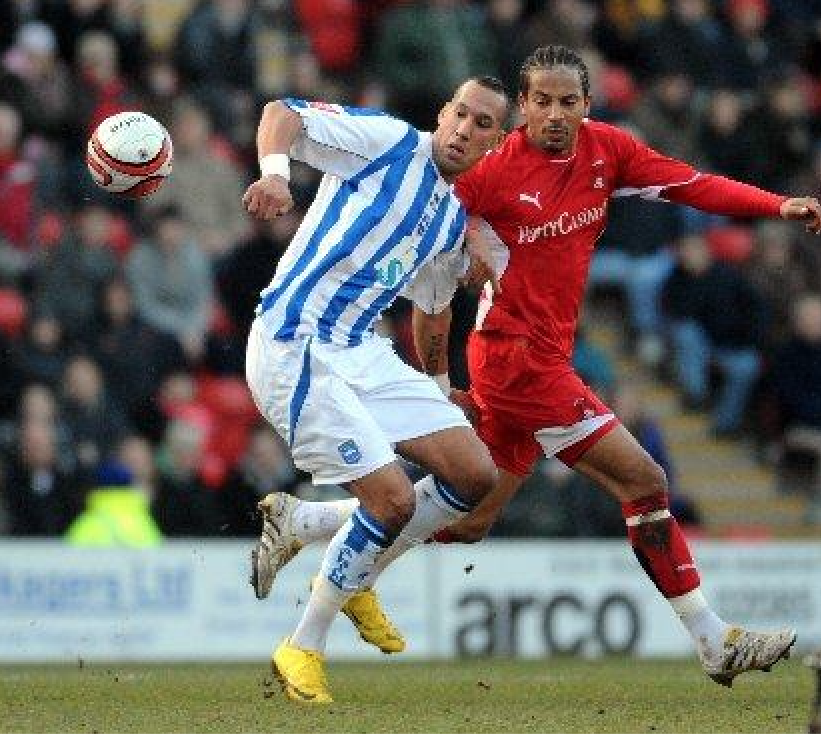
He scored in his third and fourth games for the Albion, but both came in defeats against former clubs: the first in a 7-1 capitulation to Huddersfield and the next in a 4-2 defeat to Stockport.

He was on the scoresheet in the home 3-3 draw against Hartlepool (Nicky Forster scored Albion’s other two goals) that spelled the end of Slade’s tenure as manager. But it is what happened two days later that many will remember him for.

Unluckily for him, he was pictured carrying a seemingly comatosed young woman in his arms in the middle of Brighton at 1am. The Sun newspaper was covering a renowned student pub crawl ritual at the time and didn’t realise who they’d snapped.

Eagle-eyed Albion supporters did, though, and, after discussion about the incident on fans’ forum North Stand Chat, The Argus picked up the story, running an article headlined ‘Samaritan Brighton and Hove striker scores an own goal’.
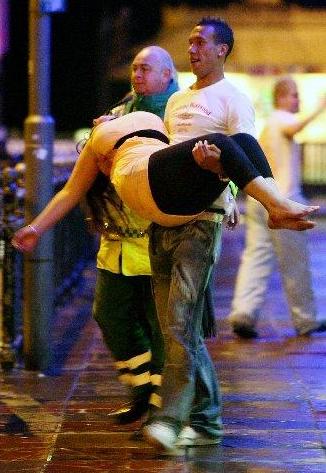
For his part, Dickinson told reporter Ben Parsons how he was on his way home after a meal out in the city when he helped a girl to a car waiting to pick her up.

He said it was simply a coincidence that he was helping the girl when the photos were taken, adding: “I saw two girls holding another girl up. She collapsed in front of us. Her mum or her auntie picked her up in a car. I picked the girl up and put her in the car.

“I didn’t want to just leave her. Anybody else would have done the same thing.”

Albion said they would deal with the matter internally. Dickinson was omitted from the squad for the following game, a 4-4 FA Cup draw with Wycombe Wanderers with caretaker manager Martin Hinshelwood in charge, but he was back in the fold for Gus Poyet’s first game as Slade’s replacement.

In the televised away game at Southampton, he went on as a sub for Forster in Albion’s 3-1 win at St Mary’s. Dan Harding, Dean Hammond and Adam Lallana were in the Saints side.

Dickinson got occasional starts under Poyet but more often than not was sent on as a sub to replace either Glenn Murray or Forster.

Given a start in the FA Cup second round win over Rushden and Diamonds, he scored twice, in the third and 86th minutes, as Albion edged the tie 3-2. He was preferred to Murray in a Boxing Day clash with Leyton Orient that finished goalless but, perhaps to prove a point, two days later the restored Murray hit four at Wycombe in a 5-2 Seagulls win.

Dickinson was back on familiar territory at Edgeley Park in January 2010, but only got a half an hour run-out as a sub against his old club (replacing another former County man in Dicker) as the game finished 1-1, Andrew Crofts salvaging a point with a 90th minute equaliser.

In a 1-1 draw at Leyton Orient, Dickinson started the game and, when he was denied a penalty, incandescent Poyet was sent from the dug-out for protesting.

“If you ask anyone, they will tell you it was a penalty and a red card,” Poyet maintained afterwards. “The referee is 10 yards away and he doesn’t give it. You’ve got a chance to score a penalty and it’s 2-0. It’s a different game.”

Dickinson took to the field against another of his former clubs in Huddersfield wearing distinctive ‘banana yellow’ boots. “I don’t like dull, boring colours. I like to brighten the pitch up a bit. I’ve had a bit of stick off the lads,” he told The Argus.

The striker, who’d scored six goals in 13 games for the Terriers while on loan, didn’t manage to get on the scoresheet and was replaced by Murray as the game petered out to a 0-0 draw.

At that stage, Dickinson was deputising for Forster who was out of favour with Poyet over a contract dispute.

As the Uruguayan began to bring in his own selections, such as on-loan Kazenga LuaLua, Dickinson chose to go on loan to Championship strugglers Peterborough United, who were managed by his former Stockport boss Jim Gannon. Dickinson scored three in nine games for Posh. On his return to Brighton, he was sold to Barnsley, who were in the Championship at the time, for reportedly half the fee paid out for him just a year earlier.

Tykes boss Mark Robins declared: “He is different to the strikers we have here already and will give us something else up front.

“He is only 24 and still has room for improvement. He has a decent scoring record both in the Championship and in the lower leagues.

“Liam fits in to what we are trying to do here both in terms of on the pitch and within our budget.”

But he made just one start, in a League Cup match, and three sub appearances in the league for Barnsley when his old Derby caretaker manager, Hutchings, took him on loan to Walsall. He didn’t find the net in seven League One games.

Next stop, from January to the end of the season, was Rochdale, the side against which he had scored that 2008 League Two play-off final winner.

But a goalless run of 14 games (seven starts and seven off the bench) prompted this comment from AtThePeake on fansnetwork.co.uk in 2021: “In terms of expectation versus reality, few signings can have disappointed Rochdale fans quite like the loan signing of Liam Dickinson in January 2011.”

The supporter wrote: “Dale were looking for someone to become the fulcrum of an attack that included Chris O’Grady drifting in from the left and the emerging Matt Done playing as a second striker.

“Having seen first-hand the threat Dickinson could be with his aerial prowess, strength and touch in front of goal, Dale fans were reasonably excited that the answer to their striker problem had been found, but it quickly became apparent that the struggles with Derby and Barnsley had affected Dickinson’s confidence.

“During his spell, Dickinson was all too easy to defend against, struggled to hold the ball up and lacked any cutting edge when it came to finishing the chances he did manage to fashion for himself.”

A projected move to Plymouth Argyle was called off after just eight days, with personal reasons being cited, but the nomadic striker’s next stop was League Two Southend United under Paul Sturrock, where he netted 12 goals in 37 matches (33 starts plus four as a sub).

Dickinson scored a dozen times for Southend United

Not for the first time, he found himself in the headlines for the wrong reason when he and two others were reprimanded for a breach of club discipline over an unspecified incident at a hotel the evening before a match at Morecambe.

A broken ankle brought a premature end to his season with the Shrimpers, and it proved problematic in trying to continue his league career elsewhere.

He trained with Port Vale but even his agent Phil Sproson was quoted as saying: “Liam will admit he has been no choirboy in the past.

“He has had quite a few clubs and that’s probably because he has been no angel.

“He is loud and vocal and has had too many nights out over the years – but he has matured.

“He realises he will have to change and toe the line because he has a darker side that has dragged him down in the past.”

As it turned out, he was eventually out for a year because his broken ankle didn’t heal properly. He played two pre-season friendlies for Vale in 2013 but manager Micky Adams didn’t take him on because of ongoing problems with the ankle.

Born in Salford on 4 October 1985, Dickinson was originally a centre-half when he was on the youth books of Blackpool, Bolton and Blackburn. He stepped away from professional football at 16 and studied to be a graphic artist but continued to play in non-league sides. He appeared for Irlam, Swinton, Trafford and Woodley Sports before he was taken on as a pro by Stockport in 2005 after a successful trial.

He scored on his County debut, only five minutes after going on as a 71st-minute sub against Cheltenham Town at Edgeley Park. In three years under Jim Gannon, he hit 33 goals in 94 appearances.

The 2007-08 season was his most prolific term as a league player, netting 21 times from 32 starts and six games from the bench. It also earned him Stockport’s Player of the Year award.

It was to Stockport, then in the Conference North league, that he returned in 2013, but he only managed one goal in 13 games before returning to the non-league arena.

Between 2014 and 2019, he turned out for Stalybridge Celtic, Guiseley, Bradford Park Avenue, FC United of Manchester and finally Droylsden before calling it a day.

In an online chat with Stockport County Live towards the end of the Covid lockdown, in August 2020, Dickinson opened up about his mental health, admitting he’d been through a period when he was suffering with depression.

Post playing, he told his interviewer, he was working installing signage for a print company.
City grounding signalled high hopes for talented Taylor

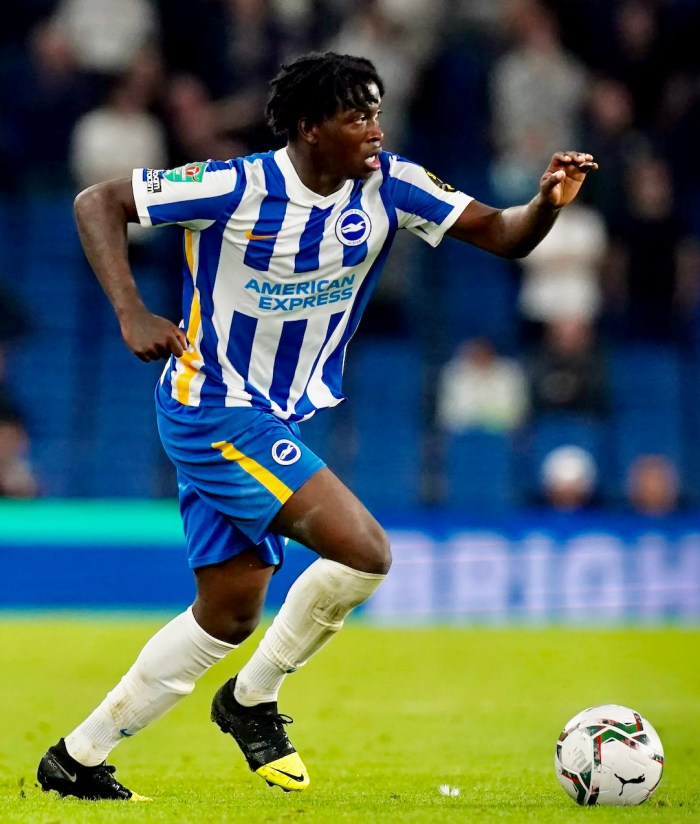
EXPECTATIONS of a bright future in Albion’s colours fizzled out for Taylor Richards after the most audacious of starts.

Richards cheekily scored with a Panenka chipped penalty in a pre-season friendly against Crawley Town which instantly made the watching supporters take notice of the new signing from Manchester City.

It was reported Albion paid £2.5 million for the 18-year-old when he decided to move on after four years moving through the youth ranks at City.

“I did not have to leave because I still had years on my contract,” he told the Argus. “I just felt that I needed a new challenge.

“When I found out that Brighton were interested in me I was also made aware that I had a chance of breaking into the first-team further down the line.

“That is all I wanted to hear, that if you do well and train well, you’ll be given opportunities.

“But I would not change my time at City for anything. The only thing I would change is probably not taking my opportunity as well as I should have done.

“When you’re in that comfortable environment, you do not always realise what you have and maybe take your foot off the gas a little, but it’s all a learning experience and one I really enjoyed.”

Richards did get his wish of making it through to Albion’s first team, but his involvement was very sporadic and after a season on loan at Championship side Queens Park Rangers, he eventually moved there permanently in the summer of 2023.

For Richards, it was a case of moving home. Having been born in Hammersmith on 4 December 2000, he grew up in Shepherd’s Bush – although his football journey began in the academy at Fulham.

City took him north at the age of just 14 and he earned a scholarship aged 16. Eventually, he became a regular for City’s under-18s.

In February 2017, he played for England under-17s in a tournament on the Algarve, starting in a 1-0 defeat to Portugal and going on for City teammate Phil Foden in a 3-2 win away to Germany. Two days later, he started in England’s 1-0 win over the Netherlands. That side featured Jadon Sancho, who went through the age groups at City at the same time as Richards.

“I hung around with Sancho quite a lot because we went into the academy at the same time and we had a good connection,” he said. “What’s happened with his career proves you never know what might happen. It’s all about working hard and taking your opportunity when it comes.”

Taylor made seven appearances for City’s under 23s – three in 2017-18 and four in 2018-19 – although he didn’t feature in the first team. He was on the scoresheet in a Checkatrade Trophy quarter final match in January 2019 when City fought back from 2-0 down to beat Rochdale 4-2 (former Albion player Jim McNulty was on the scoresheet for Rochdale).

“Once you’re in that environment, winning is the only thing on the table and losing is no option,” he said. “Everyone’s at it and it’s a good place to be for a young player to get you ready for the men’s game. Every age group tried to do what the first team did. It was the same philosophy that went right through the academy, so when you stepped up to the next level, it made it easier.”

Richards made an instant name for himself shortly after signing for the Albion with that penalty against Crawley. He told the matchday programme: “I knew I was going to chip it, but I took a long run-up to make the goalkeeper think I was going to smash it.

“I’ve never had the fans sing my name before, so it’s a great moment for me and one I’ll cherish for life. Hopefully that left a nice impression, but it was only my first game.”

Head coach Graham Potter told the club website: “He showed his confidence with the penalty. He’s not been here long but is ambitious and wants a taste of first-team football. That’s always the challenge for young players, to get the right next step from youth football.

“He has quality and ability, so we’ll make an assessment of him and the right pathway for him to gain that first-team experience.”

The 2019-20 season was only two months old when Richards made his Albion competitive first team debut. A team comprising several youngsters lost 3-1 to an experienced Aston Villa side in the Carabao Cup at the Amex. “I remember chasing Douglas Luiz around the whole evening,” he said. “It was a long night, but a good night, apart from the result. It helped me a lot in understanding the level and what I needed to do to play against that level of opposition.”

With further first team chances unlikely because of the competition for places, Richards was sent on a year’s loan to Doncaster Rovers in 2020-21.

The attacking midfielder scored 11 goals in 48 appearances and learned a lot from the experience. “The manager, Darren Moore, wanted us to play football, which was a similar style to Brighton, but sometimes the other teams didn’t want to play,” he recalled. “They were a bit more long-ball, more physical, and I definitely came back a better player for it.”

He signed a new three-year contract at Brighton and was a non-playing substitute in the opening Premier League matchday squad, with head coach Potter saying: “Taylor has impressed during pre-season, and he was deservedly part of the first-team squad at Burnley last weekend.

“He had a very productive loan spell at Doncaster last season, and this new contract is a reward for his hard work and progress he’s made since he arrived.”

Richards made starts in two Carabao Cup matches (against Cardiff and Swansea) and went on as a sub in two league matches, replacing Jakub Moder in a 2-0 home defeat to Everton and taking over from Enock Mwepu in a 1-0 home defeat to Wolves.

Having made his league debut against Everton, with mum Shani watching on, he said: “I thought I did well. I was nervous, like most people would be, but I tried to keep the ball as much as I could, tried to give more going forward but this is my first game and I will learn from these moments and go again.

“Despite the result, because that comes first, I am happy I got on the pitch. My mum has been with me through this whole journey and she got to see me make my Premier League debut so it is a proud moment for me.”

But, in the second half of the season, he once again went out on loan, this time to Championship side Birmingham City, Albion boss Potter explaining: “Taylor has been with the first-team squad for the first part of the season, he has benefited from that time and he has made great progress during that time.

“He has played in the Carabao Cup ties and also made his Premier League debut. But we feel it is now important for him to play regular football during the second half of the season and he will get that opportunity with Birmingham, a club I know well.”

In a bizarre turn of events, it was two months before he was fit to start for the Blues because he injured an ankle doing the medical associated with the move.

Bemused Brum boss Lee Bowyer said: “I’ve never heard anything like this. It’s crazy. I have never heard of a player getting injured in the medical.”

After he had finally made his debut, Birmingham Mail reporter Brian Dick had a favourable impression. “He looked very, very neat on the ball, not afraid to take possession and retain it in tight spots and also good at finding little angles around and in the box.

“He is a languid mover with good pace and plays with his head up, looking to bring others into the game,” the reporter observed. “Of all the January recruits there was more buzz at the club about Taylor than anyone else – and the very early signs are promising.”

Bowyer pointed out: “He can score, he can assist, he can make that pass.”

However, he only made two starts for Blues, plus three from the bench, and in the summer the player switched to QPR on a season-long loan with the plan to make the move permanent.

“I haven’t got the words, it feels great to be at QPR,” said Richards, who had been taken to Loftus Road by his mum as a seven-year-old to watch his first ever game.

“I am from Shepherd’s Bush and all my family and friends support QPR,” he said. “Everyone is excited and I just can’t wait to get on the pitch, that’s where it matters.”

Mick Beale, the manager who signed him, declared: “Taylor is a very, very talented boy who I have watched extensively in the past. 

“Given his age and the fact that he’s a Hammersmith boy, I think he’s perfect for us in terms of the identity we have as a team and as a club.

“He can travel with the ball and is powerful in his play, so we’re delighted to have him.”

Excited by the player’s versatility, Beale added: “He can play as a number 10, wide left, wide right – but predominately he is an attacking midfielder, a number eight. He gives more competition and our midfield is looking stronger for it.

“He is a midfielder who can dribble at speed, from one line to another – he can score and he can play.”

But Richards made only one start throughout the whole season, joining the action from the bench on 15 occasions. Nevertheless, when Gareth Ainsworth took over from Neil Critchley in February 2023 he was quick to acknowledge the player’s attributes.

“I like Taylor. I think he is a fantastically talented boy, I really do,” said Ainsworth. “He is very similar to some of the players I have come across in my management career before.

“But I think with young players today there is so much more to them than what you see on a Saturday, and it is our job as managers to work with them day in day out and work with them and give them clarity.

“Taylor is a fantastic player. I don’t want to put too much pressure on the boy, but he has been at some top places and is highly thought of and highly thought of by this manager as well.”

Richards joined the Rs on a three-year deal ahead of the 2023-24 season.

A non-playing sub for their opening day 4-0 defeat to Watford, Richards was in the starting line-up for a first round Carabao Cup match at home to Norwich City, facing former Albion players Shane Duffy and (sub) Ashley Barnes, and the visitors edged it 1-0.

Having played only four league matches for QPR in 2023-24, in July 2024 Richards switched to League One Cambridge United on a season-long loan.

United manager Garry Monk said, “Taylor is an exciting talent who has huge potential to be an outstanding player in this league. He will bring another dimension to our team and we are very excited to work with him this season.”

Richards told the club website “It’s a big opportunity for me to come here and play some football – I just want to get out there and show what I can do. 

“I want to get back to enjoying my football and if I am enjoying it, then everything else will come along with that.”

Tall Tunnicliffe’s tilt at the top fell short and he quit at 24

ONE-TIME Liverpool triallist James Tunnicliffe quit playing football at 24.

When he was only 16, a £750,000 move from Stockport County to the ‘mighty’ Reds was on the cards.

But Liverpool’s then boss, Rafa Benitez, gave the young hopeful the thumbs down and his subsequent short playing career petered out in the lower leagues.

Tunnicliffe – a Russell Slade signing for Brighton in June 2009 – was at the heart of League One Albion’s defence for Gus Poyet’s first game as Seagulls manager.

But there was plenty of competition in that area of the team and, before long, the 6ft 4in centre half struggled to hold down a place. Initially Adam Virgo, Tommy Elphick, Jake Wright and Adam El-Abd were all competing in that position and, although Wright moved on, Gordon Greer – instantly appointed captain – and homegrown Lewis Dunk steamed ahead of him in the pecking order.

Slade had signed him on a three-year deal, declaring at the time: “He’s 20 and one or two other clubs were looking at the situation higher up, Championship clubs.

“We’ve kept everything quiet and gone about the business in the right manner and we’ve got our man.”

Slade told the Argus: “He has got huge potential. He’s a decent athlete for his size, handles the ball very well and hopefully will be a threat for us in the box. There’s lots more to come from him. He’s a really good, positive signing.”

Midfielder Gary Dicker, a former Stockport teammate who made the same move, added: “He’s a good tall, strong athlete and a good player.”

The player himself admitted it was a good word put in by another former Stockport teammate, Jim McNulty, that influenced his move.

“We’re good friends and used to live a couple of doors apart in Manchester and travelled into training together at Stockport,” he told the matchday programme. “He absolutely loves it here and that helped sway my decision to come.”

Albion watcher Andy Naylor had a mainly favourable first impression although he was less sure about the tactic of using the central defender to launch long throws. In an Argus comment piece, Naylor wrote: “He looks composed, comfortable in possession and has good pace for one so tall. The jury is out, though, on just how much Albion should try to exploit Tunnicliffe’s long throw.

“It has more of a loop than Rory Delap’s torpedo-like delivery and has caused opposing defences few problems so far. Albion would arguably be better served exploiting Tunnicliffe’s 6ft 4ins frame in the goalmouth for set pieces.

“His throw remains a potentially useful weapon, for example during the closing stages of the game if the Seagulls are chasing an equaliser, but it should perhaps be used more sparingly.”

Somewhat ironically, while not starting the first four games of the season, he made his first league start at home to his old club Stockport – when Albion were on the wrong end of a 4-2 scoreline.

Tunnicliffe scored the first goal of his career in a 1-1 draw at Bristol Rovers in September 2009 after captain Adam Virgo had been sent off. He said: “I am doing everything I can to keep my shirt. I don’t want to lose that and hopefully I can contribute a few more goals this season as well.”

His performance alongside Elphick drew the admiration of Richie Morris, who wrote in the matchday programme: “Tunnicliffe not only bulleted his first goal for the club with a well taken header, but diverted a Carl Rogan shot over and cleared what looked like a late winner off the line.”

Tunnicliffe scored again – this time just a consolation goal – in a 4-1 defeat at Norwich that was Poyet’s fourth game in charge. But he was cast aside after playing in the FA Cup against Torquay at the turn of the new year and, before long, was sent out on loan to MK Dons.

Any hoped-for restoration to the first team on his return was dashed when at the start of the following season he was shipped out on a season-long loan to Bristol Rovers. Eventually, with a year still left on his contract, he agreed an early end to his Seagulls deal and joined Wycombe Wanderers in the summer of 2011.

Despite it all, he told seagulls.co.uk: “It’s been frustrating for me over the last 18 months but I loved being here and I haven’t got a bad word to say about the club. I made a lot of good friends and I’m sure the team will have a very good season in the Championship.

“I’m a bit disappointed with how it worked out but I’m now focusing on working hard over the summer to try and secure first-team football with Wycombe.

“I’ve watched Wycombe a lot and I know plenty about the manager, Gary Waddock, who looks to play good football, so it’s an attractive club for me to move to.

“I’ve done a lot of thinking about what is going to be best for me and Wycombe is a good club, recently promoted to League One and on the up, so it’s hopefully going to be a good move for me.

“I’m now excited about a new challenge and I feel like I’ve got a lot of things to prove to myself and the other clubs. I want to show that I am a good player.”

Waddock pointed out: “James is a talented young centre-back with experience of playing at this level.

“He’s a footballing defender who can play out from the back. A lot of clubs were interested in him.”

And Tunnicliffe told the Bucks Free Press: “I’m more than just a defender who kicks it, I like to pass it at the right time. I’m looking forward to being in the team next year and doing well in League One.”

Born in Denton, Manchester, on 17 January 1989, Tunnicliffe went to a particularly sporty school, Audenshaw High in Manchester, and, as well as playing a lot of football, he was also good at golf and cricket as well as being a decent 100-metres hurdler.

It was at Stockport’s school of excellence that he honed his football skills: his grandad, John Bishop, was the club’s kitman at the time, and later a masseuse.

In October 2005 the young Tunnicliffe was sent on a two-week trial to European Champions Liverpool and the pound signs were already beginning to form in the eyes of his parent club: a £750,000 deal was said to have been agreed for the youngster.

Unfortunately, Benitez was unable to watch the 16-year-old because he was away with the first team for a Champions League match with Anderlecht.

Tunnicliffe was handed an extra week with the Reds to give Benitez the chance to cast his eye over the youngster, but he but did not do enough to convince the Spaniard and the proposed deal collapsed.

He returned to the League Two Hatters where manager Chris Turner reckoned the youngster’s time at Anfield had helped to develop their promising player.

“It has been a fantastic experience for him and I’m sure it’ll benefit both the player and Stockport County,” he said. “He trains with our first team at the moment and doesn’t look out of place at the age of 16 so you can imagine how highly we regard him.”

As predicted by Turner, Tunnicliffe made his first team debut as a substitute in a 2-0 defeat at Notts County and he went on to make 50 appearances for them. He also had a brief loan spell with Northwich Victoria in 2007 and, perhaps bitten by his Liverpool experience, turned down the offer of a move to Southampton because he felt he would be better served staying put.

If the move from Brighton to Wycombe was an opportunity for a fresh start, he couldn’t have wished for a better start, scoring on his debut in a 1-1 draw against Scunthorpe.

But after beginning as a regular, he was dropped after a 3-1 Johnstone’s Paint Trophy defeat at home to Cheltenham Town in October and only made a handful of appearances after that.

His final Wanderers game was in a 6-0 tonking by Huddersfield at Adams Park in January 2012, after which he was dropped in favour of youngster Anthony Stewart.

The following month he joined League Two side Crewe Alexandra on a 30-day loan, citing homesickness as a reason for wanting away from Wycombe.

Injury curtailed his spell at Gresty Road and in the summer of 2012 he rejoined Stockport, who by then were playing in the Conference National. The following year he made eleven appearances on loan for Stalybridge Celtic before returning to County.

He took the decision to retire from football aged just 24 and, on his LinkedIn profile, says: “The experiences I endured in my eight-year professional career, filled with some highs and many lows, were a catalyst that inspired me to step into the football intermediary world.”

Indeed, he cropped up as a ‘representative’ for former teammate Glenn Murray when he was involved in negotiations with Brighton over a new contract.

Tunnicliffe says of himself: “I am a people’s person and my current role enables me to advise, support, empower and challenge clients, whilst providing opportunities where they can excel and get the best out of their abilities.

“In addition, the role has provided a platform to grow a worldwide network and converse with people from various organisations and backgrounds.”

He says that in September 2022 he enrolled onto the Masters In Sports Directorship programme at Manchester Metropolitan University.

“This course has presented me with an opportunity to enhance my self-awareness and existing knowledge, whilst developing areas of deficiency.

“I am embracing this academic challenge and look forward to learning more about the commercial and business functions of a sporting organisation over the remaining duration of the course.”

Managerial change had habit of foxing Jason Jarrett’s progress

JASON JARRETT was one of multiple additions to Micky Adams’ struggling League One Brighton side in January 2009, advised to head to the Withdean by former Preston playing colleague Joe Anyinsah.

Anyinsah, who had been on loan at the Albion and declined the opportunity to stay in favour of moving to Carlisle United, nonetheless recommended the Seagulls to Jarrett.

The alliteratively named midfielder was 29 when he arrived on a free transfer hoping to reignite his career after a frustrating two-and-a-half years at Deepdale during which time he made just nine appearances.

“I was told by Alan Irvine I had a future at Preston North End, but there is only so long that you can sit on the bench,” he said. “I wanted to leave so that I can play some games and I have heard good things about Brighton so in the end it was a straightforward decision.”

He pointed out: “This is a chance to resurrect my career and I’m grateful to Micky Adams for bringing me down here.”

Jarrett was one of six new arrivals that month: Jim McNulty, Craig Davies, Calvin Andrew, Seb Carole and Chris Birchall were the others.

“We needed a bit more physical strength in midfield, which is why Jason is there,” Adams explained.

His debut for the Seagulls saw him in opposition to a club he’d very nearly signed for – Leicester City – after playing 13 games for them on loan in 2007.

And, in an even more bizarre twist, he ended up wearing the Foxes’ second kit of all yellow in the game on 27 January 2009 because the match referee deemed Albion’s would have clashed.

“Rob Kelly took me to Leicester and I was close to signing for them but it fell through when he was sacked,” Jarrett told the Argus ahead of the game.

“They are a big club and obviously the best team in the League. Everyone can see that, so it is going to be very difficult. They are a club that should definitely be in the Championship at the very least.”

Nevertheless, the Albion caused something of an upset by holding the high-flyers to a goalless draw, and the new man came close to netting the Albion a win.

Brighton were the 13th club of Jarrett’s career, most of which had been spent at Championship level. Anyone of a superstitious nature would say luck was not on his side.

Although he made 12 starts + two as a sub for the Albion, it was only a matter of weeks after he signed that Adams parted company with the Seagulls.

New boss Russell Slade stuck with Jarrett initially but then brought in his own man in Gary Dicker from Stockport County.

Having been given a contract only until the end of the season, Jarrett was not kept on, and it wasn’t long before he was reunited with Adams, this time at Port Vale.

Born in Bury on 14 September 1979, Jarrett started his career as a 16-year-old apprentice with Blackpool, and made his first team debut in November 1998. He moved on to Wrexham for the 1999-2000 season but only made one appearance for the Welsh side. Next up was hometown club Bury in the Second Division where he got a foothold in the team and featured in 69 matches. However, when they went into administration in 2002, they were forced to sell Jarrett to Wigan Athletic for £75,000.

Jarrett was a key part of the Latics midfield as they rose from the fourth tier through to the Championship, making 107 appearances under Paul Jewell.

A broken leg suffered in pre-season ahead of the 2004-05 season sidelined him and after he’d recovered he spent a month on loan at Stoke City under Tony Pulis.

Jarrett moved on before getting the chance to play in the Premier League for Wigan, instead joining Norwich City in the summer of 2005. He had previously played for Canaries boss Nigel Worthington at his first club, Blackpool, but, in common with a few other signings, his chances at Carrow Road were few and far between. He went on loan to Plymouth Argyle in the first part of the season, returning in January 2006, and two months later joined Preston on a temporary basis before making the switch to Deepdale permanent in May that year.

Once again, though, he found a manager in Paul Simpson reluctant to give him a regular starting berth so he went on loans to Hull City (where he played alongside Nicky Forster and David Livermore), Leicester (as mentioned above), QPR (for three months) and Oldham (where Craig Davies was a teammate).

He was picked out in the Albion matchday programme as Oldham’s star man ahead of their visit to the Withdean in February 2008, described as “a mobile, pacy central operator who can get forward but is also prepared to do the grimy tracking back and box-to-box work that are a good midfielder’s staple diet”.

He later returned to Oldham after his short term contract with Port Vale had expired. He’d been without a club in the latter half of the 2009-10 season but, in the summer of 2010, Oldham boss Paul Dickov took him on after a successful trial period. He told the club website: “We have a very young team and Jason’s experience helps us.”

However, he only made eight appearances and in January 2011 he dropped out of the league, initially playing for Conference North FC Halifax Town, then Airbus UK in Wales, before, in May 2013, signing for Conference side Chester. When they were relegated from the Conference in April 2014, Jarrett moved to Salford City.

After his playing days were over, Jarrett set up his own business: ProBall Sport. On his LinkedIn profile, he describes its aims thus: “At ProBall Sport we provide fun, educational sport activities for primary and secondary schools plus nutrition and well-being workshops.

“The power of school sports changed my life,” Jarrett writes. “I know first-hand how much of a positive impact it can have on young children, whether that be in pushing them on towards becoming a professional sports person or keeping them fit, active and healthy.

“I believe that first class sports coaching from a young age had a profound effect on my life and achievements so I developed Proball Sport to directly support and inspire today’s pupils to give them the chance to experience something similar, hopefully, even more special.”

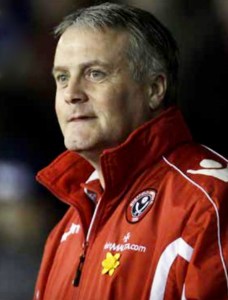
Confrontation was seldom far away in Micky Adams’ career

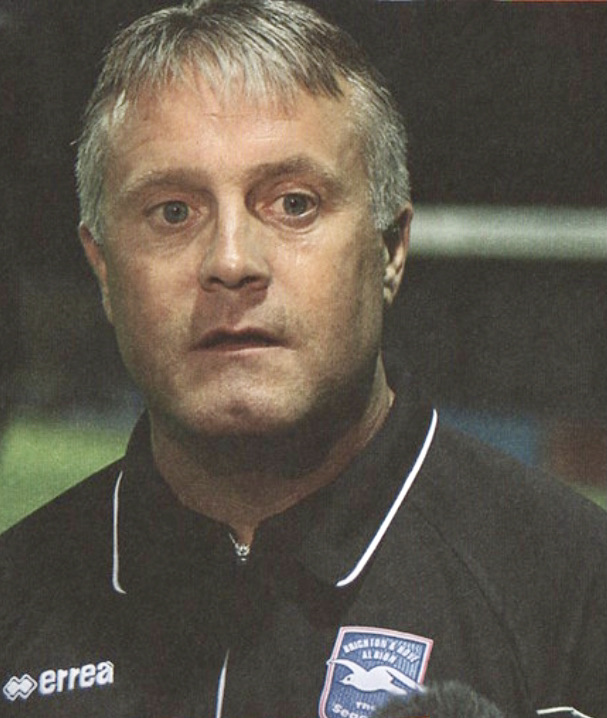
THE FIRST player ever to be sent off in a Premier League game managed Brighton twice.

Fiery Micky Adams saw red playing for Southampton when he decked England international midfielder Ray Wilkins.

“People asked me why I did it. I said I didn’t like him, but I didn’t really know him,” Adams recalls in his autobiography, My Life in Football (Biteback Publishing, 2017).

It was only the second game of the 1992-93 season and Adams was dismissed as Saints lost 3-1 at Queens Park Rangers.

Adams blamed the fact boss Ian Branfoot had played him in midfield that day, where he was never comfortable.

“He (Wilkins) was probably running rings around me. I turned around and thumped him. I was fined two weeks’ wages and hit with a three-match ban.”

It wasn’t the only time he would have cause not to like Wilkins either. The former Chelsea, Manchester United and England midfielder replaced Adams as boss of Fulham when Mohammed Al-Fayed took over.

His previously harmonious relationship with Ray’s younger brother, Dean, turned frosty too. When Adams first took charge at the Albion, he considered youth team boss Dean “one of my best mates”. But the two fell out when Seagulls chairman Dick Knight decided to bring Adams back to the club in 2008 to replace Wilkins, who’d taken over from Mark McGhee as manager.

“He thought I had stitched him up,” said Adams. “I told him that I wanted him to stay. We talked it through and, at the end of the meeting, we seemed to have agreed on the way forward.

“I thought I’d reassured him enough for him to believe he should stay on. But he declined the invitation. He obviously wasn’t happy and attacked me verbally. I did have to remind him about the hypocrisy of a member of the Wilkins family having a dig at me, particularly when his older brother had taken my first job at Fulham.

“We don’t speak now which is a regret because he was a good mate and one of the few people I felt I could talk to and confide in.”

With the benefit of hindsight, Adams also regretted returning to manage the Seagulls a second time considering his stock among Brighton supporters had been high having led them to promotion from the fourth tier in 2001. The side that won promotion to the second tier in 2002 was also regarded as Adams’ team, even though he had left for Leicester City by the time the Albion went up under Peter Taylor.

Adams first took charge of the Seagulls when home games were still being played at Gillingham’s Priestfield Stadium.  Jeff Wood’s short reign was brought to an end after he’d failed to galvanise the side following Brian Horton’s decision to quit to return to the north. Horton took over at Port Vale, where Adams himself would subsequently become manager for two separate stints.

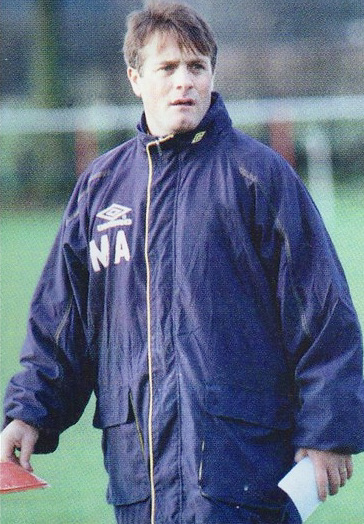
Back in 1999, though, Adams had been at Nottingham Forest before accepting Knight’s offer to take charge of the Albion. He’d originally gone to Nottingham to work as no.2 to Dave Bassett but Ron Atkinson had been brought in to replace Bassett and Adams was switched to reserve team manager.

The Albion job gave him the opportunity to return to front line management, a role he had enjoyed at Fulham and Brentford before regime changes had brought about his departure from both clubs.

On taking the Albion reins, Adams said: “For too long now this club has, for one reason and another, had major problems. The one thing that has remained positive is the faith the supporters have shown in their club.

“The club has to turn around eventually and I want to be the man that helps to turn it around.”

The man who appointed him, Knight, said: “Micky is a formidable character with a proven track record. He knows what it takes to get a club promoted from this division. But, more than that, Micky shares our vision of the future and wants to be part of it. That is why I have offered him a four-year contract and he has agreed to that commitment.”

Not long after taking over the Albion hotseat, he was happy to say goodbye to the stadium he’d previously known as home when a Gillingham player in the ‘80s and it was a revamped squad he assembled for the Albion’s return to Brighton, albeit within the confines of the restricted capacity Withdean Stadium.

Darren Freeman and Aidan Newhouse, two players who’d played for Adams at Fulham, scored five of the six goals that buried Mansfield Town in the new season opener at the ‘Theatre of Trees’.

Considering he was only too happy to be photographed supporting the campaign to build the new stadium at Falmer, it’s disappointing to read in his autobiography what he really thought about it.

“My mates and I nicknamed it ‘Falmer – my arse’ although I never said this to Dick’s face,” he said. “There was always so much talk and we never felt like it was going to get done.”

The turning point in his first full season in charge was the arrival of Bobby Zamora on loan from Bristol Rovers. “The first time I saw him he came onto the training ground; he looked like a kid. But he was tall and gangly with a useful left foot; there was potential there.”

Interestingly, considering Adams makes a point of saying he usually ignored directors who tried to get involved on the playing side, he took up Knight’s suggestion that the side should switch to a 4-4-2 formation – and the Albion promptly won 7-1 at Chester with Zamora scoring a hat-trick!

After a so-so first season back in Brighton, not long into the next season Adams was forced to replace his no.2, Alan Cork, with Bob Booker because Cork was offered the manager’s job at Cardiff City, at the time owned by his former Wimbledon chairman, Sam Hammam. Adams reckoned Booker’s appointment was one of the best decisions he ever made.

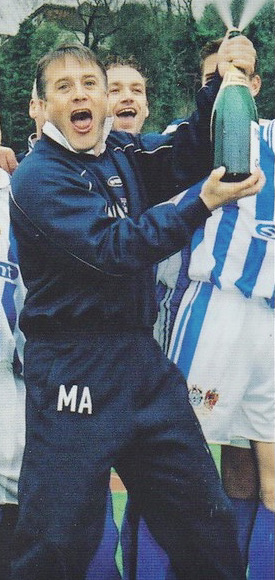
Surrounded by players who had served him well at Fulham and Brentford, together with the additions of Zamora, Michel Kuipers and Paul Rogers, Adams and Booker steered Albion to promotion as champions. Zamora was player of the season and he and Danny Cullip were named in the PFA divisional XI.

Not long into the new season, the lure of taking over as manager at a Premier League club saw Adams quit Brighton, initially to become Bassett’s no.2 at Leicester City, but with the promise of succeeding him.

“While I thought I had a shot at another promotion, it wasn’t a certainty,” Adams explained. “I knew I had put together a team of winners, and I knew I had a goalscorer in Bobby Zamora, but football’s fickle finger of fate could have disrupted that at any time.”

He admitted in the autobiography: “Had I been in charge at the age of 55, rather than 40, then I perhaps would have taken a different decision.”

While Albion enjoyed promotion under Taylor, what followed at Leicester for Adams was a lot more than he’d bargained for and, to his dismay, he is still associated with the ugly shenanigans surrounding the club’s mid-season trip to La Manga, to which he devotes a whole chapter of his book, aiming to set the record straight.

On the pitch, he experienced relegation and promotion with the Foxes and he doesn’t hold back from lashing out about ‘moaner’ Martin Keown, “one of the worst signings of my career”. Eventually, he’d had enough, and walked away from the club with 18 months left on his contract.

After a break in the Dordogne area of France, staying with at his sister-in-law and her husband’s vineyard, he looked for a way back into the game. He was interviewed for the job of managing MK Dons but was put off by a Brighton-style new-ground-in-the-future scenario. Then Peter Reid, a former Southampton teammate, was sacked by Coventry City. He put his name forward and took charge of a Championship side full of experienced players like Steve Staunton and Tim Sherwood.

The side’s fortunes were further boosted by the arrival of Dennis Wise, but, in an all-too-familiar scenario Adams had encountered elsewhere, the chairman who appointed him (Mike McGinnity) was replaced by Geoffrey Robinson. It wasn’t long before it was obvious the relationship was only going to end one way. As Adams tells it, Robinson was influenced by lifelong Sky Blues fan Richard Keys, the TV presenter, and it was pretty much on his say-so that Adams became an ex-City manager after two years in the job.

With an ex-wife and three children to support as well as his partner Claire, Adams couldn’t afford to be out of work for long and fortunately his next opportunity came courtesy of Geraint Williams, boss of newly promoted Colchester United, who took him on as his no.2.

However, it only got to the turn of the year before he was out of work once again, although, from what he describes, he wasn’t enjoying his time with the U’s anyway because Williams kept him at arm’s length when it came to tactics and team selection.

He was amongst the ranks of the unemployed once again when Albion chairman Knight gave him a call, but, with the benefit of hindsight, he said: “Going back turned out to be one of the biggest mistakes of my life.”

Adams blamed the backdrop of “the power struggle” between Knight and Tony Bloom on the lack of success during his second stint in the hotseat, and he reckons it was Bloom who “demanded my head on a platter”. The fateful meeting with Knight, when a parting of the ways was agreed, famously took place in the Little Chef on the A23 near Hickstead.

Looking back, Adams conceded he bowed to pressure from Knight to make certain signings – namely Jim McNulty, Jason Jarrett and Craig Davies in January 2009 – who didn’t work out. He reflected: “I shouldn’t have taken the job in the first place. I’d let my heart rule my head but, in fairness, I didn’t have any other offers coming through and it seemed like a good idea at the time.

“I wouldn’t ever say he (Knight) let me down, but he had his idea about players. I did listen to him, and maybe that’s where I went wrong.”

He added: “Going back to a club where success had been achieved before felt good, yet, the second time around, the same spark wasn’t there no matter how hard I tried.”

Born in Sheffield on 8 November 1961, Micky was the second son of four children. It might be argued his penchant for lashing out could have stemmed from seeing his father hitting his mother, which he chose to spoke about at his father’s funeral. Adams is obviously not sure if he did the right thing but he felt the record should be straight.

The Adams family were always Blades rather than Wednesdayites and, at 15, young Micky was in the youth set-up at Bramall Lane having made progress with Sunday league side Hackenthorpe Throstles.

While he thought he had done well under youth coach John Short during (former Brighton player) Jimmy Sirrel’s reign as first team manager, Sirrel’s successor, Harry Haslam, replaced Short and, not long afterwards, Adams was released.

However, Short moved to Gillingham and invited the young left winger to join the Gills. Adams linked up with a group of promising youngsters that included Steve Bruce.

In September 1979, he had a call-up to John Cartwright’s England Youth side, going on as a sub in a 1-1 draw with West Germany, and starting on the left wing away to Poland (0-1), Hungary (0-2) and Czechoslovakia (1-2) alongside the likes of Colin Pates, Paul Allen, Gary Mabbutt, Paul Walsh and Terry Gibson.

Adams honed his craft under the tutelage of a tough Northern Irishman Bill ‘Buster’ Collins and began to catch the attention of first team manager Gerry Summers and his assistant Alan Hodgkinson, who had played 675 games in goal for Sheffield United.

He made his debut aged just 17 against Rotherham United but didn’t properly break through until Summers and Hodgkinson were replaced by Keith Peacock (remember him, he was the first ever substitute in English football, in 1965, when he went on for Charlton Athletic against John Napier’s Bolton Wanderers) and Paul Taylor.

“Keith saw me as a full-back and that was probably the turning point of my career,” Adams recalled.

Once Adams and Bruce became regulars for the Gills, scouts from bigger clubs began to circle and at one point it looked like Spurs were about to sign Adams. That was until he came up against the aforementioned Peter Taylor, who was playing on the wing for Orient at the time (having previously played for Crystal Palace, Spurs and England).

“He nutmegged me three times in front of the main stand and, to cut a long story short, that was the end of that. Gillingham never heard from Spurs again,” Adams remembered.

Even so, Adams did get a move to play in the top division when Bobby Gould signed him for Coventry City. Managerial upheaval didn’t help his cause at Highfield Road and when John Sillett preferred Greg Downs at left-back, Adams dropped down a division to sign for Billy Bremner’s Leeds United (pictured below right with the legendary Scot).

“He had such a big influence on my career and life that I wouldn’t have swapped it for the world,” said Adams. But life at Elland Road changed with the arrival of Howard Wilkinson, and Adams found himself carpeted by the new boss after admitting punching physio Alan Sutton for making what an injured Adams considered an unreasonable demand to perform an exercise routine even though he was in plaster at the time.

Nevertheless, Adams admits he learned a great deal in terms of coaching from Wilkinson, especially when an improvement in results came about through repetitive fine-tuning on the training pitch.

“It is the one aspect of coaching that is extremely effective, if delivered properly,” said Adams. “I learnt this from Howard and took this lesson with me throughout my coaching and managerial career.”

However, Adams didn’t fit into Wilkinson’s plans for Leeds and he was transferred to Southampton, managed by former Aston Villa, Saints and Northern Ireland international Chris Nicholl. Adams joined Saints in the same week as Neil ‘Razor’ Ruddock and the pair were quickly summoned by Nicholl to explain the large size of the hotel bills they racked up.

Adams moved his family from Wakefield to Warsash and he went on to enjoy what he reflected on as “the best few years of my playing career”. He was at the club when a young Alan Shearer marked his debut by scoring a hat-trick and the “biggest fish in the pond at the Dell” was Jimmy Case.

Adams described the appointment of Branfoot in place of the sacked Nicholl as a watershed moment in his own career. “Overall he was decent to me and I found his methods good,” he said. And he pointed out: “I was getting older, I’d started my coaching badges and I already had one eye on my future.”

Adams recalled an incident during a two-week residential course at Lilleshall, after he had just completed his coaching badge, when he dislocated his shoulder trying to kick Neil Smillie.

“I was left-back and he was right-wing, and he took the piss out of me for 15 minutes. The fuse came out and I decided to boot him up in the air,” Adams recounted. “The only problem was that I missed. I fell over and managed to dislocate my shoulder hitting the ground. It was the worst pain I’ve ever had.”

If life was sweet at Southampton under Branfoot, that all changed when he was replaced by Alan Ball and the returning Lawrie McMenemy. Adams and other older players were left out of the side. Simon Charlton and Francis Benali were preferred at left-back. Eventually Adams went on a month’s loan to Stoke City, at the time managed by former Saints striker Joe Jordan, assisted by Asa Hartford.

On his return to Southampton, and by then 33, Adams was given a free transfer.

Former boss Branfoot came to his rescue, inviting him to move to League Two Fulham as a player-coach in charge of the reserve team. Branfoot also signed Alan Cork and he and Adams began a longstanding friendship that manifested itself in becoming a management pair at various clubs.

On the pitch, Branfoot struggled to galvanise Fulham and, with the team second from bottom of the league, he was sacked – and Adams replaced him. He kept Fulham up by improving fitness levels and introducing more of a passing game.

But he knew big changes were needed if they were going to improve and he gave free transfers to 17 players, despite clashing with Jimmy Hill, who had different ideas.

An admirer of what Tony Pulis was doing at Gillingham, Adams signed three of their players: Paul Watson, Richard Carpenter and Darren Freeman. He also got in goalkeeper Mark Walton and centre back Danny Cullip. Simon Morgan was one of the few who wasn’t let go, and Paul Brooker emerged as a skilful winger. All would later play under him at Brighton.

Promotion was secured and Adams was named divisional Manager of the Year but after all the celebrations had died down Mohamed Al-Fayed bought the club and things changed dramatically.

“The club was in a state of flux as it tried desperately to come to terms with its new status as a billionaire’s plaything,” Adams acerbically observed. “From having nothing, we had everything.”

Before too long, in spite of being given a new five-year contract, Adams was out of the Craven Cottage door, replaced by Wilkins and Kevin Keegan.

But he wasn’t out of work for long because Branfoot’s former deputy, Len Walker, introduced him to the chairman of Swansea City, who were on the brink of relieving Jan Molby of his duties as manager.

Various promises were made regarding funds that would be made available to him but when they were not forthcoming he realised something was not right and he quit, leaving Cork, the deputy he’d taken with him, to take over.

By his own admission, if he hadn’t been sitting on the £140,000 pay-off he’d received from Fulham, he probably would have stayed. As it was, he was out of work once again…..until he had a ‘phone call from David Webb, the former Chelsea and Southampton defender who was the owner of Brentford, but in the process of trying to sell the club.

His brief was to keep the side in the league and to make it attractive to potential purchasers. It was at Griffin Park that he first met up with the aforementioned Bob Booker, who was managing the under 18s at the time. “He is one of the most loyal and trustworthy friends I have ever known,” said Adams. “He would do anything for you.”

However, although he signed the likes of Cullip and Watson from Fulham, he wasn’t able to stop the Bees from being relegated. During the close season, former Palace chairman Ron Noades bought the club and announced he was also taking over as manager.

Once again, Adams was out of a job but his next step saw him appointed as no.2 to Dave Bassett at Nottingham Forest.

Which brings us almost full circle in the Adams career story, but not quite.

After the debacle of his second stint in charge of Brighton, he was twice manager at Port Vale, each spell straddling what turned out to be a disastrous period in charge of his family’s favourite club, Sheffield United.

It was Adams who gave a league debut to Harry Maguire during his time at Bramall Lane, but the side were relegated from the Championship on his watch, and he was sacked.

Adams took charge of 249 games as Vale boss but quit after a run of six defeats saying he’d fallen out of love with the game.

It didn’t prevent him having another go at it, though. He went to bottom of the league Tranmere Rovers and admitted in his book: “It was arrogance to think I could turn round a club that had been relegated twice in two seasons.”

In short, he couldn’t and he ended up leaving two games before the end of what was their third successive relegation.

“It was a really poor end to a career that had started so promisingly at Fulham,” he said.

Teenage prodigy Assulin didn’t live up to early expectations

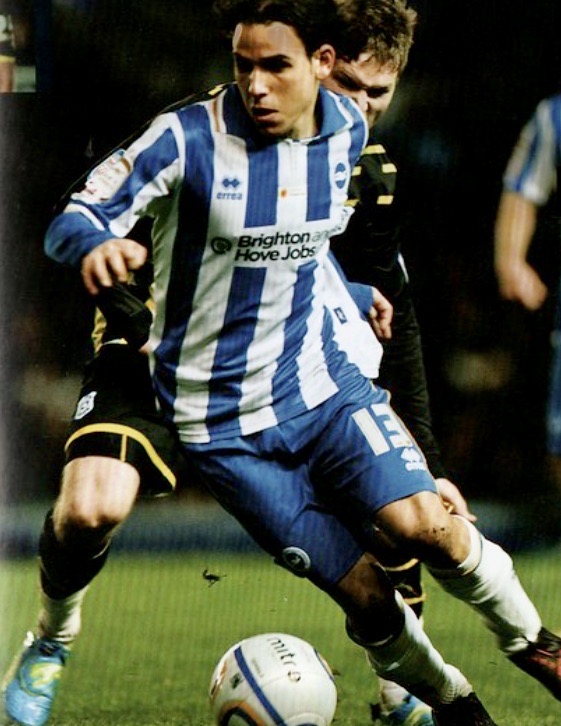
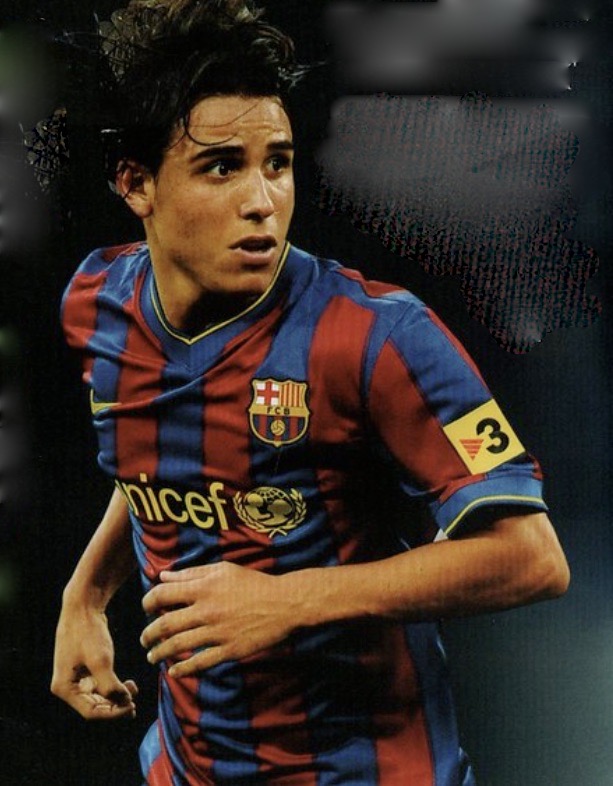
GAI ASSULIN played for his country aged just 16, was hailed as ‘the new Lionel Messi’ and appeared in Pep Guardiola’s Barcelona first team at 18.

Two years later he had two starts and five substitute appearances for Brighton in the Championship, on loan from Manchester City, but couldn’t agree terms for a permanent move.

He subsequently flitted from club to club, country to country, and in the autumn of 2021 was playing local five-a-side football in Cheshire.

Where did it all go wrong? Was it a case of too much too soon?

Assulin was only 12 when he uprooted from his Israel home to pursue the chance of a career with Barca. He spent seven years there, playing for the youth side before reaching the renowned B team in 2007 where he was coached by Guardiola.

“I learnt a lot from him,” he said. “He helped me develop as a player but then so did all the coaches I played for at the club. From the age of 12 to 17 you learn the philosophy of the first team; how to play, what to do, and that never changed.

“Whatever age group you are in, the system you play is the same as the senior side so, if you do get called into the first team, it is not a big, big difference to what you are used to.”

When Guardiola stepped up to first team coach, Assulin was among the youngsters he blooded involving the winger in the Copa del Rey game against Cultural Leonesa in October 2009 and then some pre-season friendlies, including against Tottenham at Wembley.

“Playing in those games was a good experience,” he told the Albion matchday programme. “As the manager likes his younger players, he gave me an opportunity but the competition for places was really, really tough so it was hard to break into the team.

“I also had a few problems with my knee which didn’t help either and my time with the club eventually came to an end.”

Ahead of Guardiola eventually making the same move, Assulin signed for Manchester City under Roberto Mancini in December 2010, explaining: “I wanted to continue my football education at another top club and Manchester City has many top, top players.”

He has since publicly castigated Mancini for not giving him the opportunity to break through at City, telling ITV in 2016: “He didn’t give anyone a chance, he didn’t care about any young players, especially me.

“I didn’t even do the pre-season, when it was a good time to give someone a chance and see if they do well (or) if they are not doing well. But I didn’t get a chance, which was frustrating. It was a shame as I always felt good when I trained with the first team, but sometimes he chose his own sons over other players and I don’t think it was fair.

“It is very important for me to tell people as a lot of City (fans) don’t know what happened with me at City. People always ask me why I didn’t get a chance, and it’s obvious that the manager was the problem.

“I loved playing there, I loved the city and I wish I had a chance there. (City execs) Brian Marwood and Garry Cook loved me and really wanted me to stay, but Mancini didn’t and that was the problem.”

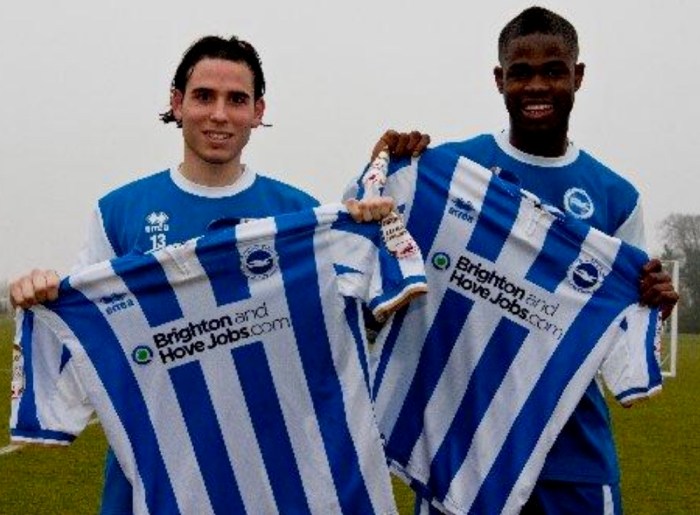
When Assulin joined Brighton in February 2012, Gus Poyet admitted he hadn’t been planning to take him on because at the time he was only interested in getting City midfielder Abdul Razak on loan.

A window opened up when forward Will Hoskins went to Sheffield United on loan, and Poyet told the Argus: “We were not looking to bring in another player after Razak. This was something that came along that I thought was very interesting. When there is something unique and unexpected like this I think it’s a no brainer.

“Gai was one of the top young talents in the world four or five years ago and he was very unlucky with an injury.

“He is still very young. He has got an incredible amount of quality and he can really make a difference but for any young player he needs to be playing and right now at Man City that is very difficult.

“He is an offensive player without any doubt, not a midfielder. He can play up front, wide or behind the striker.”

Assulin made his Brighton debut on 22 February against Hull City, going on as a substitute for Razak in the 77th minute of a 0–0 draw. He made his first start against Cardiff City at the Amex on 7 March but was substituted after 59 minutes of a 2–2 draw.

Although Razak returned to City after falling out with Poyet, Assulin’s loan was extended to the end of the season. However, he only made one more start – in the 6-0 drubbing dished out by West Ham at the Boleyn Ground, again being subbed off when Kazenga LuaLua replaced him on 53 minutes.

His last action in an Albion shirt was as a 61st-minute substitute for Will Buckley in a 0-0 draw at Barnsley’s Oakwell ground. As an aside, Barnsley had future Albion back-up ‘keeper David Button in goal, and ex-Seagulls Jim McNulty in defence and Craig Davies up front.

Rather like the situation at City, there was plenty of competition for places at Brighton with Buckley, Craig Noone and LuaLua the wide choices and the incomparable Vicente playing just off the strikers.

Supporters commenting online recognised Assulin’s talent but felt he was too slight for the robust sort of treatment meted out by Championship defenders.

There was some speculation at the end of the season that a permanent move from City might materialise but terms couldn’t be agreed and Assulin moved instead to Racing Santander back in Spain.

He also had spells with Granada, Hercules and Mallorca and Israeli side Hapoel Tel Aviv. He returned to Barcelona to join third-tier side Sabadell in August 2016 but in January 2018 his contract was cancelled by mutual consent after an 18-month spell hampered by injury.

Next stop was Kazakhstan Premier League team Kairat but he played only once and mutually agreed to tear up the two-year contract he’d signed. He also went to Romanian outfit FC Politehnica Iași and, until the end of the 2020-21 season, he was playing for Crema in Italy’s Serie D.

Without a club, Assulin returned to his home in Cheshire with his partner and eight-year-old daughter, and, while searching for his next move, was doing the school run, coaching, playing five-a-side and helping with his partner’s children’s clothes shop, he told football reporter Will Unwin in a November 2021 interview.

“On an indoor pitch at an industrial estate in nearby Cheadle Hulme, it is not hard to spot the man with La Masia education among those from Moston and Moss Side,” Unwin observed.

“I grew up as a kid in Israel, in a small town and my dream was to play first-team football for a professional club,” Assulin told the reporter.

Born in Nahariya, Israel, on 9 April 1991, Assulin’s family supported Maccabi Haifa,  and young Gai went to watch them from an early age.

How did he end up at Barcelona? “My dad (Eli) took me to a club in Israel called Natanya and they had a manager who had contacts with Barcelona,” he explained. “I was invited to Andorra for a ten-day trial with other players from many different countries and I did really well. A scout from the club then invited me to Barcelona and I did really well at a trial there too. They then offered me a contract.”

Only 12 at the time, he said: “It was a big change obviously at that age, as you are not used to being in a different country and a different culture, but I did the right thing. I love football, it is my life and my family were with me when I needed them.

“My dad came over with me to live in Barcelona and then the rest of my family – my mum, one brother and two sisters – came over for a year before returning to Israel. They used to come and visit every couple of months. The experience has made me a more mature person.”

Unwin noted that Liverpool’s Thiago Alcântara once described Assulin as “the most talented player I’ve ever seen in La Masia”, the two players having progressed alongside each other.

“We grew up together at the club and played in the same team for seven years,” said Assulin. “I would see him every day, and we went to school together.”

In a 2018 interview with Unwin for Planet Football, Assulin said: “Training with Barcelona’s first team was the best experience I’ve had in my career.

“I learned so much. I’m proud to say I was training with such big players. I’ve learned from Messi, Henry, Zlatan. They’re all different types of players, so it was great to see how they operate and pick up little things from them.”

Likewise at Man City, especially from David Silva. “He’s such a good player and different from anything you will see,” said Assulin. “He’s just so intelligent on the pitch and a great guy too.

“I had a good relationship with almost everyone. I was talking more to the Spanish guys – Silva; Carlos Tevez was there at the time; Yaya Toure I knew from Barcelona; Kolo Toure was a really nice guy.

“I had a great relationship with everyone, but especially those guys. Every time I went to train with the first team, they helped me, and they liked me.”

That one full international appearance for Israel happened in a friendly match against Chile in 2008, his appearance as a 78th minute substitute coming 14 days before his 17th birthday. He subsequently made 22 appearances for Israel’s under 21 side over the next five years, but didn’t win another full cap.

Unwin observed: “The early pressure of being synonymous with Lionel Messi was not a tag Assulin particularly enjoyed as he looked to come out of the Argentinian’s shadow.”

The player himself explained: ‘They like to compare in football; it is something they do all the time and for me it is a big compliment, but Messi is the greatest footballer in history. ‘Sometimes it is not good if you take it in the wrong way, as the expectation is for you to go on to the pitch and do the same as Messi all the time. Whichever club I went to, they saw I was compared with Messi, so they thought I was going to be Messi and score 50 goals a year, so that comparison at the time was not as positive.

‘Right now, after being at so many clubs, I see it as something positive and I take it as something that hasn’t been said about so many players. Messi is the best in history, so it’s nice to be compared to him for something that I did right at the time.’

Injury-hit Albion among six to borrow Borrowdale

DEFENDER Gary Borrowdale couldn’t have been more aptly named for a loanee which is just as well because he found himself in that situation half a dozen times over five years.

He made a temporary switch to Brighton from QPR in March 2009 to fill the spot vacated when Albion’s regular left-back Jim McNulty suffered a shocking injury in a 4-0 home defeat to Crewe Alexandra.

While McNulty needed an operation to remove a kidney, former England under 20 international Borrowdale had the chance to resurrect his flagging career with the Seagulls.

For a player who’d clocked up 100 appearances for Crystal Palace by the time he was 21, there was the inevitable ‘noise’ about helping out the arch rivals, but Borrowdale just wanted some game time, and he was one of five debutants who pulled on Albion’s sky blue second kit for the game at Brisbane Road on 7 March 2009.

Brighton lost that match 2-1 but, under Russell Slade’s astute stewardship, Borrowdale acquitted himself well during 12 matches through to the end of the season and the Albion just managed to retain their third-tier status.

Borrowdale montage“I made my debut for Palace at 17 and played my first game in the Premiership at 18, so it was a great start and Palace will always be dear to me as a result,” Borrowdale told Spencer Vignes for a matchday programme article.

“The highlight of my career would be the promotion I had with Palace when we went from the Championship to the Premiership,” he said, referring to the play-off win over West Ham, the day before Albion beat Bristol City in their own divisional play-off.

Borrowdale returned to west London after his spell on the south coast but in March 2010 he went on loan to Charlton Athletic and the following year had temporary spells at Carlisle United and Barnet.

His league career seemed to be over when QPR released him in June 2012 and he went over to Northern Ireland to join second tier outfit Carrick Rangers.

In January 2014, he looked to have got a foothold back in the English professional game when loaned by Margate to Gillingham, but he didn’t play any first-team games and was released at the end of the season.

Former Albion boss Peter Taylor told the club’s official website: “He’s done very well, lost weight every week and looked fitter every week.

“I just don’t think he’s ready for League One football, especially considering if we have to play Saturday and Tuesday. As a result, I have decided to let him go.”

Borrowdale then linked up with Greenwich Borough, initially as a player, before becoming a coach.

Born in Worcester Park, south London, on 16 July 1985, Borrowdale came through the youth ranks at Selhurst Park and Trevor Francis handed him his debut for Crystal Palace in December 2002.

When Iain Dowie took over as manager, Borrowdale quickly became a regular in the first team. He also represented England at each of the age groups from 16 to 20, playing alongside the likes of Gary Cahill in defence.

In a 2-2 draw with the Netherlands, played at Turf Moor, Borrowdale’s teammates included fellow Palace youngster Scott Flinders in goal and future Albion player Will Hoskins.

Borrowdale won Palace’s Young Player of the Year award in 2006-07, but, when Dowie moved on to manage Coventry City, Borrowdale joined him there, a tribunal fixing the transfer fee at £650,000.

The move didn’t work out, though, and, with Dowie gone, Borrowdale was sidelined, eventually being sent out on loan to Colchester United and then QPR.

Paulo Sousa took him on loan in November 2008 and, although he didn’t feature, made the move permanent in January 2009 on a three-and-a-half-year deal. He made just 22 appearances for QPR during that time.

Borrowdale stripes

Pictures as featured in the Albion matchday programme.

Sweet left foot but McLeod wasn’t to Albion fans’ taste

McLeod stripesWHEN MICKY Adams returned to the Albion for a second spell as manager, he brought in a number of players who, for whatever reason, struggled to deliver what was expected of them on the pitch.

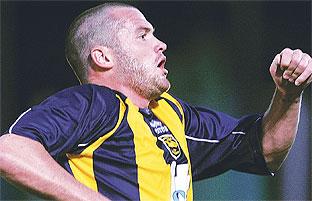
One was Kevin McLeod, a Liverpudlian who, earlier in his career, had come through the Everton academy and briefly made it through to the Everton first team.

During Adams’ previous reign at Brighton, he’d made a habit of recruiting players he had worked with before – with plenty of success. Second time around, it was not the same outcome. McLeod was a player who had played under Adams at Colchester United, joining Albion on a Bosman free transfer on 1 July 2008.

“He is a left winger with good pace. He can deliver crosses and he offers a goal threat,” Adams told the media at the time. “At this level, he’s going to be a terrific signing for us.”

McLeod scored in only the second minute of a pre-season friendly against Worthing at Woodside Road and followed up three days later with two goals against Bognor.

When the proper League One action got under way at Gresty Road, Crewe, McLeod was on fire in the opening 45 minutes and Albion went on to win 2-1.

Three days later, Adam Virgo scored twice from McLeod corner kicks as Barnet were swept aside 4-0 in the League Cup. But McLeod picked up a knee injury in that game which forced him off just before half time. Some critics maintain he never properly recovered from it for the rest of his time with the Albion. In the middle of September, he had to undergo an operation on the troublesome knee.

He returned to the line-up after a month, in a 0-0 home draw v Peterborough, and in his Argus match report, Andy Naylor observed: “McLeod once again demonstrated his ability to deliver quality crosses, which is why he has been so badly missed.”

However, by his own admission, McLeod rushed back rather too soon, and playing when not properly fit didn’t do him any favours.

650057It didn’t seem to stop him being the joker in the pack during training, though, on one occasion taking the key to loan signing Robbie Savage’s Lamborghini and hiding it. Former teammate Jim McNulty remembered him as being “hilarious for so many different reasons”, adding: “He was funny when he meant to be, he was funny when he didn’t mean to be and he was funny when he told a story because we never knew whether it was true or false. We could have so much humour with him from so many different angles and he probably wasn’t even aware of 95 per cent of them.”

McNulty detailed one stupid stunt in an interview with express.co.uk: “Macca took the car keys from the pants of one of the young lads in the changing room and decided to drive his brand new 4×4 straight onto the training pitches, over the grass and locked it between two goals.

“The goals would get chained up so he pushed two goals over the top of this lad’s BMW and locked them together. It was hilarious watching the lad trying to unlock them from his car.”

Poster ‘Basil Fawlty’ opined on North Stand Chat: “He never recovered after that knee injury against Barnet. His wages could have been used on somebody decent who can actually play left wing!”

‘Finchley Seagull’ added: “Most of the time he was here he was being paid for being injured or useless” and ‘EssBee’ declared: “Never have I seen such an unlikely professional footballer than that bloke. He looked like a poor pub team footballer…barrel chested, ill-physiqued, he was like a tub of f***ing lard with no control, no nothing.”

McLeodWell-known Albion watcher Harty observed: “I cannot think of any player, in recent years, who had a better first 45 mins for the club, vs Crewe in August 2008… then had an Albion career peter out in the manner it did.”

‘Twinkle Toes’ agreed: “I remember marvelling in his performance that day at Gresty Rd. He was absolutely terrorising the Crewe right-back with his pace and ability: he looked absolutely awesome.

“How the hell could somebody with that kind of ability turn into the no-hoper we all know and loathe?”

wearebrighton.com summed him up thus: “Another player to be filed under the umbrella of players signed by Adams who just wanted money. You could see that McLeod had talent, he just couldn’t be bothered to use it.”

While he made 28 appearances in the 2008-09 season, he only appeared eight times in 2009-10 and by the time Gus Poyet was in the manager’s chair, he let McLeod join Wycombe Wanderers on loan.

After the move he further riled Brighton supporters by claiming the humble Buckinghamshire club had “a better squad than Brighton, better ground, better fans”.

McLeod played just 11 more times as a professional for the Chairboys before going on to join a Sunday League side in Colchester.

Born in Liverpool on 12 September 1980, McLeod joined Everton as a schoolboy in 1991 and did well enough to become part of a decent youth side before establishing himself in their reserves. In the 2000-01 season, he was player of the season as they topped the reserve league.

His form was recognised by manager Walter Smith who called him up to the first team and gave him five substitute appearances in the Premier League. He made his debut v Ipswich on 30 September 2000; called off the bench for the last 15 minutes when the Toffees were already 3-0 down.

His next two appearances, two months later, were happier, though: he featured in a winning team against Arsenal and Chelsea.

Fellow youth team product Danny Cadamarteri had already given Everton a second-half lead over the Gunners when, within a minute of McLeod’s introduction, Kevin Campbell sealed the points against his old club.

The following week, the same two goalscorers gave Everton a 2-1 victory against a Chelsea line-up including the likes of Marcel Desailly, Eidur Gudjohnsen and Gianfranco Zola.

McLeod reflected some years later: “That’s not bad to have on your CV is it? Being an Evertonian it was great.

“When you are on the same pitch as Dennis Bergkamp, Ashley Cole, Ray Parlour, Lee Dixon, Martin Keown and the rest of them you don’t know whether to laugh or cry.

“It was a good experience and I thoroughly enjoyed it. In my age group there was Cadamarteri, Leon Osman, Francis Jeffers, Tony Hibbert, George Pilkington and Peter Clarke.”

The Arsenal-Chelsea double was as good as it got for McLeod. He made two more substitute appearances that season, in defeats at Ipswich and Chelsea.

The following season he made his only start for Everton as a team-mate of Paul Gascoigne in a League Cup defeat on penalties at home to Crystal Palace on 13 September 2001.

The excellent toffeeweb.com probably hit the nail on the head in describing the rising star.

“He may fall into the Everton black hole for promising youngsters who are good… but just not quite good enough,” it said. “He only has one weakness, and that is within himself when he will sometimes hide in a game if things don’t go to well in the first 10 to 15 mins.”

McLeod only got one chance under Smith’s successor David Moyes, coming on as a last-minute sub in a FA Cup defeat v Shrewsbury Town on 4 January 2003.

Ten years later he admitted to the Liverpool Echo that things might have turned out different if he had been more responsive towards Moyes.

Instead, he joined QPR on loan between March and May 2003, helping them reach the second division play-offs before joining them permanently for £250,000 on 18 August 2003.

McLeod said: “I didn’t like it at first when I moved to London. I didn’t want to go but I sat down and talked about it with my family and they said you can stay here and work hard or go and play League football.

“I went away and enjoyed it and got promotions (in his first season with both QPR and Swansea).

1068376

“You look at Leon Osman and Tony Hibbert. They stayed there for the extra year and now they are playing week in and week out but I am not one of those people who looks too much at the past.

“I’d rather go forward. I made my decision and I live with it to this day.”

McLeod initially joined Swansea on loan in February 2005 and made 11 appearances as the Swans won promotion to League One. The move was made pemanent for a fee of £60,000 at the start of the 2005-06 season and he went on to make 52 appearances (14 as a sub), before the move to Colchester.

In November 2015, McLeod was in trouble with the law, appearing before magistrates in Colchester accused of assault.