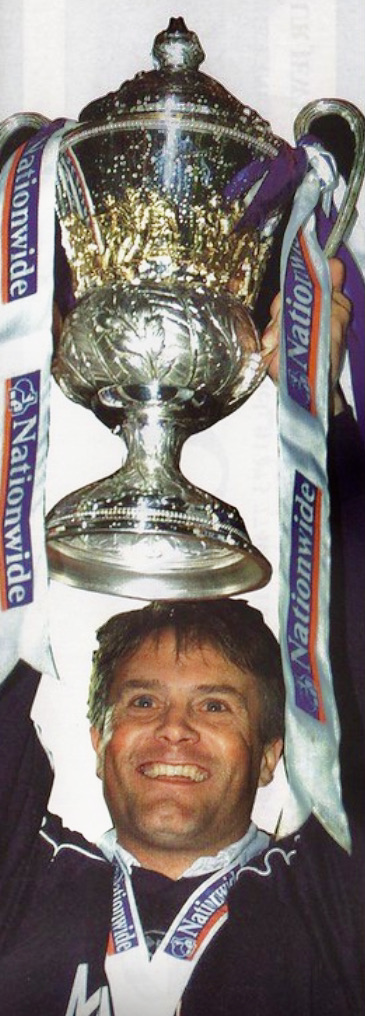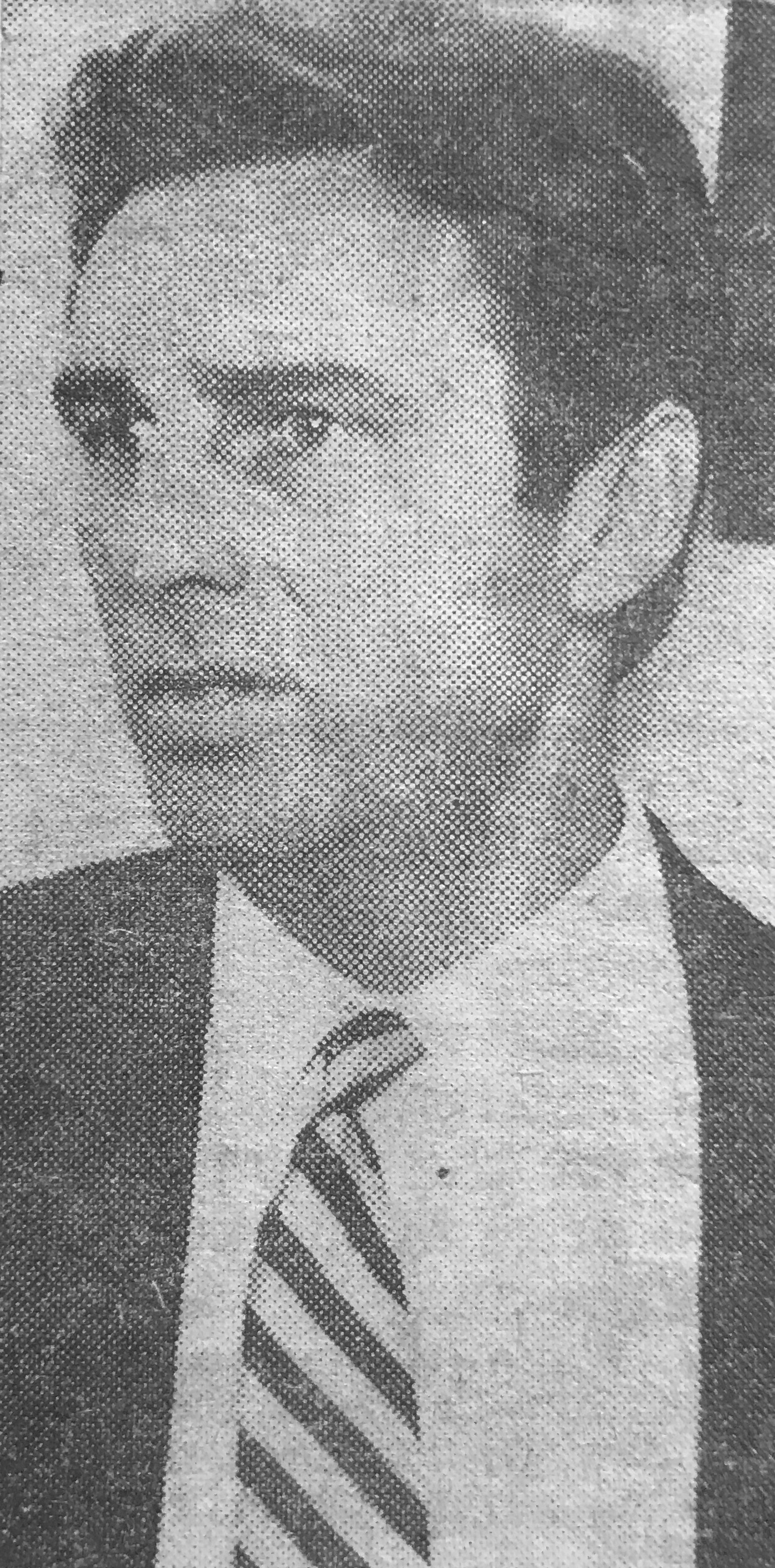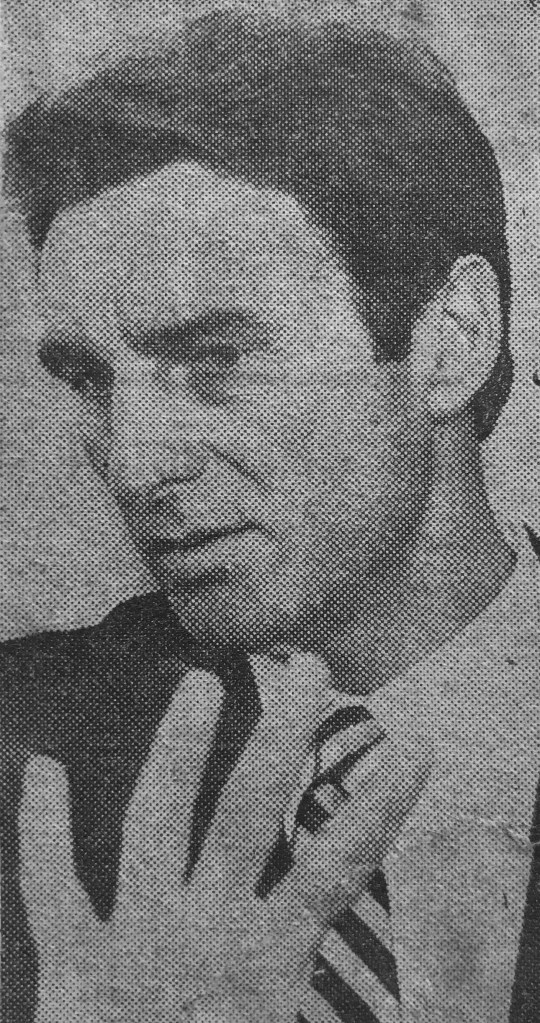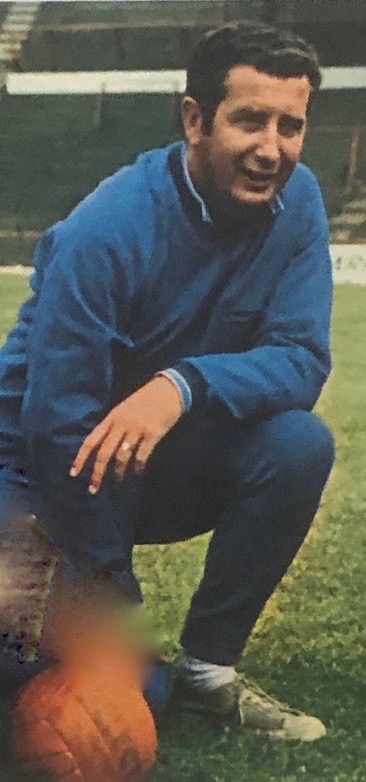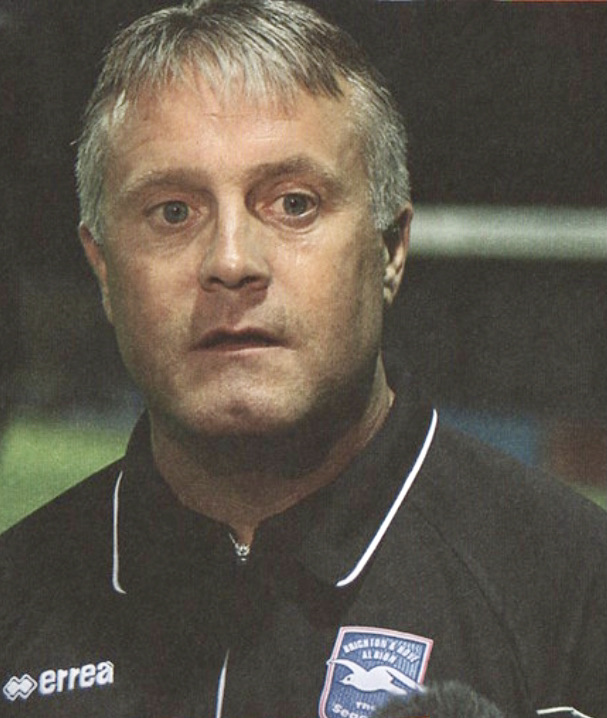
Confrontation was seldom far away in Micky Adams’ career

THE FIRST player ever to be sent off in a Premier League game managed Brighton twice.

Fiery Micky Adams saw red playing for Southampton when he decked England international midfielder Ray Wilkins.

“People asked me why I did it. I said I didn’t like him, but I didn’t really know him,” Adams recalls in his autobiography, My Life in Football (Biteback Publishing, 2017).

It was only the second game of the 1992-93 season and Adams was dismissed as Saints lost 3-1 at Queens Park Rangers.

Adams blamed the fact boss Ian Branfoot had played him in midfield that day, where he was never comfortable.

“He (Wilkins) was probably running rings around me. I turned around and thumped him. I was fined two weeks’ wages and hit with a three-match ban.”

It wasn’t the only time he would have cause not to like Wilkins either. The former Chelsea, Manchester United and England midfielder replaced Adams as boss of Fulham when Mohammed Al-Fayed took over.

His previously harmonious relationship with Ray’s younger brother, Dean, turned frosty too. When Adams first took charge at the Albion, he considered youth team boss Dean “one of my best mates”. But the two fell out when Seagulls chairman Dick Knight decided to bring Adams back to the club in 2008 to replace Wilkins, who’d taken over from Mark McGhee as manager.

“He thought I had stitched him up,” said Adams. “I told him that I wanted him to stay. We talked it through and, at the end of the meeting, we seemed to have agreed on the way forward.

“I thought I’d reassured him enough for him to believe he should stay on. But he declined the invitation. He obviously wasn’t happy and attacked me verbally. I did have to remind him about the hypocrisy of a member of the Wilkins family having a dig at me, particularly when his older brother had taken my first job at Fulham.

“We don’t speak now which is a regret because he was a good mate and one of the few people I felt I could talk to and confide in.”

With the benefit of hindsight, Adams also regretted returning to manage the Seagulls a second time considering his stock among Brighton supporters had been high having led them to promotion from the fourth tier in 2001. The side that won promotion to the second tier in 2002 was also regarded as Adams’ team, even though he had left for Leicester City by the time the Albion went up under Peter Taylor.
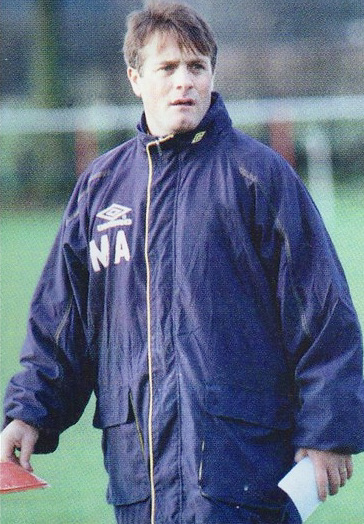
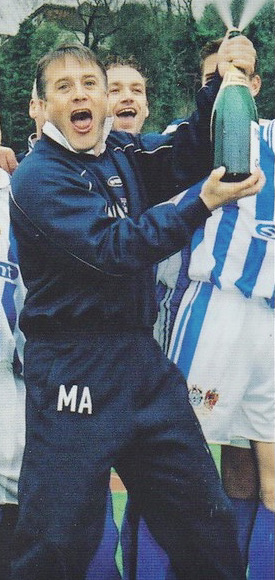
Adams first took charge of the Seagulls when home games were still being played at Gillingham’s Priestfield Stadium.  Jeff Wood’s short reign was brought to an end after he’d failed to galvanise the side following Brian Horton’s decision to quit to return to the north. Horton took over at Port Vale, where Adams himself would subsequently become manager for two separate stints.

Back in 1999, though, Adams had been at Nottingham Forest before accepting Knight’s offer to take charge of the Albion. He’d originally gone to Nottingham to work as no.2 to Dave Bassett but Ron Atkinson had been brought in to replace Bassett and Adams was switched to reserve team manager.

The Albion job gave him the opportunity to return to front line management, a role he had enjoyed at Fulham and Brentford before regime changes had brought about his departure from both clubs.

On taking the Albion reins, Adams said: “For too long now this club has, for one reason and another, had major problems. The one thing that has remained positive is the faith the supporters have shown in their club.

“The club has to turn around eventually and I want to be the man that helps to turn it around.”

The man who appointed him, Knight, said: “Micky is a formidable character with a proven track record. He knows what it takes to get a club promoted from this division. But, more than that, Micky shares our vision of the future and wants to be part of it. That is why I have offered him a four-year contract and he has agreed to that commitment.”

Not long after taking over the Albion hotseat, he was happy to say goodbye to the stadium he’d previously known as home when a Gillingham player in the ‘80s and it was a revamped squad he assembled for the Albion’s return to Brighton, albeit within the confines of the restricted capacity Withdean Stadium.

Darren Freeman and Aidan Newhouse, two players who’d played for Adams at Fulham, scored five of the six goals that buried Mansfield Town in the new season opener at the ‘Theatre of Trees’.

Considering he was only too happy to be photographed supporting the campaign to build the new stadium at Falmer, it’s disappointing to read in his autobiography what he really thought about it.

“My mates and I nicknamed it ‘Falmer – my arse’ although I never said this to Dick’s face,” he said. “There was always so much talk and we never felt like it was going to get done.”

The turning point in his first full season in charge was the arrival of Bobby Zamora on loan from Bristol Rovers. “The first time I saw him he came onto the training ground; he looked like a kid. But he was tall and gangly with a useful left foot; there was potential there.”

Interestingly, considering Adams makes a point of saying he usually ignored directors who tried to get involved on the playing side, he took up Knight’s suggestion that the side should switch to a 4-4-2 formation – and the Albion promptly won 7-1 at Chester with Zamora scoring a hat-trick!

After a so-so first season back in Brighton, not long into the next season Adams was forced to replace his no.2, Alan Cork, with Bob Booker because Cork was offered the manager’s job at Cardiff City, at the time owned by his former Wimbledon chairman, Sam Hammam. Adams reckoned Booker’s appointment was one of the best decisions he ever made.

Surrounded by players who had served him well at Fulham and Brentford, together with the additions of Zamora, Michel Kuipers and Paul Rogers, Adams and Booker steered Albion to promotion as champions. Zamora was player of the season and he and Danny Cullip were named in the PFA divisional XI.

Not long into the new season, the lure of taking over as manager at a Premier League club saw Adams quit Brighton, initially to become Bassett’s no.2 at Leicester City, but with the promise of succeeding him.

“While I thought I had a shot at another promotion, it wasn’t a certainty,” Adams explained. “I knew I had put together a team of winners, and I knew I had a goalscorer in Bobby Zamora, but football’s fickle finger of fate could have disrupted that at any time.”

He admitted in the autobiography: “Had I been in charge at the age of 55, rather than 40, then I perhaps would have taken a different decision.”

While Albion enjoyed promotion under Taylor, what followed at Leicester for Adams was a lot more than he’d bargained for and, to his dismay, he is still associated with the ugly shenanigans surrounding the club’s mid-season trip to La Manga, to which he devotes a whole chapter of his book, aiming to set the record straight.

On the pitch, he experienced relegation and promotion with the Foxes and he doesn’t hold back from lashing out about ‘moaner’ Martin Keown, “one of the worst signings of my career”. Eventually, he’d had enough, and walked away from the club with 18 months left on his contract.

After a break in the Dordogne area of France, staying with at his sister-in-law and her husband’s vineyard, he looked for a way back into the game. He was interviewed for the job of managing MK Dons but was put off by a Brighton-style new-ground-in-the-future scenario. Then Peter Reid, a former Southampton teammate, was sacked by Coventry City. He put his name forward and took charge of a Championship side full of experienced players like Steve Staunton and Tim Sherwood.

The side’s fortunes were further boosted by the arrival of Dennis Wise, but, in an all-too-familiar scenario Adams had encountered elsewhere, the chairman who appointed him (Mike McGinnity) was replaced by Geoffrey Robinson. It wasn’t long before it was obvious the relationship was only going to end one way. As Adams tells it, Robinson was influenced by lifelong Sky Blues fan Richard Keys, the TV presenter, and it was pretty much on his say-so that Adams became an ex-City manager after two years in the job.

With an ex-wife and three children to support as well as his partner Claire, Adams couldn’t afford to be out of work for long and fortunately his next opportunity came courtesy of Geraint Williams, boss of newly promoted Colchester United, who took him on as his no.2.

However, it only got to the turn of the year before he was out of work once again, although, from what he describes, he wasn’t enjoying his time with the U’s anyway because Williams kept him at arm’s length when it came to tactics and team selection.

He was amongst the ranks of the unemployed once again when Albion chairman Knight gave him a call, but, with the benefit of hindsight, he said: “Going back turned out to be one of the biggest mistakes of my life.”

Adams blamed the backdrop of “the power struggle” between Knight and Tony Bloom on the lack of success during his second stint in the hotseat, and he reckons it was Bloom who “demanded my head on a platter”. The fateful meeting with Knight, when a parting of the ways was agreed, famously took place in the Little Chef on the A23 near Hickstead.

Looking back, Adams conceded he bowed to pressure from Knight to make certain signings – namely Jim McNulty, Jason Jarrett and Craig Davies in January 2009 – who didn’t work out. He reflected: “I shouldn’t have taken the job in the first place. I’d let my heart rule my head but, in fairness, I didn’t have any other offers coming through and it seemed like a good idea at the time.

“I wouldn’t ever say he (Knight) let me down, but he had his idea about players. I did listen to him, and maybe that’s where I went wrong.”

He added: “Going back to a club where success had been achieved before felt good, yet, the second time around, the same spark wasn’t there no matter how hard I tried.”

Born in Sheffield on 8 November 1961, Micky was the second son of four children. It might be argued his penchant for lashing out could have stemmed from seeing his father hitting his mother, which he chose to spoke about at his father’s funeral. Adams is obviously not sure if he did the right thing but he felt the record should be straight.

The Adams family were always Blades rather than Wednesdayites and, at 15, young Micky was in the youth set-up at Bramall Lane having made progress with Sunday league side Hackenthorpe Throstles.

While he thought he had done well under youth coach John Short during (former Brighton player) Jimmy Sirrel’s reign as first team manager, Sirrel’s successor, Harry Haslam, replaced Short and, not long afterwards, Adams was released.

However, Short moved to Gillingham and invited the young left winger to join the Gills. Adams linked up with a group of promising youngsters that included Steve Bruce.

In September 1979, he had a call-up to John Cartwright’s England Youth side, going on as a sub in a 1-1 draw with West Germany, and starting on the left wing away to Poland (0-1), Hungary (0-2) and Czechoslovakia (1-2) alongside the likes of Colin Pates, Paul Allen, Gary Mabbutt, Paul Walsh and Terry Gibson.

Adams honed his craft under the tutelage of a tough Northern Irishman Bill ‘Buster’ Collins and began to catch the attention of first team manager Gerry Summers and his assistant Alan Hodgkinson, who had played 675 games in goal for Sheffield United.

He made his debut aged just 17 against Rotherham United but didn’t properly break through until Summers and Hodgkinson were replaced by Keith Peacock (remember him, he was the first ever substitute in English football, in 1965, when he went on for Charlton Athletic against John Napier’s Bolton Wanderers) and Paul Taylor.

“Keith saw me as a full-back and that was probably the turning point of my career,” Adams recalled.

Once Adams and Bruce became regulars for the Gills, scouts from bigger clubs began to circle and at one point it looked like Spurs were about to sign Adams. That was until he came up against the aforementioned Peter Taylor, who was playing on the wing for Orient at the time (having previously played for Crystal Palace, Spurs and England).

“He nutmegged me three times in front of the main stand and, to cut a long story short, that was the end of that. Gillingham never heard from Spurs again,” Adams remembered.

Even so, Adams did get a move to play in the top division when Bobby Gould signed him for Coventry City. Managerial upheaval didn’t help his cause at Highfield Road and when John Sillett preferred Greg Downs at left-back, Adams dropped down a division to sign for Billy Bremner’s Leeds United (pictured below right with the legendary Scot).

“He had such a big influence on my career and life that I wouldn’t have swapped it for the world,” said Adams. But life at Elland Road changed with the arrival of Howard Wilkinson, and Adams found himself carpeted by the new boss after admitting punching physio Alan Sutton for making what an injured Adams considered an unreasonable demand to perform an exercise routine even though he was in plaster at the time.

Nevertheless, Adams admits he learned a great deal in terms of coaching from Wilkinson, especially when an improvement in results came about through repetitive fine-tuning on the training pitch.

“It is the one aspect of coaching that is extremely effective, if delivered properly,” said Adams. “I learnt this from Howard and took this lesson with me throughout my coaching and managerial career.”

However, Adams didn’t fit into Wilkinson’s plans for Leeds and he was transferred to Southampton, managed by former Aston Villa, Saints and Northern Ireland international Chris Nicholl. Adams joined Saints in the same week as Neil ‘Razor’ Ruddock and the pair were quickly summoned by Nicholl to explain the large size of the hotel bills they racked up.

Adams moved his family from Wakefield to Warsash and he went on to enjoy what he reflected on as “the best few years of my playing career”. He was at the club when a young Alan Shearer marked his debut by scoring a hat-trick and the “biggest fish in the pond at the Dell” was Jimmy Case.

Adams described the appointment of Branfoot in place of the sacked Nicholl as a watershed moment in his own career. “Overall he was decent to me and I found his methods good,” he said. And he pointed out: “I was getting older, I’d started my coaching badges and I already had one eye on my future.”

Adams recalled an incident during a two-week residential course at Lilleshall, after he had just completed his coaching badge, when he dislocated his shoulder trying to kick Neil Smillie.

“I was left-back and he was right-wing, and he took the piss out of me for 15 minutes. The fuse came out and I decided to boot him up in the air,” Adams recounted. “The only problem was that I missed. I fell over and managed to dislocate my shoulder hitting the ground. It was the worst pain I’ve ever had.”

If life was sweet at Southampton under Branfoot, that all changed when he was replaced by Alan Ball and the returning Lawrie McMenemy. Adams and other older players were left out of the side. Simon Charlton and Francis Benali were preferred at left-back. Eventually Adams went on a month’s loan to Stoke City, at the time managed by former Saints striker Joe Jordan, assisted by Asa Hartford.

On his return to Southampton, and by then 33, Adams was given a free transfer.

Former boss Branfoot came to his rescue, inviting him to move to League Two Fulham as a player-coach in charge of the reserve team. Branfoot also signed Alan Cork and he and Adams began a longstanding friendship that manifested itself in becoming a management pair at various clubs.

On the pitch, Branfoot struggled to galvanise Fulham and, with the team second from bottom of the league, he was sacked – and Adams replaced him. He kept Fulham up by improving fitness levels and introducing more of a passing game.

But he knew big changes were needed if they were going to improve and he gave free transfers to 17 players, despite clashing with Jimmy Hill, who had different ideas.

An admirer of what Tony Pulis was doing at Gillingham, Adams signed three of their players: Paul Watson, Richard Carpenter and Darren Freeman. He also got in goalkeeper Mark Walton and centre back Danny Cullip. Simon Morgan was one of the few who wasn’t let go, and Paul Brooker emerged as a skilful winger. All would later play under him at Brighton.

Promotion was secured and Adams was named divisional Manager of the Year but after all the celebrations had died down Mohamed Al-Fayed bought the club and things changed dramatically.

“The club was in a state of flux as it tried desperately to come to terms with its new status as a billionaire’s plaything,” Adams acerbically observed. “From having nothing, we had everything.”

Before too long, in spite of being given a new five-year contract, Adams was out of the Craven Cottage door, replaced by Wilkins and Kevin Keegan.

But he wasn’t out of work for long because Branfoot’s former deputy, Len Walker, introduced him to the chairman of Swansea City, who were on the brink of relieving Jan Molby of his duties as manager.

Various promises were made regarding funds that would be made available to him but when they were not forthcoming he realised something was not right and he quit, leaving Cork, the deputy he’d taken with him, to take over.

By his own admission, if he hadn’t been sitting on the £140,000 pay-off he’d received from Fulham, he probably would have stayed. As it was, he was out of work once again…..until he had a ‘phone call from David Webb, the former Chelsea and Southampton defender who was the owner of Brentford, but in the process of trying to sell the club.

His brief was to keep the side in the league and to make it attractive to potential purchasers. It was at Griffin Park that he first met up with the aforementioned Bob Booker, who was managing the under 18s at the time. “He is one of the most loyal and trustworthy friends I have ever known,” said Adams. “He would do anything for you.”

However, although he signed the likes of Cullip and Watson from Fulham, he wasn’t able to stop the Bees from being relegated. During the close season, former Palace chairman Ron Noades bought the club and announced he was also taking over as manager.

Once again, Adams was out of a job but his next step saw him appointed as no.2 to Dave Bassett at Nottingham Forest.

Which brings us almost full circle in the Adams career story, but not quite.

After the debacle of his second stint in charge of Brighton, he was twice manager at Port Vale, each spell straddling what turned out to be a disastrous period in charge of his family’s favourite club, Sheffield United.

It was Adams who gave a league debut to Harry Maguire during his time at Bramall Lane, but the side were relegated from the Championship on his watch, and he was sacked.
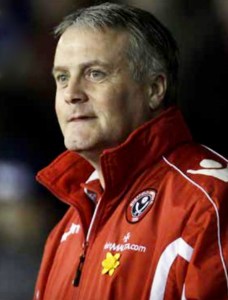
Adams took charge of 249 games as Vale boss but quit after a run of six defeats saying he’d fallen out of love with the game.

It didn’t prevent him having another go at it, though. He went to bottom of the league Tranmere Rovers and admitted in his book: “It was arrogance to think I could turn round a club that had been relegated twice in two seasons.”

In short, he couldn’t and he ended up leaving two games before the end of what was their third successive relegation.

“It was a really poor end to a career that had started so promisingly at Fulham,” he said.
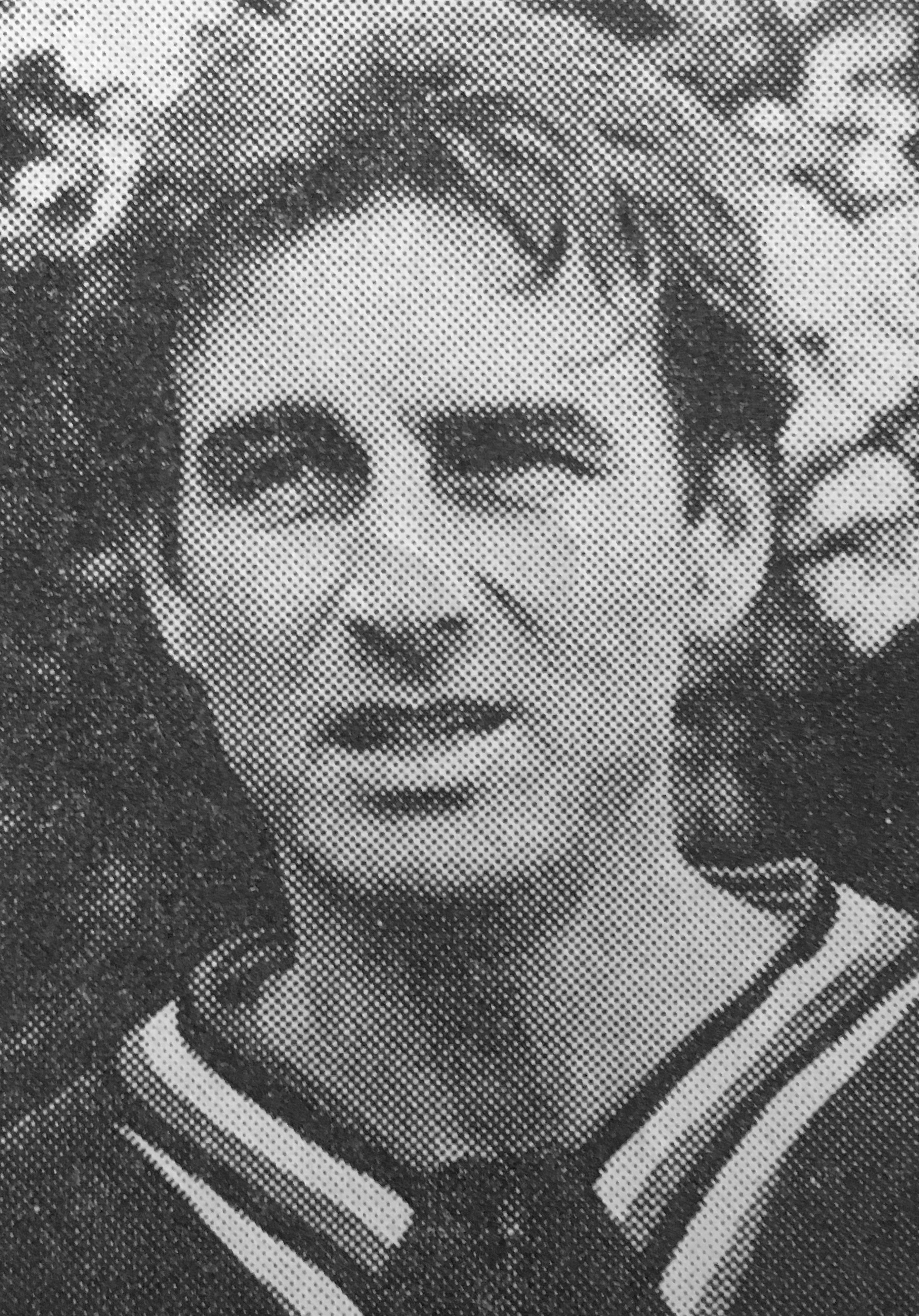
Villa cup winner and captain Pat Saward led Albion to promotion

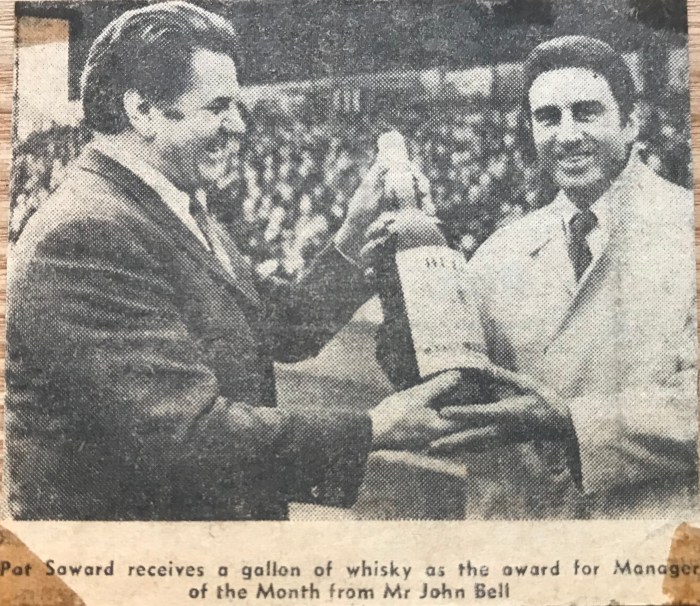
A FORMER Aston Villa captain and 1957 FA Cup winner steered Brighton to the first promotion I witnessed on my Albion journey.

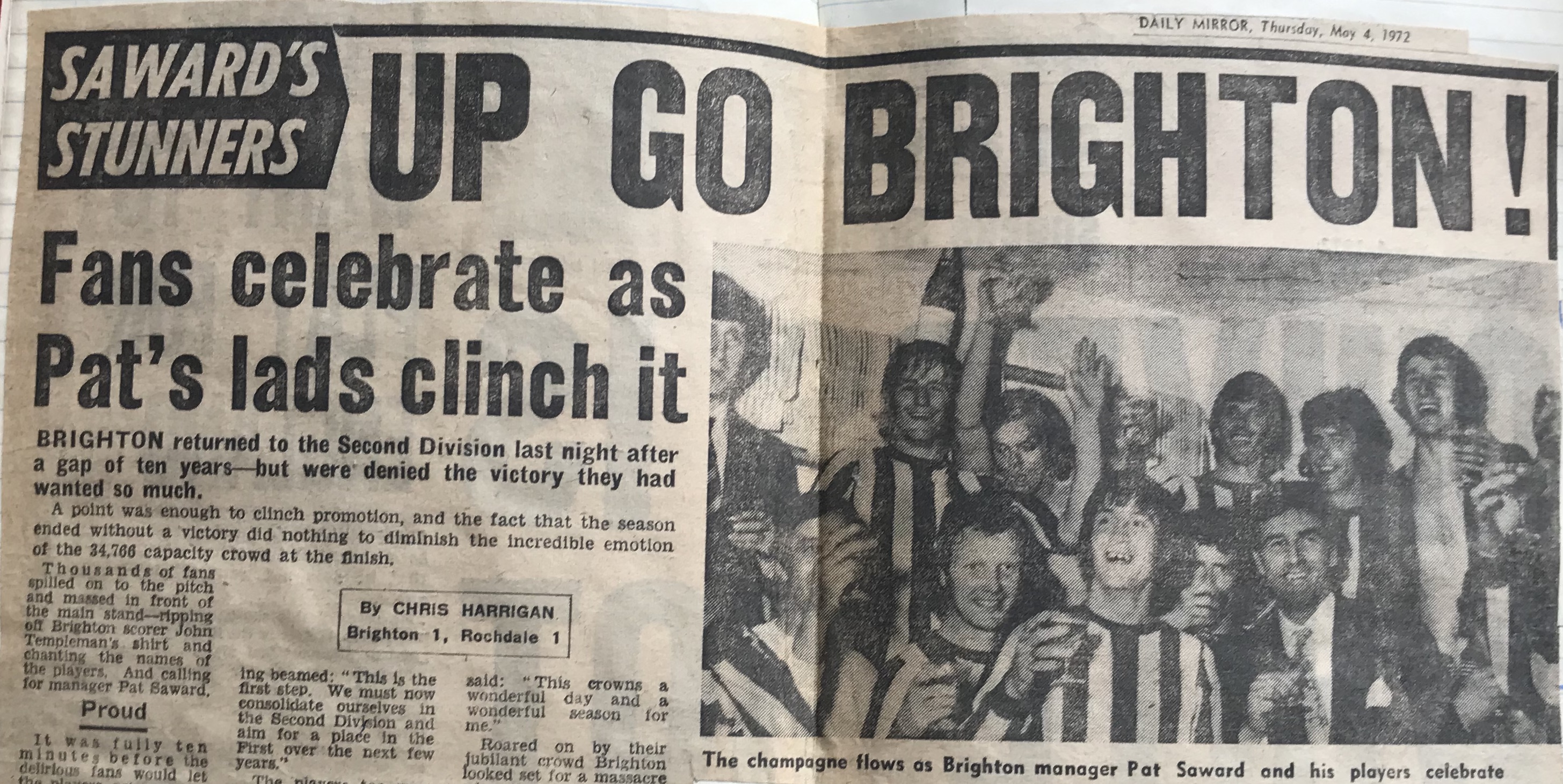
Genial Irishman Pat Saward, who lived in my hometown of Shoreham during his time as Albion boss, galvanised a squad not expected to be promoted from the third tier and took them up as runners up behind his former club in 1972.

As the champagne flowed in the Goldstone Ground home dressing room, Saward took centre stage surrounded by his blue and white stripe-shirted heroes.

When the promotion tilt had looked like faltering, he’d been bold enough to make drastic changes to the side before a top of the table clash with Villa in front of the Match of the Day cameras. After a memorable 2-1 win in which Willie Irvine scored a goal later judged as the third best in the programme’s Goal of the Season competition, Saward added to his squad on transfer deadline day, bringing in Northern Ireland international Bertie Lutton from Wolves and Ken Beamish from Tranmere Rovers, described in the Official Football League Book as “stocky and packed full of explosive sprinting power, a terrific shot and great appetite for the game”.

Saward told the publication: “They were both last ditch signings and Ken made an astonishing difference. I spent only £41,000 in getting my promotion side together so we were very much Villa’s poor relations in that sense.”

The manager put the success down to: “Dogged determination to succeed from all the players. We stamped out inconsistency. I got rid of ten of the players I inherited and got together a team built on character. That’s the key quality, apart from skill of course.”

However, hindsight reveals the club wasn’t really ready for the higher division and some have suggested Saward broke up the promotion-winning squad rather too hastily. Players he brought in who were used to the level now known as the Championship struggled to gel, and the manager turned to rather too many loan signings.

A mid-season run of 13 consecutive defeats was Albion’s undoing and a glamour FA Cup tie at home to First Division Chelsea in early January 1973 gave a welcome respite from the gloom.

Ahead of the match, Saward opened his heart to Daily Mirror reporter Nigel Clarke, revealing that he couldn’t understand why the side had struggled so much.

“I wish I knew. But I’ve learned more about football these last few weeks than at any other time in my career.

“We are five points behind the next club but I must be the luckiest man in the league. There are no pressures on me,” he said, explaining that supporters were still writing to him, backing him and the team.

“When we came up from the Third Division, I was so big-headed, so confident. I thought with the right results we could go straight through to the First Division. I really did.

“There was spirit and ambition here – and there still is….that’s how this club gets you. My heart is in the place.”

Saward revealed that he had turned down two better paid jobs in the First Division to stay at Brighton after the promotion win, telling Clarke: “What I want is importance, appreciation, understanding and love…not being kicked up the backside and put under the lash.

“Adulation is false. I’ve found my oasis at Brighton and I’m wealthy the way I want to be – in feeling.”

Although the Chelsea game ended in another defeat, fortunes eventually changed the following month – but the damage had been done and Brighton went straight back down.

A defiant Saward promised to blood more youngsters like Steve Piper and Tony Towner, who’d done well when drafted in and Piper, in a matchday programme article, said of him: “Saward was more of a coach than a man-manager, very suave and sophisticated. He knew his football from his days at Coventry.”

However, when results didn’t improve on the return to third tier level, and with a new, ambitious chairman – Mike Bamber – at the helm, Saward was sacked and replaced with the legendary Brian Clough.

Albion’s hierarchy had turned to the untried Saward in the World Cup summer of 1970 after Birmingham City poached Freddie Goodwin from Brighton to replace Stan Cullis as their manager. It was second time lucky for Saward, who’d applied to succeed Archie Macaulay two years previously when Goodwin pipped him to the post.

“Give me ten years and I’ll have Brighton in the First Division,” Saward declared when appointed. Prescient words considering they made it within nine – although it came six years after he’d parted ways with the club.

There’s little doubt Saward was an innovative football man and a popular figure during the first two years of his reign.

Apart from success on the pitch in the 1971-72 season, the way he involved fans in helping him to improve the side also proved a winner.

His buy-a-player appeal was a direct attempt to involve the supporters in the affairs of their club and Saward led a sponsored walk on Brighton seafront as one of the initial events geared towards generating funds to help him compete in the transfer market.

“Too many people spend too much time shouting about how hard up their club is, and too little time fighting to improve the situation,” Saward said in an article for the April 1971 edition of Football League Review. “You never get success if you sit around. You must have courage, even audacity, and work hard for survival.”

The first funds generated provided Saward with the money to bring in experienced Bert Murray from Birmingham City, initially on loan, and then permanently. Murray would go on to be voted Player of the Year in 1971-72.

Another player who signed on loan at the same time as Murray was Preston’s Irvine, who recalled in his autobiography, Together Again, how Saward wooed him.

“Pat sold me the place with his charm and persuasive ways,” he said, describing the former male model as “extrovert, infectious and bubbly”.

He added: “Pat Saward was a gem of a manager and a pleasure to play for. He said what he thought, but never offensively; in a matter-of-fact, plain-speaking kind of way, rather than aggressively.”

Irvine continued: “Saward had the knack of making people feel important. He instilled pride and a sense of identity…..Pat loved attacking, entertaining football and worked tirelessly for the club. I would have run through that proverbial brick wall for him.”

As Brighton neared promotion, Irvine said: “Saward, with a joke or a smile, an arm around the shoulder or a bit of geeing up, knew just how to keep a dressing room happy or dispel any tension or nerves.”

Sadly, Irvine’s opinion of Saward shifted dramatically when, during the summer, the manager told him he intended to bring in a replacement – although it was three months before he eventually signed Barry Bridges from Millwall.

Saward and new signings Barry Bridges (left) and Graham Howell

Irvine was in the starting line-up at the beginning of the season and scored six times in 13 league and cup games, but, once Bridges arrived in October, his days were numbered, and, before the year was out, he was sold to Halifax Town in part exchange for Lammie Robertson.

Saward had already dispensed with the services of Albion’s other main promotion season scorer, Kit Napier, along with his former captain, John Napier.

Irvine said that once Albion were promoted, Saward changed. “He seemed to become unapproachable, or at least he did to me, and where once I could see him whenever I wanted, now I seemed to have to book an appointment two or three days in advance. We all had to.”

Teammate Peter O’Sullivan, who had repaired his relationship with Saward after some difficult early exchanges which saw the Welshman transfer-listed, also witnessed a change in the manager.

“We had one or two players who were over the hill and Pat just lost the plot. It was grim,” he told Spencer Vignes in A Few Good Men.

Albion’s tier two fortunes were picked over in some detail in a feature reporter Nick Harling compiled for Goal magazine.

“I didn’t foresee the snags and the type of league the Second Division was,” Saward told him. “It’s the hardest division of the four. Everyone is fighting either to stay in or get out.

“It’s a hell of a hard division. It’s a mixture of the First and Third. It’s good and very hard football. They don’t give you an awful lot of time to play.

“It’s a division governed by fear because to drop out of it is not good, while to get out at the top is fantastic. I didn’t believe the gap would be so different.

“Teams are so well organised and supplement their lack of ability with tremendous defensive play. It’s very hard to get results.”

While open and honest, they didn’t sound like the words of a manager very confident of finding a solution, and Saward sought to explain part of the problem when he said: “To me the most important thing is the attitude of mind. Players should have an arrogant attitude, an attitude that they’re going to do well even when the chips are down. But some types are destroyed. These are the ones who succumb and want to rely on other people.

“Here we’ve got some great boys, but I wish to God some of them had more determination.”

Bamber was resigned to relegation but nonetheless confident of where the club was heading. “There’s no doubting it – First Division here we come,” he told the magazine.

Saward added: “I haven’t lost any enthusiasm. I’ve had my hopes dampened slightly, but one overcomes that.

“This club has got to be built for the future. I want to put Brighton on the map.”

Sadly, when Albion’s poor form at the start of the 1973-74 season continued, Saward publicly admitted: “I haven’t any more answers. I am in a fog.”

Unsurprisingly, the Albion’s directors interpreted it as a loss of confidence and sacked him.

It’s front page news on the Evening Argus as Saward is sacked

Saward never managed in the English game again, although he coached in Saudi Arabia for a while.

Born in Cobh, County Cork, on 17 August 1928, Saward lived in Singapore and Malta during his childhood, before the family moved to south London.

His first club was Beckenham FC before he turned professional with Millwall in 1951. He made 118 appearances for the Lions in the next four years.

Saward was 26 when Eric Houghton signed him for Villa for £7,000 in August 1955. The legendary Joe Mercer took over as Villa manager in 1958.

Pat enjoyed a goalscoring debut with his new club, hitting the final equalising goal in a 4-4 draw with Manchester United at Villa Park on 15 October 1955. But he struggled to oust left half Vic Crowe and made only six appearances that season.

In Crowe’s absence through injury the following season, Saward became a regular, making 50 appearances.

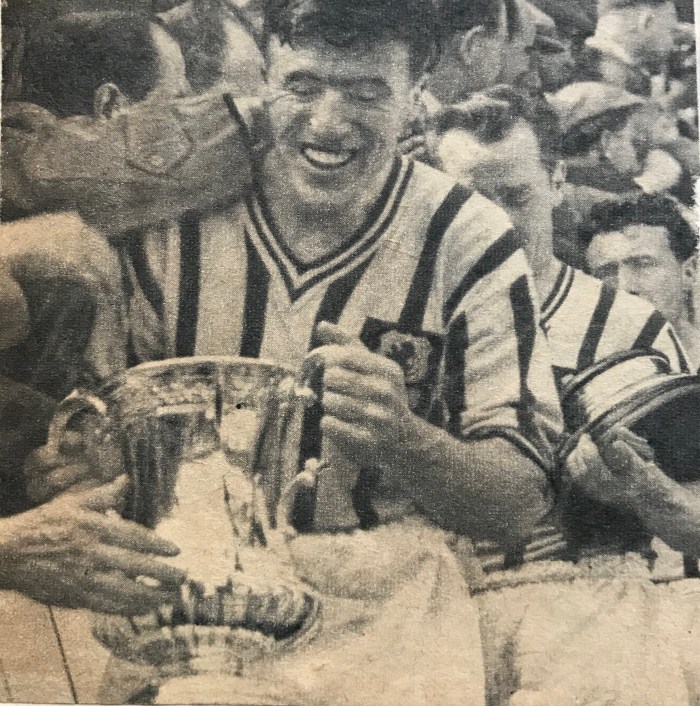
Saward (right) descends the steps at Wembley as a FA Cup winner with Aston Villa

In total, Saward played 170 games for Villa between 1955 and 1960, most notably featuring in their FA Cup winning team in 1957. Villa beat Manchester United 2-1 in the final at Wembley Stadium in front of a crowd of 99,225, Peter McParland scoring twice to win Villa the Cup for a seventh time.

Saward made only 14 appearances as Villa were relegated from the top-flight in 1959 but he was back in harness as captain when they made a swift return as Second Division champions in the 1959-60 season.

In his final season, he made just 12 appearances, his last coming on 22 October 1960 in a second city derby, Villa beating Birmingham 6-2. The following March, he was given a free transfer and moved on to Huddersfield Town.

Saward in the stripes of Huddersfield Town

He had first been selected for the Republic of Ireland on 7 March 1954 in a World Cup qualifier in which Luxembourg were beaten 1-0, and he went on to make 18 appearances for his country, the last, on 2 September 1962, coming when he was 34: a 1-1 draw away to Iceland in Reykjavík.

He played twice against England in World Cup qualifiers in 1957, a 1-1 draw and a 5-1 defeat, when he was up against the likes of Duncan Edwards, Johnny Haynes and Stanley Matthews, and in the same competition against Scotland, in 1961, when the Irish lost 4-1, and his teammates included Johnny Giles.

After 59 appearances for the Terriers, he dropped out of the league but acquainted himself with Sussex when moving to Crawley Town.

Jimmy Hill signed him for Coventry as a player-coach in October 1963 and although he made numerous reserve team appearances, he really made his mark as a coach and was responsible for the rapid development of City’s youth team in the 1960s.

Saward (left) with assistant manager Alan Dicks and Jimmy Hill at Coventry City

Willie Carr and Dennis Mortimer were just two of several first teamers who made it under his guidance. He stepped up to first team assistant manager when his former Eire teammate, Noel Cantwell, was appointed boss in 1967.

Not long after his switch to the Goldstone, Saward picked up one of his former Sky Blues proteges, Ian Goodwin, initially on loan, and then permanently, and eventually made him Albion captain. The rugged defender’s arrival was remembered in an Argus article.

When Saward died on 20 September 2002 following a period when he’d suffered with Alzheimer’s, an excellent Villa website pieced together a detailed obituary. His career is also recorded on the avfchistory.co.uk site.

Saward was laid to rest in the same Cambridge cemetery as his brother Len, a forward who played a total of 170 games for Cambridge United between 1952 and 1958, scoring 43 times. He went on to serve the club behind the scenes in their commercial department.

Pictures from my schoolboy Albion scrapbook and various online sources.

Coventry’s legendary skipper Ernie Machin also led Brighton

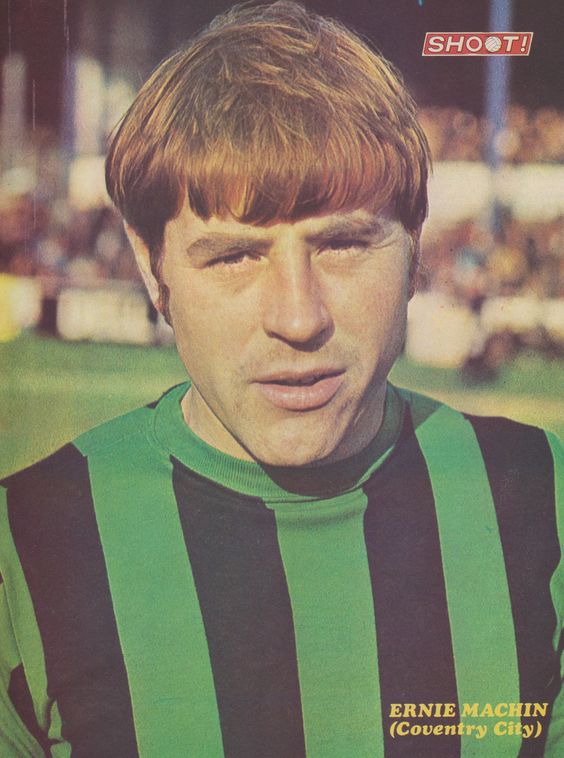
3 Machin Shoot!A MIDFIELD dynamo who captained Coventry City during their glory years at the top of English football’s pyramid was instantly installed as captain when he signed for third tier Brighton.

Ernie Machin was the first signing Peter Taylor made on taking sole charge of the Albion following Brian Clough’s decision to quit and join Leeds United.

Taylor, a former Coventry goalkeeper, had a well-earned reputation for his detailed knowledge of Midlands footballers.

Although Machin had moved to Plymouth Argyle in 1972, after 10 years at Highfield Road, he fitted the bill perfectly to add a bit of bite, experience and leadership to Taylor’s side.

A £30,000 fee took him to the Goldstone in the summer of 1974 but he was still nursing an injury sustained in training at Plymouth and when rushed into action too soon he broke down and missed quite a chunk of matches in the first part of the season.

Eventually he took up a regular spot in the centre of midfield and Argus reporter John Vinicombe observed in his end of season summary: “It wasn’t until the latter part of the season that Machin started to display known form.”

Machin actionThe midfielder eventually completed 31 games (plus three as sub) but manager Taylor took the captaincy from him and appointed his new centre back signing, Graham Winstanley.
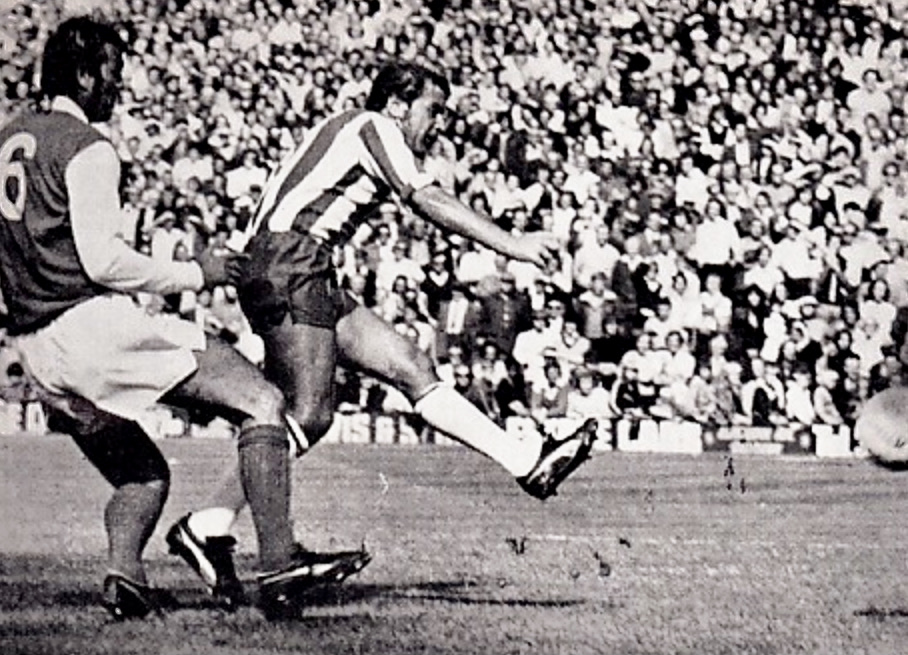
Nevertheless, Machin began the following season and got what would be his one and only Albion goal in the opening fixture, a 3-0 home win over Rotherham United.

He remained ever-present until the arrival in March 1976 of the on-pitch leader who would guide Albion to the promised land – Brian Horton.

Machin shootsMachin played 41 games that season and only shared the midfield with Horton once – in what turned out to be his final game in the stripes, a 4-2 home win over Grimsby Town.
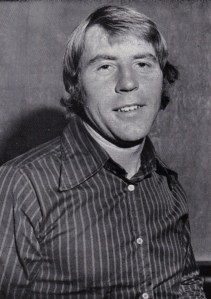
I hadn’t been aware until reading the excellent thegoldstonewrap.com that Machin didn’t move to Sussex during his time with the Albion. “He never settled on the south coast, and still lived in Coventry and trained in the Midlands,” they reported.

So perhaps it was no surprise that when Jimmy Hill, the manager who signed him for City and went on to be Coventry chairman, offered Machin a job back at his old club, he was only too happy to accept.

He took on the role of youth team coach, but it didn’t work out and he left football and went to work for Car Bodies and Massey Ferguson.

Machin was a member of the Coventry City Former Players Association after his career ended and they paid due respect to his part in the club’s history when he died aged 68 on 22 July 2012.

In an extended obituary on their website, they related how he had been born in Walkden, Manchester, on 26 April 1944, and had trials alongside future World Cup winner Alan Ball at Bolton Wanderers, but was not considered good enough.

Instead Machin joined non-league Nelson FC and, in 1962, was spotted by Coventry’s North West scout Alf Walton, who suggested Hill sign him up.

Hill wasn’t entirely convinced but admired the fact he rarely wasted a pass when in possession, and paid the princely sum of £50 to take him to Highfield Road, adding a further £200 when he made it into the first team.

That breakthrough came in April 1963, aged 18, in a 2-0 win over Millwall, and by the start of the following season he was first choice in the number 10 shirt as the Sky Blues headed for promotion.

However, they did it without Machin who sustained a bad knee injury in a home game with Watford in November, and missed the rest of the season, and beyond. Indeed, it was 18 months before he played again, having endured several operations.

Eventually he returned to play a pivotal role in the club’s Second Division title win in 1967, scoring 11 goals along the way.

When regular captain George Curtis broke his leg in the club’s second game in Division One, Machin took over as skipper and missed only three games in the club’s first two years amongst the elite.

ccfpa.co.uk recalled: “Older fans will remember his stunning goal in the 2-0 victory over European champions elect Manchester United in March 1968.

“His never-say-die attitude won him the respect of all his playing colleagues and the fans. He continued to be a regular, when fit, right up to the time of his departure in 1972 but a bad car accident put him out for three months in 1970 and his ‘dodgy’ knee continued to trouble him.”

The history books record that in 1972 he was the first English footballer to go through the courts to challenge a FA fine and suspension using TV evidence. He was sent off in a game at Newcastle for allegedly kicking an opponent, but the footage proved his innocence.

Even so, the FA spotted something else he’d done and upheld the disciplinary action on the basis of that without allowing him to present a defence. The courts ruled against the FA, and the PFA subsequently established the rights of players to legal representation in disciplinary cases.

By the time Coventry’s new managers Joe Mercer and Gordon Milne sold him to Plymouth for £35,000, he had played 289 games and scored 39 goals.

The website greensonscreen.co.uk says: “When Machin moved to Home Park in December 1972 he soon showed his class and intelligence, controlling games from midfield. He was named the Player of the Year in his only full season with the club but, much to the dismay of the fans, requested a transfer and moved to Brighton and Hove Albion.”

Despite his relatively short stay at Home Park, he made such an impression that in 2004 he was named in Plymouth’s Team of the Century.

Although suffering from poor health, Machin attended a reunion of Coventry’s 1967 promotion-winning team in 2007 and in 2008 he was one of 30 former players inducted into the club’s Legends Group for services to the football club.

1 main ernie + cant2 machin signs

Pictures include one from my scrapbook of Machin in a Coventry team line-up alongside manager Noel Cantwell who kindly gave me his autograph when the Sky Blues played Brighton in a friendly. Also pictured, the Evening Argus coverage of his signing. And a Shoot! magazine portrait. Plus a montage of other images.

Freddie Goodwin left Albion in lurch after missing promotion

Screen Shot 2021-05-01 at 19.13.47

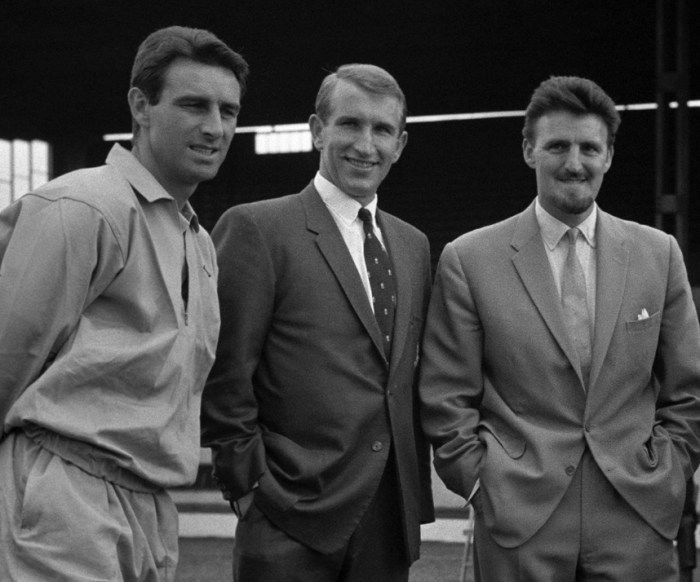
FOLLOWING Archie Macaulay’s decision to stand down as Albion manager two months into the 1968-69 season, former Busby Babe Freddie Goodwin, still only 35, was brought in as his successor.

Goodwin had already managed Scunthorpe United and had recently been in the United States at the helm of New York Generals. The then Third Division Brighton side responded positively to his arrival, going 15 games unbeaten at home.

Utility player John Templeman, who was at the Albion throughout Goodwin’s reign, told the Argus: “When I heard he was taking over I thought the news was brilliant. His youth was a really big plus for the players.

“For many of us, we were working with someone from the same age group. We talked about the same things after training or on away trips.”

Goodwin was Albion’ manager when I first started watching them and it hadn’t been long into his reign when he populated his side with players whose attributes he had witnessed first hand in other settings.

Two former Manchester United teammates were already at the Albion before he arrived: Nobby Lawton, who was captain, and former United reserve Bobby Smith who’d played for him at Scunthorpe United.

Centre forward Alex Dawson, a teammate in United’s losing 1958 FA Cup final side, was one of his first signings at the Goldstone, and Brighton were the third club for who he signed former Wolves and Villa goalkeeper Geoff Sidebottom.

At the start of the 1969-70 season, he brought in his former Leeds teammate Willie Bell as player-coach from 1969 FA Cup finalists, Leicester City.

freddie goodwinIf Goodwin appeared to be relying on experienced pros on the way down the football pyramid, he wasn’t afraid to blend them with talented younger players, signing utility player Eddie Spearritt from Ipswich Town and bustling striker Alan Duffy from Newcastle United, both of whom went straight into the side and kept their places.
Before he arrived at the Goldstone, Goodwin had already given a league debut to goalkeeper Ray Clemence, who went on to play for Liverpool and Tottenham Hotspur and won 61 caps for England. And, after he left Brighton, Goodwin gave a Birmingham City debut to 16-year-old Trevor Francis who was England’s first £1 million player when transferred to Nottingham Forest in 1979, and he played 52 times for England.

As young lads, we always got to the Goldstone as the gates opened at 1.30pm and as we claimed our places at the front of the perimeter wall near the players’ tunnel, Goodwin would have a few words with us as he came out to inspect the pitch, one time in particular I recall him commenting how heavy going it would be after an almighty downpour.

In his only full season in charge, 1969-70, Brighton were looking good bets for promotion to Division Two. They were top after a cracking 2-1 Good Friday win over Reading but lost 1-0 the following day at Halifax and 4-1 at Fulham on Easter Monday.

With three games to go, they lost two of them, away to Rochdale and home to Mansfield (only managing to beat Rotherham 2-1 at the Goldstone) and ended up fifth, seven points behind champions Orient.

Goodwin’s last signing for the Albion saw him return to his old club, Manchester United, to bring exciting young Welshman Peter O’Sullivan to Hove. Although he didn’t stay to see the youngster flourish, O’Sullivan ended up staying for 10 years.

In the summer after narrowly missing out on promotion, Goodwin still had 18 months left on his contract but Birmingham came in an offered him a three-year deal to succeed Stan Cullis.

“Albion’s board were stunned,” wrote Evening Argus Albion reporter John Vinicombe. “They felt Goodwin was the man to take them up, and initially tried to prevent his release.

“The atmosphere was strained for a day or two. When the Albion board realised it was unrealistic in attempting to hold Goodwin, they came to a financial arrangement with City.”

When Birmingham played Albion in a First Division match at The Goldstone on 7 November 1981, Vinicombe wrote about his memories of Goodwin’s time at the helm.

“I recall him telling me that during his time at New York Generals he occupied his spare time by studying Spanish, book-keeping and accountancy,” wrote Vinicombe. And when he arrived at the Albion he told the players: “Results are nothing to do with you. They are my problem. Forget them and just give me 90 minutes effort, whatever the score.”

Templeman told the Argus: “He was a success for Brighton because he represented a fresh start. Who knows what would have happened if he had stayed at the club? He won promotion with Birmingham and I think he would probably have done the same at Brighton.”

Albion’s stuation with Birmingham was further soured because Goodwin decided he wanted to take Bell and youth coach George Dalton with him. So eager was he to hire them that he made an illegal approach while they were still under contract at Brighton and Birmingham were later fined £5,000 for a breach of regulations.

Born in Heywood, Lancashire, on 28 June 1933, Goodwin came to the attention of Manchester United when playing for Chorlton County Secondary School and became a professional under Matt Busby in October 1953. He made his senior debut for the club on 20 November 1954 against Arsenal in a 2-1 home win.

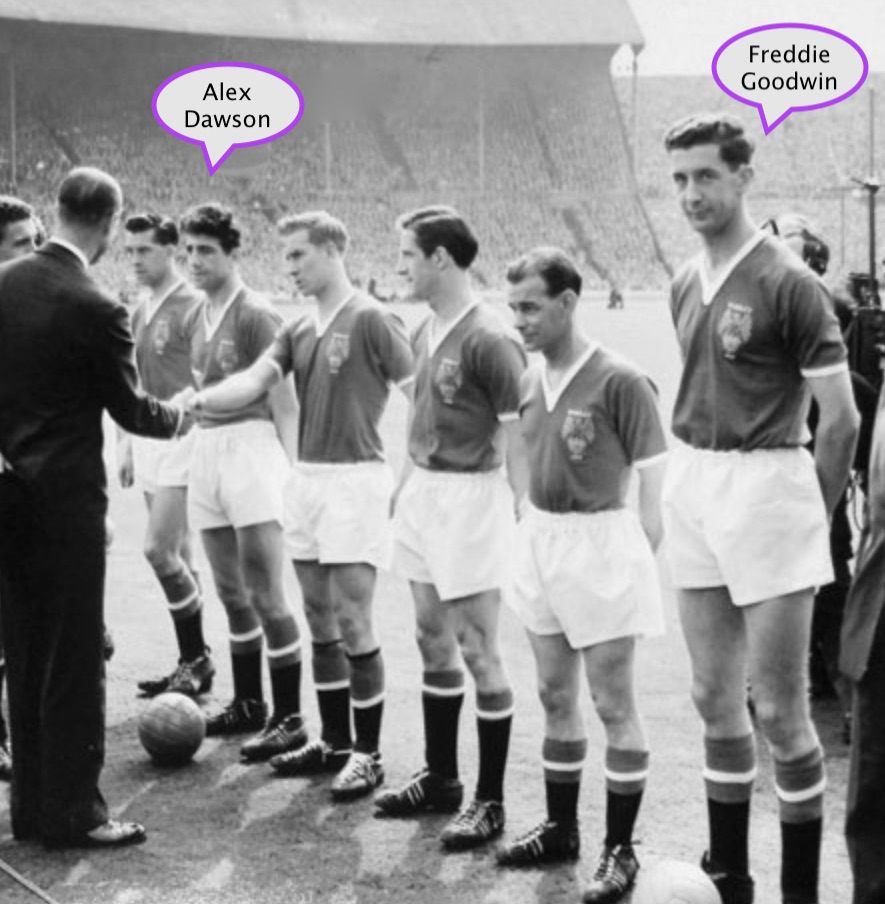
However, he wasn’t able to hold down a regular spot until the Munich air disaster in February 1958 decimated the United first team. Alongside Dawson, Goodwin was given a chance to establish himself and he played in the side which lost 2-0 in that year’s FA Cup Final to Bolton Wanderers (pre-match line-up at Wembley, below).Wembley line-up

By the time United decided to sell him for £10,000 to Leeds United in March 1960, he’d played 107 games over five seasons.

From being a teammate of Bobby Charlton, Goodwin partnered Bobby’s brother Jack in the Leeds defence and captained the side until the arrival of Bobby Collins in 1962.

After 120 games for Leeds, his playing career was virtually ended when a tackle, ironically by former Leeds legend John Charles, playing for Cardiff, on 4 January 1964, fractured a leg in three places.

Goodwin went on to become player-manager at Division Three Scunthorpe (his injury restricted him to just six appearances) where he first signed Sidebottom whose place was eventually taken by the emerging Clemence.

When Goodwin tried his luck in America in 1967-68, Sidebottom was one of his first signings at New York Generals, and the ‘keeper played 44 games over there.

Birmingham fans will always remember how Goodwin launched the career of teenager Francis. In 1972, Francis, Bob Latchford and Bob Hatton spearheaded promotion for the Blues and a place in the FA Cup semi finals.

The 1973-74 season saw Birmingham escape relegation from the elite by a single point. They were marginally safer the following season, and reached the semi-final of the FA Cup again (losing in a replay to Fulham).

With Blues struggling at the foot of the table at the start of the 1975-76 season, Goodwin was sacked in September and Bell took over.

In 1976 Goodwin returned to America to become the first coach and president of the Minnesota Kicks where he remained until the early 1980s before retiring.

He settled in the US and lived there until his death from cancer aged 82 in Gig Harbour, Washington, on 19 February 2016.

In paying tribute to the man who gave him his big break, Francis told the Birmingham Mail: “I will forever be indebted to him for having the courage to put me into the team at such a young age – that tends to be overlooked.

“I had only had a season of youth football and not even a handful of reserve team games but he still gave me my opportunity.

“I held him in very high regard and had enormous respect for him. I was most saddened the day he was sacked.

“He looked after me and took care of me. He was like a father figure to me. He knew when to play me and when to take me out and give me a little bit of a rest – not that I understood that at 16 years old.

“Just before I went to Detroit, Freddie was already in the States coaching the Minnesota Kicks and he put a very lucrative offer in front of me to go out there and play.

“That alerted a lot of other NASL clubs and in the end I went to Detroit, who were managed by Jimmy Hill. I owe much of that to Freddie’s foresight.”

Read more here:

http://www.ozwhitelufc.net.au/players_profiles/G/GoodwinF.php

Pictures from the Albion matchday programme and online sources; Goodwin in a Leeds team line-up from 1962-63 alongside Billy Bremner and Jack Charlton.