HE took a circuitous route back to his hometown club but full-back Graham Pearce eventually made it to Brentford’s first team after Brighton had resurrected his career and given him a chance to play at the top level of the English game.
Pearce was first on Brentford’s books as a teenager between 1971 and 1976, but he didn’t make it as a pro with the Bees and, after also being turned down by QPR, he went non-league, initially with Hillingdon Borough for three years and then Barnet.
When Pearce lined up for Barnet in a FA Cup third round tie on 2 January 1982, it must have been beyond his wildest dreams to imagine just over a year later he’d be playing in that competition’s final at Wembley.
But the steady, assured performances 21-year-old Pearce put in as Alliance Premier League Barnet held Brighton 0-0 before losing 3-1 in a replay at the Goldstone impressed the watching Albion boss Mike Bailey sufficiently to sign him up for the Seagulls.
Although he was itching to join, he had to serve a week’s notice with the Putney printer where he had a full-time job because they weren’t in a position to release him sooner.
Just over a year later, when injuries depleted Jimmy Melia’s cup hopefuls the closer they got to a dream Wembley date, Pearce seized his chance to put his own name in print. Circumstances fell just right for him, but it might not have happened if the experienced left-back Sammy Nelson hadn’t been sidelined.
A packed East Terrace at the Goldstone the backdrop as Pearce faces Newcastle in the FA Cup
Pearce played in the third round 1-1 Goldstone draw with Newcastle – one of six games he played in January 1983 – but he missed the 4-0 demolition of Manchester City in the fourth round and didn’t feature again until 22 March when he was sub for the 2-2 home draw with Liverpool.
Because versatile Gary Stevens was more than capable of playing alongside Steve Foster, normal centre back partner Steve Gatting was preferred at left-back for 14 matches from the end of January.
But when right-back Chris Ramsey was suspended for the semi-final against Sheffield Wednesday, Stevens took his spot, Gatting returned to the middle and Pearce slotted in at left-back.
Because Foster was suspended for the final against Man Utd, Stevens paired up with Gatting in the middle and Pearce retained his place.
Even when Foster returned for the replay, Pearce kept his place because Ramsey had been crocked in the first match and wasn’t fit to play (Melia making the mistake of putting left-footed Gatting at right-back instead of Stevens).
In a pre-match interview with the Daily Mail, Pearce said: “There’s money to be made from appearing at Wembley but the thrill for me is just being there – a player from non-League who thought his chance of playing league football had gone.”
Pearce retained the no.3 shirt at the start of the 1983-84 season back in the second tier but, when Chris Cattlin took over from Melia, he made it clear he wanted someone with more experience in that position.
In his matchday programme notes he wrote: “With Kieran (O’Regan), Eric Young and Graham Pearce all playing together, we have three players who haven’t been long out of non-League football.
“Normally these players would have been blooded slowly into the side, instead of being plunged in the deep end. They have done well and shown the right attitude, but when we play against aggressive sides away from home, some of their inexperience has been exposed.”
Until a suitable replacement could be found, Pearce remained in the side and even poked home his first Albion goal in a 4-3 win away to Cambridge United on 29 October 1983.
But four weeks later, after a 2-2 draw at home to Shrewsbury Town, Cattlin was typically forthright in his next programme notes, declaring: “I was unhappy with our defence and our failings in this department cost us the game.”
Pearce and fellow full-back Ramsey were promptly dropped; the left-back berth going to new signing Chris Hutchings from Chelsea.
Cattlin had high praise for his new recruit as he said: “Chris Hutchings is an enthusiastic, strong and determined defender and has a lot to offer, he’s also a fine footballer.”
After 18 consecutive games, Pearce found himself out of the side for the rest of the season.
It’s interesting to note that the reserve side for the 1 May 1984 fixture at home to Southampton featured five players (Pearce, Ramsey, Gary Howlett, Gerry Ryan and Neil Smillie) who’d been in the FA Cup Final squad a year earlier.
The new season was almost three months’ old before Pearce was seen in the first team again, and, ironically, the opponent was once again Shrewsbury.
The game at the Goldstone finished a goalless draw and, with Hutchings having been switched to right-back, Pearce got a run in the side extending to 19 matches.
Unluckily for him, he was then left out of the side in favour of Martin Keown, who Cattlin managed to bring in on loan from Arsenal, and the future England international quickly proved his calibre.
Pearce made one further appearance, in a 2-1 defeat at Middlesbrough, before the end of the season but in the 1985-86 season he finally cemented his place in the side and played a total of 41 matches.
Three days after Christmas 1985, he scored a rare goal as the Seagulls beat Leeds 3-2 at Elland Road. Ian Baird – later to play for the Albion in the old Fourth Division – missed a penalty but scored one of Leeds’ goals and Pearce clinched the winner on a pitch rutted by a rugby league game played on it only two days earlier.
The matchday programme described the goal thus: “Pearce played a one-two with (Steve) Jacobs and found himself with only Mervyn Day to beat and Leeds screaming for offside. The trusty left foot of the Londoner lobbed goalwards, Day was stranded, and Pearce had scored his first goal in 26 months to give Albion another three valuable points.”
Not such a memorable game came in a 3-0 defeat away to Norwich City on 5 April 1986. The full-back went into the referee’s notebook for a foul on future Albion winger Mark Barham, who was substituted shortly afterwards. Albion had a great chance to pull a goal back when Pearce was through one-on-one with Chris Woods, but the England ‘keeper saved his effort comfortably. Then, eight minutes from time, Pearce fouled Wayne Biggins in the penalty area and Welsh international David Williams buried City’s third from the penalty spot.
Pearce played in Albion’s final game of the season, a 2-0 defeat at Hull City under George Petchey, following Cattlin’s sacking, and it turned out to be his last match in a Brighton shirt.
The returning Alan Mullery explained in his programme notes for the opening game of the new season that he released Jacobs and Pearce because “I felt we had too many defenders”.
Pearce switched to Third Division Gillingham under Keith Peacock and played a total of 48 matches as the Gills narrowly missed out on promotion when losing a play-off final replay against Lou Macari’s Swindon Town in 1987.
Following a disappointing second season with the Gills, when they finished mid-table, Pearce returned to hometown club Brentford where he played 14 times (+ 8 as sub) in Steve Perryman’s 1988-89 side. One of his teammates was fellow former Albion cup star Smillie.
Pearce joined up with Peacock again for Maidstone United’s debut season (1989-90) in the Fourth Division, which culminated in a play-off semi-final defeat at the hands of a Cambridge United side featuring Dion Dublin up front.
The following season, under Phil Holder, Pearce was back at Brentford as first team and reserve coach. He subsequently had spells as player-manager with Isthmian League clubs Enfield and Molesey. He later became a PE teacher at Homefield Preparatory School in Sutton.
Born in Hammersmith on 8 July 1959, Pearce was one of seven children (five boys, two girls) and attended Grove Park Primary School, where he was captain of their under-9 football side. He went on to play for the Middlesex County side and Middlesex Wanderers before his stop-start professional career began.
• Pictures from my scrapbook and matchday programmes.
Steve Foster challenges Spurs’ Steve Archibald at White Hart Lane
LEGEND is overused far too much in football circles but, in some circumstances, it is justified. That applies to Steve Foster.
He played 800 games in a 21-year career which included nine years with Brighton in two separate spells.
His performances in the top-flight for Brighton led him to play for England at the 1982 World Cup and he lifted the League Cup in 1988 as the captain of Luton Town.
He might have enjoyed a longer spell at Aston Villa if the European Cup-winning manager who signed him hadn’t been unceremoniously dumped by ‘Deadly’ Doug Ellis.
Foster became – and, to older fans, still is – synonymous with Brighton & Hove Albion, and football followers the world over could readily identify the captain with the white headband.
In several interviews over the years, he has explained how the distinctive headpiece was actually a piece of padded white towel designed to protect a forehead split open in collisions with centre forwards Andy Gray and Justin Fashanu.
I wonder if physio Mike Yaxley’s wife Sharon, who made up the dressing before every game, realised at the time the key role she played in helping to make Foster one of the most identifiable characters in football.
Foster’s illustrious career is warmly documented in Spencer Vignes’ excellent 2007 book A Few Good Men (Breedon Books Publishing), featuring an interview with the player himself and those who played with him.
For example, Gerry Ryan told Vignes: “Fozzie was a huge player with a huge personality, a real leader and deceptively quick for a big man.
“When he played against the best, like Ian Rush and Kenny Dalglish, he was the best. People talk about giving 100 per cent, but Fozzie gave 150 per cent in everything he did, and I mean off the field as well.”
Gordon Smith added: “He was a fantastic person, great fun and a terrific centre half.”
Vignes himself observed: “Steve’s willingness to put his neck on the line for the cause earned him hero status among the fans, together with the complete respect of the dressing room.”
Unsurprisingly, Foster pulls no punches in describing the various characters and events surrounding his colourful career, for instance describing Chris Cattlin as “definitely the wrong man. I told him the truth and what I thought of him.” And, of predecessor Jimmy Melia: “When Jimmy took over it was more like a circus than a football club.”
Foster said the two biggest influences on his career were Frank Burrows, the manager of his first club, Portsmouth, who taught him about balance as the key to strength on the pitch, and Brian Horton, the dynamic midfield driving force he succeeded as Albion captain.
“He shouted and screamed for 90 minutes to help us get results, and to keep everyone on their toes,” said Foster. “If he made a mistake, 10 other people would shout and scream at him, and he would take it. When I was captain at Brighton, and my other clubs, that’s how I tried to be.”
Such a recognisable figure as Albion’s centre-half
Fortunately, sufficient archive film footage remains for fans of different generations to see what a dominant force Foster was at the heart of Brighton’s defence, while I retain plenty of now-yellowing cuttings from the numerous columns of newsprint he filled during his pomp.
Born on 24 September 1957 in Portsmouth, Foster went to St Swithin’s Junior School before moving on to St John’s College. A centre-forward in the early days, he played for the Portsmouth Schools under-12s side but it was Southampton who took him on as an associate schoolboy.
He played in the same youth team as Steve Williams and Nick Holmes, who both went on to have long careers.
But Saints boss Lawrie McMenemy let Foster go at 16, urging him to go elsewhere and prove him wrong. After Foster won his first England cap, McMenemy sent him a congratulatory telegram. “That was class, nothing but class,” Foster told Vignes.
Southampton’s loss was Portsmouth’s gain, courtesy of a tip off from local schoolteacher Harry Bourne to Pompey youth team coach Ray Crawford (who’d previously held a similar role under Pat Saward at Brighton). Bourne ran the Portsmouth and Hampshire schools teams.
Crawford describes in his excellent autobiography Curse of the Jungle Boy (PB Publishing 2007) how he called at the family’s house in Gladys Avenue, Portsmouth, but Foster’s mother was at a works disco at the local Allders store. Wasting no time, he immediately went in pursuit and, against a backdrop of deafening music and flashing lights, shouted above the din that they were interested in signing her son.
Foster called the club the following day and he was invited to play in a youth team game for Portsmouth – against Southampton! “I scored twice because I was playing as a centre-forward then, and they ended up offering me an apprenticeship on £5 per week which was my entry into the professional game,” said Foster.
Reg Tyrell, a respected former chief scout from Crawford’s time at Ipswich, watched the young striker in a youth team training game and declared: “That no.9, he’s no centre-forward but he’d make a good number 5.” A few weeks’ later, manager Ron Tindall’s successor, Ian St John (later Saint and Greavsie TV show partner of Jimmy Greaves), gave Foster his debut as a centre half!
Foster played more than 100 games during Pompey’s slide down through the divisions, and, at 21, had developed something of a fiery reputation. But Brighton boss Alan Mullery saw him as “big and brave, strong in the tackle and good in the air” providing “much-needed stability at the back” as the Seagulls began their first adventure into the top-flight of English football in 1979. He was signed for £150,000.
A couple of disciplinary issues in the early days of the new season looked like proving the doubters right to have warned Mullery off signing him, but an injury to first choice centre back Andy Rollings forced the manager to backtrack on a temporary ban he’d handed out. Foster made the most of his reprieve and never looked back.
By the end of a season in which the side grew collectively Foster was named Player of the Year and he earned international recognition, gaining an England under 21 cap as a substitute for Terry Butcher in a 1-0 defeat against East Germany in Jena on 23 April 1980 (Peter Ward was playing up front).
While the 1980-81 season saw Albion struggle and flirt with relegation, Foster’s tussles with some of the top strikers in the game saw his reputation grow, and he even chipped in with a vital goal in the final home game of the season against Leeds.
When Horton and Mullery departed at the end of that season, Foster took over the captaincy under new boss Mike Bailey, and, even though fans didn’t much like the way Bailey set up his side, Foster thrived with the emphasis on defence first.
England boss Ron Greenwood, who lived in Hove, was in the process of shaping his squad for the 1992 World Cup in Spain and, with injuries affecting some of the other centre backs in contention, Foster was given a chance to prove himself.
I can remember travelling to Wembley on 23 February 1982 to watch him make his debut against Northern Ireland, a game England won 4-0 courtesy of goals from Ray Wilkins, Kevin Keegan, Bryan Robson and Glenn Hoddle.
I had been to the stadium 10 years before to watch another Albion player – Willie Irvine – make his international comeback in a 1-0 win for the Irish, but it was something special – and rare – to see a Brighton player line up for England.
To break through to the senior team in a World Cup year was a notable achievement, although, by his own admission, he accepted his good fortune directly correlated to injuries ruling out other players.
Although the record books show Foster earned three caps, in fact he represented the country four times that year.
A month after his debut against Northern Ireland, on 23 March, Foster played for an England XI in Bilbao against Athletic Bilbao. The game finished 1-1 with Keegan scoring for England. It didn’t qualify for a cap because it was a testimonial match for retiring Bilbao player Txetxu Rojo, but Greenwood used the fixture to familiarise the players with what was the venue for England’s opening round matches at the World Cup.
Foster also featured in a 2-0 friendly win over the Netherlands (goals by Tony Woodcock and Graham Rix) on 25 May as Greenwood continued to assess his options.
Foster (circled) in Ron Greenwood’s 1982 World Cup squad
When it was clear neither Alvin Martin nor Dave Watson would be fit for the tournament in Spain, Foster was selected as back-up to first choice centre back pairing Terry Butcher and Phil Thompson. Ahead of the third group match, Greenwood didn’t want to risk a ban for the already-booked Butcher, so Foster played alongside Thompson and England won 1-0 against Kuwait; Trevor Francis getting the England goal.
When England didn’t progress past the second phase, Greenwood’s spell as boss came to an end and he was replaced by Bobby Robson who, for his first game in charge, partnered Russell Osman with Butcher – both having played under him at Ipswich Town.
Foster didn’t play for England again.
Much has been written already about the 1982-83 season and Albion’s path to the FA Cup Final. Foster demonstrated real heroism in the semi-final at Highbury, playing through the pain of a septic elbow, and, memorably, towards the end of the game, launched into an overhead kick to clear a goal-bound shot to safety (pictured above).
History records Foster being suspended for the Cup Final – a well-documented appeal to the High Court against a two-game ban for accumulated bookings couldn’t get the decision reversed – but, as is often the case in football, his misfortune presented a golden opportunity for stand-in Gary Stevens who capped a man-of-the-match performance with the equalising goal. What he did that day persuaded Spurs to sign him.
Foster, of course, eventually got his Wembley chance in the replay but with a rampant Manchester United running out easy 4-0 winners, their fans also rather cruelly derided the Albion skipper with the chant I can still hear ringing around Wembley that evening: “Stevie Foster, Stevie Foster, what a difference you have made!”
In truth the whole defence lacked balance in the replay because manager Melia had elected to fill the right-back berth vacated by injury to Chris Ramsey with the left-footed Steve Gatting. He figured Stevens couldn’t be moved from the centre where he had performed so well on the Saturday, but it was a mistake, especially as Stevens had often played right back previously.
The relegation that went in tandem with Albion’s Wembley loss sparked the beginning of a big clear-out of the best players. First to go was Stevens, closely followed by Michael Robinson.
It wasn’t until the following March that Foster followed them through the exit, although, according to Foster, he might have gone sooner – even though he didn’t want to leave; a point he made clear in an interview with Match Weekly shortly after he signed for Villa for £150,000.
“I never wanted to move,” he said. “I had nearly seven years of my contract to run at Brighton and would have quite happily played out my career there. It’s a great little club.
“But economies dictated otherwise and, although manager Chris Cattlin wanted to keep me, he was under pressure to sell me and help ease the club’s financial problems.
“It was a wrench to leave Brighton because the club has treated me tremendously well and I’ve had some great times there – not least the FA Cup run last season.”
Cattlin had a slightly different take about the transaction in his matchday programme notes. “I feel that Steve Foster has been a fine player during his four-and-a-half years at the Goldstone, but I felt that the time was right and the offer good enough to let him go,” he said.
“I hope the move will benefit both Steve and the club. I hope it rejuvenates his career because he has been unlucky with injuries this season. It gives me breathing space for Eric Young to develop and it will also allow me to strengthen other positions if necessary.”
In a rather oblique reference to the need to get rid of high-earning players, Cattlin added in another matchday programme article: “Certain players have left Brighton in moves which I feel are important for our future. Salaries and bonuses of individual players are confidential and obviously I cannot disclose details, but the moves I have made I am certain are right.”
He added: “I can’t explain all the matters that have been considered but I will once again emphasise that we are building for the future and every move I make in the transfer market is being made with this in mind.”
Foster revealed that Villa boss Tony Barton, a former coach at Foster’s first club, Portsmouth, had tried to sign him twice before, but the clubs hadn’t been able to agree on a fee. Eventually, the transfer saw defender Mark Jones (who’d made seven top-flight appearances for Villa that season) move in the opposite direction, in addition to a £150,000 fee.
Barton wanted Foster to tighten up a leaky defence, to fill the position previously occupied by former European Cup winning centre-half Ken McNaught, who had moved to West Brom.
The relatively inexperienced Brendan Ormsby had been playing alongside McNaught’s former partner, Allan Evans, and the signing of Foster put his nose well and truly out of joint. “It’s obvious that I’m just going to be used as cover for Steve Foster or Allan Evans now and so it’s probably in my best interests to try and find another club,” he told Match Weekly.
As it turned out, it was Barton who was ousted; Ormsby stayed, and new manager Graham Turner decreed it would be Foster who was the odd one out. But I jump ahead too soon.
Foster’s arrival at Villa Park as featured on a matchday programme cover
A picture of Foster being introduced to the Villa faithful appeared on the front cover of the programme for the 17 March home game against Nottingham Forest although he didn’t make his Villa debut until 14 April 1984, away to Leicester City, which ended in a 2-0 defeat.
Foster made seven appearances by the end of the season and he got on the scoresheet in only his third game, netting together with future Albion player Dennis Mortimer, in a 2-1 win over Watford on 21 April.
Villa finished the season in 10th place but it wasn’t good enough for the erratic chairman Ellis. Suddenly Foster found the man who signed him had been sacked, and the side Barton had led to European Cup success was gradually dismantled.
To the astonishment of the Villa faithful, Barton was succeeded by former Shrewsbury Town boss Turner.
Foster played 10 games under the new boss, and scored twice, once in a 4-2 win over Chelsea on 15 September and then again the following Saturday in a 3-3 draw away to Watford.
He’d started the season alongside Evans but Turner then offered a way back to Ormsby. While Foster played a couple of games alongside Ormsby, Turner preferred Evans and Ormsby together, making the new man surplus to requirements.
His last game for Villa was away to Everton on 13 October and the following month he was sold to Luton for £70,000 – less than half the fee Villa had paid for him eight months earlier. Foster simply put it down to his face not fitting with the new man.
It was a completely different story with Luton boss David Pleat and Foster’s time at Kenilworth Road coincided with the club’s most successful period in their history, even though Pleat left to manage Spurs.
Alongside representing his country, Foster said the best moment of his career was captaining the Hatters as they won the League Cup (then sponsored by Littlewoods) at Wembley in 1988 with a 3-2 win over Arsenal, his former Brighton teammate Danny Wilson scoring one of their goals (Brian Stein got the other two).
They reached the final of the same competition the following year too, but on that occasion lost 3-1 to Nottingham Forest. By then Foster was assistant manager to Ray Harford, and it looked like he was on a path to become a boss in his own right.
But that summer, when his old Albion captain, Horton, who had taken over from Mark Lawrenson as the manager of Oxford United, asked him to join him as a player at the Manor Ground, he was unable to resist and a new chapter in his career began.
It meant a drop down a division but Foster accepted the challenge and went on to play more than 100 games for United, many being quite a struggle as the side fought for survival at the foot of the second tier.
In the autumn of 1991, injury sidelined Foster from the U’s team and he believed it could have been the end of his career.
However, when the following summer he was contemplating whether or not to retire, he gave Brighton boss Barry Lloyd a call and asked if he could keep his fitness going by joining in pre-season training with the Seagulls.
Lloyd could see that the former skipper was still able to perform and, although the club was in a downward spiral, Foster seized the opportunity to extend his career and help out his old side.
Another veteran of that side, Clive Walker, told Vignes for A Few Good Men: “Fozzie might not have been so mobile then but his positional sense was absolutely brilliant, as was his ability in the air.”
Foster said: “Funnily enough during that second period I played probably some of my best football. I had to because of the position the club was in. There was no money so you had to pull out all the stops.”
Foster continued to play after Lloyd had departed, and he vented his anger publicly about the off-field shenanigans new boss Liam Brady was having to operate under.
Foster eventually called it a day at the end of the 1995-96 season, saddened at the club’s plight. He was granted a testimonial match against Sheffield Wednesday, played as a pre-season friendly in July 1996. Throughout Foster’s career he had continued to live in Hove and he retains his affection for the Albion to this day.
During his second spell at the club, Foster was the PFA rep and he had to deal with the heartbreak of telling the parents of a young player (Billly Logan) that an ankle injury was going to end his career. The youngster got just £1,500 compensation.
As a result, after his own playing days were over, Foster set up an insurance business (Pro-Secure) which continues to this day, making sure players are properly covered and get suitably recompensed if things don’t turn out as they’d hoped.
Although Foster hasn’t always been popular with the Albion’s hierarchy (courtesy of suggested involvement in potential takeovers), his association with the club hasn’t dimmed and Seagulls fans of two generations took him to their hearts for his on-field performances and leadership spanning a total of 332 games.
• Pictures from my scrapbook, the Albion matchday programme over several seasons, and some online sources.
MEDIA-friendly Jimmy Melia stole all the limelight as Brighton stormed to the final of the 1983 FA Cup but a quiet, wavy-haired Scot alongside him played a big part in the achievement.
George Aitken was joint caretaker manager with Melia for three months after Mike Bailey’s dismissal in December 1982, and he’d previously been in the dugout alongside Alan Mullery and Ken Craggs during Albion’s rise through the divisions having originally been brought to the club by Peter Taylor.
.When he died aged 78 in August 2006, Jimmy Case told the Cumbrian Times & Star: “George was a great character, a great friend and coach right the way through my time at the club. “Jimmy Melia was in the front line with his white shoes but George was right there in terms of the workings of the club and picking the team. He was well respected for his knowledge of the game.”
Mark Lawrenson also paid tribute in an interview with Argus reporter Paul Holden, telling him: “George never got carried away. He had seen it all before. He was a very wily old fox. He was from the old school, a good, honest, true, loyal man.
“He knew his football, knew his players and liked a laugh. He had one of those infectious laughs.”
Micky Adams said: “He was a great football man, George. When I first joined Brighton as manager, he was one of my biggest allies. He always popped into the office to chew the cud and talk football. He loved Brighton and was a well-respected man who loved the game.”
Holden also reported that at Aitken’s testimonial dinner in 1988, former Albion secretary, Stephen Rooke, said: “He may never have reached the dizzy heights attained by many of his friends and acquaintances over the years but he represents a rare breed, in fact the very lifeblood of our national game.
Aitken puts Ken Tiler and Peter O’Sullivan through their paces in pre-season training in 1978
“Deep down George is a very private person but his reliability and honest, down-to-earth approach has, quite rightly, earned him enormous respect throughout the football world.”
Aitken had been a manager in his own right at Workington, and he and Melia had both been players under one of the game’s legends – Bill Shankly.
Shankly managed Workington between 6 January 1954 and 15 November 1955, when Aitken was a strong and commanding centre back for the Cumbrian side, and five of Melia’s 10 years playing for Liverpool were under Shankly’s managership.
Born in Dalkeith, Scotland, on 13 August 1928, Aitken was educated at Dalkeith High School and played football for Midlothian Schools.
His step up to senior football came at Edinburgh Thistle, which was essentially a feeder side for Hibernian.
David Jack, remembered as the first player ever to score at Wembley, had become manager of Middlesbrough in 1944, and took Aitken to Ayresome Park after the war.
“I was 20 at the time and it took me two seasons to reach the first team,” Aitken recalled in an Albion matchday programme article.
“Middlesbrough had a great team at the time and I played alongside the likes of (England internationals) Wilf Mannion and George Hardwick.”
Aitken made his debut against Fulham in 1951-52, but only made 18 top division appearances and, in July 1953, was sold to nearby Workington for £5,000.
It was the beginning of a long-standing relationship with a club who in those days played in the basement division of the Football League and is now in the Northern Premier League – the seventh tier of English football.
Aitken amassed 262 league appearances for Workington and, in the 1957-58 season, played against the famous Busby Babes at home in the 3rd round of the FA Cup in front of a record 21,000 crowd – just a month before the Munich air crash. Dennis Viollet scored a hat-trick for United in a 3-1 win.
“The game was an experience that I’ll never forget,” said Aitken, who kept on the wall of his house a picture of him with United’s skipper that day, Roger Byrne, who not long after that match perished in the Munich air crash.
Aitken retired as a player in 1960 but he stayed on at Borough Park as a coach, initially under Joe Harvey, who later enjoyed success at Newcastle United, and then Ken Furphy, who went on to manage Watford, Blackburn and Sheffield United before moving to the USA and taking charge of four different clubs.
Aitken had a brief spell as Workington manager between March and June 1965 (stepping in after Keith Burkinshaw – later famously boss of Spurs – had left) but then followed Furphy to Watford in 1965 as his coach. During that time, Watford, then in Division Two, famously beat Shankly’s Liverpool 1-0 in the quarter-finals of the FA Cup before losing to eventual winners Chelsea in the semi-finals.
The lure of Workington was to draw him back to the north west, though. When the manager’s job became vacant in 1971, Aitken took over and stayed for three seasons, eventually leaving in October 1974.
In the 1975-76 season, he was trainer-coach during Tommy Casey’s spell managing Grimsby Town (where, as in picture, one of the players was former Albion defender Steve Govier), but left the Lincolnshire outfit to join Peter Taylor’s coaching set-up at Brighton in 1976. The Scot ended up staying for 10 years.
Aitken and wife Celia had three children and I well remember one of them, Bruce, appearing for Worthing FC.
George was clearly football daft, and in a matchday programme feature of September 1985, Celia told Tony Norman: “Football has always been his hobby, as well as his way of earning a living. He really loves the game. It’s not unusual for us to be driving somewhere and to stop because George has seen a game going on in a park by the road. He can’t resist watching for a while.”
During Chris Cattlin’s reign as manager, Aitken was the reserve team manager and chief scout, and in the programme article he said: “I can look back on some very happy memories. I was assistant manager when we took the club to Wembley and that experience is something I’ll never forget. But that is all in the past and what really matters to me is the future for Brighton Football Club. So, I enjoy going out to look for youngsters who could do a good job for us in years to come.”
After being sacked by Brighton, Aitken did scouting work for Graham Taylor during his spells at Watford and Aston Villa and then had three years working for the FA during Taylor’s reign as England manager. His last football role was at Bolton Wanderers when Colin Todd was the manager.
Pictures from a variety of sources including the matchday programme, online sites and the Argus.
IT WAS the stuff of dreams when Liverpool born and bred Jimmy Melia saw his underdog Seagulls side beat the mighty Merseyside giants en route to Brighton’s one and only FA Cup Final appearance.
In fact, it wasn’t the first time Melia had taken a side to Anfield to play in the competition. On 2 January 1971, as player-manager of lowly Aldershot, he returned to the ground where he’d been an inside forward under Bill Shankly and gave them a scare in the third round, the Fourth Division side only losing 1-0.
Even Liverpool’s wideman, Steve Heighway, admitted: “I suppose we were lucky to win. It was a frosty day and the ball was playing quite a few tricks. I don’t think we were in any danger of losing. But Aldershot were playing well that day. They could have sneaked a draw.”
How satisfying, then, to return in 1983 and pilot Albion’s unlikely 2-1 win, with a winning goal courtesy of that other former Anfield favourite, Jimmy Case.
In the run-up to the game, Melia, raised in Liverpool’s Scotland Road, told the Daily Mail: “I’ve got 11 brothers and sisters in the Liverpool area and they’ll all want to be there.”
He clearly didn’t fear the game, pointing out that Brighton had been the last team to win at Anfield, and telling the Argus: “It is a great tie for us. When I was manager at Aldershot we lost 1-0 to them and I think we will do better this time. Remember, the Cup is full of all sorts of upsets. It wouldn’t be the Cup otherwise.”
After the famous victory, Melia told Alex Montgomery of The Sun: “I’ve been involved in some great Liverpool victories but this is without doubt the greatest win.
“The great thing about it is that we didn’t just nick a win. We deserved what we got. A lot of people said that if we attacked them we would just set ourselves up for a hiding. That is not the way it worked out.”
It emerged after the game that John Manning, an old footballing friend of Melia’s, had been key to plotting the victory. Former Crewe, Bolton and Tranmere striker Manning, Albion’s scout in the north at the time, gave the players a pre-match rundown on what to expect.
“Best team talk we’ve ever had,” defender Gary Stevens told the Daily Mail. “Liverpool played exactly the way he said they would and he was even right about which side (Phil) Neal would send his penalty (which went wide of goalkeeper Perry Digweed’s post).”
Born in Liverpool on 1 November 1937, Melia attended the city’s St Anthony’s School and didn’t play his first organised football match until the age of 11. He quickly demonstrated a talent for the game and after shining for the school side was picked to play for Liverpool Boys.
At 14, he was selected for England Schoolboys but a broken collarbone meant he was unable to play. A year later, though, after captaining Liverpool Boys, he got another chance with the national schoolboy side, making his debut against Eire in a team that included Bobby Charlton and Wilf McGuinness.
Liverpool offered him a place on the groundstaff as soon as he left school and, at the age of 17, he was taken on as a professional by former Brighton manager Don Welsh, who took over as Liverpool boss in 1951. Ahead of a Brighton v Portsmouth game in 1983, Melia mentioned his closeness to their manager at the time, Bobby Campbell.
“We virtually grew up together in the same street in Liverpool and we both signed for Liverpool as youngsters on the same day,” he wrote in his matchday programme notes. “We literally have a lifelong friendship.”
Melia scored on his Liverpool debut against Nottingham Forest in a 5-2 win when the famous Billy Liddell scored a hat-trick, and he was making a name for himself at a national level too. Melia scored twice for the England Youth side as they romped home 9-2 winners over Denmark at Home Park, Plymouth, on 1 October 1955. The following month he was on target again as England beat the Netherlands 3-1 at Carrow Road, Norwich.
Between the 1955-56 and 1963-64 seasons, Melia played 287 games for Liverpool, scoring 78 goals. It might have been more but for the fact he had to do National Service although the consolation was that he got to play in the British Army side with the likes of Duncan Edwards, Bobby Charlton, Dave Mackay, Peter Swan, Cliff Jones and Alan Hodgkinson.
One of his Liverpool goals came in a home game against Brighton on 10 October 1959. Phil Taylor’s Liverpool were 2-1 down to the Albion that Saturday afternoon and, in the 85th minute, Melia stepped up to take a penalty…and missed. Nevertheless, he atoned for the mistake by slotting home a last-gasp equaliser. A month later, Shankly took over as manager.
In a series of profiles of the leading Liverpool players of the era, journalist Ivan Ponting said: “Jimmy Melia was the principal midfield ideas man as Liverpool rose from the second tier in 1961-62 and he was capped twice in 1963 ahead of sparkling creatively in the opening half of the Reds’ first title campaign under Bill Shankly.”
In only the second game of Alf Ramsey’s reign as England manager, he selected Melia to play for the national side in a 2-1 defeat to Scotland at Wembley on 6 April 1963.
Then on 5 June 1963, in Basle, he was one of the goalscorers in the side that hammered Switzerland 8-1; Bobby Charlton scored a hat-trick but remarkably Jimmy Greaves didn’t get on the scoresheet.
Although he didn’t win another full cap, he was in a FA squad Ramsey took to Gibraltar in May 1965 when the Rock’s representative XI were soundly beaten 7-1 on 22 May and 6-0 the following day.
In the 1963-64 season, when Melia was sidelined by a minor ankle injury, Shankly reshuffled his line-up, moved centre-forward Ian St John into a more deep lying role and put Alf Arrowsmith up top. The change worked so well that Melia never did regain his regular place in the team.
“It was a stunning blow and a surprise to the balding Merseysider whose flair, industry and intelligence had been so productive, with his through-passing an exquisite speciality, even if some fans disliked what they saw as over-elaboration on the ball,” Ponting wrote for Back Pass magazine.
Melia was sold to Wolves for a then record fee of £48,000 in March 1964, but because he had played a certain number of games for Liverpool earlier in the season, was awarded a medal when the Reds were crowned champions.
It was the legendary Stan Cullis who had taken him to Molineux and, Melia told Charlie Bamforth for wolvesheroes.com, it was with the intention of him subsequently moving into a coaching role. But, when Cullis was sacked before the end of the year, his replacement, Andy Beattie, swiftly dispensed with Melia’s services, offloading him to Southampton in December 1964 for £30,000.
At The Dell, Melia (pictured below in Saints’ famous stripes) joined forces with the likes of Terry Paine and Martin Chivers and, in 1965, helped Ted Bates’ side to promotion to the top division.
He was an ever present in the side during their first top division campaign, notable as a provider of crosses for Ron Davies and Chivers.
Eventually, the emerging Mike Channon took his place and, in 1968, after making 152 Saints appearances, on the strength of a recommendation from his old boss Cullis (by then manager of Birmingham), Aldershot paid £9,000 for him to become player-coach. The following April he became player-manager.
When he was sacked in January 1972, having made 134 league appearances for the Shots, he moved back to the north west as player-manager of lowly Crewe Alexandra but finally hung up his boots in May that year to concentrate on the manager’s job.
As a lowly league manager, Melia seldom came to the wider public’s attention, but when the opportunity arose, he was quick to seize it. Before another FA Cup third round match, this time against Huddersfield, he told Goal magazine any success he’d had as a manager could be put down to the influence of Shankly and his managers at Wolves and Southampton, Cullis and Bates.
“I was lucky,” said Jimmy. “You can’t help but learn from men such as these and I consider myself very fortunate to have served under them.”
In his first season as manager of Crewe Alexandra, his inexperienced team finished bottom and had to seek re-election to the league (in those days relegation was not automatic).
“I believe some of the youngsters we have here are destined for great futures. But perhaps you need a little more than just skill and enthusiasm to be successful,” he told Goal in July 1973.
Melia was clearly scarred by his treatment at Crewe. He told Ian Jarrett of The Sun: “We finished in the bottom four and were in danger of getting kicked out of the league so I spent days ringing around all my mates to get the votes to save us at the annual (league) meeting.
“I succeeded and went away feeling pretty happy until a phone call from the chairman warned me that I had only narrowly survived a vote of confidence.
“The following September I was made manager of the month but the club called an extraordinary meeting, got rid of the chairman, and soon after that I was out on my ear.
“The experience taught me a lesson.”
In 1975, Melia had three months as manager of Southport, before ending the same year coaching in the Middle East.
He then moved to the USA and linked up with a former Wolves teammate Laurie Calloway to become his assistant coach at NSL side Southern California Lazers. In 1979, Melia moved to Ohio to become coach of Cleveland Cobras.
A window back into the English game opened in April 1980 when Brighton boss Alan Mullery appointed him as the club’s chief scout.
Looking back now, it seems a tad ironic that Albion chairman Mike Bamber was all for sacking him and other members of Mullery’s backroom staff in the summer of 1981 to save money. Mullery refused – and subsequently left the club himself.
Melia retained his position under Mullery’s successor, Mike Bailey, who, despite taking the Albion to their highest ever finishing position (13th) in 1982, failed to win over fans with a style of football that saw them stay away in their thousands.
A concerned Bamber finally brought down the curtain on the Bailey era in December 1982, handing the first team managerial reins on a caretaker basis jointly to Melia and loyal backroom ‘boy’ George Aitken (himself a former manager who, like Melia, had been a player under Shankly during his time at Workington).
From the outset, it was Melia who put himself forward to handle interviews with the press, TV and radio, and, as the club progressed in the FA Cup, so the spotlight began to shine brighter on the Liverpudlian, especially with that tie at Anfield.
Inevitably, the question kept arising as to whether Melia would land the manager’s job on a permanent basis and, in one of many interviews, he somewhat tellingly said: “I’d love the job and, if we stay up, that will improve my chances. But I’m not going to attempt to survive by playing boring, safety-first football.”
In a comment that was something of an oxymoron, Melia told Paul Weaver of the News of the World: “I don’t want to say anything against my predecessor, Mike Bailey, but I wouldn’t have paid money to watch Brighton in the first half of the season.”
Perhaps not surprising, then, that in a veterans’ charity match played at Selhurst Park just before the semi-final, Bailey refused a request to be photographed with Melia, albeit he was happy to pose alongside Mullery.
By then, Melia had indeed finally been given the manager’s role on a permanent basis (once Norwich had been defeated in the quarter final). On 16 March 1983, Bamber took him out to lunch at a Hove hotel to break the news.
In a front-page splash on the Argus, Melia said: “This is the happiest day of my life. It is a dream to be manager of a First Division club with also the possibility of taking them to Wembley.
“I am just pleased the chairman has given me the opportunity, and I hope to stay at the club for the next 20 years.” It would, of course, turn out to be closer to 20 weeks!
As excitement built in the run-up to the Cup Final, Bamber told Argus reporter Phil Mills: “Jimmy knows the game from A to Z but what I particularly like is that he’s always bubbling. He’s lively and looks on the positive side of things – even when we lose.
“The Jimmy Melia story is a fairy tale – three months ago he was our chief scout. Now he’s leading the Albion to Wembley for the FA Cup Final.
“You couldn’t get a better fairy tale than that.”
There’s no doubting Melia milked the moment, but who could blame him?
He told Ian Jarrett in The Sun: “I must make this situation count because I might never be involved in anything like it again.
“I have felt like the President of the United States in the past couple of weeks. Everyone has wanted to shake my hand and cars have beeped me in the street. It’s heaven to be in this position and I think everyone in the club should make the most of it.”
The Daily Mail even went as far as describing the opposing managers for the 1983 final as “Liberace meets Max Wall”, rather playing on the fact United’s Ron Atkinson had a penchant for bling and the follicly-challenged Melia bore something of a resemblance to the comedian and actor renowned for a silly walk. John Roberts wrote: “Little Jim has given his usual 110 per cent in the discos, a chest-revealing Tom Jones shirt, black leather trousers, white dancing shoes and glamourous girlfriend offsetting a glistening dome that is just made for the Seagulls.”
The writer continued: “Brighton’s progress to Wembley for the first time in their history has made a relegation season tolerable and enabled the 46-year-old Melia to recapture a measure of the prestige he enjoyed as a player.
“As a nimble, intelligent inside forward he won Second and First Division championship medals with Liverpool and played for England. Some of his friends consider that he suffered to a degree for being a home-produced player rather than a fashionable big-money signing.”
Roberts even quoted comedian Jimmy Tarbuck, a boyhood friend of Melia’s, who said: “To use an old showbusiness saying, Jimmy’s been there and back.”
Who knows what might have happened had Albion actually won that Cup Final?
Melia will forever be associated with taking the club to what was then a globally-watched event and raising their profile to heights never previously achieved.
The cold, hard reality, though, was that Brighton’s brief stay among the elite of English football was over. Melia’s open, expansive style of play had been punished in the league, resulting in relegation and a loss of status that took 33 years to restore.
Melia had designs on boosting his coaching staff in the summer of 1983 with the introduction of the aforementioned Calloway, but Bamber had other ideas and, without consulting his manager, instead installed former Albion defender Chris Cattlin as first team coach.
From the outset, it was evident the two were not going to see eye to eye and it wasn’t long into the new season before it emerged publicly that Cattlin was actually picking the team.
Eventually Melia couldn’t continue with what was clearly an untenable position and resigned, but, in a rather tawdry denouement, appeared being carried shoulder-high on the north stand terrace at the next home game amid cries of ‘Bamber out, Melia in’.
At the time, there were rumblings of an Albion takeover from businessman Jeffrey Kruger and Bamber described Melia as “a disgrace” and claimed he had been operating as a mole for Kruger.
Nothing came of the takeover and the dust had not long settled on the end of Melia’s Albion association when he moved to Portugal and spent three years as boss of Belenenses, taking them to a top five finish.
Former Argus Albion reporter John Vinicombe reflected on Melia’s career in a wistful piece for the newspaper in 2001, and recalled: “Back in England Jimmy had a brief spell in charge at Stockport, then it was time to move on to Kuwait and Dubai, San Francisco, San Jose and Dallas.”
He subsequently settled in Dallas and became technical director for Liverpool’s academy in Texas.
Pictures from various sources including the Argus, The Sun, The News of the World, Shoot! and Goal magazines and the matchday programme.
ONE OF the all-time greats of Wolverhampton Wanderers led Brighton & Hove Albion to their highest-ever finish in football.
Midfield general Mike Bailey played for Wolves for 11 seasons between 1965 and 1976, leading the team to promotion from the Second Division in 1966-67, helping them to top-flight positions of fourth and fifth in 1971 and 1973, getting to the final of the UEFA Cup in 1972, and lifting the League Cup at Wembley in 1974.
Mike Bailey holds aloft the League Cup after Wolves beat Manchester City 2-1 at Wembley.
It was perhaps a hard act to follow Alan Mullery as manager of Brighton, particularly as the former Spurs and Fulham captain had led the club from Third Division obscurity to the pinnacle of English football within three years.
But Bailey had just got Charlton Athletic promoted from the Third Division and in the 1981-82 season led Albion to a 13th place finish, a record which was only threatened in 2017-18 by Chris Hughton’s side, who eventually ended up 15th.
Unfortunately, although Bailey’s team was relatively successful, the style of play he adopted to achieve that position was a turn-off to the fans who deserted the Albion in their hundreds and thousands.
Eventually, chairman Mike Bamber felt he had to address the slump in support by sacking Bailey in December 1982. “He’s a smashing bloke, I’m sorry to see him go, but it had to be done,” said Bamber. There are plenty – in particular Bailey! – who feel he acted a little too hastily.
Bailey shared his feelings in an interview he gave to the News of the World’s Reg Drury in the run-up to the 1983 FA Cup Final.
Mike Bailey talks to the News of the World; his often frank programme notes; his assistant, John Collins, a former Luton Town player.
“It seems that my team has been relegated from the First Division while Jimmy Melia’s team has reached the Cup Final,” he began.
Wanting to put the record straight having been hurt by some of the media coverage he’d seen since his departure, he explained: “I found the previous manager Alan Mullery had left me with a good squad, but, naturally I built on it and imposed my own style of play.”
Bailey resented accusations that his style had been dull and boring football, pointing out: “Nobody said that midway through last season when we were sixth and there was talk of Europe.
“We were organised and disciplined and getting results. John Collins, a great coach, was on the same wavelength as me. We wanted to lay the foundations of lasting success, just like Bill Shankly and Bob Paisley did at Liverpool.
“The only problem was that winning 1-0 and 2-0 didn’t satisfy everybody. I tried to change things too soon – that was a mistake.
“When I left, we were 18th with more than a point a game. I’ve never known a team go down when fifth from bottom.”
It was clear from the outset of Bailey’s reign that he didn’t suffer fools gladly and there were numerous clashes with players, notably Steve Foster, Michael Robinson and Neil McNab, the displaced Gordon Smith and Mickey Thomas, a Bailey signing who repeatedly went missing because his wife didn’t like it in the south.
Bailey would vent his feelings quite overtly in his matchday programme notes; he was not afraid to hit out at referees, the football authorities and the media, as well as trying to explain his decisions to supporters, urging them to get behind the team rather than criticise.
Happier times as Mike Bailey becomes Albion manager and signs Tony Grealish to replace outgoing stalwart midfielder and skipper, Brian Horton.
Attempting to shine a light on the comings and goings associated with his arrival, he explained: “The moves we have been making are designed to provide Brighton with a better football team and one that can consolidate its position in the First Division, rather than struggle, such as in the last two seasons.”
By Christmas, the team were comfortably in the top half of the table and in an interview with the Argus, Bailey said: “I must admit that as a player and captain of Wolves I was a bit of a bastard, slagging others off, and that sort of thing. But being a manager, one sees everything in a different light. I am still trying to learn as a manager, especially now that I am with a First Division club.”
Three months later, shortly after he had appeared at a fans forum at the Brighton Centre, he very pointedly said: “It is my job to select the team and to try to win matches.
“People are quite entitled to their opinion, but I am paid to get results for Brighton and that is my first priority.
“Building a successful team is a long-term business and I have recently spoken to many top people in the professional game who admire what we are doing here at Brighton and just how far we have come in a short space of time.
“We know we still have a long way to go, but we are all working towards a successful future.”
As he assessed his first season, he said: “Many good things have come out of our season. Our early results were encouraging and we quickly became an organised and efficient side. The lads got into their rhythm quickly and it was a nice ‘plus’ to get into a high league position so early on.”
He had special words of praise for Gary Stevens and said: “Although the youngest member of our first team squad, Gary is a perfect example to his fellow professionals. Whatever we ask of him he will always do his best, he is completely dedicated and sets a fine example to his fellow players.”
Meanwhile, in his own end of season summary, Argus Albion reporter John Vinicombe maintained: “It is Bailey’s chief regret that he changed his playing policy in response to public, and possibly private, pressure with the result that Albion finished the latter part of the season in most disappointing fashion.
“Accusations that Albion were the principal bores of the First Division at home were heaped on Bailey’s head, and, while he is a man not given to altering his mind for no good reason, certain instructions were issued to placate the rising tide of criticisms.”
Vinicombe recorded that the average home gate for 1981-82 was 18,241, fully 6,500 fewer than had supported the side during their first season amongst the elite.
“The Goldstone regulars, who are not typical of First Division crowds (but neither is the ground) grew restless at a series of frustrating home draws, and finally turned on their own players,” he said.
At the beginning of the following season, off-field matters brought disruption to the playing side. Arsenal’s former FA Cup winner Charlie George had trained with the Seagulls during pre-season and senior players Foster, Robinson and McNab publicly voiced their disappointment that the money wasn’t found to bring such a player on board permanently.
McNab in particular accused the club of lacking ambition and efforts were made to send him out on loan. Similarly, Robinson was lined up for a swap deal with Sunderland’s Stan Cummins, but it fell through.
Meanwhile, Albion couldn’t buy a win away from home and suffered two 5-0 defeats (against Luton and West Brom) and a 4-0 spanking at Nottingham Forest – all in September. Then, four defeats on the spin in November, going into December, finally cost Bailey his job. Perhaps the writing was on the wall when, in his final programme contribution, he blamed the run of poor results on bad luck and admitted: “I feel we are somehow in a rut.”
It would be fair to say Bailey the player enjoyed more success than Bailey the manager. So, where did it all begin?
Born on 27 February 1942 in Wisbech, Cambridgeshire, he went to the same school in Gorleston, Norfolk, as the former Arsenal centre back Peter Simpson. His career began with non-league Gorleston before Charlton Athletic snapped him up in 1958 and he spent eight years at The Valley.
During his time there, he was capped twice by England as manager Alf Ramsey explored options for his 1966 World Cup squad. Just a week after making his fifth appearance for England under 23s, Bailey, aged 22, was called up to make his full debut in a friendly against the USA on 27 May 1964.
He had broken into the under 23s only three months earlier, making his debut in a 3-2 win over Scotland at St James’ Park, Newcastle, on 5 February 1964.He retained his place against France, Hungary, Israel and Turkey, games in which his teammates included Graham Cross, Mullery and Martin Chivers.
England ran out 10-0 winners in New York with Roger Hunt scoring four, Fred Pickering three, Terry Paine two, and Bobby Charlton the other.
Eight of that England side made it to the 1966 World Cup squad two years later but a broken leg put paid to Bailey’s chances of joining them, even though he got one more chance to impress Ramsey.
Six months after the win in New York, he was in the England team who beat Wales 2-1 at Wembley in the Home Championship. Frank Wignall, who would later spend a season with Bailey at Wolves, scored both England’s goals. Many years later, Wignall was playing for Burton Albion when a certain Peter Ward began to shine!
In 1965, Bailey broke his leg in a FA Cup tie against Middlesbrough and that was at a time when such injuries could be career-threatening.
“I was worried that may have been it,” Bailey recalled in his autobiography, The Valley Wanderer: The Mike Bailey Story (published in November 2015). “In the end, I was out for six months. My leg got stronger and I never had problems with it again, so it was a blessing in disguise in that respect.
“Charlton had these (steep) terraces. I’d go up to them every day, I was getting fitter and fitter. But it was too late to get in the 1966 World Cup side – Alf Ramsey had got his team in place.”
Bailey missed out on the 1966 England World Cup squad but he won Football League representative honours and enjoyed success as captain of Wolves.
During his time with the England under 23s, Bailey had become friends with Wolves’ Ernie Hunt (the striker who later played for Coventry City) and Hunt persuaded him to move to the Black Country club.
Thus began an association which saw him play a total of 436 games for Wolves over 11 seasons, leading a side with solid defenders like John McAlle, Francis Munro and Derek Parkin, combined with exciting players like forwards Derek Dougan and John Richards, plus winger Dave Wagstaffe.
However, when coach Sammy Chung stepped up to take over as manager, he selected Kenny Hibbitt ahead of Bailey so the former skipper chose to end his playing days in America, with the Minnesota Kicks, who were managed by the former Brighton boss Freddie Goodwin.
Nevertheless, Bailey’s contribution to the team famous for their old gold kit saw him inducted into the Wolves Hall of Fame in 2010.
On his return to the UK, Bailey became manager of Hereford United, then he returned to The Valley as manager of Charlton and, immediately after getting them promoted to the third tier, took over at Brighton in the summer of 1981.
A somewhat extraordinary stat I discovered about Bailey’s management career in England through managerstats.co.uk was that he managed each of those three clubs for just 65 games. At Hereford, his record was W 32, D 11, L 22; at Charlton W 21, D 17, L 27; at Brighton, W 20 D 17, L 28.
In 1984, he moved to Greece to manage OFI Crete, and he later worked as reserve team coach at Portsmouth. Later still, he did some scouting work for Wolves.
Pictures from various sources: Goal and Shoot! magazines; the Evening Argus, the News of the World, and the Albion matchday programme.
“NEVER in my wildest dreams – or should that be nightmares? – did I think that, more than 20 years later, that miss in front of goal would still be getting replayed on television and mentioned in the media wherever I go.”
The words could only have been said by one man and they appear in the autobiography…And Smith Did Score (Black and White Publishing, 2005).
Gordon Smith’s football career included being a treble trophy winner with Glasgow giants Rangers, top scorer of the season for Manchester City, and becoming chief executive of the Scottish FA.
But it is what happened in the final seconds of extra time in the 1983 FA Cup Final that he is most remembered for.
Gordon Duffield Smith was born in Kilwinning (20 miles south of Glasgow) on 29 December 1954 and followed in his grandfather Mattha’s footsteps in becoming a pro footballer.
He was at Kilmarnock for five years, scoring 36 goals in 161 appearances, during which time he earned international honours with Scotland’s under-23 side, twice starting and three times going on as a substitute.
“It’s always a tremendous thrill to be selected in a squad for my country,” Smith said in a 1976 Shoot / Goal! magazine article. “It’s great to think Mr (Willie) Ormond considers me good enough for selection. I always do my very best for Scotland. I don’t need any further incentive other than pulling on that dark blue jersey.”
The item was highly complimentary of the player, saying: “The Kilmarnock dazzler is a player of poise and balance. He is one of the swiftest in Scotland and is certainly one of the most gifted. He has the talent to show the ball to the full-back then leave him helpless with astonishing acceleration.
“Smith can make and take goals. Some of his scores have been in the ‘unbelievable’ category. The flash down the wing, the cut-in, the race along the bye-line and then, with the ‘keeper expecting the cut-back, the explosive shot to finish the move in grandstand fashion – the ball zipping between the ‘keeper and the near post.”
In 1977, having joined Rangers for a fee of £65,000, he also collected an under-21 cap as an overage player, in a 1-0 defeat to Wales, but he was never selected for the full international side.
In his first season at Rangers, they won the domestic treble and he scored 27 goals from midfield. To cap it off he scored the winning goal in the 1978 Scottish League Cup Final against Celtic.
Alan Mullery paid £400,000 to take him to Brighton in 1980, and talked about the deal in his autobiography. “Sadly, Gordon Smith is remembered as the man who missed the last-minute chance to win the FA Cup in 1983,” said Mullers. “That’s a shame because he was one of the best players I ever worked with. He reminded me of Trevor Brooking. A midfield player with silky skills who could read the game perfectly.”
Smith played 38 games in his first season at Brighton and scored 10 goals. “I couldn’t ask for more than that,” said Mullery. But when Mullery quit the club in the summer of 1981, the rest of Smith’s time at the Goldstone could at best be described as turbulent.
He didn’t get on with Mullery’s replacement, Mike Bailey, or his assistant John Collins, mainly because of their more defensive style of play. In March 1982, the Argus reported Smith was pondering his future having been left out of the side, with Gerry Ryan and Giles Stille being selected ahead of him.
“I am just wondering what is happening now that I’m not even travelling with the team. I don’t know what my standing is at all,” he told reporter John Vinicombe.
Bailey accused some players of lacking commitment following a 4-1 reverse at Notts County, and Smith was dropped for the following game.
Smith voiced his displeasure at being made a scapegoat and told the Argus: “It seems that every time we lose, I get dropped. Then I read the manager’s remarks about lack of commitment. What other inference can I draw?
“He asked me to play defensively at Notts and I don’t think I let him or the team down. Throughout my career, I have never shown any lack of effort.”
In the 1981-82 season, Smith played 27 matches plus four as sub. He started 15 of the first 16 games of the 1982-83 season but, as Bailey and Collins tried to find the right formula, he lost his place to summer signing Neil Smillie and decided to take the opportunity to return to Rangers on loan.
He only played three matches, but one of them happened to be a League Cup Final defeat against Celtic at Hampden Park!
Almost as soon as Bailey and Collins had left, on Smith’s return to the south coast Jimmy Melia restored him to the first team, hence his subsequent involvement in the 1983 FA Cup Final.
“I had said I would never kick another ball for Brighton, but that was because I had been told there was no place for me as a regular first team player,” Smith said in the run-up to the big game.
“The change of manager altered that and obviously now I am looking forward to playing at Wembley within six months of taking part at Hampden Park. I just hope the result is different.”
Interestingly, the Express said: “The Wembley stage may just suit Smith’s style of game; he’s a studious player with a capacity to drift past people and quite capable of producing telling passes from the bye-line.”
It didn’t help Brighton’s striker options that Brian Clough had refused to allow Peter Ward’s loan from Nottingham Forest to continue until the end of the season, nor that Melia had organised a deal that saw striker Andy Ritchie swap places with Leeds United’s Terry Connor – who was already cup-tied, thus ineligible to play cup games for the Seagulls.
But, in an amazingly prescient pre-match comment, Melia said: “Gordon can be a matchwinner in his own right…he can play a very key part in this final.”
As the title of Smith’s autobiography reflects, the Scot silenced Manchester United followers the world over by opening the scoring for Brighton on that memorable May afternoon in 1983.
In only the 13th minute of the game, young midfield player Gary Howlett found Smith with a delightful chipped diagonal pass over United centre back Kevin Moran and Smith arched a header past Gary Bailey to put the Seagulls in dreamland (below, Smith celebrates the goal with Michael Robinson).
After United had taken the lead, and Gary Stevens had equalised for Brighton, the game went into extra time and the stage was set for one of the most talked about moments in the club’s history.
Interestingly, United ‘keeper Bailey believes Smith has been given a raw deal over the years.
He told the Argus: “It was not the best save I ever made and not the greatest ever seen in English football, but it was a decent one because of my reaction after I’d blocked it.
“I managed to keep my eyes open to make sure I got to the loose ball before Gordon. Often in those 50-50 situations your eyes close and the forward just taps it in but I watched and reacted quickly that time. I want to take credit for it because it came at such a vital time.
“Gordon has taken a lot of stick for what happened, and it was a crucial moment in Brighton’s history, but he shouldn’t get the blame. It is not justified at all. He didn’t score, but he didn’t miss the target.”
On the 25th anniversary of the 1983 final, Argus reporter Andy Naylor interviewed Smith at The Grand Hotel, Brighton, and asked if he ever got sick and tired of being asked about the incident.
“Not really. In life, you have to be able to get over things and deal with them,” Smith explained. “If you become famous for something you don’t do, a lot of people throw it in your face and take the mickey out of you, so you have to show a bit of character and I think I’ve done that.
“I am able to handle it and talk about it and I have no problem at all in taking full responsibility.
“I should have scored. I would love to have scored. I am sorry for the fans, my teammates, the management, everybody who suffered as a result. I suffered greatly too because I’m a perfectionist and I always wanted to be at my best. Everybody else’s disappointment can’t match my own.
“You just have to live with it. There are two choices, either hide away or come out and deal with it. I have put it into perspective. I swapped shirts with Alan Davies after the game. He got a winner’s medal and I didn’t. He’s dead now. He committed suicide. So winning didn’t change his life for the better.”
And, with the benefit of hindsight, would he have done anything differently? “I would have delayed my shot,” said Smith. “I thought Gary would come to me to shut me down. That is why I took a touch and hit it early, hard and low to his side, which meant he would never have got down to it. I scored a few goals in my time like that.
“For some strange reason, I don’t know why, Gary decided to dive. He dived the wrong way and it stuck in his legs. If I had delayed my shot for another split second, he was going down and I would have just chipped it over him.”
To personalise the situation just for a few short moments: Smith’s parents were travelling back to Sussex on the same coach as me that day, and I’ll never forget what happened. We had all gradually drifted back to our seats on the coach and there was understandably an excited hubbub of chatter mixed with the disappointment of seeing Brighton come so close and yet so far from winning the fabled trophy. As Gordon’s parents boarded the coach, an almighty silence descended. You could hear a pin drop. No-one quite knew what to say.
Of course, no-one would have known it at the time, but less than a year later, Smith was no longer with the club.
The new season back in the second tier of English football was barely a couple of months old before manager Melia was on his way, succeeded by Chris Cattlin, the former player who had been drafted in as coach by the chairman, Mike Bamber.
Smith fell out with Cattlin and was ostracised for five months – ordered to train with the youth team and banned from anything to do with the first team and reserve team.
Looking back many years later, Smith told journalist Spencer Vignes: “He (Cattlin) told me one day that I wasn’t passionate about football and I just found that unacceptable…and I told him so.He just misread me totally.”
During that time, I can remember travelling by coach to Brighton’s FA Cup tie at Watford on 18 February 1984 and, as we were headed along the motorway, Smith was sitting in the front seat of a minibus of fans heading in the same direction.
Nine months earlier, he had scored – and missed – for the Seagulls at Wembley, and, here he was, reduced to a minibus passenger travelling to watch his pals because the club wouldn’t allow him to use any of their official transport.
His first team exile was suddenly lifted unexpectedly for just one more game, and he scored in a 3-0 away win at Derby County on 17 March 1984. But, within days, he was sold to then second-tier Manchester City for just £45,000.
A tad ironically for an ex-Rangers player, it was legendary Celtic captain Billy McNeill who took him to Maine Road. He made his debut in a home game against Cardiff City on 24 March 1984.
Thirty-eight of his 46 appearances for City came in the 1984-85 season, when he was top scorer with 14 goals.
Smith recalls the details of his spell at the club in the autobiography but, in short, he fell out with McNeill and made his last appearance for City on 4 November 1985, at home to Sunderland. He eventually moved to nearby Oldham Athletic, where he played nine games.
In 1987, he had the chance to play for Austrian side Admira Wacker, where he featured in 38 games, and the following season he switched to FC Basel in Switzerland, playing 25 games.
Eventually, in 1988, he returned to Scotland and finished his playing career at Stirling Albion.
Smith subsequently became an agent, representing the likes of Paul Lambert and Kenny Miller, but relinquished that work when he was appointed the chief executive of the Scottish FA, a job he held for three years. He was later director of football at Rangers during the 2011-12 season.
In June 2018, the Daily Record reported Smith’s daughter Libby had given birth to a baby boy and she’d taken on board her dad’s suggestion to call him Edson Thunder after the legendary Pele!!
WHEN Michael Robinson died of cancer aged 61 on 28 April 2020, warm tributes were paid in many quarters to the former Brighton, Liverpool and Republic of Ireland international who became a big TV celebrity in Spain.
“We have lost a very special guy, a lovely person and someone I’m proud to have known both on and off the pitch,” his former teammate Gordon Smith told Spencer Vignes. “He was one of the boys, one of the good guys.”
It seemed like half a world away since Robinson had charged towards Gary Bailey’s goal in the dying moments of the 1983 FA Cup Final only inexplicably to pass up the opportunity of scoring a Wembley winner to lay the ball off to Smith.
“With Michael bursting forward and having turned the United defence inside out, I was genuinely expecting him to shoot and had put myself in a position to pick up any possible rebound,” Smith recounted. “Instead he squared it to me and we all know what happened next.”
Robinson’s next two competitive matches also took place at Wembley:
He once again led the line for Brighton when the Seagulls were crushed 4-0 by Manchester United in the cup final replay on 26 May. It turned out to be his last game for the Albion.
Three months later he was in the Liverpool side who lost 2-0 to United in the FA Charity Shield season-opening fixture between league champions and FA Cup winners, following his £200,000 move from relegated Brighton.
It was hardly surprising Robinson didn’t hang around at the Goldstone: the Seagulls had given him a platform to resurrect a career that had stalled at Manchester City, but the striker had several disputes with the club and the newspapers were always full of stories linking him with moves to other clubs.
Perhaps it was surprising, though, that champions Liverpool were the ones to snap him up, particularly as Ian Rush and Kenny Dalglish were in tandem as first choice strikers.
But at the start of the 1983-84 season, Joe Fagan’s Liverpool had several trophies in their sights and Robinson scored 12 times in 42 appearances as the Merseyside club claimed a treble of the First Division title, the League Cup, and the European Cup.
It took him a while to settle at the Reds because by his own admission he was in awe of the players around him but advice from Fagan to play without the metal supports he’d worn in his boots for six years previously (to protect swollen arches) paid off.
“It made a hell of a difference,” he said. “I felt a lot sharper and so much lighter on my feet.” In the first game without them, Robinson scored twice in a European game at Anfield, then he got one in a Milk Cup tie versus Brentford and scored a hat-trick in a 3-0 league win at West Ham.
Nevertheless, asked many years later to describe his proudest moment in football, he maintained: “Scoring the winning goal in the FA Cup semi-final that meant that a bunch of mates at Brighton were going to Wembley in 1983.”
One of two sons born to Leicester publican Arthur Robinson on 12 July 1958, Michael followed in his father’s footsteps in playing for Brighton. Arthur played for the club during the Second World War when in the army, and also played for Leyton Orient.
When he was four, Robinson moved to Blackpool where his parents took over the running of a hotel in the popular seaside resort. The young Robinson first played football on Blackpool beach with his brother.
After leaving Thames Primary School, it was at Palatine High School that he first got involved in organised football, and, before long, he caught the eye of the local selectors and represented Blackpool Schools at under 15 level, even though he was only 13.
Amongst his teammates at that level was George Berry, who ironically was Robinson’s opponent at centre half in his first Albion match, against Wolverhampton Wanderers.
The young Robinson also played for Sunday side Waterloo Wanderers in Blackpool and when still only 13 he was invited for trials at Chelsea, by assistant manager Ron Suart, who had played for and managed Blackpool.
Although he was asked to sign schoolboy forms, Robinson’s dad thought it was too far from home. Coventry, Blackpool, Preston and Blackburn were also keen and the North West clubs had the edge because he wouldn’t have to leave home.
Eventually he chose Preston and on his 16th birthday signed as an apprentice. At the time, Mark Lawrenson was also there, training with the youngsters, and Gary Williams was already on the books.
After two years as an apprentice, he signed professional and began to push for a first team place with the Lillywhites. With former World Cup winner Nobby Stiles in charge, in 1978-79, Robinson scored 13 goals in 36 matches, was chosen Preston fans’ Player of the Year and his form attracted several bigger clubs.
In a deal which shocked the football world at the time, the flamboyant Malcolm Allison paid an astonishing £756,000 to take him to Manchester City. It was a remarkable sum for a relatively unproven striker.
The move didn’t work out and after scoring only eight times in 30 appearances for City, Robinson later admitted: “I’d never kicked a ball in the First Division and the fee was terrifying. If I had cost around £200,000 – a price that at that time was realistic for me – I would have been hailed as a young striker with bags of promise.”
It was Brighton manager Alan Mullery, desperate to bolster his squad as Albion approached their second season amongst the elite, who capitalised on the situation.
“I received the go ahead to make some major signings in the summer of 1980,” Mullery said in his autobiography. Mullery, had the support of vice-chairman Harry Bloom – current chairman Tony Bloom’s grandfather – even though chairman Mike Bamber was keener to invest in the ground.
“I could see he’d lost confidence at City and I made a point of praising him every chance I got,” said Mullery. “I asked him to lead the line like an old-fashioned centre forward and he did the job very well.”
Robinson told the matchday programme: “When Brighton came in for me, I needed to think about the move…12 months earlier I had made the biggest decision of my life and I didn’t want to be wrong again.”
In Matthew Horner’s authorised biography of Peter Ward, He shot, he scored, Mullery told him: “When I signed Michael Robinson it was because I thought Ward was struggling in the First Division and that Robinson could help take the pressure off him. Robinson was big, strong, and powerful and he ended up scoring 22 goals for us in his first season.”
The first of those goals came in his fourth game, a 3-1 league cup win over Tranmere Rovers, and after that, as a permanent fixture in the no.9 shirt, the goals flowed.
With five goals already to his name, Robinson earned a call up to the Republic of Ireland squad. Although born in Leicester, his mother was third generation Irish and took out Irish citizenship so that her son could qualify for an Irish passport. It was also established that his grandparents hailed from Cork.
He made his international debut on 28 October 1980 against France. It was a 1982 World Cup qualifier and the Irish lost 2-0 in front of 44,800 in the famous Parc des Princes stadium.
Nevertheless, the following month he scored for his country in a 6-0 thrashing of Cyprus at Lansdowne Road, Dublin, when the other scorers were Gerry Daly (2), Albion teammate Tony Grealish, Frank Stapleton – and Chris Hughton!
In April 1982, Robinson, Grealish and Gerry Ryan were all involved in Eire’s 2-0 defeat to Algeria, played in front of 100,000 partisan fans, and for a few moments on the return flight weren’t sure they were going to make it home. The Air Algeria jet developed undercarriage problems and had to abort take-off. Robinson told the Argus: “I thought we were all going to end up as pieces of toast. But the pilot did his stuff and we later changed to another aircraft.”
Although not a prolific goalscorer for Ireland, he went on to collect 24 caps, mostly won when Eoin Hand was manager. He only appeared twice after Jack Charlton took charge.
But back to the closing months of the 1980-81 season…while only a late surge of decent results kept Albion in the division, Robinson’s eye for goal and his never-say-die, wholehearted approach earned him the Player of the Season award.
As goal no.20 went in to secure a 1-1 draw at home to Stoke City on 21 March, Sydney Spicer in the Sunday Express began his report: “Big Mike Robinson must be worth his weight in gold to Brighton.”
However, the close season brought the shock departure of Mullery after his falling out with the board over the sale of Mark Lawrenson and the arrival of the defensively-minded Mike Bailey.
Bailey had barely got his feet under the table before Robinson was submitting a written transfer request, only to withdraw it almost immediately.
He said he wanted a move because he was homesick, but after talks with chairman Bamber, he was offered an incredible 10-year contract to stay, and said the club had “fallen over themselves to help me”.
Bamber told the Argus: “I have had a very satisfactory talk with Robinson and now everybody’s contracts have been sorted out. It has not been easy to persuade him to stay.”
Even though Bailey led the Seagulls to their highest-ever finish of 13th, it was at the expense of entertainment and perhaps it was no surprise that Robinson’s goal return for the season was just 11 from 39 games (plus one as sub).
The 1982-83 season had barely got underway when unrest in the club came to the surface. Steve Foster thought he deserved more money having been to the World Cup with England and Robinson questioned the club’s ambition after chairman Bamber refused to sanction the acquisition of Charlie George, the former Arsenal, Derby and Southampton maverick, who had been on trial pre-season.
Indeed, Robinson went so far as to accuse the club of “settling for mediocrity” and couldn’t believe manager Bailey was working without a contract. Bamber voiced his disgust at Robinson, claiming it was really all about money.
The club tried to do a deal whereby Robinson would be sold to Sunderland, with Stan Cummins coming in the opposite direction, but it fell through.
Foster and Robinson were temporarily left out of the side until they settled their differences, returning after a three-game exile. But within four months it was the manager who paid the price when he was replaced in December 1982 by Jimmy Melia and George Aitken.
Exactly how much influence the managerial pair had on the team is a matter of conjecture because it became a fairly open secret that the real power was being wielded by Foster and Robinson.
On the pitch, the return of the prodigal son in the shape of Peter Ward on loan from Nottingham Forest had boosted crowd morale but didn’t really make a difference to the inexorable slide towards the bottom of the league table.
Albion variously tried Gerry Ryan, Andy Ritchie and, after his replacement from Leeds, Terry Connor, to partner Robinson in attack. But Connor was cup-tied and Ryan bedevilled by injuries, so invariably Smith was moved up from midfield.
Robinson would finish the season with just 10 goals to his name from 45 games (plus one as sub) – not a great ratio considering his past prowess.
The fearless striker also found himself lucky to be available for the famous FA Cup fifth round tie at Liverpool after an FA Commission found him guilty of headbutting Watford goalkeeper Steve Sherwood in a New Year’s Day game at the Goldstone.
The referee hadn’t seen it at the time but video evidence of the incident was used and the blazer brigade punished him with a one-match ban and a £250 fine. Robinson claimed it had been an accident…but it was one that left Sherwood needing five stitches. The ban only came into effect the day after the Liverpool tie, and he missed a home league game against Stoke City instead.
In the run-up to the FA Cup semi-final with Sheffield Wednesday, Robinson was reported to be suffering with a migraine although he told Brian Scovell it was more to do with tension, worrying about the possibility of losing the upcoming tie.
Nevertheless, he told the Daily Mail reporter: “When I was with Preston, I suffered a depressed fracture of the skull and have had headaches ever since. This week it’s been worse with the extra worry about the semi-final.”
Manager Melia, meanwhile was relieved to know Robinson would be OK and almost as a precursor to what happened told John Vinicombe of the Evening Argus: “Robbo is a very important member of our team and he’s the man who can win it for us.
“It is Robbo who helps finish off our style of attacking football and I know he’ll do the business for us on the day.”
Reports of the semi-final were splashed across all of the Sunday papers, but I’ll quote the Sunday Express. Under the headline MELIA’S MARVELS, reporter Alan Hoby described the key moment of the game.
“In a stunning 77th minute breakaway, Case slipped a beauty forward to the long-striding Gordon Smith whose shot was blocked by Bob Bolder.
“Out flashed the ball to Smith again and this time the cultured Scot crossed for Mike Robinson to rap it in off a Wednesday defender.”
Other accounts noted that defender Mel Sterland had made a vain attempt to stop the ball with his hand, but the shot had too much power.
When mayhem exploded at the final whistle, a beaming Robinson appeared on the pitch wearing a crumpled brown hat thrown from the crowd to acknowledge the ecstatic Albion supporters.
In one of many previews of the Final, Robinson was interviewed by Shoot! magazine and sought to psyche out United by saying all the pressure was on them.
“That leaves us to stride out from that tunnel with a smile and a determination to make everyone proud of us,” he said.
“Nobody seems to give us a prayer. They all seem glad that ‘little’ Brighton has reached the Final, but only, I suspect, because they expect to see us taken apart by United.”
Everyone knows what happened next and quite why the normally-confident Robinson didn’t take on his golden opportunity to win the game for Brighton in extra time remains a mystery.
However, as mentioned earlier, within months ‘little’ Brighton was a former club and Robinson had taken to a much bigger stage. This is Anfield reflected on his short time at Anfield as “a golden opportunity for him” and recalls that it turned out to be “the best and most successful season of his career”.
He had yet more Wembley heartache during a two-year spell with Queen’s Park Rangers, being part of their losing line-up in the 3-0 league cup defeat to Oxford United in 1986.
The move which would lay the foundations for what has become a glorious career on TV arose in January 1987 when Robinson moved to Spain to play for Osasuna, scoring 12 times in 59 appearances before retiring through injury aged 31.
Robinson completely embraced the Spanish way of life, learned the language sufficiently to be an analyst for a Spanish TV station’s coverage of the 1990 World Cup, and took Spanish citizenship.
His on-screen work grew and the stardom Robinson achieved on Spanish TV attracted some of the heavyweight English newspapers to head out to Spain to find out how he had managed it.
Meanwhile, in a truly remarkable interview Spanish-based journalist Sid Lowe did with Robinson for The Guardian in 2004, we learned how that FA Cup semi-final goal was his proudest moment in football and that Steve Foster was his best friend in football.
In June 2017, his TV programme marked the 25th anniversary of Barcelona’s first European Cup win at Wembley, with some very studious analysis. On Informe Robinson (‘Robinson Report), he said: “Wembley was a turning point in the history of football. Cruyff gave the ball back to football.”
FIERY SCOT Neil McNab left Brighton for a sizeable loss on their initial outlay and went on to be voted Manchester City’s Player of the Year twice.
No stranger to brushes with the football authorities, McNab joined Brighton in the second half of their first-ever season in the top flight.
In his autobiography, manager Alan Mullery said: “Neil McNab was a Scottish whippet, a fierce competitor in midfield who never stopped running or competing.
“I bought him halfway through the season from Bolton Wanderers and he gave us the extra edge we needed.”
The player to give way at the time was Republic of Ireland international Gerry Ryan, and it would be fair to say the football writers were impressed by the tenacious Scot’s early impact.
After watching a 5-1 drubbing against Southampton from the subs bench, McNab made his debut at home to West Brom in a game that finished goalless. “McNab showed some touches of class in his home debut but scarcely as much as the home crowd expected from their £230,000 capture,” said Harold Palmer in the Sunday Express.
The News of the World’s Peter Jarman was slightly more effusive and described it as “impressive” and John Vinicombe in the Evening Argus said: “McNab, on his home debut, impressed with his industry and general involvement.”
Of his second game, a 1-1 draw away to Leeds, the Sunday People’s Keith Ray observed: “McNab looked light years from the off-key young man that Bolton sold. His prompting coupled nicely with Lawrenson’s hard work, and Ward had two chances to hit the target before he made the vital strike.”
A demonstration of his appetite came in the next game, another 1-1 draw, at home to Coventry, when he ran 25 yards to stop Peter O’Sullivan from taking a corner that he fancied for himself. He whipped the ball in and Ray Clarke thumped a header past Jim Blyth in the Coventry goal.
Gordon Smith, another Albion player who moved to Manchester City, remembered McNab’s quick wit in his autobiography, And Smith Did Score.
When it looked like Brighton were heading for relegation, Mullery, in fear of losing his job, famously threatened the players that he’d run them down in his car if that happened.
Smith recounted how the players were huddled round trying not to laugh at the astonishing outburst. “I almost fell off my chair when Neil leant over and whispered, ‘If he loses his job, he’ll no’ have a f****** car!’”
It was no laughing matter for player or club, though, when the tenacious McNab was suspended for four matches for pushing a referee. In the following season, he was up before the FA again after a skirmish with World Cup winner Alan Ball at the end of a 5-a-side tournament at the Brighton Centre.
Charged with bringing the game into disrepute, Ball was fined £100 but McNab was given a £250 fine and a two-game ban.
Manager Mike Bailey was clearly relieved and told the Daily Mail’s Brian Scovell: “Neil was expecting more but the last instance was entirely different. It was on the field of play when he touched the referee.
“We got a fair hearing. We’re not complaining. Both were guilty but the crimes were different as Neil’s part was unfortunately physical while Ball’s was verbal.”
McNab had the third highest number of appearances (44 plus two as sub) in the 1981-82 season, which saw Brighton’s highest ever finish of 13th, and all four of the goals he scored were from the penalty spot.
However, the safety-first style of play adopted by Bailey created a disconnect between players and fans. In the final home game of the season (a 1-0 defeat to Ipswich), McNab was substituted in the 62nd minute and the crowd booed him off.
The often-obtuse Vinicombe reported in the Argus: “When McNab was withdrawn, 30 minutes from time, his gestures to the crowd were capable of only one interpretation.” In the Daily Mail, McNab told Brian Scovell: “They are the worst crowd I’ve played for. When you do something good on the ball they don’t clap and if you make a mistake they give you stick.”
Worse was to follow after the row at the beginning of the 1982-83 season when Steve Foster and Michael Robinson slapped in transfer requests in protest at chairman Bamber refusing to sanction the acquisition of Charlie George, the former Arsenal, Derby and Southampton maverick, who had been on trial pre-season.
In what was supposed to have been a clear-the-air meeting, McNab let his feelings be known in no uncertain terms.
McNab still had five of six years left on his contract. They tried to offload him on loan to Newcastle, but the midfielder refused to budge. Instead, he made a bitter personal attack on the chairman, accusing him of picking the team, and slapped in his own transfer request.
McNab blasted: “The club is petty and small-minded, and players are treated disgracefully.” McNab made it clear he didn’t see his future at the club and after a few months eventually went to Leeds for a six-game spell and also to Portsmouth.
That came after Bailey had been sacked and his replacements, Jimmy Melia and George Aitken, gave the team a big shake-up, dropping McNab and adopting a more adventurous approach (which ultimately led to relegation).
Although completely out of the first team picture from early December 1982 onwards, McNab was to play one last game nearly five months later.
With Melia struggling to field a team because of injuries and suspensions, McNab got the nod for an away game at Notts County on 30 April 1983.
But he was unable to join in the FA Cup run to Wembley because he had been cup tied during his spell at Leeds. The 1-0 defeat to County was the Scot’s last ever Seagulls appearance.
Relegation led to the release of some of the high earners, and while Robinson and Gary Stevens were sold for sizeable fees, McNab was sold to Manchester City – who had been relegated with Albion – for just £35,000.
Born on 4 June 1957 in Greenock, McNab went to the town’s Highlanders Academy and he was in his primary school team at the age of eight. By the time he was 10, he was playing for the Greenock and District Under 12 representative side.
He moved on to Mount Secondary School, playing for the school team at all age groups, and at 14 was selected for the Scotland Schools side.
He played against England at Ibrox Park, against Ireland at Stranraer, and even travelled to Frankfurt to play against West Germany. All the attention alerted various scouts but he had already signed schoolboy forms for his local club, Greenock Morton.
He actually left school before he was 15 to join Morton as a professional and when he made his first team debut aged 15 in September 1972 he was the youngest outfield player ever to play in the Scottish League. McNab ended that season having played 11 matches and appeared a a sub on three occasions.
He made 14 appearances for them before being snapped up for £40,000 by Tottenham Hotspur in 1974 and made his first team debut for Spurs while still only 16. A former teammate at that time, Andy Keeley said in a recent interview: “I’ll never forget how he played in a friendly match; first team v reserves. He controlled the game from start to finish. He was outstanding. He had a very good career but I never understood how he didn’t become a superstar.”
In four years at White Hart Lane, McNab played 72 matches and was selected by Scotland at under 15, under-18 and under-21 level, but never made it to the full Scotland team.
In November 1978, Bolton Wanderers paid £250,000 for him but after only 35 appearances for the Trotters, in February 1980, Mullery signed him for Brighton.
When the former Scotland and Celtic captain Billy McNeill captured McNab’s signature in the summer of 1983, he began what would be a long association with Manchester City and he turned out to be a bargain buy considering in 1986-87 and 1988-89 he was voted City’s Player of the Year.
“Combative and always willing to stick a boot in, McNab was a key figure in City’s drive to promotion on more than one occasion,” was how manchestercity-mad.co.uk described him, while mancity.com, looking back at past players of the year, said: “Like a fine wine, got better as time went on.”
Acknowledging his initial signing failed to excite the City faithful, it added: “McNab developed into a skilful, combative midfielder who became a huge crowd favourite. Not unlike Asa Hartford (pictured above with McNab), McNab was a schemer who could pick a pass and kept the team’s tempo ticking over.”
McNab scored 19 goals in 261 league and cup games (plus five as sub) for City but when Mel Machin’s successors at Maine Road (caretaker Tony Book and Howard Kendall) discarded him, he continued his playing career at Tranmere Rovers who paid £125,000 to take the 33-year-old to Prenton Park.
He played 105 games for Tranmere, scoring six goals, and was part of the squad that secured promotion to English’s football’s second tier. He also earned the dubious distinction of being the first and thus far only Tranmere player to be sent off in a European game – a 2-1 win over Cosenza in the Anglo-Italian Cup.
Determined to carry on playing, McNab had an 11-game loan spell at Huddersfield Town, returned to his native Scotland to turn out for Ayr United, appeared briefly for Darlington, played 13 games in Northern Ireland for Derry City, went non-league with Witton Albion (12 games) before finally calling it a day with Long Island Rough Riders in the States.
In 1994, he returned to Maine Road as youth team coach, when his old Albion teammate, Brian Horton, was City manager, and kept the position even when the aforementioned Alan Ball replaced Horton. But eventually he lost his job during another managerial upheaval in 1997 and took up a similar position at Portsmouth, once again working with Ball.
In October 2002, he finally landed a managerial position when he took the helm of League Two Exeter City. The reign was shortlived, though, and with only six wins in 26 matches (eight draws, 12 defeats) he was relieved of his duties.
McNab’s twin sons, Neil junior and Joe, who were born in Brighton, followed in their dad’s footsteps and were part of the young age group sides at Man City and Portsmouth. But after struggling to make the breakthrough, they moved to Wilmington, North Carolina, and have played for various sides in America.
Neil senior followed them to the States and in 2008 became director of coaching at Chiefs Futbol Club in Atlanta, Georgia, with Neil junior the club’s executive director.
In August 2017, it was reported Neil senior had suffered a severe stroke which left him fighting for his life.
On 2 March 2018, a message was sent via freelance writer Spencer Vignes to say that McNab had finally managed to return home after five months in hospital and in rehabilitation. “He has made tremendous progress, but still has a long way to go,” his son said.
WHEN just 19, unbeknown to thousands of expectant Brighton fans, Kieran O’Regan was on the brink of making a sensational debut for the Seagulls in the FA Cup semi-final.
The versatile Irishman, who went on to play nearly 100 games for the Albion, and more than 200 for Huddersfield Town, was nearly drafted into Brighton’s back line for that momentous occasion against Sheffield Wednesday in front of a packed house at Highbury on 16 April 1983.
Only captain Steve Foster’s bravery and sterling work by the club’s medics prevented the youngster having to step in at the last minute.
The potential drama only came to light in the post-match analysis by Evening Argus reporter, John Vinicombe, who recounted: “On the morning of the tie, (Jimmy) Melia had problems that were wisely confined only to those with a need to know.
“A crisis arose when Steve Foster’s right elbow started to swell and hurt. A streptococcal infection was diagnosed, extremely painful, and dangerous.
“To not only get him fit to play, but counter the possibility of blood poisoning, he was pumped full of antibiotics, the elbow encased in plaster and, just before kick-off, a painkilling jab administered.
“Had it been a run-of-the-mill game, Foster would not have played, but to go into a semi-final without the lynchpin was unthinkable.
“If there had been no alternative, then Kieran O’Regan, who has yet to make his debut, would have been drafted in from the sub’s bench.”
As it was, O’Regan remained on the bench throughout the game; Michael Robinson’s winner in the 2-1 victory meaning manager Melia didn’t need to introduce the youngster on such a momentous occasion.
When he eventually made his first team debut a few weeks later, it was in a less pressurised situation, although only then with special dispensation from the Football League.
Melia was down to the bare bones because of injuries and suspensions so the youngster was needed, but he had not been signed as a pro before the deadline. The way the authorities saw it was, because Albion were already relegated and Norwich were safe, it was “a game of no consequence” and O’Regan got the green light to play.
Veteran football reporter Harry Harris interviewed the youngster and built a story (above) around the possibility that if he did well he might be in with a shout of a place in the Cup Final against Manchester United.
Ever the one for an eye to publicity, manager Melia kept those thoughts alive by saying: “Kieran is going to be a hell of a player. He only looks about 14 but he’s mature enough as a player to figure in my Wembley plans.”
In the event, forward Gerry Ryan got the nod for the one substitute’s place on the day, and rather ironically had to come on and play right-back in place of the crocked Chris Ramsey.
Melia was certainly a big fan of O’Regan. In the summer of 1982, as Albion’s chief scout, he had recommended the youngster to manager Mike Bailey after seeing him go on as a second half substitute for the Republic of Ireland youth team against Welsh Schools and score two goals.
Born in Cork on 9 November 1963, O’Regan attended a secondary school noted for its prowess at Gaelic football but he was determined to pursue a soccer career instead. He had been playing for Tramore Athletic in County Cork’s Munster League when he got his call-up to the national youth team.
Brighton invited him over to England for a trial. “I’d gone to Brighton on a one week trial; that became two, then I was asked to stay for three months. That came and went, and I never went back,” he said.
He had come close to packing it all in because he was homesick, but the presence of fellow Irishmen Gary Howlett and Ryan helped him adapt, and the silver-tongued Melia managed to talk him round.
“I didn’t feel as though I was playing very well,” he told the Mirror’s Harris. “I wasn’t fit or doing myself justice so I wanted to go home. Luckily enough, Jimmy talked me out of it.”
When Melia took over as caretaker manager, he swiftly dispensed with the services of Bailey’s pick at right-back, Don Shanks, promoted Ramsey to the first-team and then converted O’Regan from a midfield player to a right-back to become Ramsey’s understudy.
On the eve of that Norwich game, Melia told the Argus: “I must bring on the youngsters because they are the long-term future of the club.
“They are a smashing bunch of lads and I would like to play some more of them at Norwich. But with the Cup Final coming up, I can’t for obvious reasons.”
In fact, he picked young striker Chris Rodon on the bench and he got on in place of Gordon Smith, but it was the one and only time he saw first team action.
In respect of O’Regan, though, Melia stuck to his word, and the youngster filled the right-back berth from the off at the start of the new season back in the second tier, keeping his place even after his mentor’s sacking.
Melia’s successor, Chris Cattlin, also gave him some games in midfield, and, by the season’s end, he’d played 33 games plus once as sub. He also notched his first goal, in a 2-1 defeat away to Sheffield Wednesday.
However, his biggest disappointment that season was when he and Howlett were both dropped for the televised FA Cup game against Liverpool at the Goldstone. He told Spencer Vignes in an interview published in a matchday programme of February 2005: “We’d thrashed Oldham at home 4-0 and played Carlisle away on an icy pitch and won 2-1, and me and Gary had played in both.
“The Liverpool game was on a Sunday so we all came in for training on the Saturday to find out what the team was. And Gary and I weren’t in it. We’d been dropped.
“Instead we were off to Highbury that afternoon to play for the reserves. That’s still probably the low point of my career. I really wanted to play. Cattlin said he was going for experience, and you can’t really fault him because the lads went out and beat Liverpool 2-0. But I was still gutted.”
Making the grade with Brighton caught the eye of the Republic of Ireland selectors and O’Regan was called up to play for his country on four occasions.
He made his debut in November 1983 in an 8-0 thrashing of Malta in Dublin, when Mark Lawrenson and future Albion manager Liam Brady each scored twice.
Against Poland, the following May, also at Dalymount Park, Dublin, O’Regan featured in a 0-0 draw, and three months later, same venue, same scoreline, against Mexico. His fourth and final cap came as a sub against Spain, in May 1985, which also ended goalless.
Meanwhile, his Albion game time in the 1984-85 season was a lot more restricted and, apart from a mid-season 10-game spell in midfield, he was on the sidelines, especially when a promising young defender called Martin Keown arrived on loan from Arsenal.
Vignes observed in that 2005 interview: “His ability to play at either right-back or midfield meant that when the likes of Chris Hutchings, Danny Wilson or Jimmy Case were unavailable, Albion always had a reliable deputy to call on.”
There was yet more benchwarming to be endured during the 1985-86 season but on Alan Mullery’s return to the manager’s chair, he found himself back in the first team on a more regular basis.
Indeed, he played under five managers in five years with Brighton, and told Vignes that Mullery was the best to work with. “He was great with everyone, but especially the young lads.”
By contrast he didn’t get on with Barry Lloyd who kept O’Regan in the dark when interest was shown in him by Swindon Town, where his former rival for the right-back spot, Ramsey, was assistant manager to Lou Macari.
In the end, in 1987, he did make the move to the County Ground having made 80 starts for the Albion, plus 19 substitute appearances.
After just a year at Swindon, he was on his way again, this time to join Huddersfield Town where the manager was Eoin Hand, who had been the Ireland manager when he won his four international caps.
O’Regan spent six seasons with Town, playing over 200 games in midfield, and it was an association which would reap its benefits after his playing days were over.
He spent two seasons at West Brom under former Spurs boss Keith Burkinshaw (and latterly Alan Buckley) but returned to West Yorkshire in 1995 as captain of Halifax Town, going on to become joint manager with George Mulhall for 18 months and then taking on the role alone in August 1998.
His tenure lasted less than a season and when the axe fell in April 1999, he turned his back on football and became warehouse manager at Brighouse Textiles, run by Halifax’s former chairman, and subsequently became a carpet salesman at a shop in Huddersfield.
However, in 2001, he was offered the chance to be the expert summariser on Huddersfield games for BBC Radio Leeds, and he lined up alongside commentator Paul Ogden for the next 15 years, before hanging up the microphone in May 2016.
Pictures from the Albion matchday programme and my scrapbook.
STEVE Gatting played at Wembley three times for Brighton having twice been denied the opportunity by Arsenal.
After being left out of Arsenal’s FA Cup Final sides in both 1979 and 1980 he finally got to step out onto the hallowed turf twice in the space of five days in 1983.
And his appearance in Brighton’s 3-1 defeat to Notts County in the 1991 play-off final at the famous old stadium was also his last in an Albion shirt after 10 years at the club.
In Match Weekly’s 1983 Cup Final preview edition, Gatting revealed his heartache at missing out with Arsenal in 1979. “I expected to be at least substitute after playing in five of the games leading up to Wembley, including the semi-final,” he said. “I was desperately sick when I didn’t get a chance. Although I really wanted the lads to do well, I couldn’t help feeling pangs of regret as the cup was paraded around the ground.”
Born on 29 May 1959 in Park Royal, London, two years after his famous brother Mike, the former Middlesex and England cricket captain, Steve was no mean batsman himself.
Instead of joining the ground staff at Middlesex County Cricket Club, though, Gatting shone at football with Middlesex and London Schoolboys teams and became an associate schoolboy with Arsenal before joining as an apprentice in July 1975. Terry Neill signed him as a professional at the age of 17 and a year later he made his First Division debut against Southampton at Highbury.
Gatting made 76 appearances for Arsenal over three seasons, his most memorable being the 1979 FA Cup semi-final against Wolves at Villa Park. He said his biggest disappointment was missing out on the May 1980 European Cup Winners Cup Final against Valencia in Brussels.
In his youth career, Gatting played in the centre of the back four but Arsenal generally played him in midfield, where competition for places was fierce with the likes of Liam Brady and Graham Rix. He admitted after joining Brighton: “When they bought Brian Talbot from Ipswich, I sensed I was on my way out.”
It was rumoured Albion would take Gatting as part of a swap deal that would see Mark Lawrenson join Arsenal but, of course, Lawrenson went to Liverpool instead. Albion were still interested in Gatting, though, and in September 1981 new manager Mike Bailey met him and his displaced colleague Sammy Nelson at Gatwick Airport and agreed terms to buy the pair of them; £200,000 the fee for the young Gatting.
Albion offered Gatting the chance of regular first team football and, although the expectation was for him to occupy a midfield spot, he quickly stepped in alongside Steve Foster in the back four and completed 45 appearances that season.
Aside from a rare couple of spells back in midfield, he remained a defender for the rest of his career, often slotting in at left back – apart from when he played right-back in the Cup Final replay.
Gatting had a terrific game alongside Gary Stevens in the 2-2 drawn first game against Man United, but Jimmy Melia unwisely chose to play the left-footed Gatting in place of injured Chris Ramsey (he should have put Stevens there) and the back line was noticeably unbalanced as they went down 4-0.
The Paul Camillin / Stewart Weir book Albion The first 100 years said: “Played out of position at right-back in the replay, he endured an uncomfortable evening in an unfamiliar role.”
Even so, interviewed three years later in the Albion matchday programme, Gatting spoke fondly about his memories of the whole occasion.
“The helicopter flight to Wembley was a new experience. We flew over the stadium and saw all our fans below,” he said. “That was a great moment. We landed and drove to the ground and went straight out onto the pitch to get a taste of the atmosphere. I met my brother Mike out there and to be honest he was more nervous than me!
“The greatest part of the whole day was walking out of the tunnel and seeing all the fans and being deafened by the cheering. That is an ambition every footballer has, to play in the Cup Final at Wembley. It was a dream come true for us and I think it lifted our game.”
Gatting had made only eight first team appearances in the 1984-85 season before, in November 1984, he sustained a serious pelvic injury which threatened his career. After five months, it was decided the only solution was a bone graft to the pelvis.
He had to remain motionless in hospital for a month and then rest on his couch when he was allowed home.
His wife Joy told Tony Norman in March 1986: “I felt sorry for Steve. He’s usually such an active person but suddenly he just had to sit there. It must have been very difficult. But Steve never got into self-pity. He stayed very positive and I respected him for that.”
Norman reported: “It was a long hard road for Steve. He started taking long walks in July, to build up strength and that progressed into jogging, light training and finally full training. He made his comeback game in the Reserves on 26 October.
Gatting told the interviewer: “When you are playing regularly, you tend to take things for granted. But when something like a serious injury comes along, it makes you realise how lucky you are to be fit and playing the game you enjoy so much. When you’re sitting on the sidelines week in week out it brings it home to you.”
The injury restricted him to only 17 appearances in the 1985-86 season but he was restored fully to the side in 1986-87 when financial issues clouded Alan Mullery’s return to the manager’s chair and successor Barry Lloyd couldn’t stop the inexorable slide to relegation from the second tier.
In a League Cup game replay away against First Division leaders Nottingham Forest, Gatting had to take over in goal when Perry Digweed was forced off with a broken cheekbone. Gatting completed 45 appearances that season and said: “Dropping into the Third Division was far worse than going out of the First.
Makeshift ‘keeper Gatting claims the ball with Nottingham Forest’s Neil Webb grounded
“All the players at the time felt they were good enough to stay up, but it didn’t happen and we gave a lot of silly goals away.
“The whole club was unsettled, too, but things became better again. Getting back into the Second Division was a boost for everybody.”
Gatting was ever-present in the 1987-88 promotion-winning campaign, even though in July 1987 Lloyd had given him a free transfer! The defender had other ideas and managed to play his way back into contention to such an extent that he ended up the season as captain, taking over from Doug Rougvie.
“It was nice to know I was wanted, particularly after relegation the year before,” he said.
Having made his 200th league appearance for the Albion against Chester on 12 December 1987, it was no surprise he viewed with some relish a FA Cup tie against his old club.
“Quite honestly, as a Third Division club, we don’t expect to go all the way, but I think we have the ability to scrape a result against Arsenal,” he said. “It gives me the opportunity to renew old friendships with Kenny Sansom, David O’Leary, Graham Rix and Paul Davis who were all members of the Arsenal staff when I was there.”
Albion pushed the Gunners all the way in front of a packed house and Garry Nelson rifled a memorable goal, but Arsenal prevailed 2-1.
Evening Argus Albion reporter John Vinicombe profiled Gatting warmly in a piece produced for a pre-season supplement ahead of the 1989-90 season, headlined “ice-cool Gatt”.
He described Gatting as “surely one of the most laid-back of individuals, whose natural personality is quiet and reserved”.
The report continued: “He shuns being the centre of attention, but the fact that he stays cool, even in nerve-wracking situations, is an important consideration when assessing leadership qualities.
“Leadership runs in the family, and many would say that older brother Mike was unlucky to lose the captaincy of England’s cricket team.”
On another occasion, Gatting said of his brother: “I’m proud of what Mike has achieved and I keep up to date with the latest news and enjoy watching the highlights on TV.
“We are close, we always have been, but the funny thing is I hardly ever go to see Mike play. When I do go, he never seems to make runs. So I think it’s best to stay at home and watch the Tests on TV.”
As mentioned previously, Steve was a good batsman in his own right and played for Middlesex Second XI. In Sussex, he enjoyed a summer tour with Brighton Brunswick as well as making runs for Preston Nomads.
Vincombe wrote: “Gatting occupies a special niche in the affections of Albion regulars. They see in him a thoroughly decent and well-behaved person whose standards on and off the field are high. Albion have been good to him and Gatting, after not a few periods of uncertainty, has been good for Albion.”
Gatting for his part said: “I’ve seen a lot of changes since arriving here, and I’ve played under five managers who have all had different ideas.”
A cut glass decanter and glasses from chairman Dudley Sizen at Gatting’s testimonial
He was granted a testimonial for his long service and a curtain-raiser to his 10th season with the club saw Albion draw 2-2 with Arsenal in front of a crowd of 5,517. The Gunners included their recent big money signings David Seaman, Andy Linighan and Anders Limpar.
Injury niggles continued to plague him towards the end of his 10 years at the club but he worked his way back into the side in 1990-91, slotting in at left-back and culminating in that 1991 play-off final against Notts County at Wembley.
Long after all the other members of the Brighton 1983 Cup Final side had departed, Gatting was still pulling on the stripes, and, but for those injuries, he would surely have made many more appearances than the 366 + three as sub (21 goals) that stand as his record.
Given another free transfer in 1991, he departed for Second Division Charlton Athletic along with Garry Nelson, linking up with former Albion teammate Alan Curbishley who at the time was joint manager with Steve Gritt.
Charlton only narrowly missed out on a play-off place while Albion were relegated!
By the end of the following season, when Gatting retired, he had played a total of 64 games for the Addicks.
He then turned his attention to coaching and spent seven years at independent school Christ’s Hospital, Horsham, before returning to Arsenal in 2007 to work as an academy coach. Gatting was working as Arsenal’s under-23s coach until May 2018 when he and his assistant Carl Laraman were suspended after accusations of bullying were made against them, and neither returned to their roles.
Gatting subsequently joined League Two Stevenage as assistant coach under Dino Maamria just before Christmas 2018 but he left the Hertfordshire club shortly before the end of the 2018-19 season.
• There have not been many father-son combos during my time watching Albion (Gerry and Darragh Ryan were the first that spring to mind) but it must have given Steve great pride to see his son Joe make it through the youth ranks at Brighton and go on to play for the first team. He made 44 appearances and I recall an away game at Carrow Road when Steve and Uncle Mike were both watching the youngster in Albion’s forward line. Eventually, after he left the Seagulls in 2008, he turned to cricket and was good enough to play at county level for Sussex and Hampshire.

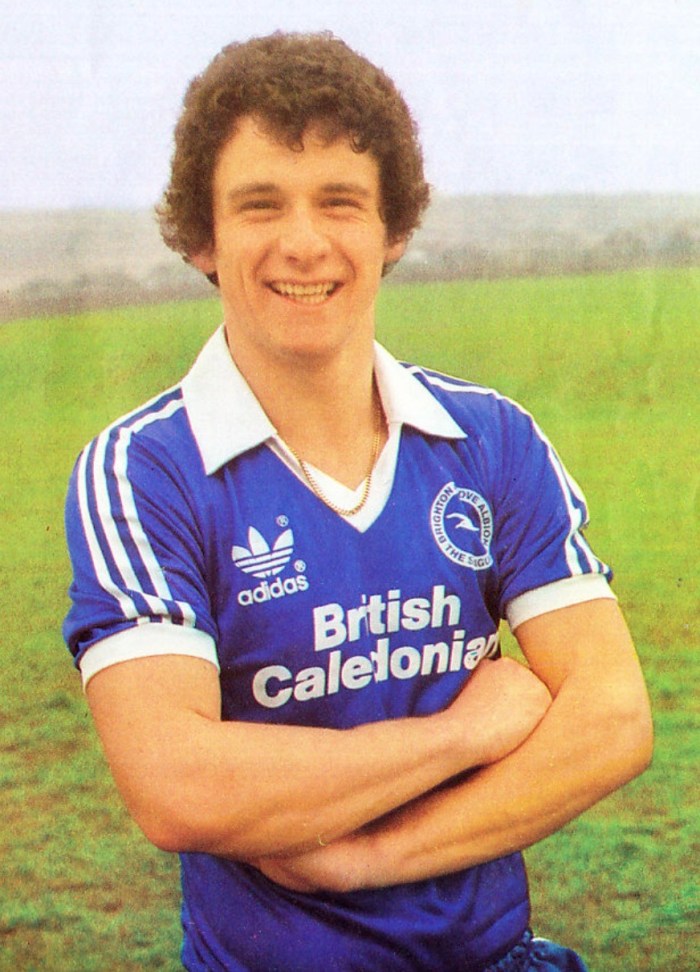


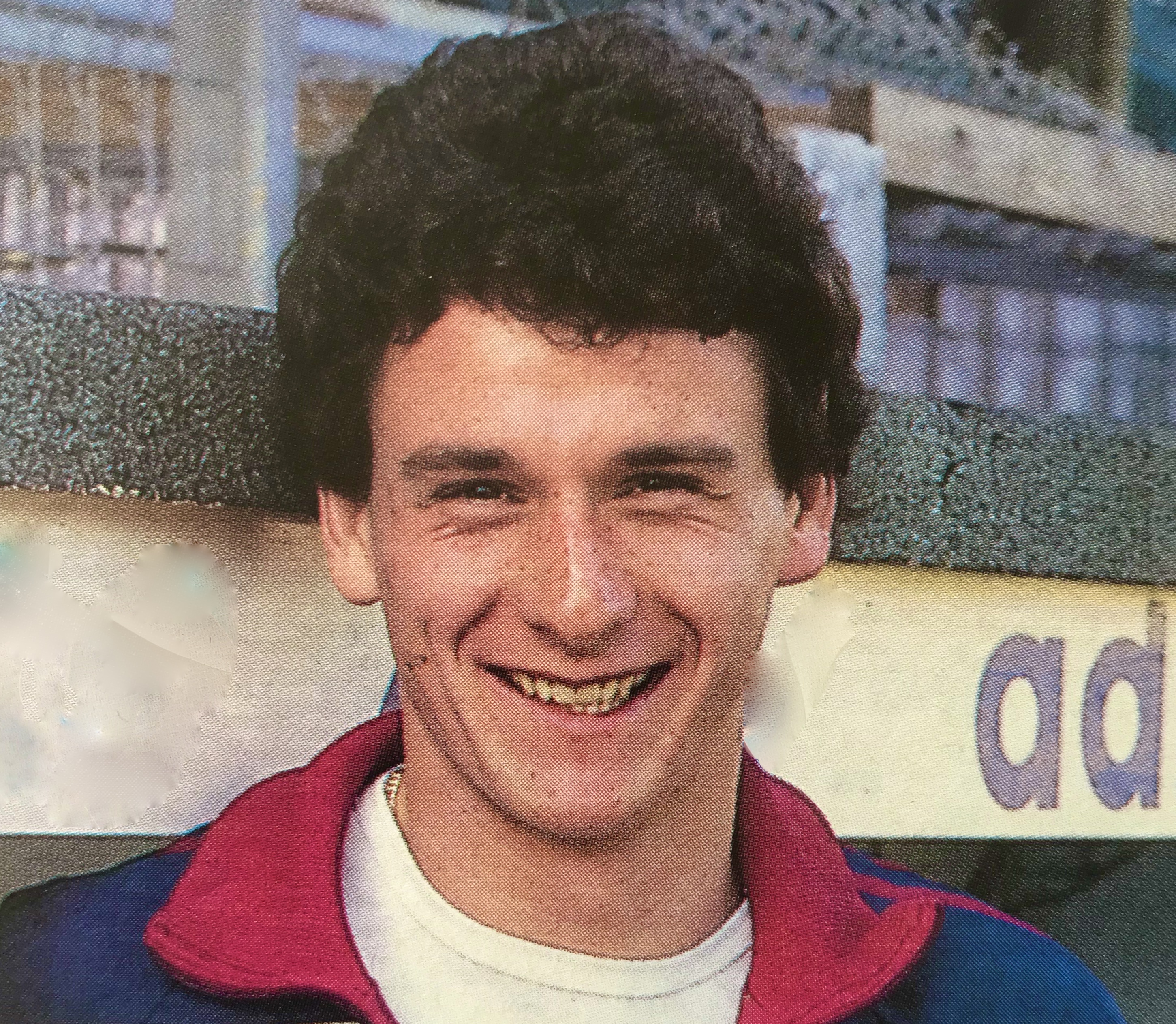


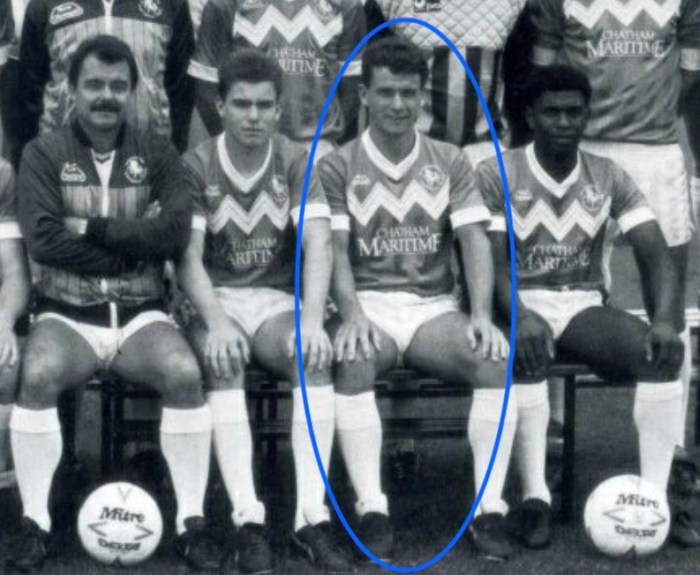
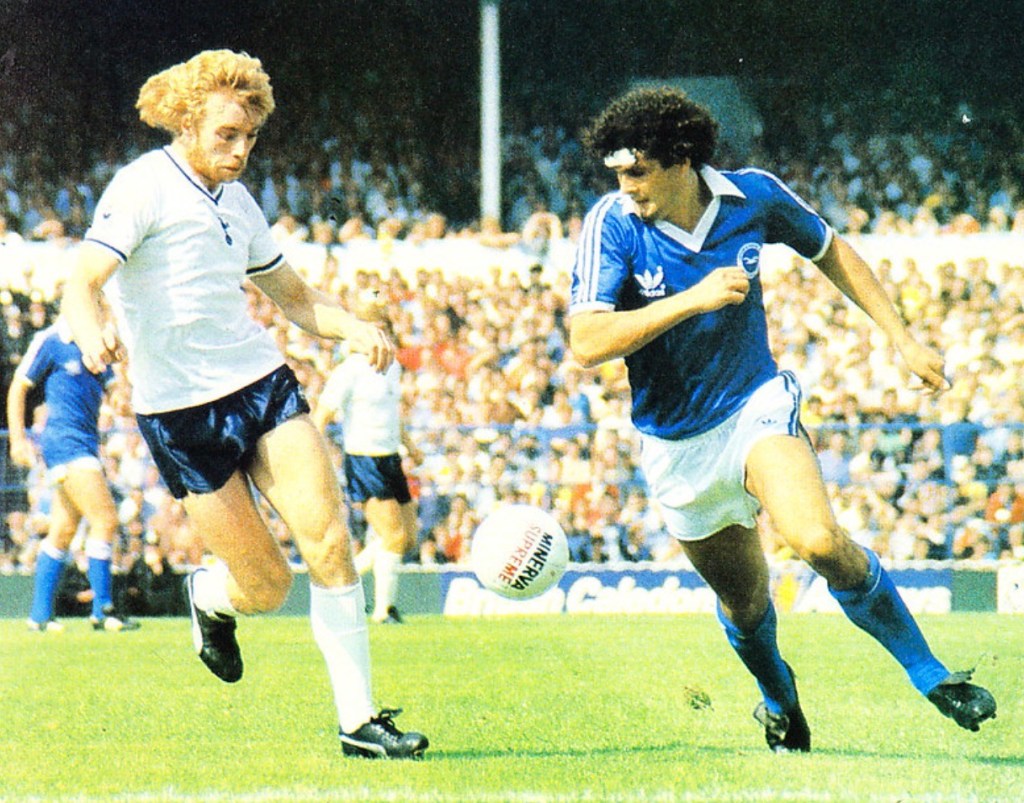
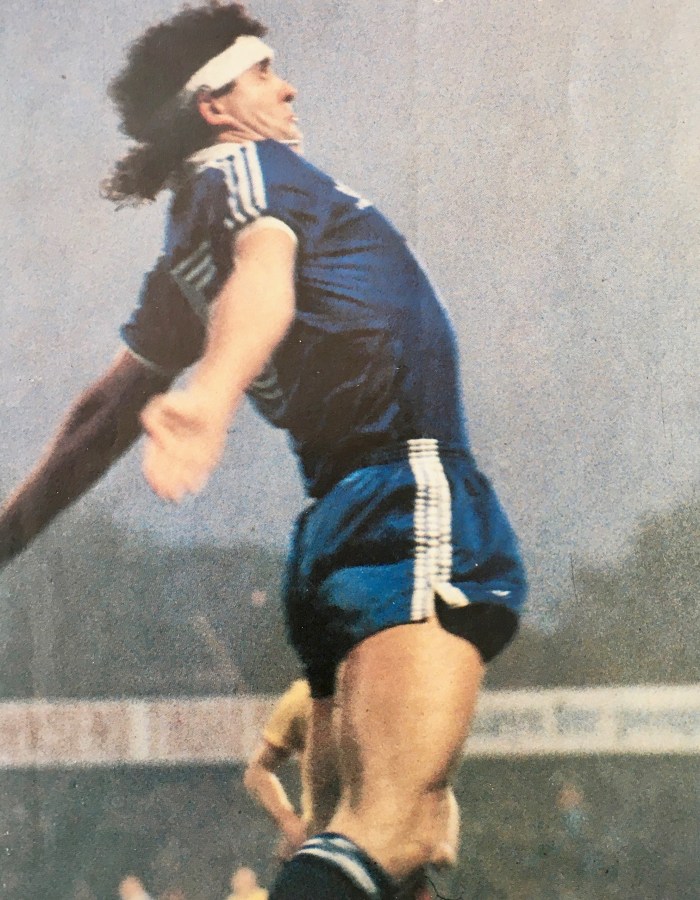
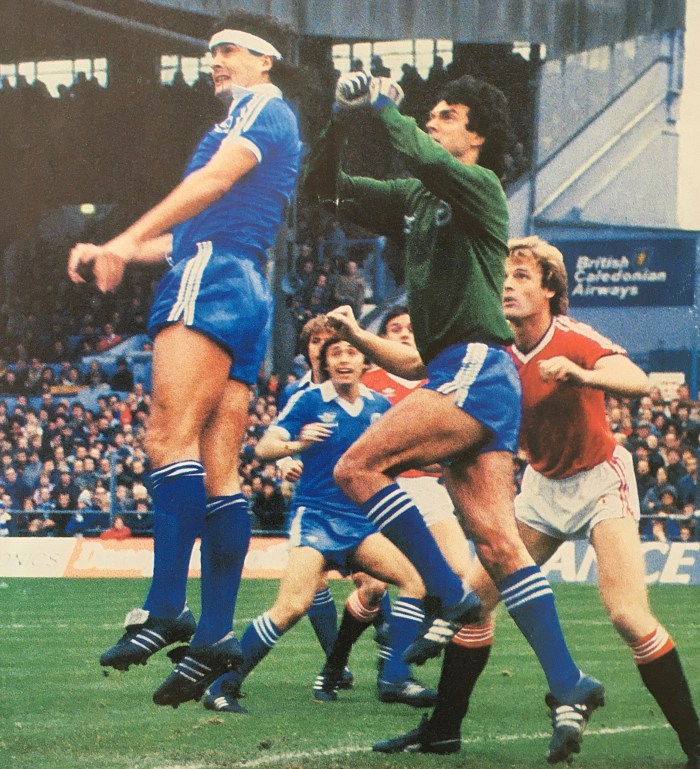


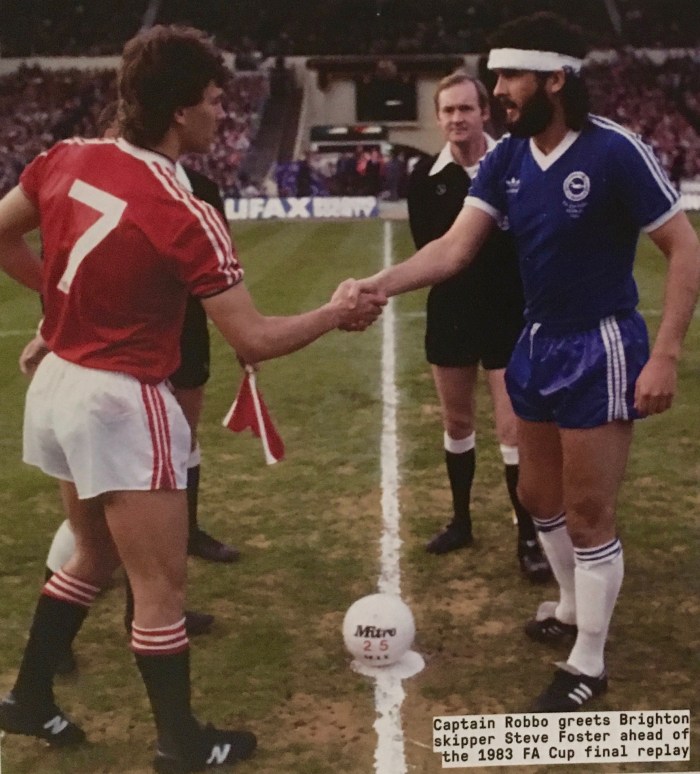
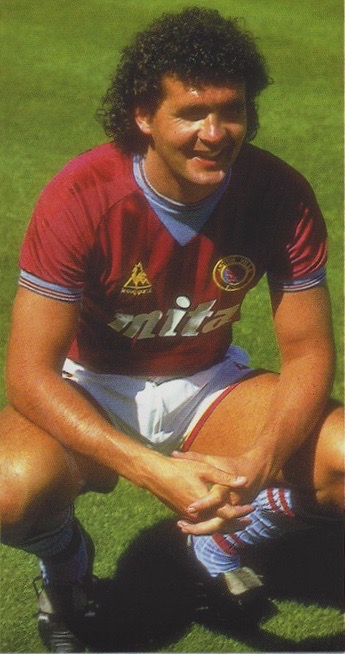
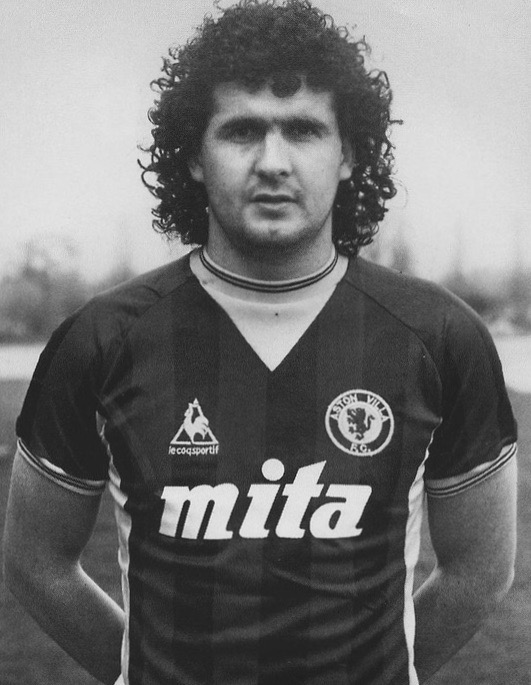


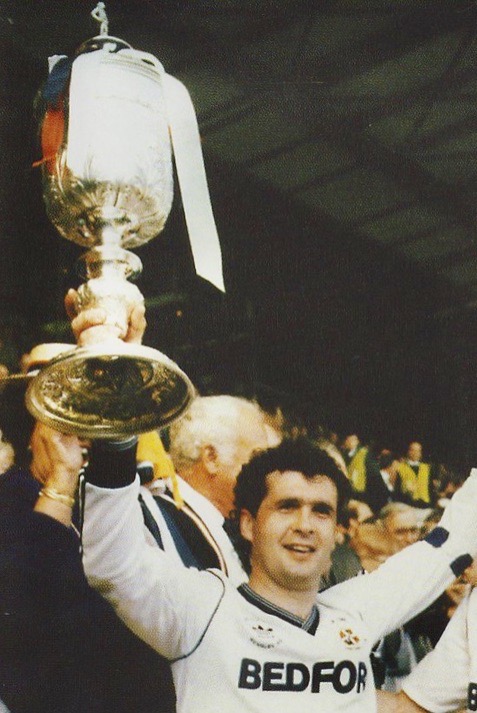
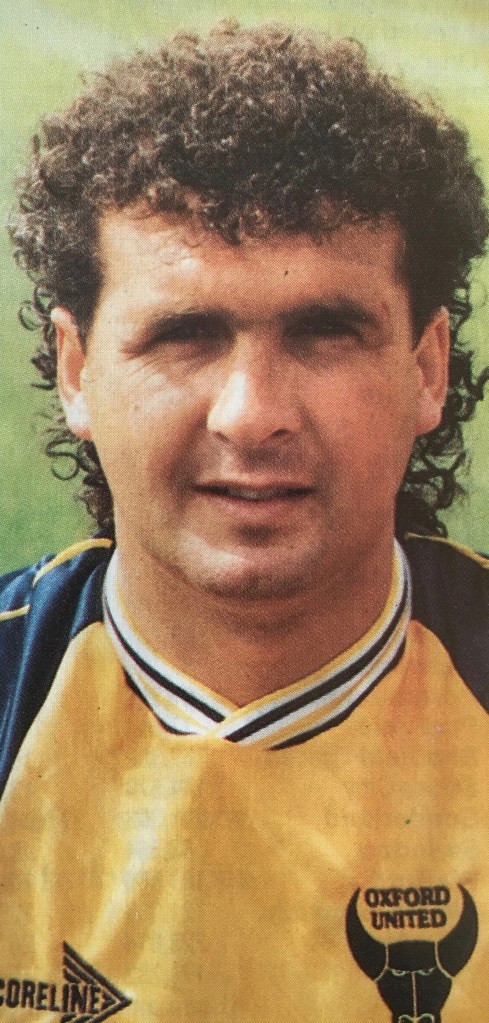




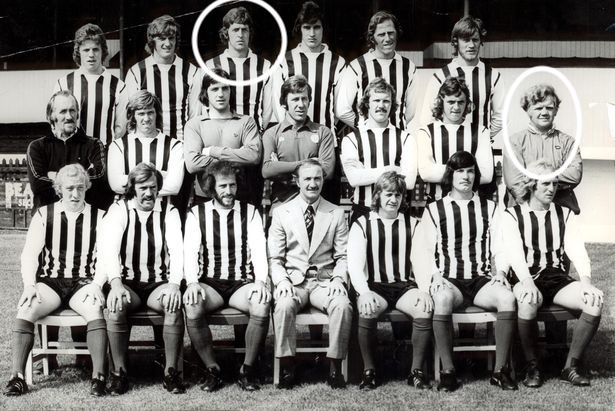


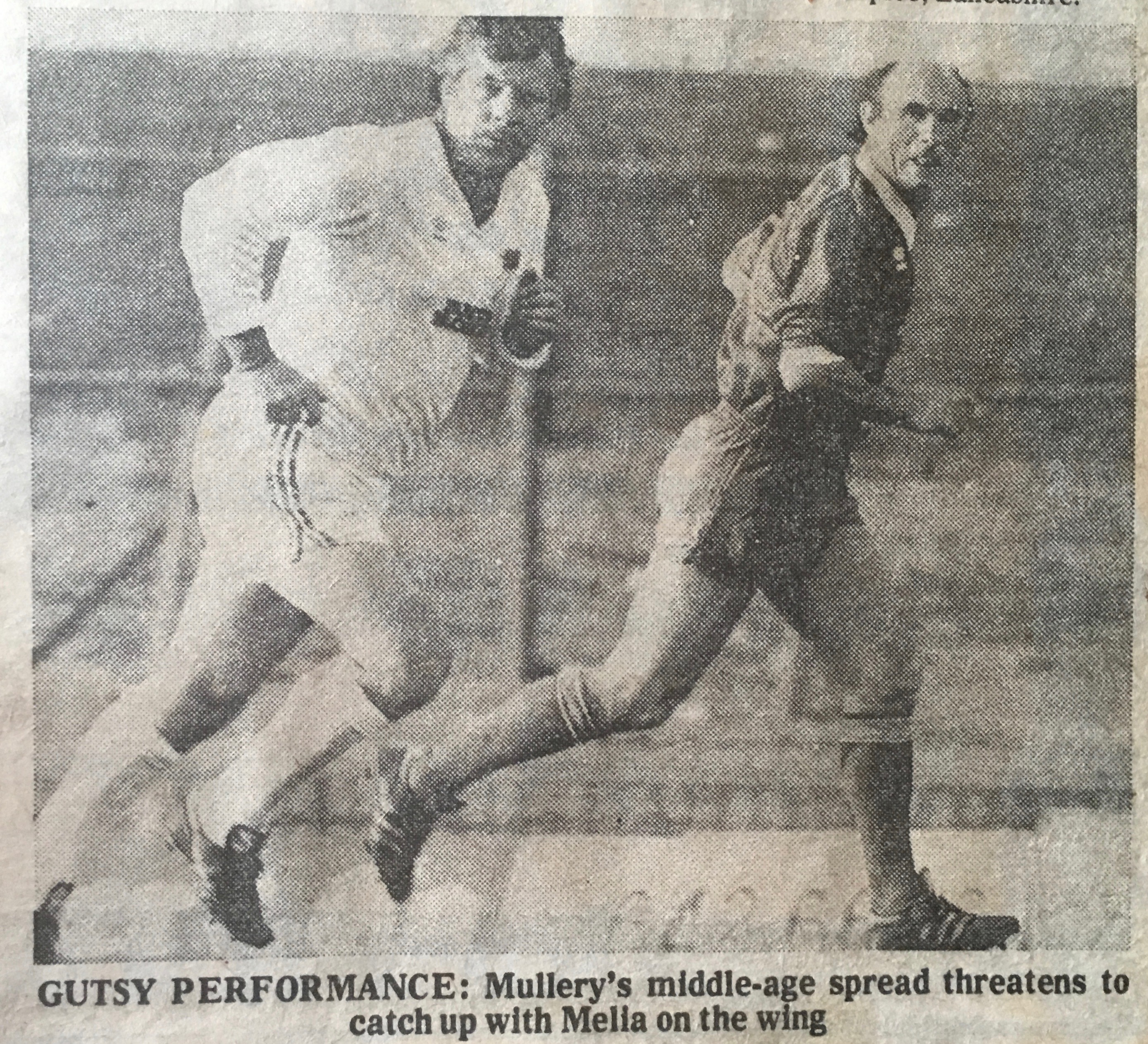


 Mike Bailey holds aloft the League Cup after Wolves beat Manchester City 2-1 at Wembley.


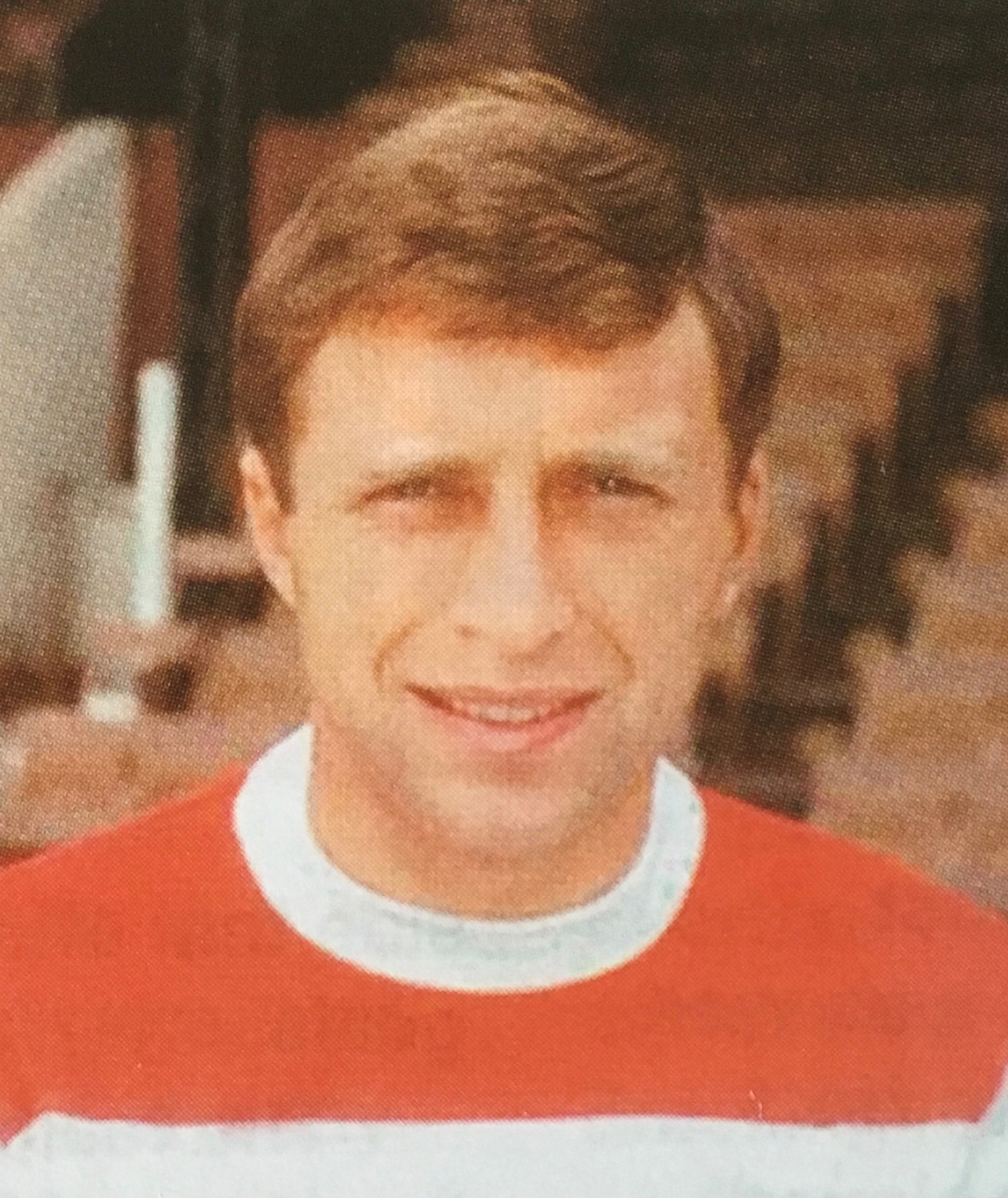 During his time there, he was capped twice by England as manager Alf Ramsey explored options for his 1966 World Cup squad. Just a week after making his fifth appearance for England under 23s, Bailey, aged 22, was called up to make his full debut in a friendly against the USA on 27 May 1964.


 “NEVER in my wildest dreams – or should that be nightmares? – did I think that, more than 20 years later, that miss in front of goal would still be getting replayed on television and mentioned in the media wherever I go.”
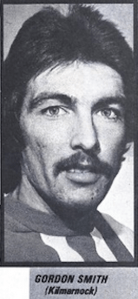 He was at Kilmarnock for five years, scoring 36 goals in 161 appearances, during which time he earned international honours with Scotland’s under-23 side, twice starting and three times going on as a substitute.

 After United had taken the lead, and Gary Stevens had equalised for Brighton, the game went into extra time and the stage was set for one of the most talked about moments in the club’s history.


 Thirty-eight of his 46 appearances for City came in the 1984-85 season, when he was top scorer with 14 goals.


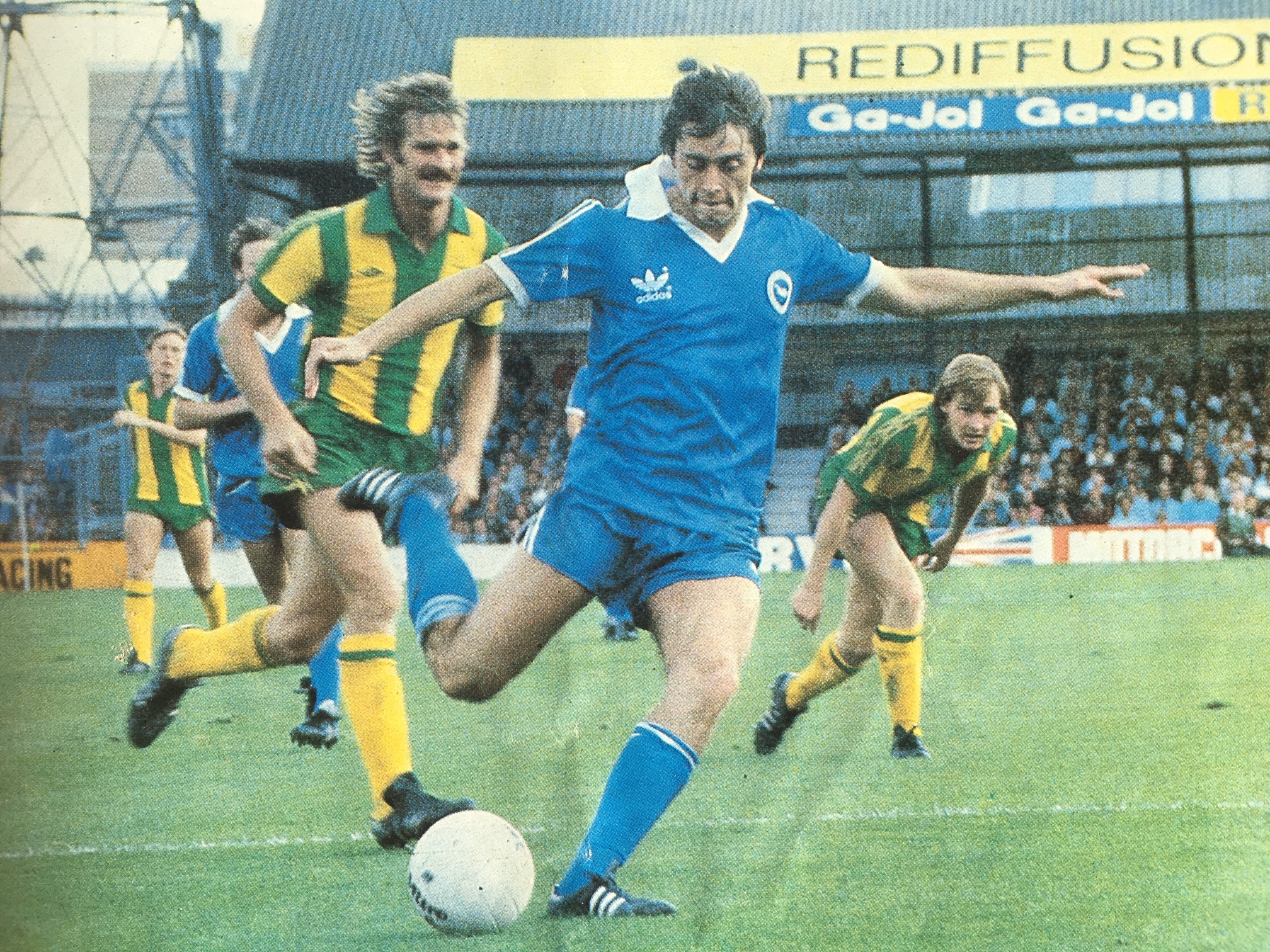
 Perhaps it was surprising, though, that champions Liverpool were the ones to snap him up, particularly as Ian Rush and Kenny Dalglish were in tandem as first choice strikers.
 Nevertheless, asked many years later to describe his proudest moment in football, he maintained: “Scoring the winning goal in the FA Cup semi-final that meant that a bunch of mates at Brighton were going to Wembley in 1983.”


 He had yet more Wembley heartache during a two-year spell with Queen’s Park Rangers, being part of their losing line-up in the 3-0 league cup defeat to Oxford United in 1986.


 He made 14 appearances for them before being snapped up for £40,000 by Tottenham Hotspur in 1974 and made his first team debut for Spurs while still only 16. A former teammate at that time, Andy Keeley said in
 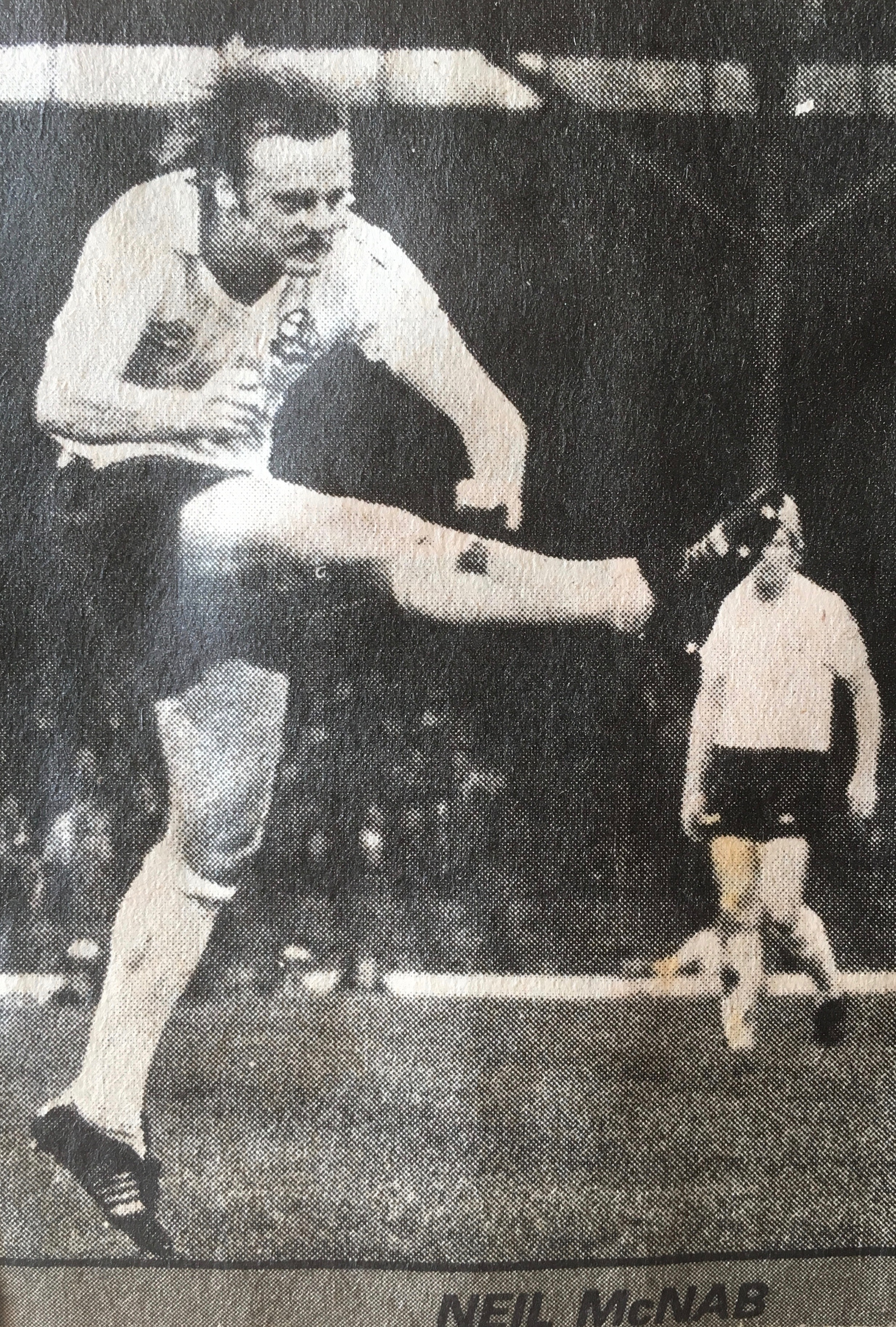 In November 1978, Bolton Wanderers paid £250,000 for him but after only 35 appearances for the Trotters, in February 1980, Mullery signed him for Brighton.
 Acknowledging his initial signing failed to excite the City faithful, it added: “McNab developed into a skilful, combative midfielder who became a huge crowd favourite. Not unlike Asa Hartford (pictured above with McNab), McNab was a schemer who could pick a pass and kept the team’s tempo ticking over.”


 WHEN just 19, unbeknown to thousands of expectant Brighton fans, Kieran O’Regan was on the brink of making a sensational debut for the Seagulls in the FA Cup semi-final.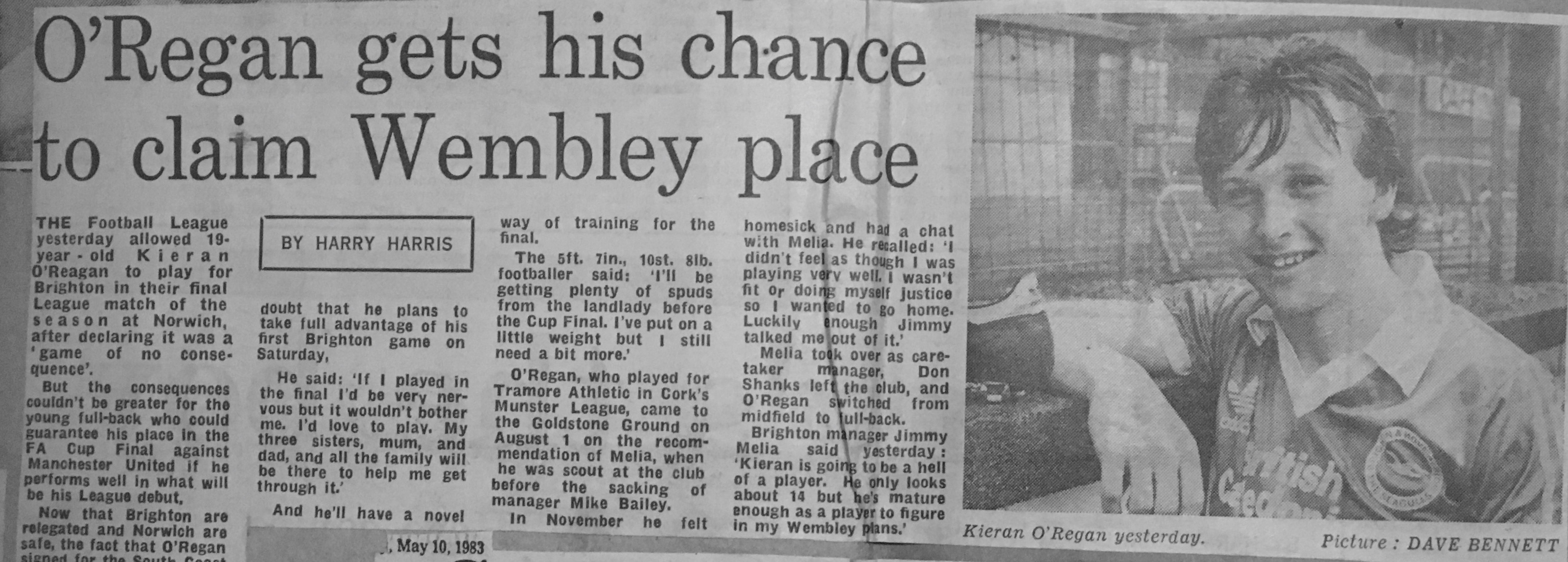
 In the event, forward
  Making the grade with Brighton caught the eye of the Republic of Ireland selectors and O’Regan was called up to play for his country on four occasions.
 However, in 2001, he was offered the chance to be the expert summariser on Huddersfield games for BBC Radio Leeds, and he lined up alongside commentator Paul Ogden for the next 15 years, before hanging up the microphone in May 2016.


 STEVE Gatting played at Wembley three times for Brighton having twice been denied the opportunity by Arsenal.

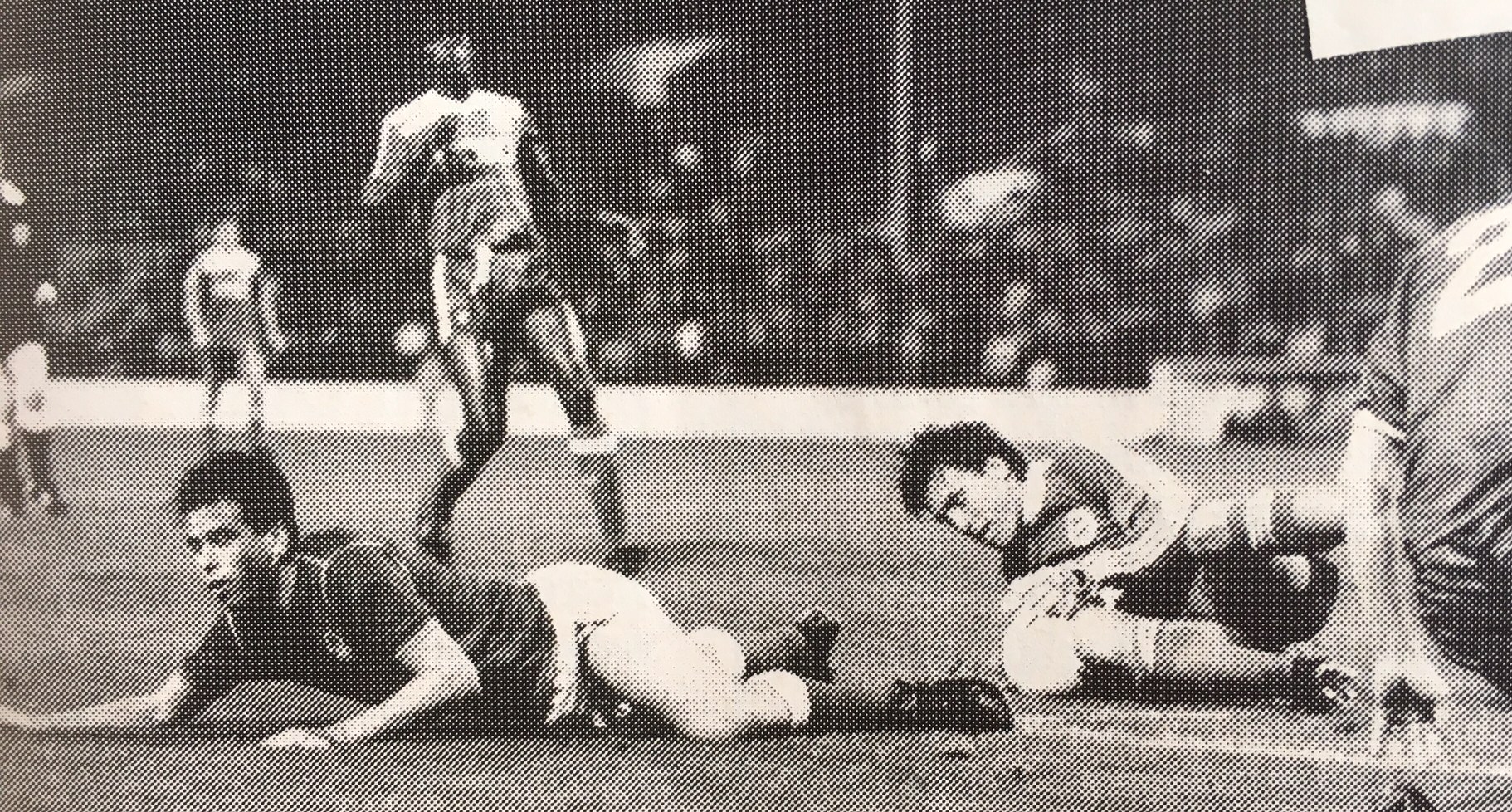


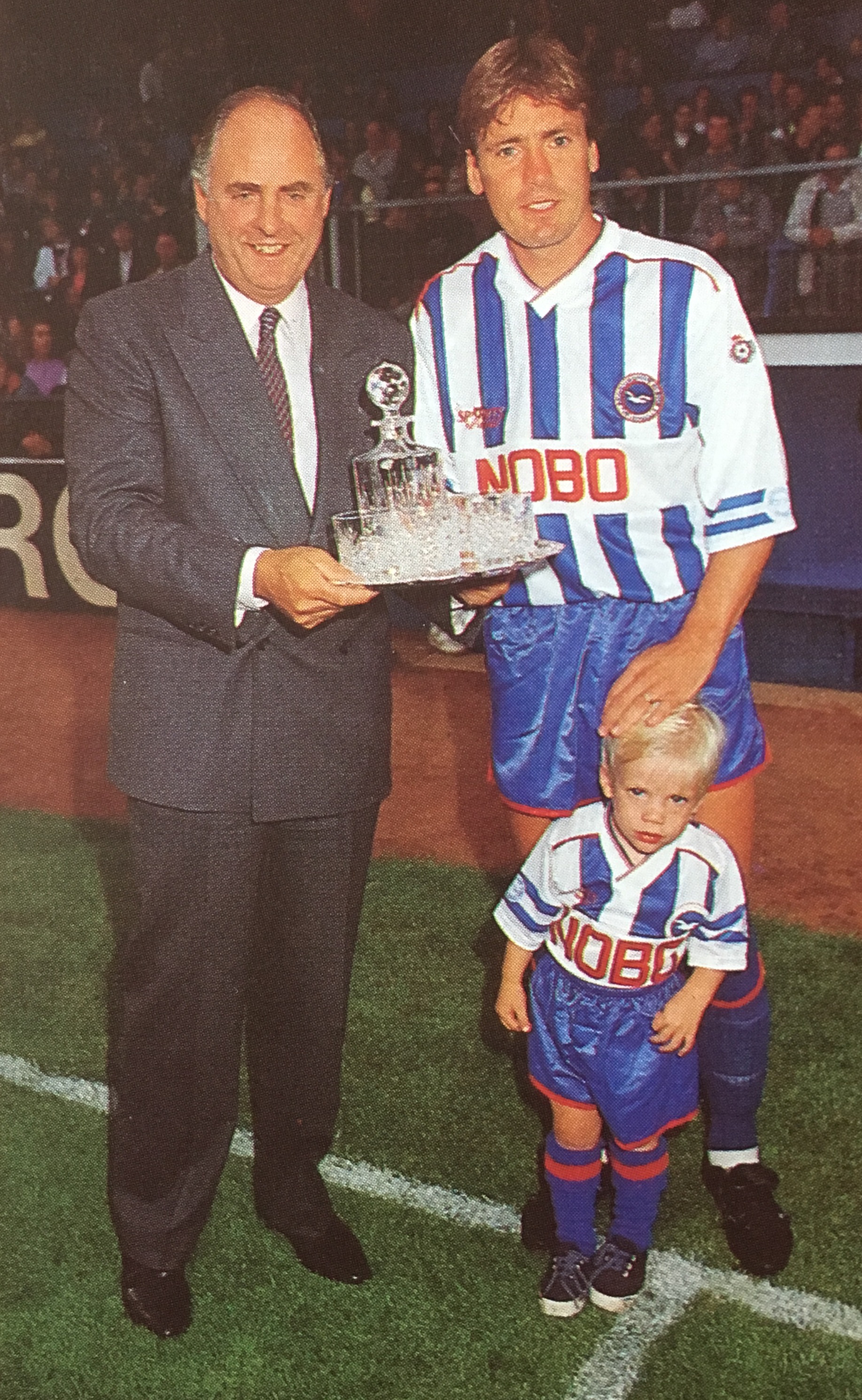 A cut glass decanter and glasses from chairman Dudley Sizen at Gatting’s testimonial


 In parallel lines