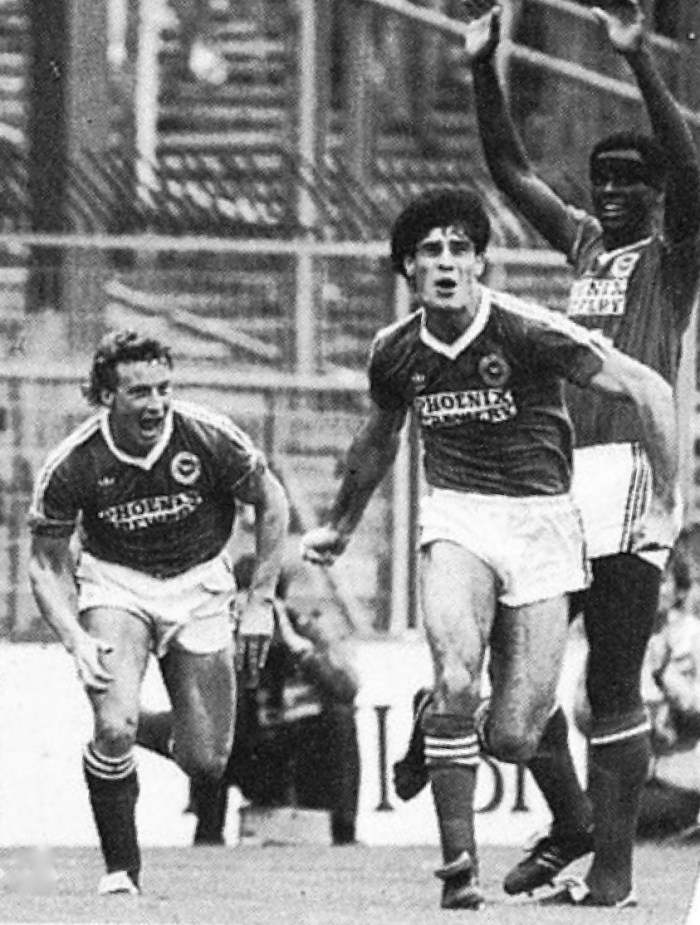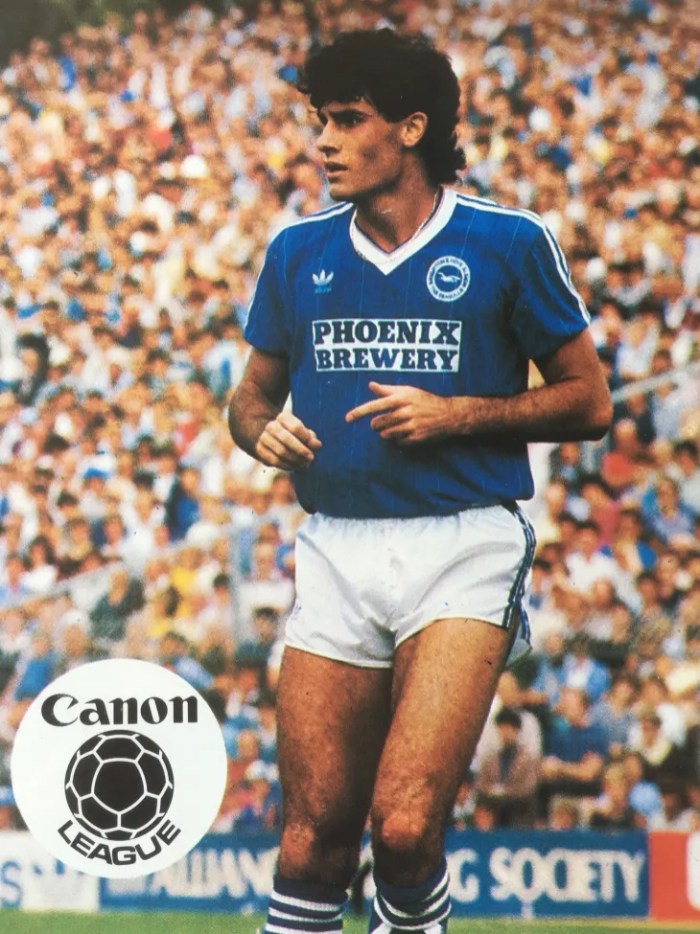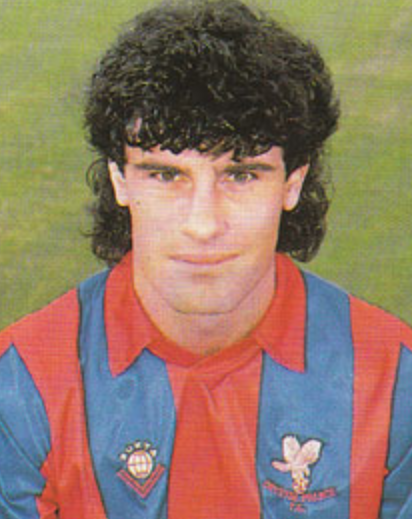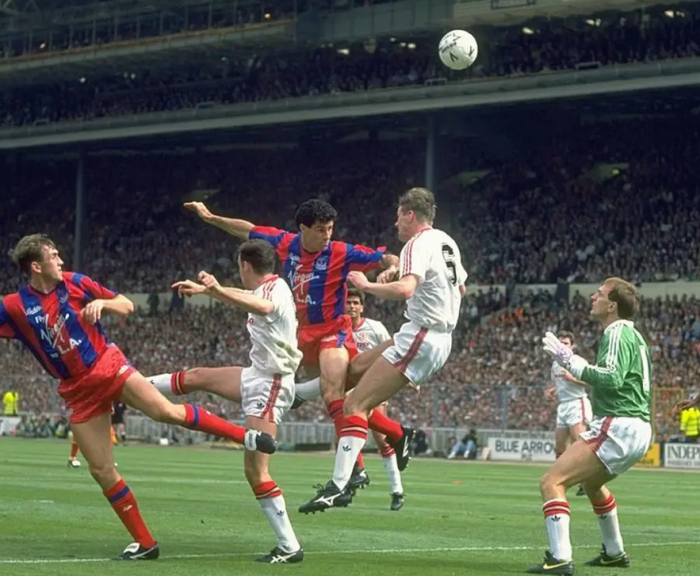
Crunching tackler ‘Tank’ Clark: a legend at two seaside clubs

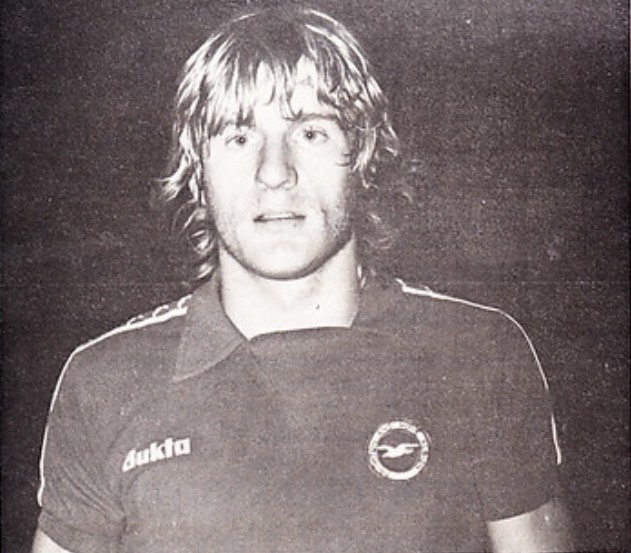
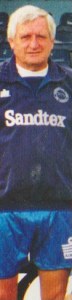
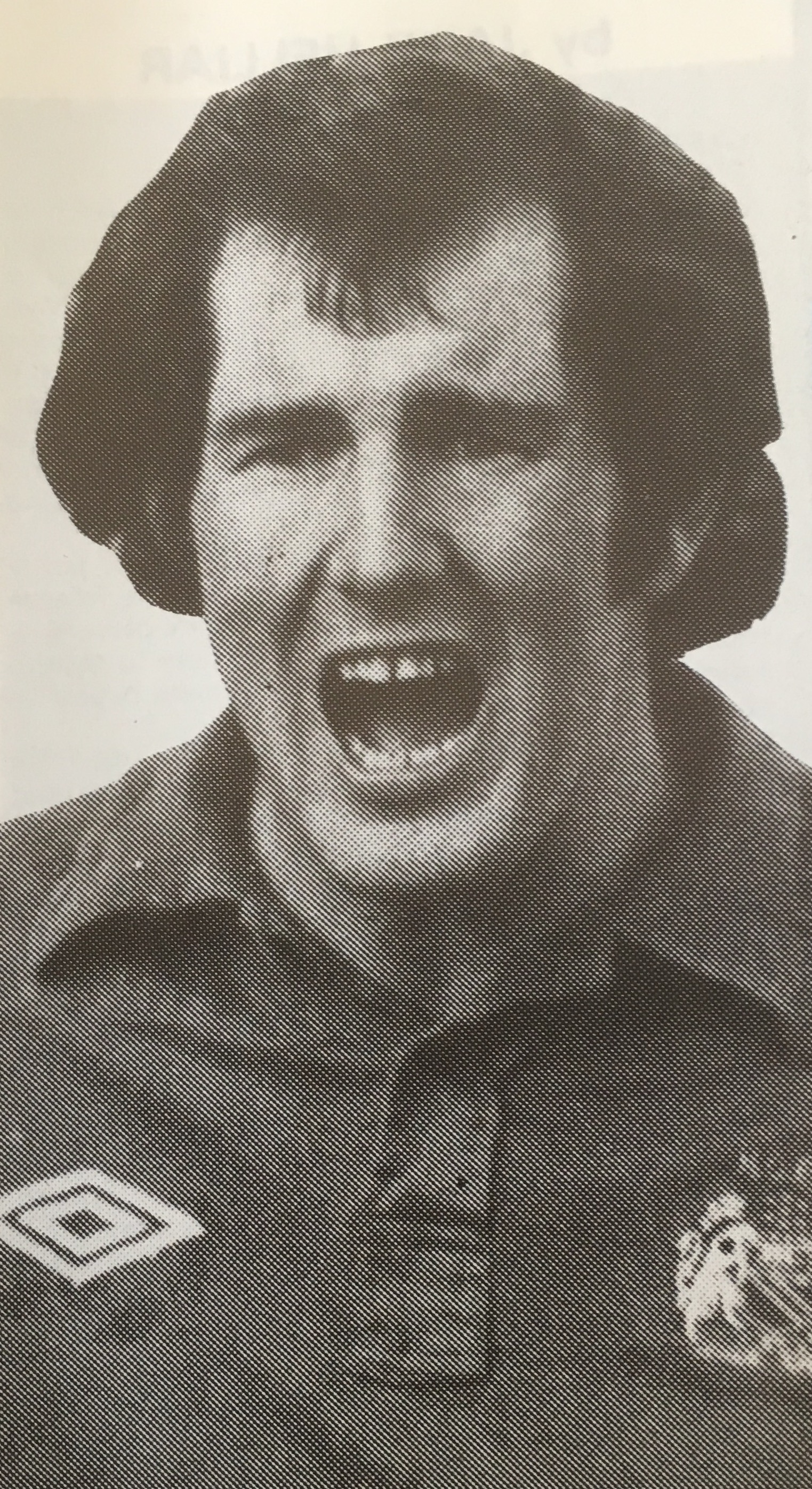
VIKING lookalike Paul Clark made a lasting impression on plenty of players with robust tackling which earned him ‘legend’ status among fans of Brighton and Southend United.

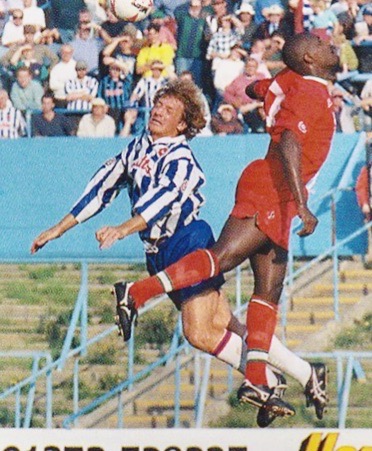
Described in one programme article as “the big bustling blond with the biting tackle”, Clark was given the nickname ‘Tank’ for his no-nonsense approach. A Southend fan lauded “his crunching tackles and never say die attitude”.

Clark himself reflected: “Wherever you go the supporters tend to like someone who is wholehearted and when it came to 50-50 challenges, or even sometimes 60-40, I didn’t shy away from too many, and the supporters just took to it.”

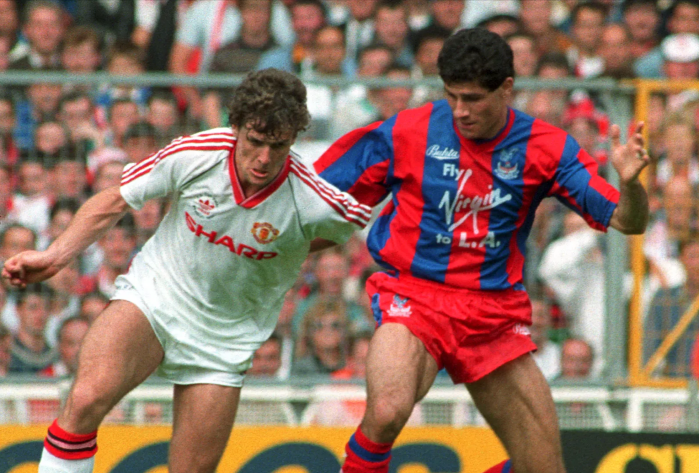
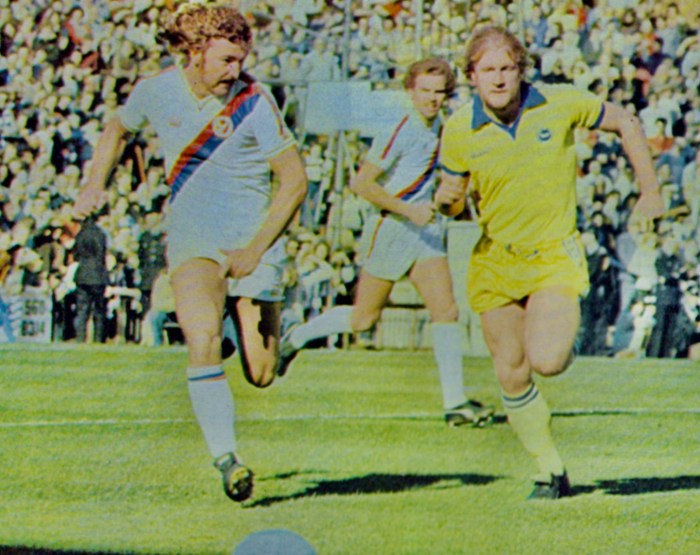
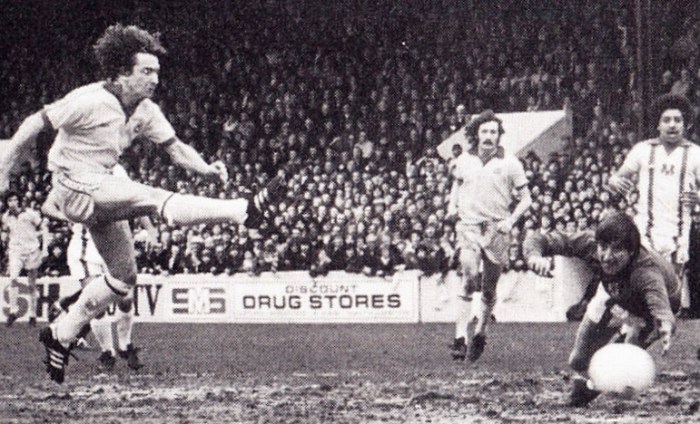
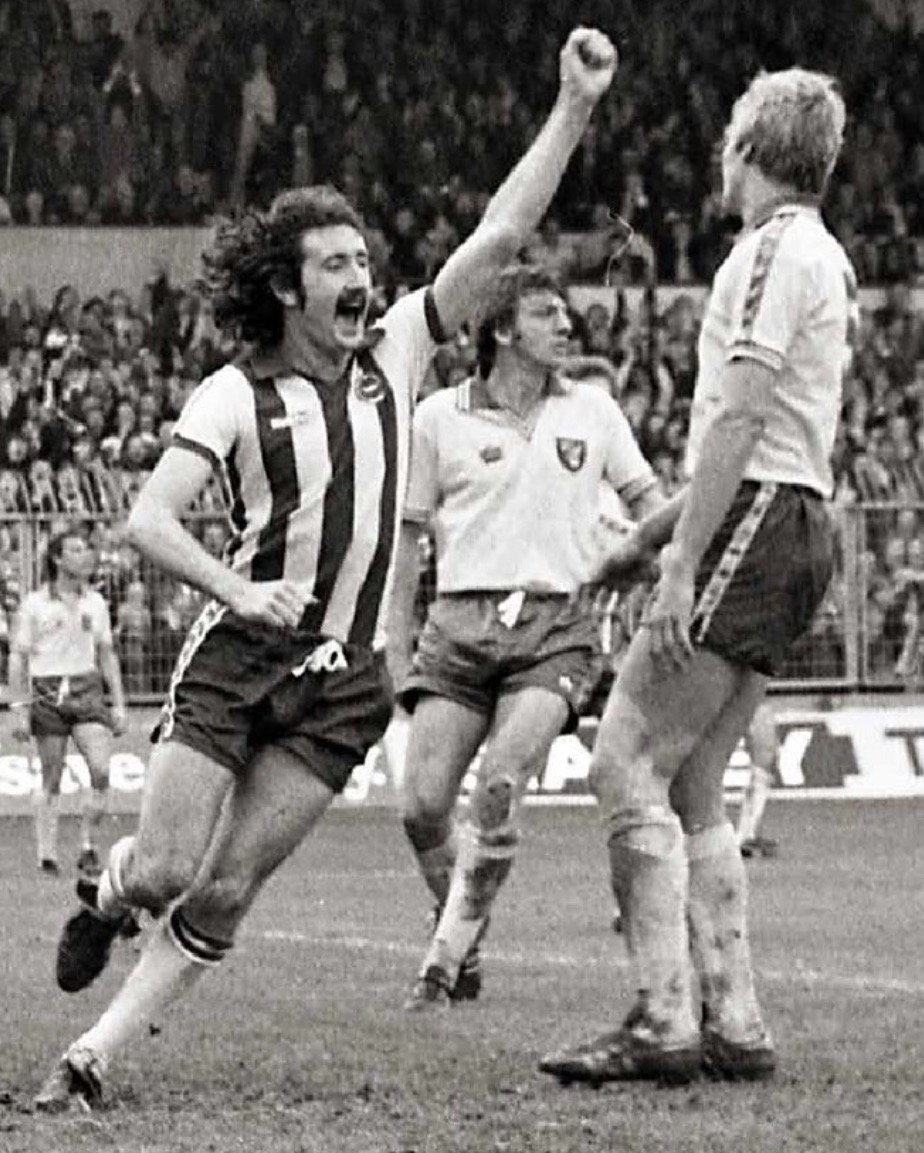
In Albion yellow against Palace

Giving further insight to his approach, he said: “You can go right up to the line – as long as you don’t step over it, then you’re OK.

“I used to pick up a booking during the first five or 10 minutes, then I knew I had to behave myself for the rest of the game. Despite the reputation I had, I was never sent off in over 500 games.”

A trademark strike at home to West Ham

Former teammate Mark Lawrenson said of him: “You would hate to have to play against him because quite often he would cut you in two. With him and ‘Nobby’ (Brian Horton) in the side, we definitely didn’t take any prisoners. One to rely on.”

A former England schoolboy international, it was said of the player in a matchday programme:

“Paul is the first to admit that skill is not his prime asset but there is no doubt as to the strength of his tackle. He is a real competitor and is also deceptively fast, being one of the best sprinters on the Goldstone staff.”

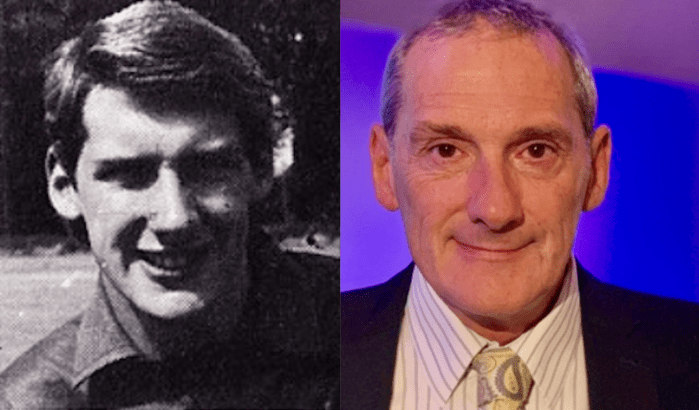
Born in south Benfleet, Essex, on 14 September 1958, Clark went to Wickford Junior School where he played for the school football team and the district primary schools’ side. When he moved on to Beauchamp Comprehensive, selection for his school team led to him playing for the Basildon Schools’ FA XI.

Clark as an England schoolboy

This in turn led to him being selected to play for England Schools at under 15 level, featuring against Scotland, Ireland, Wales, West Germany and France before going on a tour of Australia with the same age group. Contemporaries included future full time professionals Mark Higgins, Ray Deakin, Kevin Mabbutt and Kenny Sansom.

Clark left school at 16 before taking his O levels when Fourth Division Southend offered him an apprenticeship. He made his first team debut shortly before his 18th birthday in a 2-1 win over Watford.

Two months later, he won the first of six England Youth caps. He made his debut in the November 1976 mini ‘World Cup’ tournament in Monaco against Spain and West Germany alongside future full England internationals Chris Woods, Ricky Hill and Sammy Lee.

The following March, he played in England’s UEFA Youth tournament preliminary match against Wales when they won 1-0 at The Hawthorns. Sansom was also in that side. And he featured in all three group matches at the tournament that May (England beat Belgium 1-0, drew 0-0 with Iceland and 1-1 with Greece). Teammates included Russell Osman and Vince Hilaire.

Clark was only a third of the way into his second season at Southend when Alan Mullery sought to beef up his newly-promoted Brighton side in the autumn of 1977, and, in a part exchange deal involving Gerry Fell moving to Roots Hall, Clark arrived at the Goldstone. He made his debut for the Seagulls in a goalless draw at White Hart Lane on 19 November 1977 in front of a crowd of 48,613. And he came close to crowning it with a goal but for an outstanding save by Spurs ‘keeper Barry Daines.

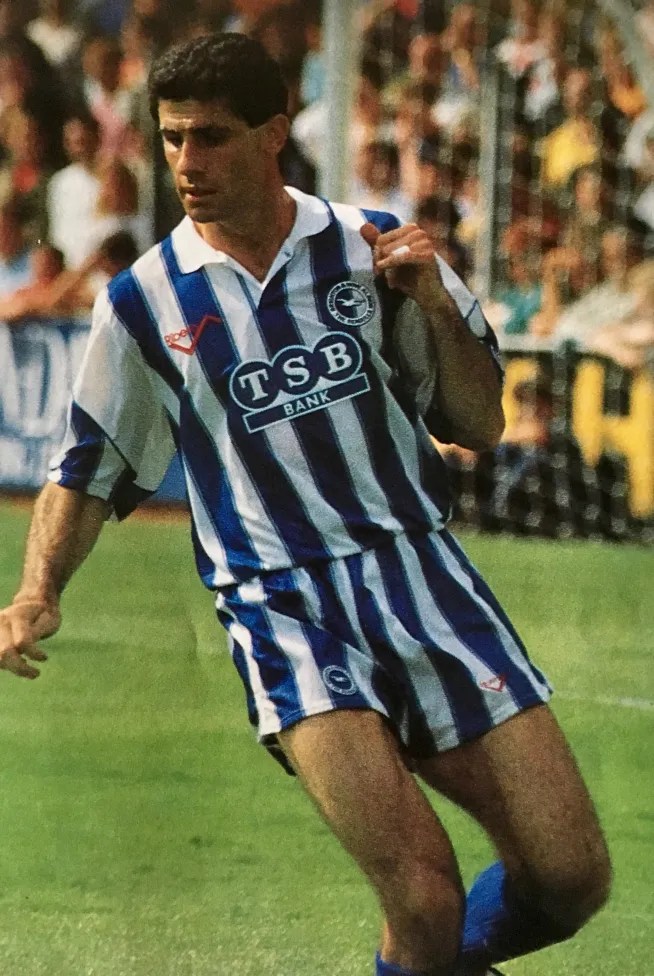
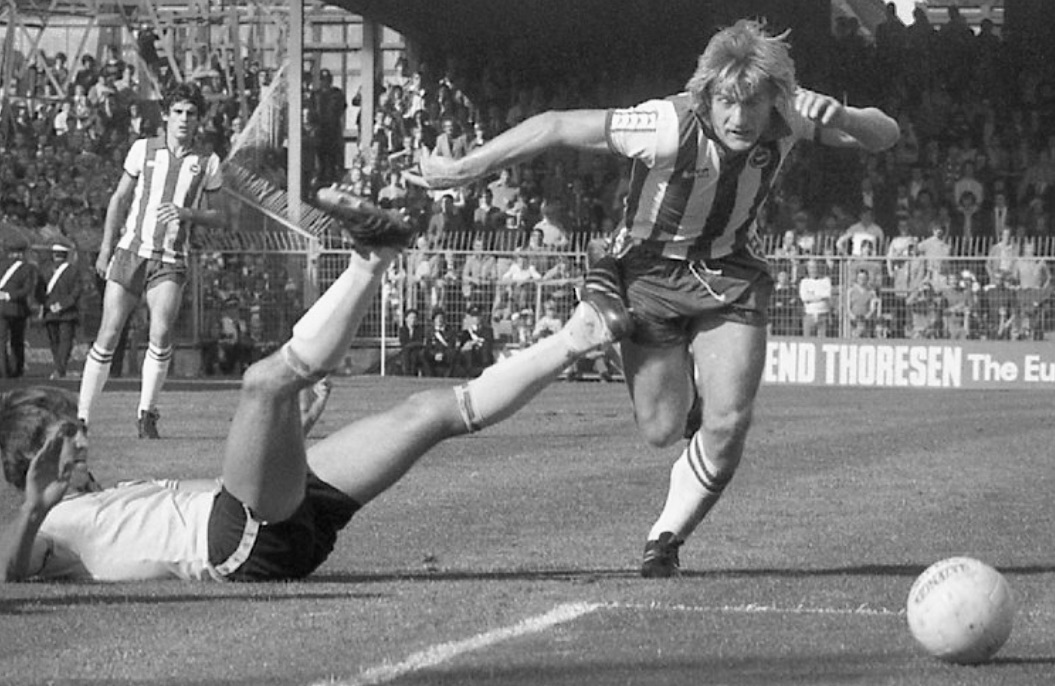
In full flight, as captured by photographer George Erringshaw

When Spurs visited the Goldstone later that season, Clark put in a man of the match performance and scored a memorable opener, following a solo run. A subsequent matchday programme article was suitably poetic about it.

“It showed all the qualities looked for in a player: determination, speed, skill and most of all the ability to finish….if any goal was singled out, Paul’s was certainly one to treasure.”

Albion went on to beat Spurs 3-1, although the game was remembered more because it was interrupted twice when the crowd spilled onto the pitch.

After only 12 minutes, referee Alan Turvey took the players off for 13 minutes while the pitch was cleared of Albion fans who’d sought safety on the pitch from fighting Spurs’ hooligan fans.

In the 74th minute, with Spurs 3-1 down and defender Don McAllister sent-off, their fans rushed the pitch to try to get the game abandoned. But police stopped the invasion getting out of hand and the game continued after another four-minute delay.

Clark’s goal on 16 minutes had been cancelled out six minutes later when Chris Jones seized on a bad goal kick by Eric Steele but defender Graham Winstanley made it 2-1 just before half-time.

Albion’s third goal was surrounded in controversy. Sub Eric Potts claimed the final touch but Spurs argued bitterly that Malcolm Poskett was offside.

Clark remembered the game vividly when interviewed many years later by Spencer Vignes for the matchday programme. The tenacious midfielder put in an early crunching tackle on Glenn Hoddle and after the game the watching ex-Spurs’ manager Bill Nicholson told him: “Well done. You won that game in the first five minutes when you nailed Hoddle.”

Said Clark: “I was 19 at the time so to get a pat on the back from him was much appreciated.”

It was one of three goals Clark scored in his 26 appearances that season (nine in 93 overall for Albion) but he wasn’t always guaranteed a starting berth and in five years at the club had a number of long spells stuck in the reserves.

Midfield enforcer or emergency defender were his primary roles but Clark was capable of unleashing unstoppable shots from distance and among those nine goals he scored were some memorable strikes.

For instance, as Albion closed in on promotion in the spring of 1979, at home to Charlton Athletic, Clark opened the scoring with a scorching 25-yard left foot volley in the 11th minute. Albion went on to win 2-0.

The following month, Clark demonstrated his versatility at St James’ Park on 3 May 1979 when Albion beat Newcastle 3-1 to win promotion to football’s elite level for the first time. Clark played in the back four alongside Andy Rollings because Mark Lawrenson was out injured with a broken arm.

Celebrating promotion with Peter O’Sullivan and Malcolm Poskett

“Not many people can say they played in a side that got Brighton up to the top flight,” said Clark. “It’s something I’m still immensely proud of.”

Once they were there, Clark missed the opening two matches (defeats at home to Arsenal and away to Aston Villa) and had an ignominious start to life at the higher level when he conceded a penalty within three minutes of going on as a sub for Rollings away to Manchester City on 25 August 1979.

Some observers thought Clark had played the ball rather than foul Ray Ranson but referee Pat Partridge thought otherwise and Michael Robinson stepped up to score his first goal for City from the resultant penalty. It put the home side 3-1 up: Teddy Maybank had equalised Paul Power’s opener but Mike Channon added a second before half-time.

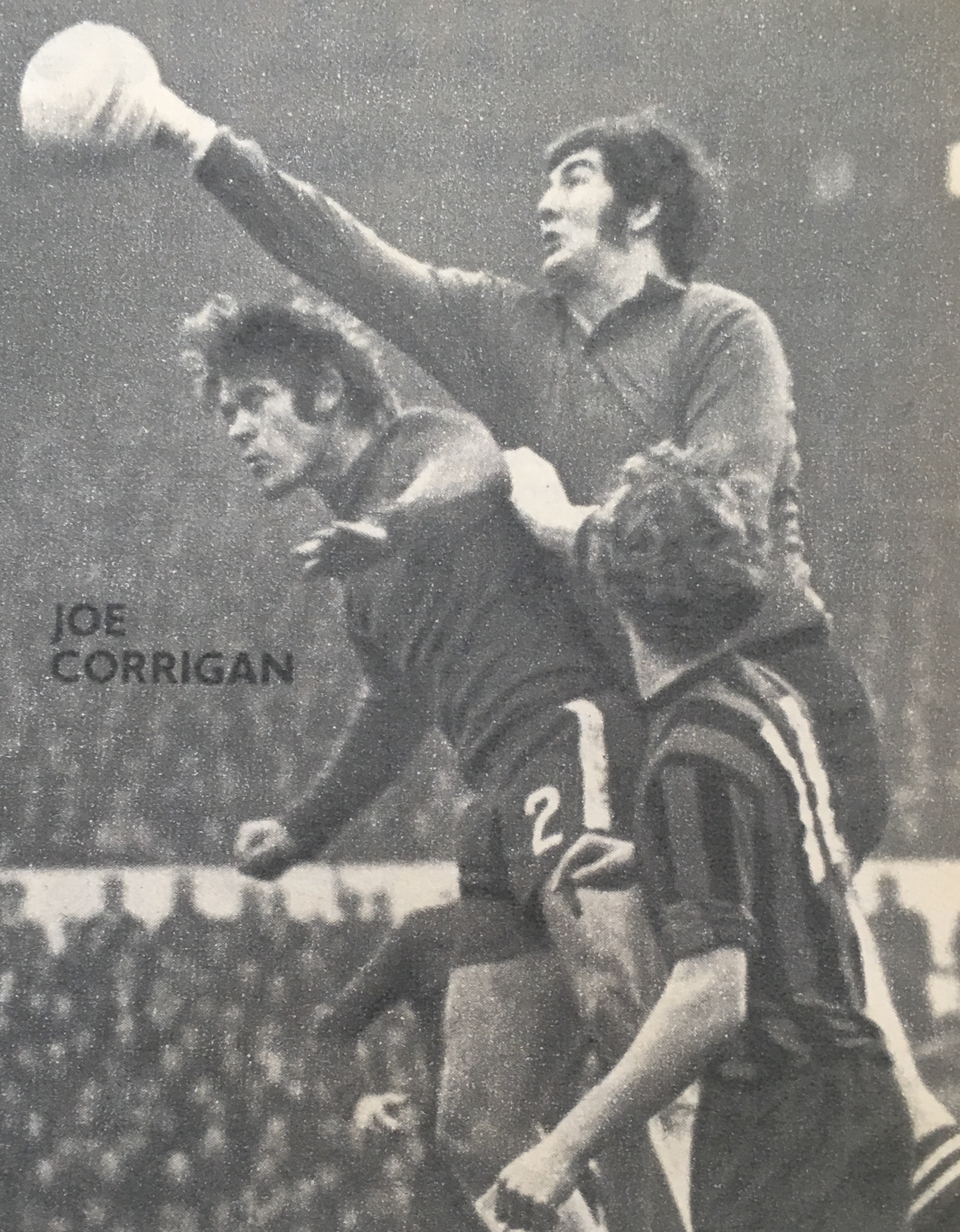
Partridge subsequently evened up the penalty awards but Brian Horton blazed his spot kick wide of the post with Joe Corrigan not needing to make a save. Peter Ward did net a second for the Seagulls but they left Maine Road pointless.

Ahead of Albion’s fourth attempt to get league points on the board, Clark played his part in beating his future employer Cambridge United 2-0 in a second round League Cup match.

Three days later, he was on the scoresheet together with Ward and Horton as Albion celebrated their first win at the higher level, beating Bolton Wanderers 3-1 at the Goldstone.

It was Clark’s neat one-two with Ward that produced the opening goal and on 22 minutes, Maybank teed the ball up for Clark, who “belting in from the edge of the box, gave it everything and his shot kept low and sped very fast past (‘Jim’) McDonagh’s right hand,” said Evening Argus reporter John Vinicombe.

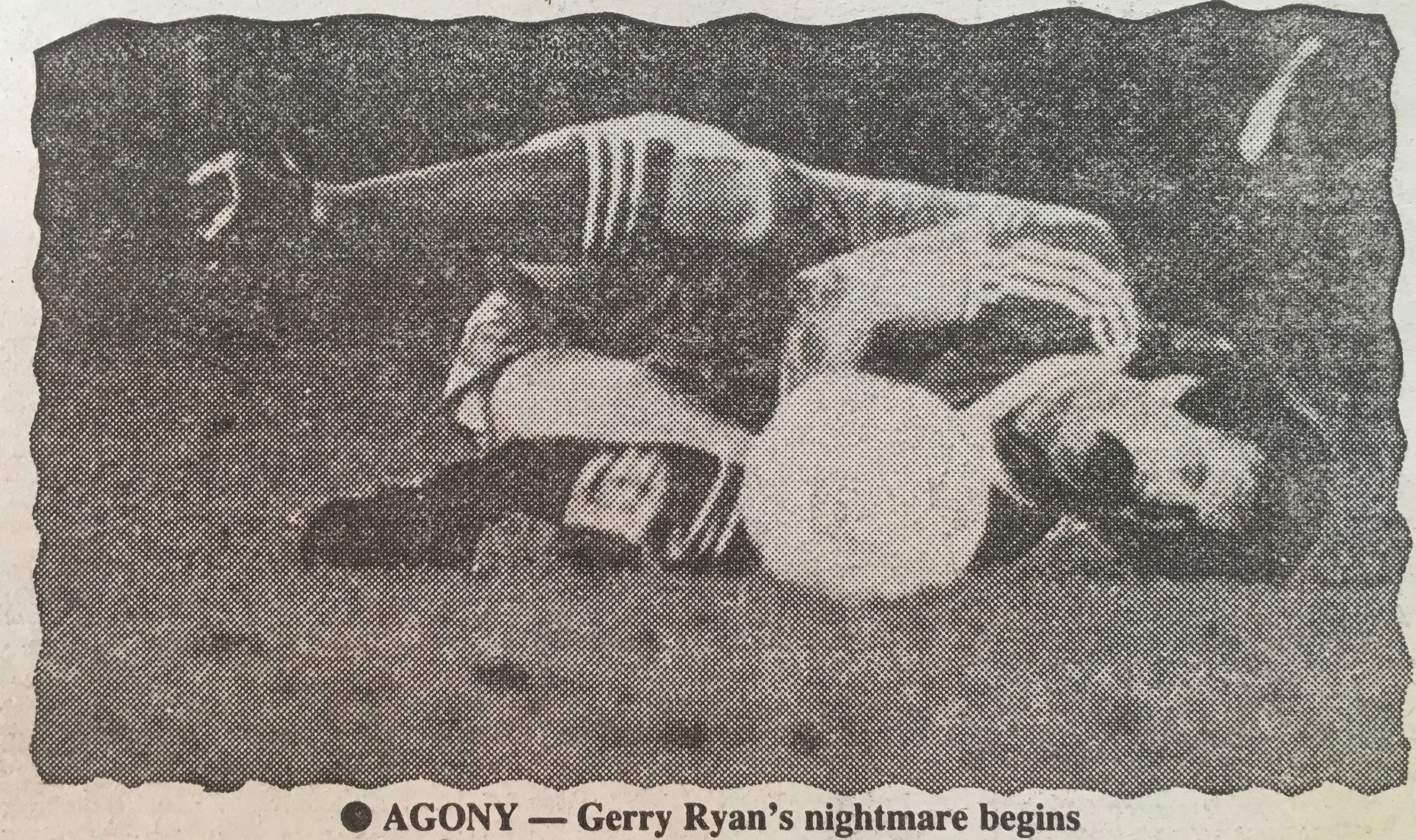
Gerry Ryan replaced Clark late in the game and after 12 starts, when he was subbed off three times, and four appearances off the bench, his season was over, and it wasn’t even Christmas.

A colour photo of a typical Clark tackle (on QPR’s Dave Clement) adorned the front cover of that season’s matchday programmes throughout but he didn’t start another game after a 4-0 League Cup defeat at Arsenal on 13 November.

Programme cover shot

He was sub for the following two games; the memorable 1-0 win at Nottingham Forest and a 1-1 draw at Middlesbrough, but Mullery had signed the experienced Peter Suddaby to play alongside Steve Foster, releasing Lawrenson to demonstrate his considerable repertoire of skills in midfield alongside skipper Horton and Peter O’Sullivan.

Young Giles Stille also began to press for a place and later in the season, Neil McNab was added to the midfield options, leaving Clark well down the pecking order in the reserves. Portsmouth wanted him but he rejected a move along the coast, although he had a brief loan spell at Reading, where he played a couple of games.

But Clark wasn’t finished yet in Albion’s colours and, remarkably, just over a year after his last first team appearance, with the Seagulls struggling in 20th spot in the division, he made a comeback in a 1-0 home win over Aston Villa on 20 December 1980.

Albion had succumbed 4-3 to Everton at Goodison Park in the previous match and Mullery told the Argus: “We badly needed some steel in the side and I think Clark can do that sort of job.”

Under the headline ‘The forgotten man returns’ Argus reporter Vinicombe said Mullery hadn’t changed his opinion that Clark was not a First Division class player, but nevertheless reckoned: “Paul’s attitude is right and I know he’ll go out and do a good job for me.”

For his part, Vinicombe opined: “The strength of Clark’s game is a daunting physical presence. His tackling is second to none in the club and Mullery believes he will respond to the challenge.”

Clark kept the shirt for another nine matches (plus one as a sub), deputising for Horton towards the end of his run, but his last first team game was in a 3-1 defeat at Norwich at the end of February.

Clark remained on the books throughout Mike Bailey’s first season in charge (1981-82) but, with Jimmy Case, Tony Grealish and McNab ahead of him, didn’t make a first team appearance and left on a free transfer at the end of it.

Back to Southend

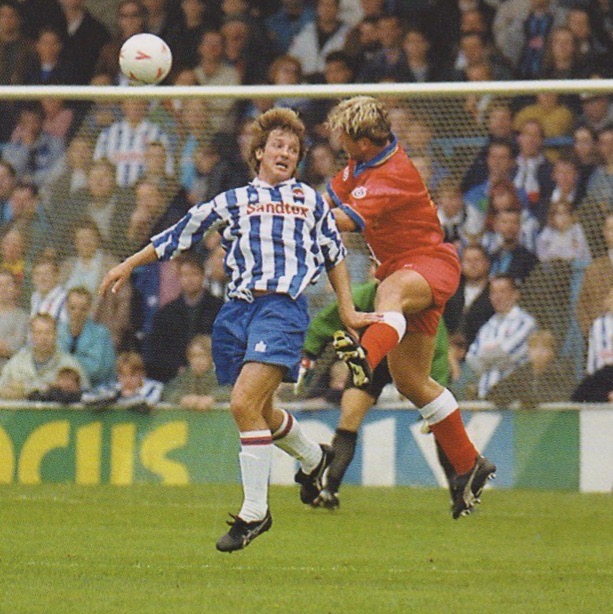
He returned to Southend where he stayed for nine years and was player-manager on two occasions. Fans website shrimperzone.com moderator ‘Yorkshire Blue’ summed up his contribution to their cause thus: “In the top five all-time list for appearances, an inspiration in four promotions, one of the toughest tacklers of all-time and a man whose commitment for his home-town club could never be doubted.”

Clark was still only 27 when he had his first spell as manager, in caretaker charge after Dave Webb had quit following a bust-up with the club chairman, and he managed to steer United to promotion back to the third tier.

When Webb’s successor Dick Bate lasted only eight games of the new season, Clark was back at the helm, in turn becoming the youngest manager in the league.

His first hurdle ended in a League Cup giant killing over top flight Derby County (who included his old teammate John Gregory) when the Us had another former Albion teammate, Eric Steele, in goal.

A Roy McDonough penalty past England goalkeeper Peter Shilton at Roots Hall settled the two-legged tie (the second leg was goalless at the Baseball Ground) which the writer described as “arguably their biggest ever cup shock”.

In the league, player-manager Clark guided Southend to a safe 17th place but it went pear-shaped the following season. Clark only played 16 games, Southend were relegated, and Webb returning midway through the season as general manager.

Back-to-back promotions in 1989-90 and 1990-91 proved to be a more than satisfactory swansong to his Southend career, and in the first of those he found himself forming an effective defensive partnership with on-loan Guy Butters in the second half of the season.

In 1990-91, he missed only six games all season as the Shrimpers earned promotion to the second tier for the first time in their history, and he had a testimonial game against Arsenal.

But, after a total of 358 games for Southend, he left Roots Hall to join Gillingham on a free transfer.

Over three seasons, he played 90 league games, and was caretaker manager in 1992, before retiring at the end of the 1993-94 season. Gillingham’s top goalscorer with 18 that season was a young Nicky Forster and other Albion connections in that squad included Mike Trusson, Paul Watson, Neil Smillie, Andy Arnott and Richard Carpenter.

After Gillingham, Clark played non-league for Chelmsford City but left to become assistant manager to Tommy Taylor at Cambridge United. In 1996 he followed Taylor in a similar role to Leyton Orient.

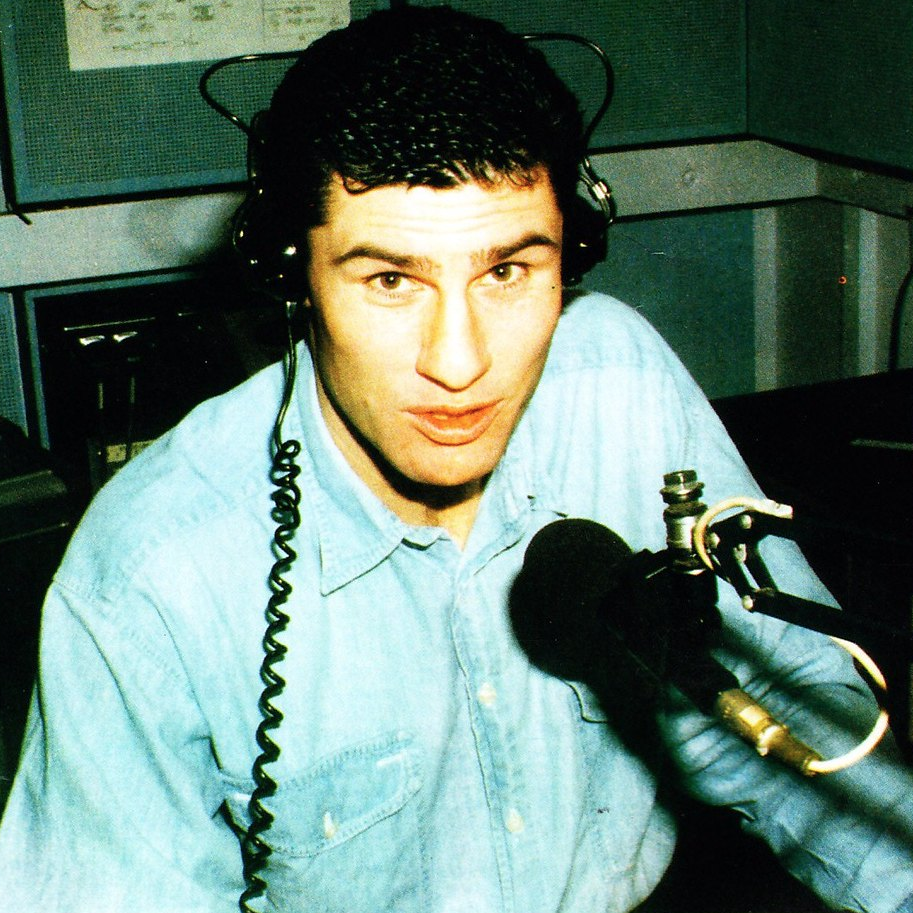
Southend fans hadn’t heard the last of him, though – quite literally. He became a co-commentator on Southend games for BBC Radio Essex.

In the 2009-10 season, Clark was temporarily assistant manager to Joe Dunne at Colchester United.

Goalkeeper Simon Steele swapped gloves for collars

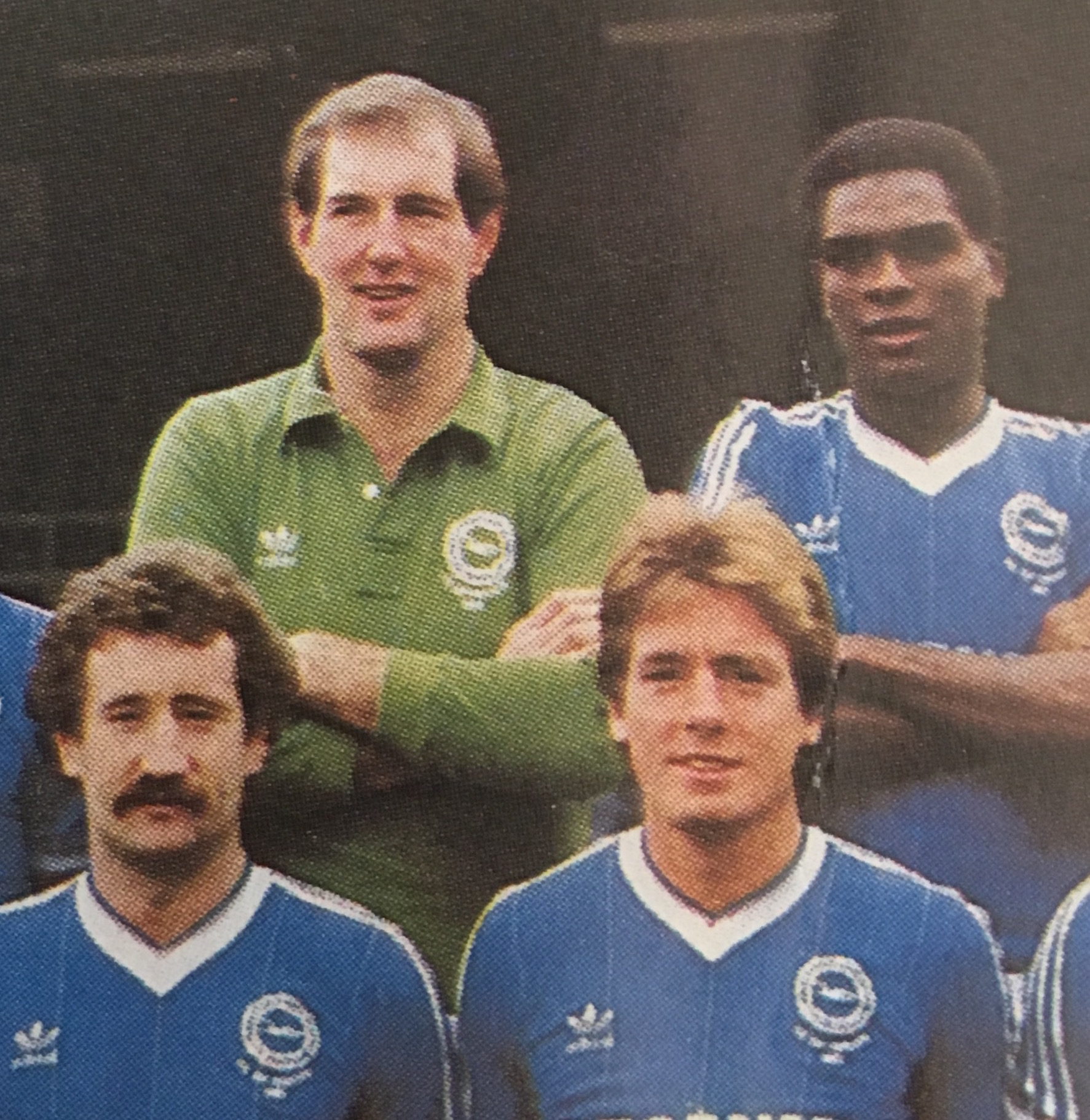
STEELE is a familiar name in an Albion goalkeeper’s shirt. In the current set-up, there’s Jason. Back in the 1970s there was Eric. And very briefly, in the early 1980s, there was Simon.

After three years as an Everton youth player, Simon Steele joined the Albion a few weeks after they’d lost to Manchester United in the 1983 FA Cup Final.

When the Albion went on a pre-season tour in Majorca, the new arrival suddenly found himself keeping goal for the Seagulls in a match against the mighty Real Madrid.

“It may well only have been the City of Palma Tournament, a four-team pre-season competition, but Steele will never forget that evening on August 18, 1983,” The Argus reported in a 2004 article.

By then 40 and with 14 years behind him as a detective with Sussex Police, Steele recalled: “I had joined Brighton just after the FA Cup final. I had done a bit of pre-season training and then we went out to Majorca for this tournament.

Graham Moseley wasn’t on the tour, I can’t remember why, so it was between me and Perry Digweed.

“I was really surprised to be selected for the game. I think Perry thought we would get a good hiding and threw an injury.”

 A crowd of more than 20,000 watched the game and Steele told the newspaper: “They had a good side with plenty of internationals. We had quite a bit of support so the atmosphere was really good, especially considering it was a pre-season game with not a lot resting on it. There were a lot of Brits out there who came to support us and we were playing for personal pride.

“I just remember them scoring in injury time. Santillana turned on a sixpence and put the ball in the bottom corner from eight or ten yards out.

“Other than that we held them at bay. Although I had quite a bit to do, I dealt with it comfortably. I never felt under any great pressure and it was gutting when the goal went in.”

Indeed, The Argus said the match report of the time raved about Steele’s performance, in particular picking out “one breathtaking stop” from Camacho, who had played for Spain at the 1982 World Cup.

Steele retained his place when Albion beat Hungarian side Vasas Diosgyori 3-2 in the tournament’s third place play-off, with goals from Steve Gatting, Tony Grealish and a Terry Connor penalty.

However, although Steele reckoned he had done enough to earn a place when the action proper began, he was to be disappointed.

“I did play well and it catapulted me on to the fringes of the first team,” he told The Argus. “I really thought I would start the season, then I got a call the day before the season started and Jimmy Melia said he would start with Moseley in the first game at Oldham.

“It was a bolt out of the blue because I thought I had played well in pre-season.”

Thankfully, he didn’t have long to wait for his chance, though. Two days later, with Moseley injured and Digweed suspended, the youngster made his League debut in a 3-2 defeat against Leeds at Elland Road.

Simon Steele keeping goal for the Albion at Elland Road

Grealish gave the Seagulls the lead before, as the matchday programme highlighted, Steele came out well to make saves at the feet of Andy Ritchie and John Sheridan.

He also “saved brilliantly” from George McCluskey but was beaten by an equaliser from Andy Watson and a Frank Gray penalty.

Connor levelled the match, rising high to head home against his old club, but, agonisingly, a last-minute 25-yard right-footed shot from Sheridan left Steele helpless and gave Leeds the win.

Melia turned to the more experienced Digweed for the next match, at home to Chelsea, and within a matter of days, former England international Joe Corrigan arrived to dominate the goalkeeper pecking order – and Steele’s brief Albion career was over.

He went on loan to fourth tier Blackpool and Melia explained in his matchday programme notes: “With the surfeit of goalkeepers at present at the Goldstone, his opportunities are limited and I felt that he could get some valuable experience in the league with Blackpool which will stand him in good stead.

“He is only nineteen and I think he has a great future; we feel that a loan spell will sharpen up his game, but it certainly doesn’t mean he has left the Goldstone permanently.”

Steele played three games for the Tangerines and the following spring went on loan to third tier strugglers Scunthorpe United, where he featured five times.

The Iron, managed by ex-Leeds and England striker Allan Clarke, actually wanted to keep him but Steele said he was not happy with the terms being offered and reckoned he would be better off getting a job and playing part-time football instead.

Born in Southport on 29 February 1964, Steele went to Ainsdale High School in the seaside town between 1975 and 1979. He joined Everton at the same time as Shaun Teale (according to the website efcstatto.com), who later won the League Cup with Aston Villa.

Despite his best efforts in goal for Everton’s youth side in the 1982 FA Youth Cup, they lost 2-0 to Villa in the third round. The Liverpool Echo report of the game noted: “Paul Kerr picked up a free kick rebound and seemed certain to score until Steele denied him with a spectacular save. But the Midlanders went ahead after 41 minutes when winger Obi beat Steele with a powerful swerving shot from 25 yards.”

It added: “After Mark Walters had struck the face of the Everton bar, Kerr chipped the advancing Simon Steele with devastating accuracy to notch Villa’s second in the 83rd minute.”

After turning his back on the chance to play lower league football with Scunthorpe, Steele turned out for a variety of Sussex non-league sides – Worthing, Bognor, Pagham, Peacehaven, Whitehawk and Withdean – and became a detective constable with Sussex Police in October 1990.

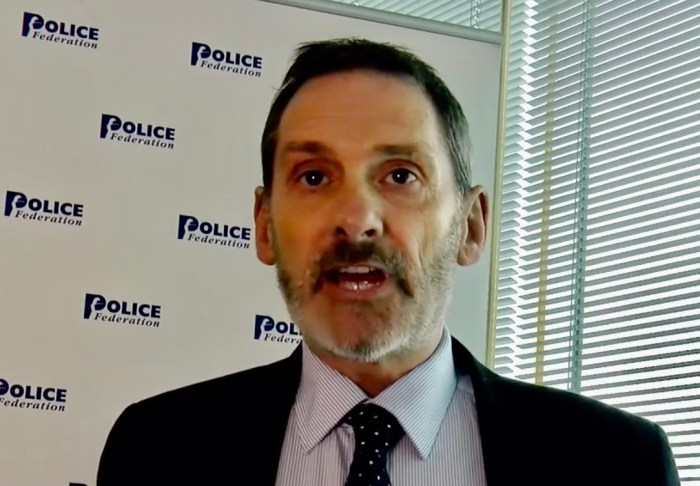
He was in the news in 2019 when, in his role as secretary of the Sussex Police Federation, he spoke out about the lack of investment in detectives in the county.

Speaking up on behalf of police colleagues

He said victims of crime weren’t getting the service they should have done because of a lack of sufficient detectives in the force.

“It used to be easy to fill the detective roles,” he said. “Now officers don’t want to go into the department for whatever reason, down to the workloads that they’re carrying, the pressures, the hours that they’re working, and a lot of them are pretty close to breaking point.”

John ‘Stonewall’ Jackson a loyal George Petchey disciple

NOT TO BE confused with the founder and first manager of Brighton & Hove Albion, that man’s namesake, John Jackson, was a coach at the Goldstone in the ‘80s and the ‘90s.

Less well known was that he could have been in goal for Albion for the 1983 FA Cup Final. Rather like Steve Foster, back-up ‘keeper Perry Digweed was serving a suspension when the game against Manchester United came round.

Digweed had been sent off in a reserve match in early May 1983 and was banned for the final and the replay. So, if anything had happened to first choice Graham Moseley – and let’s face it, he had been known to have off-field mishaps at other times during his Albion career – the man between the sticks at Wembley could well have been Jackson.

Jackson had signed on emergency Combination forms in February 1983 and played for the Reserves in a 1-1 draw at home to Luton when Moseley and youth team ‘keeper Martin Hyde were both injured. He stayed on and helped coach the youth team alongside John Shepherd and with Moseley fully fit was not needed for first team duty (in those days, there were no substitute goalkeepers on the bench).
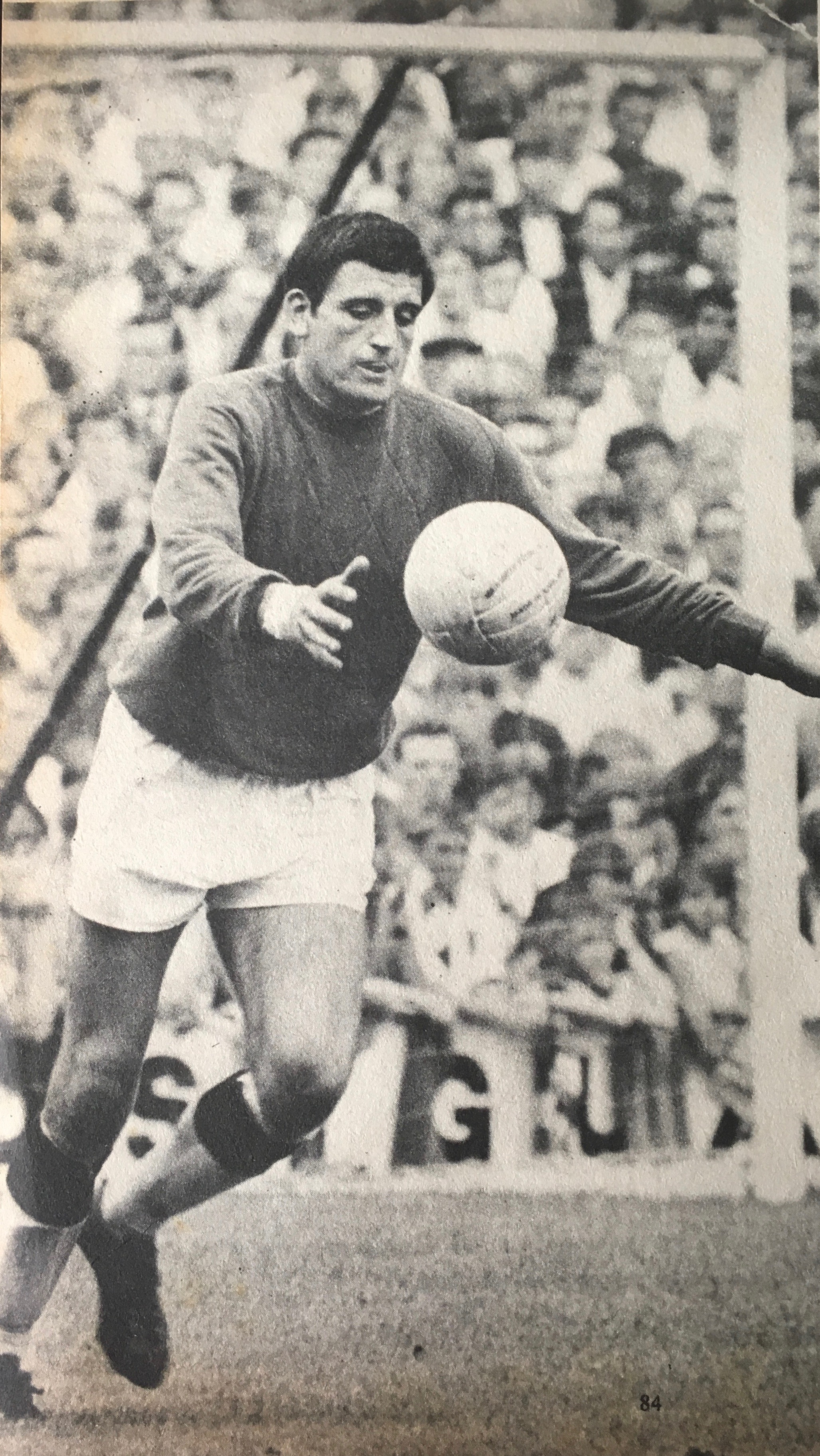
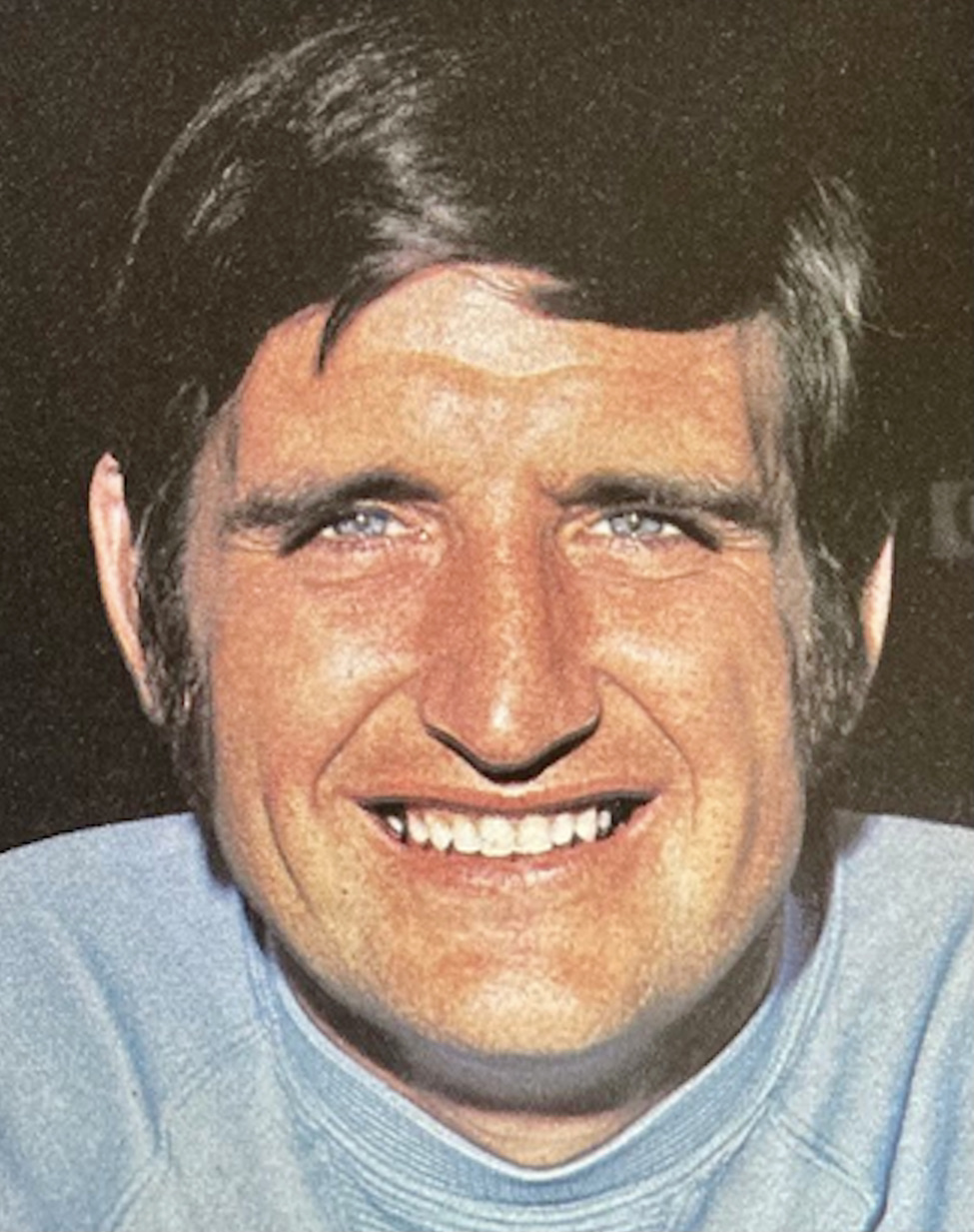
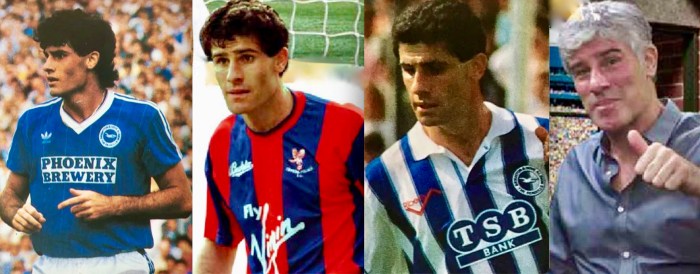
Jackson, who died aged 80 four days after Christmas 2022, had spent the earlier part of the 1982-83 season at Hereford United, who had just finished bottom of the Fourth Division. He had appeared in six matches at the end of a 19-year career. bullsnews.blogspot.com reveals that Jackson was the oldest league player to turn out for United. He was six days past his 40th birthday when he played against Darlington on 11 September 1982.

It was all a far cry from the days when he was Crystal Palace’s first choice goalkeeper for eight seasons. He subsequently followed his former Palace coach George Petchey to Orient (where he played in the same side as Albion’s 1983 FA Cup Final captain Tony Grealish) and Millwall.

It seemed wherever Petchey went, Jackson was sure to go too. When Petchey was Chris Cattlin’s assistant manager at Brighton, he brought in Jackson to coach the Albion goalkeepers once a week. It was certainly a job close to home for Jackson, who lived in Hangleton with his wife and three daughters.

In an interview with Football Weekly News in 1979, Jackson said: “Petchey was coach at Palace, and manager of Orient, when I was with them, therefore I felt it was right to join the devil you know than the one you don’t know! I find George a straightforward and honest man to work with.”

When Petchey returned to the Albion in January 1994, as part of Liam Brady’s backroom team, it wasn’t long before Jackson was added to the staff to help his mentor develop young players.

And after Brady’s departure and Petchey’s elevation to become Jimmy Case’s assistant, Jackson took over running the youth team.

Jackson remained in post throughout the managerial upheavals of Case’s departure, the Steve Gritt reign, and the arrival of Brian Horton. But he left at the end of the 1997-98 season when Horton brought in Martin Hinshelwood as director of youth and former captain Dean Wilkins as youth team coach.

Born in Hammersmith on 5 September 1942, Jackson went to St Clement Danes School and spent time with Brentford as a junior. But it was Palace who swooped to sign him up, as Jackson explained in a 2019 cpfc.co.uk interview.

“Arthur Rowe spotted me playing for a London grammar school against an FA youth XI made up of players from other London teams and he got in touch with my teacher, and from that conversation I ended up having a couple of games with the Palace reserve side aged 18. Then, when I joined full-time, I eventually took the opportunity with both hands, literally!”

Jackson was often described as the best goalkeeper England never had. While he was unfortunate not to earn a full international cap, he played seven times for England Youth between February and May 1961, his teammates including the likes of Bert Murray, Ron Harris, Francis Lee and David Pleat.

He signed as a trainee at Palace in March 1962, and in the 1964-65 season initially shared the ‘keeper’s jersey with Welsh international Tony Millington (whose younger brother Grenville was briefly back-up ‘keeper to Brian Powney at Brighton).

Once Jackson established himself as first choice, he kept the shirt for the next eight seasons. At one stage, he played 222 consecutive games for Palace.

On the where-are-they-now.co.uk website, contributor Martin Wiseman said: “He was definitely one of the best goalkeepers I ever saw as Palace were pretty terrible most of the time and often he was the only thing that kept us in the game. When we played one of the bigger teams, the game was often just a succession of John Jackson saves. Brilliant player.”

Indeed, he was nicknamed ‘Stonewall’ Jackson (after the famous American Civil War Confederate general). Of his mentor Petchey, he said: “He used to work me hard but the harder you worked at your game the more you learned and the better you would become. He made me a more confident player.”

Unluckily for Jackson, it was an era when England were blessed with a string of fine goalkeepers. Apart from Gordon Banks, there was Gordon West (Blackpool and Everton), Jim Montgomery (Sunderland), Peter Bonetti (Chelsea) and, at under 23 level, Peter Grummitt was preferred.

The closest Jackson came to senior international recognition came on 17 March 1971 when he kept goal for a Football League XI that beat a Scottish League XI 1-0 at Hampden Park. Ralph Coates scored the only goal of the game and the English line up included World Cup winners Bobby Moore and Geoff Hurst. Playing in defence alongside Moore were Paul Reaney (Leeds), Roy McFarland (Derby) and Derek Parkin (Wolves).

Jackson’s reign between the sticks for Palace came to an end when flamboyant Malcolm Allison took over as manager. Palace fans were not happy. In the book We All Follow The Palace edited by Tony Matthews (Eagle Eye 1993), Keith Brody wrote: “When Jacko left us, it marked the end of an era, culturally as well as football-wise.

“It is oddly fitting that he was swept away with the same disrespect that has come to symbolise the generation that replaced his ilk. Even though we have plenty to thank Big Mal for, his treatment of our hero means it should always be done through clenched teeth.

“It would have been offensive if a loyal, but crap, goalkeeper had been replaced by Paul Hammond and Tony Burns, but to do it to Jacko was unthinkable.

“Watching the ineffective Hammond for three long years after the joys of Jackson was almost unbearable. Every game was spent pondering on the value of what we’d given away.”

It was on 16 October 1973 that Jackson followed his former coach Petchey to Orient for £25,000 (Gerry Queen, Phil Hoadley, Bill Roffey and David Payne were other ex-Palace players who made that switch) and at Bloomfield Road he went on to attract a whole new band of admirers. Indeed, in Tony McDonald’s book Orient in the 70s, Jackson is described as “Orient’s greatest ever goalkeeper”.

Palace did give Jackson a testimonial match, however, and on 11 December 1973, a Selhurst Park crowd of 11,628 turned out for a match opponents Chelsea won 3-1.

Orient were a second tier side throughout Jackson’s time at the club, during which they had some unsuccessful tilts at promotion but enjoyed some exciting FA Cup runs, including making it to the semi-final in 1978 before losing 3-0 to Arsenal.

Their run to the semis included a memorable fifth round replay win over Chelsea, with Jackson pulling off a superb save to deny Clive Walker an equaliser as Orient clung on to a 2-1 lead courtesy of two Peter Kitchen goals.

Jackson had taken over from Ray Goddard as Orient’s no.1 and it must have been a very happy Christmas for him when promotion contenders Orient beat Palace 3-0 at home on Boxing Day 1973 in front of a bumper crowd of 20,611.

Come the end of the season, they missed out on promotion by a single point to Carlisle United after failing to beat Aston Villa (it was 1-1) in front of another huge crowd of 29,766, and the LWT cameras for The Big Match.  Days earlier Villa had lost 2-0 at Carlisle for whom Graham ‘Tot’ Winstanley proved an able deputy for suspended captain Bill Green.

Another memorable game filmed for The Big Match saw Jackson concede three on 7 April 1979 when Albion were on their way to promotion from the Second Division. Orient took the lead at Brisbane Road but Brighton equalised thus: “Paul Clark cracked in a seemingly unstoppable shot, miraculously John Jackson parried the effort but only to Peter Sayer, and (pictured above) the little Welshman slammed the ball joyfully into the home goal,” the matchday programme recorded. The game eventually finished 3-3, Albion’s other goals coming from Martin Chivers (his only one for Brighton) and Clark.

Three years earlier, Orient were finalists in the rather curious Anglo-Scottish Cup tournament of that time: 16 English teams and eight Scottish sides played a mix of group stage games and two-legged knockout matches.

Orient topped their group above Norwich, Chelsea and Fulham; they beat Aberdeen 2-0 on aggregate in the quarter finals and Partick Thistle 4-2 in the semis. They eventually lost out 5-1 on aggregate to Nottingham Forest, but it was Brian Clough’s first piece of silverware as Forest manager, and he said in his biography: “Those who said it was a nothing trophy were absolutely crackers. We’d won something, and it made all the difference.”

In common with many other English players at the time, Jackson tried his luck in the United States and in 1977 played for St Louis Stars, returning in 1978 when they became Californian Surf. His head coach was John Sewell, who’d been a playing colleague at Crystal Palace and Orient. Ironically, his predecessor at St Louis was Bill Glazier, the former Coventry City ‘keeper, who’d also been his predecessor at Palace.

It was the arrival of former West Ham ‘keeper Mervyn Day at Brisbane Road that signalled the end of Jackson’s time in Leyton and, in August 1979, Petchey, who’d taken over from Gordon Jago as boss at Millwall, signed him for £7,500.

“I have been in the game too long to end it in the reserves and decided that if I was to finish playing, it would be in the first team,” Jackson told Football Weekly News.

The then Third Division Lions went on to win the league. Jackson played a total of 53 matches for them that season and he was chosen by his fellow professionals in the 1979-80 PFA team of the year. (Former Brighton winger Tony Towner played 50 games for Millwall that campaign and scored 13 goals)

After two years with Millwall, by a curious turn of events, Bobby Robson signed him for the previous season’s First Division runners up Ipswich Town as a back-up to Paul Cooper.

His one league appearance for Ipswich was in a top-of-the-table clash against Manchester United, with Ipswich needing to win to stay in with a chance of winning the League Championship. And they did, 2-1, with John Wark scoring both and John Gidman replying for United.

The game was played in front of a 25,763 crowd at Portman Road and Jackson was given a standing ovation at the end after he’d pulled off three important saves. Robson was quoted in the Guardian as saying: “We have paid him a year’s salary to make those saves, but it was worth it!”

However, while Ipswich finished the season five points ahead of United, they were once again runners up, finishing four points behind champions Liverpool.

Even a second placed finish was enough to convince the English FA to give Robson the job of replacing Ron Greenwood as England manager after the country’s unbeaten exit from the World Cup in Spain.

While Jackson might have thought his playing days were over, they weren’t quite. Frank Lord signed him for Fourth Division Hereford United. Lord wasn’t long in the job, though, and he was succeeded by the Bulls’ long-serving former ‘keeper Tommy Hughes, who had played on loan for Brighton in 1973.

Jackson’s move into goalkeeper coaching at Brighton under Cattlin was to prove a career-defining moment for another top goalkeeper of that era: former Manchester City custodian Joe Corrigan.

“I got talking to him and it inspired me to look into doing something similar,” Corrigan told the Manchester City matchday programme on 29 September 2018. “So, it was down to Brighton indirectly that I moved into the next phase of my career.”

Corrigan had been signed by Jimmy Melia and was coming to the end of his illustrious playing career. He fell out with Melia’s successor, Cattlin, and went on loan to Stoke City, but eventually was forced to quit after being injured in an Albion reserve match.

He went on to become goalkeeper coach at Liverpool for 10 years, and also worked at Stockport, West Brom and Hull.

Jackson took a variety of different jobs outside of football – fitting blinds, working for a golf magazine, selling golf equipment and as a courier for Lewes Council. During his second spell back at the Albion, amongst the youngsters he took through was goalkeeper Will Packham.

Jackson signed him on as a YTS trainee after he left Blatchington Mill School in Hove, and he spent nine years on the club’s books.

Knock-out stories of Mark ‘The Fizz’ Leather

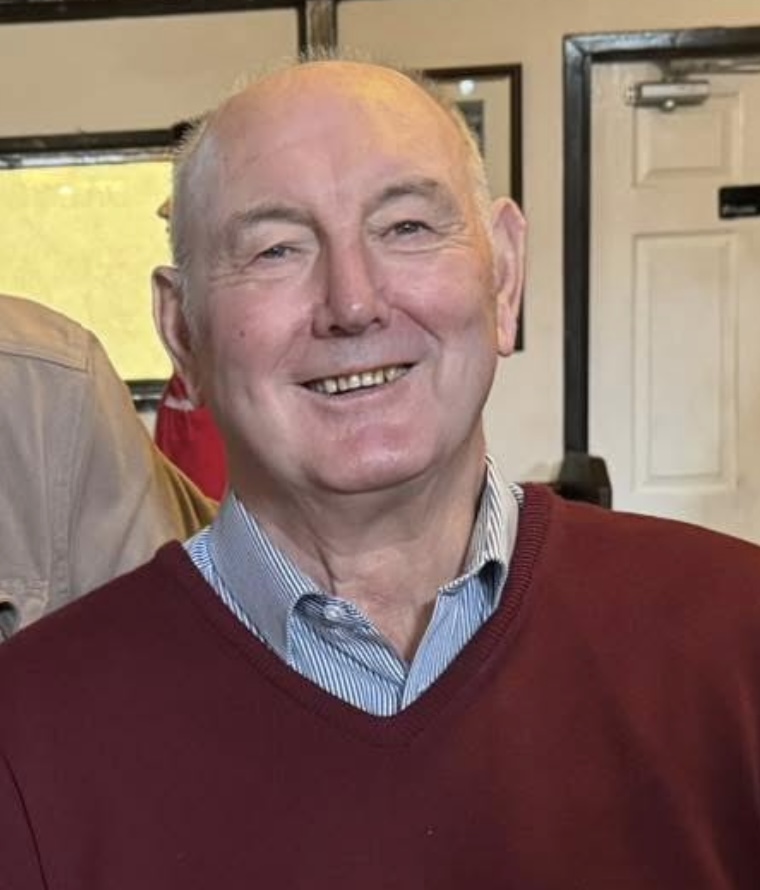
MARK LEATHER spent six years as the first team physiotherapist at Anfield having previously been Brighton’s physio in the early days of Barry Lloyd’s reign as manager.

Leather tended the injured when Albion were promoted from the old Third Division in 1987-88 and half of the 1988-89 tier two campaign before moving back to his native north west.

Roy Evans added Leather’s specialist knowledge to the backroom team at Anfield in 1994 but the physio was controversially sacked by his successor Gerard Houllier following a row over the then teenage striker Michael Owen’s fitness.

A sign of the way Leather expected to work with managers came in an interview for Albion’s matchday programme. “Barry Lloyd will respect the decision if I say a player needs more time to get back to fitness,” he told interviewer Dave Beckett. “From that point of view, he is sadly in the minority.

“If it was different, I wouldn’t hang around, but it still amazes me that some clubs don’t realise that if we all stick to what we know things will run more smoothly.”

Leather, who’d spent three years studying for a diploma, and gained experience in the National Health Service, added: “We’re getting away from the old ‘bucket-and-sponge’ image.”

Ahead of his arrival at the Goldstone, Leather had combined his studies with helping out Exeter City, Leek Town, Port Vale and Sheffield Wednesday. And during the Commonwealth Games in Edinburgh in 1986, Leather provided specialist medical support for the weightlifters and wrestlers.

He revealed a funny story against himself in a matchday programme article. Asked to reveal his ‘most embarrassing moment’ he said: “During the Port Vale and Scunthorpe match in 1985, when Port Vale scored, I jumped up out of the bench hitting my head on the dugout roof and needed smelling salts and a cold sponge.”

Perhaps predictably nicknamed ‘The Fizz’, Leather sought to give an insight to his role in his matchday programme interview. “I try to be friends with all of the lads and the management too, but sometimes you really do have to sit on the fence,” he said.

“There’s pressure sometimes from both sides to say a player’s ready to return, but you have to stand back from the situation and give a professional opinion.”

The Albion gave him a regular slot in the matchday programme which he used to give readers updates on the progress of injured players, and in recent times he has become a regular source for the media seeking expert comments on football injuries.

Leather now has his own physiotherapy business and back in the day at Brighton he and his physiotherapist wife Lucy ran a sports injury clinic for the general public two evenings a week.

Born in Bolton on 24 June 1961, Leather left the Seagulls halfway through the 1988-89 season to return to more a familiar part of the country and took a job in the NHS in Chorley, Lancashire.

Leather had been an ardent Bolton Wanderers fan from an early age and his all-time favourite player was Frank Worthington, who had played for the Seagulls during the 1984-85 season.

When Evans stepped up to take charge of Liverpool, Leather was one of his first appointments (along with goalkeeping coach Joe Corrigan, whose playing career had ended with the Seagulls).

Leather and Corrigan together in Liverpool backroom team

An insight into Evans’ decision-making was given in the book Men In White Suits, by Simon Hughes. “With Mark Leather’s arrival, there was an end to the running repair jobs carried out by a succession of unqualified coaches mid game,” he wrote.

“Regularly injured players had long been treated with suspicion at Liverpool. (Bill) Shankly maintained his side were the fittest in the league, with pre-season geared towards building stamina and therefore preventing muscle tears.

“It was a difficult theory to argue against. Liverpool won the 1965-66 title using just 14 players all season. Anyone who suffered an injury was almost bullied into feeling better. ‘Otherwise you really were persona non grata,’ Alan Hansen said.

“Leather’s recruitment meant that (Ronnie) Moran could focus on drilling the first team in the Liverpool way rather than writing what Evans describes as ‘little scribbles’ on an old ledger, charting training patterns.”

Endorsements to Leather’s attributes appear on his website from the likes of Robbie Fowler and Jamie Redknapp, who is quoted as saying: “Mark Leather has been brilliant with me. He has kept me going and it’s because of him really that I’m back to full fitness as soon as I am.”

In 1999 media reports said Houllier was facing “a furious players’ backlash after his escalating row with Liverpool physio Mark Leather took a dramatic twist”.

Leather was left in the UK when Liverpool went to Oslo for pre-season games, a move which was said to be causing disquiet in the dressing room.

Leather clashed with Houllier over the condition of injured Michael Owen

“Leather is one of the game’s top physios and he was publicly praised by Robbie Fowler after helping the striker make a miraculous recovery from a cruciate knee ligament injury last season,” said one report in the Scottish Daily Record. “Other stars, including Michael Owen and skipper Jamie Redknapp, are known to have a close bond with the medic.”

Houllier was angry at the length of time it was taking for Owen to return to full training after a hamstring injury and sent him to a specialist in Germany for a course of treatment.

In 2013, when Owen’s many injuries finally forced him to his retire from the game, he recalled bad decisions in the past that ultimately affected his career.

“I was compromised because I played too much too soon as a youngster at Liverpool. In my opinion, had I been managed differently I would have been at my best for longer as opposed to being a better player,” he said in The Mirror.

“I basically run on two hamstrings on my right leg and three on the other. I lost a third of the power.

“If I hadn’t, 90 per cent of the other injuries wouldn’t have happened and I would have been the all-time leading scorer for England.”

The Mirror article continued: “If there was a defining moment in his career, then it was a snapped hamstring when his then-manager Houllier ignored the advice of his physio and insisted Owen be brought back from injury quickly because he needed his goal threat so desperately.

“The French coach fell out so badly with the physio, Mark Leather, he forced him out, but Houllier later admitted to the mistake, which Owen believes led to the moment that changed his career – on a cold March evening at Elland Road, Leeds, in 1999. ‘My hamstring snapped in two and it was at that point that my ability to perform unimpeded was finished,’ said Owen.

Leather wasn’t finished with football, however, and he moved to his beloved Bolton Wanderers as Sam Allardyce’s physio for a year, before joining former Trotter Peter Reid at the Stadium of Light.

“From a personal point of view, I’ve had the privilege of working with two guys I used to support from the terraces at Burnden,” Leather told the Bolton News ahead of a match between Bolton and the Black Cats in September 2001. “There’s only one team I’ve ever supported and leaving them last year was purely a professional decision,” he said. “Financially and from a facility point of view, it was the right move for me, but I’ll never stop supporting the Wanderers.”

Leather spent four years (2000-2004) as the head physio at Sunderland straddling the managerial reigns of Reid, Howard Wilkinson and Mick McCarthy.

It certainly wasn’t all plain sailing for Leather on Wearside, as the Republic of Ireland winger Kevin Kilbane, now a TV pundit on the BBC, mentioned in his autobiography (Killa: The Autobiography of Kevin Kilbane; Aurum Press Ltd, 2014).

The player was determined to play for his country but the physio obviously didn’t feel he should because he was still trying to recover from an ankle injury.

Leather had already put him through some tough routines to test the strength of his ankle and when they were then on opposing sides in a two-a-side hockey match, Leather caught Kilbane on the tender joint with his hockey stick.

“After a few times and much pain, I finally snapped, and I gave him a left hook and decked him, leaving him with a fat lip and a very surprised look on his face,” Kilbane admitted.

Although he told the assistant manager Bobby Saxton what had happened, nothing more was done about it. Kilbane said: “I later apologised to Mark Leather but was disappointed he didn’t reciprocate. Things were never right between us after that, although we didn’t let it interfere with our professional relationship.”

After Sunderland, Leather switched sports and took on a similar position with Wigan Warriors rugby league side before moving into the world of academia. He spent seven years at Edge Hill University as a senior lecturer in sports therapy and programme leader for the Football Rehabilitation MSc course.

In October 2006,Leather joined Chester City as club physio, with City chairman Stephen Vaughan declaring: “He is a fully qualified physio and has a wealth of experience at Premier League level, so it’s something of a coup to bring him to the Deva Stadium.”

In 2013, he returned to Bolton, spending three years as Head of Sports Performance.

He had also set up his own physiotherapy business in 2008 and, since 2016, has been a senior lecturer and course leader for the Football Science and Rehabilitation MSc course at the University of Central Lancashire.

• Pictures from the Albion matchday programme and various online sources.

The goalscoring legend who slipped through Brighton’s net

ONES that got away always make for fascinating stories and a striker who went on to become a goalscoring legend slipped through the net at both Brighton and Burnley.

Ian Muir is hailed an all-time hero by fans of Tranmere Rovers for whom he scored 180 goals in all competitions during what many regard as the best period in Rovers’ history. If it hadn’t been for injury, he could have played in the Premier League and Europe for Leeds United.

But he’s barely remembered for the struggles he had to get games at Brighton, let alone in a month with the Clarets.

Success could have eluded himf it hadn’t been for the time he spent at Brighton alongside the legendary Frank Worthington. He was considering a move to non-league Maidstone United, but, when Worthington quit Brighton in the summer of 1985 to take his first step into management on the Wirral, he made Muir his first signing.

“Ian Muir was a fantastic forward with great touch,” Worthington told Spencer Vignes in an Albion matchday programme interview. “He did things in training you just wouldn’t believe, yet he wasn’t even making the side at Brighton under Chris (Cattlin).”

Cattlin had taken the youngster on after he had been given a free transfer by Birmingham City where he’d made just one League Cup appearance in the 1983-84 season under Ron Saunders. But competition for forward places was intense with the likes of initially Alan Young and Terry Connor, then Worthington, Mick Ferguson and later Alan Biley.

Muir’s first involvement with the Albion first team was as a non-playing substitute for the home 3-0 win over Leeds on 24 March 1984. He made his debut the following Saturday at Fratton Park in place of the injured Young and was brought down in the penalty area only 20 minutes into the game to earn Brighton a spot kick, which Danny Wilson successfully buried to put the Seagulls ahead.

Muir in his Brighton days

Connor had a chance to put Albion further ahead and, as the matchday programme reported, “Muir sliced wide as Connor made the opening” before Pompey began a devastating fight back.

Albion had been hoping to complete a fourth win in a row for the first time in six years, but it wasn’t to be, and, into the bargain, Muir couldn’t cap his debut with a goal, instead firing wide when set up by winger Steve Penney.

Unfortunately, this was the game when former Spurs and Arsenal centre back Willie Young, on loan from Norwich City, was given the runaround by Pompey centre forward Mark Hateley, and, courtesy of a second half blitz, the home side ran out 5-1 winners.

Alan Young was restored to the no.9 shirt in the next match and scored twice as Albion beat Grimsby Town 2-0 at the Goldstone, but Muir was drafted in to take Connor’s place in the away game at Shrewsbury Town.

That match ended in a 2-1 defeat, but the News of the World angled its report on an unlucky afternoon for the young forward.

“It just wasn’t Ian Muir’s day,” wrote reporter Brian Russell. “The Brighton teenager (actually he was 20) playing only his second league game could so easily have taken the limelight from Shrewsbury two-goal hero, 17-year-old Gerry Nardiello.

“Young Muir headed the ball home in the eighth minute from Jimmy Case’s corner, but it was ruled out (for a foul by centre-half Eric Young).”

Alan Young produced a powerful header from a Muir cross that Steve Ogrizovic (later of Liverpool and Coventry City fame, of course) saved brilliantly.

Russell continued: “With Brighton battling to cancel out Nardiello’s 23rd-minute opportunist goal, striker Muir suffered. His delicate chip left the ‘keeper clutching thin air, but Shrewsbury skipper Ross McLaren headed out.

“Brighton levelled it with 15 minutes to go (through Eric Young). But, five minutes later, Nardiello pounced on Chick Bates’s chested pass to beat Joe Corrigan.”

Muir was on the scoresheet when Albion’s reserve side began the 1984-85 season with a 1-0 win over reserve team boss George Petchey’s old club, Millwall. It was a very experienced team featuring Corrigan in goal, full-backs Chris Ramsey and Graham Pearce – who had both played for the Seagulls in the FA Cup Final the year before – along with Steve Gatting and Neil Smillie. Giles Stille and Alan Young were also in the line-up.

Muir had to wait until 13 October for his next first team opportunity when he was a non-playing sub as Albion went down 2-1 at Oxford United. He then got on as a sub for Connor in a 0-0 home draw with Barnsley, but the game was so dire that Cattlin very publicly forfeited a week’s wages.

After three goalless games straddling October and November 1984, Cattlin paired Muir with Worthington away to Blackburn on 10 November but still the drought couldn’t be breached, and Albion went down 2-0. The next game, Cattlin tried Ferguson and Connor as his front pair – same outcome: a 1-0 defeat at Leeds.

Muir didn’t get another chance with the Albion but in the spring of 1985 was sent out on loan to Lou Macari’s Swindon Town, where he played in three matches (and his teammates included Ramsey, who’d been released by Cattlin, and Garry Nelson, who would later become a promotion winner with the Seagulls).   

Somewhat curiously, when commenting on Muir’s departure from the club that summer, Cattlin said in the matchday programme: “I am sure Ian will get goals at whatever level he plays.”

Sure enough, Prenton Park eventually became his spiritual home and, although Tranmere struggled to stay in the fourth tier initially, Muir’s goalscoring exploits were synonymous with four years in which Rovers were promoted twice and appeared at Wembley five times. Highlights saw Muir score in the FA’s centenary celebrations in 1988 and an acrobatic and precise volley in Tranmere’s Leyland DAF Trophy victory over Bristol Rovers in 1990.

Muir and strike partner Jim Steel

He particularly began to prosper after Worthington’s successor, Johnny King, brought in tall target man Jim Steel alongside him in 1987.

Steel, who later became a police officer on Merseyside, said King, a Bill Shankly devotee, would compare him and Muir to John Toshack and Kevin Keegan. “That’s the way football was at the time,” he told the Liverpool Echo. “You looked for a little mobile player to feed off a tall striker.

“Muiry was one of the best finishers in the game at the time. If I’m honest, the intelligence of the partnership was down to Muiry, who was very good at reacting to things off me,” he said.

“I wasn’t the most technically gifted of players compared to the likes of Johnny Morrissey and Jim Harvey. But things happened around me and Muiry was very good at picking up the crumbs.”

Muir was Tranmere’s leading scorer from 1986 to 1990 and, in the 1989-90 season, he scored 35 goals in 65 games.

Such is the esteem in which Muir is held in those parts that a mural depicting him and all-time-appearances record holder Ray Matthias adorns the side of a house close to Prenton Park. A lounge at the ground is also named after him.

Born in Coventry on 5 May 1963, Muir played for the City’s schools side and Bedworth Juniors and won four England Schoolboy caps (against Wales, Scotland and two v West Germany) featuring alongside the likes of Tommy Caton, Ian Dawes, Terry Gibson and Kevin Brock.

He joined QPR as an apprentice aged 17 in 1980 and was a Hoops player for four years in total during Terry Venables’ reign as manager. In October 1982, he went on a one-month loan to Burnley. The respected all-things-Burnley writer, Tony Scholes, takes up the story.

“When Burnley played on QPR’s plastic pitch at Loftus Road in 1982 we came home with more than we’d bargained for. Two Trevor Steven goals in front at half time, we’d suffered a 3-2 defeat in the end although we managed to acquire a striker.”

Scholes pointed out how Muir had progressed into the first team squad at Loftus Road, but after a goalscoring start had fallen out of favour.

“He made a dramatic start to his first team career, scoring twice on his debut in a 5-0 thrashing of Cambridge United in April 1981,” said Scholes. “He kept his place for the one remaining game of the 1980-81 season but by the time he arrived at Turf Moor, well over a year later, he was still looking for his third game.”

It eventually came with Burnley, when he went on as a substitute in a 2-1 defeat at Charlton, replacing skipper Martin Dobson. He then started and scored Burnley’s goal in a 3-1 defeat at Leeds.

“He impressed, but the home fans never saw him and. at the end of the month, he was dispatched back to West London, his Burnley career over,” said Scholes.

Ian Muir alongside Terry Fenwick when Terry Venables managed QPR

Unable to get back into Terry Venables’ side at Loftus Road, Muir joined Birmingham and subsequently Brighton.

Finally given a platform to shine, the striker scored the majority of his 180 Tranmere goals between 1985 and 1991 and spearheaded the side that vaulted two divisions in three seasons between 1988 and 1991, before eventually being edged out by the arrival of John Aldridge.

The Liverpool Echo remembered: “It was inevitable his subtle skills and clinical finishing would make him a target for a larger club. Muir knew of Leeds’s interest as Tranmere campaigned to secure a place in the Third Division playoffs in 1990-91.

Muir told the newspaper: “Howard Wilkinson was sending scouts to watch me and coming along himself. When I went along to the ticket office before games, the Leeds scout was sometimes at the kiosk and I’d chat to him. He told me what was happening.

“Mark Proctor, who joined us from Middlesbrough the following season and worked under Wilkinson, knew about the deal and told me.”

Muir was arguably in his prime at the age of 27, but he suffered what would be a fateful knee ligament injury in a game against Chester City on 23 March 1991.

When Tranmere visited Leeds in a League Cup tie early in the following season, Muir hobbled into Elland Road on crutches. Muir recalled: “Before the game Gordon Strachan asked our midfielder, Neil McNab, where I was. Neil pointed to me standing there on crutches.

“Then Strachan said: ‘Ian is the unluckiest man in the world because we were going to sign him’. Leeds went on to win the league that season and I could have been with them, playing at the highest level playing in Europe the following season.

“I was gutted. I was so close and the injury changed everything. But that’s football. You get your ups and downs.

“I could never complain about the fantastic career I had at Tranmere and I wouldn’t swap my memories of the years at Prenton Park for anything.”

He wasn’t granted a testimonial after a decade with Rovers, but in 2020 there were moves afoot amongst their supporters to help him publish his autobiography.

Adulation has not waned and a young writer who didn’t even get to see him play wrote warmly about the striker’s achievements in this tribute.

In 1995, Muir returned to Birmingham City for a £125,000 fee but he played only twice before he suffered a groin injury. In an effort to get fit, he spent a month on loan at Darlington, and scored a goal, but his league career was over.

He went to play in Hong Kong, scoring a hat-trick on his debut for Sing Tao, and later played for Happy Valley. In June 2011, he recalled in an interview with the Liverpool Post: “The warm climate was a big help. Then the medical people found the cause of the groin problem was my spine. The pelvis wasn’t lined up properly. It could get out of joint just by lying in bed.

“One of the lads on the medical side was able to click me back into place. I have to say I have not had many problems with it since.”

Muir returned to the UK, and his native West Midlands and joined Nuneaton Borough.

“We won the league by 20 points and got into the Conference,” Muir told the Post. “We were top of the league after three months of the following season then it all went pear-shaped.”

The newspaper reported that Muir stepped down a level to Stratford Town, where his football days finished.

He did some voluntary coaching in schools and took a job in a factory for a year, and subsequently joined a friend in a business fitting out pubs and shops.

• Pictures from various online sources.

‘Film star’ defender Osman’s cameo role for the Seagulls

RUSSELL OSMAN achieved lifelong fame for his appearance in the much-shown 1981 prisoner of war football film Escape to Victory but 17 appearances for Brighton in the latter stages of his career have largely been forgotten.

A cultured central defender who played in the same side as Jimmy Case at Southampton won 11 England caps at the peak of his game when a key part of Bobby Robson’s Ipswich Town side of the early 1980s.

He was 36 by the time he arrived on a monthly contract at third-tier Albion in September 1995 and what was happening on the pitch at that time was largely overshadowed by events off it.

News was emerging that the Goldstone Ground had been sold, leading to manager Liam Brady quitting in disgust in November 1995, passing on the reins to Case, who very reluctantly took on the job.

With Steve Foster and Stuart Munday struggling with injury, Brady brought in the experienced Osman to play alongside Paul McCarthy. His debut came in a 4-1 Auto Windscreens Shields game away to Cambridge United, the first of 12 successive games before Munday returned towards the end of November when Osman picked up a hamstring injury.

Meanwhile, Case pointed out in his first programme notes as manager, for the FA Cup game at home to Fulham on 14 December: “There is no secret he would still like to get back into management and we are happy to leave his position as it is on a month-to-month basis.”

Osman was back in the side for the 1-0 Boxing Day win away to Brentford and kept his place for the next two matches. But with Ross Johnson taking on the no.5 shirt, Osman got only one more start: in a 0-0 draw away to Hull City. He made one appearance as a sub in place of McCarthy and was twice a non-playing sub. As he turned 37, he took the opportunity to switch to Cardiff City, which, as the match day programme noted, was a lot closer to his Bristol home.

Born on 14 February 1959 in Repton, Derbyshire, Osman eventually followed in his dad Rex’s footsteps in becoming a professional footballer (Osman senior played for Derby County in the ‘50s), but it was rugby at which Russell excelled during schooldays at Burton on Trent Grammar. So much so that he played for England at under 15 level and captained his country as an under 16.

However, the sports-mad youngster also played football for his village team and when they reached the final of the Derby & District Cup, he was watched by Bobby Robson’s brother Tom, who lived in the area. “He came down and watched the game, we won the final and the next thing I knew I had a call from Ipswich to go on trial,” Osman said in an interview with the East Anglian Daily Times. “The rest is history. They were very good at getting kids to go on trial and they went that extra mile to make sure we were looked after and treated well.”

Osman recalls many aspects and anecdotes of his career on a blog, Golf, Football and Life, and he said he would be forever grateful for the dedication shown by Ipswich’s youth team coach, Charlie Woods, who became Robson’s right-hand man throughout his career.

“Charlie used to drive from Ipswich to my dad’s pub in Repton on a Friday to pick me up and take me back down to Ipswich, putting me up for the night in his and Pat’s house, just so that I could make the game on a Saturday morning,” he wrote. “I doubt that you would get many coaches who would make an eight-hour round trip just to get a schoolboy to a game.”

Osman became an apprentice at Portman Road in July 1975 and signed on as a professional in March 1976. Eventually, he and Terry Butcher took over the centre back roles previously filled by Northern Ireland international Allan Hunter and England international Kevin Beattie.

Osman in action for Ipswich against Arsenal’s Liam Brady, later to become his boss at Brighton

The 1980-1981 season was certainly momentous in Osman’s life. He played in 66 matches (including four for England) over the course of the season as Ipswich won the UEFA Cup, finished runners-up in the old First Division and reached the semi-finals of the FA Cup.

For a large part of the season, Town looked like they would win the First Division title for the first time since 1962 under Alf Ramsey but only three wins from the last 10 matches meant they had to settle for second place, four points behind Aston Villa.

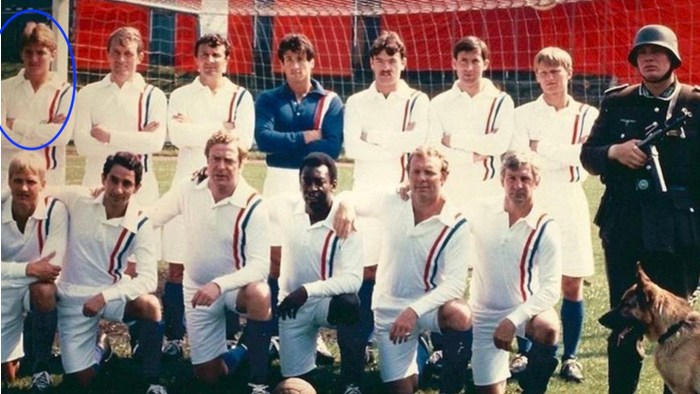
At the end of the season, Robson asked the squad if any of them fancied spending the summer playing more football to help make a feature film. Osman and teammates John Wark, Kevin O’Callaghan, Robin Turner, Laurie Sivell, Paul Cooper and Beattie jumped at the chance and spent five weeks in Budapest making Escape to Victory, directed by the legendary John Huston.

The Escape to Victory football team which featured Osman (back, left)

Osman played the part of prison camp inmate Doug Clure and he has since talked and written about the experience, in July 2021 remembering the experience in an interview with a BBC reporter. Osman recounts how the Ipswich lads and other professionals such as Bobby Moore, Pelé, Mike Summerbee and Ossie Ardiles played football scenes alongside established actors Michael Caine and Sylvester Stallone.

Beattie was Caine’s ‘double’ in the football scenes and Cooper helped Stallone with goalkeeping skills. Turner and Sivell played for the German team and Osman, Wark and O’Callaghan had speaking roles.

“Michael was brilliant, he made all the lads feel at home on set by telling a few funny stories and taking all the tension out of the situation,” said Osman. “I managed to deliver my lines and we were off and running, literally.”

Osman’s first international football recognition came for England under 21s in February 1979 as a substitute for Billy Gilbert in a 1-0 win over Wales at Swansea. In September the same year, he got his first start at that level alongside his Ipswich teammate Butcher (in a 1-0 win over Denmark at Vicarage Road).

The first of Osman’s 11 full England caps came on 31 May 1980, in a 2-1 win v Australia in Sydney which was the game in which Peter Ward made his one and only appearance for the full England side, appearing as an 82nd minute substitute for Alan Sunderland.

Osman was 21 at the time and he went on to play in five competitive matches and five more friendlies, rather curiously only playing for his country on home soil three times, and only being on the winning side twice, both times against Australia.

Osman did make a couple of appearances for the England B side: on 26 March 1980 he played in a 1-0 win over Spain at Roker Park, Sunderland (Joe Corrigan was in goal) and later the same year, on 14 October, he was in the B team that beat the USA 1-0 at Old Trafford.

He had been in Ron Greenwood’s provisional squad of 40 for the 1982 World Cup but was not included in the final 22, Albion’s Foster getting the nod instead as reserve centre back.

Osman’s last international was on 21 September 1983, when England lost 1-0 to Denmark in a Euro 1984 qualifier, by which time his former club manager Robson had taken over from Greenwood, who’d given Osman his first six caps.

Although Ipswich challenged at the top of the First Division in 1981-82, they once again finished four points behind the champions, this time Liverpool, and after Robson left to take on the England manager’s job, the side was gradually broken up. Osman and Eric Gates both left in 1985.

After making 385 appearances for Town, Osman signed for Leicester City for £240,000 where he played 120 games under three different managers: Gordon Milne, Bryan Hamilton and David Pleat.

When the Foxes dropped down to the second tier, it was Southampton, and manager Chris Nicholl, who gave Osman – at 29 – the chance to play at the top level again.

A tribunal-determined fee of £325,000 took him to The Dell where he made his debut in the opening match of 1988-89, a 4-0 win over West Ham. He initially partnered Kevin Moore at the heart of their defence, then later Neil Ruddock.

“At Southampton I played just behind the great Jimmy Case, and what an experience that was,” Osman recalled. “Every day there would be something that made you smile about playing with Jimmy; well, it did if he was on your side anyway. Hard as a rock, cute and clever as a footballer, better than people gave him credit for, a wonderful passer of the ball. Sometimes his playing ability was overshadowed by his extravagances off the pitch!”

The Southampton FC player archive enthusiastically records Osman’s time with the Saints, which was largely successful at first. With Alan Shearer, Rod Wallace and Matt Le Tissier scoring the goals, the side finished seventh in the table. But they couldn’t sustain that success the following season and Nicholl was sacked. Writer Duncan Holley on sporting-heroes.net recalled: “One of the manager’s last actions had been to sanction the signing of Jon Gittens from Swindon and Russell had been displaced for the final run in.”

Nicholl’s successor, Ian Branfoot, picked Osman at left-back for the opening four games of the 1991-92 season but, as Osman told Ian Carnaby in a 2007 interview: “The day Ian Branfoot walked through the door, my Southampton career was over. All those years I’d been a centre-half, but he thought I’d make a good left-back.”

Osman joined Bristol City on loan initially before making the move permanent for a £60,000 fee, and he put down roots in the city. After about a year as a player, manager Jimmy Lumsden was sacked and Osman, as a senior player, was asked to take temporary charge.

However, Denis Smith, sacked as Sunderland boss in December 1991, took over at City in March 1992, with Osman named player-assistant manager. In a 2020 Facebook interview, Osman somewhat sharply said: “Denis Smith didn’t last too long because he wasn’t a very good manager, so they offered me the job.”

That happened in January 1993 and he remained in the manager’s chair at Ashton Gate just short of two years. He steered City to mid-table finishes in 1993 and 1994.

A look through City fans’ forum One Team In Bristol (otib.co.uk) reveals mixed opinions about Osman’s time in charge although some believed he was dealt a raw hand by the Ashton Gate hierarchy. It was said he was dismissed after the directors called him in and said they wanted European football within 10 years. Under Osman’s successor, Joe Jordan (appointed in November 1994), the Robins were relegated.

One significant highlight from Osman’s City reign was leading them to a shock 1-0 win at Anfield in a FA Cup third round replay in January 1994, a result which brought an end to Graeme Souness’ time as Liverpool manager.

Hailed as “the class of ‘94 etching their names into the club’s roll of honour” the achievement was apparently masterminded in the club’s canteen a few days earlier when Osman and his assistant Tony Fawthrop decided to deploy Brian Tinnion just behind the strikers instead of out wide, and he ended up scoring the only goal of the game.

After Osman’s departure from Ashton Gate, his next stop was Plymouth Argyle, where his old Ipswich teammate Steve McCall was a key player in Peter Shilton’s side.

When Shilton left, McCall took charge of the Pilgrims for two months as temporary player-manager, then Osman took over the running of the side for the last few weeks of the season. However, because of an ongoing legal case with Bristol City, Osman couldn’t be given the title manager or receive payment. He was known as ‘adviser of team affairs’. The arrangement didn’t last, though, because Argyle appointed Neil Warnock as manager that summer.

It was three months later that Osman took up Brady’s offer of a return to playing with Brighton. After moving on from the Goldstone in February 1996, Osman signed for Cardiff City as a player.

Team manager Phil Neal left to become Steve Coppell’s assistant at Manchester City in October 1996, director of football Kenny Hibbitt took charge for a month, then Osman ran the side for a month. He took the managerial reins in time for a first-round FA Cup clash with non-league Hendon. The Bluebirds made hard work of a 2-0 win, but earned a second-round tie against Gillingham, which they lost 2-0.

Osman remained working under Hibbitt until January 1998 when, according to one observer, he “departed due to draw fatigue” (over the season, City drew an astonishing 23 matches out of 46, only winning nine times) and was replaced by the returning Frank Burrows.

Direct involvement in the game has since been sporadic. He and Kevan Broadhurst were appointed as caretaker managers of Bristol Rovers until the end of the season on 22 March 2004 but they were only in charge for just over a month as former Oxford United boss Ian Atkins was appointed manager on 26 April.

Three years later, former Southampton teammate Paul Tisdale recruited Osman as interim assistant manager and, between February 2011 and August 2013 he was assistant academy coach back at Ipswich when ex-Albion striker Sammy Morgan was the academy manager.

Osman had a hand in Ipswich taking on Tyrone Mings. Mings was playing for the same non-league Chippenham team as Osman’s son Toby and Osman senior recommended him to Town boss Mick McCarthy, as he explained to the East Anglian Daily Times.

After he left Ipswich, Osman embarked on a co-commentator / pundit career covering Indian football, initially working alongside the veteran commentator John Helm. It involved travelling extensively in India although he was latterly based in a Mumbai studio – until Covid-19 restrictions intervened.

One brief hiatus to that career came in the summer of 2015 when he was invited by his old Ipswich defensive partner, Butcher, to be his assistant at Newport County. Unfortunately, the partnership was short-lived. They were sacked just a few months into the new season after a string of poor results.

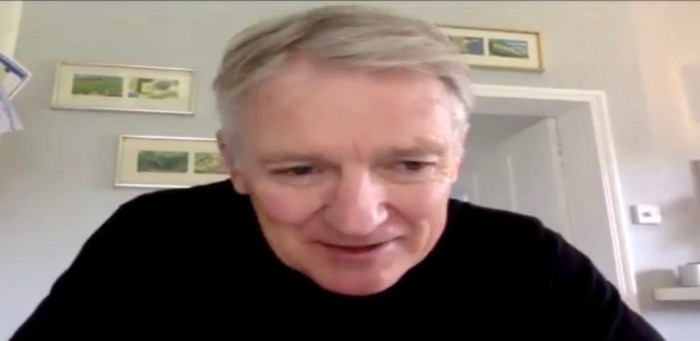
Pundit Osman meets up with ex-Albion boss Steve Coppell, boss of Kerala Blasters

Aside from sharing his views on Indian football, ever the all-round sportsman Osman is a keen golfer, cyclist and runner, and espouses the energy and recovery powers of a juicing diet, having fresh vegetable juice and fruit juice smoothies every day.

Osman uses his blog to cover a variety of topics, he has 5,100 followers on Twitter, and, during lockdown in 2020, took part in an interesting online interview with India-based The View and Reviews Show.

Osman shares thoughts about his career and the wider game in an online interview

“I have worked in the media for 20 years now,” Osman said in an interview for Kings of Anglia magazine. “I worked for Eurosport, starting prior to the Euro 2000 championships and I go a long way back with them and the BBC. I also started working in India through a contact I made at Eurosport about 15 years ago.”

Pictures from a variety of online sources, and matchday programmes.

Gerry Ryan – ‘a special player and one of football’s nice people’

THERE WAS no shortage of tributes paid to Gerry Ryan when the former Albion winger died at the age of 68 on 15 October 2023.

Fellow Irish international Liam Brady, who appointed Ryan as his assistant when he took charge of the Seagulls in 1996, said: “Gerry was a wonderful team-mate. He was a very quick winger, very brave, and he took people on.

“We had some great games together and then we ended up on opposite sides, for Brighton and Arsenal, in the old First Division.”

Although Ryan and Brady’s time in charge happened during a turbulent time off the pitch, Brady pointed out: “We did a pretty good job in what were, of course, difficult circumstances, and I could see then just what Brighton meant to him – he was in love with the club so much.

“Off the pitch, Gerry was just a really nice guy. He was affable, unassuming and got on with everyone he came in contact with.”

That sentiment was echoed by teammate Gordon Smith who told the Albion website: “Gerry was always fired up to play.

“He was not always first choice, but he was still a very good player. He had this ability to be able to turn games around because he was quick and he could score goals.

“He was so reliable – he could fit into any position with his levels of fitness, ability and positional play.

“We were a very close group; we socialised a lot, we played golf, went to the races and Gerry was a key part of that – he was a really good laugh.”

Turlough O’Connor, another former team-mate, from his early days playing for Bohemians in Dublin, told the Irish Independent: “He was the most easygoing guy you’d ever meet, very laidback and always in a happy mood, and a very good footballer as well.

“He was comfortable both left and right, very good on the ball, and very quick, which helped. A very good crosser, he went by people, and was always a threat. He helped so many times laying on goals for me.”

Ryan was one of the most likeable Albion players for a huge number of fans, and I was one of them.

A versatile trier who was good enough to represent the Republic of Ireland on 18 occasions, the wholehearted Ryan might not make it into the all-time best Brighton XI but, if it was judged on affability, his name would be first on the team sheet.

A cruel twist of fate saw his career ended in a tackle made by his Irish teammate (and former Albion boss) Chris Hughton’s brother, Henry. Typically, Ryan bore no grudges, as stressed by former Argus Albion reporter John Vinicombe in an article published in May 1986 when the genial Irishman finally accepted that his career was over.

Describing “the immense dignity and true manliness that Ryan displayed in refusing to condemn or indeed utter any harsh word against the player responsible,” he added: “Where others have sued and raged, slandered, cursed and threatened, Ryan said nothing.”

GR leg break

It was 2 April 1985 when his career was ended by that Hughton tackle in a 1-1 draw with Crystal Palace at Selhurst Park.

“Never in his life has he shirked a tackle and the one that ended his career so unfortunately at Crystal Palace was typical of many he faced in his career,” said Alan Mullery, the manager who signed him for the Seagulls.

“As a person, he is a lovely and typical Irish personality,” Mullery said in the programme for the player’s testimonial game against Spurs at the Goldstone on 8 August 1986. “I can honestly say that I have never met a player who dislikes him or has a bad word to say about him. I will remember Gerry Ryan as being a special player and one of football’s nice people.”

Mullery also referred to a Sunday lunch he and his family had with Ryan and his wife at the time he signed. “When Gerry ordered roast beef and chips I must have known then that I had a very special sort of player. At the time, I was a little dubious but afterwards I had no regrets.”

Mullery had been over in Dublin watching Albion’s Mark Lawrenson playing for the Republic of Ireland and Derby’s Ryan was playing in the same side. He had been having talks about moving to Stoke City but Mullers persuaded him to join Brighton instead, and, in a strange quirk of fate, he made his debut in a 2-2 draw away to Stoke.

After they’d become teammates, Lawrenson was among those players appreciative of Ryan’s “mercurial” qualities. He said in a matchday programme: “He wasn’t the most confident of players but he had loads of ability. For a wide player, he would come in and get goals for you.”

GR capsA week after joining the Seagulls, Ryan became an instant hit with Albion fans when he scored on his home debut in a 5-1 win over Preston. He notched a total of nine goals in 34 appearances in that first season and went on to score 39 in a total of 199 games.

Born in Dublin on 4 October 1955, Ryan was one of eight children. His early education was at the local convent in Walkinstown, a suburb to the south of Dublin where the family lived. At the age of eight he moved on to Drimnagh Castle School (it covered primary and secondary age groups).

At that stage, he was playing Gaelic football and hurling, at which he was capped at under-15 level by Dublin Schools. He didn’t play competitive football until he was 16 when he was introduced to a Dublin football club called Rangers AFC. He played alongside Kevin Moran, who later played for Manchester United, and Pat Byrne, who later played for Leicester City. Byrne and Ryan also played together for Bohemians, the oldest football club in Dublin.

Ryan joined the Dublin Corporation as a clerical officer on leaving school and played for Bohs as an amateur initially before becoming a part-timer on professional terms. By 18, Ryan was a first-team regular and, after collecting a League of Ireland Championship medal, was watched by Manchester United boss Tommy Docherty.

Docherty didn’t pounce then but, after Ryan had stayed four years with Bohemians, the ebullient Scot eventually returned to take him to England as his first signing for Derby County for a fee of £55,000.

The newly-appointed Docherty was determined to shake-up the club and while long-serving goalkeeper Colin Boulton was discarded along with striker Kevin Hector, Ryan, Scottish internationals Bruce Rioch and Don Masson, and Terry Curran and Steve Buckley were all introduced.

Ram Ryan

Ryan spoke about the way Docherty’s attitude towards him changed in an interview with Brian Owen of The Argus in 2016.

“One minute you were the blue-eyed boy, the next he wouldn’t even talk to you,” he said. Ryan made a hamstring injury worse by playing when Docherty insisted he was fit enough, and ended up sidelined for three months. “He didn’t like me then! That’s the way he was, he would turn on you, and he turned on me.”

Within a year, Docherty accepted Brighton’s £80,000 offer for Ryan and, as he was weighing up whether to choose the Seagulls or Stoke City, Ryan consulted the legendary Republic of Ireland and ex-Leeds midfielder Johnny Giles to ask his opinion.

“Gilesy said ‘Stoke have been in and out of the First Division forever but there is something going on down at Brighton. They get great crowds and it’s a beautiful place.’ I went to Brighton that weekend and absolutely loved it,” Ryan told Owen.

It was on 25 September 1978 winger Ryan arrived, prompting the departure of popular local lad Tony Towner after eight years at the Albion.

Five months before Ryan arrived at the Goldstone, he made his international debut, featuring for the first time in April 1978 in a 4-2 win over Turkey at Lansdowne Road. He only scored once for the Republic, but it was a cracking overhead kick in a 3-1 defeat against West Germany.

Ryan Eire

He was one of four regular Eire internationals playing for Albion at the time: Lawrenson, Tony Grealish and Michael Robinson the others.

His final appearance for his country came in a 0-0 draw against Mexico at Dalymount Park in 1984.

Ryan was part of some all-time history-making moments during his time with the Albion – scoring at St James’s Park in the 3-1 win over Newcastle on 5 May 1979 to clinch promotion to the top division for the first time, and burying the only goal of the game as unfancied Albion beat Brian Clough’s European champions Nottingham Forest, who’d previously not lost at home for two and a half years.

Ryan scoresMy personal favourite came on 29 December 1979 at the Goldstone when he ran virtually the entire length of a boggy, bobbly pitch to score past Joe Corrigan in the goal at the South Stand end to top off a 4-1 win over Manchester City. Ryan himself reckoned it was “the best goal I ever scored” as he recounted in a May 2020 BBC Sussex Sport interview with Johnny Cantor.

It was one of the most superb individual goals I saw scored and, when he was trying to recuperate from the horrific leg break which ultimately ended his career, I wrote to him in hospital to say what a special memory it held for me.

I was delighted to receive a grateful reply from him, and he has held a special place in my Albion memory bank ever since.

There were other stand-out occasions, two of which came against Liverpool:

in February 1983 at Anfield when he opened the scoring in Albion’s memorable 2-1 FA Cup triumph en route to the final, and, in the following season, at the Goldstone when he and Terry Connor were on target in Second Division Albion’s 2-0 win over the Reds in the same competition, the first-ever live FA Cup match (other than finals) to be shown (previously any television coverage of FA Cup ties was only ever recorded highlights).

If the modern-day reader can’t quite put the feat in perspective, it is worth pointing out that Liverpool, managed by Joe Fagan, went on to win the League Cup, the League title and the European Cup that season.

Danny Wilson hadn’t long since joined the Albion and, in an interview with the Seagull matchday programme in 2003, he recalled: “That has to be my favourite memory from all my time at the Goldstone. Back then, Liverpool were just awesome, and to beat them like we did was virtually unheard of.”

Ryan’s involvement in the 1983 Cup run was hampered by a hamstring injury which meant he missed out on the semi-final. But, in the days of only one substitute, he was on the bench for the final and, when the injured Chris Ramsey couldn’t continue, Ryan went on at Wembley and did a typically thorough job at right-back.

GR prog snow

Following Albion’s relegation, as the big-name players departed the Goldstone, Ryan’s versatility and play-anywhere attitude came to the fore and, in his last two seasons with the club he was often selected as a centre-forward, although he was not a prolific goalscorer from that position.

After he was forced to quit playing, Ryan took what was then quite a familiar route for ex-players and became a pub licensee, running the Witch Inn at Lindfield, near Haywards Heath. Ryan and goalkeeper Graham Moseley, who he’d known from his days at Derby, were neighbours in Haywards Heath.

GR pots

However, when another of his former Republic of Ireland teammates, Liam Brady, was appointed Albion manager in 1994, it was an inspired choice for him to appoint Ryan as his assistant.

When that all-too-brief managerial spell came to a messy close, Ryan returned to his pub, and then moved back to the family home in Walkinstown. Ryan’s son Darragh played 11 games for the Albion in the late 1990s.

Sadly, in August 2007, Ryan suffered a stroke, and three years later he was diagnosed with kidney cancer. On his death, his family paid tribute to the care he was given by the staff of Our Lady’s Hospice, Harold’s Cross and to the staff of Lisheen Nursing Home, Dr Brenda Griffin, the Beacon Renal Unit, Tallaght, and Tallaght Hospital Renal Unit “for the excellent care given to Gerry over the past number of years”.

Pictures from a variety of sources but mainly from my scrapbook, the matchday programme and The Argus.

Man City legend Joe Corrigan played the clown in Brighton

1 Joe punchingBRIGHTON fans often enter into a debate about the best goalkeeper ever to play for the club.
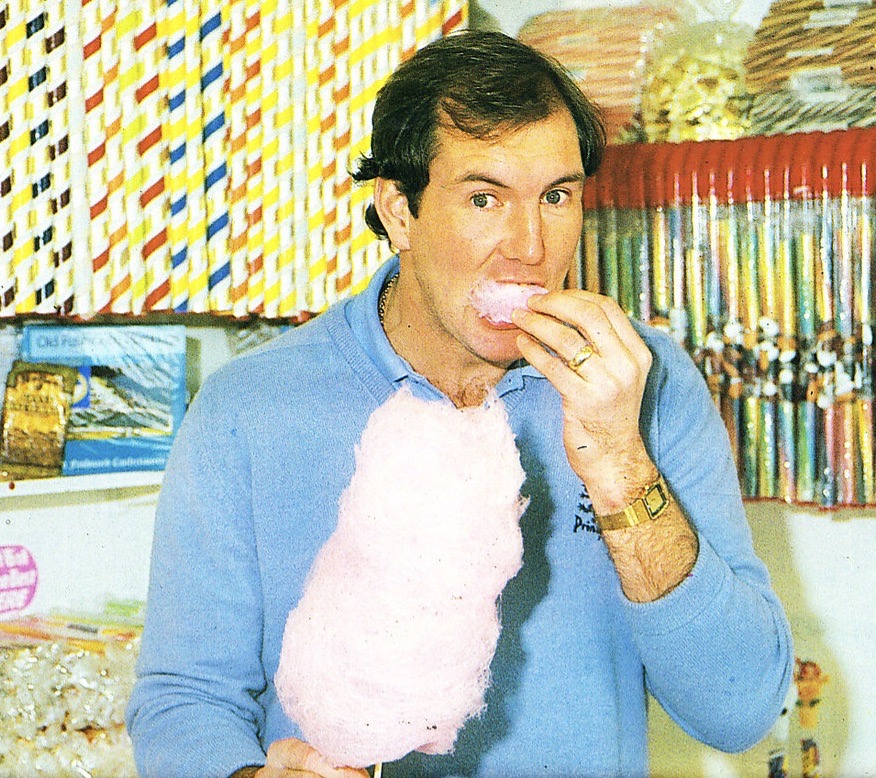
Although he was past his best when he joined the Seagulls, former England international Joe Corrigan would certainly be a contender.

Corrigan was, quite literally, at 6’4” a giant among goalkeepers and a colossus for Manchester City at the highest level before a second tier spell with Brighton towards the end of his playing career.

He subsequently became a top goalkeeping coach and amongst the ‘keepers he worked with was another former Seagulls favourite, Tomasz Kuszczak, when at West Brom.

After taking over from Harry Dowd, Corrigan was a near permanent fixture in goal for Manchester City between 1970 and 1983, winning a European Cup Winners’ Cup medal at the end of his debut season.

But for his career coinciding with Peter Shilton and Ray Clemence, he would surely have won more than the nine England caps he accumulated.

In total Corrigan made 592 appearances for City, a club record for a goalkeeper, and he was City’s Player of the Year three times.

In 1983, at the age of 34, Corrigan was sold to American club Seattle Sounders for £30,000, but he stayed in the US only a few months, and, in September that year, returned to England with Brighton.

Unfortunately for Joe it was at that turbulent time when, although Jimmy Melia was still the manager, chairman Mike Bamber had installed Chris Cattlin as first team coach behind Melia’s back.

Within a matter of weeks of the 1983-84 season starting, Melia was fired and Cattlin took over.

Corrigan was not impressed. In his 2008 autobiography (Big Joe, The Joe Corrigan Story) he declared Cattlin “the worst manager I’d ever played under” although he described his teammates as “a terrific bunch of lads” and he seemed to enjoy a decent social life on the south coast (pictured below for the matchday programme by Tony Norman, tucking into candy floss on the pier).

corrigan candyFor instance, at the annual players Christmas ‘do’ – if the account in Jimmy Case’s autobiography is anything to go by.

Corrigan became big pals with Case during his time at Brighton and the Scouse midfield favourite recounts in Hard Case (John Blake Publishing), a time the players went out on their Christmas ‘bash’ in Brighton wearing fancy dress.

Corrigan wore white tights and a tutu and at one point stood in the middle of the road directing traffic while his teammates crossed –  beckoning cars facing a red light to go and stopping cars that were on a green light. “I am still not sure how he survived that incident without having his collar felt,” said Case.

“Joe is a big, soft lad with a heart of gold but he has a painful way of showing it.”

One of his party pieces was to catch people off guard with a short jab in the ribs or arm. One playful punch landed on physio Mike Yaxley broke two of his ribs!

Case described Joe as “a star performer on the pitch and a bloody clown off it”.

Corrigan played 36 times for the Seagulls, including performing heroics in the famous 2-0 1984 FA Cup win over Liverpool, when goals by Terry Connor and Gerry Ryan meant the Seagulls dumped the mighty reds out of the cup two years in succession (following the 2-1 win at Anfield during the 1983 run to the cup final).

IMG_5197Sadly, as revealed in Big Joe, The Joe Corrigan Story, his time with Brighton ended on a sour note and when Cattlin opted for Perry Digweed as his first choice ‘keeper for the 1984-85 season, it all turned publicly ugly.
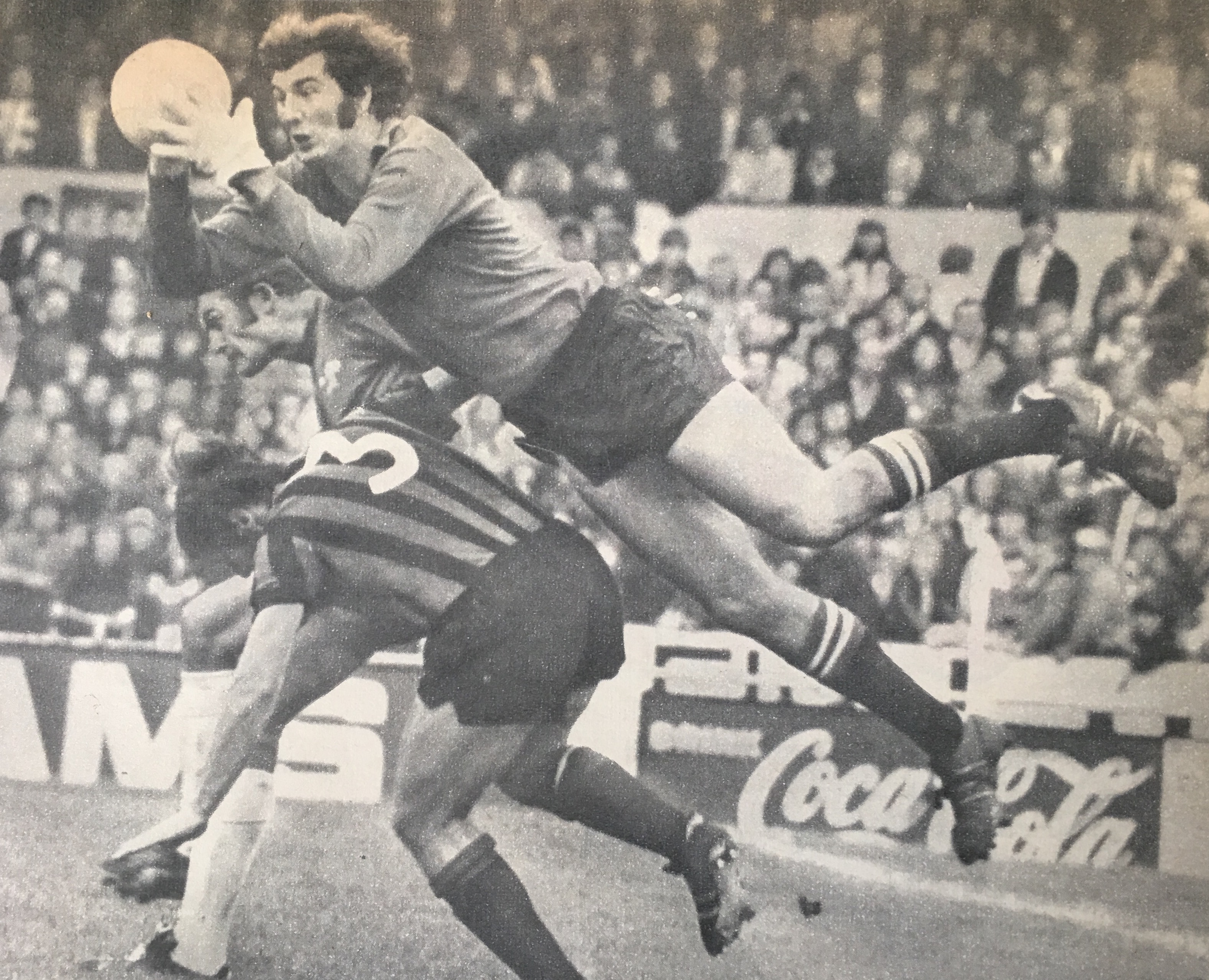
The club fined Corrigan for speaking out of turn to the press but Corrigan successfully got the fine overturned thanks to help from the PFA.

Under a heading ‘Truth’ Cattlin wrote in his matchday programme notes: “Our club made the papers this week for the wrong reasons, when a Football League tribunal upheld an appeal by Joe Corrigan against a club fine imposed upon him recently.

“Obviously I must accept the decision of the tribunal, just as I expect my players to accept a referee’s decision on the field. However, my dispute with Joe was not about his right to say anything to the press, but simply about what he said.

“At this club I don’t mind players speaking to the press in a responsible manner. I must though reiterate that I don’t want them slagging the staff, fellow players, fellow managers or the club.”

As it became clear he would never play for Brighton again, he went out on loan to Stoke City and Norwich but then back in Brighton Reserves sustained an injury to his neck that ended his career.

Corrigan retired from playing and initially helped to run a haulage business back in Manchester. But the lure of goalkeeping drew him into coaching at a number of clubs: City, Barnsley, Bradford, Tranmere and Stoke all on a part-time basis. Most notably, though, he spent 10 years at Liverpool, until the arrival of Rafa Benitez, then had spells at Celtic, Middlesbrough and West Brom.

The seeds for that part of his career were sown at Brighton, courtesy of John Jackson, the former Crystal Palace goalkeeper, who used to coach the Albion ‘keepers once a week.

Corrigan told the Manchester City matchday programme on 29 September 2018: “I got talking to him and it inspired me to look into doing something similar. So it was down to Brighton indirectly that I moved into the next phase of my career.”

When at 60 in 2009 he brought down the curtain on a 42-year career in the game, Tony Mowbray, manager of West Brom at the time, told the Birmingham Mail’s Chris Lepkowski: “Joe has been a pleasure to work with. His knowledge and experience have been a big help to me and I’ll be sorry to see him go.

“He’s a great character, a true gentleman and everyone at the club wishes him a long and happy retirement.”

Corrigan told the Mail: “Everyone says you know when the time is right to retire – and I feel this is mine.

“I’ve had just over four great years at this club and want to say a massive thank you to the Albion fans, who have always been very supportive of me and made me feel really welcome.

“The staff and players – particularly the keepers – have also been a pleasure to work with.

“Ironically, my final home game here will be against Liverpool, a club where I spent ten happy years, and we went to City two weeks ago, which obviously is always a special occasion for me.”

In the 2025 New Year’s honours list, Corrigan received an MBE for services to charitable fundraising.

2 Joe diving3 Joe shouting4 JC w GR SG EY

  • Pictures from my scrapbook show Corrigan punching clear of Chelsea’s David Webb, diving headlong to deny Chelsea’s Keith Weller, letting his teammates know his thoughts, and in an Albion squad line-up alongside Eric Young and behind Gerry Ryan and Steve Gatting.

J Cor sept 18

  • Joe pictured in the Man City matchday programme in September 2018.


Corrigan in 2025

‘Keeper Perry Digweed’s in and out 12 years with the Albion

THEY say goalkeepers are different and Perry Digweed certainly came into that category with his name alone!

Digweed switched from Craven Cottage to play for the Seagulls when signed for £150,000 by former Fulham favourite, Alan Mullery, in January 1981.

It seems remarkable to record that he was still at the club – indeed earning the player of the season accolade – a decade later.

In fact his Albion career stretched to 12 years, by which time you’d have imagined he would have racked up around 400 appearances.

That his total number of games played for the Albion amounted to 182 reflects periods when he was either out of favour courtesy of various managerial changes or sidelined through injury.

Born in Chelsea on 26 October 1959, the young Digweed started playing football at Park Walk Primary School and he was soon featuring in inter-school matches played at Battersea Park. It was only when he was 12 that he started playing in goal and before long he gained representative honours, playing for the West London Schools under-13 side.

He played at Highbury in one match but he started training with Fulham’s youngsters from the age of 13. Ken Craggs, Mullery’s no.2 at Brighton, was in charge of Fulham’s youth team at the time, but Digweed didn’t get an immediate offer of an apprenticeship after he left St Michael’s School; instead he became a trainee salesman at Covent Garden market (his dad ran a busy greengrocer’s close to Putney Bridge).

Craggs finally offered him the apprenticeship six months later, in September 1976, and only four months afterwards manager Bobby Campbell gave Digweed his first team debut in a 2-0 defeat at home to Bolton Wanderers. Fulham were in the old Second Division at the time and the form of Irish international Gerry Peyton restricted Digweed to only 15 league games.

A chance to step up a division came following one of Mullery’s public fits of pique with Brighton’s first choice Graham Moseley in the middle of the 1980-81 season. He put reserve goalkeeper John Phillips into the Albion line-up for the Boxing Day match at home to Crystal Palace and, although Moseley was restored to the line-up for three matches at the start of 1981, on Craggs’ recommendation, Mullery returned to his former club to sign Digweed. The young ‘keeper made his debut in a 2-0 defeat away to West Bromwich Albion on 17 January 1981.

DIG BWAfter only three games in the old First Division for Brighton, Digweed was called up to the England under 21 squad, although Leeds’ John Lukic and Blackpool’s Iain Hesford were chosen to play ahead of him.

A colourful insight into Digweed’s lifestyle came in Spencer Vignes’ excellent book A Few Good Men (Breedon Books Publishing, 2007) in the section about ‘rival’ Moseley.

“Very much the boy about town with his dandy dress sense and coiffured hair, Perry looked more like one of Adam’s Ants than a goalkeeper,” wrote Vignes, who discovered Digweed and Moseley got on well in spite of the rivalry.

“Perry was a single boy who still lived in London and would tell you all about his conquests the night before,” Moseley told Vignes. “He was a great lad and a lot of fun to be with.”

Dig colourIn one of many matchday programme profiles, Digweed talked about his love of looking round the Kings Road, Chelsea, clothes shops on his way back home from training. He also liked his golf and told the matchday programme in August 1991: “I try and play as much as I can and get quite a few invitations to pro-am events along with other footballers and celebrities.”

Remarkably at one point in his topsy turvy career with the Seagulls he was loaned to Chelsea and played three top tier games for them in the 1987-88 season, when John Hollins was their manager. He featured in a 3-3 draw away to Coventry City, a 0-0 home draw v Everton and a 4-4 draw at Oxford United.

“Playing wise it couldn’t have been better,” he told Dave Beckett in an interview. “I used to watch Chelsea always as a youngster, I was only born round the corner, so when circumstances meant I ended up in the first team I was overjoyed.”

He said Chelsea were keen to keep him until the end of the season but manager Barry Lloyd called him back to the Goldstone because he needed the goalkeeping cover.

Having watched the great Peter Bonetti keep goal for Chelsea for many years, Digweed was delighted to receive specialist coaching from the ex-England goalkeeper once a week at Brighton. When he’d been at Fulham, ex-QPR stopper Mike Kelly, who went on to work with England’s goalkeepers, had been his specialist coach.

Indeed he said it was through Kelly’s connections that he got a brief look-in with the England Youth set-up, although it was difficult to dislodge first choice Chris Woods, who went on to become a full England international.

Apart from Moseley, Digweed’s other competition for the number one spot during his time at the Goldstone came from the likes of Joe Corrigan, John Keeley and Mark Beeney.

He played under five different managers and, while other goalkeepers came and went, Digweed remained on the Albion’s books and played in some memorable games – as well as missing out on plenty of others. For instance, he had the green jersey in the famous 1983 FA Cup 5th round 2-1 victory at Anfield (although Moseley returned for the later rounds) but he was also between the sticks when Albion won 1-0 at Anfield the season before.

“Funnily enough, I’ve never lost against Liverpool in the four first-team and two reserve matches I’ve played against them,” he told Beckett.

Digweed memorably saved a Chris Kiwomya penalty as Brighton beat Ipswich to reach the play-offs in 1991 but one of his personal highlights was a mid-season game Albion played against the Nigeria national side in Lagos during Mike Bailey‘s reign.

“It was unbelievable,” he said. “The people were poverty-stricken yet all the money they had went on these huge football stadiums. There were trumpets and music going all the way through….it’ll take soomething to beat playing in front of nearly 100,000 fanatical Nigerians.”

Any Albion fans at the Brighton v West Brom game at the Goldstone on 21 September 1988 will wince with the recollection of Digweed being injured in the most intimate of places.

Forward John Paskin lunged in attempting to score and his studs tore Digweed’s urethra. Not surprisingly the ‘keeper was forced off the pitch but I recall he went off under his own steam rather than on a stretcher which, when the extent of the injury was revealed later, seemed remarkable!

Digweed lost four-and-a-half pints of blood through the wound, was in hospital for three weeks initially and required four operations to repair the damage.

“I realise now I was lucky that they weren’t just internal injuries otherwise it would have been even more serious and who knows what could have happened,” Digweed told Beckett in the matchday programme.

“I had a catheter bag and everything for a while and I couldn’t even lay down because it was so uncomfortable. I had to sleep in an armchair for three weeks.”

A subsequent article by Vignes in a later matchday programme revealed how the club tried to get him back playing sooner than the medical people advised.

“The doctors had said not to play for the rest of the season,” he told Vignes. “When I got out (of hospital) Brighton tried to rush me back into training and I said ‘Er, I don’t think so’. Sometimes some things are more important than football.”

In fact it would be 18 months before he played his next first team game, largely because Keeley seized the opportunity to establish himself as a more than useful no.1. Digweed didn’t reappear between the Albion sticks until March 1990, stepping back onto the Goldstone pitch for a midweek match against Plymouth Argyle which the Seagulls won 2-1.

In August 1990, through impeccable sources, I was able to break the story exclusively that Albion were transferring Keeley to Oldham Athletic for £238,000. Barry Lloyd briefly flirted with erratic American Tony Meola in goal before restoring Digweed to the first team.

He ended up playing 52 games over the course of a season extended by involvement in the play-off final against Notts County – his highest season’s tally in all his years with the Albion. And he was voted player of the season.

In an Argus supplement previewing the Wembley final, Digweed was interviewed by Mike Donovan and couldn’t hide his delight that instead of watching from the sidelines, as he did in 1983, he’d be out on the pitch.

“It’s the biggest match of my career,” he declared.

The only other season Digweed came close to what you might refer to as first choice was in Chris Cattlin’s 1985-86 squad when he played in 41 games, including a memorable FA Cup third round 2-0 win away to Newcastle when, according to the definitive Albion history book Seagulls! The Story of Brighton & Hove Albion FC (by Tim Carder and Roger Harris): “Perry Digweed was magnificent between the posts.”

By 1992-93, Beeney had established himself as first choice and after Digweed had stepped in when Beeney served a one-game suspension, manager Lloyd declared: “We believe we have on our books the best two ‘keepers in Division Two.”

Older readers will recall how later that season Beeney pulled off the biggest save in Albion’s history: the proceeds of his sale to Leeds United being used to pay off the Inland Revenue who were threatening to close the club down.

With Beeney transferred, Digweed came back in for the final three games of the season, the 3-2 home win over Chester turning out to be his last game for the club.

When finally released by the Albion in June 1993, he joined Wimbledon initially without getting a game but then had two years at Watford where he featured in 29 league games. Among his teammates there was former Albion defender Keith Dublin.

Since leaving the football scene, Digweed has had interests in property and run executive chauffeur-driven cars for racehorse owner Sheikh Mohammed, and other wealthy Arab families.

He also had an acting role (playing  a character called Marsden) alongside Vinnie Jones and the stand-up comic Omid Djalili in the 2001 film Mean Machine – a fact that earns him a mention on the goalkeepersaredifferent.com website!

On the same site, bearing in mind I like a parallel line, I was interested to note the aforementioned Meola had also appeared on the silver screen since giving up playing, with a cameo role as a card player in the 2001 Jason Priestly film Zigs.

  • Pictures from my scrapbook show Digweed’s look of despair as Notts County score in the 1991 play-off final at Wembley; his portrait in the 1983 FA Cup Final programme, and another portrait from the matchday programme.