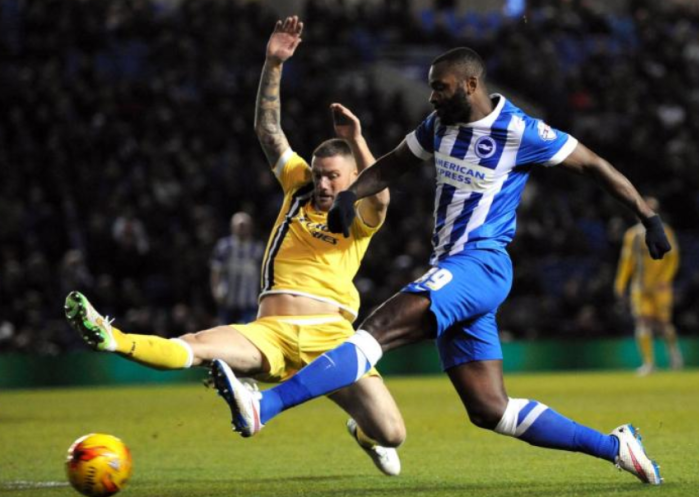
Managerial turnover played havoc with goalscorer Bent’s career

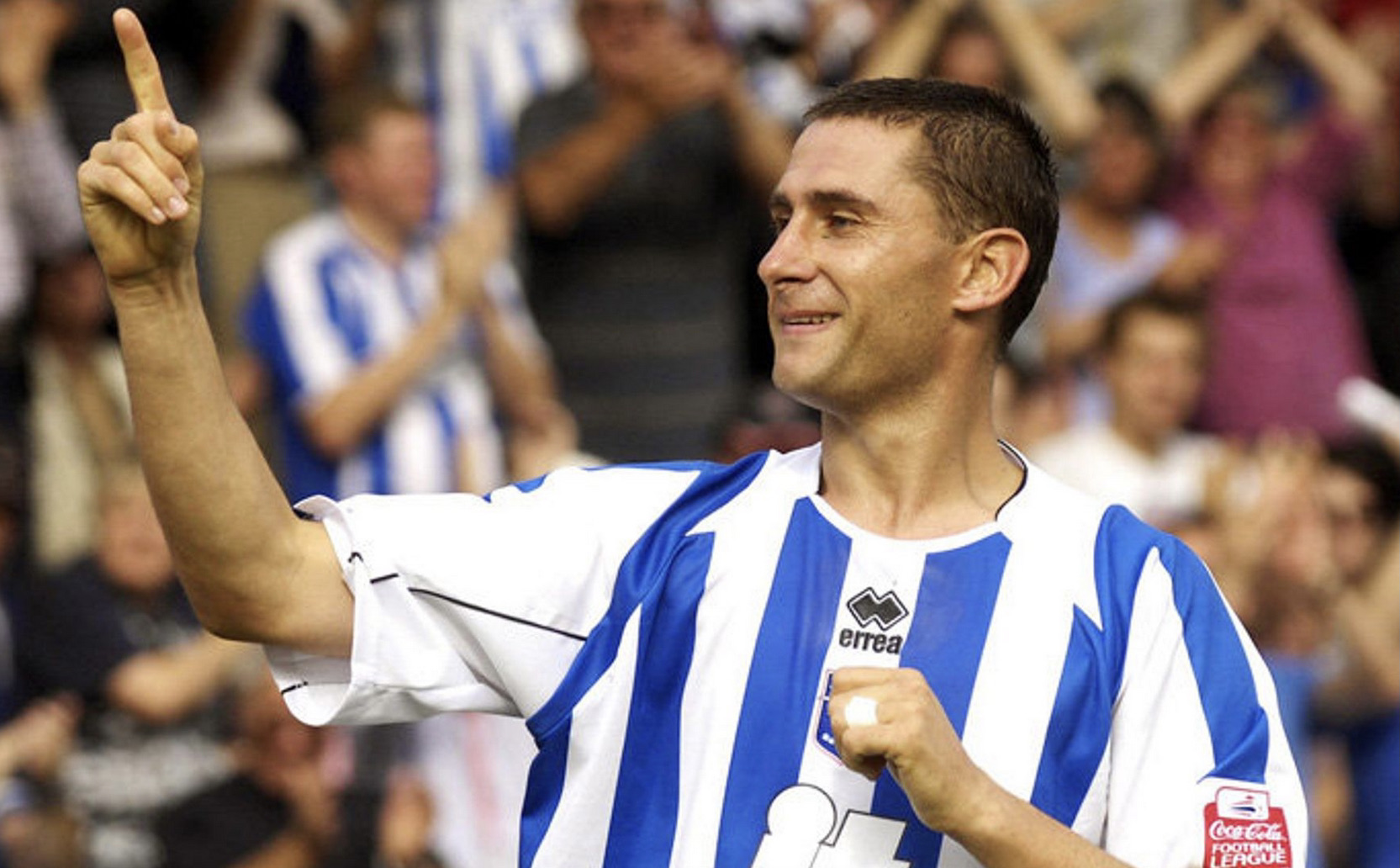
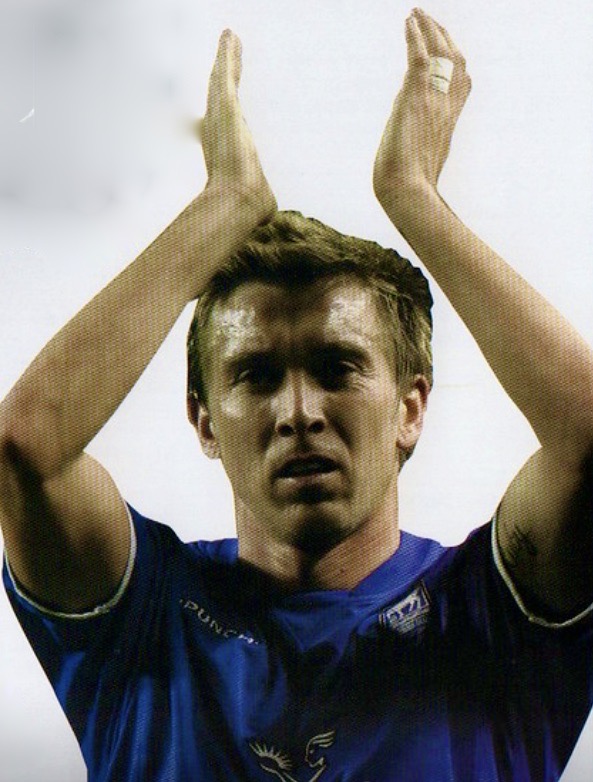
FORMER England striker Darren Bent, who now shares his opinion of the game with listeners to talkSPORT, was still only 30 when he pulled on the stripes of Brighton, one of nine clubs he represented in the Premier League and Championship.

He couldn’t have got off to a better start when he scored on his debut at the Amex, netting against one of his former clubs, Fulham. Unfortunately, the visitors turned the game on its head and won 2-1.

Timing is everything in football and perhaps if Bent had joined the Albion in happier circumstances, there may have been a better story to tell. The Seagulls were about the ditch the manager who brought him to the club – an all-too-familiar scenario Bent encountered on many occasions throughout an 18-year playing career.

At Spurs he played under three different managers – he later described it as “the worst two years of my career” – and his temporary move from Aston Villa to Brighton came about because he’d been frozen out by Paul Lambert even though Gerard Houllier had smashed Villa’s transfer fee record to sign Bent from Sunderland for £18m in January 2011.

Bent arrived at the Amex in November 2014 with 184 goals in 464 career appearances behind him, and only three years earlier had won the last of 13 caps for England, for whom he scored four goals.

“His record speaks for itself,” said Albion boss Sami Hyypia. “He is a top-class striker with more than 100 Premier League goals with Charlton, Spurs, Sunderland and Aston Villa. I hope he will score plenty of goals for us during his time with us.

“There is no doubting his ability to score goals. He also wants to play regular games and that is evident in his willingness to step down from the Premier League to the Championship.”

The player himself told the matchday programme: “Anyone who knows me knows that all I care about is football.

“It has never been about money or anything like that. It has always been about playing football. I’m always at my happiest when I’m playing.”

Bent added: “Brighton felt like the perfect place to come and play football, especially for someone like Sami Hyypia, who I’ve played against many times over the years.

“As a manager, I think he is the right man. He is the kind of guy I want to play for.”

It was a generous assessment in the circumstances because Brighton had managed only two wins in 16 matches before Bent’s arrival.

The experienced striker’s second goal for the Albion looked like it might have earned the beleaguered coach a reprieve from the inevitable. He scored in the 10th minute away at Wolves, stooping to head Inigo Calderon’s first-time cross past goalkeeper Carl Ikeme. It was a lead that lasted until the 88th-minute but was cancelled out by a Danny Batth equaliser after Albion had played 30 second half minutes with 10 men following a red card shown to Bruno. Brighton parted company with the big Finn shortly afterwards.

Bent played one more game, under caretaker Nathan Jones, when Albion fought back from 2-0 down (both scored by on-loan Glenn Murray against his old club) to earn a home draw against Reading, but he was forced off injured after less than half an hour and the knock kept him out of the next game at Fulham, when Brighton won 2-0.

Hyypia’s replacement, Chris Hughton, spoke at his first press conference of trying to keep the player, but Bent had the chance to join a side at the opposite end of the Championship and he moved to promotion-seeking Derby County instead, scoring 12 times in 13 starts as the Rams missed out on a play-off spot by one point.

Released by Villa at the end of the season, he subsequently joined the Rams on a permanent basis in the summer of 2015. He saw even more managerial churn at Pride Park – Paul Clement and Darren Wassall in 2015-16 and three – Nigel Pearson, Steve McLaren and Gary Rowett – in 2016-17. Across the two seasons in the Championship, Bent scored 14 in 67 matches, but a hamstring injury sidelined him for the start of the 2017-18 season.

In January 2018 he went on loan to Championship strugglers Burton Albion under Nigel Clough where he scored twice in 14 appearances (nine starts + five off the bench) including netting the equaliser against his old club Sunderland when Burton’s 2-1 win relegated the Black Cats to the third tier of English football for only the second time in the club’s history. Burton also went down.

Released by Derby in the summer of 2018, he announced his retirement at 35 in July 2019.

Funny that he should end his career at Derby County because it was against them that he scored his first competitive goal for Tottenham in a 4–0 home victory in August 2007.

Bent had previously scored 37 goals in 79 matches over two seasons at Premier League Charlton Athletic before making what at the time was a record £16.5m move to White Hart Lane, where Dutch boss Martin Jol greeted him enthusiastically.

On target for Spurs

Although he already had Robbie Keane, Dimitar Berbatov, Jermain Defoe and Mido as forward options, Jol said of the new signing: “Darren’s strength is his stamina. Normally players will make runs three or four times in 45 minutes, he will do it all the time and if you manage to play balls behind the defence, he will be there.

“He has pace, he links play well and can see a pass – he can exploit the space and play as well.”

What happened subsequently is covered superbly in a 2019 article by Jack Beresford on Planet Football, but, to fast forward a little, Jol was shown the White Hart Lane exit and his replacement, Spaniard Juande Ramos (assisted by Gus Poyet) was a lot less enamoured by the big money signing.

Indeed, Beresford writes: “Bent later recalled how Tottenham became ‘a horrible place to be’ under Ramos, who regularly lambasted players over a lack of professionalism in regards to training and nutrition, demoting several senior figures to the reserves.”

Although Bent struggled to cement a regular starting spot in his first season at White Hart Lane, he was Spurs’ top scorer at the end of the 2008-09 campaign with 17 goals.

While things initially looked good under Bent’s third Spurs boss, Harry Redknapp, the manager’s decision to publicly humiliate the striker eventually brought an unhappy spell to an end.

Bent missed a golden chance to score in a match against Portsmouth and Redknapp told reporters after the game: “You will never get a better chance to win a match than that. My missus could have scored that one.

“Bent did not only have part of the goal to aim for, but he had the entire net – and he put it wide. Unbelievable. I was just so frustrated.”

Bent put in a transfer request and said: “No one goes out to deliberately miss. When you miss a chance and your manager comes out and supports you rather than criticises you, it’s a big help.”

Ironically, circumstances meant Bent went on to make 12 more appearances for Tottenham, scoring five times and his 12 league goals made him the club’s top scorer.

Although Redknapp said Bent had a future at the club, he signed Peter Crouch and Beresford reported Bent later said: “I didn’t feel Redknapp wanted me there. It’s massive to have the support of your manager and that’s not been the case for the last two years.

“My career stood still at Tottenham. There’s a lot of politics going on there. I scored a lot of goals, but it was the hardest two years of my life.”

In those two years, he scored 25 goals in 79 games for Tottenham, but 36 of those appearances had been as a substitute.

Born in Tooting, south London, on 6 February 1984, Bent seemed always destined to be a footballer because his dad Mervyn had been on the books of Wimbledon and Brentford as a youngster.

The family moved to Cambridgeshire when the young Bent was only 10 and his early football career was nurtured at Godmanchester Rovers.

Ipswich Town picked him up as a 14-year-old and nurtured him through their youth ranks until he signed his first professional deal on 2 July 2001. George Burley gave him his debut five months later as a sub in a 3-1 UEFA Cup win away to Helsingborgs IF.

He scored twice in seven league and cup appearances that first season but the Tractor Boys were relegated from the top flight. Burley was soon replaced, temporarily by Tony Mowbray, then Joe Royle, under whom he cemented a regular starting berth in the second tier over the next three seasons.

By the time he left Ipswich in 2005, he’d scored 56 goals in 141 appearances. Former Brighton midfielder Alan Curbishley was at the helm of the Addicks when they paid a fee of £2.5m to take him to The Valley.

He scored five goals in Charlton’s first four league games (including two in the opening day 3-1 win over future employer Sunderland), finished his first season with 22 league and cup goals and was named Charlton’s Player of the Year.

Bent top scored again the following season, with 15, but under three different managers – Iain Dowie, Les Reed and Alan Pardew – they were relegated to the Championship along with Watford and Sheffield United.

As described earlier, Spurs presented the opportunity for him to continue playing in the Premier League, and he continued playing at that level when Sunderland bought him for £16.5million in the summer of 2009. Demonstrating the knack he had at several clubs, he scored on his debut, giving the Black Cats a 1-0 win at Bolton.

Bent went on to score 24 league goals for the Black Cats in his debut season at the club – and you can only imagine how delighted he was (pictured below) to net two in a 3-1 win over Spurs at the Stadium of Light!

The first came after just 34 seconds of the game on 3 April 2010, and a 29th-minute penalty gave him his 23rd goal of the season, although incredibly Bent also saw two other penalties saved by Spurs ‘keeper Heurelho Gomes. He had also missed a penalty in the reverse fixture at White Hart Lane the previous November, when Spurs won 2-0.

He obviously wasn’t the most reliable from 12 yards: I witnessed a Bent penalty miss myself back in 2003 when he’d gone on as a sub for Ipswich against Brighton at Portman Road. With the score at 1-1, Richard Carpenter’s foul on Chris Makin gave Bent the chance to restore the home side’s advantage from the spot. But he blasted the ball over without goalkeeper Dave Beasant needing to make a save. Tony Rougier then put Albion ahead but a Martin Reuser thunderbolt evened it up.

Bent’s 18-month stay with Steve Bruce’s Sunderland proved to be his most prolific goalscoring spell in football, netting 38 goals in just 52 appearances.

In the first half of the 2010-11 season, his partner up front was young Manchester United loanee Danny Welbeck, but in the January 2011 transfer window Bent was on the move again, this time to Villa.
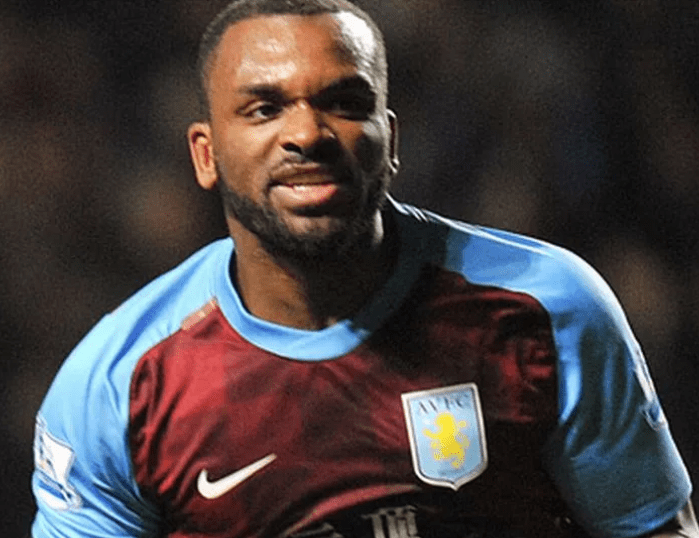
Once again, he got off to a great start for a new club, marking his debut with the only goal of the game in a win over Manchester City. It was the first of nine goals in 16 league appearances which put him joint top scorer with Ashley Young, even though he’d only arrived at the club in January.

After health issues forced Houllier to step down as Villa boss, Alex McLeish took over for what was a tumultuous and under-performing season when relegation was only avoided by two points, although Bent was top scorer with 10.

McLeish’s successor Lambert not only took the captaincy off Bent, he also froze him out, only selecting him for 13 Premier League appearances. If he thought it was difficult enough to have three different managers in three seasons at Villa, when he spent the whole of the 2013-14 season on loan to Fulham, they had three different managers in one season!

Bent’s old Spurs boss Jol was in charge as the campaign got under way but, with only two wins in 14, he was replaced by former Man Utd no.2 René Meulensteen in December before Felix Magath took over in February. All the upheaval saw Fulham relegated with a team that included David Stockdale, Steve Sidwell, Aaron Hughes and Dan Burn. Bent scored six in 14 starts + 15 sub appearances.

If Bent was used to managerial change at club level, it wasn’t much better with the England national team: he played under three different managers in five years!

He had previously earned selection for his country at under 15, 16, 19 and 21 levels – he scored nine in 14 matches for the under-21s – and he was first called up to the full squad by Sven-Goran Eriksson shortly after he’d made the move from Ipswich to Charlton, although he didn’t play in a 4-1 defeat to Denmark.

“Making my Premiership debut for a new club, scoring my first brace in the Premiership and then to get the England call-up on the back of that was just a dream come true,” he told the FA website.

It was another six months before he made his full England debut, in a 2-1 win over Uruguay but he didn’t do enough to stake a claim for a place in the World Cup squad.

His next cap came as an 80th minute substitute for Joe Cole in the 3-2 defeat to Croatia in November 2007 that cost Steve McLaren his job when England failed to qualify for the Euro 2008 tournament.

By the time he made his second start for England, on 14 November 2009, Fabio Capello was in charge. England lost 1-0 in a friendly to Brazil in Qatar when Bent’s teammates included Matthew Upson, Wayne Bridge and James Milner.

“Bent was struggling to make an impact as he attempted to convince Capello of his worth, not helped by a lack of service that rendered his task almost impossible,” reported the BBC’s Phil McNulty. “He had one opportunity, but could not direct a header on target from Milner’s cross.”

He didn’t make the cut for the 2010 World Cup squad but in September was back in the fold and scored his first England goal after going on as a 70th minute sub for Jermain Defoe as England beat Switzerland 3-1 in Basle.

By now at Villa, it was the first of three goals in three games (he also netted against Denmark and Wales) after which he told the Birmingham Mail: “I’d love to be No 9 for as long as possible, there are a lot of top strikers about but Fabio keeps picking me and hopefully I can keep producing the goods.

“Even when the goals weren’t going in, I always believed I was good enough to score at this level and hopefully it’s showing now. I’m finally getting my chance and getting a good run in the side. I’m delighted with it.

“It has been years since my first chance and it’s certainly been a long, long wait but it’s finally come.”

He started the 2-2 Euro 2012 qualifier with Montenegro in October 2011 and the following month was in the side that beat World Cup holders Spain 1-0 at Wembley; it was his header from Milner’s cross that rebounded off a post for Frank Lampard to nod in.

Three days later, he played what turned out to be his – and Capello’s – last game for England as a 70th minute sub for Bobby Zamora when England beat Sweden 1-0 at Wembley.

Yet another man was at the helm when it came to selection for the Euro 2012 tournament and Roy Hodgson didn’t reckon Bent had recovered sufficiently from an injury to merit inclusion.

For all the highs and lows of a lengthy playing career, nothing came close to what he suffered in front of a nation of TV quiz viewers: he scored only three points over two rounds of Celebrity Mastermind and admitted to talkSPORT listeners: “Honestly? It was probably the worst experience of my life!”

He explained: “As a footballer you get nervous before games, when you take a penalty in front of thousands of people, when you join a new club, but when you’re sitting in that chair opposite John Humphrys, it’s pitch black in there and all you can see is him, his eyes looking at you and he’s asking you questions and you just go blank.”

Stadium lure too distant for promotion winner Peter Taylor

PETER TAYLOR steered Albion to promotion from the third tier in 2002 – a feat his namesake as Brighton boss fell short of achieving back in 1976.

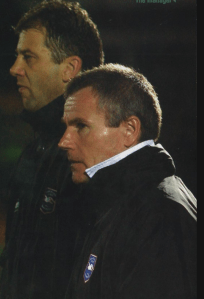
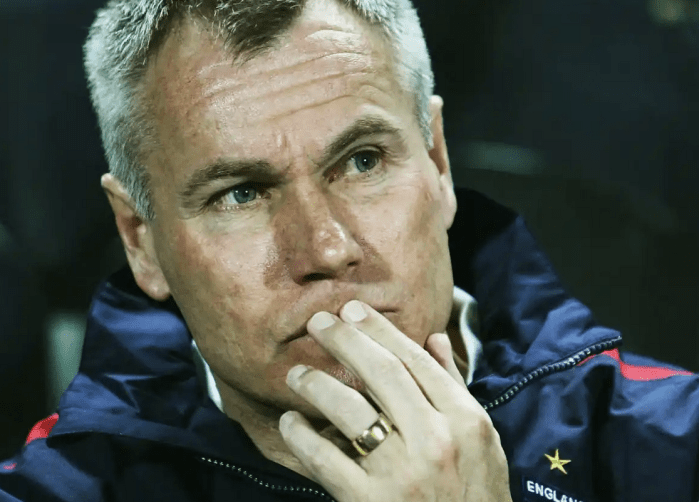
The younger Taylor, who played for and managed arch rivals Crystal Palace, had quite an extraordinary managerial career – from taking charge of the England international side, when he appointed David Beckham as captain, to taking the reins at Isthmian League side Maldon & Tiptree at the age of 69.

He took the helm at third-placed third-tier Brighton in October 2001 after being sacked by Premier League Leicester City – who had created the Albion vacancy by recruiting manager Micky Adams to work as no.2 to newly-appointed Dave Bassett.

Starting at the Albion

Taylor revealed that it was on Adams’ advice that he accepted Albion’s offer. “Micky said they were a close bunch, a confident group and happy with each other,” Taylor told The Guardian. “My job now is to carry on the good work he has started.”

In dropping down two divisions Taylor returned to the level of a previous success, when he guided Gillingham to the First Division via (via a play-off final win over Wigan Athletic). In less than two years he went from the Second Division to the Premiership – managed England for one game along the way – and back again.

“I’ve not lost any self-belief after what happened at Leicester,” said Taylor. “I don’t feel I have anything to prove. Leicester is in the past now as far as I am concerned. I am not worried about the level I am managing at. Brighton has fantastic potential, particularly in size of support, and it is my job now to fulfil it.”

Albion press officer Paul Camillin wrote in the matchday programme: “Micky’s replacement is a man whose coaching ability is unquestionable. Here is a man who not so long ago was taking England training sessions under the gaze of Sven Goran Eriksson,”

Taylor’s knowledge of the game spanned all four divisions and beyond and Camillin pointed out: “He was the overwhelming choice of the board of directors.”

Indeed, chairman Dick Knight said: “Peter Taylor’s management experience at both Nationwide and higher levels of football make him ideal for the Albion.

“He quickly identified with the ambition and potential here and I’m very pleased he has chosen to join us.”

Top scorer Bobby Zamora was also delighted, telling The Guardian: “When I heard the list of who was being put forward, Peter Taylor was the name that stood out. He has proven his ability and has got an obvious wealth of experience.”

In young Zamora, Taylor inherited a magnificent key to unlock defences. One player he did bring in who also made a difference was a lanky goalscoring midfielder called Junior Lewis (remarkably Taylor also signed him for four of his other clubs – Dover, Hull, Gillingham and Leicester) and his contribution certainly helped to cement the title.

Working alongside Bob Booker

“Junior did exactly what he had done for me at Gillingham, which is make the team play more football,” Taylor told Nick Szczepanik.  “He wasn’t easy on the eye, but he was always available to get the ball from defenders and got it to the strikers and was very useful.”

While Taylor’s eight months as manager of Brighton culminated in promotion, he was never really credited with the success because many said he achieved it with Adams’ team.

“Micky had done the hard work because he signed all the squad before I got there, and they had done well so the last thing I was going to do was to change too much,” Taylor told Szczepanik, in an interview for the club website. “He had built a team with a great spirit.

“You could see why we went on to win the division because the squad was full of incredible characters – not just experienced professionals but good professionals who were desperate to do well for the club.”

Citing the experience and ability of Danny Cullip, he made special reference to “the greatest asset” Zamora, saying: “He was an incredible player and miles too good for that level.

Simon Morgan was another one. What a great defender – and yet he could hardly train because he had two bad knees. Whenever he played, he was such a good organiser at the back that we were always solid.”

Unfortunately, Taylor didn’t help to endear himself to Albion’s public when he quit within days of the victory parade along the seafront, but deep down not too many people could blame him considering the limitations prevailing at the time.

“People will think I was stupid to leave the club after we won the league but I think everyone understands the reasons, which were because of the budget I thought I’d need to keep them up and the new stadium not being as close as Dick promised in my interview,” Taylor explained.

“Some people assumed I must have a new job lined up, maybe at Palace, but no, I didn’t. My plans had been to win promotion at Brighton, move into the new stadium with a big budget and then try eventually to get them to the Premier League.”

Nevertheless, Knight said: “It’s a great shame that Peter has chosen to resign. He has done a terrific job for the club in leading the Albion to the Second Division title, and it’s sad that he doesn’t wish to continue.”

The captain at the time, Paul Rogers told The Argus: “It’s a big shock to me and I’m sure it will be a big shock to the other lads as well. He’s done really well here. Since he came in the lads took to him straight away.

“He is a good coach. His sessions were a lot more technical than we were used to and he’s improved some of the players during his time at the club.”

Six months after he left Brighton, Taylor took over at Hull City, who were about to move into the 25,000 all-seater KC Stadium and in four years he guided them from the bottom tier of football through to the Championship.

I recall a visit to the KC when Albion’s travelling supporters taunted him with a ‘Should have stayed with a big club’ chant, to which he responded by opening wide his arms to point out the plush new surroundings he was working in.

Born in Rochford, Essex, on 3 January 1953, Taylor was a Spurs supporter from an early age and had an unsuccessful trial with them – including playing in a South East Counties league match.

Looking back in an interview with superhotspur.com, he recalled that he didn’t perform well in his trial match at Cheshunt because he was up against Steve Perryman (who later became a close friend) and Graeme Souness in the Tottenham midfield.

Taylor also had an unsuccessful trial with Crystal Palace, so it was somewhat ironic that both clubs who rejected him as a youngster ended up paying handsome fees to sign him.

Taylor had first drawn attention while playing for South-East Essex Schools and Canvey Island but it was nearby Southend United who took him on as an apprentice in 1969.

The winger turned professional with the Shrimpers in January 1971 and scored 12 goals in 75 league matches for the Essex side.

It was the flamboyant Malcolm Allison who signed him for Palace in October 1973, paying a £110,000 fee. Allison told the player he had been trying to sign him for some time, including when he was in charge at Manchester City.

“He made me feel like a million dollars and I couldn’t thank anyone more than I would thank Malcolm for the career that I have had,” said Taylor. “He knew his stuff and he was an exciting coach, far ahead of his time, but the most important thing for me was that he made me feel that I was the best player in the world.”

Taylor went on to be Palace’s player of the season, although they were relegated to the third tier.

His time at Selhurst Park was his most successful as a player, he reckoned, and he scored 33 goals in 122 league games for the Eagles. But his notable performances when Palace made it through to the semi-finals of the FA Cup in 1976 led to Keith Burkinshaw signing him for Spurs for £400,000.

“I was desperate to play for Tottenham, because they were the team that I supported, so it was a wonderful move for me,” said Taylor.

Earlier that year, he had made his debut for England while playing in the third tier of English football, going on as a substitute in the second half of a Welsh FA centenary celebration match at the Racecourse Ground, Wrexham, and scoring the winner in a 2-1 victory.

He was the first Third Division player to be capped since Johnny Byrne in 1961, and also the first player to score while making his debut as a substitute. He went on to win four caps.

Two months later, against the same opponent, but at Ninian Park, Cardiff, in the Home International Championship, he scored again – this time the only goal of the game as Don Revie’s England won 1-0.

Taylor’s third cap came in the 2-1 defeat to Scotland at Hampden Park on 15 May 1976. And he went on as an 83rd minute sub for Kevin Keegan as England beat Team America 3-1 in America’s Bicentennial Tournament. Bobby Moore was Team America’s captain and the great Pelé was playing up front.

Although he scored 31 times in 123 league matches for Spurs, he was hampered by a pelvic injury during his time at White Hart Lane but superhotspur.com writer Lennon Branagan said: “A player with a real eye for goal, Peter Taylor was a really fine all-round winger, who also had good defensive qualities to his game.

“He was a very important player during his second season at Spurs, as he helped them to win promotion from the old Second Division, following their relegation to that division during the previous season.”

Taylor moved on from Spurs after four years when Burkinshaw couldn’t guarantee him a starting spot, leaving for £150,000 to join second tier Leyton Orient, where Jimmy Bloomfield was manager.

He scored 11 goals in 56 league games for the Os and had four games on loan for Joe Royle’s Oldham Athletic in January 1983. He then went non-league with Maidstone, apart from a brief spell back in the league, that he didn’t enjoy, playing under Gerry Francis at Exeter City.

Having returned to Maidstone to carry on playing, he eventually got his first managerial job at Dartford in 1986 as a player-manager.

He moved on to Enfield in a similar role, telling superhotspur.com: “I thoroughly enjoyed it, and I was learning all the time about coaching players, and then Steve Perryman asked me to be his assistant at Watford in 1991, and I had two fantastic years there of coaching and learning. So that was the start of my managerial career.”

His first league manager’s job then followed at his old club Southend, between 1993 and 1995, but he quit having not been able to raise them above mid-table in League One. Curiously, his next outpost was non-league Dover Athletic but he left when his former Spurs teammate Glenn Hoddle invited him to coach the England under 21 team.

A successful spell in which he presided over 11 wins, three draws and only one defeat came to an abrupt end when Taylor was controversially relieved of his duties by the FA and replaced by former Albion winger Howard Wilkinson.

Gillingham offered him a return to club management and, with Guy Butters at the back and the aforementioned Junior Lewis in midfield, he steered the Kent club to that play-off win, taking them into the top half of English league football for the first time in their history.

That achievement prompted Leicester to poach him and he got off to a great start with the Foxes, even earning a Premier League manager of the month award in September 2000.

It was during his time at Leicester that he rode to England’s rescue two months later by taking caretaker charge of the England national side for a friendly against Italy in Turin. England lost 1-0 but the game is remembered for Taylor handing the captain’s armband to Beckham for the first time. He also included six players still young enough for the under 21s: Gareth Barry, Jamie Carragher, Kieron Dyer, Rio Ferdinand, Emile Heskey and Derby’s Seth Johnson (it was his only full cap).

Describing it as the proudest moment of his long career, Taylor told Branagan: “I never dreamt that opportunity would happen to me. I knew that it was only going to be for one game, but it’s on my memory bank, and no one will ever change that.” 

Back at Leicester, it all went pear-shaped towards the end of the season and when City were beaten 5-0 at home by newly promoted Bolton Wanderers in the new season opener, and then recorded a further four defeats, two draws with a solitary victory, Taylor was sacked.

He combined his job at Hull with once again coaching the England under 21 side between 2004 and 2006, and early into his reign called up Albion’s Dan Harding and Adam Hinshelwood (Jack Hinshelwood’s dad) for a home game v Wales and an away fixture in Azerbaijan. Harding started both matches and Hinshelwood was an unused sub.

Taylor oversaw nine wins, two draws and five defeats, selecting players such as James Milner, Darren Bent and Liam Ridgewell.

After promotion success with Albion and Hull, where he spent three and a half years, in the summer of 2006 Palace, in the Championship, stumped up £300,000 in compensation to take the Tigers boss back to Selhurst Park to succeed Iain Dowie.

Telling the BBC it had to be “something special” for him to leave Hull, Taylor added: “When I got the call from Simon (Jordan) there was no doubt in my mind that I wanted to be at Selhurst Park.”

Talking to cpfc.co.uk some years later, he said: “I was very confident as a manager. Very confident. I felt as though I would succeed.

“I didn’t look at my reputation too much. I looked at: ‘How can I get these into the top division?’ Even if I was worried about the reputation I had, I still would have taken the job.”

On the Palace bench with Kit Symons

After a promising start, results went awry and Palace finished the season in mid-table. When the Eagles managed only two wins in their first 10 games of the 2007-08 season, Taylor was sacked and replaced with Neil Warnock.

Undeterred, he stepped outside of the league for his next position, taking charge of then Conference team Stevenage Borough – recruiting Junior Lewis as his first signing!

Lewis followed him into his next job as well, this time as first team coach at Wycombe Wanderers, where Taylor succeeded Paul Lambert in May 2008. Taylor’s promotion-winning knack once more came to the fore when the Chairboys won promotion from League Two.

However, a poor start to life in League One cost him his job and Wycombe owner Steve Hayes told BBC Three Counties Radio: “We started the season reasonably well, but truthfully, six points from 33 is very worrying.

“We need a change. [Peter’s] body language in the last few weeks has not been great and he doesn’t seem to be as happy as he was last year.”

Taylor was approaching his fifth month out of the game when, in mid-February 2010, League Two Bradford City gave him a short-term deal to replace Stuart McCall. Once again, loyal Lewis joined him.

Hoping his stay at Valley Parade would ultimately be longer, he told the Yorkshire Post: “I remember what happened at Hull when I went in there (in 2002) with the club sitting 18th in the bottom division.

“We went on to enjoy a lot of success and I see similar potential here at Bradford. Certainly if we can go on a run then there is a potential of putting bums on seats.

“I still believe we can do something this year. But if that does not prove to be the case, then definitely next year.”

Taylor signed a contract extension and stuck at it even when he was offered the chance to become no.2 to Alan Pardew at Premier League Newcastle United at the beginning of January 2011.

“It’s flattering to be offered the position to work alongside Alan Pardew,” Taylor told BBC Radio Leeds. “I wasn’t comfortable leaving Bradford earlier than I need to, I know what the game is about, I can easily get the sack in a month’s time, I understand that, but I don’t really feel I want to leave at this particular time.”

Saying Bradford had “really switched me on”, he added: “I’ve always had a special feeling about the club, and I’ve still got that feeling.” Six weeks later he left City by mutual consent.

In the summer that year, Taylor headed to the Middle East and spent 15 months in charge of the Bahrain national side, leading them to success in the 2011 Arab Games in Doha when they beat Jordan 1-0. He was sacked in October 2012 after Bahrain lost 6-2 to the United Arab Emirates in a friendly.

The following summer, he was given a short-term contract to take charge of England’s under 20s at the Under 20 World Cup in Turkey. Hopes may have been high after a 3-0 win over Uruguay in a warm-up match but England were eliminated at the group stage after only managing to draw against Iraq and Chile and then losing to Egypt. The England side included the likes of Sam Johnstone, Jamal Lascelles, John Stones, Eric Dier, Conor Coady, James Ward-Prowse, Ross Barkley and Harry Kane.

Taylor found himself back in club football that autumn when Gillingham welcomed him back on an interim basis after they’d sacked Martin Allen. Handed a longer term deal a month later, he stayed with the League One Gills until halfway through the next season when, after only six wins in 23 matches, he was sacked on New Year’s Eve.

Another posting abroad was to follow in May 2015 when he was appointed head coach of Indian Super League side Kerala Blasters, taking over from former England goalkeeper David James.

But his time in India was brief. Despite winning five of six pre-season friendlies and the opening league fixture, the Blasters lost four and drew two of the next six matches and Taylor became the league’s first managerial sacking in October that year.

The New Zealand national side recruited Taylor to work with the country’s UK-based players in 2016-17 and a third spell at Gillingham followed in May 2017. He was named director of football at Priestfield where Adrian Pennock was head coach and he was briefly interim head coach when Pennock lost his job in September 2017.

That turned out to be his last job in league football. He joined National League Dagenham & Redbridge in June 2018 and spent 18 months in charge, leaving the club after a spell of nine defeats in 11 games.

Welling United, in the sixth tier of English football, appointed Taylor manager in September 2021 but with only six wins in 25 matches he left in March the following year. His final job was at Isthmian League Maldon & Tiptree, from December 2022 to August 2023.

Teenage debutant ‘keeper Forster forever just a back-up

A GOALKEEPER who held a ‘youngest ever’ record for 58 years played second fiddle between the sticks for Charlton Athletic and Brighton.

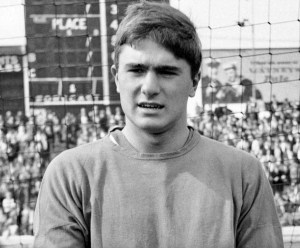
Derek Forster had started out at Sunderland and was only FIFTEEN when he played in goal in front of a 45,000 Roker Park crowd in the opening game of the 1964-65 season.

The youngster let in three – but so did his opposite number, Gordon Banks, the England international who was in goal for opponents Leicester City.

“Derek’s a wonderful prospect. From what I could see, he didn’t make a single mistake,” said Banks after the game.

Forster had played in front of an even bigger crowd a few months’ earlier when 95,000 at Wembley saw him keep goal for England Schools against West Germany.

But those early tests of nerves were of little consequence because Forster’s career didn’t pan out quite as he might have wanted.

Sunderland’s first choice ‘keeper, Jim Montgomery, was one of the country’s top goalkeepers, best known for a match-winning double-save for the Wearsiders in the 1973 FA Cup Final at Wembley when second tier Sunderland beat high-flying Leeds United 1-0.

Montgomery remained largely injury-free – and made a record 627 appearances for Sunderland – meaning over the course of eight years the 5’9” Forster only got to play 30 league and cup games for the Mackems.

It was only after that amazing FA Cup win in 1973 that Forster finally left his home in the north-east and tried his luck in London. He joined third tier Charlton who were managed by Theo Foley, a former Eire international teammate of his old Sunderland playing colleague, Charlie Hurley.

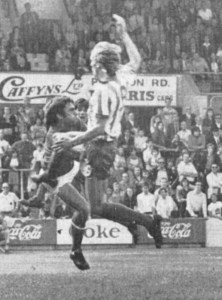
Forster was soon in action for the Addicks, ironically playing against Brighton twice within 18 days at the Goldstone (they won 2-1 in the League Cup and in the League). Below left in a collision with Lammie Robertson.

But he was not able to dislodge the experienced John Dunn permanently from the no.1 spot and was limited to nine appearances. He moved during the close season to the Albion, where Brian Clough and Peter Taylor had dispensed with the services of long-serving Brian Powney as part of a 13-player clear-out.

Forster actually joined Albion on the very day that it was announced Taylor was staying at Brighton to take sole charge after his managerial mate Clough quit to join Leeds United.

At the Goldstone, though, Forster found the holder of the no.1 jersey, Peter Grummitt, was another in the same ilk as Montgomery. Grummitt, who’d been one of the pair’s first signings not long after they’d arrived at the Goldstone in the autumn of 1973, had played more than 350 games at the highest level for Nottingham Forest and won three caps for England’s under 23 side, where he vied for the goalkeeper position with Chelsea’s Peter Bonetti.

Arguably one of the best Albion goalkeepers ever, it was perhaps no surprise Grummitt’s form restricted Forster to only three appearances. Ironically, when Forster did get his first team break, he conceded six in his first match.

In spite of pre-season optimism from Taylor, Albion had only three wins on the board from their first 13 games, and when the side went to Fellows Park, Walsall, on 1 October, Forster was like a sitting duck as the Saddlers thumped Albion 6-0. Grummitt was back between the sticks for the following five matches.

No stranger to strong disciplinary measures when he deemed it right, in October Taylor made six first teamers who’d lost 3-2 at Grimsby the previous evening play for the reserves at home to Millwall the following day.

Forster was the last line  of defence in that experienced line-up, and made some important stops on three occasions, but still conceded three. However, the involvement of the first team contingent saw Albion win 5-3: Ian Mellor scoring all five Brighton goals.

Three weeks later, after player-manager Bobby Charlton’s visiting Preston North End side won 4-0 at the Goldstone, Forster stepped in for Grummitt for the second time – and once again was on the losing side: 2-1 at Gillingham.

His one and only winning experience in an Albion shirt came the following week at Prenton Park when Albion beat Tranmere Rovers 2-1. In front of just 2,134 supporters, that win proved to be Forster’s third and last first team appearance.

Taylor obviously wasn’t wholly convinced by his back-up ‘keeper that autumn because he took a look in the reserves at triallist Jim Inger, from assistant manager Brian Daykin’s old club, Long Eaton.

Nevertheless, Forster remained the back-up ‘keeper, a role he continued throughout the 1975-76 season without being called on for the first team because Grummitt was ever-present. The disillusioned Forster departed, admitting he was “cheesed off at Brighton”.

In fact, he quit the professional game, returned to the north-east and played local league football while taking on a job at Washington Leisure Centre (run by Sunderland city council’s leisure department), where he worked for 30 years.

He was in the news in 2010 when it was revealed that three years earlier he had lost the sight in his left eye through cancer.

“It changes your whole life,” he told the Northern Echo. “You either jump off the bridge or you tell yourself to get on with it.

“It makes you realise that it doesn’t matter how hard you train, or how careful you are about what you eat, it’s someone else who’s calling the shots.”

Forster, who retired from the city council, added: “We presumed that we’d do all sorts when we retired and then I realised that I mightn’t even have got that far.

“Now we don’t presume anything. I’ve changed a lot; if that tumour had spread I was a goner. Now every day is a Sunday.” Forster fought on for a few more years before he died aged 75 on 2 May 2024.

Born in the Walker suburb of Newcastle on 19 February 1949, Forster went to Manor Park School in the east end of the city: actor Jimmy Nail and Sunderland and England footballer Dennis Tueart were other alumni.

As a promising centre forward, Forster had trials with the city’s under-11s. “One of the goalies didn’t turn up, so they asked me to play there,” Forster recalled.

“I’d honestly never kept goal in my life, not even in the back street, but I had a blinder. Caught every ball. After that, I never played anywhere else.”

The young Forster’s prowess earned him selection for the England Schools side on nine occasions, in a squad that included future stars Trevor Brooking, Colin Todd,  Colin Suggett and Joe Royle.

Sixty years on, it seems extraordinary to discover crowds of 95,000 would fill Wembley to watch the cream of England’s schoolboys, but vintage black and white film footage available on YouTube confirms it.

The all-things-Sunderland website rokerreport.sbnation.comisa detailed source of how Forster made history, and it is certainly a rather curious tale.

Initially signed as an amateur by Sunderland, he was then taken on as an apprentice but for two weeks of the 1964-65 pre-season month he’d been on a family holiday in Blackpool.

He’d trained for just a week and had never seen his new teammates play competitively. Then regular goalkeeper Montgomery sustained a hairline fracture of his left arm in training.

The opening game of the season – Sunderland’s first game back in the top flight after winning promotion – was only a matter of days away and they were without a manager because Alan Brown had left in acrimonious circumstances to take charge of Sheffield Wednesday.

Brown was temporarily replaced by a ‘selection committee’ of club officials and team captain Charlie Hurley.

The assumption was that the 20-year-old reserve goalkeeper, Derek Kirby, would deputise for Montgomery but, instead, they turned to Forster, who’d had that experience of playing in front of a huge crowd at Wembley.

After being called into club secretary George Crow’s office on the Thursday morning to be told he’d be starting, he said: “This is the greatest moment of my life. I had no idea that I would get my chance so soon, even after Monty’s unfortunate injury.

“I only hope I will justify the confidence shown in me and don’t let anyone down.

“I expect I shall be a little bit nervous, but it will be wonderful – and inspiring – playing behind Charlie Hurley and company.”

Even though he let in three, not only did he have the praise of Banks ringing in his ears, but his captain Hurley said: “A great game. If he goes on like this, he’ll have an exceptional future.”

The following Monday’s Echo said the young ‘keeper had “the agility of a panther” and was “bursting at the seams with talent”.

While The Journal’s Alf Greenley reported: “The crowd were with him to a man, even, I suspect, the not inconsiderable contingent of Leicester followers who had made the trip and the reception accorded to him when he turned out was only exceeded by that at the end.

“It was a truly remarkable performance for one so young.

“He handled the ball in the swirling wind with the confidence of a veteran, positioned well and stood up to the onslaught of the Leicester forwards like one far in advance of his years.”

Forster was just 15 years and 185 days old on the day of the match and he remained the youngest-ever top-flight footballer until 18 September 2022 when Arsenal’s Ethan Nwaneri rewrote the record books coming off the bench in the 89th minute of the Gunners’ 3-0 win at Brentford yesterday. He was aged just 15 years and 181 days.

It remains to be seen what sort of future Nwaneri might have in the game. For Forster, although he played the next few games, Montgomery returned and the teenager was left to hold a watching brief although he was still young enough to play a key role in Sunderland’s successful youth team of the mid-1960s.

In 1965, Sunderland lost the two-legged FA Youth Cup semi-final 5-0 to Everton for whom two goals in the Goodison first leg 4-0 win were scored by Jimmy Husband, who’d been a schoolmate of Forster’s in Newcastle.

Sunderland lost the 1966 final 5-3 on aggregate to Arsenal (who included Pat Rice and Sammy Nelson), when Forster’s teammates included the future Cup Final side captain Bobby Kerr, Billy Hughes, Suggett and Todd, who went on to win the league with Derby County and play for England.

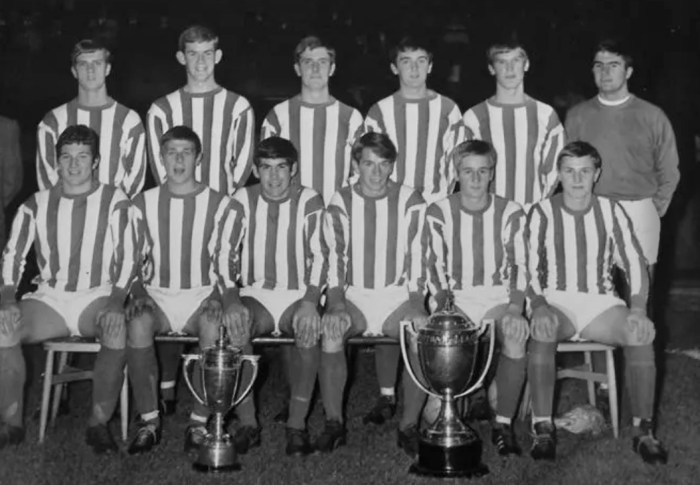
Forster was still the last line of defence when the Wearsiders (above) finally won the trophy in 1967, a 2-0 aggregate scoreline seeing off a Birmingham City side that had future England international Bob Latchford at centre forward.

Less than 48 hours after the game, Forster, Hughes and Suggett travelled to North America as part of a squad selected by manager Ian McColl to represent the club in the United Soccer Association, where they played seven matches under the guise of the Vancouver Royal Canadians.

Retrospectively, Forster regretted not moving on sooner from Sunderland. But he told the Northern Echo: “Sunderland were one of the top youth clubs and they were very good to me. I should have left much earlier, seen the signs, but in those days players were genuinely loyal.

“You didn’t just ask to leave as soon as you were dropped. I decided to stay. It was my mistake. Monty never got injured again for five years, though I tried hard to kick him in training. He was an exceptional goalkeeper.”

Forster likened his situation to Newcastle’s Shay Given and Steve Harper. “Both very good goalkeepers, but maybe one a bit better than the other.”

Albion offered temporary refuge to winger Scott Thomas

A PLAYER seen by only a few hundred loyal Albion supporters played under Brian Horton for Manchester City and Brighton.

Scott Thomas was spotted by City as an 11-year-old, joined them straight from school and was on the club’s staff for six years.

But he only ever featured for the first team on two occasions, in successive matches during Horton’s Maine Road reign.

Thomas in City’s sky blue

A serious injury while playing on loan in America dealt a devastating blow to his hopes of a top flight career, and when City overlooked Thomas during the club’s slide towards the third tier, Horton threw him a brief lifeline.

Albion’s former captain, back at the club as manager when they played home games in exile at Gillingham, inherited a side in turmoil when he took over from Steve Gritt in February 1998.

Albion were second from bottom of the basement division and had endured a 12-game winless home run under Gritt. A Valentine’s Day nightmare 0-0 draw at home to bottom club Doncaster Rovers followed by successive away defeats against Rochdale and Exeter saw chairman Dick Knight wield the axe on a man who had delivered the miracle escape from relegation less than a year earlier.

Horton wheeled and dealed as best he could with limited resources and, after one of many loanees, Steve Barnes, returned to parent club Birmingham City, he remembered the youngster who he’d given a couple of outings to at the end of the 1994-95 season.

Paul Dickov and Scott Thomas

It seems extraordinary to say it now, but Manchester City were in a pretty desperate plight themselves between 1996 and 1998. Five different managers took charge over the course of the 1996-97 season. Alan Ball was in charge at the beginning, he was followed by Asa Hartford. Then Steve Coppell took the reins, before deciding after six matches that it wasn’t for him. Former Liverpool full-back Phil Neal succeeded his former England teammate. Eventually, former Nottingham Forest player and boss Frank Clark took over.

Clark was still in charge at the start of the following season, but a run of poor results saw him off, replaced by former Everton and City centre-forward Joe Royle. He couldn’t stop the rot and City were relegated to the third tier for the first time in their history.

Although a total of 38 players saw action in that desperate but ultimately fruitless attempt to avoid relegation, Thomas wasn’t one of them.

There had been a succession of players not wanted at other clubs who pulled on Albion’s stripes that season and Horton turned to blond-haired winger Thomas on the eve of the March transfer deadline day as he shuffled his pack trying to steer the side away from the bottom of the fourth tier.

“He can play on either wing or down the middle,” said Horton, by way of introduction in his Albion matchday programme notes.

Scott Thomas (front row, second from right) in a pre-match Albion line-up

After making his debut in a 0-0 draw at Cardiff City on 28 March 1998, skipper Gary Hobson declared: “Scott Thomas did well on the right of midfield.” And Horton said: “I was pleased with the first game for Scott Thomas, he looked lively and he came off with a bit of cramp late on.”

It was the first of seven games Thomas played for the Seagulls as the season drew to a close, and in his second game Albion earned their first win in six matches, beating Scunthorpe United 2-1 in front of a Priestfield crowd of 2,141.

Thomas took over the no.9 shirt v Scunthorpe

He switched wings and played on the left in that match and Horton made a point of mentioning in his programme notes how the youngster had been unlucky to have been denied by a fantastic save by Iron ‘keeper Tim Clarke.

Unfortunately, that was the only game in which he was on the winning side: Albion drew three and lost two in the remaining matches. And Thomas was sent back to City at the season’s end.

It has since emerged that a serious injury the winger sustained two years earlier ultimately put paid to him continuing to play professionally.

He had been sent on loan to the United States to play for Richmond Kickers in Virginia. He told the Bolton News: “It was a brilliant opportunity being in the States but I shattered my left leg in four places and had to come back. I was gutted.”

As part of his recovery, he was sent to his local gym, Phoenix Health and Fitness in Bolton, and, four years after the injury forced him to retire, he bought it.

Gym owner

“Football will always be my main love,” he told the newspaper. “Keeping fit has played such a big part of my life — I’ve done various marathons and two Ironman triathlons too — so owning a gym was a natural choice.”

Born in Fairfield, Bury, on 30 October 1974, Thomas told the newspaper his father reckoned he started kicking a football against a wall or fence as soon as he could walk.

He was playing for Radcliffe Juniors when he was seven and, at 11, was scouted by City while he was playing in the Bury League.

“I thought it was brilliant at the time – it was a really big deal,” he said. “I did trials in the school holidays and then trained after school, so I’d get a bus from Bolton, through Bury and into Manchester to meet my dad before going to the grounds.”

Thomas’ son, Luca, has followed in his father’s footsteps. He worked his way through City’s academy sides but when he turned 16 switched to Leeds United’s scholarship scheme.

In the 2021-22 season, he scored 15 goals in 17 matches in the Under-18s Premier League North, and in August 2022 signed a two-year professional contract with Leeds.

“It has changed from when I was younger,” Thomas Snr told the Bolton News. “They have to grow up a lot quicker these days. It’s such a cut-throat industry: you can be flavour of the month one minute, winning Young Player of the Year like me, then out with an injury the next.”

Both of Scott’s City first team appearances were as a substitute. The first was on 6 May 1995 when he went on for Maurizio Gaudino on the hour mark at the City Ground, Nottingham. Forest won by a single goal, scored by Stan Collymore in the first half.

Matchday programme

Eight days later, Thomas only got on in the 83rd minute when he replaced Paul Walsh as City went down 3-2 at Maine Road to QPR, for whom Les Ferdinand scored twice.

The winger also played in America for Richmond Kickers founder Bobby Lennon’s other club, Palm Beach Pumas, and he is quoted on the US Soccer Academy website as saying: “The level of football was excellent. Even though my career was cut short due to an injury, I will always have great soccer memories of my time in Florida.”

Nicky Forster was the definition of a goalscoring thoroughbred

NICKY FORSTER played for and managed Brentford as well as captaining Brighton and scoring a vital relegation-saving goal into the bargain.

The Surrey-born striker, who played alongside David Beckham for England under-21s, scored more than 200 goals in 700 games and it always seemed a shame that his time with the Seagulls didn’t come sooner in his career.

He built a reputation for finding the back of the net at first club Gillingham and was prolific in his first spell with the Bees but he viewed his six years leading the line for Reading as his most successful time in the game.

Forster plundered 67 goals in 179 games (plus 35 as a sub) in six years with the Royals, mostly playing under Alan Pardew and Steve Coppell, but he left for pastures new before they reached the Premier League.

A free transfer took him to Ipswich Town, where Joe Royle’s side were competing in the Championship, and, although Forster top-scored for the Tractor Boys, his total of seven typified a rather lacklustre campaign. One of those goals came against Brighton on Easter Saturday when the relegation-bound Seagulls pulled off a shock 2-1 win courtesy of goals from on-loan Gifton Noel-Williams and young Joel Lynch.

Forster scored in each of the three remaining games that season but they were his last for Town because he moved to link up with his former Reading teammate, Phil Parkinson, at Hull City, who paid £250,000 for the striker’s services. Forster scored six times for City as the side battled to retain their tier two status. Albion tried to sign Forster in January, but Parkinson’s successor Phil Brown wanted to keep him, and they rejected Albion’s £100,000 bid.

Albion finally got their man for £25,000 less in the summer that year, and, in a side largely made up of promising youngsters, in Forster they gained more than just an experienced striker.

Brighton fans were given an idea of what to expect from the new signing when his former Reading teammate Bas Savage told the Argus: “I played a few games with him in the first team and he will definitely bring goals. He is proven wherever he has been.

“He is also a very intelligent player. He makes good runs, works hard, has got very good pace and he can finish, so he will be an asset to Brighton, especially in League One. I think he will really shine.

“He will fit in easily to the dressing room as well. He was a joker at Reading, very funny and a good, bubbly character to have around.”

Savage added: “He was one of the top strikers at Reading and I learnt off all of them.

“I was a young boy at the time and, whoever it is that plays, Alex Revell, Nathan (Elder), Gatts (Joe Gatting), I can see them working well with Fozzy.

“It will be good to link up with him again and hopefully show our stuff together. I know Fozzy’s strengths and I will be looking to help him along in the same way that he can help me along. He brings experience to the team.”

Emerging defender Tommy Elphick was certainly appreciative of the new arrival. “Apart from in games, he brings a competitive edge to training,” he said. “In my eyes he is a bit of a legend really, the model pro on and off the pitch.”

When interviewed by Mike Ward for the matchday programme later that season, Forster declared: “I really am enjoying it here at Brighton. I like being on the training ground and I enjoy playing.

“I am now getting old in football terms, but I have got as much enthusiasm and energy for the game now as I had when I started. I feel that I am a better player now and I am enjoying my football as much as ever.”

Sure enough, with 19 goals in 48 appearances in the 2007-08 season, there was no question Forster proved a great addition to Dean Wilkins’ squad, and he took over as captain when Dean Hammond left the club under a cloud.

In the second half of the season, after Glenn Murray was signed from Rochdale for £300,000, manager Wilkins declared to the Argus: “I think we have got one of the best strike pairs in the division, one of the most threatening.

“When we have got possession and play with a bit of quality they are a really potent pair. If you have got a pair that score 20 goals a season you would expect to be quite successful.”

Unfortunately, seventh place in League One (seven points off the play-off places) was not quite successful enough for chairman Dick Knight, who turned to former boss Micky Adams to steer Albion’s fortunes in the 2008-09 season (a furious Wilkins declining the offer of continuing as first team coach).

While Forster got off to a great start under Adams, scoring a last-minute goal to seal a 2-1 win for the Seagulls in the season-opener at Crewe Alexandra, the Albion’s fortunes gradually unravelled as Adams chopped and changed the side with what, on reflection, were too many loan signings.

For a while, things didn’t look too clever after Russell Slade had been parachuted in to try to stave off the threat of relegation.

At a time when the new boss could really have done with Forster and Murray firing on all cylinders, both were sidelined with injuries. Forster missed eight matches with what was thought might be an anterior cruciate ligament injury in his knee.

Thankfully another former Brentford striker, Lloyd Owusu, stepped into the breach to score some vital goals, together with loan signing Calvin Andrew and the rejuvenated Gary Hart.

Nevertheless, going into the last game of the season, at home to Stockport County at Withdean, Albion still needed to win to avoid the relegation trapdoor.

When Hart left the action early and his replacement Andrew had to be withdrawn at half-time with what turned out to be a bad ACL injury, Slade had no option but to turn to the by-no-means-fit Forster to enter the fray from the bench for a crucial second half.

Fortunately, after County ‘keeper Conrad Logan could only parry a shot from Gary Dicker, Forster was on hand to stab in the only goal of the game from six yards, sparking massive celebrations.

Forster later conceded in an Argus interview: “It wasn’t quite right but I got through the game and the goal was a gift. I didn’t have to be particularly mobile to score it.

“I dosed up on tablets and rehabbed and was really determined to be involved in that game. Thankfully it worked out for me and for Brighton. But I wasn’t 100 per cent. I still had that niggling feeling.”

In a subsequent exploratory operation, it turned out that torn cartilage had been Forster’s problem and he underwent surgery during the close season, somewhat ironically the procedure being delayed a little while because the surgeon involved was operating on Andrew!

“When they took me down to the anaesthetist’s room, there was a guy in there before me,” said Forster. “I had to wait ten or 15 minutes and they said it was an ACL reconstruction going on. I didn’t realise it was Calvin.”

Tony Bloom took over from Dick Knight as Albion chairman that summer and, when the new season got under way, Slade had decided to give the captain’s armband to defender Adam Virgo (Forster remained club captain).

The opening part of the season went horribly wrong and, with only three wins in their first 15 matches, Slade was replaced by effervescent Uruguayan Gus Poyet.

By the end of January, Forster had scored 15 times in 27 matches (plus three as sub), but the beginning of the end of his time with the Albion was nigh when a contractual dispute went public.

The player, by then 36, wanted to know whether he was going to be offered a contract the following season, but that commitment wasn’t forthcoming. Forster aired his dissatisfaction in the media and Poyet left him out of the side.

Forster subsequently clarified his position in a statement on the club website, saying: “I have thoroughly enjoyed my playing years with Brighton and genuinely hoped – and still do – that I would remain at Brighton until the end of my playing days, hopefully with the opportunity to take up a training role.

“The decision to delay the offering of contracts makes life very difficult, particularly for players of my age. I have always been totally committed to Brighton and will continue to be so.”

While the air was cleared, and he was restored to the line-up for a 1-1 draw away to Leeds, that turned out to be his last start for the Albion. Only a matter of weeks later he was sent out on loan to Charlton Athletic until the end of the season, once again linking up with former teammate Parkinson.

Nevertheless, his 51 goals across two and a half seasons at the club were the best measure of his contribution and he was later a more than interested onlooker of Brighton’s fortunes when his stepson, Jake Forster-Caskey forced his way into Poyet’s Championship side.

Born in Caterham, Surrey, on 8 September 1973, Forster was comparatively late into the game, staying on at school to take A-levels.

But he had a lucky break when he played for non-league Horley Town against Gillingham in a friendly. “It was a real right-place-at-the-right-time scenario,” he told Ward in another Albion matchday programme interview.

Gillingham offered him the chance to become a professional and after impressive displays for their youth and reserve sides, he duly signed professional terms in May 1992 when Damien Richardson was in the manager’s chair.

The Gills sent him out on loan to Southern League Margate and Hythe Town. Forster’s career stats are comprehensively recorded by the Margate history website, even though he only played one game for them, when he scored with a clever lob after three minutes of his debut.

Back with the Gills, Forster made his first team debut in September 1992, going on as sub in a 4-1 home win over Wrexham. He went on to establish himself in the side under former Charlton striker Mike Flanagan in the 1993-94 season, top scoring with 18 goals. It was an achievement which prompted Brentford to pay a fee of £320,000 to take him to Griffin Park in June 1994.

The 1994-95 season is firmly etched in the annals of Brentford’s history because David Webb’s side were denied promotion to the elite when a one-off organisational blip meant the fledgling Premier League only took one promoted side from the division below – and the Bees finished second!  

Forster had proved a major hit at his new club alongside strike partner Robert Taylor, with the pair netting 47 goals between them (Forster got 26 of them). But automatic promotion was denied when Brentford “choked” in the last month of the season and their agony was compounded when they lost on penalties to Neil Warnock’s Huddersfield in the play-off semi-finals.

For Forster personally, however, his goalscoring prowess brought him to the attention of the international selectors and in June 1995 he earned four England under 21 caps at the Toulon tournament in France, making his debut in a 2-0 defeat against Brazil in a team featuring future full internationals Beckham and Phil Neville.

Forster scored England’s only goal in his third match for Ray Harford’s side, as they beat Angola. He also played in the 2-0 win over Malaysia and in the semi-final against France, when they lost 2-0.

The Bees failed to follow up their near miss the following season, finishing 15th and, although at one point there was talk of Crystal Palace preparing a £2m bid for Forster’s services, it came to nothing. The striker damaged knee ligaments in October 1995 and managed to find the net just the eight times by the season’s end.

It promised to be a different story in 1996-97, though. With Carl Asaba and Marcus Bent supplementing the Forster and Taylor strikeforce, Brentford got off to a flyer and topped what is now the Championship courtesy of an 11-match unbeaten run at the start of the season.

However, the bcfctalk blog was incredulous at what happened next. “We were coasting at the top of the league when the quite staggering decision was taken in January to sell Nicky Forster to arch-nemesis Birmingham City for a mere £700,000.

“He was never replaced, the prolific Carl Asaba was mysteriously shifted out wide to the left wing and the remaining 17 league matches produced a mere 18 points. We failed to score in ten of our last fourteen games and won only once at home after Christmas.”

Forster’s desire to progress his career didn’t play out well with the supporters of Brentford or Gillingham.

“I get booed every time I go there,” he told Brighton’s matchday programme. “It’s sad because I feel I did well for both clubs. And what they paid for me wasn’t a huge amount, so value-for-money wise I feel I did very well for them. It’s not something I worry greatly about, but I do think it’s time they learnt to forgive and forget.

“I don’t think they can really begrudge a player wanting to move on and better himself, better his career. Sometime fans can be a bit fickle!”

While Forster hoped to establish himself at Birmingham, he struggled to get a starting berth in a side managed by former Blues playing legend Trevor Francis. Paul Furlong and Peter Ndlovu were preferred up front, and later Dele Adebola. Forster invariably had to be content with involvement of the bench. Indeed, 46 of his 75 Blues appearances were as a substitute and, when he left for Reading in June 1999, he’d got just 12 goals to his name.

That all changed once he’d made the switch to the Madejski Stadium. The goals flowed (in 2002-03 there were two hat-tricks included in his season’s tally of 17) and in his six seasons with the Royals he notched 67 goals in 214 appearances (35 of which were as a sub).

His form tailed off in his final season with Reading and he began to look elsewhere because he wanted a longer contract than the club were prepared to offer.

Nevertheless, he respected manager Coppell and, when later in his career he took over as boss at Brentford, he said: “I was with Steve Coppell at Reading and I like his manner and demeanour. He is not a ranter and raver. I just like the way he goes about his business.

“He is quite a subdued guy when he speaks, but he speaks a lot of sense. When he talked to me, whether I liked it or not, I couldn’t really argue because it made a lot of sense.”

When Forster returned to Griffin Park as a player at the start of the 2010-11 season, he reflected: “The club holds many happy memories for me. Both the club and I have moved on over the years but I still have the hunger and the mobility to give a good account of myself.”

Manager Andy Scott added: “His goalscoring is a major attraction as that is an area where we have struggled to compete with other teams.

“His ambitions match those of the management team. He is a very dedicated footballer who will add experience, competition and, more importantly, goals to the team.”

Sadly, it didn’t pan out well with Forster only making 12 starts and scoring once. After a topsy turvy six months, Scott and his assistant Terry Bullivant were dismissed and Forster took over as caretaker boss, assisted by Mark Warburton.

When the Bees collected 14 points from six games, the temporary stint was extended until the end of the season.

Remarkably during his brief tenure, Forster took charge of Brentford at Wembley for the final of the Johnstone’s Paint Trophy, which they lost 1-0 to Carlisle United.

Brentford centre back Leon Legge said later: “Growing up, Wembley was always a sacred ground that not many people get to play at. I wanted to win so bad but it was just a shame we came second-best, especially against Carlisle, who we’d played just over a week earlier and beaten 2-1. Everything went for them that day.

“I know the gaffer at the time [Nicky Forster] made a few changes and I don’t think many agreed with it – for example, Marcus Bean didn’t play when he’d been such a good player leading up to that game. I think that made a difference.

“I still remember looking at the crowd of 40,000 and to play in such a sacred ground in front of that many fans, whether we won or lost, it was a good experience.”

Despite leading Brentford to a mid-table finish, Forster was told he was not in the running for the job on a permanent basis, and Uwe Rösler was appointed instead.

Nonetheless, Forster decided management was his next step and announced an end to his playing days.

“I have had a fantastic career, but the time has come to cross over into management,” he said.

“I’ve scored 200 goals in 700 games and haven’t got anything left to achieve as a player, so I want to concentrate on management.”

The eloquent Forster popped up on Sky Sports, covering Football League matches, and also brought his boots back out to play for Sussex County League side Lingfield.

Then, in September 2011, Forster was appointed player-manager of Blue Square Bet South club Dover Athletic, whose chairman Jim Parmenter said: “Nicky has had an impressive playing career at some big clubs and did very well during his time as manager at Brentford.

“As well as having both UEFA ‘A’ and ‘B’ licences, he is also a great man manager and motivator. Nicky is totally enthused by the prospect of managing the club and we look forward to a very successful future.”

Among his signings were former Brighton teammates Steven Thomson and young goalkeeper Mitch Walker.

Forster said: “I am delighted get Thommo down here at Crabble, especially as his signature was being chased by a number of other clubs both in our league and above. He is an experienced professional who is still hungry for success.”

Sadly, after a run of five successive defeats, his time in charge at Dover was brought to an end in January 2013 when he was replaced by the club’s former manager Chris Kinnear.

Two years later, Forster gave management another go taking charge of Conference South side Staines Town. But he quit after a year, telling getsurrey.co.uk: “I enjoyed every moment even though we had some low times, but it’s a learning experience and I left on good terms with the chairman and the fans who were great to me.”

In September 2016, Forster set up his own gym – The Spot Wellness Centre – in Godstone. As well as running that, he is now self employed and, on LinkedIn, describes himself as a goal setting coach and keynote speaker.

• Pictures from the Argus, Albion’s matchday programme and online sources.

Set-piece expert Darren Currie earned Uncle Tony’s approval

THE PINPOINT accuracy of Darren Currie’s passing and shooting was a joy to watch, even though a lack of pace stopped him being as good a player as his famous uncle.

Currie was a decent player in his own right, making nearly 700 appearances for 15 different clubs, but wherever he went he was always known as the nephew of the former Sheffield United, Leeds, QPR and England creative midfielder Tony Currie.

Perhaps with a hint of family bias, Uncle Tony said in an interview for ITV Digital: “Darren is, without doubt, the best crosser of the ball, after Beckham, in the country. He’ll produce nine times out of ten, right foot or left foot.”

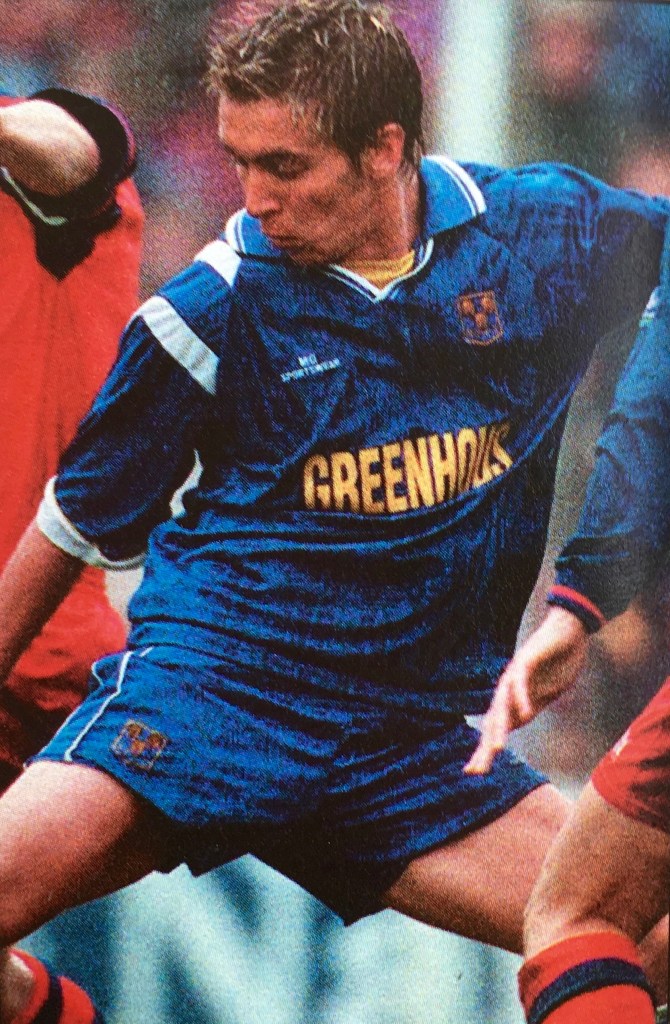
The young Currie attributed his crowd-pleasing skills to the start he was given in the game by West Ham. After 10 years stuck in the lower leagues, Currie was given a platform to perform in the Championship by Brighton, and he very nearly made it to the top when transferred for £250,000 to high-flying Ipswich Town.

As if by a cruel twist of fate, Ipswich lost to the Hammers in the 2004-05 Championship play-off semi-finals having just missed out on automatic promotion.

“Playing for West Ham at youth and reserve levels was a terrific way to start a career,” Currie told the Ipswich Star. “They gave me everything but my debut.”

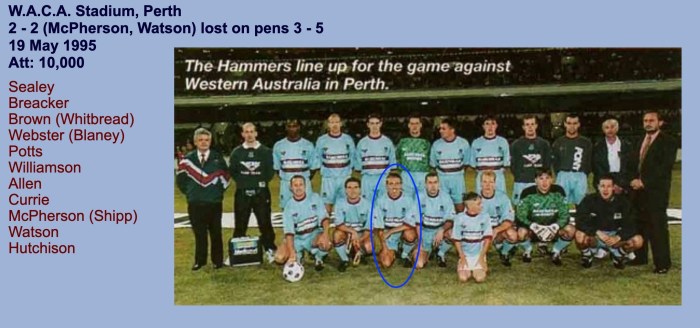
He certainly came close though, featuring alongside recognised first-teamers like Lee Chapman and Frank Lampard in friendlies and testimonials, but he had to move elsewhere to gain competitive first-team action.

Initially he had loan spells with Shrewsbury Town and Leyton Orient, and when the Shrews bid £70,000 for him in 1996, he chose to drop down a couple of divisions to get regular football.

“The difference in money was only about £50. The then West Ham manager Harry Redknapp called me in and said that I was an adult and had to think about continuing to play regular first team football,” Currie explained. “I was given the opportunity to have a new contract at West Ham or moving permanently to Shrewsbury.

“I was a young pro at West Ham and I had been out on loan a couple of times and I got the buzz for playing at three o’clock on a Saturday afternoon. There was no other feeling like it.

“I thought to myself I’ll go to Shrewsbury and I’ll play really well for a year and I’ll get a move back up to the top.

“My naivety kicked in then because it didn’t quite happen. I thought I’d done OK and I was linked with a couple of moves but the route back to the top wasn’t as simple as I thought it would be in my head.”

Indeed, it was a decade in which, after three seasons with the Shrews, he moved on briefly to Plymouth Argyle, then to Barnet (three seasons) and Wycombe Wanderers (three seasons).

Currie said it got to a point where Wycombe couldn’t afford to keep him, and boss Tony Adams made it clear he was free to look elsewhere.

Mark McGhee invited him to Brighton for a trial and was impressed with the way he knuckled down in training to get himself fit following a programme devised by McGhee’s deputy, Bob Booker.

Currie was offered a 12-month contract but it was more about the opportunity to play at a higher level that prompted him to sign.

“It wasn’t a fantastic offer – put it this way, Peterborough offered me three years – but it wasn’t about the money,” Currie told Spencer Vignes in an Albion matchday programme article.

“It was about the football and playing in the Championship. I was determined to do well and to prove myself, which I did. That’s when people began to sit up and take notice.”

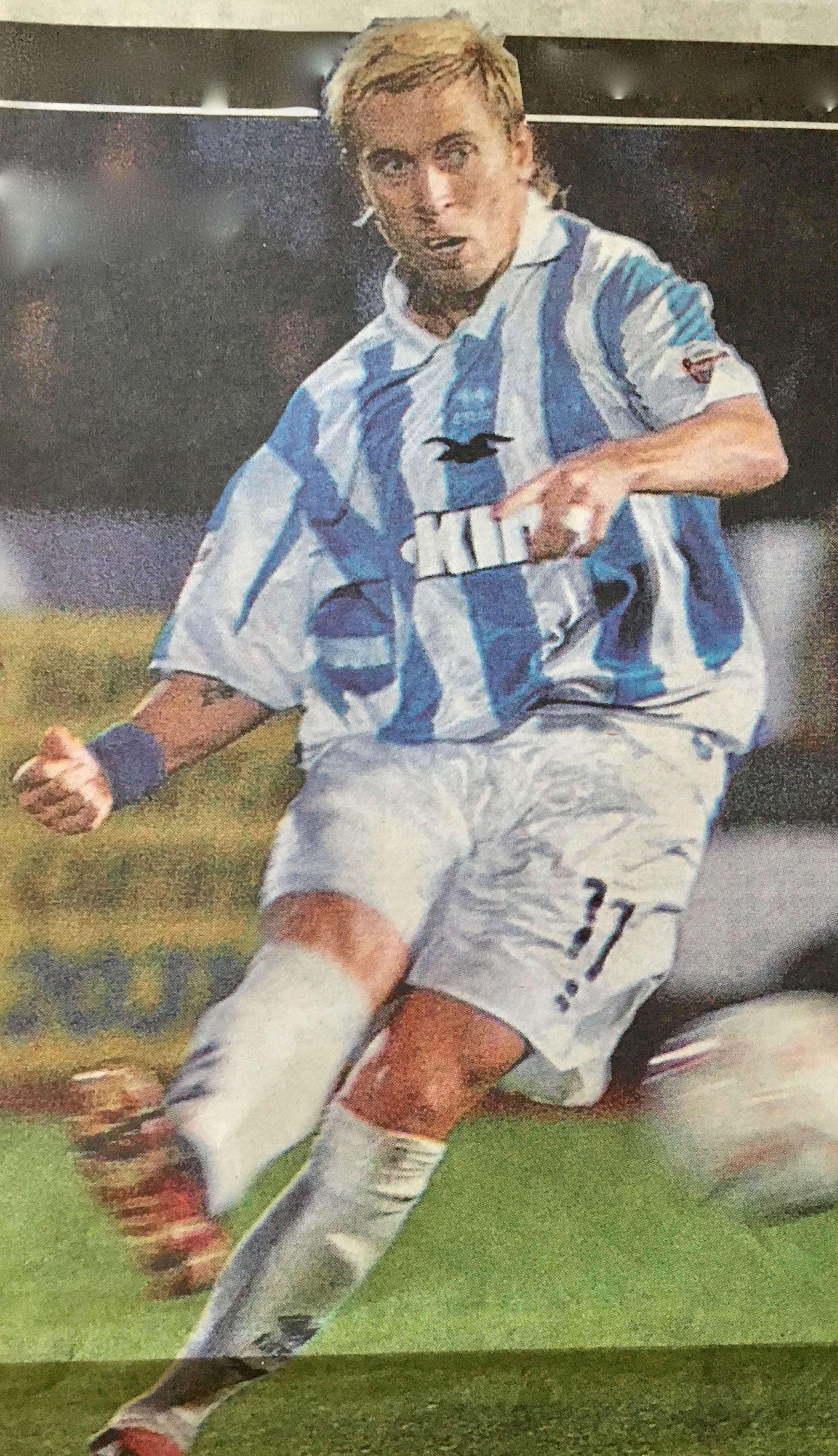
Currie’s ability on the ball carved him out to be a crowd-pleaser and the first of two goals for the Albion typically came from a free kick in a 3-2 home defeat to QPR that left Argus reporter Andy Naylor purring over its execution.

“Currie, having shaved a post and hit the bar with two earlier free-kicks, made it third time lucky from 20 yards just before the break. It was a sumptuous effort from the set-piece expert which rendered Rangers’ keeper Chris Day motionless.”

His other goal came in a 1-1 draw at home to Sheffield United, more noted for Albion wearing the limited-edition Palookaville strip to help publicise backer Fatboy Slim’s latest album.

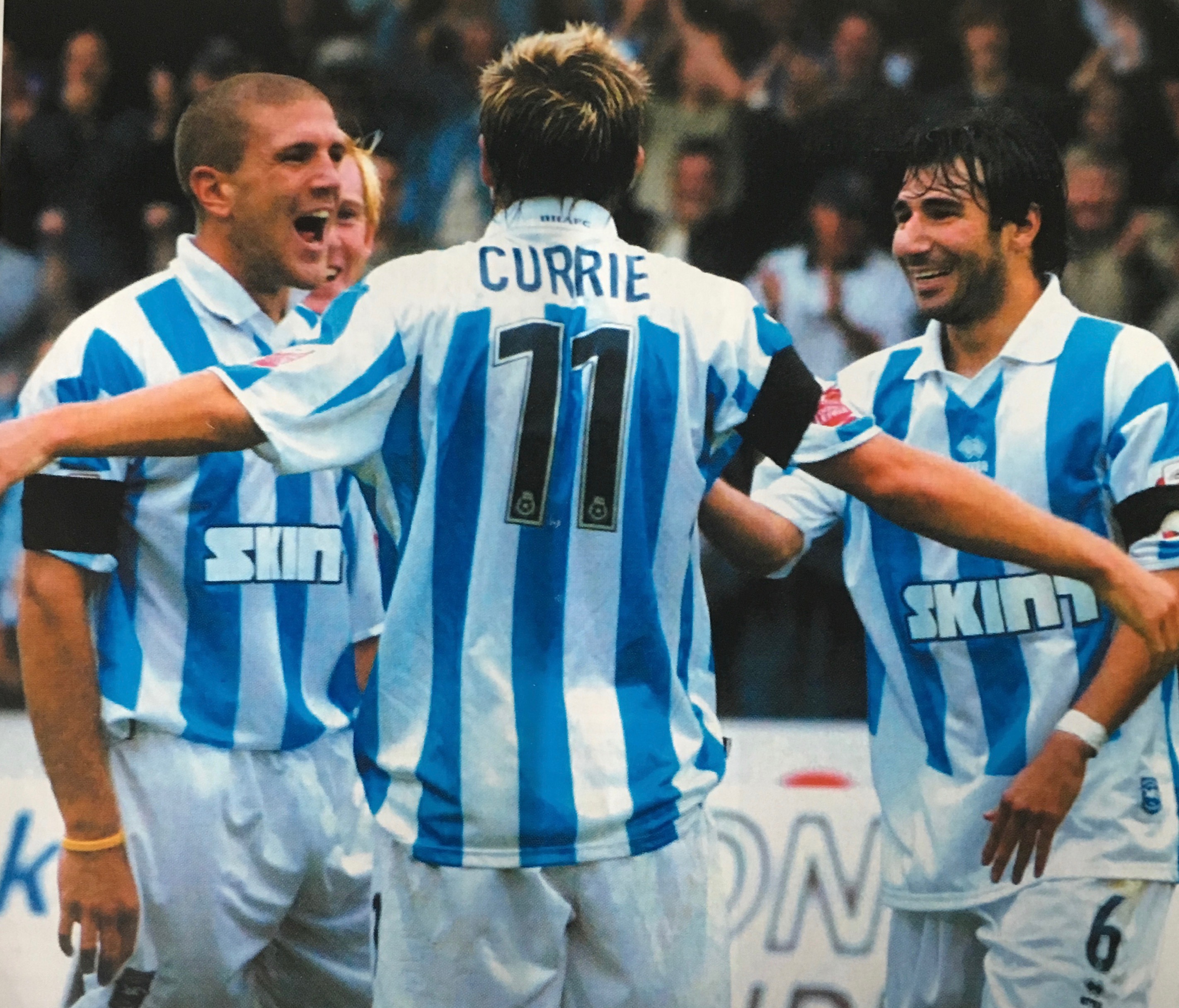
Injury-hit Albion considered it a point gained rather than two dropped and Naylor complimented Leon Knight for “superbly crafting” Currie’s goal by evading his marker and threading a square pass through the legs of Leigh Bromby.

“Currie, with time as well as room, picked his spot to score, which meant even more to him because of the opposition,” wrote Naylor, informing readers that the Yorkshire side had rejected him as a 16-year-old following a fortnight’s trial.

Unfortunately for Currie, he was only on the bench when the Albion travelled to Upton Park on 13 November 2004. After three successive defeats, McGhee confessed he set the side up not to lose rather than go for a win.

Somewhat ironically, the Seagulls blagged a 1-0 win courtesy of a Guy Butters goal, in a real backs-to-the-wall match, with veteran striker Steve Claridge ploughing a lone furrow up front.

It was only in the 90th minute of the match that McGhee introduced Currie in place of Claridge to play out the final few minutes of the game.

Currie only played 22 games for Brighton over four months but the fee they received for him from Ipswich gave a vital boost to club funds when they were struggling to compete in the division because of the restricted crowd numbers at Withdean. Having signed him on a free transfer, the deal was a no-brainer for the Albion hierarchy, even if it weakened a squad who subsequently only avoided relegation back to the third tier by a single point.

McGhee wasn’t that surprised to see Currie go, telling the Argus: “He was obviously happy here, but I thought he was doing so well that he would keep his options open.

“I cannot see Darren being a regular for Ipswich in the Premiership if they are promoted, but his skills and touch are good enough to justify him making a contribution to a squad in the Premiership.”

It didn’t pan out like that, but Currie was nonetheless grateful to the Albion, and told Vignes: “I am so pleased I had the chance to be a part of it all down there, to see what the support is like and to play with a group of lads who stick together through thick and thin.

“I played at the Goldstone when I was a kid, playing youth team football with West Ham, so I know how important the stadium issue is for everyone. I always will be extremely grateful to the Brighton fans and Mark McGhee because without a doubt without their help this opportunity wouldn’t have come along.”

Currie explained in a matchday programme article how McGhee had helped to develop his game and to add other dimensions which improved him. “I owe a helluva lot to Mark and Bob Booker,” he said.

Currie became an instant hit with the Tractor Boys fans earning the man of the match accolade in two of his first four games.

“I tend to build up a rapport with supporters wherever I go,” he told the Ipswich Star. “I am my own biggest critic and I know when I have done well, and I am very satisfied with my contribution so far.”

After his brief cameo for the Seagulls at West Ham, he got the chance to play against his boyhood club three times that season with Ipswich.

He was in the Town side that lost 2-0 at home to the Hammers on New Year’s Day 2005. Then, in the first leg of the play-off semi-final, Currie and Matt Richards (later a loanee with the Albion) were half-time substitutes who helped Ipswich to recover a deficit to draw 2-2.

Currie started the second leg and had Ipswich’s best opportunities with a shot straight at James Walker, then a long-range drive 10 minutes before the interval which the goalkeeper hopelessly misjudged but fumbled to safety. But they failed to make the final when Bobby Zamora scored two second half goals for West Ham to earn them a 2-0 second leg win. West Ham beat Preston in the play-off final.

Born in Hampstead on 29 November 1974, Currie’s early footballing talent drew interest from Watford and Chelsea, but he decided to join West Ham’s academy.

“The facilities were great, the training for us there as kids was first class and I really enjoyed my time there,” Currie said.

“A lot of the player I became was what I was taught as a kid at West Ham,” he told twtd.co.uk. “It was all about the ball and all about the technical skill and how to manipulate the ball. It was a way I enjoyed playing anyway so it was a really good fit for me.”

After signing professional in 1993, he was a regular in the West Ham reserve side and a trawl through the excellent archive website whu-programmes.co.uk records show he played in a Football Combination game away to Brighton on 1 April 1994, and later the same month was up against Guy Butters in Portsmouth’s reserve side at the Boleyn Ground. Mark Flatts and Paul Dickov were in opposition when the Hammers stiffs entertained their Arsenal counterparts at home on 11 May.

In an Avon Insurance Combination match at the Goldstone Ground on 30 November 1994, Currie scored the only goal of the game from the penalty spot in a West Ham side also featuring Lee Chapman and Frank Lampard.

The following summer, Currie played in four matches when he was part of West Ham’s squad on a centenary tour of Australia.

Shrewsbury boss Fred Davies, a former playing colleague of Redknapp’s at Bournemouth, took Currie on full time after his two loan spells at Gay Meadow.

He moved on to Plymouth Argyle in 1998 but only played five matches in three months, then switched to Barnet where he made 136 appearances, plus seven as a sub, in three years.

Wycombe Wanderers paid £200,000 to sign him in the summer of 2001 and manager Lawrie Sanchez told BBC Three Counties Radio: “He’s obviously a quality player. He gets crosses in and that’s an area where we weren’t very good last year. He’s come to add that to our game and his free kicks will trouble the ‘keeper as well.

“It was quite a lot of money for our club to spend but I’ve got to back my judgement. I’d looked at him for a while and quite liked him. He gives us something we haven’t got, he’s a great technician. He hasn’t got particularly great pace but what he does with the ball is tremendous. We’re hoping he does all the things he was doing at Barnet and a little bit more for us.”

Sanchez added: “A lot of people looked at him for a long time. He’s always been considered one of the best players in the Third Division and hopefully we’ll give him the stage where he can prove he’s one of the best players in the Second Division.”

After Currie’s flirtation with promotion to the Premier League ended in disappointment, Joe Royle left Portman Road and his replacement Jim Magilton axed Currie from the side in the 2006-07 season. He was sent on loan to fellow Championship sides Coventry City and Derby County, for whom he made a play-offs appearance as a substitute, although he wasn’t involved in the final when County beat West Brom 1-0.

That summer, on the expiry of his Ipswich contract, Currie moved on a free transfer to League One Luton Town. He made 38 appearances for the Hatters but when they went into administration, were deducted 10 points and relegated, he was among several players given a free transfer.

Micky Adams, back in the hotseat at the Albion, was hopeful of getting Currie back to Brighton for a second spell, telling BBC Southern Counties Radio on 11 July: “He’s a player I’ve admired for a long, long time. We want him, and he wants to come back. He’d offer competition for places and fantastic delivery from set pieces.”

But at the end of the month the player rejected the terms on offer and took up a three-year contract at Chesterfield instead.

While the first year at Saltergate went OK, in the second season, the manager who signed him, Lee Richardson, had been replaced by John Sheridan, and Currie was out of the picture. He went on loan to fellow League Two side Dagenham & Redbridge and the deal was made permanent in January 2010. Currie played in 16 matches as the Daggers won promotion to League One.

They went straight back down the following season, and Currie departed for Conference South outfit Borehamwood as player assistant manager. He was there less than three months before moving to Isthmian League Hendon for a year as a player.

In October 2012, Currie returned to Dagenham & Redbridge, initially as a development coach and later as assistant manager under John Still.

In June 2018, Currie was appointed assistant manager at National League side Barnet, working under Still. He succeeded Still in December 2018, initially as caretaker, before landing the role permanently in January 2019.

Currie, assisted by former Albion loanee midfielder Junior Lewis, came close to getting Barnet promoted to League Two but, having missed out, and the club struggling financially because of the Covid-related lack of fan revenue, both left the club in August 2020.

Paul Moulden chipped in with goals for Bournemouth and Brighton before batter days

MouldyWORLD RECORD youth level goalscorer Paul Moulden now runs a successful chippy in Bolton but he was once in the firing – rather than frying – line for AFC Bournemouth and Brighton & Hove Albion.

The career of the prodigious goalscoring wonderkid tailed off early although it may have taken a new direction in Sussex if the cash-strapped Seagulls had been able to afford to buy him.

Born in Farnworth, near Bolton, on 6 September 1967, Moulden went to the town’s Thornleigh Salesian College where, having excelled for the school football team, he went on to play for England Schools. He also played for Bolton Lads Club under-15s: his staggering personal goal tally of 289 goals in 40 games in a single season earned him a place in the Guinness Book of Records.

He was snapped up by Manchester City as an associate schoolboy during John Bond’s reign as manager and signed on as an apprentice before turning professional on his 17th birthday. He was part of City’s FA Youth Cup winning side in 1986, although manager Billy McNeill had already blooded him in the first team on New Year’s Day that year in a 1-0 home win over Aston Villa.

Moulden CityHe made two further substitute appearances for the first team that season and finished top scorer for City’s reserves. By late 1986, he had earned a regular place but a broken leg sustained in training restricted him to just three appearances in 1987-88.

In the 1988-89 season, Moulden was City’s top scorer with 13 goals as they won promotion from the old First Division back to the elite. But the young striker elected not to take up the offer of a new contract in the summer of 1989 and ended up joining Bournemouth, where Harry Redknapp was beginning his managerial career. Moulden was valued at £160,000 as the makeweight in a deal which saw Bournemouth’s Ian Bishop move to Maine Road.

City boss Mel Machin, himself something of a legend at Bournemouth (a Cherries player, manager and director of football) spelled the end of Moulden’s career at City.

Moulden told FourFourTwo magazine: “Machin just didn’t fancy me. I was offered a contract but it was a contract you’d have been a fool to sign, so I didn’t sign it and I became for sale. All the backroom staff and everyone else concerned was upset that I was going but to have tied yourself down for three years on the contract they were offering, you would have been a fool. That was the lever to get me out.” The Lancashire lad’s move to Dorset proved to be a success on the pitch – but was brief.

He scored six goals in his first three home league matches, including a hat-trick in a 5-4 win over Hull and both goals in a 2-1 win over Newcastle. “I remember the two goals against Newcastle,” Moulden told the Bournemouth Echo in 2016. “One was a three-inch tap-in and the other was a run from the halfway line.”

While he said in the Echo interview how much he enjoyed his time with the Cherries, he told efl.com: “Moving to Bournemouth was a huge move for me. At the time, I was single and it was exciting, but the novelty soon wore off and I found it hard to settle.

“It was a lovely club but I was delighted to return home and back to Oldham.”

Moulden told FourFourTwo: “Bournemouth had some good players, like Luther Blissett, Paul Miller and goalkeeper Gerry Peyton. The thing that struck me was how many old players they had – I was 22 at the time – but Harry was just starting out and I suppose for his first job he wanted security around himself.

“It was a small club and I’d imagine he had to get success quickly. Harry was a nice guy, a decent manager.”

SOCCER
PAUL MOULDEN – OLDHAM ATHLETIC

After just seven months at Bournemouth, and with 13 goals in 37 starts to his name, he was snapped up by Oldham Athletic on transfer deadline day in March 1990.

A £225,000 fee meant a decent profit for Bournemouth but, with Oldham flying high at the time, and Moulden struggling with injuries, he only managed 19 games for the Latics in two and a half seasons. He spent two months at Molde in Norway restoring his match fitness and when Oldham manager Joe Royle suggested he look for a new club, the move to Brighton looked like the ideal opportunity to resurrect his career.

Newly-relegated back to the third tier, Albion desperately needed some inspiration up front and manager Barry Lloyd thought he’d hit the jackpot in securing on loan the services of strike pairing Moulden and Steve Cotterill, from Wimbledon.

Each got themselves a goal in an opening 3-2 defeat to Orient so the signs were promising and the new men duly delivered the goods on the pitch.

The two goals Moulden scored as Albion beat Preston North End 2-0 in September 1992 were especially sweet, as he explained to Brian Owen of the Argus in 2016.

In total, Moulden scored five goals in 11 league appearances and Cotterill four, but the Albion couldn’t afford to sign either of them permanently.

The void was ultimately filled by the arrival of free transfer Kurt Nogan, who subsequently became a prolific goalscorer for the Seagulls. Moulden, meanwhile, ended up being sold to Birmingham later the same season for £150,000 and Cotterill, also deemed too expensive for Albion, was sold to Bournemouth for £80,000 the following summer.

In an interview with Howard Griggs of the Argus, in January 2011, Moulden explained how he would dearly have liked to have made the move to Brighton permanent.

“I played at Bournemouth two seasons before,” he said. “I liked the south coast and I had the chance to go to either Brighton or Plymouth. I jumped at the chance to go to Brighton and I thoroughly enjoyed my time there. I struck up a good understanding with Steve Cotterill.”

Moulden spoke particularly highly of assistant manager Martin Hinshelwood – “he was different class, absolutely brilliant” – and said: “It felt just right from the start. I did well with Steve Cotterill. We both scored goals for the team.”

As an ex-City player, Moulden was particularly miffed that Oldham boss Joe Royle would not let the outcast striker play for Albion against Manchester United in the League Cup that autumn, and he added: “If Brighton had had the money I certainly would have signed.”

He told Griggs: “Manchester City was certainly good, and I enjoyed my time at Birmingham under Terry Cooper, but there were plenty of good times and I can honestly say my two months at Brighton was up there.”

One of Moulden’s best games came in a 2-1 home win over Huddersfield as Albion won 2-1. Steve Foster, back at the club for a second spell, put Albion ahead on 17 minutes with a header from a John Robinson corner. Although Huddersfield equalised through a Iwan Roberts penalty, livewire Moulden popped up with the winner six minutes from time.

The Terriers would ultimately be Moulden’s next destination after leaving Birmingham in 1995 but he made only two appearances before switching to nearby Rochdale where he played 16 times in the 1995-96 season.

In total, Moulden suffered four broken legs and his league career came to a premature end at 28, although he played non-league with Accrington Stanley and Bacup Borough.

He later coached at his old boys’ club and also spent three years with the Manchester City academy but sensibly he had an eye for a career outside of football too and followed in his mum and dad’s footsteps by opening up Paul’s Chippy in Bolton.

Pictures: Albion matchday programme and online sources.

Ex-Baggie Georges Santos sparked notorious Bramall Lane battle

Santos stripesTHE REVENGE exacted by Frenchman Georges Santos against an opponent who had inflicted serious injuries to him sparked one of the most notorious football incidents of the modern era.

Four years later, the 6’3” former West Bromwich Albion, Sheffield United and QPR player joined the Seagulls on a one-year deal.

Born in Marseilles on 15 August 1970, Santos began his football career as a 16-year-old trainee with his local club.

After 10 years playing in France, he moved to the UK in 1998, signing for Tranmere Rovers, who, at the time, played in the Championship and were managed by former Liverpool striker John Aldridge.

A centre-half who also liked to play as a defensive midfielder, Santos became something of a cult hero to Rovers fans. He described his time at Prenton Park in an interview with Total Tranmere in 2011, and also spoke about it as a guest on the A Trip to the Moon podcast.

A contractual dispute led to a messy end to his time at Rovers and he was one of five players new West Brom boss Gary Megson recruited in March 2000 to help halt the Baggies’ slide towards relegation from the First Division.

The mission succeeded, Albion scraping into 21st place, but Santos’ stay at The Hawthorns was a brief one. Having been involved in just eight games, he moved on to Sheffield United in the summer of 2000.

It was on 16 March 2002 that the so-called Battle of Bramall Lane took place between Neil Warnock’s Blades and Megson’s Baggies, for whom current boss Darren Moore was playing.

There were three goals, three United red cards, and, when two Blades players hobbled off injured, the game had to be abandoned because they only had six players left on the pitch!

It was the only time in the history of professional football in England that a match had to be abandoned because one team no longer had enough players to be able to continue.

The background to what unfolded perhaps explains – but certainly couldn’t excuse – what followed.

Just over a year before, when Welsh international midfielder Andy Johnson had been playing for Nottingham Forest against Sheffield United, Santos had suffered a fractured cheekbone and a seriously damaged eye socket following an elbow by Johnson.

There had been no apology forthcoming from Johnson while Santos had to have a titanium plate inserted. He was sidelined for over four months amid fears he could lose his sight in the damaged eye.

With Megson having been a Sheffield Wednesday player, there was added friction in the air at Bramall Lane, not helped by Blades skipper Keith Curle having also captained West Brom’s neighbours, and promotion rivals, Wolves. Striker Paul Peschisolido had also been a Baggie.

Possibly recognising the volatility that might be unleashed if Santos had started the game v West Brom, Warnock only chose him as a substitute, but when the Baggies went 2-0 up, Santos and Patrick Ruffo were sent on.

“Santos launched himself at Johnson at the first opportunity,” according to skyysports.com, recalling the incident some years later. “It was a shocking tackle that could easily have badly injured his opponent and the red card was inevitable.”

The West Brom website, highlighting the contribution Santos had made in helping the club to avoid relegation in 2000, also reflected on the explosive controversy some years later.

Not only had Santos launched two-footed into Johnson, in the melee that followed Ruffo headbutted striker Derek McInnes, so both were shown the red card. Then, after two United players were unable to continue because of injury, referee Eddie Wolstenholme had no alternative but to abandon the game.

Santos and Ruffo received six-game bans, were transfer-listed by the Blades and neither played for the club again.

Santos was without a club until December 2002, but that didn’t stop him making his international debut – lining up for Cape Verde, where both his parents came from, in an Africa Cup of Nations match against Mauritania in September 2002. He subsequently won three more caps.

His club career was rescued when he signed a deal with Grimsby Town as emergency cover for the injured Steve Chettle. Although he couldn’t help the Mariners avoid relegation from League One in 2003, he was voted their Player of the Season.

But, because he didn’t fancy dropping down a division, he rejected a new deal at Blundell Park and moved to Ipswich Town in the summer of 2003. Playing under the experienced Joe Royle, he said: “I always had a lot of respect for Joe. If the team had a bad game, he’d come in and say for everyone to go home. He never said things he might regret and always took time to cool down.”

After a season at Portman Road, Santos then switched to Ian Holloway’s Queens Park Rangers where he spent two seasons, completing 77 appearances.

It was in August 2006, aged 36, that Santos pitched up at Brighton’s Withdean Stadium and Mark McGhee signed the experienced defender-midfielder on a one-year contract.

The player told BBC Southern Counties Radio: “I had clubs in Scotland and England interested, but Brighton looks the good option – I like the challenge.

“The manager wants me to bring my experience to a young team. My ambition is for us to make the top two.”

Having made a substitute appearance in a 2-1 defeat at Nottingham Forest, Santos made his first start at home to Boston United in the Carling Cup.

McGhee said: “I was delighted with Georges Santos’ full debut. He won his headers and it makes a hell of a difference to see the ball go back over the heads of our midfielders – instead of dropping down between them and the back four.”

Santos Alb action

Unfortunately, McGhee’s services were dispensed with in early September 2006 and former youth coach Dean Wilkins took over the reins.

Wilkins was always keen to give as many opportunities as he could to the emerging young talent he had nurtured through Albion’s youth team so the ageing Santos didn’t really fit into the picture.

Thus, after only half a season with the Albion, and having featured in only 12 games for the Seagulls, he was sent on loan to Jim Smith’s Oxford United – his ninth club.

On being released by the Albion at the end of his one-year deal, he linked up with Chesterfield, but he didn’t get any games at Saltergate and left the club in November 2007.

He then dropped into the non-league arena, appearing briefly for Alfreton Town and Farsley Celtic before finishing his playing career with Fleetwood Town at the age of 38.

Santos is now a scout for Olympique Marseille covering the UK, Italy and Switzerland. He frequently visits Sheffield to catch up with family and stays in touch with his old friend John Achterberg, the former Tranmere ‘keeper.

Fluctuating fortunes for Guy Butters after beginning alongside Spurs stars

GUY BUTTERS saw plenty of highs and lows in a 20-year playing career that started with great promise at Tottenham Hotspur and included six years at Brighton, where he still works.

Butts coaches for Albion in the Community, he’s scouted players, hosted hospitality lounges and still turns out to play in charity matches, not to mention sharing a constant flow of corny jokes with his 3,700+ followers on Twitter!

Promotion via the play-offs at Cardiff in 2004 and being chosen as player of the season would be up there in terms of highs with Brighton.

My personal favourite came on 13 November 2004, when Butters scored the only goal of the game as Albion committed daylight robbery in front of 29,514 packed into West Ham’s Boleyn Ground.

BZ GBBrighton were up against it going into the game and had taken veteran Steve Claridge on for a month to help them out of a striker crisis. Hammers threw everything at the Albion that afternoon but somehow the Seagulls kept the ball out and, on 68 minutes, Butts, up for a Richard Carpenter free kick, got his head on the end of it to send the ball into the back of the net in front of the Seagull faithful.

Even after versatile Adam Virgo and Hammers’ Haydn Mullins were sent off for a scrap on 74 minutes, and West Ham bought on substitute Bobby Zamora, the scoreline remained 1-0 to the Albion.

A couple of months later, it was obviously a special day for Butters when, on 8 January 2005, he was given the captain’s armband to lead the Albion in their third round FA Cup tie against Spurs at White Hart Lane.

  • A programme portrait and skipper for the day in the FA Cup at White Hart Lane.

The matchday programme recalled how Butters “was very much the discovery of the 1988-89 season when manager Terry Venables lifted the tough tackling former Spurs trainee from our reserves to the first team to play alongside Gary Mabbutt and Chris Fairclough in a back three.

“Guy was also in there alongside such names as Paul Gascoigne, Chris Hughton, Chris Waddle, Paul Walsh, Terry Fenwick, Paul Stewart, (former Brighton Cup Final hero) Gary Stevens and Paul Allen. And he kept his regular place the following season when Gary Lineker was added to the squad.”

Born on 30 October 1969 in Hillingdon, he made his debut shortly after his 19th birthday in a League Cup game against Blackburn, and suffered the agony of scoring an own goal. But on his full league debut as a sub against Wimbledon on 12 November 1988, he made amends with a goal in the right end.

“We won that one 3-2 but it’s probably better remembered by Spurs fans as the game in which Gary Stevens was injured following a tackle by Vinnie Jones,” Butters told the Spurs programme.

“I’ve got great memories of my time at Tottenham but, looking back, I recall spending much of my time trying to avoid Gazza who was always up to something! But it was the players around me that I will never forget – I was in there with men who had appeared in World Cups, and that’s my abiding memory.”

The year after his Spurs debut, Butters also earned international honours. In June 1989, he was involved in three England under 21 tournament matches in Espoirs de Toulon matches.

He started in the 3-2 defeat to Bulgaria on 5 June, and was replaced by substitute Neil Ruddock. Two days later, he came on as a sub for Dean Yates in England’s 6-1 thrashing of Senegal in Sainte Mazime. Two days after that, he came on as a sub for Ruddock, as the under 21s drew 0-0 with the Republic of Ireland in Six-Fours-les-Plages.

Of that side, Carlton Palmer, David Batty and David Hirst went on to gain full England caps, but those three games were Butters’ only representative appearances.

After limited game time at Spurs in the 1989-90 season, Butters went out on loan to Fourth Division Southend United, scoring three times in 16 games.

Steve Sedgley, Fenwick and Gudni Bergsson were all ahead of him as potential partners for Mabbutt so, on 28 September 1990, he was transferred to Portsmouth for a fee of £375,000, having made a total of 35 league appearances for Tottenham.

At Pompey, he played at the back alongside Kit Symons and colleagues included Mark Chamberlain on the wing and Warren Aspinall up front, together with his ex-Spurs teammate Paul Walsh, now better known as a Sky Sports pundit.

But there were mixed fortunes for Butters at Pompey, which he spoke about in a November 2016 interview for the Portsmouth website. He was there six years and enjoyed some good times when Jim Smith was manager.

guy butters YouTube

He had a brief spell on loan with Oxford United in 1994 and he eventually realised his time at Fratton Park was up when a regime change saw the arrival of Terry Venables, who was the Spurs boss when he was sold to Portsmouth.

Tony Pulis signed him for Gillingham for £225,000 on 18 October 1996 and, in six years at Priestfield, one game in particular stands out for the unfortunate pivotal moment Butters played in it.

It was 30 May 1999, the Football League Second Division play-off final to determine the third and final team to gain promotion and Gillingham were up against Manchester City, remarkably, at that time, struggling to get out of the third tier of English football.

Goals from Carl Asaba and Bob Taylor on 81 and 87 minutes looked to have given Pulis’ side victory. But Kevin Horlock had pulled one back for Joe Royle’s City and, as normal time expired, former Albion loanee Paul Dickov equalised for City in the fifth minute of added on time to level the scores at 2-2.

With no further scoring in extra time, it went to penalties. City scored three of their first four; Gills had scored only one of their three. So, the pressure was on Butters, the fourth penalty taker, to bury it to keep the Gills in it.

When Butters stepped up and hit it low to ‘keeper Nicky Weaver’s left…. it was within the 20-year-old’s reach, and he pushed it away. Cue wild celebrations as City won the shoot-out 3-1.

“Missing that penalty was one of the worst moments of my life but you have to move on and I am not afraid to have another go,” Butters told interviewer Alex Crook in an article for the 2004 Division Two play-off final match programme. “At the time, I just wanted the ground to swallow me up but nobody blamed me because it was just one of those things.”

Consolation for Butters came the following year when Gillingham returned to Wembley and on that occasion won 3-2 in extra-time against Wigan Athletic. As with Pompey, Butters had six years in total with the Kent club and played 159 league games before being released in the summer of 2002.

IMG_6010The 2002-03 season was already under way by the time Butters joined Albion on a free transfer and, in the September, he was doing his own personal pre-season workout programme in a bid to get fit.
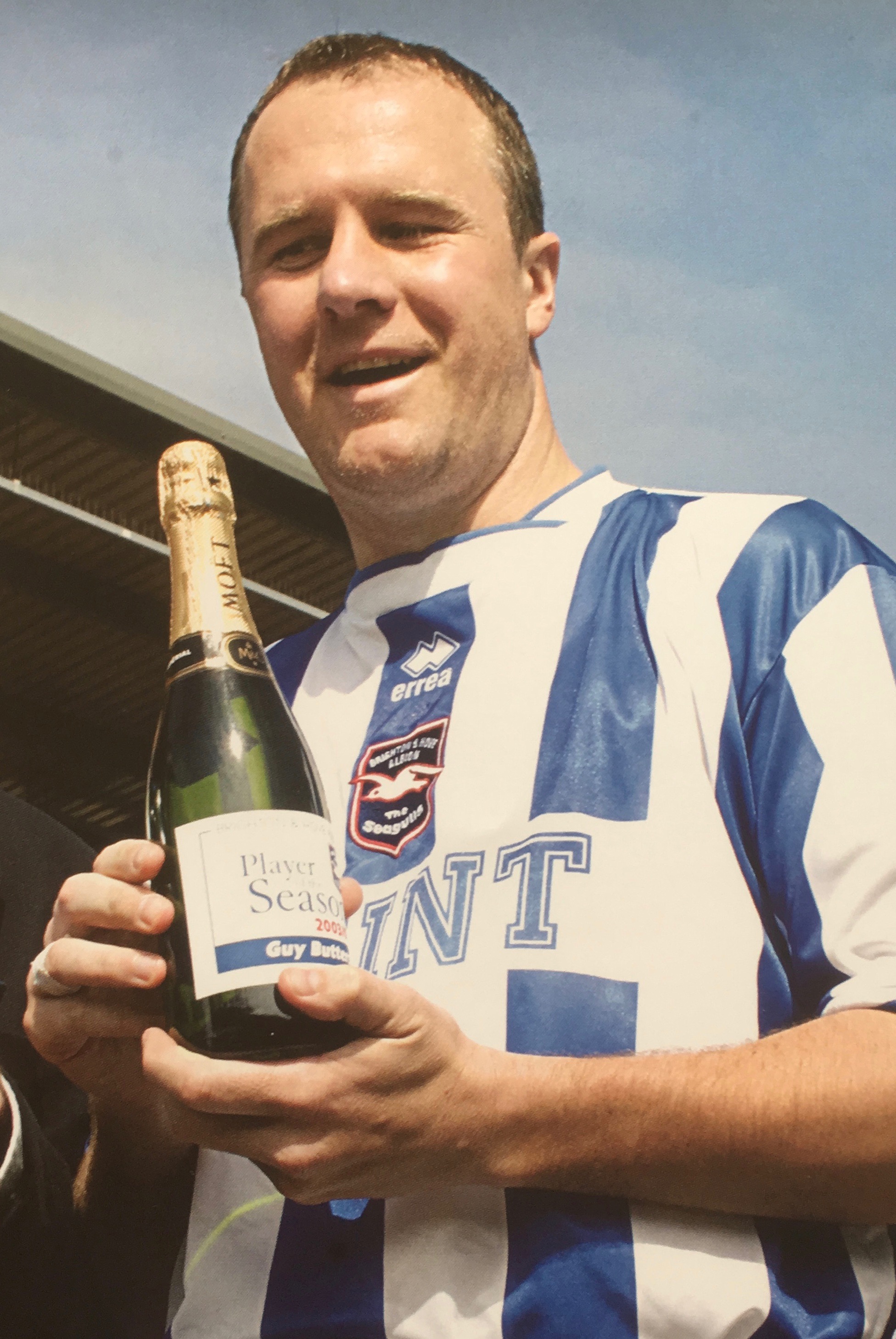
“When I first came here I had to do a lot of extra work with Dean White,” Butters told Brian Owen, of the Argus. “It was a case of trying to cram a lot of stuff into a little space of time. I wasn’t really getting too much time to recover after it.”

The managerial change from Martin Hinshelwood to Steve Coppell didn’t do Butters any favours either. Virgo and Butters were the centre back pairing for Coppell’s first match – a 4-2 home defeat to Bristol City – and both were then discarded into the wilderness.  Virgo went on loan to Exeter and, after Coppell brought in Dean Blackwell to play alongside Danny Cullip, Butters was sent out on loan to Barnet.

But when injury meant Blackwell’s career was over, the door opened again for Butters and he seized the opportunity to such an extent that as Albion won promotion back to the second tier via the play-offs, he was voted player of the season.

GB potseas by Bennett Dean• 2004 Player of the Season pictured by Bennett Dean.

In fact, it was the arrival of Mark McGhee to succeed Coppell that was very much a turning point in Butters’ career because he had previously been considering hanging up his boots.

In Match of My Life (www.knowthescorebooks.com), he said: “Mark was a real breath of fresh air as manager. Straight away he helped me with a special diet and fitness programme aimed at improving my general match fitness, but, more importantly, helping me work towards prolonging my professional football career.

“He was the first manager to do that and under his guidance I began to thrive and really enjoy my football again.”

As the Argus previewed the 2004-05 season with a special publication, they declared: “Buoyed by a great run of form in last season’s run-in and looking in good shape in training, Butters is ready for another stab at the second tier of English football.”

And Butters said: “This year I did a bit in the summer when I was on holiday and the gaffer put us through our paces so I’m sure that when the season starts I’ll be pretty match fit.

“It’s a big step up but, if we can get a few results away from home, not too many of those big teams are going to fancy coming to Withdean.”

  • The Argus spots a lighter refreshing moment!
  • Butters and Cullip were opponents when the Seagulls won at Sheffield United, another moment captured by the Argus.

Three years later, at the age of 37, Butters was still with the Seagulls and looking forward to what would ultimately turn out to be his last in the stripes.

“I thoroughly enjoyed it last year,” Butters told Andy Naylor. “It is probably one of the most enjoyable seasons I’ve had.

IMG_6014“I missed out on pre-season last year through injury. The gaffer was amazed I played as many games as I did.
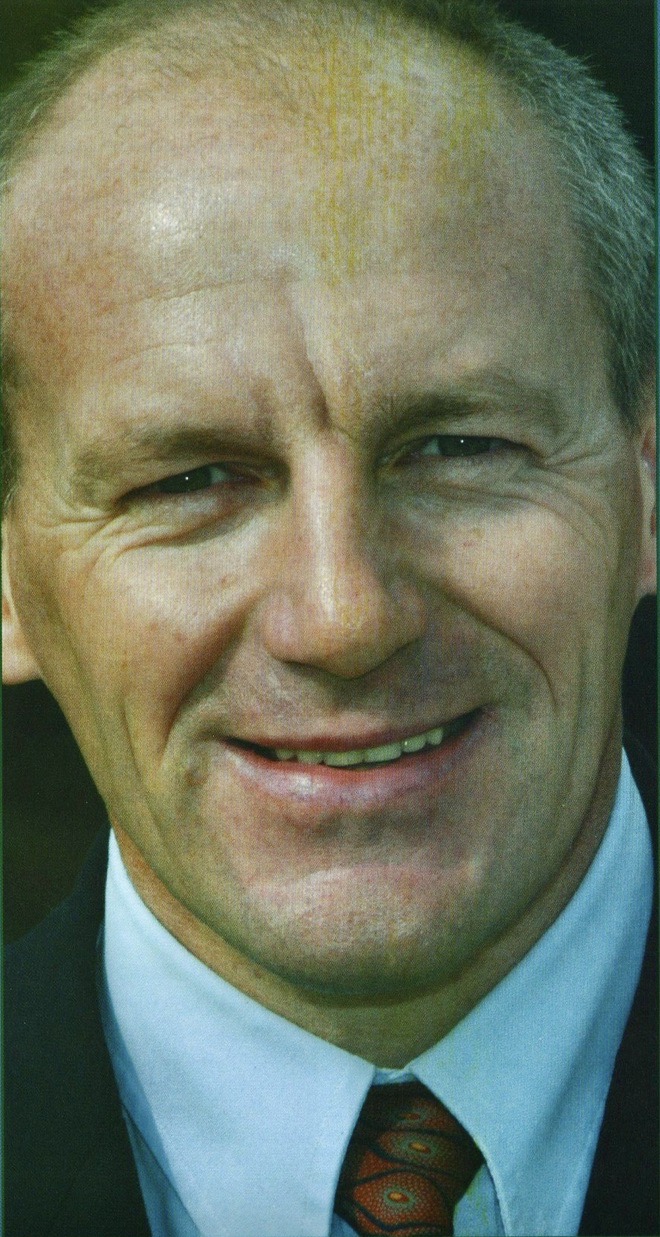
“I cannot see why, with a decent pre-season under my belt and, as long as I look after myself, that I cannot do the same again.

“I just want to go on playing as long as I can and along the way enhance my CV with coaching badges.”

Manager Dean Wilkins finally released Butters at the end of the 2007-08 season, during which he had been sent off for the first time in his career.

He’d played a total of 187 games for the Seagulls and carried on playing with Havant & Waterlooville briefly plus a seven-game spell on loan at Lewes before trying his hand at management with Winchester City and Eastleigh.

Guy + Nick

  • I got the chance to meet Guy when he kindly presented an award at an event I was involved in organising: what a great bloke!

Steve Coppell not the first ex-Man U player to quit the manager’s chair

coppell cropSTEVE Coppell was not the first former Manchester United player I saw become manager of Brighton. More than 30 years previously Busby Babe Freddie Goodwin had been at the helm when my Albion-watching passion began.

Unfortunately, there was a parallel in their outcomes: both were wooed by better opportunities elsewhere (Goodwin to Birmingham; Coppell to Reading). One other parallel to record, though, is that each of their successors (Pat Saward and Mark McGhee) got Albion promoted.

Hindsight is a wonderful thing, but, if Coppell hadn’t been jet lagged the first time chairman Dick Knight interviewed him for the Brighton job, the 2002-03 season may have panned out differently…and Kolo Touré, a future Premier League winner with Arsenal and Manchester City, might have spent a season helping the Seagulls to retain their recently-won second tier status. Let me explain.

Coppell had been out of the country in Thailand during the summer of 2002 and, although Knight wanted to interview him with a view to appointing him as Peter Taylor’s successor, when the meeting in London eventually came about, Coppell began to nod off with the effects of his long-distance travel.

A frustrated Knight, under pressure on several fronts that summer (as told in his autobiography Mad Man: From the Gutter to the Stars, the Ad Man who saved Brighton) left him to it and took the decision to appoint third choice Martin Hinshelwood instead. (Knight had also considered German Winfried Schäfer, who had just managed Cameroon at the World Cup, but his poor command of English went against him).

As the opening to the season drew closer, Knight went with Hinshelwood to watch an Arsenal under 23 side in a friendly at Barnet. He was running the rule over Steve Sidwell with a view to taking him on a season-long loan but the stand-out player who caught his eye was Touré, and Albion’s cheeky chairman said he’d take the pair of them.

To his delight, Arsène Wenger and Liam Brady agreed…but astonishingly Hinshelwood said they weren’t needed because, in his opinion, they weren’t any better than Albion’s own youngsters, who he had been coaching, and who he was now intending to blood in the first team. An incredulous Knight kept schtum, believing he needed to support his new manager.

When they started the season with a 3-1 win at Burnley, it seemed maybe Hinshelwood had a point. But, after a disastrous run of 12 defeats, leading to the inevitable sacking of Hinshelwood, Knight reverted to Plan A and succeeded in attracting Coppell to manage the side.

He then swiftly went back to Arsenal to secure the loan services of Sidwell (who’d played for Coppell at Brentford the previous season). But he was too late as far as Touré was concerned. He’d already played his way into first team contention for the Gunners and was no longer available.

coppell + booker

With Albion at the foot of the table, Coppell had a rocky start at the helm of the Seagulls, including an embarrassing 5-0 defeat to Palace, but he quickly brought in some quality players such as Dean Blackwell and Simon Rodger, and, together with Bobby Zamora up front and the busy Sidwell in midfield, they put together some decent results that dared to suggest a great escape was possible.

Albion notched up some surprise results, including a 1-0 Boxing Day win at Norwich and a 4-1 home win over Wolves, who ended up in the play-offs. There was also a memorable 2-2 draw at Ipswich, a 4-0 home win over Watford and a 2-1 win at Reading, most notable for a rare appearance and goal from former Premiership striker Paul Kitson, who had been injured for much of the season.

Sadly, it wasn’t quite enough to keep the Seagulls in the division and they went down second from bottom, five points adrift of 21st placed Stoke City.

The following season was in its infancy when West Ham decided to sack Glenn Roeder as their boss. The Hammers were determined to replace him with Reading’s Alan Pardew; and Reading, once they realised their fight to keep Pardew was fruitless, turned to third tier Albion’s Coppell as his replacement.

Chairman Knight knew Reading could offer Coppell the opportunities that were still some way in the distance if he’d stayed at the Albion, so he did the next best thing which was to get a healthy sum in compensation which went a long way to funding that season’s wage bill.

Knight was a big fan of Coppell and admired his meticulous preparation for games through in-depth viewing of opponents.

In an interview with The Guardian, Knight said: “He is probably the most analytical mind brought to football management for many a year. His preparations are detailed to the point of fastidious. His briefings are second to none. He spent hours with the video in the afternoons breaking down moves in slow-mo to work out how the opposition operate. He is very perceptive.”

Knight added: “People say he’s cold and uncaring, but he came to one of our marches on the seafront to campaign about the new stadium at Falmer long after he left for Reading. That’s Steve. He left a big impression on us.”

coppell at reading.jpg

Coppell left the Albion with a 36.7 per cent win ratio over his 49 games in charge, just over three percentage points behind his first spell as Palace manager, but higher than his other three spells at Selhurst.

To avoid this blog post turning into War and Peace, I’m not going to cover the whole of Coppell’s career but, in the circumstances, it is worth touching on how he came to be a star on the wing for Manchester United and England.

The Liverpool lad went to the same Quarry Bank Grammar School that produced Joe Royle and Beatle John Lennon, but head teacher William Pobjoy ensured football mad Coppell stuck to his studies.

It didn’t deter Coppell from having a trial with Liverpool and playing for an Everton junior side a couple of nights a week. But both rejected him as too small and his dad Jim told playupliverpool.com: “He lost faith in ever becoming a footballer and took up golf and became quite good.” He still played football for a local side but that was just for pleasure.

A Tranmere Rovers scout made several approaches but Steve wasn’t interested, and decided he was going to go to Liverpool University to take a degree in economics and social history.

Ron Yeats, the famous colossus around who Bill Shankly built his Liverpool team in the 1960s, became Tranmere manager in the early 1970s. He remembered of Coppell: “We signed him so he could combine it with university.”

Around the same time, Coppell shot up from 4ft 11in to 5ft 7in in a year, and went on to play 38 times for Tranmere, scoring 10 goals.

Word reached Manchester United boss Tommy Docherty who paid a £35,000 fee to take him to Old Trafford. He was playing for United in the old second division while still completing the third year of his degree course. United’s deal with Tranmere had it built in that they’d pay an extra £20,000 if Coppell made it to 50 appearances. They paid it after only two games, such was the impact Docherty knew he was going to have.

Indeed, he went on to make 373 appearances for United and scored 70 goals; and the 207 games he played between 1977 and 1981 broke the record for the most consecutive appearances for an outfield Manchester United player, and still stands to this day.

coppell utd action

He played in three FA Cup Finals for United, in 1976, 1977 and 1979, only ending up with a winners’ medal when Liverpool were beaten 2-1 in 1977.

Coppell was still at United in 1983, and had been United’s top scorer on the way to the Milk Cup Final that season, but he was recovering from a cartilage operation on his damaged left knee so was unable to play in the FA Cup Final against Brighton.

He told Match magazine: “I was always fighting a losing battle against time to get fit for the final. In my heart of hearts, I knew when I had the cartilage operation that five weeks wasn’t enough time to get fit for a match of this importance. I was struggling to make it from the off.”

Coppell told Amy Lawrence of The Guardian: “’I had nine wonderful years there and I still remember running on at Old Trafford for the first time. It was a real heart-in-the-mouth moment, an incredible experience for a 19-year-old whose biggest crowd before then was probably about 5,000.”

He also won 42 caps for England and Sir Trevor Booking, one of his contemporaries in the England team, spoke in glowing terms about Coppell the player in his book My Life in Football (Simon & Schuster, 2014).

England international

“He was a winger at a time when wingers were unfashionable,” he said. “He had the pace to reach a 30-yard pass, the skill to wriggle past a defender and send over the perfect cross. But he also had the energy to run back and provide cover for his defensive team-mates down the right flank that set him apart from so many other wingers at that time.

“When his team lost possession, Steve didn’t hang about on the flank waiting for someone to win it back. He wanted to win it back himself. He was involved all the time – a quality that is a prerequisite for today’s wide players.”

Coppell made his England debut under Ron Greenwood against Italy at Wembley in 1977 in a very exciting line-up that saw him play on the right, Peter Barnes on the left, and Bob Latchford and Kevin Keegan as a twin strikeforce. It was a favoured foursome for Greenwood and when they all played together against Scotland in 1979, Coppell, Keegan and Barnes all scored in a 3-1 win.

It was while on England duty that Coppell picked up the injury that would eventually lead to a premature end to his career. Brooking recalled: “A tackle by the Hungarian József Tóth at Wembley in November 1981 damaged his knee and although he played on for a year or so more, the knee condition worsened.

“He was able to play in the first four games of the 1982 World Cup but the problem flared up after the goalless draw with West Germany and he had to miss the decisive match against Spain.”

From 2016, Coppell spent three years as a manager in India. Amongst the players he worked with at Kerala Blasters (owned by cricketing great Sachin Tendulkar) in 2016-17 was Aaron Hughes, who had a season with Albion.

The following season Coppell became the first head coach of newly-formed Jamshedpur, owned by Tata Steel, and for the 2018-19 season he took charge of Indian Super League club ATK, once part-owned by Atletico Madrid. Among its owners were former Indian cricket captain Sourav Ganguly.

thoughtful coppell