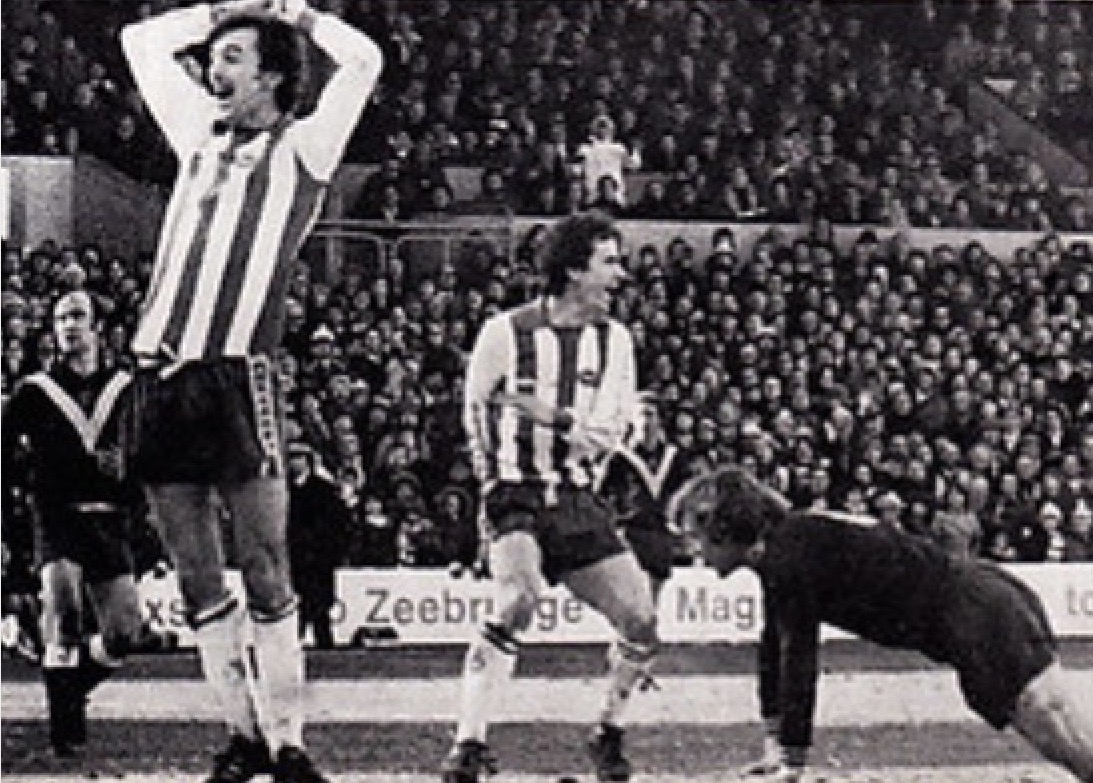
Ooh la la: Seb Carole was a history-maker

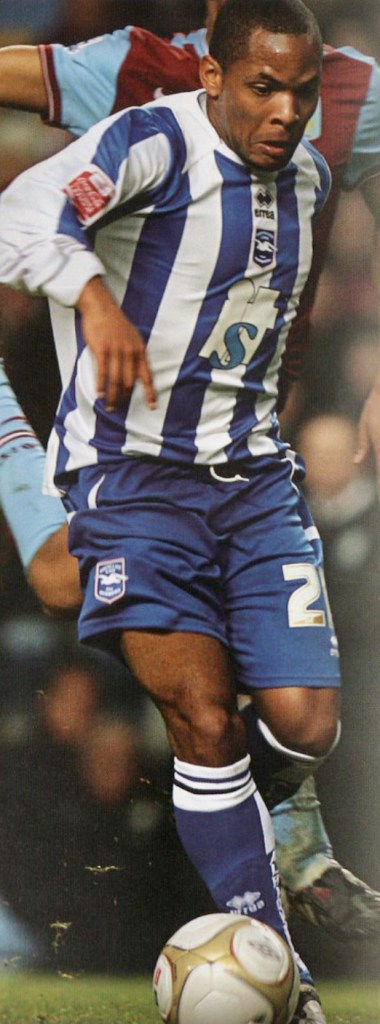
DIMINUITIVE winger Sébastien Carole has a double entry in the history of Brighton and Hove Albion.

Not only was he the first Frenchman to play for the club, he was also the first to play under three completely separate contracts for Brighton’s first team.

As well as three different spells with the Seagulls (2005-06, 2009 and 2010), he spent two years at Leeds United where his son is now in their under 18 side.

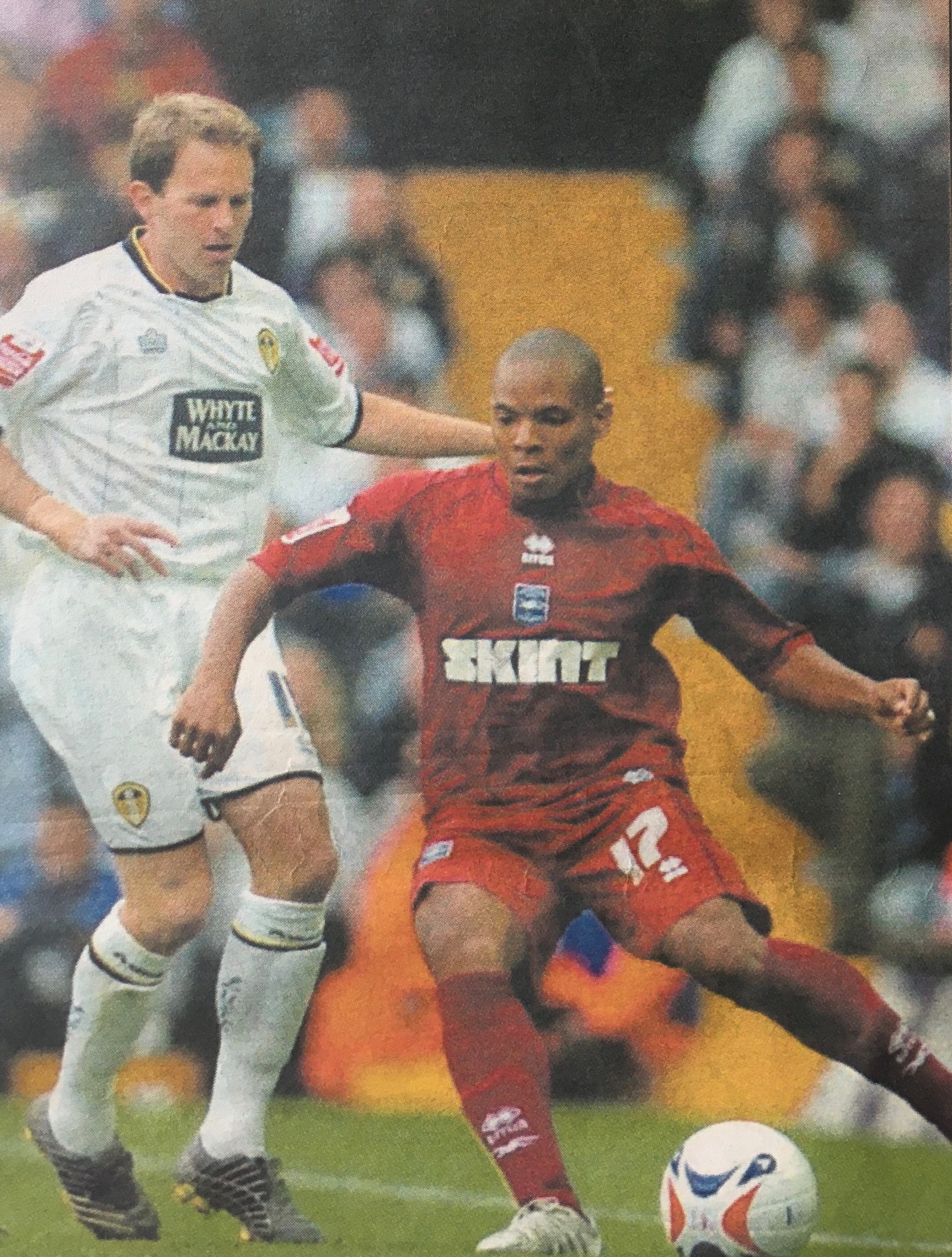
Ironically Carole scored his first goal for Albion against Leeds, but his first Brighton manager, Mark McGhee, thought the player’s ability should have yielded far more goals.

“He’s got to get more goals,” McGhee told the Argus in November 2005. “He’s a great finisher, a great ball striker and he can manipulate the ball.

“He is going to get himself in scoring positions, because he makes space for himself when he comes inside, and in training he scores.”

That goal against Leeds came in a memorable 3-3 draw at Elland Road on 10 September 2005 but Carole’s only other goal that season came in a rare victory, 2-1, over Hull City on 16 December (Charlie Oatway got the other).

An eleven-game winless run from January to the end of March, in which only four points were picked up, pretty much sealed Albion’s fate and the promise of Carole on one wing and fellow Frenchman Alexandre Frutos on the other didn’t live up to expectations. Albion lost their Championship status with only seven wins across the whole campaign.

To cap it off, a disappointed McGhee saw Carole exercise a clause in his contract that meant he could leave Brighton on a free transfer if they were relegated.

“We gave Seb the opportunity to come here and be part of the team,” McGhee told the Argus. “Regardless of that clause, the decent thing for him to do would have been to stay, at least at the start of the season.”

Seagulls chairman Dick Knight explained the clause had to be inserted into Carole’s contract to ensure he’d join from Monaco in the first place.

“If that clause hadn’t gone in then Seb’s wages over the two years would have been higher and the signing-on fee would have been more, so it was a no-brainer,” he said. “We fought hard to keep him, but the agent has persuaded Seb to go.”

The winger chose to move to Leeds, beginning the first of several occasions he’d link up with manager Kevin Blackwell. But Blackwell was sacked after only three months and his eventual replacement, Dennis Wise, told the Frenchman he wouldn’t be part of his plans.

“I had a think about it, had a chat with my wife and I said that I would stay and fight for my place,” said Carole. “I had signed for three years and I wanted to prove I could be a good player for Leeds.

“That summer, Leeds were relegated, and I could have gone back to France and joined Le Havre but I chose to stay and fight for my place. Then, by a twist of fate, the left winger got injured, I got on, played well and after that Dennis Wise told me he didn’t want me to go.”

Wise’s assistant at Leeds was of course Gus Poyet – and the winger’s relationship with the Uruguayan would later be of use back on the south coast.

Unfortunately, when Wise left Leeds for Newcastle, replacement Gary McAllister wanted to bring in his own players so once again Carole found himself sidelined, and there was a mutual agreement to cancel his contract.

He was without a club for a few months although his old boss Blackwell, by now at Sheffield United, invited him to train with them and he played a few games for their reserve side, and he spent a short while training with Bradford City.

However, in December 2008 and January 2009 he linked up with League Two Darlington, where he played seven matches. “It was not far from where I was living and I needed some games for fitness,” he said. “I signed a monthly contract and left a week before I came back to Brighton on trial.”

Micky Adams, back at Brighton for what turned out to be an unsuccessful second spell, tried all sorts of permutations to try to turn round a string of disappointing results and the invitation extended to the Frenchman was one of the last avenues he explored before the Albion parted company with him.

He scored twice and created two more in a practice match against the youth team as Adams ran the rule over him at a trial. “He’s not somebody I’ve worked with before, but everyone at the club speaks highly of him so we will take a look,” said the manager.

The early signs for Carole under Adams were good: he went on as a 56th-minute substitute for Chris Birchall at home to Hartlepool on 2 February, putting in a cross for Nicky Forster to convert.

Sections of the Withdean faithful voiced their disapproval of Adams’ choice of change, but the manager was typically forthright in his response, telling the Argus: “We can all sit in the stands sometimes and play football manager.

“I decided Seb Carole would give us an impetus. That was no reflection on what Chris Birchall had done. I can’t be worried about what the fans are thinking. I’ve got to do what I think is best and stand there and be as brave as I can be.

“Seb travels well with the ball, delivered a couple of great crosses and put one on a plate for Fozzie.”

It wasn’t long before Adams was on his way and although Carole liked what he heard from incoming boss Russell Slade, the new man preferred Dean Cox as his wide option.

Carole told Brian Owen of the Argus: “I love the way he talks. He’s got so much passion and he has tried to do something different.

“He wants us to play a bit of football at times when it’s possible because obviously the pitch doesn’t allow you to play that much. We can see something has happened since he came here.”

However, Carole’s part in ‘the great escape’ was somewhat peripheral, making only five starts plus seven appearances off the bench.

He later said: “Micky Adams signed me and I think I did well under him, then he left and Russell Slade came and I wasn’t really in his plans.

“I wasn’t really involved in the team. I was on the bench most of the time and I didn’t understand why, because I thought I could bring something to the club.

“I was a little bit upset about the whole situation. I didn’t get the chance to do well in that second spell.”

Released by the Albion in June 2009, Carole was attracted by the prospect of playing under the legendary John Barnes at Tranmere Rovers and signed a short-term deal at the start of the 2009-10 season.

However, once again managerial upheaval would be Carole’s downfall. Rovers won only three of their first 14 matches and Barnes was shown the Prenton Park door.

“I was disappointed when he was sacked,” Carole told the Argus. “When I went there we had a long chat about how he wanted to play and I signed because of him, because I knew what he was like as a player and would play the way I like.

“I think it was a little bit unfair and a little bit early for him to be sacked, because he didn’t get the finance to make the signings he wanted.

“I definitely think if he had stayed then I would have stayed longer. When they put the physio (Les Parry) in charge, I just felt it wasn’t that good for me.”

The third coming of Carole at the Albion, on a week-to-week deal, was as a direct result of his having played under Poyet at Leeds, the winger telling the Argus: “He knew what to tell me in a certain way to get the best out of me. That is what he was good at when he was at Leeds.
“He was only the assistant manager to Dennis Wise but, more than anyone else, he was talking to the players in the right way and players were listening to him.

“He brings you confidence and you trust him and he will bring a togetherness to Brighton, which is important to get the team back on track.

“He is exactly the same as when he was at Leeds. He is really relaxed and wants to play a certain system. Obviously, that will take time. I think what he is trying to put in place here will bring the club back to where it deserves to be.”

Poyet was equally positive about taking on the Frenchman. “I know Seb better than anyone,” he said. “Seb’s a winger, not just right or left. People say he’s right-footed but he did a terrific job for us at Leeds on the left.

“We’ve been playing without a natural left-sided winger. People look at Dean Cox out there but I see him a bit more inside. I don’t think we have another player like Seb.

“People will compare him to Elliott (Bennett) but he’s a different type of player. Elliott is more direct, more about speed, more going past people with his speed. Seb is about checking in and out and dummies, taking players out of position with his skills. We don’t have that player. That’s why he is coming in.”

It was six weeks before he got his first start and he fancied his chances of getting a longer deal, especially when a hamstring injury forced Kazenga LuaLua to return to Newcastle.

“With Kaz injured for the rest of the season, I think I have got a massive chance now,” he said. “It’s up to me and how I perform.

“I was pleased to be back in the starting eleven. You always get frustrated when you are not playing but I trust Gus and I know exactly what he wants.

“I kept my head down and kept working hard and knew I would get another chance.”

His best run in the side saw him feature in four games on the trot: a 2-0 win at Oldham, a 3-0 home win over Tranmere, a 2-2 draw at home to Southampton and a 2-0 defeat at Hartlepool.

Carole certainly felt pumped up for the game against Rovers, reckoning he had a point to prove to Parry. “He didn’t play me at all. I want revenge and to show him,” he told the Argus before the match. “If I could score and just kill them I’d be happy.”

Carole didn’t score but he did put in an inviting cross that Andrew Crofts seized on to score a second goal for the Albion on the half hour. Glenn Murray had opened the scoring in the seventh minute and debutant Ashley Barnes went on as a sub to score the third.

Dropped after the Hartlepool defeat in favour of on-loan Lee Hendrie, Carole was a non-playing substitute for four matches and, although he played in the season’s finale, a 1-0 win at home to Yeovil, that was his last game in an Albion shirt.

Born in Cergy-Pontoise, a suburb of Paris, on 8 September 1982, Carole’s first memories of football were as a five-year-old having a kickabout with his dad, Jean-Claude, who had played for Paris Saint Germain’s academy but whose career didn’t take off because of an accident.

Carole went to La Fiaule school in Vaureal from the age of three to 10 where he played football every Wednesday. Apart from football, he also had an aptitude for maths. He went on to La Bussie and joined Monaco at the age of 14. He progressed through the ranks before eventually playing 11 times for the first team, including once in the Champions League.

Carole was 21 when he first came to the UK in January 2004, joining Alan Pardew’s West Ham on loan at the same time that Bobby Zamora joined the Hammers from Tottenham Hotspur.

But the young Frenchman only made one substitute appearance, going on in the 87th minute for Jobi McAnuff as the Hammers beat Crewe Alexandra 4-2 at the Boleyn Ground on 17 March.

The following season he was sent on loan to French Ligue 2 side Châteauroux where he scored once in 11 matches.

It was truly the long and the short of it when in August 2005 Albion announced the joint signing of 5’7” Carole and 6’5” Florent Chaigneau, a French goalkeeper on loan from Stade Rennes. Describing them as “exciting additions to the squad”, Albion chairman Knight said: “The fact that we have been able to attract these young players who have already represented France at various levels, is a measure of the progress we are making at this club. We will give them the stage to make their names in England.”

Carole made his debut in the third game of the season, rather ironically once again Crewe Alexandra were the opponents, in a 2-2 home draw, and Chaigneau played his first match 10 days later as Albion bowed out of the League Cup 3-2 away to Shrewsbury Town. While Carole established himself in the side, Chaigneau only made two more appearances.

Although Carole played for France through the age groups up to 19, in 2010 he played three games for Martinique, the Caribbean island side, in the Didgicel Cup.

After failing to get the hoped-for longer contract at Brighton, Carole spent the 2010-11 season with French Ligue 1 team OGC Nice. He subsequently returned to the UK and spent six months at League One strugglers Bury, managed by his old boss Blackwell, but was released having made just five substitute appearances. He then proceeded to drift around various non-league sides in Yorkshire.

He later set up his own football school, which he ran for a year, and has since been an agent (C & S Football Management). His son Keenan is currently playing for the Leeds under 18 team.
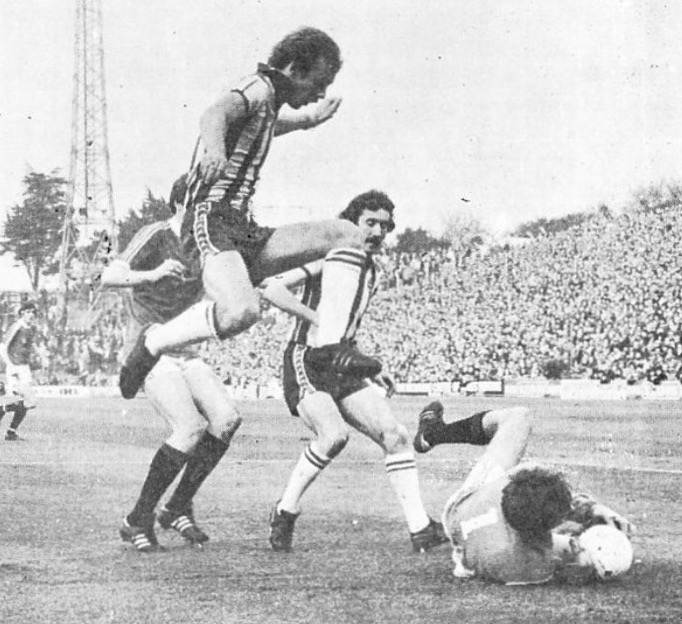
Malcolm in the middle was moustachioed marksman Poskett

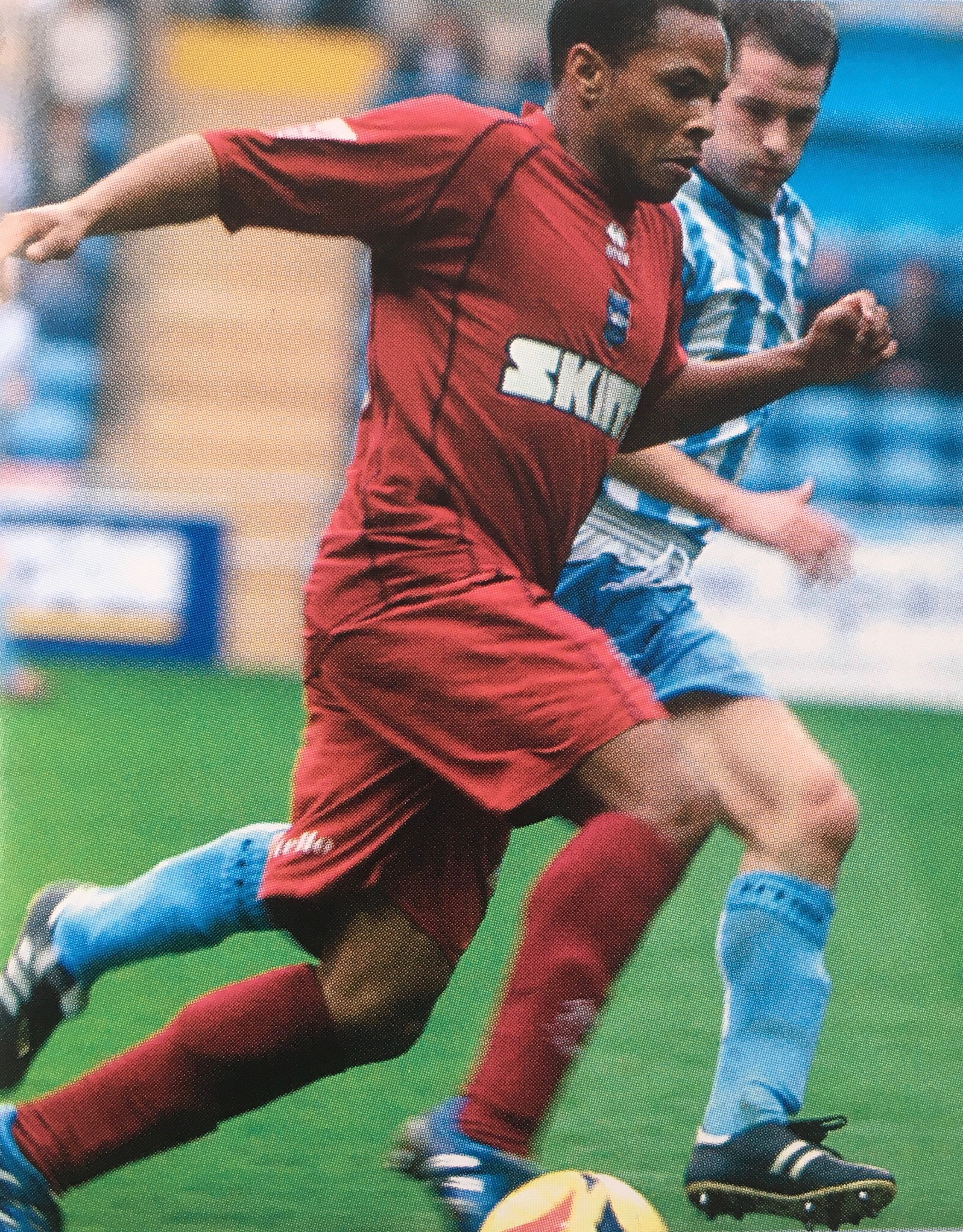
MALCOLM POSKETT’s goals helped Brighton to win promotion from the second tier after he’d made a terrific start to his Albion career.

Only two days after putting pen to paper in Hove, Poskett netted the equaliser in a 1-1 draw away to Hull City on 4 February 1978 and a week later he marked his home debut with a goal in Albion’s 2-1 win over Burnley.

The game at Boothferry Park was only six minutes old when the home side went ahead but Poskett levelled it up just before half-time after a Tony Towner corner was headed goalwards by Andy Rollings and the new arrival diverted it into the net.

A £60,000 signing from fourth tier Hartlepool United, Poskett had taken over the no.9 shirt from Ian Mellor, who had only been in the side for one game in the injury absence of Teddy Maybank.

Maybank’s big money signing from Fulham four months earlier had broken up the highly successful Mellor-Peter Ward partnership that earned Albion promotion from the old Third Division, and Poskett’s arrival only served to illuminate the Goldstone exit door even brighter for Mellor, who swiftly departed for Chester.

A crowd of 22,694 saw the new man’s Division Two debut on an icy Goldstone Ground pitch. Poskett once again profited from a Towner pass to score. Skipper Brian Horton scored Albion’s other goal.

It all must have felt very showbiz to the lad from Teesside, used to playing in front of 5,000 crowds in the Fourth Division, especially when prior to kick off against the Clarets, Slade, a famous chart-topping pop group of the time, recorded a single on the pitch in front of the North Stand.

While Maybank reclaimed his starting berth from Poskett for six matches, he was troubled by a knee injury and Poskett got the nod for the remaining seven games of the season as Albion chased automatic promotion, which at that time was earned by the top three sides in the division. There were no play-offs.

Poskett repaid Mullery’s faith in him with a hat-trick in a 4-0 win away to Bristol Rovers and by netting the only goal of the game in the penultimate fixture at home to Charlton Athletic in front of 31,203 fans.

What happened next has been well documented: Albion missed out on promotion when Southampton (in second) and Spurs (third) conveniently drew 0-0 in the final match of the season; Spurs edging out the Seagulls on goal difference.

Maybank had a successful cartilage operation during the summer break and was initially the preferred partner for Ward as the new season got under way.

Poskett banged in a transfer request as a mark of his frustration but, after Mullery persuaded him to withdraw it, he got his chance back in the side and made the most of opportunities that came his way.

Mullery admitted in Matthew Horner’s biography of Ward (He Shot, He Scored, Sea View Media) that he wasn’t always fair on Poskett when reverting to the Ward-Maybank partnership.

He pointed out: “Malcolm Poskett did a terrific job when we signed him. He was one of the most under-rated goalscorers – absolutely brilliant.

“He was really similar to Wardy, very sharp and very quick but a bit taller and a bit stronger.”

By the end of the season that ended in promotion to the top tier of English football for the first time, Poskett had contributed 10 goals in 24 games (plus eight sub appearances). He was the substitute in the famous 3-1 win back in his native north-east when Newcastle were beaten by the Seagulls on 5 May 1979.

Brighton struggled to find their feet in more exalted company and Poskett barely got a look-in, coming on as a sub twice and only starting three matches, the last of which was in the resounding 4-0 defeat to Arsenal in the League Cup on 13 November 1979.

He scored twice, though: netting the only goal in an away League Cup win over Northampton Town, and four days later scoring along with Peter O’Sullivan as Albion pulled back a 2-0 deficit to draw 2-2 at West Brom.

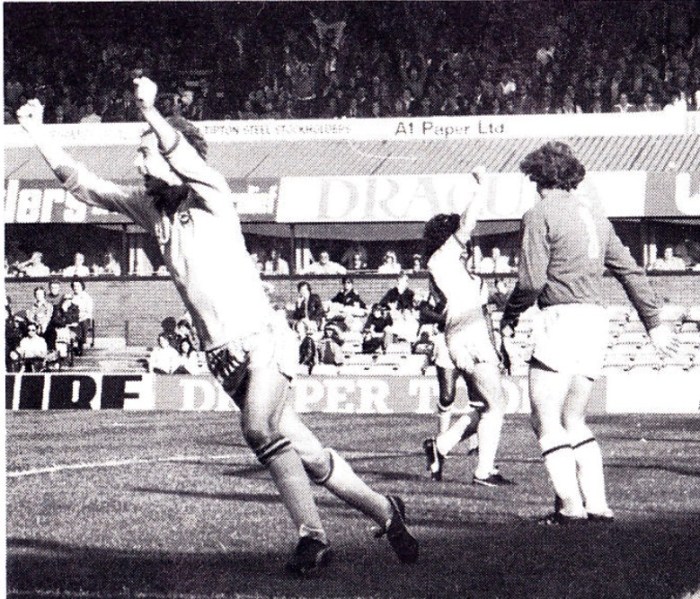
Poskett wheels away to celebrate his only top flight goal, away to West Brom

However, with the arrival of Ray Clarke from Ajax, it was clear Poskett’s chances at the Albion were going to remain limited, so he dropped back down a level to join promotion-seeking Watford under Graham Taylor. Albion goalkeeper Eric Steele had already made a similar switch in the autumn of that season shortly after a famous spat with Gary Williams at Old Trafford. Mullery also secured a £120,000 fee for Poskett, so Albion did very nicely out of the deal.

“I would have loved to stay at Brighton for the rest of my career, but it wasn’t to be,” Poskett told Spencer Vignes in a retrospective matchday programme article. “One week I was partnering Peter Ward, the next it would be Teddy with Peter. I never got a run in the team, even though I scored a couple of goals when I did play.

“At least with Watford I got the chance to start games. People called us kick and run, a long ball side, but we had a lot of talented players like Ross Jenkins, John Barnes and Nigel Callaghan.”

Poskett struck up a friendship with fellow new boy Martin Patching and both were on the scoresheet (Poskett scored twice) in a memorable 7-1 League Cup thrashing of Southampton on 2 September 1980.

Although being Watford’s top scorer with 21 goals in the 1980-81season, when the Hornets finished ninth, the following season he found himself in the reserves after a three-game barren spell.

In a Watford matchday programme article, he mused: “It’s a strange profession – one minute you’re up and the next down.

“I played in the first three league games of the season without scoring and was dropped. But I’m scoring fairly regularly in the reserve side and my chance will come if I keep on hitting the net. I’m a battler and not the type of player to give less than 100 per cent, no matter what grade of football I’m playing in.”

Watford won promotion as runners up behind close rivals Luton Town but Poskett couldn’t shift Luther Blissett or Jenkins, who were the preferred strike pairing, and Gerry Armstrong, later to join Brighton, was invariably the back-up option.

Born in Middlesbrough on 19 July 1953, Poskett went to Beechwood Junior School and then on to Brackenhoe Secondary Technical. His footballing ability in school sides eventually led to him being selected for North Riding Schools.

He was a decent all-round sportsman – a useful cricketer who played for Middlesbrough Schools, he also featured in local leagues at table tennis, and enjoyed tennis and badminton too.

But at 16 the budding sportsman started out as an apprenticeship plater at Cargofleet Steelworks, only playing football for the local Beechwood Youth Club and then South Bank in the Northern League.

His performances for South Bank caught the eye of Middlesbrough and he was taken on as a professional. But after 18 months in their reserves, manager Jack Charlton gave him a free transfer and he opted to become a plater on North Sea oil rigs to earn a wage.

He didn’t turn his back on football altogether, turning out part-time for Whitby Town in the Northern League. Scoring an incredible 98 goals over two seasons was bound to attract attention.

George Aitken, later a Watford coach and then a coach under Mullery at Brighton, was Workington manager at the time and tried to sign Poskett, but, disillusioned by his Boro experience he chose to stick with Whitby until Hartlepool manager Billy Horner convinced him he could still make it in the professional game.

For a £25 transfer fee, Horner took him on and devoted hours of extra time working on the youngster’s skills and sharpness. It paid off.

“My work rate was non-existent, but Billy Horner really worked on me and got me going,” Poskett told Shoot! magazine. “If it wasn’t for him, I don’t think I would have got anywhere – I’d still be in non-League soccer. It was so hard at first, I felt like packing it in, but he kept me at it and I’m very grateful now.”

His goalscoring at Hartlepool caught the eye of Ken Craggs when he was a coach at Fulham and when Craggs switched to become Mullery’s no.2 at the Goldstone, Poskett followed soon after, the £60,000 fee representing a tidy profit for the struggling North East minnows.

In an interview with The Argus in 2017, Poskett recalled: “Brighton was one of the best times of my life.

“I came in during the season when we just missed out on promotion and the lads were fantastic. It was a fabulous place to live as well.

“I had to come from one end of the country to the other but, once I got there, there were lads from up north, the Midlands, so it was a good mixed bunch and I felt right at home.”

After helping Watford to promotion in 1982, Poskett headed back north and played for Carlisle United for three seasons, thriving under the managership of Bob Stokoe, who’d led Sunderland to FA Cup glory in 1973.

In the penultimate game of the 1983-84 season, Poskett scored his 100th career goal – and his 101st – as Carlisle  drew 2-2 at home to Crystal Palace in front of a paltry crowd at Brunton Park of just 3,038.

Poskett subsequently had six months at Darlington, before switching to Stockport County in January 1986.

Appearances were few and far between and he went on loan to his old club Hartlepool in March the same year before moving back to Carlisle in August 1986. He finally hung up his boots at the end of the 1987-88 season.

He remained in the town and in 2017 was working as an examiner at Pirelli, the tyre manufacturer.

Pictures from Albion matchday programmes and online sources.

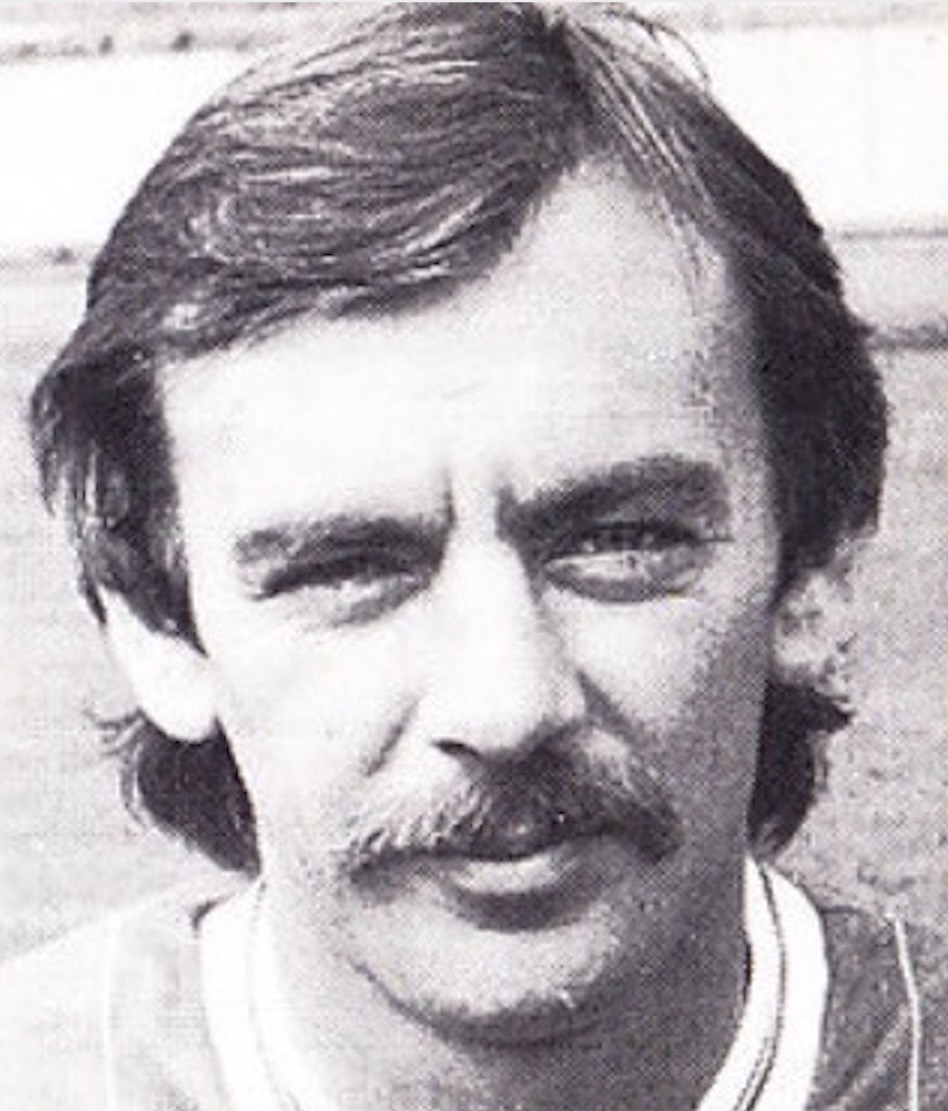
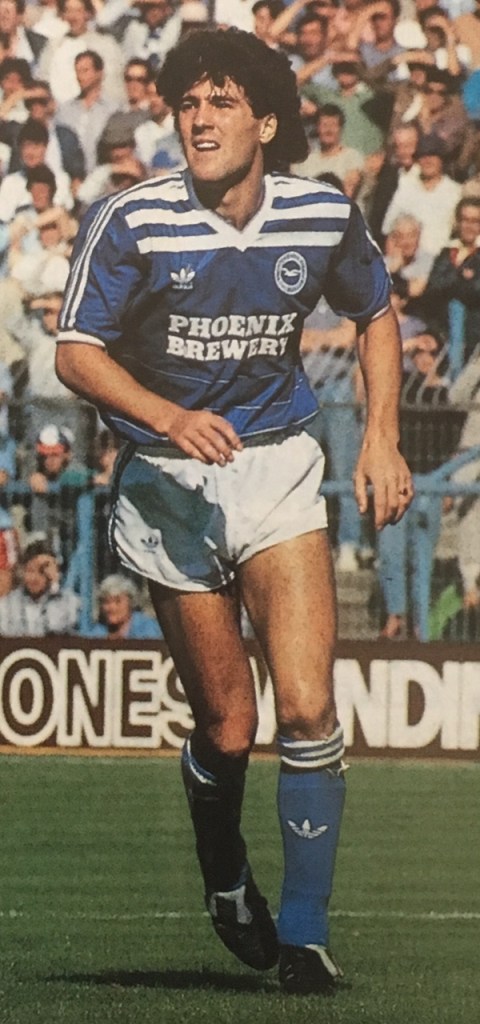
Dean Saunders raised cash for Brighton and Liverpool

IT’S NOT often Brighton and Liverpool have had something in common but, when it came to striker Dean Saunders, they both sold him to raise money. And they weren’t alone.

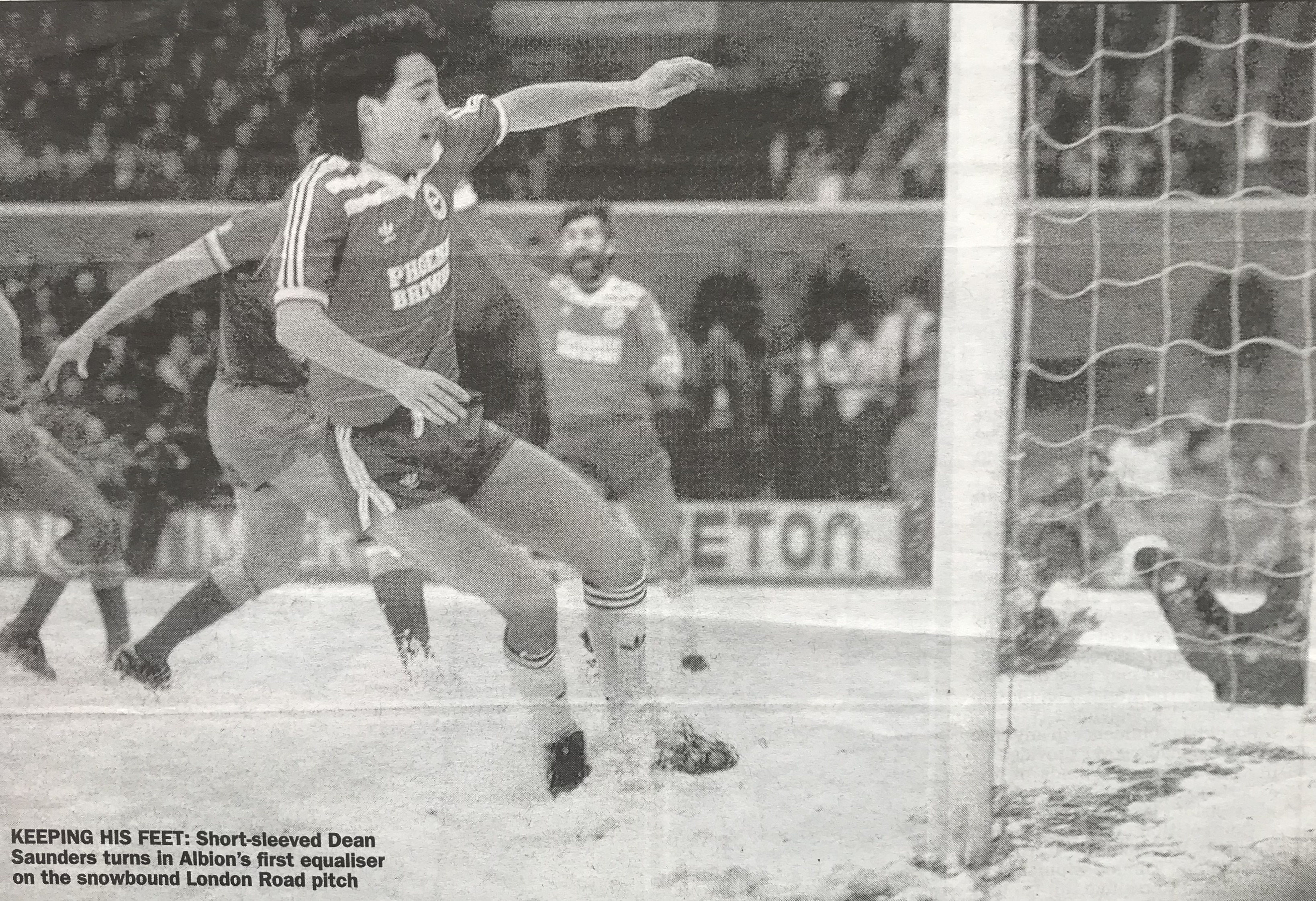
In the Albion’s case, it happened in 1987 when manager Barry Lloyd was forced to cash in on the free transfer signing to raise £60,000 to go towards players’ wages.

For their part, five years later, Liverpool let the Welsh international depart Anfield for £2.3m because boss Graeme Souness wanted the money to buy a central defender.

When Saunders was remarkably transferred for £1m from the Maxwell-owned Oxford United to the Maxwell-owned Derby County, it prompted former Brighton and Liverpool defender Mark Lawrenson to quit as boss at the Manor Ground after he’d been promised there would be no transfers likely to weaken his squad.

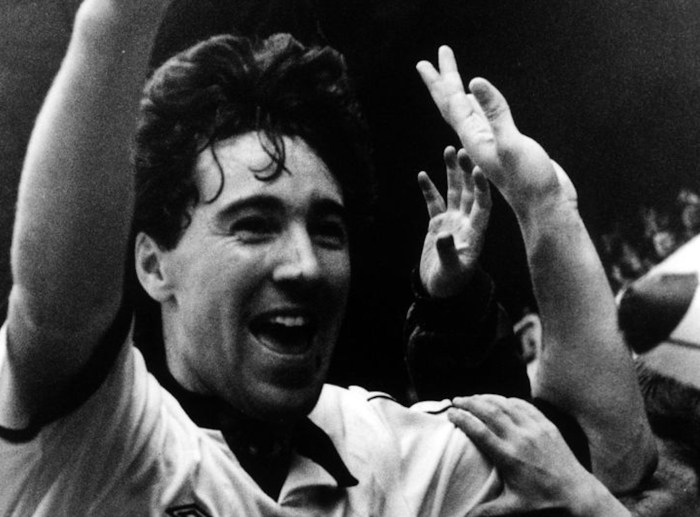
Saunders’ long and much-travelled career began in Swansea, the place where he was born on 21 June 1964, the son of former Swansea and Liverpool wing-half Roy Saunders.

He attended GwrossydJunior School and was soon appearing in the school football team on Saturday mornings and playing minor football in the afternoons. He went on to Penlan Comprehensive in Swansea and his career began to blossom, playing in the school team at all levels under sports master Lee Jones, a former British gymanstics champion. Saunders played for the Swansea Schools representative sides at under 11, 13 and 15 levels.

“I can remember enjoying watching the Swansea players train when I was a lad,” he told Tony Norman in an Albion matchday programme article. “I was lucky because my dad was the assistant manager, so I could go to pre-season training and things like that.

“I used to kick a ball around on the sidelines and dream of playing for Swansea.” That dream turned to reality after he joined the Swans in 1980 as an apprentice (when John Toshack was the manager), turned professional in 1982, and made his debut in the 1983-84 season. He scored 12 times in 49 appearances but in his final year had a goalless four-game loan at Cardiff City.

Manager John Bond released him on a free transfer after a turbulent season in which the Swans only narrowly avoided relegation to the basement division and Chris Cattlin, who’d been impressed when he saw Saunders playing for Swansea Reserves at the Goldstone Ground, snapped him up for Brighton.

“I was amazed when the Welsh club let him go for financial reasons,” Cattlin wrote in his matchday programme notes for the opening game of the season. “He is young, quick and, if he works hard, he has a great chance.”

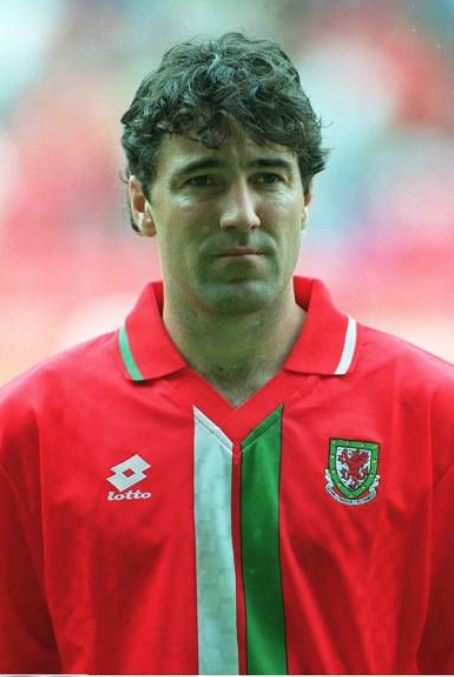
By the end of that season, Saunders had scored 19 goals in 48 league and cup games and was voted player of the season. His performances in the second tier for the Albion caught the eye of the Welsh national team manager, Mike England, and on 26 March 1986 Saunders made his full international debut for Wales as a substitute in a 1-0 win away to the Republic of Ireland. It was the first of 75 caps.

Saunders scored his first international goals when he netted twice in a 3-0 friendly win over Canada in Vancouver on 19 May 1986, after which England said: “He goes past defenders with his tremendous pace and his finishing against Canada was a revelation.

“The experience he gained at Brighton has done him the world of good. To finish top scorer in his first full season of Second Division football tells its own story.”

Saunders, who shared a house with Albion’s young Republic of Ireland international Kieran O’Regan, said being happy at home had helped him to settle down quickly.

“I liked Brighton from the day I arrived,” he said in a matchday programme article. “It reminds me of my home town of Swansea and I like living by the sea.”

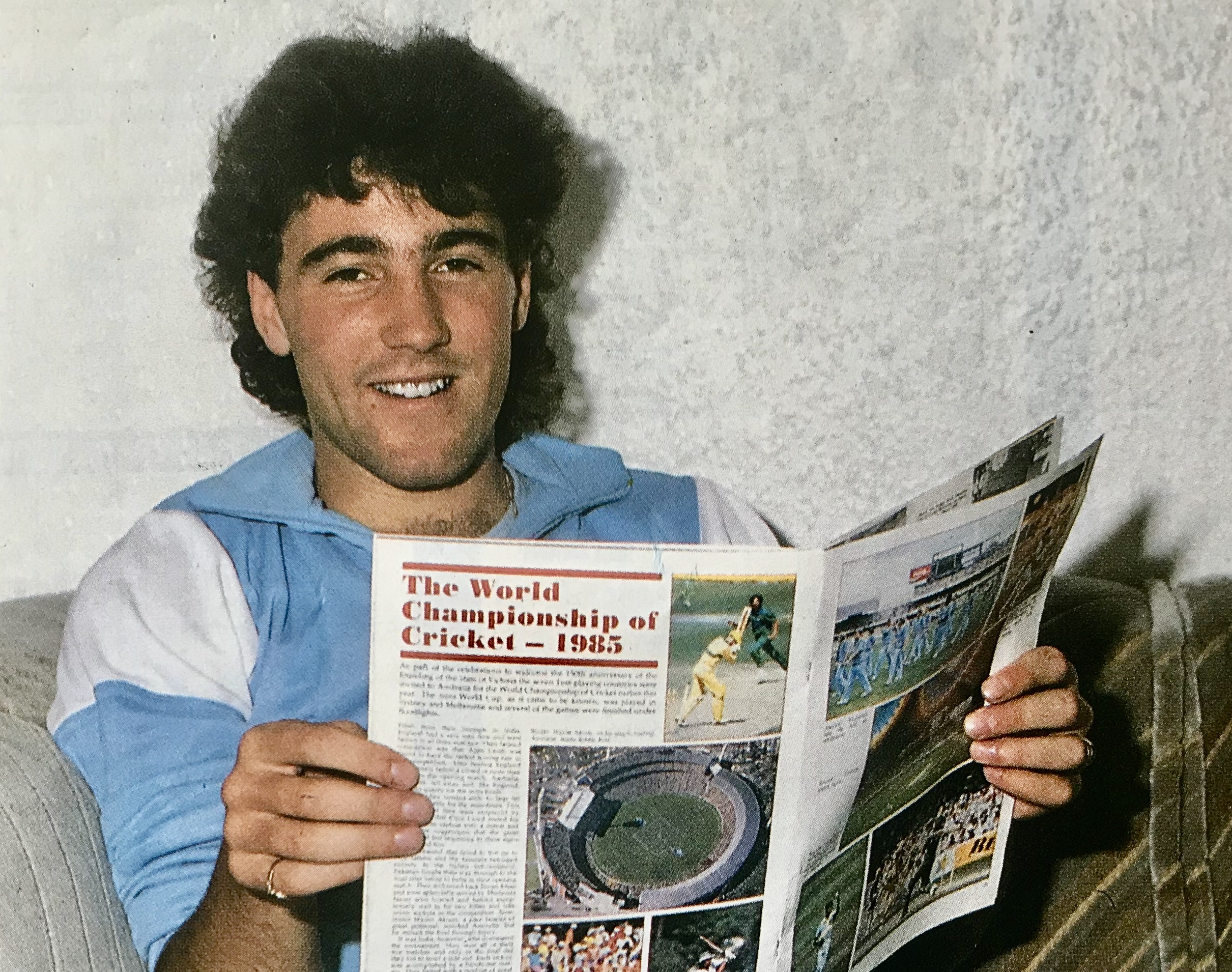
A lover of all sports, Saunders revealed how he liked to play cricket in the summer, when he turned out for Haywards Heath, and he played snooker with O’Regan and Steve Penney.

That summer, Saunders told Shoot! magazine: “I had both cartilages out of my left knee at 18 and had both Swansea and Cardiff turn me down. I’ve had my share of the downs. From the moment I joined Brighton, my career has turned for the better.”

The young striker continued: “Swansea just gave me away – despite the fact that I was top scorer in a team coming apart. Cardiff City gave me a few games but always seemed to have reasons for not playing me consistently when I was on loan there.

“So, I had every incentive to make the break from Welsh football and I joined Brighton. Brighton can go places.

“I was disappointed that we didn’t make the First Division first time around. But all the lads are convinced that we will get there next season. I’ve been given a three-year contract so there are tremendous incentives to do better.”

It didn’t work out that way, though. After only a mid-table finish, Cattlin was sacked and there were rumblings of financial issues beginning to reverberate around the corridors of the Goldstone. Alan Mullery returned as manager but had limited funds to invest in the team, and, with echoes of the Pat Saward era back in the early ‘70s, the club turned to fans for financial help to bring in players.

After Mullery’s unseemly swift departure halfway through the season, former Worthing boss Lloyd took over and fans were completely mystified as to how he could leave out Saunders in favour of Richard Tiltman, who Lloyd had plucked from local football. Since then, it has been suggested his omission was more to do with money than football ability.

There was great consternation that Albion collected only £60,000 when Lloyd sold Saunders to Oxford in early March 1987, especially as the Seagulls were fast hurtling back to a level of football they’d manage to avoid for ten years.

That was no longer a concern for Saunders who recovered the goalscoring touch he’d shown during his first season at the Goldstone Ground, scoring 33 goals in 73 games for Oxford before being sold to Derby for £1m against Lawrenson’s wishes 19 months after arriving at the Manor Ground.

Meanwhile, the goals kept flowing for Saunders as he netted 57 in 131 games for Derby. The side finished fifth in the old First Division by the end of Saunders’ first season with the Rams, and he’d contributed 14 goals. The Derby Telegraph noted: “From the moment ‘Deano’ arrived, the players were inspired and the crowd enthused. The signing also suited the post-war tradition of 5ft 8in goalscoring heroes at the Baseball Ground – Raich Carter, Bill Curry, Kevin Hector and Bobby Davison.

“Derby fans were too wise to comment on height. What mattered was Saunders’ speed, eel-like turn and persistence. He scored six in his first five games, starting with two against Wimbledon when he captured supporters’ hearts with the immediacy of a Kevin Hector. A close-in header and long-range right-footer were beautiful appetisers.”

Despite Saunders scoring 24 goals for Derby in 1990-91, the side was relegated and Saunders and teammate Mark Wright were snapped up by Liverpool. Reds paid £2.9m to take Saunders to Anfield, boss Souness believing he’d be an ideal strike partner for their established Welsh international striker, Ian Rush.

Saunders made his Liverpool debut on 17 August 1991 in a 2-1 win over Oldham Athletic (Mark Walters and defender Wright also played their first league games for Liverpool); Ray Houghton and John Barnes scored Liverpool’s goals.

Saunders scored his first goal for the Reds 10 days’ later in a 1-0 win over QPR at Anfield but a Liverpool history website reckons he struggled to adapt to Liverpool’s passing game. “He was used to Derby’s counter-attacking style, scoring many of his goals by using his exceptional pace,” it said. “Saunders wasn’t very prolific in the league with about one goal every four games but flourished in the UEFA Cup with nine goals in five matches that included a quadruple against Kuusysi Lahti.”

Saunders scored twice in Liverpool’s successful FA Cup campaign, which culminated in them lifting the trophy at Wembley after beating Sunderland.

Although he scored twice in seven games at the start of his second season at Anfield, a cashflow issue meant Souness was forced to sell him to raise funds to dip into the transfer market.

Saunders explained: “Graeme called me in one day and told me he needed a centre-half [Torben Piechnik], and that he could raise the money by selling me to Aston Villa.

“I couldn’t believe he was prepared to let me go, but he said he didn’t think my partnership with Ian Rush had worked out, and Rushy wouldn’t be the one going anywhere. That was it.” 

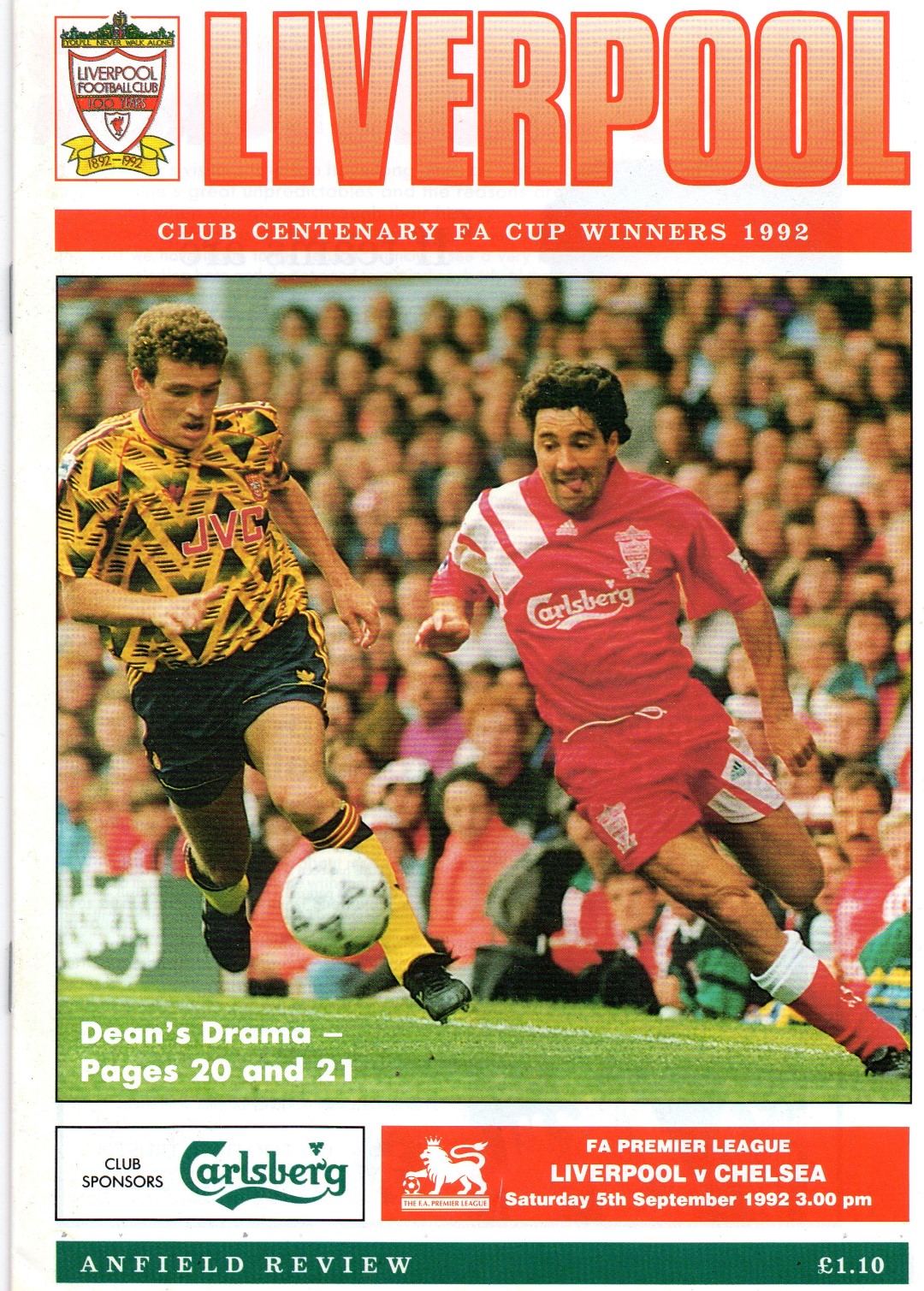
Saunders had scored 25 goals in 61 appearances for Liverpool, the last coming in a 2-1 home win over Chelsea (Jamie Redknapp scoring the other Liverpool goal) on 5 September 1992.

The Welshman had the last laugh, though, because only nine days after his departure from Liverpool he scored twice in Villa’s 4-2 victory over the Reds.

“Obviously I had a big incentive to do well today and I’m thrilled to have scored,” said Saunders. “Both my goals went through the goalkeeper’s legs.”

Signed by Ron Atkinson, Saunders spent three seasons at Villa, initially developing a formidable strike partnership with Dalian Atkinson, and then pairing up with Dwight Yorke. Saunders’ brace in the 1994 League Cup final helped beat Manchester United 3-1.

Villa history site lerwill-life.org.uk remembers him as “a spring-heeled attacker and very popular with the supporters” and adds: “Not big in size, he was very speedy and scored some spectacular goals including a 35-yard spectacular against Ipswich.”

His time at Villa Park came to an end when Brian Little took over as manager, and Saunders was reunited with his old Liverpool boss Souness in Turkey. A £2.35million fee took him to Galatasaray for the 1995-96 season and he netted 15 goals in 27 Turkish League matches.

Next stop for Saunders was back in the UK at Nottingham Forest, but the 1996-97 was an unhappy one as the manager who signed him, Frank Clark, was sacked in December after a bad run of defeats and Forest’s slide towards relegation continued under Stuart Pearce and Dave Bassett.

By the time Forest had bounced straight back up, Saunders had left the club, moving in December 1997 to second-tier Sheffield United for a year under Nigel Spackman and caretaker managers Russell Slade and Steve Thompson. United made the play-offs but lost out to Sunderland in the semi-finals. In December 1998, Saunders moved abroad again to link up with Souness a third time, at Benfica in Portugal.

The following summer, he returned to England and joined Bradford City, where his former Brighton teammate Chris Hutchings was assistant manager, then briefly manager. Saunders was a regular in his first season at Valley Parade, when the Bantams managed to narrowly avoid relegation from the Premier League, but he played only a handful of games in 2000-01, when they were relegated. Saunders retired as a player shortly before his 37th birthday and became a coach at Bradford before linking up with Souness again, this time as a coach.

He joined him at Blackburn Rovers and then Newcastle United, but when Newcastle sacked Souness early in 2006, Saunders lost his job as well.

In the following year he began taking the Certificate in Football Management course run by the University of Warwick; and this led to him being granted his UEFA Pro Licence coaching badge, a qualification that allowed him to be appointed as assistant to John Toshack with the Welsh national team. 

In October 2008, Saunders replaced Brian Little as manager of Wrexham, newly relegated to the Conference. He eventually managed to steer the north Wales outfit into the play-offs in the 2010-11 season, but they were knocked out by Luton Town and, in September 2011, Saunders was appointed manager of then Championship club Doncaster Rovers.

Unfortunately, he couldn’t save Rovers from relegation and they went back down to League One with only 36 points from their 46 League fixtures.

Having guided Rovers to second place in League One, Saunders was appointed manager of Wolverhampton Wanderers in January 2013, but he couldn’t prevent them being relegated from the Championship and he was sacked three days after relegation was confirmed courtesy of a 2-0 defeat at the hands of Gus Poyet’s Albion.

Saunders told the media after the game: “We have to get some players in who think like I’m thinking, who want to win, fresh minds, no damage done to them, no confidence issues, no ‘been here too long’ issues, no ‘I don’t know if the manager likes me’ issues. Once I get my own team on the pitch, imagine what the supporters will be like.”

Saunders, with only five wins from his 20 games in charge, didn’t get that chance and rather ruefully said of his opponents that day: “A few years ago they were bankrupt and without a stadium, but they’ve shown what is possible and, with the momentum, they have could well get into the Premier League.”

Just after Christmas 2014, Saunders was named as the interim manager of Crawley Town after the previous incumbent John Gregory stood down for health reasons.

Saunders then became manager of League One side Chesterfield on 13 May 2015 but his stay there lasted only five months.

In June 2016, Saunders was part of the BBC pundit team for their coverage of the Welsh national team’s games at Euro 2016 and made the headlines during the tournament when it was revealed that he had incurred parking charges of over £1,000 from Birmingham Airport’s short stay car park as he wasn’t expecting Wales to progress as far as they did. The charge was eventually waived by the airport who asked him to make a donation to charity instead.

His subsequent involvement in football has been as a pundit on BT Sport’s Saturday afternoon Score programme as well as on the radio with talkSPORT. He hit the headlines in 2019 when he was jailed for failing to comply with a roadside breath test but the initial punishment was quashed and changed to a suspended sentence. Via the League Managers’ Association, Saunders issued a statement in which he said: “I made a terrible error of judgment for which I have been rightly punished, and I wholeheartedly regret that it happened.”

Pictures from the Albion matchday programme and various online sources.

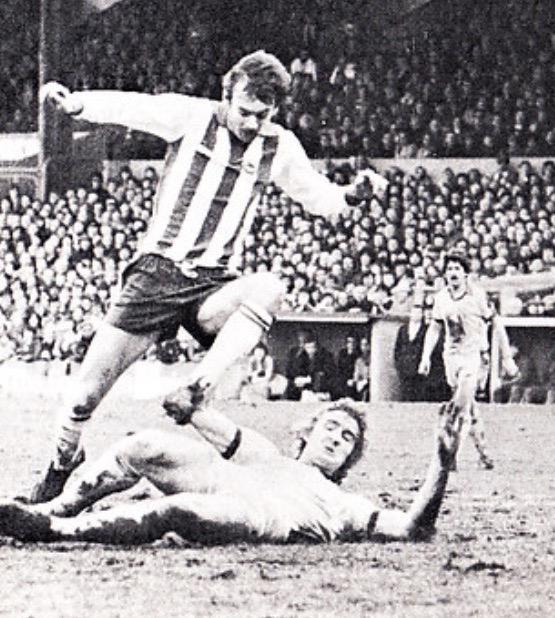
Injury curtailed Saints stalwart Jason Dodd’s Albion swansong

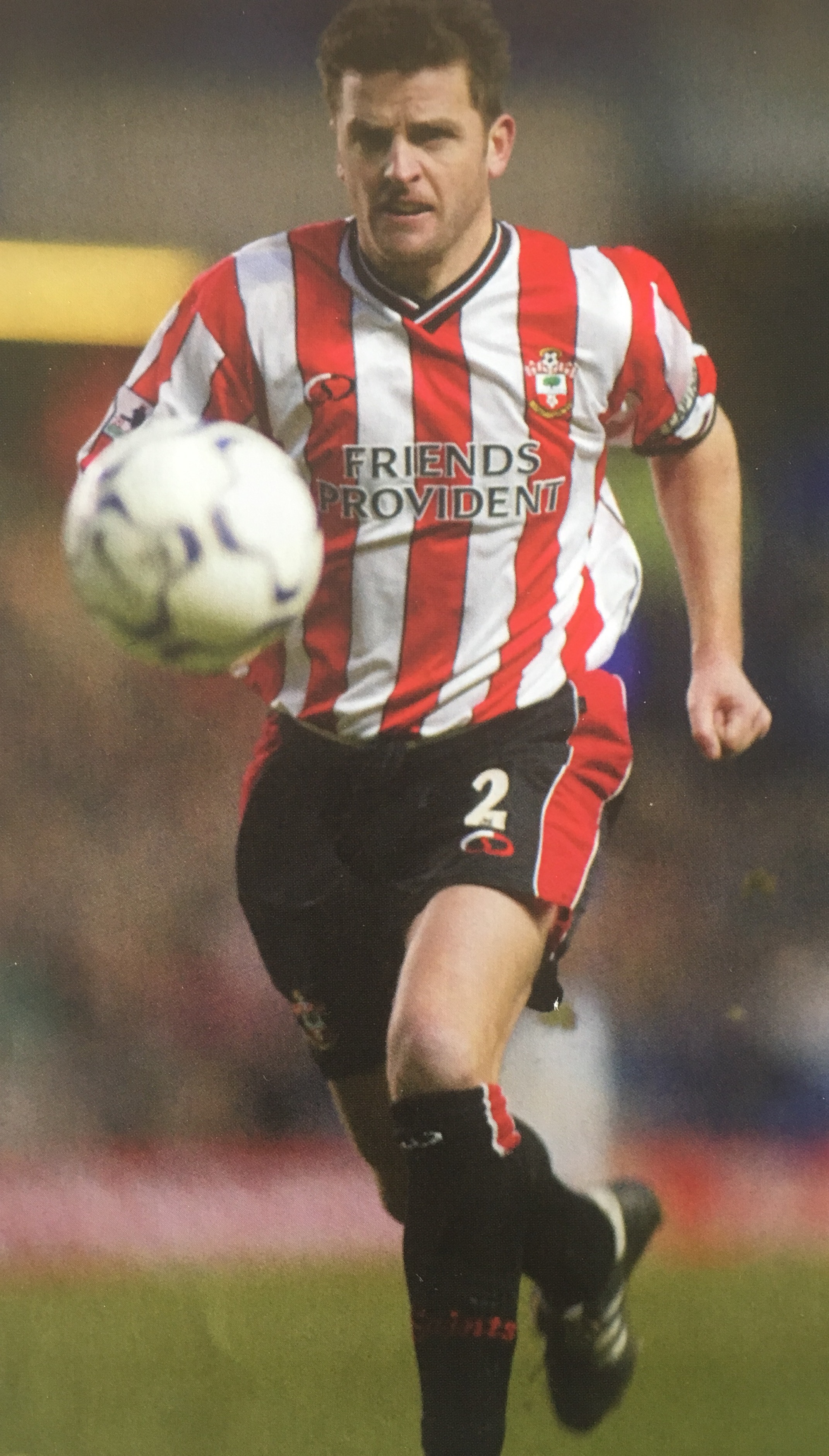
INJURY deprived Albion of the services of the experienced former Southampton captain Jason Dodd throughout the 2005-06 season.

After completing 499 games for Saints, Dodd had originally intended to retire at the end of the 2004-05 season having been sidelined by boss Harry Redknapp to such an extent that he’d gone out on loan to Plymouth Argyle.

However, Brighton were missing the long-term injured Adam Hinshelwood and manager Mark McGhee gave the 34-year-old Dodd a season-long deal at the Albion.

Dodd slotted in at right-back for the opening five fixtures of the season but then had to have surgery on a troublesome ankle injury which put him out of action for two months.

He returned to first team action at the end of November but was then struck by a mystery back injury that was severely debilitating, as he told The Argus.

“They cannot really pinpoint what the problem is and it isn’t just not being able to train,” he told the paper. “I am in constant pain 24-seven so, from my point of view, it’s not just at work it’s when I go home. I can’t pick the kids up or go for a walk with the dog.”

Dodd col HSUnfortunately, he managed just two more games in a season when Albion finished bottom of the Championship table. One fond memory I have of his contribution to Albion’s cause came in a game at QPR in March 2006.
The game was memorable for the sending off just after half time of Rangers’ skipper and long-serving striker Kevin Gallen for punching Paul McShane. Sadly, Albion only managed to take a point when they really needed three, but it was their first away point for nine games, so it was a triumph of sorts.

QPR full back Marcus Bignot put a deep Gary Hart cross through his own net under pressure from substitute Joe Gatting to equalise Gareth Ainsworth’s early header for Rangers.

The tricky Ainsworth gave Adam El-Abd, playing in an unfamiliar left back role, such a torrid time that McGhee switched the fullbacks with half-an-hour played and put Adam Hinshelwood there instead. Shortly after half time, McGhee switched it again and Dodd replaced El-Abd.

In the 40 minutes, or so, he was on the pitch he showed what we had missed by providing an outlet for some neat passing, and hardly ever gave the ball away.

Born in Bath on 2 November 1970, Dodd began his distinguished career by signing for his home town club, non-league Bath City. In 1989, Southampton paid £15,000 to take the 18-year-old to The Dell.

Jason Dodd (Southampton)

He certainly couldn’t have got off to a better start, making his first team debut at home to Liverpool, marking England international John Barnes.

Londonsaints.com was fulsome in its praise for the impact he made, declaring: “Not only did he completely snuff out the efforts of the England winger but found enough time to supply a perfect cross for Paul Rideout’s opening goal in a momentous 4-1 win.”

From that encouraging beginning, he went on to establish himself as Saints’ regular right back, playing under nine different managers and captaining the side. Dodd remained a fixture in a team that more often than not found itself fighting for survival in the top flight.

Between 1990 and 1991, he won eight England under-21 caps, making his debut in a 1-0 defeat to Poland at White Hart Lane on 16 October 1990 and playing his last game against the same opponent, away in Pila, on 11 November 1991, when England lost 2-1, their goal being scored by Paul Kitson, who later played for Brighton.

In his fifth under 21 game, Dodd was sent off as England trounced Mexico 6-0, when, as well as a goal for Kitson, Alan Shearer scored a hat-trick (including two penalties).

Although Dodd had been involved in earlier rounds of the FA Cup in 2003, injury meant he missed out on the final, when Saints lost to Arsenal.

At the end of his injury-plagued season with Brighton, Dodd joined his former Saints teammate Francis Benali as a coach at non-league Eastleigh before stepping into the manager’s role for seven months.

The lure of his old club was too great, though, and, in the summer of 2007, he became first team coach at Southampton under George Burley. He was briefly caretaker manager before leaving Saints in July 2008, had a short tenure as caretaker manager at Aldershot in the autumn of 2009, and then returned once again to Southampton as a development coach and under 18s coach at St Mary’s.

During his five years with the Saints youth academy, working with former teammate Paul Williams, together they brought through the likes of Luke Shaw, Callum Chambers and James Ward-Prowse.

But they were controversially let go in May 2014 – some reports said it was because they didn’t spend enough time with the younger age groups.

Shaw took to Twitter when news of their dismissal was announced saying he was “gutted” for them.

Dodd obviously keeps a close eye on the progress of the young players he was once responsible for and, when Manchester United boss Jose Mourinho subbed Shaw at half-time during United’s 2-0 FA Cup win over Brighton in 2018, the BBC sought Dodd’s opinion. He admitted a tough love approach was the way to get the best out of him.

“He does make you pull your hair out at times. You have to try different things to get the best out of him,” said Dodd. ”I think they have tried everything and they have not got through to him to get him out on the pitch and perform.

“Luke is one of those players where you have to keep on, you have to keep pushing him and he needs to be challenged.

“I was constantly on him. He likes it. He needs more of a cuddle, and then give him a little dig,” Dodd added.

The Saints stalwart is frequently asked his views on current happenings, but his day job is as head of football in the PE department of independent school, Winchester College. He has a few other sidelines on the go, as he told the Daily Echo earlier this year.