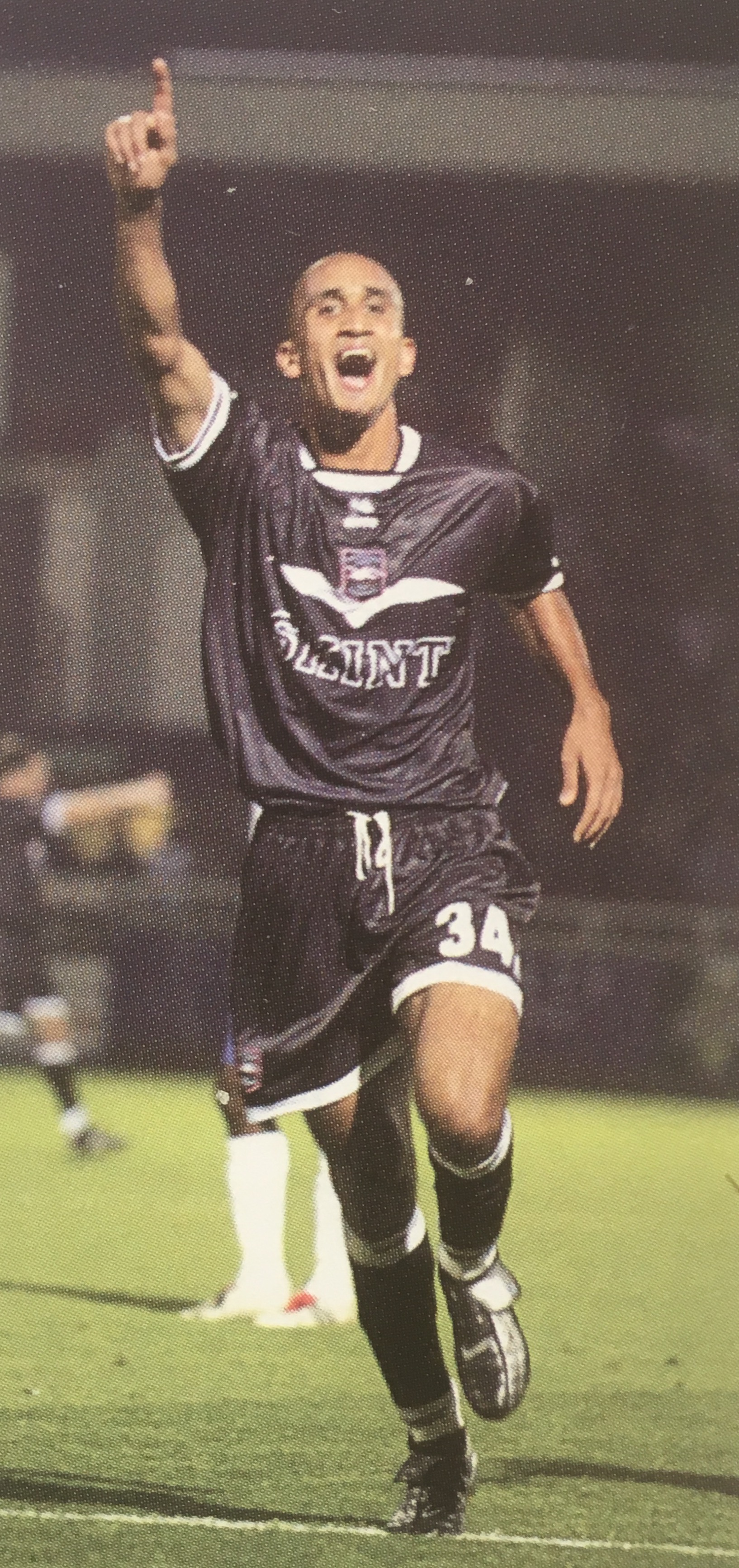
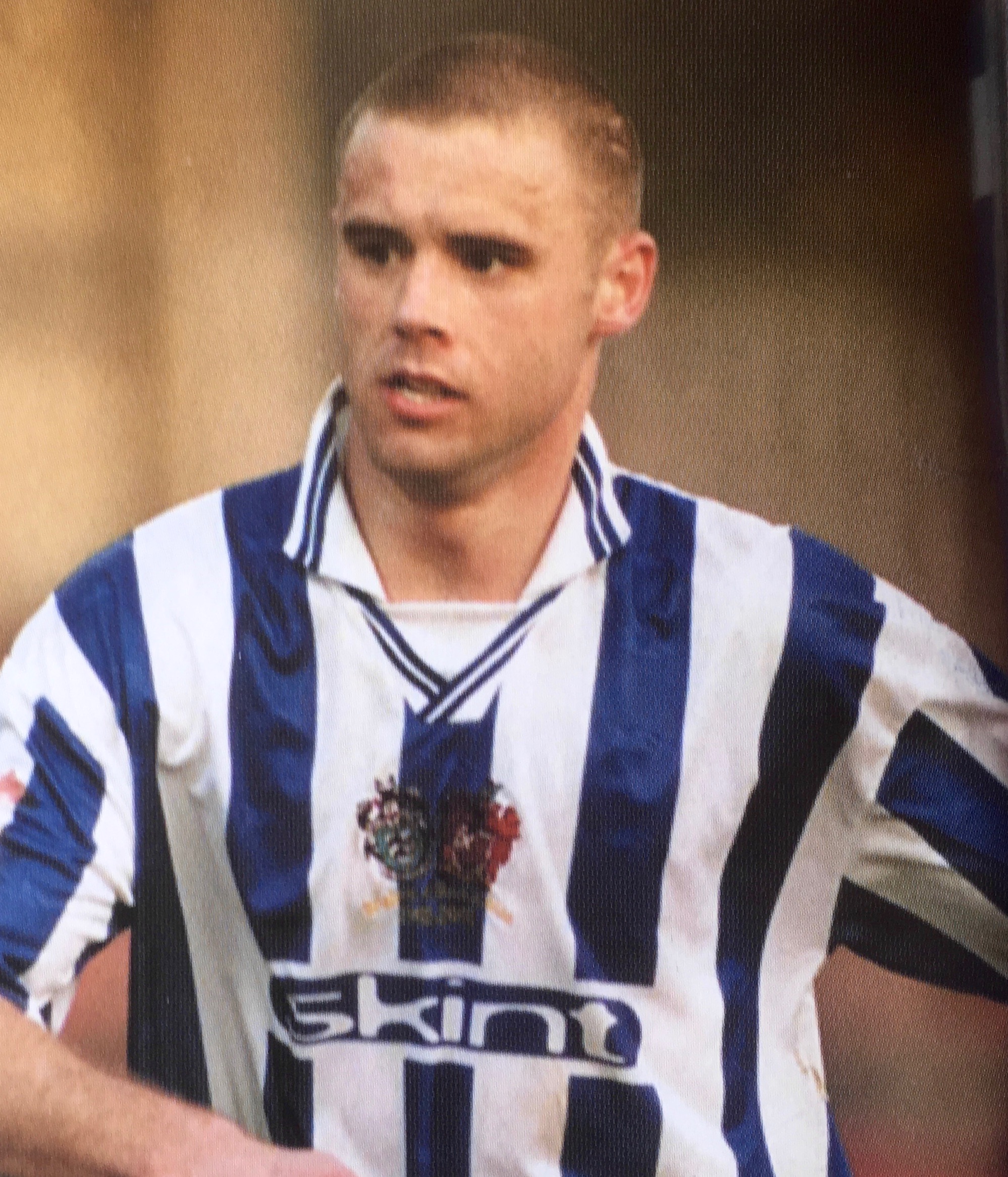
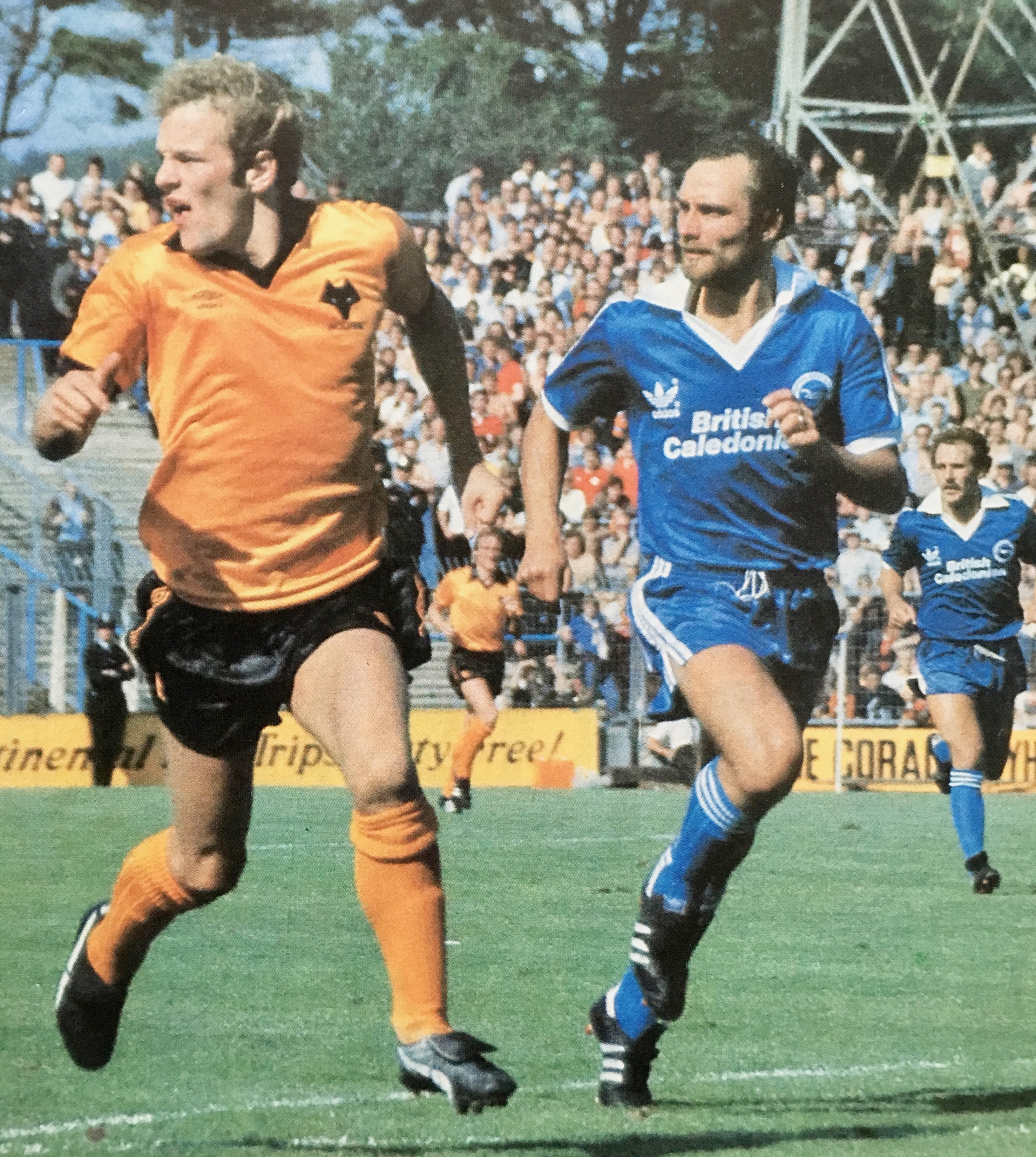
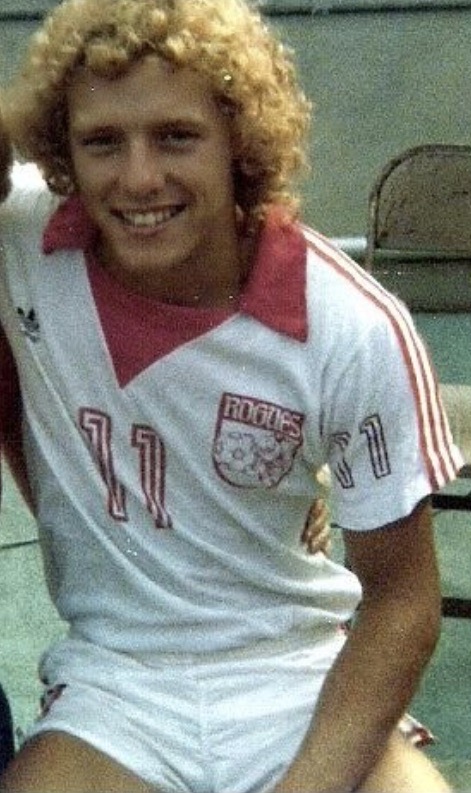
To what extent might the summer of 2019 mirror the summer of 1981?


BECAUSE this blog is all about Albion parallels, it has set me wondering how closely the summer of 2019 might mirror the events of the summer of 1981?

Brighton’s 2019 survival at the end of their second season amongst the elite came about somewhat less convincingly than in 1981 when four wins in the last four games had kept the Albion in the top flight.

As in 2019, relegation had loomed large 38 years ago but the status was retained with that late upturn in performances. Nevertheless, behind the scenes, big changes were about to happen with the departure of a former Spurs stalwart who’d done an excellent job as manager.

That boss (Alan Mullery), who’d led the side so successfully for the previous five years, left under a cloud, albeit of his own volition after a disagreement with the chairman (Mike Bamber) over the sale of star player Mark Lawrenson and a request to cut costs by dispensing with some of his backroom staff.

In a mirror moment to Bruno’s farewell versus Manchester City, Mullery’s captain, Brian Horton, played his last game for the club in the final match at home to Leeds – the difference being Horton had no inkling it would be his last game for the Seagulls.

That fixture also saw the last appearances of Lawrenson, long-serving Peter O’Sullivan and, in John Gregory, a player who would subsequently go on to play for England.

As we await developments regarding the appointment of Chris Hughton’s successor as manager, may we once again see potentially seismic changes on the playing side?

Bruno’s retirement certainly means there is a need to sign a replacement right-back, even though Martin Montoya might consider he can fill the gap.

It’s largely considered Albion’s star players are international defenders Lewis Dunk and Shane Duffy: will one or other of them be sold for big money to enable investment elsewhere in the team?

Lawrenson’s departure in 1981 was mourned by many but it paved the way for the arrival of European Cup winner Jimmy Case, and generated funds new boss Mike Bailey was able to invest in bringing in new players.

While Bailey had a similar top-level background to Mullery as a player, captaining Wolverhampton Wanderers to some of their best achievements, his managerial CV was less impressive, although he had just got Charlton Athletic promoted from the old Third Division.

However, with Case bringing a new top level dimension to the re-shaped side, and Horton’s younger replacement, Eire international Tony Grealish adding bite to the midfield, Bailey, and his relatively unknown coach John Collins, guided the Albion to the club’s highest ever finish of 13th place in his first season in charge.

O’Sullivan had been a fixture under several managers for a decade (apart from a brief stint in the USA) and one wonders whether the not-quite-so-long-serving Dale Stephens might have played his last game for the Albion.

In 1981, Bailey had a busy summer in the transfer market (courtesy of the cash from the sale of Lawrenson to Liverpool) and, in Steve Gatting from Arsenal, signed a quality player who went on to serve the club for a decade. The experienced Northern Ireland international left-back, Sammy Nelson, also arrived from the Gunners.

Might we see again the signing of a squad player (or two) from a top six side who will add much-needed quality to the Albion?

Don’t bet against it!


Horton’s place in the hearts of Brighton and Man City fans

IMG_5170ARGUABLY the finest captain in Brighton & Hove Albion’s history went on to have a far less successful spell as the club’s manager having also been a boss at the highest level, at Maine Road, Manchester.

The £30,000 signing of tenacious midfielder Brian Horton from Port Vale on the eve of transfer deadline day in March 1976 proved to be one of the most inspirational moments of Peter Taylor’s managerial tenure at the Albion and for such a fee was widely hailed as “an absolute steal”.

Even though Taylor didn’t hang around long enough to reap the benefit of the man he instantly installed as captain, his successor Alan Mullery certainly did.

In the early days after his appointment, there was some suggestion Mullery would be a player-manager but the former Spurs and England captain reassured a concerned Horton that wouldn’t be the case, admitting that he wouldn’t get in ahead of him anyway!

“Fortunately, that next year went really well. It was my best year without a doubt,” Horton told Evening Argus reporter Jamie Baker. “I’d never met Alan Mullery, and he’d probably never heard of me, so I was delighted and surprised when he made me his captain.”

It was the beginning of a strong bond between captain and manager and Horton added: “We had that relationship for all the five years I was with him.

“That first season was great. We went 20 odd games unbeaten and I was scoring left, right and centre, and I was very proud to be voted player of the year.

“Suddenly everything was coming right for me, although we were disappointed not to beat Mansfield for the championship because we felt we were far better than them.

“You’ve got to hand a lot of our success down to Alan Mullery. He was a terrific motivator of players. He was a bubbly character and it used to rub off on players.

“He was new to the game of management but he brought fresh ideas, and he’d been under some top managers as a player.

“The team spirit during those first three years was incredible. When you are winning games every week it makes a hell of a difference and we had that for three years. You just couldn’t describe how good the team spirit was.

“My treasured memory will always be of the day we beat Newcastle to clinch promotion to the First Division. It was even greater because I scored the first goal. It had always been my ambition to play in the First Division and now I had achieved it.”

In an inauspicious start, Horton found himself in the referee’s notebook as Albion were hammered 4-0 by Arsenal as the season opened at the Goldstone. After a narrower defeat away to Aston Villa, the next game was away to Man City – and Horton had the chance to earn the Seagulls their first top level point.

On 25 August 1979, Albion were trailing 3-2 when Horton had the chance to equalise from the penalty spot with only eight minutes of the game left. But the normally reliable spot-kick taker fluffed his lines, meaning Albion succumbed to their third defeat in a row.

While the superior opposition was clearly testing the Seagulls, it was testament to the resilient skipper that he was continuing to lead them having started out in the third tier and, on 20 December 1980, before a 1-0 home win over Aston Villa, he received a cut-glass decanter from chairman Mike Bamber to mark his 200th league appearance for the Seagulls.

As the 1980-81 season drew to a close, Albion were perilously close to the drop but four wins on the trot (3-0 at Palace, 2-1 at home to Leicester, 2-1 at Sunderland and 2-0 at home to Leeds) took them to safety. What Horton didn’t realise was the Leeds game would be his last for the Albion (as it also was for Mark Lawrenson, Peter O’Sullivan and John Gregory).

“I’d bought a house in Hove Park off Mike Bamber and I was sunbathing that summer when there was a knock at the door. It was Alan Mullery come to tell me he’d just resigned,” Horton told interviewer Phil Shaw in issue 26 of the superb retro football magazine, Back Pass.

Mullery told him how he’d quit over the proposed Lawrenson transfer, how O’Sullivan and Gregory were off as well, and that the club wanted to sell him too, for £100,000.

Although Mullery advised him to sit tight because he still had a year left on his contract, new boss Mike Bailey – with a swap deal involving Luton’s Republic of Ireland international, Tony Grealish, lined up – told him he’d have to fight for his place and would have the captaincy taken from him.

“I said I didn’t want to go, that I loved the club and the fans, that I’d bought a house, and, at 31 I thought I had two or three good years left.

“I spoke to Mike Bamber and he said: ‘I don’t want you to go but I have to back the manager’.” Horton felt he had no option but to make the move.

He chose the platform of the Argus to thank the supporters for the backing they’d always given him and said his one disappointment was that he didn’t get the chance to lead Albion at a Cup Final. “That I would have really loved.”

Looking ahead, he added: “The Luton move gives me a new challenge. You can get in a rut if you stay at one club too long. Six years at Port Vale and five and a half at the Albion is enough. It will probably put a little sparkle back into my game.”

And so, Horton went to Kenilworth Road and under David Pleat the Hatters won the 1981-82 Second Division championship by eight points clear of arch rivals Watford. Looking back in his interview with Back Pass, Horton reckoned two of his Luton teammates, David Moss and Ricky Hill, were up there alongside Lawrenson as the best players he’d played alongside.

An all-too-familiar tale of struggle in the top division saw Luton needing to win at Maine Road in the last game of the season to ensure their safety, and Raddy Antic scored a winner six minutes from time that preserved Town’s status and sent City down.

Television cameras memorably captured the sight of Pleat skipping across the turf at the end of the game and planting a kiss on Horton’s cheek.

After one more year at the top level, he began his managerial career as player-manager of Hull City in 1984, working for the mercurial Don Robinson, and steered them to promotion to the old Division Two at the end of his first season in charge. He is fondly remembered by Hull followers, as demonstrated in this fan blog.

When he parted company with the Tigers in April 1988, his old Brighton teammate Lawrenson, by then manager of Oxford United, invited him to become his assistant. United at the time were owned by Kevin Maxwell, son of the highly controversial Robert Maxwell.

When Dean Saunders, who Brighton had sold to Oxford for £70,000, was sold against Lawrenson’s wishes – astonishingly he went to Derby for £1million – Lawrenson quit. Horton took over as manager and stayed in charge for five years, during which time he recruited former Albion teammate Steve Foster to be his captain.

Horton’s managerial break into the big time came in August 1993 when Man City sacked Peter Reid as manager four games into the 1993-94 season. Horton didn’t need to think twice about taking up the role, even though City fans were asking ‘Brian who?’

In Neil McNab, Horton recruited to his backroom team a former playing colleague who’d been a City favourite. “I played with McNab at Brighton and knew his strengths and knew he was well liked here,” he told bluemoon-mcfc.co.uk.

Horton brought in Paul Walsh, Uwe Rossler and Peter Beagrie and City managed to stay up.

The new boss acquired the services of Nicky Summerbee (to follow in the footsteps of his famous father Mike) along with Garry Flitcroft and Steve Lomas and at one point City were as high as sixth in the table.

They eventually finished 17th but fans to this day still stop Horton (who lives in the area) and ask him about a terrific match which saw City beat Spurs 5-2.

It was Horton’s bad luck that when City legend Francis Lee took over the club from previous owner Peter Swales, he was always looking to install his own man in the hot seat, and Lee eventually got his way and replaced Horton with Lee’s old England teammate Alan Ball.

Ball took City down the following season while Horton embarked on a nomadic series of managerial appointments either on his own or in tandem with Phil Brown.

Initially he was boss of Huddersfield Town; then he was a popular appointment when he took over as Albion boss during their exile playing at Gillingham, but, because he wanted to live back in the north, he left in February 1999 to join another of his former clubs, Port Vale.

He led Vale for five years and pitched up next at the helm of Macclesfield Town, where, on 3 November 2004, he marked his 1,000th game as a manager. It was at Macclesfield where one of his players was the self-same Graham Potter whose stewardship of Swansea City came mightily close to upsetting City in the 2019 FA Cup quarter-finals.

A bad start to the 2006-07 season saw him relieved of his duties in September 2006 but, by the following May, he was back in the game as Brown’s no.2 at Hull City. In March 2010, he was briefly caretaker manager following Brown’s departure, until the Tigers appointed Iain Dowie.

Next stop saw him as no.2 to Brown at Preston North End; then a second brief spell as Macclesfield boss at the end of the 2011-12 season.

In June 2013, he was appointed assistant manager to Paul Dickov at Doncaster Rovers, a role he filled for two years before linking up with Brown once again during his tenure at Southend United. Horton was his ‘football co-ordinator’ but left the club in January 2018. He followed Brown to Swindon Town but, in May 2018, decided not to continue in his role as assistant manager.

Born in the Staffordshire coal-mining village of Hednesford on 4 February 1949, Horton went to its Blake Secondary Modern School. Spotted playing football for the Staffordshire Schools side and the Birmingham and District Schools team, the Wolves-supporting youngster was awarded a two-year apprenticeship at Walsall when he was 15.

But, at 17, his hopes of a professional career were dashed when he wasn’t taken on. He ended up finding work in the building trade while continuing his football with Hednesford Town in the West Midlands (Regional) League.

He played at that level for four seasons and it was there he acquired the moniker Nobby because he gained a reputation for World Cup winner Stiles-like aggression. It was a nickname that stuck.

At the time, he was playing up front and scoring a lot of goals so he caught the attention of a few league clubs, but only Gordon Lee at Port Vale made a move. Lee sealed the deal by buying the Town secretary a pint of shandy and promising to take Vale to play Hednesford in a friendly.

Vale had little money so the squad was made up of free transfer signings but Horton said it made them strong collectively with “a fantastic spirit” and it wasn’t long before he was made their captain.

Vale legend Roy Sproson took over from Lee as manager and in March 1976 the cash-strapped Potteries outfit were forced to sell their prize asset.

When Vale headed to Selhurst Park that month, Crystal Palace player-coach Terry Venables got a message to Horton before the game urging him to sit tight until the summer and they’d sign him then. But Albion stole a march on their rivals and Sproson told him: “I’m sorry but we’re selling you to Brighton for thirty grand. We need the money.”

Funnily enough, the previous summer Horton had a chance holiday encounter in Ibiza with Albion’s Peter O’Sullivan. He later told the Argus: “Sully asked me if I fancied a move. Little was I to know that I would be joining him soon after. There was a wealth of ability in the Albion side when I joined them and it was outrageous that we didn’t go up that year.

“I felt they had to go places and I wanted to be part of it. I’d never been in a promotion side but then to be made captain of it was really the icing on the cake.”

Albion’s gain was certainly a loss to two other clubs who’ve since encountered similar troubles in their past. Horton explained: “I knew clubs were interested although Roy Sproson said he wouldn’t let me go to another Third Division team. I think he released me to Brighton because at the time they looked certain for promotion.

“Also, it was the highest bid they’d had. Hereford and Plymouth had offered £25,000 and I would have been happy to have gone to either club.”

In November last year, Horton reflected on his long and varied career in an interview with The Cheshire Magazine.

Pictures mainly from my scrapbook, originally from the Argus, Shoot / Goal magazine, the matchday programme and various online sources.

Teenage Teddy Maybank’s Chelsea promise dashed by injury at Brighton

TEDDY MAYBANK signed for the Seagulls for what at the time was a club record transfer in November 1977 and went on to score Brighton’s first ever top division goal.

But the new signing came in for some flak from the terraces and, over two years, never really delivered a significant return on the investment.

Maybank himself reckons the club forced him to play on with an injured knee when he shouldn’t have, which led to irreparable damage and ultimately a premature end to his career.

The former Chelsea centre-forward was signed to replace Ian Mellor, Peter Ward’s prolific strike partner in the 3rd Division, after Brighton had won promotion to the second tier.

“We let Ian Mellor go because we felt that he had reached a certain age and had probably peaked,” Alan Mullery told Matthew Horner, in his Peter Ward biography, He Shot, He Scored. “When Teddy Maybank became available, we thought that he was probably a better option.”

Born in Lambeth on 11 October 1956, Maybank lived the first 15 years of his life in Brixton and went to Christchurch Primary School, close to his home, where one of his playground footballing mates was Ray Lewington — now loyal deputy to Roy Hodgson — who, together with Maybank, went on to play for Chelsea and Fulham.

At the age of 11, Maybank moved to Stockwell Manor Secondary School and played various age group levels for South London Boys. One of the representative matches he played in took place at the Goldstone Ground on 25 September 1971, against Brighton Boys.

The Maybank family moved to Mitcham, close to the Chelsea training ground, and, when Teddy was 15, he joined them straight from school.

Maybank and Lewington progressed through Chelsea’s youth ranks at a time when the club’s focus was on bringing through home-grown talent. “It was a good time at Chelsea,” he said. “We had such a good youth side and I loved playing under Ken Shellito.”

That team, which won the South-East Counties Championship four years in a row, included Ray and Graham Wilkins, Lewington and John Sparrow.

Maybank’s first-team debut came in a 2-0 defeat at Tottenham Hotspur in April 1975 aged just 18, and he scored in only his second game, a 1-1 home draw against Sheffield United, but Chelsea were relegated from the top division that year.

The following campaign saw Maybank, still a teenager, become a first-team regular under Eddie McCreadie, grabbing five goals in 26 appearances between August and February.

After falling out of favour, he went out on loan to Fulham just before Christmas 1976 and then signed permanently for a £65,000 fee later that season.

Back in the ‘70s, Chelsea were a long way from the force they are now and Maybank admitted: “I wouldn’t say I ever played that well at Chelsea. I didn’t find it easy to score goals there.”

It was a different story at Craven Cottage. After scoring more than a goal every other game – 17 times in 31 games – Maybank was sold to Brighton for £238,000, which gave Fulham a swift and substantial profit that they used to pay off money owed on their recently-built Eric Miller Stand (now, the Riverside Stand).

                     Blond locks flying, Maybank comes up against QPR’s Dave Clement in a 1978  pre-season friendly. (Above right) This overhead kick against Sunderland at The Goldstone scraped the bar … otherwise would have been a Goal of the Season candidate!

Maybank made a good enough start for the Seagulls, scoring after just six minutes on his debut in a 2-2 home draw with Blackburn Rovers, played on a bitterly cold day in front of a crowd of 26,467. Tony Towner scored the Albion’s other goal and another debutant in that game was tough-tackling midfield player, Paul Clark.

Maybank was on the scoresheet again in the very next game as Albion recorded their first ever win, 1-0, at Blackpool.

It was in a game against Orient a week before Christmas that Maybank got a kick on his knee from defender Dennis Rofe (who later played for Leicester and Southampton) which caused an injury which he maintains wasn’t properly managed by the club.

He told fulhamfc.com in 2013: “They kept giving me injections, taking all the fluid out every Sunday after the game.

“I was barely training. I could run in a straight line but any time I put weight on my leg I would fall over. I wouldn’t feel any pain because of the injections, but I just fell over.”

The Brighton fans thought they had bought Bambi and were soon on his back, leading to a “pretty terrible time” that Maybank never really recovered from.

“The club should never ever have allowed me to play in that situation,” he said. “A surgeon saw me outside of the club, opened me up and said: ‘if you ever play football again, you’ll be the luckiest bloke in the world’.

“Brighton had told me, basically, that I couldn’t do any more damage. They wouldn’t do it now, but because I was the highest transfer fee they ever paid, they didn’t really take my welfare into consideration at all. In the end, it ruined my career.”

                      Shoot! article and (above right) Maybank goes full length to head the second of  his three goals against Cardiff on Boxing Day 1978.

In an article in Shoot! magazine at the time, Maybank talked about how he hadn’t had the best of starts with his new club. He said: “I wasn’t playing well. I knew that. My early form was a disappointment to the fans. They expected me to come in and start scoring regularly and doing incredible things.

“It’s always hard when you change clubs and you need a while to settle in. I have to adjust to my new team-mates but they’ve also had to change and adapt to playing with me.”

Mansfield were trounced 5-1 at the Goldstone on 21 January 1978 when Peter Ward shone with a hat-trick. Maybank also got one, but it was his last of the season. He made only six more appearances between January and the end of the season and new signing Malcolm Poskett seized his chance alongside Ward.

Albion narrowly missed out on promotion (by goal difference) and during the close season Maybank went under the knife for a cartilage operation.

Fit for the new season, Maybank was among the goals as Albion beat Millwall 4-1 at The Den on 2 September. He got a brace that day but in the same month was in trouble with the manager who’d had an anonymous tip-off that the star striker and Welsh international winger Peter Sayer had been seen in a nightclub on the eve of what turned out to be a 4-1 defeat by Leicester City.

Mullery made an example of the pair and they were both ‘persuaded’ to donate a fortnight’s wages to the local Guide Dogs for the Blind Association.

On the pitch, the goals dried up for Maybank until Boxing Day when he netted a hat-trick in a 5-0 win over Cardiff City. In an Albion matchday programme in 2015-16, Maybank admitted to Spencer Vignes: “The crowd started getting on my back, and I got in a pretty dark place.

“When I got that hat-trick, I went from villain to hero and yet it had got so bad that the day before Alan Mullery picked the squad I’d told him I never wanted to play for the club again.

“From the changing room before a game, I used to hear the crowd boo my name when the team was read out over the tannoy.”

In total, Maybank scored 10 times as Albion won promotion, and he was leading the line in the famous promotion-clinching 3-1 win at Newcastle on 5 May 1979.

In that season’s Rediffusion Player of the Year competition, Maybank finished third behind winner Mark Lawrenson and runner-up Brian Horton.

In much the same way Pascal Gross was feted for scoring Brighton’s first-ever goal in the Premiership, so Maybank scored the Albion’s very first goal in the top division.

After being hammered 4-0 by Arsenal in the opening fixture at the Goldstone, the Seagulls were away to Aston Villa in the second game.

                      Arms aloft, Maybank celebrates Albion’s first ever top division goal with skipper Brian Horton and Peter O’Sullivan. (Above right) Maybank battles with Arsenal’s David O’Leary watched by John Hollins and O’Sullivan.

Latching on to a John Gregory through pass and, with the very last kick of the first half, Maybank buried a shot past ‘keeper Jimmy Rimmer.

Albion lost the game 2-1 but the national newspapers were full of praise for the newcomers to the division.

Frank Clough in The Sun wrote: “Teddy Maybank and Peter Ward tore great holes in Villa’s jittery defence and were only stopped by inadequate finishing and fine goalkeeping by Rimmer.”

It was the first of three Maybank goals at the top level, but, according to Ward, the striker had a big falling out with Mullery. The manager brought in Ray Clarke as his first choice centre-forward and, in December 1979, Maybank was sold back to Fulham for £150,000.

He had scored a total of 16 goals in 64 appearances for the Seagulls, less than half the ratio he’d been scoring when bought.

After just 19 games for Fulham, Maybank joined Dutch side PSV Eindhoven for £230,000 in August 1980 (Fulham making another tidy profit on the player).

His debut for the Dutch giants came in front of a packed house at the Nou Camp, where Barcelona were staging a four-team tournament with Vasco da Gama and River Plate.

However, only a few games later his knee flared up again.

“They opened me up and saw what a state my knee was in,” Maybank explained in that 2013 interview with fulhamfc.co.uk. “I was told in no uncertain terms that if I didn’t retire I would be playing with the youth team or reserves. I think they thought they’d been taken for a ride.”

Maybank was left with no choice. At the age of 24, he retired from the game.

Pictures from my scrapbook sourced from Shoot! magazine and the matchday programme.

Barça boy Orlandi twice denied promotion with the Seagulls

andrea-orlandi-brightonARTICULATE Andrea Orlandi would probably rank as one of my favourite Albion players of recent times. It was just a shame he seemed bedevilled by injuries which curtailed his contribution.
On his day, his technical ability definitely improved Brighton’s creativity going forward and I guess he’ll always be remembered for the goal he scored against Premier League Newcastle in the third round of the FA Cup on 5 January 2013 which he somehow guided in from what seemed an impossible angle.

On bbc.co.uk, the match report recorded: “A rejuvenated Wayne Bridge surged down the left flank, gathered Gordon Greer’s raking 50-yard pass and crossed for Orlandi, who flicked the ball up with his left foot and delightfully fired home with the outside of the same boot.”

Orlandi Newc goal

Orlandi was 28 when Gus Poyet signed him on a two-year contract on transfer deadline day in August 2012. “Andrea provides us with versatility and creativity across the midfield,” Poyet told the club’s official website.

“He can play as a typical winger, or more central in a number 10 role. He has played a lot of games in the Championship for Swansea, helping them win promotion, and he has played at the top level.”

It was crowd favourite Craig Noone’s departure to Cardiff that created the opening for Orlandi’s arrival, although they were very different players.

At Brighton, Orlandi had the chance to renew his great friendship with Seagulls legend Inigo Calderon, a former Alavés B side teammate, and there was quite a contingent of Spanish players at the club during that 2012-13 season.

As the Seagulls finished fourth and the Poyet era came to a close after the Palace play-off farce, Orlandi had played 30 games plus five as sub and added six league goals to that one in the FA Cup.

Under Poyet’s successor, Oscar Garcia, Orlandi picked up a knee injury in the opening game of the season, against Leeds, which required surgery.

“The doctor I went to see is regarded as one of the best in Europe so although it was disappointing that I had to undergo surgery, I was in the best hands,” he told the club website. “Although I was hoping rest would cure the problem, I was told I would risk further damage if I didn’t have surgery.”

As it turned out, he managed just 12 starts plus six as sub as the season culminated in yet more play-off heartache, this time at the hands of Derby County.

Orlandi played in both legs against the Rams and, although Garcia decided to quit, he recommended Orlandi be given a contract extension. As soon as Garcia had gone, though, head of football David Burke called him in to the club and told him he was being released.

Orlandi told the club website: “I’m sad. My youngest daughter was born here and I was hoping to stay here a lot longer but that is football.

“I really felt loved by everyone, especially the fans who were incredible to me whether I was on the pitch or off of it and that is something that nothing will ever take away from me.

“The city and all the people in it are wonderful and I wish everyone nothing but the best going forward and I hope the club can fulfil the dream of playing in the Premier League soon. I’m just sorry I couldn’t help to make that happen.

“It is a real shame that in my two years we got so close but we just couldn’t get over the finish line, but I will take away some magnificent memories with me.

“Once again I just want to pay tribute to the tremendous support I have felt during my time here.”

In a subsequent matchday programme article, Orlandi said: “Just running out at the Amex in front of a full house was an amazing experience – I loved every minute of my time at the club and loved playing for the fans.

“I will always hold Brighton close to my heart.”

Born in Barcelona on 3 August 1984 to Italian parents (a Juventus-supporting dad and an AC Milan-supporting mum), he played as a youth at Espanyol but at 17 moved to Alavés where he made 58 appearances for their B team between 2003 and 2005.

When loaned to Barcelona, he continued to be a B team player but he did play two first team games for the Catalan giants: as left back under Frank Rijkaard in a 3-1 defeat to Athletic Bilbao and a Copa Cataluyna win over Espanyol.

When Alavés released him in 2007, fellow Spaniard Roberto Martinez picked him up as a free agent and took him to Swansea City, where he stayed for five years.

Orlandi yellowManagerial changes at the Swans meant he wasn’t always first choice although on signing a contract extension in July 2011, chairman Huw Jenkins said: “He has grown into the squad over the past few years and his technical ability is well suited to the Premier League.”

He was part of Brendan Rogers’ squad promoted to the Premier League via a 4-2 play-off final win over Reading, appearing 24 times over the season, although he didn’t feature in the final at Wembley.

AO SwansIn one of his last Swansea games, on 28 April 2012, Orlandi scored after just 25 seconds of a Premier League game against already-relegated Wolves, but the game finished 4-4.

After his release from Brighton, he joined chaotic Championship side Blackpool, the day before the 2014-15 season started – with only a week to go, they had only eight registered professionals.

Under initially Jose Riga and then Lee Clark, Orlandi played 25 games plus five as sub, but the Tangerines finished rock bottom of the league, and the club was in disarray.

Orlandi revealed some of the strange goings-on in a weekly blog he wrote for Spanish website am14, including the time the goalkeeper Joe Lewis had to wear an autographed shirt intended for a presentation to a sponsor because there was no other top available.

In April 2015, Orlandi wrote: “When you first arrive in England in mid-April you imagine yourself spending your Sundays in the garden or having a drink on the terrace… you don’t imagine yourself stuck at home, listening to the wind and spending hours hiding from a hurricane.

“I have been living in England for almost eight years and the sun has always shone. This year is nothing like that, not in any sense. I will be patient and hopefully the nice weather will arrive before the end of the month. In terms of the football, the sun did not appear for Blackpool either.”

Orlandi also used the blog to talk about a defeat at Ipswich. “We started well, I scored a good goal thanks to a great assist from Cameron, and we lost. In part, this was thanks to my mistake which helped lead to their second goal.

“It was an error without explanation. ‘The pitch condition, the bounce of the ball, it came from a rebound’… excuses do not sit well with me. Unfortunately, sometimes we make inexplicable errors and that happened to me. I have to take responsibility, accept it and move on. The worst is that we equalised again and finally conceded 3-2 due to another silly play. It is the story of this season.

“When the league is finished, I will look at all the results and I shudder to think of the points that we have lost in, to put it mildly, a stupid fashion. Maybe we would not have avoided relegation but we would be in a different position, that is for sure.”

As the scorer of four goals, he was Blackpool’s second highest goalscorer for the season and, despite relegation, they hoped to keep him, but he invoked a release clause in his contract and became a free agent.

In August 2015, Orlandi signed for Cypriot First Division side Anorthosis Famagusta on a one-year deal but it didn’t sound like it was the greatest of experiences when Argus reporter Brian Owen caught up with him in February 2016, with Orlandi disappointed he hadn’t been able to find another English club in the Championship.

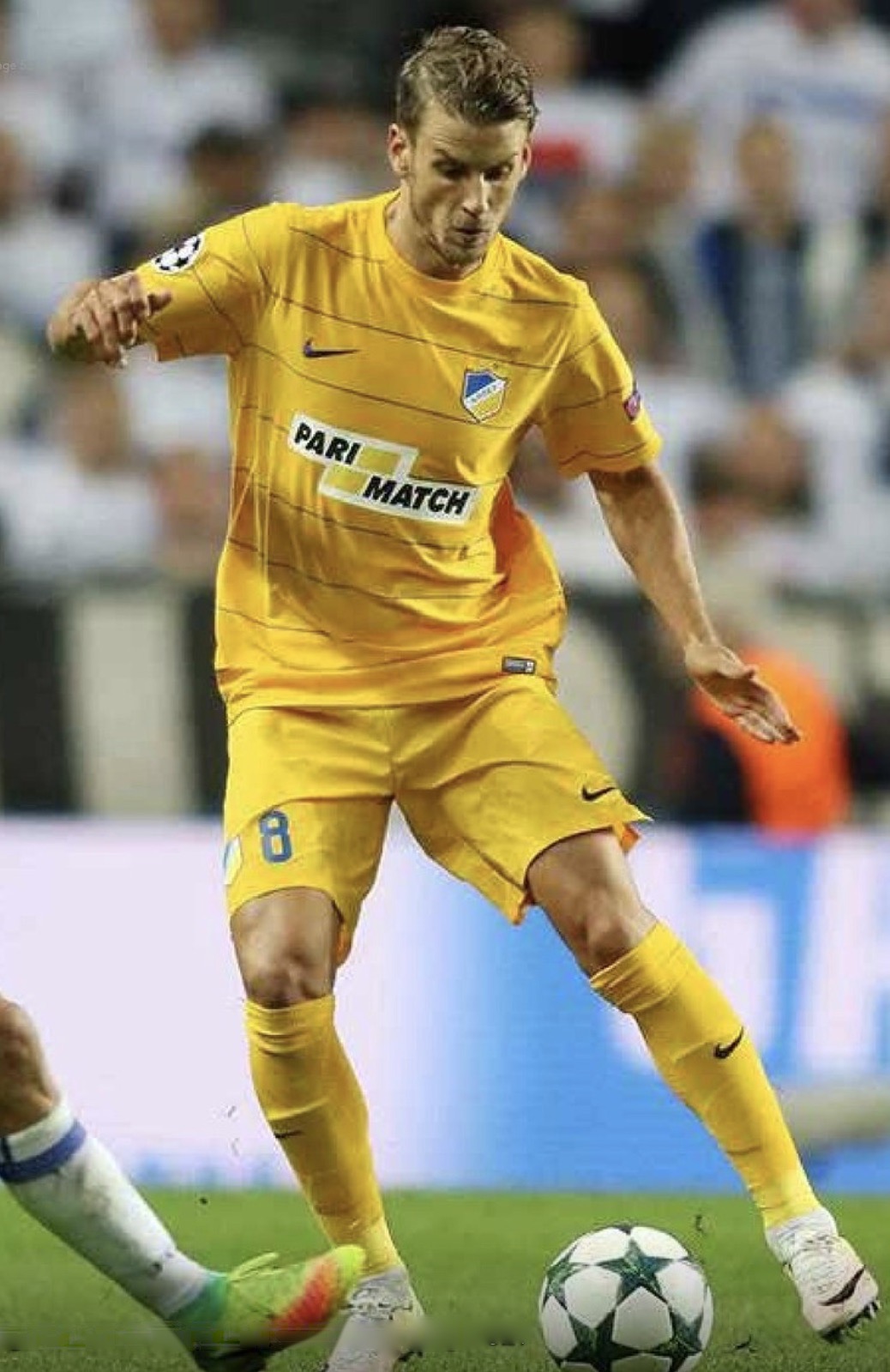
Orlandi switched clubs in Cyprus and joined APOEL but his one-year deal was terminated in January 2017 after he’d made 19 appearances.

He switched to Italy where he played 31 matches for Novara Calcio in Serie B and then joined his old pal Calde to spend half a season in the Indian Super League at Chennaiyin (under head coach John Gregory). On returning to Italy and signing for Serie C side Virtus Entella, during the medical a cardiologist discovered he’d got scarring in the left ventricle of his heart, and he was forced to retire without playing a game.

The popular Spaniard revealed in Richard Newman’s Football the Albion and Me podcast how he has gone on to become a scout for an agency as well as working as a TV pundit on La Liga and writing a column on that competition for the Evening Standard.Orlandi pundit

Pictures from various online sources and the Albion matchday programme

Winger Neil Smillie was a Wembley winner eventually

NS v MU Wemb

AN UNSUNG hero of Brighton’s 1983 FA Cup Final side, winger Neil Smillie, had the distinction of being the first ever apprentice the legendary Malcolm Allison signed for Crystal Palace.

Big Mal had enjoyed league and FA Cup success at Manchester City as Joe Mercer’s sidekick but he swept into Palace in the early 70s as a boss in his own right, courting publicity with his flamboyant fedora hat and giant cigar.

Smillie admitted: “I was going to West Ham but Allison persuaded me to take a look at Palace.

“The place was so alive and vibrant under him that I went there instead.”

Born in Barnsley on 19 July 1958, Neil followed in the footsteps of his dad, Ron, a former professional who played for Barnsley and Lincoln.

After joining Palace in 1974, Smillie turned professional a year later and was on Palace’s books for seven years, although he had three loan spells away from Selhurst.

In 1977, he went briefly to Brentford, who he ultimately would have a long association with later in his career.

Smillie MemphisThe following two years, he went to play in America for Memphis Rogues (pictured left) where his teammates were players from the English game winding down their careers: the likes of former Albion players Tony Burns and Phil Beal, ex-Chelsea, Leicester and Palace striker Alan Birchenall and former Chelsea winger Charlie Cooke; the side being managed by former Chelsea defender Eddie McCreadie.

At the end of the 1981-82 season, Smillie was denied a pay rise by Palace so he decided to quit and wrote letters to clubs in the top two divisions in England asking for a job!

Brighton had managed to offload the troublesome Mickey Thomas to Stoke City so had a need for a left winger. They were the first to come up with an offer, and with full back Gary Williams surplus to requirements since the arrival of experienced defender Sammy Nelson, Brighton offered him in exchange for Smillie.

The bubble-haired winger gratefully accepted the switch to the Seagulls. While he made the starting line-up for the opening game of the new season, a heavy (5-0) defeat away at West Brom in the next game then saw him dropped and sidelined for months.

It was only once ultra-cautious manager Mike Bailey had left that Smillie got back in contention, and only then – in January 1983 – through someone else’s misfortune.

He said: “I was out in the cold and only got my break when Giles Stille was injured during the Cup game against Newcastle United.”

Smillie seized his opportunity and remained in the side for the rest of the season, culminating in the two Wembley FA Cup Final matches against Manchester United.

Back in the second tier following Brighton’s relegation, Smillie played 28 games plus once as a sub but following new manager Chris Cattlin’s signing of Northern Irish winger Steve Penney, there was competition in the wide areas.

Throughout the 1984-85 campaign, Smillie was more often than not a substitute rather than a starter. He did manage a seven-game run of appearances in the late autumn and began the final three games of the season, but the last game, a 1-0 home win over Sheffield United, proved to be his farewell.

Smillie revealed in a 2003 interview with Spencer Vignes that he’d discovered Manchester City had been keen to take him on loan but Cattlin hadn’t sanctioned it, even though he wasn’t selecting him.

“Chris had turned them down, saying I was a good player and he needed me. Yet he wasn’t even playing me! I just couldn’t believe he’d done it,” he said. Although he and his family were settled in Sussex, he realised he had to move.

Several eyebrows were raised when Cattlin managed to secure a £100,000 fee from Watford for Smillie’s services in the summer of 1985. The winger joined Graham Taylor’s beaten FA Cup finalists but he failed to establish himself in the side and made just 16 first team appearances in a season with the Hornets.

In the summer of 1986, he moved on to Reading for two years and, in 1988, after his disappointment with Brighton, Smillie was finally a winner at Wembley, scoring and setting up two goals as Reading beat Luton 4-1 in the Simod Cup Final.

The Hatters were led by former Albion captain Steve Foster and another of Smillie’s former teammates, Danny Wilson, was in their midfield. Mick Harford scored the opening goal for Luton, but Smillie’s pass allowed Michael Gilkes to bundle home an equaliser.

Smillie then won a spot kick converted by Stuart Beavon, and, in the second half, Mick Tait swept home another Smillie assist. Smillie then rounded off a great afternoon by scoring himself. It was hailed as one of the best days in Reading’s history, witnessed by over 45,000 loyal Royals fans.

Nevertheless, Smillie didn’t hang around and instead joined Brentford, where his former Palace teammate Phil Holder was assisting the manager at the time, Steve Perryman.NS Bees

Nick Bruzon interviewed Smillie in depth for a Where are they now? feature on the Brentford FC website in July 2010.

“Representing Brentford over three different decades, initially on loan in 1977 and then for five years from 1988 to 1993, Neil Smillie combined raw pace with ceaseless energy to make him one of the most popular players to patrol the New Road touchline,” said Bruzon. “Whilst with Brentford he experienced promotion, relegation and play off heartbreak, scoring 18 goals in 185 games.”

Smillie said: “I’ve got to say, the five years I spent at Brentford (and I was 30 when I signed) I thoroughly enjoyed.

“I’d reached a point in my career where I felt comfortable in terms of what I could give on the pitch. I’d always been a hard worker and I got the feeling that the supporters appreciated someone who worked hard.”

In the 1992-93 season, he played alongside Chris Hughton, who, like Smillie, was winding down his playing career.

“I loved taking people on and I loved getting crosses in for people to score so that just seemed to fit in nicely at the time with the team that we had,” he said. “I played my part as well as others who played theirs in getting the ball to me. We all did our bit and for me it was a great part of my career.”

On leaving Brentford, Smillie became a player-coach at Gillingham when his old Palace teammate Mike Flanagan was the manager. When Flanagan was sacked, Smillie took over the managerial reigns on a caretaker basis while the club tried to stabilise during financial troubles.

Smillie told Bruzon: “We were in a fairly precarious position and ended up in a decent position. So there was some enjoyment to it but the situation at a club without any money and struggling was difficult.”

Some names familiar to Brighton fans were at Gillingham at the time. Smillie played up front with Nicky Forster. Paul Watson was in defence and Richard Carpenter in midfield.

His three-month reign came to an end when Gillingham appointed Tony Pulis as the new manager and former Palace manager Alan Smith took Smillie to Wycombe Wanderers to look after their youth team.

When Smith left, Smillie was caretaker manager until former Albion full back John Gregory got the managerial post. Smillie then became Gregory’s successor in the hot seat for a year.

When the inevitable sack came, Smillie stepped outside of day to day running of football to become sports marketing manager for Nike in the UK. His role was to identify emerging talent for Nike to associate themselves with, and, as a result he stayed in touch with the game.

Among the players he signed to Nike were Theo Walcott, Darren Bent, Gabby Agbonlahor, James Milner, Tom Huddlestone, Danny Welbeck and Johnny Evans.

Pictures show (top) Smillie in action on the cover of the Albion programme; walking his dog; in Match magazine, on the cover of Shoot! being tackled by Liverpool’s Sammy Lee; a Simod Cup winner with Reading.

Gary Lineker cleaned defender Larry May’s boots

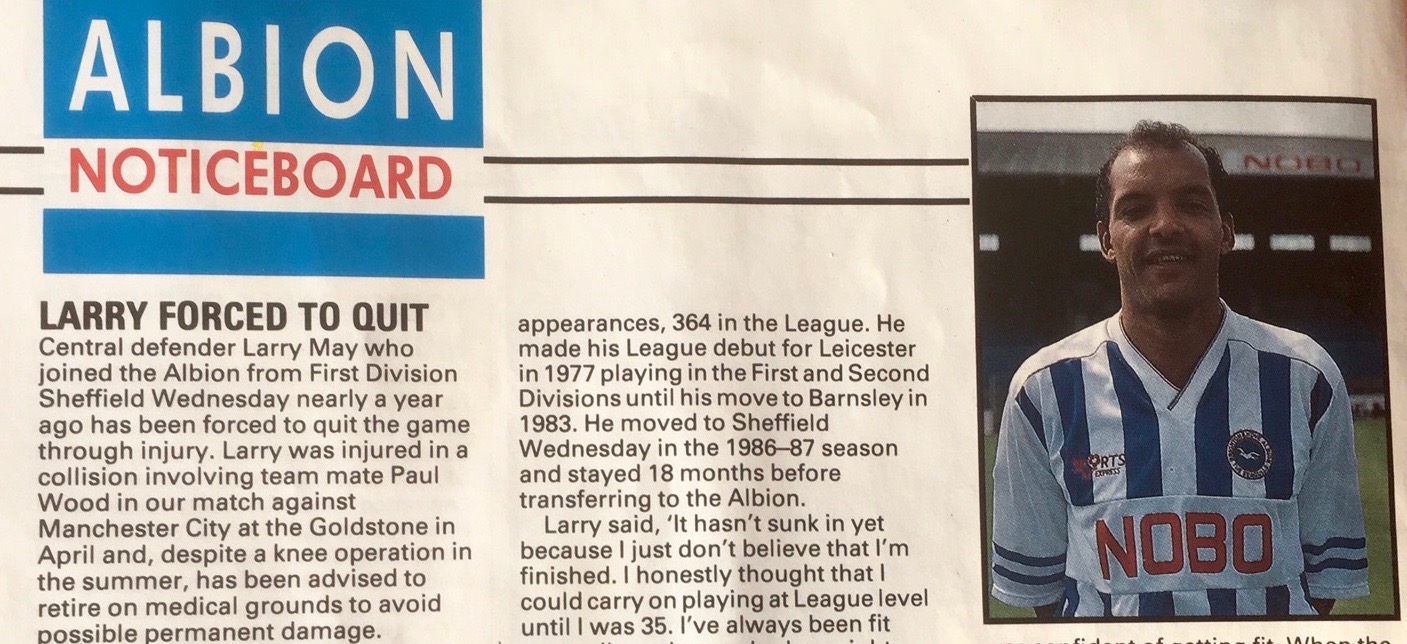
larry may wednesINJURY cut short Larry May’s playing career at Brighton but, during a purple patch of his four-year spell at Barnsley, he impressed his peers to the extent he was in the 1986-87 PFA team of the year.
Alongside him in that selection were Lee Dixon, the ITV football pundit who in those days played for Stoke City prior to his move to Arsenal, and former Albion full back John Gregory, who was playing in midfield for Derby County at the time.

Centre back Larry began his career with Leicester City and played over 200 games for them between 1977 and 1983. When given a run in the first team by former Rangers manager Jock Wallace, Larry’s boots were looked after by none other than Gary Lineker: the Match of the Day host being a Filbert Street apprentice at the time.

Leicester’s club historian John Hutchinson – who said of May: “He was very strong in the air, a powerful tackler and had pace” – drove down to Brighton in 2015 to interview Larry about his time with the Foxes and published the story on foxestalk.co.uk.

Leicester had spotted him playing for a local youth team in Birmingham and invited him for a trial. Aged 17, he made his debut in the top division against Bristol City when one of his teammates was Frank Worthington, another who later played for the Albion.

In the following season, Jimmy Bloomfield, the manager who gave him his debut, departed and was replaced by Frank McLintock, who didn’t give May much of a look-in.

Screenshot
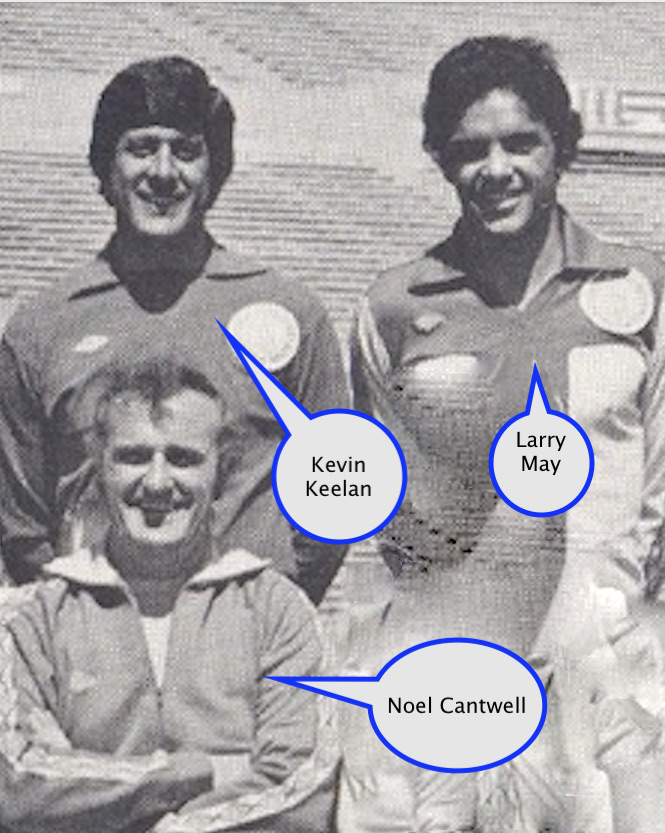
May played in front of ex-Norwich goalkeeper Kevin Keelan for the Tea Men

He went to play for New England Tea Men (a franchise owned by the Lipton tea company) in America under ex-Coventry manager Noel Cantwell to get some games but ruptured a cruciate ligament which some thought might end his career before it had even got off the ground.

Back at Leicester, McLintock was succeeded by Wallace and he paired May at the back with John O’Neill – a partnership that endured for the best part of five years.

In those early times, though, May admitted he had to play through pain and regularly ice his knee.

Not only was May ever-present in the 1979-80 side that won promotion from Division 2, he headed the only goal of the game at Leyton Orient on the last day of the season to clinch the title. Striker Alan Young, who played for Albion in the 1983-84 season, was another ever-present.

Leicester only survived a season in the top flight and following relegation Gordon Milne replaced Wallace as manager, guiding them to promotion in his first season. May, though, didn’t see eye to eye with the former Liverpool midfielder and ended up handing in a transfer request.

In an Albion matchday programme, May said: “”We fell out over something and nothing really but at 24 you think you know it all and there was no future for me once I’d asked for a transfer. “Thinking back, I realise that I should have got on with it.”

As it was, in August 1983 he dropped a division and joined Barnsley for a fee of £110,000, signed by the legendary former Leeds hard man, Norman Hunter.

larry may bw“For a man with a reputation of being one of the fiercest characters in football it was unbelievable – I’d say he was definitely the nicest fellow I’ve ever played for,” said May.
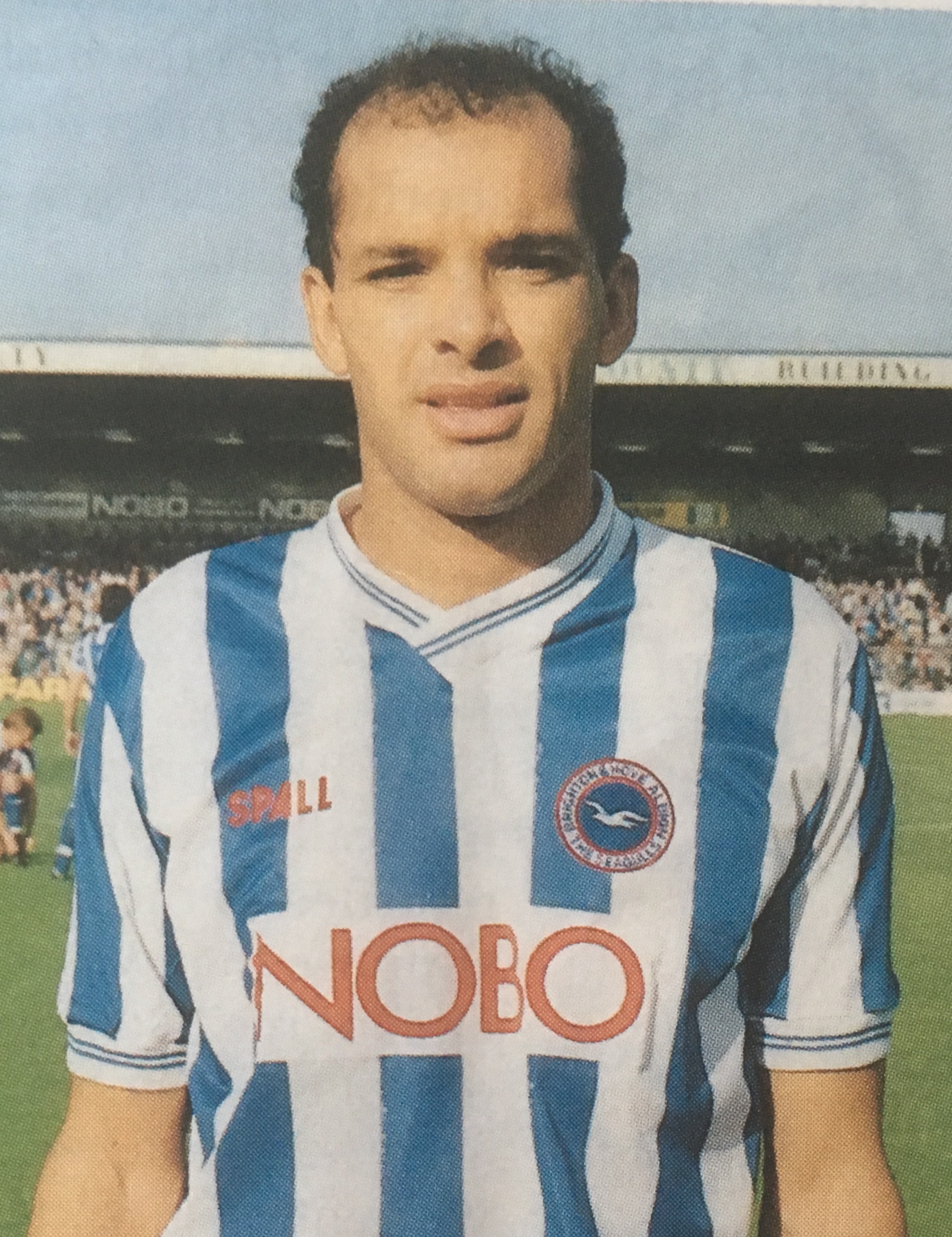
While on the books at Oakwell, with a nod towards a longer future in the game, May took his full FA coaching badge.

He told foxestalk.co.uk: “I was happy at Barnsley but, in retrospect, I should have bided my time and stayed at Leicester really. But I was a bit young and naïve. I loved it at Leicester. Leicester were the best club I ever played at. It was my best time in football and I loved it there.”

After three years with Barnsley, former Albion winger Howard Wilkinson took May to Sheffield Wednesday. He had just turned 28 and the move represented a step back up in standard.

“It was an important move at that stage in my career but looking back it was never brilliant for me at Hillsborough,” he said.

Amongst the competitors for his place was Nigel Pearson, later to be better known for some eccentricities in management with various clubs.

At the start of the 1988-89 season, a move south to Brighton was mooted but Wilkinson held onto him because of some early season injury problems. However, Barry Lloyd got his man towards the end of September 1988 and May joined Brighton for £200,000.

His debut in a 2-1 Goldstone win over Leeds brought to an end a run of eight defeats at the beginning of the season but it was back to losing ways – both 1-0 – in the following two games which, ironically, were against his former clubs, Barnsley, at home, and Leicester, away.

monoMay

The return fixture with Leicester was a happier outcome for May, though, because he was the sponsors’ man of the match in a 1-1 draw.

In his programme notes for the Barnsley game, manager Lloyd said: “I know he’ll have a big impact on the way we play….at 29, we know he has a lot of football left in him.”

Captain Steve Gatting had a programme column that season and he also welcomed the central defender, adding: “His experience in the top two divisions is bound to rub off onto some of younger players. When we’ve played against Larry in the past he’s tended to be the man of the match and I’m sure everyone at the Goldstone wishes him and his family every success.”

Understandable sentiments, of course, and such a shame that before the season’s end, after only 25 games, the cruciate ligament in his right knee was shattered in an accidental collision with teammate Paul Wood during a magnificent 2-1 home win over Man City.

“I knew straight away, having had knee trouble before, how serious it was,” he said. “It wasn’t Paul’s fault. It was just one of those things.” He was carried off on a stretcher and it was his last game for the club.

It was in the matchday programme for Albion’s game v Ipswich Town on 27 September 1989 that news of his forced retirement was announced.

“The sudden decision has stunned 30-year-old Larry and his family who were beginning to settle in the Brighton area after moving from Wakefield last year,” the announcement read. “In a 12-year career in the game, Larry has made more than 400 senior appearances, 364 in the league.”

A dejected May told the programme: “It hasn’t sunk in yet because I just don’t believe that I’m finished. I honestly thought that I could carry on playing at league level until I was 35. I’ve always been fit generally and never had a weight problem and this has really hit me.

“When the specialist told me that I shouldn’t play again my first reaction was that it had to be wrong. Now I’ve got to rethink and I’m not really sure about my future.”

Manager Lloyd added: “The announcement that Larry May had been forced to retire from playing was a particularly sad one. He performed very well for us last season and put heart and soul into everything around the club.”

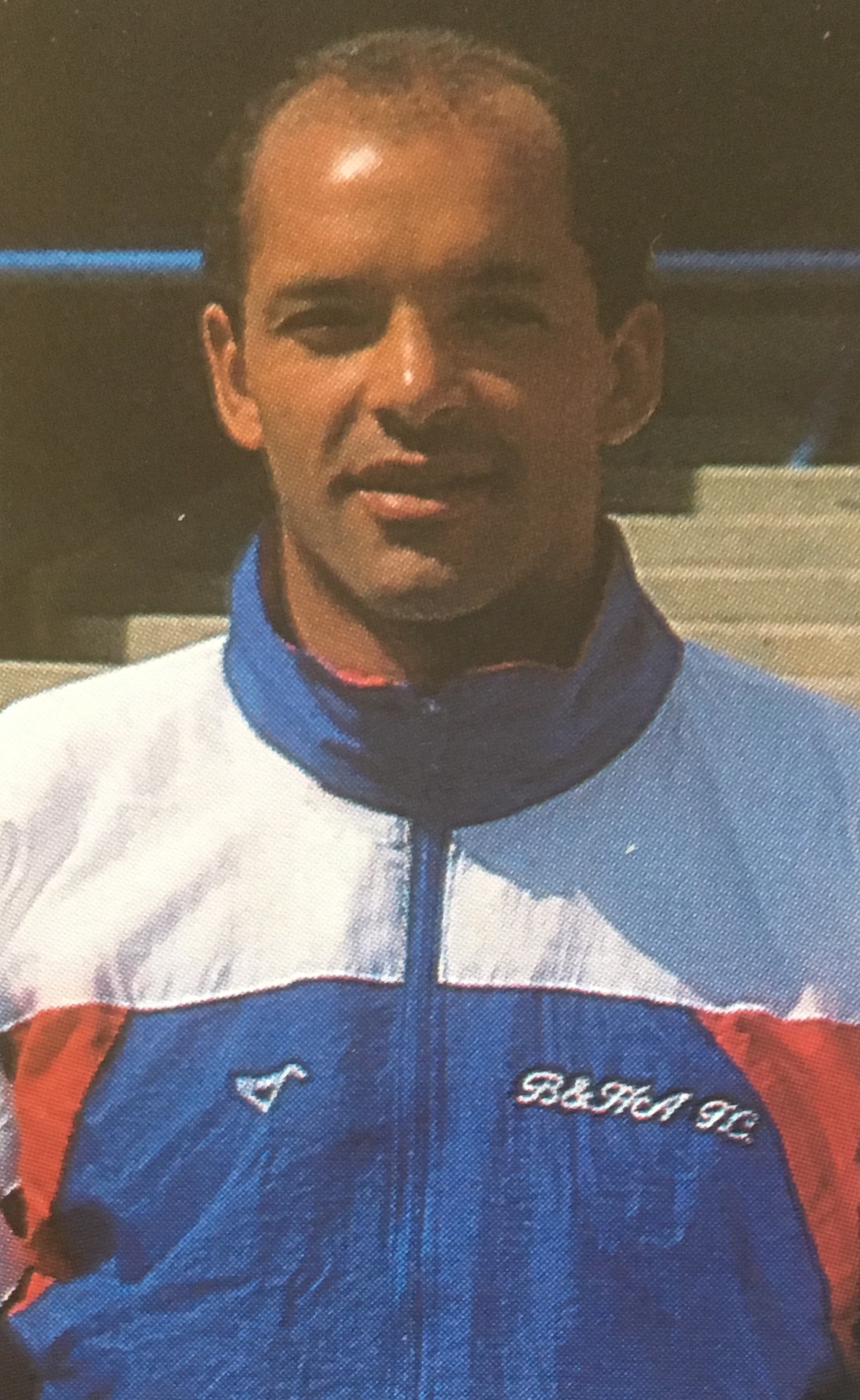
Thankfully Larry was able to put that coaching badge to good use when Lloyd made him reserve team coach and, after a time working for the Surrey FA, he later returned to the club as Head of Sports Participation for Albion in the Community.

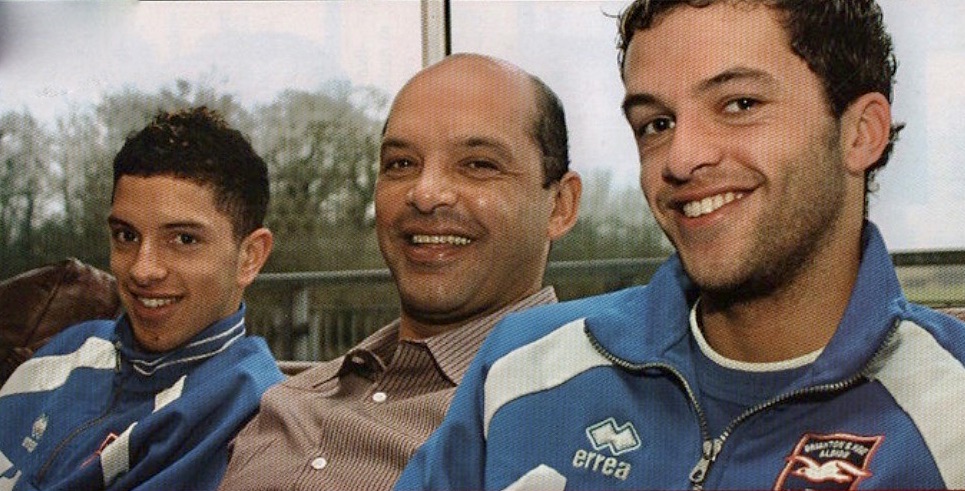
His links to the club also extended to his sons: Chris was a young goalkeeper who once had to replace the injured Michel Kuipers during a game and Steve was a centre-back who was in the youth set-up.

1-larrymaystripes2-argusmayintheface3-may-quits4-coach-may

Larry and his sons Steve (left) and Chris

Pictures include Larry May in matchday programmes; captured by an Evening Argus cameraman getting a hand in the face; the programme announcement of his retirement; in an Albion team line-up as a coach, and with his sons.

Did Chris Ramsey’s injury alter outcome of 1983 FA Cup Final?

2-near-post-guardBRIGHTON & HOVE Albion’s May 1983 FA Cup Final clash with Manchester United was historic for the club and for their 21-year-old right back it was even more eventful.
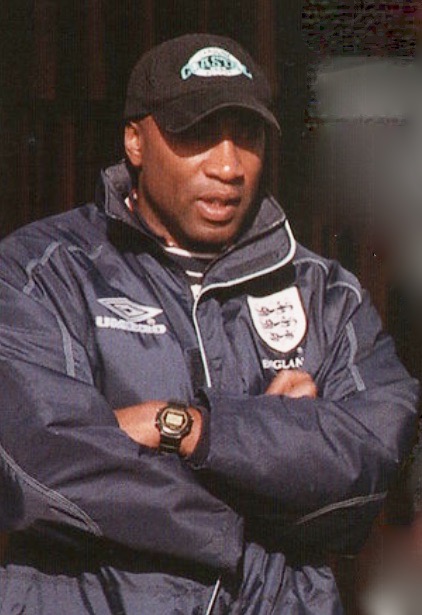
Who would have known that former Bristol City apprentice Chris Ramsey’s ignominious departure from the field in a firemen’s lift on Glen Wilson’s shoulder would more or less be the end of an all-too-brief playing spell in the top echelons of the English game?

Might the match – and Ramsey’s career – have panned out differently if it hadn’t been for that diabolical tackle by Norman Whiteside?

Trouble had been brewing in the weeks leading up to the final and the national media, looking for every possible angle to pick at, had singled out Ramsey for criticism. Did that stoke the fire?

Let’s rewind a little and explore what happened.

Born in Birmingham on 28 April 1962 , Ramsey, whose father came to the UK from St Lucia, was one of two boys and five girls. Rejected by Charlton Athletic as a schoolboy, he became an apprentice at Ashton Gate but was then released and, after a successful trial, Brighton took him on.

The 1980-81 season was Albion’s second in the top division and, as it drew towards its close, it was looking increasingly likely they were heading for relegation.

Manager Alan Mullery was openly criticising his players for their efforts and his big ally off the field, vice-chairman Harry Bloom (current chairman Tony Bloom’s granddad) had died of a heart attack on the team coach on an away trip to Stoke.

Something had to change and, at the tender age of 19, Ramsey was called up from the reserves and plunged in at the deep end.

In three of the last four games, he took over the no.2 shirt after Mullery switched John Gregory from right back into midfield. Ramsey’s debut came in a crucial Easter Saturday clash away to rivals Crystal Palace when, released from the shackles of defending, Gregory scored twice in a 3-0 win. Ramsey also played in the wins over Sunderland away and Leeds at home.

The Seagulls stayed up by the skin of their teeth and Evening Argus reporter John Vinicombe said in his end of season analysis that Ramsey had been “a revelation” in those three games.

Within a matter of weeks, Mullery quit as manager in the furore over chairman Mike Bamber selling Mark Lawrenson to Liverpool (after Mullery had already agreed a deal to sell him to Manchester United).

Gregory was sold to QPR for £300,000 but, far from that move opening up an opportunity for Ramsey, Mullery’s replacement Mike Bailey brought in on a free transfer from Loftus Road the experienced Don Shanks, who was immediately installed as the first choice right back.

Indeed Bailey froze out Ramsey for the following 19 months! At one point he was transfer listed but it was Bailey who departed the Goldstone first – his sacking working to the advantage of the young defender.

When George Aitken and Jimmy Melia took over in December 1982, Ramsey was instantly promoted from the reserves and seized his opportunity.

In a profile in an Albion matchday programme in February 1983, Ramsey told Tony Norman: “Like any other young apprentice, my dream was to play in the First Division. I must admit that even after coming to Brighton, I had times when I wondered if I’d make it. But now I’ve got my chance and I’m keen to make the most of it.”

In one of the most comprehensive profiles on Ramsey, former Brighton teammate, Andy Ritchie, told Adam Ellis of The Football League Paper: “He was quite a shy lad back then but he had everything you want in a full back. Aggression, pace, agility – and he could tackle like a demon.”

These were the attributes that Melia appreciated too. In a Daily Mail preview of the Norwich quarter final, Melia told reporter Brian Scovell: “The other players love playing with him. He’s a great competitor, tackles well and uses the ball with a bit of style.

“I’m pleased he’s taken his chance. He deserves to play at Wembley if we manage to get there.”ramsey + mel

As it turned out, Ramsey’s place was in jeopardy because of two sendings off in the league in April which led to him being banned for the semi-final against Sheffield Wednesday at Highbury.

After being sent off in a 2-1 home win over Spurs, Terry McNeill reported in the News of the World: “Ramsey was lucky to stay on earlier after bringing down Mark Falco in a probable scoring position. When he took the striker again from behind, there was no escape.”

The 20-year-old Ramsey was fairly phlegmatic about the situation and told Alex Montgomery of The Sun: “Whatever I did, I did for the club. You can’t think about Cup games when you are struggling for points at the bottom of the First Division.”

His second dismissal, along with Coventry’s Steve Jacobs (who later played for the Albion under Chris Cattlin) after a scuffle in a 1-0 win at the Goldstone, was lambasted by one of the pre-eminent football writers of the day, Frank McGhee of the Daily Mirror.

“Can Brighton afford to field at Wembley a man who by then won’t have been able to play for 19 days?” he intoned. “And can they trust Ramsey not to sully soccer’s great state occasion by a moment of blind madness?”

Nevertheless, after Wednesday were beaten, Melia was happy to restore his first-choice right back to the starting line-up but one wonders now whether Ramsey had a sense of foreboding about how the big occasion would unfold.

Reflecting on those dismissals in the build-up to the final, he told The Sun’s Montgomery: “I just hope people aren’t looking for me. I’ll certainly be careful. I honestly don’t think I deserve the reputation which I’ve been saddled with in the last few weeks.

“The dismissals were just coincidences – nothing more than that. I know I am an aggressive type of player but that is my game. I always want to give 100 per cent for the club. The last thing I want is trouble at Wembley.”

After Albion had taken a shock lead through Gordon Smith’s header, United piled on the pressure and Ramsey headed a goalbound Gordon McQueen effort off the line.

But then came a pivotal moment early in the second half. Tim Carder and Roger Harris record it thus in their excellent Seagulls! The Story of Brighton & Hove Albion FC: “Whiteside went in high on Ramsey’s shin as the Albion full back cleared, and then trod on his ankle. The referee had a strong word with the United forward but did not signal a foul.”

The tackle had rendered Ramsey lame and while he tried in vain to carry on, two minutes later he wasn’t able to challenge for a ball to the far post which Frank Stapleton duly dispatched to equalise.

Those of us watching in the stadium, together with millions glued to TV screens around the world, saw Ramsey carried from the Wembley turf and, in those days of only one substitute, wondered how Albion would cope with a makeshift defender in the shape of Gerry Ryan.

After United took the lead through Ray Wilkins, Ramsey’s friend – and fellow England under-20 teammate – Gary Stevens’ equalised to send the game into extra time and ultimately a replay. Stevens was adamant about the impact Whiteside’s challenge had on the game.

In Match of My Life, edited by Paul Camillin, he said: “It was a bad tackle and perhaps cost us the game. In those days we only had one substitute and Gerry Ryan came on and did a great job at right back, even though he was a midfield player, but we did miss Chris because he had been having a great game.”

Whiteside was unapologetic about the challenge but Ramsey fumed to The Sun’s Montgomery: “It could have broken my leg. If I’d done it, I’d have been off. I just can’t understand how Whiteside got away with it.”

The injury deprived Ramsey of the chance to play in the replay five days later and, after that sad exit, his playing career never reached similar heights again.

Indeed he actually only played 37 games for the Albion, most of those coming in that 1982-83 season. He played only a handful of games in the following season and in August 1984 went on loan to Swindon Town before joining them permanently four months later.

There, he played alongside the likes of Sky Sports reporter Chris Kamara and one-time Albion assistant manager Colin Calderwood and clocked up over 120 appearances, including being part of Lou Macari’s Fourth Division champions in 1986 and Third Division play-off winners in 1987.

In August 1987, he joined Southend United but played just 13 games for them before persistent back injuries forced his early retirement at the age of just 26.

Some business ventures he embarked on didn’t work out and former Albion right back rival Shanks set him up with a trial for a team in Malta, Naxxar Lions, where he made a playing comeback.

Eventually the ongoing injury problems made him look to other ways of making a living. He coached in the United States but also started studying like crazy.

Amongst lots of qualifications, he got a Master’s degree at the University of North London in Health, Physical Education and Recreation (a qualification which enabled him to become a primary school teacher) and simultaneously obtained his UEFA coaching badges.

That Football League Paper piece records: “With an MSc, ten diplomas and myriad other qualifications, Ramsey is so highly educated that he actually sets the test for pro licence candidates.”

ramsey EngA stint in charge of youth development at Leyton Orient and coaching Newham Ladies was followed by an FA appointment as coach to the England under-20 side in the 1999 FIFA World Youth Championship when among the players under his direction were Ashley Cole, Peter Crouch, Matthew Etherington and John Piercy, who later played for the Albion. At the FA he learned from the likes of Les Reed and one-time Albion winger Howard Wilkinson.

He had a short and unsuccessful three-month spell as assistant to Ricky Hill at Luton Town, and he said: “Ricky Hill was a massive inspiration to me.”

Just when it appeared new offers had dried up, Ramsey got the chance to manage Charleston Battery in the USA, where he stayed for three years.

Winning the USL A-League (second division) with Battery in 2003 brought him to the attention of Spurs, and, as head of player development, many of the young players he coached in tandem with Les Ferdinand and Tim Sherwood were Harry Kane, Ryan Mason, Danny Rose, Nabil Bentaleb, Andros Townsend, Steven Caulker and Jake Livermore.

“He was massive for all of us,” French midfielder Bentaleb told The Football League Paper. “He believed in us, he encouraged us. He told the manager we were ready when everyone else believed we were not. He was not shy or scared of anybody and he knew exactly what he wanted.”

chris ramsey (spurs)In the Evening Standard in 2012, Spurs and England centre back, Ledley King, said: “He is one of the best coaches in the country. The youngsters love the way he works and they have really bought into his methods.”

Ramsey left Spurs in 2014 to take up a coaching role at QPR, and when Harry Redknapp left the floundering Hoops in February 2015, Ramsey stepped up to become a fully-fledged Premier League manager.

He was not able to halt Rangers’ relegation from the elite, though, and lasted only until November in charge of the side as they struggled to come to terms with life back in the Championship.

However, in January 2016, he was appointed technical director at QPR to oversee the club’s academy coaching and player development.

The club’s director of football, Ferdinand, told The Guardian: “While we were disappointed things didn’t work out with Chris at first team level, we were determined to retain his services. As such, we actually put a clause in his contract which allowed us to retain Chris’s services in a player-development role should things not work out for him as head coach.”

Ramsey finally left QPR in January 2024. By then 61, the head of coaching and technical director told the club website: “I have had a fantastic nine years at QPR and the club will always have a special place in my heart.”

The club’s chairman Lee Hoos said: “Chris has been a great servant to the club. I cannot thank him enough for his incredible hard work, dedication and guidance.

“However, as we thoroughly rationalise everything we do, and following very amicable discussions with Chris, it is felt this move is in the best interests of all parties. He will always remain a friend of the club.”

  • Shootthedefence.com did a face-to-face interview with Ramsey on 23 September 2016 which is well worth a listen as he talks in detail about his whole career.
  • In pictures from my scrapbook, Ramsey graces the cover of an Albion matchday programme; (top) he defends the near post during the 1983 FA Cup Final with Gordon McQueen in attendance; he is photographed by Tony Norman outside the Goldstone and criticised in the Daily Mirror by Frank McGhee.