The FA Youth Cup winner with a sweet left foot

PACY DARREN HUGHES made his Everton first team debut two days after Christmas 1983 while still a member of the club’s youth team.

That game at Molineux ended in a 3-0 defeat for the young defender against bottom-of-the-table Wolves who had Tony Towner on the wing and John Humphrey at right-back.

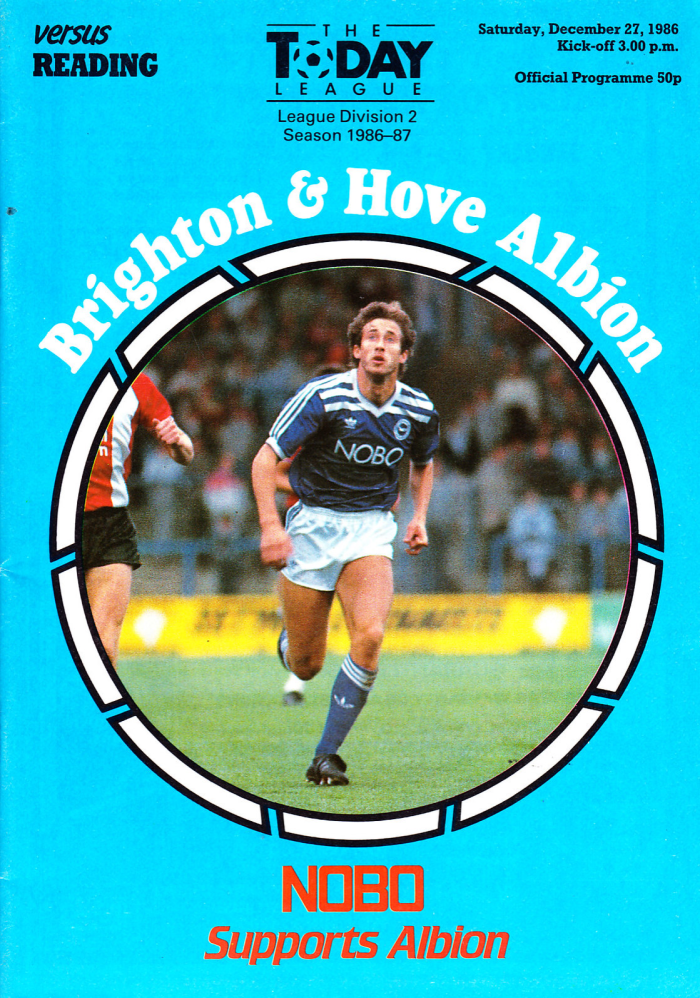
Exactly three years later, a picture of Hughes in full flight was on the front cover of Albion’s programme for their home festive fixture against Reading, the Scouser having signed for the second-tier Seagulls for £30,000.
The money to buy him came from the supporter-funded Lifeline scheme which also helped to buy goalkeeper John Keeley for £1,500 from non-league Chelmsford and striker Gary Rowell, from Middlesbrough.

Hughes had made only two more first team appearances for Everton before a free transfer move took him to second tier Shrewsbury Town, for whom he made 46 appearances.

It was while playing for the Shrews in a 1-0 win over Brighton that he had caught the eye of Alan Mullery, back in the Albion hotseat at the start of the 1986-87 season.

In his matchday programme notes, Mullery wrote: “Darren could become a really good player here. I was impressed with him when he played against us recently.

“He started at Everton and came through their youth scheme and had already played in their first team at 18. The grounding he received at Goodison should stand him in good stead.

“He has already shown he is the fastest player we have here, in training he even beat Dean Saunders in the sprints.”

Interviewed for the matchday programme, Hughes told interviewer Tony Norman: “I was quite happy at Shrewsbury. But when the manager told me Brighton were interested in signing me I thought it would be another step up the ladder. It’s a bigger club with better prospects and it’s a nice town as well.”
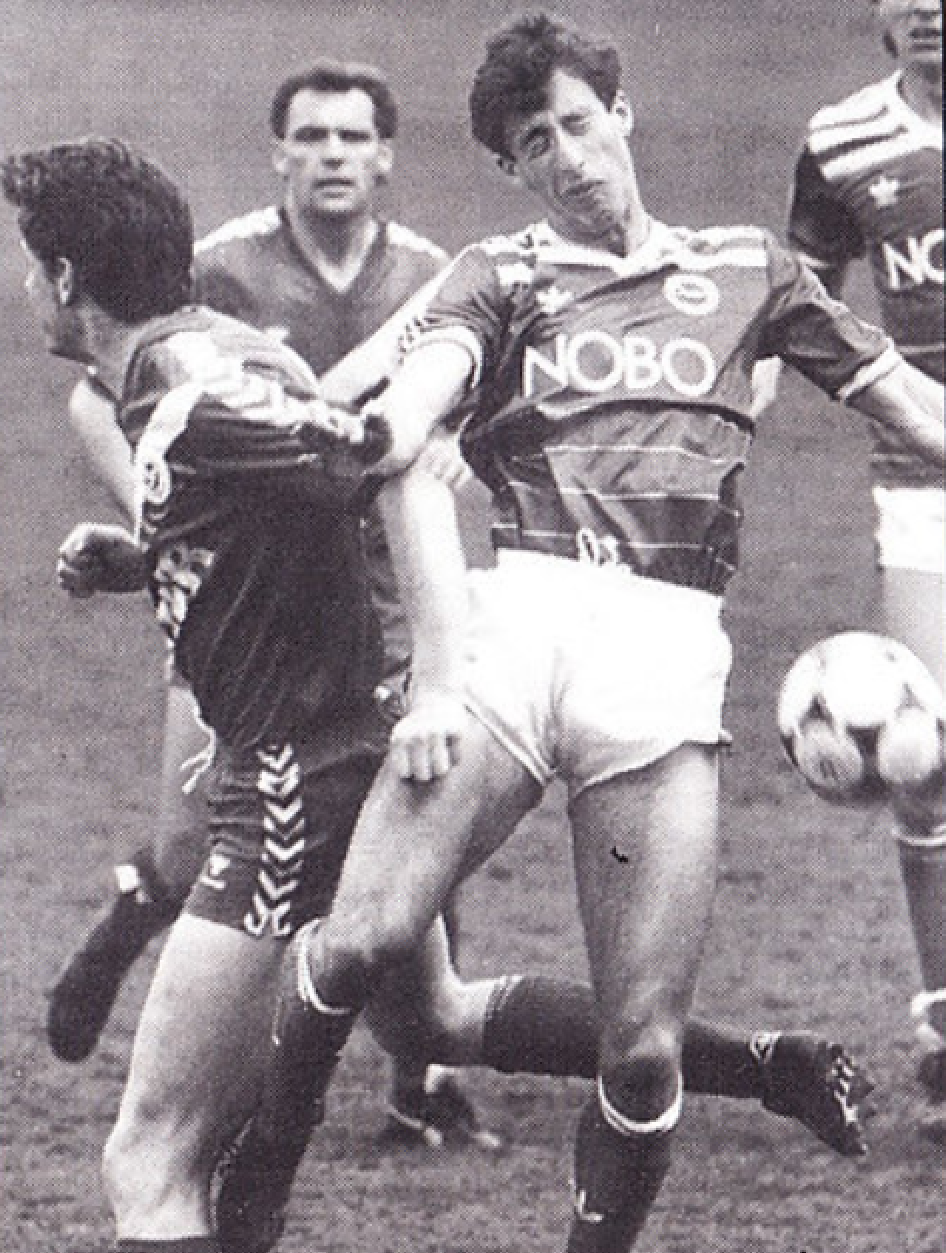
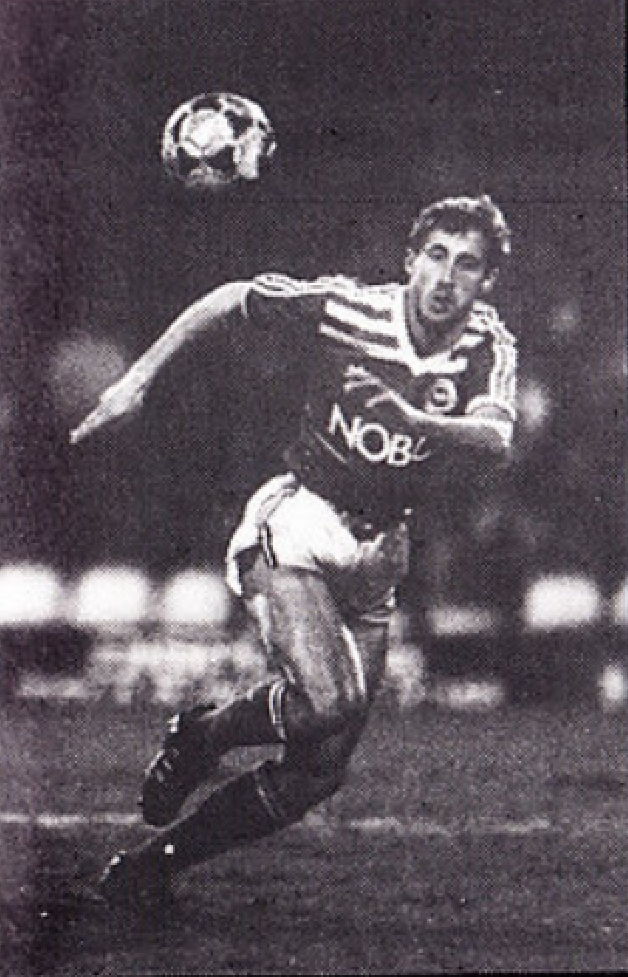
Hughes moved into digs in Hove run by Val and Dave Tillson where a few months later he was joined by Kevan Brown, another new signing, from Southampton.

Hughes meanwhile had made his Albion debut in a 3-0 defeat at home to Birmingham in the Full Members Cup on 1 October 1986 and his first league match came in a 1—0 home win over Stoke City three days later courtesy of a Danny Wilson penalty.

He scored his first goal for the Seagulls in a 2-2 Goldstone draw against Bradford City as Mullery continued to see points slip away. With financial issues continuing to cloud hoped-for progress, 1987 had barely begun before Mullery’s services were dispensed with.

Hughes played 16 games under his successor Barry Lloyd but those games yielded only two wins and the Albion finished the season rock bottom of the division, dropping the Albion back into the third tier for the first time in 10 years.
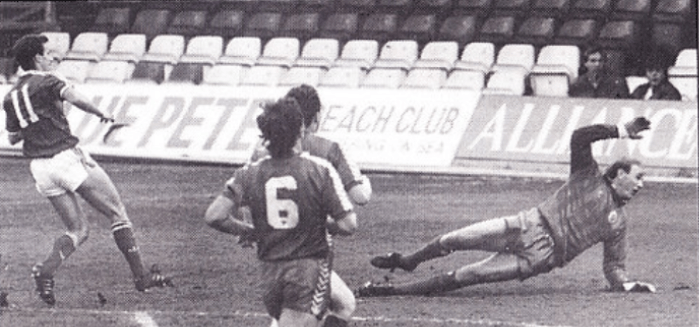
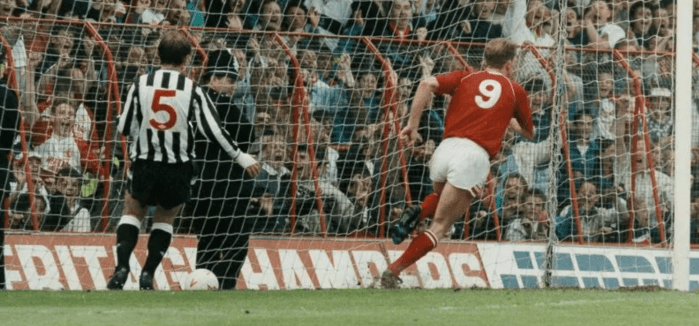
A rare happy moment during that spell was (pictured above) when Hughes slotted past George Wood in a 2-0 home win over Crystal Palace on Easter Monday although that game is remembered more for violent clashes between supporters outside the Goldstone Ground after fans left before the game had finished.

What turned out to be his 25th and final league appearance in a Seagulls shirt came in a 1-0 home defeat to Leeds when he was subbed off in favour of youngster David Gipp.
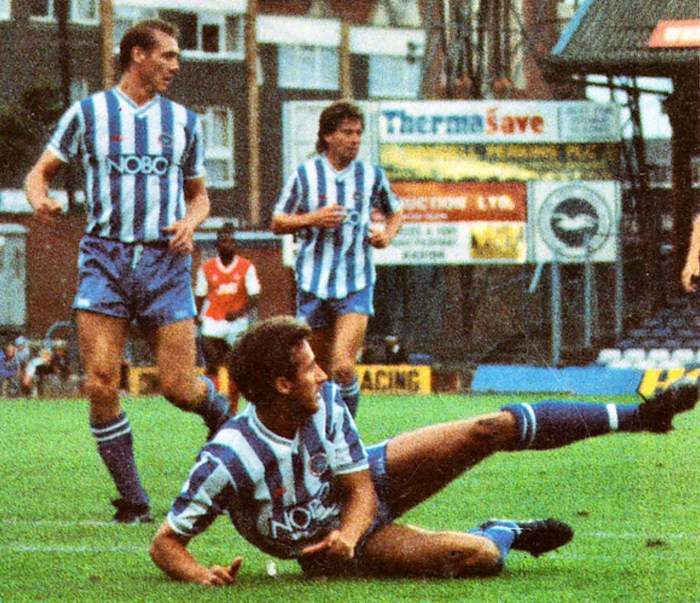
Going to ground in a pre-season friendly against Arsenal

Hughes did start at left-back in a pre-season friendly against Arsenal at the Goldstone in early August (when a Charlie Nicholas hat-trick helped the Gunners to a 7-2 win) but when league action began he was on the outside looking in.
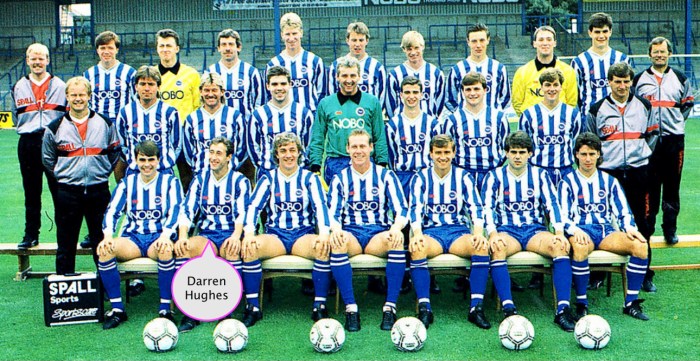
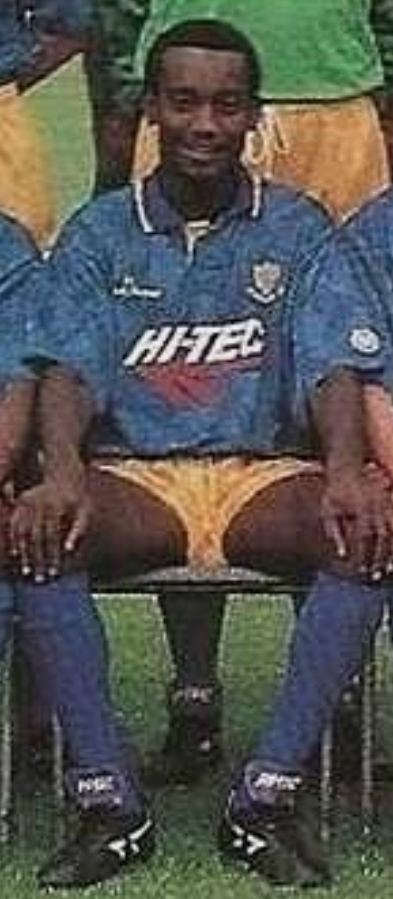
He was in the front row of the official team photo line-up for the start of the 1987-88 season, but Lloyd was building a new side with several new signings, such as Keith Dublin and Alan Curbishley, and young Ian Chapman was also beginning to stake a claim.

Hughes earned mentions in dispatches for his performances in the reserves’ defeats to Portsmouth and Spurs but come September he switched to fellow Third Division side Port Vale, initially on loan before making the move permanent.

Perhaps it was inevitable that when the Seagulls travelled to Vale Park on 28 September, Hughes was on the scoresheet, netting a second goal for the home side in the 84th minute to complete a 2-0 win.

Born less than 10 miles from Goodison Park, in Prescot, on 6 October 1965, Hughes went to Grange Comprehensive School in Runcorn and earned football representative honours playing for Runcorn and Cheshire Boys. He joined Everton as an apprentice in July 1982.
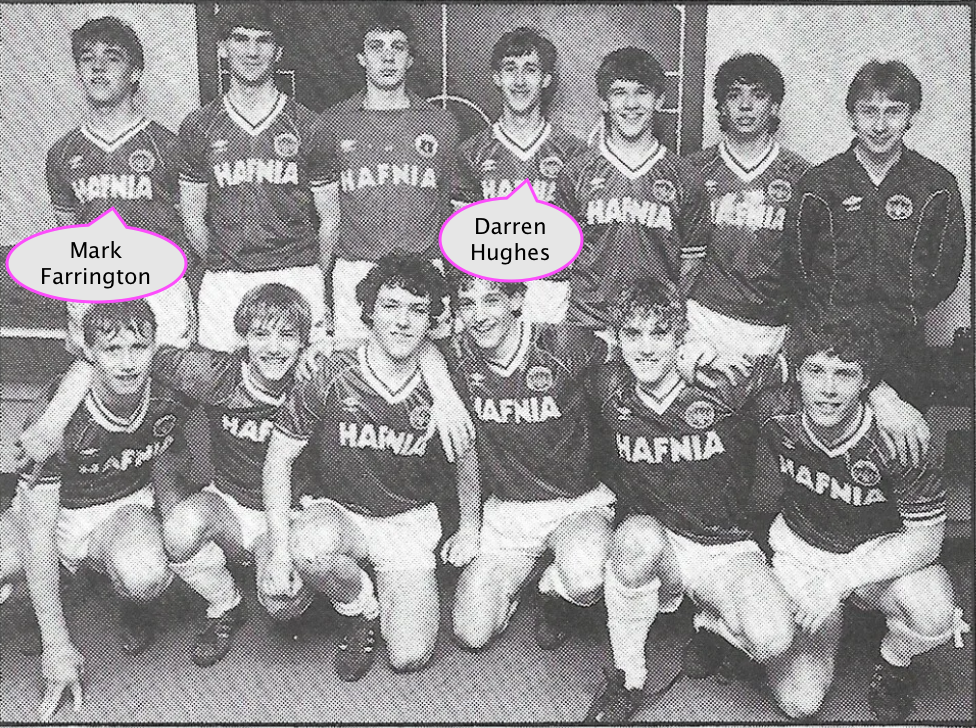
Originally a midfield player, he switched to left-back in the two-legged 1983 FA Youth Cup semi-final against Sheffield Wednesday (when Mark Farrington scored four in Everton’s 7-0 second leg win).

In the final against Norwich City, two-goal Farrington missed a late penalty in the first leg in front of an extraordinary 15,540 crowd at Goodison Park. The tie was drawn 5-5 but the Canaries edged it 1-0 in a replay to win the trophy for the first time.

If that was so near and yet so far, youth team coach Graham Smith saw his young charges make up for it the following year. Hughes was on the scoresheet as Everton won the FA Youth Cup for the first time in 19 years.
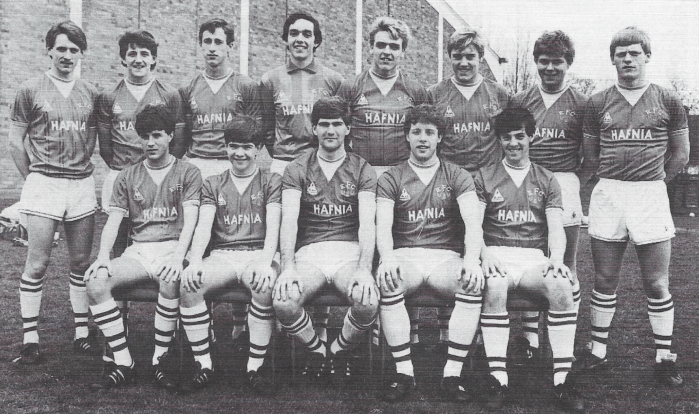
This is how the Liverpool Echo reported it: “Everton’s brave youngsters survived a terrific onslaught to take home the Youth Cup when beating Stoke City Youth 2-0 and winning by a 4-2 aggregate.

“And the man to set them on their way was 18-year old full-back Darren Hughes, who set the game alight in the 62nd minute with a brilliant goal.

“The Everton left-back picked the ball up on the halfway line and surged into the Stoke half before sending a wicked, bending drive past keeper Dawson.”

Eleven days later, there were even more Goodison celebrations when the first team won that season’s FA Cup, beating Watford 2-0 at Wembley.

Not long into the following season, Hughes learnt the hard way not to take anything for granted, as the website efcstatto.com revealed.

Manager Howard Kendall saw Everton Reserves, 2-0 up at half-time, concede six second half goals and lose 6-2 to Sheffield Wednesday Reserves.

He didn’t like the attitude he saw in several players and promptly put five of them, including Hughes, on the transfer list.

“It was important that we showed the players concerned how serious we were in our assessment of the game,” said Kendall. “Attitude in young players is so important. These lads would not be here if we did not think they have skill or we thought they would not have a chance of becoming First Division players.

“At some time, however, they must come to learn that football is not always a comfortable lifestyle. There are times when the only course of action is to roll up your sleeves and battle for yourself, your teammates and your club.”

Even though they were put on the transfer list, he said that they still had a future at the club as long as they behaved accordingly.

“What it does mean is that we shall be watching them very carefully over the next few months to see whether they have the right attitude in them – because it is a must,” said Kendall.

Hughes did knuckle down and at the end of what has come to be regarded as perhaps Everton’s greatest-ever season – they won the league (13 points clear of runners up Liverpool) and the European Cup Winners’ Cup (beating Rapid Vienna 3-1) and were runners up to Manchester United in the FA Cup (0-1) – he played two more first team games.

They were the penultimate and last matches of the season but were ‘dead rubbers’ because Everton had already won the league title and Kendall could afford to shuffle his pack to keep players fresh for the prestigious cup games that were played within four days of each other.

Hughes was in the Everton side humbled 4-1 at Coventry City, for whom Micky Adams opened the scoring (Cyrille Regis (2) and Terry Gibson also scored; Paul Wilkinson replying for Everton).

Two days later, he was again on the losing side when only two (Neville Southall and Pat Van Den Hauwe) of the team that faced Man Utd in the FA Cup Final were selected and the visitors succumbed 2-0 to a Luton Town who had Steve Foster at the back.

With the experienced John Bailey and Belgian-born Welsh international Van Den Hauwe in front of Hughes in the Everton pecking order, Kendall gave the youngster a free transfer at the end of the season.
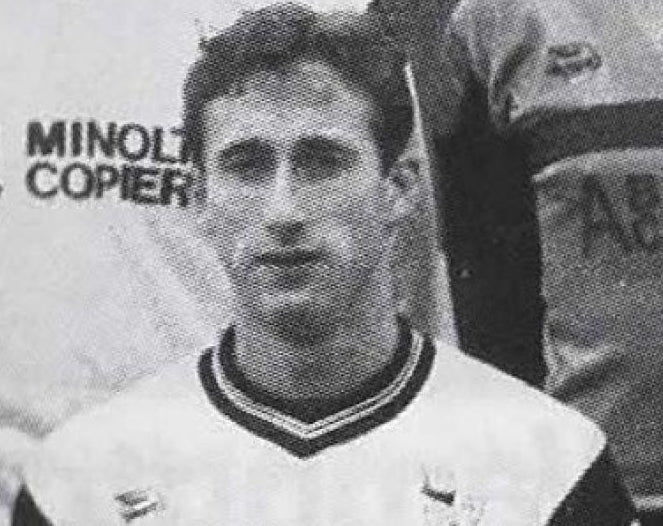
After he left Brighton, Hughes enjoyed some success at Vale, and according to onevalefan.co.uk formed one of the club’s best full-back partnerships together with right-back Simon Mills.

A highlight was being part of the side that earned promotion to the second tier in 1988-89, but his time with Vale was punctuated by two bad injuries – a hernia and a ruptured thigh muscle.

Vale released him in February 1994 but he initially took the club to a tribunal for unfair dismissal. He was subsequently given a six-week trial in August to prove his fitness and, upset with that treatment, he left the club in November 1994.

Between January and November 1995, he played 22 games for Third Division Northampton Town. He then moved to Exeter City, at the time managed by former goalkeeper Peter Fox, and made a total of 67 appearances before leaving the West Country club at the end of the 1996-97 season.
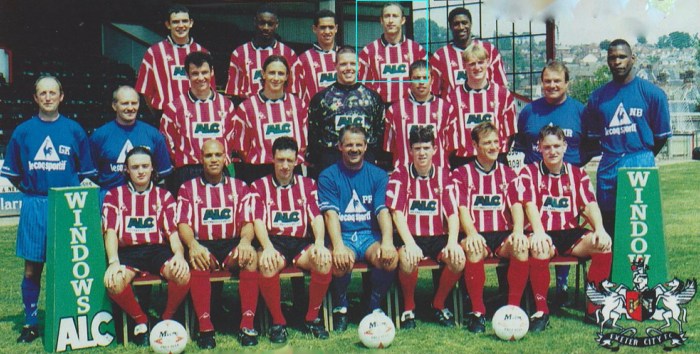
Hughes in an Exeter City line-up

He ended his career in non-league football with Morecambe and Newcastle Town. After his playing days were over, according to Where Are They Now? he set up a construction business.

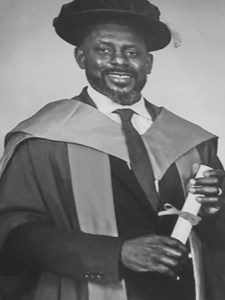
Bees and Seagulls milestones on Michael Bennett’s wellbeing journey

IT ALMOST certainly wouldn’t have occurred to the loyal few Albion fans who followed the basement division Seagulls in exile in 1998-99 that one of the men in stripes would go on to make a difference to the lives of hundreds of footballers.

Brighton was the eighth and last league club Michael Bennett played for over the course of 12 years in which he discovered all the highs and lows that footballers can experience.

Since packing up playing, those personal insights helped him to begin a journey that led him to help huge numbers to cope with the game’s often-unseen stresses and strains.

Bennett became a psychotherapist, gained a degree and led the setting up of a counselling and mental health and wellbeing support network for the Professional Footballers’ Association, where he worked for 15 years, latterly as director of player wellbeing. In that role, he was frequently a media spokesman for the PFA.

Dr Michael Bennett

Now running his own counselling business it’s all a far cry from the days when his league playing career ended filling a variety of positions in Brian Horton’s fourth-tier Brighton team, playing home games in exile at Gillingham. In one game, he was racially abused by a Swansea City fan who ran onto the pitch to confront him (more of which, later).

It was quite a fall from career highlights that saw him play for England at under-20 level alongside the likes of Matt Le Tissier, David Batty, Neil Ruddock and Tim Sherwood, make his debut at 17 in the top division for Charlton Athletic alongside John Humphrey, Colin Pates and Steve Gritt, and feature for Brentford (with Chris Hughton and Neil Smillie) when the Bees played second-tier football for the first time in 38 years.

While Addicks fans remember Bennett fondly, Bees supporters are a lot less generous and mainly recall a training ground incident in which the player broke a teammate’s jaw with a single punch.

The internet can be – and is – many things and unfortunately for people like Dr Bennett, such past incidents are still recorded for all to read about.

Thankfully, all the excellent work he has achieved in the health and wellbeing field is also documented and, in October 2021, Andy Naylor of The Athletic did an in-depth piece which examined his journey in detail.

“The story of his rise to prominence as a leader in his field is inspirational, a demonstration that with application, determination and drive you can build a career in the game that extends well beyond playing football,” wrote Naylor.

Bennett eschewed a coaching career (even though he passed his UEFA B licence) and at college, while studying Maths and English, was urged to take up counselling. As Naylor reported: “By 2004, Bennett had his degree in it and the following year he set up his own company, Unique Sports Counselling.”

Three years later, he joined the PFA as southern region education adviser aiming to get players to prepare for life after football. He also invited attendees to his workshops to speak to him privately about emotional issues – and he discovered there were plenty who took up the offer.

Eventually he persuaded then PFA chairman Gordon Taylor of the need for a designated wellbeing department dealing with the welfare of players.

In 2015, Sam Wallace of The Independent interviewed Bennett for an article about troubles ex-Arsenal and England full-back Kenny Sansom was facing. He discovered the year before the PFA had requests for support from 197 of its members.

“That is some caseload for Bennett, a man who talks in the careful, measured tones of someone used to dealing with problems that must seem intractable,” wrote Wallace. “Last year, the PFA established a 24-hour telephone helpline for members. Safe to say, it is not underused.”

The problem, Bennett told Wallace, is that the elite-level game prepares footballers physically but not emotionally. “What we realise is players often don’t get asked how they are. They get asked about football. When they get asked about their emotions, they tend to open up.”

After a 2017 presentation by Bennett to first and second-year scholars at Norwich City, Canaries’ assistant head of education and welfare Mike Macias told Press Association Sport: “When they see it and hear it coming from someone like Mickey, who has been there, done it and bought the T-shirt, they will think: ‘This impacts me and there is someone there to help me’.”

When Bennett left the PFA earlier in 2025, he said: “I am proud of the work we have done within the department which has grown into a vital and impactful part of the PFA’s mission, ensuring that wellbeing remains at the heart of everything we do.”

Among dozens of messages of thanks for his contribution left on his LinkedIn account was one from former Albion and West Ham midfielder George Parris, who wrote: “A great stint Dr Bennett, thanks for all your help, support and encouragement not just to myself, but loads of other people along the way during your time at the PFA.”

Born to Jamaican parents in Camberwell on 27 July 1969, Bennett was raised in a block of flats near Millwall’s old ground, The Den, and it was only when he was spotted by Charlton playing Sunday League football that thoughts of a professional career in the game arose.

Young Mickey at Charlton

He went straight into the Addicks academy at 16 and made his debut in Charlton’s first team a year later. In his interview for The Athletic, he said: “You move from a youth team changing room to a first-team changing room. People don’t talk about that transition but that, for me, was pressure. I’ve gone from having jokes and banter with the boys in the youth team to the first team.

“The pressure intensifies. You put it on yourself more than anything else, because you don’t want to let anyone down.”

He continued: “The first well-being issues came when I signed for Charlton. I went from parks football, having fun, to going into a pressurised environment where results are key and you know if you have one or two bad games there’s somebody behind you waiting to take your spot.

“So, the pressure for me was constant. I wasn’t able to deal with that, I didn’t know who to talk to about it. I’d already formed my personality going into the game. I’m a very talkative person and I like to talk about stuff. There wasn’t anyone to do that with.”

Addicks action

On top of the various issues he was facing as a young player, he then ruptured his anterior cruciate ligament and crushed the cartilage in his knee against QPR in December 1988 which sidelined him for nine months. By his own admission, when he eventually returned to action he was not the same player, concerned over whether the injury would happen again.

On the fans forum Charlton Life: ‘Amos on the wing’ wrote: “One of the good guys Mickey Bennett. Good player, but was never quite the same player after his bad injury against OPR in 1988.”

Another poster, Leroy Ambrose, said: “One of my favourite players from the ‘Sellout’ era (ed: Charlton played ‘home’ games at Selhurst Park at the time). Good bloke – my mate was a mascot back when he was playing and he and his parents were thrilled at how nice he was, and how much time he took with them during the pre-match kickabout and after the game.”

And Ormiston_Addick added: “Started brilliantly for us, great pace and drive but never the same player after doing his knee. Great little period in 88-89 with our ‘Black Magic’ front line of Bennett – Leaburn – Williams – Mortimer.”

‘Home’ continued to be Selhurst Park between 1990 and 1992 after Bennett switched to then top division Wimbledon, who rented Palace’s stadium because their own Plough Lane wasn’t up to scratch for the top division. But Bennett was never a regular for the Dons and he and Detzi Kruszynski were used as makeweights in the transfer of Dean Holdsworth from Brentford to Wimbledon.

He joined just as Brentford began playing second tier football for the first time since 1954 but the elevation didn’t last long. They were relegated in bottom place come May 1993 although Bennett was a fixture in the side, playing a total of 43 league and cup matches plus six as a sub, and scoring four goals.

The Brentford fans forum bfctalk declared: “Despite losing Chris Hughton in December to a career ending injury, no real replacement was signed until March by which time the rot had well and truly set in. Mickey Bennett flattered to deceive and was a one game in four merchant, Detzi Kruszynski had an aversion to training and hard work.”

In another post, the forum said Bennett had “started out like a house on fire as a direct and goal hungry right winger and we thought we had discovered a new star, but he too flattered to deceive”.

It was what happened in November 1993 that many Bees fans of a certain vintage remember. Bennett had his contract terminated by manager David Webb after breaking transfer-listed teammate Joe Allon’s jaw in three places with one punch in a training ground incident.

But the PFA backed Bennett’s version of the incident and took Brentford to a Football League commission of appeal which decided the player should be reinstated. However, Bennett knew his position in the Griffin Park dressing room was untenable, and he was released by mutual consent.

The incident was back in the spotlight five years later when the media was pondering what fate awaited John Hartson for his infamous West Ham training ground kick in the head of teammate Eyal Berkovich.

Rising high for the Albion

Bennett, by then playing for Brighton, told a reporter: “Obviously you can’t do that sort of thing to a teammate and I would prefer to leave that memory where it belongs – in the past.”
He added: “You have to get on with life, and I have no complaints. What happened between me and Joe Allon was little more than handbags at six paces – that’s why the PFA got involved and stood my corner.”

Bennett also said: “What happened to me at Brentford was way back. Right now, I’ve got other things on my mind, like trying to score my first goal of the season for Brighton.”

However, when an enterprising journalist caught up with Allon, he said: “Mickey broke my jaw in three places with a single punch in an unprovoked attack. There had been no history of ill-feeling between us and something inside him must have snapped.

“He just flipped, I collected a punch on the chops and got carted off to hospital, where they operated on me and wired up my jaw. I was in hospital for about 10 days and out of football for three months.

“The funny thing is that Mickey was supposed to be a born-again Christian, and I couldn’t work out how such a religious bloke could just clock one of his teammates.”

For all Bennett’s desire to steer clear of headlines for the wrong reason, it was while playing for Brighton away at Swansea City on 5 February 1999 that he was in the spotlight again when he was racially abused by a home supporter who ran onto the pitch.

“I was shocked by it,” he told Naylor of The Athletic in 2021. “I knew it was bad because I couldn’t function in the game after that, my head had gone.

“The police came to me and asked what I wanted to do. For a split second I remember thinking, ‘I just want to get on the bus and go home’. The other side of me thought, ‘If I don’t do something, that person could do something to another player’.”

The case went to court and the 29-year-old assailant, who admitted racially abusing Bennett and invading the pitch, was sent to prison for a year and banned from watching in a football league ground for three years.

The player told The Argus: “All of a sudden, I turned around and saw this fan running towards me. He was coming closer and closer.

“I remember thinking to myself should I just take a punch or what do I do? Then a steward and one of their players jumped in front of him when he was about a foot away from me and hauled him off.

“For five minutes I was a bit shaky. He could have done anything to me.

“After that I just got on with the game and tried to cancel it out, but when the police came to me after the game to take a statement it brought it all back again.”

By the time of that match, Jeff Wood had succeeded Horton, the manager who’d taken on Bennett after he’d impressed enough on trial in pre-season games against Lewes and Crawley to be awarded a one-year contract.

Introduced in match programme

The matchday programme introduced him as “a versatile right sided player who can operate at anywhere down the right side or in the centre of midfield”.

He started off in central midfield alongside Jeff Minton and later was used as a central defender. That autumn, he clocked up his 150th League appearance in a 2-0 defeat to Cardiff City, where he’d spent the opening three months of the 1996-97 season. Having left Brentford, he’d gone back to Charlton briefly before barely featuring in the 1995-96 season at Millwall. On leaving south Wales, he spent a year at non-league Cambridge City, and at Christmas 1997 returned to the league at Orient under Tommy Taylor.

Before facing the Os in a first round FA Cup tie in 1998, Bennett told The Argus: “I knew Tommy Taylor from my time at Charlton and I figured in one game away to Exeter, then four or five more as a sub before I was eased out.

“I’ve got another chance to face them now because I missed the league game away with a groin injury. It’s a nice tie, but I’ve got nothing to prove to Tommy or anyone else.” (Albion lost 4-2).

Bennett in Albion’s change kit in the 1998-99 season

Bennett found himself playing for a third Albion manager when Wood’s brief and unsuccessful reign at the Albion helm was brought to an end and, although he featured under Micky Adams, he was one of eight players released at the end of the season.

His league career at an end, he continued to play at non-league level for Canvey Island and in the 2003-04 season was part of a Canvey Island squad that also included former Brighton players Junior McDougald, Peter Smith, and the aforementioned Minton.

Meanwhile, he transitioned into a mental health and wellbeing counsellor, saying: “I identified the value of offering to the side of the game that rarely grabs the headlines but is just as affecting to the people it helps.”

On his LinkedIn profile, he points out: “Playing at all levels of the football league has provided me with an invaluable knowledge of the inner workings and operational structure of football in this country, experience that I have endeavoured to apply for the benefit of my fellow pros since my retirement.”

Toon scourge Ian Baird no stranger to red cards

A GOALSCORING scourge of Newcastle United once pulled on the famous black and white stripes – and was booked in three of the five games he played for them!

Baird, who notoriously got himself sent off in the crucial last ever game Brighton played at the Goldstone Ground, led the line in an infamously fiery New Year’s Day derby between Newcastle and Sunderland when the Toon won 3-1 courtesy of a hat-trick by Peter Beardsley.

Jeff Clarke, who’d previously spent seven years at Sunderland and had five games on loan at Brighton at the start of that season, was at the back for Newcastle and future Albion veteran Clive Walker was in attack for the visitors.

A crowd of 36,529 watched the First Division fixture on 1 January 1985 when Sunderland were reduced to nine men through the sendings off of Howard Gayle and Gary Bennett. Baird was one of five bookings made by ref David Scott.

It was Baird’s fourth match for Newcastle after England World Cup winner Jack Charlton signed him on loan from Southampton. He made his debut three days before Christmas 1984 in a 4-0 defeat away to Aston Villa when his former England Schoolboys strike partner Paul Rideout scored a hat-trick. Baird’s only goal for United came in a Boxing Day 2-1 defeat at West Brom.

Three days later, as United lost 3-1 at home to Arsenal, Baird’s involvement was from the bench as a sub for David McCreery. His last game, on 12 January, was another tonking, 4-0 away to champions-in-waiting Everton.

Five years after his Toon cameo, Baird twice stymied Newcastle’s hopes of promotion from the second tier, scoring against them for Leeds in a 1-0 win in December 1989 (it turned out to be his last goal for them) and, after he’d fallen out with manager Howard Wilkinson and been transferred to Middlesbrough in January 1990, netted twice for Boro as they beat Newcastle 4-1 in the last game of the season.

Baird nets for Boro against the Toon

Leeds finished that campaign as second tier champions (Newcastle, who by then had Mark McGhee up front, were five points behind in third place) and Baird’s goals in Boro’s win put paid to the Magpies’ hopes of automatic promotion. To add salt to the wound, Newcastle lost to Sunderland in the semi-final of the play-offs.

Six years later Baird was Brighton’s captain in the penultimate must-win game of the season, when Doncaster Rovers were the visitors.

Albion needed all three points to give themselves a chance of avoiding relegation out of the league when they travelled to Hereford the following week for the final fixture of that tumultuous season.

What they really didn’t need was for the captain to get himself sent off after just 18 minutes of the match!

Talking to The Athletic about it in a 2022 interview, Baird recalled: “I was fired up for it. Darren (Moore) had come right through me, literally in the first minute. The referee didn’t give anything.

“Then he came through me again, and the referee gave a foul. The third time, I lost it. I just turned around and tried to wallop him. There was a big melee. Everyone knew what was at stake.”

Both players were dismissed (it was one of 11 sendings off in Baird’s career) and thankfully Stuart Storer’s memorably-scrambled goal in the 67th minute settled the game in Albion’s favour, although Baird admitted: “It was nerve-racking. I felt guilty that I’d let my team-mates down, let everybody down by getting sent off. It was a massive relief when we won.”

Thankfully, disciplinary rules were different back then (bans were only applied 14 days after the offence) and Baird was able to play his part in the match at Hereford when a 1-1 draw ensured Albion stayed up and The Bulls went down.

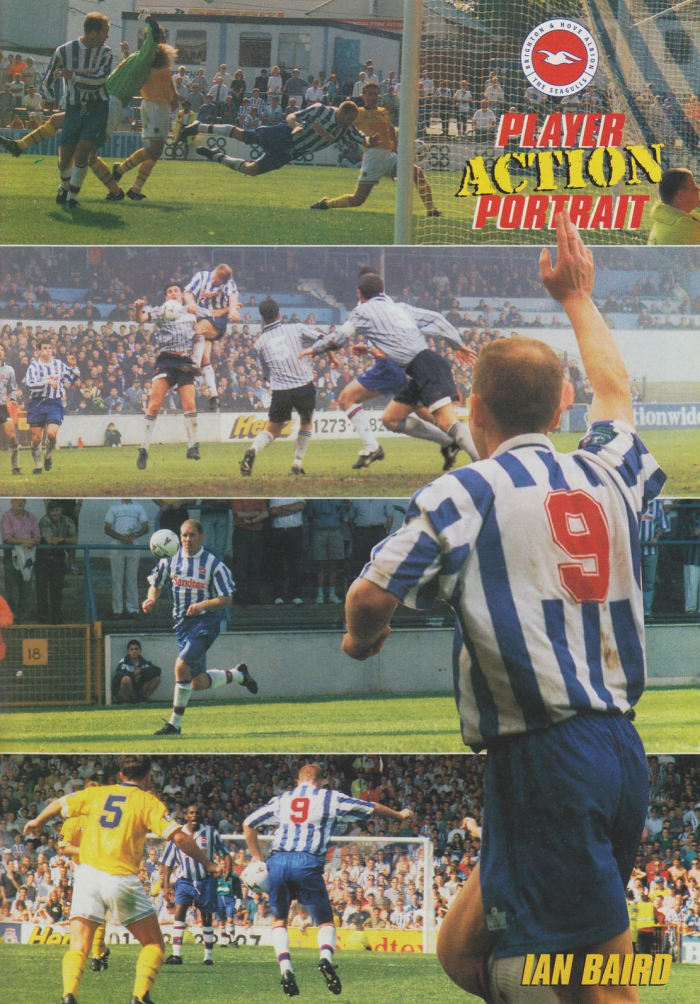
Baird’s exploits for the Albion highlighted in the matchday programme

Brighton were the tenth and last league club Baird had played for and he had only ended up with the Seagulls because of a pre-season falling out with Plymouth Argyle manager Neil Warnock.

Living near Southampton, only a 15-minute drive from Brighton manager Jimmy Case, a move east along the coast made good geographical sense, and a £35,000 fee took him to the Goldstone at the start of the 1996-97 season.

“Whenever I’d played against Brighton, I seemed to score,” Baird told The Athletic. “I loved the Goldstone Ground and there was the lure of playing for Jimmy.”

Although born in Rotherham on 1 April 1964, Baird had moved to Southampton with his family, via Glasgow, when he was a young lad, his father having sailed from the port when he worked on the Queen Mary.

After surviving meningitis as a six-year-old, Baird’s footballing ability saw him turn out for Bitterne Saints, St. Mary’s College, Southampton, Southampton and Hampshire Schools. He joined Southampton on schoolboy terms after he’d been spotted in the same boys’ team, Sarisbury Sparks, as Lawrie McMenemy’s son, Sean.

Baird won two England schoolboy caps: he was in England’s Victory Shield team that beat Wales 2-1 at Wrexham’s Racecourse Ground on 27 April 1979, playing alongside Rideout and winger Mark Walters, who went on to star for Aston Villa, Rangers and Liverpool.

In the same competition, he also played at St James’ Park – two days after Brighton had won 3-1 on the same pitch to win promotion to the top division for the first time in the club’s history.

On 7 May 1979, young England drew 1-1 with Scotland and 14-year-old Rideout’s goal was enough to enable England to retain the Victory Shield. The following month, Baird was an unused sub when England drew 2-2 with West Germany at Wembley.

A Saint with hair!

Baird was offered pro terms by Swindon, but he chose instead to sign for his adopted home town club. However, with McMenemy preferring the more experienced Frank Worthington and Joe Jordan, Baird was restricted to 21 starts and three sub appearances for Saints, and, after that loan spell at Newcastle, he moved to Leeds.

His two spells at Leeds (sandwiched either side of an unhappy time at Portsmouth) produced 50 goals in more than 160 appearances and he was in the Leeds side alongside Mervyn Day and Micky Adams that lost the 1986-87 Division Two play-off final to a Charlton Athletic team that included his future Brighton boss Steve Gritt and teammate John Humphrey.

Baird scored 19 goals that season for Billy Bremner’s side, four of them in the FA Cup as United reached the semi-final where they were beaten 3-2 by eventual cup winners Coventry City.

He had taken Saints’ teammate Jordan’s advice to move to Leeds and his next move was to Scotland where Jordan was in charge of Hearts. He later played under the Scottish international striker at Bristol City too.

The Pilgrim who fell out with Neil Warnock

Baird scored six in 29 appearances for Plymouth before that move to Brighton. Discipline might have been a problem but Baird scored eight goals in 10 games from January 1997 as nine wins and a draw at the Goldstone went a huge way to enabling Albion to escape the drop.

As Albion began the 1997-98 season in exile at Gillingham, Baird began the campaign with a three-match ban for that red card against Doncaster — and it wasn’t long before he was seeing red again!

It came in the 13th game of the season and it was certainly unlucky for Baird, well, unlucky in that a linesman spotted his off-the-ball headbutt on a Chester defender. Gritt publicly condemned Baird’s “out of order” behaviour and stripped him of the captaincy.

The following month, with another knee operation required, a surgeon advised him to pack in the game and he left Brighton in December that year having scored 14 goals in 41 appearances in 16 months.

“At least we kept Brighton up,” he told The Athletic. “There were a multitude of problems, it was a weird period, but it was a big thing.”

Post-Brighton, Baird ended up coaching in Hong Kong and was put in charge of the national side for three Asian Cup qualifiers, playing in Jakarta in front of 75,000 people, and then in Cambodia in front of 1,200 people. “It was certainly an experience, that is for sure,” he said.

Baird eventually returned to Hampshire, developed business interests in the vehicle sales and leasing and sports gear industries, while keeping his football links going in non-league circles: at Eastleigh, Sutton United and Havant & Waterlooville.

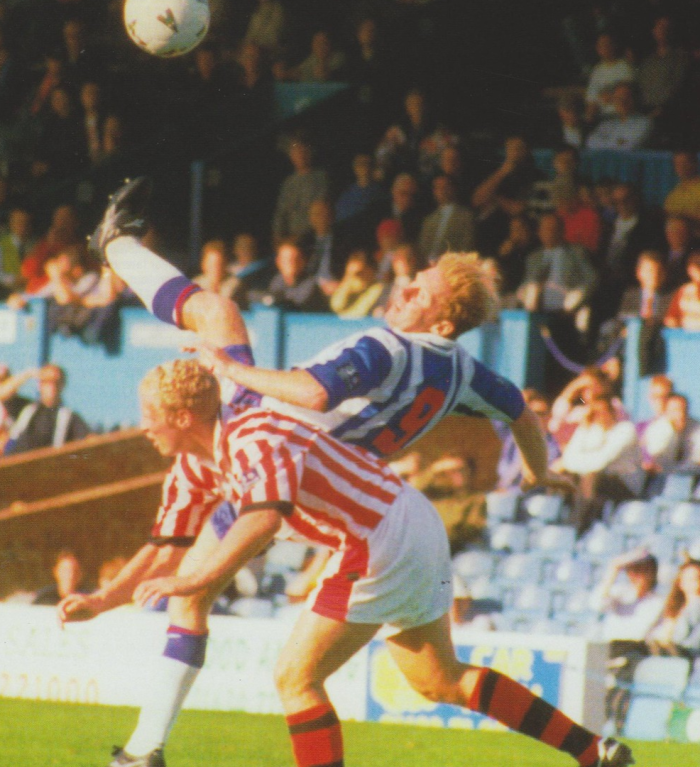
Baird certainly never ducked a challenge

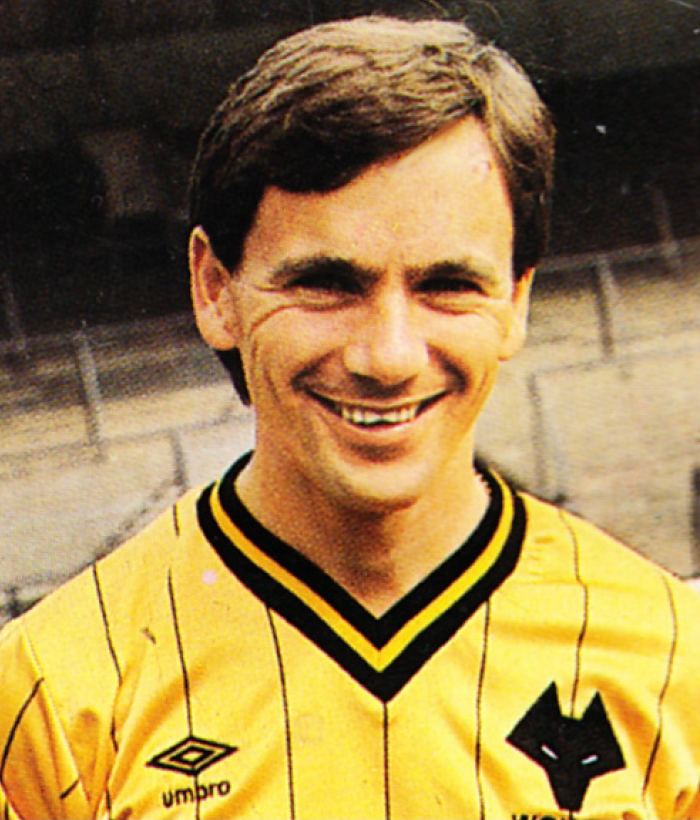
The Doog signed Brighton-bred Tiger for top tier Wolves

Tony Towner on the wing for Brighton at the Goldstone Ground

TONY TOWNER finally got to play in the equivalent of the Premier League only for it to end in disappointment.

Just over ten years after Towner burst onto the football scene with hometown club Brighton, with his old club going in the other direction, he pulled on the old gold of newly-promoted Wolverhampton Wanderers.

It was at the start of the 1983-84 season, with Liverpool at home first up, while relegated Albion faced Oldham away as they reverted to second tier football after four years at the top.

In those days, the competition was known as the Canon League First Division – and it went off in the wrong direction as far as Wolves were concerned, failing to win in their first 14 league matches although that opener ended in a 1-1 draw against the Reds, when Towner joined the action as a sub in the 69th minute.

My previous blog post about Towner in 2017 focused on his early days at Brighton and his subsequently achieving cult hero status at Rotherham United. He had experienced promotions and relegations with both clubs, playing in the second and third tiers.

He had moved on (to Millwall) from Brighton before they reached the elite level for the first time so linking up with Wolves finally gave him the top tier platform that had previously eluded him, signing for a side who’d bounced straight back to the top after relegation in 1982.

The history books record that Towner wasn’t even signed by manager Graham Hawkins, who was on holiday when former Wolves legend Derek Dougan sealed the winger’s £80,000 move from Rotherham in the summer of 1983.

Wolves legend Derek Dougan

While a pundit for Yorkshire TV, Dougan had seen plenty of Towner playing for the Millers and, as chairman and chief executive of Wolves, he reckoned he could do a job at Molineux.

“They needed to add more players, they needed to strengthen, which is always the case for any team getting promoted to the top league,” Towner recalled in a 2021 interview with the Express & Star.

“In the end, I was the only one who came in through the door. I did feel a bit of pressure because of that but I was just concentrating on doing everything I could to be a success.”

Wolves’ finances at the time were not at all healthy and Hawkins’ assistant Jim Barron told wolvesheroes.com: “We started to discover that signing players was going to be difficult. I was on holiday when Graham rang me to say that The Doog had signed Tony Towner – a lovely lad but certainly not one we would have considered to be high-priority.”

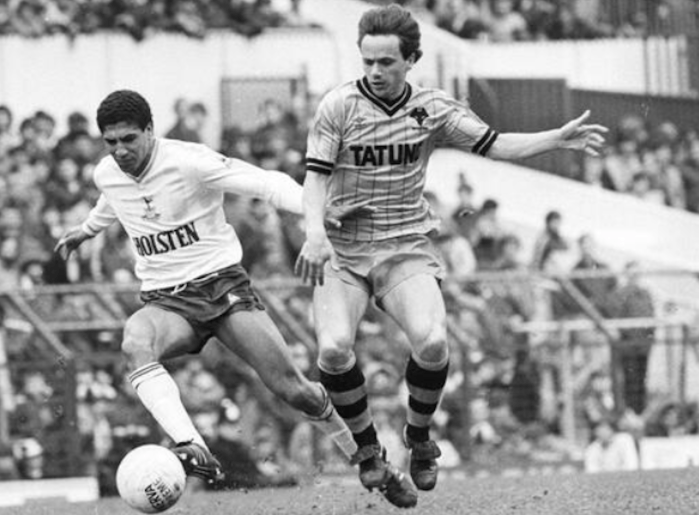
Wolves winger Towner tussles for the ball with Tottenham’s Chris Hughton

As it turned out, he made 29 league and cup starts plus six appearances off the bench. He scored just the two goals: in a 3-2 defeat at Sunderland on 7 September 1983 (Gary Rowell was among the Mackem scorers) and with a long range header past Chris Woods in Wolves’ New Year’s Eve 2-0 win over Norwich City.

Sadly, that was one of only six wins all season and in what became a disastrous campaign they were relegated in last place. Hawkins left in February 1984 and Barron was in caretaker charge as they went down.

The fan website alwayswolves.co.uk said: “Towner was a one-season wonder, whom we wondered what all the fuss was about, despite his previous good form at the likes of Brighton and Rotherham.”

Nevertheless, the player himself revelled in the experience, telling Paul Berry in that 2021 interview: “We had some good players in the squad, but we just never got going that year. Every day you could sense around the place that something just wasn’t right.

“We were getting beat game after game, and I mean game after game, and it got so demoralising in the end.

“We were up against it and just weren’t able to bring in the sort of players they needed to strengthen, the money just wasn’t there.

“A lot of it was trying to gamble on younger players, and even though it was my first season at that level, at 28 I was one of the more experienced. In the end, we had a shocking year.”

While it was mostly doom and gloom that season, Wolves did pull off a shock 1-0 win at Anfield on 14 January 1984, which gave Towner a happy memory to look back on.

Against a Liverpool side that included Mark Lawrenson and Michael Robinson in their line-up,

John Humphrey was making his 100th League appearance for the bottom-of-the-league visitors and Steve Mardenborough scored his first goal for Wolves in only the 10th minute.

“After that, I’m not sure we even got out of our penalty area,” said Towner. “What a day that was. They hit the post I don’t know how many times but, somehow, we held on and won the game.

“To play at Liverpool is special enough, and you don’t get many chances to do that, but to win as well, that is something I will never forget even if I didn’t touch the ball that often!”

Even though Wanderers went down (with Notts County and Birmingham) fully 21 points behind 19th-placed Coventry City, Towner reflected: “I loved being associated with Wolves, even though it was such a difficult season.

“It was my only experience of the top division, and even though I was in and out of the side, it was a fantastic one and something I enjoyed.

“Life’s too short to worry too much and think about the ‘if onlys’ – of course we needed more wins and who knows if I could have stayed there longer but it just wasn’t to be.

“I still feel it was a real achievement for me to get there and to play for Wolves and I loved it.”

While not all Wolves fans liked what they saw in Towner, interviewer Berry was one who did appreciate his attributes.

“Towner was one of those exciting wingers, direct, able to employ a trick or two to get past defenders or relying on his genuine pace,” he wrote.

“Wolves fans have always loved their wingers, those with the capabilities to beat opponents, get fans off their seats, and while it was a step-up for Towner at a time when Wolves were struggling, he still had chances to show what he could do.

“As a young whippersnapper, I remember sitting on the wall of the Family Enclosure near the South Bank, gradually wrecking my nice white trainers in the pitchside RedGra, and loving watching Towner – bedecked in Tatung pin-striped shirt, shorts and those magnificent hooped socks – picking the ball up on the halfway line and then running at the opposing full back.”

Towner at the Amex supporting his hometown club

Football’s Ansah to making the game look dramatic

FICTIONAL football gained an unlikely champion in Andy Ansah.

The journeyman striker eventually mixed it with the game’s elite players as he built a new career in the world of football make-believe for TV and film.

His own exploits on the field were in less esteemed company, including stints playing in the lower leagues for Brighton, Brentford and Southend United.

Not too many Brighton fans will remember him, though, because his 25 appearances in the blue and white stripes coincided with the two seasons when home matches were played 90 miles from home in Gillingham.

With crowd numbers low and finances tight as a consequence, Albion were in no position to splash the cash in the autumn of 1997; indeed John Humphrey, Craig Maskell, Paul McDonald, Denny Mundee and Ian Baird, five of the squad who had kept the Seagulls in the league by the skin of their teeth only six months earlier, were let go in an effort to trim the wage bill.

It was in that climate that Ansah, who had dropped out of league football at the time, was picked up by Steve Gritt.

It only transpired in an interview Ansah gave to the Express in December 2011 that he came clean to the Albion about a kidney condition (nephrotic syndrome) he had suffered from since teenage years but had kept hidden at previous clubs.

It could at times make his body swell so much he could hardly walk and he would need hospital treatment to bring it under control.

He told the newspaper he had gone to extraordinary lengths to hide the illness from managers, coaches and fellow players for fear that it would mean the end of his career. When he felt poorly, he would wear tracksuit bottoms on the training ground to hide the swelling, and then feign illness.

At Brighton, however, the condition did not stop him being involved, although the majority of his appearances were as a substitute.

Apart from a start in a 5-0 mauling at the hands of Walsall in the Auto Windscreens Shield on 6 January 1998, he had made three Third Division appearances going on as a sub and was unused on seven occasions before his fortunes changed.

Although he missed a decent chance after going on as a sub in a 2-0 defeat at Rochdale, he made amends when Gritt gave him his first League start away to Exeter City, curving the ball beyond Ashley Bayes from Stuart Storer’s flick-on.

Sadly, a rogue refereeing decision helped the home side to a 2-1 win, and, with Albion floundering in second-to-bottom spot in the division, Gritt was sacked the following day.

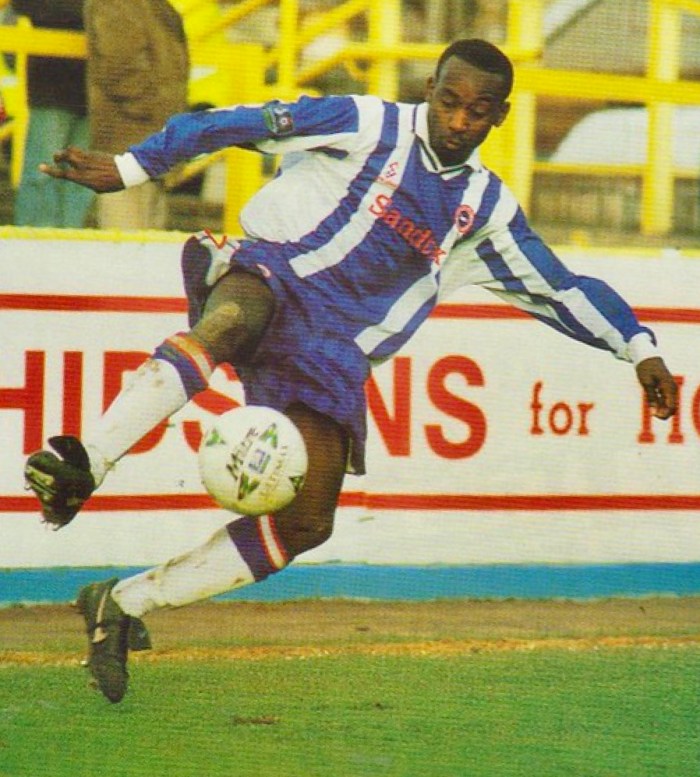
Andy Ansah on the ball for the Albion

Ansah retained his place for new manager Brian Horton’s first match – and he was on the scoresheet again. This time, his goal and a brace from Kerry Mayo gave the Seagulls a 3-2 win over Chester – the side’s first taste of victory in 10 matches!

“The emergency partnership of Stuart Storer and Andy Ansah has provided fresh movement and impetus up front, while wingers John Westcott and Steve Barnes saw far more of the ball on Saturday than they have been accustomed to,” reported The Argus.

Albion finished the season 23rd of 24 teams but thankfully 15 points ahead of Doncaster Rovers in last place.

Ansah scored again in the last ‘home’ game of the season – a 2-2 draw with Horton’s old side Hull City (who finished 22nd) – but, like a lot of players, he was out of contract at the end of the season.

Horton wanted to bring in his own players but, as it turned out, Ansah was offered a new one-year deal, with The Argus saying “Horton hasn’t been able to find a better replacement at the right price, so Ansah has been given a second chance”.

The manager explained: “He did well, but I was bringing new faces in. I’ve had a good look around and Andy is as good as what we could get. He can score goals and he can play in different positions.”

Ansah lines up for the Seagulls in exile

For his part, Ansah told the newspaper:Technically I was given a free, but I knew I would be speaking to the gaffer again before pre-season.

“There was still a chance that I was going to get a contract and I’m very pleased that I have. I think Brighton are going to do things this season.”

Although Albion avoided flirting with relegation for the first time in three seasons, their 17th finishing spot was hardly cause to put the flags out, and Ansah made only two starts. He went on as a sub on nine occasions and was an unused sub on nine others.

Horton left mid-season to return to the north, assistant Jeff Wood struggled in a brief spell as no.1, and Micky Adams only arrived to take charge towards the very end. Ansah was one of nine players out of contract and released at the end of the season (the others were Derek Allan, Michael Bennett, Tony Browne, Lee Doherty, Danny Mills, Darragh Ryan, Peter Smith, Storer, Terry Streeter and Paul Sturgess).

While the Albion prepared to return to Brighton to play at the Withdean athletics stadium, Ansah embarked on a career that attracted a hell of a lot more viewers than had seen him perform at the Priestfield Stadium.

Brentford fan Nick Bruzon has told Andy’s remarkable story on a few occasions and his ‘last word’ blog goes into plenty of detail about it.

In summary, though, after leaving Brighton, Ansah worked as an actor for six seasons on the Sky TV football soap Dream Team, appearing for fictional Harchester United.

He recruited two other former Albion players for Harchester: Peter Smith and Junior McDougald. As one of the older players, early on he was asked the best way to shoot certain scenes and within a year he was the producer.

His ability to choreograph football scenes then led him to Hollywood as a consultant on Goal!, a US film trilogy about a Mexican immigrant who gets to play in the English Premiership.

He even got to spend a day working with his all-time hero Pele in Brazil. “He was an unbelievable guy, a real gentleman,” Ansah told the Southend Echo in a 2008 interview with John Geoghegan.

“Because of my footballing background, I can talk to the players and the crew and translate between the two.

“It’s my job to make sure the footballers feel relaxed and do what they do normally in front of a camera.

“Film has always been a big love of mine, ever since school. And with football, to a degree, you are on stage entertaining. So, there are a lot of similarities between the two.”

He choreographed the whole of the Mike Bassett: England Manager film (starring Ricky Tomlinson) and worked on three series of Wayne Rooney’s Street Striker.

As co-presenter of the Sky 1 programme, Ansah scouted the UK for talent, and took to Rooney 100 talented young footballers who he had to whittle down to win the Street Striker crown.

It was with encouragement from contacts in Hollywood that he put his work on a more commercial footing. He set up his own consultancy, Soccer on Screen, and among many football-based advertisements helped Guy Ritchie direct a Nike commercial for the 2010 World Cup. He has also advised EA Sports, makers of the Fifa video games.

Born in Lewisham, south east London, on 19 March 1969, Ansah was a promising winger during his school days and was playing at county level when he started to attract the attention of clubs.

Way before the days of organised academies, he was picked up by Charlton Athletic aged 11 and stayed with them until he was 16. When he turned 17, he signed as a professional at Crystal Palace.

Ansah told Bruzon: “Because I had been in the system from such a young age, I kind of got a bit complacent and a little bit fed up of football.

“When I left Palace, Steve Coppell said to me: ‘I’m not sure if you really want to play football so I’m going to release you.’

After a six-month break from the game, he joined non-league Dorking stayed out of the game for about six months and then joined Dorking, where Dave Goodwin, who had originally scouted him for Charlton, was working.

When he scored 14 goals in three months for Dorking, Brentford, Fulham and Reading all offered him a contract but he chose the Bees because assistant manager Phil Holder promised to pick him up and take him to play for the reserve team, which he was managing.

Ansah scored twice on his first start for Brentford in a 3-2 defeat at Bolton but only made eight appearances after falling out with manager Steve Perryman.

In a reserves match between Brentford and Southend, Ansah scored and caught the attention of Shrimpers boss David Webb, who eventually took him to Roots Hall.

Over the course of six years, he scored 38 goals in 180 appearances for Southend and, as well as Holder, reckoned Webb had been the biggest influence on his career.

“David gave me a licence to express myself,” Ansah told Bruzon. “He would say, ‘I don’t care what the outcome is, just go out there and express yourself.’ It really did work!”

Ansah was part of the United side that earned promotion to Division One (now the Championship) and was later named Southend’s 13th most popular player of all time.

“That in itself is a massive achievement,” he said. “It’s good to know that the fans enjoyed what I was doing when I was there. It’s always nice, to get that sort of feedback.”

Perhaps unsurprisingly, when Webb took charge at Brentford, Ansah ended up following him, albeit on loan, scoring just the once (ironically against Brighton in a 2-1 Bees win on 26 November 1994) in four games and again the following season, when he scored once in six appearances.

But Ansah told Bruzon that he didn’t do himself justice because he wasn’t properly fit at that time and, if he had taken medical advice, he probably should have retired because of a knee injury.

“I was fighting to get myself back fit again,” he said. “My first game back I got a cut on my head within 15 minutes and then got it stitched up. I got man of the match but never could regain full fitness. At that stage, the surgeon told me I’d never be fully fit again with my knee.”
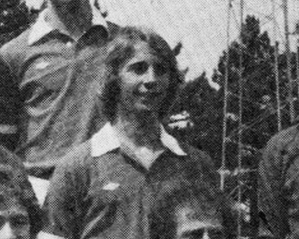
He played a couple of games at each of Peterborough, Gillingham and Leyton Orient before dropping out of the league with Hayes, Bromley and Heybridge Swifts.

Ansah’s son Zac spent 10 years with Arsenal’s academy. He moved on to Charlton Athletic when they were in the Championship but didn’t break through and had loan spells with League Two sides Plymouth Argyle and Newport County (playing a total of 26 matches) before moving into non-league football.

When Steve Gritt took on the ‘worst job in football’

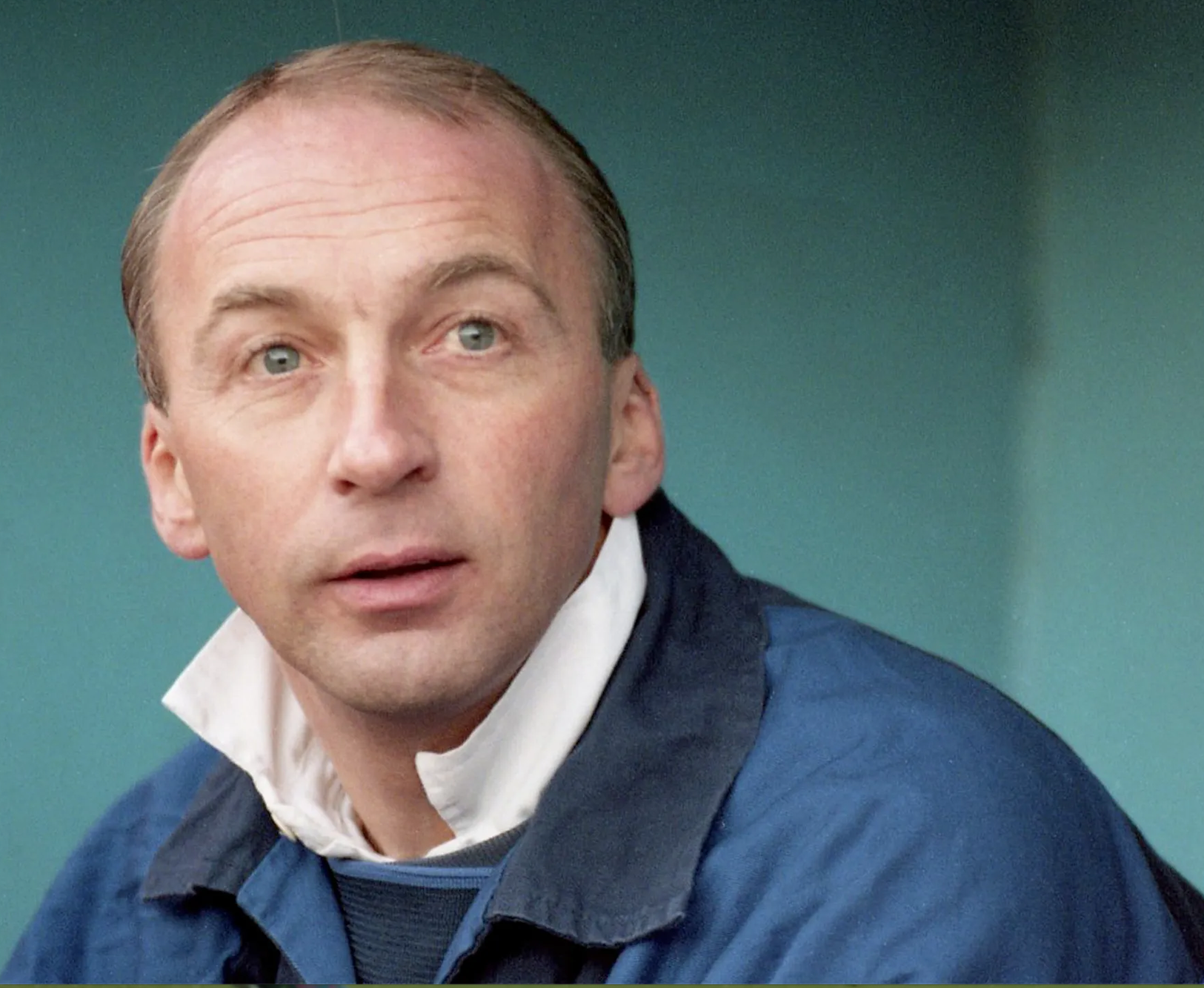
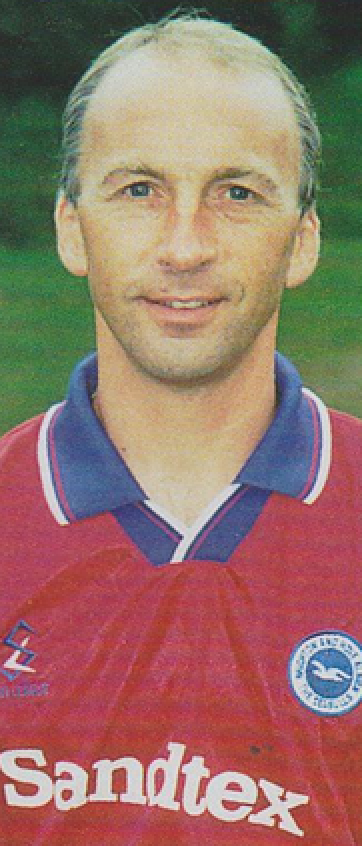
BOURNEMOUTH-BORN Steve Gritt is synonymous with Brighton & Hove Albion’s darkest hour because he was in the almost scalding managerial hotseat at the time the club nearly went out of the league.

The mastermind behind Albion’s ‘Great Escape’ in 1997 grew up in the Dorset coastal resort and began his footballing career with his local club in the 1970s. He later worked as the Cherries chief scout, although, apart from etching his part in Brighton’s footballing folklore, most of his more memorable days in the game came at Charlton Athletic.

Somehow, against all the odds, he managed to keep the Seagulls up when most doomsters could only see the club losing its status – and possibly going out of business as a result.

Gritt, who had been out of work for 18 months having been cast adrift by a new chairman at Charlton, took over from the beleaguered Jimmy Case in December 1996 with Albion 12 points adrift at the bottom of the fourth tier.

“I was delighted when Brighton offered me the chance to return,” he wrote in his matchday programme notes. “I know a lot of people were calling it the ‘worst job in football’ but when you love football as I do then you don’t always see things that way.”

Gritt was certainly an old hand when it came to football’s vicissitudes: rejected by AFC Bournemouth as a teenager, he went on to enjoy the elation of promotion as well as enduring the despair of relegation during his time with the Addicks.

Quite what would have become of Albion if they’d lost their place in the league is now only speculation – thankfully it wasn’t a bridge Gritt had to cross.

“I’d spent 18 years at Charlton as player and joint-manager, with just six months away from it, at Walsall. Then a new chairman, Richard Murray, came in and he didn’t like the joint-manager situation, so he put Alan Curbishley in sole charge, and I left,” Gritt explained.

Without a full-time job in the game, he stayed in touch by doing some scouting work for Tony Pulis at Gillingham, Brian Flynn at Wrexham and a couple of stints for West Brom. He even pulled his boots back on to play for Welling and Tooting & Mitcham.

Eager not to continue to have to queue at the benefit office for dole money, he applied for the vacant Albion manager’s job and got it after an interview in Crewe with the despised chairman Bill Archer and his ‘henchman’ chief executive David Bellotti.

“I knew very little about what was going on at the club,” Gritt told Roy Chuter in a retrospective programme piece. “I’d read bits in the papers, but my only interest was in the football. I wasn’t going to get involved.

“The place was very low. Some of the senior players filled me in on what was happening. In my first few days, there was graffiti on the walls saying I was a stooge, a whistle protest, a fan chained himself to the goal at half-time at my first match – that bothered me as we were winning at the time and went on to beat Hull 3-0.

“Then the next week I had to go onto the pitch with a megaphone at Leyton Orient to get the supporters to leave after the match – and they already hated me! I thought ‘What is going on?’ but my job was to get some sunshine back into the fans’ Saturday afternoons.”

After familiarising himself with the issues at a fans’ forum – “It helped me understand that the fans had to do what they had to do” – he devoted himself to improving the football and although the budget was tight, brought in the experienced defender John Humphrey and Robbie Reinelt, who would go on to score one of the most crucial goals in Albion’s history.

Puzzled by the plight of a side that contained good players in the likes of Craig Maskell, Ian Baird and Paul McDonald, Gritt maintained: “I never thought we’d go down.”

He recalled: “There was such a lot of experience. If I could organise them, we’d have a chance.”

Looking back years later

Ultimately, the club’s fate was decided in the final two games of the season – at home to Doncaster Rovers and away to Hereford United.

“We knew we could beat Doncaster,” he said. “There was a big crowd and a tremendous atmosphere – very tense. Maybe that got to the players – we didn’t play as well as we had done, but once we were 1-0 up, we weren’t going to get beat. We had a great defence.”

Gritt recalled: “I was beginning to think that there wasn’t going to be any goals in the game as there hadn’t been too many chances during the game that I can remember.

“Suddenly we had a corner from which Mark Morris eventually hit the bar, confirming my thoughts. But suddenly the ball fell to Stuart (Storer) who struck it into the net to spark off unbelievable celebrations on the pitch, off the pitch and in the dugout.
“Could we now keep our composure and see the game out to a memorable 1 nil win? We did! What a day and what a memory.”

And so to Hereford, who needed to win to avoid dropping out of the league. Albion only needed a draw to stay up. Everyone knows the story. A goal down at half-time when Kerry Mayo put through his own net, Gritt reminded the players at half-time that their jobs were on the line.

Relief at Hereford

He sent on Reinelt as a sub and in the 62nd minute he slotted a second half equaliser to send the Albion faithful into ecstasy and condemn the Bulls to their fate.

“I think if it had been Brighton, we could have faded into obscurity,” he said. “Most of the players would have left, and I don’t think we could have coped.”

As things subsequently transpired, it was Gritt who would soon be on his way.

It’s perhaps a bit of a cliché to say there is no sentiment in football but when Gritt’s side had managed only four league wins up to February in the 1997-98 season, and were second bottom of the table, chairman Dick Knight wielded the axe.

“No one who cares about the Albion will forget Steve’s tremendous contribution to our survival last season,” said Knight. “This season, given our difficult circumstances, feasibly we were only seeking to preserve our league status by a safe margin, but to date that comfort zone has eluded us.”

Thankfully you can’t keep a good man down for long, though, and within two weeks of getting the Brighton bullet, Gritt was back in the saddle as assistant manager to Billy Bonds at Millwall.

Although Bonds was sacked by the Lions only six weeks after Gritt’s arrival, successors Keith Stevens and Alan McLeary kept him on, working with the reserve team. Then Mark McGhee took charge and got Gritt back involved with the first team to take on organisational work such as set plays.

After McGhee took charge at Brighton, Gritt switched across south London back to Charlton, where he ran their academy for the next six years.

He returned to his hometown club in 2011 to become chief scout, initially under Lee Bradbury and then his successor, Paul Groves.

But he was disappointed to be let go in September 2012, telling theEcho: “They have changed the way they are doing their recruitment so there wasn’t really any need for me to be there.”

Bournemouth chairman Eddie Mitchell explained: “We have got analysts on board now and all games are available on DVD. We are trying to build a database from these clips.

“We felt it was impractical to send somebody all over the country to watch games every day when we can get DVDs of games and players.

“It was a role which diminished for us. Whether it is the right way to go remains to be seen but we have got to look at effectiveness and costs.”

Gritt said: “It was a big thing last year for me to come back to the club where I grew up. I am disappointed it has come to an end like this, but life goes on.

“I have lost jobs in the past and, hopefully, I will bounce back. I am looking forward to the next chapter in my career and will just have to wait and see what comes up.”

Born in Bournemouth on 31 October 1957, Gritt’s early footballing ability was first seen in the Kings Park First School football team of 1969, as the Echo discovered when readers were asked to send in their old sports photos.

A rare sight: young Gritt with hair!

Gritt, a forward, was taken on as an apprentice by the Cherries and played a handful of games for the first team under John Benson before being released at the age of 18.

Colin Masters remembered on the Where Are They Now? website (in an October 2020 post) how Gritt linked up with non-league Dorchester who paired him up front with Ron Davies, the former Welsh international centre-forward who’d played for Southampton, Man Utd and Portsmouth.

“They were an exciting pair to watch at that level,” said Masters. “After three matches I was so impressed with Steve that I went and found the Dorchester club secretary and asked if he had signed Steve Gritt on a contract.

“The reply was ‘No’. Within two weeks, Charlton Athletic came in and took him (presumably for nothing) and he went on to have a very successful career for many years. Dorchester’s loss was Charlton’s gain!”

Between 1977 and 1993, Gritt played a total of 435 matches for the Addicks, including a relegation to the old Third Division in 1980 and two promotions – to the Second Division in 1981 under Mike Bailey and the First Division under Lennie Lawrence in 1986. He had a six-month spell with Walsall in 1989 before returning and experiencing another relegation in 1990.

Gritt became joint player-manager with Curbishley in 1991 and, under their stewardship for the next four years, the likes of Lee Bowyer, John Robinson, Richard Rufus and Shaun Newton established themselves as mainstays of the side.

When Charlton decided in 2021 to re-name their East Stand in Curbishley’s honour, a generous Gritt told londonnewsonline.co.uk it was a fitting tribute to his former colleague.

“We had our trials and tribulations but I’ve always judged that we did what was required to keep the club going. We had to steady the ship.

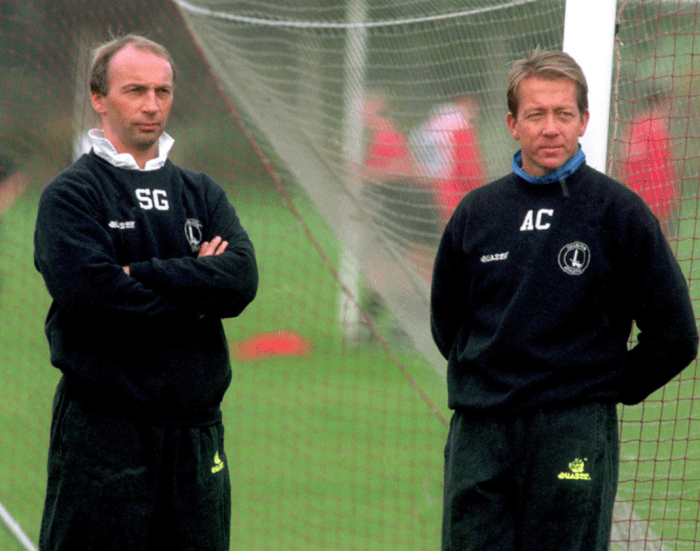
Joint Charlton manager with Alan Curbishley

“We would have loved to have kept Rob Lee, for example, but we had to do things for the well-being of the club so we could keep it going and give the fans something to shout about.

“It was a great time when we got back to The Valley (they’d spent several years sharing Selhurst Park with Crystal Palace).

“Then the club made a decision which I was never going to agree with. But when I look back to see what Alan did – he went on to do a significant job – I cannot complain. Ultimately what he achieved he thoroughly deserved.”

Gritt said: “When I was there we had to make sure we weren’t seen to be having disagreements although I cannot recall us having too many anyway.

“When we were on the training ground, we each knew what the other one would be doing during the sessions. We both had jobs to do on the day.

“I was more of a player than he was at that time – so the management side was more in his hands. It was fairly straightforward, until the club decided that they wanted one man in charge. That was obviously disappointing for me at the time but I have thoroughly enjoyed my career.

“Alan gave the club a massive block to build on – but no one could have envisaged how the club went after he left. It was a massive disappointment.”

After he left Bournemouth in 2012, Gritt dropped out of league football and spent five years as assistant manager at Ebbsfleet United, working with his former Charlton teammate (and ex-Albion youth team manager) Steve Brown and then Daryl McMahon, who he subsequently followed to League Two Macclesfield Town, Conference side Dagenham & Redbridge and Isthmian League Hornchurch.

Hailed as a hero at the Amex

Why Colin Pates is forever grateful to Liam Brady

ONE-TIME Arsenal back-up defender Colin Pates had a Gunners legend to thank for persuading him to quit the game before he did any life-altering damage.

Thankfully, Pates took Liam Brady’s advice to bring his professional playing days to an end at Brighton in January 1995 and he went on to have a long and successful career coaching at an independent school in Croydon where he introduced football to what was previously a rugby-only establishment.

“Liam told me that I should think of my health before my playing career and that I would be a fool to myself if I carried on playing,” Pates told the Argus in a 2001 interview.

“My knee had fallen apart and it was the right advice. If I’d ignored it, I could well have ended up not being able to walk.

“Footballers need to be told when it is the end. I’ll always be grateful to Liam for that.”

Pates had played the last of 61 games in the stripes (a 0-0 home draw against Bournemouth) only six weeks after he was presented with a silver salver by former England manager Ron Greenwood to mark his 400th league appearance (on 24 September 1994, a 2-0 home win over Cambridge United).

In the matchday programme of 17 December, Brady confirmed that Pates and fellow defender Nicky Bissett, (who’d twice broken a leg and then sustained a knee injury) would be ruled out for the rest of the season. Neither played another game for the Seagulls.

It brought to an end Pates’ second spell with the Seagulls, having originally spent a most productive three months on loan in 1991 helping to propel the club to a Wembley play-off final. If Albion had beaten Notts County that May, Pates may well have made a permanent move to the south coast. As it was, he said: “Unfortunately, the club couldn’t meet Arsenal’s asking price for me that summer so I returned to Highbury.

“But when my contract expired in 1993, there was only one club I wanted to be at… Brighton.”

Pates had plenty of competition for the centre back berth at Arsenal

As if Tony Adams, Andy Linighan, David O’Leary and Steve Bould weren’t enough centre back competition at Arsenal, manager George Graham had also taken Martin Keown back to the club from Everton for £2m – six and a half years after selling him to Aston Villa for a tenth of that amount.

So, it was no surprise that Pates found himself surplus to requirements at Highbury and given a free transfer. Graham’s old Chelsea teammate, Barry Lloyd, eagerly snapped up the defender for a second time, this time on a permanent basis.

Goalkeeper Nicky Rust, still a month short of his 19th birthday, who’d also been given a free transfer by Arsenal, made his Albion league debut in the season-opener at Bradford City behind the returning Pates, who had just celebrated his 32nd birthday four days before the game.

After starting the first 10 matches alongside the aforementioned Bissett, Pates suffered an abductor muscle injury early on in a 5-0 drubbing away to Middlesbrough in the League Cup which necessitated a spell on the sidelines. He missed nine matches – only one of which was won.

These were the dying days of the seven-year Lloyd era and, even with Pates back in the side, one win, two draws and four defeats brought the sack for the manager.

Any doubts new manager Brady had about Steve Foster and Pates were swiftly dispelled, as he wrote about in his autobiography (Liam Brady: Born To Be A Footballer).

“Fossie was 36. I feared he might be going through the motions at this stage in his career and it would have been hard to blame him,” said Brady. “Colin Pates was a few years younger, but he’d been at Chelsea and Arsenal and could have been winding down.

“I appealed to them to give me a dig out, to lead this rescue mission. And they responded just as I hoped.”

Together with the even older Jimmy Case, who was brought back to the club from non-league Sittingbourne, they “brought on” the younger players in the new man’s first few weeks and months.

Under Brady, young Irish centre-back Paul McCarthy played alongside Foster in the middle, with Pates at left-back. And Pates saw the arrival of some familiar faces in the shape of young Arsenal loanees, first Mark Flatts and then Paul Dickov, whose successful spells helped Brady to steer the Seagulls to safety by the end of the season.

“I really enjoyed it, playing mainly at left-back,” said Pates. “It was a great family club and I made a lot of friends there along the way.”

At the time Pates had to call it a day, Albion were a third-tier side but the bulk of his career had been played at the top of the English game for two of its leading lights in Chelsea and Arsenal, and briefly Charlton Athletic.

Albion’s ex-Arsenal trio Liam Brady, Raphael Meade and Colin Pates

The player’s move to Arsenal from Charlton for £500,000 in January 1990 raised more than a few eyebrows because he was 28 at the time and none of Arsenal’s back four – Lee Dixon, Bould, Adams and Nigel Winterburn – looked like giving way.

“People asked me why I went there,” said Pates. “But when a club is paying that money and that club is Arsenal who wouldn’t go and take the chance?

“I knew this was going to be the last opportunity to have a move like this in my career and although I knew I was only being signed as cover, I couldn’t turn it down.”

He continued: “I’d joined a team that had just won the league, that would do so again in 1990-91 and they had the fabled back four – the best defensive unit in world football at the time.”

The website upthearsenal.com acknowledged: “Pates had built a solid reputation at Chelsea as a dependable defender who was strong in the air and no slouch on the deck.”

Pates added: “When I first met George (Graham) in his office at Highbury, he was honest and straight talking. He told me I’d have to work hard to get into the side.”

However, within a month he made his Gunners debut at left back in place of the injured Nigel Winterburn in a 1-0 defeat to Sheffield Wednesday. It turned out to be his only first team appearance that season.

Although he found it difficult to motivate himself for reserve team football, he pointed out: “I still enjoyed the training sessions with the first team and I did learn a lot about defending from George, even at that late stage in my career.”

However, after his return from the loan spell at Brighton, he saw action as a sub in three pre-season friendlies ahead of the 1991-92 season and that autumn had his best run of games in the first team.

He featured in eight games on the trot between October and November 1991 and memorably scored his one and only goal for Arsenal in a European Cup match at Highbury against a Benfica side managed by Sven-Göran Eriksson. He also played in the February 1992 1-1 North London derby against Spurs and made two appearances off the bench that season.

It was a similar story in the 1992-93 campaign when he went off the bench on five occasions although he had two starts: in a 2-0 win at Anfield (Anders Limpar and Ian Wright the scorers) and a 3-2 defeat away to Wimbledon.

“I was a bit-part player but it was a good time to be at the club with the cup finals and being part of the squads,” said Pates.

On his release from Brighton, Pates had a spell as player-manager of Crawley, played a handful of games for non-league Romford, and coached youngsters in various places including Mumbai in India and the Arsenal School of Excellence.

Pates told The Guardian in a 2002 interview how a sense of history and continuity was the first thing he had noticed when he signed for Arsenal.

Brady, Paul Davis, Bould and other former Arsenal players were all invited to the Arsenal academy, and Pates told the newspaper. “Young players need people like Stevie Bould to tell them how proud they should be to pull the shirt on and to show them what’s expected of them. “When I joined Arsenal, everyone was kind and considerate. You were left in no doubt about how you were supposed to conduct yourself. For the way it’s run, it’s the best club in the country.”

By then though, Pates had begun a new career as a coach getting football off the ground at the independent Whitgift School in Croydon. He was to stay 24 years at the school having been invited to introduce football by its headmaster, Dr Christopher Barnett.

The story has been told in depth in several places, notably in London blog greatwen.com by Peter Watts, among others. Watts wrote: “A posh school in the suburbs is not where you’d expect to find a hard-bitten former pro, and Pates admits: ‘Whitgift is quite alien to some of us, because we had state school educations. It was intimidating, and not just for the boys.’ But he jumped at the opportunity.

At first, he took a sixth-form team on Wednesday afternoons, but there were no goalposts, pitches, teams or even footballs! “We didn’t have anything. So, we had to start from scratch, pretty much teach them the rules,” he said.

“They were rugby boys playing football, so these were quite aggressive games. But after three years we introduced fixtures and we’ve never looked back,” said Pates.

In an interview with the Argus in October 2001, Pates added: “We went over the local common for our first training session with some under-18s after finding a ball that looked like the dog had chewed it up.

“I had to go right back to basics. All they had known was rugby, so it was a case of going through the rules of football to start with, like the ball we use is round!

“I was told that in 300 years football had never been considered. But a lot of the boys and their parents expressed an interest.

“It might be an independent school but you can forget the black and white filmed images of public school kids. Most are from working class backgrounds and they love their football.

“It grew a lot quicker than the head thought and he told me I should take over as master in charge of football.”

As the sport grew, he recruited his former Charlton teammate (and ex-Brighton, Wolves and Palace full-back) John Humphrey and Steve Kember, the former Chelsea and Palace midfielder to help with the coaching.

Asked about it on the chelseafancast.com podcast Pates delighted in recounting how from time to time he would show Humphrey a video clip of a rare goal he scored for Chelsea against Wolves when he flicked the ball over Humphrey’s head in the build-up to it – however Chelsea lost that 1983 match 2-1!

More seriously, Pates spoke at length to Watts about the benefits of a good education in case things didn’t pan out.

“You have to be an exceptional footballer to make it these days. So, we want to give them the best opportunity to be a footballer, but also give them a magnificent education so if they don’t sign scholarship forms they have something to fall back on. It works for us, it works for the academies and it works for the families.”

The spot kick highs and lows of penalty king Denny Mundee


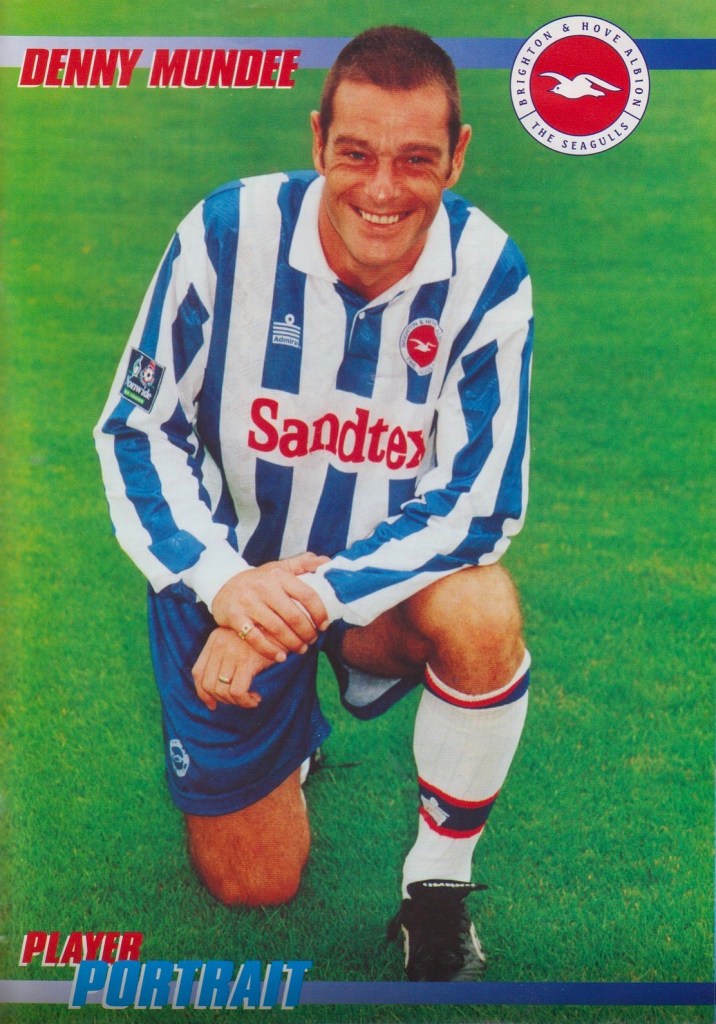
SPOT KICK specialist Denny Mundee played for the Seagulls during the dark days when they nearly dropped out of the league having enjoyed better times with Bournemouth and Brentford.

His older brother, Brian, also played for the Cherries and another brother, Barry, was forced to quit football at 18 because of injury. It was a case of third time lucky when young Denny finally broke through into league football. Previous attempts to make it, at QPR and Swindon, had got nowhere.

Born Dennis William John Mundee in Swindon on 10 October 1968, Denny first showed his footballing talent at his local primary school (Liden), as a contemporary wrote some years later on the Brentford fans forum, Griffin Park Grapevine.

The poster, called ‘SmiffyInSpain’ said: “Went to primary school with Denny in Swindon and he was a class act then. Went to separate secondary schools, but still kept in contact with him as an opponent at school level football.

“Of all the players of the same age, Denny stood out by far. Of all the penalties he took against me, he never missed.”

Indeed, Mundee was noted for his success rate from the 12-yard spot, taking on the penalty taker duties at whichever side he played for.

The young Mundee was first offered an apprenticeship at Third Division Bournemouth but decided to join First Division QPR as a junior, where he spent a year.

Released in the summer of 1986, he joined home town team Swindon for a season, but again failed to make the grade. It took a drop down to Southern League Premier side Salisbury before things began to click. Scoring 20 goals in 34 appearances brought him back to the attention of Bournemouth, who snapped him up in March 1988.

Although he made his Bournemouth debut towards the end of the 1988-89 season, he had loan spells with Weymouth, Yeovil Town and Torquay United before establishing himself with the Cherries.

It was in 1991-92 that he laid claim to a regular place, and, as right-back, made 41 league appearances that season.

His winning spot-kick in a 4-3 penalty shoot-out decider in the third round of the FA Cup against Newcastle United in January 1992 earned Mundee hero status in a Cherries’ Legends Gallery put together by BBC Dorset.

United, managed at the time by Argentine legend Ossie Ardiles, were floundering at the bottom of the old Second Division, while Harry Redknapp’s Third Division Cherries had already held the Magpies 0-0 at Dean Court before taking the tie to penalties after the replay at St James’ Park had ended 2-2 on 90 minutes.

However, by the end of the following season, Mundee had become something of a utility player, slotting in to various positions, and, in August 1993, he chose to leave the south coast club on a free transfer.

In just over five years, he had started 93 games for the Cherries and come on as a sub in another 29 games.

Former Chelsea and QPR defender David Webb had taken over as manager at Brentford and Mundee was among his first signings.

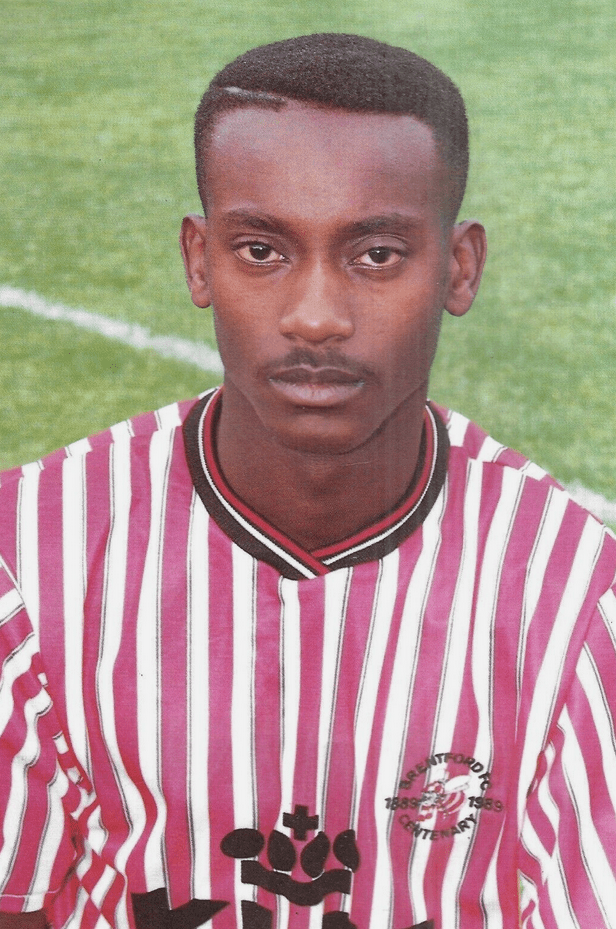
Bees fans remember him being signed as a full back but, on being ‘thrown up top’, he was a revelation and finished his first season at Griffin Park with 11 goals.

Perhaps ironically, Brentford, in 16th, finished a point and a place above Bournemouth that 1993-94 season. Mundee scored 11 times, including a memorable hat-trick in a 4-3 defeat at home to Bristol Rovers.

DMHSSix of his goals that season came in a run of four consecutive games between 27 November and 27 December, four of them penalties.
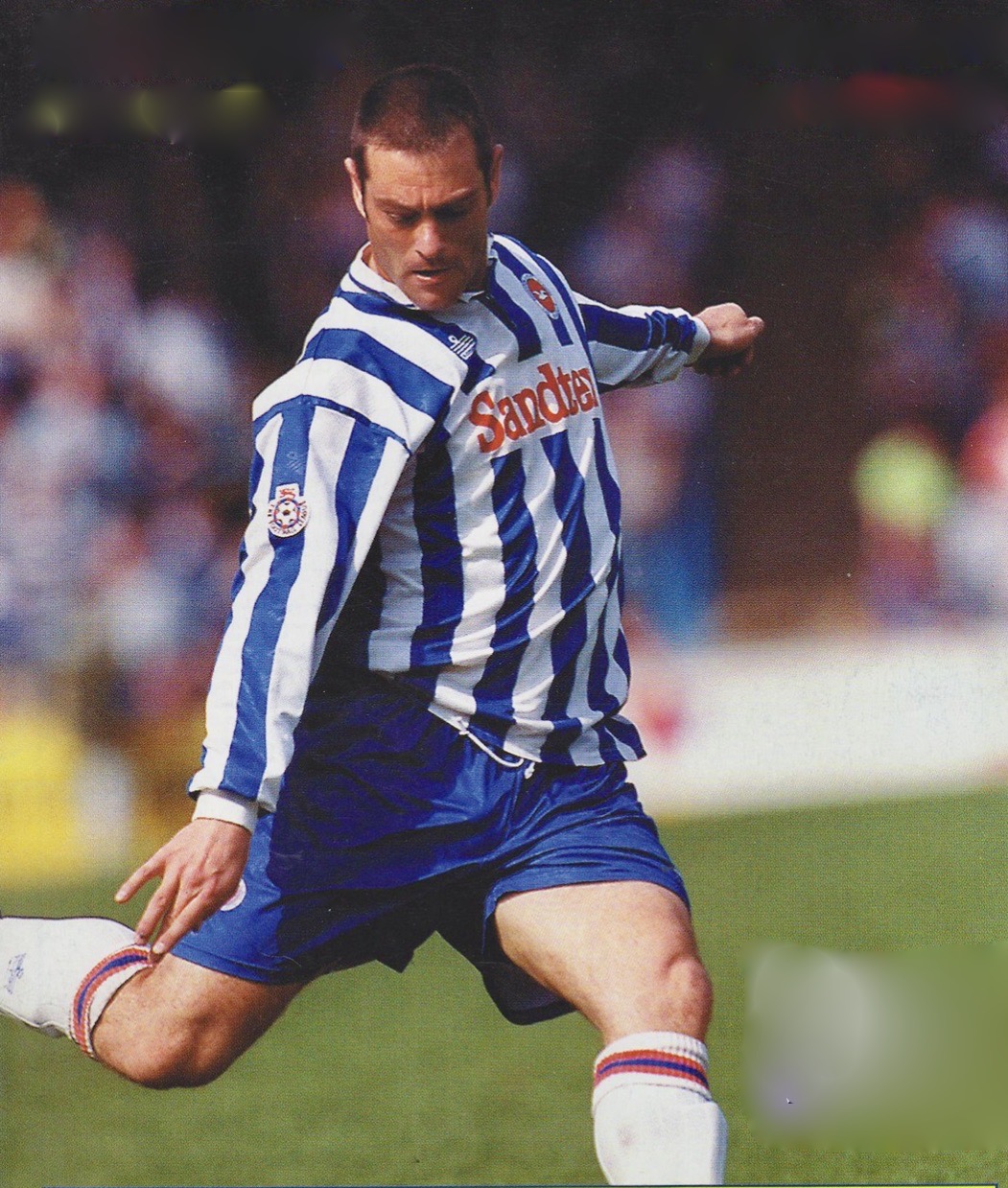
Mundee found himself part of a side that featured the free-scoring Nicky Forster in attack alongside Robert Taylor.

Described as “whole-hearted” and “a crowd pleaser”, Mundee earned something of a reputation for a shuffle, or a twiddle, he would deploy to get past opponents. ‘Brickie Chap’ on griffinpark.org said of him: “A player that always tried his best. Not the most gifted we have ever had down here but deffo one for providing quality entertainment.”

Unfortunately for a player normally so reliable from 12 yards, it was a penalty he failed to convert that Brentford fans have never really got over.

Mundee’s miss in a 1995 Division Two play-off match against Neil Warnock’s Huddersfield came in what was apparently the first-ever televised penalty shoot-out featured on Sky.

It was all the more galling because Mundee had scored twice from the spot past Town’s Steve Francis the previous season but, on this occasion, he blew the chance to put Brentford two goals ahead when he was outguessed by the ‘keeper. When Jamie Bates missed too, Brentford’s season was over.

Any other year, as runners-up, Brentford would have been promoted automatically, but, because of a reorganisation of the Premier League that year, only the top team went up automatically, hence their participation in the play-offs.

Mundee’s erstwhile primary school teammate wrote: “I watched the Huddersfield match in ‘95 and I would have put my mortgage on him netting like he did for Bournemouth at Newcastle a few years earlier.”

mundeeIn two years with the Bees, Mundee made 73 starts plus 25 appearances as a sub but, when his old Bournemouth teammate Jimmy Case took over the Albion’s managerial reins from Liam Brady, he and another ex-Cherry, Mark Morris, headed to the Goldstone Ground to try to help the Seagulls’ cause.

With the poisonous off-field developments at the club an ugly backdrop to the playing side, neither could do anything to halt Albion’s slide into the bottom tier.

Things went from bad to worse and on 1 February 1997, bottom of the league Brighton drew 1-1 at Mansfield Town, Mundee scoring for the Seagulls with a follow-up after his initial penalty was parried. Albion were nine points adrift and relegation from the league was looking virtually certain.

However, as we all now know, the drop was averted courtesy of that nail-biting draw at Hereford.

Although Mundee remained on the books for the following season, in December 1997 he, Morris, Craig Maskell, Paul McDonald and John Humphrey were all released to save money.

Mundee had played 58 games plus four as sub for the Albion, chipping in with eight goals.

Also burdened by ankle and back injuries, it spelled the end of his professional career although he did manage a handful of games with various non-league outfits.

Ten years ago, a cousin of Denny’s confirmed that he had moved to Throop, a village on the outskirts of Bournemouth, and was working for the same plastering business as brother Brian.