Day of reckoning beckoned for talent spotter Mervyn

THE YOUNGEST goalkeeper to appear in a FA Cup final spent 20 months picking out future players for Brighton.

It was one of several different post-playing roles Mervyn Day filled for various clubs.

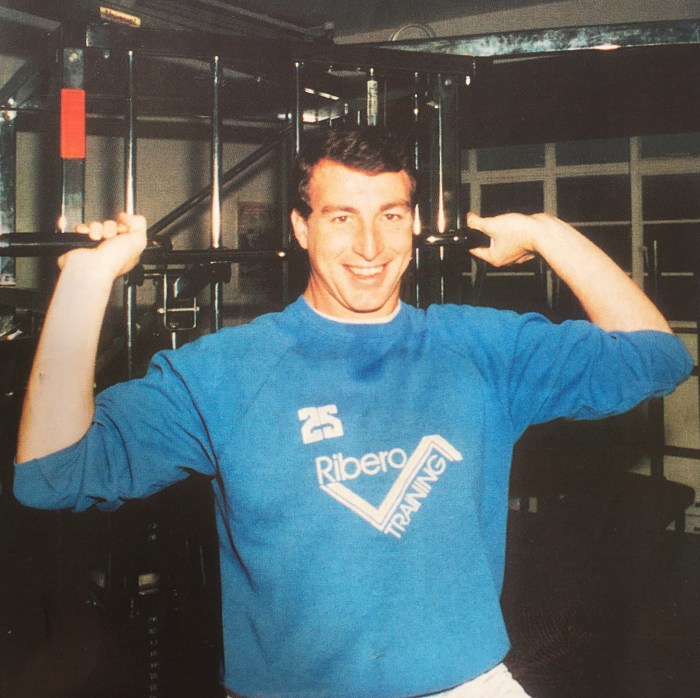
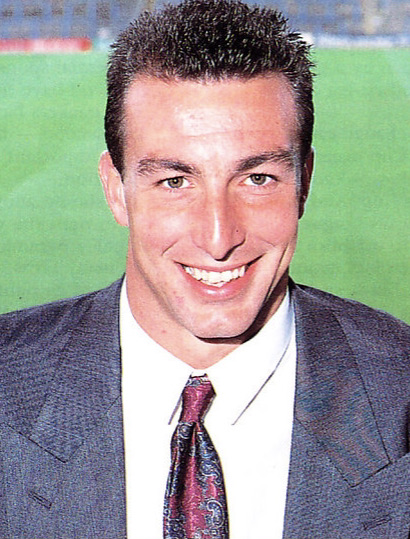
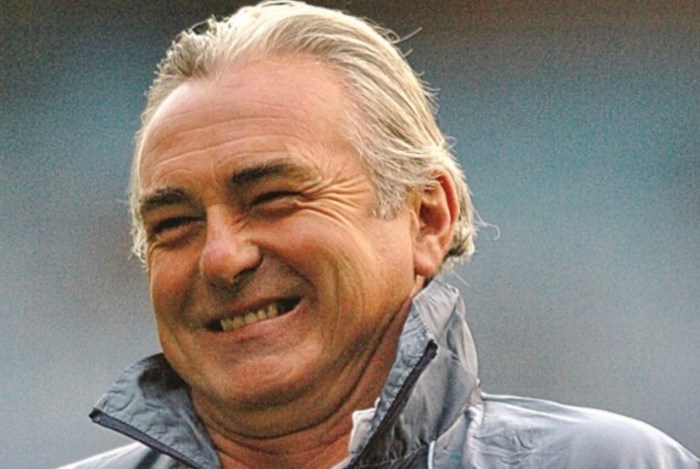
Day, who at 19 won a winners’ medal with West Ham in 1975, was Albion’s head of scouting and recruitment between November 2012 and the end of the 2013-2014 season under head of football operations David Burke.

At the time, his appointment was another indicator of the gear change taking place at the club as it built on the move to the Amex Stadium and sought to gain promotion from the Championship.

Day said in a matchday programme interview: “This club has come such a long way in such a short space of time.

“When you think of the debacle of the Goldstone, the wilderness of Gillingham, then Withdean, you only have to get a player through the front door at this wonderful stadium to have a chance of signing them.

“Hopefully, within the next year or so, the new training ground will be up and running and, when you’ve got that as well, you’ve got the perfect opportunity not only to encourage kids to sign but top quality players as well.

“If we are fortunate enough to get ourselves into the Premier League at some point, we’ll be able to attract top, top players.”

It was a case of ‘the goalkeepers union’ that led to him joining the Albion. Day explained he’d been chatting to Andy Beasley, Albion’s goalkeeping coach at the time, who had been a colleague when Day was chief scout at Elland Road. Beasley wondered if he’d like to help coach Albion’s academy goalkeepers but Burke, who he also knew, stepped in and offered something more substantial: the job of scouting and talent identification manager.

He certainly brought a wealth of experience to the task. He had previously been assistant manager to former Albion midfielder Alan Curbishley at Charlton and West Ham; manager and assistant manager at Carlisle United, a scout for Fulham and the FA (when Steve McClaren was England manager) and chief scout at Leeds until Neil Warnock took charge.

In addition to that background, in the days before full-time goalkeeper coaches, Day had worked at Southampton under David Jones, Chris Kamara at Bradford City and John Aldridge at Tranmere Rovers. Then in 1997 Everton came along and he joined Howard Kendall’s backroom team alongside Adrian Heath and Viv Busby. “I was living in Leeds at that time, so distance wasn’t an issue, but it was an interesting trip across the M62 in the winter months,” Day recalled in an October 2021 interview with efcheritagesociety.com.
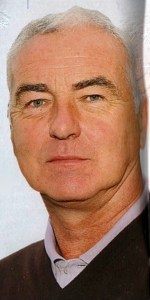
Brighton made Day redundant at the end of the 2013-14 season following a reshuffle of the recruitment department amid criticism of the quality of signings brought in.

That assessment might have been rather harsh because during his time at the club there was a change in manager (Oscar Garcia taking over from Gus Poyet) and, although the season ended in play-off disappointment, the likes of former Hammer Matthew Upson (who’d played under Day when he was at West Ham) had signed permanently on a free transfer (having been on loan from Stoke City for half the previous season).

The experienced Keith Andrews and Stephen Ward also joined on season-long loan deals and played prominent roles in Garcia’s play-off reaching side.

It was under Day’s watch that the promising young goalkeeper Christian Walton was signed after a tip-off from Warren Aspinall. Aspinall told the Argus in 2015: “I went to Plymouth to do a match report. I set off early and took in a youth team game off my own back. He was outstanding, commanding his box. I reported straight back to Gus (Poyet). He told Mervyn Day. He went to see him, Mervyn liked him.”

It wasn’t the first time Day had played a role in securing a goalkeeper for the Albion. As far back as 2003 he had an influence on Ben Roberts’ arrival at the Albion. Manager Steve Coppell revealed: “He is one of three goalkeepers at Charlton and at the moment nearly all the Premiership clubs are very protective about their goalkeepers.

“I have seen him play a number of times, although I certainly haven’t seen him play recently. I spoke with Mervyn Day (Charlton coach) and he says Ben is in good form. It’s a little bit of a chance and it will certainly be a testing start for him, but he is looking forward to the challenge.”

Day was also sniffing around another future Albion ‘keeper when he was chief scout for Bristol City (between 2017 and 2019).  According to Sky Sports commentator Martin Tyler, Mat Ryan was on their radar in the summer of 2017 when he swapped Belgium for England. In an interview with Socceroos.com, Tyler reveals he was asked by City’s ‘head of recruitment’ (thought to be Day) to glean the opinions of Gary and Phil Neville (manager and coach of Valencia at the time) on Ryan and whether he’d be suitable for the English game.

“I got a text saying, ‘Can you find out from the Nevilles whether they rate Mat Ryan’,” Tyler said. “It wasn’t my opinion they were looking for – quite rightly – it was Gary and Phil’s. I was able to do that and both Gary and Phil gave Mat the thumbs up.”

After leaving Brighton, Day moved straight into a similar role with West Brom, where he worked under technical director Terry Burton and first team manager Alan Irvine, but he was only there a year before linking up with the Robins. He has since been first team domestic scout for Glasgow Rangers, although based in his home town of Chelmsford.

Day was born in Chelmsford on 26 June 1955 and educated at Kings Road Primary School, the same school that England and West Ham World Cup hero Geoff Hurst attended. He moved on to the town’s King Edward VI Grammar School and represented Essex Schools at all levels. He joined the Hammers under Ron Greenwood on a youth contract in 1971.

“On my first day as an associate schoolboy I got taken by goalkeeping coach Ernie Gregory into the little gym behind the Upton Park dressing room and he had Martin Peters, an England World Cup winner, firing shots at me,” Day later recounted. “As a 15-year-old that was incredible.

“The bond got even closer when my father died when I was 17. I was an apprentice but Ron signed me as a full pro within a very short space of time to enable me to earn a little more money to help out at home. A short while later he gave me another increase. He was almost a surrogate father to me.”

In the early part of 1971, Day played in the same England Youth side as Alan Boorn, a Coventry City apprentice Pat Saward took from his old club to the Albion in August 1971.

The goalkeeper was just 18 when he made his West Ham United debut, on 27 August 1973, in a 3-3 home draw with Ipswich Town.

He went on to play 33 matches in his first season and only missed one game in the following three.

Tony Hanna, for West Ham Till I Die, wrote: “In only his eleventh game for the Hammers he received a standing ovation from the Liverpool Kop in a 0-1 defeat that could have been a cricket score but for his fine display and, in his next visit to Anfield, he saved a penalty in a 2-2 draw.”

Day recalled: “As a kid, I had no fear, I took to playing in the first team really, really well. At West Ham, the ‘keeper always had lots to do as we were an entertaining team. We had forward-thinking centre-backs in Bobby Moore and Tommy Taylor, and then after Bobby came Kevin Lock.”

Mervyn Day in action for West Ham against Brighton at the Goldstone Ground, Hove.

In 1974, Day progressed to England’s Under-23 side. He won four caps that year and a fifth in 1975 but it was a golden era for England goalkeepers at the time and he didn’t progress to the full international side, despite being touted for a call-up.

By the time Day won that last cap, he had been voted PFA Young Player of the Year and, at 19, had become the youngest goalkeeper to appear in a FA Cup Final, keeping a clean sheet as West Ham beat Fulham 2-0 at Wembley.

Hanna continued: “At times he was performing heroics in the West Ham goal and he was fast becoming a fans favourite. Tall and agile, he was a brilliant shot stopper and he was playing like a ‘keeper well beyond his years.”

However, by the 1977-78 season Day’s form had tapered off as the Hammers were relegated. “His confidence was so bad he was eventually dropped and he only played 23 games that season,” said Hanna. “There are several theories to what triggered the loss of form, but one thing that did not help the lad was the stick he was getting from the Hammers supporters.

“In hindsight Mervyn said that he was ill prepared for such a tough run of form. The early seasons had gone so well that he had only known the good times and when the bad ones came he struggled to come to terms with the pressure.”

In 1979, West Ham smashed the world record transfer fee for a goalkeeper to bring in Phil Parkes from QPR and Day was sold to Leyton Orient, where he replaced long-standing stopper John Jackson, who later became a goalkeeper coach and youth team coach at Brighton.

Day spent four years at Brisbane Road before moving to Aston Villa as back-up ‘keeper to Nigel Spink. After a falling-out with Villa boss Graham Turner, he switched to Leeds under Eddie Gray and then Billy Bremner. During Bremner’s reign, he had the humiliation of conceding six at Stoke City at the start of the 1985-86 season and, in spite of vowing it wouldn’t happen again, let in seven in the repeat fixture the following season. Amongst his Leeds teammates that day were Andy Ritchie and Ian Baird.

Nevertheless, he ended up playing more games (268) for Leeds than any of his other clubs. He rarely missed a game up to the end of 1989-90, the season when was he was named Player of the Year and collected a Second Division championship medal.

Howard Wilkinson offered him a post as goalkeeping coach for United’s first season back in the elite, having lined up a £1m move for John Lukic from Arsenal. Day had a couple of loans spells – at Luton Town and Sheffield United in 1992 – but was otherwise back-up for Lukic, alongside his coaching duties, until Wilkinson saved Brighton’s future by signing Mark Beeney from the Seagulls.

After eight years at Elland Road, Day moved to the Cumbrian outpost of Carlisle in 1993. When he moved into the manager’s chair at Brunton Park, he not only led them to promotion from the Second Division in 1997, but they also won the (Auto Windscreens Shield) Football League Trophy. United beat Colchester 4-3 on penalties at Wembley after a goalless draw; one of the scorers being the aforementioned Warren Aspinall, later of Brighton and Radio Sussex.

Day worked under Curbishley at Charlton for eight years between 1998 and 2006, helping the club stabilise in the Premier League.

And, in December 2006, he followed Curbishley as his No.2 to West Ham, where the duo spent almost two years.

It was in 2010 that he returned to Leeds as chief scout, working under technical director Gwyn Williams. United manager Simon Grayson said at the time: “We’re restructuring the scouting department under Gwyn and Mervyn will be both producing match reports and watching our opposition and working on the recruitment of players.

“Merv’s knowledge and experience will prove important to the football club as we look to progress and develop what we are doing.”

How Shots stopper Mark Beeney’s move saved the Albion

MARK BEENEY has coached young goalkeepers at Chelsea for nearly 20 years, but Brighton fans who saw him play remember his most important ever save.

The proceeds from his sale to Leeds United for £350,000 on 20 April 1993 quite literally saved the Albion from being wound up by the Inland Revenue.

Beeney had played 55 league and cup games in the Albion goal that season (missing only one because of a suspension) and he didn’t have much say in what happened next, as he remembered in an interview with the Argus in 2001.

“Albion were at Plymouth and the night before the game manager Barry Lloyd told me that he had given Leeds permission to talk to me and that he wanted me to negotiate a deal otherwise the club were history,” he said.

“I didn’t really have much choice because if I’d have turned down the chance I’d have been unemployed anyway with the financial situation at Albion.”

Howard Wilkinson, the former Albion winger who had led Leeds to the old Division One title the previous season, had been looking for a ‘keeper to compete with the ageing John Lukic, and Beeney fitted the bill….as well as footing the bill for Brighton where the taxman was concerned.

The move was certainly an upheaval in terms of geographical location but it presented Beeney with the chance to leap from third tier football into the Premier League.

It didn’t quite pan out as he might have hoped – most of his action was for Leeds’ reserve side! – but over the course of six years he played 49 games in the Premiership and 68 first team games in total for the Elland Road outfit.

Born in Pembury, near Tunbridge Wells, on 30 December 1967, Beeney went to St Francis Primary School in Maidstone then to St Simon Stock, a Catholic secondary school.

He first came to the attention of talent spotters when playing for Ringlestone Colts, a successful Maidstone junior side, and he was invited to join Gillingham, Kent’s only professional side at the time, as an associate schoolboy.

He made sufficient progress to be taken on as an apprentice by the Gills and turned professional in August 1985. He only played two first team games, though, and was given a free transfer by manager Keith Peacock.

Beeney, circled, when with the Maidstone United squad who won promotion to the league

He joined Maidstone United in January 1987 and, although they were in the GM Vauxhall Conference at the time, he helped them to gain promotion to the Football League in 1989.

His form for Maidstone led to international recognition when he played as a second half substitute for the England C (semi-professional) side in a 1-1 draw away to Italy on 29 January 1989. The game at Stadio Alberto Picco in La Spezia saw Fabrizio Ravanelli, a Champions League winner with Juventus seven years later, score the Italians’ goal.

Back at Maidstone, it wasn’t the best news for Beeney when Peacock arrived as manager. He ended up going on loan to Aldershot, where he played seven games. On his return, Maidstone’s goalkeeping coach Joe Sullivan recommended him to Brighton boss Barry Lloyd and the Seagulls paid a £25,000 fee to take him to the Goldstone in March 1991 as back-up to Perry Digweed.

Wheeler-dealer Lloyd had sold John Keeley to Oldham Athletic for £238,000 a year before – not a bad return for a player who cost £1,500 – and with the inexperienced Brian McKenna not really a meaningful challenger for Digweed’s place, Beeney was ideally suited to the Seagulls.

However, he had a rather ignominious start when, on 20 April 1991, Albion lost 3-0 at home to Oxford United but he kept a clean sheet second time around when he was between the sticks for a 1-0 win at Hull City before Digweed returned to star in the end-of-season excitement that culminated in a trip to Wembley for the play-off final.

Beeney’s third senior Albion appearance couldn’t have come in stranger circumstances, and I was at close quarters to witness it. I was a guest in the directors’ box at The Den, Millwall, on the evening of 4 September and tracksuited Beeney was sat a couple of rows behind me, having travelled but not been included in what in those days was a 13-man squad.

During the warm-up, Digweed suddenly pulled up with an injury and, after physio Malcolm Stuart attended to him, it was evident he wouldn’t be able to take part in the game. But the referee was poised to start the match, so the ‘keeper’s jersey was handed to Gary Chivers to go between the posts to avoid delaying the kick-off.

A discussion between the managers and the officials gave the green light to allow Albion to replace Digweed with a recognised ‘keeper and, although he hadn’t been due to be involved, Beeney was summoned from the stand to enter the fray as an emergency substitute.

Eight minutes of play had elapsed by the time he’d managed to leg it down to the changing room and get himself ready for action. John Crumplin, who had started the game in Chivers’ right-back slot instead of being on the bench, was forced to come off without having broken into a sweat, and a relieved Chivers resumed his more traditional defensive position.

Into the bargain, the eventful evening saw the Seagulls come away with a 2-1 win – their second successive victory at The Den, having won 2-1 there in the second leg of the play-off semi-finals four months earlier.

Digweed’s injury meant Beeney then had his first extended run in the side, playing in 30 of the following 31 league and cup games (loan American goalkeeper Juergen Sommer deputising in a 0-0 away draw at Cambridge United) before Digweed was finally restored to the no.1 spot in early February. Only five of the remaining 16 games were won and Albion were relegated back to the third tier.

When the new season got under way, Beeney had stepped up to become first choice ‘keeper, and, when interviewed in a matchday programme article, said: “I came as second string ‘keeper as I knew Perry was the number one but I have always wanted to establish myself and this season I have had my chance.”

As referred to earlier, his final Albion appearance came away to Plymouth on 17 April, and Beeney left the club having featured in 87 games plus that one as sub. He told the Argus he retained great affection for the Seagulls. “I remember it as a friendly club even though they didn’t have much to be cheerful about with the taxman trying to shut them down and the players were wondering whether they would get paid.

“There was a good spirit in the dressing room with experienced types like Fozzie (Steve Foster) and Johnny Byrne around the place who had seen it all before.

“I spent the least time there but it is the one former club that makes me most welcome. I appreciate that.”

With Beeney transferred, Digweed returned for the final three games of the season, but the 3-2 home win over Chester turned out to be his last game for the club, and Albion began the following season with 18-year-old Nicky Rust as their first-team ‘keeper.

Because Beeney’s transfer had gone through outside of the window, Leeds gained special dispensation from the FA and their opponents, Coventry City, to allow him to make his debut in the final game of the 1992-93 season, there being nothing of consequence at stake with both sides comfortably sitting in mid-table.

Beeney conceded three in the game at Highfield Road but the game finished 3-3, diminutive Rod Wallace a hat-trick hero, rescuing a point for Leeds with goals in the 87th and 90th minutes to add to his first half strike.

In his first full season at Elland Road, Beeney shared the no.1 spot with Lukic, but the former Arsenal stopper had the upper hand in the following two seasons.

And just when Beeney thought he would make the breakthrough, Leeds signed Nigel Martyn from Crystal Palace to take over from Lukic.

Beeney told the Argus: “I thought I was going to be no. 1 and Paul Evans no. 2 in 1996 and both Paul and I were told a deal with Nigel was not going through. A couple of days later he had joined. I was disappointed. But I decided to buckle down as we were happy at the club and in the North with my family. I ended up playing more than 400 reserves games, I was hardly ever injured, and it was frustrating.”

Beeney handles ouotside the box at Old Trafford and is sent off

One time when he did get a start, against Manchester United at Old Trafford, on 14 April 1996, he was sent off after 16 minutes! Wilkinson never picked a sub keeper, so defender Lucas Radebe had to go in goal.

The excellent Leeds archive website ozwhitelufc.net.au remembers Beeney as:A big keeper, his meticulous planning left him well prepared as he keenly watched videos of potential penalty-takers. He proved a capable deputy for John Lukic, taking over from him when his form dipped. His contract was extended in June 1996 for a further two years, but he had to retire due to injuries sustained in a reserve game at Stoke City when he ruptured an Achilles tendon in March 1999.”

In fact, he ruptured it twice in the space of eight months, he told the Argus, and he quit playing professionally after taking the advice of Leeds’ boss at the time, David O’Leary, whose own career had ended with a similar injury.

“The medical people said the Achilles would not hold up to what was needed at the level I was at,” he said. “I sought a second opinion afterwards and was told the Achilles was strong but it’s so short it doesn’t give me the spring I need to play at the top.”

Beeney set up an executive chauffeur business – Victoria Beckham was among his clients – but a former playing colleague at Aldershot, Steve Wignall, had taken over as manager at Doncaster Rovers, and offered him a return to playing.

“I just wanted somewhere to train,” Beeney told the Argus. “He (Steve) said they needed cover as a goalkeeper so I might as well sign on. I played four reserve games and was substitute for the first team.”

Eventually, after eight years living in Yorkshire, Beeney moved the family back to Kent so sons Mitchell and Jordan could be nearer their grandparents. He linked up with Dover Athletic as a back-up ‘keeper and played in a couple of pre-season friendlies but was mainly standby to first choice Paul Hyde.

In October 2001, he switched to Sittingbourne as manager, and also began working two days a week with the young goalkeepers at Chelsea (under 21s, under 17s and under 16s).

He left Sittingbourne in 2004 when the role at Chelsea was made a permanent position, and he’s been coaching the Premier League club’s reserve and academy ‘keepers ever since, although he did work with the first team ‘keepers temporarily when Jose Mourinho was in charge in 2007.

Beeney the goalkeeping coach pictured in 2010

Both his sons went through the Chelsea academy as goalkeepers. Mitchell was at Chelsea from 2007 until 2018. He came close to first-team action as a non-playing substitute for a home 1-1 draw with Liverpool in May 2015, which he spoke about in an interview with the42.ie and he did get to play league football out on loan at Newport County and Crawley Town. When he finally left Chelsea, he moved to Ireland to play for Sligo Rovers and returned to the UK in 2019 to join Hartlepool United.

Younger son Jordan left Chelsea in 2014 after seven years and joined Charlton Athletic where he spent four years before being given a free transfer.

Pictures from Albion matchday programmes and online sources.

‘Keeper Perry Digweed’s in and out 12 years with the Albion

THEY say goalkeepers are different and Perry Digweed certainly came into that category with his name alone!

Digweed switched from Craven Cottage to play for the Seagulls when signed for £150,000 by former Fulham favourite, Alan Mullery, in January 1981.

It seems remarkable to record that he was still at the club – indeed earning the player of the season accolade – a decade later.

In fact his Albion career stretched to 12 years, by which time you’d have imagined he would have racked up around 400 appearances.

That his total number of games played for the Albion amounted to 182 reflects periods when he was either out of favour courtesy of various managerial changes or sidelined through injury.

Born in Chelsea on 26 October 1959, the young Digweed started playing football at Park Walk Primary School and he was soon featuring in inter-school matches played at Battersea Park. It was only when he was 12 that he started playing in goal and before long he gained representative honours, playing for the West London Schools under-13 side.

He played at Highbury in one match but he started training with Fulham’s youngsters from the age of 13. Ken Craggs, Mullery’s no.2 at Brighton, was in charge of Fulham’s youth team at the time, but Digweed didn’t get an immediate offer of an apprenticeship after he left St Michael’s School; instead he became a trainee salesman at Covent Garden market (his dad ran a busy greengrocer’s close to Putney Bridge).

Craggs finally offered him the apprenticeship six months later, in September 1976, and only four months afterwards manager Bobby Campbell gave Digweed his first team debut in a 2-0 defeat at home to Bolton Wanderers. Fulham were in the old Second Division at the time and the form of Irish international Gerry Peyton restricted Digweed to only 15 league games.

A chance to step up a division came following one of Mullery’s public fits of pique with Brighton’s first choice Graham Moseley in the middle of the 1980-81 season. He put reserve goalkeeper John Phillips into the Albion line-up for the Boxing Day match at home to Crystal Palace and, although Moseley was restored to the line-up for three matches at the start of 1981, on Craggs’ recommendation, Mullery returned to his former club to sign Digweed. The young ‘keeper made his debut in a 2-0 defeat away to West Bromwich Albion on 17 January 1981.

DIG BWAfter only three games in the old First Division for Brighton, Digweed was called up to the England under 21 squad, although Leeds’ John Lukic and Blackpool’s Iain Hesford were chosen to play ahead of him.

A colourful insight into Digweed’s lifestyle came in Spencer Vignes’ excellent book A Few Good Men (Breedon Books Publishing, 2007) in the section about ‘rival’ Moseley.

“Very much the boy about town with his dandy dress sense and coiffured hair, Perry looked more like one of Adam’s Ants than a goalkeeper,” wrote Vignes, who discovered Digweed and Moseley got on well in spite of the rivalry.

“Perry was a single boy who still lived in London and would tell you all about his conquests the night before,” Moseley told Vignes. “He was a great lad and a lot of fun to be with.”

Dig colourIn one of many matchday programme profiles, Digweed talked about his love of looking round the Kings Road, Chelsea, clothes shops on his way back home from training. He also liked his golf and told the matchday programme in August 1991: “I try and play as much as I can and get quite a few invitations to pro-am events along with other footballers and celebrities.”

Remarkably at one point in his topsy turvy career with the Seagulls he was loaned to Chelsea and played three top tier games for them in the 1987-88 season, when John Hollins was their manager. He featured in a 3-3 draw away to Coventry City, a 0-0 home draw v Everton and a 4-4 draw at Oxford United.

“Playing wise it couldn’t have been better,” he told Dave Beckett in an interview. “I used to watch Chelsea always as a youngster, I was only born round the corner, so when circumstances meant I ended up in the first team I was overjoyed.”

He said Chelsea were keen to keep him until the end of the season but manager Barry Lloyd called him back to the Goldstone because he needed the goalkeeping cover.

Having watched the great Peter Bonetti keep goal for Chelsea for many years, Digweed was delighted to receive specialist coaching from the ex-England goalkeeper once a week at Brighton. When he’d been at Fulham, ex-QPR stopper Mike Kelly, who went on to work with England’s goalkeepers, had been his specialist coach.

Indeed he said it was through Kelly’s connections that he got a brief look-in with the England Youth set-up, although it was difficult to dislodge first choice Chris Woods, who went on to become a full England international.

Apart from Moseley, Digweed’s other competition for the number one spot during his time at the Goldstone came from the likes of Joe Corrigan, John Keeley and Mark Beeney.

He played under five different managers and, while other goalkeepers came and went, Digweed remained on the Albion’s books and played in some memorable games – as well as missing out on plenty of others. For instance, he had the green jersey in the famous 1983 FA Cup 5th round 2-1 victory at Anfield (although Moseley returned for the later rounds) but he was also between the sticks when Albion won 1-0 at Anfield the season before.

“Funnily enough, I’ve never lost against Liverpool in the four first-team and two reserve matches I’ve played against them,” he told Beckett.

Digweed memorably saved a Chris Kiwomya penalty as Brighton beat Ipswich to reach the play-offs in 1991 but one of his personal highlights was a mid-season game Albion played against the Nigeria national side in Lagos during Mike Bailey‘s reign.

“It was unbelievable,” he said. “The people were poverty-stricken yet all the money they had went on these huge football stadiums. There were trumpets and music going all the way through….it’ll take soomething to beat playing in front of nearly 100,000 fanatical Nigerians.”

Any Albion fans at the Brighton v West Brom game at the Goldstone on 21 September 1988 will wince with the recollection of Digweed being injured in the most intimate of places.

Forward John Paskin lunged in attempting to score and his studs tore Digweed’s urethra. Not surprisingly the ‘keeper was forced off the pitch but I recall he went off under his own steam rather than on a stretcher which, when the extent of the injury was revealed later, seemed remarkable!

Digweed lost four-and-a-half pints of blood through the wound, was in hospital for three weeks initially and required four operations to repair the damage.

“I realise now I was lucky that they weren’t just internal injuries otherwise it would have been even more serious and who knows what could have happened,” Digweed told Beckett in the matchday programme.

“I had a catheter bag and everything for a while and I couldn’t even lay down because it was so uncomfortable. I had to sleep in an armchair for three weeks.”

A subsequent article by Vignes in a later matchday programme revealed how the club tried to get him back playing sooner than the medical people advised.

“The doctors had said not to play for the rest of the season,” he told Vignes. “When I got out (of hospital) Brighton tried to rush me back into training and I said ‘Er, I don’t think so’. Sometimes some things are more important than football.”

In fact it would be 18 months before he played his next first team game, largely because Keeley seized the opportunity to establish himself as a more than useful no.1. Digweed didn’t reappear between the Albion sticks until March 1990, stepping back onto the Goldstone pitch for a midweek match against Plymouth Argyle which the Seagulls won 2-1.

In August 1990, through impeccable sources, I was able to break the story exclusively that Albion were transferring Keeley to Oldham Athletic for £238,000. Barry Lloyd briefly flirted with erratic American Tony Meola in goal before restoring Digweed to the first team.

He ended up playing 52 games over the course of a season extended by involvement in the play-off final against Notts County – his highest season’s tally in all his years with the Albion. And he was voted player of the season.

In an Argus supplement previewing the Wembley final, Digweed was interviewed by Mike Donovan and couldn’t hide his delight that instead of watching from the sidelines, as he did in 1983, he’d be out on the pitch.

“It’s the biggest match of my career,” he declared.

The only other season Digweed came close to what you might refer to as first choice was in Chris Cattlin’s 1985-86 squad when he played in 41 games, including a memorable FA Cup third round 2-0 win away to Newcastle when, according to the definitive Albion history book Seagulls! The Story of Brighton & Hove Albion FC (by Tim Carder and Roger Harris): “Perry Digweed was magnificent between the posts.”

By 1992-93, Beeney had established himself as first choice and after Digweed had stepped in when Beeney served a one-game suspension, manager Lloyd declared: “We believe we have on our books the best two ‘keepers in Division Two.”

Older readers will recall how later that season Beeney pulled off the biggest save in Albion’s history: the proceeds of his sale to Leeds United being used to pay off the Inland Revenue who were threatening to close the club down.

With Beeney transferred, Digweed came back in for the final three games of the season, the 3-2 home win over Chester turning out to be his last game for the club.

When finally released by the Albion in June 1993, he joined Wimbledon initially without getting a game but then had two years at Watford where he featured in 29 league games. Among his teammates there was former Albion defender Keith Dublin.

Since leaving the football scene, Digweed has had interests in property and run executive chauffeur-driven cars for racehorse owner Sheikh Mohammed, and other wealthy Arab families.

He also had an acting role (playing  a character called Marsden) alongside Vinnie Jones and the stand-up comic Omid Djalili in the 2001 film Mean Machine – a fact that earns him a mention on the goalkeepersaredifferent.com website!

On the same site, bearing in mind I like a parallel line, I was interested to note the aforementioned Meola had also appeared on the silver screen since giving up playing, with a cameo role as a card player in the 2001 Jason Priestly film Zigs.

  • Pictures from my scrapbook show Digweed’s look of despair as Notts County score in the 1991 play-off final at Wembley; his portrait in the 1983 FA Cup Final programme, and another portrait from the matchday programme.