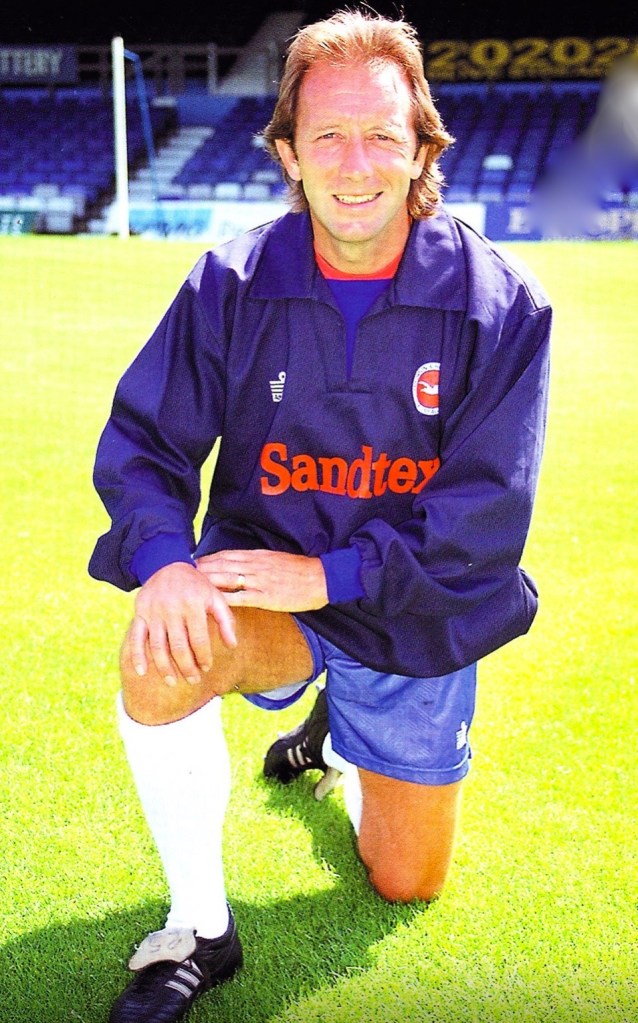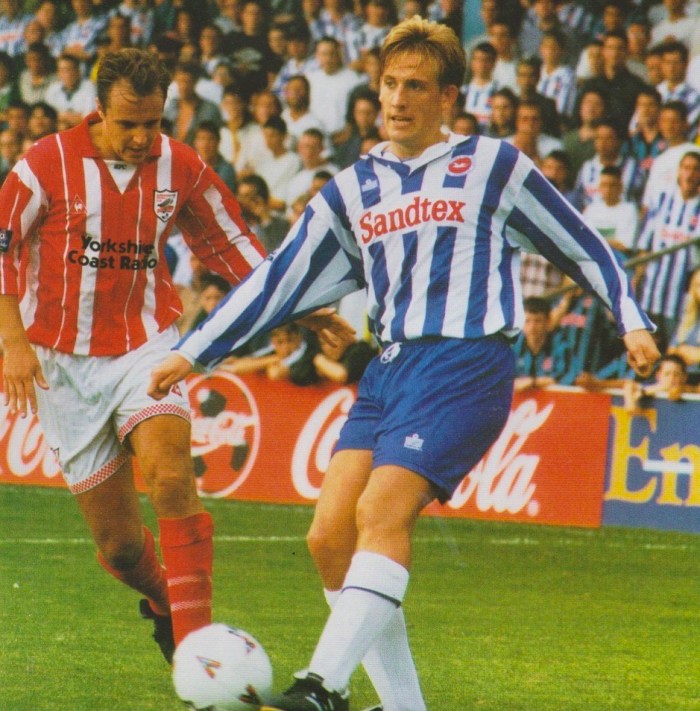
Big money signing Peake hit a trough at the Albion

EXPENSIVE FLOP Jason Peake was a victim of the problems clouding Brighton’s very existence in the mid-1990s.

The blond-haired midfielder heralded elsewhere for his “excellent left foot” and “one of the best passers of the ball in the lower leagues” failed to live up to expectations at the Goldstone and was dubbed Jimmy Case’s “biggest blunder”.

Leicester-born Peake had played alongside Case for Halifax Town, where he’d moved after making only a handful of appearances with his hometown club.

Former Albion loanee centre half John McGrath, assisted by Frank Worthington, failed to halt the Shaymen dropping out of the league in 1993, and Peake spent a season in the Conference before reviving his league career with Rochdale. Nine goals in 103 appearances attracted suitors and it was Albion who bought him for a fee set by tribunal of £80,000 – a huge sum for a cash-strapped club.

A further £15,000 was to be paid after 20 games and another £25,000 if he got to 40 appearances. He made 35 appearances before being frozen out by Case’s successor, Steve Gritt. It was to be a familiar pattern: changes of manager often led to him moving on.

Apart from the bigger picture shenanigans going on at the Albion under the hated Archer-Bellotti regime, Peake’s personal issues centred around relocation expenses he said he was entitled to – but Bellotti refused to pay up.

According to fansnetwork.co.uk: “Peake was being forced to commute from Leicester following several broken promises by the Brighton board. Peake’s dream move turned into nothing short of a nightmare for him.”

The midfielder had trials at Northampton and Cambridge before he finally managed to get away, in October 1997, signing for First Division Bury. He rather diplomatically said: “The situation at Brighton has been well documented over the past year and just let’s say when I got there the situation was not as I’d been led to believe it would be.

“I have not been happy there for some time and the new consortium have been great in letting me get away.”

The official version in the matchday programme said: “Jason had problems in settling in the South after his move from Rochdale and the move has suited him and his family. Should Bury sell him for a fee at any time, Albion are assured of a share in any such deal.”
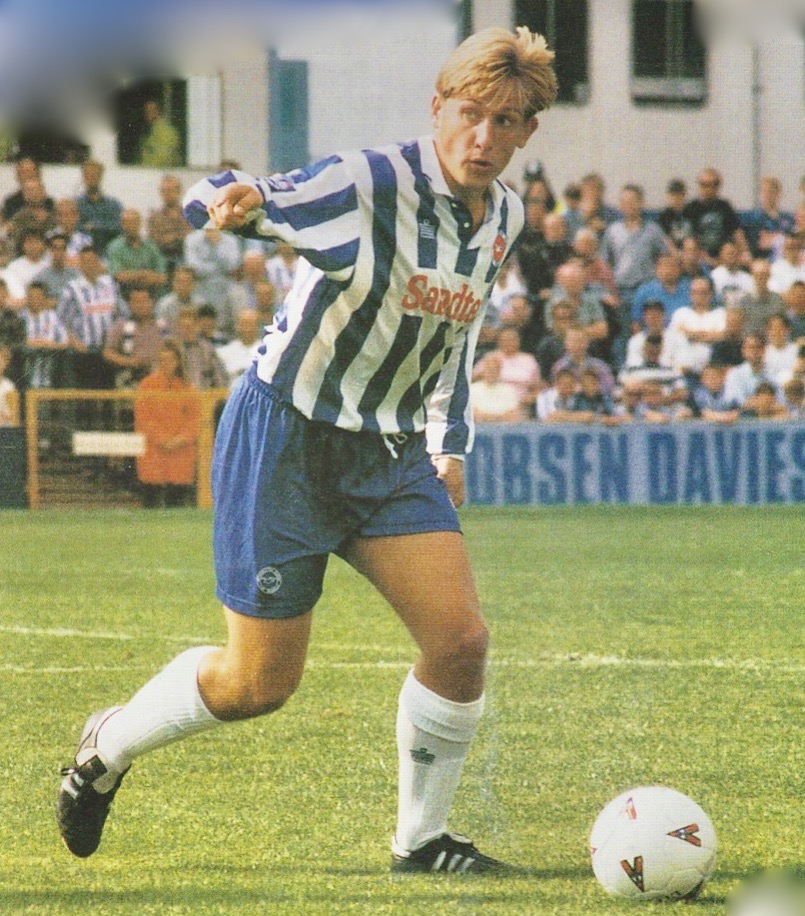
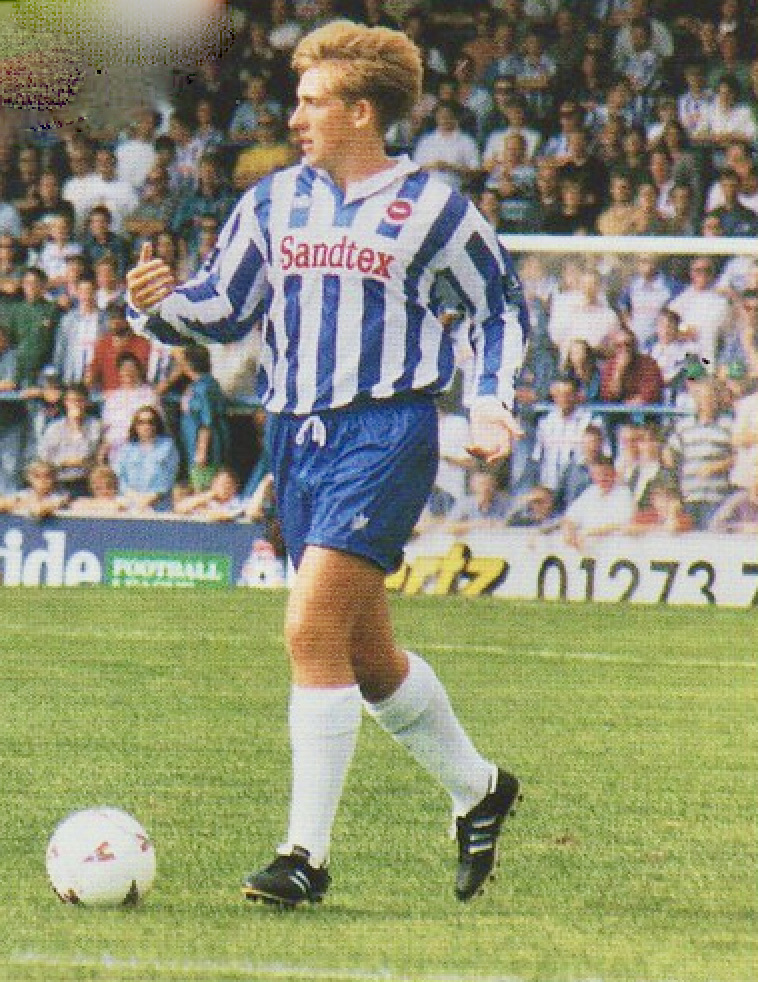
As ever, the season had begun with great expectations and in his matchday programme notes welcoming new signings Peake and Ian Baird, Case said: “They are both quality players and I am sure that they will be great acquisitions for the club this coming season.

“I firmly believe we now have a skilful blend of experienced and young players that can mount a serious challenge for promotion at the first attempt and I believe we will surprise many teams this season.”

Peake went straight into the side in the no.8 shirt but after he’d played 19 games on the trot Albion were anchored at the foot of the table.

After Case was sacked, Peake found himself on the bench more than in the starting line-up; local lad Kerry Mayo taking over from him.

Supporters were certainly not impressed by Peake, perhaps summed up by ‘Lenny Rider’ on North Stand Chat who said: “Huge outlay for where the club was at the time. His kinder critics would say he was disappointing, the more cynical amongst us would argue he was actually nicking a living at the Goldstone.”

New Albion chairman Dick Knight cut Albion’s losses by giving Peake a free transfer to Bury in exchange for the relocation cash dispute being dropped.

Bury boss Stan Ternent was lauded for pulling off something of a coup, and Peake told the Lancashire Telegraph: “It is a fantastic chance for me to prove myself. It has taken me a long time to get into the First Division and I don’t want to blow the opportunity.”

Sadly, those words came back to haunt him because he ended up playing just six times for the Shakers, three as a left-back and three as a sub.

To quote fansnetwork.co.uk again: “Peake’s silky skills didn’t really fit in with the kick and rush tactics of Ternent’s Bury team, and Peake found himself stranded back in the reserves.”

The following summer, a return to Rochdale, where he had first made a name for himself, looked like an ideal solution but things didn’t go well under the management team of Graham Barrow and Joe Hinnigan, who left the club at the end of the 1998-99 season.

In something of a twist of Peake’s usual fortunes when there had been a managerial change, his career began to blossom again under new boss Steve Parkin.

“The free flowing style of football on offer was much more suited to Peake’s natural style,” according to fansnetwork.co.uk. “Peake was awesome in the opening months of the 1999-2000 season and was at the heart of a side which led the table early on.”

He got amongst the goals including “a superb overhead kick from the edge of the area against old team Halifax Town, which saw him win the club’s goal of the season competition and awarded ‘Better than Pele’ status on Sky’s Soccer AM”.

Nevertheless, the season ended on a sour note, as the clarkechroniclersfootballers blog explained: “We lost two re-arranged home games against Peterborough and Northampton in April which would have secured us a play-off place. Jason featured in both games and Steve Parkin singled him out as the scapegoat accusing him of ‘going missing’. It’s always easier for a manager to castigate a player he didn’t sign but we knew there was some truth in it.”

With his contract up at the end of the season, Peake chose to move on, this time to Plymouth Argyle, at the time managed by Argyle legend Kevin Hodges.

Argyle move didn’t work out

It began well enough for him personally and, of Argyle’s 2-0 home win over Carlisle on 16 September, BBC Sport said: “Plymouth doubled their lead in the 17th minute when man of the match Jason Peake scored a superb opportunist goal.

“Peake’s initial attempt came back off visiting central defender Julian Darby and the Plymouth midfielder reacted with a brilliant dipping volley which gave keeper Luke Weaver no chance.

“Weaver denied Peake a second goal in the 80th minute, making a tremendous backward save to keep out the home player’s far post header.”

It followed him scoring four days earlier in a 4-1 defeat at Shrewsbury and was only the second win out of eight. When the next three games were lost, Hodges was replaced by Paul Sturrock, who didn’t take long to decide Peake’s future.

Before Christmas, the midfielder was dispatched to Nuneaton Borough on loan and the move was made permanent in February 2001. Although his league career was over, Peake played 54 games for Borough but was sidelined for periods with a troublesome Achilles tendon injury and he eventually retired in 2003 and became a full-time chiropodist in Leicester.

Born in Leicester on 29 September 1971, Peake played for England schoolboys and was taken on as a trainee by the Foxes.

Manager David Pleat gave him his first team debut in a 2-1 defeat at Charlton Athletic in a Full Members Cup game on 14 November 1989.

It was another year before he made his league debut in the old Division Two, as a sub in a 2-2 draw away to Oxford United.

The same month he also went on as a sub in a 1-0 home defeat to Wolves in the Full Members Cup, played in front of a paltry 4,705 crowd. Four days later he started but was subbed off against Newcastle in a game that remarkably finished 5-4 to the Foxes.

His involvement straddled the end of the Pleat regime and the caretaker manager spell of former Everton boss Gordon Lee, who, in the season Albion reached the play-off final v Notts County, managed to keep Leicester up by only two points while West Brom were relegated along with bottom club Hull City. (Lee died aged 87 in March 2022).

Across three months, Peake had three more starts (and was subbed off in two of them) plus three more games off the bench. Three days after City lost 3-0 at Brighton (goals from Mike Small, Dean Wilkins and Bryan Wade), Peake made a rare start and scored his only goal for the club in a 2-1 home win over Barnsley on 23 February 1991.

Earlier that month (on 6 February 1991), he earned an England under-19 cap when he was sent on as a sub for Aidan Newhouse as England lost 5-1 to Denmark at the Manor Ground, Oxford.

Peake’s last game for Leicester was against Newcastle United on 2 March 1991. He didn’t get a look-in under Pleat’s successor Brian Little and, in February 1992, he joined Hartlepool on loan, playing six matches and scoring once.

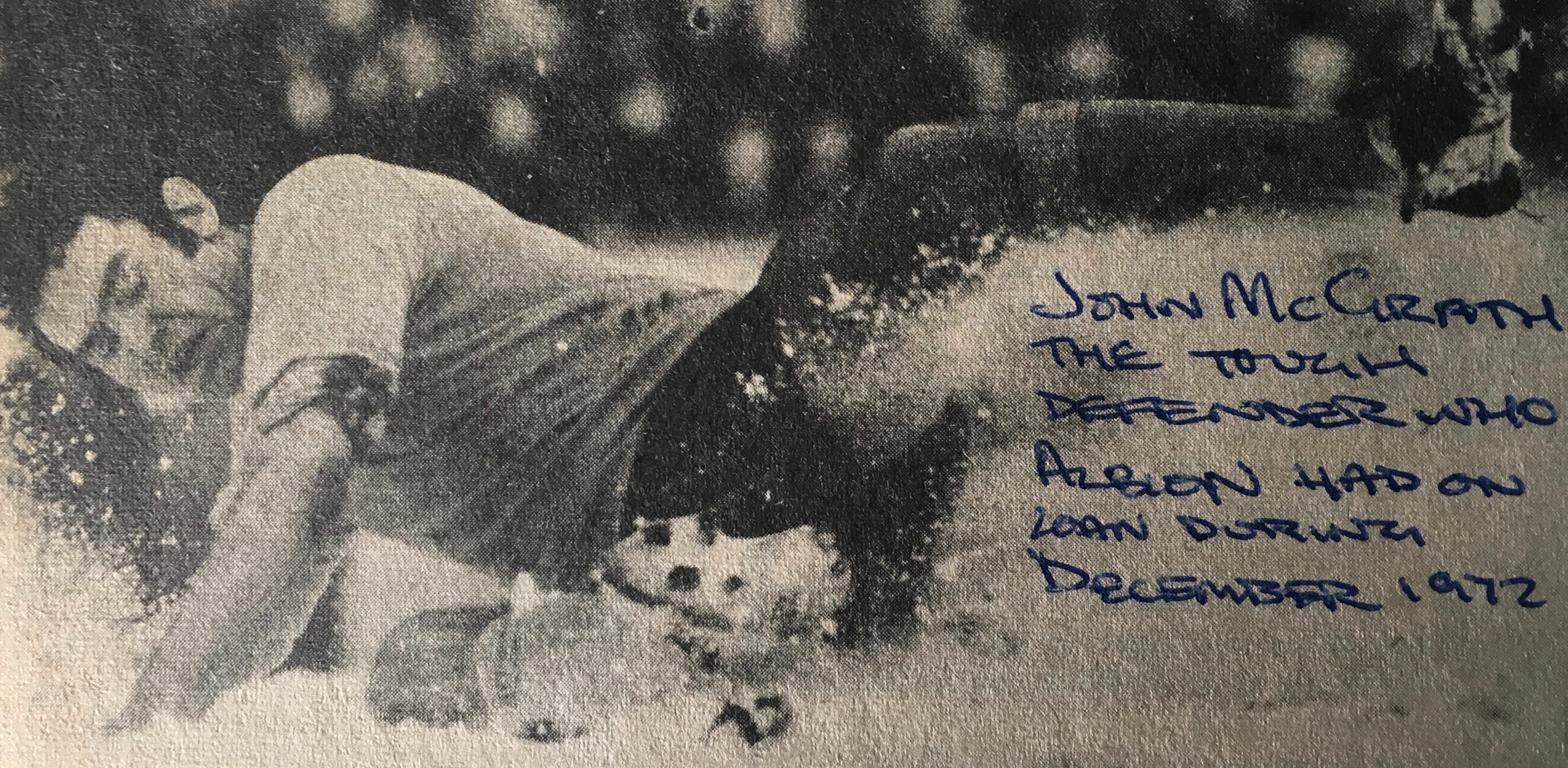
Even fearsome John McGrath couldn’t stop the rot

IN ALBION’S bleak midwinter of 1972-73, manager Pat Saward was desperate to try to reverse a worrying run of defeats.

The handful of additions he’d made to the squad promoted from the old Third Division in May 1972 had not made the sort of improvements in quality he had hoped for.

An injury to Norman Gall’s central defensive partner Ian Goodwin didn’t help matters and Saward chopped and changed the line-up from week to week to try to find the right formula.

Previously frozen out former captain John Napier was restored for a handful of games (before being sold to Bradford City for £10,000). The loan ranger’ (as Saward was dubbed for the number of temporary signings he brought in) then tried Luton Town’s John Moore in Goodwin’s absence.

Youngster Steve Piper was given his debut at home to high-flying Burnley, but Albion lost that 1-0. Then Saward tried left-back George Ley in the middle away to Preston, but that didn’t work either. North End ran out comfortable 4-0 winners with Albion’s rookie ‘keeper Alan Dovey between the sticks after regular no.1 Brian Powney went down with ‘flu.

As December loomed, and with Goodwin still a couple of weeks away from full fitness after a cartilage operation, Saward turned to John McGrath, a no-nonsense, rugged centre-half who had played close on 200 games for Southampton over five years.

“With his rolled-up sleeves, shorts hitched high to emphasise implausibly bulging thigh-muscles, an old-fashioned haircut and a body dripping with baby oil, ‘Big Jake’ cut an imposing figure,” to quote the immensely readable saintsplayers.co.uk.

In Ivan Ponting’s obituary in the Independent following McGrath’s death at 60 on Christmas Day 1998, he reckoned his “lurid public persona was something between Desperate Dan and Attila the Hun”.

Although McGrath had begun the 1972-73 season in the Saints side, the emerging Paul Bennett had taken his place, so a temporary switch to the Albion offered a return to first team football.

Albion had conceded eight goals in three straight defeats and hadn’t registered a goal of their own, so, even though the imposing centre-half was approaching the end of a playing career that had begun with Bury in 1955, it was hoped his know-how defending against some of the best strikers in the country might add steel in the heart of the defence, and stem the flow of goals.

In short, it didn’t work. McGrath played in three matches and all three ended in defeats, with another eight goals conceded.

In his first match (above left), Middlesbrough won 2-0 at the Goldstone. At least the deficit was slimmer in his second game: a 1-0 loss away to George Petchey’s Orient in which Lewes-born midfielder Stan Brown played the last of nine games on loan from Fulham.

McGrath’s third match saw Albion succumb to a thrashing at Carlisle United. By then, Brighton had lost five in a row and still hadn’t managed to score a single goal. Stalwart Norman Gall was dropped to substitute to allow the returning Goodwin to line up alongside McGrath, and Bert Murray led the side out resplendent in the second strip of red and black striped shirts and black shorts.

Carlisle hadn’t read the script, though, and promptly went 5-0 up. To compound Albion’s agony, with 20 minutes still to play, goalkeeper Powney was carried off concussed and with a broken nose.

In those days before substitute goalkeepers, Murray (who’d swapped to right-back that day with Graham Howell moving into his midfield berth) took over the gloves. Miraculously, Albion won a penalty and because usual spot kick taker Murray was between the sticks, utility man Eddie Spearritt took responsibility having relinquished the job after a crucial miss in a game in 1970.

Thankfully, he buried it, finally to make a much-awaited addition to that season’s ‘goals for’ column.

No more was seen of McGrath, however. Gall was restored to the no.5 shirt and was variously partnered by Goodwin, Piper and, towards the end of the season, Spearritt.

After another heavy defeat, 4-0 at Sunderland, which had seen another rare appearance by Dovey in goal, he was transfer-listed along with Gall and Bertie Lutton, as Saward pointed the finger. Lutton got a surprise move to West Ham but Gall stayed put and Dovey was released at the end of the season without playing another game.

The run of defeats eventually extended to a total of 13 and was only alleviated after a big shake-up for the home game versus Luton Town on 10 February.

Powney, who’d conceded five at Fulham in the previous game, was replaced by Aston Villa goalkeeper Tommy Hughes on loan; out went experienced striker Barry Bridges in favour of rookie Pat Hilton and exciting teenage winger Tony Towner made his debut. Albion won 2-0 with both goals from Ken Beamish, and the monkey was finally off their backs.

Although the following two games (away to Bristol City and Hull) were lost, results did pick up, but it was all too little too late and Albion exited the division only 12 months after their promotion.

Born in Manchester on 23 August 1938, McGrath sought unsuccessfully to get into the game as an amateur with Bolton Wanderers but at 17 he joined Bury who were in the old Division Two at the time.

Although they were subsequently relegated, McGrath was part of the 1961 side that went on to win the Third Division Championship. By the time they lifted the trophy, though, he had moved on to Newcastle United for a fee of £24,000, with Bob Stokoe (later renowned for steering Second Division Sunderland to a famous FA Cup win over Leeds United in 1973) a makeweight in the transfer.

It was a busy time for the young defender. On 15 March 1961, he made his one and only England Under-23 appearance against West Germany at White Hart Lane, Tottenham, playing alongside future World Cup winners George Cohen at right-back and the imperious Bobby Moore.

Also in the young England side for that 4-1 win was Terry Paine, who would later become a teammate at Southampton.

Newcastle had hoped the defender would prevent their relegation from the top flight, but it didn’t happen as they went down having conceded 109 goals; their worst ever goals against tally.

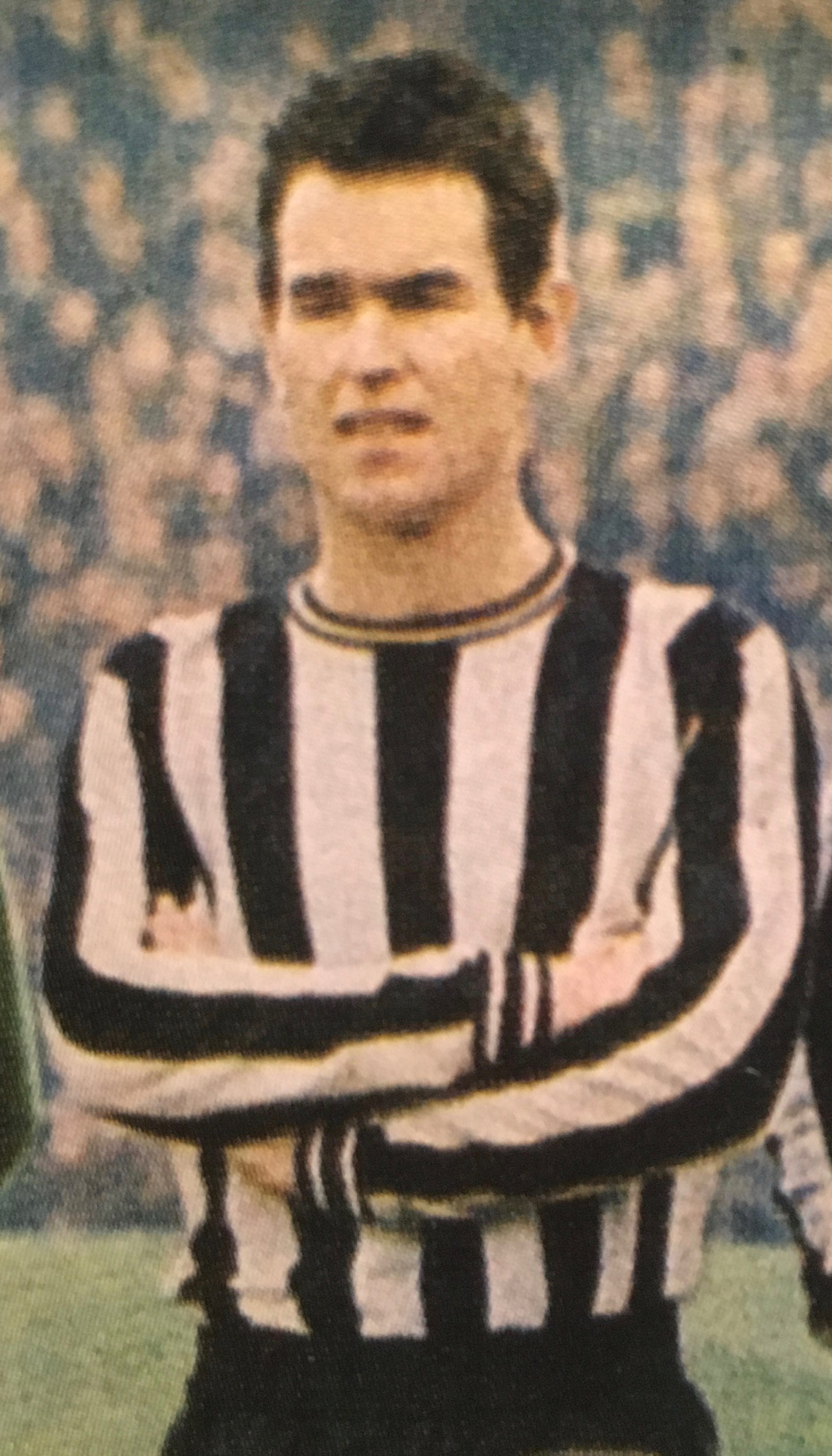
Joe Harvey eventually succeeded Charlie Mitten as manager as Newcastle adapted to life back in the Second Division, and McGrath (below left and, in team picture, back row, far left) played 16 matches in a side in which full-back George Dalton (below, back row, far right) had started to emerge.

Future Brighton captain Dave Turner was one of the successful FA Youth Cup-winning side Harvey inherited, but his first team outings were rare and he was sold to the Albion in December 1963.

Meanwhile, McGrath really established himself, featuring in 41 games in 1963-64 (Dalton played in 40) as Newcastle finished in a respectable eighth place.

The 1964-65 season saw McGrath ever-present as Toon were promoted back to the First Division, pipping Northampton Town to the Second Division championship title by one point. McGrath – “a monster of a centre-half, who was as tough as he was effective” was “the cornerstone” of the promotion side, according to newcastleunited-mad.co.uk.

McGrath retained his place in Toon’s first season back amongst the elite but the arrival of John McNamee and the emergence of Bobby Moncur started to restrict his involvement.

That pairing became Harvey’s first choice, and young Graham Winstanley was in reserve too, so, after playing only 11 games in the first half of the 1967-68 season, McGrath, by then 29, was sold to Southampton for £30,000. He’d played 181 games for United.

In Ted Bates’ Saints side, McGrath was a rock at the back alongside Jimmy Gabriel, although, as saintsplayers.co.uk records, he wasn’t too popular with opposing managers: Liverpool’s Bill Shankly accusing Southampton of playing “alehouse football”.

He went on to make 194 appearances (plus one as a sub) for Saints, before becoming youth coach at the club, part of the first team coaching staff when Southampton won the FA Cup in 1976, and then reserve team manager.

Not content with a backroom role, McGrath took the plunge into management and made his mark with two clubs in particular: managing Port Vale on 203 occasions and Preston North End in 205 matches.

According to Rob Fielding he became a cult hero at Vale Park with his unorthodox ways, once putting FIFTEEN players on the transfer list…which resulted in a six-match unbeaten run!

Winger Mark Chamberlain, who went on to play for Stoke and England, and later Brighton, was one of the young players McGrath introduced.

Long-serving Vale defender Phil Sproson, who was originally signed by former Albion midfielder Bobby Smith, rose to prominence under McGrath and said: “I’ll always be grateful because he taught me how to play centre-half.”

Fielding reckoned McGrath’s finest hour was steering Vale to promotion from the old Fourth Division in 1982-1983, even though by then he had sold Chamberlain to Stoke.

Against a backdrop of player unrest and what were perceived to be ill-judged moves in the transfer market, McGrath was sacked in December 1983 and replaced by his assistant, John Rudge.

He wasn’t out of work for long, though, and took the reins at basement side Chester City where he was in charge for just under a year. Most notably in that time, he gave future Arsenal and England defender Lee Dixon his first taste of regular football.

While success eluded him at Chester, his arrival at Preston in 1986 proved fruitful, North End striker Gary Brazil recalling: “It needed a catalyst and it needed a change and very fortunately for the club and for the players, John McGrath came walking through the door who was like a Tasmanian devil. He came in and the world changed really, really quickly for the better.”

McGrath led Preston to promotion from the bottom tier in 1987 with a squad built around Sam Allardyce and veteran Frank Worthington.

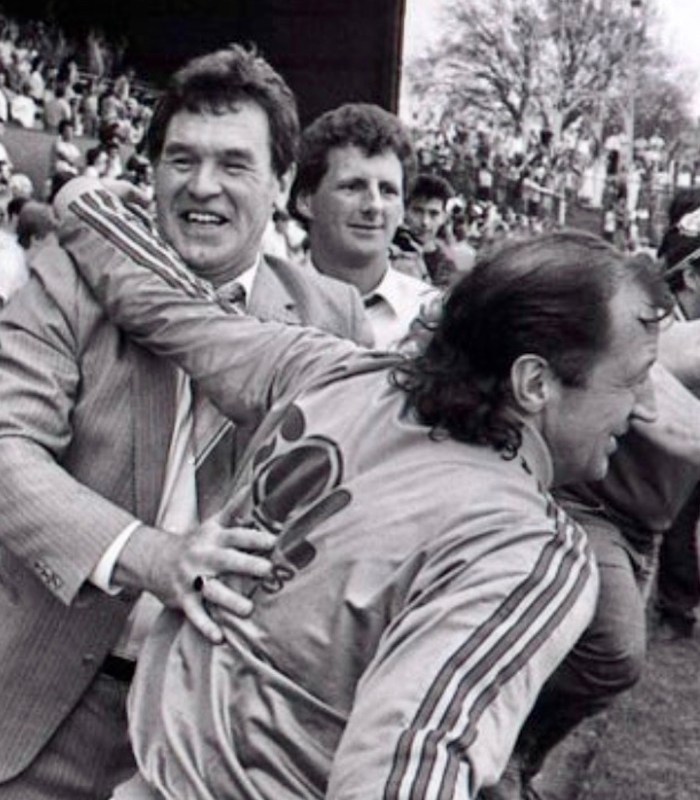
Manager McGrath and Frank Worthington celebrate promotion

“Frank Worthington was a delight to have around and set a real high standard for a lot of us in terms of how we train,” said Brazil. “He just stunned me how he was always first out training.”

The turnround McGrath oversaw, with Deepdale crowds rising from below 3,000 to more than 16,000, rejuvenated the club and the city.

Brazil reminisced: “It was the best year of my football life that year that we got promoted. It wasn’t just an experience playing but an experience of a group of players and how well they could bond and John was integral to that. He was a very, very clever man.”

Indeed McGrath was viewed as having saved North End from the ignominy of losing their league status, the club having had to apply for re-election the season before he arrived at Deepdale.

Edward Skingsley’s book, Back From The Brink, features a black and white photograph of McGrath on its cover and tells the story of North End’s transformation under his direction.

Describing his appointment as “a masterstroke” he reckoned the club owed him a massive debt for masterminding their resurgence and subsequent stability.

“Without him, it is debatable whether Preston North End would even exist today, never mind play in the latest fantastic incarnation of Deepdale,” said Skingsley. “Thank goodness he caught Preston North End before it died.”

McGrath left Preston in February 1990 and had one last stab at management, this time with Halifax Town. He succeeded Saints’ FA Cup winner Jim McCalliog and was in charge at The Shay for 14 months but left in December 1992. Five months later they lost their league status, finishing bottom of pile.

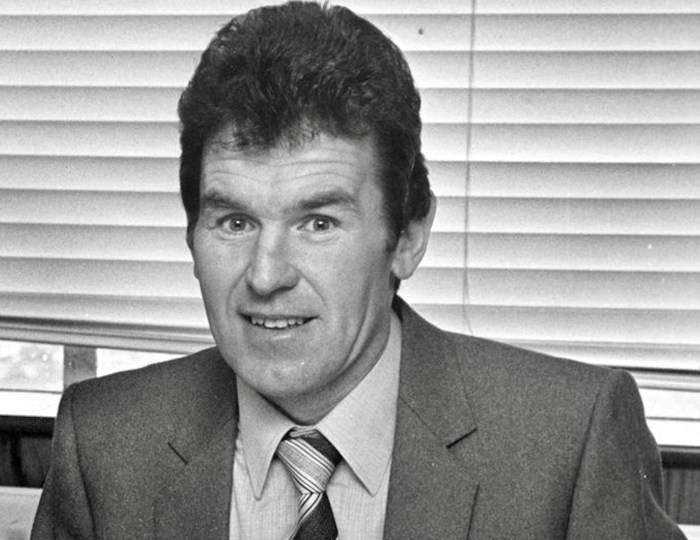
The silver-tongued McGrath was subsequently a popular choice on the after-dinner speaking circuit and a pundit on local radio in Lancashire but died suddenly on Christmas Day 1998.

Big Chiv’s Brighton cameo at the end of an illustrious career


FORMER England international Martin Chivers rose majestically to head home a goal in a 3-3 draw between Leyton Orient and Brighton & Hove Albion.

It was textbook Chivers – a replica of so many similar goals he’d scored for Spurs and England during his glory days – and it put Albion 2-1 up. It turned out to be his one and only goal for the Albion.

It came in one of just five games he played for the Seagulls as his illustrious playing career drew to a close. In Teddy Maybank’s absence through suspension just as Brighton inched closer to promotion to the elite for the first time ever, Chivers – once one of this country’s top centre forwards – was an ideal stand-in.

The game at Brisbane Road on 7 April 1979 saw former Spurs League Cup winning teammates Chivers and Ralph Coates on opposing sides and, a 3-3 thriller was a cracking match for ITV’s The Big Match to have chosen for showing the following Sunday afternoon.

A month later Albion would travel to St James’s Park, Newcastle and clinch that dream promotion.

John Vinicombe, faithful chronicler of Albion’s fortunes for the Evening Argus, declared: “Make no mistake, Albion are First Division bound after that tremendous match at Orient.”

Mike Calvin in the Sunday Mirror, said: “Chivers’ bullet like header became an instant candidate for ITV’s goal of the season.”

While Ian Jarrett in The Sun said: “Martin Chivers’ 32nd minute goal came straight out of the former England striker’s scrapbook. ‘It was a dream goal. I’d like to have it on tape so that I could watch it being played back again and again,’ Chivers told him.

In the days when strikers invariably hunted in pairs, Chivers had previously starred for Tottenham Hotspur alongside the late Scot, Alan Gilzean, as Spurs put silverware in the White Hart Lane trophy cabinet in three successive seasons.

The team captain during that successful period was Alan Mullery and after the midfielder had hung up his boots and taken charge of the Seagulls, he turned to his old teammate in his hour of need.


With regular striker Maybank facing a two-match suspension, Mullery bought the 34-year-old Chivers for £15,000 from Norwich City just before transfer deadline day in March 1979 and he made his debut in a home 0-0 draw against Notts County on 31 March.

Chiv v CharltonEven a crocked Chivers (by his own admission, a troublesome Achilles tendon restricted his fitness) could do a job for the Albion in an emergency, the young manager believed.

“I took a bit of a chance on him, but he was terrific for us,” Mullery recalled in a retrospective matchday programme article. “He was a proven goalscorer and helped us both on and off the pitch.”

Chivers explained exactly how it came about in his autobiography, Big Chiv – My Goals in Life, which he discussed in an interview with the Argus in 2009.

Maybank returned to the side for the successful promotion run-in and, during the summer, Chivers had an operation on his Achilles. The new season, amongst the elite for the first time, was 13 games old before Chivers saw action for the Seagulls.

He appeared as a substitute in a 2-1 defeat away to Coventry City on 20 October, and the national media singled him out for mention.


“When Chivers came on for Ward 11 minutes after the break, the game at last came to life. From then on, Brighton were more decisive in attack and played with more confidence,” said the Daily Telegraph.

Sunday Express reporter William Pierce added: “Martin Chivers went on as a substitute for the out-of-touch Peter Ward and the ex-England striker twice might have scored.”

That contribution earned Chivers a starting place at Maybank’s expense in the next game, a 4-2 home defeat to his old club Norwich, and he stayed up top, this time partnering Maybank, in a 0-0 home draw with Arsenal in the fourth round of the League Cup.

But that was the last time he appeared in the first team. Mullery turned instead to another former Spur, Ray Clarke, and he and Ward were the preferred front pairing for the rest of the season.

Chivers remained with the club, appearing regularly in the Reserves through to the end of the season, and doing some scouting work, but his top-flight career was finally over.

But let’s take a look back at what had gone before. It was an impressive rise to fame.

Born in Southampton on 27 April 1945, Chivers was a pupil at the city’s Taunton’s Grammar School and wrote to his local club asking for a trial. His prowess as a goalscorer grew rapidly.

chiv SaintAfter playing regularly for Southampton’s youth side, his breakthrough came in September 1962 when just 17. He made his first-team debut against Charlton Athletic and signed as a full-time professional in the same week. He became a first-team regular the following season.

In February 1964, Chivers and future teammate Mullery were called up (along with future Albion goalkeeper Peter Grummitt) by Alf Ramsey as Reserves for the England under 23 side for a 3-2 win over Scotland, played in front of 34,932 fans at St James’s Park, Newcastle.

Two months later, at Stade Robert Diochon in Rouen, shortly before his 19th birthday, Chivers made a goalscoring debut for the Under 23s when coming on as a substitute for Geoff Hurst as England drew 2-2 with France.

It was the start of a record-breaking Under 23 career; in four years he appeared 17 times.

Southampton skipper Terry Paine, who was part of England’s 1966 World Cup winning squad, played alongside Chivers as he developed. “The potential was always there, especially when he made the Southampton first team. But the one thing he may have lacked was determination,” he told Goal magazine.

On Saints’ promotion to the top division in 1966, Bates supplemented his attacking options with the addition of established international Ron Davies from Norwich.

Davies and Chivers proved a twin threat to opponents but Chivers was somewhat overshadowed by the Welshman, and Paine said: “They just weren’t compatible. It didn’t work having two big blokes up there together. Chivers was playing second fiddle. He was no match for Ron in the air, there was never any doubt about that.”

It eventually led to Chivers putting in a transfer request in December 1967 and, a month later, having scored 106 goals in 190 appearances for Southampton, he was transferred to Tottenham for £80,000 with winger Frank Saul, an FA Cup winner with Spurs in 1967, a £45,000 makeweight going in the opposite direction.

Saints fans had a new hero in the emerging Mike Channon and inevitably comparisons were drawn between the two. “Martin had more finesse on the ball when he was Mike’s age, without punching his weight,” said Southampton boss Ted Bates. “Mike, however, has more drive and desire, a ruthless approach which Martin never had.”

Indeed, even in the early days at Spurs, fans failed to see why Spurs had shelled out what at the time was the biggest ever transfer fee in the country for the striker, with the legendary Jimmy Greaves and Scot Alan Gilzean the preferred front pairing.

It didn’t help matters when he was sidelined for months by a serious knee injury, although Bates felt the spell out actually proved to be a turning point in his career.

“During that long spell out of action I think he must have taken a good, long look at the game and examined himself thoroughly,” said Bates. “The result is that he now uses the full range of his talents.”

Bates believed he lacked belief in his own power and seemed reluctant to use his size to his advantage. “We were always trying to get Martin to use his physique properly,” said Bates. “He knew he had to be more aggressive, but in those days a big, strong centre-half could swallow him.”


It looked as though Chivers was going to be an expensive flop and, in an interview with Ray Bradley for Goal magazine, he admitted he’d been through a crisis at Spurs and his career had been at a crossroads.

“It was a hell of a frustrating time for me,” he said. “No matter how hard I tried I just couldn’t strike form. I suppose I was really battling to regain confidence again after injury.

“The fans, disgruntled with the form we had been showing, were gunning for me and finally they got their way when I was dropped.

“Things looked black for me but I was determined to fight my way back into the side. The turning point for me, I think, came in a reserve game against Northampton at the end of the season.”

Reserve team manager, Eddie Baily, took him aside and had a private chat, telling him the only way he’d get back his confidence was to fight for it on the pitch.

“He instilled in me that I must be more aggressive, that I must put myself about more if I was to win back my first team place,” said Chivers. “That little pep talk seemed to do the trick. It was a wet pitch and I really gave it all I had and ended up by scoring five goals.

“His words of encouragement after the match made me realise that it was up to myself if I wanted to succeed.”

With Greaves having departed the club for West Ham, once Chivers was back in the first team he did well up against Jack Charlton and Norman Hunter of Leeds, and he began to recapture his form. A good start to the 1970-71 season saw everything start to slot into place.

“I’ve always liked scoring goals,” he said. “Ever since I was a boy I liked to see the ball hit the back of the net.”

After scoring twice to help Spurs beat Aston Villa in the 1971 League Cup Final, Chivers said: “I feel fabulous. That’s the only way to describe how I feel after scoring two goals in my first-ever appearance at Wembley.

“Spurs are back on the glory trail and those two goals have really sealed my comeback this season.”

In a series of Goal articles about Chivers in November 1971, writer Warwick Jordan declared: “There have been few more exciting centre forwards to grace the game and there is little reason to dispute the claim that the Tottenham striker could become one of the best ever,”


A whole raft of top division players and managers were happy to put on record their admiration for the centre-forward. Everton boss Harry Catterick described him as “the new John Charles” and claimed: “Chivers has emerged this year as the most talented centre-forward in Britain.”

Leeds manager Don Revie was a big admirer, saying: “Chivers is a better player than Geoff Hurst. The comparison is appropriate as both men possess a high degree of skill not normally found in strikers of their heavy build.

“It’s hard to choose between them, but I consider Chivers has the slight edge as he does not rely so much on the men around him. He has the ability to take the ball through on his own and create chances out of nothing.”

Manchester City team boss Malcolm Allison said: “This boy is the best all-round centre-forward in Britain. He’s big, strong, skilful and exciting. A tremendous player who will always get goals.”

Stoke midfielder Mike Bernard told the magazine: “Chivers has got guts, skill, aggression, ball control and tremendous determination. You can’t fault the guy.”

Teak-tough centre back John McGrath, who once had a brief spell on loan to the Albion from Southampton, added: “That bad injury has helped to make him a much more determined player. When your career is in the balance it gives you a greater determination to succeed. Chivers has come back to the game a different player.

“He’s a much more physical player now. A more confident player than he was before. He’s developed more character.

“People don’t realise how fast he is. He’s got a sort of loping run, a bit ungainly. But it’s deceptive because he is gathering speed all the time.”


Despite gaining that record number of England under 23 caps, it wasn’t until early 1971 that he got his chance on the full international stage. His reinvigorated Spurs form led to him making his full England debut away to Malta on 3 February 1971, when England gained a 1-0 win under the captaincy of his Spurs teammate Mullery.

He scored his first goal for England two months later in a 3-0 win against Greece at Wembley.

It was said Chivers really arrived as an international star after a powerful two-goal performance in a 3-1 win over Scotland at Wembley on 22 May 1971.

“This has been the greatest day of my life,” said Chivers, after that win. “I didn’t know I was playing until lunchtime on the same day. I was determined to show I was worth my place.

“I know a lot depended on my display in that game. I know I could have jeopardised my international future if I had not grabbed the opportunity.”

Afterwards, though, he declared: “Now I feel I have established myself as an England player.”

Fellow England striker Francis Lee told Goal’s Jordan: “He’s a football manager’s dream. At his present rate of progress, he could become the greatest centre-forward this country has seen.

“His tremendous potential blossomed during that game in Switzerland (scored in a 3-2 win in Basle, 13 October 1971) where his performance made the difference between victory and possible defeat.

“But his finest game for England so far was the one against Scotland. Today he is the hottest soccer property in the game. He’s going to be a big winner for England.”

In total, he scored 13 times in 22 starts plus two appearances from the subs bench, but, in less than three years, Chivers’ England career was over.

He never played for his country again after being subbed off in the crucial game that meant England wouldn’t qualify for the 1974 World Cup – a 1-1 draw with Poland at Wembley in 1973.


In eight years at Spurs, Chivers scored 174 goals in 367 games, his greatest success coming between 1970 and 1973, when he scored more than 20 goals in successive seasons, and was a key part of the side that won the 1971 and 1973 League Cups, finished third in the league in 1971, and picked up the 1972 UEFA Cup.

He had two seasons in Switzerland, playing for Servette, before returning to the English game with Norwich in 1979-80, before the move to Brighton.

On leaving Brighton, he went initially to Southern League Dorchester Town as player-manager, then Norwegian side Vard and finished playing 10 games for Barnet in 1982-83.

It was a phenomenal scoring record to notch 255 goals in 546 appearances.

After he’d finished playing, Chivers became a hotelier in Hertfordshire (during which time I got to speak to him in a professional capacity, helping to promote my client’s involvement in his business) and for several years he has been a matchday host at White Hart Lane.


Pictures from a variety of sources, especially Goal and Shoot magazines and matchday programmes.


Liverpool legend Jimmy Case became a Seagulls favourite too

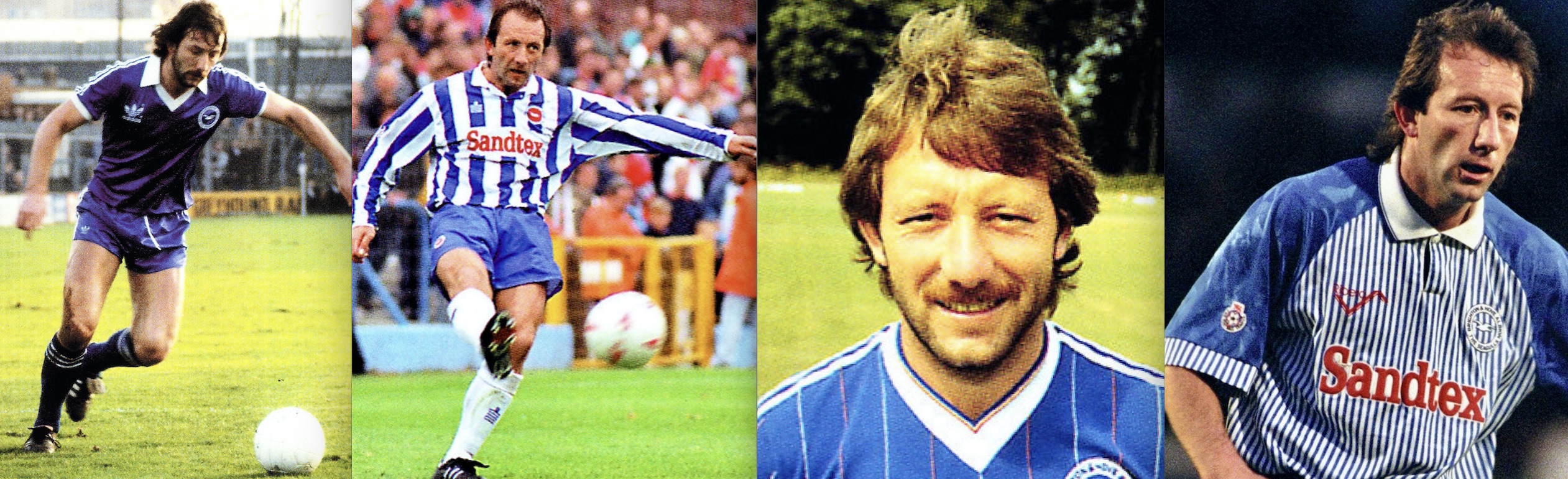
Case 4 imagesJIMMY Case remains one of my all-time favourite Albion players.
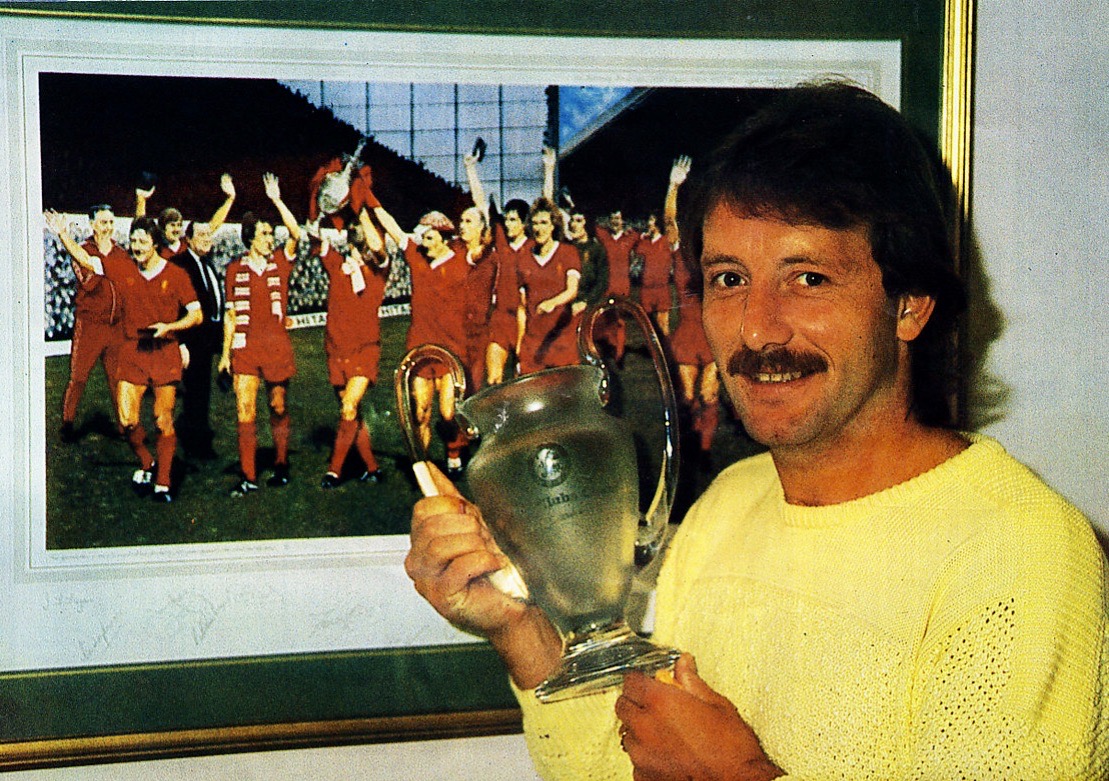
Several of the best moments I can recall as an Albion supporter involve Case: the 1983 FA Cup semi-final belter against Sheffield Wednesday at sunny Highbury perhaps the most memorable.

The biggest disappointment was that Albion let him go so easily.

Younger readers may only remember his unhappy stint as manager when the misdirected club was in turmoil, and he ended up holding the reins when Liam Brady just couldn’t take any more.

But rather than remember him as the man who took Brighton down to Division 3 in 1996, I remember the class act who arrived at the Goldstone in 1981 with a trophy cabinet the envy of many a footballer.

Although Brighton lost the sublime Mark Lawrenson to Liverpool as part of the deal that saw Case move to Brighton, they gained a player who had already got three European Cup winners’ medals, four Division 1 (Premiership equivalent) winners’ medals plus one each for winning the UEFA Cup, European Super Cup and the League Cup.

Case, born in Liverpool on 18 May 1954, was one of four children David and Dorothy Case raised in a council house in the city’s Allerton district.

He learned how to handle himself on a football field playing in a tough dockers’ team but Liverpool picked him up from the local non-league club, South Liverpool. By then, Case had left school and was training to be an electrician.

He carried on those studies but after two years on Liverpool’s staff he made his first team debut in April 1975 in a 3-1 win over QPR.

He scored his first goal in a 3-2 home win over Spurs at the beginning of the following season and, in what must have seemed a dream start, completed his first full season as part of a championship winning team, as well as scoring in the two-legged UEFA Cup Final win over FC Bruges.

Case EuropeThe triumphs and trophies kept coming with Case enjoying the ride but by 1980-81 he was beginning to be edged out by Sammy Lee, and manager Bob Paisley didn’t look kindly on some of the off-field escapades Case was involved in with fellow midfielder Ray Kennedy.

Paisley said: “He had lost his appetite for the game in his last year at Anfield. It’s a hard stint working the right flank in our team and Jimmy had stopped getting forward and was looking to play early passes from deep positions. I think his legs had become tired.”

The move to Brighton might never have happened if Alan Mullery had got his way because he had already done a deal with Ron Atkinson to sell Lawrenson to Manchester United in exchange for two of their players.

But when chairman Mike Bamber pulled rank and forced through the Liverpool deal he had negotiated, Mullery quit and Case arrived on a five-year contract to find a new manager in charge in Mike Bailey.

It felt to me that Brighton were stepping up to a whole new level bringing in someone of Case’s stature, and so it proved.

In his first season at the Goldstone, Albion recorded their highest-ever finish among the elite – 13th.

I recollect heading to Upton Park for the opening game of the season to see Case make his debut against West Ham and Albion earned a 1-1 draw despite having Gerry Ryan sent off.

Case found himself in trouble with referees on way too many occasions that season. Although he came to the club with a hard man image, amazingly he had never previously been suspended for accumulating bookings.

But by December he had to sit out a two game ban, and when his bookings total reached eight by March, he missed another three games.

Case told John Vinicombe of the Evening Argus: “I am a face, and there is nothing I can do about that. I am known, and that might explain some of the things that have happened to me on the pitch.

“The last thing I wanted on coming to Brighton was to get suspended. Brighton didn’t give me a contract to miss games.”

For anyone who has not yet read it, Case’s autobiography, Hard Case (John Blake Publishing) is well worth a read, detailing through writer Andrew Smart a fascinating career.

Disappointingly, it has a few factual errors that doubtless the distance of time brought about. Nevertheless, Case says: “I enjoyed every minute of my time with Brighton.”

Particularly pleasing for him was to score with a thumping header past Bruce Grobelaar in a 3-3 draw with Liverpool at the Goldstone, and to be on the right end of Albion’s 1-0 win at Anfield that season.

Case enjoyed life off the field as well and admits in his book: “The inhabitants of Brighton and Hove were just a little more sophisticated than the Allerton of the 1970s and I was introduced to the many and varied attractions of decent food and fine wine. It was an education I really appreciated.”

His second season was to end in relegation, but, more famously, with Brighton’s one and only appearance in an FA Cup final. Case scored goals in the fourth, fifth and sixth rounds, as well as the semi-final.

The newspapers had a field day when Case’s winner for Brighton in the fifth round of the Cup at Anfield denied his old boss Bob Paisley the chance to wipe the board with trophies that season.

It seemed every national and local newspaper headline revolved around the likeable Scouser: ‘It’s Case for Champagne’, ‘Jimmy sets out his case’, ‘Old boy Case kills off Liverpool hopes’, ‘Amazing Case’, ‘Killer Case’, ‘Case packs a super Cup punch’, ‘Case for Cup win’.

The Daily Mirror made him their footballer of the month for February on the back of that goal with reporter Harry Miller declaring: “No single act did more to capture the imagination of the public than midfielder Case’s dramatic 71st minute winner on Sunday, February 20.”

Case himself had mixed emotions about it all, saying: “I had ten fantastic years at a remarkable club. That’s something that goes deep down.”

He also revealed how a good friend of his had been out of the country at the time of the game and sent him a postcard with only two words as its message: ‘You bastard’.

When he scored the only goal of the game in the quarter final win over Norwich, the headlines continued: ‘Case of bubbly’, ‘The odd Case of hero and villain’, ‘Seagulls have landed with champagne Jim’.

That belting free kick in the Highbury sunshine set Albion on their way to the 2-1 win over Sheffield Wednesday, earning a first ever  – and only – place in the FA Cup final.

He was no stranger to Wembley, of course, having previously scored Liverpool’s goal in the 1978 2-1 defeat to Manchester United, but unfortunately he didn’t repeat his earlier goalscoring feats in the 1983 final.

He played a key part in Albion’s brave effort to earn a draw against Man U and then had the agony of returning home that Saturday evening to discover his mother, who had been a visitor, had died in her sleep at the age of just 63.

It was to Case’s immense credit that he took his place in the side for the replay just five days later.

While relegation brought the inevitable break-up of the team, with Gary Stevens and Michael Robinson departing before the new season began, Case publicly declared his intention to stay and try to get the team back up to the elite.

However, once fellow Scouser Jimmy Melia had been replaced by Chris Cattlin, there was probably only going to be one outcome and eventually Case was sold to Southampton for £30,000 in March 1985.

For him, it was a great move because he was returning to the top division again. It turned out that he was Lawrie McMenemy’s last signing for Saints, but, on this occasion, the change of manager was to cement his place in the side. Chris Nicholl made him the club captain the following season.

In 1985-86, Saints reached the semi-final of the FA Cup (beating Brighton 2-0 in the quarter-final!) losing 2-0 to Liverpool after extra time. If Saints had won, Case would have been the first player to appear in three FA Cup finals with different clubs.

Over his six years at The Dell, Case played alongside Glenn Cockerill and Barry Horne and helped to bring on the careers of youngsters such as Matt Le Tissier, Alan Shearer and Jason Dodd.

But when Ian Branfoot took over as manager in June 1991, he dispensed with Case’s services within a matter of days and transferred him to Bournemouth, who were managed by Harry Redknapp.

After 40 league games for Bournemouth in 1991-92, he moved to Halifax Town managed by former Saint and, one-time Albion loanee, John McGrath, who was being assisted by another ex-Albion man, Frank Worthington.

But Case only played there for six months, moving on to Wrexham, where he helped them gain promotion from the 3rd Division at the end of the 1992-93 season.

He then turned out for non-league side Sittingbourne until, at the ripe old age of 39, Liam Brady brought him back to Brighton in December 1993, as a player/coach. It was during that spell that he played in his 600th league game, the club chief executive David Bellotti presenting him with a silver salver on reaching that milestone

As a mark of the esteem in which Case was held, a testimonial game for him at the Goldstone Ground on 17 October 1994 had to be delayed 10 minutes because so many people wanted to get in to pay tribute. The capacity of the grand old ground was much reduced by then but still 15,645 packed in to see Case’s old club Liverpool do him the honour of providing the opposition.

Albion featured Matt Le Tissier in their line-up and even Ryan and Brady made substitute appearances as Liverpool emerged 2-1. The result, of course, was immaterial, and an emotional Case said afterwards: “I can’t thank the supporters enough. This was the only game I’ve ever been nervous about. I’ve never really asked for anything from the game, I just wanted everyone to enjoy it.

“It’s all been quite embarrassing really. I like to go to parties, I just don’t like them being my own.”

After his unhappy time as Albion manager, Case later managed non-league Bashley but is more often seen and heard these days on the after dinner speaking circuit or on regional football programmes. He also contributes to Southampton’s in-house radio station “The Saint”.

In July 2007, he once again donned a Brighton shirt, playing a cameo role alongside other past heroes in a brief curtain-raiser to Kerry Mayo’s testimonial game against Reading.