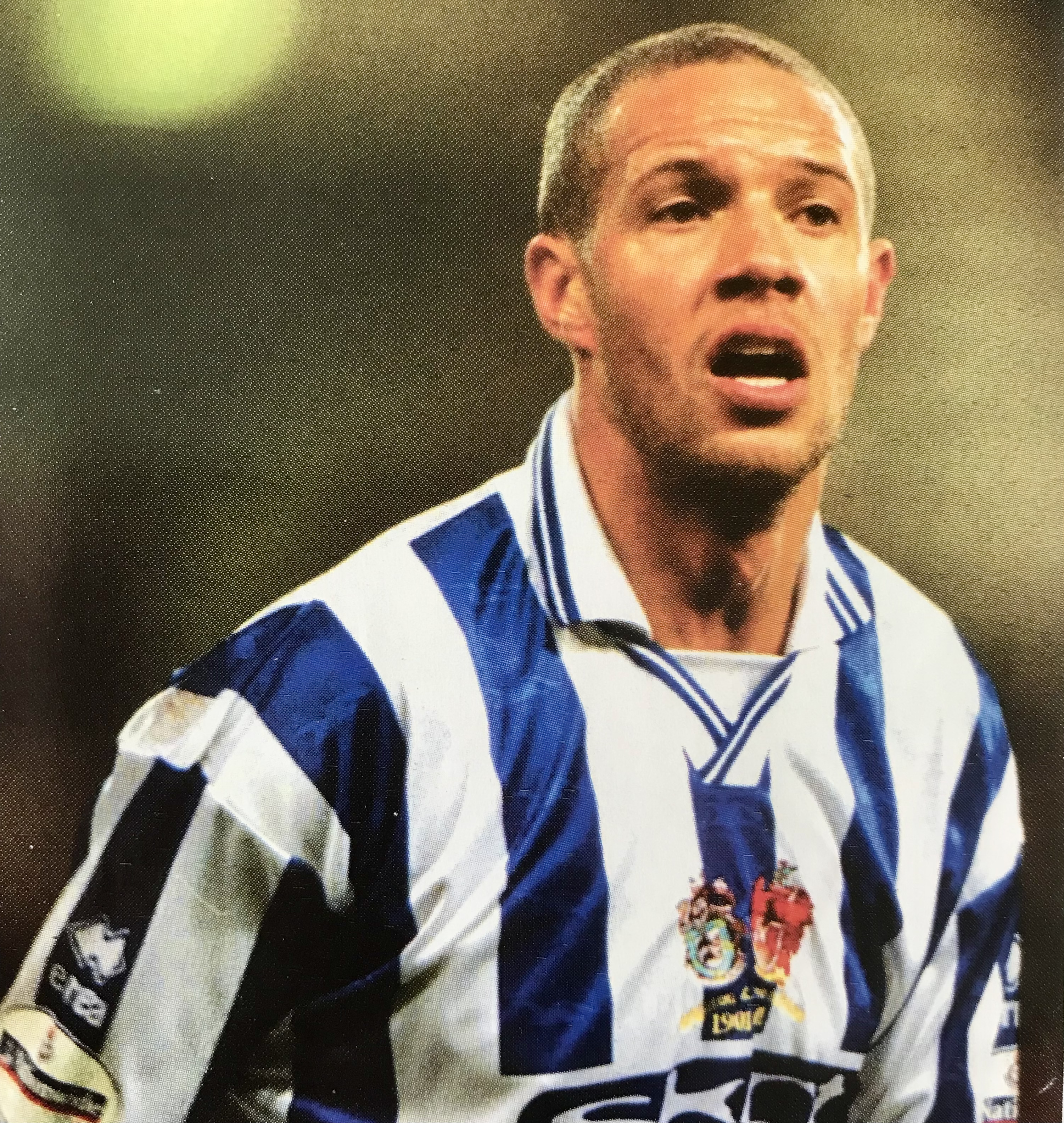
The ‘Derry Pelé’ only briefly strutted his stuff at Brighton

PADDY McCourt put a dent in Brighton’s promotion hopes when he scored for managerless Barnsley at the Amex. Eight months later he joined the Albion’s renewed attempts to lift themselves out of the Championship.

The mazy dribbler from Derry lit up the evening of Tuesday 3 December 2013 when he gave the bottom-of-the-table Tykes an unlikely first-half lead.

Barnsley arrived at Falmer having just sacked manager David Flitcroft and when McCourt teased and tormented the retreating Seagulls defenders to net in the 35th minute it ended a sequence of nearly five hours without a goal.
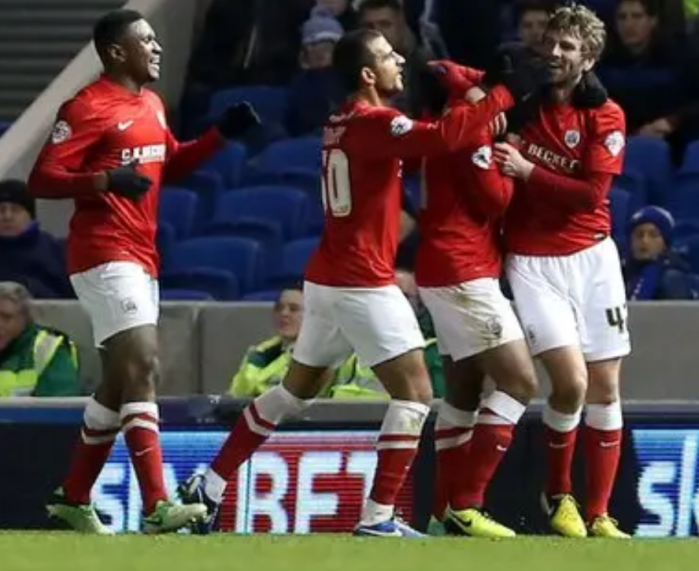
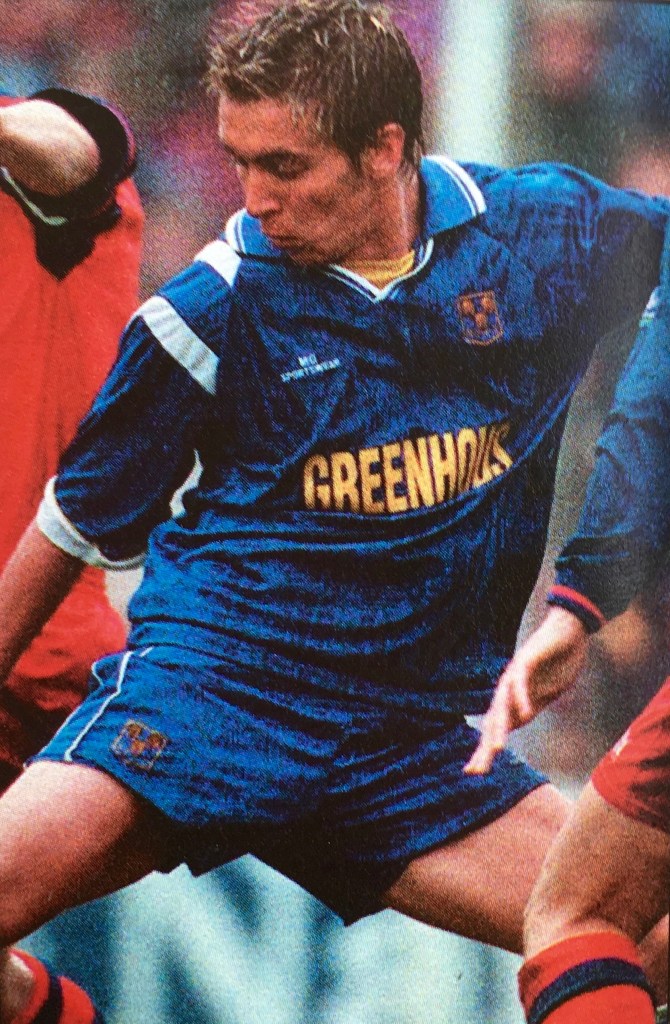
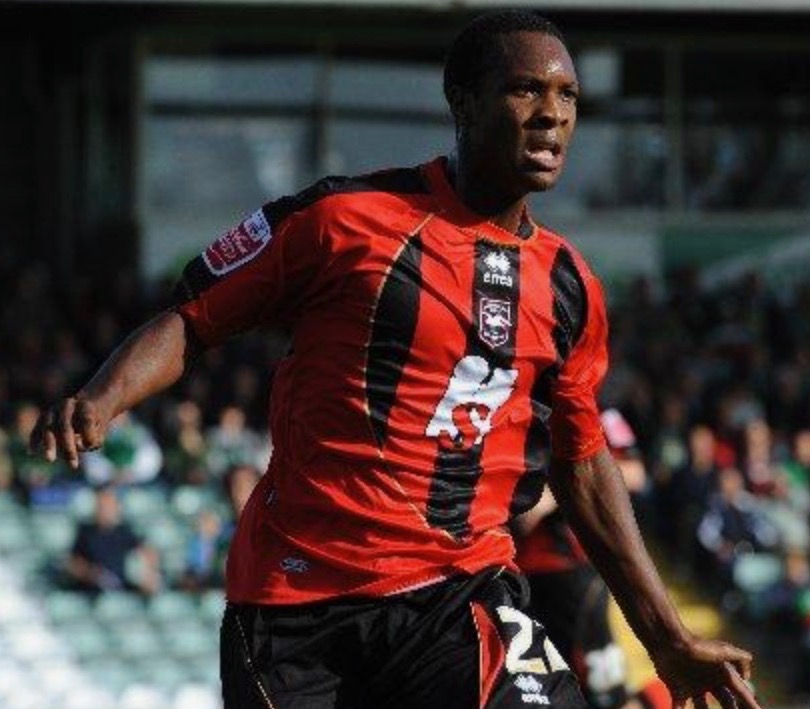
McCourt celebrates scoring for Barnsley at the Amex

Recalling what was something of a trademark finish by the bearded Irishman in a 2018 post wearebrighton.com described howMcCourt picked up a loose ball 40 yards out from goal, dribbled round Liam Bridcutt and Andrew Crofts, drifted past Matt Upson with a quick step-over, nutmegged Gordon Greer before playing a quick one-two with Worthing-born Marcus Tudgay,  then ghosted round Stephen Ward before slotting the ball into the bottom corner of the goal past Tomasz Kuszczak in Albion’s goal.

Five minutes after the restart, the visitors went further ahead through Jacob Mellis before Upson pulled a goal back with a header from a Craig Conway corner. Barnsley had on-loan goalkeeper Jack Butland to thank for ensuring they left with all three points, making notable saves from subs Will Buckley and Leroy Lita (who moved to Barnsley the following year).

While Albion went on to finish sixth under Oscar Garcia but failed to get further than the play-off semi-final for the second year running, Barnsley, who’d appointed former Albion captain Danny Wilson as Flitcroft’s successor, exited the division the wrong way, finishing in 23rd place.

Barnsley’s top scorer, Chris O’Grady, stayed in the division by signing for the Albion and a month later his former teammate, 30-year-old McCourt, released on a free transfer at the end of the season, joined him in Sussex after impressing new Seagulls boss Sami Hyypia in a trial period.
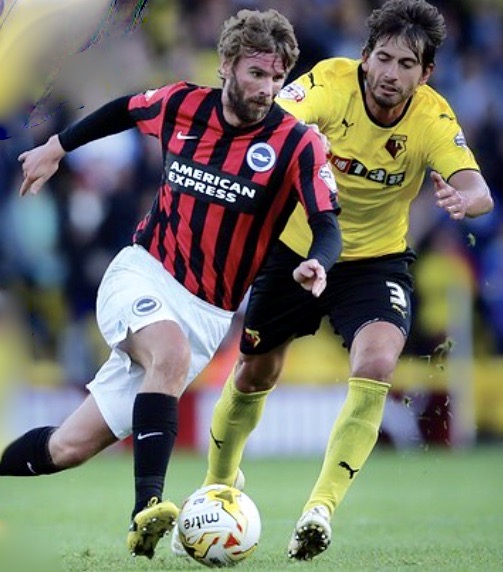
“We have seen enough of Paddy in the last week or so to know that he is a player who has quality going forward,” said Hyypia. “He is the type of player who can pick a pass and create a chance.”

That said, Hyypia only gave McCourt starts in two League Cup games (v Burton Albion and Tottenham Hotspur); his 11 other Albion appearances were all as a substitute.

When he did start, away to Burton, he set up goals for Rohan Ince and Craig Mackail-Smith in Albion’s 3-0 win and he told the matchday programme: “There’s nothing like playing games for your fitness and I’m sure that the more I play the better I will feel.”

Hyypia kept his feet on the ground, though, pointing out: “He needs to realise what he needs to do to improve and to be a very important player for the team defensively as well.”

Often described as a ‘maverick’, McCourt’s response was: “I like to get on the ball and be creative; that’s always been part of my game and something I’ve always been good at. I love taking on players, creating chances and now I just hope I can get a run in the team and show what I can do on a regular basis.”

He certainly couldn’t have been accused of lacking ambition, maintaining: “I still have aspirations to play in the Premier League and hopefully that will happen in my time here.
“I’ve played international football, I’ve played Champions League and Europa League football with Celtic, so the next step for me would be to play at the highest level in England – I would love that to happen.”

That international career was as strange as much of his career. There were 13 years between the first and last of 18 caps for Northern Ireland: he made his debut under Sammy McIlroy in 2002 (a 5-0 defeat against Spain) then had to wait seven years before he was selected again. That was in a 3-0 World Cup qualifier win over San Marino, when he went on as an 81st minute sub for future Albion teammate Aaron Hughes.

He scored twice in Northern Ireland’s 4-0 win over the Faroe Islands in a Euro 2012 qualifier in August 2011 (when Hughes scored his first goal for his country in his 77th appearance!).

McCourt’s second goal that day was reckoned to be one of the best ever goals seen at Windsor Park. According to the Belfast Telegraph, he “collected the ball just inside the opposition half and left three defenders in his wake with magical dribbling skills and impeccable close control before outfoxing another… then to cap it off he produced a stunning left foot chip over the bemused goalkeeper which floated into the net.”

McCourt helped manager Michael O’Neill’s side reach the Euro 2016 finals, but was not available for the finals in France because his wife Laura was seriously ill (more of which later).

“I really enjoyed it,” he told BBC Northern Ireland’s Mark Sterling in a lockdown interview in 2020. “Any time I was picked I turned up, and to be involved in the Euros qualifying campaign was fantastic.

“Everybody wants to play international football, The fans took to me straight away, were always singing my name and I hope I gave them some good memories.”

Born in Derry on 16 December 1983, McCourt’s early footballing promise was nurtured by Eunan O’Donnell, his PE teacher at Steelstown Primary School. At the club he joined as a youngster, Derry-based Foyle Harps, it was club chairman Gerry Doherty “who deserves more credit than anyone else” according to McCourt’s brother Leroy (who was his agent).

However, McCourt reckoned: “The street is where I learnt how to play football.”

In that lockdown interview with BBC’s Sterling, he said: “When I was younger there was more emphasis on players to develop themselves. We trained once a week for an hour with our clubs, when you might only get 40 or 50 touches of the ball at most, with 20 kids in a session.

“It was up to you to go out into the streets with your mates and practice your skills in small-sided games. We’d play for six or seven hours, there might only be four of you and you’d get thousands of touches.

“You were probably playing with older kids and on concrete as well, so that would improve your balance.”

Although given the moniker of the greatest Brazilian footballer of all time, McCourt’s boyhood hero was Robbie Fowler. “I’m a Liverpool and Celtic fan, and for some reason he was a player I just absolutely adored growing up,” he said.

“My memories are of seeing Fowler scoring – left foot, right foot, header – it didn’t seem to matter to him. He just had this unbelievable talent for putting the ball in the back of the net.”

McCourt’s first taste of professional football in England came at Third Division Rochdale, joining them in 2000 aged 17. But in an open and honest question and answer session in March 2018 at the Talent Development Academy Elite Soccer Coaching event, at the Magee Campus of the Ulster University, the player spoke about how youthful wrong lifestyle choices meant he blew the opportunity.

“I was nowhere near ready for it and the events that transpired in the next couple of years proved that. It’s very hard to know the situation you’re going into when you’re not prepared for it.

“I was coming from Foyle Harps, playing junior football and then going into a professional environment. It wasn’t that big of a jump in terms of what you did differently because Rochdale was a small club and you went in and trained and were home for 1pm living in digs and I didn’t drive at the time.

“You had so much spare time on your hands and as a young lad, you do daft stuff and make mistakes and I admit I made plenty. It was basic stuff like going out too much and not eating the right food.”

Although he made 94 appearances for Rochdale, around half were as a substitute and after unsuccessful trials with Motherwell and Norwich City he was eventually released in February 2005 and returned to the League of Ireland with Shamrock Rovers.

“Initially when I was at Rochdale I did quite well and broke into the first team quite early but when I came back I took stock. I made mistakes and wasn’t really living my life to be a professional footballer.

“I had six months with Shamrock Rovers where I didn’t make many changes to my lifestyle but I was doing quite well on the pitch.”

It was only when he returned to his home town and played at Derry City where things began to change under the positive influence of future Republic of Ireland manager Stephen Kenny.

“I learned what it takes to become a proper athlete because you need to live a clean lifestyle to make it as a footballer and I wish I knew back then what I know now,” he said.

“There was a bit of sports science starting to come in at Derry in terms of what to do leading up to a game, and then your recovery sessions on a Saturday morning after a game. It was tiny, basic stuff but it started to kick in then and that helped me because I was getting information I didn’t have before. It was up to yourself to buy into it and I started to buy into it a bit more and started to see the benefit.”

Between 2005 and 2008 with Derry, McCourt won an FAI Cup, three League Cups, was involved in a league runners-up spot (2005) and was part of a UEFA Cup run in 2006.

He then got the chance to join Celtic, the side he’d supported as a boy, signing for a fee of £200,000 in June 2008. Hoops boss Gordon Strachan told the Derry Daily: “Paddy is as gifted a footballer as I’ve ever seen. Some players can pass but can’t dribble. Others can dribble but can’t pass. Paddy can do both.”

It wasn’t until the 2009-10 season that he forced his way into the first team and his  first goal for the club was in a 4-0 League Cup win at Falkirk in September 2009 when he skipped past five defenders before chipping the goalkeeper.

His own favourite was his first goal at Parkhead in a 3-0 win over Hearts on 11 September 2010 which realised a lifetime ambition.

“I actually had dreams of scoring at Celtic Park,” he said. “I felt I had let that go when I had that setback at Rochdale. Self-doubt creeps in but I remember the night. It was Hearts at home and it was a very proud moment.

“It might never have happened if I hadn’t made the sacrifices I made and I have a lot of people to thank for that.”

When Aiden McGeady left Celtic for Spartak Moscow in August 2010, Celtic manager Neil Lennon challenged McCourt to step into his shoes and said: “He’s wonderful to watch. He’s beautifully balanced and he’s got great vision and great feet and that’s why we decided to get him on a longer-term contract. He’s pleased and we’re pleased.”
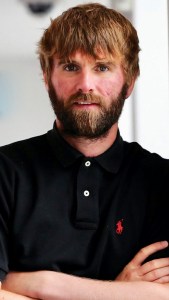
In his five years in Glasgow, McCourt scored 10 goals in 88 appearances for the Hoops although he actually only made 20 starts. He collected medals for his part in Scottish Premier League title wins in 2011-12 and 2012-13 as well as Scottish Cup wins in 2011 and 2013.

That 3-0 2013 final win over Hibernian was his last game for Celtic before he joined English Championship Barnsley, who were managed by his former Rochdale teammate David Flitcroft.

The goal against Brighton in December 2013 was one of only two he scored for the Tykes in 15 starts plus eight appearances off the bench and Barnsley fans certainly had mixed views about his contribution.

Online chat group contributor ‘Jay’ posted: “At his best he was as good as I’ve ever seen. Be nice if he can produce that sort of form consistently, even if it’s not for us. All that talent shouldn’t go to waste.”

Another, ‘JLWBigLil’ reckoned: “One of the most skilful players I’ve ever seen play for Barnsley in all my years of going down to Oakwell. Possibly the right player at the wrong time for us.”

Whereas ‘MarioKempes’ opined: “There was no doubting his ability but the other key aspects such as workrate, fitness, stamina and heart were sadly lacking from his game.”

It almost certainly didn’t help McCourt’s cause at Brighton that new boss Hyypia struggled to get to grips with the task in hand and chopped and changed the line-up. The addition of several loan players didn’t help matters either.

Frustrated Albion fans reckoned McCourt should have had a bigger involvement than his few cameos off the bench, citing his influence in helping to salvage a point away at Watford, and planting the ball on Gordon Greer’s head to score a consolation goal from his corner kick at Middlesbrough.

After Hyypia left the club before Christmas, McCourt’s last Albion appearance was as a sub in the home Boxing Day 2-2 draw with Reading (on loan Glenn Murray scored twice for the visitors; Jake Forster-Caskey and Inigo Calderon for the Albion), going on for Danny Holla.

Nathan Jones was in caretaker charge that day and the pair were subsequently reunited at Luton Town the following season.

Before then, unable to get games under Albion’s new boss Chris Hughton, McCourt dropped into League One on loan at relegation-bound Notts County.

He scored County’s winner in their 1-0 win at Colchester on 3 March 2015 but they went on an 11-game winless run after that and went down with Crawley Town and Leyton Orient.

Released by Brighton that summer, McCourt joined the League Two Hatters under John Still in July 2015 and was followed there a month later by Mackail-Smith.

After a run of three starts in September, when Town won all three matches, McCourt played in a 1-1 draw with Leyton Orient on 20 October, before being restricted to a role on the bench.

On his return to the starting line-up in January 2016, away to Mansfield, he scored his fist Luton goal after just seven minutes in a 2-0 win. He told Luton Today: “It was great, all players want to play from the start and it’s been disappointing to sit on the sidelines.

“It was very frustrating because we’d just won three or four games in a row, then I came back from an international double header, was on the bench, played in the draw against Leyton Orient and that was it, I didn’t play again.

“I don’t know why, I didn’t ask the manager and he ended up getting the sack, but it was very disappointing as I felt that although I wasn’t where I wanted to be in terms of performance, I was playing, we were winning games.”
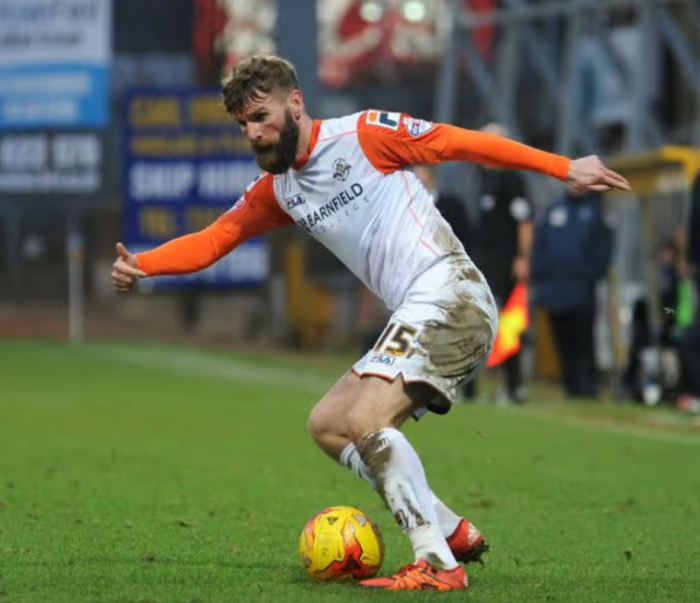
In action for Luton Town

When former Brighton coach Jones was appointed as Still’s successor, McCourt told Luton Today: “He’s a coach who wants to play football, ball from the back, get between the lines, bring a wee bit of flair and creativity back to Luton, so hopefully I can play a big part in that.”

Unfortunately, he cut short his stay at Kenilworth Road after 16 starts and nine appearances off the bench to return to Ireland because his wife Laura had to undergo treatment for a brain tumour. She recovered after a successful operation and O’Court resumed playing at Glenavon.

According to the Belfast Telegraph: “It ended up being a disappointing half-season at Mourneview Park and was followed by a move to Finn Harps, where he was able to roll back the years, not least when he ghosted past a whole host of Sligo players and dinked home the finish with his inimitable swagger.”

That was in 2018 before he retired from playing and began coaching academy players at Derry City. He later became the club’s technical director and left in January 2024 before taking up a role as assistant to manager Declan Devine at Irish Premiership side Glentoran.

Perhaps the last words should go to reporter Daniel McDonnell, who wrote in the Irish Independent: “Football is nothing without entertainers. Punters paying cash to watch a game want to see individuals capable of doing things that the ordinary player could only daydream about. McCourt could do things that top pros were unable to manage.”

While recognising McCourt’s CV might have glittered more brightly, he declared: “There are players who will retire with more medals and more money that will never garner a comparable level of affection.

“Mention McCourt’s name to those who had the pleasure of watching him in full flight and responses will be delivered with a smile.”

High-flying Canary Culverhouse flew with lowly Seagulls too

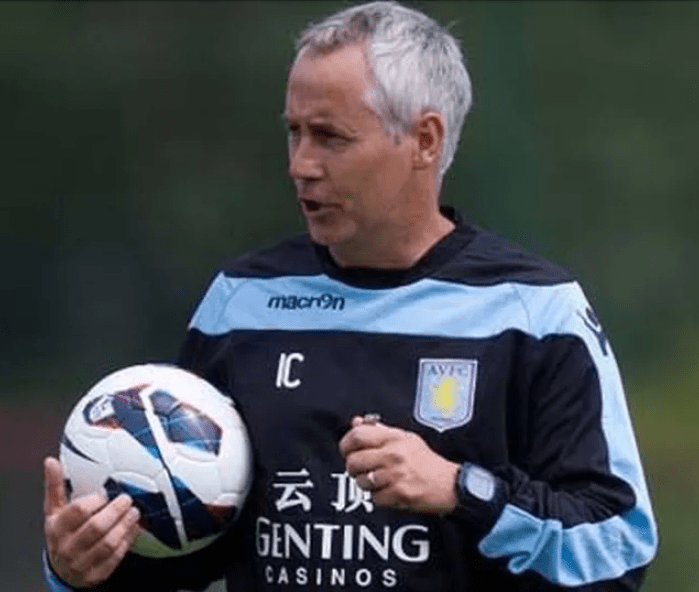
ONE-TIME Norwich City hero Ian Culverhouse flew high in the Premier League and Europe with the Canaries and ended his playing days at basement Brighton where he began a lengthy coaching and managing career.

It was only at the end of November 2024 that Culverhouse began a new managerial post, taking charge of sixth tier (National League South) side St Albans City.

A few weeks previously he had parted company from Boston United because they were struggling to come to terms with life in the tier above.

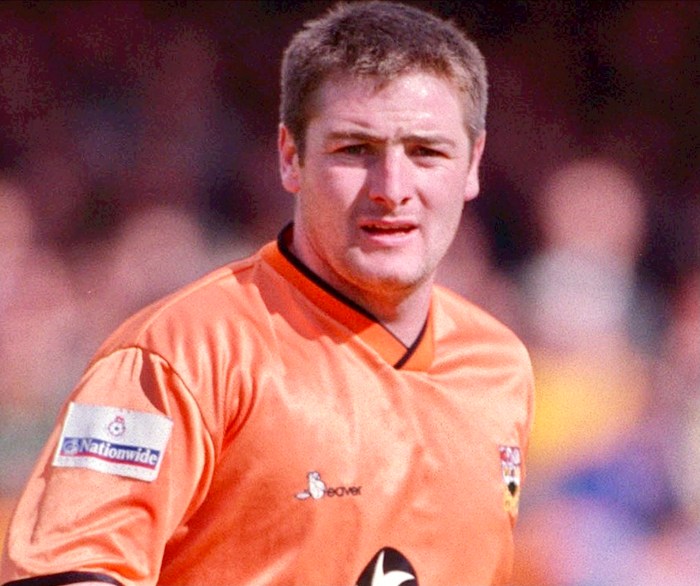
Culverhouse was brought to Brighton by Brian Horton in 1998, shortly after he’d been picked up by non-league Kingstonian having been given a free transfer earlier in the year by Swindon Town. He’d spent three and a half years at the County Ground, including being a key player in their Second Division Championship-winning squad of 1995-96, but left the Robins after falling-out with manager Steve McMahon.

He’d only played twice for Kingstonian before he joined Brighton, who were playing in exile at Gillingham at the time.

Signed on a monthly contract initially, his presence as a sweeper helped plug holes at the back and saw Torquay United, Scarborough and Swansea City all beaten. But after two months, Horton decided to dispense with a sweeper and play a flat back four, so Culverhouse was let go.

But when Albion promptly lost 3-1 to Mansfield Town without him, Horton had a change of heart. He re-signed Culverhouse before a week was up, gave him a contract until the end of the season and even made him captain (in the absence of injured Gary Hobson). Quite some turnaround.

“He was one of the best readers of the game the Albion have had,” reckoned wearebrighton.com. “Culverhouse would always be in the right place at the right time, on the scene to stop danger before anybody realised that there was danger coming.”

The musically-minded wags amongst the Albion die-hards also found the perfect terrace song for him – sung to the tune of Our House by Madness, ‘Culverhouse, in the middle of defence’ became a popular ditty.

He completed 38 appearances for the Seagulls that season and took his first steps towards a coaching and managing career under Horton’s successor, Jeff Wood, when he began coaching the reserve side. Wood said: “Ian has shown on the field that he is a player of immense ability. In his new coaching role, he will now have the opportunity to pass his knowledge on to the younger players at the club.”

A grateful Culverhouse added: “This is a good opportunity for me and I am looking forward to it.

“It’s the first chance I’ve had to coach and it’s something I wanted to do anyway when my career finished. It has just come at a nice time.”

Albion’s then chairman, Dick Knight, told the Argus: “Ian has impressed me greatly with not only his experience but his attitude.

“He has been a real leader in the dressing room as well as on the field and we are giving him a chance to bring that know-how to bear on the coaching side.”

Culverhouse was retained as reserve team coach after Micky Adams took over from Wood towards the end of the season, and the new boss told the Argus: “Ian reminds me a bit of myself. You have got to get on the ladder somewhere. He is enthusiastic, has had a good career and sets himself high standards.

“He has a lot to learn in terms of coaching, but I hope he will become fully qualified along with the rest of my staff.

“He will still be registered as a player as well in case we need him in emergencies, but I don’t envisage him playing too many games.”

In fact, there was just the one final first team appearance for him, when Adams tried to bring a halt to a six-game winless run at the start of 2000. But it didn’t go well and he was subbed off in a 2-0 defeat at Hull.

“It is fair to say we have possibly seen the last of Culvs in a first team shirt,” Adams admitted later. “He is still registered as a player, but his career is probably over. It was me that persuaded him to play at Hull. He wasn’t sure he would be up to it in terms of fitness.”

Born in Bishops Stortford, Hertfordshire, on 22 September 1964, Culverhouse was in the England Youth squad for an international junior tournament in Norway in the summer of 1982, starting in a 4-1 defeat to the home nation and gaining a second cap as a sub in a 3-2 win over Poland.

In the same year, he began as an apprentice at Tottenham. He impressed in Spurs’ youth and reserve sides and spent three years at the Lane. “I was playing alongside players like Ricky Villa, Ossie Ardiles and Glenn Hoddle, which was tremendous experience,” he said.

He even collected a UEFA Cup winners’ medal in 1984 as an unused substitute in the first leg of Spurs’ win (on penalties) over Anderlecht; future Albion boss Chris Hughton was left-back and recent signing from Albion, Gary Stevens, was in midfield, and scored one of the decisive penalties.

But Culverhouse only made one full appearance for the first team, plus one as a substitute, and in October 1985 moved to Norwich under Ken Brown for a £50,000 fee. He was part of the Norfolk club’s Second Division title-winning side of 1985-86 in his first season and became an established defender, usually as a right-back but also as a sweeper.

Culverhouse for the Canaries

He was part of the successful Canaries side that finished third in the inaugural Premier League season of 1992-93 after enjoying three top five finishes in the old First Division, reaching two FA Cup semi-finals (1989 and 1992) and playing in Europe (1993-94). He won the club’s player-of the-year award in 1990-91.

The excellent Norwich fans website Flown From The Nest blamed the Robert Chase regime for Culverhouse’s eventual departure from Carrow Road after nine years.

“From being an integral part of the City team that finished third in the Premiership and enjoyed UEFA Cup success, Ian Culverhouse found himself at the start of the 1994-95 season out of contract and out of favour with Robert Chase and manager John Deehan,” it said. “Similar problems had occurred the previous season with Dave Phillips.”

Culverhouse with the Robins

Together with the contract issues, Culverhouse went public to criticise Deehan’s decision to drop him, which ended any chance he had of regaining his place. Eventually, he was transferred to Swindon for the bargain sum of £150,000 in December 1994, the fee being fixed by a tribunal.

After he left Brighton in 2000, Culverhouse became youth coach at Barnet and two years later joined Leyton Orient in a similar role before being elevated to assistant manager. He left the Os in August 2005 – replaced by future Villa boss Dean Smith – but was then appointed coach at Wycombe Wanderers by former Swindon boss John Gorman.

When Paul Lambert succeeded Gorman, he and Culverhouse developed a strong bond. He followed Lambert to Colchester United to become assistant manager, then returned to Norwich in the same role, where he didn’t forget Wood’s role in setting him on the coaching ladder, being instrumental in the former Albion manager’s appointment as Norwich’s goalkeeping coach.

At the end of their first season, Lambert and Culverhouse steered Norwich to the League One title. The following season, they won promotion to the Premier League and finished 12th in their inaugural season back at the elite level. When Lambert quit Norwich to take charge at Aston Villa in July 2012, Culverhouse and fellow ‘lieutenant’ Gary Karsa followed him.

Coach at Villa under Paul Lambert

In June 2013, Lambert told the Birmingham Mail how much trust he placed in his right-hand man. “My assistant boss Ian Culverhouse has a real eye for a player,” he said. “If he reckons we should go for someone I will back his judgement 100 per cent.”

But in April 2014 Culverhouse and Karsa were suspended by the club after being accused of bullying and aggressiveness by players and other staff members, and they were sacked the following month.

Between January 2016 and February 2017, Culverhouse was assistant manager to veteran boss John Still at Dagenham & Redbridge. He left the Daggers to become manager of Southern League Premier Division side King’s Lynn Town. In May 2018, he moved on to Grantham Town but left after only five months and returned to King’s Lynn.

He led them to a second place finish in the Southern League, and. in the subsequent play-offs against Northern Premier League Warrington, saw the Linnets win 3-2 in extra time to earn a place in the National League (North) for 2019-20.

This was the Covid-affected season in which the fixtures weren’t completed. Lynn finished the games played two points behind York City with two games in hand. The National League board ultimately decided, using an “unweighted points per game” formula that Lynn would have won the title and they therefore gained promotion to the National League.

However, on 29 November 2021 he was sacked by Lynn on the back of a run of eight league defeats in a row which left the club second from bottom of the National League and struggling for survival. 

Two months later, he was back in management at National League North Kettering Town, together with assistant Paul Bastock, although that tenure only lasted four months.

Next stop was Boston United in September of the same year, a club all too familiar to Bastock, who played 679 games for the Pilgrims (and broke Peter Shilton’s record in competitive club football when he made his 1,250th appearance in the game in 2017).

The pair helped to preserve Boston’s league status in their first season and then guided them to promotion via the play-offs in May 2024. United’s struggle in higher company – only two wins in 16 matches – led to Culverhouse and Bastock leaving the Jakemans Community Stadium in October 2024.

Talent spotter John Doolan now eyeing forwards for Brighton

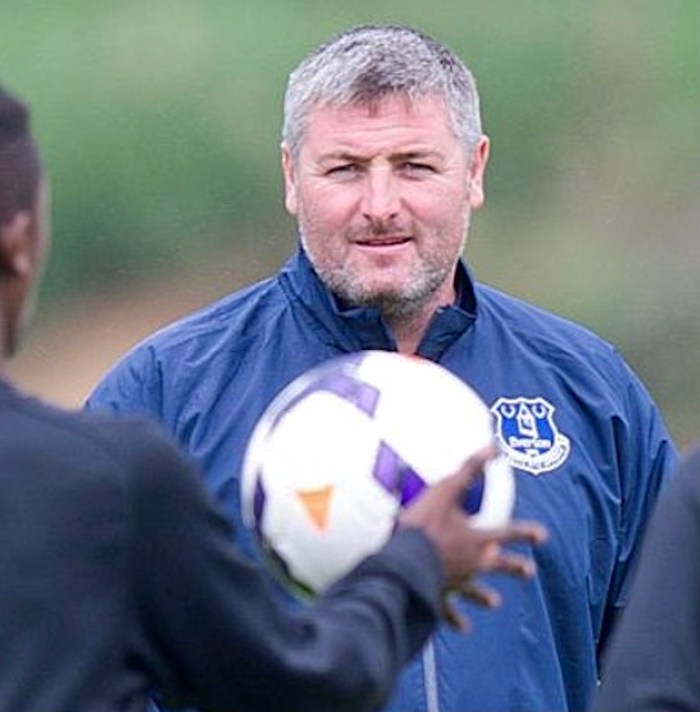
THE SCOUSER searching for Brighton’s next Evan Ferguson had Everton blue coursing through his veins from an early age.

But John Doolan’s long association with the Merseyside club came to an end in February 2023 when he swapped places with another backroom man, Lee Sargeson, who joined Everton as their head of scouting operations. Sargeson spent more than five years working in Albion’s much-admired scouting set up.

Now Doolan, a former Everton academy player, has been tasked by another well-known Evertonian, Albion technical director David Weir, and head of recruitment, Sam Jewell, with scouting forwards for the Seagulls.

Although not making it into Everton’s first team himself, Doolan helped to develop the likes of Shane Duffy, Tom Davies and Ross Barkley at Finch Farm.

During more than a decade working behind the scenes, he coached youth teams, worked on player and team development and rose through the scouting and recruitment departments.

After being released by the Toffees on a free transfer, Doolan’s own playing career spanned 550 matches for six clubs in the lower leagues, starting at Mansfield Town. His former Everton coach, Colin Harvey, took him to Field Mill where he’d become assistant manager to another ex-Evertonian, Andy King.

Simon Ireland (Albion’s under 21s coach for 21 months between June 2013 and February 2015) was a teammate at Mansfield. In a matchday programme pen picture of Doolan, when the Third Division Stags visited the Goldstone, it said: ‘Big things are expected of this stylish midfield player.’

He played 151 games for Town in a four-year spell before moving on to Barnet for a £60,000 fee in 1998. In five years with John Still’s Barnet, Doolan made one short of 200 appearances and was a teammate of skilful wideman Darren Currie, who later proved a popular signing for Mark McGhee’s Albion side in the Championship.

He was also at the club when they lost their Football League status in 2001 and became regarded as one of the best midfielders in the Football Conference.

Doolan switched to fellow Conference side Doncaster Rovers for a small fee in March 2003 and helped them gain promotion back to the League via the play-offs.

Described on Donny’s website as “a combative but skilled midfielder” he was a key member of the side that won the Third Division championship in 2003-04 and, in total, made 92 senior appearances for Rovers, scoring three goals.

In a Bred a Blue podcast interview reflecting on his career, he said: “Donny was the best. We won the league twice. The lads were great. It was like Kelly’s Heroes; a bunch of misfits put together and we went on a double promotion. There were some very good players in there.”

The only period of his playing career he regretted was when he was drawn to League One Blackpool by money. By then he was 31, and the move only lasted six months. “I had to play 25 games to get a new deal and I played 24,” he said.

He went on loan to League Two Rochdale in January 2006 and made the move permanent within 10 days. Doolan had already begun to think ahead and had taken some coaching badges while still playing. In just short of two and a half years with Rochdale he clocked up 90 appearances before, aged 34, taking his next steps in the game.

When he left Dale in May 2008 to take up a player-coach role at Blue Square North side Southport,  

Dale boss Keith Hill said: “John is a fantastic character and will be missed. He always gave 100 per cent and provided a fantastic example to the young players in the dressing room.”

He added: “I cannot speak highly enough of him and I am sure he will make a real success of coaching because he is a natural.”

Neil Dewsnip, who worked at Everton’s academy for 17 years, had already taken Doolan back to Everton as a part-time youth coach after they’d met on a coaching course. It was at the time Everton’s youth development centre was moving from Netherton to Finch Farm, and Doolan started coaching a couple of days a week while also fulfilling his duties at Southport before returning full time.

In the years that followed, he worked with all the different age groups and, under Kevin Reeves (the chief scout during the reign of Roberto Martinez) he moved into talent identification, watching promising young players across the region.

Born in Liverpool on 7 May 1974, Doolan joined Everton as a 14-year-old schoolboy, having been picked up after playing for Liverpool Schoolboys.

He started training two days a week – David Unsworth and Billy Kenny were contemporaries – before signing as a youth trainee. “My YTS days were the best days of my footballing career,” he told the podcast. “I loved every single minute of it.”

Doolan described to Bred a Blue the enjoyment he got when getting involved with the first team in training but, as a right-back, he had stiff competition and when Everton signed Paul Holmes he saw the writing was on the wall.

“I realised I wasn’t good enough,” he said. “They brought in Paul Holmes and that was like a kick in the teeth. They paid a fee for him (£100,000 from Birmingham City) and they were always going to prefer him.”

There was a momentary glimmer of a chance under Howard Kendall, but he broke an ankle in a youth cup game and the opportunity was gone.

He was sent to Bournemouth for a brief loan spell under Tony Pulis and on his return to Merseyside was told he wasn’t going to feature. “I still had a year on my contract but I decided to leave,” he said. “When I left Everton and went to Mansfield I changed position and went into midfield. I never played at the back again.”

Bred a Blue says of Doolan: “His is a story of how the adversity of being released can be overcome by resolve, hard work and confidence in your own ability.”

Doolan was one of a trio of senior scouts (Pete Bulmer and Charlie Hutton were the others) who were made redundant by the Albion in November 2024 as part of a shake-up of the recruitment department.

Set-piece expert Darren Currie earned Uncle Tony’s approval

THE PINPOINT accuracy of Darren Currie’s passing and shooting was a joy to watch, even though a lack of pace stopped him being as good a player as his famous uncle.

Currie was a decent player in his own right, making nearly 700 appearances for 15 different clubs, but wherever he went he was always known as the nephew of the former Sheffield United, Leeds, QPR and England creative midfielder Tony Currie.

Perhaps with a hint of family bias, Uncle Tony said in an interview for ITV Digital: “Darren is, without doubt, the best crosser of the ball, after Beckham, in the country. He’ll produce nine times out of ten, right foot or left foot.”

The young Currie attributed his crowd-pleasing skills to the start he was given in the game by West Ham. After 10 years stuck in the lower leagues, Currie was given a platform to perform in the Championship by Brighton, and he very nearly made it to the top when transferred for £250,000 to high-flying Ipswich Town.

As if by a cruel twist of fate, Ipswich lost to the Hammers in the 2004-05 Championship play-off semi-finals having just missed out on automatic promotion.

“Playing for West Ham at youth and reserve levels was a terrific way to start a career,” Currie told the Ipswich Star. “They gave me everything but my debut.”

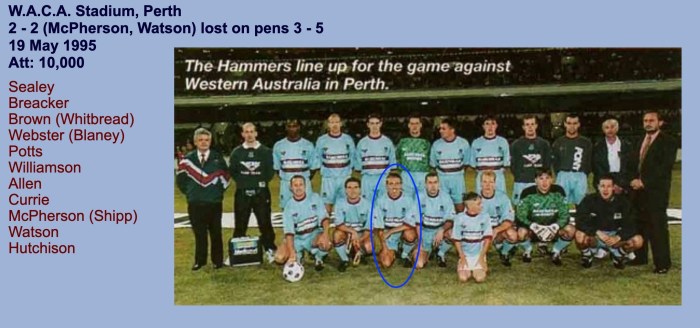
He certainly came close though, featuring alongside recognised first-teamers like Lee Chapman and Frank Lampard in friendlies and testimonials, but he had to move elsewhere to gain competitive first-team action.

Initially he had loan spells with Shrewsbury Town and Leyton Orient, and when the Shrews bid £70,000 for him in 1996, he chose to drop down a couple of divisions to get regular football.

“The difference in money was only about £50. The then West Ham manager Harry Redknapp called me in and said that I was an adult and had to think about continuing to play regular first team football,” Currie explained. “I was given the opportunity to have a new contract at West Ham or moving permanently to Shrewsbury.

“I was a young pro at West Ham and I had been out on loan a couple of times and I got the buzz for playing at three o’clock on a Saturday afternoon. There was no other feeling like it.

“I thought to myself I’ll go to Shrewsbury and I’ll play really well for a year and I’ll get a move back up to the top.

“My naivety kicked in then because it didn’t quite happen. I thought I’d done OK and I was linked with a couple of moves but the route back to the top wasn’t as simple as I thought it would be in my head.”

Indeed, it was a decade in which, after three seasons with the Shrews, he moved on briefly to Plymouth Argyle, then to Barnet (three seasons) and Wycombe Wanderers (three seasons).

Currie said it got to a point where Wycombe couldn’t afford to keep him, and boss Tony Adams made it clear he was free to look elsewhere.

Mark McGhee invited him to Brighton for a trial and was impressed with the way he knuckled down in training to get himself fit following a programme devised by McGhee’s deputy, Bob Booker.

Currie was offered a 12-month contract but it was more about the opportunity to play at a higher level that prompted him to sign.

“It wasn’t a fantastic offer – put it this way, Peterborough offered me three years – but it wasn’t about the money,” Currie told Spencer Vignes in an Albion matchday programme article.

“It was about the football and playing in the Championship. I was determined to do well and to prove myself, which I did. That’s when people began to sit up and take notice.”

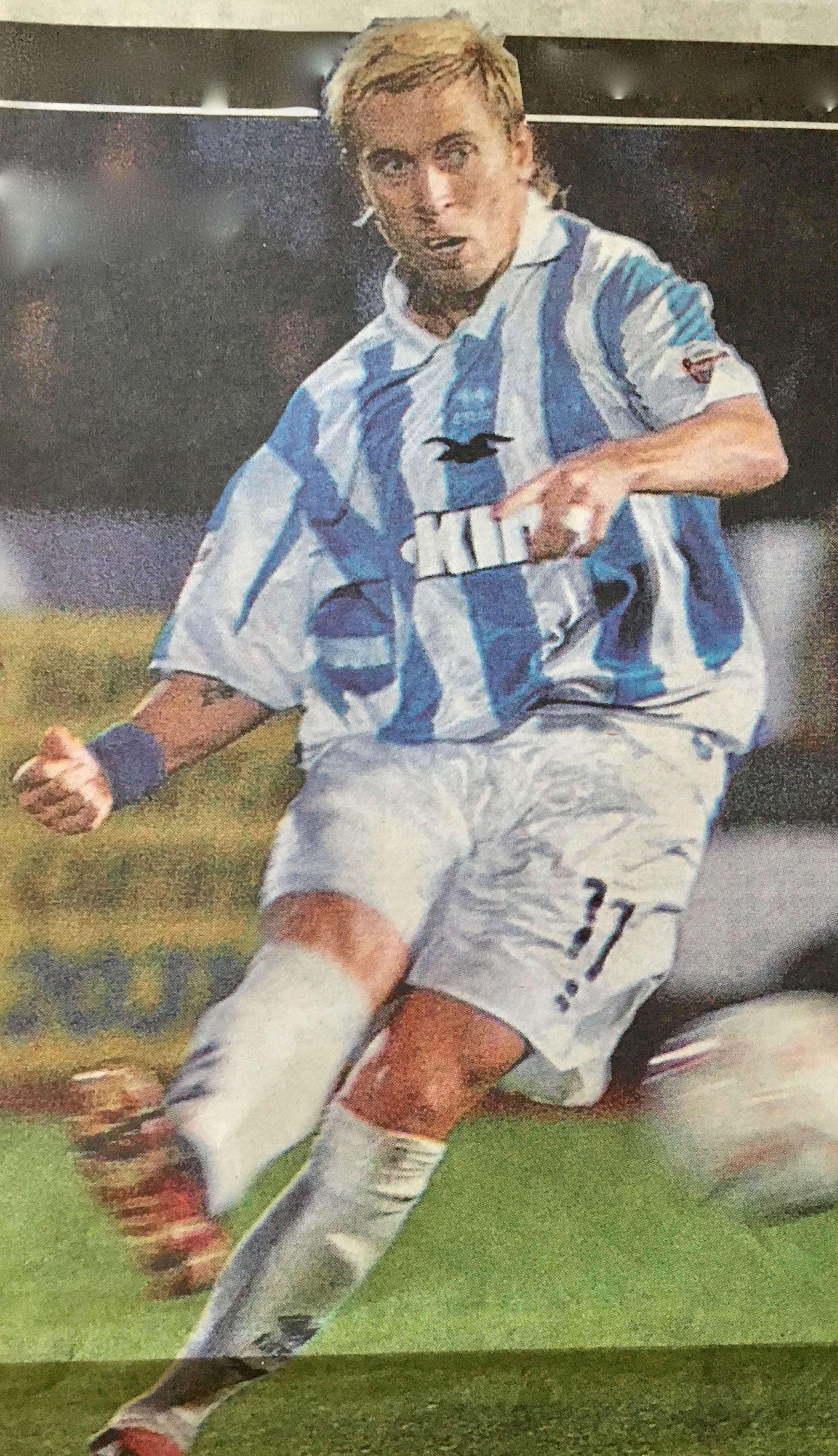
Currie’s ability on the ball carved him out to be a crowd-pleaser and the first of two goals for the Albion typically came from a free kick in a 3-2 home defeat to QPR that left Argus reporter Andy Naylor purring over its execution.

“Currie, having shaved a post and hit the bar with two earlier free-kicks, made it third time lucky from 20 yards just before the break. It was a sumptuous effort from the set-piece expert which rendered Rangers’ keeper Chris Day motionless.”

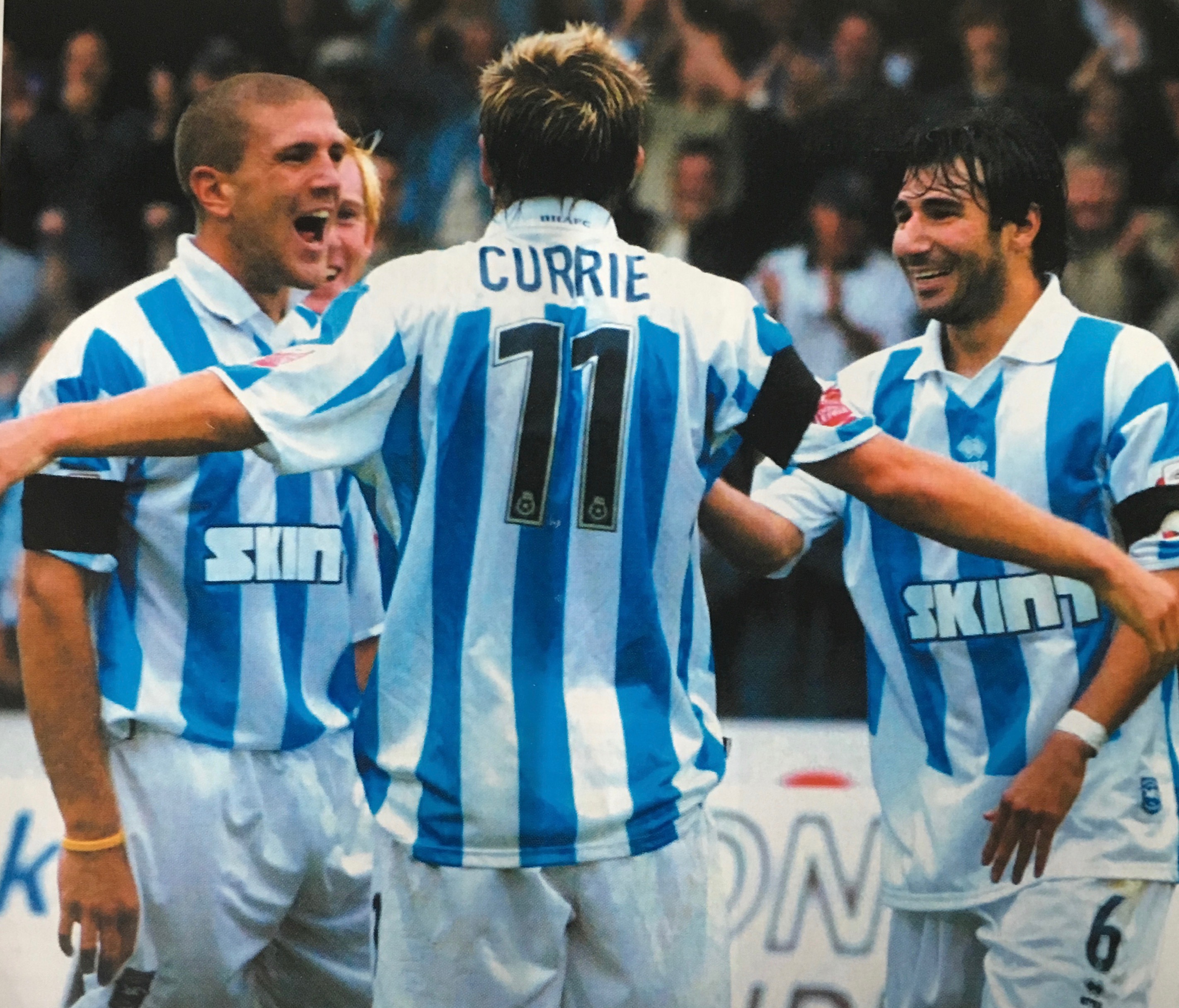
His other goal came in a 1-1 draw at home to Sheffield United, more noted for Albion wearing the limited-edition Palookaville strip to help publicise backer Fatboy Slim’s latest album.

Injury-hit Albion considered it a point gained rather than two dropped and Naylor complimented Leon Knight for “superbly crafting” Currie’s goal by evading his marker and threading a square pass through the legs of Leigh Bromby.

“Currie, with time as well as room, picked his spot to score, which meant even more to him because of the opposition,” wrote Naylor, informing readers that the Yorkshire side had rejected him as a 16-year-old following a fortnight’s trial.

Unfortunately for Currie, he was only on the bench when the Albion travelled to Upton Park on 13 November 2004. After three successive defeats, McGhee confessed he set the side up not to lose rather than go for a win.

Somewhat ironically, the Seagulls blagged a 1-0 win courtesy of a Guy Butters goal, in a real backs-to-the-wall match, with veteran striker Steve Claridge ploughing a lone furrow up front.

It was only in the 90th minute of the match that McGhee introduced Currie in place of Claridge to play out the final few minutes of the game.

Currie only played 22 games for Brighton over four months but the fee they received for him from Ipswich gave a vital boost to club funds when they were struggling to compete in the division because of the restricted crowd numbers at Withdean. Having signed him on a free transfer, the deal was a no-brainer for the Albion hierarchy, even if it weakened a squad who subsequently only avoided relegation back to the third tier by a single point.

McGhee wasn’t that surprised to see Currie go, telling the Argus: “He was obviously happy here, but I thought he was doing so well that he would keep his options open.

“I cannot see Darren being a regular for Ipswich in the Premiership if they are promoted, but his skills and touch are good enough to justify him making a contribution to a squad in the Premiership.”

It didn’t pan out like that, but Currie was nonetheless grateful to the Albion, and told Vignes: “I am so pleased I had the chance to be a part of it all down there, to see what the support is like and to play with a group of lads who stick together through thick and thin.

“I played at the Goldstone when I was a kid, playing youth team football with West Ham, so I know how important the stadium issue is for everyone. I always will be extremely grateful to the Brighton fans and Mark McGhee because without a doubt without their help this opportunity wouldn’t have come along.”

Currie explained in a matchday programme article how McGhee had helped to develop his game and to add other dimensions which improved him. “I owe a helluva lot to Mark and Bob Booker,” he said.

Currie became an instant hit with the Tractor Boys fans earning the man of the match accolade in two of his first four games.

“I tend to build up a rapport with supporters wherever I go,” he told the Ipswich Star. “I am my own biggest critic and I know when I have done well, and I am very satisfied with my contribution so far.”

After his brief cameo for the Seagulls at West Ham, he got the chance to play against his boyhood club three times that season with Ipswich.

He was in the Town side that lost 2-0 at home to the Hammers on New Year’s Day 2005. Then, in the first leg of the play-off semi-final, Currie and Matt Richards (later a loanee with the Albion) were half-time substitutes who helped Ipswich to recover a deficit to draw 2-2.

Currie started the second leg and had Ipswich’s best opportunities with a shot straight at James Walker, then a long-range drive 10 minutes before the interval which the goalkeeper hopelessly misjudged but fumbled to safety. But they failed to make the final when Bobby Zamora scored two second half goals for West Ham to earn them a 2-0 second leg win. West Ham beat Preston in the play-off final.

Born in Hampstead on 29 November 1974, Currie’s early footballing talent drew interest from Watford and Chelsea, but he decided to join West Ham’s academy.

“The facilities were great, the training for us there as kids was first class and I really enjoyed my time there,” Currie said.

“A lot of the player I became was what I was taught as a kid at West Ham,” he told twtd.co.uk. “It was all about the ball and all about the technical skill and how to manipulate the ball. It was a way I enjoyed playing anyway so it was a really good fit for me.”

After signing professional in 1993, he was a regular in the West Ham reserve side and a trawl through the excellent archive website whu-programmes.co.uk records show he played in a Football Combination game away to Brighton on 1 April 1994, and later the same month was up against Guy Butters in Portsmouth’s reserve side at the Boleyn Ground. Mark Flatts and Paul Dickov were in opposition when the Hammers stiffs entertained their Arsenal counterparts at home on 11 May.

In an Avon Insurance Combination match at the Goldstone Ground on 30 November 1994, Currie scored the only goal of the game from the penalty spot in a West Ham side also featuring Lee Chapman and Frank Lampard.

The following summer, Currie played in four matches when he was part of West Ham’s squad on a centenary tour of Australia.

Shrewsbury boss Fred Davies, a former playing colleague of Redknapp’s at Bournemouth, took Currie on full time after his two loan spells at Gay Meadow.

He moved on to Plymouth Argyle in 1998 but only played five matches in three months, then switched to Barnet where he made 136 appearances, plus seven as a sub, in three years.

Wycombe Wanderers paid £200,000 to sign him in the summer of 2001 and manager Lawrie Sanchez told BBC Three Counties Radio: “He’s obviously a quality player. He gets crosses in and that’s an area where we weren’t very good last year. He’s come to add that to our game and his free kicks will trouble the ‘keeper as well.

“It was quite a lot of money for our club to spend but I’ve got to back my judgement. I’d looked at him for a while and quite liked him. He gives us something we haven’t got, he’s a great technician. He hasn’t got particularly great pace but what he does with the ball is tremendous. We’re hoping he does all the things he was doing at Barnet and a little bit more for us.”

Sanchez added: “A lot of people looked at him for a long time. He’s always been considered one of the best players in the Third Division and hopefully we’ll give him the stage where he can prove he’s one of the best players in the Second Division.”

After Currie’s flirtation with promotion to the Premier League ended in disappointment, Joe Royle left Portman Road and his replacement Jim Magilton axed Currie from the side in the 2006-07 season. He was sent on loan to fellow Championship sides Coventry City and Derby County, for whom he made a play-offs appearance as a substitute, although he wasn’t involved in the final when County beat West Brom 1-0.

That summer, on the expiry of his Ipswich contract, Currie moved on a free transfer to League One Luton Town. He made 38 appearances for the Hatters but when they went into administration, were deducted 10 points and relegated, he was among several players given a free transfer.

Micky Adams, back in the hotseat at the Albion, was hopeful of getting Currie back to Brighton for a second spell, telling BBC Southern Counties Radio on 11 July: “He’s a player I’ve admired for a long, long time. We want him, and he wants to come back. He’d offer competition for places and fantastic delivery from set pieces.”

But at the end of the month the player rejected the terms on offer and took up a three-year contract at Chesterfield instead.

While the first year at Saltergate went OK, in the second season, the manager who signed him, Lee Richardson, had been replaced by John Sheridan, and Currie was out of the picture. He went on loan to fellow League Two side Dagenham & Redbridge and the deal was made permanent in January 2010. Currie played in 16 matches as the Daggers won promotion to League One.

They went straight back down the following season, and Currie departed for Conference South outfit Borehamwood as player assistant manager. He was there less than three months before moving to Isthmian League Hendon for a year as a player.

In October 2012, Currie returned to Dagenham & Redbridge, initially as a development coach and later as assistant manager under John Still.

In June 2018, Currie was appointed assistant manager at National League side Barnet, working under Still. He succeeded Still in December 2018, initially as caretaker, before landing the role permanently in January 2019.

Currie, assisted by former Albion loanee midfielder Junior Lewis, came close to getting Barnet promoted to League Two but, having missed out, and the club struggling financially because of the Covid-related lack of fan revenue, both left the club in August 2020.

Sprinter’s boys took different tracks after starting Gunners

A GUNNER from the age of nine gained valuable first team experience with the Seagulls but ultimately fell short of reaching the same heights as his brother.

Commonwealth Games gold-medal winning sprinter Wendy Hoyte saw sons Justin and Gavin climb through the academy and reserve ranks at Arsenal.

Justin played 68 first-team games for the Gunners and went on to make a name for himself in the North East, but younger brother Gavin only played four first-team games for Arsenal and had to set his sights lower to pursue a professional career.

The younger Hoyte spent most of the 2009-10 season as a Brighton player and, although only 19 at the time, got a rough ride from Seagulls supporters who expected more from someone who’d played at the top level of the game.

Initially signed on loan in October 2009 by Russell Slade to cover for the injured regular right-back Andrew Whing, Hoyte was handed his debut against Slade’s former club Yeovil Town at Huish Park.

“I am delighted to know the club wants me,” the youngster told The Argus. “They have got a lot of games this month and I just want to get out there and play.”

As it turned out, Hoyte outlasted Slade at the Withdean, and his temporary transfer was extended when Gus Poyet took over as manager.

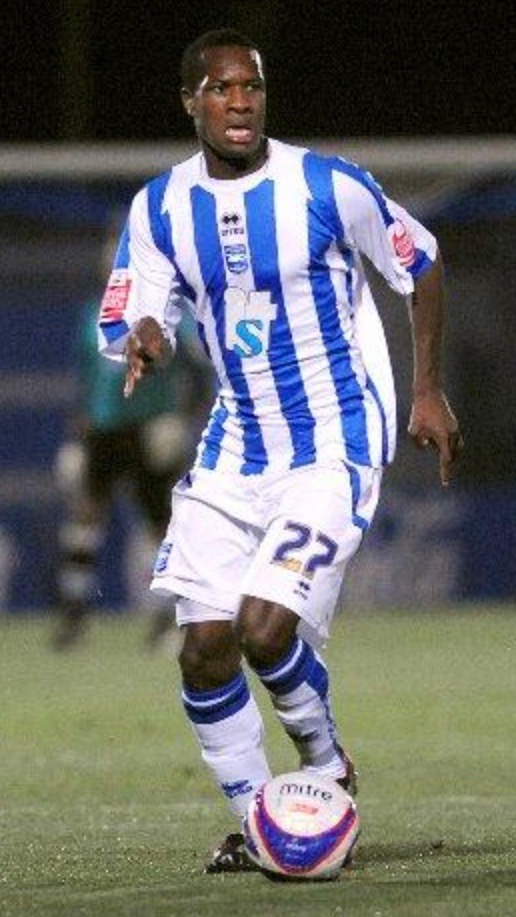
The young full-back in the no.27 shirt gained a good amount of game time until Poyet unearthed Inigo Calderon in January 2010.

Even then, Poyet was happy to retain the services of the Arsenal youngster, telling the Argus: “We explained to Gavin before asking Arsenal that there was probably a player coming.

“Arsenal knew that as well, so nothing has been hidden. Everyone knows where they stand.

“We are working on different aspects of the game with Gavin, because he has got something which is very difficult to find sometimes in football, the speed to recover.

“When you have that ability, you don’t need to go to ground, because you are quicker than most players.

“He is young and there is plenty to come. We want to help him become a Premier League player or top Championship player.”

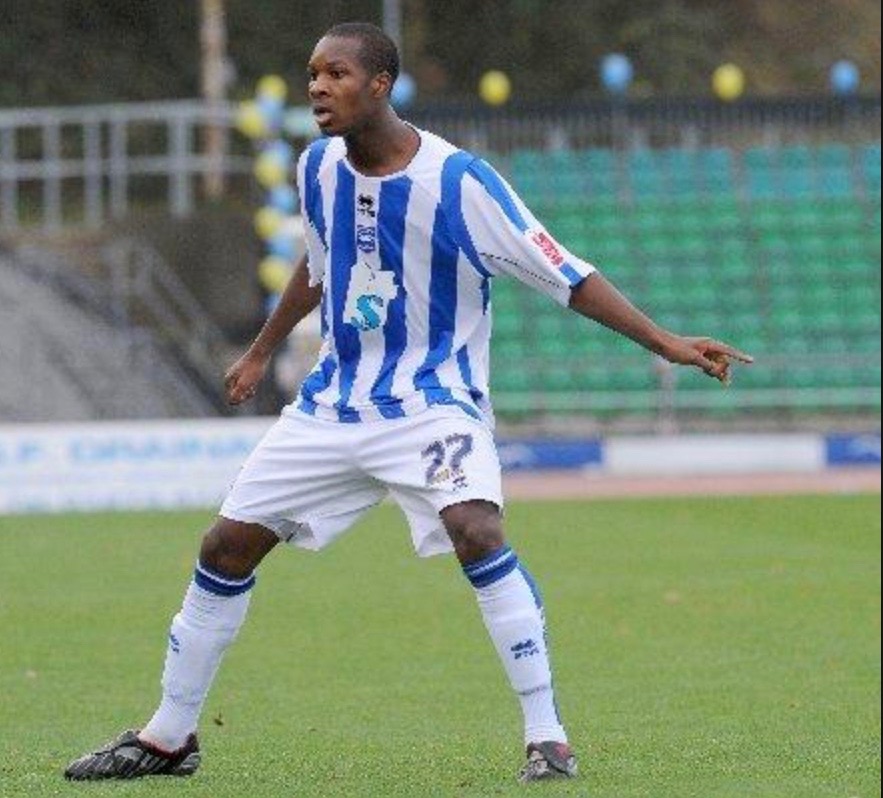
G Hoyte stripes

Hoyte got another chance to prove himself when Calderon picked up a nasty hip injury in April, bringing his total number of Albion games over the season to 21.

When it looked like the popular Spaniard was going to move to Southampton instead of accepting a contract offer from the Seagulls, Argus reporter Andy Naylor ventured: “Gavin Hoyte’s encouraging conclusion to the campaign suggests he might even be capable of rising to the occasion if he returns on loan from Arsenal.”

It didn’t come to that, though, and, over the next two years, he dropped down another division with loan spells at Lincoln City and AFC Wimbledon.

When he realised there was little hope of him ever getting close to the Arsenal first team, he left for Dagenham and Redbridge, having spoken to Arsenal goalkeeping coach Tony Roberts, who’d played for the Daggers himself.

Born in Leytonstone on 6 June 1990, Hoyte followed in his brother’s footsteps to Arsenal and progressed to the point of being appointed the under 18 team captain in the 2006-07 season when he was still only 16.

“I am very vocal during games, although I wouldn’t quite say that I was a Tony Adams, but that’s the sort of captaining style I try to emulate,” Hoyte told the Arsenal matchday programme. “I have captained at schoolboy level and in particular in tournaments and so I do have some experience, but I did not expect to be captain of the under 18s so early.”

Hoyte captained Arsenal’s under 18s when he was only 16

Hoyte was also capped at England under 17, under 18, under 19 and under 20 levels. In the 2009 UEFA under 19 championships, he played in two qualifiers in the space of four days when England beat Slovakia 4-1 and Scotland 2-1; his teammates including current Albion no.3 Jason Steele in goal, and future full international Kieran Trippier.

He was part of the squad who took part in the finals in Ukraine, starting twice and coming on as a substitute three times as England finished runners up to the hosts. The side was managed by Brian Eastick, who’d been an Albion coach during the Mike Bailey era.

Hoyte’s one game for the under 20s came as a substitute in a 1-1 draw away to Uzbekistan on 2 October 2009, when a fellow substitute was Sam Baldock. Two non-playing subs in that game were Jonathan Obika and Gary Gardner, who both had spells on loan with the Seagulls.

Hoyte looked back on his Arsenal time in an interview with Will Unwin for planetfootball.com and said: “When you’re there you always think you’re going to make it – I was pretty confident.

“I had my older brother there as well, so that helped a lot, seeing how he progressed.

“That was a big thing for me, seeing him play every week, watching him, thinking, ‘I want to try and get to where he is’.”

Hoyte was an unused substitute for several first team games before making his debut in a 6-0 League Cup win over Sheffield United, and starting in the next two rounds, against Wigan and Burnley. His Arsenal career only seemed to be heading in one direction.

“Just to play at the Emirates was massive, coming out to a big crowd,” he told Unwin. “There were a lot of young boys in the team so that helped me with confidence and eased it.

“But there were a lot of players in front of me, so I didn’t think about playing in the Premier League. It was always in the back of my mind, but I wasn’t thinking I was going to play immediately.”

But 11 days after the second of those League Cup appearances, Hoyte was handed his Premier League debut, after William Gallas had been stripped of the club captaincy for criticising team-mates amid a poor run of only one win in four games.

G Hoyte v Man City

Up against Robinho of Manchester City, he was taken off after an hour of a 3-0 defeat, and it would prove to be both the start and end of his top-flight career.

Hoyte didn’t recall getting much feedback after the game, although it wasn’t long before he was awarded a new contract. He made his fourth appearance for the club in a League Cup quarter-final defeat to Burnley at the start of December – but he didn’t play for Arsenal again.

He was sent out on loan to Championship side Watford for the second half of the 2008-09 season, featuring in 10 matches, and he eventually left Arsenal in 2012 when his contract expired.

After two seasons in League Two with Dagenham, he spent the 2014-15 season with League One Gillingham, featuring in 35 matches. He dropped down to League Two with Barnet, ended up at National League Eastleigh until the end of the 2017-18 season before returning to Dagenham in 2018-19.

It proved to be a frustrating season for him under the managership of former Albion boss Peter Taylor, but, reunited with former manager John Still at Maidstone United, he has been a regular at right-back in 2019-20 and scored just the third goal of his career against Dulwich Hamlet in December.

Along with his brother, the younger Hoyte has enjoyed the opportunity to play international football with Trinidad and Tobago, as he told socawarriors.net, and spent 20 minutes on the same pitch as Lionel Messi in a friendly as Argentina warmed up for the 2014 World Cup.

Peter Taylor disciple Junior Lewis helped Seagulls to promotion

JunLewJUNIOR LEWIS was a loyal disciple of Peter Taylor, linking up with him as a player or a coach at EIGHT different clubs.
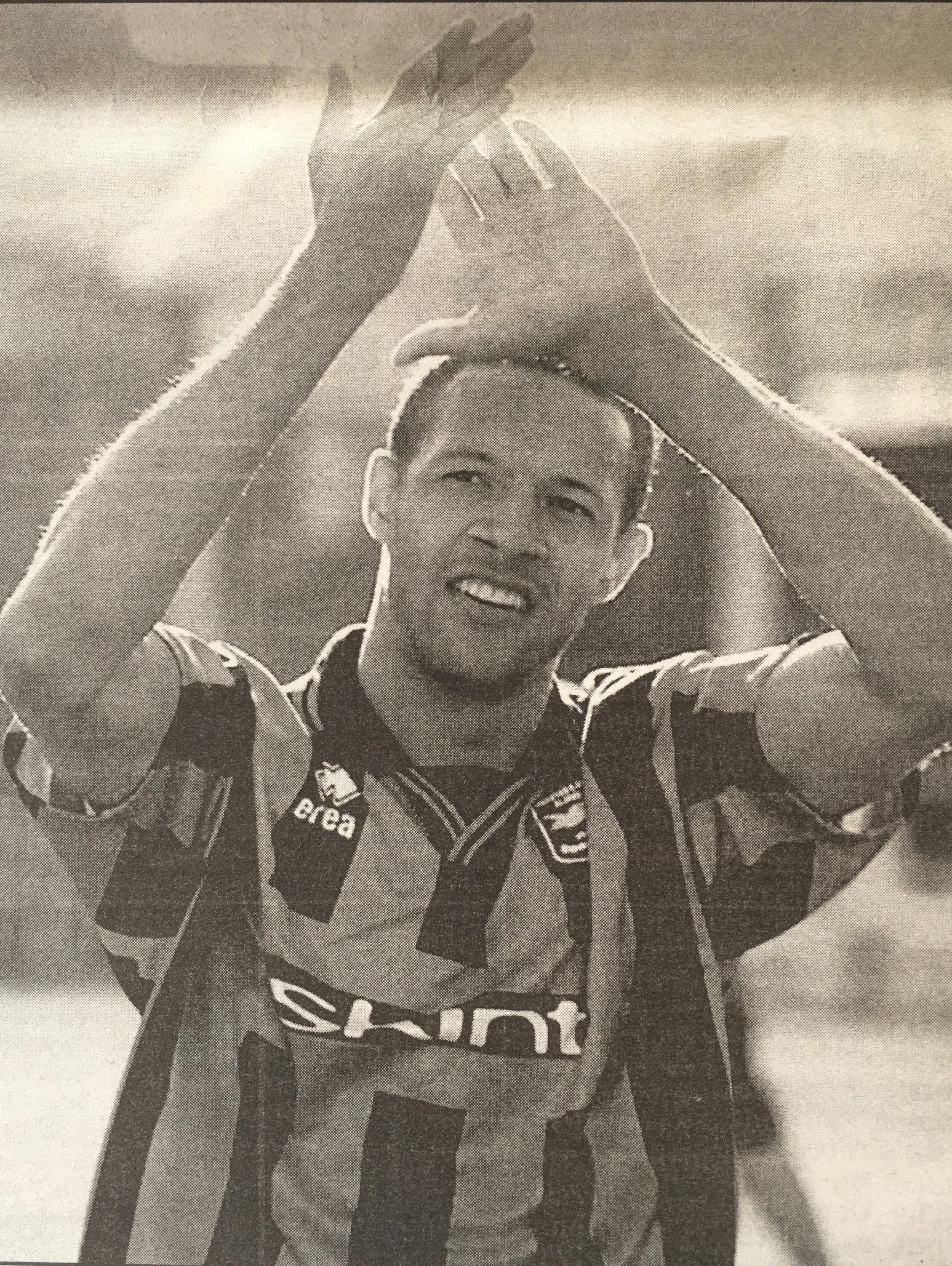
Although he didn’t win the support of too many Leicester City fans during his time with the Foxes, his arrival for the final third of Brighton’s 2001-02 season helped them to claim the third tier crown.

One particular game stands out in the memory, and it came on a rain-soaked night against league leaders Reading at the Withdean Stadium.

I recollect watching the action from the front row of the covered east side of the ground – the roof affording no protection whatsoever as the rain swept in.

Reading hadn’t lost in 12 games but with Bobby Zamora in sparkling form, Albion beat the Royals 3-1.

Lewis marked his debut with a simple tap-in after Zamora had set him up. The striker with the golden touch had scored his 26th goal of the season to give Albion the lead on 59 minutes and then provided the assist for an unstoppable strike by Steve Melton.

Five days later, Lewis scored the only goal of the game at home to Huddersfield  and, as promotion came properly into view, boss Taylor talked to the Argus about the difference he had made to the side.

Brighton went on to overtake Reading to claim the title, rounding off the season with a 1-0 win away to Port Vale. Lewis finished with three goals in 15 appearances as the side Taylor inherited from Adams lifted the championship trophy.

lewis applaudsBorn in Wembley on 9 October 1973, Lewis was on Fulham’s books as a youngster and made it through to the first team, his debut coming as a substitute in a league game against Burnley in October 1992.

But he played only six games at first team level before dropping into non-league and playing for three years with Dover Athletic – where he was first managed by Taylor.

He went on to play for Hayes and Hendon before getting back into league football under Taylor at Gillingham.

In a season and a half with the Gills, he played 59 games before Taylor, by now manager of Premiership Leicester City, took him there initially on loan and then as a permanent signing in 2001.

Although he was a Leicester player for three years, he managed only 30 appearances for the Foxes because Taylor’s successors as manager sent him out on loan.

After the temporary move to Brighton, Lewis had two spells on loan at Swindon Town the following year, then, in 2004, he was reunited with Taylor at Hull City, initially on loan and then on a permanent basis.

After 52 appearances for Hull, he had fleeting spells with Brentford, Milton Keynes Dons, Edgware Town and Stevenage Borough.

He joined Taylor’s backroom staff as a coach at Wycombe Wanderers and then moved in a similar capacity when Taylor was appointed as boss at Bradford City, the eighth club where they’d worked together.

“I’ve worked with him at every level from the Conference right up to the Premier League and been lucky enough to get promotion at a lot of those clubs,” Lewis told the Bradford Telegraph and Argus. “I know how the manager works and how he likes things done from playing for him and working under him as a coach.”

In a FourFourTwo magazine article by Nick Moore on 19 February 2016, Lewis reckoned Taylor always sought him out because he reminded him of his younger self.

“We were both two-footed, but mainly left-footed, and we relied on a similar trick – feinting to cross but chopping back onto your right foot,” Lewis explained. “I watched a video of him play once and I thought: ‘I do that’.

“He trusted me to keep things ticking over. I fitted his philosophy, and he brought the best out in me. But I didn’t assume that when he moved, I’d automatically follow. When he took over Leicester in the Premier League I did really hope I’d join, but I didn’t hear from him for ages.”

Lewis also reckoned operating in a difficult position was a way to become a favourite. “I was always a two-footed holding midfielder. There aren’t a lot of us around, compared to more attacking players, probably because you don’t get as much glory.

“So, having me in that role meant Peter always knew he had one position sorted.”

Before joining Taylor at Bradford, Lewis had continued playing at Welwyn Garden City and after leaving Bradford pulled on the boots once more as player-coach back at Hendon in 2014.

To the astonishment of many, Lewis was named first team coach of Leeds United in June 2014, when the relatively unknown Dave Hockaday was appointed their manager, but the role lasted only a couple of months as the pair were sacked by controversial owner Massimo Cellino after a poor start which included a 2-0 defeat at home to Brighton on 19 August.

In 2015-16 Lewis was coaching Canvey Island before moving on to become first team coach at Barnet, when former Seagull Darren Currie took over as boss from the veteran John Still.  Lewis and Currie were relieved of their duties at Barnet in August 2020 when the club had to restructure after missing out on promotion back to the League.