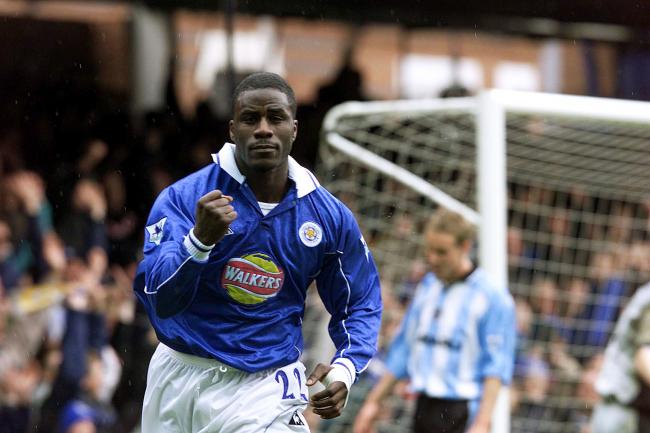
The Barking boy who became a Hammers play-off final hero

IT WAS A DREAM come true for Bobby Zamora to play for West Ham, the team he supported as a boy.

Born in Barking on 16 January 1981, he explained: “They were my local team and having been spotted by the club playing for my Sunday side, Senrab, I signed schoolboy forms and we’d be given tickets to watch the team on a Saturday afternoon at the Boleyn.”

Zamora’s favourite player was Tony Cottee and the side at that time included the likes of George Parris and Julian Dicks. “It was always a great atmosphere down there, singing ‘Bubbles’, and I count myself honoured and privileged to have played for the club that I grew up supporting,” he said.

Fellow Senrab players John Terry, Paul Konchesky, Ledley King and JLloyd Samuel were all snapped up by the Hammers at the same time but when the club decided to merge two centres of excellence they found themselves playing fewer games which prompted them all to leave.

Zamora joined Terry at Chelsea but suffered Osgood-Schlatter disease (which causes pain and swelling below the knee joint)and had to stop playing for six months. He described in the Undr The Cosh podcast how Norwich kept in touch with him to see how the injury was progressing so, when he was fit again he joined them and spent a season in Norfolk.

“They had a lot of London lads in their side but it was like playing in the Land of the Giants,” he explained in a matchday programme article. “They were all 15 going on 18, much bigger physically and taller than me, and I was released for being too small.”

His friend Luke Williams was also released but the pair of them were offered a trial by Bristol Rovers and, after only playing half a match, both were offered apprenticeships.

As described in my previous post, it was from Rovers that Zamora joined Brighton, while Williams played non-league before moving into coaching, which included a spell as development coach at Brighton.
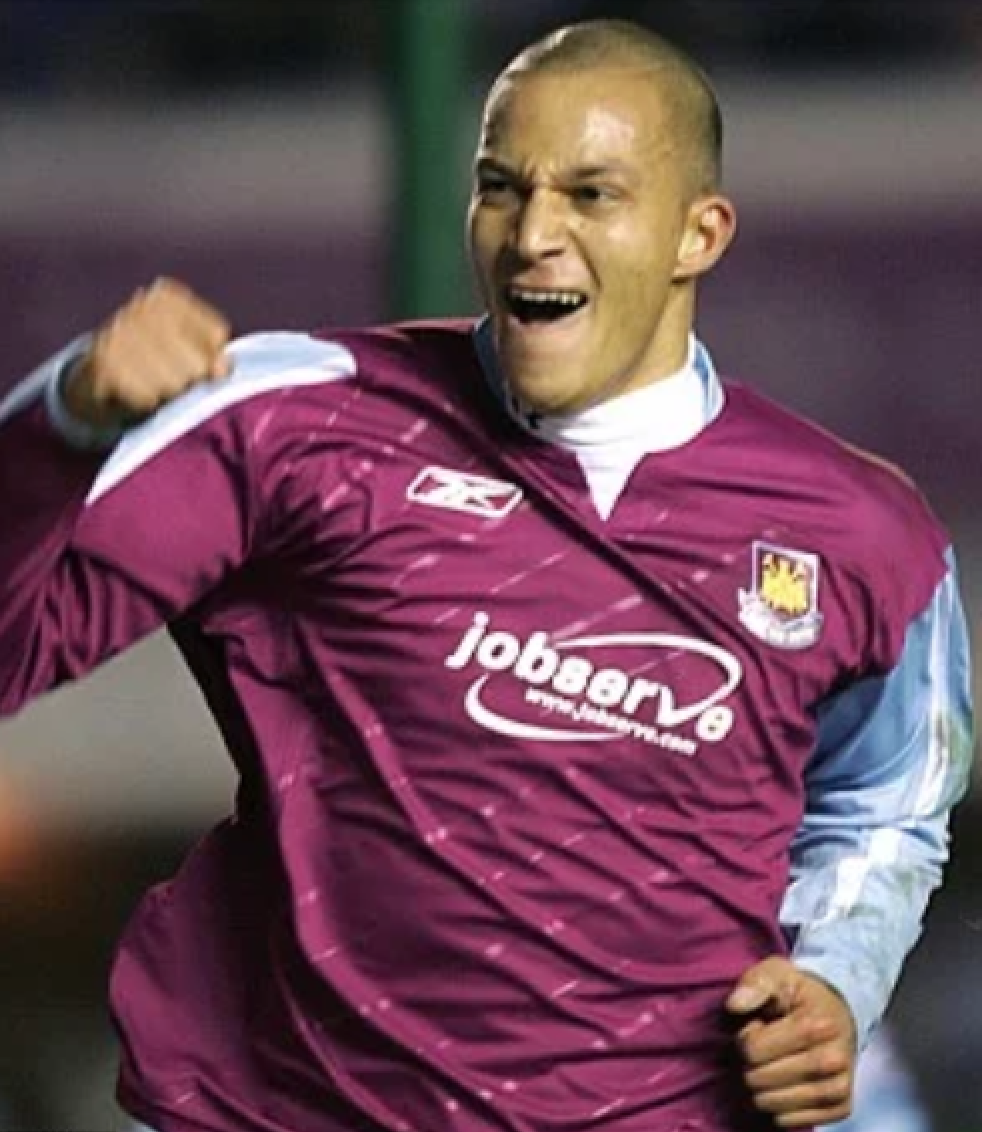
When Spurs decided to swap Zamora for Jermain Defoe, a move to the Boleyn was a bit of a no-brainer for the former fan, although Premier League Leeds United were also keen to take him.

“The pull of West Ham was too great and although it was a drop into the Championship, the squad they had under Alan Pardew was more than good enough to go up,” he said.

Zamora got off to a good start with the Hammers, scoring on his debut and again on his home debut. That first goal came after he had gone on as a sub in a 2-1 win at Bradford City on 7 February 2004. He followed it up with the only goal of the game in a home win over Cardiff on 28 February.

Three more goals followed before the end of the 2003-04 campaign, but the season ended in disappointment when the Hammers lost in the Championship play-off final at the Millennium Stadium, Cardiff, against Crystal Palace the day before Brighton’s famous League One play-off win against Bristol City in the same stadium.

Zamora had a first half effort saved at point blank range by Palace keeper Nico Vaesen and a second half ‘goal’ ruled out for offside before being subbed off on 68 minutes as Palace won promotion courtesy of a Neil Shipperley goal.

All was put right a year later, though, when at the same ground Zamora was the Hammers hero. It was his turn to score the only goal of the game, against Preston North End, getting on the end of a Matthew Etherington cross to slot home from six yards in the 57th minute.

Play-off final scorer

Across the season, Zamora made 20 starts and 19 sub appearances, scoring 13 goals. His first double for the club came in a 3-2 League Cup second round win over Notts County at Upton Park on 21 September 2004.

Competition for forward places was fierce with Marlon Harewood, Teddy Sheringham and Sergei Rebrov also pushing for a place up front.

As well as scoring in that play-off final, Zamora had emphasised his claim to a starting berth by scoring in the 2-2 semi-final first leg home draw with Ipswich then twice in a 2-0 win at Portman Road in the second leg.

Pete Ellis on claretandhugh.info reckoned Zamora “played a key role for the Hammers at a pivotal point in our recent history” and he added: “The promotion season in 2005, where he and Etherington played like men possessed in the play-offs, still fills me with great pride.”

Back in the Premiership, Zamora scored 10 goals in 20 starts and 22 appearances off the bench and Ellis remembered “some great displays showing his ability to hold the ball up and have the craft and guile to bag a few tasty goals in the process.
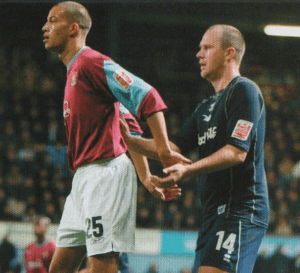
Zamora marked by former Brighton teammate Guy Butters who scored Albion’s goal in a 1-0 win for the Seagulls at the Boleyn Ground

“A proper character around the club, I enjoyed watching Bobby play and thought he never really got the plaudits that his talents and performances deserved.”

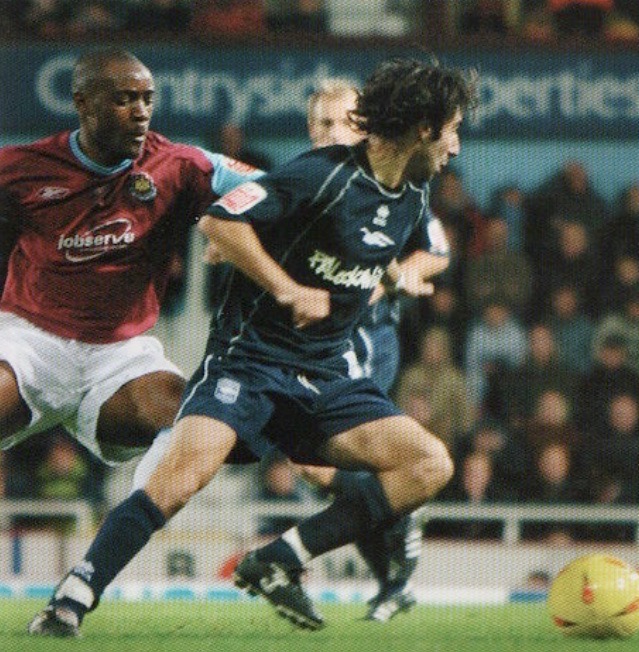
Amongst memorable goals in 2005-06 were a stunning solo effort in a 2-1 win at Birmingham and a goal in a 3-2 win at Highbury. Unfortunately, he’s also remembered for having his penalty saved by Pepe Reina in the FA Cup Final shoot-out with Liverpool.

The 2006-07 season saw Zamora make 30 starts and seven sub appearances, scoring 11 goals and named runner-up to Carlos Tevez in the Hammer of the Year contest.

A terrific start to the season saw him score five goals in his first four matches, including two against Charlton in a 3-1 opening day win.

A four-month barren spell came as the Irons struggled but he scored crucial goals against Blackburn, Everton, Middlesbrough and Arsenal (the last time West Ham played at Highbury).

Fans remember too his goal the following season – a chip over Jens Lehmann – that sealed a vital win for the Hammers at Arsenal’s new Emirates Stadium, with a heroic performance from ‘keeper Rob Green keeping out the Gunners at the other end.

The arrival of Craig Bellamy and return from injury of Dean Ashton added competition for Zamora, who missed seven months of the 2007-08 season with tendinitis.

His last Hammers goal was in a 2-1 win at the Boleyn against Derby on 19 April 2008, and his last game for the club was in a 2-2 draw at home to Aston Villa the following month. He had scored a total of 40 goals in 152 appearances for West Ham.

Even though he had missed a lot of games, and only scored once in 12 starts plus two off the bench across the whole season, he had no inkling he wouldn’t be offered a new contract.

“I went in at the start of the next season expecting to be talking about a new contract and they told me they’d agreed a deal to sell me to Fulham,” he told the Fulham website in a 2019 interview.

“It was obvious I wasn’t wanted and I made my way down to Motspur Park,” he said.

Zamora and team-mate John Paintsil moved to Fulham for a joint fee of £6.3m (Zamora was valued at £4.8m).

• I’ll explore how Zamora got on at Fulham ahead of Brighton’s game with them in March. His form with the Cottagers hit sufficient heights as to earn him two England caps.
Zamora’s wait for England while dad’s Trinidad came knocking

TEN DAYS after Barry Fry’s prediction about Bobby Zamora playing for England, he made his debut for the country’s under 21 side.

It was 16 April 2002 and the Brighton striker went on as a sub for Leeds’ Alan Smith in a 1-0 friendly defeat v Portugal at Stoke’s Britannia Stadium. Paul Konchesky, a fellow graduate of the East London boys’ team Senrab, was left-back that day.

While plenty of observers expected Zamora eventually to step up to the full England side, he had to wait until he was 30 to make his first (and only) start at that level, and not before being wooed to switch allegiance and play for Trinidad and Tobago.

That happened in 2005, when the Caribbean country’s Dutch coach, Leo Beenhakker, wanted him to play in a World Cup qualifier against Guatemala. Zamora told the News of the World: “Trinidad is my dad’s country and to play in the finals would be a dream but West Ham are more important.

“I am only thinking about the club at the moment and do not want to be distracted from that. The club mean everything to me and if I can help us have a good season that is all that matters.”

After an injury-hit 2007-08 season, though, West Ham sold him to Fulham in the summer of 2008. The following year it was reported Zamora and his old Senrab teammate Jloyd Samuel had both obtained Trinidad & Tobago passports in time to play in a 2010 World Cup qualifier.

Injury prevented Zamora from getting involved but Samuel did play twice for the Soca Warriors even though he had won seven England under 21 caps. (Samuel tragically died in a road accident aged 37 in 2018).

Zamora top-scored with 19 goals in Fulham’s memorable 2009-10 season under Roy Hodgson. The south London side finished 12th in the Premier League and made it through to the final of the Europa League (the first season of the revamped competition previously known as the UEFA Cup).

Zamora had been a fitness doubt before the game against Athletico Madrid in the People’s Park Stadium in Hamburg and he had to give way to Clint Dempsey 10 minutes into the second half.

The game went into extra time with the score 1-1 after 90 minutes and agonisingly Fulham succumbed to an extra time winner scored by Diego Forlan. Sergio Aguero, later of Man City fame, beat defender Aaron Hughes and crossed for Forlan to flick the ball home four minutes from the end.

Nevertheless, Zamora’s goalscoring form had caught the attention of England manager Fabio Capello and his deputy Franco Baldini who were keen to call him up for the 2010 World Cup.

Sadly, those hopes were dashed by an achilles injury, and Zamora conceded: “I told Fabio that I was struggling and I knew that, had I gone, I wouldn’t have done myself or England justice.”

The player told The Independent: “It’s been an up and down season because it’s been so good on the pitch and I’ve scored some important goals. To now pick up this injury has kicked me in the teeth.

“It’s come during the last couple of weeks and when there was the possibility of going to the World Cup with England. That’s football, it’s a cruel game.”

He added: “The World Cup’s a massive tournament. It’s not about myself, it’s about England.

“Capello wished me all the best, hoped that I get fit and would be available next season.”

True to his word, Zamora was one of five uncapped players included in Capello’s squad immediately after the disappointment in South Africa.

One of the first people to contact him was former West Ham teammate, Teddy Sheringham, who he said he learnt so much from. “I got a long text message from Teddy. He said I might be nervous beforehand but that I deserved this opportunity, and he said once I’d taken part in my first training session, I would realise that I deserved to be there. He was spot on; after that I did not look out of place and I embraced being part of the squad.”

The call up came in something of a crazy week for Zamora because only days earlier his wife gave birth to twin girls, Gisele and Siena.

“The twins were born last Monday, they came out (of hospital) on Friday, then I had a match on Saturday, was back home for one day and then I was away with England, so I have not seen them as much as I wanted to, but I am sure I will find some time when I get back home,” he said.

“The twins are a massive part of my life now, and with getting the call-up to play for your country is a massive honour. I am lost for words. I am extremely proud to be called up to play for my country.”

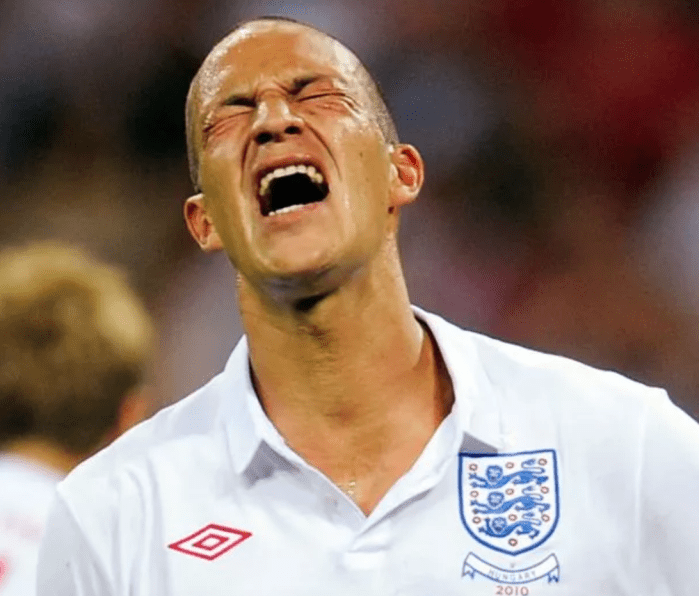
Capello sent him on as a second half substitute for Frank Lampard to play up front alongside Wayne Rooney in England’s 2-1 friendly win over Hungary at Wembley on 11 August 2010.

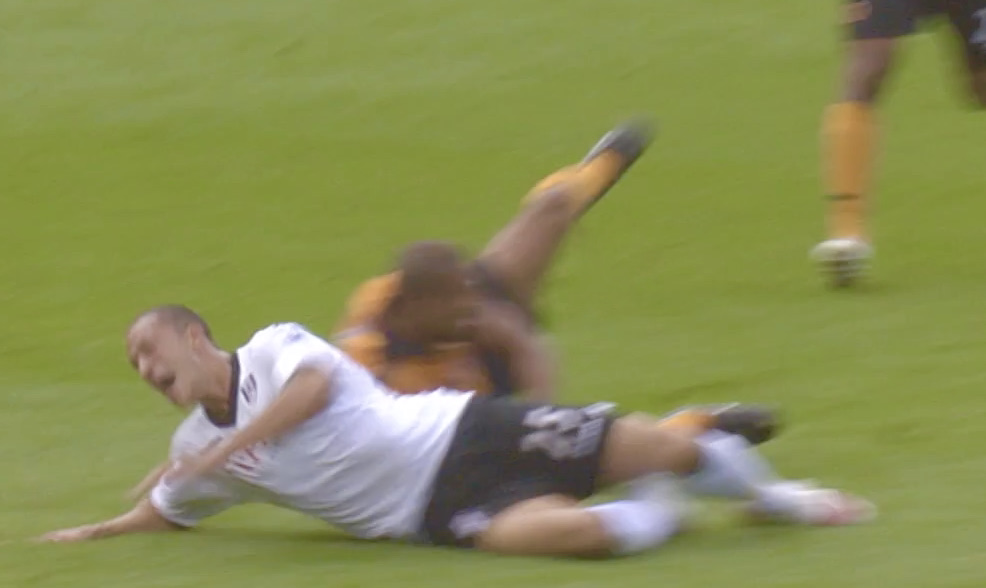
Having made that breakthrough, the day after he signed a new four-year contract with Fulham he agonisingly suffered another setback when he broke a leg (above) and sustained ankle ligament damage during a 2-1 win over Wolves. He was sidelined for five months.

Capello didn’t consign him to history, though, and called him up again in May 2011 (his teammate David Stockdale was in the same squad) to face Switzerland in a Euro 2012 qualifier. But neither were involved in the disappointing 2-2 Wembley draw.

His first start for England finally came six months later in a 1-0 home win over Sweden, the first time in 43 years that England had beaten the Scandinavian country. Zamora’s close friend (and another former Senrab graduate) John Terry was England captain and joining the striker in making first starts were right-back Kyle Walker and Everton’s Jack Rodwell.

Richard Williams in The Guardian clearly felt sorry for the debutant centre forward, though, writing: “Poor Bobby Zamora. Offered the opportunity to score England’s 2,000th goal on Tuesday night, a perennially unfortunate footballer was forced instead to stand and watch as Stewart Downing’s cross glanced off the side of Gareth Barry’s head and then off Daniel Majstorovic’s forehead before evading Andreas Isaksson’s dive as it looped inside the post for the most anticlimactic of own goals.”

Reporting on the narrow victory over the Swedes, Williams added: “Whichever side the ball went, Zamora made sure he was available. A double exchange of passes with Walcott in the 17th minute put Zamora in on goal, but after Isaksson blocked his first effort the follow-up was poked past the post from five yards.

“Any centre forward will ultimately be judged by the goals he scores rather than his total of assists, and Zamora spurned a wonderful chance in the 65th minute when Downing scampered down the left once more before pulling the ball back at precisely the right pace and angle for the striker to meet it with a first‑time connection. Jonas Olsson, however, flew in to deflect the shot for a corner.”

Zamora was subbed off in the 70th minute to be replaced by Darren Bent and the Guardian sports writer concluded: “England – and Zamora in particular – really should have inflicted greater punishment on such humdrum opposition.”

Bent had also replaced Zamora in his first start for England under 21s. That came in February 2003 in a 1-0 defeat to Italy in Carrara.

A month before his move to Spurs, he also started England’s 3-2 friendly win over Serbia and Montenegro at Hull’s Kingston Communications Stadium, on that occasion being replaced by Darren Ambrose. (His future Fulham and Albion teammate Steve Sidwell was in midfield that day).

Eight days later, in a UEFA under 21 championship preliminary match, he went on as a sub for Shola Ameobi as England beat Slovakia at the Stadium of Light, Sunderland.

Zamora showed England quality at an early age

After that under 21s debut against Portugal, he was selected in the squad for the UEFA under 21 championship finals in Switzerland. On 20 May 2002, David Platt sent him on as a sub for Gareth Barry in a 2-1 defeat to Italy in Basle.

Two days later, in the third group match, again a sub, he replaced Jermain Defoe as England lost 3-1 to Portugal and were eliminated from the competition.

On two other occasions Zamora was an unused sub but he didn’t add to his six caps. And, after

Capello quit the England job in February 2012, Zamora didn’t play for the full England side again.

• Ahead of Albion’s new year clash with West Ham, find out why Zamora’s move to the Boleyn Ground was so ideal in the next instalment.

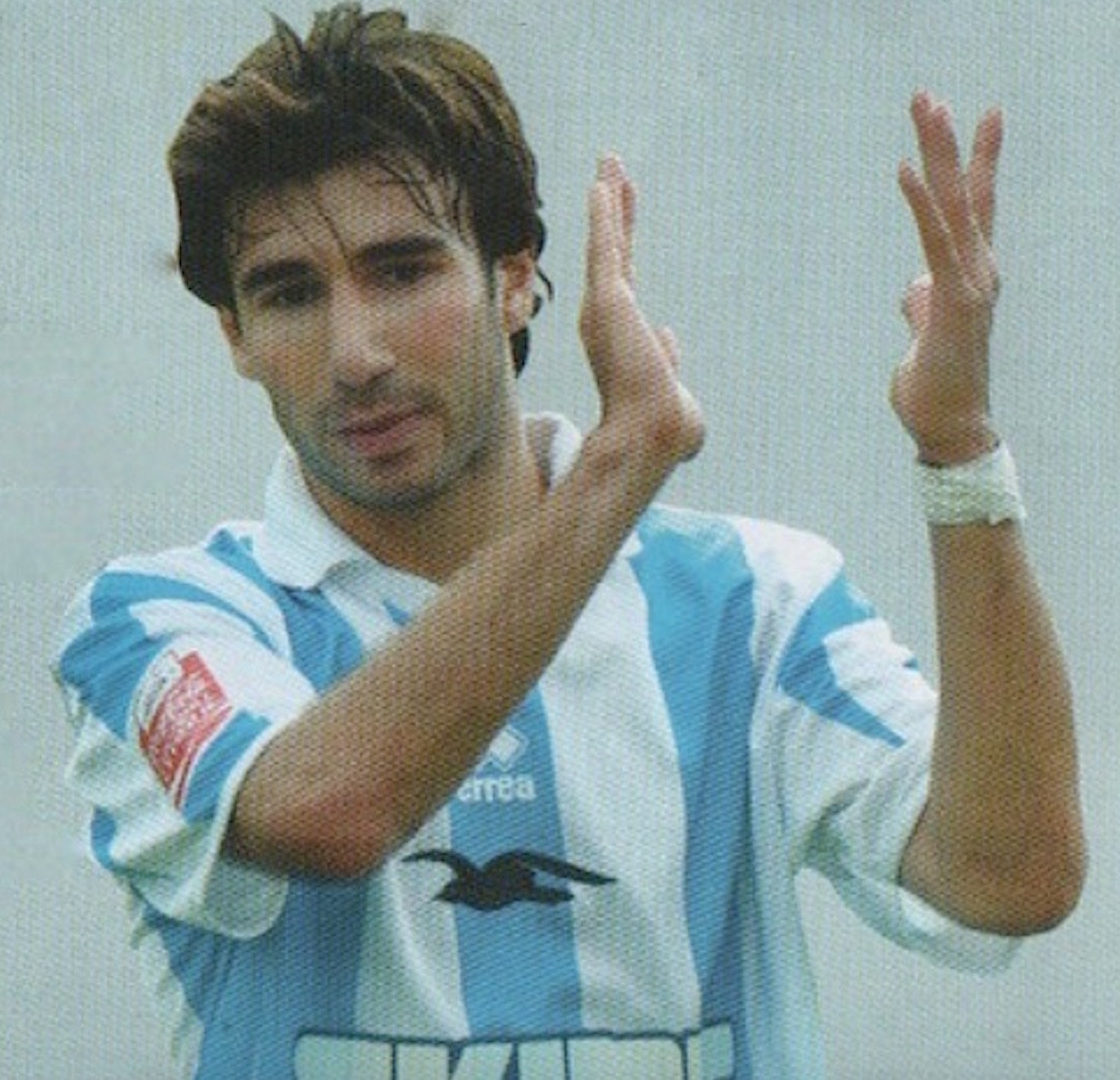
Why Roman’s roubles spelled bad news for Alexis Nicolas

A PROMISING young midfielder edging towards first team football at Chelsea had his dreams extinguished when Roman Abramovich arrived with lorry loads of cash.

Manager Claudio Ranieri had let Alexis Nicolas know that he was heading in the right direction after he’d broken through to the fringes of the first team.

But when Abramovich took over at Stamford Bridge, big name signings started to arrive and Nicolas was left way down the pecking order behind the likes of Juan Sebastián Verón, Claude Makélélé, Geremi and Scott Parker.

New boss Jose Mourinho informed the youngster he should look elsewhere to make progress, and Brighton, newly promoted to the Championship, offered a refuge for the talented London-born Cypriot under-21 international.

Albion’s midfield options were depleted at the beginning of the 2004-05 season with Simon Rodger a long-term absentee, stalwart Richard Carpenter recovering from close-season knee surgery, and Charlie Oatway also sidelined through injury.

It meant Nicolas had a chance to show what he was made of and he played 15 games on loan from the start of the season through to October.

Enthusiastic Albion boss Mark McGhee said: “He has brought energy and he has got quality. He is a certain type of player, similar in many ways to Charlie Oatway.

“He is not a box-to-box goalscoring midfielder but what he does brilliantly is that he is always in the area around the ball where you need him.

“He breaks things up quickly and, when we win possession, we go more quickly from defence into attack with Alexis in there than we did previously.”

Nicolas clearly relished the opportunity he’d been given and, as the prospects of a permanent move grew stronger, he told the Argus: “It’s flattering that Brighton want to keep me. I like it here. I am happy with the club and the manager and I don’t see why it can’t be permanent.

“If everything can come together, and I think it will be a good move, then I don’t see why it won’t go ahead.”

He added: “There is a lot of stuff to be sorted out with a lot of different people.

“All I can say is I am happy here and I like the club. They are good people and the fans are great. Anyone with an offer to come here has got to be chuffed with that, because it is a great set-up.”

McGhee made no secret of his admiration for the 21-year-old, saying: “He’s been a fixture in the team and that says it all. He is improving week in and week out and I think he has got a good future.

“He has a terrific little engine and attitude. He quietly goes about his job and he has been really important for us so far this season.

“The boy himself is modest and unassuming. He loves Chelsea, he loved being there and I am sure he will be very disappointed to leave, but he wants to be a footballer more than he wants to be a Chelsea player. That is the important thing for us.”

McGhee explained the difference Nicolas made to the side. “He has that knack of being in the right place at the right time; he seems to cover such a big area. For a physically small lad, he is everywhere.

“He anticipates where the next ball is going and gets there early, puts people under pressure, wins the ball back and activates us going forward. He wins it and, before you know it, we’re going forward.”

When he signed permanently, Nicolas said: “It feels great. You are always sad to leave a club and I have been at Chelsea for a while, but I am excited and glad that I have signed for Brighton.

“The role I play is similar to Claude Makélélé’s and I used to speak to Claude regularly. He used to give me a lot of good advice. I’ve learned from all of the players at Chelsea, but now it’s time for me to open another chapter in my life and learn some other stuff.”

Nicolas said breaking into the Chelsea first team had whetted his appetite to return to that level and he told the Albion matchday programme: “Having played in the Premiership, I would like to achieve it here at Brighton and I don’t see why one day Brighton can’t be a club in the Premiership.”

Unfortunately, he joined an injury and suspension hit squad that couldn’t compete with better-resourced clubs in the second tier because of crowd-restricted home gates at the Withdean Stadium.

While Nicolas impressed in his first season, playing in a further 19 games, McGhee was forced to sell star players Danny Cullip and Darren Currie to bolster the club’s perilous finances, and the side only just managed to avoid the drop.

The following season, with Dean Hammond and Carpenter the mainstays in central midfield, Nicolas too often watched on from the bench and missed several weeks because of ankle and knee injuries.

Asked about his watching brief from the sidelines, he said in a matchday programme article: “It’s been very frustrating for me this season and I’m upset about it. I’d like to think that a lot of the fans would like to see me out there. The manager can only pick eleven players and he’s the boss – what he says goes and I respect that.”

His frustration was barely disguised in an interview with the Argus on 23 Feb 2006, after a reserve match he was due to play in was called off.

“It seems impossible for me to get 90 minutes at the moment,” he said. “I was out for six weeks injured and have only managed 60 minutes football against Millwall in a reserve match since because of postponements.

“Before that I was mostly on the bench. I have hardly played this season.

“Even though I am not fully match fit, I have been training hard and have enough about me to be able to cope. I am not thinking of myself when I say this. I have put personal goals to one side.

“After all, I pulled out of international squads with Cyprus earlier in the season even if it meant I could just be on the bench for Brighton. I feel I have a lot to offer.”

The midfielder added: “What matters is Albion. I love the club, the lads and the fans and want to do my best for them.”

Unfortunately, after playing only 12 matches in 2005-06, he wasn’t kept on after the Seagulls were relegated on 30 April 2006, and he never played league football again.

Born in Westminster on 13 February 1983, Nicolas went to Trent CE Primary School in Cockfosters, where he first showed a talent with a football. He also enjoyed long distance running and tennis.

He played football for a decent Sunday League side in Colliers Wood alongside two other future professionals, Steve Sidwell and Leon Britton, and eventually became part of Arsenal’s youth set-up. But he ended up as an apprentice at Aston Villa, and got taken on as a professional. He was in the same under-19s squad as future Albion goalkeeper Wayne Henderson and defender Liam Ridgewell.

But in December 2001, he joined Chelsea on a free transfer, and with 24 starts plus one as a sub, he missed only one of the reserves side’s 26 matches in the 2002-03 season.

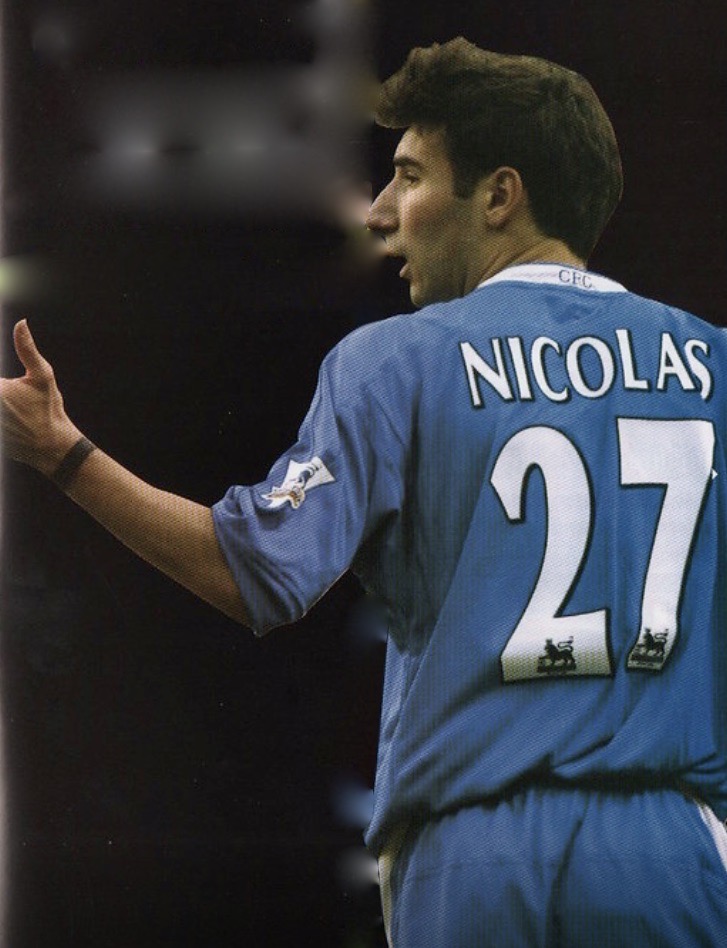
He was handed the no.27 shirt for the 2003-04 season and made his Chelsea first team debut in their 1-0 FA Cup win away to Scarborough on 24 January 2004.

John Terry scored the only goal of the game and Nicolas played in midfield alongside Frank Lampard and Emmanuel Pettit in a side also featuring Joe Cole and Wayne Bridge.

Guardian football reporter, Paul Wilson, noted: “Alexis Nicolas made an encouraging debut, but time and again Cole, in particular, would attempt something complicated when a simpler option was available.”

Nicolas made his Premiership debut a week later in a 1–0 win over Charlton Athletic. His only other appearance was as a 90th minute substitute for Lampard as the Blues rounded off the season with a 1-0 home win over Leeds United.

Nicolas spoke about those early years at Chelsea in an interview with Simon Yaffe of planetfootball.com.

“Ranieri called me into his office at the end of 2002-2003 and told me the club didn’t have a lot of money to invest and that he didn’t have too many midfielders at his disposal, so I would be in his plans for the following season,” Nicolas said.

Even as the oligarch’s takeover was going through in the summer of 2003, the youngster was part of Ranieri’s team which beat Newcastle United 5-4 on penalties in the final of the FA Premier League Asia Cup in front of a crowd of 41,500 in Kuala Lumpur’s national Bukit Jalil stadium. It was the first piece of silverware of the Abramovich era.

“It maybe wasn’t the most glamorous of trophies, but it was still the first of many under the new owner,” Nicolas said.

It wasn’t long before a flurry of big-name signings soon changed the picture for Nicolas; the arrival of five midfielders in particular being somewhat ominous.

“I had planned to go out on loan because I had fallen so far down the pecking order,” Nicolas added. “But some of the midfielders, like Makélélé and Petit, were picking up injuries, so I stuck around.

“Looking back, it was easy to think, ‘He’s signed, so that is why I am not playing,’ but it was really a turning point in Chelsea’s history, and it was nice to have been part of it.

“I was pleased for the club when Abramovich took over but also a little bit disappointed for myself.”

After relegated Brighton released him, Nicolas tried to continue his league career and had a trial with Bradford City, but after an unremarkable game for their reserves side, manager Colin Todd told the Bradford Telegraph & Argus: “At the moment I can’t guarantee him anything. His fitness levels aren’t the best but if he wants to continue to train with us and try to improve on that then it’s up to him.”

In fact, he decided to join St Albans City on 26 September 2006 and made his Nationwide Conference debut in a 2-1 defeat at Weymouth four days later.

On 12 November, the St Albans City website noted: “A knee injury restricted Alexis to just six appearances for St Albans City but, with a number of League One and League Two sides showing an interest, the player has decided to move on.”

Nicolas said he was grateful to manager Colin Lippiatt for giving him the opportunity and added: “I was not in the best of states when I joined the club but everyone has been a great help and when fully fit I hope to join one of the League One or League Two sides who are showing an interest in me.”

But it was a career in property investment that opened up for him instead and in 2012 he set up his own business in partnership with Ryan Springer.

He wasn’t completely done with football, though, and, also in 2012, Nicolas had a spell as player-manager of Hadley FC, a Spartan South Midlands League Premier Division side, and in 2014-15 he was part of the club’s management team under former Spurs and Chelsea player Micky Hazard.

Pictures as featured in the Albion matchday programme and from various online sources.

Ridgy rides in to shore up injury-ravaged defence

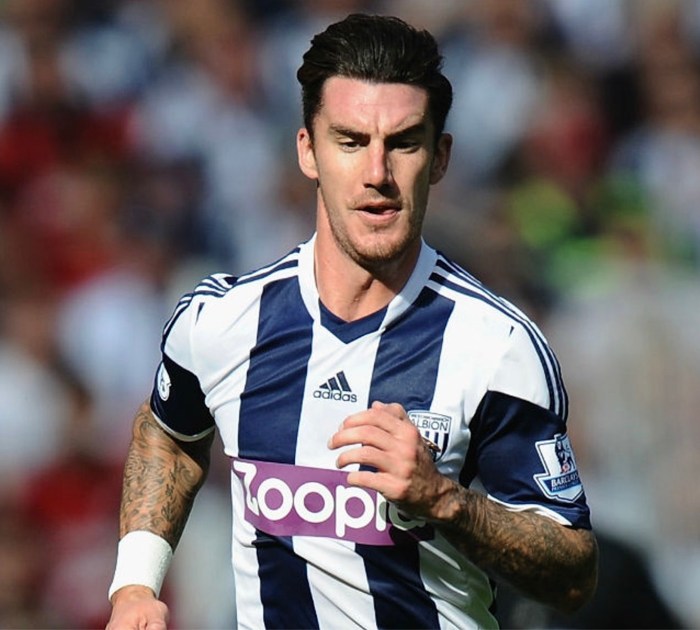
FORMER WEST BROM defender Liam Ridgewell played six games on loan for Brighton in the early part of 2016.

Ridgewell helped out when first choice left-back Gaetan Bong and deputy Liam Rosenior were both out injured.

He made six starts, starting in the FA Cup away to his old boss Steve Bruce’s Hull City, who won the tie with a single goal. His next game was also away, at Rotherham United, where Albion went down 2-0.

After that, he was on the winning side four times, as Albion beat Blackburn Rovers away and Huddersfield, Brentford and Bolton at home.

Albion’s matchday programme devoted a double-page spread to the loanee

Brighton wanted to extend the experienced defender’s loan but his parent club – MLS (Major League Soccer) outfit Portland Timbers – wouldn’t allow it and he returned to the States.

Albion manager Chris Hughton told The Argus: “He has certainly brought us a wealth of experience. We have to abide by the situation. In any way we could extend it for whatever, a further week or so, we’d be delighted to be able to do that, but I certainly can’t speak out of turn when he’s not our player.

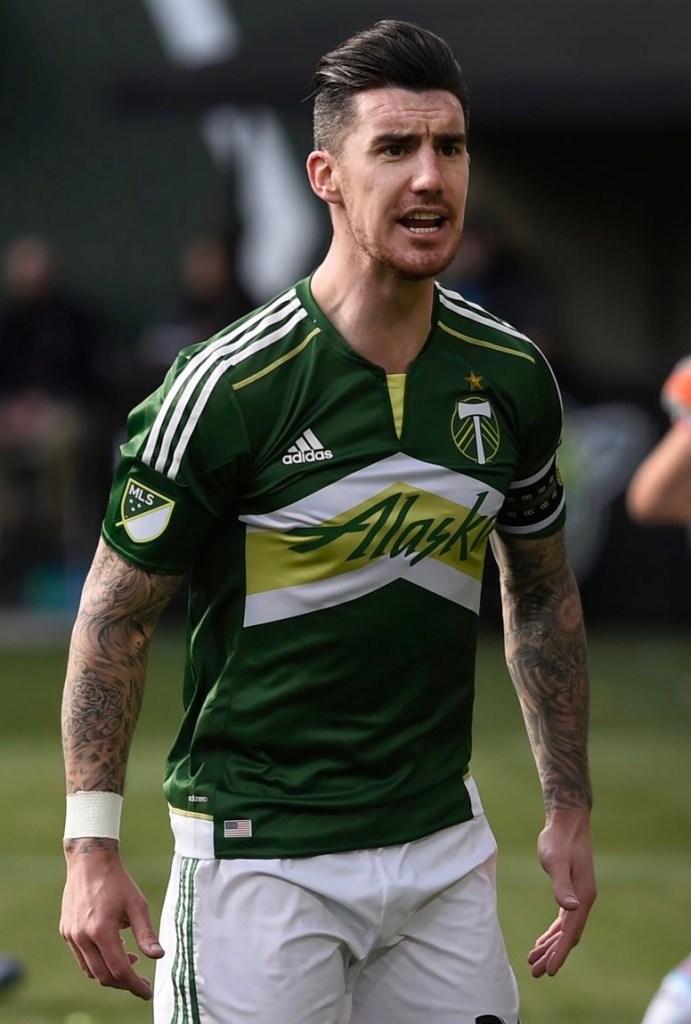
Ridgewell returned to Portland Timbers after his brief loan with the Seagulls

“We have to respect everything his parent club want. He has certainly fitted in very well.”

Ridgewell explained the background to joining the Seagulls in an Argus interview with Andy Naylor, and on clinching the deal, Hughton said: “I know Liam very well from my time as manager at Birmingham City, and he is an excellent and important addition for us.

“He will bring extra experience to our defence at a crucial time and will give me an option both in the centre of defence and at left-back.

“Liam has played the vast majority of his career in the Premier League with more than 350 senior appearances and he’s also got experience of the Europa League and Championship from his time at Birmingham.”

Born in Bexleyheath on 21 July 1984, Ridgewell went to Bexleyheath School and was on West Ham’s books for two years between 1999 and 2001.

After looking at the quality of players breaking through there, he took the bold decision to quit the Hammers and join Aston Villa’s youth set-up instead, which he spoke about in an interview with the Birmingham Mail.

“I had looked at what was already in the team – you had Michael Carrick coming through, Joe Cole, Rio Ferdinand, Richard Garcia – and I thought it might be time for a change.

“I was a south London boy, grew up around there and had all my friends there. But I thought if I got away it might focus me a bit more. It was a tough decision.

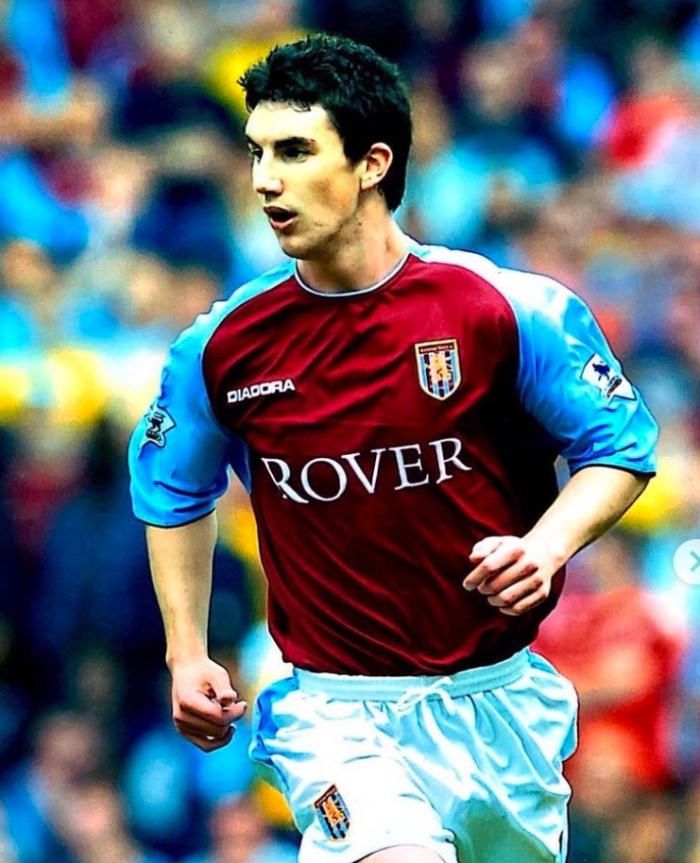
A youthful-looking Ridgewell made his breakthrough with Aston Villa

“I used to leave school early on a Friday afternoon to travel up to Villa for the weekends.

“I used to get the bus from my house to the train station, get a tube from Charing Cross to Euston and a train from London up to Birmingham all on my own.”

After joining Villa in February 2001, he was part of their 2002 FA Youth Cup winning side. They beat an Everton team featuring Wayne Rooney 4-2 over two legs. Villa’s goalkeeper was another Wayne – Henderson – who would later move to Brighton. The side also included Steven Davis, who went on to play for Southampton.

In the same year, Ridgewell was selected for the England under-19s and was sent out on loan to AFC Bournemouth, then in Division 3, where he made his league debut as part of a five-game loan spell.

Back at Villa Park, former England boss Graham Taylor gave him his first-team debut in a FA Cup tie against Blackburn in January 2003 when he came on as a substitute in a 4-1 defeat. He had to wait until December that year before getting his Premier League bow, again as a substitute, but this time in a 3-0 win over Fulham. He went on to make 11 appearances by the season’s end.

Under David O’Leary and, for a season, Martin O’Neill, Ridgewell made a total of 93 appearances for Villa before making what some fans would consider a controversial move.

In August 2007, Ridgewell became the first Villa player in 23 years to be transferred to bitter city rivals Birmingham. Des Bremner, brother of one-time Brighton striker Kevin, had been the last one, in 1984.

Steve Bruce’s £2m signing then found himself wearing the captain’s armband on his debut. “It’s one of the greatest achievements in my career,” Ridgewell told the Birmingham Mail. “It’s a real honour. I thank the gaffer for that. Hopefully I can continue as captain for a few more games before a few of the others come back in.

“It was fantastic to do it. I only found out before the game when we were on the pitch. The gaffer came up to me and asked would I have any problems doing it? I said none at all. It’s what I’m made for, it’s what I want to do. I want to captain sides and have a responsibility on me.”

Ridgewell subsequently played under Alex McLeish and Hughton for the Blues, winning promotion back to the Premier League in 2009 and the League Cup in 2011.

After a total of 175 appearances in four years, and on the back of a 6-0 win for Birmingham at Millwall, Ridgewell joined West Brom on deadline day in January 2012.

Ridgewell settled in quickly at West Brom

He couldn’t have wished for a better debut, as Albion recorded a memorable 5-1 win over Black Country rivals Wolverhampton Wanderers.

The Baggies were managed by Roy Hodgson at the time and, having initially been flirting with relegation from the Premier League, stayed up with results like a 4-0 victory over Sunderland and a 1-0 win over Chelsea that cost Andre Villas-Boas his job.

“Roy Hodgson was brilliant,” Ridgewell told The Athletic, in an interview in 2020.  “Roy knew how to make players feel and perform better than they were,” he said. “Everything was positional based. He let you do your own thing but he gave you the tools and the words to make sure you did it to the best of your ability in your own position. It was a clear message for me of how a manager gets the best out of players.”

When Hodgson left to manage England, Ridgewell continued as a Baggies regular for the next two seasons under Steve Clarke. Baggies escaped the drop by just three points in 2014, after Pepe Mel had taken over the managerial hotseat in January.

That summer, Ridgewell wanted to try something different and headed for the States to join Major League Soccer’s Portland Timbers.

In his five years with the Timbers, one of his highlights was captaining the side to a 2-1 MLS Cup win over Columbus Crew, a few weeks before his loan spell with Brighton during the American season’s winter break.

The previous season he’d returned to the UK in a similar arrangement to play six games on loan for Wigan Athletic in the Championship.

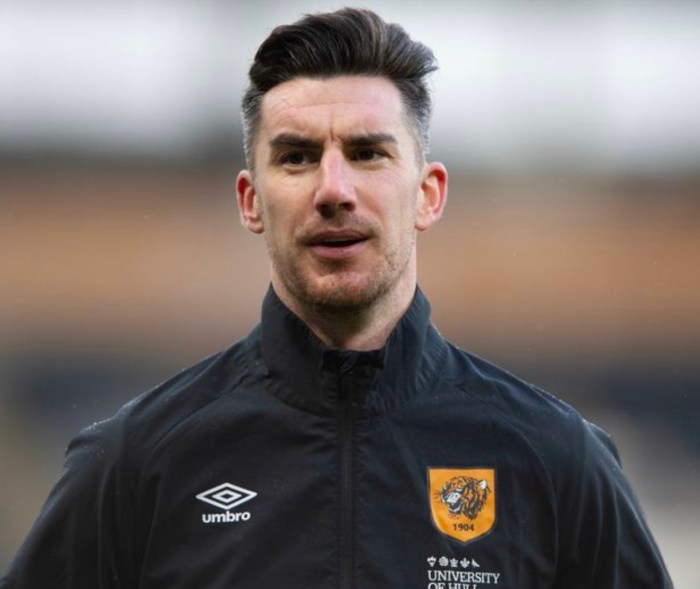
Ridgewell spoke about his time in the States on his return to the UK in January 2019, when he joined Hull City until the end of the season.

Back in the UK, Ridgewell spent half a season at Hull City

“I wanted to try something different and go out there with an open mind,” he told the Hull Daily Mail. “The league is completely different to what a lot of people expect. It’s grown bigger and stronger. I feel as fresh and as fit as when I first went there.”

To illustrate the point, he mentioned how he’d been up against the likes of Miguel Almiron, who subsequently joined Newcastle United for £20m.

“I loved it, it was great, really refreshing for me. It gave me another lease of life. It was something I needed to do, and I really loved it.”

In the summer of 2019, Ridgewell joined League One Southend United, but, having made only one appearance by December, quit playing to take up coaching.

He took to Instagram to reflect on his career, writing: “Football has given me the best life any little boy could wish for. There have been some massive highs and lows but now it’s time to hang up my boots and move on to the next chapter of my career.

“I’d like to say a massive thank you to all the coaches and managers who moulded me into the player I was. A special thank you to the late, great Graham Taylor for giving me my debut and the reason I was able to pursue my dream.”

In April 2020, Ridgewell spoke at length to Gregg Evans for an article on The Athletic, describing how lockdown had interrupted his plans to drop in on some of his old managers to gain knowledge and information in pursuit of his goal of becoming a manager.

“Moving into management has always been my aim,” he said. “I’ve always had a speaking role at every club I’ve been at. Whether it’s on the training pitch or during a game, I’ve always tried to help people out, too. With me being so vocal, I try to marshal teams in a certain way.”

He did some work with Aston Villa’s youngsters towards the end of 2020 but took on his first official coaching post in December 2020, as first team coach at Dover Athletic under former Gillingham boss Andy Hessenthaler.

It’s no surprise to discover Ridgewell (or Ridgy 6 as he’s known) has a veritable army of followers on Twitter – more than 42,000. Away from football, Ridgewell co-owns luxury swimwear business Thomas Royall, with fellow footballers John Terry and Sam Saunders.

Pictures from various online sources, and the Albion matchday programme.

Much-travelled Ade Akinbiyi a big hit in brief Seagulls spell

A STRIKER with wildly differing fortunes in a varied and much-travelled career made a good early impression when joining Albion on loan from Norwich City back in the autumn of 1994.

Ade Akinbiyi had not long since broken through to the City team as a teenager and he scored four times in seven games on loan to the Seagulls.

Just turned 20, Akinbiyi arrived at a time when Liam Brady’s Albion hadn’t registered a win for 11 games and, although Albion lost the first game he played in, the remaining six produced three wins and three draws.

AA scores

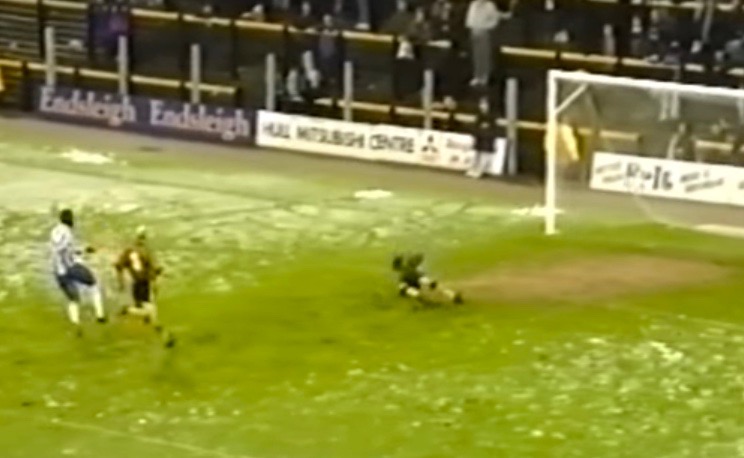
There is some YouTube footage of him scoring Albion’s second goal on a snowy pitch at Hull City’s old Boothferry Park ground in a game that finished 2-2.

“He is powerful and big and he can take knocks and we have missed having somebody in that mould,” Brady wrote in his matchday programme notes.

Later in his career Akinbiyi would prove to be a real handful for the Seagulls – I recall him shrugging off a powder-puff challenge from a young Dan Harding at Withdean and muscling his way to a winning goal for Stoke City. Manager Mark McGhee subbed Harding off and publicly lambasted him afterwards.

Born in Hackney on 10 October 1974, Akinbiyi was more interested in athletics at an early age, as he told the Lancashire Telegraph.

“I was interested in football but not massive on playing it,” he said. His school PE teacher persuaded him otherwise. “I went to play for my district team, Hackney, and it all started from there.”

From Hackney, Akinbiyi joined nearby Senrab, the team that blooded the likes of Bobby Zamora, Leon Knight, John Terry and Jermain Defoe.

His age group earned a place in a children’s tournament in Great Yarmouth called the ‘Canary Cup’ where he was spotted by a scout for nearby Norwich, who signed him as a schoolboy.

“The schoolboy and youth team system was second to none, as it still is now,” said Akinbiyi. But he found it hard living away from home, missing his mum’s native Nigerian cooking.

But after finding new digs with a few of his team-mates, he stuck at it and earned a dream debut as a substitute against Bayern Munich in the return leg of their UEFA Cup second round game, less than a month after his 19th birthday.

“I thought my debut would come in a cup game, perhaps against lower league opposition, not against Bayern Munich,” he said. “Not many people make their debut in a European cup competition.”

Although Akinbiyi made 51 league appearances for Norwich, his Canaries career never really took off, hence the Brighton loan spell and a similar move to Hereford United.

Eventually, though, a manager who believed in him, Tony Pulis, made him a record £250,000 buy for Gillingham in January 1997. Akinbiyi repaid Pulis’ faith in him with 29 goals in 67 starts, leading to Bristol City paying £1.2million for the striker following their promotion to the old Division One (now the Championship).

akinbiyi + colin lee

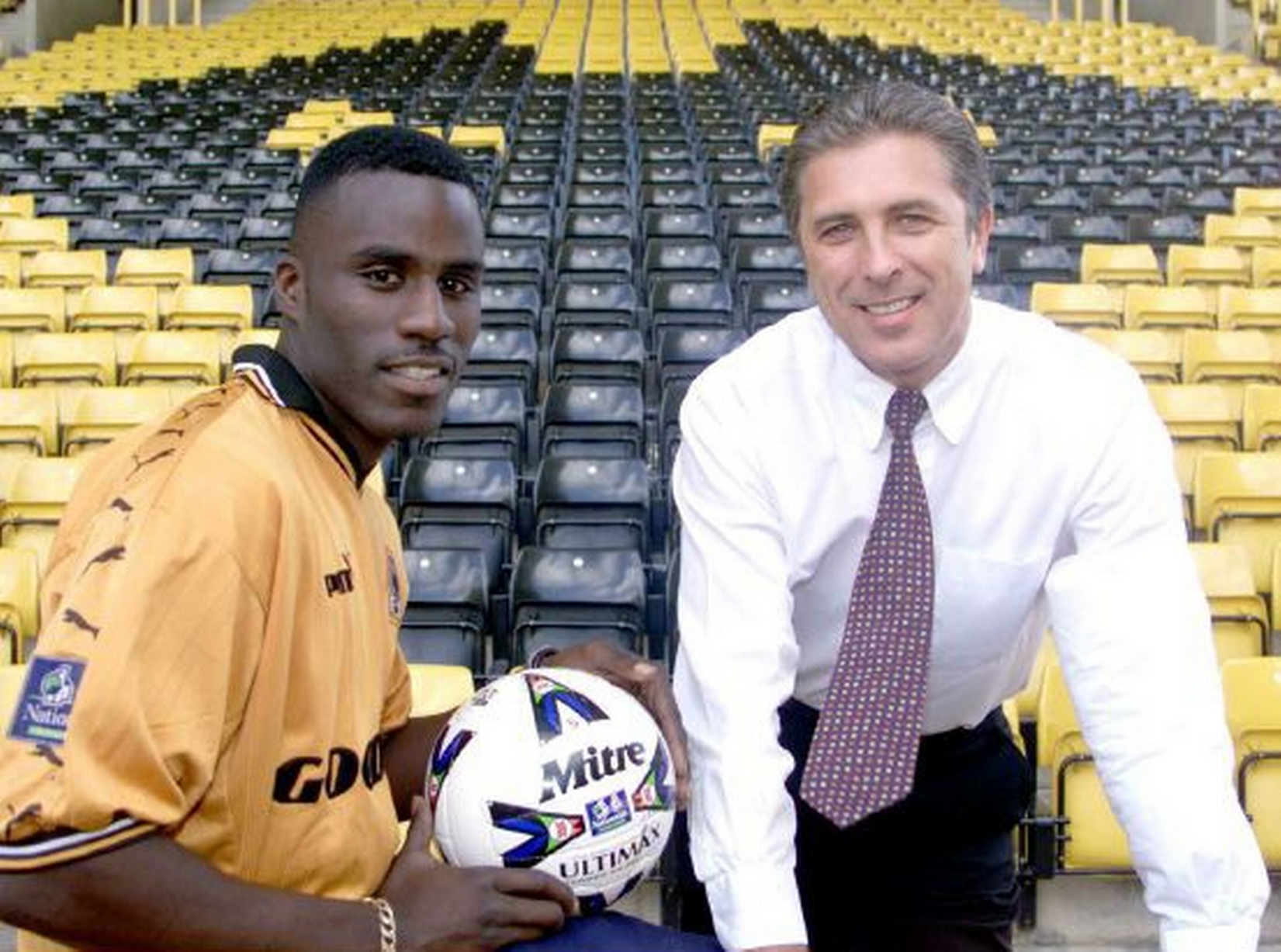
After scoring 21 goals in 47 league appearances for the Robins, in 1999 he completed a £3.5m move to Wolverhampton Wanderers. In the same year, he played his one and only game for Nigeria, in a friendly against Greece in Athens.

He made a great start at Wolves, scoring eight times in his first 12 games for Colin Lee’s side, but a year later, switched to Premier League Leicester City, after the Foxes’ boss Peter Taylor (later to replace Micky Adams at Brighton) paid out a £5m fee for the striker.

Ade A LeicesterAkinbiyi was brought in to replace Emile Heskey, a real Filbert Street hero who had been sold to Liverpool for £11m. However, his goal touch eluded him and he managed to score only 11 goals in 58 league appearances for the club – some Leicester fans dubbing him Ade Akin-Bad-Buy!

Akinbiyi looked back on it in an interview with Four Four Two magazine and said: “I came in as Emile Heskey’s replacement, but he is a different breed of footballer.

“He’s big, strong and scores goals, but, back then, if Heskey wasn’t scoring a lot he could get away with it. He was the local hero. I was a different player – I’d be running in behind and trying to cause people problems. But Leicester looked at my record in the Championship and thought I’d come and do the same thing.”

Eventually they cut their losses and sold him to Division One Crystal Palace for £2.2m. At Selhurst, he was rather ignominiously given the number 55 shirt! Having scored just one goal in 14 league and cup appearances, in 2003 he was loaned to Stoke City, under his old boss Pulis.

He scored twice – the second goal coming in the last game of the 2002-03 season, when the Potters won 1-0 against Reading to seal their Division One (now the Championship) status (the season Albion were relegated).

Akinibiyi discussed the events in an interview with another ex-Stoke, Burnley and Brighton striker, Chris Iwelumo, for Stoke City FC TV.

AA chat with CIIt led to Akinbiyi joining on a permanent basis, on a free transfer, and he became a cult hero with the Stoke City crowd.

In March 2005, Burnley signed him for £600,000 – and he was promptly sent off on his debut! The game was only two minutes old when he head-butted George McCartney of Sunderland, and was shown a straight red.

Less than a year later, he was on the move again, switching to Sheffield United in January 2006 for what was then a club record £1.75m fee.

He scored on his Blades debut against Derby County but by October that year he was in the news for his alleged involvement in a training ground bust-up with team-mate Claude Davis.

In all, Akinbiyi made only five appearances for the Blades in the Premiership in 2006 and, on New Year’s Day 2007 he returned to Burnley for a £650,000 fee, with add-ons.

He scored in his first game back, against Reading, but only notched three by the season’s end. Burnley fans have some good memories of him, particularly in a brief spell when he played alongside loan signing Andrew Cole, but on 2 April 2009, Burnley offloaded him to Houston Dynamo.

Dave Thomas, a prolific writer on all things Burnley, talked about Akinbiyi’s cult hero status among Burnley fans, telling thelongside.co.uk: “Ade certainly had a talent and that talent was scoring goals. The story that he was utterly bad at this is totally inaccurate, but that is the legend that developed, at one club in particular, Leicester City.

“In truth, at Burnley too, he missed sitters that Harry Redknapp might say his wife could have scored. But then so do all other players and, in many games, he displayed all the things that he was good at, and the attributes that he had in abundance.”

After he was released by Houston, back in the UK he played 10 games for Notts County, as they won the League Two title In 2009-10, and the following season pitched up in south Wales to play for then non-league Newport County.

In July 2013, Akinbiyi became a player-coach for Colwyn Bay, managed by his former Burnley teammate Frank Sinclair, but both resigned in January 2015 after a 5-0 defeat at Boston.

Akinbiyi now lives in Manchester and in 2015 was interviewed about work he has done as an ambassador for Prostate Cancer UK after his father died from the disease.