Career-ending leg break spawned physio role for George Dalton

A CAREER-ENDING leg break led one-time international hopeful George Dalton into a new career as a football physio.

Geordie-born Dalton was an emerging left-back at Newcastle United being watched as a possible candidate for a call-up to the England Under-23 side.

But he was never the same player after breaking a leg in a tackle with Leeds United’s Johnny Giles.

Then, only seven months after trying to resurrect his career with third tier Brighton, unlucky Dalton sustained a double fracture of the same leg in a freak collision and never played professionally again.

However, he turned his familiarity with the treatment table to good use and he later became Coventry City’s physio for the best part of 20 years.

Born in Dilston, Northumberland, on 4 September 1941, Dalton went through the junior ranks at Newcastle and turned professional at St James’s Park in 1958.

He made his Toon debut on 10 October 1960 in a 4-1 League Cup defeat away to Colchester United, and made his First Division debut the following February, ending up on the losing side in a 5-3 defeat away to Leicester City.

After Newcastle’s relegation to the old Division Two, Dalton made a lot more appearances (including being in the Toon side who thumped Brighton 5-0 at St James’ on 21 October 1961).

He was in and out of the side over the next two years but became a regular from March 1963 and, in January 1964, eagle-eyed Ken McKenzie, reporter for Newcastle’s The Journal, spotted England Under-23 selector Mr E.Smith in the stands at St James’s.

“This visit can only mean imminence of England Under-23s selection to meet Scotland at St James’s Park on Wednesday evening, February 5, and check up, particularly on George Dalton and Alan Suddick, of United,” he wrote. “On this basis, I feel that Mr Smith’s trip to Tyneside holds out very bright prospect of Forest Hall, Newcastle, product, Dalton, gaining his first representative honour on February 5.

“I know that Dalton has been recommended to the England selectors for some time by United directors and manager, and his consistency and clean, strong play has been commented on by influential observers at several away games.”

Unfortunately, the call-up didn’t happen, and revered reporter Ken Jones wrote in the Daily Mirror: “Despite local claims for left back George Dalton and inside forward idol Alan Suddick; neither has been chosen by the England team manager, and clearly they have no place in his ideas at present.”

Interestingly, the left-back berth went to Keith Newton, who later went with England to the 1970 World Cup in Mexico. Mike Bailey and Graham Cross both played in the Under-23s’ 3-2 win over Scotland, while the reserves that day were Peter Grummitt, Alan Mullery and Martin Chivers.

Within a matter of weeks, Dalton’s football fortunes were turned upside down when, in his 40th game of the season, on 30 March 1964, three days after Newcastle had surrendered an eight-game unbeaten run losing 1-0 at home to promotion-chasing Leeds on Good Friday, the full-back suffered a leg break that virtually finished his Newcastle career.

The Journal saw it thus: “This is the tale of a noble resistance by a Newcastle side who had Alan Suddick crippled in the 17th minute and lost George Dalton with a broken right leg (just above the ankle) with 14 minutes to go.”

mightyleeds.co.uk recorded it like this: “Newcastle finished with one man in hospital and another limping, but Leeds just about deserved to win their third hard match in four days. For once, however, there was no malice attached to the game and left-back Dalton confirmed he had broken his right tibia after himself kicking the sole of Giles’ boot.”

Dalton didn’t play his next Newcastle first team game for nearly two and a half years, and then it was just the one game. After that solitary appearance – his 94th for Toon – on 27 August 1966, when they lost a Division One match 2-1 at home to Spurs, he was cast into the shadows and eventually given a free transfer in May 1967.

Albion’s 1967-68 squad with Dalton circled in the back row

Third Division Brighton gave the player the chance to salvage his career and he arrived on the south coast in June 1967 together with a young centre forward, Bob Fuller, who went on to score regularly for Albion’s reserves but subsequently moved to South Africa and in later life became a senior executive at mobile phone companies Orange and 3.

There were a couple of familiar faces amongst Dalton’s new teammates: Dave Turner, had been a fringe player at Newcastle before joining Brighton in December 1963, while forward Kit Napier had moved to the south coast the previous summer.

Stewart Ogden also joined straight from school in the north east in the summer of 1967 and the matchday programme declared: “Instead of Sussex by the Sea, Albion’s rousing signature tune, they may be playing The Blaydon Races this season, with so many Geordies on the staff.”

Dalton took over the no.3 shirt from Bobby Baxter, who had moved on to Torquay United, and went straight into Albion’s starting XI alongside new £25,000 record signing John Napier from Bolton Wanderers.

The matchday programme acknowledged Dalton’s past injury misfortune and said: “We all hope the change of club will see this fine defender recapturing his old form. He is married and recently moved into a pleasant club house at Portslade.”

Dalton made 28 appearances in the first half of that 1967-68 season under Archie Macaulay before tragically suffering a double fracture of his right leg in a 0-0 draw at home to Oxford United.

It was on 27 January 1968 that Dalton was involved in a heavy collision with United’s Graham Atkinson (big Ron’s brother) and Albion goalkeeper Brian Powney.

The cruel blow came almost four years after the injury he’d sustained at Newcastle and the Albion matchday programme commented how he had “completely shaken off the effects and was playing with great confidence” adding: “Albion’s popular left-back has played some fine games this season and his stylish work has been admired by supporters of other clubs, as well as the Albion fans.”

In its Albion Postbag column, a correspondent from Newhaven, calling himself ‘Veteran Player’, wrote: “George Dalton has had two unlucky accidents and we all hope he comes back fit and well and able to continue to delight us with his polished full-back play.

“Brighton have nearly always been lucky with their left-backs, and we have had a string of really fine players in that position. George Dalton can be included in that impressive list.”

Macaulay was optimistic the player would recover and in October 1968 the programme told supporters: “George is doing light training, jogging round the pitch, up the terracing also carrying out weight training exercises.”

In the meantime, Mike Everitt had been brought in to fill the gap and, by the time Macaulay was succeeded as manager by Freddie Goodwin, as 1968 drew to a close, Dalton still wasn’t in contention.

It looked even less likely he’d get back in when Goodwin signed his former Leeds teammate Willie Bell from Leicester City, but his next career step was closely linked to both of them.

In the summer of 1970, Dalton, who’d combined studying physiotherapy with coaching the Albion junior team in the latter part of his contract, joined Goodwin and Bell as part of the new management team at Birmingham City.

Albion took serious umbrage at the exodus and the matter ended up with City having to pay £4,500 compensation for Goodwin (who still had 18 months of his contract remaining) and a £5,000 fine for illegally approaching Bell.

Dalton’s situation was viewed differently because he’d technically been a player out of contract thus free to make a move.

When Goodwin left City in 1976 and returned to manage in America, Dalton moved on to Midlands neighbours Coventry City, taking over as physio from Norman Pilgrim, and he retained the position for two decades.

Several former players had nothing but good things to say about him when interviewed in Steve Phelps’ book 29 Minutes From Wembley. Striker Garry Thompson spoke highly of the care with which Dalton treated him when he suffered a broken leg that put him out of the game for 11 months.
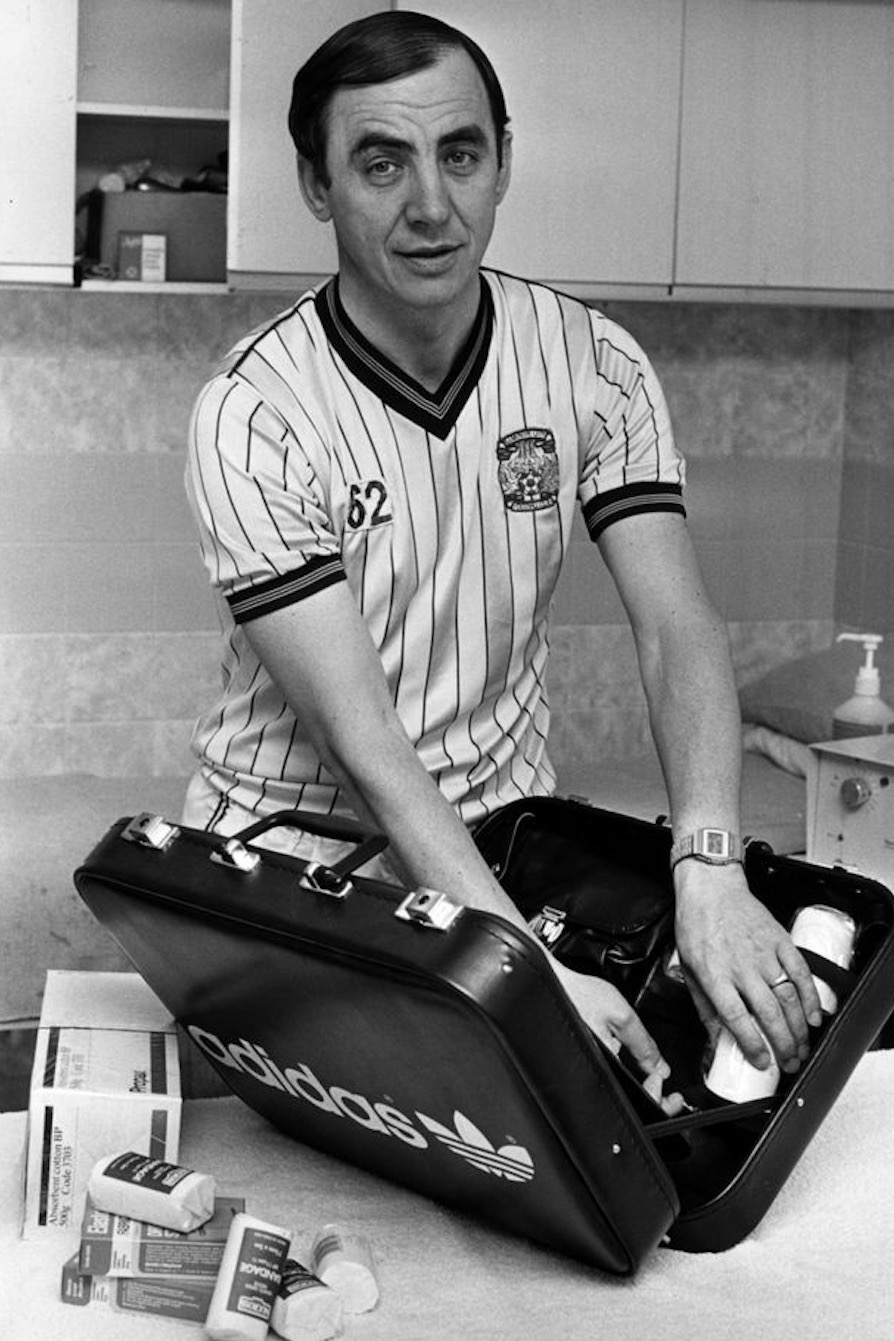
“George Dalton, our physiotherapist, was magnificent with me,” he said. “He kept saying my leg was going to be like a twig and I’d have to rebuild the muscles and learn to walk again.

“My Mum and Dad thought it was career over, but, the way I think about it now, I was so lucky because there weren’t that many options for me and I had to play football.

“George’s own career was ended by injury. He was a very good footballer when he trained with us so, when I broke my leg, he really took care of me and was superb.

“I couldn’t thank him enough and all George had was the sponge and two machines in the treatment room, the electric currents and the ultrasound, that was it.

“He worked miracles down the years with players and, if it wasn’t for him, I would not have played until I was 37. I owe him a lot.”

Garry’s praise for Dalton was echoed by Paul Dyson, who spent prolonged periods in the treatment room with ankle and back injuries during his teenage years. “George was a real character. We all had a lot of time for him and he tended a lot of us through our respective injuries.

“He used to drive us to the hospital in his Morris 1100 and had a great left foot. He’d played left-back for Newcastle United before his own career was ended by injury. There were the two machines in his room and he used to have ice cubes on sticks in his freezer.”
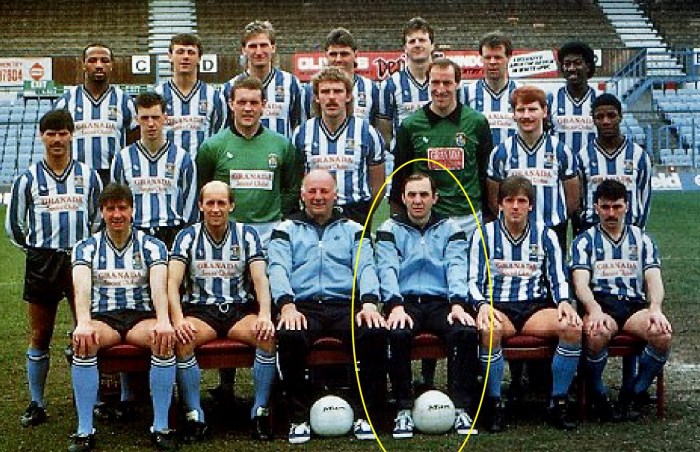
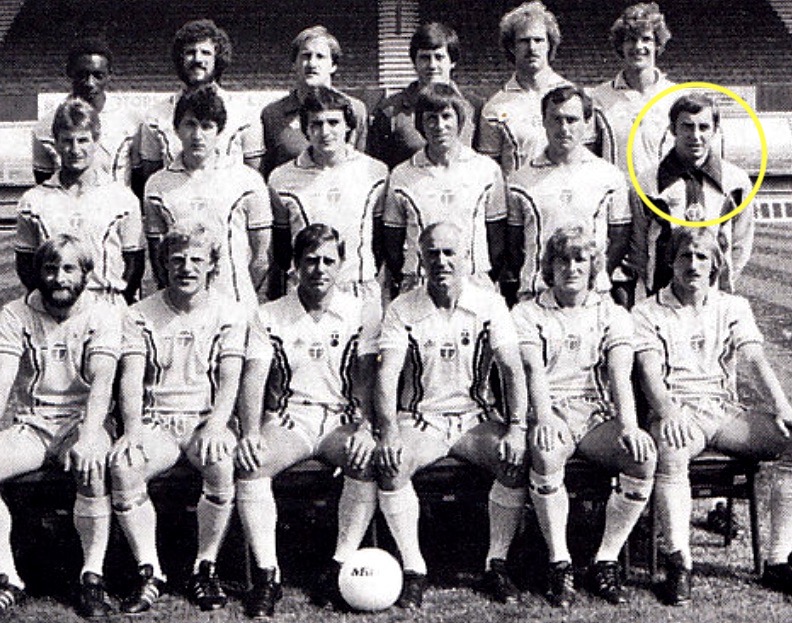
Dalton alongside boss John Sillett in the front row of this Coventry squad picture

Scottish international winger Tommy Hutchison was another admirer. “He was a smashing lad, George, very old-school. He suffered no fools and could always tell if a player was injured or not.

“In our days broken legs did finish careers, along with knee ligament injuries, and George rehabilitated so many players at Coventry. There was no squad rotation as you wanted to stay in the team and play every week because if you didn’t someone else would step in to take your place and you wouldn’t be able to get back in.”

Midfielder Andy Blair added: “George was a great physiotherapist, a terrific calming influence and a great man to have around.”

Experienced full-back Mick Coop was another who appreciated the physio. “George really was a lovely man who worked injured players very hard in the gym to get them back on to the pitch,” he said. “He was very quiet but did his job well and garnered a lot of respect off the playing squad. I can’t speak highly enough of him.”

Dalton keeps in touch with many of his former colleagues through the Coventry City Former Players’ Association, which has reported how he returned to live in Newcastle in retirement.

* Pictures from matchday programmes and various online sources.

Cobblers hero Mike Everitt started out with the Gunners

CONTACTS made as a youngster at Arsenal stood versatile Mike Everitt in good stead for the rest of his career.

He went on to play under his former Gunners teammate Dave Bowen at Northampton Town as part of one of football’s most remarkable stories and earned a place in the Cobblers’ ‘team of the century’.

Later, he joined a small enclave of former Arsenal players at Brighton. Everitt swapped Devon for Sussex in March 1968 when he moved from Plymouth Argyle for a £2,500 fee.

The man who signed him, Archie Macaulay, was a former Arsenal man himself who’d already brought three other ex-Gunners to Hove in goalkeeper Tony Burns, Irish international full-back Jimmy Magill and winger Brian Tawse.

Everitt started the new season as first choice left-back in Macaulay’s side and an uninterrupted 14-game run in the team as autumn turned to winter straddled Macaulay’s departure and the arrival of new boss Freddie Goodwin.

Everitt slotted home a penalty as Albion drew 1-1 away to Bristol Rovers on 18 January 1969 but the 3-1 home win over Crewe Alexandra the following Saturday was his last outing of the season.

Everitt, Howard Wilkinson and Dave Turner from this Albion line-up all went on to become coaches

He picked up an injury and, with Goodwin having signed his former Leeds teammate Barrie Wright from New York Generals, local lad John Templeman able to fill either full-back slot, not to mention the addition of Eddie Spearritt from Ipswich Town, Everitt couldn’t win back his place in the starting line-up.

Competition for a starting place only intensified in the summer of 1969 when Goodwin’s former Leeds teammate, Willie Bell, arrived from Leicester and was installed as the regular choice at left-back, while Stewart Henderson cemented the right-back slot to the extent he was named Player of the Season.

While Everitt deputised for Bell on a couple of occasions and filled Bobby Smith’s midfield spot for four matches, his only other involvement was as sub on a handful of occasions. He was a non-playing sub in the final game of the season (a 2-1 home defeat to Mansfield Town) and then left the club during the close season.

Born in Clacton on 16 January 1941, Everitt represented Essex Schoolboys and London Schoolboys before being taken on as an apprentice by Arsenal in 1956. He turned professional in February 1958 and, thanks to the excellent records of thearsenalhistory.com, we know that he first played in the first team in the Harry Bamford Memorial match at Eastville against a Bristol XI on 8 May 1959.

He then went on Arsenal’s end-of-season tour to Italy and Switzerland. He was an unused sub for friendlies against Juventus and Fiorentina but came on as a substitute in a 4-1 win over Lugano of Switzerland on 24 May 1959.

Everitt (circled back row) lines up for Arsenal – with (left to right trio in centre of front row), David Herd, Tommy Docherty and Jimmy Bloomfield

It wasn’t until Easter 1960 that he made his competitive first team breakthrough, but when he did it was a baptism of fire in George Swindin’s side.

He made his first team debut in front of 37,873 fans packed into Highbury on Good Friday (15 April 1960) as the Gunners beat a Johnny Haynes-led Fulham side 2-0.

Modern day players might not be able to comprehend it but Everitt also played the following day when Arsenal travelled to Birmingham City, and lost 3-0. Two days later, away to Fulham this time, Everitt was again in the starting line-up as Arsenal lost 3-0.

He kept his place for the following Saturday’s match – at home to Manchester United – and in front of 41,057 he was part of the side that beat United 5-2. Future Albion teammate Alex Dawson led the line for a United team that included Bobby Charlton and Johnny Giles.

That was the penultimate game of the season and Everitt retained his place for the final game, which ended in a 1-0 defeat to West Brom at The Hawthorns.

The 1960-61 season got off to a good start for him too as he played in the opening four matches and, into the bargain, scored Arsenal’s only goal as they beat Preston North End at home on 23 August. Unfortunately for him, a tigerish Scot called Tommy Docherty edged him out of the first team picture and in February 1961 he moved to Fourth Division Northampton Town (for a fee of £4,000) who were managed by the aforementioned Bowen.

His stay with the Cobblers spanned one of the most remarkable stories in football history as they were promoted season on season from the Fourth to the First….and then relegated all the way back down again (although Everitt had left for pastures new before they reached the basement again).

What he was part of, though, was achieving three promotions in five years. Glenn Billingham recalled that heady era in a 2017 article for thesefootballtimes.co.

In 1961-62, Everitt was a regular at wing-half and scored five goals in 41 appearances. He switched to left-back the following season and played 30 matches as Town went up as champions.

A season of consolidation in 1963-64 saw Town finish 11th in Division Two, when Everitt played 45 matches. He played in 43 games in the 1964-65 season which culminated in the historic promotion to the top-flight courtesy of finishing in runners up spot, a point behind champions Newcastle United.

Necessary investment in improving the squad was slow to materialise and Bowen initially had to rely on the same squad of players who’d got them up. Everitt was one of only five Town players who had previously played at that level.

A 5-2 defeat away to Everton in the opening fixture was perhaps a portent of what was to follow for the rest of the season. They didn’t record a win until their 14th game, at home to West Ham (when they won 2-1), but the underdogs performed heroics in their first two home matches. It must have been quite an occasion when in only the second game of the season Everitt lined up in the Northampton side to face Arsenal.

The game finished 1-1, although Everitt had to be replaced at half-time. However, he also played in the return fixture at Highbury which also finished in a 1-1 draw.

Town also drew 1-1 at home to Manchester United, stifling the attacking threat of Best, Law and Charlton, although United exacted revenge at Old Trafford where they dished out a 6-2 thrashing. Charlton got a hat-trick, Law scored a couple and John Connelly was also on the scoresheet.

Everitt made 34 appearances (plus one as sub) that season and scored two goals, one in a rare win, in the penultimate game, when the Cobblers beat Sunderland 2-1 (the Wearsiders scorer was Neil Martin, who later played for the Albion). Graham Carr (father of comedian Alan Carr) played 30 times for the Cobblers that season.

Back in the second tier, Everitt featured in 17 games but as Town plummeted straight through the division, he moved on to Plymouth Argyle in March 1967, where his former Arsenal teammate Jimmy Bloomfield had moved to from West Ham. Everitt was still only 26 when he made his debut in a 1-0 home defeat to Wolverhampton Wanderers. After 31 games for Argyle, he made the move to Brighton.

Everitt had already gained his preliminary coaching badge when still a player and after leaving Brighton in 1970 he initially moved to Plymouth City as player-manager. Within months, he seized the opportunity to move up a level when he landed the player-manager role at then Southern League Wimbledon.

In a January 2010 interview in The Guardian, it was revealed the two candidates he beat to land the position were David Pleat, who went on to manage Luton, Leicester and Spurs, and his former Albion teammate Howard Wilkinson, who won the league title with Leeds United.

Pleat recalled: “The director, Stanley Reed, went for Mike and Howard ended up at Boston United while I was eventually appointed by Nuneaton Borough in the Southern League.”

A few eyebrows were raised in 1973 when Everitt was appointed manager of newly-relegated Brentford just seven days before the start of the 1973-74 season, taking over from Frank Blunstone, who’d left to become youth team manager at Manchester United.

Greville Waterman, on a Bees fan blog, said Everitt polarised opinion, declaring: “He was undoubtedly a cheap option and received little support from the directors (now where have we heard that before) and did his best with a wafer thin squad.”

A classic example saw defender Stewart Houston sold to Manchester United for a club record £55,000 in December 1973, but the money wasn’t immediately reinvested in the squad.

Nevertheless, Waterman pointed out: “His approach did not go down well with some of his players and he brought in a number of tough bruisers. Under his management, Brentford declined rapidly, fell to the bottom of the Football League and barely escaped the need to apply for re-election.”

Legendary Brentford defender Alan Nelmes was particularly disparaging about Everitt. He didn’t have the technical expertise that Frank had and you felt as if the club wasn’t going anywhere with him. Frank was very advanced in his thinking, ahead of his time, really, and it was a step backwards to have Mike.”

Everitt finally got some backing from the boardroom on transfer deadline day. Experienced forward Dave Simmons was brought in from Cambridge United and former Everton and Southampton defender Jimmy Gabriel from Bournemouth and a 10-match unbeaten run from mid-February to early April did enough to assure the Bees avoided bottom spot even though their finishing position of 19th was their lowest position for nearly 50 years. Crowds were hovering around only 5,000 too.

It didn’t get much better the following season and in spite of getting a vote of confidence in November 1974 from new chairman Dan Tana, Everitt only lasted a few more weeks in the hotseat.

Ironically, after a poor start to the campaign, he’d begun to turn results round and lifted the side to a mid-table position on the back of four wins and a draw in a seven-game spell between late November to mid-January, but he was sacked on 16 January and replaced with John Docherty, who’d only packed up playing for the Bees the previous summer.

Everitt’s next role came as a coach (pictured above) under his old Arsenal pal Bloomfield at Leicester City, and former winger Len Glover came up with an amusing reminiscence on lcfc.com.

Glover recalled when he was 17 playing against Everitt for Charlton Athletic against Northampton.

“He had massive thighs, and had his sleeves rolled up. In the first five minutes he had kicked me when the ball was nowhere near, and now he was our coach!

“He was just the same when he was our coach. When he started, he gathered us round at the training ground. His opening gambit was, ‘You don’t know me, and I don’t know you, but we will soon change that!’

“Then he noticed Frank Worthington who was not with the group but was with the apprentices who were crossing the ball for him to volley like they did every morning. He went, ‘Oi, get over here!’ Frank went, ‘Yeah, in a minute’. Instead of saying, ‘Over here, now!’ Everitt just went, ‘Well, hurry up then’.

“Before Everitt left we went to Leeds and we got stuffed 3-0. After the game Birch (Alan Birchenall) was doing his hair with his hair dryer. Win or lose he would always do his hair. Mike Everitt came in and said, ‘It’s a pity you’re not as good with the ball as you are with that hair dryer!’ Birch replied, ‘If I was as good with the ball as I am with the hair dryer, I wouldn’t be playing for Leicester!’”

After leaving Leicester, Everitt managed Kuwaiti side Al-Shabab when another former Arsenal teammate, George Armstrong, was manager of the Kuwaiti national side (Armstrong’s daughter, Jill, posted a picture of them in Kuwait on Twitter in 2019).

Jill Armstrong posted this picture on Twitter of her with dad George and Everitt in Kuwait

After Kuwait, Everitt managed Cairo-based Egyptian teams Al Mokawloon and Al Ahly, the club Percy Tau joined in the summer of 2021.

According to Wikipedia, Everitt had particular success at Al Mokawloon, winning the 1982-83 Egyptian Premier League title and two African Cup Winners Cups.

• Pictures from matchday programmes and online sources.

Villa cup winner and captain Pat Saward led Albion to promotion

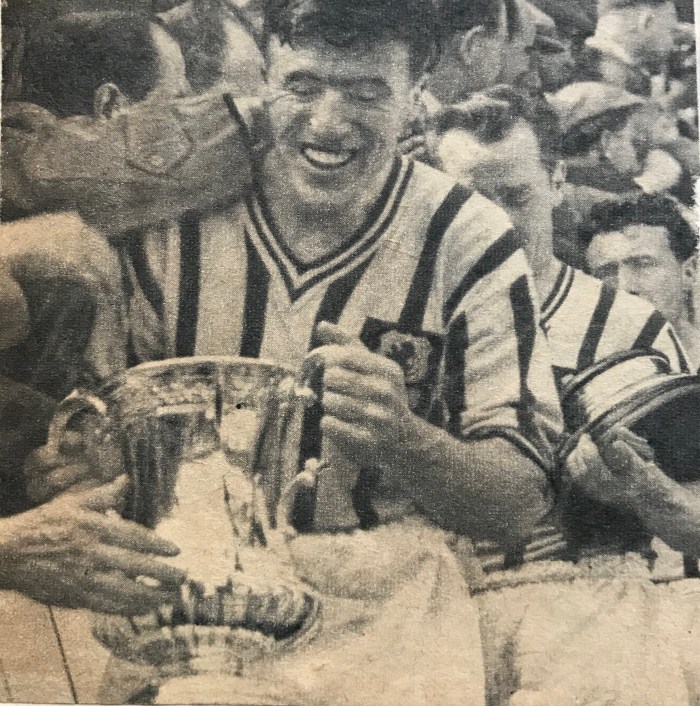
A FORMER Aston Villa captain and 1957 FA Cup winner steered Brighton to the first promotion I witnessed on my Albion journey.

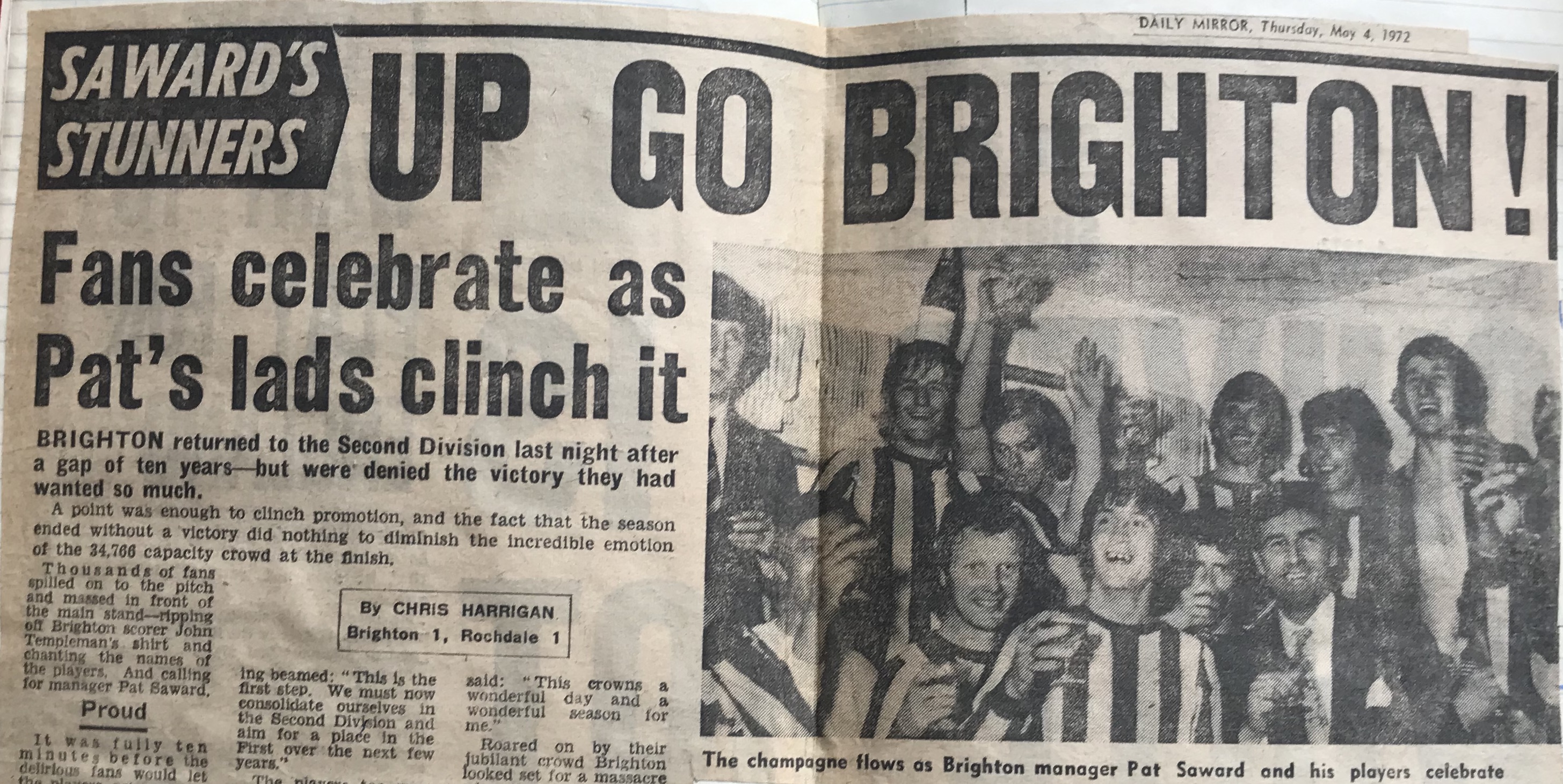
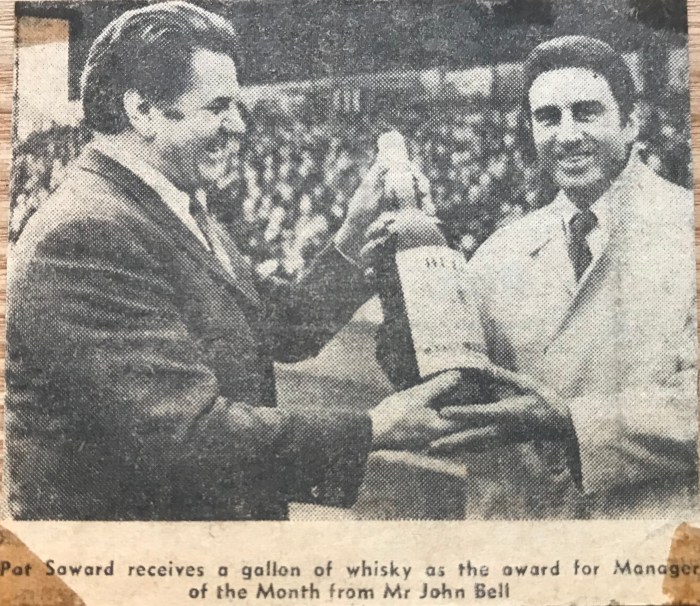
Genial Irishman Pat Saward, who lived in my hometown of Shoreham during his time as Albion boss, galvanised a squad not expected to be promoted from the third tier and took them up as runners up behind his former club in 1972.

As the champagne flowed in the Goldstone Ground home dressing room, Saward took centre stage surrounded by his blue and white stripe-shirted heroes.

When the promotion tilt had looked like faltering, he’d been bold enough to make drastic changes to the side before a top of the table clash with Villa in front of the Match of the Day cameras. After a memorable 2-1 win in which Willie Irvine scored a goal later judged as the third best in the programme’s Goal of the Season competition, Saward added to his squad on transfer deadline day, bringing in Northern Ireland international Bertie Lutton from Wolves and Ken Beamish from Tranmere Rovers, described in the Official Football League Book as “stocky and packed full of explosive sprinting power, a terrific shot and great appetite for the game”.

Saward told the publication: “They were both last ditch signings and Ken made an astonishing difference. I spent only £41,000 in getting my promotion side together so we were very much Villa’s poor relations in that sense.”

The manager put the success down to: “Dogged determination to succeed from all the players. We stamped out inconsistency. I got rid of ten of the players I inherited and got together a team built on character. That’s the key quality, apart from skill of course.”

However, hindsight reveals the club wasn’t really ready for the higher division and some have suggested Saward broke up the promotion-winning squad rather too hastily. Players he brought in who were used to the level now known as the Championship struggled to gel, and the manager turned to rather too many loan signings.

A mid-season run of 13 consecutive defeats was Albion’s undoing and a glamour FA Cup tie at home to First Division Chelsea in early January 1973 gave a welcome respite from the gloom.

Ahead of the match, Saward opened his heart to Daily Mirror reporter Nigel Clarke, revealing that he couldn’t understand why the side had struggled so much.

“I wish I knew. But I’ve learned more about football these last few weeks than at any other time in my career.

“We are five points behind the next club but I must be the luckiest man in the league. There are no pressures on me,” he said, explaining that supporters were still writing to him, backing him and the team.

“When we came up from the Third Division, I was so big-headed, so confident. I thought with the right results we could go straight through to the First Division. I really did.

“There was spirit and ambition here – and there still is….that’s how this club gets you. My heart is in the place.”

Saward revealed that he had turned down two better paid jobs in the First Division to stay at Brighton after the promotion win, telling Clarke: “What I want is importance, appreciation, understanding and love…not being kicked up the backside and put under the lash.

“Adulation is false. I’ve found my oasis at Brighton and I’m wealthy the way I want to be – in feeling.”

Although the Chelsea game ended in another defeat, fortunes eventually changed the following month – but the damage had been done and Brighton went straight back down.

A defiant Saward promised to blood more youngsters like Steve Piper and Tony Towner, who’d done well when drafted in and Piper, in a matchday programme article, said of him: “Saward was more of a coach than a man-manager, very suave and sophisticated. He knew his football from his days at Coventry.”

However, when results didn’t improve on the return to third tier level, and with a new, ambitious chairman – Mike Bamber – at the helm, Saward was sacked and replaced with the legendary Brian Clough.

Albion’s hierarchy had turned to the untried Saward in the World Cup summer of 1970 after Birmingham City poached Freddie Goodwin from Brighton to replace Stan Cullis as their manager. It was second time lucky for Saward, who’d applied to succeed Archie Macaulay two years previously when Goodwin pipped him to the post.

“Give me ten years and I’ll have Brighton in the First Division,” Saward declared when appointed. Prescient words considering they made it within nine – although it came six years after he’d parted ways with the club.

There’s little doubt Saward was an innovative football man and a popular figure during the first two years of his reign.

Apart from success on the pitch in the 1971-72 season, the way he involved fans in helping him to improve the side also proved a winner.

His buy-a-player appeal was a direct attempt to involve the supporters in the affairs of their club and Saward led a sponsored walk on Brighton seafront as one of the initial events geared towards generating funds to help him compete in the transfer market.

“Too many people spend too much time shouting about how hard up their club is, and too little time fighting to improve the situation,” Saward said in an article for the April 1971 edition of Football League Review. “You never get success if you sit around. You must have courage, even audacity, and work hard for survival.”

The first funds generated provided Saward with the money to bring in experienced Bert Murray from Birmingham City, initially on loan, and then permanently. Murray would go on to be voted Player of the Year in 1971-72.

Another player who signed on loan at the same time as Murray was Preston’s Irvine, who recalled in his autobiography, Together Again, how Saward wooed him.

“Pat sold me the place with his charm and persuasive ways,” he said, describing the former male model as “extrovert, infectious and bubbly”.

He added: “Pat Saward was a gem of a manager and a pleasure to play for. He said what he thought, but never offensively; in a matter-of-fact, plain-speaking kind of way, rather than aggressively.”

Irvine continued: “Saward had the knack of making people feel important. He instilled pride and a sense of identity…..Pat loved attacking, entertaining football and worked tirelessly for the club. I would have run through that proverbial brick wall for him.”

As Brighton neared promotion, Irvine said: “Saward, with a joke or a smile, an arm around the shoulder or a bit of geeing up, knew just how to keep a dressing room happy or dispel any tension or nerves.”

Sadly, Irvine’s opinion of Saward shifted dramatically when, during the summer, the manager told him he intended to bring in a replacement – although it was three months before he eventually signed Barry Bridges from Millwall.

Saward and new signings Barry Bridges (left) and Graham Howell

Irvine was in the starting line-up at the beginning of the season and scored six times in 13 league and cup games, but, once Bridges arrived in October, his days were numbered, and, before the year was out, he was sold to Halifax Town in part exchange for Lammie Robertson.

Saward had already dispensed with the services of Albion’s other main promotion season scorer, Kit Napier, along with his former captain, John Napier.

Irvine said that once Albion were promoted, Saward changed. “He seemed to become unapproachable, or at least he did to me, and where once I could see him whenever I wanted, now I seemed to have to book an appointment two or three days in advance. We all had to.”

Teammate Peter O’Sullivan, who had repaired his relationship with Saward after some difficult early exchanges which saw the Welshman transfer-listed, also witnessed a change in the manager.

“We had one or two players who were over the hill and Pat just lost the plot. It was grim,” he told Spencer Vignes in A Few Good Men.

Albion’s tier two fortunes were picked over in some detail in a feature reporter Nick Harling compiled for Goal magazine.

“I didn’t foresee the snags and the type of league the Second Division was,” Saward told him. “It’s the hardest division of the four. Everyone is fighting either to stay in or get out.

“It’s a hell of a hard division. It’s a mixture of the First and Third. It’s good and very hard football. They don’t give you an awful lot of time to play.

“It’s a division governed by fear because to drop out of it is not good, while to get out at the top is fantastic. I didn’t believe the gap would be so different.

“Teams are so well organised and supplement their lack of ability with tremendous defensive play. It’s very hard to get results.”

While open and honest, they didn’t sound like the words of a manager very confident of finding a solution, and Saward sought to explain part of the problem when he said: “To me the most important thing is the attitude of mind. Players should have an arrogant attitude, an attitude that they’re going to do well even when the chips are down. But some types are destroyed. These are the ones who succumb and want to rely on other people.

“Here we’ve got some great boys, but I wish to God some of them had more determination.”

Bamber was resigned to relegation but nonetheless confident of where the club was heading. “There’s no doubting it – First Division here we come,” he told the magazine.

Saward added: “I haven’t lost any enthusiasm. I’ve had my hopes dampened slightly, but one overcomes that.

“This club has got to be built for the future. I want to put Brighton on the map.”

Sadly, when Albion’s poor form at the start of the 1973-74 season continued, Saward publicly admitted: “I haven’t any more answers. I am in a fog.”

Unsurprisingly, the Albion’s directors interpreted it as a loss of confidence and sacked him.

It’s front page news on the Evening Argus as Saward is sacked

Saward never managed in the English game again, although he coached in Saudi Arabia for a while.

Born in Cobh, County Cork, on 17 August 1928, Saward lived in Singapore and Malta during his childhood, before the family moved to south London.

His first club was Beckenham FC before he turned professional with Millwall in 1951. He made 118 appearances for the Lions in the next four years.

Saward was 26 when Eric Houghton signed him for Villa for £7,000 in August 1955. The legendary Joe Mercer took over as Villa manager in 1958.

Pat enjoyed a goalscoring debut with his new club, hitting the final equalising goal in a 4-4 draw with Manchester United at Villa Park on 15 October 1955. But he struggled to oust left half Vic Crowe and made only six appearances that season.

In Crowe’s absence through injury the following season, Saward became a regular, making 50 appearances.

Saward (right) descends the steps at Wembley as a FA Cup winner with Aston Villa

In total, Saward played 170 games for Villa between 1955 and 1960, most notably featuring in their FA Cup winning team in 1957. Villa beat Manchester United 2-1 in the final at Wembley Stadium in front of a crowd of 99,225, Peter McParland scoring twice to win Villa the Cup for a seventh time.

Saward made only 14 appearances as Villa were relegated from the top-flight in 1959 but he was back in harness as captain when they made a swift return as Second Division champions in the 1959-60 season.

In his final season, he made just 12 appearances, his last coming on 22 October 1960 in a second city derby, Villa beating Birmingham 6-2. The following March, he was given a free transfer and moved on to Huddersfield Town.

Saward in the stripes of Huddersfield Town

He had first been selected for the Republic of Ireland on 7 March 1954 in a World Cup qualifier in which Luxembourg were beaten 1-0, and he went on to make 18 appearances for his country, the last, on 2 September 1962, coming when he was 34: a 1-1 draw away to Iceland in Reykjavík.

He played twice against England in World Cup qualifiers in 1957, a 1-1 draw and a 5-1 defeat, when he was up against the likes of Duncan Edwards, Johnny Haynes and Stanley Matthews, and in the same competition against Scotland, in 1961, when the Irish lost 4-1, and his teammates included Johnny Giles.

After 59 appearances for the Terriers, he dropped out of the league but acquainted himself with Sussex when moving to Crawley Town.

Jimmy Hill signed him for Coventry as a player-coach in October 1963 and although he made numerous reserve team appearances, he really made his mark as a coach and was responsible for the rapid development of City’s youth team in the 1960s.

Saward (left) with assistant manager Alan Dicks and Jimmy Hill at Coventry City

Willie Carr and Dennis Mortimer were just two of several first teamers who made it under his guidance. He stepped up to first team assistant manager when his former Eire teammate, Noel Cantwell, was appointed boss in 1967.

Not long after his switch to the Goldstone, Saward picked up one of his former Sky Blues proteges, Ian Goodwin, initially on loan, and then permanently, and eventually made him Albion captain. The rugged defender’s arrival was remembered in an Argus article.

When Saward died on 20 September 2002 following a period when he’d suffered with Alzheimer’s, an excellent Villa website pieced together a detailed obituary. His career is also recorded on the avfchistory.co.uk site.

Saward was laid to rest in the same Cambridge cemetery as his brother Len, a forward who played a total of 170 games for Cambridge United between 1952 and 1958, scoring 43 times. He went on to serve the club behind the scenes in their commercial department.

Pictures from my schoolboy Albion scrapbook and various online sources.
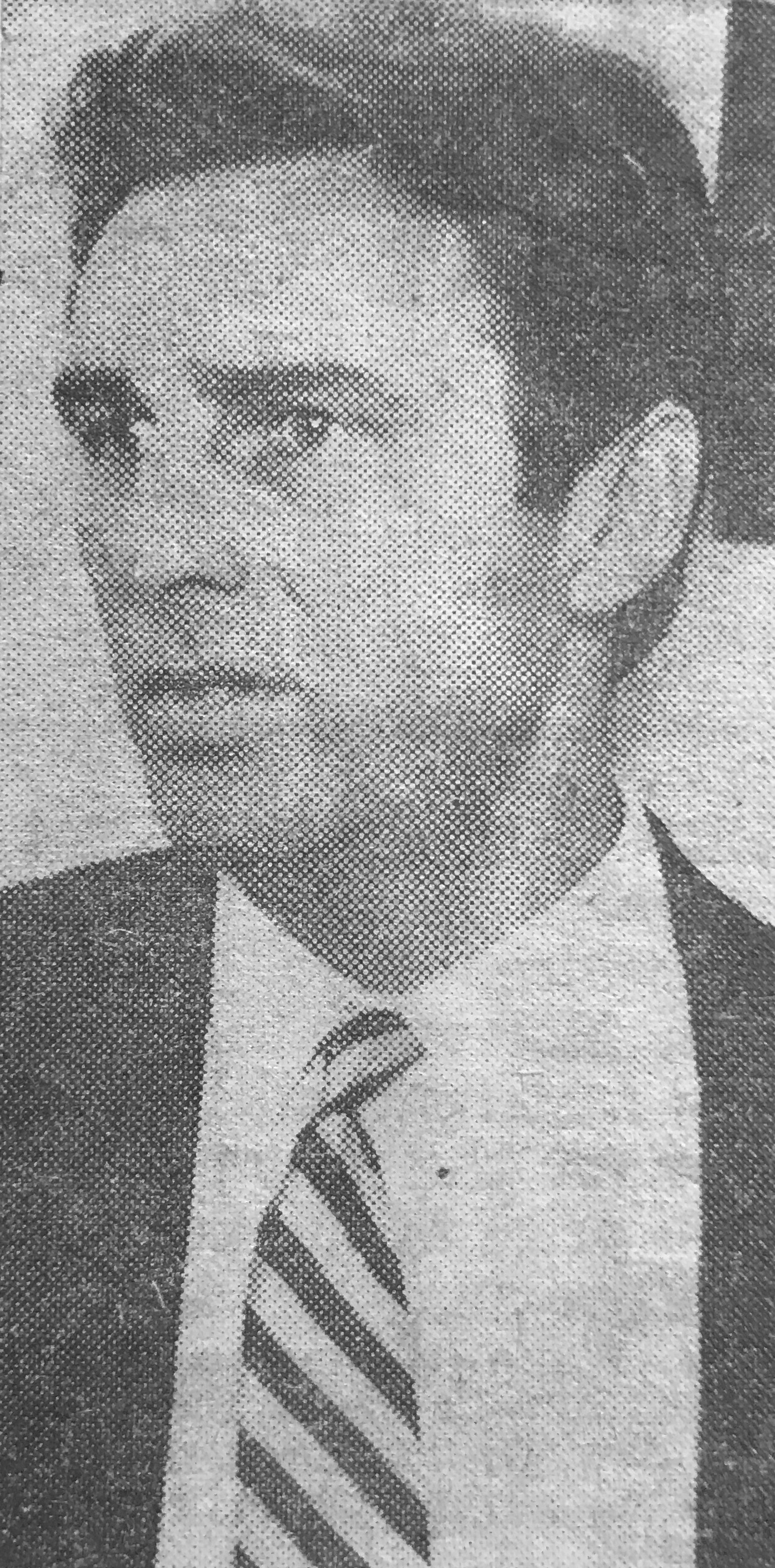
The luck of the Irish eluded striker Graham Barrett

GRAHAM Barrett did his level best to impress when new boss Steve Coppell took charge for the first time at Withdean.

The on-loan Arsenal forward put in an inviting cross from the right wing for Gary Hart to score midway through the first half of the 19 October 2002 game against Sheffield United.

Barrett himself then got on the end of a precision pass from Bobby Zamora out wide on the left to put Albion 2-0 up in the 34th minute.

Unfortunately, the young forward’s contribution was overshadowed by events at the other end of the pitch in the second half. Firstly, the Blades hit back through Michael Brown and then substitute Carl Asaba equalised.

Referee Phil Prosser became the villain of the peace by awarding United two penalties in the final four minutes of the game, both converted by Asaba.

The first was given when Prosser reckoned goalkeeper Michel Kuipers had brought down Asaba in the box; the second when Adam Virgo pushed over Wayne Allison in the penalty area.

“Albion fans were so incensed by Prosser’s first penalty decision that several hundred left their seats in the south stand to protest from the running track,” The Argus reported. “Police and stewards gathered in front of them to prevent the threat of a pitch invasion.”

Even Albion-supporting MP Ivor Caplin got in on the act, subsequently calling for an FA inquiry into Prosser’s “totally inept” display. Needless to say, that went nowhere.

Barrett, meanwhile, was far less impressive the following Saturday when he and his temporary teammates were thrashed 5-0 by Crystal Palace at Selhurst Park.

He started 20 games for the Albion in that season, as well as making 10 substitute appearances – but that single strike against Sheffield United was his only goal.

g barrett stripesBorn in Dublin on 6 October 1981, Barrett was one of several Irish youngsters who began their football careers with Arsenal having been spotted by ex-Albion boss, and fellow Irishman, Liam Brady, playing in an Ireland U15s game against England at Blackburn.
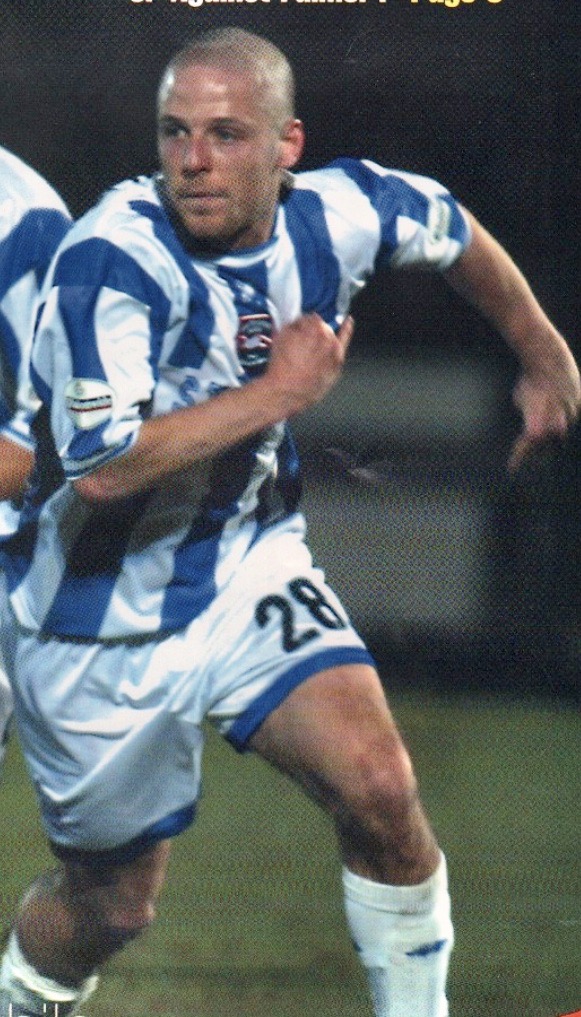
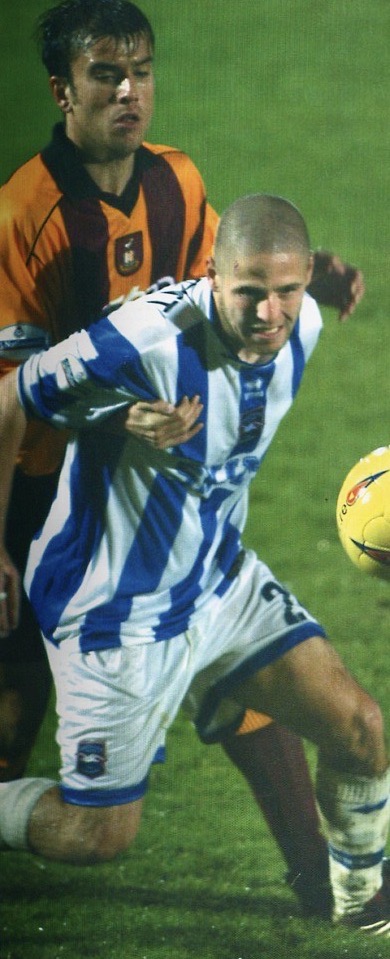
Brady had become Arsenal’s head of youth development and academy director after his spell at Brighton. Barrett agreed professional terms with Arsenal in 1998 and went on to captain their FA Youth Cup winning team of 2000.

He earned a call-up to the Republic of Ireland’s under 21 team and went on to play 24 times at that level, scoring five goals. Between 2002 and 2004, he stepped up to the full Eire side and scored twice in six matches.

Barrett managed to break through to the first team squad at Arsenal in December 1999 and made his debut as a substitute for Thierry Henry in a 3-0 win over Leicester City. The following month, again as a substitute, he appeared in a 4-1 win over Sunderland, and he also played in a league cup match.

“I was around the first team for a good four or five months, travelled a lot with them and got to train every day with them, played a little bit,” Barrett told the42.ie, in an April 2018 interview.

Facing stiff competition for a first team place, Barrett was sent out on loan to gain playing time at a lower level. He went to Bristol Rovers but only managed one game before being struck down with glandular fever, causing him to be out of the game for six months.

When he’d recovered, he went on loan to Crewe Alexandra and Colchester United who had wanted him back for the 2002-03 season, but he opted to join Brighton instead.

With little chance of dislodging the likes of Bergkamp, Henry, Wiltord and Suker at Arsenal, Barrett was given a free transfer by Arsenal in May 2003 and opted to join Coventry City on a three-year contract.

graham barrettAlthough he made 32 league starts plus 23 as a sub, ex-Albion boss Micky Adams made it plain he didn’t fit into his plans. He went to spend the last year of his contract on loan at Livingston in Scotland but after only six games suffered a season-ending knee injury.

He subsequently stayed in Scotland and played for Falkirk and St Johnstone before returning to Ireland to play for Shamrock Rovers, who his dad, Gary, had played for in the Eighties under Johnny Giles.

Barrett is now a director of football agency Platinum One, representing the interests of young players.

Gerry Ryan – ‘a special player and one of football’s nice people’

THERE WAS no shortage of tributes paid to Gerry Ryan when the former Albion winger died at the age of 68 on 15 October 2023.

Fellow Irish international Liam Brady, who appointed Ryan as his assistant when he took charge of the Seagulls in 1996, said: “Gerry was a wonderful team-mate. He was a very quick winger, very brave, and he took people on.

“We had some great games together and then we ended up on opposite sides, for Brighton and Arsenal, in the old First Division.”

Although Ryan and Brady’s time in charge happened during a turbulent time off the pitch, Brady pointed out: “We did a pretty good job in what were, of course, difficult circumstances, and I could see then just what Brighton meant to him – he was in love with the club so much.

“Off the pitch, Gerry was just a really nice guy. He was affable, unassuming and got on with everyone he came in contact with.”

That sentiment was echoed by teammate Gordon Smith who told the Albion website: “Gerry was always fired up to play.

“He was not always first choice, but he was still a very good player. He had this ability to be able to turn games around because he was quick and he could score goals.

“He was so reliable – he could fit into any position with his levels of fitness, ability and positional play.

“We were a very close group; we socialised a lot, we played golf, went to the races and Gerry was a key part of that – he was a really good laugh.”

Turlough O’Connor, another former team-mate, from his early days playing for Bohemians in Dublin, told the Irish Independent: “He was the most easygoing guy you’d ever meet, very laidback and always in a happy mood, and a very good footballer as well.

“He was comfortable both left and right, very good on the ball, and very quick, which helped. A very good crosser, he went by people, and was always a threat. He helped so many times laying on goals for me.”

Ryan was one of the most likeable Albion players for a huge number of fans, and I was one of them.

A versatile trier who was good enough to represent the Republic of Ireland on 18 occasions, the wholehearted Ryan might not make it into the all-time best Brighton XI but, if it was judged on affability, his name would be first on the team sheet.

A cruel twist of fate saw his career ended in a tackle made by his Irish teammate (and former Albion boss) Chris Hughton’s brother, Henry. Typically, Ryan bore no grudges, as stressed by former Argus Albion reporter John Vinicombe in an article published in May 1986 when the genial Irishman finally accepted that his career was over.

Describing “the immense dignity and true manliness that Ryan displayed in refusing to condemn or indeed utter any harsh word against the player responsible,” he added: “Where others have sued and raged, slandered, cursed and threatened, Ryan said nothing.”

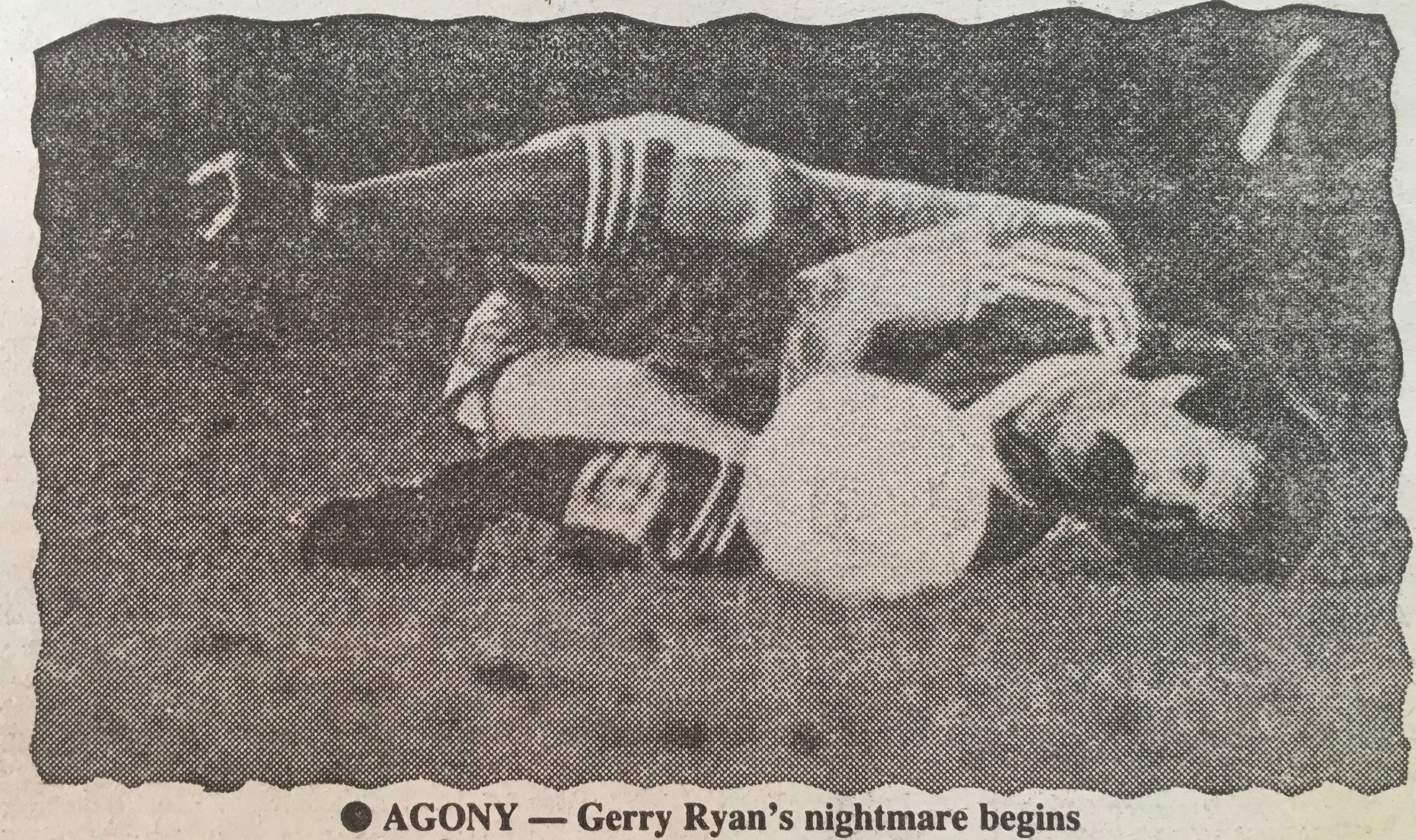
GR leg break

It was 2 April 1985 when his career was ended by that Hughton tackle in a 1-1 draw with Crystal Palace at Selhurst Park.

“Never in his life has he shirked a tackle and the one that ended his career so unfortunately at Crystal Palace was typical of many he faced in his career,” said Alan Mullery, the manager who signed him for the Seagulls.

“As a person, he is a lovely and typical Irish personality,” Mullery said in the programme for the player’s testimonial game against Spurs at the Goldstone on 8 August 1986. “I can honestly say that I have never met a player who dislikes him or has a bad word to say about him. I will remember Gerry Ryan as being a special player and one of football’s nice people.”

Mullery also referred to a Sunday lunch he and his family had with Ryan and his wife at the time he signed. “When Gerry ordered roast beef and chips I must have known then that I had a very special sort of player. At the time, I was a little dubious but afterwards I had no regrets.”

Mullery had been over in Dublin watching Albion’s Mark Lawrenson playing for the Republic of Ireland and Derby’s Ryan was playing in the same side. He had been having talks about moving to Stoke City but Mullers persuaded him to join Brighton instead, and, in a strange quirk of fate, he made his debut in a 2-2 draw away to Stoke.

After they’d become teammates, Lawrenson was among those players appreciative of Ryan’s “mercurial” qualities. He said in a matchday programme: “He wasn’t the most confident of players but he had loads of ability. For a wide player, he would come in and get goals for you.”

GR capsA week after joining the Seagulls, Ryan became an instant hit with Albion fans when he scored on his home debut in a 5-1 win over Preston. He notched a total of nine goals in 34 appearances in that first season and went on to score 39 in a total of 199 games.

Born in Dublin on 4 October 1955, Ryan was one of eight children. His early education was at the local convent in Walkinstown, a suburb to the south of Dublin where the family lived. At the age of eight he moved on to Drimnagh Castle School (it covered primary and secondary age groups).

At that stage, he was playing Gaelic football and hurling, at which he was capped at under-15 level by Dublin Schools. He didn’t play competitive football until he was 16 when he was introduced to a Dublin football club called Rangers AFC. He played alongside Kevin Moran, who later played for Manchester United, and Pat Byrne, who later played for Leicester City. Byrne and Ryan also played together for Bohemians, the oldest football club in Dublin.

Ryan joined the Dublin Corporation as a clerical officer on leaving school and played for Bohs as an amateur initially before becoming a part-timer on professional terms. By 18, Ryan was a first-team regular and, after collecting a League of Ireland Championship medal, was watched by Manchester United boss Tommy Docherty.

Docherty didn’t pounce then but, after Ryan had stayed four years with Bohemians, the ebullient Scot eventually returned to take him to England as his first signing for Derby County for a fee of £55,000.

The newly-appointed Docherty was determined to shake-up the club and while long-serving goalkeeper Colin Boulton was discarded along with striker Kevin Hector, Ryan, Scottish internationals Bruce Rioch and Don Masson, and Terry Curran and Steve Buckley were all introduced.

Ram Ryan

Ryan spoke about the way Docherty’s attitude towards him changed in an interview with Brian Owen of The Argus in 2016.

“One minute you were the blue-eyed boy, the next he wouldn’t even talk to you,” he said. Ryan made a hamstring injury worse by playing when Docherty insisted he was fit enough, and ended up sidelined for three months. “He didn’t like me then! That’s the way he was, he would turn on you, and he turned on me.”

Within a year, Docherty accepted Brighton’s £80,000 offer for Ryan and, as he was weighing up whether to choose the Seagulls or Stoke City, Ryan consulted the legendary Republic of Ireland and ex-Leeds midfielder Johnny Giles to ask his opinion.

“Gilesy said ‘Stoke have been in and out of the First Division forever but there is something going on down at Brighton. They get great crowds and it’s a beautiful place.’ I went to Brighton that weekend and absolutely loved it,” Ryan told Owen.

It was on 25 September 1978 winger Ryan arrived, prompting the departure of popular local lad Tony Towner after eight years at the Albion.

Five months before Ryan arrived at the Goldstone, he made his international debut, featuring for the first time in April 1978 in a 4-2 win over Turkey at Lansdowne Road. He only scored once for the Republic, but it was a cracking overhead kick in a 3-1 defeat against West Germany.

Ryan Eire

He was one of four regular Eire internationals playing for Albion at the time: Lawrenson, Tony Grealish and Michael Robinson the others.

His final appearance for his country came in a 0-0 draw against Mexico at Dalymount Park in 1984.

Ryan was part of some all-time history-making moments during his time with the Albion – scoring at St James’s Park in the 3-1 win over Newcastle on 5 May 1979 to clinch promotion to the top division for the first time, and burying the only goal of the game as unfancied Albion beat Brian Clough’s European champions Nottingham Forest, who’d previously not lost at home for two and a half years.

Ryan scoresMy personal favourite came on 29 December 1979 at the Goldstone when he ran virtually the entire length of a boggy, bobbly pitch to score past Joe Corrigan in the goal at the South Stand end to top off a 4-1 win over Manchester City. Ryan himself reckoned it was “the best goal I ever scored” as he recounted in a May 2020 BBC Sussex Sport interview with Johnny Cantor.

It was one of the most superb individual goals I saw scored and, when he was trying to recuperate from the horrific leg break which ultimately ended his career, I wrote to him in hospital to say what a special memory it held for me.

I was delighted to receive a grateful reply from him, and he has held a special place in my Albion memory bank ever since.

There were other stand-out occasions, two of which came against Liverpool:

in February 1983 at Anfield when he opened the scoring in Albion’s memorable 2-1 FA Cup triumph en route to the final, and, in the following season, at the Goldstone when he and Terry Connor were on target in Second Division Albion’s 2-0 win over the Reds in the same competition, the first-ever live FA Cup match (other than finals) to be shown (previously any television coverage of FA Cup ties was only ever recorded highlights).

If the modern-day reader can’t quite put the feat in perspective, it is worth pointing out that Liverpool, managed by Joe Fagan, went on to win the League Cup, the League title and the European Cup that season.

Danny Wilson hadn’t long since joined the Albion and, in an interview with the Seagull matchday programme in 2003, he recalled: “That has to be my favourite memory from all my time at the Goldstone. Back then, Liverpool were just awesome, and to beat them like we did was virtually unheard of.”

Ryan’s involvement in the 1983 Cup run was hampered by a hamstring injury which meant he missed out on the semi-final. But, in the days of only one substitute, he was on the bench for the final and, when the injured Chris Ramsey couldn’t continue, Ryan went on at Wembley and did a typically thorough job at right-back.

GR prog snow

Following Albion’s relegation, as the big-name players departed the Goldstone, Ryan’s versatility and play-anywhere attitude came to the fore and, in his last two seasons with the club he was often selected as a centre-forward, although he was not a prolific goalscorer from that position.

After he was forced to quit playing, Ryan took what was then quite a familiar route for ex-players and became a pub licensee, running the Witch Inn at Lindfield, near Haywards Heath. Ryan and goalkeeper Graham Moseley, who he’d known from his days at Derby, were neighbours in Haywards Heath.

GR pots

However, when another of his former Republic of Ireland teammates, Liam Brady, was appointed Albion manager in 1994, it was an inspired choice for him to appoint Ryan as his assistant.

When that all-too-brief managerial spell came to a messy close, Ryan returned to his pub, and then moved back to the family home in Walkinstown. Ryan’s son Darragh played 11 games for the Albion in the late 1990s.

Sadly, in August 2007, Ryan suffered a stroke, and three years later he was diagnosed with kidney cancer. On his death, his family paid tribute to the care he was given by the staff of Our Lady’s Hospice, Harold’s Cross and to the staff of Lisheen Nursing Home, Dr Brenda Griffin, the Beacon Renal Unit, Tallaght, and Tallaght Hospital Renal Unit “for the excellent care given to Gerry over the past number of years”.

Pictures from a variety of sources but mainly from my scrapbook, the matchday programme and The Argus.

Goal machine Frank Stapleton ended his playing days in a Brighton shirt

stapleton stretch

FRANK STAPLETON hit the heights as a goalscorer for Arsenal and Manchester United but his prize-winning playing days came to an end in a Brighton & Hove Albion shirt.

Stapleton was the scorer of the first top flight goal at the Goldstone Ground – unfortunately, it was the opener in Arsenal’s 4-0 win in 1979! He was also one of the Manchester United scorers in the 1983 FA Cup Final against Brighton, having moved to Old Trafford two years earlier (above, however, he just fails to connect for Arsenal against Brighton with Steve Foster and Gary Williams looking on).

His two appearances for Brighton came in 1995 when his old pal Liam Brady brought him in to try to improve the front line of an ailing side.

Born in Dublin on 10 July 1956, the promising young Stapleton was rejected by United as a teenager but the Gunners reaped the benefit of that decision by snapping him up at the tender age of 15 on chief scout Gordon Clark’s recommendation.

Arsenal’s confidence in the prospects for the promising young Irish duo were reflected in a Goal magazine article of 7 October 1972 in which boss Bertie Mee talked about them as future first team players. At the time, they were still part of the club’s junior ranks, aged just 15 and 16.

goal cutting

Mee said: “Brady is almost established as a regular in the reserve side. He needs building up but has the potential to become a first-team player. Stapleton has made quite an impact in his first season and, providing he maintains a steady improvement, he could also follow the path of Brady.”

It was only Brady’s second season and Clark, the Arsenal chief scout who unearthed him, said, at first, he thought he would be better suited to becoming a jockey because he was so small and frail!

He quickly changed his mind when he saw his ability with a football. “He was like a little midget but he had so much confidence. He’s really shot up now and although he’s still not very tall, he’s strong enough to hold his own,” said Clark.

Stapleton, at 15, joined Arsenal in the summer of 1972 and quickly developed a reputation as a goalscorer, netting 11 goals in seven games.

“Frank is tall and very good in the air,” said Clark. “He seems to get up and hang for the ball. He is also very good on the floor and reads the game intelligently for a youngster.”

As expected, Stapleton progressed to the first team and made his debut in 1975 against Stoke City. He initially formed an impressive partnership with England striker Malcolm Macdonald and in three successive seasons was Arsenal’s leading goalscorer.

Such prowess brought him to the attention of the Republic of Ireland international selectors and player-manager Johnny Giles gave him his full debut aged just 20 in 1976 against Turkey in Ankara.

It was the first of a total of 71 caps for his country, during which time he became their captain and scorer of 20 goals. He led Eire when they famously beat England 1-0 at the Euro 1988 finals in Germany. Although he was part of the 1990 World Cup squad – alongside former Albion boss, Chris Hughton –  he was by then behind Niall Quinn, John Aldridge and Tony Cascarino in the pecking order.

Stapleton was part of Arsenal’s three successive FA Cup final teams (1978, 1979, 1980), scoring against United in Arsenal’s 3-2 win in 1979.

When the Gunners sold Brady to Juventus in 1980, Stapleton started to question the club’s ambition and, the following year, on expiry of his contract, decided he would move on himself.

He had scored 108 goals in 300 appearances for Arsenal – some strike rate! – and it wasn’t a popular move to join a major rival in the same division, but he wasn’t the first or last player to have done so.

In the Sixties, United had taken David Herd from the marble halls of Highbury to lead their line and, of course, in more recent times, United signed Alexis Sanchez.

stapleton utd

When Robin van Persie made the same transfer switch from Arsenal to Manchester United in 2012, the Daily Mail took Stapleton back 30 years to talk about the circumstances of his own move.

Stapleton was Ron Atkinson’s first major signing for United and in his first season was partnered up front with Garry Birtles. Stapleton was the leading scorer for United in that first season, with 13 goals in 41 league games.

Subsequently, his main strike partner was the Northern Ireland international, Norman Whiteside.

img_4637

Stapleton scored United’s first goal, a 55th minute equaliser, in the 2-2 Cup Final draw against Brighton: one of 19 he notched during the 1982-83 season in which he played in 59 of United’s 60 games.

By the end of the following season, Stapleton’s regular strike partner was Mark Hughes and he scored in the 1985 FA Cup semi-final against Liverpool to set up yet another Wembley appearance, this time collecting his third winners’ medal when Whiteside’s winner beat Everton.

Despite a good start to the following season, with Stapleton once again amongst the goals, poor league form eventually cost Atkinson his job and his successor, Alex Ferguson, began rebuilding the side.

After six years at United, Stapleton, by then 30, was amongst those to be let go, and he was sold to Ajax of Amsterdam, lured by the fact they were managed by Johan Cruyff. But the move failed to live up to expectations, as detailed by the42.ie, and he ended up having a spell on loan at Anderlecht.

It was the first of a series of moves which didn’t really work out for him, although in the 1988-89 season he found himself playing in France alongside fellow Irish international – and future Brighton striker – John Byrne for Le Havre.

stapleton 4 derby

Derby County offered him a platform back in the UK game and he featured 10 times for them in 1987-88 and, after his stint in France came to an end, he spent two seasons with Blackburn Rovers.

He played once for lowly Aldershot and five times for Huddersfield Town before landing a player-manager’s post with Bradford City. In three years at Valley Parade, he made 68 appearances before the axe fell, and he answered Brady’s call for help at the Goldstone Ground.

The brilliant The Goldstone Wrap detailed his brief involvement in a March 2015 post, explaining how he featured as a substitute in a 0-0 draw at home to Bournemouth and started in a 3-0 defeat away to Cardiff City.

It was a final swansong for his playing career, as he looked to get back into coaching or management. He had two stints working under his former United teammate Ray Wilkins: at QPR and, in 2014, with the Jordan national side.

Stapleton spent eight months in 1996 as the first head coach of American Major Soccer League side New England Revolution, of Massachusetts.

His last appointment in the English game was briefly as a specialist striker coach at Bolton Wanderers, appointed during Sam Allardyce’s reign, in 2003-04.

Nowadays, Stapleton is more likely to be found talking about his illustrious career, his availability for bookings listed by football-speakers.com.

Imperious Mark Lawrenson starred at Brighton before hitting Liverpool heights

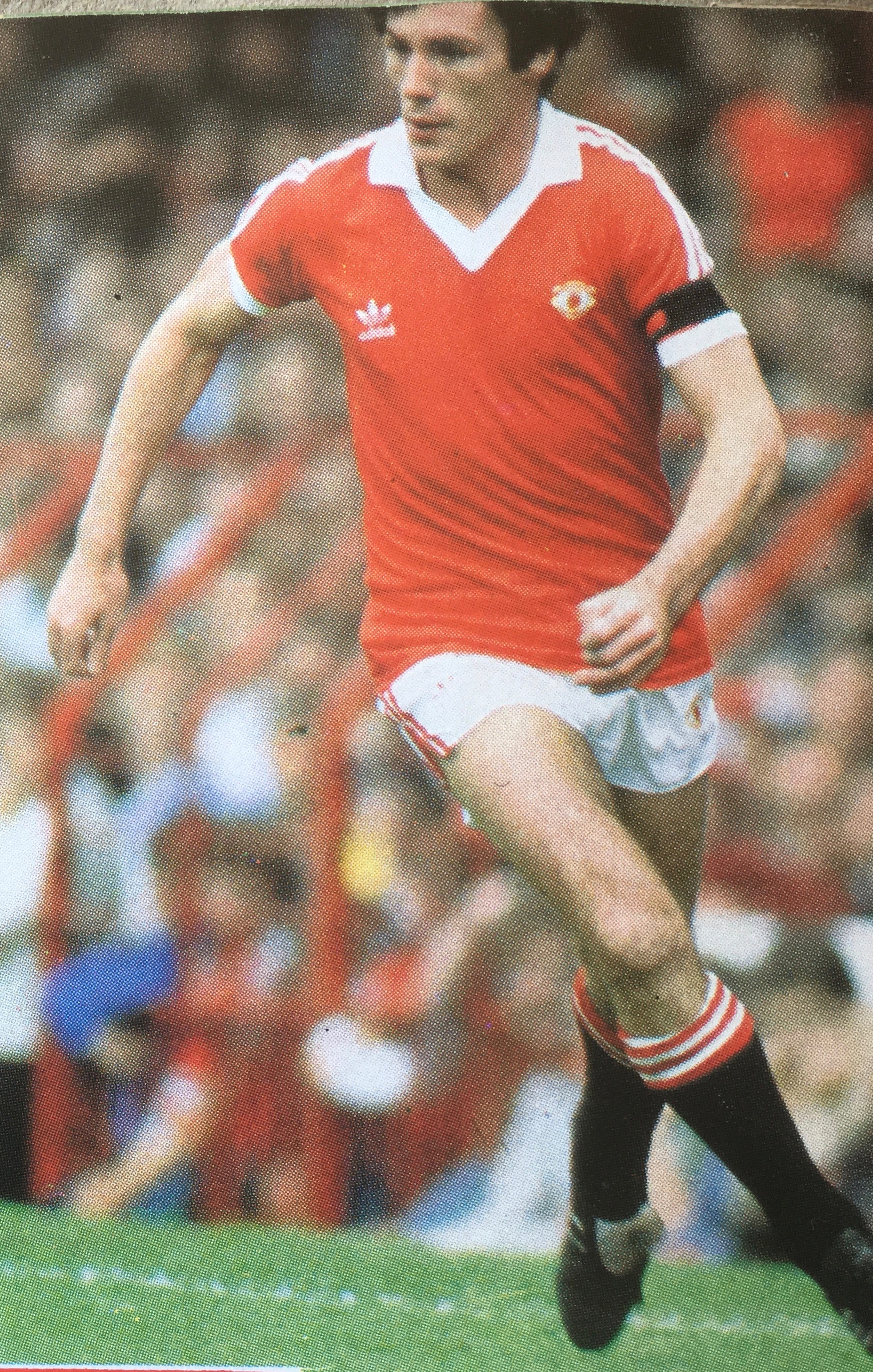
MARK LAWRENSON was without doubt in my mind the best player ever to play for Brighton and Hove Albion. Peter Ward was exceptional but Lawrenson did it for Brighton and went on to have a glittering career with Liverpool, the top club in the country at the time.

And, whatever your thoughts about his contribution as a pundit – and many are very disparaging – you can’t take away his longevity on our TV screens and across our media.

Although now slightly less prominent as a TV pundit, for a good many years, Lawrenson reprised his successful Liverpool central defensive partnership with Alan Hansen in the BBC Match of the Day studios.

But where did it all begin? Born on 2 June 1957 in Penwortham, Lancashire, Lawrenson joined nearby Preston at 17 in 1974, who at the time were managed by the legendary Bobby Charlton.

Lawrenson made his full debut for the Lilywhites the following year, two months before his 18th birthday. However, it was Charlton’s fellow World Cup winner, Nobby Stiles, to whom Lawrenson was most grateful.

“I was a winger when I joined Preston, while he was coach, and he was the one who converted me to my present position – in the middle of the back four,” Lawrenson told Keir Radnedge in Football Weekly News.

“Nobby was very good with the youngsters. He was almost like a father-figure. He commanded respect not only because of what he’d achieved himself but because of the way he’d help iron out your faults.”

At the age of 19, and thinking he’d never be good enough to play for England, Lawrenson opted to play for the Republic of Ireland when player-manager Johnny Giles (perhaps not coincidentally, Nobby’s brother-in-law) found out that he qualified to play for them through his grandfather.

That debut for Ireland in April 1977, in a 0-0 draw with Poland, came at the end of a season in which he was voted Preston’s Player of the Year.

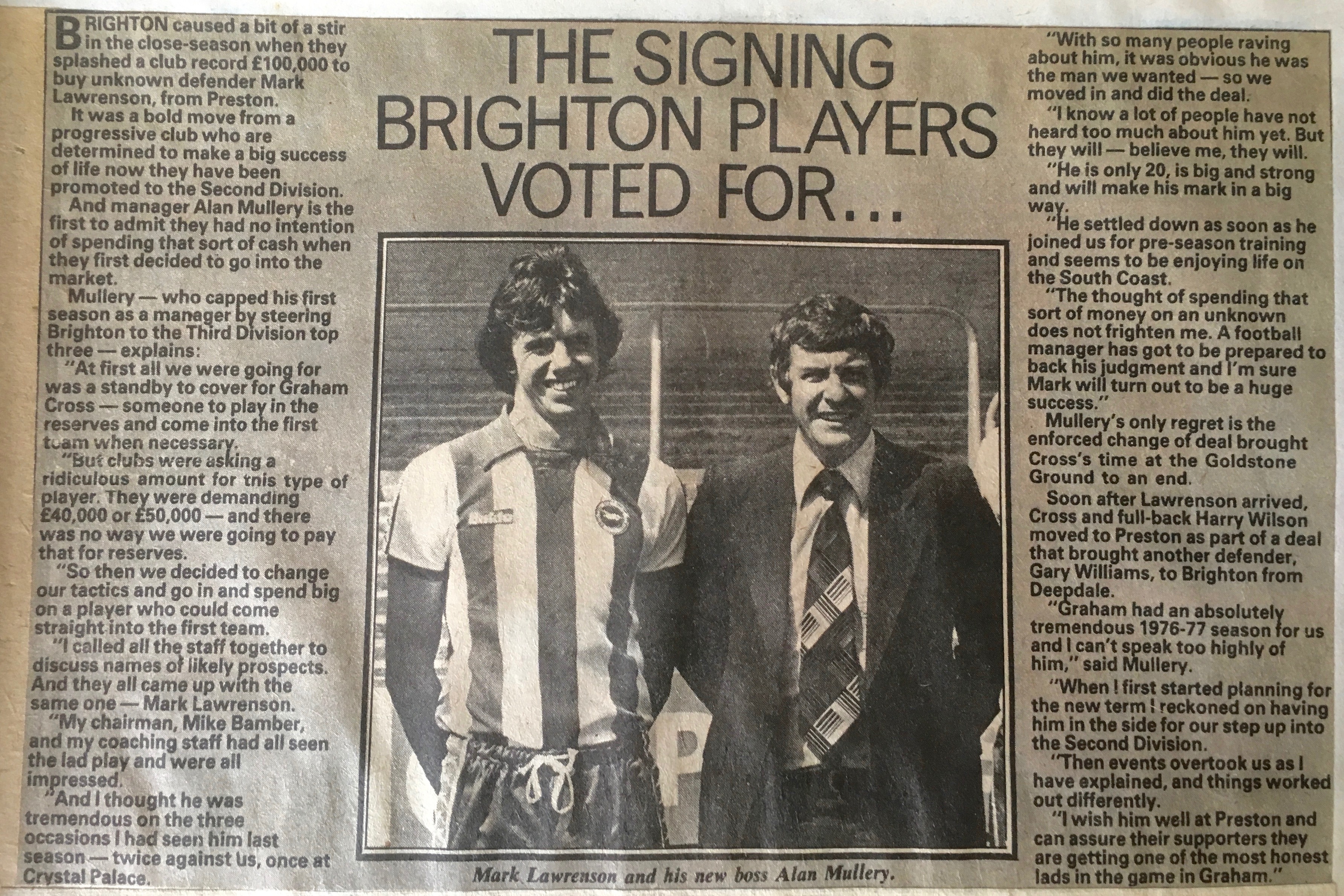
Within weeks, he joined the Albion for £112,000 (£100,000 + VAT @ 12 per cent) after Brighton manager Alan Mullery persuaded Albion to outbid Liverpool to get their man.

Shoot article

Mullery recalled in his 2006 autobiography how he had taken the board of directors to see Lawrenson perform superbly in an end-of-season game at Crystal Palace, where he marked their new star striker Mike Flanagan out of the game.

Lawrenson recollects how he was on an end-of-season ‘jolly’ in Spain with his Preston team-mates when Brighton chairman Mike Bamber and director Dudley Sizen turned up and ‘sold’ the club to him in a Benidorm beachside bar.

There was nearly a hitch in the deal when his medical showed high sugar levels in his blood – but it turned out he had been drinking blackcurrant-flavoured Guinness while on the Spanish holiday.

Mullery was building on the success of guiding the Seagulls to promotion from Division Three in his first season in charge, and the young defender replaced the experienced Graham Cross, who went to Preston in part-exchange.

Shortly after signing Lawrenson, Mullery told Shoot magazine: “I know a lot of people have not heard too much about him yet. But they will – believe me, they will. He is only 20, is big and strong and will make his mark in a big way.”

And, in his autobiography, Mullery said: “Any manager would love to have a player of Mark’s ability in their side. He had a calm, strong temperament, he never caused any problems and he always performed brilliantly on the field. His presence helped to lift the team to a whole new level of performance in the 1977-78 season.”

Lawrenson made his Brighton debut on the 20 August 1977 in a 1-1 draw against Southampton at The Dell and went on to make 40 league appearances by the end of his first season at the club.

The following season, when Albion went one better and earned promotion to the top division for the first time, Lawrenson was a stand-out performer. In his book, A Few Good Men, author Spencer Vignes said: “His timing in the tackle and ability to read the game belied his relative youth, but what really caught the eye was his skill on the ball, which, for a centre-back still earning his wages in English football’s second tier, was little short of remarkable.”

Skipper Brian Horton told Vignes: “The way he used to bring the ball out from the back had to be seen to be believed.”

In a special Argus supplement of April 1997, to mark Albion’s departure from the Goldstone, Lawrenson was interviewed by Mike Donovan, and told him: “The Goldstone was a great place to play and I was extremely happy there.

“It was an excellent team that played good football the way it should be played – by passing it around. Also, we had a great team spirit, mainly because a lot of the team were outsiders coming in and stuck together. We all played and socialised together.”

Unfortunately, Albion’s first season amongst the elite was only five games in when Lawrenson received a serious injury in a clash with Glenn Hoddle at White Hart Lane.

Badly torn ankle ligaments and a chipped bone was the diagnosis and it sidelined Lawrenson for 12 matches, although his absence created an opportunity for young Gary Stevens.

lawro yellowWhen Lawrenson was fit to return, Mullery sprung a surprise by utilising him in midfield, but it was an inspired decision and he stayed there for the rest of the season, helping Albion to finish a respectable 16th of 22.
He went on to make 152 league appearances by the end of 1980-81.

It was his sale to Liverpool in the summer of 1981 that was part of the reason Mullery’s reign at the club came to an end. Mullery had negotiated with Ron Atkinson to sell him to Manchester United with two United players coming to Brighton as part of the deal.

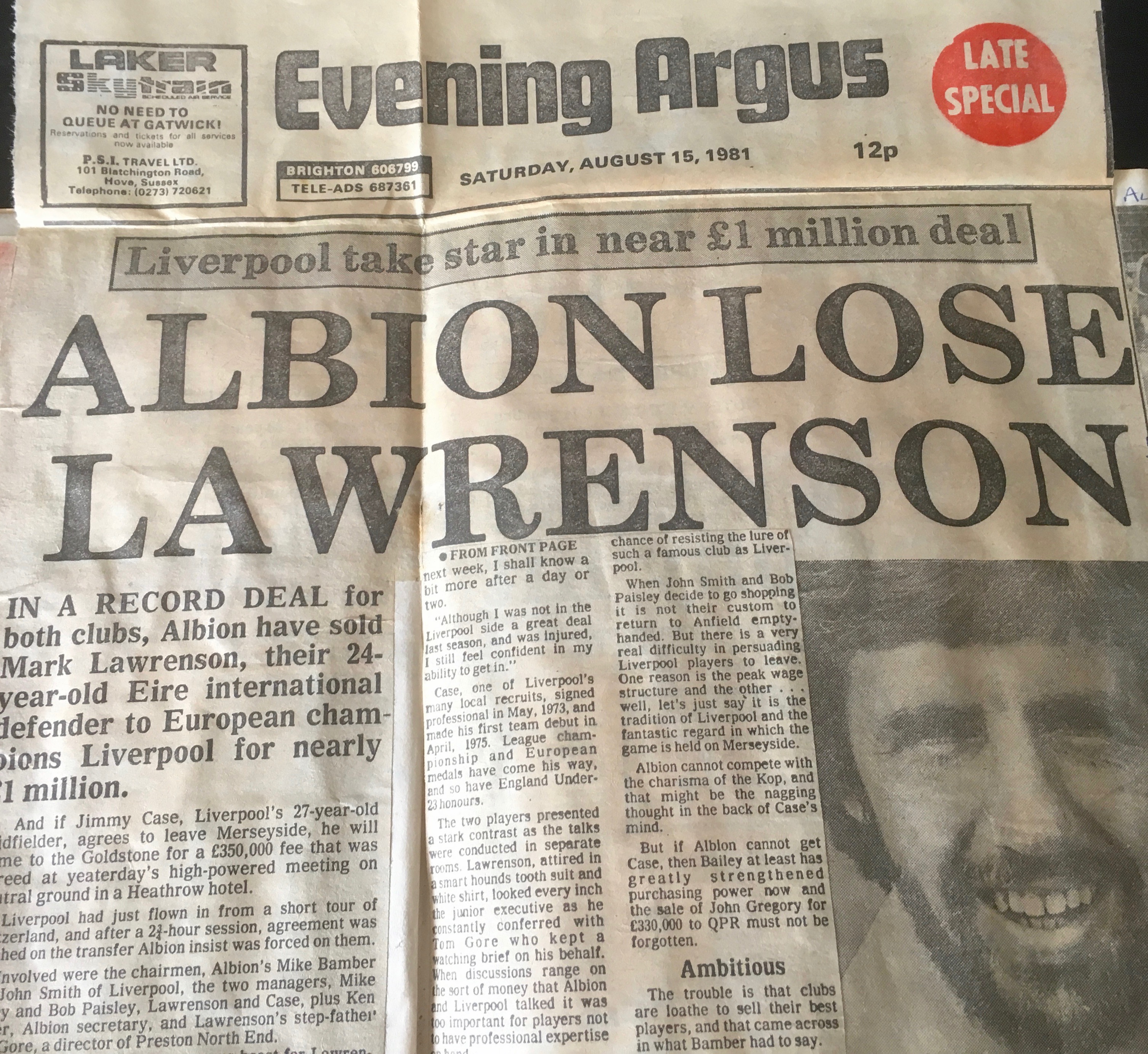
But, behind his back, chairman Bamber had been talking to Liverpool and, in exchange for what was then a Liverpool club transfer record of £900,000, he was destined to be heading back to the North West with midfielder Jimmy Case coming South as part of the deal.

Interestingly, though, Lawrenson revealed in his autobiography how new manager Mike Bailey had actually made him Albion captain, but then asked him how he saw his future, which sowed a seed of doubt about the club’s intentions.

“I don’t know if there was a financial crisis and they were looking for a big transfer fee from my sale to sort themselves out, but the uncertainty did unsettle me,” he wrote. Lawrenson was sent off in an ill-tempered pre-season friendly (against FC Utrecht in the Dordrecht Tournament) and put it down to his personal frustration.

“On our return flight, there was a message that Terry Neill of Arsenal was waiting to meet the chairman at Gatwick,” Lawrenson recalled. “Somehow they missed each other and the next day there was talk of me going to Manchester United.

“But then Mike Bailey asked me if I would meet Liverpool, and I travelled to the Aerial Hotel at Heathrow to meet Bob Paisley, Peter Robinson and Liverpool chairman John Smith.

“Terry Neill was, at the time, waiting in the next hotel in case discussions broke down. He missed out because it only took me 15 minutes to agree to move to Liverpool.

“I travelled North and had a medical at 11.30 at night. I even took the registration forms to the League offices myself, because they are only a few doors away from my mother’s home at St Annes.”

Argus front page

Lawrenson went on to form a formidable central defensive partnership with Hansen after England centre back Phil Thompson suffered an injury, but, as he had showed at Brighton, he was versatile enough also to play at full back or in midfield.

Indeed, Lawrenson made his first start for Liverpool at left-back in a 1-0 league defeat to Wolves. In his first season, Liverpool won the League championship and the League Cup. They won it again in 1982 and retained both for another two seasons, becoming only the third club in history to win three titles in a row. They also added the club’s fourth European Cup in 1984.

Many believed Lawrenson and Hansen were the best central defensive partnership in English football by the time Liverpool clinched the League and FA Cup “double” in 1986.

But Lawrenson was being put under pressure by young centre back Gary Gillespie and an Achilles tendon injury in 1988 prematurely ended his career after 332 appearances and 18 goals, although he earned a fifth and final title medal when that season ended.

Lawrenson tried his hand at management at Oxford United in 1988 but, in almost a mirror image of the situation over his own transfer from Brighton, he resigned after their star striker Dean Saunders, the former Albion player, was sold by the board of directors without Lawrenson’s blessing.

Lawrenson later managed Peterborough United for 14 months between September 1989 and November 1990, but it was a largely unsuccessful tenure.

Apart from one brief foray back into football as a defensive coach at Newcastle during Kevin Keegan’s first reign in the North East, Lawrenson’s involvement since has been one step removed as a pundit and newspaper columnist.

At the 2018 World Cup, Lawrenson particularly hit the headlines when many observed his cantankerous and sarcastic observations were just too much.

Never shy of voicing his opinions, they once led to him losing what at the time was a trademark moustache!

He was so convinced that Bolton would be relegated that he said live on Football Focus that he would shave it off if they proved him wrong, which they did!

In 2003, my friend Andrew Setten somehow blagged tickets which gave us the opportunity to go into the exclusive Football Association area at the FA Cup Final between Arsenal and Southampton at the Millennium Stadium and, all those years later, I finally got the chance to meet Lawro and to get his autograph.

• Pictures from Shoot magazine, cuttings from the Evening Argus and the matchday programme.

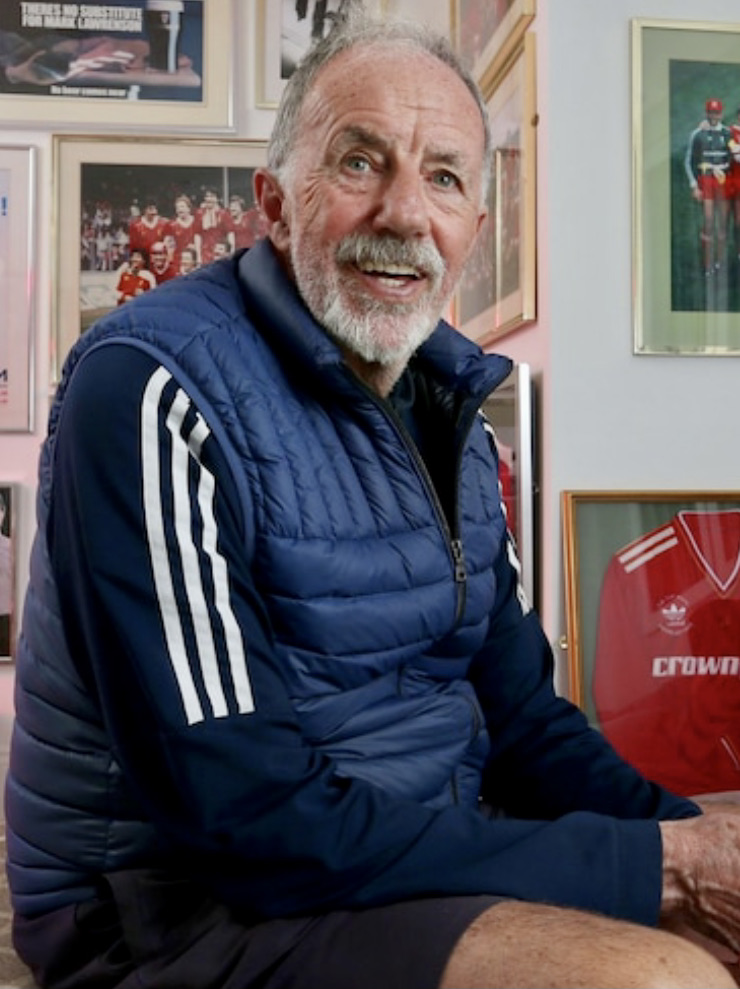
Lawrenson pictured in 2024

Dennis Burnett – England World Cup trio’s teammate – added finesse to Brighton’s defence

1newhamrecorder.co.uk

WITH all due respect to his predecessors in the number 6 shirt, Dennis Burnett was a classy addition to Brighton’s defence when he signed from Hull City in 1975.

At the end of his first season with Brighton, when they toyed with promotion from Division 3 but just missed out, Burnett was selected in the PFA Third Division Team of the Year, which said everything about his stature amongst his fellow professionals. Albion’s Peter O’Sullivan was also selected while the goalkeeper was Eric Steele, then with Peterborough, and Crystal Palace winger, and, future Brighton manager, Peter Taylor, was also in the XI.

Before 1975, Brighton fans had been used to seeing their centre halves hoof it, but Burnett play more in the style of another famous former West Ham number 6. OK, he might never have reached Bobby Moore’s level but he played alongside the great man for a while and came through the ranks at West Ham when they had a reputation for playing cultured football.

He started off in the West Ham youth team and was in the 1963 FA Youth Cup winning side alongside the likes of Harry Redknapp, Clive Charles, Bobby Howe and John Sissons.

Burnett made his first team debut for the Hammers as a 21-year-old in October 1965, along with Jimmy Bloomfield (the future Orient and Leicester manager), in a 3-0 defeat to Fulham at Craven Cottage. He made 24 league appearances in 1965-66, the most he managed in any one season for the Hammers.

In March 1966, he collected a League Cup runners-up medal playing right back in a side that lost 5-3 over two legs to West Brom. The team was captained by Bobby Moore, and included Martin Peters and Geoff Hurst, just four months before all three played in England’s one and only World Cup win.

Burnett went on to complete 66 league and cup appearances for West Ham.

Born in Southwark on 27 September 1944, perhaps it was no surprise his next stop was Millwall. West Ham sold him to The Lions in 1967 for £15,000, and the vast majority of his football career was spent at The Den, playing in the second tier.

Playing alongside Barry Kitchener at centre half and Harry Cripps at left back, he was part of a team that nearly made it to the First Division, particularly in 1971-72.

In a scene you would never get now in the mobile phone age, Millwall were leading Preston at home and the word went round The Den that rivals for promotion Birmingham were losing at Sheffield Wednesday. It looked like Millwall would be promoted to the elite for the first time in their history and the news spread to the players on the pitch.

Unfortunately, the rumour was completely wrong. Birmingham were leading, not losing. Club skipper Cripps had even gone round the Preston players telling them Millwall were going up but level-headed Burnett didn’t get carried away.

millwall-history.org records: On-the-field skipper Dennis Burnett was less convinced. “I wasn’t going to believe it until I knew for sure,” he said. “Those last few minutes were agonising. We played on in a dream. It was the longest 20 minutes ever for me.”

As the end of the game approached, the crowd jammed the touchline, waiting to cheer off the Millwall players. The pressure behind Millwall’s goal was so great that the woodwork began to buckle.
Centre-forward Barry Bridges
(who would join Brighton five months later) ran back to appeal to the fans to be patient. When the referee blew for the last time – suspiciously early – half the 20,000 crowd stormed on to the pitch. Cripps was carried aloft and some of the other players lost their shirts.

Finally the correct score from Hillsborough was announced and the crowd fell silent and faded away.

The following season, Millwall struggled near the bottom of the table and manager Benny Fenton moved Burnett into midfield.

“As a sweeper I was a bit restricted,” he told Goal’s Ray Bradley, who described him as “one of the most accomplished and stylish players outside the First Division”.

“I had to stay back and wasn’t so involved,” said Burnett. “ Now I find I can express myself more and go up in support of the attack.”

Unlike his illustrious former Hammers teammates, full international recognition eluded him but in April 1973 Burnett was part of an English FA squad managed by Sir Alf Ramsey that thrashed Gibraltar 9-0 in a ‘friendly’. Frank Worthington (of Leicester at the time) scored a hat-trick.

Hankering for another shot at top division football, Burnett went on to the transfer list at The Den. He got his move, but only to a club in the same division.

After clocking up 257 appearances for Millwall, in 1974, Terry Neill paid £80,000 to take Burnett to Hull City, where a young Stuart Pearson, future West Ham, Man Utd and England international was making a name for himself.

However, when Neill left to become manager of Spurs, his replacement John Kaye brought in his own man while Burnett was out of the side suspended. After losing his place, Burnett had a brief loan spell back at Millwall.

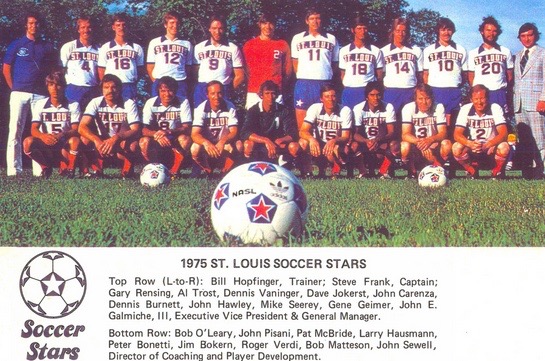
During the summer of 1975, he played 21 games in the States with St Louis Stars (for whom former Chelsea and England goalkeeper Peter Bonetti was playing) before Brighton manager Peter Taylor secured his services for the Seagulls.

In an article in Shoot incorporating Goal, Burnett explained how, although he’d been sidelined for two months with an ankle ligament injury, he’d got back in the side only to be sent off in a game away to Bristol City.

“It was a most unjust decision. Even the opposition seemed flabbergasted,” he said. “Anyway, I never played for Hull again. The signing of Dave Roberts from Oxford United put paid to my chances of a first team recall, following my suspension.

“Eventually, manager John Kaye called me into his office and asked if I wanted a move. A price of £30,000 was put on my head, later reduced to £15,000. No one came for me so in April I went to the United States and played for St Louis Stars in Missouri, a North American Soccer League club.

“While there I received another contract from Hull City, which I refused to sign. I lodged an appeal against it to the Football League Management Committee. Surprisingly they upheld it, and, during July, I received a letter to say I’d been given a free transfer.

“I arrived back in England on August 24th, made and received a number of ‘phone calls which resulted in my being offered a three-year contract by Brighton, plus excellent wages, which at the age of 31 was fantastic for me,

“Added to all this is the potential of Brighton in terms of location, players and attendances. It was a move not to be resisted.”

Burnett told the magazine he felt Brighton were much better prepared for promotion than Millwall had been. “Had we gone up, we would have needed a miracle to survive in the First,” he said. “At Brighton, we are winning matches without being fully stretched. The right blend is there and we can only get better.

“If I look after myself, I can get through another four or five seasons, by which time Brighton could be up amongst the big boys.”

Burnett was obviously a good judge because Brighton certainly got themselves up amongst the ‘big boys’ four years later – although by then he was no longer a part of it.

After a successful first season in which he developed a formidable central defensive partnership with Andy Rollings, and earned that placed in the PFA team of the year, perhaps there were signs that age was catching up with him.

In his end of season review in the Evening Argus, Albion reporter John Vinicombe observed: “Over the course of the season, the most improved player was Andy Rollings who profited by the experience of Dennis Burnett at his elbow.

“There were times when Burnett looked unflappable in the centre of the defence. As time wore on, and situations became more frenetic, that casual style, no doubt a legacy of his West Ham upbringing, now and again landed him in trouble.”

Maybe manager Taylor thought the same because one of the last things he did before quitting and rejoining Brian Clough was to sign veteran defender Graham Cross, which spelled trouble for Burnett.

Under new manager Alan Mullery, in the league at least, Cross was preferred alongside Rollings. Burnett deputised for Rollings when he was injured – for example, he played alongside Cross in the memorable 7-2 demolition of York City – and was given some games in midfield, but mainly in the League Cup he got the chance to shine.

He played in memorable games against First Division opponents Ipswich, West Brom and Derby, and was assured alongside Cross in the memorable narrow 2-1 defeat at the Baseball Ground in November 1976.

Vinicombe reported: “Cross and Burnett played coolly and neither looked out of place among the high-priced cream.”

He kept his place for a league game away to Port Vale five days later, but that 2-2 draw was his last in an Albion shirt.

In early February 1977, together with ex-Spur Phil Beal, he agreed a pay-off with the club and played non league with Ilford for the remainder of the season before returning to the States and another 19 games for St Louis Stars, where he was joined by former Albion teammate Fred Binney.

Mullery explained several years later in his autobiography that he had inherited a squad of 36 professionals and needed to prune the numbers. The older players were the obvious ones to go and, although Beal and Burnett went quietly, he had more truck dispensing with Joe Kinnear’s services – but that’s a story for another day.

On his return to these shores, Burnett headed for Ireland to play for Shamrock Rovers, at that time managed by the legendary Johnny Giles.

The defender subsequently played for three years in Norway, for SK Haugar, and popped up back in Sussex in 1994 as assistant manager of Sussex County League side Lancing, and played in a 2-1 defeat against Horsham YMCA in the FA Cup a month before his 50th birthday!

According to Wikipedia, Burnett ran a painting and decorating business in Sussex after he left football and was working in the hospitality suites at Upton Park before West Ham moved to the Olympic Stadium.

Pictured above are a Newham Recorder shot of Burnett in West Ham colours; in action for Millwall (from Goal), and in Albion’s stripes (from Shoot!). Below, an archive shot of the St Louis Stars side of 1975 with Burnett in the back row wearing the 18 shirt and Peter Bonetti in the centre of the front row.

back row burnett

Eire captain Tony Grealish swapped one Albion for another

1 main pic TG cover boyTHE PLAYER who led out Brighton at Wembley for the 1983 FA Cup Final against Manchester United was an experienced Republic of Ireland international who went on to play for West Bromwich Albion.
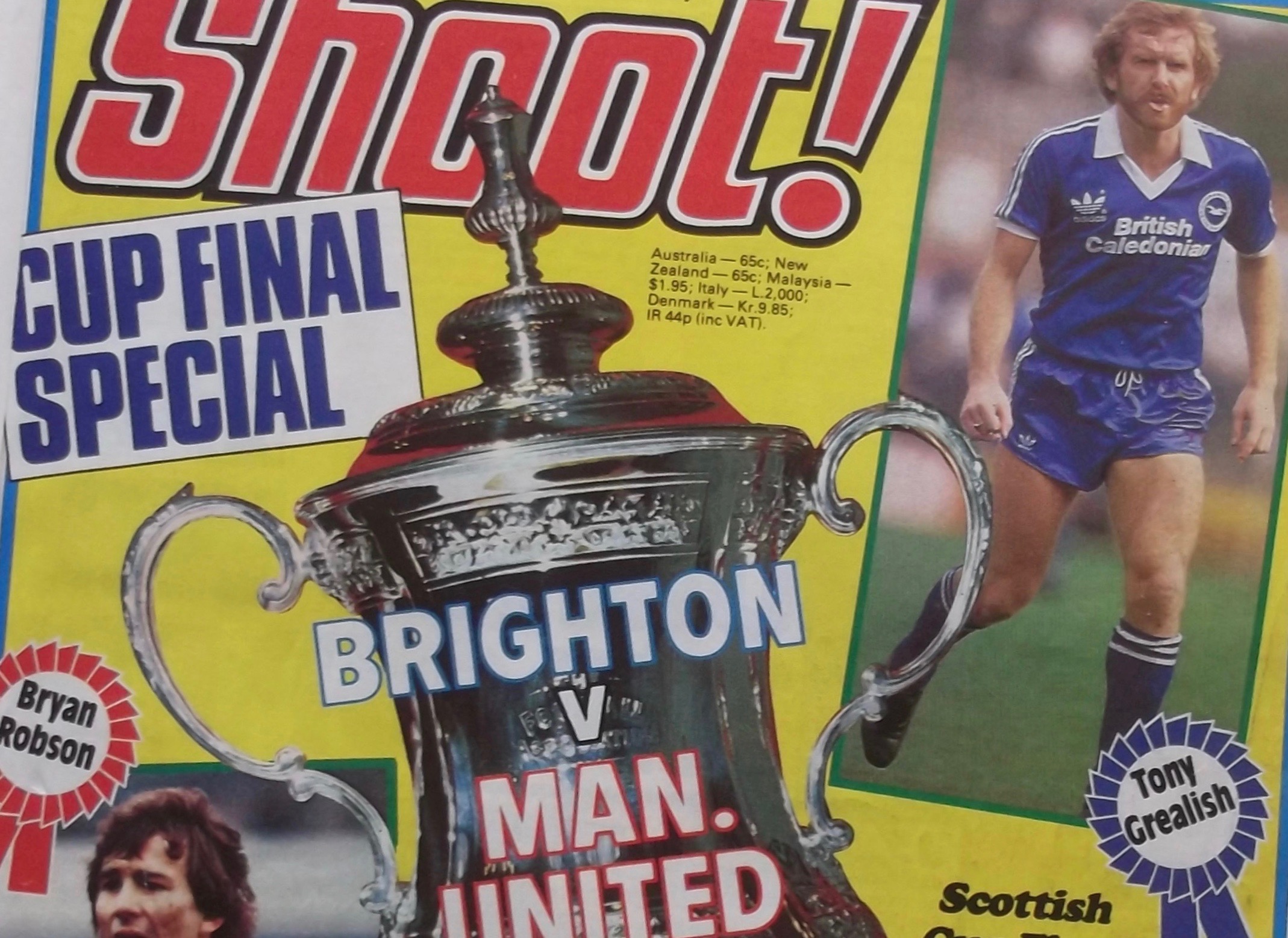
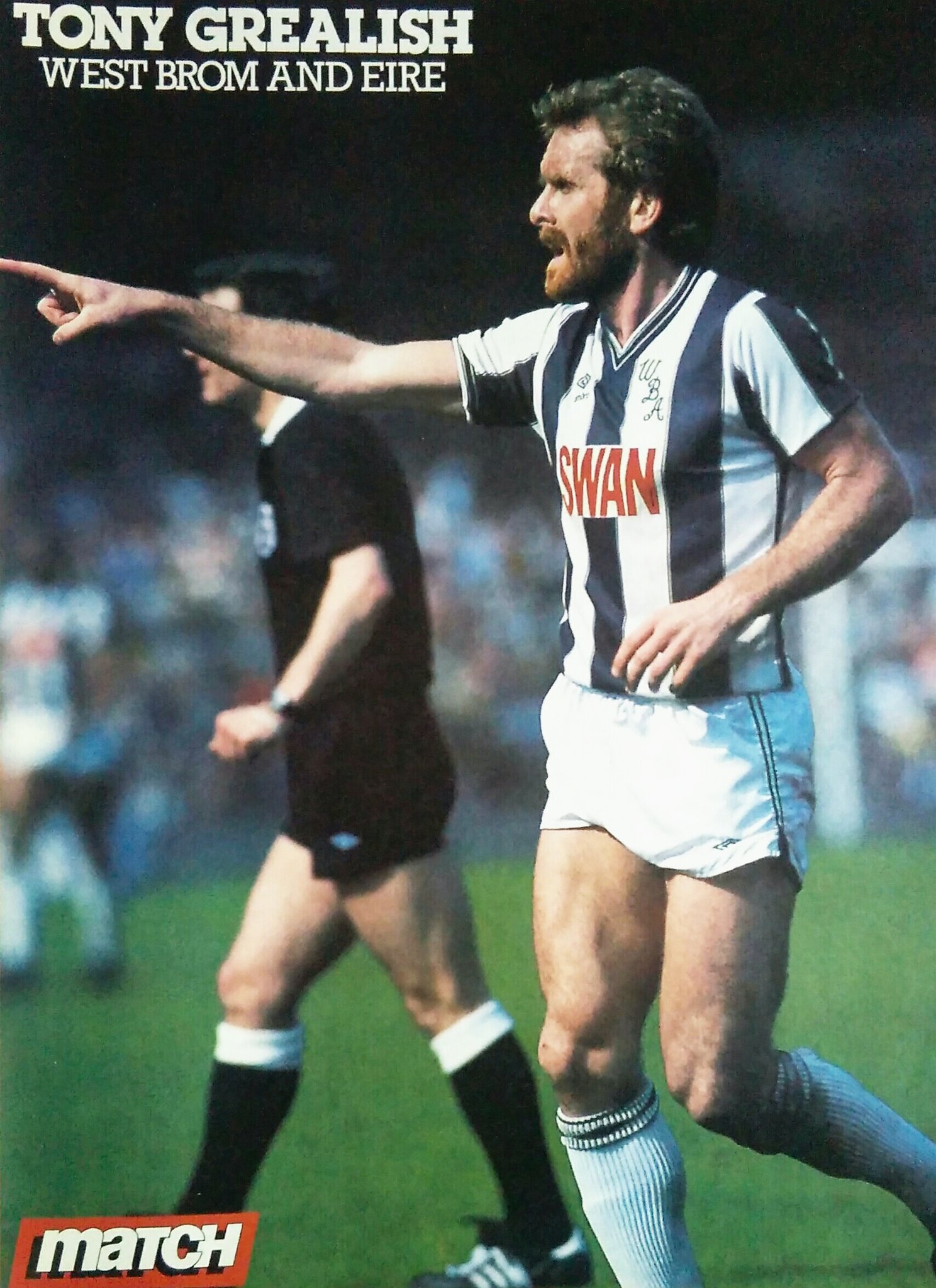
Tony ‘Paddy’ Grealish, sadly no longer with us having died of cancer aged only 56 in 2013, was given his international debut against Norway in 1976 by the legendary Johnny Giles, who knew a thing or two about midfield play.

In fact it was Giles, in his second spell as WBA manager, who took Grealish to The Hawthorns in 1984 as the break-up of the Brighton cup final squad continued.

After his untimely death, Giles told the Irish Times: “I obviously knew him at that stage from the Ireland set-up and knew what to expect.

“He wasn’t the classiest of players but he was one of the most hard working and you knew exactly what you were going to get.

“He was a great lad; a social animal who liked a drink after a game but gave you absolutely everything during it.”

Born in Paddington, London, on 21 September 1956, Grealish qualified to play for the Republic through his father, Packie, who was born in Athenry, Galway, and his mother Nora’s parents, both from Limerick.

He began his career across the other side of London, at Orient, and played 171 games for the Os, one of the last being the memorable 3-3 draw against Brighton in 1979 which featured on The Big Match. One of his teammates that day was Henry Hughton, brother of subsequent Brighton manager, Chris.

The previous year Grealish had been part of the Orient side that made it through to the FA Cup semi final against Arsenal, played at Stamford Bridge, but they were beaten 3-0 (the Gunners lost 1-0 to Ipswich in the final).

In 1979, David Pleat paid £150,000 to take him for Luton Town for whom he played 78 games in two seasons.

The managerial upheaval at the Goldstone Ground in the summer of 1981 saw the arrival of Mike Bailey in place of Alan Mullery, and one of his first moves was to bring in Grealish as part of a swap for Brian Horton, the ageing, inspirational captain who led Brighton from the old Third Division to the First.

Grealish was definitely what you’d call a players’ player, someone who did the hard work in the engine room of the team to enable players with more flair to shine.

He talked about just that scenario in an interview with the Daily Mail after Brighton had beaten Sheffield Wednesday at Highbury in that 1983 cup semi-final.

Referring to an incident when he’d charged down a free kick, he told Brian Scovell: “That’s my job. I’m the bloke with the ugly mug so they get me to do it.”

It was Grealish who rolled the ball to Jimmy Case to smash home that memorable opening goal and he relished his teammate’s strike, saying: “It wasn’t just the power, it was the way the ball swerved away from the ‘keeper that did it.”

After the disappointment of missing out in 1978, reaching the cup final was extra special for Grealish and he found himself thrust centre stage as a result of usual captain Steve Foster’s suspension from the first match.

Even all this time later, people remember how Grealish wore the trademark Foster headband as he led Brighton out. “It was a small protest over Steve’s exclusion from the final,” he told the media after the game.

In the News of the World, Fred Burcombe began his report: “Tony Grealish, Brighton’s stand-in skipper, yesterday entered the Wembley arena with a gesture of defiance and left for home in a blaze of confidence.”

In fact, Grealish was involved in both Brighton’s goals in the 2-2 draw. James Mossop reported in the Sunday Express: “Brighton stayed on the attack after a corner. Tony Grealish collected the ball and his teammates began to fan out, all eager for a pass. He chose Neil Smillie on the right. Smillie gave young Gary Howlett the chance to centre – and as the ball curved in Smith met it ideally, sending his header over the ‘keeper’s outstretched forearm and into the net.”

And with the clock ticking down, United by now 2-1 up, it was Grealish who drilled the ball hard into the penalty box where Gary Stevens controlled it and fired the ball past Gary Bailey to net the equaliser.

Grealish lived in Peacehaven during his time with the Seagulls and clearly enjoyed the social life with his teammates.

“The atmosphere at Brighton is particularly good,” he told Tony Norman in a club programme feature. “There’s always plenty going on. I enjoy our Wednesday golf games. There’s often as many as 10 of the players there. That’s always a laugh.”

Following relegation to the second tier, the Seagulls squad was broken up bit by bit; Gary Stevens and Michael Robinson going first. Grealish lasted a little longer and played two thirds of the 1983-84 season before being sold to West Brom in March.

It didn’t stop him being selected alongside teammate Case in the PFA representative side that season (the centre half selection was Mick McCarthy and the forwards included Kevin Keegan and Mark Hateley).

In total, Grealish played 116 games plus five as a sub for Brighton, and his last game for the Seagulls saw him score in a 1-1 home draw with Manchester City, who he would subsequently join in 1986-87. He played 65 games for West Brom, and 11 times for City, who also had former Seagull Neil McNab in their line-up.

In August 1987, Grealish moved to Rotherham United and played 110 games for the Millers before moving to Walsall (36 appearances).

During his time at Rotherham, in 1988-89, he once again found himself in the PFA representative selection, this time for Division Four. Grealish then did the rounds of various non-league clubs in the Midlands: Bromsgove Rovers, Moor Green, Halesowen Harriers, Sutton Coldfield and Evesham United.

He returned to Bromsgrove Rovers as player-manager before calling it a day, and then worked in the scrap metal business. His career record showed he played a total of 589 league games, plus 45 for the Republic of Ireland; 17 of them as captain.

Little surprise, then, that when he died in 2013, the Football Association of Ireland paid a warm tribute. FAI president Paddy McCaul said: “He will be remembered as a great servant of Irish football who was part of the international set-up under John Giles and Eoin Hand that came so close to qualifying for major tournaments and helped change Ireland’s fortunes at that level of the game.”

FAI chief executive John Delaney added: “Tony Grealish was one of my footballing heroes when I was a child and I always remembered him as a great competitor who always gave his all for Ireland.”

It was during Alan Kelly’s brief reign in charge, in 1980, that Grealish was first made Eire skipper – against Switzerland – and he was a central figure in successor Eoin Hand’s team.

“He was a great character,” said Hand. “I don’t think I ever selected a team during my time in charge that didn’t have him in it.

“I think it’s fair to say he raised his game when he was playing international football. I’d say he was a great club player but the commitment he gave for Ireland; he just couldn’t have given that on a twice weekly basis playing club football. He gave absolutely everything.

“He contributed so much (including eight international goals), had an infectious enthusiasm for it all. If ever there was someone who showed how proud he could be to represent his country then Tony was it. He was very much part of it all; a great ambassador; very generous.”

Hand added: “He was a great example to others in the way he dealt with people; other players, supporters, kids….a really wonderful guy. I was very lucky to have him around when I was manager.”

3.TG shoot cover2 Football Past on Twitter

  • Pictures from my scrapbook show Grealish on an Albion matchday programme cover, a Match magazine pic of him in WBA colours via Football Past on Twitter, on the front of the 1983 FA Cup Final preview edition of Shoot!, and, below, a montage of various headlines and images.