Lanky Lurgan lad lined up alongside George Best

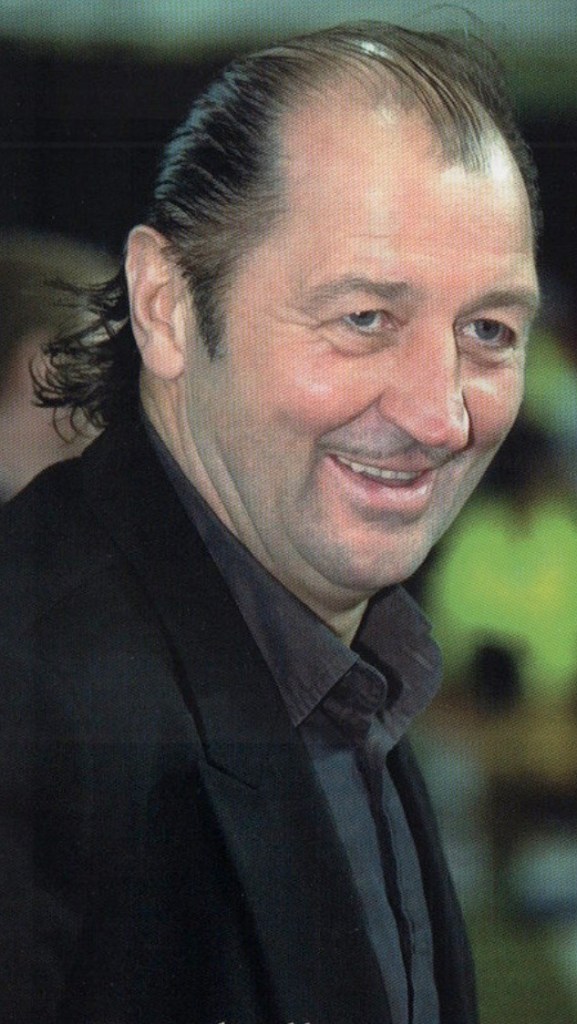
JOHN NAPIER is still coaching youngsters in America at the age of 75. NICK TURRELL’s In Parallel Lines blog caught up with him for a trip down memory lane.  Here, in the third of five articles, we look at how it all began.

This cracking Bolton News picture shows Napier leading out Bolton’s under 18 side at Bromwich Street in January 1963, during the big freeze of that winter.

JOHN NAPIER was born in Lurgan, 18 miles south west of Belfast, on 23 September 1946.

Napier was football daft from a young age and he said: “Looking back at my childhood, I always wanted it from a young age. It was my dream. I had two uncles that played at pro level in Northern Ireland and they worked with me at a young age.

“I would say they toughened me up. I was never afraid to try new things. I left home at 15 to pursue my dreams, and it worked out. It was not easy – it never is – but you must keep at it. Failure was not an option in those times.”

In another interview, Napier said he adopted Spurs as his favourite side when he was 10 or 12. He had three uncles living in north London who were all avid Tottenham supporters and they would send him programmes, pictures and pennants that the youngster put up on his bedroom wall.

𝗟𝘂𝗿𝗴𝗮𝗻 𝗜𝗻𝘁𝗲𝗿𝗺𝗲𝗱𝗶𝗮𝘁𝗲 – 𝗜𝗿𝗶𝘀𝗵 𝗦𝗰𝗵𝗼𝗼𝗹𝘀 𝗦𝗲𝗻𝗶𝗼𝗿 𝗖𝘂𝗽, 𝗠𝗶𝗱-𝗨𝗹𝘀𝘁𝗲𝗿 𝗟𝗲𝗮𝗴𝘂𝗲 𝗮𝗻𝗱 𝗖𝗮𝗳𝗼𝗹𝗹𝗮 𝗖𝘂𝗽 𝘄𝗶𝗻𝗻𝗲𝗿𝘀 𝟭𝟵𝟲𝟭

Napier was good enough to represent his country at every level. He played for the schoolboy side at under 15 and under 16 level, and was the youngest Irish player, at 17, in the youth side that reached the final of the UEFA European Under-18 Championship tournament in April 1963.

In front of a crowd of 34,582 at Wembley, he had the misfortune to score an own goal with his head after only five minutes and England went on to beat the Irish 4-0 (Ray Whittaker, Jon Sammels and John Sissons scoring the other goals).

Remarkably, Northern Ireland’s greatest ever player, George Best, only played in two youth internationals for his country.
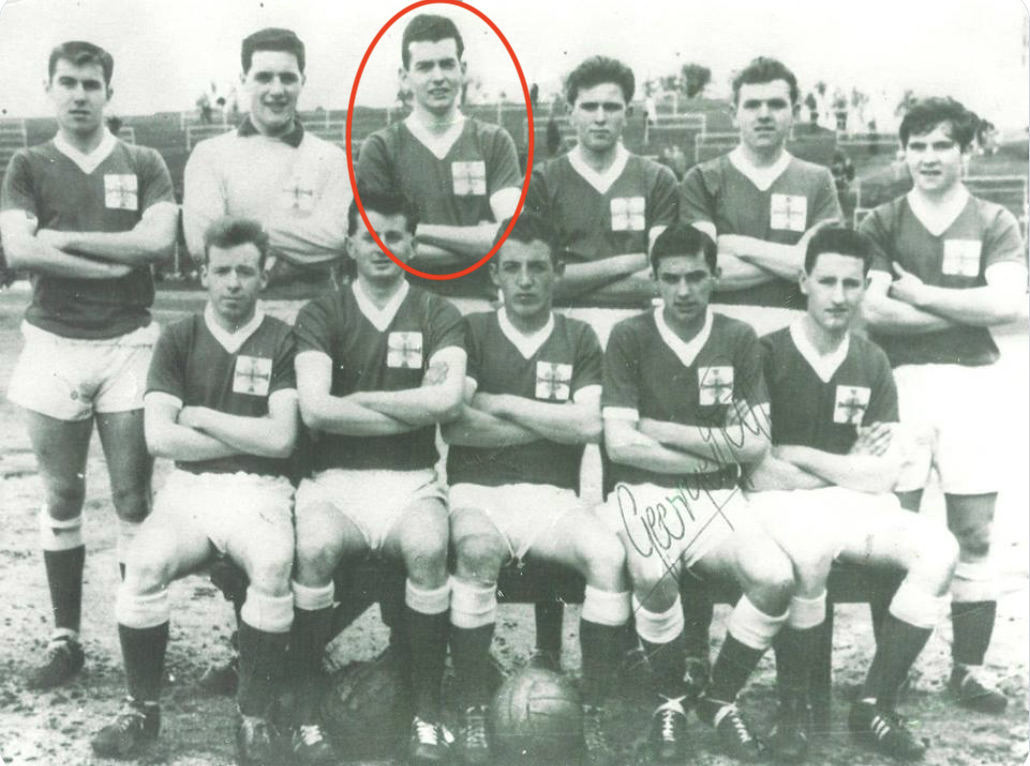
Napier was in the same side as Best when the Irish drew 1-1 with England at Boundary Park, Oldham, on 11 May 1963.

A week later they were selected together again and Best scored his country’s goal as they drew 1-1 with Wales in Aberystwyth.
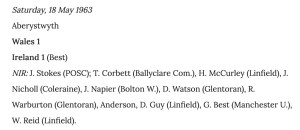
After winning his only full cap against West Germany in 1966 (see previous article), Napier won two Under-23 caps, also both against Wales. He was in the side that beat Wales 2-1 at Windsor Park, Belfast on 22 February 1967, although the game was abandoned on 72 minutes because of a waterlogged pitch and Welsh and Irish sources differ as to whether the result stood.

Napier had moved to the Albion by the time he made his second appearance; this time the game took place at Ninian Park, Cardiff, on 20 March 1968 and the Irish included the likes of Pat Rice, Tommy Jackson, Dave Clements, Bryan Hamilton and Sammy Todd, who all became established full internationals. But the game was the last of Napier’s international career, at the age of 21.

As Napier said above, he was only 15 when he joined Bolton, choosing them over Everton and Sunderland, who had also shown an interest.

“I really enjoyed my early experience at Bolton,” he told thefootballnetwork.net. “George Taylor and George Hunt, my first coaches at Bolton, and also Nat Lofthouse had a lot to do with my early development. I used to talk to Nat a lot about my game.”

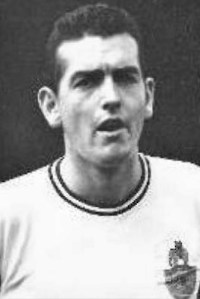
Napier training with Francis Lee and Brian Bromley

Napier rose through the youth ranks alongside the likes of Brian Bromley, Dave Hatton and future England and Manchester City star Francis Lee.

The boots of longstanding centre half Bryan Edwards were big ones to fill but Bolton boss Bill Ridding gave Napier the opportunity to stake his claim. He made his first appearances in the senior side in the final two games of the 1964-1965 season.

Napier helped the side keep clean sheets against Leyton Orient and Cardiff City as the Trotters just missed out on promotion, finishing third, as Newcastle went up as champions along with runners up Northampton Town.

As well as Lee and Bromley, Bolton at that time had a side that included Welsh international striker Wyn Davies (often Napier’s roommate for away matches), England international goalkeeper Eddie Hopkinson and Gordon Taylor, who went on to become chairman of the PFA.

For the following 18 months, Napier was a regular at the heart of the Bolton defence, missing just three games in his first full season and playing a part in the game against Charlton Athletic which saw the Addicks’ Keith Peacock become the first substitute used in English football when replacing goalkeeper Mike Rose in a game at Burnden Park on 21st August 1965.
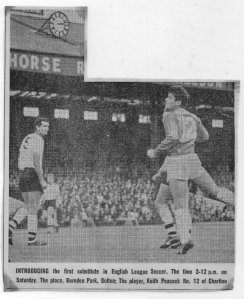
The Ulsterman himself was involved in the first ever Bolton substitution when, following injury, he was replaced in the 3-2 defeat at home to Southampton by Gordon Taylor.

• In the next instalment of this five-part series of articles, Napier describes the camaraderie that existed amongst the Brighton players during his time at the club, and his approach to the opponents he faced.

Flamboyant Frank Worthington’s career included a brief Brighton stopover

3-fw-albionFRANK Worthington was one of football’s genuine entertainers and it was a privilege to witness his season at The Goldstone between 1984 and 1985.
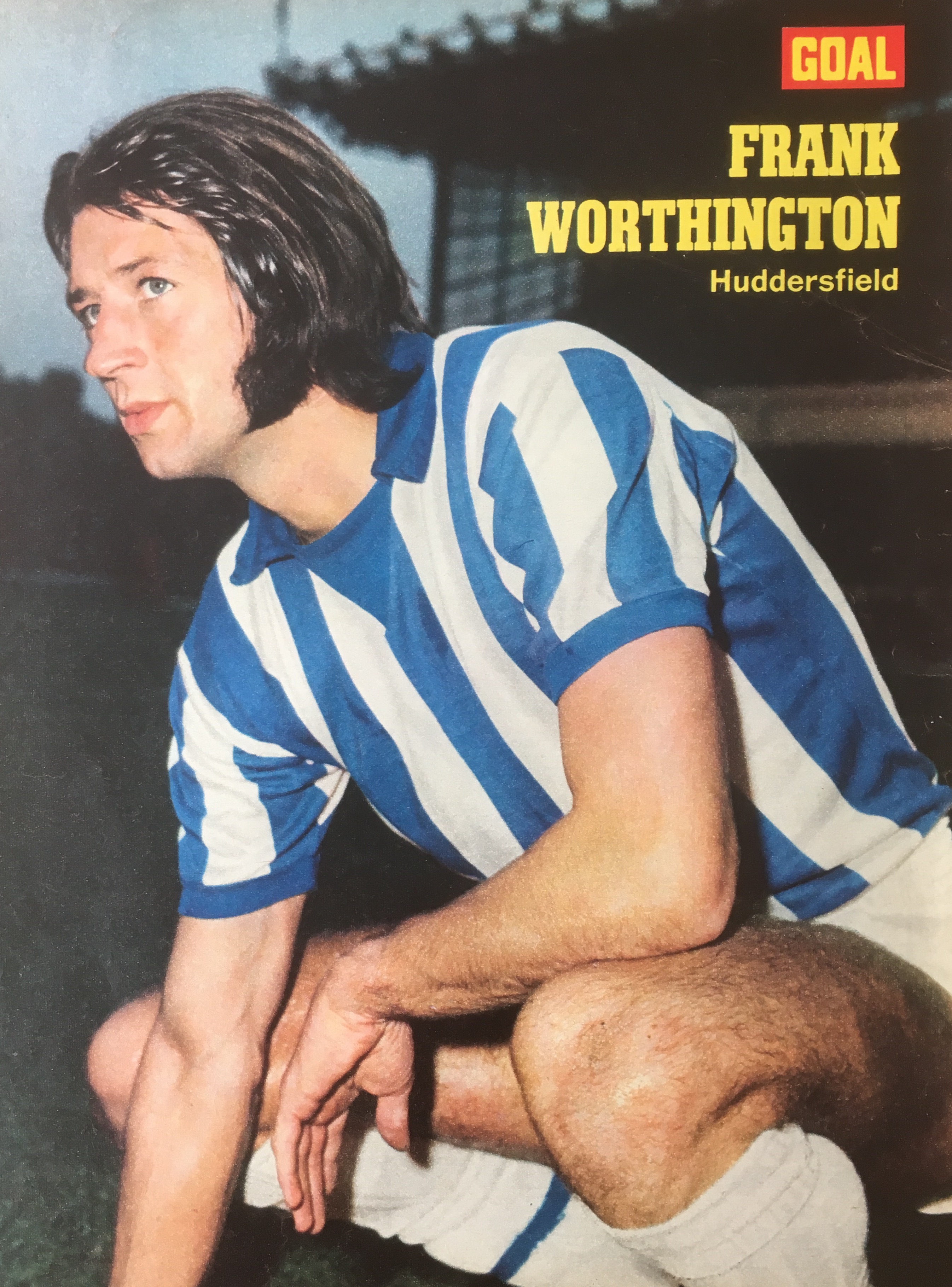
An all-too-brief England career which saw him win eight caps in 1974 was a long way behind him by the time his former Huddersfield Town teammate Chris Cattlin secured his signature for Brighton, but what the legs could no longer do, the brain more than made up for.

He was on the scoresheet in only his second game, a bruising encounter when Notts County were beaten 2-1, even though Albion played the second half with only 10 men – centre backs Eric Young and Jeff Clarke having been hospitalised by clashes with Justin Fashanu.

Worthington went on to make 30 appearances (plus five as sub) scoring eight times in total. Two of the goals came in his penultimate match against Wolverhampton Wanderers, one being a penalty struck so hard that it broke the hand of their ‘keeper Tim Flowers.

In June 2013, in the Huddersfield Examiner, Cattlin told interviewer Doug Thomson: “He did a good job for me. Frank wasn’t only a great player, but a great bloke as well, a dedicated trainer and a great bloke to have around a club.”

Worthington reflected on his time at the club in a matchday programme interview with Spencer Vignes in 2003. “I’d known Chris since my early days at Huddersfield,” he said. “I’d liked him so when he asked whether or not I’d be prepared to come to Brighton, I didn’t really have to think too long about it. They were a good side that hadn’t long been out of the First Division, so it sounded attractive.”

He continued: “We had some good players and certainly had no problems finding the net. I felt as though I was playing OK and the fans seemed to like me. But Chris did have this thing where he would chop and change the team around quite a bit, even if we were winning. He never really seemed sure what his best side was, and I think our form began to suffer because of it.”

Worthington reckoned it led to disharmony in the dressing room, and, for his own part, while he was good friends with Jimmy Case and Hans Kraay, he couldn’t say the same for Chris Hutchings or Kieran O’Regan. Albion finished sixth in the table, three points off automatic promotion and, although he was offered a new one-year contract, he decided to move on to try his hand at management.

So Brighton was only a brief stop-off in a 20-year career which saw Worthington score 236 goals in 757 league games. Add in games he also played in the United States with Philadelphia Fury and Tampa Bay Rowdies, in South Africa, Sweden and in English non-league, and the games total amounts to an amazing 828.

Halifax-born Worthington’s father was a pre-war professional and his two brothers, David and Bob, were also professionals. Unlike his brothers, the hometown club dithered over signing Frank and Huddersfield jumped in and secured his signature.

After manager Ian Greaves selected him for the opening fixture of the 1969-70 season, he clocked up 100 consecutive appearances for the Terriers.

The flamboyant Worthington famously almost joined Liverpool in 1972 but the deal was called off when he failed a medical due to a reported high blood pressure reading.

Liverpool signed John Toshack instead while Worthington went to Leicester City for £85,000.

Having made nearly a quarter of a million pounds from the sale of David Nish to Derby County, Leicester boss Jimmy Bloomfield had a useful kitty which he splashed on Worthington, Dennis Rofe, Keith Weller, Jon Sammels and Alan Birchenall.

Worthington scored on his Leicester debut at Old Trafford and in an article with Goal magazine on 21 October 1972, he said: “It’s different playing for Leicester City compared with Huddersfield. At Huddersfield the emphasis was on hard running and effort – here it is on skill, and there is a hell of a lot of skill in this side.”

In the same publication two years later, he had finished the 1973-74 season with 25 goals to his name and he was full of compliments for Bloomfield.

“Basically I am a player who relies on skill and that fits perfectly into Jim’s plans,” he said. “I always think that teams reflect the style and outlook of their managers. That’s why Leicester’s philosophy is that there is no substitute for skill.”

His time at Leicester lasted five years and spanned more than 200 appearances before he switched to Bolton Wanderers – where one audacious goal he scored against Ipswich remains a YouTube favourite – and then Birmingham City, helping both sides to promotions.

In 1982 he played for Leeds, the following season Sunderland and the next, Southampton, before pitching up at The Goldstone.

Worthington’s first go at management, while continuing to play, came with two years at Tranmere – and his first signing was Albion’s Ian Muir. He told Vignes: “Ian Muir was a fantastic forward with great touch. He did things in training you just wouldn’t believe, yet he wasn’t even making the side at Brighton under Chris.”

Muir became a hero on Wirral, scoring 141 goals as Rovers won promotion twice and won the Associate Members Cup at Wembley in 1991. By then, Worthington was long gone, having moved on to Preston, then Stockport County, and, after a succession of brief stays with various non-league clubs, ended up with hometown club Halifax Town, where he was briefly joined by Case.

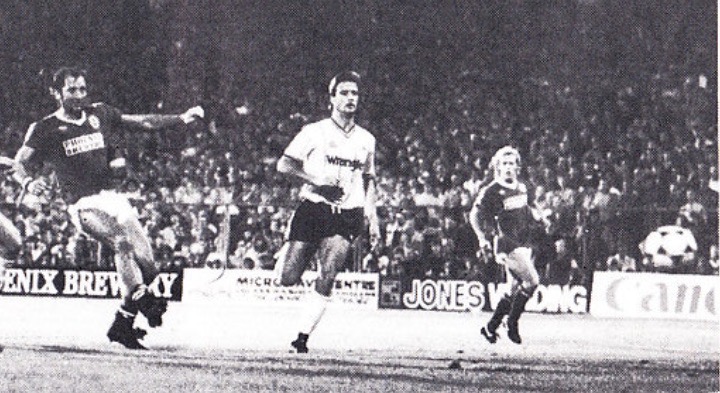
Albion’s shirt sponsor during his season with the club was Phoenix Brewery. Quite apt for a player who was famously quoted as saying: “I’ve squandered fortunes on booze, birds and gambling – it’s better than wasting it!”

Tellingly, his autobiography, published in 1995, entitled One Hump or Two, was a classic tell-all romp of a colourful career on and off the pitch.

Worthington died aged 72 on 22 March 2021 and, in a statement, his wife Carol said: “Frank brought joy to so many people throughout his career and in his private life. He will be greatly missed by everyone who loved him so much.”

The great man’s lifestyle spawned many eye-catching headlines over the years and there is no shortage of stories about him to be found on the internet.

Follow the links for just three examples.

https://www.theguardian.com/football/2016/may/06/frank-worthington-denies-being-diagnosed-with-alzheimers-disease

http://www.90min.com/posts/26691-england-s-wasted-talent-1-frank-worthington

http://www-users.york.ac.uk/~sph2/lufc/mag/worthing.htm

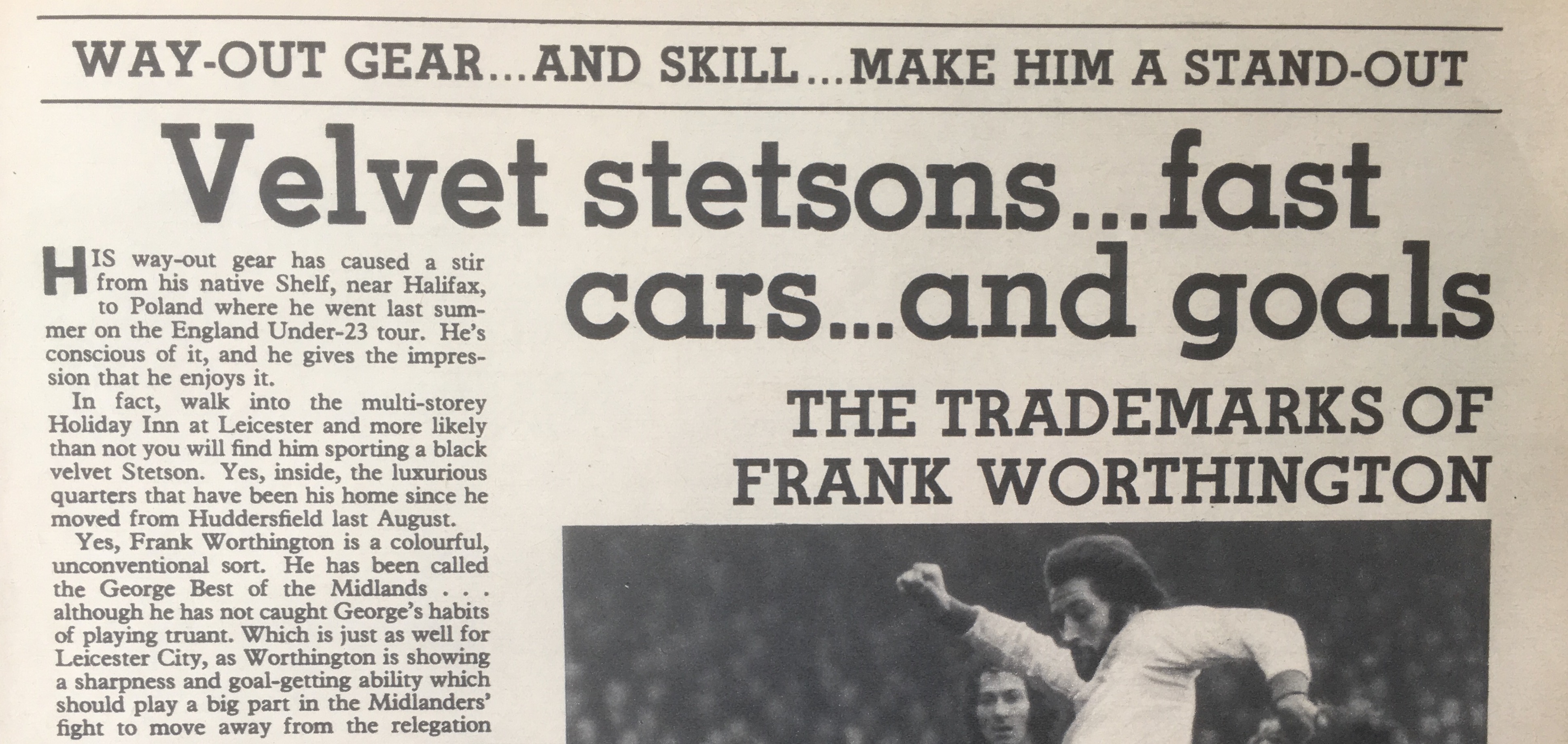
1-fw-hudd2-fw-leic4-fw-headline

Pictures from my scrapbook show Worthington in Goal magazine in Huddersfield and Leicester’s colours, in Albion’s Phoenix Brewery-sponsored shirt and a classic headline. Pictures also from the Albion matchday programme.