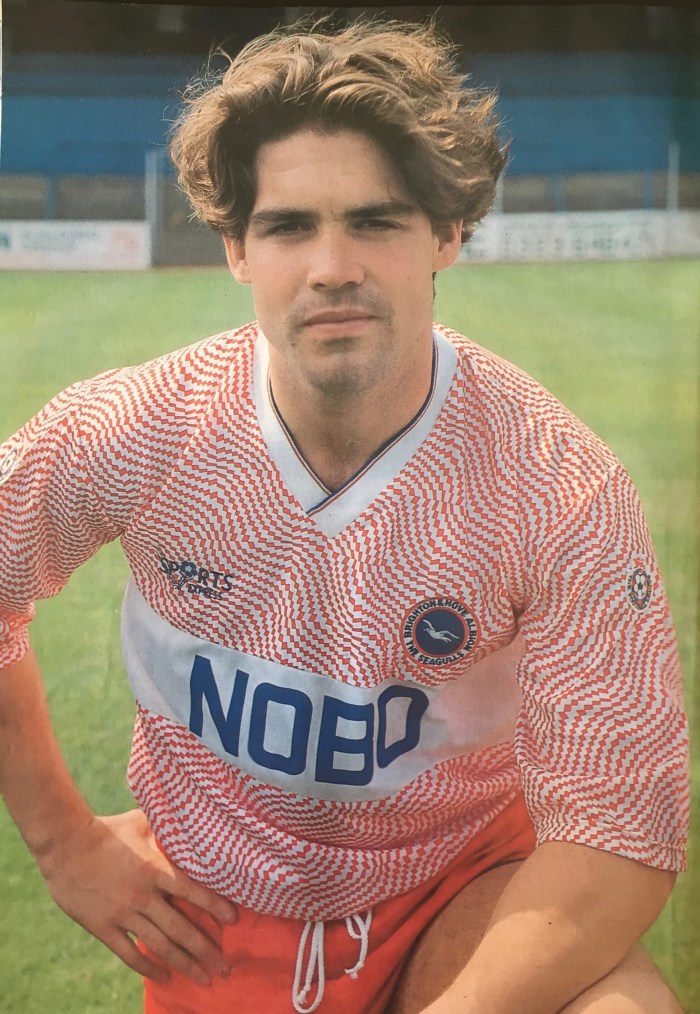
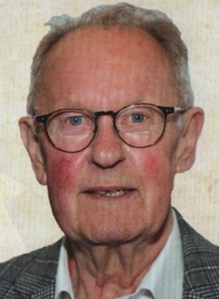
Martin Hinshelwood went down with Palace and up with Albion

REGARDLESS of the often overblown ‘bitter rivalry’ between Brighton and Crystal Palace, many people have served both clubs with equal distinction, none more so than Martin Hinshelwood.

A player at Palace until injury curtailed his career when only 27, he went on to have a long career in the game, much of it with Brighton; more often in youth development as a coach and briefly as the no.1.

In the summer of 2002, his appointment as Albion boss 11 weeks after his former Palace teammate Peter Taylor had quit came as something of a surprise considering chairman Dick Knight declared he had interviewed seven candidates for the post.

In more recent times, Albion have had a Uruguayan, a Spaniard, a Finn and an Italian as head coach, back in 2002 it looked a strong possibility Knight might appoint wild-haired German coach Winfried Schafer, who had just managed Cameroon at the World Cup, but the chairman suspected his lack of command of English might be too big a hurdle to get over.

A terrific start

A clear favourite had been Steve Coppell but when the ex-Palace manager fell asleep during his conversation with Knight, apparently fatigued after a long-haul flight, the chairman was suitably unimpressed and, with time running out before the 2002-03 season got under way, Hinshelwood was appointed instead.

A 3-1 win away to Burnley looked like a terrific start but after a 0-0 home draw with Coventry, the side went on a disastrous 10-game losing spell (a 2-1 League Cup win over Exeter City the only bright spot amid the gloom).

Knight had already publicly signalled he would take decisive action after the sixth defeat in a row – a 4-2 home reverse to nine-man Gillingham!

He told the Argus: “If the team went ten matches losing every one, then you have got to do something about it.

“It’s very easy to criticise him (Hinshelwood). Obviously, he is a manager under pressure because we have just lost six games.
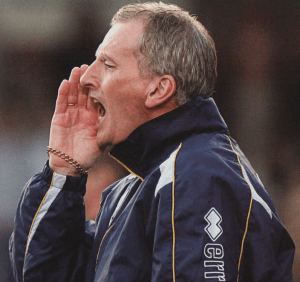
Getting his message across

“To suggest we should instantly sack him puts out the wrong message. Most people right now will think it was the wrong decision to appoint him, but I am not going to panic. I am going to monitor the situation.”

Of course, that monitoring didn’t take long to reach an inevitable conclusion – four more defeats and Hinshelwood was relieved of first team duties. He was made ‘director of football’ and Knight went back to Coppell to try to keep the Albion in the division. He very nearly managed it, too, but such a bad run of defeats had taken their toll on the points total.

As it happened, it wasn’t the first time Hinshelwood had found himself in the Albion hotseat: he was caretaker manager on three occasions: in 1993 (before Liam Brady’s appointment), in 2001 (after Micky Adams left for Leicester) and again in 2009, when he was in charge for a 4-4 FA Cup first round tie at Wycombe Wanderers after Russell Slade had been sacked and before Gus Poyet’s arrival.

When researching backgrounds of any number of players for this blog, Hinshelwood’s name is often cited as the one who either made the approach to bring them to Brighton or who was a major influence in their development.

For example, when Hinshelwood first joined the Albion in 1987, from Chelsea, he was instrumental in bringing from Stamford Bridge to the Goldstone Doug Rougvie and Keith Dublin, who both played their part in getting Albion promoted straight back to the second tier in 1988.

Hinshelwood had been reserve team manager at Chelsea for two years during the managerial reign of John Hollins, after first team coach Ernie Walley, his former Palace youth team coach, put in a good word for him.

His long association with Brighton began with a ‘phone call to Barry Lloyd to congratulate him on landing the Albion manager’s job. The former Fulham captain asked Hinshelwood to join him at the Goldstone – and he stayed for the next six and a half years.

He returned to the club in the summer of 1998, when Brian Horton had taken over, and was appointed Director of Youth, with Dean Wilkins as youth team coach.
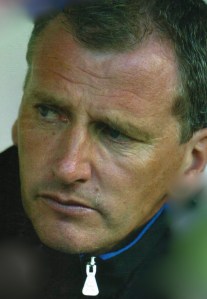
Pensive Hinsh

An interview with the matchday programme pointed out that across the following 14 years, he oversaw a youth system that produced 31 players who made it through to the first team, although he said such success had very much been a team effort, name-checking Wilkins, centre of excellence managers Vic Bragg and John Lambert, scouting chief Mark Hendon and physio Kim Eaton.

Dean Hammond, Adam Hinshelwood, Adam Virgo, Adam El-Abd, Dean Cox, Jake Robinson, Dan Harding and later Lewis Dunk, Jake Forster-Caskey and Solly March all graduated from that period. “To have been a part of their journeys makes me immensely proud,” he said.

Hinshelwood left the Albion for a second time in 2012 and worked variously for Crawley, Portsmouth, Stoke City and Lewes. He returned to the Seagulls once again when the former head of academy recruitment at Stoke, Dave Wright, who had joined Brighton in 2019, invited him to take on a role of scouting 13 to 16-year-olds.

When Hinshelwood himself was that age, he had visions of following in his dad Wally’s footsteps. He had been a professional for Fulham, Chelsea, Reading, Bristol City and Newport County, and, although born in Reading (on 16 June 1953), young Martin had become accustomed to an unsettled childhood, moving around the country to wherever dad’s next club took him.

The family finally settled in New Addington, near Croydon, with Wally playing non-league football in Kent and Martin played representative football for Dover Under 15s, Croydon Boys and Surrey Under 16s.

He was on schoolboy terms at Fulham when Bobby Robson was manager but they didn’t think he would make it. It was while he was playing for Surrey Schools that former Spurs and Palace manager Arthur Rowe scouted him for Palace and he was taken on as an apprentice in 1969.

Hinshelwood playing for Palace, up against Stoke’s George Eastham

Hinshelwood was given his first team debut by Bert Head in 1972. He played in midfield in the old First Division for a dozen matches but the side were relegated in his first season. The flamboyant fedora-wearing Malcolm Allison took over as manager and he was later replaced by Terry Venables.

Martin’s younger brother Paul (Jack Hinshelwood’s granddad) played in the same side at full-back and the brothers were alongside the likes of Kenny Samson and Peter Taylor. In 1975-76, when still a Third Division side, they shook the football world by making it to the semi-finals of the FA Cup, where they lost to eventual winners Southampton, although Martin missed the game through a right knee injury. It eventually forced him to quit playing in 1978, after he’d made 85 appearances for Palace in five years.

Venables appointed him as youth team coach at Selhurst Park and although he spent 18 months as player-manager of non-league Leatherhead, he then resumed his Palace role under Steve Kember.

Alan Mullery dispensed with Hinshelwood’s services during his brief managerial reign at Palace but he kept his hand in at coaching with non-league clubs Kingstonian, Barking and Dorking.

Selsey-based Hinshelwood then had a spell as manager of Littlehampton before the Chelsea job came up.

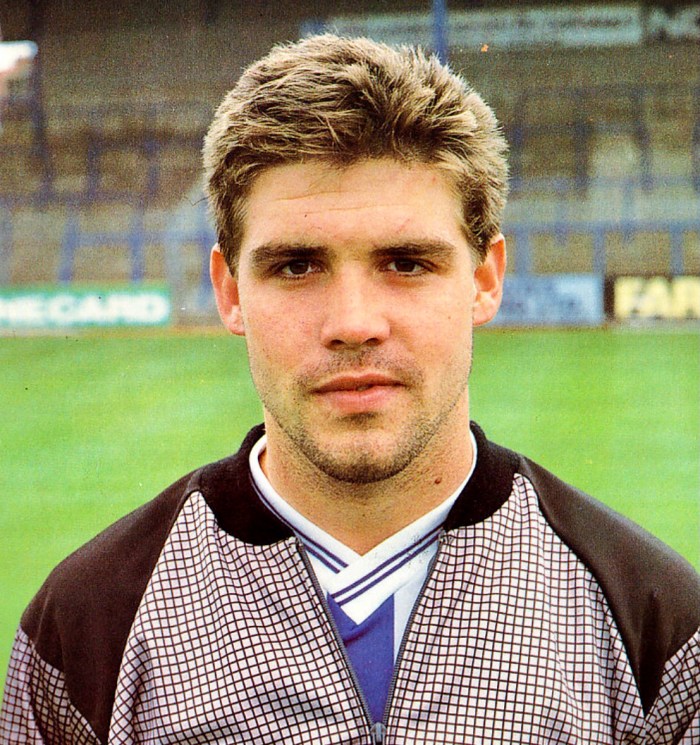
Isaac’s long, long wait for an Albion win

IT seems extraordinary to think Robert Isaac had to wait FOURTEEN MONTHS to experience a win as a Brighton player after joining the club from Chelsea.

The young defender who had realised every schoolboy’s dream by playing for the team he’d always supported left a disgruntled dressing room at Stamford Bridge only to join a side sliding inexorably toward the relegation trapdoor of what is now the Championship.

“I must admit it was a bit depressing at first because we just couldn’t do anything right,” Isaac told Dave Beckett in an Albion matchday programme article. “We just had no luck at all; if we had I think we might well have survived in Division Two.”

Isaac also appears to have gone out of the frying pan into the fire. Telling thegoldstonewrap.com how he’d left Chelsea because the management was losing support of the players and he wanted regular first team football, he added: “When I joined Brighton in February 1987 they were in freefall. The dressing room was even more at odds with the manager than at Chelsea.

Barry Lloyd dropped Dean Saunders, our only hope of surviving the drop. I found Barry rather rude. He’d blank me in the corridor and make me train on my own.”

The young defender made his Seagulls debut on 21 February 1987 in a 2-1 defeat at home to Oldham Athletic and featured in four draws and five defeats by the season’s dismal end.

Back at what was for so long Albion’s normal level of third tier football, Lloyd’s side did begin to pick up points – but Isaac wasn’t involved because of a groin strain and a troublesome hernia injury that sidelined him for months.

“I had stomach trouble quite a lot but no-one could put their finger on the problem until I saw a specialist in Harley Street,” he explained.

“After the operation, I was out of action for the best part of six months and at times I didn’t think I would get back to full fitness. I had around 40 internal stitches and even when I began playing again they would stretch and pull and I felt sick after games.”

It wasn’t until March 1988, with Albion in sixth spot, that Lloyd shook things up, initially drafting Isaac in at right-back in place of Kevan Brown, and then selecting him to replace suspended captain – and Isaac’s former Chelsea teammate – Doug Rougvie at centre back alongside Steve Gatting.

Isaac also stepped in when Rougvie missed a couple of games with a ‘flu virus and, although a win in Seagulls’ colours continued to elude him in his first three games back in the side (a defeat and two draws), he kept the no.5 shirt ahead of the rugged Scot. That elusive win finally came in a 2-1 away win at Notts County on 4 April.

Five wins and a draw followed and the successful run-in saw promotion gained as divisional runners-up behind Sunderland. Isaac was one of three former Chelsea players in that back four, with Gary Chivers (who’d arrived from Watford) at right-back and Keith Dublin at left-back.

Dublin had played for England under 19s with Isaac three years earlier. They both played four games in Dave Sexton’s side at the Toulon Tournament in the south of France in 1985 (England beat Cameroon 1-0 and Mexico 2-0, lost 2-0 to the USSR and succumbed 3-1 to France in the final at the Stade Mayol in Toulon).

Sadly, the subsequent fortunes of the two players went in opposite directions: Dublin went on to become such a success with the Seagulls that he was the 1989-90 Player of the Year and was sold to Watford for £275,000; the injury-beset Isaac had to quit the game after only 33 matches in a Brighton shirt.

After Albion bounced back to the second tier, the defender played in the first 11 matches of the 1988-89 season – eight of which were defeats – but his appearance in a 1-0 defeat away to Leicester turned out to be his last as an Albion player.

“I got injured at Leicester,” he recalled. “I didn’t feel it until the next day and then it really hit me. My knee just blew up. Come Monday morning I couldn’t even walk.”

He required an operation to repair the patella tendon in his left knee and, as he sought to regain fitness, spent a fortnight at the National Rehabilitation Centre at Lilleshall.

Meanwhile, Lloyd signed experienced central defender Larry May (whose own playing career would be ended by injury later that season) and, subsequently, Nicky Bissett.

A programme item in the 1989-90 season reminded supporters that Isaac was still around, although he hadn’t played at all throughout 1989.

Looking ahead to 1990, Isaac said: “I just hope I have a better year. I’d like to think that I deserve it after all the frustrations of the last few years with two major operations.”

Sadly, it didn’t happen and in August 1990, he was forced to quit football. After retiring, he worked as a chauffeur for the Maktoums, the ruling family in Dubai, before running his own vehicle business.

Born in Hackney on 30 November 1965, Isaac was Chelsea through and through from an early age.

“We lived in Chelsea and my great grandfather went to the first ever match at Stamford Bridge,” he told thegoldstonewrap.com. “My family have been going to matches home and away since. I went to see Chelsea play Stoke in the (1972) League Cup Final aged six.”

Isaac went on to join the club as a junior, made his reserve team debut at the tender age of 15 and was named Chelsea’s young player of the year in 1984.

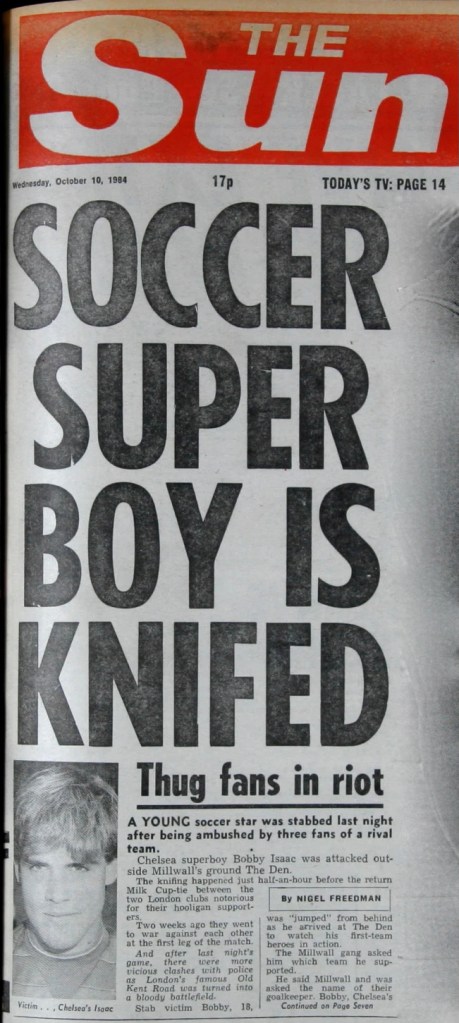
It was on 9 October 1984 that his promising career could have been snuffed out before it had even begun: it’s a horrifying tale, told the following day on the front page of The Sun, and covered in detail by that1980sportsblog.

Three knife-wielding Millwall thugs slashed his back from his shoulder to the base of his spine in a dark alley near the south London club’s notorious old stadium, The Den.

Isaac needed 55 stitches to repair the damage and only the thickness of a leather coat he was wearing prevented the wound being potentially life-threatening.

Remarkably, later the same season, in March, he had recovered well enough to make his Chelsea first team debut in a 3-1 win at Watford, although Eddie Niedzwiecki, a Chelsea coach who later worked with Mark Hughes for Wales and at several clubs, told Kelvin Barker’s Celery! Representing Chelsea in the 1980s: “He was a young, up-and-coming apprentice at the time and luckily he managed to pull through, although he never really recovered from it.”

In the 1985-86 season, Isaac played two league cup games for Chelsea and three times in the league. The following season saw him get a mini-run in the side, playing four consecutive league games in November, but his fifth match – a 4-0 home defeat by Wimbledon in which Rougvie was sent off in the first 10 minutes for headbutting John Fashanu – proved to be his last.

The website sporting-heroes.net said of him: “A steady, reliable centre-half and occasional full-back, Robert did little wrong during his time in the Chelsea first-team, but was unfortunate to play for the club at a time when Colin Pates, Joe McLaughlin and, a little later, Steve Wicks, were all demonstrating their considerable talents at the heart of the defence.”

Isaac asked for a transfer after a disagreement with manager John Hollins and his assistant Ernie Walley, and that led to his transfer to Brighton for a £50,000 fee.

It was chirpy Chiv of the Cherries after six years with the Seagulls

THESE DAYS Gary Chivers is a familiar face around the hospitality lounges at Brighton’s Amex Stadium and Chelsea’s Stamford Bridge, the two clubs where he spent most of his playing days.

His association with Chelsea goes back to the tender age of 10, when he joined their academy, and he went on to play in their first team for five years. After six years with Brighton, he played out the final two years of his 16-year career at AFC Bournemouth under fledgling boss Tony Pulis. Among his teammates were Mark Morris, Warren Aspinall, Paul Wood and Steve Cotterill, all of whom also played for the Seagulls.

Born in Stockwell, London, on 15 May 1960, Chivers started supporting Chelsea at the age of eight, and, like many future professionals, got a foothold in the game at Stepney-based development club Senrab.

He told journalist Nick Szczepanik in a 2018 Backpass magazine article (below): “My brother had been training with Chelsea and my dad took me along when I was ten, and I went into their academy about two years before I should have.”

Chiv in BackpassAlthough initially a midfielder, coach Ken Shellito turned him into a defender and Chivers’ versatility in defence meant he could play centrally or in either full-back berth. Among his early contemporaries were John Bumstead, Colin Pates and Micky Fillery: Pates would later join him at Brighton.

With Chelsea already relegated, Chivers made his first team debut on 21 April 1979, aged 18, as he recounted in a December 2017 interview on the Chelsea website. Irish legend Danny Blanchflower was the manager who handed him his debut, at Stamford Bridge against Middlesbrough, which finished in a 2-1 win in front of just 12,007.

Chivers did enough to keep his place for the last four games of the season, and he told Szczepanik how in one he had to mark Arsenal’s Malcolm Macdonald and another Manchester United’s Joe Jordan.

In the second tier the following season, an injury to first choice right-back Gary Locke gave Chivers a chance to establish himself under new manager Geoff Hurst, and he retained the shirt for much of the season.

In total he made 148 appearances for Chelsea, scoring four goals, one of which was voted runner-up in Match of the Day’s Goal of the Season competition in 1980-81.

He got on the end of a Clive Walker cross following a delightful flowing move as top-of-the-table Newcastle were beaten 6-0 by second-placed Chelsea.

Chivers deputised at left-back for the injured Chris Hutchings towards the end of the 1982-83 season, by which time John Neal had taken over as manager. Chelsea were at a low ebb and only a point from a goalless draw against Middlesbrough on 14 May 1983 saved from them from relegation to the old Third Division. Neal overhauled the playing staff, and Chivers was amongst the casualities.

Explaining how he didn’t see eye to eye with Neal, he added: “I didn’t want to go, but you have to play games.”

He briefly switched to relegated Swansea City, under John Toshack, but only stayed six months as managers came and went in rapid succession. Seeking a move back to London, he joined QPR under Terry Venables – “the best manager I ever played for” – where he played alongside John Byrne, another player he’d be reunited with at the Albion.

At the end of his contract, he moved on to Watford during the uncomfortable spell when former Wimbledon boss Dave Bassett was in charge, but he got the feeling he didn’t fit in. Brighton boss Barry Lloyd, himself a former Chelsea player, agreed a £40,000 fee with the Hornets as Chivers dropped down a division to third-tier Albion, where he linked up with some familiar ex-Chelsea faces in Doug Rougvie, Robert Isaac and Keith Dublin.

He explained to Szczepanik: “I decided to go to Brighton because I had a look at their fixtures and I even asked for a promotion bonus because I was so confident they would go up.”

The confidence was well-placed because promotion was duly gained, and Chivers went on to become part of the furniture for the next six years, including playing in the play-off final at Wembley in 1990-91.

An incident that led to a Notts County goal still rankles with Chivers. “At 0-0, I played the ball off Tommy Johnson for a goal kick and David Elleray, the referee, gave a corner that they scored from. I saw him a few years ago and went over to set the facts straight. He said: ‘You’re not still going on about that from 20 years ago?’ and I said: ‘Too right I am!’ I walked away from him because it was winding me up, but it was because of how much it would have meant to the club.

“We would have gone on from there if we had got into the First Division but instead we ended up having to sell Mike Small and Budgie (John Byrne) and we went down at the end of the next season.”

Albion played a  benefit match for Chivers against Crystal Palace just before the start of the 1992-93 season and Chivers left the club in 1993, not because he wanted to, but because players on “decent money” had to go.

His enthusiasm for the club continues to this day, bantering with supporters in corporate hospitality and the Albion club website carried an article about the former defender’s divided loyalties when the Albion entertained Chelsea on New Year’s Day.


  • Pictures mainly from the club programme.

‘Keeper Perry Digweed’s in and out 12 years with the Albion

THEY say goalkeepers are different and Perry Digweed certainly came into that category with his name alone!

Digweed switched from Craven Cottage to play for the Seagulls when signed for £150,000 by former Fulham favourite, Alan Mullery, in January 1981.

It seems remarkable to record that he was still at the club – indeed earning the player of the season accolade – a decade later.

In fact his Albion career stretched to 12 years, by which time you’d have imagined he would have racked up around 400 appearances.

That his total number of games played for the Albion amounted to 182 reflects periods when he was either out of favour courtesy of various managerial changes or sidelined through injury.

Born in Chelsea on 26 October 1959, the young Digweed started playing football at Park Walk Primary School and he was soon featuring in inter-school matches played at Battersea Park. It was only when he was 12 that he started playing in goal and before long he gained representative honours, playing for the West London Schools under-13 side.

He played at Highbury in one match but he started training with Fulham’s youngsters from the age of 13. Ken Craggs, Mullery’s no.2 at Brighton, was in charge of Fulham’s youth team at the time, but Digweed didn’t get an immediate offer of an apprenticeship after he left St Michael’s School; instead he became a trainee salesman at Covent Garden market (his dad ran a busy greengrocer’s close to Putney Bridge).

Craggs finally offered him the apprenticeship six months later, in September 1976, and only four months afterwards manager Bobby Campbell gave Digweed his first team debut in a 2-0 defeat at home to Bolton Wanderers. Fulham were in the old Second Division at the time and the form of Irish international Gerry Peyton restricted Digweed to only 15 league games.

A chance to step up a division came following one of Mullery’s public fits of pique with Brighton’s first choice Graham Moseley in the middle of the 1980-81 season. He put reserve goalkeeper John Phillips into the Albion line-up for the Boxing Day match at home to Crystal Palace and, although Moseley was restored to the line-up for three matches at the start of 1981, on Craggs’ recommendation, Mullery returned to his former club to sign Digweed. The young ‘keeper made his debut in a 2-0 defeat away to West Bromwich Albion on 17 January 1981.

DIG BWAfter only three games in the old First Division for Brighton, Digweed was called up to the England under 21 squad, although Leeds’ John Lukic and Blackpool’s Iain Hesford were chosen to play ahead of him.

A colourful insight into Digweed’s lifestyle came in Spencer Vignes’ excellent book A Few Good Men (Breedon Books Publishing, 2007) in the section about ‘rival’ Moseley.

“Very much the boy about town with his dandy dress sense and coiffured hair, Perry looked more like one of Adam’s Ants than a goalkeeper,” wrote Vignes, who discovered Digweed and Moseley got on well in spite of the rivalry.

“Perry was a single boy who still lived in London and would tell you all about his conquests the night before,” Moseley told Vignes. “He was a great lad and a lot of fun to be with.”

Dig colourIn one of many matchday programme profiles, Digweed talked about his love of looking round the Kings Road, Chelsea, clothes shops on his way back home from training. He also liked his golf and told the matchday programme in August 1991: “I try and play as much as I can and get quite a few invitations to pro-am events along with other footballers and celebrities.”

Remarkably at one point in his topsy turvy career with the Seagulls he was loaned to Chelsea and played three top tier games for them in the 1987-88 season, when John Hollins was their manager. He featured in a 3-3 draw away to Coventry City, a 0-0 home draw v Everton and a 4-4 draw at Oxford United.

“Playing wise it couldn’t have been better,” he told Dave Beckett in an interview. “I used to watch Chelsea always as a youngster, I was only born round the corner, so when circumstances meant I ended up in the first team I was overjoyed.”

He said Chelsea were keen to keep him until the end of the season but manager Barry Lloyd called him back to the Goldstone because he needed the goalkeeping cover.

Having watched the great Peter Bonetti keep goal for Chelsea for many years, Digweed was delighted to receive specialist coaching from the ex-England goalkeeper once a week at Brighton. When he’d been at Fulham, ex-QPR stopper Mike Kelly, who went on to work with England’s goalkeepers, had been his specialist coach.

Indeed he said it was through Kelly’s connections that he got a brief look-in with the England Youth set-up, although it was difficult to dislodge first choice Chris Woods, who went on to become a full England international.

Apart from Moseley, Digweed’s other competition for the number one spot during his time at the Goldstone came from the likes of Joe Corrigan, John Keeley and Mark Beeney.

He played under five different managers and, while other goalkeepers came and went, Digweed remained on the Albion’s books and played in some memorable games – as well as missing out on plenty of others. For instance, he had the green jersey in the famous 1983 FA Cup 5th round 2-1 victory at Anfield (although Moseley returned for the later rounds) but he was also between the sticks when Albion won 1-0 at Anfield the season before.

“Funnily enough, I’ve never lost against Liverpool in the four first-team and two reserve matches I’ve played against them,” he told Beckett.

Digweed memorably saved a Chris Kiwomya penalty as Brighton beat Ipswich to reach the play-offs in 1991 but one of his personal highlights was a mid-season game Albion played against the Nigeria national side in Lagos during Mike Bailey‘s reign.

“It was unbelievable,” he said. “The people were poverty-stricken yet all the money they had went on these huge football stadiums. There were trumpets and music going all the way through….it’ll take soomething to beat playing in front of nearly 100,000 fanatical Nigerians.”

Any Albion fans at the Brighton v West Brom game at the Goldstone on 21 September 1988 will wince with the recollection of Digweed being injured in the most intimate of places.

Forward John Paskin lunged in attempting to score and his studs tore Digweed’s urethra. Not surprisingly the ‘keeper was forced off the pitch but I recall he went off under his own steam rather than on a stretcher which, when the extent of the injury was revealed later, seemed remarkable!

Digweed lost four-and-a-half pints of blood through the wound, was in hospital for three weeks initially and required four operations to repair the damage.

“I realise now I was lucky that they weren’t just internal injuries otherwise it would have been even more serious and who knows what could have happened,” Digweed told Beckett in the matchday programme.

“I had a catheter bag and everything for a while and I couldn’t even lay down because it was so uncomfortable. I had to sleep in an armchair for three weeks.”

A subsequent article by Vignes in a later matchday programme revealed how the club tried to get him back playing sooner than the medical people advised.

“The doctors had said not to play for the rest of the season,” he told Vignes. “When I got out (of hospital) Brighton tried to rush me back into training and I said ‘Er, I don’t think so’. Sometimes some things are more important than football.”

In fact it would be 18 months before he played his next first team game, largely because Keeley seized the opportunity to establish himself as a more than useful no.1. Digweed didn’t reappear between the Albion sticks until March 1990, stepping back onto the Goldstone pitch for a midweek match against Plymouth Argyle which the Seagulls won 2-1.

In August 1990, through impeccable sources, I was able to break the story exclusively that Albion were transferring Keeley to Oldham Athletic for £238,000. Barry Lloyd briefly flirted with erratic American Tony Meola in goal before restoring Digweed to the first team.

He ended up playing 52 games over the course of a season extended by involvement in the play-off final against Notts County – his highest season’s tally in all his years with the Albion. And he was voted player of the season.

In an Argus supplement previewing the Wembley final, Digweed was interviewed by Mike Donovan and couldn’t hide his delight that instead of watching from the sidelines, as he did in 1983, he’d be out on the pitch.

“It’s the biggest match of my career,” he declared.

The only other season Digweed came close to what you might refer to as first choice was in Chris Cattlin’s 1985-86 squad when he played in 41 games, including a memorable FA Cup third round 2-0 win away to Newcastle when, according to the definitive Albion history book Seagulls! The Story of Brighton & Hove Albion FC (by Tim Carder and Roger Harris): “Perry Digweed was magnificent between the posts.”

By 1992-93, Beeney had established himself as first choice and after Digweed had stepped in when Beeney served a one-game suspension, manager Lloyd declared: “We believe we have on our books the best two ‘keepers in Division Two.”

Older readers will recall how later that season Beeney pulled off the biggest save in Albion’s history: the proceeds of his sale to Leeds United being used to pay off the Inland Revenue who were threatening to close the club down.

With Beeney transferred, Digweed came back in for the final three games of the season, the 3-2 home win over Chester turning out to be his last game for the club.

When finally released by the Albion in June 1993, he joined Wimbledon initially without getting a game but then had two years at Watford where he featured in 29 league games. Among his teammates there was former Albion defender Keith Dublin.

Since leaving the football scene, Digweed has had interests in property and run executive chauffeur-driven cars for racehorse owner Sheikh Mohammed, and other wealthy Arab families.

He also had an acting role (playing  a character called Marsden) alongside Vinnie Jones and the stand-up comic Omid Djalili in the 2001 film Mean Machine – a fact that earns him a mention on the goalkeepersaredifferent.com website!

On the same site, bearing in mind I like a parallel line, I was interested to note the aforementioned Meola had also appeared on the silver screen since giving up playing, with a cameo role as a card player in the 2001 Jason Priestly film Zigs.

  • Pictures from my scrapbook show Digweed’s look of despair as Notts County score in the 1991 play-off final at Wembley; his portrait in the 1983 FA Cup Final programme, and another portrait from the matchday programme.

Barry Lloyd’s turbulent time as Brighton boss

Screen Shot 2021-05-05 at 09.51.14

HISTORY may have judged Barry Lloyd’s reign as Brighton manager unfairly: while bleak times cloud the memory, the former Fulham captain did chalk up some successes.

For instance, it’s worth remembering he put together two of the most entertaining strike partnerships in Albion’s history.

However, when managers start getting involved in the boardroom, it’s probably not going to end well and that certainly proved to be the case after Lloyd was handed the role of managing director.

Frankly, there is probably not enough space in one blog post to cover the various off-the-field shenanigans that were an ugly backdrop to the Lloyd era.

From an outsider’s perspective, it appeared he was the unfortunate public figure put up to deal with a huge amount of flak generated by others wielding power in the background.

Inheriting the hotseat at a time of financial turmoil, from a distance it could be said he did well to win promotion as well as coming mighty close to restoring the elite status lost in 1983.

But fans who had seen huge success under high profile bosses were not best pleased to see their club’s fortunes put in the hands of someone who had previously only managed outside of the league.

Let’s look first at Lloyd’s playing career because, from early on, he was obviously a shrewd observer who made contacts he would be able to call on in later years.

Born in Hillingdon on 19 February 1949, Barry’s early footballing ability was rewarded with selection for the Middlesex and South of England schoolboy sides. He was signed up by Chelsea and was in their 1964-65 youth team alongside former Albion right-back Stewart Henderson in defence and future England international and Chelsea legend Peter Osgood up front.

In an extended interview with Fulham’s club historian, Dennis Turner, Lloyd recalled: “I chose Chelsea because under Tommy Docherty’s management they were an exciting team, with the likes of Osgood, Charlie Cooke and Bobby Tambling.”

Former Albion player Dave Sexton was the reserve-team manager – “a really nice man and terrific coach” – and Lloyd says in his four years at Stamford Bridge he learned a lot.

He made his debut in the top flight in April 1967 aged just 18, but competition for places was tough and, after only 10 first team appearances, in January 1969 he moved to neighbours Fulham with their centre half John Dempsey moving in the opposite direction.

lloyd-fulham-goal

Fulham were struggling for survival in the old Second Division having been relegated from the top flight and the man who signed him, Bill Dodgin, was their fourth manager in a year.

They dropped down into the old Third Division but as part of his rebuilding, Dodgin made Lloyd captain in succession to the legendary Johnny Haynes, who was coming to the end of his career.

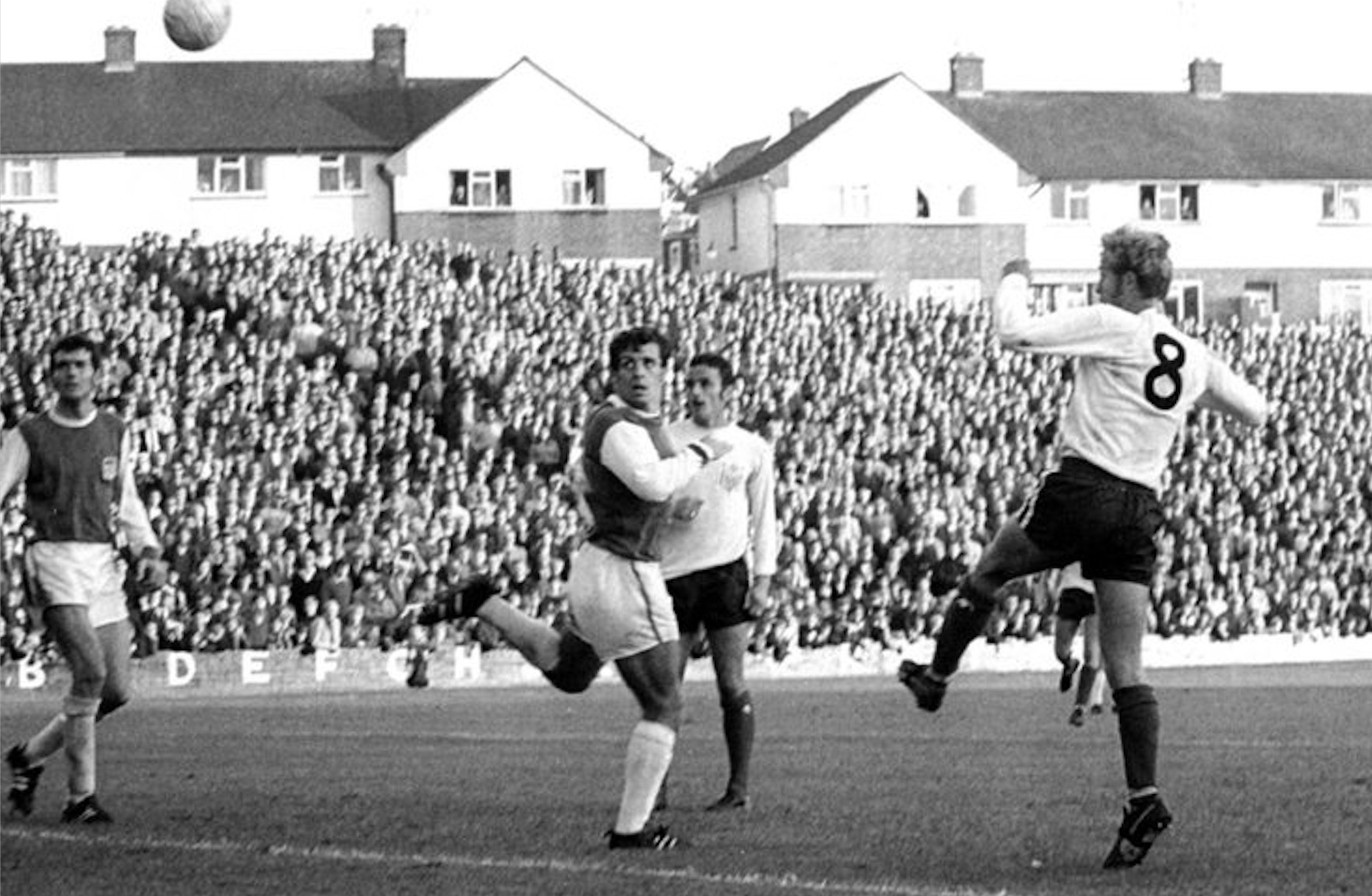
Lloyd is pictured below getting in a header against the Albion at the Goldstone, watched by John Napier (left) and Stewart Henderson. The packed East Terrace never looked like that by the time Lloyd was sitting in the Albion manager’s chair.

Lloyd at Goldstone

Fulham regained their tier two status in 1971 when they went up from Division III as champions. Manager Dodgin was sent packing in the summer of 1972, though, and Alec Stock took over, famously bringing in a number of top name players nearing the end of their careers – notably one Alan Mullery, along with Bobby Moore.

Lloyd remained part of the set-up but when Fulham surprised everyone by reaching the FA Cup Final against West Ham in 1975, he had to be content with what in those days was the single substitute’s berth on the bench, and didn’t get on.

Nonetheless, he chalked up 290 games for Fulham, before having brief spells at Hereford and Brentford (where Dodgin was the manager) and ending his playing days with Houston Hurricanes in the United States.

“I lived in Texas for a year. The league was never going to last but I learnt a lot about how the game can be promoted. They were very good at that over there,” he said in a matchday programme article. “Everyone was made to feel part of the club. It was an interesting experience; I’ve never regretted going.”

During his brief time at Hereford, Lloyd had an eye to the future and took his full coaching badge at Lilleshall, which wasn’t far away.

After his time in America came to an end, he got his first managerial experience with Yeovil Town (then a non-league club) and then headed to Sussex where he took Worthing from the Second Division of the old Isthmian League to runners-up in the Premier Division.

It was in 1986 when he got the call from Mullery to become reserve and youth team manager at the Albion. Dodgin was also on the staff.

lloyd desk

In January 1987, Mullery was unceremoniously dumped and Lloyd came out of the shadows to take charge. Perhaps what fans didn’t know at the time was that the day after Mullery left, Lloyd was summoned to a meeting with chairman Bryan Bedson and told to “get rid of everyone” because the club was going bust.

Against that backdrop, it was 15 games before the side managed to register a win under Lloyd and, unsurprisingly,  Albion were relegated. Some of the mainstays of the side, like Danny Wilson, Eric Young and Terry Connor were sold. Fortunately, Lloyd was able to re-invest part of the proceeds from those sales in some buys who gelled together to form a promotion-winning team.

Screen Shot 2021-05-03 at 20.37.12He returned to former club Chelsea to secure the signing of centre back Doug Rougvie who was made captain and he paired left winger Garry Nelson, a £72,500 signing from Plymouth, with tenacious Scot Kevin Bremner, from Reading, to lead the line. Nelson in particular was a revelation, scoring 32 goals and voted player of the season.

Lloyd reckoned the backbone of the side were two other shrewd signings: Alan Curbishley and Gary Chivers. “Alan was a very level-headed guy, an excellent passer and really disciplined,” he told Spencer Vignes in a matchday programme article. “Chivers was exactly the same, and a real joker at the same time. But there were a lot of great individuals in that side.”

The following two seasons saw Albion maintain their status with lower half finishes but, with the Goldstone Ground crumbling and debts mounting, there was little investment in the team and Lloyd had to use all his contacts to try to find some gems.

One was former England international winger Mark Barham, another was a former Soviet international, Sergei Gotsmanov, a real crowd-pleaser obviously capable of playing at a higher level (as was proved when he opted to join Southampton the following season).

Then, in 1990-91, he rescued two forwards languishing with also-ran clubs in Europe and together John Byrne and Mike Small were superb in attack as Brighton made it to the play-off final at Wembley only to lose 3-1 to Neil Warnock’s Notts County.

No-one had been expecting Brighton to get a tilt at promotion, particularly as the season had once again begun with big money departures of players like Keith Dublin and John Keeley.

But with Byrne and Small on fire and former Fulham and Chelsea winger Clive Walker added to the squad they clawed their way into contention and famously clinched the play-off spot on the last game of the season, courtesy of Dean Wilkins’ curling free kick past Ipswich Town’s Phil Parkes.

Another crucial signing that season was thanks to one of Lloyd’s old Chelsea teammates, George Graham. The Arsenal boss loaned cultured central defender Colin Pates to the Seagulls and he proved a mainstay in the final third of the season. Pates would later sign permanently.

Even though they were clearly beaten by the better side on the day, looking back now, I don’t think anyone could have realised what bad news it was for Albion not to win the final against County.

Starved of the funds promotion would have delivered, Lloyd was forced to sell star performers Small and Byrne and, 11 months after appearing at Wembley, Albion were relegated back to the third tier.

Lloyd had tried to repeat his previous successful European scouting mission with two former league players, but the hapless Mark Farrington turned out to be one of the worst buys ever, managing to score one solitary goal while former Arsenal youngster Raphael Meade fared slightly better but only just got into double figures.

Mark Gall, a £45,000 signing from Maidstone, arrived towards the end of October and ended up top goalscorer and was player of the season, but his 14 goals were still not enough to spare the team from the drop.

In the following season, the very survival of the club was under serious threat with the taxman chasing an unpaid bill. Lloyd rescued the club at the 11th hour by managing to secure a £350,000 fee for goalkeeper Mark Beeney (bought two years earlier from Maidstone for £25,000), former Albion winger Howard Wilkinson buying him for League Champions Leeds United.

With the financial issues continuing in the background, a run of only two wins in 18 league games in the first half of the 1993-94 season eventually brought the Lloyd era to an end – the axe wielded by chief executive David Bellotti, who had arrived only a month earlier.

Fans who were euphoric to see Lloyd go might well have felt differently if they’d known what would eventually transpire, but that’s a story for another day.

The record books show Lloyd made a total profit of £1.2m in his seven years at the helm and he certainly knew his way around the transfer market, particularly in Europe, when it was a lot less fashionable than it is today.

Another of his discoveries was Dean Wilkins, playing for FC Zwolle in Holland, and in 2007 – 14 years after he had left the Albion – Lloyd returned as chief scout during Wilkins’ reign as first team manager.

Also part of the set-up then was director of football Martin Hinshelwood, who had been Lloyd’s assistant during his time in the dugout. Lloyd later returned to the club to assist in the recruitment department but retired in 2021.

He died aged 75 on 28 September 2024 and players in the Chelsea v Brighton game that afternoon wore black armbands in tribute to him.

Lloyd in 2022