Brighton trial was curtain call for Fred Pickering’s career

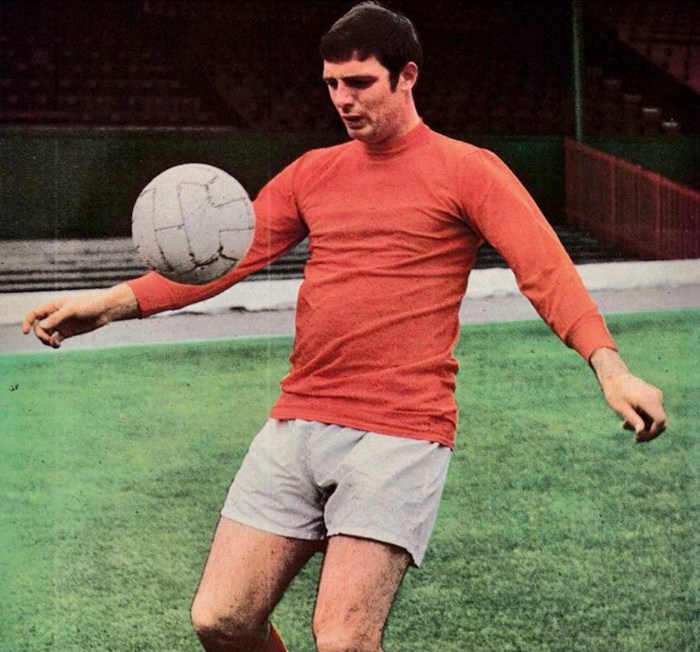
PROLIFIC goalscoring centre-forward Fred Pickering, who at his peak scored hat-tricks on his Everton and England debuts, ended his career after an unsuccessful two-month trial with Brighton.

Pickering was a transfer record signing for Everton (the previous season’s league champions) when he joined them from Blackburn Rovers for £85,000 in March 1964.

On his debut for Harry Catterick’s side, he scored three past Nottingham Forest’s Peter Grummitt in a 6-1 thrashing.

Eight years later, a player who’d played for his country and, but for injury, might have been involved in the 1966 World Cup, scored once for Brighton’s reserve side: in a 3-0 home win over Colchester United on 8 March 1972.

Brighton won promotion from the old Third Division two months later thanks in no small part to 19 goals scored by Kit Napier and 17 from Willie Irvine (Pickering’s former Birmingham City teammate Bert Murray netted 13 and Peter O’Sullivan hit 12).

Throughout the season, manager Pat Saward had been hankering for something a bit extra in the forward line. While he appreciated the skill of Napier and Irvine, he said “none had the devil in him. We wanted more thrust.”

Pickering was the second seasoned striker Saward had run the rule over, wondering whether their experience of goal plundering at the highest level several years before might be revived in third tier Albion’s quest for promotion.

Earlier in the season, he tried recruiting an ageing Ray Crawford but contract issues with the player’s last club, Durban City, meant the former Portsmouth, Ipswich, Wolves and Colchester centre-forward ended up joining the staff as a scout and coach instead.

In February 1972, 31-year-old Pickering, by then not even getting a game in Blackburn’s Third Division side, was given a chance by Saward to show he still had the goalscoring ability he had demonstrated so effectively earlier in his career.

Photographs of a rather heavy-looking Pickering training appeared in the Evening Argus and the former England striker was interviewed on Radio Brighton (as it was then) about his illustrious career. Although he played for the reserves, he wasn’t deemed fit enough to make it into the first team.

Saward eventually got the thrusting forward he sought on March transfer deadline day when he signed Tranmere Rovers’ Ken Beamish, who, at 24, was younger and fitter, and quickly endeared himself to Albion fans by scoring a handful of late goals which helped clinch promotion.

But what of Pickering? Born in Blackburn on 19 January 1941, he played junior football in his hometown before joining Rovers as an amateur aged 15.

As a schoolboy, he’d been an inside forward (a no.8 or no.10 in today’s parlance) but he was a full-back when he signed as a professional for Rovers on his 17th birthday.

Indeed, he was at left-back in the Rovers side that won the FA Youth Cup in 1959, beating West Ham United 2-1 on aggregate over two legs.

Alongside him for Rovers were future Spurs and Wales centre-half Mike England and Keith Newton, who also later moved to Everton and played for England at the 1970 World Cup. West Ham included Bobby Moore and Geoff Hurst in their line-up.

With the likes of Dave Whelan and Bill Eckersley ahead of Pickering in the Blackburn pecking order, his chances of a first team breakthrough were limited.

But after a successful outing for the reserves up front, and with wantaway Irish striker Derek Dougan dropped, Pickering was given a chance as a centre forward – and he never looked back.

He scored twice in a 4-1 win over Manchester City and went on to strike up successful partnerships with Ian Lawther, initially, and then Andy McEvoy.

“It was a big turning point for me to be playing centre forward,” Pickering told the Lancashire Telegraph. “Especially when you consider in 1961, Dally Duncan (Blackburn manager, and later Brighton guesthouse owner) told me that Plymouth wanted me and that I was free to leave. I didn’t want to go because Blackburn was my club.

“I only left in the end because the club wouldn’t give me a rise of a couple of quid. It was absurd.”

By then Pickering had scored 74 goalsin158 appearances – some strike rate – which meant he always held a special place in the hearts of the Ewood Park faithful, as reporter Andy Cryer described in a 2011 article for the Lancashire Telegraph.

“Had fate been kinder to him he could easily have been a national darling too,” wrote Cryer.

“When hat-trick hero Geoff Hurst was firing England to World Cup final glory in 1966, an injured Pickering was left reflecting on what might have been after an incredible journey took him from Rovers reserves to international stardom.”

Pickering, nicknamed Boomer for his powerful right foot, had scored five goals in three England appearances and looked set for inclusion in England’s 1966 World Cup squad having been named in Sir Alf Ramsey’s provisional selection.

But he suffered a knee injury in an FA Cup quarter final replay against Manchester City which not only caused him to miss Everton’s FA Cup final win that Spring, but also meant he had to withdraw from the England squad. Cryer reckons it also led to the subsequent demise of his career.

Pickering told the reporter: “I played three games for England and I scored in every game I played, I scored five goals and I was playing well. I was named in the World Cup squads. I was going and from that day it was the following weekend when the knee started to go.

“I watched all the Brazil games at Goodison. England struggled in their first game against Uruguay and that is when Jimmy Greaves got injured.

“Obviously that is how Hurst got in, he wasn’t even really in the set up before. There was every chance if I had been fit it that might have been me who had got in. I wouldn’t say I would have done what Geoff Hurst did but you never know what might have happened.”

Pickering had made his England debut two months after moving to Everton, in a 10-0 demolition of the USA on 27 May 1964. It was the same match that saw future Albion manager Mike Bailey play his first full international for his country. Roger Hunt went one better than Pickering by scoring four, Terry Paine got two and Bobby Charlton the other. Eight of that England side made it to the 1966 World Cup squad two years later – alas Pickering didn’t.

The same scoring rate he had enjoyed at Blackburn continued at Everton and in his first full season he scored 37 goals in all competitions – the most by an Everton player since Tommy Lawton scored 38 in 1938-39.

In three years with the club, he scored 70 times in 115 matches but his exclusion from the 1966 FA Cup final squad soured his relationship with manager Catterick, as covered in detail by the efcstatto.com website. Injuries disrupted his involvement at the start of the following season, and a cartilage operation put him out of action for nearly six months.

Although he made his comeback in March 1967, his Everton days were numbered and, in August 1967, moneybags Birmingham City bought him for £50,000 to form a hugely effective forward line with Barry Bridges and Geoff Vowden.

Pickering and Bridges played in all 50 of Birmingham’s matches in the 1967-68 season; the aforementioned Bert Murray 47. Bridges was top scorer with 28 goals and Pickering netted 15.

The Second Division Blues made an eye-catching run to the semi-finals of the FA Cup, but they lost 2-0 to West Brom (who went on to beat Everton 1-0 in the final).

The following season, Pickering scored 17 times in 40 appearances (Phil Summerill also scored 17, and Jimmy Greenhoff 15) but City finished a disappointing seventh.
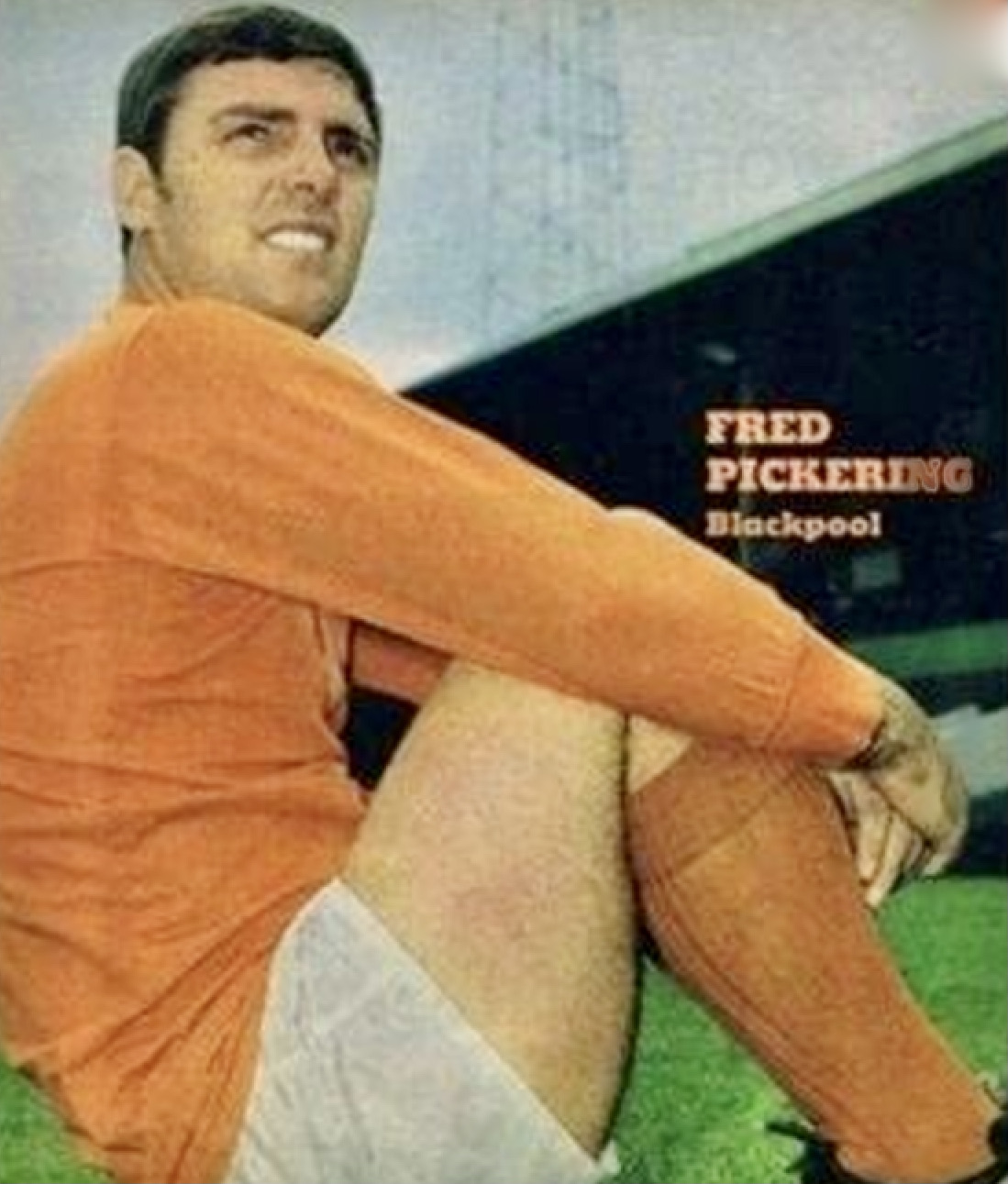
That signalled the end of the striker’s time in the Midlands and he returned to his native north west with Blackpool, who paid £45,000 for his services.

It was money well spent as Pickering top-scored with 18 goals as the Tangerines won promotion back to the elite, finishing runners up to Huddersfield Town. His most memorable performance was on 13 April 1970 when he scored a hat-trick away to local rivals Preston North End in front of a Deepdale crowd of 34,000. It earned Blackpool promotion while simultaneously relegating North End to the third tier.

But the 1970-71 season didn’t go well for Blackpool or Pickering. The club got through three managers and only won four matches all season, which eventually saw them finish bottom of the pile and relegated along with fellow Lancastrians Burnley. Pickering found himself fined and excluded for breaches of club discipline (mainly involving missing training) and before the season was over he was sold back to his first club, Blackburn.

That was a blow to Preston, who had just loaned Willie Irvine to Brighton and were keen to install Pickering as his replacement. But it was to Rovers, for £9,000, that he went, but he couldn’t prevent the Ewood Park outfit being relegated to the third tier.

He scored just twice in 11 League games in his second spell at Blackburn before that two-month trial at Brighton.

After he retired from football, he became a forklift truck driver. Warm tributes were paid when Pickering died aged 78 on 9 February 2019. Well-known football obituarist Ivan Ponting said of him: “At his rampaging best, Fred was an irresistible performer.

“Though neither outstanding in the air, nor overly-physical for a man of his power, not even particularly fast, he could disrupt the tightest of defences with his determined running and a savage right-foot shot that earned him the nickname of ‘Boomer’.

“Boasting nimble footwork for one so burly – he could nutmeg an opponent as comprehensively as many a winger – he was especially dangerous when cutting in from the flank, a manoeuvre that yielded some of his most spectacular goals.”

In March 2022, a road in the Mill Hill district of Blackburn, where he lived all his life, was named after him and his family spoke of their pride as they unveiled the street sign in his honour.

Career-ending leg break spawned physio role for George Dalton

A CAREER-ENDING leg break led one-time international hopeful George Dalton into a new career as a football physio.

Geordie-born Dalton was an emerging left-back at Newcastle United being watched as a possible candidate for a call-up to the England Under-23 side.

But he was never the same player after breaking a leg in a tackle with Leeds United’s Johnny Giles.

Then, only seven months after trying to resurrect his career with third tier Brighton, unlucky Dalton sustained a double fracture of the same leg in a freak collision and never played professionally again.

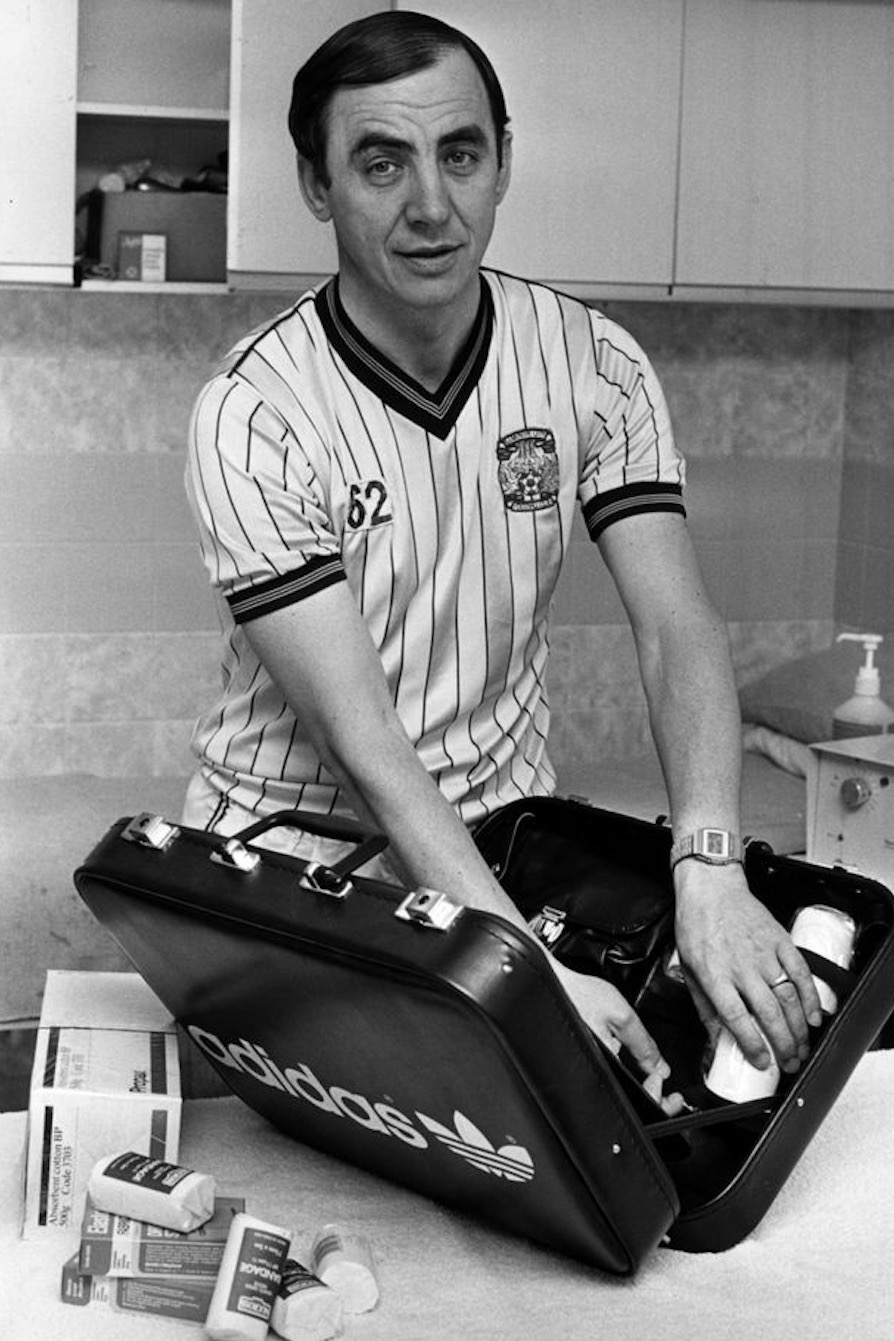
However, he turned his familiarity with the treatment table to good use and he later became Coventry City’s physio for the best part of 20 years.

Born in Dilston, Northumberland, on 4 September 1941, Dalton went through the junior ranks at Newcastle and turned professional at St James’s Park in 1958.

He made his Toon debut on 10 October 1960 in a 4-1 League Cup defeat away to Colchester United, and made his First Division debut the following February, ending up on the losing side in a 5-3 defeat away to Leicester City.

After Newcastle’s relegation to the old Division Two, Dalton made a lot more appearances (including being in the Toon side who thumped Brighton 5-0 at St James’ on 21 October 1961).

He was in and out of the side over the next two years but became a regular from March 1963 and, in January 1964, eagle-eyed Ken McKenzie, reporter for Newcastle’s The Journal, spotted England Under-23 selector Mr E.Smith in the stands at St James’s.

“This visit can only mean imminence of England Under-23s selection to meet Scotland at St James’s Park on Wednesday evening, February 5, and check up, particularly on George Dalton and Alan Suddick, of United,” he wrote. “On this basis, I feel that Mr Smith’s trip to Tyneside holds out very bright prospect of Forest Hall, Newcastle, product, Dalton, gaining his first representative honour on February 5.

“I know that Dalton has been recommended to the England selectors for some time by United directors and manager, and his consistency and clean, strong play has been commented on by influential observers at several away games.”

Unfortunately, the call-up didn’t happen, and revered reporter Ken Jones wrote in the Daily Mirror: “Despite local claims for left back George Dalton and inside forward idol Alan Suddick; neither has been chosen by the England team manager, and clearly they have no place in his ideas at present.”

Interestingly, the left-back berth went to Keith Newton, who later went with England to the 1970 World Cup in Mexico. Mike Bailey and Graham Cross both played in the Under-23s’ 3-2 win over Scotland, while the reserves that day were Peter Grummitt, Alan Mullery and Martin Chivers.

Within a matter of weeks, Dalton’s football fortunes were turned upside down when, in his 40th game of the season, on 30 March 1964, three days after Newcastle had surrendered an eight-game unbeaten run losing 1-0 at home to promotion-chasing Leeds on Good Friday, the full-back suffered a leg break that virtually finished his Newcastle career.

The Journal saw it thus: “This is the tale of a noble resistance by a Newcastle side who had Alan Suddick crippled in the 17th minute and lost George Dalton with a broken right leg (just above the ankle) with 14 minutes to go.”

mightyleeds.co.uk recorded it like this: “Newcastle finished with one man in hospital and another limping, but Leeds just about deserved to win their third hard match in four days. For once, however, there was no malice attached to the game and left-back Dalton confirmed he had broken his right tibia after himself kicking the sole of Giles’ boot.”

Dalton didn’t play his next Newcastle first team game for nearly two and a half years, and then it was just the one game. After that solitary appearance – his 94th for Toon – on 27 August 1966, when they lost a Division One match 2-1 at home to Spurs, he was cast into the shadows and eventually given a free transfer in May 1967.

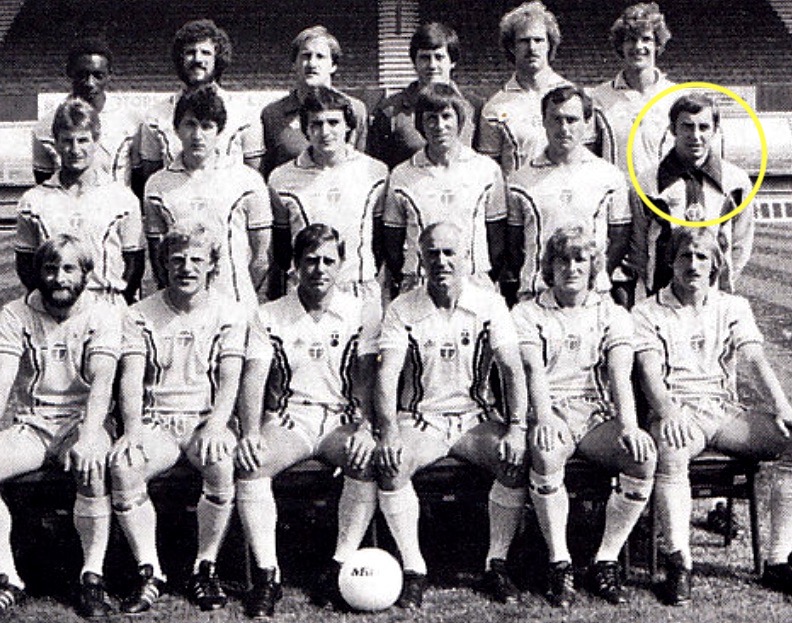
Albion’s 1967-68 squad with Dalton circled in the back row

Third Division Brighton gave the player the chance to salvage his career and he arrived on the south coast in June 1967 together with a young centre forward, Bob Fuller, who went on to score regularly for Albion’s reserves but subsequently moved to South Africa and in later life became a senior executive at mobile phone companies Orange and 3.

There were a couple of familiar faces amongst Dalton’s new teammates: Dave Turner, had been a fringe player at Newcastle before joining Brighton in December 1963, while forward Kit Napier had moved to the south coast the previous summer.

Stewart Ogden also joined straight from school in the north east in the summer of 1967 and the matchday programme declared: “Instead of Sussex by the Sea, Albion’s rousing signature tune, they may be playing The Blaydon Races this season, with so many Geordies on the staff.”

Dalton took over the no.3 shirt from Bobby Baxter, who had moved on to Torquay United, and went straight into Albion’s starting XI alongside new £25,000 record signing John Napier from Bolton Wanderers.

The matchday programme acknowledged Dalton’s past injury misfortune and said: “We all hope the change of club will see this fine defender recapturing his old form. He is married and recently moved into a pleasant club house at Portslade.”

Dalton made 28 appearances in the first half of that 1967-68 season under Archie Macaulay before tragically suffering a double fracture of his right leg in a 0-0 draw at home to Oxford United.

It was on 27 January 1968 that Dalton was involved in a heavy collision with United’s Graham Atkinson (big Ron’s brother) and Albion goalkeeper Brian Powney.

The cruel blow came almost four years after the injury he’d sustained at Newcastle and the Albion matchday programme commented how he had “completely shaken off the effects and was playing with great confidence” adding: “Albion’s popular left-back has played some fine games this season and his stylish work has been admired by supporters of other clubs, as well as the Albion fans.”

In its Albion Postbag column, a correspondent from Newhaven, calling himself ‘Veteran Player’, wrote: “George Dalton has had two unlucky accidents and we all hope he comes back fit and well and able to continue to delight us with his polished full-back play.

“Brighton have nearly always been lucky with their left-backs, and we have had a string of really fine players in that position. George Dalton can be included in that impressive list.”

Macaulay was optimistic the player would recover and in October 1968 the programme told supporters: “George is doing light training, jogging round the pitch, up the terracing also carrying out weight training exercises.”

In the meantime, Mike Everitt had been brought in to fill the gap and, by the time Macaulay was succeeded as manager by Freddie Goodwin, as 1968 drew to a close, Dalton still wasn’t in contention.

It looked even less likely he’d get back in when Goodwin signed his former Leeds teammate Willie Bell from Leicester City, but his next career step was closely linked to both of them.

In the summer of 1970, Dalton, who’d combined studying physiotherapy with coaching the Albion junior team in the latter part of his contract, joined Goodwin and Bell as part of the new management team at Birmingham City.

Albion took serious umbrage at the exodus and the matter ended up with City having to pay £4,500 compensation for Goodwin (who still had 18 months of his contract remaining) and a £5,000 fine for illegally approaching Bell.

Dalton’s situation was viewed differently because he’d technically been a player out of contract thus free to make a move.

When Goodwin left City in 1976 and returned to manage in America, Dalton moved on to Midlands neighbours Coventry City, taking over as physio from Norman Pilgrim, and he retained the position for two decades.

Several former players had nothing but good things to say about him when interviewed in Steve Phelps’ book 29 Minutes From Wembley. Striker Garry Thompson spoke highly of the care with which Dalton treated him when he suffered a broken leg that put him out of the game for 11 months.

“George Dalton, our physiotherapist, was magnificent with me,” he said. “He kept saying my leg was going to be like a twig and I’d have to rebuild the muscles and learn to walk again.

“My Mum and Dad thought it was career over, but, the way I think about it now, I was so lucky because there weren’t that many options for me and I had to play football.

“George’s own career was ended by injury. He was a very good footballer when he trained with us so, when I broke my leg, he really took care of me and was superb.

“I couldn’t thank him enough and all George had was the sponge and two machines in the treatment room, the electric currents and the ultrasound, that was it.

“He worked miracles down the years with players and, if it wasn’t for him, I would not have played until I was 37. I owe him a lot.”

Garry’s praise for Dalton was echoed by Paul Dyson, who spent prolonged periods in the treatment room with ankle and back injuries during his teenage years. “George was a real character. We all had a lot of time for him and he tended a lot of us through our respective injuries.

“He used to drive us to the hospital in his Morris 1100 and had a great left foot. He’d played left-back for Newcastle United before his own career was ended by injury. There were the two machines in his room and he used to have ice cubes on sticks in his freezer.”

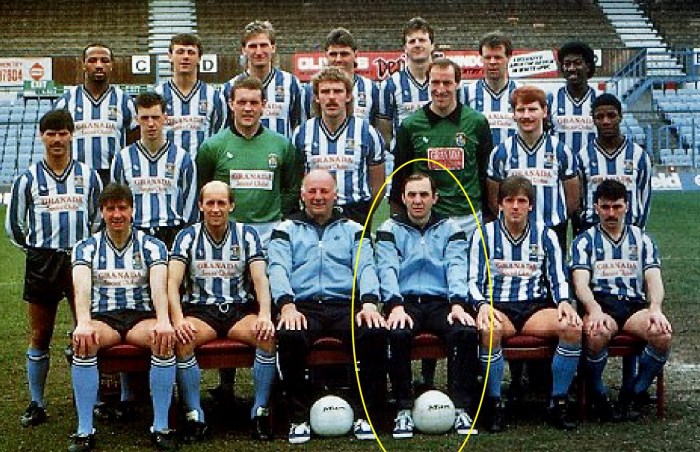
Dalton alongside boss John Sillett in the front row of this Coventry squad picture

Scottish international winger Tommy Hutchison was another admirer. “He was a smashing lad, George, very old-school. He suffered no fools and could always tell if a player was injured or not.

“In our days broken legs did finish careers, along with knee ligament injuries, and George rehabilitated so many players at Coventry. There was no squad rotation as you wanted to stay in the team and play every week because if you didn’t someone else would step in to take your place and you wouldn’t be able to get back in.”

Midfielder Andy Blair added: “George was a great physiotherapist, a terrific calming influence and a great man to have around.”

Experienced full-back Mick Coop was another who appreciated the physio. “George really was a lovely man who worked injured players very hard in the gym to get them back on to the pitch,” he said. “He was very quiet but did his job well and garnered a lot of respect off the playing squad. I can’t speak highly enough of him.”

Dalton keeps in touch with many of his former colleagues through the Coventry City Former Players’ Association, which has reported how he returned to live in Newcastle in retirement.

* Pictures from matchday programmes and various online sources.