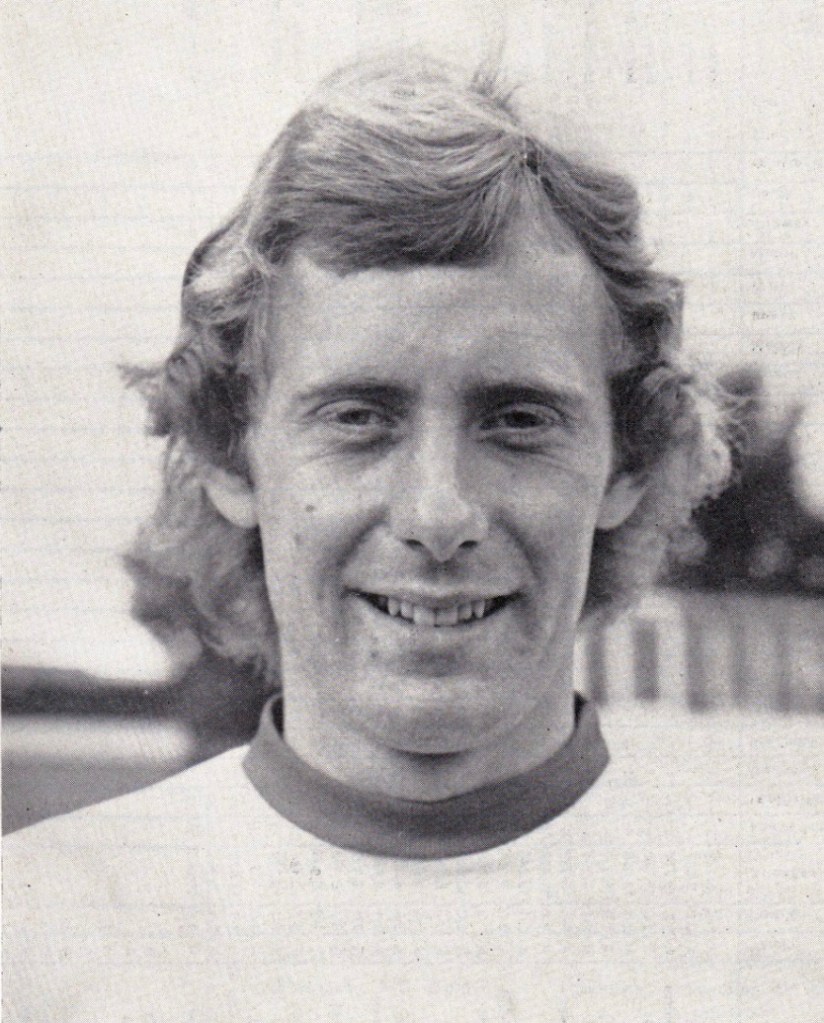
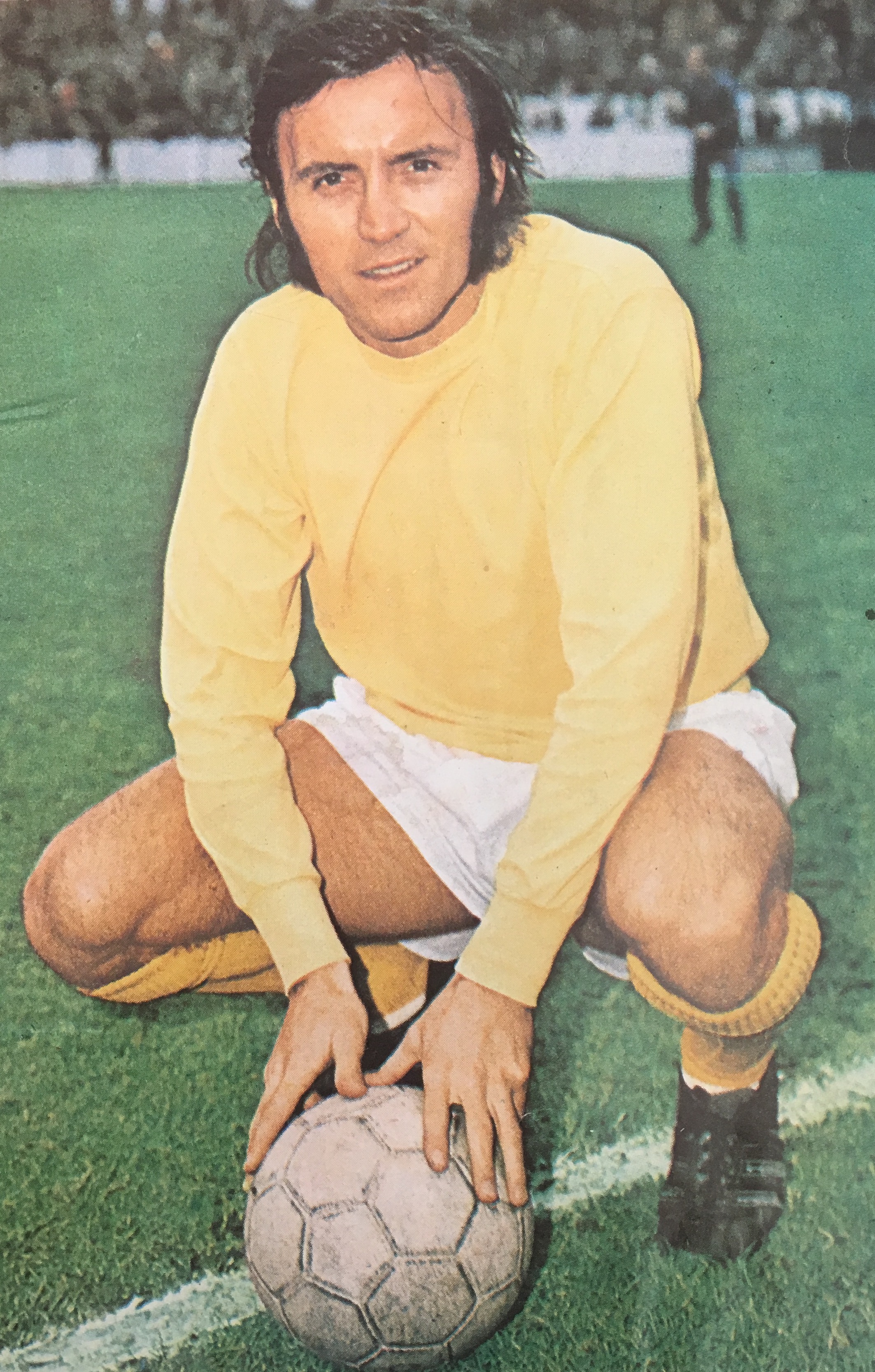
Left back Harry Wilson “something of a fire-eater”

BRIGHTON boss Brian Clough turned up at Burnley to capture the signings of two of their fringe first team players – and ended up having pie and chips with the groundsman!

When Clough arrived at Turf Moor, he found manager Jimmy Adamson, chairman Bob Lord and secretary Albert Maddox were nowhere in sight, it being lunchtime.

In their absence, as recounted to respected writer Dave Thomas, groundsman Roy Oldfield made the famous visitor a cup of tea, popped to a nearby chippy to get them both pie and chips and chatted all things football until the office re-opened after lunch.

Although Clough hadn’t got quite what he expected on arrival, his journey did bear fruit. In exchange for £70,000, he secured the services of left-back Harry Wilson, a 20-year-old who had made 12 appearances for the Clarets, and midfielder Ronnie Welch, 21, who had played one game.

At the time, Clough was desperately trying to bring in new recruits to a beleaguered Brighton side that he and sidekick Peter Taylor had taken on in October 1973, a period covered in detail in a recent book, Bloody Southerners, by author and journalist Spencer Vignes.

The man who only the season before had led unfashionable Derby County to the First Division Championship, couldn’t quite believe what he had inherited at Third Division Albion.

The players seemed bewildered by what the new celebrity boss expected of them.

Heavy defeats – 4-0 to non-league Walton and Hersham in the FA Cup; 8-2 at home to Bristol Rovers and 4-1 away to Tranmere Rovers in the league – reflected the disarray.

Clough and Taylor weren’t slow in pointing the finger. Their only solution was to find replacements – and quickly.

Former Manchester United reserve Ken Goodeve was first to arrive, from Luton Town, although he failed to impress and made only a handful of appearances before joining Watford at the end of the season.

Goalkeeper Brian Powney was axed in favour of former England under 23 international, Peter Grummitt, initially on loan from Sheffield Wednesday.

Experienced left-back George Ley never played for the Albion again after the defeat at Tranmere, while utility man and former captain, Eddie Spearritt, also lost his place (although he eventually forced his way back into the side briefly).
Lammie Robertson, who knew the pair from his early days at Burnley, was asked to introduce them to their new teammates in the dressing room before an away game at Watford (they’d not been signed in time to play).

Robertson told Spencer Vignes in a matchday programme interview how Wilson was sporting a rather loud checked suit at the time and, in his own inimitable style, Clough boomed out: “Flipping hell, I never want to see that suit again.”

Needless to say the players laughed out loud, only for Clough to say: “What the hell are you all laughing at? They’ll be in the team next week.” And sure enough, they were.

Wilson and Welch made their debuts against Aldershot in a home game on Boxing Day when a crowd of 14,769 saw Albion slump to their fifth successive defeat, although at least the deficit this time was only 1-0.

A win finally came in the next game, a 1-0 success at home to Plymouth Argyle – Ken Beamish scoring the solitary goal.

In a 2010 matchday programme article, Wilson said: “I really didn’t want to go to Brighton. No disrespect but I loved it up at Burnley.

“The people there had been so friendly and helpful when I arrived from the North East so it broke my heart to leave. That said, I thoroughly enjoyed my time at Brighton and met some fantastic people, so, looking back now, I’m glad that Jimmy Adamson let me go.”

In the Evening Argus, reporter John Vinicombe purred about the impact of the new recruits from Burnley, saying Wilson “is looking something of a fire-eater. He has a rare zest for the game and relishes the close, physical contact that is synonymous with his position.

“He knows how to destroy and create, and does both in a manner befitting a five-year background at the academy of fine footballing arts (editor’s note: at the time, Burnley had a reputation for producing highly-talented young players).

“His colleague from Turf Moor, Ronnie Welch, is not so completely extrovert, but is no less involved in midfield, and has a fine turn of speed. He made one mistake through trying to play the ball instead of hoofing it away, but this can only be described as a ‘good’ fault.”

Further signings followed and the ship was steadied. Wilson kept the no.3 shirt through to the end of the season. But Welch made only 36 appearances for Albion before Taylor, by then under his own steam, traded in him and fellow midfielder Billy McEwan as a makeweight in the transfer that brought full-back Ken Tiler to the Goldstone from Chesterfield.

Wilson, meanwhile, became a mainstay in Albion’s left-back spot for three years, including being ever-present in the 1975-76 season.
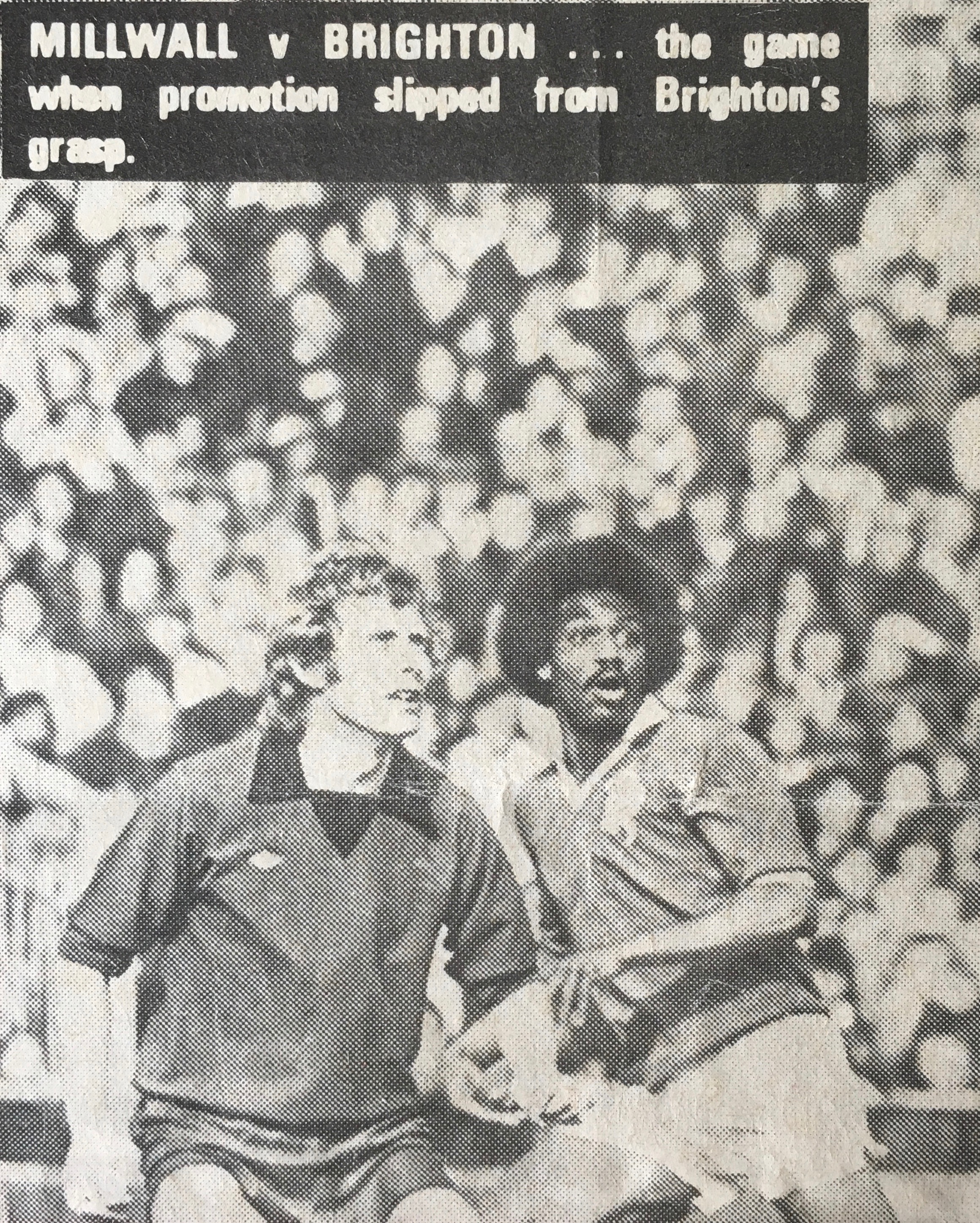
5 HW action v MillwallEver-present Wilson in action against Millwall at The Den

Suited for England!

Born in Hetton-le-Hole, near Durham, on 29 November 1953, Wilson played for Durham County Schools and made four appearances for England schoolboys (under 15s) in the 1968-69 season. He was taken on as an apprentice at Burnley before signing professional forms in December 1970.

In 1971, he earned an England Youth cap going on as a sub for Coventry’s Alan Dugdale in a 3-2 defeat against Spain in Pamplona. Don Shanks also played in that game.

He made his first-team debut at home to Chelsea on 26 April 1971 and the last of his 12 appearances for the Clarets was on 3 April 1972: away to Sunderland.

Young apprentice Wilson with experienced pros John Angus and Colin Waldron

He was part of Alan Mullery’s Third Division promotion-winning squad in 1976-77, although he was restricted to 22 appearances. The arrival of the experienced Chris Cattlin meant he was no longer first choice left-back, although in several games they both played – the versatile Cattlin being equally at home as right-back.
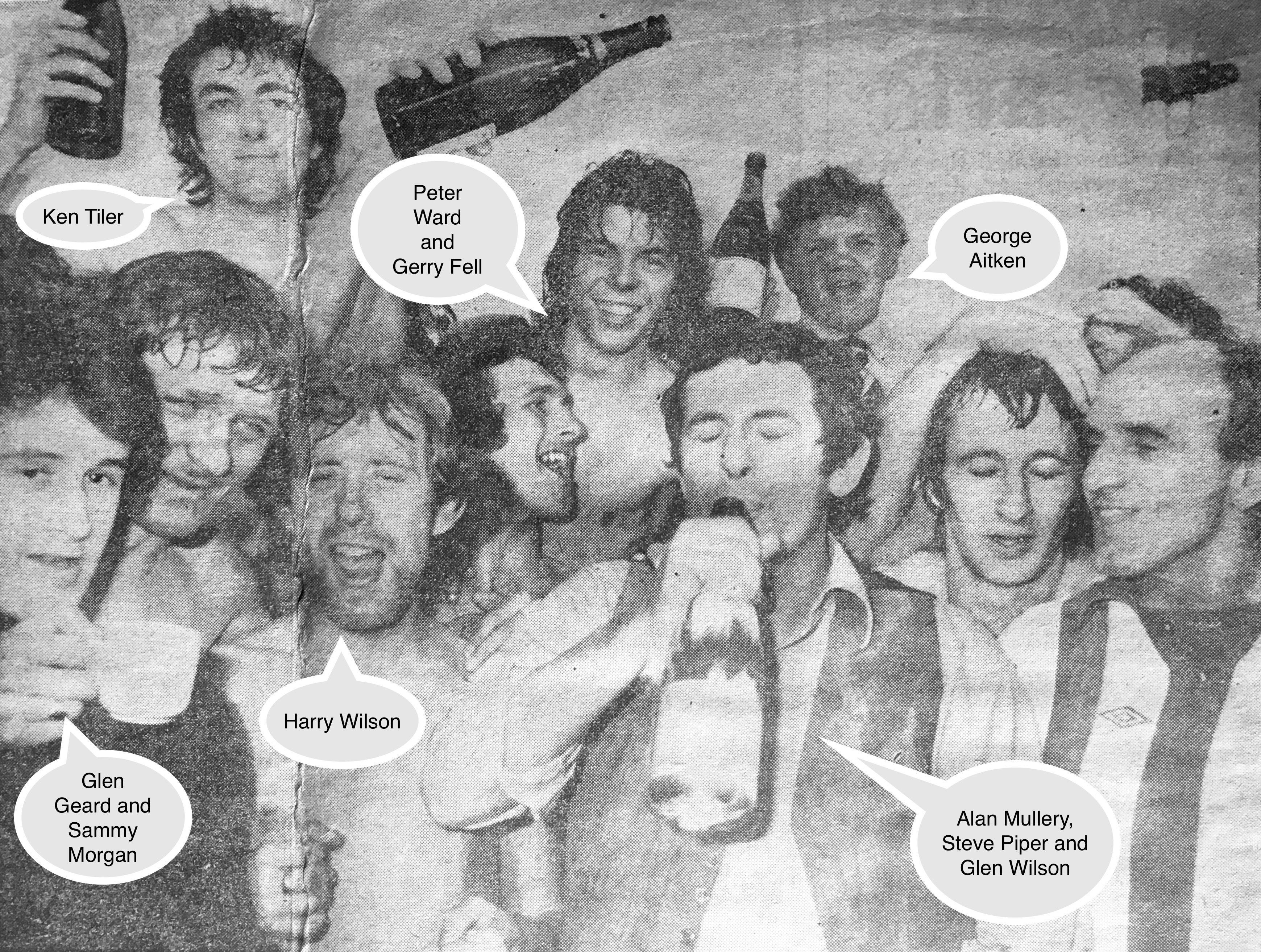
6 HW promotionA bare-chested Wilson was pictured (above) in the Albion dressing room alongside Mullery enjoying the celebratory champagne after promotion was clinched courtesy of a 3-2 win over Sheffield Wednesday on 3 May 1977. But that game was his Goldstone swansong.

He’d made a total of 146 appearances for the Albion – as well as chipping in with four goals – but when Mullery signed Mark Lawrenson and Gary Williams from Preston that summer, Wilson went in the opposite direction along with Graham Cross.

Only six months after arriving at Preston, Wilson was badly injured in a road accident after his car skidded on black ice and collided with a transit van. He suffered a punctured lung and damage to his knees. Doctors told him he wouldn’t play again, but he proved them wrong and ended up spending three years at Preston, playing 42 games.

“I suppose I was lucky to be alive,” he said in an Albion matchday programme article. “I lost a couple of yards of pace, but then again I ws never exactly the quickest of players.”

With his best days behind him, he moved back to his native north-east in 1980 to play for Darlington, making 85 appearances in three years.

He stayed in the north east in 1983, switching to Hartlepool for a season, but only played 16 times for them before dropping out of the league to play for Crook Town.

According to The Football League Paper, Wilson stayed in the game as manager of Seaham Red Star and, in 1988-89, Whitby Town.

He then worked as a community officer for Sunderland before joining the coaching staff at Burnley in the 1990s.

When Chris Waddle took over as manager, Wilson was sacked but he took the club to an industrial tribunal, which found in his favour.

He later worked for his long-term friend, Stan Ternent, at Bury, and as a monitor for the Football League, a job that saw him checking that the right procedures were being followed by the youth development set-ups of clubs in the north-west.

Wilson was in the news in 2007 when Ternent appeared at Lancaster Crown Court accused of assaulting Wilson’s son, Greg, on the steps of Burnley Cricket Club (a venue familiar to visiting supporters as a popular watering hole before games at the neighbouring football ground).

Greg Wilson required hospital treatment for a deep cut above his left eyebrow and needed nine stitches in his forehead.

Ternent said he had accidentally clashed heads, denied causing actually bodily harm, and was cleared by a jury.

4 HW colour laugh w WardWilson in an Albion line-up alongside Peter Ward
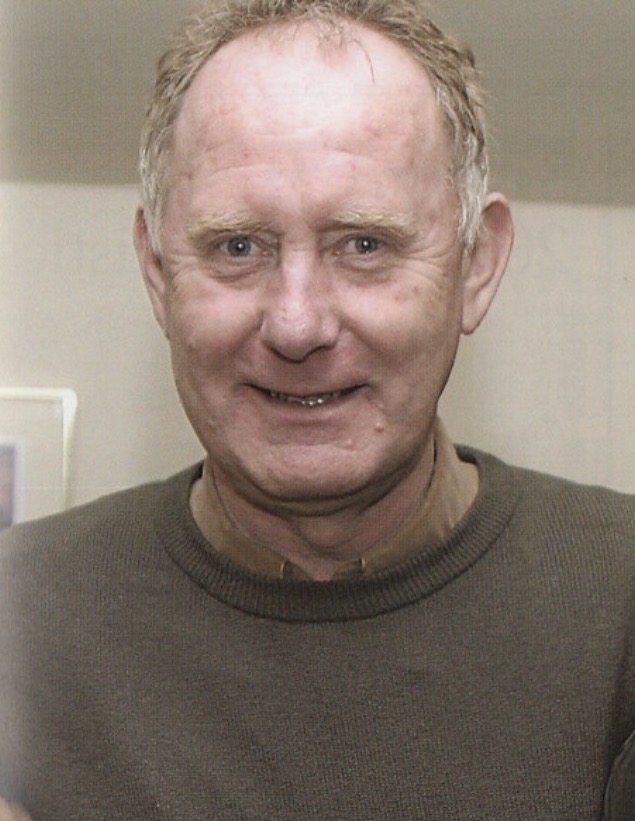
Wilson pictured in 2010

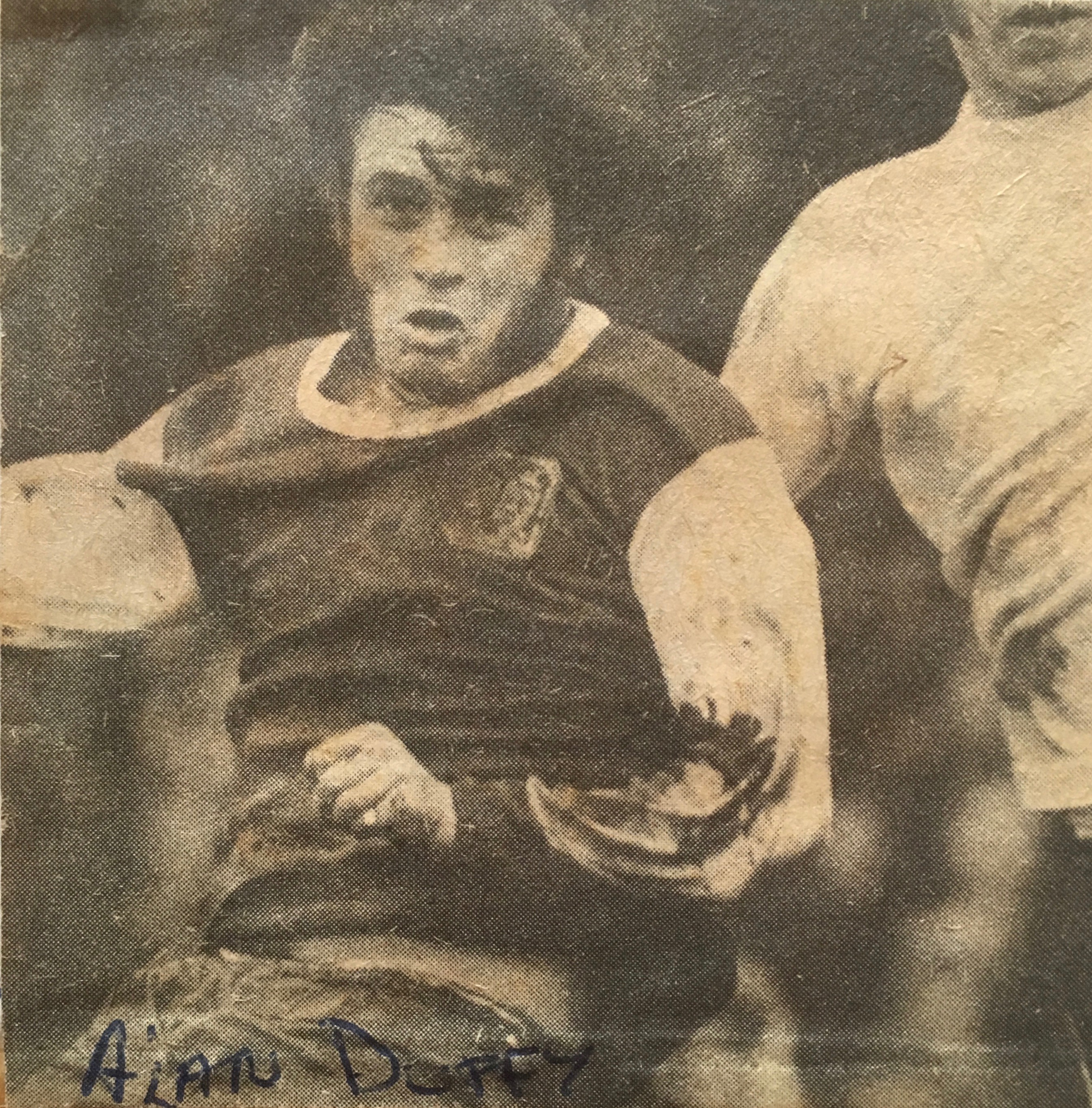
Fans took Alan Duffy to their hearts after debut goal

TWENTY-year-old Alan Duffy couldn’t have wished for a better start to his Brighton career than scoring a belter on his debut.

A £10,000 signing from Newcastle United, he was quickly off the mark on 17 January 1970 in a 2-1 Third Division win over Bradford City.

He appeared to be “the Third Division answer to George Best by beating two Bradford players and smashing a ferocious shot in off the crossbar” according to Seagulls TV, which recounted he was a “stocky striker with a robust style”.

Fan Mo Gosfield, posting on North Stand Chat in January 2011, described the goal as “one of my top 10 Albion moments, because it took your breath away”.

Mo added: “He had all the makings of a cult figure at Brighton. The swagger, the shock of hair, the slight beer belly. I loved him, but he never quite lived up to that sensational start.”

The fans in the old North Stand adapted the Hare Krishna chant to incorporate his name and, after that promising debut, the young striker kept his place in the starting line-up through to the end of the season.

He repaid manager Freddie Goodwin’s faith in him with five more goals. Particularly memorable were Duffy’s two goals in Albion’s 2-1 win over Reading on Good Friday when a huge crowd of 32,036 packed into the Goldstone.

2 AD action BW.jpg

Brighton were top of the league going into the game and looking a good bet for promotion.

Former goalkeeper Brian Powney discussed that game – and Duffy – when he was interviewed by Brian Owen for an article in the Argus on 20 February 2017.

There were question marks over both Duffy’s goals – a suspicion of handball for one, the other possibly offside – but, while both stood, a seemingly good goal from the youngster was ruled out later on.

Looking back on the game was a painful reminder for Powney, who dislocated a finger which physio Mike Yaxley had to put back while out on the pitch, it being the era long before substitute goalkeepers were available.

Unfortunately, too, Albion blew their promotion chances by losing four of the last five games after that Easter win over the Royals.

The only other points collected came in the penultimate game, a 2-1 home win over Rotherham, when Duffy again scored twice – one a penalty.

Asked about Duffy in that 2017 interview, Powney said: “Alan was hit and miss, a bit madcap.

“He had a lot of talent and, had he applied himself, he would have had a longer career. He was a good player but not such a good pro.”

Like many a player before and since, a change of manager in that World Cup summer of 1970 didn’t help Duffy’s progress at Brighton although, according to Seagulls TV: “Weight issues and injury woes, starting with a thigh problem on the opening day, marred his 1970-71 campaign.”

Duffy began in the no.8 shirt for the opening two games of that season under Goodwin’s replacement,Pat Saward, but a thigh injury picked up away to Bristol Rovers proved more problematic than first thought and he missed a large part of the first half of the season.

Duffy was out of the side from mid-October to February and, on his return to the starting line-up, was involved in one of the most curious incidents I ever saw at the Goldstone.

On 27 February 1971, against Preston North End, Albion won a controversial penalty at the south stand end of the pitch after Duffy somewhat unconvincingly tumbled in the area.

Centre forward Kit Napier took the spot-kick;  ‘keeper Alan Kelly saved it, but referee Tom Reynolds ordered a retake because of encroachment. As Napier steadied himself for the retake, Duffy stepped forward, pushed his teammate out of the way, took the penalty himself – and missed!

In the Argus, reporter John Vinicombe wrote: “Napier watched aghast as the ball thudded against the bar. Duffy hung his head, as well he might.” The game finished in a disappointing 0-0 draw.

“The manager went mad at him afterwards,” Powney recalled, and Saward promptly dropped Duffy to the bench for the next two matches.

In the meantime, the manager brought in the experienced Bert Murray and Willie Irvine on loan to add some nous and quality. Although Duffy did get back in the side for six games, the rest of the time he was on the bench.

One time when he entered the fray from the bench against Aston Villa, a BBC radio commentator described him as “a square little man – an oddity” but he was soon singing his praises for a through ball that set up Napier to score.

His only goals of the season came in the same match – against Bradford City, in a 3-2 win at Valley Parade on Easter Monday. Duffy struck twice in the second half as Albion came back from being 2-1 down at half-time.

By the season’s end, he had made just 15 starts, and was subbed off on five occasions. There were seven appearances off the bench, plus three occasions when he was a non-playing sub.

In 1971-72, he made just one start – in a league cup match – and was only ever a substitute in the league, coming on 12 times and not being used on 10 other occasions.

A Brighton & Hove Gazette special publication noted that shortly after coming on as a substitute in a second round FA Cup game at home to Walsall in December 1971, he was booked for fighting with the Saddlers’ goalkeeper, Bob Wesson.

A subsequent post-match incident with the goalkeeper led to Duffy being suspended for six weeks. His final appearance saw him come on for Murray in a 4-2 win away to Oldham Athletic in mid-January 1972.

Saward clearly didn’t see Duffy as a long-term part of his plans and when he plunged into the transfer market on deadline day in March, the Geordie was used as a makeweight in the deal which brought Tranmere Rovers striker Ken Beamish to the Goldstone for a fee of £25,000. On the same day, Wolves’ Irish international Bertie Lutton returned to the Albion following a loan spell earlier in the season.

In two years at Prenton Park, Duffy made 33 appearances and scored just twice, before heading back to the north east in 1973 to join Darlington.

In the 1973-74 season, he played 24 games for Darlington without getting on the scoresheet and the following season drifted into non-league football, playing for Consett.

It was quite some fall from that glorious day on 21 September 1968 when he had made his Newcastle first team debut against Manchester United at Old Trafford in a 3-1 defeat.

Born on 20 December 1949 in Stanley, Co Durham, Duffy joined Newcastle in 1966 and on 7 April 1968 won an England Youth international cap when he featured in a 0-0 draw away to Bulgaria.

The game took place in Nimes, France, and was part of the UEFA Youth tournament. Amongst his teammates were Burnley’s Dave Thomas and Steve Kindon and fellow Magpie Alan Foggon.

After that debut at Old Trafford, Duffy didn’t play for the first team again until 9 August 1969, coming on as a sub in a 1-0 defeat v West Ham.

His next chance came on 20 September 1969 when he came on as a sub in a 1-1 draw with Southampton.

A week later, he got a start in another 1-1 draw, this time against Wolverhampton Wanderers. But Toon1892.com recounted: “In his time at Newcastle he was always considered to be Pop Robson’s deputy rather than a first team choice.”

When the Toon decided to let him join Brighton, Duffy had to admit he’d never previously ventured that far south before. At least there was a familiar face waiting for him when he arrived: at the time, Albion had a young Newcastle goalkeeper, Martin Burleigh, on loan.

The matchday programme revealed how manager Goodwin and club secretary Alan Leather had quite a journey travelling to the North East to clinch the deal for Duffy because bad weather caused them to alter their train and plane arrangements.

Leather then had to dash from Newcastle to the Football League headquarters at St Annes on the Lancashire coast to register the paperwork ahead of the 48-hour deadline for new signings so that Duffy would be eligible to play in Albion’s away game at Barrow. He managed it…..but then the match was postponed!

Pictures from my scrapbook either originated in the matchday programme or were published in the Evening Argus. Also featured, a special publication produced by the Brighton & Hove Gazette.

Chelsea starlet Barry Bridges a Brighton record signing

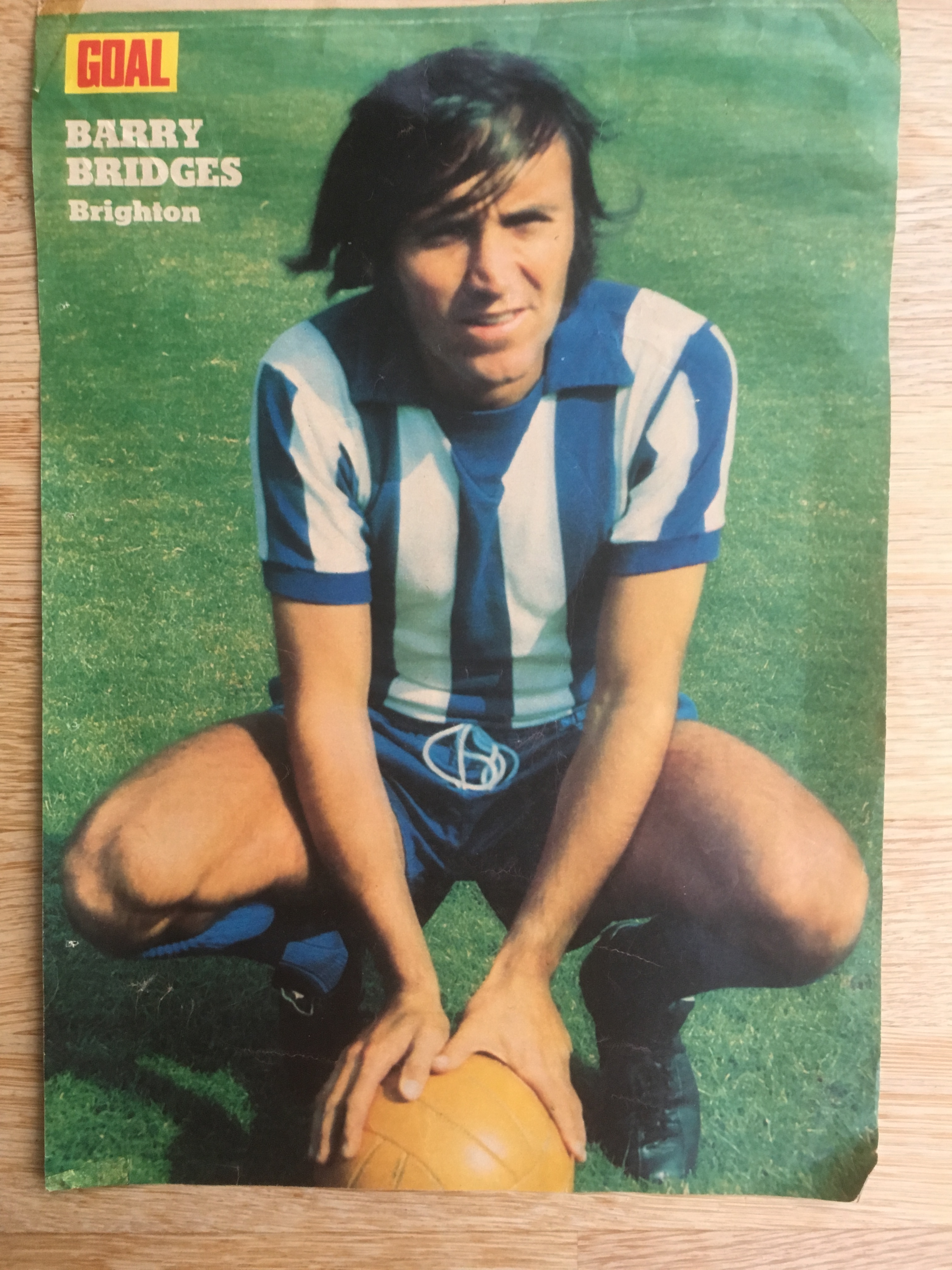
5-bridges-in-stripesENGLAND international Barry Bridges was once Brighton & Hove Albion’s record signing for the princely sum of £28,000.
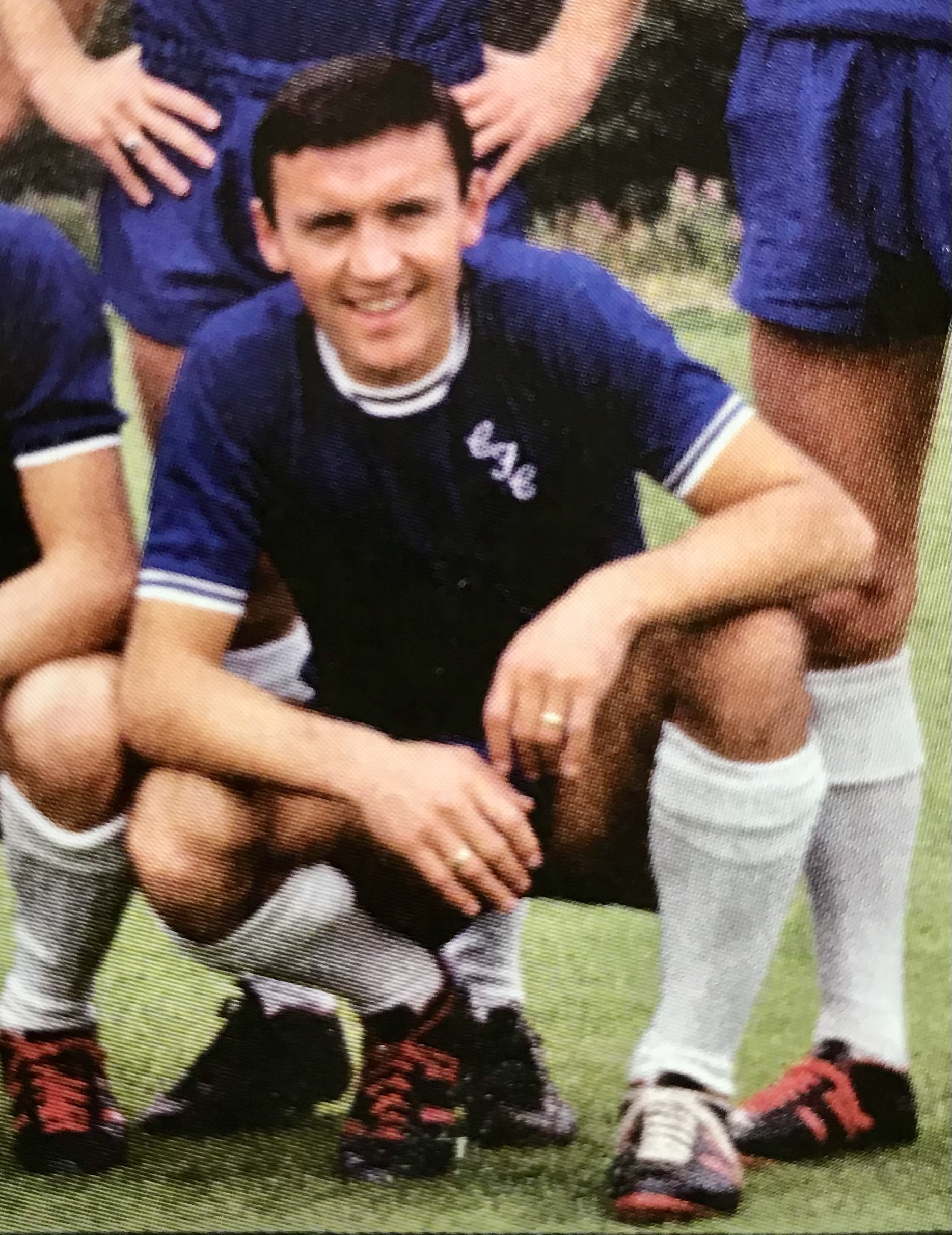
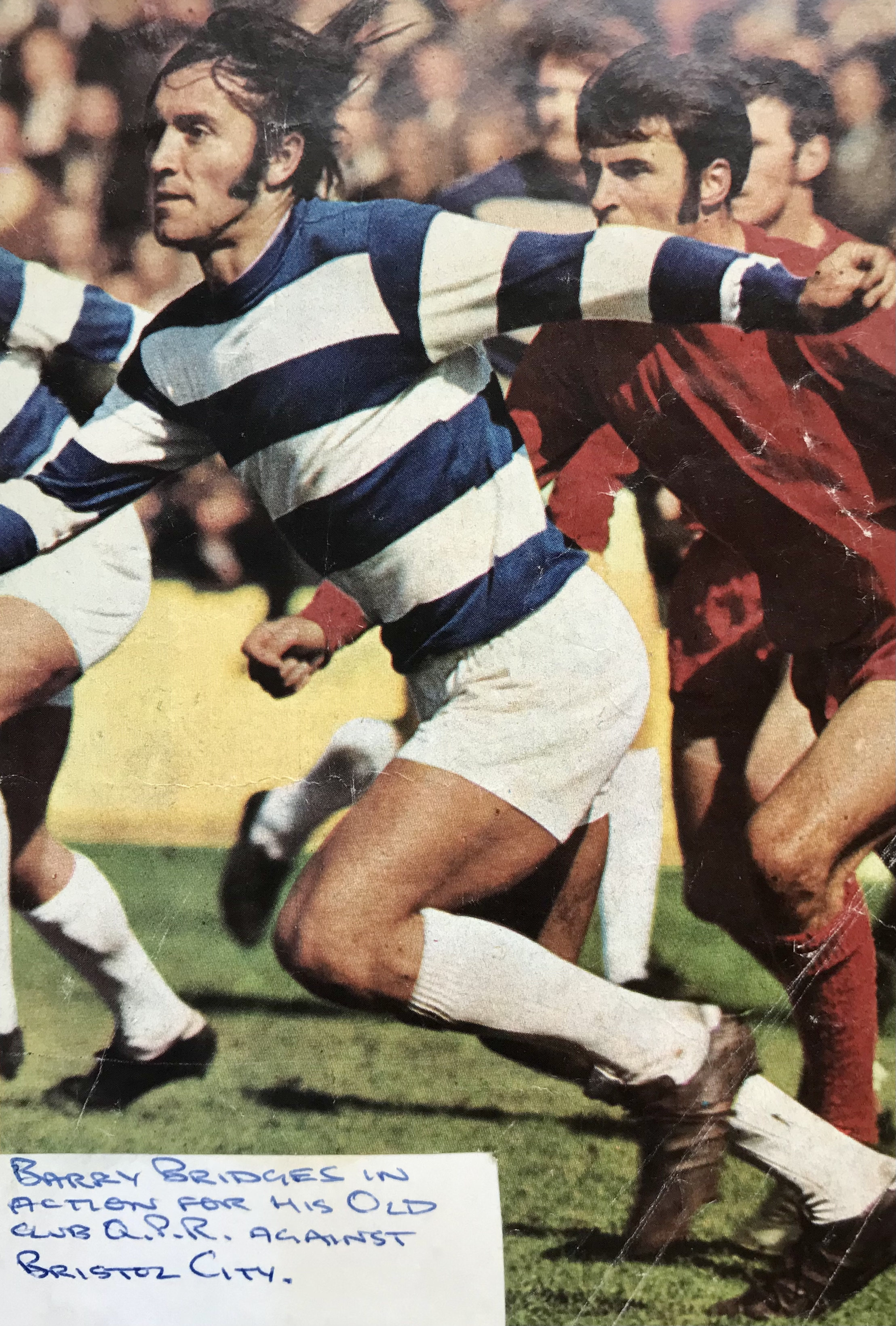
Much of his career ran in parallel with Bert Murray. Both young stars at Chelsea in the early to mid-60s, they were transferred to Birmingham City in 1966 and joined the Albion in the early 1970s.

Norfolk-born Bridges had come to the attention of Chelsea while playing for local side Norwich & Norfolk Boys and had a dream debut in 1959 at just 17, scoring in a local derby against West Ham. It was in the 1961-62 season that he established himself in the Chelsea first team, Jimmy Greaves having been transferred to AC Milan.

In what turned out to be  superb 1964-65 season for him and the club, he scored 27 goals in 42 appearances for Chelsea and collected a League Cup winners’ medal when they beat Leicester City 3-2 over two legs.

It was in May 1966 when Tommy Docherty started breaking up his squad and Bridges left Chelsea for Birmingham having scored 93 goals in 205 league appearances for the London club.

Bridges went one better than Murray and earned full England international honours. Four caps in fact. He was just a few days short of his 24th birthday when he made his debut in a 2-2 draw with Scotland at Wembley in April 1965.

bb-england-w-sir-a

Bridges pictured with Sir Alf Ramsey, Jack Charlton and Nobby Stiles while on England international duty.

He kept the no.9 shirt in the next two games, played in May, a 1-0 win over Hungary at Wembley and was the scorer of England’s goal in a 1-1 draw away to Yugoslavia. His fourth and final game was in a 3-2 friendly defeat against Austria in October 1965. Injury prevented him staking a claim for a place in the 1966 World Cup squad.

In 1971, Bridges went on an end-of-season tour to Australia with an English FA squad that also included Peter Grummitt (then of Sheffield Wednesday) and Dennis Mortimer (of Coventry at the time). The squad went to Dublin first to celebrate the 50th anniversary of the FA of Ireland, drawing 1-1 with the Republic, before heading Down Under where they won all nine of the matches they played in various locations across a month.

BridgesChels

Birmingham paid a then club record fee of £55,000 to acquire Bridges and in two seasons in the West Midlands he scored 46 goals in 104 outings.

Interviewed by bcfc.com in 2014, Bridges said: “What persuaded me to join Birmingham more than anything was the chairman, Clifford Coombs. He was a great guy and wanted to put the club back on its feet. He told me that I was going to be his first signing and he really wanted me to join.”

In his first season he helped Blues to a League Cup semi-final – ironically against Queens Park Rangers – the club he would move to next.

In August 1968, a £50,000 deal saw him move to Loftus Road, where he was part of a strong forward line playing alongside Frank Clarke and the flamboyant Rodney Marsh with his old Chelsea teammate Terry Venables pulling the strings in midfield.

Unfortunately the campaign ended in relegation from the old First Division but in 1969-70 he linked up well alongside Marsh and Clarke and scored 24 goals in all competitions.

Bridges QPR

QPR decided to cash in on him and sold him to Millwall in 1970 and in 1972 he was part of a Millwall side who only narrowly missed promotion to the top division. The Lions were already celebrating promotion on the pitch at The Den when news came through that in fact promotion rivals Birmingham had beaten Sheffield Wednesday to go up, contrary to a rumour that had been circulating in the ground that they’d been losing.

“The four supporters who had been chairing me on their shoulders dropped me. Everyone was stunned, and we had to troop off the pitch all bitterly disappointed and choked,” said Bridges. “I desperately wanted to play First Division football again and so did the rest of the lads. We were all sick.”

When Pat Saward signed him for Brighton in September 1972, it was evident from the start that this was a player who had played at the highest level.

Unfortunately, although Bridges could easily cope at that level, others either didn’t step up or the new players didn’t gel – arguably Saward made too many changes – but, whatever the reason, Brighton couldn’t stop losing and were left floundering at the foot of the table.

Bridges made his debut in a 1-1 draw away to Aston Villa but it was another four matches before he got his first goal, ironically against his old club Millwall, in a 3-1 defeat at home.

Bridges seldom had the same partner up front, early on playing with Willie Irvine, on other occasions with Ken Beamish and later with Lammie Robertson after Saward brought him in from Halifax in exchange for Irvine.

My abiding impression of him was that he appeared to be too good for the rest of the team. His speed of thought was often way ahead of the rest so he would put passes into areas where he would expect a teammate to be, only to be disappointed that they hadn’t read it, so he was made to look wasteful.

One of the few moments of pleasure for Bridges in what was otherwise a season of doom and gloom was the prospect of a FA Cup third round tie against Chelsea at the Goldstone in January 1973. Bridges was in great demand for pre-match interviews in view of his past association with the London club.

“It’s a tremendous draw for the club and a dream draw for Bert Murray and myself who both started our careers at Chelsea,” Bridges told Goal magazine. “Personally it will be nice to see most of the Chelsea lads again. I grew up with Peter Bonetti, Ron Harris and Ossie (Peter Osgood).”

Bridges hoped a good performance in the Cup would help to reinvigorate the lacklustre league form and said: “It’s a crying shame that we’re struggling because the facilities here are second to none. Obviously we need to start getting results now before it’s too late. A win against Chelsea could be just the boost we need to get out of trouble in the league.”

As it turned out, not only did the game end in defeat (2-0) for the Albion but it drew national headlines for all the wrong reasons – ‘day of shame’ for example – as Harris and Brighton left back George Ley were sent off, five were booked and the mood on the pitch led to fighting on the terraces with 25 people arrested.

However, Albion’s fortunes did eventually improve – although it was without Bridges, who in the final few games of the season was restricted to appearances off the bench.

Back in the third division, Bridges was restored to the starting line-up and scored in the opening game in a 1-1 draw at Rochdale.

He was part of the team Brian Clough and Peter Taylor inherited in October and, after they secured their first win courtesy of Pat Hilton’s goal in a 1-0 win away to Walsall, Bridges told the press: “I did more running about in this game than I had in the previous 10 matches.

“I’m 32 now, but with this chap geeing me up I reckon I can go on playing for several more years. We were a bit on edge before the game and the first thing he told us was to relax. Afterwards he told us he was pleased with the effort we showed and we can work from here and go places.

“Though I was sorry to see Pat Saward go – he was a great coach – I think Brian’s got what it takes to make us a good side. He’s just what the club have been waiting for.”

But three games later, as one of the team humiliated in a 4-0 home FA Cup defeat to Walton & Hersham at the end of November, Bridges was unceremoniously dropped and didn’t play again for the first team until February.

Although he then had a run in the team, scoring six times in a 17-game spell, he was among twelve players Clough and Taylor offloaded at the end of the season.

That brought down the curtain on his league career but he continued playing – initially in South Africa with Johannesburg side Highlands Park and then in Ireland – where when player-manager of St Patrick’s Athletic he also gave game time to another former Brighton striker, Neil Martin. He also managed Sligo Rovers before returning to his native Norfolk to manage non league sides Kings Lynn and Dereham Town.

In 2013, the QPR programme caught up with him to discover he was living in Norwich close to where he was brought up, and still getting along to watch matches.

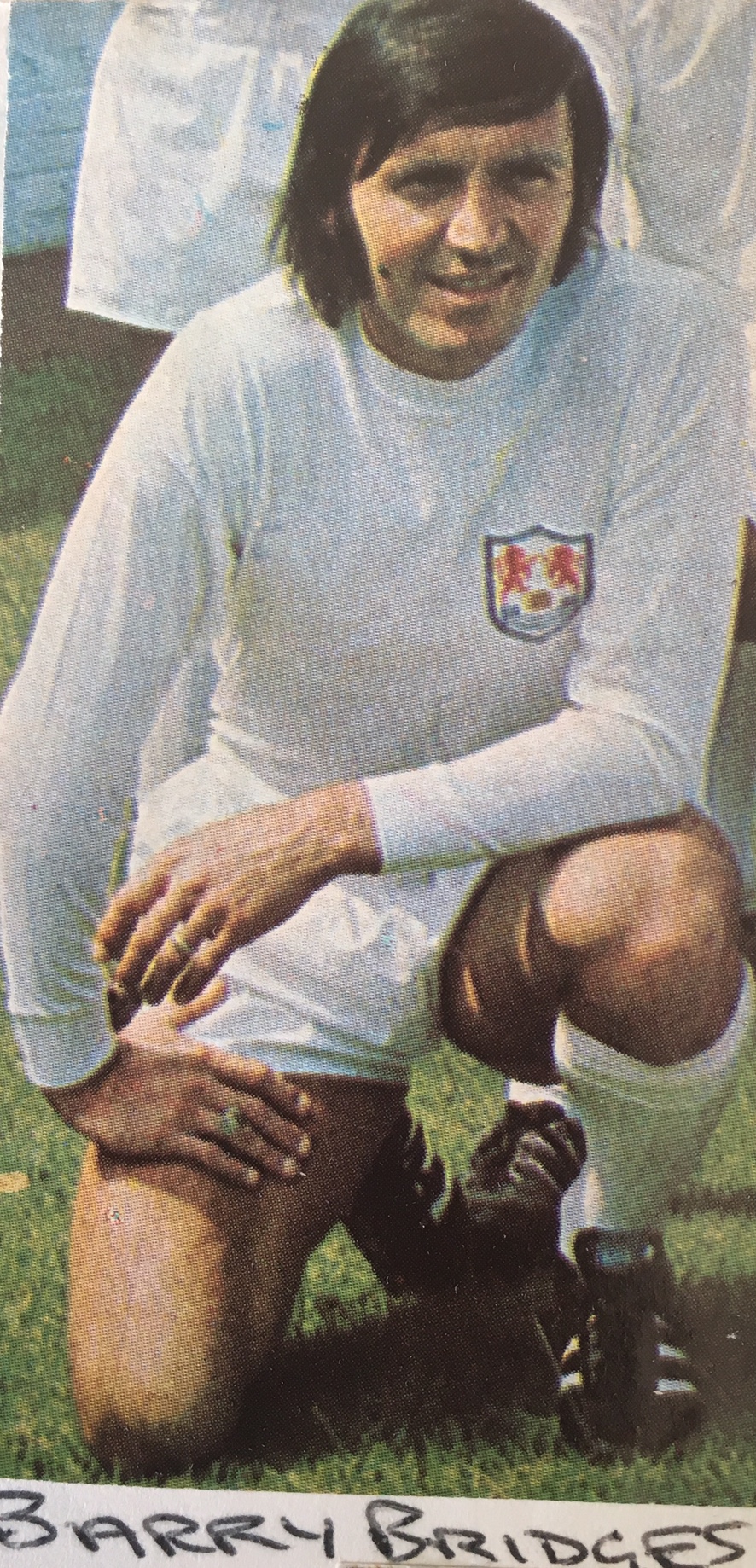
1-england-bridges2-chelsea-bridges4-bridges-in-hoopsB Bridges Btn GOALBarry Bridges (Lions)Barry Bridges (Millwall yellow)

  • Pictures from my scrapbook show Barry in his England and Chelsea days, in Millwall’s white and change yellow shirts, in QPR’s familiar hoops, and in the Albion stripes.

Ken Beamish dumped by Clough without a word

1-k-beamish-btn-goalSWASHBUCKLING Ken Beamish was a good old fashioned centre forward who crowds appreciated for his never-say-die attitude in pursuit of goals.

He mostly played in the third tier but had three seasons at the next level up (one was Brighton’s disastrous 1972-73 season and he had two with Blackburn).

He twice won promotion from the old Third Division – with Brighton in 1972 and Blackburn in 1975 – and scored 198 goals in 642 league and cup games between 1965 and 1982.

Born in Bebington on 25 August 1947, Beamish started his career with nearby Fourth Division Tranmere Rovers in the 1965-66 season and was top scorer in two of his six seasons with the club, helping them to promotion to the Third Division in 1966-67.KB Tran

He joined Brighton on transfer deadline day on 9 March 1972; manager Pat Saward having set off for the north west from Sussex at 5am to ensure he captured his man before the 5pm deadline that existed at the time.

When Beamish signed for £23,000 (plus the surplus-to-requirements Alan Duffy), Albion had just scored 13 goals in three games so supporters were baffled as to why he was needed.

After two substitute appearances, Beamish made his full debut in the oft-talked about televised game v Aston Villa and then got off the mark in the 3-1 Good Friday win over Torquay United (see picture).

He contributed six goals in 14 games, including last minute winners in two games in the same week, against Rotherham and Rochdale.

In an interview in Goal magazine after promotion was clinched,  Saward explained why he had signed him when the team was already riding high and looking a good bet for promotion.

Aiming a bit of a sideswipe at the incumbents Willie Irvine and Kit Napier, Saward said: “We had plenty of skilful players up front but none had the devil in him. We wanted more thrust. Beamish gave us it.”

Reporter David Wright wrote: “He added the final spark to an ever-improving Brighton side that, after promising a great deal for two-thirds of the season, finally showed their true force in the last two months of the season when they enjoyed a marvellous run of 12 games without defeat.”

Saward was delighted with his signing and said: “Ken shows great courage and has an insatiable appetite for scoring goals. He would die in the box for you. He goes in where angels fear to tread. The whole side never know when they’re beaten – something they proved over and over again – and Beamish epitomises this. He battles away from the first whistle to the last.”

There was clearly mutual admiration because Beamish reflected in an Albion matchday programme how Saward had helped him to become a better player. “He really put in the work with me on the training pitch,” he said. “My ball control was never the best but he worked hard with me to make sure it improved. He was a good man.”

In Brighton & Hove Albion Supporters’ Club’s official souvenir handbook, produced to celebrate the promotion, coach Ray Crawford, the former England international striker who was part of Saward’s backroom team, said: “I don’t like to single out players because football is a team game, but I must on this occasion. Ken Beamish added the final bite up front, and those vital goals that he scored helped us into Division II. What a player this boy is – he never gives up!”

Unfortunately for Beamish, the goals were harder to come by in the division above, particularly in a struggling side and with a new strike partner in the shape of experienced Barry Bridges. Beamish’s scoring ratio dropped to one in four during 1972-73 and, back in the third tier the following season, it didn’t get much better.

He kept his place in the side after Brian Clough’s arrival in October 1973 but 12 goals in 45 games didn’t impress a manager used to better things and he found himself part of the former Derby manager’s huge clear-out of players – and he was none too happy at the manner of it.

A contributor to Jonathan Wilson’s biography about Clough, Nobody Ever Says Thank You, Beamish spoke about how most of the players failed to get any rapport going with the manager because he was seldom around. “I played most of the games but we never saw much of Clough,” he said. “We saw him on matchday and Friday.”

Clough didn’t help matters when he missed a game altogether so he could go to America to watch a Muhammad Ali-Joe Frazier fight. That left him open to criticism but Clough was not remotely bothered. Instead he went on the front foot and openly criticised the players for lacking moral courage and declared: “There is a gale blowing through this club and the players concerned are about to feel the draught.”

That one of them was Beamish appeared harsh at the time and the manner of his departure clearly left a nasty taste in the mouth.

Beamish told Simon Levenson in his interview for Match of My Life (Know The Score Books Ltd): “I knew my time was up when I wasn’t included in the end of season tour to Torremolinos. We’re all grown men and there are ways of telling people that you’re not part of their future plans. He could have told me face to face, but instead I discovered I’d been transfer listed when my neighbour told me he’d heard it on the radio.”

A subsequent Albion matchday programme interview revealed his dismay at the circumstances, which understandably made it easy for him to leave.

“I never spoke to anyone at Brighton between the end of the season and signing for Blackburn,” he said. “That was the disappointing thing because I’d enjoyed my time at Brighton and made some good friends there.

“It was a sad ending to a happy period in my life.”

Clough’s loss was Gordon Lee’s gain. Lee, who would go on to manage Everton, paid £26,000 to take Beamish to Blackburn Rovers – the start of an association which continues to this day.

After scoring 19 goals for Blackburn in 86 appearances between 1974 and 1976, including promotion in 1975, he then had two years at Port Vale – where he was the player of the year in 1977-78 – a year at Bury and a second spell at Tranmere. He ended his playing days at Swindon Town, where he originally went to become assistant manager to long-serving John Trollope – father of former Albion assistant manager, Paul.

When Trollope senior left Swindon, Beamish ended up taking over as boss for 15 months (as pictured below), from March 1983 to June 1984, but 1983-84 proved to be a nightmare season in Swindon’s history with them finishing 17th in the old Fourth Division, the lowest finishing position in their history.Beam Swin mgr

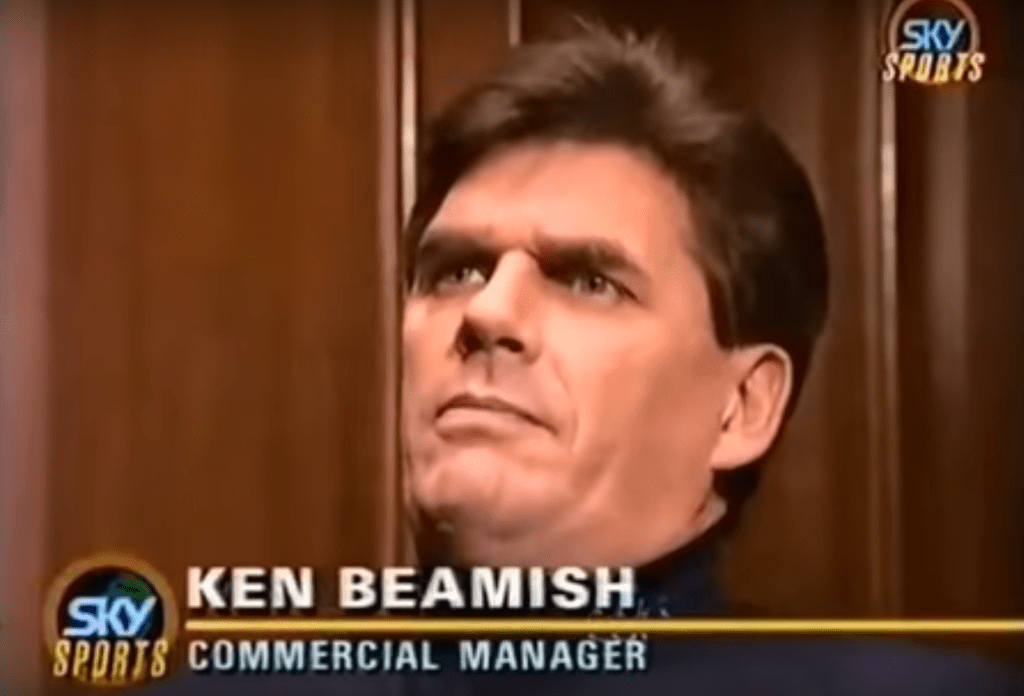
Beamish subsequently became commercial manager at Blackburn from 1986 until his retirement in 2012. He then became vice chairman of the Blackburn Rovers Former Players Association.

  • Pictures from my scrapbook show a great action shot of Beamish scoring against Torquay, as featured in a Brighton & Hove Gazette end of season publication, a portrait of him in Goal magazine. Dig the hairstyle, pear drop collar shirt and tank top in this Goal picture of him with his son. The Argus captured Ken’s elation as he celebrated Willie Irvine’s goal against Aston Villa. And the man himself signed the photo of him being interviewed. Below, interviewed in 1992 by Sky Sports.

Bertie Lutton’s memorable Easter goal at Bournemouth

STANDING amongst the writhing crush of Albion fans squeezed in behind the goal at Dean Court on the afternoon of Easter Saturday 1972, I struggled to get a clear view of the frenzied action on the pitch.

Brighton equalised, that much was evident from the eruption and movement of the swaying masses, but who applied the finishing touch was anybody’s guess as far as I was concerned.

I later discovered it was none other than Bertie Lutton, the £5,000 Northern Irish international winger signed only three weeks previously from Wolverhampton Wanderers.

Lutton had got himself into the penalty area and with a centre forward-like instinct headed Peter O’Sullivan’s cross past Fred Davies in the Bournemouth goal to cancel out the lead Ted MacDougall** had given the promotion-chasing Cherries.

It was Lutton’s second Albion goal in two days. On Good Friday at the Goldstone, he was on the scoresheet with Bert Murray and Ken Beamish as a bumper crowd of 27,513 (remember this was the third tier of English football) saw Albion beat Torquay United 3-1.

It’s difficult for modern day fans to contemplate but literally 24 hours later, the Albion had travelled nearly 100 miles west to take on Third Division promotion rivals Bournemouth and 22,540 fans crammed into the stadium.

In what was a classic game of two halves, the Cherries dominated the opening 45 minutes and took the lead through MacDougall, a prolific scorer of that period who went on to play for Manchester United, West Ham, Norwich City and Scotland.

Albion threw everything at them after the break and Lutton’s equaliser was fully deserved on the balance of play in the second half.

The goal was enough to keep him in the side for the following three games. After that he reverted to the bench to the end of the season, but was on the pitch, having replaced Kit Napier, when the whistle blew at the end of the 1-1 Goldstone draw with Rochdale that earned Albion promotion as runners up behind Aston Villa…..with Bournemouth three points behind in third place (there were no play-offs in those days).

Raising a glass of promotion-winning champagne in the dressing room with his Brighton teammates after that game must have felt good, but that Dean Court moment was probably as good as it got for the blond-haired Ulsterman in his time on the south coast.

Born in Banbridge, County Down, on 13 July 1950, Bertie’s brief footballing career began with his hometown club, Banbridge Town, and it’s reported just £50 exchanged hands to take him to then English elite side Wolves in 1967.Lutton WWFC

At a time when Wolves were blessed with some outstanding players like Derek Dougan, Hugh Curran, Dave Wagstaffe, Jim McCalliog and Mike Bailey, Bertie managed just 25 matches for Wolves between 1967 and 1971.

Brighton manager Pat Saward, nicknamed The Loan Ranger because of the number of players who he brought in on loan, first acquired Bertie’s services on a temporary basis between September and November in 1971.

He made his debut in a 2-0 defeat at Aston Villa and scored twice in seven games before returning to his parent club.

Then, on 9 March 1972, with the clock ticking down to what in those days was the 5pm transfer deadline, Saward completed a double transfer swoop, securing Lutton’s permanent signing for £5,000 together with Beamish from Tranmere for £25,000 (plus the surplus-to-requirements Alan Duffy).

A delighted Saward declared to Argus reporter John Vinicombe: “Bertie can do a job for us anywhere. This can’t be bad for us. At 21 and with two caps for Ireland he has a future and played very well for us while on loan.

“He can play right or left, up the middle, or midfield and Beamish can fit into a number of positions.”

Maybe it was the versatility Saward referred to that worked against Lutton. When Brighton began the 1972-73 season in the second tier, Lutton was still on the bench. He came on in three games, then got four successive starts before going back to the bench.

Albion were finding life tough at the higher level and although Saward switched things around and brought in new faces, the results went from bad to worse.

bertieluttonLutton started three games in December which all ended in defeat and the 3-0 Boxing Day reverse at Oxford United turned out to be his last appearance for the Albion.

It fell in the middle of a spell of 12 successive defeats during which only five goals were scored – and two of those were penalties, another an own goal!

Saward couldn’t put his finger on the reason for the slump and declared himself dismayed by the attitude of certain players: Lutton was one of three put on the transfer list.

Astonishingly he stepped up a division and went on loan to West Ham. He did well enough to secure a full-time switch to Upton Park and almost a year to the day of his arrival at the Goldstone, he was gone and the shrewd Saward turned a £10,000 profit on the enigmatic Irishman.

Those two caps Saward referred to had come while on Wolves’ books in April 1970 against Scotland and England in the old end-of-season Home International tournament. After his move to West Ham, he gained four more. Indeed, in the history books, he became the first Hammer ever to represent Northern Ireland. He came on as sub in three games in May 1973 and his final appearance was in November that year as a starter in a 1-1 draw away to Portugal.

His only goal for West Ham came in a 1-1 draw away to Derby County on 21 April 1973, where one of his teammates was the aforementioned MacDougall. Sadly Lutton’s West Ham career lasted just 12 games. He was forced to quit English football in 1974 at the age of just 23.

He emigrated to Australia and played semi-professional football in the Australian Soccer League for a number of years and settled in Melbourne.

The ‘where are they now’ website reveals he most recently worked as a supervisor for a logistics company.

  • The website wolvesheroes.com tracked down Lutton in March 2010 and reported a fascinating tale about what happened to a 1970 Mexico World Cup England shirt Bobby Moore had given his old West Ham teammate.

** MacDouGoal! the striker’s autobiography.

Pictures from my scrapbook show Bertie Lutton

  • celebrating a goal for the Albion
  • appearing for Wolves
  • heading the equaliser in the Easter Saturday draw at Bournemouth

3-lutton-stripes

luttoningoal

Lutton alongside George Best during Northern Ireland training
Lutton pictured in 2010 on wolvesheroes.com